Search results
1000 results found for “TSH”
Name
Description
Product #
Price
Quantity
Shipping Method
- View Data Sheet
Name :
Vaspin Human, HisDescription:
Vaspin Human Recombinant, His Tag
Serpin A12 precursor, Visceral adipose-specific serpin, Visceral adipose tissue- derived serine protease inhibitor, Vaspin, OL-64, SERPINA12, Serine (or cysteine) proteinase inhibitor, clade A, antitrypsin, alpha-1 antiproteinase.
Product # :
CYT-459Price :
Quantity :
Shipping Method :
Shipped with Ice Packs
More Info
- description
- source
- formulation
- purity
- More Info
- Citations
Description
Vaspin Human Recombinant produced in E.Coli is a single, non-glycosylated, His Tag, polypeptide chain containing 415 amino acids and having a molecular mass of 47 kDa.The Vaspin is purified by proprietary chromatographic techniques.
Source
Escherichia Coli.
Formulation
Vaspin in 20mM Tris pH-8, 0.2mM PMSF and 10% glycerol.
Purity
Greater than 90.0% as determined by SDS-PAGE.
Citations
More Info
-
Introduction
Vaspin (visceral adipose-specific SERPIN), a newly identified adipokine, which is a member of serine protease inhibitor family. Vaspin is also a unique insulin sensitizing adipocytokine in obesity. A recent publication indicates that induction of human vaspin mRNA expression in adipose tissue is regulated in a fat depot-specific manner and could be associated with parameters of obesity, insulin resistance, and glucose metabolism.
-
Synonyms
Serpin A12 precursor, Visceral adipose-specific serpin, Visceral adipose tissue- derived serine protease inhibitor, Vaspin, OL-64, SERPINA12, Serine (or cysteine) proteinase inhibitor, clade A, antitrypsin, alpha-1 antiproteinase.
-
Physical Appearance
Sterile Filtered colorless solution.
-
Stability
Liquid Vaspin although stable at 10°C for 1 week, should be stored below -18°C. For long term storage it is recommended to add a carrier protein (0.1% HSA or BSA).Please prevent freeze-thaw cycles.
-
Amino Acid Sequence
MGSSHHHHHH SSGLVPRGSH MLKPSFSPRN YKALSEVQGW KQRMAAKELA RQNMDLGFKL LKKLAFYNPG RNIFLSPLSI STAFSMLCLG AQDSTLDEIK QGFNFRKMPE KDLHEGFHYI IHELTQKTQD LKLSIGNTLF IDQRLQPQRK FLEDAKNFYS AETILTNFQN LEMAQKQIND FISQKTHGKI NNLIENIDPG TVMLLANYIF FRARWKHEFD PNVTKEEDFF LEKNSSVKVP MMFRSGIYQV GYDDKLSCTI LEIPYQKNIT AIFILPDEGK LKHLEKGLQV DTFSRWKTLL SRRVVDVSVP RLHMTGTFDL KKTLSYIGVS KIFEEHGDLT KIAPHRSLKV GEAVHKAELK MDERGTEGAA GTGAQTLPME TPLVVKIDKP YLLLIYSEKI PSVLFLGKIV NPIGK.
ProSpec's products are furnished for LABORATORY RESEARCH USE ONLY. The product may not be used as drugs, agricultural or pesticidal products, food additives or household chemicals.
- View Data Sheet
Name :
ZCCHC12 HumanDescription:
Zinc Finger, CCHC Domain Containing 12 Human Recombinant
PNMA7A, SIZN, SIZN1, Zinc finger CCHC domain-containing protein 12, Smad-interacting zinc finger protein 1, ZCCHC12.
Product # :
PRO-1982Price :
Quantity :
Shipping Method :
Shipped with Ice Packs
More Info
- description
- source
- formulation
- purity
- More Info
- Citations
Description
ZCCHC12 Human Recombinant produced in E.Coli is a single, non-glycosylated polypeptide chain containing 425 amino acids (1-402 a.a) and having a molecular mass of 47.8kDa. ZCCHC12 is fused to a 23 amino acid His-tag at N-terminus & purified by proprietary chromatographic techniques.
Source
Escherichia Coli.
Formulation
ZCCHC12 protein solution (1mg/ml) containing 20mM Tris-HCl buffer (pH 8.0), 0.4M UREA and 10% glycerol.
Purity
Greater than 85.0% as determined by SDS-PAGE.
Citations
More Info
-
Introduction
Zinc Finger, CCHC Domain Containing 12 (ZCCHC12) which holds 1 CCHC-type zinc finger is a part of the ZCCHC12 family. ZCCHC12 takes part in the bone morphogenetic protein (BMP)-signaling pathway as a transcriptional coactivator. BMP signaling is positively modulated as a result of the interaction between ZCCHC12 with SMAD1 and the association with CBP in the transcription complex.
-
Synonyms
PNMA7A, SIZN, SIZN1, Zinc finger CCHC domain-containing protein 12, Smad-interacting zinc finger protein 1, ZCCHC12.
-
Physical Appearance
Sterile Filtered colorless solution.
-
Stability
Store at 4°C if entire vial will be used within 2-4 weeks. Store, frozen at -20°C for longer periods of time. For long term storage it is recommended to add a carrier protein (0.1% HSA or BSA).Avoid multiple freeze-thaw cycles.
-
Amino Acid Sequence
MGSSHHHHHH SSGLVPRGSH MGSMASIIAR VGNSRRLNAP LPPWAHSMLR SLGRSLGPIM ASMADRNMKL FSGRVVPAQG EETFENWLTQ VNGVLPDWNM SEEEKLKRLM KTLRGPAREV MRVLQATNPN LSVADFLRAM KLVFGESESS VTAHGKFFNT LQAQGEKASL YVIRLEVQLQ NAIQAGIIAE KDANRTRLQQ LLLGGELSRD LRLRLKDFLR MYANEQERLP NFLELIRMVR EEEDWDDAFI KRKRPKRSES MVERAVSPVA FQGSPPIVIG SADCNVIEID DTLDDSDEDV ILVESQDPPL PSWGAPPLRD RARPQDEVLV IDSPHNSRAQ FPSTSGGSGY KNNGPGEMRR ARKRKHTIRC SYCGEEGHSK ETCDNESDKA QVFENLIITL QELTHTEMER SRVAPGEYND FSEPL.
ProSpec's products are furnished for LABORATORY RESEARCH USE ONLY. The product may not be used as drugs, agricultural or pesticidal products, food additives or household chemicals.
- View Data Sheet
Name :
Resistin Human, HisDescription:
Resistin Human Recombinant, His Tag
Cysteine-rich secreted protein FIZZ3, Adipose tissue-specific secretory factor, ADSF, C/EBP-epsilon-regulated myeloid-specific secreted cysteine-rich protein, Cysteine-rich secreted protein A12-alpha-like 2, RSTN, XCP1, RETN1, MGC126603, MGC126609.
Product # :
CYT-256Price :
Quantity :
Shipping Method :
Shipped with Ice Packs
More Info
- description
- source
- formulation
- purity
- More Info
- Citations
Description
Resistin Human Recombinant produced in E.Coli is a single, non-glycosylated, Polypeptide chain containing a 92 amino acids fragment (17-108) of the mature Human Resistin, having a total molecular mass of 14.23kDa and fused with a 4.5kDa amino-terminal hexahistidine tag. The Resistin is purified by proprietary chromatographic techniques.
Source
Escherichia Coli.
Formulation
Resistin protein solution is supplied in 20mM Tris-HCl pH 8.0, 5mM EDTA and 50% glycerol.
Purity
Greater than 95% as determined by SDS-PAGE.
Citations
More Info
-
Introduction
Resistin, a product of the RSTN gene, is a peptide hormone belonging to the class of cysteine-rich secreted proteins which is termed the RELM family, and is also described as ADSF (Adipose Tissue- Specific Secretory Factor) and FIZZ3 (Found in Inflammatory Zone). Human resistin contains 108 amino acids as a prepeptide, and its hydrofobic signal peptide is cleaved before its secretion. Resistin circulates in human blood as a dimeric protein consisting of two 92 amino acid polypeptides, which are disulfide-linked via Cys26.
Resistin may be an important link between obesity and insulin resistance. Mouse resistin, specifically produced and secreted by adipocyte, acts on skeletal muscle myocytes, hepatocytes and adipocytes themselves so that it reduces their sensitivity to insulin. Steppan et al. have suggested that resistin suppresses the ability of insulin to stimulate glucose uptake. They have also suggested that resistin is present at elevated levels in blood of obese mice, and is down regulated by fasting and antidiabetic drugs. Way et al., on the other hand, have found that resistin expression is severly suppressed in obesity and is stimulated by several antidiabetic drugs.
Other studies have shown that mouse resistin increases during the differentiation of adipocytes, but it also seems to inhibit adipogenesis. In contrast, the human adipogenic differentiation is likely to be associated with a down regulation of resistin gene expression. -
Synonyms
Cysteine-rich secreted protein FIZZ3, Adipose tissue-specific secretory factor, ADSF, C/EBP-epsilon-regulated myeloid-specific secreted cysteine-rich protein, Cysteine-rich secreted protein A12-alpha-like 2, RSTN, XCP1, RETN1, MGC126603, MGC126609.
-
Physical Appearance
Sterile filtered colorless solution.
-
Stability
Store at 4°C if entire vial will be used within 2-4 weeks. Store, frozen at -20°C for longer periods of time.Please avoid freeze thaw cycles.
ProSpec's products are furnished for LABORATORY RESEARCH USE ONLY. The product may not be used as drugs, agricultural or pesticidal products, food additives or household chemicals.
- View Data Sheet
Name :
RND3 HumanDescription:
Rho Family GTPase 3 Human Recombinant
ARHE, memB, Rho8, RhoE, Rho-related GTP-binding protein RhoE, Protein MemB, Rho family GTPase 3, Rho-related GTP-binding protein Rho8, Rnd3.
Product # :
PRO-487Price :
Quantity :
Shipping Method :
Shipped with Ice Packs
More Info
- description
- source
- formulation
- purity
- More Info
- Citations
Description
RND3 Recombinant Human produced in E.Coli is a single, non-glycosylated polypeptide chain containing 261 amino acids (1-241 a.a.) and having a molecular mass of 29.2 kDa. The RND3 is fused to a 20 amino acid His-Tag at N-terminus and purified by proprietary chromatographic techniques.
Source
Escherichia Coli.
Formulation
RND3 Human solution containing 20mM Tris-HCl pH-8, 1mM DTT, 1mM EDTA, 0.1M NaCl & 40% glycerol.
Purity
Greater than 90.0% as determined by SDS-PAGE.
Citations
More Info
-
Introduction
RND3 is a small GTPase which is part of the Ras superfamily that controls the association of the actin cytoskeleton in reaction to extracellular growth factors. RND3 activity causes a decrease in stress fibers and an increase in cell migration, at least in part through regulation of the Rho-dependent kinase ROCK1. RND3 inhibits DNA-damage induced apoptosis and cell cycle arrest. RND3 binds GTP and is resistant to Rho-specific GTPase-activating proteins.
-
Synonyms
ARHE, memB, Rho8, RhoE, Rho-related GTP-binding protein RhoE, Protein MemB, Rho family GTPase 3, Rho-related GTP-binding protein Rho8, Rnd3.
-
Physical Appearance
Sterile filtered colorless solution.
-
Stability
Store at 4°C if entire vial will be used within 2-4 weeks. Store, frozen at -20°C for longer periods of time. For long term storage it is recommended to add a carrier protein (0.1% HSA or BSA).Avoid multiple freeze-thaw cycles.
-
Amino Acid Sequence
MGSSHHHHHH SSGLVPRGSH MKERRASQKL SSKSIMDPNQ NVKCKIVVVG DSQCGKTALL HVFAKDCFPE NYVPTVFENY TASFEIDTQR IELSLWDTSG SPYYDNVRPL SYPDSDAVLI CFDISRPETL DSVLKKWKGE IQEFCPNTKM LLVGCKSDLR TDVSTLVELS NHRQTPVSYD QGANMAKQIG AATYIECSAL QSENSVRDIF HVATLACVNK TNKNVKRNKS QRATKRISHM PSRPELSAVA TDLRKDKAKS C.
ProSpec's products are furnished for LABORATORY RESEARCH USE ONLY. The product may not be used as drugs, agricultural or pesticidal products, food additives or household chemicals.
- View Data Sheet
Name :
NT 4 AntibodyDescription:
Neurotropin 4, Mouse Anti-Human
Neurotrophin-5, NT-5, Neutrophic factor 5, Neurotrophin-4, NT-4, Neutrophic factor 4, NT4, NT5, NTF4, NT-4/5, NTF5.
Product # :
ANT-117Price :
Quantity :
Shipping Method :
Shipped at Room temp
More Info
- formulation
- More Info
- Citations
Formulation
1mg/ml in PBS (after reconstitution).
Citations
More Info
-
Introduction
This gene is a member of a family of neurotrophic factors, neurotrophins that control survival and differentiation of mammalian neurons. The expression of this gene is ubiquitous and less influenced by environmental signals. While knock-outs of other neurotrophins including nerve growth factor, brain-derived neurotrophic factor, and neurotrophin 3 prove lethal during early postnatal development, NTF5-deficient mice only show minor cellular deficits and develop normally to adulthood.
-
Synonyms
Neurotrophin-5, NT-5, Neutrophic factor 5, Neurotrophin-4, NT-4, Neutrophic factor 4, NT4, NT5, NTF4, NT-4/5, NTF5.
-
Solubility
Reconstitute with sterile H20. Mix gently, wash the sides of the vial and wait 30-60 seconds before use.
-
Immunogen
r.Human NT-4.
-
Ig Subclass
Mouse IgG2a.
-
Clone
NYRhNT-4.
-
Applications
Direct ELISA, Western Blot, Immuneprecipitation.
-
Titer
By direct ELISA, 1:10,000 dilution will yield 0.7 O.D using alkaline phosphatase conjugated rabbit anti-mouse Ig (Jackson Laboratories).
-
Shipping Conditions
Antibody is shipped lyophilized at ambient temperature.
-
Type
Mouse Anti Human Monoclonal.
-
Storage Procedures
In lyophilized form, for long periods, store at 4oC in a dry environment. After reconstitution, if not intended for use within a month, aliquot and store at -20oC.
-
Purification Method
Ion exchange.
ProSpec's products are furnished for LABORATORY RESEARCH USE ONLY. The product may not be used as drugs, agricultural or pesticidal products, food additives or household chemicals.
- View Data Sheet
Name :
GHRP2Description:
Growth Hormone Releasing Peptide-2
GHRP-2, GHRP.
Product # :
HOR-271Price :
Quantity :
Shipping Method :
Shipped at Room temp
More Info
- description
- formulation
- purity
- More Info
- Citations
Description
Growth Hormone Releasing Peptide-2 Synthetic is a single, non-glycosylated polypeptide chain containing 6 amino acids, having a molecular mass of 817.9 Dalton and a Molecular formula of C45H55N9O6.
Formulation
The GHRP-2 hormone was lyophilized with no additives.
Purity
Greater than 99.0% as determined by analysis by RP-HPLC.
Citations
More Info
-
Introduction
GH-releasing peptides (GHRPs) are synthetic peptides that like GHRH act directly on pituitary somatotrophs to stimulate GH release. GHRP-2, an investigational drug, is one of the most potent members of the GHRP family. It has been shown to be effective in adults via the oral and intranasal as well as the iv route of administration.
-
Synonyms
GHRP-2, GHRP.
-
Physical Appearance
Sterile Filtered White lyophilized (freeze-dried) powder.
-
Stability
Lyophilized Growth Hormone Releasing Peptide-2 although stable at room temperature for 3 weeks, should be stored desiccated below -18°C. Upon reconstitution GHRP-2 should be stored at 4°C between 2-7 days and for future use below -18°C.For long term storage it is recommended to add a carrier protein (0.1% HSA or BSA).Please prevent freeze-thaw cycles.
-
Solubility
It is recommended to reconstitute the lyophilized GHRP-2 in sterile 18MΩ-cm H2O not less than 100 µg/ml, which can then be further diluted to other aqueous solutions.
-
Amino Acid Sequence
H-D-Ala-D-2-Nal-Ala-Trp-D-Phe-Lys-NH2.
ProSpec's products are furnished for LABORATORY RESEARCH USE ONLY. The product may not be used as drugs, agricultural or pesticidal products, food additives or household chemicals.
- View Data Sheet
Name :
MGAT2 Human, Sf9Description:
Mannoside Acetylglucosaminyltransferase 2 Human Recombinant, Sf9
Alpha-1, 6-mannosyl-glycoprotein 2-beta-N-acetylglucosaminyltransferase, MGAT2, CDG2A, CDGS2, GLCNACTII, GNT-II, GNT2, Beta-1,2-N-acetylglucosaminyltransferase II, GlcNAc-T II, Mannoside acetylglucosaminyltransferase 2, N-glycosyl-oligosaccharide-glycoprotein N-acetylglucosaminyltransferase II.
Product # :
ENZ-1077Price :
Quantity :
Shipping Method :
Shipped with Ice Packs
More Info
- description
- source
- formulation
- purity
- More Info
- Citations
Description
MGAT2 produced in Sf9 Baculovirus cells is a single, glycosylated polypeptide chain containing 427 amino acids (30-447a.a.) and having a molecular mass of 49.3kDa. (Molecular size on SDS-PAGE will appear at approximately 40-57kDa).MGAT2 is expressed with a 6 amino acid His tag at C-Terminus and purified by proprietary chromatographic techniques.
Source
Sf9, Baculovirus cells.
Formulation
MGAT2 protein solution (0.25mg/ml) contains 20mM Tris-HCl (pH 7.5), 10% glycerol, 0.15M NaCl and 1mM DTT.
Purity
Greater than 90.0% as determined by SDS-PAGE.
Citations
More Info
-
Introduction
MGAT2 is an enzyme which takes part in the catalyzation of a crucial step in the reaction of oligomannose which converts to complex N-glycans. MGAT2 has three domains, classic to glycosyltransferase: short N-terminal cytoplasmic domain, a C-terminal catalytic domain and hydrophobic non-cleavable signal-anchor domain. The enzyme MGAT2 is encoded by the MGAT2 gene in humans. There are no introns in the DNA coding the gene, therefore mutations in the MGAT2 will result in carbohydrate-deficient glycoprotein syndrome, type II.
-
Synonyms
Alpha-1, 6-mannosyl-glycoprotein 2-beta-N-acetylglucosaminyltransferase, MGAT2, CDG2A, CDGS2, GLCNACTII, GNT-II, GNT2, Beta-1,2-N-acetylglucosaminyltransferase II, GlcNAc-T II, Mannoside acetylglucosaminyltransferase 2, N-glycosyl-oligosaccharide-glycoprotein N-acetylglucosaminyltransferase II.
-
Physical Appearance
Sterile filtered colorless solution.
-
Stability
Store at 4°C if entire vial will be used within 2-4 weeks. Store, frozen at -20°C for longer periods of time. For long term storage it is recommended to add a carrier protein (0.1% HSA or BSA).Avoid multiple freeze-thaw cycles.
-
Amino Acid Sequence
ADPRQRKNEA LAPPLLDAEP ARGAGGRGGD HPSVAVGIRR VSNVSAASLV PAVPQPEADN LTLRYRSLVY QLNFDQTLRN VDKAGTWAPR ELVLVVQVHN RPEYLRLLLD SLRKAQGIDN VLVIFSHDFW STEINQLIAG VNFCPVLQVF FPFSIQLYPN EFPGSDPRDC PRDLPKNAAL
KLGCINAEYP DSFGHYREAK FSQTKHHWWW KLHFVWERVK ILRDYAGLIL FLEEDHYLAP DFYHVFKKMW KLKQQECPEC DVLSLGTYSA SRSFYGMADK VDVKTWKSTE HNMGLALTRN AYQKLIECTD TFCTYDDYNW DWTLQYLTVS CLPKFWKVLV PQIPRIFHAG DCGMHHKKTC
RPSTQSAQIE SLLNNNKQYM FPETLTISEK FTVVAISPPR KNGGWGDIRD HELCKSYRRL QHHHHHH.
ProSpec's products are furnished for LABORATORY RESEARCH USE ONLY. The product may not be used as drugs, agricultural or pesticidal products, food additives or household chemicals.
- View Data Sheet
Name :
AsnRSDescription:
Asparagine tRNA Synthetase Brugia Malayi Recombinant
Asparagine--tRNA ligase, cytoplasmic (EC:6.1.1.22), Asparaginyl-tRNA synthetase, AsnRS, Potentially protective 63 kDa antigen.
Product # :
ENZ-941Price :
Quantity :
Shipping Method :
Shipped with Ice Packs
More Info
- description
- source
- formulation
- purity
- More Info
- Citations
Description
AsnRS Brugia Malayi Recombinant produced in E.Coli is a single, non-glycosylated, polypeptide chain containing 568 amino acids (including a 6xHis Tag at N-terminus) and having a molecular mass of 64.5kDa.The AsnRS is purified by proprietary chromatographic techniques.
Source
Escherichia Coli.
Formulation
AsnRS 0.2µm filtered solution containing 20mM HEPES, pH7.4, 100mM NaCl, 5mM MgCl2, 5mM b-Mercaptoethanol and 10 % Glycerol.
Purity
Greater than 95.0% as determined by SDS-PAGE.
Citations
More Info
-
Introduction
The AsnRS enzyme is a member of the ligases family, specifically those forming carbon-oxygen bonds in aminoacyl-tRNA and related compounds. An asparagine-tRNA ligase is an enzyme which catalyzes the chemical reaction: ATP + L-asparagine + tRNAAsn AMP + diphosphate + L-asparaginyl-tRNAAsn. The three substrates of the AsnRS enzyme are ATP, L-asparagine, and tRNA(Asn), whereas its three products are AMP, diphosphate, and L-asparaginyl-tRNA(Asn).
-
Synonyms
Asparagine--tRNA ligase, cytoplasmic (EC:6.1.1.22), Asparaginyl-tRNA synthetase, AsnRS, Potentially protective 63 kDa antigen.
-
Physical Appearance
Sterile filtered colorless solution.
-
Stability
Store at 4°C if entire vial will be used within 2-4 weeks. Store, frozen at -20°C for longer periods of time. For long term storage it is recommended to add a carrier protein (0.1% HSA or BSA).Avoid multiple freeze-thaw cycles.
-
Amino Acid Sequence
MGSSHHHHHH SSGLVPRGSH MTVYICPETG DDGNDGSELK PLRTLYQAMI ITKSSKGDFL IRTKKDGKQV WEAASKTALK KSWKRYEQEM LKNEKVAAKM LEKDATEVGV KAALEEAKKV QIELDTSLSY ITGVKIRDLV KHRNERVCIK GWIHRMRRQG KSLMFFILRD GTGFLQVLLM DKLCQTYDAL TVNTECTVEI YGAIKEVPEG KEAPNGHELI ADFWKIIGNA PSGGIDNVLN EEASVDKMLD NRHLVIRGEN AAALLRLRAA ATRAMREHFY NAGYVEVAPP TLVQTQVEGG STLFNLDYFG EQSFLTQSSQ LYLETCIPTL GDVFLHCSVL QGGKISHSST LAEYAHVEAE CPFITLDDLM EKIEELVCDT VDRLLADEEA KKLLEHINPK FQPPERPFLR MEYKDAIKWL QEHNVENEFG NTFTYGEDIA EAAERFMTDT INKPILLNRF PSEIKAFYMQ RDAKDNTLTE SVDLLMPGVG EIVGGSMRIW KFDELSKAFK NVEIDPKPYY WYLDQRLYGT CPHGGYGLGL ERFICWLTNT NHIRDVCLYP RFVGRCVP.
ProSpec's products are furnished for LABORATORY RESEARCH USE ONLY. The product may not be used as drugs, agricultural or pesticidal products, food additives or household chemicals.
- View Data Sheet
Name :
BAFFR Human, HEKDescription:
BAFF (BLyS) Receptor Human Recombinant, HEK
TNFRSF13C, CD268, BAFF-R, MGC138235, B cell-activating factor receptor.
Product # :
CYT-1224Price :
Quantity :
Shipping Method :
Shipped with Ice Packs
More Info
- description
- source
- formulation
- purity
- biological activity
- More Info
- Citations
Description
BAFFR Human Recombinant is a single, glycosylated, polypeptide chain (1-78 a.a) containing a total of 314 amino acids and having a molecular mass of 34.4 kDa. BAFFR is fused to 233 a.a hIgG-Tag at C-terminus and is purified by proprietary chromatographic techniques.
Source
HEK293 Cells.
Formulation
The BAFFR solution (1mg/ml) contains 10% Glycerol and Phosphate-Buffered Saline (pH 7.4).
Purity
Greater than 95.0% as determined by SDS-PAGE.
Biological Activity
The ED50 is ≤0.7 ug/ml, measured by its ability in a functional ELISA with BAFF Human.
Citations
More Info
-
Synonyms
TNFRSF13C, CD268, BAFF-R, MGC138235, B cell-activating factor receptor.
-
Physical Appearance
Sterile Filtered colorless solution.
-
Stability
Store at 4°C if entire vial will be used within 2-4 weeks. Store, frozen at -20°C for longer periods of time. For long term storage it is recommended to add a carrier protein (0.1% HSA or BSA).Avoid multiple freeze-thaw cycles.
-
Amino Acid Sequence
DGSMRRGPRS LRGRDAPAPT PCVPAECFDL LVRHCVACGL LRTPRPKPAG ASSPAPRTAL QPQESVGAGA GEAALPLPGL LLEPKSCDKT HTCPPCPAPE LLGGPSVFLF PPKPKDTLMI SRTPEVTCVV VDVSHEDPEV KFNWYVDGVE VHNAKTKPRE EQYNSTYRVV SVLTVLHQDW LNGKEYKCKV SNKALPAPIE KTISKAKGQP REPQVYTLPP SRDELTKNQV SLTCLVKGFY PSDIAVEWES NGQPENNYKT TPPVLDSDGS FFLYSKLTVD KSRWQQGNVF SCSVMHEALH NHYTQKSLSL SPGK.
-
Background
B-cell Activating Factor (BAFF) and its corresponding receptor, BAFF-R, are integral components of the immune system, orchestrating crucial processes in B-cell survival, maturation, and differentiation. As we delve into the intricate world of immunology, the study of BAFF and its receptor has unveiled essential pathways that govern the immune responses in health and disease. This research investigates the multifaceted role of BAFF Receptor Protein, shedding light on its structural complexities, signaling mechanisms, and its pivotal contributions to immune regulation. By exploring the interactions between BAFF and its receptor, scientists aim to decipher the delicate balance that underlies immune homeostasis and explore potential therapeutic avenues.
Structural Architecture of BAFF Receptor Protein:
BAFF Receptor, a transmembrane protein predominantly expressed on B cells, belongs to the tumor necrosis factor receptor (TNFR) superfamily. Its intricate structure involves various domains, each playing a unique role in ligand binding, receptor activation, and downstream signaling. Understanding the structural intricacies of BAFF Receptor is paramount to unraveling the molecular events that govern B-cell fate decisions and immune responses.
Physiological Significance in B-Cell Biology:
BAFF Receptor, upon binding with its ligand BAFF, initiates a cascade of events critical for B-cell survival and function. This interaction promotes B-cell maturation, prevents premature apoptosis, and influences the formation of immune synapses. Additionally, BAFF Receptor signaling is tightly regulated to prevent excessive B-cell activation, ensuring immune tolerance and preventing autoimmune responses. Disruptions in these pathways can lead to autoimmune disorders, underscoring the crucial role of BAFF Receptor in maintaining immune equilibrium.
Regulation of Immune Responses:
BAFF Receptor signaling not only affects B-cell development but also has broader implications for immune responses. By modulating antibody production, B-cell activation, and immune memory, BAFF Receptor plays a vital role in shaping adaptive immunity. Its dysregulation has been implicated in various autoimmune conditions, making it an attractive target for therapeutic interventions aimed at restoring immune balance.
BAFF Receptor as a Therapeutic Target:
The intricate involvement of BAFF Receptor in autoimmune diseases, such as rheumatoid arthritis and systemic lupus erythematosus, has positioned it as a promising therapeutic target. Researchers are exploring monoclonal antibodies and other targeted therapies that aim to modulate BAFF Receptor signaling, providing a new frontier in autoimmune disease management. Additionally, understanding the BAFF-BAFF Receptor axis offers potential insights into the development of vaccines and immunotherapies, fostering innovative approaches in the fight against infectious diseases and malignancies.
BAFF Receptor Protein, as a key player in immune regulation, embodies the complexities of immunology. Its interactions with BAFF orchestrate fundamental processes in B-cell biology and adaptive immunity. As scientists unravel the intricate signaling pathways and structural nuances of BAFF Receptor, they pave the way for novel therapeutic strategies and innovative treatments for autoimmune disorders and beyond. This research not only deepens our understanding of immune regulation but also holds the promise of transformative advancements in immunotherapy, ultimately shaping the future of immune-related healthcare.
What is the molecular weight/Mw of BAFF-R Protein?
BAFF-R Protein has a total Mw of 34.4kDa.
What is the source or expression system of BAFF-R Protein?
HEK293 Cells.
What is the Purity of BAFF-R Protein?
BAFF-R Protein is >95% pure as determined by SDS-PAGE.
What is the Biological Activity of BAFF-R Protein?
The ED50 is ≤0.7 ug/ml, measured by its ability in a functional ELISA with BAFF Human.
What is the amino acid sequence of BAFF-R Protein?
DGSMRRGPRS LRGRDAPAPT PCVPAECFDL LVRHCVACGL LRTPRPKPAG ASSPAPRTAL QPQESVGAGA GEAALPLPGL LLEPKSCDKT HTCPPCPAPE LLGGPSVFLF PPKPKDTLMI SRTPEVTCVV VDVSHEDPEV KFNWYVDGVE VHNAKTKPRE EQYNSTYRVV SVLTVLHQDW LNGKEYKCKV SNKALPAPIE KTISKAKGQP REPQVYTLPP SRDELTKNQV SLTCLVKGFY PSDIAVEWES NGQPENNYKT TPPVLDSDGS FFLYSKLTVD KSRWQQGNVF SCSVMHEALH NHYTQKSLSL SPGK.
What applications can BAFF-R Protein be used in?
BAFF-R Protein can probably be used in western blot, ELISA and Lateral Flow.
What is the endotoxin level for BAFF-R Protein?
The endotoxin level is minimal, BAFF-R Protein was purified using conventional chromatography techniques.
ProSpec's products are furnished for LABORATORY RESEARCH USE ONLY. The product may not be used as drugs, agricultural or pesticidal products, food additives or household chemicals.
- View Data Sheet
Name :
TBCC HumanDescription:
Tubulin Folding Cofactor C Human Recombinant
Tubulin folding cofactor C, tubulin-specific chaperone c, Tubulin-folding cofactor C, CFC.
Product # :
PRO-1180Price :
Quantity :
Shipping Method :
Shipped with Ice Packs
More Info
- description
- source
- formulation
- purity
- More Info
- Citations
Description
TBCC Human Recombinant produced in E. coli is a single polypeptide chain containing 369 amino acids (1-346) and having a molecular mass of 41.7 kDa.TBCC is fused to a 23 amino acid His-tag at N-terminus & purified by proprietary chromatographic techniques.
Source
E.coli.
Formulation
The TBCC solution (0.5mg/1ml) contains 20mM Tris-HCl buffer (pH 8.0), 100mM NaCl, 1mM DTT and 10% glycerol.
Purity
Greater than 85% as determined by SDS-PAGE.
Citations
More Info
-
Introduction
Tubulin folding cofactor C (TBCC) is a member of the TBCC family. TBCC has a role in the control of centrosome and Golgi apparatus positioning, with effects on cell shape and cell migration. Cofactor C is 1 of 4 proteins (cofactors A,D,E and C) engaged in the pathway leading to properly folded b-tubulin from folding intermediates. Cofactor E attaches to the cofactor D/beta-tubulin complex; their interaction with cofactor C subsequently causes the release of beta-tubulin polypeptides which are bound to the native state.
-
Synonyms
Tubulin folding cofactor C, tubulin-specific chaperone c, Tubulin-folding cofactor C, CFC.
-
Physical Appearance
Sterile Filtered colorless solution.
-
Stability
Store at 4°C if entire vial will be used within 2-4 weeks. Store, frozen at -20°C for longer periods of time. For long term storage it is recommended to add a carrier protein (0.1% HSA or BSA).Avoid multiple freeze-thaw cycles.
-
Amino Acid Sequence
MGSSHHHHHH SSGLVPRGSH MGSMESVSCS AAAVRTGDME SQRDLSLVPE RLQRREQERQ LEVERRKQKR QNQEVEKENS HFFVATFARE RAAVEELLER AESVERLEEA ASRLQGLQKL INDSVFFLAA YDLRQGQEAL ARLQAALAER RRGLQPKKRF AFKTRGKDAA SSTKVDAAPG IPPAVESIQD SPLPKKAEGD LGPSWVCGFS NLESQVLEKR ASELHQRDVL LTELSNCTVR LYGNPNTLRL TKAHSCKLLC GPVSTSVFLE DCSDCVLAVA CQQLRIHSTK DTRIFLQVTS RAIVEDCSGI QFAPYTWSYP EIDKDFESSG LDRSKNNWND VDDFNWLARD MASPNWSILP EEERNIQWD
ProSpec's products are furnished for LABORATORY RESEARCH USE ONLY. The product may not be used as drugs, agricultural or pesticidal products, food additives or household chemicals.
- View Data Sheet
Name :
HTRA2 AntibodyDescription:
HTRA2, Mouse Anti Human
Serine protease HTRA2 mitochondrial, EC 3.4.21.108, High temperature requirement protein A2, HtrA2, Omi stress-regulated endoprotease, Serine proteinase OMI, Serine protease 25, OMI, PARK13, PRSS25.
Product # :
ANT-568Price :
Quantity :
Shipping Method :
Shipped with Ice Packs
More Info
- formulation
- More Info
- Citations
Formulation
1mg/ml containing PBS, pH-7.4, 10% Glycerol and 0.02% Sodium Azide.
Citations
More Info
-
Introduction
HtrA2 also called Omi is a mammalian serine protease at high temperatures and has a chaperone activity at low temperature. The full-length HtrA2 is synthesized as a precursor protein and then targeted to the mitochondria where it is matured by the removal of N-terminal 133 residues. Mature HtrA2 consists of a putative transmembrane domain; an inhibitor of apoptosis protein (IAP)-binding motif; a single C-terminal PDZ domain that mediates protein-protein interactions. Recently, HtrA2 has known to contribute both to caspase-dependent and caspase-independent cell death.
-
Synonyms
Serine protease HTRA2 mitochondrial, EC 3.4.21.108, High temperature requirement protein A2, HtrA2, Omi stress-regulated endoprotease, Serine proteinase OMI, Serine protease 25, OMI, PARK13, PRSS25.
-
Physical Appearance
Sterile filtered colorless solution.
-
Immunogen
Anti-human HTRA2 mAb, is derived from hybridization of mouse F0 myeloma cells with spleen cells from BALB/c mice immunized with a recombinant human HTRA2 protein 134-458 amino acids purified from E. coli.
-
Ig Subclass
Mouse IgG1 heavy chain and k light chain.
-
Clone
PAT4G8AT.
-
Applications
HTRA2 antibody has been tested by ELISA, Western blot analysis and ICC/IF to assure specificity and reactivity. Since application varies, however, each investigation should be titrated by the reagent to obtain optimal results. Recommended dilution range for Western blot analysis is 1:500, ICC/IF is 1:100.
-
Type
Mouse Anti Human Monoclonal.
-
Storage Procedures
For periods up to 1 month store at 4°C, for longer periods of time, store at -20°C. Prevent freeze thaw cycles.
-
Purification Method
HTRA2 antibody was purified from mouse ascitic fluids by protein-A affinity chromatography.
ProSpec's products are furnished for LABORATORY RESEARCH USE ONLY. The product may not be used as drugs, agricultural or pesticidal products, food additives or household chemicals.
- View Data Sheet
Name :
LDHA AntibodyDescription:
Lactate Dehydrogenase A, Mouse Anti Human
LDH-A, GSD11, LDH1, LDHM, PIG19, EC 1.1.1.27, lactate dehydrogenase M, LDH-M, LDH-1, L-lactate dehydrogenase A chain, LDH muscle subunit, Renal carcinoma antigen NY-REN-59, Cell proliferation-inducing gene 19 protein, LDHA.
Product # :
ANT-004Price :
Quantity :
Shipping Method :
Shipped with Ice Packs
More Info
- formulation
- More Info
- Citations
Formulation
1mg/ml containing PBS, pH-7.4, & 0.1% Sodium Azide.
Citations
More Info
-
Introduction
LDHA catalyzes the conversion of L-lactate and NAD to pyruvate and NADH in the final step of anaerobic glycolysis. LDHA is localized primarily in muscle tissue and is part of the lactate dehydrogenase family. Mutations in LDHA have been linked to exertional myoglobinuria. LDH1 is decreased in essential thrombocythemia. LDHA is induced through a non-genomic pathway of estrogen action. Reduction in LDH-A activity results in stimulation of mitochondrial respiration and decrease of mitochondrial membrane potential.
-
Synonyms
LDH-A, GSD11, LDH1, LDHM, PIG19, EC 1.1.1.27, lactate dehydrogenase M, LDH-M, LDH-1, L-lactate dehydrogenase A chain, LDH muscle subunit, Renal carcinoma antigen NY-REN-59, Cell proliferation-inducing gene 19 protein, LDHA.
-
Immunogen
Anti-human LDHA mAb, is derived from hybridization of mouse F0 myeloma cells with spleen cells from BALB/c mice immunized with recombinant human LDHA amino acids 1-332 purified from E. coli.
-
Ig Subclass
Mouse IgG2b heavy chain and κ light chain.
-
Clone
PAT1A4AT.
-
Applications
LDHA antibody has been tested by ELISA, Western blot and Immunofluorescence analysis to assure specificity and reactivity. Since application varies, however, each investigation should be titrated by the reagent to obtain optimal results. Recommended dilution range for Western blot analysis and Immunofluorescence is 1:500 ~ 8,000.
Recommended starting dilution is 1:1,000. -
Type
Mouse Anti Human Monoclonal.
-
Storage Procedures
For periods up to 1 month store at 4°C, for longer periods of time, store at -20°C. Prevent freeze thaw cycles.
-
Purification Method
LDHA antibody was purified from mouse ascitic fluids by protein-G affinity chromatography.
ProSpec's products are furnished for LABORATORY RESEARCH USE ONLY. The product may not be used as drugs, agricultural or pesticidal products, food additives or household chemicals.
- View Data Sheet
Name :
UGDH AntibodyDescription:
UDP-Glucose Dehydrogenase, Mouse Anti Human
GDH, UDP-GlcDH, UDPGDH, UGD, EC 1.1.1.22, UDP-Glc dehydrogenase, UDP-glucose 6-dehydrogenase, UGDH.
Product # :
ANT-648Price :
Quantity :
Shipping Method :
Shipped with Ice Packs
More Info
- formulation
- More Info
- Citations
Formulation
1mg/ml containing PBS, pH-7.4, 10% Glycerol and 0.02% Sodium Azide.
Citations
More Info
-
Introduction
UGDH is part of the UDP-glucose/GDP-mannose dehydrogenase family and is a widely expressed enzyme localized in the liver. UGDH transfers UDP-glucose to UDP-glucuronate and thus takes part in the biosynthesis of glycosaminoglycans such as hyaluronan, chondroitin sulfate, and heparan sulfate. These glycosylated products are ordinary molecules of the extracellular matrix and participate in signal transduction, cell migration, and cancer growth and metastasis.
-
Synonyms
GDH, UDP-GlcDH, UDPGDH, UGD, EC 1.1.1.22, UDP-Glc dehydrogenase, UDP-glucose 6-dehydrogenase, UGDH.
-
Physical Appearance
Sterile filtered colorless solution.
-
Immunogen
Anti-human UGDH mAb, is derived from hybridization of mouse F0 myeloma cells with spleen cells from BALB/c mice immunized with recombinant human UGDH amino acids 1-494 purified from E. coli.
-
Ig Subclass
Mouse IgG2b heavy chain and k light chain.
-
Clone
PAT2G11AT.
-
Applications
UGDH antibody has been tested by ELISA, Western blot analysis, Flow cytometry and ICC/IF to assure specificity and reactivity. Since application varies, however, each investigation should be titrated by the reagent to obtain optimal results.
-
Type
Mouse Anti Human Monoclonal.
-
Storage Procedures
For periods up to 1 month store at 4°C, for longer periods of time, store at -20°C. Prevent freeze thaw cycles.
-
Purification Method
UGDH antibody was purified from mouse ascitic fluids by protein-A affinity chromatography.
ProSpec's products are furnished for LABORATORY RESEARCH USE ONLY. The product may not be used as drugs, agricultural or pesticidal products, food additives or household chemicals.
- View Data Sheet
Name :
HCV NS4 (1916-1947 a.a.)Description:
Hepatitis C Virus NS4 (1916-1947 a.a.) Recombinant
Product # :
HCV-202Price :
Quantity :
Shipping Method :
Shipped with Ice Packs
More Info
- description
- formulation
- purity
- More Info
- Citations
Description
E.coli derived 30 kDa recombinant protein. Artificial mosaic polypeptide composite constructed from diagnostically relevant antigenic regions derived from the NS4 region.
Formulation
1.5M urea, 25mM Tris-HCl pH-8, 0.2% Triton-X & 50% Glycerol.
Purity
HCV NS4 protein is >95% pure as determined by 10% PAGE (coomassie staining).
Citations
More Info
-
Introduction
HCV is a small 50nm, enveloped, single-stranded, positive sense RNAvirus in the family Flaviviridae.
HCV has a high rate of replication with approximately one trillion particles produced each day in an infected individual. Due to lack of proofreading by the HCV RNA polymerase, the HCV has an exceptionally high mutation rate, a factor that may help it elude the host's immune response. Hepatitis C virus is classified into six genotypes(1-6) with several subtypes within each genotype. The preponderance and distribution of HCV genotypes varies globally. Genotype is clinically important in determining potential response to IFN-based therapy and the required duration of such therapy. Genotypes 1 and 4 are less responsive to IFN-based treatment than are the other genotypes (2, 3, 5 and 6). -
Stability
HCV NS4 although stable at 4°C for 1 week, should be stored below -18°C. Please prevent freeze thaw cycles.
-
Applications
HCV NS4 antigen is suitable for ELISA and Western blots, excellent antigen for detection of HCV with minimal specificity problems.
-
Specificity
Immunoreactive with sera of HCV-infected individuals.
-
Purification Method
HCV NS4 protein was purified by proprietary chromatographic technique.
ProSpec's products are furnished for LABORATORY RESEARCH USE ONLY. The product may not be used as drugs, agricultural or pesticidal products, food additives or household chemicals.
- View Data Sheet
Name :
HSA ProteinDescription:
HSA Human Protein
HSA, ALB, PRO0883, PRO0903, PRO1341, DKFZp779N1935, GIG20, GIG42, PRO1708, PRO2044, PRO2619, PRO2675, UNQ696, SA, HSA.
Product # :
PRO-354Price :
Quantity :
Shipping Method :
Shipped with Ice Packs
More Info
- description
- source
- formulation
- purity
- More Info
- Citations
Description
HSA contains 584 amino acid residues derived from the prototypicalHSA sequence.
Source
Human Serum.
Formulation
0.2gr/ml solution containing no additives.
Purity
Greater than 97.0% as determined by SDS-PAGE.
Citations
More Info
-
Introduction
HSA is synthesized in the liver as preproalbumin which has an N-terminal peptide that is removed before the nascent protein is released from the rough endoplasmic reticulum. The product, proalbumin, is in turn cleaved in the Golgi vesicles to produce the secreted HSA. HSA is a soluble, monomeric protein which comprises about one-half of the blood serum protein. HSA functions primarily as a carrier protein for steroids, fatty acids, and thyroid hormones and plays a role in stabilizing extracellular fluid volume. Mutations in this gene on chromosome 4 result in various anomalous proteins. HSA is a globular unglycosylated serum protein of molecular weight 65,000. The human HSA gene is 16,961 nucleotides long from the putative 'cap' site to the first poly (A) addition site. It is split into 15 exons which are symmetrically placed within the 3 domains that are thought to have arisen by triplication of a single primordial domain.
HSA is widely used to stabilize blood volume generally from donors but the fear of contamination such as HIV & Hepatitis has enticed great interest in the recombinant form which is identical to the natural blood.
Suitable for use in biochemical, excipient (an inert substance used as a diluent or vehicle for a drug), culture media and chromatographic applications. -
Synonyms
HSA, ALB, PRO0883, PRO0903, PRO1341, DKFZp779N1935, GIG20, GIG42, PRO1708, PRO2044, PRO2619, PRO2675, UNQ696, SA, HSA.
-
Physical Appearance
Sterile Filtered clear yellowish solution.
-
Stability
HSA although stable at room temperature for 2 weeks should be stored at 4°C.
ProSpec's products are furnished for LABORATORY RESEARCH USE ONLY. The product may not be used as drugs, agricultural or pesticidal products, food additives or household chemicals.
- View Data Sheet
Name :
Aprotinin ProteinDescription:
Aprotinin
Pancreatic trypsin inhibitor, Basic protease inhibitor, BPI, BPTI, Aprotinin, AP.
Product # :
PRO-285Price :
Quantity :
Shipping Method :
Shipped at Room temp
More Info
- description
- source
- formulation
- More Info
- Citations
Description
Aprotinin is a natural proteinase inhibitor polypeptide consisting of fifty-eight amino acids {C284H432N84O79S7} arranged in a single polypeptide chain, cross-linked by three disulfide bridges and having a molecular mass of 6512.
Source
Bovine Lung.
Formulation
The protein (1mg/ml) was lyophilized with no additives.
Citations
More Info
-
Introduction
Aprotinin inhibits the activity of several proteolytic enzymes such as chymotrypsin, kallikrein, plasmin and trypsin. Aprotinin is present in blood and in most tissues, with a high concentration in lung. Aprotinin inhibits pro-inflammatory cytokine release and maintains glycoprotein homeostasis. In platelets, aprotinin reduces glycoprotein loss (e.g., GpIb, GpIIb/IIIa), while in granulocytes it prevents the expression of pro-inflammatory adhesive glycoproteins (e.g., CD11b).
-
Synonyms
Pancreatic trypsin inhibitor, Basic protease inhibitor, BPI, BPTI, Aprotinin, AP.
-
Physical Appearance
Sterile Filtered White lyophilized (freeze-dried) powder.
-
Stability
Lyophilized Aprotinin although stable at room temperature for 3 weeks, should be stored desiccated below -18°C. Upon reconstitution Aprotinin should be stored at 4°C between 2-7 days and for future use below -18°C.For long term storage it is recommended to add a carrier protein (0.1% HSA or BSA).Please prevent freeze-thaw cycles.
-
Solubility
It is recommended to reconstitute the lyophilized Aprotinin in sterile 18MΩ-cm H2O not less than 100µg/ml, which can then be further diluted to other aqueous solutions.
-
Specific Activity
5,940 KIU (Kallikrein Inactivator Units) per mg, 3.3 pH.Eur.U/mg.
ProSpec's products are furnished for LABORATORY RESEARCH USE ONLY. The product may not be used as drugs, agricultural or pesticidal products, food additives or household chemicals.
- View Data Sheet
Name :
NMT1 AntibodyDescription:
N-Myristoyltransferase 1, Mouse Anti Human
N-Myristoyltransferase 1, NMT, Myristoyl-CoA:Protein N-Myristoyltransferase 1, Type I N-Myristoyltransferase, EC 2.3.1.97, Myristoyl-CoA:Protein,N- Myristoyltransferase, Glycylpeptide N-Tetradecanoyltransferase 1,Peptide N-Myristoyltransferase 1,Alternative, Short Form NMT-S, Short Form NMT-S,Long Form, NMT-L, Alternative, Long Form, NMT-L, NMT 1.
Product # :
ANT-731Price :
Quantity :
Shipping Method :
Shipped with Ice Packs
More Info
- formulation
- More Info
- Citations
Formulation
1mg/ml containing PBS, pH-7.4, 10% Glycerol and 0.02% Sodium Azide.
Citations
More Info
-
Introduction
Myristate, a rare 14-carbon saturated fatty acid, is co-translationally attached by an amide linkage to the N-terminal glycine residue of cellular & viral proteins with various functions. N-Myristoyltransferase 1, also known as NMT1 catalyzes the transfer of myristate from CoA to proteins. NMT1 seems to be irreversible and is essential for full expression of the biologic activities of several N-myristoylated proteins, as well as the alpha subunit of the signal-transducing guanine nucleotide-binding protein, G protein.
-
Synonyms
N-Myristoyltransferase 1, NMT, Myristoyl-CoA:Protein N-Myristoyltransferase 1, Type I N-Myristoyltransferase, EC 2.3.1.97, Myristoyl-CoA:Protein,N- Myristoyltransferase, Glycylpeptide N-Tetradecanoyltransferase 1,Peptide N-Myristoyltransferase 1,Alternative, Short Form NMT-S, Short Form NMT-S,Long Form, NMT-L, Alternative, Long Form, NMT-L, NMT 1.
-
Physical Appearance
Sterile filtered colorless solution.
-
Immunogen
Anti-human NMT1 mAb, is derived from hybridization of mouse F0 myeloma cells with spleen cells from BALB/c mice immunized with recombinant human NMT1 amino acids 1-496 purified from E. coli.
-
Ig Subclass
Mouse IgG2a heavy chain and κ light chain.
-
Clone
PAT2C8AT.
-
Applications
NMT1 antibody has been tested by ELISA, Western blot analysis, ICC/IF and Flow cytometry to assure specificity and reactivity. Since application varies, however, each investigation should be titrated by the reagent to obtain optimal results.
-
Type
Mouse Anti Human Monoclonal.
-
Storage Procedures
For periods up to 1 month store at 4°C, for longer periods of time, store at -20°C. Prevent freeze thaw cycles.
-
Purification Method
NMT1 antibody was purified from mouse ascitic fluids by protein-A affinity chromatography.
ProSpec's products are furnished for LABORATORY RESEARCH USE ONLY. The product may not be used as drugs, agricultural or pesticidal products, food additives or household chemicals.
- View Data Sheet
Name :
SULT2A1 AntibodyDescription:
Sulfotransferase Family, Cytosolic, 2A, Member 1, Mouse Anti Human
Sulfotransferase family cytosolic 2A dehydroepiandrosterone (DHEA)-preferring member 1, DHEA-ST, STD, HST, ST2, ST2A1, ST2A3, Alcohol/hydroxysteroid sulfotransferase, bile-salt sulfotranasferase 2A1, EC 2.8.2.14.
Product # :
ANT-721Price :
Quantity :
Shipping Method :
Shipped with Ice Packs
More Info
- formulation
- More Info
- Citations
Formulation
1mg/ml containing PBS, pH-7.4, 10% Glycerol and 0.02% Sodium Azide.
Citations
More Info
-
Introduction
SULT2A1 is a member fo the sulfotransferase family. SULT2A1 is primarily expressed in liver and adrenal tissues, and to a lesser extent in kidney. SULT2A1 catalyzes the 3'-phosphoadenosine 5'-phosphosulfate-dependent sulfation of an extensive selection of steroids in human liver and adrenal tissues, and in addition is responsible for a larg number of the sulfation of bile acids in human liver.
-
Synonyms
Sulfotransferase family cytosolic 2A dehydroepiandrosterone (DHEA)-preferring member 1, DHEA-ST, STD, HST, ST2, ST2A1, ST2A3, Alcohol/hydroxysteroid sulfotransferase, bile-salt sulfotranasferase 2A1, EC 2.8.2.14.
-
Physical Appearance
Sterile filtered colorless solution.
-
Immunogen
Anti-human SULT2A1 mAb, is derived from hybridization of mouse F0 myeloma cells with spleen cells from BALB/c mice immunized with recombinant human SULT2A1 amino acids 1-285 purified from E. coli.
-
Ig Subclass
Mouse IgG2a heavy chain and κ light chain.
-
Clone
PAT13E10AT.
-
Applications
SULT2A1 antibody has been tested by ICC/IF and Western blot analysis to assure specificity and reactivity. Since application varies, however, each investigation should be titrated by the reagent to obtain optimal results.
-
Type
Mouse Anti Human Monoclonal.
-
Storage Procedures
For periods up to 1 month store at 4°C, for longer periods of time, store at -20°C. Prevent freeze thaw cycles.
-
Purification Method
SULT2A1 antibody was purified from mouse ascitic fluids by protein-A affinity chromatography.
ProSpec's products are furnished for LABORATORY RESEARCH USE ONLY. The product may not be used as drugs, agricultural or pesticidal products, food additives or household chemicals.
- View Data Sheet
Name :
TUBB3 AntibodyDescription:
Tubulin beta-3, Mouse Anti Human
Beta-4, CDCBM, CFEOM3A, TUBB4, Tubulin beta-3 chain, Tubulin beta-4 chain, Tubulin beta-III, TUBB3.
Product # :
ANT-569Price :
Quantity :
Shipping Method :
Shipped with Ice Packs
More Info
- formulation
- More Info
- Citations
Formulation
1mg/ml containing PBS, pH-7.4, 10% Glycerol and 0.02% Sodium Azide.
Citations
More Info
-
Introduction
Tubulin, beta 3 class III (TUBB3), which is the major constituent of microtubules, is primarily Expressed in neurons and is involved in neurogenesis and in axon guidance and maintenance. TUBB3 binds two moles of GTP, one at an exchangeable site on the beta chain and one at a non-exchangeable site on the alpha-chain.
-
Synonyms
Beta-4, CDCBM, CFEOM3A, TUBB4, Tubulin beta-3 chain, Tubulin beta-4 chain, Tubulin beta-III, TUBB3.
-
Physical Appearance
Sterile filtered colorless solution.
-
Immunogen
Anti-human TUBB3 mAb, is derived from hybridization of mouse F0 myeloma cells with spleen cells from BALB/c mice immunized with a recombinant human TUBB3 protein 1-450 amino acids purified from E. coli.
-
Ig Subclass
Mouse IgG1 heavy chain and k light chain.
-
Clone
PAT2F5AT.
-
Applications
TUBB3 antibody has been tested by ELISA, Western blot analysis, ICC/IF and Flow cytometry to assure specificity and reactivity. Since application varies, however, each investigation should be titrated by the reagent to obtain optimal results. Recommended dilution range for Western blot analysis is 1:1000. Recommended dilution range for ICC/IF and Flow cytometry is 1:200.
-
Type
Mouse Anti Human Monoclonal.
-
Storage Procedures
For periods up to 1 month store at 4°C, for longer periods of time, store at -20°C. Prevent freeze thaw cycles.
-
Purification Method
TUBB3 antibody was purified from mouse ascitic fluids by protein-A affinity chromatography.
ProSpec's products are furnished for LABORATORY RESEARCH USE ONLY. The product may not be used as drugs, agricultural or pesticidal products, food additives or household chemicals.
- View Data Sheet
Name :
T.pallidum p15Description:
Treponema pallidum p15 Recombinant
Product # :
TRP-246Price :
Quantity :
Shipping Method :
Shipped with Ice Packs
More Info
- description
- source
- formulation
- purity
- More Info
- Citations
Description
The E.Coli derived recombinant protein contains the Trp. Pallidum p15 immunodominant regions. The protein contains beta-galactosidase (114 kDa) fused at the N-terminus.
Source
Escherichia Coli.
Formulation
20mM Tris-HCl pH-8, 10mM B-ME and 8M urea.
Purity
Treponema Pallidum protein is >95% pure as determined by 10% PAGE (coomassie staining).
Citations
More Info
-
Introduction
Treponema pallidum is a gram-negative spirochaete bacterium and is considered to be metabolically crippled. There are at least four known subspecies: T. pallidum pallidum, T. pallidum pertenue, T. pallidum carateum and T. pallidum endemicum. The helical structure of T. pallidum pallidum allows it to move in a corkscrew motion through viscous mediums such as mucus. Treponema pallidum sub sp. pallidum has one of the smallest bacterial genomes at 1.14 million base pairs (Mb) and has limited metabolic capabilities, reflecting its adaptation through genome reduction to the rich environment of mammalian tissue.
-
Stability
Protein should be stored at 4°C.Refrigerate Upon arrival. DO NOT FREEZE.
-
Applications
Treponema Pallidum protein is suitable for ELISA and Western blots, excellent antigen for detection of Trp. Pallidum with minimal specificity problems.
-
Specificity
Immunoreactive with sera of Trp. Pallidum infected individuals.
-
Purification Method
Treponema Pallidum protein was purified by proprietary chromatographic technique.
ProSpec's products are furnished for LABORATORY RESEARCH USE ONLY. The product may not be used as drugs, agricultural or pesticidal products, food additives or household chemicals.
- View Data Sheet
Name :
DsbG E.ColiDescription:
Thiol Disulfide Interchange Protein E.Coli Recombinant DsbG
Thiol:disulfide interchange protein dsbG, dsbG, ybdP, b0604, JW0597.
Product # :
HSP-024Price :
Quantity :
Shipping Method :
Shipped with Ice Packs
More Info
- description
- source
- formulation
- purity
- More Info
- Citations
Description
Recombinant DsbG produced in E.Coli is a single, non-glycosylated polypeptide chain containing 232 amino acids and having a molecular mass of 25.8 kDa. DsbG is purified by conventional chromatography techniques.
Source
Escherichia Coli.
Formulation
The DsbG protein solution contains 20mM Tris-HCl, pH-8, 2mM EDTA and 10% Glycerol.
Purity
Greater than 95.0% as determined by SDS-PAGE.
Citations
More Info
-
Introduction
Dsb proteins are in charge for the formation and rearrangement of disulfide bonds during the folding of secreted and membrane proteins in bacteria. DsbG has disulfide bond isomerase and chaperone activity. DsbG interacts with refolding intermediates of chemically denatured citrate synthase and prevents their aggregation in vitro. DsbG shares sequnce homology with DsbC. DsbG forms a stable periplasmic dimer and displays an equilibrium constant with glutathione comparable with DsbA and DsbC. DsbG is expressed at roughly 25% level of DsbC.
-
Synonyms
Thiol:disulfide interchange protein dsbG, dsbG, ybdP, b0604, JW0597.
-
Physical Appearance
Sterile filtered colorless solution.
-
Stability
Store at 4°C if entire vial will be used within 2-4 weeks. Store, frozen at -20°C for longer periods of time. For long term storage it is recommended to add a carrier protein (0.1% HSA or BSA).Avoid multiple freeze-thaw cycles.
-
Amino Acid Sequence
MEELPAPVKA IEKQGITIIK TFDAPGGMKG YLGKYQDMGV TIYLTPDGKH AISGYMYNEK GENLSNTLIE KEIYAPAGRE MWQRMEQSHW LLDGKKDAPV IVYVFADPFC PYCKQFWQQA RPWVDSGKVQ LRTLLVGVIK PESPATAAAI LASKDPAKTW QQYEASGGKL KLNVPANVST EQMKVLSDNE KLMDDLGANV TPAIYYMSKE NTLQQAVGLP DQKTLNIIMG NK.
ProSpec's products are furnished for LABORATORY RESEARCH USE ONLY. The product may not be used as drugs, agricultural or pesticidal products, food additives or household chemicals.
- View Data Sheet
Name :
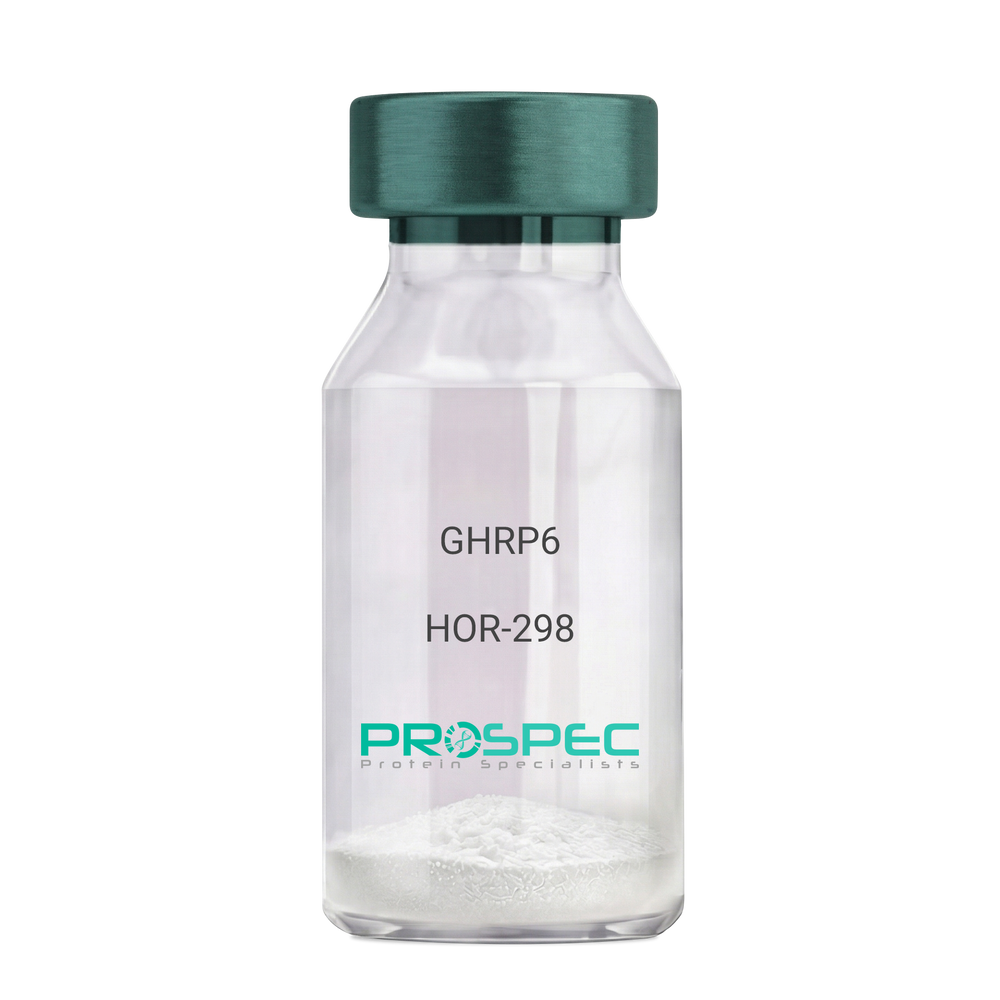
GHRP6Description:
Growth Hormone Releasing Peptide-6
GHRP-6, GHRP6
Product # :
HOR-298Price :
Quantity :
Shipping Method :
Shipped at Room temp
More Info
- description
- formulation
- purity
- More Info
- Citations
Description
Growth Hormone Releasing Peptide-6 Synthetic is a single, non-glycosylated polypeptide chain containing 6 amino acids, having a molecular mass of 873 Dalton and a Molecular formula of C46H56N12O6.
Formulation
The GHRP-6 peptide was lyophilized with no additives.
Purity
Greater than 98.0% as determined by analysis by RP-HPLC.
Citations
More Info
-
Introduction
GH-releasing peptides (GHRPs) are synthetic peptides that like GHRH act directly on pituitary somatotrophs to stimulate GH release. Growth hormone (GH) release is stimulated by a variety of synthetic secretagogues, of which growth hormone-releasing hexapeptide (GHRP-6) has been most thoroughly studied; it is thought to have actions at both pituitary and hypothalamic site.
-
Synonyms
GHRP-6, GHRP6
-
Physical Appearance
Sterile Filtered White lyophilized (freeze-dried) powder.
-
Stability
Lyophilized Growth Hormone Releasing Peptide-6 although stable at room temperature for 3 weeks, should be stored desiccated below -18°C. Upon reconstitution GHRP-6 should be stored at 4°C between 2-7 days and for future use below -18°C. For long term storage it is recommended to add a carrier protein (0.1% HSA or BSA).Please prevent freeze-thaw cycles.
-
Solubility
It is recommended to reconstitute the lyophilized GHRP-6 in sterile 18MΩ-cm H2O not less than 100 µg/ml, which can then be further diluted to other aqueous solutions.
-
Amino Acid Sequence
His-D-Trp-Ala-Trp-D-Phe-Lys-NH2.
ProSpec's products are furnished for LABORATORY RESEARCH USE ONLY. The product may not be used as drugs, agricultural or pesticidal products, food additives or household chemicals.
- View Data Sheet
Name :
TNFRSF25 HumanDescription:
TNF Ligand Receptor Superfamily Member 25 Recombinant Human
Tumor necrosis factor receptor superfamily member 25, TNFRSF25, TNF Ligand Receptor Superfamily Member 25, APO-3, DDR3, DR3, LARD, TNFRSF12, TR3, TRAMP, WSL-1, WSL-LR, Apo-3, Apoptosis-inducing receptor AIR, Protein WSL, Apoptosis-mediating receptor DR3, Apoptosis-mediating receptor TRAMP, Death receptor 3, Lymphocyte-associated receptor of death.
Product # :
CYT-980Price :
Quantity :
Shipping Method :
Shipped with Ice Packs
More Info
- description
- source
- formulation
- purity
- biological activity
- More Info
- Citations
Description
TNFRSF25 Human Recombinant produced in Sf9 Baculovirus cells is a single, glycosylated polypeptide chain containing 417 amino acids (25-199) and having a molecular mass of 46.1kDa (Molecular size on SDS-PAGE will appear at approximately 40-57kDa). TNFRSF25 is fused to a 242 amino acid IgG His-Tag at C-terminus and purified by proprietary chromatographic techniques.
Source
Sf9, Baculovirus cells.
Formulation
TNFRSF25 protein solution (0.25mg/ml) containing Phosphate Buffered Saline (pH 7.4) and 10% glycerol.
Purity
Greater than 95.0% as determined by analysis by SDS-PAGE.
Biological Activity
Determined by the binding ability in a functional ELISA with Human VEGI (CAT# cyt-589). The ED50 range ≤ 5ug/ml.
Citations
More Info
-
Introduction
TNF Ligand Receptor Superfamily Member 25 (TNFRSF25) belongs to the TNF receptor superfamily that binds to the TNF-like protein TL1A. TNFRSF25 interacts directly with the adapter TRADD and regulates lymphocyte homeostasis. TNFRSF25 is also mediates activation of NF-kappa-B and induces apoptosis. TNFRSF25 signals are vital to exert T helper cell 2 effector activity in Th2-polarized CD4 cells and co-stimulate interleukin-13 production by glycosphingolipid-activated NKT cells.
-
Synonyms
Tumor necrosis factor receptor superfamily member 25, TNFRSF25, TNF Ligand Receptor Superfamily Member 25, APO-3, DDR3, DR3, LARD, TNFRSF12, TR3, TRAMP, WSL-1, WSL-LR, Apo-3, Apoptosis-inducing receptor AIR, Protein WSL, Apoptosis-mediating receptor DR3, Apoptosis-mediating receptor TRAMP, Death receptor 3, Lymphocyte-associated receptor of death.
-
Physical Appearance
Sterile Filtered clear solution.
-
Stability
Store at 4°C if entire vial will be used within 2-4 weeks. Store, frozen at -20°C for longer periods of time. For long term storage it is recommended to add a carrier protein (0.1% HSA or BSA).Avoid multiple freeze-thaw cycles.
-
Amino Acid Sequence
ADPQGGTRSP RCDCAGDFHK KIGLFCCRGC PAGHYLKAPC TEPCGNSTCL VCPQDTFLAW ENHHNSECAR CQACDEQASQ VALENCSAVA DTRCGCKPGW FVECQVSQCV SSSPFYCQPC LDCGALHRHT RLLCSRRDTD CGTCLPGFYE HGDGCVSCPT STLGSCPERC AAVCGWRQLE PKSCDKTHTC PPCPAPELLG GPSVFLFPPK PKDTLMISRT PEVTCVVVDV SHEDPEVKFN WYVDGVEVHN AKTKPREEQY NSTYRVVSVL TVLHQDWLNG KEYKCKVSNK ALPAPIEKTI SKAKGQPREP QVYTLPPSRD ELTKNQVSLT CLVKGFYPSD IAVEWESNGQ PENNYKTTPP VLDSDGSFFL YSKLTVDKSR WQQGNVFSCS VMHEALHNHY TQKSLSLSPG KHHHHHH.
ProSpec's products are furnished for LABORATORY RESEARCH USE ONLY. The product may not be used as drugs, agricultural or pesticidal products, food additives or household chemicals.
- View Data Sheet
Name :
TUBB3 HumanDescription:
Tubulin, Beta 3 Class III Human Recombinant
Beta-4, CDCBM, CFEOM3A, TUBB4 , Tubulin beta-3 chain, Tubulin beta-4 chain, Tubulin beta-III, TUBB3.
Product # :
PRO-1388Price :
Quantity :
Shipping Method :
Shipped with Ice Packs
More Info
- description
- source
- formulation
- purity
- More Info
- Citations
Description
TUBB3 Human Recombinant produced in E.Coli is a single, non-glycosylated polypeptide chain containing 473 amino acids (1-450 a.a.) and having a molecular mass of 52.8kDa. TUBB3 is fused to a 23 amino acid His-tag at N-terminus & purified by proprietary chromatographic techniques.
Source
E.coli.
Formulation
TUBB3 protein solution (0.25mg/ml) contains 20mM Tris-HCl buffer (pH 8.0), 0.15M NaCl, 10% glycerol and 1mM DTT.
Purity
Greater than 90% as determined by SDS-PAGE.
Citations
More Info
-
Introduction
Tubulin, beta 3 class III (TUBB3), which is the major constituent of microtubules, is primarily Expressed in neurons and is involved in neurogenesis and in axon guidance and maintenance. TUBB3 binds two moles of GTP, one at an exchangeable site on the beta chain and one at a non-exchangeable site on the alpha-chain.
-
Synonyms
Beta-4, CDCBM, CFEOM3A, TUBB4 , Tubulin beta-3 chain, Tubulin beta-4 chain, Tubulin beta-III, TUBB3.
-
Physical Appearance
Sterile Filtered colorless solution.
-
Stability
Store at 4°C if entire vial will be used within 2-4 weeks. Store, frozen at -20°C for longer periods of time. For long term storage it is recommended to add a carrier protein (0.1% HSA or BSA).Avoid multiple freeze-thaw cycles.
-
Amino Acid Sequence
MGSSHHHHHH SSGLVPRGSH MGSMREIVHI QAGQCGNQIG AKFWEVISDE HGIDPSGNYV GDSDLQLERI SVYYNEASSH KYVPRAILVD LEPGTMDSVR SGAFGHLFRP DNFIFGQSGA GNNWAKGHYT EGAELVDSVL DVVRKECENC DCLQGFQLTH SLGGGTGSGM GTLLISKVRE EYPDRIMNTF SVVPSPKVSD TVVEPYNATL SIHQLVENTD ETYCIDNEAL YDICFRTLKL ATPTYGDLNH LVSATMSGVT TSLRFPGQLN ADLRKLAVNM VPFPRLHFFM PGFAPLTARG SQQYRALTVP ELTQQMFDAK NMMAACDPRH GRYLTVATVF RGRMSMKEVD EQMLAIQSKN SSYFVEWIPN NVKVAVCDIP PRGLKMSSTF IGNSTAIQEL FKRISEQFTA MFRRKAFLHW YTGEGMDEME FTEAESNMND LVSEYQQYQD ATAEEEGEMY EDDEEESEAQ GPK.
ProSpec's products are furnished for LABORATORY RESEARCH USE ONLY. The product may not be used as drugs, agricultural or pesticidal products, food additives or household chemicals.