Skip to content

High-quality research proteins.

  • 1-800-805-6531

  • Mon - Sat 8.00-18.00, Sun - Closed

  • info@prospecbio.com

  • PO Box 6591 East Brunswick NJ 08816

  • Products
    • Cytokines
    • Growth factors
    • Chemokines
    • Cd antigens
    • Neurotrophins
    • Hormones
    • Enzymes
    • Viral antigens
    • Recombinant proteins
    • Natural proteins
    • Monoclonal antibodies
    • Polyclonal antibodies
    • Thermal Packaging
  • About
    • Company
    • Founder
    • Contribution
  • Customers
    • Eastern Asia
    • Eastern Europe
    • North America
    • South America
    • South East Asia
    • Southern Asia
    • Western Europe
  • Ordering
    • Ordering Method
    • Ordering - Credit Card
    • Ordering - PO
    • Shipping Fees
    • FAQs
  • Services
    • DNA Cloning
    • Protein Expression
    • Monoclonal Antibody
    • Fermentation
    • Technology License
  • Contact us
Log in

Country/region

  • USD $ | Albania
  • USD $ | Andorra
  • USD $ | Argentina
  • USD $ | Armenia
  • USD $ | Australia
  • USD $ | Austria
  • USD $ | Azerbaijan
  • USD $ | Belarus
  • USD $ | Belgium
  • USD $ | Bolivia
  • USD $ | Brazil
  • USD $ | Bulgaria
  • USD $ | Cambodia
  • USD $ | Canada
  • USD $ | Chile
  • USD $ | China
  • USD $ | Colombia
  • USD $ | Costa Rica
  • USD $ | Croatia
  • USD $ | Cyprus
  • USD $ | Czechia
  • USD $ | Denmark
  • USD $ | Estonia
  • USD $ | Finland
  • USD $ | France
  • USD $ | Georgia
  • USD $ | Germany
  • USD $ | Greece
  • USD $ | Hong Kong SAR
  • USD $ | Hungary
  • USD $ | Iceland
  • USD $ | India
  • USD $ | Ireland
  • USD $ | Israel
  • USD $ | Italy
  • USD $ | Japan
  • USD $ | Kazakhstan
  • USD $ | Latvia
  • USD $ | Liechtenstein
  • USD $ | Lithuania
  • USD $ | Madagascar
  • USD $ | Malta
  • USD $ | Mexico
  • USD $ | Moldova
  • USD $ | Monaco
  • USD $ | Netherlands
  • USD $ | New Zealand
  • USD $ | North Macedonia
  • USD $ | Norway
  • USD $ | Panama
  • USD $ | Paraguay
  • USD $ | Peru
  • USD $ | Philippines
  • USD $ | Poland
  • USD $ | Portugal
  • USD $ | Romania
  • USD $ | Singapore
  • USD $ | Slovakia
  • USD $ | Slovenia
  • USD $ | South Africa
  • USD $ | South Korea
  • USD $ | Spain
  • USD $ | Sri Lanka
  • USD $ | Sweden
  • USD $ | Switzerland
  • USD $ | Taiwan
  • USD $ | Thailand
  • USD $ | Türkiye
  • USD $ | Ukraine
  • USD $ | United Kingdom
  • USD $ | United States
  • USD $ | Uruguay
  • USD $ | Vatican City
  • USD $ | Venezuela
  • USD $ | Vietnam
  • Facebook
  • Instagram
logoProSpec - Recombinant Protein Manufacturer for academic and R&D industry
Become a distributor
Account Log in
Wishlist
Cart Cart(0)
  • Products
    +
    • Cytokines
    • Growth factors
    • Chemokines
    • Cd antigens
    • Neurotrophins
    • Hormones
    • Enzymes
    • Viral antigens
    • Recombinant proteins
    • Natural proteins
    • Monoclonal antibodies
    • Polyclonal antibodies
    • Thermal Packaging
  • About
    +
    • Company
    • Founder
    • Contribution
  • Customers
    +
    • Eastern Asia
    • Eastern Europe
    • North America
    • South America
    • South East Asia
    • Southern Asia
    • Western Europe
  • Ordering
    +
    • Ordering Method
    • Ordering - Credit Card
    • Ordering - PO
    • Shipping Fees
    • FAQs
  • Services
    +
    • DNA Cloning
    • Protein Expression
    • Monoclonal Antibody
    • Fermentation
    • Technology License
  • Contact us

Item added to your cart

View cart
View All
  • Cytokines
  • Growth factors
  • Chemokines
  • Cd antigens
  • Neurotrophins
  • Hormones
  • Enzymes
  • Viral antigens
  • Recombinant proteins
  • Natural proteins
  • Monoclonal antibodies
  • Polyclonal antibodies
  • Thermal Packaging
  • Tumor Necrosis Factor

    Tumor Necrosis Factor

    View All
  • 4-1BB

    4-1BB

    View All
  • Adiponectin

    Adiponectin

    View All
  • AIF1

    AIF1

    View All
  • Other Cytokines

    Other Cytokines

    View All
  • AITRL

    AITRL

    View All
  • Angiopoietin

    Angiopoietin

    View All
  • Apolipoprotein

    Apolipoprotein

    View All
  • B-Cell Activating Factor

    B-Cell Activating Factor

    View All
  • Beta Defensin

    Beta Defensin

    View All
  • Bone Morphogenetic Protein

    Bone Morphogenetic Protein

    View All
  • B type Natriuretic Peptide

    B type Natriuretic Peptide

    View All
  • BST

    BST

    View All
  • Betacellulin

    Betacellulin

    View All
  • Cardiotrophin

    Cardiotrophin

    View All
  • Activin

    Activin

    View All
  • Fibroblast Growth Factor

    Fibroblast Growth Factor

    View All
  • Other Growth Factors

    Other Growth Factors

    View All
  • CSF

    CSF

    View All
  • CTGF

    CTGF

    View All
  • IGFBP

    IGFBP

    View All
  • VEGF Protein

    VEGF Protein

    View All
  • EGF

    EGF

    View All
  • Epigen

    Epigen

    View All
  • Erythropoietin

    Erythropoietin

    View All
  • Insulin-Like Growth Factor

    Insulin-Like Growth Factor

    View All
  • Growth Hormone

    Growth Hormone

    View All
  • HDGF

    HDGF

    View All
  • Hepatocyte Growth Factor

    Hepatocyte Growth Factor

    View All
  • Insulin

    Insulin

    View All
  • BCA-1/ BLC (CXCL13)

    BCA-1/ BLC (CXCL13)

    View All
  • BRAK (CXCL14)

    BRAK (CXCL14)

    View All
  • C-10 (CCL6)

    C-10 (CCL6)

    View All
  • Other Chemokines

    Other Chemokines

    View All
  • MEC (CCL28)

    MEC (CCL28)

    View All
  • LD78-beta (CCL3L1)

    LD78-beta (CCL3L1)

    View All
  • CTACK (CCL27)

    CTACK (CCL27)

    View All
  • CXCL16

    CXCL16

    View All
  • CXCL17

    CXCL17

    View All
  • Platelet Factor-4 (CXCL4)

    Platelet Factor-4 (CXCL4)

    View All
  • ENA-78 (CXCL5)

    ENA-78 (CXCL5)

    View All
  • Eotaxin (CCL11,24,26)

    Eotaxin (CCL11,24,26)

    View All
  • Exodus-2 (CCL21)

    Exodus-2 (CCL21)

    View All
  • Fractalkine (CX3CL1)

    Fractalkine (CX3CL1)

    View All
  • CXCL6

    CXCL6

    View All
  • Other CD Antigens

    Other CD Antigens

    View All
  • CD14

    CD14

    View All
  • CD164

    CD164

    View All
  • CD1

    CD1

    View All
  • CD2

    CD2

    View All
  • CD200

    CD200

    View All
  • CD207

    CD207

    View All
  • CD226

    CD226

    View All
  • CD23

    CD23

    View All
  • CD244

    CD244

    View All
  • CD247

    CD247

    View All
  • CD27

    CD27

    View All
  • CD274

    CD274

    View All
  • CD300

    CD300

    View All
  • CD33

    CD33

    View All
  • Other Neurotrophins

    Other Neurotrophins

    View All
  • Beta-NGF

    Beta-NGF

    View All
  • BDNF

    BDNF

    View All
  • CDNF

    CDNF

    View All
  • CNTF

    CNTF

    View All
  • GDNF

    GDNF

    View All
  • Glia Maturation Factor

    Glia Maturation Factor

    View All
  • MANF

    MANF

    View All
  • Midkine

    Midkine

    View All
  • Neuroglobin

    Neuroglobin

    View All
  • Neurotrophic factors

    Neurotrophic factors

    View All
  • Neuregulin

    Neuregulin

    View All
  • Neuropilin

    Neuropilin

    View All
  • Pigment Epithelium-Derived Factor

    Pigment Epithelium-Derived Factor

    View All
  • Pleiotrophin

    Pleiotrophin

    View All
  • Peptide Hormones

    Peptide Hormones

    View All
  • Other Hormones

    Other Hormones

    View All
  • HCG

    HCG

    View All
  • Endothelin

    Endothelin

    View All
  • Exendin

    Exendin

    View All
  • FSH

    FSH

    View All
  • Glucagon

    Glucagon

    View All
  • GHRP

    GHRP

    View All
  • GLP

    GLP

    View All
  • Thyrostimulin

    Thyrostimulin

    View All
  • Inhibin A

    Inhibin A

    View All
  • LHRH

    LHRH

    View All
  • Melanotan

    Melanotan

    View All
  • Procalcitonin

    Procalcitonin

    View All
  • PTH

    PTH

    View All
  • Peroxiredoxin

    Peroxiredoxin

    View All
  • Peptidase

    Peptidase

    View All
  • Synthetase

    Synthetase

    View All
  • Transferase

    Transferase

    View All
  • Hydrolase

    Hydrolase

    View All
  • Dehydrogenase

    Dehydrogenase

    View All
  • ACE2

    ACE2

    View All
  • Esterase

    Esterase

    View All
  • Protein Kinases

    Protein Kinases

    View All
  • Other Enzymes

    Other Enzymes

    View All
  • Phosphatase

    Phosphatase

    View All
  • Deaminase

    Deaminase

    View All
  • Oxygenase

    Oxygenase

    View All
  • Adenylate Kinase

    Adenylate Kinase

    View All
  • Lyase

    Lyase

    View All
  • Chagas

    Chagas

    View All
  • SARS

    SARS

    View All
  • Influenza

    Influenza

    View All
  • ASFV

    ASFV

    View All
  • Astrovirus

    Astrovirus

    View All
  • Borrelia

    Borrelia

    View All
  • Helicobacter Pylori

    Helicobacter Pylori

    View All
  • Chikungunya

    Chikungunya

    View All
  • Chlamydia

    Chlamydia

    View All
  • Cytomegalo

    Cytomegalo

    View All
  • Dengue

    Dengue

    View All
  • EBV

    EBV

    View All
  • Ebola

    Ebola

    View All
  • Feline Leukemia Virus

    Feline Leukemia Virus

    View All
  • Hepatitis A

    Hepatitis A

    View All
  • Other

    Other

    View All
  • Actin

    Actin

    View All
  • ADAM

    ADAM

    View All
  • Complement Component

    Complement Component

    View All
  • Ag85

    Ag85

    View All
  • Eukaryotic Translation Initiation Factor

    Eukaryotic Translation Initiation Factor

    View All
  • Anterior Gradient Protein

    Anterior Gradient Protein

    View All
  • Heat Shock Protein

    Heat Shock Protein

    View All
  • Alpha-2-HS-Glycoprotein

    Alpha-2-HS-Glycoprotein

    View All
  • Hemoglobin

    Hemoglobin

    View All
  • Allergy

    Allergy

    View All
  • Anaplasma

    Anaplasma

    View All
  • Angiogenin

    Angiogenin

    View All
  • Ankyrin Repeat Domain

    Ankyrin Repeat Domain

    View All
  • Annexin

    Annexin

    View All
  • Other Natural Proteins

    Other Natural Proteins

    View All
  • Aprotinin

    Aprotinin

    View All
  • Transferrin

    Transferrin

    View All
  • Avidin

    Avidin

    View All
  • Anti Coagulation Factors

    Anti Coagulation Factors

    View All
  • Natural Albumin

    Natural Albumin

    View All
  • Natural Coagulation Factors

    Natural Coagulation Factors

    View All
  • Fibronectin

    Fibronectin

    View All
  • Thrombin

    Thrombin

    View All
  • Anti Human Enzyme

    Anti Human Enzyme

    View All
  • Other Monoclonal Antibodies

    Other Monoclonal Antibodies

    View All
  • Anti Human Cytokine

    Anti Human Cytokine

    View All
  • Anti Human Heat Shock Protein

    Anti Human Heat Shock Protein

    View All
  • Anti Mouse Lymphocyte

    Anti Mouse Lymphocyte

    View All
  • Anti Human Chemokine

    Anti Human Chemokine

    View All
  • Anti Human Lymphocyte

    Anti Human Lymphocyte

    View All
  • Anti Viral Monoclonal

    Anti Viral Monoclonal

    View All
  • Anti Mouse Cytokine

    Anti Mouse Cytokine

    View All
  • Anti-GST Monoclonal

    Anti-GST Monoclonal

    View All
  • Other Polyclonal Antibodies

    Other Polyclonal Antibodies

    View All
  • Anti Viral

    Anti Viral

    View All
  • Anti-GST Monoclonal

    Anti-GST Monoclonal

    View All
Back

Search results

1000 results found for “neuritin”

Name

Description

Product #

Price

Quantity

Shipping Method

  • View Data Sheet

    Name :

    NDRG1 Human

    Description:

    N-Myc Downstream Regulated 1 Human Recombinant

    Protein NDRG1, N-myc downstream-regulated gene 1 protein, Differentiation-related gene 1 protein, Reducing agents and tunicamycin-responsive protein, Nickel-specific induction protein Cap43, DRG-1, RTP, Rit42, NDRG1, CAP43, DRG1, GC4, NDR1, NMSL, TDD5, CMT4D, HMSNL, TARG1, PROXY1.

    Product # :

    PRO-724

    Price :

    Quantity :

    Shipping Method :

    Ice Icon

    Shipped with Ice Packs

    Add To Cart

    More Info

    • description
    • source
    • formulation
    • purity
    • biological activity
    • More Info

    Description

    NDRG1 Human Recombinant fused with 8 amino acid His tag at C-terminus produced in E.Coli is a single, non-glycosylated, polypeptide chain containing 402 amino acids (1-394 a.a.) and having a molecular mass of 43.9 kDa.The NDRG1 is purified by proprietary chromatographic techniques.

    Source

    Escherichia Coli.

    Formulation

    The NDRG1 solution contains 20mM Tris-HCl buffer (pH8.0), 0.1mM PMSF and 10% Glycerol.

    Purity

    Greater than 95.0% as determined by SDS-PAGE.

    Biological Activity

    Measured in a cell proliferation assay using MCF7 cell. The ED50 for this effect is 0.5 - 1.5ng/ml, corresponding to a Specific Activity of 666,000 -2,000,000 IU/mg.

    More Info

    • Introduction

      NDRG1 is a cytoplasmic protein that is involved in stress responses, hormone responses, cell growth, and differentiation. NDRG1 is one of 4 members of the NDRG ?/?-hydrolase family. NDRG1 is classified in databases as a tumor suppressor and heavy metal-response protein. NDRG1’s functions include cell-cycle regulation, cellular differentiation, apoptosis, hypoxia response and metal-ion sensing. NDRG1 is also essential for p53-mediated caspase activation and apoptosis. The NDRG1 is a Rab4a effector that is involved in vesicular recycling of E-cadherin. NDRG1 is ubiquitous; it is expressed most notably in placental membranes and prostate, kidney, small intestine, and ovary tissues. NDRG1 has reduced expression in adenocarcinomas compared to normal tissues.
      NDRG1 gene mutations are reported to be the cause for hereditary motor and sensory neuropathy-Lom (HMSNL), which is a severe autosomal recessive form of Charcot- Marie-Tooth (CMT) disease. In addition, decreased NDRG1 expression in glioma is linked to tumor progression. On the other hand, overexpression of NDRG1 is connected to malignant status of esophageal cancer. NDRG1 may also have a role in portal vein invasion and intrahepatic metastasis in human hepatocellular carcinoma.

    • Synonyms

      Protein NDRG1, N-myc downstream-regulated gene 1 protein, Differentiation-related gene 1 protein, Reducing agents and tunicamycin-responsive protein, Nickel-specific induction protein Cap43, DRG-1, RTP, Rit42, NDRG1, CAP43, DRG1, GC4, NDR1, NMSL, TDD5, CMT4D, HMSNL, TARG1, PROXY1.

    • Physical Appearance

      Sterile Filtered colorless solution.

    • Stability

      Store at 4°C if entire vial will be used within 2-4 weeks.Store, frozen at -20°C for longer periods of time. For long term storage it is recommended to add a carrier protein (0.1% HSA or BSA).Avoid multiple freeze-thaw cycles.

    • Amino Acid Sequence

      MSREMQDVDL AEVKPLVEKG ETITGLLQEF DVQEQDIETL HGSVHVTLCG TPKGNRPVIL TYHDIGMNHK TCYNPLFNYE DMQEITQHFA
      VCHVDAPGQQ DGAASFPAGY MYPSMDQLAE MLPGVLQQFG LKSIIGMGTG AGAYILTRFA LNNPEMVEGL VLINVNPCAE GWMDWAASKI SGWTQALPDM VVSHLFGKEE MQSNVEVVHT YRQHIVNDMN PGNLHLFINA YNSRRDLEIE RPMPGTHTVT LQCPALLVVG DSSPAVDAVV ECNSKLDPTK TTLLKMADCG GLPQISQPAK LAEAFKYFVQ GMGYMPSASM TRLMRSRTAS GSSVTSLDGT RSRSHTSEGT RSRSHTSEGT RSRSHTSEGA HLDITPNSGA AGNSAGPKSM EVSCLEHHHH HH

    ProSpec's products are furnished for LABORATORY RESEARCH USE ONLY. The product may not be used as drugs, agricultural or pesticidal products, food additives or household chemicals.

    Ndrg1 Human
  • View Data Sheet

    Name :

    NIPSNAP1 Human

    Description:

    Nipsnap Homolog 1 Human Recombinant

    Nipsnap Homolog 1 (C. Elegans), 4 Nitrophenylphosphatase Domain And Non-Neuronal SNAP25-Like 1, NIPSNAP, C. Elegans, Homolog, Protein NipSnap Homolog 1, NipSnap1.

    Product # :

    PRO-1745

    Price :

    Quantity :

    Shipping Method :

    Ice Icon

    Shipped with Ice Packs

    Add To Cart

    More Info

    • description
    • source
    • formulation
    • purity
    • More Info

    Description

    NIPSNAP1 Human Recombinant produced in E.Coli is a single, non-glycosylated polypeptide chain containing 307 amino acids (1-284a.a) and having a molecular mass of 35.7kDa.NIPSNAP1 is fused to a 23 amino acid His-tag at N-terminus & purified by proprietary chromatographic techniques.

    Source

    Escherichia Coli.

    Formulation

    NIPSNAP1 protein solution (0.5mg/ml) containing 20mM Tris-HCl buffer (pH 8.0), 0.4M urea and 10% glycerol.

    Purity

    Greater than 85% as determined by SDS-PAGE.

    More Info

    • Introduction

      Nipsnap Homolog 1 (NIPSNAP1) belongs to the NipSnap family. NIPSNAP1 may take part in vesicular transport. A similar protein in mice inhibits the calcium channel TRPV6, and it is localized to the inner mitochondrialmembrane as well, where it may be involved in mitochondrial DNA maintenance. A pseudogene of NIPSNAP1 is located onthe short arm of chromosome 17. Among the diseases associated with NIPSNAP1 are maple syrup urine disease, and phenylketonuria.

    • Synonyms

      Nipsnap Homolog 1 (C. Elegans), 4 Nitrophenylphosphatase Domain And Non-Neuronal SNAP25-Like 1, NIPSNAP, C. Elegans, Homolog, Protein NipSnap Homolog 1, NipSnap1.

    • Physical Appearance

      Sterile Filtered clear solution.

    • Stability

      Store at 4°C if entire vial will be used within 2-4 weeks. Store, frozen at -20°C for longer periods of time.For long term storage it is recommended to add a carrier protein (0.1% HSA or BSA).Please avoid freeze thaw cycles.

    • Amino Acid Sequence

      MGSSHHHHHH SSGLVPRGSH MGSMAPRLCS ISVTARRLLG GPGPRAGDVA SAAAARFYSK DNEGSWFRSL FVHKVDPRKD AHSTLLSKKE TSNLYKIQFH NVKPEYLDAY NSLTEAVLPK LHLDEDYPCS LVGNWNTWYG EQDQAVHLWR FSGGYPALMD CMNKLKNNKE YLEFRRERSQMLLSRRNQLL LEFSFWNEPQ PRMGPNIYEL RTYKLKPGTM IEWGNNWARA IKYRQENQEA VGGFFSQIGE LYVVHHLWAY KDLQSREETR NAAWRKRGWD ENVYYTVPLV RHMESRIMIP LKISPLQ

    ProSpec's products are furnished for LABORATORY RESEARCH USE ONLY. The product may not be used as drugs, agricultural or pesticidal products, food additives or household chemicals.

    Nipsnap1 Human
  • View Data Sheet

    Name :

    NUDT1 Human

    Description:

    Nudix Type Motif 1 Human Recombinant

    7,8-dihydro-8-oxoguanine triphosphatase, 8-oxo-dGTPase, Nucleoside diphosphate-linked moiety X motif 1, Nudix motif 1, NUDT1, MTH1.

    Product # :

    ENZ-010

    Price :

    Quantity :

    Shipping Method :

    Ice Icon

    Shipped with Ice Packs

    Add To Cart

    More Info

    • description
    • source
    • formulation
    • purity
    • More Info

    Description

    NUDT1 Human Recombinant fused with a 20 amino acid His tag at N-terminus produced in E.Coli is a single, non-glycosylated, polypeptide chain containing 176 amino acids (1-156 a.a.) and having a molecular mass of 20.1kDa. The NUDT1 is purified by proprietary chromatographic techniques.

    Source

    Escherichia Coli.

    Formulation

    The NUDT1 solution (1mg/ml) contains 20mM Tris-HCl buffer (pH8.0), 10% glycerol, 2mM DTT and 100mM NaCl.

    Purity

    Greater than 95.0% as determined by SDS-PAGE.

    More Info

    • Introduction

      NUDT1 is an enzyme that hydrolyzes oxidized purine nucleoside triphosphates, such as 8-oxo-dGTP, 8-oxo-dATP, 2-hydroxy-dATP, and 2-hydroxy rATP, to monophosphates, thereby preventing misincorporation of 8-oxo-dGTP into DNA thus preventing A:T to C:G transversions. NUDT1 is found mostly in the cytoplasm, with some in the mitochondria, suggesting that it is involved in the sanitization of nucleotide pools both for nuclear and mitochondrial genomes. Moreover, NUDT1 is expressed at much higher levels in proliferating cells than in resting cells. Misincorporation of oxidized nucleoside triphosphates into DNA/RNA during replication and transcription can cause mutations which may result in carcinogenesis or neurodegeneration.

    • Synonyms

      7,8-dihydro-8-oxoguanine triphosphatase, 8-oxo-dGTPase, Nucleoside diphosphate-linked moiety X motif 1, Nudix motif 1, NUDT1, MTH1.

    • Physical Appearance

      Sterile Filtered colorless solution.

    • Stability

      Store at 4°C if entire vial will be used within 2-4 weeks. Store, frozen at -20°C for longer periods of time. For long term storage it is recommended to add a carrier protein (0.1% HSA or BSA).Avoid multiple freeze-thaw cycles.

    • Amino Acid Sequence

      MGSSHHHHHH SSGLVPRGSH MGASRLYTLV LVLQPQRVLL GMKKRGFGAG RWNGFGGKVQ EGETIEDGAR RELQEESGLT VDALHKVGQI VFEFVGEPEL MDVHVFCTDS IQGTPVESDE MRPCWFQLDQ IPFKDMWPDD SYWFPLLLQK KKFHGYFKFQ GQDTILDYTL REVDTV.

    ProSpec's products are furnished for LABORATORY RESEARCH USE ONLY. The product may not be used as drugs, agricultural or pesticidal products, food additives or household chemicals.

    Nudt1 Human
  • View Data Sheet

    Name :

    TNNI1 Human

    Description:

    Troponin I Type 1 Human Recombinant

    DKFZp451O223, SSTNI, TNN1, Troponin I, slow skeletal muscle ,Troponin I, slow-twitch isoform.

    Product # :

    PRO-1269

    Price :

    Quantity :

    Shipping Method :

    Ice Icon

    Shipped with Ice Packs

    Add To Cart

    More Info

    • description
    • source
    • formulation
    • purity
    • More Info

    Description

    TNNI1 Human Recombinant produced in E.Coli is a single, non-glycosylated polypeptide chain containing 207 amino acids (1-187 a.a.) and having a molecular mass of 23.8kDa.TNNI1 is fused to a 20 amino acid His-tag at N-terminus & purified by proprietary chromatographic techniques.

    Source

    Escherichia Coli.

    Formulation

    TNNI1 protein solution (1mg/ml) contains 20mM Tris-HCl buffer (pH 8.0), 0.4M urea and 10% glycerol.

    Purity

    Greater than 90.0% as determined by SDS-PAGE.

    More Info

    • Introduction

      Troponin I, (TNNI1) is a member of the troponin I family. Troponin complex has 3 subunits, TNNI1 known as the inhibitory Subunit which prevents the actin-myosin interactions and thus mediating striated muscle relaxation. TNNI1 combines with tropomyosin and regulates calcium sensitivity of striated muscles by structural modifications in actin-myosin complexes.

    • Synonyms

      DKFZp451O223, SSTNI, TNN1, Troponin I, slow skeletal muscle ,Troponin I, slow-twitch isoform.

    • Physical Appearance

      Sterile Filtered clear solution.

    • Stability

      Store at 4°C if entire vial will be used within 2-4 weeks. Store, frozen at -20°C for longer periods of time. For long term storage it is recommended to add a carrier protein (0.1% HSA or BSA).Avoid multiple freeze-thaw cycles.

    • Amino Acid Sequence

      MGSSHHHHHH SSGLVPRGSH MPEVERKPKI TASRKLLLKS LMLAKAKECW EQEHEEREAE KVRYLAERIP TLQTRGLSLS ALQDLCRELH AKVEVVDEER YDIEAKCLHN TREIKDLKLK VMDLRGKFKR PPLRRVRVSA DAMLRALLGS KHKVSMDLRA NLKSVKKEDT EKERPVEVGD WRKNVEAMSG MEGRKKMFDA AKSPTSQ

    ProSpec's products are furnished for LABORATORY RESEARCH USE ONLY. The product may not be used as drugs, agricultural or pesticidal products, food additives or household chemicals.

    Tnni1 Human
  • View Data Sheet

    Name :

    GTSF1 Human

    Description:

    Gametocyte Specific Factor 1 Human Recombinant

    Gametocyte Specific Factor 1, FAM112B, Family with Sequence Similarity 112 Member B, Gametocyte-Specific Factor 1, Protein FAM112B, GTSF1.

    Product # :

    PRO-561

    Price :

    Quantity :

    Shipping Method :

    Ice Icon

    Shipped with Ice Packs

    Add To Cart

    More Info

    • description
    • source
    • formulation
    • purity
    • More Info

    Description

    GTSF1 Human Recombinant produced in E.coli is a single, non-glycosylated polypeptide chain containing 190 amino acids (1-167) and having a molecular mass of 21.7 kDa.GTSF1 is fused to a 23 amino acid His-tag at N-terminus & purified by proprietary chromatographic techniques.

    Source

    Escherichia Coli.

    Formulation

    The GTSF1 solution (0.5mg/ml) contains 20mM Tris-HCl buffer (pH 8.0), 0.15M NaCl and 20% glycerol and 1mM DTT.

    Purity

    Greater than 90.0% as determined by SDS-PAGE.

    More Info

    • Introduction

      Gametocyte Specific Factor 1 (GTSF1) is a member of the UPF0224 (FAM112) family and contains 1 CHHC-type zinc finger. A key paralog of the GTSF1 gene is GTSF1L.

    • Synonyms

      Gametocyte Specific Factor 1, FAM112B, Family with Sequence Similarity 112 Member B, Gametocyte-Specific Factor 1, Protein FAM112B, GTSF1.

    • Physical Appearance

      Sterile Filtered clear solution.

    • Stability

      Store at 4°C if entire vial will be used within 2-4 weeks. Store, frozen at -20°C for longer periods of time. For long term storage it is recommended to add a carrier protein (0.1% HSA or BSA).Avoid multiple freeze-thaw cycles.

    • Amino Acid Sequence

      MGSSHHHHHH SSGLVPRGSH MGSMEETYTD SLDPEKLLQC PYDKNHQIRA CRFPYHLIKC RKNHPDVASK LATCPFNARH QVPRAEISHH ISSCDDRSCI EQDVVNQTRS LRQETLAEST WQCPPCDEDW DKDLWEQTST PFVWGTTHYS DNNSPASNIV TEHKNNLASG MRVPKSLPYV LPWKNNGNAQ.

    ProSpec's products are furnished for LABORATORY RESEARCH USE ONLY. The product may not be used as drugs, agricultural or pesticidal products, food additives or household chemicals.

    Gtsf1 Human
  • View Data Sheet

    Name :

    SERPINA3 Human

    Description:

    Alpha-1 AntiChymotrypsin Human

    Alpha-1-antichymotrypsin, ACT, Cell growth-inhibiting gene 24/25 protein, SERPINA3, AACT, A1ACT, GIG24, GIG25, MGC88254.

    Product # :

    PRO-378

    Price :

    Quantity :

    Shipping Method :

    Room Temp Icon

    Shipped at Room temp

    Add To Cart

    More Info

    • description
    • source
    • formulation
    • purity
    • More Info

    Description

    Human Alpha-1 AntiChymotrypsin produced from normal human serum having a molecular mass of 68kDa.

    Source

    Human Serum.

    Formulation

    Lyophilized from 0.02M Tris-buffer,pH-7.5 and 0.15M Nacl.

    Purity

    Greater than 90.0%.

    More Info

    • Introduction

      Alpha 1 ACT is an early-stage acute-phase plasma protein and a serpin that preferentially inactivates chymotrypsin, cathepsin G, and chymase. Alpha-1- ACT, a serine protease inhibitor, is tightly associated with amyloid plaques in Alzheimer's disease (AD) and in normal aged human and monkey brain.
      Regulation of the serine proteases and serine protease inhibitors plays an important role in neuromuscular differentiation. Prostate specific antigen (PSA), a chymotrypsin-like serine protease, is predominantly complexed to Alpha-1-ACT.

    • Synonyms

      Alpha-1-antichymotrypsin, ACT, Cell growth-inhibiting gene 24/25 protein, SERPINA3, AACT, A1ACT, GIG24, GIG25, MGC88254.

    • Physical Appearance

      Sterile Filtered White lyophilized (freeze-dried) powder.

    • Stability

      Human SERPINA3 although stable at room temperature for 3 weeks, should be stored between 2-8°C. Do not freeze.

    • Solubility

      It is recommended to reconstitute the lyophilized human A1ACT in sterile 18MΩ-cm H2O at 1mg/ml, which can then be further diluted to other aqueous solutions.

    • Human Virus Test

      Starting material tested and found negative for HIV I & II antibodies, Hepatitis B surface antigen, and Hepatitis C antibodies.

    ProSpec's products are furnished for LABORATORY RESEARCH USE ONLY. The product may not be used as drugs, agricultural or pesticidal products, food additives or household chemicals.

    Serpina3 Human
  • View Data Sheet

    Name :

    SERTAD2 Human

    Description:

    SERTA Domain Containing 2 Human Recombinant

    SERTA domain-containing protein 2, Transcriptional regulator interacting with the PHD-bromodomain 2, TRIP-Br2, SERTAD2, KIAA0127, SERTA domain containing 2, Sei-2.

    Product # :

    PRO-2021

    Price :

    Quantity :

    Shipping Method :

    Ice Icon

    Shipped with Ice Packs

    Add To Cart

    More Info

    • description
    • source
    • formulation
    • purity
    • More Info

    Description

    SERTAD2 Human Recombinant produced in E.coli is a single, non-glycosylated polypeptide chain containing 337 amino acids (1-314) and having a molecular mass of 36.3 kDa.SERTAD2 is fused to a 23 amino acid His-tag at N-terminus & purified by proprietary chromatographic techniques.

    Source

    E.coli.

    Formulation

    The SERTAD2 solution (0.25mg/ml) contains 20mM Tris-HCl buffer (pH 8.0), 0.15M NaCl, 10% glycerol and 1mM DTT.

    Purity

    Greater than 90% as determined by SDS-PAGE.

    More Info

    • Introduction

      SERTA domain containing 2 (SERTAD2) takes part at E2F-responsive promoters to integrate signals which are given by PHD- and bromodomain-containing transcription factors. The SERTAD2 protein is taking part in modulating fat storage by down-regulating the expression of key genes which take part in thermogenesis, adipocyte lipolysis and oxidative metabolism.

    • Synonyms

      SERTA domain-containing protein 2, Transcriptional regulator interacting with the PHD-bromodomain 2, TRIP-Br2, SERTAD2, KIAA0127, SERTA domain containing 2, Sei-2.

    • Physical Appearance

      Sterile Filtered colorless solution.

    • Stability

      Store at 4°C if entire vial will be used within 2-4 weeks. Store, frozen at -20°C for longer periods of time. For long term storage it is recommended to add a carrier protein (0.1% HSA or BSA).Avoid multiple freeze-thaw cycles.

    • Amino Acid Sequence

      MGSSHHHHHH SSGLVPRGSH MGSMLGKGGK RKFDEHEDGL EGKIVSPCDG PSKVSYTLQR QTIFNISLMK LYNHRPLTEP SLQKTVLINN MLRRIQEELK QEGSLRPMFT PSSQPTTEPS DSYREAPPAF SHLASPSSHP CDLGSTTPLE ACLTPASLLE DDDDTFCTSQ AMQPTAPTKL SPPALLPEKD SFSSALDEIE ELCPTSTSTE AATAATDSVK GTSSEAGTQK LDGPQESRAD DSKLMDSLPG NFEITTSTGF LTDLTLDDIL FADIDTSMYD FDPCTSSSGT ASKMAPVSAD DLLKTLAPYS SQPVTPSQPF KMDLTELDHI MEVLVGS.

    ProSpec's products are furnished for LABORATORY RESEARCH USE ONLY. The product may not be used as drugs, agricultural or pesticidal products, food additives or household chemicals.

    Sertad2 Human
  • View Data Sheet

    Name :

    VAV1 Human

    Description:

    Vav 1 Guanine Nucleotide Exchange Factor Human Recombinant

    Vav 1 Guanine Nucleotide Exchange Factor, VAV, Vav 1 Oncogene, Proto-Oncogene Vav.

    Product # :

    PRO-1764

    Price :

    Quantity :

    Shipping Method :

    Ice Icon

    Shipped with Ice Packs

    Add To Cart

    More Info

    • description
    • source
    • formulation
    • purity
    • More Info

    Description

    VAV1 Human Recombinant produced in E.Coli is a single, non-glycosylated polypeptide chain containing 400 amino acids (189-565a.a) and having a molecular mass of 46.8kDa.VAV1 is fused to a 23 amino acid His-tag at N-terminus & purified by proprietary chromatographic techniques.

    Source

    Escherichia Coli.

    Formulation

    VAV1 protein solution (0.25mg/ml) containing In 20mM Tris-HCl buffer (pH 8.0), 0.2M NaCl, 30% glycerol and 2mM DTT.

    Purity

    Greater than 85% as determined by SDS-PAGE.

    More Info

    • Introduction

      Vav 1 Guanine Nucleotide Exchange Factor (VAV1), belongs to the VAV gene family. The VAV1 proteins are guanine nucleotide exchange factors (GEFs) for Rho family GTPases which activate pathways leading to actin cytoskeletal rearrangements and transcriptional alterations. VAV1 is essential in hematopoiesis, taking part in T-cell and B-cell development and activation. VAV1 has been identified as the specific binding partner of Nef proteins from HIV-1. In addition, VAV1 contains an SH2 domain, which could show its function as a substrate for tyrosine kinases. Expression of VAV1 is limited solely to cells of hematopoietic origin, as well as those of the erythroid, lymphoid and myeloid lineages. Among the diseases associated with VAV1 are cherubism, and hiv-1.

    • Synonyms

      Vav 1 Guanine Nucleotide Exchange Factor, VAV, Vav 1 Oncogene, Proto-Oncogene Vav.

    • Physical Appearance

      Sterile Filtered clear solution.

    • Stability

      Store at 4°C if entire vial will be used within 2-4 weeks. Store, frozen at -20°C for longer periods of time.For long term storage it is recommended to add a carrier protein (0.1% HSA or BSA).Please avoid freeze thaw cycles.

    • Amino Acid Sequence

      MGSSHHHHHH SSGLVPRGSH MGSMTEYDKR CCCLREIQQT EEKYTDTLGS IQQHFLKPLQ RFLKPQDIEI IFINIEDLLR VHTHFLKEMK EALGTPGAAN LYQVFIKYKE RFLVYGRYCS QVESASKHLD RVAAAREDVQ MKLEECSQRA NNGRFTLRDL LMVPMQRVLK YHLLLQELVK HTQEAMEKEN LRLALDAMRD LAQCVNEVKR DNETLRQITN FQLSIENLDQ SLAHYGRPKI DGELKITSVE RRSKMDRYAF LLDKALLICK RRGDSYDLKD FVNLHSFQVR DDSSGDRDNK KWSHMFLLIE DQGAQGYELF FKTRELKKKW MEQFEMAISN IYPENATANG HDFQMFSFEE TTSCKACQML LRGTFYQGYR CHRCRASAHK ECLGRVPPCG

    ProSpec's products are furnished for LABORATORY RESEARCH USE ONLY. The product may not be used as drugs, agricultural or pesticidal products, food additives or household chemicals.

    Vav1 Human
  • View Data Sheet

    Name :

    GHRP2

    Description:

    Growth Hormone Releasing Peptide-2

    GHRP-2, GHRP.

    Product # :

    HOR-271

    Price :

    Quantity :

    Shipping Method :

    Room Temp Icon

    Shipped at Room temp

    Add To Cart

    More Info

    • description
    • formulation
    • purity
    • More Info

    Description

    Growth Hormone Releasing Peptide-2 Synthetic is a single, non-glycosylated polypeptide chain containing 6 amino acids, having a molecular mass of 817.9 Dalton and a Molecular formula of C45H55N9O6.

    Formulation

    The GHRP-2 hormone was lyophilized with no additives.

    Purity

    Greater than 99.0% as determined by analysis by RP-HPLC.

    More Info

    • Introduction

      GH-releasing peptides (GHRPs) are synthetic peptides that like GHRH act directly on pituitary somatotrophs to stimulate GH release. GHRP-2, an investigational drug, is one of the most potent members of the GHRP family. It has been shown to be effective in adults via the oral and intranasal as well as the iv route of administration.

    • Synonyms

      GHRP-2, GHRP.

    • Physical Appearance

      Sterile Filtered White lyophilized (freeze-dried) powder.

    • Stability

      Lyophilized Growth Hormone Releasing Peptide-2 although stable at room temperature for 3 weeks, should be stored desiccated below -18°C. Upon reconstitution GHRP-2 should be stored at 4°C between 2-7 days and for future use below -18°C.For long term storage it is recommended to add a carrier protein (0.1% HSA or BSA).Please prevent freeze-thaw cycles.

    • Solubility

      It is recommended to reconstitute the lyophilized GHRP-2 in sterile 18MΩ-cm H2O not less than 100 µg/ml, which can then be further diluted to other aqueous solutions.

    • Amino Acid Sequence

      H-D-Ala-D-2-Nal-Ala-Trp-D-Phe-Lys-NH2.

    ProSpec's products are furnished for LABORATORY RESEARCH USE ONLY. The product may not be used as drugs, agricultural or pesticidal products, food additives or household chemicals.

    Ghrp 2 Human
  • View Data Sheet

    Name :

    TNIP1 Human

    Description:

    TNFAIP3 Interacting Protein 1 Human Recombinant

    TNFAIP3-interacting protein 1, HIV-1 Nef-interacting protein, Nef-associated factor 1, Naf1, Nip40-1, Virion-associated nuclear shuttling protein, VAN, hVAN, TNIP1, KIAA0113, NAF1, ABIN-1.

    Product # :

    PRO-005

    Price :

    Quantity :

    Shipping Method :

    Ice Icon

    Shipped with Ice Packs

    Add To Cart

    More Info

    • description
    • source
    • formulation
    • purity
    • More Info

    Description

    TNIP1 Human Recombinant fused with a 20 amino acid His tag at N-terminus produced in E.Coli is a single, non-glycosylated, polypeptide chain containing 458 amino acids (94-530 a.a.) and having a molecular mass of 51.8kDa. The TNIP1 is purified by proprietary chromatographic techniques.

    Source

    Escherichia Coli.

    Formulation

    The TNIP1 solution (0.25 mg/ml) contains 20mM Tris-HCl buffer (pH7.5), 20% glycerol, 5mM DTT and 200mM NaCl.

    Purity

    Greater than 75.0% as determined by SDS-PAGE.

    More Info

    • Introduction

      TNFAIP3-interacting protein 1 (TNIP1) interacts with zinc finger protein A20/TNFAIP3 and inhibits TNF-induced NF-kappa-B-dependent gene expression by interfering with a RIP- or TRAF2-mediated transactivation signal. Furthermore, TNIP1 interacts with HIV-1 matrix protein and is packaged into virions and its overexpression can inhibit viral replication. TNIP1 can regulate matrix nuclear localization, both nuclear import of Preintegration complex (PIC) and export of GAG polyprotein and viral genomic RNA during virion production.

    • Synonyms

      TNFAIP3-interacting protein 1, HIV-1 Nef-interacting protein, Nef-associated factor 1, Naf1, Nip40-1, Virion-associated nuclear shuttling protein, VAN, hVAN, TNIP1, KIAA0113, NAF1, ABIN-1.

    • Physical Appearance

      Sterile Filtered colorless solution.

    • Stability

      Store at 4°C if entire vial will be used within 2-4 weeks. Store, frozen at -20°C for longer periods of time. For long term storage it is recommended to add a carrier protein (0.1% HSA or BSA).Avoid multiple freeze-thaw cycles.

    • Amino Acid Sequence

      MGSSHHHHHH SSGLVPRGSH MSNVTASPTA PACPSDKPAP VQKPPSSGTS SEFEVVTPEE QNSPESSSHA NAMALGPLPR EDGNLMLHLQ RLETTLSVCA EEPDHGQLFT HLGRMALEFN RLASKVHKNE QRTSILQTLC EQLRKENEAL KAKLDKGLEQ RDQAAERLRE ENLELKKLLM SNGNKEGASG RPGSPKMEGT GKKAVAGQQQ ASVTAGKVPE VVALGAAEKK VKMLEQQRSE LLEVNKQWDQ HFRSMKQQYE QKITELRQKL ADLQKQVTDL EAEREQKQRD FDRKLLLAKS KIEMEETDKE QLTAEAKELR QKVKYLQDQL SPLTRQREYQ EKEIQRLNKA LEEALSIQTP PSSPPTAFGS PEGAGALLRK QELVTQNELL KQQVKIFEED FQRERSDRER MNEEKEELKK QVEKLQAQVT LSNAQLKAFK DEEKAREALR QQKRKAKA.

    ProSpec's products are furnished for LABORATORY RESEARCH USE ONLY. The product may not be used as drugs, agricultural or pesticidal products, food additives or household chemicals.

    Tnip1 Human
  • View Data Sheet

    Name :

    VSTM2L Human

    Description:

    V-Set and Transmembrane Domain Containing 2 Like Human Recombinant

    V-set and transmembrane domain-containing protein 2-like protein, VSTM2L, C20orf102, dJ1118M15.2.

    Product # :

    PRO-1018

    Price :

    Quantity :

    Shipping Method :

    Ice Icon

    Shipped with Ice Packs

    Add To Cart

    More Info

    • description
    • source
    • formulation
    • purity
    • More Info

    Description

    VSTM2L Human Recombinant produced in E.Coli is a single, non-glycosylated polypeptide chain containing 205 amino acids (25-204 a.a.) and having a molecular mass of 22.6kDa. VSTM2L is fused to a 25 amino acid His-tag at N-terminus & purified by proprietary chromatographic techniques.

    Source

    E.coli.

    Formulation

    VSTM2L protein solution (0.25mg/ml) containing 20mM Tris-HCl buffer (pH8.0), 20% glycerol, 0.1M NaCl,1mM DTT and 0.1mM PMSF.

    Purity

    Greater than 90% as determined by SDS-PAGE.

    More Info

    • Introduction

      V-set and transmembrane domain containing 2 (VSTM2L) is a novel modulator of HN neuroprotective activity. VSTM2L colocalizes with HN in distinct brain areas as well as in primary cultured neurons, where it plays a part in the modulation of neuronal viability. When tested in HN neuroprotection bioassays, VSTM2L acts as a potent antagonist of HN neuroprotective activity. The VSTM2L protein is the first example of a secreted antagonist of HN and may have a role in the modulation of HN biological functions.

    • Synonyms

      V-set and transmembrane domain-containing protein 2-like protein, VSTM2L, C20orf102, dJ1118M15.2.

    • Physical Appearance

      Sterile Filtered colorless solution.

    • Stability

      Store at 4°C if entire vial will be used within 2-4 weeks. Store, frozen at -20°C for longer periods of time. For long term storage it is recommended to add a carrier protein (0.1% HSA or BSA).Avoid multiple freeze-thaw cycles.

    • Amino Acid Sequence

      MGSSHHHHHH SSGLVPRGSH MGSHMTRPAG HAPWDNHVSG HALFTETPHD MTARTGEDVE MACSFRGSGS PSYSLEIQWW YVRSHRDWTD KQAWASNQLK ASQQEDAGKE ATKISVVKVV GSNISHKLRL SRVKPTDEGS YECRVIDFSD GKARHHKVKA YLRVQPGENS VLHLPEAPPA APAPPPPKPG KELRKRSVDQ EACSL.

    ProSpec's products are furnished for LABORATORY RESEARCH USE ONLY. The product may not be used as drugs, agricultural or pesticidal products, food additives or household chemicals.

    Vstm2L Human
  • View Data Sheet

    Name :

    LHRH Human

    Description:

    Luteinizing Hormone Releasing Hormone Human

    Progonadoliberin-1, Progonadoliberin I, LHRH, GRH, GNRH, LNRH.

    Product # :

    HOR-261

    Price :

    Quantity :

    Shipping Method :

    Room Temp Icon

    Shipped at Room temp

    Add To Cart

    More Info

    • description
    • formulation
    • purity
    • More Info

    Description

    Lutenizing Hormone Releasing Hormone Human Synthetic is a single, non-glycosylated, polypeptide chain containing 10 amino acids and having a molecular mass of 1182.2 Dalton. The molecular formula is C55H75N17O13.C2H4O2. The CAS Number is 71447-49-9.

    Formulation

    The LHRH was lyophilized from a concentrated (1 mg/ml) solution with no additives.

    Purity

    Greater than 98.0% as determined by RP-HPLC.

    More Info

    • Introduction

      Gonadotropin-releasing hormone 1 (GNRH1), also known as Luteinising-hormone releasing hormone (LHRH), is a peptide hormone responsible for the release of FSH and LH from the anterior pituitary. GNRH1 is synthesized and released by the hypothalamus.
      At the pituitary, GNRH1 stimulates the synthesis and secretion of the gonadotropins follicle-stimulating hormone (FSH) and luteinizing hormone (LH). These processes are controlled by the size and frequency of GNRH1 pulses, as well as by feedback from androgens and estrogens. Low requency GNRH1 pulses lead to FSH release, whereas high frequency GNRH1 pulses stimulate LH release.
      There are differences in GNRH1 secretion between males and females. In males, GNRH1 is secreted in pulses at a constant frequency, but in females the frequency of the pulses varies during the menstrual cycle and there is a large surge of GNRH1 just before ovulation.
      GNRH1 secretion is pulsatile in all vertebrates, and is necessary for correct reproductive function. Thus, a single hormone, GNRH1, controls a complex process of follicular growth, ovulation, and corpus luteum maintenance in the female, and spermatogenesis in the male.

    • Synonyms

      Progonadoliberin-1, Progonadoliberin I, LHRH, GRH, GNRH, LNRH.

    • Physical Appearance

      Sterile Filtered White lyophilized (freeze-dried) powder.

    • Stability

      Lyophilized LHRH although stable at room temperature for 3 weeks, should be stored desiccated below -18°C. Upon reconstitution LNRH should be stored at 4°C between 2-7 days and for future use below -18°C.For long term storage it is recommended to add a carrier protein (0.1% HSA or BSA).Please prevent freeze-thaw cycles.

    • Solubility

      It is recommended to reconstitute the lyophilized LHRH in sterile 18MΩ-cm H2O not less than 100µg/ml, which can then be further diluted to other aqueous solutions. The LHRH is also soluble in a 1% glacial acetic acid.

    • Amino Acid Sequence

      Pyr-His-Trp-Ser-Tyr-Gly-Leu-Arg-Pro-Gly-NH2.

    ProSpec's products are furnished for LABORATORY RESEARCH USE ONLY. The product may not be used as drugs, agricultural or pesticidal products, food additives or household chemicals.

    Lhrh Human
  • View Data Sheet

    Name :

    CRYAB Human

    Description:

    Crystallin Alpha B Human Recombinant

    CRYA2, CTPP2, HSPB5, Crystallin Alpha B, CRYAB.

    Product # :

    HSP-003

    Price :

    Quantity :

    Shipping Method :

    Ice Icon

    Shipped with Ice Packs

    Add To Cart

    More Info

    • description
    • source
    • formulation
    • purity
    • More Info

    Description

    Recombinant CRYAB produced in E.Coli is a single,non-glycosylated polypeptide chain containing 175 amino acids and having a molecular mass of 20.1kDa. CRYAB is purified by proprietary chromatographic techniques.

    Source

    Escherichia Coli.

    Formulation

    The CRYAB protein (1mg/ml) solution contains 20mM Tris-HCl buffer pH-7.5, 50mM NaCl and 1mM EDTA.

    Purity

    Greater than 95.0% as determined by SDS-PAGE.

    More Info

    • Introduction

      Alpha crystallins are composed of two gene products ; alpha-A and alpha-B, for acidic and basic, respectively. Alpha crystallins can be induced by heat shock and are members of the small heat shock protein (sHSP also known as the HSP20). They act as molecular chaperones and hold them in in large soluble aggregates. These heterogeneous aggregates consist of 30-40 subunits; the alpha-A and alpha-B subunits have a 3:1 ratio, respectively. Two additional function of a-crystallins are an autokinase activity and participation in the intracellular architecture. Alpha-B is expressed widely in many tissues and organs and occurs in many neurological diseases.

    • Synonyms

      CRYA2, CTPP2, HSPB5, Crystallin Alpha B, CRYAB.

    • Physical Appearance

      Sterile filtered colorless solution.

    • Stability

      Store at 4°C if entire vial will be used within 2-4 weeks. Store, frozen at -20°C for longer periods of time. For long term storage it is recommended to add a carrier protein (0.1% HSA or BSA).Avoid multiple freeze-thaw cycles.

    • Amino Acid Sequence

      MDIAIHHPWI RRPFFPFHSP SRLFDQFFGE HLLESDLFPT STSLSPFYLR PPSFLRAPSWFDTGLSEMRL EKDRFSVNLD VKHFSPEELK VKVLGDVIEV HGKHEERQDE HGFISREFHRKYRIPADVDP LTITSSLSSD GVLTVNGPRK QVSGPERTIP ITREEKPAVT AAPKK.

    ProSpec's products are furnished for LABORATORY RESEARCH USE ONLY. The product may not be used as drugs, agricultural or pesticidal products, food additives or household chemicals.

    Cryab Human
  • View Data Sheet

    Name :

    Fertirelin

    Description:

    Fertirelin

    Product # :

    HOR-037

    Price :

    Quantity :

    Shipping Method :

    Room Temp Icon

    Shipped at Room temp

    Add To Cart

    More Info

    • description
    • formulation
    • purity
    • More Info

    Description

    Fertirelin Synthetic is a single, non-glycosylated polypeptide chain containing 9 amino acids, having a molecular mass of 1153.31 Dalton and a Molecular formula of C55H76N16O12.

    Formulation

    The protein was lyophilized with no additives.

    Purity

    Greater than 97.0% as determined by analysis by RP-HPLC.

    More Info

    • Physical Appearance

      Sterile Filtered White lyophilized (freeze-dried) powder.

    • Stability

      Lyophilized Fertirelin although stable at room temperature for 3 weeks, should be stored desiccated below -18°C. Upon reconstitution Fertirelin should be stored at 4°C between 2-7 days and for future use below -18°C. For long term storage it is recommended to add a carrier protein (0.1% HSA or BSA). Please prevent freeze-thaw cycles.

    • Solubility

      It is recommended to reconstitute the lyophilized Fertirelin in sterile 18MΩ-cm H2O not less than 100 µg/ml, which can then be further diluted to other aqueous solutions.

    • Amino Acid Sequence

      Pyr-His-Trp-Ser-Tyr-Gly-Leu-Arg-Pro-NHEt.

    • Background

      Fertirelin, a potent gonadotropin-releasing hormone (GnRH) analogue, is crucial for fertility regulation in animals. This research paper endeavors to expound on the biochemical attributes of fertirelin and its potential therapeutic applications in veterinary medicine.

      Fertirelin, a synthetic analogue of the natural gonadotropin-releasing hormone, plays a fundamental role in fertility regulation in veterinary medicine. It stimulates the secretion of luteinizing hormone and follicle-stimulating hormone, crucial for reproduction (Kotwica et al., 2005). This paper aims to delve into the biochemical characteristics of fertirelin and its potential applications.

      Fertirelin, as a GnRH analogue, elicits its action by binding to GnRH receptors located on pituitary gonadotroph cells. This leads to the release of luteinizing hormone and follicle-stimulating hormone, key players in ovulation and spermatogenesis (Kotwica et al., 2005).

      In the realm of veterinary medicine, fertirelin is primarily used for treating ovarian follicular cysts in dairy cattle (Bosu & Peter, 1987). Its potent stimulatory effect on gonadotropin secretion facilitates ovulation and contributes to fertility management strategies.

      The potential of fertirelin extends beyond the current applications. Further research into the precise mechanism of action and potential side effects can enhance its utilization. Overall, fertirelin presents a powerful tool in veterinary reproductive medicine, making it a focal point of interest for future studies.

    ProSpec's products are furnished for LABORATORY RESEARCH USE ONLY. The product may not be used as drugs, agricultural or pesticidal products, food additives or household chemicals.

    Fertirelin
  • View Data Sheet

    Name :

    Leptin-A Tilapia

    Description:

    Leptin-A Tilapia Recombinant

    Product # :

    CYT-1109

    Price :

    Quantity :

    Shipping Method :

    Room Temp Icon

    Shipped at Room temp

    Add To Cart

    More Info

    • description
    • source
    • formulation
    • purity
    • biological activity
    • More Info

    Description

    Leptin-A Tilapia Recombinant produced in E.Coli is a single, non-glycosylated polypeptide chain containing 161 amino acids and having a molecular mass of 16,491 Dalton. The Leptin-A Tilapia is purified by proprietary chromatographic techniques.

    Source

    Escherichia Coli.

    Formulation

    Lyophilized from a concentrated (1mg/ml) solution containing NaHCO3 at 1:2 salt: protein ratio.

    Purity

    Greater than 95.0% as determined by:
    (a) Gel filtration analysis.
    (b) Analysis by SDS-PAGE.

    Biological Activity

    Tilapia leptins were found to be biologically active in promoting proliferation of BAF/3 cells stably transfected with the long form of human leptin receptor, but their activity was lower than that of mammalian leptin. Furthermore, the Tilapia leptins were biologically active in promoting STAT‐LUC activation in COS7 cells transfected with Tilapia leptin receptor but not in cells transfected with human leptin receptor. Tilapia Leptin A was more active than Tilapia Leptin B.

    More Info

    • Introduction

      Leptin is a protein hormone. It is mainly produced in adipose cells that regulate energy homeostasis by restraining hunger. Leptin ties to nuclear receptors in the hypothalamus (arcuate nucleus). Similar to insulin resistance in type II diabetes, in obesity there is a decrease in the sensitivity towards leptin, ending in a failure to identify satiety, even in high levels of energy stores or leptin itself. Full-length cDNA encoding 2 leptin sequences (tLepA and tLepB) and 1 leptin receptor sequence (tLepR) exists in tilapia (Oreochromis niloticus). The full-length cDNA of tLepR is 3423 bp, encoding a protein of 1140 amino acid which contained all functionally important domains conserved among vertebrate leptin receptors. The cDNAs of tLepA and tLepB are 486 bp and 459 bp in length, encoding proteins of 161 aa and 152 aa, respectively. The three-dimensional structures of tLepA and tLepB demonstrates strong conservation of tertiary structure with that of human leptin comprised of 4 helixes.

    • Physical Appearance

      Sterile Filtered White lyophilized (freeze-dried) powder.

    • Stability

      Lyophilized Leptin-A Tilapia although stable at room temperature for 3 weeks, should be stored desiccated below -18°C. Upon reconstitution Leptin-A Tilapia should be stored at 4°C between 2-7 days and for future use below -18°C. For long term storage it is recommended to add a carrier protein (0.1% HSA or BSA). Please prevent freeze-thaw cycles.

    • Solubility

      It is recommended to reconstitute the lyophilized Leptin-A Tilapia in sterile water or 0.4% NaHCO3 adjusted to pH 8-9, not less than 100µg/ml, which can then be further diluted to other aqueous solutions.

    • Amino Acid Sequence

      The first six N-terminal amino acids of recombinant Tilapia leptin A are Ala-Pro-Leu-Pro-Val-Glu.

    • Protein content

      Protein quantitation was carried out by UV spectroscopy at 280 nm using the absorbency value of 1.33 for 1 mg/ml Leptin-A Tilapia as the extinction coefficient for a 0.1% (1mg/ml) solution at pH 8.0. This value is calculated by the DNAman computer analysis program of protein sequences.

    ProSpec's products are furnished for LABORATORY RESEARCH USE ONLY. The product may not be used as drugs, agricultural or pesticidal products, food additives or household chemicals.

    Leptin A
  • View Data Sheet

    Name :

    Leptin-B Tilapia

    Description:

    Leptin-B Tilapia Recombinant

    Product # :

    CYT-1110

    Price :

    Quantity :

    Shipping Method :

    Room Temp Icon

    Shipped at Room temp

    Add To Cart

    More Info

    • description
    • source
    • formulation
    • purity
    • biological activity
    • More Info

    Description

    Leptin-B Tilapia Recombinant produced in E.Coli is a single, non-glycosylated polypeptide chain containing 152 amino acids and having a molecular mass of 15,243 Dalton. The Leptin-B Tilapia is purified by proprietary chromatographic techniques.

    Source

    Escherichia Coli.

    Formulation

    Lyophilized from a concentrated (1mg/ml) solution containing NaHCO3 at 1:2 salt: protein ratio.

    Purity

    Greater than 95.0% as determined by:
    (a) Gel filtration analysis.
    (b) Analysis by SDS-PAGE.

    Biological Activity

    Tilapia leptins were found to be biologically active in promoting proliferation of BAF/3 cells stably transfected with the long form of human leptin receptor, but their activity was lower than that of mammalian leptin. Furthermore, the Tilapia leptins were biologically active in promoting STAT‐LUC activation in COS7 cells transfected with Tilapia leptin receptor but not in cells transfected with human leptin receptor. Tilapia Leptin A was more active than Tilapia Leptin B.

    More Info

    • Introduction

      Leptin is a protein hormone. It is mainly produced in adipose cells that regulate energy homeostasis by restraining hunger. Leptin ties to nuclear receptors in the hypothalamus (arcuate nucleus). Similar to insulin resistance in type II diabetes, in obesity there is a decrease in the sensitivity towards leptin, ending in a failure to identify satiety, even in high levels of energy stores or leptin itself. Full-length cDNA encoding 2 leptin sequences (tLepA and tLepB) and 1 leptin receptor sequence (tLepR) exists in tilapia (Oreochromis niloticus). The full-length cDNA of tLepR is 3423 bp, encoding a protein of 1140 amino acid which contained all functionally important domains conserved among vertebrate leptin receptors. The cDNAs of tLepA and tLepB are 486 bp and 459 bp in length, encoding proteins of 161 aa and 152 aa, respectively. The three-dimensional structures of tLepA and tLepB demonstrates strong conservation of tertiary structure with that of human leptin comprised of 4 helixes.

    • Physical Appearance

      Sterile Filtered White lyophilized (freeze-dried) powder.

    • Stability

      Lyophilized Leptin-B Tilapia although stable at room temperature for 3 weeks, should be stored desiccated below -18°C. Upon reconstitution Leptin-B Tilapia should be stored at 4°C between 2-7 days and for future use below -18°C. For long term storage it is recommended to add a carrier protein (0.1% HSA or BSA). Please prevent freeze-thaw cycles.

    • Solubility

      It is recommended to reconstitute the lyophilized Leptin-B Tilapia in sterile water or 0.4% NaHCO3 adjusted to pH 8-9, not less than 100µg/ml, which can then be further diluted to other aqueous solutions.

    • Amino Acid Sequence

      The first six N-terminal amino acids of recombinant Tilapia leptin B are Ala-Leu-Leu-Thr-Lys-Gly.

    • Protein content

      Protein quantitation was carried out by UV spectroscopy at 280 nm using the absorbency value of 0.19 for 1 mg/ml Leptin-B Tilapia as the extinction coefficient for a 0.1% (1mg/ml) solution at pH 8.0. This value is calculated by the DNAman computer analysis program of protein sequences.

    ProSpec's products are furnished for LABORATORY RESEARCH USE ONLY. The product may not be used as drugs, agricultural or pesticidal products, food additives or household chemicals.

    Leptin B
  • View Data Sheet

    Name :

    VEGF Human

    Description:

    Vascular Endothelial Growth Factor Human Recombinant

    Vascular endothelial growth factor A, VEGF-A, Vascular permeability factor, VPF, VEGF, MGC70609.

    Product # :

    CYT-241

    Price :

    Quantity :

    Shipping Method :

    Room Temp Icon

    Shipped at Room temp

    Add To Cart

    More Info

    • description
    • source
    • formulation
    • purity
    • biological activity
    • More Info

    Description

    Vascular Endothelial Growth Factor Human Recombinant produced in E.Coli is a double, non-glycosylated, polypeptide chain containing 165 amino acids and having a molecular mass of 38.2kDa.The VEGF is purified by proprietary chromatographic techniques.

    Source

    Escherichia Coli.

    Formulation

    The VEGF protein was lyophilized from a concentrated (1mg/ml) solution with no additives.

    Purity

    Greater than 95.0% as determined by:
    (a) Analysis by RP-HPLC.
    (b) Analysis by SDS-PAGE.

    Biological Activity

    Determined by the dose-dependent stimulation of the proliferation of human umbilical vein endothelial cells (HUVEC) using a concentration range of 3.7-5.6 ng/ml, corresponding to a Specific Activity of 178,570-270,270IU/mg.

    More Info

    • Introduction

      Vascular endothelial growth factor (VEGF) is an important signaling protein involved in vessel formation As its name implies, VEGF activity has been mostly studied on cells of the vascular endothelium, although it does have effects on a number of other cell types (e.g. stimulation monocyte/macrophage migration, neurons, cancer cells, kidney epithelial cells ). VEGF mediates increased vascular permeability, induces vasculogenesis and endothelial cell production, promotes cell migration, and inhibits apoptosis. In vitro, VEGF has been shown to stimulate endothelial cell mitogenesis and cell migration. VEGF is also a vasodilator and increases microvascular permeability and was originally referred to as vascular permeability factor. VEGF is located in normal cartilage though only osteoarthritic cartilage expresses the VEGF receptors, NP1, VEGFR1 and VEGFR2. The VEGF level in the culture media from OA chondrocytes was more than 3 folds higher than in media from normal chondrocytes

    • Synonyms

      Vascular endothelial growth factor A, VEGF-A, Vascular permeability factor, VPF, VEGF, MGC70609.

    • Physical Appearance

      Sterile Filtered White lyophilized (freeze-dried) powder.

    • Stability

      Lyophilized VEGF although stable at room temperature for 3 weeks, should be stored desiccated below -18°C. Upon reconstitution VEGF should be stored at 4°C between 2-7 days and for future use below -18°C.For long term storage it is recommended to add a carrier protein (0.1% HSA or BSA).Please prevent freeze-thaw cycles.

    • Solubility

      It is recommended to reconstitute the lyophilized VEGF in sterile 18M-cm H2O not less than 100µg/ml, which can then be further diluted to other aqueous solutions.

    • Amino Acid Sequence

      APMAEGGGQN HHEVVKFMDV YQRSYCHPIE TLVDIFQEYP DEIEYIFKPS CVPLMRCGGC CNDEGLECVP TEESNITMQI MRIKPHQGQH IGEMSFLQHN KCECRPKKDR ARQENPCGPC SERRKHLFVQ DPQTCKCSCK NTDSRCKARQ LELNERTCRC DKPRR

    • Protein content

      VEGF protein quantitation was carried out by two independent methods:1. UV spectroscopy at 280 nm using the absorbency value of 0.2875 as the extinction coefficient for a 0.1% (1mg/ml) solution. This value is calculated by the PC GENE computer analysis program of protein sequences (IntelliGenetics). 2. Analysis by RP-HPLC, using a calibrated solution of VEGF as a Reference Standard.

    ProSpec's products are furnished for LABORATORY RESEARCH USE ONLY. The product may not be used as drugs, agricultural or pesticidal products, food additives or household chemicals.

    Vegf Human
  • View Data Sheet

    Name :

    LAYN Human

    Description:

    Layilin Human Recombinant

    Layilin

    Product # :

    PRO-1629

    Price :

    Quantity :

    Shipping Method :

    Ice Icon

    Shipped with Ice Packs

    Add To Cart

    More Info

    • description
    • source
    • formulation
    • purity
    • More Info

    Description

    LAYN Human Recombinant produced in E.coli is a single, non-glycosylated polypeptide chain containing 237 amino acids (22-235) and having a molecular mass of 26.7kDa.LAYN is fused to a 23 amino acid His-tag at N-terminus & purified by proprietary chromatographic techniques.

    Source

    Escherichia Coli.

    Formulation

    The LAYN solution contains 20mM Tris-HCl buffer (pH 8.0), 0.15M NaCl, 1mM DTT and 10% glycerol.

    Purity

    Greater than 85% as determined by SDS-PAGE.

    More Info

    • Introduction

      LAYN, also known as Layilin, contains 1 c-type lectin domain. This protein is receptor for hyaluronate and Interacts with NF2, RDX and TLN1. The C-terminal domain interacts with the N-terminal domain of RDX.

    • Synonyms

      Layilin

    • Physical Appearance

      Sterile filtered colorless solution.

    • Stability

      Store at 4°C if entire vial will be used within 2-4 weeks. Store, frozen at -20°C for longer periods of time. For long term storage it is recommended to add a carrier protein (0.1% HSA or BSA).Avoid multiple freeze-thaw cycles.

    • Amino Acid Sequence

      MGSSHHHHHH SSGLVPRGSH MGSATGRLLS ASDLDLRGGQ PVCRGGTQRP CYKVIYFHDT SRRLNFEEAK EACRRDGGQL VSIESEDEQK LIEKFIENLL PSDGDFWIGL RRREEKQSNS TACQDLYAWT DGSISQFRNW YVDEPSCGSE VCVVMYHQPS APAGIGGPYM FQWNDDRCNM KNNFICKYSD EKPAVPSREA EGEETELTTP VLPEETQEED AKKTFKESRE AALNLAY

    ProSpec's products are furnished for LABORATORY RESEARCH USE ONLY. The product may not be used as drugs, agricultural or pesticidal products, food additives or household chemicals.

    Layn Human
  • View Data Sheet

    Name :

    Eledoisin

    Description:

    Eledoisin

    Product # :

    PRO-281

    Price :

    Quantity :

    Shipping Method :

    Room Temp Icon

    Shipped at Room temp

    Add To Cart

    More Info

    • description
    • formulation
    • purity
    • More Info

    Description

    Eledoisin’s molecular weight is 1188.4 having an amino acid sequence of Glp-Pro-Ser-Lys-Asp-Ala-Phe-Ile-Gly-Leu-Met-NH2 and a molecular formula of C54H85N13O15S.

    Formulation

    The protein (1mg/ml) was lyophilized with no additives.

    Purity

    Greater than 98.0% as determined by:
    (a) Analysis by RP-HPLC.
    (b) Analysis by SDS-PAGE.

    More Info

    • Introduction

      Eledoisin is an undecapeptide formed in the venom gland of several species of octopuses and is used as a vasodilator and a contraction agent of extravascular smooth muscle.

    • Physical Appearance

      Sterile Filtered White lyophilized (freeze-dried) powder.

    • Stability

      Lyophilized Eledoisin although stable at room temperature for 3 weeks, should be stored desiccated below -18°C. Upon reconstitution Eledoisin should be stored at 4°C between 2-7 days and for future use below -18°C.For long term storage it is recommended to add a carrier protein (0.1% HSA or BSA).Please prevent freeze-thaw cycles.

    • Solubility

      It is recommended to reconstitute the lyophilized Eledoisin in sterile 18MΩ-cm H2O not less than 100µg/ml, which can then be further diluted to other aqueous solutions.

    ProSpec's products are furnished for LABORATORY RESEARCH USE ONLY. The product may not be used as drugs, agricultural or pesticidal products, food additives or household chemicals.

    Eledoisin
  • View Data Sheet

    Name :

    VTN Human, Sf9

    Description:

    Vitronectin Human Recombinant, Sf9

    VN, S-protein, Serum-spreading factor, V75, VTN.

    Product # :

    pro-2594

    Price :

    Quantity :

    Shipping Method :

    Ice Icon

    Shipped with Ice Packs

    Add To Cart

    More Info

    • description
    • source
    • formulation
    • purity
    • biological activity
    • More Info

    Description

    VTN produced in Sf9 Insect cells is a single, glycosylated polypeptide chain containing 468 amino acids (20-478a.a.) and having a molecular mass of 53.3kDa.VTN is expressed with an 6 amino acid His tag at C-Terminus and purified by proprietary chromatographic techniques.

    Source

    Sf9, Insect cells.

    Formulation

    VTN protein solution (0.25mg/ml) contains Phosphate Buffered Saline (pH 7.4) and 10% glycerol.

    Purity

    Greater than 90.0% as determined by SDS-PAGE.

    Biological Activity

    Measured by the ability of the immobilized protein to support the adhesion of B16-F10 mouse melanoma cells. The ED50 is 5ug/ml when cells are added to VTN coated plates.

    More Info

    • Introduction

      Vitronectin (VTN) which is a part of the pexin family is a cell adhesion and spreading factor found in serum and tissues. VTN interacts with glycosaminoglycans and proteoglycans. VTN inhibits the membrane-damaging effect of the terminal cytolytic complement pathway and binds to numerous serpin serine protease inhibitors. Scientists have been noticed an over expression of VTN, integrins and plasminogen in migrating cells during wound healing.

    • Synonyms

      VN, S-protein, Serum-spreading factor, V75, VTN.

    • Physical Appearance

      Sterile Filtered colorless solution.

    • Stability

      Store at 4°C if entire vial will be used within 2-4 weeks. Store, frozen at -20°C for longer periods of time. For long term storage it is recommended to add a carrier protein (0.1% HSA or BSA).Avoid multiple freeze-thaw cycles.

    • Amino Acid Sequence

      ADPDQESCKG RCTEGFNVDK KCQCDELCSY YQSCCTDYTA ECKPQVTRGD VFTMPEDEYT
      VYDDGEEKNN ATVHEQVGGP SLTSDLQAQS KGNPEQTPVL KPEEEAPAPE VGASKPEGID
      SRPETLHPGR PQPPAEEELC SGKPFDAFTD LKNGSLFAFR GQYCYELDEK AVRPGYPKLI
      RDVWGIEGPI DAAFTRINCQ GKTYLFKGSQ YWRFEDGVLD PDYPRNISDG FDGIPDNVDA
      ALALPAHSYS GRERVYFFKG KQYWEYQFQH QPSQEECEGS SLSAVFEHFA MMQRDSWEDI
      FELLFWGRTS AGTRQPQFIS RDWHGVPGQV DAAMAGRIYI SGMAPRPSLA KKQRFRHRNR
      KGYRSQRGHS RGRNQNSRRP SRATWLSLFS SEESNLGANN YDDYRMDWLV PATCEPIQSV
      FFFSGDKYYR VNLRTRRVDT VDPPYPRSIA QYWLGCPAPG HLHHHHHH.

    ProSpec's products are furnished for LABORATORY RESEARCH USE ONLY. The product may not be used as drugs, agricultural or pesticidal products, food additives or household chemicals.

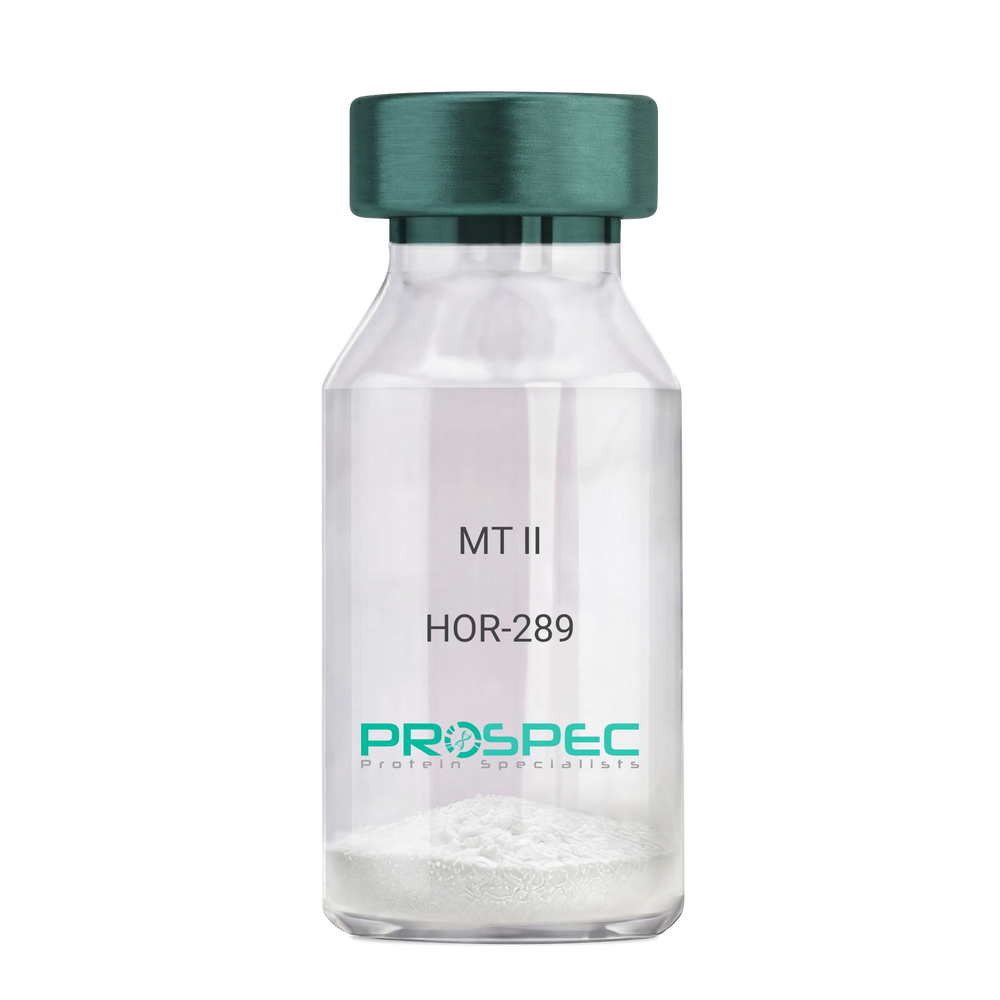
    product_image.jpg
  • View Data Sheet

    Name :

    MT II

    Description:

    Melanotan-II

    Melanotan-II, MT-II, Melanotan.

    Product # :

    HOR-289

    Price :

    Quantity :

    Shipping Method :

    Room Temp Icon

    Shipped at Room temp

    Add To Cart

    More Info

    • description
    • formulation
    • purity
    • More Info

    Description

    The molecular formula of Melanotan-II is C50H69N15O9. It has the amino acid sequence of Ac-Nle-cyclo [Asp-His-D-Phe-Arg-Trp-Lys]-NH2 and a molecular weight of 1024.2 Dalton. The CAS Number is 121062-08-6.

    Formulation

    The protein (1mg/ml) was lyophilized with no additives.

    Purity

    Greater than 99% as determined by by RP-HPLC.

    More Info

    • Introduction

      Melanotan and Melanotan-II are both analogs of the peptide hormone alpha melanocyte stimulating hormone (a-MSH) that tend to induce skin tanning. Unlike Melanotan, Melanotan-II has the additional effect of increasing libido. Melanotan II has aphrodisiac properties.

    • Synonyms

      Melanotan-II, MT-II, Melanotan.

    • Physical Appearance

      Sterile Filtered White lyophilized (freeze-dried) powder.

    • Stability

      Lyophilized Melanotan-II although stable at room temperature for 3 weeks, should be stored desiccated below -18°C. Upon reconstitution MT-II should be stored at 4°C between 2-7 days and for future use below -18°C.For long term storage it is recommended to add a carrier protein (0.1% HSA or BSA).Please prevent freeze-thaw cycles.

    • Solubility

      It is recommended to reconstitute the lyophilized Melanotan-II in sterile 18MΩ-cm H2O not less than 100 µg/ml, which can then be further diluted to other aqueous solutions.

    ProSpec's products are furnished for LABORATORY RESEARCH USE ONLY. The product may not be used as drugs, agricultural or pesticidal products, food additives or household chemicals.

    Melanotan Ii
  • View Data Sheet

    Name :

    Epoetin Fc Human

    Description:

    Erythropoietin-Alpha Fc-Chimera Human Recombinant

    EPO-a, EPO-alpha, Epoetin, EP, MGC138142.

    Product # :

    CYT-325

    Price :

    Quantity :

    Shipping Method :

    Room Temp Icon

    Shipped at Room temp

    Add To Cart

    More Info

    • description
    • source
    • formulation
    • purity
    • biological activity
    • More Info

    Description

    Erythropoietin-alpha Fc-Chimera Human Recombinant is produced in Chinese hamster ovary (CHO) cells by recombinant DNA technology is a dimeric, glycosilated, polypeptide chain consisting of two mature human EPO molecules linked to the Fc portion of human IgG1. The Fc component contains the CH2 domain, the CH3 domain and hinge region, but not the CH1 domain of IgG1. As a result of glycosylation, the recombinant protein migrates with an apparent molecular mass of 140 kDa in non-reducing SDS-PAGE.

    Source

    Chinese Hamster Ovary Cells(CHO).

    Formulation

    Each mg of lyophilized powder contains 1x PBS pH-7.4.

    Purity

    Greater than 98.0% as determined by:
    (a) Analysis by RP-HPLC.
    (b) Analysis by SDS-PAGE.

    Biological Activity

    The ED50 as determined by the dose-dependent stimulation of human megakaryoblastic leukemia cells is less than 2.0 ng/ml, corresponding to a Specific Activity of 5.0 x 10⁵ IU/mg.

    More Info

    • Introduction

      This gene is a member of the EPO/TPO family and encodes a secreted, glycosylated cytokine composed of four alpha helical bundles. The protein is found in the plasma and regulates red cell production by promoting erythroid differentiation and initiating hemoglobin synthesis. This protein also has neuroprotective activity against a variety of potential brain injuries and antiapoptotic functions in several tissue types.

    • Synonyms

      EPO-a, EPO-alpha, Epoetin, EP, MGC138142.

    • Physical Appearance

      Sterile Filtered White lyophilized (freeze-dried) powder.

    • Stability

      Lyophilized Erythropoietin-a although stable at room temperature for 3 weeks, should be stored desiccated below -18°C. Upon reconstitution EPO-alpha should be stored at 4°C between 2-7 days and for future use below -18°C.For long term storage it is recommended to add a carrier protein (0.1% HSA or BSA).Please prevent freeze-thaw cycles.

    • Solubility

      It is recommended to reconstitute the lyophilized Erythropoietin in sterile 18MΩ-cm H2O not less than 100µg/ml, which can then be further diluted to other aqueous solutions.

    • Background

      What is the molecular weight/Mw of EPOETIN Protein?
      EPOETIN Protein has a total Mw of 140kDa.

      What is the source or expression system of EPOETIN Protein?
      Chinese Hamster Ovary Cells(CHO).

      What is the Purity of EPOETIN Protein?
      EPOETIN Protein is >98% pure as determined by SDS-PAGE.

      What is the Biological Activity of EPOETIN Protein?
      The ED50 as determined by the dose-dependent stimulation of human megakaryoblastic leukemia cells is less than 2.0 ng/ml, corresponding to a Specific Activity of 5.0 x 10⁵ IU/mg.

      What applications can EPOETIN Protein be used in?
      EPOETIN Protein can probably be used in western blot, ELISA and Lateral Flow.

      What is the endotoxin level for EPOETIN Protein?
      The endotoxin level is minimal, EPOETIN Protein was purified using conventional chromatography techniques.

    ProSpec's products are furnished for LABORATORY RESEARCH USE ONLY. The product may not be used as drugs, agricultural or pesticidal products, food additives or household chemicals.

    Epo Alpha Human Fc
  • View Data Sheet

    Name :

    Epoetin Human, HEK

    Description:

    Erythropoietin-alpha Human Recombinant, HEK

    Erythropoietin-Alpha, EPO-a, EPO-alpha, Epoetin, EP, MGC138142.

    Product # :

    CYT-083

    Price :

    Quantity :

    Shipping Method :

    Room Temp Icon

    Shipped at Room temp

    Add To Cart

    More Info

    • description
    • source
    • formulation
    • purity
    • biological activity
    • More Info

    Description

    EPO-a Human Recombinant produced in HEK cells is a glycosylated monomer, having a total molecular weight of 36kDa.The EPO-alpha is purified by proprietary chromatographic techniques.

    Source

    HEK.

    Formulation

    The EPO-alpha was lyophilized from 1mg/ml in 1xPBS.

    Purity

    Greater than 95% as obsereved by SDS-PAGE.

    Biological Activity

    The specific activity was determined by the dose-dependent stimulation of the proliferation of human TF-1 cells (human erythroleukemic indicator cell line) and is typically 0.5-2.5ng/ml, corresponding to a specific activity of 400,000-2,000,000 units/mg.

    More Info

    • Introduction

      This gene is a member of the EPO/TPO family and encodes a secreted, glycosylated cytokine composed of four alpha helical bundles. The protein is found in the plasma and regulates red cell production by promoting erythroid differentiation and initiating hemoglobin synthesis. This protein also has neuroprotective activity against a variety of potential brain injuries and antiapoptotic functions in several tissue types.

    • Synonyms

      Erythropoietin-Alpha, EPO-a, EPO-alpha, Epoetin, EP, MGC138142.

    • Physical Appearance

      Sterile Filtered White lyophilized (freeze-dried) powder.

    • Stability

      Lyophilized EPO-alpha although stable at room temperature for 3 weeks, should be stored desiccated below -18°C. Upon reconstitution EPO-alpha should be stored at 4°C between 2-7 days and for future use below -18°C.For long term storage it is recommended to add a carrier protein (0.1% HSA or BSA).Please prevent freeze-thaw cycles.

    • Solubility

      It is recommended to reconstitute the lyophilized EPO-alpha in sterile water not less than 100µg/ml, which can then be further diluted to other aqueous solutions.

    • Background

      What is the molecular weight/Mw of EPOETIN Protein?
      EPOETIN Protein has a total Mw of 36kDa.

      What is the source or expression system of EPOETIN Protein?
      HEK.

      What is the Purity of EPOETIN Protein?
      EPOETIN Protein is >95% pure as determined by SDS-PAGE.

      What is the Biological Activity of EPOETIN Protein?
      The specific activity was determined by the dose-dependent stimulation of the proliferation of human TF-1 cells (human erythroleukemic indicator cell line) and is typically 0.5-2.5ng/ml, corresponding to a specific activity of 400,000-2,000,000 units/mg.

      What applications can EPOETIN Protein be used in?
      EPOETIN Protein can probably be used in western blot, ELISA and Lateral Flow.

      What is the endotoxin level for EPOETIN Protein?
      The endotoxin level is minimal, EPOETIN Protein was purified using conventional chromatography techniques.

    ProSpec's products are furnished for LABORATORY RESEARCH USE ONLY. The product may not be used as drugs, agricultural or pesticidal products, food additives or household chemicals.

    Epo A Human Hek
  • View Data Sheet

    Name :

    Insulin Human (20-110)

    Description:

    Insulin (20-110 a.a) Human Recombinant

    Product # :

    CYT-1237

    Price :

    Quantity :

    Shipping Method :

    Room Temp Icon

    Shipped at Room temp

    Add To Cart

    More Info

    • description
    • source
    • formulation
    • purity
    • More Info

    Description

    The Insulin Human is created as a recombinant protein with a 4kda N-terminal fusion of His Tag. The Insulin His-Tagged Fusion Protein, produced in E. coli, is a 13kDa protein containing 91 amino acid residues of the Insulin Human, 20-110 amino acids.

    Source

    Escherichia Coli.

    Formulation

    Each mg was lyophilized with 1xPBS, 0.4% SDS and 4mM DTT.

    Purity

    Greater than 90% as determined by SDS-PAGE.

    More Info

    • Physical Appearance

      Filtered White lyophilized (freeze-dried) powder.

    • Stability

      Store lyophilized Insulin at -20°C. Aliquot the product after reconstitution to avoid repeated freezing/thawing cycles. Reconstituted protein can be stored at 4°C for a limited period of time; it does not show any change after two weeks at 4°C.

    • Solubility

      It is recommended to add deionized water to prepare a working stock solution of approximately 0.5mg/ml and let the lyophilized pellet dissolve completely. Product is not sterile! Please filter the product by an appropriate sterile filter before using it on cell culture.

    • Amino Acid Sequence

      MALWMRLLPL LALLALWGPD PAAAFVNQHL CGSHLVEALY LVCGERGFFY TPKTRREAED LQVGQVELGG GPGAGSLQPL ALEGSLQKRG IVEQCCTSIC SLYQLENYCN

    • Background

      Insulin participates in the metabolism of carbohydrates, proteins and fats by regulating glucose homeostasis in the body. Insulin decreases blood glucose concentration. Insulin hormone facilitates the uptake of glucose into cells, mainly in muscle and fat tissues, and stimulates the liver to store glucose as glycogen. Insulin also inhibits the production of gluconeogenesis and promotes the synthesis of proteins and lipids. Insulin increases cell permeability to monosaccharides, fatty acids and amino acids. Insulin accelerates glycolysis, the pentose phosphate cycle and glycogen synthesis in liver.

    ProSpec's products are furnished for LABORATORY RESEARCH USE ONLY. The product may not be used as drugs, agricultural or pesticidal products, food additives or household chemicals.

    Insulin Recombinant
  • 1
  • …
  • 35
  • 36
  • 37
  • 38
  • 39
  • …
  • 42
Your browser does not support the video tag.

Products

  • Cytokines
  • Growth Factors
  • Chemokines
  • CD Antigens
  • Neurotrophins
  • Hormones
  • Enzymes
  • Viral Antigens
  • Recombinant Proteins
  • Natural Proteins
  • Monoclonal Antibodies
  • Polyclonal Antibodies
  • Thermal Packaging

About

  • Company
  • Founder
  • Contribution
  • Contact Us
  • My Account

Ordering

  • Ordering Method
  • Ordering - Credit Card
  • Ordering PO
  • Shipping Fees
  • FAQ's

Legal

  • Terms & Conditions
  • Privacy
  • Site Map
  • info@prospecbio.com
  • Facebook
  • Instagram
  • Linkedin Profile

© 2026 ProSpec-Tany TechnoGene Ltd. All Rights Reserved.

  • Choosing a selection results in a full page refresh.
  • Opens in a new window.