Skip to content

High-quality research proteins.

  • 1-800-805-6531

  • Mon - Sat 8.00-18.00, Sun - Closed

  • info@prospecbio.com

  • PO Box 6591 East Brunswick NJ 08816

  • Products
    • Cytokines
    • Growth factors
    • Chemokines
    • Cd antigens
    • Neurotrophins
    • Hormones
    • Enzymes
    • Viral antigens
    • Recombinant proteins
    • Natural proteins
    • Monoclonal antibodies
    • Polyclonal antibodies
    • Thermal Packaging
  • About
    • Company
    • Founder
    • Contribution
  • Customers
    • Eastern Asia
    • Eastern Europe
    • North America
    • South America
    • South East Asia
    • Southern Asia
    • Western Europe
  • Ordering
    • Ordering Method
    • Ordering - Credit Card
    • Ordering - PO
    • Shipping Fees
    • FAQs
  • Services
    • DNA Cloning
    • Protein Expression
    • Monoclonal Antibody
    • Fermentation
    • Technology License
  • Contact us
Log in

Country/region

  • USD $ | Albania
  • USD $ | Andorra
  • USD $ | Argentina
  • USD $ | Armenia
  • USD $ | Australia
  • USD $ | Austria
  • USD $ | Azerbaijan
  • USD $ | Belarus
  • USD $ | Belgium
  • USD $ | Bolivia
  • USD $ | Brazil
  • USD $ | Bulgaria
  • USD $ | Cambodia
  • USD $ | Canada
  • USD $ | Chile
  • USD $ | China
  • USD $ | Colombia
  • USD $ | Costa Rica
  • USD $ | Croatia
  • USD $ | Cyprus
  • USD $ | Czechia
  • USD $ | Denmark
  • USD $ | Estonia
  • USD $ | Finland
  • USD $ | France
  • USD $ | Georgia
  • USD $ | Germany
  • USD $ | Greece
  • USD $ | Hong Kong SAR
  • USD $ | Hungary
  • USD $ | Iceland
  • USD $ | India
  • USD $ | Ireland
  • USD $ | Israel
  • USD $ | Italy
  • USD $ | Japan
  • USD $ | Kazakhstan
  • USD $ | Latvia
  • USD $ | Liechtenstein
  • USD $ | Lithuania
  • USD $ | Madagascar
  • USD $ | Malta
  • USD $ | Mexico
  • USD $ | Moldova
  • USD $ | Monaco
  • USD $ | Netherlands
  • USD $ | New Zealand
  • USD $ | North Macedonia
  • USD $ | Norway
  • USD $ | Panama
  • USD $ | Paraguay
  • USD $ | Peru
  • USD $ | Philippines
  • USD $ | Poland
  • USD $ | Portugal
  • USD $ | Romania
  • USD $ | Singapore
  • USD $ | Slovakia
  • USD $ | Slovenia
  • USD $ | South Africa
  • USD $ | South Korea
  • USD $ | Spain
  • USD $ | Sri Lanka
  • USD $ | Sweden
  • USD $ | Switzerland
  • USD $ | Taiwan
  • USD $ | Thailand
  • USD $ | Türkiye
  • USD $ | Ukraine
  • USD $ | United Kingdom
  • USD $ | United States
  • USD $ | Uruguay
  • USD $ | Vatican City
  • USD $ | Venezuela
  • USD $ | Vietnam
  • Facebook
  • Instagram
logoProSpec - Recombinant Protein Manufacturer for academic and R&D industry
Become a distributor
Account Log in
Wishlist
Cart Cart(0)
  • Products
    +
    • Cytokines
    • Growth factors
    • Chemokines
    • Cd antigens
    • Neurotrophins
    • Hormones
    • Enzymes
    • Viral antigens
    • Recombinant proteins
    • Natural proteins
    • Monoclonal antibodies
    • Polyclonal antibodies
    • Thermal Packaging
  • About
    +
    • Company
    • Founder
    • Contribution
  • Customers
    +
    • Eastern Asia
    • Eastern Europe
    • North America
    • South America
    • South East Asia
    • Southern Asia
    • Western Europe
  • Ordering
    +
    • Ordering Method
    • Ordering - Credit Card
    • Ordering - PO
    • Shipping Fees
    • FAQs
  • Services
    +
    • DNA Cloning
    • Protein Expression
    • Monoclonal Antibody
    • Fermentation
    • Technology License
  • Contact us

Item added to your cart

View cart
View All
  • Cytokines
  • Growth factors
  • Chemokines
  • Cd antigens
  • Neurotrophins
  • Hormones
  • Enzymes
  • Viral antigens
  • Recombinant proteins
  • Natural proteins
  • Monoclonal antibodies
  • Polyclonal antibodies
  • Thermal Packaging
  • Tumor Necrosis Factor

    Tumor Necrosis Factor

    View All
  • 4-1BB

    4-1BB

    View All
  • Adiponectin

    Adiponectin

    View All
  • AIF1

    AIF1

    View All
  • Other Cytokines

    Other Cytokines

    View All
  • AITRL

    AITRL

    View All
  • Angiopoietin

    Angiopoietin

    View All
  • Apolipoprotein

    Apolipoprotein

    View All
  • B-Cell Activating Factor

    B-Cell Activating Factor

    View All
  • Beta Defensin

    Beta Defensin

    View All
  • Bone Morphogenetic Protein

    Bone Morphogenetic Protein

    View All
  • B type Natriuretic Peptide

    B type Natriuretic Peptide

    View All
  • BST

    BST

    View All
  • Betacellulin

    Betacellulin

    View All
  • Cardiotrophin

    Cardiotrophin

    View All
  • Activin

    Activin

    View All
  • Fibroblast Growth Factor

    Fibroblast Growth Factor

    View All
  • Other Growth Factors

    Other Growth Factors

    View All
  • CSF

    CSF

    View All
  • CTGF

    CTGF

    View All
  • IGFBP

    IGFBP

    View All
  • VEGF Protein

    VEGF Protein

    View All
  • EGF

    EGF

    View All
  • Epigen

    Epigen

    View All
  • Erythropoietin

    Erythropoietin

    View All
  • Insulin-Like Growth Factor

    Insulin-Like Growth Factor

    View All
  • Growth Hormone

    Growth Hormone

    View All
  • HDGF

    HDGF

    View All
  • Hepatocyte Growth Factor

    Hepatocyte Growth Factor

    View All
  • Insulin

    Insulin

    View All
  • BCA-1/ BLC (CXCL13)

    BCA-1/ BLC (CXCL13)

    View All
  • BRAK (CXCL14)

    BRAK (CXCL14)

    View All
  • C-10 (CCL6)

    C-10 (CCL6)

    View All
  • Other Chemokines

    Other Chemokines

    View All
  • MEC (CCL28)

    MEC (CCL28)

    View All
  • LD78-beta (CCL3L1)

    LD78-beta (CCL3L1)

    View All
  • CTACK (CCL27)

    CTACK (CCL27)

    View All
  • CXCL16

    CXCL16

    View All
  • CXCL17

    CXCL17

    View All
  • Platelet Factor-4 (CXCL4)

    Platelet Factor-4 (CXCL4)

    View All
  • ENA-78 (CXCL5)

    ENA-78 (CXCL5)

    View All
  • Eotaxin (CCL11,24,26)

    Eotaxin (CCL11,24,26)

    View All
  • Exodus-2 (CCL21)

    Exodus-2 (CCL21)

    View All
  • Fractalkine (CX3CL1)

    Fractalkine (CX3CL1)

    View All
  • CXCL6

    CXCL6

    View All
  • Other CD Antigens

    Other CD Antigens

    View All
  • CD14

    CD14

    View All
  • CD164

    CD164

    View All
  • CD1

    CD1

    View All
  • CD2

    CD2

    View All
  • CD200

    CD200

    View All
  • CD207

    CD207

    View All
  • CD226

    CD226

    View All
  • CD23

    CD23

    View All
  • CD244

    CD244

    View All
  • CD247

    CD247

    View All
  • CD27

    CD27

    View All
  • CD274

    CD274

    View All
  • CD300

    CD300

    View All
  • CD33

    CD33

    View All
  • Other Neurotrophins

    Other Neurotrophins

    View All
  • Beta-NGF

    Beta-NGF

    View All
  • BDNF

    BDNF

    View All
  • CDNF

    CDNF

    View All
  • CNTF

    CNTF

    View All
  • GDNF

    GDNF

    View All
  • Glia Maturation Factor

    Glia Maturation Factor

    View All
  • MANF

    MANF

    View All
  • Midkine

    Midkine

    View All
  • Neuroglobin

    Neuroglobin

    View All
  • Neurotrophic factors

    Neurotrophic factors

    View All
  • Neuregulin

    Neuregulin

    View All
  • Neuropilin

    Neuropilin

    View All
  • Pigment Epithelium-Derived Factor

    Pigment Epithelium-Derived Factor

    View All
  • Pleiotrophin

    Pleiotrophin

    View All
  • Peptide Hormones

    Peptide Hormones

    View All
  • Other Hormones

    Other Hormones

    View All
  • HCG

    HCG

    View All
  • Endothelin

    Endothelin

    View All
  • Exendin

    Exendin

    View All
  • FSH

    FSH

    View All
  • Glucagon

    Glucagon

    View All
  • GHRP

    GHRP

    View All
  • GLP

    GLP

    View All
  • Thyrostimulin

    Thyrostimulin

    View All
  • Inhibin A

    Inhibin A

    View All
  • LHRH

    LHRH

    View All
  • Melanotan

    Melanotan

    View All
  • Procalcitonin

    Procalcitonin

    View All
  • PTH

    PTH

    View All
  • Peroxiredoxin

    Peroxiredoxin

    View All
  • Peptidase

    Peptidase

    View All
  • Synthetase

    Synthetase

    View All
  • Transferase

    Transferase

    View All
  • Hydrolase

    Hydrolase

    View All
  • Dehydrogenase

    Dehydrogenase

    View All
  • ACE2

    ACE2

    View All
  • Esterase

    Esterase

    View All
  • Protein Kinases

    Protein Kinases

    View All
  • Other Enzymes

    Other Enzymes

    View All
  • Phosphatase

    Phosphatase

    View All
  • Deaminase

    Deaminase

    View All
  • Oxygenase

    Oxygenase

    View All
  • Adenylate Kinase

    Adenylate Kinase

    View All
  • Lyase

    Lyase

    View All
  • Chagas

    Chagas

    View All
  • SARS

    SARS

    View All
  • Influenza

    Influenza

    View All
  • ASFV

    ASFV

    View All
  • Astrovirus

    Astrovirus

    View All
  • Borrelia

    Borrelia

    View All
  • Helicobacter Pylori

    Helicobacter Pylori

    View All
  • Chikungunya

    Chikungunya

    View All
  • Chlamydia

    Chlamydia

    View All
  • Cytomegalo

    Cytomegalo

    View All
  • Dengue

    Dengue

    View All
  • EBV

    EBV

    View All
  • Ebola

    Ebola

    View All
  • Feline Leukemia Virus

    Feline Leukemia Virus

    View All
  • Hepatitis A

    Hepatitis A

    View All
  • Other

    Other

    View All
  • Actin

    Actin

    View All
  • ADAM

    ADAM

    View All
  • Complement Component

    Complement Component

    View All
  • Ag85

    Ag85

    View All
  • Eukaryotic Translation Initiation Factor

    Eukaryotic Translation Initiation Factor

    View All
  • Anterior Gradient Protein

    Anterior Gradient Protein

    View All
  • Heat Shock Protein

    Heat Shock Protein

    View All
  • Alpha-2-HS-Glycoprotein

    Alpha-2-HS-Glycoprotein

    View All
  • Hemoglobin

    Hemoglobin

    View All
  • Allergy

    Allergy

    View All
  • Anaplasma

    Anaplasma

    View All
  • Angiogenin

    Angiogenin

    View All
  • Ankyrin Repeat Domain

    Ankyrin Repeat Domain

    View All
  • Annexin

    Annexin

    View All
  • Other Natural Proteins

    Other Natural Proteins

    View All
  • Aprotinin

    Aprotinin

    View All
  • Transferrin

    Transferrin

    View All
  • Avidin

    Avidin

    View All
  • Anti Coagulation Factors

    Anti Coagulation Factors

    View All
  • Natural Albumin

    Natural Albumin

    View All
  • Natural Coagulation Factors

    Natural Coagulation Factors

    View All
  • Fibronectin

    Fibronectin

    View All
  • Thrombin

    Thrombin

    View All
  • Anti Human Enzyme

    Anti Human Enzyme

    View All
  • Other Monoclonal Antibodies

    Other Monoclonal Antibodies

    View All
  • Anti Human Cytokine

    Anti Human Cytokine

    View All
  • Anti Human Heat Shock Protein

    Anti Human Heat Shock Protein

    View All
  • Anti Mouse Lymphocyte

    Anti Mouse Lymphocyte

    View All
  • Anti Human Chemokine

    Anti Human Chemokine

    View All
  • Anti Human Lymphocyte

    Anti Human Lymphocyte

    View All
  • Anti Viral Monoclonal

    Anti Viral Monoclonal

    View All
  • Anti Mouse Cytokine

    Anti Mouse Cytokine

    View All
  • Anti-GST Monoclonal

    Anti-GST Monoclonal

    View All
  • Other Polyclonal Antibodies

    Other Polyclonal Antibodies

    View All
  • Anti Viral

    Anti Viral

    View All
  • Anti-GST Monoclonal

    Anti-GST Monoclonal

    View All
Back

Search results

1000 results found for “Other Neurotrophins”

Name

Description

Product #

Price

Quantity

Shipping Method

  • View Data Sheet

    Name :

    KRT20 Human, His

    Description:

    Cytokeratin 20 Human Recombinant, His Tag

    Keratin, type I cytoskeletal 20, CD20, CK-20, CK20, K20, KRT21, Keratin, Cytokeratin-20, Keratin-20, Protein IT, KRT20.

    Product # :

    PRO-1358

    Price :

    Quantity :

    Shipping Method :

    Ice Icon

    Shipped with Ice Packs

    Add To Cart

    More Info

    • description
    • source
    • formulation
    • purity
    • More Info

    Description

    KRT20 Human Recombinant produced in E.Coli is a single, non-glycosylated polypeptide chain containing 447 amino acids (1-424 a.a) and having a molecular mass of 50.9kDa. KRT20 is fused to a 23 amino acid His-tag at N-terminus & purified by proprietary chromatographic techniques.

    Source

    Escherichia Coli.

    Formulation

    KRT20 protein solution (0.5mg/ml) containing 20mM Tris-HCl buffer (pH8.0), 0.4M Urea and 10% glycerol.

    Purity

    Greater than 85.0% as determined by SDS-PAGE.

    More Info

    • Introduction

      Recombinant Human Cytokeratin 20 His Tag (KRT20) belongs to the keratin family. The keratins are intermediate filament proteins responsible for the structural integrity of epithelial cells and are subdivided into cytokeratins and hair keratins. The type I cytokeratins is comprised of acidic proteins that are organized in pairs of heterotypic keratin chains. KRT20 is a main cellular protein of mature enterocytes and goblet cells and is specifically expressed in the gastric and intestinal mucosa.

    • Synonyms

      Keratin, type I cytoskeletal 20, CD20, CK-20, CK20, K20, KRT21, Keratin, Cytokeratin-20, Keratin-20, Protein IT, KRT20.

    • Physical Appearance

      Sterile Filtered colorless solution.

    • Stability

      Store at 4°C if entire vial will be used within 2-4 weeks. Store, frozen at -20°C for longer periods of time. For long term storage it is recommended to add a carrier protein (0.1% HSA or BSA).Avoid multiple freeze-thaw cycles.

    • Amino Acid Sequence

      MGSSHHHHHH SSGLVPRGSH MGSMDFSRRS FHRSLSSSLQ APVVSTVGMQ RLGTTPSVYG GAGGRGIRIS NSRHTVNYGS DLTGGGDLFV GNEKMAMQNL NDRLASYLEK VRTLEQSNSK LEVQIKQWYE TNAPRAGRDY SAYYRQIEEL RSQIKDAQLQ NARCVLQIDN AKLAAEDFRL KYETERGIRL TVEADLQGLN KVFDDLTLHK TDLEIQIEEL NKDLALLKKE HQEEVDGLHK HLGNTVNVEV DAAPGLNLGV IMNEMRQKYE VMAQKNLQEA KEQFERQTAV LQQQVTVNTE ELKGTEVQLT ELRRTSQSLE IELQSHLSMK ESLEHTLEET KARYSSQLAN LQSLLSSLEA QLMQIRSNME RQNNEYHILL DIKTRLEQEI ATYRRLLEGE DVKTTEYQLS TLEERDIKKT RKIKTVVQEV VDGKVVSSEV KEVEENI.

    ProSpec's products are furnished for LABORATORY RESEARCH USE ONLY. The product may not be used as drugs, agricultural or pesticidal products, food additives or household chemicals.

    Krt20 Human His
  • View Data Sheet

    Name :

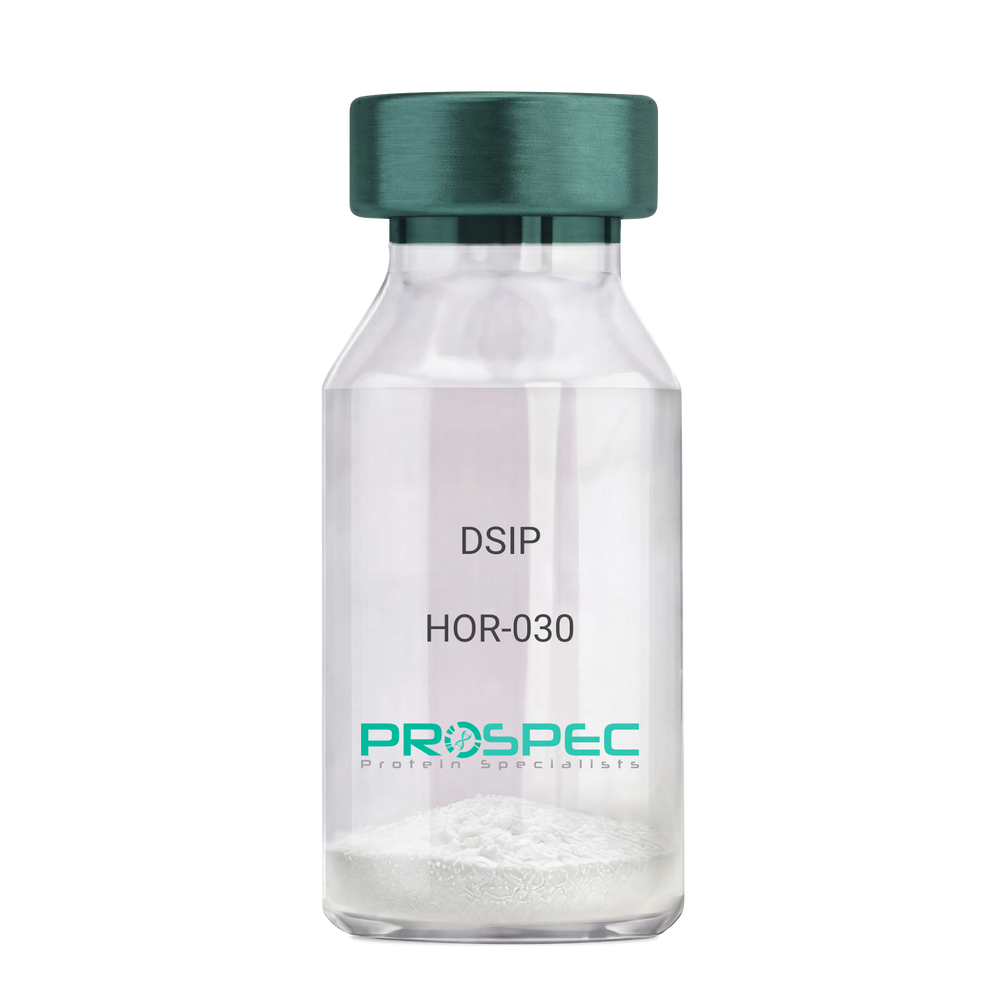
    DSIP

    Description:

    Delta Sleep Inducing Peptide

    Product # :

    HOR-030

    Price :

    Quantity :

    Shipping Method :

    Room Temp Icon

    Shipped at Room temp

    Add To Cart

    More Info

    • description
    • formulation
    • purity
    • More Info

    Description

    DSIP Synthetic is a single, non-glycosylated polypeptide chain containing 15 amino acids, having a molecular mass of 1419.55 Dalton and a Molecular formula of C62H98N16O22.

    Formulation

    The protein was lyophilized with no additives.

    Purity

    Greater than 97.0% as determined by analysis by RP-HPLC.

    More Info

    • Physical Appearance

      Sterile Filtered White lyophilized (freeze-dried) powder.

    • Stability

      Lyophilized DSIP although stable at room temperature for 3 weeks, should be stored desiccated below -18°C. Upon reconstitution DSIP should be stored at 4°C between 2-7 days and for future use below -18°C. For long term storage it is recommended to add a carrier protein (0.1% HSA or BSA). Please prevent freeze-thaw cycles.

    • Solubility

      It is recommended to reconstitute the lyophilized DSIP in sterile 18MΩ-cm H2O not less than 100 µg/ml, which can then be further diluted to other aqueous solutions.

    • Amino Acid Sequence

      H-Gly-Glu-Pro-Pro-Pro-Gly-Lys-Pro-Ala-Asp-Asp-Ala-Gly-Leu-Val-OH

    • Background

      Delta Sleep-Inducing Peptide (DSIP), also known as Sleep-Promoting Peptide, is a neuropeptide that has been the subject of extensive research due to its potential role in sleep regulation, stress response, and neuroprotection. This nonapeptide, first isolated from the cerebral venous blood of rabbits during sleep, has been shown to induce slow-wave sleep, modulate pain perception, and exhibit potential antioxidant and immunomodulatory properties.

      DSIP's primary function is its interaction with the sleep regulatory system. By modulating the release of certain neurotransmitters, DSIP can influence sleep patterns, particularly promoting slow-wave sleep, the most restorative stage of sleep. Studies by Kovalzon et al. (2011) have demonstrated that DSIP can enhance sleep quality in rats, suggesting potential applications in sleep disorders and the promotion of healthy sleep patterns.

      In addition to its sleep-inducing effects, DSIP has been shown to possess neuroprotective properties. Research by Zolotarev et al. (2014) found that DSIP could protect neurons from oxidative stress, suggesting potential applications in the treatment of neurodegenerative diseases such as Alzheimer's and Parkinson's disease.

      Given its sleep-inducing and neuroprotective effects, DSIP has been proposed as a potential therapeutic agent for a variety of conditions, including sleep disorders, chronic pain, and neurodegenerative diseases. For instance, a study by Spong et al. (2016) found that DSIP could improve sleep quality in patients with chronic insomnia, indicating its potential as a therapeutic agent in the treatment of sleep disorders.

      While research on DSIP is promising, it is important to note that most studies have been conducted in animals or in vitro. More research is needed to fully understand the potential effects and applications of DSIP in humans. However, the existing body of research suggests that DSIP could be a promising tool in the treatment of sleep disorders, chronic pain, and neurodegenerative diseases.

    ProSpec's products are furnished for LABORATORY RESEARCH USE ONLY. The product may not be used as drugs, agricultural or pesticidal products, food additives or household chemicals.

    Dsip
  • View Data Sheet

    Name :

    SRA1 Human

    Description:

    Steroid Receptor RNA Activator 1 Human Recombinant

    pp7684, SRA, SRAP, STRAA1, Steroid receptor RNA activator 1,Steroid receptor RNA activator protein.

    Product # :

    PRO-1274

    Price :

    Quantity :

    Shipping Method :

    Ice Icon

    Shipped with Ice Packs

    Add To Cart

    More Info

    • description
    • source
    • formulation
    • purity
    • More Info

    Description

    SRA1 Human Recombinant produced in E.Coli is a single, non-glycosylated polypeptide chain containing 170 amino acids (90-236 a.a.) and having a molecular mass of 18.7kDa.SRA1 is fused to a 23 amino acid His-tag at N-terminus & purified by proprietary chromatographic techniques.

    Source

    Escherichia Coli.

    Formulation

    SRA1 protein solution (1mg/ml) contains 20mM Tris-HCl buffer (pH 8.0) , 0.1MNaCl ,10% glycerol and 1mM DTT.

    Purity

    Greater than 85.0% as determined by SDS-PAGE.

    More Info

    • Introduction

      Steroid receptor RNA activator 1 (SRA1) occurs as both an RNA transcript and as constantly expressed proteins. In addition, SRA1 mediates transcriptional coactivation of steroid receptors ligand-dependently via the steroid-binding domain (AF-2). SRA1 augments cellular proliferation and differentiation and stimulates apoptosis in vivo. SRA1 has a role in tumorigenesis. SRA1 participates in some activities such as: metabolism, adipogenesis and chromatin organization.

    • Synonyms

      pp7684, SRA, SRAP, STRAA1, Steroid receptor RNA activator 1,Steroid receptor RNA activator protein.

    • Physical Appearance

      Sterile Filtered clear solution.

    • Stability

      Store at 4°C if entire vial will be used within 2-4 weeks. Store, frozen at -20°C for longer periods of time. For long term storage it is recommended to add a carrier protein (0.1% HSA or BSA).Avoid multiple freeze-thaw cycles.

    • Amino Acid Sequence

      MGSSHHHHHH SSGLVPRGSH MGSVGSGPAS GVEPTSFPVE SEAVMEDVLR PLEQALEDCR GHTRKQVCDD ISRRLALLQE QWAGGKLSIP VKKRMALLVQ ELSSHRWDAA DDIHRSLMVD HVTEVSQWMV GVKRLIAEKR SLFSEEAANE EKSAATAEKN HTIPGFQQAS

    ProSpec's products are furnished for LABORATORY RESEARCH USE ONLY. The product may not be used as drugs, agricultural or pesticidal products, food additives or household chemicals.

    Sra1 Human
  • View Data Sheet

    Name :

    LAMTOR4 Human

    Description:

    LAMTOR4 Human Recombinant

    Late Endosomal/Lysosomal Adaptor, MAPK And MTOR Activator 4, C7orf59, Late Endosomal/Lysosomal Adaptor And MAPK And MTOR Activator 4, Chromosome 7 Open Reading Frame 59, Ragulator Complex Protein LAMTOR4, UPF0539 Protein C7orf59, LAMTOR4.

    Product # :

    PRO-2065

    Price :

    Quantity :

    Shipping Method :

    Ice Icon

    Shipped with Ice Packs

    Add To Cart

    More Info

    • description
    • source
    • formulation
    • purity
    • More Info

    Description

    LAMTOR4 Human Recombinant produced in E.Coli is a single, non-glycosylated polypeptide chain containing 122 amino acids (1-99 a.a) and having a molecular mass of 13.1kDa. LAMTOR4 is fused to a 23 amino acid His-tag at N-terminus & purified by proprietary chromatographic techniques.

    Source

    Escherichia Coli.

    Formulation

    LAMTOR4 protein solution (0.25mg/ml) containing 20mM Tris-HCl buffer (pH 8.0), 0.15M NaCl, 10% glycerol and 1mM DTT.

    Purity

    Greater than 85.0% as determined by SDS-PAGE.

    More Info

    • Introduction

      LAMTOR4 is implicated in amino acid sensing and activation of mTORC1, which is a signaling complex promoting cell growth in response to growth factors, energy levels, and amino acids. LAMTOR4 is activated by amino acids via a mechanism which involves the lysosomal V-ATPase, the Ragulator functions as a guanine nucleotide exchange factor activating the small GTPases Rag. Activated Ragulator and Rag GTPases both function as a scaffold recruiting mTORC1 to lysosomes where it is sequentially activated.

    • Synonyms

      Late Endosomal/Lysosomal Adaptor, MAPK And MTOR Activator 4, C7orf59, Late Endosomal/Lysosomal Adaptor And MAPK And MTOR Activator 4, Chromosome 7 Open Reading Frame 59, Ragulator Complex Protein LAMTOR4, UPF0539 Protein C7orf59, LAMTOR4.

    • Physical Appearance

      Sterile Filtered colorless solution.

    • Stability

      Store at 4°C if entire vial will be used within 2-4 weeks. Store, frozen at -20°C for longer periods of time. For long term storage it is recommended to add a carrier protein (0.1% HSA or BSA).Avoid multiple freeze-thaw cycles.

    • Amino Acid Sequence

      MGSSHHHHHH SSGLVPRGSH MGSMTSALTQ GLERIPDQLG YLVLSEGAVL ASSGDLENDE QAASAISELV STACGFRLHR GMNVPFKRLS VVFGEHTLLV TVSGQRVFVV KRQNRGREPI DV.

    ProSpec's products are furnished for LABORATORY RESEARCH USE ONLY. The product may not be used as drugs, agricultural or pesticidal products, food additives or household chemicals.

    Lamtor4 Human
  • View Data Sheet

    Name :

    GOSR2 Human

    Description:

    Golgi SNAP Receptor Complex Member 2 Human Recombinant

    Bos1, EPM6, GS27, Membrin, Golgi SNAP receptor complex member 2, 27 kDa Golgi SNARE protein, GOSR2.

    Product # :

    PRO-1399

    Price :

    Quantity :

    Shipping Method :

    Ice Icon

    Shipped with Ice Packs

    Add To Cart

    More Info

    • description
    • source
    • formulation
    • purity
    • More Info

    Description

    GOSR2 Human Recombinant produced in E.Coli is a single, non-glycosylated polypeptide chain containing 213 amino acids (1-190a.a) and having a molecular mass of 24.6kDa. GOSR2 is fused to a 23 amino acid His-tag at N-terminus & purified by proprietary chromatographic techniques.

    Source

    E.coli.

    Formulation

    GOSR2 protein solution (0.25mg/ml) containing 20mM Tris-HCl buffer (pH 8.0), 1M Urea and 10% glycerol.

    Purity

    Greater than 85% as determined by SDS-PAGE.

    More Info

    • Introduction

      Golgi SNAP receptor complex member 2 isoform A (GOSR2) is a part of the SNARE Protein family which consists of important trafficking proteins between the endoplasmic reticulum and the Golgi and between Golgi subcompartments. GOSR2 is located near a locus implicated in familial essential hypertension, indicating that it is a potential candidate gene for this disease. GOSR2 exists as cytoplasmically oriented integral membrane proteins.

    • Synonyms

      Bos1, EPM6, GS27, Membrin, Golgi SNAP receptor complex member 2, 27 kDa Golgi SNARE protein, GOSR2.

    • Physical Appearance

      Sterile Filtered colorless solution.

    • Stability

      Store at 4°C if entire vial will be used within 2-4 weeks. Store, frozen at -20°C for longer periods of time. For long term storage it is recommended to add a carrier protein (0.1% HSA or BSA).Avoid multiple freeze-thaw cycles.

    • Amino Acid Sequence

      MGSSHHHHHH SSGLVPRGSH MGSMDPLFQQ THKQVHEIQS CMGRLETADK QSVHIVENEI QASIDQIFSR LERLEILSSK EPPNKRQNAR LRVDQLKYDV QHLQTALRNF QHRRHAREQQ ERQREELLSR TFTTNDSDTT IPMDESLQFN SSLQKVHNGM DDLILDGHNI LDGLRTQRLT LKGTQKKILD IANMLGLSNT VMRLIEKRAF QDK.

    ProSpec's products are furnished for LABORATORY RESEARCH USE ONLY. The product may not be used as drugs, agricultural or pesticidal products, food additives or household chemicals.

    Gosr2 Human
  • View Data Sheet

    Name :

    TSN Human

    Description:

    Translin Human Recombinant

    Translin, TRSLN, BCLF-1, REHF-1, RCHF1, TBRBP, Recombination Hotspot-binding Protein, Recombination Hotspot Associated factor.

    Product # :

    PRO-271

    Price :

    Quantity :

    Shipping Method :

    Ice Icon

    Shipped with Ice Packs

    Add To Cart

    More Info

    • description
    • source
    • formulation
    • purity
    • More Info

    Description

    TSN produced in E.Coli is a single, non-glycosylated polypeptide chain containing 228 amino acids (1-228a.a.) and having a molecular mass of 26.1kDa. TSN is purified by proprietary chromatographic techniques.

    Source

    Escherichia Coli.

    Formulation

    The TSN protein solution (1mg/1ml) is formulated in 20mM Tris-HCl buffer (pH 8.0), 1mM DTT, 100mM NaCl, and 10% glycerol.

    Purity

    Greater than 90% as determined by SDS-PAGE.

    More Info

    • Introduction

      Translin is a DNA and RNA binding protein that identifies specifically preserved target sequences at the breakpoint junction of chromosomal translocations. TSN forms a ring-shaped configuration, that is in charge of DNA binding, and in addition has a leucine zipper motif, which is believed to assist TSN to form dimers. TSN exports specific mRNAs out of the nucleus, reinforced by its localization in both the nuclei and cytoplasm of neurons, and regulates their translation.

    • Synonyms

      Translin, TRSLN, BCLF-1, REHF-1, RCHF1, TBRBP, Recombination Hotspot-binding Protein, Recombination Hotspot Associated factor.

    • Physical Appearance

      Sterile Filtered clear solution.

    • Stability

      Store at 4°C if entire vial will be used within 2-4 weeks. Store, frozen at -20°C for longer periods of time.For long term storage it is recommended to add a carrier protein (0.1% HSA or BSA).Please avoid freeze thaw cycles

    • Amino Acid Sequence

      MSVSEIFVEL QGFLAAEQDI REEIRKVVQS LEQTAREILT LLQGVHQGAG FQDIPKRCLK AREHFGTVKT HLTSLKTKFP AEQYYRFHEH WRFVLQRLVF LAAFVVYLET ETLVTREAVT EILGIEPDRE KGFHLDVEDY LSGVLILASE LSRLSVNSVT AGDYSRPLHI STFINELDSG FRLLNLKNDS LRKRYDGLKY DVKKVEEVVY DLSIRGFNKE TAAACVEK.

    ProSpec's products are furnished for LABORATORY RESEARCH USE ONLY. The product may not be used as drugs, agricultural or pesticidal products, food additives or household chemicals.

    Tsn Human
  • View Data Sheet

    Name :

    FCGRT Human

    Description:

    Fc Fragment Of IgG Receptor And Transporter Human Recombinant

    IgG receptor FcRn large subunit p51, FcRn, IgG Fc fragment receptor transporter alpha chain, Neonatal Fc receptor, Fcgrt, Fcrn.

    Product # :

    PRO-2806

    Price :

    Quantity :

    Shipping Method :

    Ice Icon

    Shipped with Ice Packs

    Add To Cart

    More Info

    • description
    • source
    • formulation
    • purity
    • biological activity
    • More Info

    Description

    FCGRT Human Recombinant is a glycosylated, polypeptide chain conteining 2 fragments: FCGRT (24-297aa) having a total 280 a.a and a a molecular weigh of 31.1kDa & B2M (21-119 aa) having a total 99 a.a and a a molecular weigh of 11.7kDa. FCGRT is fused to a 6 a.a his-Tag at C-terminus and is purified by proprietary chromatographic techniques.

    Source

    HEK293 Cells.

    Formulation

    The FCGRT solution (0.25mg/ml) contains 10% Glycerol and Phosphate-Buffered Saline (pH 7.4).

    Purity

    Greater than 95.0% as determined by SDS-PAGE.

    Biological Activity

    Measured by its binding ability in a functional ELISA with Human IgG1 Fc.

    More Info

    • Synonyms

      IgG receptor FcRn large subunit p51, FcRn, IgG Fc fragment receptor transporter alpha chain, Neonatal Fc receptor, Fcgrt, Fcrn.

    • Physical Appearance

      Sterile Filtered colorless solution.

    • Stability

      Store at 4°C if entire vial will be used within 2-4 weeks. Store, frozen at -20°C for longer periods of time. For long term storage it is recommended to add a carrier protein (0.1% HSA or BSA). Avoid multiple freeze-thaw cycles.

    • Amino Acid Sequence

      FCGRT

      AESHLSLLYH LTAVSSPAPG TPAFWVSGWL GPQQYLSYNS LRGEAEPCGA WVWENQVSWY WEKETTDLRI KEKLFLEAFK ALGGKGPYTL QGLLGCELGP DNTSVPTAKF ALNGEEFMNF DLKQGTWGGD WPEALAISQR WQQQDKAANK ELTFLLFSCP HRLREHLERG RGNLEWKEPP SMRLKARPSS PGFSVLTCSA FSFYPPELQL RFLRNGLAAG TGQGDFGPNS DGSFHASSSL TVKSGDEHHY CCIVQHAGLA QPLRVELESP AKSSHHHHHH.

      B2M

      IQRTPKIQVY SRHPAENGKS NFLNCYVSGF HPSDIEVDLL KNGERIEKVE HSDLSFSKDW SFYLLYYTEF TPTEKDEYAC RVNHVTLSQP KIVKWDRDM.

    • Background

      Applications in Drug Delivery and Therapy:

      The unique ability of FCGRT to transport immunoglobulins has spurred investigations into its potential applications in drug delivery. FCGRT Human Recombinant is being explored as a tool to improve the pharmacokinetics of therapeutic antibodies, enhancing their stability and extending their half-life in circulation. This holds significant implications for the development of antibody-based therapies for a range of diseases, including autoimmune disorders and cancer.

      Modulation of Immune Responses:

      Beyond its role in immunoglobulin transport, FCGRT is implicated in the modulation of immune responses. FCGRT Human Recombinant studies have unveiled its interactions with immune cells and its potential influence on the activation and regulation of the immune system. This dual role positions FCGRT as a key player not only in passive immunity but also in the dynamic orchestration of immune responses.

      Challenges and Future Directions:

      While the potential of FCGRT Human Recombinant in drug delivery is promising, challenges persist. Fine-tuning its applications, understanding its interactions with diverse antibodies, and optimizing strategies for therapeutic use are critical considerations for translational success. Additionally, deciphering the intricate balance between immunoglobulin transport and immune modulation is an active area of investigation.

      FCGRT Human Recombinant emerges as a sentinel in the realm of immunoglobulin transport and drug delivery, offering a controlled platform for scientific exploration. Its structural insights, immunoglobulin transport functions, and therapeutic applications position it as a key player in the evolving landscape of biopharmaceuticals. As researchers continue to delve into the molecular intricacies of FCGRT, they not only enhance our understanding of immunoglobulin transport but also pave the way for transformative advancements in drug delivery and antibody-based therapies, shaping the future of precision medicine and targeted therapeutics.

    ProSpec's products are furnished for LABORATORY RESEARCH USE ONLY. The product may not be used as drugs, agricultural or pesticidal products, food additives or household chemicals.

    Fcgrt Human
  • View Data Sheet

    Name :

    PGLYRP1 Human, HEK

    Description:

    Peptidoglycan Recognition Protein 1 Human Recombinant, HEK

    PGLYRP, PGRP, PGRP-S, PGRPS, TAG7, TNFSF3L, Peptidoglycan recognition protein 1, peptidoglycan recognition protein short.

    Product # :

    PRO-2726

    Price :

    Quantity :

    Shipping Method :

    Ice Icon

    Shipped with Ice Packs

    Add To Cart

    More Info

    • description
    • source
    • formulation
    • purity
    • biological activity
    • More Info

    Description

    PGLYRP1 Human Recombinant produced in HEK293 Cells is a single, glycosylated polypeptide chain containing 184 amino acids (22-196 a.a) and having a molecular mass of 20.5 kDa.PGLYRP1 is expressed with a 6 amino acid His tag at C-Terminus and purified by proprietary chromatographic techniques.

    Source

    HEK293 Cells.

    Formulation

    The PGLYRP1 solution (0.25mg/1ml) contains phosphate buffered saline (pH7.4) and 10% glycerol.

    Purity

    Greater than 95.0% as determined by SDS-PAGE.

    Biological Activity

    Measured by its binding ability in a functional ELISA with Peptidoglycan. The ED50 range ≤ 30 ng/ml.

    More Info

    • Introduction

      Peptidoglycan Recognition Protein 1 (PGLYRP1) is a member of the N-acetylmuramoyl-L-alanine amidase 2 family. PGLYRP1 binds to peptidoglycan of bacteria and affects the peptidoglycan biosynthesis. PGLYRP1 displays bactericidal activity towards Gram-positive bacteria and is bacteriostatic towards Gram-negative bacteria. PGLYRP1 has a role in innate immunity. PGLYRP1 is highly expressed in the bone marrow, and weakly expressed in the kidney, liver, small intestine, spleen, thymus, peripheral leukocyte, lung, fetal spleen and neutrophils.

    • Synonyms

      PGLYRP, PGRP, PGRP-S, PGRPS, TAG7, TNFSF3L, Peptidoglycan recognition protein 1, peptidoglycan recognition protein short.

    • Physical Appearance

      Sterile filtered colorless solution.

    • Stability

      Store at 4°C if entire vial will be used within 2-4 weeks.Store, frozen at -20°C for longer periods of time.For long term storage it is recommended to add a carrier protein (0.1% HSA or BSA).Avoid multiple freeze-thaw cycles.

    • Amino Acid Sequence

      DGSQETEDPA CCSPIVPRNE WKALASECAQ HLSLPLRYVV VSHTAGSSCN TPASCQQQAR NVQHYHMKTL GWCDVGYNFL IGEDGLVYEG RGWNFTGAHS GHLWNPMSIG ISFMGNYMDR VPTPQAIRAA QGLLACGVAQ GALRSNYVLK GHRDVQRTLS PGNQLYHLIQ NWPHYRSPHH HHHH

    ProSpec's products are furnished for LABORATORY RESEARCH USE ONLY. The product may not be used as drugs, agricultural or pesticidal products, food additives or household chemicals.

    Pglyrp1 Protein
  • View Data Sheet

    Name :

    Lamin-A Human

    Description:

    Lamin-A Human Recombinant

    Prelamin-A/C, LMNA, LMN1, Lamin-A/C, 70 kDa lamin, Renal carcinoma antigen NY-REN-32, FPL, IDC, LFP, CDDC, EMD2, FPLD, HGPS, LDP1, LMNC, PRO1, CDCD1, CMD1A, FPLD2, LMNL1, CMT2B1, LGMD1B.

    Product # :

    PRO-690

    Price :

    Quantity :

    Shipping Method :

    Ice Icon

    Shipped with Ice Packs

    Add To Cart

    More Info

    • description
    • source
    • formulation
    • purity
    • More Info

    Description

    Recombinant Human Lamin A produced in E.Coli is a single, non-glycosylated polypeptide chain containing 645 amino acids and having a molecular mass of 70 kDa. Lamin-A protein is fused to a 6xHis tag at N-terminus and purified by conventional chromatography techniques.

    Source

    Escherichia Coli.

    Formulation

    The Lamin-A Protein solution (0.9mg/ml) contains 20mM phosphate buffer pH 7.0, 500mM NaCl, 1mM DTT, 1.5mM EDTA and 20% (v/v) Glycerol.

    Purity

    Greater than 90.0% as determined by SDS-PAGE.

    More Info

    • Introduction

      Lamin-A is a major component of the nuclear lamina, a dynamic meshwork located just under the nuclear envelope and it is encoded by lamin A/C gene (LMNA).
      Lamin-A is synthesized as Prelamin A, a longer precursor that in vivo goes through a serial post-translational modifications that lead to mature Lamin A.
      Diverse mutations in the Lamin A/C gene are associated with different diseases that are collectively called laminophaties, including Emery-Dreifuss muscular dystrophy, familiar partial lipodystrophy, limb girdle muscular dystrophy, dilated cardiomyopathy, Charcot-Marie-Tooth disease, and Hutchinson-Gilford progeria syndrome.

    • Synonyms

      Prelamin-A/C, LMNA, LMN1, Lamin-A/C, 70 kDa lamin, Renal carcinoma antigen NY-REN-32, FPL, IDC, LFP, CDDC, EMD2, FPLD, HGPS, LDP1, LMNC, PRO1, CDCD1, CMD1A, FPLD2, LMNL1, CMT2B1, LGMD1B.

    • Physical Appearance

      Sterile filtered colorless solution.

    • Stability

      Store at 4°C if entire vial will be used within 2-4 weeks. Store, frozen at -20°C for longer periods of time. Avoid multiple freeze-thaw cycles.

    • Amino Acid Sequence

      HHHHHH-METPSQRRATRSGAQASSTPLSPTRITRLQEKEDLQELNDRLAVYIDRVHSLETENAGLRLRITES
      EEVVSREVSGIKAAYEAELGDARKTLDSVAKERARLQLELSKVREEFKELKARNTKKEGDLIAAQA
      RLKDLEALLNSKEAALSTALSEKRTLEGELHDLRGQVAKLEAALGEAKKQLQDEMLRRVDAENRL
      QTMKEELDFQKNIYSEELRETKRRHETRLVEIDNGKQREFESRLADALQELRAQHEDQVEQYKKE
      LEKTYSAKLDNARQSAERNSNLVGAAHEELQQSRIRIDSLSAQLSQLQKQLAAKEAKLRDLEDSLA
      RERDTSRRLLAEKEREMAEMRARMQQQLDEYQELLDIKLALDMEIHAYRKLLEGEEERLRLSPSP
      TSQRSRGRASSHSSQTQGGGSVTKKRKLESTESRSSFSQHARTSGRVAVEEVDEEGKFVRLRN
      KSNEDQSMGNWQIKRQNGDDPLLTYRFPPKFTLKAGQVVTIWAAGAGATHSPPTDLVWKAQNT
      WGCGNSLRTALINSTGEEVAMRKLVRSVTVVEDDEDEDGDDLLHHHHGSHCSSSGDPAEYNLRS
      RTVLCGTCGQPADKASASGSGAQVGGPISSGSSASSVTVTRSYRSVGGSGGGSFGDNLVTRS

    ProSpec's products are furnished for LABORATORY RESEARCH USE ONLY. The product may not be used as drugs, agricultural or pesticidal products, food additives or household chemicals.

    Lamin A
  • View Data Sheet

    Name :

    MINA Human

    Description:

    MYC Induced Nuclear Antigen Human Recombinant

    MYC Induced Nuclear Antigen, MINA53, MDIG, 60S Ribosomal Protein L27a Histidine Hydroxylase, Mineral Dust-Induced Gene Protein, Histone Lysine Demethylase MINA Ribosomal Oxygenase MINA, Nucleolar Protein 52, NO52, ROX, Bifunctional Lysine-Specific Demethylase And Histidyl-Hydroxylase MINA, Myc-Induced Nuclear Antigen, 53 KDa, Mineral Dust Induced Gene Protein, MYC-Induced Nuclear Antigen, EC 1.14.11.-, Bifunctional lysine-specific demethylase and histidyl-hydroxylase MINA.

    Product # :

    PRO-2078

    Price :

    Quantity :

    Shipping Method :

    Ice Icon

    Shipped with Ice Packs

    Add To Cart

    More Info

    • description
    • source
    • formulation
    • purity
    • More Info

    Description

    MINA Human Recombinant produced in E.Coli is a single, non-glycosylated polypeptide chain containing 485 amino acids (1-465 a.a) and having a molecular mass of 54.9kDa. MINA is fused to a 20 amino acid His-tag at N-terminus & purified by proprietary chromatographic techniques.

    Source

    Escherichia Coli.

    Formulation

    MINA protein solution (0.25mg/ml) containing 20mM Tris-HCl buffer (pH 8.0), 0.15M NaCl, 10% glycerol and 1mM DTT.

    Purity

    Greater than 90.0% as determined by SDS-PAGE.

    More Info

    • Introduction

      MYC Induced Nuclear Antigen, also known as MINA is an oxygenase which can function both as a histone lysine demethylase and a ribosomal histidine hydroxylase. MINA is involved in the demethylation of trimethylated Lys-9 on histone H3 (H3K9me3), leading to an increase in ribosomal RNA expression. MINA also catalyzes the hydroxylation of 60S ribosomal protein L27a on His-39. In addition, MINA plays a significant role in cell growth and survival. MINA is implicated in ribosome biogenesis, probably in the duration of the assembly process of pre-ribosomal particles.

    • Synonyms

      MYC Induced Nuclear Antigen, MINA53, MDIG, 60S Ribosomal Protein L27a Histidine Hydroxylase, Mineral Dust-Induced Gene Protein, Histone Lysine Demethylase MINA Ribosomal Oxygenase MINA, Nucleolar Protein 52, NO52, ROX, Bifunctional Lysine-Specific Demethylase And Histidyl-Hydroxylase MINA, Myc-Induced Nuclear Antigen, 53 KDa, Mineral Dust Induced Gene Protein, MYC-Induced Nuclear Antigen, EC 1.14.11.-, Bifunctional lysine-specific demethylase and histidyl-hydroxylase MINA.

    • Physical Appearance

      Sterile Filtered clear solution.

    • Stability

      Store at 4°C if entire vial will be used within 2-4 weeks. Store, frozen at -20°C for longer periods of time. For long term storage it is recommended to add a carrier protein (0.1% HSA or BSA).Avoid multiple freeze-thaw cycles.

    • Amino Acid Sequence

      MGSSHHHHHH SSGLVPRGSH MPKKAKPTGS GKEEGPAPCK QMKLEAAGGP SALNFDSPSS LFESLISPIK TETFFKEFWE QKPLLIQRDD PALATYYGSL FKLTDLKSLC SRGMYYGRDV NVCRCVNGKK KVLNKDGKAH FLQLRKDFDQ KRATIQFHQP QRFKDELWRI QEKLECYFGS LVGSNVYITP AGSQGLPPHY DDVEVFILQL EGEKHWRLYH PTVPLAREYS VEAEERIGRP VHEFMLKPGD LLYFPRGTIH QADTPAGLAH STHVTISTYQ NNSWGDFLLD TISGLVFDTA KEDVELRTGI PRQLLLQVES TTVATRRLSG FLRTLADRLE GTKELLSSDM KKDFIMHRLP PYSAGDGAEL STPGGKLPRL DSVVRLQFKD HIVLTVLPDQ DQSDETQEKM VYIYHSLKNS RETHMMGNEE ETEFHGLRFP LSHLDALKQI WNSPAISVKD LKLTTDEEKE SLVLSLWTEC LIQVV.

    ProSpec's products are furnished for LABORATORY RESEARCH USE ONLY. The product may not be used as drugs, agricultural or pesticidal products, food additives or household chemicals.

    Mina Human
  • View Data Sheet

    Name :

    LMNA Rat

    Description:

    Lamin A/C Rat Recombinant

    Prelamin-A/C, Lamin-A/C, 70 kDa lamin, LMNA, LMN1, Renal carcinoma antigen NY-REN-32, Progerin.

    Product # :

    PRO-2667

    Price :

    Quantity :

    Shipping Method :

    Ice Icon

    Shipped with Ice Packs

    Add To Cart

    More Info

    • description
    • source
    • formulation
    • purity
    • More Info

    Description

    LMNA Rat Recombinant fused with a His tag produced in E.Coli is a single, non-glycosylated, polypeptide chain containing 614 amino acids and having a molecular mass of 68.0kDa. The LMNA is purified by proprietary chromatographic techniques.

    Source

    Escherichia Coli.

    Formulation

    The LMNA solution contains 20mM Tris-HCl pH 7.5, 1mM DTT, 0.3M NaCl, 1.5mM EDTA and 10%(v/v) glycerol.

    Purity

    Greater than 90.0% as determined by SDS-PAGE.

    More Info

    • Introduction

      Lamin-A is a major component of the nuclear lamina, a dynamic meshwork located just under the nuclear envelope and it is encoded by lamin A/C gene (LMNA).
      Lamin-A is synthesized as Prelamin A, a longer precursor that in vivo goes through a serial post-translational modifications that lead to mature Lamin A.
      Diverse mutations in the Lamin A/C gene are associated with different diseases that are collectively called laminophaties, including Emery-Dreifuss muscular dystrophy, familiar partial lipodystrophy, limb girdle muscular dystrophy, dilated cardiomyopathy, Charcot-Marie-Tooth disease, and Hutchinson-Gilford progeria syndrome.

    • Synonyms

      Prelamin-A/C, Lamin-A/C, 70 kDa lamin, LMNA, LMN1, Renal carcinoma antigen NY-REN-32, Progerin.

    • Physical Appearance

      Sterile filtered colorless solution.

    • Stability

      Store at 4°C if entire vial will be used within 2-4 weeks.Store, frozen at -20°C for longer periods of time.For long term storage it is recommended to add a carrier protein (0.1% HSA or BSA).Avoid multiple freeze-thaw cycles.

    • Amino Acid Sequence

      METPSQRRAT RSGAQASSTP LSPTRITRLQ EKEDLQELND RLAVYIDRVR SLETENAGLR LRITESEEVV SREVSGIKAA YEAELGDARK TLDSVAKERA RLQLELSKVR EEFKELKARN TKKEGDLLAA QARLKDLEAL LNSKEAALST ALSEKRTLEG ELHDLRGQVA KLEAALGEAK KQLQDEMLRR VDAENRLQTL KEELDFQKNI YSEELRETKR RHETRLVEID NGKQREFESR LADALQELRA QHEDQVEQYK KELEKTYSAK LDNARQSAER NSNLVGAAHE ELQQSRIRID SLSAQLSQLQ KQLAAKEAKL RDLEDSLARE RDTSRRLLAE KEREMAEMRA RMQQQLDEYQ ELLDIKLALD MEIHAYRKLL EGEEERLRLS PSPTSQRSRG RASSHSSQSQ GGGSVTKKRK LESSESRSSF SQHARTSGRV AVEEVDEEGK FVRLRNKSNE DQSMGNWQIR RQNGDDPLMT YRFPPKFTLK AGQVVTIWAS GAGATHSPPT DLVWKAQNTW GCGSSLRTAL INATGEEVAM RKLVRSLTMV EDDEDEDGDD LLHHHHGSHC SSSGDPAEYN LRSRTVLCGT CGQPADKASA SGSGAQVSSQ NCSIM

    ProSpec's products are furnished for LABORATORY RESEARCH USE ONLY. The product may not be used as drugs, agricultural or pesticidal products, food additives or household chemicals.

    Lmna Rat
  • View Data Sheet

    Name :

    Atosiban

    Description:

    Atosiban

    Product # :

    HOR-239

    Price :

    Quantity :

    Shipping Method :

    Room Temp Icon

    Shipped at Room temp

    Add To Cart

    More Info

    • description
    • formulation
    • purity
    • More Info
    • HPLC, MS

    Description

    Atosiban also called ADH (Anti-Diuretic Hormone) has a molecular formula of C43H67N11O12S2, 3-Mercaptopropionyl-D-Tyr(ET)-Ile-Thr-Asn-Cys-Pro-Orn-Gly-NH2 having a Mw of 994.2 Dalton.

    Formulation

    The Atosiban peptide was lyophilized with no additives.

    Purity

    Greater than 98.0% as determined by analysis by RP-HPLC.

    HPLC, MS

    atosiban hplc - Product image 1
    atosiban hplc - Product image 2

    More Info

    • Introduction

      Atosiban is the first oxytocin antagonist to be specifically developed for the treatment of preterm labor. Atosiban has a specific mode of action, inhibiting oxytocin-induced uterine contractions by blocking oxytocin receptors in the uterus. Extensive clinical investigations have shown Atosiban to be at least as effective as current tocolytic agents. In addition, due to its novel and specific mode of action, Atosiban has a markedly improved maternal side effects profile compared with conventional therapies.

    • Physical Appearance

      Sterile Filtered White lyophilized (freeze-dried) powder.

    • Stability

      Lyophilized Atosiban although stable at room temperature for 3 weeks, should be stored desiccated below -18°C. Upon reconstitution Atosiban should be stored at 4°C between 2-7 days and for future use below -18°C. For long term storage it is recommended to add a carrier protein (0.1% HSA or BSA).Please prevent freeze-thaw cycles.

    • Solubility

      It is recommended to reconstitute the lyophilized Atosiban in sterile 18MΩ-cm H2O not less than 100µg/ml, which can then be further diluted to other aqueous solutions.

    ProSpec's products are furnished for LABORATORY RESEARCH USE ONLY. The product may not be used as drugs, agricultural or pesticidal products, food additives or household chemicals.

    Atosiban
  • View Data Sheet

    Name :

    MMP14 Human

    Description:

    Matrix Metalloproteinase-14 Recombinant Human

    Matrix Metallopeptidase 14, Matrix Metallopeptidase 14 (Membrane-Inserted), Membrane-Type-1 Matrix Metalloproteinase, Membrane Type 1 Metalloprotease, EC 3.4.24.80, MT-MMP 1, MT1-MMP, MMP-14, MMP-X1, MT1MMP, MTMMP1, Matrix Metalloproteinase 14 (Membrane-Inserted), Membrane-Type Matrix Metalloproteinase 1, Matrix Metalloproteinase-14, EC 3.4.24, MT-MMP, WNCHRS, Matrix metalloproteinase-14, Membrane-type matrix metalloproteinase 1.

    Product # :

    ENZ-1101

    Price :

    Quantity :

    Shipping Method :

    Ice Icon

    Shipped with Ice Packs

    Add To Cart

    More Info

    • description
    • source
    • formulation
    • purity
    • More Info

    Description

    Matrix Metalloproteinase-14 Human Recombinant produced in E.Coli is a single, non- glycosylated polypeptide chain containing 264 amino acids and having a molecular mass of 29.6kDa. MMP14 is purified by proprietary chromatographic techniques.

    Source

    Escherichia Coli.

    Formulation

    MMP14 is supplied as a 0.2 μm filtered solution conteining 20mM Tris-HCl, pH 7.4, 30 % glycerol, 300mM NaCl, 3mM CaCl2 and 10μM ZnCl2.

    Purity

    Greater than 95.0% as determined by:
    (a) Analysis by RP-HPLC.
    (b) Analysis by SDS-PAGE.

    More Info

    • Introduction

      Matrix metalloproteinase-14 (MMP14), is a membrane-anchored zinc-binding endopeptidase which is expressed at the leading edge of different invasive carcinomas and also promotes tumor cell invasion through degradation of the extracellular matrix. MMP14 takes a vital part in extracellular matrix, ECM, remodeling by having the capability to degrade type I collagen, activate pro-MMP-2 and process cell adhesion molecules for instance CD44 and integrin alpha V. MMP14 is a key enzyme in many physiological as well as pathological processes for example angiogenesis & tumor invasion.

    • Synonyms

      Matrix Metallopeptidase 14, Matrix Metallopeptidase 14 (Membrane-Inserted), Membrane-Type-1 Matrix Metalloproteinase, Membrane Type 1 Metalloprotease, EC 3.4.24.80, MT-MMP 1, MT1-MMP, MMP-14, MMP-X1, MT1MMP, MTMMP1, Matrix Metalloproteinase 14 (Membrane-Inserted), Membrane-Type Matrix Metalloproteinase 1, Matrix Metalloproteinase-14, EC 3.4.24, MT-MMP, WNCHRS, Matrix metalloproteinase-14, Membrane-type matrix metalloproteinase 1.

    • Physical Appearance

      Sterile filtered colorless solution.

    • Stability

      Store at 4°C if entire vial will be used within 2-4 weeks.Store, frozen at -20°C for longer periods of time.For long term storage it is recommended to add a carrier protein (0.1% HSA or BSA).Avoid multiple freeze-thaw cycles.

    • Amino Acid Sequence

      ALASLGSAQS SSFSPEAWLQ QYGYLPPGDL RTHTQRSPQS LSAAIAAMQK FYGLQVTGKA DADTMKAMRR PRCGVPDKFG AEIKANVRRK RYAIQGLKWQ HNEITFCIQN YTPKVGEYAT YEAIRKAFRV WESATPLRFR EVPYAYIREG HEKQADIMIF FAEGFHGDST PFDGEGGFLA HAYFPGPNIG GDTHFDSAEP WTVRNEDLNG NDIFLVAVHE LGHALGLEHS SDPSAIMAPF YQWMDTENFV LPDDDRRGIQ QLYG.

    ProSpec's products are furnished for LABORATORY RESEARCH USE ONLY. The product may not be used as drugs, agricultural or pesticidal products, food additives or household chemicals.

    Mmp14 Protein
  • View Data Sheet

    Name :

    A2LD1 Human

    Description:

    AIG2-Like Domain 1 Human Recombinant

    Gamma-glutamylaminecyclotransferase, GGACT, AIG2-like domain-containing protein 1, A2LD1.

    Product # :

    PRO-172

    Price :

    Quantity :

    Shipping Method :

    Ice Icon

    Shipped with Ice Packs

    Add To Cart

    More Info

    • description
    • source
    • formulation
    • purity
    • More Info

    Description

    A2LD1 Human Recombinant fused with a 20 amino acid His tag at N-terminus produced in E.Coli is a single, non-glycosylated, polypeptide chain containing 173 amino acids (1-153 a.a.) and having a molecular mass of 19.4kDa. The A2LD1 is purified by proprietary chromatographic techniques.

    Source

    Escherichia Coli.

    Formulation

    The A2LD1 solution (1 mg/ml) contains 20mM Tris-HCl buffer (pH8.0), 10% glycerol and 0.1M NaCl.

    Purity

    Greater than 95.0% as determined by SDS-PAGE.

    More Info

    • Introduction

      Gamma-glutamylaminecyclotransferase (A2LD1) is an enzyme which converts gamma-glutamylamines to free amines and 5-oxoproline. A2LD1 demonstrates high activity toward gamma-glutamyl-epsilon-lysine, derived from the breakdown of fibrin and other proteins cross-linked by transglutaminases. A2LD1 assists in the proteolytic degradation of crosslinked fibrin by breaking down isodipeptide L-gamma-glutamyl-L-epsilon-lysine, which is a byproduct of fibrin degradation. The reaction catalyzed by the A2LD1 produces 5-oxo-L-proline and a free alkylamine.

    • Synonyms

      Gamma-glutamylaminecyclotransferase, GGACT, AIG2-like domain-containing protein 1, A2LD1.

    • Physical Appearance

      Sterile Filtered colorless solution.

    • Stability

      Store at 4°C if entire vial will be used within 2-4 weeks. Store, frozen at -20°C for longer periods of time. For long term storage it is recommended to add a carrier protein (0.1% HSA or BSA).Avoid multiple freeze-thaw cycles.

    • Amino Acid Sequence

      MGSSHHHHHH SSGLVPRGSH MALVFVYGTL KRGQPNHRVL RDGAHGSAAF RARGRTLEPY PLVIAGEHNI PWLLHLPGSG RLVEGEVYAV DERMLRFLDD FESCPALYQR TVLRVQLLED RAPGAEEPPA PTAVQCFVYS RATFPPEWAQ LPHHDSYDSE GPHGLRYNPR ENR.

    ProSpec's products are furnished for LABORATORY RESEARCH USE ONLY. The product may not be used as drugs, agricultural or pesticidal products, food additives or household chemicals.

    A2LD1 Human
  • View Data Sheet

    Name :

    AMH Human, HEK

    Description:

    Anti-Mullerian Hormone Human Recombinant, HEK

    Anti-Muellerian hormone, AMH, Muellerian-inhibiting substance, MIS, MIF. 

    Product # :

    PRO-2665

    Price :

    Quantity :

    Shipping Method :

    Room Temp Icon

    Shipped at Room temp

    Add To Cart

    More Info

    • description
    • source
    • formulation
    • purity
    • More Info

    Description

    AMH Human Recombinant is a single, glycosylated polypeptide chain containing 439 amino acids (19-451a.a) and having a molecular mass of 46.5kDa (calculated). AMH is fused to a 6 a.a His tag at C-terminal.

    Source

    HEK293

    Formulation

    AMH filtered (0.4 µm) and lyophilized in PBS and 5% (w/v) trehalose.

    Purity

    Greater than 85.0% as determined by SDS-PAGE.

    More Info

    • Introduction

      Anti-Mullerian Hormone also known as AMH is a member of the TGF-beta family. AMH is a glycoprotein which is produced by the Sertoli cells of the testis, causes regression of the Muellerian duct. AMH inhibits the growth of tumors derived from tissues of Muellerian duct origin. Moreover, AMH participates in Leydig cell differentiation and function in addition to follicular development in adult females.

    • Synonyms

      Anti-Muellerian hormone, AMH, Muellerian-inhibiting substance, MIS, MIF.

    • Physical Appearance

      Filtered White lyophilized (freeze-dried) powder.

    • Stability

      Store lyophilized protein at -20°C. Aliquot the product after reconstitution to avoid repeated freezing/thawing cycles. Reconstituted protein can be stored at 4°C for a limited period of time; it does not show any change after two weeks at 4°C.

    • Solubility

      It is recommended to add deionized water to prepare a working stock solution of approximately 0.5mg/ml and let the lyophilized pellet dissolve completely.

    • Amino Acid Sequence

      LLGTEALRAE EPAVGTSGLI FREDLDWPPG SPQEPLCLVA LGGDSNGSSS PLRVVGALSA YEQAFLGAVQ RARWGPRDLA TFGVCNTGDR QAALPSLRRL GAWLRDPGGQ RLVVLHLEEV TWEPTPSLRF QEPPPGGAGP PELALLVLYP GPGPEVTVTR AGLPGAQSLC PSRDTRYLVL AVDRPAGAWR GSGLALTLQP RGEDSRLSTA RLQALLFGDD HRCFTRMTPA LLLLPRSEPA PLPAHGQLDT VPFPPPRPSA ELEESPPSAD PFLETLTRLV RALRVPPARA SAPRLALDPD ALAGFPQGLV NLSDPAALER LLDGEEPLLL LLRPTAATTG DPAPLHDPTS APWATALARR VAAELQAAAA ELRSLPGLPP ATAPLLARLL ALCPGGPGGL GDPLRALLLL KALQGLRVEW RGRDPRGPGR AQRHHHHHH

    ProSpec's products are furnished for LABORATORY RESEARCH USE ONLY. The product may not be used as drugs, agricultural or pesticidal products, food additives or household chemicals.

    Anti Mullerian Hormone Human
  • View Data Sheet

    Name :

    PLDN Human

    Description:

    Pallidin Homolog Human Recombinant

    Pallidin protein homolog (mouse), PA, HPS9, PALLID, syntaxin 13-interacting protein pallid.

    Product # :

    PRO-1068

    Price :

    Quantity :

    Shipping Method :

    Ice Icon

    Shipped with Ice Packs

    Add To Cart

    More Info

    • description
    • source
    • formulation
    • purity
    • More Info

    Description

    PLDN Human Recombinant produced in E. coli is a single polypeptide chain containing 192 amino acids (1-172) and having a molecular mass of 21.9kDa.PLDN is fused to a 20 amino acid His-tag at N-terminus & purified by proprietary chromatographic techniques.

    Source

    E.coli.

    Formulation

    The PLDN solution (1mg/1ml) contains 20mM Tris-HCl buffer (pH 8.0), 100mM Nacl, 2mM DTT and 10% glycerol.

    Purity

    Greater than 90% as determined by SDS-PAGE.

    More Info

    • Introduction

      Pallidin is involved in intracellular vesicle trafficking. PLDN cooperates with Syntaxin 13 that facilitates intracellular membrane fusion. A Few alternatively spliced transcript variations of this gene have been discovered however the full-length nature of several of these variants has not been determined. PLDN takes part in the creation of lysosome-related organelles, for example melanosomes and platelet-dense granules. PLDN is known to cooperate with Dysbindin, BLOC1S1, STX12, CNO, MUTED, SNAPAP and BLOC1S2.

    • Synonyms

      Pallidin protein homolog (mouse), PA, HPS9, PALLID, syntaxin 13-interacting protein pallid.

    • Physical Appearance

      Sterile Filtered colorless solution.

    • Stability

      Store at 4°C if entire vial will be used within 2-4 weeks. Store, frozen at -20°C for longer periods of time. For long term storage it is recommended to add a carrier protein (0.1% HSA or BSA).Avoid multiple freeze-thaw cycles.

    • Amino Acid Sequence

      MGSSHHHHHH SSGLVPRGSH MSVPGPSSPD GALTRPPYCL EAGEPTPGLS DTSPDEGLIE DLTIEDKAVE QLAEGLLSHY LPDLQRSKQA LQELTQNQVV LLDTLEQEIS KFKECHSMLD INALFAEAKH YHAKLVNIRK EMLMLHEKTS KLKKRALKLQ QKRQKEELER EQQREKEFER EKQLTARPAK RM

    ProSpec's products are furnished for LABORATORY RESEARCH USE ONLY. The product may not be used as drugs, agricultural or pesticidal products, food additives or household chemicals.

    Pldn Human
  • View Data Sheet

    Name :

    BAG1 Human

    Description:

    BCL2-Associated Athanogene 1 Human Recombinant

    BAG-1, Bcl-2-associated athanogene 1, RAP46, Bcl-2-binding protein, HAP.

    Product # :

    PRO-817

    Price :

    Quantity :

    Shipping Method :

    Ice Icon

    Shipped with Ice Packs

    Add To Cart

    More Info

    • description
    • source
    • formulation
    • purity
    • More Info

    Description

    BAG1 Human Recombinant produced in E.Coli is a single, non-glycosylated, polypeptide chain containing 230 amino acids (1-230 a.a.) and having a molecular mass of 25.9 kDa. BAG1 protein is purified by standard chromatography.

    Source

    Escherichia Coli.

    Formulation

    BAG1 Human solution containing 20mM Tris-HCl pH-7.5, 0.1M NaCl and 10% glycerol.

    Purity

    Greater than 90% as determined by SDS-PAGE.

    More Info

    • Introduction

      BAG1 binds to BCL2 and is also called BCL2-associated athanogene. BAG1 increases the anti-apoptotic effects of BCL2 and is characterizes as a link between growth factor receptors and anti-apoptotic mechanisms. BAG1 inhibits the chaperone activity of HSP70/HSC70 by promoting substrate release. BAG1 inhibits the pro-apoptotic function of PPP1R15A, and has anti-apoptotic activity. BAG1 enhances the anti-cell death function of BCL2 induced by various stimuli.

    • Synonyms

      BAG-1, Bcl-2-associated athanogene 1, RAP46, Bcl-2-binding protein, HAP.

    • Physical Appearance

      Sterile filtered colorless solution.

    • Stability

      Store at 4°C if entire vial will be used within 2-4 weeks. Store, frozen at -20°C for longer periods of time. For long term storage it is recommended to add a carrier protein (0.1% HSA or BSA).Avoid multiple freeze-thaw cycles.

    • Amino Acid Sequence

      MNRSQEVTRD EESTRSEEVT REEMAAAGLT VTVTHSNEKH DLHVTSQQGS SEPVVQDLAQ VVEEVIGVPQ SFQKLIFKGK SLKEMETPLS ALGIQDGCRV MLIGKKNSPQ EEVELKKLKH LEKSVEKIAD QLEELNKELT GIQQGFLPKD LQAEALCKLD RRVKATIEQF MKILEEIDTL ILPENFKDSR LKRKGLVKKV QAFLAECDTV EQNICQETER LQSTNFALAE.

    ProSpec's products are furnished for LABORATORY RESEARCH USE ONLY. The product may not be used as drugs, agricultural or pesticidal products, food additives or household chemicals.

    Bag1 Human
  • View Data Sheet

    Name :

    OSM Human, 209 a.a

    Description:

    Oncostatin M Human Recombinant (209 a.a.)

    OSM, MGC20461, Oncostatin M.

    Product # :

    CYT-639

    Price :

    Quantity :

    Shipping Method :

    Room Temp Icon

    Shipped at Room temp

    Add To Cart

    More Info

    • description
    • source
    • formulation
    • purity
    • biological activity
    • More Info

    Description

    Oncostatin-M (209 a.a.) Human Recombinant produced in E.Coli is a single, non-glycosylated polypeptide chain containing 209 amino acids and having a molecular mass of 23.9kDa. The Oncostatin-M (209 a.a.) is purified by proprietary chromatographic techniques.

    Source

    Escherichia Coli.

    Formulation

    Oncostatin-M (209 a.a.) was lyophilized from a concentrated (1mg/ml) solution containing 1x PBS pH-7.4.

    Purity

    Greater than 97.0% as determined by(a) Analysis by RP-HPLC.
    (b) Analysis by SDS-PAGE.

    Biological Activity

    The ED50 as determined by the dose-dependant stimulation of Human TF-1 cells is < 2 ng/ml, corresponding to a Specific Activity of 500,000 IU/mg.

    More Info

    • Introduction

      Oncostatin M is a member of a cytokine family that includes leukemia-inhibitory factor, granulocyte colony-stimulating factor, and interleukin 6. This gene encodes a growth regulator which inhibits the proliferation of a number of tumor cell lines. It regulates cytokine production, including IL-6, G-CSF and GM-CSF from endothelial cells.

    • Synonyms

      OSM, MGC20461, Oncostatin M.

    • Physical Appearance

      Sterile Filtered White lyophilized (freeze-dried) powder.

    • Stability

      Lyophilized Oncostatin-M (209 a.a.) although stable at room temperature for 3 weeks, should be stored desiccated below -18°C. Upon reconstitution Oncostatin-M (209 a.a.) should be stored at 4°C between 2-7 days and for future use below -18°C.For long term storage it is recommended to add a carrier protein (0.1% HSA or BSA).Please prevent freeze-thaw cycles.

    • Solubility

      It is recommended to reconstitute the lyophilized Oncostatin-M (209 a.a.) in sterile 18MΩ-cm H2O not less than 100µg/ml, which can then be further diluted to other aqueous solutions.

    • Amino Acid Sequence

      AAIGSCSKEYRVLLGQLQKQTDLMQDTSRLLDPYIRIQGLDVPKLREHCRERPG
      AFPSEETLRGLGRRGFLQTLNATLGCVLHRLADLEQRLPKAQDLERSGLNIEDL
      EKLQMARPNILGLRNNIYCMAQLLDNSDTAEPTKAGRGASQPPTPTPASDAFQ
      RKLEGCRFLHGYHRFMHSVGRVFKWGESPNRSRRHSPHQALRKGVRR.

    ProSpec's products are furnished for LABORATORY RESEARCH USE ONLY. The product may not be used as drugs, agricultural or pesticidal products, food additives or household chemicals.

    Oncostatin M Human 209 Aa
  • View Data Sheet

    Name :

    PSMA2 Human

    Description:

    Proteasome Subunit Alpha Type 2 Human Recombinant

    Proteasome subunit alpha type-2, Macropain subunit C3, Multicatalytic endopeptidase complex subunit C3, Proteasome component C3, PSMA2, HC3, PSC3, MU, PSC2.

    Product # :

    ENZ-175

    Price :

    Quantity :

    Shipping Method :

    Ice Icon

    Shipped with Ice Packs

    Add To Cart

    More Info

    • description
    • source
    • formulation
    • purity
    • More Info

    Description

    PSMA2 Human Recombinant produced in E.Coli is a single, non-glycosylated polypeptide chain containing 254 amino acids (1-234 a.a.) and having a molecular mass of 28kDa.PSMA2 is fused to a 20 amino acid His-tag at N-terminus & purified by proprietary chromatographic techniques.

    Source

    Escherichia Coli.

    Formulation

    PSMA2 protein solution (1mg/ml) containing 20mM Tris-HCl buffer (pH8.0), 30% glycerol, 0.1M NaCl, 1mM DTT and 0.1mM PMSF.

    Purity

    Greater than 95.0% as determined by SDS-PAGE.

    More Info

    • Introduction

      Proteasome subunit alpha type-2 (PSMA2) is a multicatalytic proteinase complex which is characterized by its ability to cleave peptides with Arg, Phe, Tyr, Leu, and Glu adjacent to the leaving group at neutral or slightly basic pH. PSMA2 is a 20S core alpha subunit of proteasome belonging to the peptidase T1A family. PSMA2 functions as a docking domain for the regulatory particles and exterior gates blocking unregulated access to the inner cavity.

    • Synonyms

      Proteasome subunit alpha type-2, Macropain subunit C3, Multicatalytic endopeptidase complex subunit C3, Proteasome component C3, PSMA2, HC3, PSC3, MU, PSC2.

    • Physical Appearance

      Sterile Filtered colorless solution.

    • Stability

      Store at 4°C if entire vial will be used within 2-4 weeks. Store, frozen at -20°C for longer periods of time. For long term storage it is recommended to add a carrier protein (0.1% HSA or BSA).Avoid multiple freeze-thaw cycles.

    • Amino Acid Sequence

      MGSSHHHHHH SSGLVPRGSH MAERGYSFSL TTFSPSGKLV QIEYALAAVA GGAPSVGIKA ANGVVLATEK KQKSILYDER SVHKVEPITK HIGLVYSGMG PDYRVLVHRA RKLAQQYYLV YQEPIPTAQL VQRVASVMQE YTQSGGVRPF GVSLLICGWN EGRPYLFQSD PSGAYFAWKA TAMGKNYVNG KTFLEKRYNE DLELEDAIHT AILTLKESFE GQMTEDNIEV GICNEAGFRR LTPTEVKDYL AAIA.

    ProSpec's products are furnished for LABORATORY RESEARCH USE ONLY. The product may not be used as drugs, agricultural or pesticidal products, food additives or household chemicals.

    Psma2 Human
  • View Data Sheet

    Name :

    MRAS Human

    Description:

    Muscle RAS Oncogene Homolog Human Recombinant

    Ras-related protein M-Ras, Ras-related protein R-Ras3, MRAS, RRAS3, M-RAs, R-RAS3.

    Product # :

    PRO-1008

    Price :

    Quantity :

    Shipping Method :

    Ice Icon

    Shipped with Ice Packs

    Add To Cart

    More Info

    • description
    • source
    • formulation
    • purity
    • More Info

    Description

    MRAS Human Recombinant produced in E.Coli is a single, non-glycosylated polypeptide chain containing 225 amino acids (1-205 a.a.) and having a molecular mass of 25.7kDa. MRAS is fused to a 20 amino acid His-tag at N-terminus & purified by proprietary chromatographic techniques.

    Source

    E.coli.

    Formulation

    MRAS protein solution (0.5mg/ml) containing 20mM Tris-HCl buffer (pH 8.0), 5mM DTT, 40% glycerol, 200mM NaCl and 2mM EDTA.

    Purity

    Greater than 90% as determined by SDS-PAGE.

    More Info

    • Introduction

      Ras-related protein M-Ras (MRAS) is a member of the RAS superfamily. These family members are membrane-anchored, intracellular signal transducers in charge of various normal cellular functions. They are oncogenically stimulated in a substantial fraction of tumors. MRAS serves as a significant signal transducer for novel upstream stimuli in controlling cell proliferation.

    • Synonyms

      Ras-related protein M-Ras, Ras-related protein R-Ras3, MRAS, RRAS3, M-RAs, R-RAS3.

    • Physical Appearance

      Sterile Filtered colorless solution.

    • Stability

      Store at 4°C if entire vial will be used within 2-4 weeks. Store, frozen at -20°C for longer periods of time. For long term storage it is recommended to add a carrier protein (0.1% HSA or BSA).Avoid multiple freeze-thaw cycles.

    • Amino Acid Sequence

      MGSSHHHHHH SSGLVPRGSH MATSAVPSDN LPTYKLVVVG DGGVGKSALT IQFFQKIFVP DYDPTIEDSY LKHTEIDNQW AILDVLDTAG QEEFSAMREQ YMRTGDGFLI VYSVTDKASF EHVDRFHQLI LRVKDRESFP MILVANKVDL MHLRKITREQ GKEMATKHNI PYIETSAKDP PLNVDKAFHD LVRVIRQQIP EKSQKKKKKT KWRGDRATGT HKLQC.

    ProSpec's products are furnished for LABORATORY RESEARCH USE ONLY. The product may not be used as drugs, agricultural or pesticidal products, food additives or household chemicals.

    Mras Human
  • View Data Sheet

    Name :

    MZB1 Human

    Description:

    Marginal Zone B And B1 Cell-Specific Protein Human Recombinant

    Marginal Zone B and B1 Cell-Specific Protein, MZB1, PACAP, Mesenteric Oestrogen-Dependent Adipose Gene- 7, Plasma Cell-Induced ER Protein 1, Proapoptotic Caspase Adaptor Protein, Mesenteric Estrogen-Dependent Adipose 7, Plasma Cell-Induced Resident Endoplasmic Reticulum Protein, Plasma Cell-Induced Resident ER Protein, Proapoptotic Caspase Adapter Protein, MEDA-7, pERp1, HSPC190, Caspase-2 Binding Protein, Marginal Zone B- And B1-Cell-Specific Protein, MEDA7, MGC29506.

    Product # :

    PRO-608

    Price :

    Quantity :

    Shipping Method :

    Ice Icon

    Shipped with Ice Packs

    Add To Cart

    More Info

    • description
    • source
    • formulation
    • purity
    • More Info

    Description

    MZB1 Human Recombinant produced in E.coli is a single, non-glycosylated polypeptide chain containing 120 amino acids (1-97) and having a molecular mass of 12.9 kDa.MZB1 is fused to a 23 amino acid His-tag at N-terminus & purified by proprietary chromatographic techniques.

    Source

    Escherichia Coli.

    Formulation

    The MZB1 solution (0.5mg/ml) contains 20mM Tris-HCl buffer (pH 8.0), 0.15M NaCl, 10% glycerol and 1mM DTT.

    Purity

    Greater than 90.0% as determined by SDS-PAGE.

    More Info

    • Introduction

      Marginal zone B- and B1-cell-specific protein (MZB1) functions as a hormone-regulated adipokine/proinflammatory cytokine which is implicated in causing chronic inflammation and affecting cellular expansion. MZB1 links with immunoglobulin M (IgM) heavy and light chains and stimulate s IgM assembly and secretion. MZB1 exerts its effect by acting as a molecular chaperone or as an oxidoreductase as it exhibits a low level of oxidoreductase activity. MZB1 helps to diversify peripheral B-cell functions by regulating Ca(2+) stores, antibody secretion and integrin activation.

    • Synonyms

      Marginal Zone B and B1 Cell-Specific Protein, MZB1, PACAP, Mesenteric Oestrogen-Dependent Adipose Gene- 7, Plasma Cell-Induced ER Protein 1, Proapoptotic Caspase Adaptor Protein, Mesenteric Estrogen-Dependent Adipose 7, Plasma Cell-Induced Resident Endoplasmic Reticulum Protein, Plasma Cell-Induced Resident ER Protein, Proapoptotic Caspase Adapter Protein, MEDA-7, pERp1, HSPC190, Caspase-2 Binding Protein, Marginal Zone B- And B1-Cell-Specific Protein, MEDA7, MGC29506.

    • Physical Appearance

      Sterile Filtered colorless solution.

    • Stability

      Store at 4°C if entire vial will be used within 2-4 weeks. Store, frozen at -20°C for longer periods of time. For long term storage it is recommended to add a carrier protein (0.1% HSA or BSA).Avoid multiple freeze-thaw cycles.

    • Amino Acid Sequence

      MGSSHHHHHH SSGLVPRGSH MGSMPAELWL TSYGVREVDQ VKRLTGPGLS EGPEPSISVM VTGGPWPTRL SRTCLHYLGE FGEDQIYEAH QQGRGALEAL LCGGPQGACS EKVSATREEL.

    ProSpec's products are furnished for LABORATORY RESEARCH USE ONLY. The product may not be used as drugs, agricultural or pesticidal products, food additives or household chemicals.

    Mzb1 Human
  • View Data Sheet

    Name :

    NCBP2 Human

    Description:

    Nuclear Cap Binding Protein Subunit 2 Human Recombinant

    CBP20, NIP1, Cell Proliferation-Inducing Gene 55 protein, NCBP-Interacting Protein 1, Cbc2, CBC2.

    Product # :

    PRO-265

    Price :

    Quantity :

    Shipping Method :

    Ice Icon

    Shipped with Ice Packs

    Add To Cart

    More Info

    • description
    • source
    • formulation
    • purity
    • More Info

    Description

    NCBP2 produced in E.Coli is a single, non-glycosylated polypeptide chain containing 176 amino acids (1-156a.a.) and having a molecular mass of 20.1kDa.NCBP2 is fused to a 20 amino acid His-tag at N-terminus & purified by proprietary chromatographic techniques.

    Source

    Escherichia Coli.

    Formulation

    The NCBP2 protein solution (0.5mg/1ml) is formulated in 20mM Tris-HCl buffer (pH8.0) 0.1M NaCl, 1mM DTT and 20% glycerol.

    Purity

    Greater than 95% as determined by SDS-PAGE.

    More Info

    • Introduction

      NCBP2 is a part of the nuclear cap-binding protein complex (CBC) that binds to the monomethylated 5'' cap of nascent pre-mRNA in the nucleoplasm. NCBP2 protein has an RNP domain usually located in RNA binding proteins, and contains the cap-binding activity. CBC promotes pre-mRNA splicing, 3''-end processing, RNA nuclear export, and nonsense-mediated mRNA decay.

    • Synonyms

      CBP20, NIP1, Cell Proliferation-Inducing Gene 55 protein, NCBP-Interacting Protein 1, Cbc2, CBC2.

    • Physical Appearance

      Sterile Filtered clear solution.

    • Stability

      Store at 4°C if entire vial will be used within 2-4 weeks. Store, frozen at -20°C for longer periods of time.Please avoid freeze thaw cycles.

    • Amino Acid Sequence

      MGSSHHHHHH SSGLVPRGSH MSGGLLKALR SDSYVELSQY RDQHFRGDNE EQEKLLKKSC TLYVGNLSFY TTEEQIYELF SKSGDIKKII MGLDKMKKTA CGFCFVEYYS RADAENAMRY INGTRLDDRI IRTDWDAGFK EGRQYGRGRS GGQVRDEYRQ DYDAGRGGYG KLAQNQ

    ProSpec's products are furnished for LABORATORY RESEARCH USE ONLY. The product may not be used as drugs, agricultural or pesticidal products, food additives or household chemicals.

    Ncbp2 Human
  • View Data Sheet

    Name :

    ASNA1 Human

    Description:

    arsA Arsenite Transporter, ATP-Binding, Homolog 1 Human Recombinant

    ArsA Arsenite Transporter ATP-Binding Homolog 1 (Bacterial), Arsenical Pump-Driving ATPase, Transmembrane Domain Recognition Complex 40kDa, TRC40. ASNA-I, ATPase ASNA1, ARSA-I, GET3, Golgi To ER Traffic 3 Homolog, Arsenite-Stimulated ATPase, Transmembrane Domain Recognition Complex 40 KDa ATPase Subunit, HASNA-I, HARSA-I, ARSA, ARSA1, EC 3.6.3.16, EC 3.6.-.-.

    Product # :

    PRO-1247

    Price :

    Quantity :

    Shipping Method :

    Ice Icon

    Shipped with Ice Packs

    Add To Cart

    More Info

    • description
    • source
    • formulation
    • purity
    • More Info

    Description

    ASNA1 Human Recombinant produced in E. coli is a single polypeptide chain containing 371 amino acids (1-348) and having a molecular mass of 41.2 kDa. ASNA1 is fused to a 23 amino acid His-tag at N-terminus & purified by proprietary chromatographic techniques.

    Source

    E.coli.

    Formulation

    The ASNA1 solution (1mg/1ml) contains 20mM Tris-HCl buffer (pH 8.0) and 10% glycerol.

    Purity

    Greater than 90% as determined by SDS-PAGE.

    More Info

    • Introduction

      ArsA Arsenite Transporter, ATP-Binding, Homolog 1 (ASNA1) is a part of the arsA ATPase family. ASNA1 is the human homolog of the bacterial arsA gene. ArsA ATPase is the catalytic component of a multisubunit oxyanion pump In E.coli, which is in charge for resistance to arsenicals and antimonials. ASNA1 is also a main component of a transmembrane domain (TMD) recognition complex (TRC) which is involved in the post-translational delivery of tail-anchored (TA) proteins from the cytosol to the endoplasmic reticulum (ER).

    • Synonyms

      ArsA Arsenite Transporter ATP-Binding Homolog 1 (Bacterial), Arsenical Pump-Driving ATPase, Transmembrane Domain Recognition Complex 40kDa, TRC40. ASNA-I, ATPase ASNA1, ARSA-I, GET3, Golgi To ER Traffic 3 Homolog, Arsenite-Stimulated ATPase, Transmembrane Domain Recognition Complex 40 KDa ATPase Subunit, HASNA-I, HARSA-I, ARSA, ARSA1, EC 3.6.3.16, EC 3.6.-.-.

    • Physical Appearance

      Sterile Filtered colorless solution.

    • Stability

      Store at 4°C if entire vial will be used within 2-4 weeks. Store, frozen at -20°C for longer periods of time. For long term storage it is recommended to add a carrier protein (0.1% HSA or BSA).Avoid multiple freeze-thaw cycles.

    • Amino Acid Sequence

      MGSSHHHHHH SSGLVPRGSH MGSMAAGVAG WGVEAEEFED APDVEPLEPT LSNIIEQRSL KWIFVGGKGG VGKTTCSCSL AVQLSKGRES VLIISTDPAH NISDAFDQKF SKVPTKVKGY DNLFAMEIDP SLGVAELPDE FFEEDNMLSM GKKMMQEAMS AFPGIDEAMS YAEVMRLVKG MNFSVVVFDT APTGHTLRLL NFPTIVERGL GRLMQIKNQI SPFISQMCNM LGLGDMNADQ LASKLEETLP VIRSVSEQFK DPEQTTFICV CIAEFLSLYE TERLIQELAK CKIDTHNIIV NQLVFPDPEK PCKMCEARHK IQAKYLDQME DLYEDFHIVK LPLLPHEVRG ADKVNTFSAL LLEPYKPPSA Q.

    ProSpec's products are furnished for LABORATORY RESEARCH USE ONLY. The product may not be used as drugs, agricultural or pesticidal products, food additives or household chemicals.

    Asna1 Human
  • View Data Sheet

    Name :

    TACSTD2 Human

    Description:

    Tumor-Associated Calcium Signal Transducer 2 Human Recombinant

    EGP-1, EGP1, GA733-1, GA7331, GP50, M1S1, TROP2, Cell surface glycoprotein Trop-2, Membrane component chromosome 1 surface marker 1, Pancreatic carcinoma marker protein GA733-1.

    Product # :

    PRO-157

    Price :

    Quantity :

    Shipping Method :

    Ice Icon

    Shipped with Ice Packs

    Add To Cart

    More Info

    • description
    • source
    • formulation
    • purity
    • More Info

    Description

    TACSTD2 Human Recombinant produced in E.Coli is a single, non-glycosylated polypeptide chain containing 267 amino acids (31-274a.a.) and having a molecular mass of 29.9kDa. TACSTD2 is fused to a 23 amino acid His-tag at N-terminus & purified by proprietary chromatographic techniques.

    Source

    E.coli.

    Formulation

    TACSTD2 protein solution (1mg/ml) contains 20mM Tris-HCl buffer (pH 8.0), 0.4M urea and 10% glycerol.

    Purity

    Greater than 90% as determined by SDS-PAGE.

    More Info

    • Introduction

      Tumor-associated calcium signal transducer 2 (TACSTD2), is a member of to the EPCAM family. TACSTD2 is an intronless gene which encodes a carcinoma-associated antigen. TACSTD2 may act as a growth factor receptor and as a cell surface receptor that transduces calcium signals. Mutations of TACSTD2 have been associated with gelatinous drop-like corneal dystrophy.

    • Synonyms

      EGP-1, EGP1, GA733-1, GA7331, GP50, M1S1, TROP2, Cell surface glycoprotein Trop-2, Membrane component chromosome 1 surface marker 1, Pancreatic carcinoma marker protein GA733-1.

    • Physical Appearance

      Sterile Filtered colorless solution.

    • Stability

      Store at 4°C if entire vial will be used within 2-4 weeks. Store, frozen at -20°C for longer periods of time. For long term storage it is recommended to add a carrier protein (0.1% HSA or BSA).Avoid multiple freeze-thaw cycles.

    • Amino Acid Sequence

      MGSSHHHHHH SSGLVPRGSH MGSQDNCTCP TNKMTVCSPD GPGGRCQCRA LGSGMAVDCS TLTSKCLLLK ARMSAPKNAR TLVRPSEHAL VDNDGLYDPD CDPEGRFKAR QCNQTSVCWC VNSVGVRRTD KGDLSLRCDE LVRTHHILID LRHRPTAGAF NHSDLDAELR RLFRERYRLH PKFVAAVHYE QPTIQIELRQ NTSQKAAGDV DIGDAAYYFE RDIKGESLFQ GRGGLDLRVR GEPLQVERTL IYYLDEIPPK FSMKRLT.

    ProSpec's products are furnished for LABORATORY RESEARCH USE ONLY. The product may not be used as drugs, agricultural or pesticidal products, food additives or household chemicals.

    Tacstd2 Human
  • 1
  • …
  • 35
  • 36
  • 37
  • 38
  • 39
  • …
  • 42
Your browser does not support the video tag.

Products

  • Cytokines
  • Growth Factors
  • Chemokines
  • CD Antigens
  • Neurotrophins
  • Hormones
  • Enzymes
  • Viral Antigens
  • Recombinant Proteins
  • Natural Proteins
  • Monoclonal Antibodies
  • Polyclonal Antibodies
  • Thermal Packaging

About

  • Company
  • Founder
  • Contribution
  • Contact Us
  • My Account

Ordering

  • Ordering Method
  • Ordering - Credit Card
  • Ordering PO
  • Shipping Fees
  • FAQ's

Legal

  • Terms & Conditions
  • Privacy
  • Site Map
  • info@prospecbio.com
  • Facebook
  • Instagram
  • Linkedin Profile

© 2026 ProSpec-Tany TechnoGene Ltd. All Rights Reserved.

  • Choosing a selection results in a full page refresh.
  • Opens in a new window.