Search results
1000 results found for “Insulin-Like Growth Factor”
Name
Description
Product #
Price
Quantity
Shipping Method
- View Data Sheet
Name :
TNFA Mouse, Sf9Description:
Tumor Necrosis Factor-alpha Mouse Recombinant, Sf9
Tnfa, Tnfsf2, Cachectin, TNF-alpha, Tumor necrosis factor ligand superfamily member 2.
Product # :
CYT-912Price :
Quantity :
Shipping Method :
Shipped with Ice Packs
More Info
- description
- source
- formulation
- purity
- More Info
Description
TNFA Mouse Recombinant produced in Sf9 Baculovirus cells is a single, glycosylated polypeptide chain containing 162 amino acids (80-235 a.a.) and having a molecular mass of 18kDa (Molecular size on SDS-PAGE will appear at approximately 18-28kDa).TNFA is expressed with a 6 amino acid His tag at C-Terminus and purified by proprietary chromatographic techniques.
Source
Sf9, Baculovirus cells.
Formulation
TNFA protein solution (1mg/ml) contains Phosphate buffered saline (pH7.4).
Purity
Greater than 90.0% as determined by SDS-PAGE.
More Info
-
Introduction
Tumor necrosis factor is a cytokine involved in systemic inflammation and is a member of a group of cytokines that all stimulate the acute phase reaction. TNF is mainly secreted by macrophages.
TNF causes apoptotic cell death, cellular proliferation, differentiation, inflammation, tumorigenesis and viral replication, TNF is also involved in lipid metabolism, and coagulation. TNF's primary role is in the regulation of immune cells.
Dysregulation and, in particular, overproduction of TNF have been implicated in a variety of human diseases- autoimmune diseases, insulin resistance, and cancer. -
Synonyms
Tnfa, Tnfsf2, Cachectin, TNF-alpha, Tumor necrosis factor ligand superfamily member 2.
-
Physical Appearance
Sterile filtered colorless solution.
-
Stability
Store at 4°C if entire vial will be used within 2-4 weeks. Store, frozen at -20°C for longer periods of time. For long term storage it is recommended to add a carrier protein (0.1% HSA or BSA).Avoid multiple freeze-thaw cycles.
-
Amino Acid Sequence
LRSSSQNSSD KPVAHVVANH QVEEQLEWLS QRANALLANG MDLKDNQLVV PADGLYLVYS QVLFKGQGCP DYVLLTHTVS RFAISYQEKV NLLSAVKSPC PKDTPEGAEL KPWYEPIYLG GVFQLEKGDQ LSAEVNLPKY LDFAESGQVY FGVIALHHHH HH
ProSpec's products are furnished for LABORATORY RESEARCH USE ONLY. The product may not be used as drugs, agricultural or pesticidal products, food additives or household chemicals.
- View Data Sheet
Name :
IL 1 Alpha PorcineDescription:
Interleukin-1 Alpha Porcine Recombinant
Hematopoietin-1, Lymphocyte-activating factor (LAF), Endogenous Pyrogen (EP), Leukocyte Endogenous Mediator (LEM), Mononuclear Cell Factor (MCF), IL-1 alpha, IL1, IL-1A, IL1F1.
Product # :
CYT-396Price :
Quantity :
Shipping Method :
Shipped at Room temp
More Info
- description
- source
- formulation
- purity
- biological activity
- More Info
Description
Interleukin-1A Porice Recombinant produced in E.Coli is single, a non-glycosylated, Polypeptide chain containing 158 amino acids and having a molecular mass of 18076 Dalton. The IL-1A is purified by proprietary chromatographic techniques.
Source
Escherichia Coli.
Formulation
The protein was lyophilized from a concentrated (1mg/ml) sterile solution containing no additives.
Purity
Greater than 95.0% as determined by:
(a) Analysis by RP-HPLC.
(b) Analysis by SDS-PAGE.Biological Activity
The ED50 as determined by the dose-dependant stimulation of D10S cells is < 0.03 ng/ml.More Info
-
Introduction
Interleukin-1 alpha is a proinflammatory cytokine produced by a wide variety of cell types, including macrophages, osteoblasts, monocytes and hepatocytes. Circulating levels of are normally low and only rise after stimulation by agents such as those produced byinflammation, infection or microbial endotoxins. IL-1 alpha possesses a wide variety of biological activities and exerts its effects by binding to specific cell surface receptors.
-
Synonyms
Hematopoietin-1, Lymphocyte-activating factor (LAF), Endogenous Pyrogen (EP), Leukocyte Endogenous Mediator (LEM), Mononuclear Cell Factor (MCF), IL-1 alpha, IL1, IL-1A, IL1F1.
-
Physical Appearance
Sterile Filtered White lyophilized (freeze-dried) powder.
-
Stability
Lyophilized Interleukin-1 alpha although stable at room temperature for 3 weeks, should be stored desiccated below -18°C. Upon reconstitution IL1A should be stored at 4°C between 2-7 days and for future use below -18°C. For long term storage it is recommended to add a carrier protein (0.1% HSA or BSA).Please prevent freeze-thaw cycles.
-
Solubility
It is recommended to reconstitute the lyophilized Interleukin-1 alpha in sterile 18MΩ-cm H2O not less than 100µg/ml, which can then be further diluted to other aqueous solutions.
-
Amino Acid Sequence
The sequence of the first five N-terminal amino acids was determined and was found to be Ser-Ala-Thr-Tyr-Ser.
-
Protein content
Protein quantitation was carried out by two independent methods:1. UV spectroscopy at 280 nm using the absorbency value of 0.669 as the extinction coefficient for a 0.1% (1mg/ml) solution. This value is calculated by the PC GENE computer analysis program of protein sequences (IntelliGenetics). 2. Analysis by RP-HPLC, using a standard solution of IL-1 as a Reference Standard.
ProSpec's products are furnished for LABORATORY RESEARCH USE ONLY. The product may not be used as drugs, agricultural or pesticidal products, food additives or household chemicals.
- View Data Sheet
Name :
Leptin MouseDescription:
Leptin Mouse Recombinant
OB Protein, Obesity Protein, OBS, Obesity factor.
Product # :
CYT-351Price :
Quantity :
Shipping Method :
Shipped at Room temp
More Info
- description
- source
- formulation
- purity
- biological activity
- More Info
Description
Leptin Mouse Recombinant produced in E.Coli is a single, non-glycosylated, polypeptide chain containing 147 amino acids and having a molecular mass of 16 kDa. The Leptin is purified by proprietary chromatographic techniques.
Source
Escherichia Coli.
Formulation
The mouse Leptin was lyophilized from a concentrated (1mg/ml) solution containing 0.0045mM NaHCO3.
Purity
Greater than 95.0% as determined by:
(a) Analysis by gel filtration analysis.
(b) Analysis by SDS-PAGE.Biological Activity
Biological activity of Mouse Leptin is performed by including proliferation of BAF/3 cells stably transfected with the long form of human leptin receptor.
More Info
-
Introduction
A 16-kDa peptide hormone secreted from white adipocytes and implicated in the regulation of food intake and energy balance. Leptin provides the key afferent signal from fat cells in the feedback system that controls body fat stores.
-
Synonyms
OB Protein, Obesity Protein, OBS, Obesity factor.
-
Physical Appearance
Sterile Filtered White lyophilized (freeze-dried) powder.
-
Stability
Lyophilized Leptin although stable at room temperature for 3 weeks, should be stored desiccated below -18°C. Upon reconstitution Leptin should be stored at 4°C between 2-7 days and for future use below -18°C.For long term storage it is recommended to add a carrier protein (0.1% HSA or BSA).Please prevent freeze-thaw cycles.
-
Solubility
It is recommended to reconstitute the lyophilized Leptin in sterile 18MΩ-cm H2O not less than 100µg/ml, which can then be further diluted to other aqueous solutions.
-
Amino Acid Sequence
AVPIQKVQDD TKTLIKTIVT RINDISHTQS VSAKQRVTGL DFIPGLHPIL SLSKMDQTLA VYQQVLTSLP SQNVLQIAND LENLRDLLHL LAFSKSCSLP QTSGLQKPES LDGVLEASLY STEVVALSRL QGSLQDILQQ LDVSPEC.
-
Protein content
Protein quantitation was carried out by UV spectroscopy at 280 nm using the absorbency value of 0.20 as the extinction coefficient for a 0.1% (1mg/ml) solution at pH-8.0. This value is calculated by the PC GENE computer analysis program of protein sequences (IntelliGenetics).
ProSpec's products are furnished for LABORATORY RESEARCH USE ONLY. The product may not be used as drugs, agricultural or pesticidal products, food additives or household chemicals.
- View Data Sheet
Name :
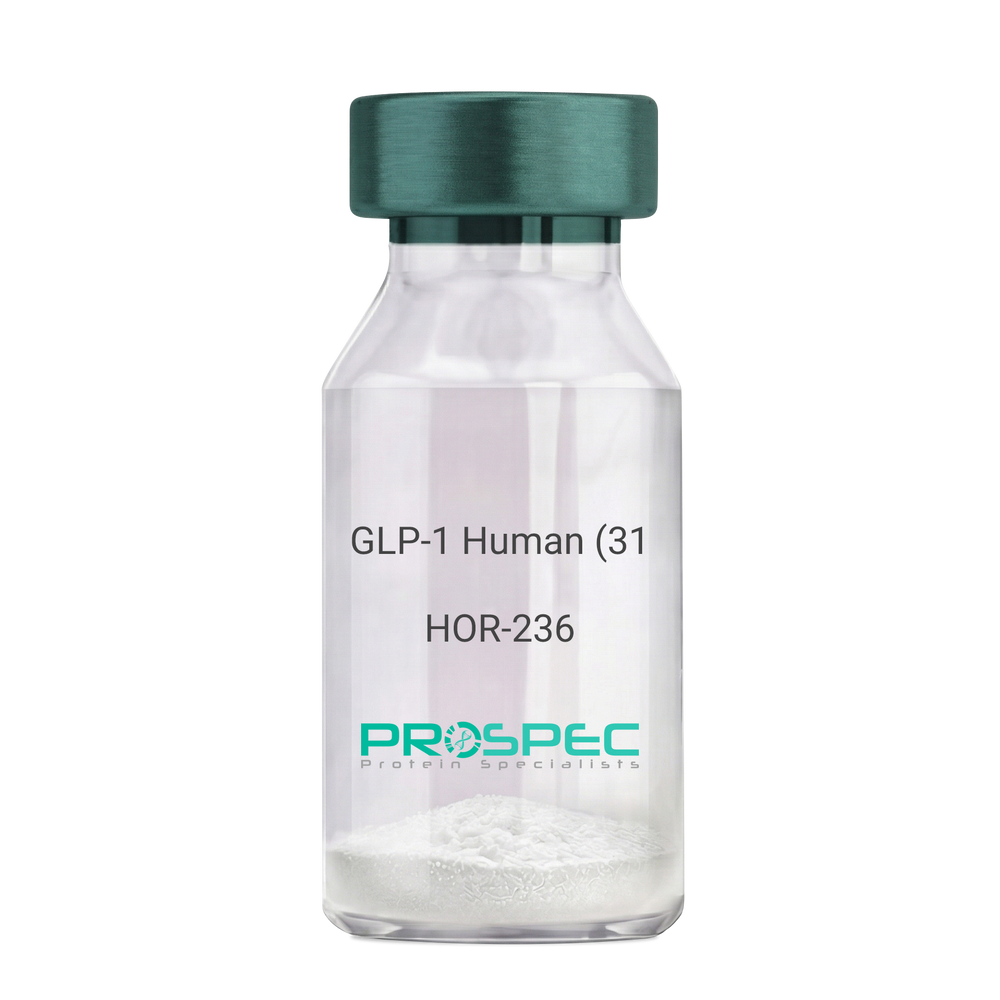
GLP-1 Human (31 a.a.)Description:
Glucagon Like Peptide-1 (31 a.a.) Human Recombinant
GLP1, GLP2, GRPP.
Product # :
HOR-236Price :
Quantity :
Shipping Method :
Shipped at Room temp
More Info
- description
- source
- formulation
- purity
- More Info
Description
Glucagon Like Peptide-1 Human Recombinant produced in E.Coli is a single, non-glycosylated, polypeptide chain containing 31 amino acids and having a molecular mass of 3.3 kDa. The GLP-1 is purified by proprietary chromatographic techniques.
Source
Escherichia Coli.
Formulation
The Recombinant GLP-1 concentrated solution (1mg/ml) was lyophilized after extensive dialyses against 0.1mg sodium phosphate monobasic & 1.6mg sodium phosphate dibasic.
Purity
Greater than 98.0% as determined by:
(a) Analysis by RP-HPLC.
(b) Analysis by SDS-PAGE.More Info
-
Introduction
Glucagon-like peptide-1 (GLP-1) is derived from the transcription product of the proglucagon gene. The major source of GLP-1 in the body is the intestinal L cell that secretes GLP-1 as a guthormone. The biologically active forms of GLP-1 are: GLP-1-(7-37) and GLP-1-(7-36)NH2.
GLP-1 secretion by L cells is dependent on the presence of nutrients in the lumen of the small intestine. The secretagogues (agents that causes or stimulates secretion) of this hormone include major nutrients like carbohydrate, proteinand lipid. Once in the circulation, GLP-1 has a half life of less than 2 minutes, due to rapid degradation by the enzyme dipeptidyl peptidase-4.
GLP-1 possesses several physiological properties that make it a subject of intensive investigation as a potential treatment of diabetes mellitus. The known physiological functions of GLP-1 include: Increases insulin secretion from the pancreas in a glucose-dependent manner, decreases glucagon secretion from the pancreas, increases beta cells mass and insulin gene expression, inhibits acid secretion and gastric emptying in the stomach, decreases food intake by increasing satiety. -
Synonyms
GLP1, GLP2, GRPP.
-
Physical Appearance
Sterile Filtered White lyophilized (freeze-dried) powder.
-
Stability
Lyophilized Glucagon Like Peptide-1 although stable at room temperature for 3 weeks, should be stored desiccated below -18°C. Upon reconstitution GLP-1 should be stored at 4°C between 2-7 days and for future use below -18°C. For long term storage it is recommended to add a carrier protein (0.1% HSA or BSA).Please prevent freeze-thaw cycles.
-
Solubility
It is recommended to reconstitute the lyophilized Glucagon Like Peptide-1 in sterile 18MΩ-cm H2O not less than 100µg/ml, which can then be further diluted to other aqueous solutions.
-
Amino Acid Sequence
HAEGTFTSDV SSYLEGQAAK EFIAWLVKGR G.
ProSpec's products are furnished for LABORATORY RESEARCH USE ONLY. The product may not be used as drugs, agricultural or pesticidal products, food additives or household chemicals.
- View Data Sheet
Name :
IFNA7 Human, Sf9Description:
Interferon-alpha 7 Human Recombinant, Sf9
Interferon alpha-7, IFN-alpha-7, Interferon alpha-J, LeIF J, Interferon alpha-J1, IFN-alpha-J1, IFNA7, IFNA-J, IFN-alphaJ.
Product # :
CYT-1075Price :
Quantity :
Shipping Method :
Shipped with Ice Packs
More Info
- description
- source
- formulation
- purity
- More Info
- SDS-PAGE
Description
IFNA7 Human Recombinant produced in Sf9 Baculovirus cells is a single, glycosylated polypeptide chain containing 175 amino acids (24-189) and having a molecular mass of 20.7kDa. IFNA7 is fused to a 6 amino acid His-Tag at C-terminus and purified by proprietary chromatographic techniques.
Source
Sf9, Baculovirus cells.
Formulation
IFNA7 protein solution (0.25mg/ml) containing Phosphate Buffered Saline (pH 7.4) and 10% glycerol.
Purity
Greater than 90.0% as determined by analysis by SDS-PAGE.
SDS-PAGE
More Info
-
Introduction
Interfereon alpha 7 (IFNA7) is a member of the alpha/beta interferon family. IFNA7 is generated by macrophages. IFN-alpha has antiviral functions. Interferon promotes the production of 2 enzymes: a protein kinase and an oligoadenylate synthetase.
-
Synonyms
Interferon alpha-7, IFN-alpha-7, Interferon alpha-J, LeIF J, Interferon alpha-J1, IFN-alpha-J1, IFNA7, IFNA-J, IFN-alphaJ.
-
Physical Appearance
Sterile Filtered clear solution.
-
Stability
Store at 4°C if entire vial will be used within 2-4 weeks. Store, frozen at -20°C for longer periods of time. For long term storage it is recommended to add a carrier protein (0.1% HSA or BSA).Avoid multiple freeze-thaw cycles.
-
Amino Acid Sequence
ADPCDLPQTH SLRNRRALIL LAQMGRISPF SCLKDRHEFR FPEEEFDGHQ FQKTQAISVL HEMIQQTFNL FSTEDSSAAW EQSLLEKFST ELYQQLNDLE ACVIQEVGVE ETPLMNEDFI LAVRKYFQRI TLYLMEKKYS PCAWEVVRAE IMRSFSFSTN LKKGLRRKDH HHHHH.
-
Background
What is the molecular weight/Mw of IFNA7 HUMAN, SF9 Protein?
IFNA7 HUMAN, SF9 Protein has a total Mw of 20.7kDa.
What is the source or expression system of IFNA7 HUMAN, SF9 Protein?
Sf9, Baculovirus cells.
What is the Purity of IFNA7 HUMAN, SF9 Protein?
IFNA7 HUMAN, SF9 Protein is >90% pure as determined by SDS-PAGE.
What is the Biological Activity of IFNA7 HUMAN, SF9 Protein?
The biological functionality of IFNA7 HUMAN, SF9 Protein will be determined in the future.
What is the amino acid sequence of IFNA7 HUMAN, SF9 Protein?
ADPCDLPQTH SLRNRRALIL LAQMGRISPF SCLKDRHEFR FPEEEFDGHQ FQKTQAISVL HEMIQQTFNL FSTEDSSAAW EQSLLEKFST ELYQQLNDLE ACVIQEVGVE ETPLMNEDFI LAVRKYFQRI TLYLMEKKYS PCAWEVVRAE IMRSFSFSTN LKKGLRRKDH HHHHH.
What applications can IFNA7 HUMAN, SF9 Protein be used in?
IFNA7 HUMAN, SF9 Protein can probably be used in western blot, ELISA and Lateral Flow.
What is the endotoxin level for IFNA7 HUMAN, SF9 Protein?
The endotoxin level is minimal, IFNA7 HUMAN, SF9 Protein was purified using conventional chromatography techniques.
ProSpec's products are furnished for LABORATORY RESEARCH USE ONLY. The product may not be used as drugs, agricultural or pesticidal products, food additives or household chemicals.
- View Data Sheet
Name :
YWHAG Human, HisDescription:
Tyr-3/Trp-5 Monooxygenase Activation Protein Gamma Human Recombinant, His Tag
14-3-3 protein gamma, Protein kinase C inhibitor protein 1, KCIP-1, YWHAG, Tyrosine 3-monooxygenase/tryptophan 5-monooxygenase activation protein, gamma polypeptide.
Product # :
PKA-262Price :
Quantity :
Shipping Method :
Shipped with Ice Packs
More Info
- description
- source
- formulation
- purity
- More Info
Description
YWHAG Human Recombinant produced in E.Coli is a single, non-glycosylated, polypeptide chain containing 246 amino acids (2-247) and having a molecular mass of 36 kDa. YWHAG is fused to His Tag and purified by proprietary chromatographic techniques.
Source
Escherichia Coli.
Formulation
YWHAG solution containing 1x PBS and 50% glycerol.
Purity
Greater than 95.0% as determined by SDS-PAGE.
More Info
-
Introduction
The 14-3-3 family of proteins plays a key regulatory role in signal transduction, checkpoint control, apoptotic and nutrient-sensing pathways. 14-3-3 proteins are highly conserved and ubiquitously expressed. There are at least seven isoforms that have been identified in mammals. The 14-3-3gamma, a subtype of the 14-3-3 family of proteins, was thought to be brain and neuron-specific. It has been shown to interact with RAF1 and protein kinase C, proteins involved in various signal transduction pathways.
-
Synonyms
14-3-3 protein gamma, Protein kinase C inhibitor protein 1, KCIP-1, YWHAG, Tyrosine 3-monooxygenase/tryptophan 5-monooxygenase activation protein, gamma polypeptide.
-
Physical Appearance
Sterile filtered colorless solution.
-
Stability
Store at 4°C if entire vial will be used within 2-4 weeks. Store, frozen at -20°C for longer periods of time. Avoid multiple freeze-thaw cycles.
ProSpec's products are furnished for LABORATORY RESEARCH USE ONLY. The product may not be used as drugs, agricultural or pesticidal products, food additives or household chemicals.
- View Data Sheet
Name :
TRAIL HumanDescription:
TRAIL / APO2 Ligand Human Recombinant
Tumor necrosis factor ligand superfamily member 10, TNF-related apoptosis-inducing ligand, Protein TRAIL, Apo-2 ligand, Apo-2L, CD253 antigen, TL2, APO2L, TNFSF10.
Product # :
CYT-443Price :
Quantity :
Shipping Method :
Shipped at Room temp
More Info
- description
- source
- formulation
- purity
- biological activity
- More Info
Description
TRAIL/APO 2 Ligand Human Recombinant produced in E.Coli is a single, non-glycosylated polypeptide chain containing 168 amino acids (Met+Arg115-Gly281) and having a molecular mass of ~21kDa. The sTRAIL is purified by proprietary chromatographic techniques.
Source
Escherichia Coli.
Formulation
Lyophilized from a filtered (0.2µm) solution containing 20mM Tris-HCl pH 8.0 and 150mM NaCl.
Purity
Greater than 95.0% as determined by:
(a) Analysis by RP-HPLC.
(b) Analysis by SDS-PAGE.Biological Activity
The activity is determined by the cytolysis of Murine L929 cells in the presence of Actinomycin D, ED50 for this effect is less than 2ng/ml, corresponding to a specific activity of 5,000,000IU/mg.More Info
-
Introduction
TNF-related apoptosis-inducing ligand (TRAIL) is a ligand molecule which induces apoptosis. It is a type II transmembrane protein with homology to other members of the tumor necrosis factor family.
In humans, the gene that encodes for TRAIL is located at chromosome 3q26. TRAIL binds to the death receptors, DR4 and DR5. The process of apoptosis is caspase-8-dependent. This protein preferentially induces apoptosis in transformed and tumor cells, but does not appear to kill normal cells although it is expressed at a significant level in most normal tissues. -
Synonyms
Tumor necrosis factor ligand superfamily member 10, TNF-related apoptosis-inducing ligand, Protein TRAIL, Apo-2 ligand, Apo-2L, CD253 antigen, TL2, APO2L, TNFSF10.
-
Physical Appearance
Sterile Filtered White lyophilized (freeze-dried) powder.
-
Stability
Lyophilized APO 2 Ligand although stable at room temperature for 3 weeks, should be stored desiccated below -18°C. Upon reconstitution TRAIL should be stored at 4°C between 2-7 days and for future use below -18°C.For long term storage it is recommended to add a carrier protein (0.1% HSA or BSA).Please prevent freeze-thaw cycles.
-
Solubility
It is recommended to reconstitute the lyophilized TRAIL in sterile 18MΩ-cm H2O not less than 100µg/ml, which can then be further diluted to other aqueous solutions.
-
Amino Acid Sequence
MRERGPQRVA AHITGTRGRS NTLSSPNSKN EKALGRKINS WESSRSGHSF LSNLHLRNGE LVIHEKGFYY IYSQTYFRFQ EEIKENTKND KQMVQYIYKY TSYPDPILLM KSARNSCWSK DAEYGLYSIY QGGIFELKEN DRIFVSVTNE HLIDMDHEAS FFGAFLVG.
ProSpec's products are furnished for LABORATORY RESEARCH USE ONLY. The product may not be used as drugs, agricultural or pesticidal products, food additives or household chemicals.
- View Data Sheet
Name :
F9 AntibodyDescription:
Coagulation Factor-IX, Mouse Antibody
Product # :
ANT-229Price :
Quantity :
Shipping Method :
Shipped at Room temp
More Info
- formulation
- More Info
Formulation
1mg/ml in PBS (after reconstitution).
More Info
-
Introduction
Factor IX is a glycoprotein, which is synthesized in the liver. The domain structure of factor IX is similar to that of the other vitamin K dependent coagulation factors. The NH2-terminal region contains 12 g-carboxyglutamic acid (gla) residues, which facilitate the calcium dependent binding of factor IX to negatively charged phospholipid surfaces. Two domains which are homologous to epidermal growth factor (EGF) span the region between the NH2-terminal gla domain and the activation peptide (Ala-146 to Arg-180). Factor IX is activated by either factor XIa or the factor VIIa/tissue factor/phospholipid complex. Cleavage at site A yields the intermediate IXa, which is subsequently converted to the fully active form IXab by cleavage at site B. The NH2-terminal light chain (GLA and EGF domains) remains covalently attached to the COOH-terminal heavy chain by a disulfide bond. The serine protease catalytic triad (Ser-365, His 221, Asp-269) is located in the heavy chain. Factor IXab is the catalytic component of the “intrinsic factor Xase complex” (factor VIIIa/IXa/Ca2+/phospholipid) which proteolytically activates factor X to factor Xa.
-
Solubility
Reconstitute with H20 to get a 1 mg/ml concentration. Mix gently, wash the sides of the vial and wait 30-60 seconds before use.
-
Immunogen
Human Factor-IX.
-
Ig Subclass
Mouse IgG1.
-
Clone
NYRhFIX.
-
Applications
Direct ELISA, Western Blot, imunohistochemistry. For W.B. use 1µg/ml of antibody.
-
Titer
By direct ELISA, 1:10,000 dilution will yield 0.5 O.D using alkaline phosphatase conjugated rabbit anti-mouse Ig (Jackson Laboratories).
-
Shipping Conditions
Antibody is shipped lyophilized at ambient temperature.
-
Type
Mouse Antibody Monoclonal.
-
Storage Procedures
In lyophilized form, for long periods, store at 4 C in a dry environment. After reconstitution, if not intended for use within a month, aliquot and store at -20 C.
-
Purification Method
Protein A.
ProSpec's products are furnished for LABORATORY RESEARCH USE ONLY. The product may not be used as drugs, agricultural or pesticidal products, food additives or household chemicals.
- View Data Sheet
Name :
IL 7 Human, HisDescription:
Interleukin-7 Human Recombinant, His Tag
Lymphopoietin 1 (LP-1), pre-B cell factor, IL-7.
Product # :
CYT-485Price :
Quantity :
Shipping Method :
Shipped with Ice Packs
More Info
- description
- source
- formulation
- purity
- More Info
Description
IL-7 Human Recombinant produced in E.Coli is single, a non-glycosylated, Polypeptide chain containing 152 amino acids fragment (26-177) and having a total molecular mass of 21.97 kDa with an amino-terminal hexahistidine tag. The IL-7 His-Tag protein is purified by proprietary chromatographic techniques.
Source
Escherichia Coli.
Formulation
Interleukin -7 His is supplied in 1x PBS and 50% glycerol.
Purity
Greater than 95.0% as determined by SDS-PAGE.
More Info
-
Introduction
Interleukin-7 is a potent lymphoid cell growth factor produced primarily by stromal cells.
IL-7 has been shown to support the proliferation and differentiation of pre B- and early T cells as well as displaying a biological effect on cells of NK and myeloid lineages. -
Synonyms
Lymphopoietin 1 (LP-1), pre-B cell factor, IL-7.
-
Physical Appearance
Sterile Filtered clear solution.
-
Stability
Store at 4°C if entire vial will be used within 2-4 weeks. Store, frozen at -20°C for longer periods of time. Please avoid freeze thaw cycles.
ProSpec's products are furnished for LABORATORY RESEARCH USE ONLY. The product may not be used as drugs, agricultural or pesticidal products, food additives or household chemicals.
- View Data Sheet
Name :
TCEAL1 HumanDescription:
Transcription Elongation Factor A (SII)-Like 1 Human Recombinant
Transcription elongation factor A protein-like 1, TCEA-like protein 1, Nuclear phosphoprotein p21/SIIR, Transcription elongation factor S-II protein-like 1, TCEAL1, SIIR, p21, pp21.
Product # :
PRO-507Price :
Quantity :
Shipping Method :
Shipped with Ice Packs
More Info
- description
- source
- formulation
- purity
- More Info
Description
TCEAL1 Human Recombinant fused with an 8 amino acid His tag at C-terminus produced in E.Coli is a single, non-glycosylated, polypeptide chain containing 167 amino acids (1-159 a.a.) and having a molecular mass of 19.7kDa. The TCEAL1 is purified by proprietary chromatographic techniques.
Source
Escherichia Coli.
Formulation
The TCEAL1 solution (1mg/ml) contains 20mM Tris-HCl buffer (pH 8.0), 2mM DTT, 20% glycerol and 0.1M NaCl.
Purity
Greater than 90.0% as determined by SDS-PAGE.
More Info
-
Introduction
Transcription elongation factor A protein-like 1 (TCEAL1) is a member of the transcription elongation factor A (SII)-like (TCEAL) family, which may function as nuclear phosphoproteins that modulate transcription in a promoter context-dependent manner. TCEAL1 is involved in transcriptional regulation. TCEAL1 is expressed in all tissues, especially highly expressed in the heart, ovary, prostate and skeletal muscle.
-
Synonyms
Transcription elongation factor A protein-like 1, TCEA-like protein 1, Nuclear phosphoprotein p21/SIIR, Transcription elongation factor S-II protein-like 1, TCEAL1, SIIR, p21, pp21.
-
Physical Appearance
Sterile Filtered colorless solution.
-
Stability
Store at 4°C if entire vial will be used within 2-4 weeks. Store, frozen at -20°C for longer periods of time. For long term storage it is recommended to add a carrier protein (0.1% HSA or BSA).Avoid multiple freeze-thaw cycles.
-
Amino Acid Sequence
MDKPRKENEE EPQSAPKTDE ERPPVEHSPE KQSPEEQSSE EQSSEEEFFP EELLPELLPE MLLSEERPPQ EGLSRKDLFE GRPPMEQPPC GVGKHKLEEG SFKERLARSR PQFRGDIHGR NLSNEEMIQA ADELEEMKRV RNKLMIMHWK AKRSRPYPIL EHHHHHH.
ProSpec's products are furnished for LABORATORY RESEARCH USE ONLY. The product may not be used as drugs, agricultural or pesticidal products, food additives or household chemicals.
- View Data Sheet
Name :
IFN Beta 1a HumanDescription:
IFN-Beta 1a Human Recombinant
Leukocyte IFN, B cell IFN, Type I IFN, IFNB1, IFB, IFF, IFNB, IFN-b 1a ,MGC96956.
Product # :
CYT-236Price :
Quantity :
Shipping Method :
Shipped at Room temp
More Info
- description
- source
- formulation
- purity
- biological activity
- More Info
Description
IFN-beta 1a Human Recombinant produced in CHO (Chinese Hamster Ovarian) cells is a single, glycosylated polypeptide chain containing 166 amino acids and having a molecular mass of 22500 Dalton.IFN-beta1a is purified by proprietary chromatographic techniques.
Source
CHO (Chinese Hamster Ovarian) cells.
Formulation
Lyophilized from a solution containing 91 mg Human Albumin, and 620 mg mannitol and 50mM Acetate acid pH 3.8.
Purity
Greater than 99.0% as determined by:
(a) Analysis by RP-HPLC.
(b) Analysis by SDS-PAGE.Biological Activity
The specific activity as determined in a viral resistance assay (human "Wish" cell line and VSV virus or the monkey VERO cell line with EMCV virus) was found to be 270 x 106 IU/mg.More Info
-
Introduction
IFN-beta has antiviral, antibacterial and anticancer activities.
-
Synonyms
Leukocyte IFN, B cell IFN, Type I IFN, IFNB1, IFB, IFF, IFNB, IFN-b 1a ,MGC96956.
-
Stability
Lyophilized IFN-beta 1a although stable at room temperature for 3 weeks, should be stored desiccated below -18°C. Upon reconstitution IFN-Beta1a should be stored at 4°C between 2-7 days and for future use below -18°C.Please prevent freeze-thaw cycles.
-
Solubility
It is recommended to reconstitute the lyophilized IFN beta 1a in sterile 18MΩ-cm H2O not less than 100µg/ml, which can then be further diluted to other aqueous solutions.
-
Background
What is the molecular weight/Mw of IFN BETA 1A HUMAN Protein?
IFN BETA 1A HUMAN Protein has a total Mw of 22.5kDa.
What is the source or expression system of IFN BETA 1A HUMAN Protein?
CHO (Chinese Hamster Ovarian) cells.
What is the Purity of IFN BETA 1A HUMAN Protein?
IFN BETA 1A HUMAN Protein is >99% pure as determined by SDS-PAGE.
What is the Biological Activity of IFN BETA 1A HUMAN Protein?
The specific activity as determined in a viral resistance assay (human "Wish" cell line and VSV virus or the monkey VERO cell line with EMCV virus) was found to be 270 x 106 IU/mg.
What is the amino acid sequence of IFN BETA 1A HUMAN Protein?
IFN BETA 1A HUMAN Protein is composed from 166 amino acids.
What applications can IFN BETA 1A HUMAN Protein be used in?
IFN BETA 1A HUMAN Protein can probably be used in western blot, ELISA and Lateral Flow.
What is the endotoxin level for IFN BETA 1A HUMAN Protein?
The endotoxin level is minimal, IFN BETA 1A HUMAN Protein was purified using conventional chromatography techniques.
ProSpec's products are furnished for LABORATORY RESEARCH USE ONLY. The product may not be used as drugs, agricultural or pesticidal products, food additives or household chemicals.
- View Data Sheet
Name :
EREG HumanDescription:
Epiregulin Human Recombinant
EREG, Epiregulin, ER.
Product # :
CYT-609Price :
Quantity :
Shipping Method :
Shipped at Room temp
More Info
- description
- source
- formulation
- purity
- biological activity
- More Info
Description
Epiregulin Human Recombinant produced in E.Coli is a single, non-glycosylated, polypeptide chain containing 49 amino acids and having a molecular mass of 5.6 kDa. Epiregulin is purified by proprietary chromatographic techniques.
Source
Escherichia Coli.
Formulation
Epiregulin was lyophilized from 0.5mg/ml solution ciontaing 20mM PBS buffer pH-7.4 containing 20mM sodium chloride.
Purity
Greater than 97.0% as determined by:
(a) Analysis by RP-HPLC.
(b) Analysis by SDS-PAGE.Biological Activity
The ED50 was determined by the dose-dependent stimulation of the proliferation of murine Balb/3T3 cells is < 2.0 ng/ml, corresponding to a specific activity of > 500,000 units/mg.More Info
-
Introduction
Epiregulin is part of the EGF family. Epiregulin functions as a ligand of EGFR, as well as a ligand of most members of the ERBB (v-erb-b2 oncogene homolog) family of tyrosine-kinase receptors.Epiregulin is expressed mostly in the placenta and peripheral blood leukocytes and in specific carcinomas of the bladder, lung, kidney and colon. Epiregulin stimulates the proliferation of keratinocytes, hepatocytes, fibroblasts and vascular smooth muscle cells. Epiregulin inhibits the growth of several tumor-derived epithelial cell lines. Human Epiregulin is initially synthesized as a glycosylated 19.0 kDa transmembrane precursor protein, which is processed by proteolytic cleavage to produce a 6.0 kDa mature secreted sequence.
-
Synonyms
EREG, Epiregulin, ER.
-
Physical Appearance
Sterile Filtered White lyophilized (freeze-dried) powder.
-
Stability
Lyophilized Epiregulin although stable at room temperature for 3 weeks, should be stored desiccated below -18°C. Upon reconstitution Epiregulin should be stored at 4°C between 2-7 days and for future use below -18°C.For long term storage it is recommended to add a carrier protein (0.1% HSA or BSA).Please prevent freeze-thaw cycles.
-
Solubility
It is recommended to reconstitute the lyophilized Epiregulin in sterile 18MΩ-cm H2O not less than 100µg/ml, which can then be further diluted to other aqueous solutions.
-
Amino Acid Sequence
VAQVSITKC SSDMNGYCLH GQCIYLVDMS QNYCRCEVGY TGVRCEHFFL.
-
Background
What is the molecular weight/Mw of EREG Protein?
EREG Protein has a total Mw of 5.6kDa.
What is the source or expression system of EREG Protein?
Escherichia Coli.
What is the Purity of EREG Protein?
EREG Protein is >97% pure as determined by SDS-PAGE.
What is the Biological Activity of EREG Protein?
The ED50 was determined by the dose-dependent stimulation of the proliferation of murine Balb/3T3 cells is < 2.0 ng/ml, corresponding to a specific activity of > 500,000 units/mg.
What is the amino acid sequence of EREG Protein?
VAQVSITKC SSDMNGYCLH GQCIYLVDMS QNYCRCEVGY TGVRCEHFFL.
What applications can EREG Protein be used in?
EREG Protein can probably be used in western blot, ELISA and Lateral Flow.
What is the endotoxin level for EREG Protein?
The endotoxin level is minimal, EREG Protein was purified using conventional chromatography techniques.
ProSpec's products are furnished for LABORATORY RESEARCH USE ONLY. The product may not be used as drugs, agricultural or pesticidal products, food additives or household chemicals.
- View Data Sheet
Name :
IMPA1 AntibodyDescription:
Inositol Monophosphatase 1, Mouse Anti Human
Inositol monophosphatase 1, IMP 1, IMPase 1, Inositol-1(or 4)-monophosphatase 1, Lithium-sensitive myo-inositol monophosphatase A1, IMPA1, IMPA, IMP.
Product # :
ANT-625Price :
Quantity :
Shipping Method :
Shipped with Ice Packs
More Info
- formulation
- More Info
Formulation
1mg/ml containing PBS, pH-7.4, 10% Glycerol and 0.02% Sodium Azide.
More Info
-
Introduction
Inositol monophosphatase1 (IMPA1) is responsible for the provision of inositol essential for synthesis of phosphatidylinositol and polyphosphoinositides. IMPA1 has a central role in the phosphatidylinositol signaling pathway by catalyzing the hydrolysis of inositol monophosphates. IMPA1 has been recognized as the pharmacological target for lithium action in the brain. The IMPA1 enzyme has a magnesium-dependent phosphatase activity and is inhibited by therapeutic concentrations of lithium. Inhibition of inositol monophosphate hydroylosis and ensuing depletion of inositol for phosphatidylinositol synthesis may perhaps explain the anti-manic and anti-depressive effects of lithium administered to treat bipolar disorder.
-
Synonyms
Inositol monophosphatase 1, IMP 1, IMPase 1, Inositol-1(or 4)-monophosphatase 1, Lithium-sensitive myo-inositol monophosphatase A1, IMPA1, IMPA, IMP.
-
Physical Appearance
Sterile filtered colorless solution.
-
Immunogen
Anti-human IMPA1 mAb, is derived from hybridization of mouse F0 myeloma cells with spleen cells from BALB/c mice immunized with a recombinant human IMPA1 protein 1-277amino acids purified from E. coli.
-
Ig Subclass
Mouse IgG1 heavy chain and k light chain.
-
Clone
PAT2G5AT.
-
Applications
The antibody has been tested by ELISA, Western blot analysis, Flow cytometry and ICC/IF to assure specificity and reactivity. Since application varies, however, each investigation should be titrated by the reagent to obtain optimal results.
-
Type
Mouse Anti Human Monoclonal.
-
Storage Procedures
For periods up to 1 month store at 4°C, for longer periods of time, store at -20°C. Prevent freeze thaw cycles.
-
Purification Method
IMPA1 antibody was purified from mouse ascitic fluids by protein-A affinity chromatography.
ProSpec's products are furnished for LABORATORY RESEARCH USE ONLY. The product may not be used as drugs, agricultural or pesticidal products, food additives or household chemicals.
- View Data Sheet
Name :
IL6ST HumanDescription:
Interleukin-6 Signal Transducer Human Recombinant
Interleukin 6 signal transducer, oncostatin M receptor, IL6ST, CD130, CDw130, GP130, GP130-RAPS, IL6R-beta
Product # :
CYT-1156Price :
Quantity :
Shipping Method :
Shipped with Ice Packs
More Info
- description
- source
- formulation
- purity
- More Info
Description
IL6ST Human produced in Sf9 Baculovirus cells is a single, glycosylated polypeptide chain containing 605 amino acids (23-619 a.a) and having a molecular mass of 68.9kDa.IL6ST is fused to an 8 amino acid His tag at C-terminus and purified by proprietary chromatographic techniques.
Source
Sf9, Baculovirus cells.
Formulation
The IL6ST solution (0.25mg/ml) contains 10% Glycerol and Phosphate-Buffered Saline (pH 7.4).
Purity
Greater than 95% as determined by SDS-PAGE.
More Info
-
Introduction
Interleukin-6 Signal Transducer or IL6ST is a receptor, part of the family of class 1 cytokine receptor. IL6ST binds to IL-6 through membrane-anchored or soluble IL-6R starts a connection between another complex of IL6ST and IL-6 , thus forming a homo-dimer and a signal transduction occurs.
-
Synonyms
Interleukin 6 signal transducer, oncostatin M receptor, IL6ST, CD130, CDw130, GP130, GP130-RAPS, IL6R-beta
-
Physical Appearance
Sterile Filtered colorless solution.
-
Stability
Store at 4°C if entire vial will be used within 2-4 weeks. Store, frozen at -20°C for longer periods of time. For long term storage it is recommended to add a carrier protein (0.1% HSA or BSA).Avoid multiple freeze-thaw cycles.
-
Amino Acid Sequence
ELLDPCGYIS PESPVVQLHS NFTAVCVLKE KCMDYFHVNA NYIVWKTNHF TIPKEQYTII NRTASSVTFT DIASLNIQLT CNILTFGQLE QNVYGITIIS GLPPEKPKNL SCIVNEGKKM RCEWDRGRET HLETNFTLKS EWATHKFADC KAKRDTPTSC TVDYSTVYFV NIEVWVEAEN ALGKVTSDHI NFDPVYKVKP NPPHNLSVIN SEELSSILKL TWTNPSIKSV IILKYNIQYR TKDASTWSQI PPEDTASTRS SFTVQDLKPF TEYVFRIRCM KEDGKGYWSD WSEEASGITY EDRPSKAPSF WYKIDPSHTQ GYRTVQLVWK TLPPFEANGK ILDYEVTLTR WKSHLQNYTV NATKLTVNLT NDRYVATLTV RNLVGKSDAA VLTIPACDFQ ATHPVMDLKA FPKDNMLWVE WTTPRESVKK YILEWCVLSD KAPCITDWQQ EDGTVHRTYL RGNLAESKCY LITVTPVYAD GPGSPESIKA YLKQAPPSKG PTVRTKKVGK NEAVLEWDQL PVDVQNGFIR NYTIFYRTII GNETAVNVDS SHTEYTLSSL TSDTLYMVRM AAYTDEGGKD GPEFTFTTPK FAQGEIELEH HHHHH
-
Background
Significance of Human Recombinant Interleukin-6 Signal Transducer: Insights and Implications
Abstract:
The Interleukin-6 (IL-6) signal transducer holds a pivotal role in the complex IL-6 signaling pathway, orchestrating crucial cellular responses. This paper delves into the significance of Human Recombinant IL-6 Signal Transducer in unraveling IL-6-mediated cellular communication and highlights its potential applications in research and therapeutic development. The review sheds light on the methodology of producing this transducer and its relevance in advancing our understanding of cytokine signaling.
Introduction:
IL-6, a pleiotropic cytokine, is known to exert its diverse effects through a complex signaling cascade, wherein the signal transducer plays a crucial role. The availability of Human Recombinant IL-6 Signal Transducer enables the investigation of its role in health and disease. This transducer is vital for transmitting IL-6 signals, influencing processes like immune response, inflammation, and cell differentiation.
IL-6 Signal Transduction Pathway:
The IL-6 signal transduction pathway involves binding of IL-6 to its receptor, leading to the recruitment of the signal transducer and subsequent activation of downstream signaling molecules such as JAK/STAT pathway. This orchestrated response modulates gene expression, thereby impacting cellular behavior.
Methods of Production:
Human Recombinant IL-6 Signal Transducer is produced by expressing the corresponding gene in a suitable expression system, often utilizing bacterial or mammalian cells. Proper post-translational modifications are necessary to ensure its biological activity and appropriate functioning within the signaling cascade.
Applications in Research:
Human Recombinant IL-6 Signal Transducer serves as a fundamental tool in elucidating IL-6-mediated signaling mechanisms. Its availability facilitates the exploration of how aberrant signaling contributes to diseases such as autoimmune disorders, inflammatory conditions, and certain cancers. The transducer's interaction with other signaling pathways is also of interest for comprehensive pathway analysis.
Therapeutic Implications:
Understanding the IL-6 signal transduction pathway has led to the development of targeted therapies for IL-6-related diseases. Modulation of this pathway presents potential opportunities for novel therapeutic interventions, thereby offering a new dimension in precision medicine.
Challenges and Future Directions:
While the availability of Human Recombinant IL-6 Signal Transducer has significantly advanced our knowledge, challenges remain in deciphering the intricate nuances of IL-6 signaling. Developing strategies to selectively intervene in this pathway without disturbing physiological homeostasis presents an ongoing challenge.
Conclusion:
The Human Recombinant IL-6 Signal Transducer serves as a cornerstone in unraveling the complexities of IL-6 signaling, shedding light on its roles in health and disease. Its applications span from fundamental research to therapeutic development, showcasing its potential to shape the future of precision medicine.
ProSpec's products are furnished for LABORATORY RESEARCH USE ONLY. The product may not be used as drugs, agricultural or pesticidal products, food additives or household chemicals.
- View Data Sheet
Name :
TFF3 RatDescription:
Trefoil Factor-3 Rat Recombinant
Trefoil factor 3, Intestinal trefoil factor, rITF, Polypeptide P1.B, rP1.B, Tff3, Itf.
Product # :
CYT-781Price :
Quantity :
Shipping Method :
Shipped at Room temp
More Info
- description
- source
- formulation
- purity
- More Info
Description
The Trefoil Factor-3 Rat was constructed as a recombinant protein with a 9 a.a C-terminal fusion of Flag-Tag (1 aa N-terminal+8 aa C-terminal). The TFF3 Rat produced in E.coli, is 7.7kDa protein containing a total of 68 amino acid residues.
Source
Escherichia Coli.
Formulation
TFF3 protein filtered (0.4µm) and lyophilized in 0.5mg/ml in 20mM TRIS and 50mM NaCl, pH 7.5.
Purity
Greater than 95.0% as determined by SDS-PAGE.
More Info
-
Introduction
Proteins of the TFF family are characterized by obtaining a minimum of 1 copy of the trefoil motif, a 40-amino acid domain that contains 3 conserved disulfides. Trefoil Factors are stable secretory proteins expressed in gastrointestinal mucosa which protect the mucosa from insults, stabilize the mucus layer and affect healing of the epithelium.TFF2 inhibits gastric acid motility & secretion. TFF2 stabilizes glycoproteins in the mucus gel through interactions with carbohydrate side chains. TFF3 induces ciliogenesis and promotes airway epithelial ciliated cell differentiation, relatively through an epidermal growth factor receptor-dependent pathway. TFF3 overexpression is crucial for progression in mouse and human hepatocellular carcinogenesis. TFF-3 is normally expressed in hepatocellular carcinoma and its expression associates with tumor grade.
-
Synonyms
Trefoil factor 3, Intestinal trefoil factor, rITF, Polypeptide P1.B, rP1.B, Tff3, Itf.
-
Physical Appearance
Filtered White lyophilized (freeze-dried) powder.
-
Stability
Store lyophilized protein at -20°C. Aliquot the product after reconstitution to avoid repeated freezing/thawing cycles. Reconstituted protein can be stored at 4°C for a limited period of time; it does not show any change after two weeks at 4°C.
-
Solubility
It is recommended to add deionized water to prepare a working stock solution of approximately 0.5 mg/ml and let the lyophilized pellet dissolve completely. Product is not sterile! Please filter the product by an appropriate sterile filter before using it in the cell culture.
-
Amino Acid Sequence
MQEFVGLSPS QCMVPANVRV DCGYPTVTSE QCNNRGCCFD SSIPNVPWCF KPLQETECT F DYKDDDDK.
ProSpec's products are furnished for LABORATORY RESEARCH USE ONLY. The product may not be used as drugs, agricultural or pesticidal products, food additives or household chemicals.
- View Data Sheet
Name :
Prolactin Human, HisDescription:
Prolactin Human Recombinant, His Tag
Mammotropin, Luteotropic hormone, Luteotropin, PRL.
Product # :
CYT-493Price :
Quantity :
Shipping Method :
Shipped with Ice Packs
More Info
- description
- source
- formulation
- purity
- More Info
Description
Prolactin-His Human Recombinant produced in E.Coli is a single, non-glycosylated polypeptide chain containing 199 amino acids fragment (29-227) and having a molecular mass of 23 kDa with an amino-terminal hexahistidine tag. The Prolactin is purified by proprietary chromatographic techniques.
Source
Escherichia Coli.
Formulation
Prolactin His is supplied in 1x PBS and 50% glycerol.
Purity
Greater than 95.0% as determined by(a) Analysis by RP-HPLC.
(b) Analysis by SDS-PAGE.More Info
-
Introduction
Prolactin is a neuroendocrine hormone synthesized primarily by the pituitary gland but also a variety of other cell types including the placenta, brain and uterus. Its primary function is to promote and maintain lactation but has also been shown to have a role in breast cancer development, regulation of reproductive function and immunoregulation.
-
Synonyms
Mammotropin, Luteotropic hormone, Luteotropin, PRL.
-
Physical Appearance
Sterile Filtered clear solution.
-
Stability
Store at 4°C if entire vial will be used within 2-4 weeks. Store, frozen at -20°C for longer periods of time. Please avoid freeze thaw cycles.
ProSpec's products are furnished for LABORATORY RESEARCH USE ONLY. The product may not be used as drugs, agricultural or pesticidal products, food additives or household chemicals.
- View Data Sheet
Name :
Leptin tA Rat, PEGDescription:
Leptin Antagonist Triple Mutant Pegylated Rat Recombinant
Product # :
CYT-567Price :
Quantity :
Shipping Method :
Shipped at Room temp
More Info
- description
- source
- formulation
- purity
- biological activity
- More Info
Description
Leptin Antagonist Triple Mutant Rat Recombinant is a single non-glycosilated polypeptide chain containing 146 amino and additional Ala at N-terminus acids and having a molecular mass of ~ 16 kDa.The Rat Leptin antagonist was mutated, resulting in L39A/D40A/F41A mutant.The Rat Leptin antagonist is bound to 20 kDa mono-PEG at N-terminus, resulting in 35.6 kDa. The Rat Leptin triple anatagonist runs as a 48 kDa.Leptin Antagonist Triple Mutant Rat Recombinant was purified by proprietary chromatographic techniques.
Source
Escherichia coli.
Formulation
The Rat Leptin triple anatagonist was lyophilized from a concentrated (0.65mg/ml) solution with 0.003mM NaHCO3.
Purity
Greater than 99.0% as determined by:
(a) Gel filtration analysis.
(b) Analysis by SDS-PAGE.Biological Activity
Leptin Antagonist Triple Mutant Rat Recombinant half-life in circulation after SC injection was over 20 hours.
Leptin Antagonist Triple Mutant Rat Recombinant is capable of inhibiting leptin-induced proliferation of BAF/3 cells stably transfected with the long form of human leptin receptor. Leptin Antagonist Triple Mutant Rat Recombinant in vitro activity is 5-6 fold lower than the non-pegylated antagonist, though in vivo it has profound weight gain effect (as compared to the non-pegylated antagonist), resulting mainly from increased food intake.More Info
-
Physical Appearance
White lyophilized (freeze-dried) powder.
-
Stability
Lyophilized Leptin Antagonist Triple Mutant Rat Recombinant although stable at room temperature for several weeks, should be stored desiccated below -18°C. Upon reconstitution at > 0.1 Leptin mutant mg/ml and up to 2 mM and filter sterilization LEP mutant can be stored at 4°C or even room temperature for several weeks making it suitable for long term infusion studies using osmotic pumps. At lower concentration addition of a carrier protein (0.1% HSA or BSA) is suggested.Please prevent freeze-thaw cycles.
-
Solubility
It is recommended to reconstitute the lyophilized Leptin Antagonist Triple Mutant Rat Recombinant in sterile water or sterile 0.4% NaHCO3 adjusted to pH 8-9, not less than 100µg/ml, which can then be further diluted with other aqueous solutions.
-
Protein content
Protein quantization was carried out by UV spectroscopy at 280 nm using the absorbency value of 0.2 as the extinction coefficient for a 0.1% (1mg/ml) solution at pH 8.0. This value is calculated by the PC GENE computer analysis program of protein sequences (IntelliGenetics).
ProSpec's products are furnished for LABORATORY RESEARCH USE ONLY. The product may not be used as drugs, agricultural or pesticidal products, food additives or household chemicals.
- View Data Sheet
Name :
CDNF MouseDescription:
Cerebral Dopamine Neurotrophic Factor Mouse Recombinant
Cerebral dopamine neurotrophic factor, ARMET-like protein 1, Conserved dopamine neurotrophic factor, Cdnf, Armetl1, 9330140G23.
Product # :
CYT-729Price :
Quantity :
Shipping Method :
Shipped at Room temp
More Info
- description
- source
- formulation
- purity
- biological activity
- More Info
Description
CDNF Mouse Recombinant produced in E.coli is a single, non-glycosylated polypeptide chain containing 163 amino acids and having a molecular mass of 18.5kDa.The CDNF is purified by proprietary chromatographic techniques.
Source
Escherichia Coli.
Formulation
CDNF protein was lyophilized from a 0.2µm filtered concentrated solution in 1xPBS, pH 7.4.
Purity
Greater than 97.0% as determined by:
(a) Analysis by RP-HPLC.
(b) Analysis by SDS-PAGE.Biological Activity
CDNF Mouse is able to enhance neurite outgrowth of E16-E18 rat embryonic cortical neurons when immobilized at 5-30 µg/mL on a nitrocellulose-coated microplate.More Info
-
Introduction
CDNF is a member of the ARMET family and acts as a trophic factor for dopamine neurons. CDNF inhibits the 6-hydroxydopamine (6-OHDA)-induced degeneration of dopaminergic neurons. When CDNF controlled after 6-OHDA-lesioning, it reestablishes the dopaminergic function and inhibits the degeneration of dopaminergic neurons in substantia nigra. CDNF is universally expressed in neuronal and non-neuronal tissues. The highest levels in the brain are found in the optic nerve and corpus callosum.
-
Synonyms
Cerebral dopamine neurotrophic factor, ARMET-like protein 1, Conserved dopamine neurotrophic factor, Cdnf, Armetl1, 9330140G23.
-
Physical Appearance
Sterile Filtered White lyophilized (freeze-dried) powder.
-
Stability
Lyophilized CDNF although stable at room temperature for 3 weeks, should be stored desiccated below -18°C. Upon reconstitution CDNF should be stored at 4°C between 2-7 days and for future use below -18°C. For long term storage it is recommended to add a carrier protein (0.1% HSA or BSA). Please prevent freeze-thaw cycles.
-
Solubility
It is recommended to reconstitute the lyophilized CDNF in sterile 18M-cm H2O not less than 100µg/ml, which can then be further diluted to other aqueous solutions.
-
Amino Acid Sequence
QGLEAGVGPR ADCEVCKEFL DRFYNSLLSR GIDFSADTIE KELLNFCSDA KGKENRLCYY LGATTDAATK ILGEVTRPMS VHIPAVKICE KLKKMDSQIC ELKYGKKLDL ASVDLWKMRV AELKQILQRW GEECRACAEK SDYVNLIREL APKYVEIYPQ TEL.
-
Background
What is the molecular weight/Mw of CDNF Protein?
CDNF Protein has a total Mw of 18.5kDa.
What is the source or expression system of CDNF Protein?
Escherichia Coli.
What is the Purity of CDNF Protein?
CDNF Protein is >97% pure as determined by SDS-PAGE.
What is the Biological Activity of CDNF Protein?
CDNF Mouse is able to enhance neurite outgrowth of E16-E18 rat embryonic cortical neurons when immobilized at 5-30 µg/mL on a nitrocellulose-coated microplate.
What is the amino acid sequence of CDNF Protein?
QGLEAGVGPR ADCEVCKEFL DRFYNSLLSR GIDFSADTIE KELLNFCSDA KGKENRLCYY LGATTDAATK ILGEVTRPMS VHIPAVKICE KLKKMDSQIC ELKYGKKLDL ASVDLWKMRV AELKQILQRW GEECRACAEK SDYVNLIREL APKYVEIYPQ TEL.
What applications can CDNF Protein be used in?
CDNF Protein can probably be used in western blot, ELISA and Lateral Flow.
What is the endotoxin level for CDNF Protein?
The endotoxin level is minimal, CDNF Protein was purified using conventional chromatography techniques.
ProSpec's products are furnished for LABORATORY RESEARCH USE ONLY. The product may not be used as drugs, agricultural or pesticidal products, food additives or household chemicals.
- View Data Sheet
Name :
ANGPTL7 HumanDescription:
Angiopoietin-like Protein 7 Human Recombinant
angiopoietin like 7, AngX, CDT6, dJ647M16.1, Angiopoietin-like factor; Angiopoietin-like Protein 7, ANGPTL7, angiopoietinrelated protein 7, Cornea-derived transcript 6 protein
Product # :
CYT-1208Price :
Quantity :
Shipping Method :
Shipped with Ice Packs
More Info
- description
- source
- formulation
- purity
- More Info
Description
ANGPTL7 Human Recombinant produced in HEK293 cells is a single, glycosylated polypeptide chain (27-346a.a) containing 553amino acids and having a molecular mass of 63.2kDa.ANGPTL7 is fused to a 233 amino acid hIgG-His-Tag at C-terminus & purified by proprietary chromatographic techniques.
Source
HEK293 cells.
Formulation
ANGPTL7 protein (0.25mg/ml) contains 10% glycerol and Phosphate-Buffered Saline (pH 7.4).
Purity
Greater than 90.0% as determined by SDS-PAGE.
More Info
-
Introduction
Angiopoietin-related protein 7 (ANGPTL7), belongs to the angiopoietin-like family of molecules. ANGPTL7 is expressed in the corneal stroma, trabecular meshwork, and sclera. ANGPTL7 production is up-regulated in trabecular meshwork cells by glucocorticoids and TGF-Beta and in cartilage by TNF-alpha.
-
Synonyms
angiopoietin like 7, AngX, CDT6, dJ647M16.1, Angiopoietin-like factor; Angiopoietin-like Protein 7, ANGPTL7, angiopoietinrelated protein 7, Cornea-derived transcript 6 protein
-
Physical Appearance
Sterile filtered colorless solution.
-
Stability
Store at 4°C if entire vial will be used within 2-4 weeks.Store, frozen at -20°C for longer periods of time.For long term storage it is recommended to add a carrier protein (0.1% HSA or BSA).Avoid multiple freeze-thaw cycles.
-
Amino Acid Sequence
QKLSKHKTPA QPQLKAANCC EEVKELKAQV ANLSSLLSEL NKKQERDWVS VVMQVMELES NSKRMESRLT DAESKYSEMN NQIDIMQLQA AQTVTQTSAD AIYDCSSLYQ KNYRISGVYK LPPDDFLGSP ELEVFCDMET SGGGWTIIQR RKSGLVSFYR DWKQYKQGFG SIRGDFWLGN EHIHRLSRQP TRLRVEMEDW EGNLRYAEYS HFVLGNELNS YRLFLGNYTG NVGNDALQYH NNTAFSTKDK DNDNCLDKCA QLRKGGYWYN CCTDSNLNGV YYRLGEHNKH LDGITWYGWH GSTYSLKRVE MKIRPEDFKP LEPKSCDKTH TCPPCPAPEL LGGPSVFLFP PKPKDTLMIS RTPEVTCVVV DVSHEDPEVK FNWYVDGVEV HNAKTKPREE QYNSTYRVVS VLTVLHQDWL NGKEYKCKVS NKALPAPIEK TISKAKGQPR EPQVYTLPPS RDELTKNQVS LTCLVKGFYP SDIAVEWESN GQPENNYKTT PPVLDSDGSF FLYSKLTVDK SRWQQGNVFS CSVMHEALHN HYTQKSLSLS PGK
-
Background
Angiopoietin-like Protein 7 Human Recombinant: An Emerging Player in Metabolic Regulation and Therapeutic Potential
Abstract:
Angiopoietin-like protein 7 (ANGPTL7) is a multifunctional protein that has recently gained attention for its potential role in metabolic regulation and as a therapeutic target for metabolic disorders. ANGPTL7 is involved in the modulation of lipid metabolism, adipogenesis, and insulin signaling. The availability of human recombinant ANGPTL7 protein has provided researchers with a valuable tool to unravel its biological functions and explore its therapeutic applications. This review provides an overview of the current knowledge on ANGPTL7 and discusses its potential as a therapeutic intervention in metabolic disorders.
Introduction:
Metabolic disorders, including obesity and type 2 diabetes, pose significant health challenges worldwide. ANGPTL7, a member of the angiopoietin-like protein family, has recently emerged as a potential regulator of metabolic processes. ANGPTL7 affects lipid metabolism, adipose tissue biology, and insulin signaling pathways, making it an intriguing target for therapeutic interventions in metabolic disorders.
Role of ANGPTL7 in Metabolic Regulation:
ANGPTL7 plays a multifaceted role in metabolic regulation. It influences lipid metabolism by regulating lipoprotein lipase (LPL) activity and lipid uptake in adipose tissue and skeletal muscle. ANGPTL7 also affects adipocyte biology and adipogenesis, potentially contributing to the development of obesity and related metabolic complications. Furthermore, ANGPTL7 modulates insulin signaling and glucose metabolism, suggesting its involvement in insulin resistance and diabetes pathogenesis.
Mechanisms of ANGPTL7 Action:
ANGPTL7 exerts its effects through various mechanisms. It interacts with extracellular matrix components, influencing cell adhesion and migration. ANGPTL7 also regulates angiogenesis and vascular remodeling, potentially linking it to metabolic regulation and tissue homeostasis.
Therapeutic Potential of ANGPTL7 Human Recombinant Protein:
The availability of ANGPTL7 human recombinant protein offers new avenues for therapeutic interventions in metabolic disorders. Modulating ANGPTL7 activity through recombinant protein administration or targeted interventions may have significant implications for lipid metabolism, adipose tissue function, and insulin sensitivity. Exploring ANGPTL7 as a therapeutic target holds promise for the development of novel strategies to tackle metabolic disorders.
Conclusion:
ANGPTL7 is an emerging player in metabolic regulation with potential therapeutic implications for metabolic disorders. Its involvement in lipid metabolism, adipose tissue biology, and insulin signaling pathways highlights its importance in maintaining metabolic homeostasis. The availability of ANGPTL7 human recombinant protein opens up new possibilities for further investigations and the development of targeted interventions for metabolic disorders.
What is the molecular weight/Mw of ANGPTL7 Protein?
ANGPTL7 Protein has a total Mw of 63.2kDa.
What is the source or expression system of ANGPTL7 Protein?
HEK293 cells.
What is the Purity of ANGPTL7 Protein?
ANGPTL7 Protein is >90% pure as determined by SDS-PAGE.
What is the Biological Activity of ANGPTL7 Protein?
The biological functionality of ANGPTL7 Protein will be determined in the future.
What is the amino acid sequence of ANGPTL7 Protein?
QKLSKHKTPA QPQLKAANCC EEVKELKAQV ANLSSLLSEL NKKQERDWVS VVMQVMELES NSKRMESRLT DAESKYSEMN NQIDIMQLQA AQTVTQTSAD AIYDCSSLYQ KNYRISGVYK LPPDDFLGSP ELEVFCDMET SGGGWTIIQR RKSGLVSFYR DWKQYKQGFG SIRGDFWLGN EHIHRLSRQP TRLRVEMEDW EGNLRYAEYS HFVLGNELNS YRLFLGNYTG NVGNDALQYH NNTAFSTKDK DNDNCLDKCA QLRKGGYWYN CCTDSNLNGV YYRLGEHNKH LDGITWYGWH GSTYSLKRVE MKIRPEDFKP LEPKSCDKTH TCPPCPAPEL LGGPSVFLFP PKPKDTLMIS RTPEVTCVVV DVSHEDPEVK FNWYVDGVEV HNAKTKPREE QYNSTYRVVS VLTVLHQDWL NGKEYKCKVS NKALPAPIEK TISKAKGQPR EPQVYTLPPS RDELTKNQVS LTCLVKGFYP SDIAVEWESN GQPENNYKTT PPVLDSDGSF FLYSKLTVDK SRWQQGNVFS CSVMHEALHN HYTQKSLSLS PGK
What applications can ANGPTL7 Protein be used in?
ANGPTL7 Protein can probably be used in western blot, ELISA and Lateral Flow.
What is the endotoxin level for ANGPTL7 Protein?
The endotoxin level is minimal, ANGPTL7 Protein was purified using conventional chromatography techniques.
ProSpec's products are furnished for LABORATORY RESEARCH USE ONLY. The product may not be used as drugs, agricultural or pesticidal products, food additives or household chemicals.
- View Data Sheet
Name :
EEF1B2 HumanDescription:
Eukaryotic Translation Elongation Factor 1 Beta 2 Human Recombinant
Elongation factor 1-beta, EF-1-beta, EEF1B2, EEF1B, EF1B, EEF1B1.
Product # :
PRO-167Price :
Quantity :
Shipping Method :
Shipped with Ice Packs
More Info
- description
- source
- formulation
- purity
- More Info
Description
EEF1B2 Human Recombinant fused with an 8 amino acid His tag at C-terminus produced in E.Coli is a single, non-glycosylated, polypeptide chain containing 233 amino acids (1-225 a.a.) and having a molecular mass of 25.8kDa. The EEF1B2 is purified by proprietary chromatographic techniques.
Source
Escherichia Coli.
Formulation
The EEF1B2 solution (0.5 mg/ml) contains 20mM Tris-HCl buffer (pH8.0), 10% glycerol, 1mM DTT and 100mM NaCl.
Purity
Greater than 90.0% as determined by SDS-PAGE.
More Info
-
Introduction
Elongation factor 1-beta (EEF1B2) is a translation elongation factor. EEF1B2 is a guanine nucleotide exchange factor which is involved in the transfer of aminoacylated tRNAs to the ribosome. Both EEF1B2 and EEF1D stimulate the exchange of GDP bound to EEF1A to GTP.
-
Synonyms
Elongation factor 1-beta, EF-1-beta, EEF1B2, EEF1B, EF1B, EEF1B1.
-
Physical Appearance
Sterile Filtered colorless solution.
-
Stability
Store at 4°C if entire vial will be used within 2-4 weeks. Store, frozen at -20°C for longer periods of time. For long term storage it is recommended to add a carrier protein (0.1% HSA or BSA).Avoid multiple freeze-thaw cycles.
-
Amino Acid Sequence
MGFGDLKSPA GLQVLNDYLA DKSYIEGYVP SQADVAVFEA VSSPPPADLC HALRWYNHIK SYEKEKASLP GVKKALGKYG PADVEDTTGS GATDSKDDDD IDLFGSDDEE ESEEAKRLRE ERLAQYESKK AKKPALVAKS SILLDVKPWD DETDMAKLEE CVRSIQADGL VWGSSKLVPV GYGIKKLQIQ CVVEDDKVGT DMLEEQITAF EDYVQSMDVA AFNKILEHHH HHH.
ProSpec's products are furnished for LABORATORY RESEARCH USE ONLY. The product may not be used as drugs, agricultural or pesticidal products, food additives or household chemicals.
- View Data Sheet
Name :
IL7R HumanDescription:
Interleukin-7 Receptor Human Recombinant
IL7R, Interleukin 7 Receptor, IL-7 Receptor Subunit Alpha, IL-7R Subunit Alpha,CD127 Antigen, IL-7R-Alpha, CDW127, Interleukin-7 Receptor Subunit Alpha, Interleukin 7 Receptor Isoform H5-6, Interleukin 7 Receptor Alpha Chain, IL-7RA,CD127, IL7RA, ILRA.
Product # :
CYT-1046Price :
Quantity :
Shipping Method :
Shipped with Ice Packs
More Info
- description
- source
- formulation
- purity
- More Info
Description
IL7R produced in Sf9 Baculovirus cells is a single, glycosylated polypeptide chain containing 461 amino acids (21-239a.a.) and having a molecular mass of 52.5kDa. (Molecular size on SDS-PAGE will appear at approximately 50-70kDa). IL7R is expressed with an 242 amino acid hIgG-His tag at C-Terminus and purified by proprietary chromatographic techniques.
Source
Sf9, Baculovirus cells.
Formulation
IL7R protein solution (0.5mg/ml) contains Phosphate Buffered Saline (pH 7.4) and 10% glycerol.
Purity
Greater than 90.0% as determined by SDS-PAGE.
More Info
-
Introduction
Interleukin-7 receptor (IL7R) ,is a hematopoietin receptor superfamily member. IL7R takes a vital part in lymphocyte differentiation, proliferation, multiple sclerosis, as well as survival. IL7R protein signaling is vital for T-cell development and regulation of native and memory T-cell homeostasis. Likewise, IL7R is critically needed for the proper function & development of lymphoid cells.
-
Synonyms
IL7R, Interleukin 7 Receptor, IL-7 Receptor Subunit Alpha, IL-7R Subunit Alpha,CD127 Antigen, IL-7R-Alpha, CDW127, Interleukin-7 Receptor Subunit Alpha, Interleukin 7 Receptor Isoform H5-6, Interleukin 7 Receptor Alpha Chain, IL-7RA,CD127, IL7RA, ILRA.
-
Physical Appearance
Sterile Filtered colorless solution.
-
Stability
Store at 4°C if entire vial will be used within 2-4 weeks. Store, frozen at -20°C for longer periods of time. For long term storage it is recommended to add a carrier protein (0.1% HSA or BSA). Avoid multiple freeze-thaw cycles.
-
Amino Acid Sequence
ADLESGYAQN GDLEDAELDD YSFSCYSQLE VNGSQHSLTC AFEDPDVNIT NLEFEICGAL VEVKCLNFRK LQEIYFIETK KFLLIGKSNI CVKVGEKSLT CKKIDLTTIV KPEAPFDLSV VYREGANDFV VTFNTSHLQK KYVKVLMHDV AYRQEKDENK WTHVNLSSTK LTLLQRKLQP AAMYEIKVRS IPDHYFKGFW SEWSPSYYFR TPEINNSSGE MDLEPKSCDK THTCPPCPAP ELLGGPSVFL FPPKPKDTLM ISRTPEVTCV VVDVSHEDPE VKFNWYVDGV EVHNAKTKPR EEQYNSTYRV VSVLTVLHQD WLNGKEYKCK VSNKALPAPI EKTISKAKGQ PREPQVYTLP PSRDELTKNQ VSLTCLVKGF YPSDIAVEWE SNGQPENNYK TTPPVLDSDG SFFLYSKLTV DKSRWQQGNV FSCSVMHEAL HNHYTQKSLS LSPGKHHHHH H
ProSpec's products are furnished for LABORATORY RESEARCH USE ONLY. The product may not be used as drugs, agricultural or pesticidal products, food additives or household chemicals.
- View Data Sheet
Name :
EIF4EBP1 HumanDescription:
Eukaryotic translation initiation factor 4E-binding protein 1 Human Recombinant
Eukaryotic translation initiation factor 4E-binding protein 1, eIF4E-binding protein 1, 4E-BP1, PHAS-I, EIF4EBP1, BP-1, 4EBP1, MGC4316.
Product # :
PRO-532Price :
Quantity :
Shipping Method :
Shipped with Ice Packs
More Info
- description
- source
- formulation
- purity
- More Info
Description
EIF4EBP1 Human Recombinant fused with a 20 amino acid His tag at N-terminus produced in E.Coli is a single, non-glycosylated, polypeptide chain containing 138 amino acids (1-118 a.a.) and having a molecular mass of 14.7kDa (molecular weight on SDS-PAGE will appear higher).The EIF4EBP1 is purified by proprietary chromatographic techniques.
Source
Escherichia Coli.
Formulation
The EIF4EBP1 solution (1mg/ml) contains 20mM Tris-HCl buffer (pH8.0) and 10% glycerol.
Purity
Greater than 95.0% as determined by SDS-PAGE.
More Info
-
Introduction
EIF4EBP1 (eukaryotic translation initiation factor 4E-binding protein 1) belongs to a family of translation repressor proteins. EIF4EBP1 regulates eIF4E (eukaryotic translation initiation factor 4E) activity by preventing its assembly into the eIF4F complex and mediates the regulation of protein translation by hormones, growth factors and other stimuli that signal through the MAP kinase and mTORC1 pathways. EIF4EBP1 is phosphorylated in response to various signals including UV irradiation, resulting in its dissociation from eIF4E and activation of mRNA translation. EIF4EBP1 C-terminus has domains which control function and phosphorylation. EIF4EBP1 has a role in progression of breast neoplasms through cell signaling.
-
Synonyms
Eukaryotic translation initiation factor 4E-binding protein 1, eIF4E-binding protein 1, 4E-BP1, PHAS-I, EIF4EBP1, BP-1, 4EBP1, MGC4316.
-
Physical Appearance
Sterile Filtered colorless solution.
-
Stability
Store at 4°C if entire vial will be used within 2-4 weeks. Store, frozen at -20°C for longer periods of time. For long term storage it is recommended to add a carrier protein (0.1% HSA or BSA).Avoid multiple freeze-thaw cycles.
-
Amino Acid Sequence
MGSSHHHHHH SSGLVPRGSH MSGGSSCSQT PSRAIPATRR VVLGDGVQLP PGDYSTTPGG TLFSTTPGGT RIIYDRKFLM ECRNSPVTKT PPRDLPTIPG VTSPSSDEPP MEASQSHLRN SPEDKRAGGE ESQFEMDI.
ProSpec's products are furnished for LABORATORY RESEARCH USE ONLY. The product may not be used as drugs, agricultural or pesticidal products, food additives or household chemicals.
- View Data Sheet
Name :
NAP 2 AntibodyDescription:
Natural anti-proliferative protein, Mouse-Anti Human
Platelet basic protein, PBP, Small inducible cytokine B7, CXCL7, Leukocyte-derived growth factor, LDGF, Macrophage-derived growth factor, MDGF, pro-platelet basic protein (chemokine (C-X-C motif) ligand 7), TC1, TC2, TGB, TGB1, B-TG1, CTAP3, NAP-2, SCYB7, THBGB, LA-PF4, THBGB1, Beta-TG, CTAPIII, CTAP-III.
Product # :
ANT-170Price :
Quantity :
Shipping Method :
Shipped at Room temp
More Info
- formulation
- More Info
Formulation
1mg/ml in PBS (after reconstitution).
More Info
-
Introduction
Chemokine (C-X-C motif) ligand (CXCL7) is a small cytokine belonging to the CXC chemokine family. It is a protein that is released in large amounts from platelets following their activation. It stimulates various processes including mitogenesis, synthesis of extracellular matrix, glucose metabolism and synthesis of plasminogen activator.
-
Synonyms
Platelet basic protein, PBP, Small inducible cytokine B7, CXCL7, Leukocyte-derived growth factor, LDGF, Macrophage-derived growth factor, MDGF, pro-platelet basic protein (chemokine (C-X-C motif) ligand 7), TC1, TC2, TGB, TGB1, B-TG1, CTAP3, NAP-2, SCYB7, THBGB, LA-PF4, THBGB1, Beta-TG, CTAPIII, CTAP-III.
-
Solubility
Reconstitute with sterile H20. Mix gently, wash the sides of the vial and wait 30-60 seconds before use.
-
Immunogen
r.Human NAP-2.
-
Ig Subclass
Mouse IgG1.
-
Clone
NYRhNAP-2.
-
Applications
Direct ELISA, Western Blot, Immuneprecipitation.
-
Note
This antibody will bind very well to protein A in a buffer (PBS) containing high salt concentration (3M Nacl).
-
Titer
In direct ELISA, using alkaline phosphatase goat anti-mouse Ig (Jackson Laboratories) 1:10,000 dilution will yield 0.5 O.D within 10 minutes.
-
Shipping Conditions
Antibody is shipped lyophilized at ambient temperature.
-
Type
Mouse Anti Human Monoclonal.
-
Storage Procedures
In lyophilized form, for long periods, store at 4oC in a dry environment. After reconstitution, if not intended for use within a month, aliquot and store at -20oC.
-
Purification Method
ion exchange.
ProSpec's products are furnished for LABORATORY RESEARCH USE ONLY. The product may not be used as drugs, agricultural or pesticidal products, food additives or household chemicals.
- View Data Sheet
Name :
NENF HumanDescription:
Neudesin Neurotrophic Factor Human Recombinant
Neudesin, Cell immortalization-related protein 2, Neuron-derived neurotrophic factor, Secreted protein of unknown function, SPUF protein, NENF, CIR2, SPUF, SCIRP10.
Product # :
CYT-778Price :
Quantity :
Shipping Method :
Shipped at Room temp
More Info
- description
- source
- formulation
- purity
- More Info
Description
NENF Human Recombinant produced in E.Coli is a single, non-glycosylated, polypeptide chain (aa 32-172) containing 151 amino acids including a 10 a.a N-terminal His tag and having a molecular mass of 16.9kDa.
Source
Escherichia Coli.
Formulation
NENF was filtered (0.4µm) and lyophilized from 0.5mg/ml in 0.05M phosphate buffer and 0.075M NaCl, pH 7.4.
Purity
Greater than 95.0% as determined by SDS-PAGE.
More Info
-
Introduction
Neudesin Neurotrophic Factor (NENF) is a member of the cytochrome b5 family, MAPR subfamily. NENF contains 1 cytochrome b5 heme-binding domain. NENF exhibits neurotrophic activity and activates phosphorylation of MAPK1/ERK2, MAPK3/ERK1 and AKT1/AKT in primary cultured neurons. NENF doesn’t have mitogenic activity in primary cultured astrocytes. NENF may play a part in neuronal differentiation and may have a transient influence on neural cell proliferation in neural precursor cells. NENF neurotrophic activity is increased by binding to heme. NENF is up-regulated in immortal cells and induced in estrogen receptor positive breast cancer expressing progesterone receptor.
-
Synonyms
Neudesin, Cell immortalization-related protein 2, Neuron-derived neurotrophic factor, Secreted protein of unknown function, SPUF protein, NENF, CIR2, SPUF, SCIRP10.
-
Physical Appearance
Filtered White lyophilized (freeze-dried) powder.
-
Stability
Store lyophilized protein at -20°C. Aliquot the product after reconstitution to avoid repeated freezing/thawing cycles. Reconstituted protein can be stored at 4°C for a limited period of time; it does not show any change after two weeks at 4°C.
-
Solubility
It is recommended to add deionized water to prepare a working stock solution of approximately 0.5 mg/ml and let the lyophilized pellet dissolve completely. NENF is not sterile! Please filter the product by an appropriate sterile filter before using it in the cell culture.
-
Amino Acid Sequence
MKHHHHHHASGQTPRPAERG PPVRLFTEEE LARYGGEEED QPIYLAVKGV VFDVTSGKEF YGRGAPYNAL TGKDSTRGVA KMSLDPADLT HDTTGLTAKE LEALDEVFTK VYKAKYPIVG YTARRILNED GSPNLDFKPE DQPHFDIKDE F.
ProSpec's products are furnished for LABORATORY RESEARCH USE ONLY. The product may not be used as drugs, agricultural or pesticidal products, food additives or household chemicals.