Skip to content

High-quality research proteins.

  • 1-800-805-6531

  • Mon - Sat 8.00-18.00, Sun - Closed

  • info@prospecbio.com

  • PO Box 6591 East Brunswick NJ 08816

  • Products
    • Cytokines
    • Growth factors
    • Chemokines
    • Cd antigens
    • Neurotrophins
    • Hormones
    • Enzymes
    • Viral antigens
    • Recombinant proteins
    • Natural proteins
    • Monoclonal antibodies
    • Polyclonal antibodies
    • Thermal Packaging
  • About
    • Company
    • Founder
    • Contribution
  • Customers
    • Eastern Asia
    • Eastern Europe
    • North America
    • South America
    • South East Asia
    • Southern Asia
    • Western Europe
  • Ordering
    • Ordering Method
    • Ordering - Credit Card
    • Ordering - PO
    • Shipping Fees
    • FAQs
  • Services
    • DNA Cloning
    • Protein Expression
    • Monoclonal Antibody
    • Fermentation
    • Technology License
  • Contact us
Log in

Country/region

  • USD $ | Albania
  • USD $ | Andorra
  • USD $ | Argentina
  • USD $ | Armenia
  • USD $ | Australia
  • USD $ | Austria
  • USD $ | Azerbaijan
  • USD $ | Belarus
  • USD $ | Belgium
  • USD $ | Bolivia
  • USD $ | Brazil
  • USD $ | Bulgaria
  • USD $ | Cambodia
  • USD $ | Canada
  • USD $ | Chile
  • USD $ | China
  • USD $ | Colombia
  • USD $ | Costa Rica
  • USD $ | Croatia
  • USD $ | Cyprus
  • USD $ | Czechia
  • USD $ | Denmark
  • USD $ | Estonia
  • USD $ | Finland
  • USD $ | France
  • USD $ | Georgia
  • USD $ | Germany
  • USD $ | Greece
  • USD $ | Hong Kong SAR
  • USD $ | Hungary
  • USD $ | Iceland
  • USD $ | India
  • USD $ | Ireland
  • USD $ | Israel
  • USD $ | Italy
  • USD $ | Japan
  • USD $ | Kazakhstan
  • USD $ | Latvia
  • USD $ | Liechtenstein
  • USD $ | Lithuania
  • USD $ | Madagascar
  • USD $ | Malta
  • USD $ | Mexico
  • USD $ | Moldova
  • USD $ | Monaco
  • USD $ | Netherlands
  • USD $ | New Zealand
  • USD $ | North Macedonia
  • USD $ | Norway
  • USD $ | Panama
  • USD $ | Paraguay
  • USD $ | Peru
  • USD $ | Philippines
  • USD $ | Poland
  • USD $ | Portugal
  • USD $ | Romania
  • USD $ | Singapore
  • USD $ | Slovakia
  • USD $ | Slovenia
  • USD $ | South Africa
  • USD $ | South Korea
  • USD $ | Spain
  • USD $ | Sri Lanka
  • USD $ | Sweden
  • USD $ | Switzerland
  • USD $ | Taiwan
  • USD $ | Thailand
  • USD $ | Türkiye
  • USD $ | Ukraine
  • USD $ | United Kingdom
  • USD $ | United States
  • USD $ | Uruguay
  • USD $ | Vatican City
  • USD $ | Venezuela
  • USD $ | Vietnam
  • Facebook
  • Instagram
logoProSpec - Recombinant Protein Manufacturer for academic and R&D industry
Become a distributor
Account Log in
Wishlist
Cart Cart(0)
  • Products
    +
    • Cytokines
    • Growth factors
    • Chemokines
    • Cd antigens
    • Neurotrophins
    • Hormones
    • Enzymes
    • Viral antigens
    • Recombinant proteins
    • Natural proteins
    • Monoclonal antibodies
    • Polyclonal antibodies
    • Thermal Packaging
  • About
    +
    • Company
    • Founder
    • Contribution
  • Customers
    +
    • Eastern Asia
    • Eastern Europe
    • North America
    • South America
    • South East Asia
    • Southern Asia
    • Western Europe
  • Ordering
    +
    • Ordering Method
    • Ordering - Credit Card
    • Ordering - PO
    • Shipping Fees
    • FAQs
  • Services
    +
    • DNA Cloning
    • Protein Expression
    • Monoclonal Antibody
    • Fermentation
    • Technology License
  • Contact us

Item added to your cart

View cart
View All
  • Cytokines
  • Growth factors
  • Chemokines
  • Cd antigens
  • Neurotrophins
  • Hormones
  • Enzymes
  • Viral antigens
  • Recombinant proteins
  • Natural proteins
  • Monoclonal antibodies
  • Polyclonal antibodies
  • Thermal Packaging
  • Tumor Necrosis Factor

    Tumor Necrosis Factor

    View All
  • 4-1BB

    4-1BB

    View All
  • Adiponectin

    Adiponectin

    View All
  • AIF1

    AIF1

    View All
  • Other Cytokines

    Other Cytokines

    View All
  • AITRL

    AITRL

    View All
  • Angiopoietin

    Angiopoietin

    View All
  • Apolipoprotein

    Apolipoprotein

    View All
  • B-Cell Activating Factor

    B-Cell Activating Factor

    View All
  • Beta Defensin

    Beta Defensin

    View All
  • Bone Morphogenetic Protein

    Bone Morphogenetic Protein

    View All
  • B type Natriuretic Peptide

    B type Natriuretic Peptide

    View All
  • BST

    BST

    View All
  • Betacellulin

    Betacellulin

    View All
  • Cardiotrophin

    Cardiotrophin

    View All
  • Activin

    Activin

    View All
  • Fibroblast Growth Factor

    Fibroblast Growth Factor

    View All
  • Other Growth Factors

    Other Growth Factors

    View All
  • CSF

    CSF

    View All
  • CTGF

    CTGF

    View All
  • IGFBP

    IGFBP

    View All
  • VEGF Protein

    VEGF Protein

    View All
  • EGF

    EGF

    View All
  • Epigen

    Epigen

    View All
  • Erythropoietin

    Erythropoietin

    View All
  • Insulin-Like Growth Factor

    Insulin-Like Growth Factor

    View All
  • Growth Hormone

    Growth Hormone

    View All
  • HDGF

    HDGF

    View All
  • Hepatocyte Growth Factor

    Hepatocyte Growth Factor

    View All
  • Insulin

    Insulin

    View All
  • BCA-1/ BLC (CXCL13)

    BCA-1/ BLC (CXCL13)

    View All
  • BRAK (CXCL14)

    BRAK (CXCL14)

    View All
  • C-10 (CCL6)

    C-10 (CCL6)

    View All
  • Other Chemokines

    Other Chemokines

    View All
  • MEC (CCL28)

    MEC (CCL28)

    View All
  • LD78-beta (CCL3L1)

    LD78-beta (CCL3L1)

    View All
  • CTACK (CCL27)

    CTACK (CCL27)

    View All
  • CXCL16

    CXCL16

    View All
  • CXCL17

    CXCL17

    View All
  • Platelet Factor-4 (CXCL4)

    Platelet Factor-4 (CXCL4)

    View All
  • ENA-78 (CXCL5)

    ENA-78 (CXCL5)

    View All
  • Eotaxin (CCL11,24,26)

    Eotaxin (CCL11,24,26)

    View All
  • Exodus-2 (CCL21)

    Exodus-2 (CCL21)

    View All
  • Fractalkine (CX3CL1)

    Fractalkine (CX3CL1)

    View All
  • CXCL6

    CXCL6

    View All
  • Other CD Antigens

    Other CD Antigens

    View All
  • CD14

    CD14

    View All
  • CD164

    CD164

    View All
  • CD1

    CD1

    View All
  • CD2

    CD2

    View All
  • CD200

    CD200

    View All
  • CD207

    CD207

    View All
  • CD226

    CD226

    View All
  • CD23

    CD23

    View All
  • CD244

    CD244

    View All
  • CD247

    CD247

    View All
  • CD27

    CD27

    View All
  • CD274

    CD274

    View All
  • CD300

    CD300

    View All
  • CD33

    CD33

    View All
  • Other Neurotrophins

    Other Neurotrophins

    View All
  • Beta-NGF

    Beta-NGF

    View All
  • BDNF

    BDNF

    View All
  • CDNF

    CDNF

    View All
  • CNTF

    CNTF

    View All
  • GDNF

    GDNF

    View All
  • Glia Maturation Factor

    Glia Maturation Factor

    View All
  • MANF

    MANF

    View All
  • Midkine

    Midkine

    View All
  • Neuroglobin

    Neuroglobin

    View All
  • Neurotrophic factors

    Neurotrophic factors

    View All
  • Neuregulin

    Neuregulin

    View All
  • Neuropilin

    Neuropilin

    View All
  • Pigment Epithelium-Derived Factor

    Pigment Epithelium-Derived Factor

    View All
  • Pleiotrophin

    Pleiotrophin

    View All
  • Peptide Hormones

    Peptide Hormones

    View All
  • Other Hormones

    Other Hormones

    View All
  • HCG

    HCG

    View All
  • Endothelin

    Endothelin

    View All
  • Exendin

    Exendin

    View All
  • FSH

    FSH

    View All
  • Glucagon

    Glucagon

    View All
  • GHRP

    GHRP

    View All
  • GLP

    GLP

    View All
  • Thyrostimulin

    Thyrostimulin

    View All
  • Inhibin A

    Inhibin A

    View All
  • LHRH

    LHRH

    View All
  • Melanotan

    Melanotan

    View All
  • Procalcitonin

    Procalcitonin

    View All
  • PTH

    PTH

    View All
  • Peroxiredoxin

    Peroxiredoxin

    View All
  • Peptidase

    Peptidase

    View All
  • Synthetase

    Synthetase

    View All
  • Transferase

    Transferase

    View All
  • Hydrolase

    Hydrolase

    View All
  • Dehydrogenase

    Dehydrogenase

    View All
  • ACE2

    ACE2

    View All
  • Esterase

    Esterase

    View All
  • Protein Kinases

    Protein Kinases

    View All
  • Other Enzymes

    Other Enzymes

    View All
  • Phosphatase

    Phosphatase

    View All
  • Deaminase

    Deaminase

    View All
  • Oxygenase

    Oxygenase

    View All
  • Adenylate Kinase

    Adenylate Kinase

    View All
  • Lyase

    Lyase

    View All
  • Chagas

    Chagas

    View All
  • SARS

    SARS

    View All
  • Influenza

    Influenza

    View All
  • ASFV

    ASFV

    View All
  • Astrovirus

    Astrovirus

    View All
  • Borrelia

    Borrelia

    View All
  • Helicobacter Pylori

    Helicobacter Pylori

    View All
  • Chikungunya

    Chikungunya

    View All
  • Chlamydia

    Chlamydia

    View All
  • Cytomegalo

    Cytomegalo

    View All
  • Dengue

    Dengue

    View All
  • EBV

    EBV

    View All
  • Ebola

    Ebola

    View All
  • Feline Leukemia Virus

    Feline Leukemia Virus

    View All
  • Hepatitis A

    Hepatitis A

    View All
  • Other

    Other

    View All
  • Actin

    Actin

    View All
  • ADAM

    ADAM

    View All
  • Complement Component

    Complement Component

    View All
  • Ag85

    Ag85

    View All
  • Eukaryotic Translation Initiation Factor

    Eukaryotic Translation Initiation Factor

    View All
  • Anterior Gradient Protein

    Anterior Gradient Protein

    View All
  • Heat Shock Protein

    Heat Shock Protein

    View All
  • Alpha-2-HS-Glycoprotein

    Alpha-2-HS-Glycoprotein

    View All
  • Hemoglobin

    Hemoglobin

    View All
  • Allergy

    Allergy

    View All
  • Anaplasma

    Anaplasma

    View All
  • Angiogenin

    Angiogenin

    View All
  • Ankyrin Repeat Domain

    Ankyrin Repeat Domain

    View All
  • Annexin

    Annexin

    View All
  • Other Natural Proteins

    Other Natural Proteins

    View All
  • Aprotinin

    Aprotinin

    View All
  • Transferrin

    Transferrin

    View All
  • Avidin

    Avidin

    View All
  • Anti Coagulation Factors

    Anti Coagulation Factors

    View All
  • Natural Albumin

    Natural Albumin

    View All
  • Natural Coagulation Factors

    Natural Coagulation Factors

    View All
  • Fibronectin

    Fibronectin

    View All
  • Thrombin

    Thrombin

    View All
  • Anti Human Enzyme

    Anti Human Enzyme

    View All
  • Other Monoclonal Antibodies

    Other Monoclonal Antibodies

    View All
  • Anti Human Cytokine

    Anti Human Cytokine

    View All
  • Anti Human Heat Shock Protein

    Anti Human Heat Shock Protein

    View All
  • Anti Mouse Lymphocyte

    Anti Mouse Lymphocyte

    View All
  • Anti Human Chemokine

    Anti Human Chemokine

    View All
  • Anti Human Lymphocyte

    Anti Human Lymphocyte

    View All
  • Anti Viral Monoclonal

    Anti Viral Monoclonal

    View All
  • Anti Mouse Cytokine

    Anti Mouse Cytokine

    View All
  • Anti-GST Monoclonal

    Anti-GST Monoclonal

    View All
  • Other Polyclonal Antibodies

    Other Polyclonal Antibodies

    View All
  • Anti Viral

    Anti Viral

    View All
  • Anti-GST Monoclonal

    Anti-GST Monoclonal

    View All
Back

Search results

1000 results found for “fibrinogen”

Name

Description

Product #

Price

Quantity

Shipping Method

  • View Data Sheet

    Name :

    AITRL Human, His

    Description:

    AITRL Human Recombinant, His Tag

    Osteostat, TNFSF18, Activation-induced TNFR member Ligand, GITRL,TL6, AITRL, Glucocorticoid-induced TNF-related ligand, hGITRL, Tumor necrosis factor ligand superfamily member 18, MGC138237.

    Product # :

    CYT-317

    Price :

    Quantity :

    Shipping Method :

    Ice Icon

    Shipped with Ice Packs

    Add To Cart

    More Info

    • description
    • source
    • formulation
    • purity
    • More Info

    Description

    AITRL Recombinant Human produced in E.Coli is a single, non-glycosylated polypeptide chain (aa 50-177) containing a total of 137 amino acids and having a molecular mass of 15.6kDa. The AITRL protein is fused to a 9 aa His Tag at C-terminus and purified by proprietary chromatographic techniques.

    Source

    Escherichia Coli.

    Formulation

    AITRL protein solution (1mg/ml) contains 20mM Tris-HCl buffer (pH8.0) & 10% glycerol.

    Purity

    Greater than 85.0% as determined bySDS-PAGE.

    More Info

    • Introduction

      Osteostat is the cytokine that binds to TNFRSF18/AITR/GITR and is important for interactions between activated T-lymphocytes and endothelial cells and may modulate T-lymphocyte survival in peripheral tissues. Osteostat is expressed at high levels in the small intestine, ovary, testis, kidney and endothelial cells after stimulation by lipopolysaccharides.
      Osteostat protein is detectable in human microvascular EC and is highly up-regulated by IFN-alpha and IFN-beta. Osteostat inhibit differentiation of osteoclasts from monocytic precursor cells. Osteostat suppresses the early stage of osteoclastogenesis via inhibition of macrophage colony-stimulating factorinduced receptor activator of NF-kappaB (RANK) expression in the osteoclast precursor cells. Osteostat does not inhibit lipopolysaccharide-induced RANK expression in monocytes and dendritic cells, or activation-induced RANK expression in T cells. Osteostat is a novel regulator of osteoclast generation and substantiate the major role played by the endothelium in bone physiology.

    • Synonyms

      Osteostat, TNFSF18, Activation-induced TNFR member Ligand, GITRL,TL6, AITRL, Glucocorticoid-induced TNF-related ligand, hGITRL, Tumor necrosis factor ligand superfamily member 18, MGC138237.

    • Physical Appearance

      Sterile filtered colorless solution.

    • Stability

      Store at 4°C if entire vial will be used within 2-4 weeks. Store, frozen at -20°C for longer periods of time. For long term storage it is recommended to add a carrier protein (0.1% HSA or BSA).Avoid multiple freeze-thaw cycles.

    • Amino Acid Sequence

      MQLETAKEPC MAKFGPLPSK WQMASSEPPC VNKVSDWKLE ILQNGLYLIY GQVAPNANYN DVAPFEVRLY KNKDMIQTLT NKSKIQNVGG TYELHVGDTI DLIFNSEHQV LKNNTYWGII LIANPQEISL EHHHHHH.

    • Background

      What is the molecular weight/Mw of ADIPONECTIN Protein?
      ADIPONECTIN Protein has a total Mw of 15.6kDa.

      What is the source or expression system of ADIPONECTIN Protein?
      Escherichia Coli.

      What is the Purity of ADIPONECTIN Protein?
      ADIPONECTIN Protein is >85% pure as determined by SDS-PAGE.

      What is the Biological Activity of ADIPONECTIN Protein?
      The biological functionality of ADIPONECTIN Protein will be determined in the future.

      What is the amino acid sequence of ADIPONECTIN Protein?
      MQLETAKEPC MAKFGPLPSK WQMASSEPPC VNKVSDWKLE ILQNGLYLIY GQVAPNANYN DVAPFEVRLY KNKDMIQTLT NKSKIQNVGG TYELHVGDTI DLIFNSEHQV LKNNTYWGII LIANPQEISL EHHHHHH

      What applications can ADIPONECTIN Protein be used in?
      ADIPONECTIN Protein can probably be used in western blot, ELISA and Lateral Flow.

      What is the endotoxin level for ADIPONECTIN Protein?
      The endotoxin level is minimal, ADIPONECTIN Protein was purified using conventional chromatography techniques.

    ProSpec's products are furnished for LABORATORY RESEARCH USE ONLY. The product may not be used as drugs, agricultural or pesticidal products, food additives or household chemicals.

    Gitrl Human
  • View Data Sheet

    Name :

    SDCBP Human

    Description:

    Syndecan Binding Protein Human Recombinant

    SYCL, syntenin-1, Syndecan-binding protein 1, Scaffold protein Pbp1, MDA-9, Melanoma differentiation-associated protein 9, TACIP18, Pro-TGF-alpha cytoplasmic domain-interacting protein 18.

    Product # :

    PRO-036

    Price :

    Quantity :

    Shipping Method :

    Ice Icon

    Shipped with Ice Packs

    Add To Cart

    More Info

    • description
    • source
    • formulation
    • purity
    • More Info

    Description

    SDCBP produced in E.Coli is a single, non-glycosylated polypeptide chain containing 318 amino acids (1-298a.a.) and having a molecular mass of 34.6kDa.SDCBP is fused to a 20 amino acid His-tag at N-terminus & purified by proprietary chromatographic techniques.

    Source

    Escherichia Coli.

    Formulation

    The SDCBP protein solution (0.5mg/1ml) is formulated in 20 mM Tris-HCl Buffer (pH 8.0), 100 mM NaCl, and 40% Glycerol.

    Purity

    Greater than 90% as determined by SDS-PAGE.

    More Info

    • Introduction

      SDCBP is a multifunctional intracellular adapter protein. SDCBP protein has tandemly repeated PDZ domains which react with the FYA (phe-tyr-ala) carboxyterminal amino acid sequence of the syndecans. SDCBP is has a role in organization of protein complexes in the plasma membranes, regulation of B-cell development, activation of transcription factors, intracellular trafficking and cell-surface targeting, synaptic transmission, and axonal outgrowth.

    • Synonyms

      SYCL, syntenin-1, Syndecan-binding protein 1, Scaffold protein Pbp1, MDA-9, Melanoma differentiation-associated protein 9, TACIP18, Pro-TGF-alpha cytoplasmic domain-interacting protein 18.

    • Physical Appearance

      Sterile Filtered clear solution.

    • Stability

      Store at 4°C if entire vial will be used within 2-4 weeks. Store, frozen at -20°C for longer periods of time.Please avoid freeze thaw cycles.

    • Amino Acid Sequence

      MGSSHHHHHH SSGLVPRGSH MSLYPSLEDL KVDKVIQAQT AFSANPANPA ILSEASAPIP HDGNLYPRLY PELSQYMGLS LNEEEIRANV AVVSGAPLQG QLVARPSSIN YMVAPVTGND VGIRRAEIKQ GIREVILCKD QDGKIGLRLK SIDNGIFVQL VQANSPASLV GLRFGDQVLQ INGENCAGWS SDKAHKVLKQ AFGEKITMTI RDRPFERTIT MHKDSTGHVG FIFKNGKITS IVKDSSAARN GLLTEHNICE INGQNVIGLK

    ProSpec's products are furnished for LABORATORY RESEARCH USE ONLY. The product may not be used as drugs, agricultural or pesticidal products, food additives or household chemicals.

    Sdcbp Human
  • View Data Sheet

    Name :

    MYOZ1 Human

    Description:

    Myozenin 1 Human Recombinant

    CS-2, FATZ, MYOZ, Calsarcin-2, Filamin-, actinin- and telethonin-binding protein,Protein FATZ, MYOZ1.

    Product # :

    PRO-1652

    Price :

    Quantity :

    Shipping Method :

    Ice Icon

    Shipped with Ice Packs

    Add To Cart

    More Info

    • description
    • source
    • formulation
    • purity
    • More Info

    Description

    MYOZ1 Human Recombinant produced in E.Coli is a single, non-glycosylated polypeptide chain containing 322 amino acids (1-299 a.a.) and having a molecular mass of 34.1kDa.MYOZ1 is fused to a 23 amino acid His-tag at N-terminus & purified by proprietary chromatographic techniques.

    Source

    Escherichia Coli.

    Formulation

    MYOZ1 protein solution (1mg/ml) contains 20mM Tris-HCl buffer, (pH 8.0), 0.4M UREA and 10% glycerol.

    Purity

    Greater than 90.0% as determined by SDS-PAGE.

    More Info

    • Introduction

      Myozenin 1 (MYOZ1) is a member of the myozenin family. MYOZ1 is mostly expressed in the skeletal muscle. Members of the myozenin family act as calcineurin-interacting proteins which helps tether calcineurin to the sarcomere of cardiac and skeletal muscle. The myozenin family plays a significant role in modulation of calcineurin signaling.

    • Synonyms

      CS-2, FATZ, MYOZ, Calsarcin-2, Filamin-, actinin- and telethonin-binding protein,Protein FATZ, MYOZ1.

    • Physical Appearance

      Sterile Filtered clear solution.

    • Stability

      Store at 4°C if entire vial will be used within 2-4 weeks. Store, frozen at -20°C for longer periods of time. For long term storage it is recommended to add a carrier protein (0.1% HSA or BSA).Avoid multiple freeze-thaw cycles.

    • Amino Acid Sequence

      MGSSHHHHHH SSGLVPRGSH MGSMPLSGTP APNKKRKSSK LIMELTGGGQ ESSGLNLGKK ISVPRDVMLE ELSLLTNRGS KMFKLRQMRV EKFIYENHPD VFSDSSMDHF QKFLPTVGGQ LGTAGQGFSY SKSNGRGGSQ AGGSGSAGQY GSDQQHHLGS GSGAGGTGGP AGQAGRGGAA GTAGVGETGS GDQAGGEGKH ITVFKTYISP WERAMGVDPQ QKMELGIDLL AYGAKAELPK YKSFNRTAMP YGGYEKASKR MTFQMPKFDL GPLLSEPLVL YNQNLSNRPS FNRTPIPWLS SGEPVDYNVD IGIPLDGETE EL.

    ProSpec's products are furnished for LABORATORY RESEARCH USE ONLY. The product may not be used as drugs, agricultural or pesticidal products, food additives or household chemicals.

    Myoz1 Human
  • View Data Sheet

    Name :

    MZB1 Human

    Description:

    Marginal Zone B And B1 Cell-Specific Protein Human Recombinant

    Marginal Zone B and B1 Cell-Specific Protein, MZB1, PACAP, Mesenteric Oestrogen-Dependent Adipose Gene- 7, Plasma Cell-Induced ER Protein 1, Proapoptotic Caspase Adaptor Protein, Mesenteric Estrogen-Dependent Adipose 7, Plasma Cell-Induced Resident Endoplasmic Reticulum Protein, Plasma Cell-Induced Resident ER Protein, Proapoptotic Caspase Adapter Protein, MEDA-7, pERp1, HSPC190, Caspase-2 Binding Protein, Marginal Zone B- And B1-Cell-Specific Protein, MEDA7, MGC29506.

    Product # :

    PRO-608

    Price :

    Quantity :

    Shipping Method :

    Ice Icon

    Shipped with Ice Packs

    Add To Cart

    More Info

    • description
    • source
    • formulation
    • purity
    • More Info

    Description

    MZB1 Human Recombinant produced in E.coli is a single, non-glycosylated polypeptide chain containing 120 amino acids (1-97) and having a molecular mass of 12.9 kDa.MZB1 is fused to a 23 amino acid His-tag at N-terminus & purified by proprietary chromatographic techniques.

    Source

    Escherichia Coli.

    Formulation

    The MZB1 solution (0.5mg/ml) contains 20mM Tris-HCl buffer (pH 8.0), 0.15M NaCl, 10% glycerol and 1mM DTT.

    Purity

    Greater than 90.0% as determined by SDS-PAGE.

    More Info

    • Introduction

      Marginal zone B- and B1-cell-specific protein (MZB1) functions as a hormone-regulated adipokine/proinflammatory cytokine which is implicated in causing chronic inflammation and affecting cellular expansion. MZB1 links with immunoglobulin M (IgM) heavy and light chains and stimulate s IgM assembly and secretion. MZB1 exerts its effect by acting as a molecular chaperone or as an oxidoreductase as it exhibits a low level of oxidoreductase activity. MZB1 helps to diversify peripheral B-cell functions by regulating Ca(2+) stores, antibody secretion and integrin activation.

    • Synonyms

      Marginal Zone B and B1 Cell-Specific Protein, MZB1, PACAP, Mesenteric Oestrogen-Dependent Adipose Gene- 7, Plasma Cell-Induced ER Protein 1, Proapoptotic Caspase Adaptor Protein, Mesenteric Estrogen-Dependent Adipose 7, Plasma Cell-Induced Resident Endoplasmic Reticulum Protein, Plasma Cell-Induced Resident ER Protein, Proapoptotic Caspase Adapter Protein, MEDA-7, pERp1, HSPC190, Caspase-2 Binding Protein, Marginal Zone B- And B1-Cell-Specific Protein, MEDA7, MGC29506.

    • Physical Appearance

      Sterile Filtered colorless solution.

    • Stability

      Store at 4°C if entire vial will be used within 2-4 weeks. Store, frozen at -20°C for longer periods of time. For long term storage it is recommended to add a carrier protein (0.1% HSA or BSA).Avoid multiple freeze-thaw cycles.

    • Amino Acid Sequence

      MGSSHHHHHH SSGLVPRGSH MGSMPAELWL TSYGVREVDQ VKRLTGPGLS EGPEPSISVM VTGGPWPTRL SRTCLHYLGE FGEDQIYEAH QQGRGALEAL LCGGPQGACS EKVSATREEL.

    ProSpec's products are furnished for LABORATORY RESEARCH USE ONLY. The product may not be used as drugs, agricultural or pesticidal products, food additives or household chemicals.

    Mzb1 Human
  • View Data Sheet

    Name :

    HPSE Human

    Description:

    Heparanase-1 Human Recombinant

    Heparanase, HPA, HSE1, HPA1, HPR1, HPSE1, heparanase-1, EC 3.2.1.166, Endo-glucoronidase, HEP, Heparanase-1, Hpa1.

    Product # :

    ENZ-778

    Price :

    Quantity :

    Shipping Method :

    Ice Icon

    Shipped with Ice Packs

    Add To Cart

    More Info

    • description
    • source
    • formulation
    • purity
    • More Info

    Description

    HPSE Human Recombinant produced in E.Coli is a single, non-glycosylated polypeptide chain containing 531 amino acids (36-543 a.a) and having a molecular mass of 60kDa.HPSE is fused to a 23 amino acid His-tag at N-terminus.

    Source

    Escherichia Coli.

    Formulation

    HPSE protein solution (1mg/ml) containing 20mM Tris-HCl (pH 8.0), 10% glycerol and 0.4M Urea.

    Purity

    Greater than 85% as determined by SDS-PAGE.

    More Info

    • Introduction

      HPSE also known as Heparanase-1 is an enzyme which cleaves heparan sulfate proteoglycans to allow cell movement through changing the extracellular matrix. In fact, the Heparan sulfate proteoglycans are major components of the basement membrane and extracellular matrix. In addition, this cleavage can release bioactive molecules from the extracellular matrix. HPSE is significant for the overall degradation of proteins in lysosomes.

    • Synonyms

      Heparanase, HPA, HSE1, HPA1, HPR1, HPSE1, heparanase-1, EC 3.2.1.166, Endo-glucoronidase, HEP, Heparanase-1, Hpa1.

    • Physical Appearance

      Sterile Filtered clear solution.

    • Stability

      Store at 4°C if entire vial will be used within 2-4 weeks. Store, frozen at -20°C for longer periods of time.For long term storage it is recommended to add a carrier protein (0.1% HSA or BSA).Please avoid freeze thaw cycles.

    • Amino Acid Sequence

      MGSSHHHHHH SSGLVPRGSH MGSQDVVDLD FFTQEPLHLV SPSFLSVTID ANLATDPRFL ILLGSPKLRT LARGLSPAYL RFGGTKTDFL IFDPKKESTF EERSYWQSQV NQDICKYGSI PPDVEEKLRL EWPYQEQLLL REHYQKKFKN STYSRSSVDV LYTFANCSGL DLIFGLNALL RTADLQWNSS NAQLLLDYCS SKGYNISWEL GNEPNSFLKK ADIFINGSQL GEDFIQLHKL LRKSTFKNAK LYGPDVGQPR RKTAKMLKSF LKAGGEVIDS VTWHHYYLNG RTATKEDFLN PDVLDIFISS VQKVFQVVES TRPGKKVWLG ETSSAYGGGA PLLSDTFAAG FMWLDKLGLS ARMGIEVVMR QVFFGAGNYH LVDENFDPLP DYWLSLLFKK LVGTKVLMAS VQGSKRRKLR VYLHCTNTDN PRYKEGDLTL YAINLHNVTK YLRLPYPFSN KQVDKYLLRP LGPHGLLSKS VQLNGLTLKM VDDQTLPPLM EKPLRPGSSL GLPAFSYSFF VIRNAKVAAC I.

    ProSpec's products are furnished for LABORATORY RESEARCH USE ONLY. The product may not be used as drugs, agricultural or pesticidal products, food additives or household chemicals.

    Hpse Human
  • View Data Sheet

    Name :

    ANXA10 Human

    Description:

    Annexin A10 Human Recombinant

    Annexin A10, Annexin-10, Annexin-14, ANXA10, ANX14.

    Product # :

    PRO-1045

    Price :

    Quantity :

    Shipping Method :

    Ice Icon

    Shipped with Ice Packs

    Add To Cart

    More Info

    • description
    • source
    • formulation
    • purity
    • More Info

    Description

    ANXA10 Human Recombinant produced in E.Coli is a single, non-glycosylated polypeptide chain containing 348 amino acids (1-324 a.a.) and having a molecular mass of 39.8kDa.ANXA10 is fused to a 24 amino acid His-tag at N-terminus & purified by proprietary chromatographic techniques.

    Source

    Escherichia Coli.

    Formulation

    ANXA10 protein solution (1mg/ml) containing 20mM Tris-HCl buffer (pH8.0), 10% glycerol, 1mM DTT and 0.1M NaCl.

    Purity

    Greater than 95.0% as determined by SDS-PAGE.

    More Info

    • Introduction

      Annexin A10 (ANXA10) is a member of the annexin family of calcium-binding proteins that contains a few members which are described by a conserved core domain that binds phospholipids in a Ca2+-dependent manner, and a unique amino-terminal region, which may convene binding specificity. The ANXA10 protein contains 4 annexin domains and might be required in the regulation of cellular growth and signal transduction pathways throughout the cell.

    • Synonyms

      Annexin A10, Annexin-10, Annexin-14, ANXA10, ANX14.

    • Physical Appearance

      Sterile Filtered colorless solution.

    • Stability

      Store at 4°C if entire vial will be used within 2-4 weeks. Store, frozen at -20°C for longer periods of time. For long term storage it is recommended to add a carrier protein (0.1% HSA or BSA).Avoid multiple freeze-thaw cycles.

    • Amino Acid Sequence

      MGSSHHHHHH SSGLVPRGSH MGSHMFCGDY VQGTIFPAPN FNPIMDAQML GGALQGFDCD KDMLINILTQ RCNAQRMMIA EAYQSMYGRD LIGDMREQLS DHFKDVMAGL MYPPPLYDAH ELWHAMKGVG TDENCLIEIL ASRTNGEIFQ MREAYCLQYS NNLQEDIYSE TSGHFRDTLM
      NLVQGTREEG YTDPAMAAQD AMVLWEACQQ KTGEHKTMLQ MILCNKSYQQ LRLVFQEFQN ISGQDMVDAI NECYDGYFQE LLVAIVLCVR DKPAYFAYRL YSAIHDFGFH NKTVIRILIA RSEIDLLTIR KRYKERYGKS LFHDIRNFAS GHYKKALLAI CAGDAEDY.

    ProSpec's products are furnished for LABORATORY RESEARCH USE ONLY. The product may not be used as drugs, agricultural or pesticidal products, food additives or household chemicals.

    Anxa10 Human
  • View Data Sheet

    Name :

    ANXA2

    Description:

    Annexin A2 Human Recombinant

    ANX2, ANX2L4, CAL1H, LIP2, LPC2, LPC2D, P36, PAP-IV, ANXA2, Annexin A2, Annexin-2, Annexin II, Lipocortin II, Calpactin-1 heavy chain, Calpactin I heavy chain, Chromobindin-8, p36, Protein I, Placental anticoagulant protein IV.

    Product # :

    PRO-777

    Price :

    Quantity :

    Shipping Method :

    Ice Icon

    Shipped with Ice Packs

    Add To Cart

    More Info

    • description
    • source
    • formulation
    • purity
    • More Info

    Description

    ANXA2 Human Recombinant produced in E.Coli is a single, non-glycosylated, polypeptide chain containing 376 amino acids (1-339a.a.) and having a molecular mass of 42.8 kDa. ANXA2 is fused to a 37 amino acid His-Tag at N-Terminus and purified by proprietary chromatographic techniques.

    Source

    Escherichia Coli.

    Formulation

    ANXA2 (0.5mg/ml) solution containing 20mM Tris-HCl pH-8, 0.1M NaCl and 20% glycerol.

    Purity

    Greater than 95% as determined by SDS-PAGE.

    More Info

    • Introduction

      ANXA2 is part of the annexin family and is involved in the regulation of cellular growth and in signal transduction pathways. ANXA2 protein functions as an autocrine factor which increases osteoclast formation and bone resorption. ANXA2 is associated with sickle cell osteonecrosis. Reduced ANXA2 expression is associated with osteosarcoma metastases. ANXA2 is part of the putative cell surface vitamin D binding protein binding site complex and functions to mediate the chemotactic cofactor effect. ANXA2 is involved in dysferlin deficiency and in muscular dystrophies. Human colon adenocarcinoma cell differentiation is related with an up-regulation of ANXA2.

    • Synonyms

      ANX2, ANX2L4, CAL1H, LIP2, LPC2, LPC2D, P36, PAP-IV, ANXA2, Annexin A2, Annexin-2, Annexin II, Lipocortin II, Calpactin-1 heavy chain, Calpactin I heavy chain, Chromobindin-8, p36, Protein I, Placental anticoagulant protein IV.

    • Physical Appearance

      Sterile filtered colorless solution.

    • Stability

      Store at 4°C if entire vial will be used within 2-4 weeks. Store, frozen at -20°C for longer periods of time. For long term storage it is recommended to add a carrier protein (0.1% HSA or BSA).Avoid multiple freeze-thaw cycles.

    • Amino Acid Sequence

      MRGSHHHHHH GMASMTGGQQ MGRDLYDDDD KDRWGSHMST VHEILCKLSL EGDHSTPPSA YGSVKAYTNF DAERDALNIE TAIKTKGVDE VTIVNILTNR SNAQRQDIAF AYQRRTKKEL ASALKSALSG HLETVILGLL KTPAQYDASE LKASMKGLGT DEDSLIEIIC SRTNQELQEI NRVYKEMYKT DLEKDIISDT SGDFRKLMVA LAKGRRAEDG SVIDYELIDQ DARDLYDAGV KRKGTDVPKW ISIMTERSVP HLQKVFDRYK SYSPYDMLES IRKEVKGDLE NAFLNLVQCI QNKPLYFADR LYDSMKGKGT RDKVLIRIMV SRSEVDMLKI RSEFKRKYGK SLYYYIQQDT KGDYQKALLY LCGGDD.

    ProSpec's products are furnished for LABORATORY RESEARCH USE ONLY. The product may not be used as drugs, agricultural or pesticidal products, food additives or household chemicals.

    Anxa2 Human
  • View Data Sheet

    Name :

    APRIL Human

    Description:

    APRIL Human Recombinant

    Tumor necrosis factor ligand superfamily member 13, A proliferation-inducing ligand, APRIL, TNF- and APOL-related leukocyte expressed ligand 2, TALL-2, TNF-related death ligand 1, TRDL-1, CD256, TNFSF13, TALL2, ZTNF2, UNQ383/PRO715.

    Product # :

    CYT-815

    Price :

    Quantity :

    Shipping Method :

    Ice Icon

    Shipped with Ice Packs

    Add To Cart

    More Info

    • description
    • source
    • formulation
    • purity
    • More Info
    • sds-page

    Description

    APRIL Human Recombinant produced in E.coli is a single, non-glycosylated polypeptide chain containing 159 amino acids (105-247) and having a molecular mass of 17.6kDa.APRIL is fused to a 16 amino acid T7-tag at N-terminus and purified by proprietary chromatographic techniques.

    Source

    Escherichia Coli.

    Formulation

    APRIL protein solution (1mg/ml) containing 20mM Tris-HCl buffer (pH 8.0), 0.4M UREA and 10% glycerol.

    Purity

    Greater than 85.0% as determined by SDS-PAGE.

    sds-page

    APRIL-sds-page - Product image 1

    More Info

    • Introduction

      APRIL which is a part of the TNF ligand superfamily (TNFSF13) is a type II transmembrane protein. Normally, APRIL expression is low in tissues, but is elevated in numerous types of tumors and transformed cell lines.

    • Synonyms

      Tumor necrosis factor ligand superfamily member 13, A proliferation-inducing ligand, APRIL, TNF- and APOL-related leukocyte expressed ligand 2, TALL-2, TNF-related death ligand 1, TRDL-1, CD256, TNFSF13, TALL2, ZTNF2, UNQ383/PRO715.

    • Physical Appearance

      Sterile filtered colorless solution.

    • Stability

      Store at 4°C if entire vial will be used within 2-4 weeks. Store, frozen at -20°C for longer periods of time. For long term storage it is recommended to add a carrier protein (0.1% HSA or BSA).Avoid multiple freeze-thaw cycles.

    • Amino Acid Sequence

      MASMTGGQQM GRGSHMAVLT QKQKKQHSVL HLVPINATSK DDSDVTEVMW QPALRRGRGL QAQGYGVRIQ DAGVYLLYSQ VLFQDVTFTM GQVVSREGQG RQETLFRCIR SMPSHPDRAY NSCYSAGVFH LHQGDILSVI IPRARAKLNL SPHGTFLGL.

    • Background

      APRIL Human Recombinant: Expanding the Horizons of Immunotherapy

      Abstract:


      APRIL (A Proliferation-Inducing Ligand) is a promising molecule within the tumor necrosis factor (TNF) superfamily that plays a pivotal role in immune regulation. This research paper provides an overview of APRIL human recombinant, exploring its potential applications in immunotherapy. Understanding the mechanisms and therapeutic implications of APRIL holds promise in the field of immune-related disorders. This article presents a concise analysis of APRIL, highlighting its potential as a therapeutic target.

      Introduction:


      Immunotherapy has revolutionized the treatment of various diseases by harnessing the power of the immune system. APRIL, a member of the TNF superfamily, has emerged as a potential candidate for immunotherapeutic interventions. This paper provides an overview of APRIL, shedding light on its structure, function, and potential applications in immunotherapy.

      APRIL Structure and Function:


      APRIL is a transmembrane protein that can be proteolytically cleaved, leading to the generation of soluble forms. It interacts with its receptors, such as BCMA and TACI, to regulate immune responses. APRIL influences B-cell activation, proliferation, and antibody production, making it a compelling target for immunotherapeutic strategies.

      Immunotherapeutic Applications of APRIL Human Recombinant:


      APRIL human recombinant holds great potential in immunotherapy. By modulating APRIL activity, it may be possible to enhance immune responses against cancer cells or dampen immune dysregulation in autoimmune disorders. Additionally, APRIL-based therapeutics could be developed to target specific immune cell populations or enhance the efficacy of existing immunotherapies.

      Challenges and Future Directions:


      Although APRIL shows promise, there are challenges to overcome. Further research is needed to elucidate the precise mechanisms of APRIL-mediated immune regulation and identify optimal therapeutic approaches. Additionally, safety considerations and potential side effects must be thoroughly evaluated.

      Conclusion:


      APRIL human recombinant represents a valuable tool for advancing immunotherapy. Understanding the structure, function, and therapeutic potential of APRIL opens up new avenues for treating immune-related disorders. Continued research and development in this field have the potential to revolutionize the landscape of immunotherapy, improving patient outcomes and expanding the possibilities for personalized medicine.

      What is the molecular weight/Mw of APRIL Protein?
      APRIL Protein has a total Mw of 17.6kDa.

      What is the source or expression system of APRIL Protein?
      Escherichia Coli.

      What is the Purity of APRIL Protein?
      APRIL Protein is >85% pure as determined by SDS-PAGE.

      What is the Biological Activity of APRIL Protein?
      The biological functionality of APRIL Protein will be determined in the future.

      What is the amino acid sequence of APRIL Protein?
      MASMTGGQQM GRGSHMAVLT QKQKKQHSVL HLVPINATSK DDSDVTEVMW QPALRRGRGL QAQGYGVRIQ DAGVYLLYSQ VLFQDVTFTM GQVVSREGQG RQETLFRCIR SMPSHPDRAY NSCYSAGVFH LHQGDILSVI IPRARAKLNL SPHGTFLGL.

      What applications can APRIL Protein be used in?
      APRIL Protein can probably be used in western blot, ELISA and Lateral Flow.

      What is the endotoxin level for APRIL Protein?
      The endotoxin level is minimal, APRIL Protein was purified using conventional chromatography techniques.

    ProSpec's products are furnished for LABORATORY RESEARCH USE ONLY. The product may not be used as drugs, agricultural or pesticidal products, food additives or household chemicals.

    April Human
  • View Data Sheet

    Name :

    ARPC3 Human

    Description:

    Actin Related Protein 2/3 Complex, Subunit 3 Human Recombinant

    ARC21, p21-Arc, Actin-related protein 2/3 complex subunit 3, Arp2/3 complex 21 kDa subunit, ARPC3.

    Product # :

    PRO-1413

    Price :

    Quantity :

    Shipping Method :

    Ice Icon

    Shipped with Ice Packs

    Add To Cart

    More Info

    • description
    • source
    • formulation
    • purity
    • More Info

    Description

    ARPC3 Human Recombinant produced in E.Coli is a single, non-glycosylated polypeptide chain containing 201 amino acids (1-178 a.a) and having a molecular mass of 22.9kDa. ARPC3 is fused to a 23 amino acid His-tag at N-terminus & purified by proprietary chromatographic techniques.

    Source

    E.coli.

    Formulation

    ARPC3 protein solution (0.5mg/ml) containing 20mM Tris-HCl buffer (pH 8.0), 0.15M NaCl, 30% glycerol and 1mM DTT.

    Purity

    Greater than 95% as determined by SDS-PAGE.

    More Info

    • Introduction

      Actin-related protein 2/3 complex subunit 3 (ARPC3) which Belongs to the ARPC3 family is one of 7 subunits of the human Arp2/3 protein complex. The Arp2/3 complex is involved in regulation of actin polymerization and together with an activating nucleation-promoting factor (NPF) mediates the formation of branched actin networks. ARPC3 which is localized to the cytoplasm and cytoskeleton, interacts with p20-ARC and takes part in the structural integrity of the protein complex.

    • Synonyms

      ARC21, p21-Arc, Actin-related protein 2/3 complex subunit 3, Arp2/3 complex 21 kDa subunit, ARPC3.

    • Physical Appearance

      Sterile Filtered colorless solution.

    • Stability

      Store at 4°C if entire vial will be used within 2-4 weeks. Store, frozen at -20°C for longer periods of time. For long term storage it is recommended to add a carrier protein (0.1% HSA or BSA).Avoid multiple freeze-thaw cycles.

    • Amino Acid Sequence

      MGSSHHHHHH SSGLVPRGSH MGSMPAYHSS LMDPDTKLIG NMALLPIRSQ FKGPAPRETK DTDIVDEAIY YFKANVFFKN YEIKNEADRT LIYITLYISE CLKKLQKCNS KSQGEKEMYT LGITNFPIPG EPGFPLNAIY AKPANKQEDE VMRAYLQQLR QETGLRLCEK VFDPQNDKPS KWWTCFVKRQ FMNKSLSGPG Q.

    ProSpec's products are furnished for LABORATORY RESEARCH USE ONLY. The product may not be used as drugs, agricultural or pesticidal products, food additives or household chemicals.

    Arpc3 Human
  • View Data Sheet

    Name :

    ASF1B Human

    Description:

    ASF1 Anti-Silencing Function 1 Homolog B Human Recombinant

    Histone chaperone ASF1B, Anti-silencing function protein 1 homolog B, hAsf1, hAsf1b, CCG1-interacting factor A-II, CIA-II, hCIA-II, ASF1B.

    Product # :

    PRO-1163

    Price :

    Quantity :

    Shipping Method :

    Ice Icon

    Shipped with Ice Packs

    Add To Cart

    More Info

    • description
    • source
    • formulation
    • purity
    • More Info

    Description

    ASF1B Human Recombinant produced in E.Coli is a single, non-glycosylated polypeptide chain containing 210 amino acids (1-202 a.a) and having a molecular mass of 23.4kDa.ASF1B is fused to an 8 amino acid His-tag at C-terminus & purified by proprietary chromatographic techniques.

    Source

    Escherichia Coli.

    Formulation

    ASF1B protein solution (1mg/ml) containing 20mM Tris-HCl buffer (pH8.0), 10% glycerol, 0.15M NaCl and 1mM DTT.

    Purity

    Greater than 85% as determined by SDS-PAGE.

    More Info

    • Introduction

      ASF1 Anti-Silencing Function 1 Homolog B (ASF1B) belongs to the H3/H4 family of histone chaperone proteins and is similar to the anti-silencing function-1 protein in yeast. ASF1B is the substrate of the tousled-like kinase family of cell cycle-regulated kinases, and may have a crucial role in modulating the nucleosome structure of chromatin by guaranteeing a regular supply of histones at sites of nucleosome assembly. ASF1B cooperates with CAF-1 (chromatin assembly factor 1) to stimulate replication-dependent chromatin assembly. ASF1B is highly expressed in the testis and at lower levels in colon, small intestine and thymus. ASF1B is necessary for spermatogenesis.

    • Synonyms

      Histone chaperone ASF1B, Anti-silencing function protein 1 homolog B, hAsf1, hAsf1b, CCG1-interacting factor A-II, CIA-II, hCIA-II, ASF1B.

    • Physical Appearance

      Sterile filtered colorless solution.

    • Stability

      Store at 4°C if entire vial will be used within 2-4 weeks. Store, frozen at -20°C for longer periods of time. For long term storage it is recommended to add a carrier protein (0.1% HSA or BSA).Avoid multiple freeze-thaw cycles.

    • Amino Acid Sequence

      MAKVSVLNVA VLENPSPFHS PFRFEISFEC SEALADDLEW KIIYVGSAES EEFDQILDSV LVGPVPAGRH MFVFQADAPN PSLIPETDAV GVTVVLITCT YHGQEFIRVG YYVNNEYLNP ELRENPPMKP DFSQLQRNIL ASNPRVTRFH INWDNNMDRL EAIETQDPSL GCGLPLNCTP
      IKGLGLPGCI PGLLPENSMD CILEHHHHHH.

    ProSpec's products are furnished for LABORATORY RESEARCH USE ONLY. The product may not be used as drugs, agricultural or pesticidal products, food additives or household chemicals.

    Asf1B Human
  • View Data Sheet

    Name :

    BAIAP2 Human

    Description:

    BAI1-Associated Protein 2 Human Recombinant

    Brain-specific angiogenesis inhibitor 1-associated protein 2, BAI1-associated protein 2, Protein BAP2, Fas ligand-associated factor 3, FLAF3, IRS-58, IRSp53/58, IRSP53.

    Product # :

    PRO-1022

    Price :

    Quantity :

    Shipping Method :

    Ice Icon

    Shipped with Ice Packs

    Add To Cart

    More Info

    • description
    • source
    • formulation
    • purity
    • More Info

    Description

    BAIAP2 Human Recombinant produced in E.coli is a single, non-glycosylated polypeptide chain containing 530 amino acids (1-522) and having a molecular mass of 58.4kDa.BAIAP2 is fused to an 8 amino acid His-tag at C-terminus & purified by proprietary chromatographic techniques.

    Source

    E.coli.

    Formulation

    The BAIAP2 solution (0.5mg/ml) contains 20mM Tris-HCl buffer (pH 8.0), 100mM NaCl, 1mM DTT and 30% glycerol.

    Purity

    Greater than 90% as determined by SDS-PAGE.

    More Info

    • Introduction

      BAIAP2 is a ubiquitous regulator of the actin cytoskeleton. Controled by the Rho-family GTPases BAIAP2 facilitates filopodia development. BAIAP2 is expressed in the cytoplasm and binds small membrane-bound G-proteins to cytoplasmic effector proteins. BAIAP2 was identified as interacting with the dentatorubral-pallidoluysian atrophy gene, which is related to an autosomal dominant neurodegenerative disease.

    • Synonyms

      Brain-specific angiogenesis inhibitor 1-associated protein 2, BAI1-associated protein 2, Protein BAP2, Fas ligand-associated factor 3, FLAF3, IRS-58, IRSp53/58, IRSP53.

    • Physical Appearance

      Sterile Filtered colorless solution.

    • Stability

      Store at 4°C if entire vial will be used within 2-4 weeks. Store, frozen at -20°C for longer periods of time. For long term storage it is recommended to add a carrier protein (0.1% HSA or BSA).Avoid multiple freeze-thaw cycles.

    • Amino Acid Sequence

      MSLSRSEEMH RLTENVYKTI MEQFNPSLRN FIAMGKNYEK ALAGVTYAAK GYFDALVKMG ELASESQGSK ELGDVLFQMA EVHRQIQNQL EEMLKSFHNE LLTQLEQKVE LDSRYLSAAL KKYQTEQRSK GDALDKCQAE LKKLRKKSQG SKNPQKYSDK ELQYIDAISN KQGELENYVS DGYKTALTEE RRRFCFLVEK QCAVAKNSAA YHSKGKELLA QKLPLWQQAC ADPSKIPERA VQLMQQVASN GATLPSALSA SKSNLVISDP IPGAKPLPVP PELAPFVGRM SAQESTPIMN GVTGPDGEDY SPWADRKAAQ PKSLSPPQSQ SKLSDSYSNT LPVRKSVTPK NSYATTAENK TLPRSSSMAA GLERNGRMRV KAIFSHAAGD NSTLLSFKEG DLITLLVPEA RDGWHYGESE KTKMRGWFPF SYTRVLDSDG SDRLHMSLQQ GKSSSTGNLL DKDDLAIPPP DYGAASRAFP AQTASGFKQR PYSVAVPAFS QGLDDYGARS MSSGSGTLVS TVVEHHHHHH

    ProSpec's products are furnished for LABORATORY RESEARCH USE ONLY. The product may not be used as drugs, agricultural or pesticidal products, food additives or household chemicals.

    Baiap2 Human
  • View Data Sheet

    Name :

    NUBP1 Human

    Description:

    Nucleotide Binding Protein 1 Human Recombinant

    Cytosolic Fe-S cluster assembly factor NUBP1 isoform 1 , NBP, NBP1, NBP35, Nucleotide-binding protein 1.

    Product # :

    PRO-2203

    Price :

    Quantity :

    Shipping Method :

    Ice Icon

    Shipped with Ice Packs

    Add To Cart

    More Info

    • description
    • source
    • formulation
    • purity
    • More Info

    Description

    NUBP1 Human Recombinant produced in E.Coli is a single, non-glycosylated polypeptide chain containing 343 amino acids (1-320 a.a) and having a molecular mass of 36.9kDa.NUBP1 is fused to a 23 amino acid His-tag at N-terminus & purified by proprietary chromatographic techniques

    Source

    Escherichia Coli.

    Formulation

    NUBP1protein solution (1mg/ml) in Phosphate buffered saline (pH7.4),10% glycerol and 1mM DTT.

    Purity

    Greater than 90.0% as determined by SDS-PAGE.

    More Info

    • Introduction

      Cytosolic Fe-S cluster assembly factor NUBP1 isoform 1 (NUBP1) is Involved in the regulation of centrosome duplication similarity. NUBP1 is a component of the cytosolic iron-sulfur (Fe/S) protein assembly (CIA) machinery. NUBP1 is necessary for maturation of extra mitochondrial Fe-S proteins. The NUBP1-NUBP2 heterotetramer constructs a Fe-S scaffold complex, mediating the de novo compilation of a Fe-S cluster and its transfer to target apoproteins.

    • Synonyms

      Cytosolic Fe-S cluster assembly factor NUBP1 isoform 1 , NBP, NBP1, NBP35, Nucleotide-binding protein 1.

    • Physical Appearance

      Sterile Filtered clear solution.

    • Stability

      Store at 4°C if entire vial will be used within 2-4 weeks. Store, frozen at -20°C for longer periods of time. For long term storage it is recommended to add a carrier protein (0.1% HSA or BSA).Avoid multiple freeze-thaw cycles.

    • Amino Acid Sequence

      MGSSHHHHHH SSGLVPRGSH MGSMEEVPHD CPGADSAQAG RGASCQGCPN QRLCASGAGA TPDTAIEEIK EKMKTVKHKI LVLSGKGGVG KSTFSAHLAH GLAEDENTQI ALLDIDICGP SIPKIMGLEG EQVHQSGSGW SPVYVEDNLG VMSVGFLLSS PDDAVIWRGP KKNGMIKQFL RDVDWGEVDY LIVDTPPGTS DEHLSVVRYL ATAHIDGAVI ITTPQEVSLQ DVRKEINFCR KVKLPIIGVV ENMSGFICPK CKKESQIFPP TTGGAELMCQ DLEVPLLGRV PLDPLIGKNC DKGQSFFIDA PDSPATLAYR SIIQRIQEFC NLHQSKEENL ISS.

    ProSpec's products are furnished for LABORATORY RESEARCH USE ONLY. The product may not be used as drugs, agricultural or pesticidal products, food additives or household chemicals.

    Nubp1 Human
  • View Data Sheet

    Name :

    STX11 Human

    Description:

    Syntaxin-11 Human Recombinant

    Syntaxin-11, STX11, FHL4, HLH4, HPLH4.

    Product # :

    PRO-1111

    Price :

    Quantity :

    Shipping Method :

    Ice Icon

    Shipped with Ice Packs

    Add To Cart

    More Info

    • description
    • source
    • formulation
    • purity
    • More Info

    Description

    STX11 Human Recombinant produced in E.Coli is a single, non-glycosylated polypeptide chain containing 311 amino acids (1-287 a.a) and having a molecular mass of 35.8kDa.STX11 is fused to a 24 amino acid His-tag at N-terminus & purified by proprietary chromatographic techniques.

    Source

    E.coli.

    Formulation

    STX11 protein solution (1mg/ml) containing 20mM Tris-HCl buffer (pH8.0), 10% glycerol and 0.4M Urea.

    Purity

    Greater than 95% as determined by SDS-PAGE.

    More Info

    • Introduction

      Syntaxin-11 (STX11) belongs to the t-SNARE family. Syntaxin-11 regulates protein transport between late endosomes and the trans-Golgi network. STX11 interacts with the SNARE proteins SNAP-23 and VAMP. STX11 gene mutations are linked with familial hemophagocytic lymphohistiocytosis.

    • Synonyms

      Syntaxin-11, STX11, FHL4, HLH4, HPLH4.

    • Physical Appearance

      Sterile Filtered colorless solution.

    • Stability

      Store at 4°C if entire vial will be used within 2-4 weeks. Store, frozen at -20°C for longer periods of time. For long term storage it is recommended to add a carrier protein (0.1% HSA or BSA).Avoid multiple freeze-thaw cycles.

    • Amino Acid Sequence

      MGSSHHHHHH SSGLVPRGSH MGSHMKDRLA ELLDLSKQYD QQFPDGDDEF DSPHEDIVFE TDHILESLYR DIRDIQDENQ LLVADVKRLG KQNARFLTSM RRLSSIKRDT NSIAKAIKAR GEVIHCKLRA MKELSEAAEA QHGPHSAVAR ISRAQYNALT LTFQRAMHDY NQAEMKQRDN CKIRIQRQLE IMGKEVSGDQ IEDMFEQGKW DVFSENLLAD VKGARAALNE IESRHRELLR LESRIRDVHE LFLQMAVLVE KQADTLNVIE LNVQKTVDYT GQAKAQVRKA VQYEEKNPCR TLCCFCCPCL K.

    ProSpec's products are furnished for LABORATORY RESEARCH USE ONLY. The product may not be used as drugs, agricultural or pesticidal products, food additives or household chemicals.

    Stx11 Human
  • View Data Sheet

    Name :

    ESM1 Human

    Description:

    Endothelial Cell-Specific Molecule 1 Human Recombinant

    Endothelial cell-specific molecule 1, ESM-1, ESM1, endocan.

    Product # :

    PRO-1328

    Price :

    Quantity :

    Shipping Method :

    Ice Icon

    Shipped with Ice Packs

    Add To Cart

    More Info

    • description
    • source
    • formulation
    • purity
    • More Info

    Description

    ESM1 Human Recombinant produced in E.Coli is a single, non-glycosylated polypeptide chain containing 188 amino acids (20-184 a.a.) and having a molecular mass of 20.5kDa.ESM1 is fused to a 23 amino acid His-tag at N-terminus & purified by proprietary chromatographic techniques.

    Source

    Escherichia Coli.

    Formulation

    ESM1 protein solution (1mg/ml) contains 20mM Tris-HCl buffer (pH 8.0), 2M Urea and 10% glycerol.

    Purity

    Greater than 90.0% as determined by SDS-PAGE.

    More Info

    • Introduction

      Endothelial cell-specific molecule 1 (ESM1) is a proteoglycan secreted by endothelial cells (mostly in the human lung and kidney tissues) and its mRNA expression is regulated by inflammatory cytokines. ESM1 has potent implications in lung endothelial cell-leukocyte interactions. In addition, ESM1 expression is detected in various epithelia and in adipocytes. ESM1 is involved in angiogenesis and it also promotes angiogenic sprouting. ESM1 expression is upregulated by TNF alpha, IL1 beta, or lipopolysaccharide and downregulated by IFN gamma. Genetically engineered cells overexpressing ESM1 induce tumor formation, implying that ESM1 might be involved in the pathophysiology of tumor growth in vivo.

    • Synonyms

      Endothelial cell-specific molecule 1, ESM-1, ESM1, endocan.

    • Physical Appearance

      Sterile Filtered colorless solution.

    • Stability

      Store at 4°C if entire vial will be used within 2-4 weeks. Store, frozen at -20°C for longer periods of time. For long term storage it is recommended to add a carrier protein (0.1% HSA or BSA).Avoid multiple freeze-thaw cycles.

    • Amino Acid Sequence

      MGSSHHHHHH SSGLVPRGSH MGSWSNNYAV DCPQHCDSSE CKSSPRCKRT VLDDCGCCRV CAAGRGETCY RTVSGMDGMK CGPGLRCQPS NGEDPFGEEF GICKDCPYGT FGMDCRETCN CQSGICDRGT GKCLKFPFFQ YSVTKSSNRF VSLTEHDMAS GDGNIVREEV VKENAAGSPV MRKWLNPR.

    ProSpec's products are furnished for LABORATORY RESEARCH USE ONLY. The product may not be used as drugs, agricultural or pesticidal products, food additives or household chemicals.

    Esm1 Human
  • View Data Sheet

    Name :

    FABP3 Human, His

    Description:

    Fatty Acid Binding Protein 3 Human Recombinant, His Tag

    Fatty acid-binding protein heart, H-FABP, Heart-type fatty acid-binding protein, Muscle fatty acid-binding protein, M-FABP, Mammary-derived growth inhibitor, MDGI, FABP3, FABP11, O-FABP.

    Product # :

    PRO-668

    Price :

    Quantity :

    Shipping Method :

    Ice Icon

    Shipped with Ice Packs

    Add To Cart

    More Info

    • description
    • source
    • formulation
    • purity
    • More Info

    Description

    FABP3 Human Recombinant produced in E.Coli is a single, non-glycosylated polypeptide chain containing 133 amino acids and having a molecular mass of 19.1 kDa. FABP3 is fused to a 37 amino acid His tag at N-terminus and purified by standard chromatography techniques.

    Source

    Escherichia Coli.

    Formulation

    FABP3 His-Tag is supplied in 20mM Tris-HCl pH 8.0 and 10% glycerol.

    Purity

    Greater than 95% as determined by SDS-PAGE.

    More Info

    • Introduction

      Recombinant Fatty Acid Binding Protein is a newly introduced plasma marker of acute myocardial infarction (AMI). The plasma kinetics of FABP (15kD) closely resemble those of myoglobin in that elevated plasma concentrations are found within 2 hours after AMI and return to normal generally within 18 to 24 hours. But the concentration of FABP in the skeletal muscle is 20 times lower than in cardiac tissue (for myoglobin the same content for cardiac and skeletal tissue), that makes FABP to be more cardiac specific than myoglobin. This makes FABP a useful biochemical marker for the early assessment or exclusion of AMI. FABP also appears to be a useful plasma marker for the estimation of myocardial infarct size.

    • Synonyms

      Fatty acid-binding protein heart, H-FABP, Heart-type fatty acid-binding protein, Muscle fatty acid-binding protein, M-FABP, Mammary-derived growth inhibitor, MDGI, FABP3, FABP11, O-FABP.

    • Physical Appearance

      Sterile Filtered colorless liquid formulation.

    • Stability

      Store at 4°C if entire vial will be used within 2-4 weeks. Store, frozen at -20°C for longer periods of time.Please avoid freeze thaw cycles.

    ProSpec's products are furnished for LABORATORY RESEARCH USE ONLY. The product may not be used as drugs, agricultural or pesticidal products, food additives or household chemicals.

    Fabp3 Human His
  • View Data Sheet

    Name :

    FAHD1 Human

    Description:

    Fumarylacetoacetate Hydrolase Domain Containing 1 Human Recombinant

    Fumarylacetoacetate hydrolase domain-containing protein 1, YisK-like protein, FAHD1, C16orf36, YISKL, MGC74876, DKFZp566J2046.

    Product # :

    ENZ-067

    Price :

    Quantity :

    Shipping Method :

    Ice Icon

    Shipped with Ice Packs

    Add To Cart

    More Info

    • description
    • source
    • formulation
    • purity
    • More Info

    Description

    FAHD1 Human Recombinant fused with a 20 amino acid His tag at N-terminus produced in E.Coli is a single, non-glycosylated, polypeptide chain containing 244 amino acids (1-224 a.a.) and having a molecular mass of 27kDa. The FAHD1 is purified by proprietary chromatographic techniques.

    Source

    Escherichia Coli.

    Formulation

    The FAHD1 solution (1 mg/ml) contains 20mM Tris-HCl buffer (pH 8.0), 1mM DTT, 10% glycerol and 0.1M NaCl.

    Purity

    Greater than 95.0% as determined by SDS-PAGE.

    More Info

    • Introduction

      Fumarylacetoacetate hydrolase domain-containing protein 1 (FAHD1) is a member of the FAH family. FAHD1 is considered to have hydrolase activity and it uses Magnesium and Calcium as cofactors. It seems quite likely that the metal binding sites are involved in an enzymatic activity connected to the catabolism of aromatic amino acids.

    • Synonyms

      Fumarylacetoacetate hydrolase domain-containing protein 1, YisK-like protein, FAHD1, C16orf36, YISKL, MGC74876, DKFZp566J2046.

    • Physical Appearance

      Sterile Filtered colorless solution.

    • Stability

      Store at 4°C if entire vial will be used within 2-4 weeks. Store, frozen at -20°C for longer periods of time. For long term storage it is recommended to add a carrier protein (0.1% HSA or BSA).Avoid multiple freeze-thaw cycles.

    • Amino Acid Sequence

      MGSSHHHHHH SSGLVPRGSH MGIMAASRPL SRFWEWGKNI VCVGRNYADH VREMRSAVLS EPVLFLKPST AYAPEGSPIL MPAYTRNLHH ELELGVVMGK RCRAVPEAAA MDYVGGYALC LDMTARDVQD ECKKKGLPWT LAKSFTASCP VSAFVPKEKI PDPHKLKLWL KVNGELRQEG ETSSMIFSIP YIISYVSKII TLEEGDIILT GTPKGVGPVK ENDEIEAGIH GLVSMTFKVE KPEY.

    ProSpec's products are furnished for LABORATORY RESEARCH USE ONLY. The product may not be used as drugs, agricultural or pesticidal products, food additives or household chemicals.

    Fahd1 Human
  • View Data Sheet

    Name :

    TAGLN Human

    Description:

    Transgelin Human Recombinant

    SM22, SMCC, TAGLN1, WS3-10, Transgelin, Smooth muscle protein 22-alpha, SM22-alpha, TAGLN, DKFZp686B01212, DKFZp686P11128.

    Product # :

    PRO-851

    Price :

    Quantity :

    Shipping Method :

    Ice Icon

    Shipped with Ice Packs

    Add To Cart

    More Info

    • description
    • source
    • formulation
    • purity
    • More Info

    Description

    TAGLN Recombinant E.coli produced in E.Coli is a single, non-glycosylated polypeptide chain containing 221 amino acids (1-201 a.a.) and having a molecular mass of 24.8 kDa. The TAGLN is fused to a 20 amino acid His-Tag at N-terminus and purified by proprietary chromatographic techniques.

    Source

    Escherichia Coli.

    Formulation

    TAGLN Human solution containing 20mM Tris-HCl pH-7.5, 1mM DTT & 20% glycerol.

    Purity

    Greater than 85.0% as determined by SDS-PAGE.

    More Info

    • Introduction

      TAGLN is a transformation and form-change responsive actin cross-linking/gelling protein that is part of the calponin family. TAGLN is expressed abundantly in fibroblasts and smooth muscle. TAGLN participates in calcium interactions and contractile properties of the cell that contribute to replicative senescence. Throughout embryogenesis, TAGLN is expressed in smooth, cardiac and skeletal muscle, but is limited during late fetal growth and adulthood to all vascular and visceral smooth muscle cells and low levels of expression in heart. TAGLN is downregulated in several transformed cell lines, showing that a decrease of TAGLN expression is an premature indicator of the onset of transformation.

    • Synonyms

      SM22, SMCC, TAGLN1, WS3-10, Transgelin, Smooth muscle protein 22-alpha, SM22-alpha, TAGLN, DKFZp686B01212, DKFZp686P11128.

    • Physical Appearance

      Sterile filtered colorless solution.

    • Stability

      Store at 4°C if entire vial will be used within 2-4 weeks.Store, frozen at -20°C for longer periods of time. For long term storage it is recommended to add a carrier protein (0.1% HSA or BSA).Avoid multiple freeze-thaw cycles.

    • Amino Acid Sequence

      MGSSHHHHHH SSGLVPRGSH MANKGPSYGM SREVQSKIEK KYDEELEERL VEWIIVQCGP DVGRPDRGRL GFQVWLKNGV ILSKLVNSLY PDGSKPVKVP ENPPSMVFKQ MEQVAQFLKA AEDYGVIKTD MFQTVDLFEG KDMAAVQRTL MALGSLAVTK NDGHYRGDPN WFMKKAQEHK REFTESQLQE GKHVIGLQMG SNRGASQAGM TGYGRPRQII S.

    ProSpec's products are furnished for LABORATORY RESEARCH USE ONLY. The product may not be used as drugs, agricultural or pesticidal products, food additives or household chemicals.

    Tagln Human
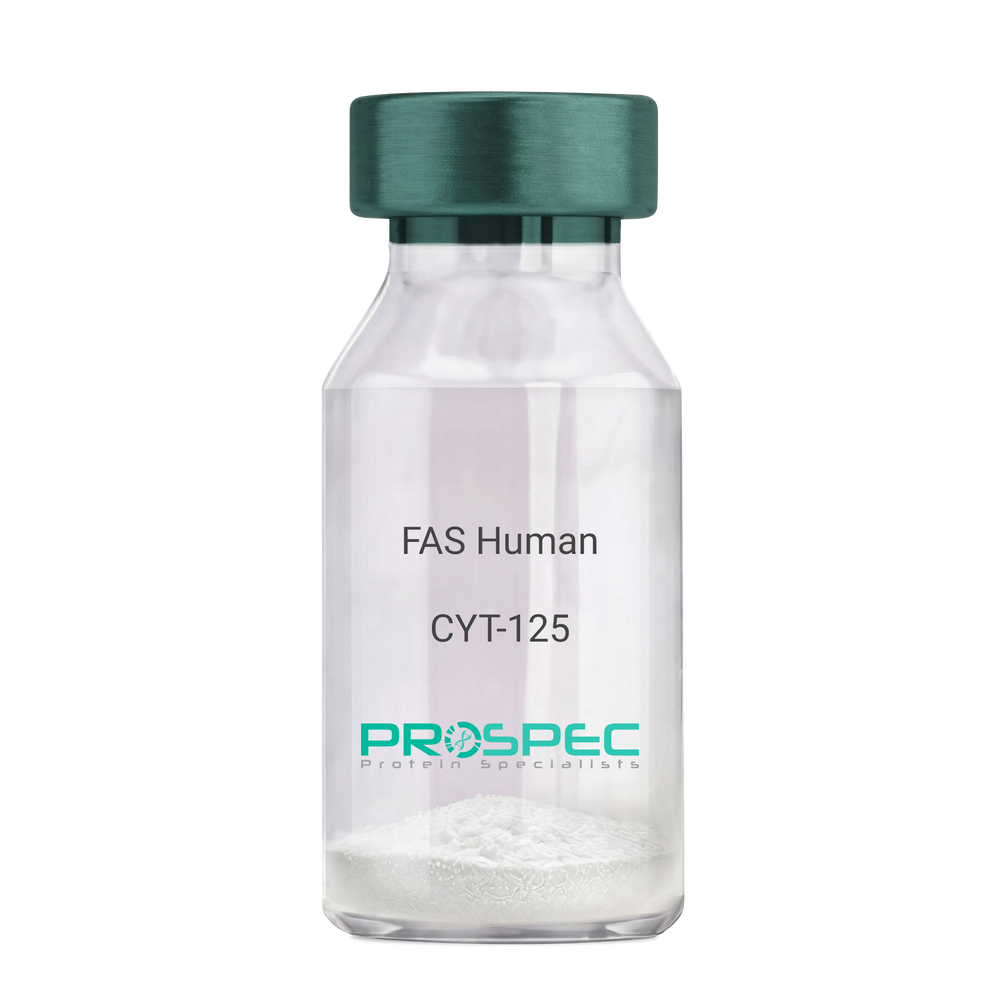
  • View Data Sheet

    Name :

    FAS Human

    Description:

    sFas Receptor Human Recombinant

    Tumor necrosis factor receptor superfamily member 6, Apo-1 antigen, Apoptosis-mediating surface antigen FAS, FASLG receptor, CD95, FAS, APT1, FAS1, APO-1, FASTM, ALPS1A, TNFRSF6.

    Product # :

    CYT-125

    Price :

    Quantity :

    Shipping Method :

    Room Temp Icon

    Shipped at Room temp

    Add To Cart

    More Info

    • description
    • source
    • formulation
    • purity
    • biological activity
    • More Info

    Description

    sFas Receptor Human Recombinant produced in E.coli is a single, non-glycosylated polypeptide chain containing 157 amino acids and having a molecular mass of 17.6kDa.The FAS is purified by proprietary chromatographic techniques.

    Source

    Escherichia Coli.

    Formulation

    FAS protein was lyophilized from a 0.2µm filtered concentrated solution in 1×PBS, pH 7.4.

    Purity

    Greater than 95.0% as determined by:
    (a) Analysis by RP-HPLC.
    (b) Analysis by SDS-PAGE.

    Biological Activity

    The ED50 was determined by its ability to inhibit the cytotoxicity of Jurkat cells is between 10-15 µg/ml in the presence of 2ng/ml of hFasL.

    More Info

    • Introduction

      Fas and Fas Ligand (FasL) are members of the TNF superfamily and are type I and type II transmembrane proteins, respectively. Binding of FasL to Fas initiates apoptosis in Fas-bearing cells. The apoptosis mechanism involves the recruitment of pro-caspase 8 through an adaptor molecule named FADD followed by processing of the pro-enzyme to active forms. These active caspases subsequently cleave a variety of cellular substrates leading to the eventual cell death. sFasR is able to inhibit FasL-induced apoptosis by acting as a decoy receptor whicht serves as a sink for FasL. The full length Fas Receptor is a 319 a.a type I transmembrane protein, which contains a 157 a.a extracellular domain, a 17 a.a transmembrane domain, and 145 a.a cytoplasmic domain. The mature human Fas ECD shares 55%, 58%, a.a sequence identity with the mouse, rat, Fas, respectively.

    • Synonyms

      Tumor necrosis factor receptor superfamily member 6, Apo-1 antigen, Apoptosis-mediating surface antigen FAS, FASLG receptor, CD95, FAS, APT1, FAS1, APO-1, FASTM, ALPS1A, TNFRSF6.

    • Physical Appearance

      Sterile Filtered White lyophilized (freeze-dried) powder.

    • Stability

      Lyophilized FAS although stable at room temperature for 3 weeks, should be stored desiccated below -18°C. Upon reconstitution FAS should be stored at 4°C between 2-7 days and for future use below -18°C. For long term storage it is recommended to add a carrier protein (0.1% HSA or BSA). Please prevent freeze-thaw cycles.

    • Solubility

      It is recommended to reconstitute the lyophilized FAS in sterile 18M-cm H2O not less than 100µg/ml, which can then be further diluted to other aqueous solutions.

    • Amino Acid Sequence

      MRLSSKSVNA QVTDINSKGL ELRKTVTTVE TQNLEGLHHD GQFCHKPCPP GERKARDCTV NGDEPDCVPC QEGKEYTDKA HFSSKCRRCR LCDEGHGLEV EINCTRTQNT KCRCKPNFFC NSTVCEHCDP CTKCEHGIIK ECTLTSNTKC KEEGSRS.

    • Background

      What is the molecular weight/Mw of FAS Protein?
      FAS Protein has a total Mw of 17.6kDa.

      What is the source or expression system of FAS Protein?
      Escherichia Coli.

      What is the Purity of FAS Protein?
      FAS Protein is >95% pure as determined by SDS-PAGE.

      What is the Biological Activity of FAS Protein?
      The ED50 was determined by its ability to inhibit the cytotoxicity of Jurkat cells is between 10-15 µg/ml in the presence of 2ng/ml of hFasL.

      What is the amino acid sequence of FAS Protein?
      MRLSSKSVNA QVTDINSKGL ELRKTVTTVE TQNLEGLHHD GQFCHKPCPP GERKARDCTV NGDEPDCVPC QEGKEYTDKA HFSSKCRRCR LCDEGHGLEV EINCTRTQNT KCRCKPNFFC NSTVCEHCDP CTKCEHGIIK ECTLTSNTKC KEEGSRS.

      What applications can FAS Protein be used in?
      FAS Protein can probably be used in western blot, ELISA and Lateral Flow.

      What is the endotoxin level for FAS Protein?
      The endotoxin level is minimal, FAS Protein was purified using conventional chromatography techniques..

    ProSpec's products are furnished for LABORATORY RESEARCH USE ONLY. The product may not be used as drugs, agricultural or pesticidal products, food additives or household chemicals.

    Fas Human
  • View Data Sheet

    Name :

    PDRG1 Human

    Description:

    p53 and DNA-Damage Regulated 1 Human Recombinant

    p53 and DNA damage-regulated protein 1, PDRG1, C20orf126, PDRG.

    Product # :

    PRO-007

    Price :

    Quantity :

    Shipping Method :

    Ice Icon

    Shipped with Ice Packs

    Add To Cart

    More Info

    • description
    • source
    • formulation
    • purity
    • More Info

    Description

    PDRG1 Human Recombinant fused with a 20 amino acid His tag at N-terminus produced in E.Coli is a single, non-glycosylated, polypeptide chain containing 153 amino acids (1-133 a.a.) and having a molecular mass of 17.6kDa. The PDRG1 is purified by proprietary chromatographic techniques.

    Source

    Escherichia Coli.

    Formulation

    The PDRG1 solution (0.5mg/ml) contains 20mM Tris-HCl buffer (pH8.0), 0.2M NaCl, 5mM DTT and 20% glycerol.

    Purity

    Greater than 90.0% as determined by SDS-PAGE.

    More Info

    • Introduction

      PDRG1 is a 133 amino acid protein that localizes to the cytoplasm and belongs to the prefoldin subunit beta family. PDRG1 is expressed primarily in normal testicular tissue, it is functionally induced by ultraviolet light and is thought to have a role in chaperone-mediated protein folding, possibly having a role in cellular degradation. PDRG1 is linked to Creutzfeldt-Jakob disease, amyotrophic lateral sclerosis, spinal muscular atrophy, ring chromosome 20 epilepsy syndrome and Alagille syndrome.

    • Synonyms

      p53 and DNA damage-regulated protein 1, PDRG1, C20orf126, PDRG.

    • Physical Appearance

      Sterile Filtered colorless solution.

    • Stability

      Store at 4°C if entire vial will be used within 2-4 weeks. Store, frozen at -20°C for longer periods of time. For long term storage it is recommended to add a carrier protein (0.1% HSA or BSA).Avoid multiple freeze-thaw cycles.

    • Amino Acid Sequence

      MGSSHHHHHH SSGLVPRGSH MLSPEAERVL RYLVEVEELA EEVLADKRQI VDLDTKRNQN REGLRALQKD LSLSEDVMVC FGNMFIKMPH PETKEMIEKD QDHLDKEIEK LRKQLKVKVN RLFEAQGKPE LKGFNLNPLN QDELKALKVI LKG.

    ProSpec's products are furnished for LABORATORY RESEARCH USE ONLY. The product may not be used as drugs, agricultural or pesticidal products, food additives or household chemicals.

    Pdrg1 Human
  • View Data Sheet

    Name :

    C8G Human

    Description:

    Complement Component 8, Gamma Human Recombinant

    Complement component 8 gamma polypeptide, C8C, complement component C8 gamma chain, MGC142186.

    Product # :

    PRO-947

    Price :

    Quantity :

    Shipping Method :

    Ice Icon

    Shipped with Ice Packs

    Add To Cart

    More Info

    • description
    • source
    • formulation
    • purity
    • More Info

    Description

    C8G Human Recombinant produced in E.coli is a single, non-glycosylated polypeptide chain containing 203 amino acids (21-202) and having a molecular mass of 22.6 kDa.The C8G is fused to a 21 amino acid His-Tag at N-terminus and purified by proprietary chromatographic techniques.

    Source

    E.coli.

    Formulation

    The C8G solution (0.5mg/ml) contains 20mM Tris-HCl buffer (pH 8.0), 2mM DTT, 0.15M NaCl and 10% glycerol.

    Purity

    Greater than 95% as determined by SDS-PAGE.

    More Info

    • Introduction

      C8, a component of the complement system consists of three polypeptides C8A, C8B and C8G and takes part in the formation of Membrane Attack Complex (MAC). Patients with C8 deficiency are exposed to several bacteria infections. C8G, a member of the lipocalin family and calycin superfamily, is a secreted protein that can bind retinol. C8G is created in the liver, monocytes and fibroblast and has a role in clearing pathogens from an infected host.

    • Synonyms

      Complement component 8 gamma polypeptide, C8C, complement component C8 gamma chain, MGC142186.

    • Physical Appearance

      Sterile Filtered colorless solution.

    • Stability

      Store at 4°C if entire vial will be used within 2-4 weeks. Store, frozen at -20°C for longer periods of time. For long term storage it is recommended to add a carrier protein (0.1% HSA or BSA).Avoid multiple freeze-thaw cycles.

    • Amino Acid Sequence

      MGSSHHHHHH SSGLVPRGSH MQKPQRPRRP ASPISTIQPK ANFDAQQFAG TWLLVAVGSA CRFLQEQGHR AEATTLHVAP QGTAMAVSTF RKLDGICWQV RQLYGDTGVL GRFLLQARGA RGAVHVVVAE TDYQSFAVLY LERAGQLSVK LYARSLPVSD SVLSGFEQRV QEAHLTEDQI FYFPKYGFCE AADQFHVLDE VRR

    ProSpec's products are furnished for LABORATORY RESEARCH USE ONLY. The product may not be used as drugs, agricultural or pesticidal products, food additives or household chemicals.

    C8G Human
  • View Data Sheet

    Name :

    FGF 8 Mouse

    Description:

    Fibroblast Growth Factor-8 Mouse Recombinant

    Fibroblast growth factor 8, FGF-8, Androgen-induced growth factor, AIGF, Heparin-binding growth factor 8, HBGF-8, Fgf8.

    Product # :

    CYT-070

    Price :

    Quantity :

    Shipping Method :

    Room Temp Icon

    Shipped at Room temp

    Add To Cart

    More Info

    • description
    • source
    • formulation
    • purity
    • biological activity
    • More Info

    Description

    FGF-8 Mouse Recombinant produced in E.coli is a single, non-glycosylated polypeptide chain containing 246 amino acids and having a molecular mass of 28.1kDa.The FGF-8 is purified by proprietary chromatographic techniques.

    Source

    Escherichia Coli.

    Formulation

    FGF-8 protein was lyophilized from a 0.2µm filtered concentrated solution in PBS, pH 7.4.

    Purity

    Greater than 95.0% as determined by:
    (a) Analysis by RP-HPLC.
    (b) Analysis by SDS-PAGE.

    Biological Activity

    The ED50, as determined by the dose-dependent a cell proliferation assay using NR6R-3T3 mouse fibroblast cells is <25 ng/ml in the presence of 0.1 ug/ml heprin, corresponding to a specific activity of > 4.0×10⁴ units/mg.

    More Info

    • Introduction

      FGF8 is part of the fibroblast growth factor family. FGF family members have wide mitogenic and cell survival activities, and participate in a variety of biological processes, including embryonic development, cell growth, morphogenesis, tissue repair, tumor growth and invasion. FGF8 supports androgen and anchorage independent growth of mammary tumor cells. FGF8 over expression increases tumor growth and angiogensis. The adult expression of FGF-8 gene is restricted to testes and ovaries. FGF8 functions as an embryonic epithelial factor. FGF8 takes part in midbrain and limb development, organogenesis, embryo gastrulation and left-right axis determination.

    • Synonyms

      Fibroblast growth factor 8, FGF-8, Androgen-induced growth factor, AIGF, Heparin-binding growth factor 8, HBGF-8, Fgf8.

    • Physical Appearance

      Sterile Filtered White lyophilized (freeze-dried) powder.

    • Stability

      Lyophilized FGF-8 although stable at room temperature for 3 weeks, should be stored desiccated below -18°C. Upon reconstitution FGF-8 should be stored at 4°C between 2-7 days and for future use below -18°C. For long term storage it is recommended to add a carrier protein (0.1% HSA or BSA). Please prevent freeze-thaw cycles.

    • Solubility

      It is recommended to reconstitute the lyophilized FGF-8 in sterile 18M-cm H2O not less than 100µg/ml, which can then be further diluted to other aqueous solutions.

    • Amino Acid Sequence

      QVRSAAQKRG PGAGNPADTL GQGHEDRPFG QRSRAGKNFT NPAPNYPEEG SKEQRDSVLP KVTQRHVREQ SLVTDQLSRR LIRTYQLYSR TSGKHVQVLA NKRINAMAED GDPFAKLIVE TDTFGSRVRV RGAETGLYIC MNKKGKLIAK SNGKGKDCVF TEIVLENNYT ALQNAKYEGW YMAFTRKGRP RKGSKTRQHQ REVHFMKRLP RGHHTTEQSL RFEFLNYPPF TRSLRGSQRT WAPEPR.

    • Background

      What is the molecular weight/Mw of FGF8 Protein?
      FGF8 Protein has a total Mw of 28.1kDa.

      What is the source or expression system of FGF8 Protein?
      Escherichia Coli.

      What is the Purity of FGF8 Protein?
      FGF8 Protein is >95% pure as determined by SDS-PAGE.

      What is the Biological Activity of FGF8 Protein?
      The ED50, as determined by the dose-dependent a cell proliferation assay using NR6R-3T3 mouse fibroblast cells is <25 ng/ml in the presence of 0.1 ug/ml heprin, corresponding to a specific activity of > 4.0×10⁴ units/mg.

      What is the amino acid sequence of FGF8 Protein?
      QVRSAAQKRG PGAGNPADTL GQGHEDRPFG QRSRAGKNFT NPAPNYPEEG SKEQRDSVLP KVTQRHVREQ SLVTDQLSRR LIRTYQLYSR TSGKHVQVLA NKRINAMAED GDPFAKLIVE TDTFGSRVRV RGAETGLYIC MNKKGKLIAK SNGKGKDCVF TEIVLENNYT ALQNAKYEGW YMAFTRKGRP RKGSKTRQHQ REVHFMKRLP RGHHTTEQSL RFEFLNYPPF TRSLRGSQRT WAPEPR.

      What applications can FGF8 Protein be used in?
      FGF8 Protein can probably be used in western blot, ELISA and Lateral Flow.

      What is the endotoxin level for FGF8 Protein?
      The endotoxin level is minimal, FGF8 Protein was purified using conventional chromatography techniques.

    ProSpec's products are furnished for LABORATORY RESEARCH USE ONLY. The product may not be used as drugs, agricultural or pesticidal products, food additives or household chemicals.

    Fgf 8 Mouse
  • View Data Sheet

    Name :

    IRGM Human

    Description:

    Immunity-Related GTPase Family, M Human Recombinant

    Immunity-related GTPase family M protein, Immunity-related GTPase family M protein1, LPS-stimulated RAW 264.7 macrophage protein 47 homolog, LRG-47, IRGM, IFI1, IRGM1, LRG47.

    Product # :

    PRO-1302

    Price :

    Quantity :

    Shipping Method :

    Ice Icon

    Shipped with Ice Packs

    Add To Cart

    More Info

    • description
    • source
    • formulation
    • purity
    • More Info

    Description

    IRGM Human Recombinant produced in E.coli is a single, non-glycosylated polypeptide chain containing 180 amino acids (23-181) and having a molecular mass of 20.1 kDa. IRGM is fused to a 21 amino acid His-tag at N-terminus & purified by proprietary chromatographic techniques.

    Source

    Escherichia Coli.

    Formulation

    The IRGM solution (1mg/ml) contains 20mM Tris-HCl buffer (pH 8.0), 2M urea and 10% glycerol.

    Purity

    Greater than 90.0% as determined by SDS-PAGE.

    More Info

    • Introduction

      Immunity-related GTPase family M protein (IRGM) is essential for clearance of severe protozoan and bacterial infections. IRGM belongs to the p47 immunity-related GTPase family. IRGM serves in innate immune response possibly via regulation of autophagy. IRGM regulates proinflammatory cytokine production and inhibit endotoxemia upon infection and also has a part in macrophages adhesion and motility. Polymorphisms which modify the natural expression of the IRGM gene are associated with a susceptibility to Crohn's disease and tuberculosis.

    • Synonyms

      Immunity-related GTPase family M protein, Immunity-related GTPase family M protein1, LPS-stimulated RAW 264.7 macrophage protein 47 homolog, LRG-47, IRGM, IFI1, IRGM1, LRG47.

    • Physical Appearance

      Sterile Filtered colorless solution.

    • Stability

      Store at 4°C if entire vial will be used within 2-4 weeks. Store, frozen at -20°C for longer periods of time. For long term storage it is recommended to add a carrier protein (0.1% HSA or BSA).Avoid multiple freeze-thaw cycles.

    • Amino Acid Sequence

      MGSSHHHHHH SSGLVPRGSH MKETLKIVSR TPVNITMAGD SGNGMSTFIS ALRNTGHEGK ASPPTELVKA TQRCASYFSS HFSNVVLWDL PGTGSATTTL ENYLMEMQFN RYDFIMVASA QFSMNHVMLA KTAEDMGKKF YIVWTKLDMD LSTGALPEVQ LLQIRENVLE NLQKERVCEY.

    ProSpec's products are furnished for LABORATORY RESEARCH USE ONLY. The product may not be used as drugs, agricultural or pesticidal products, food additives or household chemicals.

    Irgm Human
  • View Data Sheet

    Name :

    JAM2 Human

    Description:

    Junctional Adhesion Molecule 2 Human Recombinant

    Junctional adhesion molecule B, JAM-B, Junctional adhesion molecule 2, JAM-2, Vascular endothelial junction-associated molecule, VE-JAM, CD322.

    Product # :

    PRO-1336

    Price :

    Quantity :

    Shipping Method :

    Ice Icon

    Shipped with Ice Packs

    Add To Cart

    More Info

    • description
    • source
    • formulation
    • purity
    • More Info

    Description

    JAM2 Human Recombinant produced in E.coli is a single, non-glycosylated polypeptide chain containing 241 amino acids (21-238) and having a molecular mass of 26.7kDa. JAM2 is fused to a 23 amino acid His-tag at N-terminus & purified by proprietary chromatographic techniques.

    Source

    Escherichia Coli.

    Formulation

    JAM2 protein solution (1mg/ml) containing 20mM Tris-HCl buffer (pH 8.0), 0.4M urea and 10% glycerol.

    Purity

    Greater than 90.0% as determined by SDS-PAGE.

    More Info

    • Introduction

      Junctional Adhesion Molecule 2 (JAM2) is a member of the immunoglobulin superfamily, and the junctional adhesion molecule (JAM) family. JAM2 is a type I membrane protein which is localized at the tight junctions of both epithelial and endothelial cells. JAM2 functions as an adhesive ligand for interacting with various immune cell types, and may have a role in lymphocyte homing to secondary lymphoid organs.

    • Synonyms

      Junctional adhesion molecule B, JAM-B, Junctional adhesion molecule 2, JAM-2, Vascular endothelial junction-associated molecule, VE-JAM, CD322.

    • Physical Appearance

      Sterile Filtered colorless solution.

    • Stability

      Store at 4°C if entire vial will be used within 2-4 weeks. Store, frozen at -20°C for longer periods of time. For long term storage it is recommended to add a carrier protein (0.1% HSA or BSA).Avoid multiple freeze-thaw cycles.

    • Amino Acid Sequence

      MGSSHHHHHH SSGLVPRGSH MGSLGYHKAY GFSAPKDQQV VTAVEYQEAI LACKTPKKTV SSRLEWKKLG RSVSFVYYQQ TLQGDFKNRA EMIDFNIRIK NVTRSDAGKY RCEVSAPSEQ GQNLEEDTVT LEVLVAPAVP SCEVPSSALS GTVVELRCQD KEGNPAPEYT WFKDGIRLLE NPRLGSQSTN SSYTMNTKTG TLQFNTVSKL DTGEYSCEAR NSVGYRRCPG KRMQVDDLNI S.

    ProSpec's products are furnished for LABORATORY RESEARCH USE ONLY. The product may not be used as drugs, agricultural or pesticidal products, food additives or household chemicals.

    Jam2 Human
  • View Data Sheet

    Name :

    FUR E.Coli

    Description:

    Ferric Uptake Regulator E.Coli Recombinant

    ECs0714, Ferric uptake regulation protein, Ferric uptake regulator, Z0831, FUR, ECK0671, JW0669, b0683.

    Product # :

    PRO-622

    Price :

    Quantity :

    Shipping Method :

    Ice Icon

    Shipped with Ice Packs

    Add To Cart

    More Info

    • description
    • source
    • formulation
    • purity
    • More Info

    Description

    Ferric Uptake Regulator Recombinant produced in E.Coli is a single, non-glycosylated polypeptide chain containing 148 amino acids and having a molecular mass of 16.7kDa.

    Source

    Escherichia Coli.

    Formulation

    The Ferric Uptake Regulator protein solution (1mg/ml) contains 20mM Tris-HCl pH-8, 2mM CaCl2 and 100mM NaCl.

    Purity

    Greater than 95.0% as determined by SDS-PAGE.

    More Info

    • Introduction

      Ferric Uptake Regulator protein NCBI Accession No.: NP_415209 is a DNA-binding protein which controls iron-responsive genes. Ferric Uptake Regulator has a molecular mass of 17-kDa and plays a role in global transcriptional repressor that in the existence of iron regulates functions as diverse as iron acquisition, oxidative stress, and virulence. In Escherichia coli, members of the Ferric Uptake Regulator family regulate the expression of at least 100 genes that function in processes as diverse as the biosynthesis and transport of siderophores, the expression of virulence factors, the alleviation of oxidative and NO-induced stress, and the inhibition of ferritin production through the expression of RyhB.

    • Synonyms

      ECs0714, Ferric uptake regulation protein, Ferric uptake regulator, Z0831, FUR, ECK0671, JW0669, b0683.

    • Physical Appearance

      Sterile Filtered colorless solution.

    • Stability

      Store at 4°C if entire vial will be used within 2-4 weeks. Store, frozen at -20°C for longer periods of time. For long term storage it is recommended to add a carrier protein (0.1% HSA or BSA).Avoid multiple freeze-thaw cycles.

    • Amino Acid Sequence

      MTDNNTALKK AGLKVTLPRL KILEVLQEPD NHHVSAEDLY KRLIDMGEEI GLATVYRVLN QFDDAGIVTR HNFEGGKSVF ELTQQHHHDH LICLDCGKVI EFSDDSIEAR QREIAAKHGI RLTNHSLYLY GHCAEGDCRE DEHAHEGK.

    ProSpec's products are furnished for LABORATORY RESEARCH USE ONLY. The product may not be used as drugs, agricultural or pesticidal products, food additives or household chemicals.

    Ferric Uptake Regulator
  • 1
  • …
  • 34
  • 35
  • 36
  • 37
  • 38
  • …
  • 42
Your browser does not support the video tag.

Products

  • Cytokines
  • Growth Factors
  • Chemokines
  • CD Antigens
  • Neurotrophins
  • Hormones
  • Enzymes
  • Viral Antigens
  • Recombinant Proteins
  • Natural Proteins
  • Monoclonal Antibodies
  • Polyclonal Antibodies
  • Thermal Packaging

About

  • Company
  • Founder
  • Contribution
  • Contact Us
  • My Account

Ordering

  • Ordering Method
  • Ordering - Credit Card
  • Ordering PO
  • Shipping Fees
  • FAQ's

Legal

  • Terms & Conditions
  • Privacy
  • Site Map
  • info@prospecbio.com
  • Facebook
  • Instagram
  • Linkedin Profile

© 2026 ProSpec-Tany TechnoGene Ltd. All Rights Reserved.

  • Choosing a selection results in a full page refresh.
  • Opens in a new window.