Search results
1000 results found for “Gliadin”
Name
Description
Product #
Price
Quantity
Shipping Method
- View Data Sheet
Name :
KXD1 HumanDescription:
KxDL Motif Containing 1 Human Recombinant
C19orf50, KXDL, MST096, MSTP096, KXD1.
Product # :
PRO-1656Price :
Quantity :
Shipping Method :
Shipped with Ice Packs
More Info
- description
- source
- formulation
- purity
- More Info
Description
KXD1 Human Recombinant produced in E.Coli is a single, non-glycosylated polypeptide chain containing 199 amino acids (1-176 a.a.) and having a molecular mass of 22.1kDa.KXD1 is fused to a 23 amino acid His-tag at N-terminus & purified by proprietary chromatographic techniques.
Source
Escherichia Coli.
Formulation
KXD1 protein solution (0.5mg/ml) contains 20mM Tris-HCl buffer (pH 8.0), 0.15M NaCl, 10% glycerol and 1mM DTT.
Purity
Greater than 85.0% as determined by SDS-PAGE.
More Info
-
Introduction
KxDL Motif Containing 1 (KXD1) is a member of the KXD1 family. KXD1 is participating in endosomal cargo sorting. KXD1 contacts with the BLOC-1 complex and Interacts with BLOC1S1. KXD1 Interacts with DTNBP1/BLOC1S7 through coiled-coil domain.
-
Synonyms
C19orf50, KXDL, MST096, MSTP096, KXD1.
-
Physical Appearance
Sterile Filtered clear solution.
-
Stability
Store at 4°C if entire vial will be used within 2-4 weeks. Store, frozen at -20°C for longer periods of time. For long term storage it is recommended to add a carrier protein (0.1% HSA or BSA).Avoid multiple freeze-thaw cycles.
-
Amino Acid Sequence
MGSSHHHHHH SSGLVPRGSH MGSMDLPDSA SRVFCGRILS MVNTDDVNAI ILAQKNMLDR FEKTNEMLLN FNNLSSARLQ QMSERFLHHT RTLVEMKRDL DSIFRRIRTL KGKLARQHPE AFSHIPEASF LEEEDEDPIP PSTTTTIATS EQSTGSCDTS PDTVSPSLSP GFEDLSHVQP GSPAINGRSQ TDDEEMTGE.
ProSpec's products are furnished for LABORATORY RESEARCH USE ONLY. The product may not be used as drugs, agricultural or pesticidal products, food additives or household chemicals.
- View Data Sheet
Name :
Cys-Protein-GDescription:
Cys-Protein G Recombinant
Product # :
PRO-1238Price :
Quantity :
Shipping Method :
Shipped at Room temp
More Info
- description
- source
- formulation
- purity
- More Info
Description
Cys-Protein G Recombinant produced in E.Coli, is a single non-glycosylated polypeptide chain containing 201 amino acids and having a cys on N-terminal. Cys-Protein G has a predicted molecular mass of approximately 21.9kDa but it migrates with an apparent molecular mass of 40kDa in SDS-PAGE. The Cys-Protein G is purified by proprietary chromatographic techniques.
Source
Escherichia Coli.
Formulation
Lyophilized without any additives.
Purity
Greater than 95.0% as determined by SDS-PAGE and HPLC analyses.
More Info
-
Physical Appearance
Sterile Filtered White lyophilized (freeze-dried) powder.
-
Stability
Lyophilized Protein G although stable at room temperature for 3 weeks, should be stored desiccated below -18°C. Upon reconstitution Protein G should be stored at 4°C between 2-7 days and for future use below -18°C.Please prevent freeze-thaw cycles.
-
Solubility
It is recommended to reconstitute the lyophilized Protein G in sterile 18M-cm H2O not less than 100µg/ml, which can then be further diluted to other aqueous solutions.
-
Amino Acid Sequence
CLPKTDTYKL ILNGKTLKGE TTTEAVDAAT AEKVFKQYAN DNGVDGEWTY DDATKTFTVT EKPEVIDASE LTPAVTTYKL VINGKTLKGE TTTEAVDAAT AEKVFKQYAN DNGVDGEWTY DDATKTFTVT EKPEVIDASE LTPAVTTYKL VINGKTLKGE TTTKAVDAET AEKAFKQYAN DNGVDGVWTY DDATKTFTVT E.
-
Specificity
The recombinant Protein G is a genetically engineered protein contains 3 IgG-binding regions of protein G.
ProSpec's products are furnished for LABORATORY RESEARCH USE ONLY. The product may not be used as drugs, agricultural or pesticidal products, food additives or household chemicals.
- View Data Sheet
Name :
GYPA AntibodyDescription:
Glycophorin A (type M & type N), Mouse Anti Human Antibody
Glycophorin-A, MN sialoglycoprotein, PAS-2, Sialoglycoprotein alpha, CD235a, GYPA, GPA, MN, MNS, GPSAT, GPErik, HGpMiV, HGpMiXI, HGpSta(C).
Product # :
ANT-231Price :
Quantity :
Shipping Method :
Shipped at Room temp
More Info
- formulation
- More Info
Formulation
1mg/ml in PBS (after reconstitution).
More Info
-
Introduction
Glycophorins A & B (GYPA &GYPB) are the main sialoglycoproteins of the human erythrocyte membrane which carry the antigenic determinants for the MN and Ss blood groups. Along with the M or N and S or s antigens which normally occur in all populations, approximately 40 related variant phenotypes were identified. These variants comprise all the variants of the Miltenberger complex and some isoforms of Sta, as well as Dantu, Sat, He, Mg, and deletion variants Ena, S-s-U- and Mk. GYPA is significant for the function of SLC4A1 and is necessary for high activity of SLC4A1. GYPA is involved in translocation of SLC4A1 to the plasma membrane. GYPA is also a receptor for: the influenza virus, Plasmodium falciparum erythrocyte-binding antigen 175 (EBA-175); binding of EBA-175 is dependent on sialic acid residues of the O-linked glycans and is also a receptor for Hepatitis A virus (HAV).
-
Synonyms
Glycophorin-A, MN sialoglycoprotein, PAS-2, Sialoglycoprotein alpha, CD235a, GYPA, GPA, MN, MNS, GPSAT, GPErik, HGpMiV, HGpMiXI, HGpSta(C).
-
Solubility
Reconstitute with H20. Mix gently, wash the sides of the vial and wait 30-60 seconds before use.
-
Immunogen
r.Human GlycophorinA.
-
Ig Subclass
Mouse IgG1.
-
Clone
NYRhGlycophorinA.
-
Applications
Western Blot, imunohistochemistry, flow cytometry. For WB use 1µg/ml of antibody. For flow cytometry use 5-10 µl per one million cells.
-
Titer
By direct ELISA, 1:10,000 dilution will yield 0.5 O.D using alkaline phosphatase conjugated rabbit anti-mouse Ig (Jackson Laboratories).
-
Shipping Conditions
Antibody is shipped lyophilized at ambient temperature.
-
Type
Mouse Anti Human Monoclonal Antibody.
-
Storage Procedures
In lyophilized form, for long periods, store at 4°C in a dry environment. After reconstitution, if not intended for use within a month, aliquot and store at -20°C.
-
Purification Method
Protein A column.
ProSpec's products are furnished for LABORATORY RESEARCH USE ONLY. The product may not be used as drugs, agricultural or pesticidal products, food additives or household chemicals.
- View Data Sheet
Name :
LIF HumanDescription:
Leukemia Inhibitory Factor Human Recombinant
CDF, HILDA, D-FACTOR, Differentiation- stimulating factor, Melanoma-derived LPL inhibitor, MLPLI, Emfilermin, Leukemia inhibitory factor, LIF, DIA.
Product # :
CYT-644Price :
Quantity :
Shipping Method :
Shipped at Room temp
More Info
- description
- source
- formulation
- purity
- biological activity
- More Info
Description
Leukemia Inhibitory Factor (LIF) Human Recombinant produced in E.Coli is a single, non-glycosylated, polypeptide chain containing 180 amino acids and having a molecular mass of 19.7kDa. The Leukemia Inhibitory Factor (LIF) is purified by proprietary chromatographic techniques.
Source
Escherichia Coli.
Formulation
Leukemia Inhibitory Factor (LIF) was lyophilized from a concentrated (1mg/ml) sterile solution containing 1xPBS pH 7.4.
Purity
Greater than 98.0% as determined by:
(a) Analysis by RP-HPLC.
(b) Analysis by SDS-PAGE.Biological Activity
The ED50 was determined by the M1 cell differentiation assay is < 0.01 ng/ml, corresponding to a specific activity of 100,000,000IU/mg.More Info
-
Introduction
Leukemia Inhibitory Factor also called LIF is a lymphoid factor that promotes long-term maintenance of embryonic stem cells by suppressing spontaneous differentiation. Leukemia Inhibitory Factor has several functions such as cholinergic neuron differentiation, control of stem cell pluripotency, bone & fat metabolism, mitogenesis of factor dependent cell lines & promotion of megakaryocyte production in vivo. Human and mouse LIF exhibit a 78% identity in its amino acid sequence.
-
Synonyms
CDF, HILDA, D-FACTOR, Differentiation- stimulating factor, Melanoma-derived LPL inhibitor, MLPLI, Emfilermin, Leukemia inhibitory factor, LIF, DIA.
-
Physical Appearance
Sterile Filtered White lyophilized (freeze-dried) powder.
-
Stability
Lyophilized Leukemia Inhibitory Factor (LIF) although stable at room temperature for 3 weeks, should be stored desiccated below -18°C. Upon reconstitution Leukemia Inhibitory Factor (LIF) should be stored at 4°C between 2-7 days and for future use below -18°C.For long term storage it is recommended to add a carrier protein (0.1% HSA or BSA).Please prevent freeze-thaw cycles.
-
Solubility
It is recommended to reconstitute the lyophilized Leukemia Inhibitory Factor (LIF) in sterile water not less than 100µg/ml, which can then be further diluted to other aqueous solutions.
-
Amino Acid Sequence
SPLPITPVNA TCAIRHPCHN NLMNQIRSQL AQLNGSANAL FILYYTAQGE PFPNNLDKLC GPNVTDFPPF HANGTEKAKL VELYRIVVYL GTSLGNITRD QKILNPSALS LHSKLNATAD ILRGLLSNVL CRLCSKYHVG HVDVTYGPDT SGKDVFQKKK LGCQLLGKYK QIIAVLAQAF.
-
Background
Leukemia Inhibitory Factor (LIF) Background
Leukemia Inhibitory Factor (LIF) is a cytokine within the interleukin-6 family. It is influential in the hypothalamus and involved in energy balance.
LIF stimulates ACTH secretion and affects the stress and immune response in the body. Administration of LIF has been shown to correct low plasma ACTH and repair hypothalamic-pituitary-adrenal (HPA) axis responses.
Function and Applications of LIF
LIF prevents the proliferation of myeloid leukemia cells by inducing their terminal differentiation. Beyond cancer, LIF influences bone metabolism, embryogenesis, and inflammation.
Moreover, it supports the self-renewal of stem cells in culture by activating Stat3, thus preventing spontaneous differentiation, and is studied for potential benefits in fertility treatments.
Structure and Interactions
LIF's structure consists of a four alpha-helix bundle similar to other hematopoietic cytokines. It interacts with components such as the ciliary neurotrophic factor (CNTF) through multimeric receptors, influencing both cytokine's effects on cells. This interaction is crucial for forming high-affinity binding sites that mediate their biological activities.
ProSpec's products are furnished for LABORATORY RESEARCH USE ONLY. The product may not be used as drugs, agricultural or pesticidal products, food additives or household chemicals.
- View Data Sheet
Name :
IL1F10 HumanDescription:
Interleukin 1 Family, Member 10 Human Recombinant
Interleukin-1 family member 10, IL-1F10, FIL1 theta, Interleukin-1 HY2, IL-1HY2, Interleukin-1 theta, IL-1 theta, IL1F10, FIL1T, IL1HY2, FKSG75, MGC119831, MGC119832, MGC119833, FIL1-theta.
Product # :
CYT-012Price :
Quantity :
Shipping Method :
Shipped at Room temp
More Info
- description
- source
- formulation
- purity
- biological activity
- More Info
Description
IL1F10 Human Recombinant produced in E.Coli is a single, non-glycosylated, Polypeptide chain containing 152 amino acids and having a molecular mass of 17kDa.The IL1F10 is purified by proprietary chromatographic techniques.
Source
Escherichia Coli.
Formulation
IL1F10 was lyophilized after extensive dialysis against 20mM Phosphate buffer, pH7.4.
Purity
Greater than 95.0% as determined by:
(a) Analysis by RP-HPLC.
(b) Analysis by SDS-PAGE.Biological Activity
As measured by its binding ability in a functional ELISA, immobilized IL1F10 at 1 µg/ml (100 µl/well) can bind rHuIL-1 Rrp2/Fc Chimera with a linear range of 0.15- 5 µg/ml.
More Info
-
Introduction
Human interleukin family 1, member 10 (IL1F10) belongs to the interleukin 1 cytokine family. IL1F10 is expressed in the fetal skin, spleen and tonsil, generally in the basal epithelia of skin and in proliferating B-cells of the tonsil. IL1F10 binds soluble IL1 receptor type 1 and may be implicated in the regulation of adapted and innate immune responses.
-
Synonyms
Interleukin-1 family member 10, IL-1F10, FIL1 theta, Interleukin-1 HY2, IL-1HY2, Interleukin-1 theta, IL-1 theta, IL1F10, FIL1T, IL1HY2, FKSG75, MGC119831, MGC119832, MGC119833, FIL1-theta.
-
Physical Appearance
Sterile Filtered White lyophilized (freeze-dried) powder.
-
Stability
Lyophilized IL1F10 although stable at room temperature for 3 weeks, should be stored desiccated below -18°C. Upon reconstitution IL1F10 should be stored at 4°C between 2-7 days and for future use below -18°C.Please prevent freeze-thaw cycles.
-
Solubility
It is recommended to quick spin followed by reconstitution of IL1F10 in PBS to a concentration no less than 100 µg/ml, which can then be further diluted to other aqueous solutions.
-
Amino Acid Sequence
The sequence of the first five N-terminal amino acids was determined and was found to be Met-Cys-Ser-Leu-Pro.
ProSpec's products are furnished for LABORATORY RESEARCH USE ONLY. The product may not be used as drugs, agricultural or pesticidal products, food additives or household chemicals.
- View Data Sheet
Name :
CST7 HumanDescription:
Cystatin 7 Human Recombinant
Cystatin-F, Cystatin-7, Cystatin-like metastasis-associated protein, CMAP, Leukocystatin, Cystatin 7, CST7, CMAP.
Product # :
PRO-2222Price :
Quantity :
Shipping Method :
Shipped with Ice Packs
More Info
- description
- source
- formulation
- purity
- More Info
Description
CST7 Human Recombinant produced in E. coli is a single polypeptide chain containing 132 amino acids (20-145) and having a molecular mass of 15.3kDa.CST7 is fused to a 7 amino acid His-tag at C-terminus & purified by proprietary chromatographic techniques.
Source
Escherichia Coli.
Formulation
The CST7 solution (0.5mg/1ml) contains phosphate buffered saline (pH7.4).
Purity
Greater than 95.0% as determined by SDS-PAGE.
More Info
-
Introduction
Cystatin 7 (CST7) is a glycosylated cysteine protease inhibitor with a putative role in immune regulation through inhibition of a unique target in the hematopoietic system. Cystatin-7 is comprised of multiple cystatin-like sequences. The superfamily is comprised of 3 inhibitory families: the type 1 cystatins (stefins), type 2 cystatins and the kininogens. Some members are active cysteine protease inhibitors, while others have lost or possibly never had this inhibitory activity. Type 2 cystatin proteins are a class of cysteine proteinase inhibitors found in various human fluids and secretions. CST7 protein expression has been observed in numerous human cancer cell lines established from malignant tumors.
-
Synonyms
Cystatin-F, Cystatin-7, Cystatin-like metastasis-associated protein, CMAP, Leukocystatin, Cystatin 7, CST7, CMAP.
-
Physical Appearance
Sterile Filtered clear solution.
-
Stability
Store at 4°C if entire vial will be used within 2-4 weeks. Store, frozen at -20°C for longer periods of time. For long term storage it is recommended to add a carrier protein (0.1% HSA or BSA).Avoid multiple freeze-thaw cycles.
-
Amino Acid Sequence
GPSPDTCSQD LNSRVKPGFP KTIKTNDPGV LQAARYSVEK FNNCTNDMFL FKESRITRAL VQIVKGLKYM LEVEIGRTTC KKNQHLRLDD CDFQTNHTLK QTLSCYSEVW VVPWLQHFEV PVLRCHHHHH HH.
ProSpec's products are furnished for LABORATORY RESEARCH USE ONLY. The product may not be used as drugs, agricultural or pesticidal products, food additives or household chemicals.
- View Data Sheet
Name :
HERPUD1 HumanDescription:
HERPUD1 Human Recombinant
Homocysteine-responsive endoplasmic reticulum-resident ubiquitin-like domain member 1 protein, HERPUD1, Methyl methanesulfonate (MMF)-inducible fragment protein 1, HERP, KIAA0025, MIF1, Mif1, SUP.
Product # :
PRO-2105Price :
Quantity :
Shipping Method :
Shipped with Ice Packs
More Info
- description
- source
- formulation
- purity
- More Info
Description
HERPUD1 Human Recombinant produced in E. coli is a single polypeptide chain containing 286 amino acids (1-263) and having a molecular mass of 31.6kDa.HERPUD1 is fused to a 23 amino acid His-tag at N-terminus & purified by proprietary chromatographic techniques.
Source
Escherichia Coli.
Formulation
The HERPUD1 solution (0.5mg/1ml) contains Phosphate buffer saline (pH 7.4) and 10% glycerol.
Purity
Greater than 85.0% as determined by SDS-PAGE.
More Info
-
Introduction
HERPUD1 is a multi-pass membrane protein which is a part of the endoplasmic reticulum quality control system. HERPUD1 owns 1 N-terminal ubiquitin-like domain and is expressed highly in the brain. HERPUD1 is also known as ER-associated degradation (ERAD) which takes part in ubiquitin-dependent degradation of misfolded endoplasmic reticulum proteins.
-
Synonyms
Homocysteine-responsive endoplasmic reticulum-resident ubiquitin-like domain member 1 protein, HERPUD1, Methyl methanesulfonate (MMF)-inducible fragment protein 1, HERP, KIAA0025, MIF1, Mif1, SUP.
-
Physical Appearance
Sterile Filtered clear solution.
-
Stability
Store at 4°C if entire vial will be used within 2-4 weeks. Store, frozen at -20°C for longer periods of time. For long term storage it is recommended to add a carrier protein (0.1% HSA or BSA).Avoid multiple freeze-thaw cycles.
-
Amino Acid Sequence
MGSSHHHHHH SSGLVPRGSH MGSMESETEP EPVTLLVKSP NQRHRDLELS GDRGWSVGHL KAHLSRVYPE RPRPEDQRLI YSGKLLLDHQ CLRDLLPKQE KRHVLHLVCN VKSPSKMPEI NAKVAESTEE PAGSNRGQYP EDSSSDGLRQ REVLRNLSSP GWENISRPEA AQQAFQGLGP GFSGYTPYGW LQLSWFQQIY ARQYYMQYLA ATAASGAFVP PPSAQEIPVV SAPAPAPIHN QFPAENQPAN QNAAPQVVVN PGANQNLRMN AQGGPIVEED DEINRD.
ProSpec's products are furnished for LABORATORY RESEARCH USE ONLY. The product may not be used as drugs, agricultural or pesticidal products, food additives or household chemicals.
- View Data Sheet
Name :
Myostatin Propeptide HumanDescription:
Myostatin Propeptide Human Recombinant
GDF-8, MSTN, Growth Differentiation Factor 8, MSTN Muscle Hypertrophy.
Product # :
CYT-448Price :
Quantity :
Shipping Method :
Shipped at Room temp
More Info
- description
- source
- formulation
- purity
- biological activity
- More Info
Description
Recombinant Human Myostatin Propeptide is a 27.8kDa protein containing 244 amino acid residues of the human Myostatin Propeptide.
Source
Escherichia Coli.
Formulation
Lyophilized with no additives.
Purity
Greater than 95.0% as determined by SDS-PAGE.
Biological Activity
The protein has full biological activity when compared to a standard. The activity is determined by its ability to inhibit 50ng/ml of Myostatin on MPC-11 cells and is typically 0.13-0.2 μg/ml.More Info
-
Introduction
Myostatin (GDF-8), a member of the TGFbeta superfamily, is a potent and specific negative regulator of skeletal muscle mass. In serum, myostatin circulates as part of a latent complex containing myostatin propeptide and/or follistatin-related gene. The myostatin propeptide is known to bind and inhibit myostatin in vitro. This interaction is relevant in vivo, with a majority (>70%) of myostatin in serum bound to its propeptide. The myostatin propeptide is negative regulator of myostatin in vivo.
-
Synonyms
GDF-8, MSTN, Growth Differentiation Factor 8, MSTN Muscle Hypertrophy.
-
Physical Appearance
Sterile Filtered white lyophilized (freeze-dried) powder.
-
Stability
Store lyophilized protein at -20°C. Aliquot the product after reconstitution to avoid repeated freezing/thawing cycles. Reconstituted protein can be stored at 4°C for a limited period of time.
-
Solubility
It is recommended to reconstitute the lyophilized Myostatin Propeptide in sterile 20mM HCl at 0.1mg/ml, which can then be further diluted to other aqueous solutions.
-
Amino Acid Sequence
MNENSEQKE NVEKEGLCNA CTWRQNTKSS RIEAIKIQIL SKLRLETAPN ISKDVIRQLL PKAPPLRELI DQYDVQRDDS SDGSLEDDDY HATTETIITM PTESDFLMQV DGKPKCCFFK FSSKIQYNKV VKAQLWIYLR PVETPTTVFV QILRLIKPMK DGTRYTGIRS LKLDMNPGTG IWQSIDVKTV LQNWLKQPES NLGIEIKALD ENGHDLAVTF PGPGEDGLNP FLEVKVTDTP KRSRR.
ProSpec's products are furnished for LABORATORY RESEARCH USE ONLY. The product may not be used as drugs, agricultural or pesticidal products, food additives or household chemicals.
- View Data Sheet
Name :
HPCAL1 HumanDescription:
Hippocalcin-Like 1 Human Recombinant
Hippocalcin-Like 1, HLP2, BDR1, Calcium-Binding protein BDR-1, Visinin-Like protein 3, VILIP-3
Product # :
PRO-254Price :
Quantity :
Shipping Method :
Shipped with Ice Packs
More Info
- description
- source
- formulation
- purity
- More Info
Description
HPCAL1 Human Recombinant produced in E.Coli is a single, non-glycosylated polypeptide chain containing 213amino acids (1-193a.a.) and having a molecular wieght of 24.4kDa. The HPCAL1 is fused to 20a.a. His-Tag at N-terminus and purified by proprietary chromatographic techniques.
Source
Escherichia Coli.
Formulation
The HPCAL1 protein solution (1mg/1ml) contains 20mM Tris-HCl buffer (pH8.0) containing 1mM DTT 0.2M NaCl and 10% glycerol.
Purity
Greater than 95.0% as determined by SDS-PAGE.
More Info
-
Introduction
HPCAL1, participates in neuron-specific calcium-binding proteins family found in the retina and brain. HPCAL1 is extremely comparable to human hippocalcin protein and almost equal to the rat and mouse hippocalcin like-1 proteins. HPCAL1 takes part in the calcium-dependent regulation of rhodopsin phosphorylation and can have importance in neuronal signalling in the central nervous system.
-
Synonyms
Hippocalcin-Like 1, HLP2, BDR1, Calcium-Binding protein BDR-1, Visinin-Like protein 3,
VILIP-3 -
Physical Appearance
Sterile filtered colorless solution.
-
Stability
Store at 4°C if entire vial will be used within 2-4 weeks. Store, frozen at -20°C for longer periods of time. For long term storage it is recommended to add a carrier protein (0.1% HSA or BSA). Avoid multiple freeze-thaw cycles.
-
Amino Acid Sequence
MGSSHHHHHH SSGLVPRGSH MGKQNSKLRP EVLQDLRENT EFTDHELQEW YKGFLKDCPT GHLTVDEFKK IYANFFPYGD ASKFAEHVFR TFDTNGDGTI DFREFIIALS VTSRGKLEQK LKWAFSMYDL DGNGYISRSE MLEIVQAIYK MVSSVMKMPE DESTPEKRTD KIFRQMDTNN DGKLSLEEFI RGAKSDPSIV RLLQCDPSSA SQF
ProSpec's products are furnished for LABORATORY RESEARCH USE ONLY. The product may not be used as drugs, agricultural or pesticidal products, food additives or household chemicals.
- View Data Sheet
Name :
SPINT2 HumanDescription:
Serine Peptidase Inhibitor, Kunitz Type 2 Human Recombinant
DIAR3, FLJ45571, HAI-2, HAI2, Kop, PB, Kunitz-type protease inhibitor 2, Hepatocyte growth factor activator inhibitor type 2, Placental bikunin, SPINT2.
Product # :
PRO-1296Price :
Quantity :
Shipping Method :
Shipped with Ice Packs
More Info
- description
- source
- formulation
- purity
- More Info
Description
SPINT2 Human Recombinant produced in E.Coli is a single, non-glycosylated polypeptide chain containing 195 amino acids (28-197 a.a.) and having a molecular mass of 21.8kDa.SPINT2 is fused to a 25 amino acid His-tag at N-terminus & purified by proprietary chromatographic techniques.
Source
Escherichia Coli.
Formulation
SPINT2 protein solution (0.5mg/ml) contains 20mM Tris-HCl buffer (pH 8.0), 0.4M Urea and 10% glycerol.
Purity
Greater than 85.0% as determined by SDS-PAGE.
More Info
-
Introduction
SPINT2 is a transmembrane protein acts as an inhibitor of HGF activator. SPINT2 inhibits plasmin, plasma and tissue kallikrein, and factor XIa. SPINT2 has two extracellular Kunitz domains that inhibit few serine proteases. SPINT2 is assumed tumor suppressor, mutations in SPINT2 leads to a congenital sodium diarrhea.
-
Synonyms
DIAR3, FLJ45571, HAI-2, HAI2, Kop, PB, Kunitz-type protease inhibitor 2, Hepatocyte growth factor activator inhibitor type 2, Placental bikunin, SPINT2.
-
Physical Appearance
Sterile Filtered clear solution.
-
Stability
Store at 4°C if entire vial will be used within 2-4 weeks. Store, frozen at -20°C for longer periods of time. For long term storage it is recommended to add a carrier protein (0.1% HSA or BSA).Avoid multiple freeze-thaw cycles.
-
Amino Acid Sequence
MGSSHHHHHH SSGLVPRGSH MGSHMADRER SIHDFCLVSK VVGRCRASMP RWWYNVTDGS CQLFVYGGCD GNSNNYLTKE ECLKKCATVT ENATGDLATS RNAADSSVPS APRRQDSEDH SSDMFNYEEY CTANAVTGPC RASFPRWYFD VERNSCNNFI YGGCRGNKNS YRSEEACMLR CFRQQENPPL PLGSK.
ProSpec's products are furnished for LABORATORY RESEARCH USE ONLY. The product may not be used as drugs, agricultural or pesticidal products, food additives or household chemicals.
- View Data Sheet
Name :
PDCD4 HumanDescription:
Programmed Cell Death 4 Human Recombinant
Programmed cell death protein 4, Nuclear antigen H731-like, Neoplastic transformation inhibitor protein, Protein 197/15a, PDCD4, H731, MGC33046, MGC33047.
Product # :
PRO-606Price :
Quantity :
Shipping Method :
Shipped with Ice Packs
More Info
- description
- source
- formulation
- purity
- More Info
Description
PDCD4 Human Recombinant produced in E.Coli is a single, non-glycosylated polypeptide chain containing 469 amino acids and having a molecular mass of 51 kDa.
Source
Escherichia Coli.
Formulation
The protein solution contains 20mM Tris-HCl pH-8, 1mM DTT and 0.1M sodium chloride.
Purity
Greater than 90.0% as determined by:
(a) Analysis by RP-HPLC.
(b) Analysis by SDS-PAGE.More Info
-
Introduction
PDCD4 is restricted to the nucleus in proliferating cells. Expression of PDCD4 is modulated by cytokines in natural killer and T cells. PDCD4 takes part in apoptosis. PDCD4 is a translation inhibitor targeted for degradation during tumor promotion. PDCD4 promotes colonic neoplastic transformation and tumor invasion. PDCD4 is an important target for microrna R-21 in breast cancer cells. Shortage of PDCD4 expression is associated with colorectal cancer.
PDCD4 is swiftly phosphorylated by S6K1 kinase protein & afterwords degraded by ubiquitin ligase SCF in response to mitogens.
PDCD4 in response to mitogens allows competent protein synthesis & cell growth. PDCD4 is a proapoptotic protein involved in TGF-beta1-induced apoptosis in human HCC cells, and a tumor suppressor in hepatocarcinogenesis. PDCD4 restraines tumor progression in colon carcinoma cells by the novel mechanism of down-regulating MAP4K1 transcription, with consequent inhibition of c-Jun activation and AP-1-dependent transcription.
Overexpression of PDCD4 in carcinoid cells results in inhibition of cell proliferation. -
Synonyms
Programmed cell death protein 4, Nuclear antigen H731-like, Neoplastic transformation inhibitor protein, Protein 197/15a, PDCD4, H731, MGC33046, MGC33047.
-
Physical Appearance
Sterile Filtered colorless solution.
-
Stability
Store at 4°C if entire vial will be used within 2-4 weeks. Store, frozen at -20°C for longer periods of time. For long term storage it is recommended to add a carrier protein (0.1% HSA or BSA).Avoid multiple freeze-thaw cycles.
-
Amino Acid Sequence
MDVENEQILN VNPADPDNLS DSLFSGDEEN AGTEEIKNEI NGNWISAYSI NEARINAKAK RRLRKNSSRD SGRGDSVSDS GSDALRSGLT VPTSPKGRLL DRRSRSGKGR GLPKKGGAGG KGVWGTPGQV YDVEEVDVKD PNYDDDQENC VYETVVLPLD ERAFEKTLTP IIQEYFEHGD TNEVAEMLRD LNLGEMKSGV PVLAVSLALE GKASHREMTS KLLSDLCGTV MSTTDVEKSF DKLLKDLPEL ALDTPRAPQL VGQFIARAVG DGILCNTYID SYKGTVDCVQ ARAALDKATV LLSMSKGGKR KDSVWGSGGG QQSVNHLVKE IDMLLKEYLL SGDISEAEHC LKELEVPHFH HELVYEAIIM VLESTGESTF KMILDLLKSL WKSSTITVDQ MKRGYERIYN EIPDINLDVP HSYSVLERFV EECFQAGIIS KQLRDLCPSR GRKRFVSEGD GGRLKPESY.
ProSpec's products are furnished for LABORATORY RESEARCH USE ONLY. The product may not be used as drugs, agricultural or pesticidal products, food additives or household chemicals.
- View Data Sheet
Name :
PEA15 HumanDescription:
Phosphoprotein Enriched in Astrocytes 15 Human Recombinant
Astrocytic phosphoprotein PEA-15, 15 kDa phosphoprotein enriched in astrocytes, Phosphoprotein enriched in diabetes, PED, PEA15, MAT1, HMAT1, MAT1H, PEA-15, HUMMAT1H.
Product # :
PRO-729Price :
Quantity :
Shipping Method :
Shipped with Ice Packs
More Info
- description
- source
- formulation
- purity
- More Info
Description
PEA15 Human Recombinant produced in E.Coli is a single, non-glycosylated, polypeptide chain containing 130 amino acids (1-130 a.a.) and having a molecular mass of 15kDa.The PEA15 is purified by proprietary chromatographic techniques.
Source
Escherichia Coli.
Formulation
The PEA15 protein solution contains 20mM Tris-HCl buffer (pH 7.5), 1mM DTT and 10% Glycerol.
Purity
Greater than 90.0% as determined by SDS-PAGE.
More Info
-
Introduction
PEA15 (Phospho-enriched protein in astrocytes 15kDa) is a death effector domain (DED)-containing protein mainly expressed in the central nervous system, principally in astrocytes. PEA15 is implicated in the regulation of various cellular processes including apoptosis, proliferation, glucose transport, adhesion and migration. Increased PEA15 levels have an affect tumorigenesis and cancer progression, therefore it is overexpressed in breast cancers and gliomas as well as in type 2 diabetes. PEA15 blocks Ras-mediated inhibition of integrin activation and modulates the ERK MAP kinase cascade. PEA15 also inhibits RPS6KA3 activities by holding it in the cytoplasm. In addition, PEA15 inhibits both TNFRSF6 and TNFRSF1A mediated CASP8 activity and apoptosis.
PEA15 is ubiquitously expressed. PEA15 is most abundant in tissues such as the heart, brain, muscle and adipose tissue which use glucose as an energy source. Lower PEA15 expression is in glucose-producing tissues. Higher levels of PEA15 expression are found in tissues from individuals with type 2 diabetes than in controls.
PEA15 expression is a significant prognostic marker in ovarian cancer. -
Synonyms
Astrocytic phosphoprotein PEA-15, 15 kDa phosphoprotein enriched in astrocytes, Phosphoprotein enriched in diabetes, PED, PEA15, MAT1, HMAT1, MAT1H, PEA-15, HUMMAT1H.
-
Physical Appearance
Sterile Filtered colorless solution.
-
Stability
Store at 4°C if entire vial will be used within 2-4 weeks.Store, frozen at -20°C for longer periods of time. For long term storage it is recommended to add a carrier protein (0.1% HSA or BSA).Please prevent freeze-thaw cycles.
-
Amino Acid Sequence
MAEYGTLLQD LTNNITLEDL LKSACKED IPSEKSEEIT TGSAWFSFLE HNKLDKDNL SYIEHIFEIS RRPDLLTMVV DYRTRVLKIS EDELDTKLT RIPSAKKYKD IIRQPSEEEI IKLAPPPKKA.
ProSpec's products are furnished for LABORATORY RESEARCH USE ONLY. The product may not be used as drugs, agricultural or pesticidal products, food additives or household chemicals.
- View Data Sheet
Name :
FHL3 HumanDescription:
Four And A Half LIM Domains 3 Human Recombinant
Four And A Half LIM Domains 3, SLIM2, Skeletal Muscle LIM-Protein 2, FHL-3, SLIM-2, Four And A Half LIM Domains Protein 3, LIM-Only Protein FHL3.
Product # :
PRO-1757Price :
Quantity :
Shipping Method :
Shipped with Ice Packs
More Info
- description
- source
- formulation
- purity
- More Info
Description
FHL3 Human Recombinant produced in E.Coli is a single, non-glycosylated polypeptide chain containing 303 amino acids (1-280 a.a) and having a molecular mass of 33.6kDa. FHL3 is fused to a 23 amino acid His-tag at N-terminus & purified by proprietary chromatographic techniques.
Source
Escherichia Coli.
Formulation
FHL3 protein solution (1mg/ml) containing 20mM Tris-HCl buffer (pH 8.0), 0.15M NaCl, 10% glycerol and 1mM DTT.
Purity
Greater than 90.0% as determined by SDS-PAGE.
More Info
-
Introduction
Four and a half LIM domains 3 (FHL3) belongs to a family of proteins containing a four-and-a-half LIM domain, which is a highly conserved double zinc finger motif. FHL3 has been shown to interact with the cancer developmental regulators SMAD2, SMAD3, and SMAD4, the skeletal muscle myogenesis protein MyoD, and the high-affinity IgE beta chain regulator MZF-1. FHL3 is involved in tumor suppression, repression of MyoD expression, and repression of IgE receptor expression. Two transcript variants encoding different isoforms have been found for this gene.
-
Synonyms
Four And A Half LIM Domains 3, SLIM2, Skeletal Muscle LIM-Protein 2, FHL-3, SLIM-2, Four And A Half LIM Domains Protein 3, LIM-Only Protein FHL3.
-
Physical Appearance
Sterile Filtered clear solution.
-
Stability
Store at 4°C if entire vial will be used within 2-4 weeks. Store, frozen at -20°C for longer periods of time.For long term storage it is recommended to add a carrier protein (0.1% HSA or BSA).Please avoid freeze thaw cycles.
-
Amino Acid Sequence
MGSSHHHHHH SSGLVPRGSH MGSMSESFDC AKCNESLYGR KYIQTDSGPY CVPCYDNTFA NTCAECQQLI GHDSRELFYE DRHFHEGCFR CCRCQRSLAD EPFTCQDSEL LCNDCYCSAF SSQCSACGET VMPGSRKLEY GGQTWHEHCF LCSGCEQPLG SRSFVPDKGA HYCVPCYENK FAPRCARCSK TLTQGGVTYR DQPWHRECLV CTGCQTPLAG QQFTSRDEDP YCVACFGELF APKCSSCKRP IVGLGGGKYV SFEDRHWHHN CFSCARCSTS LVGQGFVPDG DQVLCQGCSQ AGP.
ProSpec's products are furnished for LABORATORY RESEARCH USE ONLY. The product may not be used as drugs, agricultural or pesticidal products, food additives or household chemicals.
- View Data Sheet
Name :
PHB HumanDescription:
Prohibitin Human Recombinant
PHB1, Prohibitin.
Product # :
PRO-1381Price :
Quantity :
Shipping Method :
Shipped with Ice Packs
More Info
- description
- source
- formulation
- purity
- More Info
Description
PHB Human Recombinant produced in E.Coli is a single, non-glycosylated polypeptide chain containing 292 amino acids (1-272a.a) and having a molecular mass of 31.9kDa. PHB is fused to a 20 amino acid His-tag at N-terminus & purified by proprietary chromatographic techniques.
Source
E.coli.
Formulation
PHB protein solution (1mg/ml) containing 20mM Tris-HCl buffer (pH8.0), 10% glycerol and 0.1M NaCl.
Purity
Greater than 85% as determined by SDS-PAGE.
More Info
-
Introduction
Prohibitin (PHB) is an evolutionarily conserved gene that is ubiquitously expressed and which Mutations have been linked to sporadic breast cancer. PHB is thought to be a negative regulator of cell proliferation and may be a tumor suppressor. Prohibitin is expressed as two transcripts with changeable lengths of 3' untranslated region. The longer transcript is present at higher levels in proliferating tissues and cells, proposing that this longer 3' untranslated region functions as a trans-acting regulatory RNA.
-
Synonyms
PHB1, Prohibitin.
-
Physical Appearance
Sterile Filtered colorless solution.
-
Stability
Store at 4°C if entire vial will be used within 2-4 weeks. Store, frozen at -20°C for longer periods of time. For long term storage it is recommended to add a carrier protein (0.1% HSA or BSA).Avoid multiple freeze-thaw cycles.
-
Amino Acid Sequence
MGSSHHHHHH SSGLVPRGSH MAAKVFESIG KFGLALAVAG GVVNSALYNV DAGHRAVIFD RFRGVQDIVV GEGTHFLIPW VQKPIIFDCR SRPRNVPVIT GSKDLQNVNI TLRILFRPVA SQLPRIFTSI GEDYDERVLP SITTEILKSV VARFDAGELI TQRELVSRQV SDDLTERAAT FGLILDDVSL THLTFGKEFT EAVEAKQVAQ QEAERARFVV EKAEQQKKAA IISAEGDSKA AELIANSLAT AGDGLIELRK LEAAEDIAYQ LSRSRNITYL PAGQSVLLQL PQ.
ProSpec's products are furnished for LABORATORY RESEARCH USE ONLY. The product may not be used as drugs, agricultural or pesticidal products, food additives or household chemicals.
- View Data Sheet
Name :
TRIM21 HumanDescription:
Tripartite Motif Containing 21 (RO52) Human Recombinant
52 kDa Ro protein, Sjoegren syndrome type A antigen, SS-A, Ro(SS-A), 52 kDa ribonucleoprotein autoantigen Ro/SS-A, Tripartite motif-containing protein 21, RING finger protein 81, TRIM21, RNF81, RO52, SSA1, SSA, RO-52.
Product # :
PRO-328Price :
Quantity :
Shipping Method :
Shipped with Ice Packs
More Info
- description
- source
- formulation
- purity
- More Info
Description
TRIM21 Human Recombinant produced in SF9 is a polypeptide chain having a calculated molecular mass of 52 kDa. TRIM21 is expressed with a -6x His tag at N-terminus and purified by proprietary chromatographic techniques.
Source
Sf9 insect cells.
Formulation
TRIM21 solution is supplied in 20mM HEPES pH-7.5, 0.01mM EDTA and 0.02% SDS.
Purity
Greater than 95% as determined by SDS-PAGE.
More Info
-
Introduction
TRIM21 is a member of the tripartite motif (TRIM) family. The TRIM motif includes three zinc-binding domains, a RING, a B-box type 1 and a B-box type 2, and a coiled-coil region. The 52 kDa Ro protein is part of the RoSSA ribonucleoprotein, which includes a single polypeptide and one of four small RNA molecules. The RoSSA particle localizes to both the cytoplasm and the nucleus. Ro/SSA interacts with autoantigens in patients with Sjogren syndrome and systemic lupus erythematosus. Ribonucleoprotein particle is composed of a single polypeptide and one of four small RNA molecules. The RoSSA is present in all mammalian cells studied but has no known function. At least 2 isoforms are present in nucleated and red blood cells, and tissue specific differences in Ro/SSA proteins were identified.
-
Synonyms
52 kDa Ro protein, Sjoegren syndrome type A antigen, SS-A, Ro(SS-A), 52 kDa ribonucleoprotein autoantigen Ro/SS-A, Tripartite motif-containing protein 21, RING finger protein 81, TRIM21, RNF81, RO52, SSA1, SSA, RO-52.
-
Physical Appearance
Sterile Filtered clear solution.
-
Stability
Store at 4°C if entire vial will be used within 2-4 weeks. Store, frozen at -20°C for longer periods of time. Avoid multiple freeze-thaw cycles.
ProSpec's products are furnished for LABORATORY RESEARCH USE ONLY. The product may not be used as drugs, agricultural or pesticidal products, food additives or household chemicals.
- View Data Sheet
Name :
GPI Human, ActiveDescription:
Glucose-6-Phosphate Isomerase Human Recombinant, BioActive
Glucose-6-phosphate isomerase, Autocrine motility factor, Neuroleukin, Phosphoglucose isomerase, Phosphohexose isomerase, Sperm antigen 36, GPI, AMF, GNPI, NLK, PGI, PHI, SA36, SA-36.
Product # :
ENZ-1148Price :
Quantity :
Shipping Method :
Shipped with Ice Packs
More Info
- description
- source
- formulation
- purity
- biological activity
- More Info
Description
GPIHuman Recombinant produced in E.Coli is a single, non-glycosylated polypeptide chain containing 578 amino acids (1-558) and having a molecular mass of 65.3 kDa.GPI is fused to a 20 amino acid His-Tag at N-terminus and purified by proprietary chromatographic techniques.
Source
Escherichia Coli.
Formulation
The GPI solution (1 mg/ml) contains 10% Glycerol, 1mM DTT and 20mM Tris-HCl buffer (pH 8.0).
Purity
Greater than 95.0% as determined by SDS-PAGE.
Biological Activity
Specific activity is > 400unit/mg.It is defined by the increase of NADPH in absorbance at 340 nm, resulting from the reduction of NADP. 1 unit will convert 1.0 umole of D-Fructose 6-phosphate to D-glucose 6- phosphate per minute at pH 7.4 at 37˚C.
More Info
-
Introduction
GPI or Glucose-6-phosphate isomerase, is a protein, part of the multifunctional phosphoglucose isomerase family, which its members take part in energy pathways. GPI is a dimeric enzyme that enhances the isomerization of glucose-6-phosphate and fructose-6- phosphate (both reversible). In mammals, GPI acts as an angiogenic factor & tumor-secreted cytokine. The enzyme also acts as a neurotrophic factor for spinal & sensory neurons.
-
Synonyms
Glucose-6-phosphate isomerase, Autocrine motility factor, Neuroleukin, Phosphoglucose isomerase, Phosphohexose isomerase, Sperm antigen 36, GPI, AMF, GNPI, NLK, PGI, PHI, SA36, SA-36.
-
Physical Appearance
Sterile Filtered colorless solution.
-
Stability
Store at 4°C if entire vial will be used within 2-4 weeks. Store, frozen at -20°C for longer periods of time. For long term storage it is recommended to add a carrier protein (0.1% HSA or BSA).Avoid multiple freeze-thaw cycles.
-
Amino Acid Sequence
MGSSHHHHHH SSGLVPRGSH MAALTRDPQF QKLQQWYREH RSELNLRRLF DANKDRFNHF SLTLNTNHGH ILVDYSKNLV TEDVMRMLVD LAKSRGVEAA RERMFNGEKI NYTEGRAVLH VALRNRSNTP ILVDGKDVMP EVNKVLDKMK SFCQRVRSGD WKGYTGKTIT DVINIGIGGS DLGPLMVTEA LKPYSSGGPR VWYVSNIDGT HIAKTLAQLN PESSLFIIAS KTFTTQETIT NAETAKEWFL QAAKDPSAVA KHFVALSTNT TKVKEFGIDP QNMFEFWDWV GGRYSLWSAI GLSIALHVGF DNFEQLLSGA HWMDQHFRTT PLEKNAPVLL ALLGIWYINC FGCETHAMLP YDQYLHRFAA YFQQGDMESN GKYITKSGTR VDHQTGPIVW GEPGTNGQHA FYQLIHQGTK MIPCDFLIPV QTQHPIRKGL HHKILLANFL AQTEALMRGK STEEARKELQ AAGKSPEDLE RLLPHKVFEG NRPTNSIVFT KLTPFMLGAL VAMYEHKIFV QGIIWDINSF DQWGVELGKQ LAKKIEPELD GSAQVTSHDA STNGLINFIK QQREARVQ
ProSpec's products are furnished for LABORATORY RESEARCH USE ONLY. The product may not be used as drugs, agricultural or pesticidal products, food additives or household chemicals.
- View Data Sheet
Name :
LAIR2 HumanDescription:
Leukocyte-Associated Ig-Like Receptor 2 Human Recombinant
Leukocyte-associated immunoglobulin-like receptor 2, LAIR-2, CD306, LAIR2.
Product # :
PRO-1081Price :
Quantity :
Shipping Method :
Shipped with Ice Packs
More Info
- description
- source
- formulation
- purity
- More Info
Description
LAIR2 Human Recombinant produced in E.Coli is a single, non-glycosylated polypeptide chain containing 139 amino acids (22-135 a.a) and having a molecular mass of 15.2kDa.LAIR2 is fused to a 25 amino acid His-tag at N-terminus & purified by proprietary chromatographic techniques.
Source
Escherichia Coli.
Formulation
LAIR2 protein solution (1mg/ml) containing 20mM Tris-HCl buffer (pH8.0), 20% glycerol, 0.1M NaCl and 1mM DTT.
Purity
Greater than 90.0% as determined by SDS-PAGE.
More Info
-
Introduction
Leukocyte-associated immunoglobulin-like receptor 2 (LAIR2) is a secreted, 131 amino acids protein which contains one IglikeC2 type domain, rendering it a member of the Ig superfamily. Even though one is secreted and one is membrane bound, the 2 LAIR proteins are assumed to have evolved from a common gene ancestor and seem to share similar adhesion profiles, suggesting that LAIR2 may compete with LAIR1 for ligand binding. LAIR2 was discovered by its similarity to LAIR1, which is an inhibitory receptor present on mononuclear leukocytes. The LAIR2 gene maps to a region of 19q13.4, dubbed the leukocyte receptor cluster, which contains 29 genes in the immunoglobulin superfamily, including LAIR1. The function of the LAIR2 protein is unknown, though it is assumed to be secreted and may help modulate mucosal tolerance.
-
Synonyms
Leukocyte-associated immunoglobulin-like receptor 2, LAIR-2, CD306, LAIR2.
-
Physical Appearance
Sterile Filtered colorless solution.
-
Stability
Store at 4°C if entire vial will be used within 2-4 weeks. Store, frozen at -20°C for longer periods of time. For long term storage it is recommended to add a carrier protein (0.1% HSA or BSA).Avoid multiple freeze-thaw cycles.
-
Amino Acid Sequence
MGSSHHHHHH SSGLVPRGSH MGSHMQEGAL PRPSISAEPG TVISPGSHVT FMCRGPVGVQ TFRLEREDRA KYKDSYNVFR LGPSESEARF HIDSVSEGNA GLYRCLYYKP PGWSEHSDFL ELLVKGTVPG TEASGFDAP.
ProSpec's products are furnished for LABORATORY RESEARCH USE ONLY. The product may not be used as drugs, agricultural or pesticidal products, food additives or household chemicals.
- View Data Sheet
Name :
CTACK HumanDescription:
CTACK Human Recombinant (CCL27)
ALP, CTACK, ESKINE, ILC, PESKY, SCYA27, CCL27, C-C motif chemokine 27, Small-inducible cytokine A27, IL-11 R-alpha-locus chemokine, Skinkine, ESkine, Cutaneous T-cell-attracting chemokine.
Product # :
CHM-373Price :
Quantity :
Shipping Method :
Shipped with Ice Packs
More Info
- description
- source
- formulation
- purity
- More Info
- SDS-PAGE
Description
CTACK Human Recombinant produced in E.Coli is a single, non-glycosylated, polypeptide chain containing 89 amino acids (25-112 a.a.) and having a molecular mass of 10.3kDa. CTACK protein is purified by standard chromatography.
Source
Escherichia Coli.
Formulation
CTACK Human solution containing 10mM sodium citrate pH-3.5 & 10% glycerol.
Purity
Greater than 95% as determined by SDS-PAGE.
SDS-PAGE
More Info
-
Introduction
CTACK is a chemotactic factor that attracts skin-associated memory T-lymphocytes. CTACK is involved in mediating homing of lymphocytes to cutaneous sites. CTACK Binds to CCR10.
-
Synonyms
ALP, CTACK, ESKINE, ILC, PESKY, SCYA27, CCL27, C-C motif chemokine 27, Small-inducible cytokine A27, IL-11 R-alpha-locus chemokine, Skinkine, ESkine, Cutaneous T-cell-attracting chemokine.
-
Physical Appearance
Sterile filtered colorless solution.
-
Stability
Store at 4°C if entire vial will be used within 2-4 weeks. Store, frozen at -20°C for longer periods of time. For long term storage it is recommended to add a carrier protein (0.1% HSA or BSA).Avoid multiple freeze-thaw cycles.
-
Amino Acid Sequence
MFLLPPSTAC CTQLYRKPLS DKLLRKVIQV ELQEADGDCH LQAFVLHLAQ RSICIHPQNP SLSQWFEHQE RKLHGTLPKL NFGMLRKMG.
-
Background
What is the molecular weight/Mw of CTACK HUMAN Protein?
CTACK HUMAN Protein has a total Mw of 10.3kDa.
What is the source or expression system of CTACK HUMAN Protein?
Escherichia Coli.
What is the Purity of CTACK HUMAN Protein?
CTACK HUMAN Protein is >95% pure as determined by SDS-PAGE.
What is the Biological Activity of CTACK HUMAN Protein?
The biological functionality of CTACK HUMAN Protein will be determined in the future.
What is the amino acid sequence of CTACK HUMAN Protein?
MFLLPPSTAC CTQLYRKPLS DKLLRKVIQV ELQEADGDCH LQAFVLHLAQ RSICIHPQNP SLSQWFEHQE RKLHGTLPKL NFGMLRKMG.
What applications can CTACK HUMAN Protein be used in?
CTACK HUMAN Protein can probably be used in western blot, ELISA and Lateral Flow.
What is the endotoxin level for CTACK HUMAN Protein?
The endotoxin level is minimal, CTACK HUMAN Protein was purified using conventional chromatography techniques.
ProSpec's products are furnished for LABORATORY RESEARCH USE ONLY. The product may not be used as drugs, agricultural or pesticidal products, food additives or household chemicals.
- View Data Sheet
Name :
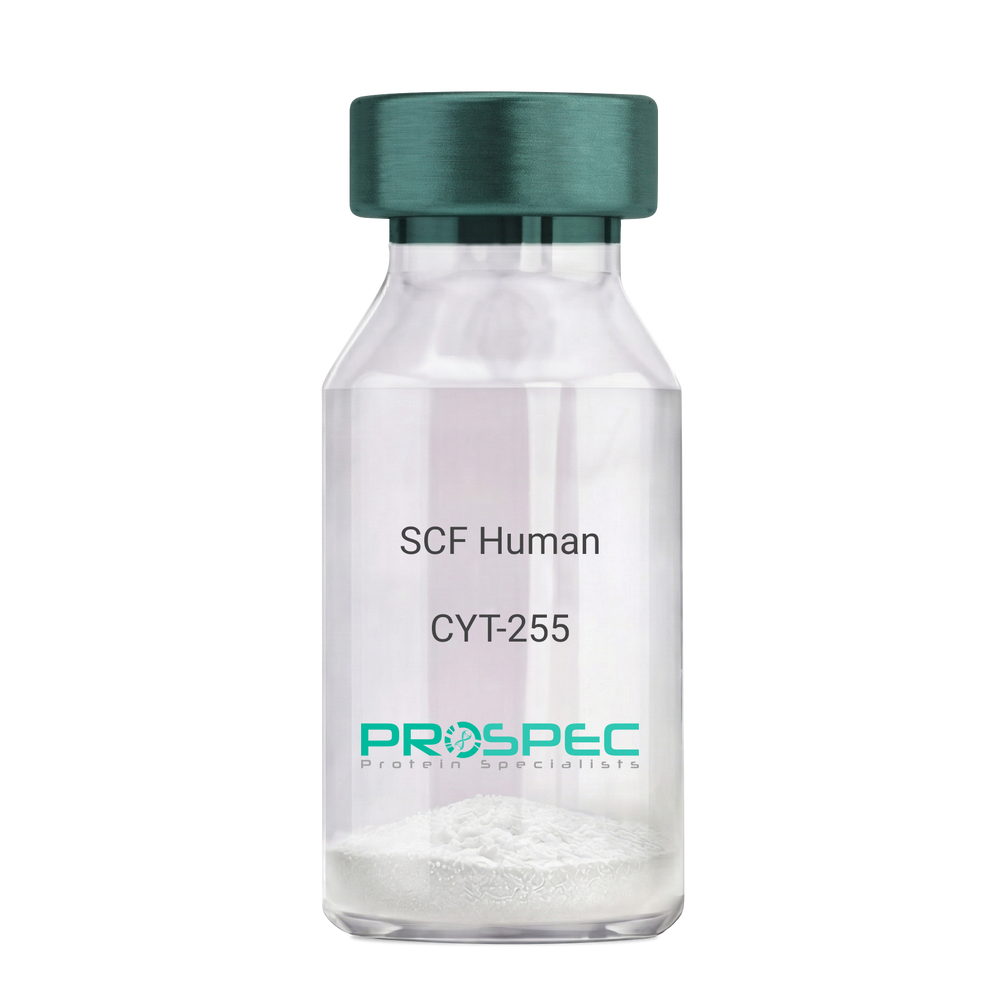
SCF HumanDescription:
Stem Cell Factor Human Recombinant
Kit ligand Precursor, C-kit ligand, SCF, Mast cell growth factor, MGF, SF, KL-1, Kitl, DKFZp686F2250.
Product # :
CYT-255Price :
Quantity :
Shipping Method :
Shipped at Room temp
More Info
- description
- source
- formulation
- purity
- biological activity
- More Info
Description
Stem Cell Factor Human Recombinant produced in E.Coli is a single, non-glycosylated polypeptide chain containing 165 amino acids and having a molecular mass of 18409 Dalton. The SCF is purified by proprietary chromatographic techniques.
Source
Escherichia Coli.
Formulation
Lyophilized from a concentrated (1mg/ml) solution in water containing 0.02% NaHCO3.
Purity
Greater than 98.0% as determined by:
(a) Analysis by SEC-HPLC.
(b) Analysis by SDS-PAGE.Biological Activity
The ED50 as determined by the dose-dependant stimulation of Human TF-1 cells is < 2 ng/ml, corresponding to a Specific Activity of 500,000 IU/mg.More Info
-
Introduction
Stem cell factor / KIT ligand (SCF) is a cytokine which binds CD117(c-Kit). SCF is also known as "steel factor" or "c-kit ligand". SCF exists in two forms, cell surface bound SCF and soluble (or free) SCF. Soluble SCF is produced by the cleavage of surface bound SCF by metalloproteases. SCF is a growth factor important for the survival, proliferation, and differentiation of hematopoietic stem cells and other hematopoietic progenitor cells. One of its roles is to change the BFU-E (burst-forming unit-erythroid) cells, which are the earliest erythrocyte precursors in the erythrocytic series, into the CFU-E (colony-forming unit-erythroid).
-
Synonyms
Kit ligand Precursor, C-kit ligand, SCF, Mast cell growth factor, MGF, SF, KL-1, Kitl, DKFZp686F2250.
-
Physical Appearance
Sterile Filtered White lyophilized (freeze-dried) powder.
-
Stability
Lyophilized KIT ligand although stable at room temperature for 3 weeks, should be stored desiccated below -18°C. Upon reconstitution SCF should be stored at 4°C between 2-7 days and for future use below -18°C.For long term storage it is recommended to add a carrier protein (0.1% HSA or BSA).Please prevent freeze-thaw cycles.
-
Solubility
It is recommended to reconstitute the lyophilized Stem Cell Factor in sterile 18MΩ-cm H2O not less than 100µg/ml, which can then be further diluted to other aqueous solutions.
-
Amino Acid Sequence
The sequence of the first five N-terminal amino acids was determined and was found to be Met-Glu-Gly-Ile-Cys.
-
Protein content
Protein quantitation was carried out by two independent methods1. UV spectroscopy at 280 nm using the absorbency value of 0.52 as the extinction coefficient for a 0.1% (1mg/ml) solution. This value is calculated by the PC GENE computer analysis program of protein sequences (IntelliGenetics). 2. Analysis by RP-HPLC, using a standard solution of Stem Cell Factor as a Reference Standard.
ProSpec's products are furnished for LABORATORY RESEARCH USE ONLY. The product may not be used as drugs, agricultural or pesticidal products, food additives or household chemicals.
- View Data Sheet
Name :
APRIL HumanDescription:
APRIL Human Recombinant
Tumor necrosis factor ligand superfamily member 13, A proliferation-inducing ligand, APRIL, TNF- and APOL-related leukocyte expressed ligand 2, TALL-2, TNF-related death ligand 1, TRDL-1, CD256, TNFSF13, TALL2, ZTNF2, UNQ383/PRO715.
Product # :
CYT-815Price :
Quantity :
Shipping Method :
Shipped with Ice Packs
More Info
- description
- source
- formulation
- purity
- More Info
- sds-page
Description
APRIL Human Recombinant produced in E.coli is a single, non-glycosylated polypeptide chain containing 159 amino acids (105-247) and having a molecular mass of 17.6kDa.APRIL is fused to a 16 amino acid T7-tag at N-terminus and purified by proprietary chromatographic techniques.
Source
Escherichia Coli.
Formulation
APRIL protein solution (1mg/ml) containing 20mM Tris-HCl buffer (pH 8.0), 0.4M UREA and 10% glycerol.
Purity
Greater than 85.0% as determined by SDS-PAGE.
sds-page
More Info
-
Introduction
APRIL which is a part of the TNF ligand superfamily (TNFSF13) is a type II transmembrane protein. Normally, APRIL expression is low in tissues, but is elevated in numerous types of tumors and transformed cell lines.
-
Synonyms
Tumor necrosis factor ligand superfamily member 13, A proliferation-inducing ligand, APRIL, TNF- and APOL-related leukocyte expressed ligand 2, TALL-2, TNF-related death ligand 1, TRDL-1, CD256, TNFSF13, TALL2, ZTNF2, UNQ383/PRO715.
-
Physical Appearance
Sterile filtered colorless solution.
-
Stability
Store at 4°C if entire vial will be used within 2-4 weeks. Store, frozen at -20°C for longer periods of time. For long term storage it is recommended to add a carrier protein (0.1% HSA or BSA).Avoid multiple freeze-thaw cycles.
-
Amino Acid Sequence
MASMTGGQQM GRGSHMAVLT QKQKKQHSVL HLVPINATSK DDSDVTEVMW QPALRRGRGL QAQGYGVRIQ DAGVYLLYSQ VLFQDVTFTM GQVVSREGQG RQETLFRCIR SMPSHPDRAY NSCYSAGVFH LHQGDILSVI IPRARAKLNL SPHGTFLGL.
-
Background
APRIL Human Recombinant: Expanding the Horizons of Immunotherapy
Abstract:
APRIL (A Proliferation-Inducing Ligand) is a promising molecule within the tumor necrosis factor (TNF) superfamily that plays a pivotal role in immune regulation. This research paper provides an overview of APRIL human recombinant, exploring its potential applications in immunotherapy. Understanding the mechanisms and therapeutic implications of APRIL holds promise in the field of immune-related disorders. This article presents a concise analysis of APRIL, highlighting its potential as a therapeutic target.Introduction:
Immunotherapy has revolutionized the treatment of various diseases by harnessing the power of the immune system. APRIL, a member of the TNF superfamily, has emerged as a potential candidate for immunotherapeutic interventions. This paper provides an overview of APRIL, shedding light on its structure, function, and potential applications in immunotherapy.APRIL Structure and Function:
APRIL is a transmembrane protein that can be proteolytically cleaved, leading to the generation of soluble forms. It interacts with its receptors, such as BCMA and TACI, to regulate immune responses. APRIL influences B-cell activation, proliferation, and antibody production, making it a compelling target for immunotherapeutic strategies.Immunotherapeutic Applications of APRIL Human Recombinant:
APRIL human recombinant holds great potential in immunotherapy. By modulating APRIL activity, it may be possible to enhance immune responses against cancer cells or dampen immune dysregulation in autoimmune disorders. Additionally, APRIL-based therapeutics could be developed to target specific immune cell populations or enhance the efficacy of existing immunotherapies.Challenges and Future Directions:
Although APRIL shows promise, there are challenges to overcome. Further research is needed to elucidate the precise mechanisms of APRIL-mediated immune regulation and identify optimal therapeutic approaches. Additionally, safety considerations and potential side effects must be thoroughly evaluated.Conclusion:
APRIL human recombinant represents a valuable tool for advancing immunotherapy. Understanding the structure, function, and therapeutic potential of APRIL opens up new avenues for treating immune-related disorders. Continued research and development in this field have the potential to revolutionize the landscape of immunotherapy, improving patient outcomes and expanding the possibilities for personalized medicine.What is the molecular weight/Mw of APRIL Protein?
APRIL Protein has a total Mw of 17.6kDa.
What is the source or expression system of APRIL Protein?
Escherichia Coli.
What is the Purity of APRIL Protein?
APRIL Protein is >85% pure as determined by SDS-PAGE.
What is the Biological Activity of APRIL Protein?
The biological functionality of APRIL Protein will be determined in the future.
What is the amino acid sequence of APRIL Protein?
MASMTGGQQM GRGSHMAVLT QKQKKQHSVL HLVPINATSK DDSDVTEVMW QPALRRGRGL QAQGYGVRIQ DAGVYLLYSQ VLFQDVTFTM GQVVSREGQG RQETLFRCIR SMPSHPDRAY NSCYSAGVFH LHQGDILSVI IPRARAKLNL SPHGTFLGL.
What applications can APRIL Protein be used in?
APRIL Protein can probably be used in western blot, ELISA and Lateral Flow.
What is the endotoxin level for APRIL Protein?
The endotoxin level is minimal, APRIL Protein was purified using conventional chromatography techniques.
ProSpec's products are furnished for LABORATORY RESEARCH USE ONLY. The product may not be used as drugs, agricultural or pesticidal products, food additives or household chemicals.
- View Data Sheet
Name :
ASB13 HumanDescription:
Ankyrin Repeat And SOCS Box Containing 13 Human Recombinant
Ankyrin repeat and SOCS box protein 13, ASB-13, ASB13, ankyrin repeat and SOCS box containing 13.
Product # :
PRO-2060Price :
Quantity :
Shipping Method :
Shipped with Ice Packs
More Info
- description
- source
- formulation
- purity
- More Info
Description
ASB13 Human Recombinant produced in E.Coli is a single, non-glycosylated polypeptide chain containing 301 amino acids (1-278 a.a.) and having a molecular mass of 32.4kDa.ASB13 is fused to a 23 amino acid His-tag at N-terminus & purified by proprietary chromatographic techniques.
Source
Escherichia Coli.
Formulation
ASB13 protein solution (1mg/ml) containing 20mM Tris-HCl buffer (pH8.0), 0.4M UREA and 10% glycerol.
Purity
Greater than 90% as determined by SDS-PAGE.
More Info
-
Introduction
ASB13 belongs to the ankyrin repeat and SOCS box-containing (ASB) family of proteins which contains ankyrin repeat sequence and a SOCS box domain. ASB13 is a protein coding gene that plays a role as a substrate-recognition part of a SCF-like ECS E3 ubiquitin-protein ligase complex which arbitrates the ubiquitination and subsequent proteasomal degradation of target proteins.
-
Synonyms
Ankyrin repeat and SOCS box protein 13, ASB-13, ASB13, ankyrin repeat and SOCS box containing 13.
-
Physical Appearance
Sterile Filtered clear solution.
-
Stability
Store at 4°C if entire vial will be used within 2-4 weeks. Store, frozen at -20°C for longer periods of time.For long term storage it is recommended to add a carrier protein (0.1% HSA or BSA).Please avoid freeze thaw cycles.
-
Amino Acid Sequence
MGSSHHHHHH SSGLVPRGSH MGSMEPRAAD GCFLGDVGFW VERTPVHEAA QRGESLQLQQ LIESGACVNQ VTVDSITPLH AASLQGQARC VQLLLAAGAQ VDARNIDGST PLCDACASGS IECVKLLLSY GAKVNPPLYT ASPLHEACMS GSSECVRLLI DVGANLEAHD CHFGTPLHVA CAREHLDCVK VLLNAGANVN AAKLHETALH HAAKVKNVDL IEMLIEFGGN IYARDNRGKK PSDYTWSSSA PAKCFEYYEK TPLTLSQLCR VNLRKATGVR GLEKIAKLNI PPRLIDYLSY N.
ProSpec's products are furnished for LABORATORY RESEARCH USE ONLY. The product may not be used as drugs, agricultural or pesticidal products, food additives or household chemicals.
- View Data Sheet
Name :
SMAD3 HumanDescription:
Mothers Against Decapentaplegic Homolog 3 Human Recombinant
MADH3, JV15-2, HSPC193, HsT17436, MGC60396, DKFZp586N0721, DKFZp686J10186, SMAD3, Mothers against decapentaplegic homolog 3, Mothers against DPP homolog 3, MAD homolog 3, Mad3, hMAD-3, SMAD family member 3, SMAD 3, hSMAD3.
Product # :
PRO-751Price :
Quantity :
Shipping Method :
Shipped with Ice Packs
More Info
- description
- source
- formulation
- purity
- More Info
Description
SMAD3 Human Recombinant produced in E.Coli is a single, non-glycosylated polypeptide chain containing 445 amino acids (1-425) and having a molecular mass of 50.2 kDa. SMAD3 is fused to a 20 amino acid His-Tag at N-Terminus and purified by standard chromatography techniques.
Source
Escherichia Coli.
Formulation
The SMAD3 protein solution contains 20mM Tris-HCl pH-8, 0.1M NaCl, 0.1mM DTT and 20% glycerol.
Purity
Greater than 90.0% as determined by SDS-PAGE.
More Info
-
Introduction
SMAD3 is part of the SMAD family of proteins that mediate signal transduction by the TGF-beta/activin/BMP-2/4 cytokine superfamily from receptor Ser/Thr protein kinases at the cell surface to the nucleus. SMAD3 has a role as a transcriptional modulator activated by TGF-Beta and is involved in the regulation of carcinogenesis. SMAD3 mutations are related with the pathogenesis of human osteoarthritis. SMAD3 expression take part in tumor suppression in the premature stages of gastric carcinogenesis. SMAD3 is involved in nuclear translocation of beta-catenin.
-
Synonyms
MADH3, JV15-2, HSPC193, HsT17436, MGC60396, DKFZp586N0721, DKFZp686J10186, SMAD3, Mothers against decapentaplegic homolog 3, Mothers against DPP homolog 3, MAD homolog 3, Mad3, hMAD-3, SMAD family member 3, SMAD 3, hSMAD3.
-
Physical Appearance
Sterile Filtered colorless solution.
-
Stability
Store at 4°C if entire vial will be used within 2-4 weeks. Store, frozen at -20°C for longer periods of time. For long term storage it is recommended to add a carrier protein (0.1% HSA or BSA).Avoid multiple freeze-thaw cycles.
-
Amino Acid Sequence
MGSSHHHHHH SSGLVPRGSH MSSILPFTPP IVKRLLGWKK GEQNGQEEKW CEKAVKSLVK KLKKTGQLDE LEKAITTQNV NTKCITIPRS LDGRLQVSHR KGLPHVIYCR LWRWPDLHSH HELRAMELCE FAFNMKKDEV CVNPYHYQRV ETPVLPPVLV PRHTEIPAEF PPLDDYSHSI PENTNFPAGI EPQSNIPETP PPGYLSEDGE TSDHQMNHSM DAGSPNLSPN PMSPAHNNLD LQPVTYCEPA FWCSISYYEL NQRVGETFHA SQPSMTVDGF TDPSNSERFC LGLLSNVNRN AAVELTRRHI GRGVRLYYIG GEVFAECLSD SAIFVQSPNC NQRYGWHPAT VCKIPPGCNL KIFNNQEFAA LLAQSVNQGF EAVYQLTRMC TIRMSFVKGW GAEYRRQTVT STPCWIELHL NGPLQWLDKV LTQMGSPSIR CSSVS.
ProSpec's products are furnished for LABORATORY RESEARCH USE ONLY. The product may not be used as drugs, agricultural or pesticidal products, food additives or household chemicals.
- View Data Sheet
Name :
IDNK E.ColiDescription:
Thermosensitive Gluconokinase E.Coli Recombinant
Thermosensitive gluconokinase, Gluconate kinase 1, idnK.
Product # :
PKA-060Price :
Quantity :
Shipping Method :
Shipped with Ice Packs
More Info
- description
- source
- formulation
- purity
- More Info
Description
IDNK E.Coli Recombinant produced in E.Coli is a single, non-glycosylated polypeptide chain containing 210 amino acids (1-187 a.a) and having a molecular mass of 23.4kDa. IDNK is fused to a 23 amino acid His-tag at N-terminus & purified by proprietary chromatographic techniques.
Source
E.coli.
Formulation
IDNK protein solution (1mg/ml) containing 20mM Tris-HCl buffer (pH 8.0), 0.15M NaCl, 10% glycerol and 1mM DTT.
Purity
Greater than 95% as determined by SDS-PAGE.
More Info
-
Introduction
Thermosensitive Gluconokinase, also known as IDNK is a 187 a.a protein which is a member of the gluconokinase gntK/gntV family. IDNK catalyzes theconversion of ATP and D-gluconate to ADP and 6-phospho-D-gluconate. In addition, IDNK is considered to take part in gender determination, deletion of the distal portion of 9p is able to lead to a development of male to female sex reversal, the phenotype of a female with a male X, Y genotype.
-
Synonyms
Thermosensitive gluconokinase, Gluconate kinase 1, idnK.
-
Physical Appearance
Sterile Filtered colorless solution.
-
Stability
Store at 4°C if entire vial will be used within 2-4 weeks. Store, frozen at -20°C for longer periods of time. For long term storage it is recommended to add a carrier protein (0.1% HSA or BSA).Avoid multiple freeze-thaw cycles.
-
Amino Acid Sequence
MGSSHHHHHH SSGLVPRGSH MGSMAGESFI LMGVSGSGKT LIGSKVAALL SAKFIDGDDL HPAKNIDKMS QGIPLSDEDR LPWLERLNDA SYSLYKKNET GFIVCSSLKK QYRDILRKGS PHVHFLWLDG DYETILARMQ RRAGHFMPVA LLKSQFEALE RPQADEQDIV RIDINHDIAN VTEQCRQAVL AIRQNRICAK EGSASDQRCE.
ProSpec's products are furnished for LABORATORY RESEARCH USE ONLY. The product may not be used as drugs, agricultural or pesticidal products, food additives or household chemicals.
- View Data Sheet
Name :
STC 2 Human, HisDescription:
Stanniocalcin-2 Human Recombinant, His Tag
Stanniocalcin-2, STC, STC2, STCRP, STC-2, Stanniocalcin-related protein, STC-related protein.
Product # :
HOR-008Price :
Quantity :
Shipping Method :
Shipped with Ice Packs
More Info
- description
- source
- formulation
- purity
- More Info
Description
STC 2 Human Recombinant produced in E.Coli is a single, non-glycosylated polypeptide chain containing 301 amino acids (25-302 a.a.) and having a molecular mass of 33kDa. STC 2 is fused to a 23 amino acid His-tag at N-terminus & purified by proprietary chromatographic techniques.
Source
Escherichia Coli.
Formulation
STC 2 protein solution (0.25mg/ml) containing 20mM Tris-HCl buffer (pH 8.0), 0.25M NaCl, 30% glycerol and 1mM DTT.
Purity
Greater than 90% as determined by SDS-PAGE.
More Info
-
Introduction
STC2 is a homodimeric glycoprotein that is expressed in a wide variety of tissues and may have autocrine or paracrine functions. The encoded protein has 10 of its 15 cysteine residues conserved among stanniocalcin family members and is phosphorylated by casein kinase 2 exclusively on its serine residues. Its C-terminus contains a cluster of histidine residues which may interact with metal ions. The protein may play a role in the regulation of renal and intestinal calcium and phosphate transport, cell metabolism, or cellular calcium/phosphate homeostasis. Constitutive over expression of human stanniocalcin 2 in mice resulted in pre- and postnatal growth restriction, reduced bone and skeletal muscle growth, and organomegaly. Expression of this gene is induced by estrogen and altered in some breast cancers.
-
Synonyms
Stanniocalcin-2, STC, STC2, STCRP, STC-2, Stanniocalcin-related protein, STC-related protein.
-
Physical Appearance
Sterile filtered colorless solution.
-
Stability
Store at 4°C if entire vial will be used within 2-4 weeks. Store, frozen at -20°C for longer periods of time. For long term storage it is recommended to add a carrier protein (0.1% HSA or BSA).Avoid multiple freeze-thaw cycles.
-
Amino Acid Sequence
MGSSHHHHHH SSGLVPRGSH MGSTDATNPP EGPQDRSSQQ KGRLSLQNTA EIQHCLVNAG DVGCGVFECF ENNSCEIRGL HGICMTFLHN AGKFDAQGKS FIKDALKCKA HALRHRFGCI SRKCPAIREM VSQLQRECYL KHDLCAAAQE NTRVIVEMIH FKDLLLHEPY VDLVNLLLTC GEEVKEAITH SVQVQCEQNW GSLCSILSFC TSAIQKPPTA PPERQPQVDR TKLSRAHHGE AGHHLPEPSS RETGRGAKGE RGSKSHPNAH ARGRVGGLGA QGPSGSSEWE DEQSEYSDIR R.
ProSpec's products are furnished for LABORATORY RESEARCH USE ONLY. The product may not be used as drugs, agricultural or pesticidal products, food additives or household chemicals.