Skip to content

High-quality research proteins.

  • 1-800-805-6531

  • Mon - Sat 8.00-18.00, Sun - Closed

  • info@prospecbio.com

  • PO Box 6591 East Brunswick NJ 08816

  • Products
    • Cytokines
    • Growth factors
    • Chemokines
    • Cd antigens
    • Neurotrophins
    • Hormones
    • Enzymes
    • Viral antigens
    • Recombinant proteins
    • Natural proteins
    • Monoclonal antibodies
    • Polyclonal antibodies
    • Thermal Packaging
  • About
    • Company
    • Founder
    • Contribution
  • Customers
    • Eastern Asia
    • Eastern Europe
    • North America
    • South America
    • South East Asia
    • Southern Asia
    • Western Europe
  • Ordering
    • Ordering Method
    • Ordering - Credit Card
    • Ordering - PO
    • Shipping Fees
    • FAQs
  • Services
    • DNA Cloning
    • Protein Expression
    • Monoclonal Antibody
    • Fermentation
    • Technology License
  • Contact us
Log in

Country/region

  • USD $ | Albania
  • USD $ | Andorra
  • USD $ | Argentina
  • USD $ | Armenia
  • USD $ | Australia
  • USD $ | Austria
  • USD $ | Azerbaijan
  • USD $ | Belarus
  • USD $ | Belgium
  • USD $ | Bolivia
  • USD $ | Brazil
  • USD $ | Bulgaria
  • USD $ | Cambodia
  • USD $ | Canada
  • USD $ | Chile
  • USD $ | China
  • USD $ | Colombia
  • USD $ | Costa Rica
  • USD $ | Croatia
  • USD $ | Cyprus
  • USD $ | Czechia
  • USD $ | Denmark
  • USD $ | Estonia
  • USD $ | Finland
  • USD $ | France
  • USD $ | Georgia
  • USD $ | Germany
  • USD $ | Greece
  • USD $ | Hong Kong SAR
  • USD $ | Hungary
  • USD $ | Iceland
  • USD $ | India
  • USD $ | Ireland
  • USD $ | Israel
  • USD $ | Italy
  • USD $ | Japan
  • USD $ | Kazakhstan
  • USD $ | Latvia
  • USD $ | Liechtenstein
  • USD $ | Lithuania
  • USD $ | Madagascar
  • USD $ | Malta
  • USD $ | Mexico
  • USD $ | Moldova
  • USD $ | Monaco
  • USD $ | Netherlands
  • USD $ | New Zealand
  • USD $ | North Macedonia
  • USD $ | Norway
  • USD $ | Panama
  • USD $ | Paraguay
  • USD $ | Peru
  • USD $ | Philippines
  • USD $ | Poland
  • USD $ | Portugal
  • USD $ | Romania
  • USD $ | Singapore
  • USD $ | Slovakia
  • USD $ | Slovenia
  • USD $ | South Africa
  • USD $ | South Korea
  • USD $ | Spain
  • USD $ | Sri Lanka
  • USD $ | Sweden
  • USD $ | Switzerland
  • USD $ | Taiwan
  • USD $ | Thailand
  • USD $ | Türkiye
  • USD $ | Ukraine
  • USD $ | United Kingdom
  • USD $ | United States
  • USD $ | Uruguay
  • USD $ | Vatican City
  • USD $ | Venezuela
  • USD $ | Vietnam
  • Facebook
  • Instagram
logoProSpec - Recombinant Protein Manufacturer for academic and R&D industry
Become a distributor
Account Log in
Wishlist
Cart Cart(0)
  • Products
    +
    • Cytokines
    • Growth factors
    • Chemokines
    • Cd antigens
    • Neurotrophins
    • Hormones
    • Enzymes
    • Viral antigens
    • Recombinant proteins
    • Natural proteins
    • Monoclonal antibodies
    • Polyclonal antibodies
    • Thermal Packaging
  • About
    +
    • Company
    • Founder
    • Contribution
  • Customers
    +
    • Eastern Asia
    • Eastern Europe
    • North America
    • South America
    • South East Asia
    • Southern Asia
    • Western Europe
  • Ordering
    +
    • Ordering Method
    • Ordering - Credit Card
    • Ordering - PO
    • Shipping Fees
    • FAQs
  • Services
    +
    • DNA Cloning
    • Protein Expression
    • Monoclonal Antibody
    • Fermentation
    • Technology License
  • Contact us

Item added to your cart

View cart
View All
  • Cytokines
  • Growth factors
  • Chemokines
  • Cd antigens
  • Neurotrophins
  • Hormones
  • Enzymes
  • Viral antigens
  • Recombinant proteins
  • Natural proteins
  • Monoclonal antibodies
  • Polyclonal antibodies
  • Thermal Packaging
  • Tumor Necrosis Factor

    Tumor Necrosis Factor

    View All
  • 4-1BB

    4-1BB

    View All
  • Adiponectin

    Adiponectin

    View All
  • AIF1

    AIF1

    View All
  • Other Cytokines

    Other Cytokines

    View All
  • AITRL

    AITRL

    View All
  • Angiopoietin

    Angiopoietin

    View All
  • Apolipoprotein

    Apolipoprotein

    View All
  • B-Cell Activating Factor

    B-Cell Activating Factor

    View All
  • Beta Defensin

    Beta Defensin

    View All
  • Bone Morphogenetic Protein

    Bone Morphogenetic Protein

    View All
  • B type Natriuretic Peptide

    B type Natriuretic Peptide

    View All
  • BST

    BST

    View All
  • Betacellulin

    Betacellulin

    View All
  • Cardiotrophin

    Cardiotrophin

    View All
  • Activin

    Activin

    View All
  • Fibroblast Growth Factor

    Fibroblast Growth Factor

    View All
  • Other Growth Factors

    Other Growth Factors

    View All
  • CSF

    CSF

    View All
  • CTGF

    CTGF

    View All
  • IGFBP

    IGFBP

    View All
  • VEGF Protein

    VEGF Protein

    View All
  • EGF

    EGF

    View All
  • Epigen

    Epigen

    View All
  • Erythropoietin

    Erythropoietin

    View All
  • Insulin-Like Growth Factor

    Insulin-Like Growth Factor

    View All
  • Growth Hormone

    Growth Hormone

    View All
  • HDGF

    HDGF

    View All
  • Hepatocyte Growth Factor

    Hepatocyte Growth Factor

    View All
  • Insulin

    Insulin

    View All
  • BCA-1/ BLC (CXCL13)

    BCA-1/ BLC (CXCL13)

    View All
  • BRAK (CXCL14)

    BRAK (CXCL14)

    View All
  • C-10 (CCL6)

    C-10 (CCL6)

    View All
  • Other Chemokines

    Other Chemokines

    View All
  • MEC (CCL28)

    MEC (CCL28)

    View All
  • LD78-beta (CCL3L1)

    LD78-beta (CCL3L1)

    View All
  • CTACK (CCL27)

    CTACK (CCL27)

    View All
  • CXCL16

    CXCL16

    View All
  • CXCL17

    CXCL17

    View All
  • Platelet Factor-4 (CXCL4)

    Platelet Factor-4 (CXCL4)

    View All
  • ENA-78 (CXCL5)

    ENA-78 (CXCL5)

    View All
  • Eotaxin (CCL11,24,26)

    Eotaxin (CCL11,24,26)

    View All
  • Exodus-2 (CCL21)

    Exodus-2 (CCL21)

    View All
  • Fractalkine (CX3CL1)

    Fractalkine (CX3CL1)

    View All
  • CXCL6

    CXCL6

    View All
  • Other CD Antigens

    Other CD Antigens

    View All
  • CD14

    CD14

    View All
  • CD164

    CD164

    View All
  • CD1

    CD1

    View All
  • CD2

    CD2

    View All
  • CD200

    CD200

    View All
  • CD207

    CD207

    View All
  • CD226

    CD226

    View All
  • CD23

    CD23

    View All
  • CD244

    CD244

    View All
  • CD247

    CD247

    View All
  • CD27

    CD27

    View All
  • CD274

    CD274

    View All
  • CD300

    CD300

    View All
  • CD33

    CD33

    View All
  • Other Neurotrophins

    Other Neurotrophins

    View All
  • Beta-NGF

    Beta-NGF

    View All
  • BDNF

    BDNF

    View All
  • CDNF

    CDNF

    View All
  • CNTF

    CNTF

    View All
  • GDNF

    GDNF

    View All
  • Glia Maturation Factor

    Glia Maturation Factor

    View All
  • MANF

    MANF

    View All
  • Midkine

    Midkine

    View All
  • Neuroglobin

    Neuroglobin

    View All
  • Neurotrophic factors

    Neurotrophic factors

    View All
  • Neuregulin

    Neuregulin

    View All
  • Neuropilin

    Neuropilin

    View All
  • Pigment Epithelium-Derived Factor

    Pigment Epithelium-Derived Factor

    View All
  • Pleiotrophin

    Pleiotrophin

    View All
  • Peptide Hormones

    Peptide Hormones

    View All
  • Other Hormones

    Other Hormones

    View All
  • HCG

    HCG

    View All
  • Endothelin

    Endothelin

    View All
  • Exendin

    Exendin

    View All
  • FSH

    FSH

    View All
  • Glucagon

    Glucagon

    View All
  • GHRP

    GHRP

    View All
  • GLP

    GLP

    View All
  • Thyrostimulin

    Thyrostimulin

    View All
  • Inhibin A

    Inhibin A

    View All
  • LHRH

    LHRH

    View All
  • Melanotan

    Melanotan

    View All
  • Procalcitonin

    Procalcitonin

    View All
  • PTH

    PTH

    View All
  • Peroxiredoxin

    Peroxiredoxin

    View All
  • Peptidase

    Peptidase

    View All
  • Synthetase

    Synthetase

    View All
  • Transferase

    Transferase

    View All
  • Hydrolase

    Hydrolase

    View All
  • Dehydrogenase

    Dehydrogenase

    View All
  • ACE2

    ACE2

    View All
  • Esterase

    Esterase

    View All
  • Protein Kinases

    Protein Kinases

    View All
  • Other Enzymes

    Other Enzymes

    View All
  • Phosphatase

    Phosphatase

    View All
  • Deaminase

    Deaminase

    View All
  • Oxygenase

    Oxygenase

    View All
  • Adenylate Kinase

    Adenylate Kinase

    View All
  • Lyase

    Lyase

    View All
  • Chagas

    Chagas

    View All
  • SARS

    SARS

    View All
  • Influenza

    Influenza

    View All
  • ASFV

    ASFV

    View All
  • Astrovirus

    Astrovirus

    View All
  • Borrelia

    Borrelia

    View All
  • Helicobacter Pylori

    Helicobacter Pylori

    View All
  • Chikungunya

    Chikungunya

    View All
  • Chlamydia

    Chlamydia

    View All
  • Cytomegalo

    Cytomegalo

    View All
  • Dengue

    Dengue

    View All
  • EBV

    EBV

    View All
  • Ebola

    Ebola

    View All
  • Feline Leukemia Virus

    Feline Leukemia Virus

    View All
  • Hepatitis A

    Hepatitis A

    View All
  • Other

    Other

    View All
  • Actin

    Actin

    View All
  • ADAM

    ADAM

    View All
  • Complement Component

    Complement Component

    View All
  • Ag85

    Ag85

    View All
  • Eukaryotic Translation Initiation Factor

    Eukaryotic Translation Initiation Factor

    View All
  • Anterior Gradient Protein

    Anterior Gradient Protein

    View All
  • Heat Shock Protein

    Heat Shock Protein

    View All
  • Alpha-2-HS-Glycoprotein

    Alpha-2-HS-Glycoprotein

    View All
  • Hemoglobin

    Hemoglobin

    View All
  • Allergy

    Allergy

    View All
  • Anaplasma

    Anaplasma

    View All
  • Angiogenin

    Angiogenin

    View All
  • Ankyrin Repeat Domain

    Ankyrin Repeat Domain

    View All
  • Annexin

    Annexin

    View All
  • Other Natural Proteins

    Other Natural Proteins

    View All
  • Aprotinin

    Aprotinin

    View All
  • Transferrin

    Transferrin

    View All
  • Avidin

    Avidin

    View All
  • Anti Coagulation Factors

    Anti Coagulation Factors

    View All
  • Natural Albumin

    Natural Albumin

    View All
  • Natural Coagulation Factors

    Natural Coagulation Factors

    View All
  • Fibronectin

    Fibronectin

    View All
  • Thrombin

    Thrombin

    View All
  • Anti Human Enzyme

    Anti Human Enzyme

    View All
  • Other Monoclonal Antibodies

    Other Monoclonal Antibodies

    View All
  • Anti Human Cytokine

    Anti Human Cytokine

    View All
  • Anti Human Heat Shock Protein

    Anti Human Heat Shock Protein

    View All
  • Anti Mouse Lymphocyte

    Anti Mouse Lymphocyte

    View All
  • Anti Human Chemokine

    Anti Human Chemokine

    View All
  • Anti Human Lymphocyte

    Anti Human Lymphocyte

    View All
  • Anti Viral Monoclonal

    Anti Viral Monoclonal

    View All
  • Anti Mouse Cytokine

    Anti Mouse Cytokine

    View All
  • Anti-GST Monoclonal

    Anti-GST Monoclonal

    View All
  • Other Polyclonal Antibodies

    Other Polyclonal Antibodies

    View All
  • Anti Viral

    Anti Viral

    View All
  • Anti-GST Monoclonal

    Anti-GST Monoclonal

    View All
Back

Search results

1000 results found for “Prothymosin”

Name

Description

Product #

Price

Quantity

Shipping Method

  • View Data Sheet

    Name :

    PTPN11 Human, Active

    Description:

    Protein Tyrosine Phosphatase Non Receptor Type-11 Human Recombinant, Active

    PTPN11, Tyrosine-protein phosphatase non-receptor type 11, Protein-tyrosine phosphatase 1D, PTP-1D, Proteintyrosine phosphatase 2C, PTP-2C, SH-PTP2, SH-PTP3, BPTP3, CFC, JMML, METCDS, NS1, SHP-2, shp-2, PTP2C, SHPTP2.

    Product # :

    PKA-126

    Price :

    Quantity :

    Shipping Method :

    Ice Icon

    Shipped with Ice Packs

    Add To Cart

    More Info

    • description
    • source
    • formulation
    • purity
    • biological activity
    • More Info

    Description

    PTPN11 Human produced in Sf9 Insect cells is a single, glycosylated polypeptide chain containing 602 amino acids ( 1-593 a.a.) and having a molecular mass of 69.1 kDa.PTPN11 is expressed with a 9 amino acid His tag at C-Terminus and purified by proprietary chromatographic techniques.

    Source

    Sf9, Insect cells.

    Formulation

    PTPN11 protein solution (1mg/ml) contains Phosphate Buffered Saline (pH 7.4) and 10% glycerol.

    Purity

    Greater than 90.0% as determined by SDS-PAGE.

    Biological Activity

    Specific activity is grather than 400 unit/mg  and is defined as the amount of enzyme that hydrolyze 1.0 nmole of pnitrophenyl phosphate (pNPP) per minute at pH 7.5 at 37C.

    More Info

    • Introduction

      Protein Tyrosine Phosphatase Non Receptor Type-11 or PTPN11 has 2 Src homology 2 domains and part of the tyrosine phosphatase group of proteins. PTPN11 is responsible for the catalyzation of tyrosine residues dephosphorylation in proteins and takes part in the stimulation and activation of Erk/MAP kinase transduction via signals from tyrosine kinase. Noonan syndrome and acute myeloid leukemia can be caused from mutations in PTPN11.

    • Synonyms

      PTPN11, Tyrosine-protein phosphatase non-receptor type 11, Protein-tyrosine phosphatase 1D, PTP-1D, Proteintyrosine phosphatase 2C, PTP-2C, SH-PTP2, SH-PTP3, BPTP3, CFC, JMML, METCDS, NS1, SHP-2, shp-2, PTP2C, SHPTP2.

    • Physical Appearance

      Sterile Filtered clear solution.

    • Stability

      Store at 4°C if entire vial will be used within 2-4 weeks. Store, frozen at -20°C for longer periods of time. For long term storage it is recommended to add a carrier protein (0.1% HSA or BSA).Avoid multiple freeze-thaw cycles.

    • Amino Acid Sequence

      ADPMTSRRWF HPNITGVEAE NLLLTRGVDG SFLARPSKSN PGDFTLSVRR NGAVTHIKIQ NTGDYYDLYG GEKFATLAEL VQYYMEHHGQ LKEKNGDVIE LKYPLNCADP TSERWFHGHL SGKEAEKLLT EKGKHGSFLV RESQSHPGDF VLSVRTGDDK GESNDGKSKV THVMIRCQEL KYDVGGGERF DSLTDLVEHY KKNPMVETLG TVLQLKQPLN TTRINAAEIE SRVRELSKLA ETTDKVKQGF WEEFETLQQQ ECKLLYSRKE GQRQENKNKN RYKNILPFDH TRVVLHDGDP NEPVSDYINA NIIMPEFETK CNNSKPKKSY IATQGCLQNT VNDFWRMVFQ ENSRVIVMTT KEVERGKSKC VKYWPDEYAL KEYGVMRVRN VKESAAHDYT LRELKLSKVG QGNTERTVWQ YHFRTWPDHG VPSDPGGVLD FLEEVHHKQE SIMDAGPVVV HCSAGIGRTG TFIVIDILID
      IIREKGVDCD IDVPKTIQMV RSQRSGMVQT EAQYRFIYMA VQHYIETLQR RIEEEQKSKR KGHEYTNIKY SLADQTSGDQ SPLPPCTPTP PCAEMREDSA RVYENVGLMQ QQKSFRHHHH HH

    ProSpec's products are furnished for LABORATORY RESEARCH USE ONLY. The product may not be used as drugs, agricultural or pesticidal products, food additives or household chemicals.

    Ptpn11 Enzyme
  • View Data Sheet

    Name :

    RBM8A Human

    Description:

    RNA Binding Motif Protein 8A Human Recombinant

    RNA-binding protein 8A, Binder of OVCA1-1, BOV-1, RNA-binding motif protein 8A, RNA-binding protein Y14, Ribonucleoprotein RBM8A, RBM8A, RBM8, Y14, ZNRP, RBM8B, ZRNP1, BOV-1A, BOV-1B, BOV-1C, MDS014.

    Product # :

    PRO-186

    Price :

    Quantity :

    Shipping Method :

    Ice Icon

    Shipped with Ice Packs

    Add To Cart

    More Info

    • description
    • source
    • formulation
    • purity
    • More Info

    Description

    RBM8A produced in E.Coli is a single, non-glycosylated polypeptide chain containing 182 amino acids (1-174 a.a.) and having a molecular mass of 20.9kDa.RBM8A is fused to an 8 amino acid His-tag at C-terminus & purified by proprietary chromatographic techniques.

    Source

    Escherichia Coli.

    Formulation

    The RBM8A solution (0.5mg/ml) contains 20mM Tris-HCl buffer (pH8.0), 10% glycerol, 0.1M NaCl and 1mM DTT.

    Purity

    Greater than 90.0% as determined by SDS-PAGE.

    More Info

    • Introduction

      RBM8A belongs to the EJC (The exon junction complex) which is involved in mRNA export, cytoplasmic localization and nonsense mediated mRNA decay. RBM8A is able to communicate to the cytoplasm the processing history of the mRNA, including the position of the removed introns. Even though RBM8A shuttles to the cytoplasm, it is mostly detected in the nucleus and is colocalized with oskar mRNA at the posterior pole of the cell.

    • Synonyms

      RNA-binding protein 8A, Binder of OVCA1-1, BOV-1, RNA-binding motif protein 8A, RNA-binding protein Y14, Ribonucleoprotein RBM8A, RBM8A, RBM8, Y14, ZNRP, RBM8B, ZRNP1, BOV-1A, BOV-1B, BOV-1C, MDS014.

    • Physical Appearance

      Sterile Filtered colorless solution.

    • Stability

      Store at 4°C if entire vial will be used within 2-4 weeks. Store, frozen at -20°C for longer periods of time. For long term storage it is recommended to add a carrier protein (0.1% HSA or BSA).Avoid multiple freeze-thaw cycles.

    • Amino Acid Sequence

      MADVLDLHEA GGEDFAMDED GDESIHKLKE KAKKRKGRGF GSEEGSRARM REDYDSVEQD GDEPGPQRSV EGWILFVTGV HEEATEEDIH DKFAEYGEIK NIHLNLDRRT GYLKGYTLVE YETYKEAQAA MEGLNGQDLM GQPISVDWCF VRGPPKGKRR GGRRRSRSPD RRRRLEHHHH HH.

    ProSpec's products are furnished for LABORATORY RESEARCH USE ONLY. The product may not be used as drugs, agricultural or pesticidal products, food additives or household chemicals.

    Rbm8A Human
  • View Data Sheet

    Name :

    CTRB1 Human

    Description:

    Chymotrypsinogen-B1, Human Recombinant

    Product # :

    ENZ-1016

    Price :

    Quantity :

    Shipping Method :

    Room Temp Icon

    Shipped at Room temp

    Add To Cart

    More Info

    • description
    • source
    • formulation
    • purity
    • biological activity
    • More Info

    Description

    Recombinant Human CTRB1 expressed in E.coli containing 245 amino acids having a Mw of 27kDa is purified by standard chromatography techniques.

    Source

    E.coli

    Formulation

    The Human CTRB1 was lyophilized without any additives.

    Purity

    Greater than 95% as determined by HPLC.

    Biological Activity

    1100 units/mg protein.
    One unit is defined as the amount of enzyme that will hydrolyze 1.0 μmole of N-alpha-acetyl-L-tyrosine ethyl ester (ATEE) per min at pH 7.0 at 25°C.

    More Info

    • Introduction

      Chymotrypsinogen-B1 (CTRB1) belongs to the serine protease family of enzymes and forms a main precursor of the pancreatic proteolytic enzymes. CTRB1 is located next to a related chymotrypsinogen gene. CTRB1 is a protein coding gene which encodes different isoforms which may undergo similar processing to generate the mature protein.

    • Physical Appearance

      Sterile Filtered lyophilized powder.

    • Stability

      Recombinant Human CTRB1 although stable at room temp for 1 week, should be stored desiccated below -18°C. For long term storage it is recommended to add a carrier protein (0.1% HSA or BSA).Please prevent freeze-thaw cycles.

    • Solubility

      It is recommended to reconstitute the lyophilized Human CTRB1 in 1ml 50mM HAc which can then be further diluted to other aqueous solutions.

    • Amino Acid Sequence

      CG VPAIHPVLSG LSRIVNGEDA VPGSWPWQVS LQDKTGFHFC GGSLISEDWV VTAAHCGVRT SDVVVAGEFD QGSDEENIQV LKIAKVFKNP KFSILTVNND ITLLKLATPA RFSQTVSAVC LPSADDDFPAGTLCATTGWG KTKYNANKTP DKLQQAALPL LSNAECKKSW GRRITDVMIC AGASGVSSCM GDSGGPLVCQ KDGAWTLVGI VSWGSDTCST SSPGVYARVTKLIPWVQKIL AAN.

    ProSpec's products are furnished for LABORATORY RESEARCH USE ONLY. The product may not be used as drugs, agricultural or pesticidal products, food additives or household chemicals.

    Ctrb1 Human
  • View Data Sheet

    Name :

    PPME1 Antibody

    Description:

    Protein Phosphatase Methylesterase 1, Mouse Anti Human

    Protein phosphatase methylesterase 1, PME-1, FLJ22226, EC 3.1.1.

    Product # :

    ANT-678

    Price :

    Quantity :

    Shipping Method :

    Ice Icon

    Shipped with Ice Packs

    Add To Cart

    More Info

    • formulation
    • More Info

    Formulation

    1mg/ml containing PBS, pH-7.4, 10% Glycerol and 0.02% Sodium Azide.

    More Info

    • Introduction

      PPME1 catalyzes the demethylation and inactivation of protein phosphatase (PP2A), a multimeric phosphoserine/ threonine protein phosphatase related to growth inhibition and cell cycle arrest. PPME1 can demethylate PP2A catalytic subunit in vitro and okadaic acid treatment can inhibit this reaction. It is conserved from yeast to human and holds a motif found in lipases having a catalytic triad activated serine as their active site nucleophile.

    • Synonyms

      Protein phosphatase methylesterase 1, PME-1, FLJ22226, EC 3.1.1.

    • Physical Appearance

      Sterile filtered colorless solution.

    • Immunogen

      Anti-human PPME1 mAb, is derived from hybridization of mouse F0 myeloma cells with spleen cells from BALB/c mice immunized with recombinant human PPME1 amino acids 1-386 purified from E. coli.

    • Ig Subclass

      Mouse IgG1 heavy chain and K light chain.

    • Clone

      PAT29G3AT.

    • Applications

      PPME1 antibody has been tested by ELISA, Western blot analysis to assure specificity and reactivity. Since application varies, however, each investigation should be titrated by the reagent to obtain optimal results.

    • Type

      Mouse Anti Human Monoclonal.

    • Storage Procedures

      For periods up to 1 month store at 4°C, for longer periods of time, store at -20°C. Prevent freeze thaw cycles.

    • Purification Method

      PPME1 antibody was purified from mouse ascitic fluids by protein-A affinity chromatography.

    ProSpec's products are furnished for LABORATORY RESEARCH USE ONLY. The product may not be used as drugs, agricultural or pesticidal products, food additives or household chemicals.

    Ppme1 Antibody
  • View Data Sheet

    Name :

    HMGB3 Human

    Description:

    High-Mobility Group Box 3 Human Recombinant

    High Mobility Group Box 3, High-Mobility Group (Nonhistone Chromosomal) Protein 4, Non-Histone Chromosomal Protein, High Mobility Group Protein B3, High Mobility Group Protein 4, HMG-2a, HMG-4.

    Product # :

    PRO-1623

    Price :

    Quantity :

    Shipping Method :

    Ice Icon

    Shipped with Ice Packs

    Add To Cart

    More Info

    • description
    • source
    • formulation
    • purity
    • More Info

    Description

    HMGB3 Human Recombinant produced in E.coli is a single, non-glycosylated polypeptide chain containing 203 amino acids (1-180) and having a molecular mass of 22.8kDa.HMGB3 is fused to a 23 amino acid His-tag at N-terminus & purified by proprietary chromatographic techniques.

    Source

    Escherichia Coli.

    Formulation

    The HMGB3 solution (0.5mg/ml) contains 20mM Tris-HCl buffer (pH 8.0), 0.15M NaCl, 1mM DTT and 10% glycerol.

    Purity

    Greater than 85% as determined by SDS-PAGE.

    More Info

    • Introduction

      HMGB3 is a member of the high mobility group (HMG) protein superfamily. HMGB3 holds DNA-binding HMG box domains, as do HMG1 and HMG2, and like the rest of the HMG protein superfamily members has a vital part in DNA replication, transcription and nucleosome assembly.

    • Synonyms

      High Mobility Group Box 3, High-Mobility Group (Nonhistone Chromosomal) Protein 4, Non-Histone Chromosomal Protein, High Mobility Group Protein B3, High Mobility Group Protein 4, HMG-2a, HMG-4.

    • Physical Appearance

      Sterile filtered colorless solution.

    • Stability

      Store at 4°C if entire vial will be used within 2-4 weeks. Store, frozen at -20°C for longer periods of time. For long term storage it is recommended to add a carrier protein (0.1% HSA or BSA).Avoid multiple freeze-thaw cycles.

    • Amino Acid Sequence

      MGSSHHHHHH SSGLVPRGSH MGSMAKGDPK KPKGKMSAYA FFVQTCREEH KKKNPEVPVN FAEFSKKCSE RWKTMSGKEK SKFDEMAKAD KVRYDREMKD YGPAKGGKKK KDPNAPKRPP SGFFLFCSEF RPKIKSTNPG ISIGDVAKKL GEMWNNLNDS EKQPYITKAA KLKEKYEKDV ADYKSKGKFD GAKGPAKVAR KKV.

    ProSpec's products are furnished for LABORATORY RESEARCH USE ONLY. The product may not be used as drugs, agricultural or pesticidal products, food additives or household chemicals.

    Hmgb3 Human
  • View Data Sheet

    Name :

    DMGO

    Description:

    Dimethylglycine Oxidase Recombinant

    DMGO, Dimethylglycine Oxidase.

    Product # :

    ENZ-318

    Price :

    Quantity :

    Shipping Method :

    Ice Icon

    Shipped with Ice Packs

    Add To Cart

    More Info

    • description
    • source
    • formulation
    • purity
    • More Info

    Description

    Dimethylglycine oxidase Recombinant originated from Arthrobacter globifomis fused to His Tag at N-terminal produced in E.Coli is a single, non-glycosylated, polypeptide chain containing 850 amino acids and having a molecular mass of 92.1 kDa. The DMGO is purified by proprietary chromatographic techniques.

    Source

    Escherichia Coli.

    Formulation

    The Recombinant Dimethylglycine Oxidase solution contains 20mM Tris-HCl pH7.5 and 20% glycerol.

    Purity

    Greater than 95.0% as determined by SDS-PAGE.

    More Info

    • Introduction

      Dimethylglycine oxidase (DMGO) is a covalent flavoenzyme from Arthrobacter globiformis that catalyzes the oxidative demethylation of dimethylglycine to yield sarcosine, formaldehyde, and hydrogen peroxide. The N-terminal region binds FAD covalently so it is yellowish.

    • Synonyms

      DMGO, Dimethylglycine Oxidase.

    • Physical Appearance

      Sterile filtered liquid formulation 1 mg/ml.

    • Stability

      Store at 4°C if entire vial will be used within 2-4 weeks. Store, frozen at -20°C for longer periods of time. For long term storage it is recommended to add a carrier protein (0.1% HSA or BSA).Avoid multiple freeze-thaw cycles.

    • Amino Acid Sequence

      MGSSHHHHHH SSGLVPRGSH MASTPRIVII GAGIVGTNLA DELVTRGWNN ITVLDQGPLN MPGGSTSHAP GLVFQTNPSK TMASFAKYTVEKLLSLTEDG VSCFNQVGGL EVATTETRLA DLKRKLGYAA AWGIEGRLLS PAECQELYPL LDGENILGGL HVPSDGLASA ARAVQLLIKRTESAGVTYRG STTVTGIEQS GGRVTGVQTA DGVIPADIVV SCAGFWGAKI GAMIGMAVPL LPLAHQYVKT TPVPAQQGRN DQPNGARLPILRHQDQDLYY REHGDRYGIG SYAHRPMPVD VDTLGAYAPE TVSEHHMPSR LDFTLEDFLP AWEATKQLLP ALADSEIEDG FNGIFSFTPDGGPLLGESKE LDGFYVAEAV WVTHSAGVAK AMAELLTTGR SETDLGECDI TRFEDVQLTP EYVSETSQQN FVEIYDVLHP LQPRLSPRNLRVSPFHARHK ELGAFFLEAG GWERPYWFEA NAALLKEMPA EWLPPARDAW SGMFSSPIAA AEAWKTRTAV AMYDMTPLKR LEVSGPGALKLLQELTTADL AKKPGAVTYT LLLDHAGGVR SDITVARLSE DTFQLGANGN IDTAYFERAA RHQTQSGSAT DWVQVRDTTG GTCCIGLWGPLARDLVSKVS DDDFTNDGLK YFRAKNVVIG GIPVTAMRLS YVGELGWELY TSADNGQRLW DALWQAGQPF GVIAAGRAAF SSLRLEKGYRSWGTDMTTEH DPFEAGLGFA VKMAKESFIG KGALEGRTEE ASARRLRCLT IDDGRSIVLG KEPVFYKEQA VGYVTSAAYG YTVAKPIAYSYLPGTVSVGD SVDIEYFGRR ITATVTEDPL YDPKMTRLRG.

    ProSpec's products are furnished for LABORATORY RESEARCH USE ONLY. The product may not be used as drugs, agricultural or pesticidal products, food additives or household chemicals.

    Dimethylglycine Oxidase
  • View Data Sheet

    Name :

    HTATIP2 Human

    Description:

    HIV-1 Tat Interactive Protein 2 Human Recombinant

    TIP30, CC3, SDR44U1, HTATIP2, EC=1.1.1.-, HIV-1 TAT-interactive protein 2, FLJ26963.

    Product # :

    ENZ-546

    Price :

    Quantity :

    Shipping Method :

    Ice Icon

    Shipped with Ice Packs

    Add To Cart

    More Info

    • description
    • source
    • formulation
    • purity
    • More Info

    Description

    HTATIP2 Recombinant Human produced in E.Coli is a single, non-glycosylated polypeptide chain containing 262 amino acids (1-242 a.a.) and having a molecular mass of 29.3 kDa. The HTATIP2 is fused to a 20 amino acid His-Tag at N-terminus and purified by proprietary chromatographic techniques.

    Source

    Escherichia Coli.

    Formulation

    HTATIP2 protein solution (1mg/ml) containing 20mM Tris-HCl pH-8, 1mM DTT & 10% glycerol.

    Purity

    Greater than 95.0% as determined by SDS-PAGE.

    More Info

    • Introduction

      HTATIP2 is part of the short-chain dehydrogenases/reductases (SDR) family which acts as a tumor suppressor in metabolic suppression, inhibition of angiogenesis and induces the expression of apoptosis related genes Bad and Siva. HTATIP2 cooperates with the activation domain of HIV-1 TAT and enhances its transcription by phosphorylating RNA polymerase II (Pol II). Defects in HTATIP2 are related with hepatocellular carcinomas and apoptotic resistant tumor cells, implicating a probable use for HTATIP2 in antitumor therapy.

    • Synonyms

      TIP30, CC3, SDR44U1, HTATIP2, EC=1.1.1.-, HIV-1 TAT-interactive protein 2, FLJ26963.

    • Physical Appearance

      Sterile filtered colorless solution.

    • Stability

      Store at 4°C if entire vial will be used within 2-4 weeks. Store, frozen at -20°C for longer periods of time. For long term storage it is recommended to add a carrier protein (0.1% HSA or BSA).Avoid multiple freeze-thaw cycles.

    • Amino Acid Sequence

      MGSSHHHHHH SSGLVPRGSH MAETEALSKL REDFRMQNKS VFILGASGET GRVLLKEILE QGLFSKVTLI GRRKLTFDEE AYKNVNQEVV DFEKLDDYAS AFQGHDVGFC CLGTTRGKAG AEGFVRVDRD YVLKSAELAK AGGCKHFNLL SSKGADKSSN FLYLQVKGEV EAKVEELKFD RYSVFRPGVL LCDRQESRPG EWLVRKFFGS LPDSWARGHS VPVVTVVRAM LNNVVRPRDK QMELLENKAI HDLGKAHGSL KP.

    ProSpec's products are furnished for LABORATORY RESEARCH USE ONLY. The product may not be used as drugs, agricultural or pesticidal products, food additives or household chemicals.

    Htatip2 Human
  • View Data Sheet

    Name :

    SlyD E.Coli

    Description:

    FKBP-Type Peptidyl-Prolyl Cis-Trans Isomerase E.Coli Recombinant

    FKBP-Type Peptidyl-Prolyl Cis-Trans Isomerase, SlyD.

    Product # :

    ENZ-338

    Price :

    Quantity :

    Shipping Method :

    Ice Icon

    Shipped with Ice Packs

    Add To Cart

    More Info

    • description
    • source
    • formulation
    • purity
    • biological activity
    • More Info

    Description

    SlyD Recombinant produced in E.Coli is a single, non-glycosylated polypeptide chain containing 196 amino acids and having a molecular mass of 21 kDa.

    Source

    Escherichia Coli.

    Formulation

    SlyD protein solution contains 20mM Tris pH-7.5.

    Purity

    Greater than 95.0% as determined by:
    (a) Analysis by RP-HPLC.
    (b) Analysis by SDS-PAGE.

    Biological Activity

    Specific activity is > 220 nmoles/min/mg, and is defined as the amount of enzyme that cleaves 1umole of suc-AAFP-pNA per minute at 25C in Tris-Hcl pH8.0 using chymotrypsin.

    More Info

    • Introduction

      SlyD accessiton#: NP_755987 is a putative folding helper protein from the Escherichia coli cytosol, which has N-terminal prolyl isomerase domain of the FKBP type and a most likely unstructured C-terminal tail. SlyD is an important factor in the biosynthesis of the metal cluster in the [NiFe]-hydrogenase enzymes, and exhibits several activities including that of a peptidyl-prolyl isomerase.

    • Synonyms

      FKBP-Type Peptidyl-Prolyl Cis-Trans Isomerase, SlyD.

    • Physical Appearance

      Sterile Filtered colorless solution.

    • Stability

      Store at 4°C if entire vial will be used within 2-4 weeks. Store, frozen at -20°C for longer periods of time. For long term storage it is recommended to add a carrier protein (0.1% HSA or BSA).Please prevent freeze-thaw cycles.

    • Amino Acid Sequence

      MKVAKDLVVS LAYQVRTEDG VLVDESPVSA PLDYLHGHGS LISGLETALE GHEVGDKFDV AVGANDAYGQ YDENLVQRVP KDVFMGVDEL QVGMRFLAET DQGPVPVEIT AVEDDHVVVD GNHMLAGQNL KFNVEVVAIR EATEEELAHG HVHGAHDHHH DHDHDGCCGG HGHDHGHEHG GEGCCGGKGN GGCGCH.

    ProSpec's products are furnished for LABORATORY RESEARCH USE ONLY. The product may not be used as drugs, agricultural or pesticidal products, food additives or household chemicals.

    Slyd
  • View Data Sheet

    Name :

    EPHB4 Human

    Description:

    EPH Receptor B4 Human Recombinant

    Tyrosine-Protein Kinase TYRO11, Hepatoma Transmembrane Kinase, TYRO11, MYK1, HTK, Ephrin Type-B Receptor, Tyrosine-Protein Kinase Receptor HTK.

    Product # :

    PRO-2592

    Price :

    Quantity :

    Shipping Method :

    Ice Icon

    Shipped with Ice Packs

    Add To Cart

    More Info

    • description
    • source
    • formulation
    • purity
    • More Info

    Description

    EPHB4 produced in Sf9 Baculovirus cells is a single, glycosylated polypeptide chain (16-539a.a.) and fused to an 8 aa His Tag at C-terminus containing a total of 532 amino acids and having a molecular mass of 58.1 kDa. EPHB4 shows multiple bands between 50-70kDa on SDS-PAGE, reducing conditions and purified by proprietary chromatographic techniques.

    Source

    Sf9, Baculovirus cells.

    Formulation

    EPHB4 protein solution (0.25mg/ml) contains Phosphate Buffered Saline (pH 7.4) & 10% glycerol.

    Purity

    Greater than 90.0% as determined by SDS-PAGE.

    More Info

    • Introduction

      EPHB4 or Ephrin type-B receptor 4 is encoded by the EPHB4 gene in humans. The receptor and its ligands (the ephrins) take part in different developmental stages, mainly in the nervous system. EPHB4 and other Ephrin receptors are the biggest subgroup of the RTK receptors. EPHB4 binds to ephrin B2 and has a crucial part in the development of the vascular system.

    • Synonyms

      Tyrosine-Protein Kinase TYRO11, Hepatoma Transmembrane Kinase, TYRO11, MYK1, HTK, Ephrin Type-B Receptor, Tyrosine-Protein Kinase Receptor HTK.

    • Physical Appearance

      Sterile Filtered clear solution.

    • Stability

      Store at 4°C if entire vial will be used within 2-4 weeks. Store, frozen at -20°C for longer periods of time. For long term storage it is recommended to add a carrier protein (0.1% HSA or BSA).Avoid multiple freeze-thaw cycles.

    • Amino Acid Sequence

      LEETLLNTKL ETADLKWVTF PQVDGQWEEL SGLDEEQHSV RTYEVCDVQR APGQAHWLRT GWVPRRGAVH VYATLRFTML ECLSLPRAGRSCKETFTVFY YESDADTATA LTPAWMENPY IKVDTVAAEH LTRKRPGAEA TGKVNVKTLR LGPLSKAGFY LAFQDQGACM ALLSLHLFYK KCAQLTVNLT RFPETVPREL VVPVAGSCVV DAVPAPGPSP SLYCREDGQW AEQPVTGCSC APGFEAAEGN TKCRACAQGT FKPLSGEGSC QPCPANSHSN TIGSAVCQCR VGYFRARTDP RGAPCTTPPS APRSVVSRLN GSSLHLEWSA PLESGGREDL TYALRCRECR PGGSCAPCGG DLTFDPGPRD LVEPWVVVRG LRPDFTYTFE VTALNGVSSL ATGPVPFEPV NVTTDREVPP AVSDIRVTRS SPSSLSLAWA VPRAPSGAVL DYEVKYHEKG AEGPSSVRFL KTSENRAELR GLKRGASYLV QVRARSEAGY GPFGQEHHSQ TQLDESEGWR EQLAVEHHHH HH.

    ProSpec's products are furnished for LABORATORY RESEARCH USE ONLY. The product may not be used as drugs, agricultural or pesticidal products, food additives or household chemicals.

    Ephb4 Human
  • View Data Sheet

    Name :

    SUMO3 Human

    Description:

    Small Ubiquitin-Related Modifier 3 Human Recombinant

    SUMO-3, SMT3A, SMT3H1, SMT3 homolog 1, Small Ubiquitin-related modifier 3, Ubiquitin-like protein SMT3A.

    Product # :

    PRO-267

    Price :

    Quantity :

    Shipping Method :

    Ice Icon

    Shipped with Ice Packs

    Add To Cart

    More Info

    • description
    • source
    • formulation
    • purity
    • More Info

    Description

    SUMO3 produced in E.Coli is a single, non-glycosylated polypeptide chain containing 112 amino acids (1-92a.a.) and having a molecular mass of 12.6kDa (molecular weight on SDS-PAGE will appear higher).SUMO3 is fused to a 20 amino acid His-tag at N-terminus & purified by proprietary chromatographic techniques.

    Source

    Escherichia Coli.

    Formulation

    The SUMO3 protein solution (1mg/1ml) is formulated in 20mM Tris-HCl buffer (pH8.0) 0.1M NaCl,1mM DTT and 20% glycerol.

    Purity

    Greater than 95% as determined by SDS-PAGE.

    More Info

    • Introduction

      SUMO3 belongs to the SUMO protein family and operates like ubiquitin. Nevertheless, unlike ubiquitin that targets proteins for degradation, SUMO3 protein takes part in several cellular processes, like nuclear transport, transcriptional regulation, apoptosis, and protein stability. SUMO3 regulates amyloid beta generation and is crucial in the onset or progression of Alzheimer’s disease.

    • Synonyms

      SUMO-3, SMT3A, SMT3H1, SMT3 homolog 1, Small Ubiquitin-related modifier 3, Ubiquitin-like protein SMT3A.

    • Physical Appearance

      Sterile Filtered clear solution.

    • Stability

      Store at 4°C if entire vial will be used within 2-4 weeks.Store, frozen at -20°C for longer periods of time. For long term storage it is recommended to add a carrier protein (0.1% HSA or BSA).Avoid multiple freeze-thaw cycles.

    • Amino Acid Sequence

      MGSSHHHHHH SSGLVPRGSH MSEEKPKEGV KTENDHINLK VAGQDGSVVQ FKIKRHTPLS KLMKAYCERQ GLSMRQIRFR FDGQPINETD TPAQLEMEDE DTIDVFQQQT GG

    ProSpec's products are furnished for LABORATORY RESEARCH USE ONLY. The product may not be used as drugs, agricultural or pesticidal products, food additives or household chemicals.

    Sumo3 Human
  • View Data Sheet

    Name :

    PARVA Human

    Description:

    Parvin Alpha Human Recombinant

    Alpha-parvin, Actopaxin, CH-ILKBP, Calponin-like integrin-linked kinase-binding protein, Matrix-remodeling-associated protein 2, PARVA, MXRA2.

    Product # :

    PRO-1257

    Price :

    Quantity :

    Shipping Method :

    Ice Icon

    Shipped with Ice Packs

    Add To Cart

    More Info

    • description
    • source
    • formulation
    • purity
    • More Info

    Description

    PARVA Human Recombinant produced in E.Coli is a single, non-glycosylated polypeptide chain containing 395 amino acids (1-372 a.a) and having a molecular mass of 44.6kDa.PARVA is fused to a 23 amino acid His-tag at N-terminus & purified by proprietary chromatographic techniques.

    Source

    Escherichia Coli.

    Formulation

    PARVA protein solution (0.5mg/ml) containing 20mM Tris-HCl buffer (pH 8.0), 0.15M NaCl, 10% glycerol and 1mM DTT.

    Purity

    Greater than 85.0% as determined by SDS-PAGE.

    More Info

    • Introduction

      Alpha-parvin (PARVA) belongs to the parvin family of actin-binding proteins. PARVA has a role in the regulation of cell adhesion, cytoskeleton organization, motility and survival as well as in ciliogenesis. Parvins are related with focal contacts and contain calponin homology domains which connect to actin filaments. PARVA is extensively expressed, with the highest levels in heart, skeletal muscle, kidney and liver.

    • Synonyms

      Alpha-parvin, Actopaxin, CH-ILKBP, Calponin-like integrin-linked kinase-binding protein, Matrix-remodeling-associated protein 2, PARVA, MXRA2.

    • Physical Appearance

      Sterile Filtered colorless solution.

    • Stability

      Store at 4°C if entire vial will be used within 2-4 weeks. Store, frozen at -20°C for longer periods of time. For long term storage it is recommended to add a carrier protein (0.1% HSA or BSA).Avoid multiple freeze-thaw cycles.

    • Amino Acid Sequence

      MGSSHHHHHH SSGLVPRGSH MGSMATSPQK SPSVPKSPTP KSPPSRKKDD SFLGKLGGTL ARRKKAKEVS ELQEEGMNAI NLPLSPIPFE LDPEDTMLEE NEVRTMVDPN SRSDPKLQEL MKVLIDWIND VLVGERIIVK DLAEDLYDGQ VLQKLFEKLE SEKLNVAEVT QSEIAQKQKL QTVLEKINET LKLPPRSIKW NVDSVHAKSL VAILHLLVAL SQYFRAPIRL PDHVSIQVVV VQKREGILQS RQIQEEITGN TEALSGRHER DAFDTLFDHA PDKLNVVKKT LITFVNKHLN KLNLEVTELE TQFADGVYLV LLMGLLEGYF VPLHSFFLTP DSFEQKVLNV SFAFELMQDG GLEKPKPRPE DIVNCDLKST LRVLYNLFTK YRNVE.

    ProSpec's products are furnished for LABORATORY RESEARCH USE ONLY. The product may not be used as drugs, agricultural or pesticidal products, food additives or household chemicals.

    Parva Human
  • View Data Sheet

    Name :

    Frataxin Human

    Description:

    Frataxin Human Recombinant

    FXN, Friedreich ataxia protein, Frataxin mitochondrial, FRDA, X25, FA, CyaY, FARR, MGC57199, Frataxin.

    Product # :

    PRO-761

    Price :

    Quantity :

    Shipping Method :

    Ice Icon

    Shipped with Ice Packs

    Add To Cart

    More Info

    • description
    • source
    • formulation
    • purity
    • More Info

    Description

    Frataxin Human Recombinant produced in E.Coli is a single, non-glycosylated, polypeptide chain containing 190 amino acids (42-210 a.a.) and having a molecular mass of 21.1 kDa. The Frataxin is fused to a 20 amino acid His Tag at N-terminus and purified by proprietary chromatographic techniques.

    Source

    Escherichia Coli.

    Formulation

    The Frataxin solution (1mg/ml) contains 20mM Tris-HCl buffer (pH 8.5), 1mM DTT, 0.1M NaCl and 20% glycerol.

    Purity

    Greater than 95.0% as determined by SDS-PAGE.

    More Info

    • Introduction

      Frataxin is a mitochondrial iron binding protein that is part of the FRATAXIN family. Frataxin functions in regulating mitochondrial iron transport and respiration. The expansion of intronic trinucleotide repeat GAA results in Friedreich ataxia. Frataxin plays a role in iron homeostasis. Frataxin is an anti-apoptotic protein which prevents mitochondrial damage and reactive oxygen species (ROS) production.

    • Synonyms

      FXN, Friedreich ataxia protein, Frataxin mitochondrial, FRDA, X25, FA, CyaY, FARR, MGC57199, Frataxin.

    • Physical Appearance

      Sterile Filtered colorless solution.

    • Stability

      Store at 4°C if entire vial will be used within 2-4 weeks. Store, frozen at -20°C for longer periods of time. For long term storage it is recommended to add a carrier protein (0.1% HSA or BSA).Avoid multiple freeze-thaw cycles.

    • Amino Acid Sequence

      MGSSHHHHHH SSGLVPRGSH MLRTDIDATC TPRRASSNQR GLNQIWNVKK QSVYLMNLRK SGTLGHPGSL DETTYERLAE ETLDSLAEFF EDLADKPYTF EDYDVSFGSG VLTVKLGGDL GTYVINKQTP NKQIWLSSPS SGPKRYDWTG KNWVYSHDGV SLHELLAAEL TKALKTKLDL SSLAYSGKDA.

    ProSpec's products are furnished for LABORATORY RESEARCH USE ONLY. The product may not be used as drugs, agricultural or pesticidal products, food additives or household chemicals.

    Frataxin Human
  • View Data Sheet

    Name :

    TMIGD2 Human

    Description:

    Transmembrane And Immunoglobulin Domain Containing 2 Human Recombinant

    IGPR-1, IGPR1,TMIGD2, Transmembrane and immunoglobulin domain-containing protein 2 isoform1, CD28 homolog, CD28H, Immunoglobulin and proline-rich receptor 1.

    Product # :

    PRO-2808

    Price :

    Quantity :

    Shipping Method :

    Ice Icon

    Shipped with Ice Packs

    Add To Cart

    More Info

    • description
    • source
    • formulation
    • purity
    • biological activity
    • More Info

    Description

    TMIGD2 Human Recombinant is a single, glycosylated, polypeptide chain (23-150 a.a) containing a total of 361 amino acids and having a molecular mass of 40.1 kDa. TMIGD2 is fused to a 233 a.a hIgG -Tag at C-terminus and is purified by proprietary chromatographic techniques.

    Source

    HEK293 Cells.

    Formulation

    The TMIGD2 solution (1mg/ml) contains 10% Glycerol and Phosphate-Buffered Saline (pH 7.4).

    Purity

    Greater than 95.0% as determined by SDS-PAGE.

    Biological Activity

    The ED50 range is ≤ 200 ng/ml and is measured by its binding ability in a functional ELISA with Human HHLA2.

    More Info

    • Synonyms

      IGPR-1, IGPR1,TMIGD2, Transmembrane and immunoglobulin domain-containing protein 2 isoform1, CD28 homolog, CD28H, Immunoglobulin and proline-rich receptor 1.

    • Physical Appearance

      Sterile Filtered colorless solution.

    • Stability

      Store at 4°C if entire vial will be used within 2-4 weeks. Store, frozen at -20°C for longer periods of time. For long term storage it is recommended to add a carrier protein (0.1% HSA or BSA).Avoid multiple freeze-thaw cycles.

    • Amino Acid Sequence

      LSVQQGPNLL QVRQGSQATL VCQVDQATAW ERLRVKWTKD GAILCQPYIT NGSLSLGVCG PQGRLSWQAP SHLTLQLDPV SLNHSGAYVC WAAVEIPELE EAEGNITRLF VDPDDPTQNR NRIASFPGLE PKSCDKTHTC PPCPAPELLG GPSVFLFPPK PKDTLMISRT PEVTCVVVDV SHEDPEVKFN WYVDGVEVHN AKTKPREEQY NSTYRVVSVL TVLHQDWLNG KEYKCKVSNK ALPAPIEKTI SKAKGQPREP QVYTLPPSRD ELTKNQVSLT CLVKGFYPSD IAVEWESNGQ PENNYKTTPP VLDSDGSFFL YSKLTVDKSR WQQGNVFSCS VMHEALHNHY TQKSLSLSPGK.

    • Background

      TMIGD2 in Autoimmune Disorders:

      Conversely, dysregulation of TMIGD2 may contribute to autoimmune disorders, where the immune system mistakenly targets the body's own tissues. Investigations into TMIGD2 Human Recombinant may shed light on its role in immune tolerance and the prevention of excessive immune reactions. Deciphering the nuances of TMIGD2's functions provides potential insights for therapeutic interventions in autoimmune conditions.

      Challenges and Future Directions:

      While the potential of TMIGD2 Human Recombinant in immune modulation is promising, challenges persist. Fine-tuning its applications, understanding its interactions with various immune cell types, and deciphering the context-dependent nature of its functions are critical considerations for translational success. Additionally, exploring the potential dual role of TMIGD2 in cancer immunity and autoimmune disorders poses a challenge in the pursuit of targeted therapeutic strategies.

      TMIGD2 Human Recombinant emerges as a promising protagonist in the narrative of immune modulation, offering a controlled platform for scientific exploration. Its structural insights, cellular functions, and implications in immune regulation position it as a key player in the evolving landscape of immunotherapy and immune-related disorders. As researchers continue to unravel the molecular intricacies of TMIGD2, they not only deepen our understanding of immune responses but also pave the way for transformative advancements in cancer immunotherapy and autoimmune disease therapeutics, shaping the future of precision medicine and immunomodulatory interventions.

    ProSpec's products are furnished for LABORATORY RESEARCH USE ONLY. The product may not be used as drugs, agricultural or pesticidal products, food additives or household chemicals.

    Tmigd2 Human
  • View Data Sheet

    Name :

    KRT17 Human

    Description:

    Cytokeratin 17 Human Recombinant

    Keratin 17, PCHC1, 39.1, CK-17, K17, PC2, PC, cytokeratin-17, Keratin 17 Epitope S1, Keratin 17 Epitope S2, Keratin 17 Epitope S4, Keratin, Type I Cytoskeletal 1, keratin-17, Cytokeratin-17, Keratin-17.

    Product # :

    PRO-1883

    Price :

    Quantity :

    Shipping Method :

    Ice Icon

    Shipped with Ice Packs

    Add To Cart

    More Info

    • description
    • source
    • formulation
    • purity
    • More Info

    Description

    KRT17 Human Recombinant produced in E.Coli is a single, non-glycosylated polypeptide chain containing 455 amino acids (1-432 a.a) and having a molecular mass of 50.5kDa.KRT17 is fused to a 23 amino acid His-tag at N-terminus & purified by proprietary chromatographic techniques.

    Source

    Escherichia Coli.

    Formulation

    KRT17 protein solution (0.5mg/ml) containing 20mM Tris-HCl buffer (pH8.0), 10% glycerol and 0.4M Urea.

    Purity

    Greater than 90% as determined by SDS-PAGE.

    More Info

    • Introduction

      Cytokeratin 17 also known as KRT17 is a type I cytokeratin. KRT17 is found in nail beds, hair follicles, sebaceous glands, and other epidermal appendages. Mutations in KRT17 lead to Jackson-Lawler type pachyonychia congenita and steatocystoma multiplex. KRT17 takes part in the formation and maintenance of a variety of skin appendages, particularly in determining shape and orientation of hair. KRT17 also modulates the function of TNF-alpha in the precise context of hair cycling. Moreover, KRT17 regulates protein synthesis and epithelial cell growth all through binding to the adapter protein SFN and by stimulating Akt/mTOR pathway.

    • Synonyms

      Keratin 17, PCHC1, 39.1, CK-17, K17, PC2, PC, cytokeratin-17, Keratin 17 Epitope S1, Keratin 17 Epitope S2, Keratin 17 Epitope S4, Keratin, Type I Cytoskeletal 1, keratin-17, Cytokeratin-17, Keratin-17.

    • Physical Appearance

      Sterile Filtered clear solution.

    • Stability

      Store at 4°C if entire vial will be used within 2-4 weeks. Store, frozen at -20°C for longer periods of time.For long term storage it is recommended to add a carrier protein (0.1% HSA or BSA).Please avoid freeze thaw cycles.

    • Amino Acid Sequence

      MGSSHHHHHH SSGLVPRGSH MGSMTTSIRQ FTSSSSIKGS SGLGGGSSRT SCRLSGGLGA GSCRLGSAGG LGSTLGGSSY SSCYSFGSGG GYGSSFGGVD GLLAGGEKAT MQNLNDRLAS YLDKVRALEE ANTELEVKIR DWYQRQAPGP ARDYSQYYRT IEELQNKILT ATVDNANILL QIDNARLAAD DFRTKFETEQ ALRLSVEADI NGLRRVLDEL TLARADLEMQ IENLKEELAY LKKNHEEEMN ALRGQVGGEI NVEMDAAPGV DLSRILNEMR DQYEKMAEKN RKDAEDWFFS KTEELNREVA TNSELVQSGK SEISELRRTM QALEIELQSQ LSMKASLEGN LAETENRYCV QLSQIQGLIG SVEEQLAQLR CEMEQQNQEY KILLDVKTRL EQEIATYRRL LEGEDAHLTQ YKKEPVTTRQ VRTIVEEVQD GKVISSREQV HQTTR

    ProSpec's products are furnished for LABORATORY RESEARCH USE ONLY. The product may not be used as drugs, agricultural or pesticidal products, food additives or household chemicals.

    Krt17 Human
  • View Data Sheet

    Name :

    TPD52L1 Human

    Description:

    Tumor Protein D52 L1 Human Recombinant

    Tumor protein D53, Tumor protein D52-like 1, TPD52L1, hD53, D53, MGC8556, TPD52L2.

    Product # :

    PRO-442

    Price :

    Quantity :

    Shipping Method :

    Ice Icon

    Shipped with Ice Packs

    Add To Cart

    More Info

    • description
    • source
    • formulation
    • purity
    • More Info

    Description

    TPD52L1 Human Recombinant His-Tag fusion protein produced in E.Coli is a single, non-glycosylated polypeptide chain (21-151 a.a) containing amino acids 151 and having a molecular mass of 16.8 kDa.TPD52L1 is purified by proprietary chromatographic techniques.

    Source

    Escherichia Coli.

    Formulation

    TPD52L1 protein solution (1mg/ml) containing 1xPBS pH 7.4.

    Purity

    Greater than 90.0% as determined by SDS-PAGE.

    More Info

    • Introduction

      TPD52L1 (hD53, hD53L1) is a member of D52 gene family and overexpressed in human breast carcinoma. TPD52L1 contains coiled-coil motif, which is responsible for homo- and heteromeric interaction, and may be a regulator of cell proliferation and calcium-mediated signal transduction.
      Moreover, TPD52L1 interacts with the mitogen-activated protein kinase kinase kinase 5 (MAP3K5/ASK1) and positively regulates MAP3K5-induced apoptosis.

    • Synonyms

      Tumor protein D53, Tumor protein D52-like 1, TPD52L1, hD53, D53, MGC8556, TPD52L2.

    • Physical Appearance

      Sterile filtered colorless solution.

    • Stability

      Store at 4°C if entire vial will be used within 2-4 weeks. Store, frozen at -20°C for longer periods of time. For long term storage it is recommended to add a carrier protein (0.1% HSA or BSA). Avoid multiple freeze-thaw cycles.

    • Amino Acid Sequence

      MGSSHHHHHH SSGLVPRGSH MEAQAQGLLE TEPLQGTDED AVASADFSSM LSEEEKEELK AELVQLEDEI TTLRQVLSAK ERHLVEIKQK LGMNLMNELK QNFSKSWHDM QTTTAYKKTH ETLSHAGQKA TAAFSNVGTA ISKKFGDMRR K.

    ProSpec's products are furnished for LABORATORY RESEARCH USE ONLY. The product may not be used as drugs, agricultural or pesticidal products, food additives or household chemicals.

    Tpd52L1 Human
  • View Data Sheet

    Name :

    PRKAA1 Human

    Description:

    Protein Kinase, AMP-Activated, Alpha 1 Human Recombinant

    5'-AMP-activated protein kinase catalytic subunit alpha-1, Protein Kinase, AMP-Activated, Alpha 1, PRKAA1, AMPK subunit alpha-1, Acetyl-CoA carboxylase kinase, ACACA kinase, Hydroxymethylglutaryl-CoA reductase kinase, HMGCR kinase, Tau-protein kinase PRKAA1, AMPK1, 5-AMP-activated protein kinase catalytic subunit alpha-1 isoform 1, AMPK, AMPKa11.

    Product # :

    PKA-074

    Price :

    Quantity :

    Shipping Method :

    Ice Icon

    Shipped with Ice Packs

    Add To Cart

    More Info

    • description
    • source
    • formulation
    • purity
    • More Info

    Description

    PRKAA1 Human Recombinant produced in E.Coli is a single, non-glycosylated polypeptide chain containing 302 amino acids (1-279a.a) and having a molecular mass of 34.3kDa.PRKAA1 is fused to a 23 amino acid His-tag at N-terminus & purified by proprietary chromatographic techniques.

    Source

    E.coli.

    Formulation

    PRKAA1 solution (1mg/ml) contains 20mM Tris-HCl buffer (pH 8.0) and 10% glycerol.

    Purity

    Greater than 85% as determined by SDS-PAGE.

    More Info

    • Introduction

      Protein Kinase, AMP-Activated, Alpha 1 (PRKAA1) is a protein coding gene which is the catalytic subunit of AMPK. AMPK is an energy sensor protein kinase which regulates cellular energy metabolism. AMPK adjusts the activity of various important metabolic enzymes by direct phosphorylation. Among its other features, AMPK protects cells from stresses that cause ATP depletion by switching off ATP-consuming biosynthetic pathways.

    • Synonyms

      5'-AMP-activated protein kinase catalytic subunit alpha-1, Protein Kinase, AMP-Activated, Alpha 1, PRKAA1, AMPK subunit alpha-1, Acetyl-CoA carboxylase kinase, ACACA kinase, Hydroxymethylglutaryl-CoA reductase kinase, HMGCR kinase, Tau-protein kinase PRKAA1, AMPK1, 5-AMP-activated protein kinase catalytic subunit alpha-1 isoform 1, AMPK, AMPKa11.

    • Physical Appearance

      Sterile Filtered colorless solution.

    • Stability

      Store at 4°C if entire vial will be used within 2-4 weeks. Store, frozen at -20°C for longer periods of time. For long term storage it is recommended to add a carrier protein (0.1% HSA or BSA).Avoid multiple freeze-thaw cycles.

    • Amino Acid Sequence

      MGSSHHHHHH SSGLVPRGSH MGSMRRLSSW RKMATAEKQK HDGRVKIGHY ILGDTLGVGT FGKVKVGKHE LTGHKVAVKI LNRQKIRSLD VVGKIRREIQ NLKLFRHPHI IKLYQVISTP SDIFMVMEYV SGGELFDYIC KNGRLDEKES RRLFQQILSG VDYCHRHMVV HRDLKPENVL LDAHMNAKIA DFGLSNMMSD GEFLRTSCGS PNYAAPEVIS GRLYAGPEVD IWSSGVILYA LLCGTLPFDD DHVPTLFKKI CDGIFYTPQY LNPSVISLLK HMLQVDPMKR ATIKDIREHE WF.

    ProSpec's products are furnished for LABORATORY RESEARCH USE ONLY. The product may not be used as drugs, agricultural or pesticidal products, food additives or household chemicals.

    Prkaa1 Human
  • View Data Sheet

    Name :

    VAMP3 Human

    Description:

    Synaptobrevin-3 Human Recombinant

    VAMP3, VAMP-3, Cellubrevin, Vesicle-Associated Membrane Protein 3, Synaptobrevin-3, CEB, SYB3.

    Product # :

    PRO-652

    Price :

    Quantity :

    Shipping Method :

    Ice Icon

    Shipped with Ice Packs

    Add To Cart

    More Info

    • description
    • source
    • formulation
    • purity
    • More Info

    Description

    VAMP3 Human Recombinant produced in E.Coli is a single, non-glycosylated polypeptide chain containing 77 amino acids and having a molecular mass of 8.7 kDa.

    Source

    Escherichia Coli.

    Formulation

    The VAMP3 protein solution contains 20mM Tris pH-7.5 and 10% glycerol.

    Purity

    Greater than 95.0% as determined by:
    (a) Analysis by RP-HPLC.
    (b) Analysis by SDS-PAGE.

    More Info

    • Introduction

      VAMP3 is present in recycling endosomes and endosome-derived vesicles. VAMP3 has been implicated in recycling of transferrin receptors to the plasma membrane, secretion of alpha-granules in platelets, recycling of T-cell receptors to the immunological synapses, and membrane trafficking during cell migration. VAMP-3 is present in human platelets and necessary for granule secretion. Synaptobrevins are the main components of a protein complex involved in the docking and/or fusion of synaptic vesicles with the presynaptic membrane. VAMP3 high homology to other VAMPs in its broad tissue distribution and subcellular localization is shown to be the human equivalent of the rodent cellubrevin. In platelets the protein resides on a compartment that is not mobilized to the plasma membrane on calcium or thrombin stimulation.

    • Synonyms

      VAMP3, VAMP-3, Cellubrevin, Vesicle-Associated Membrane Protein 3, Synaptobrevin-3, CEB, SYB3.

    • Physical Appearance

      Sterile Filtered colorless solution.

    • Stability

      Store at 4°C if entire vial will be used within 2-4 weeks. Store, frozen at -20°C for longer periods of time. For long term storage it is recommended to add a carrier protein (0.1% HSA or BSA).Avoid multiple freeze-thaw cycles.

    • Amino Acid Sequence

      MSTGPTAATG SNRRLQQTQN QVDEVVDIMR VNVDKVLERD QKLSELDDRA DALQAGASQF ETSAAKLKRK YWWKNCK.

    ProSpec's products are furnished for LABORATORY RESEARCH USE ONLY. The product may not be used as drugs, agricultural or pesticidal products, food additives or household chemicals.

    Vamp3 Human
  • View Data Sheet

    Name :

    YWHAH Human

    Description:

    Tyr-3/Trp-5 Monooxygenase Activation Protein ETA Human Recombinant

    14-3-3 ETA, YWHAH, YWHA1, Protein AS1, Tyr-3/Trp-5 Monooxygenase Activation Protein ETA.

    Product # :

    PKA-087

    Price :

    Quantity :

    Shipping Method :

    Ice Icon

    Shipped with Ice Packs

    Add To Cart

    More Info

    • description
    • source
    • formulation
    • purity
    • More Info

    Description

    YWHAH Human Recombinant produced in E.Coli is a single, non-glycosylated, polypeptide chain containing 246 amino acids and having a molecular mass of 28.2kDa. The YWHAH is purified by proprietary chromatographic techniques.

    Source

    Escherichia Coli.

    Formulation

    The YWHAH protein solution (1mg/ml) containing Phosphate Buffered Saline (pH7.4) 10% glycerol.

    Purity

    Greater than 90.0% as determined by SDS-PAGE.

    More Info

    • Introduction

      YWHAH belongs to the 14-3-3 family of proteins which mediate signal transduction by binding to phosphoserine-containing proteins. 14-3-3 ETA is found in plants and mammals, and there is 99% identity to the mouse, rat and bovine orthologs. YWHAH gene contains a 7 base pair repeat sequence in its 5' UTR, and changes in the number of this repeat has been associated with early-onset schizophrenia.
      14-3-3 eta is specific to the site of joint inflammation.
      14-3-3 proteins are colocalized with Lewy bodies in Parkinson disease, though there is no specific staining for the 14-3-3 eta subunit.
      There are 3 different isoforms types of 14-3-3: Beta, Gamma and ETA that are DAL-1/Protein 4.1B-binding proteins.

    • Synonyms

      14-3-3 ETA, YWHAH, YWHA1, Protein AS1, Tyr-3/Trp-5 Monooxygenase Activation Protein ETA.

    • Physical Appearance

      Sterile filtered colorless solution.

    • Stability

      Store at 4°C if entire vial will be used within 2-4 weeks. Store, frozen at -20°C for longer periods of time. For long term storage it is recommended to add a carrier protein (0.1% HSA or BSA).Avoid multiple freeze-thaw cycles.

    • Amino Acid Sequence

      MGDREQLLQR ARLAEQAERY DDMASAMKAV TELNEPLSNE DRNLLSVAYK NVVGARRSSW RVISSIEQKT MADGNEKKLE KVKAYREKIE KELETVCNDV LSLLDKFLIK NCNDFQYESK VFYLKMKGDY YRYLAEVASG EKKNSVVEAS EAAYKEAFEI SKEQMQPTHP IRLGLALNFS VFYYEIQNAP EQACLLAKQA FDDAIAELDT LNEDSYKDST LIMQLLRDNL TLWTSDQQDE EAGEGN.

    ProSpec's products are furnished for LABORATORY RESEARCH USE ONLY. The product may not be used as drugs, agricultural or pesticidal products, food additives or household chemicals.

    Human Ywhah
  • View Data Sheet

    Name :

    YWHAH Human, His

    Description:

    Tyr-3/Trp-5 Monooxygenase Activation Protein ETA Human Recombinant, His Tag

    14-3-3 ETA, YWHAH, YWHA1, Protein AS1, Tyr-3/Trp-5 Monooxygenase Activation Protein ETA.

    Product # :

    PKA-347

    Price :

    Quantity :

    Shipping Method :

    Ice Icon

    Shipped with Ice Packs

    Add To Cart

    More Info

    • description
    • source
    • formulation
    • purity
    • More Info

    Description

    YWHAH Human Recombinant produced in E.Coli is a single, non-glycosylated, polypeptide chain containing 266 amino acids and having a molecular mass of 30.3 kDa. YWHAH is fused to an N-Terminal His Tag and purified by proprietary chromatographic techniques.

    Source

    Escherichia Coli.

    Formulation

    YWHAH solution containing 20mM Tris pH-8.

    Purity

    Greater than 95.0% as determined by SDS-PAGE.

    More Info

    • Introduction

      YWHAH belongs to the 14-3-3 family of proteins which mediate signal transduction by binding to phosphoserine-containing proteins. 14-3-3 ETA is found in plants and mammals, and there is 99% identity to the mouse, rat and bovine orthologs. YWHAH gene contains a 7 base pair repeat sequence in its 5' UTR, and changes in the number of this repeat has been associated with early-onset schizophrenia.
      14-3-3 eta is specific to the site of joint inflammation.
      14-3-3 proteins are colocalized with Lewy bodies in Parkinson disease, though there is no specific staining for the 14-3-3 eta subunit.
      There are 3 different isoforms types of 14-3-3: Beta, Gamma and ETA that are DAL-1/Protein 4.1B-binding proteins.

    • Synonyms

      14-3-3 ETA, YWHAH, YWHA1, Protein AS1, Tyr-3/Trp-5 Monooxygenase Activation Protein ETA.

    • Physical Appearance

      Sterile filtered colorless solution.

    • Stability

      Store at 4°C if entire vial will be used within 2-4 weeks. Store, frozen at -20°C for longer periods of time. For long term storage it is recommended to add a carrier protein (0.1% HSA or BSA).Avoid multiple freeze-thaw cycles.

    • Amino Acid Sequence

      MGSSHHHHHH SSGLVPRGSH MGDREQLLQR ARLAEQAERY DDMASAMKAV TELNEPLSNE DRNLLSVAYK NVVGARRSSW RVISSIEQKT MADGNEKKLE KVKAYREKIE KELETVCNDV LSLLDKFLIK NCNDFQYESK VFYLKMKGDY YRYLAEVASG EKKNSVVEAS EAAYKEAFEI SKEQMQPTHP IRLGLALNFS VFYYEIQNAP EQACLLAKQA FDDAIAELDT LNEDSYKDST LIMQLLRDNL TLWTSDQQDE EAGEGN.

    ProSpec's products are furnished for LABORATORY RESEARCH USE ONLY. The product may not be used as drugs, agricultural or pesticidal products, food additives or household chemicals.

    Ywhah Human
  • View Data Sheet

    Name :

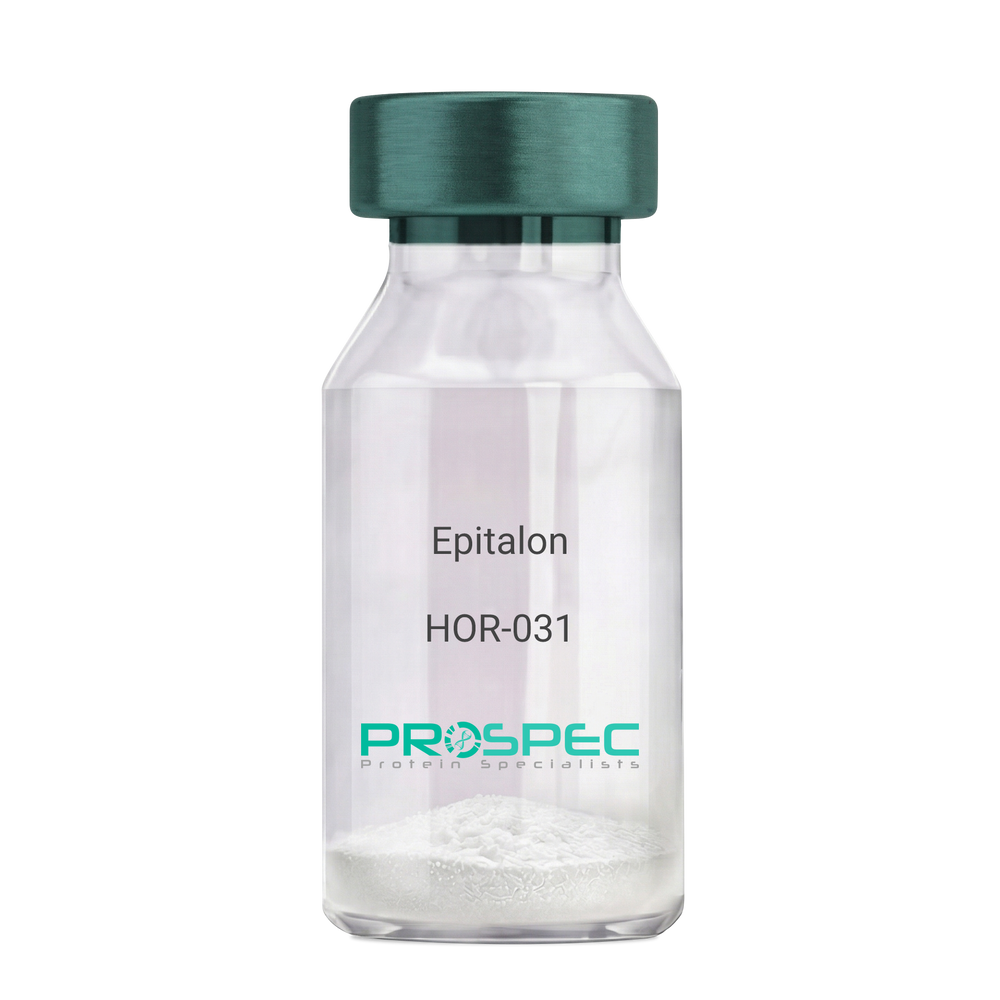
    Epitalon

    Description:

    Epitalon

    Product # :

    HOR-031

    Price :

    Quantity :

    Shipping Method :

    Room Temp Icon

    Shipped at Room temp

    Add To Cart

    More Info

    • description
    • formulation
    • purity
    • More Info

    Description

    Epithalon Synthetic is a single, non-glycosylated polypeptide chain containing 4 amino acids, having a molecular mass of 390.35 Dalton and a Molecular formula of C14H22N4O9.

    Formulation

    The protein was lyophilized with no additives.

    Purity

    Greater than 97.0% as determined by analysis by RP-HPLC.

    More Info

    • Physical Appearance

      Sterile Filtered White lyophilized (freeze-dried) powder.

    • Stability

      Lyophilized Epithalon although stable at room temperature for 3 weeks, should be stored desiccated below -18°C. Upon reconstitution Epithalon should be stored at 4°C between 2-7 days and for future use below -18°C.For long term storage it is recommended to add a carrier protein (0.1% HSA or BSA). Please prevent freeze-thaw cycles.

    • Solubility

      It is recommended to reconstitute the lyophilized Epithalon in sterile 18MΩ-cm H2O not less than 100 µg/ml, which can then be further diluted to other aqueous solutions.

    • Amino Acid Sequence

      H-Ala-Glu-Asp-Gly-OH .

    • Background

      Epitalon, also known as Epithalon, is a synthetic tetrapeptide that has been a focal point in the field of aging and longevity research. This peptide, consisting of four amino acids, is derived from the pineal gland and has been associated with a variety of biological effects, most notably its potential role in extending the lifespan of cells.

      Epitalon's primary function is its interaction with telomeres, the protective caps at the ends of chromosomes that shorten as cells divide. By stimulating the production of telomerase, an enzyme that can repair and lengthen telomeres, Epitalon may slow down the aging process at a cellular level.

      Numerous studies have explored the potential of Epitalon in extending the lifespan of organisms. For instance, Khavinson and colleagues (2003) found that Epitalon increased the lifespan of fruit flies, while Anisimov et al. (2003) reported similar results in mice. These findings suggest that Epitalon could potentially have similar effects in humans.

      Epitalon has also been studied for its role in regulating circadian rhythms. Korkushko et al. (2011) found that Epitalon could restore disrupted circadian rhythms in elderly people, suggesting potential applications in sleep disorders and other conditions related to circadian rhythm disruption.

      Beyond its potential role in aging and longevity, Epitalon has been explored for its potential therapeutic applications. Anisimov et al. (2011) found that Epitalon could reduce the incidence of spontaneous tumors in mice, suggesting potential applications in cancer prevention.

      While research on Epitalon is promising, it is important to note that most studies have been conducted in animals or in vitro. More research is needed to fully understand the potential effects and applications of Epitalon in humans. However, the existing body of research suggests that Epitalon could be a promising tool in the fight against aging and age-related diseases.

    ProSpec's products are furnished for LABORATORY RESEARCH USE ONLY. The product may not be used as drugs, agricultural or pesticidal products, food additives or household chemicals.

    Epitalon
  • View Data Sheet

    Name :

    AMTN Human

    Description:

    Amelotin Human Recombinant

    UNQ689, Amelotin, PRO1329.

    Product # :

    PRO-1301

    Price :

    Quantity :

    Shipping Method :

    Ice Icon

    Shipped with Ice Packs

    Add To Cart

    More Info

    • description
    • source
    • formulation
    • purity
    • More Info

    Description

    AMTN Human Recombinant produced in E.Coli is a single, non-glycosylated polypeptide chain containing 216 amino acids (17-209 a.a.) and having a molecular mass of 22.2kDa.AMTN is fused to a 23 amino acid His-tag at N-terminus & purified by proprietary chromatographic techniques.

    Source

    Escherichia Coli.

    Formulation

    AMTN protein solution (0.5mg/ml) contains mM Tris-HCl buffer (pH 8.0), 0.2M NaCl, 20% glycerol and 2mM DTT.

    Purity

    Greater than 90.0% as determined by SDS-PAGE.

    More Info

    • Introduction

      AMTN is a member of the amelotin family. AMTN is a lately discovered secreted enamel protein. AMTN mainly expressed during the maturation stage of enamel formation. AMTN gathers in a basal lamina-like structure at the interface between ameloblasts and enamel mineral and it co-localizes with one more lately described enamel protein, odontogenic ameloblast- related protein (ODAM(.

    • Synonyms

      UNQ689, Amelotin, PRO1329.

    • Physical Appearance

      Sterile Filtered clear solution.

    • Stability

      Store at 4°C if entire vial will be used within 2-4 weeks. Store, frozen at -20°C for longer periods of time. For long term storage it is recommended to add a carrier protein (0.1% HSA or BSA).Avoid multiple freeze-thaw cycles.

    • Amino Acid Sequence

      MGSSHHHHHH SSGLVPRGSH MGSLPQLKPA LGLPPTKLAP DQGTLPNQQQ SNQVFPSLSL IPLTQMLTLG PDLHLLNPAA GMTPGTQTHP LTLGGLNVQQ QLHPHVLPIF VTQLGAQGTI LSSEELPQIF TSLIIHSLFP GGILPTSQAG ANPDVQDGSL PAGGAGVNPA TQGTPAGRLP TPSGTDDDFA VTTPAGIQRS THAIEEATTE SANGIQ.

    ProSpec's products are furnished for LABORATORY RESEARCH USE ONLY. The product may not be used as drugs, agricultural or pesticidal products, food additives or household chemicals.

    Amtn Human
  • View Data Sheet

    Name :

    BD 2 Human

    Description:

    Beta Defensin-2 Human Recombinant

    BD-2, hBD-2, Defensin beta 2, Skin-antimicrobial peptide 1, SAP1, DEFB4, DEFB102, DEFB2, DEFB4P, Beta-defensin 2.

    Product # :

    CYT-571

    Price :

    Quantity :

    Shipping Method :

    Room Temp Icon

    Shipped at Room temp

    Add To Cart

    More Info

    • description
    • source
    • formulation
    • purity
    • biological activity
    • More Info

    Description

    Beta Defensin-2 Human Recombinant produced in E.Coli is a single, non-glycosylated polypeptide chain containing 41 amino acids and having a molecular mass of 4.3 kDa. The BD-2 is purified by proprietary chromatographic techniques.

    Source

    Escherichia Coli.

    Formulation

    The Human BD-2 was lyophilized from a 0.2µm filtered concentrated (1mg/ml) solution containing 20mM PB pH-7.4 and 130mM NaCl.

    Purity

    Greater than 98.0% as determined by:
    (a) Analysis by RP-HPLC.
    (b) Analysis by SDS-PAGE.

    Biological Activity

    Determined by the ability to chemoattract human dendritic immature cells at a concentration of 10-100ng/ml.

    More Info

    • Synonyms

      BD-2, hBD-2, Defensin beta 2, Skin-antimicrobial peptide 1, SAP1, DEFB4, DEFB102, DEFB2, DEFB4P, Beta-defensin 2.

    • Physical Appearance

      Sterile Filtered White lyophilized (freeze-dried) powder.

    • Stability

      Lyophilized Beta Defensin-2 Recombinant although stable at room temperature for 3 weeks, should be stored desiccated below -18°C. Upon reconstitution BD-2 should be stored at 4°C between 2-7 days and for future use below -18°C.Please prevent freeze-thaw cycles.

    • Solubility

      It is recommended to reconstitute the lyophilized Beta Defensin-2 in sterile 18MΩ-cm H2O not less than 100µg/ml, which can then be further diluted to other aqueous solutions.

    • Amino Acid Sequence

      GIGDPVTCLK SGAICHPVFC PRRYKQIGTC GLPGTKCCKK P.

    • Background

      Beta Defensin-2 Human Recombinant: Unveiling its Role in Innate Immunity and Therapeutic Potential

      Abstract:


      Beta Defensin-2 (BD-2), a member of the defensin family, plays a crucial role in innate immunity and host defense. This research paper provides an overview of BD-2 human recombinant, exploring its molecular characteristics, antimicrobial properties, and therapeutic applications. Understanding the multifaceted role of BD-2 offers new avenues for developing innovative immunotherapies. This article offers a concise analysis of BD-2, highlighting its impact on innate immunity and its therapeutic potential.

      Introduction:


      Innate immunity serves as the first line of defense against invading pathogens. BD-2, a key antimicrobial peptide within the defensin family, plays a vital role in immune responses at epithelial surfaces. This paper provides an overview of BD-2, shedding light on its structure, function, and therapeutic potential.

      BD-2 Structure and Function:


      BD-2 is a cationic peptide that exhibits a conserved cysteine motif, conferring its antimicrobial activity. It acts by disrupting microbial cell membranes, exerting a broad spectrum of antimicrobial effects against bacteria, fungi, and viruses. Additionally, BD-2 possesses immunomodulatory properties, regulating inflammatory responses and promoting wound healing.

      Antimicrobial Properties and Therapeutic Applications:


      BD-2 demonstrates potent antimicrobial activity against a wide range of pathogens, including drug-resistant strains. Its ability to combat biofilm formation and enhance immune cell recruitment makes it a promising candidate for developing novel antimicrobial therapies. Furthermore, BD-2's immunomodulatory effects hold potential in treating inflammatory disorders.

      Therapeutic Potential of BD-2 Human Recombinant:


      BD-2 human recombinant offers exciting prospects in immunotherapy. Strategies aimed at enhancing BD-2 expression or delivering exogenous BD-2 may boost innate immune responses in individuals with compromised immunity or chronic infections. BD-2-based therapeutics could be developed for wound healing, infectious diseases, and inflammatory conditions.

      Challenges and Future Directions:


      While BD-2 shows great promise, challenges remain. Further research is needed to optimize delivery methods of BD-2 and evaluate its safety and efficacy in clinical settings. Understanding the interplay between BD-2 and other immune factors will enable the development of synergistic therapies for enhanced therapeutic outcomes.

      Conclusion:


      BD-2 human recombinant represents a promising avenue for developing novel immunotherapies and combating antimicrobial resistance. Understanding the molecular mechanisms and functional implications of BD-2 in innate immunity opens new horizons for innovative treatments. Continued research in this field has the potential to revolutionize immunotherapy and improve patient outcomes.

      What is the molecular weight/Mw of BD2 Protein?
      BD2 Protein has a total Mw of 4.3kDa.

      What is the source or expression system of BD2 Protein?
      Escherichia Coli.

      What is the Purity of BD2 Protein?
      BD2 Protein is >98% pure as determined by SDS-PAGE.

      What is the Biological Activity of BD2 Protein?
      Determined by the ability to chemoattract human dendritic immature cells at a concentration of 10-100ng/ml.

      What is the amino acid sequence of BD2 Protein?
      GIGDPVTCLK SGAICHPVFC PRRYKQIGTC GLPGTKCCKK P.

      What applications can BD2 Protein be used in?
      BD2 Protein can probably be used in western blot, ELISA and Lateral Flow.

      What is the endotoxin level for BD2 Protein?
      The endotoxin level is minimal, BD2 Protein was purified using conventional chromatography techniques.

    ProSpec's products are furnished for LABORATORY RESEARCH USE ONLY. The product may not be used as drugs, agricultural or pesticidal products, food additives or household chemicals.

    Hbd 2 Human
  • View Data Sheet

    Name :

    MIF Human His N

    Description:

    Macrophage Migration Inhibitory Factor Human, Recombinant His Tag N-Terminus

    Phenylpyruvate tautomerase, Glycosylation-inhibiting factor, GIF, MMIF, MIF.

    Product # :

    CYT-431

    Price :

    Quantity :

    Shipping Method :

    Ice Icon

    Shipped with Ice Packs

    Add To Cart

    More Info

    • description
    • source
    • formulation
    • purity
    • More Info

    Description

    MIF human Recombinant, fused to 40 a.a. His-tag at N-terminus, was cloned into an E. coli expression vector and was purified to apparent homogeneity by using conventional column chromatography techniques. Macrophage Inducing Factor Human Recombinant ( 1-115 a.a. ) is a single, non-glycosylated, polypeptide chain having a total amino acids of 155 and molecular mass of 17kDa.

    Source

    Escherichia Coli.

    Formulation

    1mg/ml solution containing PBS pH-7.4.

    Purity

    Greater than 95.0% as determined by:
    (a) Analysis by RP-HPLC.
    (b) Analysis by SDS-PAGE.

    More Info

    • Introduction

      The cytokine Macrophage migration inhibitory factor (MIF) has been identified to be secreted by the pituitary gland and the monocyte/macrophage and to play an important role in endotoxic shock. MIF has the unique property of being released from macrophages and T cells in response to physiological concentrations of glucocorticoids. The secretion of MIF is tightly regulated and decreases at high, anti-inflammatory steroid concentration.

    • Synonyms

      Phenylpyruvate tautomerase, Glycosylation-inhibiting factor, GIF, MMIF, MIF.

    • Physical Appearance

      Sterile filtered colorless solution.

    • Stability

      Liquid MIF although stable 4°C for 1 week, should be stored below -18°C. Please prevent freeze-thaw cycles.

    • Amino Acid Sequence

      MRGSHHHHHHGMASMTGGQQMGRDLYDDDDKDRWGSMPMFIVNTNV PRASVPDGFL SELTQQLAQA TGKPPQYIAV HVVPDQLMAF GGSSEPCALC LHSIGKIGGA QNRSYSKLLC GLLAERLRIS PDRVYINYYD MNAANVGWNN STFA.

    ProSpec's products are furnished for LABORATORY RESEARCH USE ONLY. The product may not be used as drugs, agricultural or pesticidal products, food additives or household chemicals.

    Mif Human His N
  • View Data Sheet

    Name :

    CTLA4 Human, igG-His

    Description:

    Cytotoxic T-Lymphocyte Associated Antigen-4 Human Recombinant, igG-His Tag

    CTLA4, ALPS5, CD, CD152, CELIAC3, CTLA-4, GRD4, GSE, IDDM12, CD152, Cytotoxic T-Lymphocyte Associated Antigen-4, igG-His Tag.

    Product # :

    CYT-985

    Price :

    Quantity :

    Shipping Method :

    Ice Icon

    Shipped with Ice Packs

    Add To Cart

    More Info

    • description
    • source
    • formulation
    • purity
    • More Info

    Description

    CTLA4 produced in Sf9 Baculovirus cells is a single, glycosylated polypeptide chain containing 368 amino acids (36-161a.a.) and having a molecular mass of 40.8kDa (Molecular size on SDS-PAGE will appear at approximately 40-57kDa). CTLA4 is expressed with a 239 amino acid hIgG-His-tag at C-Terminus and purified by proprietary chromatographic techniques.

    Source

    Sf9, Baculovirus cells.

    Formulation

    CTLA4 protein solution (0.5mg/ml) contains Phosphate Buffered Saline (pH 7.4) and 10% glycerol.

    Purity

    Greater than 95% as determined by SDS-PAGE.

    More Info

    • Introduction

      CTLA-4 is a member of the immunoglobulin superfamily and encodes a protein which transmits an inhibitory signal to T cells. The protein contains a V domain, a transmembrane domain, and a cytoplasmic tail. Alternate transcriptional splice variants, encoding different isoforms, have been characterized. The membrane-bound isoform functions as a homodimer interconnected by a disulfide bond, while the soluble isoform functions as a monomer. Mutations in this gene have been associated with insulin-dependent diabetes mellitus, Graves disease, Hashimoto thyroiditis, celiac disease, systemic lupus erythematosus, thyroid-associated orbitopathy, and other autoimmune diseases.

    • Synonyms

      CTLA4, ALPS5, CD, CD152, CELIAC3, CTLA-4, GRD4, GSE, IDDM12, CD152, Cytotoxic T-Lymphocyte Associated Antigen-4, igG-His Tag.

    • Physical Appearance

      Sterile filtered colorless solution.

    • Stability

      Store at 4°C if entire vial will be used within 2-4 weeks. Store, frozen at -20°C for longer periods of time. For long term storage it is recommended to add a carrier protein (0.1% HSA or BSA).Avoid multiple freeze-thaw cycles.

    • Amino Acid Sequence

      ADLKAMHVAQ PAVVLASSRG IASFVCEYAS PGKATEVRVT VLRQADSQVT EVCAATYMMG NELTFLDDSI CTGTSSGNQV NLTIQGLRAM DTGLYICKVE LMYPPPYYLG IGNGTQIYVI DPEPCPDSDL EPKSCDKTHT CPPCPAPELL GGPSVFLFPP KPKDTLMISR TPEVTCVVVD VSHEDPEVKF NWYVDGVEVH NAKTKPREEQ YNSTYRVVSV LTVLHQDWLN GKEYKCKVSN KALPAPIEKT ISKAKGQPRE PQVYTLPPSR DELTKNQVSL TCLVKGFYPS DIAVEWESNG QPENNYKTTP PVLDSDGSFF LYSKLTVDKS RWQQGNVFSC SVMHEALHNH YTQKSLSLSP GKHHHHHH.

    • Background

      What is the molecular weight/Mw of CTLA4 Protein?
      CTLA4 Protein has a total Mw of 40.8kDa.

      What is the source or expression system of CTLA4 Protein?
      Sf9, Baculovirus cells.

      What is the Purity of CTLA4 Protein?
      CTLA4 Protein is >95% pure as determined by SDS-PAGE.

      What is the Biological Activity of CTLA4 Protein?
      The biological functionality of CTLA4 Protein will be determined in the future.

      What is the amino acid sequence of CTLA4 Protein?
      ADLKAMHVAQ PAVVLASSRG IASFVCEYAS PGKATEVRVT VLRQADSQVT EVCAATYMMG NELTFLDDSI CTGTSSGNQV NLTIQGLRAM DTGLYICKVE LMYPPPYYLG IGNGTQIYVI DPEPCPDSDL EPKSCDKTHT CPPCPAPELL GGPSVFLFPP KPKDTLMISR TPEVTCVVVD VSHEDPEVKF NWYVDGVEVH NAKTKPREEQ YNSTYRVVSV LTVLHQDWLN GKEYKCKVSN KALPAPIEKT ISKAKGQPRE PQVYTLPPSR DELTKNQVSL TCLVKGFYPS DIAVEWESNG QPENNYKTTP PVLDSDGSFF LYSKLTVDKS RWQQGNVFSC SVMHEALHNH YTQKSLSLSP GKHHHHHH.

      What applications can CTLA4 Protein be used in?
      CTLA4 Protein can probably be used in western blot, ELISA and Lateral Flow.

      What is the endotoxin level for CTLA4 Protein?
      The endotoxin level is minimal, CTLA4 Protein was purified using conventional chromatography techniques.

    ProSpec's products are furnished for LABORATORY RESEARCH USE ONLY. The product may not be used as drugs, agricultural or pesticidal products, food additives or household chemicals.

    Ctla4 Human Igg His
  • 1
  • …
  • 33
  • 34
  • 35
  • 36
  • 37
  • …
  • 42
Your browser does not support the video tag.

Products

  • Cytokines
  • Growth Factors
  • Chemokines
  • CD Antigens
  • Neurotrophins
  • Hormones
  • Enzymes
  • Viral Antigens
  • Recombinant Proteins
  • Natural Proteins
  • Monoclonal Antibodies
  • Polyclonal Antibodies
  • Thermal Packaging

About

  • Company
  • Founder
  • Contribution
  • Contact Us
  • My Account

Ordering

  • Ordering Method
  • Ordering - Credit Card
  • Ordering PO
  • Shipping Fees
  • FAQ's

Legal

  • Terms & Conditions
  • Privacy
  • Site Map
  • info@prospecbio.com
  • Facebook
  • Instagram
  • Linkedin Profile

© 2026 ProSpec-Tany TechnoGene Ltd. All Rights Reserved.

  • Choosing a selection results in a full page refresh.
  • Opens in a new window.