Search results
1000 results found for “Prothymosin”
Name
Description
Product #
Price
Quantity
Shipping Method
- View Data Sheet
Name :
PTMA HumanDescription:
Prothymosin Alpha Human Recombinant
Prothymosin alpha, TMSA, PTMA, Prothymosin alpha, N-terminally processed, Thymosin alpha-1.
Product # :
PRO-1694Price :
Quantity :
Shipping Method :
Shipped with Ice Packs
More Info
- description
- source
- formulation
- purity
- More Info
Description
PTMA Human Recombinant produced in E.coli is a single, non-glycosylated polypeptide chain containing 133 amino acids (1-110) and having a molecular mass of 14.5 kDa.PTMA is fused to a 23 amino acid His-tag at N-terminus & purified by proprietary chromatographic techniques.
Source
Escherichia Coli.
Formulation
The PTMA solution (0.25mg/ml) contains 20mM Tris-HCl buffer (pH 8.0), 0.15M NaCl and 10% glycerol.
Purity
Greater than 95.0% as determined by SDS-PAGE.
More Info
-
Introduction
Prothymosin alpha (PTMA) is a part of the pro/parathymosin family. PTMA mediates immune function by conferring resistance to some opportunistic infections.
-
Synonyms
Prothymosin alpha, TMSA, PTMA, Prothymosin alpha, N-terminally processed,
Thymosin alpha-1. -
Physical Appearance
Sterile Filtered colorless solution.
-
Stability
Store at 4°C if entire vial will be used within 2-4 weeks. Store, frozen at -20°C for longer periods of time. For long term storage it is recommended to add a carrier protein (0.1% HSA or BSA).Avoid multiple freeze-thaw cycles.
-
Amino Acid Sequence
MGSSHHHHHH SSGLVPRGSH MGSMSDAAVD TSSEITTKDL KEKKEVVEEA ENGRDAPANG NANEENGEQE ADNEVDEEEE EGGEEEEEEE EGDGEEEDGD EDEEAESATG KRAAEDDEDD DVDTKKQKTD EDD.
ProSpec's products are furnished for LABORATORY RESEARCH USE ONLY. The product may not be used as drugs, agricultural or pesticidal products, food additives or household chemicals.
- View Data Sheet
Name :
PTMS HumanDescription:
Prothymosin Human Recombinant
ParaT, parathymosin.
Product # :
PRO-1735Price :
Quantity :
Shipping Method :
Shipped with Ice Packs
More Info
- description
- source
- formulation
- purity
- More Info
Description
PTMS Human Recombinant produced in E.Coli is a single, non-glycosylated polypeptide chain containing 125 amino acids (1-102aa) and having a molecular mass of 13.9kDa.PTMS is fused to a 23 amino acid His-tag at N-terminus & purified by proprietary chromatographic techniques.
Source
Escherichia Coli.
Formulation
PTMS protein solution (0.5mg/ml) containing 20mM Tris-HCl buffer (pH 8.0), 0.15M NaCl, 20% glycerol and 1mM DTT.
Purity
Greater than 95.0% as determined by SDS-PAGE.
More Info
-
Introduction
Parathymosin, also known as PTMS is a member of the pro/parathymosin family. PTMS may mediate immune function by blocking the effect of prothymosin alpha which confers resistance to particular opportunistic infections. Among the diseases associated with PTMS are hepatitis b, and alzheimer's disease.
-
Synonyms
ParaT, parathymosin.
-
Physical Appearance
Sterile Filtered clear solution.
-
Stability
Store at 4°C if entire vial will be used within 2-4 weeks. Store, frozen at -20°C for longer periods of time. For long term storage it is recommended to add a carrier protein (0.1% HSA or BSA).Avoid multiple freeze-thaw cycles.
-
Amino Acid Sequence
MGSSHHHHHH SSGLVPRGSH MGSMSEKSVE AAAELSAKDL KEKKEKVEEK ASRKERKKEV VEEEENGAEE EEEETAEDGE EEDEGEEEDE EEEEEDDEGP ALKRAAEEED EADPKRQKTE NGASA
ProSpec's products are furnished for LABORATORY RESEARCH USE ONLY. The product may not be used as drugs, agricultural or pesticidal products, food additives or household chemicals.
- View Data Sheet
Name :
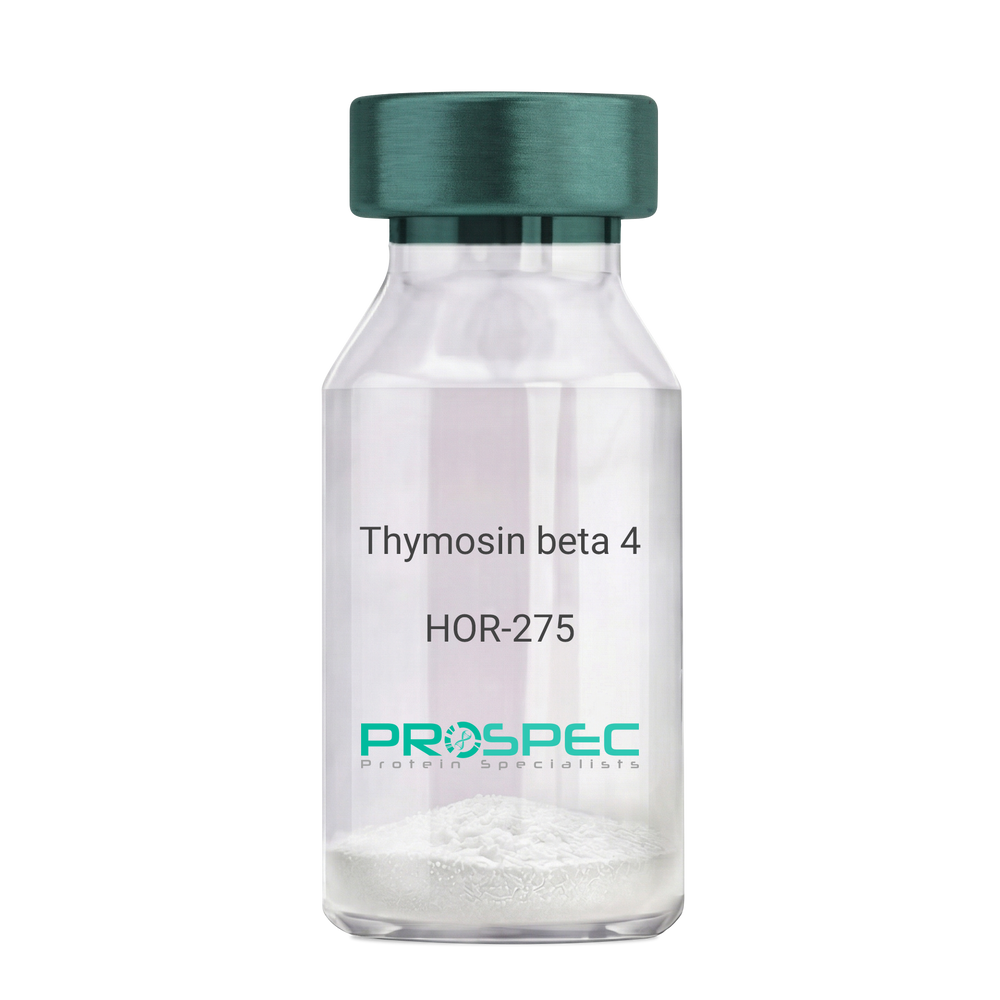
Thymosin beta 4Description:
Thymosin β4
Thymosin beta-4. TB500, TB-500
Product # :
HOR-275Price :
Quantity :
Shipping Method :
Shipped at Room temp
More Info
- description
- formulation
- purity
- More Info
Description
Thymosin b4 is a 43 amino acid peptide which is regarded as the main intracellular G-actin sequestering peptide. It has a molecular weight of 4963.55 Da, and its molecular formula is: C212H350N56O78S1. Extracellular Thymosin b4 may contribute to physiological processes such as angiogenesis, wound healing, and regulation of inflammation.
Formulation
The protein (1mg/ml) was lyophilized with no additives.
Purity
Greater than 98.0% as determined by RP-HPLC.
More Info
-
Introduction
Thymosin is a hormone secreted from the thymus. Its primary function is to stimulate the production of T cells, which are an important part of the immune system. Thymosin also assists in the development of B cells to plasma cells to produce antibodies. The predominant form of thymosin, thymosin b4, is a member of a highly conserved family of actin monomer-sequestering proteins. b-thymosins are the primary regulators of unpolymerized actin, and are essential for maintaining the small cytoplasmic pool of free G-actin monomers required for rapid filament elongation and allowing for the flux of monomers between the thymosin-bound pool and F-actin.
-
Synonyms
Thymosin beta-4. TB500, TB-500
-
Physical Appearance
Sterile Filtered White lyophilized (freeze-dried) powder.
-
Stability
Lyophilized Thymosin b4 although stable at room temperature for 3 weeks, should be stored desiccated below -18°C. Upon reconstitution T beta 4 should be stored at 4°C between 2-7 days and for future use below -18°C.For long term storage it is recommended to add a carrier protein (0.1% HSA or BSA).Please prevent freeze-thaw cycles.
-
Solubility
It is recommended to reconstitute the lyophilized Thymosin beta-4 in sterile 18MΩ-cm H2O not less than 100 µg/ml, which can then be further diluted to other aqueous solutions.
-
Amino Acid Sequence
Thymosin b4 has an a.a. sequence of Ac-Ser-Asp-Lys-Pro-Asp-Met-Ala-Glu-Ile-Glu-Lys-Phe-Asp-Lys-Ser-Lys-Leu-Lys-Lys-Thr-Glu-Thr-Gln-Glu-Lys-Asn-Pro-Leu-Pro-Ser-Lys-Glu-Thr-Ile-Glu-Gln-Glu-Lys-Gln-Ala-Gly-Glu-Ser-OH.
ProSpec's products are furnished for LABORATORY RESEARCH USE ONLY. The product may not be used as drugs, agricultural or pesticidal products, food additives or household chemicals.
- View Data Sheet
Name :
Thymosin a1 humanDescription:
Thymosin a1 Acetate
Product # :
HOR-243Price :
Quantity :
Shipping Method :
Shipped at Room temp
More Info
- description
- formulation
- purity
- More Info
Description
Thymosin a1 acetate, also known as thymalfasin has immunoregulatory properties enhancing immune functions. Thymosin a1 has a molecular formula of C129H215N33O55 a.a. sequence of Ac-Ser-Asp-Ala-Ala-Val-Asp-Thr-Ser-Ser-Glu-Ile-Thr-Thr-Lys-Asp-Leu-Lys-Glu-Lys-Lys-Glu-Val-Val-Glu-Glu-Ala-Glu-Asn-OH and having a Mw of 3108.32 Dalton.
Formulation
The protein (1mg/ml) was lyophilized with no additives.
Purity
Greater than 99.0% as determined by:
(a) Analysis by RP-HPLC.
(b) Analysis by SDS-PAGE.More Info
-
Introduction
Thymalfasin is a synthetic analogue of thymosin-alpha-1, a 28-amino acid protein derived from the precursor protein prothymosin-alpha. Exhibiting a variety of immunoregulating properties, thymosin-alpha-1 induces differentiation of murine T-cell precursors and human thymocytes and the terminal differentiation of functionally immature cord blood lymphocytes and induces production of IL-2, high affinity IL-2 receptors, and B-cell growth factors by peripheral blood mononuclear cells. T-helper and cytotoxic/suppressor T-cell populations are targets of thymosin activity. Thymosin-alpha-1 has been shown to increase the efficiency of antigen presentation by macrophages and to be an endogenous modulator of alpha-thrombin activity.
-
Physical Appearance
Sterile Filtered White lyophilized (freeze-dried) powder.
-
Stability
Lyophilized Thymosin a1 although stable at room temperature for 3 weeks, should be stored desiccated below -18°C. Upon reconstitution Thymalfasin should be stored at 4°C between 2-7 days and for future use below -18°C.For long term storage it is recommended to add a carrier protein (0.1% HSA or BSA).Please prevent freeze-thaw cycles.
-
Solubility
It is recommended to reconstitute the lyophilized Thymosin a1 in sterile 18MΩ-cm H2O not less than 100 µg/ml, which can then be further diluted to other aqueous solutions.
-
Background
What is the molecular weight/Mw of THYMOSIN-A1 HUMAN Protein?
THYMOSIN-A1 HUMAN Protein has a total Mw of 3.1kDa.
What is the Purity of THYMOSIN-A1 HUMAN Protein?
THYMOSIN-A1 HUMAN Protein is >99% pure as determined by SDS-PAGE.
What is the Biological Activity of THYMOSIN-A1 HUMAN Protein?
The biological functionality of THYMOSIN-A1 HUMAN Protein will be determined in the future.
What applications can THYMOSIN-A1 HUMAN Protein be used in?
THYMOSIN-A1 HUMAN Protein can probably be used in western blot, ELISA and Lateral Flow.
What is the endotoxin level for THYMOSIN-A1 HUMAN Protein?
The endotoxin level is minimal, THYMOSIN-A1 HUMAN Protein was purified using conventional chromatography techniques.
ProSpec's products are furnished for LABORATORY RESEARCH USE ONLY. The product may not be used as drugs, agricultural or pesticidal products, food additives or household chemicals.
- View Data Sheet
Name :
Thymosin β4Description:
Thymosin-b4 Human Recombinant
Thymosin beta-4, T beta 4, Fx , TB4X, PTMB4, TMSB4.
Product # :
HOR-003Price :
Quantity :
Shipping Method :
Shipped at Room temp
More Info
- description
- source
- formulation
- purity
- More Info
Description
Thymosin b4 Human Recombinant produced in E.Coli is a single, non-glycosylated, polypeptide chain containing 43 amino acids and having a molecular mass of 4.9kDa.The Thymosin b4 Human is purified by proprietary chromatographic techniques.
Source
Escherichia Coli.
Formulation
Lyophilized from a 0.2um filtered concentrated solution in 1xPBS, pH 7.4.
Purity
Greater than 95.0% as determined by SDS-PAGE and HPLC analyses.
More Info
-
Introduction
CB1 cannabinoid receptor-interacting protein 1 (CNRIP1) is a 164 amino acid protein and G-protein coupled receptor which is a member of the CNRIP family. The CNRIP1 interacts with the C-terminal tail of cannabinoid receptor 1. CNRIP1 is expressed in the brain tissue and, at low levels, in the testis. CNRIP1 is involved in appetite, synaptic plasticity, neuroprotection and analgesia.
-
Synonyms
Thymosin beta-4, T beta 4, Fx , TB4X, PTMB4, TMSB4.
-
Physical Appearance
Sterile Filtered White lyophilized (freeze-dried) powder.
-
Stability
Lyophilized Thymosin B4 Human although stable at room temperature for 3 weeks, should be stored desiccated below -18°C. Upon reconstitution Thymosin B4 Human should be stored at 4°C between 2-7 days and for future use below -18°C. Please prevent freeze-thaw cycles.
-
Solubility
It is recommended to reconstitute the lyophilized Thymosin B4 in sterile 18M-cm H2O not less than 100µg/ml, which can then be further diluted to other aqueous solutions.
-
Amino Acid Sequence
SDKPDMAEIE KFDKSKLKKT ETQEKNPLPS KETIEQEKQA GES
ProSpec's products are furnished for LABORATORY RESEARCH USE ONLY. The product may not be used as drugs, agricultural or pesticidal products, food additives or household chemicals.
- View Data Sheet
Name :
ThymalinDescription:
Thymulin
Product # :
HOR-047Price :
Quantity :
Shipping Method :
Shipped at Room temp
More Info
- description
- formulation
- purity
- More Info
Description
Thymulin Synthetic is a single, non-glycosylated polypeptide chain containing 9 amino acids, having a molecular mass of 858 Dalton and a Molecular formula of C33H54N12O15.
Formulation
The protein was lyophilized with no additives.
Purity
Greater than 97.0% as determined by analysis by RP-HPLC.
More Info
-
Physical Appearance
Sterile Filtered White lyophilized (freeze-dried) powder.
-
Stability
Lyophilized Thymulin although stable at room temperature for 3 weeks, should be stored desiccated below -18°C. Upon reconstitution Thymulin should be stored at 4°C between 2-7 days and for future use below -18°C. For long term storage it is recommended to add a carrier protein (0.1% HSA or BSA). Please prevent freeze-thaw cycles.
-
Solubility
It is recommended to reconstitute the lyophilized Thymulin in sterile 18MΩ-cm H2O not less than 100 µg/ml, which can then be further diluted to other aqueous solutions.
-
Amino Acid Sequence
Pyr-Ala-Lys-Ser-Gln-Gly-Gly-Ser-Asn-OH.
-
Background
Thymulin, a nonapeptide hormone, is produced primarily by the thymus gland and has been recognized for its pivotal role in the immune system. It plays a significant role in the maturation and differentiation of T lymphocytes, which are crucial for immune function. Beyond its immune-related functions, research has increasingly unveiled the diverse physiological roles of thymulin. This study aims to comprehensively investigate thymulin, shedding light on its immunological functions and exploring its potential applications in various aspects of health and medicine.
The primary objective of this research is to elucidate the mechanisms underlying thymulin's role in immune regulation. In vitro and in vivo experiments will be conducted to explore thymulin's interactions with immune cells, its impact on T cell development and function, and its potential modulation of immune responses. Understanding these mechanisms is fundamental for harnessing thymulin's immunomodulatory properties.
The second objective is to assess the clinical relevance of thymulin in immune-related disorders. Clinical trials and studies involving individuals with autoimmune diseases, immunodeficiencies, and age-related immune decline will be conducted to evaluate the potential therapeutic applications of thymulin. These investigations may offer insights into the use of thymulin as an immunomodulatory agent in various clinical settings.
The third objective is to explore the broader implications of thymulin in health and medicine. Research will investigate its potential roles in areas beyond immunology, such as neuroprotection, wound healing, and tissue regeneration. Understanding the multifaceted properties of thymulin may open new avenues for therapeutic interventions in various medical specialties.
By delving into the diverse functions of thymulin, this research aims to expand our knowledge of its physiological roles and clinical applications. The findings may have implications for the development of innovative approaches in immunology and healthcare, ultimately benefiting patients affected by immune-related disorders and other medical conditions.
What is the molecular weight/Mw of THYMALIN Protein?
THYMALIN Protein has a total Mw of 0.85kDa.
What is the Purity of THYMALIN Protein?
THYMALIN Protein is >97% pure as determined by SDS-PAGE.
What is the Biological Activity of THYMALIN Protein?
The biological functionality of THYMALIN Protein will be determined in the future.
What is the amino acid sequence of THYMALIN Protein?
Pyr-Ala-Lys-Ser-Gln-Gly-Gly-Ser-Asn-OH.
What applications can THYMALIN Protein be used in?
THYMALIN Protein can probably be used in western blot, ELISA and Lateral Flow.
What is the endotoxin level for THYMALIN Protein?
The endotoxin level is minimal, THYMALIN Protein was purified using conventional chromatography techniques.
ProSpec's products are furnished for LABORATORY RESEARCH USE ONLY. The product may not be used as drugs, agricultural or pesticidal products, food additives or household chemicals.
- View Data Sheet
Name :
ThymopentinDescription:
Thymopentin
Product # :
HOR-241Price :
Quantity :
Shipping Method :
Shipped at Room temp
More Info
- description
- formulation
- purity
- biological activity
- More Info
Description
Thymopentin has a molecular formula of C30H49N9O9, Arg-Lys-Asp-Val-Tyr-OH having an Mw of 679.8 Dalton.
Formulation
The protein (1mg/ml) was lyophilized with no additives.
Purity
Greater than 99.0% as determined by:
(a) Analysis by RP-HPLC.
(b) Analysis by SDS-PAGE.Biological Activity
What is the molecular weight/Mw of THYMOPENTIN Protein? THYMOPENTIN Protein has a total Mw of 0.67kDa. What is the Purity of THYMOPENTIN Protein? THYMOPENTIN Protein is >99% pure as determined by SDS-PAGE. What is the Biological Activity of THYMOPENTIN Protein? The biological functionality of THYMOPENTIN Protein will be determined in the future. What applications can THYMOPENTIN Protein be used in? THYMOPENTIN Protein can probably be used in western blot, ELISA and Lateral Flow. What is the endotoxin level for THYMOPENTIN Protein? The endotoxin level is minimal, THYMOPENTIN Protein was purified using conventional chromatography techniques.More Info
-
Introduction
Thymopentin, also known as TP-5, is a synthetic pentapeptide which is the active site of the naturally occurring hormone thymopoietin with immunomodulating properties (corresponding to the amino acids 32-36 of thymopoietin). Thymopentin enhances the production of thymic T cells and may help restore immunocompetence in immunosuppressed subjects. This agent also augments the effects of ionizing radiation by arresting cancer cells in the G2/M phase of the cell cycle.
-
Physical Appearance
Sterile Filtered White lyophilized (freeze-dried) powder.
-
Stability
Lyophilized Thymopentin although stable at room temperature for 3 weeks, should be stored desiccated below -18°C. Upon reconstitution TP-5 should be stored at 4°C between 2-7 days and for future use below -18°C.For long term storage it is recommended to add a carrier protein (0.1% HSA or BSA).Please prevent freeze-thaw cycles.
-
Solubility
It is recommended to reconstitute the lyophilized Thymopentin in sterile 18MΩ-cm H2O not less than 100 µg/ml, which can then be further diluted to other aqueous solutions.
ProSpec's products are furnished for LABORATORY RESEARCH USE ONLY. The product may not be used as drugs, agricultural or pesticidal products, food additives or household chemicals.
- View Data Sheet
Name :
TPM1 HumanDescription:
Tropomyosin-1 Human Recombinant
Tropomyosin alpha-1 chain, Tropomyosin-1, Alpha-tropomyosin, TPM1, C15orf13, TMSA, CMD1Y, HTM-alpha.
Product # :
PRO-469Price :
Quantity :
Shipping Method :
Shipped with Ice Packs
More Info
- description
- source
- formulation
- purity
- More Info
Description
TPM1 Human Recombinant produced in E.Coli is a single, non-glycosylated, polypeptide chain containing 304 amino acids (1-284 a.a.) and having a total molecular mass of 35kDa (Molecular weight on SDS-PAGE will appear higher). TPM1 is fused to a 20 amino acid His Tag at N-terminus and is purified by proprietary chromatographic techniques.
Source
Escherichia Coli.
Formulation
TPM1 0.5mg/ml protein solution contains 20mM Tris-HCl buffer pH-8, 1mM DTT, 0.1M NaCl & 20% glycerol.
Purity
Greater than 90.0% as determined by SDS-PAGE.
More Info
-
Introduction
TPM1 is a member of the tropomyosin family which consists of a number of extremely conserved, extensively distributed 35-45 kDa actin-binding proteins that are involved in the contractile system of striated and smooth muscles and the cytoskeleton of non-muscle cells. Tropomyosin-1 is composed of 2 alpha-helical chains arranged as a coiled-coil. TPM1 is polymerized end to end alongside the two grooves of actin filaments and provides stability to the filaments. TPM1 binds to actin filaments in muscle and non-muscle cells. TPM1 also functions in association with the troponin complex to regulate the calcium-dependent interaction of actin and myosin during muscle contraction. In non-muscle cells TPM1 is implicated in stabilizing cytoskeleton actin filaments. Smooth muscle contraction is controlled by interaction with caldesmon.
Alternatively spliced transcript variants encoding a range of isoforms have been described in smooth muscle and non-muscle cells. TPM1 Isoform 1 is expressed in adult and fetal skeletal muscle and cardiac tissues, with higher expression levels in the cardiac tissues, whereas Isoform 10 is expressed in adult and fetal cardiac tissues, but not in skeletal muscle.
Mutations in the TPM1 gene are linked to type 3 familial hypertrophic cardiomyopathy. -
Synonyms
Tropomyosin alpha-1 chain, Tropomyosin-1, Alpha-tropomyosin, TPM1, C15orf13, TMSA, CMD1Y, HTM-alpha.
-
Physical Appearance
Sterile Filtered clear solution.
-
Stability
Store at 4°C if entire vial will be used within 2-4 weeks.Store, frozen at -20°C for longer periods of time. For long term storage it is recommended to add a carrier protein (0.1% HSA or BSA).Avoid multiple freeze-thaw cycles.
-
Amino Acid Sequence
MGSSHHHHHH SSGLVPRGSH MDAIKKKMQM LKLDKENALD RAEQAEADKK AAEDRSKQLE DELVSLQKKL KGTEDELDKY SEALKDAQEK
LELAEKKATD AEADVASLNR RIQLVEEELD RAQERLATAL QKLEEAEKAA DESERGMKVI ESRAQKDEEK MEIQEIQLKE AKHIAEDADR
KYEEVARKLV IIESDLERAE ERAELSEGQV RQLEEQLRIM DQTLKALMAA EDKYSQKEDR YEEEIKVLSD KLKEAETRAE FAERSVTKLE
KSIDDLEDEL YAQKLKYKAI SEELDHALND MTSM.
ProSpec's products are furnished for LABORATORY RESEARCH USE ONLY. The product may not be used as drugs, agricultural or pesticidal products, food additives or household chemicals.
- View Data Sheet
Name :
TPM2 HumanDescription:
Tropomyosin-2 Human Recombinant
Tropomyosin 2 (beta), DA1, TMSB, DA2B, AMCD1, NEM4, Arthrogryposis Multiplex Congenital Distal-Type 1, beta-Tropomyosin.
Product # :
PRO-069Price :
Quantity :
Shipping Method :
Shipped with Ice Packs
More Info
- description
- source
- formulation
- purity
- More Info
Description
TPM2 produced in E.Coli is a single, non-glycosylated polypeptide chain containing 304 amino acids (1-284a.a.) and having a molecular mass of 35.1kDa(molecular weight on SDS-PAGE will appear higher).TPM2 is fused to a 20 amino acid His-tag at N-terminus & purified by proprietary chromatographic techniques.
Source
Escherichia Coli.
Formulation
The TPM2 protein solution (0.5mg/ml) is formulated in 20mM Tris-HCl buffer (pH8.0), 1mM DTT, 100mM NaCl and 30% glycerol.
Purity
Greater than 90% as determined by SDS-PAGE.
More Info
-
Introduction
Tropomyosin beta chain isoform 2 is affiliate to the actin filament binding protein family which primarily expressed in slow, type 1 muscle fibers. Mutations in TPM2 can change the expression of other sarcomeric tropomyosin proteins, and cause cap disease, nemaline myopathy and distal arthrogryposis syndromes.
-
Synonyms
Tropomyosin 2 (beta), DA1, TMSB, DA2B, AMCD1, NEM4, Arthrogryposis Multiplex Congenital Distal-Type 1, beta-Tropomyosin.
-
Physical Appearance
Sterile Filtered clear solution.
-
Stability
Store at 4°C if entire vial will be used within 2-4 weeks. Store, frozen at -20°C for longer periods of time. For long term storage it is recommended to add a carrier protein (0.1% HSA or BSA).Avoid multiple freeze-thaw cycles.
-
Amino Acid Sequence
MGSSHHHHHH SSGLVPRGSH MDAIKKKMQM LKLDKENAID RAEQAEADKK QAEDRCKQLE EEQQALQKKL KGTEDEVEKY SESVKEAQEK LEQAEKKATD AEADVASLNR RIQLVEEELD RAQERLATAL QKLEEAEKAA DESERGMKVI ENRAMKDEEK MELQEMQLKE AKHIAEDSDR KYEEVARKLV ILEGELERSE ERAEVAESRA RQLEEELRTM DQALKSLMAS EEEYSTKEDK YEEEIKLLEE KLKEAETRAE FAERSVAKLE KTIDDLEETL ASAKEENVEI HQTLDQTLLE LNNL.
ProSpec's products are furnished for LABORATORY RESEARCH USE ONLY. The product may not be used as drugs, agricultural or pesticidal products, food additives or household chemicals.
- View Data Sheet
Name :
TPM4 HumanDescription:
Tropomyosin-4 Human Recombinant
Tropomyosin alpha-4 chain, TM30p1, Tropomyosin-4, TPM4.
Product # :
PRO-187Price :
Quantity :
Shipping Method :
Shipped with Ice Packs
More Info
- description
- source
- formulation
- purity
- More Info
Description
TPM4 produced in E.Coli is a single, non-glycosylated polypeptide chain containing 268 amino acids (1-248 a.a.) and having a molecular mass of 30.7kDa.TPM4 is fused to a 20 amino acid His-tag at N-terminus & purified by proprietary chromatographic techniques.
Source
Escherichia Coli.
Formulation
The TPM4 solution (1 mg/ml) contains 20mM Tris-HCl buffer (pH 8.0), 10% glycerol, 2mM DTT and 0.1M NaCl.
Purity
Greater than 85.0% as determined by SDS-PAGE.
More Info
-
Introduction
TPM4 is a member of the tropomyosin family. Tropomyosins exist in practically all eukaryotic cells (both muscle and nonmuscle), where they bind actin filaments and function to modulate actin-myosin interaction and stabilize actin filament structure. TPM4 binds to actin filaments in muscle and nonmuscle cells and plays a central role, in connection with the troponin complex, in the calcium dependent regulation of vertebrate striated muscle contraction.
-
Synonyms
Tropomyosin alpha-4 chain, TM30p1, Tropomyosin-4, TPM4.
-
Physical Appearance
Sterile Filtered colorless solution.
-
Stability
Store at 4°C if entire vial will be used within 2-4 weeks. Store, frozen at -20°C for longer periods of time. For long term storage it is recommended to add a carrier protein (0.1% HSA or BSA).Avoid multiple freeze-thaw cycles.
-
Amino Acid Sequence
MGSSHHHHHH SSGLVPRGSH MAGLNSLEAV KRKIQALQQQ ADEAEDRAQG LQRELDGERE RREKAEGDVA ALNRRIQLVE EELDRAQERL ATALQKLEEA EKAADESERG MKVIENRAMK DEEKMEIQEM QLKEAKHIAE EADRKYEEVA RKLVILEGEL ERAEERAEVS ELKCGDLEEE LKNVTNNLKS LEAASEKYSE KEDKYEEEIK LLSDKLKEAE TRAEFAERTV AKLEKTIDDL EEKLAQAKEE NVGLHQTLDQ TLNELNCI.
ProSpec's products are furnished for LABORATORY RESEARCH USE ONLY. The product may not be used as drugs, agricultural or pesticidal products, food additives or household chemicals.
- View Data Sheet
Name :
TPM3 HumanDescription:
Tropomyosin-3 Human Recombinant
Tropomyosin alpha-3 chain, Gamma-tropomyosin, Tropomyosin-3, Tropomyosin-5, hTM5, TPM3, TM3, TM5, TRK, CFTD, NEM1, TM-5, TM30, TM30nm, TPMsk3, hscp30, OK/SW-cl.5.
Product # :
PRO-1020Price :
Quantity :
Shipping Method :
Shipped with Ice Packs
More Info
- description
- source
- formulation
- purity
- More Info
Description
TPM3 Human Recombinant produced in E.Coli is a single, non-glycosylated polypeptide chain containing 272 amino acids (1-248 a.a.) and having a molecular mass of 31.6kDa. TPM3 is fused to a 24 amino acid His-tag at N-terminus & purified by proprietary chromatographic techniques.
Source
Escherichia Coli.
Formulation
TPM3 protein solution (0.5mg/ml) containing 20mM Tris-HCl buffer (pH 8.0), 1mM DTT, 10% glycerol, 0.1M NaCl.
Purity
Greater than 90% as determined by SDS-PAGE.
More Info
-
Introduction
Tropomyosin alpha-3 chain (TPM3) belongs to the tropomyosin family of actin-binding proteins involved in the contractile system of striated and smooth muscles and the cytoskeleton of non-muscle cells. Tropomyosins are dimers of coiled-coil proteins which polymerize end-to-end along the major groove in most actin filaments. Tropomyosins give stability to the filaments and regulate access of other actin-binding proteins. In muscle cells, tropomyosins regulate muscle contraction by controlling the binding of myosin heads to the actin filament. Mutations in the TPM3 gene cause autosomal dominant nemaline myopathy, and oncogenes formed by chromosomal translocations involving this locus are linked with cancer.
-
Synonyms
Tropomyosin alpha-3 chain, Gamma-tropomyosin, Tropomyosin-3, Tropomyosin-5, hTM5, TPM3, TM3, TM5, TRK, CFTD, NEM1, TM-5, TM30, TM30nm, TPMsk3, hscp30, OK/SW-cl.5.
-
Physical Appearance
Sterile Filtered clear solution.
-
Stability
Store at 4°C if entire vial will be used within 2-4 weeks. Store, frozen at -20°C for longer periods of time. For long term storage it is recommended to add a carrier protein (0.1% HSA or BSA).Avoid multiple freeze-thaw cycles.
-
Amino Acid Sequence
MGSSHHHHHH SSGLVPRGSH MGSHMAGITT IEAVKRKIQV LQQQADDAEE RAERLQREVE GERRAREQAE AEVASLNRRI QLVEEELDRA QERLATALQK LEEAEKAADE SERGMKVIEN RALKDEEKME LQEIQLKEAK HIAEEADRKY EEVARKLVII EGDLERTEER AELAESRCRE MDEQIRLMDQ NLKCLSAAEE KYSQKEDKYE EEIKILTDKL KEAETRAEFA ERSVAKLEKT IDDLEDKLKC TKEEHLCTQR MLDQTLLDLN EM.
ProSpec's products are furnished for LABORATORY RESEARCH USE ONLY. The product may not be used as drugs, agricultural or pesticidal products, food additives or household chemicals.
- View Data Sheet
Name :
ProMatrilysinDescription:
ProMatrix Metalloproteinase-7 Recombinant
Product # :
ENZ-272Price :
Quantity :
Shipping Method :
Shipped with Ice Packs
More Info
- description
- source
- formulation
- purity
- biological activity
- More Info
Description
Matrix metalloproteinase-7 (MMP-7) also known as matrilysin and PUMP (EC 3.4.24.23) cleaves a number of substrates including collagen types IV and X, elastin, fibronectin, gelatin, laminin and proteoglycans. MMP-7 is closely related to the stromelysin family members but is encoded by a different gene. MMP-7 is the smallest of all the MMPs consisting of a pro-peptide domain and a catalytic domain. It lacks the hemopexin-like domain common to other members of the MMPs. MMP-7 is secreted as a 28 kDa proenzyme and can be activated in vitro by organomercurials and trypsin and in vivo by MMP-3 to a 18 kDa active MMP-7 enzyme. Once activated, MMP-7 can activate pro-MMP-1 and pro-MMP-9 but not pro-MMP-2. MMP-7 is widely expressed having been reported in elevated levels in cycling endometrium as well as in colorectal cancers and adenomas, hepatocellular carcinomas, rectal carcinomas, and approximately 50% of gliomas.
Source
Escherichia Coli.
Formulation
The protein contains the following additives 25mM Tris-HCl (pH 7.5),150mM NaCl, 5mM CaCl2, 0.01% Brij-35 and 0.02% NaN3.
Purity
Greater than 95.0% as determined by(a) Analysis by RP-HPLC.
(b) Analysis by SDS-PAGE.Biological Activity
The specific activity was found to be 1400 IU/mg.More Info
-
Physical Appearance
Sterile clear liquid solution.
-
Stability
Store at 4°C if entire vial will be used within 2-4 weeks. Store, frozen at -20°C for longer periods of time. For long term storage it is recommended to add a carrier protein (0.1% HSA or BSA).Avoid multiple freeze-thaw cycles.
-
Unit Definition
One unit is defined as the digestion of 1 µg Azocoll/min at 37°C.
ProSpec's products are furnished for LABORATORY RESEARCH USE ONLY. The product may not be used as drugs, agricultural or pesticidal products, food additives or household chemicals.
- View Data Sheet
Name :
PMSGDescription:
Pregnant Mare Serum Gonadotropin
Product # :
HOR-272Price :
Quantity :
Shipping Method :
Shipped at Room temp
More Info
- description
- source
- formulation
- More Info
Description
PMSG is a complex glycoprotein obtained from the serum of pregnant mares. This 43-63 kda protein is capable of supplementing and being substituted for the follicle stimulating and interstitial cell-stimulating hormone of the anterior pituitary gland in both the male and female. Thus PMSG-Intervet stimulates development of the ovarian follicle in the female.
Source
Serum of pregnant mares.
Formulation
The PMSG was lyophilized with no additives.
More Info
-
Introduction
PMSG Hormone is a well know used hormone together with progestogen to increase ovulation just before to artificial insemination. PMSG hormone is a placental glycoprotein produced from the serum of pregnant mares. PMSG comprises of an alfa subunit and a beta subunit. PMSG hormone is secreted from endometrial cups within the pregnant mare uterus aging from 40 to 130 days into their maturation, and once extracted, it can been used to promote artificially estrus in female animals. These assemblies produce PMSG hormone to induce mare's ovarian and repsouctive structures. PMSG can induce the growth of follicles by ovaries and results in ovulatation. PMSG hormone has an about a 4 day half-life of bioactivity in species other than horses. The extended biological activity can cause ovarian stimulation and ovulation. However, PMSG use alone often causes cystic ovarian disease because of the unrestrained ovarian stimulation and due to the sugar molecules which decrease clearance of the hormone. PMSG is more likely to be used than other pituitary hormones due to the extended circulatory half-life. PMSG solely exhibits luteinizing hormone like activity, however in other animal classes it has FSH & LH like activity.
-
Physical Appearance
Sterile Filtered White lyophilized (freeze-dried) powder.
-
Stability
Lyophilized PMSG although stable at room temperature for 3 weeks, should be stored between 2-8°C.
-
Solubility
It is recommended to reconstitute the lyophilized PMSG in sterile 18M-cm H2O at a concentration of 1000 IU/ml, which can then be further diluted to other aqueous solutions.
ProSpec's products are furnished for LABORATORY RESEARCH USE ONLY. The product may not be used as drugs, agricultural or pesticidal products, food additives or household chemicals.
- View Data Sheet
Name :
DTYMK HumanDescription:
Deoxythymidylate Kinase Human Recombinant
Deoxythymidylate Kinase (Thymidylate Kinase), DTMP Kinase, CDC8, TMPK, TYMK, Thymidylate (DTMP) Kinase, EC 2.7.4.9, PP3731, Thymidylate kinase.
Product # :
PKA-005Price :
Quantity :
Shipping Method :
Shipped with Ice Packs
More Info
- description
- source
- formulation
- purity
- More Info
Description
DTYMK Human Recombinant produced in E.Coli is a single, non-glycosylated polypeptide chain containing 232 amino acids (1-212 a.a) and having a molecular mass of 26kDa. DTYMK is fused to a 20 amino acid His-tag at N-terminus & purified by proprietary chromatographic techniques.
Source
E.coli.
Formulation
DTYMK protein solution (1mg/ml) containing 20mM Tris-HCl buffer (pH 8.0), 20% glycerol, 2mM DTT and 0.1M NaCl.
Purity
Greater than 95% as determined by SDS-PAGE.
More Info
-
Introduction
Thymidylate kinase (DTYMK) is involved in pyrimidine metabolism. Specifically, DTYMK catalyzes the ATP-dependent conversion of dTMP (deoxythymidine monophosphate) to dTDP (deoxythymidine diphosphate), which then acts as one of the 4 nucleotides in DNA. Through its role in the catalytic creation of dTDP, DTYMK has an imperative role in the pathway of DNA synthesis and is assumed to be involved in cell cycle progression and cell growth.
-
Synonyms
Deoxythymidylate Kinase (Thymidylate Kinase), DTMP Kinase, CDC8, TMPK, TYMK, Thymidylate (DTMP) Kinase, EC 2.7.4.9, PP3731, Thymidylate kinase.
-
Physical Appearance
Sterile Filtered colorless solution.
-
Stability
Store at 4°C if entire vial will be used within 2-4 weeks. Store, frozen at -20°C for longer periods of time. For long term storage it is recommended to add a carrier protein (0.1% HSA or BSA).Avoid multiple freeze-thaw cycles.
-
Amino Acid Sequence
MGSSHHHHHH SSGLVPRGSH MAARRGALIV LEGVDRAGKS TQSRKLVEAL CAAGHRAELL RFPERSTEIG KLLSSYLQKK SDVEDHSVHL LFSANRWEQV PLIKEKLSQG VTLVVDRYAF SGVAFTGAKE NFSLDWCKQP DVGLPKPDLV LFLQLQLADA AKRGAFGHER YENGAFQERA LRCFHQLMKD TTLNWKMVDA SKSIEAVHED IRVLSEDAIR TATEKPLGEL WK.
ProSpec's products are furnished for LABORATORY RESEARCH USE ONLY. The product may not be used as drugs, agricultural or pesticidal products, food additives or household chemicals.
- View Data Sheet
Name :
PSMB2 HumanDescription:
Proteasome Subunit Beta Type 2 Human Recombinant
Proteasome subunit beta type-2, Macropain subunit C7-I, Multicatalytic endopeptidase complex subunit C7-I, Proteasome component C7-I, PSMB2, HC7-I.
Product # :
ENZ-204Price :
Quantity :
Shipping Method :
Shipped with Ice Packs
More Info
- description
- source
- formulation
- purity
- More Info
Description
PSMB2 Human Recombinant produced in E.coli is a single, non-glycosylated polypeptide chain containing 221 amino acids (1-201) and having a molecular mass of 24.9kDa.PSMB2 is fused to a 20 amino acid His-tag at N-terminus & purified by proprietary chromatographic techniques.
Source
Escherichia Coli.
Formulation
The PSMB2 solution (0.5mg/ml) contains 20mM Tris-HCl buffer (pH 8.0), 1mM DTT, 30% glycerol and 0.1M NaCl.
Purity
Greater than 90.0% as determined by SDS-PAGE.
More Info
-
Introduction
Proteasome subunit beta type-2 (PSMB2) belongs to the proteasome T1B family, which is a 20S core beta subunit. The proteasome is a multicatalytic proteinase complex with a highly ordered ring-shaped 20S core structure. Proteasomes are spread throughout eukaryotic cells at a high concentration and cleave peptides in an ATP/ubiquitin-dependent process in a non-lysosomal pathway. A crucial function of a modified proteasome, the immunoproteasome, is the processing of class I MHC peptides. PSMB2 is up-regulated in ovarian cancer cell lines.
-
Synonyms
Proteasome subunit beta type-2, Macropain subunit C7-I, Multicatalytic endopeptidase complex subunit C7-I, Proteasome component C7-I, PSMB2, HC7-I.
-
Physical Appearance
Sterile Filtered colorless solution.
-
Stability
Store at 4°C if entire vial will be used within 2-4 weeks. Store, frozen at -20°C for longer periods of time. For long term storage it is recommended to add a carrier protein (0.1% HSA or BSA).Avoid multiple freeze-thaw cycles.
-
Amino Acid Sequence
MGSSHHHHHH SSGLVPRGSH MEYLIGIQGP DYVLVASDRV AASNIVQMKD DHDKMFKMSE KILLLCVGEA GDTVQFAEYI QKNVQLYKMR NGYELSPTAA ANFTRRNLAD CLRSRTPYHV NLLLAGYDEH EGPALYYMDY LAALAKAPFA AHGYGAFLTL SILDRYYTPT ISRERAVELL
RKCLEELQKR FILNLPTFSV RIIDKNGIHD LDNISFPKQG S.
ProSpec's products are furnished for LABORATORY RESEARCH USE ONLY. The product may not be used as drugs, agricultural or pesticidal products, food additives or household chemicals.
- View Data Sheet
Name :
IFNG MouseDescription:
IFN-Gamma Mouse Recombinant
Immune IFN, type II IFN, T cell IFN, MAF, IFNG, IFG, IFI, IFN-gamma.
Product # :
CYT-358Price :
Quantity :
Shipping Method :
Shipped at Room temp
More Info
- description
- source
- formulation
- purity
- biological activity
- More Info
Description
IFN-gamma Mouse Recombinant produced in E.Coli is a single, non-glycosylated, polypeptide chain containing 134 amino acids and having a molecular mass of 15.6kDa.The IFN-gamma is purified by proprietary chromatographic techniques.
Source
Escherichia Coli.
Formulation
Lyophilized from a 0.2µm filtered concentrated (1mg/ml) solution in PBS, pH 7.4 and 5% trehalose.
Purity
Greater than 95.0% as determined by:
(a) Analysis by RP-HPLC.
(b) Analysis by SDS-PAGE.Biological Activity
The specific activity as determined in a viral resistance assay is < 0.1 ng/ml, corresponding to a specific activity of 10,000,000 IU/mg
More Info
-
Introduction
IFN-gamma produced by lymphocytes activated by specific antigens or mitogens.
IFN-gamma, in addition to having antiviral activity, has important immunoregulatory functions, it is a potent activator of macrophages, and has antiproliferative effects on transformed cells and it can potentiate the antiviral and antitumor effects of the type I IFNs. -
Synonyms
Immune IFN, type II IFN, T cell IFN, MAF, IFNG, IFG, IFI, IFN-gamma.
-
Physical Appearance
Sterile Filtered White lyophilized (freeze-dried) powder.
-
Stability
Lyophilized IFN-gamma although stable at room temperature for 3 weeks, should be stored desiccated below -18°C. Upon reconstitution IFN-gamma should be stored at 4°C between 2-7 days and for future use below -18°C.For long term storage it is recommended to add a carrier protein (0.1% HSA or BSA).Please prevent freeze-thaw cycles.
-
Solubility
It is recommended to reconstitute the lyophilized IFN-gamma in sterile distilled water or 20mM AcOH at concentrations ranging between 0.1mg-0.5mg/ml, which can then be further diluted to other aqueous solutions.
-
Amino Acid Sequence
MHGTVIESLE SLNNYFNSSG IDVEEKSLFL DIWRNWQKDG DMKILQSQII SFYLRLFEVL KDNQAISNNI SVIESHLITT FFSNSKAKKD AFMSIAKFEV NNPQVQRQAF NELIRVVHQL LPESSLRKRK RSRC.
-
Background
What is the molecular weight/Mw of IFNG MOUSE Protein?
IFNG MOUSE Protein has a total Mw of 15.6kDa.
What is the source or expression system of IFNG MOUSE Protein?
Escherichia Coli.
What is the Purity of IFNG MOUSE Protein?
IFNG MOUSE Protein is >95% pure as determined by SDS-PAGE.
What is the Biological Activity of IFNG MOUSE Protein?
The specific activity as determined in a viral resistance assay is < 0.1 ng/ml, corresponding to a specific activity of 10,000,000 IU/mg
What is the amino acid sequence of IFNG MOUSE Protein?
MHGTVIESLE SLNNYFNSSG IDVEEKSLFL DIWRNWQKDG DMKILQSQII SFYLRLFEVL KDNQAISNNI SVIESHLITT FFSNSKAKKD AFMSIAKFEV NNPQVQRQAF NELIRVVHQL LPESSLRKRK RSRC.
What applications can IFNG MOUSE Protein be used in?
IFNG MOUSE Protein can probably be used in western blot, ELISA and Lateral Flow.
What is the endotoxin level for IFNG MOUSE Protein?
The endotoxin level is minimal, IFNG MOUSE Protein was purified using conventional chromatography techniques.
ProSpec's products are furnished for LABORATORY RESEARCH USE ONLY. The product may not be used as drugs, agricultural or pesticidal products, food additives or household chemicals.
- View Data Sheet
Name :
IFIH1 HumanDescription:
Interferon Induced With Helicase C Domain 1 Human Recombinant
Interferon-induced helicase C domain-containing protein 1, Clinically amyopathic dermatomyositis autoantigen 140 kDa, CADM-140 autoantigen, Helicase with 2 CARD domains, Helicard, Interferon-induced with helicase C domain protein 1, Melanoma differentiation-associated protein 5, MDA-5, Murabutide down-regulated protein, RIG-I-like receptor 2, RLR-2, RNA helicase-DEAD box protein 116, IFIH1, MDA5, RH116, Hlcd, IDDM19.
Product # :
PRO-1505Price :
Quantity :
Shipping Method :
Shipped with Ice Packs
More Info
- description
- source
- formulation
- purity
- More Info
Description
IFIH1 Human Recombinant produced in SF9 is a glycosylated, polypeptide chain having a calculated molecular mass of 152,000 Dalton. IFIH1 is expressed with a -10xHis tag at N-terminus and purified by proprietary chromatographic techniques.
Source
Sf9 Insect Cells.
Formulation
IFIH1 is supplied in 20mM HEPES buffer pH-7.9, 550mM NaCl and 6M Urea.
Purity
Greater than 93.0% as determined by SDS-PAGE.
More Info
-
Introduction
IFIH1 is a DEAD box protein which is upregulated in response to treatment with beta-interferon and a protein kinase C-activating compound, mezerein. Irreversible reprogramming of melanomas can be attained by therapy with both these agents; treatment with either agent alone only achieves reversible differentiation. DEAD box proteins are implicated in several cellular processes involving alteration of RNA secondary structure such as translation initiation, nuclear and mitochondrial splicing, and ribosome and spliceosome assembly.
-
Synonyms
Interferon-induced helicase C domain-containing protein 1, Clinically amyopathic dermatomyositis autoantigen 140 kDa, CADM-140 autoantigen, Helicase with 2 CARD domains, Helicard, Interferon-induced with helicase C domain protein 1, Melanoma differentiation-associated protein 5, MDA-5, Murabutide down-regulated protein, RIG-I-like receptor 2, RLR-2, RNA helicase-DEAD box protein 116, IFIH1, MDA5, RH116, Hlcd, IDDM19.
-
Physical Appearance
Sterile Filtered clear solution.
-
Stability
Store at 4°C if entire vial will be used within 2-4 weeks. Store, frozen at -20°C for longer periods of time. Avoid multiple freeze-thaw cycles.
ProSpec's products are furnished for LABORATORY RESEARCH USE ONLY. The product may not be used as drugs, agricultural or pesticidal products, food additives or household chemicals.
- View Data Sheet
Name :
StreptavidinDescription:
Streptavidin Recombinant
Product # :
PRO-791Price :
Quantity :
Shipping Method :
Shipped at Room temp
More Info
- description
- source
- formulation
- purity
- More Info
Description
Streptavidin Streptomyces Avidinii Recombinant produced in E.Coli. The molecular weight per tetramer is approximately 52kDa.
Source
Escherichia Coli.
Formulation
Lyophilized in 10mM potassium phosphate buffer pH 6.5.
Purity
Greater than 98.0% as determined by SDS-PAGE and HPLC.
More Info
-
Introduction
Streptavidin is a tetrameric protein secreted by Streptomyces avidinii which binds firmly to biotin. Streptavidin is widely used in molecular biology through its unique high affinity for the vitamin biotin. The dissociation constant (Kd) of the biotin-streptavidin complex is about ~10-15 mol/L. The strong affinity recognition of biotin and biotinylated molecules has made streptavidin one of the most important components in diagnostics and laboratory kits. The streptavidin/biotin system has one of the biggest free energies of association of yet observed for noncovalent binding of a protein and small ligand in aqueous solution (K_assoc = 10**14). The complexes are also extremely stable over a wide range of temperature and pH.
-
Physical Appearance
Sterile Filtered White lyophilized (freeze-dried) powder.
-
Stability
Streptavidin is shipped at ambient temperature, upon arrival store at -20°C.
-
Solubility
It is recommended to reconstitute the lyophilized Streptavidin in sterile 18MΩ-cm H2O not less than 0.5mg/ml, which can then be further diluted to other aqueous solutions.
-
Amino Acid Sequence
MAEAGITGTWYNQLGSTFIVTAGADGALTGTYESAVGNAESRYVLT
GRYDSAPATDGSGTALGWTVAWKNNYRNAHSATTWSGQYVGGA
EARINTQWLLTSGTTEANAWKSTLVGHDTFTKVKPSAAS. -
Proteolytic Activity
< 10-3 U/mg protein (Azocoll, 25 °C, 24 h, pH 8.0).
-
Specific Activity
> 17U/mg (one unit binds 1 μg D-biotin).
ProSpec's products are furnished for LABORATORY RESEARCH USE ONLY. The product may not be used as drugs, agricultural or pesticidal products, food additives or household chemicals.
- View Data Sheet
Name :
PSMB8 HumanDescription:
Proteasome Subunit Beta Type 8 Human Recombinant
D6S216, D6S216E, LMP7, MGC1491, PSMB5i , Low molecular mass protein 7 Macropain subunit C13, Multicatalytic endopeptidase complex subunit C13,Proteasome component C13, Proteasome subunit beta-5i, Really interesting new gene 10 protein.
Product # :
ENZ-670Price :
Quantity :
Shipping Method :
Shipped with Ice Packs
More Info
- description
- source
- formulation
- purity
- More Info
Description
PSMB8 Human Recombinant produced in E.Coli is a single, non-glycosylated polypeptide chain containing 229 amino acids (73-276 a.a.) and having a molecular mass of 25.4kDa. PSMB8 is fused to a 25 amino acid His-tag at N-terminus & purified by proprietary chromatographic techniques.
Source
Escherichia Coli.
Formulation
PSMB8 protein solution (0.5mg/ml) contains 20mM Tris-HCl buffer (pH 8.0), 0.4M Urea and 10% glycerol.
Purity
Greater than 85.0% as determined by SDS-PAGE.
More Info
-
Introduction
Proteasome Subunit Beta Type 8 (PSMB8) is a member of the peptidase T1B family. The proteasome is a multicatalytic proteinase complex with well-organized ring-shaped 20S core structure. Proteasomes are spread through eukaryotic cells at a high concentration. PSMB8 is mainly expressed in immature dendritic cells. vital function of a modified proteasome, the immunoproteasome, is the processing of class I MHC peptides.PSMB8 is positioned in the class II region of the MHC (main histocompatibility complex). PSMB8 plays as a significant factor of INFG-induced sensitivity and in apoptosis by degradation of the apoptotic inhibitor MCL1.
-
Synonyms
D6S216, D6S216E, LMP7, MGC1491, PSMB5i , Low molecular mass protein 7 Macropain subunit C13, Multicatalytic endopeptidase complex subunit C13,Proteasome component C13, Proteasome subunit beta-5i, Really interesting new gene 10 protein.
-
Physical Appearance
Sterile Filtered clear solution.
-
Stability
Store at 4°C if entire vial will be used within 2-4 weeks. Store, frozen at -20°C for longer periods of time. For long term storage it is recommended to add a carrier protein (0.1% HSA or BSA).Avoid multiple freeze-thaw cycles.
-
Amino Acid Sequence
MGSSHHHHHH SSGLVPRGSH MGSHMTTTLA FKFQHGVIAA VDSRASAGSY ISALRVNKVI EINPYLLGTM SGCAADCQYW ERLLAKECRL YYLRNGERIS VSAASKLLSN MMCQYRGMGL SMGSMICGWD KKGPGLYYVD EHGTRLSGNM FSTGSGNTYA YGVMDSGYRP NLSPEEAYDL GRRAIAYATH RDSYSGGVVN MYHMKEDGWV KVESTDVSDL LHQYREANQ.
ProSpec's products are furnished for LABORATORY RESEARCH USE ONLY. The product may not be used as drugs, agricultural or pesticidal products, food additives or household chemicals.
- View Data Sheet
Name :
OstreolysinDescription:
Ostreolysin Pleurotus Ostreatus Recombinant
Product # :
PRO-2600Price :
Quantity :
Shipping Method :
Shipped at Room temp
More Info
- description
- source
- formulation
- purity
- biological activity
- More Info
Description
Pleurotus Ostreatus Ostreolysin Recombinant produced in E.Coli is a single, non-glycosylated polypeptide chain containing 137 amino acids and having a molecular mass of 15 kDa. The Ostreolysin is purified by proprietary chromatographic techniques.
Source
Escherichia Coli.
Formulation
The Ostreolysin protein was lyophilized from a concentrated (1mg/ml) solution with 0.02% NaHCO3.
Purity
Greater than 98.0% as determined by:
(a) Analysis by Gel filtration analysis.
(b) Analysis by SDS-PAGE.Biological Activity
Ostreolysin has potent anti-carcinogenic activity in several colon cancer cell lines.
More Info
-
Introduction
Ostreolysin is extracted from Pleurotus ostreatus (oyster mushroom). It is a pore forming protein, which contains a lytic part to both cholesterol and sphingomyelin containing membranes. Because of their cholesterol content and the appearance of ostreolysin in the detergent resistant membranes, ostreolysin is cytotoxic towards the ovary cells of Chinese hamster. It seems that Ostreolysin spots a rich lipid cholesterol phase, presumably the liquid ordered phase.
-
Physical Appearance
Sterile Filtered White lyophilized (freeze-dried) powder.
-
Stability
Lyophilized Pleurotus Ostreatus Ostreolysin although stable at room temperature for 3 weeks, should be stored desiccated below -18°C. Upon C between 2-7 days and for future use reconstituted Ostreolysin should be stored at 4°C below -18°C. For long term storage it is recommended to add a carrier protein (0.1% HSA or BSA). Please avoid freeze-thaw cycles.
-
Solubility
It is recommended to reconstitute the lyophilized Ostreolysin in sterile 0.4% NaHCO3, not less than 100µg/ml, which can then be further diluted to other aqueous solutions.
-
Amino Acid Sequence
The N-terminal amino sequence is Ala-Tyr-Ala-Gln-Trp-Val.
-
Protein content
Protein quantitation was carried out by UV spectroscopy at 280 nm using the absorbency value of 2.64 as the extinction coefficient for a 0.1% (1mg/ml) solution at pH 8.0. This value is calculated by the DNA-man computer analysis program.
ProSpec's products are furnished for LABORATORY RESEARCH USE ONLY. The product may not be used as drugs, agricultural or pesticidal products, food additives or household chemicals.
- View Data Sheet
Name :
AtosibanDescription:
Atosiban
Product # :
HOR-239Price :
Quantity :
Shipping Method :
Shipped at Room temp
More Info
- description
- formulation
- purity
- More Info
- HPLC, MS
Description
Atosiban also called ADH (Anti-Diuretic Hormone) has a molecular formula of C43H67N11O12S2, 3-Mercaptopropionyl-D-Tyr(ET)-Ile-Thr-Asn-Cys-Pro-Orn-Gly-NH2 having a Mw of 994.2 Dalton.
Formulation
The Atosiban peptide was lyophilized with no additives.
Purity
Greater than 98.0% as determined by analysis by RP-HPLC.
HPLC, MS
More Info
-
Introduction
Atosiban is the first oxytocin antagonist to be specifically developed for the treatment of preterm labor. Atosiban has a specific mode of action, inhibiting oxytocin-induced uterine contractions by blocking oxytocin receptors in the uterus. Extensive clinical investigations have shown Atosiban to be at least as effective as current tocolytic agents. In addition, due to its novel and specific mode of action, Atosiban has a markedly improved maternal side effects profile compared with conventional therapies.
-
Physical Appearance
Sterile Filtered White lyophilized (freeze-dried) powder.
-
Stability
Lyophilized Atosiban although stable at room temperature for 3 weeks, should be stored desiccated below -18°C. Upon reconstitution Atosiban should be stored at 4°C between 2-7 days and for future use below -18°C. For long term storage it is recommended to add a carrier protein (0.1% HSA or BSA).Please prevent freeze-thaw cycles.
-
Solubility
It is recommended to reconstitute the lyophilized Atosiban in sterile 18MΩ-cm H2O not less than 100µg/ml, which can then be further diluted to other aqueous solutions.
ProSpec's products are furnished for LABORATORY RESEARCH USE ONLY. The product may not be used as drugs, agricultural or pesticidal products, food additives or household chemicals.
- View Data Sheet
Name :
Lymphotactin HumanDescription:
Lymphotactin Human Recombinant (XCL1)
XCL1, Cytokine SCM-1, ATAC, Lymphotaxin, SCM-1-alpha, Small inducible cytokine C1, XC chemokine ligand 1, LTN, LPTN, SCM1, SCM-1, SCYC1, SCM-1a.
Product # :
CHM-314Price :
Quantity :
Shipping Method :
Shipped at Room temp
More Info
- description
- source
- formulation
- purity
- biological activity
- More Info
Description
Lymphotactin Human Recombinant produced in E.Coli is a single, non-glycosylated, polypeptide chain containing 92 amino acids and having a molecular mass of 10007 Dalton. The Lymphotactin is purified by proprietary chromatographic techniques.
Source
Escherichia Coli.
Formulation
The XCL1 was lyophilized from a concentrated (1mg/ml) solution in water containing no additives.
Purity
Greater than 99.0% as determined by:
(a) Analysis by RP-HPLC.
(b) Analysis by SDS-PAGE.Biological Activity
The Biological activity is calculated by its ability to chemoattract human T cells at 10-100ng/ml corresponding to a Specific Activity of 10,000-100,000IU/mg.More Info
-
Introduction
Chemokine (C motif) ligand (XCL1) is a small cytokine belonging to the XC chemokine family that is also known as lymphotactin. It is found in high levels in spleen, thymus, intestine and peripheral blood leukocytes, and at lower levels in lung, prostate gland and ovary. Cellular sources for XCL1 include activated thymic and peripheral blood CD8+ T cells. This chemokine attracts T cells. In humans, XCL1 is closely related to another chemokine called XCL2, whose geneis found at the same locus on chromosome 1. XCL1 induces it chemotactic function by binding to a chemokine receptor called XCR1.
-
Synonyms
XCL1, Cytokine SCM-1, ATAC, Lymphotaxin, SCM-1-alpha, Small inducible cytokine C1, XC chemokine ligand 1, LTN, LPTN, SCM1, SCM-1, SCYC1, SCM-1a.
-
Physical Appearance
Sterile Filtered White lyophilized (freeze-dried) powder.
-
Stability
Lyophilized Lymphotactin although stable at room temperature for 3 weeks, should be stored desiccated below -18°C. Upon reconstitution XCL1 should be stored at 4°C between 2-7 days and for future use below -18°C. For long term storage it is recommended to add a carrier protein (0.1% HSA or BSA). Please avoid freeze-thaw cycles.
-
Solubility
It is recommended to reconstitute the lyophilized Lymphotactin in sterile 18MΩ-cm H2O not less than 100µg/ml, which can then be further diluted to other aqueous solutions.
-
Amino Acid Sequence
The sequence of the first five N-terminal amino acids was determined and was found to be Gln-Ser-Glu-Val-Ser.
ProSpec's products are furnished for LABORATORY RESEARCH USE ONLY. The product may not be used as drugs, agricultural or pesticidal products, food additives or household chemicals.
- View Data Sheet
Name :
CRYM HumanDescription:
Crystallin, Mu Human Recombinant
Crystallin Mu, Thiomorpholine-Carboxylate Dehydrogenase, THBP, NADP-Regulated Thyroid-Hormone Binding Protein, NADP-Regulated Thyroid-Hormone-Binding Protein, Mu-Crystallin Homolog, EC 1.5.1.25, DFNA40, CRYM.
Product # :
PRO-2291Price :
Quantity :
Shipping Method :
Shipped with Ice Packs
More Info
- description
- source
- formulation
- purity
- More Info
Description
CRYM Human Recombinant produced in E.Coli is a single, non-glycosylated, polypeptide chain containing 334 amino acids (1-314) and having a molecular mass of 35.9kDa. CRYM is fused to 20 a.a. His-Tag at N-terminus and purified by proprietary chromatographic techniques.
Source
Escherichia Coli.
Formulation
The CYRM 1mg/ml solution containing 20mM Tris-HCl buffer (pH8.0), 1mM DTT, and 10% glycerol.
Purity
Greater than 95.0% as determined by SDS-PAGE.
More Info
-
Introduction
Crystallin, Mu (CRYM) is a taxon-specific crystallin protein which binds NADPH and has sequence similarity to bacterial ornithine cyclodeaminases. CRYM doesn’t perform a structural role in lens tissue; instead CRYM binds thyroid hormone for possible regulatory or developmental roles. CRYM gene mutations are linked with autosomal dominant non-syndromic deafness. CRYM specifically catalyzes the reduction of imine bonds in brain substrates which may include cystathionine ketamine and lanthionine ketamine.
-
Synonyms
Crystallin Mu, Thiomorpholine-Carboxylate Dehydrogenase, THBP, NADP-Regulated Thyroid-Hormone Binding Protein, NADP-Regulated Thyroid-Hormone-Binding Protein, Mu-Crystallin Homolog, EC 1.5.1.25, DFNA40, CRYM.
-
Physical Appearance
Sterile filtered colorless solution.
-
Stability
CRYM although stable at 4°C for 1 week, should be stored below -18°C. For long term storage it is recommended to add a carrier protein (0.1% HSA or BSA).Please prevent freeze thaw cycles.
-
Amino Acid Sequence
MGSSHHHHHH SSGLVPRGSH MSRVPAFLSA AEVEEHLRSS SLLIPPLETA LANFSSGPEG GVMQPVRTVV PVTKHRGYLG VMPAYSAAED ALTTKLVTFY EDRGITSVVP SHQATVLLFE PSNGTLLAVM DGNVITAKRT AAVSAIATKF LKPPSSEVLC ILGAGVQAYS HYEIFTEQFS FKEVRIWNRT KENAEKFADT VQGEVRVCSS VQEAVAGADV IITVTLATEP ILFGEWVKPG AHINAVGASR PDWRELDDEL MKEAVLYVDS QEAALKESGD VLLSGAEIFA ELGEVIKGVK PAHCEKTTVF KSLGMAVEDT VAAKLIYDSW SSGK
ProSpec's products are furnished for LABORATORY RESEARCH USE ONLY. The product may not be used as drugs, agricultural or pesticidal products, food additives or household chemicals.
- View Data Sheet
Name :
CALM2 HumanDescription:
Calmodulin-2 Human Recombinant
PHKD, CAMII, PHKD2, Calmodulin-2, CALM2, CALM1 protein, Phosphorylase kinase delta.
Product # :
PRO-618Price :
Quantity :
Shipping Method :
Shipped with Ice Packs
More Info
- description
- source
- formulation
- purity
- More Info
Description
Recombinant CALM2 produced in E.Coli is a single, non-glycosylated polypeptide chain containing 149 amino acids and having a molecular mass of 16 kDa. CALM2 is purified by conventional chromatography techniques.
Source
Escherichia Coli.
Formulation
The CALM2 solution (1mg/ml) contains 20mM Tris-HCl, pH-7.5.
Purity
Greater than 90.0% as determined by:
(a) Analysis by RP-HPLC.
(b) Analysis by SDS-PAGE.More Info
-
Introduction
Calmodulin-2 acts as an intracellular calcium sensor protein. When the intracellular Ca2+ concentration increases, calmodulin can bind up to four Ca2+, changing its conformation and regulating cellular functions such as activation or inhibition of a large number of enzymes, ion channels, and receptors. P53 protein stimulates CALM2 gene expression in 041 cells. CALM-2 is involved in the processes of Ca(2+)-induced neuronal cell death and the blockage of calmodulin attenuates brain injury after cerebral ischemia. Calmodulin-2 mediates the control of a large number of enzymes and other proteins by ca(2+). among the enzymes to be stimulated by the calmodulin-ca(2+) complex are a number of protein kinases and phosphatases.
-
Synonyms
PHKD, CAMII, PHKD2, Calmodulin-2, CALM2, CALM1 protein, Phosphorylase kinase delta.
-
Physical Appearance
Sterile filtered colorless solution.
-
Stability
Store at 4°C if entire vial will be used within 2-4 weeks. Store, frozen at -20°C for longer periods of time. For long term storage it is recommended to add a carrier protein (0.1% HSA or BSA). Avoid multiple freeze-thaw cycles.
-
Amino Acid Sequence
MADQLTEEQI AEFKEAFSLF DKDGDGTITT KELGTVMRSL GQNPTEAELQ DMINEVDADG NGTIDFPEFL TMMARKMKDT DSEEEIREAF RVFDKDGNGY ISAAELRHVM TNLGEKLTDE EVDEMIREAD IDGDGQVNYE EFVQMMTAK.
ProSpec's products are furnished for LABORATORY RESEARCH USE ONLY. The product may not be used as drugs, agricultural or pesticidal products, food additives or household chemicals.