Skip to content

High-quality research proteins.

  • 1-800-805-6531

  • Mon - Sat 8.00-18.00, Sun - Closed

  • info@prospecbio.com

  • PO Box 6591 East Brunswick NJ 08816

  • Products
    • Cytokines
    • Growth factors
    • Chemokines
    • Cd antigens
    • Neurotrophins
    • Hormones
    • Enzymes
    • Viral antigens
    • Recombinant proteins
    • Natural proteins
    • Monoclonal antibodies
    • Polyclonal antibodies
    • Thermal Packaging
  • About
    • Company
    • Founder
    • Contribution
  • Customers
    • Eastern Asia
    • Eastern Europe
    • North America
    • South America
    • South East Asia
    • Southern Asia
    • Western Europe
  • Ordering
    • Ordering Method
    • Ordering - Credit Card
    • Ordering - PO
    • Shipping Fees
    • FAQs
  • Services
    • DNA Cloning
    • Protein Expression
    • Monoclonal Antibody
    • Fermentation
    • Technology License
  • Contact us
Log in

Country/region

  • USD $ | Albania
  • USD $ | Andorra
  • USD $ | Argentina
  • USD $ | Armenia
  • USD $ | Australia
  • USD $ | Austria
  • USD $ | Azerbaijan
  • USD $ | Belarus
  • USD $ | Belgium
  • USD $ | Bolivia
  • USD $ | Brazil
  • USD $ | Bulgaria
  • USD $ | Cambodia
  • USD $ | Canada
  • USD $ | Chile
  • USD $ | China
  • USD $ | Colombia
  • USD $ | Costa Rica
  • USD $ | Croatia
  • USD $ | Cyprus
  • USD $ | Czechia
  • USD $ | Denmark
  • USD $ | Estonia
  • USD $ | Finland
  • USD $ | France
  • USD $ | Georgia
  • USD $ | Germany
  • USD $ | Greece
  • USD $ | Hong Kong SAR
  • USD $ | Hungary
  • USD $ | Iceland
  • USD $ | India
  • USD $ | Ireland
  • USD $ | Israel
  • USD $ | Italy
  • USD $ | Japan
  • USD $ | Kazakhstan
  • USD $ | Latvia
  • USD $ | Liechtenstein
  • USD $ | Lithuania
  • USD $ | Madagascar
  • USD $ | Malta
  • USD $ | Mexico
  • USD $ | Moldova
  • USD $ | Monaco
  • USD $ | Netherlands
  • USD $ | New Zealand
  • USD $ | North Macedonia
  • USD $ | Norway
  • USD $ | Panama
  • USD $ | Paraguay
  • USD $ | Peru
  • USD $ | Philippines
  • USD $ | Poland
  • USD $ | Portugal
  • USD $ | Romania
  • USD $ | Singapore
  • USD $ | Slovakia
  • USD $ | Slovenia
  • USD $ | South Africa
  • USD $ | South Korea
  • USD $ | Spain
  • USD $ | Sri Lanka
  • USD $ | Sweden
  • USD $ | Switzerland
  • USD $ | Taiwan
  • USD $ | Thailand
  • USD $ | Türkiye
  • USD $ | Ukraine
  • USD $ | United Kingdom
  • USD $ | United States
  • USD $ | Uruguay
  • USD $ | Vatican City
  • USD $ | Venezuela
  • USD $ | Vietnam
  • Facebook
  • Instagram
logoProSpec - Recombinant Protein Manufacturer for academic and R&D industry
Become a distributor
Account Log in
Wishlist
Cart Cart(0)
  • Products
    +
    • Cytokines
    • Growth factors
    • Chemokines
    • Cd antigens
    • Neurotrophins
    • Hormones
    • Enzymes
    • Viral antigens
    • Recombinant proteins
    • Natural proteins
    • Monoclonal antibodies
    • Polyclonal antibodies
    • Thermal Packaging
  • About
    +
    • Company
    • Founder
    • Contribution
  • Customers
    +
    • Eastern Asia
    • Eastern Europe
    • North America
    • South America
    • South East Asia
    • Southern Asia
    • Western Europe
  • Ordering
    +
    • Ordering Method
    • Ordering - Credit Card
    • Ordering - PO
    • Shipping Fees
    • FAQs
  • Services
    +
    • DNA Cloning
    • Protein Expression
    • Monoclonal Antibody
    • Fermentation
    • Technology License
  • Contact us

Item added to your cart

View cart
View All
  • Cytokines
  • Growth factors
  • Chemokines
  • Cd antigens
  • Neurotrophins
  • Hormones
  • Enzymes
  • Viral antigens
  • Recombinant proteins
  • Natural proteins
  • Monoclonal antibodies
  • Polyclonal antibodies
  • Thermal Packaging
  • Tumor Necrosis Factor

    Tumor Necrosis Factor

    View All
  • 4-1BB

    4-1BB

    View All
  • Adiponectin

    Adiponectin

    View All
  • AIF1

    AIF1

    View All
  • Other Cytokines

    Other Cytokines

    View All
  • AITRL

    AITRL

    View All
  • Angiopoietin

    Angiopoietin

    View All
  • Apolipoprotein

    Apolipoprotein

    View All
  • B-Cell Activating Factor

    B-Cell Activating Factor

    View All
  • Beta Defensin

    Beta Defensin

    View All
  • Bone Morphogenetic Protein

    Bone Morphogenetic Protein

    View All
  • B type Natriuretic Peptide

    B type Natriuretic Peptide

    View All
  • BST

    BST

    View All
  • Betacellulin

    Betacellulin

    View All
  • Cardiotrophin

    Cardiotrophin

    View All
  • Activin

    Activin

    View All
  • Fibroblast Growth Factor

    Fibroblast Growth Factor

    View All
  • Other Growth Factors

    Other Growth Factors

    View All
  • CSF

    CSF

    View All
  • CTGF

    CTGF

    View All
  • IGFBP

    IGFBP

    View All
  • VEGF Protein

    VEGF Protein

    View All
  • EGF

    EGF

    View All
  • Epigen

    Epigen

    View All
  • Erythropoietin

    Erythropoietin

    View All
  • Insulin-Like Growth Factor

    Insulin-Like Growth Factor

    View All
  • Growth Hormone

    Growth Hormone

    View All
  • HDGF

    HDGF

    View All
  • Hepatocyte Growth Factor

    Hepatocyte Growth Factor

    View All
  • Insulin

    Insulin

    View All
  • BCA-1/ BLC (CXCL13)

    BCA-1/ BLC (CXCL13)

    View All
  • BRAK (CXCL14)

    BRAK (CXCL14)

    View All
  • C-10 (CCL6)

    C-10 (CCL6)

    View All
  • Other Chemokines

    Other Chemokines

    View All
  • MEC (CCL28)

    MEC (CCL28)

    View All
  • LD78-beta (CCL3L1)

    LD78-beta (CCL3L1)

    View All
  • CTACK (CCL27)

    CTACK (CCL27)

    View All
  • CXCL16

    CXCL16

    View All
  • CXCL17

    CXCL17

    View All
  • Platelet Factor-4 (CXCL4)

    Platelet Factor-4 (CXCL4)

    View All
  • ENA-78 (CXCL5)

    ENA-78 (CXCL5)

    View All
  • Eotaxin (CCL11,24,26)

    Eotaxin (CCL11,24,26)

    View All
  • Exodus-2 (CCL21)

    Exodus-2 (CCL21)

    View All
  • Fractalkine (CX3CL1)

    Fractalkine (CX3CL1)

    View All
  • CXCL6

    CXCL6

    View All
  • Other CD Antigens

    Other CD Antigens

    View All
  • CD14

    CD14

    View All
  • CD164

    CD164

    View All
  • CD1

    CD1

    View All
  • CD2

    CD2

    View All
  • CD200

    CD200

    View All
  • CD207

    CD207

    View All
  • CD226

    CD226

    View All
  • CD23

    CD23

    View All
  • CD244

    CD244

    View All
  • CD247

    CD247

    View All
  • CD27

    CD27

    View All
  • CD274

    CD274

    View All
  • CD300

    CD300

    View All
  • CD33

    CD33

    View All
  • Other Neurotrophins

    Other Neurotrophins

    View All
  • Beta-NGF

    Beta-NGF

    View All
  • BDNF

    BDNF

    View All
  • CDNF

    CDNF

    View All
  • CNTF

    CNTF

    View All
  • GDNF

    GDNF

    View All
  • Glia Maturation Factor

    Glia Maturation Factor

    View All
  • MANF

    MANF

    View All
  • Midkine

    Midkine

    View All
  • Neuroglobin

    Neuroglobin

    View All
  • Neurotrophic factors

    Neurotrophic factors

    View All
  • Neuregulin

    Neuregulin

    View All
  • Neuropilin

    Neuropilin

    View All
  • Pigment Epithelium-Derived Factor

    Pigment Epithelium-Derived Factor

    View All
  • Pleiotrophin

    Pleiotrophin

    View All
  • Peptide Hormones

    Peptide Hormones

    View All
  • Other Hormones

    Other Hormones

    View All
  • HCG

    HCG

    View All
  • Endothelin

    Endothelin

    View All
  • Exendin

    Exendin

    View All
  • FSH

    FSH

    View All
  • Glucagon

    Glucagon

    View All
  • GHRP

    GHRP

    View All
  • GLP

    GLP

    View All
  • Thyrostimulin

    Thyrostimulin

    View All
  • Inhibin A

    Inhibin A

    View All
  • LHRH

    LHRH

    View All
  • Melanotan

    Melanotan

    View All
  • Procalcitonin

    Procalcitonin

    View All
  • PTH

    PTH

    View All
  • Peroxiredoxin

    Peroxiredoxin

    View All
  • Peptidase

    Peptidase

    View All
  • Synthetase

    Synthetase

    View All
  • Transferase

    Transferase

    View All
  • Hydrolase

    Hydrolase

    View All
  • Dehydrogenase

    Dehydrogenase

    View All
  • ACE2

    ACE2

    View All
  • Esterase

    Esterase

    View All
  • Protein Kinases

    Protein Kinases

    View All
  • Other Enzymes

    Other Enzymes

    View All
  • Phosphatase

    Phosphatase

    View All
  • Deaminase

    Deaminase

    View All
  • Oxygenase

    Oxygenase

    View All
  • Adenylate Kinase

    Adenylate Kinase

    View All
  • Lyase

    Lyase

    View All
  • Chagas

    Chagas

    View All
  • SARS

    SARS

    View All
  • Influenza

    Influenza

    View All
  • ASFV

    ASFV

    View All
  • Astrovirus

    Astrovirus

    View All
  • Borrelia

    Borrelia

    View All
  • Helicobacter Pylori

    Helicobacter Pylori

    View All
  • Chikungunya

    Chikungunya

    View All
  • Chlamydia

    Chlamydia

    View All
  • Cytomegalo

    Cytomegalo

    View All
  • Dengue

    Dengue

    View All
  • EBV

    EBV

    View All
  • Ebola

    Ebola

    View All
  • Feline Leukemia Virus

    Feline Leukemia Virus

    View All
  • Hepatitis A

    Hepatitis A

    View All
  • Other

    Other

    View All
  • Actin

    Actin

    View All
  • ADAM

    ADAM

    View All
  • Complement Component

    Complement Component

    View All
  • Ag85

    Ag85

    View All
  • Eukaryotic Translation Initiation Factor

    Eukaryotic Translation Initiation Factor

    View All
  • Anterior Gradient Protein

    Anterior Gradient Protein

    View All
  • Heat Shock Protein

    Heat Shock Protein

    View All
  • Alpha-2-HS-Glycoprotein

    Alpha-2-HS-Glycoprotein

    View All
  • Hemoglobin

    Hemoglobin

    View All
  • Allergy

    Allergy

    View All
  • Anaplasma

    Anaplasma

    View All
  • Angiogenin

    Angiogenin

    View All
  • Ankyrin Repeat Domain

    Ankyrin Repeat Domain

    View All
  • Annexin

    Annexin

    View All
  • Other Natural Proteins

    Other Natural Proteins

    View All
  • Aprotinin

    Aprotinin

    View All
  • Transferrin

    Transferrin

    View All
  • Avidin

    Avidin

    View All
  • Anti Coagulation Factors

    Anti Coagulation Factors

    View All
  • Natural Albumin

    Natural Albumin

    View All
  • Natural Coagulation Factors

    Natural Coagulation Factors

    View All
  • Fibronectin

    Fibronectin

    View All
  • Thrombin

    Thrombin

    View All
  • Anti Human Enzyme

    Anti Human Enzyme

    View All
  • Other Monoclonal Antibodies

    Other Monoclonal Antibodies

    View All
  • Anti Human Cytokine

    Anti Human Cytokine

    View All
  • Anti Human Heat Shock Protein

    Anti Human Heat Shock Protein

    View All
  • Anti Mouse Lymphocyte

    Anti Mouse Lymphocyte

    View All
  • Anti Human Chemokine

    Anti Human Chemokine

    View All
  • Anti Human Lymphocyte

    Anti Human Lymphocyte

    View All
  • Anti Viral Monoclonal

    Anti Viral Monoclonal

    View All
  • Anti Mouse Cytokine

    Anti Mouse Cytokine

    View All
  • Anti-GST Monoclonal

    Anti-GST Monoclonal

    View All
  • Other Polyclonal Antibodies

    Other Polyclonal Antibodies

    View All
  • Anti Viral

    Anti Viral

    View All
  • Anti-GST Monoclonal

    Anti-GST Monoclonal

    View All
Back

Search results

1000 results found for “mitochondrial ribosomal protein”

Name

Description

Product #

Price

Quantity

Shipping Method

  • View Data Sheet

    Name :

    SPIN1 Human

    Description:

    Spindlin-1 Human Recombinant

    Ovarian cancer-related protein, spindlin 1, SPIN, OCR.

    Product # :

    PRO-1184

    Price :

    Quantity :

    Shipping Method :

    Ice Icon

    Shipped with Ice Packs

    Add To Cart

    More Info

    • description
    • source
    • formulation
    • purity
    • More Info

    Description

    SPIN1 Human Recombinant produced E. coli is a single polypeptide chain containing 285 amino acids (1-262) and having a molecular mass of 32.0kDa.SPIN1 is fused to a 23 amino acid His-tag at N-terminus & purified by proprietary chromatographic techniques.

    Source

    E.coli.

    Formulation

    The SPIN1 solution (0.25mg/1ml) contains 20mM Tris-HCl buffer (pH 8.0), 150mM NaCl and 20% glycerol.

    Purity

    Greater than 90% as determined by SDS-PAGE.

    More Info

    • Introduction

      SPIN1 is a member of the SPIN/STSY family. SPIN1 is localized to nucleus, and expressed in several tissues and cells. SPIN1 takes part in cell-cycle regulation in the course of the transition from gamete to embryo.

    • Synonyms

      Ovarian cancer-related protein, spindlin 1, SPIN, OCR.

    • Physical Appearance

      Sterile Filtered colorless solution.

    • Stability

      Store at 4°C if entire vial will be used within 2-4 weeks. Store, frozen at -20°C for longer periods of time. For long term storage it is recommended to add a carrier protein (0.1% HSA or BSA).Avoid multiple freeze-thaw cycles.

    • Amino Acid Sequence

      MGSSHHHHHH SSGLVPRGSH MGSMKTPFGK TPGQRSRADA GHAGVSANMM KKRTSHKKHR SSVGPSKPVS QPRRNIVGCR IQHGWKEGNG PVTQWKGTVL DQVPVNPSLY LIKYDGFDCV YGLELNKDER VSALEVLPDR VATSRISDAH LADTMIGKAV EHMFETEDGS KDEWRGMVLA RAPVMNTWFY ITYEKDPVLY MYQLLDDYKE GDLRIMPDSN DSPPAEREPG EVVDSLVGKQ VEYAKEDGSK RTGMVIHQVE AKPSVYFIKF DDDFHIYVYD LVKTS

    ProSpec's products are furnished for LABORATORY RESEARCH USE ONLY. The product may not be used as drugs, agricultural or pesticidal products, food additives or household chemicals.

    Spin1 Human
  • View Data Sheet

    Name :

    MutS

    Description:

    Thermus Aquaticus DNA Mismatch Repair Protein MutS Recombinant

    MutS, Thermus Aquaticus DNA Mismatch Repair Protein, DNA mismatch repair protein MutS.

    Product # :

    PRO-2573

    Price :

    Quantity :

    Shipping Method :

    Ice Icon

    Shipped with Ice Packs

    Add To Cart

    More Info

    • description
    • source
    • formulation
    • purity
    • More Info

    Description

    DNA Mismatch Repair Protein MutS Thermus Aquaticus Recombinant produced in E.coli is a single, non-glycosylated polypeptide chain containing 819 amino acids and having a molecular mass of 91.7kDa. The Thermus Aquaticus is fused to a 6 amino acid His-Tag at C-terminus and purified by proprietary chromatographic techniques.

    Source

    Escherichia Coli.

    Formulation

    The MutS protein is supplied in 20mM Tris-HCl, pH-8, 250mM NaCl, 0.1mM EDTA, 1mM DTT and 50% Glycerol.

    Purity

    Greater than 95.0% as determined by SDS-PAGE.

    More Info

    • Introduction

      The MutS DNA Mismatch Protein Identifies heteroduplex DNAs comprising mis-paired or unpaired bases. The MutS DNA Mismatch Protein binds in vitro to heteroduplex DNAs comprising mis-paired or unpaired bases over a varied temperature range from 4-70 °C and obtains a thermostable ATPase activity. The MutS DNA Mismatch Protein is active at temperature between 0 to 75°C. Since The MutS DNA Mismatch Protein competently binds to 1-4 bases deletion (or insertion) and mismatch base pairs of GT, CT and AG, it is suitable for sensing these mutations. Mutations can be distinguished in polyacrylamide gels or on a solid phase such as Ni agarose or beads or magnetic Ni-NTA particles.

    • Synonyms

      MutS, Thermus Aquaticus DNA Mismatch Repair Protein, DNA mismatch repair protein MutS.

    • Physical Appearance

      Sterile filtered colorless solution.

    • Stability

      Store at 4°C if entire vial will be used within 2-4 weeks. Store, frozen at -20°C for longer periods of time. For long term storage it is recommended to add a carrier protein (0.1% HSA or BSA). Avoid multiple freeze-thaw cycles.

    • Amino Acid Sequence

      MEGMLKGEGPGPLPPLLQQYVELRDQYPDYLLLFQVGDFYECFGEDAERLARALG
      LVLTHKTSKDFTTPMAGIPLRAFEAYAERLLKMGFRLAVADQVEPAEEAEGLVRRE
      VTQLLTPGTLLQESLLPREANYLAAIATGDGWGLAFLDVSTGEFKGTVLKSKSALY
      DELFRHRPAEVLLAPELLENGAFLDEFRKRFPVMLSEAPFEPEGEGPLALRRARGA
      LLAYAQRTQGGALSLQPFRFYDPGAFMRLPEATLRALEVFEPLRGQDTLFSVLDETR
      TAPGRRLLQSWLRHPLLDRGPLEARLDRVEGFVREGALREGVRRLLYRLADLERLAT
      RLELGRASPKDLGALRRSLQILPELRALLGEEVGLPDLSPLKEELEAALVEDPPLKVS
      EGGLIREGYDPDLDALRAAHREGVAYFLELEERERERTGIPTLKVGYNAVFGYYLEVT
      RPYYERVPKEYRPVQTLKDRQRYTLPEMKEKEREVYRLEALIRRREEEVFLEVRERAK
      RQAEALREAARILAELDVYAALAEVAVRYGYVRPRFGDRLQIRAGRHPVVERRTEFVP
      NDLEMAHELVLITGPNMAGKSTFLRQTALIALLAQVGSFVPAEEAHLPLFDGIYTRIG
      ASDDLAGGKSTFMVEMEEVALILKEATENSLVLLDEVGRGTSSLDGVAIATAVAEALH
      ERRAYTLFATHYFELTALGLPRLKNLHVAAREEAGGLVFYHQVLPGPASKSYGVEVAAM
      AGLPKEVVARARALLQAMAARREGALDAVLERLLALDPDRLTPLEALRLLQELKALALGAPLDTMKGLEHHHHHH

    • Applications

      Recommended Applications:

      1. Remove mismatch DNA (error correction) from gene synthesis reaction

      2. Mutation detection and removal

      3. Rapid isothermal SNP detection

    • Reaction Conditions

      100mM KCl, 50mM Tris-HCl, pH-8.5, 10mM MgCl2, 0.1mM EDTA, 1mM DTT and 2% Glycerol.

    • Preparation protocol

      1. After first round PCR, purify PCR fragments using Qiagen QIAquick PCR purification kit with elution in dH2O.
      2. Dilute PCR product to 250 ng/µl in 10 mM Tris–HCl, pH 7.8, 50 mM NaCl and heat to 95 °C for 5 min followed by cooling at 0.1°C /s to 25 °C.
      3. Add reaction buffer (100mM KCl, 50 mM Tris-HCl, pH 8.5, 10 mM MgCl2, 0.1 mM EDTA, 1 mM DTT, 2% Glycerol) to annealed PCR product, adjust DNA concentration to 11.5 ng/µl, add 6×His-MutS dimers to 950 nM.
      4. Incubate the mixture at room temperature for 10 min, then add an equal volume of Ni-NTA beads pre-equilibrated with 1×binding buffer, and incubate for 30 min at room temperature. 5. Gently spin down beads and save supernatant for subsequent processing (second round PCR, cloning etc).

    ProSpec's products are furnished for LABORATORY RESEARCH USE ONLY. The product may not be used as drugs, agricultural or pesticidal products, food additives or household chemicals.

    Muts Dna Mismatch Repair Protein
  • View Data Sheet

    Name :

    MAPK11 Human

    Description:

    Mitogen-Activated Protein Kinase 11 Human Recombinant

    Mitogen-activated protein kinase 11, PRKM11, SAPK2, p38-2, p38Beta, Mitogen-activated protein kinase p38 beta, Stress-activated protein kinase 2b, SAPK2B, MAP kinase 11, MAP kinase p38 beta, MAPK 11, P38BETA2, mitogen-activated protein kinase p38-2, EC 2.7.11, EC 2.7.11.24.

    Product # :

    PKA-013

    Price :

    Quantity :

    Shipping Method :

    Ice Icon

    Shipped with Ice Packs

    Add To Cart

    More Info

    • description
    • source
    • formulation
    • purity
    • More Info

    Description

    MAPK11 Human Recombinant produced in E.Coli is a single, non-glycosylated polypeptide chain containing 387 amino acids (1-364 a.a.) and having a molecular mass of 43.8kDa.MAPK11 is fused to a 23 amino acid His-tag at N-terminus & purified by proprietary chromatographic techniques.

    Source

    Escherichia Coli.

    Formulation

    MAPK11 protein solution (1mg/ml) containing 20mM Tris-HCl buffer (pH8.0), 2mM DTT, 100mM NaCl and 20% glycerol.

    Purity

    Greater than 90.0% as determined by SDS-PAGE analysis.

    More Info

    • Introduction

      MAPK11 belongs to the MAP kinase family and is most associated with p38 MAP kinases (MAPKs). MAPKs are activated mainly as a reaction to cellular stress and inflammatory cytokines, and inhibitors that target the MAPK14 and MAPK11 have demonstrated ability to cure inflammatory disease. MAPK11 cooperates with HDAC3 and Promyelocytic leukemia protein and takes part in a signal transduction pathway which is activated by alterations in the osmolarity of the extracellular environment, by environmental stress, or by cytokines.

    • Synonyms

      Mitogen-activated protein kinase 11, PRKM11, SAPK2, p38-2, p38Beta, Mitogen-activated protein kinase p38 beta, Stress-activated protein kinase 2b, SAPK2B, MAP kinase 11, MAP kinase p38 beta, MAPK 11, P38BETA2, mitogen-activated protein kinase p38-2, EC 2.7.11, EC 2.7.11.24.

    • Physical Appearance

      Sterile Filtered colorless solution.

    • Stability

      Store at 4°C if entire vial will be used within 2-4 weeks.Store, frozen at -20°C for longer periods of time. For long term storage it is recommended to add a carrier protein (0.1% HSA or BSA).Avoid multiple freeze-thaw cycles.

    • Amino Acid Sequence

      MGSSHHHHHH SSGLVPRGSH MGSMSGPRAG FYRQELNKTV WEVPQRLQGL RPVGSGAYGS VCSAYDARLR QKVAVKKLSR PFQSLIHARR TYRELRLLKH LKHENVIGLL DVFTPATSIE DFSEVYLVTT LMGADLNNIV KCQALSDEHV QFLVYQLLRG LKYIHSAGII HRDLKPSNVA VNEDCELRIL DFGLARQADE EMTGYVATRW YRAPEIMLNW MHYNQTVDIW SVGCIMAELL QGKALFPGSD YIDQLKRIME VVGTPSPEVL AKISSEHART YIQSLPPMPQ KDLSSIFRGA NPLAIDLLGR MLVLDSDQRV SAAEALAHAY FSQYHDPEDE PEAEPYDESV EAKERTLEEW KELTYQEVLS FKPPEPPKPP GSLEIEQ.

    ProSpec's products are furnished for LABORATORY RESEARCH USE ONLY. The product may not be used as drugs, agricultural or pesticidal products, food additives or household chemicals.

    Mapk11 Human
  • View Data Sheet

    Name :

    SRGN Human

    Description:

    Serglycin Human Recombinant

    Serglycin, PRG, PRG1, PPG, Proteoglycan 1 secretory granule, Hematopoetic proteoglycan core protein, Platelet proteoglycan core protein, proteoglycan protein core for mast cell secretory granule.

    Product # :

    PRO-965

    Price :

    Quantity :

    Shipping Method :

    Ice Icon

    Shipped with Ice Packs

    Add To Cart

    More Info

    • description
    • source
    • formulation
    • purity
    • More Info

    Description

    SRGN Human Recombinant produced in E.coli is a single, non-glycosylated polypeptide chain containing 156 amino acids (28-158) and having a molecular mass of 17.4 kDa (Molecular weight on SDS-PAGE will appear higher).SRGN is fused to a 25 amino acid His-tag at N-terminus & purified by proprietary chromatographic techniques.

    Source

    E.coli.

    Formulation

    The SRGN solution (1mg/ml) contains 20mM Tris-HCl buffer (pH 8.0), 2mM DTT, 0.15M NaCl and 10% glycerol.

    Purity

    Greater than 90% as determined by SDS-PAGE.

    More Info

    • Introduction

      SRGN is identified as a hematopoietic cell granule proteoglycan. Proteoglycans stored in the secretory granules of various hematopoietic cells also hold a protease-resistant peptide core, and is vital for neutralizing hydrolytic enzymes. SRGN is related to the macromolecular complex of granzymes and perforin that acts as a intermediary of granule-mediated apoptosis.

    • Synonyms

      Serglycin, PRG, PRG1, PPG, Proteoglycan 1 secretory granule, Hematopoetic proteoglycan core protein, Platelet proteoglycan core protein, proteoglycan protein core for mast cell secretory granule.

    • Physical Appearance

      Sterile Filtered colorless solution.

    • Stability

      Store at 4°C if entire vial will be used within 2-4 weeks. Store, frozen at -20°C for longer periods of time. For long term storage it is recommended to add a carrier protein (0.1% HSA or BSA).Avoid multiple freeze-thaw cycles.

    • Amino Acid Sequence

      MGSSHHHHHH SSGLVPRGSH MGSHMYPTRR ARYQWVRCNP DSNSANCLEE KGPMFELLPG ESNKIPRLRT DLFPKTRIQD LNRIFPLSED YSGSGFGSGS GSGSGSGSGF LTEMEQDYQL VDESDAFHDN LRSLDRNLPS DSQDLGQHGL EEDFML.

    ProSpec's products are furnished for LABORATORY RESEARCH USE ONLY. The product may not be used as drugs, agricultural or pesticidal products, food additives or household chemicals.

    Srgn Human
  • View Data Sheet

    Name :

    USP46 Human

    Description:

    Ubiquitin Specific Peptidase 46 Human Recombinant

    Ubiquitin carboxyl-terminal hydrolase 46, Deubiquitinating enzyme 46, Ubiquitin thioesterase 46, Ubiquitin-specific-processing protease 46, USP46.

    Product # :

    PRO-1866

    Price :

    Quantity :

    Shipping Method :

    Ice Icon

    Shipped with Ice Packs

    Add To Cart

    More Info

    • description
    • source
    • formulation
    • purity
    • More Info

    Description

    USP46 Human Recombinant produced in E. coli is. a single polypeptide chain containing 389 amino acids (1-366) and having a molecular mass of 44.8kDa. USP46 is fused to a 23 amino acid His-tag at N-terminus & purified by proprietary chromatographic techniques.

    Source

    Escherichia Coli.

    Formulation

    The USP46 solution (0.25mg/ml) contains 20mM Tris-HCl buffer (pH 8.0), 0.15M NaCl, 10% glycerol and 1mM DTT.

    Purity

    Greater than 90% as determined by SDS-PAGE.

    More Info

    • Introduction

      USP46 is a part of a large family of cysteine proteases that function as deubiquitinating enzymes which interacts with WDR48 to have a high activity. USP46 operates by mediating the deubiquitination of GAD1/GAD67.

    • Synonyms

      Ubiquitin carboxyl-terminal hydrolase 46, Deubiquitinating enzyme 46, Ubiquitin thioesterase 46, Ubiquitin-specific-processing protease 46, USP46.

    • Physical Appearance

      Sterile Filtered clear solution.

    • Stability

      Store at 4°C if entire vial will be used within 2-4 weeks. Store frozen at -20°C for longer periods of time. For long term storage it is recommended to add a carrier protein (0.1% HSA or BSA).Avoid multiple freeze-thaw cycles.

    • Amino Acid Sequence

      MGSSHHHHHH SSGLVPRGSH MGSMTVRNIA SICNMGTNAS ALEKDIGPEQ FPINEHYFGL VNFGNTCYCN SVLQALYFCR PFRENVLAYK AQQKKKENLL TCLADLFHSI ATQKKKVGVI PPKKFISRLR KENDLFDNYM QQDAHEFLNY LLNTIADILQ EEKKQEKQNG KLKNGNMNEP AENNKPELTW VHEIFQGTLT NETRCLNCET VSSKDEDFLD LSVDVEQNTS ITHCLRDFSN TETLCSEQKY YCETCCSKQE AQKRMRVKKL PMILALHLKR FKYMEQLHRY TKLSYRVVFP LELRLFNTSS DAVNLDRMYD LVAVVVHCGS GPNRGHYITI VKSHGFWLLF DDDIVEKIDA QAIEEFYGLT SDISKNSESG YILFYQSRE.

    ProSpec's products are furnished for LABORATORY RESEARCH USE ONLY. The product may not be used as drugs, agricultural or pesticidal products, food additives or household chemicals.

    Usp46 Human
  • View Data Sheet

    Name :

    Leptin Protein

    Description:

    Leptin Human Recombinant

    OB Protein, Obesity Protein, OBS, Obesity factor.

    Product # :

    CYT-228

    Price :

    Quantity :

    Shipping Method :

    Room Temp Icon

    Shipped at Room temp

    Add To Cart

    More Info

    • description
    • source
    • formulation
    • purity
    • biological activity
    • More Info

    Description

    Leptin Human Recombinant produced in E.Coli is a single, non-glycosylated, polypeptide chain containing 146 amino acids and having a molecular mass of 16 kDa.The Leptin is purified by proprietary chromatographic techniques.

    Source

    Escherichia Coli.

    Formulation

    The protein was lyophilized from a concentrated (1mg/ml) solution with 0.0045mM NaHCO3.

    Purity

    Greater than 95.0% as determined by:
    (a) Analysis by Gel filtration.
    (b) Analysis by SDS-PAGE.

    Biological Activity

    Biological Activity is evidenced by inducing proliferation of BAF/3 cells stably transfected with the long form of human leptin receptor.

    More Info

    • Introduction

      A 16-kDa peptide hormone secreted from white adipocytes and implicated in the regulation of food intake and energy balance. Leptin provides the key afferent signal from fat cells in the feedback system that controls body fat stores.

    • Synonyms

      OB Protein, Obesity Protein, OBS, Obesity factor.

    • Physical Appearance

      Sterile Filtered White lyophilized (freeze-dried) powder.

    • Stability

      Lyophilized Leptin although stable at room temperature for 3 weeks, should be stored desiccated below -18°C. Upon reconstitution Leptin should be stored at 4°C between 2-7 days and for future use below -18°C. For long term storage it is recommended to add a carrier protein (0.1% HSA or BSA). Please prevent freeze-thaw cycles.

    • Solubility

      It is recommended to reconstitute the lyophilized Leptin in sterile water or 0.4% NaHCO3 pH-8-9, not less than 100µg/ml, which can then be further diluted to other aqueous solutions.

    • Amino Acid Sequence

      The sequence of the first five N-terminal amino acids was determined and was found to be Ala-Val-Pro-Ile-Gln.

    • Protein content

      Protein quantitation was carried out by UV spectroscopy at 280 nm using the absorbency value of 0.87 as the extinction coefficient for a 0.1% (1mg/ml) solution. This value is calculated by the PC GENE computer analysis program of protein sequences (IntelliGenetics).

    ProSpec's products are furnished for LABORATORY RESEARCH USE ONLY. The product may not be used as drugs, agricultural or pesticidal products, food additives or household chemicals.

    Leptin Human
  • View Data Sheet

    Name :

    VAPA Human

    Description:

    VAMP Associated Protein A 33kDa Human Recombinant

    hVAP-33, VAP-33, VAP-A, VAP33, Vesicle-associated membrane protein-associated protein A, VAMP-associated protein A, VAMP-A, 33 kDa VAMP-associated protein, VAPA.

    Product # :

    PRO-779

    Price :

    Quantity :

    Shipping Method :

    Ice Icon

    Shipped with Ice Packs

    Add To Cart

    More Info

    • description
    • source
    • formulation
    • purity
    • More Info

    Description

    VAPA Human Recombinant produced in E.Coli is a single, non-glycosylated, polypeptide chain containing 264 amino acids (1-227 a.a.) and having a molecular mass of 29.8 kDa. VAPA is fused to 37 amino acid His Tag and purified by proprietary chromatographic techniques.

    Source

    Escherichia Coli.

    Formulation

    VAPA solution containing 20mM Tris pH-8, 1mM DTT and 10% glycerol.

    Purity

    Greater than 85% as determined by SDS-PAGE.

    More Info

    • Introduction

      VAPA is involved in vesicle traficking. VAPA is a type IV membrane protein. It is localized in the plasma membrane and intracellular vesicles. VAPA is related with the cytoskeleton. VAPA functions membrane fusion, protein complex assembly and cell motility. VAPA is an essential regulator both of the subcellular localization of protrudin and of its ability to stimulate neurite outgrowth.

    • Synonyms

      hVAP-33, VAP-33, VAP-A, VAP33, Vesicle-associated membrane protein-associated protein A, VAMP-associated protein A, VAMP-A, 33 kDa VAMP-associated protein, VAPA.

    • Physical Appearance

      Sterile filtered colorless solution.

    • Stability

      Store at 4°C if entire vial will be used within 2-4 weeks. Store, frozen at -20°C for longer periods of time. For long term storage it is recommended to add a carrier protein (0.1% HSA or BSA).Avoid multiple freeze-thaw cycles.

    • Amino Acid Sequence

      RGSHHHHHH GMASMTGGQQ MGRDLYDDDD KDRWGSHMAS ASGAMAKHEQ ILVLDPPTDL KFKGPFTDVV TTNLKLRNPS DRKVCFKVKT TAPRRYCVRP NSGIIDPGST VTVSVMLQPF DYDPNEKSKH KFMVQTIFAP PNTSDMEAVW KEAKPDELMD SKLRCVFEMP NENDKLNDME PSKAVPLNAS KQDGPMPKPH SVSLNDTETR KLMEECKRLQ GEMMKLSEEN RHLRDEGLRL RKVAHSDKPG STSTASFRDN VTSP.

    ProSpec's products are furnished for LABORATORY RESEARCH USE ONLY. The product may not be used as drugs, agricultural or pesticidal products, food additives or household chemicals.

    Vapa Human
  • View Data Sheet

    Name :

    TIMP2 Human, His

    Description:

    Tissue Inhibitor of Metalloprotease 2 Human Recombinant, His Tag

    TIMP metallopeptidase inhibitor 2, metalloproteinase inhibitor 2, Tissue inhibitor of metalloproteinases 2, TIMP-2, CSC-21K.

    Product # :

    ENZ-646

    Price :

    Quantity :

    Shipping Method :

    Ice Icon

    Shipped with Ice Packs

    Add To Cart

    More Info

    • description
    • source
    • formulation
    • purity
    • More Info

    Description

    TIMP2 Human Recombinant produced in E. coli is a single polypeptide chain containing 232 amino acids (27-220) and having a molecular mass of 26.1 kDa.TIMP2 is fused to a 38 amino acid His-tag at N-terminus & purified by proprietary chromatographic techniques.

    Source

    E.coli.

    Formulation

    The TIMP2 solution (0.5mg/1ml) contains 20mM Tris-HCl buffer (pH 8.0), 0.15M NaCl, 1mM DTT and 10% glycerol.

    Purity

    Greater than 85% as determined by SDS-PAGE.

    More Info

    • Introduction

      TIMP2 belongs to the TIMP gene family. The proteins encoded by this gene family are natural inhibitors of the matrix metalloproteinases, a group of peptidases that take part in degradation of the extracellular matrix. Besides having an inhibitory role against metalloproteinases, the encoded protein has a exclusive part among TIMP family members in its capability to directly suppress the proliferation of endothelial cells. Consequently, the encoded protein is crucial to the conservation of tissue homeostasis by suppressing the production of quiescent tissues as an answer to angiogenic factors, and by inhibiting protease activity in tissues undergoing renovation of the extracellular matrix.

    • Synonyms

      TIMP metallopeptidase inhibitor 2, metalloproteinase inhibitor 2, Tissue inhibitor of metalloproteinases 2, TIMP-2, CSC-21K.

    • Physical Appearance

      Sterile Filtered colorless solution.

    • Stability

      Store at 4°C if entire vial will be used within 2-4 weeks. Store, frozen at -20°C for longer periods of time. For long term storage it is recommended to add a carrier protein (0.1% HSA or BSA).Avoid multiple freeze-thaw cycles.

    • Amino Acid Sequence

      MRGSHHHHHH GMASMTGGQQ MGRDLYDDDD KDRWGSHM CS CSPVHPQQAF CNADVVIRAK AVSEKEVDSG NDIYGNPIKR IQYEIKQIKM FKGPEKDIEF IYTAPSSAVC GVSLDVGGKK EYLIAGKAEG DGKMHITLCD FIVPWDTLST TQKKSLNHRY QMGCECKITR CPMIPCYISS PDECLWMDWV TEKNINGHQA KFFACIKRSD GSCAWYRGAA PPKQEFLDIE DP

    ProSpec's products are furnished for LABORATORY RESEARCH USE ONLY. The product may not be used as drugs, agricultural or pesticidal products, food additives or household chemicals.

    Timp2 Human
  • View Data Sheet

    Name :

    TANK Human

    Description:

    TRAF Family Member-Associated NFKB Activator Human Recombinant

    TRAF, TRAF2, TRAF-interacting protein, ITRAF.

    Product # :

    PRO-1348

    Price :

    Quantity :

    Shipping Method :

    Ice Icon

    Shipped with Ice Packs

    Add To Cart

    More Info

    • description
    • source
    • formulation
    • purity
    • More Info

    Description

    TANK Human Recombinant produced in E.Coli is a single, non-glycosylated polypeptide chain containing 448 amino acids (1-425a.a) and having a molecular mass of 50.2kDa. TANK is fused to a 23 amino acid His-tag at N-terminus & purified by proprietary chromatographic techniques.

    Source

    Escherichia Coli.

    Formulation

    TANK protein solution (0.5mg/ml) contains 20mM Tris-HCl buffer (pH 8.0), 0.2M NaCl, 50% glycerol and 2mM DTT.

    Purity

    Greater than 85.0% as determined by SDS-PAGE.

    More Info

    • Introduction

      TRAF Family Member-Associated NFKB Activator (TANK) is located in the cytoplasm and binds Either TRAF1, TRAF2 or TRAF3. TANK is an inhibitor of TRAF function which regulates TRAF protein activity via sequestering TRAFs in a dormant position in the cytoplasm. Overexpression of TANK, inhibits TRAF2-mediated NF-Kappa-B activation signaled by CD40 and both TNF receptors and also inhibits LMP1-mediated NFkappa-B activation by blocking the connection of TRAF2 with LMP1.

    • Synonyms

      TRAF, TRAF2, TRAF-interacting protein, ITRAF.

    • Physical Appearance

      Sterile Filtered colorless solution.

    • Stability

      Store at 4°C if entire vial will be used within 2-4 weeks. Store, frozen at -20°C for longer periods of time. For long term storage it is recommended to add a carrier protein (0.1% HSA or BSA).Avoid multiple freeze-thaw cycles.

    • Amino Acid Sequence

      MGSSHHHHHH SSGLVPRGSH MGSMDKNIGE QLNKAYEAFR QACMDRDSAV KELQQKTENY EQRIREQQEQ LSLQQTIIDK LKSQLLLVNS TQDNNYGCVP LLEDSETRKN NLTLDQPQDK VISGIAREKL PKVRRQEVSS PRKETSARSL GSPLLHERGN IEKTFWDLKE EFHKICMLAK AQKDHLSKLN IPDTATETQC SVPIQCTDKT DKQEALFKPQ AKDDINRGAP SITSVTPRGL CRDEEDTSFE SLSKFNVKFP PMDNDSTFLH STPERPGILS PATSEAVCQE KFNMEFRDNP GNFVKTEETL FEIQGIDPIA SAIQNLKTTD KTKPSNLVNT CIRTTLDRAA CLPPGDHNAL YVNSFPLLDP SDAPFPSLDS PGKAIRGPQQ PIWKPFPNQD SDSVVLSGTD SELHIPRVCE FCQAVFPPSI TSRGDFLRHL NSHFNGET.

    ProSpec's products are furnished for LABORATORY RESEARCH USE ONLY. The product may not be used as drugs, agricultural or pesticidal products, food additives or household chemicals.

    Tank Human
  • View Data Sheet

    Name :

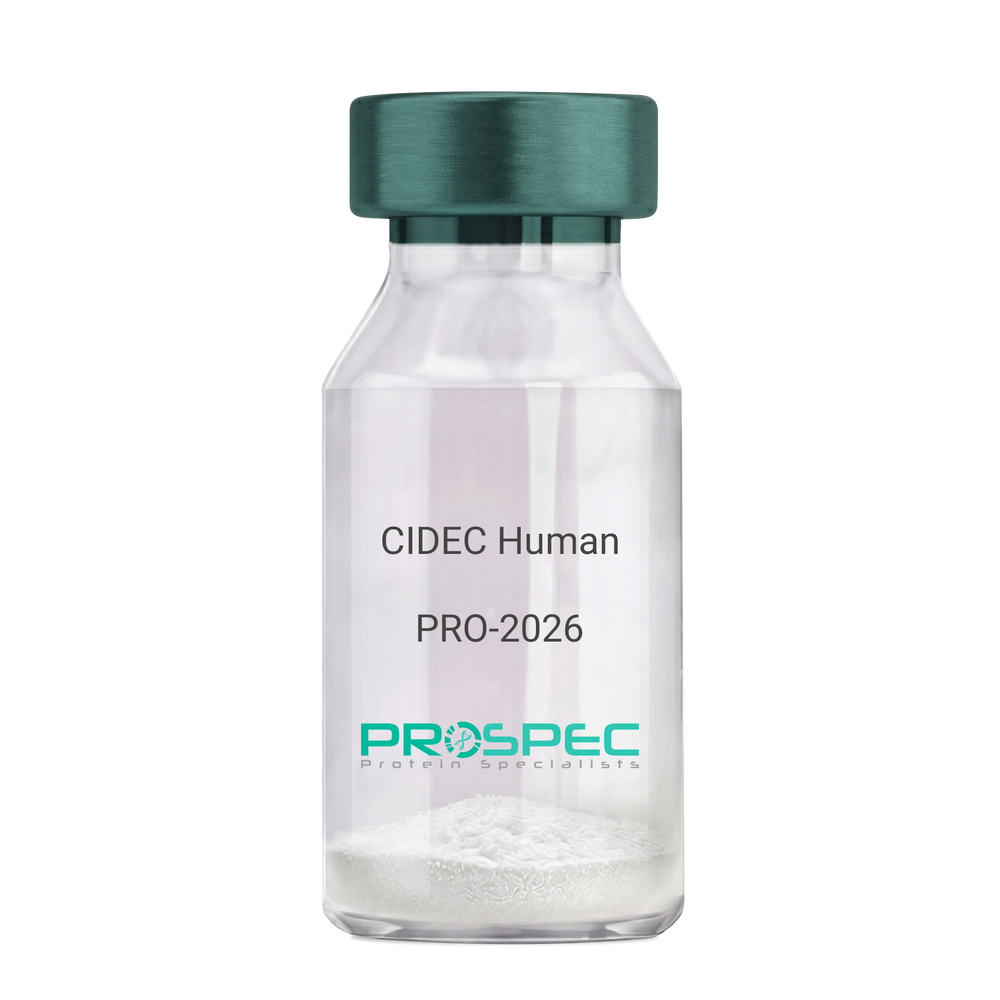
    CIDEC Human

    Description:

    Cell Death-Inducing DFFA-Like Effector C Human Recombinant

    Cell Death-Inducing DFFA-Like Effector C, FSP27, CIDE3, FPLD5, Cell Death-Inducing DFFA-Like Effector Protein C, Fat-Specific Protein FSP27 Homolog, Cell Death Activator CIDE-3, Fat Specific Protein 27, CIDE-3, CIDEC.

    Product # :

    PRO-2026

    Price :

    Quantity :

    Shipping Method :

    Ice Icon

    Shipped with Ice Packs

    Add To Cart

    More Info

    • description
    • source
    • formulation
    • purity
    • More Info

    Description

    CIDEC Human Recombinant produced in E.Coli is a single, non-glycosylated, polypeptide chain (Glu2-Gln238) containing 247 amino acids including a 10 aa His tag at N-terminus. The total calculated molecular mass is 28kDa.

    Source

    Escherichia Coli.

    Formulation

    CIDEC filtered (0.4µm) solution at a concentration of 0.4mg/ml in 30mM acetate buffer and 10mM dithiothreitol, pH 4.

    Purity

    Greater than 95.0% as determined by SDS-PAGE.

    More Info

    • Introduction

      Cell Death-Inducing DFFA-Like Effector C (CIDEC) belongs to the cell death-inducing DNA fragmentation factor-like effector family, whose members have significant roles in apoptosis. CIDEC is expressed mainly in adipocytes, intestine, heart, stomach, and weakly in the brain, kidney and liver. CIDEC overexpression in preadipocytes induces apoptosis. CIDEC regulates enlargement of lipid droplets.

    • Synonyms

      Cell Death-Inducing DFFA-Like Effector C, FSP27, CIDE3, FPLD5, Cell Death-Inducing DFFA-Like Effector Protein C, Fat-Specific Protein FSP27 Homolog, Cell Death Activator CIDE-3, Fat Specific Protein 27, CIDE-3, CIDEC.

    • Physical Appearance

      Filtered colorless solution.

    • Stability

      Store at 4°C if entire vial will be used within 2-4 weeks. Store, frozen at -20°C for longer periods of time. For long term storage it is recommended to add a carrier protein (0.1% HSA or BSA).Avoid multiple freeze-thaw cycles.

    • Amino Acid Sequence

      MKHHHHHHASEYAMKSLSLL YPKSLSRHVS VRTSVVTQQL LSEPSPKAPR ARPCRVSTAD RSVRKGIMAY SLEDLLLKVR DTLMLADKPF FLVLEEDGTT VETEEYFQAL AGDTVFMVLQ KGQKWQPPSE QGTRHPLSLS HKPAKKIDVA RVTFDLYKLN PQDFIGCLNV KATFYDTYSL SYDLHCCGAK RIMKEAFRWA LFSMQATGHV LLGTSCYLQQ LLDATEEGQP PKGKASSLIP TCLKILQ.

    ProSpec's products are furnished for LABORATORY RESEARCH USE ONLY. The product may not be used as drugs, agricultural or pesticidal products, food additives or household chemicals.

    Cidec Human
  • View Data Sheet

    Name :

    WFDC12 Human

    Description:

    WAP Four-Disulfide Core Domain 12 Human Recombinant

    WAP Four-Disulfide Core Domain 12, Putative Protease Inhibitor WAP12, Whey Acidic Protein 2, Chromosome 20 Open Reading Frame 122, Protease Inhibitor WAP2, Single WAP Motif Protein 2, WAP Four-Disulfide Core Domain Protein 12, dJ211D12.4, C20orf122, SWAM2, WAP2.

    Product # :

    PRO-1830

    Price :

    Quantity :

    Shipping Method :

    Ice Icon

    Shipped with Ice Packs

    Add To Cart

    More Info

    • description
    • source
    • formulation
    • purity
    • More Info

    Description

    WFDC12 Human Recombinant produced in E.coli is a single, non-glycosylated polypeptide chain containing 111 amino acids (24-111) and having a molecular mass of 12.1 kDa. WFDC12 is fused to a 23 amino acid His-tag at N-terminus.

    Source

    Escherichia Coli.

    Formulation

    The WFDC12 solution (1mg/ml) contains 20mM Tris-HCl buffer (pH 8.0), 1mM DTT and 10% glycerol.

    Purity

    Greater than 85% as determined by SDS-PAGE.

    More Info

    • Introduction

      WFDC12 belongs to the WFDC (WAP-type four-disulfide core) domain family. The WAP signature motif or WFDC domain has four disulfide bonds created by eight cysteines at the core of the protein, which operates as a protease inhibitor.

    • Synonyms

      WAP Four-Disulfide Core Domain 12, Putative Protease Inhibitor WAP12, Whey Acidic Protein 2, Chromosome 20 Open Reading Frame 122, Protease Inhibitor WAP2, Single WAP Motif Protein 2, WAP Four-Disulfide Core Domain Protein 12, dJ211D12.4, C20orf122, SWAM2, WAP2.

    • Physical Appearance

      Sterile Filtered clear solution.

    • Stability

      Store at 4°C if entire vial will be used within 2-4 weeks. Store, frozen at -20°C for longer periods of time. For long term storage it is recommended to add a carrier protein (0.1% HSA or BSA).Avoid multiple freeze-thaw cycles.

    • Amino Acid Sequence

      MGSSHHHHHH SSGLVPRGSH MGSVKEGIEK AGVCPADNVR CFKSDPPQCH TDQDCLGERK CCYLHCGFKC VIPVKELEEG GNKDEDVSRP YPEPGWEAKC PGSSSTRCPQ K

    ProSpec's products are furnished for LABORATORY RESEARCH USE ONLY. The product may not be used as drugs, agricultural or pesticidal products, food additives or household chemicals.

    Wfdc12 Human
  • View Data Sheet

    Name :

    STAP1 Human

    Description:

    Signal Transducing Adaptor Family Member 1 Human Recombinant

    Signal-transducing adaptor protein 1, STAP-1, BCR downstream-signaling protein 1, Docking protein BRDG1, Stem cell adaptor protein 1, STAP1, BRDG1.

    Product # :

    PRO-1110

    Price :

    Quantity :

    Shipping Method :

    Ice Icon

    Shipped with Ice Packs

    Add To Cart

    More Info

    • description
    • source
    • formulation
    • purity
    • More Info

    Description

    STAP1 Human Recombinant produced in E.Coli is a single, non-glycosylated polypeptide chain containing 319 amino acids (1-295 a.a) and having a molecular mass of 36.8kDa.STAP1 is fused to a 24 amino acid His-tag at N-terminus & purified by proprietary chromatographic techniques.

    Source

    Escherichia Coli.

    Formulation

    STAP1 protein solution (1mg/ml) containing 20mM Tris-HCl buffer (pH8.0), 30% glycerol, 0.1M NaCl and 1mM DTT.

    Purity

    Greater than 95.0% as determined by SDS-PAGE.

    More Info

    • Introduction

      Signal-transducing adaptor protein 1 (STAP1) acts as a docking protein which operates downstream of Tec tyrosine kinase in B cell antigen receptor signaling. The STAP1 protein is directly phosphorylated by Tec in vitro where it partakes in a positive feedback loop, increasing Tec activity.

    • Synonyms

      Signal-transducing adaptor protein 1, STAP-1, BCR downstream-signaling protein 1, Docking protein BRDG1, Stem cell adaptor protein 1, STAP1, BRDG1.

    • Physical Appearance

      Sterile Filtered colorless solution.

    • Stability

      Store at 4°C if entire vial will be used within 2-4 weeks. Store, frozen at -20°C for longer periods of time. For long term storage it is recommended to add a carrier protein (0.1% HSA or BSA).Avoid multiple freeze-thaw cycles.

    • Amino Acid Sequence

      MGSSHHHHHH SSGLVPRGSH MGSHMMAKKP PKPAPRRIFQ ERLKITALPL YFEGFLLIKR SGYREYEHYW TELRGTTLFF YTDKKSIIYV DKLDIVDLTC LTEQNSTEKN CAKFTLVLPK EEVQLKTENT ESGEEWRGFI LTVTELSVPQ NVSLLPGQVI KLHEVLEREK KRRIETEQST SVEKEKEPTE DYVDVLNPMP ACFYTVSRKE ATEMLQKNPS LGNMILRPGS DSRNYSITIR QEIDIPRIKH YKVMSVGQNY TIELEKPVTL PNLFSVIDYF VKETRGNLRP FICSTDENTG QEPSMEGRSE KLKKNPHIA.

    ProSpec's products are furnished for LABORATORY RESEARCH USE ONLY. The product may not be used as drugs, agricultural or pesticidal products, food additives or household chemicals.

    Stap1 Human
  • View Data Sheet

    Name :

    Troponin-C Protein

    Description:

    Cardiac Troponin-C Human

    Troponin C slow skeletal and cardiac muscles, TN-C, TNNC1, TNNC, TNC, CMD1Z.

    Product # :

    PRO-2571

    Price :

    Quantity :

    Shipping Method :

    Ice Icon

    Shipped with Ice Packs

    Add To Cart

    More Info

    • description
    • source
    • formulation
    • purity
    • More Info

    Description

    Troponin-C Human produced from Human Cardiac Tissue, having a molecular mass of 18kDa. The Troponin-C is purified using a combination of ion-exchange and affinity chromatography steps.

    Source

    Human cardiac tissue

    Formulation

    The protein solution contains 150 mM NaCl, 10 mM sodium phosphate and 0.05% NaN3, (pH 7.0).

    Purity

    Greater than 95% as determined by SDS-PAGE.

    More Info

    • Introduction

      Troponin is a fundamental regulatory protein of striated muscle contraction, and together with tropomyosin, is positioned on the actin filament. Troponin has 3 subunits: TnI- the inhibitor of actomyosin ATPase; TnT- contains the binding site for tropomyosin; and TnC- the protein encoded by the TNNC1 gene. The binding of calcium to TnC stops the inhibitory action of TnI, consequently allowing the interaction of actin with myosin, the hydrolysis of ATP, and the generation of tension. Mutations in the TNNC1 gene are linked to cardiomyopathy dilated type 1Z.

    • Synonyms

      Troponin C slow skeletal and cardiac muscles, TN-C, TNNC1, TNNC, TNC, CMD1Z.

    • Physical Appearance

      Sterile Filtered colorless solution.

    • Stability

      Store at 4°C if entire vial will be used within 2-4 weeks. Store, frozen at -20°C for longer periods of time. For long term storage it is recommended to add a carrier protein (0.1% HSA or BSA).Avoid multiple freeze-thaw cycles.

    ProSpec's products are furnished for LABORATORY RESEARCH USE ONLY. The product may not be used as drugs, agricultural or pesticidal products, food additives or household chemicals.

    Cardiac Troponin C
  • View Data Sheet

    Name :

    BCL2L1 Mouse

    Description:

    BCL2-Like 1 Recombinant Mouse

    Bcl-2-like protein 1, Bcl2-L-1, Apoptosis regulator Bcl-X.

    Product # :

    PRO-2239

    Price :

    Quantity :

    Shipping Method :

    Ice Icon

    Shipped with Ice Packs

    Add To Cart

    More Info

    • description
    • source
    • formulation
    • purity
    • More Info

    Description

    BCL2L1 Mouse Recombinant produced in E.Coli is a single, non-glycosylated polypeptide chain containing 232 amino acids (1-209 a.a) and having a molecular mass of 25.8kDa. BCL2L1 is fused to a 23 amino acid His-tag at N-terminus & purified by proprietary chromatographic techniques.

    Source

    Escherichia Coli.

    Formulation

    BCL2L1 protein solution (1mg/ml) containing Phosphate Buffered Saline (pH 7.4) and 10% glycerol.

    Purity

    Greater than 95.0% as determined by SDS-PAGE.

    More Info

    • Introduction

      BCL2-Like 1 (BCL2L1) belongs to the BCL-2 protein family. BCL2L1 is found at the outer mitochondrial membrane controls outer mitochondrial membrane channel (VDAC) opening. In addition, BCL2L1 regulate s a switch between cell death modes during mitotic arrest.

    • Synonyms

      Bcl-2-like protein 1, Bcl2-L-1, Apoptosis regulator Bcl-X.

    • Physical Appearance

      Sterile Filtered colorless solution.

    • Stability

      Store at 4°C if entire vial will be used within 2-4 weeks. Store, frozen at -20°C for longer periods of time. For long term storage it is recommended to add a carrier protein (0.1% HSA or BSA). Avoid multiple freeze-thaw cycles.

    • Amino Acid Sequence

      MGSSHHHHHH SSGLVPRGSH MGSMSQSNRE LVVDFLSYKL SQKGYSWSQF SDVEENRTEA PEETEAERET PSAINGNPSW HLADSPAVNG ATGHSSSLDA REVIPMAAVK QALREAGDEF ELRYRRAFSD LTSQLHITPG TAYQSFEQVV NELFRDGVNW GRIVAFFSFG GALCVESVDK EMQVLVSRIA SWMATYLNDH LEPWIQENGG WDTFVDLYGN NAAAESRKGQ ER.

    ProSpec's products are furnished for LABORATORY RESEARCH USE ONLY. The product may not be used as drugs, agricultural or pesticidal products, food additives or household chemicals.

    Bcl2L1 Mouse
  • View Data Sheet

    Name :

    APTX Human

    Description:

    Aprataxin Human Recombinant

    AXA1, AOA, FHA-HIT, AOA11, ataxia 1, early onset with hypoalbuminemia1 EOAHA1, EAOH1, Forkhead-associated domain histidine triad-like protein, APTX, Aprataxin, AOA1, EAOH, EOAHA, MGC1072, FLJ20157.

    Product # :

    PRO-790

    Price :

    Quantity :

    Shipping Method :

    Ice Icon

    Shipped with Ice Packs

    Add To Cart

    More Info

    • description
    • source
    • formulation
    • purity
    • More Info

    Description

    APTX Human Recombinant fused to a 37 amino acid His Tag at N-terminal produced in E.Coli is a single, non-glycosylated, polypeptide chain containing 205 amino acids (1-168 a.a) and having a molecular mass of 23.9 kDa. The APTX is purified by proprietary chromatographic techniques.

    Source

    Escherichia Coli.

    Formulation

    The APTX solution contains 20mM Tris-HCl pH-7.5, 0.1M NaCl, 0.1mM PMSF and 20% glycerol.

    Purity

    Greater than 95.0% as determined by SDS-PAGE.

    More Info

    • Introduction

      APTX is a DNA-binding protein which participates in single-strand DNA break repair, double-strand DNA break repair and base excision repair. APTX determines abortive DNA ligation intermediates created each at base excision sites, or while DNA ligases attempt to restore non-ligatable breaks induced by reactive oxygen species. APTX catalyzes the release of adenylate groups covalently linked to 5''-phosphate termini, resulting in the production of 5''-phosphate termini that can be efficiently rejoined. APTX hydrolyzes adenosine 5''-monophosphoramidate (AMP-NH(2)) and diadenosine tetraphosphate (AppppA), but with lower catalytic activity.

    • Synonyms

      AXA1, AOA, FHA-HIT, AOA11, ataxia 1, early onset with hypoalbuminemia1 EOAHA1, EAOH1, Forkhead-associated domain histidine triad-like protein, APTX, Aprataxin, AOA1, EAOH, EOAHA, MGC1072, FLJ20157.

    • Physical Appearance

      Sterile Filtered clear colorless solution.

    • Stability

      Store at 4°C if entire vial will be used within 2-4 weeks. Store, frozen at -20°C for longer periods of time. For long term storage it is recommended to add a carrier protein (0.1% HSA or BSA).Avoid multiple freeze-thaw cycles.

    • Amino Acid Sequence

      MRGSHHHHHH GMASMTGGQQ MGRDLYDDDD KDRWAGSMQD PKMQVYKDEQ VVVIKDKYPK ARYHWLVLPW TSISSLKAVA REHLELLKHM HTVGEKVIVD FAGSSKLRFR LGYHAIPSMS HVHLHVISQD FDSPCLKNKK HWNSFNTEYF LESQAVIEMV QEAGRVTVRD GMPELLKLPL RCHECQQLLP SIPQLKEHLR KHWTQ.

    ProSpec's products are furnished for LABORATORY RESEARCH USE ONLY. The product may not be used as drugs, agricultural or pesticidal products, food additives or household chemicals.

    Aptx Human
  • View Data Sheet

    Name :

    DnaK E.coli

    Description:

    DnaK (HSP70) E.Coli Recombinant

    HSP-70, HSP70, DnaK, , Chaperone protein dnaK, Heat shock protein 70, Heat shock 70 kDa protein, groP, grpF, seg, b0014, JW0013.

    Product # :

    HSP-006

    Price :

    Quantity :

    Shipping Method :

    Ice Icon

    Shipped with Ice Packs

    Add To Cart

    More Info

    • description
    • source
    • formulation
    • purity
    • More Info

    Description

    Recombinant Dnak produced in E.Coli is a single, non-glycosylated polypeptide chain containing 638 amino acids and having a molecular mass of 69 kDa.

    Source

    Escherichia Coli.

    Formulation

    The DnaK protein contains 25mM Tris-HCl buffer (pH 7.5), 100mM NaCl, 5mM DTT and 10% Glycerol.

    Purity

    Greater than 85.0% as determined by SDS-PAGE.

    More Info

    • Introduction

      DnaK, originally identified for its DNA replication by bacteriophage l in E. coli is the bacterial HSP70 chaperone. This protein is involved in the folding and assembly of newly synthesized polypeptide chains and in preventing the aggregation of stress-denatured proteins.

    • Synonyms

      HSP-70, HSP70, DnaK, , Chaperone protein dnaK, Heat shock protein 70, Heat shock 70 kDa protein, groP, grpF, seg, b0014, JW0013.

    • Physical Appearance

      Sterile filtered colorless solution.

    • Stability

      Store at 4°C if entire vial will be used within 2-4 weeks. Store, frozen at -20°C for longer periods of time. For long term storage it is recommended to add a carrier protein (0.1% HSA or BSA).Avoid multiple freeze-thaw cycles.

    • Amino Acid Sequence

      MGKIIGIDLG TTNSCVAIMD GTTPRVLENA EGDRTTPSII AYTQDGETLV GQPAKRQAVTNPQNTLFAIK RLIGRRFQDE EVQRDVSIMP FKIIAADNGD AWVEVKGQKM APPQISAEVLKKMKKTAEDY LGEPVTEAVI TVPAYFNDAQ RQATKDAGRI AGLEVKRIINEPTAAALAYGLDKGTGNRTI AVYDLGGGTFDISIIEIDEV DGEKTFEVLA TNGDTHLGGE DFDSRLINYLVEEFKKDQGI DLRNDPLAMQ RLKEAAEKAK IELSSAQQTD VNLPYITADA TGPKHMNIKVTRAKLESLVE DLVNRSIEPL KVALQDAGLS VSDIDDVILV GGQTRMPMVQ KKVAEFFGKEPRKDVNPDEA VAIGAAVQGG VLTGDVKDVL LLDVTPLSLG IETMGGVMTT LIAKNTTIPTKHSQVFSTAE DNQSAVTIHV LQGERKRAAD NKSLGQFNLD GINPAPRGMPQIEVTFDIDADGILHVSAKD KNSGKEQKITIKASSGLNED EIQKMVRDAE ANAEADRKFE ELVQTRNQGDHLLHSTRKQV EEAGDKLPAD DKTAIESALT ALETALKGED KAAIEAKMQE LAQVSQKLMEIAQQQHAQQQ TAGADASANN AKDDDVVDAE FEEVKDKK.

    ProSpec's products are furnished for LABORATORY RESEARCH USE ONLY. The product may not be used as drugs, agricultural or pesticidal products, food additives or household chemicals.

    Dnak Ecoli
  • View Data Sheet

    Name :

    LTF Apo Human

    Description:

    Lactoferrin Apo Human Recombinant

    Lactotransferrin, Lactoferrin, Growth-inhibiting protein 12, Talalactoferrin, LTF, GIG12, LF, HLF2, Neutrophil Lactoferrin.

    Product # :

    PRO-2771

    Price :

    Quantity :

    Shipping Method :

    Room Temp Icon

    Shipped at Room temp

    Add To Cart

    More Info

    • description
    • source
    • formulation
    • purity
    • More Info

    Description

    Recombinant Human Apo Lactoferrin produced in Plant is a glycosylated mature polypeptide sequence having an approximate molecular mass of 80 kDa.The Human Apo Lactoferrin is purified by proprietary chromatographic techniques.

    Source

    Rice Flour.

    Formulation

    The Human Apo lactoferrin was lyophilized with no additives.

    Purity

    Greater than 95% as determined by SDS-PAGE.

    More Info

    • Introduction

      Lactoferrin is a glycoprotein that belongs to the transferrin family of iron binding proteins. It is found in human breast milk as well as most epithelial surface secretions including tears, nasogastric, saliva, and bronchial. Lactoferrin binds 2 molecules of iron with very high affinity. Lactoferrin inhibits bacterial growth by withholding iron, its N-terminal region is an antimicrobial peptide. Lactotransferrin acts synergistically with lysozyme to potentiate the activity of both proteins. The multifunctional protein lactoferrin has many physiological possible roles. It is often referred to as an innate defense protein and frequently serves as the first line of defense in protection against pathogens. It has been shown to have the ability to bind iron, it is a natural anti-bacterial, anti-fungal and anti-viral, it is an antioxidant and it also has immunomodulatory properties. It has many beneficial properties, which make it a good candidate for a number of product applications. Considerable research is currently going on to explain the various suggested biological functions of lactoferrin.

    • Synonyms

      Lactotransferrin, Lactoferrin, Growth-inhibiting protein 12, Talalactoferrin, LTF, GIG12, LF, HLF2, Neutrophil Lactoferrin.

    • Physical Appearance

      Pink lyophilized powder.

    • Stability

      Recombinant Apo Lactoferrin although stable at room temperature for 3 weeks, should be stored 2-8°C.

    • Solubility

      It is recommended to reconstitute the lyophilized LTF Apo Human in sterile water at 10mg/ml, which can then be further diluted to other aqueous solutions.

    ProSpec's products are furnished for LABORATORY RESEARCH USE ONLY. The product may not be used as drugs, agricultural or pesticidal products, food additives or household chemicals.

    Lactoferrin Apo
  • View Data Sheet

    Name :

    SNRPG Human

    Description:

    Small Nuclear Ribonucleoprotein Polypeptide G Human Recombinant

    Small nuclear ribonucleoprotein G, snRNP-G, Sm protein G, Sm-G, SmG, SNRPG, PBSCG, MGC117317.

    Product # :

    PRO-196

    Price :

    Quantity :

    Shipping Method :

    Ice Icon

    Shipped with Ice Packs

    Add To Cart

    More Info

    • description
    • source
    • formulation
    • purity
    • More Info

    Description

    SNRPG Human Recombinant fused with a 20 amino acid His tag at N-terminus produced in E.Coli is a single, non-glycosylated, polypeptide chain containing 96 amino acids (1-76 a.a.) and having a molecular mass of 10.6kDa. The SNRPG is purified by proprietary chromatographic techniques.

    Source

    Escherichia Coli.

    Formulation

    The SNRPG solution (1 mg/ml) contains 20mM Tris-HCl buffer (pH 8.0), 1mM DTT, 50% glycerol and 0.1M NaCl.

    Purity

    Greater than 95.0% as determined by SDS-PAGE.

    More Info

    • Introduction

      Small nuclear ribonucleoprotein polypeptide G (SNRPG) is a member of the snRNP Sm proteins family. There are at least 7 isoforms, B/B, E, F, G, D1, D2, and D3. This class of common proteins has a vital role in the biogenesis of the snRNPs. The human Sm G genes are mapped to chromosomes 2. Furthermore, these proteins represent the major targets for the supposed anti-Sm auto-antibodies which are diagnostic for SLE (systemic lupus erythematosus). One class of these autoantibodies reacts specifically with native Sm E-F-G complexes.

    • Synonyms

      Small nuclear ribonucleoprotein G, snRNP-G, Sm protein G, Sm-G, SmG, SNRPG, PBSCG, MGC117317.

    • Physical Appearance

      Sterile Filtered colorless solution.

    • Stability

      Store at 4°C if entire vial will be used within 2-4 weeks. Store, frozen at -20°C for longer periods of time. For long term storage it is recommended to add a carrier protein (0.1% HSA or BSA).Avoid multiple freeze-thaw cycles.

    • Amino Acid Sequence

      MGSSHHHHHH SSGLVPRGSH MSKAHPPELK KFMDKKLSLK LNGGRHVQGI LRGFDPFMNL VIDECVEMAT SGQQNNIGMV VIRGNSIIML EALERV.

    ProSpec's products are furnished for LABORATORY RESEARCH USE ONLY. The product may not be used as drugs, agricultural or pesticidal products, food additives or household chemicals.

    Snrpg Human
  • View Data Sheet

    Name :

    PSPN Human

    Description:

    Persephin Human Recombinant

    Persephin, PSP, PSPN.

    Product # :

    CYT-801

    Price :

    Quantity :

    Shipping Method :

    Room Temp Icon

    Shipped at Room temp

    Add To Cart

    More Info

    • description
    • source
    • formulation
    • purity
    • biological activity
    • More Info

    Description

    PSPN Human Recombinant produced in E.Coli is a disulfide-linked homodimer containing 2x96 amino acids and having a molecular mass of 20.5kDa. The PSPN is purified by proprietary chromatographic techniques.

    Source

    Escherichia Coli.

    Formulation

    Lyophilized from a 0.2µm filtered concentrated solution in PBS, pH 7.4.

    Purity

    Greater than 95.0% as determined by:
    (a) Analysis by RP-HPLC.
    (b) Analysis by SDS-PAGE.

    Biological Activity

    Fully biologically active when compared to standard. The ED50 as determined by a cell proliferation assay using human TT medullary thyroid cancer cells is less than 10ng/ml, corresponding to a specific activity of > 1.0 × 100,000 IU/mg. 

    More Info

    • Introduction

      Persephin is a member of the GDNF ligand subfamily of the TGF-beta superfamily. PSPN encourages the existence and growth of key dopaminergic and motor neurons, as well as taking part in kidney development. Nonetheless, persephin does not support existence of peripheral neurons.

    • Synonyms

      Persephin, PSP, PSPN.

    • Physical Appearance

      Sterile Filtered White lyophilized (freeze-dried) powder.

    • Stability

      Lyophilized PSPN although stable at room temperature for 3 weeks, should be stored desiccated below -18°C. Upon reconstitution PSPN should be stored at 4°C between 2-7 days and for future use below -18°C. For long term storage it is recommended to add a carrier protein (0.1% HSA or BSA). Please prevent freeze-thaw cycles.

    • Solubility

      It is recommended to reconstitute the lyophilized PSPN in 4mM HCl not less than 100µg/ml, which can then be further diluted to other aqueous solutions.

    • Amino Acid Sequence

      ALSGPCQLWS LTLSVAELGL GYASEEKVIF RYCAGSCPRG ARTQHGLALA RLQGQGRAHG GPCCRPTRYT DVAFLDDRHR WQRLPQLSAA ACGCGG.

    ProSpec's products are furnished for LABORATORY RESEARCH USE ONLY. The product may not be used as drugs, agricultural or pesticidal products, food additives or household chemicals.

    Pspn Human
  • View Data Sheet

    Name :

    TIMP1 Rat

    Description:

    Tissue Inhibitor of Metalloprotease 1 Rat Recombinant

    Metalloproteinase inhibitor 1, Tissue inhibitor of metalloproteinases 1, TIMP-1, TIMP1.

    Product # :

    ENZ-922

    Price :

    Quantity :

    Shipping Method :

    Ice Icon

    Shipped with Ice Packs

    Add To Cart

    More Info

    • description
    • source
    • formulation
    • purity
    • More Info

    Description

    TIMP1 produced in Sf9 Baculovirus cells is a single, glycosylated polypeptide chain (24-217 a.a.) and fused to a 6 aa His Tag at C-terminus containing a total of 200 amino acids and having a molecular mass of 22.3kDa.TIMP1 Ligand shows multiple bands between 18-28kDa on SDS-PAGE, reducing conditions and purified by proprietary chromatographic techniques.

    Source

    Sf9, Baculovirus cells.

    Formulation

    TIMP1 Ligand protein solution (0.5mg/ml) contains Phosphate buffered saline (pH7.4) and 10% glycerol.

    Purity

    Greater than 90.0% as determined by SDS-PAGE.

    More Info

    • Introduction

      TIMP1 is a member of the TIMP family. TIMP1 is an inducible glycoprotein produced by various cell types. The TIMP1 glycoprotein is a natural inhibitor of the matrix metalloproteinases, which a group of peptidases involved in degradation of the extracellular matrix. TIMP1 binds in a reversible mode to MMPs, with regions in the N-terminal domain binding to the MMP substrate-binding site. On top of its inhibitory function against most of the known MMPs, TIMP1 is able to promote cell proliferation in a broad range of cell types, and may also have an anti-apoptotic role. Furthermore, TIMP1 has erthyroid-potentiating activity via translocation to the nucleus and also inhibits apoptosis in B-cells.
      The TIMP1 gene is situated within intron 6 of the synapsin I gene and is transcribed in the opposite direction. TIMP1 activity is dependent on the existence of disulfide bonds.
      TIMP1 transcription is extremely inducible in reaction to many cytokines and hormones.
      Increased TIMP1 levels are connected with squamous cell laryngeal carcinoma. TIMP1 overexpression is linked to gastric cancer.

    • Synonyms

      Metalloproteinase inhibitor 1, Tissue inhibitor of metalloproteinases 1, TIMP-1, TIMP1.

    • Physical Appearance

      Sterile filtered colorless solution.

    • Stability

      Store at 4°C if entire vial will be used within 2-4 weeks. Store, frozen at -20°C for longer periods of time. For long term storage it is recommended to add a carrier protein (0.1% HSA or BSA).Avoid multiple freeze-thaw cycles.

    • Amino Acid Sequence

      CSCAPTHPQT AFCNSDLVIR AKFMGSPEII ETTLYQRYEI KMTKMLKGFD AVGNATGFRF AYTPAMESLC GYVHKSQNRS EEFLIAGRLR NGNLHITACS FLVPWHNLSP AQQKAFVKTY SAGCGVCTVF PCSAIPCKLE SDSHCLWTDQ ILMGSEKGYQ SDHFACLPRN PDLCTWQYLG VSMTRSLPLA KAEAHHHHHH

    ProSpec's products are furnished for LABORATORY RESEARCH USE ONLY. The product may not be used as drugs, agricultural or pesticidal products, food additives or household chemicals.

    Timp1 Rat
  • View Data Sheet

    Name :

    SET Human

    Description:

    SET Human Recombinant

    2PP2A, I2PP2A, IGAAD, IPP2A2, PHAPII, TAF-I, TAF-IBETA, Protein SET, HLA-DR-associated protein II, Inhibitor of granzyme A-activated DNase, Template-activating factor I, SET.

    Product # :

    PRO-1540

    Price :

    Quantity :

    Shipping Method :

    Ice Icon

    Shipped with Ice Packs

    Add To Cart

    More Info

    • description
    • source
    • formulation
    • purity
    • More Info

    Description

    SET Human Recombinant produced in E. coli is a single polypeptide chain containing 313 amino acids (1-290) and having a molecular mass of 35.9kDa. SET is fused to a 23 amino acid His-tag at N-terminus & purified by proprietary chromatographic techniques.

    Source

    Escherichia Coli.

    Formulation

    The SET solution (0.5mg/ml) contains 20mM Tris-HCl buffer (pH 8.0), 0.15M NaCl, 20% glycerol and 1mM DTT.

    Purity

    Greater than 90% as determined by SDS-PAGE.

    More Info

    • Introduction

      SET is part of a complex localized to the endoplasmic reticulum however is found in the nucleus. SET inhibits apoptosis following attack by cytotoxic T lymphocytes and can also enhance DNA replication of the adenovirus genome. SET inhibits acetylation of nucleosomes, particularly histone H4, by histone acetylases (HAT). This inhibition is accomplished by masking histone lysines from being acetylated.

    • Synonyms

      2PP2A, I2PP2A, IGAAD, IPP2A2, PHAPII, TAF-I, TAF-IBETA, Protein SET, HLA-DR-associated protein II, Inhibitor of granzyme A-activated DNase, Template-activating factor I, SET.

    • Physical Appearance

      Sterile Filtered clear solution.

    • Stability

      Store at 4°C if entire vial will be used within 2-4 weeks. Store frozen at -20°C for longer periods of time. For long term storage it is recommended to add a carrier protein (0.1% HSA or BSA).Avoid multiple freeze-thaw cycles.

    • Amino Acid Sequence

      MGSSHHHHHH SSGLVPRGSH MGSMAPKRQS PLPPQKKKPR PPPALGPEET SASAGLPKKG EKEQQEAIEH IDEVQNEIDR LNEQASEEIL KVEQKYNKLR QPFFQKRSEL IAKIPNFWVT TFVNHPQVSA LLGEEDEEAL HYLTRVEVTE FEDIKSGYRI DFYFDENPYF ENKVLSKEFH LNESGDPSSK STEIKWKSGK DLTKRSSQTQ NKASRKRQHE EPESFFTWFT DHSDAGADEL GEVIKDDIWP NPLQYYLVPD MDDEEGEGEE DDDDDEEEEG LEDIDEEGDE DEGEEDEDDD EGEEGEEDEG EDD.

    ProSpec's products are furnished for LABORATORY RESEARCH USE ONLY. The product may not be used as drugs, agricultural or pesticidal products, food additives or household chemicals.

    Set Human
  • View Data Sheet

    Name :

    B.Microti p32

    Description:

    Babesia Microti p32 Recombinant

    Product # :

    PRO-2269

    Price :

    Quantity :

    Shipping Method :

    Ice Icon

    Shipped with Ice Packs

    Add To Cart

    More Info

    • description
    • source
    • formulation
    • purity
    • More Info

    Description

    Recombinant Babesia Microti p32 produced in SF9 is a glycosylated, polypeptide chain having a calculated molecular mass of 35,808 Dalton. B.Microti p32 is expressed with a 10xHis tag at N-terminus and purified by proprietary chromatographic techniques.

    Source

    Sf9 insect cells.

    Formulation

    B.Microti p32 is supplied in 20mM HEPES buffer pH-7.6, 250mM NaCl and 20% glycerol.

    Purity

    Greater than 80.0% as determined by SDS-PAGE.

    More Info

    • Introduction

      Babesiosis is a disease caused by apicomplexan parasites of the Babesia genus. The Babesia microti life cycle involves 2 hosts, which include a rodent, mainly the white-footed mouse (Peromyscus leucopus) and a tick in the Ixodes genus. During a blood meal, a Babesia-infected tick introduces sporozoites into the mouse host. Sporozoites pass into the erythrocytes and undergo asexual reproduction (budding). In the blood, some parasites differentiate into male and female gametes, though these cannot be distinguished by light microscopy. The definitive host is the tick. Once ingested by an proper tick, gametes unite and undergo a sporogonic cycle resulting in sporozoites. Transovarial transmission (aka vertical or hereditary transmission) has been detected for "large" Babesia species but not for the "small" Babesia, such as B. microti. Humans enter the cycle when bitten by the infected ticks. Thus during a blood meal, a Babesia-infected tick introduces sporozoites into the human host. Sporozoites then enter erythrocytes and undergo asexual replication (budding). Multiplication of the blood-stage parasites is responsible for the clinical manifestations of the disease. Humans typically are dead-end hosts. However, human-to-human transmission is well acknowledged to occur via contaminated blood transfusions.

    • Physical Appearance

      Sterile Filtered clear solution.

    • Stability

      Store at 4°C if entire vial will be used within 2-4 weeks. Store, frozen at -20°C for longer periods of time. Avoid multiple freeze-thaw cycles.

    ProSpec's products are furnished for LABORATORY RESEARCH USE ONLY. The product may not be used as drugs, agricultural or pesticidal products, food additives or household chemicals.

    Bmicroti P32
  • View Data Sheet

    Name :

    HERPUD1 Human

    Description:

    HERPUD1 Human Recombinant

    Homocysteine-responsive endoplasmic reticulum-resident ubiquitin-like domain member 1 protein, HERPUD1, Methyl methanesulfonate (MMF)-inducible fragment protein 1, HERP, KIAA0025, MIF1, Mif1, SUP.

    Product # :

    PRO-2105

    Price :

    Quantity :

    Shipping Method :

    Ice Icon

    Shipped with Ice Packs

    Add To Cart

    More Info

    • description
    • source
    • formulation
    • purity
    • More Info

    Description

    HERPUD1 Human Recombinant produced in E. coli is a single polypeptide chain containing 286 amino acids (1-263) and having a molecular mass of 31.6kDa.HERPUD1 is fused to a 23 amino acid His-tag at N-terminus & purified by proprietary chromatographic techniques.

    Source

    Escherichia Coli.

    Formulation

    The HERPUD1 solution (0.5mg/1ml) contains Phosphate buffer saline (pH 7.4) and 10% glycerol.

    Purity

    Greater than 85.0% as determined by SDS-PAGE.

    More Info

    • Introduction

      HERPUD1 is a multi-pass membrane protein which is a part of the endoplasmic reticulum quality control system. HERPUD1 owns 1 N-terminal ubiquitin-like domain and is expressed highly in the brain. HERPUD1 is also known as ER-associated degradation (ERAD) which takes part in ubiquitin-dependent degradation of misfolded endoplasmic reticulum proteins.

    • Synonyms

      Homocysteine-responsive endoplasmic reticulum-resident ubiquitin-like domain member 1 protein, HERPUD1, Methyl methanesulfonate (MMF)-inducible fragment protein 1, HERP, KIAA0025, MIF1, Mif1, SUP.

    • Physical Appearance

      Sterile Filtered clear solution.

    • Stability

      Store at 4°C if entire vial will be used within 2-4 weeks. Store, frozen at -20°C for longer periods of time. For long term storage it is recommended to add a carrier protein (0.1% HSA or BSA).Avoid multiple freeze-thaw cycles.

    • Amino Acid Sequence

      MGSSHHHHHH SSGLVPRGSH MGSMESETEP EPVTLLVKSP NQRHRDLELS GDRGWSVGHL KAHLSRVYPE RPRPEDQRLI YSGKLLLDHQ CLRDLLPKQE KRHVLHLVCN VKSPSKMPEI NAKVAESTEE PAGSNRGQYP EDSSSDGLRQ REVLRNLSSP GWENISRPEA AQQAFQGLGP GFSGYTPYGW LQLSWFQQIY ARQYYMQYLA ATAASGAFVP PPSAQEIPVV SAPAPAPIHN QFPAENQPAN QNAAPQVVVN PGANQNLRMN AQGGPIVEED DEINRD.

    ProSpec's products are furnished for LABORATORY RESEARCH USE ONLY. The product may not be used as drugs, agricultural or pesticidal products, food additives or household chemicals.

    Herpud1 Human
  • View Data Sheet

    Name :

    KISS1 Human

    Description:

    KISS-1 Metastasis-Suppressor Human Recombinant

    Kisspeptin-1, KISS-1, METASTIN, Metastasis-suppressor KiSS-1, KISS1, MGC39258.

    Product # :

    PRO-419

    Price :

    Quantity :

    Shipping Method :

    Ice Icon

    Shipped with Ice Packs

    Add To Cart

    More Info

    • description
    • source
    • formulation
    • purity
    • More Info

    Description

    KISS1 Human Recombinant produced in E.Coli is a single, non-glycosylated polypeptide chain containing 120 amino acids (20-138) and having a molecular mass of 12.6 Dalton. The KISS1 is purified by proprietary chromatographic techniques.

    Source

    Escherichia Coli.

    Formulation

    The protein solution (1mg/ml) contains 20mM Tris-HCl pH-8, 1mM DTT & 10% glycerol.

    Purity

    Greater than 90.0% as determined by SDS-PAGE.

    More Info

    • Introduction

      KISS1 is a metastasis suppressor protein that suppresses metastases of melanomas and breast carcinomas without affecting tumorigenicity.KISS1 functions to inhibit chemotaxis and invasion, attenuating metastasis in malignant melanomas. KISS1 is involved in the regulation of cell-matrix adhesion. KISS1 plays a role in cytoskeletal reorganization. A polymorphism in the terminal exon of KISS1 mRNA results in two protein isoforms. Expression of KiSS1 is localized to specific regions of the hypothalamus in numerous species and is regulated by gonadal steroids and across the estrous cycle..KISS1 generates a c-terminally amidated peptide, metastin which functions as the endogenous ligand of the g-protein coupled receptor gpr54. Activation of the receptor inhibits cell proliferation and cell migration, key characteristics of tumor metastasis.

    • Synonyms

      Kisspeptin-1, KISS-1, METASTIN, Metastasis-suppressor KiSS-1, KISS1, MGC39258.

    • Physical Appearance

      Sterile Filtered colorless solution.

    • Stability

      Store at 4°C if entire vial will be used within 2-4 weeks. Store, frozen at -20°C for longer periods of time. For long term storage it is recommended to add a carrier protein (0.1% HSA or BSA).Please prevent freeze-thaw cycles.

    • Amino Acid Sequence

      MEPLEKVASV GNSRPTGQQL ESLGLLAPGE QSLPCTERKP AATARLSRRG TSLSPPPESS GSPQQPGLSA PHSRQIPAPQ GAVLVQREKD LPNYNWNSFG LRFGKREAAP GNHGRSAGRG.

    ProSpec's products are furnished for LABORATORY RESEARCH USE ONLY. The product may not be used as drugs, agricultural or pesticidal products, food additives or household chemicals.

    Kiss1 Human
  • 1
  • …
  • 32
  • 33
  • 34
  • 35
  • 36
  • …
  • 42
Your browser does not support the video tag.

Products

  • Cytokines
  • Growth Factors
  • Chemokines
  • CD Antigens
  • Neurotrophins
  • Hormones
  • Enzymes
  • Viral Antigens
  • Recombinant Proteins
  • Natural Proteins
  • Monoclonal Antibodies
  • Polyclonal Antibodies
  • Thermal Packaging

About

  • Company
  • Founder
  • Contribution
  • Contact Us
  • My Account

Ordering

  • Ordering Method
  • Ordering - Credit Card
  • Ordering PO
  • Shipping Fees
  • FAQ's

Legal

  • Terms & Conditions
  • Privacy
  • Site Map
  • info@prospecbio.com
  • Facebook
  • Instagram
  • Linkedin Profile

© 2026 ProSpec-Tany TechnoGene Ltd. All Rights Reserved.

  • Choosing a selection results in a full page refresh.
  • Opens in a new window.