Skip to content

High-quality research proteins.

  • 1-800-805-6531

  • Mon - Sat 8.00-18.00, Sun - Closed

  • info@prospecbio.com

  • PO Box 6591 East Brunswick NJ 08816

  • Products
    • Cytokines
    • Growth factors
    • Chemokines
    • Cd antigens
    • Neurotrophins
    • Hormones
    • Enzymes
    • Viral antigens
    • Recombinant proteins
    • Natural proteins
    • Monoclonal antibodies
    • Polyclonal antibodies
    • Thermal Packaging
  • About
    • Company
    • Founder
    • Contribution
  • Customers
    • Eastern Asia
    • Eastern Europe
    • North America
    • South America
    • South East Asia
    • Southern Asia
    • Western Europe
  • Ordering
    • Ordering Method
    • Ordering - Credit Card
    • Ordering - PO
    • Shipping Fees
    • FAQs
  • Services
    • DNA Cloning
    • Protein Expression
    • Monoclonal Antibody
    • Fermentation
    • Technology License
  • Contact us
Log in

Country/region

  • USD $ | Albania
  • USD $ | Andorra
  • USD $ | Argentina
  • USD $ | Armenia
  • USD $ | Australia
  • USD $ | Austria
  • USD $ | Azerbaijan
  • USD $ | Belarus
  • USD $ | Belgium
  • USD $ | Bolivia
  • USD $ | Brazil
  • USD $ | Bulgaria
  • USD $ | Cambodia
  • USD $ | Canada
  • USD $ | Chile
  • USD $ | China
  • USD $ | Colombia
  • USD $ | Costa Rica
  • USD $ | Croatia
  • USD $ | Cyprus
  • USD $ | Czechia
  • USD $ | Denmark
  • USD $ | Estonia
  • USD $ | Finland
  • USD $ | France
  • USD $ | Georgia
  • USD $ | Germany
  • USD $ | Greece
  • USD $ | Hong Kong SAR
  • USD $ | Hungary
  • USD $ | Iceland
  • USD $ | India
  • USD $ | Ireland
  • USD $ | Israel
  • USD $ | Italy
  • USD $ | Japan
  • USD $ | Kazakhstan
  • USD $ | Latvia
  • USD $ | Liechtenstein
  • USD $ | Lithuania
  • USD $ | Madagascar
  • USD $ | Malta
  • USD $ | Mexico
  • USD $ | Moldova
  • USD $ | Monaco
  • USD $ | Netherlands
  • USD $ | New Zealand
  • USD $ | North Macedonia
  • USD $ | Norway
  • USD $ | Panama
  • USD $ | Paraguay
  • USD $ | Peru
  • USD $ | Philippines
  • USD $ | Poland
  • USD $ | Portugal
  • USD $ | Romania
  • USD $ | Singapore
  • USD $ | Slovakia
  • USD $ | Slovenia
  • USD $ | South Africa
  • USD $ | South Korea
  • USD $ | Spain
  • USD $ | Sri Lanka
  • USD $ | Sweden
  • USD $ | Switzerland
  • USD $ | Taiwan
  • USD $ | Thailand
  • USD $ | Türkiye
  • USD $ | Ukraine
  • USD $ | United Kingdom
  • USD $ | United States
  • USD $ | Uruguay
  • USD $ | Vatican City
  • USD $ | Venezuela
  • USD $ | Vietnam
  • Facebook
  • Instagram
logoProSpec - Recombinant Protein Manufacturer for academic and R&D industry
Become a distributor
Account Log in
Wishlist
Cart Cart(0)
  • Products
    +
    • Cytokines
    • Growth factors
    • Chemokines
    • Cd antigens
    • Neurotrophins
    • Hormones
    • Enzymes
    • Viral antigens
    • Recombinant proteins
    • Natural proteins
    • Monoclonal antibodies
    • Polyclonal antibodies
    • Thermal Packaging
  • About
    +
    • Company
    • Founder
    • Contribution
  • Customers
    +
    • Eastern Asia
    • Eastern Europe
    • North America
    • South America
    • South East Asia
    • Southern Asia
    • Western Europe
  • Ordering
    +
    • Ordering Method
    • Ordering - Credit Card
    • Ordering - PO
    • Shipping Fees
    • FAQs
  • Services
    +
    • DNA Cloning
    • Protein Expression
    • Monoclonal Antibody
    • Fermentation
    • Technology License
  • Contact us

Item added to your cart

View cart
View All
  • Cytokines
  • Growth factors
  • Chemokines
  • Cd antigens
  • Neurotrophins
  • Hormones
  • Enzymes
  • Viral antigens
  • Recombinant proteins
  • Natural proteins
  • Monoclonal antibodies
  • Polyclonal antibodies
  • Thermal Packaging
  • Tumor Necrosis Factor

    Tumor Necrosis Factor

    View All
  • 4-1BB

    4-1BB

    View All
  • Adiponectin

    Adiponectin

    View All
  • AIF1

    AIF1

    View All
  • Other Cytokines

    Other Cytokines

    View All
  • AITRL

    AITRL

    View All
  • Angiopoietin

    Angiopoietin

    View All
  • Apolipoprotein

    Apolipoprotein

    View All
  • B-Cell Activating Factor

    B-Cell Activating Factor

    View All
  • Beta Defensin

    Beta Defensin

    View All
  • Bone Morphogenetic Protein

    Bone Morphogenetic Protein

    View All
  • B type Natriuretic Peptide

    B type Natriuretic Peptide

    View All
  • BST

    BST

    View All
  • Betacellulin

    Betacellulin

    View All
  • Cardiotrophin

    Cardiotrophin

    View All
  • Activin

    Activin

    View All
  • Fibroblast Growth Factor

    Fibroblast Growth Factor

    View All
  • Other Growth Factors

    Other Growth Factors

    View All
  • CSF

    CSF

    View All
  • CTGF

    CTGF

    View All
  • IGFBP

    IGFBP

    View All
  • VEGF Protein

    VEGF Protein

    View All
  • EGF

    EGF

    View All
  • Epigen

    Epigen

    View All
  • Erythropoietin

    Erythropoietin

    View All
  • Insulin-Like Growth Factor

    Insulin-Like Growth Factor

    View All
  • Growth Hormone

    Growth Hormone

    View All
  • HDGF

    HDGF

    View All
  • Hepatocyte Growth Factor

    Hepatocyte Growth Factor

    View All
  • Insulin

    Insulin

    View All
  • BCA-1/ BLC (CXCL13)

    BCA-1/ BLC (CXCL13)

    View All
  • BRAK (CXCL14)

    BRAK (CXCL14)

    View All
  • C-10 (CCL6)

    C-10 (CCL6)

    View All
  • Other Chemokines

    Other Chemokines

    View All
  • MEC (CCL28)

    MEC (CCL28)

    View All
  • LD78-beta (CCL3L1)

    LD78-beta (CCL3L1)

    View All
  • CTACK (CCL27)

    CTACK (CCL27)

    View All
  • CXCL16

    CXCL16

    View All
  • CXCL17

    CXCL17

    View All
  • Platelet Factor-4 (CXCL4)

    Platelet Factor-4 (CXCL4)

    View All
  • ENA-78 (CXCL5)

    ENA-78 (CXCL5)

    View All
  • Eotaxin (CCL11,24,26)

    Eotaxin (CCL11,24,26)

    View All
  • Exodus-2 (CCL21)

    Exodus-2 (CCL21)

    View All
  • Fractalkine (CX3CL1)

    Fractalkine (CX3CL1)

    View All
  • CXCL6

    CXCL6

    View All
  • Other CD Antigens

    Other CD Antigens

    View All
  • CD14

    CD14

    View All
  • CD164

    CD164

    View All
  • CD1

    CD1

    View All
  • CD2

    CD2

    View All
  • CD200

    CD200

    View All
  • CD207

    CD207

    View All
  • CD226

    CD226

    View All
  • CD23

    CD23

    View All
  • CD244

    CD244

    View All
  • CD247

    CD247

    View All
  • CD27

    CD27

    View All
  • CD274

    CD274

    View All
  • CD300

    CD300

    View All
  • CD33

    CD33

    View All
  • Other Neurotrophins

    Other Neurotrophins

    View All
  • Beta-NGF

    Beta-NGF

    View All
  • BDNF

    BDNF

    View All
  • CDNF

    CDNF

    View All
  • CNTF

    CNTF

    View All
  • GDNF

    GDNF

    View All
  • Glia Maturation Factor

    Glia Maturation Factor

    View All
  • MANF

    MANF

    View All
  • Midkine

    Midkine

    View All
  • Neuroglobin

    Neuroglobin

    View All
  • Neurotrophic factors

    Neurotrophic factors

    View All
  • Neuregulin

    Neuregulin

    View All
  • Neuropilin

    Neuropilin

    View All
  • Pigment Epithelium-Derived Factor

    Pigment Epithelium-Derived Factor

    View All
  • Pleiotrophin

    Pleiotrophin

    View All
  • Peptide Hormones

    Peptide Hormones

    View All
  • Other Hormones

    Other Hormones

    View All
  • HCG

    HCG

    View All
  • Endothelin

    Endothelin

    View All
  • Exendin

    Exendin

    View All
  • FSH

    FSH

    View All
  • Glucagon

    Glucagon

    View All
  • GHRP

    GHRP

    View All
  • GLP

    GLP

    View All
  • Thyrostimulin

    Thyrostimulin

    View All
  • Inhibin A

    Inhibin A

    View All
  • LHRH

    LHRH

    View All
  • Melanotan

    Melanotan

    View All
  • Procalcitonin

    Procalcitonin

    View All
  • PTH

    PTH

    View All
  • Peroxiredoxin

    Peroxiredoxin

    View All
  • Peptidase

    Peptidase

    View All
  • Synthetase

    Synthetase

    View All
  • Transferase

    Transferase

    View All
  • Hydrolase

    Hydrolase

    View All
  • Dehydrogenase

    Dehydrogenase

    View All
  • ACE2

    ACE2

    View All
  • Esterase

    Esterase

    View All
  • Protein Kinases

    Protein Kinases

    View All
  • Other Enzymes

    Other Enzymes

    View All
  • Phosphatase

    Phosphatase

    View All
  • Deaminase

    Deaminase

    View All
  • Oxygenase

    Oxygenase

    View All
  • Adenylate Kinase

    Adenylate Kinase

    View All
  • Lyase

    Lyase

    View All
  • Chagas

    Chagas

    View All
  • SARS

    SARS

    View All
  • Influenza

    Influenza

    View All
  • ASFV

    ASFV

    View All
  • Astrovirus

    Astrovirus

    View All
  • Borrelia

    Borrelia

    View All
  • Helicobacter Pylori

    Helicobacter Pylori

    View All
  • Chikungunya

    Chikungunya

    View All
  • Chlamydia

    Chlamydia

    View All
  • Cytomegalo

    Cytomegalo

    View All
  • Dengue

    Dengue

    View All
  • EBV

    EBV

    View All
  • Ebola

    Ebola

    View All
  • Feline Leukemia Virus

    Feline Leukemia Virus

    View All
  • Hepatitis A

    Hepatitis A

    View All
  • Other

    Other

    View All
  • Actin

    Actin

    View All
  • ADAM

    ADAM

    View All
  • Complement Component

    Complement Component

    View All
  • Ag85

    Ag85

    View All
  • Eukaryotic Translation Initiation Factor

    Eukaryotic Translation Initiation Factor

    View All
  • Anterior Gradient Protein

    Anterior Gradient Protein

    View All
  • Heat Shock Protein

    Heat Shock Protein

    View All
  • Alpha-2-HS-Glycoprotein

    Alpha-2-HS-Glycoprotein

    View All
  • Hemoglobin

    Hemoglobin

    View All
  • Allergy

    Allergy

    View All
  • Anaplasma

    Anaplasma

    View All
  • Angiogenin

    Angiogenin

    View All
  • Ankyrin Repeat Domain

    Ankyrin Repeat Domain

    View All
  • Annexin

    Annexin

    View All
  • Other Natural Proteins

    Other Natural Proteins

    View All
  • Aprotinin

    Aprotinin

    View All
  • Transferrin

    Transferrin

    View All
  • Avidin

    Avidin

    View All
  • Anti Coagulation Factors

    Anti Coagulation Factors

    View All
  • Natural Albumin

    Natural Albumin

    View All
  • Natural Coagulation Factors

    Natural Coagulation Factors

    View All
  • Fibronectin

    Fibronectin

    View All
  • Thrombin

    Thrombin

    View All
  • Anti Human Enzyme

    Anti Human Enzyme

    View All
  • Other Monoclonal Antibodies

    Other Monoclonal Antibodies

    View All
  • Anti Human Cytokine

    Anti Human Cytokine

    View All
  • Anti Human Heat Shock Protein

    Anti Human Heat Shock Protein

    View All
  • Anti Mouse Lymphocyte

    Anti Mouse Lymphocyte

    View All
  • Anti Human Chemokine

    Anti Human Chemokine

    View All
  • Anti Human Lymphocyte

    Anti Human Lymphocyte

    View All
  • Anti Viral Monoclonal

    Anti Viral Monoclonal

    View All
  • Anti Mouse Cytokine

    Anti Mouse Cytokine

    View All
  • Anti-GST Monoclonal

    Anti-GST Monoclonal

    View All
  • Other Polyclonal Antibodies

    Other Polyclonal Antibodies

    View All
  • Anti Viral

    Anti Viral

    View All
  • Anti-GST Monoclonal

    Anti-GST Monoclonal

    View All
Back

Search results

1000 results found for “lipocalin”

Name

Description

Product #

Price

Quantity

Shipping Method

  • View Data Sheet

    Name :

    CHGB Human

    Description:

    Chromogranin B Human Recombinant

    SCG1, Secretogranin 1, secretogranin B, CHGB, Sgl, CgB.

    Product # :

    PRO-824

    Price :

    Quantity :

    Shipping Method :

    Ice Icon

    Shipped with Ice Packs

    Add To Cart

    More Info

    • description
    • source
    • formulation
    • purity
    • More Info

    Description

    CHGB Human Recombinant produced in E.Coli is a single, non-glycosylated, polypeptide chain containing 677 amino acids (21-677 a.a.) and having a molecular mass of 78.4kDa. CHGB protein is fused to a 20 amino acid His-Tag at N-terminus and purified by standard chromatography.

    Source

    Escherichia Coli.

    Formulation

    The CHGB protein 0.25mg/ml solution containing 20mM Tris-HCl pH-8, 0.15M NaCl & 10% glycerol.

    Purity

    Greater than 80% as determined by SDS-PAGE.

    More Info

    • Introduction

      CHGB is a neuroendocrine secretory granule protein, that is the precursor for other biologically active peptides. CHGB is part of the chromogranin/secretogranin protein family and is expressed in the adrenal medulla, and in pheochromocytoma.

    • Synonyms

      SCG1, Secretogranin 1, secretogranin B, CHGB, Sgl, CgB.

    • Physical Appearance

      Sterile filtered colorless solution.

    • Stability

      Store at 4°C if entire vial will be used within 2-4 weeks. Store, frozen at -20°C for longer periods of time. For long term storage it is recommended to add a carrier protein (0.1% HSA or BSA).Avoid multiple freeze-thaw cycles.

    • Amino Acid Sequence

      MGSSHHHHHH SSGLVPRGSH MPVDNRNHNE GMVTRCIIEV LSNALSKSSA PPITPECRQV LKTSRKDVKD KETTENENTK FEVRLLRDPA DASEAHESSS RGEAGAPGEE DIQGPTKADT EKWAEGGGHS RERADEPQWS LYPSDSQVSE EVKTRHSEKS QREDEEEEEG ENYQKGERGE DSSEEKHLEE PGETQNAFLN ERKQASAIKK EELVARSETH AAGHSQEKTH SREKSSQESG EEAGSQENHP QESKGQPRSQ EESEEGEEDA TSEVDKRRTR PRHHHGRSRP DRSSQGGSLP SEEKGHPQEE SEESNVSMAS LGEKRDHHST HYRASEEEPE YGEEIKGYPG VQAPEDLEWE RYRGRGSEEY RAPRPQSEES WDEEDKRNYP SLELDKMAHG YGEESEEERG LEPGKGRHHR GRGGEPRAYF MSDTREEKRF LGEGHHRVQE NQMDKARRHP QGAWKELDRN YLNYGEEGAP GKWQQQGDLQ DTKENREEAR FQDKQYSSHH TAEKRKRLGE LFNPYYDPLQ WKSSHFERRD NMNDNFLEGE EENELTLNEK NFFPEYNYDW WEKKPFSEDV NWGYEKRNLA RVPKLDLKRQ YDRVAQLDQL LHYRKKSAEF PDFYDSEEPV STHQEAENEK DRADQTVLTE DEKKELENLA AMDLELQKIA EKFSQRG.

    ProSpec's products are furnished for LABORATORY RESEARCH USE ONLY. The product may not be used as drugs, agricultural or pesticidal products, food additives or household chemicals.

    Chgb Human
  • View Data Sheet

    Name :

    VTN Human

    Description:

    Vitronectin Human Recombinant

    Vitronectin precursor, V75, VN, VNT, Vitronectin, VTN, S-protein, Serum-spreading factor, Vitronectin V65 subunit, Vitronectin V10 subunit, Somatomedin-B.

    Product # :

    PRO-2008

    Price :

    Quantity :

    Shipping Method :

    Ice Icon

    Shipped with Ice Packs

    Add To Cart

    More Info

    • description
    • source
    • formulation
    • purity
    • More Info

    Description

    VTN Human Recombinant produced in E.Coli is a single, non-glycosylated polypeptide chain containing 482 amino acids (20-478 a.a) and having a molecular mass of 54.7kDa. VTN is fused to a 23 amino acid His-tag at N-terminus & purified by proprietary chromatographic techniques.

    Source

    Escherichia Coli.

    Formulation

    VTN protein solution (0.5mg/ml) containing 20mM Tris-HCl buffer (pH 8.0), 10% glycerol and 0.4M Urea.

    Purity

    Greater than 90.0% as determined by SDS-PAGE.

    More Info

    • Introduction

      Vitronectin (VTN) which is a part of the pexin family is a cell adhesion and spreading factor found in serum and tissues. VTN interacts with glycosaminoglycans and proteoglycans. VTN inhibits the membrane-damaging effect of the terminal cytolytic complement pathway and binds to numerous serpin serine protease inhibitors. Scientists have been noticed an over expression of VTN, integrins and plasminogen in migrating cells during wound healing.

    • Synonyms

      Vitronectin precursor, V75, VN, VNT, Vitronectin, VTN, S-protein, Serum-spreading factor, Vitronectin V65 subunit, Vitronectin V10 subunit, Somatomedin-B.

    • Physical Appearance

      Sterile Filtered colorless solution.

    • Stability

      Store at 4°C if entire vial will be used within 2-4 weeks. Store, frozen at -20°C for longer periods of time. For long term storage it is recommended to add a carrier protein (0.1% HSA or BSA).Avoid multiple freeze-thaw cycles.

    • Amino Acid Sequence

      MGSSHHHHHH SSGLVPRGSH MGSDQESCKG RCTEGFNVDK KCQCDELCSY YQSCCTDYTA ECKPQVTRGD VFTMPEDEYT VYDDGEEKNN ATVHEQVGGP SLTSDLQAQS KGNPEQTPVL KPEEEAPAPE VGASKPEGID SRPETLHPGR PQPPAEEELC SGKPFDAFTD LKNGSLFAFR GQYCYELDEK AVRPGYPKLI RDVWGIEGPI DAAFTRINCQ GKTYLFKGSQ YWRFEDGVLD PDYPRNISDG FDGIPDNVDA ALALPAHSYS GRERVYFFKG KQYWEYQFQH QPSQEECEGS SLSAVFEHFA MMQRDSWEDI FELLFWGRTS AGTRQPQFIS RDWHGVPGQV DAAMAGRIYI SGMAPRPSLA KKQRFRHRNR KGYRSQRGHS RGRNQNSRRP SRATWLSLFS SEESNLGANN YDDYRMDWLV PATCEPIQSV FFFSGDKYYR VNLRTRRVDT VDPPYPRSIA QYWLGCPAPG HL.

    ProSpec's products are furnished for LABORATORY RESEARCH USE ONLY. The product may not be used as drugs, agricultural or pesticidal products, food additives or household chemicals.

    Vtn Human
  • View Data Sheet

    Name :

    MED27 Human

    Description:

    Mediator Complex Subunit 27 Human Recombinant

    Mediator Complex Subunit 27, MED27, CRSP8, Cofactor Required For Sp1 Transcriptional Activation, Subunit 8 34kDa, P37 TRAP/SMCC/PC2 Subunit, Transcriptional Coactivator CRSP34, CRSP34, CRSP Complex Subunit 8, CRAP34, TRAP37, Mediator of RNA Polymerase II Transcription Subunit 27, Cofactor Required For Sp1 Transcriptional Activation Subunit 8.

    Product # :

    PRO-1946

    Price :

    Quantity :

    Shipping Method :

    Ice Icon

    Shipped with Ice Packs

    Add To Cart

    More Info

    • description
    • source
    • formulation
    • purity
    • More Info

    Description

    MED27 Human Recombinant produced in E.coli is a single, non-glycosylated polypeptide chain containing 334 amino acids (1-311) and having a molecular mass of 37.8 kDa.MED27 is fused to a 23 amino acid His-tag at N-terminus & purified by proprietary chromatographic techniques.

    Source

    E.coli.

    Formulation

    The MED27 solution (0.5mg/ml) contains 20mM Tris-HCl buffer (pH 8.0), 0.4M Urea and 10% glycerol.

    Purity

    Greater than 80% as determined by SDS-PAGE.

    More Info

    • Introduction

      Mediator Complex Subunit 27 (MED27) is a subunit of the CRSP (cofactor required for SP1 activation) complex, which, together with TFIID, is necessary for efficient activation by SP1. MED27 is a component of the Mediator complex, a coactivator involved in the regulated transcription of virtually all RNA polymerase II-dependent genes. MED27 protein is also a component of other multisubunit complexes such as the thyroid hormone receptor-(TR-) associated proteins which interact with TR and facilitate TR function on DNA templates in conjunction with initiation factors and cofactors. The activation of MED27 gene transcription is a multistep process, which is triggered by factors that identify transcriptional enhancer sites in DNA.

    • Synonyms

      Mediator Complex Subunit 27, MED27, CRSP8, Cofactor Required For Sp1 Transcriptional Activation, Subunit 8 34kDa, P37 TRAP/SMCC/PC2 Subunit, Transcriptional Coactivator CRSP34, CRSP34, CRSP Complex Subunit 8, CRAP34, TRAP37, Mediator of RNA Polymerase II Transcription Subunit 27, Cofactor Required For Sp1 Transcriptional Activation Subunit 8.

    • Physical Appearance

      Sterile Filtered colorless solution.

    • Stability

      Store at 4°C if entire vial will be used within 2-4 weeks. Store, frozen at -20°C for longer periods of time. For long term storage it is recommended to add a carrier protein (0.1% HSA or BSA).Avoid multiple freeze-thaw cycles.

    • Amino Acid Sequence

      MGSSHHHHHH SSGLVPRGSH MGSMADVINV SVNLEAFSQA ISAIQALRSS VSRVFDCLKD GMRNKETLEG REKAFIAHFQ DNLHSVNRDL NELERLSNLV GKPSENHPLH NSGLLSLDPV QDKTPLYSQL LQAYKWSNKL QYHAGLASGL LNQQSLKRSA NQMGVSAKRR PKAQPTTLVL PPQYVDDVIS RIDRMFPEMS IHLSRPNGTS AMLLVTLGKV LKVIVVMRSL FIDRTIVKGY NENVYTEDGK LDIWSKSNYQ VFQKVTDHAT TALLHYQLPQ MPDVVVRSFM TWLRSYIKLF QAPCQRCGKF LQDGLPPTWR DFRTLEAFHD TCRQ.

    ProSpec's products are furnished for LABORATORY RESEARCH USE ONLY. The product may not be used as drugs, agricultural or pesticidal products, food additives or household chemicals.

    Med27 Human
  • View Data Sheet

    Name :

    CFP Human, Native

    Description:

    Complement Factor Properdin Human

    Properdin, Complement factor P, CFP, PFC, Complement factor properdin, BFD, PFD, Properdin.

    Product # :

    PRO-2702

    Price :

    Quantity :

    Shipping Method :

    Ice Icon

    Shipped with Ice Packs

    Add To Cart

    More Info

    • description
    • source
    • formulation
    • purity
    • More Info

    Description

    CFP Human produced in Human plasma having a molecular weight of 53kDa.

    Source

    Human Plasma.

    Formulation

    CFP solution contains PBS, pH 7.2.

    Purity

    Greater than 95.0% as determined by SDS-PAGE.

    More Info

    • Introduction

      Complement Factor Properdin (CFP) which is a plasma glycoprotein, is a positive regulator of the alternative complement pathway of the innate immune system. CFP binds and stabilizes the C3- and C5-convertase enzyme complexes in a feedback loop that eventually ends with formation of the membrane attack complex and lysis of the target cell. Mutations in CFP lead to 2 forms of properdin deficiency that cause high susceptibility to meningococcal infections.

    • Synonyms

      Properdin, Complement factor P, CFP, PFC, Complement factor properdin, BFD, PFD, Properdin.

    • Physical Appearance

      Sterile filtered solution.

    • Stability

      CFP Human is stable at 4°C if entire vial will be used within 2-4 weeks.Store, frozen below -20°C for longer periods of time.For long term storage it is recommended to add a carrier protein (0.1% HSA or BSA).Avoid multiple freeze-thaw cycles.

    • Human Virus Test

      Plasma from each donor has been tested and found negative for antibody to HIV-1, HIV-2, HCV, HTLV-I &II, STS and HBSAG.

    ProSpec's products are furnished for LABORATORY RESEARCH USE ONLY. The product may not be used as drugs, agricultural or pesticidal products, food additives or household chemicals.

    Complement Factor Properdin
  • View Data Sheet

    Name :

    S100b Mouse

    Description:

    S100 Calcium Binding Protein B Mouse Recombinant

    Protein S100-B, S-100 protein beta chain, S-100 protein subunit beta, S100 calcium-binding protein B.

    Product # :

    PRO-2370

    Price :

    Quantity :

    Shipping Method :

    Ice Icon

    Shipped with Ice Packs

    Add To Cart

    More Info

    • description
    • source
    • formulation
    • purity
    • More Info

    Description

    s100b Mouse Recombinant produced in E.Coli is a single, non-glycosylated, polypeptide chain containing 92 amino acids (1-92 a.a.) and having a molecular mass of 10.7kDa. The s100b is purified by proprietary chromatographic techniques.

    Source

    Escherichia Coli.

    Formulation

    The s100b protein solution (1mg/ml) contains Phosphate Buffered Saline (pH 7.4) and 10% glycerol.

    Purity

    Greater than 95.0% as determined by SDS-PAGE.

    More Info

    • Introduction

      S100b is a member of the S100 family of proteins which are a family of EF-hand calcium binding proteins that exist mostly as dimers of the 20 currently identified individual S100 monomers. The S100B homodimer is expressed in cells of the central nervous system, glial cells and in certain peripheral cells e.g. Schwann cells, melanocytes, adipocytes and chondrocytes. S100 proteins are localized either in the cytoplasm or the nucleus of a wide range of cells. S100 proteins are involved in the regulation of a number of cellular processes such as cell cycle progression and differentiation. There are at least 13 members in the S100 gene family, which are located as a cluster on chromosome 1q21; however, S100b is located at 21q22.3. The determination of S100B in serum levels may be used to monitor the extent of brain injury and malignant melanoma. S100b proteins may have a role in Neurite extension, proliferation of melanoma cells, stimulation of Ca2+ fluxes, inhibition of PKC-mediated phosphorylation, astrocytosis and axonal proliferation, and inhibition of microtubule assembly. Chromosomal rearrangements and altered expression of the S100b gene are implicated in several neurological, neoplastic, and other types of diseases, including Alzheimer's disease, Down's syndrome, epilepsy, amyotrophic lateral sclerosis, melanoma, and type I diabetes.

    • Synonyms

      Protein S100-B, S-100 protein beta chain, S-100 protein subunit beta, S100 calcium-binding protein B.

    • Physical Appearance

      Sterile filtered colorless solution.

    • Stability

      Store at 4°C if entire vial will be used within 2-4 weeks. Store, frozen at -20°C for longer periods of time. For long term storage it is recommended to add a carrier protein (0.1% HSA or BSA).Avoid multiple freeze-thaw cycles.

    • Amino Acid Sequence

      MSELEKAMVA LIDVFHQYSG REGDKHKLKK SELKELINNE LSHFLEEIKE QEVVDKVMET LDEDGDGECD FQEFMAFVAM VTTACHEFFE HE.

    ProSpec's products are furnished for LABORATORY RESEARCH USE ONLY. The product may not be used as drugs, agricultural or pesticidal products, food additives or household chemicals.

    Mouse S100B
  • View Data Sheet

    Name :

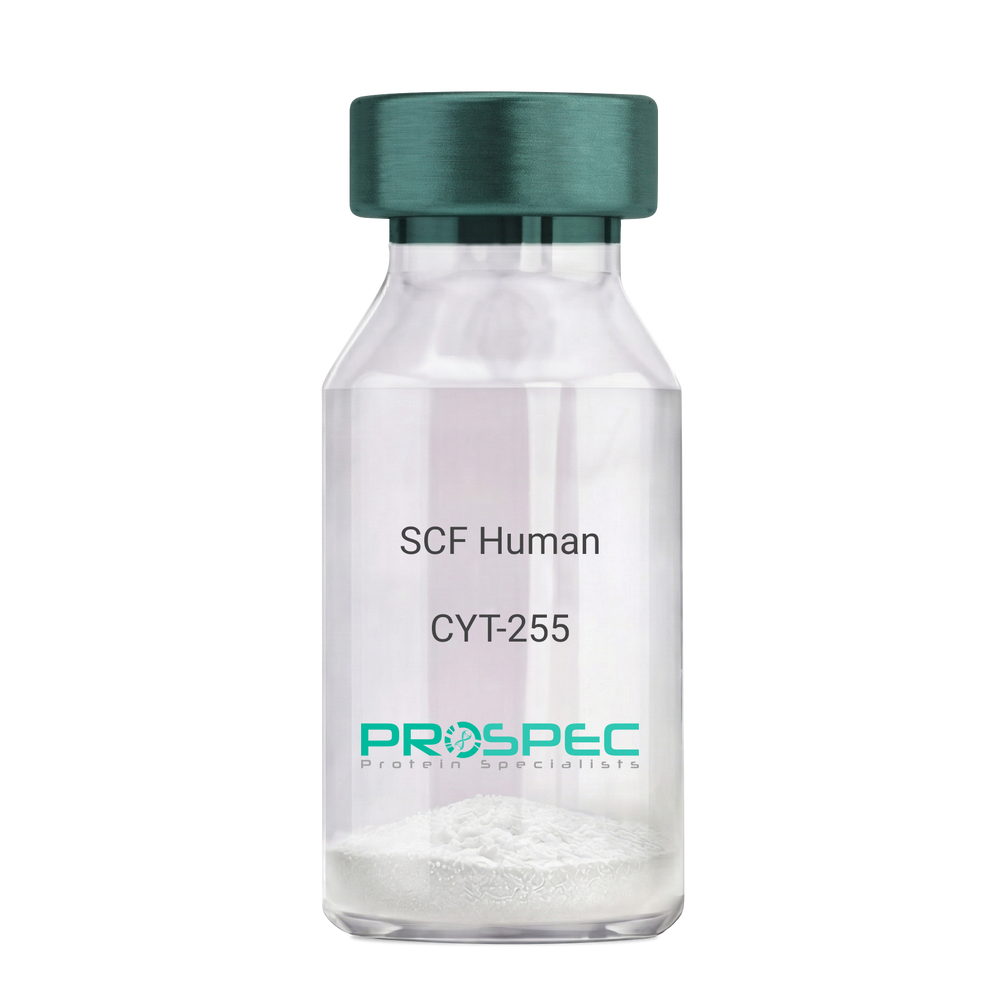
    SCF Human

    Description:

    Stem Cell Factor Human Recombinant

    Kit ligand Precursor, C-kit ligand, SCF, Mast cell growth factor, MGF, SF, KL-1, Kitl, DKFZp686F2250.

    Product # :

    CYT-255

    Price :

    Quantity :

    Shipping Method :

    Room Temp Icon

    Shipped at Room temp

    Add To Cart

    More Info

    • description
    • source
    • formulation
    • purity
    • biological activity
    • More Info

    Description

    Stem Cell Factor Human Recombinant produced in E.Coli is a single, non-glycosylated polypeptide chain containing 165 amino acids and having a molecular mass of 18409 Dalton. The SCF is purified by proprietary chromatographic techniques.

    Source

    Escherichia Coli.

    Formulation

    Lyophilized from a concentrated (1mg/ml) solution in water containing 0.02% NaHCO3.

    Purity

    Greater than 98.0% as determined by:
    (a) Analysis by SEC-HPLC.
    (b) Analysis by SDS-PAGE.

    Biological Activity

    The ED50 as determined by the dose-dependant stimulation of Human TF-1 cells is < 2 ng/ml, corresponding to a Specific Activity of 500,000 IU/mg.

    More Info

    • Introduction

      Stem cell factor / KIT ligand (SCF) is a cytokine which binds CD117(c-Kit). SCF is also known as "steel factor" or "c-kit ligand". SCF exists in two forms, cell surface bound SCF and soluble (or free) SCF. Soluble SCF is produced by the cleavage of surface bound SCF by metalloproteases. SCF is a growth factor important for the survival, proliferation, and differentiation of hematopoietic stem cells and other hematopoietic progenitor cells. One of its roles is to change the BFU-E (burst-forming unit-erythroid) cells, which are the earliest erythrocyte precursors in the erythrocytic series, into the CFU-E (colony-forming unit-erythroid).

    • Synonyms

      Kit ligand Precursor, C-kit ligand, SCF, Mast cell growth factor, MGF, SF, KL-1, Kitl, DKFZp686F2250.

    • Physical Appearance

      Sterile Filtered White lyophilized (freeze-dried) powder.

    • Stability

      Lyophilized KIT ligand although stable at room temperature for 3 weeks, should be stored desiccated below -18°C. Upon reconstitution SCF should be stored at 4°C between 2-7 days and for future use below -18°C.For long term storage it is recommended to add a carrier protein (0.1% HSA or BSA).Please prevent freeze-thaw cycles.

    • Solubility

      It is recommended to reconstitute the lyophilized Stem Cell Factor in sterile 18MΩ-cm H2O not less than 100µg/ml, which can then be further diluted to other aqueous solutions.

    • Amino Acid Sequence

      The sequence of the first five N-terminal amino acids was determined and was found to be Met-Glu-Gly-Ile-Cys.

    • Protein content

      Protein quantitation was carried out by two independent methods1. UV spectroscopy at 280 nm using the absorbency value of 0.52 as the extinction coefficient for a 0.1% (1mg/ml) solution. This value is calculated by the PC GENE computer analysis program of protein sequences (IntelliGenetics). 2. Analysis by RP-HPLC, using a standard solution of Stem Cell Factor as a Reference Standard.

    ProSpec's products are furnished for LABORATORY RESEARCH USE ONLY. The product may not be used as drugs, agricultural or pesticidal products, food additives or household chemicals.

    Scf Human
  • View Data Sheet

    Name :

    Noggin Mouse

    Description:

    Noggin Mouse Recombinant

    Noggin, SYM1, SYNS1, NOG.

    Product # :

    CYT-600

    Price :

    Quantity :

    Shipping Method :

    Room Temp Icon

    Shipped at Room temp

    Add To Cart

    More Info

    • description
    • source
    • formulation
    • purity
    • biological activity
    • More Info

    Description

    Noggin Mouse Recombinant produced in E.Coli is a non-glycosylated, disulfide-linked protein consisting of two 206 amino acid polypeptide chains, having a total molecular mass of approximately 46.4 kDa (each chain 23.2 kDa).

    Source

    Escherichia Coli.

    Formulation

    Lyophilized from a 0.2μm filtered solution in 30% acetonitrile, 0.1% TFA.

    Purity

    Greater than 95.0% as determined by SDS-PAGE.

    Biological Activity

    The ED50 as determined by inhibiting BMP-4-induced alkaline phosphatase production of murine ATDC5 cells is less than 2ng/ml, corresponding to a specific activity of > 5.0 × 10⁵ IU/mg in the presence of 5ng/ml BMP-4.

    More Info

    • Introduction

      The secreted polypeptide noggin, encoded by the NOG gene, binds and inactivates members of the transforming growth factor-beta (TGF-beta) superfamily signaling proteins, such as bone morphogenetic protein-4 (BMP4). By diffusing through extracellular matrices more efficiently than members of the TGF-beta superfamily, noggin may have a principal role in creating morphogenic gradients. Noggin appears to have pleiotropic effect, both early in development as well as in later stages. It was originally isolated from Xenopus based on its ability to restore normal dorsal-ventral body axis in embryos that had been artificially ventralized by UV treatment. The results of the mouse knockout of noggin suggest that it is involved in numerous developmental processes, such as neural tube fusion and joint formation. Recently, several dominant human NOG mutations in unrelated families with proximal symphalangism (SYM1) and multiple synostoses syndrome (SYNS1) were identified; both SYM1 and SYNS1 have multiple joint fusion as their principal feature, and map to the same region (17q22) as NOG. All NOG mutations altered evolutionarily conserved amino acid residues. The amino acid sequence of human noggin is highly homologous to that of Xenopus, rat and mouse.

    • Synonyms

      Noggin, SYM1, SYNS1, NOG.

    • Physical Appearance

      Sterile Filtered White lyophilized (freeze-dried) powder.

    • Stability

      Lyophilized Mouse Noggin although stable at room temperature for 3 weeks, should be stored desiccated below -18°C. Upon reconstitution Mouse Noggin should be stored at 4°C between 2-7 days and for future use below -18°C.For long term storage it is recommended to add a carrier protein (0.1% HSA or BSA).Please prevent freeze-thaw cycles.

    • Solubility

      It is recommended to be briefly centrifuged prior to opening to bring the contents to the bottom. Reconstitute in 10mM HAc to a concentration of 0.1-1.0 mg/ml. Further dilutions should be made in appropriate buffered solutions.

    • Amino Acid Sequence

      MQHYLHIRPAPSDNLPLVDLIEHPDPIFDPKEKDLNETLLRSLLGGHYD
      PGFMATSPPEDRPGGGGGPAGGAEDLAELDQLLRQRPSGAMPSEIKG
      LEFSEGLAQGKKQRLSKKLRRKLQMWLWSQTFCPVLYAWNDLGSRF
      WPRYVKVGSCFSKRSCSVPEGMVCKPSKSVHLTVLRWRCQRRGQR
      CGWIPIQYPIISECKCSC.

    ProSpec's products are furnished for LABORATORY RESEARCH USE ONLY. The product may not be used as drugs, agricultural or pesticidal products, food additives or household chemicals.

    Noggin Mouse
  • View Data Sheet

    Name :

    CXCL5 Human (8-78 a.a)

    Description:

    Epithelial Neutrophil-Activating Protein 78, 8-78 a.a. Human Recombinant (CXCL5)

    Small inducible cytokine B5, CXCL5, Epithelial-derived neutrophil-activating protein 78, Neutrophil-activating peptide ENA-78, ENA-78(1-78), chemokine (C-X-C motif) ligand 5, SCYB5.

    Product # :

    CHM-265

    Price :

    Quantity :

    Shipping Method :

    Room Temp Icon

    Shipped at Room temp

    Add To Cart

    More Info

    • description
    • source
    • formulation
    • purity
    • biological activity
    • More Info

    Description

    Epithelial Neutrophil-Activating Protein 78 Human Recombinant produced in E.Coli is a single, non-glycosylated, polypeptide chain containing 71 amino acids (8-78 a.a.) and having a molecular mass of 7.8kDa. The CXCL5 is purified by proprietary chromatographic techniques.

    Source

    Escherichia Coli.

    Formulation

    Lyophilized from a 0.2µm filtered concentrated solution in 1xPBS, pH 7.4.

    Purity

    Greater than 97.0% as determined by:
    (a) Analysis by RP-HPLC.
    (b) Analysis by SDS-PAGE.

    Biological Activity

    The biological activity was determined by its ability to chemoattract human peripheral blood neutrophils using a concentration range of 10.0-100.0 ng/ml.

    More Info

    • Introduction

      Chemokine (C-X-C motif) ligand 5 (CXCL5) is a small cytokine belonging to the CXC chemokine family that is also known as epithelial-derived neutrophil-activating peptide 78 (ENA-78). It is produced following stimulation of cells with the inflammatory cytokines interleukin-1 or tumor necrosis factor-alpha. Expression of CXCL5 has also been observed in eosinophils, and can be inhibited with the type II interferon IFN-?. This chemokine stimulates the chemotaxis of neutrophils possesses angiogenic properties. It elicits these effects by interacting with the cell surface chemokine receptor CXCR2. The gene for CXCL5 is encoded on four exons and is located on human chromosome 4 amongst several other CXC chemokine genes. CXCL5 has been implicated in connective tissue remodelling.

    • Synonyms

      Small inducible cytokine B5, CXCL5, Epithelial-derived neutrophil-activating protein 78, Neutrophil-activating peptide ENA-78, ENA-78(1-78), chemokine (C-X-C motif) ligand 5, SCYB5.

    • Physical Appearance

      Sterile Filtered White lyophilized (freeze-dried) powder.

    • Stability

      Lyophilized ENA78 although stable at room temperature for 3 weeks, should be stored desiccated below -18°C. Upon reconstitution CXCL5 should be stored at 4°C between 2-7 days and for future use below -18°C.For long term storage it is recommended to add a carrier protein (0.1% HSA or BSA).Please prevent freeze-thaw cycles.

    • Solubility

      It is recommended to reconstitute the lyophilized ENA-78 in sterile 18MΩ-cm H2O not less than 100µg/ml, which can then be further diluted to other aqueous solutions.

    • Amino Acid Sequence

      LRELRCVCLQ TTQGVHPKMI SNLQVFAIGP QCSKVEVVAS LKNGKEICLD PEAPFLKKVI QKILDGGNKE N.

    • Background

      What is the molecular weight/Mw of CXCL5 HUMAN (8-78 A.A) Protein?
      CXCL5 HUMAN (8-78 A.A) Protein has a total Mw of 7.8kDa.

      What is the source or expression system of CXCL5 HUMAN (8-78 A.A) Protein?
      Escherichia Coli.

      What is the Purity of CXCL5 HUMAN (8-78 A.A) Protein?
      CXCL5 HUMAN (8-78 A.A) Protein is >97% pure as determined by SDS-PAGE.

      What is the Biological Activity of CXCL5 HUMAN (8-78 A.A) Protein?
      The biological activity was determined by its ability to chemoattract human peripheral blood neutrophils using a concentration range of 10.0-100.0 ng/ml.

      What is the amino acid sequence of CXCL5 HUMAN (8-78 A.A) Protein?
      LRELRCVCLQ TTQGVHPKMI SNLQVFAIGP QCSKVEVVAS LKNGKEICLD PEAPFLKKVI QKILDGGNKE N.

      What applications can CXCL5 HUMAN (8-78 A.A) Protein be used in?
      CXCL5 HUMAN (8-78 A.A) Protein can probably be used in western blot, ELISA and Lateral Flow.

      What is the endotoxin level for CXCL5 HUMAN (8-78 A.A) Protein?
      The endotoxin level is minimal, CXCL5 HUMAN (8-78 A.A) Protein was purified using conventional chromatography techniques.


    ProSpec's products are furnished for LABORATORY RESEARCH USE ONLY. The product may not be used as drugs, agricultural or pesticidal products, food additives or household chemicals.

    Ena 78 Human 8 78 Aa
  • View Data Sheet

    Name :

    PDCD6IP Human

    Description:

    Programmed Cell Death 6 Interacting Protein Human Recombinant

    AIP1, Alix, PDCD6-Interacting Protein, DRIP4, ALG-2 interacting protein 1, Programmed cell death 6-interacting protein, Hp95, PDCD6IP, KIAA1375, MGC17003.

    Product # :

    PRO-792

    Price :

    Quantity :

    Shipping Method :

    Ice Icon

    Shipped with Ice Packs

    Add To Cart

    More Info

    • description
    • source
    • formulation
    • purity
    • More Info

    Description

    PDCD6IP Human Recombinant produced in E.Coli is a single, non-glycosylated polypeptide chain containing 412 amino acids (1-392 a.a.) and having a molecular mass of 45.8 kDa. The PDCD6IP is fused to a 20 amino acid His-tag at N-terminus and purified by conventional chromatography.

    Source

    Escherichia Coli.

    Formulation

    The protein solution (1mg/ml) contains 20mM Tris-HCl pH-8, 1mM DTT and 10% glycerol.

    Purity

    Greater than 95.0% as determined by SDS-PAGE.

    More Info

    • Introduction

      PDCD6IP is a Class E VPS protein which participates in concentration and sorting of cargo proteins of the multivesicular body or incorporation into intralumenal vesicles that are generated by invagination and scission from the limiting membrane of the endosome. PDCD6IP binds to the phospholipid lysobisphosphatidic acid which is abundant in MVBs internal membranes. The MVB pathway appears to require the sequential function of ESCRT-O, -I,-II and -III complexes. PDCD6IP is an adapter for a subset of ESCRT-III proteins, such as CHMP4, to function at distinct membranes. PDCD6IP is mandatory for completion of cytokinesis. PDCD6IP takes part in HIV-1 virus budding. PDCD6IP replaces TSG101 in its function of supporting HIV-1 release. PDCD6IP takes part in the regulation of both apoptosis and cell proliferation. PDCD6IP is a cytoplasmic protein that cooperates with apoptosis-associated proteins (ALG-2 and PDCD6) and with the endocytosis-regulator CIN85. Overexpression of PDCD6IP and endophilin

    • Synonyms

      AIP1, Alix, PDCD6-Interacting Protein, DRIP4, ALG-2 interacting protein 1, Programmed cell death 6-interacting protein, Hp95, PDCD6IP, KIAA1375, MGC17003.

    • Physical Appearance

      Sterile Filtered colorless solution.

    • Stability

      Store at 4°C if entire vial will be used within 2-4 weeks. Store, frozen at -20°C for longer periods of time. For long term storage it is recommended to add a carrier protein (0.1% HSA or BSA).Avoid multiple freeze-thaw cycles.

    • Amino Acid Sequence

      MGSSHHHHHH SSGLVPRGSH MATFISVQLK KTSEVDLAKP LVKFIQQTYP SGGEEQAQYC RAAEELSKLR RAAVGRPLDK HEGALETLLR YYDQICSIEP KFPFSENQIC LTFTWKDAFD KGSLFGGSVK LALASLGYEK SCVLFNCAAL ASQIAAEQNL DNDEGLKIAA KHYQFASGAF LHIKETVLSA LSREPTVDIS PDTVGTLSLI MLAQAQEVFF LKATRDKMKD AIIAKLANQA ADYFGDAFKQ CQYKDTLPKE VFPVLAAKHC IMQANAEYHQ SILAKQQKKF GEEIARLQHA AELIKTVASR YDEYVNVKDF SDKINRALAA AKKDNDFIYH DRVPDLKDLD PIGKATLVKS TPVNVPISQK FTDLFEKMVP VSVQQSLAAY NQRKADLVNR SIAQMREATT LA.

    ProSpec's products are furnished for LABORATORY RESEARCH USE ONLY. The product may not be used as drugs, agricultural or pesticidal products, food additives or household chemicals.

    Pdcd6Ip Human
  • View Data Sheet

    Name :

    TAGLN3 Human

    Description:

    Transgelin-3 Human Recombinant

    Transgelin 3, NP22, NP25, Neuronal protein 22, Neuronal protein NP25.

    Product # :

    PRO-946

    Price :

    Quantity :

    Shipping Method :

    Ice Icon

    Shipped with Ice Packs

    Add To Cart

    More Info

    • description
    • source
    • formulation
    • purity
    • More Info

    Description

    TAGLN3 Human Recombinant produced in E.coli is a single, non-glycosylated polypeptide chain containing 219 amino acids (1-199) and having a molecular mass of 24.6 kDa.The TAGLN3 is fused to a 20 amino acid His-Tag at N-terminus and purified by proprietary chromatographic techniques.

    Source

    E.coli.

    Formulation

    The TAGLN3 solution (0.5mg/ml) contains 20mM Tris-HCl buffer (pH 8.0), 1mM DTT and 20% glycerol.

    Purity

    Greater than 90% as determined by SDS-PAGE.

    More Info

    • Introduction

      TAGLN3 holds a putative Actin-binding domain, two potential phosphorylation sites, two EF-hand motifs and a calponin-homology (CH) domain. TAGLN3 is homologic to transgelin and calponin, two cytoskeleton-interacting proteins. TAGLN3 is a member of the calponin family, and is co-localized with Actin and tubulin, which indicates that TAGLN3 has a part in neuronal plasticity or as a signaling protein. As a result of a wide-ranging expression pattern, TAGLN3 is able to take different roles in the developing and adult brain.

    • Synonyms

      Transgelin 3, NP22, NP25, Neuronal protein 22, Neuronal protein NP25.

    • Physical Appearance

      Sterile Filtered colorless solution.

    • Stability

      Store at 4°C if entire vial will be used within 2-4 weeks. Store, frozen at -20°C for longer periods of time. For long term storage it is recommended to add a carrier protein (0.1% HSA or BSA).Avoid multiple freeze-thaw cycles.

    • Amino Acid Sequence

      MGSSHHHHHH SSGLVPRGSH MANRGPSYGL SREVQEKIEQ KYDADLENKL VDWIILQCAE DIEHPPPGRA HFQKWLMDGT VLCKLINSLY PPGQEPIPKI SESKMAFKQM EQISQFLKAA ETYGVRTTDI FQTVDLWEGK DMAAVQRTLM ALGSVAVTKD DGCYRGEPSW FHRKAQQNRR GFSEEQLRQG QNVIGLQMGS NKGASQAGMT GYGMPRQIM

    ProSpec's products are furnished for LABORATORY RESEARCH USE ONLY. The product may not be used as drugs, agricultural or pesticidal products, food additives or household chemicals.

    Tagln3 Human
  • View Data Sheet

    Name :

    Filamin

    Description:

    Filamin

    Product # :

    PRO-521

    Price :

    Quantity :

    Shipping Method :

    Room Temp Icon

    Shipped at Room temp

    Add To Cart

    More Info

    • description
    • source
    • formulation
    • purity
    • More Info

    Description

    Ultra Pure Filamin having a Molecular mass of 250 kDa.

    Source

    Chicken Gizzard.

    Formulation

    The protein was lyophilized from a 1mg/ml solution containing 20mM Tris / acetate buffer pH 7.6, 0.1mM EDTA, 2mM DTT, 9M urea and 20mM NaCl.

    Purity

    Greater than 90.0% as determined by SDS-PAGE.

    More Info

    • Introduction

      Filamin is a large (270kd) dimeric actin crosslinking protein from a variety of sources, which helps to stabilize the 3D cortical actin network. The fundamental structure of filamin is well conserved and consists of an actin binding domain at the N-terminus followed by a C-terminal rod domain consisting of numerous repeat segments ranging from 4 in C. elegans to 24 in mammalian cells. Each repeat in the rod domain consists of roughly 100 residues and forms an immunoglobulin like fold. Such immunoglobulin folds have been found in a variety of proteins and are responsible for protein-protein interactions. Filamin Human actin-binding protein (ABP), aka filamin, crosslinks actin filaments into orthogonal networks in cortical cytoplasm and participates in the anchoring of membrane proteins for the actin cytoskeleton. Mammalian filamin interacts directly with at least 30 proteins such as transmembrane receptors, second messenger-associated proteins, protein kinases, phosphatases and cytoskeletal proteins and these interactions have been shown to require one or more of the repeat elements in the rod domain.

    • Physical Appearance

      Sterile Filtered White lyophilized (freeze-dried) powder.

    • Stability

      Lyophilized Filamin although stable at room temperature for 3 weeks, should be stored desiccated below -18°C. Upon reconstitution Filamin should be stored at 4°C between 2-7 days and for future use below -18°C.For long term storage it is recommended to add a carrier protein (0.1% HSA or BSA).Please prevent freeze-thaw cycles.

    • Solubility

      It is recommended to reconstitute the lyophilized Filamin protein at a concentration of 0.5mg/ml in water.

    ProSpec's products are furnished for LABORATORY RESEARCH USE ONLY. The product may not be used as drugs, agricultural or pesticidal products, food additives or household chemicals.

    Filamin
  • View Data Sheet

    Name :

    CCL3L1 Human, His

    Description:

    LD78-beta (CCL3L1) Human Recombinant, His Tag

    C-C motif chemokine 3-like 1, G0/G1 switch regulatory protein 19-2, LD78-beta(1-70), PAT 464.2, Small-inducible cytokine A3-like 1, Tonsillar lymphocyte LD78 beta protein, CCL3L1, D17S1718, G0S19-2, SCYA3L1, LD78, 464.2, SCYA3L, LD78BETA, MGC12815.

    Product # :

    CHM-251

    Price :

    Quantity :

    Shipping Method :

    Ice Icon

    Shipped with Ice Packs

    Add To Cart

    More Info

    • description
    • source
    • formulation
    • purity
    • More Info

    Description

    CCL3L1 Human Recombinant fused with a 22 amino acid His tag at N-terminus produced in E.Coli is a single, non-glycosylated, polypeptide chain containing 90 amino acids (26-93 a.a.) and having a molecular mass of 10kDa. The CCL3L1 is purified by proprietary chromatographic techniques.

    Source

    Escherichia Coli.

    Formulation

    The CCL3L1 solution (0.25 mg/ml) contains Phosphate Buffered Saline pH7.4 containing 10% glycerol.

    Purity

    Greater than 90.0% as determined by SDS-PAGE.

    More Info

    • Introduction

      CCL3L1 is a small cytokine that belongs to the CC chemokines. The CCL3L1 gene is one of several cytokine genes clustered on the q-arm of chromosome 17. CCL3L1 is involved in immunoregulatory and inflammatory processes. CCL3L1 binds to several chemokine receptors including CCBP2 and CCR5. CCR5 is a co-receptor for HIV, and binding of the CCL3L1 protein to CCR5 inhibits HIV entry.

    • Synonyms

      C-C motif chemokine 3-like 1, G0/G1 switch regulatory protein 19-2, LD78-beta(1-70), PAT 464.2, Small-inducible cytokine A3-like 1, Tonsillar lymphocyte LD78 beta protein, CCL3L1, D17S1718, G0S19-2, SCYA3L1, LD78, 464.2, SCYA3L, LD78BETA, MGC12815.

    • Physical Appearance

      Sterile Filtered colorless solution.

    • Stability

      Store at 4°C if entire vial will be used within 2-4 weeks. Store, frozen at -20°C for longer periods of time. For long term storage it is recommended to add a carrier protein (0.1% HSA or BSA).Avoid multiple freeze-thaw cycles.

    • Amino Acid Sequence

      MGSSHHHHHH SSGLVPRGSH MSLAADTPTA CCFSYTSRQI PQNFIADYFE TSSQCSKPSV IFLTKRGRQV CADPSEEWVQ KYVSDLELSA.

    • Background

      What is the molecular weight/Mw of CCL3L1 HUMAN, HIS Protein?
      CCL3L1 HUMAN, HIS Protein has a total Mw of 10kDa.

      What is the source or expression system of CCL3L1 HUMAN, HIS Protein?
      Escherichia Coli.

      What is the Purity of CCL3L1 HUMAN, HIS Protein?
      CCL3L1 HUMAN, HIS Protein is >90% pure as determined by SDS-PAGE.

      What is the Biological Activity of CCL3L1 HUMAN, HIS Protein?
      The biological functionality of CCL3L1 HUMAN, HIS Protein will be determined in the future.

      What is the amino acid sequence of CCL3L1 HUMAN, HIS Protein?
      MGSSHHHHHH SSGLVPRGSH MSLAADTPTA CCFSYTSRQI PQNFIADYFE TSSQCSKPSV IFLTKRGRQV CADPSEEWVQ KYVSDLELSA.

      What applications can CCL3L1 HUMAN, HIS Protein be used in?
      CCL3L1 HUMAN, HIS Protein can probably be used in western blot, ELISA and Lateral Flow.

      What is the endotoxin level for CCL3L1 HUMAN, HIS Protein?
      The endotoxin level is minimal, CCL3L1 HUMAN, HIS Protein was purified using conventional chromatography techniques.


    ProSpec's products are furnished for LABORATORY RESEARCH USE ONLY. The product may not be used as drugs, agricultural or pesticidal products, food additives or household chemicals.

    Ccl3L1 Human His
  • View Data Sheet

    Name :

    IP 10 Mouse

    Description:

    IP-10 Mouse Recombinant (CXCL10)

    Small inducible cytokine B10, CXCL10, 10 kDa, Gamma-IP10, IP-10, chemokine (C-X-C motif) ligand 10, C7, IFI10, INP10, crg-2, mob-1, SCYB10, gIP-10.

    Product # :

    CHM-336

    Price :

    Quantity :

    Shipping Method :

    Room Temp Icon

    Shipped at Room temp

    Add To Cart

    More Info

    • description
    • source
    • formulation
    • purity
    • biological activity
    • More Info
    • sds-page

    Description

    IP-10 Mouse Recombinant produced in E.Coli is a single,non-glycosylated, polypeptide chain containing 77 amino acids and having a molecular mass of 8701 Dalton. The IP-10 is purified by proprietary chromatographic techniques.

    Source

    Escherichia Coli.

    Formulation

    IP-10 was lyophilized from a 0.2µm filtered concentrated solution in 1×PBS, pH 7.4.

    Purity

    Greater than 97.0% as determined by:
    (a) Analysis by RP-HPLC.
    (b) Analysis by SDS-PAGE.

    Biological Activity

    Determined by its ability to chemoattract hCXCR3/HEK293 cells using a concentration range of 100.0-500.0 ng/ml.

    sds-page

    cxcl10 mouse sds-page - Product image 1

    More Info

    • Introduction

      Chemokine (C-X-C motif) ligand 10 (CXCL10) is a small cytokine belonging to the CXC chemokine family. CXCL10 is secreted by several cell types. These cell types include monocytes, endothelial cells and fibroblasts. CXCL10 has been attributed to several roles, such as chemoattraction for monocytes and T cells, promotion of T cell adhesion to endothelial cells, antitumor activity, and inhibition of bone marrow colony formation and angiogenesis. The gene for CXCL10 is located on human chromosome 4 in a cluster among several other CXC chemokines. This chemokine elicits its effects by binding to the cell surface chemokine receptor CXCR3. The three-dimensional crystal structure of this chemokine has been determined under 3 different conditions to a resolution of up to 1.92A.

    • Synonyms

      Small inducible cytokine B10, CXCL10, 10 kDa, Gamma-IP10, IP-10, chemokine (C-X-C motif) ligand 10, C7, IFI10, INP10, crg-2, mob-1, SCYB10, gIP-10.

    • Physical Appearance

      Sterile Filtered White lyophilized (freeze-dried) powder.

    • Stability

      Lyophilized IP-10 although stable at room temperature for 3 weeks, should be stored desiccated below -18°C. Upon reconstitution CXCL10 should be stored at 4°C between 2-7 days and for future use below -18°C. For long term storage it is recommended to add a carrier protein (0.1% HSA or BSA).Please prevent freeze-thaw cycles.

    • Solubility

      It is recommended to reconstitute the lyophilized IP-10 in sterile 18MΩ-cm H2O not less than 100µg/ml, which can then be further diluted to other aqueous solutions.

    • Amino Acid Sequence

      IPLARTVRCN CIHIDDGPVR MRAIGKLEII PASLSCPRVE IIATMKKNDE QRCLNPESKT IKNLMKAFSQ KRSKRAP.

    • Protein content

      Protein quantitation was carried out by two independent methods:1. UV spectroscopy at 280 nm using the absorbency value of 0.02 as the extinction coefficient for a 0.1% (1mg/ml) solution. This value is calculated by the PC GENE computer analysis program of protein sequences (IntelliGenetics). 2. Analysis by RP-HPLC, using a standard solution of IP-10 as a Reference Standard.

    ProSpec's products are furnished for LABORATORY RESEARCH USE ONLY. The product may not be used as drugs, agricultural or pesticidal products, food additives or household chemicals.

    Ip 10 Mouse
  • View Data Sheet

    Name :

    LCAT Human

    Description:

    Lecithin-Cholesterol Acyltransferase Human Recombinant

    Phosphatidylcholine-sterol acyltransferase, Lecithin-cholesterol acyltransferase, Phospholipid-cholesterol acyltransferase, LCAT.

    Product # :

    ENZ-380

    Price :

    Quantity :

    Shipping Method :

    Ice Icon

    Shipped with Ice Packs

    Add To Cart

    More Info

    • description
    • source
    • formulation
    • purity
    • More Info

    Description

    LCAT Human Recombinant produced in E.Coli is a single, non-glycosylated, polypeptide chain containing 441 amino acids (25-440) which includes a 25 amino acid His Tag fused at N-terminus and having a total molecular mass of 49.8 kDa. LCAT Human Recombinant is purified by proprietary chromatographic techniques.

    Source

    Escherichia Coli.

    Formulation

    LCAT protein solution (0.5mg/ml) containing 20mM Tris-HCl buffer (pH 8.0), 0.4M Urea and 10% glycerol.

    Purity

    Greater than 85.0% as determined by SDS-PAGE.

    More Info

    • Introduction

      LCAT is an extracellular cholesterol esterifying enzyme, lecithin-cholesterol acyltransferase. The esterification of cholesterol is required for cholesterol transport. LCAT is a essential enzyme in the extracellular metabolism of plasma lipoproteins.

    • Synonyms

      Phosphatidylcholine-sterol acyltransferase, Lecithin-cholesterol acyltransferase, Phospholipid-cholesterol acyltransferase, LCAT.

    • Physical Appearance

      Sterile filtered colorless solution.

    • Stability

      Store at 4°C if entire vial will be used within 2-4 weeks. Store, frozen at -20°C for longer periods of time. For long term storage it is recommended to add a carrier protein (0.1% HSA or BSA).Avoid multiple freeze-thaw cycles.

    • Amino Acid Sequence

      MGSSHHHHHH SSGLVPRGSH MGSHMFWLLN VLFPPHTTPK AELSNHTRPV ILVPGCLGNQ LEAKLDKPDV VNWMCYRKTE DFFTIWLDLN MFLPLGVDCW IDNTRVVYNR SSGLVSNAPG VQIRVPGFGK TYSVEYLDSS KLAGYLHTLV QNLVNNGYVR DETVRAAPYD WRLEPGQQEE YYRKLAGLVE EMHAAYGKPV FLIGHSLGCL HLLYFLLRQP QAWKDRFIDG FISLGAPWGG SIKPMLVLAS GDNQGIPIMS SIKLKEEQRI TTTSPWMFPS RMAWPEDHVF ISTPSFNYTG RDFQRFFADL HFEEGWYMWL QSRDLLAGLP APGVEVYCLY GVGLPTPRTY IYDHGFPYTD PVGVLYEDGD DTVATRSTEL CGLWQGRQPQ PVHLLPLHGI QHLNMVFSNL TLEHINAILL GAYRQGPPAS PTASPEPPPP E.

    ProSpec's products are furnished for LABORATORY RESEARCH USE ONLY. The product may not be used as drugs, agricultural or pesticidal products, food additives or household chemicals.

    Lcat Human
  • View Data Sheet

    Name :

    CFL2 Human

    Description:

    Cofilin-2 Human Recombinant

    Cofilin-2, Cofilin- muscle isoform, CFL2, NEM7.

    Product # :

    PRO-912

    Price :

    Quantity :

    Shipping Method :

    Ice Icon

    Shipped with Ice Packs

    Add To Cart

    More Info

    • description
    • source
    • formulation
    • purity
    • More Info

    Description

    CFL2 Human Recombinant produced in E.Coli is a single, non-glycosylated polypeptide chain containing 186 amino acids (1-166 a.a.) and having a molecular mass of 20.9kDa.CFL2 is fused to a 20 amino acid His-tag at N-terminus & purified by proprietary chromatographic techniques.

    Source

    Escherichia Coli.

    Formulation

    CFL2 protein solution (1mg/ml) containing 20mM Tris-HCl buffer (pH 8.0), 2mM DTT, 10% glycerol and 50mM NaCl.

    Purity

    Greater than 90.0% as determined by SDS-PAGE.

    More Info

    • Introduction

      CFL2 protein is a member of the actin-binding proteins ADF family which contains 1 ADF-H domain. Cofilin is a broadly distributed intracellular actin-modulating protein which binds and depolymerizes filamentous F-actin and inhibits the polymerization of monomeric G-actin in a pH-dependent manner. Defects in the CFL2 gene are the cause of nemaline myopathy type 7 (NEM7).

    • Synonyms

      Cofilin-2, Cofilin- muscle isoform, CFL2, NEM7.

    • Physical Appearance

      Sterile filtered colorless solution.

    • Stability

      Store at 4°C if entire vial will be used within 2-4 weeks. Store, frozen at -20°C for longer periods of time. For long term storage it is recommended to add a carrier protein (0.1% HSA or BSA).Avoid multiple freeze-thaw cycles.

    • Amino Acid Sequence

      MGSSHHHHHH SSGLVPRGSH MASGVTVNDE VIKVFNDMKV RKSSTQEEIK KRKKAVLFCL SDDKRQIIVE EAKQILVGDI GDTVEDPYTS FVKLLPLNDC RYALYDATYE TKESKKEDLV FIFWAPESAP LKSKMIYASS KDAIKKKFTG IKHEWQVNGL DDIKDRSTLG EKLGGNVVVS LEGKPL.

    ProSpec's products are furnished for LABORATORY RESEARCH USE ONLY. The product may not be used as drugs, agricultural or pesticidal products, food additives or household chemicals.

    Cfl2 Human
  • View Data Sheet

    Name :

    PSMD10 Human

    Description:

    Gankyrin Human Recombinant

    26S proteasome non-ATPase regulatory subunit 10, 26S proteasome regulatory subunit p28, Gankyrin, PSMD10, p28, dJ889N15.2.

    Product # :

    ENZ-404

    Price :

    Quantity :

    Shipping Method :

    Ice Icon

    Shipped with Ice Packs

    Add To Cart

    More Info

    • description
    • source
    • formulation
    • purity
    • More Info

    Description

    PSMD10 Human Recombinant produced in E.Coli is a single, non-glycosylated polypeptide chain containing 226 amino acids and having a molecular mass of 24.4 kDa.

    Source

    Escherichia Coli.

    Formulation

    The PSMD10 protein solution (1mg/ml) contains 1x PBS pH-7.4 & 10% glycerol.

    Purity

    Greater than 95.0% as determined by SDS-PAGE.

    More Info

    • Introduction

      Gankyrin (proteasome 26S subunit) is a multicatalytic proteinase oncoprotein commonly overexpressed in most hepatocellular carcinomas. Proteasomes are found throughout eukaryotic cells at a high concentrations and cleave peptides in an ATP/ubiquitin-dependent process in a non-lysosomal pathway. Gankyrin interacts with S6 ATPase of the 19S regulatory particle of the 26S proteasome. Gankyrin is involved in theregulation of the phosphorylation of the retinoblastoma protein by CDK4, and to enhance the ubiquitinylation of p53 by MDM2. Gankyrin consists of 7 ankyrin repeats and is structurally similar to I kappa Bs. Gankyrin acts as a regulatory subunit of the 26s proteasome which is involved in the atp-dependent degradation of ubiquitinated proteins. Gankyrin is involved in progression of esophageal squamous cell carcinoma. gankyrin plays an oncogenic role especially in early stages of human epatocarcinogenesis. Gankyrin binds to NF-kappaB and suppresses its activity at the transcription level by modulating acetylation through SIRT1. Structural comparison between Gankyrin & p16(INK4A) identified numerous residues of gankyrin that are potentially important for CDK4 binding.

    • Synonyms

      26S proteasome non-ATPase regulatory subunit 10, 26S proteasome regulatory subunit p28, Gankyrin, PSMD10, p28, dJ889N15.2.

    • Physical Appearance

      Sterile Filtered colorless solution.

    • Stability

      Store at 4°C if entire vial will be used within 2-4 weeks. Store, frozen at -20°C for longer periods of time. For long term storage it is recommended to add a carrier protein (0.1% HSA or BSA).Avoid multiple freeze-thaw cycles.

    • Amino Acid Sequence

      MEGCVSNLMV CNLAYSGKLE ELKESILADK SLATRTDQDS RTALHWACSA GHTEIVEFLL QLGVPVNDKD DAGWSPLHIA ASAGRDEIVK ALLGKGAQVN AVNQNGCTPL HYAASKNRHE IAVMLLEGGA NPDAKDHYEA TAMHRAAAKG NLKMIHILLY YKASTNIQDT EGNTPLHLAC DEERVEEAKL LVSQGASIYI ENKEEKTPLQ VAKGGLGLIL KRMVEG.

    ProSpec's products are furnished for LABORATORY RESEARCH USE ONLY. The product may not be used as drugs, agricultural or pesticidal products, food additives or household chemicals.

    Psmd10 Human
  • View Data Sheet

    Name :

    LYPLA1 Mouse

    Description:

    Lysophospholipase I Mouse Recombinant

    Acyl-protein thioesterase 1, LYPLA1, APT-1, LPL1, LYSOPLA.

    Product # :

    ENZ-565

    Price :

    Quantity :

    Shipping Method :

    Ice Icon

    Shipped with Ice Packs

    Add To Cart

    More Info

    • description
    • source
    • formulation
    • purity
    • More Info

    Description

    LYPLA1 produced in E.Coli is a single, non-glycosylated polypeptide chain containing 250 amino acids (1-230a.a.) and having a molecular mass of 26.8kDa.LYPLA1 is fused to a 20 amino acid His-tag at N-terminus & purified by proprietary chromatographic techniques.

    Source

    Escherichia Coli.

    Formulation

    The LYPLA1 protein solution (0.5mg/1ml) is formulated in 20mM Tris-HCl buffer (pH8.0)0.1M NaCl,1mM DTT and 10% glycerol.

    Purity

    Greater than 90% as determined by SDS-PAGE.

    More Info

    • Introduction

      LYPLA1 is lysophospholipase which performs on biological membranes to regulate the multifunctional lysophospholipids. LYPLA1 protein hydrolyzes fatty acids from S-acylated cysteine residues in proteins like trimeric G alpha proteins or HRAS and in addition has depalmitoylating activity.

    • Synonyms

      Acyl-protein thioesterase 1, LYPLA1, APT-1, LPL1, LYSOPLA.

    • Physical Appearance

      Sterile Filtered clear solution.

    • Stability

      Store at 4°C if entire vial will be used within 2-4 weeks. Store, frozen at -20°C for longer periods of time. For long term storage it is recommended to add a carrier protein (0.1% HSA or BSA).Avoid multiple freeze-thaw cycles.

    • Amino Acid Sequence

      MGSSHHHHHH SSGLVPRGSH MCGNNMSAPM PAVVPAARKA TAAVIFLHGL GDTGHGWAEA FAGIKSPHIK YICPHAPVMP VTLNMNMAMP SWFDIVGLSP DSQEDESGIK QAAETVKALI DQEVKNGIPS NRIILGGFSQ GGALSLYTAL TTQQKLAGVT ALSCWLPLRA SFSQGPINSA NRDISVLQCH GDCDPLVPLM FGSLTVERLK ALINPANVTF KIYEGMMHSS CQQEMMDVKH FIDKLLPPID.

    ProSpec's products are furnished for LABORATORY RESEARCH USE ONLY. The product may not be used as drugs, agricultural or pesticidal products, food additives or household chemicals.

    Lypla1 Mouse
  • View Data Sheet

    Name :

    RAB27A Human

    Description:

    RAB27A, Member RAS Oncogene Family Human Recombinant

    GS2, RAM, RAB27, GS2, HsT18676, MGC117246, RAB27A, member RAS oncogene family.

    Product # :

    PRO-825

    Price :

    Quantity :

    Shipping Method :

    Ice Icon

    Shipped with Ice Packs

    Add To Cart

    More Info

    • description
    • source
    • formulation
    • purity
    • More Info

    Description

    RAB27A Human Recombinant produced in E.Coli is a single, non-glycosylated, polypeptide chain containing 241 amino acids (1-221a.a.) and having a molecular mass of 27 kDa. RAB27A protein is fused to a 20 amino acid His tag at N-terminus and is purified by standard chromatography.

    Source

    Escherichia Coli.

    Formulation

    RAB27A Human solution containing 20mM Trsi HCL pH-8, 1mM DTT, & 20% glycerol.

    Purity

    Greater than 90% as determined by SDS-PAGE.

    More Info

    • Introduction

      RAB27A is part of the small GTPase superfamily, Rab family. RAB27A is membrane-bound and participates in protein transport and small GTPase mediated signal transduction. Mutations in this RAB27A are associated with Griscelli syndrome type 2. RAB27A is involved in cytotoxic granule exocytosis in lymphocytes.RAB27A is necessary for both granule maturation and granule docking and priming at the immunologic synapse.

    • Synonyms

      GS2, RAM, RAB27, GS2, HsT18676, MGC117246, RAB27A, member RAS oncogene family.

    • Physical Appearance

      Sterile filtered colorless solution.

    • Stability

      Store at 4°C if entire vial will be used within 2-4 weeks. Store, frozen at -20°C for longer periods of time. For long term storage it is recommended to add a carrier protein (0.1% HSA or BSA). Avoid multiple freeze-thaw cycles.

    • Amino Acid Sequence

      MGSSHHHHHH SSGLVPRGSH MSDGDYDYLI KFLALGDSGV GKTSVLYQYT DGKFNSKFIT TVGIDFREKR VVYRASGPDG ATGRGQRIHL QLWDTAGQER FRSLTTAFFR DAMGFLLLFD LTNEQSFLNV RNWISQLQMH AYCENPDIVL CGNKSDLEDQ RVVKEEEAIA LAEKYGIPYF ETSAANGTNI SQAIEMLLDL IMKRMERCVD KSWIPEGVVR SNGHASTDQL SEEKEKGACG C.

    ProSpec's products are furnished for LABORATORY RESEARCH USE ONLY. The product may not be used as drugs, agricultural or pesticidal products, food additives or household chemicals.

    Rab27A Human
  • View Data Sheet

    Name :

    Protein-A/G/L

    Description:

    Protein A/G/L Recombinant

    Product # :

    PRO-1936

    Price :

    Quantity :

    Shipping Method :

    Room Temp Icon

    Shipped at Room temp

    Add To Cart

    More Info

    • description
    • source
    • formulation
    • purity
    • More Info

    Description

    Recombinant Protein-A/G/L produced in E.Coli is a single non-glycosylated polypeptide chain. Protein- A/G/L is comprised of 5 IgG-binding regions of Protein A (E-D-A-B-C), 2 of protein G (C1-C3) and 5 of Protein L (B1-B2-B3-B4-B5) containing 805 amino acids in total and having a molecular mass of 89.2kDa. Cell wall binding region, cell membrane binding region and albumin binding region have been eliminated from the recombinant Protein- A/G/L to guarantee the maximum specific IgG binding.

    Source

    Escherichia Coli.

    Formulation

    Protein- A/G/L was lyophilized without any additives.

    Purity

    Greater than 95.0% as determined by:
    (a) Analysis by SEC-HPLC.
    (b) Analysis by SDS-PAGE.

    More Info

    • Introduction

      The recombinant Protein A/G/L is a genetically engineered protein which combines the IgG binding profiles of all Protein A, Protein G and Protein L. Protein A/G/L is a gene fusion product. Recombinant fusion protein A/G/L is comprised of 5 Ig-binding regions of protein L (B1-B2-B3-B4-B5), 5 IgG binding domains from Protein A (E-D-A-B-C) and 2 Ig-binding region of protein G (C1-C3). The recombinant Protein A/G/L is ideal for purification of monoclonal or polyclonal IgG antibodies. Protein A/G/L binds to IgG from humans, mice, rats, cows, goats, sheep, rabbits, guinea pigs, pigs, dogs and cats.

    • Physical Appearance

      Sterile Filtered White lyophilized (freeze-dried) powder.

    • Stability

      Lyophilized Protein-A/G/L although stable at room temperature for 3 weeks, should be stored desiccated below -18°C. Upon reconstitution Protein-A/G/L should be stored at 4°C between 2-7 days and for future use below -18°C. For long term storage it is recommended to add a carrier protein (0.1% HSA or BSA). Please prevent freeze-thaw cycles.

    • Solubility

      It is recommended to reconstitute the lyophilized Protein-A/G/L in sterile 18M-cm H2O not less than 0.1mg/ml, which can then be further diluted to other aqueous solutions.

    • Amino Acid Sequence

      NAAQHDEAQQ NAFYQVLNMP NLNADQRNGF IQSLKDDPSQ SANVLGEAQK LNDSQAPKAD AQQNNFNKDQ QSAFYEILNM PNLNEAQRNG FIQSLKDDPS QSTNVLGEAK KLNESQAPKA DNNFNKEQQN AFYEILNMPN LNEEQRNGFI QSLKDDPSQS ANLLSEAKKL NESQAPKADN KFNKEQQNAF YEILHLPNLN EEQRNGFIQS LKDDPSQSAN LLAEAKKLND AQAPKADNKF NKEQQNAFYE ILHLPNLTEE QRNGFIQSLK DDPSVSKEIL AEAKKLNDAQ APKEEDSLEG SGSGTYKLIL NGKTLKGETT TEAVDAATAE KVFKQYANDN GVDGEWTYDD ATKTFTVTEK PEVIDASELT PAVTTYKLVI NGKTLKGETT TKAVDAETAE KAFKQYANDN GVDGVWTYDD ATKTFTVTEE PRARPGSGSG KEETPETPET DSEEEVTIKA NLIFANGSTQ TAEFKGTFEK ATSEAYAYAD TLKKDNGEYT VDVADKGYTL NIKFAGKEKT PEEPKEEVTI KANLIYADGK TQTAEFKGTF EEATAEAYRY ADALKKDNGE YTVDVADKGY TLNIKFAGKE KTPEEPKEEV TIKANLIYAD GKTQTAEFKG TFEEATAEAY RYADLLAKEN GKYTVDVADK GYTLNIKFAG KEKTPEEPKE EVTIKANLIY ADGKTQTAEF KGTFAEATAE AYRYADLLAK ENGKYTADLE DGGYTINIRF AGKKVDEKPE EKEQVTIKEN IYFEDGTVQT ATFKGTFAEA TAEAYRYADL LSKEHGKYTA DLEDGGYTIN IRFAG.

    ProSpec's products are furnished for LABORATORY RESEARCH USE ONLY. The product may not be used as drugs, agricultural or pesticidal products, food additives or household chemicals.

    Protein A G L
  • View Data Sheet

    Name :

    il 18 Human

    Description:

    Interleukin-18 Human Recombinant

    IGIF, IL-1g, IL-18, IL1F4, MGC12320, IFN-gamma-inducing factor, Interleukin-1 gamma, IL-1 gamma, Iboctadekin.

    Product # :

    CYT-269

    Price :

    Quantity :

    Shipping Method :

    Room Temp Icon

    Shipped at Room temp

    Add To Cart

    More Info

    • description
    • source
    • formulation
    • purity
    • More Info

    Description

    Interleukin-18 Human Recombinant produced in E.Coli is a single, non-glycosylated polypeptide chain containing 157 amino acids and having a molecular mass of 18.2 kDa. The IL-18 is purified by proprietary chromatographic techniques.

    Source

    Escherichia Coli.

    Formulation

    Lyophilized from a 0.2µm filtered concentrated solution in PBS, pH 7.0.

    Purity

    Greater than 95.0% as determined by SDS-PAGE.

    More Info

    • Introduction

      IL-18 is a proinflammatory cytokine. This cytokine can induce the IFN-gamma production of T cells. The combination of this cytokine and IL12 has been shown to inhibit IL4 dependent IgE and IgG1 production, and enhance IgG2a production of B cells. IL-18 binding protein (IL18BP) can specifically interact with this cytokine, and thus negatively regulate its biological activity.

    • Synonyms

      IGIF, IL-1g, IL-18, IL1F4, MGC12320, IFN-gamma-inducing factor, Interleukin-1 gamma, IL-1 gamma, Iboctadekin.

    • Physical Appearance

      Sterile Filtered White lyophilized (freeze-dried) powder.

    • Stability

      Lyophilized Interleukin 18 although stable at room temperature for 3 weeks, should be stored desiccated below -18°C. Upon reconstitution IL18 should be stored at 4°C between 2-7 days and for future use below -18°C.For long term storage it is recommended to add a carrier protein (0.1% HSA or BSA).Please prevent freeze-thaw cycles.

    • Solubility

      It is recommended to reconstitute the lyophilized Interleukin 18 in sterile PBS at 0.1mg/ml, which can then be further diluted to other aqueous solutions.

    • Amino Acid Sequence

      YFGKLESKLS VIRNLNDQVL FIDQGNRPLF EDMTDSDCRD NAPRTIFIIS MYKDSQPRGM AVTISVKCEK ISTLSCENKI ISFKEMNPPD NIKDTKSDII FFQRSVPGHD NKMQFESSSY EGYFLACEKE RDLFKLILKK EDELGDRSIM FTVQNED

    • Background

      Also known as IFN-gamma inducing factor, Interleukin-18 or IL18 is a protein. In humans this protein is encoded by the IL18 gene. The protein is a proinflammatory cytokine.

      Mechanism
      The levels of IL-18 in the human body are increased at sites of inflammation. This includes cases of rheumatoid arthritis as well as other similar conditions. Osteoblastic cells express the protein and it is capable of inhibiting osteoclast formation. It is able to do this through a variety of mechanisms.
      For instance, it is able to stimulate GM-CSF. This is created by T cells and is a response to treatment using IL-18. As well as this, the cytokine does stimulate INF-y production through vivo in bone. Furthermore, the impact on bone resorption and osteoclastogenesis is increased when used in conjunction with IL-12 treatment. Studies have shown that IL-18 provides an indirect stimulus on osteoclastogenesis due to the effect it has on T lymphocytes.
      Furthermore, evidence has shown that IL-18 does increase the production of OPG. This was studied in research on transgenic mice that overexpressed IL-18. In these cases osteoclasts decreased as did bone mass. This suggested that IL-18 also has an impact on bone growth.

      Interactions
      Research has also explored the different interactions of IL-18 on other proteins. This includes the interaction between IL-18 and IL-18R. This has been shown to decrease the power of protective immunity and increase pathogenic responses during an infection involving intracellular bacteria. This interaction suggests that the presence or absence of IL-18R signal does impact the pathogenic compared to protective immunity.
      Another interaction between interleukin 19 and Astrocyte has shown that it can improve neuropathic pain processing following nerve injury. It is proposed this is due to the fact that the nociceptive signals in the spinal cord are augmented due to this reaction.

      Function
      Belonging to the IL-1 superfamily, this cytokine is produced by macrophages as well as various other cells. It operates after binding with the interleukin-18 receptor. Working with IL-12, the protein is then able to induce-cell mediated immunity after an infection from lipopolysaccharide and other microbial products.
      Once stimulated by IL-18 other cells including natural killer and T cells then release IFN-y. This type II IFN plays a crucial part in activating the macrophages of various other cells.
      Together IL12 and IL-18 are able to successfully inhibit IgE and IG1 production that is dependent on IL-4. As well as this, the protein is also able to increase IgG2a production through B cells. IL-18 will interact specifically with this type of cytokine and has a negative impact on regulation of biological activity.

      Structure
      Many researchers have suggested that the structure of IL-18 is a key way to understand it’s receptor activation mechanism. The structure of IL-18 closely resembles of IL-1 and has various similarities. It is folded into a beta-trefoil structure and three sites have been shown to be important for receptor activation. These were revealed through extensive mutagenesis. Two of the sites provide binding sites for the IL-18 receptor and are located in positions similar to IL-1. The third structure seems to be used for IL-18 receptor beta binding.

    ProSpec's products are furnished for LABORATORY RESEARCH USE ONLY. The product may not be used as drugs, agricultural or pesticidal products, food additives or household chemicals.

    Il 18 Human
  • View Data Sheet

    Name :

    Borrelia Garinii DbpA

    Description:

    Borrelia Garinii Decorin Binding Protein A Recombinant

    Product # :

    BOR-025

    Price :

    Quantity :

    Shipping Method :

    Ice Icon

    Shipped with Ice Packs

    Add To Cart

    More Info

    • description
    • source
    • formulation
    • purity
    • More Info

    Description

    Recombinant Borrelia Garinii Decorin Binding Protein A produced in E.coli is a non-glycosylated, polypeptide chain having a calculated molecular mass of 19kDa. Borrelia Garinii DbpA is expressed with a -10x His tag at N-terminus and purified by proprietary chromatographic techniques.

    Source

    Escherichia Coli.

    Formulation

    Borrelia Garinii DbpA is supplied in 20mM HEPES buffer pH-7.6, 250mM NaCl and 20% glycerol.

    Purity

    Greater than 80.0% as determined by SDS-PAGE.

    More Info

    • Introduction

      Borrelia is a part of the genus of bacteria of the spirochete phylum. Borrelia causes borreliosis, which is a zoonotic, vector-borne disease transmitted mainly by ticks and some by lice, depending on the species. Of the 36 known species of Borrelia, 12 are distinguished to cause Lyme disease or borreliosis and are transmitted by ticks. The main Borrelia species causing Lyme disease are Borrelia burgdorferi, Borrelia afzelii, and Borrelia garinii. Borreliella garinii DbpA demonstrates the typical lipid anchor and decorin/glycoaminoglycon binding properties of a DbpA protein.

    • Physical Appearance

      Sterile Filtered clear solution.

    • Stability

      Store at 4°C if entire vial will be used within 2-4 weeks. Store, frozen at -20°C for longer periods of time. Avoid multiple freeze-thaw cycles.

    • Immunological Functions

      1. Binds IgG- and IgM-type human antibodies.2. Immunodot test with Lyme disease positive/negative plasma.

    • Applications

      Western blot with Lyme positive plasma.

    ProSpec's products are furnished for LABORATORY RESEARCH USE ONLY. The product may not be used as drugs, agricultural or pesticidal products, food additives or household chemicals.

    Borrelia Garinii Dbpa
  • View Data Sheet

    Name :

    BSG Human

    Description:

    Basigin Human Recombinant

    Basigin isoform 2, 5F7, CD147, EMMPRIN, OK, TCSF, Leukocyte activation antigen M6, OK blood group antigen.

    Product # :

    PRO-2516

    Price :

    Quantity :

    Shipping Method :

    Ice Icon

    Shipped with Ice Packs

    Add To Cart

    More Info

    • description
    • source
    • formulation
    • purity
    • More Info

    Description

    BSG produced in Sf9 Baculovirus cells is a single, glycosylated polypeptide chain containing 428 amino acids (22-207a.a.) and having a molecular mass of 47.5kDa. (Molecular size on SDS-PAGE will appear at approximately 40-57kDa).BSG is expressed with a 242 amino acid hIgG-His tag at C-Terminus and purified by proprietary chromatographic techniques.

    Source

    Sf9, Baculovirus cells.

    Formulation

    BSG protein solution (0.5mg/ml) contains phosphate buffered saline (pH7.4) and 10% glycerol.

    Purity

    Greater than 90.0% as determined by SDS-PAGE.

    More Info

    • Introduction

      Basigin Isoform 2 or BSG is a part of the immunoglobulin superfamily, it is a type 1 transmembrane protein which has a variety of Nand O- glycosylation. BSG has several ligands, such as integrins, cyclophilin proteins Cyp-A & CyP-B. The protein has a crucial role in intercellular recognition, it takes part in many immunologic processes, differentiation and cell development. Also, it regulates numerus cell processes such as production and release of expression of the mono-carboxylate transporter, spermatogenesis, etc. Basigin Isoform 2 promotes invasion, metastasis, growth and survival of malignant cells by producing and releasing matrix metalloproteinases nearby mesenchymal cells and tumor cells.

    • Synonyms

      Basigin isoform 2, 5F7, CD147, EMMPRIN, OK, TCSF, Leukocyte activation antigen M6, OK blood group antigen.

    • Physical Appearance

      Sterile Filtered colorless solution.

    • Stability

      Store at 4°C if entire vial will be used within 2-4 weeks. Store, frozen at -20°C for longer periods of time. For long term storage it is recommended to add a carrier protein (0.1% HSA or BSA).Avoid multiple freeze-thaw cycles.

    • Amino Acid Sequence

      ADPAAGTVFT TVEDLGSKIL LTCSLNDSAT EVTGHRWLKG GVVLKEDALP GQKTEFKVDS DDQWGEYSCV FLPEPMGTAN IQLHGPPRVK AVKSSEHINE GETAMLVCKS ESVPPVTDWA WYKITDSEDK ALMNGSESRF FVSSSQGRSE LHIENLNMEA DPGQYRCNGT SSKGSDQAII
      TLRVRSHLAL EPKSCDKTHT CPPCPAPELL GGPSVFLFPP KPKDTLMISR TPEVTCVVVD VSHEDPEVKF NWYVDGVEVH NAKTKPREEQ YNSTYRVVSV LTVLHQDWLN GKEYKCKVSN KALPAPIEKT ISKAKGQPRE PQVYTLPPSR DELTKNQVSL TCLVKGFYPS DIAVEWESNG
      QPENNYKTTP PVLDSDGSFF LYSKLTVDKS RWQQGNVFSC SVMHEALHNH YTQKSLSLSP GKHHHHHH.

    ProSpec's products are furnished for LABORATORY RESEARCH USE ONLY. The product may not be used as drugs, agricultural or pesticidal products, food additives or household chemicals.

    Basigin Human
  • View Data Sheet

    Name :

    LIN28B Human

    Description:

    LIN28B Human Recombinant

    Lin-28 Homolog B (C. Elegans), Protein Lin-28 Homolog B, CSDD2, Lin-28B, Lin-28.2, FLJ16517.

    Product # :

    PRO-1249

    Price :

    Quantity :

    Shipping Method :

    Ice Icon

    Shipped with Ice Packs

    Add To Cart

    More Info

    • description
    • source
    • formulation
    • purity
    • More Info

    Description

    LIN28B Human Recombinant produced in E. coli is a single polypeptide chain containing 273 amino acids (1-250) and having a molecular mass of 29.5 kDa. LIN28B is fused to a 23 amino acid His-tag at N-terminus & purified by proprietary chromatographic techniques.

    Source

    E.coli.

    Formulation

    The LIN28B solution (0.25mg/1ml) contains 20mM Tris-HCl buffer (pH 8.0), 0.2M NaCl, 2mM DTT and 10% glycerol.

    Purity

    Greater than 85% as determined by SDS-PAGE.

    More Info

    • Introduction

      Lin28B is a member of the lin-28 family. LIN28 protein is a microRNA-binding protein that binds to and enhances the translation of the IGF-2 mRNA. Lin28B acts as a suppressor of microRNA (miRNA) biogenesis by specifically binding the precursor let-7 (pre-let-7), a miRNA precursor. LIN28 is highly expressed in testis, fetal liver, placenta, and in primary human tumors and cancer cell lines.

    • Synonyms

      Lin-28 Homolog B (C. Elegans), Protein Lin-28 Homolog B, CSDD2, Lin-28B, Lin-28.2, FLJ16517.

    • Physical Appearance

      Sterile Filtered colorless solution.

    • Stability

      Store at 4°C if entire vial will be used within 2-4 weeks. Store, frozen at -20°C for longer periods of time. For long term storage it is recommended to add a carrier protein (0.1% HSA or BSA).Avoid multiple freeze-thaw cycles.

    • Amino Acid Sequence

      MGSSHHHHHH SSGLVPRGSH MGSMAEGGAS KGGGEEPGKL PEPAEEESQV LRGTGHCKWF NVRMGFGFIS MINREGSPLD IPVDVFVHQS KLFMEGFRSL KEGEPVEFTF KKSSKGLESI RVTGPGGSPC LGSERRPKGK TLQKRKPKGD RCYNCGGLDH HAKECSLPPQ PKKCHYCQSI MHMVANCPHK NVAQPPASSQ GRQEAESQPC TSTLPREVGG GHGCTSPPFP QEARAEISER SGRSPQEASS TKSSIAPEEQ SKKGPSVQKR KKT.

    ProSpec's products are furnished for LABORATORY RESEARCH USE ONLY. The product may not be used as drugs, agricultural or pesticidal products, food additives or household chemicals.

    Lin28B Human
  • View Data Sheet

    Name :

    IL-9 Human, Sf9 Active

    Description:

    Interleukin 9 Human Recombinant, Sf9, Active

    Interleukin 9, Protein Il9, Il9, HP40, Cytokine P40, T-cell growth factor P40

    Product # :

    CYT-1143

    Price :

    Quantity :

    Shipping Method :

    Ice Icon

    Shipped with Ice Packs

    Add To Cart

    More Info

    • description
    • source
    • formulation
    • purity
    • biological activity
    • More Info

    Description

    IL-9 Human produced in Sf9 Baculovirus cells is a single, glycosylated polypeptide chain containing 132 amino acids (19-144 aa) and having a molecular mass of 14.9kDa.IL-9 is fused to a 6 amino acid His tag at C-terminus and purified by proprietary chromatographic techniques.

    Source

    Sf9, Baculovirus cells.

    Formulation

    The IL-9 solution (0.5mg/ml) contains 10% Glycerol and Phosphate-Buffered Saline (pH 7.4).

    Purity

    Greater than 85.0% as determined by SDS-PAGE.

    Biological Activity

    Determined by cell proliferation assay using MO7e human megakaryocytic leukemic cells. ED50 range for this effect is ≤ 0.3 ng/ml.

    More Info

    • Introduction

      Interleukin-9 is a protein that acts as one of the regulators of hematopoiesis. IL-9 is an enhancer of cells and megakaryoblastic leukemic cells’ growth. Among this protein’s producers we can find cells like mast cells, Treg, NKT cells, Th17, Th2, ILC2, and Th9 cells in various amounts. Th9 are the primary CD4 cells (T cells) that IL-9 is produced in.

    • Synonyms

      Interleukin 9, Protein Il9, Il9, HP40, Cytokine P40, T-cell growth factor P40

    • Physical Appearance

      Sterile Filtered colorless solution.

    • Stability

      Store at 4°C if entire vial will be used within 2-4 weeks. Store, frozen at -20°C for longer periods of time. For long term storage it is recommended to add a carrier protein (0.1% HSA or BSA).Avoid multiple freeze-thaw cycles.

    • Amino Acid Sequence

      QGCPTLAGIL DINFLINKMQ EDPASKCHCS ANVTSCLCLG IPSDNCTRPC FSERLSQMTN
      TTMQTRYPLI FSRVKKSVEV LKNNKCPYFS CEQPCNQTTA GNALTFLKSL LEIFQKEKMR GMRGKIHHHH HH

    ProSpec's products are furnished for LABORATORY RESEARCH USE ONLY. The product may not be used as drugs, agricultural or pesticidal products, food additives or household chemicals.

    Interleukin 9 Human
  • 1
  • …
  • 32
  • 33
  • 34
  • 35
  • 36
  • …
  • 42
Your browser does not support the video tag.

Products

  • Cytokines
  • Growth Factors
  • Chemokines
  • CD Antigens
  • Neurotrophins
  • Hormones
  • Enzymes
  • Viral Antigens
  • Recombinant Proteins
  • Natural Proteins
  • Monoclonal Antibodies
  • Polyclonal Antibodies
  • Thermal Packaging

About

  • Company
  • Founder
  • Contribution
  • Contact Us
  • My Account

Ordering

  • Ordering Method
  • Ordering - Credit Card
  • Ordering PO
  • Shipping Fees
  • FAQ's

Legal

  • Terms & Conditions
  • Privacy
  • Site Map
  • info@prospecbio.com
  • Facebook
  • Instagram
  • Linkedin Profile

© 2026 ProSpec-Tany TechnoGene Ltd. All Rights Reserved.

  • Choosing a selection results in a full page refresh.
  • Opens in a new window.