Skip to content

High-quality research proteins.

  • 1-800-805-6531

  • Mon - Sat 8.00-18.00, Sun - Closed

  • info@prospecbio.com

  • PO Box 6591 East Brunswick NJ 08816

  • Products
    • Cytokines
    • Growth factors
    • Chemokines
    • Cd antigens
    • Neurotrophins
    • Hormones
    • Enzymes
    • Viral antigens
    • Recombinant proteins
    • Natural proteins
    • Monoclonal antibodies
    • Polyclonal antibodies
    • Thermal Packaging
  • About
    • Company
    • Founder
    • Contribution
  • Customers
    • Eastern Asia
    • Eastern Europe
    • North America
    • South America
    • South East Asia
    • Southern Asia
    • Western Europe
  • Ordering
    • Ordering Method
    • Ordering - Credit Card
    • Ordering - PO
    • Shipping Fees
    • FAQs
  • Services
    • DNA Cloning
    • Protein Expression
    • Monoclonal Antibody
    • Fermentation
    • Technology License
  • Contact us
Log in

Country/region

  • USD $ | Albania
  • USD $ | Andorra
  • USD $ | Argentina
  • USD $ | Armenia
  • USD $ | Australia
  • USD $ | Austria
  • USD $ | Azerbaijan
  • USD $ | Belarus
  • USD $ | Belgium
  • USD $ | Bolivia
  • USD $ | Brazil
  • USD $ | Bulgaria
  • USD $ | Cambodia
  • USD $ | Canada
  • USD $ | Chile
  • USD $ | China
  • USD $ | Colombia
  • USD $ | Costa Rica
  • USD $ | Croatia
  • USD $ | Cyprus
  • USD $ | Czechia
  • USD $ | Denmark
  • USD $ | Estonia
  • USD $ | Finland
  • USD $ | France
  • USD $ | Georgia
  • USD $ | Germany
  • USD $ | Greece
  • USD $ | Hong Kong SAR
  • USD $ | Hungary
  • USD $ | Iceland
  • USD $ | India
  • USD $ | Ireland
  • USD $ | Israel
  • USD $ | Italy
  • USD $ | Japan
  • USD $ | Kazakhstan
  • USD $ | Latvia
  • USD $ | Liechtenstein
  • USD $ | Lithuania
  • USD $ | Madagascar
  • USD $ | Malta
  • USD $ | Mexico
  • USD $ | Moldova
  • USD $ | Monaco
  • USD $ | Netherlands
  • USD $ | New Zealand
  • USD $ | North Macedonia
  • USD $ | Norway
  • USD $ | Panama
  • USD $ | Paraguay
  • USD $ | Peru
  • USD $ | Philippines
  • USD $ | Poland
  • USD $ | Portugal
  • USD $ | Romania
  • USD $ | Singapore
  • USD $ | Slovakia
  • USD $ | Slovenia
  • USD $ | South Africa
  • USD $ | South Korea
  • USD $ | Spain
  • USD $ | Sri Lanka
  • USD $ | Sweden
  • USD $ | Switzerland
  • USD $ | Taiwan
  • USD $ | Thailand
  • USD $ | Türkiye
  • USD $ | Ukraine
  • USD $ | United Kingdom
  • USD $ | United States
  • USD $ | Uruguay
  • USD $ | Vatican City
  • USD $ | Venezuela
  • USD $ | Vietnam
  • Facebook
  • Instagram
logoProSpec - Recombinant Protein Manufacturer for academic and R&D industry
Become a distributor
Account Log in
Wishlist
Cart Cart(0)
  • Products
    +
    • Cytokines
    • Growth factors
    • Chemokines
    • Cd antigens
    • Neurotrophins
    • Hormones
    • Enzymes
    • Viral antigens
    • Recombinant proteins
    • Natural proteins
    • Monoclonal antibodies
    • Polyclonal antibodies
    • Thermal Packaging
  • About
    +
    • Company
    • Founder
    • Contribution
  • Customers
    +
    • Eastern Asia
    • Eastern Europe
    • North America
    • South America
    • South East Asia
    • Southern Asia
    • Western Europe
  • Ordering
    +
    • Ordering Method
    • Ordering - Credit Card
    • Ordering - PO
    • Shipping Fees
    • FAQs
  • Services
    +
    • DNA Cloning
    • Protein Expression
    • Monoclonal Antibody
    • Fermentation
    • Technology License
  • Contact us

Item added to your cart

View cart
View All
  • Cytokines
  • Growth factors
  • Chemokines
  • Cd antigens
  • Neurotrophins
  • Hormones
  • Enzymes
  • Viral antigens
  • Recombinant proteins
  • Natural proteins
  • Monoclonal antibodies
  • Polyclonal antibodies
  • Thermal Packaging
  • Tumor Necrosis Factor

    Tumor Necrosis Factor

    View All
  • 4-1BB

    4-1BB

    View All
  • Adiponectin

    Adiponectin

    View All
  • AIF1

    AIF1

    View All
  • Other Cytokines

    Other Cytokines

    View All
  • AITRL

    AITRL

    View All
  • Angiopoietin

    Angiopoietin

    View All
  • Apolipoprotein

    Apolipoprotein

    View All
  • B-Cell Activating Factor

    B-Cell Activating Factor

    View All
  • Beta Defensin

    Beta Defensin

    View All
  • Bone Morphogenetic Protein

    Bone Morphogenetic Protein

    View All
  • B type Natriuretic Peptide

    B type Natriuretic Peptide

    View All
  • BST

    BST

    View All
  • Betacellulin

    Betacellulin

    View All
  • Cardiotrophin

    Cardiotrophin

    View All
  • Activin

    Activin

    View All
  • Fibroblast Growth Factor

    Fibroblast Growth Factor

    View All
  • Other Growth Factors

    Other Growth Factors

    View All
  • CSF

    CSF

    View All
  • CTGF

    CTGF

    View All
  • IGFBP

    IGFBP

    View All
  • VEGF Protein

    VEGF Protein

    View All
  • EGF

    EGF

    View All
  • Epigen

    Epigen

    View All
  • Erythropoietin

    Erythropoietin

    View All
  • Insulin-Like Growth Factor

    Insulin-Like Growth Factor

    View All
  • Growth Hormone

    Growth Hormone

    View All
  • HDGF

    HDGF

    View All
  • Hepatocyte Growth Factor

    Hepatocyte Growth Factor

    View All
  • Insulin

    Insulin

    View All
  • BCA-1/ BLC (CXCL13)

    BCA-1/ BLC (CXCL13)

    View All
  • BRAK (CXCL14)

    BRAK (CXCL14)

    View All
  • C-10 (CCL6)

    C-10 (CCL6)

    View All
  • Other Chemokines

    Other Chemokines

    View All
  • MEC (CCL28)

    MEC (CCL28)

    View All
  • LD78-beta (CCL3L1)

    LD78-beta (CCL3L1)

    View All
  • CTACK (CCL27)

    CTACK (CCL27)

    View All
  • CXCL16

    CXCL16

    View All
  • CXCL17

    CXCL17

    View All
  • Platelet Factor-4 (CXCL4)

    Platelet Factor-4 (CXCL4)

    View All
  • ENA-78 (CXCL5)

    ENA-78 (CXCL5)

    View All
  • Eotaxin (CCL11,24,26)

    Eotaxin (CCL11,24,26)

    View All
  • Exodus-2 (CCL21)

    Exodus-2 (CCL21)

    View All
  • Fractalkine (CX3CL1)

    Fractalkine (CX3CL1)

    View All
  • CXCL6

    CXCL6

    View All
  • Other CD Antigens

    Other CD Antigens

    View All
  • CD14

    CD14

    View All
  • CD164

    CD164

    View All
  • CD1

    CD1

    View All
  • CD2

    CD2

    View All
  • CD200

    CD200

    View All
  • CD207

    CD207

    View All
  • CD226

    CD226

    View All
  • CD23

    CD23

    View All
  • CD244

    CD244

    View All
  • CD247

    CD247

    View All
  • CD27

    CD27

    View All
  • CD274

    CD274

    View All
  • CD300

    CD300

    View All
  • CD33

    CD33

    View All
  • Other Neurotrophins

    Other Neurotrophins

    View All
  • Beta-NGF

    Beta-NGF

    View All
  • BDNF

    BDNF

    View All
  • CDNF

    CDNF

    View All
  • CNTF

    CNTF

    View All
  • GDNF

    GDNF

    View All
  • Glia Maturation Factor

    Glia Maturation Factor

    View All
  • MANF

    MANF

    View All
  • Midkine

    Midkine

    View All
  • Neuroglobin

    Neuroglobin

    View All
  • Neurotrophic factors

    Neurotrophic factors

    View All
  • Neuregulin

    Neuregulin

    View All
  • Neuropilin

    Neuropilin

    View All
  • Pigment Epithelium-Derived Factor

    Pigment Epithelium-Derived Factor

    View All
  • Pleiotrophin

    Pleiotrophin

    View All
  • Peptide Hormones

    Peptide Hormones

    View All
  • Other Hormones

    Other Hormones

    View All
  • HCG

    HCG

    View All
  • Endothelin

    Endothelin

    View All
  • Exendin

    Exendin

    View All
  • FSH

    FSH

    View All
  • Glucagon

    Glucagon

    View All
  • GHRP

    GHRP

    View All
  • GLP

    GLP

    View All
  • Thyrostimulin

    Thyrostimulin

    View All
  • Inhibin A

    Inhibin A

    View All
  • LHRH

    LHRH

    View All
  • Melanotan

    Melanotan

    View All
  • Procalcitonin

    Procalcitonin

    View All
  • PTH

    PTH

    View All
  • Peroxiredoxin

    Peroxiredoxin

    View All
  • Peptidase

    Peptidase

    View All
  • Synthetase

    Synthetase

    View All
  • Transferase

    Transferase

    View All
  • Hydrolase

    Hydrolase

    View All
  • Dehydrogenase

    Dehydrogenase

    View All
  • ACE2

    ACE2

    View All
  • Esterase

    Esterase

    View All
  • Protein Kinases

    Protein Kinases

    View All
  • Other Enzymes

    Other Enzymes

    View All
  • Phosphatase

    Phosphatase

    View All
  • Deaminase

    Deaminase

    View All
  • Oxygenase

    Oxygenase

    View All
  • Adenylate Kinase

    Adenylate Kinase

    View All
  • Lyase

    Lyase

    View All
  • Chagas

    Chagas

    View All
  • SARS

    SARS

    View All
  • Influenza

    Influenza

    View All
  • ASFV

    ASFV

    View All
  • Astrovirus

    Astrovirus

    View All
  • Borrelia

    Borrelia

    View All
  • Helicobacter Pylori

    Helicobacter Pylori

    View All
  • Chikungunya

    Chikungunya

    View All
  • Chlamydia

    Chlamydia

    View All
  • Cytomegalo

    Cytomegalo

    View All
  • Dengue

    Dengue

    View All
  • EBV

    EBV

    View All
  • Ebola

    Ebola

    View All
  • Feline Leukemia Virus

    Feline Leukemia Virus

    View All
  • Hepatitis A

    Hepatitis A

    View All
  • Other

    Other

    View All
  • Actin

    Actin

    View All
  • ADAM

    ADAM

    View All
  • Complement Component

    Complement Component

    View All
  • Ag85

    Ag85

    View All
  • Eukaryotic Translation Initiation Factor

    Eukaryotic Translation Initiation Factor

    View All
  • Anterior Gradient Protein

    Anterior Gradient Protein

    View All
  • Heat Shock Protein

    Heat Shock Protein

    View All
  • Alpha-2-HS-Glycoprotein

    Alpha-2-HS-Glycoprotein

    View All
  • Hemoglobin

    Hemoglobin

    View All
  • Allergy

    Allergy

    View All
  • Anaplasma

    Anaplasma

    View All
  • Angiogenin

    Angiogenin

    View All
  • Ankyrin Repeat Domain

    Ankyrin Repeat Domain

    View All
  • Annexin

    Annexin

    View All
  • Other Natural Proteins

    Other Natural Proteins

    View All
  • Aprotinin

    Aprotinin

    View All
  • Transferrin

    Transferrin

    View All
  • Avidin

    Avidin

    View All
  • Anti Coagulation Factors

    Anti Coagulation Factors

    View All
  • Natural Albumin

    Natural Albumin

    View All
  • Natural Coagulation Factors

    Natural Coagulation Factors

    View All
  • Fibronectin

    Fibronectin

    View All
  • Thrombin

    Thrombin

    View All
  • Anti Human Enzyme

    Anti Human Enzyme

    View All
  • Other Monoclonal Antibodies

    Other Monoclonal Antibodies

    View All
  • Anti Human Cytokine

    Anti Human Cytokine

    View All
  • Anti Human Heat Shock Protein

    Anti Human Heat Shock Protein

    View All
  • Anti Mouse Lymphocyte

    Anti Mouse Lymphocyte

    View All
  • Anti Human Chemokine

    Anti Human Chemokine

    View All
  • Anti Human Lymphocyte

    Anti Human Lymphocyte

    View All
  • Anti Viral Monoclonal

    Anti Viral Monoclonal

    View All
  • Anti Mouse Cytokine

    Anti Mouse Cytokine

    View All
  • Anti-GST Monoclonal

    Anti-GST Monoclonal

    View All
  • Other Polyclonal Antibodies

    Other Polyclonal Antibodies

    View All
  • Anti Viral

    Anti Viral

    View All
  • Anti-GST Monoclonal

    Anti-GST Monoclonal

    View All
Back

Search results

1000 results found for “fabp”

Name

Description

Product #

Price

Quantity

Shipping Method

  • View Data Sheet

    Name :

    ENHO Human

    Description:

    Energy Homeostasis Associated Human Recombinant

    Adropin, Energy homeostasis-associated protein, ENHO, C9orf165, UNQ470.

    Product # :

    PRO-1569

    Price :

    Quantity :

    Shipping Method :

    Room Temp Icon

    Shipped at Room temp

    Add To Cart

    More Info

    • description
    • source
    • formulation
    • purity
    • More Info

    Description

    ENHO Human Recombinant produced in E.Coli is a single, non-glycosylated, polypeptide chain (a.a 34-76) containing 121 amino acids including extra 78 N-terminal amino acids. The total molecular mass is 13.05kDa (calculated).

    Source

    Escherichia Coli.

    Formulation

    ENHO filtered (0.4 µm) and lyophilized from 0.5mg/ml in phosphate buffered saline.

    Purity

    Greater than 90.0% as determined by SDS-PAGE.

    More Info

    • Introduction

      Energy Homeostasis Associated (ENHO) participates in glucose homeostasis maintenance and lipid metabolism. ENHO is expressed in the liver and the brain. The role of ENHO in obesity or diabetes is studied.

    • Synonyms

      Adropin, Energy homeostasis-associated protein, ENHO, C9orf165, UNQ470.

    • Physical Appearance

      Filtered White lyophilized (freeze-dried) powder.

    • Stability

      Store lyophilized protein at -20°C. Aliquot the product after reconstitution to avoid repeated freezing/thawing cycles. Reconstituted protein can be stored at 4°C for a limited period of time; it does not show any change after two weeks at 4°C.

    • Solubility

      It is recommended to add deionized water to prepare a working stock solution of approximately 0.5mg/ml and let the lyophilized pellet dissolve completely. ENHO is not sterile! Please filter the product by an appropriate sterile filter before using it in the cell culture.

    • Amino Acid Sequence

      MGGKSNGEKK YIVGFKQGFK SCAKKEDVIS EKGGKLQKCF KYVDAASATL NEKAVEELKK DPSVAYVEED KLFKALTSCHSRSADVDSLS ESSPNSSPGP CPEKAPPPQK PSHEGSYLLQ P.

    ProSpec's products are furnished for LABORATORY RESEARCH USE ONLY. The product may not be used as drugs, agricultural or pesticidal products, food additives or household chemicals.

    Enho Human
  • View Data Sheet

    Name :

    NXPH1 Human, Sf9

    Description:

    Neurexophilin 1 Human Recombinant, Sf9

    NXPH1, Nbla00697, NPH1 , Neurexophilin-1, Neurexophilin 1.

    Product # :

    PRO-2418

    Price :

    Quantity :

    Shipping Method :

    Ice Icon

    Shipped with Ice Packs

    Add To Cart

    More Info

    • description
    • source
    • formulation
    • purity
    • More Info

    Description

    NXPH1 Human Recombinant produced in Sf9 Baculovirus cells is a single, glycosylated polypeptide chain containing 259 amino acids (22-271) and having a molecular mass of 29.7kDa (Molecular size on SDS-PAGE will appear at approximately 28-40kDa).NXPH1 is fused to 9 amino acid His-Tag at C-terminus and purified by proprietary chromatographic techniques.

    Source

    Sf9, Baculovirus cells.

    Formulation

    NXPH1 protein solution (0.5mg/ml) containing Phosphate Buffered Saline (pH 7.4) and 10% glycerol.

    Purity

    Greater than 90.0% as determined by SDS-PAGE.

    More Info

    • Introduction

      Neurexophilin 1 (NXPH1) is a part of the neurexophilin family which encodes a secreted protein with a variable N terminal domain, an extremely conserved, N-glycosylated central domain, a short linker region, and a cysteine-rich Cterminal domain. NXPH1 shapes a very tight complex with alpha neurexins, a group of proteins which promote adhesion among dendrites and axons.

    • Synonyms

      NXPH1, Nbla00697, NPH1 , Neurexophilin-1, Neurexophilin 1.

    • Physical Appearance

      Sterile Filtered colorless solution.

    • Stability

      Store at 4°C if entire vial will be used within 2-4 weeks. Store, frozen at -20°C for longer periods of time. For long term storage it is recommended to add a carrier protein (0.1% HSA or BSA).Avoid multiple freeze-thaw cycles.

    • Amino Acid Sequence

      ADPANLTNGG KSELLKSGSS KSTLKHIWTE SSKDLSISRL LSQTFRGKEN DTDLDLRYDT PEPYSEQDLW DWLRNSTDLQ EPRPRAKRRP IVKTGKFKKM FGWGDFHSNI KTVKLNLLIT GKIVDHGNGT FSVYFRHNST GQGNVSVSLV PPTKIVEFDL AQQTVIDAKD SKSFNCRIEY EKVDKATKNT LCNYDPSKTC YQEQTQSHVS WLCSKPFKVI CIYISFYSTD YKLVQKVCPD YNYHSDTPYF PSGHHHHHH.

    ProSpec's products are furnished for LABORATORY RESEARCH USE ONLY. The product may not be used as drugs, agricultural or pesticidal products, food additives or household chemicals.

    Nxph1 Human Sf9
  • View Data Sheet

    Name :

    PRAP1 Human

    Description:

    Proline-Rich Acidic Protein 1 Human Recombinant

    Proline-rich acidic protein 1, Epididymis tissue protein Li 178, Uterine-specific proline-rich acidic protein, PRAP1, UPA, PRO1195.

    Product # :

    PRO-1598

    Price :

    Quantity :

    Shipping Method :

    Room Temp Icon

    Shipped at Room temp

    Add To Cart

    More Info

    • description
    • source
    • formulation
    • purity
    • More Info

    Description

    PRAP1 Human Recombinant produced in E.Coli is a single, non-glycosylated, polypeptide chain (a.a 21-151) containing 141 amino acids including a 10 a.a N-terminal His tag. The total molecular mass is 16.2kDa (calculated).

    Source

    Escherichia Coli.

    Formulation

    PRAP1 filtered (0.4 µm) and lyophilized from 0.5mg/ml in 0.05M phosphate buffer and 0.075M NaCl, pH 7.4.

    Purity

    Greater than 85.0% as determined by SDS-PAGE.

    More Info

    • Introduction

      Proline-rich acidic protein 1 (PRAP1) is essential for maintaining homeostasis in epithelial cells e.g. in liver or gastrointestinal tract. PRAP1 is abundantly expressed in the epithelial cells of the liver, kidney, gastrointestinal tract and cervix. PRAP1 is notably down-regulated in hepatocellular carcinoma and right colon adenocarcinoma compared with the respective adjacent normal tissues.

    • Synonyms

      Proline-rich acidic protein 1, Epididymis tissue protein Li 178, Uterine-specific proline-rich acidic protein, PRAP1, UPA, PRO1195.

    • Physical Appearance

      Filtered White lyophilized (freeze-dried) powder.

    • Stability

      Store lyophilized protein at -20°C. Aliquot the product after reconstitution to avoid repeated freezing/thawing cycles. Reconstituted protein can be stored at 4°C for a limited period of time; it does not show any change after two weeks at 4°C.

    • Solubility

      It is recommended to add deionized water to prepare a working stock solution of approximately 0.5mg/ml and let the lyophilized pellet dissolve completely. PRAP1 is not sterile! Please filter the product by an appropriate sterile filter before using it in the cell culture.

    • Amino Acid Sequence

      MKHHHHHHASVPAPKVPIKM QVKHWPSEQD PEKAWGARVV EPPEKDDQLV VLFPVQKPKL LTTEEKPRGQ GRGPILPGTK AWMETEDTLG HVLSPEPDHD SLYHPPPEED QGEERPRLWV MPNHQVLLGP EEDQDHIYHP Q.

    ProSpec's products are furnished for LABORATORY RESEARCH USE ONLY. The product may not be used as drugs, agricultural or pesticidal products, food additives or household chemicals.

    Prap1 Human
  • View Data Sheet

    Name :

    TRIB3 Human

    Description:

    Tribbles Pseudokinase 3 Human Recombinant

    Cell Growth Regulator With EF-Hand Domain 1, Cell Growth Regulatory Gene 11 Protein, Hydrophobestin, CGR11, Cell Growth Regulator With EF Hand Domain Protein 1, Cell Growth Regulator With EF Hand Domain 1, Tribbles homolog 3.

    Product # :

    PKA-070

    Price :

    Quantity :

    Shipping Method :

    Ice Icon

    Shipped with Ice Packs

    Add To Cart

    More Info

    • description
    • source
    • formulation
    • purity
    • More Info

    Description

    TRIB3 Human Recombinant produced in E.Coli is a single, non-glycosylated polypeptide chain containing 381 amino acids (1-358 a.a) and having a molecular mass of 42.0kDa. TRIB3 is fused to a 23 amino acid His-tag at N-terminus & purified by proprietary chromatographic techniques.

    Source

    Escherichia Coli.

    Formulation

    TRIB3 protein solution (0.25mg/ml) containing 20mM Tris-HCl buffer (pH8.0) and 10% glycerol.

    Purity

    Greater than 85.0% as determined by SDS-PAGE.

    More Info

    • Introduction

      Tribbles Pseudokinase 3, also known as TRIB3, is a putative protein kinase which is induced by the transcription factor NF-kappaB. In addition, TRIB3 is a negative regulator of NF-kappaB, and can as well sensitize cells to TNF- and TRAIL-induced apoptosis. Furthermore, TRIB3 is able to negatively regulate the cell survival serine-threonine kinase AKT1. One of the diseases which are associated with TRIB3 is anoxia.

    • Synonyms

      Cell Growth Regulator With EF-Hand Domain 1, Cell Growth Regulatory Gene 11 Protein, Hydrophobestin, CGR11, Cell Growth Regulator With EF Hand Domain Protein 1, Cell Growth Regulator With EF Hand Domain 1, Tribbles homolog 3.

    • Physical Appearance

      Sterile Filtered colorless solution.

    • Stability

      Store at 4°C if entire vial will be used within 2-4 weeks. Store, frozen at -20°C for longer periods of time. For long term storage it is recommended to add a carrier protein (0.1% HSA or BSA).Avoid multiple freeze-thaw cycles.

    • Amino Acid Sequence

      MGSSHHHHHH SSGLVPRGSH MGSMRATPLA APAGSLSRKK RLELDDNLDT ERPVQKRARS GPQPRLPPCL LPLSPPTAPD RATAVATASR LGPYVLLEPE EGGRAYQALH CPTGTEYTCK VYPVQEALAV LEPYARLPPH KHVARPTEVL AGTQLLYAFF TRTHGDMHSL VRSRHRIPEP EAAVLFRQMA TALAHCHQHG LVLRDLKLCR FVFADRERKK LVLENLEDSC VLTGPDDSLW DKHACPAYVG PEILSSRASY SGKAADVWSL GVALFTMLAG HYPFQDSEPV LLFGKIRRGA YALPAGLSAP ARCLVRCLLR REPAERLTAT GILLHPWLRQ DPMPLAPTRS HLWEAAQVVP DGLGLDEARE EEGDREVVLY G.

    ProSpec's products are furnished for LABORATORY RESEARCH USE ONLY. The product may not be used as drugs, agricultural or pesticidal products, food additives or household chemicals.

    Trib3 Human
  • View Data Sheet

    Name :

    RAB35 Human

    Description:

    RAB35, Member RAS Oncogene Family Human Recombinant

    Ras-related protein Rab-35, GTP-binding protein RAY, Ras-related protein Rab-1C, RAB35, RAB1C, RAY.

    Product # :

    PRO-935

    Price :

    Quantity :

    Shipping Method :

    Ice Icon

    Shipped with Ice Packs

    Add To Cart

    More Info

    • description
    • source
    • formulation
    • purity
    • More Info

    Description

    RAB35 Human Recombinant produced in E.Coli is a single, non-glycosylated polypeptide chain containing 221 amino acids (1-201 a.a.) and having a molecular mass of 25.2kDa.RAB35 is fused to a 20 amino acid His-tag at N-terminus & purified by proprietary chromatographic techniques.

    Source

    Escherichia Coli.

    Formulation

    RAB35 protein solution (0.25mg/ml) containing 20mM Tris-HCl buffer (pH8.0), 40% glycerol, 0.15M NaCl and 1mM DTT.

    Purity

    Greater than 90% as determined by SDS-PAGE.

    More Info

    • Introduction

      Ras-related protein Rab-35 (RAB35) is restricted to the plasma membrane and endocytic compartments and controls a fast endocytic recycling pathway. Inhibition of Rab35 function leads to the accumulation of endocytic markers on numerous cytoplasmic vacuoles in cells that failed cytokinesis, which is consistent with a central requirement for Rab35-regulated recycling during cell division.

    • Synonyms

      Ras-related protein Rab-35, GTP-binding protein RAY, Ras-related protein Rab-1C, RAB35, RAB1C, RAY.

    • Physical Appearance

      Sterile Filtered clear solution.

    • Stability

      Store at 4°C if entire vial will be used within 2-4 weeks.Store, frozen at -20°C for longer periods of time. For long term storage it is recommended to add a carrier protein (0.1% HSA or BSA).Avoid multiple freeze-thaw cycles.

    • Amino Acid Sequence

      MGSSHHHHHH SSGLVPRGSH MARDYDHLFK LLIIGDSGVG KSSLLLRFAD NTFSGSYITT IGVDFKIRTV EINGEKVKLQ IWDTAGQERF RTITSTYYRG THGVIVVYDV TSAESFVNVK RWLHEINQNC DDVCRILVGN KNDDPERKVV ETEDAYKFAG QMGIQLFETS AKENVNVEEM FNCITELVLR AKKDNLAKQQ QQQQNDVVKL TKNSKRKKRC C.

    ProSpec's products are furnished for LABORATORY RESEARCH USE ONLY. The product may not be used as drugs, agricultural or pesticidal products, food additives or household chemicals.

    Rab35 Human
  • View Data Sheet

    Name :

    RPLP0 Human

    Description:

    Ribosomal Phosphoprotein P0 Human Recombinant

    60S acidic ribosomal protein P0, Ribosomal Phosphoprotein P0, L10E, RPLP0, Ribosomal Protein Large P0, RPP0, P0, PRLP0, MGC88175, MGC111226.

    Product # :

    PRO-392

    Price :

    Quantity :

    Shipping Method :

    Ice Icon

    Shipped with Ice Packs

    Add To Cart

    More Info

    • description
    • source
    • formulation
    • purity
    • More Info

    Description

    Ribosomal Phosphoprotein P0 Human Recombinant produced in SF9 is a glycosylated, polypeptide chain having a molecular mass of 35,096 Dalton. RPLP0 is expressed with a -6xHis tag and purified by proprietary chromatographic techniques.

    Source

    Sf9 insect cells.

    Formulation

    RPLP0 is supplied in 20mM HEPES buffer pH-7.5, 0.01mM EDTA & 0.02% SDS.

    Purity

    Greater than 95% as determined by SDS-PAGE.

    More Info

    • Introduction

      The ribosomal phosphoproteins, also called P protein antigens, are associated with the large ribosomal subunit and therefore are antigenic targets with a cytoplasmic localization. Three P proteins have been described: P0 with a molecular weight of 35 kDa, P1 (19 kDa) and P2 (17 kDa). RPLP0 is a ribosomal protein that is a component of the 60S subunit. RPLP0 belongs to the L10P family of ribosomal proteins. RPLP0 is a neutral phosphoprotein having a C-terminal end that is nearly identical to the C-terminal ends of the acidic ribosomal phosphoproteins P1 & P2. The P0 protein interacts with P1 and P2 to form a pentameric complex consisting of P1 and P2 dimers, and a P0 monomer. As is typical for genes encoding ribosomal proteins, there are multiple processed pseudogenes of RPLP0 scattered throughout the genome.
      Autoantibodies against ribosomal P proteins are present in 10 % of SLE patients. If anti-ribosomal P antibodies were to occur in the absence of other typical SLE associated autoantibodies, they may account for some patients with so-called ANA-negative lupus. It has been reported that lupus patients positive for anti-ribosomal P autoantibodies have a high frequency of CNS involvement, suggesting a marker use for these antibodies.

    • Synonyms

      60S acidic ribosomal protein P0, Ribosomal Phosphoprotein P0, L10E, RPLP0, Ribosomal Protein Large P0, RPP0, P0, PRLP0, MGC88175, MGC111226.

    • Physical Appearance

      Sterile Filtered clear solution.

    • Stability

      Store at 4°C if entire vial will be used within 2-4 weeks. Store, frozen at -20°C for longer periods of time. Avoid multiple freeze-thaw cycles.

    • Immunological Functions

      1. Binds IgG-type human auto-antibodies.2. Standard ELISA test (checker-board analysis of positive/negative sera panels.

    • coating concentration

      0.3-0.7 µg/ml (depending on the type of ELISA plate and coating buffer).Suitable for biotinylation and iodination.

    • Applications

      Western-Blot with monoclonal anti-hexa-His-tag antibody & SLE sera (Systemic Lupus Erythematodes Disease).

    ProSpec's products are furnished for LABORATORY RESEARCH USE ONLY. The product may not be used as drugs, agricultural or pesticidal products, food additives or household chemicals.

    Rplp0 Human
  • View Data Sheet

    Name :

    CRYAB Human, His

    Description:

    Crystallin Alpha B Human Recombinant, His Tag

    CRYA2, CTPP2, HSPB5, Crystallin Alpha B, CRYAB.

    Product # :

    HSP-088

    Price :

    Quantity :

    Shipping Method :

    Ice Icon

    Shipped with Ice Packs

    Add To Cart

    More Info

    • description
    • source
    • formulation
    • purity
    • More Info

    Description

    CRYAB Human Recombinant produced in E.coli is a single, non-glycosylated polypeptide chain containing 183 amino acids (1-175) and having a molecular mass of 21.2kDa. CRYAB is fused to an 8 a.a his-Tag at C-terminus and is purified by proprietary chromatographic techniques.

    Source

    Escherichia Coli.

    Formulation

    The CRYAB solution (1mg/ml) contains 10% glycerol & Phosphate-Buffered Saline (pH 7.4).

    Purity

    Greater than 90% as determined by SDS-PAGE.

    More Info

    • Synonyms

      CRYA2, CTPP2, HSPB5, Crystallin Alpha B, CRYAB.

    • Physical Appearance

      Sterile filtered colorless solution.

    • Stability

      Store at 4°C if entire vial will be used within 2-4 weeks. Store, frozen at -20°C for longer periods of time. For long term storage it is recommended to add a carrier protein (0.1% HSA or BSA). Avoid multiple freeze-thaw cycles.

    • Amino Acid Sequence

      MDIAIHHPWI RRPFFPFHSP SRLFDQFFGE HLLESDLFPT STSLSPFYLR PPSFLRAPSW FDTGLSEMRL EKDRFSVNLD VKHFSPEELK VKVLGDVIEV HGKHEERQDE HGFISREFHR KYRIPADVDP LTITSSLSSD GVLTVNGPRK QVSGPERTIP ITREEKPAVT AAPKKLEHHH HHH.

    • Background

      Alpha-B crystallin (CRYAB), a small heat shock protein, stands as a multifaceted molecular chaperone integral to cellular homeostasis and stress response. In its human recombinant form, CRYAB becomes a focal point in biomedical research, offering a controlled platform to explore its structural intricacies, cellular functions, and potential therapeutic applications. This research embarks on a comprehensive journey to unveil the diverse roles of CRYAB Human Recombinant, shedding light on its structural attributes, cellular interactions, and its implications in health and disease. By delving into the properties of CRYAB, scientists aim to deepen our understanding of cellular proteostasis and explore novel avenues in the treatment of protein misfolding disorders.

      Structural Insights into CRYAB Human Recombinant:

      CRYAB, forming oligomeric complexes, possesses a dynamic structural configuration crucial for its chaperone function. The human recombinant form, designed for controlled study, provides a unique window into the three-dimensional intricacies of CRYAB. Understanding its structure is fundamental for deciphering how CRYAB engages with client proteins, preventing their aggregation and maintaining cellular proteostasis.

      Cellular Functions in Proteostasis:

      As a molecular chaperone, CRYAB plays a pivotal role in preserving cellular proteostasis by preventing the aggregation of misfolded proteins. Beyond its chaperone function, CRYAB is implicated in diverse cellular processes, including modulation of apoptosis, regulation of cytoskeletal dynamics, and participation in cell signaling pathways. Elucidating the multifaceted functions of CRYAB Human Recombinant provides insights into its roles in health and disease.

      Implications in Neurodegenerative Disorders:

      CRYAB has garnered attention in the context of neurodegenerative disorders, where protein misfolding and aggregation are central pathological features. Studies involving CRYAB Human Recombinant have revealed its neuroprotective properties, suggesting its potential as a therapeutic target for conditions like Alzheimer's and Parkinson's diseases. Understanding the mechanisms by which CRYAB mitigates protein aggregation in neuronal cells holds promise for developing targeted interventions.

      CRYAB in Cardiovascular Health:

      The chaperone function of CRYAB extends to the cardiovascular system, where it safeguards against protein aggregation in cardiomyocytes. CRYAB Human Recombinant studies have illuminated its protective role in cardiac tissues, positioning it as a potential therapeutic avenue for heart diseases characterized by protein misfolding.

      Challenges and Future Directions:

      While the potential of CRYAB Human Recombinant in therapeutics is evident, challenges persist. Fine-tuning its applications, understanding its interactions with diverse client proteins, and exploring the intricacies of its roles in different cellular contexts are critical for translational success. Additionally, deciphering the specific mechanisms by which CRYAB contributes to the alleviation of protein misfolding disorders remains an active area of investigation.

      CRYAB Human Recombinant emerges as a linchpin in the cellular orchestra, orchestrating a symphony of functions vital for proteostasis. Its structural insights, diverse cellular functions, and therapeutic implications position it at the forefront of biomedical research. As researchers continue to unravel the molecular nuances of CRYAB, they not only deepen our understanding of cellular proteostasis but also pave the way for innovative treatments in neurodegenerative and cardiovascular disorders, shaping the future of precision medicine and protein folding therapeutics.

    ProSpec's products are furnished for LABORATORY RESEARCH USE ONLY. The product may not be used as drugs, agricultural or pesticidal products, food additives or household chemicals.

    Cryab Human His
  • View Data Sheet

    Name :

    CTNNBIP1 Human

    Description:

    Catenin, Beta Interacting Protein 1 Human Recombinant

    ICAT, MGC15093, CNBP1, CTNNBIP1, Beta-catenin-interacting protein 1, Inhibitor of beta-catenin and Tcf-4.

    Product # :

    PRO-850

    Price :

    Quantity :

    Shipping Method :

    Ice Icon

    Shipped with Ice Packs

    Add To Cart

    More Info

    • description
    • source
    • formulation
    • purity
    • More Info

    Description

    CTNNBIP1 Recombinant E.coli produced in E.Coli is a single, non-glycosylated polypeptide chain containing 101 amino acids (1-81 a.a.) and having a molecular mass of 11.3 kDa. The CTNNBIP1 is fused to a 20 amino acid His-Tag at N-terminus and purified by proprietary chromatographic techniques.

    Source

    Escherichia Coli.

    Formulation

    CTNNBIP1 Human solution containing 20mM Tris-HCl pH-7.5, 2mM DTT, 0.1M NaCl & 20% glycerol.

    Purity

    Greater than 90.0% as determined by SDS-PAGE.

    More Info

    • Introduction

      CTNNBIP1 binds CTNNB1 and avoids interaction between CTNNB1 and TCF (T-cell transcription factor) family members. CTNNBIP1 is a negative regulator of the Wnt signaling pathway.

    • Synonyms

      ICAT, MGC15093, CNBP1, CTNNBIP1, Beta-catenin-interacting protein 1, Inhibitor of beta-catenin and Tcf-4.

    • Physical Appearance

      Sterile filtered colorless solution.

    • Stability

      Store at 4°C if entire vial will be used within 2-4 weeks. Store, frozen at -20°C for longer periods of time. For long term storage it is recommended to add a carrier protein (0.1% HSA or BSA).Avoid multiple freeze-thaw cycles.

    • Amino Acid Sequence

      MGSSHHHHHH SSGLVPRGSH MNREGAPGKS PEEMYIQQKV RVLLMLRKMG SNLTASEEEF LRTYAGVVNS QLSQLPPHSI DQGAEDVVMA FSRSETEDRR Q.

    ProSpec's products are furnished for LABORATORY RESEARCH USE ONLY. The product may not be used as drugs, agricultural or pesticidal products, food additives or household chemicals.

    Ctnnbip1 Human
  • View Data Sheet

    Name :

    MRPL13 Human

    Description:

    Mitochondrial Ribosomal Protein L13 Human Recombinant

    L13, L13A, L13mt, RPL13, RPML13, 39S ribosomal protein L13, mitochondrial, MRPL13.

    Product # :

    PRO-1404

    Price :

    Quantity :

    Shipping Method :

    Ice Icon

    Shipped with Ice Packs

    Add To Cart

    More Info

    • description
    • source
    • formulation
    • purity
    • More Info

    Description

    MRPL13 Human Recombinant produced in E.Coli is a single, non-glycosylated polypeptide chain containing 201 amino acids (1-178 a.a.) and having a molecular mass of 23.1kDa. MRPL13 is fused to a 23 amino acid His-tag at N-terminus & purified by proprietary chromatographic techniques.

    Source

    E.coli.

    Formulation

    MRPL13 protein solution (1mg/ml) contains 20mM Tris-HCl buffer (pH 8.0), 0.4M urea and 10% glycerol.

    Purity

    Greater than 85% as determined by SDS-PAGE.

    More Info

    • Introduction

      Mammalian mitochondrial ribosomal proteins are encoded by nuclear genes and assist in protein synthesis within the mitochondrion. Mitochondrial ribosomes (mitoribosomes) consist of a small 28S subunit and a large 39S subunit (MRPL13 is a 39S subunit protein) and have an estimated 75% protein to rRNA composition compared to prokaryotic ribosomes, where this ratio is reversed. An additional difference between mammalian mitoribosomes and prokaryotic ribosomes is that the second contain a 5S rRNA. Among various species, the proteins comprising the mitoribosome differ greatly in sequence, and sometimes in biochemical properties, which prevents easy recognition by sequence homology.

    • Synonyms

      L13, L13A, L13mt, RPL13, RPML13, 39S ribosomal protein L13, mitochondrial, MRPL13.

    • Physical Appearance

      Sterile Filtered colorless solution.

    • Stability

      Store at 4°C if entire vial will be used within 2-4 weeks. Store, frozen at -20°C for longer periods of time. For long term storage it is recommended to add a carrier protein (0.1% HSA or BSA).Avoid multiple freeze-thaw cycles.

    • Amino Acid Sequence

      MGSSHHHHHH SSGLVPRGSH MGSMSSFSRA PQQWATFARI WYLLDGKMQP PGKLAAMASI RLQGLHKPVY HALSDCGDHV VIMNTRHIAF SGNKWEQKVY SSHTGYPGGF RQVTAAQLHL RDPVAIVKLA IYGMLPKNLH RRTMMERLHL FPDEYIPEDI LKNLVEELPQ PRKIPKRLDE YTQEEIDAFP RLWTPPEDYR L.

    ProSpec's products are furnished for LABORATORY RESEARCH USE ONLY. The product may not be used as drugs, agricultural or pesticidal products, food additives or household chemicals.

    Mrpl13 Human
  • View Data Sheet

    Name :

    APOH Bovine

    Description:

    Apoliporotein-H Bovine

    Beta-2-glycoprotein 1, Apolipoprotein H, Apo-H, Beta-2-glycoprotein I, B2GPI, Beta(2)GPI, APOH.

    Product # :

    PRO-1504

    Price :

    Quantity :

    Shipping Method :

    Ice Icon

    Shipped with Ice Packs

    Add To Cart

    More Info

    • description
    • source
    • formulation
    • purity
    • More Info

    Description

    Bovine Apolipoprotein-H polypeptide is purified from fetal calf serum (FCS) by proprietary protein-chemical techniques, having an Mw of approximately 70kDa.

    Source

    Fetal calf serum (FCS).

    Formulation

    APOH protein solution is supplied in 16mM Tris-HCl pH-8.0, 280mM NaCl, 0.16mM AEBSF and 20% glycerol.

    Purity

    Greater than 70% as determined by SDS-PAGE.

    More Info

    • Introduction

      Apolipoprotein H (APOH) attaches to numerous kinds of negatively charged substances for instance phospholipids, and dextran sulfate. APOH prevents activation of the intrinsic blood coagulation cascade by attaching to phospholipids on the surface of damaged cells. APOH expressed by the liver and secreted in the plasma.

    • Synonyms

      Beta-2-glycoprotein 1, Apolipoprotein H, Apo-H, Beta-2-glycoprotein I, B2GPI, Beta(2)GPI, APOH.

    • Physical Appearance

      Sterile Filtered clear solution.

    • Stability

      Store at 4°C if entire vial will be used within 2-4 weeks. Store, frozen at -20°C for longer periods of time. Avoid multiple freeze-thaw cycles.

    ProSpec's products are furnished for LABORATORY RESEARCH USE ONLY. The product may not be used as drugs, agricultural or pesticidal products, food additives or household chemicals.

    Apoh Bovine
  • View Data Sheet

    Name :

    SNPH Human

    Description:

    Syntaphilin Human Recombinant

    KIAA0374, MGC46096, bA314N13.5, SNPH, Syntaphilin.

    Product # :

    PRO-545

    Price :

    Quantity :

    Shipping Method :

    Ice Icon

    Shipped with Ice Packs

    Add To Cart

    More Info

    • description
    • source
    • formulation
    • purity
    • More Info

    Description

    SNPH Human Recombinant produced in E.Coli is a single, non-glycosylated polypeptide chain containing 444 amino acids (1-424) and having a molecular mass of 48.2 kDa.The SNPH is fused to 20 amino acid His-Tag at N-terminus and purified by standard chromatography techniques.

    Source

    Escherichia Coli.

    Formulation

    The Syntaphilin protein solution contains 20mM Tris-HCl pH-8, 1mM DTT and 10% glycerol.

    Purity

    Greater than 90.0% as determined by SDS-PAGE.

    More Info

    • Introduction

      Syntaxin-1, synaptobrevin, and SNAP25 cooperate to form the SNARE complex, which is needed for synaptic vesicle docking and fusion SNPH is a neuron-specific protein originally characterized as a binding partner of syntaxin-1. SNPH participates with SNAP25 for the binding to Syntaxin-1 and prevents the construction of the SNARE core complex, thus manageling free syntaxin-1 availability for the assembly of the SNARE complex and potentially regulating synaptic vesicle exocytosis. Expression Syntaphilin appears to be brain-specific. SNPH is an inhibitor of both SNARE-based fusion and dynamin-mediated endocytosis.

    • Synonyms

      KIAA0374, MGC46096, bA314N13.5, SNPH, Syntaphilin.

    • Physical Appearance

      Sterile Filtered colorless solution.

    • Stability

      Store at 4°C if entire vial will be used within 2-4 weeks. Store, frozen at -20°C for longer periods of time. For long term storage it is recommended to add a carrier protein (0.1% HSA or BSA). Avoid multiple freeze-thaw cycles.

    • Amino Acid Sequence

      MGSSHHHHHH SSGLVPRGSH MAMSLPGSRR TSAGSRRRTS PPVSVRDAYG TSSLSSSSNS GSYKGSDSSP TPRRSMKYTL CSDNHGIKPPTPEQYLTPLQ QKEVCIRHLK ARLKDTQDRL QDRDTEIDDL KTQLSRMQED WIEEECHRVE AQLALKEARK EIKQLKQVID TVKNNLIDKDKGLQKYFVDI NIQNKKLETL LHSMEVAQNG MAKEDGTGES AGGSPARSLT RSSTYTKLSD PAVCGDRQPG DPSSGSAEDG ADSGFAAADD
      TLSRTDALEA SSLLSSGVDC GTEETSLHSS FGLGPRFPAS NTYEKLLCGM EAGVQASCMQ ERAIQTDFVQ YQPDLDTILE KVTQAQVCGTDPESGDRCPE LDAHPSGPRD PNSAVVVTVG DELEAPEPIT RGPTPQRPGA NPNPGQSVSV VCPMEEEEEA AVAEKEPKSY WSRH.

    ProSpec's products are furnished for LABORATORY RESEARCH USE ONLY. The product may not be used as drugs, agricultural or pesticidal products, food additives or household chemicals.

    Snph Human
  • View Data Sheet

    Name :

    OMP Human

    Description:

    Olfactory Marker Protein Human Recombinant

    Olfactory neuronal-specific protein, Olfactory marker protein, OMP.

    Product # :

    PRO-1412

    Price :

    Quantity :

    Shipping Method :

    Ice Icon

    Shipped with Ice Packs

    Add To Cart

    More Info

    • description
    • source
    • formulation
    • purity
    • More Info

    Description

    OMP Human Recombinant produced in E.Coli is a single, non-glycosylated polypeptide chain containing 186 amino acids (1-163 a.a) and having a molecular mass of 21.3kDa. OMP is fused to a 23 amino acid His-tag at N-terminus & purified by proprietary chromatographic techniques.

    Source

    E.coli.

    Formulation

    OMP protein solution (0.5mg/ml) containing 20mM Tris-HCl buffer (pH 8.0), 0.1M NaCl, 10% glycerol and 1mM DTT.

    Purity

    Greater than 95% as determined by SDS-PAGE.

    More Info

    • Introduction

      Olfactory marker protein (OMP) which is expressed in the cytoplasm of olfactory chemosensory neurons in the nasal neuroepithelium, is associated in a unique way with the mature olfactory receptor neurons in numerous vertebrate species. OMP have a modulatory part in the odor detection/signal transduction cascade ant its expression is a sign of mature vertebrate olfactory receptor neurons (ORNs). OMP is also a potent enhancer of mitosis in fetal olfactory epithelial cells and it promotes an increase in uptake of tritiated thymidine in liver.

    • Synonyms

      Olfactory neuronal-specific protein, Olfactory marker protein, OMP.

    • Physical Appearance

      Sterile Filtered colorless solution.

    • Stability

      Store at 4°C if entire vial will be used within 2-4 weeks. Store, frozen at -20°C for longer periods of time. For long term storage it is recommended to add a carrier protein (0.1% HSA or BSA).Avoid multiple freeze-thaw cycles.

    • Amino Acid Sequence

      MGSSHHHHHH SSGLVPRGSH MGSMAEDRPQ QPQLDMPLVL DQGLTRQMRL RVESLKQRGE KRQDGEKLLQ PAESVYRLNF TQQQRLQFER WNVVLDKPGK VTITGTSQNW TPDLTNLMTR QLLDPTAIFW RKEDSDAIDW NEADALEFGE RLSDLAKIRK VMYFLVTFGE GVEPANLKAS VVFNQL.

    ProSpec's products are furnished for LABORATORY RESEARCH USE ONLY. The product may not be used as drugs, agricultural or pesticidal products, food additives or household chemicals.

    Omp Human
  • View Data Sheet

    Name :

    STXBP6 Human

    Description:

    Syntaxin Binding Protein 6 Human Recombinant

    Syntaxin-binding protein 6, Amisyn, STXBP6, HSPC156, Syntaxin Binding Protein 6.

    Product # :

    PRO-2056

    Price :

    Quantity :

    Shipping Method :

    Ice Icon

    Shipped with Ice Packs

    Add To Cart

    More Info

    • description
    • source
    • formulation
    • purity
    • More Info

    Description

    STXBP6 Human Recombinant produced in E.Coli is a single, non-glycosylated polypeptide chain containing 233 amino acids (1-210 a.a.) and having a molecular mass of 25.9kDa.STXBP6 is fused to a 23 amino acid His-tag at N-terminus & purified by proprietary chromatographic techniques.

    Source

    Escherichia Coli.

    Formulation

    STXBP6 protein solution (0.5mg/ml) containing 20mM Tris-HCl buffer (pH8.0), 10% glycerol, 0.15M NaCl and 1mM DTT.

    Purity

    Greater than 90% as determined by SDS-PAGE.

    More Info

    • Introduction

      Syntaxin-binding protein 6 (STXBP6) binds components of the SNARE complex and takes part in regulating SNARE complex configuration. STXBP6 forms non-fusogenic complexes with SNAP25 and STX1A and modulates the formation of SNARE complexes and exocytosis.

    • Synonyms

      Syntaxin-binding protein 6, Amisyn, STXBP6, HSPC156, Syntaxin Binding Protein 6.

    • Physical Appearance

      Sterile Filtered clear solution.

    • Stability

      Store at 4°C if entire vial will be used within 2-4 weeks. Store, frozen at -20°C for longer periods of time.For long term storage it is recommended to add a carrier protein (0.1% HSA or BSA).Please avoid freeze thaw cycles.

    • Amino Acid Sequence

      MGSSHHHHHH SSGLVPRGSH MGSMSAKSAI SKEIFAPLDE RMLGAVQVKR RTKKKIPFLA TGGQGEYLTY ICLSVTNKKP TQASITKVKQ FEGSTSFVRR SQWMLEQLRQ VNGIDPNGDS AEFDLLFENA FDQWVASTAS EKCTFFQILH HTCQRYLTDR KPEFINCQSK IMGGNSILHS AADSVTSAVQ KASQALNERG ERLGRAEEKT EDLKNSAQQF AETAHKLAMK HKC.

    ProSpec's products are furnished for LABORATORY RESEARCH USE ONLY. The product may not be used as drugs, agricultural or pesticidal products, food additives or household chemicals.

    Stxbp6 Human
  • View Data Sheet

    Name :

    CAPSL Human

    Description:

    Calcyphosine-Like Human Recombinant

    Calcyphosine-like protein, CAPSL, MGC26610.

    Product # :

    PRO-185

    Price :

    Quantity :

    Shipping Method :

    Ice Icon

    Shipped with Ice Packs

    Add To Cart

    More Info

    • description
    • source
    • formulation
    • purity
    • More Info

    Description

    CAPSL Human Recombinant produced in E.coli is a single, non-glycosylated polypeptide chain containing 228 amino acids (1-208) and having a molecular mass of 26.3 kDa.The CAPSL is fused to a 20 amino acid His-Tag at N-terminus and purified by proprietary chromatographic techniques.

    Source

    Escherichia Coli.

    Formulation

    CAPSL protein at 1mg/ml in 20mM Tris-HCL, pH-8, 0.2M NaCl, 5mM DTT and 20% Glycerol.

    Purity

    Greater than 90.0% as determined by SDS-PAGE.

    More Info

    • Introduction

      CAPSL is a calcium-binding protein holding two conserved calcium-binding motifs (EF-hands) which are found in a superfamily of calcium sensors and calcium signal modulators. In addition, the CAPSL gene is in the same linkage disequilibrium (LD) block as the IL7R gene and there is well known association between the CAPSL-IL7R locus and type 1 diabetes.

    • Synonyms

      Calcyphosine-like protein, CAPSL, MGC26610.

    • Physical Appearance

      CAPSL is supplied as a sterile filtered clear solution.

    • Stability

      Store at 4°C if entire vial will be used within 2-4 weeks. Store, frozen at -20°C for longer periods of time. For long term storage it is recommended to add a carrier protein (0.1% HSA or BSA).Avoid multiple freeze-thaw cycles.

    • Amino Acid Sequence

      MGSSHHHHHH SSGLVPRGSH MAGTARHDRE MAIQAKKKLT TATDPIERLR LQCLARGSAG IKGLGRVFRI MDDDNNRTLD FKEFMKGLND YAVVMEKEEV EELFQRFDKD GNGTIDFNEF LLTLRPPMSR ARKEVIMQAF RKLDKTGDGV ITIEDLREVY NAKHHPKYQN GEWSEEQVFR KFLDNFDSPY DKDGLVTPEE FMNYYAGVSA SIDTDVYFII MMRTAWKL

    ProSpec's products are furnished for LABORATORY RESEARCH USE ONLY. The product may not be used as drugs, agricultural or pesticidal products, food additives or household chemicals.

    Capsl Human
  • View Data Sheet

    Name :

    G3BP2 Human

    Description:

    GTPase Activating Protein (SH3 domain) Binding Protein 2 Human Recombinant

    Ras GTPase-activating protein-binding protein 2, G3BP-2, GAP SH3 domain-binding protein 2, G3BP2, KIAA0660.

    Product # :

    ENZ-217

    Price :

    Quantity :

    Shipping Method :

    Ice Icon

    Shipped with Ice Packs

    Add To Cart

    More Info

    • description
    • source
    • formulation
    • purity
    • More Info

    Description

    G3BP2 Human Recombinant produced in E.coli is a single, non-glycosylated polypeptide chain containing 473 amino acids (1-449) and having a molecular mass of 53.3kDa.G3BP2 is fused to a 24 amino acid His-tag at N-terminus & purified by proprietary chromatographic techniques.

    Source

    Escherichia Coli.

    Formulation

    The G3BP2 solution (1mg/ml) contains 20mM Tris-HCl buffer (pH8.0), 30% glycerol, 0.2M NaCl, 2mM DTT and 0.1mM PMSF.

    Purity

    Greater than 90% as determined by SDS-PAGE.

    More Info

    • Introduction

      Ras GTPase-activating protein-binding protein 2 (G3BP2) is restricted to the plasma membrane and endocytic compartments and controls a fast endocytic recycling pathway. G3BP2 may be a scaffold protein which might be involved in mRNA transport.

    • Synonyms

      Ras GTPase-activating protein-binding protein 2, G3BP-2, GAP SH3 domain-binding protein 2, G3BP2, KIAA0660.

    • Physical Appearance

      Sterile Filtered clear solution.

    • Stability

      Store at 4°C if entire vial will be used within 2-4 weeks. Store, frozen at -20°C for longer periods of time. For long term storage it is recommended to add a carrier protein (0.1% HSA or BSA).Avoid multiple freeze-thaw cycles.

    • Amino Acid Sequence

      MGSSHHHHHH SSGLVPRGSH MGSHMVMEKP SPLLVGREFV RQYYTLLNKA PEYLHRFYGR NSSYVHGGVD ASGKPQEAVY GQNDIHHKVL SLNFSECHTK IRHVDAHATL SDGVVVQVMG LLSNSGQPER KFMQTFVLAP EGSVPNKFYV HNDMFRYEDE VFGDSEPELD EESEDEVEEE QEERQPSPEP VQENANSGYY EAHPVTNGIE EPLEESSHEP EPEPESETKT EELKPQVEEK NLEELEEKST TPPPAEPVSL PQEPPKPRVE AKPEVQSQPP RVREQRPRER PGFPPRGPRP GRGDMEQNDS DNRRIIRYPD SHQLFVGNLP HDIDENELKE FFMSFGNVVE LRINTKGVGG KLPNFGFVVF DDSEPVQRIL IAKPIMFRGE VRLNVEEKKT RAARERETRG GGDDRRDIRR NDRGPGGPRG IVGGGMMRDR DGRGPPPRGG MAQKLGSGRG TGQMEGRFTG QRR.

    ProSpec's products are furnished for LABORATORY RESEARCH USE ONLY. The product may not be used as drugs, agricultural or pesticidal products, food additives or household chemicals.

    G3Bp2 Human
  • View Data Sheet

    Name :

    POMZP3 Human

    Description:

    POM121 And ZP3 Fusion Human Recombinant

    POM121 and ZP3 fusion protein, POM-ZP3, POMZP3, POM121 and ZP3 fusion protein isoform 1, POM121 And ZP3 Fusion.

    Product # :

    PRO-2020

    Price :

    Quantity :

    Shipping Method :

    Ice Icon

    Shipped with Ice Packs

    Add To Cart

    More Info

    • description
    • source
    • formulation
    • purity
    • More Info

    Description

    POMZP3 Human Recombinant produced in E.coli is a single, non-glycosylated polypeptide chain containing 210 amino acids (1-187) and having a molecular mass of 23.0 kDa.POMZP3 is fused to a 23 amino acid His-tag at N-terminus & purified by proprietary chromatographic techniques.

    Source

    E.coli.

    Formulation

    The POMZP3 solution (0.5mg/ml) contains 20mM Tris-HCl buffer (pH 8.0), 0.4M UREA and 10% glycerol.

    Purity

    Greater than 85% as determined by SDS-PAGE.

    More Info

    • Introduction

      POM121 And ZP3 Fusion (POMZP3) is a DNA sequences derived from two distinct loci, particularly through the duplication of 2 internal exons from the POMZP3 gene and 4 3' exons from the ZP3 gene. POMZP3 is a protein-coding gene which lacks the nuclear pore localization motif.

    • Synonyms

      POM121 and ZP3 fusion protein, POM-ZP3, POMZP3, POM121 and ZP3 fusion protein isoform 1, POM121 And ZP3 Fusion.

    • Physical Appearance

      Sterile Filtered colorless solution.

    • Stability

      Store at 4°C if entire vial will be used within 2-4 weeks. Store, frozen at -20°C for longer periods of time. For long term storage it is recommended to add a carrier protein (0.1% HSA or BSA).Avoid multiple freeze-thaw cycles.

    • Amino Acid Sequence

      MGSSHHHHHH SSGLVPRGSH MGSMVCSPVT LRIAPPDRRF SRSAIPEQII SSTLSSPSSN APDPCAKETV LSALKEKKKK RTVEEEDQIF LDGQENKRSC LVDGLTDASS AFKVPRPGPD TLQFTVDVFH FANDSRNMIY ITCHLKVTLA EQDPDELNKA CSFSKPSNSW FPVEGLADIC QCCNKGDCGT PSHSRRQPRV VSQWSTSASL.

    ProSpec's products are furnished for LABORATORY RESEARCH USE ONLY. The product may not be used as drugs, agricultural or pesticidal products, food additives or household chemicals.

    Pomzp3 Human
  • View Data Sheet

    Name :

    CINP Human

    Description:

    Cyclin-Dependent Kinase 2 Interacting Protein Human Recombinant

    Cyclin-dependent kinase 2 interacting protein, CDK2-interacting protein, MGC849.

    Product # :

    PKA-269

    Price :

    Quantity :

    Shipping Method :

    Ice Icon

    Shipped with Ice Packs

    Add To Cart

    More Info

    • description
    • source
    • formulation
    • purity
    • More Info

    Description

    CINP Human Recombinant produced in E.coli is a single, non-glycosylated polypeptide chain containing 232 amino acids (1-212) and having a molecular mass of 26.4 kDa.The CINP is fused to a 20 amino acid His-Tag at N-terminus and purified by proprietary chromatographic techniques.

    Source

    Escherichia Coli.

    Formulation

    CINP protein (1mg/ml) is supplied in 20mM Tris-HCL, pH-8, 0.1M NaCl, 1mM DTT and 20% Glycerol.

    Purity

    Greater than 95.0% as determined by SDS-PAGE.

    More Info

    • Introduction

      CINP is a member of the CINP family. CINP cooperates with the components of the replication complex and 2 kinases, CDK2 and CDC7, to provide a working and physical link between CDK2 and CDC7 throughout the firing of the origins of replication.

    • Synonyms

      Cyclin-dependent kinase 2 interacting protein, CDK2-interacting protein, MGC849.

    • Physical Appearance

      CINP is supplied as a sterile filtered clear solution.

    • Stability

      Store at 4°C if entire vial will be used within 2-4 weeks. Store, frozen at -20°C for longer periods of time. For long term storage it is recommended to add a carrier protein (0.1% HSA or BSA).Avoid multiple freeze-thaw cycles.

    • Amino Acid Sequence

      MGSSHHHHHH SSGLVPRGSH MEAKTLGTVT PRKPVLSVSA RKIKDNAADW HNLILKWETL NDAGFTTANN IANLKISLLN KDKIELDSSS PASKENEEKV CLEYNEELEK LCEELQATLD GLTKIQVKME KLSSTTKGIC ELENYHYGEE SKRPPLFHTW PTTHFYEVSH KLLEMYRKEL LLKRTVAKEL AHTGDPDLTL SYLSMWLHQP YVESDSRLHL ESMLLETGHR AL

    ProSpec's products are furnished for LABORATORY RESEARCH USE ONLY. The product may not be used as drugs, agricultural or pesticidal products, food additives or household chemicals.

    Cinp Human
  • View Data Sheet

    Name :

    CPEB1 Human

    Description:

    Cytoplasmic Polyadenylation Element Binding Protein 1 Human Recombinant

    Cytoplasmic Polyadenylation Element Binding Protein 1, CPE-Binding Protein 1, CPE-BP1, HCPEB-1, CPEB, Cytoplasmic Polyadenylation Element-Binding Protein 1, CPEB-1, H-CEBP, CEBP, CPEB1.

    Product # :

    PRO-1952

    Price :

    Quantity :

    Shipping Method :

    Ice Icon

    Shipped with Ice Packs

    Add To Cart

    More Info

    • description
    • source
    • formulation
    • purity
    • More Info

    Description

    CPEB1 Human Recombinant produced in E.coli is a single, non-glycosylated polypeptide chain containing 584 amino acids (1-561) and having a molecular mass of 64.5 kDa.CPEB1 is fused to a 23 amino acid His-tag at N-terminus & purified by proprietary chromatographic techniques.

    Source

    Escherichia Coli.

    Formulation

    The CPEB1 solution (1mg/ml) contains 20mM Tris-HCl buffer (pH 8.0), 0.4M Urea and 10% glycerol.

    Purity

    Greater than 85.0% as determined by SDS-PAGE.

    More Info

    • Introduction

      Cytoplasmic Polyadenylation Element Binding Protein 1 (CPEB1) belongs to the cytoplasmic polyadenylation element (CPE) binding protein family, whose members regulate translation of cyclin B1 during embryonic cell divisions. The CPEB1 is a highly conserved protein which binds to a specific RNA sequence called the CPE found in the 3' UTR of some mRNAs. Analogous proteins in Xenopus and mouse function to stimulate cytoplasmic polyadenylation of dormant mRNAs with short polyA tails, resulting in their translation.

    • Synonyms

      Cytoplasmic Polyadenylation Element Binding Protein 1, CPE-Binding Protein 1, CPE-BP1, HCPEB-1, CPEB, Cytoplasmic Polyadenylation Element-Binding Protein 1, CPEB-1, H-CEBP, CEBP, CPEB1.

    • Physical Appearance

      Sterile Filtered colorless solution.

    • Stability

      Store at 4°C if entire vial will be used within 2-4 weeks. Store, frozen at -20°C for longer periods of time. For long term storage it is recommended to add a carrier protein (0.1% HSA or BSA).Avoid multiple freeze-thaw cycles.

    • Amino Acid Sequence

      MGSSHHHHHH SSGLVPRGSH MGSMAFPLEE EAGRIKDCWD NQEAPALSTC SNANIFRRIN AILDNSLDFS RVCTTPINRG IHDHLPDFQD SEETVTSRML FPTSAQESSR GLPDANDLCL GLQSLSLTGW DRPWSTQDSD SSAQSSTHSV LSMLHNPLGN VLGKPPLSFL PLDPLGSDLV DKFPAPSVRG SRLDTRPILD SRSSSPSDSD TSGFSSGSDH LSDLISSLRI SPPLPFLSLS GGGPRDPLKM GVGSRMDQEQ AALAAVTPSP TSASKRWPGA SVWPSWDLLE APKDPFSIER EARLHRQAAA VNEATCTWSG QLPPRNYKNP IYSCKVFLGG VPWDITEAGL VNTFRVFGSL SVEWPGKDGK HPRCPPKGYV YLVFELEKSV RSLLQACSHD PLSPDGLSEY YFKMSSRRMR CKEVQVIPWV LADSNFVRSP SQRLDPSRTV FVGALHGMLN AEALAAILND LFGGVVYAGI DTDKHKYPIG SGRVTFNNQR SYLKAVSAAF VEIKTTKFTK KVQIDPYLED SLCHICSSQP GPFFCRDQVC FKYFCRSCWH WRHSMEGLRH HSPLMRNQKN RDSS.

    ProSpec's products are furnished for LABORATORY RESEARCH USE ONLY. The product may not be used as drugs, agricultural or pesticidal products, food additives or household chemicals.

    Cpeb1 Human
  • View Data Sheet

    Name :

    RPP30 Human

    Description:

    Ribonuclease P/MRP 30kDa Subunit Human Recombinant

    Ribonuclease P protein subunit p30, RNaseP protein p30, RNase P subunit 2, RPP30, RNASEP2, TSG15, FLJ38491, RP11-320F15.1.

    Product # :

    ENZ-040

    Price :

    Quantity :

    Shipping Method :

    Ice Icon

    Shipped with Ice Packs

    Add To Cart

    More Info

    • description
    • source
    • formulation
    • purity
    • More Info

    Description

    RPP30 Human Recombinant fused with a 23 amino acid His tag at N-terminus produced in E.Coli is a single, non-glycosylated, polypeptide chain containing 291 amino acids (1-268 a.a.) and having a molecular mass of 31.8kDa. The RPP30 is purified by proprietary chromatographic techniques.

    Source

    Escherichia Coli.

    Formulation

    The RPP30 solution (0.5 mg/ml) contains 20mM Tris-HCl buffer (pH8.0), 20% glycerol, 5mM DTT, 200mM NaCl and 1mM EDTA.

    Purity

    Greater than 90.0% as determined by SDS-PAGE.

    More Info

    • Introduction

      Ribonuclease P protein subunit p30 (RPP30) is a member of the eukaryotic/archaeal RNase P protein component 3 family. RPP30 is component of ribonuclease P, which is a protein complex that generates mature tRNA molecules by cleaving their 5'-ends. Ribonuclease P (RNase P) is small nuclear ribonucleoprotein (snRNPs) which acts on RNA substrates in vitro. In addition, RNase P which accumulate in the nucleolus, have a similar RNA component and several protein subunits in common.

    • Synonyms

      Ribonuclease P protein subunit p30, RNaseP protein p30, RNase P subunit 2, RPP30, RNASEP2, TSG15, FLJ38491, RP11-320F15.1.

    • Physical Appearance

      Sterile Filtered colorless solution.

    • Stability

      Store at 4°C if entire vial will be used within 2-4 weeks. Store, frozen at -20°C for longer periods of time. For long term storage it is recommended to add a carrier protein (0.1% HSA or BSA).Avoid multiple freeze-thaw cycles.

    • Amino Acid Sequence

      MGSSHHHHHH SSGLVPRGSH MGSMAVFADL DLRAGSDLKA LRGLVETAAH LGYSVVAINH IVDFKEKKQE IEKPVAVSEL FTTLPIVQGK SRPIKILTRL TIIVSDPSHC NVLRATSSRA RLYDVVAVFP KTEKLFHIAC THLDVDLVCI TVTEKLPFYF KRPPINVAID RGLAFELVYS PAIKDSTMRR YTISSALNLM QICKGKNVII SSAAERPLEI RGPYDVANLG LLFGLSESDA KAAVSTNCRA ALLHGETRKT AFGIISTVKK PRPSEGDEDC LPASKKAKCE G.

    ProSpec's products are furnished for LABORATORY RESEARCH USE ONLY. The product may not be used as drugs, agricultural or pesticidal products, food additives or household chemicals.

    Rpp30 Human
  • View Data Sheet

    Name :

    SARS MERS Spike S1

    Description:

    Mouse Anti SARS MERS Spike S1

    Product # :

    ANT-766

    Price :

    Quantity :

    Shipping Method :

    Ice Icon

    Shipped with Ice Packs

    Add To Cart

    More Info

    • description
    • formulation
    • purity
    • More Info

    Description

    SARS MERS Spike-S1 antibody is specific for the S1 domain of the spike protein of the MERS virus.

    Formulation

    1mg/ml in PBS and 0.1% NaN3.

    Purity

    Greater than 90% as determined by SDS-PAGE gel.

    More Info

    • Introduction

      SARS Coronavirus is an enveloped virus containing three outer structural proteins, namely the membrane (M), envelope (E), and spike (S) proteins. Spike (S)-glycoprotein of the virus interacts with a cellular receptor and mediates membrane fusion to allow viral entry into susceptible target cells. Accordingly, S-protein plays an important role in virus infection cycle and is the primary target of neutralizing antibodies.It has recently been shown that SARS is caused by a human coronavirus. Human coronaviruses are the major cause of upper respiratory tract illness in humans, such as the common cold. Coronaviruses are positive-stranded RNA viruses, featuring the largest viral RNA genomes known to date (27-31 kb). The first step in coronavirus infection is binding of the viral spike protein, a 139-kDa protein, to certain receptors on host cells. The spike protein is the main surface antigen of the coronavirus. The most prominent protein in the culture supernatants infected with SARS virus is a 46 kDa nucleocapsid protein. This suggests that the nucleocapsid protein is a major immunogen that may be useful for early diagnostics.

    • Physical Appearance

      Sterile Filtered liquid formulation.

    • Stability

      Store at 4°C, stable for 2 weeks. For long-term storage, store at -20°C.

    • Applications

      ELISA.

    • Isotype

      IgG1.

    • Type

      Mouse antibody Monoclonal.

    • Purification Method

      Protein A affinity purified.

    ProSpec's products are furnished for LABORATORY RESEARCH USE ONLY. The product may not be used as drugs, agricultural or pesticidal products, food additives or household chemicals.

    Cov Mers Antibody
  • View Data Sheet

    Name :

    SNRPC Human

    Description:

    Small Nuclear Ribonucleoprotein Polypeptide C Human Recombinant

    U1 small nuclear ribonucleoprotein C, U1 snRNP C, U1-C, U1C, SNRPC, Yhc1.

    Product # :

    PRO-1004

    Price :

    Quantity :

    Shipping Method :

    Ice Icon

    Shipped with Ice Packs

    Add To Cart

    More Info

    • description
    • source
    • formulation
    • purity
    • More Info

    Description

    SNRPC Human Recombinant produced in E.Coli is a single, non-glycosylated polypeptide chain containing 182 amino acids (1-159 a.a.) and having a molecular mass of 19.8kDa (Molecular weight on SDS-PAGE will appear higher).SNRPC is fused to a 23 amino acid His-tag at N-terminus & purified by proprietary chromatographic techniques.

    Source

    Escherichia Coli.

    Formulation

    SNRPC protein solution (0.25mg/ml) containing 20mM Tris-HCl buffer (pH8.0), 50% glycerol, 0.3M NaCl, 5mM DTT and 2mM EDTA.

    Purity

    Greater than 85% as determined by SDS-PAGE.

    More Info

    • Introduction

      SNRPC is a member of the U1 small nuclear ribonucleoprotein C family. The SNRPC protein component of the U1 small nuclear ribonucleoprotein (snRNP) particle required for the formation of the spliceosome. SNRPC participates in the processing of nuclear precursor messenger RNA splicing. snRNP particles are tackled by autoantibodies frequently produced by patients with connective tissue diseases.

    • Synonyms

      U1 small nuclear ribonucleoprotein C, U1 snRNP C, U1-C, U1C, SNRPC, Yhc1.

    • Physical Appearance

      Sterile Filtered clear solution.

    • Stability

      Store at 4°C if entire vial will be used within 2-4 weeks. Store, frozen at -20°C for longer periods of time. For long term storage it is recommended to add a carrier protein (0.1% HSA or BSA).Avoid multiple freeze-thaw cycles.

    • Amino Acid Sequence

      MGSSHHHHHH SSGLVPRGSH MGSMPKFYCD YCDTYLTHDS PSVRKTHCSG RKHKENVKDY YQKWMEEQAQ SLIDKTTAAF QQGKIPPTPF SAPPPAGAMI PPPPSLPGPP RPGMMPAPHM GGPPMMPMMG PPPPGMMPVG PAPGMRPPMG GHMPMMPGPP MMRPPARPMM VPTRPGMTRP DR.

    ProSpec's products are furnished for LABORATORY RESEARCH USE ONLY. The product may not be used as drugs, agricultural or pesticidal products, food additives or household chemicals.

    Snrpc Human
  • View Data Sheet

    Name :

    BLVRB Mouse

    Description:

    Biliverdin Reductase B Mouse Recombinant

    Flavin reductase (NADPH), FR, Biliverdin reductase B, BVR-B, Biliverdin-IX beta-reductase, NADPH-dependent diaphorase, NADPH-flavin reductase, FLR.

    Product # :

    ENZ-1074

    Price :

    Quantity :

    Shipping Method :

    Ice Icon

    Shipped with Ice Packs

    Add To Cart

    More Info

    • description
    • source
    • formulation
    • purity
    • More Info

    Description

    BLVRB Mouse Recombinant produced in E. coli is a single, non-glycosylated polypeptide chain containing 229 amino acids (1-206 a.a) and having a molecular mass of 24.6kDa.BLVRB is fused to a 23 amino acid His-tag at N-terminus & purified by proprietary chromatographic techniques.

    Source

    Escherichia Coli.

    Formulation

    BLVRB protein solution (0.5mg/ml) containing 20mM Tris-HCl buffer (pH8.0) containing 10% glycerol.

    Purity

    Greater than 95.0% as determined by SDS-PAGE.

    More Info

    • Introduction

      BLVRB (EC 1.3.1.24) catalyzes electron transfer from reduced pyridine nucleotides to flavins as well as methylene blue, pyrroloquinoline quinone, riboflavin, or methemoglobin. BLVRB is involved in protecting cells from oxidative damage or in regulating iron metabolism. BLVRB converts biliverdin to bilirubin in the liver, converting a double-bond between the second and third pyrrole ring into a single-bond. BLVRB plays a role as in human erythrocytic heme catabolic pathway and most mammalian species. Biliverdin reductase is abundantly expressed in kidney, spleen, liver and brain as well as at lower levels in the thymus and minimal levels being detected in testis.

    • Synonyms

      Flavin reductase (NADPH), FR, Biliverdin reductase B, BVR-B, Biliverdin-IX beta-reductase, NADPH-dependent diaphorase, NADPH-flavin reductase, FLR.

    • Physical Appearance

      Sterile filtered colorless solution.

    • Stability

      Store at 4°C if entire vial will be used within 2-4 weeks. Store, frozen at -20°C for longer periods of time. For long term storage it is recommended to add a carrier protein (0.1% HSA or BSA).Avoid multiple freeze-thaw cycles.

    • Amino Acid Sequence

      MGSSHHHHHH SSGLVPRGSH MGSMTVKKIA IFGATGRTGL TTLAQAVQAG YEVTVLVRDS SRLPSEGPQP AHVVVGDVRQ AADVDKTVAG QEAVIVLLGT GNDLSPTTVM SEGTRNIVTA MKAHGVDKVV ACTSAFLLWD PTKVPPRLQD VTDDHIRMHK ILQESGLKYV AVMPPHIGDQ PLTGAYTVTL DGRGPSRVIS KHDLGHFMLR CLTTNEYDGH TTYPSHQYD.

    ProSpec's products are furnished for LABORATORY RESEARCH USE ONLY. The product may not be used as drugs, agricultural or pesticidal products, food additives or household chemicals.

    Blvrb Mouse
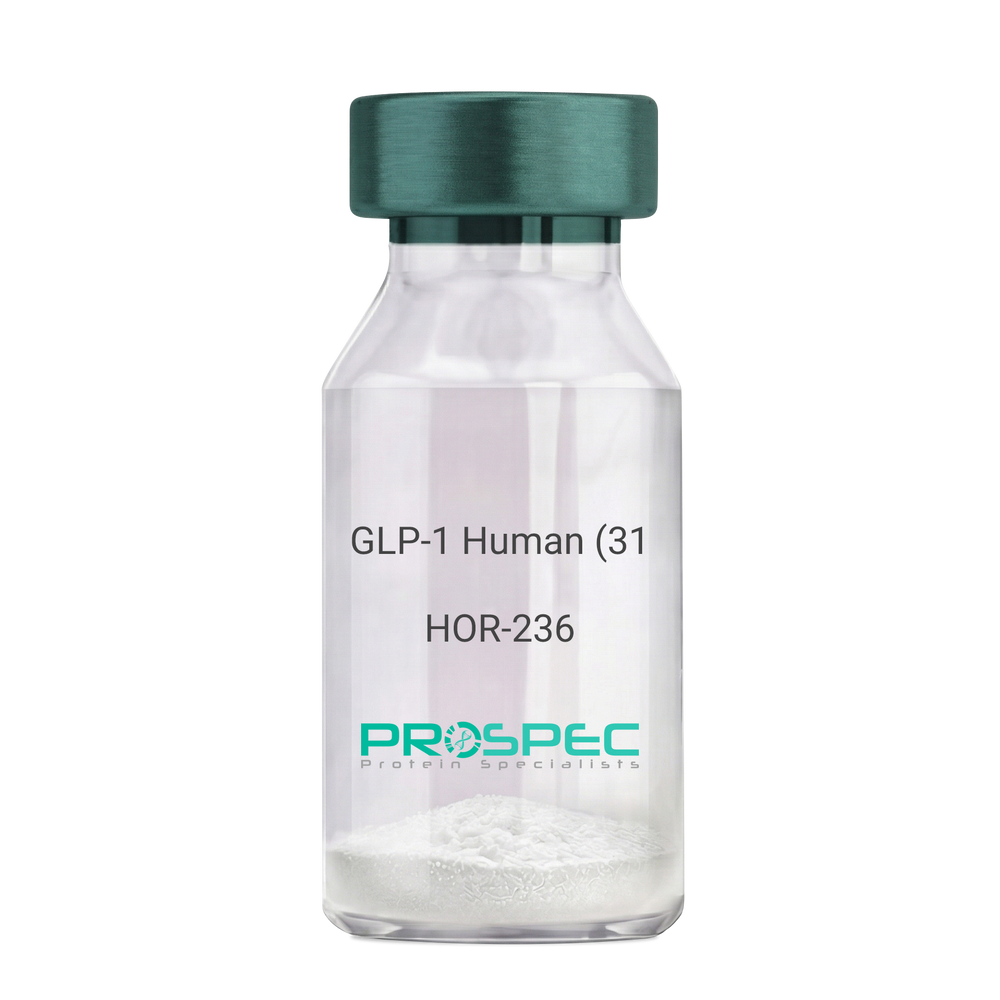
  • View Data Sheet

    Name :

    GLP-1 Human (31 a.a.)

    Description:

    Glucagon Like Peptide-1 (31 a.a.) Human Recombinant

    GLP1, GLP2, GRPP.

    Product # :

    HOR-236

    Price :

    Quantity :

    Shipping Method :

    Room Temp Icon

    Shipped at Room temp

    Add To Cart

    More Info

    • description
    • source
    • formulation
    • purity
    • More Info

    Description

    Glucagon Like Peptide-1 Human Recombinant produced in E.Coli is a single, non-glycosylated, polypeptide chain containing 31 amino acids and having a molecular mass of 3.3 kDa. The GLP-1 is purified by proprietary chromatographic techniques.

    Source

    Escherichia Coli.

    Formulation

    The Recombinant GLP-1 concentrated solution (1mg/ml) was lyophilized after extensive dialyses against 0.1mg sodium phosphate monobasic & 1.6mg sodium phosphate dibasic.

    Purity

    Greater than 98.0% as determined by:
    (a) Analysis by RP-HPLC.
    (b) Analysis by SDS-PAGE.

    More Info

    • Introduction

      Glucagon-like peptide-1 (GLP-1) is derived from the transcription product of the proglucagon gene. The major source of GLP-1 in the body is the intestinal L cell that secretes GLP-1 as a guthormone. The biologically active forms of GLP-1 are: GLP-1-(7-37) and GLP-1-(7-36)NH2.
      GLP-1 secretion by L cells is dependent on the presence of nutrients in the lumen of the small intestine. The secretagogues (agents that causes or stimulates secretion) of this hormone include major nutrients like carbohydrate, proteinand lipid. Once in the circulation, GLP-1 has a half life of less than 2 minutes, due to rapid degradation by the enzyme dipeptidyl peptidase-4.
      GLP-1 possesses several physiological properties that make it a subject of intensive investigation as a potential treatment of diabetes mellitus. The known physiological functions of GLP-1 include: Increases insulin secretion from the pancreas in a glucose-dependent manner, decreases glucagon secretion from the pancreas, increases beta cells mass and insulin gene expression, inhibits acid secretion and gastric emptying in the stomach, decreases food intake by increasing satiety.

    • Synonyms

      GLP1, GLP2, GRPP.

    • Physical Appearance

      Sterile Filtered White lyophilized (freeze-dried) powder.

    • Stability

      Lyophilized Glucagon Like Peptide-1 although stable at room temperature for 3 weeks, should be stored desiccated below -18°C. Upon reconstitution GLP-1 should be stored at 4°C between 2-7 days and for future use below -18°C. For long term storage it is recommended to add a carrier protein (0.1% HSA or BSA).Please prevent freeze-thaw cycles.

    • Solubility

      It is recommended to reconstitute the lyophilized Glucagon Like Peptide-1 in sterile 18MΩ-cm H2O not less than 100µg/ml, which can then be further diluted to other aqueous solutions.

    • Amino Acid Sequence

      HAEGTFTSDV SSYLEGQAAK EFIAWLVKGR G.

    ProSpec's products are furnished for LABORATORY RESEARCH USE ONLY. The product may not be used as drugs, agricultural or pesticidal products, food additives or household chemicals.

    Glucagon Like Peptide 1 Human
  • View Data Sheet

    Name :

    Fertirelin

    Description:

    Fertirelin

    Product # :

    HOR-037

    Price :

    Quantity :

    Shipping Method :

    Room Temp Icon

    Shipped at Room temp

    Add To Cart

    More Info

    • description
    • formulation
    • purity
    • More Info

    Description

    Fertirelin Synthetic is a single, non-glycosylated polypeptide chain containing 9 amino acids, having a molecular mass of 1153.31 Dalton and a Molecular formula of C55H76N16O12.

    Formulation

    The protein was lyophilized with no additives.

    Purity

    Greater than 97.0% as determined by analysis by RP-HPLC.

    More Info

    • Physical Appearance

      Sterile Filtered White lyophilized (freeze-dried) powder.

    • Stability

      Lyophilized Fertirelin although stable at room temperature for 3 weeks, should be stored desiccated below -18°C. Upon reconstitution Fertirelin should be stored at 4°C between 2-7 days and for future use below -18°C. For long term storage it is recommended to add a carrier protein (0.1% HSA or BSA). Please prevent freeze-thaw cycles.

    • Solubility

      It is recommended to reconstitute the lyophilized Fertirelin in sterile 18MΩ-cm H2O not less than 100 µg/ml, which can then be further diluted to other aqueous solutions.

    • Amino Acid Sequence

      Pyr-His-Trp-Ser-Tyr-Gly-Leu-Arg-Pro-NHEt.

    • Background

      Fertirelin, a potent gonadotropin-releasing hormone (GnRH) analogue, is crucial for fertility regulation in animals. This research paper endeavors to expound on the biochemical attributes of fertirelin and its potential therapeutic applications in veterinary medicine.

      Fertirelin, a synthetic analogue of the natural gonadotropin-releasing hormone, plays a fundamental role in fertility regulation in veterinary medicine. It stimulates the secretion of luteinizing hormone and follicle-stimulating hormone, crucial for reproduction (Kotwica et al., 2005). This paper aims to delve into the biochemical characteristics of fertirelin and its potential applications.

      Fertirelin, as a GnRH analogue, elicits its action by binding to GnRH receptors located on pituitary gonadotroph cells. This leads to the release of luteinizing hormone and follicle-stimulating hormone, key players in ovulation and spermatogenesis (Kotwica et al., 2005).

      In the realm of veterinary medicine, fertirelin is primarily used for treating ovarian follicular cysts in dairy cattle (Bosu & Peter, 1987). Its potent stimulatory effect on gonadotropin secretion facilitates ovulation and contributes to fertility management strategies.

      The potential of fertirelin extends beyond the current applications. Further research into the precise mechanism of action and potential side effects can enhance its utilization. Overall, fertirelin presents a powerful tool in veterinary reproductive medicine, making it a focal point of interest for future studies.

    ProSpec's products are furnished for LABORATORY RESEARCH USE ONLY. The product may not be used as drugs, agricultural or pesticidal products, food additives or household chemicals.

    Fertirelin
  • 1
  • …
  • 31
  • 32
  • 33
  • 34
  • 35
  • …
  • 42
Your browser does not support the video tag.

Products

  • Cytokines
  • Growth Factors
  • Chemokines
  • CD Antigens
  • Neurotrophins
  • Hormones
  • Enzymes
  • Viral Antigens
  • Recombinant Proteins
  • Natural Proteins
  • Monoclonal Antibodies
  • Polyclonal Antibodies
  • Thermal Packaging

About

  • Company
  • Founder
  • Contribution
  • Contact Us
  • My Account

Ordering

  • Ordering Method
  • Ordering - Credit Card
  • Ordering PO
  • Shipping Fees
  • FAQ's

Legal

  • Terms & Conditions
  • Privacy
  • Site Map
  • info@prospecbio.com
  • Facebook
  • Instagram
  • Linkedin Profile

© 2026 ProSpec-Tany TechnoGene Ltd. All Rights Reserved.

  • Choosing a selection results in a full page refresh.
  • Opens in a new window.