Skip to content

High-quality research proteins.

  • 1-800-805-6531

  • Mon - Sat 8.00-18.00, Sun - Closed

  • info@prospecbio.com

  • PO Box 6591 East Brunswick NJ 08816

  • Products
    • Cytokines
    • Growth factors
    • Chemokines
    • Cd antigens
    • Neurotrophins
    • Hormones
    • Enzymes
    • Viral antigens
    • Recombinant proteins
    • Natural proteins
    • Monoclonal antibodies
    • Polyclonal antibodies
    • Thermal Packaging
  • About
    • Company
    • Founder
    • Contribution
  • Customers
    • Eastern Asia
    • Eastern Europe
    • North America
    • South America
    • South East Asia
    • Southern Asia
    • Western Europe
  • Ordering
    • Ordering Method
    • Ordering - Credit Card
    • Ordering - PO
    • Shipping Fees
    • FAQs
  • Services
    • DNA Cloning
    • Protein Expression
    • Monoclonal Antibody
    • Fermentation
    • Technology License
  • Contact us
Log in

Country/region

  • USD $ | Albania
  • USD $ | Andorra
  • USD $ | Argentina
  • USD $ | Armenia
  • USD $ | Australia
  • USD $ | Austria
  • USD $ | Azerbaijan
  • USD $ | Belarus
  • USD $ | Belgium
  • USD $ | Bolivia
  • USD $ | Brazil
  • USD $ | Bulgaria
  • USD $ | Cambodia
  • USD $ | Canada
  • USD $ | Chile
  • USD $ | China
  • USD $ | Colombia
  • USD $ | Costa Rica
  • USD $ | Croatia
  • USD $ | Cyprus
  • USD $ | Czechia
  • USD $ | Denmark
  • USD $ | Estonia
  • USD $ | Finland
  • USD $ | France
  • USD $ | Georgia
  • USD $ | Germany
  • USD $ | Greece
  • USD $ | Hong Kong SAR
  • USD $ | Hungary
  • USD $ | Iceland
  • USD $ | India
  • USD $ | Ireland
  • USD $ | Israel
  • USD $ | Italy
  • USD $ | Japan
  • USD $ | Kazakhstan
  • USD $ | Latvia
  • USD $ | Liechtenstein
  • USD $ | Lithuania
  • USD $ | Madagascar
  • USD $ | Malta
  • USD $ | Mexico
  • USD $ | Moldova
  • USD $ | Monaco
  • USD $ | Netherlands
  • USD $ | New Zealand
  • USD $ | North Macedonia
  • USD $ | Norway
  • USD $ | Panama
  • USD $ | Paraguay
  • USD $ | Peru
  • USD $ | Philippines
  • USD $ | Poland
  • USD $ | Portugal
  • USD $ | Romania
  • USD $ | Singapore
  • USD $ | Slovakia
  • USD $ | Slovenia
  • USD $ | South Africa
  • USD $ | South Korea
  • USD $ | Spain
  • USD $ | Sri Lanka
  • USD $ | Sweden
  • USD $ | Switzerland
  • USD $ | Taiwan
  • USD $ | Thailand
  • USD $ | Türkiye
  • USD $ | Ukraine
  • USD $ | United Kingdom
  • USD $ | United States
  • USD $ | Uruguay
  • USD $ | Vatican City
  • USD $ | Venezuela
  • USD $ | Vietnam
  • Facebook
  • Instagram
logoProSpec - Recombinant Protein Manufacturer for academic and R&D industry
Become a distributor
Account Log in
Wishlist
Cart Cart(0)
  • Products
    +
    • Cytokines
    • Growth factors
    • Chemokines
    • Cd antigens
    • Neurotrophins
    • Hormones
    • Enzymes
    • Viral antigens
    • Recombinant proteins
    • Natural proteins
    • Monoclonal antibodies
    • Polyclonal antibodies
    • Thermal Packaging
  • About
    +
    • Company
    • Founder
    • Contribution
  • Customers
    +
    • Eastern Asia
    • Eastern Europe
    • North America
    • South America
    • South East Asia
    • Southern Asia
    • Western Europe
  • Ordering
    +
    • Ordering Method
    • Ordering - Credit Card
    • Ordering - PO
    • Shipping Fees
    • FAQs
  • Services
    +
    • DNA Cloning
    • Protein Expression
    • Monoclonal Antibody
    • Fermentation
    • Technology License
  • Contact us

Item added to your cart

View cart
View All
  • Cytokines
  • Growth factors
  • Chemokines
  • Cd antigens
  • Neurotrophins
  • Hormones
  • Enzymes
  • Viral antigens
  • Recombinant proteins
  • Natural proteins
  • Monoclonal antibodies
  • Polyclonal antibodies
  • Thermal Packaging
  • Tumor Necrosis Factor

    Tumor Necrosis Factor

    View All
  • 4-1BB

    4-1BB

    View All
  • Adiponectin

    Adiponectin

    View All
  • AIF1

    AIF1

    View All
  • Other Cytokines

    Other Cytokines

    View All
  • AITRL

    AITRL

    View All
  • Angiopoietin

    Angiopoietin

    View All
  • Apolipoprotein

    Apolipoprotein

    View All
  • B-Cell Activating Factor

    B-Cell Activating Factor

    View All
  • Beta Defensin

    Beta Defensin

    View All
  • Bone Morphogenetic Protein

    Bone Morphogenetic Protein

    View All
  • B type Natriuretic Peptide

    B type Natriuretic Peptide

    View All
  • BST

    BST

    View All
  • Betacellulin

    Betacellulin

    View All
  • Cardiotrophin

    Cardiotrophin

    View All
  • Activin

    Activin

    View All
  • Fibroblast Growth Factor

    Fibroblast Growth Factor

    View All
  • Other Growth Factors

    Other Growth Factors

    View All
  • CSF

    CSF

    View All
  • CTGF

    CTGF

    View All
  • IGFBP

    IGFBP

    View All
  • VEGF Protein

    VEGF Protein

    View All
  • EGF

    EGF

    View All
  • Epigen

    Epigen

    View All
  • Erythropoietin

    Erythropoietin

    View All
  • Insulin-Like Growth Factor

    Insulin-Like Growth Factor

    View All
  • Growth Hormone

    Growth Hormone

    View All
  • HDGF

    HDGF

    View All
  • Hepatocyte Growth Factor

    Hepatocyte Growth Factor

    View All
  • Insulin

    Insulin

    View All
  • BCA-1/ BLC (CXCL13)

    BCA-1/ BLC (CXCL13)

    View All
  • BRAK (CXCL14)

    BRAK (CXCL14)

    View All
  • C-10 (CCL6)

    C-10 (CCL6)

    View All
  • Other Chemokines

    Other Chemokines

    View All
  • MEC (CCL28)

    MEC (CCL28)

    View All
  • LD78-beta (CCL3L1)

    LD78-beta (CCL3L1)

    View All
  • CTACK (CCL27)

    CTACK (CCL27)

    View All
  • CXCL16

    CXCL16

    View All
  • CXCL17

    CXCL17

    View All
  • Platelet Factor-4 (CXCL4)

    Platelet Factor-4 (CXCL4)

    View All
  • ENA-78 (CXCL5)

    ENA-78 (CXCL5)

    View All
  • Eotaxin (CCL11,24,26)

    Eotaxin (CCL11,24,26)

    View All
  • Exodus-2 (CCL21)

    Exodus-2 (CCL21)

    View All
  • Fractalkine (CX3CL1)

    Fractalkine (CX3CL1)

    View All
  • CXCL6

    CXCL6

    View All
  • Other CD Antigens

    Other CD Antigens

    View All
  • CD14

    CD14

    View All
  • CD164

    CD164

    View All
  • CD1

    CD1

    View All
  • CD2

    CD2

    View All
  • CD200

    CD200

    View All
  • CD207

    CD207

    View All
  • CD226

    CD226

    View All
  • CD23

    CD23

    View All
  • CD244

    CD244

    View All
  • CD247

    CD247

    View All
  • CD27

    CD27

    View All
  • CD274

    CD274

    View All
  • CD300

    CD300

    View All
  • CD33

    CD33

    View All
  • Other Neurotrophins

    Other Neurotrophins

    View All
  • Beta-NGF

    Beta-NGF

    View All
  • BDNF

    BDNF

    View All
  • CDNF

    CDNF

    View All
  • CNTF

    CNTF

    View All
  • GDNF

    GDNF

    View All
  • Glia Maturation Factor

    Glia Maturation Factor

    View All
  • MANF

    MANF

    View All
  • Midkine

    Midkine

    View All
  • Neuroglobin

    Neuroglobin

    View All
  • Neurotrophic factors

    Neurotrophic factors

    View All
  • Neuregulin

    Neuregulin

    View All
  • Neuropilin

    Neuropilin

    View All
  • Pigment Epithelium-Derived Factor

    Pigment Epithelium-Derived Factor

    View All
  • Pleiotrophin

    Pleiotrophin

    View All
  • Peptide Hormones

    Peptide Hormones

    View All
  • Other Hormones

    Other Hormones

    View All
  • HCG

    HCG

    View All
  • Endothelin

    Endothelin

    View All
  • Exendin

    Exendin

    View All
  • FSH

    FSH

    View All
  • Glucagon

    Glucagon

    View All
  • GHRP

    GHRP

    View All
  • GLP

    GLP

    View All
  • Thyrostimulin

    Thyrostimulin

    View All
  • Inhibin A

    Inhibin A

    View All
  • LHRH

    LHRH

    View All
  • Melanotan

    Melanotan

    View All
  • Procalcitonin

    Procalcitonin

    View All
  • PTH

    PTH

    View All
  • Peroxiredoxin

    Peroxiredoxin

    View All
  • Peptidase

    Peptidase

    View All
  • Synthetase

    Synthetase

    View All
  • Transferase

    Transferase

    View All
  • Hydrolase

    Hydrolase

    View All
  • Dehydrogenase

    Dehydrogenase

    View All
  • ACE2

    ACE2

    View All
  • Esterase

    Esterase

    View All
  • Protein Kinases

    Protein Kinases

    View All
  • Other Enzymes

    Other Enzymes

    View All
  • Phosphatase

    Phosphatase

    View All
  • Deaminase

    Deaminase

    View All
  • Oxygenase

    Oxygenase

    View All
  • Adenylate Kinase

    Adenylate Kinase

    View All
  • Lyase

    Lyase

    View All
  • Chagas

    Chagas

    View All
  • SARS

    SARS

    View All
  • Influenza

    Influenza

    View All
  • ASFV

    ASFV

    View All
  • Astrovirus

    Astrovirus

    View All
  • Borrelia

    Borrelia

    View All
  • Helicobacter Pylori

    Helicobacter Pylori

    View All
  • Chikungunya

    Chikungunya

    View All
  • Chlamydia

    Chlamydia

    View All
  • Cytomegalo

    Cytomegalo

    View All
  • Dengue

    Dengue

    View All
  • EBV

    EBV

    View All
  • Ebola

    Ebola

    View All
  • Feline Leukemia Virus

    Feline Leukemia Virus

    View All
  • Hepatitis A

    Hepatitis A

    View All
  • Other

    Other

    View All
  • Actin

    Actin

    View All
  • ADAM

    ADAM

    View All
  • Complement Component

    Complement Component

    View All
  • Ag85

    Ag85

    View All
  • Eukaryotic Translation Initiation Factor

    Eukaryotic Translation Initiation Factor

    View All
  • Anterior Gradient Protein

    Anterior Gradient Protein

    View All
  • Heat Shock Protein

    Heat Shock Protein

    View All
  • Alpha-2-HS-Glycoprotein

    Alpha-2-HS-Glycoprotein

    View All
  • Hemoglobin

    Hemoglobin

    View All
  • Allergy

    Allergy

    View All
  • Anaplasma

    Anaplasma

    View All
  • Angiogenin

    Angiogenin

    View All
  • Ankyrin Repeat Domain

    Ankyrin Repeat Domain

    View All
  • Annexin

    Annexin

    View All
  • Other Natural Proteins

    Other Natural Proteins

    View All
  • Aprotinin

    Aprotinin

    View All
  • Transferrin

    Transferrin

    View All
  • Avidin

    Avidin

    View All
  • Anti Coagulation Factors

    Anti Coagulation Factors

    View All
  • Natural Albumin

    Natural Albumin

    View All
  • Natural Coagulation Factors

    Natural Coagulation Factors

    View All
  • Fibronectin

    Fibronectin

    View All
  • Thrombin

    Thrombin

    View All
  • Anti Human Enzyme

    Anti Human Enzyme

    View All
  • Other Monoclonal Antibodies

    Other Monoclonal Antibodies

    View All
  • Anti Human Cytokine

    Anti Human Cytokine

    View All
  • Anti Human Heat Shock Protein

    Anti Human Heat Shock Protein

    View All
  • Anti Mouse Lymphocyte

    Anti Mouse Lymphocyte

    View All
  • Anti Human Chemokine

    Anti Human Chemokine

    View All
  • Anti Human Lymphocyte

    Anti Human Lymphocyte

    View All
  • Anti Viral Monoclonal

    Anti Viral Monoclonal

    View All
  • Anti Mouse Cytokine

    Anti Mouse Cytokine

    View All
  • Anti-GST Monoclonal

    Anti-GST Monoclonal

    View All
  • Other Polyclonal Antibodies

    Other Polyclonal Antibodies

    View All
  • Anti Viral

    Anti Viral

    View All
  • Anti-GST Monoclonal

    Anti-GST Monoclonal

    View All
Back

Search results

1000 results found for “persephin”

Name

Description

Product #

Price

Quantity

Shipping Method

  • View Data Sheet

    Name :

    SIT1 Human

    Description:

    Signaling Threshold Regulating Transmembrane Adaptor 1 Human Recombinant

    Signaling threshold-regulating transmembrane adapter 1, SHP2-interacting transmembrane adapter protein, Suppression-inducing transmembrane adapter 1, gp30/40, SIT1, SIT, RP11-331F9.5, MGC125908, MGC125909, MGC125910.

    Product # :

    PRO-928

    Price :

    Quantity :

    Shipping Method :

    Ice Icon

    Shipped with Ice Packs

    Add To Cart

    More Info

    • description
    • source
    • formulation
    • purity
    • More Info

    Description

    SIT1 Human Recombinant produced in E.Coli is a single, non-glycosylated polypeptide chain containing 156 amino acids (62-196 a.a.) and having a molecular mass of 16.9kDa (Molecular weight on SDS-PAGE will appear higher).SIT1 is fused to a 21 amino acid His-tag at N-terminus & purified by proprietary chromatographic techniques.

    Source

    Escherichia Coli.

    Formulation

    SIT1 protein solution (0.25mg/ml) containing 20mM Tris-HCl buffer (pH8.0) and 20% glycerol.

    Purity

    Greater than 90.0% as determined by SDS-PAGE.

    More Info

    • Introduction

      Signaling threshold-regulating transmembrane adapter 1 (SIT1) negatively regulates T-cell antigen receptor (TCR)-mediated signaling in T-cells. SIT1 is involved in positive selection of T-cells. SIT1 is specifically expressed in T- and B-cells. SIT1 is also present in plasma cells but not in germinal center B-cells (at protein level). SIT1 is expressed in T- and B-cell lymphoma.

    • Synonyms

      Signaling threshold-regulating transmembrane adapter 1, SHP2-interacting transmembrane adapter protein, Suppression-inducing transmembrane adapter 1, gp30/40, SIT1, SIT, RP11-331F9.5, MGC125908, MGC125909, MGC125910.

    • Physical Appearance

      Sterile Filtered colorless solution.

    • Stability

      Store at 4°C if entire vial will be used within 2-4 weeks. Store, frozen at -20°C for longer periods of time. For long term storage it is recommended to add a carrier protein (0.1% HSA or BSA).Avoid multiple freeze-thaw cycles.

    • Amino Acid Sequence

      MGSSHHHHHH SSGLVPRGSH MHLSQWTRGR SRSHPGQGRS GESVEEVPLY GNLHYLQTGR LSQDPEPDQQ DPTLGGPARA AEEVMCYTSL QLRPPQGRIP GPGTPVKYSE VVLDSEPKSQ ASGPEPELYA SVCAQTRRAR ASFPDQAYAN SQPAAS.

    ProSpec's products are furnished for LABORATORY RESEARCH USE ONLY. The product may not be used as drugs, agricultural or pesticidal products, food additives or household chemicals.

    Sit1 Human
  • View Data Sheet

    Name :

    BASP1 Human

    Description:

    Brain Abundant Membrane Attached Signal Protein 1 Human Recombinant

    CAP-23, CAP23, NAP-22, NAP22, Brain acid soluble protein 1, BASP1, BASP1 Human, 22 kDa neuronal tissue-enriched acidic protein, Neuronal axonal membrane protein NAP-22.

    Product # :

    PRO-1355

    Price :

    Quantity :

    Shipping Method :

    Ice Icon

    Shipped with Ice Packs

    Add To Cart

    More Info

    • description
    • source
    • formulation
    • purity
    • More Info

    Description

    BASP1 Human Recombinant produced in E.coli is a single, non-glycosylated polypeptide chain containing 250 amino acids (1-227) and having a molecular mass of 25 kDa (Molecular size on SDS-PAGE will appear higher). BASP1 is fused to a 23 amino acid His-tag at N-terminus & purified by proprietary chromatographic techniques.

    Source

    Escherichia Coli.

    Formulation

    The BASP1 solution (0.25mg/ml) contains 20mM Tris-HCl buffer (pH 8.0), 0.2M NaCl and 20% glycerol.

    Purity

    Greater than 95.0% as determined by SDS-PAGE.

    More Info

    • Introduction

      Brain Abundant Membrane Attached Signal Protein 1 (BASP1) is a membrane bound protein with numerous transient phosphorylation positions and PEST motifs. Preservation of proteins with PEST sequences amongst diverse species supports their functional significance. PEST sequences take place in proteins with high turnover rates. Immunological attributes of this protein are species specific. BASP1 undergoes N-terminal myristoylation.

    • Synonyms

      CAP-23, CAP23, NAP-22, NAP22, Brain acid soluble protein 1, BASP1, BASP1 Human, 22 kDa neuronal tissue-enriched acidic protein, Neuronal axonal membrane protein NAP-22.

    • Physical Appearance

      Sterile Filtered colorless solution.

    • Stability

      Store at 4°C if entire vial will be used within 2-4 weeks. Store, frozen at -20°C for longer periods of time. For long term storage it is recommended to add a carrier protein (0.1% HSA or BSA).Avoid multiple freeze-thaw cycles.

    • Amino Acid Sequence

      MGSSHHHHHH SSGLVPRGSH MGSMGGKLSK KKKGYNVNDE KAKEKDKKAE GAATEEEGTP KESEPQAAAE PAEAKEGKEK PDQDAEGKAE EKEGEKDAAA AKEEAPKAEP EKTEGAAEAK AEPPKAPEQE QAAPGPAAGG EAPKAAEAAA APAESAAPAA GEEPSKEEGE PKKTEAPAAP AAQETKSDGA PASDSKPGSS EAAPSSKETP AATEAPSSTP KAQGPAASAE EPKPVEAPAA NSDQTVTVKE.

    ProSpec's products are furnished for LABORATORY RESEARCH USE ONLY. The product may not be used as drugs, agricultural or pesticidal products, food additives or household chemicals.

    Basp1 Human
  • View Data Sheet

    Name :

    IL3 Mouse, sf9

    Description:

    Interleukin-3 Mouse Recombinant, sf9

    Interleukin-3, Interleukin-3, sf9, IL3 sf9, L-3, Hematopoietic growth factor, Mast cell growth factor, MCGF, Multipotential colony-stimulating factor, P-cell-stimulating factor, Il3, Csfmu, Il-3, BPA, Csfmu, HCGF, Il-3, MCGF, PSF.

    Product # :

    CYT-922

    Price :

    Quantity :

    Shipping Method :

    Ice Icon

    Shipped with Ice Packs

    Add To Cart

    More Info

    • description
    • source
    • formulation
    • purity
    • biological activity
    • More Info

    Description

    IL3 Mouse Recombinant produced in Sf9 Baculovirus cells is a single, glycosylated polypeptide chain containing 148 amino acids (27-166 a.a.) and having a molecular mass of 16.7kDa (Migrates at 18-28kDa on SDS-PAGE under reducing conditions).IL3 is expressed with a 6 amino acid His tag at C-Terminus and purified by proprietary chromatographic techniques.

    Source

    Sf9, Baculovirus cells.

    Formulation

    IL3 protein solution (0.25mg/ml) contains Phosphate Buffered Saline (pH 7.4) and 10% glycerol.

    Purity

    Greater than 90.0% as determined by SDS-PAGE.

    Biological Activity

    The ED50 is Measured in a cell proliferation assay using TF-1 human erythroleukemic and is ≤ 0.1 ng/ml.

    More Info

    • Introduction

      Interleukin-3 is a pleiotropic cytokine produced primarily by activated T cells.
      IL-3 is thought to function via specific cell surface receptors to stimulate the proliferation, differentiation and survival of haematopoietic cell lines. IL-3 has also been shown to affect the functional activity of a variety of other cell types including mast cells, eosinophils, megakaryocytes and basophils.

    • Synonyms

      Interleukin-3, Interleukin-3, sf9, IL3 sf9, L-3, Hematopoietic growth factor, Mast cell growth factor, MCGF, Multipotential colony-stimulating factor, P-cell-stimulating factor, Il3, Csfmu, Il-3, BPA, Csfmu, HCGF, Il-3, MCGF, PSF.

    • Physical Appearance

      Sterile Filtered colorless solution.

    • Stability

      Store at 4°C if entire vial will be used within 2-4 weeks. Store, frozen at -20°C for longer periods of time. For long term storage it is recommended to add a carrier protein (0.1% HSA or BSA). Avoid multiple freeze-thaw cycles.

    • Amino Acid Sequence

      ASISGRDTHR LTRTLNCSSI VKEIIGKLPE PELKTDDEGP SLRNKSFRRV NLSKFVESQG EVDPEDRYVI KSNLQKLNCC LPTSANDSAL PGVFIRDLDD FRKKLRFYMV HLNDLETVLT SRPPQPASGS VSPNRGTVEC LEHHHHHH.

    ProSpec's products are furnished for LABORATORY RESEARCH USE ONLY. The product may not be used as drugs, agricultural or pesticidal products, food additives or household chemicals.

    Il3 Mouse Sf9
  • View Data Sheet

    Name :

    FGF2 (147), Bovine

    Description:

    Fibroblast Growth Factor-basic (147 a.a.) Bovine Recombinant

    HBGH-2, HBGF-2, Prostatropin, FGF-2, FGB-b.

    Product # :

    CYT-1130

    Price :

    Quantity :

    Shipping Method :

    Room Temp Icon

    Shipped at Room temp

    Add To Cart

    More Info

    • description
    • source
    • formulation
    • purity
    • biological activity
    • More Info

    Description

    Fibroblast Growth Factor-basic (147 a.a.) Bovine Recombinant produced in E.Coli is a non-glycosylated polypeptide chain containing 147 amino acid and having a molecular mass of approximately 16.5kDa.FGF2 (147) is purified by proprietary chromatographic techniques.

    Source

    Escherichia Coli.

    Formulation

    Lyophilized from a 0.2μm filtered concentrated solution in PBS, pH 7.4.

    Purity

    Greater than 97.0% as determined by:
    (a) Analysis by RP-HPLC.
    (b) Analysis by SDS-PAGE.

    Biological Activity

    The ED50 as determined by a cell proliferation assay using murine balb/c 3T3 cells is < 0.1 ng/ml, corresponding to a specific activity of > 1.0 ×10⁷IU/mg.

    More Info

    • Introduction

      FGF-basic is a member of the fibroblast growth factor (FGF) family. FGF family members bind heparin and possess broad mitogenic and angiogenic activities. This protein has been implicated in diverse biological processes, such as limb and nervous system development, wound healing, and tumor growth. The mRNA for this gene contains multiple polyadenylation sites, and is alternatively translated from AUG and non-AUG (CUG) initiation codons resulting in 5 different isoforms with distinct properties. The CUG-initiated isoforms are localized in the nucleus and are responsible for the intracrine effect, whereas, the AUG-initiated form is mostly cytosolic and is responsible for the paracrine and autocrine effects of this FGF.
      The heparin-binding growth factors are angiogenic agents in vivo and are potent mitogens for a variety of cell types in vitro. there are differences in the tissue distribution and concentration of these 2 growth factors.

    • Synonyms

      HBGH-2, HBGF-2, Prostatropin, FGF-2, FGB-b.

    • Physical Appearance

      Sterile Filtered White lyophilized (freeze-dried) powder.

    • Stability

      Lyophilized FGF2 although stable at room temperature for 3 weeks, should be stored desiccated below -18°C. Upon reconstitution Fibroblast Growth Factor-basic (147 a.a.) should be stored at 4°C between 2-7 days and for future use below -18°C. Please prevent freeze-thaw cycles.

    • Solubility

      It is recommended to reconstitute the lyophilized Fibroblast Growth Factor-basic (147 a.a.) in sterile PBS not less than 100µg/ml, which can then be further diluted to other aqueous solutions.

    • Amino Acid Sequence

      MPALPEDGGS GAFPPGHFKD PKRLYCKNGG FFLRIHPDGR VDGVREKSDP HIKLQLQAEE RGVVSIKGVC ANRYLAMKED GRLLASKCVT DECFFFERLE SNNYNTYRSR KYSSWYVALK RTGQYKLGPK TGPGQKAILF LPMSAKS.

    • Background

      What is the molecular weight/Mw of FGF2 (147), BOVINE Protein?
      FGF2 (147), BOVINE Protein has a total Mw of 16.5kDa.

      What is the source or expression system of FGF2 (147), BOVINE Protein?
      Escherichia Coli.

      What is the Purity of FGF2 (147), BOVINE Protein?
      FGF2 (147), BOVINE Protein is >97% pure as determined by SDS-PAGE.

      What is the Biological Activity of FGF2 (147), BOVINE Protein?
      The ED50 as determined by a cell proliferation assay using murine balb/c 3T3 cells is < 0.1 ng/ml, corresponding to a specific activity of > 1.0 ×10⁷IU/mg.

      What is the amino acid sequence of FGF2 (147), BOVINE Protein?
      MPALPEDGGS GAFPPGHFKD PKRLYCKNGG FFLRIHPDGR VDGVREKSDP HIKLQLQAEE RGVVSIKGVC ANRYLAMKED GRLLASKCVT DECFFFERLE SNNYNTYRSR KYSSWYVALK RTGQYKLGPK TGPGQKAILF LPMSAKS.

      What applications can FGF2 (147), BOVINE Protein be used in?
      FGF2 (147), BOVINE Protein can probably be used in western blot, ELISA and Lateral Flow.

      What is the endotoxin level for FGF2 (147), BOVINE Protein?
      The endotoxin level is minimal, FGF2 (147), BOVINE Protein was purified using conventional chromatography techniques.

    ProSpec's products are furnished for LABORATORY RESEARCH USE ONLY. The product may not be used as drugs, agricultural or pesticidal products, food additives or household chemicals.

    Fgf Basic Bovine
  • View Data Sheet

    Name :

    PRDX1 Mouse

    Description:

    Peroxiredoxin-1 Mouse Recombinant

    Peroxiredoxin-1, Macrophage 23 kDa stress protein, Osteoblast-specific factor 3, OSF-3, Thioredoxin peroxidase 2, Thioredoxin-dependent peroxide reductase 2.

    Product # :

    ENZ-951

    Price :

    Quantity :

    Shipping Method :

    Ice Icon

    Shipped with Ice Packs

    Add To Cart

    More Info

    • description
    • source
    • formulation
    • purity
    • biological activity
    • More Info

    Description

    PRDX1 Mouse Recombinant produced in Sf9 Baculovirus cells is a single, glycosylated polypeptide chain containing 207 amino acids (1-199a.a.) and having a molecular mass of 23.2kDa (Molecular size on SDS-PAGE will appear at approximately 18-28kDa). PRDX1 is expressed with an 8 amino acid His tag at C-Terminus and purified by proprietary chromatographic techniques.

    Source

    Sf9, Baculovirus cells.

    Formulation

    PRDX1 protein solution (0.5mg/ml) containing Phosphate Buffered Saline (pH 7.4) and 10% glycerol.

    Purity

    Greater than 90.0% as determined by SDS-PAGE.

    Biological Activity

    Specific activity is >2,500 pmol/min/ug. Enzymatic activity is defined as the amount of hydroperoxide that 1ug of enzyme can reduce at 25°C for minute.

    More Info

    • Introduction

      PRDX1 is part of the peroxiredoxin family of antioxidant enzymes, which reduce hydrogen peroxide and alkyl hydroperoxides. PRDX1 is an important protector of red blood cells against reactive oxygen species and in tumor prevention.
      PRDX1 is antioxidant protective in cells, and contributes to the antiviral activity of CD8(+) T-cells. PRDX1 has a proliferative effect and is involved in cancer development or progression.
      Peroxiredoxin-1 is plays a role in redox regulation of the cell. Peroxiredoxin decreases peroxides with reducing equivalents provided through the thioredoxin system but not from glutaredoxin. Peroxiredoxin is involved in eliminating peroxides generated during metabolism. Peroxiredoxin participates in the signaling cascades of growth factors and TNF-alpha by regulating the intracellular concentrations of h(2)o(2).

    • Synonyms

      Peroxiredoxin-1, Macrophage 23 kDa stress protein, Osteoblast-specific factor 3, OSF-3, Thioredoxin peroxidase 2, Thioredoxin-dependent peroxide reductase 2.

    • Physical Appearance

      Sterile Filtered colorless solution.

    • Stability

      Store at 4°C if entire vial will be used within 2-4 weeks. Store, frozen at -20°C for longer periods of time. For long term storage it is recommended to add a carrier protein (0.1% HSA or BSA).Avoid multiple freeze-thaw cycles.

    • Amino Acid Sequence

      MSSGNAKIGY PAPNFKATAV MPDGQFKDIS LSEYKGKYVV FFFYPLDFTF VCPTEIIAFS DRADEFKKLN CQVIGASVDS HFCHLAWINT PKKQGGLGPM NIPLISDPKR TIAQDYGVLK ADEGISFRGL FIIDDKGILR QITINDLPVG RSVDEIIRLV QAFQFTDKHG EVCPAGWKPG SDTIKPDVNK SKEYFSKQKL EHHHHHH.

    ProSpec's products are furnished for LABORATORY RESEARCH USE ONLY. The product may not be used as drugs, agricultural or pesticidal products, food additives or household chemicals.

    Prdx1 Mouse
  • View Data Sheet

    Name :

    PSMG3 Human

    Description:

    Proteasome Assembly Chaperone 3 Human Recombinant

    Proteasome assembly chaperone 3, PAC-3, hPAC3, PSMG3, PAC3, C7orf48, MGC10911.

    Product # :

    PRO-261

    Price :

    Quantity :

    Shipping Method :

    Ice Icon

    Shipped with Ice Packs

    Add To Cart

    More Info

    • description
    • source
    • formulation
    • purity
    • More Info

    Description

    PSMG3 Human Recombinant fused with a 20 amino acid His tag at N-terminus produced in E.Coli is a single, non-glycosylated, polypeptide chain containing 142 amino acids (1-122 a.a.) and having a molecular mass of 15.2kDa. The PSMG3 is purified by proprietary chromatographic techniques.

    Source

    Escherichia Coli.

    Formulation

    The PSMG3 solution (0.5 mg/ml) contains 20mM Tris-HCl Buffer (pH 8.0) and 10% Glycerol.

    Purity

    Greater than 90.0% as determined by SDS-PAGE.

    More Info

    • Introduction

      PSMG3 is a chaperone protein that promotes assembly of the 20S proteasome. PSMG3 may cooperate with PSMG1-PSMG2 heterodimers to coordinate the correct assembly of proteasomes. PSMG3 interacts with PSMG4, as well as directly with alpha and beta subunits of the 20S proteasome but dissociates prior to the formation of half-proteasomes, probably upon recruitment of POMP.

    • Synonyms

      Proteasome assembly chaperone 3, PAC-3, hPAC3, PSMG3, PAC3, C7orf48, MGC10911.

    • Physical Appearance

      Sterile Filtered colorless solution.

    • Stability

      Store at 4°C if entire vial will be used within 2-4 weeks. Store, frozen at -20°C for longer periods of time. For long term storage it is recommended to add a carrier protein (0.1% HSA or BSA). Avoid multiple freeze-thaw cycles.

    • Amino Acid Sequence

      MGSSHHHHHH SSGLVPRGSH MEDTPLVISK QKTEVVCGVP TQVVCTAFSS HILVVVTQFG KMGTLVSLEP SSVASDVSKP VLTTKVLLGQ DEPLIHVFAK NLVAFVSQEA GNRAVLLAVA VKDKSMEGLK ALREVIRVCQ VW.

    ProSpec's products are furnished for LABORATORY RESEARCH USE ONLY. The product may not be used as drugs, agricultural or pesticidal products, food additives or household chemicals.

    Psmg3 Human
  • View Data Sheet

    Name :

    S.typhi Paired Antibody

    Description:

    Mouse Anti Salmonella Typhi Paired

    Product # :

    ANT-665

    Price :

    Quantity :

    Shipping Method :

    Ice Icon

    Shipped with Ice Packs

    Add To Cart

    More Info

    • description
    • formulation
    • purity
    • More Info

    Description

    Typhi antibodies, capture and conjugating, target S. Typhi Outer Membrane Protein and S.Typhi specific polysaccharide respectively. This Antibody is used both as conjugate and capture.

    Formulation

    S.Typhi capture&conjugate antibody (2.7mg/1ml) in 0.01M phosphate buffered saline, pH 7.2 and 0.1% sodium azide.

    Purity

    Greater than 90%.

    More Info

    • Introduction

      Salmonella Typhi is a pathogen causing typhoid fever, affecting over 17 million people with approximately 600,000 deaths annually worldwide. If untreated, typhoid fever cases result in mortality rates ranging from 12-30%.

    • Physical Appearance

      Sterile filtered clear colorless solution.

    • Stability

      S.typhi Paired antibody should be stored at 2-8°C.

    • Type

      Mouse antibody Monoclonal.

    • Purification Method

      Purified monoclonal IgG by protein A chromatography.

    ProSpec's products are furnished for LABORATORY RESEARCH USE ONLY. The product may not be used as drugs, agricultural or pesticidal products, food additives or household chemicals.

    Styphi Paired Antibody
  • View Data Sheet

    Name :

    Cyclophilin F Rat Bioactive

    Description:

    Cyclophilin-F Rat Recombinant Bioactive

    Peptidyl-prolyl cis-trans isomerase F, mitochondrial, PPIase F, Cyclophilin D, CyP-D, CypD, Cyclophilin F, Rotamase F.

    Product # :

    ENZ-1019

    Price :

    Quantity :

    Shipping Method :

    Ice Icon

    Shipped with Ice Packs

    Add To Cart

    More Info

    • description
    • source
    • formulation
    • purity
    • biological activity
    • More Info

    Description

    Cyclophilin F Rat Recombinant produced in E.Coli is a single, non-glycosylated polypeptide chain containing 200 amino acids (30-206 a.a) and having a molecular mass of 21.2Da. Cyclophilin F is fused to a 23 amino acid His-tag at N-terminus & purified by proprietary chromatographic techniques.

    Source

    Escherichia Coli.

    Formulation

    Cyclophilin F protein solution (1mg/ml) containing Phosphate Buffered Saline (pH 7.4), 10% glycerol and 1mM DTT.

    Purity

    Greater than 90.0% as determined by SDS-PAGE.

    Biological Activity

    Specific activity is > 1,300 nmol/min/mg, and is defined as the amount of enzyme that cleaves 1nmol of suc-AAFP-PNA per minute at 37C in Tris–HCl pH 8.0 using chymotrypsin.

    More Info

    • Introduction

      PPIF is a part of the peptidyl-prolyl cis-trans isomerase (PPIase) family. PPIF accelerates the folding of proteins. It catalyzes the cis-trans isomerization of proline imidic peptide bonds in oligopeptides. PPIF is key component of the mitochondrial permeability transition pore in the inner mitochondrial membrane. Activation of this pore is thought to be involved in the induction of apoptotic and necrotic cell death.

    • Synonyms

      Peptidyl-prolyl cis-trans isomerase F, mitochondrial, PPIase F, Cyclophilin D, CyP-D, CypD, Cyclophilin F, Rotamase F.

    • Physical Appearance

      Sterile filtered colorless solution.

    • Stability

      Store at 4°C if entire vial will be used within 2-4 weeks. Store, frozen at -20°C for longer periods of time. For long term storage it is recommended to add a carrier protein (0.1% HSA or BSA).Avoid multiple freeze-thaw cycles.

    • Amino Acid Sequence

      MGSSHHHHHH SSGLVPRGSH MGSCSDGGAR GANSSSQNPL VYLDVGADGQ PLGRVVLELK ADVVPKTAEN FRALCTGEKG FGYKGSTFHR VIPAFMCQAG DFTNHNGTGG KSIYGSRFPD ENFTLKHVGP GVLSMANAGP NTNGSQFFIC TIKTDWLDGK HVVFGHVKEG MDVVKKIESF GSKSGKTSKK IVITDCGQLS.

    ProSpec's products are furnished for LABORATORY RESEARCH USE ONLY. The product may not be used as drugs, agricultural or pesticidal products, food additives or household chemicals.

    Cyclophilin F Rat Bioactive
  • View Data Sheet

    Name :

    PfHSP70

    Description:

    Plasmodium Falciparum HSP70 Recombinant

    Product # :

    MAL-001

    Price :

    Quantity :

    Shipping Method :

    Ice Icon

    Shipped with Ice Packs

    Add To Cart

    More Info

    • description
    • formulation
    • purity
    • More Info

    Description

    The E.Coli derived recombinant Plasmodium falciparum contains the Plasmodium falciparum HSP70 protein epitopes 33-114 amino acids.

    Formulation

    150mM Imidazole, pH 8.0, 150mM NaCl, 150mM Sodium Phosphate and 50% glycerol.

    Purity

    Protein is >95% pure as determined by 10% PAGE (coomassie staining) and RP-HPLC.

    More Info

    • Introduction

      Plasmodium falciparum heat shock proteins (PfHSPs) contribute to immunopathological alterations in infected hosts PfHSP70s may have a significant function during parasite adaptation in its environments. They have also been a focus of considerable attention due to their immunodominant antigenic nature and their properties as mediators of protective immunity.

    • Physical Appearance

      Sterile Filtered clear solution.

    • Stability

      PfHSP70 although stable at 4°C for 1 week, should be stored below -18°C. Please prevent freeze thaw cycles.

    • Applications

      Use as an antigen in ELISA and Western Blots.

    • Purification Method

      Purified by proprietary chromatographic technique

    ProSpec's products are furnished for LABORATORY RESEARCH USE ONLY. The product may not be used as drugs, agricultural or pesticidal products, food additives or household chemicals.

    Pfhsp70
  • View Data Sheet

    Name :

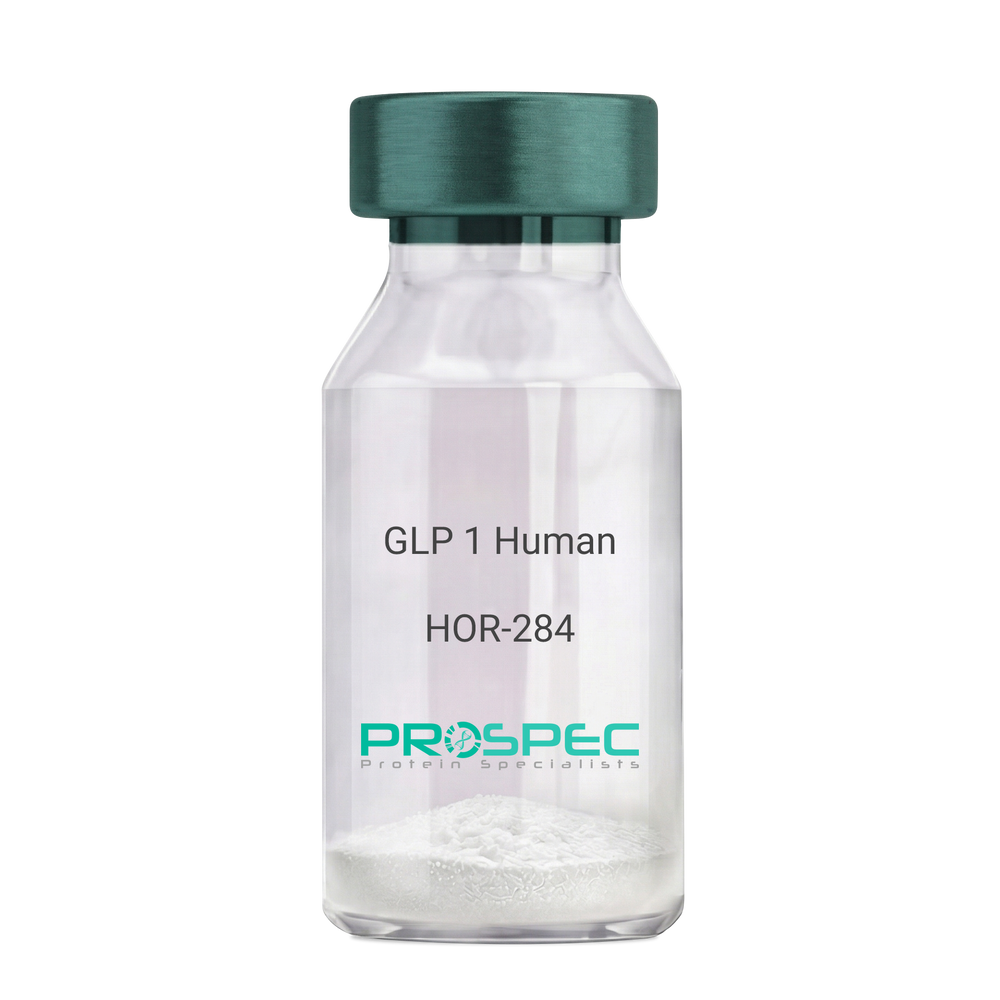
    GLP 1 Human

    Description:

    Human Glucagon Like Peptide-1

    GLP1, Glucagon Like Peptide-1, Incretin hormone.

    Product # :

    HOR-284

    Price :

    Quantity :

    Shipping Method :

    Room Temp Icon

    Shipped at Room temp

    Add To Cart

    More Info

    • description
    • formulation
    • purity
    • More Info

    Description

    Glucagon Like Peptide-1 is a single, non-glycosylated, polypeptide chain containing 30 amino acids and having a molecular mass of 3297.7 Dalton.The GLP-1 is purified by proprietary chromatographic techniques.

    Formulation

    The GLP-1 peptide was lyophilized with no additives.

    Purity

    Greater than 96.0% as determined by RP-HPLC.

    More Info

    • Introduction

      Glucagon-like peptide-1 (GLP-1) is derived from the transcription product of the proglucagon gene. The major source of GLP-1 in the body is the intestinal L cell that secretes GLP-1 as a guthormone. The biologically active forms of GLP-1 are: GLP-1-(7-37) and GLP-1-(7-36)NH2.
      GLP-1 secretion by L cells is dependent on the presence of nutrients in the lumen of the small intestine. The secretagogues (agents that causes or stimulates secretion) of this hormone include major nutrients like carbohydrate, proteinand lipid. Once in the circulation, GLP-1 has a half life of less than 2 minutes, due to rapid degradation by the enzyme dipeptidyl peptidase-4.
      GLP-1 possesses several physiological properties that make it a subject of intensive investigation as a potential treatment of diabetes mellitus. The known physiological functions of GLP-1 include: Increases insulin secretion from the pancreas in a glucose-dependent manner, decreases glucagon secretion from the pancreas, increases beta cells mass and insulin gene expression, inhibits acid secretion and gastric emptying in the stomach, decreases food intake by increasing satiety.

    • Synonyms

      GLP1, Glucagon Like Peptide-1, Incretin hormone.

    • Physical Appearance

      Sterile Filtered White lyophilized (freeze-dried) powder.

    • Stability

      Lyophilized Glucagon Like Peptide-1 although stable at room temperature for 3 weeks, should be stored desiccated below -18°C. Upon reconstitution GLP-1 should be stored at 4°C between 2-7 days and for future use below -18°C. For long term storage it is recommended to add a carrier protein (0.1% HSA or BSA).Please prevent freeze-thaw cycles.

    • Solubility

      It is recommended to reconstitute the lyophilized Glucagon Like Peptide-1 in sterile H2O at 0.5mg/ml, which can then be further diluted to other aqueous solutions.

    • Amino Acid Sequence

      H-His-Ala-Glu-Gly-Thr-Phe-Thr-Ser-Asp-Val-Ser-Ser-Tyr-Leu-Glu-Gly-Gln-Ala-Ala-Lys-Glu-Phe-Ile-Ala-Trp-Leu-Val-Lys-Gly-Arg-NH2.

    ProSpec's products are furnished for LABORATORY RESEARCH USE ONLY. The product may not be used as drugs, agricultural or pesticidal products, food additives or household chemicals.

    Glp 1 Human
  • View Data Sheet

    Name :

    Cyclophilin G Human

    Description:

    Cyclophilin-G Human Recombinant

    Peptidyl-prolyl cis-trans isomerase G, PPIase G, Rotamase G, PPIG, peptidylprolyl isomerase G, Cyclophilin G, Peptidyl-prolyl isomerase G, Rotamase G, Clk-associating RS-cyclophilin, CARS-cyclophilin, CARS-Cyp, SR-cyclophilin, SR-cyp, SRcyp, CASP10, CYP, MGC133241.

    Product # :

    ENZ-463

    Price :

    Quantity :

    Shipping Method :

    Ice Icon

    Shipped with Ice Packs

    Add To Cart

    More Info

    • description
    • source
    • formulation
    • purity
    • biological activity
    • More Info

    Description

    Cyclophilin-G Human Recombinant produced in E.Coli is a single, non-glycosylated, polypeptide chain containing 195 amino acids (1-175 a.a.) and having a molecular mass of 21.6 kDa. Cyclophilin-G is fused to a 20 amino acid His Tag at N-terminus and is purified by proprietary chromatographic techniques.

    Source

    Escherichia Coli.

    Formulation

    Cyclophilin-G solution containing 20mM Tris-HCl pH-8, 1mM DTT and 10% glycerol.

    Purity

    Greater than 95.0% as determined by SDS-PAGE.

    Biological Activity

    Specific activity is > 200 nmoles/min/mg, and is defined as the amount of enzyme that cleaves 1umole of suc-AAFP-pNA per minute at 25C in Tris-Hcl pH8.0 using chymotrypsin.

    More Info

    • Introduction

      Cyclophilin-G is a member of the peptidyl-prolyl cis-trans isomerase (PPIase) family. PPIases catalyze the cis-trans isomerization of proline imidic peptide bonds in oligopeptides and speeds up the protein folding. PPIG catalyzes the cis-trans isomerization of proline imidic peptide bonds in oligopeptides and is involved in the folding, transport, and assembly of proteins. PPIG is localized to the nuclear speckles, a nuclear compartment rich in splicing factors, and cooperates with the splicing factors SC35 and pinin. Cyclophilin-G also takes part in the regulation of pre-mRNA splicing.

    • Synonyms

      Peptidyl-prolyl cis-trans isomerase G, PPIase G, Rotamase G, PPIG, peptidylprolyl isomerase G, Cyclophilin G, Peptidyl-prolyl isomerase G, Rotamase G, Clk-associating RS-cyclophilin, CARS-cyclophilin, CARS-Cyp, SR-cyclophilin, SR-cyp, SRcyp, CASP10, CYP, MGC133241.

    • Physical Appearance

      Sterile filtered colorless solution.

    • Stability

      Store at 4°C if entire vial will be used within 2-4 weeks. Store, frozen at -20°C for longer periods of time. For long term storage it is recommended to add a carrier protein (0.1% HSA or BSA).Avoid multiple freeze-thaw cycles.

    • Amino Acid Sequence

      MGSSHHHHHH SSGLVPRGSH MGIKVQRPRC FFDIAINNQP AGRVVFELFS DVCPKTCENF RCLCTGEKGT GKSTQKPLHY KSCLFHRVVK DFMVQGGDFS EGNGRGGESI YGGFFEDESF AVKHNKEFLL SMANRGKDTN GSQFFITTKP TPHLDGHHVV FGQVISGQEV VREIENQKTD AASKPFAEVR ILSCG.

    ProSpec's products are furnished for LABORATORY RESEARCH USE ONLY. The product may not be used as drugs, agricultural or pesticidal products, food additives or household chemicals.

    Cyclophilin G Human
  • View Data Sheet

    Name :

    C3b Mouse

    Description:

    Complement C3b Mouse

    Complement C3, C3 and PZP-like alpha-2-macroglobulin domain-containing protein 1, C3, CPAMD1.

    Product # :

    PRO-2707

    Price :

    Quantity :

    Shipping Method :

    Ice Icon

    Shipped with Ice Packs

    Add To Cart

    More Info

    • description
    • source
    • formulation
    • purity
    • More Info

    Description

    Mouse Complement C3b produced in Mouse plasma having a molecular weight of 175kDa.

    Source

    Mouse Plasma.

    Formulation

    C3b solution contains Phosphate buffered saline, pH 7.2.

    Purity

    Greater than 95.0% as determined by SDS-PAGE.

    More Info

    • Introduction

      C3b is derived from native C3 upon cleavage with the alternative pathway C3 convertase and release of C3a. C3b is essential to the function of all 3complement pathways. Initiation of each pathway generates proteolytic enzyme complexes (C3 convertases) which binds the target surface. These enzymes cleave a peptide bond in C3 releasing the anaphylatoxin C3a and activating C3b. Most of the C3b created during complement activation. Surface-bound C3b is needed in all 3 pathways for effective activation of C5 and formation of C5b-9 complexes which lyse the target cell membrane. Surface-bound C3b and its breakdown products iC3b and C3d are identifyid by various receptors on lymphoid and phagocytic cells which use the C3b ligand to stimulate antigen presentation to cells of the adaptive immune system. It results in an expansion of target-specific B-cell and T-cell populations.

    • Synonyms

      Complement C3, C3 and PZP-like alpha-2-macroglobulin domain-containing protein 1, C3, CPAMD1.

    • Physical Appearance

      Sterile filtered solution.

    • Stability

      C3b Mouse is stable at 4°C if entire vial will be used within 2-4 weeks.Store, frozen below -20°C for longer periods of time.For long term storage it is recommended to add a carrier protein (0.1% HSA or BSA).Avoid multiple freeze-thaw cycles.

    ProSpec's products are furnished for LABORATORY RESEARCH USE ONLY. The product may not be used as drugs, agricultural or pesticidal products, food additives or household chemicals.

    C3B Mouse
  • View Data Sheet

    Name :

    CLEC7A Human

    Description:

    C-Type Lectin Domain Family 7, Member A Human Recombinant

    BGR, Dendritic Cell-Associated C-Type Lectin-1, Dendritic Cell-Associated C-Type Lectin 1, C-Type Lectin Domain Family 7, Member A, Lectin-Like Receptor 1, CD369 Antigen, CANDF4, SCARE2, CD369, C-Type Lectin Domain Containing 7A, C-Type Lectin Domain Family 7 Member A, C-Type (Calcium Dependent, Carbohydrate-Recognition Domain) Lectin, Superfamily Member 12, C-Type Lectin Superfamily Member 12, DC-Associated C-Type Lectin 1, Beta-Glucan Receptor, Dectin-1, CLECSF12, DECTIN1.

    Product # :

    PRO-2634

    Price :

    Quantity :

    Shipping Method :

    Ice Icon

    Shipped with Ice Packs

    Add To Cart

    More Info

    • description
    • source
    • formulation
    • purity
    • More Info

    Description

    CLEC7A Human Recombinant produced in Sf9 Baculovirus cells is a single, glycosylated polypeptide chain containing 183 amino acids (71-244 a.a) and having a molecular mass of 21kDa. CLEC7A is fused to a 9 amino acid His-tag at C-terminus & purified by proprietary chromatographic techniques.

    Source

    Sf9, Baculovirus cells.

    Formulation

    The CLEC7A solution (0.5mg/1ml) contains phosphate buffered saline (pH7.4) and 10% glycerol.

    Purity

    Greater than 95.0% as determined by SDS-PAGE.

    More Info

    • Introduction

      C-type lectin domain family 7 member A 1 or CLEC7A is a protein, that in the innate immune system, acts against fungal pathogens. CLEC7A can be found in the immune system response cells such as monocytes, macrophages & neutrophils, or in dendritic and T cells. The protein is enhanced by macrophages by using GM-CSF, IL-4, or IL-13, or diminishes by dexamethasone, IL-10 and LPS.

    • Synonyms

      BGR, Dendritic Cell-Associated C-Type Lectin-1, Dendritic Cell-Associated C-Type Lectin 1, C-Type Lectin Domain Family 7, Member A, Lectin-Like Receptor 1, CD369 Antigen, CANDF4, SCARE2, CD369, C-Type Lectin Domain Containing 7A, C-Type Lectin Domain Family 7 Member A, C-Type (Calcium Dependent, Carbohydrate-Recognition Domain) Lectin, Superfamily Member 12, C-Type Lectin Superfamily Member 12, DC-Associated C-Type Lectin 1, Beta-Glucan Receptor, Dectin-1, CLECSF12, DECTIN1.

    • Physical Appearance

      Sterile Filtered clear solution.

    • Stability

      Store at 4°C if entire vial will be used within 2-4 weeks. Store, frozen at -20°C for longer periods of time. For long term storage it is recommended to add a carrier protein (0.1% HSA or BSA).Avoid multiple freeze-thaw cycles.

    • Amino Acid Sequence

      ADPRHNSGRN PEEKDNFLSR NKENHKPTES SLDEKVAPSK ASQTTGGFSQ SCLPNWIMHG KSCYLFSFSG NSWYGSKRHC SQLGAHLLKI DNSKEFEFIE SQTSSHRINA FWIGLSRNQS EGPWFWEDGS AFFPNSFQVR NTVPQESLLH NCVWIHGSEV YNQICNTSSY SICEKELHHH HHH.

    ProSpec's products are furnished for LABORATORY RESEARCH USE ONLY. The product may not be used as drugs, agricultural or pesticidal products, food additives or household chemicals.

    Clec7A Human
  • View Data Sheet

    Name :

    Aprotinin Protein

    Description:

    Aprotinin

    Pancreatic trypsin inhibitor, Basic protease inhibitor, BPI, BPTI, Aprotinin, AP.

    Product # :

    PRO-285

    Price :

    Quantity :

    Shipping Method :

    Room Temp Icon

    Shipped at Room temp

    Add To Cart

    More Info

    • description
    • source
    • formulation
    • More Info

    Description

    Aprotinin is a natural proteinase inhibitor polypeptide consisting of fifty-eight amino acids {C284H432N84O79S7} arranged in a single polypeptide chain, cross-linked by three disulfide bridges and having a molecular mass of 6512.

    Source

    Bovine Lung.

    Formulation

    The protein (1mg/ml) was lyophilized with no additives.

    More Info

    • Introduction

      Aprotinin inhibits the activity of several proteolytic enzymes such as chymotrypsin, kallikrein, plasmin and trypsin. Aprotinin is present in blood and in most tissues, with a high concentration in lung. Aprotinin inhibits pro-inflammatory cytokine release and maintains glycoprotein homeostasis. In platelets, aprotinin reduces glycoprotein loss (e.g., GpIb, GpIIb/IIIa), while in granulocytes it prevents the expression of pro-inflammatory adhesive glycoproteins (e.g., CD11b).

    • Synonyms

      Pancreatic trypsin inhibitor, Basic protease inhibitor, BPI, BPTI, Aprotinin, AP.

    • Physical Appearance

      Sterile Filtered White lyophilized (freeze-dried) powder.

    • Stability

      Lyophilized Aprotinin although stable at room temperature for 3 weeks, should be stored desiccated below -18°C. Upon reconstitution Aprotinin should be stored at 4°C between 2-7 days and for future use below -18°C.For long term storage it is recommended to add a carrier protein (0.1% HSA or BSA).Please prevent freeze-thaw cycles.

    • Solubility

      It is recommended to reconstitute the lyophilized Aprotinin in sterile 18MΩ-cm H2O not less than 100µg/ml, which can then be further diluted to other aqueous solutions.

    • Specific Activity

      5,940 KIU (Kallikrein Inactivator Units) per mg, 3.3 pH.Eur.U/mg.

    ProSpec's products are furnished for LABORATORY RESEARCH USE ONLY. The product may not be used as drugs, agricultural or pesticidal products, food additives or household chemicals.

    Bpti
  • View Data Sheet

    Name :

    Triptorelin

    Description:

    Triptorelin Acetate

    Product # :

    HOR-238

    Price :

    Quantity :

    Shipping Method :

    Room Temp Icon

    Shipped at Room temp

    Add To Cart

    More Info

    • description
    • formulation
    • purity
    • More Info

    Description

    Triptorelin C64H82N18O13, Pyr-His-Trp-Ser-Tyr-D-Trp-Leu-Arg-Pro-Gly-NH2 is a synthetic analogue of gonadorelin (GnRH). As a result of the substitution of the 6th amino acid residue in the native molecule, the agonistic effect is more pronounced and the plasma half-life prolonged.

    Formulation

    The protein (1 mg/ml) was lyophilized with no additives.

    Purity

    Greater than 98.0% as determined by:
    (a) Analysis by RP-HPLC.
    (b) Analysis by SDS-PAGE.

    More Info

    • Physical Appearance

      Sterile Filtered White lyophilized (freeze-dried) powder.

    • Stability

      Lyophilized Trp although stable at room temperature for 3 weeks, should be stored desiccated below -18°C. Upon reconstitution Trp should be stored at 4°C between 2-7 days and for future use below -18°C.For long term storage it is recommended to add a carrier protein (0.1% HSA or BSA).Please prevent freeze-thaw cycles.

    • Solubility

      It is recommended to reconstitute the lyophilized Trp in sterile 18MΩ-cm H2O not less than 100 µg/ml, which can then be further diluted to other aqueous solutions.

    • Background

      What is the Purity of TRIPTORELIN Protein?
      TRIPTORELIN Protein is >98% pure as determined by SDS-PAGE.

      What is the Biological Activity of TRIPTORELIN Protein?
      The biological functionality of TRIPTORELIN Protein will be determined in the future.

      What applications can TRIPTORELIN Protein be used in?
      TRIPTORELIN Protein can probably be used in western blot, ELISA and Lateral Flow.

      What is the endotoxin level for TRIPTORELIN Protein?
      The endotoxin level is minimal, TRIPTORELIN Protein was purified using conventional chromatography techniques.

    ProSpec's products are furnished for LABORATORY RESEARCH USE ONLY. The product may not be used as drugs, agricultural or pesticidal products, food additives or household chemicals.

    Triptorelin
  • View Data Sheet

    Name :

    BD 3 Rat

    Description:

    Beta Defensin-3 Rat Recombinant

    Beta-defensin 3, BD-3, Defensin beta 3, Defb3.

    Product # :

    CYT-063

    Price :

    Quantity :

    Shipping Method :

    Room Temp Icon

    Shipped at Room temp

    Add To Cart

    More Info

    • description
    • source
    • formulation
    • purity
    • biological activity
    • More Info

    Description

    BD-3 Rat Recombinant produced in E.coli is a single, non-glycosylated polypeptide chain containing 41 amino acids and having a molecular mass of 4.5kDa.The BD-3 is purified by proprietary chromatographic techniques.

    Source

    Escherichia Coli.

    Formulation

    BD-3 protein was lyophilized from a 0.2µm filtered concentrated solution in PBS, pH 7.4.

    Purity

    Greater than 98.0% as determined by:
    (a) Analysis by RP-HPLC.
    (b) Analysis by SDS-PAGE.

    Biological Activity

    Measured by its antimicrobial activity against E. coli. The ED50 for this effect is typically 4-20µg/ml, corresponding to a specific activity of 50,000-250,000units/mg.

    More Info

    • Introduction

      Defensins form a family of microbicidal and cytotoxic peptides made by neutrophils. Members of the defensin family are highly similar in protein sequence. This gene encodes defensin, beta 103A, which has broad spectrum antimicrobial activity and may play an important role in innate epithelial defense.

    • Synonyms

      Beta-defensin 3, BD-3, Defensin beta 3, Defb3.

    • Physical Appearance

      Sterile Filtered White lyophilized (freeze-dried) powder.

    • Stability

      Lyophilized BD-3 although stable at room temperature for 3 weeks, should be stored desiccated below -18°C. Upon reconstitution BD-3 should be stored at 4°C between 2-7 days and for future use below -18°C. For long term storage it is recommended to add a carrier protein (0.1% HSA or BSA). Please prevent freeze-thaw cycles.

    • Solubility

      It is recommended to reconstitute the lyophilized BD-3 in sterile 18M-cm H2O not less than 100µg/ml, which can then be further diluted to other aqueous solutions.

    • Amino Acid Sequence

      KKVYNAVSCM TNGGICWLKC SGTFREIGSC GTRQLKCCKK K.

    • Background

      What is the molecular weight/Mw of BD3 Protein?
      BD3 Protein has a total Mw of 4.5kDa.

      What is the source or expression system of BD3 Protein?
      Escherichia Coli.

      What is the Purity of BD3 Protein?
      BD3 Protein is >98% pure as determined by SDS-PAGE.

      What is the Biological Activity of BD3 Protein?
      Measured by its antimicrobial activity against E. coli. The ED50 for this effect is typically 4-20µg/ml, corresponding to a specific activity of 50,000-250,000units/mg.

      What is the amino acid sequence of BD3 Protein?
      KKVYNAVSCM TNGGICWLKC SGTFREIGSC GTRQLKCCKK K.

      What applications can BD3 Protein be used in?
      BD3 Protein can probably be used in western blot, ELISA and Lateral Flow.

      What is the endotoxin level for BD3 Protein?
      The endotoxin level is minimal, BD3 Protein was purified using conventional chromatography techniques.

    ProSpec's products are furnished for LABORATORY RESEARCH USE ONLY. The product may not be used as drugs, agricultural or pesticidal products, food additives or household chemicals.

    Bd 3 Rat
  • View Data Sheet

    Name :

    IL33 Mouse, His

    Description:

    Interleukin-33 Mouse Recombinant, His Tag

    9230117N10Rik, Il-33, Il1f11, NF-HEV, Interleukin-33.

    Product # :

    CYT-847

    Price :

    Quantity :

    Shipping Method :

    Ice Icon

    Shipped with Ice Packs

    Add To Cart

    More Info

    • description
    • source
    • formulation
    • purity
    • biological activity
    • More Info

    Description

    IL33 Mouse Recombinant produced in E.Coli is a single, non-glycosylated polypeptide chain containing 181 amino acids (109-266 a.a) and having a molecular mass of 18.1kDa.IL33 is fused to a 23 amino acid His-tag at N-terminus & purified by proprietary chromatographic techniques.

    Source

    Escherichia Coli.

    Formulation

    IL33 protein solution (0.5mg/ml) containing Phosphate buffered saline,10% glycerol and 1mM DTT.

    Purity

    Greater than 85.0% as determined by SDS-PAGE.

    Biological Activity

    Measured in a cell proliferation assay using D10.G4.1 mouse helper T cells. The ED50 for this effect is ≤ 0.1ng/ml.

    More Info

    • Introduction

      Interleukin 33 (IL-33) is a 32kDa proinflammatory cytokine that may also regulate gene transcription in producer cells. IL-33 is structurally related to IL-1, which induces helper T cells to produce type 2 cytokines and acts through the receptor IL1RL-1 (IL1 receptor-like-1), which is known also as ST2. Binding of IL-33 to this receptor activates NF-kappa-B and MAP kinases and induces in vitro Th2 cells to produce cytokines. In vivo, IL-33 induces expression of IL-4, IL-5, IL-13 and leads to severe pathological changes in mucosal organs and in vitro, it can be divided to N-terminal fragment of 12kDa and C-terminal fragment of 18kDa by cleavage of caspase-1.

    • Synonyms

      9230117N10Rik, Il-33, Il1f11, NF-HEV, Interleukin-33.

    • Physical Appearance

      Sterile Filtered clear solution.

    • Stability

      Store at 4°C if entire vial will be used within 2-4 weeks. Store, frozen at -20°C for longer periods of time. For long term storage it is recommended to add a carrier protein (0.1% HSA or BSA).Avoid multiple freeze-thaw cycles.

    • Amino Acid Sequence

      MGSSHHHHHH SSGLVPRGSH MGSSIQGTSL LTQSPASLST YNDQSVSFVL ENGCYVINVD DSGKDQEQDQ VLLRYYESPC PASQSGDGVD GKKLMVNMSP IKDTDIWLHA NDKDYSVELQ RGDVSPPEQA FFVLHKKSSD FVSFECKNLP GTYIGVKDNQ LALVEEKDES CNNIMFKLSK I.

    ProSpec's products are furnished for LABORATORY RESEARCH USE ONLY. The product may not be used as drugs, agricultural or pesticidal products, food additives or household chemicals.

    Il33 Mouse His
  • View Data Sheet

    Name :

    GDNF Human

    Description:

    Glial-Derived Neurotrophic Factor Human Recombinant

    ATF1, ATF2, HFB1-GDNF, GDNF.

    Product # :

    CYT-305

    Price :

    Quantity :

    Shipping Method :

    Room Temp Icon

    Shipped at Room temp

    Add To Cart

    More Info

    • description
    • source
    • formulation
    • purity
    • biological activity
    • More Info
    • sds-page

    Description

    Glial derived Neurotrophic Factor Human Recombinant produced in E.Coli is a non-glycosylated disulfide-linked homodimer containing 2 x 135 amino acids and having a total molecular mass of approximately 30kDa. GDNF is purified by proprietary chromatographic techniques.

    Source

    Escherichia Coli.

    Formulation

    GDNF was lyophilized from a 0.2µm filtered concentrated solution in 1×PBS, pH 7.4 and 5% Trehalose.

    Purity

    Greater than 95.0% as determined by analysis by SDS-PAGE.

    Biological Activity

    The ED50 was determined by the proliferation of rat C6 cells is < 0.1 ng/ml, corresponding to a specific activity of > 1.0x10⁷ units/mg.

    sds-page

    GDNF sds-page - Product image 1

    More Info

    • Introduction

      GDNF promotes the survival and differentiation of minergic neurons in culture, and is able to prevent apoptosis of motor neurons induced by axotomy. The encoded protein is processed to a mature secreted form that exists as a homodimer. The mature form of the protein is a ligand for the product of the RET (rearranged during transfection) protooncogene. In addition to the transcript encoding GDNF, two additional alternative transcripts encoding distinct proteins, referred to as astrocyte-derived trophic factors, have also been described. Mutations in this gene may be associated with Hirschsprung disease.
      GDNF enhances survival and morphological differentiation of minergic neurons and increases their high-affinity uptake.

    • Synonyms

      ATF1, ATF2, HFB1-GDNF, GDNF.

    • Physical Appearance

      Sterile Filtered White lyophilized (freeze-dried) powder.

    • Stability

      Lyophilized Glial-derived Neurotrophic Factor although stable at room temperature for 3 weeks, should be stored desiccated below -18°C. Upon reconstitution GDNF should be stored at 4°C between 2-7 days and for future use below -18°C.For long term storage it is recommended to add a carrier protein (0.1% HSA or BSA).Please prevent freeze-thaw cycles.

    • Solubility

      It is recommended to reconstitute the lyophilized Glial Derived Neurotrophic Factor in sterile 18MΩ-cm H2O not less than 100µg/ml, which can then be further diluted to other aqueous solutions.

    • Amino Acid Sequence

      SPDKQMAVLP RRERNRQAAA ANPENSRGKG RRGQRGKNRG CVLTAIHLNV TDLGLGYETK EELIFRYCSG SCDAAETTYD KILKNLSRNR RLVSDKVGQA CCRPIAFDDD LSFLDDNLVY HILRKHSAKR CGCI.

    • Background

      What is the molecular weight/Mw of GDNF HUMAN Protein?
      GDNF HUMAN Protein has a total Mw of 30kDa.

      What is the source or expression system of GDNF HUMAN Protein?
      Escherichia Coli.

      What is the Purity of GDNF HUMAN Protein?
      GDNF HUMAN Protein is >95% pure as determined by SDS-PAGE.

      What is the Biological Activity of GDNF HUMAN Protein?
      The ED50 was determined by the proliferation of rat C6 cells is < 0.1 ng/ml, corresponding to a specific activity of > 1.0x10⁷ units/mg.

      What is the amino acid sequence of GDNF HUMAN Protein?
      SPDKQMAVLP RRERNRQAAA ANPENSRGKG RRGQRGKNRG CVLTAIHLNV TDLGLGYETK EELIFRYCSG SCDAAETTYD KILKNLSRNR RLVSDKVGQA CCRPIAFDDD LSFLDDNLVY HILRKHSAKR CGCI.
      What applications can GDNF HUMAN Protein be used in?
      GDNF HUMAN Protein can probably be used in western blot, ELISA and Lateral Flow.

      What is the endotoxin level for GDNF HUMAN Protein?
      The endotoxin level is minimal, GDNF HUMAN Protein was purified using conventional chromatography techniques.


    ProSpec's products are furnished for LABORATORY RESEARCH USE ONLY. The product may not be used as drugs, agricultural or pesticidal products, food additives or household chemicals.

    Gdnf Human
  • View Data Sheet

    Name :

    IL 5 Human

    Description:

    Interleukin-5 Human Recombinant

    EDF, BCDFII, TRF, T-cell replacing factor, Eosinophil differentiation factor, B cell differentiation factor I, IL-5.

    Product # :

    CYT-212

    Price :

    Quantity :

    Shipping Method :

    Room Temp Icon

    Shipped at Room temp

    Add To Cart

    More Info

    • description
    • source
    • formulation
    • purity
    • biological activity
    • More Info

    Description

    Interleukin-5 Human Recombinant produced in E.Coli is a dimeric, non-glycosylated polypeptide chain containing two 113 amino acids chains, and having a molecular mass of 26522.84 Dalton. The IL-5 is purified by proprietary chromatographic techniques.

    Source

    Escherichia Coli.

    Formulation

    Lyophilized from a concentrated (1mg/ml) solution in water containing no additives.

    Purity

    Greater than 98.0% as determined by:
    (a) Analysis by RP-HPLC.
    (b) Analysis by SDS-PAGE.

    Biological Activity

    The ED50 as determined by the dose-dependant stimulation of the proliferation of TF-1 cells was found to be < 0.15ng/ml, corresponding to a Specific Activity of 6 x 10⁶ IU/mg.

    More Info

    • Introduction

      The protein encoded by this gene is a cytokine that acts as a growth and differentiation factor for both B cells and eosinophils. This cytokine is a main regulator of eosinopoiesis, eosinophil maturation and activation. The elevated production of this cytokine is reported to be related to asthma or hypereosinophilic syndromes. The receptor of this cytokine is a heterodimer, whose beta subunit is shared with the receptors for interleukine 3 (IL3) and colony stimulating factor 2 (CSF2/GM-CSF). This gene, together with those for interleukin 4 (IL4), interleukin 13 (IL13), and CSF2, form a cytokine gene cluster on chromosome 5. This cytokine, IL4, and IL13 are found to be regulated coordinately by long-range regulatory elements spread over 120 kilobases on chromosome 5q31.

    • Synonyms

      EDF, BCDFII, TRF, T-cell replacing factor, Eosinophil differentiation factor, B cell differentiation factor I, IL-5.

    • Physical Appearance

      Sterile Filtered White lyophilized (freeze-dried) powder.

    • Stability

      Lyophilized Interleukin-5 although stable at room temperature for 3 weeks, should be stored desiccated below -18°C. Upon reconstitution IL5 should be stored at 4°C between 2-7 days and for future use below -18°C.Please avoid freeze thaw cycles.

    • Solubility

      It is recommended to reconstitute the lyophilized Interleikin-5 in sterile 18MΩ-cm H2O not less than 100µg/ml, which can then be further diluted to other aqueous solutions.

    • Amino Acid Sequence

      The sequence of the first five N-terminal amino acids was determined and was found to be Met-Ile-Pro-Thr-Glu.

    ProSpec's products are furnished for LABORATORY RESEARCH USE ONLY. The product may not be used as drugs, agricultural or pesticidal products, food additives or household chemicals.

    Il 5 Human
  • View Data Sheet

    Name :

    Flt3-Ligand Rhesus Macaque

    Description:

    Flt3-Ligand Rhesus Macaque Recombinant

    Fms-related tyrosine kinase 3 ligand, FLK2, STK1, CD135, Stem Cell Tyrosine Kinase 1, FLT3LG, Flt3.

    Product # :

    CYT-157

    Price :

    Quantity :

    Shipping Method :

    Room Temp Icon

    Shipped at Room temp

    Add To Cart

    More Info

    • description
    • source
    • formulation
    • purity
    • biological activity
    • More Info

    Description

    Flt3 Ligand Rhesus Macaque Recombinant produced in E.Coli is a single, non-glycosylated, polypeptide chain containing 159 amino acids and having a molecular mass of 18.0kDa.The Flt3 Ligand Rhesus Macaque is purified by proprietary chromatographic techniques.

    Source

    Escherichia Coli.

    Formulation

    Lyophilized from a 0.2µm filtered concentrated solution in PBS, pH 7.4.

    Purity

    Greater than 97.0% as determined by SDS-PAGE.

    Biological Activity

    The ED50 as calculated by the dose-dependant stimulation of the proliferation of human AML5 cells is less than 1.0ng/ml, corresponding to a specific activity of 1,000,000IU/mg.

    More Info

    • Introduction

      FLT3 ligand is a receptor for the fl cytokine has a tyrosine-protein kinase activity & a growth factor that regulates proliferation of early hematopoietic cells. Flt3-Ligand synergizes with other CSFs and interleukins to induce growth and differentiation.

    • Synonyms

      Fms-related tyrosine kinase 3 ligand, FLK2, STK1, CD135, Stem Cell Tyrosine Kinase 1, FLT3LG, Flt3.

    • Physical Appearance

      Sterile Filtered White lyophilized (freeze-dried) powder.

    • Stability

      Lyophilized Flt3 Ligand Rhesus Macaque although stable at room temperature for 3 weeks, should be stored desiccated below -18°C. Upon reconstitution Flt3 Ligand Rhesus Macaque should be stored at 4°C between 2-7 days and for future use below -18°C.Please prevent freeze-thaw cycles.

    • Solubility

      It is recommended to reconstitute the lyophilized Flt3 Ligand in sterile 18MΩ-cm H2O not less than 100µg/ml, which can then be further diluted to other aqueous solutions.

    • Amino Acid Sequence

      TQDCSFQHSP ISSDFAVKIR ELSDYLLQDY PVTVPSNLQD EELCGALWRL VLAQRWMERL KTVAGSKMQG LLERVNTEIH FVTKCAFQHP PSCLRFVQTN ISRLLQETSE QLVALKPWIT RQNFSRCLEL QCQPDSSTLP PPRSPGALEA TALTAPQRP

    • Background

      What is the molecular weight/Mw of FLT3-LIGAND RHESUS MACAQUE Protein?
      FLT3-LIGAND RHESUS MACAQUE Protein has a total Mw of 18kDa.

      What is the source or expression system of FLT3-LIGAND RHESUS MACAQUE Protein?
      Escherichia Coli.

      What is the Purity of FLT3-LIGAND RHESUS MACAQUE Protein?
      FLT3-LIGAND RHESUS MACAQUE Protein is >97% pure as determined by SDS-PAGE.

      What is the Biological Activity of FLT3-LIGAND RHESUS MACAQUE Protein?
      The ED50 as calculated by the dose-dependant stimulation of the proliferation of human AML5 cells is less than 1.0ng/ml, corresponding to a specific activity of 1,000,000IU/mg.

      What is the amino acid sequence of FLT3-LIGAND RHESUS MACAQUE Protein?
      TQDCSFQHSP ISSDFAVKIR ELSDYLLQDY PVTVPSNLQD EELCGALWRL VLAQRWMERL KTVAGSKMQG LLERVNTEIH FVTKCAFQHP PSCLRFVQTN ISRLLQETSE QLVALKPWIT RQNFSRCLEL QCQPDSSTLP PPRSPGALEA TALTAPQRP
      What applications can FLT3-LIGAND RHESUS MACAQUE Protein be used in?
      FLT3-LIGAND RHESUS MACAQUE Protein can probably be used in western blot, ELISA and Lateral Flow.

      What is the endotoxin level for FLT3-LIGAND RHESUS MACAQUE Protein?
      The endotoxin level is minimal, FLT3-LIGAND RHESUS MACAQUE Protein was purified using conventional chromatography techniques.

    ProSpec's products are furnished for LABORATORY RESEARCH USE ONLY. The product may not be used as drugs, agricultural or pesticidal products, food additives or household chemicals.

    Flt3 Ligand Rhesus Macaque
  • View Data Sheet

    Name :

    PRDX2 Human

    Description:

    Peroxiredoxin-2 Human Recombinant

    PRP, TSA, PRX2, NKEFB, PRXII, TDPX1, MGC4104, PRDX2, Peroxiredoxin-2, Thioredoxin peroxidase 1, Thioredoxin-dependent peroxide reductase 1, Thiol-specific antioxidant protein, Natural killer cell-enhancing factor B, NKEF-B.

    Product # :

    ENZ-414

    Price :

    Quantity :

    Shipping Method :

    Ice Icon

    Shipped with Ice Packs

    Add To Cart

    More Info

    • description
    • source
    • formulation
    • purity
    • biological activity
    • More Info

    Description

    PRDX2 Human Recombinant produced in E.Coli is a single, non-glycosylated, polypeptide chain containing 198 amino acids and having a molecular mass of 21.8 kDa.The PRDX2 is purified by proprietary chromatographic techniques.

    Source

    Escherichia Coli.

    Formulation

    The Peroxiredoxin solution contains 20mM Tris-HCl pH-8, & 10% glycerol.

    Purity

    Greater than 90.0% as determined by SDS-PAGE.

    Biological Activity

    The specific activity is > 2000 pmole/min/µg. Enzymatic activity is defined as the amount of hydroperoxide that 1ug of enzyme can reduce at 25°C for 1 minute.

    More Info

    • Introduction

      PRDX2 is part of the peroxiredoxin family of antioxidant enzymes, which reduce hydrogen peroxide and alkyl hydroperoxides. PRDX2 takes part as an antioxidant protective role in cells, and contributes to the antiviral activity of CD8(+) T-cells. PRDX2 has proliferative effect in cancer development or progression.
      If PRDX2 protection is insufficient against peroxidases, the DNA damage results in neurological disease such as Alzheimer's or DNA damage leading to cancer.

    • Synonyms

      PRP, TSA, PRX2, NKEFB, PRXII, TDPX1, MGC4104, PRDX2, Peroxiredoxin-2, Thioredoxin peroxidase 1, Thioredoxin-dependent peroxide reductase 1, Thiol-specific antioxidant protein, Natural killer cell-enhancing factor B, NKEF-B.

    • Physical Appearance

      Sterile Filtered colorless solution.

    • Stability

      Store at 4°C if entire vial will be used within 2-4 weeks. Store, frozen at -20°C for longer periods of time. For long term storage it is recommended to add a carrier protein (0.1% HSA or BSA).Avoid multiple freeze-thaw cycles.

    • Amino Acid Sequence

      MASGNARIGK PAPDFKATAV VDGAFKEVKL SDYKGKYVVL FFYPLDFTFV CPTEIIAFSN RAEDFRKLGC EVLGVSVDSQ FTHLAWINTP RKEGGLGPLN IPLLADVTRR LSEDYGVLKT DEGIAYRGLF IIDGKGVLRQ ITVNDLPVGR SVDEALRLVQ AFQYTDEHGE VCPAGWKPGS DTIKPNVDDS KEYFSKHN.

    ProSpec's products are furnished for LABORATORY RESEARCH USE ONLY. The product may not be used as drugs, agricultural or pesticidal products, food additives or household chemicals.

    Prdx2 Human
  • View Data Sheet

    Name :

    LIF Mouse

    Description:

    Leukemia Inhibitory Factor Mouse Recombinant

    CDF, HILDA, D-FACTOR, Differentiation- stimulating factor, Melanoma-derived LPL inhibitor, MLPLI, Emfilermin, Leukemia inhibitory factor, LIF, DIA.

    Product # :

    CYT-645

    Price :

    Quantity :

    Shipping Method :

    Room Temp Icon

    Shipped at Room temp

    Add To Cart

    More Info

    • description
    • source
    • formulation
    • purity
    • biological activity
    • More Info

    Description

    Leukemia Inhibitory Factor (LIF) Murine Recombinant produced in E.Coli is a single, non-glycosylated, polypeptide chain containing 181 amino acids and having a molecular mass of 20 kDa. The Leukemia Inhibitory Factor (LIF) is purified by proprietary chromatographic techniques.

    Source

    Escherichia Coli.

    Formulation

    Leukemia Inhibitory Factor (LIF) was lyophilized from a concentrated (1mg/ml) sterile solution containing 20mM Phosphate buffer pH-7.4 and 0.02% Tween-20.

    Purity

    Greater than 95.0% as determined by(a) Analysis by RP-HPLC.
    (b) Analysis by SDS-PAGE.

    Biological Activity

    Activity of murine LIF was determined by the M1 cell differentiation assay which was found to be < 0.01 ng/ml, corresponding to a specific activity of 100,000,000 IU/mg.
    A standard of 50 Units is defined as the concentration of mouse LIF in 1.0 mL of tissue culture medium that induces the differentiation of 50% of M1 colonies.

    More Info

    • Introduction

      Leukemia Inhibitory Factor also called LIF is a lymphoid factor that promotes long-term maintenance of embryonic stem cells by suppressing spontaneous differentiation. Leukemia Inhibitory Factor has several functions such as cholinergic neuron differentiation, control of stem cell pluripotency, bone & fat metabolism, mitogenesis of factor dependent cell lines & promotion of megakaryocyte production in vivo. Human and mouse LIF exhibit a 78% identity in its amino acid sequence.

    • Synonyms

      CDF, HILDA, D-FACTOR, Differentiation- stimulating factor, Melanoma-derived LPL inhibitor, MLPLI, Emfilermin, Leukemia inhibitory factor, LIF, DIA.

    • Physical Appearance

      Sterile Filtered White lyophilized (freeze-dried) powder.

    • Stability

      Lyophilized Leukemia Inhibitory Factor (LIF) although stable at room temperature for 3 weeks, should be stored desiccated below -18°C. Upon reconstitution Leukemia Inhibitory Factor (LIF) should be stored at 4°C between 2-7 days and for future use below -18°C. For long term storage it is recommended to add a carrier protein (0.1% HSA or BSA).Please prevent freeze-thaw cycles.

    • Solubility

      It is recommended to reconstitute the lyophilized Leukemia Inhibitory Factor (LIF) in sterile water not less than 100µg/ml, which can then be further diluted to other aqueous solutions.

    • Amino Acid Sequence

      MSPLPITPVNATCAIRHPCHGNLMNQIKNQLAQLNGSANALFISYYTAQGEPFP NNVEKLCAPNMTDFPSFHGNGTEKTKLVELYRMVAYLSASLTNITRDQKVLNP TAVSLQVKLNATIDVMRGLLSNVLCRLCNKYRVGHVDVPPVPDHSDKEAFQR KKLGCQLLGTYKQVISVVVQAF.

    ProSpec's products are furnished for LABORATORY RESEARCH USE ONLY. The product may not be used as drugs, agricultural or pesticidal products, food additives or household chemicals.

    Lif Mouse
  • View Data Sheet

    Name :

    Borrelia Afzelii DbpA

    Description:

    Borrelia Afzelii Decorin Binding Protein A Recombinant

    Product # :

    BOR-010

    Price :

    Quantity :

    Shipping Method :

    Ice Icon

    Shipped with Ice Packs

    Add To Cart

    More Info

    • description
    • source
    • formulation
    • purity
    • More Info

    Description

    Recombinant Borrelia Afzelii Decorin Binding Protein A produced in E.coli is a non-glycosylated, polypeptide chain having a calculated molecular mass of 19 kDa. Borrelia Afzelii DbpA is expressed with a -6x His tag at N-terminus and purified by proprietary chromatographic techniques.

    Source

    Escherichia Coli.

    Formulation

    Borrelia Afzelii DbpA is supplied in 20mM HEPES buffer pH-8.0, 200mM NaCl and 20% glycerol.

    Purity

    Greater than 95.0% as determined by SDS-PAGE.

    More Info

    • Introduction

      Borrelia belongs to a genus of bacteria of the spirochete phylum. Borrelia causes borreliosis, which is a zoonotic, vector-borne disease transmitted mainly by ticks and some by lice, depending on the species. Of the 36 known species of Borrelia, 12 are distinguished to cause Lyme disease or borreliosis and are transmitted by ticks. The main Borrelia species causing Lyme disease are Borrelia burgdorferi, Borrelia afzelii, and Borrelia garinii. The Borrelia genus members have a linear chromosome which is about 900 kbp in length as well as an excess of both linear and circular plasmids in the 5-220 kbp size range. The plasmids are atypical, as compared to most bacterial plasmids, since they contain many paralogous sequences, a large number of pseudogenes and, in some cases, essential genes. Moreover, a number of the plasmids have features suggesting that they are prophages.

    • Physical Appearance

      Sterile Filtered clear solution.

    • Stability

      Store at 4°C if entire vial will be used within 2-4 weeks. Store, frozen at -20°C for longer periods of time. Avoid multiple freeze-thaw cycles.

    • Immunological Functions

      1. Binds IgG- and IgM-type human antibodies.2. Immunodot test with Lyme disease positive/negative plasma; suitable for LTT (lymphocyte transformation test).

    • Applications

      Western blot with Lyme positive plasma.

    ProSpec's products are furnished for LABORATORY RESEARCH USE ONLY. The product may not be used as drugs, agricultural or pesticidal products, food additives or household chemicals.

    Borrelia Afzelii Dbpa
  • View Data Sheet

    Name :

    ESM1 Human, HEK

    Description:

    Endothelial Cell-Specific Molecule 1 Human Recombinant, HEK

    Endothelial cell-specific molecule 1, ESM-1, ESM1, endocan. 

    Product # :

    PRO-2476

    Price :

    Quantity :

    Shipping Method :

    Room Temp Icon

    Shipped at Room temp

    Add To Cart

    More Info

    • description
    • source
    • formulation
    • purity
    • More Info

    Description

    ESM1 Human Recombinant produced in HEK293 cells is a single, glycosylated polypeptide chain (a.a 20-184) containing 175 amino acids including a 10 a.a C-terminal His tag. The total molecular mass is 19.5kDa (calculated).

    Source

    HEK293 cells.

    Formulation

    ESM1 filtered (0.4 µm) and lyophilized from 0.5mg/ml in phosphate buffered saline.

    Purity

    Greater than 95.0% as determined by SDS-PAGE.

    More Info

    • Introduction

      Endothelial cell-specific molecule 1 (ESM1) is a proteoglycan secreted by endothelial cells (mostly in the human lung and kidney tissues) and its mRNA expression is regulated by inflammatory cytokines. ESM1 has potent implications in lung endothelial cell-leukocyte interactions. In addition, ESM1 expression is detected in various epithelia and in adipocytes. ESM1 is involved in angiogenesis and it also promotes angiogenic sprouting. ESM1 expression is upregulated by TNF alpha, IL1 beta, or lipopolysaccharide and downregulated by IFN gamma. Genetically engineered cells overexpressing ESM1 induce tumor formation, implying that ESM1 might be involved in the pathophysiology of tumor growth in vivo.

    • Synonyms

      Endothelial cell-specific molecule 1, ESM-1, ESM1, endocan.

    • Physical Appearance

      Filtered White lyophilized (freeze-dried) powder.

    • Stability

      Store lyophilized protein at -20°C. Aliquot the product after reconstitution to avoid repeated freezing/thawing cycles. Reconstituted protein can be stored at 4°C for a limited period of time; it does not show any change after two weeks at 4°C.

    • Solubility

      It is recommended to add deionized water to prepare a working stock solution of approximately 0.5mg/ml and let the lyophilized pellet dissolve completely. ESM1 is not sterile! Please filter the product by an appropriate sterile filter before using it in the cell culture.

    • Amino Acid Sequence

      WSNNYAVDCP QHCDSSECKS SPRCKRTVLD DCGCCRVCAA GRGETCYRTV SGMDGMKCGP GLRCQPSNGE DPFGEEFGIC KDCPYGTFGM DCRETCNCQS GICDRGTGKC LKFPFFQYSV TKSSNRFVSL TEHDMASGDG NIVREEVVKE NAAGSPVMRK WLNPR HHHHH HHHHH.

    ProSpec's products are furnished for LABORATORY RESEARCH USE ONLY. The product may not be used as drugs, agricultural or pesticidal products, food additives or household chemicals.

    Esm1 Protein
  • 1
  • …
  • 30
  • 31
  • 32
  • 33
  • 34
  • …
  • 42
Your browser does not support the video tag.

Products

  • Cytokines
  • Growth Factors
  • Chemokines
  • CD Antigens
  • Neurotrophins
  • Hormones
  • Enzymes
  • Viral Antigens
  • Recombinant Proteins
  • Natural Proteins
  • Monoclonal Antibodies
  • Polyclonal Antibodies
  • Thermal Packaging

About

  • Company
  • Founder
  • Contribution
  • Contact Us
  • My Account

Ordering

  • Ordering Method
  • Ordering - Credit Card
  • Ordering PO
  • Shipping Fees
  • FAQ's

Legal

  • Terms & Conditions
  • Privacy
  • Site Map
  • info@prospecbio.com
  • Facebook
  • Instagram
  • Linkedin Profile

© 2026 ProSpec-Tany TechnoGene Ltd. All Rights Reserved.

  • Choosing a selection results in a full page refresh.
  • Opens in a new window.