Skip to content

High-quality research proteins.

  • 1-800-805-6531

  • Mon - Sat 8.00-18.00, Sun - Closed

  • info@prospecbio.com

  • PO Box 6591 East Brunswick NJ 08816

  • Products
    • Cytokines
    • Growth factors
    • Chemokines
    • Cd antigens
    • Neurotrophins
    • Hormones
    • Enzymes
    • Viral antigens
    • Recombinant proteins
    • Natural proteins
    • Monoclonal antibodies
    • Polyclonal antibodies
    • Thermal Packaging
  • About
    • Company
    • Founder
    • Contribution
  • Customers
    • Eastern Asia
    • Eastern Europe
    • North America
    • South America
    • South East Asia
    • Southern Asia
    • Western Europe
  • Ordering
    • Ordering Method
    • Ordering - Credit Card
    • Ordering - PO
    • Shipping Fees
    • FAQs
  • Services
    • DNA Cloning
    • Protein Expression
    • Monoclonal Antibody
    • Fermentation
    • Technology License
  • Contact us
Log in

Country/region

  • USD $ | Albania
  • USD $ | Andorra
  • USD $ | Argentina
  • USD $ | Armenia
  • USD $ | Australia
  • USD $ | Austria
  • USD $ | Azerbaijan
  • USD $ | Belarus
  • USD $ | Belgium
  • USD $ | Bolivia
  • USD $ | Brazil
  • USD $ | Bulgaria
  • USD $ | Cambodia
  • USD $ | Canada
  • USD $ | Chile
  • USD $ | China
  • USD $ | Colombia
  • USD $ | Costa Rica
  • USD $ | Croatia
  • USD $ | Cyprus
  • USD $ | Czechia
  • USD $ | Denmark
  • USD $ | Estonia
  • USD $ | Finland
  • USD $ | France
  • USD $ | Georgia
  • USD $ | Germany
  • USD $ | Greece
  • USD $ | Hong Kong SAR
  • USD $ | Hungary
  • USD $ | Iceland
  • USD $ | India
  • USD $ | Ireland
  • USD $ | Israel
  • USD $ | Italy
  • USD $ | Japan
  • USD $ | Kazakhstan
  • USD $ | Latvia
  • USD $ | Liechtenstein
  • USD $ | Lithuania
  • USD $ | Madagascar
  • USD $ | Malta
  • USD $ | Mexico
  • USD $ | Moldova
  • USD $ | Monaco
  • USD $ | Netherlands
  • USD $ | New Zealand
  • USD $ | North Macedonia
  • USD $ | Norway
  • USD $ | Panama
  • USD $ | Paraguay
  • USD $ | Peru
  • USD $ | Philippines
  • USD $ | Poland
  • USD $ | Portugal
  • USD $ | Romania
  • USD $ | Singapore
  • USD $ | Slovakia
  • USD $ | Slovenia
  • USD $ | South Africa
  • USD $ | South Korea
  • USD $ | Spain
  • USD $ | Sri Lanka
  • USD $ | Sweden
  • USD $ | Switzerland
  • USD $ | Taiwan
  • USD $ | Thailand
  • USD $ | Türkiye
  • USD $ | Ukraine
  • USD $ | United Kingdom
  • USD $ | United States
  • USD $ | Uruguay
  • USD $ | Vatican City
  • USD $ | Venezuela
  • USD $ | Vietnam
  • Facebook
  • Instagram
logoProSpec - Recombinant Protein Manufacturer for academic and R&D industry
Become a distributor
Account Log in
Wishlist
Cart Cart(0)
  • Products
    +
    • Cytokines
    • Growth factors
    • Chemokines
    • Cd antigens
    • Neurotrophins
    • Hormones
    • Enzymes
    • Viral antigens
    • Recombinant proteins
    • Natural proteins
    • Monoclonal antibodies
    • Polyclonal antibodies
    • Thermal Packaging
  • About
    +
    • Company
    • Founder
    • Contribution
  • Customers
    +
    • Eastern Asia
    • Eastern Europe
    • North America
    • South America
    • South East Asia
    • Southern Asia
    • Western Europe
  • Ordering
    +
    • Ordering Method
    • Ordering - Credit Card
    • Ordering - PO
    • Shipping Fees
    • FAQs
  • Services
    +
    • DNA Cloning
    • Protein Expression
    • Monoclonal Antibody
    • Fermentation
    • Technology License
  • Contact us

Item added to your cart

View cart
View All
  • Cytokines
  • Growth factors
  • Chemokines
  • Cd antigens
  • Neurotrophins
  • Hormones
  • Enzymes
  • Viral antigens
  • Recombinant proteins
  • Natural proteins
  • Monoclonal antibodies
  • Polyclonal antibodies
  • Thermal Packaging
  • Tumor Necrosis Factor

    Tumor Necrosis Factor

    View All
  • 4-1BB

    4-1BB

    View All
  • Adiponectin

    Adiponectin

    View All
  • AIF1

    AIF1

    View All
  • Other Cytokines

    Other Cytokines

    View All
  • AITRL

    AITRL

    View All
  • Angiopoietin

    Angiopoietin

    View All
  • Apolipoprotein

    Apolipoprotein

    View All
  • B-Cell Activating Factor

    B-Cell Activating Factor

    View All
  • Beta Defensin

    Beta Defensin

    View All
  • Bone Morphogenetic Protein

    Bone Morphogenetic Protein

    View All
  • B type Natriuretic Peptide

    B type Natriuretic Peptide

    View All
  • BST

    BST

    View All
  • Betacellulin

    Betacellulin

    View All
  • Cardiotrophin

    Cardiotrophin

    View All
  • Activin

    Activin

    View All
  • Fibroblast Growth Factor

    Fibroblast Growth Factor

    View All
  • Other Growth Factors

    Other Growth Factors

    View All
  • CSF

    CSF

    View All
  • CTGF

    CTGF

    View All
  • IGFBP

    IGFBP

    View All
  • VEGF Protein

    VEGF Protein

    View All
  • EGF

    EGF

    View All
  • Epigen

    Epigen

    View All
  • Erythropoietin

    Erythropoietin

    View All
  • Insulin-Like Growth Factor

    Insulin-Like Growth Factor

    View All
  • Growth Hormone

    Growth Hormone

    View All
  • HDGF

    HDGF

    View All
  • Hepatocyte Growth Factor

    Hepatocyte Growth Factor

    View All
  • Insulin

    Insulin

    View All
  • BCA-1/ BLC (CXCL13)

    BCA-1/ BLC (CXCL13)

    View All
  • BRAK (CXCL14)

    BRAK (CXCL14)

    View All
  • C-10 (CCL6)

    C-10 (CCL6)

    View All
  • Other Chemokines

    Other Chemokines

    View All
  • MEC (CCL28)

    MEC (CCL28)

    View All
  • LD78-beta (CCL3L1)

    LD78-beta (CCL3L1)

    View All
  • CTACK (CCL27)

    CTACK (CCL27)

    View All
  • CXCL16

    CXCL16

    View All
  • CXCL17

    CXCL17

    View All
  • Platelet Factor-4 (CXCL4)

    Platelet Factor-4 (CXCL4)

    View All
  • ENA-78 (CXCL5)

    ENA-78 (CXCL5)

    View All
  • Eotaxin (CCL11,24,26)

    Eotaxin (CCL11,24,26)

    View All
  • Exodus-2 (CCL21)

    Exodus-2 (CCL21)

    View All
  • Fractalkine (CX3CL1)

    Fractalkine (CX3CL1)

    View All
  • CXCL6

    CXCL6

    View All
  • Other CD Antigens

    Other CD Antigens

    View All
  • CD14

    CD14

    View All
  • CD164

    CD164

    View All
  • CD1

    CD1

    View All
  • CD2

    CD2

    View All
  • CD200

    CD200

    View All
  • CD207

    CD207

    View All
  • CD226

    CD226

    View All
  • CD23

    CD23

    View All
  • CD244

    CD244

    View All
  • CD247

    CD247

    View All
  • CD27

    CD27

    View All
  • CD274

    CD274

    View All
  • CD300

    CD300

    View All
  • CD33

    CD33

    View All
  • Other Neurotrophins

    Other Neurotrophins

    View All
  • Beta-NGF

    Beta-NGF

    View All
  • BDNF

    BDNF

    View All
  • CDNF

    CDNF

    View All
  • CNTF

    CNTF

    View All
  • GDNF

    GDNF

    View All
  • Glia Maturation Factor

    Glia Maturation Factor

    View All
  • MANF

    MANF

    View All
  • Midkine

    Midkine

    View All
  • Neuroglobin

    Neuroglobin

    View All
  • Neurotrophic factors

    Neurotrophic factors

    View All
  • Neuregulin

    Neuregulin

    View All
  • Neuropilin

    Neuropilin

    View All
  • Pigment Epithelium-Derived Factor

    Pigment Epithelium-Derived Factor

    View All
  • Pleiotrophin

    Pleiotrophin

    View All
  • Peptide Hormones

    Peptide Hormones

    View All
  • Other Hormones

    Other Hormones

    View All
  • HCG

    HCG

    View All
  • Endothelin

    Endothelin

    View All
  • Exendin

    Exendin

    View All
  • FSH

    FSH

    View All
  • Glucagon

    Glucagon

    View All
  • GHRP

    GHRP

    View All
  • GLP

    GLP

    View All
  • Thyrostimulin

    Thyrostimulin

    View All
  • Inhibin A

    Inhibin A

    View All
  • LHRH

    LHRH

    View All
  • Melanotan

    Melanotan

    View All
  • Procalcitonin

    Procalcitonin

    View All
  • PTH

    PTH

    View All
  • Peroxiredoxin

    Peroxiredoxin

    View All
  • Peptidase

    Peptidase

    View All
  • Synthetase

    Synthetase

    View All
  • Transferase

    Transferase

    View All
  • Hydrolase

    Hydrolase

    View All
  • Dehydrogenase

    Dehydrogenase

    View All
  • ACE2

    ACE2

    View All
  • Esterase

    Esterase

    View All
  • Protein Kinases

    Protein Kinases

    View All
  • Other Enzymes

    Other Enzymes

    View All
  • Phosphatase

    Phosphatase

    View All
  • Deaminase

    Deaminase

    View All
  • Oxygenase

    Oxygenase

    View All
  • Adenylate Kinase

    Adenylate Kinase

    View All
  • Lyase

    Lyase

    View All
  • Chagas

    Chagas

    View All
  • SARS

    SARS

    View All
  • Influenza

    Influenza

    View All
  • ASFV

    ASFV

    View All
  • Astrovirus

    Astrovirus

    View All
  • Borrelia

    Borrelia

    View All
  • Helicobacter Pylori

    Helicobacter Pylori

    View All
  • Chikungunya

    Chikungunya

    View All
  • Chlamydia

    Chlamydia

    View All
  • Cytomegalo

    Cytomegalo

    View All
  • Dengue

    Dengue

    View All
  • EBV

    EBV

    View All
  • Ebola

    Ebola

    View All
  • Feline Leukemia Virus

    Feline Leukemia Virus

    View All
  • Hepatitis A

    Hepatitis A

    View All
  • Other

    Other

    View All
  • Actin

    Actin

    View All
  • ADAM

    ADAM

    View All
  • Complement Component

    Complement Component

    View All
  • Ag85

    Ag85

    View All
  • Eukaryotic Translation Initiation Factor

    Eukaryotic Translation Initiation Factor

    View All
  • Anterior Gradient Protein

    Anterior Gradient Protein

    View All
  • Heat Shock Protein

    Heat Shock Protein

    View All
  • Alpha-2-HS-Glycoprotein

    Alpha-2-HS-Glycoprotein

    View All
  • Hemoglobin

    Hemoglobin

    View All
  • Allergy

    Allergy

    View All
  • Anaplasma

    Anaplasma

    View All
  • Angiogenin

    Angiogenin

    View All
  • Ankyrin Repeat Domain

    Ankyrin Repeat Domain

    View All
  • Annexin

    Annexin

    View All
  • Other Natural Proteins

    Other Natural Proteins

    View All
  • Aprotinin

    Aprotinin

    View All
  • Transferrin

    Transferrin

    View All
  • Avidin

    Avidin

    View All
  • Anti Coagulation Factors

    Anti Coagulation Factors

    View All
  • Natural Albumin

    Natural Albumin

    View All
  • Natural Coagulation Factors

    Natural Coagulation Factors

    View All
  • Fibronectin

    Fibronectin

    View All
  • Thrombin

    Thrombin

    View All
  • Anti Human Enzyme

    Anti Human Enzyme

    View All
  • Other Monoclonal Antibodies

    Other Monoclonal Antibodies

    View All
  • Anti Human Cytokine

    Anti Human Cytokine

    View All
  • Anti Human Heat Shock Protein

    Anti Human Heat Shock Protein

    View All
  • Anti Mouse Lymphocyte

    Anti Mouse Lymphocyte

    View All
  • Anti Human Chemokine

    Anti Human Chemokine

    View All
  • Anti Human Lymphocyte

    Anti Human Lymphocyte

    View All
  • Anti Viral Monoclonal

    Anti Viral Monoclonal

    View All
  • Anti Mouse Cytokine

    Anti Mouse Cytokine

    View All
  • Anti-GST Monoclonal

    Anti-GST Monoclonal

    View All
  • Other Polyclonal Antibodies

    Other Polyclonal Antibodies

    View All
  • Anti Viral

    Anti Viral

    View All
  • Anti-GST Monoclonal

    Anti-GST Monoclonal

    View All
Back

Search results

1000 results found for “neuregulin”

Name

Description

Product #

Price

Quantity

Shipping Method

  • View Data Sheet

    Name :

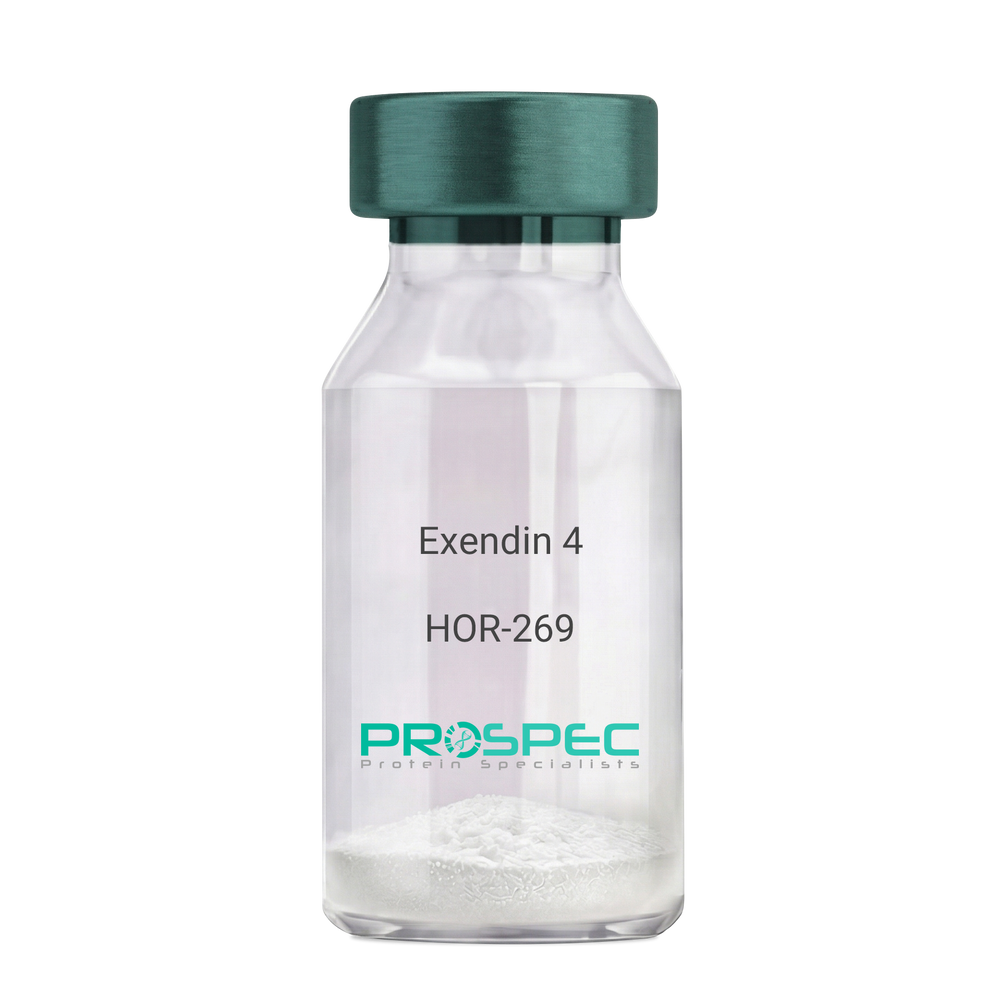
    Exendin 4

    Description:

    Exendin-4 Recombinant

    Product # :

    HOR-269

    Price :

    Quantity :

    Shipping Method :

    Room Temp Icon

    Shipped at Room temp

    Add To Cart

    More Info

    • description
    • source
    • formulation
    • purity
    • biological activity
    • More Info

    Description

    Exendin-4 Recombinant produced in E.Coli is a non-glycosylated polypeptide chain containing 39 amino acids and having a molecular mass of approximately 4.2kDa. Exendin-4 is purified by proprietary chromatographic techniques.

    Source

    Escherichia Coli.

    Formulation

    Lyophilized from a 0.2μm filtered concentrated solution in PBS, pH 7.4.

    Purity

    Greater than 96.0% as determined by:
    (a) Analysis by RP-HPLC.
    (b) Analysis by SDS-PAGE.

    Biological Activity

    1. Regulates Glucose levels rapidly
    2. Reduces Insulin resistance 
    3. Reduces Glucagon

    4. Stimulates beta cell growth production.

    More Info

    • Introduction

      Exedin-4 Recombinant is a like peptide-1 receptor agonist. The native hormone is produced in the gut of Gila monster Heloderma suspectrum (a type of reptile found in the desert) that stimulates production without causing threateningly low blood sugar, which can occur after using some anti-diabetes products. Recently, researchers used extracted saliva from gila monsters to create an unprecedented breakthrough in Diabetes Type 2 treatment. Unlike other products taken for type 2 diabetes, Exedin-4 has not been linked with weight gain and actually resulted in weight loss, according to the researchers. Exedin-4 enhances glucose-dependant secretion, suppresses inappropriately elevated secretion and slows gastric emptying in vivo. It also promotes B-cell proliferation and neogenesis in vitro and in animal models. Exedin-4 stimulates an increase in acinar cAMP, without stimulating the release of amylase.

    • Physical Appearance

      Sterile Filtered White lyophilized (freeze-dried) powder.

    • Stability

      Lyophilized Exendin Recombinant although stable at room temperature for 3 weeks, should be stored desiccated below -18°C. Upon reconstitution Exendin-4 should be stored at 4°C between 2-7 days and for future use below -18°C. For long term storage it is recommended to add a carrier protein (0.1% HSA or BSA).Please prevent freeze-thaw cycles.

    • Solubility

      It is recommended to reconstitute the lyophilized Exendin Recombinant in sterile 18MΩ-cm H2O not less than 100 µg/ml, which can then be further diluted to other aqueous solutions.

    • Amino Acid Sequence

      HGEGTFTSDL SKQMEEEAVR LFIEWLKNGG PSSGAPPPS.

    ProSpec's products are furnished for LABORATORY RESEARCH USE ONLY. The product may not be used as drugs, agricultural or pesticidal products, food additives or household chemicals.

    Exendin 4
  • View Data Sheet

    Name :

    Fertirelin

    Description:

    Fertirelin

    Product # :

    HOR-037

    Price :

    Quantity :

    Shipping Method :

    Room Temp Icon

    Shipped at Room temp

    Add To Cart

    More Info

    • description
    • formulation
    • purity
    • More Info

    Description

    Fertirelin Synthetic is a single, non-glycosylated polypeptide chain containing 9 amino acids, having a molecular mass of 1153.31 Dalton and a Molecular formula of C55H76N16O12.

    Formulation

    The protein was lyophilized with no additives.

    Purity

    Greater than 97.0% as determined by analysis by RP-HPLC.

    More Info

    • Physical Appearance

      Sterile Filtered White lyophilized (freeze-dried) powder.

    • Stability

      Lyophilized Fertirelin although stable at room temperature for 3 weeks, should be stored desiccated below -18°C. Upon reconstitution Fertirelin should be stored at 4°C between 2-7 days and for future use below -18°C. For long term storage it is recommended to add a carrier protein (0.1% HSA or BSA). Please prevent freeze-thaw cycles.

    • Solubility

      It is recommended to reconstitute the lyophilized Fertirelin in sterile 18MΩ-cm H2O not less than 100 µg/ml, which can then be further diluted to other aqueous solutions.

    • Amino Acid Sequence

      Pyr-His-Trp-Ser-Tyr-Gly-Leu-Arg-Pro-NHEt.

    • Background

      Fertirelin, a potent gonadotropin-releasing hormone (GnRH) analogue, is crucial for fertility regulation in animals. This research paper endeavors to expound on the biochemical attributes of fertirelin and its potential therapeutic applications in veterinary medicine.

      Fertirelin, a synthetic analogue of the natural gonadotropin-releasing hormone, plays a fundamental role in fertility regulation in veterinary medicine. It stimulates the secretion of luteinizing hormone and follicle-stimulating hormone, crucial for reproduction (Kotwica et al., 2005). This paper aims to delve into the biochemical characteristics of fertirelin and its potential applications.

      Fertirelin, as a GnRH analogue, elicits its action by binding to GnRH receptors located on pituitary gonadotroph cells. This leads to the release of luteinizing hormone and follicle-stimulating hormone, key players in ovulation and spermatogenesis (Kotwica et al., 2005).

      In the realm of veterinary medicine, fertirelin is primarily used for treating ovarian follicular cysts in dairy cattle (Bosu & Peter, 1987). Its potent stimulatory effect on gonadotropin secretion facilitates ovulation and contributes to fertility management strategies.

      The potential of fertirelin extends beyond the current applications. Further research into the precise mechanism of action and potential side effects can enhance its utilization. Overall, fertirelin presents a powerful tool in veterinary reproductive medicine, making it a focal point of interest for future studies.

    ProSpec's products are furnished for LABORATORY RESEARCH USE ONLY. The product may not be used as drugs, agricultural or pesticidal products, food additives or household chemicals.

    Fertirelin
  • View Data Sheet

    Name :

    CSK Antibody

    Description:

    C-Src Tyrosine Kinase, Mouse Anti Human

    Tyrosine-protein kinase CSK, C-Src kinase, Protein-tyrosine kinase CYL, CSK, C-Src Tyrosine Kinase.

    Product # :

    ANT-693

    Price :

    Quantity :

    Shipping Method :

    Ice Icon

    Shipped with Ice Packs

    Add To Cart

    More Info

    • formulation
    • More Info

    Formulation

    1mg/ml containing PBS, pH-7.4, 10% Glycerol and 0.02% Sodium Azide.

    More Info

    • Introduction

      C-Src Tyrosine Kinase, also known as CSK, regulates cell growth, migration, differentiation, and immune response. CSK Phosphorylates tyrosine residues located in the C-terminal tails of Src-family kinases. CSK is a protein coding gene which suppresses signaling by several surface receptors. Among CSK's related pathways are PI-3K cascade and Signaling by FGFR.

    • Synonyms

      Tyrosine-protein kinase CSK, C-Src kinase, Protein-tyrosine kinase CYL, CSK, C-Src Tyrosine Kinase.

    • Physical Appearance

      Sterile filtered colorless solution.

    • Immunogen

      Anti-human CSK mAb, is derived from hybridization of mouse F0 myeloma cells with spleen cells from BALB/c mice immunized with recombinant human CSK amino acids 1-450 purified from E. coli.

    • Ig Subclass

      Mouse IgG2b heavy chain and κ light chain.

    • Clone

      PAT7C6AT.

    • Applications

      CSK antibody has been tested by ELISA, Western blot analysis and ICC/IF to assure specificity and reactivity. Since application varies, however, each investigation should be titrated by the reagent to obtain optimal results.

    • Type

      Mouse Anti Human Monoclonal.

    • Storage Procedures

      For periods up to 1 month store at 4°C, for longer periods of time, store at -20°C. Prevent freeze thaw cycles.

    • Purification Method

      CSK antibody was purified from mouse ascitic fluids by protein-A affinity chromatography.

    ProSpec's products are furnished for LABORATORY RESEARCH USE ONLY. The product may not be used as drugs, agricultural or pesticidal products, food additives or household chemicals.

    Csk Antibody
  • View Data Sheet

    Name :

    NAGK Antibody

    Description:

    N-Acetylglucosamine Kinase, Mouse Anti Human

    N-acetyl-D-glucosamine kinase, N-acetylglucosamine kinase, GlcNAc kinase, NAGK.

    Product # :

    ANT-092

    Price :

    Quantity :

    Shipping Method :

    Ice Icon

    Shipped with Ice Packs

    Add To Cart

    More Info

    • formulation
    • More Info

    Formulation

    1mg/ml containing PBS, pH-7.4, 0.2% Sodium Azide and 10% glycerol.

    More Info

    • Introduction

      N-Acetylglucosamine Kinase (NAGK) is a part of the eukaryotic-type N-acetylglucosamine kinase family. NAGK transforms endogenous N-acetylglucosamine (GlcNAc), a main component of complex carbohydrates, from lysosomal degradation or nutritional sources into GlcNAc 6-phosphate. NAGK is a significant salvage enzyme of amino sugar metabolism in mammals which has ManNAc kinase activity.

    • Synonyms

      N-acetyl-D-glucosamine kinase, N-acetylglucosamine kinase, GlcNAc kinase, NAGK.

    • Immunogen

      Anti-human NAGK mAb, is derived from hybridization of mouse F0 myeloma cells with spleen cells from BALB/c mice immunized with a recombinant human NAGK amino acids 1-344 purified from E. coli.

    • Ig Subclass

      Mouse IgG1 heavy chain and ? light chain.

    • Clone

      P4D12AT.

    • Applications

      NAGK antibody has been tested by ELISA, Western blot analysis to assure specificity and reactivity. Since application varies, however, each investigation should be titrated by the reagent to obtain optimal results. Recommended dilution range for Western blot analysis is 1:500 ~ 1:5000.

    • Type

      Mouse Anti Human Monoclonal.

    • Storage Procedures

      For periods up to 1 month store at 4°C, for longer periods of time, store at -20°C. Prevent freeze thaw cycles.

    ProSpec's products are furnished for LABORATORY RESEARCH USE ONLY. The product may not be used as drugs, agricultural or pesticidal products, food additives or household chemicals.

    Nagk Antibody
  • View Data Sheet

    Name :

    SSR4 Antibody

    Description:

    Signal Sequence Receptor Delta, Mouse Anti Human

    TRAPD, Translocon-associated protein subunit delta, TRAP-delta, Signal sequence receptor subunit delta SSR-delta.

    Product # :

    ANT-509

    Price :

    Quantity :

    Shipping Method :

    Ice Icon

    Shipped with Ice Packs

    Add To Cart

    More Info

    • formulation
    • More Info

    Formulation

    1mg/ml containing PBS, pH-7.4, 10% Glycerol and 0.02% Sodium Azide.

    More Info

    • Introduction

      SSR4 is a member of the TRAP-delta family. SSR4 is the delta subunit of the translocon-associated protein complex that participates in translocating proteins through the endoplasmic reticulum membrane. SSR4 positioned in the Xq28 region and organized in a compact head-to-head manner with the isocitrate dehydrogenase 3 (NAD+) gamma gene. Both genes are motivated by a CpG-embedded bidirectional promoter.

    • Synonyms

      TRAPD, Translocon-associated protein subunit delta, TRAP-delta, Signal sequence receptor subunit delta SSR-delta.

    • Physical Appearance

      Sterile filtered colorless solution.

    • Immunogen

      Anti-human SSR4 mAb, clone PAT26G5AT, is derived from hybridization of mouse F0 myeloma cells with spleen cells from BALB/c mice immunized with a recombinant human SSR4 protein 24-144 amino acids purified from E. coli.

    • Ig Subclass

      Mouse IgG1 heavy chain and k light chain.

    • Clone

      PAT26G5AT.

    • Applications

      The antibody has been tested by ELISA, Western blot analysis to assure specificity and reactivity. Since application varies, however, each investigation should be titrated by the reagent to obtain optimal results. Recommended starting dilution is 1:1000.

    • Type

      Mouse Anti Human Monoclonal.

    • Storage Procedures

      For periods up to 1 month store at 4°C, for longer periods of time, store at -20°C. Prevent freeze thaw cycles.

    • Purification Method

      SSR4 antibody was purified from mouse ascitic fluids by protein-A affinity chromatography.

    ProSpec's products are furnished for LABORATORY RESEARCH USE ONLY. The product may not be used as drugs, agricultural or pesticidal products, food additives or household chemicals.

    Ssr4 Antibody
  • View Data Sheet

    Name :

    TREM2 Antibody

    Description:

    Triggering receptor expressed on myeloid cells 2, Mouse Anti Human

    Triggering receptor expressed on myeloid cells 2, Triggering receptor expressed on monocytes 2, TREM-2, TREM2, Trem2a, Trem2b, Trem2c.

    Product # :

    ANT-429

    Price :

    Quantity :

    Shipping Method :

    Ice Icon

    Shipped with Ice Packs

    Add To Cart

    More Info

    • formulation
    • More Info

    Formulation

    1mg/ml containing PBS, pH-7.4, & 0.1% Sodium Azide.

    More Info

    • Introduction

      TREM2 is a membrane protein that forms a receptor signaling complex with TYROBP. TREM2 may be involved in chronic inflammation by triggering the production of constitutive inflammatory cytokines. Defects in the TREM2 gene are a source of polycystic lipomembranous osteodysplasia with sclerosing leukoencephalopathy (PLOSL).

    • Synonyms

      Triggering receptor expressed on myeloid cells 2, Triggering receptor expressed on monocytes 2, TREM-2, TREM2, Trem2a, Trem2b, Trem2c.

    • Immunogen

      Anti-human TREM2 mAb, is derived from hybridization of mouse F0 myeloma cells with spleen cells from BALB/c mice immunized with recombinant human TREM2 amino acids 19-161 purified from E. coli.

    • Ig Subclass

      Mouse IgG3 heavy chain and κ light chain.

    • Clone

      P2B5AT.

    • Applications

      TREM2 antibody has been tested by ELISA and Western blot analysis to assure specificity and reactivity. Since application varies, however, each investigation should be titrated by the reagent to obtain optimal results. Recommended dilution range for Western blot analysis is 1:500 ~ 1,000.Recommended starting dilution is 1:500.

    • Type

      Mouse Anti Human Monoclonal.

    • Storage Procedures

      For periods up to 1 month store at 4°C, for longer periods of time, store at -20°C. Prevent freeze thaw cycles.

    • Purification Method

      TREM2 antibody was purified from mouse ascitic fluids by protein-G affinity chromatography.

    ProSpec's products are furnished for LABORATORY RESEARCH USE ONLY. The product may not be used as drugs, agricultural or pesticidal products, food additives or household chemicals.

    Trem2 Antibody
  • View Data Sheet

    Name :

    CFL1 Antibody

    Description:

    Cofilin-1, Mouse Anti Human

    CFL-1, CFL1, Cofilin1, Cofilin-1, Cofilin non-muscle isoform, 18 kDa phosphoprotein, p18.

    Product # :

    ANT-354

    Price :

    Quantity :

    Shipping Method :

    Ice Icon

    Shipped with Ice Packs

    Add To Cart

    More Info

    • formulation
    • More Info

    Formulation

    1mg/ml containing PBS, pH-7.4, & 0.1% Sodium Azide.

    More Info

    • Introduction

      Cofilin is a family of actin-binding proteins which disassembles actin filaments. It is a widely distributed intracellular actin-modulating protein that binds and depolymerizes filamentous F-actin and inhibits the polymerization of monomeric G-actin in a pH-dependent manner. It is involved in the translocation of actin-cofilin complex from cytoplasm to nucleus.

    • Synonyms

      CFL-1, CFL1, Cofilin1, Cofilin-1, Cofilin non-muscle isoform, 18 kDa phosphoprotein, p18.

    • Immunogen

      Anti-human CFL1 mAb is derived from hybridization of mouse F0 myeloma cells with spleen cells from BALB/c mice immunized with recombinant human CFL1 amino acids 1-166 purified from E. coli.

    • Ig Subclass

      Mouse IgG1 heavy chain and κ light chain.

    • Clone

      PAT1C1AT.

    • Applications

      CFL1 antibody has been tested by ELISA and Western blot analysis to assure specificity and reactivity. Since application varies, however, each investigation should be titrated by the reagent to obtain optimal results. Recommended dilution range for Western blot analysis is 1:1,000 ~ 2,000.Recommended starting dilution is 1:1,000.

    • Type

      Mouse Anti Human Monoclonal.

    • Storage Procedures

      For periods up to 1 month store at 4°C, for longer periods of time, store at -20°C. Prevent freeze thaw cycles.

    • Purification Method

      CFL1 antibody was purified from mouse ascitic fluids by protein-G affinity chromatography.

    ProSpec's products are furnished for LABORATORY RESEARCH USE ONLY. The product may not be used as drugs, agricultural or pesticidal products, food additives or household chemicals.

    Cfl1 Antibody
  • View Data Sheet

    Name :

    Vaspin Antibody

    Description:

    Vaspin, Mouse Anti Human

    Serpin A12 precursor, Visceral adipose-specific serpin, Visceral adipose tissue- derived serine protease inhibitor, Vaspin, OL-64, SERPINA12, Serine (or cysteine) proteinase inhibitor, clade A, antitrypsin, alpha-1 antiproteinase.

    Product # :

    ANT-366

    Price :

    Quantity :

    Shipping Method :

    Ice Icon

    Shipped with Ice Packs

    Add To Cart

    More Info

    • formulation
    • More Info

    Formulation

    1mg/ml containing PBS, pH-7.4, & 0.1% Sodium Azide.

    More Info

    • Introduction

      Vaspin (visceral adipose-specific SERPIN), a newly identified adipokine, which is a member of serine protease inhibitor family. Vaspin is also a unique insulin sensitizing adipocytokine in obesity. A recent publication indicates that induction of human vaspin mRNA expression in adipose tissue is regulated in a fat depot-specific manner and could be associated with parameters of obesity, insulin resistance, and glucose metabolism.

    • Synonyms

      Serpin A12 precursor, Visceral adipose-specific serpin, Visceral adipose tissue- derived serine protease inhibitor, Vaspin, OL-64, SERPINA12, Serine (or cysteine) proteinase inhibitor, clade A, antitrypsin, alpha-1 antiproteinase.

    • Immunogen

      Anti-human Vaspin mAb, is derived from hybridization of mouse SP2/O myeloma cells with spleen cells from BALB/c mice immunized with Recombinant human Vaspin amino acids 21-414 purified from E. coli.

    • Ig Subclass

      Mouse IgG1 heavy chain and κ light chain.

    • Clone

      P1C4AT.

    • Applications

      Vaspin antibody has been tested by ELISA and Western blot analysis to assure specificity and reactivity. Since application varies, however, each investigation should be titrated by the reagent to obtain optimal results. Recommended dilution range for Western blot analysis is 1:1,000 ~ 3,000. Recommended starting dilution is 1:2,000.

    • Type

      Mouse Anti Human Monoclonal.

    • Storage Procedures

      For periods up to 1 month store at 4°C, for longer periods of time, store at -20°C. Prevent freeze thaw cycles.

    • Purification Method

      Vaspin antibody was purified from mouse ascitic fluids by protein-G affinity chromatography.

    ProSpec's products are furnished for LABORATORY RESEARCH USE ONLY. The product may not be used as drugs, agricultural or pesticidal products, food additives or household chemicals.

    Vaspin Antibody
  • View Data Sheet

    Name :

    SNAPIN Human

    Description:

    SNAP Associated Protein Human Recombinant

    SNAPAP, SNARE-associated protein Snapin, Synaptosomal-associated protein 25-binding protein, SNAP-associated protein, SNAPIN, SNAP25BP.

    Product # :

    PRO-663

    Price :

    Quantity :

    Shipping Method :

    Ice Icon

    Shipped with Ice Packs

    Add To Cart

    More Info

    • description
    • source
    • formulation
    • purity
    • More Info

    Description

    SNAPIN Human Recombinant produced in E.Coli is a single, non-glycosylated polypeptide chain containing 156 amino acids (1-136) and having a molecular mass of 17 kDa. SNAPIN is fused to 20 amino acid His Tag at N-terminus and purified by standard chromatography techniques.

    Source

    Escherichia Coli.

    Formulation

    The protein solution contains 20mM Tris-HCl pH-8, 5mM DTT, 2mM EDTA, 0.2M NaCl, and 40% glycerol.

    Purity

    Greater than 90.0% as determined by SDS-PAGE.

    More Info

    • Introduction

      SNAPIN is involved in the neurotransmitter release process through its modulation of the sequential interactions between the SNAREs and synaptotagmin. SNAPIN is part of the SNARE complex of proteins that is needed for synaptic vesicle docking and fusion. SNAPAP is enriched in neurons and exclusively located on synaptic vesicle membrane protein. SNAPIN is also an important factor of the BLOC1 multisubunit protein complex. BLOC1 is required for normal biogenesis of specialized organelles of the endosomal-lysosomal system, such as melanosomes and platelet dense granules.

    • Synonyms

      SNAPAP, SNARE-associated protein Snapin, Synaptosomal-associated protein 25-binding protein, SNAP-associated protein, SNAPIN, SNAP25BP.

    • Physical Appearance

      Sterile Filtered colorless solution.

    • Stability

      Store at 4°C if entire vial will be used within 2-4 weeks. Store, frozen at -20°C for longer periods of time. For long term storage it is recommended to add a carrier protein (0.1% HSA or BSA).Avoid multiple freeze-thaw cycles.

    • Amino Acid Sequence

      MGSSHHHHHH SSGLVPRGSH MAGAGSAAVS GAGTPVAGPT GRDLFAEGLL EFLRPAVQQL DSHVHAVRES QVELREQIDN LATELCRINEDQKVALDLDP YVKKLLNARR RVVLVNNILQ NAQERLRRLN HSVAKETARR RAMLDSGIYP PGSPGK.

    ProSpec's products are furnished for LABORATORY RESEARCH USE ONLY. The product may not be used as drugs, agricultural or pesticidal products, food additives or household chemicals.

    Snapin Human
  • View Data Sheet

    Name :

    SNCA 61-140 Human

    Description:

    Alpha Synuclein 61-140 Human Recombinant

    Alpha-synuclein, Non-A beta component of AD amyloid, Non-A4 component of amyloid precursor, NACP, PD1, PARK1, PARK4, MGC110988, a-Synuclein, SNCA.

    Product # :

    PRO-163

    Price :

    Quantity :

    Shipping Method :

    Ice Icon

    Shipped with Ice Packs

    Add To Cart

    More Info

    • description
    • source
    • formulation
    • purity
    • More Info

    Description

    A-Synuclein 61-140 Human Recombinant which is a deletion mutant of the a-synuclein amino acids 61-140 , produced in E.Coli is a single, non-glycosylated polypeptide chain of 81 amino acids having a molecular mass of 8.4kDa (molecular size on SDS-PAGE will appear higher), with an additional Met attached at the N-terminus. The Recombinant Human a-Synuclein 61-140 is purified by proprietary chromatographic techniques.

    Source

    Escherichia Coli.

    Formulation

    The SNCA 61-140 protein solution (1mg/ml) contains 20mM Tris-HCl buffer pH 7.5 and 100mM NaCl.

    Purity

    Greater than 95.0% as determined by SDS-PAGE.

    More Info

    • Introduction

      a-Synuclein (amino acids 1-140), an acidic neuronal protein of 140 amino acids, is extremely heat-resistant and is natively unfolded with an extended structure primarily composed of random coils. a-synuclein has been suggested to be implicated in the pathogenesis of Parkinson’s disease and related neurodegenerative disorders, and more recently, to be an important regulatory component of vesicular transport in neuronal cells. Moreover, recent studies have shown that a-synuclein has chaperone activity and that this activity is lost upon removing its C-terminal acidic tail (amino acids 96-140).

    • Synonyms

      Alpha-synuclein, Non-A beta component of AD amyloid, Non-A4 component of amyloid precursor, NACP, PD1, PARK1, PARK4, MGC110988, a-Synuclein, SNCA.

    • Physical Appearance

      Sterile filtered colorless solution.

    • Stability

      Store at 4°C if entire vial will be used within 2-4 weeks. Store, frozen at -20°C for longer periods of time. For long term storage it is recommended to add a carrier protein (0.1% HSA or BSA). Avoid multiple freeze-thaw cycles.

    • Amino Acid Sequence

      MEQVTNVGGAV VTGVTAVAQK TVEGAGSIAA ATGFVKKDQL GKNEEGAPQE GILEDMPVDP DNEAYEMPSE EGYQDYEPEA.

    ProSpec's products are furnished for LABORATORY RESEARCH USE ONLY. The product may not be used as drugs, agricultural or pesticidal products, food additives or household chemicals.

    Snca 61 140 Human
  • View Data Sheet

    Name :

    PFN1 Human

    Description:

    Profilin-1 Human Recombinant

    Profilin-1, Profilin I, PFN1.

    Product # :

    PRO-528

    Price :

    Quantity :

    Shipping Method :

    Ice Icon

    Shipped with Ice Packs

    Add To Cart

    More Info

    • description
    • source
    • formulation
    • purity
    • More Info

    Description

    PFN1 Human Recombinant produced in E.Coli is a single, non-glycosylated, polypeptide chain containing 140 amino acids (1-140 a.a.) and having a molecular mass of 15kDa.The PFN1 is purified by proprietary chromatographic techniques.

    Source

    Escherichia Coli.

    Formulation

    The PFN1 protein solution contains 20mM Tris-HCl buffer (pH8.0) and 10% glycerol.

    Purity

    Greater than 95.0% as determined by SDS-PAGE.

    More Info

    • Introduction

      Profilin1 (PFN1) is a ubiquitous actin monomer-binding protein which is a member of the profilin family. PFN1 significantly boosts skin wound healing in-vitro and in-vivo which may be mediated by purinergic receptors. PFN1 is also active in endothelial cell migration and vessel sprouting. PFN1 is thought to control actin polymerization in response to extracellular signals. PFN1 binds to actin and affects the formation of the cytoskeleton. In addition, PFN1 has an important role in the regulation of epithelial cell-cell adhesion. At high concentrations, profilin averts the polymerization of actin, while at low concentrations it enhances the polymerization. PFN1 gene deletion is linked to Miller-Dieker syndrome.

    • Synonyms

      Profilin-1, Profilin I, PFN1.

    • Physical Appearance

      Sterile Filtered colorless solution.

    • Stability

      Store at 4°C if entire vial will be used within 2-4 weeks. Store, frozen at -20°C for longer periods of time. For long term storage it is recommended to add a carrier protein (0.1% HSA or BSA).Avoid multiple freeze-thaw cycles.

    • Amino Acid Sequence

      MAGWNAYIDN LMADGTCQDA AIVGYKDSPS VWAAVPGKTF VNITPAEVGV LVGKDRSSFY VNGLTLGGQK CSVIRDSLLQ DGEFSMDLRT KSTGGAPTFN VTVTKTDKTL VLLMGKEGVH GGLINKKCYE MASHLRRSQY.

    ProSpec's products are furnished for LABORATORY RESEARCH USE ONLY. The product may not be used as drugs, agricultural or pesticidal products, food additives or household chemicals.

    Pfn1 Human
  • View Data Sheet

    Name :

    NAP 2 Antibody

    Description:

    Natural anti-proliferative protein, Mouse-Anti Human

    Platelet basic protein, PBP, Small inducible cytokine B7, CXCL7, Leukocyte-derived growth factor, LDGF, Macrophage-derived growth factor, MDGF, pro-platelet basic protein (chemokine (C-X-C motif) ligand 7), TC1, TC2, TGB, TGB1, B-TG1, CTAP3, NAP-2, SCYB7, THBGB, LA-PF4, THBGB1, Beta-TG, CTAPIII, CTAP-III.

    Product # :

    ANT-170

    Price :

    Quantity :

    Shipping Method :

    Room Temp Icon

    Shipped at Room temp

    Add To Cart

    More Info

    • formulation
    • More Info

    Formulation

    1mg/ml in PBS (after reconstitution).

    More Info

    • Introduction

      Chemokine (C-X-C motif) ligand (CXCL7) is a small cytokine belonging to the CXC chemokine family. It is a protein that is released in large amounts from platelets following their activation. It stimulates various processes including mitogenesis, synthesis of extracellular matrix, glucose metabolism and synthesis of plasminogen activator.

    • Synonyms

      Platelet basic protein, PBP, Small inducible cytokine B7, CXCL7, Leukocyte-derived growth factor, LDGF, Macrophage-derived growth factor, MDGF, pro-platelet basic protein (chemokine (C-X-C motif) ligand 7), TC1, TC2, TGB, TGB1, B-TG1, CTAP3, NAP-2, SCYB7, THBGB, LA-PF4, THBGB1, Beta-TG, CTAPIII, CTAP-III.

    • Solubility

      Reconstitute with sterile H20. Mix gently, wash the sides of the vial and wait 30-60 seconds before use.

    • Immunogen

      r.Human NAP-2.

    • Ig Subclass

      Mouse IgG1.

    • Clone

      NYRhNAP-2.

    • Applications

      Direct ELISA, Western Blot, Immuneprecipitation.

    • Note

      This antibody will bind very well to protein A in a buffer (PBS) containing high salt concentration (3M Nacl).

    • Titer

      In direct ELISA, using alkaline phosphatase goat anti-mouse Ig (Jackson Laboratories) 1:10,000 dilution will yield 0.5 O.D within 10 minutes.

    • Shipping Conditions

      Antibody is shipped lyophilized at ambient temperature.

    • Type

      Mouse Anti Human Monoclonal.

    • Storage Procedures

      In lyophilized form, for long periods, store at 4oC in a dry environment. After reconstitution, if not intended for use within a month, aliquot and store at -20oC.

    • Purification Method

      ion exchange.

    ProSpec's products are furnished for LABORATORY RESEARCH USE ONLY. The product may not be used as drugs, agricultural or pesticidal products, food additives or household chemicals.

    Nap2 Antibody
  • View Data Sheet

    Name :

    ESR1 Antibody

    Description:

    Estrogen Receptor Alpha, Mouse Anti Human

    ER-alpha

    Product # :

    ANT-473

    Price :

    Quantity :

    Shipping Method :

    Ice Icon

    Shipped with Ice Packs

    Add To Cart

    More Info

    • formulation
    • More Info

    Formulation

    1mg/ml in PBS (after reconstitution).

    More Info

    • Introduction

      Estrogen receptors α (ERα, ER; NR3A1) is a member of the steroid hormone receptor family. ERα is a ligand-activated transcription factor. ERα contain DNA binding and ligand binding domains. ERα is expressed in a wide variety of tissues, including ovary, uterus, breast, prostate, testis, epididymis, bones, bladder, kidney, heart, vessel wall, pituitary gland and hypothalamus. ER plays a variety of important roles in the maintenance of the reproductive, cardiovascular, musculoskeletal and central nervous systems. The natural ligand for ER is 17β-estradiol, the classical estrogenic compound. The binding of estrogen to ER induces a conformational change and triggers a cascade of events, including dissociation from heat shock proteins, receptor dimerization, phosphorylation and the association of the hormone activated receptor with specific regulatory elements in target genes.

    • Synonyms

      ER-alpha

    • Solubility

      Reconstitute with of H2O. Mix gently, wash the sides of the vial and wait 30-60 seconds before use.

    • Immunogen

      Recombinant human ER-alpha.

    • Ig Subclass

      Mouse IgG.

    • Clone

      LSERASC1.

    • Applications

      Western Blot, Immunofluorescent Staining, Immunohistochemistry, flow cytometry, immunoprecipitation.

    • Available Conjugates

      This antibody is only available as purified antibody.

    • Type

      Mouse anti-Estrogen Receptor Alpha (human and mouse).

    • Storage Procedures

      Lyophilized: store at 4°C. After reconstitution, if not intended for use within a month, aliquot and store at -20°C.

    • Purification Method

      Protein A.

    ProSpec's products are furnished for LABORATORY RESEARCH USE ONLY. The product may not be used as drugs, agricultural or pesticidal products, food additives or household chemicals.

    Esr1 Antibody
  • View Data Sheet

    Name :

    Ostreolysin

    Description:

    Ostreolysin Pleurotus Ostreatus Recombinant

    Product # :

    PRO-2600

    Price :

    Quantity :

    Shipping Method :

    Room Temp Icon

    Shipped at Room temp

    Add To Cart

    More Info

    • description
    • source
    • formulation
    • purity
    • biological activity
    • More Info

    Description

    Pleurotus Ostreatus Ostreolysin Recombinant produced in E.Coli is a single, non-glycosylated polypeptide chain containing 137 amino acids and having a molecular mass of 15 kDa. The Ostreolysin is purified by proprietary chromatographic techniques.

    Source

    Escherichia Coli.

    Formulation

    The Ostreolysin protein was lyophilized from a concentrated (1mg/ml) solution with 0.02% NaHCO3.

    Purity

    Greater than 98.0% as determined by:
    (a) Analysis by Gel filtration analysis.
    (b) Analysis by SDS-PAGE.

    Biological Activity

    Ostreolysin has potent anti-carcinogenic activity in several colon cancer cell lines. 

    More Info

    • Introduction

      Ostreolysin is extracted from Pleurotus ostreatus (oyster mushroom). It is a pore forming protein, which contains a lytic part to both cholesterol and sphingomyelin containing membranes. Because of their cholesterol content and the appearance of ostreolysin in the detergent resistant membranes, ostreolysin is cytotoxic towards the ovary cells of Chinese hamster. It seems that Ostreolysin spots a rich lipid cholesterol phase, presumably the liquid ordered phase.

    • Physical Appearance

      Sterile Filtered White lyophilized (freeze-dried) powder.

    • Stability

      Lyophilized Pleurotus Ostreatus Ostreolysin although stable at room temperature for 3 weeks, should be stored desiccated below -18°C. Upon C between 2-7 days and for future use reconstituted Ostreolysin should be stored at 4°C below -18°C. For long term storage it is recommended to add a carrier protein (0.1% HSA or BSA). Please avoid freeze-thaw cycles.

    • Solubility

      It is recommended to reconstitute the lyophilized Ostreolysin in sterile 0.4% NaHCO3, not less than 100µg/ml, which can then be further diluted to other aqueous solutions.

    • Amino Acid Sequence

      The N-terminal amino sequence is Ala-Tyr-Ala-Gln-Trp-Val.

    • Protein content

      Protein quantitation was carried out by UV spectroscopy at 280 nm using the absorbency value of 2.64 as the extinction coefficient for a 0.1% (1mg/ml) solution at pH 8.0. This value is calculated by the DNA-man computer analysis program.

    ProSpec's products are furnished for LABORATORY RESEARCH USE ONLY. The product may not be used as drugs, agricultural or pesticidal products, food additives or household chemicals.

    Ostreolysin
  • View Data Sheet

    Name :

    TPGS2 Human

    Description:

    Tubulin Polyglutamylase Complex Subunit 2 Human Recombinant

    Tubulin polyglutamylase complex subunit 2, C18orf10; HMFN0601, HsT3006, L17, PGs2, TPGS2.

    Product # :

    PRO-1668

    Price :

    Quantity :

    Shipping Method :

    Ice Icon

    Shipped with Ice Packs

    Add To Cart

    More Info

    • description
    • source
    • formulation
    • purity
    • More Info

    Description

    TPGS2 Human Recombinant produced in E.coli is a single, non-glycosylated polypeptide chain containing 323 amino acids (1-300) and having a molecular mass of 35.7kDa.TPGS2 is fused to a 23 amino acid His-tag at N-terminus & purified by proprietary chromatographic techniques.

    Source

    Escherichia Coli.

    Formulation

    The TPGS2 solution (0.25mg/ml) contains 20mM Tris-HCl buffer (pH 8.0), 0.2M NaCl, 50% glycerol, 2mM DTT and 2mM EDTA.

    Purity

    Greater than 85.0% as determined by SDS-PAGE.

    More Info

    • Introduction

      Tubulin Polyglutamylase Complex Subunit 2 (TPGS2) is a component of the neuronal polyglutamylase complex, which takes part in post-translational addition of glutamate residues to C-terminal tubulin tails. Alternatively spliced transcript variants encoding multiple isoforms have been monitored for TPGS2.

    • Synonyms

      Tubulin polyglutamylase complex subunit 2, C18orf10; HMFN0601, HsT3006, L17, PGs2, TPGS2.

    • Physical Appearance

      Sterile Filtered colorless solution.

    • Stability

      Store at 4°C if entire vial will be used within 2-4 weeks. Store, frozen at -20°C for longer periods of time. For long term storage it is recommended to add a carrier protein (0.1% HSA or BSA).Avoid multiple freeze-thaw cycles.

    • Amino Acid Sequence

      MGSSHHHHHH SSGLVPRGSH MGSMEEEASS PGLGCSKPHL EKLTLGITRI LESSPGVTEV TIIEKPPAER HMISSWEQKN NCVMPEDVKN FYLMTNGFHM TWSVKLDEHI IPLGSMAINS ISKLTQLTQS SMYSLPNAPT LADLEDDTHE ASDDQPEKPH FDSRSVIFEL DSCNGSGKVC LVYKSGKPAL AEDTEIWFLD RALYWHFLTD TFTAYYRLLI THLGLPQWQY AFTSYGISPQ AKQWFSMYKP ITYNTNLLTE ETDSFVNKLD PSKVFKSKNK IVIPKKKGPV QPAGGQKGPS GPSGPSTSST SKSSSGSGNP TRK.

    ProSpec's products are furnished for LABORATORY RESEARCH USE ONLY. The product may not be used as drugs, agricultural or pesticidal products, food additives or household chemicals.

    Tpgs2 Human
  • View Data Sheet

    Name :

    TSR2 Human

    Description:

    TSR2 Human Recombinant

    TSR2, 20S RRNA Accumulation, Homolog (S. Cerevisiae), WGG Motif Containing 1, Pre-RRNA-Processing Protein TSR2 Homolog, DT1P1A10, DBA14, WGG1, Pre-rRNA-processing protein TSR2 homolog.

    Product # :

    PRO-2079

    Price :

    Quantity :

    Shipping Method :

    Ice Icon

    Shipped with Ice Packs

    Add To Cart

    More Info

    • description
    • source
    • formulation
    • purity
    • More Info

    Description

    TSR2 Human Recombinant produced in E.Coli is a single, non-glycosylated polypeptide chain containing 213 amino acids (1-190 a.a) and having a molecular mass of 23.2kDa. TSR2 is fused to a 23 amino acid His-tag at N-terminus & purified by proprietary chromatographic techniques.

    Source

    Escherichia Coli.

    Formulation

    TSR2 protein solution (0.5mg/ml) containing PBS buffer (pH 7.4) and 10% glycerol.

    Purity

    Greater than 90% as determined by SDS-PAGE.

    More Info

    • Introduction

      TSR2 is part of the TSR2 family. TSR2 is involved in 20S pre-rRNA processing. Among the diseases which are associated with TSR2 are blepharospasm and diamond-blackfan anemia.

    • Synonyms

      TSR2, 20S RRNA Accumulation, Homolog (S. Cerevisiae), WGG Motif Containing 1, Pre-RRNA-Processing Protein TSR2 Homolog, DT1P1A10, DBA14, WGG1, Pre-rRNA-processing protein TSR2 homolog.

    • Physical Appearance

      Sterile Filtered colorless solution.

    • Stability

      Store at 4°C if entire vial will be used within 2-4 weeks. Store, frozen at -20°C for longer periods of time. For long term storage it is recommended to add a carrier protein (0.1% HSA or BSA).Avoid multiple freeze-thaw cycles.

    • Amino Acid Sequence

      MGSSHHHHHH SSGLVPRGSH MGSMAGAAED ARALFRAGVC AALEAWPALQ IAVENGFGGV HSQEKAKWLG GAVEDYFMRN ADLELDEVED FLGELLTNEF DTVVEDGSLP QVSQQLQTMF HHFQRGDGAA LREMASCITQ RKCKVTATAL KTARETDEDE DDVDSVEEME VTATNDGAAT DGVCPQPEPS DPDAQTIKEE DIVEDGWTIV RRK.

    ProSpec's products are furnished for LABORATORY RESEARCH USE ONLY. The product may not be used as drugs, agricultural or pesticidal products, food additives or household chemicals.

    Tsr2 Human
  • View Data Sheet

    Name :

    FGG Human

    Description:

    Fibrinogen Gamma Chain Human Recombinant

    Fibrinogen gamma chain isoform gamma-A, Fibrinogen gamma chain, PRO2061.

    Product # :

    PRO-2168

    Price :

    Quantity :

    Shipping Method :

    Ice Icon

    Shipped with Ice Packs

    Add To Cart

    More Info

    • description
    • source
    • formulation
    • purity
    • More Info

    Description

    FGG Human Recombinant produced in E.Coli is a single, non-glycosylated polypeptide chain containing 434 amino acids (27-437 a.a) and having a molecular mass of 48.9kDa.FGG is fused to a 23 amino acid His-tag at N-terminus & purified by proprietary chromatographic techniques.

    Source

    Escherichia Coli.

    Formulation

    FGG protein solution (0.5mg/ml) containing Phosphate buffered saline (pH7.4), 10% glycerol and 1mM DTT.

    Purity

    Greater than 90.0% as determined by SDS-PAGE.

    More Info

    • Introduction

      Fibrinogen gamma chain isoform gamma-A (FGG) is the gamma component of fibrinogen, which is a blood-borne glycoprotein, comprised of 3 pairs of nonidentical polypeptide chains. FGG along with fibrinogen alpha (FGA) and fibrinogen beta (FGB) polymerizes to form an insoluble fibrin matrix. Following vascular injury, FGG is cleaved by thrombin to create fibrin, which is the most abundant component of blood clots. FGG functions during the early stages of wound repair to stabilize the lesion and guide cell migration during re-epithelialization. Moreover, different cleavage products of fibrinogen and fibrin regulate cell adhesion and spreading, exhibit vasoconstrictor and chemotactic activities, and are mitogens for a number of cell types. Maternal fibrinogen is vital for successful pregnancy. FGG gene mutations lead to some disorders, including dysfibrinogenemia, hypofibrinogenemia and thrombophilia. Fibrin accumulation is also linked with infection, where it protects against IFNG-mediated hemorrhage.

    • Synonyms

      Fibrinogen gamma chain isoform gamma-A, Fibrinogen gamma chain, PRO2061.

    • Physical Appearance

      Sterile Filtered clear solution.

    • Stability

      Store at 4°C if entire vial will be used within 2-4 weeks. Store, frozen at -20°C for longer periods of time. For long term storage it is recommended to add a carrier protein (0.1% HSA or BSA).Avoid multiple freeze-thaw cycles.

    • Amino Acid Sequence

      MGSSHHHHHH SSGLVPRGSH MGSYVATRDN CCILDERFGS YCPTTCGIAD FLSTYQTKVD KDLQSLEDIL HQVENKTSEV KQLIKAIQLT YNPDESSKPN MIDAATLKSR KMLEEIMKYE ASILTHDSSI RYLQEIYNSN NQKIVNLKEK VAQLEAQCQE PCKDTVQIHD ITGKDCQDIA NKGAKQSGLY FIKPLKANQQ FLVYCEIDGS GNGWTVFQKR LDGSVDFKKN WIQYKEGFGH LSPTGTTEFW LGNEKIHLIS TQSAIPYALR VELEDWNGRT STADYAMFKV GPEADKYRLT YAYFAGGDAG DAFDGFDFGD DPSDKFFTSH NGMQFSTWDN DNDKFEGNCA EQDGSGWWMN KCHAGHLNGV YYQGGTYSKA STPNGYDNGI IWATWKTRWY SMKKTTMKII PFNRLTIGEG QQHHLGGAKQ AGDV.

    ProSpec's products are furnished for LABORATORY RESEARCH USE ONLY. The product may not be used as drugs, agricultural or pesticidal products, food additives or household chemicals.

    Fgg Human
  • View Data Sheet

    Name :

    VAMP2 Human, (1-94)

    Description:

    Synaptobrevin-2 Human Recombinant, (1-94)

    Vesicle Associated Membrane Protein 2, Vesicle-Associated Membrane Protein 2, Synaptobrevin 2, VAMP-2, SYB2, Synaptobrevin-2.

    Product # :

    PRO-2644

    Price :

    Quantity :

    Shipping Method :

    Ice Icon

    Shipped with Ice Packs

    Add To Cart

    More Info

    • description
    • source
    • formulation
    • purity
    • More Info

    Description

    VAMP2 Human Recombinant produced in e.coli is a single, non-glycosylated polypeptide chain containing 118 amino acids (1-94 a.a) and having a molecular mass of 12.8kDa. VAMP2 is fused to a 24 amino acid His-tag at N-terminus & purified by proprietary chromatographic techniques.

    Source

    E.Coli

    Formulation

    The VAMP2 solution (0.5mg/1ml) contains 0.1mM PMSF, 10% glycerol and Phosphate-Buffered Saline (pH 7.4).

    Purity

    Greater than 95.0% as determined by SDS-PAGE.

    More Info

    • Introduction

      Synaptobrevin-2 or VAMP2 is a protein that has a proline-rich N-terminal part, highly conserved hydrophilic domain, a transmembrane anchor and a C-terminal.VAMP2 found in the transmembrane region of the cell, in the cytoplasmic surface of the synaptic vesicle. The protein is mainly found in the Langerhans islets in the pancreas and glomerular cells in the kidney. A SNARE complex is created within the protein’s N-terminal domain and the target membrane-associated T.

    • Synonyms

      Vesicle Associated Membrane Protein 2, Vesicle-Associated Membrane Protein 2, Synaptobrevin 2, VAMP-2, SYB2, Synaptobrevin-2.

    • Physical Appearance

      Sterile Filtered colorless solution.

    • Stability

      Store at 4°C if entire vial will be used within 2-4 weeks. Store, frozen at -20°C for longer periods of time. For long term storage it is recommended to add a carrier protein (0.1% HSA or BSA).Avoid multiple freeze-thaw cycles.

    • Amino Acid Sequence

      MGSSHHHHHH SSGLVPRGSH MGSHMSATAA TAPPAAPAGE GGPPAPPPNL TSNRRLQQTQ AQVDEVVDIM RVNVDKVLER DQKLSELDDR ADALQAGASQ FETSAAKLKR KYWWKNLK.

    ProSpec's products are furnished for LABORATORY RESEARCH USE ONLY. The product may not be used as drugs, agricultural or pesticidal products, food additives or household chemicals.

    Synaptobrevin 2 Human
  • View Data Sheet

    Name :

    IL36RN Human, His

    Description:

    Interleukin-36 Receptor Antagonist Human Recombinant, His Tag

    Interleukin 36 receptor antagonist, FIL1, FIL1(DELTA), FIL1D, IL1F5, IL1HY1, IL1L1, IL1RP3, IL36RA, PSORP, FIL1 delta, Interleukin-1 HY1, IL-1 delta, Interleukin-1 receptor antagonist homolog 1, Interleukin-1-like protein 1, UNQ1896/PRO4342.

    Product # :

    CYT-844

    Price :

    Quantity :

    Shipping Method :

    Ice Icon

    Shipped with Ice Packs

    Add To Cart

    More Info

    • description
    • source
    • formulation
    • purity
    • More Info

    Description

    IL36RN Human Recombinant produced in E.Coli is a single, non-glycosylated polypeptide chain containing 175 amino acids (1-155 a.a) and having a molecular mass of 19.1kDa.IL36RN is fused to a 20 amino acid His-tag at N-terminus & purified by proprietary chromatographic techniques.

    Source

    Escherichia Coli.

    Formulation

    IL36RN protein solution (0.5mg/ml) containing Phosphate buffered saline (pH7.4) and 10% glycerol.

    Purity

    Greater than 95% as determined by SDS-PAGE.

    More Info

    • Introduction

      Human interleukin family 1, member 5 (IL-1F5 / FIL1-delta) belongs to the interleukin 1 cytokine family. IL1F5 is expressed by a variety of cells including monocytes, Bcells, dendritic cells/Langerhans cells, keratinocytes,and gastric fundus Parietal and Chief cells. IL1F5 is an antagonist of IL1F9; however IL1F5 activity related to receptor binding remains unclear. Human and mouse IL1F5 share 90% amino acid sequence identity.

    • Synonyms

      Interleukin 36 receptor antagonist, FIL1, FIL1(DELTA), FIL1D, IL1F5, IL1HY1, IL1L1, IL1RP3, IL36RA, PSORP, FIL1 delta, Interleukin-1 HY1, IL-1 delta, Interleukin-1 receptor antagonist homolog 1, Interleukin-1-like protein 1, UNQ1896/PRO4342.

    • Physical Appearance

      Sterile filtered colorless solution.

    • Stability

      Store at 4°C if entire vial will be used within 2-4 weeks. Store, frozen at -20°C for longer periods of time. For long term storage it is recommended to add a carrier protein (0.1% HSA or BSA).Avoid multiple freeze-thaw cycles.

    • Amino Acid Sequence

      MGSSHHHHHH SSGLVPRGSH MVLSGALCFR MKDSALKVLY LHNNQLLAGG LHAGKVIKGE EISVVPNRWL DASLSPVILG VQGGSQCLSC GVGQEPTLTL EPVNIMELYL GAKESKSFTF YRRDMGLTSS FESAAYPGWF LCTVPEADQP VRLTQLPENG GWNAPITDFY FQQCD.

    ProSpec's products are furnished for LABORATORY RESEARCH USE ONLY. The product may not be used as drugs, agricultural or pesticidal products, food additives or household chemicals.

    Il36Rn Human His
  • View Data Sheet

    Name :

    ING2 Human

    Description:

    Inhibitor of Growth Family, Member 2 Human Recombinant

    Inhibitor Of Growth Family Member 2, ING1L, Inhibitor Of Growth 1-Like Protein, P33ING2, ING1Lp, P32, Inhibitor Of Growth Family Member 1-Like, Inhibitor Of Growth Protein 2, ING2.

    Product # :

    PRO-1739

    Price :

    Quantity :

    Shipping Method :

    Ice Icon

    Shipped with Ice Packs

    Add To Cart

    More Info

    • description
    • source
    • formulation
    • purity
    • More Info

    Description

    ING2 Human Recombinant produced in E.Coli is a single, non-glycosylated polypeptide chain containing 303 amino acids (1-280 a.a) and having a molecular mass of 35.2kDa.ING2 is fused to a 23 amino acid His-tag at N-terminus & purified by proprietary chromatographic techniques.

    Source

    Escherichia Coli.

    Formulation

    ING2 protein solution (1mg/ml) containing 20mM Tris-HCl buffer (pH 8.0), 0.4M UREA and 10% glycerol.

    Purity

    Greater than 85.0% as determined by SDS-PAGE.

    More Info

    • Introduction

      Inhibitor of Growth Family, Member 2 (ING2) belongs to the inhibitor of growth (ING) family. ING family members associate with and modulate the activity of histone acetyltransferase (HAT) and histone deacetylase (HDAC) complexes and serve in DNA repair and apoptosis. ING2 appears to be involved in p53/TP53 activation and p53/TP53-dependent apoptotic pathways, most likely by enhancing acetylation of p53/TP53. ING2 is a component of an mSin3A-like corepressor complex, which is probably involved in deacetylation of nucleosomal histones. ING2 activity is modulated by binding to phosphoinositides (PtdInsPs).

    • Synonyms

      Inhibitor Of Growth Family Member 2, ING1L, Inhibitor Of Growth 1-Like Protein, P33ING2, ING1Lp, P32, Inhibitor Of Growth Family Member 1-Like, Inhibitor Of Growth Protein 2, ING2.

    • Physical Appearance

      Sterile Filtered clear solution.

    • Stability

      Store at 4°C if entire vial will be used within 2-4 weeks. Store, frozen at -20°C for longer periods of time. For long term storage it is recommended to add a carrier protein (0.1% HSA or BSA).Avoid multiple freeze-thaw cycles.

    • Amino Acid Sequence

      MGSSHHHHHH SSGLVPRGSH MGSMLGQQQQ QLYSSAALLT GERSRLLTCY VQDYLECVES LPHDMQRNVS VLRELDNKYQ ETLKEIDDVY EKYKKEDDLN QKKRLQQLLQ RALINSQELG DEKIQIVTQM LELVENRARQ MELHSQCFQD PAESERASDK AKMDSSQPER SSRRPRRQRT SESRDLCHMA NGIEDCDDQP PKEKKSKSAK KKKRSKAKQE REASPVEFAI DPNEPTYCLC NQVSYGEMIG CDNEQCPIEW FHFSCVSLTY KPKGKWYCPK CRGDNEKTMD KSTEKTKKDR RSR.

    ProSpec's products are furnished for LABORATORY RESEARCH USE ONLY. The product may not be used as drugs, agricultural or pesticidal products, food additives or household chemicals.

    Ing2 Human
  • View Data Sheet

    Name :

    TNFR Human

    Description:

    Tumor Necrosis Factor Receptor Human Recombinant

    Tumor necrosis factor receptor superfamily member 1A, Tumor necrosis factor receptor 1, Tumor necrosis factor receptor type I, TNF-R1, TNF-RI, TNFR-I, p60, p55, CD120a, TNFRSF1A, TNFAR, TNFR1, FPF, TBP1, TNF-R, p55-R, TNFR55, TNFR60, TNF-R-I, TNF-R55, MGC19588.

    Product # :

    CYT-707

    Price :

    Quantity :

    Shipping Method :

    Room Temp Icon

    Shipped at Room temp

    Add To Cart

    More Info

    • description
    • source
    • formulation
    • purity
    • More Info

    Description

    TNFR Human Recombinant produced in E.Coli is a single, non-glycosylated, polypeptide chain containing 162 amino acids and having a total molecular mass of 18.2 kDa. TNFR Human Recombinant is purified by proprietary chromatographic techniques.

    Source

    Escherichia Coli.

    Formulation

    The TNFR protein was lyophilized from 10mM sodium phosphate buffer pH-7.5.

    Purity

    Greater than 97.0% as determined by:
    (a) Analysis by RP-HPLC.
    (b) Analysis by SDS-PAGE.

    More Info

    • Introduction

      TNFR1 belongs to the TNF-receptor superfamily. TNFR1 is a receptor for TNFSF2/TNF-alpha and homotrimeric TNFSF1/lymphotoxin-alpha.
      There are 2 types of soluble TNF receptors: sTNFR-I and sTNFR-II, which act to neutralize the biological activities of TNF alpha and TNF beta. The levels of these soluble receptors seem to increase as a result of shedding of the extracellular domains of the membrane bound receptors. TNF-a, TNFR1 and TNFR2 have roles in cellular differentiation. TNFR1 and TNFR2 function in cell type-specific renal injury.
      TNFR1 is capable of signaling both cell survival and apoptosis. TNFR1-induced apoptosis requires 2 sequential signaling complexes. TNFR1 is capable of activating NF-kappaB, mediate apoptosis, and function as a regulator of inflammation. Oxidative stress promotes TNFR1 and TNFR2 self-interaction, ligand-independent and enhanced ligand-dependent TNF signaling. TNFR1 contributes to the induction of non-cytocidal TNF effects including anti-viral state and activation of the acid sphingomyelinase. Human TNFR1 has a major region which controls cell surface expression. High levels of soluble TNF receptors are found in the amniotic fluid of pregnant women.
      Germline mutations of the extracellular domains of TNFR1 are linked to the autosomal dominant periodic fever syndrome. The impaired receptor clearance is believed to be a mechanism of the disease. Familial hibernian fever (FHF) is caused by defects in TNFRSF1A gene.

    • Synonyms

      Tumor necrosis factor receptor superfamily member 1A, Tumor necrosis factor receptor 1, Tumor necrosis factor receptor type I, TNF-R1, TNF-RI, TNFR-I, p60, p55, CD120a, TNFRSF1A, TNFAR, TNFR1, FPF, TBP1, TNF-R, p55-R, TNFR55, TNFR60, TNF-R-I, TNF-R55, MGC19588.

    • Physical Appearance

      Sterile Filtered White lyophilized (freeze-dried) powder.

    • Stability

      Lyophilized TNFR although stable at room temperature for 3 weeks, should be stored desiccated below -18C. Upon reconstitution TNFR should be stored at 4C between 2-7 days and for future use below -18C. For long term storage it is recommended to add a carrier protein (0.1% HSA or BSA). Please prevent freeze-thaw cycles.

    • Solubility

      It is recommended to reconstitute the lyophilized TNFR in sterile 18M-cm H2O not less than 100µg/ml, which can then be further diluted to other aqueous solutions.

    • Amino Acid Sequence

      MDSVCPQGKY IHPQNNSICC TKCHKGTYLY NDCPGPGQDT DCRECESSGSF TASENHLRHC LSCSKCRKEM GQVEKSSCTV DRDTVCGCRK NQYRHYWSEN LFQCFNCSLC LNGTVHLSCQ EKQNTVCTCH AGFFLRENEC VSCSNCKKSL ECTKLCLPQI EN.

    ProSpec's products are furnished for LABORATORY RESEARCH USE ONLY. The product may not be used as drugs, agricultural or pesticidal products, food additives or household chemicals.

    Tnfr Human
  • View Data Sheet

    Name :

    Resistin Mouse

    Description:

    Resistin Mouse Recombinant

    Cysteine-rich secreted protein FIZZ3, Adipose tissue-specific secretory factor, ADSF, C/EBP-epsilon-regulated myeloid-specific secreted cysteine-rich protein, Cysteine-rich secreted protein A12-alpha-like 2, RSTN, XCP1, RETN1, MGC126603, MGC126609.

    Product # :

    CYT-1034

    Price :

    Quantity :

    Shipping Method :

    Room Temp Icon

    Shipped at Room temp

    Add To Cart

    More Info

    • description
    • source
    • formulation
    • purity
    • More Info

    Description

    Resistin Mouse Recombinant produced in E.Coli is a non glycosylated, homodimeric polypeptide chain containing 2 x 95 amino acids and having a total molecular mass of 20.6kDa. The Resistin is purified by proprietary chromatographic techniques.

    Source

    Escherichia Coli.

    Formulation

    Lyophilized from a sterile filtered solution containing 0.1 % trifluoroacetic acid (TFA).

    Purity

    Greater than 95.0% as determined by SDS-PAGE.

    More Info

    • Introduction

      Resistin, a product of the RSTN gene, is a peptide hormone belonging to the class of cysteine-rich secreted proteins which is termed the RELM family, and is also described as ADSF (Adipose Tissue- Specific Secretory Factor) and FIZZ3 (Found in Inflammatory Zone). Human resistin contains 108 amino acids as a prepeptide, and its hydrofobic signal peptide is cleaved before its secretion. Resistin circulates in human blood as a dimeric protein consisting of two 92 amino acid polypeptides, which are disulfide-linked via Cys26.
      Resistin may be an important link between obesity and insulin resistance. Mouse resistin, specifically produced and secreted by adipocyte, acts on skeletal muscle myocytes, hepatocytes and adipocytes themselves so that it reduces their sensitivity to insulin. Steppan et al. have suggested that resistin suppresses the ability of insulin to stimulate glucose uptake. They have also suggested that resistin is present at elevated levels in blood of obese mice, and is down regulated by fasting and antidiabetic drugs. Way et al., on the other hand, have found that resistin expression is severly suppressed in obesity and is stimulated by several antidiabetic drugs.
      Other studies have shown that mouse resistin increases during the differentiation of adipocytes, but it also seems to inhibit adipogenesis. In contrast, the human adipogenic differentiation is likely to be associated with a down regulation of resistin gene expression.

    • Synonyms

      Cysteine-rich secreted protein FIZZ3, Adipose tissue-specific secretory factor, ADSF, C/EBP-epsilon-regulated myeloid-specific secreted cysteine-rich protein, Cysteine-rich secreted protein A12-alpha-like 2, RSTN, XCP1, RETN1, MGC126603, MGC126609.

    • Physical Appearance

      Sterile Filtered White lyophilized (freeze-dried) powder.

    • Stability

      Lyophilized Resistin although stable at room temperature for 3 weeks, should be stored desiccated below -18°C. Upon reconstitution Resistin Mouse should be stored at 4°C between 2-7 days and for future use below -18°C. For long term storage it is recommended to add a carrier protein (0.1% HSA or BSA). Please prevent freeze-thaw cycles.

    • Solubility

      It is recommended to reconstitute the lyophilized Resistin in sterile 18MΩ-cm H2O at a concentration of 100µg/ml, which can then be further diluted to other aqueous solutions.

    • Amino Acid Sequence

      MSSMPLCPID EAIDKKIKQD FNSLFPNAIK NIGLNCWTVS SRGKLASCPE GTAVLSCSCG SACGSWDIRE EKVCHCQCAR IDWTAARCCK LQVAS.

    ProSpec's products are furnished for LABORATORY RESEARCH USE ONLY. The product may not be used as drugs, agricultural or pesticidal products, food additives or household chemicals.

    Mouse Resistin
  • View Data Sheet

    Name :

    GHRP2

    Description:

    Growth Hormone Releasing Peptide-2

    GHRP-2, GHRP.

    Product # :

    HOR-271

    Price :

    Quantity :

    Shipping Method :

    Room Temp Icon

    Shipped at Room temp

    Add To Cart

    More Info

    • description
    • formulation
    • purity
    • More Info

    Description

    Growth Hormone Releasing Peptide-2 Synthetic is a single, non-glycosylated polypeptide chain containing 6 amino acids, having a molecular mass of 817.9 Dalton and a Molecular formula of C45H55N9O6.

    Formulation

    The GHRP-2 hormone was lyophilized with no additives.

    Purity

    Greater than 99.0% as determined by analysis by RP-HPLC.

    More Info

    • Introduction

      GH-releasing peptides (GHRPs) are synthetic peptides that like GHRH act directly on pituitary somatotrophs to stimulate GH release. GHRP-2, an investigational drug, is one of the most potent members of the GHRP family. It has been shown to be effective in adults via the oral and intranasal as well as the iv route of administration.

    • Synonyms

      GHRP-2, GHRP.

    • Physical Appearance

      Sterile Filtered White lyophilized (freeze-dried) powder.

    • Stability

      Lyophilized Growth Hormone Releasing Peptide-2 although stable at room temperature for 3 weeks, should be stored desiccated below -18°C. Upon reconstitution GHRP-2 should be stored at 4°C between 2-7 days and for future use below -18°C.For long term storage it is recommended to add a carrier protein (0.1% HSA or BSA).Please prevent freeze-thaw cycles.

    • Solubility

      It is recommended to reconstitute the lyophilized GHRP-2 in sterile 18MΩ-cm H2O not less than 100 µg/ml, which can then be further diluted to other aqueous solutions.

    • Amino Acid Sequence

      H-D-Ala-D-2-Nal-Ala-Trp-D-Phe-Lys-NH2.

    ProSpec's products are furnished for LABORATORY RESEARCH USE ONLY. The product may not be used as drugs, agricultural or pesticidal products, food additives or household chemicals.

    Ghrp 2 Human
  • View Data Sheet

    Name :

    LIN7B Human

    Description:

    LIN7B Human Recombinant

    LIN-7B, MALS-2, MALS2, VELI2, Protein lin-7 homolog B, Veli-2, hVeli2, Mammalian lin-seven protein 2, Vertebrate lin-7 homolog 2, UNQ3116/PRO10200.

    Product # :

    PRO-1298

    Price :

    Quantity :

    Shipping Method :

    Ice Icon

    Shipped with Ice Packs

    Add To Cart

    More Info

    • description
    • source
    • formulation
    • purity
    • More Info

    Description

    LIN7B Human Recombinant produced in E.Coli is a single, non-glycosylated polypeptide chain containing 230 amino acids (1-207 a.a.) and having a molecular mass of 25.3kDa.LIN7B is fused to a 23 amino acid His-tag at N-terminus & purified by proprietary chromatographic techniques.

    Source

    Escherichia Coli.

    Formulation

    LIN7B protein solution (0.25mg/ml) contains 20mM Tris-HCl buffer, (pH 8.0), 0.2M NaCl, 50% glycerol and 2mM DTT.

    Purity

    Greater than 90.0% as determined by SDS-PAGE

    More Info

    • Introduction

      LIN7B (VELI2), is a member of the Velis family. Velis family contains minor synaptic proteins which interact with other proteins at the post-synaptic density (PSD) of neuronal synapses. Velis which contain the PDZ motif, participate in recruiting cell adhesion molecules, receptors, and channels. Lin7B protein is ubiquitously expressed with a high expression in the brain, liver, and testis. Lin7B localizes at the synaptic junctions in neurons, bind to CASK, which is a neurexin-binding protein highly concentrated in synapses, and Mint1, a binding partner with a vesicle trafficking protein.

    • Synonyms

      LIN-7B, MALS-2, MALS2, VELI2, Protein lin-7 homolog B, Veli-2, hVeli2, Mammalian lin-seven protein 2, Vertebrate lin-7 homolog 2, UNQ3116/PRO10200.

    • Physical Appearance

      Sterile filtered colorless solution.

    • Stability

      Store at 4°C if entire vial will be used within 2-4 weeks. Store, frozen at -20°C for longer periods of time. For long term storage it is recommended to add a carrier protein (0.1% HSA or BSA). Avoid multiple freeze-thaw cycles.

    • Amino Acid Sequence

      MGSSHHHHHH SSGLVPRGSH MGSMAALVEP LGLERDVSRA VELLERLQRS GELPPQKLQA LQRVLQSRFC SAIREVYEQL YDTLDITGSA EIRAHATAKA TVAAFTASEG HAHPRVVELP KTDEGLGFNI MGGKEQNSPI YISRVIPGGV ADRHGGLKRG DQLLSVNGVS VEGEQHEKAV ELLKAAQGSV KLVVRYTPRV LEEMEARFEK MRSARRRQQH QSYSSLESRG.

    ProSpec's products are furnished for LABORATORY RESEARCH USE ONLY. The product may not be used as drugs, agricultural or pesticidal products, food additives or household chemicals.

    Lin7B Human
  • 1
  • …
  • 30
  • 31
  • 32
  • 33
  • 34
  • …
  • 42
Your browser does not support the video tag.

Products

  • Cytokines
  • Growth Factors
  • Chemokines
  • CD Antigens
  • Neurotrophins
  • Hormones
  • Enzymes
  • Viral Antigens
  • Recombinant Proteins
  • Natural Proteins
  • Monoclonal Antibodies
  • Polyclonal Antibodies
  • Thermal Packaging

About

  • Company
  • Founder
  • Contribution
  • Contact Us
  • My Account

Ordering

  • Ordering Method
  • Ordering - Credit Card
  • Ordering PO
  • Shipping Fees
  • FAQ's

Legal

  • Terms & Conditions
  • Privacy
  • Site Map
  • info@prospecbio.com
  • Facebook
  • Instagram
  • Linkedin Profile

© 2026 ProSpec-Tany TechnoGene Ltd. All Rights Reserved.

  • Choosing a selection results in a full page refresh.
  • Opens in a new window.