Skip to content

High-quality research proteins.

  • 1-800-805-6531

  • Mon - Sat 8.00-18.00, Sun - Closed

  • info@prospecbio.com

  • PO Box 6591 East Brunswick NJ 08816

  • Products
    • Cytokines
    • Growth factors
    • Chemokines
    • Cd antigens
    • Neurotrophins
    • Hormones
    • Enzymes
    • Viral antigens
    • Recombinant proteins
    • Natural proteins
    • Monoclonal antibodies
    • Polyclonal antibodies
    • Thermal Packaging
  • About
    • Company
    • Founder
    • Contribution
  • Customers
    • Eastern Asia
    • Eastern Europe
    • North America
    • South America
    • South East Asia
    • Southern Asia
    • Western Europe
  • Ordering
    • Ordering Method
    • Ordering - Credit Card
    • Ordering - PO
    • Shipping Fees
    • FAQs
  • Services
    • DNA Cloning
    • Protein Expression
    • Monoclonal Antibody
    • Fermentation
    • Technology License
  • Contact us
Log in

Country/region

  • USD $ | Albania
  • USD $ | Andorra
  • USD $ | Argentina
  • USD $ | Armenia
  • USD $ | Australia
  • USD $ | Austria
  • USD $ | Azerbaijan
  • USD $ | Belarus
  • USD $ | Belgium
  • USD $ | Bolivia
  • USD $ | Brazil
  • USD $ | Bulgaria
  • USD $ | Cambodia
  • USD $ | Canada
  • USD $ | Chile
  • USD $ | China
  • USD $ | Colombia
  • USD $ | Costa Rica
  • USD $ | Croatia
  • USD $ | Cyprus
  • USD $ | Czechia
  • USD $ | Denmark
  • USD $ | Estonia
  • USD $ | Finland
  • USD $ | France
  • USD $ | Georgia
  • USD $ | Germany
  • USD $ | Greece
  • USD $ | Hong Kong SAR
  • USD $ | Hungary
  • USD $ | Iceland
  • USD $ | India
  • USD $ | Ireland
  • USD $ | Israel
  • USD $ | Italy
  • USD $ | Japan
  • USD $ | Kazakhstan
  • USD $ | Latvia
  • USD $ | Liechtenstein
  • USD $ | Lithuania
  • USD $ | Madagascar
  • USD $ | Malta
  • USD $ | Mexico
  • USD $ | Moldova
  • USD $ | Monaco
  • USD $ | Netherlands
  • USD $ | New Zealand
  • USD $ | North Macedonia
  • USD $ | Norway
  • USD $ | Panama
  • USD $ | Paraguay
  • USD $ | Peru
  • USD $ | Philippines
  • USD $ | Poland
  • USD $ | Portugal
  • USD $ | Romania
  • USD $ | Singapore
  • USD $ | Slovakia
  • USD $ | Slovenia
  • USD $ | South Africa
  • USD $ | South Korea
  • USD $ | Spain
  • USD $ | Sri Lanka
  • USD $ | Sweden
  • USD $ | Switzerland
  • USD $ | Taiwan
  • USD $ | Thailand
  • USD $ | Türkiye
  • USD $ | Ukraine
  • USD $ | United Kingdom
  • USD $ | United States
  • USD $ | Uruguay
  • USD $ | Vatican City
  • USD $ | Venezuela
  • USD $ | Vietnam
  • Facebook
  • Instagram
logoProSpec - Recombinant Protein Manufacturer for academic and R&D industry
Become a distributor
Account Log in
Wishlist
Cart Cart(0)
  • Products
    +
    • Cytokines
    • Growth factors
    • Chemokines
    • Cd antigens
    • Neurotrophins
    • Hormones
    • Enzymes
    • Viral antigens
    • Recombinant proteins
    • Natural proteins
    • Monoclonal antibodies
    • Polyclonal antibodies
    • Thermal Packaging
  • About
    +
    • Company
    • Founder
    • Contribution
  • Customers
    +
    • Eastern Asia
    • Eastern Europe
    • North America
    • South America
    • South East Asia
    • Southern Asia
    • Western Europe
  • Ordering
    +
    • Ordering Method
    • Ordering - Credit Card
    • Ordering - PO
    • Shipping Fees
    • FAQs
  • Services
    +
    • DNA Cloning
    • Protein Expression
    • Monoclonal Antibody
    • Fermentation
    • Technology License
  • Contact us

Item added to your cart

View cart
View All
  • Cytokines
  • Growth factors
  • Chemokines
  • Cd antigens
  • Neurotrophins
  • Hormones
  • Enzymes
  • Viral antigens
  • Recombinant proteins
  • Natural proteins
  • Monoclonal antibodies
  • Polyclonal antibodies
  • Thermal Packaging
  • Tumor Necrosis Factor

    Tumor Necrosis Factor

    View All
  • 4-1BB

    4-1BB

    View All
  • Adiponectin

    Adiponectin

    View All
  • AIF1

    AIF1

    View All
  • Other Cytokines

    Other Cytokines

    View All
  • AITRL

    AITRL

    View All
  • Angiopoietin

    Angiopoietin

    View All
  • Apolipoprotein

    Apolipoprotein

    View All
  • B-Cell Activating Factor

    B-Cell Activating Factor

    View All
  • Beta Defensin

    Beta Defensin

    View All
  • Bone Morphogenetic Protein

    Bone Morphogenetic Protein

    View All
  • B type Natriuretic Peptide

    B type Natriuretic Peptide

    View All
  • BST

    BST

    View All
  • Betacellulin

    Betacellulin

    View All
  • Cardiotrophin

    Cardiotrophin

    View All
  • Activin

    Activin

    View All
  • Fibroblast Growth Factor

    Fibroblast Growth Factor

    View All
  • Other Growth Factors

    Other Growth Factors

    View All
  • CSF

    CSF

    View All
  • CTGF

    CTGF

    View All
  • IGFBP

    IGFBP

    View All
  • VEGF Protein

    VEGF Protein

    View All
  • EGF

    EGF

    View All
  • Epigen

    Epigen

    View All
  • Erythropoietin

    Erythropoietin

    View All
  • Insulin-Like Growth Factor

    Insulin-Like Growth Factor

    View All
  • Growth Hormone

    Growth Hormone

    View All
  • HDGF

    HDGF

    View All
  • Hepatocyte Growth Factor

    Hepatocyte Growth Factor

    View All
  • Insulin

    Insulin

    View All
  • BCA-1/ BLC (CXCL13)

    BCA-1/ BLC (CXCL13)

    View All
  • BRAK (CXCL14)

    BRAK (CXCL14)

    View All
  • C-10 (CCL6)

    C-10 (CCL6)

    View All
  • Other Chemokines

    Other Chemokines

    View All
  • MEC (CCL28)

    MEC (CCL28)

    View All
  • LD78-beta (CCL3L1)

    LD78-beta (CCL3L1)

    View All
  • CTACK (CCL27)

    CTACK (CCL27)

    View All
  • CXCL16

    CXCL16

    View All
  • CXCL17

    CXCL17

    View All
  • Platelet Factor-4 (CXCL4)

    Platelet Factor-4 (CXCL4)

    View All
  • ENA-78 (CXCL5)

    ENA-78 (CXCL5)

    View All
  • Eotaxin (CCL11,24,26)

    Eotaxin (CCL11,24,26)

    View All
  • Exodus-2 (CCL21)

    Exodus-2 (CCL21)

    View All
  • Fractalkine (CX3CL1)

    Fractalkine (CX3CL1)

    View All
  • CXCL6

    CXCL6

    View All
  • Other CD Antigens

    Other CD Antigens

    View All
  • CD14

    CD14

    View All
  • CD164

    CD164

    View All
  • CD1

    CD1

    View All
  • CD2

    CD2

    View All
  • CD200

    CD200

    View All
  • CD207

    CD207

    View All
  • CD226

    CD226

    View All
  • CD23

    CD23

    View All
  • CD244

    CD244

    View All
  • CD247

    CD247

    View All
  • CD27

    CD27

    View All
  • CD274

    CD274

    View All
  • CD300

    CD300

    View All
  • CD33

    CD33

    View All
  • Other Neurotrophins

    Other Neurotrophins

    View All
  • Beta-NGF

    Beta-NGF

    View All
  • BDNF

    BDNF

    View All
  • CDNF

    CDNF

    View All
  • CNTF

    CNTF

    View All
  • GDNF

    GDNF

    View All
  • Glia Maturation Factor

    Glia Maturation Factor

    View All
  • MANF

    MANF

    View All
  • Midkine

    Midkine

    View All
  • Neuroglobin

    Neuroglobin

    View All
  • Neurotrophic factors

    Neurotrophic factors

    View All
  • Neuregulin

    Neuregulin

    View All
  • Neuropilin

    Neuropilin

    View All
  • Pigment Epithelium-Derived Factor

    Pigment Epithelium-Derived Factor

    View All
  • Pleiotrophin

    Pleiotrophin

    View All
  • Peptide Hormones

    Peptide Hormones

    View All
  • Other Hormones

    Other Hormones

    View All
  • HCG

    HCG

    View All
  • Endothelin

    Endothelin

    View All
  • Exendin

    Exendin

    View All
  • FSH

    FSH

    View All
  • Glucagon

    Glucagon

    View All
  • GHRP

    GHRP

    View All
  • GLP

    GLP

    View All
  • Thyrostimulin

    Thyrostimulin

    View All
  • Inhibin A

    Inhibin A

    View All
  • LHRH

    LHRH

    View All
  • Melanotan

    Melanotan

    View All
  • Procalcitonin

    Procalcitonin

    View All
  • PTH

    PTH

    View All
  • Peroxiredoxin

    Peroxiredoxin

    View All
  • Peptidase

    Peptidase

    View All
  • Synthetase

    Synthetase

    View All
  • Transferase

    Transferase

    View All
  • Hydrolase

    Hydrolase

    View All
  • Dehydrogenase

    Dehydrogenase

    View All
  • ACE2

    ACE2

    View All
  • Esterase

    Esterase

    View All
  • Protein Kinases

    Protein Kinases

    View All
  • Other Enzymes

    Other Enzymes

    View All
  • Phosphatase

    Phosphatase

    View All
  • Deaminase

    Deaminase

    View All
  • Oxygenase

    Oxygenase

    View All
  • Adenylate Kinase

    Adenylate Kinase

    View All
  • Lyase

    Lyase

    View All
  • Chagas

    Chagas

    View All
  • SARS

    SARS

    View All
  • Influenza

    Influenza

    View All
  • ASFV

    ASFV

    View All
  • Astrovirus

    Astrovirus

    View All
  • Borrelia

    Borrelia

    View All
  • Helicobacter Pylori

    Helicobacter Pylori

    View All
  • Chikungunya

    Chikungunya

    View All
  • Chlamydia

    Chlamydia

    View All
  • Cytomegalo

    Cytomegalo

    View All
  • Dengue

    Dengue

    View All
  • EBV

    EBV

    View All
  • Ebola

    Ebola

    View All
  • Feline Leukemia Virus

    Feline Leukemia Virus

    View All
  • Hepatitis A

    Hepatitis A

    View All
  • Other

    Other

    View All
  • Actin

    Actin

    View All
  • ADAM

    ADAM

    View All
  • Complement Component

    Complement Component

    View All
  • Ag85

    Ag85

    View All
  • Eukaryotic Translation Initiation Factor

    Eukaryotic Translation Initiation Factor

    View All
  • Anterior Gradient Protein

    Anterior Gradient Protein

    View All
  • Heat Shock Protein

    Heat Shock Protein

    View All
  • Alpha-2-HS-Glycoprotein

    Alpha-2-HS-Glycoprotein

    View All
  • Hemoglobin

    Hemoglobin

    View All
  • Allergy

    Allergy

    View All
  • Anaplasma

    Anaplasma

    View All
  • Angiogenin

    Angiogenin

    View All
  • Ankyrin Repeat Domain

    Ankyrin Repeat Domain

    View All
  • Annexin

    Annexin

    View All
  • Other Natural Proteins

    Other Natural Proteins

    View All
  • Aprotinin

    Aprotinin

    View All
  • Transferrin

    Transferrin

    View All
  • Avidin

    Avidin

    View All
  • Anti Coagulation Factors

    Anti Coagulation Factors

    View All
  • Natural Albumin

    Natural Albumin

    View All
  • Natural Coagulation Factors

    Natural Coagulation Factors

    View All
  • Fibronectin

    Fibronectin

    View All
  • Thrombin

    Thrombin

    View All
  • Anti Human Enzyme

    Anti Human Enzyme

    View All
  • Other Monoclonal Antibodies

    Other Monoclonal Antibodies

    View All
  • Anti Human Cytokine

    Anti Human Cytokine

    View All
  • Anti Human Heat Shock Protein

    Anti Human Heat Shock Protein

    View All
  • Anti Mouse Lymphocyte

    Anti Mouse Lymphocyte

    View All
  • Anti Human Chemokine

    Anti Human Chemokine

    View All
  • Anti Human Lymphocyte

    Anti Human Lymphocyte

    View All
  • Anti Viral Monoclonal

    Anti Viral Monoclonal

    View All
  • Anti Mouse Cytokine

    Anti Mouse Cytokine

    View All
  • Anti-GST Monoclonal

    Anti-GST Monoclonal

    View All
  • Other Polyclonal Antibodies

    Other Polyclonal Antibodies

    View All
  • Anti Viral

    Anti Viral

    View All
  • Anti-GST Monoclonal

    Anti-GST Monoclonal

    View All
Back

Search results

1000 results found for “neuregulin”

Name

Description

Product #

Price

Quantity

Shipping Method

  • View Data Sheet

    Name :

    Borrelia NapA

    Description:

    Borrelia Burgdorferi Neutrophil Activating Protein A Recombinant

    Product # :

    BOR-014

    Price :

    Quantity :

    Shipping Method :

    Ice Icon

    Shipped with Ice Packs

    Add To Cart

    More Info

    • description
    • source
    • formulation
    • purity
    • More Info

    Description

    Recombinant Borrelia Burgdorferi NapA produced in E.coli is a non-glycosylated, full-length polypeptide chain having a calculated molecular mass of 21 kDa. Borrelia NapA is expressed with a -6x His tag at N-terminus and purified by proprietary chromatographic techniques.

    Source

    Escherichia Coli.

    Formulation

    Borrelia NapA is supplied in 16mM HEPES buffer pH-7.8, 400mM NaCl and 20% glycerol.

    Purity

    Greater than 95.0% as determined by SDS-PAGE.

    More Info

    • Introduction

      Borrelia belongs to a genus of bacteria of the spirochete phylum. Borrelia causes borreliosis, which is a zoonotic, vector-borne disease transmitted mainly by ticks and some by lice, depending on the species. Of the 36 known species of Borrelia, 12 are distinguished to cause Lyme disease or borreliosis and are transmitted by ticks. The main Borrelia species causing Lyme disease are Borrelia burgdorferi, Borrelia afzelii, and Borrelia garinii. The Borrelia genus members have a linear chromosome which is about 900 kbp in length as well as an excess of both linear and circular plasmids in the 5-220 kbp size range. The plasmids are atypical, as compared to most bacterial plasmids, since they contain many paralogous sequences, a large number of pseudogenes and, in some cases, essential genes. Moreover, a number of the plasmids have features suggesting that they are prophages.

    • Physical Appearance

      Sterile Filtered clear solution.

    • Stability

      Store at 4°C if entire vial will be used within 2-4 weeks. Store, frozen at -20°C for longer periods of time. Avoid multiple freeze-thaw cycles.

    ProSpec's products are furnished for LABORATORY RESEARCH USE ONLY. The product may not be used as drugs, agricultural or pesticidal products, food additives or household chemicals.

    Borrelia Napa
  • View Data Sheet

    Name :

    PDCD1LG2 Human

    Description:

    Programmed Cell Death 1 Ligand 2 Human Recombinant

    Programmed cell death 1 ligand 2, PD-1 ligand 2, PD-L2, PDCD1 ligand 2, Programmed death ligand 2, PDCD1LG2, B7-DC, Butyrophilin B7-DC, CD273, B7DC, CD273, PDCD1L2, PDL2, bA574F11.2, Btdc.

    Product # :

    PRO-2019

    Price :

    Quantity :

    Shipping Method :

    Ice Icon

    Shipped with Ice Packs

    Add To Cart

    More Info

    • description
    • source
    • formulation
    • purity
    • More Info

    Description

    PDCD1LG2 Human Recombinant produced in E.Coli is a single, non-glycosylated polypeptide chain containing 204 amino acids (20-200 a.a.) and having a molecular mass of 22.8kDa.PDCD1LG2 is fused to a 23 amino acid His-tag at N-terminus & purified by proprietary chromatographic techniques.

    Source

    E.coli.

    Formulation

    PDCD1LG2 protein solution (1mg/ml) containing 20mM Tris-HCl buffer (pH8.0), 0.4M Urea and 10% glycerol.

    Purity

    Greater than 90% as determined by SDS-PAGE.

    More Info

    • Introduction

      Programmed cell death 1 ligand 2 (PDCD1LG2) which takes part in the costimulatory signal, is necessary for T-cell proliferation. PDCD1LG2 is also involved in IFNG production in a PDCD1-independent way. The interaction with PDCD1 inhibits T-cell proliferation by preventing cytokine production and cell cycle progression.

    • Synonyms

      Programmed cell death 1 ligand 2, PD-1 ligand 2, PD-L2, PDCD1 ligand 2, Programmed death ligand 2, PDCD1LG2, B7-DC, Butyrophilin B7-DC, CD273, B7DC, CD273, PDCD1L2, PDL2, bA574F11.2, Btdc.

    • Physical Appearance

      Sterile Filtered colorless solution.

    • Stability

      Store at 4°C if entire vial will be used within 2-4 weeks. Store, frozen at -20°C for longer periods of time. For long term storage it is recommended to add a carrier protein (0.1% HSA or BSA).Avoid multiple freeze-thaw cycles.

    • Amino Acid Sequence

      MGSSHHHHHH SSGLVPRGSH MGSLFTVTVP KELYIIEHGS NVTLECNFDT GSHVNLGAIT ASLQKVENDT SPHRERATLL EEQLPLGKAS FHIPQVQVRD EGQYQCIIIY GVAWDYKYLT LKVKASYRKI NTHILKVPET DEVELTCQAT GYPLAEVSWP NVSVPANTSH SRTPEGLYQV TSVLRLKPPP GRNFSCVFWN THVR.

    ProSpec's products are furnished for LABORATORY RESEARCH USE ONLY. The product may not be used as drugs, agricultural or pesticidal products, food additives or household chemicals.

    Pdcd1Lg2 Human
  • View Data Sheet

    Name :

    PDGFRB Human

    Description:

    Platelet-Derived Growth Factor Receptor, Beta Human Recombinant

    Platelet-derived growth factor receptor beta, PDGF-R-beta, PDGFR-beta, Beta platelet-derived growth factor receptor, Beta-type platelet-derived growth factor receptor, CD140 antigen-like family member B, Platelet-derived growth factor receptor 1, PDGFR-1, CD140b, PDGFRB, Beta Platelet-Derived Growth Factor Receptor, Activated Tyrosine Kinase PDGFRB, CD140b AntigenNDEL1-PDGFRB, EC 2.7.10, CD140B, IBGC4, JTK12, PENTT, IMF1, KOGS, Platelet Derived Growth Factor Receptor Beta, Platelet-Derived Growth Factor Receptor, Beta Polypeptide, Beta-Type Platelet-Derived Growth Factor Receptor, Platelet-Derived Growth Factor Receptor 1, CD140, Antigen-Like Family Member B, PDGF-R-Beta, EC 2.7.10.1, PDGFR-Beta, PDGFR-1, PDGFR1, PDGFR,Platelet-Derived Growth Factor Receptor Beta.

    Product # :

    CYT-1051

    Price :

    Quantity :

    Shipping Method :

    Ice Icon

    Shipped with Ice Packs

    Add To Cart

    More Info

    • description
    • source
    • formulation
    • purity
    • More Info

    Description

    PDGFRB produced in Sf9 Insect cells is a single, glycosylated polypeptide chain containing 739 amino acids (33-532a.a.) and having a molecular mass of 83.3kDa (Molecular size on SDS-PAGE will appear at approximately 100-150kDa).PDGFRB is expressed with an 239 amino acid hIgG-His tag at C-Terminus and purified by proprietary chromatographic techniques.

    Source

    Sf9, Insect cells.

    Formulation

    PDGFRB protein solution (0.25mg/ml) contains Phosphate Buffered Saline (pH 7.4) and 10% glycerol.

    Purity

    Greater than 90.0% as determined by SDS-PAGE.

    More Info

    • Introduction

      Platelet-derived growth factor receptor beta (PDGFRB), belongs to the class III subfamily of receptor tyrosine kinases (RTK) which also consist of the receptors for Flt3-ligand, SCF and M-CSF. PDGFRB takes a vital part in blood vessel development by promoting growth, migration as well as recruitment of pericytes and smooth muscle cells to endothelial cells. PDGFRB helps in rearrangement of the actin cytoskeleton in addition the formation of membrane ruffles. PDGFRB phosphorylates, NCK1, PIK3R1, PTPN11, CBL, SHC1, RASA1/GAP and PLCG1.

    • Synonyms

      Platelet-derived growth factor receptor beta, PDGF-R-beta, PDGFR-beta, Beta platelet-derived growth factor receptor, Beta-type platelet-derived growth factor receptor, CD140 antigen-like family member B, Platelet-derived growth factor receptor 1, PDGFR-1, CD140b, PDGFRB, Beta Platelet-Derived Growth Factor Receptor, Activated Tyrosine Kinase PDGFRB, CD140b Antigen
      NDEL1-PDGFRB, EC 2.7.10, CD140B, IBGC4, JTK12, PENTT, IMF1, KOGS, Platelet Derived Growth Factor Receptor Beta, Platelet-Derived Growth Factor Receptor, Beta Polypeptide, Beta-Type Platelet-Derived Growth Factor Receptor, Platelet-Derived Growth Factor Receptor 1, CD140, Antigen-Like Family Member B, PDGF-R-Beta, EC 2.7.10.1, PDGFR-Beta, PDGFR-1, PDGFR1, PDGFR,
      Platelet-Derived Growth Factor Receptor Beta.

    • Physical Appearance

      Sterile filtered colorless solution.

    • Stability

      Store at 4°C if entire vial will be used within 2-4 weeks. Store, frozen at -20°C for longer periods of time. For long term storage it is recommended to add a carrier protein (0.1% HSA or BSA).Avoid multiple freeze-thaw cycles.

    • Amino Acid Sequence

      LVVTPPGPEL VLNVSSTFVL TCSGSAPVVW ERMSQEPPQE MAKAQDGTFS SVLTLTNLTG LDTGEYFCTH NDSRGLETDE RKRLYIFVPD PTVGFLPNDA EELFIFLTEI TEITIPCRVT DPQLVVTLHE KKGDVALPVP YDHQRGFSGI FEDRSYICKT TIGDREVDSD AYYVYRLQVS SINVSVNAVQ TVVRQGENIT LMCIVIGNEV VNFEWTYPRK ESGRLVEPVT DFLLDMPYHI RSILHIPSAE LEDSGTYTCN VTESVNDHQD EKAINITVVE SGYVRLLGEV GTLQFAELHR SRTLQVVFEA YPPPTVLWFK DNRTLGDSSA GEIALSTRNV SETRYVSELT LVRVKVAEAG HYTMRAFHED AEVQLSFQLQ INVPVRVLEL SESHPDSGEQ TVRCRGRGMP QPNIIWSACR DLKRCPRELP PTLLGNSSEE ESQLETNVTY WEEEQEFEVV STLRLQHVDR PLSVRCTLRN AVGQDTQEVI VVPHSLPFKV LEPKSCDKTH TCPPCPAPEL LGGPSVFLFP PKPKDTLMIS RTPEVTCVVV DVSHEDPEVK FNWYVDGVEV HNAKTKPREE QYNSTYRVVS VLTVLHQDWL NGKEYKCKVS NKALPAPIEK TISKAKGQPR EPQVYTLPPS RDELTKNQVS LTCLVKGFYP SDIAVEWESN GQPENNYKTT PPVLDSDGSF FLYSKLTVDK SRWQQGNVFS CSVMHEALHN HYTQKSLSLS PGKHHHHHH.

    ProSpec's products are furnished for LABORATORY RESEARCH USE ONLY. The product may not be used as drugs, agricultural or pesticidal products, food additives or household chemicals.

    Pdgfrb Human
  • View Data Sheet

    Name :

    CAMK2N2 Human

    Description:

    Calcium/Calmodulin-Dependent Protein Kinase II Inhibitor 2 Human Recombinant

    Calcium/calmodulin-dependent protein kinase II inhibitor 2, CAMK2N2, CaM-KII inhibitory protein, CaM-KIIN, CAMKIIN, Calcium/calmodulin-dependent protein kinase II.

    Product # :

    PKA-311

    Price :

    Quantity :

    Shipping Method :

    Ice Icon

    Shipped with Ice Packs

    Add To Cart

    More Info

    • description
    • source
    • formulation
    • purity
    • More Info

    Description

    CAMK2N2 Human Recombinant produced in E.Coli is a single, non-glycosylated polypeptide chain containing 102 amino acids (1-79a.a) and having a molecular mass of 11kDa.CAMK2N2 is fused to a 23 amino acid His-tag at N-terminus & purified by proprietary chromatographic techniques.

    Source

    E.coli.

    Formulation

    CAMK2N2 solution (1mg/ml) contains 20mM Tris-HCl buffer (pH8.0), 0.15M NaCl, 10% glycerol and 1mM DTT.

    Purity

    Greater than 95% as determined by SDS-PAGE.

    More Info

    • Introduction

      Calcium/Calmodulin-Dependent Protein Kinase II Inhibitor 2 (CAMK2N2) is a protein coding gene which regulates cell growth when overexpressed in colon adenocarcinoma LoVo cells. CAMK2N2 plays a role as a cellular inhibitor of CaM-kinase II (CAMK2).

    • Synonyms

      Calcium/calmodulin-dependent protein kinase II inhibitor 2, CAMK2N2, CaM-KII inhibitory protein, CaM-KIIN, CAMKIIN, Calcium/calmodulin-dependent protein kinase II.

    • Physical Appearance

      Sterile Filtered colorless solution.

    • Stability

      Store at 4°C if entire vial will be used within 2-4 weeks. Store, frozen at -20°C for longer periods of time. For long term storage it is recommended to add a carrier protein (0.1% HSA or BSA).Avoid multiple freeze-thaw cycles.

    • Amino Acid Sequence

      MGSSHHHHHH SSGLVPRGSH MGSMSEILPY SEDKMGRFGA DPEGSDLSFS CRLQDTNSFF AGNQAKRPPK LGQIGRAKRV VIEDDRIDDV LKGMGEKPPS GV.

    ProSpec's products are furnished for LABORATORY RESEARCH USE ONLY. The product may not be used as drugs, agricultural or pesticidal products, food additives or household chemicals.

    Camk2N2 Human
  • View Data Sheet

    Name :

    Inhibin a Human

    Description:

    Inhibin Alpha Human Recombinant

    Product # :

    HOR-303

    Price :

    Quantity :

    Shipping Method :

    Ice Icon

    Shipped with Ice Packs

    Add To Cart

    More Info

    • description
    • source
    • formulation
    • purity
    • More Info

    Description

    Inhibin-Alpha Human Recombinant produced in E.Coli is a non-glycosylated, polypeptide chain containing 264 amino acids comprising of both A and B chains, having a molecular mass of 33.5 kDa.The Inhibin-Alpha is fused with an amino-terminal hexahistidine tag. The Inhibin-Alpha is purified by standard chromatographic techniques.

    Source

    Escherichia Coli.

    Formulation

    Inhibin-A alpha chain is supplied in 20mM Tris and 50% glycerol.

    Purity

    Greater than 95.0% as determined by SDS-PAGE analysis.

    More Info

    • Introduction

      Inhibins are dimeric peptide hormones produced by female ovarian granulose cells and male Sertoli cells as well as a variety of other tissues. Inhibins have two isoforms, A and B, with the same alpha subunit but different beta subunits. Inhibin A is a dimer of alpha and beta A subunits, inhibin B is a dimer of alpha and beta B subunits.
      Inhibins are thought to inhibit the production of follicle-stimulating hormone (FSH) by the pituitary gland. In addition, Inhibins are also thought to play a role in the control of gametogenesis, and embryonic and fetal development.

    • Physical Appearance

      Sterile Filtered clear solution.

    • Stability

      Store at 4°C if entire vial will be used within 2-4 weeks. Store, frozen at -20°C for longer periods of time.Please avoid freeze thaw cycles.

    • Amino Acid Sequence

      Alpha chain:
      STPLMSWPWSPSALRLLQRPPEEPAAHANCHRVALNISFQELGWERWIVYPPSFIFHYCHGGCGLHIP PNLSLPVPGAPPTPAQPYSLLPGAQPCCAALPGTMRPLHVRTTSDGGYSFKYETVPNLLTQHCACI.

      Beta Chain:
      GLECDGKVNICCKKQFFVSFKDIGWNDWIIAPSGYHANYCEGECPSHIAGTSGSSLSFHSTVINHYRMR
      GHSPFANLKSCCVPTKLRPMSMLYYDDGQNIIKKDIQNMIVEECGCS.

    ProSpec's products are furnished for LABORATORY RESEARCH USE ONLY. The product may not be used as drugs, agricultural or pesticidal products, food additives or household chemicals.

    Inhibin A Human
  • View Data Sheet

    Name :

    CCL28 Human, His

    Description:

    Mucosae-Associated Epithelial Chemokine Human Recombinant (CCL28), His Tag

    MEC, CCK1, SCYA28, MGC71902, CCL28, C-C motif chemokine 28, Small-inducible cytokine A28, Mucosae-associated epithelial chemokine, Protein CCK1.

    Product # :

    CHM-366

    Price :

    Quantity :

    Shipping Method :

    Ice Icon

    Shipped with Ice Packs

    Add To Cart

    More Info

    • description
    • source
    • formulation
    • purity
    • More Info

    Description

    CCL28 Human Recombinant produced in E.Coli is a non-glycosylated, Polypeptide chain containing 126 amino acids (23-127 a.a.) and having a molecular mass of 14.3 kDa. The CCL28 is fused to 20 amino acid His-Tag at N-terminus and purified by proprietary chromatographic techniques.

    Source

    Escherichia Coli.

    Formulation

    The CCL28 protein contains 10mM Sodium Citrate pH3.5 and 10% Glycerol.

    Purity

    Greater than 90% as determined by Analysis by SDS-PAGE.

    More Info

    • Introduction

      CCL28 is part of the subfamily of small cytokine CC genes. CCL28 shows chemotactic activity for resting CD4 or CD8 T cells and eosinophils. CCL28 binds to chemokine receptors CCR3 and CCR10. CCL28 is involved in the physiology of extracutaneous epithelial tissues, including diverse mucosal organs. CCL28 mediates mucosal immunity in HIV exposure and infection. CCL28 is involved in the pathogenesis of inflammatory skin diseases.
      Human CCL28 cDNA encodes a 127 amino acid residue precursor protein with a putative 22 amino acid residue signal peptide that is cleaved to produce the 105 amino acid residue mature protein. Human and mouse CCL28 are highly conserved, sharing 83% amino acid identity in their mature regions. CCL28 shares the most homology with CCL27/CTACK. Human and mouse CCL28 RNA expression was found to be highest in normal and pathologic colon with the protein being expressed by epithelial cells. Human CCL28 RNA was also present in normal and asthmatic lung tissues.

    • Synonyms

      MEC, CCK1, SCYA28, MGC71902, CCL28, C-C motif chemokine 28, Small-inducible cytokine A28, Mucosae-associated epithelial chemokine, Protein CCK1.

    • Physical Appearance

      Sterile filtered colorless solution.

    • Stability

      Store at 4°C if entire vial will be used within 2-4 weeks. Store, frozen at -20°C for longer periods of time. For long term storage it is recommended to add a carrier protein (0.1% HSA or BSA). Avoid multiple freeze-thaw cycles.

    • Amino Acid Sequence

      MGSSHHHHHH SSGLVPRGSH MILPIASSCC TEVSHHISRR LLERVNMCRI QRADGDCDLA AVILHVKRRR ICVSPHNHTV KQWMKVQAAK KNGKGNVCHR KKHHGKRNSN RAHQGKHETY GHKTPY.

    • Background

      What is the molecular weight/Mw of CCL28 HUMAN, HIS Protein?
      CCL28 HUMAN, HIS Protein has a total Mw of 14.3kDa.

      What is the source or expression system of CCL28 HUMAN, HIS Protein?
      Escherichia Coli.

      What is the Purity of CCL28 HUMAN, HIS Protein?
      CCL28 HUMAN, HIS Protein is > 90% pure as determined by SDS-PAGE.

      What is the Biological Activity of CCL28 HUMAN, HIS Protein?
      The biological functionality of CCL28 HUMAN, HIS Protein will be determined in the future.

      What is the amino acid sequence of CCL28 HUMAN, HIS Protein?
      MGSSHHHHHH SSGLVPRGSH MILPIASSCC TEVSHHISRR LLERVNMCRI QRADGDCDLA AVILHVKRRR ICVSPHNHTV KQWMKVQAAK KNGKGNVCHR KKHHGKRNSN RAHQGKHETY GHKTPY.

      What applications can CCL28 HUMAN, HIS Protein be used in?
      CCL28 HUMAN, HIS Protein can probably be used in western blot, ELISA and Lateral Flow.

      What is the endotoxin level for CCL28 HUMAN, HIS Protein?
      The endotoxin level is minimal, CCL28 HUMAN, HIS Protein was purified using conventional chromatography techniques.

    ProSpec's products are furnished for LABORATORY RESEARCH USE ONLY. The product may not be used as drugs, agricultural or pesticidal products, food additives or household chemicals.

    Ccl28 Human His
  • View Data Sheet

    Name :

    FSBP Human

    Description:

    Fibrinogen Silencer Binding Protein Human Recombinant

    Fibrinogen silencer-binding protein, FSBP.

    Product # :

    PRO-1493

    Price :

    Quantity :

    Shipping Method :

    Ice Icon

    Shipped with Ice Packs

    Add To Cart

    More Info

    • description
    • source
    • formulation
    • purity
    • More Info

    Description

    FSBP Human Recombinant produced in E.Coli is a single, non-glycosylated polypeptide chain containing 322 amino acids (1-299 a.a.) and having a molecular mass of 37.2kDa.FSBP is fused to a 23 amino acid His-tag at N-terminus & purified by proprietary chromatographic techniques.

    Source

    Escherichia Coli.

    Formulation

    FSBP protein solution (0.25mg/ml) contains 20mM Tris-HCl buffer, (pH 8.0), 1M Urea and 10% glycerol.

    Purity

    Greater than 85.0% as determined by SDS-PAGE.

    More Info

    • Introduction

      Fibrinogen silencer-binding protein (FSBP), interacts with X11alpha. The X11alpha/FSBP complex send signals to the nucleus in order to repress glycogen synthase kinase-3beta promoter activity. X11alpha is a neuronal adaptor protein that interacts with the amyloid precursor protein (APP) via a centrally located phosphotyrosine binding domain to inhibit the production of Abeta peptide that is deposited in Alzheimer's diseased brains.

    • Synonyms

      Fibrinogen silencer-binding protein, FSBP.

    • Physical Appearance

      Sterile Filtered clear solution.

    • Stability

      Store at 4°C if entire vial will be used within 2-4 weeks. Store, frozen at -20°C for longer periods of time. For long term storage it is recommended to add a carrier protein (0.1% HSA or BSA).Avoid multiple freeze-thaw cycles.

    • Amino Acid Sequence

      MGSSHHHHHH SSGLVPRGSH MGSMVGKARS SNFTLSEKLD LLKLVKPYVK ILEEHTNKHS VIVEKNRCWD IIAVNYNAIG VDRPPRTAQG LRTLYKRLKE YAKQELLQQK ETQSDFKSNI SEPTKKVMEM IPQISSFCLV RDRNHIQSAN LDEEAQAGTS SLQVMLDHHP VAITVEVKQE EDIKPPPPLV LNSQQSDTLE QREEHELVHV MERSLSPSLS SVDMRMTSSP SSIPRRDDFF RHESGEHFRS LLGYDPQILQ MLKEEHQIIL ENQKNFGLYV QEKRDGLKRR QQLEEELLRA KIEVEKLKAI RLRHDLPEYN SL.

    ProSpec's products are furnished for LABORATORY RESEARCH USE ONLY. The product may not be used as drugs, agricultural or pesticidal products, food additives or household chemicals.

    Fsbp Human
  • View Data Sheet

    Name :

    Follistatin Mouse

    Description:

    Follistatin Mouse Recombinant

    Follistatin, FST, FS, Activin-binding protein, AL033346.

    Product # :

    CYT-124

    Price :

    Quantity :

    Shipping Method :

    Room Temp Icon

    Shipped at Room temp

    Add To Cart

    More Info

    • description
    • source
    • formulation
    • purity
    • biological activity
    • More Info

    Description

    Follistatin Mouse Recombinant produced in E.Coli is a single, non-glycosylated polypeptide chain containing 289 amino acids and having a total molecular mass of 31.6kDa.The FST is purified by proprietary chromatographic techniques.

    Source

    Escherichia Coli.

    Formulation

    The Mouse Follistatin is lyophilized from 10mM Na2PO4 and 50mM NaCl, pH 7.5.

    Purity

    Greater than 90.0% as determined by SDS-PAGE.

    Biological Activity

    The ED50, determined by the dose-dependent neutralization of 7.5ng/ml human Activin-A on MCP-11 cells, is 0.13-0.19µg/ml.

    More Info

    • Introduction

      Follistatin is a single-chain gonadal protein that specifically inhibits follicle-stimulating hormone release. The single FST gene encodes two isoforms, FST317 and FST344 containing 317 and 344 amino acids respectively, resulting from alternative splicing of the precursor mRNA. In a study in which 37 candidate genes were tested for linkage and association with polycystic ovary syndrome (PCOS) or hyperandrogenemia in 150 families, evidence was found for linkage between PCOS and follistatin. Follistatin binds directly to activin and functions as an activin antagonist. specific inhibitor of the biosynthesis and secretion of pituitary follicle stimulating hormone (fsh).

    • Synonyms

      Follistatin, FST, FS, Activin-binding protein, AL033346.

    • Physical Appearance

      Sterile Filtered White lyophilized (freeze-dried) powder.

    • Stability

      Lyophilized Follistatin although stable at room temperature for 3 weeks, should be stored desiccated below -18°C. Upon reconstitution FST should be stored at 4°C between 2-7 days and for future use below -18°C.For long term storage it is recommended to add a carrier protein (0.1% HSA or BSA).Please prevent freeze-thaw cycles.

    • Solubility

      It is recommended to reconstitute the lyophilized Follistatin in sterile 18MΩ-cm H2O not less than 100µg/ml, which can then be further diluted to other aqueous solutions.

    • Amino Acid Sequence

      MGNCWLRQAK NGRCQVLTKT ELSKEECCST GRLSTSWTEE DVNDNTLFKW MIFNGGAPNC IPCKETCENV DCGPGKKCRM NKKNKPRCVC APDCSNITWK GPVCGLDGKT YRNECALLKA RCKEQPELEV QYQGRCKKTC RDVFCPGSST CVVDQTNNAY CVTCNRICPE PASSEQYLCG NDGVTYSSAC HLRKATCLLG RSIGLAYEGK CIKAKSCEDI QCTGGKKCLW DS.

    • Background

      What is the molecular weight/Mw of FOLLISTATIN MOUSE Protein?
      FOLLISTATIN MOUSE Protein has a total Mw of 31.6kDa.

      What is the source or expression system of FOLLISTATIN MOUSE Protein?
      Escherichia Coli.

      What is the Purity of FOLLISTATIN MOUSE Protein?
      FOLLISTATIN MOUSE Protein is >90% pure as determined by SDS-PAGE.

      What is the Biological Activity of FOLLISTATIN MOUSE Protein?
      The ED50, determined by the dose-dependent neutralization of 7.5ng/ml human Activin-A on MCP-11 cells, is 0.13-0.19µg/ml.

      What is the amino acid sequence of FOLLISTATIN MOUSE Protein?
      MGNCWLRQAK NGRCQVLTKT ELSKEECCST GRLSTSWTEE DVNDNTLFKW MIFNGGAPNC IPCKETCENV DCGPGKKCRM NKKNKPRCVC APDCSNITWK GPVCGLDGKT YRNECALLKA RCKEQPELEV QYQGRCKKTC RDVFCPGSST CVVDQTNNAY CVTCNRICPE PASSEQYLCG NDGVTYSSAC HLRKATCLLG RSIGLAYEGK CIKAKSCEDI QCTGGKKCLW DS.

      What applications can FOLLISTATIN MOUSE Protein be used in?
      FOLLISTATIN MOUSE Protein can probably be used in western blot, ELISA and Lateral Flow.

      What is the endotoxin level for FOLLISTATIN MOUSE Protein?
      The endotoxin level is minimal, FOLLISTATIN MOUSE Protein was purified using conventional chromatography techniques.

    ProSpec's products are furnished for LABORATORY RESEARCH USE ONLY. The product may not be used as drugs, agricultural or pesticidal products, food additives or household chemicals.

    Follistatin Mouse
  • View Data Sheet

    Name :

    FSTL1 Human, HEK

    Description:

    Follistatin Like 1 Human Recombinant, HEK

    Follistatin-related protein 1, Follistatin-like protein 1, FSTL1, FRP, Follistatin Like 1, FSL1, MIR198.

    Product # :

    CYT-1027

    Price :

    Quantity :

    Shipping Method :

    Room Temp Icon

    Shipped at Room temp

    Add To Cart

    More Info

    • description
    • source
    • formulation
    • purity
    • More Info

    Description

    FSTL1 Human Recombinant produced in HEK293 cells is a single, glycosylated polypeptide chain (a.a 21-308) containing 296 amino acids including a 8 a.a C-terminal His tag. The total molecular mass is 33.8kDa (calculated).

    Source

    HEK293 cells.

    Formulation

    FSTL1 filtered (0.4 µm) and lyophilized from 0.5mg/ml in phosphate buffered saline and 5 % (w/v) trehalose, pH 7.4.

    Purity

    Greater than 95.0% as determined by SDS-PAGE.

    More Info

    • Introduction

      FSTL1 protein resembles follistatin, an activin-binding protein. FSTL1 is an autoantigen associated with rheumatoid arthritis and it holds an FS section, a follistatin-like sequence having 10 conserved cysteine residues.

    • Synonyms

      Follistatin-related protein 1, Follistatin-like protein 1, FSTL1, FRP, Follistatin Like 1, FSL1, MIR198.

    • Physical Appearance

      Filtered White lyophilized (freeze-dried) powder.

    • Stability

      Store lyophilized protein at -20°C. Aliquot the product after reconstitution to avoid repeated freezing/thawing cycles. Reconstituted protein can be stored at 4°C for a limited period of time; it does not show any change after one week at 4°C.

    • Solubility

      It is recommended to add deionized water to prepare a working stock solution of approximately 0.5mg/ml and let the lyophilized pellet dissolve completely. FSTL1 is not sterile! Please filter the product by an appropriate sterile filter before using it in the cell culture.

    • Amino Acid Sequence

      EEELRSKSKI CANVFCGAGR ECAVTEKGEP TCLCIEQCKP HKRPVCGSNG KTYLNHCELH RDACLTGSKI QVDYDGHCKE KKSVSPSASP VVCYQSNRDE LRRRIIQWLE AEIIPDGWFS KGSNYSEILD KYFKNFDNGD SRLDSSEFLK FVEQNETAIN ITTYPDQENN KLLRGLCVDA LIELSDENAD WKLSFQEFLK CLNPSFNPPE KKCALEDETY ADGAETEVDC NRCVCACGNW VCTAMTCDGK NQKGAQTQTE EEMTRYVQEL QKHQETAEKT KRVSTKEIHH HHHHHH.

    • Background

      What is the molecular weight/Mw of FSTL1 HUMAN, HEK Protein?
      FSTL1 HUMAN, HEK Protein has a total Mw of 33.8kDa.

      What is the source or expression system of FSTL1 HUMAN, HEK Protein?
      HEK293 cells.

      What is the Purity of FSTL1 HUMAN, HEK Protein?
      FSTL1 HUMAN, HEK Protein is >95% pure as determined by SDS-PAGE.

      What is the Biological Activity of FSTL1 HUMAN, HEK Protein?
      The biological functionality of FSTL1 HUMAN, HEK Protein will be determined in the future.

      What is the amino acid sequence of FSTL1 HUMAN, HEK Protein?
      EEELRSKSKI CANVFCGAGR ECAVTEKGEP TCLCIEQCKP HKRPVCGSNG KTYLNHCELH RDACLTGSKI QVDYDGHCKE KKSVSPSASP VVCYQSNRDE LRRRIIQWLE AEIIPDGWFS KGSNYSEILD KYFKNFDNGD SRLDSSEFLK FVEQNETAIN ITTYPDQENN KLLRGLCVDA LIELSDENAD WKLSFQEFLK CLNPSFNPPE KKCALEDETY ADGAETEVDC NRCVCACGNW VCTAMTCDGK NQKGAQTQTE EEMTRYVQEL QKHQETAEKT KRVSTKEIHH HHHHHH.

      What applications can FSTL1 HUMAN, HEK Protein be used in?
      FSTL1 HUMAN, HEK Protein can probably be used in western blot, ELISA and Lateral Flow.

      What is the endotoxin level for FSTL1 HUMAN, HEK Protein?
      The endotoxin level is minimal, FSTL1 HUMAN, HEK Protein was purified using conventional chromatography techniques.


    ProSpec's products are furnished for LABORATORY RESEARCH USE ONLY. The product may not be used as drugs, agricultural or pesticidal products, food additives or household chemicals.

    Fstl1 Protein
  • View Data Sheet

    Name :

    GABARAPL2 Human

    Description:

    GABA(A) Receptor-Associated Protein Like 2 Human Recombinant

    GABA(A) receptor-associated protein-like 2, GATE-16, GEF2, ATG8, ATG8C, Ganglioside expression factor 2, General protein transport factor p16, Golgi-associated ATPase enhancer of 16 kDa, MAP1 light chain 3-related protein, gamma-aminobutyric acid receptor-associated protein-like 2, MAP1 light chain 3 related protein, FLC3A.

    Product # :

    PRO-079

    Price :

    Quantity :

    Shipping Method :

    Ice Icon

    Shipped with Ice Packs

    Add To Cart

    More Info

    • description
    • source
    • formulation
    • purity
    • More Info

    Description

    GABARAPL2 produced in E.Coli is a single, non-glycosylated polypeptide chain containing 137 amino acids (1-117a.a.) and having a molecular mass of 15.8kDa. GABARAPL2 is fused to a 20 amino acid His-tag at N-terminus & purified by proprietary chromatographic techniques.

    Source

    Escherichia Coli.

    Formulation

    The GABARAPL2 protein solution (0.5mg/1ml) is formulated in 20mM Tris-HCl buffer (pH8.0), 0.2M NaCl, 5mM DTT and 20% glycerol.

    Purity

    Greater than 90% as determined by SDS-PAGE.

    More Info

    • Introduction

      GABARAPL2 takes part in intra Golgi traffic and modulates intra Golgi transport by coupling between NSF activity and SNAREs activation. GABARAPL2 first stimulates the ATPase activity of NSF which in turn stimulates the association with GOSR1.

    • Synonyms

      GABA(A) receptor-associated protein-like 2, GATE-16, GEF2, ATG8, ATG8C, Ganglioside expression factor 2, General protein transport factor p16, Golgi-associated ATPase enhancer of 16 kDa, MAP1 light chain 3-related protein, gamma-aminobutyric acid receptor-associated protein-like 2, MAP1 light chain 3 related protein, FLC3A.

    • Physical Appearance

      Sterile Filtered clear solution.

    • Stability

      Store at 4°C if entire vial will be used within 2-4 weeks. Store, frozen at -20°C for longer periods of time.Please avoid freeze thaw cycles.

    • Amino Acid Sequence

      MGSSHHHHHH SSGLVPRGSH MKWMFKEDHS LEHRCVESAK IRAKYPDRVP VIVEKVSGSQ IVDIDKRKYL VPSDITVAQF MWIIRKRIQL PSEKAIFLFV DKTVPQSSLT MGQLYEKEKD EDGFLYVAYS GENTFGF

    ProSpec's products are furnished for LABORATORY RESEARCH USE ONLY. The product may not be used as drugs, agricultural or pesticidal products, food additives or household chemicals.

    Gabarapl2 Human
  • View Data Sheet

    Name :

    Glucagon Human, His

    Description:

    Glucagon Human Recombinant, His Tag

    Glucagon, GCG, GLP1, GLP2, GRPP.

    Product # :

    HOR-301

    Price :

    Quantity :

    Shipping Method :

    Ice Icon

    Shipped with Ice Packs

    Add To Cart

    More Info

    • description
    • source
    • formulation
    • purity
    • More Info

    Description

    Glucagon Human Recombinant produced in E.Coli is a single, non-glycosylated polypeptide chain containing 112 amino acids (90-180 a.a.) and having a molecular mass of 12.8kDa.Glucagon is fused to a 21 amino acid His-tag at N-terminus & purified by proprietary chromatographic techniques.

    Source

    Escherichia Coli.

    Formulation

    Glucagon protein solution (0.5mg/ml) containing 20mM Tris-HCl buffer (pH 8.0), 1mM DTT, 50% glycerol and 0.2M NaCl.

    Purity

    Greater than 95.0% as determined by SDS-PAGE.

    More Info

    • Introduction

      Glucagon is an important hormone involved in carbohydrate metabolism. The hormone is synthesized and secreted from alpha cells (a-cells) of the islets of Langerhans, which are located in the endocrine portion of the pancreas. Glucagon is released when the glucose level in the blood is low (hypoglycemia), causing the liver to convert stored glycogen into glucose and release it into the bloodstream. The action of glucagon is thus opposite to that of insulin, which instructs the body's cells to take in glucose from the blood in times of satiation.
      Glucagon is beneficial for the culture of some cell types. It has been used in some biochemical regulation studies of glycogenolysis in hepatocytes. It has been also been found to induce DNA replication in primary cultures of adult rat hepatocytes when used in combinations with EGF and Insulin. Glucagon increases the blood glucose concentration by promoting rapid breakdown of liver glycogen, and also acts to relax smooth muscle such as the gastrointestinal tract.

    • Synonyms

      Glucagon, GCG, GLP1, GLP2, GRPP.

    • Physical Appearance

      Sterile filtered colorless solution.

    • Stability

      Store at 4°C if entire vial will be used within 2-4 weeks. Store, frozen at -20°C for longer periods of time. For long term storage it is recommended to add a carrier protein (0.1% HSA or BSA).Avoid multiple freeze-thaw cycles.

    • Amino Acid Sequence

      MGSSHHHHHH SSGLVPRGSH MKRHDEFERH AEGTFTSDVS SYLEGQAAKE FIAWLVKGRG RRDFPEEVAI VEELGRRHAD GSFSDEMNTI LDNLAARDFI NWLIQTKITD RK.

    ProSpec's products are furnished for LABORATORY RESEARCH USE ONLY. The product may not be used as drugs, agricultural or pesticidal products, food additives or household chemicals.

    Glucagon Human His
  • View Data Sheet

    Name :

    LILRA3 Human

    Description:

    Leukocyte Immunoglobulin Like Receptor A3 Human Recombinant

    LILRA3, ILT6, LIR4, LIR-4, LILRA3, CD85e, Leukocyte immunoglobulin-like receptor subfamily A member 3, leukocyte immunoglobulin-like receptor subfamily A member 3 isoform 1, CD85 antigen-like family member E, Immunoglobulin-like transcript 6, Leukocyte immunoglobulin-like receptor 4, Monocyte inhibitory receptor HM43/HM31.

    Product # :

    PRO-2831

    Price :

    Quantity :

    Shipping Method :

    Ice Icon

    Shipped with Ice Packs

    Add To Cart

    More Info

    • description
    • source
    • formulation
    • purity
    • More Info

    Description

    LILRA3 Human Recombinant is a single, glycosylated, polypeptide chain (24-439 a.a) containing a total of 658 amino acids and having a molecular mass of 72.2 kDa. LILRA3 is fused to a 239 a.a hIgG-his-Tag at C-terminus and is purified by proprietary chromatographic techniques.

    Source

    HEK293 Cells.

    Formulation

    The LILRA3 solution (0.5mg/ml) contains 10% Glycerol and Phosphate-Buffered Saline (pH 7.4).

    Purity

    Greater than 95.0% as determined by SDS-PAGE.

    More Info

    • Synonyms

      LILRA3, ILT6, LIR4, LIR-4, LILRA3, CD85e, Leukocyte immunoglobulin-like receptor subfamily A member 3, leukocyte immunoglobulin-like receptor subfamily A member 3 isoform 1, CD85 antigen-like family member E, Immunoglobulin-like transcript 6, Leukocyte immunoglobulin-like receptor 4, Monocyte inhibitory receptor HM43/HM31.

    • Physical Appearance

      Sterile Filtered colorless solution.

    • Stability

      Store at 4°C if entire vial will be used within 2-4 weeks. Store, frozen at -20°C for longer periods of time. For long term storage it is recommended to add a carrier protein (0.1% HSA or BSA). Avoid multiple freeze-thaw cycles.

    • Amino Acid Sequence

      DGSGPLPKPT LWAEPGSVIT QGSPVTLRCQ GSLETQEYHL YREKKTALWI TRIPQELVKK GQFPILSITW EHAGRYCCIY GSHTAGLSES SDPLELVVTG AYSKPTLSAL PSPVVTSGGN VTIQCDSQVA FDGFILCKEG EDEHPQCLNS HSHARGSSRA IFSVGPVSPS RRWSYRCYGY DSRAPYVWSL PSDLLGLLVP GVSKKPSLSV QPGPVVAPGE KLTFQCGSDA GYDRFVLYKE WGRDFLQRPG RQPQAGLSQA NFTLGPVSRS YGGQYTCSGA YNLSSEWSAP SDPLDILITG QIRARPFLSV RPGPTVASGE NVTLLCQSQG GMHTFLLTKE GAADSPLRLK SKRQSHKYQA EFPMSPVTSA HAGTYRCYGS LSSNPYLLTH PSDPLELVVS GAAETLSPPQ NKSDSKAGEL EPKSCDKTHT CPPCPAPELL GGPSVFLFPP KPKDTLMISR TPEVTCVVVD VSHEDPEVKF NWYVDGVEVH NAKTKPREEQ YNSTYRVVSV LTVLHQDWLN GKEYKCKVSN KALPAPIEKT ISKAKGQPRE PQVYTLPPSR DELTKNQVSL TCLVKGFYPS DIAVEWESNG QPENNYKTTP PVLDSDGSFF LYSKLTVDKS RWQQGNVFSC SVMHEALHNH YTQKSLSLSP GKHHHHHH.

    • Background

      Leukocyte Immunoglobulin Like Receptor A3 (LILRA3) acts as a soluble receptor for class I MHC antigens. LILRA3 binds classical and non-classical HLA class I molecules and exhibits high affinity for monocyte surfaces, effectively suppressing LPS-induced TNF-alpha production. Unlike many of its family, LILRA3 has no transmembrane domain.

    ProSpec's products are furnished for LABORATORY RESEARCH USE ONLY. The product may not be used as drugs, agricultural or pesticidal products, food additives or household chemicals.

    Lilra3 Human
  • View Data Sheet

    Name :

    CHRNA3 Human

    Description:

    Cholinergic Receptor Nicotinic Alpha 3 Human Recombinant

    Cholinergic Receptor, Nicotinic, Alpha 3 (Neuronal), Cholinergic Receptor, Nicotinic, Alpha Polypeptide 3, NACHRA3, LNCR2, PAOD2, Neuronal Nicotinic Acetylcholine Receptor, Alpha3 Subunit, Neuronal Acetylcholine Receptor Subunit Alpha-3, Acetylcholine Receptor, Alpha 3 (Neuronal), Nicotinic, Neuronal acetylcholine receptor subunit alpha-3.

    Product # :

    PRO-2216

    Price :

    Quantity :

    Shipping Method :

    Ice Icon

    Shipped with Ice Packs

    Add To Cart

    More Info

    • description
    • source
    • formulation
    • purity
    • More Info

    Description

    CHRNA3 Human Recombinant produced in E.Coli is a single, non-glycosylated polypeptide chain containing 232 amino acids (32-240 a.a) and having a molecular mass of 27kDa. CHRNA3 is fused to a 23 amino acid His-tag at N-terminus & purified by proprietary chromatographic techniques.

    Source

    Escherichia Coli.

    Formulation

    CHRNA3 protein solution (1mg/ml) containing 20mM Tris-HCl buffer (pH8.0) and 10% glycerol.

    Purity

    Greater than 80.0% as determined by SDS-PAGE.

    More Info

    • Introduction

      Cholinergic Receptor Nicotinic Alpha 3, also known as CHRNA3 is part of the nicotinic acetylcholine receptor family. Proteins of this family form pentameric complexes comprised of both alpha & beta subunits. Furthermore, CHRNA3 is ligand-gated ions channel which prticipates in neurotransmission. CHRNA3 has been associated with an increased risk of smoking initiation as well as an increased susceptibility to lung cancer.

    • Synonyms

      Cholinergic Receptor, Nicotinic, Alpha 3 (Neuronal), Cholinergic Receptor, Nicotinic, Alpha Polypeptide 3, NACHRA3, LNCR2, PAOD2, Neuronal Nicotinic Acetylcholine Receptor, Alpha3 Subunit, Neuronal Acetylcholine Receptor Subunit Alpha-3, Acetylcholine Receptor, Alpha 3 (Neuronal), Nicotinic, Neuronal acetylcholine receptor subunit alpha-3.

    • Physical Appearance

      Sterile Filtered clear solution.

    • Stability

      Store at 4°C if entire vial will be used within 2-4 weeks. Store, frozen at -20°C for longer periods of time. For long term storage it is recommended to add a carrier protein (0.1% HSA or BSA).Avoid multiple freeze-thaw cycles.

    • Amino Acid Sequence

      MGSSHHHHHH SSGLVPRGSH MGSSEAEHRL FERLFEDYNE IIRPVANVSD PVIIHFEVSM SQLVKVDEVN QIMETNLWLK QIWNDYKLKW NPSDYGGAEF MRVPAQKIWK PDIVLYNNAV GDFQVDDKTK ALLKYTGEVT WIPPAIFKSS CKIDVTYFPF DYQNCTMKFG SWSYDKAKID LVLIGSSMNL KDYWESGEWA IIKAPGYKHD IKYNCCEEIY PDITYSLYIR RL.

    ProSpec's products are furnished for LABORATORY RESEARCH USE ONLY. The product may not be used as drugs, agricultural or pesticidal products, food additives or household chemicals.

    Chrna3 Human
  • View Data Sheet

    Name :

    UBLCP1 Human

    Description:

    Ubiquitin-Like Domain Containing CTD Phosphatase 1 Human Recombinant

    CPUB1, Ubiquitin-like domain-containing CTD phosphatase 1, Nuclear proteasome inhibitor UBLCP1.

    Product # :

    PRO-151

    Price :

    Quantity :

    Shipping Method :

    Ice Icon

    Shipped with Ice Packs

    Add To Cart

    More Info

    • description
    • source
    • formulation
    • purity
    • More Info

    Description

    UBLCP1 Human Recombinant produced in E.Coli is a single, non-glycosylated polypeptide chain containing 341 amino acids (1-318 a.a) and having a molecular mass of 39.2kDa.UBLCP1 is fused to a 23 amino acid His-tag at N-terminus & purified by proprietary chromatographic techniques.

    Source

    Escherichia Coli.

    Formulation

    UBLCP1 protein solution (0.25mg/ml) in Phosphate buffered saline (pH7.4), 10% glycerol and 1mM DTT.

    Purity

    Greater than 85.0% as determined by SDS-PAGE.

    More Info

    • Introduction

      Ubiquitin-like domain-containing CTD phosphatase 1 (UBLCP1) dephosphorylates 26S nuclear proteasomes, thereby decreasing their proteolytic activity. The dephosphorylation averts assembly of the core and regulatory particles (CP and RP) into mature 26S proteasome.

    • Synonyms

      CPUB1, Ubiquitin-like domain-containing CTD phosphatase 1, Nuclear proteasome inhibitor UBLCP1.

    • Physical Appearance

      Sterile Filtered clear solution.

    • Stability

      Store at 4°C if entire vial will be used within 2-4 weeks. Store, frozen at -20°C for longer periods of time. For long term storage it is recommended to add a carrier protein (0.1% HSA or BSA).Avoid multiple freeze-thaw cycles.

    • Amino Acid Sequence

      MGSSHHHHHH SSGLVPRGSH MGSMALPIIV KWGGQEYSVT TLSEDDTVLD LKQFLKTLTG VLPERQKLLG LKVKGKPAEN DVKLGALKLK PNTKIMMMGT REESLEDVLG PPPDNDDVVN DFDIEDEVVE VENREENLLK ISRRVKEYKV EILNPPREGK KLLVLDVDYT LFDHRSCAET GVELMRPYLH EFLTSAYEDY DIVIWSATNM KWIEAKMKEL GVSTNANYKI TFMLDSAAMI TVHTPRRGLI DVKPLGVIWG KFSEFYSKKN TIMFDDIGRN FLMNPQNGLK IRPFMKAHLN RDKDKELLKL TQYLKEIAKL DDFLDLNHKY WERYLSKKQG Q.

    ProSpec's products are furnished for LABORATORY RESEARCH USE ONLY. The product may not be used as drugs, agricultural or pesticidal products, food additives or household chemicals.

    Ublcp1 Human
  • View Data Sheet

    Name :

    RPRD1A Human

    Description:

    Regulation Of Nuclear Pre-MRNA Domain Containing 1A Human Recombinant

    Regulation of Nuclear Pre-MRNA Domain Containing 1A, RPRD1A, P15RS, Cyclin-Dependent Kinase 2B-Inhibitor-Related Protein, Cyclin-Dependent Kinase Inhibitor 2B-Related Protein (P15INK4B-Related Protein), P15INK4B-Related Protein, HsT3101, Regulation of Nuclear Pre-MRNA Domain-Containing Protein 1A, Cyclin-Dependent Kinase Inhibitor 2B-Related Protein, FLJ10656.

    Product # :

    PRO-1945

    Price :

    Quantity :

    Shipping Method :

    Ice Icon

    Shipped with Ice Packs

    Add To Cart

    More Info

    • description
    • source
    • formulation
    • purity
    • More Info

    Description

    RPRD1A Human Recombinant produced in E.coli is a single, non-glycosylated polypeptide chain containing 337 amino acids (1-312) and having a molecular mass of 38.4 kDa.RPRD1A is fused to a 25 amino acid His-tag at N-terminus & purified by proprietary chromatographic techniques.

    Source

    Escherichia Coli.

    Formulation

    The RPRD1A solution (0.5mg/ml) contains 20mM Tris-HCl buffer (pH 8.0), 0.15M NaCl, 1mM DTT and 10% glycerol.

    Purity

    Greater than 95.0% as determined by SDS-PAGE.

    More Info

    • Introduction

      Regulation Of Nuclear Pre-MRNA Domain Containing 1A (RPRD1A) is upregulated in cells overexpressing cyclin-dependent kinase inhibitor p15(INK4b) and may have a part in cell cycle regulation. RPRD1A interacts with phosphorylated C-terminal heptapeptide repeat domain (CTD) of the largest RNA polymerase II subunit POLR2A, and partakes in dephosphorylation of the CTD. RPRD1A May function as a negative regulator of cyclin-D1 (CCND1) and cyclin-E (CCNE1) in the cell cycle.

    • Synonyms

      Regulation of Nuclear Pre-MRNA Domain Containing 1A, RPRD1A, P15RS, Cyclin-Dependent Kinase 2B-Inhibitor-Related Protein, Cyclin-Dependent Kinase Inhibitor 2B-Related Protein (P15INK4B-Related Protein), P15INK4B-Related Protein, HsT3101, Regulation of Nuclear Pre-MRNA Domain-Containing Protein 1A, Cyclin-Dependent Kinase Inhibitor 2B-Related Protein, FLJ10656.

    • Physical Appearance

      Sterile Filtered clear solution.

    • Stability

      Store at 4°C if entire vial will be used within 2-4 weeks. Store, frozen at -20°C for longer periods of time. For long term storage it is recommended to add a carrier protein (0.1% HSA or BSA).Avoid multiple freeze-thaw cycles.

    • Amino Acid Sequence

      MGSSHHHHHH SSGLVPRGSH MGSEFMSAFS EAALEKKLSE LSNSQQSVQT LSLWLIHHRK HSRPIVTVWE RELRKAKPNR KLTFLYLAND VIQNSKRKGP EFTKDFAPVI VEAFKHVSSE TDESCKKHLG RVLSIWEERS VYENDVLEQL KQALYGDKKP RKRTYEQIKV DENENCSSLG SPSEPPQTLD LVRALQDLEN AASGDAAVHQ RIASLPVEVQ EVSLLDKITD KESGERLSKM VEDACMLLAD YNGRLAAEID DRKQLTRMLA DFLRCQKEAL AEKEHKLEEY KRKLARVSLV RKELRSRIQS LPDLSRLPNV TGSHMHLPFA GDIYSED.

    ProSpec's products are furnished for LABORATORY RESEARCH USE ONLY. The product may not be used as drugs, agricultural or pesticidal products, food additives or household chemicals.

    Rprd1A Human
  • View Data Sheet

    Name :

    G CSF Human, PEG

    Description:

    Granulocyte-Colony Stimulating Factor Pegylated Human Recombinant

    CSF-3, MGI-1G, GM-CSF beta, Pluripoietin, Filgrastim, Lenograstim, G-CSF, MGC45931, GCSF.

    Product # :

    CYT-018

    Price :

    Quantity :

    Shipping Method :

    Ice Icon

    Shipped with Ice Packs

    Add To Cart

    More Info

    • description
    • source
    • formulation
    • purity
    • biological activity
    • More Info

    Description

    Granulocyte Colony Stimulating Factor Human Recombinant produced in E.coli is a single, non-glycosylated, polypeptide chain containing 175 amino acids and having a molecular mass of 18.8kDa. The Pegylated G-CSF is produced by attaching a 20kDa methoxypolyethylene glycol propionaldehyde (mPEG-ALD) to the N-terminal amino acid of G-CSF giving a total molecular mass of 38.8kDa. G-CSF is purified by proprietary chromatographic techniques.

    Source

    Escherichia Coli.

    Formulation

    G-CSF is supplied in solution (0.69mg/ml) containing 10mM Acetate Buffer (pH 4.0), and 0.004% Polysorbate 80.

    Purity

    Greater than 95.0% as determined by SEC-HPLC.

    Biological Activity

    The ED50, calculated by the dose-dependent proliferation of murine NFS-60 indicator cells is less than 0.1 ng/ml, corresponding to a Specific Activity of 10,000,000IU/mg.

    More Info

    • Introduction

      GCSF is a cytokine that controls the production, differentiation, and function of granulocytes. The active protein is found extracellularly. Three transcript variants encoding three different isoforms have been found for this gene. Granulocyte/macrophage colony-stimulating factors are cytokines that act in hematopoiesis by controlling the production, differentiation, and function of 2 related white cell populations of the blood, the granulocytes and the monocytes-macrophages. This csf induces granulocytes.

    • Synonyms

      CSF-3, MGI-1G, GM-CSF beta, Pluripoietin, Filgrastim, Lenograstim, G-CSF, MGC45931, GCSF.

    • Physical Appearance

      Colorless, clear and transparent solution.

    • Stability

      G-CSF PEG should be stored refrigerated at 2° to 8°C. Vials should be kept in theirpackaging to protect from light until the time of use. Shaking and freezing should be avoided.

    • Background

      What is the molecular weight/Mw of G CSF HUMAN, PEG Protein?
      G CSF HUMAN, PEG Protein has a total Mw of 18.8kDa.

      What is the source or expression system of G CSF HUMAN, PEG Protein?
      Escherichia Coli.

      What is the Purity of G CSF HUMAN, PEG Protein?
      G CSF HUMAN, PEG Protein is >95% pure as determined by SDS-PAGE.

      What is the Biological Activity of G CSF HUMAN, PEG Protein?
      The ED50, calculated by the dose-dependent proliferation of murine NFS-60 indicator cells is less than 0.1 ng/ml, corresponding to a Specific Activity of 10,000,000IU/mg.

      What is the amino acid sequence of G CSF HUMAN, PEG Protein?
      G CSF HUMAN, PEG Protein is composed from 175 amino acids.

      What applications can G CSF HUMAN, PEG Protein be used in?
      G CSF HUMAN, PEG Protein can probably be used in western blot, ELISA and Lateral Flow.

      What is the endotoxin level for G CSF HUMAN, PEG Protein?
      The endotoxin level is minimal, G CSF HUMAN, PEG Protein was purified using conventional chromatography techniques.


    ProSpec's products are furnished for LABORATORY RESEARCH USE ONLY. The product may not be used as drugs, agricultural or pesticidal products, food additives or household chemicals.

    G Csf Human Pegylated
  • View Data Sheet

    Name :

    Leptin qA Mouse, Antagonist

    Description:

    Leptin Quadruple Antagonist Mouse Recombinant

    OB Protein, Obesity Protein, OBS, Obesity factor.

    Product # :

    CYT-1257

    Price :

    Quantity :

    Shipping Method :

    Room Temp Icon

    Shipped at Room temp

    Add To Cart

    More Info

    • description
    • source
    • formulation
    • purity
    • biological activity
    • More Info

    Description

    Leptin Quadruple Antagonist Mouse Recombinant is a single non-glycosilated polypeptide chain containing 146 amino, an additional Ala at N-terminus and having a molecular mass of ~ 16 kDa. The Leptin antagonist was mutated, resulting in D23L/L39A/D40A/F41A mutant. Leptin Quadruple Antagonist Mouse Recombinant was purified by proprietary chromatographic techniques.

    Source

    Escherichia coli.

    Formulation

    The Mouse Leptin Quadruple anatagonist was lyophilized from a concentrated (1mg/ml) solution with 0.003mM NaHCO3.

    Purity

    Greater than 98.0% as determined by:

    (a) Gel filtration analysis.

    (b) Analysis by SDS-PAGE.

    Biological Activity

    Leptin Quadruple Antagonist Mouse Recombinant is capable of inhibiting leptin-induced proliferation of BAF/3 cells stably transfected with the long form of human leptin receptor. Mouse Leptin Quadruple Antagonist also inhibits various leptin effects in several in vitro bioassays. The inhibitory activity of Mouse Leptin Quadruple Antagonist was increased 14 to 60 fold as measured by various criteria such as binding properties to human leptin binding domain and in vitro and in vivo bioassays as compared to mouse leptin antagonist.

    More Info

    • Synonyms

      OB Protein, Obesity Protein, OBS, Obesity factor.

    • Physical Appearance

      White lyophilized (freeze-dried) powder.

    • Stability

      Lyophilized Leptin Antagonist Quadruple Mouse Recombinant although stable at room temperature for several weeks, should be stored desiccated below -18°C. Upon reconstitution at > 0.1mg/ml and up to 2mM and filter sterilization LEP Antagonist can be stored at 4°C or even room temperature for several weeks making it suitable for long term infusion studies using osmotic pumps. At lower concentration addition of a carrier protein (0.1% HSA or BSA) is suggested. Please prevent freeze-thaw cycles.

    • Solubility

      It is recommended to reconstitute the lyophilized Leptin Antagonist Quadruple Mouse Recombinant in sterile water or sterile 0.4% NaHCO3 adjusted to pH 8-9, not less than 100µg/ml, which can then be further diluted with other aqueous solutions.

    • Amino Acid Sequence

      The sequence of the first five N-terminal amino acids of mouse super-active leptin antagonist was determined and was found to be Ala-Val-Pro-Ile-Gln.

    • Background

      Leptin is produced by adipocytes and its main part is to regulate long-term energy balance. Leptin is encoded by the LEP gene and effects mainly on leptin receptors in the cell mambrane of various cells in the human body. The leptin receptor is found on a wide range of cell types. The leptin receptor is a single-transmembrane-domain type 1 cytokine receptor. leptin levels influence satiety, appetite and triggers behaviours which lead to energy savings High leptin levels are interpreted by the brain that energy reserves are high, whereas low leptin levels means that energy reserves are low, in the process adapting the organism to starvation through a variety of metabolic, neurobiochemical, endocrine and behavioral change.

    • Protein content

      Protein quantization was carried out by UV spectroscopy at 280 nm using the absorbency value of 0.2 as the extinction coefficient for a 0.1% (1mg/ml) solution at pH 8.0. This value is calculated by the PC GENE computer analysis program of protein sequences (IntelliGenetics).

    ProSpec's products are furnished for LABORATORY RESEARCH USE ONLY. The product may not be used as drugs, agricultural or pesticidal products, food additives or household chemicals.

    Leptin Mouse Antagonist
  • View Data Sheet

    Name :

    PFN4 Human

    Description:

    Profilin-4 Human Recombinant

    PFN-4, Profilin-IV, Profilin4.

    Product # :

    PRO-818

    Price :

    Quantity :

    Shipping Method :

    Ice Icon

    Shipped with Ice Packs

    Add To Cart

    More Info

    • description
    • source
    • formulation
    • purity
    • More Info

    Description

    PFN4 Human Recombinant produced in E.Coli is a single, non-glycosylated, polypeptide chain containing 149 amino acids (1-129 a.a.) and having a molecular mass of 16.4 kDa. PFN4 protein is fused to a 20 amino acid His tag at N-terminus and purified by standard chromatography.

    Source

    Escherichia Coli.

    Formulation

    PFN4 Human solution containing 20mM Trsi HCL pH-8, 1mM DTT and 10% glycerol.

    Purity

    Greater than 95% as determined by SDS-PAGE.

    More Info

    • Introduction

      PFN4 is a small actin-binding protein that participates in the dynamic turnover and restructuring of the actin cytoskeleton. PFN4 is localized in all eukaryotic organisms in the majority of cells. PFN4 is crucial for spatially and temporally controlled growth of actin microfilaments, which is a necessary process in cellular locomotion and cell shape changes.

    • Synonyms

      PFN-4, Profilin-IV, Profilin4.

    • Physical Appearance

      Sterile filtered colorless solution.

    • Stability

      Store at 4°C if entire vial will be used within 2-4 weeks. Store, frozen at -20°C for longer periods of time. For long term storage it is recommended to add a carrier protein (0.1% HSA or BSA). Avoid multiple freeze-thaw cycles.

    • Amino Acid Sequence

      MGSSHHHHHH SSGLVPRGSH MSHLQSLLLD TLLGTKHVDS AALIKIQERS LCVASPGFNV TPSDVRTLVN GFAKNPLQAR REGLYFKGKD YRCVRADEYS LYAKNENTGV VVVKTHLYLL VATYTEGMYP SICVEATESL GDYLRKKGS.

    ProSpec's products are furnished for LABORATORY RESEARCH USE ONLY. The product may not be used as drugs, agricultural or pesticidal products, food additives or household chemicals.

    Pfn4 Human
  • View Data Sheet

    Name :

    Haptoglobin

    Description:

    Haptoglobin Human Recombinant

    Haptoglobin, HP, BP, HPA1S, MGC111141, HP2-ALPHA-2.

    Product # :

    PRO-567

    Price :

    Quantity :

    Shipping Method :

    Room Temp Icon

    Shipped at Room temp

    Add To Cart

    More Info

    • description
    • source
    • formulation
    • purity
    • More Info

    Description

    Haptoglobin Human Recombinant produced in E.Coli is a single, non-glycosylated, polypeptide chain containing fusion protein with His tag and having a total Mw of 33 kDa (4 kDa His-tag).

    Source

    Escherichia Coli.

    Formulation

    Each mg was lyophilized with 1xPBS, 0.4% SDS and 4mM DTT.

    Purity

    Greater than 90.0% as determined by SDS-PAGE.

    More Info

    • Introduction

      Haptoglobin is a glycoprotein which is synthesized in the liver and circulates in the blood. Haptoglobin is produced typically by hepatocytes but also by other tissues: e.g. skin, lung, and kidney. It is a positive acute phase protein that binds free hemoglobin and removes it from the circulation to prevent kidney injury, and iron loss following hemolysis. The haptoglobin-hemoglobin complex is subsequently removed by the reticuloendothelial system (generally the spleen). As the reticuloendothelial system removes the haptoglobin-hemoglobin complex from the body, haptoglobin levels are reduced in hemolytic anaemias. In the course of binding hemoglobin, haptoglobin sequesters the iron inside hemoglobin, preventing iron-utilizing bacteria from benefitting from hemolysis.
      Haptoglobin consists of two A- and two B-chains, connected by disulfide bonds. Three major haptoglobin phenotypes are known to exist (Hp 1-1, Hp 2-1, and Hp 2-2). Hp 1-1 is biologically the most effective in binding free hemoglobin and suppressing inflammatory responses associated with free hemoglobin. Hp 2-2 is biologically the least active, and Hp 2-1 is moderately active. Haptoglobin’s molecular mass ranges from 8-200 kDa.
      Reduced levels can be seen in haemolysis and impaired liver function. High levels are a marker for acute or chronic inflammation. Ahaptoglobinemia or hypohaptoglobinemia are caused by mutations in the haptoglobin gene and/or its regulatory regions. Haptoglobin is also linked to diabetic nephropathy, the incidence of coronary artery disease in type 1 diabetes, Crohn's disease, inflammatory disease behavior, primary sclerosing cholangitis, susceptibility to idiopathic Parkinson's disease, and a reduced incidence of Plasmodium falciparum malaria.

    • Synonyms

      Haptoglobin, HP, BP, HPA1S, MGC111141, HP2-ALPHA-2.

    • Physical Appearance

      Sterile Filtered White lyophilized (freeze-dried) powder.

    • Stability

      Lyophilized Haptoglobin although stable at room temperature for 3 weeks, should be stored desiccated below -18°C. Upon reconstitution Haptoglobin should be stored at 4°C between 2-7 days and for future use below -18°C.For long term storage it is recommended to add a carrier protein (0.1% HSA or BSA).Please prevent freeze-thaw cycles.

    • Solubility

      It is recommended to reconstitute the lyophilized Haptoglobin in sterile 18MΩ-cm H2O not less than 100µg/ml, which can then be further diluted to other aqueous solutions.

    • Amino Acid Sequence

      L ILGGHLDAKG SFPWQAKMVS HHNLTTGATL INEQWLLTTA KNLFLNHSEN ATAKDIAPTL TLYVGKKQLV EIEKVVLHPN YSQVDIGLIK LKQKVSVNER VMPICLPSKD YAEVGRVGYV SGWGRNANFK FTDHLKYVML PVADQDQCIR HYEGSTVPEK KTPKSPVGVQ PILNEHTFCA GMSKYQEDTC YGDAGSAFAV HDLEEDTWYA TGILSFDKSC AVAEYGVYVK VTSIQDWVQK TIAEN

    ProSpec's products are furnished for LABORATORY RESEARCH USE ONLY. The product may not be used as drugs, agricultural or pesticidal products, food additives or household chemicals.

    Haptoglobin Human Recombinant
  • View Data Sheet

    Name :

    NIP7 Human

    Description:

    Nuclear Import 7 Homolog Human Recombinant

    Nuclear Import 7 Homolog, 60S ribosome subunit biogenesis protein NIP7 homolog KD93, CGI-37, HSPC031, FLJ10296, NIP7.

    Product # :

    PRO-780

    Price :

    Quantity :

    Shipping Method :

    Ice Icon

    Shipped with Ice Packs

    Add To Cart

    More Info

    • description
    • source
    • formulation
    • purity
    • More Info

    Description

    NIP7 produced in E.Coli is a single, non-glycosylated polypeptide chain containing 188 amino acids (1-180 a.a.) and having a molecular mass of 21.5kDa. NIP7 is fused to 8 amino acids His Tag at C-terminus and purified by proprietary chromatographic techniques.

    Source

    Escherichia Coli.

    Formulation

    The NIP7 protein solution contains 20mM Tris-HCl buffer (pH8.0), 20% glycerol and 0.1M NaCl.

    Purity

    Greater than 90.0% as determined by SDS-PAGE.

    More Info

    • Introduction

      60S ribosome subunit biogenesis protein NIP7 homolog (NIP7) belongs to NIP7 family and contains 1 PUA domain. NIP7 interacts with pre-ribosome complex and may bind to RNA. NIP7 is vital for proper 27S pre-rRNA processing and 60S ribosome subunit assembly.

    • Synonyms

      Nuclear Import 7 Homolog, 60S ribosome subunit biogenesis protein NIP7 homolog KD93, CGI-37, HSPC031, FLJ10296, NIP7.

    • Physical Appearance

      Sterile filtered colorless solution.

    • Stability

      Store at 4°C if entire vial will be used within 2-4 weeks. Store, frozen at -20°C for longer periods of time. For long term storage it is recommended to add a carrier protein (0.1% HSA or BSA). Avoid multiple freeze-thaw cycles.

    • Amino Acid Sequence

      MRPLTEEETR VMFEKIAKYI GENLQLLVDR PDGTYCFRLH NDRVYYVSEK IMKLAANISG DKLVSLGTCFGKFTKTHKFR LHVTALDYLA PYAKYKVWIK PGAEQSFLYG NHVLKSGLGR ITENTSQYQG VVVYSMADIPLGFGVAAKST QDCRKVDPMA IVVFHQADIG EYVRHEETLT LEHHHHHH.

    ProSpec's products are furnished for LABORATORY RESEARCH USE ONLY. The product may not be used as drugs, agricultural or pesticidal products, food additives or household chemicals.

    Nip7 Human
  • View Data Sheet

    Name :

    CACYBP Human

    Description:

    Calcyclin Binding Protein Human Recombinant

    S100A6BP, S100A6 Binding Protein, GIG5, PNAS-107, RP1-102G20.6, SIP, CACYBP, hCacyBP, Siah-interacting protein, MGC87971.

    Product # :

    PRO-831

    Price :

    Quantity :

    Shipping Method :

    Ice Icon

    Shipped with Ice Packs

    Add To Cart

    More Info

    • description
    • source
    • formulation
    • purity
    • More Info

    Description

    CACYBP Human Recombinant produced in E.Coli is a single, non-glycosylated, polypeptide chain containing 205 amino acids (1-185a.a.) and having a molecular mass of 23.4 kDa. CACYBP protein is fused to a 20 amino acid His tag at N-terminus and is purified by standard chromatography.

    Source

    Escherichia Coli.

    Formulation

    CACYBP Human solution containing 20mM Tris HCL pH-8, 1mM DTT, 0.1M NaCl & 10% glycerol.

    Purity

    Greater than 85% as determined by SDS-PAGE.

    More Info

    • Introduction

      CACYBP (calcyclin binding protein) participates in calcium-dependent ubiquitination and subsequent proteosomal degradation of target proteins. CACYBP acts as a molecular bridge in ubiquitin E3 complexes. CACYBP is involved in the ubiquitin-mediated degradation of beta-catenin.

    • Synonyms

      S100A6BP, S100A6 Binding Protein, GIG5, PNAS-107, RP1-102G20.6, SIP, CACYBP, hCacyBP, Siah-interacting protein, MGC87971.

    • Physical Appearance

      Sterile filtered colorless solution.

    • Stability

      Store at 4°C if entire vial will be used within 2-4 weeks. Store, frozen at -20°C for longer periods of time. For long term storage it is recommended to add a carrier protein (0.1% HSA or BSA).Avoid multiple freeze-thaw cycles.

    • Amino Acid Sequence

      MGSSHHHHHH SSGLVPRGSH MQQKSQKKAE LLDNEKPAAV VAPITTGYTV KISNYGWDQS DKFVKIYITL TGVHQVPTEN VQVHFTERSF DLLVKNLNGK SYSMIVNNLL KPISVEGSSK KVKTDTVLIL CRKKVENTRW DYLTQVEKEC KEKEKPSYDT ETDPSEGLMN VLKKIYEDGD DDMKRTINKA WVESREKQAK GDTEF.

    ProSpec's products are furnished for LABORATORY RESEARCH USE ONLY. The product may not be used as drugs, agricultural or pesticidal products, food additives or household chemicals.

    Cacybp Human
  • View Data Sheet

    Name :

    SYT11 Human

    Description:

    Synaptotagmin XI Human Recombinant

    Synaptotagmin XI, SytXI, Synaptotagmin 12, KIAA0080, SYT12, Synaptotagmin-11.

    Product # :

    PRO-2301

    Price :

    Quantity :

    Shipping Method :

    Ice Icon

    Shipped with Ice Packs

    Add To Cart

    More Info

    • description
    • source
    • formulation
    • purity
    • More Info

    Description

    SYT11 Human Recombinant produced in E.Coli is a single, non-glycosylated polypeptide chain containing 418 amino acids (37-431 a.a) and having a molecular mass of 47kDa. SYT11 is fused to a 23 amino acid His-tag at N-terminus & purified by proprietary chromatographic techniques.

    Source

    E.coli.

    Formulation

    SYT11 protein solution (0.25mg/ml) containing Phosphate Buffered Saline (pH7.4) and 50% glycerol.

    Purity

    Greater than 80% as determined by SDS-PAGE.

    More Info

    • Introduction

      Synaptotagmin-11 (SYT11) protein may be involved in Ca2+-dependent exocytosis of secretory vesicles through Ca2+ and phospholipid binding to the C2 domain or may function as Ca2+ sensors in the process of vesicular trafficking and exocytosis.

    • Synonyms

      Synaptotagmin XI, SytXI, Synaptotagmin 12, KIAA0080, SYT12, Synaptotagmin-11.

    • Physical Appearance

      Sterile Filtered colorless solution.

    • Stability

      Store at 4°C if entire vial will be used within 2-4 weeks. Store, frozen at -20°C for longer periods of time. For long term storage it is recommended to add a carrier protein (0.1% HSA or BSA).Avoid multiple freeze-thaw cycles.

    • Amino Acid Sequence

      MGSSHHHHHH SSGLVPRGSH MGSWSCCHQQ AEKKQKNPPY KFIHMLKGIS IYPETLSNKK KIIKVRRDKD GPGREGGRRN LLVDAAEAGL LSRDKDPRGP SSGSCIDQLP IKMDYGEELR SPITSLTPGE SKTTSPSSPE EDVMLGSLTF SVDYNFPKKA LVVTIQEAHG LPVMDDQTQG SDPYIKMTIL PDKRHRVKTR VLRKTLDPVF DETFTFYGIP YSQLQDLVLH FLVLSFDRFS RDDVIGEVMV PLAGVDPSTG KVQLTRDIIK RNIQKCISRG ELQVSLSYQP VAQRMTVVVL KARHLPKMDI TGLSGNPYVK VNVYYGRKRI AKKKTHVKKC TLNPIFNESF IYDIPTDLLP DISIEFLVID FDRTTKNEVV GRLILGAHSV TASGAEHWRE VCESPRKPVA KWHSLSEY.

    ProSpec's products are furnished for LABORATORY RESEARCH USE ONLY. The product may not be used as drugs, agricultural or pesticidal products, food additives or household chemicals.

    Syt11 Human
  • View Data Sheet

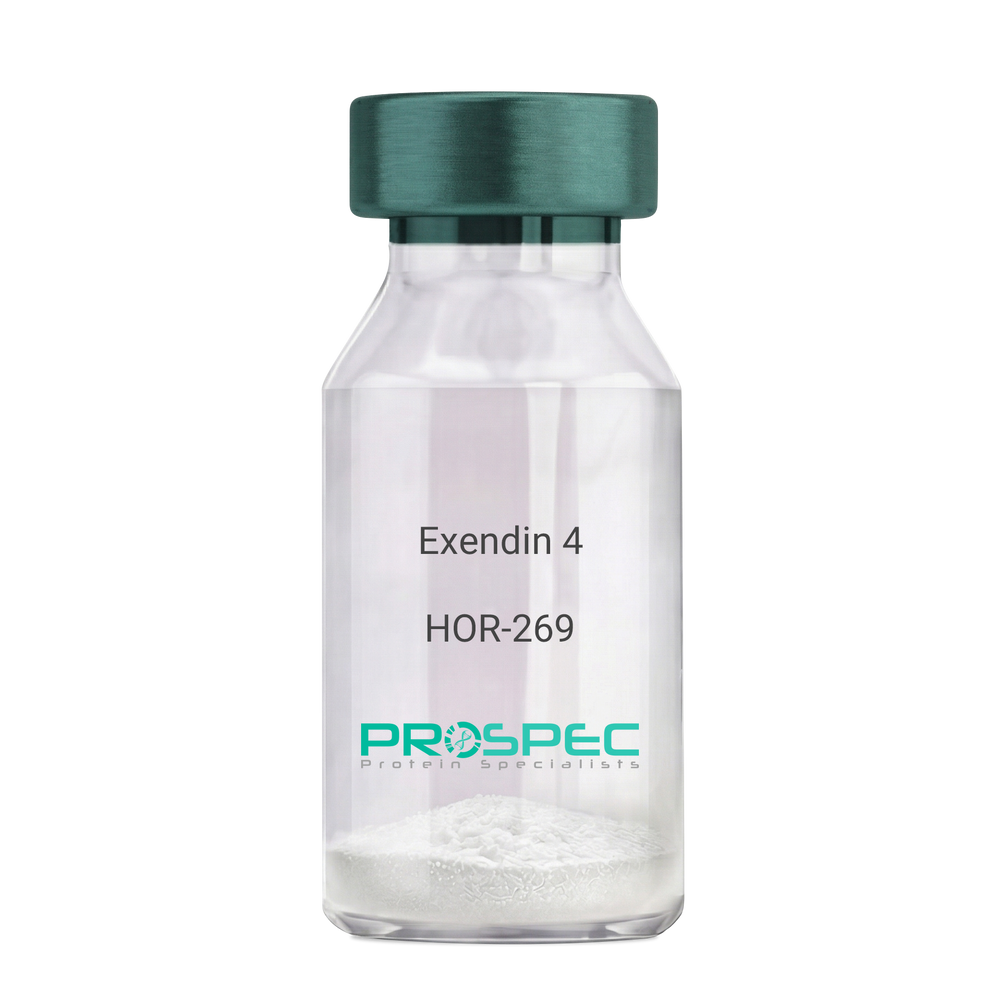
    Name :

    Exendin 4

    Description:

    Exendin-4 Recombinant

    Product # :

    HOR-269

    Price :

    Quantity :

    Shipping Method :

    Room Temp Icon

    Shipped at Room temp

    Add To Cart

    More Info

    • description
    • source
    • formulation
    • purity
    • biological activity
    • More Info

    Description

    Exendin-4 Recombinant produced in E.Coli is a non-glycosylated polypeptide chain containing 39 amino acids and having a molecular mass of approximately 4.2kDa. Exendin-4 is purified by proprietary chromatographic techniques.

    Source

    Escherichia Coli.

    Formulation

    Lyophilized from a 0.2μm filtered concentrated solution in PBS, pH 7.4.

    Purity

    Greater than 96.0% as determined by:
    (a) Analysis by RP-HPLC.
    (b) Analysis by SDS-PAGE.

    Biological Activity

    1. Regulates Glucose levels rapidly
    2. Reduces Insulin resistance 
    3. Reduces Glucagon

    4. Stimulates beta cell growth production.

    More Info

    • Introduction

      Exedin-4 Recombinant is a like peptide-1 receptor agonist. The native hormone is produced in the gut of Gila monster Heloderma suspectrum (a type of reptile found in the desert) that stimulates production without causing threateningly low blood sugar, which can occur after using some anti-diabetes products. Recently, researchers used extracted saliva from gila monsters to create an unprecedented breakthrough in Diabetes Type 2 treatment. Unlike other products taken for type 2 diabetes, Exedin-4 has not been linked with weight gain and actually resulted in weight loss, according to the researchers. Exedin-4 enhances glucose-dependant secretion, suppresses inappropriately elevated secretion and slows gastric emptying in vivo. It also promotes B-cell proliferation and neogenesis in vitro and in animal models. Exedin-4 stimulates an increase in acinar cAMP, without stimulating the release of amylase.

    • Physical Appearance

      Sterile Filtered White lyophilized (freeze-dried) powder.

    • Stability

      Lyophilized Exendin Recombinant although stable at room temperature for 3 weeks, should be stored desiccated below -18°C. Upon reconstitution Exendin-4 should be stored at 4°C between 2-7 days and for future use below -18°C. For long term storage it is recommended to add a carrier protein (0.1% HSA or BSA).Please prevent freeze-thaw cycles.

    • Solubility

      It is recommended to reconstitute the lyophilized Exendin Recombinant in sterile 18MΩ-cm H2O not less than 100 µg/ml, which can then be further diluted to other aqueous solutions.

    • Amino Acid Sequence

      HGEGTFTSDL SKQMEEEAVR LFIEWLKNGG PSSGAPPPS.

    ProSpec's products are furnished for LABORATORY RESEARCH USE ONLY. The product may not be used as drugs, agricultural or pesticidal products, food additives or household chemicals.

    Exendin 4
  • View Data Sheet

    Name :

    Fertirelin

    Description:

    Fertirelin

    Product # :

    HOR-037

    Price :

    Quantity :

    Shipping Method :

    Room Temp Icon

    Shipped at Room temp

    Add To Cart

    More Info

    • description
    • formulation
    • purity
    • More Info

    Description

    Fertirelin Synthetic is a single, non-glycosylated polypeptide chain containing 9 amino acids, having a molecular mass of 1153.31 Dalton and a Molecular formula of C55H76N16O12.

    Formulation

    The protein was lyophilized with no additives.

    Purity

    Greater than 97.0% as determined by analysis by RP-HPLC.

    More Info

    • Physical Appearance

      Sterile Filtered White lyophilized (freeze-dried) powder.

    • Stability

      Lyophilized Fertirelin although stable at room temperature for 3 weeks, should be stored desiccated below -18°C. Upon reconstitution Fertirelin should be stored at 4°C between 2-7 days and for future use below -18°C. For long term storage it is recommended to add a carrier protein (0.1% HSA or BSA). Please prevent freeze-thaw cycles.

    • Solubility

      It is recommended to reconstitute the lyophilized Fertirelin in sterile 18MΩ-cm H2O not less than 100 µg/ml, which can then be further diluted to other aqueous solutions.

    • Amino Acid Sequence

      Pyr-His-Trp-Ser-Tyr-Gly-Leu-Arg-Pro-NHEt.

    • Background

      Fertirelin, a potent gonadotropin-releasing hormone (GnRH) analogue, is crucial for fertility regulation in animals. This research paper endeavors to expound on the biochemical attributes of fertirelin and its potential therapeutic applications in veterinary medicine.

      Fertirelin, a synthetic analogue of the natural gonadotropin-releasing hormone, plays a fundamental role in fertility regulation in veterinary medicine. It stimulates the secretion of luteinizing hormone and follicle-stimulating hormone, crucial for reproduction (Kotwica et al., 2005). This paper aims to delve into the biochemical characteristics of fertirelin and its potential applications.

      Fertirelin, as a GnRH analogue, elicits its action by binding to GnRH receptors located on pituitary gonadotroph cells. This leads to the release of luteinizing hormone and follicle-stimulating hormone, key players in ovulation and spermatogenesis (Kotwica et al., 2005).

      In the realm of veterinary medicine, fertirelin is primarily used for treating ovarian follicular cysts in dairy cattle (Bosu & Peter, 1987). Its potent stimulatory effect on gonadotropin secretion facilitates ovulation and contributes to fertility management strategies.

      The potential of fertirelin extends beyond the current applications. Further research into the precise mechanism of action and potential side effects can enhance its utilization. Overall, fertirelin presents a powerful tool in veterinary reproductive medicine, making it a focal point of interest for future studies.

    ProSpec's products are furnished for LABORATORY RESEARCH USE ONLY. The product may not be used as drugs, agricultural or pesticidal products, food additives or household chemicals.

    Fertirelin
  • 1
  • …
  • 29
  • 30
  • 31
  • 32
  • 33
  • …
  • 42
Your browser does not support the video tag.

Products

  • Cytokines
  • Growth Factors
  • Chemokines
  • CD Antigens
  • Neurotrophins
  • Hormones
  • Enzymes
  • Viral Antigens
  • Recombinant Proteins
  • Natural Proteins
  • Monoclonal Antibodies
  • Polyclonal Antibodies
  • Thermal Packaging

About

  • Company
  • Founder
  • Contribution
  • Contact Us
  • My Account

Ordering

  • Ordering Method
  • Ordering - Credit Card
  • Ordering PO
  • Shipping Fees
  • FAQ's

Legal

  • Terms & Conditions
  • Privacy
  • Site Map
  • info@prospecbio.com
  • Facebook
  • Instagram
  • Linkedin Profile

© 2026 ProSpec-Tany TechnoGene Ltd. All Rights Reserved.

  • Choosing a selection results in a full page refresh.
  • Opens in a new window.