Search results
1000 results found for “pleiotrophin”
Name
Description
Product #
Price
Quantity
Shipping Method
- View Data Sheet
Name :
M CSF RatDescription:
Macrophage-Colony Stimulating Factor Rat Recombinant
Macrophage colony-stimulating factor 1, CSF-1, MCSF, Csf1, Csfm.
Product # :
CYT-856Price :
Quantity :
Shipping Method :
Shipped at Room temp
More Info
- description
- source
- formulation
- purity
- biological activity
- More Info
Description
Macrophage Colony Stimulating Factor Rat Recombinant produced in E.coli is a non-glycosylated homodimer, containing 2 x 155 amino acids and having a total molecular mass of 36.2 kDa.MCSF is purified by proprietary chromatographic techniques.
Source
Escherichia Coli.
Formulation
Lyophilized from a sterile filtered aqueous solution containing 10mM Na3PO4, pH 7.5.
Purity
Greater than 95.0% as determined by SDS-PAGE.
Biological Activity
The activity as determined by dose-dependent induction of M-NFS-60 cell proliferation is 1.65 ng/ml. This corresponds to an expected specific activity of 6.1x10⁵ units/mg.
More Info
-
Introduction
Granulocyte/Macrophage Colony-Stimulating Factors are cytokines that act in hematopoiesis by controlling the production, differentiation, and function of 2 related white cell populations of the blood, the granulocytes and the monocytes-macrophages. MCSF induces cells of the monocyte/macrophage lineage. MCSF plays a role in immunological defenses, bone metabolism, lipoproteins clearance, fertility and pregnancy.
-
Synonyms
Macrophage colony-stimulating factor 1, CSF-1, MCSF, Csf1, Csfm.
-
Physical Appearance
Sterile Filtered White lyophilized (freeze-dried) powder.
-
Stability
Lyophilized MCSF although stable at room temperature for 3 weeks, should be stored desiccated below -18°C. Upon reconstitution MCSF should be stored at 4°C between 2-7 days and for future use below -18°C.For long term storage it is recommended to add a carrier protein (0.1% HSA or BSA).Please prevent freeze-thaw cycles.
-
Solubility
It is recommended to reconstitute the lyophilized MCSF in sterile 18M-cm H2O not less than 100µg/ml, which can then be further diluted to other aqueous solutions.
-
Amino Acid Sequence
MEVSEHCSHM IGNGHLQILQ QLIDSQMETA CLIEYKFVDQ EQLDDPVCYL KKAFVLVQVI IEETMRFKDN TPNANATERL QELSMKLNSC FIKDYKEQNE ACVQTYKESP LRLLEKIKNF FNETKNFLEK DWNIFSKNCN DSLAKCSSRD VVTKP.
ProSpec's products are furnished for LABORATORY RESEARCH USE ONLY. The product may not be used as drugs, agricultural or pesticidal products, food additives or household chemicals.
- View Data Sheet
Name :
GYPA HumanDescription:
Glycophorin A Human Recombinant
Glycophorin A (MNS Blood Group), Glycophorin A (MN Blood Group), Sialoglycoprotein Alpha, MN Sialoglycoprotein, PAS-2, GPA, Erythroid-Lineage-Specific Membrane Sialoglycoprotein, Recombinant Glycophorin A-B Miltenberger-DR, Glycophorin A (Includes MN Blood Group), Mi.V Glycoprotein (24 AA), Glycophorin Sta Type C, Glycophorin A, GPA, Glycophorin Erik, Glycophorin MiV, Glycophorin SAT, CD235a Antigen, Glycophorin-A, HGpSta(C), HGpMiXI, CD235a, GPErik, HGpMiV, GPSAT, MNS, MN.
Product # :
PRO-2426Price :
Quantity :
Shipping Method :
Shipped with Ice Packs
More Info
- description
- source
- formulation
- purity
- More Info
Description
GYPA Human Recombinant produced in Sf9 Insect cells is a single, glycosylated polypeptide chain containing 81 amino acids (20-91a.a.) and having a molecular mass of 9.1kDa. (Molecular size on SDS-PAGE under reducing conditions 18-28kDa).GYPA is expressed with a 9 amino acids His tag at C-Terminus and purified by proprietary chromatographic techniques.
Source
Sf9, Insect cells.
Formulation
GYPA protein solution (1mg/ml) containing Phosphate Buffered Saline (pH 7.4) and 10% glycerol.
Purity
Greater than 85.0% as determined by SDS-PAGE.
More Info
-
Introduction
Glycophorins A & B (GYPA &GYPB) are the main sialoglycoproteins of the human erythrocyte membrane which carry the antigenic determinants for the MN and Ss blood groups. Along with the M or N and S or s antigens which normally occur in all populations, approximately 40 related variant phenotypes were identified. These variants comprise all the variants of the Miltenberger complex and some isoforms of Sta, as well as Dantu, Sat, He, Mg, and deletion variants Ena, S-s-U- and Mk. GYPA is significant for the function of SLC4A1 and is necessary for high activity of SLC4A1. GYPA is involved in translocation of SLC4A1 to the plasma membrane. GYPA is also a receptor for: the influenza virus, Plasmodium falciparum erythrocyte-binding antigen 175 (EBA-175); binding of EBA-175 is dependent on sialic acid residues of the O-linked glycans and is also a receptor for Hepatitis A virus (HAV).
-
Synonyms
Glycophorin A (MNS Blood Group), Glycophorin A (MN Blood Group), Sialoglycoprotein Alpha, MN Sialoglycoprotein, PAS-2, GPA, Erythroid-Lineage-Specific Membrane Sialoglycoprotein, Recombinant Glycophorin A-B Miltenberger-DR, Glycophorin A (Includes MN Blood Group), Mi.V Glycoprotein (24 AA), Glycophorin Sta Type C, Glycophorin A, GPA, Glycophorin Erik, Glycophorin MiV, Glycophorin SAT, CD235a Antigen, Glycophorin-A, HGpSta(C), HGpMiXI, CD235a, GPErik, HGpMiV, GPSAT, MNS, MN.
-
Physical Appearance
Sterile Filtered colorless solution.
-
Stability
Store at 4°C if entire vial will be used within 2-4 weeks. Store, frozen at -20°C for longer periods of time. For long term storage it is recommended to add a carrier protein (0.1% HSA or BSA).Avoid multiple freeze-thaw cycles.
-
Amino Acid Sequence
ADPLSTTEVA MHTSTSSSVT KSYISSQTND THKRDTYAAT PRAHEVSEIS VRTVYPPEEE TGERVQLAHH FSEPEHHHHH H
ProSpec's products are furnished for LABORATORY RESEARCH USE ONLY. The product may not be used as drugs, agricultural or pesticidal products, food additives or household chemicals.
- View Data Sheet
Name :
LGALS3 HumanDescription:
Galectin-3 Human Recombinant
Galectin-3, GAL3, MAC2, CBP35, GALB, GALIG, LGALS2, LGALS3, Galactose-specific lectin 3, Mac-2 antigen, IgE-binding protein, 35 kDa lectin, Carbohydrate-binding protein 35, CBP 35, Laminin-binding protein, Lectin L-29, L-31, Galactoside-binding protein, GALBP.
Product # :
CYT-606Price :
Quantity :
Shipping Method :
Shipped at Room temp
More Info
- description
- source
- formulation
- purity
- More Info
Description
LGALS3 Human Recombinant produced in E.Coli is a single, non-glycosylated, polypeptide chain containing 250 amino acids and having a molecular mass of 26.2kDa. The LGALS3 is purified by proprietary chromatographic techniques.
Source
Escherichia Coli.
Formulation
The Galectin-3 protein was lyophilized from a sterile 0.2 micron filtered aqueous solution containing 10 mM sodium phosphate and 50mM sodium chloride, pH 7.5.
Purity
Greater than 95.0% as determined by analysis by SDS-PAGE.
More Info
-
Introduction
Galectin-3 mediates with the alpha-3, beta-1 integrin the stimulation by cspg4 of endothelial cells migration. Galectin-3 plays an necessary part during the acquisition of vasculogenic mimicry and angiogenic properties associated with melanoma progression. LGALS3 overexpression is highly expressed in early stages of papillary carcinoma, and its expression intensity declines during tumor progression. Serum levels of LGALS3 are high in patients with thyroid malignancy but there is considerable overlap in serum LGALS3 concentrations between those with benign and malignant nodular thyroid disease. LGLAS3 takes part as an immune regulator to inhibit T-cell immune responses and promote tumor growth, as a result providing a new mechanism for tumor immune tolerance.
-
Synonyms
Galectin-3, GAL3, MAC2, CBP35, GALB, GALIG, LGALS2, LGALS3, Galactose-specific lectin 3, Mac-2 antigen, IgE-binding protein, 35 kDa lectin, Carbohydrate-binding protein 35, CBP 35, Laminin-binding protein, Lectin L-29, L-31, Galactoside-binding protein, GALBP.
-
Physical Appearance
Sterile Filtered White lyophilized (freeze-dried) powder.
-
Stability
Lyophilized Galectin-3 Recombinant although stable at room temperature for 3 weeks, should be stored desiccated below -18°C. Upon reconstitution Galectin-3 should be stored at 4°C between 2-7 days and for future use below -18°C.For long term storage it is recommended to add a carrier protein (0.1% HSA or BSA).Please prevent freeze-thaw cycles.
-
Solubility
It is recommended to reconstitute the lyophilized LGALS3 in sterile 18MΩ-cm H2O not less than 100µg/ml, which can then be further diluted to other aqueous solutions.
-
Amino Acid Sequence
MADNFSLHDAL SGSGNPNPQG WPGAWGNQPA GAGGYPGASY PGAYPGQAPP GAYPGQAPPG AYPGAPGAYP GAPAPGVYPG PPSGPGAYPS SGQPSATGAY PATGPYGAPA GPLIVPYNLP LPGGVVPRML ITILGTVKPN ANRIALDFQR GNDVAFHFNP RFNENNRRVI VCNTKLDNNW GREERQSVFP FESGKPFKIQ VLVEPDHFKV AVNDAHLLQY NHRVKKLNEI SKLGISGDID LTSASYTMI.
-
Background
What is the molecular weight/Mw of LGALS3 HUMAN Protein?
LGALS3 HUMAN Protein has a total Mw of 26.2kDa.
What is the source or expression system of LGALS3 HUMAN Protein?
Escherichia Coli.
What is the Purity of LGALS3 HUMAN Protein?
LGALS3 HUMAN Protein is >95% pure as determined by SDS-PAGE.
What is the Biological Activity of LGALS3 HUMAN Protein?
The biological functionality of LGALS3 HUMAN Protein will be determined in the future.
What is the amino acid sequence of LGALS3 HUMAN Protein?
MADNFSLHDAL SGSGNPNPQG WPGAWGNQPA GAGGYPGASY PGAYPGQAPP GAYPGQAPPG AYPGAPGAYP GAPAPGVYPG PPSGPGAYPS SGQPSATGAY PATGPYGAPA GPLIVPYNLP LPGGVVPRML ITILGTVKPN ANRIALDFQR GNDVAFHFNP RFNENNRRVI VCNTKLDNNW GREERQSVFP FESGKPFKIQ VLVEPDHFKV AVNDAHLLQY NHRVKKLNEI SKLGISGDID LTSASYTMI.
What applications can LGALS3 HUMAN Protein be used in?
LGALS3 HUMAN Protein can probably be used in western blot, ELISA and Lateral Flow.
What is the endotoxin level for LGALS3 HUMAN Protein?
The endotoxin level is minimal, LGALS3 HUMAN Protein was purified using conventional chromatography techniques.
ProSpec's products are furnished for LABORATORY RESEARCH USE ONLY. The product may not be used as drugs, agricultural or pesticidal products, food additives or household chemicals.
- View Data Sheet
Description:
Prolactin Antagonist Ovine Recombinant, Mutant
Mammotropin, Luteotropic hormone, Luteotropin, PRL, Prolactin.
Product # :
CYT-705Price :
Quantity :
Shipping Method :
Shipped at Room temp
More Info
- description
- source
- formulation
- purity
- biological activity
- More Info
Description
Prolactin Ovine Antagonist Recombinant produced in E.Coli is a single, non-glycosylated polypeptide chain containing 199 amino acids and an additional Ala at N-terminus and having a molecular mass of 23kDa. The mutant R129G is DES 9 amino acids truncated form from its N-terminus which has higher inhibitory activity. Ovine Prolactin Antagonist is purified by proprietary chromatographic techniques.
Source
Escherichia Coli.
Formulation
Ovine Prolactin was lyophilized from a concentrated (1mg/ml) solution with 0.02%-0.03% NaHCO3.
Purity
Greater than 99.0% as determined by Gel Filtration & SDS-PAGE.
Biological Activity
Ovine Prolactin Antagonist mutant form is devoid of agonistic activity and capable of inhibiting biological activity of oPRL or other lactogenic hormones as evidenced by proliferation assay of Nb2 or other cells. The truncated form is more potent inhibitor.More Info
-
Introduction
Prolactin is a lactogenic hormone secreted by the adenohypophysis .Besides its major action on lactation, in some species prolactin exerts effects on reproduction, maternal behavior, fat metabolism, immunomodulation and osmoregulation.Prolactin has been shown also to have cytokine-like activities and to have important immunoregulatory activities. It contributes to the development of lymphoid tissues and the maintenance of physiological immune function and also modulates a variety of T-cell immune responses. Prolactin has been reported to activate cellular proliferation in nonreproductive tissue, such as liver, spleen, and thymus. It induces significant proliferation in aortic smooth muscle cells and also enhances proliferation of these cells induced by PDGF . Prolactin also appears to be directly mitogenic for pancreatic beta cells. Prolactin is also mitogenic for cultured astrocytes.
-
Synonyms
Mammotropin, Luteotropic hormone, Luteotropin, PRL, Prolactin.
-
Physical Appearance
Sterile Filtered White lyophilized (freeze-dried) powder.
-
Stability
Lyophilized Ovine Prolactin Antagonist although stable at room temperature for 3 weeks, should be stored desiccated below -18°C. Upon reconstitution Ovine Prolactin Antagonist should be stored at 4°C between 2-7 days and for future use below -18°C. For long term storage it is recommended to add a carrier protein (0.1% HSA or BSA). Please prevent freeze-thaw cycles.
-
Solubility
It is recommended to reconstitute the lyophilized Ovine Prolactin Antagonist in sterile 18MΩ-cm H2O not less than 100µg/ml, which can then be further diluted to other aqueous solutions.
-
Amino Acid Sequence
The sequence of the first five N-terminal amino acids was determined and was found to be Ala-Thr-Pro-Val-Cys-Pro.
ProSpec's products are furnished for LABORATORY RESEARCH USE ONLY. The product may not be used as drugs, agricultural or pesticidal products, food additives or household chemicals.
- View Data Sheet
Name :
CXCL4 Variant 1 HumanDescription:
Platelet Factor-4 Variant 1 Human Recombinant
CXCL4, PF-4, PF4, Iroplact, Oncostatin-A, SCYB4, MGC138298.
Product # :
CHM-243Price :
Quantity :
Shipping Method :
Shipped at Room temp
More Info
- description
- source
- formulation
- purity
- More Info
Description
CXCL4 Variant-1 Human Recombinant produced in E.Coli is a single, non-glycosylated polypeptide chain containing 77 amino acids and having a molecular mass of 8.7 kDa. The CXCL4 Variant-1 is fused to 6xHis tag at N-Terminus and purified by standard chromatography techniques.
Source
Escherichia Coli.
Formulation
The protein was lyophilized without additives.
Purity
Greater than 95.0% as determined by SDS-PAGE.
More Info
-
Introduction
Platelet factor-4 is a 70-amino acid protein that is released from the alpha-granules of activated platelets . Its major physiologic role appears to be neutralization of molecules on the endothelial surface of blood vessels, thereby inhibiting local antithrombin III activity and promoting coagulation. As a strong chemoattractant for neutrophils and fibroblasts, PF4 probably has a role in inflammation and wound repair. Oncostatin-A is a member of the CXC chemocinfamily. Human PF4 is used for the proof of induced thrombocytopenia. Furthermore it is used as an inhibitor in the angiogenesis during tumor therapy.
-
Synonyms
CXCL4, PF-4, PF4, Iroplact, Oncostatin-A, SCYB4, MGC138298.
-
Physical Appearance
Sterile Filtered white lyophilized powder.
-
Stability
Human CXCL4 although stable at 25°C 1 week, should be stored desiccated below -18°C. Please prevent freeze-thaw cycles.
-
Solubility
It is recommended to reconstitute the lyophilized CXCL4 in sterile 18MΩ-cm H2O not less than 100µg/ml, which can then be further diluted to other aqueous solutions.
-
Amino Acid Sequence
MHHHHHHEAE EDGDLQCLCV KTTSQVRPRH ITSLEVIKAG PHCPTAQLIA TLKNGRKICL DLQALLYKKI IKEHLES.
ProSpec's products are furnished for LABORATORY RESEARCH USE ONLY. The product may not be used as drugs, agricultural or pesticidal products, food additives or household chemicals.
- View Data Sheet
Name :
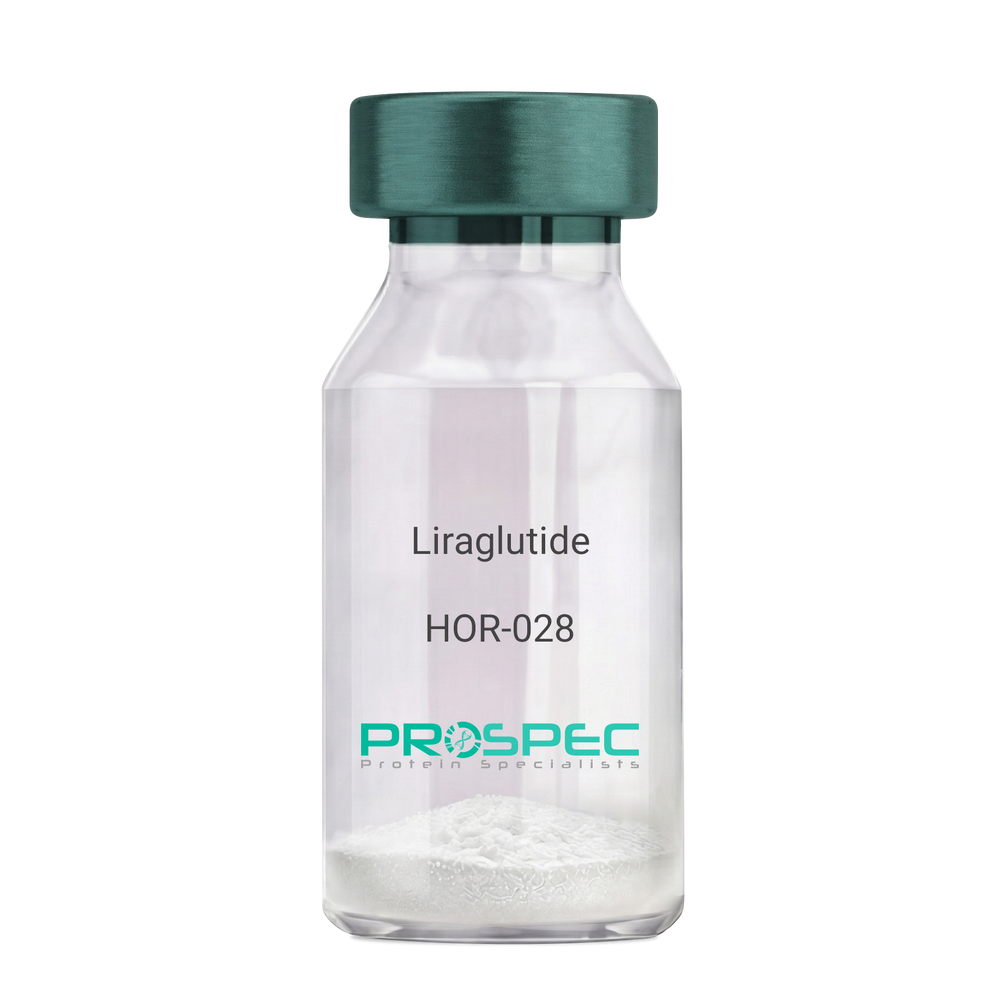
LiraglutideDescription:
Liraglutide
Product # :
HOR-028Price :
Quantity :
Shipping Method :
Shipped at Room temp
More Info
- description
- formulation
- purity
- More Info
- HPLC, MS
Description
Liraglutide peptide is a single, non-glycosylated polypeptide chain containing 31 amino acids, having a molecular mass of 3751 Dalton and a Molecular formula of C172H265N43O51.
Formulation
The protein (1mg/ml) was lyophilized with no additives.
Purity
Greater than 97% as determined by RP-HPLC.
HPLC, MS
More Info
-
Introduction
Liraglutide is a long-acting GLP1 analogue sharing 97% a.a. homology to human GLP1. Liraglutide differs from GLP1 by the substitution of arginine for lysine at position 34. While GLP1 is degraded swiftly by DPP4 resulting in short life of insulin, Liraglutide contains a fatty acid that binds to albumin and prolongs the half-life of the structure. liraglutide causes insulin to secret in the presence of increasing glucose levels. Due toits receptor site, liraglutide inhibits glucagon secretion and delays gastric emptying.
-
Physical Appearance
Sterile Filtered White lyophilized (freeze-dried) powder.
-
Stability
Store the lyophilized Liraglutide between 2-8°C, do not freeze. Upon reconstitution Lypressin should be stored at 4°C between 2-7 days and for future use below -18°C. Please prevent freeze-thaw cycles.
-
Solubility
It is recommended to reconstitute the lyophilized Liraglutide in sterile 18MΩ-cm H2O not less than 100 µg/ml, which can then be further diluted to other aqueous solutions.
Lypressin is also soluble in 1% Acetic Acid. -
Amino Acid Sequence
H-His-Ala-Glu-Gly-Thr-Phe-Thr-Ser-Asp-Val-Ser-Ser-Tyr-Leu-Glu-Gly-Gln-Ala-Ala-Lys(γ-Glu-palmitoyl)-Glu-Phe-Ile-Ala-Trp-Leu-Val-Arg-Gly-Arg-Gly-OH
ProSpec's products are furnished for LABORATORY RESEARCH USE ONLY. The product may not be used as drugs, agricultural or pesticidal products, food additives or household chemicals.
- View Data Sheet
Name :
Collagen-I GoatDescription:
Goat Collagen-I
Product # :
PRO-2682Price :
Quantity :
Shipping Method :
Shipped at Room temp
More Info
- description
- source
- formulation
- purity
- More Info
Description
Goat Collagen-I is a natural protein purified from Goat tissues. Collagen-I is purified by proprietary chromatographic techniques.
Source
Goat tissues.
Formulation
Collagen-I was lyophilized without additives.
Purity
Greater than 90.0% as determined by SDS-PAGE 90.0%.
More Info
-
Introduction
Collagen, a major component of the extracellular matrix, is a fibrous protein that provides tensile strength to tissues giving them structural integrity. Collagen and its derivative, gelatin, have been widely used in medical, pharmaceutical and consumer products for more than 100 years. The supply of these materials, created from animal remains, is both abundant and inexpensive. However, most formulations are not highly purified and have the potential to cause an inflammatory reaction in some product users. In addition, concerns have been raised over the last several years about the potential for contamination of bovine products with the agent that causes mad cow disease and its human variant, Creutzfeldt-Jakob Disease. Animal collagens are subject to extensive modifications that continue over the life of the molecule in the extracellular space. These differences influence both the extractability of collagens from tissue and the biophysical characteristics of these collagens. As a result, collagens isolated from tissues exhibit significant lot-to-lot variability and, as bulk materials, are often analytically intractable. Products that contain animal-derived collagen can induce potentially harmful inflammatory or immune responses in humans and pose risk of contamination with viruses or prions, potentially life-threatening pathogens. Recombinant collagens are essentially identical to the native collagen protein thereby reducing the risk of inflammation, immune response, and disease as compared to animal-sourced collagen.
-
Physical Appearance
Filtered White lyophilized (freeze-dried) powder.
-
Stability
Lyophilized Collagen-I although stable at room temperature for 3 weeks, should be stored desiccated below -18C. Upon reconstitution Collagen-I should be stored at 4C between 2-7 days and for future use below -18C.For long term storage it is recommended to add a carrier protein (0.1% HSA or BSA).Please prevent freeze-thaw cycles.
-
Solubility
It is recommended to Add 0.5 M acetic acid, pH 2.5 to prepare a working stock solution not less than 100µg/ml, which can then be further diluted to other aqueous solutions.
ProSpec's products are furnished for LABORATORY RESEARCH USE ONLY. The product may not be used as drugs, agricultural or pesticidal products, food additives or household chemicals.
- View Data Sheet
Name :
Streptavidin ProteinDescription:
Streptavidin
Product # :
PRO-283Price :
Quantity :
Shipping Method :
Shipped at Room temp
More Info
- description
- source
- formulation
- More Info
Description
Streptavidin is a protein produced by Streptomyces avidinii and isolated by purification from fermentation broth. The pure, homogeneous protein shows predominantly one single band in SDS PAGE. Streptavidin consists of 4 identical subunits, each bearing an active binding site for biotin. Streptavidin has a molecular weight of 55kDa.
Source
Bacterium Streptomyces avidinii.
Formulation
The Streptavidin was lyophilized from a 25mg/ml solution in 10 mM potassium phosphate buffer pH 6.5
More Info
-
Introduction
Streptavidin is a tetrameric protein secreted by Streptomyces avidinii which binds firmly to biotin. Streptavidin is wilyde used in molecular biology through its unique high affinity for the vitamin biotin. The dissociation constant (Kd) of the biotin-streptavidin complex is about ~10-15 mol/L. The strong affinity recognition of biotin and biotinylated molecules has made streptavidin one of the most important components in diagnostics and laboratory kits. The streptavidin/biotin system has one of the biggest free energies of association of yet observed for noncovalent binding of a protein and small ligand in aqueous solution (K_assoc = 10**14). The complexes are also extremely stable over a wide range of temperature and pH.
-
Physical Appearance
Sterile Filtered lyophilized powder.
-
Stability
Streptavidin although stable at 4°C for 3 weeks, should be stored desiccated below -18°C. For longer storage in dissolved form add 1mM EDTA and/or 0.02 % NaN3 or pass the solution through a sterile filter.Please prevent freeze-thaw cycles.
-
Solubility
Gives a clear solution at 10mg/ml in 4.0 mM potassium phosphate pH 6.5
-
Specific Activity
The biological activity is 16.8 U/mg, 1 unit binds 1µg biotin.
ProSpec's products are furnished for LABORATORY RESEARCH USE ONLY. The product may not be used as drugs, agricultural or pesticidal products, food additives or household chemicals.
- View Data Sheet
Name :
MLLT11 HumanDescription:
Myeloid/Lymphoid Leukemia Translocated To 11 Human Recombinant
AF1Q, RP11-316M1.10, Protein AF1q, MLLT11.
Product # :
PRO-1991Price :
Quantity :
Shipping Method :
Shipped with Ice Packs
More Info
- description
- source
- formulation
- purity
- More Info
Description
MLLT11 Human Recombinant produced in E.Coli is a single, non-glycosylated polypeptide chain containing 113 amino acids (1-90 a.a) and having a molecular mass of 12.4kDa. MLLT11 is fused to a 23 amino acid His-tag at N-terminus & purified by proprietary chromatographic techniques.
Source
Escherichia Coli.
Formulation
MLLT11 protein solution (0.25mg/ml) containing 20mM Tris-HCl buffer (pH 8.0), 0.4M Urea and 10% glycerol.
Purity
Greater than 80.0% as determined by SDS-PAGE.
More Info
-
Introduction
Myeloid/Lymphoid Leukemia Translocated To 11 (MLLT11) is a part of the Mixed-Lineage Leukemia protein family. MLLT11 which takes part in leukemogenesis and in the progression of severe monocytic leukemia (AML) is located on chromosome 11q23. MLLT11 which is also expressed in embryonic brain cortex is upregulated during neuronal differentiation and is taking part in the evolution of the central nervous system.
-
Synonyms
AF1Q, RP11-316M1.10, Protein AF1q, MLLT11.
-
Physical Appearance
Sterile Filtered colorless solution.
-
Stability
Store at 4°C if entire vial will be used within 2-4 weeks. Store, frozen at -20°C for longer periods of time. For long term storage it is recommended to add a carrier protein (0.1% HSA or BSA).Avoid multiple freeze-thaw cycles.
-
Amino Acid Sequence
MGSSHHHHHH SSGLVPRGSH MGSMRDPVSS QYSSFLFWRM PIPELDLSEL EGLGLSDTAT YKVKDSSVGK MIGQATAADQ EKNPEGDGLL EYSTFNFWRA PIASIHSFEL DLL.
ProSpec's products are furnished for LABORATORY RESEARCH USE ONLY. The product may not be used as drugs, agricultural or pesticidal products, food additives or household chemicals.
- View Data Sheet
Name :
EGF MouseDescription:
Epidermal Growth Factor Mouse
Urogastrone, URG, EGF.
Product # :
CYT-554Price :
Quantity :
Shipping Method :
Shipped at Room temp
More Info
- description
- source
- formulation
- purity
- biological activity
- More Info
Description
Epidermal Growth Factor Mouse purified from submaxillary gland is a single, glycosylated, polypeptide chain having a molecular mass of 6.1 kDa.The EGF is purified by proprietary chromatographic techniques.
Source
Mouse Submaxillary Gland.
Formulation
The protein was lyophilized from a concentrated (1mg/ml) solution containing 0.01M sodium acetate buffer.
Purity
Greater than 95.0% as determined by:
(a) Analysis by RP-HPLC.
(b) Analysis by SDS-PAGE.Biological Activity
The biological activity is measured in a proliferation assay using BALB/MK cells.More Info
-
Introduction
Epidermal growth factor has a profound effect on the differentiation of specific cells in vivo and is a potent mitogenic factor for a variety of cultured cells of both ectodermal and mesodermal origin. The EGF precursor is believed to exist as a membrane-bound molecule which is proteolytically cleaved to generate the 53-amino acid peptide hormone that stimulates cells to divide.
EGF stimulates the growth of various epidermal and epithelial tissues in vivo and in vitro and of some fibroblasts in cell culture. -
Synonyms
Urogastrone, URG, EGF.
-
Physical Appearance
Sterile Filtered White lyophilized (freeze-dried) powder.
-
Stability
Lyophilized Epidermal Growth Factor Mouse although stable at room temperature for 3 weeks, should be stored desiccated below -18°C. Upon reconstitution EGF should be stored at 4°C between 2-7 days and for future use below -18°C.For long term storage it is recommended to add a carrier protein (0.1% HSA or BSA).Please prevent freeze-thaw cycles.
-
Solubility
It is recommended to reconstitute the lyophilized Epidermal Growth Factor in sterile 18MΩ-cm H2O not less than 100µg/ml, which can then be further diluted to other aqueous solutions.
-
Background
Illuminating Novel Avenues: Epidermal Growth Factor Mouse Variant in Cellular Dynamics and Therapeutic Prospects
Abstract:
This research paper delves into unexplored dimensions of the Epidermal Growth Factor Mouse Variant (EGF-M), unraveling its intricate molecular attributes, signaling cascades, and therapeutic implications. Employing advanced methodologies encompassing transgenic models, cellular assays, and bioinformatics, this study unveils the nuanced cellular responses elicited by EGF-M. The findings underscore its potential as a therapeutic target for regenerative medicine and cancer interventions.
Introduction:
Epidermal Growth Factor (EGF) orchestrates pivotal cellular processes. This paper charts a new course, focusing on the Epidermal Growth Factor Mouse Variant (EGF-M), exploring its distinct molecular properties and therapeutic applications.
Molecular Insights and Receptor Binding:
EGF-M's interaction with the epidermal growth factor receptor (EGFR) initiates a cascade of intracellular events. Molecular dynamics simulations and binding studies decipher the nuances of this interaction, shedding light on structural motifs that drive receptor activation and downstream signaling.
Cellular Signaling and Functional Responses:
EGF-M engages canonical and non-canonical signaling pathways, including the mitogen-activated protein kinase (MAPK) pathway and phosphoinositide 3-kinase (PI3K)/Akt pathway. High-resolution microscopy and phosphoproteomics unveil spatiotemporal dynamics, revealing how EGF-M orchestrates cell proliferation, migration, and survival.
Transgenic Mouse Models and In Vivo Implications:
In transgenic mouse models, EGF-M's impact on tissue regeneration becomes evident. Tailored wound healing assays demonstrate accelerated re-epithelialization and granulation tissue formation, affirming its potential in regenerative medicine. Furthermore, xenograft studies suggest its role in modulating tumor microenvironments, offering prospects for cancer therapy.
Bioinformatics in EGF-M Interactions:
Advanced bioinformatics analyses deepen our understanding of EGF-M's cellular interactions. Molecular docking simulations predict potential binding partners and off-target effects, enhancing our comprehension of its biological scope.
Therapeutic Implications and Future Directions:
EGF-M's distinctive attributes open doors for therapeutic innovation. Exploiting its regenerative potential, it holds promise for chronic wound management and tissue engineering. Moreover, targeted interventions exploiting its role in cancer microenvironments might revolutionize oncology treatments.
Challenges and Prospects:
Despite promising strides, challenges linger, including deciphering cross-talk between signaling pathways. Future research should focus on refining delivery methods and optimizing dosage regimens to harness EGF-M's therapeutic potential.
Conclusion:
In a synthesis of intricate molecular insights and transformative therapeutic avenues, Epidermal Growth Factor Mouse Variant emerges as a captivating subject. Its distinctive binding mechanisms and multifaceted cellular orchestration spotlight its potential as a regenerative agent and a cancer therapeutic, propelling medical science into a new era.
What is the molecular weight/Mw of EGF Protein?
EGF Protein has a total Mw of 6.1Da.
What is the source or expression system of EGF Protein?
Mouse Submaxillary Gland.
What is the Purity of EGF Protein?
EGF Protein is >95% pure as determined by SDS-PAGE.
What is the Biological Activity of EGF Protein?
The biological activity is measured in a proliferation assay using BALB/MK cells.
What is the amino acid sequence of EGF Protein?
EGF Protein is composed from 53 amino acids.
What applications can EGF Protein be used in?
EGF Protein can probably be used in western blot, ELISA and Lateral Flow.
What is the endotoxin level for EGF Protein?
The endotoxin level is minimal, EGF Protein was purified using conventional chromatography techniques.
ProSpec's products are furnished for LABORATORY RESEARCH USE ONLY. The product may not be used as drugs, agricultural or pesticidal products, food additives or household chemicals.
- View Data Sheet
Name :
Streptavidin, HisDescription:
Streptavidin Recombinant, His Tag
Product # :
PRO-621Price :
Quantity :
Shipping Method :
Shipped with Ice Packs
More Info
- description
- source
- formulation
- purity
- More Info
Description
Recombinant Streptomyces Avidinii Streptavidin produced in E.Coli is a single, non-glycosylated polypeptide chain (25-183) containing a total of 167 amino acids and having a molecular mass of 17kDa. The Streptavidin protein is fused to an 8 aa N-terminal His-Tag and purified by proprietary chromatographic techniques.
Source
Escherichia Coli.
Formulation
The Streptavidin protein solution (1mg/ml) contains 20mM Tris-HCl pH7.5.
Purity
Greater than 95.0% as determined by analysis by SDS-PAGE.
More Info
-
Introduction
Streptavidin is a tetrameric protein secreted by Streptomyces avidinii which binds firmly to biotin. Streptavidin is widely used in molecular biology through its unique high affinity for the vitamin biotin. The dissociation constant (Kd) of the biotin-streptavidin complex is about ~10-15 mol/L. The strong affinity recognition of biotin and biotinylated molecules has made streptavidin one of the most important components in diagnostics and laboratory kits. The streptavidin/biotin system has one of the biggest free energies of association of yet observed for noncovalent binding of a protein and small ligand in aqueous solution (K_assoc = 10**14). The complexes are also extremely stable over a wide range of temperature and pH.
-
Physical Appearance
Sterile Filtered colorless solution.
-
Stability
Store at 4°C if entire vial will be used within 2-4 weeks. Store, frozen at -20°C for longer periods of time. For long term storage it is recommended to add a carrier protein (0.1% HSA or BSA).Avoid multiple freeze-thaw cycles.
-
Amino Acid Sequence
MVHHHHHHDP SKDSKAQVSA AEAGITGTWY NQLGSTFIVT AGADGALTGT YESAVGNAES RYVLTGRYDS APATDGSGTA LGWTVAWKNN YRNAHSATTW SGQYVGGAEA RINTQWLLTS GTTEANAWKS TLVGHDTFTK VKPSAASIDA AKKAGVNNGN PLDAVQQ.
ProSpec's products are furnished for LABORATORY RESEARCH USE ONLY. The product may not be used as drugs, agricultural or pesticidal products, food additives or household chemicals.
- View Data Sheet
Name :
PLA2G7 HumanDescription:
Secreted Phospholipase A2-VII Human Recombinant
Platelet-activating factor acetylhydrolase, PAF acetylhydrolase, PAF 2-acylhydrolase, LDL-associated phospholipase A2, LDL-PLA(2), 2-acetyl-1-alkylglycerophosphocholine esterase, 1-alkyl-2-acetylglycerophosphocholine esterase, PLA2G7, PAFAH, LP-PLA2, LDL-PLA2.
Product # :
ENZ-436Price :
Quantity :
Shipping Method :
Shipped with Ice Packs
More Info
- description
- source
- formulation
- purity
- More Info
Description
PLA2G7 Human Recombinant produced in E.Coli is single, a non-glycosylated, Polypeptide chain containing 420 amino acids fragment (22-441) having a total molecular mass of 52.29kDa and fused with a 4.5kDa amino-terminal hexahistidine tag. The PLA2G7 is purified by proprietary chromatographic techniques.
Source
Escherichia Coli.
Formulation
PLA2G7 protein is supplied in 20mM Tris-HCl pH-8.0, 1mM EDTA and 50% glycerol.
Purity
Greater than 95.0% as determined by SDS-PAGE.
More Info
-
Introduction
PLA2G7 is a secreted enzyme which catalyzes the degradation of platelet-activating factor to biologically inactive products. The PLA2G7 enzyme is produced by inflammatory cells and hydrolyzes oxidised phospholipids in LDL. In the blood, PLA2G7 goes mainly with LDL and less than 20% is coupled with HDL.
PLA2G7 is implicated in the development of atherosclerosis and is also a marker for cardiac disease. PLA2G7 might have a major physiologic effect in the presence of inflammatory bodily responses.
PLA2G7 alters the action of PAF (platelet-activating factor) by hydrolyzing the sn-2 ester bond to yield the biologically inactive lyso-PAF. PLA2G7 has specificity for substrates with a short residue at the sn-2 position. PLA2G7 is inactive against long-chain phospholipids.
PLA2G7 gene defects are the source of platelet-activating factor acetylhydrolase deficiency, which is a trait that is present in 27% of the Japanese population. -
Synonyms
Platelet-activating factor acetylhydrolase, PAF acetylhydrolase, PAF 2-acylhydrolase, LDL-associated phospholipase A2, LDL-PLA(2), 2-acetyl-1-alkylglycerophosphocholine esterase, 1-alkyl-2-acetylglycerophosphocholine esterase, PLA2G7, PAFAH, LP-PLA2, LDL-PLA2.
-
Physical Appearance
Sterile Filtered clear solution.
-
Stability
Store at 4°C if entire vial will be used within 2-4 weeks. Store, frozen at -20°C for longer periods of time. Please avoid freeze thaw cycles.
ProSpec's products are furnished for LABORATORY RESEARCH USE ONLY. The product may not be used as drugs, agricultural or pesticidal products, food additives or household chemicals.
- View Data Sheet
Name :
PRDX1 HumanDescription:
Peroxiredoxin-1 Human Recombinant
Peroxiredoxin-1, EC 1.11.1.15, Thioredoxin peroxidase 2, Thioredoxin-dependent peroxide reductase 2, Proliferation-associated gene protein, Natural killer cell-enhancing factor A, NKEF-A, PRDX1, TDPX2, PRDX-1, PAG, PAGA, PRX1, PAGB, PRXI, MSP23, NKEFA.
Product # :
ENZ-372Price :
Quantity :
Shipping Method :
Shipped with Ice Packs
More Info
- description
- source
- formulation
- purity
- biological activity
- More Info
Description
Peroxiredoxin Human Recombinant fused with a 20 amino acid His tag at N-terminus produced in E.Coli is a single, non-glycosylated, polypeptide chain (1-199) containing 219 amino acids and having a molecular mass of 24 kDa. The Peroxiredoxin is purified by proprietary chromatographic techniques.
Source
Escherichia Coli.
Formulation
The Peroxiredoxin solution (1mg/ml) contains 20mM Tris-HCl pH-7.5 & 20% glycerol.
Purity
Greater than 90.0% as determined by SDS-PAGE.
Biological Activity
Enzymatic activity is defined as the amount of hydroperoxide that 1ug of enzyme can reduce at 25C for minute. Specific activity is >2,000pmol/min/ug.
More Info
-
Introduction
PRDX1 is part of the peroxiredoxin family of antioxidant enzymes, which reduce hydrogen peroxide and alkyl hydroperoxides. PRDX1 is an important protector of red blood cells against reactive oxygen species and in tumor prevention.
PRDX1 is antioxidant protective in cells, and contributes to the antiviral activity of CD8(+) T-cells. PRDX1 has a proliferative effect and is involved in cancer development or progression.
Peroxiredoxin-1 is plays a role in redox regulation of the cell. Peroxiredoxin decreases peroxides with reducing equivalents provided through the thioredoxin system but not from glutaredoxin. Peroxiredoxin is involved in eliminating peroxides generated during metabolism. Peroxiredoxin participates in the signaling cascades of growth factors and TNF-alpha by regulating the intracellular concentrations of h(2)o(2). -
Synonyms
Peroxiredoxin-1, EC 1.11.1.15, Thioredoxin peroxidase 2, Thioredoxin-dependent peroxide reductase 2, Proliferation-associated gene protein, Natural killer cell-enhancing factor A, NKEF-A, PRDX1, TDPX2, PRDX-1, PAG, PAGA, PRX1, PAGB, PRXI, MSP23, NKEFA.
-
Physical Appearance
Sterile Filtered colorless solution.
-
Stability
Store at 4°C if entire vial will be used within 2-4 weeks. Store, frozen at -20°C for longer periods of time. For long term storage it is recommended to add a carrier protein (0.1% HSA or BSA).Avoid multiple freeze-thaw cycles.
-
Amino Acid Sequence
MGSSHHHHHH SSGLVPRGSH MSSGNAKIGH PAPNFKATAV MPDGQFKDIS LSDYKGKYVV FFFYPLDFTF VCPTEIIAFS DRAEEFKKLN CQVIGASVDS HFCHLAWVNT PKKQGGLGPM NIPLVSDPKR TIAQDYGVLK ADEGISFRGL FIIDDKGILR QITVNDLPVG RSVDETLRLV QAFQFTDKHG EVCPAGWKPG SDTIKPDVQK SKEYFSKQK.
ProSpec's products are furnished for LABORATORY RESEARCH USE ONLY. The product may not be used as drugs, agricultural or pesticidal products, food additives or household chemicals.
- View Data Sheet
Name :
VAMP5 HumanDescription:
Vesicle-associated membrane protein 5 Human Recombinant
VAMP5, Vesicle-associated membrane protein 5, VAMP-5, Myobrevin, HSPC191.
Product # :
PRO-681Price :
Quantity :
Shipping Method :
Shipped with Ice Packs
More Info
- description
- source
- formulation
- purity
- More Info
Description
VAMP5 produced in E.Coli is a single,non-glycosylated polypeptide chain containing 109 amino acids (1-72 a.a.) and having a molecular mass of 12.7 kDa.VAMP5 is fused to 37 amino acids His Tag at N-terminus and purified by proprietary chromatographic techniques.
Source
Escherichia Coli.
Formulation
The VAMP5 (0.5mg/ml) protein solution contains 20mM Tris-HCl (pH 8.0), 0.2M NaCl, 5mM DTT, 0.5mM EDTA and 20% glycerol.
Purity
Greater than 90.0% as determined by SDS-PAGE.
More Info
-
Introduction
VAMP5 is part of the vesicle-associated membrane protein (VAMP)/synaptobrevin family and the SNARE superfamily. VAMP5 is involved is vesicle trafficking events that are associated with myogenesis.
-
Synonyms
VAMP5, Vesicle-associated membrane protein 5, VAMP-5, Myobrevin, HSPC191.
-
Physical Appearance
Sterile filtered colorless solution.
-
Stability
Store at 4°C if entire vial will be used within 2-4 weeks. Store, frozen at -20°C for longer periods of time. For long term storage it is recommended to add a carrier protein (0.1% HSA or BSA).Avoid multiple freeze-thaw cycles.
-
Amino Acid Sequence
MRGSHHHHHH GMASMTGGQQ MGRDLYDDDD KDRWGSHMAG IELERCQQQA NEVTEIMRNN FGKVLERGVK LAELQQRSDQ LLDMSSTFNK TTQNLAQKKC WENIRYRIC.
ProSpec's products are furnished for LABORATORY RESEARCH USE ONLY. The product may not be used as drugs, agricultural or pesticidal products, food additives or household chemicals.
- View Data Sheet
Name :
REG4 HumanDescription:
Regenerating Islet-Derived 4 Human Recombinant
Regenerating islet-derived protein 4, Reg IV, REG-like protein, Gastrointestinal secretory protein, REG4, GISP, RELP.
Product # :
PRO-424Price :
Quantity :
Shipping Method :
Shipped at Room temp
More Info
- description
- source
- formulation
- purity
- More Info
Description
The Recombinant Human REG-4 is manufactured with N-terminal fusion of His Tag. The Recombinant Human REG-IV His-Tagged Fusion Protein is 17.4 kDa protein containing 136 amino acid residues of the Human REG 4 and 12 additional amino acid residues – His Tag (underlined).
Source
Escherichia Coli.
Formulation
Filtered (0.4µm) and lyophilized from 0.5 mg/ml in 20mM Tris, pH 8.0.
Purity
Greater than 95% as determined by SDS-PAGE.
More Info
-
Introduction
REG protein was shown to be stimulated during the regeneration of pancreatic islets. Since then, many Reg-related proteins have been identified in humans and other animals. In human, the four REG family genes, i.e., REG 1 alpha, REG 1 beta, REG-related sequence (RS) and HIP/PAP, have so far been isolated. These Reg-related proteins are classified into four subfamilies according to their amino-acid sequences, but they share a similar structure and physiological function. Reg protein is a growth factor for pancreatic beta cells and also suggests that the administration of Reg protein could be used as another therapeutic approach for diabetes mellitus. Human REG cDNA which encodes a 166-amino acid protein with a 22-amino acid signal peptide. The amino acid sequence of human REG protein has 68% homology to that of rat Reg protein.
Reg I was found to be expressed mainly in pancreatic beta and acinoductular cells as well as gastric fundic enterochromaffin-like (ECL) cells. Reg I production in ECL cells is stimulated by gastrin, as well as by the proinflammatory cytokine, cytokine-induced neutrophil chemoattractant (CINC)-2Beta. In patients with chronic hypergastrinemia, Reg production is stimulated, with the increased proliferation of gastric mucosal cells. Patients with Helicobacter pylori infection also showed increased Reg production in the gastric mucosa, partly via increased plasma gastrin concentration and partly via increased proinflammatory cytokine production. The serum concentration of the reg-protein was significantly higher in patients with various pancreatic diseases than in normal controls, and was also significantly higher in patients with acute pancreatitis or chronic relapsing pancreatitis than in patients with chronic pancreatitis. Furthermore, the serum PSP/reg-protein concentration was also significantly increased in liver cirrhosis, choledocholithiasis, and various cancers of the digestive system. -
Synonyms
Regenerating islet-derived protein 4, Reg IV, REG-like protein, Gastrointestinal secretory protein, REG4, GISP, RELP.
-
Physical Appearance
Filtered White lyophilized (freeze-dried) powder.
-
Stability
Store lyophilized protein at -20°C. Aliquot the product after reconstitution to avoid repeated freezing/thawing cycles. Reconstituted protein can be stored at 4°C for a limited period of time; it does not show any change after two weeks at 4°C.
-
Solubility
Add deionized water to a working concentration approximately 0.5 mg/ml and let the lyophilized pellet dissolve completely. Product is not sterile! Please filter the product by appropriate sterile filter before using it in the cell culture.
-
Amino Acid Sequence
MKHHHHHHAS HMDIIMRPSC APGWFYHKSN CYGYFRKLRN WSDAELECQS YGNGAHLASI LSLKEASTIA EYISGYQRSQ PIWIGLHDPQ KRQQWQWIDG AMYLYRSWSG KSMGGNKHCA EMSSNNNFLT WSSNECNKRQ HFLCKYRP.
ProSpec's products are furnished for LABORATORY RESEARCH USE ONLY. The product may not be used as drugs, agricultural or pesticidal products, food additives or household chemicals.
- View Data Sheet
Name :
IL 6 HumanDescription:
Interleukin-6 Human Recombinant
B cell differentiation factor, BCDF, BSF-2, HPGF, HSF, MGI-2, B-cell stimulatory factor 2,Hybridoma growth factor, CTL differentiation factor, CDF, IL-6, HGF.
Product # :
CYT-213Price :
Quantity :
Shipping Method :
Shipped at Room temp
More Info
- description
- source
- formulation
- purity
- biological activity
- More Info
Description
Interleukin-6 Human Recombinant produced in E.Coli is a single, non-glycosylated polypeptide chain containing 184 amino acids and having a molecular mass of 21000 Dalton. The IL6 is purified by proprietary chromatographic techniques.
Source
Escherichia Coli.
Formulation
Lyophilized from a 0.2um filtered concentrated (1mg/ml) solution in PBS, pH 7.4.
Purity
Greater than 97.0% as determined by:
(a) Analysis by RP-HPLC.
(b) Analysis by SDS-PAGE.Biological Activity
The ED50 as determined by the dose-dependant stimulation of murine 7TD1 cells is less than 0.1 ng/ml, corresponding to the specific activity of 1.0 x 10,000,000 Units per mg.More Info
-
Introduction
Il-6 is a cytokine with a wide variety of biological functions: it plays an essential role in the final differentiation of b-cells into ig-secreting cells, it induces myeloma and plasmacytoma growth, it induces nerve cells differentiation, in hepatocytes it induces acute phase reactants.
-
Synonyms
B cell differentiation factor, BCDF, BSF-2, HPGF, HSF, MGI-2, B-cell stimulatory factor 2,Hybridoma growth factor, CTL differentiation factor, CDF, IL-6, HGF.
-
Physical Appearance
Sterile Filtered White lyophilized (freeze-dried) powder.
-
Stability
Lyophilized Interleukin-6 although stable at room temperature for 3 weeks, should be stored desiccated below -18°C. Upon reconstitution IL6 should be stored at 4°C between 2-7 days and for future use below -18°C.For long term storage it is recommended to add a carrier protein (0.1% HSA or BSA).Please prevent freeze-thaw cycles.
-
Solubility
It is recommended to reconstitute the lyophilized Interleukin-6 in sterile 18MΩ-cm H2O not less than 100µg/ml, which can then be further diluted to other aqueous solutions.
-
Amino Acid Sequence
The sequence of the first five N-terminal amino acids was determined and was found to be Met-Pro-Val-Pro-Pro.
-
Protein content
Protein quantitation was carried out by two independent methods:1. UV spectroscopy at 280 nm using the absorbency value of 0.47 as the extinction coefficient for a 0.1% (1mg/ml) solution. This value is calculated by the PC GENE computer analysis program of protein sequences (IntelliGenetics). 2. Analysis by RP-HPLC, using a standard solution of IL-6 as a Reference Standard.
ProSpec's products are furnished for LABORATORY RESEARCH USE ONLY. The product may not be used as drugs, agricultural or pesticidal products, food additives or household chemicals.
- View Data Sheet
Name :
Prolactin Paired AntibodyDescription:
Anti Human Prolactin Paired Antibody Mouse
Product # :
ANT-789Price :
Quantity :
Shipping Method :
Shipped with Ice Packs
More Info
- description
- formulation
- More Info
Description
Paired Prolactin monoclonal antibodies are composed of anti-Prolactin α and β subunits, the anti-Prolactin α is used for the coating and antibody to β subunit is used for colloid gold conjugation. Please note that when ordering for example: 100µg paired antibody, you receive 50µg from each antibody (100µg in total).
Formulation
*Prolactin α (coating) antibody in PBS, PH 7.4.
* Prolactin β (conjugation) antibody in PBS, PH 7.4.
More Info
-
Physical Appearance
2 vials of sterile Filtered clear colorless solution.
-
Stability
For periods up to 1month Prolactin Paired Antibody should be stored at 4°C, for longer periods of time, store at -20°C. Prevent freeze thaw cycles.
-
Applications
Lateral flow immunoassay.
-
Background
Prolactin is a neuroendocrine hormone synthesized primarily by the pituitary gland but also a variety of other cell types including the placenta, brain and uterus. Its primary role is to promote and maintain lactation but has also a part in breast cancer development, regulation of reproductive function and immunoregulation. Prolactin also plays an important role in metabolism, pancreatic development and regulation of the immune system.
-
Type
Mouse antibody Monoclonal.
-
Purification Method
Purified by protein A chromatography.
ProSpec's products are furnished for LABORATORY RESEARCH USE ONLY. The product may not be used as drugs, agricultural or pesticidal products, food additives or household chemicals.
- View Data Sheet
Name :
IL-12 HumanDescription:
Interleukin-12 Human Recombinant
NKSF, CTL maturation factor (TCMF), Cytotoxic lymphocyte maturation factor (CLMF), TSF, Edodekin-alpha, IL-12.
Product # :
CYT-101Price :
Quantity :
Shipping Method :
Shipped at Room temp
More Info
- description
- source
- formulation
- purity
- biological activity
- More Info
Description
Interleukin-12 Human Recombinant produced in HEK cells is a glycosylated heterodimer, having a total molecular weight of 57kDa.The IL12 is purified by proprietary chromatographic techniques.
Source
HEK.
Formulation
IL12 was lyophilized from a 0.2µm filtered solution containing 1xPBS.
Purity
Greater than 95% as obsereved by SDS-PAGE.
Biological Activity
The specific activity was determined by the dose-dependent release of IFN-gamma from the human NK92 cell line in presence of 20ng/mL rIL-2.
The EC50 is 0.5ng/ml.More Info
-
Introduction
IL-12 is a heterodimeric cytokine that stimulates the production of IFNgamma from T-cells and natural killer cells, and also induces differentiation of Th1 helper cells. IL-12 is an initiator of cell-mediated immunity.
-
Synonyms
NKSF, CTL maturation factor (TCMF), Cytotoxic lymphocyte maturation factor (CLMF), TSF, Edodekin-alpha, IL-12.
-
Physical Appearance
Sterile Filtered White lyophilized (freeze-dried) powder.
-
Stability
Lyophilized IL-12 although stable at room temperature for 3 weeks, should be stored desiccated below -18°C. Upon reconstitution IL12 should be stored at 4°C between 2-7 days and for future use below -18°C.For long term storage it is recommended to add a carrier protein (0.1% HSA or BSA).Please prevent freeze-thaw cycles.
-
Solubility
It is recommended to reconstitute the lyophilized IL12 in sterile PBS containing 0.1% endotoxin-free recombinant HSA.
-
Amino Acid Sequence
IL-12 is a heterodimer of IL-12A and IL-12B linked through a disulfide-bond between cysteines in red in sequences below.
>IL-12 A
RNLPVATPDPGMFPCLHHSQNLLRAVSNMLQKARQTLEFYPCTSEEIDHEDITKDKTSTVEACLP
LELTKNESCLNSRETSFITNGSCLASRKTSFMMALCLSSIYEDLKMYQVEFKTMNAKLLMDPKRQ
IFLDQNMLAVIDELMQALNFNSETVPQKSSLEEPDFYKTKIKLCILLHAFRIRAVTIDRVMSYLNAS.
>IL-12B
IWELKKDVYVVELDWYPDAPGEMVVLTCDTPEEDGITWTLDQSSEVLGSGKTLTIQVKEFGDAG
QYTCHKGGEVLSHSLLLLHKKEDGIWSTDILKDQKEPKNKTFLRCEAKNYSGRFTCWWLTTISTD
LTFSVKSSRGSSDPQGVTCGAATLSAERVRGDNKEYEYSVECQEDSACPAAEESLPIEVMVDAV
HKLKYENYTSSFFIRDIIKPDPPKNLQLKPLKNSRQVEVSWEYPDTWSTPHSYFSLTFCVQVQGK
SKREKKDRVFTDKTSATVICRKNASISVRAQDRYYSSSWSEWASVPCS.
ProSpec's products are furnished for LABORATORY RESEARCH USE ONLY. The product may not be used as drugs, agricultural or pesticidal products, food additives or household chemicals.
- View Data Sheet
Name :
OCT HumanDescription:
Octreotide Human
Product # :
HOR-265Price :
Quantity :
Shipping Method :
Shipped at Room temp
More Info
- description
- formulation
- purity
- More Info
Description
Octreotide Human Synthetic is a single, non-glycosylated, polypeptide chain containing 8 amino acids, having a molecular mass of 1019.26 Dalton and a molecular formula of C49H66N10O10S2.Octreotide is purified by proprietary chromatographic techniques.
Formulation
The Octreotide was lyophilized from a concentrated (1mg/ml) solution with no additives.
Purity
Greater than 98.0% as determined by RP-HPLC.
More Info
-
Introduction
Octreotide acetate is a longer acting synthetic octapeptide analog of naturally occurring somatostatin. It inhibits the secretion of gastro-entero-pancreatic peptide hormones and the release of growth hormone.
-
Physical Appearance
Sterile Filtered White lyophilized (freeze-dried) powder.
-
Stability
Lyophilized Octreotide although stable at room temperature for 3 weeks, should be stored desiccated below -18°C. Upon reconstitution Octreotide should be stored at 4°C between 2-7 days and for future use below -18°C.For long term storage it is recommended to add a carrier protein (0.1% HSA or BSA).Please prevent freeze-thaw cycles.
-
Solubility
It is recommended to reconstitute the lyophilized Octreotide in sterile 18MΩ-cm H2O not less than 100 µg/ml, which can then be further diluted to other aqueous solutions.
-
Amino Acid Sequence
H-D-Phe-Cys-Phe-D-Trp-Lys-Thr-Cys-L-threoninol.
ProSpec's products are furnished for LABORATORY RESEARCH USE ONLY. The product may not be used as drugs, agricultural or pesticidal products, food additives or household chemicals.
- View Data Sheet
Name :
Troponin C-I-T ComplexDescription:
Cardiac Troponin C-I-T Complex Human
Troponin I cardiac muscle, Cardiac troponin I, TNNI3, TNNC1, CMH7, RCM1, cTnI, CMD2A, MGC116817, Troponin C slow skeletal and cardiac muscles, TN-C, TNNC1, TNNC, TNC, CMD1Z
Product # :
PRO-2741Price :
Quantity :
Shipping Method :
Shipped with Ice Packs
More Info
- description
- source
- formulation
- More Info
Description
Human Cardiac Troponin C-I-T Complex Protein produced in Human heart tissue having a molecular mass of approximately 75kDa.
Source
Human cardiac tissue.
Formulation
Troponin C-I-T Complex solution (0.2µm filtered) contains 25mM TRIS buffer, 0.15M NaCl, 0.09% sodium azide, pH 7.5.
More Info
-
Introduction
Troponin Complex is a heteromeric protein playing an important role in the regulation of skeletal and cardiac muscle contraction. It consists of three subunits, Troponin I , Troponin T and Troponin C. Each subunit is responsible for part of Troponin Complex function. E.g. Troponin I inhibits ATP-ase activity of acto-myosin. Troponin T and Troponin I are presented in cardiac muscles in different forms than in skeletal muscles. Purified subunits of rcTnI, rcTnC and rcTnT are recomplexed in vitro under appropriate conditions.
-
Synonyms
Troponin I cardiac muscle, Cardiac troponin I, TNNI3, TNNC1, CMH7, RCM1, cTnI, CMD2A, MGC116817, Troponin C slow skeletal and cardiac muscles, TN-C, TNNC1, TNNC, TNC, CMD1Z
-
Physical Appearance
Sterile Filtered brown solution.
-
Stability
Store at 4°C if entire vial will be used within 2-4 weeks. Store, frozen at -20°C for longer periods of time. For long term storage it is recommended to add a carrier protein (0.1% HSA or BSA). Avoid multiple freeze-thaw cycles.
-
Human Virus Test
Starting material donor has been tested and certified negative for antibodies to HIV-1, HIV-2, HCV, HBSAG, Syphilis and HIV/HBV/HCV.
ProSpec's products are furnished for LABORATORY RESEARCH USE ONLY. The product may not be used as drugs, agricultural or pesticidal products, food additives or household chemicals.
- View Data Sheet
Name :
FGF 2 Human, PlantDescription:
Fibroblast Growth Factor-Basic Human Recombinant, Plant
Prostatropin, HBGH-2, HBGF-2, FGF-2, FGF-b, Fibroblast growth factor 2, Basic fibroblast growth factor, Heparin-binding growth factor 2.
Product # :
CYT-123Price :
Quantity :
Shipping Method :
Shipped at Room temp
More Info
- description
- source
- formulation
- purity
- biological activity
- More Info
Description
FGF-2 Human Recombinant produced in rice is a single, non-glycosylated polypeptide chain containing 146 amino acids and having a molecular mass of ~17kDa.The FGF-b protein is purified by proprietary chromatographic techniques.
Source
Rice Grain (Oryza Sativa).
Formulation
FGF-b was lyophilized from a concentrated solution without any additives.
Purity
Greater than 95.0% as determined by SDS-PAGE.
Biological Activity
The ED50, as calculated by the dose-dependent proliferation of Balb/c 3T3 cells expressing FGF receptors is <1 ng/ml, corresponding to a specific activity of >1 x10⁶ Units/mg.More Info
-
Introduction
Basic fibroblast growth factor is a member of the fibroblast growth factor (FGF) family. FGF family members possess broad mitogenic and cell survival activities, and are involved in a variety of biological processes, including embryonic development, cell growth, morphogenesis, tissue repair, tumor growth and invasion. This protein functions as a modifier of endothelial cell migration and proliferation, as well as an angiogenic factor. It acts as a mitogen for a variety of mesoderm- and neuroectoderm-derived cells in vitro, thus is thought to be involved in organogenesis. Three alternatively spliced variants encoding different isoforms have been described. The heparin-binding growth factors are angiogenic agents in vivo and are potent mitogens for a variety of cell types in vitro. There are differences in the tissue distribution and concentration of these 2 growth factors.
-
Synonyms
Prostatropin, HBGH-2, HBGF-2, FGF-2, FGF-b, Fibroblast growth factor 2, Basic fibroblast growth factor, Heparin-binding growth factor 2.
-
Physical Appearance
Sterile Filtered White lyophilized (freeze-dried) powder.
-
Stability
Lyophilized Fibroblast Growth Factor-2 although stable at room temperature for 3 weeks, should be stored desiccated below -18°C. Upon reconstitution FGF-b should be stored at 4°C between 2-7 days and for future use below -18°C.For long term storage it is recommended to add a carrier protein (0.1% HSA or BSA).Please prevent freeze-thaw cycles.
-
Solubility
It is recommended to reconstitute the lyophilized Fibroblast Growth Factor Basic in sterile 18MΩ-cm H2O at 100µg/ml, which can then be further diluted to other aqueous solutions.
-
Background
What is the molecular weight/Mw of FGF 2 HUMAN, PLANT Protein?
FGF 2 HUMAN, PLANT Protein has a total Mw of 17kDa.
What is the source or expression system of FGF 2 HUMAN, PLANT Protein?
Rice Grain (Oryza Sativa).
What is the Purity of FGF 2 HUMAN, PLANT Protein?
FGF 2 HUMAN, PLANT Protein is >95% pure as determined by SDS-PAGE.
What is the Biological Activity of FGF 2 HUMAN, PLANT Protein?
The ED50, as calculated by the dose-dependent proliferation of Balb/c 3T3 cells expressing FGF receptors is <1 ng/ml, corresponding to a specific activity of >1 x10⁶ Units/mg.
What is the amino acid sequence of FGF 2 HUMAN, PLANT Protein?
FGF 2 HUMAN, PLANT Protein is composed from 146 amino acids.
What applications can FGF 2 HUMAN, PLANT Protein be used in?
FGF 2 HUMAN, PLANT Protein can probably be used in western blot, ELISA and Lateral Flow.
What is the endotoxin level for FGF 2 HUMAN, PLANT Protein?
The endotoxin level is minimal, FGF 2 HUMAN, PLANT Protein was purified using conventional chromatography techniques.
ProSpec's products are furnished for LABORATORY RESEARCH USE ONLY. The product may not be used as drugs, agricultural or pesticidal products, food additives or household chemicals.
- View Data Sheet
Name :
LFA 3 HumanDescription:
Lymphocyte Function Associated Antigen-3 Human Recombinant , Fusion Protein
CD58, LFA-3, Ag3, Surface glycoprotein LFA-3.
Product # :
CYT-423Price :
Quantity :
Shipping Method :
Shipped at Room temp
More Info
- description
- source
- formulation
- purity
- More Info
Description
Lymphocyte Function-Associated Antigen-3 Fusion Protein Recombinant Human is produced by recombinant DNA technology in a Chinese Hamster Ovary (CHO) mammalian cell expression system. The molecular weight is 91.4 kDa. Recombinant LFA3 is purified by proprietary chromatographic techniques.
Source
Chinese Hamster Ovary.
Formulation
Each mg of CD58 contains 0.8mg sucrose, 0.3mg glycine, 0.25mg sodium citrate dihydrate, and 4µg citric acid monohydrate.
Purity
Greater than 98.0% as determined by(a) Analysis by RP-HPLC.
(b) Analysis by SDS-PAGE.More Info
-
Introduction
LFA-3 is ligand of the t-lymphocyte cd2 glycoprotein. This interaction is important in mediating thymocyte interactions with thymic epithelial cells, antigen-independent and dependent interactions of t-lymphocytes with target cells and antigen- presenting cells and the t-lymphocyte rosetting with erythrocytes. In addition, the lfa-3/cd2 interaction may prime response by both the cd2+ and lfa-3+ cells.
-
Synonyms
CD58, LFA-3, Ag3, Surface glycoprotein LFA-3.
-
Physical Appearance
Sterile Filtered White lyophilized (freeze-dried) powder.
-
Stability
Lyophilized LFA3 Human although stable at room temperature for 3 weeks, should be stored desiccated below -18°C. Upon reconstitution Human LFA-3 should be stored at 4°C between 2-7 days and for future use below -18°C. For long term storage it is recommended to add a carrier protein (0.1% HSA or BSA).Please prevent freeze-thaw cycles.
-
Solubility
It is recommended to reconstitute the lyophilized LFA-3 Human in sterile 18MΩ-cm H2O not less than 100µg/ml, which can then be further diluted to other aqueous solutions.
ProSpec's products are furnished for LABORATORY RESEARCH USE ONLY. The product may not be used as drugs, agricultural or pesticidal products, food additives or household chemicals.
- View Data Sheet
Name :
TGFB3 MouseDescription:
Transforming Growth Factor-Beta 3 Mouse Recombinant
Transforming Growth Factor-beta3, TGFB3, ARVD, FLJ16571, TGF-beta3.
Product # :
CYT-143Price :
Quantity :
Shipping Method :
Shipped with Ice Packs
More Info
- description
- source
- formulation
- purity
- biological activity
- More Info
Description
TGF-β 3 Mouse Recombinant produced in E.Coli is a disulfide-linked homodimeric, non-glycosylated, polypeptide chain containing two 113 amino acid chains and having a total molecular mass of 25.7kDa. The TGF-β 3 is purified by standard chromatographic techniques.
Source
Escherichia Coli.
Formulation
The Mouse TGFB3 protein solution contains 20% Ethanol and 10mM Acetic acid.
Purity
Greater than 95.0% as determined by SDS-PAGE.
Biological Activity
The activity is determined by the ability to induce chondrogenic differentiation.More Info
-
Introduction
Transforming growth factor betas (TGF Betas) mediate many cell-cell interactions that occur during embryonic development. Three TGF Betas have been identified in mammals. TGF Beta 1, TGF Beta 2 and TGF Beta 3 are each synthesized as precursor proteins that are very similar in that each is cleaved to yield a 112 amino acid polypeptide that remains associated with the latent portion of the molecule.
-
Synonyms
Transforming Growth Factor-beta3, TGFB3, ARVD, FLJ16571, TGF-beta3.
-
Physical Appearance
Sterile Filtered clear solution.
-
Stability
Mouse TGF-beta 3 although stable at room temperature for 3 weeks, should be stored at 4°C.For long term storage it is recommended to add a carrier protein (0.1% HSA or BSA).
-
Amino Acid Sequence
MALDTNYCFRN LEENCCVRPL YIDFRQDLGW KWVHEPKGYY ANFCSGPCPY LRSADTTHST VLGLYNTLNP EASASPCCVP QDLEPLTILY YVGRTPKVEQ LSNMVVKSCK CS.
-
Protein content
Protein quantitation was carried out by two independent methods:1. UV spectroscopy at 280 nm using the absorbency value of 1.718 as the extinction coefficient for a 0.1% (1mg/ml) solution. This value is calculated by the PC GENE computer analysis program of protein sequences (IntelliGenetics). 2. Analysis by RP-HPLC, using a calibrated solution of TGF-b 3 as a Reference Standard.
ProSpec's products are furnished for LABORATORY RESEARCH USE ONLY. The product may not be used as drugs, agricultural or pesticidal products, food additives or household chemicals.
- View Data Sheet
Name :
IGF1 Human, V44MDescription:
Insulin Like Growth Factor-1, Mutant V44M Human Recombinant
Somatomedin C, IGF-I, IGFI, IGF1, IGF-IA, Mechano growth factor, MGF.
Product # :
CYT-1088Price :
Quantity :
Shipping Method :
Shipped at Room temp
More Info
- description
- source
- formulation
- purity
- More Info
Description
IGF1 V44M Human Recombinant produced in E.Coli is a single, non-glycosylated polypeptide chain containing 70 amino acids and having a molecular mass of Approximately 7.7 kDa. The IGF1 V44M is purified by proprietary chromatographic techniques.
Source
Escherichia Coli.
Formulation
IGF1 V44M Lyophilized from a 0.2 µm filtered concentrated solution in PBS.
Purity
Greater than 95.0% as determined by SDS-PAGE.
More Info
-
Introduction
The somatomedins, or insulin-like growth factors (IGFs), comprise a family of peptides that takes part in mammalian growth and development. IGF1 mediates various growth-promoting effects of growth hormone (GH; MIM 139250). Early studies showed that growth hormone did not directly stimulate the incorporation of sulfate into cartilage, but rather acted through a serum factor, termed 'sulfation factor,' which later became known as 'somatomedin' (Daughaday et al., 1972). 3 main somatomedins have been characterized: somatomedin C (IGF1), somatomedin A (IGF2; MIM 147470), and somatomedin B (MIM 193190) (Rotwein, 1986; Rosenfeld, 2003).
-
Synonyms
Somatomedin C, IGF-I, IGFI, IGF1, IGF-IA, Mechano growth factor, MGF.
-
Physical Appearance
Sterile Filtered White lyophilized (freeze-dried) powder.
-
Stability
Store at 4°C if entire vial will be used within 2-4 weeks. Store, frozen at -20°C for longer periods of time. For long term storage it is recommended to add a carrier protein (0.1% HSA or BSA). Avoid multiple freeze-thaw cycles.
-
Solubility
It is recommended to reconstitute the lyophilized IGF1 V44M in sterile 18MΩ-cm H2O not less than 100µg/ml, which can then be further diluted to other aqueous solutions.
-
Amino Acid Sequence
GPETLCGAEL VDALQFVCGD RGFYFNKPTG YGSSSRRAPQ TGIMDECCFR SCDLRRLEMY
CAPLKPAKSA
-
Background
What is the molecular weight/Mw of IGF1 HUMAN, V44M Protein?
IGF1 HUMAN, V44M Protein has a total Mw of 7.7kDa.
What is the source or expression system of IGF1 HUMAN, V44M Protein?
Escherichia Coli.
What is the Purity of IGF1 HUMAN, V44M Protein?
IGF1 HUMAN, V44M Protein is >95% pure as determined by SDS-PAGE.
What is the Biological Activity of IGF1 HUMAN, V44M Protein?
The biological functionality of IGF1 HUMAN, V44M Protein will be determined in the future.
What is the amino acid sequence of IGF1 HUMAN, V44M Protein?
GPETLCGAEL VDALQFVCGD RGFYFNKPTG YGSSSRRAPQ TGIMDECCFR SCDLRRLEMY.
What applications can IGF1 HUMAN, V44M Protein be used in?
IGF1 HUMAN, V44M Protein can probably be used in western blot, ELISA and Lateral Flow.
What is the endotoxin level for IGF1 HUMAN, V44M Protein?
The endotoxin level is minimal, IGF1 HUMAN, V44M Protein was purified using conventional chromatography techniques.
ProSpec's products are furnished for LABORATORY RESEARCH USE ONLY. The product may not be used as drugs, agricultural or pesticidal products, food additives or household chemicals.