Search results
1000 results found for “pleiotrophin”
Name
Description
Product #
Price
Quantity
Shipping Method
- View Data Sheet
Name :
PSMB5 HumanDescription:
Proteasome Subunit Beta Type 5 Human Recombinant
Proteasome subunit beta type-5, Macropain epsilon chain, Multicatalytic endopeptidase complex epsilon chain, Proteasome chain 6, Proteasome epsilon chain, Proteasome subunit MB1, Proteasome subunit X, PSMB5, LMPX, MB1, X, MGC104214.
Product # :
ENZ-050Price :
Quantity :
Shipping Method :
Shipped with Ice Packs
More Info
- description
- source
- formulation
- purity
- More Info
Description
PSMB5 Human Recombinant fused with a 36 amino acid His tag at N-terminus produced in E.Coli is a single, non-glycosylated, polypeptide chain containing 241 amino acids (60-263 a.a.) and having a molecular mass of 26.7kDa. The PSMB5 is purified by proprietary chromatographic techniques.
Source
Escherichia Coli.
Formulation
The PSMB5 solution (0.25mg/ml) contains 20mM Tris-HCl buffer (pH 8.0), 20% glycerol, 5mM DTT and 0.2M NaCl.
Purity
Greater than 90.0% as determined by SDS-PAGE.
More Info
-
Introduction
PSMB5 belongs to the proteasome B-type family that has a 20S core beta subunit in the proteasome. This catalytic subunit is not present in the immunoproteasome and is substituted by catalytic subunit 3i (proteasome beta 8 subunit). A fundamental function of a modified proteasome, the immunoproteasome, is the processing of class I MHC peptides. PSMB5 exhibits an ATP dependent proteolytic activity and is involved in an ATP/ubiquitin dependent non lysosomal proteolytic pathway.
-
Synonyms
Proteasome subunit beta type-5, Macropain epsilon chain, Multicatalytic endopeptidase complex epsilon chain, Proteasome chain 6, Proteasome epsilon chain, Proteasome subunit MB1, Proteasome subunit X, PSMB5, LMPX, MB1, X, MGC104214.
-
Physical Appearance
Sterile Filtered colorless solution.
-
Stability
Store at 4°C if entire vial will be used within 2-4 weeks. Store, frozen at -20°C for longer periods of time. For long term storage it is recommended to add a carrier protein (0.1% HSA or BSA).Avoid multiple freeze-thaw cycles.
-
Amino Acid Sequence
MRGSHHHHHH GMASMTGGQQ MGRDLYDDDD KDRWGSMTTT LAFKFRHGVI VAADSRATAG AYIASQTVKK VIEINPYLLG TMAGGAADCS FWERLLARQC RIYELRNKER ISVAAASKLL ANMVYQYKGM GLSMGTMICG WDKRGPGLYY VDSEGNRISG ATFSVGSGSV YAYGVMDRGY SYDLEVEQAY DLARRAIYQA TYRDAYSGGA VNLYHVREDG WIRVSSDNVA DLHEKYSGST P.
ProSpec's products are furnished for LABORATORY RESEARCH USE ONLY. The product may not be used as drugs, agricultural or pesticidal products, food additives or household chemicals.
- View Data Sheet
Name :
PTMA HumanDescription:
Prothymosin Alpha Human Recombinant
Prothymosin alpha, TMSA, PTMA, Prothymosin alpha, N-terminally processed, Thymosin alpha-1.
Product # :
PRO-1694Price :
Quantity :
Shipping Method :
Shipped with Ice Packs
More Info
- description
- source
- formulation
- purity
- More Info
Description
PTMA Human Recombinant produced in E.coli is a single, non-glycosylated polypeptide chain containing 133 amino acids (1-110) and having a molecular mass of 14.5 kDa.PTMA is fused to a 23 amino acid His-tag at N-terminus & purified by proprietary chromatographic techniques.
Source
Escherichia Coli.
Formulation
The PTMA solution (0.25mg/ml) contains 20mM Tris-HCl buffer (pH 8.0), 0.15M NaCl and 10% glycerol.
Purity
Greater than 95.0% as determined by SDS-PAGE.
More Info
-
Introduction
Prothymosin alpha (PTMA) is a part of the pro/parathymosin family. PTMA mediates immune function by conferring resistance to some opportunistic infections.
-
Synonyms
Prothymosin alpha, TMSA, PTMA, Prothymosin alpha, N-terminally processed,
Thymosin alpha-1. -
Physical Appearance
Sterile Filtered colorless solution.
-
Stability
Store at 4°C if entire vial will be used within 2-4 weeks. Store, frozen at -20°C for longer periods of time. For long term storage it is recommended to add a carrier protein (0.1% HSA or BSA).Avoid multiple freeze-thaw cycles.
-
Amino Acid Sequence
MGSSHHHHHH SSGLVPRGSH MGSMSDAAVD TSSEITTKDL KEKKEVVEEA ENGRDAPANG NANEENGEQE ADNEVDEEEE EGGEEEEEEE EGDGEEEDGD EDEEAESATG KRAAEDDEDD DVDTKKQKTD EDD.
ProSpec's products are furnished for LABORATORY RESEARCH USE ONLY. The product may not be used as drugs, agricultural or pesticidal products, food additives or household chemicals.
- View Data Sheet
Name :
Visfatin Human, HisDescription:
Visfatin Recombinant Human, His Tag
PBEF, Pre-B cell colony-enhancing factor, Nicotinamide phosphoribosyltransferase NAmPRTase, Nampt, MGC117256, DKFZP666B131, 1110035O14Rik.
Product # :
CYT-563Price :
Quantity :
Shipping Method :
Shipped with Ice Packs
More Info
- description
- source
- formulation
- purity
- More Info
Description
Visfatin Human Recombinant produced in E.Coli is a single, non-glycosylated, polypeptide chain containing 511 amino acids and having a molecular mass of 57 kDa. The recombinant human Visfatin is fused to His tag at N-Terminus.
Source
Escherichia Coli.
Formulation
Visfatin His tag protein contains 20mM Tris pH-8, 0.1mM DTT & 10% glycerol.
Purity
Greater than 95.0% as determined by(a) Analysis by RP-HPLC.
(b) Analysis by SDS-PAGE.More Info
-
Introduction
Excess adiposity is the most important risk in the development of insulin resistance and type 2 diabetes mellitus (T2DM). Adipose tissue produces several proteins (adipocytokines) such as leptin, adiponectin, resistin, tumor necrosis factor-?, and IL-6, that modulate insulin sensitivity and appear to play an important role in the pathogenesis of insulin resistance, diabetes, dyslipidemia, inflammation, and atherosclerosis. However, the mechanisms by which fat tissue induces insulin resistance and the role of adipocytokines in the pathogenesis of T2DM have not been well established.
Visfatin, also known as pre-B cell colony-enhancing factor (PBEF), is a cytokine that is highly expressed in visceral fat and was originally isolated as a secreted factor that synergizes with IL-7 and stem cell factors to promote the growth of B cell precursors. Visfatin homologs have been identified in carp, invertebrate mollusks, and bacteria, as well as in vertebrates, including humans and the mouse. It has been postulated to play a role in innate immunity.
Visfatin exerts insulin-mimetic effects that are dose-dependent and quantitatively similar to those of insulin in stimulating muscle and adipocyte glucose transport, and in inhibiting hepatocyte glucose production. Intravenous injection of recombinant visfatin in mice decreased plasma glucose in a dose-dependent fashion. In keeping with its insulin-mimetic effects, visfatin was as effective as insulin in reducing hyperglycemia in insulin-deficient diabetic mice. Visfatin was also found to be bound to and activate insulin receptor, causing receptor phosphorylation and the activation of downstream signaling molecules. However, visfatin and insulin did not compete for binding to the insulin receptor, indicating that the two proteins were recognized by different regions of the receptor. Thus, visfatin might play a role in glucose homeostasis and dysregulation in biosynthesis or signal transduction, and might contribute to the pathogenesis of diabetes. -
Synonyms
PBEF, Pre-B cell colony-enhancing factor, Nicotinamide phosphoribosyltransferase NAmPRTase, Nampt, MGC117256, DKFZP666B131, 1110035O14Rik.
-
Physical Appearance
Sterile Filtered solution at a concentration of 1mg/ml.
-
Stability
Store at 4°C if entire vial will be used within 2-4 weeks. Store, frozen at -20°C for longer periods of time. Please avoid freeze thaw cycles.
-
Amino Acid Sequence
MGSSHHHHHH SSGLVPRGSH MNPAAEAEFN ILLATDSYKV THYKQYPPNT SKVYSYFECR EKKTENSKLR KVKYEETVFY GLQYILNKYL KGKVVTKEKI QEAKDVYKEH FQDDVFNEKG WNYILEKYDG HLPIEIKAVP EGFVIPRGNV LFTVENTDPE CYWLTNWIET ILVQSWYPIT VATNSREQKK ILAKYLLETS GNLDGLEYKL HDFGYRGVSS QETAGIGASA HLVNFKGTDT VAGLALIKKY YGTKDPVPGY SVPAAEHSTI TAWGKDHEKD AFEHIVTQFS SVPVSVVSDS YDIYNACEKI WGEDLRHLIV SRSTQAPLII RPDSGNPLDT VLKVLEILGK KFPVTENSKG YKLLPPYLRV IQGDGVDINT LQEIVEGMKQ KMWSIENIAF GSGGGLLQKL TRDLLNCSFK CSYVVTNGLG INVFKDPVAD PNKRSKKGRL SLHRTPAGNF VTLEEGKGDL EEYGQDLLHT VFKNGKVTKS YSFDEIRKNA QLNIELEAAH H.
ProSpec's products are furnished for LABORATORY RESEARCH USE ONLY. The product may not be used as drugs, agricultural or pesticidal products, food additives or household chemicals.
- View Data Sheet
Name :
Tissue Factor Human, ActiveDescription:
Coagulation Factor III Active Human Recombinant
Tissue factor, TF, Coagulation factor III, CD142.
Product # :
PRO-2845Price :
Quantity :
Shipping Method :
Shipped at Room temp
More Info
- description
- source
- formulation
- purity
- biological activity
- More Info
Description
Recombinant Human Tissue Factor Active is a glycosylated, polypeptide chain containing 225 amino acids and having a total molecular mass of 45.0kDa. Coagulation Factor III is fused at C-terminus & is purified by proprietary chromatographic techniques.
Source
CHO cells.
Formulation
Lyophilized from a 0.2μm filtered solution in 20mM Tris and 150mM NaCl, pH 8.0.
Purity
Greater than 98.0% as determined by Analysis by SDS-PAGE.
Biological Activity
The ED50 was determined by its ability to activate fluorogenic peptide substrate Boc-VPR-AMC cleavage, when bound in 1:1 complex with Coagulation Factor VII.More Info
-
Synonyms
Tissue factor, TF, Coagulation factor III, CD142.
-
Physical Appearance
Sterile Filtered White lyophilized (freeze-dried) powder.
-
Stability
Lyophilized Coagulation Factor III although stable at room temperature for 3 weeks, should be stored desiccated below -18°C. Upon reconstitution Tissue Factor should be stored at 4°C between 2-7 days and for future use below -18°C.
Please prevent freeze-thaw cycles. -
Solubility
It is recommended to reconstitute the lyophilized Coagulation Factor III in sterile 18MΩ-cm H2O not less than 100µg/ml, which can then be further diluted to other aqueous solutions.
-
Amino Acid Sequence
SGTTNTVAAY NLTWKSTNFK TILEWEPKPV NQVYTVQIST KSGDWKSKCF YTTDTECDLT DEIVKDVKQT YLARVFSYPA GNVESTGSAG EPLYENSPEF TPYLETNLGQ PTIQSFEQVG TKVNVTVEDE RTLVRRNNTF LSLRDVFGKD LIYTLYYWKS SSSGKKTAKT NTNEFLIDVD KGENYCFSVQ AVIPSRTVNR KSTDSPVECM GQEKGEFREH HHHHH.
-
Background
Tissue Factor is the main initiator of the extrinsic blood coagulation pathway. after vascular injury, Tissue Factor binds circulating Factor VII/VIIa, forming the TF–FVIIa complex, which activates Factors IX and X, leading to thrombin generation and fibrin clot formation. Tissue Factor also participates in cell signalling influencing inflammation, angiogenesis, wound healing, and tumor progression.
What is the molecular weight / Mw of Tissue Factor Protein?
Tissue Factor Protein has a total Mw of 45kDa.
What is the source or expression system of Tissue Factor Protein?
CHO Cells
What is the Purity of Tissue Factor Protein?
Tissue Factor Protein is >98% pure as determined by SDS-PAGE.
What is the Biological Activity of Tissue Factor Protein?
The enzymatic activity was determined by its ability to activate fluorogenic peptide substrate Boc-VPR-AMC cleavage, when bound in 1:1 complex with Coagulation Factor VII.
What is the amino acid sequence of Tissue Factor Protein?
SGTTNTVAAY NLTWKSTNFK TILEWEPKPV NQVYTVQIST KSGDWKSKCF YTTDTECDLT DEIVKDVKQT YLARVFSYPA GNVESTGSAG EPLYENSPEF TPYLETNLGQ PTIQSFEQVG TKVNVTVEDE RTLVRRNNTF LSLRDVFGKD LIYTLYYWKS SSSGKKTAKT NTNEFLIDVD KGENYCFSVQ AVIPSRTVNR KSTDSPVECM GQEKGEFREH HHHHH
What applications can Tissue Factor Protein be used in?
Tissue Factor Protein can probably be used in western blot, ELISA and Lateral Flow.
What is the endotoxin level for Tissue Factor Protein?
The endotoxin level is minimal, Tissue Factor Protein was purified using conventional chromatography techniques.
ProSpec's products are furnished for LABORATORY RESEARCH USE ONLY. The product may not be used as drugs, agricultural or pesticidal products, food additives or household chemicals.
- View Data Sheet
Name :
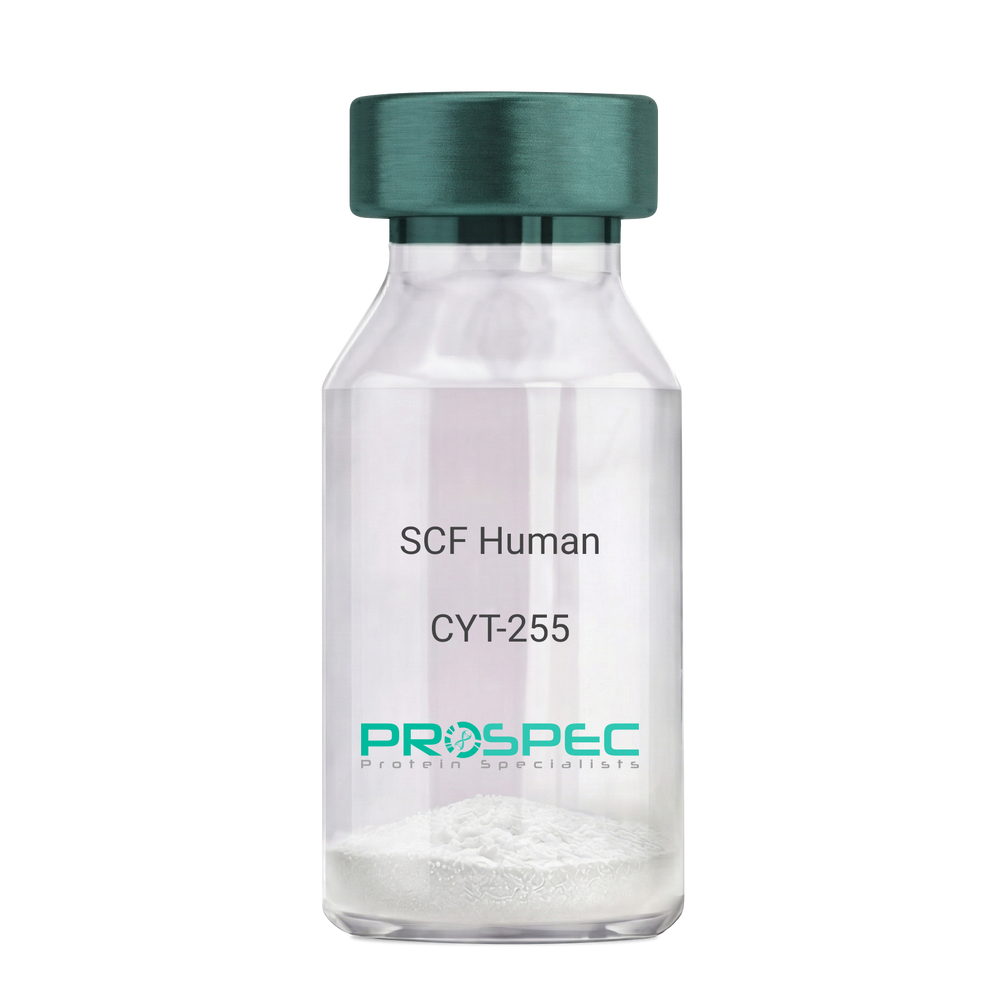
SCF HumanDescription:
Stem Cell Factor Human Recombinant
Kit ligand Precursor, C-kit ligand, SCF, Mast cell growth factor, MGF, SF, KL-1, Kitl, DKFZp686F2250.
Product # :
CYT-255Price :
Quantity :
Shipping Method :
Shipped at Room temp
More Info
- description
- source
- formulation
- purity
- biological activity
- More Info
Description
Stem Cell Factor Human Recombinant produced in E.Coli is a single, non-glycosylated polypeptide chain containing 165 amino acids and having a molecular mass of 18409 Dalton. The SCF is purified by proprietary chromatographic techniques.
Source
Escherichia Coli.
Formulation
Lyophilized from a concentrated (1mg/ml) solution in water containing 0.02% NaHCO3.
Purity
Greater than 98.0% as determined by:
(a) Analysis by SEC-HPLC.
(b) Analysis by SDS-PAGE.Biological Activity
The ED50 as determined by the dose-dependant stimulation of Human TF-1 cells is < 2 ng/ml, corresponding to a Specific Activity of 500,000 IU/mg.More Info
-
Introduction
Stem cell factor / KIT ligand (SCF) is a cytokine which binds CD117(c-Kit). SCF is also known as "steel factor" or "c-kit ligand". SCF exists in two forms, cell surface bound SCF and soluble (or free) SCF. Soluble SCF is produced by the cleavage of surface bound SCF by metalloproteases. SCF is a growth factor important for the survival, proliferation, and differentiation of hematopoietic stem cells and other hematopoietic progenitor cells. One of its roles is to change the BFU-E (burst-forming unit-erythroid) cells, which are the earliest erythrocyte precursors in the erythrocytic series, into the CFU-E (colony-forming unit-erythroid).
-
Synonyms
Kit ligand Precursor, C-kit ligand, SCF, Mast cell growth factor, MGF, SF, KL-1, Kitl, DKFZp686F2250.
-
Physical Appearance
Sterile Filtered White lyophilized (freeze-dried) powder.
-
Stability
Lyophilized KIT ligand although stable at room temperature for 3 weeks, should be stored desiccated below -18°C. Upon reconstitution SCF should be stored at 4°C between 2-7 days and for future use below -18°C.For long term storage it is recommended to add a carrier protein (0.1% HSA or BSA).Please prevent freeze-thaw cycles.
-
Solubility
It is recommended to reconstitute the lyophilized Stem Cell Factor in sterile 18MΩ-cm H2O not less than 100µg/ml, which can then be further diluted to other aqueous solutions.
-
Amino Acid Sequence
The sequence of the first five N-terminal amino acids was determined and was found to be Met-Glu-Gly-Ile-Cys.
-
Protein content
Protein quantitation was carried out by two independent methods1. UV spectroscopy at 280 nm using the absorbency value of 0.52 as the extinction coefficient for a 0.1% (1mg/ml) solution. This value is calculated by the PC GENE computer analysis program of protein sequences (IntelliGenetics). 2. Analysis by RP-HPLC, using a standard solution of Stem Cell Factor as a Reference Standard.
ProSpec's products are furnished for LABORATORY RESEARCH USE ONLY. The product may not be used as drugs, agricultural or pesticidal products, food additives or household chemicals.
- View Data Sheet
Name :
MSRB E.ColiDescription:
Methionine Sulfoxide Reductase B E.Coli Recombinant
Peptide methionine sulfoxide reductase MsrB, Peptide-methionine (R)-S-oxide reductase, msrB, yeaA, b1778, JW1767.
Product # :
ENZ-124Price :
Quantity :
Shipping Method :
Shipped with Ice Packs
More Info
- description
- source
- formulation
- purity
- More Info
Description
MSRB produced in E.Coli is a single, non-glycosylated polypeptide chain containing 157 amino acids (1-137 a.a.) and having a molecular mass of 17.6kDa.MSRB is fused to a 20 amino acid His-tag at N-terminus & purified by proprietary chromatographic techniques.
Source
Escherichia Coli.
Formulation
MSRB protein solution (1mg/ml) 20mM Tris-HCl buffer (pH8.0), 20% glycerol 0.1M NaCl and 1mM DTT.
Purity
Greater than 95.0% as determined by SDS-PAGE.
More Info
-
Introduction
Methionine sulfoxide reductase B (MsrB) from Escherichia coli is a member of the msrB Met sulfoxide reductase family. The E.coli msrB carries out the reduction of methionine-R-sulfoxide to methionine. msrB possess a metal binding site composed of 2 CXXC motifs. The bound metal (zinc or iron) may stabilize the conformation of the enzymes.
-
Synonyms
Peptide methionine sulfoxide reductase MsrB, Peptide-methionine (R)-S-oxide reductase, msrB, yeaA, b1778, JW1767.
-
Physical Appearance
Sterile filtered colorless solution.
-
Stability
Store at 4°C if entire vial will be used within 2-4 weeks. Store, frozen at -20°C for longer periods of time. For long term storage it is recommended to add a carrier protein (0.1% HSA or BSA).Avoid multiple freeze-thaw cycles.
-
Amino Acid Sequence
MGSSHHHHHH SSGLVPRGSH MANKPSAEEL KKNLSEMQFY VTQNHGTEPP FTGRLLHNKR DGVYHCLICD APLFHSQTKY DSGCGWPSFY EPVSEESIRY IKDLSHGMQR IEIRCGNCDA HLGHVFPDGP QPTGERYCVN SASLRFTDGE NGEEING.
ProSpec's products are furnished for LABORATORY RESEARCH USE ONLY. The product may not be used as drugs, agricultural or pesticidal products, food additives or household chemicals.
- View Data Sheet
Name :
SELE Human, Sf9Description:
E-Selectin Human Recombinant, Sf9
E-selectin, Endothelial leukocyte adhesion molecule 1, ELAM-1, Leukocyte-endothelial cell adhesion molecule 2, LECAM2, CD62E antigen, SELE, ELAM1, ELAM, ESEL, CD62E
Product # :
PRO-2712Price :
Quantity :
Shipping Method :
Shipped with Ice Packs
More Info
- description
- source
- formulation
- purity
- biological activity
- More Info
Description
SELE Human Recombinant produced in Sf9 Baculovirus cells is a single, glycosylated polypeptide chain containing 541 amino acids (22-556 a.a) and having a molecular mass of 59.4kDa.SELE is fused to a 6 amino acid His-tag at C-terminus & purified by proprietary chromatographic techniques.
Source
Sf9, Baculovirus cells.
Formulation
The SELE solution (0.5mg/1ml) contains Phosphate-Buffered Saline (pH 7.4) and 10% glycerol.
Purity
Greater than 95.0% as determined by SDS-PAGE.
Biological Activity
Measured by the ability of the immobilized protein to support the adhesion of U937 human histiocytic lymphoma cells, which are added to human E-Seletin/CD62E coated plates 2ug/ml. This effect is > 40%.
More Info
-
Introduction
E-selectin (SELE) is a part of a family of divalent cation-dependent carbohydrate-binding glycoproteins or adhesion molecules. E-selectin is expressed on the surface of endothelial cells and mediates the interaction of leukocytes and platelets with endothelial cells during an inflammatory response. E-selectin is present in single copy in the human genome and contains 14 exons spanning about 13 kb of DNA.
-
Synonyms
E-selectin, Endothelial leukocyte adhesion molecule 1, ELAM-1, Leukocyte-endothelial cell adhesion molecule 2, LECAM2, CD62E antigen, SELE, ELAM1, ELAM, ESEL, CD62E
-
Physical Appearance
Sterile filtered colorless solution.
-
Stability
Store at 4°C if entire vial will be used within 2-4 weeks.Store, frozen at -20°C for longer periods of time.For long term storage it is recommended to add a carrier protein (0.1% HSA or BSA).Avoid multiple freeze-thaw cycles.
-
Amino Acid Sequence
WSYNTSTEAM TYDEASAYCQ QRYTHLVAIQ NKEEIEYLNS ILSYSPSYYW IGIRKVNNVW VWVGTQKPLT EEAKNWAPGE PNNRQKDEDC VEIYIKREKD VGMWNDERCS KKKLALCYTA ACTNTSCSGH GECVETINNY TCKCDPGFSG LKCEQIVNCT ALESPEHGSL VCSHPLGNFS YNSSCSISCD RGYLPSSMET MQCMSSGEWS APIPACNVVE CDAVTNPANG FVECFQNPGS FPWNTTCTFD CEEGFELMGA QSLQCTSSGN WDNEKPTCKA VTCRAVRQPQ NGSVRCSHSP AGEFTFKSSC NFTCEEGFML QGPAQVECTT QGQWTQQIPV CEAFQCTALS NPERGYMNCL PSASGSFRYG SSCEFSCEQG FVLKGSKRLQ CGPTGEWDNE KPTCEAVRCD AVHQPPKGLV RCAHSPIGEF TYKSSCAFSC EEGFELHGST QLECTSQGQW TEEVPSCQVV KCSSLAVPGK INMSCSGEPV FGTVCKFACP EGWTLNGSAA RTCGATGHWS GLLPTCEAPT ESNIPHHHHH H
ProSpec's products are furnished for LABORATORY RESEARCH USE ONLY. The product may not be used as drugs, agricultural or pesticidal products, food additives or household chemicals.
- View Data Sheet
Name :
SNX3 HumanDescription:
Sorting Nexin 3 Human Recombinant
Sorting nexin-3, Protein SDP3, SNX3, SDP3, Grd19, MCOPS8.
Product # :
PRO-246Price :
Quantity :
Shipping Method :
Shipped with Ice Packs
More Info
- description
- source
- formulation
- purity
- More Info
Description
SNX3 produced in E.Coli is a single, non-glycosylated polypeptide chain containing 182 amino acids (1-162 a.a) and having a molecular mass of 20.9kDa.SNX3 is fused to a 20 amino acid His-tag at N-terminus & purified by proprietary chromatographic techniques.
Source
Escherichia Coli.
Formulation
SNX3 protein solution (1mg/ml) containing 20mM Tris-HCl buffer (pH 8.0), 1mM DTT, 20% glycerol and 0.1M NaCl.
Purity
Greater than 95.0% as determined by SDS-PAGE.
More Info
-
Introduction
Sorting nexin 3 (SNX3) belongs to the large family of hydrophilic proteins, which interact with various receptor types and are involved in intracellular trafficking. SNX3 interacts with phosphatidylinositol-3-phosphate, and is involved in protein trafficking. SNX3 comprises a distinct subgroup of nexins, which share less sequence similarity outside of the PX domain and have significantly different binding affinities for the tyrosine kinase receptors.
-
Synonyms
Sorting nexin-3, Protein SDP3, SNX3, SDP3, Grd19, MCOPS8.
-
Physical Appearance
Sterile Filtered colorless solution.
-
Stability
SNX3 Human Recombinant although stable at 4°C for 1 week, should be stored below -18°C. Please prevent freeze thaw cycles.
-
Amino Acid Sequence
MGSSHHHHHH SSGLVPRGSH MAETVADTRR LITKPQNLND AYGPPSNFLE IDVSNPQTVG VGRGRFTTYE IRVKTNLPIF KLKESTVRRR YSDFEWLRSE LERESKVVVP PLPGKAFLRQ LPFRGDDGIF DDNFIEERKQ GLEQFINKVA GHPLAQNERC LHMFLQDEII DKSYTPSKIR
HA.
ProSpec's products are furnished for LABORATORY RESEARCH USE ONLY. The product may not be used as drugs, agricultural or pesticidal products, food additives or household chemicals.
- View Data Sheet
Name :
ENSA HumanDescription:
Endosulfine Alpha Human Recombinant
ARPP-19e, Alpha endosulfine isoform 3, Alpha-endosulfine, ENSA, MGC4319, MGC8394, MGC78563.
Product # :
PRO-772Price :
Quantity :
Shipping Method :
Shipped with Ice Packs
More Info
- description
- source
- formulation
- purity
- More Info
Description
ENSA Human Recombinant produced in E.Coli is a single, non-glycosylated polypeptide chain containing 141 amino acids (1-121 a.a.) and having a molecular weight of 15.5kDa. The ENSA is fused to a 20 amino acid His-Tag at N-terminus and purified by proprietary chromatographic techniques.
Source
Escherichia Coli.
Formulation
The Endosulfine Alpha protein solution contains 20mM Tris, pH-8, 1mM DTT and 10% glycerol.
Purity
Greater than 90.0% as determined by SDS-PAGE.
More Info
-
Introduction
ENSA is an endogenous ligand for sulfonylurea receptor. ENSA reduces K(ATP) channel currents by inhibiting sulfonylurea from binding to the receptor and thus stimulates insulin secretion. Endosulfine Alpha is part of a conserved cAMP-regulated phosphoprotein (ARPP) family. Endosulfine Alpha is an endogenous ligand for the sulfonylurea receptor, ABCC8/SUR1. Endosulfine Alpha is an endogenous regulator of KATP channels. ENSA modulates insulin secretion through the interaction with KATP channel. ENSA is a candidate gene for type 2 diabetes. ENSA is expressed in a wide range of tissues including muscle, brain, and endocrine tissues.
-
Synonyms
ARPP-19e, Alpha endosulfine isoform 3, Alpha-endosulfine, ENSA, MGC4319, MGC8394, MGC78563.
-
Physical Appearance
Sterile filtered colorless solution.
-
Stability
Store at 4°C if entire vial will be used within 2-4 weeks. Store, frozen at -20°C for longer periods of time. For long term storage it is recommended to add a carrier protein (0.1% HSA or BSA). Avoid multiple freeze-thaw cycles.
-
Amino Acid Sequence
MGSSHHHHHH SSGLVPRGSH MSQKQEEENP AEETGEEKQD TQEKEGILPE RAEEAKLKAK YPSLGQKPGG SDFLMKRLQK GQKYFDSGDY NMAKAKMKNK QLPSAGPDKN LVTGDHIPTP QDLPQRKSSL VTSKLAGGQV E.
ProSpec's products are furnished for LABORATORY RESEARCH USE ONLY. The product may not be used as drugs, agricultural or pesticidal products, food additives or household chemicals.
- View Data Sheet
Name :
BMP 2 Human, MonomerDescription:
Bone Morphogenetic Protein-2 Human Recombinant, Monomer
BMP-2, BMP2A, Bone morphogenetic protein 2, BMP-2A, BMP2.
Product # :
CYT-627Price :
Quantity :
Shipping Method :
Shipped with Ice Packs
More Info
- description
- source
- formulation
- purity
- More Info
Description
Bone Morphogenetic Protein-2 Human Recombinant produced in E.Coli is a monomeric, non-glycosylated, Polypeptide chain containing 115 amino acids (283-396) and having a molecular mass of 13009 Dalton. The BMP-2 is purified by proprietary chromatographic techniques.
Source
Escherichia Coli.
Formulation
BMP-2 solution contains 10mM NaAc pH=3.5 and 10% glycerol.
Purity
Greater than 95.0% as determined by SDS-PAGE.
More Info
-
Introduction
BMP2 belongs to the transforming growth factor-beta (TGFB) superfamily. Bone morphogenic protein induces bone formation. BMP2 is a candidate gene for the autosomal dominant disease of fibrodysplasia (myositis) ossificans progressiva.
-
Synonyms
BMP-2, BMP2A, Bone morphogenetic protein 2, BMP-2A, BMP2.
-
Physical Appearance
Sterile Filtered colorless solution.
-
Stability
Store at 4°C if entire vial will be used within 2-4 weeks. Store, frozen at -20°C for longer periods of time. Please avoid freeze thaw cycles.
-
Amino Acid Sequence
MQAKHKQRKR LKSSCKRHPL YVDFSDVGWN DWIVAPPGYH AFYCHGECPF PLADHLNSTN HAIVQTLVNS VNSKIPKACC VPTELSAISMLYLDENEKVV LKNYQDMVVE GCGCR.
-
Background
What is the molecular weight/Mw of BMP2 Protein?
BMP2 Protein has a total Mw of 13kDa.
What is the source or expression system of BMP2 Protein?
Escherichia Coli.
What is the Purity of BMP2 Protein?
BMP2 Protein is >95% pure as determined by SDS-PAGE.
What is the Biological Activity of BMP2 Protein?
The biological functionality of BMP2 Protein will be determined in the future.
What is the amino acid sequence of BMP2 Protein?
MQAKHKQRKR LKSSCKRHPL YVDFSDVGWN DWIVAPPGYH AFYCHGECPF PLADHLNSTN HAIVQTLVNS VNSKIPKACC VPTELSAISMLYLDENEKVV LKNYQDMVVE GCGCR.
What applications can BMP2 Protein be used in?
BMP2 Protein can probably be used in western blot, ELISA and Lateral Flow.
What is the endotoxin level for BMP2 Protein?
The endotoxin level is minimal, BMP2 Protein was purified using conventional chromatography techniques.
ProSpec's products are furnished for LABORATORY RESEARCH USE ONLY. The product may not be used as drugs, agricultural or pesticidal products, food additives or household chemicals.
- View Data Sheet
Name :
OTOR HumanDescription:
Otoraplin Human Recombinant
Otoraplin, Fibrocyte-derived protein, Melanoma inhibitory activity-like protein, OTOR, MIAL, FDP, MIAL1, MGC126737, MGC126739.
Product # :
CYT-582Price :
Quantity :
Shipping Method :
Shipped at Room temp
More Info
- description
- source
- formulation
- purity
- More Info
Description
Otoraplin Human Recombinant produced in E.Coli is a single, non-glycosylated, polypeptide chain containing 111 amino acids and having a molecular mass of 12.7 kDa.The OTOR is purified by proprietary chromatographic techniques.
Source
Escherichia Coli.
Formulation
The OTOR protein was lyophilized from a concentrated (1mg/ml) solution containing 20mM PBS pH-7.4 and 130mM NaCl.
Purity
Greater than 98.0% as determined by(a) Analysis by RP-HPLC.
(b) Analysis by SDS-PAGE.More Info
-
Introduction
OTOR proteins is also known as fibrocyte-derived protein (Fdp) and Melanoma inhibitory activity-like (MIAL). Otoraplin is a member of the melanoma-inhibiting activity gene family. Otoraplin is a secreted 16 kDa globular protein that is expressed in the inner ear by periotic mesenchyme and developing and mature fibrocytes. OTOR is highly homologous to MIA/cartilage-derived retinoic acid-sensitive protein (CD-RAP), which is a cartilage-specific protein that is also expressed in malignant melanoma cells. The 111 amino acid mature human otoraplin contains 1 SH3 domain (46 – 107 amino acids) and a Tyr at position 50 that is reportedly sulfated. Otoraplin takes pasrt in the initiation of periotic mesenchyme chondrogenesis.
Otoraplin is secreted through the Golgi apparatus and plays a role in cartilage development and maintenance. A frequent polymorphism in the translation start codon of OTOR can abolish translation and may be associated with forms of deafness. -
Synonyms
Otoraplin, Fibrocyte-derived protein, Melanoma inhibitory activity-like protein, OTOR, MIAL, FDP, MIAL1, MGC126737, MGC126739.
-
Physical Appearance
Sterile Filtered White lyophilized (freeze-dried) powder.
-
Stability
Lyophilized OTOR Recombinant although stable at room temperature for 3 weeks, should be stored desiccated below -18°C. Upon reconstitution OTOR should be stored at 4°C between 2-7 days and for future use below -18°C.For long term storage it is recommended to add a carrier protein (0.1% HSA or BSA).Please prevent freeze-thaw cycles.
-
Solubility
It is recommended to reconstitute the lyophilized Otoraplin in sterile 18MΩ-cm H2O not less than 100µg/ml, which can then be further diluted to other aqueous solutions.
-
Amino Acid Sequence
VHGIFMDRLASKKLCADDECVYTISLASAQEDYNAPDCRFINVKKGQQIYVYS
KLVKENGAGEFWAGSVYGDGQDEMGVVGYFPRNLVKEQRVYQEATKEVPTT
DIDFFCE.
ProSpec's products are furnished for LABORATORY RESEARCH USE ONLY. The product may not be used as drugs, agricultural or pesticidal products, food additives or household chemicals.
- View Data Sheet
Name :
PDCD1LG2 HumanDescription:
Programmed Cell Death 1 Ligand 2 Human Recombinant
Programmed cell death 1 ligand 2, PD-1 ligand 2, PD-L2, PDCD1 ligand 2, Programmed death ligand 2, PDCD1LG2, B7-DC, Butyrophilin B7-DC, CD273, B7DC, CD273, PDCD1L2, PDL2, bA574F11.2, Btdc.
Product # :
PRO-2019Price :
Quantity :
Shipping Method :
Shipped with Ice Packs
More Info
- description
- source
- formulation
- purity
- More Info
Description
PDCD1LG2 Human Recombinant produced in E.Coli is a single, non-glycosylated polypeptide chain containing 204 amino acids (20-200 a.a.) and having a molecular mass of 22.8kDa.PDCD1LG2 is fused to a 23 amino acid His-tag at N-terminus & purified by proprietary chromatographic techniques.
Source
E.coli.
Formulation
PDCD1LG2 protein solution (1mg/ml) containing 20mM Tris-HCl buffer (pH8.0), 0.4M Urea and 10% glycerol.
Purity
Greater than 90% as determined by SDS-PAGE.
More Info
-
Introduction
Programmed cell death 1 ligand 2 (PDCD1LG2) which takes part in the costimulatory signal, is necessary for T-cell proliferation. PDCD1LG2 is also involved in IFNG production in a PDCD1-independent way. The interaction with PDCD1 inhibits T-cell proliferation by preventing cytokine production and cell cycle progression.
-
Synonyms
Programmed cell death 1 ligand 2, PD-1 ligand 2, PD-L2, PDCD1 ligand 2, Programmed death ligand 2, PDCD1LG2, B7-DC, Butyrophilin B7-DC, CD273, B7DC, CD273, PDCD1L2, PDL2, bA574F11.2, Btdc.
-
Physical Appearance
Sterile Filtered colorless solution.
-
Stability
Store at 4°C if entire vial will be used within 2-4 weeks. Store, frozen at -20°C for longer periods of time. For long term storage it is recommended to add a carrier protein (0.1% HSA or BSA).Avoid multiple freeze-thaw cycles.
-
Amino Acid Sequence
MGSSHHHHHH SSGLVPRGSH MGSLFTVTVP KELYIIEHGS NVTLECNFDT GSHVNLGAIT ASLQKVENDT SPHRERATLL EEQLPLGKAS FHIPQVQVRD EGQYQCIIIY GVAWDYKYLT LKVKASYRKI NTHILKVPET DEVELTCQAT GYPLAEVSWP NVSVPANTSH SRTPEGLYQV TSVLRLKPPP GRNFSCVFWN THVR.
ProSpec's products are furnished for LABORATORY RESEARCH USE ONLY. The product may not be used as drugs, agricultural or pesticidal products, food additives or household chemicals.
- View Data Sheet
Name :
FGF 9 MouseDescription:
Fibroblast Growth Factor-9 Mouse Recombinant
GAF (Glia-activating factor), HBGF-9, MGC119914, MGC119915, FGF-9.
Product # :
CYT-349Price :
Quantity :
Shipping Method :
Shipped at Room temp
More Info
- description
- source
- formulation
- purity
- biological activity
- More Info
Description
Fibroblast Growth Factor-9 Mouse Recombinant produced in E.Coli is a single, non-glycosylated, polypeptide chain containing 205 amino acids and having a molecular mass of 23308 Dalton.The FGF-9 Mouse Recombinant is purified by proprietary chromatographic techniques.
Source
Escherichia Coli.
Formulation
The protein was lyophilized from 10mM Tris, pH 8.0, 0.15M Amonium Sulfate.
Purity
Greater than 95.0% as determined by:
(a) Analysis by RP-HPLC.
(b) Analysis by SDS-PAGE.Biological Activity
The ED50, calculated by the dose-dependant proliferation of BAF3 cells expressing FGF receptors (measured by 3H-thymidine uptake) is <0.5 ng/ml, corresponding to a specific activity of 2MU/mg.More Info
-
Introduction
Rat and mouse FGF-9 show a very high homology to human FGF-9. The transcripts for FGF-9 have been found in brain and in kidney tissue. Fibroblast Growth Factor-9 is a member of the fibroblast growth factor (FGF) family. FGF family members possess broad mitogenic and cell survival activities, and are involved in a variety of biological processes, including embryonic development, cell growth, morphogenesis, tissue repair, tumor growth and invasion. FGF9 was isolated as a secreted factor that exhibits a growth-stimulating effect on cultured glial cells. In nervous system, this protein is produced mainly by neurons and may be important for glial cell development. Expression of the mouse homolog of this gene was found to be dependent on Sonic hedgehog (Shh) signaling. Mice lacking the homolog gene displayed a male-to-female sex reversal phenotype, which suggested a role in testicular embryogenesis Fibroblast Growth Factor 9 may have a role in glial cell growth and differentiation during development, gliosis during repair and regeneration of brain tissue after damage, differentiation and survival of neuronal cells, and growth stimulation of glial tumors.
-
Synonyms
GAF (Glia-activating factor), HBGF-9, MGC119914, MGC119915, FGF-9.
-
Physical Appearance
Sterile Filtered White lyophilized (freeze-dried) powder.
-
Stability
Lyophilized Fibroblast Growth Factor-9 although stable at room temperature for 3 weeks, should be stored desiccated below -18°C. Upon reconstitution FGF9 Mouse Recombinant should be stored at 4°C between 2-7 days and for future use below -18°C.For long term storage it is recommended to add a carrier protein (0.1% HSA or BSA).Please prevent freeze-thaw cycles.
-
Solubility
It is recommended to reconstitute the lyophilized Fibroblast Growth Factor 9 in sterile 18MΩ-cm H2O not less than 100µg/ml, which can then be further diluted to other aqueous solutions.
-
Amino Acid Sequence
The sequence of the first five N-terminal amino acids was determined and was found to be Pro-Leu-Gly-Glu-Val.
-
Background
What is the molecular weight/Mw of FGF9 Protein?
FGF9 Protein has a total Mw of 23.3kDa.
What is the source or expression system of FGF9 Protein?
Escherichia Coli.
What is the Purity of FGF9 Protein?
FGF9 Protein is >95% pure as determined by SDS-PAGE.
What is the Biological Activity of FGF9 Protein?
The ED50, calculated by the dose-dependant proliferation of BAF3 cells expressing FGF receptors (measured by 3H-thymidine uptake) is <0.5 ng/ml, corresponding to a specific activity of 2MU/mg.
What is the amino acid sequence of FGF9 Protein?
FGF9 Protein is composed from 205 amino acids.
What applications can FGF9 Protein be used in?
FGF9 Protein can probably be used in western blot, ELISA and Lateral Flow.
What is the endotoxin level for FGF9 Protein?
The endotoxin level is minimal, FGF9 Protein was purified using conventional chromatography techniques.
ProSpec's products are furnished for LABORATORY RESEARCH USE ONLY. The product may not be used as drugs, agricultural or pesticidal products, food additives or household chemicals.
- View Data Sheet
Name :
TGFBI Human, 182 a.a.Description:
Transforming Growth Factor Beta-Induced (182 a.a.) Human Recombinant
Transforming growth factor-beta-induced protein ig-h3, Beta ig-h3, Kerato-epithelin, RGD-containing collagen-associated protein, RGD-CAP, TGFBI, BIGH3, CSD, CDB1, CDG2, CSD1, CSD2, CSD3, EBMD, LCD1, CDGG1.
Product # :
PRO-672Price :
Quantity :
Shipping Method :
Shipped with Ice Packs
More Info
- description
- source
- formulation
- purity
- More Info
Description
TGFBI Recombinant Human produced in e.Coli is a single, non-glycosylated, polypeptide containing 182 amino acids (502-683) and having a molecular mass of 19.9 kDa (Molecular weight on SDS-PAGE will appear higher). The TGFBI recombinant Human protein is purified by proprietary chromatographic techniques.
Source
Escherichia Coli.
Formulation
The TGFBI 182 a.a. recombinant Human is formulated in 20mM Tris-HCl pH-8, 1mM EDTA, 0.1mM PMSF and 20% glycerol.
Purity
Greater than 95.0% as determined by SDS-PAGE.
More Info
-
Introduction
TGFBI is an extracellular matrix protein induced by transforming growth factor (TGF)-beta 1. TGFBI protein is involved in cell growth, cell differentiation, wound healing and cell adhesion. In addition, some missense mutations of TGFBI were identified in families affected with human autosomal dominant corneal dystrophies. TGFBI gene encodes for a 683 amino-acid protein containing an RGD motif and four internal repeated domains which have highly conserved sequences founded in several species (Fasciclin domain).
-
Synonyms
Transforming growth factor-beta-induced protein ig-h3, Beta ig-h3, Kerato-epithelin, RGD-containing collagen-associated protein, RGD-CAP, TGFBI, BIGH3, CSD, CDB1, CDG2, CSD1, CSD2, CSD3, EBMD, LCD1, CDGG1.
-
Physical Appearance
Sterile filtered liquid formulation.
-
Stability
Store at 4°C if entire vial will be used within 2-4 weeks. Store, frozen at -20°C for longer periods of time. For long term storage it is recommended to add a carrier protein (0.1% HSA or BSA).Avoid multiple freeze-thaw cycles.
-
Amino Acid Sequence
MGTVMDVLKG DNRFSMLVAA IQSAGLTETL NREGVYTVFA PTNEAFRALP PRERSRLLGD AKELANILKY HIGDEILVSG GIGALVRLKS LQGDKLEVSL KNNVVSVNKE PVAEPDIMAT NGVVHVITNV LQPPANRPQE RGDELADSAL EIFKQASAFS RASQRSVRLA PVYQKLLERM KH.
ProSpec's products are furnished for LABORATORY RESEARCH USE ONLY. The product may not be used as drugs, agricultural or pesticidal products, food additives or household chemicals.
- View Data Sheet
Name :
KLF4 Human, HisDescription:
Kruppel-Like Factor 4 Human Recombinant, His Tag
Kruppel-Like Factor 4 (Gut), GKLF, EZF, Epithelial Zinc Finger Protein EZF, Gut-Enriched Krueppel-Like Factor, Endothelial Kruppel-Like Zinc Finger Protein, Krueppel-Like Factor 4, Krueppel-like factor 4, Epithelial zinc finger protein EZF, Gut-enriched krueppel-like factor.
Product # :
PRO-2186Price :
Quantity :
Shipping Method :
Shipped with Ice Packs
More Info
- description
- source
- formulation
- purity
- More Info
Description
KLF4 Human Recombinant produced in E.Coli is a single, non-glycosylated polypeptide chain containing 422 amino acids (11-395 a.a) and having a molecular mass of 44.2kDa. KLF4 is fused to a 37 amino acid His-tag at N-terminus & purified by proprietary chromatographic techniques.
Source
E.coli.
Formulation
KLF4 protein solution (1mg/ml) containing 20mM Tris-HCl buffer (pH 8.0) and 10% glycerol.
Purity
Greater than 85% as determined by SDS-PAGE.
More Info
-
Introduction
KLF4 is a transcription factor that performs as both an activator and repressor. KLF4 is expressed mainly in erythroid tissues and found mostly in gut. KLF4 is takes part in the differentiation of epithelial cells in addition to skeletal and kidney development.
-
Synonyms
Kruppel-Like Factor 4 (Gut), GKLF, EZF, Epithelial Zinc Finger Protein EZF, Gut-Enriched Krueppel-Like Factor, Endothelial Kruppel-Like Zinc Finger Protein, Krueppel-Like Factor 4, Krueppel-like factor 4, Epithelial zinc finger protein EZF, Gut-enriched krueppel-like factor.
-
Physical Appearance
Sterile Filtered colorless solution.
-
Stability
Store at 4°C if entire vial will be used within 2-4 weeks. Store, frozen at -20°C for longer periods of time. For long term storage it is recommended to add a carrier protein (0.1% HSA or BSA).Avoid multiple freeze-thaw cycles.
-
Amino Acid Sequence
MRGSHHHHHH GMASMTGGQQ MGRDLYDDDD KDRWGSMAVS DALLPSFSTF ASGPAGREKT LRQAGAPNNR WREELSHMKR LPPVLPGRPY DLAAATVATD LESGGAGAAC GGSNLAPLPR RETEEFNDLL DLDFILSNSL THPPESVAAT VSSSASASSS SSPSSSGPAS APSTCSFTYP IRAGNDPGVA PGGTGGGLLY GRESAPPPTA PFNLADINDV SPSGGFVAEL LRPELDPVYI PPQQPQPPGG GLMGKFVLKA SLSAPGSEYG SPSVISVSKG SPDGSHPVVV APYNGGPPRT CPKIKQEAVS SCTHLGAGPP LSNGHRPAAH DFPLGRQLPS RTTPTLGLEE VLSSRDCHPA LPLPPGFHPH PGPNYPSFLP DQMQPQVPPL HYQELMPPGS CMPEEPKPKR GRRSWPRKRT AT.
ProSpec's products are furnished for LABORATORY RESEARCH USE ONLY. The product may not be used as drugs, agricultural or pesticidal products, food additives or household chemicals.
- View Data Sheet
Name :
TRAPPC3 HumanDescription:
Trafficking Protein Particle Complex 3 Human Recombinant
Trafficking protein particle complex subunit 3, BET3, BET3 homolog, 1110058K12Rik.
Product # :
PRO-1056Price :
Quantity :
Shipping Method :
Shipped with Ice Packs
More Info
- description
- source
- formulation
- purity
- More Info
Description
TRAPPC3 Human Recombinant produced in E. coli is a single polypeptide chain containing 200 amino acids (1-180) and having a molecular mass of 22.4kDa.TRAPPC3 is fused to a 20 amino acid His-tag at N-terminus & purified by proprietary chromatographic techniques.
Source
E.coli.
Formulation
The TRAPPC3 solution (1mg/ml) contains 20mM Tris-HCl buffer (pH 8.0), 100mM Nacl, 1mM DTT and 20% glycerol.
Purity
Greater than 90% as determined by SDS-PAGE.
More Info
-
Introduction
TRAPPC3 is a part of the TRAPP complex that takes part in connection of transport vesicles to the cis-Golgi membrane. Additionally, TRAPPC3 is involved in vesicular transport from endoplasmic reticulum to Golgi.
-
Synonyms
Trafficking protein particle complex subunit 3, BET3, BET3 homolog, 1110058K12Rik.
-
Physical Appearance
Sterile Filtered colorless solution.
-
Stability
Store at 4°C if entire vial will be used within 2-4 weeks. Store, frozen at -20°C for longer periods of time. For long term storage it is recommended to add a carrier protein (0.1% HSA or BSA).Avoid multiple freeze-thaw cycles.
-
Amino Acid Sequence
MGSSHHHHHH SSGLVPRGSH MSRQANRGTE SKKMSSELFT LTYGALVTQL CKDYENDEDV NKQLDKMGFN IGVRLIEDFL ARSNVGRCHD FRETADVIAK VAFKMYLGIT PSITNWSPAG DEFSLILENN PLVDFVELPD NHSSLIYSNL LCGVLRGALE MVQMAVEAKF VQDTLKGDGV TEIRMRFIRR IEDNLPAGEE
ProSpec's products are furnished for LABORATORY RESEARCH USE ONLY. The product may not be used as drugs, agricultural or pesticidal products, food additives or household chemicals.
- View Data Sheet
Name :
CDC123 HumanDescription:
Cell Division Cycle 123 Human Recombinant
C10orf7, D123, Cell division cycle protein 123 homolog, Protein D123, HT-1080, PZ32, Chromosome 10 Open Reading Frame 7.
Product # :
PRO-1463Price :
Quantity :
Shipping Method :
Shipped with Ice Packs
More Info
- description
- source
- formulation
- purity
- More Info
Description
CDC123 Human Recombinant produced in E.Coli is a single, non-glycosylated polypeptide chain containing 359 amino acids (1-336 a.a) and having a molecular mass of 41.5kDa.CDC123 is fused to a 23 amino acid His-tag at N-terminus & purified by proprietary chromatographic techniques.
Source
Escherichia Coli.
Formulation
CDC123 protein solution (0. 5mg/ml) containing 20mM Tris-HCl buffer (pH8.0), 20% glycerol, 0.1M NaCl and 2mM DTT.
Purity
Greater than 90.0% as determined by SDS-PAGE.
More Info
-
Introduction
CDC123 is a member of the CDC123 family. CDC123is required for S phase entry of the cell cycle. It is also broadly expressed in spleen,thymus, prostate, testis, ovary, small intestine, colon and leukocytes with the uppermost expression in testis.
-
Synonyms
C10orf7, D123, Cell division cycle protein 123 homolog, Protein D123, HT-1080, PZ32, Chromosome 10 Open Reading Frame 7.
-
Physical Appearance
Sterile Filtered clear solution.
-
Stability
Store at 4°C if entire vial will be used within 2-4 weeks. Store, frozen at -20°C for longer periods of time. For long term storage it is recommended to add a carrier protein (0.1% HSA or BSA).Avoid multiple freeze-thaw cycles.
-
Amino Acid Sequence
MGSSHHHHHH SSGLVPRGSH MGSMKKEHVL HCQFSAWYPF FRGVTIKSVI LPLPQNVKDY LLDDGTLVVS GRDDPPTHSQ PDSDDEAEEI QWSDDENTAT LTAPEFPEFA TKVQEAINSL GGSVFPKLNW SAPRDAYWIA MNSSLKCKTL SDIFLLFKSS DFITRDFTQP FIHCTDDSPD PCIEYELVLR KWCELIPGAE FRCFVKENKL IGISQRDYTQ YYDHISKQKE EIRRCIQDFF KKHIQYKFLD EDFVFDIYRD SRGKVWLIDF NPFGEVTDSL LFTWEELISE NNLNGDFSEV DAQEQDSPAF RCTNSEVTVQ PSPYLSYRLP KDFVDLSTGE DAHKLIDFLK LKRNQQEDD
ProSpec's products are furnished for LABORATORY RESEARCH USE ONLY. The product may not be used as drugs, agricultural or pesticidal products, food additives or household chemicals.
- View Data Sheet
Name :
MED4 HumanDescription:
Mediator Complex Subunit 4 Human Recombinant
Mediator of RNA polymerase II transcription subunit 4, Mediator complex subunit 4, Vitamin D3 receptor-interacting protein complex 36 kDa component, Activator-recruited cofactor 36 kDa component, TRAP/SMCC/PC2 subunit p36 subunit, DRIP36, ARC36, MED4, VDRIP, TRAP36, HSPC126, FLJ10956, RP11-90M2.2.
Product # :
PRO-785Price :
Quantity :
Shipping Method :
Shipped with Ice Packs
More Info
- description
- source
- formulation
- purity
- More Info
Description
MED4 produced in E.Coli is a single, non-glycosylated polypeptide chain containing 278 amino acids (1-270 a.a.) and having a molecular mass of 30.7kDa. MED4 is fused to 8 amino acids His Tag at C-terminus and purified by proprietary chromatographic techniques.
Source
Escherichia Coli.
Formulation
The MED4 protein solution (0.5mg/ml) contains 20mM Tris-HCl buffer (pH8.0), 20% glycerol, 1mM DTT and 100mM NaCl.
Purity
Greater than 80.0% as determined by SDS-PAGE.
More Info
-
Introduction
Mediator complex subunit 4 (MED4) is a component of the Mediator complex, a coactivator involved in the regulated transcription of nearly all RNA polymerase II-dependent genes. MED4 is a component of the vitamin D receptor-interacting protein (DRIP) complex which functions as a nuclear receptor coactivator. The DRIP complex is able to activate nuclear receptors in a ligand-dependent manner. MED4 functions as a link to convey information from gene-specific regulatory proteins to the basal RNA polymerase II transcription apparatus. MED4 is recruited to promoters by direct interactions with regulatory proteins and serves as a scaffold for the assembly of a functional preinitiation complex with RNA polymerase II and the general transcription factors.
-
Synonyms
Mediator of RNA polymerase II transcription subunit 4, Mediator complex subunit 4, Vitamin D3 receptor-interacting protein complex 36 kDa component, Activator-recruited cofactor 36 kDa component, TRAP/SMCC/PC2 subunit p36 subunit, DRIP36, ARC36, MED4, VDRIP, TRAP36, HSPC126, FLJ10956, RP11-90M2.2.
-
Physical Appearance
Sterile filtered colorless solution.
-
Stability
Store at 4°C if entire vial will be used within 2-4 weeks. Store, frozen at -20°C for longer periods of time. For long term storage it is recommended to add a carrier protein (0.1% HSA or BSA). Avoid multiple freeze-thaw cycles.
-
Amino Acid Sequence
MAASSSGEKE KERLGGGLGV AGGNSTRERL LSALEDLEVL SRELIEMLAI SRNQKLLQAG EENQVLELLI HRDGEFQELM KLALNQGKIH HEMQVLEKEV EKRDGDIQQL QKQLKEAEQI LATAVYQAKE KLKSIEKARK GAISSEEIIK YAHRISASNA VCAPLTWVPG DPRRPYPTDL EMRSGLLGQM NNPSTNGVNG HLPGDALAAG RLPDVLAPQY PWQSNDMSMN MLPPNHSSDF LLEPPGHNKE DEDDVEIMST DSSSSSSESD LEHHHHHH.
ProSpec's products are furnished for LABORATORY RESEARCH USE ONLY. The product may not be used as drugs, agricultural or pesticidal products, food additives or household chemicals.
- View Data Sheet
Description:
Vasoactive Intestinal Peptide
Product # :
HOR-043Price :
Quantity :
Shipping Method :
Shipped at Room temp
More Info
- description
- formulation
- purity
- More Info
Description
Vasoactive Intestinal Peptide Synthetic is a single, non-glycosylated polypeptide chain containing 28 amino acids, having a molecular mass of 3325 Dalton and a Molecular formula of C147H238N44O42S .
Formulation
The protein was lyophilized with no additives.
Purity
Greater than 97.0% as determined by analysis by RP-HPLC.
More Info
-
Physical Appearance
Sterile Filtered White lyophilized (freeze-dried) powder.
-
Stability
Lyophilized Vasoactive Intestinal Peptide although stable at room temperature for 3 weeks, should be stored desiccated below -18°C. Upon reconstitution Vasoactive Intestinal Peptide should be stored at 4°C between 2-7 days and for future use below -18°C. For long term storage it is recommended to add a carrier protein (0.1% HSA or BSA). Please prevent freeze-thaw cycles.
-
Solubility
It is recommended to reconstitute the lyophilized Vasoactive Intestinal Peptide in sterile 18MΩ-cm H2O not less than 100 µg/ml, which can then be further diluted to other aqueous solutions.
-
Amino Acid Sequence
H-His-Ser-Asp-Ala-Val-Phe-Thr-Asp-Asn-Tyr-Thr-Arg-Leu-Arg-Lys-Gln-Met-Ala-Val-Lys-Lys-Tyr-Leu-Asn-Ser-Ile-Leu-Asn-NH2.
-
Background
Vasoactive Intestinal Peptide (VIP), a prominent member of the glucagon-secretin peptide superfamily, plays a multifaceted role as a neuropeptide and neurotransmitter. This research paper aims to provide an extensive analysis of VIP, exploring its biochemical properties, diverse physiological functions, and potential therapeutic applications in various disease conditions.
Vasoactive Intestinal Peptide (VIP), originally identified for its potent vasodilatory properties in the gastrointestinal system, has since been recognized for its wide-ranging physiological effects throughout the body. As a neuropeptide and neurotransmitter.
VIP, a 28-amino acid peptide, exhibits a diverse range of biological activities due to its interactions with multiple G protein-coupled receptors (GPCRs) from the VIP/PACAP receptor family (Harmar et al., 2012). These receptors are expressed in various tissues and cells, enabling VIP to exert its pleiotropic effects.
VIP is involved in the regulation of numerous physiological processes. It functions as a potent vasodilator, modulates smooth muscle activity in the gastrointestinal tract, and participates in neurotransmission in the central and peripheral nervous systems (Lelievre et al., 2008). Additionally, VIP has immunomodulatory properties, influencing immune cell functions and inflammatory responses (Delgado et al., 2004).
VIP serves as a neurotransmitter in the central nervous system, where it contributes to various neuronal functions, including learning, memory, and sensory perception (Deng et al., 2015). Moreover, VIP has demonstrated neuroprotective effects in neurodegenerative disorders, making it a potential therapeutic target for neuroprotection and neuroregeneration (Delgado et al., 2002).
VIP's diverse physiological functions offer potential therapeutic applications in various disease contexts. Research has explored its potential in the treatment of inflammatory diseases, neurodegenerative disorders, and gastrointestinal disorders (Delgado et al., 2013). Furthermore, VIP-based therapies are being investigated for their neuroprotective potential in brain injuries and stroke.
As the research on VIP continues to progress, further investigation is warranted to uncover the precise mechanisms of action and potential clinical applications in medicine. VIP stands as a remarkable example of a neuropeptide with extensive physiological roles and therapeutic potential in various disease conditions.
What is the molecular weight/Mw of VASOACTIVE INTESTINAL PEPTIDE Protein?
VASOACTIVE INTESTINAL PEPTIDE Protein has a total Mw of 3.32kDa.
What is the Purity of VASOACTIVE INTESTINAL PEPTIDE Protein?
VASOACTIVE INTESTINAL PEPTIDE Protein is >97% pure as determined by SDS-PAGE.
What is the Biological Activity of VASOACTIVE INTESTINAL PEPTIDE Protein?
The biological functionality of VASOACTIVE INTESTINAL PEPTIDE Protein will be determined in the future.
What is the amino acid sequence of VASOACTIVE INTESTINAL PEPTIDE Protein?
H-His-Ser-Asp-Ala-Val-Phe-Thr-Asp-Asn-Tyr-Thr-Arg-Leu-Arg-Lys-Gln-Met-Ala-Val-Lys-Lys-Tyr-Leu-Asn-Ser-Ile-Leu-Asn-NH2.
What applications can VASOACTIVE INTESTINAL PEPTIDE Protein be used in?
VASOACTIVE INTESTINAL PEPTIDE Protein can probably be used in western blot, ELISA and Lateral Flow.
What is the endotoxin level for VASOACTIVE INTESTINAL PEPTIDE Protein?
The endotoxin level is minimal, VASOACTIVE INTESTINAL PEPTIDE Protein was purified using conventional chromatography techniques.
ProSpec's products are furnished for LABORATORY RESEARCH USE ONLY. The product may not be used as drugs, agricultural or pesticidal products, food additives or household chemicals.
- View Data Sheet
Name :
Prolactin Ovine AntagonistDescription:
Prolactin Ovine Antagonsit Recombinant
Mammotropin, Luteotropic hormone, Luteotropin, PRL.
Product # :
CYT-311Price :
Quantity :
Shipping Method :
Shipped at Room temp
More Info
- description
- source
- formulation
- purity
- biological activity
- More Info
Description
Prolactin Ovine Antagonist Recombinant produced in E.Coli is a single, non-glycosylated polypeptide chain containing 199 amino acids and having a molecular mass of 23kDa. Ovine Prolactin Antagonist is purified by proprietary chromatographic techniques.
Source
Escherichia Coli.
Formulation
Ovine Prolactin was lyophilized from a concentrated (1mg/ml) solution with 0.02%-0.03% NaHCO3.
Purity
Greater than 99.0% as determined by SDS-PAGE.
Biological Activity
Ovine Prolactin Antagonist is devoid of agonistic activity and capable of inhibiting biological activity of Ovine Prolactin or other lactogenic hormones as evidenced by proliferation assay of Nb2 or other cells.More Info
-
Introduction
Prolactin is a lactogenic hormone secreted by the adenohypophysis .Besides its major action on lactation, in some species prolactin exerts effects on reproduction, maternal behavior, fat metabolism, immunomodulation and osmoregulation.Prolactin has been shown also to have cytokine-like activities and to have important immunoregulatory activities. It contributes to the development of lymphoid tissues and the maintenance of physiological immune function and also modulates a variety of T-cell immune responses. Prolactin has been reported to activate cellular proliferation in nonreproductive tissue, such as liver, spleen, and thymus. It induces significant proliferation in aortic smooth muscle cells and also enhances proliferation of these cells induced by PDGF . Prolactin also appears to be directly mitogenic for pancreatic beta cells. Prolactin is also mitogenic for cultured astrocytes.
-
Synonyms
Mammotropin, Luteotropic hormone, Luteotropin, PRL.
-
Physical Appearance
Sterile Filtered White lyophilized (freeze-dried) powder.
-
Stability
Lyophilized Ovine Prolactin Antagonist although stable at room temperature for 3 weeks, should be stored desiccated below -18°C. Upon reconstitution Ovine Prolactin Antagonist should be stored at 4°C between 2-7 days and for future use below -18°C.For long term storage it is recommended to add a carrier protein (0.1% HSA or BSA).Please prevent freeze-thaw cycles.
-
Solubility
It is recommended to reconstitute the lyophilized Ovine Prolactin Antagonist in sterile 18MΩ-cm H2O not less than 100µg/ml, which can then be further diluted to other aqueous solutions.
-
Amino Acid Sequence
The sequence of the first five N-terminal amino acids was determined and was found to be Ala-Thr-Pro-Val-Cys-Pro.
ProSpec's products are furnished for LABORATORY RESEARCH USE ONLY. The product may not be used as drugs, agricultural or pesticidal products, food additives or household chemicals.
- View Data Sheet
Name :
RetatrutideDescription:
Retatrutide
Product # :
HOR-058Price :
Quantity :
Shipping Method :
Shipped at Room temp
More Info
- description
- formulation
- purity
- More Info
Description
Retatrutide is a synthetic single, non-glycosylated polypeptide chain containing 39 amino acids, having a molecular mass of 4731 Dalton and a Molecular formula of C221H342N46O68.
Formulation
The protein was lyophilized with no additives.
Purity
Greater than 97.0% as determined by analysis by RP-HPLC.
More Info
-
Physical Appearance
Sterile Filtered White lyophilized (freeze-dried) powder.
-
Stability
Lyophilized Retatrutide although stable at room temperature for 3 weeks, should be stored desiccated below -18°C. Upon reconstitution Retatrutide should be stored at 4°C between 2-7 days and for future use below -18°C.
For long term storage it is recommended to add a carrier protein (0.1% HSA or BSA).
Please prevent freeze-thaw cycles.
-
Solubility
It is recommended to reconstitute the lyophilized Retatrutide in sterile 18MΩ-cm H2O not less than 100 µg/ml, which can then be further diluted to other aqueous solutions.
-
Amino Acid Sequence
H-Tyr-Aib-Gln-Gly-Thr-Phe-Thr-SerAsp-Tyr-Ser-Ile-α-Me-Leu-Leu-Asp-Lys-{diacid-C20-gamma-Glu- (AEEA)-Lys}-Ala-Gln-Aib-Ala-Phe-Ile-Glu-Tyr-Leu-Leu-Glu-Gly-GlyPro-Ser-Ser-Gly-Ala-Pro-Pro-Pro-Ser-NH2.
-
Background
Retatrutide is atriple agonist targeting the GIP, GLP-1, and glucagon receptors which offers a distinct metabolic profile that goes beyond previous dual agonists like Tirzepatide. Retatrutide takes a very important part in metabolic pharmacotherapy, achieving high weight loss of nearly 30% in Phase 3 trials. Retatrutide’s triple-receptor agonism—mainly the inclusion of the glucagon receptor—provides a superior metabolic advantage in clearing liver fat and increasing thermogenesis compared to dual agonists.
ProSpec's products are furnished for LABORATORY RESEARCH USE ONLY. The product may not be used as drugs, agricultural or pesticidal products, food additives or household chemicals.
- View Data Sheet
Name :
FLT1 D3 HumanDescription:
Vascular Endothelial Growth Factor Receptor-1 D3 Human Recombinant
FLT-1, FLT1, Tyrosine-protein kinase receptor FLT, Flt-1, Tyrosine-protein kinase FRT, Fms-like tyrosine kinase 1, VEGFR-1.
Product # :
PKA-234Price :
Quantity :
Shipping Method :
Shipped at Room temp
More Info
- description
- source
- formulation
- purity
- biological activity
- More Info
Description
FLT1 D1-3 Human Recombinant produced in baculovirus is monomeric, glycosylated, polypeptide containing 327 amino acids and having a molecular mass of 45 kDa. The soluble receptor protein contains only the first 3 extracellular domains, which contain all the information necessary for binding of VEGF.The FLT1 is purified by proprietary chromatographic techniques.
Source
Insect Cells.
Formulation
FLT1 D1-3 was lyophilized from a concentrated (1mg/ml) sterile solution containing 1xPBS.
Purity
Greater than 90.0% as determined by SDS-PAGE.
Biological Activity
The activity of FLT1D1-3 was determined by its ability to inhibit the VEGF-165-induced proliferation of HUVE cells.
More Info
-
Introduction
Endothelial cells express three different vascular endothelial growth factor (VEGF) receptors, belonging to the family of receptor tyrosine kinases (RTKs). They are named VEGFR-1 (Flt-1), VEGFR-2 (KDR/Flk-1), VEGFR-3 (Flt-4). Their expression is almost exclusively restricted to endothelial cells, but VEGFR-1 can also be found on monocytes, dendritic cells and on trophoblast cells. The flt-1 gene was first described in 1990. The receptor contains seven immunoglobulin-like extracellular domains, a single transmembrane region and an intracellular splited tyrosine kinase domain. Compared to VEGFR-2 the Flt-1 receptor has a higher affinity for VEGF but a weaker signaling activity. VEGFR-1 thus leads not to proliferation of endothelial cells, but mediates signals for differentiation. Interestingly a naturally occuring soluble variant of VEGFR-1 (sVEGFR-1) was found in HUVE supernatants in 1996, which is generated by alternative splicing of the flt-1 mRNA. The biological functions of sVEGFR-1 still are not clear, but it seems to be an endogenous regulator of angiogenesis, binding VEGF with the same affinity as the full-length receptor.
-
Synonyms
FLT-1, FLT1, Tyrosine-protein kinase receptor FLT, Flt-1, Tyrosine-protein kinase FRT, Fms-like tyrosine kinase 1, VEGFR-1.
-
Physical Appearance
Sterile Filtered White lyophilized (freeze-dried) powder.
-
Stability
Lyophilized FLT-1 although stable at room temperature for 3 weeks, should be stored desiccated below -18°C. Upon reconstitution FLT1 should be stored at 4°C between 2-7 days and for future use below -18°C.For long term storage it is recommended to add a carrier protein (0.1% HSA or BSA).Please prevent freeze-thaw cycles.
-
Solubility
It is recommended to reconstitute the lyophilized FLT1 D3 in sterile water not less than 100 µg/ml, which can then be further diluted to other aqueous solutions.
-
Amino Acid Sequence
SKLKDPELSLKGTQHIMQAGQTLHLQCRGEAAHKWSLPEMVSKESERLSI TKSACGRNGKQFCSTLTLNTAQANHTGFYSCKYLAVPTSKKKETESAIYI FISDTGRPFVEMYSEIPEIIHMTEGRELVIPCRVTSPNITVTLKKFPLDT LIPDGKRIIWDSRKGFIISNATYKEIGLLTCEATVNGHLYKTNYLTHRQT NTIIDVQISTPRPVKLLRGHTLVLNCTATTPLNTRVQMTWSYPDEKNKRA SVRRRIDQSNSHANIFYSVLTIDKMQNKDKGLYTCRVRSGPSFKSVNTSV HIYDKAFITVKHRKQQVLETVAGKRSY.
ProSpec's products are furnished for LABORATORY RESEARCH USE ONLY. The product may not be used as drugs, agricultural or pesticidal products, food additives or household chemicals.
- View Data Sheet
Name :
LIF Human, Sf9Description:
Leukemia Inhibitory Factor Human Recombinant, Sf9
Leukemia Inhibitory Factor, Differentiation Inhibitory Activity, Cholinergic Differentiation Factor, Differentiation-Stimulating Factor, Hepatocyte-Stimulating Factor III, Differentiation-Inducing Factor, Melanoma-Derived LPL Inhibitor, Human Interleukin In DA Cells, D Factor, HILDA, MLPLI, Emfilermin, DIA, CDF, Leukemia inhibitory factor, LIF, Differentiation-stimulating factor, D factor, Melanoma-derived LPL inhibitor, MLPLI, Emfilermin.
Product # :
CYT-1003Price :
Quantity :
Shipping Method :
Shipped with Ice Packs
More Info
- description
- source
- formulation
- purity
- biological activity
- More Info
Description
LIF Human Recombinant produced in Sf9 Baculovirus cells is a single, glycosylated polypeptide chain containing 189 amino acids (23-202a.a.) and having a molecular mass of 20.8kDa (Molecular size on SDS-PAGE will appear at approximately 18-40kDa). LIF is expressed with a 6 amino acid His tag at C-Terminus and purified by proprietary chromatographic techniques.
Source
Sf9, Baculovirus cells.
Formulation
LIF protein solution (0.25mg/ml) contains Phosphate Buffered Saline (pH 7.4) and 10% glycerol.
Purity
Greater than 90.0% as determined by SDS-PAGE.
Biological Activity
Measured in a cell proliferation assay using TF-1 human erythroleukemic cell. The ED50 for this effects is less or equal to 0.5 ng/ml.
More Info
-
Introduction
Leukemia Inhibitory Factor also called LIF is a lymphoid factor that promotes long-term maintenance of embryonic stem cells by suppressing spontaneous differentiation. Leukemia Inhibitory Factor has several functions such as cholinergic neuron differentiation, control of stem cell pluripotency, bone & fat metabolism, mitogenesis of factor dependent cell lines & promotion of megakaryocyte production in vivo. Human and mouse LIF exhibit a 78% identity in its amino acid sequence.
-
Synonyms
Leukemia Inhibitory Factor, Differentiation Inhibitory Activity, Cholinergic Differentiation Factor, Differentiation-Stimulating Factor, Hepatocyte-Stimulating Factor III, Differentiation-Inducing Factor, Melanoma-Derived LPL Inhibitor, Human Interleukin In DA Cells, D Factor, HILDA, MLPLI, Emfilermin, DIA, CDF, Leukemia inhibitory factor, LIF, Differentiation-stimulating factor, D factor, Melanoma-derived LPL inhibitor, MLPLI, Emfilermin.
-
Physical Appearance
Sterile filtered colorless solution.
-
Stability
Store at 4°C if entire vial will be used within 2-4 weeks. Store, frozen at -20°C for longer periods of time. For long term storage it is recommended to add a carrier protein (0.1% HSA or BSA). Avoid multiple freeze-thaw cycles.
-
Amino Acid Sequence
ADPSPLPITP VNATCAIRHP CHNNLMNQIR SQLAQLNGSA NALFILYYTA QGEPFPNNLD KLCGPNVTDF PPFHANGTEK AKLVELYRIV VYLGTSLGNI TRDQKILNPS ALSLHSKLNA TADILRGLLS NVLCRLCSKY HVGHVDVTYG PDTSGKDVFQ KKKLGCQLLG KYKQIIAVLA
QAFHHHHHH.
ProSpec's products are furnished for LABORATORY RESEARCH USE ONLY. The product may not be used as drugs, agricultural or pesticidal products, food additives or household chemicals.
- View Data Sheet
Name :
TGFB1 Human, HEKDescription:
Transforming Growth Factor-Beta 1 Human Recombinant, HEK
Transforming growth factor beta-1, TGF-beta-1, CED, DPD1, TGFB, TGF-b 1, LAP, TGFB1.
Product # :
CYT-1260Price :
Quantity :
Shipping Method :
Shipped at Room temp
More Info
- description
- source
- formulation
- purity
- biological activity
- More Info
Description
TGFB1 Human Recombinant produced in 293 cells is a glycosylated homodimer polypeptide chain containing 2 x 112 amino acids and having a total molecular mass of 25.0kDa. The TGFB1 is purified by proprietary chromatographic techniques.
Source
HEK 293 cells.
Formulation
Lyophilized from a sterile filtered solution containing TFA (0.1%).
Purity
Greater than 98.0% as determined by: (a) Analysis by HPLC. (b) Analysis by SDS-PAGE.
Biological Activity
The ED50 as determined by the dose-dependent inhibition of IL-4-induced proliferation of HT-2 cells is ≤ 0.05 ng/ml, corresponding to a specific activity of ≥ 2 x 10⁷ units/mg.
More Info
-
Synonyms
Transforming growth factor beta-1, TGF-beta-1, CED, DPD1, TGFB, TGF-b 1, LAP, TGFB1.
-
Physical Appearance
Sterile Filtered White lyophilized (freeze-dried) powder.
-
Stability
Lyophilized TGFB1 although stable at room temperature for 3 weeks, should be stored desiccated below -18°C. Upon reconstitution TGFB1 Human should be stored at 4°C between 2-7 days and for future use below -18°C. For long term storage it is recommended to add a carrier protein (0.1% HSA or BSA). Please prevent freeze-thaw cycles.
-
Solubility
It is recommended to reconstitute the lyophilized TGFB1 in sterile in 18MΩ-cm H2O at a concentration of 0.1 mg/ml, which can then be further diluted to other aqueous solutions.
-
Amino Acid Sequence
ALDTNYCFSS TEKNCCVRQL YIDFRKDLGW KWIHEPKGYH ANFCLGPCPY IWSLDTQYSK VLALYNQHNP GASAAPCCVP QALEPLPIVY YVGRKPKVEQ LSNMIVRSCK CS.
-
Background
Transforming growth factor betas (TGF Betas) mediate many cell-cell interactions that occur during embryonic development. 3 TGF Betas have been identified in mammals: TGF Beta 1, TGF Beta 2 and TGF Beta 3. each are synthesized as precursor proteins that are very similar in that each is cleaved to yield a 112 amino acid polypeptide that remains associated with the latent portion of the molecule.
ProSpec's products are furnished for LABORATORY RESEARCH USE ONLY. The product may not be used as drugs, agricultural or pesticidal products, food additives or household chemicals.