Search results
1000 results found for “eph receptor”
Name
Description
Product #
Price
Quantity
Shipping Method
- View Data Sheet
Name :
RELM a MouseDescription:
RELM-alpha Mouse Recombinant
Resistin-like alpha, RELMalpha, Cysteine-rich secreted protein FIZZ1, Parasite-induced macrophage novel gene 1 protein, Cysteine-rich secreted protein A12-gamma, RELM-a.
Product # :
CYT-309Price :
Quantity :
Shipping Method :
Shipped at Room temp
More Info
- description
- source
- formulation
- purity
- More Info
Description
Mouse RELM-alpha Recombinant produced in E.Coli is a monomeric, non-glycosylated, polypeptide chain containing 88 amino acids and having a molecular mass of 10 kDa. The Mouse RELM-alpha is purified by proprietary chromatographic techniques.
Source
Escherichia Coli.
Formulation
Sterile filtered and lyophilized from 0.5mg/ml in 10mM sodium phosphate buffer, pH 7.5.
Purity
Greater than 98% as determined by SDS-PAGE & RP-HPLC.
More Info
-
Introduction
Bronchoalveolar lavage fluid from mice with experimentally induced allergic pulmonary inflammation contains a novel 9.4 kDa cysteine-rich secreted protein, RELM-alpha (FIZZ1, found in inflammatory zone). RELM-alpha is a secreted protein that has a restricted tissue distribution with highest levels in adipose tissue stroma. Murine RELM-alpha (FIZZ1) is the founding member of a new gene family including two other murine genes expressed, respectively, in intestinal crypt epithelium (RELM-beta) and white adipose tissue (Resistin), and two related human genes.
RELMalpha inhibits the differentiation of 3T3-L1 preadipocytes into adipocytes but has no effect on proliferation of 3T3-L1 preadipocytes. RELMalpha is able to form heterooligomers with resistin but not RELMbeta. Since RELMalpha is expressed by adipose tissue and it is a secreted factor, our findings suggest that RELMalpha may be involved in the control of the adipogenesis as well as in the process of muscle differentiation.
In the lung, RELM-alpha is induced by hypoxia and was renamed as hypoxia-induced mitogenic factor (HIMF). HIMF strongly activated Akt phosphorylation. The phosphatidylinositol 3-kinase (PI3K) inhibitor LY294002 (10 micromol/L) inhibited HIMF-activated Akt phosphorylation. It also inhibited HIMF stimulated RPSM proliferation. Thus, the PI3K/Akt pathway, at least in part, mediates the proliferative effect of HIMF. Further studies showed that HIMF had angiogenic and vasoconstrictive properties. HIMF increased pulmonary arterial pressure and vascular resistance. Further studies suggest that HIMF regulates apoptosis and may participate in lung alveolarization and maturation. -
Synonyms
Resistin-like alpha, RELMalpha, Cysteine-rich secreted protein FIZZ1, Parasite-induced macrophage novel gene 1 protein, Cysteine-rich secreted protein A12-gamma, RELM-a.
-
Physical Appearance
Sterile Filtered White lyophilized (freeze-dried) powder.
-
Stability
Store lyophilized protein at -20°C. Aliquot the product after reconstitution to avoid repeated freezing/thawing cycles. Reconstituted protein can be stored at 4°C for a limited period of time; it does not show any change after two weeks at 4°C.
-
Solubility
At 0.1mg/ml of deionized sterile water.
-
Amino Acid Sequence
MDETIEIIVE NKVKELLANP ANYPSTVTKT LSCTSVKTMN RWASCPAGMT ATGCACGFAC GSWEIQSGDT CNCLCLLVDW TTARCCQLS.
ProSpec's products are furnished for LABORATORY RESEARCH USE ONLY. The product may not be used as drugs, agricultural or pesticidal products, food additives or household chemicals.
- View Data Sheet
Name :
RELM g Mouse, HisDescription:
RELM-Gamma Mouse Recombinant, His Tag
Resistin-like gamma, RELMgamma,RELM-γ, RELM-g.
Product # :
CYT-455Price :
Quantity :
Shipping Method :
Shipped at Room temp
More Info
- description
- source
- formulation
- purity
- More Info
Description
RELM-gamma Mouse Recombinant is a His -Tagged Fusion Protein having a molecular weight of 11 kDa containing 86 amino acid residues of the RELM-gamma Mouse and 16 additional amino acid residues – HisTag (underlined).
Source
Escherichia Coli.
Formulation
Filtered (0.4µm) and lyophilized from 0.5 mg/ml in 0.05M Acetate buffer pH-4.
Purity
Greater than 95% as determined by SDS-PAGE.
More Info
-
Introduction
RELM-gamma is a novel member of the resistin-like molecule/found in inflammatory zone (RELM/FIZZ) family in mice and rats. Microarray and real-time RT-PCR experiments revealed a repression of RELMgamma mRNA in nasal respiratory epithelium of cigarette smoke-exposed versus untreated rats. The analysis of the physiological tissue-specific expression revealed highest expression in hematopoietic tissues, suggesting a cytokine-like role for RELM-gamma. RELM-gamma-mRNA is detectable in bone marrow, spleen, and lung as well as in peripheral blood granulocytes. Promyelocytic HL60 cells transfected with a RELM-gamma expression plasmid have an increased proliferation rate compared to mock-transfected cells and display an altered response to retinoic acid-induced granulocytic differentiation. Taken together, these data provide the first experimental evidence that RELM-gamma is a secreted molecule with a restricted expression pattern that may play a role in promyelocytic differentiation.
-
Synonyms
Resistin-like gamma, RELMgamma,RELM-γ, RELM-g.
-
Physical Appearance
Filtered White lyophilized (freeze-dried) powder.
-
Stability
Store lyophilized protein at -20°C. Aliquot the product after reconstitution to avoid repeated freezing/thawing cycles. Reconstituted protein can be stored at 4°C for a limited period of time; it does not show any change after two weeks at 4°C.The lyophilized protein remains stable until the expiry date when stored at -20°C.
-
Solubility
It is recommended to add 0.1M Acetate buffer pH4 to prepare a working stock solution of approximately 0.5 mg/ml and let the lyophilized pellet dissolve completely. For conversion into higher pH value, we recommend intensive dilution by relevant buffer to a concentration of 10µg/ml. In higher concentrations the solubility of this antigen is limited. Product is not sterile! Please filter the product by an appropriate sterile filter before using it in the cell culture.
-
Amino Acid Sequence
MRGSHHHHHH GMASHMTLES IVEKKVKELL ANRDDCPSTV TKTFSCTSIT ASGRLASCPS GMTVTGCACG YGCGSWDIRD GNTCHCQCST MDWATARCCQ LA.
ProSpec's products are furnished for LABORATORY RESEARCH USE ONLY. The product may not be used as drugs, agricultural or pesticidal products, food additives or household chemicals.
- View Data Sheet
Name :
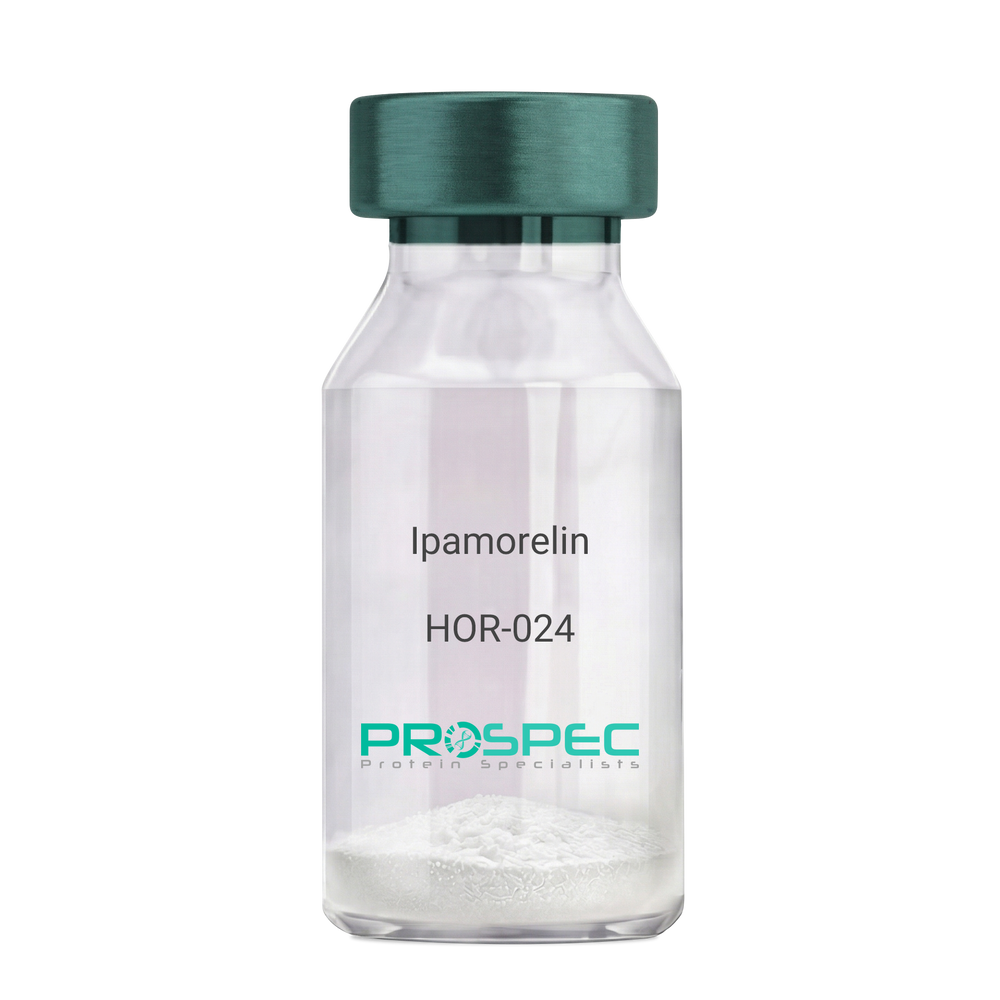
IpamorelinDescription:
Ipamorelin
Ipamorelin
Product # :
HOR-024Price :
Quantity :
Shipping Method :
Shipped at Room temp
More Info
- description
- formulation
- purity
- More Info
Description
Ipamorelin Synthetic is a single, non-glycosylated polypeptide chain containing 4 amino acids, having a molecular mass of 711.85 Dalton and a Molecular formula of C38H49N9O5.
Formulation
The protein was lyophilized with no additives.
Purity
Greater than 97.0% as determined by analysis by RP-HPLC.
More Info
-
Introduction
Ipamorelin is a peptide selective agonist of the ghrelin/growth hormone secretagogue receptor and a growth hormone secretagogue. Ipamorelin is a pentapeptide that was derived from GHRP1. Ipamorelin significantly increases plasma growth hormone levels in both animals and humans. Like pralmorelin and GHRP-6, ipamorelin does not affect prolactin, FSH, LH or TSH levels. However, unlike GHRP2 and GHRP6, but as growth hormone-releasing hormone (GHRH), ipamorelin does not stimulate the secretion of adrenocorticotropic hormone (ACTH) or cortisol, and is highly selective for inducing the secretion only of GH.
-
Synonyms
Ipamorelin
-
Physical Appearance
Sterile Filtered White lyophilized (freeze-dried) powder.
-
Stability
Lyophilized Ipamorelin although stable at room temperature for 3 weeks, should be stored desiccated below -18°C. Upon reconstitution Ipamorelin should be stored at 4°C between 2-7 days and for future use below -18°C. For long term storage it is recommended to add a carrier protein (0.1% HSA or BSA). Please prevent freeze-thaw cycles.
-
Solubility
It is recommended to reconstitute the lyophilized Ipamorelin in sterile 18MΩ-cm H2O not less than 100 µg/ml, which can then be further diluted to other aqueous solutions.
-
Amino Acid Sequence
Aib-His-D-2-Nal-D-Phe-Lys-NH2.
ProSpec's products are furnished for LABORATORY RESEARCH USE ONLY. The product may not be used as drugs, agricultural or pesticidal products, food additives or household chemicals.
- View Data Sheet
Name :
GRB2 HumanDescription:
Growth Factor Receptor-Bound Protein 2 Human Recombinant
ASH, Grb3-3, MST084, MSTP084, EGFRBP-GRB2, GRB2, Growth factor receptor-bound protein 2, Adapter protein GRB2, SH2/SH3 adapter GRB2, Protein Ash.
Product # :
PRO-678Price :
Quantity :
Shipping Method :
Shipped with Ice Packs
More Info
- description
- source
- formulation
- purity
- More Info
Description
GRB2 produced in E.Coli is a single, non-glycosylated polypeptide chain containing 237 amino acids (1-217 a.a.) and having a molecular mass of 27 kDa.GRB2 is expressed with a 20 amino acid His tag at N-Terminus and purified by proprietary chromatographic techniques.
Source
Escherichia Coli.
Formulation
The GRB2 protein solution contains 20mM Tris-HCl, pH-8 and 30% glycerol.
Purity
Greater than 95.0% as determined by SDS-PAGE.
More Info
-
Introduction
GRB2 is widely expressed and binds the EGFR and contains one SH2 domain and two SH3 domains which form a complex formation with proline-rich regions of other proteins, and its SH2 domain binds tyrosine phosphorylated sequences. GRB2 is related to the Sem5 gene of C.elegans, which is takes part in the signal transduction pathway. GRB2 is an adaptor protein that provides an important link between cell surface growth factor receptors and the Ras signaling pathway. Inhibition of GRB2 activity damages developmental processes in a variety of organisms and blocks transformation and proliferation of different cell types.
-
Synonyms
ASH, Grb3-3, MST084, MSTP084, EGFRBP-GRB2, GRB2, Growth factor receptor-bound protein 2, Adapter protein GRB2, SH2/SH3 adapter GRB2, Protein Ash.
-
Physical Appearance
Sterile filtered colorless solution.
-
Stability
Store at 4°C if entire vial will be used within 2-4 weeks. Store, frozen at -20°C for longer periods of time. For long term storage it is recommended to add a carrier protein (0.1% HSA or BSA). Avoid multiple freeze-thaw cycles.
-
Amino Acid Sequence
MGSSHHHHHH SSGLVPRGSH MEAIAKYDFK ATADDELSFK RGDILKVLNE ECDQNWYKAE LNGKDGFIPK NYIEMKPHPW FFGKIPRAKA EEMLSKQRHD GAFLIRESES APGDFSLSVK FGNDVQHFKV LRDGAGKYFL WVVKFNSLNE LVDYHRSTSV SRNQQIFLRD IEQVPQQPTY VQALFDFDPQ EDGELGFRRG DFIHVMDNSD PNWWKGACHG QTGMFPRNYV TPVNRNV.
ProSpec's products are furnished for LABORATORY RESEARCH USE ONLY. The product may not be used as drugs, agricultural or pesticidal products, food additives or household chemicals.
- View Data Sheet
Name :
PTPN6 HumanDescription:
Protein Tyrosine Phosphatase Non Receptor Type-6 Human Recombinant
Tyrosine-protein phosphatase non-receptor type 6, EC 3.1.3.48, Protein-tyrosine phosphatase 1C, PTP-1C, Hematopoietic cell protein-tyrosine phosphatase, SH-PTP1, Protein-tyrosine phosphatase SHP-1, PTPN6, HCP, HCPH, SHP1, HPTP1C, SHP-1L.
Product # :
PKA-221Price :
Quantity :
Shipping Method :
Shipped with Ice Packs
More Info
- description
- source
- formulation
- purity
- More Info
Description
PTPN6 Human Recombinant produced in E.Coli is a single,non-glycosylated polypeptide chain containing 300 amino acids and having a molecular mass of 34.3 kDa. The protein coding region of the catalytic domain of PTPN6 (amino acids 243-541). The catalytic domain of PTPN6 was overexpressed as insoluble protein aggregates (inclusion bodies). The recombinant PTPN6 protein was purified by FPLC gel-filtration chromatography, after refolding of the isolated inclusion bodies in a redox buffer. Additional amino acid(Met) is attached at N-terminus.
Source
Escherichia Coli.
Formulation
The protein contains 25mM Tris-HCl, pH 7.5, 2mM b-mercaptoethanol, 1mM EDTA, 1mMDTT and 20% Glycerol.
Purity
Greater than 95.0% as determined by SDS-PAGE.
More Info
-
Introduction
PTPN6 is a member of the protein tyrosine phosphatase (PTP) family. PTPs are known to be signaling molecules that regulate a variety of cellular processes including cell growth, differentiation, mitotic cycle, and oncogenic transformation. N-terminal part of this PTP contains two tandem Src homolog (SH2) domains, which act as protein phospho-tyrosine binding domains, and mediate the interaction of this PTP with its substrates. This PTP is expressed primarily in hematopoietic cells, and functions as an important regulator of multiple signaling pathways in hematopoietic cells. This PTP has been shown to interact with, and dephosphorylate a wide spectrum of phospho-proteins involved in hematopoietic cell signaling. Multiple alternatively spliced variants of this gene, which encode distinct isoforms, have been reported.
-
Synonyms
Tyrosine-protein phosphatase non-receptor type 6, EC 3.1.3.48, Protein-tyrosine phosphatase 1C, PTP-1C, Hematopoietic cell protein-tyrosine phosphatase, SH-PTP1, Protein-tyrosine phosphatase SHP-1, PTPN6, HCP, HCPH, SHP1, HPTP1C, SHP-1L.
-
Physical Appearance
Sterile filtered colorless solution.
-
Stability
Store at 4°C if entire vial will be used within 2-4 weeks. Store, frozen at -20°C for longer periods of time. For long term storage it is recommended to add a carrier protein (0.1% HSA or BSA). Avoid multiple freeze-thaw cycles.
-
Amino Acid Sequence
MGFWEEFES LQKQEVKNLH QRLEGQRPEN KGKNRYKNIL PFDHSRVILQ GRDSNIPGSD YINANYIKNQ LLGPDENAKT YIASQGCLEA TVNDFWQMAW QENSRVIVMT TREVEKGRNK CVPYWPEVGM QRAYGPYSVT NCGEHDTTEY KLRTLQVSPL DNGDLIREIW HYQYLSWPDH GVPSEPGGVL SFLDQINQRQ ESLPHAGPII VHCSAGIGRT GTIIVIDMLM ENISTKGLDCDIDIQKTIQM VRAQRSGMVQ TEAQYKFIYV AIAQFIETTK KKLEVLQSQK GQESEYGNITY.
-
Unit Definition
One unit will hydrolyze 1 nanomole of p-nitrophenylphosphatate per minute at pH 7.5 at 37°C using 10mM of substrate.
-
Specific Activity
>5,000 U/mg of PTPN6.
ProSpec's products are furnished for LABORATORY RESEARCH USE ONLY. The product may not be used as drugs, agricultural or pesticidal products, food additives or household chemicals.
- View Data Sheet
Name :
FZD10 HumanDescription:
Frizzled Class Receptor 10 Human Recombinant
FZ-10, CD350, Fz10, FzE7, frizzled-10, hFz10, FZD10, frizzled class receptor 10.
Product # :
PRO-2819Price :
Quantity :
Shipping Method :
Shipped with Ice Packs
More Info
- description
- source
- formulation
- purity
- More Info
Description
FZD10 Human Recombinant is a single, glycosylated, polypeptide chain (21-225 a.a) containing a total of 444 amino acids and having a molecular mass of 50.0 kDa. FZD10is fused to a 239 a.a hIgG-His-Tag at C-terminus and is purified by proprietary chromatographic techniques.
Source
HEK293 Cells.
Formulation
The FZD10 solution (0.5mg/ml) contains 10% Glycerol and Phosphate-Buffered Saline (pH 7.4).
Purity
Greater than 90.0% as determined by SDS-PAGE.
More Info
-
Synonyms
FZ-10, CD350, Fz10, FzE7, frizzled-10, hFz10, FZD10, frizzled class receptor 10.
-
Physical Appearance
Sterile Filtered colorless solution.
-
Stability
Store at 4°C if entire vial will be used within 2-4 weeks. Store, frozen at -20°C for longer periods of time. For long term storage it is recommended to add a carrier protein (0.1% HSA or BSA). Avoid multiple freeze-thaw cycles.
-
Amino Acid Sequence
ISSMDMERPG DGKCQPIEIP MCKDIGYNMT RMPNLMGHEN QREAAIQLHE FAPLVEYGCH GHLRFFLCSL YAPMCTEQVS TPIPACRVMC EQARLKCSPI MEQFNFKWPD SLDCRKLPNK NDPNYLCMEA PNNGSDEPTR GSGLFPPLFR PQRPHSAQEH PLKDGGPGRG GCDNPGKFHH VEKSASCAPL CTPGVDVYWS REDKRLEPKS CDKTHTCPPC PAPELLGGPS VFLFPPKPKD TLMISRTPEV TCVVVDVSHE DPEVKFNWYV DGVEVHNAKT KPREEQYNST YRVVSVLTVL HQDWLNGKEY KCKVSNKALPAPIEKTISKA KGQPREPQVY TLPPSRDELT KNQVSLTCLV KGFYPSDIAV EWESNGQPEN NYKTTPPVLD SDGSFFLYSK LTVDKSRWQQ GNVFSCSVMH EALHNHYTQK SLSLSPGKHH HHHH.
-
Background
Frizzled-10 (FZD10) is a member of the Frizzled family of G protein-coupled receptors (GPCRs) that play critical roles in the Wnt signaling pathway, which is essential for various developmental processes, cell proliferation, and differentiation. Recombinant human FZD10 (rhFZD10) has been developed to facilitate research into its biological functions and potential therapeutic applications, particularly in the context of cancer and regenerative medicine. This paper provides a comprehensive overview of the scientific research on recombinant human FZD10, focusing on its biological functionality, detailed description, and physical properties.
Recombinant human FZD10 is primarily used to investigate the role of FZD10 in Wnt signaling and its implications in health and disease.
ProSpec's products are furnished for LABORATORY RESEARCH USE ONLY. The product may not be used as drugs, agricultural or pesticidal products, food additives or household chemicals.
- View Data Sheet
Name :
IL36RN HumanDescription:
Interleukin-36 Receptor Antagonist Human Recombinant
Interleukin-36 receptor antagonist protein, FIL1 delta, IL-1-related protein 3, IL-1RP3, Interleukin-1 HY1, IL-1HY1, Interleukin-1 delta, IL-1 delta, Interleukin-1 family member 5, IL-1F5, Interleukin-1 receptor antagonist homolog 1, IL-1ra homolog 1, Interleukin-1-like protein 1, IL-1L1, IL36RN, FIL1D, IL1F5, IL1HY1, IL1L1, IL1RP3, FIL1, PSORP, IL36RA, FIL1(DELTA).
Product # :
CYT-009Price :
Quantity :
Shipping Method :
Shipped at Room temp
More Info
- description
- source
- formulation
- purity
- biological activity
- More Info
Description
IL1F5 Human Recombinant produced in E.Coli is a single, non-glycosylated, Polypeptide chain containing 155 amino acids and having a molecular mass of 17kDa.The IL1F5 is purified by proprietary chromatographic techniques.
Source
Escherichia Coli.
Formulation
IL1F5 was lyophilized after extensive dialysis against 20mM Phosphate buffer, pH7.4.
Purity
Greater than 95.0% as determined by:
(a) Analysis by RP-HPLC.
(b) Analysis by SDS-PAGE.Biological Activity
As measured by its binding ability in a functional ELISA, immobilized IL1F5 at 1 µg/ml (100 µl/well) can bind rHuIL-1 Rrp2/Fc Chimera with a linear range of 0.15- 5 µg/ml.More Info
-
Introduction
Human interleukin family 1, member 5 (IL-1F5 / FIL1-delta) belongs to the interleukin 1 cytokine family. IL1F5 is expressed by a variety of cells including monocytes, Bcells, dendritic cells/Langerhans cells, keratinocytes,and gastric fundus Parietal and Chief cells. IL1F5 is an antagonist of IL1F9; however IL1F5 activity related to receptor binding remains unclear. Human and mouse IL1F5 share 90% amino acid sequence identity.
-
Synonyms
Interleukin-36 receptor antagonist protein, FIL1 delta, IL-1-related protein 3, IL-1RP3, Interleukin-1 HY1, IL-1HY1, Interleukin-1 delta, IL-1 delta, Interleukin-1 family member 5, IL-1F5, Interleukin-1 receptor antagonist homolog 1, IL-1ra homolog 1, Interleukin-1-like protein 1, IL-1L1, IL36RN, FIL1D, IL1F5, IL1HY1, IL1L1, IL1RP3, FIL1, PSORP, IL36RA, FIL1(DELTA).
-
Physical Appearance
Sterile Filtered White lyophilized (freeze-dried) powder.
-
Stability
Lyophilized IL1F5 although stable at room temperature for 3 weeks, should be stored desiccated below -18°C. Upon reconstitution IL1F5 should be stored at 4°C between 2-7 days and for future use below -18°C.Please prevent freeze-thaw cycles.
-
Solubility
It is recommended to quick spin followed by reconstitution of IL1F5 in PBS to a concentration no less than 100 µg/ml, which can then be further diluted to other aqueous solutions.
-
Amino Acid Sequence
The sequence of the first five N-terminal amino acids was determined and was found to be Met-Val-Leu-Ser-Gly.
ProSpec's products are furnished for LABORATORY RESEARCH USE ONLY. The product may not be used as drugs, agricultural or pesticidal products, food additives or household chemicals.
- View Data Sheet
Name :
Leptin qA Rat, PEGDescription:
Leptin Quadruple Antagonist, Pegylated Rat Recombinant
OB Protein, Obesity Protein, OBS, Obesity factor.
Product # :
CYT-1241Price :
Quantity :
Shipping Method :
Shipped at Room temp
More Info
- description
- source
- formulation
- purity
- biological activity
- More Info
Description
Leptin Pegylated Quadruple Antagonist Rat Recombinant is a single non-glycosilated polypeptide chain containing 146 amino and additional Ala at N-terminus acids. The Rat Leptin antagonist is bound to 20 kDa mono-PEG at N-terminus, resulting in 35.6 kDa. The Rat Leptin Pegylated Quadruple Antagonist was mutated, resulting in D23L/L39A/D40A/F41A that was purified by proprietary chromatographic techniques.
Source
Escherichia coli.
Formulation
The Rat Leptin Pegylated Quadruple Antagonist was lyophilized from a concentrated (0.65mg/ml) solution with 0.003mM NaHCO3.
Purity
Greater than 98.0% as determined by:
(a) Gel filtration analysis.
(b) Analysis by SDS-PAGE.
Biological Activity
Rat Leptin Pegylated Quadruple Antagonist inhibits leptin-induced proliferation of BAF/3 cells stably transfected with the long form of human leptin receptor. Its in vitro.
More Info
-
Synonyms
OB Protein, Obesity Protein, OBS, Obesity factor.
-
Physical Appearance
White lyophilized (freeze-dried) powder.
-
Stability
Lyophilized Rat Leptin Pegylated Quadruple Antagonist although stable at room temperature for several weeks, should be stored desiccated below -18°C. Upon reconstitution at > 0.1 and up to 2mM of rat pegylated leptin antagonist and filter sterilization rat pegylated leptin antagonist can be stored at 4°C or even room temperature for several weeks making it suitable for long term infusion studies using osmotic pumps. At lower concentration addition of a carrier protein (0.1% HSA or BSA) is suggested. Please prevent freeze-thaw cycles.
-
Solubility
It is recommended to reconstitute the lyophilized Rat Leptin Pegylated Quadruple Antagonist in sterile water or sterile 0.4% NaHCO3adjusted to pH 8-9, not less than 100µg/ml, which can then be further diluted with other aqueous solutions.
-
Background
Leptin is a hormone which mainly produced by adipocytes. Leptin’s main part is to regulate long-term energy balance. Leptin is encoded by the LEP gene. Leptin receptors are expressed by various brain and peripheral cell types. leptin levels influence satiety, appetite and triggers behaviors which lead to energy savings. High leptin levels are interpreted by the brain that energy reserves are high, whereas low leptin levels means that energy reserves are low, in the process adapting the organism to starvation through a variety of metabolic, neurobiochemical, endocrine and behavioral change.
ProSpec's products are furnished for LABORATORY RESEARCH USE ONLY. The product may not be used as drugs, agricultural or pesticidal products, food additives or household chemicals.
- View Data Sheet
Name :
Adiponectin ProteinDescription:
Adiponectin Human Recombinant
Acrp30, AdipoQ, GBP-28, APM-1, ACDC.
Product # :
CYT-280Price :
Quantity :
Shipping Method :
Shipped with Ice Packs
More Info
- description
- source
- formulation
- purity
- More Info
- sds-page
Description
The Adiponectin Human recombinant protein is a single, non-glycosilated polypeptide chain produced in E. coli, having a molecular weight of 25.1 kDa and containing 231 amino acids (15-244).
Source
Escherichia Coli.
Formulation
Acrp30 protein solution contains Phosphate buffered saline pH 7.4 and 1mM DTT.
Purity
Acrp30 purity is greater than 90% as determined by SDS-PAGE.
sds-page
More Info
-
Introduction
The adipose tissue exclusively expresses and secretes Adiponectin (Acrp30). Acrp30 is involved in various physiological processes such as energy homeostasis, insulin sensitivity, hormonal processes, fatty acid metabolism and obesity.
Adiponectin circulates in the plasma. Decreased levels of Adiponectin are associated with insulin resistance and hyperinsulinemia, as seen in people with obesity insulin resistance, and diabetes type 2, whose plasma levels of adiponectin are reduced.
The modular structure of Acrp30 is comprised of N-terminal collagenous domain followed by a C-terminal globular domain.
Acrp30 also acts as a significant negative regulator in hematopoiesis and immune systems; it may be involved in ending inflammatory responses through its inhibitory functions. Adiponectin inhibits endothelial NF-kappa-b signaling through a cAMP-dependent pathway, it also inhibits TNF-alpha- induced expression of endothelial adhesion molecules. -
Synonyms
Acrp30, AdipoQ, GBP-28, APM-1, ACDC.
-
Physical Appearance
Sterile Filtered clear solution.
-
Stability
Store at 4°C if entire vial will be used within 2-4 weeks. Store, frozen at -20°C for longer periods of time. For long term storage it is recommended to add a carrier protein (0.1% HSA or BSA).Avoid multiple freeze-thaw cycles.
-
Amino Acid Sequence
MGHDQETTTQGPGVLLPLPKGACTGWMAGIPGHPGHNGAPGRDGRDGTPGE
KGEKGDPGLIGPKGDIGETGVPGAEGPRGFPGIQGRKGEPGEGAYVYRSAFSV
GLETYVTIPNMPIRFTKIFYNQQNHYDGSTGKFHCNIPGLYYFAYHITVYMKD
VKVSLFKKDKAMLFTYDQYQENNVDQASGSVLLHLEVGDQVWLQVYGEGE
RNGLYADNDNDSTFTGFLLYHDTN. -
Background
Adiponectin Human Recombinant: Unraveling its Potential in Therapeutic Applications
1. Abstract
This paper aims to deliver an extensive exploration into Adiponectin Human Recombinant, a vital adipokine implicated in a multitude of metabolic processes. By delving into the structure, biological roles, and signaling pathways of adiponectin, we elucidate its contribution to pathophysiological conditions. Moreover, we examine the potential therapeutic application of adiponectin in metabolic and cardiovascular diseases.
2. Introduction
Adiponectin, a protein predominantly secreted by adipose tissue, plays an integral part in regulating metabolic processes such as glucose regulation and fatty acid oxidation. Understanding the intricacies of adiponectin's actions could pave the way for innovative therapeutic interventions in diseases like obesity, diabetes, and cardiovascular disease.
3. Structure and Signaling of Adiponectin
Adiponectin is a 30kDa protein consisting of a collagen-like domain and a C-terminal globular domain. It signals through adiponectin receptors AdipoR1 and AdipoR2, which then activate several intracellular signaling pathways, including AMP-activated protein kinase (AMPK) and peroxisome proliferator-activated receptor-alpha (PPAR-α), regulating various metabolic processes.
4. Biological Functions of Adiponectin
Adiponectin has been shown to enhance insulin sensitivity, stimulate fatty acid oxidation, and exert anti-inflammatory effects. Additionally, it is involved in regulating energy homeostasis and has been linked to the regulation of food intake and body weight.
5. Adiponectin in Disease Pathology
Reduced levels of adiponectin have been associated with obesity, insulin resistance, type 2 diabetes, and cardiovascular disease. Moreover, adiponectin deficiency has been observed in metabolic syndrome, emphasizing the adipokine's crucial role in metabolic health.
6. Therapeutic Potential of Adiponectin
Given adiponectin's role in metabolic regulation, its potential as a therapeutic target is of considerable interest. Approaches to increase circulating adiponectin levels or enhance adiponectin signaling could offer potential therapeutic strategies for managing metabolic diseases and cardiovascular conditions.
7. Conclusion and Future Perspectives
While our understanding of adiponectin and its role in health and disease has greatly advanced in recent years, there is still much to uncover. Further research on the precise molecular mechanisms of adiponectin could pave the way for novel therapeutic approaches.
What is the molecular weight / Mw of ADIPONECTIN Protein?
ADIPONECTIN Protein has a total Mw of 25.1kDa.
What is the source or expression system of ADIPONECTIN Protein?
Escherichia Coli.
What is the Purity of ADIPONECTIN Protein?
ADIPONECTIN Protein is >90% pure as determined by SDS-PAGE.
What is the Biological Activity of ADIPONECTIN Protein?
The biological functionality of ADIPONECTIN Protein will be determined in the future.
What is the amino acid sequence of ADIPONECTIN Protein?
MGHDQETTTQGPGVLLPLPKGACTGWMAGIPGHPGHNGAPGRDGRDGTPGE
KGEKGDPGLIGPKGDIGETGVPGAEGPRGFPGIQGRKGEPGEGAYVYRSAFSV
GLETYVTIPNMPIRFTKIFYNQQNHYDGSTGKFHCNIPGLYYFAYHITVYMKD
VKVSLFKKDKAMLFTYDQYQENNVDQASGSVLLHLEVGDQVWLQVYGEGE
RNGLYADNDNDSTFTGFLLYHDTN..
What applications can ADIPONECTIN Protein be used in?
ADIPONECTIN Protein can probably be used in western blot, ELISA and Lateral Flow.
What is the endotoxin level for ADIPONECTIN Protein?
The endotoxin level is minimal, ADIPONECTIN Protein was purified using conventional chromatography techniques
ProSpec's products are furnished for LABORATORY RESEARCH USE ONLY. The product may not be used as drugs, agricultural or pesticidal products, food additives or household chemicals.
- View Data Sheet
Name :
ANGPTL3 Human, HEKDescription:
Angiopoietin Like Protein 3 Human Recombinant, HEK
Angiopoietin 5, ANGPT5, ANGPTL3, Angiopoietin Like Protein 3.
Product # :
CYT-766Price :
Quantity :
Shipping Method :
Shipped at Room temp
More Info
- description
- source
- formulation
- purity
- More Info
Description
ANGPTL3 Human Recombinant produced in HEK cells is a single, glycosylated, polypeptide chain (a.a 17-460) containing a total of 450 amino acids, having a molecular mass of 52.6kDa (calculated) and fused to a 6 aa His tag at C-Terminus.The Human ANGPTL3 is purified by proprietary chromatographic techniques.
Source
HEK 293.
Formulation
Filtered (0.4µm) and lyophilized from 0.5mg/ml in 0.05M phosphate buffer and 0.075M NaCl, pH 7.4.
Purity
Greater than 95.0% as determined by SDS-PAGE.
More Info
-
Introduction
ANGPTL3 and ANGPTL4 are angiopoietin-like proteins secreted and expressed mainly by the liver, their role being the regulation of triglyceride metabolism by inhibiting the lipolysis of triglyceride-rich lipoproteins. During different nutritional states (feeding/fasting) the levels of the circulating triglycerides are regulated by Angptl3 and Angptl4 through differential inhibition of Lipoprotein lipase (LPL) as shown by the experimental data. The molecular structure of ANGPTL3 is similar to that of the angiopoietins (vascular endothelial growth factors). Deletion mutants of human Angiopoietin 5 were used in order to demonstrate that the N-terminal domain (fragment 17-207) and not the C-terminal fibrinogen-like domain (fragment 207-460) increased the plasma triglyceride levels in mice.
-
Synonyms
Angiopoietin 5, ANGPT5, ANGPTL3, Angiopoietin Like Protein 3.
-
Physical Appearance
Filtered White lyophilized (freeze-dried) powder.
-
Stability
Store lyophilized protein at -20°C. Aliquot the product after reconstitution to avoid repeated freezing/thawing cycles. Reconstituted protein can be stored at 4°C for a limited period of time.
-
Solubility
It is recommended to add deionized water to a working concentration of 0.5mg/ml and let the lyophilized pellet dissolve completely. Product is not sterile! Please filter the product by an appropriate sterile filter before using it in the cell culture.
-
Amino Acid Sequence
SRIDQDNSSF DSLSPEPKSR FAMLDDVKIL ANGLLQLGHG LKDFVHKTKG QINDIFQKLN IFDQSFYDLS LQTSEIKEEE KELRRTTYKL QVKNEEVKNM SLELNSKLES LLEEKILLQQ KVKYLEEQLT NLIQNQPETP EHPEVTSLKT FVEKQDNSIK DLLQTVEDQY KQLNQQHSQI KEIENQLRRT SIQEPTEISL SSKPRAPRTT PFLQLNEIRN VKHDGIPAEC TTIYNRGEHT SGMYAIRPSN SQVFHVYCDV ISGSPWTLIQ HRIDGSQNFN ETWENYKYGF GRLDGEFWLG LEKIYSIVKQ SNYVLRIELE DWKDNKHYIE YSFYLGNHET NYTLHLVAIT GNVPNAIPEN KDLVFSTWDH KAKGHFNCPE GYSGGWWWHD ECGENNLNGK YNKPRAKSKP ERRRGLSWKS QNGRLYSIKS TKMLIHPTDS ESFEHHHHHH.
-
Background
What is the molecular weight/Mw of ANGPTL3 Protein?
ANGPTL3 Protein has a total Mw of 52.6kDa.
What is the source or expression system of ANGPTL3 Protein?
HEK 293.
What is the Purity of ANGPTL3 Protein?
ANGPTL3 Protein is >95% pure as determined by SDS-PAGE.
What is the Biological Activity of ANGPTL3 Protein?
The biological functionality of ANGPTL3 Protein will be determined in the future.
What is the amino acid sequence of ANGPTL3 Protein?
SRIDQDNSSF DSLSPEPKSR FAMLDDVKIL ANGLLQLGHG LKDFVHKTKG QINDIFQKLN IFDQSFYDLS LQTSEIKEEE KELRRTTYKL QVKNEEVKNM SLELNSKLES LLEEKILLQQ KVKYLEEQLT NLIQNQPETP EHPEVTSLKT FVEKQDNSIK DLLQTVEDQY KQLNQQHSQI KEIENQLRRT SIQEPTEISL SSKPRAPRTT PFLQLNEIRN VKHDGIPAEC TTIYNRGEHT SGMYAIRPSN SQVFHVYCDV ISGSPWTLIQ HRIDGSQNFN ETWENYKYGF GRLDGEFWLG LEKIYSIVKQ SNYVLRIELE DWKDNKHYIE YSFYLGNHET NYTLHLVAIT GNVPNAIPEN KDLVFSTWDH KAKGHFNCPE GYSGGWWWHD ECGENNLNGK YNKPRAKSKP ERRRGLSWKS QNGRLYSIKS TKMLIHPTDS ESFEHHHHHH.
What applications can ANGPTL3 Protein be used in?
ANGPTL3 Protein can probably be used in western blot, ELISA and Lateral Flow.
What is the endotoxin level for ANGPTL3 Protein?
The endotoxin level is minimal, ANGPTL3 Protein was purified using conventional chromatography techniques.
ProSpec's products are furnished for LABORATORY RESEARCH USE ONLY. The product may not be used as drugs, agricultural or pesticidal products, food additives or household chemicals.
- View Data Sheet
Name :
ESM1 Human, SF9Description:
Endothelial Cell-Specific Molecule 1 Human Recombinant, Sf9
Endothelial Cell Specific Molecule 1, Endothelial Cell-Specific Molecule 1, ESM-1, Endocan.
Product # :
PRO-2588Price :
Quantity :
Shipping Method :
Shipped with Ice Packs
More Info
- description
- source
- formulation
- purity
- More Info
Description
ESM1 produced in Sf9 Baculovirus cells is a single, glycosylated polypeptide chain containing 174 amino acids (20-184a.a.) and having a molecular mass of 19.2kDa. (Molecular size on SDS-PAGE will appear at approximately 18-28kDa). ESM1 is expressed with a 9 amino acid His tag at C-Terminus and purified by proprietary chromatographic techniques.
Source
Sf9, Baculovirus cells.
Formulation
ESM1 protein solution (0.25mg/ml) contains Phosphate Buffered Saline (pH 7.4) and 10% glycerol.
Purity
Greater than 95.0% as determined by SDS-PAGE.
More Info
-
Introduction
ESM1, also knows as, Endothelial cell-specific molecule 1 is a protein encoded by a gene called ESM1 in humans. ESM1 is a secreted protein that is highly expressed in human kidney and lung tissues (in the endothelial cells). There are suggestions regarding the protein’s involvement in endothelium-dependent pathological diseases, due to his regulation that is performed by cytokines.
-
Synonyms
Endothelial Cell Specific Molecule 1, Endothelial Cell-Specific Molecule 1, ESM-1, Endocan.
-
Physical Appearance
Sterile Filtered clear solution.
-
Stability
Store at 4°C if entire vial will be used within 2-4 weeks. Store, frozen at -20°C for longer periods of time. For long term storage it is recommended to add a carrier protein (0.1% HSA or BSA).Avoid multiple freeze-thaw cycles.
-
Amino Acid Sequence
ADLWSNNYAV DCPQHCDSSE CKSSPRCKRT VLDDCGCCRV CAAGRGETCY RTVSGMDGMK CGPGLRCQPS NGEDPFGEEF GICKDCPYGT FGMDCRETCN CQSGICDRGT GKCLKFPFFQ YSVTKSSNRF VSLTEHDMAS GDGNIVREEV VKENAAGSPV MRKWLNPRHH HHHH.
ProSpec's products are furnished for LABORATORY RESEARCH USE ONLY. The product may not be used as drugs, agricultural or pesticidal products, food additives or household chemicals.
- View Data Sheet
Name :
CD62E AntibodyDescription:
E-Selectin, Mouse Anti-Human
E-selectin, Endothelial leukocyte adhesion molecule 1, ELAM-1, Leukocyte-endothelial cell adhesion molecule 2, LECAM2, CD62E antigen, SELE, ELAM1, ELAM, ESEL, CD62E.
Product # :
ANT-237Price :
Quantity :
Shipping Method :
Shipped at Room temp
More Info
- formulation
- More Info
Formulation
1mg/ml in PBS (after reconstitution).
More Info
-
Introduction
E-Selectin belongs to a family of divalent cation-dependent carbohydrate-binding glycoproteins or adhesion molecules. CD62E is expressed on the surface of endothelial cells and mediates the interaction of leukocytes and platelets with endothelial cells during an inflammatory response. CD62E is found in cytokine-stimulated endothelial cells and is accountable for the accumulation of blood leukocytes at sites of inflammation by mediating the adhesion of cells to the vascular lining. It demonstrates structural features such as the existence of lectin- and EGF-like domains followed by short consensus repeat (SCR) domains that contain 6 conserved cysteine residues. E-Selectin participates in the interaction between leukocytes and the endothelium and appears to be involved in the pathogenesis of atherosclerosis.
-
Synonyms
E-selectin, Endothelial leukocyte adhesion molecule 1, ELAM-1, Leukocyte-endothelial cell adhesion molecule 2, LECAM2, CD62E antigen, SELE, ELAM1, ELAM, ESEL, CD62E.
-
Solubility
Reconstitute with of H20. Mix gently, wash the sides of the vial and wait 30-60 seconds before use.
-
Immunogen
Purified, Activated T-Cells.
-
Ig Subclass
Mouse IgG1.
-
Clone
hCD62E.
-
Applications
Staining antibody. For staining, use 10µl/1,000,000 cells.
-
Type
Mouse Anti Human Monoclonal.
-
Storage Procedures
Lyophilized: store at 4 C. After reconstitution, if not intended for use within a month, aliquot and store at -20 C.
-
Purification Method
Ion exchange column.
ProSpec's products are furnished for LABORATORY RESEARCH USE ONLY. The product may not be used as drugs, agricultural or pesticidal products, food additives or household chemicals.
- View Data Sheet
Name :
TNFR2 Human, Sf9Description:
Tumor Necrosis Factor Receptor Type 2 Human Recombinant, Sf9
Tumor Necrosis Factor Receptor Superfamily, Member 1B, TNFR2, TNFBR, Tumor Necrosis Factor Receptor Type II, Tumor Necrosis Factor Receptor 2, P80 TNF-Alpha Receptor, TNF-RII, TNF-R2, P75, Tumor Necrosis Factor Receptor Superfamily Member 1B, Tumor Necrosis Factor Binding Protein 2, Tumor Necrosis Factor Beta Receptor, Soluble TNFR1B Variant 1, P75 TNF Receptor, CD120b Antigen, Etanercept, TNF-R-II, TNF-R75, P75TNFR, TNFR-II, CD120b, TNFR1B, TNFR80, TBPII.
Product # :
CYT-908Price :
Quantity :
Shipping Method :
Shipped with Ice Packs
More Info
- description
- source
- formulation
- purity
- biological activity
- More Info
Description
TNFR2 produced in Sf9 Baculovirus cells is a single, glycosylated polypeptide chain (23-257 a.a.) and fused to a 6 aa His Tag at C-terminus containing a total of 241 amino acids and having a molecular mass of 25.9kDa. TNFR2 is purified by proprietary chromatographic techniques.
Source
Sf9, Baculovirus cells.
Formulation
TNFR2 protein solution (1mg/ml) contains Phosphate buffered saline (pH7.4) and 10% glycerol.
Purity
Greater than 95.0% as determined by SDS-PAGE.
Biological Activity
The ED50 range ≤ 0.2 μg/ml and is measured by its ability to inhibit cytotoxicity using L-929 mouse fibroblast cells in the presence of Human TNF-α.
More Info
-
Introduction
TNFR2 belongs to the TNF-receptor superfamily. TNFR2 is receptor with high affinity for TNFSF2/TNF-alpha and approximately 5-fold lower affinity for homotrimeric TNFSF1/lymphotoxin-alpha. TNFR2 mediates the majority of the metabolic effects of TNF-alpha. In addition, knockout studies in mice propose a role for TNFR2 in protecting neurons from apoptosis by stimulating antioxidative pathways. TNFR2 expression might have a significant role in the angiogenesis, tumor cell proliferation and metastasis of Invasive micropapillary carcinoma of the breast.
There are 2 types of soluble TNF receptors: sTNFR-I and sTNFR-II, which act to neutralize the biological activities of TNF alpha and TNF beta. The levels of these soluble receptors seem to increase as a result of shedding of the extracellular domains of the membrane bound receptors. High levels of soluble TNF receptors are found in the amniotic fluid of pregnant women. TNFR2 and TNFR1 form a heterocomplex which mediates the recruitment of 2 anti-apoptotic proteins, c-IAP1 and c-IAP2, which possess E3 ubiquitin ligase activity. IAPs’ function in TNF-receptor signaling is unknown; nevertheless, c-IAP1 is believed to potentiate TNF-induced apoptosis by the ubiquitination and degradation of TNF-receptor-associated factor 2, which mediates anti-apoptotic signals. Oxidative stress promotes TNFR1 and TNFR2 self-interaction, ligand-independent and enhanced ligand-dependent TNF signaling. TNF-a, TNFR1 and TNFR2 have roles in cellular differentiation. TNFR1 and TNFR2 function in cell type-specific renal injury. -
Synonyms
Tumor Necrosis Factor Receptor Superfamily, Member 1B, TNFR2, TNFBR, Tumor Necrosis Factor Receptor Type II, Tumor Necrosis Factor Receptor 2, P80 TNF-Alpha Receptor, TNF-RII, TNF-R2, P75, Tumor Necrosis Factor Receptor Superfamily Member 1B, Tumor Necrosis Factor Binding Protein 2, Tumor Necrosis Factor Beta Receptor, Soluble TNFR1B Variant 1, P75 TNF Receptor, CD120b Antigen, Etanercept, TNF-R-II, TNF-R75, P75TNFR, TNFR-II, CD120b, TNFR1B, TNFR80, TBPII.
-
Physical Appearance
Sterile filtered colorless solution.
-
Stability
Store at 4°C if entire vial will be used within 2-4 weeks. Store, frozen at -20°C for longer periods of time. For long term storage it is recommended to add a carrier protein (0.1% HSA or BSA).Avoid multiple freeze-thaw cycles.
-
Amino Acid Sequence
LPAQVAFTPY APEPGSTCRL REYYDQTAQM CCSKCSPGQH AKVFCTKTSD TVCDSCEDST YTQLWNWVPE CLSCGSRCSS DQVETQACTR EQNRICTCRP GWYCALSKQE GCRLCAPLRK CRPGFGVARP GTETSDVVCK PCAPGTFSNT TSSTDICRPH QICNVVAIPG NASMDAVCTS TSPTRSMAPG AVHLPQPVST RSQHTQPTPE PSTAPSTSFL LPMGPSPPAE GSTGDHHHHH H
ProSpec's products are furnished for LABORATORY RESEARCH USE ONLY. The product may not be used as drugs, agricultural or pesticidal products, food additives or household chemicals.
- View Data Sheet
Name :
IL 1RA HorseDescription:
Interleukin-1 Receptor Antagonist Horse Recombinant
Interleukin-1 receptor antagonist protein, IL-1RN, IL-1ra, IRAP, IL1 inhibitor, IL1RN, IL1RA.
Product # :
CYT-010Price :
Quantity :
Shipping Method :
Shipped at Room temp
More Info
- description
- source
- formulation
- purity
- biological activity
- More Info
Description
Recombinant Horse Interleukin-1 Receptor Antagonist produced in E.coli cells is a single, non-glycosylated, polypeptide chain containing 152 amino acids and having a molecular mass of 17.4kDa. The IL-1RA is purified by proprietary chromatographic techniques.
Source
Escherichia Coli.
Formulation
The IL-1RA was lyophilized from a 0.2µm filtered concentrated solution in PBS, pH 7.4.
Purity
Greater than 95.0% as determined by:
(a) Analysis by RP-HPLC.
(b) Analysis by SDS-PAGE.Biological Activity
The ED50 as determined by inhibiting IL-1α-dependent proliferation of murine D10.G4.1 helper T cells is less than 3.0 μg/ml, corresponding to a specific activity of > 333 IU/mg in the presence of 50 pg/ml rHuIL-1α.More Info
-
Introduction
Interleukin-1 ra is a member of the interleukin 1 cytokine family. This protein inhibits the activities of interleukin 1, alpha (IL1A) and interleukin 1, beta (IL1B), and modulates a variety of interleukin 1 related immune and inflammatory responses. This gene and five other closely related cytokine genes form a gene cluster spanning approximately 400 kb on chromosome 2. A polymorphism of this gene is reported to be associated with increased risk of osteoporotic fractures and gastric cancer. Four alternatively spliced transcript variants encoding distinct isoforms have been reported.
-
Synonyms
Interleukin-1 receptor antagonist protein, IL-1RN, IL-1ra, IRAP, IL1 inhibitor, IL1RN, IL1RA.
-
Physical Appearance
Sterile Filtered White lyophilized (freeze-dried) powder.
-
Stability
Lyophilized IL-1RA although stable at room temperature for 3 weeks, should be stored desiccated below -18°C. Upon reconstitution IL-1RA should be stored at 4°C between 2-7 days and for future use below -18°C.For long term storage it is recommended to add a carrier protein (0.1% HSA or BSA).Please prevent freeze-thaw cycles.
-
Solubility
It is recommended to reconstitute the lyophilized IL-1RA in sterile water not less than 100µg/ml, which can then be further diluted to other aqueous solutions.
-
Amino Acid Sequence
HPLGKRPCKM QAFRIWDVNQ KTFYMRNNQL VAGYLQESNT KLQEKIDVVP IEPDALFLGL HGRKLCLACV KSGDEIRFQL EAVNITDLSK NKEENKRFTF IRSNSGPTTS FESAACPGWF LCTAQEADRP VSLTNKPKES FMVTKFYLQE DQ.
ProSpec's products are furnished for LABORATORY RESEARCH USE ONLY. The product may not be used as drugs, agricultural or pesticidal products, food additives or household chemicals.
- View Data Sheet
Name :
NPPC HumanDescription:
Natriuretic Peptide C Human Recombinant
Natriuretic Peptide Precursor C, C-Type Natriuretic Peptide, CNP2, CNP.
Product # :
CYT-760Price :
Quantity :
Shipping Method :
Shipped with Ice Packs
More Info
- description
- source
- formulation
- purity
- More Info
Description
NPPC Human Recombinant produced in E.coli is a single, non-glycosylated polypeptide chain containing 126 amino acids (24-126) and having a molecular mass of 13.2kDa.NPPC is fused to a 23 amino acid His-tag at N-terminus & purified by proprietary chromatographic techniques.
Source
Escherichia Coli.
Formulation
The NPPC solution (0.25mg/ml) contains 20mM Tris-HCl buffer (pH 8.0), 0.15M NaCl and 10% glycerol.
Purity
Greater than 85% as determined by SDS-PAGE.
More Info
-
Introduction
NPPC is proteolytically managed to create a secreted hormone of the natriuretic peptide family. NPPC is vasoactive and natriuretic and controls the evolution and differentiation of cartilaginous growth plate chondrocytes.
-
Synonyms
Natriuretic Peptide Precursor C, C-Type Natriuretic Peptide, CNP2, CNP.
-
Physical Appearance
Sterile Filtered clear solution.
-
Stability
Store at 4°C if entire vial will be used within 2-4 weeks. Store, frozen at -20°C for longer periods of time. For long term storage it is recommended to add a carrier protein (0.1% HSA or BSA).Avoid multiple freeze-thaw cycles.
-
Amino Acid Sequence
MGSSHHHHHH SSGLVPRGSH MGSKPGAPPK VPRTPPAEEL AEPQAAGGGQ KKGDKAPGGG GANLKGDRSR LLRDLRVDTK SRAAWARLLQ EHPNARKYKG ANKKGLSKGC FGLKLDRIGS MSGLGC
ProSpec's products are furnished for LABORATORY RESEARCH USE ONLY. The product may not be used as drugs, agricultural or pesticidal products, food additives or household chemicals.
- View Data Sheet
Name :
PTGES3 HumanDescription:
Prostaglandin E Synthase 3 Human Recombinant
TEBP, CPGES, SID3177, 5730442A20Rik, p23, HSP90 co-chaperone, Prostaglandin E synthase 3, Cytosolic prostaglandin E2 synthase, Telomerase-binding protein p23, Progesterone receptor complex p23, PTGES3.
Product # :
ENZ-458Price :
Quantity :
Shipping Method :
Shipped with Ice Packs
More Info
- description
- source
- formulation
- purity
- More Info
Description
Recombinant Human PTGES3 produced in E.Coli is a single,non-glycosylated polypeptide chain containing 160 amino acids (1-160 a.a.) and having a molecular mass of 18.6 kDa.PTGES3 is purified by convential chromatogrpahy techniques.
Source
Escherichia Coli.
Formulation
The PTGES3 protein solution contains 20mM Tris-HCl, pH-8, 1mM DTT & 10% Glycerol.
Purity
Greater than 95.0% as determined by SDS-PAGE.
More Info
-
Introduction
PTGES3 takes part as a cochaperone and is involved in signal transduction.
PTGES3 is a molecular chaperone that localizes to genomic response elements in a hormone-dependent manner and disrupts receptor-mediated transcriptional activation, by promoting disassembly of transcriptional regulatory complexess. PTGES3 is necessary for appropriate functioning of the glucocorticoid and other steroid receptors.
PTGES3 localizes to genomic response elements in a hormone-dependent method and disrupts receptor-mediated transcriptional activation, by promoting disassembly of transcriptional regulatory complexes. -
Synonyms
TEBP, CPGES, SID3177, 5730442A20Rik, p23, HSP90 co-chaperone, Prostaglandin E synthase 3, Cytosolic prostaglandin E2 synthase, Telomerase-binding protein p23, Progesterone receptor complex p23, PTGES3.
-
Physical Appearance
Sterile filtered colorless solution.
-
Stability
Store at 4°C if entire vial will be used within 2-4 weeks. Store, frozen at -20°C for longer periods of time. For long term storage it is recommended to add a carrier protein (0.1% HSA or BSA). Avoid multiple freeze-thaw cycles.
-
Amino Acid Sequence
MQPASAKWYD RRDYVFIEFC VEDSKDVNVN FEKSKLTFSC LGGSDNFKHL NEIDLFHCID PNDSKHKRTD RSILCCLRKG ESGQSWPRLT KERAKLNWLS VDFNNWKDWE DDSDEDMSNF DRFSEMMNNM GGDEDVDLPE VDGADDDSQD SDDEKMPDLE.
ProSpec's products are furnished for LABORATORY RESEARCH USE ONLY. The product may not be used as drugs, agricultural or pesticidal products, food additives or household chemicals.
- View Data Sheet
Name :
Resistin Rat, HisDescription:
Resistin Rat Recombinant, His Tag
Cysteine-rich secreted protein FIZZ3, Adipose tissue-specific secretory factor, ADSF, C/EBP-epsilon-regulated myeloid-specific secreted cysteine-rich protein, Cysteine-rich secreted protein A12-alpha-like 2, RSTN, XCP1, RETN1, MGC126603, MGC126609.
Product # :
CYT-458Price :
Quantity :
Shipping Method :
Shipped at Room temp
More Info
- description
- source
- formulation
- purity
- More Info
Description
Resistin Rat Recombinant is manufactured with N-terminal fusion of His tag. Resistin Rat Recombinant His-Tagged Fusion Protein is an 11.9 kDa protein containing 94 amino acid residues of the Resistin Rat and 16 additional amino acid residues – His Tag (underlined).
Source
Escherichia Coli.
Formulation
Filtered (0.4µm) and lyophilized from 0.5mg/ml in 20mM Tris pH 8.0.
Purity
Greater than 95% as determined by SDS-PAGE.
More Info
-
Introduction
Resistin, a product of the RSTN gene, is a peptide hormone belonging to the class of cysteine-rich secreted proteins (monomeric peptide contains 11 cysteine residues) referred to as the RELM family, and is also described as ADSF (Adipose Tissue-Specific Secretory Factor) or FIZZ3 (Found in Inflammatory Zone 3). Mouse resistin is expressed as a 114 amino acid prepeptide; its hydrofobic Nterminal 20 amino acid signal peptide is cleaved before its secretion. Mouse resistin circulates in blood as a homodimeric protein consisting of two 94 amino acid polypeptides, which are disulfide-linked via Cys26.
Resistin may be an important link between obesity. Mouse resistin, specifically produced and secreted by adipocyte, acts on skeletal muscle myocytes, hepatocytes and adipocytes themselves so that it reduces their sensitivity. Steppan et al. have suggested that resistin suppressed the ability to stimulate glucose uptake. They have also suggested that resistin was present at elevated levels in blood of obese mice, and was down regulated by fasting and by antidiabetic drugs. Way et al., on the other hand, have found that resistin expression is severely suppressed in obesity.
Other studies have shown that mouse resistin increases during the differentiation of adipocytes, but it also seems to inhibit adipogenesis. In contrast, the human adipogenic differentiation is likely to be associated with a down regulation of resistin gene expression. -
Synonyms
Cysteine-rich secreted protein FIZZ3, Adipose tissue-specific secretory factor, ADSF, C/EBP-epsilon-regulated myeloid-specific secreted cysteine-rich protein, Cysteine-rich secreted protein A12-alpha-like 2, RSTN, XCP1, RETN1, MGC126603, MGC126609.
-
Physical Appearance
Filtered White lyophilized (freeze-dried) powder.
-
Stability
Store lyophilized protein at -20°C. Aliquot the product after reconstitution to avoid repeated freezing/thawing cycles. Reconstituted protein can be stored at 4°C for a limited period of time; it does not show any change after two weeks at 4°C.
-
Solubility
It is recommended to add deionized water to prepare a working stock solution of approximately 0.5mg/ml and let the lyophilized pellet dissolve completely. Product is not sterile! Please filter the product by an appropriate sterile filter before using it on cell culture.
-
Amino Acid Sequence
MRGSHHHHHH GMASHMPSMS LCPMDEAISK KINQDFSSLL PAAMKNTVLH CWSVSSRGRL ASCPEGTTVT SCSCGSGCGS WDVREDTMCH CQCGSIDWTA ARCCTLRVGS.
ProSpec's products are furnished for LABORATORY RESEARCH USE ONLY. The product may not be used as drugs, agricultural or pesticidal products, food additives or household chemicals.
- View Data Sheet
Name :
PNC-27Description:
PNC-27
Product # :
HOR-038Price :
Quantity :
Shipping Method :
Shipped at Room temp
More Info
- description
- formulation
- purity
- More Info
- HPLC, MS
Description
PNC-27 Synthetic is a single, non-glycosylated polypeptide chain containing 32 amino acids, having a molecular mass of 4031.72 Dalton and a Molecular formula of C188H293N53O44S.
Formulation
The protein was lyophilized with no additives.
Purity
Greater than 97.0% as determined by analysis by RP-HPLC.
HPLC, MS
More Info
-
Physical Appearance
Sterile Filtered White lyophilized (freeze-dried) powder.
-
Stability
Lyophilized PNC-27 although stable at room temperature for 3 weeks, should be stored desiccated below -18°C. Upon reconstitution PNC-27 should be stored at 4°C between 2-7 days and for future use below -18°C. For long term storage it is recommended to add a carrier protein (0.1% HSA or BSA). Please prevent freeze-thaw cycles.
-
Solubility
It is recommended to reconstitute the lyophilized PNC-27 in sterile 18MΩ-cm H2O not less than 100 µg/ml, which can then be further diluted to other aqueous solutions.
-
Amino Acid Sequence
H-Pro-Pro-Leu-Ser-Gln-Glu-Thr-Phe-Ser-Asp-Leu-Trp-Lys-Leu-Leu-Lys-Lys-Trp-Lys-Met-Arg-Arg-Asn-Gln-Phe-Trp-Val-Lys-Val-Gln-Arg-Gly-OH
-
Background
PNC-27, a promising anticancer peptide, has gained attention due to its selective cytotoxicity against cancer cells without harming normal cells. This paper aims to elucidate the biochemical characteristics of PNC-27 and explore its potential therapeutic applications in the field of oncology.
PNC-27, a novel anticancer peptide, holds great promise in the treatment of cancer due to its unique mechanism of action and selective cytotoxicity towards cancer cells (Goldberg et al., 2010). This paper seeks to delve into the biochemical attributes of PNC-27 and its therapeutic potential in cancer treatment.
Derived from the p53 tumor-suppressor protein, PNC-27 exhibits a unique binding affinity for the MDM-2 protein found in the membranes of cancer cells. This binding triggers membrane pore formation, leading to cell lysis and death, leaving normal cells unaffected (Goldberg et al., 2010).
Preclinical studies have highlighted the potential of PNC-27 in treating various types of cancers. Its ability to induce cell death in cancer cells without harming normal cells presents a promising direction for cancer therapeutics. For instance, studies have shown PNC-27 to be effective against lung and breast cancers (Hoshino et al., 2011; Sarafraz-Yazdi et al., 2010).
The promising potential of PNC-27 warrants further exploration in clinical trials to evaluate its efficacy and safety in humans. Furthermore, investigation into its synergistic effects with other cancer treatments could provide a more holistic approach to cancer therapeutics. In conclusion, PNC-27 presents an exciting avenue for cancer research, offering a novel and targeted approach to cancer treatment.
ProSpec's products are furnished for LABORATORY RESEARCH USE ONLY. The product may not be used as drugs, agricultural or pesticidal products, food additives or household chemicals.
- View Data Sheet
Name :
CD40 HumanDescription:
CD40 Human Recombinant
CD40 Molecule, TNF Receptor Superfamily Member 5, TNFRSF5, Tumor Necrosis Factor Receptor Superfamily, Member 5, Bp50, B-Cell Surface Antigen CD40, CD40L Receptor, CDW40, B Cell Surface Antigen CD40, B Cell-Associated Molecule, CD40 Antigen (TNF Receptor Superfamily Member 5), CD40 Type II Isoform, Nerve Growth Factor Receptor-Related B-Lymphocyte Activation Molecule, p50, Tumor Necrosis Factor Receptor Superfamily Member 5, CDw40, CD40 Antigen.
Product # :
PRO-1911Price :
Quantity :
Shipping Method :
Shipped with Ice Packs
More Info
- description
- source
- formulation
- purity
- More Info
Description
CD40 Human Recombinant produced in E.Coli is a single, non-glycosylated polypeptide chain containing 196 amino acids (21-193a.a) and having a molecular mass of 21.6kDa.CD40 is fused to a 23 amino acid His-tag at N-terminus & purified by proprietary chromatographic techniques.
Source
Escherichia Coli.
Formulation
CD40 protein solution (0.25mg/ml) containing 20mM Tris-HCl buffer (pH 8.0), 0.15M NaCl, 10% glycerol and 1mM DTT.
Purity
Greater than 90.0% as determined by SDS-PAGE.
More Info
-
Introduction
CD40 belongs to the TNF-receptor super family. CD40 has been found to be vital in mediating a wide range of immune and inflammatory responses including T cell-dependent immunoglobulin classswitching, memory B cell development, and germinal center formation. AT-hook transcription factor AKNA isaccounted to coordinately regulate the expression of CD40 and its ligand, which is significant forhomotypic cell interactions. Adaptor protein TNFR2 interacts with CD40 and functions as a mediator of thesignal transduction. The interaction of CD40 and its ligand is found to be essential for amyloid-beta-inducedmicroglial activation, and therefore is considered to be an early event in Alzheimer disease pathogenesis.
-
Synonyms
CD40 Molecule, TNF Receptor Superfamily Member 5, TNFRSF5, Tumor Necrosis Factor Receptor Superfamily, Member 5, Bp50, B-Cell Surface Antigen CD40, CD40L Receptor, CDW40, B Cell Surface Antigen CD40, B Cell-Associated Molecule, CD40 Antigen (TNF Receptor Superfamily Member 5), CD40 Type II Isoform, Nerve Growth Factor Receptor-Related B-Lymphocyte Activation Molecule, p50, Tumor Necrosis Factor Receptor Superfamily Member 5, CDw40, CD40 Antigen.
-
Physical Appearance
Sterile Filtered clear solution.
-
Stability
Store at 4°C if entire vial will be used within 2-4 weeks. Store, frozen at -20°C for longer periods of time.For long term storage it is recommended to add a carrier protein (0.1% HSA or BSA).Please avoid freeze thaw cycles.
-
Amino Acid Sequence
MGSSHHHHHH SSGLVPRGSH MGSEPPTACR EKQYLINSQC CSLCQPGQKL VSDCTEFTET ECLPCGESEF LDTWNRETHC HQHKYCDPNL GLRVQQKGTS ETDTICTCEE GWHCTSEACE SCVLHRSCSP GFGVKQIATG VSDTICEPCP VGFFSNVSSA FEKCHPWTSC ETKDLVVQQA GTNKTDVVCG PQDRLR
ProSpec's products are furnished for LABORATORY RESEARCH USE ONLY. The product may not be used as drugs, agricultural or pesticidal products, food additives or household chemicals.
- View Data Sheet
Name :
CLMP HumanDescription:
CXADR-Like Membrane Protein Human Recombinant
CXADR-Like Membrane Protein, CLMP, Adipocyte Adhesion Molecule, Coxsackie- And Adenovirus Receptor-Like Membrane Protein, ACAM, ASAM, Adipocyte-Specific Adhesion Molecule, CAR-Like Membrane Protein, CSBS, CSBM.
Product # :
PRO-1941Price :
Quantity :
Shipping Method :
Shipped with Ice Packs
More Info
- description
- source
- formulation
- purity
- More Info
Description
CLMP Human Recombinant produced in E.coli is a single, non-glycosylated polypeptide chain containing 233 amino acids (19-235) and having a molecular mass of 26.1 kDa.CLMP is fused to a 16 amino acid His-tag at N-terminus & purified by proprietary chromatographic techniques.
Source
Escherichia Coli.
Formulation
The CLMP solution (0.5mg/ml) contains 20mM Tris-HCl buffer (pH 8.0), 0.4M UREA and 10% glycerol.
Purity
Greater than 90.0% as determined by SDS-PAGE.
More Info
-
Introduction
The CTX family of proteins (including ASAM) are type I transmembrane proteins within the Ig superfamily, which localize to junctional complexes between endothelial and epithelial cells and may play a role in cell-cell adhesion. CLMP has a role in adipocyte differentiation and development of obesity. CLMP is required for normal small intestine development.
-
Synonyms
CXADR-Like Membrane Protein, CLMP, Adipocyte Adhesion Molecule, Coxsackie- And Adenovirus Receptor-Like Membrane Protein, ACAM, ASAM, Adipocyte-Specific Adhesion Molecule, CAR-Like Membrane Protein, CSBS, CSBM.
-
Physical Appearance
Sterile Filtered clear solution.
-
Stability
Store at 4°C if entire vial will be used within 2-4 weeks. Store, frozen at -20°C for longer periods of time. For long term storage it is recommended to add a carrier protein (0.1% HSA or BSA).Avoid multiple freeze-thaw cycles.
-
Amino Acid Sequence
MASMTGGQQM GRGSHMTHTE IKRVAEEKVT LPCHHQLGLP EKDTLDIEWL LTDNEGNQKV VITYSSRHVY NNLTEEQKGR VAFASNFLAG DASLQIEPLK PSDEGRYTCK VKNSGRYVWS HVILKVLVRP SKPKCELEGE LTEGSDLTLQ CESSSGTEPI VYYWQRIREK EGEDERLPPK SRIDYNHPGR VLLQNLTMSY SGLYQCTAGN EAGKESCVVR VTVQYVQSIG MVA.
ProSpec's products are furnished for LABORATORY RESEARCH USE ONLY. The product may not be used as drugs, agricultural or pesticidal products, food additives or household chemicals.
- View Data Sheet
Name :
Leptin tA MouseDescription:
Leptin Antagonist Triple Mutant Mouse Recombinant
Product # :
CYT-354Price :
Quantity :
Shipping Method :
Shipped at Room temp
More Info
- description
- source
- formulation
- purity
- biological activity
- More Info
Description
Leptin Antagonist Triple Mutant Mouse Recombinant is a single non-glycosilated polypeptide chain containing 146 amino and additional Ala at N-terminus acids and having a molecular mass of ~ 16 kDa, LEP was mutated, resulting in L39A/D40A/F41A mutant. Leptin Antagonist Triple Mutant Mouse Recombinant was purified by proprietary chromatographic techniques.
Source
Escherichia coli.
Formulation
The protein was lyophilized from a concentrated (0.65mg/ml) solution with 0.003mM NaHCO3.
Purity
Greater than 99.0% as determined by:
(a) Gel filtration analysis.
(b) Analysis by SDS-PAGE.Biological Activity
ProSpec’s Leptin Antagonist Triple Mutant Mouse Recombinant is capable of inhibiting Leptin-induced proliferation of BAF/3 cells stably transfected with the long form of human Leptin receptor. It also inhibits various Leptin effects in several in vitro bioassays.More Info
-
Physical Appearance
White lyophilized (freeze-dried) powder.
-
Stability
Lyophilized Leptin Antagonist Triple Mutant Mouse Recombinant although stable at room temperature for several weeks, should be stored desiccated below -18°C. Upon reconstitution at > 0.1 Leptin mutant mg/ml and up to 2 mM and filter sterilization LEP mutant can be stored at 4°C or even room temperature for several weeks making it suitable for long term infusion studies using osmotic pumps. At lower concentration addition of a carrier protein (0.1% HSA or BSA) is suggested.Please prevent freeze-thaw cycles.
-
Solubility
It is recommended to reconstitute the lyophilized Leptin Antagonist Triple Mutant Mouse Recombinant in sterile water or sterile 0.4% NaHCO3 adjusted to pH 8-9, not less than 100µg/ml, which can then be further diluted with other aqueous solutions.
-
Amino Acid Sequence
The sequence of the first five N-terminal amino acids was determined and was found to be Ala-Val-Pro-Ile-Gln.
-
Protein content
Protein quantization was carried out by UV spectroscopy at 280 nm using the absorbency value of 0.201 as the extinction coefficient for a 0.1% (1mg/ml) solution at pH 8.0. This value is calculated by the PC GENE computer analysis program of protein sequences (IntelliGenetics).
ProSpec's products are furnished for LABORATORY RESEARCH USE ONLY. The product may not be used as drugs, agricultural or pesticidal products, food additives or household chemicals.
- View Data Sheet
Name :
CD247 HumanDescription:
CD247 Human Recombinant
T-cell surface glycoprotein CD3 zeta chain, T-cell receptor T3 zeta chain, CD247, CD3Z, T3Z, TCRZ, CD3H, CD3Q, CD3-ZETA.
Product # :
PRO-1335Price :
Quantity :
Shipping Method :
Shipped with Ice Packs
More Info
- description
- source
- formulation
- purity
- More Info
Description
CD247 Human Recombinant produced in E. coli is a single polypeptide chain containing 136 amino acids (52-164) and having a molecular mass of 15.4kDa.CD247 is fused to a 23 amino acid His-tag at N-terminus & purified by proprietary chromatographic techniques.
Source
E.coli.
Formulation
The CD247 solution (0.5mg/ml) contains 20mM Tris-HCl buffer (pH 8.0), 0.15M NaCl, 10% glycerol and 1mM DTT.
Purity
Greater than 90% as determined by SDS-PAGE.
More Info
-
Introduction
T-cell surface glycoprotein CD3 zeta chain (CD247) is a member of the CD3Z/FCER1G family. CD247 is T-cell receptor zeta, which along with T-cell receptor alpha/beta and gamma/delta heterodimers, and also with CD3-gamma, -delta and -epsilon, creates the T-cell receptor-CD3 complex. The zeta chain has a central role in coupling antigen recognition to several intracellular signal-transduction pathways. Low expression of the CD247 antigen causes impaired immune response.
-
Synonyms
T-cell surface glycoprotein CD3 zeta chain, T-cell receptor T3 zeta chain, CD247, CD3Z, T3Z, TCRZ, CD3H, CD3Q, CD3-ZETA.
-
Physical Appearance
Sterile Filtered colorless solution.
-
Stability
Store at 4°C if entire vial will be used within 2-4 weeks. Store, frozen at -20°C for longer periods of time. For long term storage it is recommended to add a carrier protein (0.1% HSA or BSA).Avoid multiple freeze-thaw cycles.
-
Amino Acid Sequence
MGSSHHHHHH SSGLVPRGSH MGSRVKFSRS ADAPAYQQGQ NQLYNELNLG RREEYDVLDK RRGRDPEMGG KPQRRKNPQE GLYNELQKDK MAEAYSEIGM KGERRRGKGH DGLYQGLSTA TKDTYDALHM QALPPR.
ProSpec's products are furnished for LABORATORY RESEARCH USE ONLY. The product may not be used as drugs, agricultural or pesticidal products, food additives or household chemicals.
- View Data Sheet
Name :
UNC5B RatDescription:
UNC-5 Netrin Receptor B Rat Recombinant
unc-5 netrin receptor B, Unc5h2, unc-5 homolog 2, Protein unc-5 homolog B, netrin receptor UNC5B precursor, netrin receptor UNC5B, protein unc-5 homolog 2, unc5b.
Product # :
PRO-2659Price :
Quantity :
Shipping Method :
Shipped with Ice Packs
More Info
- description
- source
- formulation
- purity
- More Info
Description
UNC5B Rat Recombinant produced in HEK293 is a single, non-glycosylated polypeptide chain containing 590 amino acids (27-373 a.a) and having a molecular mass of 66.0kDa. UNC5B is fused to a 243 amino acid hIgG-His-tag at C-terminus & purified by proprietary chromatographic techniques.
Source
HEK293.
Formulation
UNC5B protein solution (0.25mg/ml) containing Phosphate Buffered Saline (pH 7.4) and 10% glycerol.
Purity
Greater than 90.0% as determined by SDS-PAGE.
More Info
-
Introduction
UNC-5 Netrin Receptor B or UNC5B, is part of the UNC5 family that has 4 linked receptors and act as a axon guidance molecule Netrin-1 receptor. UNC5B promotes inhibitionleukocyte migration, capillary branching and osteoclast differentiation that are Netrin-1-mediated. UNC5B is responsible for the activation of DAPK1 that can cause apoptosis. The protein takes part in tumorgenesis, development of atherosclerosis and tubular epithelial cells survival when an acute injury in the kidney occurs.
-
Synonyms
unc-5 netrin receptor B, Unc5h2, unc-5 homolog 2, Protein unc-5 homolog B, netrin receptor UNC5B precursor, netrin receptor UNC5B, protein unc-5 homolog 2, unc5b.
-
Physical Appearance
Sterile filtered colorless solution.
-
Stability
Store at 4°C if entire vial will be used within 2-4 weeks.Store, frozen at -20°C for longer periods of time. For long term storage it is recommended to add a carrier protein (0.1% HSA or BSA).Avoid multiple freeze-thaw cycles.
-
Amino Acid Sequence
DGSMGIDSGG QALPDSFPSA PAEQLPHFLL EPEDAYIVKN KPVELHCRAF PATQIYFKCN GEWVSQKGHV TQESLDEATG LRIREVQIEV SRQQVEELFG LEDYWCQCVA WSSSGTTKSR RAYIRIAYLR KNFDQEPLAK EVPLDHEVLL QCRPPEGVPV AEVEWLKNED VIDPAQDTNF LLTIDHNLII RQARLSDTAN YTCVAKNIVA KRRSTTATVI VYVNGGWSSW AEWSPCSNRC GRGWQKRTRT CTNPAPLNGG AFCEGQACQK TACTTVCPVD GAWTEWSKWS ACSTECAHWR SRECMAPPPQ NGGRDCSGTL LDSKNCTDGL CVLNQRTLND PKSRPLEPSG DVEPKSCDKT HTCPPCPAPE LLGGPSVFLF PPKPKDTLMI SRTPEVTCVV VDVSHEDPEV KFNWYVDGVE VHNAKTKPRE EQYNSTYRVV SVLTVLHQDW LNGKEYKCKV SNKALPAPIE KTISKAKGQP REPQVYTLPP SRDELTKNQV SLTCLVKGFY PSDIAVEWES NGQPENNYKT TPPVLDSDGS FFLYSKLTVD KSRWQQGNVF SCSVMHEALH NHYTQKSLSL SPGKHHHHHH.
ProSpec's products are furnished for LABORATORY RESEARCH USE ONLY. The product may not be used as drugs, agricultural or pesticidal products, food additives or household chemicals.
- View Data Sheet
Name :
NEFH BovineDescription:
Neurofilament Heavy Chain Bovine
Neurofilament light polypeptide, NF-L, NEFL, NF68, NFL, 68 kDa neurofilament protein.
Product # :
PRO-2787Price :
Quantity :
Shipping Method :
Shipped at Room temp
More Info
- description
- source
- formulation
- purity
- More Info
Description
NEFH Bovine having a calculated molecular mass of 200 kDa, pI-5.5.
Source
Bovine spinal cord.
Formulation
NEFH was lyophilized from a 1mg/ml solution containing 10mM sodium phosphate buffer pH 7.5, 6M urea, 1mM EDTA, 2mM DTT and 10mM methylammonium chloride.
Purity
Greater than 95.0% as determined by SDS-PAGE.
More Info
-
Synonyms
Neurofilament light polypeptide, NF-L, NEFL, NF68, NFL, 68 kDa neurofilament protein.
-
Physical Appearance
Filtered White lyophilized (freeze-dried) powder.
-
Stability
Store the lyophilized NEFH between 2-8°C, do not freeze. Upon reconstitution NEFH should be stored at -20°C.Please prevent freeze-thaw cycles.
-
Solubility
It is recommended to reconstitute the lyophilized NEFH in sterile 18MΩ-cm H2O not less than 100µg/ml, which can then be further diluted to other aqueous solutions.
-
Background
Neurofilament heavy chain (NEFH) is a vital structural protein in neurons, predominantly found in the central and peripheral nervous systems. Although extensive research has been conducted on NEFH in humans and rodents, the investigation of NEFH in bovine nervous tissues presents an emerging area with substantial potential for advancing our understanding of neuronal biology in larger mammals and its applications in veterinary medicine and neurobiology.
Bovine nervous tissues, including the brain and spinal cord, are of particular interest due to their relevance in cattle health, neuroscience, and the food industry. This research aims to provide a comprehensive exploration of NEFH in bovine nervous tissues, elucidating its functions, structural significance, and potential applications.
The primary objective of this research is to elucidate the role of NEFH in bovine nervous tissues, particularly in maintaining neuronal structural integrity and axonal function. In vitro and ex vivo experiments, utilizing bovine neuronal cell cultures and tissue specimens, will be conducted to investigate how NEFH contributes to neuronal morphology, axonal transport, and overall neuronal resilience. Understanding these mechanisms is fundamental for deciphering the complexities of neuronal biology in bovine species.
The second objective is to assess the relevance of bovine NEFH in veterinary medicine. Studies involving bovine models will be conducted to evaluate the impact of NEFH mutations or variations on neuronal health, disease susceptibility, and neurodegenerative conditions. These investigations may provide valuable insights into potential applications in cattle health, the development of diagnostic tools for neurological disorders, and strategies for enhancing animal welfare.
The third objective is to explore the potential applications of bovine NEFH in neurobiology and biotechnology. Research will investigate the use of bovine NEFH-expressing cells as models for studying neuronal-related diseases and for developing tissue engineering approaches in veterinary medicine and biotechnology.
By delving into the functions and roles of NEFH in bovine nervous tissues, this research aims to expand our knowledge of neuronal biology, its implications for veterinary medicine, and its potential applications in neurobiology, cattle health, and biotechnology.
ProSpec's products are furnished for LABORATORY RESEARCH USE ONLY. The product may not be used as drugs, agricultural or pesticidal products, food additives or household chemicals.