Skip to content

High-quality research proteins.

  • 1-800-805-6531

  • Mon - Sat 8.00-18.00, Sun - Closed

  • info@prospecbio.com

  • PO Box 6591 East Brunswick NJ 08816

  • Products
    • Cytokines
    • Growth factors
    • Chemokines
    • Cd antigens
    • Neurotrophins
    • Hormones
    • Enzymes
    • Viral antigens
    • Recombinant proteins
    • Natural proteins
    • Monoclonal antibodies
    • Polyclonal antibodies
    • Thermal Packaging
  • About
    • Company
    • Founder
    • Contribution
  • Customers
    • Eastern Asia
    • Eastern Europe
    • North America
    • South America
    • South East Asia
    • Southern Asia
    • Western Europe
  • Ordering
    • Ordering Method
    • Ordering - Credit Card
    • Ordering - PO
    • Shipping Fees
    • FAQs
  • Services
    • DNA Cloning
    • Protein Expression
    • Monoclonal Antibody
    • Fermentation
    • Technology License
  • Contact us
Log in

Country/region

  • USD $ | Albania
  • USD $ | Andorra
  • USD $ | Argentina
  • USD $ | Armenia
  • USD $ | Australia
  • USD $ | Austria
  • USD $ | Azerbaijan
  • USD $ | Belarus
  • USD $ | Belgium
  • USD $ | Bolivia
  • USD $ | Brazil
  • USD $ | Bulgaria
  • USD $ | Cambodia
  • USD $ | Canada
  • USD $ | Chile
  • USD $ | China
  • USD $ | Colombia
  • USD $ | Costa Rica
  • USD $ | Croatia
  • USD $ | Cyprus
  • USD $ | Czechia
  • USD $ | Denmark
  • USD $ | Estonia
  • USD $ | Finland
  • USD $ | France
  • USD $ | Georgia
  • USD $ | Germany
  • USD $ | Greece
  • USD $ | Hong Kong SAR
  • USD $ | Hungary
  • USD $ | Iceland
  • USD $ | India
  • USD $ | Ireland
  • USD $ | Israel
  • USD $ | Italy
  • USD $ | Japan
  • USD $ | Kazakhstan
  • USD $ | Latvia
  • USD $ | Liechtenstein
  • USD $ | Lithuania
  • USD $ | Madagascar
  • USD $ | Malta
  • USD $ | Mexico
  • USD $ | Moldova
  • USD $ | Monaco
  • USD $ | Netherlands
  • USD $ | New Zealand
  • USD $ | North Macedonia
  • USD $ | Norway
  • USD $ | Panama
  • USD $ | Paraguay
  • USD $ | Peru
  • USD $ | Philippines
  • USD $ | Poland
  • USD $ | Portugal
  • USD $ | Romania
  • USD $ | Singapore
  • USD $ | Slovakia
  • USD $ | Slovenia
  • USD $ | South Africa
  • USD $ | South Korea
  • USD $ | Spain
  • USD $ | Sri Lanka
  • USD $ | Sweden
  • USD $ | Switzerland
  • USD $ | Taiwan
  • USD $ | Thailand
  • USD $ | Türkiye
  • USD $ | Ukraine
  • USD $ | United Kingdom
  • USD $ | United States
  • USD $ | Uruguay
  • USD $ | Vatican City
  • USD $ | Venezuela
  • USD $ | Vietnam
  • Facebook
  • Instagram
logoProSpec - Recombinant Protein Manufacturer for academic and R&D industry
Become a distributor
Account Log in
Wishlist
Cart Cart(0)
  • Products
    +
    • Cytokines
    • Growth factors
    • Chemokines
    • Cd antigens
    • Neurotrophins
    • Hormones
    • Enzymes
    • Viral antigens
    • Recombinant proteins
    • Natural proteins
    • Monoclonal antibodies
    • Polyclonal antibodies
    • Thermal Packaging
  • About
    +
    • Company
    • Founder
    • Contribution
  • Customers
    +
    • Eastern Asia
    • Eastern Europe
    • North America
    • South America
    • South East Asia
    • Southern Asia
    • Western Europe
  • Ordering
    +
    • Ordering Method
    • Ordering - Credit Card
    • Ordering - PO
    • Shipping Fees
    • FAQs
  • Services
    +
    • DNA Cloning
    • Protein Expression
    • Monoclonal Antibody
    • Fermentation
    • Technology License
  • Contact us

Item added to your cart

View cart
View All
  • Cytokines
  • Growth factors
  • Chemokines
  • Cd antigens
  • Neurotrophins
  • Hormones
  • Enzymes
  • Viral antigens
  • Recombinant proteins
  • Natural proteins
  • Monoclonal antibodies
  • Polyclonal antibodies
  • Thermal Packaging
  • Tumor Necrosis Factor

    Tumor Necrosis Factor

    View All
  • 4-1BB

    4-1BB

    View All
  • Adiponectin

    Adiponectin

    View All
  • AIF1

    AIF1

    View All
  • Other Cytokines

    Other Cytokines

    View All
  • AITRL

    AITRL

    View All
  • Angiopoietin

    Angiopoietin

    View All
  • Apolipoprotein

    Apolipoprotein

    View All
  • B-Cell Activating Factor

    B-Cell Activating Factor

    View All
  • Beta Defensin

    Beta Defensin

    View All
  • Bone Morphogenetic Protein

    Bone Morphogenetic Protein

    View All
  • B type Natriuretic Peptide

    B type Natriuretic Peptide

    View All
  • BST

    BST

    View All
  • Betacellulin

    Betacellulin

    View All
  • Cardiotrophin

    Cardiotrophin

    View All
  • Activin

    Activin

    View All
  • Fibroblast Growth Factor

    Fibroblast Growth Factor

    View All
  • Other Growth Factors

    Other Growth Factors

    View All
  • CSF

    CSF

    View All
  • CTGF

    CTGF

    View All
  • IGFBP

    IGFBP

    View All
  • VEGF Protein

    VEGF Protein

    View All
  • EGF

    EGF

    View All
  • Epigen

    Epigen

    View All
  • Erythropoietin

    Erythropoietin

    View All
  • Insulin-Like Growth Factor

    Insulin-Like Growth Factor

    View All
  • Growth Hormone

    Growth Hormone

    View All
  • HDGF

    HDGF

    View All
  • Hepatocyte Growth Factor

    Hepatocyte Growth Factor

    View All
  • Insulin

    Insulin

    View All
  • BCA-1/ BLC (CXCL13)

    BCA-1/ BLC (CXCL13)

    View All
  • BRAK (CXCL14)

    BRAK (CXCL14)

    View All
  • C-10 (CCL6)

    C-10 (CCL6)

    View All
  • Other Chemokines

    Other Chemokines

    View All
  • MEC (CCL28)

    MEC (CCL28)

    View All
  • LD78-beta (CCL3L1)

    LD78-beta (CCL3L1)

    View All
  • CTACK (CCL27)

    CTACK (CCL27)

    View All
  • CXCL16

    CXCL16

    View All
  • CXCL17

    CXCL17

    View All
  • Platelet Factor-4 (CXCL4)

    Platelet Factor-4 (CXCL4)

    View All
  • ENA-78 (CXCL5)

    ENA-78 (CXCL5)

    View All
  • Eotaxin (CCL11,24,26)

    Eotaxin (CCL11,24,26)

    View All
  • Exodus-2 (CCL21)

    Exodus-2 (CCL21)

    View All
  • Fractalkine (CX3CL1)

    Fractalkine (CX3CL1)

    View All
  • CXCL6

    CXCL6

    View All
  • Other CD Antigens

    Other CD Antigens

    View All
  • CD14

    CD14

    View All
  • CD164

    CD164

    View All
  • CD1

    CD1

    View All
  • CD2

    CD2

    View All
  • CD200

    CD200

    View All
  • CD207

    CD207

    View All
  • CD226

    CD226

    View All
  • CD23

    CD23

    View All
  • CD244

    CD244

    View All
  • CD247

    CD247

    View All
  • CD27

    CD27

    View All
  • CD274

    CD274

    View All
  • CD300

    CD300

    View All
  • CD33

    CD33

    View All
  • Other Neurotrophins

    Other Neurotrophins

    View All
  • Beta-NGF

    Beta-NGF

    View All
  • BDNF

    BDNF

    View All
  • CDNF

    CDNF

    View All
  • CNTF

    CNTF

    View All
  • GDNF

    GDNF

    View All
  • Glia Maturation Factor

    Glia Maturation Factor

    View All
  • MANF

    MANF

    View All
  • Midkine

    Midkine

    View All
  • Neuroglobin

    Neuroglobin

    View All
  • Neurotrophic factors

    Neurotrophic factors

    View All
  • Neuregulin

    Neuregulin

    View All
  • Neuropilin

    Neuropilin

    View All
  • Pigment Epithelium-Derived Factor

    Pigment Epithelium-Derived Factor

    View All
  • Pleiotrophin

    Pleiotrophin

    View All
  • Peptide Hormones

    Peptide Hormones

    View All
  • Other Hormones

    Other Hormones

    View All
  • HCG

    HCG

    View All
  • Endothelin

    Endothelin

    View All
  • Exendin

    Exendin

    View All
  • FSH

    FSH

    View All
  • Glucagon

    Glucagon

    View All
  • GHRP

    GHRP

    View All
  • GLP

    GLP

    View All
  • Thyrostimulin

    Thyrostimulin

    View All
  • Inhibin A

    Inhibin A

    View All
  • LHRH

    LHRH

    View All
  • Melanotan

    Melanotan

    View All
  • Procalcitonin

    Procalcitonin

    View All
  • PTH

    PTH

    View All
  • Peroxiredoxin

    Peroxiredoxin

    View All
  • Peptidase

    Peptidase

    View All
  • Synthetase

    Synthetase

    View All
  • Transferase

    Transferase

    View All
  • Hydrolase

    Hydrolase

    View All
  • Dehydrogenase

    Dehydrogenase

    View All
  • ACE2

    ACE2

    View All
  • Esterase

    Esterase

    View All
  • Protein Kinases

    Protein Kinases

    View All
  • Other Enzymes

    Other Enzymes

    View All
  • Phosphatase

    Phosphatase

    View All
  • Deaminase

    Deaminase

    View All
  • Oxygenase

    Oxygenase

    View All
  • Adenylate Kinase

    Adenylate Kinase

    View All
  • Lyase

    Lyase

    View All
  • Chagas

    Chagas

    View All
  • SARS

    SARS

    View All
  • Influenza

    Influenza

    View All
  • ASFV

    ASFV

    View All
  • Astrovirus

    Astrovirus

    View All
  • Borrelia

    Borrelia

    View All
  • Helicobacter Pylori

    Helicobacter Pylori

    View All
  • Chikungunya

    Chikungunya

    View All
  • Chlamydia

    Chlamydia

    View All
  • Cytomegalo

    Cytomegalo

    View All
  • Dengue

    Dengue

    View All
  • EBV

    EBV

    View All
  • Ebola

    Ebola

    View All
  • Feline Leukemia Virus

    Feline Leukemia Virus

    View All
  • Hepatitis A

    Hepatitis A

    View All
  • Other

    Other

    View All
  • Actin

    Actin

    View All
  • ADAM

    ADAM

    View All
  • Complement Component

    Complement Component

    View All
  • Ag85

    Ag85

    View All
  • Eukaryotic Translation Initiation Factor

    Eukaryotic Translation Initiation Factor

    View All
  • Anterior Gradient Protein

    Anterior Gradient Protein

    View All
  • Heat Shock Protein

    Heat Shock Protein

    View All
  • Alpha-2-HS-Glycoprotein

    Alpha-2-HS-Glycoprotein

    View All
  • Hemoglobin

    Hemoglobin

    View All
  • Allergy

    Allergy

    View All
  • Anaplasma

    Anaplasma

    View All
  • Angiogenin

    Angiogenin

    View All
  • Ankyrin Repeat Domain

    Ankyrin Repeat Domain

    View All
  • Annexin

    Annexin

    View All
  • Other Natural Proteins

    Other Natural Proteins

    View All
  • Aprotinin

    Aprotinin

    View All
  • Transferrin

    Transferrin

    View All
  • Avidin

    Avidin

    View All
  • Anti Coagulation Factors

    Anti Coagulation Factors

    View All
  • Natural Albumin

    Natural Albumin

    View All
  • Natural Coagulation Factors

    Natural Coagulation Factors

    View All
  • Fibronectin

    Fibronectin

    View All
  • Thrombin

    Thrombin

    View All
  • Anti Human Enzyme

    Anti Human Enzyme

    View All
  • Other Monoclonal Antibodies

    Other Monoclonal Antibodies

    View All
  • Anti Human Cytokine

    Anti Human Cytokine

    View All
  • Anti Human Heat Shock Protein

    Anti Human Heat Shock Protein

    View All
  • Anti Mouse Lymphocyte

    Anti Mouse Lymphocyte

    View All
  • Anti Human Chemokine

    Anti Human Chemokine

    View All
  • Anti Human Lymphocyte

    Anti Human Lymphocyte

    View All
  • Anti Viral Monoclonal

    Anti Viral Monoclonal

    View All
  • Anti Mouse Cytokine

    Anti Mouse Cytokine

    View All
  • Anti-GST Monoclonal

    Anti-GST Monoclonal

    View All
  • Other Polyclonal Antibodies

    Other Polyclonal Antibodies

    View All
  • Anti Viral

    Anti Viral

    View All
  • Anti-GST Monoclonal

    Anti-GST Monoclonal

    View All
Back

Search results

1000 results found for “integrin”

Name

Description

Product #

Price

Quantity

Shipping Method

  • View Data Sheet

    Name :

    Flt3 Ligand Human, HEK

    Description:

    Flt3-Ligand Human Recombinant, HEK derived

    Fms-related tyrosine kinase 3 ligand, FLK2, STK1, CD135, Stem Cell Tyrosine Kinase 1, FLT3LG, Flt3.

    Product # :

    CYT-706

    Price :

    Quantity :

    Shipping Method :

    Room Temp Icon

    Shipped at Room temp

    Add To Cart

    More Info

    • description
    • source
    • formulation
    • purity
    • biological activity
    • More Info

    Description

    Flt3-Ligand Human Recombinant produced in HEK cells is a glycosylated monomer, having a molecular weight range of 24-30kDa due to glycosylation. The Flt3-Ligand is purified by proprietary chromatographic techniques.

    Source

    HEK293 (Human Embryonic Kidney cell line).

    Formulation

    Flt3-Ligand was lyophilized from a 0.2µm filtered solution containing 1xPBS.

    Purity

    Greater than 95.0% as determined by: (a) Analysis by RP-HPLC. (b) Analysis by SDS-PAGE.

    Biological Activity

    The activity was determined by the dose- dependent stimulation of the proliferation of the human acute myeloid leukemia cell line OCI-AML5. The ED50 is 0.56ng/ml.

    More Info

    • Introduction

      FLT3 ligand is a receptor for the fl cytokine has a tyrosine-protein kinase activity & a growth factor that regulates proliferation of early hematopoietic cells. Flt3-Ligand synergizes with other CSFs and interleukins to induce growth and differentiation.

    • Synonyms

      Fms-related tyrosine kinase 3 ligand, FLK2, STK1, CD135, Stem Cell Tyrosine Kinase 1, FLT3LG, Flt3.

    • Physical Appearance

      Sterile Filtered White lyophilized (freeze-dried) powder.

    • Stability

      Lyophilized Flt3-Ligand although stable at room temperature for 3 weeks, should be stored desiccated below -18°C. Upon reconstitution Flt3-Ligand should be stored at 4°C between 2-7 days and for future use below -18°C. For long term storage it is recommended to add a carrier protein (0.1% HSA or BSA). Please prevent freeze-thaw cycles.

    • Solubility

      It is recommended to reconstitute the lyophilized Flt3-Ligand in sterile 18MΩ-cm H2O not less than 100µg/ml, which can then be further diluted to other aqueous solutions.

    • Amino Acid Sequence

      TQDCSFQHSP ISSDFAVKIR ELSDYLLQDY PVTVASNLQD EELCGGLWRL VLAQRWMERL KTVAGSKMQG LLERVNTEIH FVTKCAFQPP PSCLRFVQTN ISRLLQETSE QLVALKPWIT RQNFSRCLEL QCQPDSSTLP PPWSPRPLEA TAPTAPQP.

    • Background

      What is the molecular weight/Mw of FLT3 LIGAND HUMAN, HEK Protein?
      FLT3 LIGAND HUMAN, HEK Protein has a total Mw of 27kDa.

      What is the source or expression system of FLT3 LIGAND HUMAN, HEK Protein?
      HEK293 (Human Embryonic Kidney cell line).

      What is the Purity of FLT3 LIGAND HUMAN, HEK Protein?
      FLT3 LIGAND HUMAN, HEK Protein is >95% pure as determined by SDS-PAGE.

      What is the Biological Activity of FLT3 LIGAND HUMAN, HEK Protein?
      The activity was determined by the dose- dependent stimulation of the proliferation of the human acute myeloid leukemia cell line OCI-AML5. The ED50 is 0.56ng/ml.

      What is the amino acid sequence of FLT3 LIGAND HUMAN, HEK Protein?
      TQDCSFQHSP ISSDFAVKIR ELSDYLLQDY PVTVASNLQD EELCGGLWRL VLAQRWMERL KTVAGSKMQG LLERVNTEIH FVTKCAFQPP PSCLRFVQTN ISRLLQETSE QLVALKPWIT RQNFSRCLEL QCQPDSSTLP PPWSPRPLEA TAPTAPQP.

      What applications can FLT3 LIGAND HUMAN, HEK Protein be used in?
      FLT3 LIGAND HUMAN, HEK Protein can probably be used in western blot, ELISA and Lateral Flow.

      What is the endotoxin level for FLT3 LIGAND HUMAN, HEK Protein?
      The endotoxin level is minimal, FLT3 LIGAND HUMAN, HEK Protein was purified using conventional chromatography techniques.

    ProSpec's products are furnished for LABORATORY RESEARCH USE ONLY. The product may not be used as drugs, agricultural or pesticidal products, food additives or household chemicals.

    Flt3 Ligand Human Hek
  • View Data Sheet

    Name :

    GAGE2A Human

    Description:

    G Antigen 2A Human Recombinant

    G Antigen 2A, G Antigen 2A/2B, Cancer/Testis Antigen Family 4, Cancer/Testis Antigen Family 4, Member 2, GAGE-2A, Member 2, CT4.2, GAGE-2.

    Product # :

    PRO-1705

    Price :

    Quantity :

    Shipping Method :

    Ice Icon

    Shipped with Ice Packs

    Add To Cart

    More Info

    • description
    • source
    • formulation
    • purity
    • More Info

    Description

    GAGE2A Human Recombinant produced in E.coli is a single, non-glycosylated polypeptide chain containing 139 amino acids (1-116) and having a molecular mass of 15.2kDa.GAGE2A is fused to a 23 amino acid His-tag at N-terminus & purified by proprietary chromatographic techniques.

    Source

    Escherichia Coli.

    Formulation

    The GAGE2A solution (0.5mg/ml) contains Phosphate-Buffered Saline (pH 7.4) and 20% Glycerol.

    Purity

    Greater than 90.0% as determined by SDS-PAGE.

    More Info

    • Introduction

      GAGE2A is a member of a multigene family expressed in a large variety of tumors while in normal tissues; expression is limited to germ cells. These genes organized in clustered repeats, have a high degree of predicted sequence identity, however differ by scattered single nucleotide change. Their sequences have either the antigenic peptide YRPRPRRY or YYWPRPRRY which is recognized by cytotoxic T-cells.

    • Synonyms

      G Antigen 2A, G Antigen 2A/2B, Cancer/Testis Antigen Family 4, Cancer/Testis Antigen Family 4, Member 2, GAGE-2A, Member 2, CT4.2, GAGE-2.

    • Physical Appearance

      Sterile Filtered clear solution.

    • Stability

      Store at 4°C if entire vial will be used within 2-4 weeks. Store, frozen at -20°C for longer periods of time. For long term storage it is recommended to add a carrier protein (0.1% HSA or BSA).Avoid multiple freeze-thaw cycles.

    • Amino Acid Sequence

      MGSSHHHHHH SSGLVPRGSH MGSMSWRGRS TYRPRPRRYV EPPEMIGPMR PEQFSDEVEP ATPEEGEPAT QRQDPAAAQE GQDEGASAGQ GPKPEAHSQE QGHPQTGCEC EDGPDGQEMD PPNPEEVKTP EEGEKQSQC

    ProSpec's products are furnished for LABORATORY RESEARCH USE ONLY. The product may not be used as drugs, agricultural or pesticidal products, food additives or household chemicals.

    Gage2A Human
  • View Data Sheet

    Name :

    SARS MERS, HEK

    Description:

    SARS MERS Spike Glycoprotein-S1, Recombinant

    Product # :

    SARS-023

    Price :

    Quantity :

    Shipping Method :

    Ice Icon

    Shipped with Ice Packs

    Add To Cart

    More Info

    • description
    • source
    • formulation
    • purity
    • More Info

    Description

    The HEK293 derived recombinant protein contains the SARS MERS Spike Glycoprotein S1, amino acids 18-725 fused to dimeric Fc tag at N-terminal having a total Mw of 215.7 kDa.

    Source

    HEK293

    Formulation

    SARS MERS S1 protein solution is supplied in PBS.

    Purity

    Protein is >85% pure as determined SDS-PAGE.

    More Info

    • Introduction

      SARS Coronavirus is an enveloped virus containing three outer structural proteins, namely the membrane (M), envelope (E), and spike (S) proteins. Spike (S)-glycoprotein of the virus interacts with a cellular receptor and mediates membrane fusion to allow viral entry into susceptible target cells. Accordingly, S-protein plays an important role in virus infection cycle and is the primary target of neutralizing antibodies.

    • Physical Appearance

      Sterile Filtered clear solution.

    • Stability

      SARS MERS Protein is shipped on ice packs. Upon arrival, Store at -20°C.

    • Purification Method

      Purified by Protein-G chromatographic technique.

    ProSpec's products are furnished for LABORATORY RESEARCH USE ONLY. The product may not be used as drugs, agricultural or pesticidal products, food additives or household chemicals.

    product_image.jpg
  • View Data Sheet

    Name :

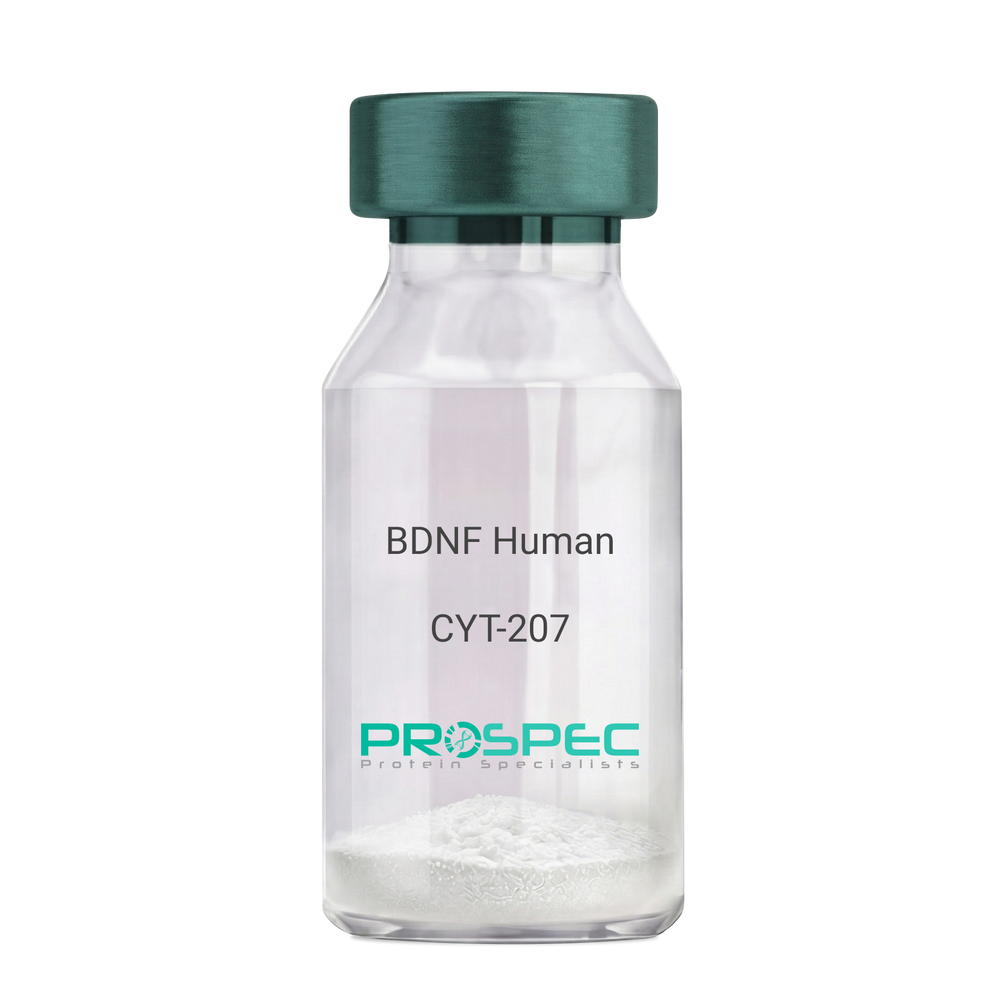
    BDNF Human

    Description:

    Brain-Derived Neurotrophic Factor Human Recombinant

    Brain-Derived Neurotrophic Factor, BDNF, MGC34632.

    Product # :

    CYT-207

    Price :

    Quantity :

    Shipping Method :

    Room Temp Icon

    Shipped at Room temp

    Add To Cart

    More Info

    • description
    • source
    • formulation
    • purity
    • biological activity
    • More Info
    • Activity

    Description

    BDNF Human Recombinant produced in E.Coli is a homodimer, non-glycosylated, polypeptide chain containing 2 x 119 amino acids (and an N-terminal Met) and having a total molecular mass of 28kDa. BDNF Human Recombinant is purified by proprietary chromatographic techniques.

    Source

    Escherichia Coli.

    Formulation

    The protein was lyophilized with 20mM PB and 400mM NaCl, pH 7.2.

    Purity

    BDNF is greater than 950% as determined SDS-PAGE.

    Biological Activity

    The activity was determined using Immobilized Human TrkB-His tag protein 2ug/ml (100 μl/well) for its binding to NHS-Biotin BDNF. The ED50 of was found to be ≤20ng/mL

    Activity

    bdnf activity - Product image 1

    More Info

    • Introduction

      BDNF promotes the survival of neuronal populations that are all located either in the central nervous system or directly connected to it. BDNF is a major regulator of synaptic transmission and plasticity at adult synapses in many regions of the cns. The versatility of BDNF is emphasized by its contribution to a range of adaptive neuronal responses including long-term potentiation (ltp), long-term depression (ltd), certain forms of short-term synaptic plasticity, as well as homeostatic regulation of intrinsic neuronal excitability.

    • Synonyms

      Brain-Derived Neurotrophic Factor, BDNF, MGC34632.

    • Physical Appearance

      Sterile Filtered White lyophilized (freeze-dried) powder.

    • Stability

      Lyophilized BDNF although stable at room temperature for 3 weeks, should be stored desiccated below -18°C. Upon reconstitution BDNF should be stored at 4°C between 2-7 days and for future use below -18°C.For long term storage it is recommended to add a carrier protein (0.1% HSA or BSA).Please prevent freeze-thaw cycles.

    • Solubility

      It is recommended to reconstitute the lyophilized BDNF in sterile 18M-cm H2O not less than 100µg/ml, which can then be further diluted to other aqueous solutions.

    • Amino Acid Sequence

      HSDPARRGE LSVCDSISEW VTAADKKTAV DMSGGTVTVL EKVPVSKGQL KQYFYETKCN PMGYTKEGCR GIDKRHWNSQ CRTTQSYVRA LTMDSKKRIG WRFIRIDTSC VCTLTIKRGR.

    • Background

      Final Thoughts

      Although more research is needed on the safety and effectiveness of BDNF human recombinant, trials suggest that this laboratory-produced protein may be effective in managing and treating several neurological and psychiatric disorders. It's important for experts to stay up to date on the latest developments and research to learn more about potential risks and benefits.

      What is the molecular weight/Mw of BDNF Protein?
      BDNF Protein has a total Mw of 27kDa.

      What is the source or expression system of BDNF Protein?
      Escherichia Coli.

      What is the Purity of BDNF Protein?
      BDNF Protein is >97% pure as determined by SDS-PAGE.

      What is the Biological Activity of BDNF Protein?
      The ED50, as determined by the dose-dependent induction of C6 cells proliferation, is 1.3-2µg/ml.

      What is the amino acid sequence of BDNF Protein?
      MHSDPARRGE LSVCDSISEW VTAADKKTAV DMSGGTVTVL EKVPVSKGQL KQYFYETKCN PMGYTKEGCR GIDKRHWNSQ CRTTQSYVRA LTMDSKKRIG WRFIRIDTSC VCTLTIKRGR.

      What applications can BDNF Protein be used in?
      BDNF Protein can probably be used in western blot, ELISA and Lateral Flow.

      What is the endotoxin level for BDNF Protein?
      The endotoxin level is minimal, BDNF Protein was purified using conventional chromatography techniques.

    • Protein content

      BDNF quantitation was carried out by two independent methods:1. UV spectroscopy at 280 nm using the absorbency value of 1.6 as the extinction coefficient for a 0.1% (1mg/ml) solution. This value is calculated by the PC GENE computer analysis program of protein sequences (IntelliGenetics). 2. Analysis by RP-HPLC, using a standard solution of Brain-derived Neurotrophic Factor as a Reference Standard.

    ProSpec's products are furnished for LABORATORY RESEARCH USE ONLY. The product may not be used as drugs, agricultural or pesticidal products, food additives or household chemicals.

    Bdnf Human
  • View Data Sheet

    Name :

    EXOSC9 Human

    Description:

    Exosome Component 9 Human Recombinant

    Exosome component 9, PM/Scl-75, PMSCL1, RRP45, Rrp45p, p5, p6, Polymyositis/scleroderma autoantigen 1-75kDa, Autoantigen PM/Scl 1, P75 polymyositis-scleroderma overlap syndrome-associated autoantigen, EC 3.1.13.

    Product # :

    PRO-126

    Price :

    Quantity :

    Shipping Method :

    Ice Icon

    Shipped with Ice Packs

    Add To Cart

    More Info

    • description
    • source
    • formulation
    • purity
    • More Info

    Description

    EXOSC9 is a Full-length cDNA coding for the human PM/Scl 75c-beta isoform having a molecular mass of 64 KDa. EXOSC9 protein is fused to a hexa-histidine purification tag.

    Source

    Sf9 insect cells.

    Formulation

    EXOSC9 is supplied in 20mM HEPES buffer pH-7.5, 0.01 mM EDTA and 0.02% SDS.

    Purity

    Greater than 95% as determined by SDS-PAGE.

    More Info

    • Introduction

      EXOSC9 is a non-catalytic component of the RNA exosome complex which has 3'->5' exoribonuclease activity and take part in many cellular RNA processing and degradation events. In the nucleus, the RNA exosome complex take part in proper maturation of stable RNA species like rRNA, snRNA and snoRNA, in the elimination of RNA processing by-products and non-coding 'pervasive' transcripts like anti-sense RNA species and promoter-upstream transcripts (PROMPTs), and of mRNAs with processing defects, thereby limiting or excluding their export to the cytoplasm. The RNA exosome is involved in Ig class switch recombination (CSR) and/or Ig variable region somatic hypermutation (SHM) by targeting AICDA deamination activity to transcribed dsDNA substrates. In the cytoplasm, the RNA exosome complex takes part in general mRNA turnover and specifically degrades inherently unstable mRNAs containing AU-rich elements (AREs) within their 3' untranslated regions, and in RNA surveillance pathways, inhibiting translation of aberrant mRNAs. EXOSC9 takes part in degradation of histone mRNA. The catalytic inactive RNA exosome core complex of 9 subunits (Exo-9) is proposed to be an essential part in the binding and presentation of RNA for ribonucleolysis, and acts as a scaffold for the association with catalytic subunits and accessory proteins or complexes. EXOSC9 binds to ARE-containing RNAs.

    • Synonyms

      Exosome component 9, PM/Scl-75, PMSCL1, RRP45, Rrp45p, p5, p6, Polymyositis/scleroderma autoantigen 1-75kDa, Autoantigen PM/Scl 1, P75 polymyositis-scleroderma overlap syndrome-associated autoantigen, EC 3.1.13.

    • Stability

      Store at 4°C if entire vial will be used within 2-4 weeks. Store, frozen at -20°C for longer periods of time. Avoid multiple freeze-thaw cycles.

    • Applications

      Western blot with polymyositis patient sera and monoclonal anti-hexa-His-tag antibody.

    ProSpec's products are furnished for LABORATORY RESEARCH USE ONLY. The product may not be used as drugs, agricultural or pesticidal products, food additives or household chemicals.

    Exosc9 Human
  • View Data Sheet

    Name :

    CD57 Biotin Antibody

    Description:

    CD57 Biotinylated, Mouse Anti-Human

    NK1, CD57, HNK1, LEU7, NK-1, GLCATP, GLCUATP, B3GAT1.

    Product # :

    ANT-288

    Price :

    Quantity :

    Shipping Method :

    Room Temp Icon

    Shipped at Room temp

    Add To Cart

    More Info

    • formulation
    • More Info

    Formulation

    1mg/ml in PBS (after reconstitution).

    More Info

    • Introduction

      CD57 also called B3GAT1is part of the glucuronyltransferase gene family. CD57 exhibits strict acceptor specificity, recognizing nonreducing terminal sugars and their anomeric linkages. CD57 takes part in the glucuronyl transfer reaction during the biosynthesis of the carbohydrate epitope HNK-1.

    • Synonyms

      NK1, CD57, HNK1, LEU7, NK-1, GLCATP, GLCUATP, B3GAT1.

    • Solubility

      Reconstitute with of H20. Mix gently, wash the sides of the vial and wait 30-60 seconds before use.

    • Immunogen

      Human CD57 Positive Cells.

    • Ig Subclass

      Mouse IgM.

    • Clone

      hCD57.

    • Applications

      Staining antibody. For staining, use 10µl/1,000,000 cells.

    • Available Conjugates

      This antibody is also available unconjugated and conjugated to FITC. For staining with biotin or FITC-conjugated antibody use 5-10µl/1,000,000 cells.

    • Type

      Mouse Anti Human Monoclonal.

    • Storage Procedures

      Lyophilized: store at 4°C. After reconstitution, if not intended for use within a month, aliquot and store at -20°C.

    • Purification Method

      Ion-Exchange Column.

    ProSpec's products are furnished for LABORATORY RESEARCH USE ONLY. The product may not be used as drugs, agricultural or pesticidal products, food additives or household chemicals.

    Cd57 Biotin Antibody
  • View Data Sheet

    Name :

    Adiponectin Human, Trimeric

    Description:

    Adiponectin Human Recombinant, Trimeric form

    Acrp30, AdipoQ, GBP-28, APM-1, ACDC.

    Product # :

    CYT-233

    Price :

    Quantity :

    Shipping Method :

    Room Temp Icon

    Shipped at Room temp

    Add To Cart

    More Info

    • description
    • source
    • formulation
    • purity
    • biological activity
    • More Info

    Description

    Trimeric form of Adiponectin Human trimeric form was expressed in HEK293 cells. The cysteine 39 was replaced with Alanine (C39A) 9. hAd-C39A can only form a trimer, but not a hexamer or an HMW form.

    Source

    HEK293 (Human embryonic kidney cell line).

    Formulation

    Filtered (0.4µm) and lyophilized from 0.5mg/ml in 0.05M phosphate buffer, 0.075M NaCl, pH 7.4.

    Purity

    Greater than 95% as determined by SDS-PAGE.

    Biological Activity

    ED50= 3-8.5 μg/ml, as determined by its ability to inhibit proliferation of HASMCs induced by HB EGF.

    More Info

    • Introduction

      Adiponectin is a hormone exclusively expressed from adipose tissue.
      Many studies demonstrate that Adiponectin has direct anti-diabetic, anti-atherogenic and anti-inflammatory functions. APM-1 can increase insulin sensitivity of skeletal muscle. Attenuate hepatic lipogenesis and gluconeogenesis, regulate NO production in endothelial cells, inhibit proliferation of smooth muscle cells and prevent lipid accumulation of macrophage cells.
      In the circulation, Adiponectin is present as three different oligomeric complexes, including the high molecular weight (HMW), the middle molecular weight (MMW, also called hexamer) and low molecular weigh (MMW, also called trimer) forms 8. Different oligomeric complex of Adiponectin activates different signaling pathways and exerts distinct functions.

    • Synonyms

      Acrp30, AdipoQ, GBP-28, APM-1, ACDC.

    • Physical Appearance

      Filtered White lyophilized (freeze-dried) powder.

    • Stability

      Store lyophilized Adiponectin at -20°C. Aliquot the product after reconstitution to avoid repeated freezing/thawing cycles. Reconstituted protein can be stored at 4°C for a limited period of time; it does not show any change after two weeks at 4°C.

    • Solubility

      Add deionized water to a working volume of 0.5mg/ml and let the lyophilized pellet dissolve completely. Product is not sterile! Please filter the product by an appropriate sterile filter before using it in the cell culture.

    • Amino Acid Sequence

      ETTTQGPGVL LPLPKGAATG WMAGIPGHPG HNGAPGRDGR DGTPGEKGEK GDPGLIGPKG DIGETGVPGA EGPRGFPGIQ GRKGEPGEGA YVYRSAFSVG LETYVTIPNM PIRFTKIFYN QQNHYDGSTG KFHCNIPGLY YFAYHIVYMK DVKVSLFKKD KAMLFTYDQY QENNVDQASG SVLLHLEVGD QVWLQVYGEG ERNGLYADND NDSTFTGFLL YHDTNDYKDD DDK.

    • Background

      What is the molecular weight/Mw of ADIPONECTIN Protein?
      ADIPONECTIN Protein has a total Mw of 25 kDa.

      What is the source or expression system of ADIPONECTIN Protein?
      HEK293.

      What is the Purity of ADIPONECTIN Protein?
      ADIPONECTIN Protein is >95% pure as determined by SDS-PAGE.

      What is the Biological Activity of ADIPONECTIN Protein?
      ED50= 3-8.5 μg/ml, as determined by its ability to inhibit proliferation of HASMCs induced by HB EGF.

      What is the amino acid sequence of ADIPONECTIN Protein?
      ETTTQGPGVL LPLPKGAATG WMAGIPGHPG HNGAPGRDGR DGTPGEKGEK GDPGLIGPKG DIGETGVPGA EGPRGFPGIQ GRKGEPGEGA YVYRSAFSVG LETYVTIPNM PIRFTKIFYN QQNHYDGSTG KFHCNIPGLY YFAYHIVYMK DVKVSLFKKD KAMLFTYDQY QENNVDQASG SVLLHLEVGD QVWLQVYGEG ERNGLYADND NDSTFTGFLL YHDTNDYKDD DDK.

      What applications can ADIPONECTIN Protein be used in?
      ADIPONECTIN Protein can probably be used in western blot, ELISA and Lateral Flow.

      What is the endotoxin level for ADIPONECTIN Protein?
      The endotoxin level is minimal, ADIPONECTIN Protein was purified using conventional chromatography techniques.

    ProSpec's products are furnished for LABORATORY RESEARCH USE ONLY. The product may not be used as drugs, agricultural or pesticidal products, food additives or household chemicals.

    Adiponectin Human Trimeric
  • View Data Sheet

    Name :

    DCN Human, Sf9

    Description:

    Decorin Human Recombinant, Sf9

    Decorin, Decorin Proteoglycan, Bone Proteoglycan II, SLRR1B, PG-S2, CSCD, PG40, Dermatan Sulphate Proteoglycans II, Small Leucine-Rich Protein 1B, Proteoglycan Core Protein, DSPG2, PGII, PGS2, Decorin, Bone proteoglycan II, PG-S2, , PG40.

    Product # :

    PRO-2232

    Price :

    Quantity :

    Shipping Method :

    Ice Icon

    Shipped with Ice Packs

    Add To Cart

    More Info

    • description
    • source
    • formulation
    • purity
    • More Info

    Description

    DCN produced in Sf9 Baculovirus cells is a single, glycosylated polypeptide chain containing 335 amino acids (31-359a.a.) and having a molecular mass of 37.1kDa. (Molecular size on SDS-PAGE will appear at approximately 40-57kDa). DCN is expressed with a 6 amino acid His tag at C-Terminus and purified by proprietary chromatographic techniques.

    Source

    Sf9, Baculovirus cells.

    Formulation

    DCN protein solution (1mg/ml) contains Phosphate Buffered Saline (pH 7.4) and 10% glycerol.

    Purity

    Greater than 95% as determined by SDS-PAGE.

    More Info

    • Introduction

      Decorin (DCN) is a small cellular or pericellular matrix proteoglycan which is closely related in structure to biglycan protein. Decorin is a secreted protein which binds to collagen and fibronectin in extracellular matrix. Decorin appears in different glycoforms, substituted with chondroitin sulfate or dermatan sulfate consistent with the original tissue. DCN contains one attached glycosaminoglycan chain. Decorin influences the rate of fibril formation. Decorin is capable of suppressing the growth of various tumor cell lines. DCN gene defects cause corneal dystrophy. The DCN gene is a candidate gene for Marfan syndrome.

    • Synonyms

      Decorin, Decorin Proteoglycan, Bone Proteoglycan II, SLRR1B, PG-S2, CSCD, PG40, Dermatan Sulphate Proteoglycans II, Small Leucine-Rich Protein 1B, Proteoglycan Core Protein, DSPG2, PGII, PGS2, Decorin, Bone proteoglycan II, PG-S2, , PG40.

    • Physical Appearance

      Sterile filtered colorless solution.

    • Stability

      Store at 4°C if entire vial will be used within 2-4 weeks. Store, frozen at -20°C for longer periods of time. For long term storage it is recommended to add a carrier protein (0.1% HSA or BSA).Avoid multiple freeze-thaw cycles.

    • Amino Acid Sequence

      DEASGIGPEV PDDRDFEPSL GPVCPFRCQC HLRVVQCSDL GLDKVPKDLP PDTTLLDLQN NKITEIKDGD FKNLKNLHAL ILVNNKISKV SPGAFTPLVK LERLYLSKNQ LKELPEKMPK TLQELRAHEN EITKVRKVTF NGLNQMIVIE LGTNPLKSSG IENGAFQGMK KLSYIRIADT NITSIPQGLP PSLTELHLDG NKISRVDAAS LKGLNNLAKL GLSFNSISAV DNGSLANTPH LRELHLDNNK LTRVPGGLAE HKYIQVVYLH NNNISVVGSS DFCPPGHNTK KASYSGVSLF SNPVQYWEIQ PSTFRCVYVR SAIQLGNYKH HHHHH.

    ProSpec's products are furnished for LABORATORY RESEARCH USE ONLY. The product may not be used as drugs, agricultural or pesticidal products, food additives or household chemicals.

    Dcn Human Sf9
  • View Data Sheet

    Name :

    SERPING1 Human, Sf9

    Description:

    Serpin Peptidase Inhibitor, Clade G Member 1 Human Recombinant, Sf9

    Serpin Family G Member 1, Serpin Peptidase Inhibitor, Clade G (C1 Inhibitor), Member 1, Plasma Protease C1 Inhibitor, C1 Esterase Inhibitor, C1-Inhibiting Factor, Serpin G1, C1NH, C1IN, Serine (Or Cysteine) Proteinase Inhibitor, Clade G (C1 Inhibitor), Member 1, (Angioedema, Hereditary), Serine/Cysteine Proteinase Inhibitor Clade G Member 1, Serpin Peptidase Inhibitor Clade G Member 1, Complement Component 1 Inhibitor, Angioedema, Hereditary, C1 Inh, C1INH, C1Inh, HAE1, HAE2. 

    Product # :

    PRO-2589

    Price :

    Quantity :

    Shipping Method :

    Ice Icon

    Shipped with Ice Packs

    Add To Cart

    More Info

    • description
    • source
    • formulation
    • purity
    • More Info

    Description

    SERPING1 produced in Sf9 Baculovirus cells is a single, glycosylated polypeptide chain containing 489 amino acids (23-500a.a.) and having a molecular mass of 54.2kDa. (Molecular size on SDS-PAGE will appear at approximately 70-100kDa).SERPING1 is expressed with an 11 amino acid His tag at C-Terminus and purified by proprietary chromatographic techniques.

    Source

    Sf9, Baculovirus cells.

    Formulation

    SERPING1 protein solution (1mg/ml) contains 10% glycerol & Phosphate Buffered Saline (pH 7.4).

    Purity

    Greater than 90.0% as determined by SDS-PAGE.

    More Info

    • Introduction

      Plasma protease C1 inhibitor (SERPING1) is a part of the serpin superfamily of serine protease inhibitors. SERPING1 takes part in regulating activation of both the complement and contact systems. That isdue to the fact that SERPING1 regulates the activation of complement factor C1 in addition to the activity of activated C1 by coupling with the active catalytic site at the light chains of C1r and C1s. Lack of SERPING1 results in hereditary angioedema, which is characterized by recurrent episodes of localized angioedema of the skin, gastrointestinal mucosa or upper respiratory mucosa.

    • Synonyms

      Serpin Family G Member 1, Serpin Peptidase Inhibitor, Clade G (C1 Inhibitor), Member 1, Plasma Protease C1 Inhibitor, C1 Esterase Inhibitor, C1-Inhibiting Factor, Serpin G1, C1NH, C1IN, Serine (Or Cysteine) Proteinase Inhibitor, Clade G (C1 Inhibitor), Member 1, (Angioedema, Hereditary), Serine/Cysteine Proteinase Inhibitor Clade G Member 1, Serpin Peptidase Inhibitor Clade G Member 1, Complement Component 1 Inhibitor, Angioedema, Hereditary, C1 Inh, C1INH, C1Inh, HAE1, HAE2.

    • Physical Appearance

      Sterile Filtered colorless solution.

    • Stability

      Store at 4°C if entire vial will be used within 2-4 weeks. Store, frozen at -20°C for longer periods of time. For long term storage it is recommended to add a carrier protein (0.1% HSA or BSA).Avoid multiple freeze-thaw cycles.

    • Amino Acid Sequence

      ADPEFNPNAT SSSSQDPESL QDRGEGKVAT TVISKMLFVE PILEVSSLPT TNSTTNSATK ITANTTDEPT TQPTTEPTTQ PTIQPTQPTT QLPTDSPTQP TTGSFCPGPV TLCSDLESHS TEAVLGDALV DFSLKLYHAF SAMKKVETNM AFSPFSIASL LTQVLLGAGE NTKTNLESIL SYPKDFTCVH QALKGFTTKG VTSVSQIFHS PDLAIRDTFV NASRTLYSSS PRVLSNNSDA NLELINTWVA KNTNNKISRL LDSLPSDTRL VLLNAIYLSA KWKTTFDPKK TRMEPFHFKN SVIKVPMMNS KKYPVAHFID QTLKAKVGQL QLSHNLSLVI LVPQNLKHRL EDMEQALSPS VFKAIMEKLE MSKFQPTLLT LPRIKVTTSQ DMLSIMEKLE FFDFSYDLNL CGLTEDPDLQ
      VSAMQHQTVL ELTETGVEAA AASAISVART LLVFEVQQPF LFVLWDQQHK FPVFMGRVYD PRAHHHHHH.

    ProSpec's products are furnished for LABORATORY RESEARCH USE ONLY. The product may not be used as drugs, agricultural or pesticidal products, food additives or household chemicals.

    Serping1 Protein
  • View Data Sheet

    Name :

    SIGLEC6 Human

    Description:

    Sialic Acid Binding Ig Like Lectin 6 Human Recombinant

    Sialic Acid Binding Ig Like Lectin 6, Obesity-Binding Protein 1, CD33 Antigen-Like 1, CDW327, CD33L1, CD33L, OBBP1, Sialic Acid Binding Ig-Like Lectin 6, Sialic Acid-Binding Ig-Like Lectin 6, CD327 Antigen, Siglec-6, CD33L2, OB-BP1, CD327, SIGLEC6.

    Product # :

    PRO-2450

    Price :

    Quantity :

    Shipping Method :

    Ice Icon

    Shipped with Ice Packs

    Add To Cart

    More Info

    • description
    • source
    • formulation
    • purity
    • More Info

    Description

    SIGLEC6 Human Recombinant produced in Sf9 Baculovirus cells is a single, glycosylated polypeptide chain containing 563 amino acids (27-347a.a.) and having a molecular mass of 62.6kDa (Molecular size on SDS-PAGE will appear at approximately 70-100kDa). SIGLEC6 is expressed with a 239 amino acids hIgG-His tag at C-Terminus and purified by proprietary chromatographic techniques.

    Source

    Sf9, Baculovirus cells.

    Formulation

    SIGLEC6 protein solution (0.5mg/ml) contains Phosphate Buffered Saline (pH 7.4) and 10% glycerol.

    Purity

    Greater than 90.0% as determined by SDS-PAGE.

    More Info

    • Introduction

      Sialic acid-binding Ig-like lectin 6 isoform 1 (SIGLEC6) is a member of immunoglobulin superfamily and SIGLEC (sialic acid binding Ig-like lectin) family. SIGLEC6 mediates sialic-acid dependent binding to cells and binds to alpha-2, 6-linked sialic acid. The SIGLEC6 protein localizes in numerous compartments such as membrane fraction, extracellular region and so on. The SIGLEC6 receptor binds sialyl-TN glycans and leptin. Placental expression SIGLEC6 is upregulated in preeclampsia.

    • Synonyms

      Sialic Acid Binding Ig Like Lectin 6, Obesity-Binding Protein 1, CD33 Antigen-Like 1, CDW327, CD33L1, CD33L, OBBP1, Sialic Acid Binding Ig-Like Lectin 6, Sialic Acid-Binding Ig-Like Lectin 6, CD327 Antigen, Siglec-6, CD33L2, OB-BP1, CD327, SIGLEC6.

    • Physical Appearance

      Sterile filtered colorless solution.

    • Stability

      Store at 4°C if entire vial will be used within 2-4 weeks. Store, frozen at -20°C for longer periods of time. For long term storage it is recommended to add a carrier protein (0.1% HSA or BSA).Avoid multiple freeze-thaw cycles.

    • Amino Acid Sequence

      ADLQERRFQL EGPESLTVQE GLCVLVPCRL PTTLPASYYG YGYWFLEGAD VPVATNDPDE EVQEETRGRF HLLWDPRRKN CSLSIRDARR RDNAAYFFRL KSKWMKYGYT SSKLSVRVMA LTHRPNISIP GTLESGHPSN LTCSVPWVCE QGTPPIFSWM SAAPTSLGPR TTQSSVLTIT PRPQDHSTNL TCQVTFPGAG VTMERTIQLN VSYAPQKVAI SIFQGNSAAF KILQNTSSLP VLEGQALRLL CDADGNPPAH LSWFQGFPAL NATPISNTGV LELPQVGSAE EGDFTCRAQH PLGSLQISLS LFVHWKPEGR AGGVLEPKSC DKTHTCPPCP APELLGGPSV FLFPPKPKDT LMISRTPEVT CVVVDVSHED PEVKFNWYVD GVEVHNAKTK PREEQYNSTY RVVSVLTVLH QDWLNGKEYK CKVSNKALPA PIEKTISKAK GQPREPQVYT LPPSRDELTK NQVSLTCLVK GFYPSDIAVE WESNGQPENN YKTTPPVLDS DGSFFLYSKL TVDKSRWQQG NVFSCSVMHE ALHNHYTQKS LSLSPGKHHH HHH.

    ProSpec's products are furnished for LABORATORY RESEARCH USE ONLY. The product may not be used as drugs, agricultural or pesticidal products, food additives or household chemicals.

    Siglec6 Human
  • View Data Sheet

    Name :

    SLC51B Human

    Description:

    Solute Carrier Family 51 Beta Human Recombinant

    OSTB, OSTBETA, Organic solute transporter subunit beta, OST-beta, Solute carrier family 51 subunit beta.

    Product # :

    PRO-1727

    Price :

    Quantity :

    Shipping Method :

    Ice Icon

    Shipped with Ice Packs

    Add To Cart

    More Info

    • description
    • source
    • formulation
    • purity
    • More Info

    Description

    SLC51B Human Recombinant produced in E.Coli is a single, non-glycosylated polypeptide chain containing 95 amino acids (57-128 a.a) and having a molecular mass of 10.7kDa.SLC51B is fused to a 23 amino acid His-tag at N-terminus & purified by proprietary chromatographic techniques.

    Source

    Escherichia Coli.

    Formulation

    SLC51B protein solution (1mg/ml) containing 20mM Tris-HCl buffer (pH8.0), 10% glycerol and 0.1M NaCl.

    Purity

    Greater than 95.0% as determined by SDS-PAGE.

    More Info

    • Introduction

      Solute Carrier Family 51 Beta (SLC51B), is a protein coding gene. SLC51B is an organic solute transporter subunit. SLC51 is composed of twodifferent proteins that must heterodimerize to generate transport activity, however the role of the individual subunits inmediating transport activity is unknown. The results show that SLC51B is required for both proper traffickingof SLC51A and formation of the functional transport unit, and identify specific residues of SLC51B essential for theseprocesses. Among the diseases associated with SLC51B are extrahepatic cholestasis, and biliary atresia.

    • Synonyms

      OSTB, OSTBETA, Organic solute transporter subunit beta, OST-beta, Solute carrier family 51 subunit beta.

    • Physical Appearance

      Sterile Filtered clear solution.

    • Stability

      Store at 4°C if entire vial will be used within 2-4 weeks. Store, frozen at -20°C for longer periods of time. For long term storage it is recommended to add a carrier protein (0.1% HSA or BSA).Avoid multiple freeze-thaw cycles.

    • Amino Acid Sequence

      MGSSHHHHHH SSGLVPRGSH MGSRSIQASR KEKMQPPEKE TPEVLHLDEA KDHNSLNNLR ETLLSEKPNL AQVELELKER DVLSVFLPDV PETES

    ProSpec's products are furnished for LABORATORY RESEARCH USE ONLY. The product may not be used as drugs, agricultural or pesticidal products, food additives or household chemicals.

    Slc51B Human
  • View Data Sheet

    Name :

    OSM Human, 195 a.a

    Description:

    Oncostatin-M Human Recombinant (195 a.a.)

    OSM, MGC20461, Oncostatin M.

    Product # :

    CYT-735

    Price :

    Quantity :

    Shipping Method :

    Room Temp Icon

    Shipped at Room temp

    Add To Cart

    More Info

    • description
    • source
    • formulation
    • purity
    • biological activity
    • More Info

    Description

    Oncostatin-M Human Recombinant produced in E.Coli is a single, non-glycosylated polypeptide chain containing 195 amino acids and having a molecular mass of 22kDa. The OSM is purified by proprietary chromatographic techniques.

    Source

    Escherichia Coli.

    Formulation

    Lyophilized from a concentrated (1mg/ml) solution containing 1xPBS pH-7.4.

    Purity

    Greater than 97.0% as determined by:
    (a) Analysis by RP-HPLC.
    (b) Analysis by SDS-PAGE.

    Biological Activity

    The ED50 as determined by the dose-dependent stimulation of the proliferation of human TF-1 cells is < 0.2ng/ml, corresponding to a specific activity of > 5.0x10⁶ units/mg.

    More Info

    • Introduction

      Oncostatin M is a member of a cytokine family that includes leukemia-inhibitory factor, granulocyte colony-stimulating factor, and interleukin 6. This gene encodes a growth regulator which inhibits the proliferation of a number of tumor cell lines. It regulates cytokine production, including IL-6, G-CSF and GM-CSF from endothelial cells.

    • Synonyms

      OSM, MGC20461, Oncostatin M.

    • Physical Appearance

      Sterile Filtered White lyophilized (freeze-dried) powder.

    • Stability

      Lyophilized Oncostatin M although stable at room temperature for 3 weeks, should be stored desiccated below -18°C. Upon reconstitution Oncostatin should be stored at 4°C between 2-7 days and for future use below -18°C.For long term storage it is recommended to add a carrier protein (0.1% HSA or BSA).Please prevent freeze-thaw cycles.

    • Solubility

      It is recommended to reconstitute the lyophilized Oncostatin M in sterile 18MΩ-cm H2O not less than 100µg/ml, which can then be further diluted to other aqueous solutions.

    • Amino Acid Sequence

      AAIGSCSKEY RVLLGQLQKQ TDLMQDTSRL LDPYIRIQGL DVPKLREHCR ERPGAFPSEE TLRGLGRRGF LQTLNATLGC VLHRLADLEQ RLPKAQDLER SGLNIEDLEK LQMARPNILG LRNNIYCMAQ LLDNSDTAEP TKAGRGASQP PTPTPASDAF QRKLEGCRFL HGYHRFMHSV GRVFSKWGES PNRSR.

    ProSpec's products are furnished for LABORATORY RESEARCH USE ONLY. The product may not be used as drugs, agricultural or pesticidal products, food additives or household chemicals.

    Oncostatin M Human 195 Aa
  • View Data Sheet

    Name :

    PCOLCE Human, Sf9

    Description:

    Procollagen C-Endopeptidase Enhancer Human Recombinant, Sf9

    Procollagen C-endopeptidase enhancer 1,  Procollagen COOH-terminal proteinase enhancer 1,  PCPE-1,  Procollagen C-proteinase enhancer 1,  Type 1 procollagen C-proteinase enhancer protein,  Type I procollagen COOH-terminal proteinase enhancer,  PCOLCE,  PCPE1,  Procollagen C-Endopeptidase Enhancer, Procollagen C-Proteinase, Enhancer 1, Procollagen, Type 1, COOH-Terminal Proteinase Enhancer, Type I Procollagen COOH-Terminal Proteinase Enhancer, Type 1 Procollagen C-Proteinase Enhancer Protein, Procollagen COOH-Terminal Proteinase Enhancer 1.

    Product # :

    ENZ-1075

    Price :

    Quantity :

    Shipping Method :

    Ice Icon

    Shipped with Ice Packs

    Add To Cart

    More Info

    • description
    • source
    • formulation
    • purity
    • More Info

    Description

    PCOLCE produced in Sf9 Insect cells is a single, glycosylated polypeptide chain containing 433 amino acids (26-449 a.a.) and having a molecular mass of 46.6kDa (Molecular size on SDS-PAGE will appear at approximately 40-57kDa). PCOLCE is expressed with an 9 amino acid His tag at C-Terminus and purified by proprietary chromatographic techniques.

    Source

    Sf9, Insect cells.

    Formulation

    PCOLCE protein solution (0.25mg/ml) contains 20mM Tris-HCl (pH 8.0), 10% glycerol and 0.1M NaCl.

    Purity

    Greater than 95.0% as determined by SDS-PAGE.

    More Info

    • Introduction

      Procollagen C-endopeptidase enhancer 1, also known as PCOLCE binds to the C-terminal propeptide of type I procollagen and enhances procollagen C-proteinase activity. In addition, C-terminal processed part of PCPE (CT-PCPE) has a metalloproteinase inhibitory activity. Among the diseases which are associated with PCOLCE: bone fracture & oculopharyngeal muscular dystrophy.

    • Synonyms

      Procollagen C-endopeptidase enhancer 1, Procollagen COOH-terminal proteinase enhancer 1, PCPE-1, Procollagen C-proteinase enhancer 1, Type 1 procollagen C-proteinase enhancer protein, Type I procollagen COOH-terminal proteinase enhancer, PCOLCE, PCPE1, Procollagen C-Endopeptidase Enhancer, Procollagen C-Proteinase, Enhancer 1, Procollagen, Type 1, COOH-Terminal Proteinase Enhancer, Type I Procollagen COOH-Terminal Proteinase Enhancer, Type 1 Procollagen C-Proteinase Enhancer Protein, Procollagen COOH-Terminal Proteinase Enhancer 1.

    • Physical Appearance

      Sterile filtered colorless solution.

    • Stability

      Store at 4°C if entire vial will be used within 2-4 weeks. Store, frozen at -20°C for longer periods of time. For long term storage it is recommended to add a carrier protein (0.1% HSA or BSA).Avoid multiple freeze-thaw cycles.

    • Amino Acid Sequence

      ADPQTPNYTR PVFLCGGDVK GESGYVASEG FPNLYPPNKE CIWTITVPEG QTVSLSFRVF DLELHPACRY DALEVFAGSG TSGQRLGRFC GTFRPAPLVA PGNQVTLRMT TDEGTGGRGF LLWYSGRATS GTEHQFCGGR LEKAQGTLTT PNWPESDYPP GISCSWHIIA PPDQVIALTF EKFDLEPDTY CRYDSVSVFN GAVSDDSRRL GKFCGDAVPG SISSEGNELL VQFVSDLSVT ADGFSASYKT LPRGTAKEGQ GPGPKRGTEP KVKLPPKSQP PEKTEESPSA PDAPTCPKQC RRTGTLQSNF CASSLVVTAT VKSMVREPGE GLAVTVSLIG AYKTGGLDLP SPPTGASLKF YVPCKQCPPM KKGVSYLLMG QVEENRGPVL PPESFVVLHR PNQDQILTNL SKRKCPSQPV RAAASQDHHH HHH.

    ProSpec's products are furnished for LABORATORY RESEARCH USE ONLY. The product may not be used as drugs, agricultural or pesticidal products, food additives or household chemicals.

    Pcolce Protein
  • View Data Sheet

    Name :

    FLT1 D7 Human

    Description:

    Vascular Endothelial Growth Factor Receptor-1 D1-7 Human Recombinant

    FLT-1, FLT1, Tyrosine-protein kinase receptor FLT, Flt-1, Tyrosine-protein kinase FRT, Fms-like tyrosine kinase 1, VEGFR-1.

    Product # :

    PKA-241

    Price :

    Quantity :

    Shipping Method :

    Room Temp Icon

    Shipped at Room temp

    Add To Cart

    More Info

    • description
    • source
    • formulation
    • purity
    • biological activity
    • More Info

    Description

    Soluble FLT1 Human Recombinant fused with the Fc part of human IgG1 produced in baculovirus is disulfide-linked homodimeric, glycosylated, polypeptide containing 751 amino acids and having a molecular mass of 130 kDa. The soluble receptor protein contains only the first 7 extracellular domains (Met1-Thr751), which contain all the information necessary for high affinity ligand binding. The FLT1 fc/Chimera is purified by proprietary chromatographic techniques.

    Source

    Insect Cells.

    Formulation

    FLT1 D1-7 was lyophilized from a concentrated (1 mg/ml) sterile solution containing PBS Buffer, pH 7.4.

    Purity

    Greater than 95.0% as determined by SDS-PAGE.

    Biological Activity

    The activity of FLT1/Fc was determined by its ability to inhibit the VEGF-dependent proliferation of human umbilical vein endothelial cells. The ED50 for this effect is typically 10-30 ng/ml, corresponding to a specific activity of 33,333.33-100,000 units/mg.

    More Info

    • Introduction

      Endothelial cells express three different vascular endothelial growth factor (VEGF) receptors, belonging to the family of receptor tyrosine kinases (RTKs). They are named VEGFR-1 (Flt-1), VEGFR-2 (KDR/Flk-1), and VEGFR-3 (Flt-4). Their expression is almost exclusively restricted to endothelial cells, but VEGFR-1 can also be found on monocytes. All VEGF-receptors have seven immunoglobulin-like extracellular domains, a single transmembrane region and an intracellular split tyrosine kinase domain. VEGFR-2 has a lower affinity for VEGF than the Flt-1 receptor, but a higher signalling activity. Mitogenic activity in endothelial cells is mainly mediated by VEGFR-2 leading to their proliferation. Differential splicing of the flt-1 gene leads to the formation of a secreted, soluble variant of VEGFR-1 (sVEGFR-1). No naturally occurring, secreted forms of VEGFR-2 have so far been reported. The binding of VEGF165 to VEGFR-2 is dependent on heparin.

    • Synonyms

      FLT-1, FLT1, Tyrosine-protein kinase receptor FLT, Flt-1, Tyrosine-protein kinase FRT, Fms-like tyrosine kinase 1, VEGFR-1.

    • Physical Appearance

      Sterile Filtered White lyophilized (freeze-dried) powder.

    • Stability

      Lyophilized FLT-1 although stable at room temperature for 3 weeks, should be stored desiccated below -18C. Upon reconstitution FLT1 should be stored at 4C between 2-7 days and for future use below -18C. For long term storage it is recommended to add a carrier protein (0.1% HSA or BSA). Please prevent freeze-thaw cycles.

    • Solubility

      It is recommended to reconstitute the lyophilized FLT1 Fc/Chimera in PBS not less than 50µg/ml, which can then be further diluted to other aqueous solutions.

    • Amino Acid Sequence

      MVSYWDTGVL LCALLSCLLL TGSSSGSKLK DPELSLKGTQ HIMQAGQTLH LQCRGEAAHK WSLPEMVSKE SERLSITKSA CGRNGKQFCS TLTLNTAQAN HTGFYSCKYL AVPTSKKKET ESAIYIFISD TGRPFVEMYS EIPEIIHMTE GRELVIPCRV TSPNITVTLK KFPLDTLIPD GKRIIWDSRK GFIISNATYK EIGLLTCEAT VNGHLYKTNY LTHRQTNTII DVQISTPRPV KLLRGHTLVL NCTATTPLNT RVQMTWSYPD EKNKRASVRR RIDQSNSHAN IFYSVLTIDK MQNKDKGLYT CRVRSGPSFK SVNTSVHIYD KAFITVKHRK QQVLETVAGK RSYRLSMKVK AFPSPEVVWL KDGLPATEKS ARYLTRGYSL IIKDVTEEDA GNYTILLSIK QSNVFKNLTA TLIVNVKPQI YEKAVSSFPD PALYPLGSRQ ILTCTAYGIP QPTIKWFWHP CNHNHSEARC DFCSNNEESF ILDADSNMGN RIESITQRMA IIEGKNKMAS TLVVADSRIS GIYICIASNK VGTVGRNISF YITDVPNGFH VNLEKMPTEG EDLKLSCTVN KFLYRDVTWI LLRTVNNRTM HYSISKQKMA ITKEHSITLN LTIMNVSLQD SGTYACRARN VYTGEEILQK KEITIRDQEA PYLLRNLSDH TVAISSSTTL DCHANGVPEP QITWFKNNHK IQQEPGIILG PGSSTLFIER VTEEDEGVYH CKATNQKGSV ESSAYLTVQG TAASDKTHTC PPCPAPELLG GPSVFLFPPK PKDTLMISRT PEVTCVVVDV SHEDPEVKFN WYVDGVEVHN AKTKPREEQY NSTYRVVSVL TVLHQDWLNG KEYKCKVSNK ALPAPIEKTI S.

    ProSpec's products are furnished for LABORATORY RESEARCH USE ONLY. The product may not be used as drugs, agricultural or pesticidal products, food additives or household chemicals.

    Flt1 D7 Human
  • View Data Sheet

    Name :

    TOMM20 Human

    Description:

    Translocase Of Outer Mitochondrial Membrane 20 Human Recombinant

    Mmitochondrial import receptor subunit TOM20 homolog, TOMM20, MAS20, MOM19, KIAA0016, Outer mitochondrial membrane receptor Tom20, Mitochondrial 20 kDa outer membrane protein.

    Product # :

    PRO-1471

    Price :

    Quantity :

    Shipping Method :

    Ice Icon

    Shipped with Ice Packs

    Add To Cart

    More Info

    • description
    • source
    • formulation
    • purity
    • More Info

    Description

    TOMM20 Human Recombinant produced in E.coli is a single, non-glycosylated polypeptide chain containing 144 amino acids (25-145) and having a molecular mass of 16.2 kDa. TOMM20 is fused to a 23 amino acid His-tag at N-terminus & purified by proprietary chromatographic techniques.

    Source

    Escherichia Coli.

    Formulation

    The TOMM20 solution (0.5mg/ml) contains 20mM Tris-HCl buffer (pH 8.0), 0.1M NaCl, 20% glycerol and 2mM DTT.

    Purity

    Greater than 90.0% as determined by SDS-PAGE.

    More Info

    • Introduction

      Mmitochondrial import receptor subunit TOMM20 homolog (TOMM20) is a member of the Tom20 family. The Tom machinery consists of import receptors for the initial binding of cytosolically synthesized preproteins and a general import pore (GIP) for the membrane translocation of various preproteins into the mitochondria. TOMM20 acts as the transit peptide receptor at the surface of the mitochondrion outer membrane and facilitates the movement of preproteins into the TOM40 translocation pore.

    • Synonyms

      Mmitochondrial import receptor subunit TOM20 homolog, TOMM20, MAS20, MOM19, KIAA0016, Outer mitochondrial membrane receptor Tom20, Mitochondrial 20 kDa outer membrane protein.

    • Physical Appearance

      Sterile Filtered colorless solution.

    • Stability

      Store at 4°C if entire vial will be used within 2-4 weeks. Store, frozen at -20°C for longer periods of time. For long term storage it is recommended to add a carrier protein (0.1% HSA or BSA).Avoid multiple freeze-thaw cycles.

    • Amino Acid Sequence

      MGSSHHHHHH SSGLVPRGSH MGSDRKRRSD PNFKNRLRER RKKQKLAKER AGLSKLPDLK DAEAVQKFFL EEIQLGEELL AQGEYEKGVD HLTNAIAVCG QPQQLLQVLQ QTLPPPVFQM LLTKLPTISQ RIVSAQSLAE DDVE.

    ProSpec's products are furnished for LABORATORY RESEARCH USE ONLY. The product may not be used as drugs, agricultural or pesticidal products, food additives or household chemicals.

    Tomm20 Human
  • View Data Sheet

    Name :

    CDH11 Human

    Description:

    Cadherin 11 Human Recombinant

    CAD11, CDHOB, OB, OSF-4, Cadherin 11, Osteoblast cadherin, OB-cadherin.

    Product # :

    PRO-1368

    Price :

    Quantity :

    Shipping Method :

    Ice Icon

    Shipped with Ice Packs

    Add To Cart

    More Info

    • description
    • source
    • formulation
    • purity
    • More Info

    Description

    CDH11 Human Recombinant produced in E.Coli is a single, non-glycosylated polypeptide chain containing 601 amino acids (54-617 a.a) and having a molecular mass of 66.2kDa. CDH11 is fused to a 37 amino acid His-tag at N-terminus & purified by proprietary chromatographic techniques.

    Source

    E.coli.

    Formulation

    CDH11 protein solution (1mg/ml) containing 20mM Tris-HCl buffer (pH8.0), 10% glycerol and 0.1M NaCl.

    Purity

    Greater than 85% as determined by SDS-PAGE.

    More Info

    • Introduction

      Cadherin 11 (CDH11) belongs to the cadherin superfamily (integral membrane proteins) which mediate calcium-dependent cell-cell adhesion. CDH11 is defined based on lacking a HAV cell adhesion recognition sequence specific to type I cadherins. CDH11 protein’s expression in osteoblastic cell lines, and its upregulation during differentiation, suggests a specific function in bone development and maintenance. CDH11 contributes to the sorting of heterogeneous cell types.

    • Synonyms

      CAD11, CDHOB, OB, OSF-4, Cadherin 11, Osteoblast cadherin, OB-cadherin.

    • Physical Appearance

      Sterile Filtered colorless solution.

    • Stability

      Store at 4°C if entire vial will be used within 2-4 weeks. Store, frozen at -20°C for longer periods of time. For long term storage it is recommended to add a carrier protein (0.1% HSA or BSA).Avoid multiple freeze-thaw cycles.

    • Amino Acid Sequence

      MRGSHHHHHH GMASMTGGQQ MGRDLYDDDD KDRWGSMGWV WNQFFVIEEY TGPDPVLVGR LHSDIDSGDG NIKYILSGEG AGTIFVIDDK SGNIHATKTL DREERAQYTL MAQAVDRDTN RPLEPPSEFI VKVQDINDNP PEFLHETYHA NVPERSNVGT SVIQVTASDA DDPTYGNSAK LVYSILEGQP YFSVEAQTGI IRTALPNMDR EAKEEYHVVI QAKDMGGHMG GLSGTTKVMI TLTDVNDNPP KFPQSVYQMS VSEAAVPGEE VGRVKAKDPD IGENGLVTYN IVDGDGMESF EITTDYETQE GVIKLKKPVD FETKRAYSLK VEAANVHIDP KFISNGPFKD TVTVKIAVED ADEPPMFLAP SYIHEVQENA AAGTVVGRVH AKDPDAANSP IRYSIDRHTD LDRFFTINPE DGFIKTTKPL DREETAWLNI TVFAAEIHNR HQEAKVPVAI RVLDVNDNAP KFAAPYEGFI CESDQTKPLS NQPIVTISAD DKDDTANGPR FIFSLPPEII HNPNFTVRDN RDNTAGVYAR RGGFSRQKQD LYLLPIVISD GGIPPMSSTN TLTIKVCGCD VNGALLSCNA EAYILNAGLS T.

    ProSpec's products are furnished for LABORATORY RESEARCH USE ONLY. The product may not be used as drugs, agricultural or pesticidal products, food additives or household chemicals.

    Cdh11 Human
  • View Data Sheet

    Name :

    CEACAM3 Human

    Description:

    Carcinoembryonic Antigen-Related Cell Adhesion Molecule 3 Human Recombinant

    Carcinoembryonic Antigen-Related Cell Adhesion Molecule 3, Carcinoembryonic Antigen CGM1, CD66d Antigen , CD66D, CGM1, Carcinoembryonic Antigen Gene Family Member 1, Nonspecific Cross-Reacting Antigen, W264, W282, CEA, CEACAM3.

    Product # :

    PRO-2135

    Price :

    Quantity :

    Shipping Method :

    Ice Icon

    Shipped with Ice Packs

    Add To Cart

    More Info

    • description
    • source
    • formulation
    • purity
    • More Info

    Description

    CEACAM3 Human Recombinant produced in E.Coli is a single, non-glycosylated polypeptide chain containing 144 amino acids (35-155 a.a) and having a molecular mass of 15.5kDa.CEACAM3 is fused to a 23 amino acid His-tag at N-terminus & purified by proprietary chromatographic techniques.

    Source

    Escherichia Coli.

    Formulation

    CEACAM3 protein solution (0.25mg/ml) containing Phosphate buffered saline (pH7.4) and 20% glycerol.

    Purity

    Greater than 85.0% as determined by SDS-PAGE.

    More Info

    • Introduction

      Carcinoembryonic Antigen-Related Cell Adhesion Molecule 3, also known as CEACAM3, is a member of the immunoglobulin super family. The genes in this family encode cell adhesion proteins, which are expressed at higher levels in tumorous tissues rather than in normal tissues. CEACAM3 plays a significant part in the clearance of pathogens through the innate immune system. In addition, CEACAM3 is accountable for RAC1 stimulation in the course of pathogen phagocytosis.

    • Synonyms

      Carcinoembryonic Antigen-Related Cell Adhesion Molecule 3, Carcinoembryonic Antigen CGM1, CD66d Antigen , CD66D, CGM1, Carcinoembryonic Antigen Gene Family Member 1, Nonspecific Cross-Reacting Antigen, W264, W282, CEA, CEACAM3.

    • Physical Appearance

      Sterile Filtered clear solution.

    • Stability

      Store at 4°C if entire vial will be used within 2-4 weeks. Store, frozen at -20°C for longer periods of time. For long term storage it is recommended to add a carrier protein (0.1% HSA or BSA).Avoid multiple freeze-thaw cycles.

    • Amino Acid Sequence

      MGSSHHHHHH SSGLVPRGSH MGSKLTIESM PLSVAEGKEV LLLVHNLPQH LFGYSWYKGE RVDGNSLIVG YVIGTQQATP GAAYSGRETI YTNASLLIQN VTQNDIGFYT LQVIKSDLVN EEATGQFHVY QENAPGLPVG AVAG.

    ProSpec's products are furnished for LABORATORY RESEARCH USE ONLY. The product may not be used as drugs, agricultural or pesticidal products, food additives or household chemicals.

    Ceacam3 Human
  • View Data Sheet

    Name :

    DKK3 Antibody

    Description:

    Mouse Anti Human Dickkopf-Related Protein 3

    Dickkopf 3 homolog (Xenopus laevis), dickkopf-related protein 3, regulated in glioma, RIG, RIG-like 7-1, RIG-like 5-6, Dkk-3, REIC.

    Product # :

    ANT-707

    Price :

    Quantity :

    Shipping Method :

    Ice Icon

    Shipped with Ice Packs

    Add To Cart

    More Info

    • formulation
    • More Info

    Formulation

    1mg/ml containing PBS, pH-7.4, 10% Glycerol and 0.02% Sodium Azide.

    More Info

    • Introduction

      Dickkopf-related protein 3 (DKK3) belongs to the DKK protein family including Dkk-1, 2, 3 and -4. DKK3 is a 350 amino acid secreted glycoprotein which is comprised of an N-terminal signal peptide and 2 conserved cysteine-rich domains that are separated by a 12 amino acid linker region. DKK3 is involved in embryonic development through its inhibition of the WNT signaling pathway. DKK3 gene expression is decreased in a variety of cancer cell lines and it may act as a tumor suppressor gene.

    • Synonyms

      Dickkopf 3 homolog (Xenopus laevis), dickkopf-related protein 3, regulated in glioma, RIG, RIG-like 7-1, RIG-like 5-6, Dkk-3, REIC.

    • Physical Appearance

      Sterile filtered colorless solution.

    • Immunogen

      Anti-human DKK3 mAb, is derived from hybridization of mouse F0 myeloma cells with spleen cells from BALB/c mice immunized with a recombinant human DKK3 protein (22-350 amino acids purified from E. coli.

    • Ig Subclass

      Mouse IgG1 heavy chain and k light chain.

    • Clone

      PAT103B5AT.

    • Applications

      DKK3 antibody has been tested by ELISA and Western blot analysis to assure specificity and reactivity. Since application varies, however, each investigation should be titrated by the reagent to obtain optimal results.

    • Type

      Mouse Anti Human Monoclonal.

    • Storage Procedures

      For periods up to 1 month store at 4°C, for longer periods of time, store at -20°C. Prevent freeze thaw cycles.

    • Purification Method

      DKK3 antibody was purified from mouse ascitic fluids by protein-A affinity chromatography.

    ProSpec's products are furnished for LABORATORY RESEARCH USE ONLY. The product may not be used as drugs, agricultural or pesticidal products, food additives or household chemicals.

    Dkk3 Antibody
  • View Data Sheet

    Name :

    MLLT11 Human

    Description:

    Myeloid/Lymphoid Leukemia Translocated To 11 Human Recombinant

    AF1Q, RP11-316M1.10, Protein AF1q, MLLT11.

    Product # :

    PRO-1991

    Price :

    Quantity :

    Shipping Method :

    Ice Icon

    Shipped with Ice Packs

    Add To Cart

    More Info

    • description
    • source
    • formulation
    • purity
    • More Info

    Description

    MLLT11 Human Recombinant produced in E.Coli is a single, non-glycosylated polypeptide chain containing 113 amino acids (1-90 a.a) and having a molecular mass of 12.4kDa. MLLT11 is fused to a 23 amino acid His-tag at N-terminus & purified by proprietary chromatographic techniques.

    Source

    Escherichia Coli.

    Formulation

    MLLT11 protein solution (0.25mg/ml) containing 20mM Tris-HCl buffer (pH 8.0), 0.4M Urea and 10% glycerol.

    Purity

    Greater than 80.0% as determined by SDS-PAGE.

    More Info

    • Introduction

      Myeloid/Lymphoid Leukemia Translocated To 11 (MLLT11) is a part of the Mixed-Lineage Leukemia protein family. MLLT11 which takes part in leukemogenesis and in the progression of severe monocytic leukemia (AML) is located on chromosome 11q23. MLLT11 which is also expressed in embryonic brain cortex is upregulated during neuronal differentiation and is taking part in the evolution of the central nervous system.

    • Synonyms

      AF1Q, RP11-316M1.10, Protein AF1q, MLLT11.

    • Physical Appearance

      Sterile Filtered colorless solution.

    • Stability

      Store at 4°C if entire vial will be used within 2-4 weeks. Store, frozen at -20°C for longer periods of time. For long term storage it is recommended to add a carrier protein (0.1% HSA or BSA).Avoid multiple freeze-thaw cycles.

    • Amino Acid Sequence

      MGSSHHHHHH SSGLVPRGSH MGSMRDPVSS QYSSFLFWRM PIPELDLSEL EGLGLSDTAT YKVKDSSVGK MIGQATAADQ EKNPEGDGLL EYSTFNFWRA PIASIHSFEL DLL.

    ProSpec's products are furnished for LABORATORY RESEARCH USE ONLY. The product may not be used as drugs, agricultural or pesticidal products, food additives or household chemicals.

    Mllt11 Human
  • View Data Sheet

    Name :

    CXCL17 Human

    Description:

    VEGF Co-regulated Chemokine 1 Human Recombinant

    VEGF coregulated chemokine 1, C-X-C motif chemokine 17, Dendritic cell and monocyte chemokine-like protein, DMC, CXCL17, VCC1, Dcip1, VCC-1, UNQ473.

    Product # :

    CHM-019

    Price :

    Quantity :

    Shipping Method :

    Room Temp Icon

    Shipped at Room temp

    Add To Cart

    More Info

    • description
    • source
    • formulation
    • purity
    • biological activity
    • More Info

    Description

    CXCL17 Human Recombinant produced in E.coli is a single, non-glycosylated polypeptide chain containing 98 amino acids and having a molecular mass of 11.5kDa.The CXCL17 is purified by proprietary chromatographic techniques.

    Source

    Escherichia Coli.

    Formulation

    CXCL17 protein was lyophilized from a 0.2µm filtered concentrated solution in PBS, pH 7.4, containing 3% Trehalose.

    Purity

    Greater than 97.0% as determined by:
    (a) Analysis by RP-HPLC.
    (b) Analysis by SDS-PAGE.

    Biological Activity

    The ED50 as determined by its ability to induce VEGF expression using murine endothelial cells is less than 5.0µg/ml, corresponding to a specific activity of > 200IU/mg.

    More Info

    • Introduction

      Dendritic cell and monocyte chemokinelike protein (DMC/CXCL17/VEGF-correlated chemokine 1/VCC1), is a secreted molecule with a size and predicted 3-dimensional folding pattern similar to that of chemokines CXCL8/IL8 and CXCL14/BRAK. CXCL17 is constitutively generated by airway and intestinal epithelium. CXCL17 induces the chemotaxis of quiescent, but not LPS-activated peripheral blood monocytes and dendritic cells, and it also binds these cells specifically. The expression of CXCL17 is increased in endothelial cells when they are induced to form tubes in vitro. CXCL17, CXCL1/GRO and CXCL8/IL8 which have roles in angiogenesis, show significantly correlated expression with that of VEGF in primary lung, breast and esophageal tumors. Therefore, CXCL17 is suggested to have a role in tumor angiogenesis. The mature Rat CXCL17 shares 82%, 71% amino acid sequence identity with mouse, human CXCL17, respectively.

    • Synonyms

      VEGF coregulated chemokine 1, C-X-C motif chemokine 17, Dendritic cell and monocyte chemokine-like protein, DMC, CXCL17, VCC1, Dcip1, VCC-1, UNQ473.

    • Physical Appearance

      Sterile Filtered White lyophilized (freeze-dried) powder.

    • Stability

      Lyophilized CXCL17 although stable at room temperature for 3 weeks, should be stored desiccated below -18°C. Upon reconstitution CXCL17 should be stored at 4°C between 2-7 days and for future use below -18°C. For long term storage it is recommended to add a carrier protein (0.1% HSA or BSA). Please prevent freeze-thaw cycles.

    • Solubility

      It is recommended to reconstitute the lyophilized CXCL17 in sterile 18M-cm H2O not less than 100µg/ml, which can then be further diluted to other aqueous solutions.

    • Amino Acid Sequence

      SSLNPGVARG HRDRGQASRR WLQEGGQECE CKDWFLRAPR RKFMTVSGLP KKQCPCDHFK GNVKKTRHQR HHRKPNKHSR ACQQFLKQCQ LRSFALPL.

    • Background

      What is the molecular weight/Mw of CXCL17 HUMAN Protein?
      CXCL17 HUMAN Protein has a total Mw of 11.5kDa.

      What is the source or expression system of CXCL17 HUMAN Protein?
      Escherichia Coli.

      What is the Purity of CXCL17 HUMAN Protein?
      CXCL17 HUMAN Protein is >97% pure as determined by SDS-PAGE.

      What is the Biological Activity of CXCL17 HUMAN Protein?
      The ED50 as determined by its ability to induce VEGF expression using murine endothelial cells is less than 5.0µg/ml, corresponding to a specific activity of > 200IU/mg.

      What is the amino acid sequence of CXCL17 HUMAN Protein?
      SSLNPGVARG HRDRGQASRR WLQEGGQECE CKDWFLRAPR RKFMTVSGLP KKQCPCDHFK GNVKKTRHQR HHRKPNKHSR ACQQFLKQCQ LRSFALPL.

      What applications can CXCL17 HUMAN Protein be used in?
      CXCL17 HUMAN Protein can probably be used in western blot, ELISA and Lateral Flow.

      What is the endotoxin level for CXCL17 HUMAN Protein?
      The endotoxin level is minimal, CXCL17 HUMAN Protein was purified using conventional chromatography techniques.


    ProSpec's products are furnished for LABORATORY RESEARCH USE ONLY. The product may not be used as drugs, agricultural or pesticidal products, food additives or household chemicals.

    Cxcl17 Human
  • View Data Sheet

    Name :

    HIF1A Human

    Description:

    Hypoxia-Inducible Factor-1 Alpha Human Recombinant

    Hypoxia-inducible factor 1 alpha, HIF-1 alpha, HIF1 alpha, ARNT-interacting protein, Member of PAS protein 1, Basic-helix-loop-helix-PAS protein MOP1, HIF1A, MOP1, HIF1, PASD8, HIF-1A.

    Product # :

    PRO-477

    Price :

    Quantity :

    Shipping Method :

    Ice Icon

    Shipped with Ice Packs

    Add To Cart

    More Info

    • description
    • source
    • formulation
    • purity
    • More Info

    Description

    HIF1A Human Recombinant produced in E.Coli is a single, non-glycosylated polypeptide chain containing 298 amino acids (530-826) and having a molecular mass of 32.8kDa. The protein migrates as a 32.8kDa band on SDS-PAGE. The HIF1-A is purified by proprietary chromatographic techniques.

    Source

    Escherichia Coli.

    Formulation

    The HIF1A recombinant Human solution (1mg/ml) is formulated in PBS pH-7.4 and 10% glycerol.

    Purity

    Greater than 90.0% as determined by SDS-PAGE.

    More Info

    • Introduction

      Hypoxia-inducible factor-1 (HIF-1), identified as one of the transcription factors, has been found to play an essential role in cellular and systemic oxygen homeostasis. HIF-1 is a heterodimer composed of HIF-1b subunit and one of three subunits (Hif-1a, Hif-2 (or Hif-3)). The activation of Hif-1 (is closely associated with a variety of tumors and oncogenic pathways. Hif-1 (consists of DNA binding domain (DBD domain), Dimerization domain and C-terminal regulatory domains, including two transactivation domains (TAD), an oxygen-dependent degradation (ODD) domain, and inhibitory domains. Under hypoxic conditions HIF1A activates the transcription of more than 40 genes, including, erythropoietin, glucose transporters, glycolytic enzymes, VEGF, and other genes whose protein products increase oxygen delivery or facilitate metabolic adaptation to hypoxia. HIF-1A also plays a crucial role in embryonic vascularization, tumor angiogenesis and pathophysiology of ischemic disease. It binds to core DNA sequence 5'-[AG]CGTG-3' within the hypoxia response element (HRE) of target gene promoters. Activation involves recruitment of transcriptional coactivators such as CREBPB and EP300. Its activity is improved by interaction with both, NCOA1 or NCOA2. Interaction with redox regulatory protein APEX appears to activate CTAD and potentiates activation by NCOA1 and CREBBP. The induction is under reduced oxygen tension. HIF1A is also induced by a variety of receptor-mediated factors such as growth factors, cytokines, and circulatory factors for example PDGF, EGF, FGF-2, IGF-2, TGF-1 beta, HGF, TNF alpha, IL-1 beta, angiotensin-2 and thrombin. Nevertheless, this induction is less intense than that stimulated by hypoxia.

    • Synonyms

      Hypoxia-inducible factor 1 alpha, HIF-1 alpha, HIF1 alpha, ARNT-interacting protein, Member of PAS protein 1, Basic-helix-loop-helix-PAS protein MOP1, HIF1A, MOP1, HIF1, PASD8, HIF-1A.

    • Physical Appearance

      Sterile filtered colorless solution.

    • Stability

      Store at 4°C if entire vial will be used within 2-4 weeks. Store, frozen at -20°C for longer periods of time. For long term storage it is recommended to add a carrier protein (0.1% HSA or BSA).Avoid multiple freeze-thaw cycles.

    • Amino Acid Sequence

      MEFKLELVEK LFAEDTEAKN PFSTQDTDLD LEMLAPYIPM DDDFQLRSFD QLSPLESSSA SPESASPQST VTVFQQTQIQ EPTANATTTT ATTDELKTVT KDRMEDIKIL IASPSPTHIH KETTSATSSP YRDTQSRTAS PNRAGKGVIE QTEKSHPRSP NVLSVALSQR TTVPEEELNP KILALQNAQR KRKMEHDGSL FQAVGIGTLL QQPDDHAATT SLSWKRVKGC KSSEQNGMEQ KTIILIPSDL ACRLLGQSMD ESGLPQLTSY DCEVNAPIQG SRNLLQGEEL LRALDQVN.

    ProSpec's products are furnished for LABORATORY RESEARCH USE ONLY. The product may not be used as drugs, agricultural or pesticidal products, food additives or household chemicals.

    Hif1A Human
  • View Data Sheet

    Name :

    SNCA 1-60 Human

    Description:

    Alpha Synuclein 1-60 Human Recombinant

    Alpha-synuclein, Non-A beta component of AD amyloid, Non-A4 component of amyloid precursor, NACP, PD1, PARK1, PARK4, MGC110988, a-Synuclein, SNCA.

    Product # :

    PRO-165

    Price :

    Quantity :

    Shipping Method :

    Ice Icon

    Shipped with Ice Packs

    Add To Cart

    More Info

    • description
    • source
    • formulation
    • purity
    • More Info

    Description

    A-Synuclein 1-60 Human Recombinant which is a deletion mutant of the a-synuclein amino acids 1-60 and contains the N-terminal amphipathic domain, produced in E.Coli is a single, non-glycosylated polypeptide chain of 60 amino acids having a molecular mass of 6.1kDa. The Recombinant Human a-Synuclein 1-60 is purified by proprietary chromatographic techniques.

    Source

    Escherichia Coli.

    Formulation

    The SNCA 1-60 protein solution (1mg/ml) contains 20mM Tris-HCl buffer pH 7.5 and 100mM NaCl.

    Purity

    Greater than 95.0% as determined by SDS-PAGE.

    More Info

    • Introduction

      a-Synuclein (amino acids 1-140), an acidic neuronal protein of 140 amino acids, is extremely heat-resistant and is natively unfolded with an extended structure primarily composed of random coils. a-synuclein has been suggested to be implicated in the pathogenesis of Parkinson’s disease and related neurodegenerative disorders, and more recently, to be an important regulatory component of vesicular transport in neuronal cells. Moreover, recent studies have shown that a-synuclein has chaperone activity and that this activity is lost upon removing its C-terminal acidic tail (amino acids 96-140).

    • Synonyms

      Alpha-synuclein, Non-A beta component of AD amyloid, Non-A4 component of amyloid precursor, NACP, PD1, PARK1, PARK4, MGC110988, a-Synuclein, SNCA.

    • Physical Appearance

      Sterile filtered colorless solution.

    • Stability

      Store at 4°C if entire vial will be used within 2-4 weeks. Store, frozen at -20°C for longer periods of time. For long term storage it is recommended to add a carrier protein (0.1% HSA or BSA). Avoid multiple freeze-thaw cycles.

    • Amino Acid Sequence

      MDVFMKGLSK AKEGVVAAAE KTKQGVAEAA GKTKEGVLYV GSKTKEGVVH GVATVAEKTK.

    ProSpec's products are furnished for LABORATORY RESEARCH USE ONLY. The product may not be used as drugs, agricultural or pesticidal products, food additives or household chemicals.

    Snca 1 60 Human
  • View Data Sheet

    Name :

    IFNAR2 Human

    Description:

    Interferon Alpha And Beta Receptor Subunit 2 Human Recombinant

    Interferon alpha/beta receptor 2, IFNAR2, IFN-alpha binding protein, Interferon alpha binding protein, Type I interferon receptor 2, interferon alpha/beta receptor 2 isoform a, IFN-R-2, IFNABR, IFNARB, IFN-alpha-REC, IFN-R, IMD45.

    Product # :

    CYT-1167

    Price :

    Quantity :

    Shipping Method :

    Ice Icon

    Shipped with Ice Packs

    Add To Cart

    More Info

    • description
    • source
    • formulation
    • purity
    • biological activity
    • More Info
    • SDS-PAGE

    Description

    IFNAR2 Human Recombinant produced in Baculovirus is a single glycosylated polypeptide chain containing 456 amino acids (27-243 a.a.) and having a molecular mass of 51.7kDa. IFNAR2 is fused to an 239 amino acid hIgG-His tag at C-terminus and purified by proprietary chromatographic techniques.

    Source

    Sf9, Baculovirus cells.

    Formulation

    IFNAR2 protein (0.25mg/ml) contains 10% glycerol and Phosphate-Buffered Saline (pH 7.4).

    Purity

    Greater than 90.0% as determined by SDS-PAGE.

    Biological Activity

    The ED50 range ≤ 500 ng/ml and is measured by its binding ability in a functional ELISA with Human IFN-alpha 2 in the presence of Human IFN-alpha/beta R1.

    SDS-PAGE

    IFNAR2 Human - Product image 1

    More Info

    • Introduction

      Interferon Alpha and Beta Receptor Subunit 2 or IFNAR2 is a protein, part of the class II cytokine receptor family. When different innate immune signaling transduction are activated, there is a rapid induction of type I IFNs because it has an intronless gene source. IFNAR2 is the main ligand and binds to the receptor. Once bind, stabilization occurs and a signaling compelx recptor is formed. IFNAR2 also takes part in the activation process of STAT proteins.

    • Synonyms

      Interferon alpha/beta receptor 2, IFNAR2, IFN-alpha binding protein, Interferon alpha binding protein, Type I interferon receptor 2, interferon alpha/beta receptor 2 isoform a, IFN-R-2, IFNABR, IFNARB, IFN-alpha-REC, IFN-R, IMD45.

    • Physical Appearance

      Sterile Filtered colorless solution.

    • Stability

      Store at 4°C if entire vial will be used within 2-4 weeks. Store, frozen at -20°C for longer periods of time. For long term storage it is recommended to add a carrier protein (0.1% HSA or BSA).Avoid multiple freeze-thaw cycles.

    • Amino Acid Sequence

      ISYDSPDYTD ESCTFKISLR NFRSILSWEL KNHSIVPTHY TLLYTIMSKP EDLKVVKNCA NTTRSFCDLT DEWRSTHEAY VTVLEGFSGN TTLFSCSHNF WLAIDMSFEP PEFEIVGFTN HINVMVKFPS IVEEELQFDL SLVIEEQSEG IVKKHKPEIK GNMSGNFTYI IDKLIPNTNY CVSVYLEHSD EQAVIKSPLK CTLLPPGQES ESAESAKLEP KSCDKTHTCP PCPAPELLGG PSVFLFPPKP KDTLMISRTP EVTCVVVDVS HEDPEVKFNW YVDGVEVHNA KTKPREEQYN STYRVVSVLT VLHQDWLNGK EYKCKVSNKA LPAPIEKTIS KAKGQPREPQ VYTLPPSRDE LTKNQVSLTC LVKGFYPSDI AVEWESNGQP ENNYKTTPPV LDSDGSFFLY SKLTVDKSRW QQGNVFSCSV MHEALHNHYT QKSLSLSPGK HHHHHH.

    • Background

      What is the molecular weight/Mw of IFNAR2 HUMAN Protein?
      IFNAR2 HUMAN Protein has a total Mw of 51.7kDa.

      What is the source or expression system of IFNAR2 HUMAN Protein?
      Sf9, Baculovirus cells.

      What is the Purity of IFNAR2 HUMAN Protein?
      IFNAR2 HUMAN Protein is >90% pure as determined by SDS-PAGE.

      What is the Biological Activity of IFNAR2 HUMAN Protein?
      The ED50 range ≤ 500 ng/ml and is measured by its binding ability in a functional ELISA with Human IFN-alpha 2 in the presence of Human IFN-alpha/beta R1.

      What is the amino acid sequence of IFNAR2 HUMAN Protein?
      ISYDSPDYTD ESCTFKISLR NFRSILSWEL KNHSIVPTHY TLLYTIMSKP EDLKVVKNCA NTTRSFCDLT DEWRSTHEAY VTVLEGFSGN TTLFSCSHNF WLAIDMSFEP PEFEIVGFTN HINVMVKFPS IVEEELQFDL SLVIEEQSEG IVKKHKPEIK GNMSGNFTYI IDKLIPNTNY CVSVYLEHSD EQAVIKSPLK CTLLPPGQES ESAESAKLEP KSCDKTHTCP PCPAPELLGG PSVFLFPPKP KDTLMISRTP EVTCVVVDVS HEDPEVKFNW YVDGVEVHNA KTKPREEQYN STYRVVSVLT VLHQDWLNGK EYKCKVSNKA LPAPIEKTIS KAKGQPREPQ VYTLPPSRDE LTKNQVSLTC LVKGFYPSDI AVEWESNGQP ENNYKTTPPV LDSDGSFFLY SKLTVDKSRW QQGNVFSCSV MHEALHNHYT QKSLSLSPGK HHHHHH.
      What applications can IFNAR2 HUMAN Protein be used in?
      IFNAR2 HUMAN Protein can probably be used in western blot, ELISA and Lateral Flow.

      What is the endotoxin level for IFNAR2 HUMAN Protein?
      The endotoxin level is minimal, IFNAR2 HUMAN Protein was purified using conventional chromatography techniques.

    ProSpec's products are furnished for LABORATORY RESEARCH USE ONLY. The product may not be used as drugs, agricultural or pesticidal products, food additives or household chemicals.

    Ifnar2 Human
  • View Data Sheet

    Name :

    CCL16 Human

    Description:

    LEC/NCC-4 Human Recombinant

    C-C motif chemokine 16, Small-inducible cytokine A16, IL-10-inducible chemokine, Chemokine LEC, Monotactin-1, Chemokine CC-4, Lymphocyte and monocyte chemoattractant, CCL-16, HCC-4, HCC4, NCC4, NCC-4, Liver Expressed Chemokine, LMC, LCC-1, LCC1, MTN-1, MTN1, SCYL4, ckB12, SCYA16, LEC, ILINCK, MGC117051.

    Product # :

    CHM-237

    Price :

    Quantity :

    Shipping Method :

    Room Temp Icon

    Shipped at Room temp

    Add To Cart

    More Info

    • description
    • source
    • formulation
    • purity
    • biological activity
    • More Info

    Description

    CCL16 Human Recombinant produced in E.Coli is a non-glycosylated, Polypeptide chain containing 97 amino acids and having a molecular mass of 11.2 kDa. The CCL16 is purified by proprietary chromatographic techniques.

    Source

    Escherichia Coli.

    Formulation

    The CCL16 protein was lyophilized from a concentrated (1mg/ml) sterile solution containing 20mM PBS pH-7.4 and 0.15M sodium chloride.

    Purity

    Greater than 97.0% as determined by:
    (a) Analysis by RP-HPLC.
    (b) Analysis by SDS-PAGE.

    Biological Activity

    Determined by its ability to chemoattract total human monocytes using a concentration range of 10-100 ng/ml corresponding to a Specific Activity of 10,000-100,000IU/mg.

    More Info

    • Introduction

      Human CCL16, also called HCC-4, liver-expressed chemokine (LEC), and lymphocyte and monocyte chemoattractant (LMC), is a novel CC chemokine recognized by bioinformatics. NCC-4 cDNA encodes a 120 amino acids along with a 23 amino acids signal peptide that is cleaved to generate 97 amino acid protein. HCC4 is vaguely related to other CC chemokines, showing less than 30% sequence identity. Among CC chemokines, CCL-16 has the largest similarity to HCC-1. 2 potential polyadenylation signals are present on the human HCC-4 gene, and as a result, 2 transcripts containing roughly 1,500 base pairs and 500 base pairs have been detected. HCC-4 is expressed weakly by some lymphocytes, including NK cells, T cells, and some T cell clones. The expression of HCC-4 in monocytes is greatly upregulated in the presence of IL-10.
      CCL16 shows chemotactic activity for lymphocytes and monocytes rather than to neutrophils. NCC-4 has potent myelosuppressive activity, suppresses proliferation of myeloid progenitor cells. CCL16 demonstrates chemotactic activity for monocytes and thp-1 monocytes, rather than for resting lymphocytes and neutrophils. HCC-4 induces a calcium flux in thp-1 cells that desensitized prior to the expression of rantes.

    • Synonyms

      C-C motif chemokine 16, Small-inducible cytokine A16, IL-10-inducible chemokine, Chemokine LEC, Monotactin-1, Chemokine CC-4, Lymphocyte and monocyte chemoattractant, CCL-16, HCC-4, HCC4, NCC4, NCC-4, Liver Expressed Chemokine, LMC, LCC-1, LCC1, MTN-1, MTN1, SCYL4, ckB12, SCYA16, LEC, ILINCK, MGC117051.

    • Physical Appearance

      Sterile Filtered White lyophilized (freeze-dried) powder.

    • Stability

      Lyophilized CCL16 although stable at room temperature for 3 weeks, should be stored desiccated below -18°C. Upon reconstitution CCL16 should be stored at 4°C between 2-7 days and for future use below -18°C.For long term storage it is recommended to add a carrier protein (0.1% HSA or BSA).Please prevent freeze-thaw cycles.

    • Solubility

      It is recommended to reconstitute the lyophilized CCL16in sterile 18MΩ-cm H2O not less than 100µg/ml, which can then be further diluted to other aqueous solutions.

    • Amino Acid Sequence

      QPKVPEWVNTPSTCCLKYYEKVLPRRLVVGYRKALNCHLPAIIFVTKRNREVCTNP NDDWVQEYIKDPNLPLLPTRNLSTVKIITAKNGQPQLLNSQ.

    • Background

      What is the molecular weight/Mw of CCL16 HUMAN Protein?
      CCL16 HUMAN Protein has a total Mw of 11.2kDa.

      What is the source or expression system of CCL16 HUMAN Protein?
      Escherichia Coli.

      What is the Purity of CCL16 HUMAN Protein?
      CCL16 HUMAN Protein is >97% pure as determined by SDS-PAGE.

      What is the Biological Activity of CCL16 HUMAN Protein?
      Determined by its ability to chemoattract total human monocytes using a concentration range of 10-100 ng/ml corresponding to a Specific Activity of 10,000-100,000IU/mg.

      What is the amino acid sequence of CCL16 HUMAN Protein?
      QPKVPEWVNTPSTCCLKYYEKVLPRRLVVGYRKALNCHLPAIIFVTKRNREVCTNP NDDWVQEYIKDPNLPLLPTRNLSTVKIITAKNGQPQLLNSQ.

      What applications can CCL16 HUMAN Protein be used in?
      CCL16 HUMAN Protein can probably be used in western blot, ELISA and Lateral Flow.

      What is the endotoxin level for CCL16 HUMAN Protein?
      The endotoxin level is minimal, CCL16 HUMAN Protein was purified using conventional chromatography techniques.


    ProSpec's products are furnished for LABORATORY RESEARCH USE ONLY. The product may not be used as drugs, agricultural or pesticidal products, food additives or household chemicals.

    Ccl16 Human
  • 1
  • …
  • 28
  • 29
  • 30
  • 31
  • 32
  • …
  • 42
Your browser does not support the video tag.

Products

  • Cytokines
  • Growth Factors
  • Chemokines
  • CD Antigens
  • Neurotrophins
  • Hormones
  • Enzymes
  • Viral Antigens
  • Recombinant Proteins
  • Natural Proteins
  • Monoclonal Antibodies
  • Polyclonal Antibodies
  • Thermal Packaging

About

  • Company
  • Founder
  • Contribution
  • Contact Us
  • My Account

Ordering

  • Ordering Method
  • Ordering - Credit Card
  • Ordering PO
  • Shipping Fees
  • FAQ's

Legal

  • Terms & Conditions
  • Privacy
  • Site Map
  • info@prospecbio.com
  • Facebook
  • Instagram
  • Linkedin Profile

© 2026 ProSpec-Tany TechnoGene Ltd. All Rights Reserved.

  • Choosing a selection results in a full page refresh.
  • Opens in a new window.