Search results
1000 results found for “integrin”
Name
Description
Product #
Price
Quantity
Shipping Method
- View Data Sheet
Name :
F3 MouseDescription:
Coagulation Factor III Mouse Recombinant
Tissue factor, TF, Coagulation factor III, CD142.
Product # :
PRO-2316Price :
Quantity :
Shipping Method :
Shipped with Ice Packs
More Info
- description
- source
- formulation
- purity
- More Info
Description
F3 produced in Sf9 Baculovirus cells is a single, glycosylated polypeptide chain containing 232 amino acids (29-251 a.a.) and having a molecular mass of 26.4kDa (Migrates at 28-40kDa on SDS-PAGE under reducing conditions). F3 is expressed with a 6 amino acid His tag at C-Terminus and purified by proprietary chromatographic techniques.
Source
Sf9, Baculovirus cells.
Formulation
F3 protein solution (0.5mg/ml) contains Phosphate Buffered Saline (pH 7.4) and 10% glycerol.
Purity
Greater than 95.0% as determined by SDS-PAGE.
More Info
-
Introduction
Tissue factor is well-known as the main cellular initiator of blood coagulation. The Tissue factor gene encodes coagulation factor III which is a cell surface glycoprotein that enables cells to initiate the blood coagulation cascades, and functions as the high-affinity receptor for the coagulation factor VII. Following vessel injury, the Tissue Factor and Factor VIIa complex activates the coagulation protease cascade, which leads to fibrin deposition and activation of platelets. The ensuing complex presents a catalytic event, which is responsible for initiation of the coagulation protease cascades by specific limited proteolysis. Therefore, Tissue factor has a role in normal hemostasis by initiating the cell-surface assembly and propagation of the coagulation protease cascade. Tissue Factor can also be stimulated by the inflammatory mediators interleukin 1 and TNF, as well as by endotoxin, to appear on monocytes and vascular endothelial cells as a component of cellular immune response.
Tissue factor is the only one in the coagulation pathway for which a congenital deficiency has not been described. Certain levels of Tissue Factor are essential for the maintained viability and growth of endothelium and Tissue Factor-expressing tumor cells. Additionally, abnormal Tissue Factor expression inside the vasculature initiates life threatening thrombosis in various diseases, for example sepsis, atherosclerosis, and cancer. Alternative spliced Tissue Factor expression advances tumor growth, and is linked to increased tumor cell proliferation and angiogenesis in pancreatic cancer. -
Synonyms
Tissue factor, TF, Coagulation factor III, CD142.
-
Physical Appearance
Sterile Filtered colorless solution.
-
Stability
Store at 4°C if entire vial will be used within 2-4 weeks. Store, frozen at -20°C for longer periods of time. For long term storage it is recommended to add a carrier protein (0.1% HSA or BSA). Avoid multiple freeze-thaw cycles.
-
Amino Acid Sequence
ADPAGIPEKA FNLTWISTDF KTILEWQPKP TNYTYTVQIS DRSRNWKNKC FSTTDTECDL TDEIVKDVTW AYEAKVLSVP RRNSVHGDGD QLVIHGEEPP FTNAPKFLPY RDTNLGQPVI QQFEQDGRKL NVVVKDSLTL VRKNGTFLTL RQVFGKDLGY IITYRKGSST GKKTNITNTN EFSIDVEEGV SYCFFVQAMI FSRKTNQNSP GSSTVCTEQW KSFLGEHHHH HH.
ProSpec's products are furnished for LABORATORY RESEARCH USE ONLY. The product may not be used as drugs, agricultural or pesticidal products, food additives or household chemicals.
- View Data Sheet
Name :
PFN2 HumanDescription:
Profilin-2 Human Recombinant
Profilin-II, PFN2, Profilin-2, PFL, D3S1319E.
Product # :
PRO-809Price :
Quantity :
Shipping Method :
Shipped with Ice Packs
More Info
- description
- source
- formulation
- purity
- More Info
Description
PFN2 Human Recombinant produced in E.Coli is a single, non-glycosylated, polypeptide chain containing 160 amino acids (1-140 a.a.) and having a molecular mass of 17.2 kDa. PFN2 protein is fused to a 20 amino acid His-Tag at N-terminus and purified by standard chromatography.
Source
Escherichia Coli.
Formulation
PFN2 protein solution (1mg/ml) containing 20mM Tris-HCl pH-8, 1mM DTT and 10% glycerol.
Purity
Greater than 95% as determined by SDS-PAGE.
More Info
-
Introduction
PFN2 is a ubiquitous actin monomer-binding protein which is part of the profilin family. PFN2 regulates actin polymerization in response to extra cellular signals. PFN2 binds to actin and affects the structure of the cytoskeleton. At high concentrations, profilin prevents the polymerization of actin, while it increases it at low concentrations. PFN2 binds to PIP2, it inhibits the formation of IP3 and DG.
-
Synonyms
Profilin-II, PFN2, Profilin-2, PFL, D3S1319E.
-
Physical Appearance
Sterile filtered colorless solution.
-
Stability
Store at 4°C if entire vial will be used within 2-4 weeks. Store, frozen at -20°C for longer periods of time. For long term storage it is recommended to add a carrier protein (0.1% HSA or BSA).Avoid multiple freeze-thaw cycles.
-
Amino Acid Sequence
MGSSHHHHHH SSGLVPRGSH MAGWQSYVDN LMCDGCCQEA AIVGYCDAKY VWAATAGGVF QSITPIEIDM IVGKDREGFF TNGLALGAKK CSVIRDSLYV DGDCTMDIRT KSQGGEPTYN VAVGRAGRVL VFVMGKEGVH GGGLNKKAYS MAKYLRDSGF.
ProSpec's products are furnished for LABORATORY RESEARCH USE ONLY. The product may not be used as drugs, agricultural or pesticidal products, food additives or household chemicals.
- View Data Sheet
Name :
IMPA2 HumanDescription:
Inositol Monophosphatase 2 Human Recombinant
Inositol monophosphatase 2, IMP 2, IMPase 2, Inositol-1(or 4)-monophosphatase 2, Myo-inositol monophosphatase A2, IMPA2, IMP.18P.
Product # :
ENZ-070Price :
Quantity :
Shipping Method :
Shipped with Ice Packs
More Info
- description
- source
- formulation
- purity
- More Info
Description
IMPA2 Human Recombinant fused with a 20 amino acid His tag at N-terminus produced in E.Coli is a single, non-glycosylated, polypeptide chain containing 308 amino acids (1-288 a.a.) and having a molecular mass of 33.5kDa. The IMPA2 is purified by proprietary chromatographic techniques.
Source
Escherichia Coli.
Formulation
The IMPA2 solution (0.25 mg/ml) contains 20mM Tris-HCl buffer(pH 8.0), 10% glycerol and 2mM DTT.
Purity
Greater than 95.0% as determined by SDS-PAGE.
More Info
-
Introduction
IMPA2 is a member of the inositol monophosphatase family. IMPA2 catalyzes the dephosphoylration of inositol monophosphate and has a significant role in phosphatidylinositol signaling. IMPA2 can use the myo-inositol monophosphates, scylloinositol 1,4-diphosphate, glucose-1-phosphate, beta-glycerophosphate, and 2'-AMP as substrates. IMPA2 is a pharmacological target for lithium Li(+) action in brain. IMPA2 is considered to have a role in schizophrenia and bipolar disorder.
-
Synonyms
Inositol monophosphatase 2, IMP 2, IMPase 2, Inositol-1(or 4)-monophosphatase 2, Myo-inositol monophosphatase A2, IMPA2, IMP.18P.
-
Physical Appearance
Sterile Filtered colorless solution.
-
Stability
Store at 4°C if entire vial will be used within 2-4 weeks. Store, frozen at -20°C for longer periods of time. For long term storage it is recommended to add a carrier protein (0.1% HSA or BSA).Avoid multiple freeze-thaw cycles.
-
Amino Acid Sequence
MGSSHHHHHH SSGLVPRGSH MKPSGEDQAA LAAGPWEECF QAAVQLALRA GQIIRKALTE EKRVSTKTSA ADLVTETDHL VEDLIISELR ERFPSHRFIA EEAAASGAKC VLTHSPTWII DPIDGTCNFV HRFPTVAVSI GFAVRQELEF GVIYHCTEER LYTGRRGRGA FCNGQRLRVS GETDLSKALV LTEIGPKRDP ATLKLFLSNM ERLLHAKAHG VRVIGSSTLA LCHLASGAAD AYYQFGLHCW DLAAATVIIR EAGGIVIDTS GGPLDLMACR VVAASTREMA MLIAQALQTI NYGRDDEK.
ProSpec's products are furnished for LABORATORY RESEARCH USE ONLY. The product may not be used as drugs, agricultural or pesticidal products, food additives or household chemicals.
- View Data Sheet
Name :
FLT4 Fc HumanDescription:
Vascular Endothelial Growth Factor Receptor-3 Fc Chimera Human Recombinant
Tyrosine-protein kinase receptor FLT4, PCL, FLT41, FMS-LIKE TYROSINE KINASE 4, VEGFR-3.
Product # :
PKA-245Price :
Quantity :
Shipping Method :
Shipped at Room temp
More Info
- description
- source
- formulation
- purity
- biological activity
- More Info
Description
Soluble FLT4 Human Recombinant fused with the Fc part of human IgG1 produced in baculovirus is a monomeric, glycosylated, polypeptide containing 774 amino acids and having a molecular mass of 260 kDa. The soluble receptor protein contains only the first 7 extracellular domains, which contain all the information necessary for ligand binding.The FLT4 Fc Chimera is purified by proprietary chromatographic techniques.
Source
Insect Cells.
Formulation
FLT4 Fc Chimera was lyophilized from a concentrated (1 mg/ml) sterile solution containing no additives.
Purity
Greater than 90.0% as determined by(a)Analysis by RP-HPLC.
(b)Analysis by SDS-PAGE.Biological Activity
Measured by its ability to bind recombinant rat VEGF-C in a functional solid phase binding assay. Immobilised recombinant human VEGFR-3/FLT-4 at 5 µg/ml can bind recombinant rat VEGF-C in a linear range of 8-500 ng/ml.More Info
-
Introduction
All three VEGF receptors belong to the class III subfamily of receptor tyrosine kinases (RTKs) characterised by the seven immunoglobulin-like loops in the extracellular domain. The expression of VEGFR-1 to -3 is almost exclusively restricted to hematopoietic precursor cells, vascular and lymphatic endothelial cells and to the monocyte/macrophage lineage. They play key roles in vasculogenesis, hematopoiesis, angiogenesis and lymphangiogenesis. The FLT-4 cDNA encodes a 1298 amino acid (aa) residue precursor protein with a 23 aa residue signal peptide. Mature VEGFR-3/FLT-4 is composed of a 751 aa residue extracellular domain, a 22 aa transmembrane domain and a 482 aa residue cytoplasmic domain. Both VEGF family members VEGF-C and VEGF-D have been shown to bind and activate VEGFR-3/FLT-4. The Flt-4 gene is widely expressed in the early embryo but becomes restricted to the lymphatic endothelial a latter stages of development. It is important for lymphangiogenesis.
-
Synonyms
Tyrosine-protein kinase receptor FLT4, PCL, FLT41, FMS-LIKE TYROSINE KINASE 4, VEGFR-3.
-
Physical Appearance
Sterile Filtered White lyophilized (freeze-dried) powder.
-
Stability
Lyophilized FLT4 although stable at room temperature for 3 weeks, should be stored desiccated below -18°C. Upon reconstitution FLT4 should be stored at 4°C between 2-7 days and for future use below -18°C.For long term storage it is recommended to add a carrier protein (0.1% HSA or BSA).Please prevent freeze-thaw cycles.
-
Solubility
It is recommended to reconstitute the lyophilized FLT4 Fc Chimera in sterile water not less than 100 µg/ml, which can then be further diluted to other aqueous solutions.
ProSpec's products are furnished for LABORATORY RESEARCH USE ONLY. The product may not be used as drugs, agricultural or pesticidal products, food additives or household chemicals.
- View Data Sheet
Name :
S100A6 HumanDescription:
S100 Calcium Binding Protein A6 Human Recombinant
Protein S100-A6, Calcyclin, Growth factor-inducible protein 2A9, MLN 4, Prolactin receptor-associated protein, PRA, S100 calcium-binding protein A6, S100A6, CACY, 2A9, 5B10, CABP.
Product # :
PRO-148Price :
Quantity :
Shipping Method :
Shipped with Ice Packs
More Info
- description
- source
- formulation
- purity
- More Info
Description
S100A6 Human Recombinant fused with a 20 amino acid His tag at N-terminus produced in E.Coli is a single, non-glycosylated, polypeptide chain containing 110 amino acids (1-90 a.a.) and having a molecular mass of 12.3kDa. The S100A6 is purified by proprietary chromatographic techniques.
Source
Escherichia Coli.
Formulation
The S100A6 solution (1 mg/ml) contains 20mM Tris-HCl buffer (pH8.0), 0.1M NaCl, 1mM DTT and 30% glycerol.
Purity
Greater than 95.0% as determined by SDS-PAGE.
More Info
-
Introduction
S100A6 is a member of the S100 family of proteins containing 2 EF-hand calcium-binding motifs. S100 proteins are localized either in the cytoplasm or the nucleus of a wide range of cells. S100 proteins are involved in the regulation of a number of cellular processes such as cell cycle progression and differentiation. There are at least 13 members in the S100 gene family, which are located as a cluster on chromosome 1q21. S100A6 function in stimulation of prolactin secretion and exocytosis. Chromosomal rearrangements and altered expression of the S100A6 gene are implicated in melanoma.
-
Synonyms
Protein S100-A6, Calcyclin, Growth factor-inducible protein 2A9, MLN 4, Prolactin receptor-associated protein, PRA, S100 calcium-binding protein A6, S100A6, CACY, 2A9, 5B10, CABP.
-
Physical Appearance
Sterile Filtered colorless solution.
-
Stability
Store at 4°C if entire vial will be used within 2-4 weeks. Store, frozen at -20°C for longer periods of time. For long term storage it is recommended to add a carrier protein (0.1% HSA or BSA).Avoid multiple freeze-thaw cycles.
-
Amino Acid Sequence
MGSSHHHHHH SSGLVPRGSH MACPLDQAIG LLVAIFHKYS GREGDKHTLS KKELKELIQK ELTIGSKLQD AEIARLMEDL DRNKDQEVNF QEYVTFLGAL ALIYNEALKG.
ProSpec's products are furnished for LABORATORY RESEARCH USE ONLY. The product may not be used as drugs, agricultural or pesticidal products, food additives or household chemicals.
- View Data Sheet
Name :
SNAPIN HumanDescription:
SNAP Associated Protein Human Recombinant
SNAPAP, SNARE-associated protein Snapin, Synaptosomal-associated protein 25-binding protein, SNAP-associated protein, SNAPIN, SNAP25BP.
Product # :
PRO-663Price :
Quantity :
Shipping Method :
Shipped with Ice Packs
More Info
- description
- source
- formulation
- purity
- More Info
Description
SNAPIN Human Recombinant produced in E.Coli is a single, non-glycosylated polypeptide chain containing 156 amino acids (1-136) and having a molecular mass of 17 kDa. SNAPIN is fused to 20 amino acid His Tag at N-terminus and purified by standard chromatography techniques.
Source
Escherichia Coli.
Formulation
The protein solution contains 20mM Tris-HCl pH-8, 5mM DTT, 2mM EDTA, 0.2M NaCl, and 40% glycerol.
Purity
Greater than 90.0% as determined by SDS-PAGE.
More Info
-
Introduction
SNAPIN is involved in the neurotransmitter release process through its modulation of the sequential interactions between the SNAREs and synaptotagmin. SNAPIN is part of the SNARE complex of proteins that is needed for synaptic vesicle docking and fusion. SNAPAP is enriched in neurons and exclusively located on synaptic vesicle membrane protein. SNAPIN is also an important factor of the BLOC1 multisubunit protein complex. BLOC1 is required for normal biogenesis of specialized organelles of the endosomal-lysosomal system, such as melanosomes and platelet dense granules.
-
Synonyms
SNAPAP, SNARE-associated protein Snapin, Synaptosomal-associated protein 25-binding protein, SNAP-associated protein, SNAPIN, SNAP25BP.
-
Physical Appearance
Sterile Filtered colorless solution.
-
Stability
Store at 4°C if entire vial will be used within 2-4 weeks. Store, frozen at -20°C for longer periods of time. For long term storage it is recommended to add a carrier protein (0.1% HSA or BSA).Avoid multiple freeze-thaw cycles.
-
Amino Acid Sequence
MGSSHHHHHH SSGLVPRGSH MAGAGSAAVS GAGTPVAGPT GRDLFAEGLL EFLRPAVQQL DSHVHAVRES QVELREQIDN LATELCRINEDQKVALDLDP YVKKLLNARR RVVLVNNILQ NAQERLRRLN HSVAKETARR RAMLDSGIYP PGSPGK.
ProSpec's products are furnished for LABORATORY RESEARCH USE ONLY. The product may not be used as drugs, agricultural or pesticidal products, food additives or household chemicals.
- View Data Sheet
Name :
EG VEGF HumanDescription:
Endocrine Gland Vascular Endothelial Growth Factor Human Recombinant
PK1, PRK1, Prokineticin 1, EG-VEGF.
Product # :
CYT-338Price :
Quantity :
Shipping Method :
Shipped at Room temp
More Info
- description
- source
- formulation
- purity
- biological activity
- More Info
Description
EG-VEGF Human Recombinant produced in E.Coli is a single, non-glycosylated, polypeptide chain containing 86 amino acids and having a molecular mass of 9.7kDa. The EG-VEGF is purified by proprietary chromatographic techniques.
Source
Escherichia Coli.
Formulation
The protein was lyophilized from a concentrated (1mg/ml) solution containing 0.1% Trifluoroacetic Acid (TFA).
Purity
Greater than 95.0% as determined by SDS-PAGE.
Biological Activity
The activity as determined by the dose-dependent proliferation of MIA PaCa-2 cells is typically 1-4 μg/ml.
More Info
-
Introduction
Endocrine gland-derived vascular endothelial growth factor (EG-VEGF) induces proliferation, migration, and fenestration in capillary endothelial cells derived from endocrine glands. Its expression is induced by hypoxia and is restricted to the steroidogenic glands (ovary, testis, adrenal, and placenta). Its expression is often complementary to the expression of VEGF (MIM 192240), suggesting that these molecules function in a coordinated manner. EG-VEGF potently contracts gastrointestinal (gi) smooth muscle. Induces proliferation, migration and fenestration (the formation of membrane discontinuities) in capillary endothelial cells derived from endocrine glands. Has little or no effect on a variety of other endothelial and non-endothelial cell types.
-
Synonyms
PK1, PRK1, Prokineticin 1, EG-VEGF.
-
Physical Appearance
Sterile Filtered White lyophilized (freeze-dried) powder.
-
Stability
Lyophilized EG-VEGF Human Recombinant although stable at room temperature for 3 weeks, should be stored desiccated below -18°C. Upon reconstitution EG-VEGF should be stored at 4°C between 2-7 days and for future use below -18°C.Please prevent freeze-thaw cycles.
-
Solubility
It is recommended to reconstitute the lyophilized Endocrine Gland Vascular Endothelial Growth Factor in sterile 18MΩ-cm H2O not less than 100µg/ml, which can then be further diluted to other aqueous solutions.
-
Amino Acid Sequence
AVITGACERD VQCGAGTCCA ISLWLRGLRM CTPLGREGEE CHPGSHKVPF FRKRKHHTCP CLPNLLCSRF PDGRYRCSMD LKNINF.
-
Background
Title: Endocrine Gland Vascular Endothelial Growth Factor Human Recombinant: Insights into its Role in Endocrine Disorders and Therapeutic Applications
Abstract:
Endocrine Gland Vascular Endothelial Growth Factor (EG-VEGF) is a unique angiogenic factor that plays a crucial role in the development and function of endocrine glands. This research paper provides a comprehensive analysis of human recombinant EG-VEGF, focusing on its production, characterization, and potential applications in endocrine disorders. The paper highlights the significance of EG-VEGF in endocrine gland angiogenesis and explores its role in the pathogenesis of endocrine-related diseases. Furthermore, it discusses ongoing research and clinical trials investigating the therapeutic potential of recombinant EG-VEGF in endocrine disorders and related conditions. The information presented in this paper aims to enhance our understanding of human recombinant EG-VEGF and its utility as a research tool and a potential therapeutic agent.Introduction:
Endocrine Gland Vascular Endothelial Growth Factor (EG-VEGF) is a growth factor specifically expressed in endocrine tissues. Human recombinant EG-VEGF, produced through genetic engineering techniques, offers a valuable tool for studying its angiogenic properties and exploring its potential therapeutic applications in endocrine disorders.Production and Characterization:
Recombinant EG-VEGF is typically generated using mammalian cell expression systems. The protein is then purified and characterized to ensure its structural integrity and functional activity. Rigorous quality control measures are implemented to confirm the specificity and potency of the recombinant EG-VEGF.Role in Endocrine Disorders:
EG-VEGF is involved in the regulation of endocrine gland angiogenesis, which is critical for their development, hormone secretion, and overall function. Dysregulation of EG-VEGF signaling has been implicated in various endocrine disorders, including preeclampsia, gestational trophoblastic diseases, and adrenal disorders. Recombinant EG-VEGF serves as a valuable tool for investigating the mechanisms underlying EG-VEGF-mediated angiogenesis and its potential implications in endocrine-related diseases.Therapeutic Implications:
Manipulation of angiogenesis holds promise as a therapeutic approach in various endocrine disorders. Recombinant EG-VEGF offers potential therapeutic applications in promoting neovascularization and restoring endocrine gland function. Ongoing research and clinical trials are investigating the therapeutic potential of recombinant EG-VEGF in conditions such as hypopituitarism, ovarian disorders, and other endocrine-related pathologies.Conclusion:
Human recombinant EG-VEGF represents a valuable research tool and a potential therapeutic agent. Its production, characterization, and applications in endocrine disorders contribute to our understanding of endocrine gland angiogenesis and the development of targeted therapeutic interventions. Continued research and clinical trials exploring the therapeutic potential of recombinant EG-VEGF offer promising avenues for improving outcomes in endocrine disorders and related conditions.What is the molecular weight/Mw of EG-VEGF Protein?
EG-VEGF Protein has a total Mw of 9.7kDa.
What is the source or expression system of EG-VEGF Protein?
Escherichia Coli.
What is the Purity of EG-VEGF Protein?
EG-VEGF Protein is >95% pure as determined by SDS-PAGE.
What is the Biological Activity of EG-VEGF Protein?
The activity as determined by the dose-dependent proliferation of MIA PaCa-2 cells is typically 1-4 μg/ml.
What is the amino acid sequence of EG-VEGF Protein?
AVITGACERD VQCGAGTCCA ISLWLRGLRM CTPLGREGEE CHPGSHKVPF FRKRKHHTCP CLPNLLCSRF PDGRYRCSMD LKNINF.
What applications can EG-VEGF Protein be used in?
EG-VEGF Protein can probably be used in western blot, ELISA and Lateral Flow.
What is the endotoxin level for EG-VEGF Protein?
The endotoxin level is minimal, EG-VEGF Protein was purified using conventional chromatography techniques.
ProSpec's products are furnished for LABORATORY RESEARCH USE ONLY. The product may not be used as drugs, agricultural or pesticidal products, food additives or household chemicals.
- View Data Sheet
Name :
CCL24 HumanDescription:
Eotaxin-2 Human Recombinant (CCL24)
C-C motif chemokine 24, Small-inducible cytokine A24, Myeloid progenitor inhibitory factor 2, CK-beta-6, Eosinophil chemotactic protein 2, Eotaxin-2, CCL24, Ckb-6, MPIF2, MPIF-2, SCYA24, Eotaxin2, CCL-24.
Product # :
CHM-238Price :
Quantity :
Shipping Method :
Shipped at Room temp
More Info
- description
- source
- formulation
- purity
- biological activity
- More Info
Description
CCL24 Human Recombinant produced in E.Coli is a single, non-glycosylated polypeptide chain containing 78 amino acids and having a molecular mass of 8.8 kDa. The CCL24 is purified by proprietary chromatographic techniques.
Source
Escherichia Coli.
Formulation
The CCL24 protein was lyophilized from a concentrated (1mg/ml) sterile solution containing 20mM PBS pH-7.4 and 0.15M sodium chloride.
Purity
Greater than 97.0% as determined by(a) Analysis by RP-HPLC.
(b) Analysis by SDS-PAGE.Biological Activity
The activity is determined by the chemoattract of human PBE (peripheral blood eosinophils) at a concentration between 50-100 ng/ml corresponding to a Specific Activity of 10,000-20,000IU/mg.More Info
-
Introduction
Eotaxin-2, also called MPIF2 & Ckb6, is a novel CC chemokine produced by activated monocytes and T lymphocytes. Eotaxin-2 selectively chemoattracts cells expressing CCR3 including eosinophils, basophils, Th2 T cells, mast cells, and certain subsets of dendritic cells. Furthermore, Eotaxin-2 inhibits the proliferation of multipotential hematopoietic progenitor cells. The mature protein, which includes C-terminal truncation, contains 78 amino acids (92 amino acids for the mouse homolog, without C-terminal truncation).
CCL24 functions as a chemotactic chemokine for resting t-lymphocytes, and eosinophils. CCL24 has lower chemotactic activity for neutrophils but none for monocytes and activated lymphocytes. CCL24 is a strong suppressor of colony formation by a multipotential hematopoietic progenitor cell line and binds to CCR3. -
Synonyms
C-C motif chemokine 24, Small-inducible cytokine A24, Myeloid progenitor inhibitory factor 2, CK-beta-6, Eosinophil chemotactic protein 2, Eotaxin-2, CCL24, Ckb-6, MPIF2, MPIF-2, SCYA24, Eotaxin2, CCL-24.
-
Physical Appearance
Sterile Filtered White lyophilized (freeze-dried) powder.
-
Stability
Lyophilized Eotaxin-2 although stable at room temperature for 3 weeks, should be stored desiccated below -18°C. Upon reconstitution CCL24 should be stored at 4°C between 2-7 days and for future use below -18°C. For long term storage it is recommended to add a carrier protein (0.1% HSA or BSA).Please prevent freeze-thaw cycles.
-
Solubility
It is recommended to reconstitute the lyophilized CCL24 Human Recombinant in sterile 18MΩ-cm H2O not less than 100µg/ml, which can then be further diluted to other aqueous solutions.
-
Amino Acid Sequence
VVIPSPCCMFFVSKRIPENRVVSYQLSSRSTCLKGGVIFTTKKGQQFCG
DPKQEWV QRYMKNLDAKQKKASPRARAVA. -
Background
What is the molecular weight/Mw of CCL24 HUMAN Protein?
CCL24 HUMAN Protein has a total Mw of 8.8kDa.
What is the source or expression system of CCL24 HUMAN Protein?
Escherichia Coli.
What is the Purity of CCL24 HUMAN Protein?
CCL24 HUMAN Protein is >97% pure as determined by SDS-PAGE.
What is the Biological Activity of CCL24 HUMAN Protein?
The activity is determined by the chemoattract of human PBE (peripheral blood eosinophils) at a concentration between 50-100 ng/ml corresponding to a Specific Activity of 10,000-20,000IU/mg.
What is the amino acid sequence of CCL24 HUMAN Protein?
VVIPSPCCMFFVSKRIPENRVVSYQLSSRSTCLKGGVIFTTKKGQQFCG
DPKQEWV QRYMKNLDAKQKKASPRARAVA.
What applications can CCL24 HUMAN Protein be used in?
CCL24 HUMAN Protein can probably be used in western blot, ELISA and Lateral Flow.
What is the endotoxin level for CCL24 HUMAN Protein?
The endotoxin level is minimal, CCL24 HUMAN Protein was purified using conventional chromatography techniques.
ProSpec's products are furnished for LABORATORY RESEARCH USE ONLY. The product may not be used as drugs, agricultural or pesticidal products, food additives or household chemicals.
- View Data Sheet
Name :
CXCL8 Porcine (1-72)Description:
Interleukin-8 (1-72 a.a) Porcine Recombinant (CXCL8)
IL-8, CXCL8, Monocyte-derived neutrophil chemotactic factor, MDNCF, T-cell chemotactic factor, Neutrophil-activating protein 1, NAP-1, Protein 3-10C, Granulocyte chemotactic protein 1, GCP-1, Monocyte-derived neutrophil-activating peptide, MONAP, Emoctakin, K60, NAF, LECT, LUCT, 3-10C, LYNAP, SCYB8, TSG-1, AMCF-I, b-ENAP, Alveolar macrophage chemotactic factor I.
Product # :
CHM-340Price :
Quantity :
Shipping Method :
Shipped at Room temp
More Info
- description
- source
- formulation
- purity
- biological activity
- More Info
Description
Interleukin-8 Porcine Recombinant produced in E.Coli is a single, non-glycosylated polypeptide chain containing 78 amino acids and having a molecular mass of 9.1kDa. The IL8 is purified by proprietary chromatographic techniques.
Source
Escherichia Coli.
Formulation
Lyophilized from a 0.2µm filtered concentrated solution in 1×PBS, pH 7.4.
Purity
Greater than 95.0% as determined by:
(a) Analysis by RP-HPLC.
(b) Analysis by SDS-PAGE.Biological Activity
The biological activity was determined by a chemotaxis bioassay using human peripheral blood neutrophils is in a concentration range of 20-200 ng/ml.More Info
-
Introduction
Interleukin-8 (IL-8) is a chemokine produced by macrophages and other cell types such as epithelial cells. It is also synthesized by endothelial cells, which store IL-8 in their storage vesicles, the Weibel-Palade bodies. When first encountering an antigen, the primary cells to encounter it are the macrophages who phagocytose the particle. Upon processing, they release chemokines to signal other immune cells to come in to the site of inflammation. IL-8 is one such chemokine. It serves as a chemical signal that attracts neutrophils at the site of inflammation, and therefore is also known as Neutrophil Chemotactic Factor.
-
Synonyms
IL-8, CXCL8, Monocyte-derived neutrophil chemotactic factor, MDNCF, T-cell chemotactic factor, Neutrophil-activating protein 1, NAP-1, Protein 3-10C, Granulocyte chemotactic protein 1, GCP-1, Monocyte-derived neutrophil-activating peptide, MONAP, Emoctakin, K60, NAF, LECT, LUCT, 3-10C, LYNAP, SCYB8, TSG-1, AMCF-I, b-ENAP, Alveolar macrophage chemotactic factor I.
-
Physical Appearance
Sterile Filtered White lyophilized (freeze-dried) powder.
-
Stability
Lyophilized Interleukin-8 although stable at room temperature for 3 weeks, should be stored desiccated below -18°C. Upon reconstitution CXCL8 should be stored at 4°C between 2-7 days and for future use below -18°C. For long term storage it is recommended to add a carrier protein (0.1% HSA or BSA).Please prevent freeze-thaw cycles.
-
Solubility
It is recommended to reconstitute the lyophilized Interleukin 8 in sterile 18M-cm H2O not less than 100µg/ml, which can then be further diluted to other aqueous solutions.
-
Amino Acid Sequence
ARVSAELRCQ CINTHSTPFH PKFIKELRVI ESGPHCENSE IIVKLVNGKE VCLDPKEKWV QKVVQIFLKR TEKQQQQQ.
-
Background
What is the molecular weight/Mw of CXCL8 PORCINE (1-72) Protein?
CXCL8 PORCINE (1-72) Protein has a total Mw of 9.1kDa.
What is the source or expression system of CXCL8 PORCINE (1-72) Protein?
Escherichia Coli.
What is the Purity of CXCL8 PORCINE (1-72) Protein?
CXCL8 PORCINE (1-72) Protein is >95% pure as determined by SDS-PAGE.
What is the Biological Activity of CXCL8 PORCINE (1-72) Protein?
The biological activity was determined by a chemotaxis bioassay using human peripheral blood neutrophils is in a concentration range of 20-200 ng/ml.
What is the amino acid sequence of CXCL8 PORCINE (1-72) Protein?
ARVSAELRCQ CINTHSTPFH PKFIKELRVI ESGPHCENSE IIVKLVNGKE VCLDPKEKWV QKVVQIFLKR TEKQQQQQ.
What applications can CXCL8 PORCINE (1-72) Protein be used in?
CXCL8 PORCINE (1-72) Protein can probably be used in western blot, ELISA and Lateral Flow.
What is the endotoxin level for CXCL8 PORCINE (1-72) Protein?
The endotoxin level is minimal, CXCL8 PORCINE (1-72) Protein was purified using conventional chromatography techniques.
ProSpec's products are furnished for LABORATORY RESEARCH USE ONLY. The product may not be used as drugs, agricultural or pesticidal products, food additives or household chemicals.
- View Data Sheet
Name :
BTLA MouseDescription:
B and T Lymphocyte Associated Mouse Recombinant
B- and T-lymphocyte attenuator, B- and T-lymphocyte-associated protein, CD272, B And T Lymphocyte Associated, B- And T-Lymphocyte-Associated Protein, B- And T, Lymphocyte Attenuator, CD272 Antigen, BTLA1
Product # :
PRO-2715Price :
Quantity :
Shipping Method :
Shipped with Ice Packs
More Info
- description
- source
- formulation
- purity
- More Info
Description
BTLA Mouse Recombinant produced in HEK293 Cells is a single, glycosylated polypeptide chain containing 390 amino acids (30-176 a.a) and having a molecular mass of 44.1 kDa.BTLA is fused to a 239 amino acid hIgG-His-Tag at C-terminus & purified by proprietary chromatographic techniques.
Source
HEK293 Cells
Formulation
The BTLA solution (0.25mg/1ml) contains phosphate buffered saline (pH7.4) and 10% glycerol.
Purity
Greater than 95.0% as determined by SDS-PAGE.
More Info
-
Introduction
BTLA, also known as B & T Lymphocyte Associated, is an inhibitory molecule which is part of the Ig superfamily. BTLA is a type 1 transmembrane glycoprotein in the CD28 family of T cell costimulatory molecules. BTLA is a 3rd inhibitory receptor on T lymphocytes with resemblances to CTLA-4 & PD-1. Moreover, BTLA is a ligand for TNF (receptor) superfamily, TNFRSF14, and HVEM. BTLA-HVEM complexes negatively regulate T-cell immune responses.
-
Synonyms
B- and T-lymphocyte attenuator, B- and T-lymphocyte-associated protein, CD272, B And T Lymphocyte Associated, B- And T-Lymphocyte-Associated Protein, B- And T, Lymphocyte Attenuator, CD272 Antigen, BTLA1
-
Physical Appearance
Sterile filtered colorless solution.
-
Stability
Store at 4°C if entire vial will be used within 2-4 weeks.Store, frozen at -20°C for longer periods of time.For long term storage it is recommended to add a carrier protein (0.1% HSA or BSA).Avoid multiple freeze-thaw cycles.
-
Amino Acid Sequence
DGSMEKATKR NDEECEVQLN IKRNSKHSAW TGELFKIECP VKYCVHRPNV TWCKHNGTIW VPLEVGPQLY TSWEENRSVP VFVLHFKPIH LSDNGSYSCS TNFNSQVINS HSVTIHVRER TQNSSEHPLI ISDIPDATNA SGPSTMEKRP GLEPKSCDKT HTCPPCPAPE LLGGPSVFLF PPKPKDTLMI SRTPEVTCVV VDVSHEDPEV KFNWYVDGVE VHNAKTKPRE EQYNSTYRVV SVLTVLHQDW LNGKEYKCKV SNKALPAPIE KTISKAKGQP REPQVYTLPP SRDELTKNQV SLTCLVKGFY PSDIAVEWES NGQPENNYKT TPPVLDSDGS FFLYSKLTVD KSRWQQGNVF SCSVMHEALH NHYTQKSLSL SPGKHHHHHH
ProSpec's products are furnished for LABORATORY RESEARCH USE ONLY. The product may not be used as drugs, agricultural or pesticidal products, food additives or household chemicals.
- View Data Sheet
Name :
TEK Human FcDescription:
TEK Tyrosine Kinase Endothelial Fc Chimera Human Recombinant
Angiopoietin-1 receptor precursor, Tyrosine-protein kinase receptor TIE-2, hTIE2, Tyrosine-protein kinase receptor TEK, p140 TEK, Tunica interna endothelial cell kinase, CD202b, VMCM, VMCM1, TIE2.
Product # :
PKA-248Price :
Quantity :
Shipping Method :
Shipped at Room temp
More Info
- description
- source
- formulation
- purity
- More Info
Description
Soluble TEK Human Recombinant fused with the Fc part of human IgG1 produced in baculovirus is a monomeric, glycosylated, polypeptide containing 730 amino acids and having a total molecular mass of 250 kDa. Human TIE-2/Fc monomer has a calculated molecular mass of approximately 125 kDa. As a result of glycosylation, the recombinant protein migrates as an approximately 140 kDa protein in SDS-PAGE under reducing conditions.The TEK Fc Chimera is purified by proprietary chromatographic techniques.
Source
Insect Cells.
Formulation
TEK Fc Chimera was lyophilized from a concentrated (1mg/ml) sterile solution containing 1xPBS.
Purity
Greater than 90.0% as determined by:
(a) Analysis by RP-HPLC.
(b) Analysis by SDS-PAGE.More Info
-
Introduction
TIE-1 (tyrosine kinase with Ig and EGF homology domains 1) and TIE-2/Tek comprise a receptor tyrosine kinase (RTK) subfamily with unique structural characteristics: two immunoglobulin-like domains flanking three epidermal growth factor (EGF)-like domains and followed by three fibronectin type III-like repeats in the extracellular region and a split tyrosine kinase domain in the cytoplasmic region. These receptors are expressed primarily on endothelial and hematopoietic progenitor cells and play critical roles in angiogenesis, vasculogenesis and hematopoiesis. Human TIE-1 cDNA encodes a 1122 amino acid (aa) residue precursor protein with an 18 residue putative signal peptide, a 726 residue extracellular domain and a 353 residue cytoplasmic domain. Two ligands, angiopoietin-1 (Ang1) and angiopoietin-2 (Ang2), which bind TIE-2 with high-affinity have been identified. Ang2 has been reported to act as an antagonist for Ang1. Mice engineered to overexpress Ang2 or to lack Ang1 or Tie-1 display similar angiogenic defects.
-
Synonyms
Angiopoietin-1 receptor precursor, Tyrosine-protein kinase receptor TIE-2, hTIE2, Tyrosine-protein kinase receptor TEK, p140 TEK, Tunica interna endothelial cell kinase, CD202b, VMCM, VMCM1, TIE2.
-
Physical Appearance
Sterile Filtered White lyophilized (freeze-dried) powder.
-
Stability
Lyophilized sTIE-2 although stable at room temperature for 3 weeks, should be stored desiccated below -18°C. Upon reconstitution TEK should be stored at 4°C between 2-7 days and for future use below -18°C.For long term storage it is recommended to add a carrier protein (0.1% HSA or BSA).Please prevent freeze-thaw cycles.
-
Solubility
It is recommended to reconstitute the lyophilized TIE-2 Fc Chimera in sterile water not less than 100µg/ml, which can then be further diluted to other aqueous solutions.
ProSpec's products are furnished for LABORATORY RESEARCH USE ONLY. The product may not be used as drugs, agricultural or pesticidal products, food additives or household chemicals.
- View Data Sheet
Name :
FIMC E.ColiDescription:
Chaperone Protein fimC E.Coli Recombinant
Chaperone protein fimC, fimC, b4316, JW4279.
Product # :
PRO-120Price :
Quantity :
Shipping Method :
Shipped with Ice Packs
More Info
- description
- source
- formulation
- purity
- More Info
Description
FIMC E.Coli Recombinant fused with a 21 amino acid His tag at N-terminus produced in E.Coli is a single, non-glycosylated, polypeptide chain containing 226 amino acids (37-241 a.a.) and having a molecular mass of 25kDa. The FIMC is purified by proprietary chromatographic techniques.
Source
Escherichia Coli.
Formulation
The FIMC solution (1 mg/ml) contains 20mM Tris-HCl buffer (pH 8.0), 10% glycerol and 1mM DTT.
Purity
Greater than 95.0% as determined by SDS-PAGE.
More Info
-
Introduction
The 23kDa two-domain periplasmic chaperone FIMC from E.coli is vital for the assembly of type-1 pili, which are filamentous, very oligomeric protein complexes anchored to the outer bacterial membrane that mediate adhesion of pathogenic E. coli strains to host cell surfaces and persist in macrophages.
-
Synonyms
Chaperone protein fimC, fimC, b4316, JW4279.
-
Physical Appearance
Sterile Filtered colorless solution.
-
Stability
Store at 4°C if entire vial will be used within 2-4 weeks. Store, frozen at -20°C for longer periods of time. For long term storage it is recommended to add a carrier protein (0.1% HSA or BSA).Avoid multiple freeze-thaw cycles.
-
Amino Acid Sequence
MGSSHHHHHH SSGLVPRGSH MGVALGATRV IYPAGQKQEQ LAVTNNDENS TYLIQSWVEN ADGVKDGRFI VTPPLFAMKG KKENTLRILD ATNNQLPQDR ESLFWMNVKA IPSMDKSKLT ENTLQLAIIS RIKLYYRPAK LALPPDQAAE KLRFRRSANS LTLINPTPYY LTVTELNAGT RVLENALVPP MGESTVKLPS DAGSNITYRT INDYGALTPK MTGVME.
ProSpec's products are furnished for LABORATORY RESEARCH USE ONLY. The product may not be used as drugs, agricultural or pesticidal products, food additives or household chemicals.
- View Data Sheet
Name :
KISS1 HumanDescription:
KISS-1 Metastasis-Suppressor Human Recombinant
Kisspeptin-1, KISS-1, METASTIN, Metastasis-suppressor KiSS-1, KISS1, MGC39258.
Product # :
PRO-419Price :
Quantity :
Shipping Method :
Shipped with Ice Packs
More Info
- description
- source
- formulation
- purity
- More Info
Description
KISS1 Human Recombinant produced in E.Coli is a single, non-glycosylated polypeptide chain containing 120 amino acids (20-138) and having a molecular mass of 12.6 Dalton. The KISS1 is purified by proprietary chromatographic techniques.
Source
Escherichia Coli.
Formulation
The protein solution (1mg/ml) contains 20mM Tris-HCl pH-8, 1mM DTT & 10% glycerol.
Purity
Greater than 90.0% as determined by SDS-PAGE.
More Info
-
Introduction
KISS1 is a metastasis suppressor protein that suppresses metastases of melanomas and breast carcinomas without affecting tumorigenicity.KISS1 functions to inhibit chemotaxis and invasion, attenuating metastasis in malignant melanomas. KISS1 is involved in the regulation of cell-matrix adhesion. KISS1 plays a role in cytoskeletal reorganization. A polymorphism in the terminal exon of KISS1 mRNA results in two protein isoforms. Expression of KiSS1 is localized to specific regions of the hypothalamus in numerous species and is regulated by gonadal steroids and across the estrous cycle..KISS1 generates a c-terminally amidated peptide, metastin which functions as the endogenous ligand of the g-protein coupled receptor gpr54. Activation of the receptor inhibits cell proliferation and cell migration, key characteristics of tumor metastasis.
-
Synonyms
Kisspeptin-1, KISS-1, METASTIN, Metastasis-suppressor KiSS-1, KISS1, MGC39258.
-
Physical Appearance
Sterile Filtered colorless solution.
-
Stability
Store at 4°C if entire vial will be used within 2-4 weeks. Store, frozen at -20°C for longer periods of time. For long term storage it is recommended to add a carrier protein (0.1% HSA or BSA).Please prevent freeze-thaw cycles.
-
Amino Acid Sequence
MEPLEKVASV GNSRPTGQQL ESLGLLAPGE QSLPCTERKP AATARLSRRG TSLSPPPESS GSPQQPGLSA PHSRQIPAPQ GAVLVQREKD LPNYNWNSFG LRFGKREAAP GNHGRSAGRG.
ProSpec's products are furnished for LABORATORY RESEARCH USE ONLY. The product may not be used as drugs, agricultural or pesticidal products, food additives or household chemicals.
- View Data Sheet
Name :
TRIM28 HumanDescription:
Tripartite Motif Containing 28 Human Recombinant
Transcription intermediary factor 1-beta, TIF1-beta, E3 SUMO-protein ligase TRIM28, KRAB-associated protein 1, KAP-1, KRAB-interacting protein 1, KRIP-1, Nuclear corepressor KAP-1, RING finger protein 96, Tripartite motif-containing protein 28, TRIM28, KAP1, RNF96, TIF1B, Tripartite motif containing 28, RNF96, TF1B.
Product # :
PRO-1697Price :
Quantity :
Shipping Method :
Shipped with Ice Packs
More Info
- description
- source
- formulation
- purity
- More Info
Description
TRIM28 Human Recombinant produced in E. coli is a single polypeptide chain containing 460 amino acids (366-802) and having a molecular mass of 48.7 kDa.TRIM28 is fused to a 23 amino acid His-tag at N-terminus & purified by proprietary chromatographic techniques.
Source
E.coli.
Formulation
The TRIM28 solution (1mg/1ml) contains 20mM Tris-HCl buffer (pH 8.0), 10% glycerol and 0.4M Urea.
Purity
Greater than 90% as determined by SDS-PAGE.
More Info
-
Introduction
Tripartite Motif Containing 28 (TRIM28) which is a member of the tripartite motif family includes 3 zinc-binding domains, a RING, a B-box type 1 and a B-box type 2, and a coiled-coil region. TRIM28 mediates transcriptional control by interaction with the Kruppel-associated box repression domain found in many transcription factors. TRIM28 is restricted to the nucleus and connected with particular chromatin regions.
-
Synonyms
Transcription intermediary factor 1-beta, TIF1-beta, E3 SUMO-protein ligase TRIM28, KRAB-associated protein 1, KAP-1, KRAB-interacting protein 1, KRIP-1, Nuclear corepressor KAP-1, RING finger protein 96, Tripartite motif-containing protein 28, TRIM28, KAP1, RNF96, TIF1B, Tripartite motif containing 28, RNF96, TF1B.
-
Physical Appearance
Sterile Filtered colorless solution.
-
Stability
Store at 4°C if entire vial will be used within 2-4 weeks. Store, frozen at -20°C for longer periods of time. For long term storage it is recommended to add a carrier protein (0.1% HSA or BSA).Avoid multiple freeze-thaw cycles.
-
Amino Acid Sequence
MGSSHHHHHH SSGLVPRGSH MGSKLIYFQL HRALKMIVDP VEPHGEMKFQ WDLNAWTKSA EAFGKIVAER PGTNSTGPAP MAPPRAPGPL SKQGSGSSQP MEVQEGYGFG SGDDPYSSAE PHVSGVKRSR SGEGEVSGLM RKVPRVSLER LDLDLTADSQ PPVFKVFPGS TTEDYNLIVI ERGAAAAATG QPGTAPAGTP GAPPLAGMAI VKEEETEAAI GAPPTATEGP ETKPVLMALA EGPGAEGPRL ASPSGSTSSG LEVVAPEGTS APGGGPGTLD DSATICRVCQ KPGDLVMCNQ CEFCFHLDCH LPALQDVPGE EWSCSLCHVL PDLKEEDGSL SLDGADSTGV VAKLSPANQR KCERVLLALF CHEPCRPLHQ LATDSTFSLD QPGGTLDLTL IRARLQEKLS PPYSSPQEFA QDVGRMFKQF NKLTEDKADV QSIIGLQRFF ETRMNEAFGD.
ProSpec's products are furnished for LABORATORY RESEARCH USE ONLY. The product may not be used as drugs, agricultural or pesticidal products, food additives or household chemicals.
- View Data Sheet
Name :
GMNN HumanDescription:
Geminin Human Recombinant
GMNN, Geminin, DNA Replication Inhibitor, Gem, RP3-369A17.3.
Product # :
PRO-579Price :
Quantity :
Shipping Method :
Shipped with Ice Packs
More Info
- description
- source
- formulation
- purity
- More Info
Description
Geminin Human Recombinant fused to N-terminal His-Tag produced in E.Coli is a single, non-glycosylated polypeptide chain containing 245 amino acids and having a molecular mass of 27.7 kDa.
Source
Escherichia Coli.
Formulation
The protein solution contains 20mM Tris pH 8, 100mM NaCl and 10% glycerol.
Purity
Greater than 95.0% as determined by:
(a) Analysis by RP-HPLC.
(b) Analysis by SDS-PAGE.More Info
-
Introduction
Geminin is a 25 kDa nuclear protein, which inhibits DNA replication and is degraded during the mitotic phase of the cell cycle. Geminin controls replication by binding to the licensing factor Cdt1, and is involved in neural differentiation. In addition, Geminin directly interacts with Six3 and Hox homeodomain proteins during embryogenesis and inhibits their functions. Geminin can also promote DNA replication. Geminin has 2 roles in 2 different stages of the cell cycle: Geminin is a negative regulator of DNA replication during the “S phase” of the cell cycle. Inhibition of Geminin during the “S phase” (by RNAi) results in an additional round of replication of portions of the genome. During the “M phase” of the cell cycle (mitosis) Geminin stabilizes the replication factor Cdt1 promoting DNA replication during the next cell cycle. Moreover, inhibition of Geminin during mitosis (by RNAi) causes destabilization of Cdt1 protein and impairment of DNA replication during the next cell cycle. Geminin thus guarantees that only one round of replication occurs during each cell cycle. It was discovered that Geminin is overexpressed in a number of malignancies and cancer cell lines. This maintains the concept that Geminin has also a positive role in DNA replication and cell cycle progression. Geminin accumulates through S, G2 and M phases of the cell cycle but is absent during the G1 phase. During the metaphase/anaphase transition of mitosis Geminin levels decrease.
-
Synonyms
GMNN, Geminin, DNA Replication Inhibitor, Gem, RP3-369A17.3.
-
Physical Appearance
Sterile Filtered colorless solution.
-
Stability
Store at 4°C if entire vial will be used within 2-4 weeks. Store, frozen at -20°C for longer periods of time. For long term storage it is recommended to add a carrier protein (0.1% HSA or BSA).Avoid multiple freeze-thaw cycles.
-
Amino Acid Sequence
MRGSHHHHHH GMASMTGGQQ MGRDLYDDDD KDRWGSMNPS MKQKQEEIKE NIKNSSVPRR TLKMIQPSAS GSLVGRENEL SAGLSKRKHR NDHLTSTTSS PGVIVPESSE NKNLGGVTQE SFDLMIKENP SSQYWKEVAE KRRKALYEAL KENEKLHKEI EQKDNEIARL KKENKELAEV AEHVQYMAEL IERLNGEPLD NFESLDNQEF DSEEETVEDS LVEDSEIGTC AEGTVSSSTD
AKPCI.
ProSpec's products are furnished for LABORATORY RESEARCH USE ONLY. The product may not be used as drugs, agricultural or pesticidal products, food additives or household chemicals.
- View Data Sheet
Name :
CXCL1 MouseDescription:
GRO1/KC Mouse Recombinant (CXCL1)
Growth-regulated alpha protein, CXCL1, Platelet-derived growth factor-inducible protein KC, Secretory protein N51, KC, Fsp, N51, gro, Gro1, Mgsa, Scyb1, chemokine (C-X-C motif) ligand 1.
Product # :
CHM-335Price :
Quantity :
Shipping Method :
Shipped at Room temp
More Info
- description
- source
- formulation
- purity
- biological activity
- More Info
Description
KC Mouse Recombinant also known as N51 and GRO-1 produced in E.Coli is a single, non-glycosylated, polypeptide chain containing 72 amino acids and having a molecular mass of approximately 7.8 kDa. The GRO-1 is purified by proprietary chromatographic techniques.
Source
Escherichia Coli.
Formulation
The protein solution (1mg/ml) was lyophilized from 20mM phosphate buffer pH-7.4 and 0.1M NaCl.
Purity
Greater than 97.0% as determined by:
(a) Analysis by RP-HPLC.
(b) Analysis by SDS-PAGE.Biological Activity
The biological activity was determined by measuring the ability to chemoattrat human neutrophilsat a concentration of 10ng/ml-100ng/ml.
More Info
-
Introduction
Chemokine (C-X-C motif) ligand 1 (CXCL1) is a small cytokine belonging to the CXC chemokine family that was previously called GRO1 oncogene, Neutrophil-activating protein 3 (NAP-3) and melanoma growth stimulating activity, alpha (MSGA-a). It is secreted by human melanoma cells, has mitogenic properties and is implicated in melanoma pathogenesis. CXCL1 is expressed by macrophages, neutrophils and epithelial cells, and has neutrophil chemoattractant activity. CXCL1 plays a role in spinal cord development by inhibiting the migration of oligodendrocyte precursors and is involved in the processes of angiogenesis, inflammation, wound healing, and tumorigenesis. This chemokine elicits its effects by signaling through the chemokine receptor CXCR2. The gene for CXCL1 is located on human chromosome 4 amongst genes for other CXC chemokines.
-
Synonyms
Growth-regulated alpha protein, CXCL1, Platelet-derived growth factor-inducible protein KC, Secretory protein N51, KC, Fsp, N51, gro, Gro1, Mgsa, Scyb1, chemokine (C-X-C motif) ligand 1.
-
Physical Appearance
Sterile Filtered White lyophilized (freeze-dried) powder.
-
Stability
Lyophilized KC Mouse although stable at room temperature for 3 weeks, should be stored desiccated below -18°C. Upon reconstitution CXCL1 should be stored at 4°C between 2-7 days and for future use below -18°C. For long term storage it is recommended to add a carrier protein (0.1% HSA or BSA).Please prevent freeze-thaw cycles.
-
Solubility
It is recommended to reconstitute the lyophilized GRO1 Recombinant in sterile 18MΩ-cm H2O not less than 100µg/ml, which can then be further diluted to other aqueous solutions.
-
Amino Acid Sequence
APIANELRCQ CLQTMAGIHL KNIQSLKVLP SGPHCTQTEV IATLKNGREA CLDPEAPLVQ KIVQKMLKGV PK.
-
Background
What is the molecular weight/Mw of CXCL1 MOUSE Protein?
CXCL1 MOUSE Protein has a total Mw of 7.8kDa.
What is the source or expression system of CXCL1 MOUSE Protein?
Escherichia Coli.
What is the Purity of CXCL1 MOUSE Protein?
CXCL1 MOUSE Protein is >97% pure as determined by SDS-PAGE.
What is the Biological Activity of CXCL1 MOUSE Protein?
The biological activity was determined by measuring the ability to chemoattrat human neutrophilsat a concentration of 10ng/ml-100ng/ml.
What is the amino acid sequence of CXCL1 MOUSE Protein?
APIANELRCQ CLQTMAGIHL KNIQSLKVLP SGPHCTQTEV IATLKNGREA CLDPEAPLVQ KIVQKMLKGV PK.
What applications can CXCL1 MOUSE Protein be used in?
CXCL1 MOUSE Protein can probably be used in western blot, ELISA and Lateral Flow.
What is the endotoxin level for CXCL1 MOUSE Protein?
The endotoxin level is minimal, CXCL1 MOUSE Protein was purified using conventional chromatography techniques.
-
Protein content
Protein quantitation was carried out by two independent methods: 1. UV spectroscopy at 280 nm using the absorbency value of 0.03 as the extinction coefficient for a 0.1% (1mg/ml) solution. This value is calculated by the PC GENE computer analysis program of protein sequences (IntelliGenetics). 2. Analysis by RP-HPLC, using a standard solution of KC as a Reference Standard.
ProSpec's products are furnished for LABORATORY RESEARCH USE ONLY. The product may not be used as drugs, agricultural or pesticidal products, food additives or household chemicals.
- View Data Sheet
Name :
GTF2F2 HumanDescription:
General Transcription Factor IIF, Polypeptide 2 Human Recombinant
General transcription factor IIF subunit 2, ATP-dependent helicase GTF2F2, General transcription factor IIF 30 kDa subunit, Transcription initiation factor IIF subunit beta, TFIIF-beta, Transcription initiation factor RAP30, GTF2F2, RAP30, BTF4, TF2F2, TFIIF.
Product # :
PRO-1093Price :
Quantity :
Shipping Method :
Shipped with Ice Packs
More Info
- description
- source
- formulation
- purity
- More Info
Description
GTF2F2 Human Recombinant produced in E.Coli is a single, non-glycosylated polypeptide chain containing 269 amino acids (1-249 a.a) and having a molecular mass of 30.5kDa (Molecular weight on SDS-PAGE will appear higher).GTF2F2 is fused to a 20 amino acid His-tag at N-terminus & purified by proprietary chromatographic techniques.
Source
Escherichia Coli.
Formulation
GTF2F2 protein solution (0.5mg/ml) containing 20mM Tris-HCl buffer (pH 8.0), 20% glycerol, 0.2M NaCl and 1mM DTT.
Purity
Greater than 90.0% as determined by SDS-PAGE.
More Info
-
Introduction
General Transcription Factor IIF Polypeptide 2 (GTF2F2) is a general transcription initiation factor which binds to RNA polymerase II and helps engage it in the initiation complex in collaboration with TFIIB. GTF2F2 promotes transcription elongation. GTF2F2 shows ATP-dependent DNA-helicase activity.
-
Synonyms
General transcription factor IIF subunit 2, ATP-dependent helicase GTF2F2, General transcription factor IIF 30 kDa subunit, Transcription initiation factor IIF subunit beta, TFIIF-beta, Transcription initiation factor RAP30, GTF2F2, RAP30, BTF4, TF2F2, TFIIF.
-
Physical Appearance
Sterile Filtered colorless solution.
-
Stability
Store at 4°C if entire vial will be used within 2-4 weeks. Store, frozen at -20°C for longer periods of time. For long term storage it is recommended to add a carrier protein (0.1% HSA or BSA).Avoid multiple freeze-thaw cycles.
-
Amino Acid Sequence
MGSSHHHHHH SSGLVPRGSH MAERGELDLT GAKQNTGVWL VKVPKYLSQQ WAKASGRGEV GKLRIAKTQG RTEVSFTLNE DLANIHDIGG KPASVSAPRE HPFVLQSVGG QTLTVFTESS SDKLSLEGIV VQRAECRPAA SENYMRLKRL QIEESSKPVR LSQQLDKVVT TNYKPVANHQ
YNIEYERKKK EDGKRARADK QHVLDMLFSA FEKHQYYNLK DLVDITKQPV VYLKEILKEI GVQNVKGIHK NTWELKPEYR HYQGEEKSD.
ProSpec's products are furnished for LABORATORY RESEARCH USE ONLY. The product may not be used as drugs, agricultural or pesticidal products, food additives or household chemicals.
- View Data Sheet
Name :
CCL7 HumanDescription:
Monocyte Chemotactic Protein-3 Human Recombinant (CCL7)
Small inducible cytokine A7, CCL7, Monocyte chemotactic protein 3, MCP-3, Monocyte chemoattractant protein 3, NC28, chemokine (C-C motif) ligand 7, FIC, MARC, MCP3, SCYA6, SCYA7, MGC138463, MGC138465.
Product # :
CHM-317Price :
Quantity :
Shipping Method :
Shipped at Room temp
More Info
- description
- source
- formulation
- purity
- biological activity
- More Info
Description
Monocyte Chemotactic Protein-3 Human Recombinant produced in E.Coli is a non-glycosylated, Polypeptide chain containing 76 amino acids and having a molecular mass of 9011 Dalton. The MCP-3 is purified by proprietary chromatographic techniques.
Source
Escherichia Coli.
Formulation
The protein was lyophilized from a concentrated (1mg/ml) sterile solution containing no additives.
Purity
Greater than 98.0% as determined by:
(a) Analysis by RP-HPLC.
(b) Analysis by SDS-PAGE.Biological Activity
The specific activity as determined by the ability of MCP-3 to chemoattract human peripheral blood at 8 - 80ng/ml corresponding to a Specific Activity of 12,500-125,000IU/mg.More Info
-
Introduction
Chemokine (C-C motif) ligand 7 (CCL7) is a small cytokine known as a chemokine that was previously called monocyte-specific chemokine 3 (MCP3). Due to CCL7 possessing two adjacent N-terminal cysteine residues in its mature protein, it is classified among the subfamily of chemokines known as CC chemokines. CCL7 specifically attracts monocytes, and regulates macrophage function. It is produced by certain tumor cell lines and by macrophages. This chemokine is located on chromosome 17 in humans, in a large cluster containing many other CC chemokines and is most closely related to CCL2(previously called MCP1).
-
Synonyms
Small inducible cytokine A7, CCL7, Monocyte chemotactic protein 3, MCP-3, Monocyte chemoattractant protein 3, NC28, chemokine (C-C motif) ligand 7, FIC, MARC, MCP3, SCYA6, SCYA7, MGC138463, MGC138465.
-
Physical Appearance
Sterile Filtered White lyophilized (freeze-dried) powder.
-
Stability
Lyophilized MCP-3 although stable at room temperature for 3 weeks, should be stored desiccated below -18°C. Upon reconstitution CCL7 should be stored at 4°C between 2-7 days and for future use below -18°C. For long term storage it is recommended to add a carrier protein (0.1% HSA or BSA).Please prevent freeze-thaw cycles.
-
Solubility
It is recommended to reconstitute the lyophilized Monocyte Chemotactic Protein-3in sterile 18MΩ-cm H2O not less than 100µg/ml, which can then be further diluted to other aqueous solutions.
-
Amino Acid Sequence
The sequence of the first five N-terminal amino acids was determined and was found to be Gln-Pro-Val-Gly-Ile.
-
Background
What is the molecular weight/Mw of CCL7 HUMAN Protein?
CCL7 HUMAN Protein has a total Mw of 9.01kDa.
What is the source or expression system of CCL7 HUMAN Protein?
Escherichia Coli.
What is the Purity of CCL7 HUMAN Protein?
CCL7 HUMAN Protein is >98% pure as determined by SDS-PAGE.
What is the Biological Activity of CCL7 HUMAN Protein?
The specific activity as determined by the ability of MCP-3 to chemoattract human peripheral blood at 8 - 80ng/ml corresponding to a Specific Activity of 12,500-125,000IU/mg.
What is the amino acid sequence of CCL7 HUMAN Protein?
The sequence of the first five N-terminal amino acids was determined and was found to be Gln-Pro-Val-Gly-Ile.
What applications can CCL7 HUMAN Protein be used in?
CCL7 HUMAN Protein can probably be used in western blot, ELISA and Lateral Flow.
What is the endotoxin level for CCL7 HUMAN Protein?
The endotoxin level is minimal, CCL7 HUMAN Protein was purified using conventional chromatography techniques.
ProSpec's products are furnished for LABORATORY RESEARCH USE ONLY. The product may not be used as drugs, agricultural or pesticidal products, food additives or household chemicals.
- View Data Sheet
Name :
VTCN1 HumanDescription:
V-Set Domain Containing T Cell Activation Inhibitor 1 Human Recombinant
V-set domain-containing T-cell activation inhibitor 1, B7 homolog 4, B7-H4, B7h.5, Immune costimulatory protein B7-H4, Protein B7S1, T-cell costimulatory molecule B7x, B7H4, VTCN1, B7S1, B7X, PRO1291, RP11-229A19.4.
Product # :
PRO-1812Price :
Quantity :
Shipping Method :
Shipped with Ice Packs
More Info
- description
- source
- formulation
- purity
- More Info
Description
VTCN1 Human Recombinant produced in E.coli is a single, non-glycosylated polypeptide chain containing 258 amino acids (25-259) and having a molecular mass of 28.2 kDa.VTCN1 is fused to a 23 amino acid His-tag at N-terminus & purified by proprietary chromatographic techniques.
Source
Escherichia Coli.
Formulation
The VTCN1 solution (1mg/ml) contains 20mM Tris-HCl buffer (pH 8.0), 0.4M UREA and 10% glycerol.
Purity
Greater than 90.0% as determined by SDS-PAGE.
More Info
-
Introduction
V-Set Domain Containing T Cell Activation Inhibitor 1, also known as VCTN1, is part of the B7 costimulatory protein family. Proteins in this family are located on the surface of antigen-presenting cells and interact with ligand bound to receptors on the surface of T cells. High level of the encoded protein has been associated with tumor progression. VCTN1 also takes part in promoting epithelial cell transformation.
-
Synonyms
V-set domain-containing T-cell activation inhibitor 1, B7 homolog 4, B7-H4, B7h.5, Immune costimulatory protein B7-H4, Protein B7S1, T-cell costimulatory molecule B7x, B7H4, VTCN1, B7S1, B7X, PRO1291, RP11-229A19.4.
-
Physical Appearance
Sterile Filtered colorless solution.
-
Stability
Store at 4°C if entire vial will be used within 2-4 weeks. Store, frozen at -20°C for longer periods of time. For long term storage it is recommended to add a carrier protein (0.1% HSA or BSA).Avoid multiple freeze-thaw cycles.
-
Amino Acid Sequence
MGSSHHHHHH SSGLVPRGSH MGSLIIGFGI SGRHSITVTT VASAGNIGED GILSCTFEPD IKLSDIVIQW LKEGVLGLVH EFKEGKDELS EQDEMFRGRT AVFADQVIVG NASLRLKNVQ LTDAGTYKCY IITSKGKGNA NLEYKTGAFS MPEVNVDYNA SSETLRCEAP RWFPQPTVVW
ASQVDQGANF SEVSNTSFEL NSENVTMKVV SVLYNVTINN TYSCMIENDI AKATGDIKVT ESEIKRRSHL QLLNSKAS.
ProSpec's products are furnished for LABORATORY RESEARCH USE ONLY. The product may not be used as drugs, agricultural or pesticidal products, food additives or household chemicals.
- View Data Sheet
Name :
ZCCHC12 HumanDescription:
Zinc Finger, CCHC Domain Containing 12 Human Recombinant
PNMA7A, SIZN, SIZN1, Zinc finger CCHC domain-containing protein 12, Smad-interacting zinc finger protein 1, ZCCHC12.
Product # :
PRO-1982Price :
Quantity :
Shipping Method :
Shipped with Ice Packs
More Info
- description
- source
- formulation
- purity
- More Info
Description
ZCCHC12 Human Recombinant produced in E.Coli is a single, non-glycosylated polypeptide chain containing 425 amino acids (1-402 a.a) and having a molecular mass of 47.8kDa. ZCCHC12 is fused to a 23 amino acid His-tag at N-terminus & purified by proprietary chromatographic techniques.
Source
Escherichia Coli.
Formulation
ZCCHC12 protein solution (1mg/ml) containing 20mM Tris-HCl buffer (pH 8.0), 0.4M UREA and 10% glycerol.
Purity
Greater than 85.0% as determined by SDS-PAGE.
More Info
-
Introduction
Zinc Finger, CCHC Domain Containing 12 (ZCCHC12) which holds 1 CCHC-type zinc finger is a part of the ZCCHC12 family. ZCCHC12 takes part in the bone morphogenetic protein (BMP)-signaling pathway as a transcriptional coactivator. BMP signaling is positively modulated as a result of the interaction between ZCCHC12 with SMAD1 and the association with CBP in the transcription complex.
-
Synonyms
PNMA7A, SIZN, SIZN1, Zinc finger CCHC domain-containing protein 12, Smad-interacting zinc finger protein 1, ZCCHC12.
-
Physical Appearance
Sterile Filtered colorless solution.
-
Stability
Store at 4°C if entire vial will be used within 2-4 weeks. Store, frozen at -20°C for longer periods of time. For long term storage it is recommended to add a carrier protein (0.1% HSA or BSA).Avoid multiple freeze-thaw cycles.
-
Amino Acid Sequence
MGSSHHHHHH SSGLVPRGSH MGSMASIIAR VGNSRRLNAP LPPWAHSMLR SLGRSLGPIM ASMADRNMKL FSGRVVPAQG EETFENWLTQ VNGVLPDWNM SEEEKLKRLM KTLRGPAREV MRVLQATNPN LSVADFLRAM KLVFGESESS VTAHGKFFNT LQAQGEKASL YVIRLEVQLQ NAIQAGIIAE KDANRTRLQQ LLLGGELSRD LRLRLKDFLR MYANEQERLP NFLELIRMVR EEEDWDDAFI KRKRPKRSES MVERAVSPVA FQGSPPIVIG SADCNVIEID DTLDDSDEDV ILVESQDPPL PSWGAPPLRD RARPQDEVLV IDSPHNSRAQ FPSTSGGSGY KNNGPGEMRR ARKRKHTIRC SYCGEEGHSK ETCDNESDKA QVFENLIITL QELTHTEMER SRVAPGEYND FSEPL.
ProSpec's products are furnished for LABORATORY RESEARCH USE ONLY. The product may not be used as drugs, agricultural or pesticidal products, food additives or household chemicals.
- View Data Sheet
Name :
CD40 Human, HEKDescription:
CD40 Human Recombinant, HEK
CD40 Molecule, TNF Receptor Superfamily Member 5, TNFRSF5, Tumor Necrosis Factor Receptor Superfamily, Member 5, Bp50, B-Cell Surface Antigen CD40, CD40L Receptor, CDW40, B Cell Surface Antigen CD40, B Cell-Associated Molecule, CD40 Antigen (TNF Receptor Superfamily Member 5), CD40 Type II Isoform, Nerve Growth Factor Receptor-Related B-Lymphocyte Activation Molecule, p50, Tumor Necrosis Factor Receptor Superfamily Member 5, CDw40, CD40 Antigen
Product # :
PRO-2719Price :
Quantity :
Shipping Method :
Shipped with Ice Packs
More Info
- description
- source
- formulation
- purity
- More Info
Description
CD40 Human Recombinant produced in HEK cells is a single, glycosylated, polypeptide chain containing 412 amino acids (21-193 a.a.) and having a molecular mass of 46.1kDa.CD40 is expressed with a 239 amino acid hIgG-His-Tag at C-Terminus and purified by proprietary chromatographic techniques.
Source
HEK 293.
Formulation
CD40 protein solution (1mg/ml) contains 10% glycerol and Phosphate-Buffered Saline (pH 7.4).
Purity
Greater than 95.0% as determined by SDS-PAGE.
More Info
-
Introduction
CD40 belongs to the TNF-receptor super family. CD40 has been found to be vital in mediating a wide range of immune and inflammatory responses including T cell-dependent immunoglobulin class switching, memory B cell development, and germinal center formation. AT-hook transcription factor AKNA is accounted to coordinately regulate the expression of CD40 and its ligand, which is significant for homotypic cell interactions. Adaptor protein TNFR2 interacts with CD40 and functions as a mediator of the signal transduction. The interaction of CD40 and its ligand is found to be essential for amyloid-beta-induced microglial activation, and therefore is considered to be an early event in Alzheimer disease pathogenesis.
-
Synonyms
CD40 Molecule, TNF Receptor Superfamily Member 5, TNFRSF5, Tumor Necrosis Factor Receptor Superfamily, Member 5, Bp50, B-Cell Surface Antigen CD40, CD40L Receptor, CDW40, B Cell Surface Antigen CD40, B Cell-Associated Molecule, CD40 Antigen (TNF Receptor Superfamily Member 5), CD40 Type II Isoform, Nerve Growth Factor Receptor-Related B-Lymphocyte Activation Molecule, p50, Tumor Necrosis Factor Receptor Superfamily Member 5, CDw40, CD40 Antigen
-
Physical Appearance
Sterile filtered colorless solution.
-
Stability
Store at 4°C if entire vial will be used within 2-4 weeks.Store, frozen at -20°C for longer periods of time.For long term storage it is recommended to add a carrier protein (0.1% HSA or BSA).Avoid multiple freeze-thaw cycles.
-
Amino Acid Sequence
EPPTACREKQ YLINSQCCSL CQPGQKLVSD CTEFTETECL PCGESEFLDT WNRETHCHQH KYCDPNLGLR VQQKGTSETD TICTCEEGWH CTSEACESCV LHRSCSPGFG VKQIATGVSD TICEPCPVGF FSNVSSAFEK CHPWTSCETK DLVVQQAGTN KTDVVCGPQD RLRLEPKSCD KTHTCPPCPA PELLGGPSVF LFPPKPKDTL MISRTPEVTC VVVDVSHEDP EVKFNWYVDG VEVHNAKTKP REEQYNSTYR VVSVLTVLHQ DWLNGKEYKC KVSNKALPAP IEKTISKAKG QPREPQVYTL PPSRDELTKN QVSLTCLVKG FYPSDIAVEW ESNGQPENNY KTTPPVLDSD GSFFLYSKLT VDKSRWQQGN VFSCSVMHEA LHNHYTQKSL SLSPGKHHHH HH
ProSpec's products are furnished for LABORATORY RESEARCH USE ONLY. The product may not be used as drugs, agricultural or pesticidal products, food additives or household chemicals.
- View Data Sheet
Name :
ARG1 Human, ActiveDescription:
Arginase-1, Active Human Recombinant
Arginase-1 liver, Arginase-1, liver, Arginase-1, liver A I, Al, ARG 1, ARG1, Arginase 1, Arginase liver, Arginase type I, Arginase1, Liver type arginase, Type I arginase.
Product # :
ENZ-1120Price :
Quantity :
Shipping Method :
Shipped with Ice Packs
More Info
- description
- source
- formulation
- purity
- biological activity
- More Info
Description
ARG1 Human Recombinant produced in E.Coli is a single, non-glycosylated, polypeptide chain containing 330 amino acids ( 1-322aa ) and having a molecular mass of 35.8 kDa. ARG1 is fused to a 8 amino acid His tag at C-terminus and purified by proprietary chromatographic techniques.
Source
Escherichia Coli.
Formulation
ARG1 protein solution (0.5mg/ml) containing 20mM Tris-HCl buffer (pH8.0) containing 20% glycerol, 2mM DTT and 100mM NaCl.
Purity
Greater than 85.0% as determined by SDS-PAGE.
Biological Activity
Specific activity is > 150,000 pmol/min/ug, and is defined as the amount of enzyme that hydrolyze 1.0 pmole of arginine to urea per minute at pH 10.5 at 37C.
More Info
-
Introduction
Arginase-1 is part of the urea cycle, it catalyzes the hydrolysis of arginine to ornithine and urea. There are two isoforms of mammalian arginase which differ in their tissue location, subcellular localization, immunologic crossreactivity & physiologic role. Arginase-1is a cytosolic enzyme and expressed primarily in the liver tissue. Inherited deficiency in this enzyme may lead toargininemia, which is an autosomal recessive disease in which hyperammonemia is detected.
-
Synonyms
Arginase-1 liver, Arginase-1, liver, Arginase-1, liver A I, Al, ARG 1, ARG1, Arginase 1, Arginase liver, Arginase type I, Arginase1, Liver type arginase, Type I arginase.
-
Physical Appearance
Sterile Filtered colorless solution.
-
Stability
Store at 4°C if entire vial will be used within 2-4 weeks. Store, frozen at -20°C for longer periods of time. For long term storage it is recommended to add a carrier protein (0.1% HSA or BSA).Avoid multiple freeze-thaw cycles.
-
Amino Acid Sequence
MSAKSRTIGI IGAPFSKGQP RGGVEEGPTV LRKAGLLEKL KEQECDVKDY GDLPFADIPN DSPFQIVKNP RSVGKASEQL AGKVAEVKKN GRISLVLGGD HSLAIGSISG HARVHPDLGV IWVDAHTDIN TPLTTTSGNL HGQPVSFLLK ELKGKIPDVP GFSWVTPCIS AKDIVYIGLR DVDPGEHYIL KTLGIKYFSM TEVDRLGIGK VMEETLSYLL GRKKRPIHLS FDVDGLDPSF TPATGTPVVG GLTYREGLYI TEEIYKTGLL SGLDIMEVNP SLGKTPEEVT RTVNTAVAIT LACFGLAREG NHKPIDYLNP PKLEHHHHHH.
ProSpec's products are furnished for LABORATORY RESEARCH USE ONLY. The product may not be used as drugs, agricultural or pesticidal products, food additives or household chemicals.
- View Data Sheet
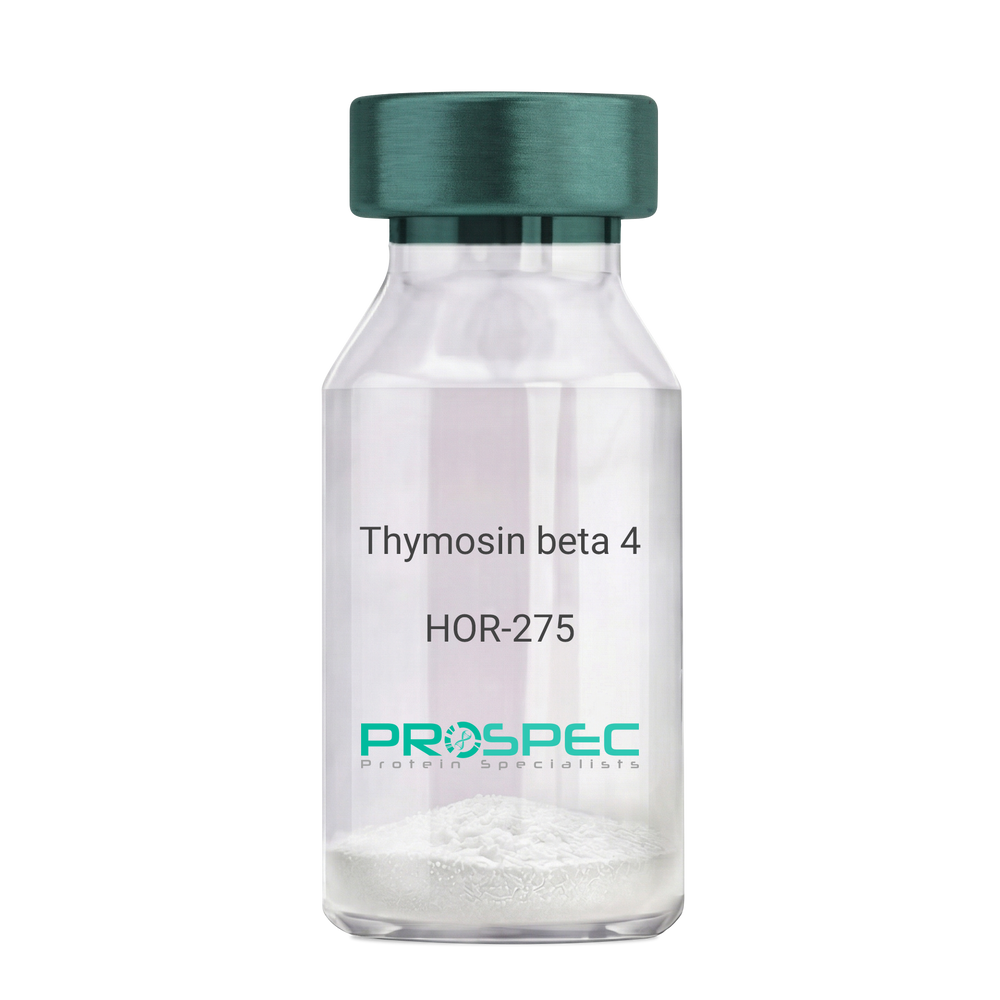
Name :
Thymosin beta 4Description:
Thymosin β4
Thymosin beta-4. TB500, TB-500
Product # :
HOR-275Price :
Quantity :
Shipping Method :
Shipped at Room temp
More Info
- description
- formulation
- purity
- More Info
Description
Thymosin b4 is a 43 amino acid peptide which is regarded as the main intracellular G-actin sequestering peptide. It has a molecular weight of 4963.55 Da, and its molecular formula is: C212H350N56O78S1. Extracellular Thymosin b4 may contribute to physiological processes such as angiogenesis, wound healing, and regulation of inflammation.
Formulation
The protein (1mg/ml) was lyophilized with no additives.
Purity
Greater than 98.0% as determined by RP-HPLC.
More Info
-
Introduction
Thymosin is a hormone secreted from the thymus. Its primary function is to stimulate the production of T cells, which are an important part of the immune system. Thymosin also assists in the development of B cells to plasma cells to produce antibodies. The predominant form of thymosin, thymosin b4, is a member of a highly conserved family of actin monomer-sequestering proteins. b-thymosins are the primary regulators of unpolymerized actin, and are essential for maintaining the small cytoplasmic pool of free G-actin monomers required for rapid filament elongation and allowing for the flux of monomers between the thymosin-bound pool and F-actin.
-
Synonyms
Thymosin beta-4. TB500, TB-500
-
Physical Appearance
Sterile Filtered White lyophilized (freeze-dried) powder.
-
Stability
Lyophilized Thymosin b4 although stable at room temperature for 3 weeks, should be stored desiccated below -18°C. Upon reconstitution T beta 4 should be stored at 4°C between 2-7 days and for future use below -18°C.For long term storage it is recommended to add a carrier protein (0.1% HSA or BSA).Please prevent freeze-thaw cycles.
-
Solubility
It is recommended to reconstitute the lyophilized Thymosin beta-4 in sterile 18MΩ-cm H2O not less than 100 µg/ml, which can then be further diluted to other aqueous solutions.
-
Amino Acid Sequence
Thymosin b4 has an a.a. sequence of Ac-Ser-Asp-Lys-Pro-Asp-Met-Ala-Glu-Ile-Glu-Lys-Phe-Asp-Lys-Ser-Lys-Leu-Lys-Lys-Thr-Glu-Thr-Gln-Glu-Lys-Asn-Pro-Leu-Pro-Ser-Lys-Glu-Thr-Ile-Glu-Gln-Glu-Lys-Gln-Ala-Gly-Glu-Ser-OH.
ProSpec's products are furnished for LABORATORY RESEARCH USE ONLY. The product may not be used as drugs, agricultural or pesticidal products, food additives or household chemicals.
- View Data Sheet
Name :
ANKRA2 HumanDescription:
Ankyrin Repeat Family A2 Human Recombinant
Ankyrin Repeat, Family A (RFXANK-Like), 2, ANKRA, RFXANK-Like Protein 2, Ankyrin Repeat Family A Protein 2, ANKRA2.
Product # :
PRO-2062Price :
Quantity :
Shipping Method :
Shipped with Ice Packs
More Info
- description
- source
- formulation
- purity
- More Info
Description
ANKRA2 Human Recombinant produced in E.Coli is a single, non-glycosylated polypeptide chain containing 336 amino acids (1-313a.a) and having a molecular mass of 36.7kDa. ANKRA2 is fused to a 23 amino acid His-tag at N-terminus & purified by proprietary chromatographic techniques.
Source
Escherichia Coli.
Formulation
ANKRA2 protein solution (0.25 mg/ml) containing 20mM Tris-HCl buffer (pH 8.0), 0.1M NaCl, 10% glycerol and 1mM DTT.
Purity
Greater than 85.0% as determined by SDS-PAGE.
More Info
-
Introduction
Ankyrin Repeat Family A2, also known as ANKRA2 contains 5 ANK repeats. ANKRA2 assist endocytosis by linking megalin to components of the cytoskeleton or endocytic machinery.
-
Synonyms
Ankyrin Repeat, Family A (RFXANK-Like), 2, ANKRA, RFXANK-Like Protein 2, Ankyrin Repeat Family A Protein 2, ANKRA2.
-
Physical Appearance
Sterile Filtered clear solution.
-
Stability
Store at 4°C if entire vial will be used within 2-4 weeks. Store, frozen at -20°C for longer periods of time. For long term storage it is recommended to add a carrier protein (0.1% HSA or BSA).Avoid multiple freeze-thaw cycles.
-
Amino Acid Sequence
MGSSHHHHHH SSGLVPRGSH MGSMDTSTNL DIGAQLIVEE CPSTYSLTGM PDIKIEHPLD PNSEEGSAQG VAMGMKFILP NRFDMNVCSR FVKSLNEEDS KNIQDQVNSD LEVASVLFKA ECNIHTSPSP GIQVRHVYTP STTKHFSPIK QSTTLTNKHR GNEVSTTPLL ANSLSVHQLA AQGEMLYLAT RIEQENVINH TDEEGFTPLM WAAAHGQIAV VEFLLQNGAD PQLLGKGRES ALSLACSKGY TDIVKMLLDC GVDVNEYDWN GGTPLLYAVH GNHVKCVKML LESGADPTIE TDSGYNSMDL AVALGYRSVQ QVIESHLLKL LQNIKE.
ProSpec's products are furnished for LABORATORY RESEARCH USE ONLY. The product may not be used as drugs, agricultural or pesticidal products, food additives or household chemicals.