Search results
1000 results found for “neuritin”
Name
Description
Product #
Price
Quantity
Shipping Method
- View Data Sheet
Name :
Lymphotactin MouseDescription:
Lymphotactin (XCL1) Mouse Recombinant
XCL1, Cytokine SCM-1, ATAC, Lymphotaxin, SCM-1-alpha, Small inducible cytokine C1, XC chemokine ligand 1, LTN, LPTN, SCM1, SCM-1, SCYC1, SCM-1a.
Product # :
CHM-037Price :
Quantity :
Shipping Method :
Shipped at Room temp
More Info
- description
- source
- formulation
- purity
- biological activity
- More Info
Description
Lymphotactin (XCL1) Mouse Recombinant produced in E.Coli is a non-glycosylated polypeptide chain containing 93 amino acids and having a molecular mass of approximately 10.1kDa.Lymphotactin is purified by proprietary chromatographic techniques.
Source
Escherichia Coli.
Formulation
Lyophilized from a 0.2μm filtered concentrated solution in PBS, pH 7.4.
Purity
reater than 97.0% as determined by:
(a) Analysis by RP-HPLC.
(b) Analysis by SDS-PAGE.Biological Activity
The ED50 as determined by a chemotaxis bioassay using human XCR1 transfected murine BaF3 cells is < 100 ng/ml, corresponding to a specific activity of > 1.0 × 10⁴ IU/mg.
More Info
-
Introduction
XCL1 is a small cytokine belongs to the XC chemokine family that is also known as lymphotactin. XCL1 is found in high levels in spleen, thymus, intestine and peripheral blood leukocytes, and at lower levels in lung, prostate gland and ovary. Cellular sources for XCL1 include activated thymic and peripheral blood CD8+ T cells. This chemokine attracts T cells. In humans, XCL1 is closely related to XCL2, whose gene is found at the same locus on chromosome 1. XCL1 induces it chemotactic function by binding to a chemokine receptor called XCR1.
-
Synonyms
XCL1, Cytokine SCM-1, ATAC, Lymphotaxin, SCM-1-alpha, Small inducible cytokine C1, XC chemokine ligand 1, LTN, LPTN, SCM1, SCM-1, SCYC1, SCM-1a.
-
Physical Appearance
Sterile Filtered White lyophilized (freeze-dried) powder.
-
Stability
Lyophilized XCL1 although stable at room temperature for 3 weeks, should be stored desiccated below -18°C. Upon reconstitution Lymphotactin should be stored at 4°C between 2-7 days and for future use below -18°C.Please prevent freeze-thaw cycles.
-
Solubility
It is recommended to reconstitute the lyophilized Lymphotactin in sterile 18MΩ-cm H2O not less than 100µg/ml, which can then be further diluted to other aqueous solutions.
-
Amino Acid Sequence
VGTEVLEESS CVNLQTQRLP VQKIKTYIIW EGAMRAVIFV TKRGLKICAD PEAKWVKAAI KTVDGRASTR KNMAETVPTG AQRSTSTAIT LTG.
ProSpec's products are furnished for LABORATORY RESEARCH USE ONLY. The product may not be used as drugs, agricultural or pesticidal products, food additives or household chemicals.
- View Data Sheet
Name :
NUDCD2 HumanDescription:
NudC Domain Containing 2 Human Recombinant
NudC Domain Containing 2, NudC Domain-Containing Protein 2, NudC-Like Protein 2.
Product # :
PRO-1881Price :
Quantity :
Shipping Method :
Shipped with Ice Packs
More Info
- description
- source
- formulation
- purity
- More Info
Description
NUDCD2 Human Recombinant produced in E.Coli is a single, non-glycosylated polypeptide chain containing 180 amino acids (1-157 a.a) and having a molecular mass of 20kDa.NUDCD2 is fused to a 23 amino acid His-tag at N-terminus & purified by proprietary chromatographic techniques.
Source
Escherichia Coli.
Formulation
NUDCD2 protein solution (1mg/ml) containing 20mM Tris-HCl buffer (pH 8.0), 0.15M NaCl, 10% glycerol and 1mM DTT.
Purity
Greater than 95% as determined by SDS-PAGE.
More Info
-
Introduction
NudC Domain Containing 2 also known as NUDCD2 contains 1 CS domain and interacts with LIS1. NUDCD2 regulates the LIS1/dynein pathway by stabilizing LIS1 with Hsp90 chaperone.
-
Synonyms
NudC Domain Containing 2, NudC Domain-Containing Protein 2, NudC-Like Protein 2.
-
Physical Appearance
Sterile Filtered clear solution.
-
Stability
Store at 4°C if entire vial will be used within 2-4 weeks. Store, frozen at -20°C for longer periods of time.For long term storage it is recommended to add a carrier protein (0.1% HSA or BSA).Please avoid freeze thaw cycles.
-
Amino Acid Sequence
MGSSHHHHHH SSGLVPRGSH MGSMSAPFEE RSGVVPCGTP WGQWYQTLEE VFIEVQVPPG TRAQDIQCGL QSRHVALSVG GREILKGKLF DSTIADEGTW TLEDRKMVRI VLTKTKRDAA NCWTSLLESE YAADPWVQDQ MQRKLTLERF QKENPGFDFS GAEISGNYTK GGPDFSNLEK
ProSpec's products are furnished for LABORATORY RESEARCH USE ONLY. The product may not be used as drugs, agricultural or pesticidal products, food additives or household chemicals.
- View Data Sheet
Name :
LYN HumanDescription:
v-yes-1 Yamaguchi Sarcoma Viral Related Oncogene Human Recombinant
Tyrosine-protein kinase Lyn, Lck/Yes-related novel protein tyrosine kinase, V-yes-1 Yamaguchi sarcoma viral related oncogene homolog, p53Lyn, p56Lyn, JTK8, EC 2.7.10, LYN Proto-Oncogene, Src Family Tyrosine Kinase, V-Yes-1 Yamaguchi Sarcoma Viral Related Oncogene Homolog, Lck/Yes-Related Novel Protein Tyrosine Kinase, EC 2.7.10.2.
Product # :
PRO-136Price :
Quantity :
Shipping Method :
Shipped with Ice Packs
More Info
- description
- source
- formulation
- purity
- More Info
Description
LYN Human Recombinant produced in E.coli is a single, non-glycosylated polypeptide chain containing 535 amino acids (1-512) and having a molecular mass of 61.0kDa. LYN is fused to a 23 amino acid His-tag at N-terminus.
Source
Escherichia Coli.
Formulation
The LYN solution (1mg/ml) contains 20mM Tris-HCl buffer (pH 8.0) ,0.4M urea and 10% glycerol.
Purity
Greater than 85.0% as determined by SDS-PAGE.
More Info
-
Introduction
Tyrosine-protein kinase Lyn (LYN) belongs to the src family of non-receptor protein tyrosine kinases, which is primarily expressed in haematopoietic tissues. LYN protein is involved in induction of stress-activated protein kinase (SAPK), but not ERK or p38 MAPK, in response to genotoxic agents. LYN protein stimulates SAPK by a MKK7- and MEKK1-dependent mechanism. The LYN - MEKK1 - MKK7 - SAPK pathway is efficient in the induction of apoptosis by genotoxic agents.
-
Synonyms
Tyrosine-protein kinase Lyn, Lck/Yes-related novel protein tyrosine kinase, V-yes-1 Yamaguchi sarcoma viral related oncogene homolog, p53Lyn, p56Lyn, JTK8, EC 2.7.10, LYN Proto-Oncogene, Src Family Tyrosine Kinase, V-Yes-1 Yamaguchi Sarcoma Viral Related Oncogene Homolog, Lck/Yes-Related Novel Protein Tyrosine Kinase, EC 2.7.10.2.
-
Physical Appearance
Sterile Filtered colorless solution.
-
Stability
Store at 4°C if entire vial will be used within 2-4 weeks. Store, frozen at -20°C for longer periods of time. For long term storage it is recommended to add a carrier protein (0.1% HSA or BSA).Avoid multiple freeze-thaw cycles.
-
Amino Acid Sequence
MGSSHHHHHH SSGLVPRGSH MGSMGCIKSK GKDSLSDDGV DLKTQPVRNT ERTIYVRDPT SNKQQRPVPE SQLLPGQRFQ TKDPEEQGDI VVALYPYDGI HPDDLSFKKG EKMKVLEEHG EWWKAKSLLT KKEGFIPSNY VAKLNTLETE EWFFKDITRK DAERQLLAPG NSAGAFLIRE SETLKGSFSL SVRDFDPVHG DVIKHYKIRS LDNGGYYISP RITFPCISDM IKHYQKQADG LCRRLEKACI SPKPQKPWDK DAWEIPRESI KLVKRLGAGQ FGEVWMGYYN NSTKVAVKTL KPGTMSVQAF LEEANLMKTL QHDKLVRLYA VVTREEPIYI ITEYMAKGSL LDFLKSDEGG KVLLPKLIDF SAQIAEGMAY IERKNYIHRD LRAANVLVSE SLMCKIADFG LARVIEDNEY TAREGAKFPI KWTAPEAINF GCFTIKSDVW SFGILLYEIV TYGKIPYPGR TNADVMTALS QGYRMPRVEN CPDELYDIMK MCWKEKAEER PTFDYLQSVL DDFYTATEGQ YQQQP.
ProSpec's products are furnished for LABORATORY RESEARCH USE ONLY. The product may not be used as drugs, agricultural or pesticidal products, food additives or household chemicals.
- View Data Sheet
Name :
UNC119B HumanDescription:
UNC-119 Homolog B Human Recombinant
Unc-119 homolog B (C. elegans), POC7B, POC7 centriolar protein homolog B, MGC5139.
Product # :
PRO-1034Price :
Quantity :
Shipping Method :
Shipped with Ice Packs
More Info
- description
- source
- formulation
- purity
- More Info
Description
UNC119B Human Recombinant produced in E.coli is a single, non-glycosylated polypeptide chain containing 271 amino acids (1-251) and having a molecular mass of 30.3kDa.UNC119B is fused to a 20 amino acid His-tag at N-terminus & purified by proprietary chromatographic techniques.
Source
E.coli.
Formulation
The UNC119B solution (0.5mg/ml) contains 20mM Tris-HCl buffer (pH 8.0), 100mM NaCl, 1mM DTT and 10% glycerol.
Purity
Greater than 90% as determined by SDS-PAGE.
More Info
-
Introduction
UCN119B is a member of the PDE6D/unc-119 family. UCN119B has a large number of photoreceptors of the retina. Additionaly, UCN119B has a strong homology with the C. elegans unc119 and is able to functionally complement the C. elegans unc119 mutation gene.
-
Synonyms
Unc-119 homolog B (C. elegans), POC7B, POC7 centriolar protein homolog B, MGC5139.
-
Physical Appearance
Sterile Filtered colorless solution.
-
Stability
Store at 4°C if entire vial will be used within 2-4 weeks. Store, frozen at -20°C for longer periods of time. For long term storage it is recommended to add a carrier protein (0.1% HSA or BSA).Avoid multiple freeze-thaw cycles.
-
Amino Acid Sequence
MGSSHHHHHH SSGLVPRGSH MSGSNPKAAA AASAAGPGGL VAGKEEKKKA GGGVLNRLKA RRQAPHHAAD DGVGAAVTEQ ELLALDTIRP EHVLRLSRVT ENYLCKPEDN IYSIDFTRFK IRDLETGTVL FEIAKPCVSD QEEDEEEGGG DVDISAGRFV RYQFTPAFLR LRTVGATVEF TVGDKPVSNF RMIERHYFRE HLLKNFDFDF GFCIPSSRNT CEHIYEFPQL SEDVIRLMIE NPYETRSDSF YFVDNKLIMH NKADYAYNGG Q
ProSpec's products are furnished for LABORATORY RESEARCH USE ONLY. The product may not be used as drugs, agricultural or pesticidal products, food additives or household chemicals.
- View Data Sheet
Name :
RELM g MouseDescription:
RELM-Gamma Mouse Recombinant
Resistin-like gamma, RELMgamma,RELM-γ, RELM-g.
Product # :
CYT-1035Price :
Quantity :
Shipping Method :
Shipped at Room temp
More Info
- description
- source
- formulation
- purity
- More Info
Description
RELM g Mouse Recombinant produced in E.Coli is a non glycosylated, homodimeric polypeptide chain containing 2 x 89 amino acids and having a total molecular mass of 18.9kDa. The RELM is purified by proprietary chromatographic techniques.
Source
Escherichia Coli.
Formulation
Lyophilized from a sterile filtered solution containing 0.1 % trifluoroacetic acid (TFA).
Purity
Greater than 95.0% as determined by SDS-PAGE.
More Info
-
Introduction
RELM-gamma is a novel member of the resistin-like molecule/found in inflammatory zone (RELM/FIZZ) family in mice and rats. Microarray and real-time RT-PCR experiments revealed a repression of RELMgamma mRNA in nasal respiratory epithelium of cigarette smoke-exposed versus untreated rats. The analysis of the physiological tissue-specific expression revealed highest expression in hematopoietic tissues, suggesting a cytokine-like role for RELM-gamma. RELM-gamma-mRNA is detectable in bone marrow, spleen, and lung as well as in peripheral blood granulocytes. Promyelocytic HL60 cells transfected with a RELM-gamma expression plasmid have an increased proliferation rate compared to mock-transfected cells and display an altered response to retinoic acid-induced granulocytic differentiation. Taken together, these data provide the first experimental evidence that RELM-gamma is a secreted molecule with a restricted expression pattern that may play a role in promyelocytic differentiation.
-
Synonyms
Resistin-like gamma, RELMgamma,RELM-γ, RELM-g.
-
Physical Appearance
Sterile Filtered White lyophilized (freeze-dried) powder.
-
Stability
Lyophilized RELM g although stable at room temperature for 3 weeks, should be stored desiccated below -18°C. Upon reconstitution RELM g Mouse should be stored at 4°C between 2-7 days and for future use below -18°C. For long term storage it is recommended to add a carrier protein (0.1% HSA or BSA). Please prevent freeze-thaw cycles.
-
Solubility
It is recommended to reconstitute the lyophilized RELM g in sterile 18MΩ-cm H2O at a concentration of 100µg/ml, which can then be further diluted to other aqueous solutions.
-
Amino Acid Sequence
MEGTLESIVE KKVKELLANR DDCPSTVTKT FSCTSITASG RLASCPSGMT VTGCACGYGC GSWDIRDGNT CHCQCSTMDW ATARCCQLA.
ProSpec's products are furnished for LABORATORY RESEARCH USE ONLY. The product may not be used as drugs, agricultural or pesticidal products, food additives or household chemicals.
- View Data Sheet
Name :
NANS AntibodyDescription:
N-acetylneuraminic acid synthase, Mouse Anti Human
Sialic acid synthase, N-acetylneuraminate synthase, N-acetylneuraminate-9-phosphate synthase, N-acetylneuraminic acid phosphate synthase, N-acetylneuraminic acid synthase, NANS, SAS.
Product # :
ANT-054Price :
Quantity :
Shipping Method :
Shipped with Ice Packs
More Info
- formulation
- More Info
Formulation
1mg/ml containing PBS, pH-7.4, & 0.1% Sodium Azide.
More Info
-
Introduction
NANS is a 359 amino acid protein that contains one AFP (antifreeze proteins)-like domain and functions in the biosynthesis of sialic acids. The ubiquitously expressed NANS enzymatically catalyzes the H2O-dependent formation of N-acetylneuraminic acid (Neu5Ac) and 2-keto-3-deoxy-D-glycero-D-galacto-nononic acid (KDN), both of which are sialic acids. NANS uses N-acetylmannosamine 6-phosphate as a substrate for Neu5Ac synthesis and mannose 6-phosphate as a substrate for KDN synthesis.
-
Synonyms
Sialic acid synthase, N-acetylneuraminate synthase, N-acetylneuraminate-9-phosphate synthase, N-acetylneuraminic acid phosphate synthase, N-acetylneuraminic acid synthase, NANS, SAS.
-
Immunogen
Anti-human NANS mAb, is derived from hybridization of mouse FO myeloma cells with spleen cells from BALB/c mice immunized with recombinant human NANS amino acids 1-359 purified from E. coli.
-
Ig Subclass
Mouse IgG1 heavy chain and k light chain.
-
Clone
PAT1G6AT.
-
Applications
NANS antibody has been tested by ELISA, Western blot analysis to assure specificity and reactivity. Since application varies, however, each investigation should be titrated by the reagent to obtain optimal results. Recommended dilution range for Western blot analysis is 1:1,000.
-
Type
Mouse Anti Human Monoclonal.
-
Storage Procedures
For periods up to 1 month store at 4°C, for longer periods of time, store at -20°C. Prevent freeze thaw cycles.
-
Purification Method
NANS antibody was purified from mouse ascitic fluids by protein-G affinity chromatography.
ProSpec's products are furnished for LABORATORY RESEARCH USE ONLY. The product may not be used as drugs, agricultural or pesticidal products, food additives or household chemicals.
- View Data Sheet
Name :
PARK7 P1E12AT AntibodyDescription:
Parkinson Disease Protein 7 Clone P1E12AT, Mouse Anti Human
PARK7, Parkinson disease protein 7, Oncogene DJ-1, Parkinson disease (autosomal recessive, early onset) 7.
Product # :
ANT-515Price :
Quantity :
Shipping Method :
Shipped with Ice Packs
More Info
- formulation
- More Info
Formulation
1mg/ml containing PBS, pH-7.4, 10% Glycerol and 0.02% Sodium Azide.
More Info
-
Introduction
The PARK7 is a ubiquitously expressed protein involved in various cellular processes including spermatogenesis and fertilization, cancer, RNA-binding, androgen-receptor signaling and oxidative stress. Mutations in the PARK7 are the cause of autosomal recessive early-onset Parkinson’s disease 7 (Park7).
-
Synonyms
PARK7, Parkinson disease protein 7, Oncogene DJ-1, Parkinson disease (autosomal recessive, early onset) 7.
-
Physical Appearance
Sterile filtered colorless solution.
-
Immunogen
Anti-human PARK7 mAb, clone P1E12AT, is derived from hybridization of mouse F0 myeloma cells with spleen cells from BALB/c mice immunized with a recombinant human PARK7 protein 1-189 amino acids purified from E. coli
-
Ig Subclass
Mouse IgG2b heavy chain and k light chain.
-
Clone
P1E12AT.
-
Applications
The antibody has been tested by ELISA, Western blot analysis to assure specificity and reactivity. Since application varies, however, each investigation should be titrated by the reagent to obtain optimal results. Recommended starting dilution is 1:1000.
-
Type
Mouse Anti Human Monoclonal.
-
Storage Procedures
For periods up to 1 month store at 4°C, for longer periods of time, store at -20°C. Prevent freeze thaw cycles.
-
Purification Method
PARK7 antibody was purified from mouse ascitic fluids by protein-A affinity chromatography.
ProSpec's products are furnished for LABORATORY RESEARCH USE ONLY. The product may not be used as drugs, agricultural or pesticidal products, food additives or household chemicals.
- View Data Sheet
Name :
CoV-2 N (1-419), BiotinDescription:
Coronavirus 2019 Nucleocapsid (1-419 a.a.), Biotinylated Recombinant
Product # :
SARS-036Price :
Quantity :
Shipping Method :
Shipped at Room temp
More Info
- description
- source
- formulation
- purity
- More Info
Description
The HEK293 derived recombinant biotinylated protein contains the Coronavirus 2019 CoV-2 Nucleocapsid, Wuhan-Hu-1 strain, amino acids 1-419 fused to His-Avi tag at C-terminal.
Source
HEK293 Cells.
Formulation
CoV-2 Nucleocapsid protein is supplied in 50mM Tris, 0.15M NaCl & Arginine, pH7.5
Purity
Protein is >90% pure as determined SDS-PAGE.
More Info
-
Introduction
A human infecting coronavirus (viral pneumonia) called 2019 novel coronavirus, 2019-nCoV was found in the fish market at the city of Wuhan, Hubei province of China on December 2019.
The 2019-nCoV shares an 87% identity to the 2 bat-derived severe acute respiratory syndrome 2018 SARS-CoV-2 located in Zhoushan of eastern China. 2019-nCoV has an analogous receptor-BD-structure to that of 2018 SARS-CoV, even though there is a.a. diversity so thus the 2019-nCoV might bind to ACE2 receptor protein (angiotensin-converting enzyme 2) in humans.
While bats are possibly the host of 2019-nCoV, researchers suspect that animal from the ocean sold at the seafood market was an intermediate host. RSCU analysis proposes that the 2019-nCoV is a recombinant within the viral spike glycoprotein between the bat coronavirus and an unknown coronavirus.
-
Physical Appearance
Sterile Filtered White lyophilized (freeze-dried) powder.
-
Stability
Lyophilized Cov-2 Nucleocapsid protein although stable at room temperature for 3 weeks, should be stored desiccated below -18°C. Upon reconstitution CoV2 Nucleocapsid protein should be stored at 4°C between 2-7 days and for future use below -18°C.For long term storage it is recommended to add a carrier protein (0.1% HSA or BSA).Please prevent freeze-thaw cycles.
-
Purification Method
Purified by Metal-Afinity chromatographic technique.
ProSpec's products are furnished for LABORATORY RESEARCH USE ONLY. The product may not be used as drugs, agricultural or pesticidal products, food additives or household chemicals.
- View Data Sheet
Name :
ACVRL1 HumanDescription:
Activin A Receptor Type II-Like 1 Human Recombinant
Activin A Receptor Type II-Like 1, ACVRLK1, ALK1, TGF-B Superfamily Receptor Type I EC 2.7.11.30, TSR-I, ALK-1, HHT2, SKR3 Serine/Threonine-Protein Kinase Receptor R3 Activin A Receptor, Type II-Like Kinase 1, Activin Receptor-Like Kinase 1, EC 2.7.11, ORW2, HHT.
Product # :
CYT-920Price :
Quantity :
Shipping Method :
Shipped with Ice Packs
More Info
- description
- source
- formulation
- purity
- More Info
Description
ACVRL1 produced in Sf9 Insect cells is a single, glycosylated polypeptide chain containing 103 amino acids (22-118a.a.) and having a molecular mass of 11.5kDa. (Molecular size on SDS-PAGE will appear at approximately 18-28kDa).ACVRL1 is expressed with a 6 amino acid His tag at C-Terminus and purified by proprietary chromatographic techniques.
Source
Sf9, Insect cells.
Formulation
ACVRL1 protein solution (0.25mg/ml) contains phosphate buffered saline (pH7.4) and 10% glycerol.
Purity
Greater than 95.0% as determined by SDS-PAGE.
More Info
-
Synonyms
Activin A Receptor Type II-Like 1, ACVRLK1, ALK1, TGF-B Superfamily Receptor Type I EC 2.7.11.30, TSR-I, ALK-1, HHT2, SKR3 Serine/Threonine-Protein Kinase Receptor R3 Activin A Receptor, Type II-Like Kinase 1, Activin Receptor-Like Kinase 1, EC 2.7.11, ORW2, HHT.
-
Physical Appearance
Sterile filtered colorless solution.
-
Stability
Store at 4°C if entire vial will be used within 2-4 weeks.Store, frozen at -20°C for longer periods of time. For long term storage it is recommended to add a carrier protein (0.1% HSA or BSA).Avoid multiple freeze-thaw cycles.
-
Amino Acid Sequence
DPVKPSRGPL VTCTCESPHC KGPTCRGAWC TVVLVREEGR HPQEHRGCGN LHRELCRGRP TEFVNHYCCD SHLCNHNVSL VLEATQPPSEQPGTDGQHHH HHH.
-
Background
The Physiological Implications and Therapeutic Potential of Activin A Receptor Type II-Like 1 Human Recombinant
1. Abstract
This research paper investigates the Activin A Receptor Type II-Like 1 Human Recombinant (ACVRL1), a significant protein involved in the TGF-beta superfamily signaling pathway. We provide an extensive understanding of ACVRL1’s structure, signaling mechanism, biological functions, and implications in disease pathology. Additionally, we explore the therapeutic potential of ACVRL1 in various pathological conditions.
2. Introduction
ACVRL1, also known as ALK1, plays an essential role in the TGF-beta signaling pathway, which has implications in cellular proliferation, differentiation, and apoptosis. Understanding ACVRL1 and its signaling mechanisms could provide insights into its potential therapeutic applications in various diseases.
3. Structure and Signaling of ACVRL1
ACVRL1 is a type I receptor protein involved in the TGF-beta signaling pathway. It is a transmembrane protein that consists of a ligand-binding extracellular domain and an intracellular domain responsible for signal transduction. Binding of ligands to ACVRL1 triggers phosphorylation events that activate downstream signaling pathways.
4. Biological Functions of ACVRL1
ACVRL1 plays pivotal roles in multiple biological processes, including vascular development, angiogenesis, and maintenance of vascular integrity. It is known to influence cellular processes such as proliferation, differentiation, and apoptosis, thereby implicating it in organogenesis and homeostasis.
5. ACVRL1 in Disease Pathology
Mutations in the ACVRL1 gene have been associated with hereditary hemorrhagic telangiectasia (HHT), a genetic disorder characterized by abnormal blood vessel formation. This link underscores the critical role of ACVRL1 in vascular biology and disease.
6. Therapeutic Potential of ACVRL1
Given its crucial role in vascular biology and its link to HHT, ACVRL1 presents a promising target for therapeutic interventions. Modulation of ACVRL1 signaling could potentially provide treatment options for pathological conditions related to abnormal blood vessel formation and function.
7. Conclusion and Future Perspectives
Our understanding of ACVRL1 and its functions has grown significantly in recent years, but there is much yet to be discovered. Continued research into ACVRL1's precise molecular mechanisms and its roles in disease will undoubtedly open new doors for therapeutic developmen
What is the molecular weight / Mw of ACVRL1 Protein?
ACVRL1 Protein has a total Mw of 11.5kDa.What is the source or expression system of ACVRL1 Protein?
Sf9, Insect cells.
What is the Purity of ACVRL1 Protein?
ACVRL1 Protein is >95% pure as determined by SDS-PAGE.
What is the Biological Activity of ACVRL1 Protein?
The biological functionality of ACVRL1 Protein will be determined in the future.
What is the amino acid sequence of ACVRL1 Protein?
DPVKPSRGPL VTCTCESPHC KGPTCRGAWC TVVLVREEGR HPQEHRGCGN LHRELCRGRP TEFVNHYCCD SHLCNHNVSL VLEATQPPSEQPGTDGQHHH HHH.
What applications can ACVRL1 Protein be used in?
ACVRL1 Protein can probably be used in western blot, ELISA and Lateral Flow.
What is the endotoxin level for ACVRL1 Protein?
The endotoxin level is minimal, ACVRL1 Protein was purified using conventional chromatography techniques.
ProSpec's products are furnished for LABORATORY RESEARCH USE ONLY. The product may not be used as drugs, agricultural or pesticidal products, food additives or household chemicals.
- View Data Sheet
Name :
NCK2 HumanDescription:
NCK Adaptor Protein 2 Human Recombinant
NCK Adaptor Protein 2, Growth Factor Receptor-Bound Protein 4, SH2/SH3 Adaptor Protein NCK-Beta, Noncatalytic Region Of Tyrosine Kinase Beta, Cytoplasmic Protein NCK2, GRB4, NCKbeta, Nck-2.
Product # :
PRO-1621Price :
Quantity :
Shipping Method :
Shipped with Ice Packs
More Info
- description
- source
- formulation
- purity
- More Info
Description
NCK2 Human Recombinant produced in E.coli is a single, non-glycosylated polypeptide chain containing 403 amino acids (1-380) and having a molecular mass of 45.3kDa.NCK2 is fused to a 23 amino acid His-tag at N-terminus & purified by proprietary chromatographic techniques.
Source
Escherichia Coli.
Formulation
The NCK2 solution contains 20mM Tris-HCl buffer (pH 8.0), 0.15M NaCl, 1mM DTT and 30% glycerol.
Purity
Greater than 85% as determined by SDS-PAGE.
More Info
-
Introduction
NCK2 belongs to the NCK family of adaptor proteins. NCK2 holds one SH2 domain and three SH3 domains. NCK2 bind and recruit several proteins that take part in the regulation of receptor protein tyrosine kinases even though it has no known catalytic function. That indicates that NCK2 takes part in cytoskeletal reorganization. Alternate transcription splice variants, encoding diverse isoforms, were characterized.
-
Synonyms
NCK Adaptor Protein 2, Growth Factor Receptor-Bound Protein 4, SH2/SH3 Adaptor Protein NCK-Beta, Noncatalytic Region Of Tyrosine Kinase Beta, Cytoplasmic Protein NCK2, GRB4, NCKbeta, Nck-2.
-
Physical Appearance
Sterile filtered colorless solution.
-
Stability
Store at 4°C if entire vial will be used within 2-4 weeks. Store, frozen at -20°C for longer periods of time. For long term storage it is recommended to add a carrier protein (0.1% HSA or BSA).Avoid multiple freeze-thaw cycles.
-
Amino Acid Sequence
MGSSHHHHHH SSGLVPRGSH MGSMTEEVIV IAKWDYTAQQ DQELDIKKNE RLWLLDDSKT WWRVRNAANR TGYVPSNYVE RKNSLKKGSL VKNLKDTLGL GKTRRKTSAR DASPTPSTDA EYPANGSGAD RIYDLNIPAF VKFAYVAERE DELSLVKGSR VTVMEKCSDG WWRGSYNGQI GWFPSNYVLE EVDEAAAESP SFLSLRKGAS LSNGQGSRVL HVVQTLYPFS SVTEEELNFE KGETMEVIEK PENDPEWWKC KNARGQVGLV PKNYVVVLSD GPALHPAHAP QISYTGPSSS GRFAGREWYY GNVTRHQAEC ALNERGVEGD FLIRDSESSP SDFSVSLKAS GKNKHFKVQL VDNVYCIGQR RFHTMDELVE HYKKAPIFTS EHGEKLYLVR ALQ
ProSpec's products are furnished for LABORATORY RESEARCH USE ONLY. The product may not be used as drugs, agricultural or pesticidal products, food additives or household chemicals.
- View Data Sheet
Name :
BCCIP HumanDescription:
BRCA2 And CDKN1A Interacting Protein Human Recombinant
BRCA2 and CDKN1A-interacting protein, P21- and CDK-associated protein 1, Protein TOK-1, BCCIP, TOK1, BRCA2 and CDKN1A-interacting protein.
Product # :
PRO-2014Price :
Quantity :
Shipping Method :
Shipped with Ice Packs
More Info
- description
- source
- formulation
- purity
- More Info
Description
BCCIP Human Recombinant produced in E.Coli is a single, non-glycosylated polypeptide chain containing 339 amino acids (1-314 a.a.) and having a molecular mass of 38.6kDa.BCCIP is fused to a 25 amino acid His-tag at N-terminus & purified by proprietary chromatographic techniques.
Source
Escherichia Coli.
Formulation
BCCIP protein solution (0.5mg/ml) containing 20mM Tris-HCl buffer (pH 8.0), 0.15M NaCl, 10% glycerol and 1mM DTT.
Purity
Greater than 90.0% as determined by SDS-PAGE.
More Info
-
Introduction
BRCA2 And CDKN1A Interacting Protein (BCCIP) is a nuclear protein with multiple interacting domains which remained conserved throughout the evolution. BCCIP is an important cofactor for BRCA2 in tumor suppression, and a modulator of CDK2 kinase activity via p21. BCCIP takes also part in the regulation of BRCA2 and RAD51 nuclear focus formation, doublestrand break-induced homologous recombination, and cell cycle progression.
-
Synonyms
BRCA2 and CDKN1A-interacting protein, P21- and CDK-associated protein 1, Protein TOK-1, BCCIP, TOK1, BRCA2 and CDKN1A-interacting protein.
-
Physical Appearance
Sterile Filtered colorless solution.
-
Stability
Store at 4°C if entire vial will be used within 2-4 weeks. Store, frozen at -20°C for longer periods of time. For long term storage it is recommended to add a carrier protein (0.1% HSA or BSA).Avoid multiple freeze-thaw cycles.
-
Amino Acid Sequence
MGSSHHHHHH SSGLVPRGSH MGSEFMASRS KRRAVESGVP QPPDPPVQRD EEEEKEVENE DEDDDDSDKE KDEEDEVIDE EVNIEFEAYS LSDNDYDGIK KLLQQLFLKA PVNTAELTDL LIQQNHIGSV IKQTDVSEDS NDDMDEDEVF GFISLLNLTE RKGTQCVEQI QELVLRFCEK NCEKSMVEQL DKFLNDTTKP VGLLLSERFI NVPPQIALPM YQQLQKELAG AHRTNKPCGK CYFYLLISKT FVEAGKNNSK KKPSNKKKAA LMFANAEEEF FYEKAILKFN YSVQEESDTC LGGKWSFDDV PMTPLRTVML IPGDKMNEIM DKLKEYLSV.
ProSpec's products are furnished for LABORATORY RESEARCH USE ONLY. The product may not be used as drugs, agricultural or pesticidal products, food additives or household chemicals.
- View Data Sheet
Name :
NXT1 HumanDescription:
NTF2-like Export Factor 1 Human Recombinant
NTF2-like export factor 1, MTR2, Protein P15, NTF2-related export protein 1, NUTF-like export factor 1, NTX2-like export factor1.
Product # :
PRO-218Price :
Quantity :
Shipping Method :
Shipped with Ice Packs
More Info
- description
- source
- formulation
- purity
- More Info
Description
NXT1 Human Recombinant fused with a 20 amino acid His tag at N-terminus produced in E.Coli is a single, non-glycosylated, polypeptide chain containing 160 amino acids (1-140a.a.) and having a molecular mass of 18.0kDa. The NXT1 is purified by proprietary chromatographic techniques.
Source
Escherichia Coli.
Formulation
The NXT1 solution (0.25mg/ml) contains 20mM Tris-HCl buffer (pH 8.0), 20% glycerol and 0.1M NaCl.
Purity
Greater than 85.0% as determined by SDS-PAGE.
More Info
-
Introduction
NXT1 operates as a nuclear export factor in both RAN and CRM1 dependent pathways. NXT1 is known to stimulate the export of U1 snRNA in RAN (Ras-related nuclear protein) and CRM1 (chromosome region maintenance) dependent pathways and the export of tRNA and mRNA in a CRM1-independent pathway. This protein heterodimerizes with Tap protein and regulates the ability of Tap protein to intermediate nuclear mRNA export.
-
Synonyms
NTF2-like export factor 1, MTR2, Protein P15, NTF2-related export protein 1, NUTF-like export factor 1, NTX2-like export factor1.
-
Physical Appearance
Sterile Filtered colorless solution.
-
Stability
Store at 4°C if entire vial will be used within 2-4 weeks. Store, frozen at -20°C for longer periods of time. For long term storage it is recommended to add a carrier protein (0.1% HSA or BSA).Avoid multiple freeze-thaw cycles.
-
Amino Acid Sequence
MGSSHHHHHH SSGLVPRGSH MASVDFKTYV DQACRAAEEF VNVYYTTMDK RRRLLSRLYM GTATLVWNGN AVSGQESLSE FFEMLPSSEF QISVVDCQPV HDEATPSQTT VLVVICGSVK FEGNKQRDFN QNFILTAQAS PSNTVWKIAS DCFRFQDWAS.
ProSpec's products are furnished for LABORATORY RESEARCH USE ONLY. The product may not be used as drugs, agricultural or pesticidal products, food additives or household chemicals.
- View Data Sheet
Name :
EOGT MouseDescription:
EGF Domain-Specific O-Linked N-Acetylglucosamine Transferase Mouse Recombinant
EGF domain-specific O-linked N-acetylglucosamine transferase, Extracellular O-linked N-acetylglucosamine transferase.
Product # :
ENZ-946Price :
Quantity :
Shipping Method :
Shipped with Ice Packs
More Info
- description
- source
- formulation
- purity
- More Info
Description
EOGT produced in Sf9 Baculovirus cells is a single, glycosylated polypeptide chain containing 516 amino acids (20-527 a.a.) and having a molecular mass of 60.4kDa (Migrates at 50-70kDa on SDS-PAGE under reducing conditions). EOGT is expressed with an 8 amino acid His tag at C-Terminus and purified by proprietary chromatographic techniques.
Source
Sf9, Baculovirus cells.
Formulation
EOGT protein solution (0.5mg/ml) contains Phosphate Buffered Saline (pH 7.4) and 10% glycerol.
Purity
Greater than 85.0% as determined by SDS-PAGE.
More Info
-
Introduction
EGF Domain-Specific O-Linked N-Acetylglucosamine Transferase (EOGT) takes part in the regulation of Notch receptor. EOGT catalyzes the transfer of a single N-acetylglucosamine from UDP-GlcNAc to a serine/ threonine residue in extracellular proteins resulting in their modification with a beta-linked N-acetylglucosamine (O-GlcNAc). EOGT mainly glycosylates the Thr residue positioned between the fifth and sixth conserved cysteines of folded EGF-like domains.
-
Synonyms
EGF domain-specific O-linked N-acetylglucosamine transferase, Extracellular O-linked N-acetylglucosamine transferase.
-
Physical Appearance
Sterile Filtered colorless solution.
-
Stability
Store at 4°C if entire vial will be used within 2-4 weeks. Store, frozen at -20°C for longer periods of time. For long term storage it is recommended to add a carrier protein (0.1% HSA or BSA). Avoid multiple freeze-thaw cycles.
-
Amino Acid Sequence
DKAHSEADDA PGKALYDYSS LRLPAEHIPF FLHNNRHVAS VCREDSHCPY KKHLENLNYC WGYEKSCAPE FRFGSPVCSY VDLGWTDTLE SAQDMFWRQA DFGYARERLG EIRTICQPER ASDSSLVCSR YLQYCRATGL YLDLRNIKRN HDRFKEDFLQ GGEIGGYCKL DSHALVSEGQ RKSPLQSWFA ELQGYTQLNF RPIEDAKCDI VVEKPTYFMK LDAGINMYHH FCDFLNLYLT QHVNNSFSTD VYIVMWDTST YGYGDLFSDT WKAFTDYDVI HLKTYDSKKV CFKEAVFSLL PRMRYGLFYN TPLISGCQNT GLFRAFSQHV LHRLNITQEG PKDGKVRVTI LARSTEYRKI LNQDELVNAL KTVSTFEVRV VDYKYRELGF LDQLRITHNT DIFIGMHGAG LTHLLFLPDW AAVFELYNCE DERCYLDLAR LRGIHYITWR KPSKVFPQDK GHHPTLGEHP KFTNYSFDVE EFMYLVLQAA EHVLQHPQWP FKKKHDELLE HHHHHH.
ProSpec's products are furnished for LABORATORY RESEARCH USE ONLY. The product may not be used as drugs, agricultural or pesticidal products, food additives or household chemicals.
- View Data Sheet
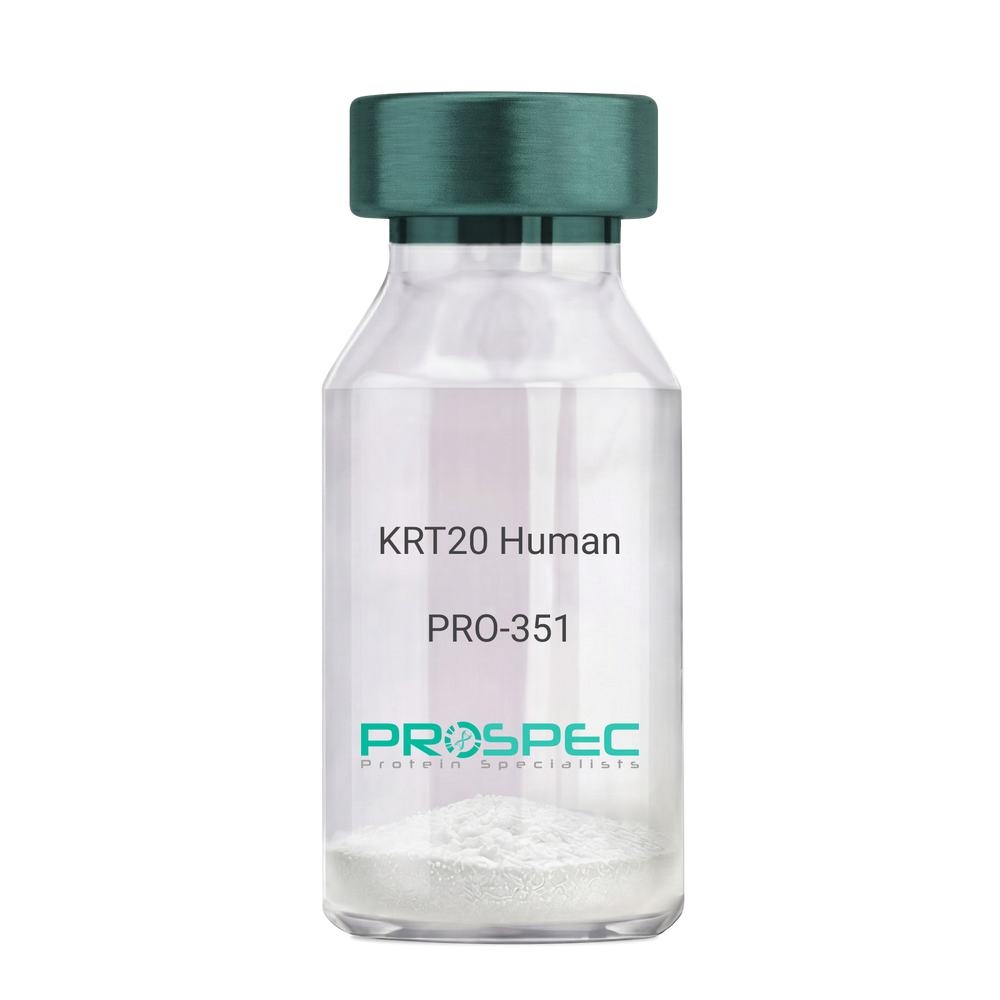
Name :
KRT20 HumanDescription:
Cytokeratin 20 Human Recombinant
Keratin type I cytoskeletal 20, Cytokeratin-20, CK-20, Keratin-20, K20, Protein IT, KRT20, CD20, CK20, KRT21, MGC35423.
Product # :
PRO-351Price :
Quantity :
Shipping Method :
Shipped at Room temp
More Info
- description
- source
- formulation
- purity
- More Info
Description
Cytokeratin 20 Human Recombinant produced in E.Coli is a single,non-glycosylated polypeptide chain having a molecular mass of 48,553 Dalton. The KRT20 is purified by proprietary chromatographic techniques.
Source
Escherichia Coli.
Formulation
The protein (1mg/1ml) was lyophilized after from a sterile solution containing 30mM Tris-HCL pH-8, 9.5M urea, 2mM DDT, 2mM EDTA and 10mM methylammonium chloride.
Purity
Greater than 95.0% as determined by SDS-PAGE.
More Info
-
Introduction
KRT20 is a member of the keratin family. The keratins are intermediate filament proteins responsible for the structural integrity of epithelial cells and are subdivided into cytokeratins and hair keratins. The type I cytokeratins consist of acidic proteins which are arranged in pairs of heterotypic keratin chains. This cytokeratin is a major cellular protein of mature enterocytes and goblet cells and is specifically expressed in the gastric and intestinal mucosa. The type I cytokeratin genes are clustered in a region of chromosome 17q12-q21.
-
Synonyms
Keratin type I cytoskeletal 20, Cytokeratin-20, CK-20, Keratin-20, K20, Protein IT, KRT20, CD20, CK20, KRT21, MGC35423.
-
Physical Appearance
Sterile Filtered White lyophilized (freeze-dried) powder.
-
Stability
Lyophilized KRT20 although stable at room temperature for 3 weeks, should be stored desiccated below -18°C. Upon reconstitution KRT20 should be stored at 4°C between 2-7 days and for future use below -18°C.For long term storage it is recommended to add a carrier protein (0.1% HSA or BSA).Please prevent freeze-thaw cycles.
-
Solubility
It is recommended to reconstitute the lyophilized KRT20 in sterile 18MΩ-cm H2O not less than 100µg/ml, which can then be further diluted to other aqueous solutions.
-
Reconstitution to filaments
Performed by mixing equimolar amounts of cytokeratins of type I and type II at concentrations of approx. 0.5 mg/ml, both dissolved in 9.5 M urea buffer (see above). Protofilaments and filament complexes are obtained by dialyzing the resulting polypeptide solution stepwise to a concentration of 4 M urea and then to low salt condition (50 mM NaCI, 2 mM dithiothreitol, 10 mM Tris-HCI, pH 7.4). For immunization purposes, the solution can be further dialyzed against PBS (phosphate buffered saline, e.g. Dulbecco's PBS).
ProSpec's products are furnished for LABORATORY RESEARCH USE ONLY. The product may not be used as drugs, agricultural or pesticidal products, food additives or household chemicals.
- View Data Sheet
Name :
SPP1 MouseDescription:
Osteopontin 1 Mouse Recombinant
Secreted Phosphoprotein-1, OPN, BNSP, BSPI, ETA-1, MGC110940, SPP-1, Osteopontin, Bone sialoprotein 1, Urinary stone protein, Nephropontin, Uropontin, SPP1
Product # :
CYT-1201Price :
Quantity :
Shipping Method :
Shipped with Ice Packs
More Info
- description
- source
- formulation
- purity
- biological activity
- More Info
Description
SPP1 Mouse Recombinant produced in HEK293 Cells is a single, glycosylated polypeptide chain containing 287 amino acids (17-294 a.a) and having a molecular mass of 31.8kDa.SPP1 is expressed with a 6 amino acid His tag at C-Terminus and purified by proprietary chromatographic techniques.
Source
HEK293 Cells.
Formulation
The SPP1 solution (0.25mg/1ml) contains phosphate buffered saline (pH7.4) and 10% glycerol.
Purity
Greater than 90.0% as determined by SDS-PAGE.
Biological Activity
Measured by the ability of the immobilized protein to support the adhesion of HEK293 HEK cells when the cells are added to mouse SPP1 coated plates. The ED50 range is ≤ 1.5 ug/ml.
More Info
-
Introduction
Osteopontin is a glycoprotein that was first identified in osteoblasts and is involved in bone remodeling, immune functions in fibroblasts, macrophages, and lymphocytes during inflammation and wound healing. SPP1 binds tightly to hydroxyapatite. SPP1 forms an integral part of the mineralized matrix. SPP1 is vital to cell-matrix interaction. Secreted Phosphoprotein-1 protects against cardiac ischemia-reperfusion injury via late preconditioning. Expression of both Ostepontin and CD44 in hepatocellular carcinoma is linked with advanced tumor stage and contributes to prognosis information. SPP1 is the most over-expressed gene in intrahepatic cholangiocarcinoma. Secreted Phosphoprotein-1 overexpression is related with interstitial lung diseases.
-
Synonyms
Secreted Phosphoprotein-1, OPN, BNSP, BSPI, ETA-1, MGC110940, SPP-1, Osteopontin, Bone sialoprotein 1, Urinary stone protein, Nephropontin, Uropontin, SPP1
-
Physical Appearance
Sterile Filtered colorless solution.
-
Stability
Store at 4°C if entire vial will be used within 2-4 weeks.Store, frozen at -20°C for longer periods of time.For long term storage it is recommended to add a carrier protein (0.1% HSA or BSA).Avoid multiple freeze-thaw cycles.
-
Amino Acid Sequence
DGSLPVKVTD SGSSEEKLYS LHPDPIATWL VPDPSQKQNL LAPQNAVSSE EKDDFKQETL PSNSNESHDH MDDDDDDDDD DGDHAESEDS VDSDESDESH HSDESDETVT ASTQADTFTP IVPTVDVPNG RGDSLAYGLR SKSRSFQVSD EQYPDATDED LTSHMKSGES KESLDVIPVA QLLSMPSDQD NNGKGSHESS QLDEPSLETH RLEHSKESQE SADQSDVIDS QASSKASLEH QSHKFHSHKD KLVLDPKSKE DDRYLKFRIS HELESSSSEV NHHHHHH
ProSpec's products are furnished for LABORATORY RESEARCH USE ONLY. The product may not be used as drugs, agricultural or pesticidal products, food additives or household chemicals.
- View Data Sheet
Name :
LINGO1 HumanDescription:
Leucine Rich Repeat And Ig Domain Containing 1 Human Recombinant
Leucine Rich Repeat And Ig Domain Containing 1, LRRN6A, Leucine-Rich Repeat And Immunoglobulin Domain-Containing Protein 1, Leucine-Rich Repeat Neuronal Protein 1, Leucine Rich Repeat Neuronal 6A, LERN1, Leucine-Rich Repeat And Immunoglobulin-Like Domain-Containing Nogo Receptor-Interacting Protein 1, Leucine-Rich Repeat Neuronal Protein 6A, UNQ201, LERN1, Leucine-rich repeat and immunoglobulin-like domain-containing nogo receptor-interacting protein 1.
Product # :
PRO-2187Price :
Quantity :
Shipping Method :
Shipped with Ice Packs
More Info
- description
- source
- formulation
- purity
- More Info
Description
LINGO1 Human Recombinant produced in E.Coli is a single, non-glycosylated polypeptide chain containing 133 amino acids (241-337 a.a) and having a molecular mass of 15.1kDa. LINGO1 is fused to a 36 amino acid His-tag at N-terminus & purified by proprietary chromatographic techniques.
Source
Escherichia Coli.
Formulation
LINGO1 protein solution (1mg/ml) containing 20mM Tris-HCl buffer (pH 8.0) and 10% glycerol.
Purity
Greater than 90.0% as determined by SDS-PAGE.
More Info
-
Introduction
Leucine Rich Repeat And Ig Domain Containing 1, also known as Lingo1 is primarily expressed in neuronal tissue, and most abundantly in the cortex. In addition, Lingo 1 is involved in the inhibition of axon regeneration all the way through a ternary complex formed with NgR1 (ligand-binding subunit) and p75 (signal transducing subunit). The inhibitory action is accomplished through RhoA-GTP upregulation in response to the presence of MOG, MAG or Nogo-66 in the central nervous system. Furthermore, LINGO-1 inhibits oligodendrocyte precursor differentiation as well as myelination, by a mechanism which also involves activation of RhoA, however it appears that it does not require 75 or NgR1.
-
Synonyms
Leucine Rich Repeat And Ig Domain Containing 1, LRRN6A, Leucine-Rich Repeat And Immunoglobulin Domain-Containing Protein 1, Leucine-Rich Repeat Neuronal Protein 1, Leucine Rich Repeat Neuronal 6A, LERN1, Leucine-Rich Repeat And Immunoglobulin-Like Domain-Containing Nogo Receptor-Interacting Protein 1, Leucine-Rich Repeat Neuronal Protein 6A, UNQ201, LERN1, Leucine-rich repeat and immunoglobulin-like domain-containing nogo receptor-interacting protein 1.
-
Physical Appearance
Sterile Filtered colorless solution.
-
Stability
Store at 4°C if entire vial will be used within 2-4 weeks. Store, frozen at -20°C for longer periods of time. For long term storage it is recommended to add a carrier protein (0.1% HSA or BSA).Avoid multiple freeze-thaw cycles.
-
Amino Acid Sequence
MRGSHHHHHH GMASMTGGQQ MGRDLYDDDD KDRWGSLKVL EISHWPYLDT MTPNCLYGLN LTSLSITHCN LTAVPYLAVR HLVYLRFLNL SYNPISTIEG SMLHELLRLQ EIQLVGGQLA VVEPYAFRGL NYL.
ProSpec's products are furnished for LABORATORY RESEARCH USE ONLY. The product may not be used as drugs, agricultural or pesticidal products, food additives or household chemicals.
- View Data Sheet
Name :
RARRES2 Human, Sf9Description:
Retinoic Acid Receptor Responder 2 Human Recombinant, Sf9
Retinoic Acid Receptor Responder 2, Chemerin, Retinoic Acid Receptor Responder (Tazarotene Induced) 2, Tazarotene-Induced Gene 2 Protein, RAR-Responsive Protein TIG2, TIG2, Retinoic Acid Receptor Responder Protein 2, HP10433, Retinoic acid receptor responder protein 2, Chemerin, RAR-responsive protein TIG2, Tazarotene-induced gene 2 protein.
Product # :
PRO-2382Price :
Quantity :
Shipping Method :
Shipped with Ice Packs
More Info
- description
- source
- formulation
- purity
- More Info
Description
RARRES2 produced in Sf9 Baculovirus cells is a single, glycosylated polypeptide chain containing 146 amino acids (21-157a.a.) and having a molecular mass of 16.9kDa. (Molecular size on SDS-PAGE will appear at approximately 18-28kDa). RARRES2 is expressed with a 6 amino acid His tag at C-Terminus and purified by proprietary chromatographic techniques.
Source
Sf9, Baculovirus cells.
Formulation
RARRES2 protein solution (0.5mg/ml) contains Phosphate Buffered Saline (pH 7.4) and 10% glycerol.
Purity
Greater than 90.0% as determined by SDS-PAGE.
More Info
-
Introduction
RARRES2 is a secreted chemotactic protein that initiates chemotaxis through the ChemR23 G protein-coupled seven-transmembrane domain ligand. RARRES2 is upregulated by the synthetic retinoid tazarotene and found in a vast variety of tissues. RARRES2 acts as an adipokine, and is truncated on both termini from the proprotein. RARRES2 is structurally related to the cathelicidin precursors, cystatin C and kininogens. RARRES2 promotes calcium mobilization and chemotaxis of immature dendritic cells and macrophages. RARRES2 is secreted as a precursor of little biological activity, which requires proteolytic cleavage of its COOH-terminal domain to be exchangeed into a potent and highly specific agonist of ChemR23. RARRES2 signals via its receptor, ChemR23 (CMKLR1), as a positive regulator of adipocyte differentiation and metabolic function. The Chemerin receptor acts as a coreceptor for SIV and some primary HIV-1 strains. The Chemerin receptor has another ligand, called tazarotene-induced gene.
-
Synonyms
Retinoic Acid Receptor Responder 2, Chemerin, Retinoic Acid Receptor Responder (Tazarotene Induced) 2, Tazarotene-Induced Gene 2 Protein, RAR-Responsive Protein TIG2, TIG2, Retinoic Acid Receptor Responder Protein 2, HP10433, Retinoic acid receptor responder protein 2, Chemerin, RAR-responsive protein TIG2, Tazarotene-induced gene 2 protein.
-
Physical Appearance
Sterile Filtered colorless solution.
-
Stability
Store at 4°C if entire vial will be used within 2-4 weeks. Store, frozen at -20°C for longer periods of time. For long term storage it is recommended to add a carrier protein (0.1% HSA or BSA).Avoid multiple freeze-thaw cycles.
-
Amino Acid Sequence
ADPELTEAQR RGLQVALEEF HKHPPVQWAF QETSVESAVD TPFPAGIFVR LEFKLQQTSC RKRDWKKPEC KVRPNGRKRK CLACIKLGSE DKVLGRLVHC PIETQVLREA EEHQETQCLR VQRAGEDPHS FYFPGQFAFS HHHHHH.
ProSpec's products are furnished for LABORATORY RESEARCH USE ONLY. The product may not be used as drugs, agricultural or pesticidal products, food additives or household chemicals.
- View Data Sheet
Name :
OAT AntibodyDescription:
Ornithine aminotransferase, Mouse Anti Human
Ornithine aminotransferase mitochondrial, Ornithine delta-aminotransferase, Ornithine-oxo-acid aminotransferase, OAT, OKT, GACR, HOGA, OATASE, DKFZp781A11155.
Product # :
ANT-013Price :
Quantity :
Shipping Method :
Shipped with Ice Packs
More Info
- formulation
- More Info
Formulation
1mg/ml containing PBS, pH-7.4, & 0.1% Sodium Azide.
More Info
-
Introduction
Ornithine aminotransferase is a key enzyme in the pathway that converts arginine and ornithine into the major excitatory and inhibitory neurotransmitters glutamate and GABA. Ornithine aminotransferase (OAT) is a 49kDa nucleus-encoded protein imported into mitochondria to give the mature 48kDa OAT polypeptide. It is found in humans, animals, insects, plants and microorganisms. The OAT has a sex-differential expression in the mouse kidney. OAT plays central physiological roles in amino acid metabolism. OAT shows a large structural and mechanistic similarity to other enzymes from the subgroup III of aminotransferases that transfer an amino group from a carbon atom which doesn’t carry a carboxyl function. OAT is vital for nitrogen recycling from arginine but not for the stress-induced proline accumulation. OAT enzyme deficiency causes the autosomal recessive eye disease Gyrate Atrophy.
-
Synonyms
Ornithine aminotransferase mitochondrial, Ornithine delta-aminotransferase, Ornithine-oxo-acid aminotransferase, OAT, OKT, GACR, HOGA, OATASE, DKFZp781A11155.
-
Immunogen
Anti-human OAT mAb, is derived from hybridization of mouse F0 myeloma cells with spleen cells from BALB/c mice immunized with recombinant human OAT amino acids 33-439 purified from E. coli.
-
Ig Subclass
Mouse IgG1 heavy chain and κ light chain.
-
Applications
OAT antibody has been tested by by ELISA, Western blot and Immunofluorescence analysis to assure specificity and reactivity. Since application varies, however, each investigation should be titrated by the reagent to obtain optimal results. Recommended dilution range for Western blot analysis and Immunofluorescence is 1:250 ~ 500.
Recommended starting dilution is 1:250. -
Type
PAT23A2AT.
-
Storage Procedures
For periods up to 1 month store at 4°C, for longer periods of time, store at -20°C. Prevent freeze thaw cycles.
-
Purification Method
OAT antibody was purified from mouse ascitic fluids by protein-G affinity chromatography.
ProSpec's products are furnished for LABORATORY RESEARCH USE ONLY. The product may not be used as drugs, agricultural or pesticidal products, food additives or household chemicals.
- View Data Sheet
Name :
SPP1 Human, ActiveDescription:
Osteopontin Human Recombinant, BioActive
OPN, SPP-1, BNSP, BSPI, ETA-1, Bone sialoprotein 1, BSP I.Early T lymphocyte activation 1, ETA 1, ETA1, MGC110940, Nephropontin, Secreted phosphoprotein 1, SPP 1, SPP1, urinary stone protein, uropontin.
Product # :
CYT-1166Price :
Quantity :
Shipping Method :
Shipped with Ice Packs
More Info
- description
- source
- formulation
- purity
- biological activity
- More Info
Description
SPP1 Human Recombinant produced in E.Coli is a single, non-glycosylated polypeptide chain containing 321 amino acids (17-314 a.a.) and having a molecular mass of 36.2kDa. SPP1 is fused to a 23 amino acid His tag at N-Terminus and purified by proprietary chromatographic techniques.
Source
Escherichia Coli.
Formulation
The SPP1 solution (1mg/ml) contains 20mM Tris-HCl buffer (pH 7.5), 1mM DTT, 10% glycerol and 2mM EDTA.
Purity
Greater than 90.0% as determined by SDS-PAGE.
Biological Activity
Measured by the ability of the immobilized protein to support the adhesion of HEK293 human embryonic kidney cells. When cells are added to OPN coated plates 10ug/ml. This effect is more to 40%.
More Info
-
Introduction
Osteopontin is a glycoprotein that was primarilyfound in osteoblasts and takes part in bone remodeling, immune functions in fibroblasts, macrophages, & lymphocytes during inflammation and wound healing. SPP1 highlybinds to hydroxyapatite. SPP1 forms an integral part of the mineralized matrix. SPP1 is vital to cell-matrix interaction.
Secreted Phosphoprotein-1 protects against cardiac ischemia-reperfusion injury through late preconditioning. Expression of Ostepontin and CD44 in hepatocellular carcinoma is linked to advanced tumor stage &leads to prognosis information. SPP1 is the most over-expressed gene in intrahepatic cholangiocarcinoma. Secreted Phosphoprotein-1 overexpression is related with interstitial lung diseases. -
Synonyms
OPN, SPP-1, BNSP, BSPI, ETA-1, Bone sialoprotein 1, BSP I.Early T lymphocyte activation 1, ETA 1, ETA1, MGC110940, Nephropontin, Secreted phosphoprotein 1, SPP 1, SPP1, urinary stone protein, uropontin.
-
Physical Appearance
Sterile Filtered clear colorless solution.
-
Stability
Store at 4°C if entire vial will be used within 2-4 weeks. Store, frozen at -20°C for longer periods of time. For long term storage it is recommended to add a carrier protein (0.1% HSA or BSA).Avoid multiple freeze-thaw cycles.
-
Amino Acid Sequence
MGSSHHHHHH SSGLVPRGSH RSMIPVKQAD SGSSEEKQLY NKYPDAVATW LNPDPSQKQN LLAPQNAVSS EETNDFKQET LPSKSNESHD HMDDMDDEDD DDHVDSQDSI DSNDSDDVDD TDDSHQSDES HHSDESDELV TDFPTDLPAT EVFTPVVPTV DTYDGRGDSV VYGLRSKSKK FRRPDIQYPD ATDEDITSHM ESEELNGAYK AIPVAQDLNA PSDWDSRGKD SYETSQLDDQ SAETHSHKQS RLYKRKANDE SNEHSDVIDS QELSKVSREF HSHEFHSHED MLVVDPKSKE EDKHLKFRIS HELDSASSEV N.
ProSpec's products are furnished for LABORATORY RESEARCH USE ONLY. The product may not be used as drugs, agricultural or pesticidal products, food additives or household chemicals.
- View Data Sheet
Name :
GALNT1 HumanDescription:
Polypeptide N-Acetylgalactosaminyltransferase 1 Human Recombinant
Polypeptide N-acetylgalactosaminyltransferase 1, GALNT1, GALNAC-T1
Product # :
enz-1098Price :
Quantity :
Shipping Method :
Shipped with Ice Packs
More Info
- description
- source
- formulation
- purity
- biological activity
- More Info
Description
GALNT1 produced in Sf9 Insect cells is a single, glycosylated polypeptide chain containing 528 amino acids (41-559a.a.) and having a molecular mass of 60.4kDa.GALNT1 is expressed with an 9 amino acid His tag at C-Terminus and purified by proprietary chromatographic techniques.
Source
Sf9, Insect cells.
Formulation
GALNT1 protein solution (1mg/ml) contains 20mM Tris-HCl buffer (pH 8.0) containing 0.1M NaCl and 10% glycerol.
Purity
Greater than 90.0% as determined by SDS-PAGE.
Biological Activity
The specific activity which is defined as the amount of enzyme that transfer 1.0 pmole of GalNAc from UDP-GalNAc to peptide EA2 per minute at pH 8.0 at 37C is > 300 pmol/min/ug.
More Info
-
Introduction
Polypeptide N-Acetylgalactosaminyltransferase 1 (Galnt1) is a part of the UDP-N-acetyl-alpha-D-galactosamine:polypeptide N-acetylgalactosaminyltransferase (GalNAc-T) family of enzymes. The initial reaction in O-linked oligosaccharide biosynthesis is catalyzed by Glant1, the transfer of an N-acetyl-D-galactosamine residue to a serine or threonine residue on the protein receptor. Moreover, Galnt1 is implicated in the glycosylation of proteins vital for bone formation for instance osteopontin and bone sialoprotein.
-
Synonyms
Polypeptide N-acetylgalactosaminyltransferase 1, GALNT1, GALNAC-T1
-
Physical Appearance
Sterile filtered colorless solution.
-
Stability
Store at 4°C if entire vial will be used within 2-4 weeks. Store, frozen at -20°C for longer periods of time. For long term storage it is recommended to add a carrier protein (0.1% HSA or BSA).Avoid multiple freeze-thaw cycles.
-
Amino Acid Sequence
ADPGLPAGDV LEPVQKPHEG PGEMGKPVVI PKEDQEKMKE MFKINQFNLM ASEMIALNRS
LPDVRLEGCK TKVYPDNLPT TSVVIVFHNE AWSTLLRTVH SVINRSPRHM IEEIVLVDDA
SERDFLKRPL ESYVKKLKVP VHVIRMEQRS GLIRARLKGA AVSKGQVITF LDAHCECTVG
WLEPLLARIK HDRRTVVCPI IDVISDDTFE YMAGSDMTYG GFNWKLNFRW YPVPQREMDR
RKGDRTLPVR TPTMAGGLFS IDRDYFQEIG TYDAGMDIWG GENLEISFRI WQCGGTLEIV
TCSHVGHVFR KATPYTFPGG TGQIINKNNR RLAEVWMDEF KNFFYIISPG VTKVDYGDIS
SRVGLRHKLQ CKPFSWYLEN IYPDSQIPRH YFSLGEIRNV ETNQCLDNMA RKENEKVGIF
NCHGMGGNQV FSYTANKEIR TDDLCLDVSK LNGPVTMLKC HHLKGNQLWE YDPVKLTLQH
VNSNQCLDKA TEEDSQVPSI RDCNGSRSQQ WLLRNVTLPE IFHHHHHH.
ProSpec's products are furnished for LABORATORY RESEARCH USE ONLY. The product may not be used as drugs, agricultural or pesticidal products, food additives or household chemicals.
- View Data Sheet
Name :
G CSF Human, PEGDescription:
Granulocyte-Colony Stimulating Factor Pegylated Human Recombinant
CSF-3, MGI-1G, GM-CSF beta, Pluripoietin, Filgrastim, Lenograstim, G-CSF, MGC45931, GCSF.
Product # :
CYT-018Price :
Quantity :
Shipping Method :
Shipped with Ice Packs
More Info
- description
- source
- formulation
- purity
- biological activity
- More Info
Description
Granulocyte Colony Stimulating Factor Human Recombinant produced in E.coli is a single, non-glycosylated, polypeptide chain containing 175 amino acids and having a molecular mass of 18.8kDa. The Pegylated G-CSF is produced by attaching a 20kDa methoxypolyethylene glycol propionaldehyde (mPEG-ALD) to the N-terminal amino acid of G-CSF giving a total molecular mass of 38.8kDa. G-CSF is purified by proprietary chromatographic techniques.
Source
Escherichia Coli.
Formulation
G-CSF is supplied in solution (0.69mg/ml) containing 10mM Acetate Buffer (pH 4.0), and 0.004% Polysorbate 80.
Purity
Greater than 95.0% as determined by SEC-HPLC.
Biological Activity
The ED50, calculated by the dose-dependent proliferation of murine NFS-60 indicator cells is less than 0.1 ng/ml, corresponding to a Specific Activity of 10,000,000IU/mg.
More Info
-
Introduction
GCSF is a cytokine that controls the production, differentiation, and function of granulocytes. The active protein is found extracellularly. Three transcript variants encoding three different isoforms have been found for this gene. Granulocyte/macrophage colony-stimulating factors are cytokines that act in hematopoiesis by controlling the production, differentiation, and function of 2 related white cell populations of the blood, the granulocytes and the monocytes-macrophages. This csf induces granulocytes.
-
Synonyms
CSF-3, MGI-1G, GM-CSF beta, Pluripoietin, Filgrastim, Lenograstim, G-CSF, MGC45931, GCSF.
-
Physical Appearance
Colorless, clear and transparent solution.
-
Stability
G-CSF PEG should be stored refrigerated at 2° to 8°C. Vials should be kept in theirpackaging to protect from light until the time of use. Shaking and freezing should be avoided.
-
Background
What is the molecular weight/Mw of G CSF HUMAN, PEG Protein?
G CSF HUMAN, PEG Protein has a total Mw of 18.8kDa.
What is the source or expression system of G CSF HUMAN, PEG Protein?
Escherichia Coli.
What is the Purity of G CSF HUMAN, PEG Protein?
G CSF HUMAN, PEG Protein is >95% pure as determined by SDS-PAGE.
What is the Biological Activity of G CSF HUMAN, PEG Protein?
The ED50, calculated by the dose-dependent proliferation of murine NFS-60 indicator cells is less than 0.1 ng/ml, corresponding to a Specific Activity of 10,000,000IU/mg.
What is the amino acid sequence of G CSF HUMAN, PEG Protein?
G CSF HUMAN, PEG Protein is composed from 175 amino acids.
What applications can G CSF HUMAN, PEG Protein be used in?
G CSF HUMAN, PEG Protein can probably be used in western blot, ELISA and Lateral Flow.
What is the endotoxin level for G CSF HUMAN, PEG Protein?
The endotoxin level is minimal, G CSF HUMAN, PEG Protein was purified using conventional chromatography techniques.
ProSpec's products are furnished for LABORATORY RESEARCH USE ONLY. The product may not be used as drugs, agricultural or pesticidal products, food additives or household chemicals.
- View Data Sheet
Name :
BASP1 HumanDescription:
Brain Abundant Membrane Attached Signal Protein 1 Human Recombinant
CAP-23, CAP23, NAP-22, NAP22, Brain acid soluble protein 1, BASP1, BASP1 Human, 22 kDa neuronal tissue-enriched acidic protein, Neuronal axonal membrane protein NAP-22.
Product # :
PRO-1355Price :
Quantity :
Shipping Method :
Shipped with Ice Packs
More Info
- description
- source
- formulation
- purity
- More Info
Description
BASP1 Human Recombinant produced in E.coli is a single, non-glycosylated polypeptide chain containing 250 amino acids (1-227) and having a molecular mass of 25 kDa (Molecular size on SDS-PAGE will appear higher). BASP1 is fused to a 23 amino acid His-tag at N-terminus & purified by proprietary chromatographic techniques.
Source
Escherichia Coli.
Formulation
The BASP1 solution (0.25mg/ml) contains 20mM Tris-HCl buffer (pH 8.0), 0.2M NaCl and 20% glycerol.
Purity
Greater than 95.0% as determined by SDS-PAGE.
More Info
-
Introduction
Brain Abundant Membrane Attached Signal Protein 1 (BASP1) is a membrane bound protein with numerous transient phosphorylation positions and PEST motifs. Preservation of proteins with PEST sequences amongst diverse species supports their functional significance. PEST sequences take place in proteins with high turnover rates. Immunological attributes of this protein are species specific. BASP1 undergoes N-terminal myristoylation.
-
Synonyms
CAP-23, CAP23, NAP-22, NAP22, Brain acid soluble protein 1, BASP1, BASP1 Human, 22 kDa neuronal tissue-enriched acidic protein, Neuronal axonal membrane protein NAP-22.
-
Physical Appearance
Sterile Filtered colorless solution.
-
Stability
Store at 4°C if entire vial will be used within 2-4 weeks. Store, frozen at -20°C for longer periods of time. For long term storage it is recommended to add a carrier protein (0.1% HSA or BSA).Avoid multiple freeze-thaw cycles.
-
Amino Acid Sequence
MGSSHHHHHH SSGLVPRGSH MGSMGGKLSK KKKGYNVNDE KAKEKDKKAE GAATEEEGTP KESEPQAAAE PAEAKEGKEK PDQDAEGKAE EKEGEKDAAA AKEEAPKAEP EKTEGAAEAK AEPPKAPEQE QAAPGPAAGG EAPKAAEAAA APAESAAPAA GEEPSKEEGE PKKTEAPAAP AAQETKSDGA PASDSKPGSS EAAPSSKETP AATEAPSSTP KAQGPAASAE EPKPVEAPAA NSDQTVTVKE.
ProSpec's products are furnished for LABORATORY RESEARCH USE ONLY. The product may not be used as drugs, agricultural or pesticidal products, food additives or household chemicals.
- View Data Sheet
Name :
Leptin Ovine, MTSDescription:
Leptin Ovine Recombinant, MTS tag
OB Protein, Obesity Protein, OBS, Obesity factor.
Product # :
CYT-531Price :
Quantity :
Shipping Method :
Shipped at Room temp
More Info
- description
- source
- formulation
- purity
- biological activity
- More Info
Description
Leptin Ovine MTS tagged Recombinant produced in E.Coli is a single, non-glycosylated, polypeptide chain containing 157 amino acids and having a molecular mass of 17.5 kDa.The Leptin is purified by proprietary chromatographic techniques. The membrane translocating sequence Tag is composed of 10 amino acids Val-Leu-Leu-Pro-Val-Leu-Leu-Ala-Ala-Pro located at the N-terminus.
Source
Escherichia Coli.
Formulation
The protein was lyophilized from a concentrated (1mg/ml) solution with 0.02% NaHCO3.
Purity
Greater than 98.0% as determined by:
(a) Gel filtration analysis.
(b) Analysis by SDS-PAGE.Biological Activity
Biological active as evidenced by inducing proliferation of BAF/3 cells stably transfected with the long form of human leptin receptor.More Info
-
Introduction
A 16-kDa peptide hormone secreted from white adipocytes and implicated in the regulation of food intake and energy balance. Leptin provides the key afferent signal from fat cells in the feedback system that controls body fat stores.
-
Synonyms
OB Protein, Obesity Protein, OBS, Obesity factor.
-
Physical Appearance
Sterile Filtered White lyophilized (freeze-dried) powder.
-
Stability
Lyophilized Leptin Ovine MTS tagged although stable at room temperature for 3 weeks, should be stored desiccated below -18°C. Upon reconstitution Leptin should be stored at 4°C between 2-7 days and for future use below -18°C.For long term storage it is recommended to add a carrier protein (0.1% HSA or BSA).Please prevent freeze-thaw cycles.
-
Solubility
It is recommended to reconstitute the lyophilized Leptin in sterile 0.02% NaHCO3 not less than 100µg/ml, which can then be further diluted to other aqueous solutions.
-
Amino Acid Sequence
The sequence of the first five N-terminal amino acids was determined and was found to be Ala-Val-Leu-Leu-Pro.
-
Protein content
Protein quantization was carried out by UV spectroscopy at 280 nm using the absorbency value of 0.18 as the extinction coefficient for a 0.1% (1mg/ml) solution at pH 8.0. This value is calculated by the PC GENE computer analysis program of protein sequences (IntelliGenetics).
ProSpec's products are furnished for LABORATORY RESEARCH USE ONLY. The product may not be used as drugs, agricultural or pesticidal products, food additives or household chemicals.
- View Data Sheet
Name :
LypressinDescription:
Lypressin
Product # :
HOR-278Price :
Quantity :
Shipping Method :
Shipped at Room temp
More Info
- description
- formulation
- purity
- More Info
Description
Lypressin is a hormone used to prevent or control the frequent urination, increased thirst, and loss of water associated with diabetes insipidus (water diabetes). Its molecular weight is 1056.2 Dalton having an amino acid sequence of Cys-Tyr-Phe-Gln-Asn-Cys-Pro-Lys-Gly-NH2. The Molecular Formula is: C46H65N13O12S2. The CAS Number is: 50-57-7.
Formulation
The protein (1mg/ml) was lyophilized with no additives.
Purity
Greater than 99.0% as determined by RP-HPLC.
More Info
-
Physical Appearance
Sterile Filtered White lyophilized (freeze-dried) powder.
-
Stability
Store the lyophilized Lypressin between 2-8°C, do not freeze. Upon reconstitution Lypressin should be stored at 4°C between 2-7 days and for future use below -18°C. Please prevent freeze-thaw cycles.
-
Solubility
It is recommended to reconstitute the lyophilized Lypressin in sterile 18MΩ-cm H2O not less than 100 µg/ml, which can then be further diluted to other aqueous solutions.
Lypressin is also soluble in 1% Acetic Acid.
ProSpec's products are furnished for LABORATORY RESEARCH USE ONLY. The product may not be used as drugs, agricultural or pesticidal products, food additives or household chemicals.