Search results
1000 results found for “pitpn”
Name
Description
Product #
Price
Quantity
Shipping Method
- View Data Sheet
Name :
PTH (7-34) HumanDescription:
Parathyroid Hormone (7-34) Human Recombinant
PTH/PTHrP receptor antagonist, PTHrP analog, PTHR, MGC138426, MGC138452.
Product # :
HOR-266Price :
Quantity :
Shipping Method :
Shipped at Room temp
More Info
- description
- source
- formulation
- purity
- biological activity
- More Info
Description
Parathyroid Hormone Human Recombinant produced in E.Coli is a single, non-glycosylated, polypeptide chain containing 28 amino acids and having a molecular mass of 3.4kDa. The PTH is purified by proprietary chromatographic techniques.
Source
Escherichia Coli.
Formulation
Lyophilized from a 0.2μm filtered concentrated solution in PBS, pH 7.4.
Purity
Greater than 97.0% as determined by:
(a) Analysis by RP-HPLC.
(b) Analysis by SDS-PAGE.Biological Activity
The activity calculated by UMR106 cell/cAMP method corresponding to a specific activity of 10,000 Units/mg.More Info
-
Introduction
Polypeptide hormones secreted by the parathyroid glands, which promote release of calcium from bone to extracellular fluid by activating osteoblasts and inhibiting osteoclasts, indirectly promote increased intestinal absorption of calcium, and promote renal tubular reabsorption of calcium and increased renal excretion of phosphates. It is a major regulator of bone metabolism. Secretion of parathyroid hormone increases when the level of calcium in the extracellular fluid is low. Its action is opposed by calcitonin.
PTH (7-34), which is a PTH/PTHrP receptor antagonist, can stimulate hair growth and epidermal proliferation in mice. -
Synonyms
PTH/PTHrP receptor antagonist, PTHrP analog, PTHR, MGC138426, MGC138452.
-
Physical Appearance
Sterile Filtered White lyophilized (freeze-dried) powder.
-
Stability
Lyophilized Parathyrin although stable at room temperature for 3 weeks, should be stored desiccated below -18°C. Upon reconstitution PTH should be stored at 4°C between 2-7 days and for future use below -18°C.For long term storage it is recommended to add a carrier protein (0.1% HSA or BSA).Please prevent freeze-thaw cycles.
-
Solubility
It is recommended to reconstitute the lyophilized PTH in sterile 18MΩ-cm H2O not less than 100 µg/ml, which can then be further diluted to other aqueous solutions.
-
Amino Acid Sequence
LMHNLGKHLN SMERVEWLRK KLQDVHNF.
ProSpec's products are furnished for LABORATORY RESEARCH USE ONLY. The product may not be used as drugs, agricultural or pesticidal products, food additives or household chemicals.
- View Data Sheet
Name :
Leptin qA Human, PEGDescription:
Leptin Quadruple Antagonist Pegylated Human Recombinant
Product # :
CYT-1251Price :
Quantity :
Shipping Method :
Shipped at Room temp
More Info
- description
- source
- formulation
- purity
- biological activity
- More Info
Description
Leptin Pegylated Quadruple Antagonist Human Recombinant is a single non-glycosilated polypeptide chain containing 146 amino and an additional Ala at N-terminus acids. The Human Leptin antagonist is bound to 20 kDa mono-PEG at N-terminus, resulting in 35.6 kDa. The Human Leptin Pegylated Quadruple Antagonist was mutated, resulting in D23L/L39A/D40A/F41A that was purified by proprietary chromatographic techniques.
Source
Escherichia coli.
Formulation
The Human Leptin Pegylated Quadruple Antagonist was lyophilized from a concentrated (0.65mg/ml) solution with 0.003mM NaHCO3.
Purity
Greater than 98.0% as determined by:
(a) Gel filtration analysis.
(b) Analysis by SDS-PAGE.
Biological Activity
Human Leptin Pegylated Quadruple Antagonist inhibits leptin-induced proliferation of BAF/3 cells stably transfected with the long form of human leptin receptor. Its in vitro activity is 6-8 fold lower than the non-pegylated human leptin antagonist but in vivo it has profound weight gain effect (as compared to the non-pegylated human leptin antagonist), resulting mainly from increased food intake. The in vivo activity of human pegylated super leptin antagonist was compared to that of human pegylated leptin antagonist is 9-27 fold higher.
More Info
-
Physical Appearance
White lyophilized (freeze-dried) powder.
-
Stability
Lyophilized Human Leptin Pegylated Quadruple Antagonist although stable at room temperature for several weeks, should be stored desiccated below -18°C. Upon reconstitution at > 0.1 and up to 2mM of Human pegylated leptin antagonist and filter sterilization Human pegylated leptin antagonist can be stored at 4°C or even room temperature for several weeks making it suitable for long term infusion studies using osmotic pumps. At lower concentration addition of a carrier protein (0.1% HSA or BSA) is suggested. Please prevent freeze-thaw cycles.
-
Solubility
It is recommended to reconstitute the lyophilized Human Leptin Pegylated Quadruple Antagonist in sterile water or sterile 0.4% NaHCO3 adjusted to pH 8-9, not less than 100µg/ml, which can then be further diluted with other aqueous solutions.
-
Background
Leptin is a~16 kDa protein which is encoded by the obese gene. Leptin is a hormone which participates in regulating body weight, reproductive function and metabolism. leptin is expressed predominantly by adipocytes, which supports the idea that body weight is sensed as the total mass of fat in the body. Smaller amounts of leptin are also secreted by cellsin the epithelium of the stomach and in the placenta. Leptin receptors are highly expressed in areas of the hypothalamus which regulates body weight, as well as in T lymphocytes and vascular endothelial cells.
-
Protein content
Protein quantization was carried out by UV spectroscopy at 280 nm using the absorbency value of 0.88 as the extinction coefficient for a 0.1% (1mg/ml) solution at pH 8.0. This value is calculated by the PC GENE computer analysis program of protein sequences (IntelliGenetics).
ProSpec's products are furnished for LABORATORY RESEARCH USE ONLY. The product may not be used as drugs, agricultural or pesticidal products, food additives or household chemicals.
- View Data Sheet
Name :
SPON1 HumanDescription:
Recombinant Human Spondin-1
F-Spondin, VSGP
Product # :
pro-2758Price :
Quantity :
Shipping Method :
Shipped with Ice Packs
More Info
- description
- source
- formulation
- purity
- More Info
Description
SPON1 Human Recombinant produced in HEK293 cells is a single, glycosylated, polypeptide chain (29-807 a.a) containing a total of 785 amino acids, having a molecular mass of 88.9 kDa. SPON1 is fused to a 6 amino acid His-tag at C-terminus,and is purified by proprietary chromatographic techniques.
Source
HEK293 Cells.
Formulation
POR protein solution (0.25mg/ml) contains Phosphate buffer saline (pH 7.4) and 30% glycerol.
Purity
Greater than 90% as determined by SDS-PAGE.
More Info
-
Introduction
SPON1 is a cell adhesion protein which take part in the regulation of protein binding activity, regulation of protein processing and regulation of amyloid precursor protein catabolic mechanism. SPON1 is found in the extracellular space and it co-localizes with collagen-containing extracellular matrix. SPON1 stimulates the attachment of spinal cord and sensory neuron cells and the outgrowth of neurites in vitro.
-
Synonyms
F-Spondin, VSGP
-
Physical Appearance
Sterile filtered colorless solution.
-
Stability
Store at 4°C if entire vial will be used within 2-4 weeks. Store, frozen at -20°C for longer periods of time. For long term storage it is recommended to add a carrier protein (0.1% HSA or BSA).Avoid multiple freeze-thaw cycles.
-
Amino Acid Sequence
FSDETLDKVP KSEGYCSRIL RAQGTRREGY TEFSLRVEGD PDFYKPGTSY RVTLSAAPPS YFRGFTLIAL RENREGDKEE DHAGTFQIID EEETQFMSNC PVAVTESTPR RRTRIQVFWI APPAGTGCVI LKASIVQKRI IYFQDEGSLT KKLCEQDSTF DGVTDKPILD CCACGTAKYR LTFYGNWSEK THPKDYPRRA NHWSAIIGGS HSKNYVLWEY GGYASEGVKQ VAELGSPVKM EEEIRQQSDE VLTVIKAKAQ WPAWQPLNVR AAPSAEFSVD RTRHLMSFLT MMGPSPDWNV GLSAEDLCTK ECGWVQKVVQ DLIPWDAGTD SGVTYESPNK PTIPQEKIRP LTSLDHPQSP FYDPEGGSIT QVARVVIERI ARKGEQCNIV PDNVDDIVAD LAPEEKDEDD TPETCIYSNW SPWSACSSST CDKGKRMRQR MLKAQLDLSV PCPDTQDFQP CMGPGCSDED GSTCTMSEWI TWSPCSISCG MGMRSRERYV KQFPEDGSVC TLPTEETEKC TVNEECSPSS CLMTEWGEWD ECSATCGMGM KKRHRMIKMN PADGSMCKAE TSQAEKCMMP ECHTIPCLLS PWSEWSDCSV TCGKGMRTRQ RMLKSLAELG DCNEDLEQVE KCMLPECPID CELTEWSQWS ECNKSCGKGH VIRTRMIQME PQFGGAPCPE TVQRKKCRIR KCLRNPSIQK LRWREARESR RSEQLKEESE GEQFPGCRMR PWTAWSECTK LCGGGIQERY MTVKKRFKSS QFTSCKDKKE IRACNVHPC-HHHHHH
ProSpec's products are furnished for LABORATORY RESEARCH USE ONLY. The product may not be used as drugs, agricultural or pesticidal products, food additives or household chemicals.
- View Data Sheet
Name :
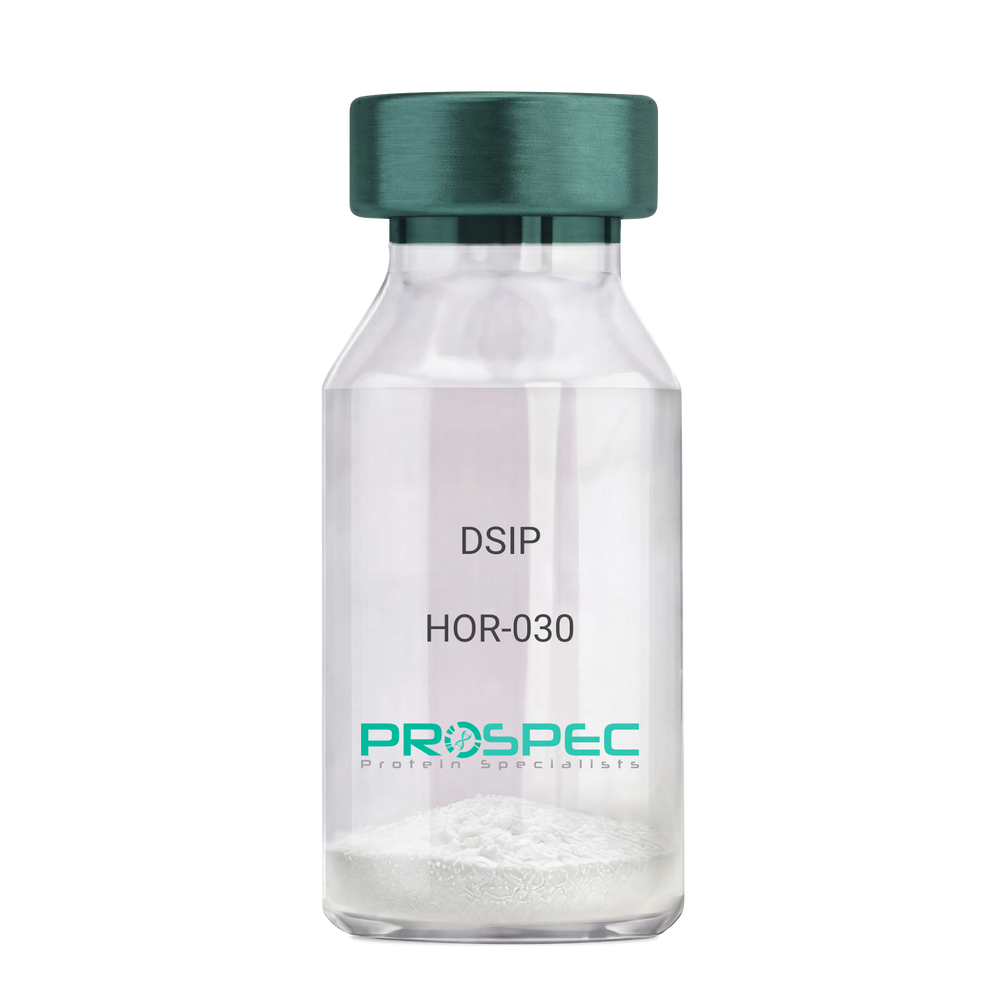
DSIPDescription:
Delta Sleep Inducing Peptide
Product # :
HOR-030Price :
Quantity :
Shipping Method :
Shipped at Room temp
More Info
- description
- formulation
- purity
- More Info
Description
DSIP Synthetic is a single, non-glycosylated polypeptide chain containing 15 amino acids, having a molecular mass of 1419.55 Dalton and a Molecular formula of C62H98N16O22.
Formulation
The protein was lyophilized with no additives.
Purity
Greater than 97.0% as determined by analysis by RP-HPLC.
More Info
-
Physical Appearance
Sterile Filtered White lyophilized (freeze-dried) powder.
-
Stability
Lyophilized DSIP although stable at room temperature for 3 weeks, should be stored desiccated below -18°C. Upon reconstitution DSIP should be stored at 4°C between 2-7 days and for future use below -18°C. For long term storage it is recommended to add a carrier protein (0.1% HSA or BSA). Please prevent freeze-thaw cycles.
-
Solubility
It is recommended to reconstitute the lyophilized DSIP in sterile 18MΩ-cm H2O not less than 100 µg/ml, which can then be further diluted to other aqueous solutions.
-
Amino Acid Sequence
H-Gly-Glu-Pro-Pro-Pro-Gly-Lys-Pro-Ala-Asp-Asp-Ala-Gly-Leu-Val-OH
-
Background
Delta Sleep-Inducing Peptide (DSIP), also known as Sleep-Promoting Peptide, is a neuropeptide that has been the subject of extensive research due to its potential role in sleep regulation, stress response, and neuroprotection. This nonapeptide, first isolated from the cerebral venous blood of rabbits during sleep, has been shown to induce slow-wave sleep, modulate pain perception, and exhibit potential antioxidant and immunomodulatory properties.
DSIP's primary function is its interaction with the sleep regulatory system. By modulating the release of certain neurotransmitters, DSIP can influence sleep patterns, particularly promoting slow-wave sleep, the most restorative stage of sleep. Studies by Kovalzon et al. (2011) have demonstrated that DSIP can enhance sleep quality in rats, suggesting potential applications in sleep disorders and the promotion of healthy sleep patterns.
In addition to its sleep-inducing effects, DSIP has been shown to possess neuroprotective properties. Research by Zolotarev et al. (2014) found that DSIP could protect neurons from oxidative stress, suggesting potential applications in the treatment of neurodegenerative diseases such as Alzheimer's and Parkinson's disease.
Given its sleep-inducing and neuroprotective effects, DSIP has been proposed as a potential therapeutic agent for a variety of conditions, including sleep disorders, chronic pain, and neurodegenerative diseases. For instance, a study by Spong et al. (2016) found that DSIP could improve sleep quality in patients with chronic insomnia, indicating its potential as a therapeutic agent in the treatment of sleep disorders.
While research on DSIP is promising, it is important to note that most studies have been conducted in animals or in vitro. More research is needed to fully understand the potential effects and applications of DSIP in humans. However, the existing body of research suggests that DSIP could be a promising tool in the treatment of sleep disorders, chronic pain, and neurodegenerative diseases.
ProSpec's products are furnished for LABORATORY RESEARCH USE ONLY. The product may not be used as drugs, agricultural or pesticidal products, food additives or household chemicals.
- View Data Sheet
Name :
CCL19 HumanDescription:
Macrophage Inflammatory Protein-3 Beta Human Recombinant (CCL19)
Small inducible cytokine A19, CCL19, Macrophage inflammatory protein 3 beta, MIP-3- beta, EBI1-ligand chemokine, ELC, Beta chemokine exodus-3, CK beta-11, chemokine (C-C motif) ligand 19, CKb11, MIP3B, MIP-3b, SCYA19, MGC34433.
Product # :
CHM-287Price :
Quantity :
Shipping Method :
Shipped at Room temp
More Info
- description
- source
- formulation
- purity
- biological activity
- More Info
Description
Macrophage Inflammatory Protein-3 beta Human Recombinant produced in E.Coli is a single, non-glycosylated, polypeptide chain containing 77 amino acids and having a molecular mass of 8.8kDa. The MIP-3b is purified by proprietary chromatographic techniques.
Source
Escherichia Coli.
Formulation
Lyophilized without any additives.
Purity
Greater than 98.0% as determined by
(a) Analysis by RP-HPLC.
(b) Analysis by SDS-PAGE.Biological Activity
The Activity of CCL19 is calculated by the ability to chemoattract Human T cells using a concentration of 7-40ng/ml corresponding to a Specific Activity of 25,000-143,000IU/mg.More Info
-
Introduction
Chemokine (C-C motif) ligand 19 (CCL19) is a small cytokine belonging to the CC chemokine family that is also known as EBI1 ligand chemokine (ELC) and macrophage inflammatory protein-3-beta (MIP-3-beta). CCL19 is expressed abundantly in thymus and lymph nodes, with moderate levels in trachea and colon and low levels in stomach, small intestine, lung, kidney and spleen. The gene for CCL19 is located on human chromosome 9. This chemokine elicits its effects on its target cells by binding to the chemokine receptor chemokine receptor CCR7. It attracts certain cells of the immune system, including dendritic cells and antigen-engaged B cells.
-
Synonyms
Small inducible cytokine A19, CCL19, Macrophage inflammatory protein 3 beta, MIP-3- beta, EBI1-ligand chemokine, ELC, Beta chemokine exodus-3, CK beta-11, chemokine (C-C motif) ligand 19, CKb11, MIP3B, MIP-3b, SCYA19, MGC34433.
-
Physical Appearance
Sterile Filtered White lyophilized (freeze-dried) powder.
-
Stability
Lyophilized MIP-3b although stable at room temperature for 3 weeks, should be stored desiccated below -18°C. Upon reconstitution CCL19 should be stored at 4°C between 2-7 days and for future use below -18°C. For long term storage it is recommended to add a carrier protein (0.1% HSA or BSA).Please prevent freeze-thaw cycles.
-
Solubility
It is recommended to reconstitute the lyophilized Macrophage Inflammatory Protein-3b in sterile 18MΩ-cm H2O not less than 100µg/ml, which can then be further diluted to other aqueous solutions.
-
Amino Acid Sequence
GTNDAEDCCL SVTQKPIPGY IVRNFHYLLI KDGCRVPAVV FTTLRGRQLC APPDQPWVER IIQRLQRTSA KMKRRSS.
-
Background
What is the molecular weight/Mw of CCL19 HUMAN Protein?
CCL19 HUMAN Protein has a total Mw of 8.8kDa.
What is the source or expression system of CCL19 HUMAN Protein?
Escherichia Coli.
What is the Purity of CCL19 HUMAN Protein?
CCL19 HUMAN Protein is > 98% pure as determined by SDS-PAGE.
What is the Biological Activity of CCL19 HUMAN Protein?
The Activity of CCL19 is calculated by the ability to chemoattract Human T cells using a concentration of 7-40ng/ml corresponding to a Specific Activity of 25,000-143,000IU/mg.
What is the amino acid sequence of CCL19 HUMAN Protein?
GTNDAEDCCL SVTQKPIPGY IVRNFHYLLI KDGCRVPAVV FTTLRGRQLC APPDQPWVER IIQRLQRTSA KMKRRSS.
What applications can CCL19 HUMAN Protein be used in?
CCL19 HUMAN Protein can probably be used in western blot, ELISA and Lateral Flow.
What is the endotoxin level for CCL19 HUMAN Protein?
The endotoxin level is minimal, CCL19 HUMAN Protein was purified using conventional chromatography techniques.
ProSpec's products are furnished for LABORATORY RESEARCH USE ONLY. The product may not be used as drugs, agricultural or pesticidal products, food additives or household chemicals.
- View Data Sheet
Name :
Adiponectin Human, HMWDescription:
Adiponectin glycosylated Human Recombinant, HMW Rich
Acrp30, AdipoQ, GBP-28, APM-1, ACDC.
Product # :
CYT-764Price :
Quantity :
Shipping Method :
Shipped at Room temp
More Info
- description
- source
- formulation
- purity
- More Info
Description
Adiponectin Human Recombinant HMW Rich produced in HEK cells is a single, glycosylated, polypeptide chain (19-244) containing a total of 226 amino acids, having a molecular mass of 24.6kDa (calculated). Human Acrp30 HMW Rich migrates on SDS-PAGE under non-reducing conditions at ~ 884 kDa.
Source
HEK293.
Formulation
Acrp30 was filtered (0.4µm) and lyophilized from 0.5mg/ml in 20mM Tris, 50mM NaCl, pH 7.5 and 1mM CaCl2.
Purity
Greater than 90% as determined by SDS-PAGE.
More Info
-
Introduction
Adiponectin is a recently discovered 244 amino acid protein, the product of the apM1 gene, which is physiologically active and specifically and highly expressed in adipose cells (Adipokine). The protein belongs to the soluble defense collagen super family; it has a collagen-like domain structurally homologous with collagen VIII and X and complement factor C1q-like globular domain. APM-1 forms homotrimers, which are the building blocks for higher order complexes found circulating in serum.
-
Synonyms
Acrp30, AdipoQ, GBP-28, APM-1, ACDC.
-
Physical Appearance
Filtered White lyophilized (freeze-dried) powder.
-
Stability
Store lyophilized protein at -20°C. Aliquot the product after reconstitution to avoid repeated freezing/thawing cycles. Reconstituted protein can be stored at 4°C for a limited period of time.
-
Solubility
It is recommended to add deionized water to a working concentration of 0.5mg/ml and let the lyophilized pellet dissolve completely. Acrp30 is not sterile! Please filter the product by an appropriate sterile filter before using it in the cell culture.
-
Amino Acid Sequence
ETTTQGPGVL LPLPKGACTG WMAGIPGHPG HNGAPGRDGR DGTPGEKGEK GDPGLIGPKG DIGETGVPGA EGPRGFPGIQ GRKGEPGEGA YVYRSAFSVG LETYVTIPNM PIRFTKIFYN QQNHYDGSTG KFHCNIPGLY YFAYHITVYM KDVKVSLFKK DKAMLFTYDQ YQENNVDQAS GSVLLHLEVG DQVWLQVYGE GERNGLYADN DNDSTFTGFL LYHDTN.
-
Background
What is the molecular weight/Mw of ADIPONECTIN Protein?
ADIPONECTIN Protein has a total Mw of 24.6 kDa.
What is the source or expression system of ADIPONECTIN Protein?
HEK293.
What is the Purity of ADIPONECTIN Protein?
ADIPONECTIN Protein is >90% pure as determined by SDS-PAGE.
What is the Biological Activity of ADIPONECTIN Protein?
The biological functionality of ADIPONECTIN Protein will be determined in the future.
What is the amino acid sequence of ADIPONECTIN Protein?
ETTTQGPGVL LPLPKGACTG WMAGIPGHPG HNGAPGRDGR DGTPGEKGEK GDPGLIGPKG DIGETGVPGA EGPRGFPGIQ GRKGEPGEGA YVYRSAFSVG LETYVTIPNM PIRFTKIFYN QQNHYDGSTG KFHCNIPGLY YFAYHITVYM KDVKVSLFKK DKAMLFTYDQ YQENNVDQAS GSVLLHLEVG DQVWLQVYGE GERNGLYADN DNDSTFTGFL LYHDTN.
What applications can ADIPONECTIN Protein be used in?
ADIPONECTIN Protein can probably be used in western blot, ELISA and Lateral Flow.
What is the endotoxin level for ADIPONECTIN Protein?
The endotoxin level is minimal, ADIPONECTIN Protein was purified using conventional chromatography techniques.
ProSpec's products are furnished for LABORATORY RESEARCH USE ONLY. The product may not be used as drugs, agricultural or pesticidal products, food additives or household chemicals.
- View Data Sheet
Name :
DCTN2 (1-401) HumanDescription:
Dynactin 2 (1-401 a.a.) Human Recombinant
DCTN2, Dynactin 2 (P50), DCTN50, Dynactin Complex 50 KDa Subunit, 50 KDa Dynein-Associated Polypeptide, P50 Dynamitin, 50 KD Dynein-Associated Polypeptide, DYNAMITIN, HEL-S-77, RBP50, Dynactin Complex 50 KD Subunit, Dynactin Subunit 2, Epididymis Secretory Protein Li 77, DCTN-50.
Product # :
PRO-1776Price :
Quantity :
Shipping Method :
Shipped with Ice Packs
More Info
- description
- source
- formulation
- purity
- More Info
Description
Dynactin 2 Human Recombinant produced in E.Coli is a single, non-glycosylated polypeptide chain containing 424 amino acids (1-401 a.a) and having a molecular mass of 46.6kDa.DCTN2 is fused to a 23 amino acid His-tag at N-terminus & purified by proprietary chromatographic techniques.
Source
Escherichia Coli.
Formulation
DCTN2 protein solution (0.5mg/ml) containing 20mM Tris-HCl (pH8.0), 20% glycerol, 0.15M NaCl and 1mM DTT.
Purity
Greater than 90.0% as determined by SDS-PAGE.
More Info
-
Introduction
DCTN2 is a 50kDa subunit of dynactin, which is a macromolecular complex consisting of 10-11 subunits ranging in size from 22 to 150 kDa. Dynactin binds to both microtubules and cytoplasmic dynein. Dynactin is involved in a various cellular functions, including ER-to-Golgi transport, the centripetal movement of lysosomes and endosomes, spindle formation, chromosome movement, nuclear positioning, and axonogenesis. The DCTN2 subunit is present in 4-5 copies per dynactin molecule. DCTN2 is comprised of 3 short alpha-helical coiled-coil domains which mediate association with self or other dynactin subunits. DCTN2 interacts directly with the largest subunit (p150) of dynactin and is able to affix p150 in place. DCTN2 modulates cytoplasmic dynein binding to an organelle, and plays a part in prometaphase chromosome alignment and spindle organization during mitosis. DCTN2 is involved in anchoring microtubules to centrosomes. DCTN2 has a role in synapse formation during brain development.
-
Synonyms
DCTN2, Dynactin 2 (P50), DCTN50, Dynactin Complex 50 KDa Subunit, 50 KDa Dynein-Associated Polypeptide, P50 Dynamitin, 50 KD Dynein-Associated Polypeptide, DYNAMITIN, HEL-S-77, RBP50, Dynactin Complex 50 KD Subunit, Dynactin Subunit 2, Epididymis Secretory Protein Li 77, DCTN-50.
-
Physical Appearance
Sterile Filtered colorless solution.
-
Stability
Store at 4°C if entire vial will be used within 2-4 weeks. Store, frozen at -20°C for longer periods of time. For long term storage it is recommended to add a carrier protein (0.1% HSA or BSA).Avoid multiple freeze-thaw cycles.
-
Amino Acid Sequence
MGSSHHHHHH SSGLVPRGSH MGSMADPKYA DLPGIARNEP DVYETSDLPE DDQAEFDAEE LTSTSVEHII VNPNAAYDKF KDKRVGTKGL DFSDRIGKTK RTGYESGEYE MLGEGLGVKE TPQQKYQRLL HEVQELTTEV EKIKTTVKES ATEEKLTPVL LAKQLAALKQ QLVASHLEKL LGPDAAINLT DPDGALAKRL LLQLEATKNS KGGSGGKTTG TPPDSSLVTY ELHSRPEQDK FSQAAKVAEL EKRLTELETA VRCDQDAQNP LSAGLQGACL METVELLQAK VSALDLAVLD QVEARLQSVL GKVNEIAKHK ASVEDADTQS KVHQLYETIQ RWSPIASTLP ELVQRLVTIK QLHEQAMQFG QLLTHLDTTQ QMIANSLKDN TTLLTQVQTT MRENLATVEG NFASIDERMK KLGK.
ProSpec's products are furnished for LABORATORY RESEARCH USE ONLY. The product may not be used as drugs, agricultural or pesticidal products, food additives or household chemicals.
- View Data Sheet
Name :
DNAJC27 HumanDescription:
DnaJ (Hsp40) Homolog, Subfamily C, Member 27 Human Recombinant
DnaJ homolog subfamily C member 27, DnaJ (Hsp40) Homolog, Subfamily C, Member 27, DNAJC27, Rab and DnaJ domain-containing protein, RABJS, RBJ, dnaJ homolog subfamily C member 27 isoform 1.
Product # :
HSP-060Price :
Quantity :
Shipping Method :
Shipped with Ice Packs
More Info
- description
- source
- formulation
- purity
- More Info
Description
DNAJC27 Human Recombinant produced in E.Coli is a single, non-glycosylated polypeptide chain containing 296 amino acids (1-273 a.a.) and having a molecular mass of 33.2kDa. DNAJC27 is fused to a 23 amino acid His-tag at N-terminus & purified by proprietary chromatographic techniques.
Source
E.coli.
Formulation
The DNAJC27 solution (0.25mg/ml) contains 20mM Tris-HCl buffer (pH8.0), 0.2M NaCl, 50% glycerol, 2mM DTT and 2mM EDTA.
Purity
Greater than 90% as determined by SDS-PAGE.
More Info
-
Introduction
DnaJ (Hsp40) Homolog, Subfamily C, Member 27 (DNAJC27) which contains one J domain is a part of the small GTPase superfamily. DNAJC27 is a GTPase which activates the MEK/ERK pathway and induces cell transformation when overexpressed.
-
Synonyms
DnaJ homolog subfamily C member 27, DnaJ (Hsp40) Homolog, Subfamily C, Member 27, DNAJC27, Rab and DnaJ domain-containing protein, RABJS, RBJ, dnaJ homolog subfamily C member 27 isoform 1.
-
Physical Appearance
Sterile Filtered colorless solution.
-
Stability
Store at 4°C if entire vial will be used within 2-4 weeks. Store, frozen at -20°C for longer periods of time. For long term storage it is recommended to add a carrier protein (0.1% HSA or BSA).Avoid multiple freeze-thaw cycles.
-
Amino Acid Sequence
MGSSHHHHHH SSGLVPRGSH MGSMEANMPK RKEPGRSLRI KVISMGNAEV GKSCIIKRYC EKRFVSKYLA TIGIDYGVTK VHVRDREIKV NIFDMAGHPF FYEVRNEFYK DTQGVILVYD VGQKDSFDAL DAWLAEMKQE LGPHGNMENI IFVVCANKID CTKHRCVDES EGRLWAESKG FLYFETSAQT GEGINEMFQT FYISIVDLCE NGGKRPTTNS SASFTKEQAD AIRRIRNSKD SWDMLGVKPG ASRDEVNKAY RKLAVLLHPD KCVAPGSEDA FKAVVNARTA LLKNIK.
ProSpec's products are furnished for LABORATORY RESEARCH USE ONLY. The product may not be used as drugs, agricultural or pesticidal products, food additives or household chemicals.
- View Data Sheet
Name :
TPRKB HumanDescription:
TP53RK Binding Protein Human Recombinant
TP53RK binding protein, PRPK-binding protein, PRPK (p53-related protein kinase)-binding protein, CGI-121.
Product # :
PRO-1185Price :
Quantity :
Shipping Method :
Shipped with Ice Packs
More Info
- description
- source
- formulation
- purity
- More Info
Description
TPRKB Human Recombinant produced E. coli is a single polypeptide chain containing 199 amino acids (1-175) and having a molecular mass of 22.2kDa.TPRKB is fused to a 24 amino acid His-tag at N-terminus & purified by proprietary chromatographic techniques.
Source
E.coli.
Formulation
The TPRKB solution (0.5mg/1ml) contains 20mM Tris-HCl buffer (pH 8.0), 150mM NaCl and 10% glycerol.
Purity
Greater than 95% as determined by SDS-PAGE.
More Info
-
Introduction
TPRKB is a member of the CGI121/TPRKB family. TPRKB is localized to nucleus and cytoplasm and is ubiquitously expressed. TPRKB is known to cooperate with TP53RK/PRPK.
-
Synonyms
TP53RK binding protein, PRPK-binding protein, PRPK (p53-related protein kinase)-binding protein, CGI-121.
-
Physical Appearance
Sterile Filtered colorless solution.
-
Stability
Store at 4°C if entire vial will be used within 2-4 weeks. Store, frozen at -20°C for longer periods of time. For long term storage it is recommended to add a carrier protein (0.1% HSA or BSA).Avoid multiple freeze-thaw cycles.
-
Amino Acid Sequence
MGSSHHHHHH SSGLVPRGSH MGSHMQLTHQ LDLFPECRVT LLLFKDVKNA GDLRRKAMEG TIDGSLINPT VIVDPFQILV AANKAVHLYK LGKMKTRTLS TEIIFNLSPN NNISEALKKF GISANDTSIL IVYIEEGEKQ INQEYLISQV EGHQVSLKNL PEIMNITEVK KIYKLSSQEE SIGTLLDAII CRMSTKDVL
ProSpec's products are furnished for LABORATORY RESEARCH USE ONLY. The product may not be used as drugs, agricultural or pesticidal products, food additives or household chemicals.
- View Data Sheet
Name :
PPP3R2 HumanDescription:
Protein Phosphatase 3 Regulatory subunit, Beta Isozyme Human Recombinant
Calcineurin subunit B type 2, Calcineurin B-like protein, CBLP, Calcineurin BII, CNBII, PPP3R1-like, Protein phosphatase 2B regulatory subunit 2, Protein phosphatase 3 regulatory subunit B beta isoform, PPP3R2, PPP3RL.
Product # :
ENZ-103Price :
Quantity :
Shipping Method :
Shipped with Ice Packs
More Info
- description
- source
- formulation
- purity
- More Info
Description
PPP3R2 Human Recombinant fused with a 20 a.a. His tag at N-terminus produced in E.Coli is a single, non-glycosylated, polypeptide chain (a.a. 1-173) containing 193 amino acids and having a molecular mass of 22kDa.The PPP3R2 is purified by proprietary chromatographic techniques.
Source
Escherichia Coli.
Formulation
The PPP3R2 solution (0.5mg/ml) contains 20mM Tris-HCl buffer(pH 8.0), 10% glycerol and 1mM DTT.
Purity
Greater than 95.0% as determined by SDS-PAGE.
More Info
-
Introduction
PPP3R2 is a calcium-dependent, calmodulin stimulated serine/threonine protein phosphatase. In eukaryotes, the phosphorylation and dephosphorylation of proteins on serine and threonine residues is a crucial means of regulating a wide range of cellular functions including division, homeostasis and apoptosis. Ordinarily the protein phosphatase (PP) holoenzyme is a trimeric complex composed of a regulatory subunit, a variable subunit and a catalytic subunit.
-
Synonyms
Calcineurin subunit B type 2, Calcineurin B-like protein, CBLP, Calcineurin BII, CNBII, PPP3R1-like, Protein phosphatase 2B regulatory subunit 2, Protein phosphatase 3 regulatory subunit B beta isoform, PPP3R2, PPP3RL.
-
Physical Appearance
Sterile Filtered colorless solution.
-
Stability
Store at 4°C if entire vial will be used within 2-4 weeks. Store, frozen at -20°C for longer periods of time. For long term storage it is recommended to add a carrier protein (0.1% HSA or BSA).Avoid multiple freeze-thaw cycles.
-
Amino Acid Sequence
MGSSHHHHHH SSGLVPRGSH MSTMGNEASY PAEMCSHFDN DEIKRLGRRF KKLDLDKSGS LSVEEFMSLP ELRHNPLVRR VIDVFDTDGD GEVDFKEFIL GTSQFSVKGD EEQKLRFAFS IYDMDKDGYI SNGELFQVLK MMVGNNLTDW QLQQLVDKTI IILDKDGDGK ISFEEFSAVV RDLEIHKKLV LIV.
ProSpec's products are furnished for LABORATORY RESEARCH USE ONLY. The product may not be used as drugs, agricultural or pesticidal products, food additives or household chemicals.
- View Data Sheet
Name :
CENPM HumanDescription:
Centromere Protein-M Human Recombinant
Centromere Protein M, Interphase Centromere Complex Protein 39, Chromosome 22 Open Reading Frame 18, Proliferation Associated Nuclear Element 1, bK250D10.2, CENP-M, ICEN39, C22orf18, PANE1.
Product # :
PRO-1626Price :
Quantity :
Shipping Method :
Shipped with Ice Packs
More Info
- description
- source
- formulation
- purity
- More Info
Description
CENPM Human Recombinant produced in E.coli is a single, non-glycosylated polypeptide chain containing 203 amino acids (1-180) and having a molecular mass of 22.0kDa.CENPM is fused to a 23 amino acid His-tag at N-terminus & purified by proprietary chromatographic techniques.
Source
Escherichia Coli.
Formulation
The CENPM solution contains 20mM Tris-HCl buffer (pH 8.0), 0.15M NaCl, 1mM DTT and 30% glycerol.
Purity
Greater than 85% as determined by SDS-PAGE.
More Info
-
Introduction
The centromere is a specialized chromatin domain, present throughout the cell cycle, that acts as a platform on which the transient assembly of the kinetochore occurs during mitosis. All active centromeres are characterized by the presence of long arrays nucleosomes in which CENPA replaces histone H3. CENPM is an additional factor required for centromere assembly.
-
Synonyms
Centromere Protein M, Interphase Centromere Complex Protein 39, Chromosome 22 Open Reading Frame 18, Proliferation Associated Nuclear Element 1, bK250D10.2, CENP-M, ICEN39, C22orf18, PANE1.
-
Physical Appearance
Sterile filtered colorless solution.
-
Stability
Store at 4°C if entire vial will be used within 2-4 weeks. Store, frozen at -20°C for longer periods of time. For long term storage it is recommended to add a carrier protein (0.1% HSA or BSA).Avoid multiple freeze-thaw cycles.
-
Amino Acid Sequence
MGSSHHHHHH SSGLVPRGSH MGSMSVLRPL DKLPGLNTAT ILLVGTEDAL LQQLADSMLK EDCASELKVH LAKSLPLPSS VNRPRIDLIV FVVNLHSKYS LQNTEESLRH VDASFFLGKV CFLATGAGRE SHCSIHRHTV VKLAHTYQSP LLYCDLEVEG FRATMAQRLV RVLQICAGHV PGVSALNLLS LLRSSEGPSL EDL
ProSpec's products are furnished for LABORATORY RESEARCH USE ONLY. The product may not be used as drugs, agricultural or pesticidal products, food additives or household chemicals.
- View Data Sheet
Name :
ZFAND3 HumanDescription:
Zinc Finger, AN1-Type Domain 3 Human Recombinant
Zinc finger, AN1-type domain 3, TEX27, Testis-expressed sequence 27, FLJ13222, AN1-type zinc finger protein 3.
Product # :
PRO-1030Price :
Quantity :
Shipping Method :
Shipped with Ice Packs
More Info
- description
- source
- formulation
- purity
- More Info
Description
ZFAND3 Human Recombinant produced in E.coli is a single, non-glycosylated polypeptide chain containing 251 amino acids (1-227) and having a molecular mass of 27.7kDa.ZFAND3 is fused to a 24 amino acid His-tag at N-terminus & purified by proprietary chromatographic techniques.
Source
E.coli.
Formulation
The ZFAND3 solution (1mg/ml) contains 20mM Tris-HCl buffer (pH 8.0), 100mM NaCl, 1mM DTT and 30% glycerol.
Purity
Greater than 90% as determined by SDS-PAGE.
More Info
-
Introduction
ZFAND3 holds a DNA-binding domain and has a large number of purposes, most of which include certain form of transcriptional activation or repression. ZFAND3 is a 251 aa protein having two AN1-type zinc fingers and two UIM (ubiquitin-interacting motif) repeats. The AN1-type zinc finger domain is conserved in animals and plants and is frequently found in proteins which hold an ubiquitin-like domain, which proposes a part in the ubiquitination pathway.
-
Synonyms
Zinc finger, AN1-type domain 3, TEX27, Testis-expressed sequence 27, FLJ13222, AN1-type zinc finger protein 3.
-
Physical Appearance
Sterile Filtered colorless solution.
-
Stability
Store at 4°C if entire vial will be used within 2-4 weeks. Store, frozen at -20°C for longer periods of time. For long term storage it is recommended to add a carrier protein (0.1% HSA or BSA).Avoid multiple freeze-thaw cycles.
-
Amino Acid Sequence
MGSSHHHHHH SSGLVPRGSH MGSHMGDAGS ERSKAPSLPP RCPCGFWGSS KTMNLCSKCF ADFQKKQPDD DSAPSTSNSQ SDLFSEETTS DNNNTSITTP TLSPSQQPLP TELNVTSPSK EECGPCTDTA HVSLITPTKR SCGTDSQSEN EASPVKRPRL LENTERSEET SRSKQKSRRR CFQCQTKLEL VQQELGSCRC GYVFCMLHRL PEQHDCTFDH MGRGREEAIM KMVKLDRKVG RSCQRIGEGC S
ProSpec's products are furnished for LABORATORY RESEARCH USE ONLY. The product may not be used as drugs, agricultural or pesticidal products, food additives or household chemicals.
- View Data Sheet
Name :
HistrelinDescription:
Histrelin
Product # :
HOR-244Price :
Quantity :
Shipping Method :
Shipped at Room temp
More Info
- description
- formulation
- purity
- More Info
Description
Histrelin has a molecular formula of C66H86N18O12, a.a. sequence of Pyr-His-Trp-Ser-Tyr-D-His(Bzl)-Leu-Arg-Pro-NHEt and having a Mw of 1323.32 Dalton.
Formulation
The Histrelin peptide was lyophilized with no additives.
Purity
Greater than 99.0% as determined by(a) Analysis by RP-HPLC.
(b) Analysis by SDS-PAGE.More Info
-
Introduction
Histrelin is a hormone similar to one normally released from the hypothalamus gland in the brain. Histrelin works by decreasing the amount of estrogen and testosterone in the blood. Suppressing estrogen can cause thinning of the bones or slowing of their growth. Histrelin acetate is a potent LHRH agonist which stimulates LH and FSH release and inhibits the actions of sex steroids on the male and female reproductive tracts. After a transient increase, continuous administration results in down regulation of LH and FSH levels followed by a suppression of ovarian and testicular steroid biosynthesis. Histrelin potency in vivo and in vitro is similar to that of the D-Trp6-containing analog. Especially because of its high water solubility and greater lipophilic character, it appears promising for clinical application.
-
Physical Appearance
Sterile Filtered White lyophilized (freeze-dried) powder.
-
Stability
Lyophilized Histrelin although stable at room temperature for 3 weeks, should be stored desiccated below -18°C. Upon reconstitution Histrelin should be stored at 4°C between 2-7 days and for future use below -18°C. For long term storage it is recommended to add a carrier protein (0.1% HSA or BSA).Please prevent freeze-thaw cycles.
-
Solubility
It is recommended to reconstitute the lyophilized Histrelin in sterile 18MΩ-cm H2O not less than 100 µg/ml, which can then be further diluted to other aqueous solutions.
ProSpec's products are furnished for LABORATORY RESEARCH USE ONLY. The product may not be used as drugs, agricultural or pesticidal products, food additives or household chemicals.
- View Data Sheet
Name :
SGTA AntibodyDescription:
Small Glutamine-Rich Tetratricopeptide Repeat-Containing Protein Alpha, Mouse Anti Human
alphaSGT, hSGT, SGT, Vpu-binding protein, UBP, Small glutamine-rich tetratricopeptide repeat-containing protein alpha, Alpha-SGT, SGT1.
Product # :
ANT-631Price :
Quantity :
Shipping Method :
Shipped with Ice Packs
More Info
- formulation
- More Info
Formulation
1mg/ml containing PBS, pH-7.4, 10% Glycerol and 0.02% Sodium Azide.
More Info
-
Introduction
SGTA is a ubiquitously expressed protein that contains three TPR protein-protein interaction duplicates. SGTA takes part as a component of the androgen receptor (AR)-chaperone-cochaperone complex, functions as a cochaperone and participates in androgen signaling. SGTA binds directly to HSC70 and HSP70 and mediates their ATPase activity. SGTA gene encodes a protein that is able to interact with the chief nonstructural protein of parvovirus H-1 and 70-kDa heat shock cognate. In addition, SGTA interacts with Vpu and Gag from HIV-1, SARS-CoV accessory protein 7a, DNAJC5 and DNAJC5B. Since this transcript is expressed universally in several tissues, SGTA serves a housekeeping function. While being involved in apoptosis and androgen signaling, SGTA is a possible molecule for polycystic ovary syndrome, a disorder characterized by androgen excess, obesity and menstrual disturbances.
-
Synonyms
alphaSGT, hSGT, SGT, Vpu-binding protein, UBP, Small glutamine-rich tetratricopeptide repeat-containing protein alpha, Alpha-SGT, SGT1.
-
Physical Appearance
Sterile filtered colorless solution.
-
Immunogen
Anti-human SGTA mAb, is derived from hybridization of mouse F0 myeloma cells with spleen cells from BALB/c mice immunized with a recombinant human SGTA protein 1-313 amino acids purified from E. coli.
-
Ig Subclass
Mouse IgG1 heavy chain and k light chain.
-
Clone
PAT19E8AT.
-
Applications
The antibody has been tested by ELISA, Western blot analysis, Flow cytometry and ICC/IF to assure specificity and reactivity. Since application varies, however, each investigation should be titrated by the reagent to obtain optimal results.
-
Type
Mouse Anti Human Monoclonal.
-
Storage Procedures
For periods up to 1 month store at 4°C, for longer periods of time, store at -20°C. Prevent freeze thaw cycles.
-
Purification Method
SGTA antibody was purified from mouse ascitic fluids by protein-A affinity chromatography.
ProSpec's products are furnished for LABORATORY RESEARCH USE ONLY. The product may not be used as drugs, agricultural or pesticidal products, food additives or household chemicals.
- View Data Sheet
Name :
Streptavidin AntibodyDescription:
Streptavidin, Mouse Antibody
Product # :
ANT-345Price :
Quantity :
Shipping Method :
Shipped with Ice Packs
More Info
- formulation
- More Info
Formulation
1mg/ml containing PBS, pH-7.4, 0.02% Sodium Azide and 10% glycerol.
More Info
-
Introduction
Streptavidin is a tetrameric protein secreted by Streptomyces avidinii which binds firmly to biotin. Streptavidin is wilyde used in molecular biology through its unique high affinity for the vitamin biotin. The dissociation constant (Kd) of the biotin-streptavidin complex is about ~10-15 mol/L. The strong affinity recognition of biotin and biotinylated molecules has made streptavidin one of the most important components in diagnostics and laboratory kits. The streptavidin/biotin system has one of the biggest free energies of association of yet observed for noncovalent binding of a protein and small ligand in aqueous solution (K_assoc = 10**14). The complexes are also extremely stable over a wide range of temperature and pH.
-
Physical Appearance
Sterile Filtered clear solution.
-
Immunogen
Anti Streptavidin mAb is derived from hybridization of mouse F0 myeloma cells with spleen cells from BALB/c mice immunized with recombinant Streptavidin amino acids 25-183 purified from E. coli.
-
Ig Subclass
Mouse IgG2b heavy chain and κ light chain.
-
Clone
P1C2AT.
-
Applications
Streptavidin antibody has been tested by ELISA and Western blot analysis to assure specificity and reactivity. Since application varies, however, each investigation should be titrated by the reagent to obtain optimal results.
-
Type
Mouse Antibody Monoclonal.
-
Storage Procedures
For periods up to 1 month store at 4°C, for longer periods of time, store at -20°C. Prevent freeze thaw cycles.
-
Purification Method
Streptavidin antibody was purified from mouse ascitic fluids by protein-G affinity chromatography.
ProSpec's products are furnished for LABORATORY RESEARCH USE ONLY. The product may not be used as drugs, agricultural or pesticidal products, food additives or household chemicals.
- View Data Sheet
Name :
PNMT AntibodyDescription:
Phenylethanolamine-N-Methyltransferase, Mouse Anti Human
PENT, PNMTase, Noradrenaline-N-methyltransferase, Phenylethanolamine N-methyltransferase, PNMT, MGC34570.
Product # :
ANT-064Price :
Quantity :
Shipping Method :
Shipped with Ice Packs
More Info
- formulation
- More Info
Formulation
1mg/ml containing PBS, pH-7.4, & 0.1% Sodium Azide.
More Info
-
Introduction
PNMT is an enzyme located in the adrenal medulla and it catalyzes the final step of the catecholamine biosynthesis pathway, which methylates norepinephrine to form epinephrine (adrenaline). PNMT has beta-carboline 2N-methyltransferase activity. PNMT takes part in regulating epinephrine production. Glucocorticoid receptors form multimers of PNMT independent of the DNA binding domain. PNMT expression is regulated late in mouse gestation by AP2-alpha and glucocorticoids.
-
Synonyms
PENT, PNMTase, Noradrenaline-N-methyltransferase, Phenylethanolamine N-methyltransferase, PNMT, MGC34570.
-
Immunogen
Anti-human PNMT, is derived from hybridization of mouse FO myeloma cells with spleen cells from BALB/c mice immunized with recombinant human ADK amino acids 1-282 purified from E. coli.
-
Ig Subclass
Mouse IgG1 heavy chain and k light chain.
-
Clone
PAT1C11.
-
Applications
The antibody has been tested by ELISA, Western blot analysis to assure specificity and reactivity. Since application varies, however, each investigation should be titrated by the reagent to obtain optimal results. Recommended dilution range for Western blot analysis is 1:500.
-
Type
Mouse Anti Human Monoclonal.
-
Storage Procedures
For periods up to 1 month store at 4°C, for longer periods of time, store at -20°C. Prevent freeze thaw cycles.
-
Purification Method
PNMT antibody was purified from mouse ascitic fluids by protein-G affinity chromatography.
ProSpec's products are furnished for LABORATORY RESEARCH USE ONLY. The product may not be used as drugs, agricultural or pesticidal products, food additives or household chemicals.
- View Data Sheet
Name :
PNPLA2 AntibodyDescription:
Patatin-like phospholipase domain-containing protein 2, Mouse Anti Human
Patatin-like phospholipase domain-containing protein 2, Adipose triglyceride lipase, Desnutrin Transport-secretion protein 2, TTS2.2, Calcium-independent phospholipase A2, IPLA2-zeta Pigment epithelium-derived factor, TTS2, PNPLA2, ATGL, PEDF-R, FP17548, TTS-2.2, DKFZp667M109, 1110001C14Rik.
Product # :
ANT-684Price :
Quantity :
Shipping Method :
Shipped with Ice Packs
More Info
- formulation
- More Info
Formulation
1mg/ml containing PBS, pH-7.4, 10% Glycerol and 0.02% Sodium Azide.
More Info
-
Introduction
PNPLA2 is an enzyme which catalyzes the first step in the hydrolysis of triglycerides in adipose tissue. Mutations in the PNPLA2 gene are linked to neutral lipid storage disease with myopathy.
-
Synonyms
Patatin-like phospholipase domain-containing protein 2, Adipose triglyceride lipase, Desnutrin Transport-secretion protein 2, TTS2.2, Calcium-independent phospholipase A2, IPLA2-zeta Pigment epithelium-derived factor, TTS2, PNPLA2, ATGL, PEDF-R, FP17548, TTS-2.2, DKFZp667M109, 1110001C14Rik.
-
Physical Appearance
Sterile filtered colorless solution.
-
Immunogen
Anti-human PNPLA2 mAb, is derived from hybridization of mouse F0 myeloma cells with spleen cells from BALB/c mice immunized with a recombinant human PNPLA2 protein 30-504 amino acids purified from E. coli.
-
Ig Subclass
Mouse IgG2b heavy chain and k light chain.
-
Clone
PAT18E6AT.
-
Applications
PNPLA2 antibody has been tested by ELISA, Western blot analysis, Flow cytometry and ICC/IF to assure specificity and reactivity. Since application varies, however, each investigation should be titrated by the reagent to obtain optimal results.
-
Type
Mouse Anti Human Monoclonal.
-
Storage Procedures
For periods up to 1 month store at 4°C, for longer periods of time, store at -20°C. Prevent freeze thaw cycles.
-
Purification Method
PNPLA2 antibody was purified from mouse ascitic fluids by protein-A affinity chromatography.
ProSpec's products are furnished for LABORATORY RESEARCH USE ONLY. The product may not be used as drugs, agricultural or pesticidal products, food additives or household chemicals.
- View Data Sheet
Name :
PPCS AntibodyDescription:
Phosphopantothenoylcysteine Synthetase, Mouse Anti Human
Phosphopantothenate--cysteine ligase, Phosphopantothenoylcysteine synthetase, PPC synthetase, PPCS, COAB, RP11-163G10.1.
Product # :
ANT-070Price :
Quantity :
Shipping Method :
Shipped with Ice Packs
More Info
- formulation
- More Info
Formulation
1mg/ml containing PBS, pH-7.4, 10% Glycerol and 0.02% Sodium Azide.
More Info
-
Introduction
Phosphopantothenate-cysteine ligase (PPCS) catalyzes the first step in the biosynthesis of coenzyme A (CoA) from pantothenic acid (vitamin B5), which is a vital universal pathway in prokaryotes and eukaryotes. PPCS, being one of the last enzymes in this pathway, converts phosphopantothenate to phosphopantothenoylcysteine.
-
Synonyms
Phosphopantothenate--cysteine ligase, Phosphopantothenoylcysteine synthetase, PPC synthetase, PPCS, COAB, RP11-163G10.1.
-
Physical Appearance
Sterile filtered colorless solution.
-
Immunogen
Anti-human PPCS mAb, is derived from hybridization of mouse F0 myeloma cells with spleen cells from BALB/c mice immunized with recombinant human PPCS amino acids 1-311 purified from E. coli.
-
Ig Subclass
Mouse IgG1 heavy chain and ? light chain.
-
Clone
PAT10D11AT.
-
Applications
PPCS antibody has been tested by ELISA, Western blot analysis to assure specificity and reactivity. Since application varies, however, each investigation should be titrated by the reagent to obtain optimal results.
-
Type
Mouse Anti Human Monoclonal.
-
Storage Procedures
For periods up to 1 month store at 4°C, for longer periods of time, store at -20°C. Prevent freeze thaw cycles.
-
Purification Method
PPCS antibody was purified from mouse ascitic fluids by protein-A affinity chromatography.
ProSpec's products are furnished for LABORATORY RESEARCH USE ONLY. The product may not be used as drugs, agricultural or pesticidal products, food additives or household chemicals.
- View Data Sheet
Name :
PSMD11 AntibodyDescription:
26S proteasome non-ATPase regulatory subunit 11, Mouse Anti Human
26S proteasome non-ATPase regulatory subunit 11, 26S proteasome regulatory subunit S9, 26S proteasome regulatory subunit RPN6, 26S proteasome regulatory subunit p44.5, PSMD11, S9, Rpn6, p44.5, MGC3844.
Product # :
ANT-444Price :
Quantity :
Shipping Method :
Shipped with Ice Packs
More Info
- formulation
- More Info
Formulation
1mg/ml containing PBS, pH-7.4, & 0.1% Sodium Azide.
More Info
-
Introduction
The 26S proteasome is a multicatalytic proteinase complex with a well ordered structure composed of two complexes- a 20S core and a 19S regulator. PSMD11 is a non-ATPase subunit of the 19S regulator. The 20S core is composed of four rings of 28 non-identical subunits; two rings are composed of 7 alpha subunits and two rings are composed of 7 beta subunits. The 19S regulator is composed of a base that contains six ATPase subunits and two non-ATPase subunits, and a lid that contains up to ten non-ATPase subunits. Proteasomes are spread throughout eukaryotic cells at a high concentration and cleave peptides in an ATP/ubiquitin-dependent process in a non-lysosomal pathway. An indispensable function of a modified proteasome, the immunoproteasome, is the processing of class I MHC peptides.
-
Synonyms
26S proteasome non-ATPase regulatory subunit 11, 26S proteasome regulatory subunit S9, 26S proteasome regulatory subunit RPN6, 26S proteasome regulatory subunit p44.5, PSMD11, S9, Rpn6, p44.5, MGC3844.
-
Immunogen
Anti-human PSMD11 mAb, is derived from hybridization of mouse F0 myeloma cells with spleen cells from BALB/c mice immunized with recombinant human PSMD11 amino acids 1-422 purified from E. coli.
-
Ig Subclass
Mouse IgG1 heavy chain and κ light chain.
-
Clone
PAT1F4AT.
-
Applications
PSMD11 antibody has been tested by ELISA and Western blot analysis to assure specificity and reactivity. Since application varies, however, each investigation should be titrated by the reagent to obtain optimal results. Recommended dilution range for Western blot analysis is 1:250 ~ 1000. Recommended starting dilution is 1:250.
-
Type
Mouse Anti Human Monoclonal.
-
Storage Procedures
For periods up to 1 month store at 4°C, for longer periods of time, store at -20°C. Prevent freeze thaw cycles.
-
Purification Method
PSMD11 antibody was purified from mouse ascitic fluids by protein-G affinity chromatography.
ProSpec's products are furnished for LABORATORY RESEARCH USE ONLY. The product may not be used as drugs, agricultural or pesticidal products, food additives or household chemicals.
- View Data Sheet
Name :
S.Typhi OMP 52kDaDescription:
Salmonella Typhi Outer Membrane Protein 52kDa Recombinant
Product # :
STY-003Price :
Quantity :
Shipping Method :
Shipped at Room temp
More Info
- description
- source
- formulation
- purity
- More Info
Description
Recombinant S.Typhi OMP produced in E.coli is a non-glycosylated polypeptide chain having a molecular mass of 52 kDa and fused to a His tag at C-terminus.
Source
Escherichia Coli.
Formulation
Lyophilized from 1mg/ml in 20mM sodium carbonate pH-10.
Purity
Greater than 95.0% as determined by SDS-PAGE.
More Info
-
Introduction
Salmonella Typhi is a pathogen causing typhoid fever, affecting over 17 million people with approximately 600,000 deaths annually worldwide. If untreated, typhoid fever cases result in mortality rates ranging from 12-30%.
-
Physical Appearance
Sterile Filtered White lyophilized (freeze-dried) powder.
-
Stability
Store the lyophilized S.Typhi OMP between 2-8°C, do not freeze. Upon reconstitution S.Typhi OMP should be stored at 4°C between 2-7 days and for future use below -18°C. Please prevent freeze-thaw cycles.
-
Solubility
It is recommended to reconstitute the lyophilized S.Typhi OMP in sterile 18M-cm H2O not less than 100µg/ml, which can then be further diluted to other aqueous solutions.
ProSpec's products are furnished for LABORATORY RESEARCH USE ONLY. The product may not be used as drugs, agricultural or pesticidal products, food additives or household chemicals.
- View Data Sheet
Name :
CTACK HumanDescription:
CTACK Human Recombinant (CCL27)
ALP, CTACK, ESKINE, ILC, PESKY, SCYA27, CCL27, C-C motif chemokine 27, Small-inducible cytokine A27, IL-11 R-alpha-locus chemokine, Skinkine, ESkine, Cutaneous T-cell-attracting chemokine.
Product # :
CHM-373Price :
Quantity :
Shipping Method :
Shipped with Ice Packs
More Info
- description
- source
- formulation
- purity
- More Info
- SDS-PAGE
Description
CTACK Human Recombinant produced in E.Coli is a single, non-glycosylated, polypeptide chain containing 89 amino acids (25-112 a.a.) and having a molecular mass of 10.3kDa. CTACK protein is purified by standard chromatography.
Source
Escherichia Coli.
Formulation
CTACK Human solution containing 10mM sodium citrate pH-3.5 & 10% glycerol.
Purity
Greater than 95% as determined by SDS-PAGE.
SDS-PAGE
More Info
-
Introduction
CTACK is a chemotactic factor that attracts skin-associated memory T-lymphocytes. CTACK is involved in mediating homing of lymphocytes to cutaneous sites. CTACK Binds to CCR10.
-
Synonyms
ALP, CTACK, ESKINE, ILC, PESKY, SCYA27, CCL27, C-C motif chemokine 27, Small-inducible cytokine A27, IL-11 R-alpha-locus chemokine, Skinkine, ESkine, Cutaneous T-cell-attracting chemokine.
-
Physical Appearance
Sterile filtered colorless solution.
-
Stability
Store at 4°C if entire vial will be used within 2-4 weeks. Store, frozen at -20°C for longer periods of time. For long term storage it is recommended to add a carrier protein (0.1% HSA or BSA).Avoid multiple freeze-thaw cycles.
-
Amino Acid Sequence
MFLLPPSTAC CTQLYRKPLS DKLLRKVIQV ELQEADGDCH LQAFVLHLAQ RSICIHPQNP SLSQWFEHQE RKLHGTLPKL NFGMLRKMG.
-
Background
What is the molecular weight/Mw of CTACK HUMAN Protein?
CTACK HUMAN Protein has a total Mw of 10.3kDa.
What is the source or expression system of CTACK HUMAN Protein?
Escherichia Coli.
What is the Purity of CTACK HUMAN Protein?
CTACK HUMAN Protein is >95% pure as determined by SDS-PAGE.
What is the Biological Activity of CTACK HUMAN Protein?
The biological functionality of CTACK HUMAN Protein will be determined in the future.
What is the amino acid sequence of CTACK HUMAN Protein?
MFLLPPSTAC CTQLYRKPLS DKLLRKVIQV ELQEADGDCH LQAFVLHLAQ RSICIHPQNP SLSQWFEHQE RKLHGTLPKL NFGMLRKMG.
What applications can CTACK HUMAN Protein be used in?
CTACK HUMAN Protein can probably be used in western blot, ELISA and Lateral Flow.
What is the endotoxin level for CTACK HUMAN Protein?
The endotoxin level is minimal, CTACK HUMAN Protein was purified using conventional chromatography techniques.
ProSpec's products are furnished for LABORATORY RESEARCH USE ONLY. The product may not be used as drugs, agricultural or pesticidal products, food additives or household chemicals.
- View Data Sheet
Name :
Adipsin HumanDescription:
Complement Factor D Human Recombinant
Complement factor D, EC 3.4.21.46, Adipsin, C3 convertase activator, Properdin factor D, CFD, DF, PFD, ADN.
Product # :
PRO-1360Price :
Quantity :
Shipping Method :
Shipped with Ice Packs
More Info
- description
- source
- formulation
- purity
- More Info
Description
Adipsin Human Recombinant produced in E.Coli is a single, non-glycosylated polypeptide chain containing 249 amino acids (26-253 a.a) and having a molecular mass of 26.6kDa.Adipsin is fused to a 21 amino acid His-tag at N-terminus.
Source
Escherichia Coli.
Formulation
Adipsin protein solution (1mg/ml) containing 20mM Tris-HCl buffer (pH8.0), 10% glycerol and 0.4M Urea.
Purity
Greater than 85.0% as determined by SDS-PAGE.
More Info
-
Introduction
Complement Factor D (Adipsin), which belongs to the trypsin family of peptidases, is involved in the alternative complement pathway of the complement system where it cleaves factor B. In the alternative complement pathway, Adipsin is best known for its role in humoral suppression of infectious agents. In addition, Adipsin is a serine protease which is secreted by adipocytes into the bloodstream. Ultimately, Adipsin has a high level of expression in fat, proposing a role for adipose tissue in immune system biology.
-
Synonyms
Complement factor D, EC 3.4.21.46, Adipsin, C3 convertase activator, Properdin factor D, CFD, DF, PFD, ADN.
-
Physical Appearance
Sterile Filtered colorless solution.
-
Stability
Store at 4°C if entire vial will be used within 2-4 weeks. Store, frozen at -20°C for longer periods of time. For long term storage it is recommended to add a carrier protein (0.1% HSA or BSA).Avoid multiple freeze-thaw cycles.
-
Amino Acid Sequence
MGSSHHHHHH SSGLVPRGSH MILGGREAEA HARPYMASVQ LNGAHLCGGV LVAEQWVLSA AHCLEDAADG KVQVLLGAHS LSQPEPSKRL YDVLRAVPHP DSQPDTIDHD LLLLQLSEKA TLGPAVRPLP WQRVDRDVAP GTLCDVAGWG IVNHAGRRPD SLQHVLLPVL DRATCNRRTH HDGAITERLM CAESNRRDSC KGDSGGPLVC GGVLEGVVTS GSRVCGNRKK PGIYTRVASY AAWIDSVLA.
ProSpec's products are furnished for LABORATORY RESEARCH USE ONLY. The product may not be used as drugs, agricultural or pesticidal products, food additives or household chemicals.
- View Data Sheet
Name :
Agrin RatDescription:
Agrin Rat Recombinant
Agrin, Agrn, C90, C22, Agrin N-terminal 110 kDa subunit, Agrin C-terminal 110 kDa subunit, Agrin C-terminal 90 kDa fragment, Agrin C-terminal 22 kDa fragment, AGR
Product # :
PRO-2627Price :
Quantity :
Shipping Method :
Shipped with Ice Packs
More Info
- description
- source
- formulation
- purity
- More Info
Description
Agrin Rat produced in Sf9 Baculovirus cells is a single, glycosylated polypeptide chain containing 766 amino acids (997-1753 a.a.) and having a molecular mass of 82.5kDa.Agrin is fused to a 9 amino acid His tag at C-Terminus and purified by proprietary chromatographic techniques.
Source
Sf9, Baculovirus cells.
Formulation
The Agrin solution (0.5mg/ml) contains 10% Glycerol in Phosphate-Buffered Saline (pH 7.4).
Purity
Greater than 90.0% as determined by SDS-PAGE.
More Info
-
Introduction
Agrin or AGRN is a large protein (proteoglycan) that has a crucial part in the development of neuromuscular junction amid embryogenesis. The protein has an involvement in the collection and aggregation of acetylcholine receptors through synaptogenesis. The agrin gene can be found and expressed in rat embryonic nervous system andmuscle tissue. This Agrin protein is aggregated in the synapses, there it can take part in regeneration & development. The protein binds to receptors on the surface of skeletal muscle.
-
Synonyms
Agrin, Agrn, C90, C22, Agrin N-terminal 110 kDa subunit, Agrin C-terminal 110 kDa subunit, Agrin C-terminal 90 kDa fragment, Agrin C-terminal 22 kDa fragment, AGR
-
Physical Appearance
Sterile Filtered colorless solution.
-
Stability
Store at 4°C if entire vial will be used within 2-4 weeks. Store, frozen at -20°C for longer periods of time. For long term storage it is recommended to add a carrier protein (0.1% HSA or BSA).Avoid multiple freeze-thaw cycles.
-
Amino Acid Sequence
ADPSCYNSPL GCCSDGKTPS LDSEGSNCPA TKAFQGVLEL EGVEGQELFY TPEMADPKSE LFGETARSIE STLDDLFRNS DVKKDFWSVR LRELGPGKLV RAIVDVHFDP TTAFQASDVG QALLRQIQVS RPWALAVRRP LQEHVRFLDF DWFPTFFTGA ATGTTAAMAT ARATTVSRLP ASSVTPRVYP SHTSRPVGRT TAPPTTRRPP TTATNMDRPR TPGHQQPSKS CDSQPCLHGG
TCQDQDSGKG FTCSCTAGRG GSVCEKVQPP SMPAFKGHSF LAFPTLRAYH TLRLALEFRA LETEGLLLYN GNARGKDFLA LALLDGRVQF RFDTGSGPAV LTSLVPVEPG RWHRLELSRH WRQGTLSVDG ETPVVGESPS GTDGLNLDTN LYVGGIPEEQ VAMVLDRTSV GVGLKGCIRM LDINNQQLEL SDWQRAAVQS SGVGECGDHP CLPNPCHGGA LCQALEAGMF LCQCPPGRFG PTCADEKSPC QPNPCHGAAP CRVLSSGGAK CECPLGRSGT FCQTVLETAG SRPFLADFNG FSYLELKGLH TFERDLGEKM ALEMVFLARG PSGLLLYNGQ KTDGKGDFVS LALHNRHLEF CYDLGKGAAV IRSKEPIALG TWVRVFLERN GRKGALQVGD GPRVLGESPK SRKVPHTMLN LKEPLYIGGA PDFSKLARGA AVSSGFSGVI QLVSLRGHQL LTQEHVLRAV DVSPFADHPC TQALGNPCLN GGSCVPREAT YECLCPGGFS GLHCEKGLVE HHHHHH
ProSpec's products are furnished for LABORATORY RESEARCH USE ONLY. The product may not be used as drugs, agricultural or pesticidal products, food additives or household chemicals.
- View Data Sheet
Name :
CYTIP HumanDescription:
Cytohesin 1 Interacting Protein Human Recombinant
Cytohesin 1 Interacting Protein, Cytohesin Binder And Regulator, PSCDBP, Pleckstrin Homology, Sec7 And Coiled-Coil Domains, Binding Protein,Pleckstrin Homology Sec7 And Coiled-Coil Domains-Binding Protein, Cytohesin-Associated Scaffolding Protein, Cytohesin Binding Protein HE, Cytohesin-Binding Protein HE, Cbp HE, CASP, CYBR, HE Pleckstrin Homology, Sec7 And Coiled/Coil Domains, Binding Protein, Cytohesin-1 Interacting Protein, Cytohesin-Interacting Protein, CYTHIP, B3-1, CYTIP.
Product # :
PRO-2172Price :
Quantity :
Shipping Method :
Shipped with Ice Packs
More Info
- description
- source
- formulation
- purity
- More Info
Description
CYTIP Human Recombinant produced in E.Coli is a single, non-glycosylated polypeptide chain containing 384 amino acids (1-359 a.a) and having a molecular mass of 42.6kDa.CYTIP is fused to a 25 amino acid His-tag at N-terminus & purified by proprietary chromatographic techniques.
Source
E.coli.
Formulation
CYTIP protein solution (1mg/ml) containing 20mM Tris-HCl (pH 8.0) and 10% glycerol.
Purity
Greater than 85% as determined by SDS-PAGE.
More Info
-
Introduction
Cytohesin-interacting protein, also known as CYTIP contains 2 leucine zipper domains as well as a putative C-terminal nuclear targeting signal. However, CYTIP does not contain any hydrophobic regions. In addition, CYTIP is expressed weakly in resting NK and T cells. It also modulates the activation of ARF genes by CYTH1.
-
Synonyms
Cytohesin 1 Interacting Protein, Cytohesin Binder And Regulator, PSCDBP, Pleckstrin Homology, Sec7 And Coiled-Coil Domains, Binding Protein,Pleckstrin Homology Sec7 And Coiled-Coil Domains-Binding Protein, Cytohesin-Associated Scaffolding Protein, Cytohesin Binding Protein HE, Cytohesin-Binding Protein HE, Cbp HE, CASP, CYBR, HE Pleckstrin Homology, Sec7 And Coiled/Coil Domains, Binding Protein, Cytohesin-1 Interacting Protein, Cytohesin-Interacting Protein, CYTHIP, B3-1, CYTIP.
-
Physical Appearance
Sterile Filtered colorless solution.
-
Stability
Store at 4°C if entire vial will be used within 2-4 weeks. Store, frozen at -20°C for longer periods of time. For long term storage it is recommended to add a carrier protein (0.1% HSA or BSA).Avoid multiple freeze-thaw cycles.
-
Amino Acid Sequence
MGSSHHHHHH SSGLVPPGSH MGSEFMSLQR LLQHSSNGNL ADFCAGPAYS SYSTLTGSLT MDDNRRIQML ADTVATLPRG RKQLALTRSS SLSDFSWSQR KLVTVEKQDN ETFGFEIQSY RPQNQNACSS EMFTLICKIQ EDSPAHCAGL QAGDVLANIN GVSTEGFTYK QVVDLIRSSG NLLTIETLNG TMILKRTELE AKLQVLKQTL KQKWVEYRSL QLQEHRLLHG DAANCPSLEN MDLDELSLFG PLPGPGPALV DRNRLSSESS CKSWLSSMTM DSEDGYQTCV SEDSSRGAFS RQTSTDDECF IPKEGDDFLR RSSSRRNRSI SNTSSGSMSP LWEGNLSSMF GTLPRKSRKG SVRKQLLKFI PGLHRAVEEE ESRF
ProSpec's products are furnished for LABORATORY RESEARCH USE ONLY. The product may not be used as drugs, agricultural or pesticidal products, food additives or household chemicals.