Search results
1000 results found for “aldolase”
Name
Description
Product #
Price
Quantity
Shipping Method
- View Data Sheet
Name :
MMP12 Human (1-33)Description:
Matrix Metalloproteinase 12 (1-33 a.a.) Human Recombinant
Product # :
ENZ-1201Price :
Quantity :
Shipping Method :
Shipped at Room temp
More Info
- description
- source
- formulation
- purity
- More Info
- Citations
Description
The MMP12 Human is created as a recombinant protein with a 4kda N-terminal fusion of His Tag. The MMP12 His-Tagged Fusion Protein, produced in E. coli, is a 10kDa protein containing 33 amino acid residues of the MMP12 Human, 1-33 amino acids.
Source
Escherichia Coli.
Formulation
Each mg was lyophilized with 1xPBS, 0.4% SDS and 4mM DTT.
Purity
Greater than 90% as determined by SDS-PAGE.
Citations
More Info
-
Physical Appearance
Filtered White lyophilized (freeze-dried) powder.
-
Stability
Store lyophilized MMP12 at -20°C. Aliquot the product after reconstitution to avoid repeated freezing/thawing cycles. Reconstituted protein can be stored at 4°C for a limited period of time; it does not show any change after two weeks at 4°C.
-
Solubility
It is recommended to add deionized water to prepare a working stock solution of approximately 0.5mg/ml and let the lyophilized pellet dissolve completely. Product is not sterile! Please filter the product by an appropriate sterile filter before using it on cell culture.
-
Amino Acid Sequence
MKFLLILLLQ ATASGALPLN SSTSLEKNNV LFG.
-
Background
Matrix Metalloproteinase 12 also known as MMP12 is 1 of the main enzymes in the MMP family which is primarily produced by macrophages and neutrophils. MMP12 is implicated in the breakdown of elastin and in the development of chronic inflammatory diseases, such as emphysema, COPD and atherosclerosis. MMP12 is upregulated and contributes to tissue remodeling in inflammatory responses which is essential for wound healing and immune defense. MMP12 catalyzes the cleavage of collagen, elastin and other ECM components. Its activity is regulated in normal tissues to avoid pathological degradation.
ProSpec's products are furnished for LABORATORY RESEARCH USE ONLY. The product may not be used as drugs, agricultural or pesticidal products, food additives or household chemicals.
- View Data Sheet
Name :
C.Albicans PLB1Description:
Candida Albicans Phospholipase B1 Recombinant
Product # :
PRO-2809Price :
Quantity :
Shipping Method :
Shipped with Ice Packs
More Info
- description
- source
- formulation
- purity
- More Info
- Citations
Description
Recombinant Candida Albicans Phospholipase B1 (24-526 a.a) produced in E. coli having a Mw of 52kDa. C.Albicans PLB1 is fused to a 6xHis tag at its C terminal is and purified by proprietary chromatographic technique.
Source
Escherichia Coli.
Formulation
Phosphate buffer and 25mM K2CO3.
Purity
Protein is >90% pure as determined by 10% PAGE (coomassie staining).
Citations
More Info
-
Physical Appearance
Sterile Filtered colorless solution.
-
Stability
Store at 4°C if entire vial will be used within 2-4 weeks. Store, frozen at -20°C for longer periods of time. For long term storage it is recommended to add a carrier protein (0.1% HSA or BSA). Avoid multiple freeze-thaw cycles.
-
Background
Potential as a Therapeutic Target:
Understanding the role of PLB1 in fungal pathogenesis opens avenues for developing novel antifungal strategies. Inhibiting PLB1 activity could potentially render C. albicans less virulent and susceptible to host immune defenses. Recombinant Candida Albicans Phospholipase B1 studies play a critical role in identifying and characterizing potential inhibitors that could form the basis for antifungal drug development.
Challenges and Future Directions:
While the potential of Recombinant Candida Albicans Phospholipase B1 in antifungal research is promising, challenges persist. Fine-tuning its applications, deciphering its role in different infection scenarios, and optimizing strategies for therapeutic use are critical considerations for translational success. Additionally, understanding the interplay between PLB1 and other virulence factors in C. albicans pathogenesis remains an active area of investigation.
Recombinant Candida Albicans Phospholipase B1 emerges as a key player in the intricate dance between the fungus and its human host. Its structural insights, enzymatic activities, and implications in host-pathogen interactions position it as a central focus in the exploration of C. albicans virulence. As researchers continue to unravel the molecular intricacies of PLB1, they not only deepen our understanding of fungal pathogenesis but also pave the way for transformative advancements in antifungal drug development, shaping the future of precision medicine in the realm of fungal infections.
ProSpec's products are furnished for LABORATORY RESEARCH USE ONLY. The product may not be used as drugs, agricultural or pesticidal products, food additives or household chemicals.
- View Data Sheet
Name :
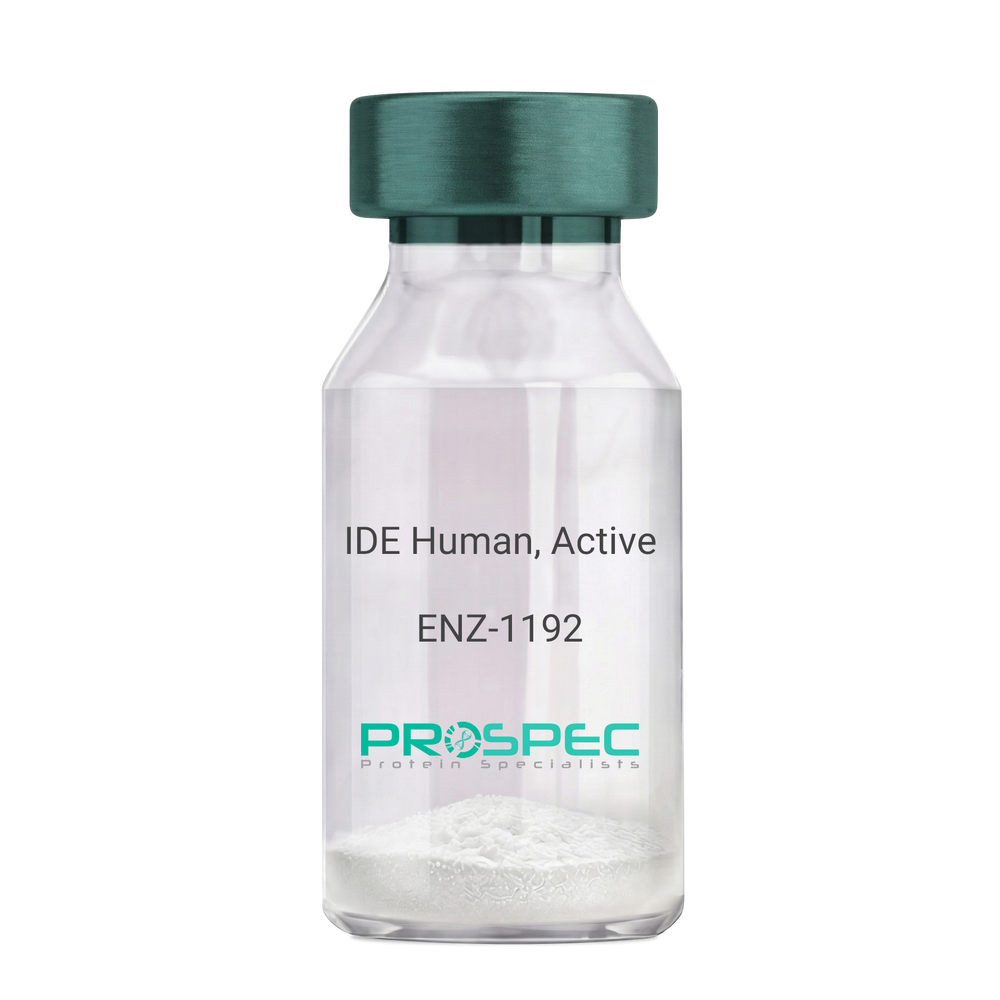
IDE Human, ActiveDescription:
Insulin-Degrading Enzyme Human Recombinant
Insulin-Degrading Enzyme, Abeta-Degrading Protease, Insulysin, EC 3.4.24.56, Insulinase, Insulin Protease, INSULYSIN, EC 3.4.24, IDE, insulin-degrading enzyme isoform 1.
Product # :
ENZ-1192Price :
Quantity :
Shipping Method :
Shipped with Ice Packs
More Info
- description
- source
- formulation
- purity
- biological activity
- More Info
- Citations
Description
IDE Human, Active Human Recombinant produced in E.Coli is a single, non-glycosylated, polypeptide chain (42-1019 a.a) containing a total of 984 amino acids, having a molecular mass of 114 kDa. IDE is fused to a 6 amino acid His-tag at C-terminus and is purified by proprietary chromatographic techniques.
Source
Escherichia Coli.
Formulation
The IDE solution (0.5mg/ml) contains 10% Glycerol, 100mM NaCl, 0.05% Brij35 and 20mM Tris-HCl buffer (pH 7.5).
Purity
Greater than 90.0% as determined by SDS-PAGE.
Biological Activity
Specific activity is greater than 3,000 pmol/min/ug in which 1 unit will convert 1.0 pmole of Mca-RPPGFSAFK(Dnp)-OH to MCA-Pro-Leu-OH per minute at pH 7.5 at 25°C.
Citations
More Info
-
Synonyms
Insulin-Degrading Enzyme, Abeta-Degrading Protease, Insulysin, EC 3.4.24.56, Insulinase, Insulin Protease, INSULYSIN, EC 3.4.24, IDE, insulin-degrading enzyme isoform 1.
-
Physical Appearance
Filtered colorless solution.
-
Stability
Store at 4°C if entire vial will be used within 2-4 weeks. Store, frozen at -20°C for longer periods of time. For long term storage it is recommended to add a carrier protein (0.1% HSA or BSA). Avoid multiple freeze-thaw cycles.
-
Amino Acid Sequence
MNNPAIKRIG NHITKSPEDK REYRGLELAN GIKVLLISDP TTDKSSAALD VHIGSLSDPP NIAGLSHFCE HMLFLGTKKY PKENEYSQFL SEHAGSSNAF TSGEHTNYYF DVSHEHLEGA LDRFAQFFLC PLFDESCKDR EVNAVDSEHE KNVMNDAWRL FQLEKATGNP KHPFSKFGTG NKYTLETRPN QEGIDVRQEL LKFHSAYYSS NLMAVCVLGR ESLDDLTNLV VKLFSEVENK NVPLPEFPEH PFQEEHLKQL YKIVPIKDIR NLYVTFPIPD LQKYYKSNPG HYLGHLIGHE GPGSLLSELK SKGWVNTLVG GQKEGARGFM FFIINVDLTE EGLLHVEDII LHMFQYIQKL RAEGPQEWVF QECKDLNAVA FRFKDKERPR GYTSKIAGIL HYYPLEEVLT AEYLLEEFRP DLIEMVLDKL RPENVRVAIV SKSFEGKTDR TEEWYGTQYK QEAIPDEVIK KWQNADLNGK FKLPTKNEFI PTNFEILPLE KEATPYPALI KDTAMSKLWF KQDDKFFLPK ACLNFEFFSP FAYVDPLHCN MAYLYLELLK DSLNEYAYAA ELAGLSYDLQ NTIYGMYLSV KGYNDKQPIL LKKIIEKMAT FEIDEKRFEI IKEAYMRSLN NFRAEQPHQH AMYYLRLLMT EVAWTKDELK EALDDVTLPR LKAFIPQLLS RLHIEALLHG NITKQAALGI MQMVEDTLIE HAHTKPLLPS
QLVRYREVQL PDRGWFVYQQ RNEVHNNCGI EIYYQTDMQS TSENMFLELF CQIISEPCFN TLRTKEQLGY IVFSGPRRAN GIQGLRFIIQ SEKPPHYLES RVEAFLITME KSIEDMTEEA FQKHIQALAI RRLDKPKKLS AECAKYWGEI ISQQYNFDRD NTEVAYLKTL TKEDIIKFYK EMLAVDAPRR HKVSVHVLAR EMDSCPVVGE FPCQNDINLS QAPALPQPEV IQNMTEFKRG LPLFPLVKPH INFMAAKLHH HHHH. -
Background
Insulin-degrading enzyme (IDE) is a crucial protease that plays a significant role in maintaining glucose homeostasis by degrading insulin and other bioactive peptides. Dysregulation of IDE has been implicated in various metabolic disorders, particularly type 2 diabetes mellitus. IDE is also associated with the clearance of amyloid-beta peptides in the brain, making it relevant to Alzheimer's disease pathology. Studying the recombinant form of IDE is fundamental to understanding its functional mechanisms and exploring potential avenues for therapeutic interventions.
The primary goal of this research is to express and purify recombinant IDE using diverse expression systems. Recombinant DNA techniques will be employed to construct expression vectors containing the IDE gene, followed by expression in bacterial, yeast, or mammalian cell-based systems. The recombinant IDE will be purified using affinity chromatography or other appropriate methods, facilitating subsequent biochemical and biophysical characterization.
The second objective is to investigate the substrate specificity and catalytic activity of the purified IDE. In vitro enzymatic assays will be conducted to analyse the ability of the recombinant IDE to degrade insulin and other potential substrates. The effects of various factors, such as pH, temperature, and potential modulators, on IDE activity will be evaluated. Additionally, the interactions between IDE and its substrates will be explored using binding assays.
The third objective is to elucidate the three-dimensional structure of the IDE recombinant using techniques like X-ray crystallography or nuclear magnetic resonance (NMR) spectroscopy. Structural insights into the active site and binding pockets of IDE will provide valuable information for understanding its substrate recognition and catalytic mechanisms. This knowledge could be instrumental in designing targeted therapeutic compounds.
By characterizing the IDE recombinant, this research aims to contribute to our understanding of its role in insulin metabolism, glucose regulation, and potential therapeutic applications. The findings from this study may have implications for the development of novel treatments for diabetes and other related disorders.
ProSpec's products are furnished for LABORATORY RESEARCH USE ONLY. The product may not be used as drugs, agricultural or pesticidal products, food additives or household chemicals.
- View Data Sheet
Name :
ELANE MouseDescription:
Elastase-2 Mouse Recombinant
Elane, Ela2, F430011M15Rik, NE, Neutrophil elastase, Elastase-2, Leukocyte elastase.
Product # :
ENZ-1105Price :
Quantity :
Shipping Method :
Shipped with Ice Packs
More Info
- description
- source
- formulation
- purity
- More Info
- Citations
Description
ELANE Mouse produced in Sf9 Insect cells is a single, glycosylated polypeptide chain (27-265a.a.) fused to a 6 aa His Tag at C-terminus containing 245 amino acids and having a molecular mass of 26.8kDa.ELANE shows multiple bands between 28-40kDa on SDS-PAGE, reducing conditions and purified by proprietary chromatographic techniques.
Source
Sf9, Insect cells.
Formulation
ELANE protein solution (0.25mg/ml) contains 20mM Tris-HCl buffer (pH 8.0), 30% Glycerol and 0.1M NaCl.
Purity
Greater than 90.0% as determined by SDS-PAGE.
Citations
More Info
-
Introduction
Elastase-2 (ELANE) is a serine protease that belongs to the chymotrypsin family. ELANE breaks down elastin, an elastic fiber together with collagen and controls the mechanical properties of connective tissue. The neutrophil form breaks down the Outer membrane protein A (OmpA) of E. coli and other Gram-negative bacteria. ELANEis inhibited by the acute-phase protein alpha 1-antitrypsin (A1AT), which binds almost irreversibly to the active site of elastase and trypsin.A1AT is usually secreted by the liver cells into the serum. A1AD leads to uninhibited destruction of elastic fiber by elastase.
-
Synonyms
Elane, Ela2, F430011M15Rik, NE, Neutrophil elastase, Elastase-2, Leukocyte elastase.
-
Physical Appearance
Sterile Filtered colorless solution.
-
Stability
Store at 4°C if entire vial will be used within 2-4 weeks. Store, frozen at -20°C for longer periods of time. For long term storage it is recommended to add a carrier protein (0.1% HSA or BSA).Avoid multiple freeze-thaw cycles.
-
Amino Acid Sequence
SEIVGGRPAR PHAWPFMASL QRRGGHFCGA TLIARNFVMS AAHCVNGLNF RSVQVVLGAH
DLRRQERTRQ TFSVQRIFEN GFDPSQLLND IVIIQLNGSA TINANVQVAQ LPAQGQGVGD
RTPCLAMGWG RLGTNRPSPS VLQELNVTVV TNMCRRRVNV CTLVPRRQAG ICFGDSGGPL
VCNNLVQGID SFIRGGCGSG LYPDAFAPVA EFADWINSII RSHNDHLLTH PKDREGRTNH HHHHH
ProSpec's products are furnished for LABORATORY RESEARCH USE ONLY. The product may not be used as drugs, agricultural or pesticidal products, food additives or household chemicals.
- View Data Sheet
Name :
IL12 HumanDescription:
Interleukin-12 Human Recombinant
NKSF, CTL maturation factor (TCMF), Cytotoxic lymphocyte maturation factor (CLMF), TSF, Edodekin-alpha, IL-12.
Product # :
CYT-101Price :
Quantity :
Shipping Method :
Shipped at Room temp
More Info
- description
- source
- formulation
- purity
- biological activity
- More Info
- Citations
Description
Interleukin-12 Human Recombinant produced in HEK cells is a glycosylated heterodimer, having a total molecular weight of 57kDa.The IL12 is purified by proprietary chromatographic techniques.
Source
HEK.
Formulation
IL12 was lyophilized from a 0.2µm filtered solution containing 1xPBS.
Purity
Greater than 95% as obsereved by SDS-PAGE.
Biological Activity
The specific activity was determined by the dose-dependent release of IFN-gamma from the human NK92 cell line in presence of 20ng/mL rIL-2.
The EC50 is 0.5ng/ml.Citations
More Info
-
Introduction
IL-12 is a heterodimeric cytokine that stimulates the production of IFNgamma from T-cells and natural killer cells, and also induces differentiation of Th1 helper cells. IL-12 is an initiator of cell-mediated immunity.
-
Synonyms
NKSF, CTL maturation factor (TCMF), Cytotoxic lymphocyte maturation factor (CLMF), TSF, Edodekin-alpha, IL-12.
-
Physical Appearance
Sterile Filtered White lyophilized (freeze-dried) powder.
-
Stability
Lyophilized IL-12 although stable at room temperature for 3 weeks, should be stored desiccated below -18°C. Upon reconstitution IL12 should be stored at 4°C between 2-7 days and for future use below -18°C.For long term storage it is recommended to add a carrier protein (0.1% HSA or BSA).Please prevent freeze-thaw cycles.
-
Solubility
It is recommended to reconstitute the lyophilized IL12 in sterile PBS containing 0.1% endotoxin-free recombinant HSA.
-
Amino Acid Sequence
IL-12 is a heterodimer of IL-12A and IL-12B linked through a disulfide-bond between cysteines in red in sequences below.
>IL-12 A
RNLPVATPDPGMFPCLHHSQNLLRAVSNMLQKARQTLEFYPCTSEEIDHEDITKDKTSTVEACLP
LELTKNESCLNSRETSFITNGSCLASRKTSFMMALCLSSIYEDLKMYQVEFKTMNAKLLMDPKRQ
IFLDQNMLAVIDELMQALNFNSETVPQKSSLEEPDFYKTKIKLCILLHAFRIRAVTIDRVMSYLNAS.
>IL-12B
IWELKKDVYVVELDWYPDAPGEMVVLTCDTPEEDGITWTLDQSSEVLGSGKTLTIQVKEFGDAG
QYTCHKGGEVLSHSLLLLHKKEDGIWSTDILKDQKEPKNKTFLRCEAKNYSGRFTCWWLTTISTD
LTFSVKSSRGSSDPQGVTCGAATLSAERVRGDNKEYEYSVECQEDSACPAAEESLPIEVMVDAV
HKLKYENYTSSFFIRDIIKPDPPKNLQLKPLKNSRQVEVSWEYPDTWSTPHSYFSLTFCVQVQGK
SKREKKDRVFTDKTSATVICRKNASISVRAQDRYYSSSWSEWASVPCS. -
Background
What is the molecular weight/Mw of IL12 HUMAN Protein?
IL12 HUMAN Protein has a total Mw of 57kDa.
What is the source or expression system of IL12 HUMAN Protein?
HEK.
What is the Purity of IL12 HUMAN Protein?
IL12 HUMAN Protein is >95% pure as determined by SDS-PAGE.
What is the Biological Activity of IL12 HUMAN Protein?
The specific activity was determined by the dose-dependent release of IFN-gamma from the human NK92 cell line in presence of 20ng/mL rIL-2.
The EC50 is 0.5ng/ml.
What is the amino acid sequence of IL12 HUMAN Protein?
IL-12 is a heterodimer of IL-12A and IL-12B linked through a disulfide-bond between cysteines in red in sequences below.
>IL-12 A
RNLPVATPDPGMFPCLHHSQNLLRAVSNMLQKARQTLEFYPCTSEEIDHEDITKDKTSTVEACLP
LELTKNESCLNSRETSFITNGSCLASRKTSFMMALCLSSIYEDLKMYQVEFKTMNAKLLMDPKRQ
IFLDQNMLAVIDELMQALNFNSETVPQKSSLEEPDFYKTKIKLCILLHAFRIRAVTIDRVMSYLNAS.
>IL-12B
IWELKKDVYVVELDWYPDAPGEMVVLTCDTPEEDGITWTLDQSSEVLGSGKTLTIQVKEFGDAG
QYTCHKGGEVLSHSLLLLHKKEDGIWSTDILKDQKEPKNKTFLRCEAKNYSGRFTCWWLTTISTD
LTFSVKSSRGSSDPQGVTCGAATLSAERVRGDNKEYEYSVECQEDSACPAAEESLPIEVMVDAV
HKLKYENYTSSFFIRDIIKPDPPKNLQLKPLKNSRQVEVSWEYPDTWSTPHSYFSLTFCVQVQGK
SKREKKDRVFTDKTSATVICRKNASISVRAQDRYYSSSWSEWASVPCS.
What applications can IL12 HUMAN Protein be used in?
IL12 HUMAN Protein can probably be used in western blot, ELISA and Lateral Flow.
What is the endotoxin level for IL12 HUMAN Protein?
The endotoxin level is minimal, IL12 HUMAN Protein was purified using conventional chromatography techniques.
Who supplies recombinant IL12 HUMAN that is in stock and available to order?
ProSpec has the protein in stock and available for immediate delivery.
Where can I order bulk mg quantities of IL12 HUMAN?
ProSpec supplies bulk mg quantities at affordable prices that meets research and academic budgets.
ProSpec's products are furnished for LABORATORY RESEARCH USE ONLY. The product may not be used as drugs, agricultural or pesticidal products, food additives or household chemicals.
- View Data Sheet
Name :
AHSG Human HEKDescription:
Alpha-2-HS-Glycoprotein Human Recombinant HEK
Alpha-2-HS-glycoprotein, Fetuin-A, Alpha-2-Z-globulin, Ba-alpha-2-glycoprotein, AHSG, FETUA, AHS, A2HS, HSGA, PRO2743.
Product # :
PRO-1644Price :
Quantity :
Shipping Method :
Shipped at Room temp
More Info
- description
- source
- formulation
- purity
- More Info
- Citations
Description
AHSG Human Recombinant produced by transfected human cells is a single polypeptide chain containing 357 amino acids (19-367). AHSG is fused to an 8 amino acid His-tag at C-terminus & purified by proprietary chromatographic techniques.
Source
HEK293 cells.
Formulation
AHSG was lyophilized from a 0.2 µM filtered solution of 20mM PB and 150mM NaCl, pH 7.5.
Purity
Greater than 95% as determined by SDS-PAGE.
Citations
More Info
-
Introduction
Fetuin is a liver-produced negative acute phase protein composed of two subunits, the A and B chains.
Fetuin homologs have been identified in several species including rat, sheep, pig, rabbit, guinea pig, cattle, mouse and human. Multiple physiological roles for these homologs have been suggested, including ability to bind to hydroxyapatite crystals and to specifically inhibit the tyrosine kinase (TK) activity of the receptor (IR).
Fetuin-A (alpha2-Heremans-Schmid glycoprotein; AHSG) is an important circulating inhibitor of calcification in vivo, and is downregulated during the acute-phase response.
Sera from patients on long-term dialysis with low AHSG concentrations showed impaired ex-vivo capacity to inhibit CaxPO4 precipitation.
Fetuin may influence the resolution of inflammation by modulating the phagocytosis of apoptotic cells by macrophages.
ASHG blocks TGF-beta-dependent signaling in osteoblastic cells, and mice lacking ASHG display growth plate defects, increased bone formation with age, and enhanced cytokine-dependent osteogenesis. -
Synonyms
Alpha-2-HS-glycoprotein, Fetuin-A, Alpha-2-Z-globulin, Ba-alpha-2-glycoprotein, AHSG, FETUA, AHS, A2HS, HSGA, PRO2743.
-
Physical Appearance
Sterile Filtered White lyophilized (freeze-dried) powder.
-
Stability
Lyophilized AHSG although stable at room temperature for 3 weeks, should be stored desiccated below -18°C. Upon reconstitution AHSG should be stored at 4°C between 2-7 days and for future use below -18°C. Please prevent freeze-thaw cycles.
-
Solubility
It is recommended to reconstitute the lyophilized AHSG in 1xPBS to a concentration no less than 100 µg/ml, which can then be further diluted to other aqueous solutions.
-
Amino Acid Sequence
APHGPGLIYRQPNCDDPETEEAALVAIDYINQNLPWGYKHTLNQIDEVKVWPQQPSGELFEIE
IDTLETTCHVLDPTPVARCSVRQLKEHAVEGDCDFQLLKLDGKFSVVYAKCDSSPDSAEDVRK
VCQDCPLLAPLNDTRVVHAAKAALAAFNAQNNGSNFQLEEISRAQLVPLPPSTYVEFTVSGTD
CVAKEATEAAKCNLLAEKQYGFCKATLSEKLGGAEVAVTCTVFQTQPVTSQPQPEGANEAVPTP
VVDPDAPPSPPLGAPGLPPAGSPPDSHVLLAAPPGHQLHRAHYDLRHTFMGVVSLGSPSGEVSH
PRKTRTVVQPSVGAAAGPVVPPCPGRIRHFKVVDHHHHHH.
ProSpec's products are furnished for LABORATORY RESEARCH USE ONLY. The product may not be used as drugs, agricultural or pesticidal products, food additives or household chemicals.
- View Data Sheet
Name :
DEDD HumanDescription:
Death Effector Domain Containing Human Recombinant
CASP8IP1, DEDD1, DEFT, FLDED1, KE05, DEDPro1, Death effector domain-containing testicular molecule.
Product # :
PRO-1349Price :
Quantity :
Shipping Method :
Shipped with Ice Packs
More Info
- description
- source
- formulation
- purity
- More Info
- Citations
Description
DEDD Human Recombinant produced in E.Coli is a single, non-glycosylated polypeptide chain containing 338 amino acids (1-318a.a) and having a molecular mass of 38.9kDa. DEDD is fused to a 20 amino acid His-tag at N-terminus & purified by proprietary chromatographic techniques.
Source
Escherichia Coli.
Formulation
DEDD protein solution (0.5mg/ml) contains 20mM Tris-HCl buffer (pH 8.0), 0.4M Urea and 10% glycerol.
Purity
Greater than 85.0% as determined by SDS-PAGE.
Citations
More Info
-
Introduction
Death effector domain-containing protein (DEDD) is a cytoplasmic protein. The cell death activity of DEDD relates to its nuclear localization. DEDD translocates to the nucleus during CD95-mediated apoptosis, there it localizes to nucleoli-like structures, activates caspase-6 and particularly inhibits RNA polymerase I-dependent transcription. DEDD is usually expressed in a variety of tissues, and found in the highest levels in the testis. Overexpression of DEDD was shown to induce weak apoptosis.
-
Synonyms
CASP8IP1, DEDD1, DEFT, FLDED1, KE05, DEDPro1, Death effector domain-containing testicular molecule.
-
Physical Appearance
Sterile Filtered colorless solution.
-
Stability
Store at 4°C if entire vial will be used within 2-4 weeks. Store, frozen at -20°C for longer periods of time. For long term storage it is recommended to add a carrier protein (0.1% HSA or BSA).Avoid multiple freeze-thaw cycles.
-
Amino Acid Sequence
MGSSHHHHHH SSGLVPRGSH MAGLKRRASQ VWPEEHGEQE HGLYSLHRMF DIVGTHLTHR DVRVLSFLFV DVIDDHERGL IRNGRDFLLA LERQGRCDES NFRQVLQLLR IITRHDLLPY VTLKRRRAVC PDLVDKYLEE TSIRYVTPRA LSDPEPRPPQ PSKTVPPHYP VVCCPTSGPQ MCSKRPARGR ATLGSQRKRR KSVTPDPKEK QTCDIRLRVR AEYCQHETAL QGNVFSNKQD PLERQFERFN QANTILKSRD LGSIICDIKF SELTYLDAFW RDYINGSLLE ALKGVFITDS LKQAVGHEAI KLLVNVDEED YELGRQKLLR NLMLQALP.
ProSpec's products are furnished for LABORATORY RESEARCH USE ONLY. The product may not be used as drugs, agricultural or pesticidal products, food additives or household chemicals.
- View Data Sheet
Name :
AMBPDescription:
Alpha-1 Microglobulin Human Recombinant
Alpha-1-microglobulin/bikunin precursor, HCP, ITIL, ITI, EDC1, HI30, IATIL, ITILC, UTI, A1M, bikunin, complex-forming glycoprotein heterogeneous in charge, growth-inhibiting protein 19, inter-alpha-trypsin inhibitor light chain, protein AMBP, protein HC, trypstatin, uristatin, uronic-acid-rich protein.
Product # :
PRO-957Price :
Quantity :
Shipping Method :
Shipped with Ice Packs
More Info
- description
- source
- formulation
- purity
- More Info
- Citations
Description
AMBP Human Recombinant produced in E.coli is a single, non-glycosylated polypeptide chain containing 205 amino acids (20-203) and having a molecular mass of 23.1 kDa.AMBP is fused to a 21 amino acid His-tag at N-terminus & purified by proprietary chromatographic techniques.
Source
E.coli.
Formulation
The AMBP solution (0.5mg/ml) contains 20mM Tris-HCl buffer (pH 8.0), 1mM DTT, 0.1M NaCl and 10% glycerol.
Purity
Greater than 90% as determined by SDS-PAGE.
Citations
More Info
-
Introduction
Alpha 1-microglobulin (A1M) is a lipocalin superfamily member (kernal lipocalins). A1M is a low molecular weight protein component of plasma. A1M is distributed in plasma and extravascular compartments of all organs. Alpha-1 Microglobulin is found in mammals, birds, amphibians and fish. The primary sites of A1M synthesis are the liver and the kidney. Around the opening of the lipocalin pocket three lysyl residues are situated; those residues carry yellow-brown modification derived from the binding and degradation of heme and kynurenin (a tryptophan metabolite). A1-Microglobulin’s reductase and dehydrogenase have broad biological substrate specificity properties due to its’ free cysteine side-chain which is located in a flexible loop. Alpha-1-microglobulin is glycosylated by three separate carbohydrate chains: two complex carbohydrates which are N-linked to asparagines at residues 17 and 96, and the other simple carbohydrate which is O-linked to threonine at position 5. The carbohydrates comprise 22% of the total molecular mass of the protein. The glycosylation varies between species.
A1M exists in two forms- a free form and complexed to other macromolecules: in humans- complexed to immunoglobulin A (IgA), in rat- complexed to alpha-1-inhibitor-3. Free A1M is exceptionally heterogeneous in charge (therefore also known as protein HC), and is found tightly linked to a chromophore. The free Alpha-1-microglobulin is a monomeric protein composed of one 188 residue polypeptide and contains three cysteines, two of which (residues 75 and 173) form a conserved intra-molecular disulphide link. The chromophoric group is covalently bound to the free cysteine residue at position 34. A1M binds retinol as a major ligand, but this is probably distinct from its covalent chromophore.
Half of all human plasma A1M (approximately 0.03mg/ml) forms a 1:1 complex with about 5% of plasma immunoglobulin A. The resulting macromolecular complexes’ molecular weight is 200000, and a plasma concentration of 0.3mg/ml. The complex can exhibit both antibody activity and affect many of the biological actions of free Alpha-1-microglobulin.
Alpha-1-microglobulin was first discovered in pathological human urine.
It was suggested that A1M might be involved in tissue defense against reactive oxygen species, oxidation by heme and kynurenin. Evidence also suggests that A1M functions in the regulation of the immune system. Other functions include inhibition of stimulation of cultured lymphocytes by protein antigens; induction of cell division of lymphocytes, a mitogenic effect that can either be enhanced or inhibited by the action of other plasma components; inhibition of neutrophil granulocyte migration in vitro; and inhibition of chemotaxis. -
Synonyms
Alpha-1-microglobulin/bikunin precursor, HCP, ITIL, ITI, EDC1, HI30, IATIL, ITILC, UTI, A1M, bikunin, complex-forming glycoprotein heterogeneous in charge, growth-inhibiting protein 19, inter-alpha-trypsin inhibitor light chain, protein AMBP, protein HC, trypstatin, uristatin,
uronic-acid-rich protein. -
Physical Appearance
Sterile Filtered colorless solution.
-
Stability
Store at 4°C if entire vial will be used within 2-4 weeks. Store, frozen at -20°C for longer periods of time. For long term storage it is recommended to add a carrier protein (0.1% HSA or BSA).Avoid multiple freeze-thaw cycles.
-
Amino Acid Sequence
MGSSHHHHHH SSGLVPRGSH MGPVPTPPDN IQVQENFNIS RIYGKWYNLA IGSTCPWLKK IMDRMTVSTL VLGEGATEAE ISMTSTRWRK GVCEETSGAY EKTDTDGKFL YHKSKWNITM ESYVVHTNYD EYAIFLTKKF SRHHGPTITA KLYGRAPQLR ETLLQDFRVV AQGVGIPEDS IFTMADRGEC VPGEQEPEPI LIPRV.
ProSpec's products are furnished for LABORATORY RESEARCH USE ONLY. The product may not be used as drugs, agricultural or pesticidal products, food additives or household chemicals.
- View Data Sheet
Name :
HSD17B1 HumanDescription:
Hydroxysteroid (17-beta) Dehydrogenase 1 Human Recombinant
E2 17-beta-dehydrogenase 1, EC 1.1.1.62, 17-beta-hydroxysteroid dehydrogenase type 1, 17-beta-HSD 1, 20 alpha-hydroxysteroid dehydrogenase, 20-alpha-HSD, E2DH, Placental 17-beta-hydroxysteroid dehydrogenase, HSD17B1, E17KSR, EDH17B1, EDH17B2, EDHB17, HSD17, SDR28C1.
Product # :
ENZ-709Price :
Quantity :
Shipping Method :
Shipped with Ice Packs
More Info
- description
- source
- formulation
- purity
- More Info
- Citations
Description
HSD17B1 Human Recombinant produced in E.Coli is a single, non-glycosylated polypeptide chain containing 352 amino acids (1-328 a.a) and having a molecular mass of 37.5kDa.HSD17B1 is fused to a 24 amino acid His-tag at N-terminus & purified by proprietary chromatographic techniques.
Source
Escherichia Coli.
Formulation
HSD17B1 solution (1mg/ml) containing 20mM Tris-HCl buffer (pH 8.0), 0.15M NaCl, 10% glycerol and 1mM DTT.
Purity
Greater than 90.0% as determined by SDS-PAGE.
Citations
More Info
-
Introduction
E2 17-beta-dehydrogenase 1 (HSD17B1) is a member of the short-chain dehydrogenases/reductases (SDR) family. The HSD17B1 protein advances the reduction of estrogens and androgens. In addition, the HSD17B1 has a 20-alpha-HSD activity. HSD17B1 preferentially uses NADH.
-
Synonyms
E2 17-beta-dehydrogenase 1, EC 1.1.1.62, 17-beta-hydroxysteroid dehydrogenase type 1, 17-beta-HSD 1, 20 alpha-hydroxysteroid dehydrogenase, 20-alpha-HSD, E2DH, Placental 17-beta-hydroxysteroid dehydrogenase, HSD17B1, E17KSR, EDH17B1, EDH17B2, EDHB17, HSD17, SDR28C1.
-
Physical Appearance
Sterile filtered colorless solution.
-
Stability
Store at 4°C if entire vial will be used within 2-4 weeks. Store, frozen at -20°C for longer periods of time. For long term storage it is recommended to add a carrier protein (0.1% HSA or BSA).Avoid multiple freeze-thaw cycles.
-
Amino Acid Sequence
MGSSHHHHHH SSGLVPRGSH MGSHMARTVV LITGCSSGIG LHLAVRLASD PSQSFKVYAT LRDLKTQGRL WEAARALACP PGSLETLQLD VRDSKSVAAA RERVTEGRVD VLVCNAGLGL LGPLEALGED AVASVLDVNV VGTVRMLQAF LPDMKRRGSG RVLVTGSVGG LMGLPFNDVY CASKFALEGL CESLAVLLLP FGVHLSLIEC GPVHTAFMEK VLGSPEEVLD RTDIHTFHRF YQYLAHSKQV FREAAQNPEE VAEVFLTALR APKPTLRYFT TERFLPLLRM RLDDPSGSNY VTAMHREVFG DVPAKAEAGA EAGGGAGPGA EDEAGRGAVG DPELGDPPAA PQ.
ProSpec's products are furnished for LABORATORY RESEARCH USE ONLY. The product may not be used as drugs, agricultural or pesticidal products, food additives or household chemicals.
- View Data Sheet
Name :
DUSP18 Human, ActiveDescription:
Dual Specificity Phosphatase 18 Human Recombinant, Active
Dual specificity protein phosphatase 18, Low molecular weight dual specificity phosphatase 20, LMW-DSP20, DUSP18, LMWDSP20, VHP, DUSP26.
Product # :
ENZ-1040Price :
Quantity :
Shipping Method :
Shipped with Ice Packs
More Info
- description
- source
- formulation
- purity
- biological activity
- More Info
- Citations
Description
DUSP18 produced in E.Coli is a single, non-glycosylated polypeptide chain containing 212 amino acids (1-188a.a.) and having a molecular mass of 23.6kDa.DUSP18 is fused to a 24 amino acid His-tag at N-terminus & purified by proprietary chromatographic techniques.
Source
Escherichia Coli.
Formulation
The DUSP18 protein solution (0.5mg/ml) is formulated in 20mM Tris-HCl buffer (pH8.0), 0.1mM PMSF, 1mM DTT, 40% glycerol and 1mM EDTA.
Purity
Greater than 95.0% as determined by SDS-PAGE.
Biological Activity
Specific activity is > 300 units/mg, and is defined as the amount of enzyme that hydrolyze 1.0 nmole of p-nitrophenyl phosphate (pNPP) per minute at pH 7.5 at 37°C.
Citations
More Info
-
Introduction
Dual specificity phosphatase 18 (DUSP18) belongs to the dual-specificity phosphatase (DSP) family, which catalyzes dephosphorylation of phosphotyrosine and phosphothreonine residues. DUSP18 has a preferential enzymatic activity for phosphorylated tyrosine residues over threonine residues, in addition DUSP18 dephosphorylates p-nitrophenyl phosphate (pNPP) in vitro. Furthermore, DUSP18 is inhibited by iodoarectic acid and is activated by manganese ions. DUSP18 is extensively expressed with the highest levels in the liver, brain, ovary and testis.
-
Synonyms
Dual specificity protein phosphatase 18, Low molecular weight dual specificity phosphatase 20, LMW-DSP20, DUSP18, LMWDSP20, VHP, DUSP26.
-
Physical Appearance
Sterile Filtered clear solution.
-
Stability
Store at 4°C if entire vial will be used within 2-4 weeks. Store, frozen at -20°C for longer periods of time. For long term storage it is recommended to add a carrier protein (0.1% HSA or BSA).Avoid multiple freeze-thaw cycles.
-
Amino Acid Sequence
MGSSHHHHHH SSGLVPRGSH MGSHMTAPSC AFPVQFRQPS VSGLSQITKS LYISNGVAAN NKLMLSSNQI TMVINVSVEV VNTLYEDIQY MQVPVADSPN SRLCDFFDPI ADHIHSVEMK QGRTLLHCAA GVSRSAALCL AYLMKYHAMS LLDAHTWTKS CRPIIRPNSG FWEQLIHYEF QLFGKNTVHM VSSPVGMIPD IYEKEVRLMI PL
ProSpec's products are furnished for LABORATORY RESEARCH USE ONLY. The product may not be used as drugs, agricultural or pesticidal products, food additives or household chemicals.
- View Data Sheet
Name :
SMS HumanDescription:
Spermine Synthase Human Recombinant
Spermine synthase, SPMSY, Spermidine aminopropyltransferase, SMS, SRS, SpS, MRSR.
Product # :
ENZ-230Price :
Quantity :
Shipping Method :
Shipped with Ice Packs
More Info
- description
- source
- formulation
- purity
- More Info
- Citations
Description
SMS Human Recombinant produced in E.coli is a single, non-glycosylated polypeptide chain containing 390 amino acids (1-366) and having a molecular mass of 43.8kDa.SMS is fused to a 24 amino acid His-tag at N-terminus & purified by proprietary chromatographic techniques.
Source
Escherichia Coli.
Formulation
The SMS solution (1mg/ml) contains 20mM Tris-HCl buffer (pH 8.0), 1mM DTT, 10% glycerol and 100mM NaCl.
Purity
Greater than 90.0% as determined by SDS-PAGE.
Citations
More Info
-
Introduction
Spermine synthase (SMS) is amember of the spermidine/spermine synthase family. SMS is an enzyme which converts spermidine into spermine. The SMS enzyme is essential for normal viability, growth and fertility involved in polyamine metabolism. Defects in the SMS gene are the cause of Snyder-Robinson syndrome (SRS), also known as X-linked mental retardation Snyder-Robinson type. SRS is categorized by moderate intellectual deficit, hypotonia, an unsteady gait, osteoporosis, kyphoscoliosis and facial asymmetry, its transmission is X-linked recessive.
-
Synonyms
Spermine synthase, SPMSY, Spermidine aminopropyltransferase, SMS, SRS, SpS, MRSR.
-
Physical Appearance
Sterile filtered colorless solution.
-
Stability
Store at 4°C if entire vial will be used within 2-4 weeks. Store, frozen at -20°C for longer periods of time. For long term storage it is recommended to add a carrier protein (0.1% HSA or BSA).Avoid multiple freeze-thaw cycles.
-
Amino Acid Sequence
MGSSHHHHHH SSGLVPRGSH MGSHMAAARH STLDFMLGAK ADGETILKGL QSIFQEQGMA ESVHTWQDHG YLATYTNKNG SFANLRIYPH GLVLLDLQSY DGDAQGKEEI DSILNKVEER MKELSQDSTG RVKRLPPIVR GGAIDRYWPT ADGRLVEYDI DEVVYDEDSP YQNIKILHSK QFGNILILSG DVNLAESDLA YTRAIMGSGK EDYTGKDVLI LGGGDGGILC EIVKLKPKMV TMVEIDQMVI DGCKKYMRKT CGDVLDNLKG DCYQVLIEDC IPVLKRYAKE GREFDYVIND LTAVPISTSP EEDSTWEFLR LILDLSMKVL KQDGKYFTQG NCVNLTEALS LYEEQLGRLY CPVEFSKEIV CVPSYLELWV FYTVWKKAKP.
ProSpec's products are furnished for LABORATORY RESEARCH USE ONLY. The product may not be used as drugs, agricultural or pesticidal products, food additives or household chemicals.
- View Data Sheet
Name :
NIT2 HumanDescription:
Nitrilase Family Member 2 Human Recombinant
Nitrilase homolog 2, Nitrilase family member 2, omega-amidase NIT2, MGC111199, Nit protein 2, EC 3.5.1.3.
Product # :
ENZ-039Price :
Quantity :
Shipping Method :
Shipped with Ice Packs
More Info
- description
- source
- formulation
- purity
- More Info
- Citations
Description
NIT2 produced in E.Coli is a single, non-glycosylated polypeptide chain containing 299 amino acids (1-276a.a.) and having a molecular mass of 33kDa.NIT2 is fused to a 23 amino acid His-tag at N-terminus & purified by proprietary chromatographic techniques.
Source
Escherichia Coli.
Formulation
The NIT2 protein solution (1mg/1ml) is formulated in 20mM Tris-HCl buffer (pH 8.0) 1mM DTT, 0.1M NaCl, and 10% glycerol.
Purity
Greater than 95% as determined by SDS-PAGE.
Citations
More Info
-
Introduction
NIT2 is a member of the nitrilase superfamily. NIT2 protein has an omega-amidase activity which removes potentially toxic intermediates by converting alpha-ketoglutaramate and alpha-ketosuccinamate to biologically useful alpha-ketoglutarate and oxaloacetate, respectively. In addition, Nit2 is widely distributed in nature and is thought to be a tumor suppressor protein.
-
Synonyms
Nitrilase homolog 2, Nitrilase family member 2, omega-amidase NIT2, MGC111199, Nit protein 2, EC 3.5.1.3.
-
Physical Appearance
Sterile Filtered clear solution.
-
Stability
Store at 4°C if entire vial will be used within 2-4 weeks. Store, frozen at -20°C for longer periods of time.For long term storage it is recommended to add a carrier protein (0.1% HSA or BSA).Please avoid freeze thaw cycles.
-
Amino Acid Sequence
MGSSHHHHHH SSGLVPRGSH MGSMTSFRLA LIQLQISSIK SDNVTRACSF IREAATQGAK IVSLPECFNS PYGAKYFPEY AEKIPGESTQ KLSEVAKECS IYLIGGSIPE EDAGKLYNTC AVFGPDGTLL AKYRKIHLFD IDVPGKITFQ ESKTLSPGDS FSTFDTPYCR VGLGICYDMR FAELAQIYAQ RGCQLLVYPG AFNLTTGPAH WELLQRSRAV DNQVYVATAS PARDDKASYV AWGHSTVVNP WGEVLAKAGT EEAIVYSDID LKKLAEIRQQ IPVFRQKRSD LYAVEMKKP
ProSpec's products are furnished for LABORATORY RESEARCH USE ONLY. The product may not be used as drugs, agricultural or pesticidal products, food additives or household chemicals.
- View Data Sheet
Name :
ASNS MouseDescription:
Asparagine Synthetase Mouse Recombinant
Glutamine-dependent asparagine synthetase, Asns, Asparagine synthetase.
Product # :
ENZ-1100Price :
Quantity :
Shipping Method :
Shipped with Ice Packs
More Info
- description
- source
- formulation
- purity
- More Info
- Citations
Description
ASNS produced in Sf9 Insect cells is a single, glycosylated polypeptide chain containing 567 amino acids (1-561a.a.) and having a molecular mass of 65.1 kDa.ASNS is expressed with a 6 amino acid His tag at C-Terminus and purified by proprietary chromatographic techniques.
Source
Sf9, Insect cells.
Formulation
ASNS protein solution ( 0.25mg/ml ) contains PBS (pH 7.4) and 40% glycerol.
Purity
Greater than 95.0% as determined by SDS-PAGE.
Citations
More Info
-
Introduction
Asparagine synthetase (ASNS) is a cytoplasmic enzyme that turns aspartate toasparagine and functions mostly in mammalian organs. ASNS is responsible for cell growthand its mRNA content is associated with changes in the cell cycle. ASNS may also play a role as a biomarker for ovarian cancer.
-
Synonyms
Glutamine-dependent asparagine synthetase, Asns, Asparagine synthetase.
-
Physical Appearance
Sterile Filtered colorless solution.
-
Stability
Store at 4°C if entire vial will be used within 2-4 weeks. Store, frozen at -20°C for longer periods of time. For long term storage it is recommended to add a carrier protein (0.1% HSA or BSA). Avoid multiple freeze-thaw cycles.
-
Amino Acid Sequence
MCGIWALFGS DDCLSVQCLS AMKIAHRGPD AFRFENVNGY TNCCFGFHRL AVVDPLFGMQ PIRVRKYPYL WLCYNGEIYN HKALQQRFEF EYQTNVDGEI ILHLYDKGGI EKTICMLDGV FAFILLDTAN KKVFLGRDTY GVRPLFKAMT EDGFLAVCSE AKGLVSLKHS TTPFLKVEPF LPGHYEVLDL KPNGKVASVE MVKYHHCTDE PLHAIYDSVE KLFPGFDLET VKNNLRILFD NAIKKRLMTD RRIGCLLSGG LDSSLVAASL LKQLKEAQVQ YPLQTFAIGM EDSPDLLAAR KVANYIGSEH HEVLFNSEEG IQALDEVIFS LETYDITTVR ASVGMYLISK YIRKNTDSVV IFSGEGSDEL TQGYIYFHKA PSPEKAEEES ERLLKELYLF DVLRADRTTA AHGLELRVPF LDHRFSSYYL SLPPDMRIPK NGIEKHLLRE TFEDCNLLPK EILWRPKEAF SDGITSVKNS WFKILQDYVE HQVDDEMMSA SQKFPFNTP KTKEGYFYRQ IFERHYPGRA DWLTHYWMPK WINATDPSAR TLTHYKS AAK AHHHHHH.
ProSpec's products are furnished for LABORATORY RESEARCH USE ONLY. The product may not be used as drugs, agricultural or pesticidal products, food additives or household chemicals.
- View Data Sheet
Name :
NMNAT1 Human, ActiveDescription:
Nicotinamide Nucleotide Adenylyltransferase 1 Human Recombinant , Active
NMNAT, NMNAT1, PNAT1, Nicotinamide mononucleotide adenylyltransferase 1, NMN adenylyltransferase 1, Nicotinate-nucleotide adenylyltransferase 1, NaMN adenylyltransferase 1, EC=2.7.7.1, EC=2.7.7.18.
Product # :
ENZ-1002Price :
Quantity :
Shipping Method :
Shipped with Ice Packs
More Info
- description
- source
- formulation
- purity
- biological activity
- More Info
- Citations
Description
NMNAT1 Recombinant Human produced in E.Coli is a single, non-glycosylated polypeptide chain containing 315 amino acids (1-279 a.a.) and having a molecular mass of 36 kDa. The NMNAT1 is fused to a 36 amino acid His-Tag at N-terminus and purified by proprietary chromatographic techniques.
Source
Escherichia Coli.
Formulation
The NMNAT1 solution (1mg/ml) contains 20mM Tris-HCl buffer (pH8.0), 20% glycerol, 0.1M NaCl, 1mM DTT and 1mM EDTA.
Purity
Greater than 95.0% as determined by SDS-PAGE.
Biological Activity
Specific activity is > 7,000 pmol/min/ug, and was obtained by measuring the beta-NAD from nicotinamide mononucleotide and ATP per minute at pH 8.0 at 37C.Citations
More Info
-
Introduction
NMNAT1 enzyme is vital for NAD biosynthesis, catalyzing the condensation of nicotinamide mononucleotide (NMN) or nicotinic acid mononucleotide (NaMN) with the AMP moiety of ATP to form NAD or NaAD. NMNAT1 is widely expressed with high levels in skeletal muscle, heart, liver and kidney. This protein appears to have the ability to protect against axonal degeneration following mechanical or toxic insults.
-
Synonyms
NMNAT, NMNAT1, PNAT1, Nicotinamide mononucleotide adenylyltransferase 1, NMN adenylyltransferase 1, Nicotinate-nucleotide adenylyltransferase 1, NaMN adenylyltransferase 1, EC=2.7.7.1, EC=2.7.7.18.
-
Physical Appearance
Sterile filtered colorless solution.
-
Stability
Store at 4°C if entire vial will be used within 2-4 weeks. Store, frozen at -20°C for longer periods of time.For long term storage it is recommended to add a carrier protein (0.1% HSA or BSA). Avoid multiple freeze-thaw cycles.
-
Amino Acid Sequence
MRGSHHHHHH GMASMTGGQQ MGRDLYDDDD KDRWGSMENS EKTEVVLLAC GSFNPITNMH LRLFELAKDY MNGTGRYTVV KGIISPVGDA YKKKGLIPAY HRVIMAELAT KNSKWVEVDT WESLQKEWKE TLKVLRHHQE KLEASDCDHQ QNSPTLERPG RKRKWTETQD SSQKKSLEPK TKAVPKVKLL CGADLLESFA VPNLWKSEDI TQIVANYGLI CVTRAGNDAQ KFIYESDVLW KHRSNIHVVN EWIANDISST KIRRALRRGQSIRYLVPDLV QEYIEKHNLY SSESEDRNAG VILAPLQRNT AEAKT.
ProSpec's products are furnished for LABORATORY RESEARCH USE ONLY. The product may not be used as drugs, agricultural or pesticidal products, food additives or household chemicals.
- View Data Sheet
Name :
PAPP-A HumanDescription:
Pregnancy-Associated Plasma Protein-1 Human Recombinant
Pappalysin-1, Pregnancy-associated plasma protein A, PAPP-A, IGF-dependent IGFBP-4 protease, IGFBP-4ase, PAPPA, PAPA, DIPLA1, PAPPA1, ASBABP2.
Product # :
ENZ-441Price :
Quantity :
Shipping Method :
Shipped with Ice Packs
More Info
- description
- source
- formulation
- purity
- More Info
- Citations
Description
PAPP-A Human Recombinant produced in E.Coli is single, a non-glycosylated, Polypeptide chain containing 191 amino acids fragment (81-271) corresponding to the PAPP-A “Jelly-Roll” domain fragment, having a total molecular mass of 25.75kDa and fused with an amino-terminal hexahistidine tag. The PAPP-A is purified by proprietary chromatographic techniques.
Source
Escherichia Coli.
Formulation
PAPP-A protein is supplied in 20mM Tris Hcl PH 8.0, 4M Urea and 50% Glycerol.
Purity
Greater than 95.0% as determined by SDS-PAGE.
Citations
More Info
-
Introduction
PAPPA is a large zinc binding protein, which acts as a metalloprotease and specifically cleaves IGFBP-4 and IGFBP-5, resulting in release of bound IGF. PAPP-A can also act as a regulator of IGF bioactivity in a number of biological systems, including the human ovary and cardiovascular systems. It was shown that PAPP A levels are elevated in patients with unstable angina or acute myocardial infarction. Furthermore, PAPPA is believed to be involved in local proliferative processes such as wound healing and bone remodeling. Moreover, PAPP-A is produced in high concentrations during pregnancy and is released into the maternal circulation. In placenta, PAPP A is expressed in X cells in septa and anchoring villi, and in syncytiotrophoblasts in the chorionic villi.
Lower levels of PAPPA are found in an array of other tissues including kidney, myometrium, endometrium, ovaries, breast, prostate, bone marrow, colon, fibroblasts and osteoblasts. PAPP-A is present in serum and placenta during pregnancy; with levels increasing throughout pregnancy. Low levels of PAPP A are associated with a number of foetal chromosomal abnormalities, as well as pre-eclampsia and stillbirth.
PAPPA levels may be a potentially highly specific marker for heart disease.
PAPP-A proteolytic activity is inhibited by targeting substrate exosite binding. -
Synonyms
Pappalysin-1, Pregnancy-associated plasma protein A, PAPP-A, IGF-dependent IGFBP-4 protease, IGFBP-4ase, PAPPA, PAPA, DIPLA1, PAPPA1, ASBABP2.
-
Physical Appearance
Sterile Filtered clear solution.
-
Stability
Store at 4°C if entire vial will be used within 2-4 weeks. Store, frozen at -20°C for longer periods of time. Please avoid freeze thaw cycles.
ProSpec's products are furnished for LABORATORY RESEARCH USE ONLY. The product may not be used as drugs, agricultural or pesticidal products, food additives or household chemicals.
- View Data Sheet
Name :
PGP Human, ActiveDescription:
Phosphoglycolate Phosphatase Human Recombinant, Active
Glycerol-3-phosphate phosphatase, G3PP, Aspartate-based ubiquitous Mg(2+)-dependent phosphatase, AUM, Phosphoglycolate phosphatase, PGP.
Product # :
ENZ-1044Price :
Quantity :
Shipping Method :
Shipped with Ice Packs
More Info
- description
- source
- formulation
- purity
- biological activity
- More Info
- Citations
Description
PGP Human Recombinant produced in E.coli is a single, non-glycosylated polypeptide chain containing 345 amino acids (1-321a.a) and having a molecular mass of 36.5kDa.PGP is fused to a 24 amino acid His-tag at N-terminus & purified by proprietary chromatographic techniques.
Source
Escherichia Coli.
Formulation
PGP protein solution (0.5mg/ml) containing 20mM Tris-HCl buffer (pH 8.0), 0.15M NaCl, 10% glycerol and 1mM DTT..
Purity
Greater than 95% as determined by SDS-PAGE.
Biological Activity
Specific activity is > 3,000 units/mg, and is defined as the amount of enzyme that hydrolyze 1.0 nmole of p-nitrophenyl phosphate (pNPP) per minute at pH 7.5 at 37C.
Citations
More Info
-
Introduction
Phosphoglycolate phosphatase (PGP) is discovered in all tissues including red cells, lymphocytes and cultured fibroblasts (at protein level). PGP is most active in skeletal muscle and cardiac muscle. The catalytic activity of PGP is 2-phosphoglycolate + H2O = glycolate + phosphate. Diseases associated with PGP include tardive dyskinesia and polycystic kidney disease.
-
Synonyms
Glycerol-3-phosphate phosphatase, G3PP, Aspartate-based ubiquitous Mg(2+)-dependent phosphatase, AUM, Phosphoglycolate phosphatase, PGP.
-
Physical Appearance
Sterile Filtered colorless solution.
-
Stability
Store at 4°C if entire vial will be used within 2-4 weeks.Store, frozen at -20°C for longer periods of time. For long term storage it is recommended to add a carrier protein (0.1% HSA or BSA).Avoid multiple freeze-thaw cycles.
-
Amino Acid Sequence
MGSSHHHHHH SSGLVPRGSH MGSHMAAAEA GGDDARCVRL SAERAQALLA DVDTLLFDCD GVLWRGETAV PGAPEALRAL RARGKRLGFI TNNSSKTRAA YAEKLRRLGF GGPAGPGASL EVFGTAYCTA LYLRQRLAGA PAPKAYVLGS PALAAELEAV GVASVGVGPE PLQGEGPGDW LHAPLEPDVR AVVVGFDPHF SYMKLTKALR YLQQPGCLLV GTNMDNRLPL ENGRFIAGTG CLVRAVEMAA QRQADIIGKP SRFIFDCVSQ EYGINPERTV MVGDRLDTDI LLGATCGLKT ILTLTGVSTL GDVKNNQESD CVSKKKMVPD FYVDSIADLL PALQG.
ProSpec's products are furnished for LABORATORY RESEARCH USE ONLY. The product may not be used as drugs, agricultural or pesticidal products, food additives or household chemicals.
- View Data Sheet
Name :
PPM1G Human, 546 a.a.Description:
Protein Phosphatase 1G 546 a.a. Human Recombinant
Protein Phosphatase 1G, PP2CG, PPP2CG, MGC1675, MGC2870, PP2C GAMMA, EC 3.1.3.16, Protein phosphatase 2C isoform gamma, PP2C-gamma, Protein phosphatase magnesium-dependent 1 gamma, Protein phosphatase 1C, PPM1G, PPM1C.
Product # :
ENZ-156Price :
Quantity :
Shipping Method :
Shipped with Ice Packs
More Info
- description
- source
- formulation
- purity
- More Info
- Citations
Description
PPM1G Human Recombinant produced in E.coli is a single, non-glycosylated polypeptide chain containing 566 amino acids (1-546) and having a molecular mass of 61.4 kDa. The PPM1G is fused to a 20 amino acid His-Tag at N-terminus and purified by proprietary chromatographic techniques.
Source
E.coli.
Formulation
The PPM1G solution (1mg/ml) contains 20mM Tris-HCl buffer (pH 8.0), 1mM DTT, 0.1M NaCl, 0.1mM PMSF and 20% glycerol.
Purity
Greater than 85% as determined by SDS-PAGE.
Citations
More Info
-
Introduction
PPM1G is part of the PP2C family of Ser/Thr protein phosphatases which are known to be negative regulators of cell stress response pathways. PPM1G is accountable for the dephosphorylation of Pre-mRNA splicing factors, an important factor for the formation of functional spliceosome. PPM1G regulates cell cycle progression.
PPM1G mediates histone dephosphorylation/exchange in response to DNA damage or checkpoint recovery in higher eukaryotes.
The degradation of p21/WAF1 induced by PPM1G is mediated in a proteasome-dependent manner.
Protein phosphatase 1G regulates assembly and function of the beta-catenin degradation complex. -
Synonyms
Protein Phosphatase 1G, PP2CG, PPP2CG, MGC1675, MGC2870, PP2C GAMMA, EC 3.1.3.16, Protein phosphatase 2C isoform gamma, PP2C-gamma, Protein phosphatase magnesium-dependent 1 gamma, Protein phosphatase 1C, PPM1G, PPM1C.
-
Physical Appearance
Sterile Filtered colorless solution.
-
Stability
Store at 4°C if entire vial will be used within 2-4 weeks. Store, frozen at -20°C for longer periods of time. For long term storage it is recommended to add a carrier protein (0.1% HSA or BSA).Avoid multiple freeze-thaw cycles.
-
Amino Acid Sequence
MGSSHHHHHH SSGLVPRGSH MGAYLSQPNT VKCSGDGVGA PRLPLPYGFS AMQGWRVSME DAHNCIPELD SETAMFSVYD GHGGEEVALY CAKYLPDIIK DQKAYKEGKL QKALEDAFLA IDAKLTTEEV IKELAQIAGR PTEDEDEKEK VADEDDVDNE EAALLHEEAT MTIEELLTRY GQNCHKGPPH SKSGGGTGEE PGSQGLNGEA GPEDSTRETP SQENGPTAKA YTGFSSNSER GTEAGQVGEP GIPTGEAGPS CSSASDKLPR VAKSKFFEDS EDESDEAEEE EEDSEECSEE EDGYSSEEAE NEEDEDDTEE AEEDDEEEEE EMMVPGMEGK EEPGSDSGTT AVVALIRGKQ LIVANAGDSR CVVSEAGKAL DMSYDHKPED EVELARIKNA GGKVTMDGRV NGGLNLSRAI GDHFYKRNKN LPPEEQMISA LPDIKVLTLT DDHEFMVIAC DGIWNVMSSQ EVVDFIQSKI SQRDENGELR LLSSIVEELL DQCLAPDTSG DGTGCDNMTC IIICFKPRNT AELQPESGKR KLEEVLSTEG AEENGNSDKK KKAKRD
ProSpec's products are furnished for LABORATORY RESEARCH USE ONLY. The product may not be used as drugs, agricultural or pesticidal products, food additives or household chemicals.
- View Data Sheet
Name :
TXN1, HisDescription:
Thioredoxin Recombinant, His Tag
Thioredoxin-1, Trx-1, trxA, fipA, tsnC, b3781, JW5856.
Product # :
PRO-784Price :
Quantity :
Shipping Method :
Shipped with Ice Packs
More Info
- description
- source
- formulation
- purity
- biological activity
- More Info
- Citations
Description
Recombinant Thioredoxin produced in E.Coli is a single, non-glycosylated polypeptide chain containing 117 amino acids (2-109 a.a.) and having a molecular mass of 12.8kDa. TRX contains 9 amino acid His Tag N-terminus and is purified by proprietary chromatographic techniques.
Source
Escherichia Coli.
Formulation
The TRX His Tag protein solution (0.5mg/ml) contains 20mM Tris-HCl buffer (pH 8.0), 10% glycerol and 1mM DTT.
Purity
Greater than 95.0% as determined by SDS-PAGE.
Biological Activity
Specific activity is >70 A650/cm/min/mg, detected by measuring the increase of insulin precipitation in absorbance at 650 nm resulting from the reduction of insulin.
Citations
More Info
-
Introduction
Thioredoxins are small disulphide-containing redox proteins (within the conserved Cys-Gly-Pro-Cys active site) that have been found in all the kingdoms of living organisms. Thioredoxin contains a single disulfide active site and serves as a general protein disulphide oxidoreductase. Thioredoxins are involved in the first unique step in DNA synthesis. It interacts with a broad range of proteins by a redox mechanism based on reversible oxidation of two cysteine thiol groups to a disulphide, accompanied by the transfer of two electrons and two protons. The net result is the covalent interconversion of a disulphide and a dithiol. Trx also provides control over a number of transcription factors affecting cell proliferation and death through a mechanism referred to as redox regulation. It has been suggested that thioredoxin may catalyze the formation of correct disulfides during protein folding because of its ability to act as an efficient oxidoreductant. This could be especially useful in
-
Synonyms
Thioredoxin-1, Trx-1, trxA, fipA, tsnC, b3781, JW5856.
-
Physical Appearance
Sterile Filtered colorless solution.
-
Stability
Store at 4°C if entire vial will be used within 2-4 weeks. Store, frozen at -20°C for longer periods of time. For long term storage it is recommended to add a carrier protein (0.1% HSA or BSA).Avoid multiple freeze-thaw cycles.
-
Amino Acid Sequence
MHHHHHHMGS DKIIHLTDDS FDTDVLKADG AILVDFWAEW CGPCKMIAPI LDEIADEYQG KLTVAKLNID QNPGTAPKYG IRGIPTLLLF KNGEVAATKV GALSKGQLKE FLDANLAGS.
ProSpec's products are furnished for LABORATORY RESEARCH USE ONLY. The product may not be used as drugs, agricultural or pesticidal products, food additives or household chemicals.
- View Data Sheet
Name :
PRSS3 Human, HEKDescription:
Protease Serine 3 Human Recombinant, HEK
Protease, Serine, 3, Protease, Serine, 4 (Trypsin 4, Brain), Brain Trypsinogen, Mesotrypsinogen, Mesotrypsin, Trypsin III, EC 3.4.21.4 4, Trypsin IV, PRSS4, TRY3, TRY4 Protease, Serine, 3 (Mesotrypsin), Pancreatic Trypsinogen III, Serine Protease 3, Serine Protease 4, Trypsinogen IV, Trypsinogen 4, Trypsinogen 5, EC 3.4.21, MTG, T9.
Product # :
ENZ-1194Price :
Quantity :
Shipping Method :
Shipped with Ice Packs
More Info
- description
- source
- formulation
- purity
- biological activity
- More Info
- Citations
Description
PRSS3 Human Recombinant produced in HEK293 Cells is a single, glycosylated polypeptide chain containing 238 amino acids (16-247 a.a.) and having a molecular mass of 26kDa. PRSS3 is fused to a 6 amino acid His-tag at C-terminus and is purified by proprietary chromatographic techniques.
Source
HEK293 Cells.
Formulation
PRSS3 protein solution (1mg/ml) containing 10% Glycerol and Phosphate-Buffered Saline (pH 7.4).
Purity
Greater than 95.0% as determined by SDS-PAGE.
Biological Activity
Specific activity is > 10,000pmol/min/ug, and is defined as the amount of enzyme that cleaves 1pmol of McaRPKPVE-Nval-WRK(Dnp)-NH2 per minute at pH 8.0 at 37℃.
Citations
More Info
-
Synonyms
Protease, Serine, 3, Protease, Serine, 4 (Trypsin 4, Brain), Brain Trypsinogen, Mesotrypsinogen, Mesotrypsin, Trypsin III, EC 3.4.21.4 4, Trypsin IV, PRSS4, TRY3, TRY4 Protease, Serine, 3 (Mesotrypsin), Pancreatic Trypsinogen III, Serine Protease 3, Serine Protease 4, Trypsinogen IV, Trypsinogen 4, Trypsinogen 5, EC 3.4.21, MTG, T9.
-
Physical Appearance
Sterile filtered colorless solution.
-
Stability
Store at 4°C if entire vial will be used within 2-4 weeks. Store, frozen at -20°C for longer periods of time. For long term storage it is recommended to add a carrier protein (0.1% HSA or BSA). Avoid multiple freeze-thaw cycles.
-
Amino Acid Sequence
VPFDDDDKIV GGYTCEENSL PYQVSLNSGS HFCGGSLISE QWVVSAAHCY KTRIQVRLGE HNIKVLEGNE QFINAAKIIR HPKYNRDTLD NDIMLIKLSS PAVINARVST ISLPTAPPAA GTECLISGWG NTLSFGADYP DELKCLDAPV LTQAECKASY PGKITNSMFC VGFLEGGKDS CQRDSGGPVV CNGQLQGVVS WGHGCAWKNR PGVYTKVYNY VDWIKDTIAA NSHHHHHH.
-
Background
PRSS3 is a member of the serine protease family, characterized by its specific enzymatic activity mediated by the serine residue in the catalytic triad. PRSS3's structure consists of a catalytic domain, a substrate-binding site, and disulfide bridges that help maintain its stability. Understanding the molecular characteristics of PRSS3 is crucial for elucidating its functions.
Physiological Functions: PRSS3 is primarily expressed in the pancreas, where it plays a vital role in the digestion of dietary proteins. It contributes to the breakdown of proteins into smaller peptides, facilitating their absorption in the small intestine. PRSS3 is part of a complex enzymatic network that ensures proper digestion and nutrient absorption.
Pathological Implications: Research has shown that abnormal PRSS3 activity or expression can be associated with various diseases. For example, alterations in PRSS3 have been linked to pancreatic diseases, including pancreatitis and pancreatic cancer. Investigating PRSS3's role in disease pathogenesis can provide valuable insights into the development and progression of these conditions.
Biomedical Research: PRSS3 human recombinant proteins are valuable tools in biomedical research. Researchers use these recombinant proteins to study PRSS3's enzymatic properties, interactions with other molecules, and potential therapeutic applications. They can perform controlled experiments to gain a deeper understanding of PRSS3's functions.
Therapeutic Potential: PRSS3's involvement in diseases like pancreatitis and pancreatic cancer has raised interest in its therapeutic potential. Researchers explore the development of inhibitors or modulators targeting PRSS3 as potential treatments for these diseases. Additionally, PRSS3's role in protein digestion has implications for digestive disorders and enzyme replacement therapies.
Diagnostic Markers: PRSS3 levels or activity may serve as diagnostic markers for certain diseases. Changes in PRSS3 expression in pancreatic tissue or serum may be indicative of pancreatic disorders. Research in this area aims to establish PRSS3 as a diagnostic tool for early disease detection.
Future Directions: Continued research on PRSS3 human recombinant and its roles in health and disease is essential. This includes investigating its regulation, substrate specificity, and potential interactions with other proteins. Such studies may uncover novel therapeutic targets and diagnostic strategies.
ProSpec's products are furnished for LABORATORY RESEARCH USE ONLY. The product may not be used as drugs, agricultural or pesticidal products, food additives or household chemicals.
- View Data Sheet
Name :
GOT1 Human, ActiveDescription:
Glutamic-Oxaloacetic Transaminase 1 Human Recombinant, Active
EC 2.6.1.1, Aspartate aminotransferase 1, Transaminase A, GIG18.
Product # :
ENZ-1001Price :
Quantity :
Shipping Method :
Shipped with Ice Packs
More Info
- description
- source
- formulation
- purity
- biological activity
- More Info
- Citations
Description
GOT1 Human Recombinant E.coli produced in E.Coli is a single, non-glycosylated polypeptide chain containing 433 amino acids (1-413 a.a.) and having a molecular mass of 48.4 kDa. The GOT1 is fused to a 20 amino acid His-Tag at N-terminus and purified by proprietary chromatographic techniques.
Source
Escherichia Coli.
Formulation
The GOT1 solution (0.5mg/ml) containing 20mM Tris-HCl pH-8.0, 2mM DTT, 0.1M NaCl & 20% glycerol.
Purity
Greater than 95.0% as determined by SDS-PAGE.
Biological Activity
Specific activity is > 50 units/mg, and is defined as the amount of enzyme that converts 1umole of a-ketoglutarate to L-Glutamate per minute at pH 8.0 at 25C.Citations
More Info
-
Introduction
GOT1 is a pyridoxal phosphate-dependent enzyme which exists in cytoplasmic and mitochondrial forms, GOT1 and GOT2, which participate in amino acid metabolism and the urea and tricarboxylic acid cycles. Both enzymes are homodimeric and show close homology.
-
Synonyms
EC 2.6.1.1, Aspartate aminotransferase 1, Transaminase A, GIG18.
-
Physical Appearance
Sterile filtered colorless solution.
-
Stability
Store at 4°C if entire vial will be used within 2-4 weeks. Store, frozen at -20°C for longer periods of time. For long term storage it is recommended to add a carrier protein (0.1% HSA or BSA).Avoid multiple freeze-thaw cycles.
-
Amino Acid Sequence
MGSSHHHHHH SSGLVPRGSH MAPPSVFAEV PQAQPVLVFK LTADFREDPD PRKVNLGVGA YRTDDCHPWV LPVVKKVEQK IANDNSLNHE YLPILGLAEF RSCASRLALG DDSPALKEKR VGGVQSLGGT GALRIGADFL ARWYNGTNNK NTPVYVSSPT WENHNAVFSA AGFKDIRSYR YWDAEKRGLD LQGFLNDLEN APEFSIVVLH ACAHNPTGID PTPEQWKQIA SVMKHRFLFP FFDSAYQGFA SGNLERDAWA IRYFVSEGFE FFCAQSFSKN FGLYNERVGN LTVVGKEPES ILQVLSQMEK IVRITWSNPP AQGARIVAST LSNPELFEEW TGNVKTMADR ILTMRSELRA RLEALKTPGT WNHITDQIGM FSFTGLNPKQ VEYLVNEKHI YLLPSGRINV SGLTTKNLDY VATSIHEAVT KIQ.
ProSpec's products are furnished for LABORATORY RESEARCH USE ONLY. The product may not be used as drugs, agricultural or pesticidal products, food additives or household chemicals.
- View Data Sheet
Name :
UMPS Human, Sf9Description:
Uridine Monophosphate Synthetase Human Recombinant, Sf9
Uridine Monophosphate Synthetase, UMP Synthase, Orotate Phosphoribosyl Transferase And Orotidine-5-Decarboxylase, Orotidine 5-Phosphate Decarboxylase, Orotate Phosphoribosyltransferase, Uridine 5-Monophosphate Synthase, OMPdecase, OPRTase, OPRT, Uridine 5'-monophosphate synthase, UMP synthase, Orotate phosphoribosyltransferase, Orotidine 5'-phosphate decarboxylase, ODC.
Product # :
ENZ-1057Price :
Quantity :
Shipping Method :
Shipped with Ice Packs
More Info
- description
- source
- formulation
- purity
- More Info
- Citations
Description
UMPS Human Recombinant produced in Sf9 Baculovirus cells is a single, glycosylated polypeptide chain containing 486 amino acids (1-480 a.a.) and having a molecular mass of 53kDa (Molecular size on SDS-PAGE will appear at approximately 50-70kDa). UMPS is expressed with a 6 amino acid His tag at C-Terminus and purified by proprietary chromatographic techniques.
Source
Sf9, Baculovirus cells.
Formulation
UMPS protein solution (0.25mg/ml) contains Phosphate Buffered Saline (pH 7.4) and 30% glycerol.
Purity
Greater than 95.0% as determined by SDS-PAGE.
Citations
More Info
-
Introduction
Uridine 5'-monophosphate synthase (UMPS), is a bifunctional enzyme that catalyzes the ultimate two steps of the de novo pyrimidine biosynthetic pathway. UMPS in eukaryotes links the orotate phosphoribosyltransferase and the orotidine-5’-monophosphate (OMP) decarboxylase activities into a single protein. The harmony of these 2 enzymes is assumed to be stabilized the catalytic centers as a result of the low molar concentration of the protein in mammalian cells. Mutations in UMPS are the reason of inherited orotic aciduria disease.
-
Synonyms
Uridine Monophosphate Synthetase, UMP Synthase, Orotate Phosphoribosyl Transferase And Orotidine-5-Decarboxylase, Orotidine 5-Phosphate Decarboxylase, Orotate Phosphoribosyltransferase, Uridine 5-Monophosphate Synthase, OMPdecase, OPRTase, OPRT, Uridine 5'-monophosphate synthase, UMP synthase, Orotate phosphoribosyltransferase, Orotidine 5'-phosphate decarboxylase, ODC.
-
Physical Appearance
Sterile Filtered clear solution.
-
Stability
Store at 4°C if entire vial will be used within 2-4 weeks. Store, frozen at -20°C for longer periods of time. For long term storage it is recommended to add a carrier protein (0.1% HSA or BSA).Avoid multiple freeze-thaw cycles.
-
Amino Acid Sequence
MAVARAALGP LVTGLYDVQA FKFGDFVLKS GLSSPIYIDL RGIVSRPRLL SQVADILFQT AQNAGISFDT VCGVPYTALP LATVICSTNQ IPMLIRRKET KDYGTKRLVE GTINPGETCL IIEDVVTSGS SVLETVEVLQ KEGLKVTDAI VLLDREQGGK DKLQAHGIRL HSVCTLSKML EILEQQKKVD AETVGRVKRF IQENVFVAAN HNGSPLSIKE APKELSFGAR AELPRIHPVA SKLLRLMQKK ETNLCLSADV SLARELLQLA DALGPSICML KTHVDILNDF TLDVMKELIT LAKCHEFLIF EDRKFADIGN TVKKQYEGGI FKIASWADLV NAHVVPGSGV VKGLQEVGLP LHRGCLLIAE MSSTGSLATG DYTRAAVRMA EEHSEFVVGF ISGSRVSMKP EFLHLTPGVQ LEAGGDNLGQ QYNSPQEVIG KRGSDIIIVG RGIISAADRL EAAEMYRKAA WEAYLSRLGV HHHHHH.
ProSpec's products are furnished for LABORATORY RESEARCH USE ONLY. The product may not be used as drugs, agricultural or pesticidal products, food additives or household chemicals.
- View Data Sheet
Name :
SKP1 Alpha HumanDescription:
S-phase Kinase-Associated Protein 1 Isoform A Human Recombinant
SKP-1, EMC19, MGC34403, OCP-II, OCP2, p19A, SKP1A, TCEB1L, S-phase kinase-associated protein 1, Cyclin-A/CDK2-associated protein p19, p19skp1, RNA polymerase II elongation factor-like protein, Organ of Corti protein 2, OCP-2, Organ of Corti protein II, Transcription elongation factor B, SIII, SKP1.
Product # :
PKA-356Price :
Quantity :
Shipping Method :
Shipped with Ice Packs
More Info
- description
- source
- formulation
- purity
- More Info
- Citations
Description
Recombinant Human SKP1 produced in E.Coli is a single, non-glycosylated polypeptide chain containing 160 amino acids (1-160 a.a.) and having a molecular mass of 18kDa.SKP1 is purified by proprietary chromatographic techniques.
Source
Escherichia Coli.
Formulation
The SKP1 protein solution contains 20mM Tris-HCl, pH-8, 10% glycerol and 50mM NaCl.
Purity
Greater than 90.0% as determined by(a) Analysis by RP-HPLC.
(b) Analysis by SDS-PAGE.Citations
More Info
-
Introduction
SKP1 is a F-box enzyme which functions as a substrate recognition component of the SCF ubiquitin ligase complex which controls the ubiquitination of proteins involved in cell cycle progression, signal transduction and transcription. SKP1 binds to proteins containing an F-box motif, such as cyclin F, S-phase kinase-associated protein 2, and other regulatory proteins involved in ubiquitin dependent proteolysis. SKP1 takes part in the control of beta-catenin levels and the activity of beta-catenin dependent TCF transcription factors. SKP1 serves as an adapter that links the F-box protein to CUL1 in the SCF complex.
-
Synonyms
SKP-1, EMC19, MGC34403, OCP-II, OCP2, p19A, SKP1A, TCEB1L, S-phase kinase-associated protein 1, Cyclin-A/CDK2-associated protein p19, p19skp1, RNA polymerase II elongation factor-like protein, Organ of Corti protein 2, OCP-2, Organ of Corti protein II, Transcription elongation factor B, SIII, SKP1.
-
Physical Appearance
Sterile filtered colorless solution.
-
Stability
Store at 4°C if entire vial will be used within 2-4 weeks. Store, frozen at -20°C for longer periods of time. For long term storage it is recommended to add a carrier protein (0.1% HSA or BSA).Avoid multiple freeze-thaw cycles.
-
Amino Acid Sequence
MPSIKLQSSD GEIFEVDVEI AKQSVTIKTM LEDLGMDDEG DDDPVPLPNV NAAILKKVIQ WCTHHKDDPP PPEDDENKEK RTDDIPVWDQ EFLKVDQGTL FELILAANYL DIKGLLDVTC KTVANMIKGK TPEEIRKTFN IKNDFTEEEE AQVGSTQFCL.
ProSpec's products are furnished for LABORATORY RESEARCH USE ONLY. The product may not be used as drugs, agricultural or pesticidal products, food additives or household chemicals.
- View Data Sheet
Name :
CRYZL1 HumanDescription:
Quinone Oxidoreductase-like Protein 1 Human Recombinant
Quinone Oxidoreductase-like Protein 1, Quinone oxidoreductase homolog 1, Zeta-crystallin homolog, Protein 4P11, QOH-1, CRYZL1, 4P11.
Product # :
ENZ-481Price :
Quantity :
Shipping Method :
Shipped with Ice Packs
More Info
- description
- source
- formulation
- purity
- More Info
- Citations
Description
CRYZL1 Human Recombinant produced in E.Coli is a single, non-glycosylated, polypeptide chain containing 369 amino acids (1-349 a.a.) and having a molecular mass of 40.8 kDa. CRYZL1 is fused to a 20 amino acid His Tag at N-terminus and purified by proprietary chromatographic techniques.
Source
Escherichia Coli.
Formulation
CRYZL1 solution containing 20mM Tris-HCl buffer (pH8.0), 2mM DTT, 0.1M NaCl and 20% glycerol.
Purity
Greater than 95% as determined by SDS-PAGE.
Citations
More Info
-
Introduction
Quinone Oxidoreductase (CRYZL1) is a protein that has sequence similarity to zeta crystalline. CRYZL1 has NADPH-dependent quinone reductase activity distinct from other known quinone reductases, and may have a role as a pH response element-binding protein. CRYZL1 contains an NAD(P)H binding site. CRYZL1 is expressed at different levels in the heart, brain, skeletal muscle, kidney, pancreas, liver and lung. CRYZL1 is present at low levels in human lens tissue.
-
Synonyms
Quinone Oxidoreductase-like Protein 1, Quinone oxidoreductase homolog 1, Zeta-crystallin homolog, Protein 4P11, QOH-1, CRYZL1, 4P11.
-
Physical Appearance
Sterile filtered colorless solution.
-
Stability
Store at 4°C if entire vial will be used within 2-4 weeks. Store, frozen at -20°C for longer periods of time. For long term storage it is recommended to add a carrier protein (0.1% HSA or BSA).Avoid multiple freeze-thaw cycles.
-
Amino Acid Sequence
MGSSHHHHHH SSGLVPRGSH MKGLYFQQSS TDEEITFVFQ EKEDLPVTED NFVKLQVKAC ALSQINTKLL AEMKMKKDLF PVGREIAGIV LDVGSKVSFF QPDDEVVGIL PLDSEDPGLC EVVRVHEHYL VHKPEKVTWT EAAGSIRDGV RAYTALHYLS HLSPGKSVLI MDGASAFGTI AIQLAHHRGA KVISTACSLE DKQCLERFRP PIARVIDVSN GKVHVAESCL EETGGLGVDI VLDAGVRLYS KDDEPAVKLQ LLPHKHDIIT LLGVGGHWVT TEENLQLDPP DSHCLFLKGA TLAFLNDEVW NLSNVQQGKY LCILKDVMEK LSTGVFRPQL DEPIPLYEAK VSMEAVQKNQ GRKKQVVQF.
ProSpec's products are furnished for LABORATORY RESEARCH USE ONLY. The product may not be used as drugs, agricultural or pesticidal products, food additives or household chemicals.
- View Data Sheet
Name :
ACP6 HumanDescription:
Acid Phosphatase-6 Human Recombinant
Acid Phosphatase 6, Lysophosphatidic, Acid Phosphatase-Like Protein 1, PACPL1, ACPL1, LPAP, Lysophosphatidic Acid Phosphatase Type 6, Lysophosphatidic Acid Phosphatase 6, Acid Phosphatase Like 1, EC 3.1.3.2, Lysophosphatidic acid phosphatase type 6.
Product # :
ENZ-865Price :
Quantity :
Shipping Method :
Shipped with Ice Packs
More Info
- description
- source
- formulation
- purity
- biological activity
- More Info
- Citations
Description
ACP6 Human Recombinant produced in E.Coli is a single, non-glycosylated polypeptide chain containing 419 amino acids (33-428a.a) and having a molecular mass of 47.7kDa. ACP6 is fused to a 23 amino acid His-tag at N-terminus & purified by proprietary chromatographic techniques.
Source
Escherichia Coli.
Formulation
ACP6 protein solution (1mg/ml) containing Phosphate buffered saline (pH7.4), 30% glycerol and 1mM DTT.
Purity
Greater than 95.0% as determined by SDS-PAGE.
Biological Activity
Specific activity is > 1000 units/mg, and is defined as the amount of enzyme which hydrolyze 1.0 nmoles of p-nitrophenyl phosphate (pNPP) per minute at PH 5.0 at 37C.Citations
More Info
-
Introduction
Acid Phosphatase-6, also known as ACP6 is Hydrolyzes lysophosphatidic acid (LPA) which contains a medium length fatty acid chain to the corresponding monoacylglycerol. ACP6 shows highest activity with lysophosphatidic acid which contains myristate (C14:0), monounsaturated oleate (C18:1) or palmitate (C16:0), and lower activity with C18:0 as well as C6:0 lysophosphatidic acid.
-
Synonyms
Acid Phosphatase 6, Lysophosphatidic, Acid Phosphatase-Like Protein 1, PACPL1, ACPL1, LPAP, Lysophosphatidic Acid Phosphatase Type 6, Lysophosphatidic Acid Phosphatase 6, Acid Phosphatase Like 1, EC 3.1.3.2, Lysophosphatidic acid phosphatase type 6.
-
Physical Appearance
Sterile filtered colorless solution.
-
Stability
Store at 4°C if entire vial will be used within 2-4 weeks. Store, frozen at -20°C for longer periods of time. For long term storage it is recommended to add a carrier protein (0.1% HSA or BSA).Avoid multiple freeze-thaw cycles.
-
Amino Acid Sequence
MGSSHHHHHH SSGLVPRGSH MGSELQEADG QCPVDRSLLK LKMVQVVFRH GARSPLKPLP LEEQVEWNPQ LLEVPPQTQF DYTVTNLAGG PKPYSPYDSQ YHETTLKGGM FAGQLTKVGM QQMFALGERL RKNYVEDIPF LSPTFNPQEV FIRSTNIFRN LESTRCLLAG LFQCQKEGPI IIHTDEADSE VLYPNYQSCW SLRQRTRGRR QTASLQPGIS EDLKKVKDRM GIDSSDKVDF FILLDNVAAE QAHNLPSCPM LKRFARMIEQ RAVDTSLYIL PKEDRESLQM AVGPFLHILE SNLLKAMDSA TAPDKIRKLY LYAAHDVTFI PLLMTLGIFD HKWPPFAVDL TMELYQHLES KEWFVQLYYH GKEQVPRGCP DGLCPLDMFL NAMSVYTLSP EKYHALCSQT QVMEVGNEE.
ProSpec's products are furnished for LABORATORY RESEARCH USE ONLY. The product may not be used as drugs, agricultural or pesticidal products, food additives or household chemicals.