Skip to content

High-quality research proteins.

  • 1-800-805-6531

  • Mon - Sat 8.00-18.00, Sun - Closed

  • info@prospecbio.com

  • PO Box 6591 East Brunswick NJ 08816

  • Products
    • Cytokines
    • Growth factors
    • Chemokines
    • Cd antigens
    • Neurotrophins
    • Hormones
    • Enzymes
    • Viral antigens
    • Recombinant proteins
    • Natural proteins
    • Monoclonal antibodies
    • Polyclonal antibodies
    • Thermal Packaging
  • About
    • Company
    • Founder
    • Contribution
  • Customers
    • Eastern Asia
    • Eastern Europe
    • North America
    • South America
    • South East Asia
    • Southern Asia
    • Western Europe
  • Ordering
    • Ordering Method
    • Ordering - Credit Card
    • Ordering - PO
    • Shipping Fees
    • FAQs
  • Services
    • DNA Cloning
    • Protein Expression
    • Monoclonal Antibody
    • Fermentation
    • Technology License
  • Contact us
Log in

Country/region

  • USD $ | Albania
  • USD $ | Andorra
  • USD $ | Argentina
  • USD $ | Armenia
  • USD $ | Australia
  • USD $ | Austria
  • USD $ | Azerbaijan
  • USD $ | Belarus
  • USD $ | Belgium
  • USD $ | Bolivia
  • USD $ | Brazil
  • USD $ | Bulgaria
  • USD $ | Cambodia
  • USD $ | Canada
  • USD $ | Chile
  • USD $ | China
  • USD $ | Colombia
  • USD $ | Costa Rica
  • USD $ | Croatia
  • USD $ | Cyprus
  • USD $ | Czechia
  • USD $ | Denmark
  • USD $ | Estonia
  • USD $ | Finland
  • USD $ | France
  • USD $ | Georgia
  • USD $ | Germany
  • USD $ | Greece
  • USD $ | Hong Kong SAR
  • USD $ | Hungary
  • USD $ | Iceland
  • USD $ | India
  • USD $ | Ireland
  • USD $ | Israel
  • USD $ | Italy
  • USD $ | Japan
  • USD $ | Kazakhstan
  • USD $ | Latvia
  • USD $ | Liechtenstein
  • USD $ | Lithuania
  • USD $ | Madagascar
  • USD $ | Malta
  • USD $ | Mexico
  • USD $ | Moldova
  • USD $ | Monaco
  • USD $ | Netherlands
  • USD $ | New Zealand
  • USD $ | North Macedonia
  • USD $ | Norway
  • USD $ | Panama
  • USD $ | Paraguay
  • USD $ | Peru
  • USD $ | Philippines
  • USD $ | Poland
  • USD $ | Portugal
  • USD $ | Romania
  • USD $ | Singapore
  • USD $ | Slovakia
  • USD $ | Slovenia
  • USD $ | South Africa
  • USD $ | South Korea
  • USD $ | Spain
  • USD $ | Sri Lanka
  • USD $ | Sweden
  • USD $ | Switzerland
  • USD $ | Taiwan
  • USD $ | Thailand
  • USD $ | Türkiye
  • USD $ | Ukraine
  • USD $ | United Kingdom
  • USD $ | United States
  • USD $ | Uruguay
  • USD $ | Vatican City
  • USD $ | Venezuela
  • USD $ | Vietnam
  • Facebook
  • Instagram
logoProSpec - Recombinant Protein Manufacturer for academic and R&D industry
Become a distributor
Account Log in
Wishlist
Cart Cart(0)
  • Products
    +
    • Cytokines
    • Growth factors
    • Chemokines
    • Cd antigens
    • Neurotrophins
    • Hormones
    • Enzymes
    • Viral antigens
    • Recombinant proteins
    • Natural proteins
    • Monoclonal antibodies
    • Polyclonal antibodies
    • Thermal Packaging
  • About
    +
    • Company
    • Founder
    • Contribution
  • Customers
    +
    • Eastern Asia
    • Eastern Europe
    • North America
    • South America
    • South East Asia
    • Southern Asia
    • Western Europe
  • Ordering
    +
    • Ordering Method
    • Ordering - Credit Card
    • Ordering - PO
    • Shipping Fees
    • FAQs
  • Services
    +
    • DNA Cloning
    • Protein Expression
    • Monoclonal Antibody
    • Fermentation
    • Technology License
  • Contact us

Item added to your cart

View cart
View All
  • Cytokines
  • Growth factors
  • Chemokines
  • Cd antigens
  • Neurotrophins
  • Hormones
  • Enzymes
  • Viral antigens
  • Recombinant proteins
  • Natural proteins
  • Monoclonal antibodies
  • Polyclonal antibodies
  • Thermal Packaging
  • Tumor Necrosis Factor

    Tumor Necrosis Factor

    View All
  • 4-1BB

    4-1BB

    View All
  • Adiponectin

    Adiponectin

    View All
  • AIF1

    AIF1

    View All
  • Other Cytokines

    Other Cytokines

    View All
  • AITRL

    AITRL

    View All
  • Angiopoietin

    Angiopoietin

    View All
  • Apolipoprotein

    Apolipoprotein

    View All
  • B-Cell Activating Factor

    B-Cell Activating Factor

    View All
  • Beta Defensin

    Beta Defensin

    View All
  • Bone Morphogenetic Protein

    Bone Morphogenetic Protein

    View All
  • B type Natriuretic Peptide

    B type Natriuretic Peptide

    View All
  • BST

    BST

    View All
  • Betacellulin

    Betacellulin

    View All
  • Cardiotrophin

    Cardiotrophin

    View All
  • Activin

    Activin

    View All
  • Fibroblast Growth Factor

    Fibroblast Growth Factor

    View All
  • Other Growth Factors

    Other Growth Factors

    View All
  • CSF

    CSF

    View All
  • CTGF

    CTGF

    View All
  • IGFBP

    IGFBP

    View All
  • VEGF Protein

    VEGF Protein

    View All
  • EGF

    EGF

    View All
  • Epigen

    Epigen

    View All
  • Erythropoietin

    Erythropoietin

    View All
  • Insulin-Like Growth Factor

    Insulin-Like Growth Factor

    View All
  • Growth Hormone

    Growth Hormone

    View All
  • HDGF

    HDGF

    View All
  • Hepatocyte Growth Factor

    Hepatocyte Growth Factor

    View All
  • Insulin

    Insulin

    View All
  • BCA-1/ BLC (CXCL13)

    BCA-1/ BLC (CXCL13)

    View All
  • BRAK (CXCL14)

    BRAK (CXCL14)

    View All
  • C-10 (CCL6)

    C-10 (CCL6)

    View All
  • Other Chemokines

    Other Chemokines

    View All
  • MEC (CCL28)

    MEC (CCL28)

    View All
  • LD78-beta (CCL3L1)

    LD78-beta (CCL3L1)

    View All
  • CTACK (CCL27)

    CTACK (CCL27)

    View All
  • CXCL16

    CXCL16

    View All
  • CXCL17

    CXCL17

    View All
  • Platelet Factor-4 (CXCL4)

    Platelet Factor-4 (CXCL4)

    View All
  • ENA-78 (CXCL5)

    ENA-78 (CXCL5)

    View All
  • Eotaxin (CCL11,24,26)

    Eotaxin (CCL11,24,26)

    View All
  • Exodus-2 (CCL21)

    Exodus-2 (CCL21)

    View All
  • Fractalkine (CX3CL1)

    Fractalkine (CX3CL1)

    View All
  • CXCL6

    CXCL6

    View All
  • Other CD Antigens

    Other CD Antigens

    View All
  • CD14

    CD14

    View All
  • CD164

    CD164

    View All
  • CD1

    CD1

    View All
  • CD2

    CD2

    View All
  • CD200

    CD200

    View All
  • CD207

    CD207

    View All
  • CD226

    CD226

    View All
  • CD23

    CD23

    View All
  • CD244

    CD244

    View All
  • CD247

    CD247

    View All
  • CD27

    CD27

    View All
  • CD274

    CD274

    View All
  • CD300

    CD300

    View All
  • CD33

    CD33

    View All
  • Other Neurotrophins

    Other Neurotrophins

    View All
  • Beta-NGF

    Beta-NGF

    View All
  • BDNF

    BDNF

    View All
  • CDNF

    CDNF

    View All
  • CNTF

    CNTF

    View All
  • GDNF

    GDNF

    View All
  • Glia Maturation Factor

    Glia Maturation Factor

    View All
  • MANF

    MANF

    View All
  • Midkine

    Midkine

    View All
  • Neuroglobin

    Neuroglobin

    View All
  • Neurotrophic factors

    Neurotrophic factors

    View All
  • Neuregulin

    Neuregulin

    View All
  • Neuropilin

    Neuropilin

    View All
  • Pigment Epithelium-Derived Factor

    Pigment Epithelium-Derived Factor

    View All
  • Pleiotrophin

    Pleiotrophin

    View All
  • Peptide Hormones

    Peptide Hormones

    View All
  • Other Hormones

    Other Hormones

    View All
  • HCG

    HCG

    View All
  • Endothelin

    Endothelin

    View All
  • Exendin

    Exendin

    View All
  • FSH

    FSH

    View All
  • Glucagon

    Glucagon

    View All
  • GHRP

    GHRP

    View All
  • GLP

    GLP

    View All
  • Thyrostimulin

    Thyrostimulin

    View All
  • Inhibin A

    Inhibin A

    View All
  • LHRH

    LHRH

    View All
  • Melanotan

    Melanotan

    View All
  • Procalcitonin

    Procalcitonin

    View All
  • PTH

    PTH

    View All
  • Peroxiredoxin

    Peroxiredoxin

    View All
  • Peptidase

    Peptidase

    View All
  • Synthetase

    Synthetase

    View All
  • Transferase

    Transferase

    View All
  • Hydrolase

    Hydrolase

    View All
  • Dehydrogenase

    Dehydrogenase

    View All
  • ACE2

    ACE2

    View All
  • Esterase

    Esterase

    View All
  • Protein Kinases

    Protein Kinases

    View All
  • Other Enzymes

    Other Enzymes

    View All
  • Phosphatase

    Phosphatase

    View All
  • Deaminase

    Deaminase

    View All
  • Oxygenase

    Oxygenase

    View All
  • Adenylate Kinase

    Adenylate Kinase

    View All
  • Lyase

    Lyase

    View All
  • Chagas

    Chagas

    View All
  • SARS

    SARS

    View All
  • Influenza

    Influenza

    View All
  • ASFV

    ASFV

    View All
  • Astrovirus

    Astrovirus

    View All
  • Borrelia

    Borrelia

    View All
  • Helicobacter Pylori

    Helicobacter Pylori

    View All
  • Chikungunya

    Chikungunya

    View All
  • Chlamydia

    Chlamydia

    View All
  • Cytomegalo

    Cytomegalo

    View All
  • Dengue

    Dengue

    View All
  • EBV

    EBV

    View All
  • Ebola

    Ebola

    View All
  • Feline Leukemia Virus

    Feline Leukemia Virus

    View All
  • Hepatitis A

    Hepatitis A

    View All
  • Other

    Other

    View All
  • Actin

    Actin

    View All
  • ADAM

    ADAM

    View All
  • Complement Component

    Complement Component

    View All
  • Ag85

    Ag85

    View All
  • Eukaryotic Translation Initiation Factor

    Eukaryotic Translation Initiation Factor

    View All
  • Anterior Gradient Protein

    Anterior Gradient Protein

    View All
  • Heat Shock Protein

    Heat Shock Protein

    View All
  • Alpha-2-HS-Glycoprotein

    Alpha-2-HS-Glycoprotein

    View All
  • Hemoglobin

    Hemoglobin

    View All
  • Allergy

    Allergy

    View All
  • Anaplasma

    Anaplasma

    View All
  • Angiogenin

    Angiogenin

    View All
  • Ankyrin Repeat Domain

    Ankyrin Repeat Domain

    View All
  • Annexin

    Annexin

    View All
  • Other Natural Proteins

    Other Natural Proteins

    View All
  • Aprotinin

    Aprotinin

    View All
  • Transferrin

    Transferrin

    View All
  • Avidin

    Avidin

    View All
  • Anti Coagulation Factors

    Anti Coagulation Factors

    View All
  • Natural Albumin

    Natural Albumin

    View All
  • Natural Coagulation Factors

    Natural Coagulation Factors

    View All
  • Fibronectin

    Fibronectin

    View All
  • Thrombin

    Thrombin

    View All
  • Anti Human Enzyme

    Anti Human Enzyme

    View All
  • Other Monoclonal Antibodies

    Other Monoclonal Antibodies

    View All
  • Anti Human Cytokine

    Anti Human Cytokine

    View All
  • Anti Human Heat Shock Protein

    Anti Human Heat Shock Protein

    View All
  • Anti Mouse Lymphocyte

    Anti Mouse Lymphocyte

    View All
  • Anti Human Chemokine

    Anti Human Chemokine

    View All
  • Anti Human Lymphocyte

    Anti Human Lymphocyte

    View All
  • Anti Viral Monoclonal

    Anti Viral Monoclonal

    View All
  • Anti Mouse Cytokine

    Anti Mouse Cytokine

    View All
  • Anti-GST Monoclonal

    Anti-GST Monoclonal

    View All
  • Other Polyclonal Antibodies

    Other Polyclonal Antibodies

    View All
  • Anti Viral

    Anti Viral

    View All
  • Anti-GST Monoclonal

    Anti-GST Monoclonal

    View All
Back

Search results

1000 results found for “Collagen”

Name

Description

Product #

Price

Quantity

Shipping Method

  • View Data Sheet

    Name :

    THYN1 Human

    Description:

    Thymocyte Nuclear Protein 1 Human Recombinant

    MY105, THY28, Thymocyte Protein Thy28, Cyte Nuclear Protein 1.

    Product # :

    PRO-270

    Price :

    Quantity :

    Shipping Method :

    Ice Icon

    Shipped with Ice Packs

    Add To Cart

    More Info

    • description
    • source
    • formulation
    • purity
    • More Info

    Description

    THYN1 produced in E.Coli is a single, non-glycosylated polypeptide chain containing 245 amino acids (1-225a.a.) and having a molecular mass of 27.8kDa.THYN1 is fused to a 20 amino acid His-tag at N-terminus & purified by proprietary chromatographic techniques.

    Source

    Escherichia Coli.

    Formulation

    The THYN1 protein solution (0.5mg/1ml) is formulated in 20mM Tris-HCl buffer (pH 8.0) 1mM DTT, 100mM NaCl and 20% glycerol.

    Purity

    Greater than 95% as determined by SDS-PAGE.

    More Info

    • Introduction

      THYN1, is greatly conserved among vertebrates and plant types. TYHN1 takes part in the induction of apoptosis. THYN1 in the thymocytes was primarily found in the nucleus, as shown in lymphoma cells, demonstrating that the THYN1 is localized in the nucleus, regardless of the cyclic or resting stage of the cell cycle.

    • Synonyms

      MY105, THY28, Thymocyte Protein Thy28, Cyte Nuclear Protein 1.

    • Physical Appearance

      Sterile Filtered clear solution.

    • Stability

      Store at 4°C if entire vial will be used within 2-4 weeks. Store, frozen at -20°C for longer periods of time.Please avoid freeze thaw cycles.

    • Amino Acid Sequence

      MGSSHHHHHH SSGLVPRGSH MSRPRKRLAG TSGSDKGLSG KRTKTENSGE ALAKVEDSNP QKTSATKNCL KNLSSHWLMK SEPESRLEKG VDVKFSIEDL KAQPKQTTCW DGVRNYQARN FLRAMKLGEE AFFYHSNCKE PGIAGLMKIV KEAYPDHTQF EKNNPHYDPS SKEDNPKWSM VDVQFVRMMK RFIPLAELKS YHQAHKATGG PLKNMVLFTR QRLSIQPLTQ EEFDFVLSLE EKEPS

    ProSpec's products are furnished for LABORATORY RESEARCH USE ONLY. The product may not be used as drugs, agricultural or pesticidal products, food additives or household chemicals.

    Thyn1 Human
  • View Data Sheet

    Name :

    Lymphotactin Human

    Description:

    Lymphotactin Human Recombinant (XCL1)

    XCL1, Cytokine SCM-1, ATAC, Lymphotaxin, SCM-1-alpha, Small inducible cytokine C1, XC chemokine ligand 1, LTN, LPTN, SCM1, SCM-1, SCYC1, SCM-1a.

    Product # :

    CHM-314

    Price :

    Quantity :

    Shipping Method :

    Room Temp Icon

    Shipped at Room temp

    Add To Cart

    More Info

    • description
    • source
    • formulation
    • purity
    • biological activity
    • More Info

    Description

    Lymphotactin Human Recombinant produced in E.Coli is a single, non-glycosylated, polypeptide chain containing 92 amino acids and having a molecular mass of 10007 Dalton. The Lymphotactin is purified by proprietary chromatographic techniques.

    Source

    Escherichia Coli.

    Formulation

    The XCL1 was lyophilized from a concentrated (1mg/ml) solution in water containing no additives.

    Purity

    Greater than 99.0% as determined by:
    (a) Analysis by RP-HPLC.
    (b) Analysis by SDS-PAGE.

    Biological Activity

    The Biological activity is calculated by its ability to chemoattract human T cells at 10-100ng/ml corresponding to a Specific Activity of 10,000-100,000IU/mg.

    More Info

    • Introduction

      Chemokine (C motif) ligand (XCL1) is a small cytokine belonging to the XC chemokine family that is also known as lymphotactin. It is found in high levels in spleen, thymus, intestine and peripheral blood leukocytes, and at lower levels in lung, prostate gland and ovary. Cellular sources for XCL1 include activated thymic and peripheral blood CD8+ T cells. This chemokine attracts T cells. In humans, XCL1 is closely related to another chemokine called XCL2, whose geneis found at the same locus on chromosome 1. XCL1 induces it chemotactic function by binding to a chemokine receptor called XCR1.

    • Synonyms

      XCL1, Cytokine SCM-1, ATAC, Lymphotaxin, SCM-1-alpha, Small inducible cytokine C1, XC chemokine ligand 1, LTN, LPTN, SCM1, SCM-1, SCYC1, SCM-1a.

    • Physical Appearance

      Sterile Filtered White lyophilized (freeze-dried) powder.

    • Stability

      Lyophilized Lymphotactin although stable at room temperature for 3 weeks, should be stored desiccated below -18°C. Upon reconstitution XCL1 should be stored at 4°C between 2-7 days and for future use below -18°C. For long term storage it is recommended to add a carrier protein (0.1% HSA or BSA). Please avoid freeze-thaw cycles.

    • Solubility

      It is recommended to reconstitute the lyophilized Lymphotactin in sterile 18MΩ-cm H2O not less than 100µg/ml, which can then be further diluted to other aqueous solutions.

    • Amino Acid Sequence

      The sequence of the first five N-terminal amino acids was determined and was found to be Gln-Ser-Glu-Val-Ser.

    ProSpec's products are furnished for LABORATORY RESEARCH USE ONLY. The product may not be used as drugs, agricultural or pesticidal products, food additives or household chemicals.

    Lymphotactin Human
  • View Data Sheet

    Name :

    H1N1 Solomon Islands

    Description:

    H1N1 Influenza-A Virus Solomon Islands/03/06 Recombinant

    Product # :

    IHA-031

    Price :

    Quantity :

    Shipping Method :

    Ice Icon

    Shipped with Ice Packs

    Add To Cart

    More Info

    • description
    • source
    • formulation
    • purity
    • More Info

    Description

    Recombinant Full-Length H1N1 A/Solomon Islands/03/2006 is glycosylated with N-linked sugars, produced using baculovirus vectors in insect cells.

    Source

    Baculovirus Insect Cells.

    Formulation

    The Recombinant H1N1 A/Solomon Islands/03/2006 solution contains 10mM Sodium phosphate, pH 7.1,150mM NaCl and 0.005% Tween-20.

    Purity

    Greater than 90.0% as determined by SDS-PAGE.

    More Info

    • Introduction

      H1N1 is a subtype specie of Influenza A virus. H1N1 Influenza Virus has mutated into various strains such as the Spanish Flu strain, mild human flu strains, endemic pigstrains, and various strains found in birds. The Influenza A Virus is a globular particle about 100nm in diameter, sheathed in a lipid bilayer derived from the plasma membrane of its host. Studded in the lipid bilayer are two integral membrane proteins some 500 molecules of hemagglutinin ("H") and some 100 molecules of neuraminidase ("N"). Within the lipid bilayer are 3000 molecules of matrix protein and 8 pieces of RNA. Each of the 8 RNA molecules is associated with many copies of a nucleoprotein, several molecules of the three subunits of its RNA polymerase some "non-structural" protein molecules of uncertain function.

    • Physical Appearance

      Sterile Filtered colorless solution.

    • Stability

      H1N1 A/Solomon Islands/03/2006 Recombinant should be stored at 4°C.

    • Immunological Activity

      Western-Blot 0.1µg -1µg per strip, ELISA 1µg/Well.

    ProSpec's products are furnished for LABORATORY RESEARCH USE ONLY. The product may not be used as drugs, agricultural or pesticidal products, food additives or household chemicals.

    H1N1 Solomon Islands Recombinant
  • View Data Sheet

    Name :

    C4c Human

    Description:

    Complement Component C4c Human

    Complement C4c, Complement Component C4c, C4c.

    Product # :

    PRO-556

    Price :

    Quantity :

    Shipping Method :

    Ice Icon

    Shipped with Ice Packs

    Add To Cart

    More Info

    • description
    • source
    • formulation
    • purity
    • More Info

    Description

    Human C4c produced in Human plasma having a molecular mass of 210 kDa.

    Source

    Human Plasma.

    Formulation

    The Human Complement C4c solution is in Sodium Phosphate buffer pH 7.0 containing 0.15M NaCl and 0.09% NaN3.

    Purity

    Greater than 99.0%.

    More Info

    • Introduction

      Complement C4c is a degradation product of C4b which is cleaved by C4b/C3b inactivator to yield C4d and C4c.
      Complement C4c interacts with C1 and C2 to form C3 convertase of the classic activation pathway. Systemic lupus erythematosus (SLE) is often associated with congenital C4 deficiency. Reduced levels of components of the classic pathway (C1, C2, C4, C3) are common after such activation, e.g. in SLE, acute serum sickness and conditions associated with circulating immune complexes.

    • Synonyms

      Complement C4c, Complement Component C4c, C4c.

    • Physical Appearance

      Sterile Filtered clear solution.

    • Stability

      Human C4c although stable at 4°C for 1 week, should be stored at -15°C.Please avoid freeze-thaw cycles.

    • Human Virus Test

      Plasma from each donor has been tested and found negative for HIV-1 & 2 antibodies, Hepatatis B surface antigen, and Hepatatis C antibodies.

    ProSpec's products are furnished for LABORATORY RESEARCH USE ONLY. The product may not be used as drugs, agricultural or pesticidal products, food additives or household chemicals.

    Complement C4C Human
  • View Data Sheet

    Name :

    GHK-Cu

    Description:

    GHK-Cu

    Copper Tripeptide-1

    Product # :

    HOR-063

    Price :

    Quantity :

    Shipping Method :

    Room Temp Icon

    Shipped at Room temp

    Add To Cart

    More Info

    • description
    • formulation
    • purity
    • More Info

    Description

    GHK-Cu is a synthetic single, non-glycosylated polypeptide chain containing 3 amino acids, having a molecular mass of 401.91 Dalton and a Molecular formula of C14H22N6O4Cu.

    Formulation

    The protein was lyophilized with no additives.

    Purity

    Greater than 97.0% as determined by analysis by RP-HPLC.

    More Info

    • Physical Appearance

      Sterile Filtered White lyophilized (freeze-dried) powder.

    • Stability

      Lyophilized GHK-Cu although stable at room temperature for 3 weeks, should be stored desiccated below -18°C. Upon reconstitution GHK-Cu should be stored at 4°C between 2-7 days and for future use below -18°C.
      For long term storage it is recommended to add a carrier protein (0.1% HSA or BSA).
      Please prevent freeze-thaw cycles.


    • Solubility

      It is recommended to reconstitute the lyophilized GHK-Cu in sterile 18MΩ-cm H2O not less than 100 µg/ml, which can then be further diluted to other aqueous solutions.

    • Amino Acid Sequence

      Gly-His-Lys.

    • Background

      GHK-Cu is located in human plasma and has an ability to modify gene expression to a healthier state, influencing more than 4,000 human genes. GHK-Cu can change pathological gene expression to a healthy mode, mainly in chronic conditions as metastatic cancer, COPD and Ulcerative Colitis. GHK-Cu was discovered to be effective in systemic repair and neuroprotection.

    ProSpec's products are furnished for LABORATORY RESEARCH USE ONLY. The product may not be used as drugs, agricultural or pesticidal products, food additives or household chemicals.

    GHK-Cu
  • View Data Sheet

    Name :

    CoV OC43 Human

    Description:

    Coronavirus OC43 Nucleoprotein Human Recombinant

    Product # :

    SARS-056

    Price :

    Quantity :

    Shipping Method :

    Ice Icon

    Shipped with Ice Packs

    Add To Cart

    More Info

    • description
    • source
    • formulation
    • purity
    • More Info

    Description

    Recombinant Human Coronavirus OC43 Nucleoprotein is full length protein except the predicted signal peptide of the first 30 aa produced in E. coli and migrate at 50kDa.The CoV OC43 is fused to a 6xHis tag at its C terminal and purified by proprietary chromatographic technique.

    Source

    Escherichia Coli.

    Formulation

    CoV OC43 protein solution contains PBS and 25mM K2CO3.

    Purity

    Protein is >90% pure as determined by 10% PAGE (coomassie staining).

    More Info

    • Introduction

      OC43 is 1 of 7 known coronaviruses to infect human, including CoV-229E, CoV-NL63, CoV-HKU1, MERS-CoV, the original SARS-CoV1, and SARS-CoV-2 (Covid 19). CoV-OC43, human alpha- coronavirus 229E and NL63, beta-coronavirus and HCoV-HKU1 are responsible for the common cold. like other betacoronavirus, CoV-OC43 has an additional shorter spike protein called hemagglutinin esterase. Human coronavirus OC43 belongs to the species beta-coronavirus which are enveloped, positive-sense, singlestranded RNA virus which enters its host cell by binding to the Nacetyl-9-O-acetylneuraminic acid receptor.

    • Physical Appearance

      Sterile Filtered colorless solution.

    • Stability

      Store at 4°C if entire vial will be used within 2-4 weeks.Store, frozen at -20°C for longer periods of time.For long term storage it is recommended to add a carrier protein (0.1% HSA or BSA).Avoid multiple freeze-thaw cycles.

    • Amino Acid Sequence

      DQFRNVQTRG RRAQPKQTST SQQPSGGNVV PYYSWFSGIT QFQKGKEFEF AEGQGVPIAP GVPATEAKGY WYRHNRRSFK TADGNQRQLL PRWYFYYLGT GPHAKDQYGT DIDGVFWVAS NQADVNTPAD IVDRDPSSDE AIPTRFPPGT VLPQGYYIEG SGRSAPNSRS TSRTSSRASS AGSRSRANSG NRAPTSGVTP DMADQIASLV LAKLGKDATK PQQVTKHTAK EVRQKILNKP RQKRSPNKQC TVQQCFGKRG PNQNFGGGEM LKLGTSDPQF PILAELAPTA GAFFFGSRLELAKVQNLSGN PDEPQKDVYE LRYNGAIRFD STLSGFETIM KVLNENLNAY QQQDGMMNMS PKPQRQRGLK NGQGENDNIS VAAPKSRVQQ NKSRELTAED ISLLKKMDEP YTEDTSEI

    • Applications

      Immunoassay.

    ProSpec's products are furnished for LABORATORY RESEARCH USE ONLY. The product may not be used as drugs, agricultural or pesticidal products, food additives or household chemicals.

    product_image.jpg
  • View Data Sheet

    Name :

    CRYZ Human

    Description:

    Crystallin Zeta Human Recombinant

    Quinone oxidoreductase, NADPH:quinone reductase, Zeta-crystallin, CRYZ, Quinone oxidoreductase isoform a, Crystallin, zeta (quinone reductase), Crystallin Zeta.

    Product # :

    PRO-2016

    Price :

    Quantity :

    Shipping Method :

    Ice Icon

    Shipped with Ice Packs

    Add To Cart

    More Info

    • description
    • source
    • formulation
    • purity
    • More Info

    Description

    CRYZ Human Recombinant produced in E.Coli is a single, non-glycosylated polypeptide chain containing 352 amino acids (1-329 a.a.) and having a molecular mass of 37.6kDa.CRYZ is fused to a 23 amino acid His-tag at N-terminus & purified by proprietary chromatographic techniques.

    Source

    Escherichia Coli.

    Formulation

    CRYZ protein solution (0.5mg/ml) containing 20mM Tris-HCl buffer (pH 8.0), 0.15M NaCl, 20% glycerol and 1mM DTT.

    Purity

    Greater than 95.0% as determined by SDS-PAGE.

    More Info

    • Introduction

      Crystallin Zeta, also known as CRYZ, Binds NADP and participates in a one-electron transfer process. CRYZ takes part in the detoxification of xenobiotics and Interacts with (AU)-rich elements (ARE) in the 3'-UTR of target mRNA species. CRYZ improves the mRNA coding for BCL2.

    • Synonyms

      Quinone oxidoreductase, NADPH:quinone reductase, Zeta-crystallin, CRYZ, Quinone oxidoreductase isoform a, Crystallin, zeta (quinone reductase), Crystallin Zeta.

    • Physical Appearance

      Sterile Filtered colorless solution.

    • Stability

      Store at 4°C if entire vial will be used within 2-4 weeks. Store, frozen at -20°C for longer periods of time. For long term storage it is recommended to add a carrier protein (0.1% HSA or BSA).Avoid multiple freeze-thaw cycles.

    • Amino Acid Sequence

      MGSSHHHHHH SSGLVPRGSH MGSMATGQKL MRAVRVFEFG GPEVLKLRSD IAVPIPKDHQ VLIKVHACGV NPVETYIRSG TYSRKPLLPY TPGSDVAGVI EAVGDNASAF KKGDRVFTSS TISGGYAEYA LAADHTVYKL PEKLDFKQGA AIGIPYFTAY RALIHSACVK AGESVLVHGA SGGVGLAACQ IARAYGLKIL GTAGTEEGQK IVLQNGAHEV FNHREVNYID KIKKYVGEKG IDIIIEMLAN VNLSKDLSLL SHGGRVIVVG SRGTIEINPR DTMAKESSII GVTLFSSTKE EFQQYAAALQ AGMEIGWLKP VIGSQYPLEK VAEAHENIIH GSGATGKMIL LL.

    ProSpec's products are furnished for LABORATORY RESEARCH USE ONLY. The product may not be used as drugs, agricultural or pesticidal products, food additives or household chemicals.

    Cryz Human
  • View Data Sheet

    Name :

    S100A5 Human

    Description:

    S100 Calcium Binding Protein A5 Human Recombinant

    Protein S100-A5, Protein S-100D, S100 calcium-binding protein A5, S100A5, S100D.

    Product # :

    PRO-147

    Price :

    Quantity :

    Shipping Method :

    Ice Icon

    Shipped with Ice Packs

    Add To Cart

    More Info

    • description
    • source
    • formulation
    • purity
    • More Info

    Description

    S100A5 Human Recombinant fused with a 20 amino acid His tag at N-terminus produced in E.Coli is a single, non-glycosylated, polypeptide chain containing 112 amino acids (1-92 a.a.) and having a molecular mass of 12.9kDa. The S100A5 is purified by proprietary chromatographic techniques.

    Source

    Escherichia Coli.

    Formulation

    The S100A5 solution (1mg/1ml) contains 20mM Tris-HCl buffer (pH 8.0), 1mM DTT, 30% glycerol, 0.1M NaCl and 0.1mM PMSF.

    Purity

    Greater than 90.0% as determined by SDS-PAGE.

    More Info

    • Introduction

      S100 calcium binding protein A5 (S100A5) belongs to the S100 family of proteins containing 2 EF-hand calcium-binding motifs. S100 family members are localized in the cytoplasm and/or nucleus of a wide range of cells, and are involved in the regulation of a number of cellular processes such as cell cycle progression and differentiation. S100A5 has a Ca2+ affinity 20-100 fold higher than the other S100 proteins investigated under identical conditions. Furthermore, S100A5 protein binds Zn2+ and Cu2+, and Cu2+ strongly which harms the binding of Ca2+. S100A5 is expressed in very limited regions of the adult brain.

    • Synonyms

      Protein S100-A5, Protein S-100D, S100 calcium-binding protein A5, S100A5, S100D.

    • Physical Appearance

      Sterile Filtered colorless solution.

    • Stability

      Store at 4°C if entire vial will be used within 2-4 weeks. Store, frozen at -20°C for longer periods of time. For long term storage it is recommended to add a carrier protein (0.1% HSA or BSA).Avoid multiple freeze-thaw cycles.

    • Amino Acid Sequence

      MGSSHHHHHH SSGLVPRGSH METPLEKALT TMVTTFHKYS GREGSKLTLS RKELKELIKK ELCLGEMKES SIDDLMKSLD KNSDQEIDFK EYSVFLTMLC MAYNDFFLED NK.

    ProSpec's products are furnished for LABORATORY RESEARCH USE ONLY. The product may not be used as drugs, agricultural or pesticidal products, food additives or household chemicals.

    S100A5 Human
  • View Data Sheet

    Name :

    S100A7 Human

    Description:

    S100 Calcium Binding Protein A7 Human Recombinant

    S100 calcium-binding protein A7 (psoriasin 1), S100A7c, PSOR1.

    Product # :

    PRO-149

    Price :

    Quantity :

    Shipping Method :

    Ice Icon

    Shipped with Ice Packs

    Add To Cart

    More Info

    • description
    • source
    • formulation
    • purity
    • More Info

    Description

    S100A7 Human Recombinant produced in E.coli is a single, non-glycosylated polypeptide chain containing 121 amino acids (1-101) and having a molecular mass of 13.6 kDa.The S100A4 is fused to a 20 amino acid His-Tag at N-terminus and purified by proprietary chromatographic techniques.

    Source

    Escherichia Coli.

    Formulation

    S100A7 protein at 0.5mg/ml in 20mM Tris-HCl, pH-8, 0.1M NaCl, 1mM DTT and 30% Glycerol.

    Purity

    Greater than 95.0% as determined by SDS-PAGE.

    More Info

    • Introduction

      S100A7 is a member of the S-100 family of calcium binding proteins and is produced through a non-classical secretory pathway to the cytoplasm. S100A7 takes part in the regulation of several cellular courses, such as cell cycle, cell progression and cellular differentiation. S100A7 holds two EF-hand domains and is extremely upregulated in psoriatic epidermis, in addition to bladder squamous cell carcinoma and breast cancer tissue, signifying a probable part in carcinogenesis.

    • Synonyms

      S100 calcium-binding protein A7 (psoriasin 1), S100A7c, PSOR1.

    • Physical Appearance

      Sterile Filtered clear solution.

    • Stability

      Store at 4°C if entire vial will be used within 2-4 weeks. Store, frozen at -20°C for longer periods of time. For long term storage it is recommended to add a carrier protein (0.1% HSA or BSA).Avoid multiple freeze-thaw cycles.

    • Amino Acid Sequence

      MGSSHHHHHH SSGLVPRGSH MSNTQAERSI IGMIDMFHKY TRRDDKIDKP SLLTMMKENFPNFLSACDKK GTNYLADVFE KKDKNEDKKI DFSEFLSLLG DIATDYHKQS HGAAPCSGGS Q.

    ProSpec's products are furnished for LABORATORY RESEARCH USE ONLY. The product may not be used as drugs, agricultural or pesticidal products, food additives or household chemicals.

    S100A7 Human
  • View Data Sheet

    Name :

    MMADHC Human

    Description:

    Methylmalonic Aciduria cblD type, with Homocystinuria Human Recombinant

    Chromosome 2 Open Reading Frame 25, Methylmalonic Aciduria (Cobalamin Deficiency) CblD Type With Homocystinuria, Methylmalonic Aciduria And Homocystinuria Type D Protein Mitochondrial, Protein C2orf25 Mitochondrial, CL25022, C2orf25, cblD.

    Product # :

    PRO-1850

    Price :

    Quantity :

    Shipping Method :

    Ice Icon

    Shipped with Ice Packs

    Add To Cart

    More Info

    • description
    • source
    • formulation
    • purity
    • More Info

    Description

    MMADHC Human Recombinant produced in E.coli is a single, non-glycosylated polypeptide chain containing 281 amino acids (39-296) and having a molecular mass of 31.0 kDa. MMADHC is fused to a 23 amino acid His-tag at N-terminus.

    Source

    Escherichia Coli.

    Formulation

    The MMADHC solution (1mg/ml) contains 20mM Tris-HCl buffer (pH 8.0), 0.15M NaCl, 1mM DTT and 10% glycerol.

    Purity

    Greater than 90% as determined by SDS-PAGE.

    More Info

    • Introduction

      MMADHC is a mitochondrial protein which takes part in an early step of vitamin B1 2 metabolism. Vitamin B12 (cobalamin) is vital for regular development and existence in humans. Mutations in MMADHC can result in methylmalonic aciduria and homocystinuria type cblD, a cobalamin metabolism syndrome which is characterized by decreased levels of the coenzymes methylcobalamin and adenosylcobalamin.

    • Synonyms

      Chromosome 2 Open Reading Frame 25, Methylmalonic Aciduria (Cobalamin Deficiency) CblD Type With Homocystinuria, Methylmalonic Aciduria And Homocystinuria Type D Protein Mitochondrial, Protein C2orf25 Mitochondrial, CL25022, C2orf25, cblD.

    • Physical Appearance

      Sterile Filtered clear solution.

    • Stability

      Store at 4°C if entire vial will be used within 2-4 weeks. Store, frozen at -20°C for longer periods of time. For long term storage it is recommended to add a carrier protein (0.1% HSA or BSA).Avoid multiple freeze-thaw cycles.

    • Amino Acid Sequence

      MGSSHHHHHH SSGLVPRGSH MGSSDESHVA AAPPDICSRT VWPDETMGPF GPQDQRFQLP GNIGFDCHLN GTASQKKSLV HKTLPDVLAE PLSSERHEFV MAQYVNEFQG NDAPVEQEIN SAETYFESAR VECAIQTCPE LLRKDFESLF PEVANGKLMI LTVTQKTKND MTVWSEEVEI EREVLLEKFI NGAKEICYAL RAEGYWADFI DPSSGLAFFG PYTNNTLFET DERYRHLGFS VDDLGCCKVI RHSLWGTHVV VGSIFTNATP DSHIMKKLSG N

    ProSpec's products are furnished for LABORATORY RESEARCH USE ONLY. The product may not be used as drugs, agricultural or pesticidal products, food additives or household chemicals.

    Mmadhc Human
  • View Data Sheet

    Name :

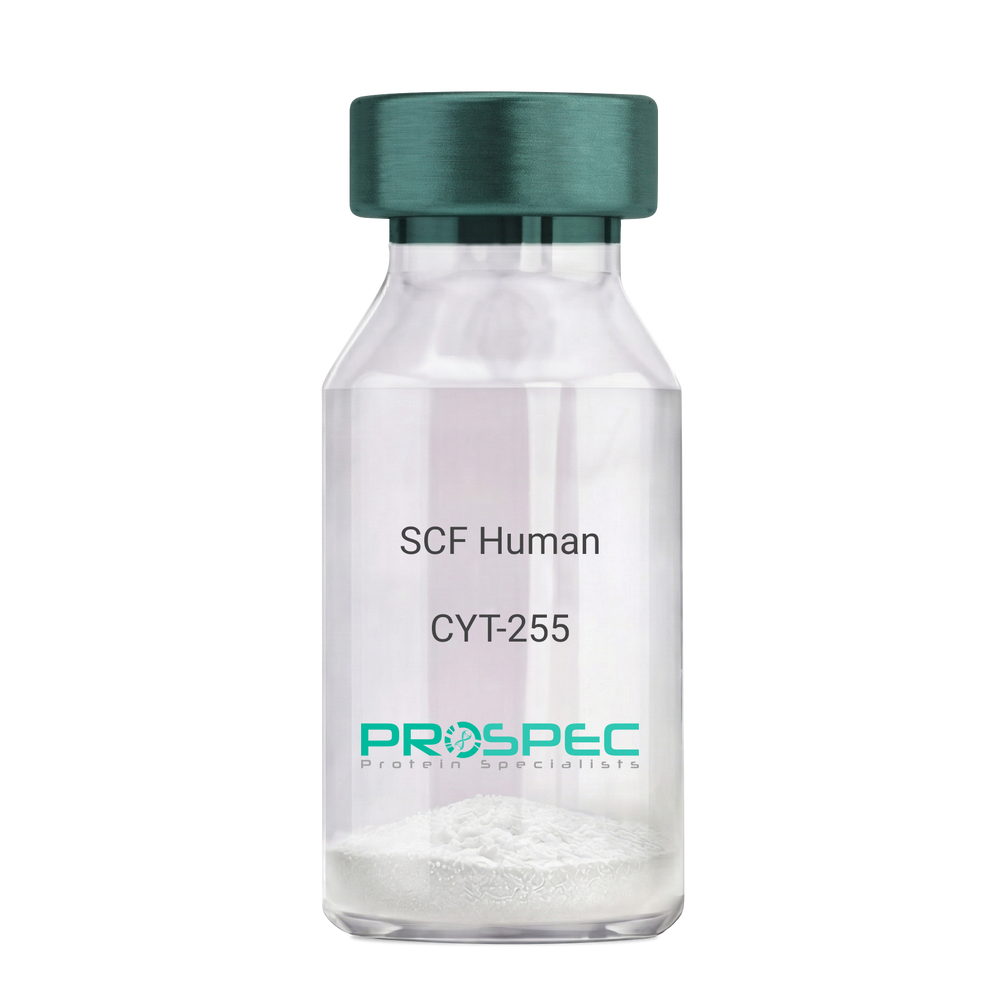
    SCF Human

    Description:

    Stem Cell Factor Human Recombinant

    Kit ligand Precursor, C-kit ligand, SCF, Mast cell growth factor, MGF, SF, KL-1, Kitl, DKFZp686F2250.

    Product # :

    CYT-255

    Price :

    Quantity :

    Shipping Method :

    Room Temp Icon

    Shipped at Room temp

    Add To Cart

    More Info

    • description
    • source
    • formulation
    • purity
    • biological activity
    • More Info

    Description

    Stem Cell Factor Human Recombinant produced in E.Coli is a single, non-glycosylated polypeptide chain containing 165 amino acids and having a molecular mass of 18409 Dalton. The SCF is purified by proprietary chromatographic techniques.

    Source

    Escherichia Coli.

    Formulation

    Lyophilized from a concentrated (1mg/ml) solution in water containing 0.02% NaHCO3.

    Purity

    Greater than 98.0% as determined by:
    (a) Analysis by SEC-HPLC.
    (b) Analysis by SDS-PAGE.

    Biological Activity

    The ED50 as determined by the dose-dependant stimulation of Human TF-1 cells is < 2 ng/ml, corresponding to a Specific Activity of 500,000 IU/mg.

    More Info

    • Introduction

      Stem cell factor / KIT ligand (SCF) is a cytokine which binds CD117(c-Kit). SCF is also known as "steel factor" or "c-kit ligand". SCF exists in two forms, cell surface bound SCF and soluble (or free) SCF. Soluble SCF is produced by the cleavage of surface bound SCF by metalloproteases. SCF is a growth factor important for the survival, proliferation, and differentiation of hematopoietic stem cells and other hematopoietic progenitor cells. One of its roles is to change the BFU-E (burst-forming unit-erythroid) cells, which are the earliest erythrocyte precursors in the erythrocytic series, into the CFU-E (colony-forming unit-erythroid).

    • Synonyms

      Kit ligand Precursor, C-kit ligand, SCF, Mast cell growth factor, MGF, SF, KL-1, Kitl, DKFZp686F2250.

    • Physical Appearance

      Sterile Filtered White lyophilized (freeze-dried) powder.

    • Stability

      Lyophilized KIT ligand although stable at room temperature for 3 weeks, should be stored desiccated below -18°C. Upon reconstitution SCF should be stored at 4°C between 2-7 days and for future use below -18°C.For long term storage it is recommended to add a carrier protein (0.1% HSA or BSA).Please prevent freeze-thaw cycles.

    • Solubility

      It is recommended to reconstitute the lyophilized Stem Cell Factor in sterile 18MΩ-cm H2O not less than 100µg/ml, which can then be further diluted to other aqueous solutions.

    • Amino Acid Sequence

      The sequence of the first five N-terminal amino acids was determined and was found to be Met-Glu-Gly-Ile-Cys.

    • Protein content

      Protein quantitation was carried out by two independent methods1. UV spectroscopy at 280 nm using the absorbency value of 0.52 as the extinction coefficient for a 0.1% (1mg/ml) solution. This value is calculated by the PC GENE computer analysis program of protein sequences (IntelliGenetics). 2. Analysis by RP-HPLC, using a standard solution of Stem Cell Factor as a Reference Standard.

    ProSpec's products are furnished for LABORATORY RESEARCH USE ONLY. The product may not be used as drugs, agricultural or pesticidal products, food additives or household chemicals.

    Scf Human
  • View Data Sheet

    Name :

    AITRL Human, His

    Description:

    AITRL Human Recombinant, His Tag

    Osteostat, TNFSF18, Activation-induced TNFR member Ligand, GITRL,TL6, AITRL, Glucocorticoid-induced TNF-related ligand, hGITRL, Tumor necrosis factor ligand superfamily member 18, MGC138237.

    Product # :

    CYT-317

    Price :

    Quantity :

    Shipping Method :

    Ice Icon

    Shipped with Ice Packs

    Add To Cart

    More Info

    • description
    • source
    • formulation
    • purity
    • More Info

    Description

    AITRL Recombinant Human produced in E.Coli is a single, non-glycosylated polypeptide chain (aa 50-177) containing a total of 137 amino acids and having a molecular mass of 15.6kDa. The AITRL protein is fused to a 9 aa His Tag at C-terminus and purified by proprietary chromatographic techniques.

    Source

    Escherichia Coli.

    Formulation

    AITRL protein solution (1mg/ml) contains 20mM Tris-HCl buffer (pH8.0) & 10% glycerol.

    Purity

    Greater than 85.0% as determined bySDS-PAGE.

    More Info

    • Introduction

      Osteostat is the cytokine that binds to TNFRSF18/AITR/GITR and is important for interactions between activated T-lymphocytes and endothelial cells and may modulate T-lymphocyte survival in peripheral tissues. Osteostat is expressed at high levels in the small intestine, ovary, testis, kidney and endothelial cells after stimulation by lipopolysaccharides.
      Osteostat protein is detectable in human microvascular EC and is highly up-regulated by IFN-alpha and IFN-beta. Osteostat inhibit differentiation of osteoclasts from monocytic precursor cells. Osteostat suppresses the early stage of osteoclastogenesis via inhibition of macrophage colony-stimulating factorinduced receptor activator of NF-kappaB (RANK) expression in the osteoclast precursor cells. Osteostat does not inhibit lipopolysaccharide-induced RANK expression in monocytes and dendritic cells, or activation-induced RANK expression in T cells. Osteostat is a novel regulator of osteoclast generation and substantiate the major role played by the endothelium in bone physiology.

    • Synonyms

      Osteostat, TNFSF18, Activation-induced TNFR member Ligand, GITRL,TL6, AITRL, Glucocorticoid-induced TNF-related ligand, hGITRL, Tumor necrosis factor ligand superfamily member 18, MGC138237.

    • Physical Appearance

      Sterile filtered colorless solution.

    • Stability

      Store at 4°C if entire vial will be used within 2-4 weeks. Store, frozen at -20°C for longer periods of time. For long term storage it is recommended to add a carrier protein (0.1% HSA or BSA).Avoid multiple freeze-thaw cycles.

    • Amino Acid Sequence

      MQLETAKEPC MAKFGPLPSK WQMASSEPPC VNKVSDWKLE ILQNGLYLIY GQVAPNANYN DVAPFEVRLY KNKDMIQTLT NKSKIQNVGG TYELHVGDTI DLIFNSEHQV LKNNTYWGII LIANPQEISL EHHHHHH.

    • Background

      What is the molecular weight/Mw of ADIPONECTIN Protein?
      ADIPONECTIN Protein has a total Mw of 15.6kDa.

      What is the source or expression system of ADIPONECTIN Protein?
      Escherichia Coli.

      What is the Purity of ADIPONECTIN Protein?
      ADIPONECTIN Protein is >85% pure as determined by SDS-PAGE.

      What is the Biological Activity of ADIPONECTIN Protein?
      The biological functionality of ADIPONECTIN Protein will be determined in the future.

      What is the amino acid sequence of ADIPONECTIN Protein?
      MQLETAKEPC MAKFGPLPSK WQMASSEPPC VNKVSDWKLE ILQNGLYLIY GQVAPNANYN DVAPFEVRLY KNKDMIQTLT NKSKIQNVGG TYELHVGDTI DLIFNSEHQV LKNNTYWGII LIANPQEISL EHHHHHH

      What applications can ADIPONECTIN Protein be used in?
      ADIPONECTIN Protein can probably be used in western blot, ELISA and Lateral Flow.

      What is the endotoxin level for ADIPONECTIN Protein?
      The endotoxin level is minimal, ADIPONECTIN Protein was purified using conventional chromatography techniques.

    ProSpec's products are furnished for LABORATORY RESEARCH USE ONLY. The product may not be used as drugs, agricultural or pesticidal products, food additives or household chemicals.

    Gitrl Human
  • View Data Sheet

    Name :

    Noggin Human

    Description:

    Noggin Human Recombinant

    SYM1, SYNS1, NOG.

    Product # :

    CYT-475

    Price :

    Quantity :

    Shipping Method :

    Room Temp Icon

    Shipped at Room temp

    Add To Cart

    More Info

    • description
    • source
    • formulation
    • purity
    • biological activity
    • More Info

    Description

    Noggin Human Recombinant produced in E.Coli is a non-glycosylated, non-disulfide-linked homodimer consisting of two 206 amino acid polypeptide chains, having a total molecular mass of approximately 46.3kDa. Noggin is purified by proprietary chromatographic techniques.

    Source

    Escherichia Coli.

    Formulation

    Lyophilized from a 0.2μm filtered solution in 30% CH3CN, 0.1% TFA.

    Purity

    Greater than 95.0% as determined by SDS-PAGE.

    Biological Activity

    The ED50 was determined by its ability to inhibit 5.0ng/ml of BMP-4 induced alkaline phosphatase production by murine ATDC-5 cells. The expected ED50 for this effect  is < 3ng/ml of Noggin, corresponding to a Specific Activity of 3.3x10⁵units/mg.

    More Info

    • Introduction

      The secreted polypeptide noggin, encoded by the NOG gene, binds and inactivates members of the transforming growth factor-beta (TGF-beta) superfamily signaling proteins, such as bone morphogenetic protein-4 (BMP4). By diffusing through extracellular matrices more efficiently than members of the TGF-beta superfamily, noggin may have a principal role in creating morphogenic gradients. Noggin appears to have pleiotropic effect, both early in development as well as in later stages. It was originally isolated from Xenopus based on its ability to restore normal dorsal-ventral body axis in embryos that had been artificially ventralized by UV treatment. The results of the mouse knockout of noggin suggest that it is involved in numerous developmental processes, such as neural tube fusion and joint formation. Recently, several dominant human NOG mutations in unrelated families with proximal symphalangism (SYM1) and multiple synostoses syndrome (SYNS1) were identified; both SYM1 and SYNS1 have multiple joint fusion as their principal feature, and map to the same region (17q22) as NOG. All NOG mutations altered evolutionarily conserved amino acid residues. The amino acid sequence of human noggin is highly homologous to that of Xenopus, rat and mouse.

    • Synonyms

      SYM1, SYNS1, NOG.

    • Physical Appearance

      Sterile Filtered White lyophilized (freeze-dried) powder.

    • Stability

      Lyophilized Noggin although stable at room temperature for 3 weeks, should be stored desiccated below -18°C. Upon reconstitution Noggin should be stored at 4°C between 2-7 days and for future use below -18°C.For long term storage it is recommended to add a carrier protein (0.1% HSA or BSA).Please prevent freeze-thaw cycles.

    • Solubility

      It is recommended to be briefly centrifuged prior to opening to bring the contents to the bottom. Reconstitute in 10mM HCl to a concentration of 0.1-1.0 mg/ml. Further dilutions should be made in appropriate buffered solutions.

    • Amino Acid Sequence

      MQHYLHIRPAPSDNLPLVDLIEHPDPIFDPKEKDLNETLLRSLLGGHYDPGFMATSPP
      EDRPGGGGGAAGGAEDLAELDQLLRQRPSGAMPSEIKGLEFSEGLAQGKKQRLSKKLR
      RKLQMWLWSQTFCPVLYAWNDLGSRFWPRYVKVGSCFSKRSCSVPEGMVCKPSKSVHL
      TVLRWRCQRRGGQRCGWIPIQYPIISECKCSC.

    • Background

      Recombinant Human Noggin Growth Beta Factor: A Potent Inhibitor of Bone Morphogenetic Protein Signaling.

      Abstract:

      Recombinant human Noggin Growth Beta Factor (Noggin) is a highly conserved protein that acts as a potent antagonist of the Bone Morphogenetic Protein (BMP) signaling pathway.

      Noggin plays a critical role in embryonic development, tissue homeostasis, and disease processes.

      This research paper provides a comprehensive analysis of the molecular characteristics, signaling mechanisms, and diverse physiological functions of recombinant human Noggin.

      Additionally, it explores the therapeutic implications of Noggin in various disorders. Synonyms such as SYM1, SYNS1, and NOG associated with Noggin are discussed throughout the paper to highlight their relevance in scientific literature.

      Introduction:

      1. Recombinant human Noggin Growth Beta Factor (Noggin) is a protein with multifaceted roles in development, tissue homeostasis, and disease. This section introduces Noggin and its synonyms, including SYM1, SYNS1, and NOG, emphasizing their significance and relevance in scientific research.

      Molecular Characteristics of Noggin :

      1. This section explores the molecular characteristics of Noggin, including its primary amino acid sequence, protein structure, and post-translational modifications. The interactions of Noggin with BMPs and other regulatory molecules are also discussed, highlighting the importance of these interactions in modulating BMP signaling.

      Inhibition of BMP Signaling by Noggin:

      1. Noggin acts as a potent inhibitor of BMP signaling by binding to BMP ligands and preventing their interaction with BMP receptors. This section delves into the mechanisms through which Noggin interferes with BMP signaling, including competition for receptor binding and sequestration of BMPs in extracellular spaces. The implications of Noggin-mediated inhibition of BMP signaling in development and tissue homeostasis are also discussed.

      Physiological Functions of Noggin:

      1. Noggin plays critical roles in various physiological processes, including embryonic development, neurogenesis, skeletal development, and joint formation. This section provides an in-depth analysis of Noggin's contributions to these processes, highlighting its role in maintaining proper tissue patterning, cell fate determination, and morphogenesis.

      Therapeutic Implications of Noggin:

      1. The unique inhibitory properties of Noggin make it an attractive therapeutic candidate for various disorders. This section discusses the potential applications of Noggin in bone and joint diseases, neurological disorders, and cancer. Additionally, it explores the challenges and future prospects of utilizing Noggin as a therapeutic agent.

      Clinical Studies and Translational Research:

      1. This section reviews clinical studies and translational research involving Noggin, emphasizing its potential in regenerative medicine and tissue engineering. It highlights ongoing efforts to develop Noggin-based therapeutics and discusses the promising results observed in preclinical and clinical studies.

    ProSpec's products are furnished for LABORATORY RESEARCH USE ONLY. The product may not be used as drugs, agricultural or pesticidal products, food additives or household chemicals.

    Noggin Human
  • View Data Sheet

    Name :

    NOV Human

    Description:

    Nephroblastoma Overexpressed Human Recombinant

    Protein NOV homolog, NovH, CCN family member 3, nsulin-like growth factor-binding protein 9, IBP-9, IGF-binding protein 9, IGFBP-9, Nephroblastoma-overexpressed gene protein homolog, NOV, CCN3, IGFBP9, NOVH.

    Product # :

    CYT-805

    Price :

    Quantity :

    Shipping Method :

    Room Temp Icon

    Shipped at Room temp

    Add To Cart

    More Info

    • description
    • source
    • formulation
    • purity
    • biological activity
    • More Info

    Description

    Nephroblastoma Overexpressed Human Recombinant produced in E.Coli is a single, non-glycosylated, polypeptide chain containing 331 amino acids and having a molecular mass of 36.2 kDa. The NOV is purified by proprietary chromatographic techniques.

    Source

    Escherichia Coli.

    Formulation

    Lyophilized from a 0.2µm filtered concentrated solution in 20mM Tris-HCl, pH 8.6 and 150 mM NaCl.

    Purity

    Greater than 95.0% as determined by:(a) Analysis by RP-HPLC.(b) Analysis by SDS-PAGE.

    Biological Activity

    Determined by a cell proliferation assay using murine Balb/c 3T3 cells is less than 1.0 µg/ml, corresponding to a specific activity of > 1000 IU/mg. range of 10.0 -50.0 ng/ml, corresponding to a specific activity of 20,000-100,000units/mg.

    More Info

    • Introduction

      Nephroblastoma Overexpressed (NOV) which is encoded by the NOV gene is a part of the CCN (CTGF/CYR61/NOV) family. NOV takes part in reducing tumorgenicity and proliferation of certain cancer cell lines. NOV interacts with numerous proteins and is involved in both internal and external cell signaling. NOV is expressed in particular tumors, including Wilm’s tumor and most nephroblastomas and is also exerts proangiogenic activities.

    • Synonyms

      Protein NOV homolog, NovH, CCN family member 3, nsulin-like growth factor-binding protein 9, IBP-9, IGF-binding protein 9, IGFBP-9, Nephroblastoma-overexpressed gene protein homolog, NOV, CCN3, IGFBP9, NOVH.

    • Physical Appearance

      Sterile Filtered White lyophilized (freeze-dried) powder.

    • Stability

      Lyophilized NOV although stable at room temperature for 3 weeks, should be stored desiccated below -18°C. Upon reconstitution NOV should be stored at 4°C between 2-7 days and for future use below -18°C. For long term storage it is recommended to add a carrier protein (0.1% HSA or BSA). Please prevent freeze-thaw cycles.

    • Solubility

      It is recommended to reconstitute the lyophilized NOV in sterile 18M-cm H2O not less than 100µg/ml, which can then be further diluted to other aqueous solutions.

    • Amino Acid Sequence

      MQVAATQRCP PQCPGRCPAT PPTCAPGVRA VLDGCSCCLV CARQRGESCS DLEPCDESSG LYCDRSADPS NQTGICTAVE GDNCVFDGVI YRSGEKFQPS CKFQCTCRDG QIGCVPRCQL DVLLPEPNCP APRKVEVPGE CCEKWICGPD EEDSLGGLTL AAYRPEATLG VEVSDSSVNC IEQTTEWTAC SKSCGMGFST RVTNRNRQCE MLKQTRLCMV RPCEQEPEQP TDKKGKKCLR TKKSLKAIHL QFKNCTSLHT YKPRFCGVCS DGRCCTPHNT KTIQAEFQCS PGQIVKKPVM VIGTCTCHTN CPKNNEAFLQ ELELKTTRGK M.

    ProSpec's products are furnished for LABORATORY RESEARCH USE ONLY. The product may not be used as drugs, agricultural or pesticidal products, food additives or household chemicals.

    Nov Human
  • View Data Sheet

    Name :

    SPAG7 Human

    Description:

    Sperm Associated Antigen 7 Human Recombinant

    ACRP, FSA-1, Sperm-associated antigen 7, SPAG7.

    Product # :

    PRO-1654

    Price :

    Quantity :

    Shipping Method :

    Ice Icon

    Shipped with Ice Packs

    Add To Cart

    More Info

    • description
    • source
    • formulation
    • purity
    • More Info

    Description

    SPAG7 Human Recombinant produced in E.Coli is a single, non-glycosylated polypeptide chain containing 250 amino acids (1-227 a.a.) and having a molecular mass of 28kDa.SPAG7 is fused to a 23 amino acid His-tag at N-terminus & purified by proprietary chromatographic techniques.

    Source

    Escherichia Coli.

    Formulation

    SPAG7 protein solution (0.5mg/ml) contains 20mM Tris-HCl buffer, (pH 7.5), 0.15M NaCl, 30% glycerol and 1mM DTT.

    Purity

    Greater than 85.0% as determined by SDS-PAGE.

    More Info

    • Introduction

      Sperm Associated Antigen 7 (SPAG7) is comprised of 1 R3H domain. SPAG7 is detected in fetal brain and localized in the nucleus.

    • Synonyms

      ACRP, FSA-1, Sperm-associated antigen 7, SPAG7.

    • Physical Appearance

      Sterile Filtered clear solution.

    • Stability

      Store at 4°C if entire vial will be used within 2-4 weeks. Store, frozen at -20°C for longer periods of time. For long term storage it is recommended to add a carrier protein (0.1% HSA or BSA).Avoid multiple freeze-thaw cycles.

    • Amino Acid Sequence

      MGSSHHHHHH SSGLVPRGSH MGSMADLLGS ILSSMEKPPS LGDQETRRKA REQAARLKKL QEQEKQQKVE FRKRMEKEVS DFIQDSGQIK KKFQPMNKIE RSILHDVVEV AGLTSFSFGE DDDCRYVMIF KKEFAPSDEE LDSYRRGEEW DPQKAEEKRK LKELAQRQEE EAAQQGPVVV SPASDYKDKY SHLIGKGAAK DAAHMLQANK TYGCVPVANK RDTRSIEEAM NEIRAKKRLR QSGEELPPTS.

    ProSpec's products are furnished for LABORATORY RESEARCH USE ONLY. The product may not be used as drugs, agricultural or pesticidal products, food additives or household chemicals.

    Spag7 Human
  • View Data Sheet

    Name :

    CXCL13 Human, His

    Description:

    BCA-1/ BLC Human Recombinant, His Tag

    C-X-C motif chemokine 13, Small-inducible cytokine B13, B lymphocyte chemoattractant, CXC chemokine BLC, CXCL13, BCA1, BCA-1, CXCL-13, B cell Attracting Chemokine-1, BLC, ANGIE, BLR1L, SCYB13, ANGIE2.

    Product # :

    CHM-023

    Price :

    Quantity :

    Shipping Method :

    Ice Icon

    Shipped with Ice Packs

    Add To Cart

    More Info

    • description
    • source
    • formulation
    • purity
    • More Info
    • SDS-PAGE

    Description

    BCA 1 Human Recombinant produced in E.Coli is a single, non-glycosylated polypeptide chain topological domain containing 110 amino acids (23-109 a.a) and having a molecular mass of 12.7kDa. BCA 1 is fused to a 23 amino acid His-tag at N-terminus.

    Source

    Escherichia Coli.

    Formulation

    BCA 1 protein solution (0.25mg/ml) containing 20mM Tris-HCl buffer (pH8.0), 0.4M Urea and 10% glycerol.

    Purity

    Greater than 85.0% as determined by SDS-PAGE.

    SDS-PAGE

    CXCL13 Human, His-SDS-PAGE - Product image 1

    More Info

    • Introduction

      BCA-1 is a CXC chemokine that is highly expressed in thesecondary lymphoid organs, such as follicles of the spleen, lymph nodes, and Peyer's patches. CXCL13 promotes the migration of B lymphocytes (compared to T cells and macrophages), by stimulating calcium influx into, and chemotaxis of, cells expressing Burkitt's lymphoma receptor 1 (BLR1). BCA1 therefore function in the homing of B lymphocytes to follicles. Human BCA-1 shares a 64% amino acid sequence similarity with the mouse protein and 23 - 34% amino acid sequence identity with other known CXC chemokines. Recombinant or chemically synthesized BCA1 is a potent chemoattractant for B lymphocytes but not T lymphocytes, monocytes or neutrophils. BLR1, a G protein-coupled receptor originally isolated from Burkitt’s lymphoma cells, has now been shown to be the specific receptor for BCA1. Among cells of the hematopoietic lineages, the expression of BLR-1, now designated CXCR-5, is restricted to B lymphocytes and a subpopulation of T helper memory cells.

    • Synonyms

      C-X-C motif chemokine 13, Small-inducible cytokine B13, B lymphocyte chemoattractant, CXC chemokine BLC, CXCL13, BCA1, BCA-1, CXCL-13, B cell Attracting Chemokine-1, BLC, ANGIE, BLR1L, SCYB13, ANGIE2.

    • Physical Appearance

      Sterile Filtered colorless solution.

    • Stability

      Store at 4°C if entire vial will be used within 2-4 weeks. Store, frozen at -20°C for longer periods of time. For long term storage it is recommended to add a carrier protein (0.1% HSA or BSA).Avoid multiple freeze-thaw cycles.

    • Amino Acid Sequence

      MGSSHHHHHH SSGLVPRGSH MGSVLEVYYT SLRCRCVQES SVFIPRRFID RIQILPRGNG CPRKEIIVWK KNKSIVCVDP QAEWIQRMME VLRKRSSSTL PVPVFKRKIP.

    • Background

      What is the molecular weight/Mw of CXCL13 HUMAN, HIS Protein?
      CXCL13 HUMAN, HIS Protein has a total Mw of 12.7kDa.

      What is the source or expression system of CXCL13 HUMAN, HIS Protein?
      Escherichia Coli.

      What is the Purity of CXCL13 HUMAN, HIS Protein?
      CXCL13 HUMAN, HIS Protein is >85% pure as determined by SDS-PAGE.

      What is the Biological Activity of CXCL13 HUMAN, HIS Protein?
      The biological functionality of CXCL13 HUMAN, HIS Protein will be determined in the future.

      What is the amino acid sequence of CXCL13 HUMAN, HIS Protein?
      MGSSHHHHHH SSGLVPRGSH MGSVLEVYYT SLRCRCVQES SVFIPRRFID RIQILPRGNG CPRKEIIVWK KNKSIVCVDP QAEWIQRMME VLRKRSSSTL PVPVFKRKIP.

      What applications can CXCL13 HUMAN, HIS Protein be used in?
      CXCL13 HUMAN, HIS Protein can probably be used in western blot, ELISA and Lateral Flow.

      What is the endotoxin level for CXCL13 HUMAN, HIS Protein?
      The endotoxin level is minimal, CXCL13 HUMAN, HIS Protein was purified using conventional chromatography techniques.


    ProSpec's products are furnished for LABORATORY RESEARCH USE ONLY. The product may not be used as drugs, agricultural or pesticidal products, food additives or household chemicals.

    Bca 1 Human His
  • View Data Sheet

    Name :

    CCL24 Human

    Description:

    Eotaxin-2 Human Recombinant (CCL24)

    C-C motif chemokine 24, Small-inducible cytokine A24, Myeloid progenitor inhibitory factor 2, CK-beta-6, Eosinophil chemotactic protein 2, Eotaxin-2, CCL24, Ckb-6, MPIF2, MPIF-2, SCYA24, Eotaxin2, CCL-24.

    Product # :

    CHM-238

    Price :

    Quantity :

    Shipping Method :

    Room Temp Icon

    Shipped at Room temp

    Add To Cart

    More Info

    • description
    • source
    • formulation
    • purity
    • biological activity
    • More Info

    Description

    CCL24 Human Recombinant produced in E.Coli is a single, non-glycosylated polypeptide chain containing 78 amino acids and having a molecular mass of 8.8 kDa. The CCL24 is purified by proprietary chromatographic techniques.

    Source

    Escherichia Coli.

    Formulation

    The CCL24 protein was lyophilized from a concentrated (1mg/ml) sterile solution containing 20mM PBS pH-7.4 and 0.15M sodium chloride.

    Purity

    Greater than 97.0% as determined by(a) Analysis by RP-HPLC.
    (b) Analysis by SDS-PAGE.

    Biological Activity

    The activity is determined by the chemoattract of human PBE (peripheral blood eosinophils) at a concentration between 50-100 ng/ml corresponding to a Specific Activity of 10,000-20,000IU/mg.

    More Info

    • Introduction

      Eotaxin-2, also called MPIF2 & Ckb6, is a novel CC chemokine produced by activated monocytes and T lymphocytes. Eotaxin-2 selectively chemoattracts cells expressing CCR3 including eosinophils, basophils, Th2 T cells, mast cells, and certain subsets of dendritic cells. Furthermore, Eotaxin-2 inhibits the proliferation of multipotential hematopoietic progenitor cells. The mature protein, which includes C-terminal truncation, contains 78 amino acids (92 amino acids for the mouse homolog, without C-terminal truncation).
      CCL24 functions as a chemotactic chemokine for resting t-lymphocytes, and eosinophils. CCL24 has lower chemotactic activity for neutrophils but none for monocytes and activated lymphocytes. CCL24 is a strong suppressor of colony formation by a multipotential hematopoietic progenitor cell line and binds to CCR3.

    • Synonyms

      C-C motif chemokine 24, Small-inducible cytokine A24, Myeloid progenitor inhibitory factor 2, CK-beta-6, Eosinophil chemotactic protein 2, Eotaxin-2, CCL24, Ckb-6, MPIF2, MPIF-2, SCYA24, Eotaxin2, CCL-24.

    • Physical Appearance

      Sterile Filtered White lyophilized (freeze-dried) powder.

    • Stability

      Lyophilized Eotaxin-2 although stable at room temperature for 3 weeks, should be stored desiccated below -18°C. Upon reconstitution CCL24 should be stored at 4°C between 2-7 days and for future use below -18°C. For long term storage it is recommended to add a carrier protein (0.1% HSA or BSA).Please prevent freeze-thaw cycles.

    • Solubility

      It is recommended to reconstitute the lyophilized CCL24 Human Recombinant in sterile 18MΩ-cm H2O not less than 100µg/ml, which can then be further diluted to other aqueous solutions.

    • Amino Acid Sequence

      VVIPSPCCMFFVSKRIPENRVVSYQLSSRSTCLKGGVIFTTKKGQQFCG
      DPKQEWV QRYMKNLDAKQKKASPRARAVA.

    • Background

      What is the molecular weight/Mw of CCL24 HUMAN Protein?
      CCL24 HUMAN Protein has a total Mw of 8.8kDa.

      What is the source or expression system of CCL24 HUMAN Protein?
      Escherichia Coli.

      What is the Purity of CCL24 HUMAN Protein?
      CCL24 HUMAN Protein is >97% pure as determined by SDS-PAGE.

      What is the Biological Activity of CCL24 HUMAN Protein?
      The activity is determined by the chemoattract of human PBE (peripheral blood eosinophils) at a concentration between 50-100 ng/ml corresponding to a Specific Activity of 10,000-20,000IU/mg.

      What is the amino acid sequence of CCL24 HUMAN Protein?
      VVIPSPCCMFFVSKRIPENRVVSYQLSSRSTCLKGGVIFTTKKGQQFCG
      DPKQEWV QRYMKNLDAKQKKASPRARAVA.

      What applications can CCL24 HUMAN Protein be used in?
      CCL24 HUMAN Protein can probably be used in western blot, ELISA and Lateral Flow.

      What is the endotoxin level for CCL24 HUMAN Protein?
      The endotoxin level is minimal, CCL24 HUMAN Protein was purified using conventional chromatography techniques.


    ProSpec's products are furnished for LABORATORY RESEARCH USE ONLY. The product may not be used as drugs, agricultural or pesticidal products, food additives or household chemicals.

    Ccl24 Human
  • View Data Sheet

    Name :

    FANK1 Human

    Description:

    Fibronectin Type III And Ankyrin Repeat Domains 1 Human Recombinant

    Fibronectin Type 3 And Ankyrin Repeat Domains 1, 1700007B22Rik.

    Product # :

    PRO-1768

    Price :

    Quantity :

    Shipping Method :

    Ice Icon

    Shipped with Ice Packs

    Add To Cart

    More Info

    • description
    • source
    • formulation
    • purity
    • More Info

    Description

    FANK1 Human Recombinant produced in E.Coli is a single, non-glycosylated polypeptide chain containing 368 amino acids (1-345 a.a) and having a molecular mass of 40.7kDa.FANK1 is fused to a 23 amino acid His-tag at N-terminus & purified by proprietary chromatographic techniques.

    Source

    Escherichia Coli.

    Formulation

    FANK1 protein solution (1mg/ml) containing 20mM Tris-HCl buffer (pH8.0), 0.15M NaCl, 1mM DTT, 0.1mM PMSF and 20% glycerol.

    Purity

    Greater than 90.0% as determined by SDS-PAGE.

    More Info

    • Introduction

      FANK1 was localized in the nuclei of identical cells in the seminiferous epithelium. Depending on its nuclear localization, a gene ontology analysis proposes that FANK1 has a DNA binding activity therefor operates as a transcription factor. The extremely controlled expression of FANK1, suggests that it takes part in regulating gene expression in the transition from the meiotic phase to the haploid phase throughout spermatogenesis.

    • Synonyms

      Fibronectin Type 3 And Ankyrin Repeat Domains 1, 1700007B22Rik.

    • Physical Appearance

      Sterile Filtered clear solution.

    • Stability

      Store at 4°C if entire vial will be used within 2-4 weeks. Store, frozen at -20°C for longer periods of time.For long term storage it is recommended to add a carrier protein (0.1% HSA or BSA).Please avoid freeze thaw cycles.

    • Amino Acid Sequence

      MGSSHHHHHH SSGLVPRGSH MGSMEPQKIM PPSKPHPPVV GKVTHHSIEL YWDLEKKAKR QGPQEQWFRF SIEEEDPKMH TYGIIYTGYA TKHVVEGLEP RTLYRFRLKV TSPSGECEYS PLVSVSTTRE PISSEHLHRA VSVNDEDLLV RILQGGRVKV DVPNKFGFTA LMVAAQKGYT RLVKILVSNG TDVNLKNGSG KDSLMLACYA GHLDVVKYLR RHGASWQARD LGGCTALHWA ADGGHCSVIE WMIKDGCEVD VVDTGSGWTP LMRVSAVSGN QRVASLLIDA GANVNVKDRN GKTPLMVAVL NNHEELVQLL LDKGADASVK NEFGKGVLEM ARVFDRQSVV SLLEERKKKQ RPKKSCVC

    ProSpec's products are furnished for LABORATORY RESEARCH USE ONLY. The product may not be used as drugs, agricultural or pesticidal products, food additives or household chemicals.

    Fank1 Human
  • View Data Sheet

    Name :

    TECK Human, His

    Description:

    Thymus Expressed Chemokine (CCL25) Human Recombinant, His Tag

    C-C motif chemokine 25, Small-inducible cytokine A25, Thymus-expressed chemokine, Chemokine TECK, CCL25, SCYA25, TECK, Ckb15, MGC150327.

    Product # :

    CHM-032

    Price :

    Quantity :

    Shipping Method :

    Ice Icon

    Shipped with Ice Packs

    Add To Cart

    More Info

    • description
    • source
    • formulation
    • purity
    • More Info

    Description

    TECK Human Recombinant produced in E.Coli is a single, non-glycosylated polypeptide chain containing 152 amino acids (24-150 a.a.) and having a molecular mass of 16.8kDa.TECK is fused to a 25 amino acid His-tag at N-terminus & purified by proprietary chromatographic techniques.

    Source

    Escherichia Coli.

    Formulation

    TECK protein solution (1mg/ml) containing 20mM Tris-HCl buffer (pH 8.0) and 10% glycerol.

    Purity

    Greater than 90.0% as determined by SDS-PAGE.

    More Info

    • Introduction

      CCL25 (Teck) is a novel CC chemokine, which is distantly related (about 20% amino acid sequence identity) to other CC chemokines. The mouse CCL25 cDNA has also been cloned and shown to encode a 144 a.a. protein, which exhibits 49% a.a. sequence identity to the human CCL25. Human and mouse CCL25 expression was shown to be greatly restricted to the thymus and small intestine. While dendritic cells are identified as the source of CCL25 production in the thymus, dendritic cells derived from bone marrow do not express CCL25. CCL25 signals through the CCR9 receptor. Teck is possibly involved in T-cell development.
      Recombinant human and mouse Teck were shown to be chemotactic for activated macrophages, dendritic cells and thymocytes. The recombinant protein demonstrates chemotactic activity on thymocytes, macrophages, THP-1 cells, and dendritic cells but is inactive on peripheral blood lymphocytes and neutrophils.

    • Synonyms

      C-C motif chemokine 25, Small-inducible cytokine A25, Thymus-expressed chemokine, Chemokine TECK, CCL25, SCYA25, TECK, Ckb15, MGC150327.

    • Physical Appearance

      Filtered colorless solution.

    • Stability

      Store at 4°C if entire vial will be used within 2-4 weeks. Store, frozen at -20°C for longer periods of time. For long term storage it is recommended to add a carrier protein (0.1% HSA or BSA).Avoid multiple freeze-thaw cycles.

    • Amino Acid Sequence

      MGSSHHHHHH SSGLVPRGSH MGSHMQGVFE DCCLAYHYPI GWAVLRRAWT YRIQEVSGSC NLPAAIFYLP KRHRKVCGNP KSREVQRAMK LLDARNKVFA KLHHNTQTFQ AGPHAVKKLS SGNSKLSSSK FSNPISSSKR NVSLLISANS GL.

    ProSpec's products are furnished for LABORATORY RESEARCH USE ONLY. The product may not be used as drugs, agricultural or pesticidal products, food additives or household chemicals.

    Teck Human His
  • View Data Sheet

    Name :

    Carbonic Anhydrase 2 Human

    Description:

    Carbonic Anhydrase 2 Human Recombinant

    Carbonic anhydrase 2, Carbonate dehydratase 2, Carbonic Anhydrase II, CA-II, Carbonic anhydrase C, CAC, CA2, CAII, Car2.

    Product # :

    ENZ-420

    Price :

    Quantity :

    Shipping Method :

    Ice Icon

    Shipped with Ice Packs

    Add To Cart

    More Info

    • description
    • source
    • formulation
    • purity
    • biological activity
    • More Info

    Description

    Carbonic anhydrase 2 Human Recombinant protein produced in E.Coli containing 260 amino acids (1-260) and having a molecular mass of 29.2 kDa. The Carbonic anhydrase 2 is purified by proprietary chromatographic techniques.

    Source

    Escherichia Coli.

    Formulation

    Carbonic Anhydrase 2 protein solution (1mg/ml) containing 20mM Tris-HCl buffer (pH 8.0), 1mM DTT, 50mM NaCl and 10% glycerol.

    Purity

    Greater than 95.0% as determined by SDS-PAGE.

    Biological Activity

    Specific activity is 50-70 nmoles/min/µg and was obtained by measuring the increase in the amount of p-nitrophenol by its esterase activity. Specific activity is defined as the amount of 
    p-nitrophenol that 1ug of enzyme can reduce at 25C for 1 minute.

    More Info

    • Introduction

      The enzyme Carbonic anhydrase II having an accession number of NP_414668 is also called carbonate dehydratase which is part of the enzyme family that catalyses rapid inter-conversion of carbon dioxide & water to bicarbonate, carbonic acid and protons (CO2 + H2O ? HCO3? + H+), a reaction that occurs rather slowly in the absence of a catalyst. The majority of carbonic anhydrases enclose a zinc ion in their active site and therefore is classified as metalloenzymes.
      The most important function of Carbonic anhydrase is known to preserve acid-base balance in blood and other tissues, and to help transport carbon dioxide of tissues. Carbonic anhydrases have been found in all kingdoms of life. Carbonic anhydrase has 3 different classes: alpha, beta and gamma which share very little sequence or structural similarity, thus far they all perform the same function and require a zinc ion at the active site. Mammalian carbonic anhydrase is monomeric and belongs to the alpha class. Plant carbonic anhydrase is dimeric and belongs to the beta class.
      Methane-producing bacteria carbonic anhydrase is trimeric and grows in hot springs which forms the gamma class.

    • Synonyms

      Carbonic anhydrase 2, Carbonate dehydratase 2, Carbonic Anhydrase II, CA-II, Carbonic anhydrase C, CAC, CA2, CAII, Car2.

    • Physical Appearance

      Sterile Filtered colorless solution.

    • Stability

      Store at 4°C if entire vial will be used within 2-4 weeks. Store, frozen at -20°C for longer periods of time. For long term storage it is recommended to add a carrier protein (0.1% HSA or BSA).Avoid multiple freeze-thaw cycles.

    • Amino Acid Sequence

      MSHHWGYGKH NGPEHWHKDF PIAKGERQSP VDIDTHTAKY DPSLKPLSVS YDQATSLRIL NNGHAFNVEF DDSQDKAVLK GGPLDGTYRL IQFHFHWGSL DGQGSEHTVD KKKYAAELHL VHWNTKYGDF GKAVQQPDGL AVLGIFLKVG SAKPGLQKVV DVLDSIKTKG KSADFTNFDP RGLLPESLDY WTYPGSLTTP PLLECVTWIV LKEPISVSSE QVLKFRKLNF NGEGEPEELM VDNWRPAQPL KNRQIKASFK

    ProSpec's products are furnished for LABORATORY RESEARCH USE ONLY. The product may not be used as drugs, agricultural or pesticidal products, food additives or household chemicals.

    Carbonic Anhydrase 2 Human
  • View Data Sheet

    Name :

    CBR1 Human

    Description:

    Carbonyl Reductase-1 Human Recombinant

    CBR, hCBR1, SDR21C1, CBR1, Carbonyl reductase [NADPH] 1, NADPH-dependent carbonyl reductase 1, Prostaglandin-E(2) 9-reductase, Prostaglandin 9-ketoreductase, 15-hydroxyprostaglandin dehydrogenase [NADP+], CRN.

    Product # :

    ENZ-415

    Price :

    Quantity :

    Shipping Method :

    Ice Icon

    Shipped with Ice Packs

    Add To Cart

    More Info

    • description
    • source
    • formulation
    • purity
    • More Info

    Description

    Recombinant Human CBR1 produced in E.Coli is a single, non-glycosylated polypeptide chain containing 277 amino acids (1-277 a.a) and having a molecular mass of 30 kDa. CBR1 is purified by proprietary chromatographic techniques.

    Source

    Escherichia Coli.

    Formulation

    The CBR1 protein contains 20mM Tris-HCl buffer pH-8.5, and 10% glycerol.

    Purity

    Greater than 95.0% as determined by analysis by SDS-PAGE.

    More Info

    • Introduction

      CBR1 is one of numerous monomeric, NADPH-dependent oxidoreductases having ubiquistly specificity for carbonyl compounds. CBR1 is broadly distributed in human tissues. CBR1 metabolizes toxic environmental quinones and pharmacological relevant substrates. CBR1 converts prostaglandin E2 to prostaglandin F2-alpha.

    • Synonyms

      CBR, hCBR1, SDR21C1, CBR1, Carbonyl reductase [NADPH] 1, NADPH-dependent carbonyl reductase 1, Prostaglandin-E(2) 9-reductase, Prostaglandin 9-ketoreductase, 15-hydroxyprostaglandin dehydrogenase [NADP+], CRN.

    • Physical Appearance

      Sterile filtered colorless solution.

    • Stability

      Store at 4°C if entire vial will be used within 2-4 weeks. Store, frozen at -20°C for longer periods of time. For long term storage it is recommended to add a carrier protein (0.1% HSA or BSA). Avoid multiple freeze-thaw cycles.

    • Amino Acid Sequence

      MSSGIHVALV TGGNKGIGLA IVRDLCRLFS GDVVLTARDV TRGQAAVQQL QAEGLSPRFH QLDIDDLQSI RALRDFLRKE YGGLDVLVNN AGIAFKVADP TPFHIQAEVT MKTNFFGTRD VCTELLPLIK PQGRVVNVSS IMSVRALKSC SPELQQKFRS ETITEEELVG LMNKFVEDTK KGVHQKEGWP SSAYGVTKIG VTVLSRIHAR KLSEQRKGDK ILLNACCPGW VRTDMAGPKA TKSPEEGAET PVYLALLPPD AEGPHGQFVS EKRVEQW.

    ProSpec's products are furnished for LABORATORY RESEARCH USE ONLY. The product may not be used as drugs, agricultural or pesticidal products, food additives or household chemicals.

    Cbr1 Human
  • View Data Sheet

    Name :

    KLF12 Human

    Description:

    Kruppel-Like Factor 12 Human Recombinant

    AP-2rep, AP2REP, HSPC122, Krueppel-like factor 12, Transcriptional repressor AP-2rep.

    Product # :

    PRO-2090

    Price :

    Quantity :

    Shipping Method :

    Ice Icon

    Shipped with Ice Packs

    Add To Cart

    More Info

    • description
    • source
    • formulation
    • purity
    • More Info

    Description

    KLF12 Human Recombinant produced in E.Coli is a single, non-glycosylated polypeptide chain containing 425 amino acids (1-402 a.a) and having a molecular mass of 46.6kDa.KLF12 is fused to a 23 amino acid His-tag at N-terminus & purified by proprietary chromatographic techniques.

    Source

    Escherichia Coli.

    Formulation

    KLF12 protein solution (0.5mg/ml) contains 20mM Tris-HCl buffer, (pH8.0) ,10% glycerol and 0.4M Urea.

    Purity

    Greater than 85.0% as determined by SDS-PAGE.

    More Info

    • Introduction

      Krueppel-like factor 12 (KLF12) belongs to the Kruppel-like zinc finger protein family and can repress expression of the AP-2 alpha gene by binding to a particular site in the AP-2 alpha gene promoter. AP-2 alpha (Activator protein-2 alpha) is a developmentally-regulated transcription factor and vital regulator of gene expression during vertebrate development and carcinogenesis. KLF12 gene repression entails binding with a corepressor, CtBP1.

    • Synonyms

      AP-2rep, AP2REP, HSPC122, Krueppel-like factor 12, Transcriptional repressor AP-2rep.

    • Physical Appearance

      Sterile Filtered clear solution.

    • Stability

      Store at 4°C if entire vial will be used within 2-4 weeks. Store, frozen at -20°C for longer periods of time. For long term storage it is recommended to add a carrier protein (0.1% HSA or BSA).Avoid multiple freeze-thaw cycles.

    • Amino Acid Sequence

      MGSSHHHHHH SSGLVPRGSH MGSMNIHMKR KTIKNINTFE NRMLMLDGMP AVRVKTELLE SEQGSPNVHN YPDMEAVPLL LNNVKGEPPE DSLSVDHFQT QTEPVDLSIN KARTSPTAVS SSPVSMTASA SSPSSTSTSS SSSSRLASSP TVITSVSSAS SSSTVLTPGP LVASASGVGG QQFLHIIHPV PPSSPMNLQS NKLSHVHRIP VVVQSVPVVY TAVRSPGNVN NTIVVPLLED GRGHGKAQMD PRGLSPRQSK SDSDDDDLPN VTLDSVNETG STALSIARAV QEVHPSPVSR VRGNRMNNQK FPCSISPFSI ESTRRQRRSE SPDSRKRRIH RCDFEGCNKV YTKSSHLKAH RRTHTGEKPY KCTWEGCTWK FARSDELTRH YRKHTGVKPF KCADCDRSFS RSDHLALHRR RHMLV.

    ProSpec's products are furnished for LABORATORY RESEARCH USE ONLY. The product may not be used as drugs, agricultural or pesticidal products, food additives or household chemicals.

    Klf12 Human
  • View Data Sheet

    Name :

    KLHDC8B Human

    Description:

    Kelch Domain Containing 8B Human Recombinant

    Kelch Domain Containing 8B, Kelch Domain-Containing Protein 8B, CHL, KLHDC8B.

    Product # :

    PRO-2115

    Price :

    Quantity :

    Shipping Method :

    Ice Icon

    Shipped with Ice Packs

    Add To Cart

    More Info

    • description
    • source
    • formulation
    • purity
    • More Info

    Description

    KLHDC8B Human Recombinant produced in E.Coli is a single, non-glycosylated polypeptide chain containing 377 amino acids (1-354 a.a) and having a molecular mass of 40.1kDa.KLHDC8B is fused to a 23 amino acid His-tag at N-terminus & purified by proprietary chromatographic techniques.

    Source

    Escherichia Coli.

    Formulation

    KLHDC8B protein solution (0.5mg/ml) containing Phosphate buffer saline (pH7.4) and 10% glycerol.

    Purity

    Greater than 85.0% as determined by SDS-PAGE.

    More Info

    • Introduction

      Kelch Domain Containing 8B, also known as KLHDC8B shapes a distinct beta-propeller protein structure of kelch domains which allow for protein-protein interactions. In addition,mutations in KLHDC8B have been connected with Hodgkin lymphoma.

    • Synonyms

      Kelch Domain Containing 8B, Kelch Domain-Containing Protein 8B, CHL, KLHDC8B.

    • Physical Appearance

      Sterile Filtered clear solution.

    • Stability

      Store at 4°C if entire vial will be used within 2-4 weeks. Store, frozen at -20°C for longer periods of time. For long term storage it is recommended to add a carrier protein (0.1% HSA or BSA).Avoid multiple freeze-thaw cycles.

    • Amino Acid Sequence

      MGSSHHHHHH SSGLVPRGSH MGSMSAGGGR AFAWQVFPPM PTCRVYGTVA HQDGHLLVLG GCGRAGLPLD TAETLDMASH TWLALAPLPT ARAGAAAVVL GKQVLVVGGV DEVQSPVAAV EAFLMDEGRW ERRATLPQAA MGVATVERDG MVYALGGMGP DTAPQAQVRV YEPRRDCWLS LPSMPTPCYG ASTFLHGNKI YVLGGRQGKL PVTAFEAFDL EARTWTRHPS LPSRRAFAGC AMAEGSVFSL GGLQQPGPHN FYSRPHFVNT VEMFDLEHGS WTKLPRSLRM RDKRADFVVG SLGGHIVAIG GLGNQPCPLG SVESFSLARR RWEALPAMPT ARCSCSSLQA GPRLFVIGGV AQGPSQAVEA LCLRDGV.

    ProSpec's products are furnished for LABORATORY RESEARCH USE ONLY. The product may not be used as drugs, agricultural or pesticidal products, food additives or household chemicals.

    Klhdc8B Human
  • View Data Sheet

    Name :

    GADD45G Human

    Description:

    Growth Arrest and DNA-Damage-Inducible Gamma Human Recombinant

    DDIT2, GADD45gamma, GADD45G, Growth arrest and DNA-damage-inducible protein GADD45 gamma, Cytokine-responsive protein CR6, DNA-damage-inducible transcript 2, DDIT-2, CR6, GRP17.

    Product # :

    PRO-570

    Price :

    Quantity :

    Shipping Method :

    Ice Icon

    Shipped with Ice Packs

    Add To Cart

    More Info

    • description
    • source
    • formulation
    • purity
    • More Info

    Description

    GADD45G Human Recombinant produced in E.Coli is a single, non-glycosylated polypeptide chain containing 159 amino acids and having a molecular mass of 17.1 kDa.

    Source

    Escherichia Coli.

    Formulation

    The GADD45G protein solution (1mg/ml) contains 20mM Tris-HCl pH-7.

    Purity

    Greater than 95.0% as determined by SDS-PAGE.

    More Info

    • Introduction

      GADD45G is part of the nuclear proteins to interact with various proteins whose transcript levels are raised after stressful growth arrest conditions and treatment with DNA-damaging agents. GADD45G reacts to environmental stresses by mediating activation of the p38/JNK pathway which is mediated through their protein binding and activating MTK1/MEKK4 kinase, which is an upstream activator of both p38 and JNK MAPKs. GADD45G acts as a new-age tumor suppressor however is being frequently inactivated epigenetically in multiple tumors. GADD45G mRNA expression is down-regulated in hepatocellular carcinoma. GADD45G causes cell cycle arrest at G2/M transition when transfected into Hep-G2 cells. GADD45 Gamma induction by androgens involves new protein synthesis. Overexpression of GADD45 Gamma inhibits cell growth and causes morphological modifications in prostate cell lines thus GADD45 gamma takes part in differentiation induction by androgens.

    • Synonyms

      DDIT2, GADD45gamma, GADD45G, Growth arrest and DNA-damage-inducible protein GADD45 gamma, Cytokine-responsive protein CR6, DNA-damage-inducible transcript 2, DDIT-2, CR6, GRP17.

    • Physical Appearance

      Sterile Filtered colorless solution.

    • Stability

      Store at 4°C if entire vial will be used within 2-4 weeks. Store, frozen at -20°C for longer periods of time. For long term storage it is recommended to add a carrier protein (0.1% HSA or BSA).Avoid multiple freeze-thaw cycles.

    • Amino Acid Sequence

      MTLEEVRGQD TVPESTARMQ GAGKALHELL LSAQRQGCLT AGVYESAKVL NVDPDNVTFC VLAAGEEDEG DIALQIHFTL IQAFCCENDIDIVRVGDVQR LAAIVGAGEE AGAPGDLHCI LISNPNEDAW KDPALEKLSL FCEESRSVND WVPSITLPE.

    ProSpec's products are furnished for LABORATORY RESEARCH USE ONLY. The product may not be used as drugs, agricultural or pesticidal products, food additives or household chemicals.

    Gadd45G Human
  • 1
  • …
  • 23
  • 24
  • 25
  • 26
  • 27
  • …
  • 42
Your browser does not support the video tag.

Products

  • Cytokines
  • Growth Factors
  • Chemokines
  • CD Antigens
  • Neurotrophins
  • Hormones
  • Enzymes
  • Viral Antigens
  • Recombinant Proteins
  • Natural Proteins
  • Monoclonal Antibodies
  • Polyclonal Antibodies
  • Thermal Packaging

About

  • Company
  • Founder
  • Contribution
  • Contact Us
  • My Account

Ordering

  • Ordering Method
  • Ordering - Credit Card
  • Ordering PO
  • Shipping Fees
  • FAQ's

Legal

  • Terms & Conditions
  • Privacy
  • Site Map
  • info@prospecbio.com
  • Facebook
  • Instagram
  • Linkedin Profile

© 2026 ProSpec-Tany TechnoGene Ltd. All Rights Reserved.

  • Choosing a selection results in a full page refresh.
  • Opens in a new window.