Skip to content

High-quality research proteins.

  • 1-800-805-6531

  • Mon - Sat 8.00-18.00, Sun - Closed

  • info@prospecbio.com

  • PO Box 6591 East Brunswick NJ 08816

  • Products
    • Cytokines
    • Growth factors
    • Chemokines
    • Cd antigens
    • Neurotrophins
    • Hormones
    • Enzymes
    • Viral antigens
    • Recombinant proteins
    • Natural proteins
    • Monoclonal antibodies
    • Polyclonal antibodies
    • Thermal Packaging
  • About
    • Company
    • Founder
    • Contribution
  • Customers
    • Eastern Asia
    • Eastern Europe
    • North America
    • South America
    • South East Asia
    • Southern Asia
    • Western Europe
  • Ordering
    • Ordering Method
    • Ordering - Credit Card
    • Ordering - PO
    • Shipping Fees
    • FAQs
  • Services
    • DNA Cloning
    • Protein Expression
    • Monoclonal Antibody
    • Fermentation
    • Technology License
  • Contact us
Log in

Country/region

  • USD $ | Albania
  • USD $ | Andorra
  • USD $ | Argentina
  • USD $ | Armenia
  • USD $ | Australia
  • USD $ | Austria
  • USD $ | Azerbaijan
  • USD $ | Belarus
  • USD $ | Belgium
  • USD $ | Bolivia
  • USD $ | Brazil
  • USD $ | Bulgaria
  • USD $ | Cambodia
  • USD $ | Canada
  • USD $ | Chile
  • USD $ | China
  • USD $ | Colombia
  • USD $ | Costa Rica
  • USD $ | Croatia
  • USD $ | Cyprus
  • USD $ | Czechia
  • USD $ | Denmark
  • USD $ | Estonia
  • USD $ | Finland
  • USD $ | France
  • USD $ | Georgia
  • USD $ | Germany
  • USD $ | Greece
  • USD $ | Hong Kong SAR
  • USD $ | Hungary
  • USD $ | Iceland
  • USD $ | India
  • USD $ | Ireland
  • USD $ | Israel
  • USD $ | Italy
  • USD $ | Japan
  • USD $ | Kazakhstan
  • USD $ | Latvia
  • USD $ | Liechtenstein
  • USD $ | Lithuania
  • USD $ | Madagascar
  • USD $ | Malta
  • USD $ | Mexico
  • USD $ | Moldova
  • USD $ | Monaco
  • USD $ | Netherlands
  • USD $ | New Zealand
  • USD $ | North Macedonia
  • USD $ | Norway
  • USD $ | Panama
  • USD $ | Paraguay
  • USD $ | Peru
  • USD $ | Philippines
  • USD $ | Poland
  • USD $ | Portugal
  • USD $ | Romania
  • USD $ | Singapore
  • USD $ | Slovakia
  • USD $ | Slovenia
  • USD $ | South Africa
  • USD $ | South Korea
  • USD $ | Spain
  • USD $ | Sri Lanka
  • USD $ | Sweden
  • USD $ | Switzerland
  • USD $ | Taiwan
  • USD $ | Thailand
  • USD $ | Türkiye
  • USD $ | Ukraine
  • USD $ | United Kingdom
  • USD $ | United States
  • USD $ | Uruguay
  • USD $ | Vatican City
  • USD $ | Venezuela
  • USD $ | Vietnam
  • Facebook
  • Instagram
logoProSpec - Recombinant Protein Manufacturer for academic and R&D industry
Become a distributor
Account Log in
Wishlist
Cart Cart(0)
  • Products
    +
    • Cytokines
    • Growth factors
    • Chemokines
    • Cd antigens
    • Neurotrophins
    • Hormones
    • Enzymes
    • Viral antigens
    • Recombinant proteins
    • Natural proteins
    • Monoclonal antibodies
    • Polyclonal antibodies
    • Thermal Packaging
  • About
    +
    • Company
    • Founder
    • Contribution
  • Customers
    +
    • Eastern Asia
    • Eastern Europe
    • North America
    • South America
    • South East Asia
    • Southern Asia
    • Western Europe
  • Ordering
    +
    • Ordering Method
    • Ordering - Credit Card
    • Ordering - PO
    • Shipping Fees
    • FAQs
  • Services
    +
    • DNA Cloning
    • Protein Expression
    • Monoclonal Antibody
    • Fermentation
    • Technology License
  • Contact us

Item added to your cart

View cart
View All
  • Cytokines
  • Growth factors
  • Chemokines
  • Cd antigens
  • Neurotrophins
  • Hormones
  • Enzymes
  • Viral antigens
  • Recombinant proteins
  • Natural proteins
  • Monoclonal antibodies
  • Polyclonal antibodies
  • Thermal Packaging
  • Tumor Necrosis Factor

    Tumor Necrosis Factor

    View All
  • 4-1BB

    4-1BB

    View All
  • Adiponectin

    Adiponectin

    View All
  • AIF1

    AIF1

    View All
  • Other Cytokines

    Other Cytokines

    View All
  • AITRL

    AITRL

    View All
  • Angiopoietin

    Angiopoietin

    View All
  • Apolipoprotein

    Apolipoprotein

    View All
  • B-Cell Activating Factor

    B-Cell Activating Factor

    View All
  • Beta Defensin

    Beta Defensin

    View All
  • Bone Morphogenetic Protein

    Bone Morphogenetic Protein

    View All
  • B type Natriuretic Peptide

    B type Natriuretic Peptide

    View All
  • BST

    BST

    View All
  • Betacellulin

    Betacellulin

    View All
  • Cardiotrophin

    Cardiotrophin

    View All
  • Activin

    Activin

    View All
  • Fibroblast Growth Factor

    Fibroblast Growth Factor

    View All
  • Other Growth Factors

    Other Growth Factors

    View All
  • CSF

    CSF

    View All
  • CTGF

    CTGF

    View All
  • IGFBP

    IGFBP

    View All
  • VEGF Protein

    VEGF Protein

    View All
  • EGF

    EGF

    View All
  • Epigen

    Epigen

    View All
  • Erythropoietin

    Erythropoietin

    View All
  • Insulin-Like Growth Factor

    Insulin-Like Growth Factor

    View All
  • Growth Hormone

    Growth Hormone

    View All
  • HDGF

    HDGF

    View All
  • Hepatocyte Growth Factor

    Hepatocyte Growth Factor

    View All
  • Insulin

    Insulin

    View All
  • BCA-1/ BLC (CXCL13)

    BCA-1/ BLC (CXCL13)

    View All
  • BRAK (CXCL14)

    BRAK (CXCL14)

    View All
  • C-10 (CCL6)

    C-10 (CCL6)

    View All
  • Other Chemokines

    Other Chemokines

    View All
  • MEC (CCL28)

    MEC (CCL28)

    View All
  • LD78-beta (CCL3L1)

    LD78-beta (CCL3L1)

    View All
  • CTACK (CCL27)

    CTACK (CCL27)

    View All
  • CXCL16

    CXCL16

    View All
  • CXCL17

    CXCL17

    View All
  • Platelet Factor-4 (CXCL4)

    Platelet Factor-4 (CXCL4)

    View All
  • ENA-78 (CXCL5)

    ENA-78 (CXCL5)

    View All
  • Eotaxin (CCL11,24,26)

    Eotaxin (CCL11,24,26)

    View All
  • Exodus-2 (CCL21)

    Exodus-2 (CCL21)

    View All
  • Fractalkine (CX3CL1)

    Fractalkine (CX3CL1)

    View All
  • CXCL6

    CXCL6

    View All
  • Other CD Antigens

    Other CD Antigens

    View All
  • CD14

    CD14

    View All
  • CD164

    CD164

    View All
  • CD1

    CD1

    View All
  • CD2

    CD2

    View All
  • CD200

    CD200

    View All
  • CD207

    CD207

    View All
  • CD226

    CD226

    View All
  • CD23

    CD23

    View All
  • CD244

    CD244

    View All
  • CD247

    CD247

    View All
  • CD27

    CD27

    View All
  • CD274

    CD274

    View All
  • CD300

    CD300

    View All
  • CD33

    CD33

    View All
  • Other Neurotrophins

    Other Neurotrophins

    View All
  • Beta-NGF

    Beta-NGF

    View All
  • BDNF

    BDNF

    View All
  • CDNF

    CDNF

    View All
  • CNTF

    CNTF

    View All
  • GDNF

    GDNF

    View All
  • Glia Maturation Factor

    Glia Maturation Factor

    View All
  • MANF

    MANF

    View All
  • Midkine

    Midkine

    View All
  • Neuroglobin

    Neuroglobin

    View All
  • Neurotrophic factors

    Neurotrophic factors

    View All
  • Neuregulin

    Neuregulin

    View All
  • Neuropilin

    Neuropilin

    View All
  • Pigment Epithelium-Derived Factor

    Pigment Epithelium-Derived Factor

    View All
  • Pleiotrophin

    Pleiotrophin

    View All
  • Peptide Hormones

    Peptide Hormones

    View All
  • Other Hormones

    Other Hormones

    View All
  • HCG

    HCG

    View All
  • Endothelin

    Endothelin

    View All
  • Exendin

    Exendin

    View All
  • FSH

    FSH

    View All
  • Glucagon

    Glucagon

    View All
  • GHRP

    GHRP

    View All
  • GLP

    GLP

    View All
  • Thyrostimulin

    Thyrostimulin

    View All
  • Inhibin A

    Inhibin A

    View All
  • LHRH

    LHRH

    View All
  • Melanotan

    Melanotan

    View All
  • Procalcitonin

    Procalcitonin

    View All
  • PTH

    PTH

    View All
  • Peroxiredoxin

    Peroxiredoxin

    View All
  • Peptidase

    Peptidase

    View All
  • Synthetase

    Synthetase

    View All
  • Transferase

    Transferase

    View All
  • Hydrolase

    Hydrolase

    View All
  • Dehydrogenase

    Dehydrogenase

    View All
  • ACE2

    ACE2

    View All
  • Esterase

    Esterase

    View All
  • Protein Kinases

    Protein Kinases

    View All
  • Other Enzymes

    Other Enzymes

    View All
  • Phosphatase

    Phosphatase

    View All
  • Deaminase

    Deaminase

    View All
  • Oxygenase

    Oxygenase

    View All
  • Adenylate Kinase

    Adenylate Kinase

    View All
  • Lyase

    Lyase

    View All
  • Chagas

    Chagas

    View All
  • SARS

    SARS

    View All
  • Influenza

    Influenza

    View All
  • ASFV

    ASFV

    View All
  • Astrovirus

    Astrovirus

    View All
  • Borrelia

    Borrelia

    View All
  • Helicobacter Pylori

    Helicobacter Pylori

    View All
  • Chikungunya

    Chikungunya

    View All
  • Chlamydia

    Chlamydia

    View All
  • Cytomegalo

    Cytomegalo

    View All
  • Dengue

    Dengue

    View All
  • EBV

    EBV

    View All
  • Ebola

    Ebola

    View All
  • Feline Leukemia Virus

    Feline Leukemia Virus

    View All
  • Hepatitis A

    Hepatitis A

    View All
  • Other

    Other

    View All
  • Actin

    Actin

    View All
  • ADAM

    ADAM

    View All
  • Complement Component

    Complement Component

    View All
  • Ag85

    Ag85

    View All
  • Eukaryotic Translation Initiation Factor

    Eukaryotic Translation Initiation Factor

    View All
  • Anterior Gradient Protein

    Anterior Gradient Protein

    View All
  • Heat Shock Protein

    Heat Shock Protein

    View All
  • Alpha-2-HS-Glycoprotein

    Alpha-2-HS-Glycoprotein

    View All
  • Hemoglobin

    Hemoglobin

    View All
  • Allergy

    Allergy

    View All
  • Anaplasma

    Anaplasma

    View All
  • Angiogenin

    Angiogenin

    View All
  • Ankyrin Repeat Domain

    Ankyrin Repeat Domain

    View All
  • Annexin

    Annexin

    View All
  • Other Natural Proteins

    Other Natural Proteins

    View All
  • Aprotinin

    Aprotinin

    View All
  • Transferrin

    Transferrin

    View All
  • Avidin

    Avidin

    View All
  • Anti Coagulation Factors

    Anti Coagulation Factors

    View All
  • Natural Albumin

    Natural Albumin

    View All
  • Natural Coagulation Factors

    Natural Coagulation Factors

    View All
  • Fibronectin

    Fibronectin

    View All
  • Thrombin

    Thrombin

    View All
  • Anti Human Enzyme

    Anti Human Enzyme

    View All
  • Other Monoclonal Antibodies

    Other Monoclonal Antibodies

    View All
  • Anti Human Cytokine

    Anti Human Cytokine

    View All
  • Anti Human Heat Shock Protein

    Anti Human Heat Shock Protein

    View All
  • Anti Mouse Lymphocyte

    Anti Mouse Lymphocyte

    View All
  • Anti Human Chemokine

    Anti Human Chemokine

    View All
  • Anti Human Lymphocyte

    Anti Human Lymphocyte

    View All
  • Anti Viral Monoclonal

    Anti Viral Monoclonal

    View All
  • Anti Mouse Cytokine

    Anti Mouse Cytokine

    View All
  • Anti-GST Monoclonal

    Anti-GST Monoclonal

    View All
  • Other Polyclonal Antibodies

    Other Polyclonal Antibodies

    View All
  • Anti Viral

    Anti Viral

    View All
  • Anti-GST Monoclonal

    Anti-GST Monoclonal

    View All
Back

Search results

1000 results found for “Collagen”

Name

Description

Product #

Price

Quantity

Shipping Method

  • View Data Sheet

    Name :

    Adiponectin Porcine, HEK

    Description:

    Adiponectin Porcine Recombinant, HEK derived

    Acrp30, AdipoQ, GBP-28, APM-1, ACDC.

    Product # :

    CYT-696

    Price :

    Quantity :

    Shipping Method :

    Room Temp Icon

    Shipped at Room temp

    Add To Cart

    More Info

    • description
    • source
    • formulation
    • purity
    • More Info

    Description

    The Acrp30 Porcine Recombinant contains a total of 238 amino acids having a molecular Mass of 26kDa. The Porcine Adiponectin is fused to a 13 amino acid long N-terminal FLAG tag.

    Source

    HEK293 (Human Embryonic Kidney cell line).

    Formulation

    Sterile filtered and lyophilized from 0.5mg/ml in 20mM Tris buffer and 50mM NaCl pH-7.5.

    Purity

    Greater than 90% as determined by SDS PAGE.

    More Info

    • Introduction

      Adiponectin is a recently discovered 244 amino acid protein, the product of the apM1 gene, which is physiologically active and specifically and highly expressed in adipose cells (Adipokine). The protein belongs to the soluble defense collagen super family; it has a collagen-like domain structurally homologous with collagen VIII and X and complement factor C1q-like globular domain. APM-1 forms homotrimers, which are the building blocks for higher order complexes found circulating in serum.

    • Synonyms

      Acrp30, AdipoQ, GBP-28, APM-1, ACDC.

    • Stability

      For long term, store lyophilized AdipoQ at -20°C. Aliquot the product after reconstitution to avoid repeated freezing/thawing cycles. Reconstituted protein can be stored at 4°C for a limited period of time; it does not show any change after two weeks at 4°C.The lyophilized protein remains stable for 24 months when stored at -20°C.

    • Solubility

      Add deionized water and let the lyophilized pellet dissolve completely.

    • Amino Acid Sequence

      HVDYKDDDDK PAGETTEKPG ALLPMPKGAC AGWMAGIPGH PGHNGTPGRD GRDGVPGEKG EKGDTGLTGP KGDTGESGVT GVEGPRGFPG IPGRKGEPGE SAYVYRSAFS VGLETRVTVP NMPIRFTKIF YNQQNHYDVT TGKFHCNIPG LYYFSFHITV LKDVKVSLYK DKAVLFTYDQ QDKNVDQASG VLLYLEKGDQ WLQAYGDEEN GVYADNVNDS FTGFLLYHNIE.

    • Background

      What is the molecular weight/Mw of ADIPONECTIN Protein?
      ADIPONECTIN Protein has a total Mw of 26kDa.

      What is the source or expression system of ADIPONECTIN Protein?
      HEK293

      What is the Purity of ADIPONECTIN Protein?
      ADIPONECTIN Protein is >90% pure as determined by SDS-PAGE.

      What is the Biological Activity of ADIPONECTIN Protein?
      The biological functionality of ADIPONECTIN Protein will be determined in the future.

      What is the amino acid sequence of ADIPONECTIN Protein?
      HVDYKDDDDK PAGETTEKPG ALLPMPKGAC AGWMAGIPGH PGHNGTPGRD GRDGVPGEKG EKGDTGLTGP KGDTGESGVT GVEGPRGFPG IPGRKGEPGE SAYVYRSAFS VGLETRVTVP NMPIRFTKIF YNQQNHYDVT TGKFHCNIPG LYYFSFHITV LKDVKVSLYK DKAVLFTYDQ QDKNVDQASG VLLYLEKGDQ WLQAYGDEEN GVYADNVNDS FTGFLLYHNIE.

      What applications can ADIPONECTIN Protein be used in?
      ADIPONECTIN Protein can probably be used in western blot, ELISA and Lateral Flow.

      What is the endotoxin level for ADIPONECTIN Protein?
      The endotoxin level is minimal, ADIPONECTIN Protein was purified using conventional chromatography techniques.

    ProSpec's products are furnished for LABORATORY RESEARCH USE ONLY. The product may not be used as drugs, agricultural or pesticidal products, food additives or household chemicals.

    Adiponectin Porcine Hek
  • View Data Sheet

    Name :

    SCGN Rat

    Description:

    Secretagogin Rat Recombinant

    SCGN, EF-hand calcium binding protein, Setagin, SEGN, CALBL, Secretagogin.

    Product # :

    PRO-657

    Price :

    Quantity :

    Shipping Method :

    Room Temp Icon

    Shipped at Room temp

    Add To Cart

    More Info

    • description
    • source
    • formulation
    • purity
    • More Info

    Description

    Secretagogin Rat Recombinant produced in E.Coli is a single, non-glycosylated, polypeptide chain containing 286 amino acids and having a molecular mass of 33.3 kDa. The Rat SCGN is fused to a 10 a.a. His tag at N-Terminus.The protein’s amino acids sequence is identical to UniProtKB/Swiss-Prot entry Q6R556.The Rat SCGN is purified by proprietary chromatographic techniques.

    Source

    Escherichia Coli.

    Formulation

    The sterile filtered concentrated protein solution was lyophilized with 20mM Tris & 50mM NaCl pH-7.5.

    Purity

    Greater than 95% as determined by SDS-PAGE.

    More Info

    • Introduction

      SCGN is a secreted calcium-binding protein which is found in the cytoplasm. It is related to calbindin D-28K and calretinin. Secretagogin is involved in KCL-stimulated calcium flux and cell proliferation.
      Secretagogin plays a role in human non-functional pituitary adenomas.

    • Synonyms

      SCGN, EF-hand calcium binding protein, Setagin, SEGN, CALBL, Secretagogin.

    • Physical Appearance

      Sterile Filtered White lyophilized (freeze-dried) powder.

    • Stability

      Store lyophilized protein at -20°C. Aliquot the product after reconstitution to avoid repeated freezing/thawing cycles. Reconstituted protein can be stored at 4°C for a limited period of time.

    • Solubility

      Add deionized water to a working concentration of 0.5mg/ml and let the lyophilized pellet dissolve completely.

    • Amino Acid Sequence

      MKHHHHHHAS MDNAHRQTQA HLDAACFWQI WQRFDKDEKG YIKETELDAF FDDLLAKFGI EDTLMEENVQ KMKEQLMVGH DISKEGRILM KELASMFLSE DENFLLFFRL ETPLDNSVEF MQIWRKYDAD SSGFISAAEL SNFLRDLFLH HKKVISEAEL EEYTSTMMKI FDRNKDGRLD LNDLARILAL QENFLLQFKM DASSTEERKR DFEKIFAHYD VSKTGALEGP EVDGFVKDMM ELVQPSISGV DLDKFREILL RHCDVNKDGK IQKSELALCLGLKINP.

    ProSpec's products are furnished for LABORATORY RESEARCH USE ONLY. The product may not be used as drugs, agricultural or pesticidal products, food additives or household chemicals.

    Scgn Rat
  • View Data Sheet

    Name :

    ICAM-1 Human

    Description:

    Intercellular Adhesion Molecule-1 Human Recombinant

    Intercellular adhesion molecule 1, ICAM-1, Major group rhinovirus receptor, CD54 antigen, ICAM1, BB2, CD54, P3.58.

    Product # :

    PRO-383

    Price :

    Quantity :

    Shipping Method :

    Ice Icon

    Shipped with Ice Packs

    Add To Cart

    More Info

    • description
    • source
    • formulation
    • purity
    • More Info

    Description

    ICAM-1 Human Recombinant is expressed in E. coli containing 455 amino acids 28-483 fused to an amino terminal hexahistidine tag.The ICAM-1 is purified by proprietary chromatographic techniques.

    Source

    Escherichia Coli.

    Formulation

    ICAM-1 is supplied (0.2mg/ml) in PBS, 50% Glycerol, 2mM Imidazole.

    Purity

    Greater than 95% as determined by SDS-PAGE.

    More Info

    • Introduction

      ICAM-1 also called CD54 is a single chain membrane glycoprotein expressed on the surface of a variety of non-haematopoietic and haematopoietic cell types and has roles in signal transduction, cell signaling and lymphocyte adhesion. ICAM1 binds to integrins such as CD11a / CD18, or CD11b / CD18. ICAM1 is also used by Rhinovirus as a receptor. ICAM-1 is an intercellular adhesion molecule constantly present in low concentrations in the membranes of leukocytes and endothelial cells. When stimulated by cytokine the concentrations significantly increase. ICAM-1 can be stimulated by interleukin-1 (IL-1) and tumor necrosis factor alpha (TNFA) and is expressed by the vascular endothelium, macrophages and lymphocytes. ICAM-1 is a ligand for LFA-1 which is a receptor found on leukocytes. Upon activation, leukocytes bind to endothelial cells via ICAM-1/LFA-1 and then transmigrate into tissues.
      ICAM-1 is implicated in subarachnoid hemorrhage (SAH). Levels of ICAM-1 are shown to be notably elevated in patients with SAH.
      Soluble ICAM-1 is detectable in the plasma and is elevated in patients with various inflammatory conditions.

    • Synonyms

      Intercellular adhesion molecule 1, ICAM-1, Major group rhinovirus receptor, CD54 antigen, ICAM1, BB2, CD54, P3.58.

    • Physical Appearance

      Sterile Filtered clear solution.

    • Stability

      Store at 4°C if entire vial will be used within 1-2 weeks. Store, frozen at -20°C for longer periods of time. Avoid multiple freeze-thaw cycles.

    • Applications

      ICAM-I can be used directly as a positive control in Western blotting, ELISA, immunoprecipitation and other immunological experiments.
      The biological activity of this product has not yet been tested.

    ProSpec's products are furnished for LABORATORY RESEARCH USE ONLY. The product may not be used as drugs, agricultural or pesticidal products, food additives or household chemicals.

    Icam 1 Human
  • View Data Sheet

    Name :

    SMAD2 Human

    Description:

    SMAD Family Member 2 Human Recombinant

    JV18, MADH2, MADR2, JV18-1, hMAD-2, hSMAD2, MGC22139, MGC34440, SMAD2, Mothers against decapentaplegic homolog 2, Mothers against DPP homolog 2, Mad-related protein 2, SMAD 2, SMAD family member 2.

    Product # :

    PRO-691

    Price :

    Quantity :

    Shipping Method :

    Ice Icon

    Shipped with Ice Packs

    Add To Cart

    More Info

    • description
    • source
    • formulation
    • purity
    • More Info

    Description

    SMAD2 Human Recombinant produced in E.Coli is a single, non-glycosylated polypeptide chain containing 487 amino acids (1-467) and having a molecular mass of 54.4 kDa. SMAD2 is fused to 20 amino acid His-Tag at N-Terminus and purified by standard chromatography techniques.

    Source

    Escherichia Coli.

    Formulation

    The SMAD2 protein solution contains 20mM Tris-HCl pH-8, and 100mM NaCl.

    Purity

    Greater than 95.0% as determined by SDS-PAGE.

    More Info

    • Introduction

      SMAD2 is part of the SMAD family of proteins that mediate signal transduction by the TGF-beta/BMP-2/4 cytokine superfamily from receptor Ser/Thr protein kinases at the cell surface to the nucleus. Phosphorylated SMAD2 is then able to form a complex with SMAD4 or SARA. These complexes accumulate in the cell nucleus, where they are directly participating in the regulation of gene expression. SMAD2 mediates the signal of the TGF-beta, and therefore regulates multiple cellular processes, such as cell proliferation, apoptosis, and differentiation. SMAD2 is recruited to the TGF-beta receptors through its interaction with the SMAD anchor for receptor activation (SARA) protein.
      TGF-beta 1 acts on adjacent stromal cells to turn on SMAD2 signalling that could lead to stromal decidualization. SMAD2 is the downstream signal transducers of TGF-beta-1 in human dental pulp cells.

    • Synonyms

      JV18, MADH2, MADR2, JV18-1, hMAD-2, hSMAD2, MGC22139, MGC34440, SMAD2, Mothers against decapentaplegic homolog 2, Mothers against DPP homolog 2, Mad-related protein 2, SMAD 2, SMAD family member 2.

    • Physical Appearance

      Sterile Filtered colorless solution.

    • Stability

      Store at 4°C if entire vial will be used within 2-4 weeks. Store, frozen at -20°C for longer periods of time. For long term storage it is recommended to add a carrier protein (0.1% HSA or BSA).Avoid multiple freeze-thaw cycles.

    • Amino Acid Sequence

      MGSSHHHHHH SSGLVPRGSH MSSILPFTPP VVKRLLGWKK SAGGSGGAGG GEQNGQEEKW CEKAVKSLVK KLKKTGRLDE LEKAITTQNC NTKCVTIPSTCSEIWGLSTP NTIDQWDTTG LYSFSEQTRS LDGRLQVSHR KGLPHVIYCR LWRWPDLHSH HELKAIENCE YAFNLKKDEV CVNPYHYQRV ETPVLPPVLVPRHTEILTEL PPLDDYTHSI PENTNFPAGI EPQSNYIPET PPPGYISEDG ETSDQQLNQS MDTGSPAELS PTTLSPVNHS LDLQPVTYSE PAFWCSIAYYELNQRVGETF HASQPSLTVD GFTDPSNSER FCLGLLSNVN RNATVEMTRR HIGRGVRLYY IGGEVFAECL SDSAIFVQSP NCNQRYGWHP ATVCKIPPGCNLKIFNNQEF AALLAQSVNQ GFEAVYQLTR MCTIRMSFVK GWGAEYRRQT VTSTPCWIEL HLNGPLQWLD KVLTQMGSPS VRCSSMS.

    ProSpec's products are furnished for LABORATORY RESEARCH USE ONLY. The product may not be used as drugs, agricultural or pesticidal products, food additives or household chemicals.

    Smad2 Human
  • View Data Sheet

    Name :

    ASCC1 Human

    Description:

    Activating Signal Cointegrator 1 Complex Subunit 1 Human Recombinant

    Activating signal cointegrator 1 complex subunit 1, ASC1p50, CGI-18, p50, ASC-1 complex subunit p50, Trip4 complex subunit p50, ASCC1.

    Product # :

    PRO-1682

    Price :

    Quantity :

    Shipping Method :

    Ice Icon

    Shipped with Ice Packs

    Add To Cart

    More Info

    • description
    • source
    • formulation
    • purity
    • More Info

    Description

    ASCC1 Human Recombinant produced in E.coli is a single, non-glycosylated polypeptide chain containing 380 amino acids (1-357) and having a molecular mass of 43.6 kDa.ASCC1 is fused to a 23 amino acid His-tag at N-terminus & purified by proprietary chromatographic techniques.

    Source

    Escherichia Coli.

    Formulation

    The ASCC1 solution (0.5mg/ml) contains 20mM Tris-HCl buffer (pH 8.0), 0.15M NaCl, 10% glycerol and 1mM DTT.

    Purity

    Greater than 90.0% as determined by SDS-PAGE.

    More Info

    • Introduction

      ASCC1 is a subunit of the triggering signal cointegrator 1 (ASC-1) complex which is a transcriptional coactivator. ASC-1 complex takes a vital part in gene transactivation using various transcription factors such as activating protein 1 (AP-1), nuclear factor kappa-B (NF-kB) and serum response factor (SRF). ASCC1 has an N-terminal KH-type RNA-binding motif, essential for AP-1 transactivation by the ASC-1 complex. Alterations in ASCC1 result in Barrett esophagus and esophageal adenocarcinoma.

    • Synonyms

      Activating signal cointegrator 1 complex subunit 1, ASC1p50, CGI-18, p50, ASC-1 complex subunit p50, Trip4 complex subunit p50, ASCC1.

    • Physical Appearance

      Sterile Filtered colorless solution.

    • Stability

      Store at 4°C if entire vial will be used within 2-4 weeks. Store, frozen at -20°C for longer periods of time. For long term storage it is recommended to add a carrier protein (0.1% HSA or BSA).Avoid multiple freeze-thaw cycles.

    • Amino Acid Sequence

      MGSSHHHHHH SSGLVPRGSH MGSMEVLRPQ LIRIDGRNYR KNPVQEQTYQ HEEDEEDFYQ GSMECADEPC DAYEVEQTPQ GFRSTLRAPS LLYKHIVGKR GDTRKKIEME TKTSISIPKP GQDGEIVITG QHRNGVISAR TRIDVLLDTF RRKQPFTHFL AFFLNEVEVQ EGFLRFQEEV LAKCSMDHGV DSSIFQNPKK LHLTIGMLVL LSEEEIQQTC EMLQQCKEEF INDISGGKPL EVEMAGIEYM NDDPGMVDVL YAKVHMKDGS NRLQELVDRV LERFQASGLI VKEWNSVKLH ATVMNTLFRK DPNAEGRYNL YTAEGKYIFK ERESFDGRNI LKLFENFYFG SLKLNSIHIS QRFTVDSFGN YASCGQIDFS.

    ProSpec's products are furnished for LABORATORY RESEARCH USE ONLY. The product may not be used as drugs, agricultural or pesticidal products, food additives or household chemicals.

    Ascc1 Human
  • View Data Sheet

    Name :

    C1D Human

    Description:

    C1D Human Recombinant

    hC1D, LRP1, SUN-CoR, SUNCOR, Nuclear nucleic acid-binding protein C1D, C1D.

    Product # :

    PRO-1499

    Price :

    Quantity :

    Shipping Method :

    Ice Icon

    Shipped with Ice Packs

    Add To Cart

    More Info

    • description
    • source
    • formulation
    • purity
    • More Info

    Description

    C1D Human Recombinant produced in E. coli is a single polypeptide chain containing 164 amino acids (1-141) and having a molecular mass of 18.4kDa. C1D is fused to a 23 amino acid His-tag at N-terminus & purified by proprietary chromatographic techniques.

    Source

    Escherichia Coli.

    Formulation

    The C1D solution (0.5mg/ml) contains 20mM Tris-HCl buffer (pH 8.0), 0.2M NaCl, 50% glycerol and 2mM DTT.

    Purity

    Greater than 85% as determined by SDS-PAGE.

    More Info

    • Introduction

      C1D s which regulates TRAX/Translin complex formation takes part in the recruitment of the RNA exosome complex to pre-rRNA to mediate the 3'-5' end processing of the 5.8S rRNA. C1D which activates PRKDC in the presence of linear DNA and supercoiled DNA also induces apoptosis in a p53/TP53 dependent manner.

    • Synonyms

      hC1D, LRP1, SUN-CoR, SUNCOR, Nuclear nucleic acid-binding protein C1D, C1D.

    • Physical Appearance

      Sterile Filtered clear solution.

    • Stability

      Store at 4°C if entire vial will be used within 2-4 weeks. Store, frozen at -20°C for longer periods of time. For long term storage it is recommended to add a carrier protein (0.1% HSA or BSA).Avoid multiple freeze-thaw cycles.

    • Amino Acid Sequence

      MGSSHHHHHH SSGLVPRGSH MGSMAGEEIN EDYPVEIHEY LSAFENSIGA VDEMLKTMMS VSRNELLQKL DPLEQAKVDL VSAYTLNSMF WVYLATQGVN PKEHPVKQEL ERIRVYMNRV KEITDKKKAG KLDRGAASRF VKNALWEPKS KNASKVANKG KSKS.

    ProSpec's products are furnished for LABORATORY RESEARCH USE ONLY. The product may not be used as drugs, agricultural or pesticidal products, food additives or household chemicals.

    C1D Human
  • View Data Sheet

    Name :

    C1QTNF7 Human

    Description:

    Complement C1q Tumor Necrosis Factor-Related Protein 7 Human Recombinant

    CTRP7, C1QTNF7, ZACRP7, Complement C1q tumor necrosis factor-related protein 7.

    Product # :

    PRO-514

    Price :

    Quantity :

    Shipping Method :

    Room Temp Icon

    Shipped at Room temp

    Add To Cart

    More Info

    • description
    • source
    • formulation
    • purity
    • More Info

    Description

    C1QTNF7 Human Recombinant produced in E.Coli is a signle, non-glycosylated, Polypeptide chain containing 283 amino acids and having a molecular mass of 30.22 kDa. The protein contains an extra 10 amino acid His tag at N-terminus. The C1QTNF7 amino acid sequence is identical to UniProtKB/Swiss-Prot entry Q9BXJ2 amino acids 17–289.The C1QTNF7 is purified by proprietary chromatographic techniques.

    Source

    Escherichia Coli.

    Formulation

    Human C1QTNF7 was filtered (0.4µm) and lyophilized from a 0.5mg/ml solution containing 30mM Acetate Buffer, pH-4 and 5% (w/v) trehalose.

    Purity

    Greater than 95% as determined by SDS PAGE.

    More Info

    • Introduction

      C1QTNF7 is a collagen type-IV specific for basement membranes.

    • Synonyms

      CTRP7, C1QTNF7, ZACRP7, Complement C1q tumor necrosis factor-related protein 7.

    • Physical Appearance

      Filtered White lyophilized (freeze-dried) powder.

    • Stability

      Store lyophilized protein at -20°C. Aliquot the product after reconstitution to avoid repeated freezing/thawing cycles. Reconstituted protein can be stored at 4°C for a limited period of time; it does not show any change after two weeks at 4°C.

    • Solubility

      Add 0.1M Acetate buffer pH4 to prepare a working stock solution of approximately 0.5mg/mL and let the lyophilized pellet dissolve completely. For conversion into higher pH value, we recommend intensive dilution by relevant buffer to a concentration of 10μg/ml. In higher concentrations the solubility of this antigen is limited. Product is not sterile! Please filter the product by an appropriate sterile filter before using it in the cell culture.

    • Amino Acid Sequence

      MKHHHHHHAS QPRGNQLKGE NYSPRYICSI PGLPGPPGPP GANGSPGPHG RIGLPGRDGR DGRKGEKGEK GTAGLRGKTG PLGLAGEKGD QGETGKKGPI GPEGEKGEVG PIGPPGPKGD RGEQGDPGLP GVCRCGSIVL KSAFSVGITT SYPEERLPII FNKVLFNEGE HYNPATGKFI CAFPGIYYFS YDITLANKHL AIGLVHNGQY RIKTFDANTG NHDVASGSTV IYLQPEDEVW LEIFFTDQNG LFSDPGWADS LFSGFLLYVD TDYLDSISEDDEL.

    ProSpec's products are furnished for LABORATORY RESEARCH USE ONLY. The product may not be used as drugs, agricultural or pesticidal products, food additives or household chemicals.

    C1Qtnf7 Human
  • View Data Sheet

    Name :

    CCNB2 Human

    Description:

    Cyclin-B2 Human Recombinant

    G2/mitotic-specific cyclin-B2, HsT17299, cyclin B2.

    Product # :

    PKA-035

    Price :

    Quantity :

    Shipping Method :

    Ice Icon

    Shipped with Ice Packs

    Add To Cart

    More Info

    • description
    • source
    • formulation
    • purity
    • More Info

    Description

    CCNB2 Human Recombinant produced in E. coli is a single polypeptide chain containing 422 amino acids (1-398) and having a molecular mass of 47.9 kDa.CCNB2 is fused to a 24 amino acid His-tag at N-terminus & purified by proprietary chromatographic techniques.

    Source

    E.coli.

    Formulation

    The CCNB2 solution (0.25mg/ml) contains 20mM Tris-HCl buffer (pH 8.0), 0.2M NaCl, 5mM DTT and 50% glycerol.

    Purity

    Greater than 90% as determined by SDS-PAGE.

    More Info

    • Introduction

      CCNB2 is a member of the cyclin family. CCNB2 is vital for regulation of the cell cycle at the G2/M (mitosis) transition. CCNB2 cooperates with the CDK1 protein kinase to create a serine/threonine kinase holoenzyme complex recognized as maturation promoting factor (MPF).

    • Synonyms

      G2/mitotic-specific cyclin-B2, HsT17299, cyclin B2.

    • Physical Appearance

      Sterile Filtered colorless solution.

    • Stability

      Store at 4°C if entire vial will be used within 2-4 weeks. Store, frozen at -20°C for longer periods of time. For long term storage it is recommended to add a carrier protein (0.1% HSA or BSA).Avoid multiple freeze-thaw cycles.

    • Amino Acid Sequence

      MGSSHHHHHH SSGLVPRGSH MGSHMALLRR PTVSSDLENI DTGVNSKVKS HVTIRRTVLE EIGNRVTTRA AQVAKKAQNT KVPVQPTKTT NVNKQLKPTA SVKPVQMEKL APKGPSPTPE DVSMKEENLC QAFSDALLCK IEDIDNEDWE NPQLCSDYVK DIYQYLRQLE VLQSINPHFL DGRDINGRMR AILVDWLVQV HSKFRLLQET LYMCVGIMDR FLQVQPVSRK KLQLVGITAL LLASKYEEMF SPNIEDFVYI TDNAYTSSQI REMETLILKE LKFELGRPLP LHFLRRASKA GEVDVEQHTL AKYLMELTLI DYDMVHYHPS KVAAAASCLS QKVLGQGKWN LKQQYYTGYT ENEVLEVMQH MAKNVVKVNE NLTKFIAIKN KYASSKLLKI SMIPQLNSKA VKDLASPLIG RSc

    ProSpec's products are furnished for LABORATORY RESEARCH USE ONLY. The product may not be used as drugs, agricultural or pesticidal products, food additives or household chemicals.

    Ccnb2 Human
  • View Data Sheet

    Name :

    JMJD6 Human

    Description:

    Jumonji Domain Containing 6 Human Recombinant

    Jumonji Domain Containing 6, Phosphatidylserine Receptor, Jumonji Domain-Containing Protein 6, Histone Arginine Demethylase JMJD6, Peptide-Lysine 5-Dioxygenase JMJD6, JmjC Domain-Containing Protein 6, Lysyl-Hydroxylase JMJD6, PTDSR, PSR, Bifunctional Arginine Demethylase And Lysyl-Hydroxylase JMJD6, Protein PTDSR, EC 1.14.11.-, EC 1.14.11, KIAA0585, PTDSR1, Bifunctional arginine demethylase and lysyl-hydroxylase JMJD6 (EC:1.14.11.-).

    Product # :

    PRO-2183

    Price :

    Quantity :

    Shipping Method :

    Ice Icon

    Shipped with Ice Packs

    Add To Cart

    More Info

    • description
    • source
    • formulation
    • purity
    • More Info

    Description

    JMJD6 Human Recombinant produced in E.Coli is a single, non-glycosylated polypeptide chain containing 437 amino acids (1-414 a.a) and having a molecular mass of 50.0kDa. JMJD6 is fused to a 23 amino acid His-tag at N-terminus & purified by proprietary chromatographic techniques.

    Source

    Escherichia Coli.

    Formulation

    JMJD6 protein solution (0.5mg/ml) containing Phosphate buffered saline (pH7.4), 30% glycerol and 1mM DTT.

    Purity

    Greater than 90% as determined by SDS-PAGE.

    More Info

    • Introduction

      Jumonji Domain Containing 6, also known as JMJD6 performs as a lysyl-hydroxylase which catalyzes 5-hydroxylation on specific lysine residues of target proteins for instance U2AF2/U2AF65 and LUC7L2, as a regulator of RNA splicing by mediating 5-hydroxylation of U2AF2/U2AF65, affecting the pre-mRNA splicing activity of U2AF2/U2AF65. Additionally to peptidyl-lysine 5-dioxygenase activity, JMJD6 performs as an RNA hydroxylase, as proposed by its ability to bind single strand RNA. Furthermore, it acts as an arginine demethylase which demethylates histone H3 at 'Arg-2' (H3R2me) as well as histone H4 at 'Arg-3' (H4R3me), thus taking a part in histone code.

    • Synonyms

      Jumonji Domain Containing 6, Phosphatidylserine Receptor, Jumonji Domain-Containing Protein 6, Histone Arginine Demethylase JMJD6, Peptide-Lysine 5-Dioxygenase JMJD6, JmjC Domain-Containing Protein 6, Lysyl-Hydroxylase JMJD6, PTDSR, PSR, Bifunctional Arginine Demethylase And Lysyl-Hydroxylase JMJD6, Protein PTDSR, EC 1.14.11.-, EC 1.14.11, KIAA0585, PTDSR1, Bifunctional arginine demethylase and lysyl-hydroxylase JMJD6 (EC:1.14.11.-).

    • Physical Appearance

      Sterile filtered colorless solution.

    • Stability

      Store at 4°C if entire vial will be used within 2-4 weeks. Store, frozen at -20°C for longer periods of time. For long term storage it is recommended to add a carrier protein (0.1% HSA or BSA).Avoid multiple freeze-thaw cycles.

    • Amino Acid Sequence

      MGSSHHHHHH SSGLVPRGSH MGSMNHKSKK RIREAKRSAR PELKDSLDWT RHNYYESFSL SPAAVADNVE RADALQLSVE EFVERYERPY KPVVLLNAQE GWSAQEKWTL ERLKRKYRNQ KFKCGEDNDG YSVKMKMKYY IEYMESTRDD SPLYIFDSSY GEHPKRRKLL EDYKVPKFFT DDLFQYAGEK RRPPYRWFVM GPPRSGTGIH IDPLGTSAWN ALVQGHKRWC LFPTSTPREL IKVTRDEGGN QQDEAITWFN VIYPRTQLPT WPPEFKPLEI LQKPGETVFV PGGWWHVVLN LDTTIAITQN FASSTNFPVV WHKTVRGRPK LSRKWYRILK QEHPELAVLA DSVDLQESTG IASDSSSDSS SSSSSSSSDS DSECESGSEG DGTVHRRKKR RTCSMVGNGD TTSQDDCVSK ERSSSRIRDT CGGRAHP.

    ProSpec's products are furnished for LABORATORY RESEARCH USE ONLY. The product may not be used as drugs, agricultural or pesticidal products, food additives or household chemicals.

    Jmjd6 Human
  • View Data Sheet

    Name :

    L-Selectin Human, Sf9

    Description:

    L-Selectin Human Recombinant, Sf9

    Selectin L, Leukocyte-Endothelial Cell Adhesion Molecule 1, CD62 Antigen-Like Family Member L, Leukocyte Surface Antigen Leu-8, Lymphocyte Adhesion Molecule 1, Lymph Node Homing Receptor, Gp90-MEL, LECAM1, LYAM1, LNHR, TQ1, Leukocyte Adhesion Molecule, Pln Homing Receptor, CD62L Antigen, L-Selectin, CD62L, PLNHR, LAM-1, LAM1, LEU8, LSEL, L-selectin.

    Product # :

    PRO-2487

    Price :

    Quantity :

    Shipping Method :

    Ice Icon

    Shipped with Ice Packs

    Add To Cart

    More Info

    • description
    • source
    • formulation
    • purity
    • More Info

    Description

    L-Selectin produced in Sf9 Baculovirus cells is a single, glycosylated polypeptide chain containing 303 amino acids (52-345a.a.) and having a molecular mass of 34.1kDa. (Molecular size on SDS-PAGE will appear at approximately 40-57kDa).L-Selectin is expressed with a 6 amino acid His tag at C-Terminus and purified by proprietary chromatographic techniques.

    Source

    Sf9, Baculovirus cells.

    Formulation

    L-Selectin protein solution (0.25mg/ml) contains Phosphate Buffered Saline (pH 7.4) and 10% glycerol.

    Purity

    Greater than 90% as determined by SDS-PAGE.

    More Info

    • Introduction

      L-Selectin belongs to a family of divalent cation-dependent carbohydrate-binding glycoproteins or adhesion molecules. The L-Selectin molecule is composed of various domains: one homologous to lectins, one to epidermal growth factor, and two to the consensus repeat units found in C3/C4 binding proteins.
      L-selectin is expressed constitutively on lymphocytes, monocytes and granulocytes and interacts specifically with carbohydrate groups on activated endothelial cells. L-Selectin may be shed by proteolytic cleavage and circulating levels in biological fluids may be used as an indicator of various pathological conditions. L-Selectin is cleaved by ADAM17.
      L-selectin works as a "homing receptor" for leukocytes to enter secondary lymphoid tissues via the high endothelial venules. Ligands present on endothelial cells will attach to leukocytes expressing L-selectin, which causes the leukocytes to become localized at that juncture. The receptor is also located on the cell surfaces of "naive" T cells, which have not yet encountered their particular antigen. This surface expression is lost following the cells activation.

    • Synonyms

      Selectin L, Leukocyte-Endothelial Cell Adhesion Molecule 1, CD62 Antigen-Like Family Member L, Leukocyte Surface Antigen Leu-8, Lymphocyte Adhesion Molecule 1, Lymph Node Homing Receptor, Gp90-MEL, LECAM1, LYAM1, LNHR, TQ1, Leukocyte Adhesion Molecule, Pln Homing Receptor, CD62L Antigen, L-Selectin, CD62L, PLNHR, LAM-1, LAM1, LEU8, LSEL, L-selectin.

    • Physical Appearance

      Sterile Filtered clear solution.

    • Stability

      Store at 4°C if entire vial will be used within 2-4 weeks. Store, frozen at -20°C for longer periods of time. For long term storage it is recommended to add a carrier protein (0.1% HSA or BSA).Avoid multiple freeze-thaw cycles.

    • Amino Acid Sequence

      ADPWTYHYSE KPMNWQRARR FCRDNYTDLV AIQNKAEIEY LEKTLPFSRS YYWIGIRKIG GIWTWVGTNK SLTEEAENWG DGEPNNKKNK EDCVEIYIKR NKDAGKWNDD ACHKLKAALC YTASCQPWSC SGHGECVEII NNYTCNCDVG YYGPQCQFVI QCEPLEAPEL GTMDCTHPLG NFSFSSQCAF SCSEGTNLTG IEETTCGPFG NWSSPEPTCQ VIQCEPLSAP DLGIMNCSHP LASFSFTSAC TFICSEGTEL IGKKKTICES SGIWSNPSPI CQKLDKSFSM IKEGDYNHHH HHH.

    ProSpec's products are furnished for LABORATORY RESEARCH USE ONLY. The product may not be used as drugs, agricultural or pesticidal products, food additives or household chemicals.

    L Selectin
  • View Data Sheet

    Name :

    COMMD9 Human

    Description:

    COMM Domain Containing 9 Human Recombinant

    COMM Domain Containing Protein 9, FLJ31106, HSPC166, COMM9.

    Product # :

    PRO-1244

    Price :

    Quantity :

    Shipping Method :

    Ice Icon

    Shipped with Ice Packs

    Add To Cart

    More Info

    • description
    • source
    • formulation
    • purity
    • More Info

    Description

    COMMD9 Human Recombinant produced in E. coli is a single polypeptide chain containing 221 amino acids (1-198) and having a molecular mass of 24.2 kDa. COMMD9 is fused to a 23 amino acid His-tag at N-terminus & purified by proprietary chromatographic techniques.

    Source

    E.coli.

    Formulation

    The COMMD9 solution (1mg/1ml) contains 20mM Tris-HCl buffer (pH 8.0), 0.15M NaCl, 1mM DTT and 10% glycerol.

    Purity

    Greater than 95% as determined by SDS-PAGE.

    More Info

    • Introduction

      COMM domain-containing protein 9 (COMMD9), is a part of the COMMD family. The COMMD family is a group of evolutionary conserved proteins that share a common COMM domain at their extreme C-terminus, which provides an interface for protein-protein interactions. COMMD9 is a 198 amino acid ubiquitously expressed protein which contains one COMM domain and involved in signaling events all over the cell.

    • Synonyms

      COMM Domain Containing Protein 9, FLJ31106, HSPC166, COMM9.

    • Physical Appearance

      Sterile Filtered colorless solution.

    • Stability

      Store at 4°C if entire vial will be used within 2-4 weeks. Store, frozen at -20°C for longer periods of time. For long term storage it is recommended to add a carrier protein (0.1% HSA or BSA).Avoid multiple freeze-thaw cycles.

    • Amino Acid Sequence

      MGSSHHHHHH SSGLVPRGSH MGSMAALTAE HFAALQSLLK ASSKDVVRQL CQESFSSSAL GLKKLLDVTC SSLSVTQEEA EELLQALHRL TRLVAFRDLS SAEAILALFP ENFHQNLKNL LTKIILEHVS TWRTEAQANQ ISLPRLVDLD WRVDIKTSSD SISRMAVPTC LLQMKIQEDP SLCGDKPSIS AVTVELSKET LDTMLDGLGR IRDQLSAVAS K.

    ProSpec's products are furnished for LABORATORY RESEARCH USE ONLY. The product may not be used as drugs, agricultural or pesticidal products, food additives or household chemicals.

    Commd9 Human
  • View Data Sheet

    Name :

    HAX1 Human

    Description:

    HCLS1 Associated Protein X-1 Human Recombinant

    HCLS1-associated protein X-1, HS1-associating protein X-1, HS1-binding protein 1, HAX-1, HSP1BP-1, HAX1, HS1BP1.

    Product # :

    PRO-1417

    Price :

    Quantity :

    Shipping Method :

    Ice Icon

    Shipped with Ice Packs

    Add To Cart

    More Info

    • description
    • source
    • formulation
    • purity
    • More Info

    Description

    HAX1 Human Recombinant produced in E. coli is a single polypeptide chain containing 299 amino acids (1-279) and having a molecular mass of 33.7kDa. HAX1 is fused to a 20 amino acid His-tag at N-terminus & purified by proprietary chromatographic techniques.

    Source

    E.coli.

    Formulation

    The HAX1 solution (0.5mg/ml) contains 20mM Tris-HCl buffer (pH8.0), 10% glycerol and 0.1M NaCl.

    Purity

    Greater than 80% as determined by SDS-PAGE.

    More Info

    • Introduction

      HAX1 associates with hematopoietic cell-specific Lyn substrate 1, which is a substrate of Src family tyrosine kinases. HAX1 also interacts with the product of the polycystic kidney disease 2 gene, mutations in which are associated with autosomal-dominant polycystic kidney disease, and with the F-actin-binding protein, cortactin. It was earlier thought HAX1 is mainly localized to the mitochondria, however, recent studies indicate it to be localized in the cell body. Mutations in the HAX1 gene result in autosomal recessive severe congenital neutropenia, aka Kostmann disease.

    • Synonyms

      HCLS1-associated protein X-1, HS1-associating protein X-1, HS1-binding protein 1, HAX-1, HSP1BP-1, HAX1, HS1BP1.

    • Physical Appearance

      Sterile Filtered colorless solution.

    • Stability

      Store at 4°C if entire vial will be used within 2-4 weeks. Store, frozen at -20°C for longer periods of time. For long term storage it is recommended to add a carrier protein (0.1% HSA or BSA).Avoid multiple freeze-thaw cycles.

    • Amino Acid Sequence

      MGSSHHHHHH SSGLVPRGSH MSLFDLFRGF FGFPGPRSHR DPFFGGMTRD EDDDEEEEEE GGSWGRGNPR FHSPQHPPEE FGFGFSFSPG GGIRFHDNFG FDDLVRDFNS IFSDMGAWTL PSHPPELPGP ESETPGERLR EGQTLRDSML KYPDSHQPRI FGGVLESDAR SESPQPAPDW GSQRPFHRFD DVWPMDPHPR TREDNDLDSQ VSQEGLGPVL QPQPKSYFKS ISVTKITKPD GIVEERRTVV DSEGRTETTV TRHEADSSPR GDPESPRPPA LDDAFSILDL FLGRWFRSR.

    ProSpec's products are furnished for LABORATORY RESEARCH USE ONLY. The product may not be used as drugs, agricultural or pesticidal products, food additives or household chemicals.

    Hax1 Human
  • View Data Sheet

    Name :

    MED27 Human

    Description:

    Mediator Complex Subunit 27 Human Recombinant

    Mediator Complex Subunit 27, MED27, CRSP8, Cofactor Required For Sp1 Transcriptional Activation, Subunit 8 34kDa, P37 TRAP/SMCC/PC2 Subunit, Transcriptional Coactivator CRSP34, CRSP34, CRSP Complex Subunit 8, CRAP34, TRAP37, Mediator of RNA Polymerase II Transcription Subunit 27, Cofactor Required For Sp1 Transcriptional Activation Subunit 8.

    Product # :

    PRO-1946

    Price :

    Quantity :

    Shipping Method :

    Ice Icon

    Shipped with Ice Packs

    Add To Cart

    More Info

    • description
    • source
    • formulation
    • purity
    • More Info

    Description

    MED27 Human Recombinant produced in E.coli is a single, non-glycosylated polypeptide chain containing 334 amino acids (1-311) and having a molecular mass of 37.8 kDa.MED27 is fused to a 23 amino acid His-tag at N-terminus & purified by proprietary chromatographic techniques.

    Source

    E.coli.

    Formulation

    The MED27 solution (0.5mg/ml) contains 20mM Tris-HCl buffer (pH 8.0), 0.4M Urea and 10% glycerol.

    Purity

    Greater than 80% as determined by SDS-PAGE.

    More Info

    • Introduction

      Mediator Complex Subunit 27 (MED27) is a subunit of the CRSP (cofactor required for SP1 activation) complex, which, together with TFIID, is necessary for efficient activation by SP1. MED27 is a component of the Mediator complex, a coactivator involved in the regulated transcription of virtually all RNA polymerase II-dependent genes. MED27 protein is also a component of other multisubunit complexes such as the thyroid hormone receptor-(TR-) associated proteins which interact with TR and facilitate TR function on DNA templates in conjunction with initiation factors and cofactors. The activation of MED27 gene transcription is a multistep process, which is triggered by factors that identify transcriptional enhancer sites in DNA.

    • Synonyms

      Mediator Complex Subunit 27, MED27, CRSP8, Cofactor Required For Sp1 Transcriptional Activation, Subunit 8 34kDa, P37 TRAP/SMCC/PC2 Subunit, Transcriptional Coactivator CRSP34, CRSP34, CRSP Complex Subunit 8, CRAP34, TRAP37, Mediator of RNA Polymerase II Transcription Subunit 27, Cofactor Required For Sp1 Transcriptional Activation Subunit 8.

    • Physical Appearance

      Sterile Filtered colorless solution.

    • Stability

      Store at 4°C if entire vial will be used within 2-4 weeks. Store, frozen at -20°C for longer periods of time. For long term storage it is recommended to add a carrier protein (0.1% HSA or BSA).Avoid multiple freeze-thaw cycles.

    • Amino Acid Sequence

      MGSSHHHHHH SSGLVPRGSH MGSMADVINV SVNLEAFSQA ISAIQALRSS VSRVFDCLKD GMRNKETLEG REKAFIAHFQ DNLHSVNRDL NELERLSNLV GKPSENHPLH NSGLLSLDPV QDKTPLYSQL LQAYKWSNKL QYHAGLASGL LNQQSLKRSA NQMGVSAKRR PKAQPTTLVL PPQYVDDVIS RIDRMFPEMS IHLSRPNGTS AMLLVTLGKV LKVIVVMRSL FIDRTIVKGY NENVYTEDGK LDIWSKSNYQ VFQKVTDHAT TALLHYQLPQ MPDVVVRSFM TWLRSYIKLF QAPCQRCGKF LQDGLPPTWR DFRTLEAFHD TCRQ.

    ProSpec's products are furnished for LABORATORY RESEARCH USE ONLY. The product may not be used as drugs, agricultural or pesticidal products, food additives or household chemicals.

    Med27 Human
  • View Data Sheet

    Name :

    Bet v 2.0101

    Description:

    Profilin-1 Recombinant

    Profilin-1, Allergen Bet v II, Pollen allergen Bet v 2, Bet v 2, BETVII, Bet v 2.0101.

    Product # :

    PRO-2283

    Price :

    Quantity :

    Shipping Method :

    Ice Icon

    Shipped with Ice Packs

    Add To Cart

    More Info

    • description
    • source
    • formulation
    • purity
    • More Info

    Description

    Recombinant Profilin-1 produced in E.coli is a non-glycosylated, polypeptide chain having a calculated molecular mass of 15,625 Dalton. Bet v 2.0101 is expressed with a 10xHis tag at N-terminus and purified by proprietary chromatographic techniques.

    Source

    Escherichia Coli.

    Formulation

    Bet v 2.0101 is supplied in 20mM HEPES buffer pH-7.9 and 6M Urea.

    Purity

    Greater than 80.0% as determined by SDS-PAGE.

    More Info

    • Introduction

      Profilin-1 (Bet v 2.0101) binds to actin and affects the structure of the cytoskeleton. At high concentrations, profiling-1 averts the polymerization of actin, whereas it augments it at low concentrations. By binding to PIP2, Profilin-1 inhibits the creation of IP3 and DG.

    • Synonyms

      Profilin-1, Allergen Bet v II, Pollen allergen Bet v 2, Bet v 2, BETVII, Bet v 2.0101.

    • Physical Appearance

      Sterile Filtered clear solution.

    • Stability

      Store at 4°C if entire vial will be used within 2-4 weeks. Store, frozen at -20°C for longer periods of time. Avoid multiple freeze-thaw cycles.

    • Immunological Functions

      1. Binds IgE type human antibodies. 2. Immunodot test with positive/negative sera panels.

    ProSpec's products are furnished for LABORATORY RESEARCH USE ONLY. The product may not be used as drugs, agricultural or pesticidal products, food additives or household chemicals.

    Bet V 20101
  • View Data Sheet

    Name :

    GDF15 Human, His

    Description:

    Growth and Differentiation Factor 15 Human Recombinant, His Tag

    GDF-15, MIC1, MIC-1, NAG-1, PDF, PLAB, PTGFB, Growth/differentiation factor 15, Placental bone morphogenetic protein, Placental TGF-beta, Macrophage inhibitory cytokine 1, Prostate differentiation factor, NSAID-activated gene 1 protein, NSAID-regulated gene 1 protein, NRG-1, GDF15.

    Product # :

    CYT-691

    Price :

    Quantity :

    Shipping Method :

    Ice Icon

    Shipped with Ice Packs

    Add To Cart

    More Info

    • description
    • source
    • formulation
    • purity
    • More Info

    Description

    Recombinant Human GDF15 produced in E.Coli is a single, non-glycosylated polypeptide chain containing 151 amino acids (195-308) and having a molecular mass of 16.7 kDa(molecular weight on SDS-PAGE will appear higher).GDF15 is expressed with a 36 amino acid His tag fused at N-Terminus and purified by proprietary chromatographic techniques.

    Source

    Escherichia Coli.

    Formulation

    The GDF15 protein solution contains 10mM sodium citrate, pH-3.5 & 10% glycerol.

    Purity

    Greater than 95.0% as determined by SDS-PAGE.

    More Info

    • Introduction

      GDF15 is part of the TGF-Beta superfamily that is involved in regulating inflammatory and apoptotic pathways in injured tissues and throughout disease processes. GDF15 is most abundant in the liver. Its expression in liver can be considerably up-regulated in during injury of organs such as liver, kidney, heart and lung. GDF-15 promotes proliferation or growth arrest and differentiation due to differences in cellular differentiation. GDF15 prevents apoptosis in cerebellar granule neurons by activating Akt and inhibiting endogenously active ERK. GDF15 is a novel autocrine/endocrine factor that antagonizes the hypertrophic response and loss of ventricular performance.

    • Synonyms

      GDF-15, MIC1, MIC-1, NAG-1, PDF, PLAB, PTGFB, Growth/differentiation factor 15, Placental bone morphogenetic protein, Placental TGF-beta, Macrophage inhibitory cytokine 1, Prostate differentiation factor, NSAID-activated gene 1 protein, NSAID-regulated gene 1 protein, NRG-1, GDF15.

    • Physical Appearance

      Sterile filtered colorless solution.

    • Stability

      Store at 4°C if entire vial will be used within 2-4 weeks. Store, frozen at -20°C for longer periods of time. For long term storage it is recommended to add a carrier protein (0.1% HSA or BSA). Avoid multiple freeze-thaw cycles.

    • Amino Acid Sequence

      MRGSHHHHHH GMASMTGGQQ MGRDLYDDDD KDRWGSMARA RNGDHCPLGP GRCCRLHTVR ASLEDLGWAD WVLSPREVQV TMCIGACPSQ FRAANMHAQI KTSLHRLKPD TVPAPCCVPA SYNPMVLIQK TDTGVSLQTY DDLLAKDCHC I.

    • Background

      What is the molecular weight/Mw of GDF15 HUMAN, HIS Protein?
      GDF15 HUMAN, HIS Protein has a total Mw of 16.7kDa.

      What is the source or expression system of GDF15 HUMAN, HIS Protein?
      Escherichia Coli.

      What is the Purity of GDF15 HUMAN, HIS Protein?
      GDF15 HUMAN, HIS Protein is >95% pure as determined by SDS-PAGE.

      What is the Biological Activity of GDF15 HUMAN, HIS Protein?
      The biological functionality of GDF15 HUMAN, HIS Protein will be determined in the future.

      What is the amino acid sequence of GDF15 HUMAN, HIS Protein?
      MRGSHHHHHH GMASMTGGQQ MGRDLYDDDD KDRWGSMARA RNGDHCPLGP GRCCRLHTVR ASLEDLGWAD WVLSPREVQV TMCIGACPSQ FRAANMHAQI KTSLHRLKPD TVPAPCCVPA SYNPMVLIQK TDTGVSLQTY DDLLAKDCHC I.

      What applications can GDF15 HUMAN, HIS Protein be used in?
      GDF15 HUMAN, HIS Protein can probably be used in western blot, ELISA and
      Lateral Flow.

      What is the endotoxin level for GDF15 HUMAN, HIS Protein?
      The endotoxin level is minimal, GDF15 HUMAN, HIS Protein was purified using conventional chromatography techniques.

    ProSpec's products are furnished for LABORATORY RESEARCH USE ONLY. The product may not be used as drugs, agricultural or pesticidal products, food additives or household chemicals.

    Gdf15 Human
  • View Data Sheet

    Name :

    FGF 8 Human

    Description:

    Fibroblast Growth Factor-8 Human Recombinant

    FGF8B, FGF-8B, FGF8-B, KAL6, HBGF-8, HBGF8, AIGF, HBGF-8, MGC149376, fibroblast growth factor 8.

    Product # :

    CYT-839

    Price :

    Quantity :

    Shipping Method :

    Room Temp Icon

    Shipped at Room temp

    Add To Cart

    More Info

    • description
    • source
    • formulation
    • purity
    • biological activity
    • More Info

    Description

    FGF 8 Human Recombinant produced in E.Coli is a non-glycosylated polypeptide chain containing 194 amino acids and having a total molecular mass of 22.5kDa.

    Source

    Escherichia Coli.

    Formulation

    Lyophilized from a sterile 0.2 micron filtered aqueous solution containing 0.1% TFA.

    Purity

    Greater than 95.0% as determined by analysis by SDS-PAGE.

    Biological Activity

    The ED50, as determined by its ability to induce proliferation of NR6-R 3T3, is 0.915ng/ml, corresponding to a specific activity of 1.1x10⁶units/mg.

    More Info

    • Introduction

      FGF8 is part of the fibroblast growth factor family. FGF family members have wide mitogenic and cell survival activities, and participate in a variety of biological processes, including embryonic development, cell growth, morphogenesis, tissue repair, tumor growth and invasion. FGF8 supports androgen and anchorage independent growth of mammary tumor cells. FGF8 over expression increases tumor growth and angiogensis. The adult expression of FGF-8 gene is restricted to testes and ovaries. FGF8 functions as an embryonic epithelial factor. FGF8 takes part in midbrain and limb development, organogenesis, embryo gastrulation and left-right axis determination.

    • Synonyms

      FGF8B, FGF-8B, FGF8-B, KAL6, HBGF-8, HBGF8, AIGF, HBGF-8, MGC149376, fibroblast growth factor 8.

    • Physical Appearance

      Sterile Filtered White lyophilized (freeze-dried) powder.

    • Stability

      Lyophilized FGF-8 although stable at room temperature for 3 weeks, should be stored desiccated below -18°C. Upon reconstitution FGF-8 should be stored at 4°C between 2-7 days and for future use below -18°C. For long term storage it is recommended to add a carrier protein (0.1% HSA or BSA). Please prevent freeze-thaw cycles.

    • Solubility

      It is recommended to reconstitute the lyophilized FGF-8 in sterile 18MΩ-cm H2O not less than 100µg/ml, which can then be further diluted to other aqueous solutions.

    • Amino Acid Sequence

      MQVTVQSSPN FTQHVREQSL VTDQLSRRLI RTYQLYSRTS GKHVQVLANK RINAMAEDGDPFAKLIVETD TFGSRVRVRG AETGLYICMN KKGKLIAKSN GKGKDCVFTE IVLENNYTAL QNAKYEGWYM AFTRKGRPRK GSKTRQHQRE VHFMKRLPRG HHTTEQSLRF EFLNYPPFTR SLRGSQRTWA PEPR.

    • Background

      What is the molecular weight/Mw of FGF8 Protein?
      FGF8 Protein has a total Mw of 22.5kDa.

      What is the source or expression system of FGF8 Protein?
      Escherichia Coli.

      What is the Purity of FGF8 Protein?
      FGF8 Protein is >95% pure as determined by SDS-PAGE.

      What is the Biological Activity of FGF8 Protein?
      The ED50, as determined by its ability to induce proliferation of NR6-R 3T3, is 0.915ng/ml, corresponding to a specific activity of 1.1x10⁶units/mg.

      What is the amino acid sequence of FGF8 Protein?
      MQVTVQSSPN FTQHVREQSL VTDQLSRRLI RTYQLYSRTS GKHVQVLANK RINAMAEDGDPFAKLIVETD TFGSRVRVRG AETGLYICMN KKGKLIAKSN GKGKDCVFTE IVLENNYTAL QNAKYEGWYM AFTRKGRPRK GSKTRQHQRE VHFMKRLPRG HHTTEQSLRF EFLNYPPFTR SLRGSQRTWA PEPR.

      What applications can FGF8 Protein be used in?
      FGF8 Protein can probably be used in western blot, ELISA and Lateral Flow.

      What is the endotoxin level for FGF8 Protein?
      The endotoxin level is minimal, FGF8 Protein was purified using conventional chromatography techniques.

    ProSpec's products are furnished for LABORATORY RESEARCH USE ONLY. The product may not be used as drugs, agricultural or pesticidal products, food additives or household chemicals.

    Fgf 8 Human
  • View Data Sheet

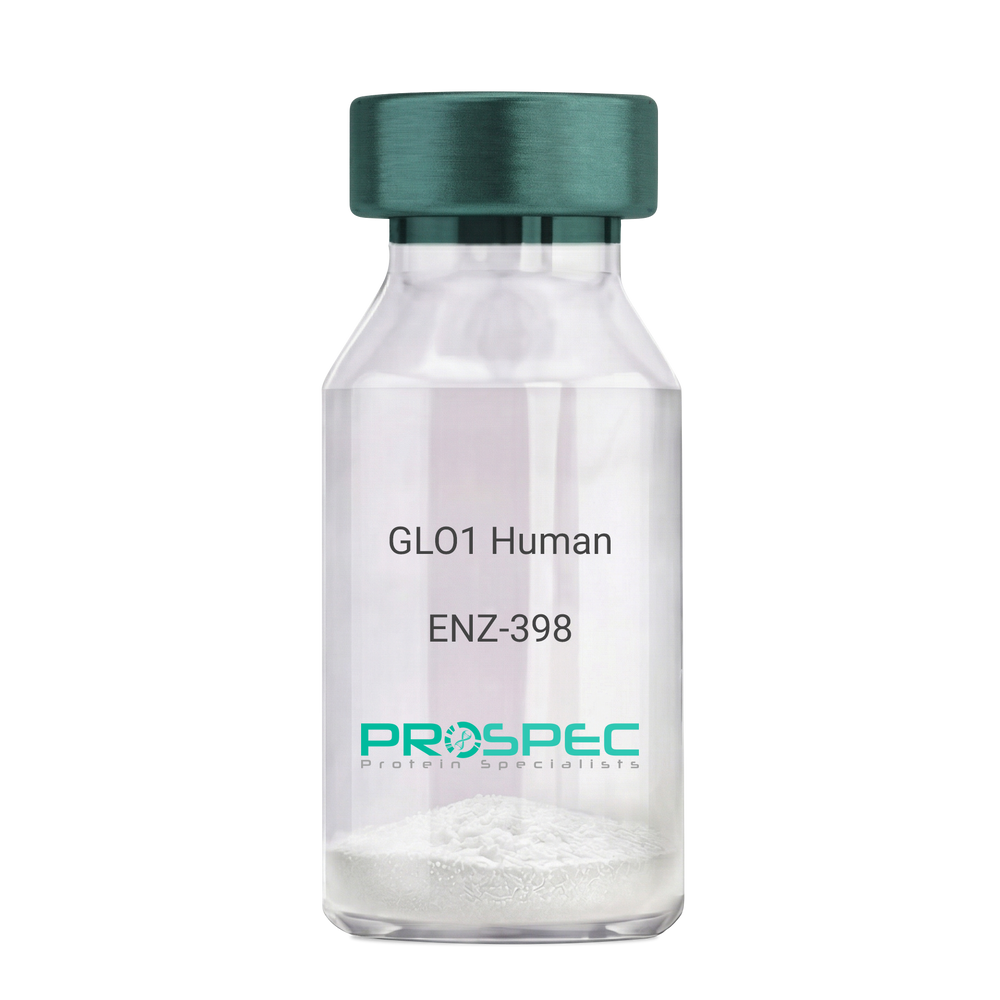
    Name :

    GLO1 Human

    Description:

    Glyoxalase-I Human Recombinant

    GLYI, GLOD1, GLO1, Glyoxalase-1, Lactoylglutathione lyase, Methylglyoxalase, Aldoketomutase, Ketone-aldehyde mutase, Glyoxalase I, S-D-lactoylglutathione methylglyoxal lyase, Glx I.

    Product # :

    ENZ-398

    Price :

    Quantity :

    Shipping Method :

    Ice Icon

    Shipped with Ice Packs

    Add To Cart

    More Info

    • description
    • source
    • formulation
    • purity
    • More Info

    Description

    Glyoxalase-I Human Recombinant produced in E.Coli is a single, non-glycosylated, polypeptide chain containing 184 amino acids and having a molecular mass of 20.7 kDa. Glyoxalase-1 is purified by proprietary chromatographic techniques.

    Source

    Escherichia Coli.

    Formulation

    Glyoxalase-1 solution containing 20mM Tris-HCl pH-8, 1mM DTT and 10% glycerol.

    Purity

    Greater than 90.0% as determined by SDS-PAGE.

    More Info

    • Introduction

      GLO1 is involved in the catalysis and formation of S-lactoyl-glutathione from methylglyoxal condensation and reduced glutatione. GLO1 is linked to HLA and is localized to 6p21.3-p21.1, between HLA and the centromere. GLO1 enzyme is ubundantly expressed and present in numerous tumor cell lines, in which its concentration is often upregulated ubiquitisly. GLO1 is a major susceptible gene for autism in an ethnic Chinese population from Taiwan. GLO1 might be involved in the pathophysiology of mood disorders. GLO1 plays a role in the pathophysiology of mood disorders. Overexpression of GLO1 is associated with kidney tumor.

    • Synonyms

      GLYI, GLOD1, GLO1, Glyoxalase-1, Lactoylglutathione lyase, Methylglyoxalase, Aldoketomutase, Ketone-aldehyde mutase, Glyoxalase I, S-D-lactoylglutathione methylglyoxal lyase, Glx I.

    • Physical Appearance

      Sterile filtered colorless solution.

    • Stability

      Store at 4°C if entire vial will be used within 2-4 weeks. Store, frozen at -20°C for longer periods of time. For long term storage it is recommended to add a carrier protein (0.1% HSA or BSA).Avoid multiple freeze-thaw cycles.

    • Amino Acid Sequence

      MAEPQPPSGG LTDEAALSCC SDADPSTKDF LLQQTMLRVK DPKKSLDFYT RVLGMTLIQK CDFPIMKFSL YFLAYEDKND IPKEKDEKIAWALSRKATLE LTHNWGTEDD ETQSYHNGNS DPRGFGHIGI AVPDVYSACK RFEELGVKFV KKPDDGKMKG LAFIQDPDGY WIEILNPNKM ATLM.

    ProSpec's products are furnished for LABORATORY RESEARCH USE ONLY. The product may not be used as drugs, agricultural or pesticidal products, food additives or household chemicals.

    Glo1 Human
  • View Data Sheet

    Name :

    CFL2 Human

    Description:

    Cofilin-2 Human Recombinant

    Cofilin-2, Cofilin- muscle isoform, CFL2, NEM7.

    Product # :

    PRO-912

    Price :

    Quantity :

    Shipping Method :

    Ice Icon

    Shipped with Ice Packs

    Add To Cart

    More Info

    • description
    • source
    • formulation
    • purity
    • More Info

    Description

    CFL2 Human Recombinant produced in E.Coli is a single, non-glycosylated polypeptide chain containing 186 amino acids (1-166 a.a.) and having a molecular mass of 20.9kDa.CFL2 is fused to a 20 amino acid His-tag at N-terminus & purified by proprietary chromatographic techniques.

    Source

    Escherichia Coli.

    Formulation

    CFL2 protein solution (1mg/ml) containing 20mM Tris-HCl buffer (pH 8.0), 2mM DTT, 10% glycerol and 50mM NaCl.

    Purity

    Greater than 90.0% as determined by SDS-PAGE.

    More Info

    • Introduction

      CFL2 protein is a member of the actin-binding proteins ADF family which contains 1 ADF-H domain. Cofilin is a broadly distributed intracellular actin-modulating protein which binds and depolymerizes filamentous F-actin and inhibits the polymerization of monomeric G-actin in a pH-dependent manner. Defects in the CFL2 gene are the cause of nemaline myopathy type 7 (NEM7).

    • Synonyms

      Cofilin-2, Cofilin- muscle isoform, CFL2, NEM7.

    • Physical Appearance

      Sterile filtered colorless solution.

    • Stability

      Store at 4°C if entire vial will be used within 2-4 weeks. Store, frozen at -20°C for longer periods of time. For long term storage it is recommended to add a carrier protein (0.1% HSA or BSA).Avoid multiple freeze-thaw cycles.

    • Amino Acid Sequence

      MGSSHHHHHH SSGLVPRGSH MASGVTVNDE VIKVFNDMKV RKSSTQEEIK KRKKAVLFCL SDDKRQIIVE EAKQILVGDI GDTVEDPYTS FVKLLPLNDC RYALYDATYE TKESKKEDLV FIFWAPESAP LKSKMIYASS KDAIKKKFTG IKHEWQVNGL DDIKDRSTLG EKLGGNVVVS LEGKPL.

    ProSpec's products are furnished for LABORATORY RESEARCH USE ONLY. The product may not be used as drugs, agricultural or pesticidal products, food additives or household chemicals.

    Cfl2 Human
  • View Data Sheet

    Name :

    VEGF Human, HEK

    Description:

    Vascular Endothelial Growth Factor Human Recombinant, HEK

    Vascular endothelial growth factor A, VEGF-A, Vascular permeability factor, VPF, VEGF, MGC70609.

    Product # :

    CYT-225

    Price :

    Quantity :

    Shipping Method :

    Room Temp Icon

    Shipped at Room temp

    Add To Cart

    More Info

    • description
    • source
    • formulation
    • purity
    • biological activity
    • More Info

    Description

    Vascular Endothelial Growth Factor Human Recombinant produced in HEK293 cells is a double, glycosylated, polypeptide chain containing 165 amino acids (27-191) and having a molecular mass of 40 kDa. The VEGF is purified by proprietary chromatographic techniques.

    Source

    HEK293 (Human Embryonic Kidney cell line).

    Formulation

    The protein was lyophilized from a 0.2µM filtered solution of 20mM PB, 150mM NaCl, pH 7.2.

    Purity

    Greater than 95.0% as determined by SDS-PAGE.

    Biological Activity

    Determined by the dose-dependent stimulation of the proliferation of human umbilical vein endothelial cells (HUVEC) using a concentration range of 4.0ng/ml, corresponding to a specific activity of 2.5 x 10⁵ Units/mg.

    More Info

    • Introduction

      Vascular endothelial growth factor is an important signaling protein involved in both vasculogenesis and angiogenesis. As its name implies, VEGF activity has been mostly studied on cells of the vascular endothelium, although it does have effects on a number of other cell types (e.g. stimulation monocyte/ macrophagemigration, neurons, cancer cells, kidney epithelial cells ).VEGF mediates increased vascular permeability, induces angiogenesis, vasculogenesis and endothelial cell growth, promotes cell migration, and inhibits apoptosis. In vitro, VEGF has been shown to stimulate endothelial cell mitogenesisand cell migration. VEGF is also a vasodilator and increases microvascular permeability and was originally referred to as vascular permeability factor.
      Elevated levels of this protein are linked to POEMS syndrome, also known as Crow-Fukase syndrome. Mutations in this gene have been associated with proliferative and nonproliferative diabetic retinopathy.

    • Synonyms

      Vascular endothelial growth factor A, VEGF-A, Vascular permeability factor, VPF, VEGF, MGC70609.

    • Physical Appearance

      Sterile Filtered White lyophilized (freeze-dried) powder.

    • Stability

      Lyophilized Vascular Endothelial Growth Factor HEK although stable at room temperature for 3 weeks, should be stored desiccated below -18°C. Upon reconstitution VEGF HEK should be stored at 4°C between 2-7 days and for future use below -18°C. For long term storage it is recommended to add a carrier protein (0.1% HSA or BSA). Please prevent freeze-thaw cycles.

    • Solubility

      It is recommended to reconstitute the lyophilized Vascular Endothelial Growth Factor-HEK in sterile 18M-cm H2O not less than 100µg/ml, which can then be further diluted to other aqueous solutions.

    • Amino Acid Sequence

      APMAEGGGQN HHEVVKFMDV YQRSYCHPIE TLVDIFQEYP DEIEYIFKPS CVPLMRCGGC CNDEGLECVP TEESNITMQI MRIKPHQGQH IGEMSFLQHN KCECRPKKDR ARQENPCGPC SERRKHLFVQ DPQTCKCSCK NTDSRCKARQ LELNERTCRC DKPRR.

    ProSpec's products are furnished for LABORATORY RESEARCH USE ONLY. The product may not be used as drugs, agricultural or pesticidal products, food additives or household chemicals.

    Vegf Human Hek
  • View Data Sheet

    Name :

    C3b Human

    Description:

    Complement C3b Human

    Complement C3, C3 and PZP-like alpha-2-macroglobulin domain-containing protein 1, C3, CPAMD1.

    Product # :

    PRO-2686

    Price :

    Quantity :

    Shipping Method :

    Ice Icon

    Shipped with Ice Packs

    Add To Cart

    More Info

    • description
    • source
    • formulation
    • purity
    • More Info

    Description

    Human Complement C3b produced in Human plasma having a molecular mass of 176 kDa.

    Source

    Human Plasma.

    Formulation

    C3b solution contains Phosphate buffered saline, pH 7.2.

    Purity

    Greater than 95.0% as determined by SDS-PAGE.

    More Info

    • Introduction

      C3b is derived from native C3 upon cleavage with the alternative pathway C3 convertase and release of C3a.Native human C3b is a glycosylated polypeptide chain having2 disulfide-linked chains. C3b is essential to the function of all 3complement pathways.Initiation of each pathway generates proteolytic enzyme complexes (C3 convertases) which binds the target surface. These enzymes cleave a peptide bond in C3 releasing the anaphylatoxin C3a and activating C3b. Most of the C3b created during complement activation. Surface-bound C3b is needed in all 3 pathways for effective activation of C5 and formation of C5b-9 complexes which lyse the target cell membrane. Surface-bound C3b and its breakdown products iC3b and C3d are identifyid by various receptors on lymphoid and phagocytic cells which use the C3b ligand to stimulate antigen presentation to cells of the adaptive immune system. It results in an expansion of target-specific B-cell and T-cell populations.

    • Synonyms

      Complement C3, C3 and PZP-like alpha-2-macroglobulin domain-containing protein 1, C3, CPAMD1.

    • Physical Appearance

      Sterile filtered solution.

    • Stability

      C3b Human is stable at 4°C if entire vial will be used within 2-4 weeks.Store, frozen below -20°C for longer periods of time.For long term storage it is recommended to add a carrier protein (0.1% HSA or BSA).Avoid multiple freeze-thaw cycles.

    • Human Virus Test

      Plasma from each donor has been tested and found negative for antibody to HIV-1, HIV-2, HCV and HBSAG.

    ProSpec's products are furnished for LABORATORY RESEARCH USE ONLY. The product may not be used as drugs, agricultural or pesticidal products, food additives or household chemicals.

    C3B Human
  • View Data Sheet

    Name :

    C4BP Human

    Description:

    Complement Component 4 Binding Protein Human

    C4bp, C4BP, C4b-binding protein alpha chain, Proline-rich protein, PRP, C4BPA

    Product # :

    PRO-2734

    Price :

    Quantity :

    Shipping Method :

    Ice Icon

    Shipped with Ice Packs

    Add To Cart

    More Info

    • description
    • source
    • formulation
    • purity
    • More Info

    Description

    C4BP Human produced in Human Plasma having a molecular mass of 540 kDa.

    Source

    Human Plasma.

    Formulation

    C4BP solution (1mg/ml) contains PBS, pH 7.2.

    Purity

    Greater than 90% as determined by SDS-PAGE.

    More Info

    • Introduction

      C4BP has a flower shaped structure with each alpha chain radiating out from a central core. The arms are linked by disulfide bonds in the centre and the ends of each arm bind C4b. C4BP acts as a cofactor allowing factor I to split and permanently inactivate C4b. C4b binding protein modulates complement activation of the classical and lectin pathways. C4BP binds to C4b and accelerates the dissociation of C2a from the C3/C5 convertase C4b,C2a. This inactivates the central enzyme of both pathways. Studies have shown that on surfaces densely coated with C4b, C4BP can bind up to four C4b molecules simultaneously.

    • Synonyms

      C4bp, C4BP, C4b-binding protein alpha chain, Proline-rich protein, PRP, C4BPA

    • Physical Appearance

      Sterile filtered solution.

    • Stability

      C4BP Human is stable at 4°C if entire vial will be used within 2-4 weeks.Store, frozen below -20°C for longer periods of time.For long term storage it is recommended to add a carrier protein (0.1% HSA or BSA).Avoid multiple freeze-thaw cycles.

    • Human Virus Test

      Plasma from each donor has been tested and found negative for antibody to HIV-1, HIV-2, HCV, HTLV-I &II, STS and HBSAG.

    ProSpec's products are furnished for LABORATORY RESEARCH USE ONLY. The product may not be used as drugs, agricultural or pesticidal products, food additives or household chemicals.

    C4Bp Human
  • View Data Sheet

    Name :

    Insulin Human

    Description:

    Insulin Human Recombinant

    Product # :

    CYT-270

    Price :

    Quantity :

    Shipping Method :

    Room Temp Icon

    Shipped at Room temp

    Add To Cart

    More Info

    • description
    • source
    • formulation
    • purity
    • biological activity
    • More Info

    Description

    Insulin Human Recombinant produced in E.Coli is a two chain, non-glycosylated polypeptide chain containing 51 amino acids and having a molecular mass of 5807 Dalton. Insulin is purified by proprietary chromatographic techniques.

    Source

    Escherichia Coli.

    Formulation

    The protein was lyophilized from a concentrated (1mg/ml) solution with no additives.

    Purity

    Greater than 98.0% as determined by RP-HPLC analysis.

    Biological Activity

    The Biological Activity was determined to be 28 units/mg.

    More Info

    • Introduction

      Insulin decreases blood glucose concentration. It increases cell permeability to monosaccharides, amino acids and fatty acids. It accelerates glycolysis, the pentose phosphate cycle, and glycogen synthesis in liver.

    • Physical Appearance

      Sterile Filtered White lyophilized (freeze-dried) powder.

    • Stability

      Lyophilized Insulin although stable at room temperature for 3 weeks, should be stored desiccated below -18°C. Upon reconstitution Insulin should be stored at 4°C between 2-7 days and for future use below -18°C.For long term storage it is recommended to add a carrier protein (0.1% HSA or BSA).Please prevent freeze-thaw cycles.

    • Solubility

      It is recommended to reconstitute the lyophilized Insulin in sterile 0.005N HCl not more than 1 mg/ml.

    ProSpec's products are furnished for LABORATORY RESEARCH USE ONLY. The product may not be used as drugs, agricultural or pesticidal products, food additives or household chemicals.

    Insulin Human
  • View Data Sheet

    Name :

    CCL15 68 a.a Human

    Description:

    Macrophage Inflammatory Protein-5 (68 a.a) Human Recombinant (CCL15)

    Small inducible cytokine A15 precursor, CCL15, Macrophage inflammatory protein 5, MIP-5, MIP5, Chemokine CC-2, HCC-2, NCC-3, MIP- 1 delta, Leukotactin-1, LKN-1, Mrp-2b, C-C motif chemokine 15.

    Product # :

    CHM-011

    Price :

    Quantity :

    Shipping Method :

    Room Temp Icon

    Shipped at Room temp

    Add To Cart

    More Info

    • description
    • source
    • formulation
    • purity
    • biological activity
    • More Info

    Description

    Macrophage Inflammatory Protein-5 Human Recombinant produced in E.Coli is a single, non-glycosylated, polypeptide chain containing 68 amino acids and having a molecular mass of 7.4kDa. The MIP5 is purified by proprietary chromatographic techniques.

    Source

    Escherichia Coli.

    Formulation

    MIP5 was lyophilized from a 0.2µm filtered concentrated solution containing PBS, pH-7.4.

    Purity

    Greater than 97.0% as determined by:
    (a) Analysis by RP-HPLC.
    (b) Analysis by SDS-PAGE.

    Biological Activity

    Measured by its ability to chemoattract THP-1 human acute monocytic leukemia cells. The ED50 for this effect is typically 2-4ng/ml.

    More Info

    • Introduction

      CCL15, a new human CC chemokine, was isolated from a human fetal spleen cDNA library. CCL15 cDNA encodes a predicted 113 amino acid (aa) protein containing a putative signal peptide of 21 amino acids that is cleaved to generate a 92 aa residue mature protein. Within the CC family members, human CCL15 shares 45%, 44%, 35%, and 30% aa homology with mouse C10, human MPIF-1, human HCC-1, and mouse MIP-1?, respectively. The gene for MIP-5 is found on chromosome 17 where the genes for most of the human CC chemokines are located. Human CCL15 is expressed in T and B lymphocytes, NK cells, monocytes and monocyte-derived dendritic cells. Human MIP-5 is chemotactic for T cells and monocytes and has been shown to induce calcium flux in human CCR-1-transfected cells.

    • Synonyms

      Small inducible cytokine A15 precursor, CCL15, Macrophage inflammatory protein 5, MIP-5, MIP5, Chemokine CC-2, HCC-2, NCC-3, MIP- 1 delta, Leukotactin-1, LKN-1, Mrp-2b, C-C motif chemokine 15.

    • Physical Appearance

      Sterile Filtered White lyophilized (freeze-dried) powder.

    • Stability

      Lyophilized MIP-5 although stable at room temperature for 3 weeks, should be stored desiccated below -18°C. Upon reconstitution CCL15 should be stored at 4°C between 2-7 days and for future use below -18°C.For long term storage it is recommended to add a carrier protein (0.1% HSA or BSA).Please prevent freeze-thaw cycles.

    • Solubility

      It is recommended to reconstitute the lyophilized MIP5 in sterile 18MΩ-cm H2O not less than 100µg/ml, which can then be further diluted to other aqueous solutions.

    • Amino Acid Sequence

      SFHFAADCCT SYISQSIPCS LMKSYFETSS ECSKPGVIFL TKKGRQVCAK PSGPGVQDCM KKLKPYSI.

    • Background

      What is the molecular weight/Mw of CCL15 68 A.A HUMAN Protein?
      CCL15 68 A.A HUMAN Protein has a total Mw of 7.4kDa.

      What is the source or expression system of CCL15 68 A.A HUMAN Protein?
      Escherichia Coli.

      What is the Purity of CCL15 68 A.A HUMAN Protein?
      CCL15 68 A.A HUMAN Protein is > 97% pure as determined by SDS-PAGE.

      What is the Biological Activity of CCL15 68 A.A HUMAN Protein?
      Measured by its ability to chemoattract THP-1 human acute monocytic leukemia cells. The ED50 for this effect is typically 2-4ng/ml.

      What is the amino acid sequence of CCL15 68 A.A HUMAN Protein?
      SFHFAADCCT SYISQSIPCS LMKSYFETSS ECSKPGVIFL TKKGRQVCAK PSGPGVQDCM KKLKPYSI.

      What applications can CCL15 68 A.A HUMAN Protein be used in?
      CCL15 68 A.A HUMAN Protein can probably be used in western blot, ELISA and Lateral Flow.

      What is the endotoxin level for CCL15 68 A.A HUMAN Protein?
      The endotoxin level is minimal, CCL15 68 A.A HUMAN Protein was purified using conventional chromatography techniques.


    ProSpec's products are furnished for LABORATORY RESEARCH USE ONLY. The product may not be used as drugs, agricultural or pesticidal products, food additives or household chemicals.

    Mip 5 68 Aa Human
  • View Data Sheet

    Name :

    ING2 Human

    Description:

    Inhibitor of Growth Family, Member 2 Human Recombinant

    Inhibitor Of Growth Family Member 2, ING1L, Inhibitor Of Growth 1-Like Protein, P33ING2, ING1Lp, P32, Inhibitor Of Growth Family Member 1-Like, Inhibitor Of Growth Protein 2, ING2.

    Product # :

    PRO-1739

    Price :

    Quantity :

    Shipping Method :

    Ice Icon

    Shipped with Ice Packs

    Add To Cart

    More Info

    • description
    • source
    • formulation
    • purity
    • More Info

    Description

    ING2 Human Recombinant produced in E.Coli is a single, non-glycosylated polypeptide chain containing 303 amino acids (1-280 a.a) and having a molecular mass of 35.2kDa.ING2 is fused to a 23 amino acid His-tag at N-terminus & purified by proprietary chromatographic techniques.

    Source

    Escherichia Coli.

    Formulation

    ING2 protein solution (1mg/ml) containing 20mM Tris-HCl buffer (pH 8.0), 0.4M UREA and 10% glycerol.

    Purity

    Greater than 85.0% as determined by SDS-PAGE.

    More Info

    • Introduction

      Inhibitor of Growth Family, Member 2 (ING2) belongs to the inhibitor of growth (ING) family. ING family members associate with and modulate the activity of histone acetyltransferase (HAT) and histone deacetylase (HDAC) complexes and serve in DNA repair and apoptosis. ING2 appears to be involved in p53/TP53 activation and p53/TP53-dependent apoptotic pathways, most likely by enhancing acetylation of p53/TP53. ING2 is a component of an mSin3A-like corepressor complex, which is probably involved in deacetylation of nucleosomal histones. ING2 activity is modulated by binding to phosphoinositides (PtdInsPs).

    • Synonyms

      Inhibitor Of Growth Family Member 2, ING1L, Inhibitor Of Growth 1-Like Protein, P33ING2, ING1Lp, P32, Inhibitor Of Growth Family Member 1-Like, Inhibitor Of Growth Protein 2, ING2.

    • Physical Appearance

      Sterile Filtered clear solution.

    • Stability

      Store at 4°C if entire vial will be used within 2-4 weeks. Store, frozen at -20°C for longer periods of time. For long term storage it is recommended to add a carrier protein (0.1% HSA or BSA).Avoid multiple freeze-thaw cycles.

    • Amino Acid Sequence

      MGSSHHHHHH SSGLVPRGSH MGSMLGQQQQ QLYSSAALLT GERSRLLTCY VQDYLECVES LPHDMQRNVS VLRELDNKYQ ETLKEIDDVY EKYKKEDDLN QKKRLQQLLQ RALINSQELG DEKIQIVTQM LELVENRARQ MELHSQCFQD PAESERASDK AKMDSSQPER SSRRPRRQRT SESRDLCHMA NGIEDCDDQP PKEKKSKSAK KKKRSKAKQE REASPVEFAI DPNEPTYCLC NQVSYGEMIG CDNEQCPIEW FHFSCVSLTY KPKGKWYCPK CRGDNEKTMD KSTEKTKKDR RSR.

    ProSpec's products are furnished for LABORATORY RESEARCH USE ONLY. The product may not be used as drugs, agricultural or pesticidal products, food additives or household chemicals.

    Ing2 Human
  • 1
  • …
  • 22
  • 23
  • 24
  • 25
  • 26
  • …
  • 42
Your browser does not support the video tag.

Products

  • Cytokines
  • Growth Factors
  • Chemokines
  • CD Antigens
  • Neurotrophins
  • Hormones
  • Enzymes
  • Viral Antigens
  • Recombinant Proteins
  • Natural Proteins
  • Monoclonal Antibodies
  • Polyclonal Antibodies
  • Thermal Packaging

About

  • Company
  • Founder
  • Contribution
  • Contact Us
  • My Account

Ordering

  • Ordering Method
  • Ordering - Credit Card
  • Ordering PO
  • Shipping Fees
  • FAQ's

Legal

  • Terms & Conditions
  • Privacy
  • Site Map
  • info@prospecbio.com
  • Facebook
  • Instagram
  • Linkedin Profile

© 2026 ProSpec-Tany TechnoGene Ltd. All Rights Reserved.

  • Choosing a selection results in a full page refresh.
  • Opens in a new window.