Search results
1000 results found for “gliadin”
Name
Description
Product #
Price
Quantity
Shipping Method
- View Data Sheet
Name :
GH Antagonist ChickenDescription:
Growth Hormone Antagonist Chicken Recombinant
GH1, GH, GHN, GH-N, hGH-N, Pituitary growth hormone, Growth hormone 1, Somatotropin.
Product # :
CYT-538Price :
Quantity :
Shipping Method :
Shipped at Room temp
More Info
- description
- source
- formulation
- purity
- biological activity
- More Info
Description
Somatotropin Chicken Antagonist Recombinant mutein G119R produced in E.Coli is a single, non-glycosylated polypeptide chain containing 191 amino acids with an additional Ala at the N-terminus and having a molecular mass of 22.3 kDa. The Chicken Growth-Hormone Antagonist Recombinant is purified by proprietary chromatographic techniques.
Source
Escherichia Coli.
Formulation
The protein was lyophilized from a concentrated (1mg/ml) solution with 0.03% NaHCO3 pH-8.
Purity
Greater than 98.0% as determined by:
(a) Analysis by SEC-HPLC.
(b) Analysis by SDS-PAGE.Biological Activity
Recombinant Chicken Growth Hormone G119R mutant did not bind to ovine GHR-ECD and was devoid of any biological activity in FDC-P1 3B9 cells.
However, in binding experiments that were carried out using chicken liver membranes, both ovine GH and chicken GH showed similar IC50 values in competition with 125I-ovine GH, while the IC50 of G119R mutein was 10-fold higher.
These results emphasize the importance of species specificity and indicate the possibility of antagonistic activity of chGH G119R in homologous system.More Info
-
Introduction
GH is a member of the somatotropin/prolactin family of hormones which play an important role in growth control. The gene, along with four other related genes, is located at the growth hormone locus on chromosome 17 where they are interspersed in the same transcriptional orientation; an arrangement which is thought to have evolved by a series of gene duplications. The five genes share a remarkably high degree of sequence identity. Alternative splicing generates additional isoforms of each of the five growth hormones, leading to further diversity and potential for specialization. This particular family member is expressed in the pituitary but not in placental tissue as is the case for the other four genes in the growth hormone locus. Mutations in or deletions of the gene lead to growth hormone deficiency and short stature.
-
Synonyms
GH1, GH, GHN, GH-N, hGH-N, Pituitary growth hormone, Growth hormone 1, Somatotropin.
-
Physical Appearance
Sterile Filtered White lyophilized (freeze-dried) powder.
-
Stability
Lyophilized Growth-Hormone Chicken antagonist although stable at room temperature for at least two weeks, should be stored desiccated below -18°C. Upon reconstitution and filter sterilization GH can be stored at 4°C, pH 9 for up to 4 weeks. For long term storage and more diluted solutions it is recommended to add a carrier protein (0.1% HSA or BSA). Please prevent freeze-thaw cycles.
-
Solubility
It is recommended to reconstitute the lyophilized Growth-Hormone Chicken antagonist in 0.4% NaHCO3 or water adjusted to pH 8-9, not less than 100µg/ml, which can then be further diluted to other aqueous solutions, preferably in a presence of a carrier protein such as BSA or similar.
-
Amino Acid Sequence
The sequence of the first five N-terminal amino acids was determined and was found to be Ala-Thr-Phe-Pro-Ala.
-
Protein content
Protein quantitation was carried out by: UV spectroscopy at 280 nm using the absorbency value of 0.74 as the extinction coefficient for a 0.1% (1mg/ml) solution. This value is calculated by the PC GENE computer analysis program of protein sequences (IntelliGenetics).
ProSpec's products are furnished for LABORATORY RESEARCH USE ONLY. The product may not be used as drugs, agricultural or pesticidal products, food additives or household chemicals.
- View Data Sheet
Name :
Placental Lactogen CaprineDescription:
Placental Lactogen Caprine Recombinant
Chorionic Somatomammotropin Hormone 1, CSH1, CS-1, hCS, PL.
Product # :
CYT-510Price :
Quantity :
Shipping Method :
Shipped at Room temp
More Info
- description
- source
- formulation
- purity
- biological activity
- More Info
Description
Placental Lactogen Caprine Recombinant, is a single polypeptide chain containing 199 amino acids and an additional Ala at the N-terminus having a molecular mass of 23 kDa. Placental Lactogen Recombinant Goat is purified by proprietary chromatographic techniques.
Source
Escherichia Coli.
Formulation
The protein was lyophilized from a concentrated (1mg/ml) solution with 0.02-0.03% NaHCO3.
Purity
Greater than 99.0% as determined by:
(a) Gel filtration analysis.
(b) Analysis by SDS-PAGE.Biological Activity
Placental Lactogen Caprine is biologically active as evidenced by inducing proliferation of Nb2 cells.More Info
-
Introduction
Placental Lactogen is a polypeptide hormone that is produced by the Syncytiotrophoblasts of the Placenta, also known as chorionic somatomammotropin. It has both Growth Hormone and Prolactin activities on growth, lactation, and luteal steroid production. In women, placental lactogen secretion begins soon after implantation and increases to 1 g or more a day in late pregnancy. Placental lactogen is also an insulin antagonist.
Placental Lactogen Goat is also capable of activating human and other heterologous GH receptors but not ruminat GH receptors. -
Synonyms
Chorionic Somatomammotropin Hormone 1, CSH1, CS-1, hCS, PL.
-
Physical Appearance
Sterile Filtered White lyophilized (freeze-dried) powder.
-
Stability
Lyophilized caprine recombinant placental lactogen although stable at room temperature for several weeks, should be stored desiccated below -18C. Upon reconstitution of caprine recombinant placental lactogen at > 0.1 mg/ml and up to 4 mg/ml and filter sterilization caprine recombinant placental lactogen can be stored at 4C for several weeks.
-
Solubility
It is recommended to reconstitute the lyophilized caprine recombinant placental lactogen in sterile water or 0.4% NaHCO3 adjusted tp pH 8-9, not less than 100µg/ml, which can then be further diluted to other aqueous solutions, preferably in presence of carrier protein.
-
Amino Acid Sequence
The sequence of the first four N-terminal amino acids was determined and was found to be Ala-Glu-Asn-Tyr.
-
Protein content
UV spectroscopy at 280 nm using the absorbency value of 0.85 as the extinction coefficient for a 0.1% (1mg/ml) solution. This value is calculated by the PC GENE computer analysis program of protein sequences (IntelliGenetics).
ProSpec's products are furnished for LABORATORY RESEARCH USE ONLY. The product may not be used as drugs, agricultural or pesticidal products, food additives or household chemicals.
- View Data Sheet
Name :
Leptin PorcineDescription:
Leptin Porcine Recombinant
OB Protein, Obesity Protein, OBS, Obesity factor.
Product # :
CYT-503Price :
Quantity :
Shipping Method :
Shipped at Room temp
More Info
- description
- source
- formulation
- purity
- biological activity
- More Info
Description
Leptin Porcine Recombinant produced in E.Coli is a single, non-glycosylated, polypeptide chain containing 146 amino acids and additional Ala at N-terminus, having a molecular mass of 16kDa. The Leptin is purified by proprietary chromatographic techniques.
Source
Escherichia Coli.
Formulation
The protein was lyophilized from a concentrated (1mg/ml) solution with 0.02% NaHCO3.
Purity
Greater than 98.0% as determined by:
(a) Gel filtration analysis.
(b) Analysis by SDS-PAGE.Biological Activity
Biological active as evidenced by inducing proliferation of BAF/3 cells stably transfected with the long form of human leptin receptor.More Info
-
Introduction
A 16-kDa peptide hormone secreted from white adipocytes and implicated in the regulation of food intake and energy balance. Leptin provides the key afferent signal from fat cells in the feedback system that controls body fat stores.
-
Synonyms
OB Protein, Obesity Protein, OBS, Obesity factor.
-
Physical Appearance
Sterile Filtered White lyophilized (freeze-dried) powder.
-
Stability
Lyophilized Leptin although stable at room temperature for 3 weeks, should be stored desiccated below -18°C. Upon reconstitution Leptin should be stored at 4°C between 2-7 days and for future use below -18°C.For long term storage it is recommended to add a carrier protein (0.1% HSA or BSA).Please prevent freeze-thaw cycles.
-
Solubility
It is recommended to reconstitute the lyophilized recombinant porcine leptin in sterile 0.4% NaHCO3 adjusted to ph 8-9, not less than 100µg/ml, which can then be further diluted to other aqueous solutions.
-
Amino Acid Sequence
The sequence of the first five N-terminal amino acids was determined and was found to be Ala-Val-Pro-Ile-Trp.
-
Protein content
Protein quantitation was carried out by two independent methods:1. UV spectroscopy at 280 nm using the absorbency value of 0.57 as the extinction coefficient for a 0.1% (1mg/ml) solution. This value is calculated by the PC GENE computer analysis program of protein sequences (IntelliGenetics). 2. Analysis by RP-HPLC,using calibrated solution of Leptin Porcine as a Reference Standard.
ProSpec's products are furnished for LABORATORY RESEARCH USE ONLY. The product may not be used as drugs, agricultural or pesticidal products, food additives or household chemicals.
- View Data Sheet
Name :
NTS HumanDescription:
Neurotensin Human Recombinant
NTS, Neurotensin, NT/N, NMN-125, NTS1, NN, Neurotensin/Neuromedin N, NT.
Product # :
PRO-1311Price :
Quantity :
Shipping Method :
Shipped with Ice Packs
More Info
- description
- source
- formulation
- purity
- More Info
Description
NTS Human Recombinant produced in E.Coli is a single, non-glycosylated polypeptide chain containing 172 amino acids (24-170 a.a.) and having a molecular mass of 19.9kDa.NTS is fused to a 25 amino acid His-tag at N-terminus & purified by proprietary chromatographic techniques.
Source
Escherichia Coli.
Formulation
NTS protein solution (1mg/ml) containing 20mM Tris-HCl buffer (pH 8.0), 0.4M urea and 10% glycerol.
Purity
Greater than 90.0% as determined by SDS-PAGE.
More Info
-
Introduction
Neurotensin (NTS) is a common precursor for 2 peptides, neuromedin N and neurotensin. Neurotensin is a secreted tridecapeptide, which is generally distributed throughout the central nervous system, and may serve as a neurotransmitter or a neuromodulator. NTS is involved in the maintenance of gut structure and function, and in the regulation of fat metabolism. Tissue-specific processing may initiate the formation in some tissues of larger forms of neuromedin N and neurotensin. The large forms may embody more stable peptides which are also biologically active.
-
Synonyms
NTS, Neurotensin, NT/N, NMN-125, NTS1, NN, Neurotensin/Neuromedin N, NT.
-
Physical Appearance
Sterile Filtered colorless solution.
-
Stability
Store at 4°C if entire vial will be used within 2-4 weeks. Store, frozen at -20°C for longer periods of time. For long term storage it is recommended to add a carrier protein (0.1% HSA or BSA).Avoid multiple freeze-thaw cycles.
-
Amino Acid Sequence
MGSSHHHHHH SSGLVPRGSH MGSHMSDSEE EMKALEADFL TNMHTSKISK AHVPSWKMTL LNVCSLVNNL NSPAEETGEV HEEELVARRK LPTALDGFSL EAMLTIYQLH KICHSRAFQH WELIQEDILD TGNDKNGKEE VIKRKIPYIL KRQLYENKPR RPYILKRDSY YY.
ProSpec's products are furnished for LABORATORY RESEARCH USE ONLY. The product may not be used as drugs, agricultural or pesticidal products, food additives or household chemicals.
- View Data Sheet
Name :
CCL24 HumanDescription:
Eotaxin-2 Human Recombinant (CCL24)
C-C motif chemokine 24, Small-inducible cytokine A24, Myeloid progenitor inhibitory factor 2, CK-beta-6, Eosinophil chemotactic protein 2, Eotaxin-2, CCL24, Ckb-6, MPIF2, MPIF-2, SCYA24, Eotaxin2, CCL-24.
Product # :
CHM-238Price :
Quantity :
Shipping Method :
Shipped at Room temp
More Info
- description
- source
- formulation
- purity
- biological activity
- More Info
Description
CCL24 Human Recombinant produced in E.Coli is a single, non-glycosylated polypeptide chain containing 78 amino acids and having a molecular mass of 8.8 kDa. The CCL24 is purified by proprietary chromatographic techniques.
Source
Escherichia Coli.
Formulation
The CCL24 protein was lyophilized from a concentrated (1mg/ml) sterile solution containing 20mM PBS pH-7.4 and 0.15M sodium chloride.
Purity
Greater than 97.0% as determined by(a) Analysis by RP-HPLC.
(b) Analysis by SDS-PAGE.Biological Activity
The activity is determined by the chemoattract of human PBE (peripheral blood eosinophils) at a concentration between 50-100 ng/ml corresponding to a Specific Activity of 10,000-20,000IU/mg.More Info
-
Introduction
Eotaxin-2, also called MPIF2 & Ckb6, is a novel CC chemokine produced by activated monocytes and T lymphocytes. Eotaxin-2 selectively chemoattracts cells expressing CCR3 including eosinophils, basophils, Th2 T cells, mast cells, and certain subsets of dendritic cells. Furthermore, Eotaxin-2 inhibits the proliferation of multipotential hematopoietic progenitor cells. The mature protein, which includes C-terminal truncation, contains 78 amino acids (92 amino acids for the mouse homolog, without C-terminal truncation).
CCL24 functions as a chemotactic chemokine for resting t-lymphocytes, and eosinophils. CCL24 has lower chemotactic activity for neutrophils but none for monocytes and activated lymphocytes. CCL24 is a strong suppressor of colony formation by a multipotential hematopoietic progenitor cell line and binds to CCR3. -
Synonyms
C-C motif chemokine 24, Small-inducible cytokine A24, Myeloid progenitor inhibitory factor 2, CK-beta-6, Eosinophil chemotactic protein 2, Eotaxin-2, CCL24, Ckb-6, MPIF2, MPIF-2, SCYA24, Eotaxin2, CCL-24.
-
Physical Appearance
Sterile Filtered White lyophilized (freeze-dried) powder.
-
Stability
Lyophilized Eotaxin-2 although stable at room temperature for 3 weeks, should be stored desiccated below -18°C. Upon reconstitution CCL24 should be stored at 4°C between 2-7 days and for future use below -18°C. For long term storage it is recommended to add a carrier protein (0.1% HSA or BSA).Please prevent freeze-thaw cycles.
-
Solubility
It is recommended to reconstitute the lyophilized CCL24 Human Recombinant in sterile 18MΩ-cm H2O not less than 100µg/ml, which can then be further diluted to other aqueous solutions.
-
Amino Acid Sequence
VVIPSPCCMFFVSKRIPENRVVSYQLSSRSTCLKGGVIFTTKKGQQFCG
DPKQEWV QRYMKNLDAKQKKASPRARAVA. -
Background
What is the molecular weight/Mw of CCL24 HUMAN Protein?
CCL24 HUMAN Protein has a total Mw of 8.8kDa.
What is the source or expression system of CCL24 HUMAN Protein?
Escherichia Coli.
What is the Purity of CCL24 HUMAN Protein?
CCL24 HUMAN Protein is >97% pure as determined by SDS-PAGE.
What is the Biological Activity of CCL24 HUMAN Protein?
The activity is determined by the chemoattract of human PBE (peripheral blood eosinophils) at a concentration between 50-100 ng/ml corresponding to a Specific Activity of 10,000-20,000IU/mg.
What is the amino acid sequence of CCL24 HUMAN Protein?
VVIPSPCCMFFVSKRIPENRVVSYQLSSRSTCLKGGVIFTTKKGQQFCG
DPKQEWV QRYMKNLDAKQKKASPRARAVA.
What applications can CCL24 HUMAN Protein be used in?
CCL24 HUMAN Protein can probably be used in western blot, ELISA and Lateral Flow.
What is the endotoxin level for CCL24 HUMAN Protein?
The endotoxin level is minimal, CCL24 HUMAN Protein was purified using conventional chromatography techniques.
ProSpec's products are furnished for LABORATORY RESEARCH USE ONLY. The product may not be used as drugs, agricultural or pesticidal products, food additives or household chemicals.
- View Data Sheet
Name :
PQBP1 HumanDescription:
Polyglutamine Binding Protein 1 Human Recombinant
Golyglutamine binding protein 1, Polyglutamine tract-binding protein 1, 38kDa nuclear protein containing a WW domain, mental retardation X-linked 55, Sutherland-Haan X-linked mental retardation syndrome, Npw38, MRXS3, MRX55, MRXS8, RENS1, SHS.
Product # :
PRO-1101Price :
Quantity :
Shipping Method :
Shipped with Ice Packs
More Info
- description
- source
- formulation
- purity
- More Info
Description
PQBP1 Human Recombinant produced in E. coli is a single polypeptide chain containing 289 amino acids (1-265) and having a molecular mass of 33.0kDa.PQBP1 is fused to a 24 amino acid His-tag at N-terminus & purified by proprietary chromatographic techniques.
Source
E.coli.
Formulation
The PQBP1 solution (0.5mg/1ml) contains 20mM Tris-HCl buffer (pH 8.0), 1mM DTT, 100mM NaCl and 20% glycerol.
Purity
Greater than 95% as determined by SDS-PAGE.
More Info
-
Introduction
PQBP1 is a transcription repressor which is connected to polyglutamine tract-containing transcription regulators and connective genes for neurodegenerative disorders. PQBP1 is restricts to the nucleus and can be found in neurons all over the brain, with high levels in hippocampus, olfactory bulb and cerebellar cortex. PQBP1 holds a WWP/WW domain that binds proline-rich motifs and a C2 domain which is able to stimulate Ca2+-dependent phospholipid signaling.
-
Synonyms
Golyglutamine binding protein 1, Polyglutamine tract-binding protein 1, 38kDa nuclear protein containing a WW domain, mental retardation X-linked 55, Sutherland-Haan X-linked mental retardation syndrome, Npw38, MRXS3, MRX55, MRXS8, RENS1, SHS.
-
Physical Appearance
Sterile Filtered colorless solution.
-
Stability
Store at 4°C if entire vial will be used within 2-4 weeks. Store, frozen at -20°C for longer periods of time. For long term storage it is recommended to add a carrier protein (0.1% HSA or BSA).Avoid multiple freeze-thaw cycles.
-
Amino Acid Sequence
MGSSHHHHHH SSGLVPRGSH MGSHMPLPVA LQTRLAKRGI LKHLEPEPEE EIIAEDYDDD PVDYEATRLE GLPPSWYKVF DPSCGLPYYW NADTDLVSWL SPHDPNSVVT KSAKKLRSSN ADAEEKLDRS HDKSDRGHDK SDRSHEKLDR GHDKSDRGHD KSDRDRERGY DKVDRERERD RERDRDRGYD KADREEGKER RHHRREELAP YPKSKKAVSR KDEELDPMDP SSYSDAPRGT WSTGLPKRNE AKTGADTTAA GPLFQQRPYP SPGAVLRANA EASRTKQQD
ProSpec's products are furnished for LABORATORY RESEARCH USE ONLY. The product may not be used as drugs, agricultural or pesticidal products, food additives or household chemicals.
- View Data Sheet
Name :
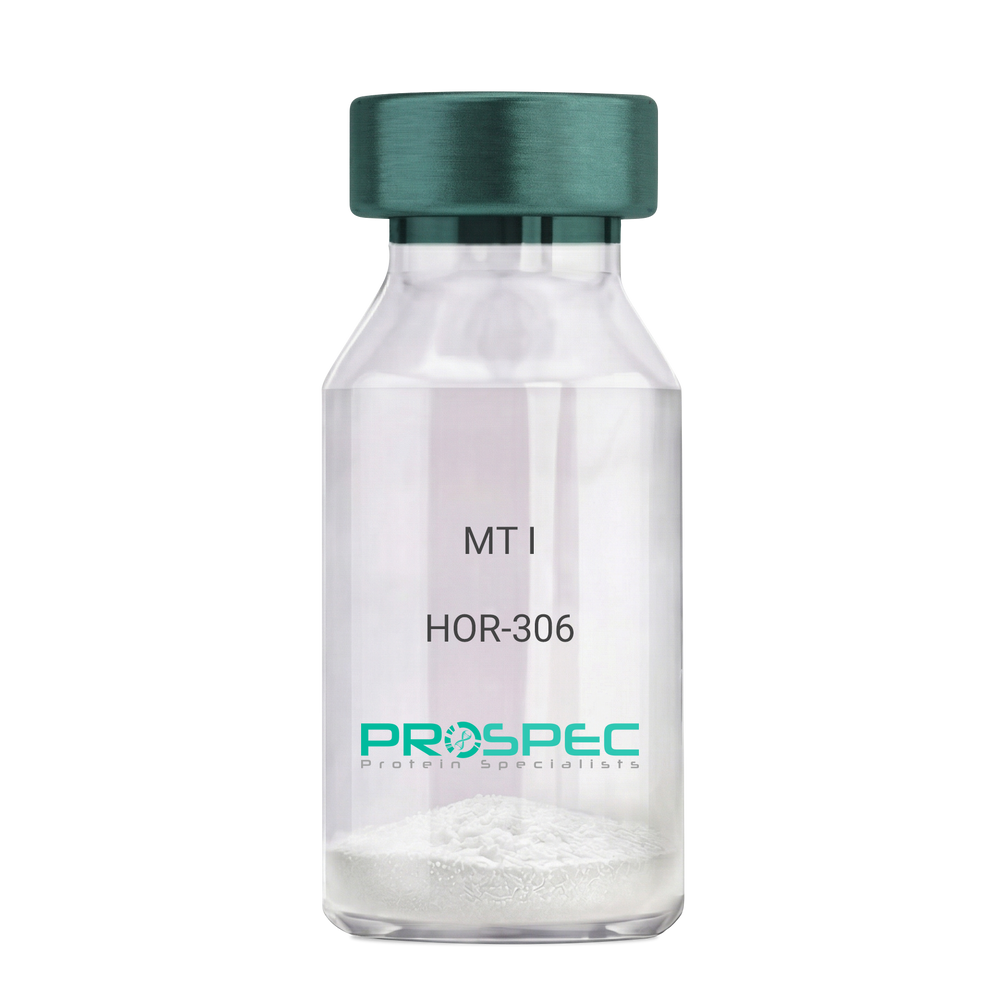
MT IDescription:
Melanotan-I
Melanotan-I, MT-I, Melanotan-1.
Product # :
HOR-306Price :
Quantity :
Shipping Method :
Shipped at Room temp
More Info
- description
- formulation
- purity
- More Info
Description
Melanotan-I has the amino acid sequence of Ser-Tyr-Ser-Nle-Glu-His-D-Phe-Arg-Trp-Gly-Lys-Pro-Val and a molecular weight of 1647.4 Dalton.
Formulation
The protein (1mg/ml) was lyophilized with no additives.
Purity
Greater than 98.0% as determined by RP-HPLC.
More Info
-
Synonyms
Melanotan-I, MT-I, Melanotan-1.
-
Physical Appearance
Sterile Filtered off-White lyophilized (freeze-dried) powder.
-
Stability
Lyophilized Melanotan-I although stable at room temperature for 3 weeks, should be stored desiccated below -18°C. Upon reconstitution MT-I should be stored at 4°C between 2-7 days and for future use below -18°C.For long term storage it is recommended to add a carrier protein (0.1% HSA or BSA).Please prevent freeze-thaw cycles.
-
Solubility
It is recommended to reconstitute the lyophilized Melanotan-I in sterile 1% acetic acid not less than 100 µg/ml, which can then be further diluted to other aqueous solutions.
ProSpec's products are furnished for LABORATORY RESEARCH USE ONLY. The product may not be used as drugs, agricultural or pesticidal products, food additives or household chemicals.
- View Data Sheet
Name :
Art v 1Description:
Major Pollen Allergen Art v 1 Recombinant
Defensin-like protein 1.
Product # :
ALR-014Price :
Quantity :
Shipping Method :
Shipped with Ice Packs
More Info
- description
- source
- formulation
- purity
- More Info
Description
Recombinant Art v 1 produced in SF9 is a glycosylated, polypeptide chain having a calculated molecular mass of 11,486 Dalton. Art v 1 is expressed with a 5xHis tag at N-terminus and purified by proprietary chromatographic techniques.
Source
Sf9 insect cells.
Formulation
Art v 1 is supplied in 20mM HEPES buffer pH-7.9 and 6M Urea.
Purity
Greater than 80.0% as determined by SDS-PAGE.
More Info
-
Introduction
Art v 1, Artemisia vulgaris (mugwort) is a common weed in the Mediterranean area. The significant allergen of mugwort pollen, is a secreted modular glycoprotein with a N-terminal defensin-like and a C-terminal hydroxyproline-rich domain. The reactivity of IgE antibodies is primarily aimed to epitopes located in the N-terminal domain.
-
Synonyms
Defensin-like protein 1.
-
Physical Appearance
Sterile Filtered clear solution.
-
Stability
Store at 4°C if entire vial will be used within 2-4 weeks. Store, frozen at -20°C for longer periods of time. Avoid multiple freeze-thaw cycles.
-
Immunological Functions
1. Binds IgE type human antibodies. 2. Immunodot test with positive/negative sera panels.
ProSpec's products are furnished for LABORATORY RESEARCH USE ONLY. The product may not be used as drugs, agricultural or pesticidal products, food additives or household chemicals.
- View Data Sheet
Name :
Tri a 14.0101Description:
Non-Specific Lipid-Transfer Protein Tri a 14 Recombinant
Non-specific lipid-transfer protein, ltp142.
Product # :
ALR-025Price :
Quantity :
Shipping Method :
Shipped with Ice Packs
More Info
- description
- source
- formulation
- purity
- More Info
Description
Recombinant Non-Specific Lipid-Transfer Protein Tri a 14 produced in SF9 is a glycosylated, polypeptide chain having a calculated molecular mass of 13kDa. Tri a 14.0101 is expressed with a 6xHis tag and purified by proprietary chromatographic techniques.
Source
Sf9 insect cells.
Formulation
Tri a 14.0101 is supplied in 20mM HEPES buffer pH-8.0, 200mM NaCl and 20% glycerol.
Purity
Greater than 80.0% as determined by SDS-PAGE.
More Info
-
Introduction
Tri a 14.0101 is a non-specific lipid transfer protein and a major wheat allergen. Those who are sensitive to this allergen may have baker’s asthma, a frequent occupational allergic disease caused mainly by inhalation of cereal flour, especially wheat flour. Tri a 14.0101 consists of 4 helical fragments and irregular C-terminal regions which are highly stable to heat treatment and proteolytic attack.
-
Synonyms
Non-specific lipid-transfer protein, ltp142.
-
Physical Appearance
Sterile Filtered clear solution.
-
Stability
Store at 4°C if entire vial will be used within 2-4 weeks. Store, frozen at -20°C for longer periods of time. Avoid multiple freeze-thaw cycles.
-
Immunological Functions
1. Binds IgE-type human antibodies.2. Immunodot test with positive/negative samples.
-
Applications
Tested by LAL (Limulus Amoebocyte Lysate) chromogenic endotoxin assay.
ProSpec's products are furnished for LABORATORY RESEARCH USE ONLY. The product may not be used as drugs, agricultural or pesticidal products, food additives or household chemicals.
- View Data Sheet
Name :
EGFPDescription:
Enhanced Green Fluorescent Protein Recombinant
Green fluorescent protein, GFP.
Product # :
PRO-1606Price :
Quantity :
Shipping Method :
Shipped at Room temp
More Info
- description
- source
- formulation
- purity
- More Info
Description
Recombinant EGFP produced in E.coli cells is a single non-glycosylated protein containing 239 amino acid chain and having a molecular mass of 26.9kDa. EGFP is purified by proprietary chromatographic techniques.
Source
Escherichia Coli.
Formulation
The EGFP was lyophilized from a 0.2µm filtered concentrated solution in PBS pH 7.4.
Purity
Greater than 95.0% as determined by:
(a) Analysis by RP-HPLC.
(b) Analysis by SDS-PAGE.More Info
-
Introduction
GFP, also known as Green Fluorescent Protein, is a protein produced by the jellyfish (Aequorea Victoria) that produces bioluminescence in the green zone of the noticeable spectrum. Green Fluorescent Protein is a useful and ubiquitous instrument for producing chimeric proteins, where it functions as a fluorescent protein tag. GFP is expressed in most known cell types and is used as a noninvasive fluorescent marker in living cells and organisms. Green Fluorescent Protein permits a broad range of applications where it has functioned as a cell lineage tracer, reporter of gene expression, or as a measure of protein-protein interactions. Enhanced GFP (eGFP) has F64L and S65T mutations, which make GFP show increased fluorescence and fold more efficiently under 370.
-
Synonyms
Green fluorescent protein, GFP.
-
Physical Appearance
Sterile Filtered White lyophilized (freeze-dried) powder.
-
Stability
Lyophilized EGFP although stable at room temperature for 3 weeks, should be stored desiccated below -180C. Upon reconstitution EGFP should be stored at 40C between 2-7 days and for future use below -180C.For long term storage it is recommended to add a carrier protein (0.1% HSA or BSA).Please prevent freeze-thaw cycles.
-
Solubility
It is recommended to reconstitute the lyophilized EGFP in sterile distilled H2O not less than 100µg/ml, which can then be further diluted to other aqueous solutions.
-
Amino Acid Sequence
MVSKGEELFT GVVPILVELD GDVNGHKFSV SGEGEGDATY GKLTLKFICT TGKLPVPWPT LVTTLTYGVQ CFSRYPDHMK QHDFFKSAMP EGYVQERTIF FKDDGNYKTR AEVKFEGDTL VNRIELKGID FKEDGNILGH KLEYNYNSHN VYIMADKQKN GIKVNFKIRH NIEDGSVQLA DHYQQNTPIG DGPVLLPDNH YLSTQSALSK DPNEKRDHMV LLEFVTAAGI TLGMDELYK
ProSpec's products are furnished for LABORATORY RESEARCH USE ONLY. The product may not be used as drugs, agricultural or pesticidal products, food additives or household chemicals.
- View Data Sheet
Name :
Placental Lactogen BovineDescription:
Placental Lactogen Bovine Recombinant
Chorionic Somatomammotropin Hormone 1, CSH1, CSB, CS-1, hCS-B, BPL, BPLP-I.
Product # :
CYT-511Price :
Quantity :
Shipping Method :
Shipped at Room temp
More Info
- description
- source
- formulation
- purity
- biological activity
- More Info
Description
Placental Lactogen Bovine Recombinant, is a single polypeptide chain containing 199 amino acids and an additional Ala at the N-terminus having a molecular mass of 23 kDa. Placental Lactogen Recombinant is purified by proprietary chromatographic techniques.
Source
Escherichia Coli.
Formulation
The protein was lyophilized from a concentrated (1mg/ml) solution with 0.02-0.03% NaHCO3.
Purity
Greater than 99.0% as determined by:
(a) Analysis by SEC-HPLC.
(b) Analysis by SDS-PAGE.Biological Activity
Placental Lactogen Bovine is biologically active as evidenced by inducing proliferation of Nb2 cells.More Info
-
Introduction
Placental Lactogen is a polypeptide hormone that is produced by the Syncytiotrophoblasts of the Placenta, also known as chorionic somatomammotropin. It has both Growth Hormone and Prolactin activities on growth, lactation, and luteal steroid production. In women, placental lactogen secretion begins soon after implantation and increases to 1 g or more a day in late pregnancy. Placental lactogen is also an insulin antagonist.
Placental Lactogen Bovine is also capable of activating human and other heterologous GH receptors but not ruminat GH receptors. -
Synonyms
Chorionic Somatomammotropin Hormone 1, CSH1, CSB, CS-1, hCS-B, BPL, BPLP-I.
-
Physical Appearance
Sterile Filtered White lyophilized (freeze-dried) powder.
-
Stability
Lyophilized Placental Lactogen Bovine Recombinant although stable at room temperature for 3 weeks, should be stored desiccated below -18°C. Upon reconstitution Placental Lactogen should be stored at 4°C between 2-7 days and for future use below -18°C. For long term storage it is recommended to add a carrier protein (0.1% HSA or BSA).Please prevent freeze-thaw cycles.
-
Solubility
It is recommended to reconstitute the lyophilized Placental Lactogen in sterile 18MΩ-cm H2O not less than 100µg/ml, which can then be further diluted to other aqueous solutions.
-
Amino Acid Sequence
The sequence of the first six N-terminal amino acids was determined and was found to be Ala-Glu-Asp-Tyr-Ala-Pro.
-
Protein content
UV spectroscopy at 280 nm using the absorbency value of 0.86 as the extinction coefficient for a 0.1% (1mg/ml) solution at pH 8. This value is calculated by the DNAman computer analysis program of protein sequences.
ProSpec's products are furnished for LABORATORY RESEARCH USE ONLY. The product may not be used as drugs, agricultural or pesticidal products, food additives or household chemicals.
- View Data Sheet
Name :
ASRGL1 HumanDescription:
ASRGL1 Human Recombinant
ALP, ALP1, CRASH, ,Beta-aspartyl-peptidase, Isoaspartyl dipeptidase.
Product # :
ENZ-837Price :
Quantity :
Shipping Method :
Shipped with Ice Packs
More Info
- description
- source
- formulation
- purity
- More Info
Description
ASRGL1 Human Recombinant produced in E.Coli is a single, non-glycosylated polypeptide chain containing 331 amino acids (1-308 a.a) and having a molecular mass of 34.4kDa.ASRGL1 is fused to a 23 amino acid His-tag at N-terminus & purified by proprietary chromatographic techniques.
Source
Escherichia Coli.
Formulation
ASRGL1 protein solution (0.5mg/ml) containing Phosphate buffer saline, (pH 7.4) ,10% glycerol and 1mM DTT.
Purity
Greater than 90.0% as determined by SDS-PAGE.
More Info
-
Introduction
ASRGL1 is a 308 amino acid protein which is a member of the Ntn-hydrolase family. ASRGL1 is an autoantigenic protein which is present in the mid-piece of sperm after obstruction of the male reproductive tract. ASRGL1 is expressed highly in the testis, but is also expressed in the brain, kidney and gastrointestinal tissues. High levels of ASRGL1 are also detected in ovarian, uterine and mammary tumors in comparison with normal tissues of the same origin.
-
Synonyms
ALP, ALP1, CRASH, ,Beta-aspartyl-peptidase, Isoaspartyl dipeptidase.
-
Physical Appearance
Sterile Filtered colorless solution.
-
Stability
Store at 4°C if entire vial will be used within 2-4 weeks. Store, frozen at -20°C for longer periods of time. For long term storage it is recommended to add a carrier protein (0.1% HSA or BSA).Avoid multiple freeze-thaw cycles.
-
Amino Acid Sequence
MGSSHHHHHH SSGLVPRGSH MGSMNPIVVV HGGGAGPISK DRKERVHQGM VRAATVGYGI LREGGSAVDA VEGAVVALED DPEFNAGCGS VLNTNGEVEM DASIMDGKDL SAGAVSAVQC IANPIKLARL VMEKTPHCFL TDQGAAQFAA AMGVPEIPGE KLVTERNKKR LEKEKHEKGA QKTDCQKNLG TVGAVALDCK GNVAYATSTG GIVNKMVGRV GDSPCLGAGG YADNDIGAVS TTGHGESILK VNLARLTLFH IEQGKTVEEA ADLSLGYMKS RVKGLGGLIV VSKTGDWVAK WTSTSMPWAA AKDGKLHFGI DPDDTTITDL P.
ProSpec's products are furnished for LABORATORY RESEARCH USE ONLY. The product may not be used as drugs, agricultural or pesticidal products, food additives or household chemicals.
- View Data Sheet
Name :
Activin-A Human ActiveDescription:
Activin-A Human Recombinant, Active
Inhba, Inhibin beta A, FSH releasing protein.
Product # :
CYT-145Price :
Quantity :
Shipping Method :
Shipped at Room temp
More Info
- description
- source
- formulation
- purity
- biological activity
- More Info
Description
Active form Activin-A Human Recombinant produced in e.coli is a homodimeric, non-glycosylated, polypeptide chain containing 2 x 117 amino acids and having a molecular weight of 26.2kDa.The Active form Activin-A is purified by standard chromatographic techniques.
Source
E.Coli.
Formulation
Human Activin-A was lyophilized from a concentrated 1mg/ml protein solution containing 0.1% TFA.
Purity
Greater than 95% as obsereved by SDS-PAGE.
Biological Activity
Biological activity is assessed by the ability to induce cytotoxicity of MPC-11 cells and was found to be 8.95ng/ml corresponding to a specific activity of 1.1 x 10⁵ units/mg.
More Info
-
Introduction
Activins are homodimers or heterodimers of the different β subunit isoforms, part of the TGFβ family. Mature Activin A has two 116 amino acids residues βA subunits (βA-βA). Activin displays an extensive variety of biological activities, including mesoderm induction, neural cell differentiation, bone remodelling, haematopoiesis, and reproductive physiology. Activins takes part in the production and regulation of hormones such as FSH, LH, GnRH and ACTH. Cells that are identified to express Activin A include fibroblasts, endothelial cells, hepatocytes, vascular smooth muscle cells, macrophages, keratinocytes, osteoclasts, bone marrow monocytes, prostatic epithelium, neurons, chondrocytes, osteoblasts, Leydig cells, Sertoli cells, and ovarian granulosa cells.
-
Synonyms
Inhba, Inhibin beta A, FSH releasing protein.
-
Physical Appearance
Lyophilized freeze dried powder.
-
Stability
Lyophilized Activin-A although stable at room temperature for 3 weeks, should be stored desiccated below -18°C. Upon reconstitution Activin-A should be stored at 4°C between 2-7 days and for future use below -18°C.For long term storage it is recommended to add a carrier protein (0.1% HSA or BSA).Please prevent freeze-thaw cycles.
-
Solubility
Human INHBA protein should be reconstituted in distilled pyrogen free water to a concentration of 100ug /ml which can then be further diluted to other aqueous solutions.
-
Amino Acid Sequence
MGLECDGKVN ICCKKQFFVS FKDIGWNDWI IAPSGYHANY CEGECPSHIA GTSGSSLSFH STVINHYRMR GHSPFANLKS CCVPTKLRPM SMLYYDDGQN IIKKDIQNMI VEECGCS.
-
Background
Title: Research on Activin A Human Recombinant: Molecular Characteristics, Signaling Pathways, Physiological Functions, and Therapeutic Potential
Introduction:
Activin A, a member of the transforming growth factor-beta (TGF-β) superfamily, is a multifunctional cytokine that plays a significant role in various biological processes in the human body. Its involvement in diverse physiological and pathological functions has garnered considerable attention in scientific research. This paper aims to provide an overview of Activin A, encompassing its molecular characteristics, signaling pathways, physiological functions, and therapeutic potential.
Activin A is encoded by the INHBA gene and is produced as a precursor protein that undergoes post-translational modifications to generate the mature form. The mature Activin A protein consists of two β-subunits held together by disulfide bonds. These structural features contribute to its functional properties and interactions with specific receptors.
Upon binding to its cell surface receptors, Activin A triggers intracellular signaling cascades, leading to various cellular responses. Canonical SMAD-dependent pathway as well as non-SMAD pathways, such as MAPK/ERK, PI3K/Akt, and JNK signaling, are activated by Activin A. The intricate network of signaling pathways enables Activin A to regulate diverse biological processes, including cell proliferation, differentiation, apoptosis, and tissue homeostasis.
Activin A exerts its physiological functions in a tissue-specific manner. It plays a critical role in embryonic development, particularly in organogenesis and patterning. Additionally, Activin A is involved in reproductive biology, where it participates in folliculogenesis, spermatogenesis, and hormonal regulation. It also contributes to neural development, immune system modulation, and skeletal homeostasis.
The multifunctional properties of Activin A have positioned it as a potential therapeutic target for various diseases. Its involvement in cancer, neurodegenerative disorders, fibrosis, and reproductive disorders has prompted extensive research to explore its therapeutic potential. Understanding the molecular mechanisms underlying Activin A's actions provides valuable insights for developing innovative therapeutic strategies.
In conclusion, Activin A is a versatile cytokine with diverse roles in human biology. This research aims to deepen our understanding of its molecular characteristics, signaling pathways, physiological functions, and therapeutic potential. By elucidating the complexities of Activin A, we strive to pave the way for novel therapeutic interventions in various human diseases.
ProSpec's products are furnished for LABORATORY RESEARCH USE ONLY. The product may not be used as drugs, agricultural or pesticidal products, food additives or household chemicals.
- View Data Sheet
Name :
IL17D HumanDescription:
Interleukin-17D Human Recombinant
Interleukin 17D, Interleukin 27, IL-17D, IL-27, IL27, Interleukin-17D, Interleukin-27, IL17D.
Product # :
CYT-876Price :
Quantity :
Shipping Method :
Shipped at Room temp
More Info
- description
- source
- formulation
- purity
- biological activity
- More Info
Description
Interleukin-17D Human Recombinant (18-202) produced in E.Coli is a non-glycosylated disulfide-linked homodimer containing 2 polypeptide chains of 185 amino acids each and having a molecular mass of 40kDa.The IL-17D is purified by proprietary chromatographic techniques.
Source
Escherichia Coli.
Formulation
Lyophilized from a 0.2µm filtered solution in Acetonitrile and TFA.
Purity
Greater than 97.0% as determined by SDS-PAGE.
Biological Activity
Immobilized rHuIL-17D binds to rHuIL-17BR with EC50 less than 2µg/ml.More Info
-
Introduction
IL17D modulates immune responses indirectly by stimulating the production of myeloid growth factors and chemokines, as well as suppressing the proliferation of myeloid progenitors. IL17D is expressed in the skeletal muscle, heart, adipose tissue, lung, pancreas, and nervous system. Among IL-17 family members, IL17D is most closely related to IL17B, sharing 27% aa sequence identity. The treatment of endothelial cells with IL17D cytokine stimulates the production of other cytokines including IL6, IL8 and CSF2/ GM-CSF. The increased expression of IL8 induced by IL17D cytokine is NF-kappa B-dependent.
-
Synonyms
Interleukin 17D, Interleukin 27, IL-17D, IL-27, IL27, Interleukin-17D, Interleukin-27, IL17D.
-
Physical Appearance
Sterile Filtered White lyophilized (freeze-dried) powder.
-
Stability
Lyophilized IL17D although stable at room temperature for 3 weeks, should be stored desiccated below -18°C. Upon reconstitution IL-17D should be stored at 4°C between 2-7 days and for future use below -18°C.For long term storage it is recommended to add a carrier protein (0.1% HSA or BSA).Please prevent freeze-thaw cycles.
-
Solubility
It is recommended to reconstitute the lyophilized IL-17D in sterile 18M-cm H2O not less than 100µg/ml, which can then be further diluted to other aqueous solutions.
-
Amino Acid Sequence
APRAGRRPAR PRGCADRPEE LLEQLYGRLA AGVLSAFHHT LQLGPREQAR NASCPAGGRP ADRRFRPPTN LRSVSPWAYR ISYDPARYPR YLPEAYCLCR GCLTGLFGEE DVRFRSAPVY MPTVVLRRTP ACAGGRSVYT EAYVTIPVGC TCVPEPEKDA DSINSSIDKQ GAKLLLGPND APAGP.
ProSpec's products are furnished for LABORATORY RESEARCH USE ONLY. The product may not be used as drugs, agricultural or pesticidal products, food additives or household chemicals.
- View Data Sheet
Name :
GALNT1 MouseDescription:
Polypeptide N-Acetylgalactosaminyltransferase 1 Mouse Recombinant
Polypeptide N-acetylgalactosaminyltransferase 1, Polypeptide GalNAc transferase 1, GalNAc-T1, pp-GaNTase 1, Protein-UDP acetylgalactosaminyltransferase 1, polypeptide N-acetylgalactosaminyltransferase 1.
Product # :
ENZ-1066Price :
Quantity :
Shipping Method :
Shipped with Ice Packs
More Info
- description
- source
- formulation
- purity
- More Info
Description
GALNT1 produced in Sf9 Insect cells is a single, glycosylated polypeptide chain containing 528 amino acids (41-559 a.a.) and having a molecular mass of 60.5kDa (Molecular size on SDS-PAGE will appear at approximately 50-70kDa).GALNT1 is expressed with an 9 amino acid His tag at C-Terminus and purified by proprietary chromatographic techniques.
Source
Sf9, Insect cells.
Formulation
GALNT1 protein solution (0.25mg/ml) contains Phosphate Buffered Saline (pH 7.4) and 10% glycerol.
Purity
Greater than 90.0% as determined by SDS-PAGE.
More Info
-
Introduction
Polypeptide N-Acetylgalactosaminyltransferase 1 (Galnt1) , is part of the UDP-N-acetyl-alpha-D-galactosamine:polypeptide N-acetylgalactosaminyltransferase (GalNAc-T) family of enzymes. The initial reaction in O-linked oligosaccharide biosynthesis is catalyzed by Glant1, the transfer of an N-acetyl-D-galactosamine residue to a serine or threonine residue on the protein receptor. Moreover, Galnt1 is implicated in the glycosylation of proteins vital for bone formation for instance osteopontin and bone sialoprotein.
-
Synonyms
Polypeptide N-acetylgalactosaminyltransferase 1, Polypeptide GalNAc transferase 1, GalNAc-T1, pp-GaNTase 1, Protein-UDP acetylgalactosaminyltransferase 1, polypeptide N-acetylgalactosaminyltransferase 1.
-
Physical Appearance
Sterile filtered colorless solution.
-
Stability
Store at 4°C if entire vial will be used within 2-4 weeks. Store, frozen at -20°C for longer periods of time. For long term storage it is recommended to add a carrier protein (0.1% HSA or BSA).Avoid multiple freeze-thaw cycles.
-
Amino Acid Sequence
ADPGLPAGDV LELVQKPHEG PGEMGKPVVI PKEDQEKMKE MFKINQFNLM ASEMIALNRS LPDVRLEGCK TKVYPDNLPT TSVVIVFHNE AWSTLLRTVH SVINRSPRHM IEEIVLVDDA SERDFLKRPL ESYVKKLKVP VHVIRMEQRS GLIRARLKGA AVSRGQVITF LDAHCECTAG WLEPLLARIK HDRRTVVCPI IDVISDDTFE YMAGSDMTYG GFNWKLNFRW YPVPQREMDR RKGDRTLPVR TPTMAGGLFS IDRDYFQEIG TYDAGMDIWG GENLEISFRI WQCGGTLEIV TCSHVGHVFR KATPYTFPGG TGQIINKNNR RLAEVWMDEF KNFFYIISPG VTKVDYGDIS SRLGLRRKLQ CKPFSWYLEN IYPDSQIPRH YFSLGEIRNV ETNQCLDNMA RKENEKVGIF NCHGMGGNQV FSYTANKEIR TDDLCLDVSK LNGPVTMLKC HHLKGNQLWE YDPVKLTLQH VNSNQCLDKA TEEDSQVPSI RDCTGSRSQQ WLLRNVTLPE IFHHHHHH .
ProSpec's products are furnished for LABORATORY RESEARCH USE ONLY. The product may not be used as drugs, agricultural or pesticidal products, food additives or household chemicals.
- View Data Sheet
Description:
Vasoactive Intestinal Peptide
Product # :
HOR-043Price :
Quantity :
Shipping Method :
Shipped at Room temp
More Info
- description
- formulation
- purity
- More Info
Description
Vasoactive Intestinal Peptide Synthetic is a single, non-glycosylated polypeptide chain containing 28 amino acids, having a molecular mass of 3325 Dalton and a Molecular formula of C147H238N44O42S .
Formulation
The protein was lyophilized with no additives.
Purity
Greater than 97.0% as determined by analysis by RP-HPLC.
More Info
-
Physical Appearance
Sterile Filtered White lyophilized (freeze-dried) powder.
-
Stability
Lyophilized Vasoactive Intestinal Peptide although stable at room temperature for 3 weeks, should be stored desiccated below -18°C. Upon reconstitution Vasoactive Intestinal Peptide should be stored at 4°C between 2-7 days and for future use below -18°C. For long term storage it is recommended to add a carrier protein (0.1% HSA or BSA). Please prevent freeze-thaw cycles.
-
Solubility
It is recommended to reconstitute the lyophilized Vasoactive Intestinal Peptide in sterile 18MΩ-cm H2O not less than 100 µg/ml, which can then be further diluted to other aqueous solutions.
-
Amino Acid Sequence
H-His-Ser-Asp-Ala-Val-Phe-Thr-Asp-Asn-Tyr-Thr-Arg-Leu-Arg-Lys-Gln-Met-Ala-Val-Lys-Lys-Tyr-Leu-Asn-Ser-Ile-Leu-Asn-NH2.
-
Background
Vasoactive Intestinal Peptide (VIP), a prominent member of the glucagon-secretin peptide superfamily, plays a multifaceted role as a neuropeptide and neurotransmitter. This research paper aims to provide an extensive analysis of VIP, exploring its biochemical properties, diverse physiological functions, and potential therapeutic applications in various disease conditions.
Vasoactive Intestinal Peptide (VIP), originally identified for its potent vasodilatory properties in the gastrointestinal system, has since been recognized for its wide-ranging physiological effects throughout the body. As a neuropeptide and neurotransmitter.
VIP, a 28-amino acid peptide, exhibits a diverse range of biological activities due to its interactions with multiple G protein-coupled receptors (GPCRs) from the VIP/PACAP receptor family (Harmar et al., 2012). These receptors are expressed in various tissues and cells, enabling VIP to exert its pleiotropic effects.
VIP is involved in the regulation of numerous physiological processes. It functions as a potent vasodilator, modulates smooth muscle activity in the gastrointestinal tract, and participates in neurotransmission in the central and peripheral nervous systems (Lelievre et al., 2008). Additionally, VIP has immunomodulatory properties, influencing immune cell functions and inflammatory responses (Delgado et al., 2004).
VIP serves as a neurotransmitter in the central nervous system, where it contributes to various neuronal functions, including learning, memory, and sensory perception (Deng et al., 2015). Moreover, VIP has demonstrated neuroprotective effects in neurodegenerative disorders, making it a potential therapeutic target for neuroprotection and neuroregeneration (Delgado et al., 2002).
VIP's diverse physiological functions offer potential therapeutic applications in various disease contexts. Research has explored its potential in the treatment of inflammatory diseases, neurodegenerative disorders, and gastrointestinal disorders (Delgado et al., 2013). Furthermore, VIP-based therapies are being investigated for their neuroprotective potential in brain injuries and stroke.
As the research on VIP continues to progress, further investigation is warranted to uncover the precise mechanisms of action and potential clinical applications in medicine. VIP stands as a remarkable example of a neuropeptide with extensive physiological roles and therapeutic potential in various disease conditions.
What is the molecular weight/Mw of VASOACTIVE INTESTINAL PEPTIDE Protein?
VASOACTIVE INTESTINAL PEPTIDE Protein has a total Mw of 3.32kDa.
What is the Purity of VASOACTIVE INTESTINAL PEPTIDE Protein?
VASOACTIVE INTESTINAL PEPTIDE Protein is >97% pure as determined by SDS-PAGE.
What is the Biological Activity of VASOACTIVE INTESTINAL PEPTIDE Protein?
The biological functionality of VASOACTIVE INTESTINAL PEPTIDE Protein will be determined in the future.
What is the amino acid sequence of VASOACTIVE INTESTINAL PEPTIDE Protein?
H-His-Ser-Asp-Ala-Val-Phe-Thr-Asp-Asn-Tyr-Thr-Arg-Leu-Arg-Lys-Gln-Met-Ala-Val-Lys-Lys-Tyr-Leu-Asn-Ser-Ile-Leu-Asn-NH2.
What applications can VASOACTIVE INTESTINAL PEPTIDE Protein be used in?
VASOACTIVE INTESTINAL PEPTIDE Protein can probably be used in western blot, ELISA and Lateral Flow.
What is the endotoxin level for VASOACTIVE INTESTINAL PEPTIDE Protein?
The endotoxin level is minimal, VASOACTIVE INTESTINAL PEPTIDE Protein was purified using conventional chromatography techniques.
ProSpec's products are furnished for LABORATORY RESEARCH USE ONLY. The product may not be used as drugs, agricultural or pesticidal products, food additives or household chemicals.
- View Data Sheet
Name :
pGH 22kDa HumanDescription:
Growth Hormone Placental 22kDa Human Recombinant
GHL, GHV, GH-V, hGH-V, PGH.
Product # :
CYT-235Price :
Quantity :
Shipping Method :
Shipped at Room temp
More Info
- description
- source
- formulation
- purity
- More Info
Description
Placental HGH 22kDa Recombinant produced in E.Coli is a single, non-glycosylated, polypeptide chain containing 192 amino acids and having a molecular mass of 22367 Dalton. Predicted pI=7.80. Placental Growth Hormone has dimished lactogenic (prolactin receptor mediated) activity characteristic to pituitary GHs. GH Placental Human Recombinant is purified by proprietary chromatographic techniques.
Source
Escherichia Coli.
Formulation
The protein was lyophilized from a concentrated (1mg/ml) solution with 0.0045mM NaHCO3 previously adjusted pH 8-9.
Purity
Greater than 98.0% as determined by:
(a) Analysis by SEC-HPLC.
(b) Analysis by SDS-PAGE.More Info
-
Introduction
GH is a member of the somatotropin/prolactin family of hormones which play an important role in growth control. The gene, along with four other related genes, is located at the growth hormone locus on chromosome 17 where they are interspersed in the same transcriptional orientation; an arrangement which is thought to have evolved by a series of gene duplications. The five genes share a remarkably high degree of sequence identity. Alternative splicing generates additional isoforms of each of the five growth hormones, leading to further diversity and potential for specialization. This particular family member is expressed in the pituitary but not in placental tissue as is the case for the other four genes in the growth hormone locus. Mutations in or deletions of the gene lead to growth hormone deficiency and short stature.
-
Synonyms
GHL, GHV, GH-V, hGH-V, PGH.
-
Physical Appearance
Sterile Filtered White lyophilized (freeze-dried) powder.
-
Stability
Lyophilized GH placental although stable at room temperature for 3 weeks, should be stored desiccated below -18°C. Upon reconstitution and filter sterilization HGH placental can be stored at 4°C for up to 4 weeks. For long term storage and more diluted solutions it is recommended to add a carrier protein (0.1% HSA or BSA). Please prevent freeze-thaw cycles.
-
Solubility
It is recommended to reconstitute the lyophilized Placental HGH in 0.4% NaHCO3or water adjusted to pH 9, not less than 100 µg/ml, which can then be further diluted to other aqueous solutions.
-
Amino Acid Sequence
The sequence of the first five N-terminal amino acids was determined and was found to be Ala-Phe-Pro-Thr-Ile.
-
Protein content
Protein quantitation was carried out by two independent methods1. UV spectroscopy at 280 nm using the absorbency value of 1.18 as the extinction coefficient for a 0.1% (1mg/ml) solution. This value is calculated by the PC GENE computer analysis program of protein sequences (IntelliGenetics). 2. Analysis by RP-HPLC, using a calibrated solution of GH-22K-placental as a Reference Standard.
ProSpec's products are furnished for LABORATORY RESEARCH USE ONLY. The product may not be used as drugs, agricultural or pesticidal products, food additives or household chemicals.
- View Data Sheet
Name :
MMP9 Human, HEKDescription:
Matrix Metalloproteinase-9 Human Recombinant, HEK
Matrix metalloproteinase-9, MMP-9, 92 kDa gelatinase, Gelatinase B, GELB, MMP9, CLG4B.
Product # :
ENZ-1084Price :
Quantity :
Shipping Method :
Shipped at Room temp
More Info
- description
- source
- formulation
- purity
- More Info
Description
MMP9 Human Recombinant is a single, glycosylated polypeptide chain containing 694 amino acids (20-707a.a) and having a molecular mass of 77.2kDa (calculated). MMP9 is fused to a 6 a.a His tag at C-terminal.
Source
HEK293 Cells.
Formulation
MMP9 filtered (0.4 µm) and lyophilized from 0.5mg/ml solution in PBS, pH7.5 and 5% (w/v) Threalose.
Purity
Greater than 95.0% as determined by SDS-PAGE.
More Info
-
Introduction
Matrix metalloproteinases are a family of zinc and calcium-dependent endopeptidases that break down extracellular matrix proteins. The MMP9 is secreted as a 92kDa zymogen. Cleavage of ProMMP-9 results in the active enzyme, having a molecular weight of approximately 82kDa. MMP9 is composed of the following domains: a gelatin-binding domain consisting of three fibronectin type II units, a catalytic domain containing the zinc-binding site, a proline-rich type V collagen-homologous domain and a hemopexin-like domain. MMP9 is produced by the several cell types: monocytes, macrophages, neutrophils, keratinocytes, fibroblasts, osteoclasts and endothelial cells. MMP9 is involved in inflammatory responses, tissue remodeling, wound healing, tumor growth and metastasis. MMP9 may also play an important part in local proteolysis of the extracellular matrix and in leukocyte migration, as well as in bone osteoclastic resorption. MMP9 cleaves type IV and type V collagens into large C-terminal three quarter fragments and shorter N-terminal one quarter fragments. MMP9 can also degrade fibronectin but not laminin or Pz-peptide.
MMP9 defects may be a cause of susceptibility to intervertebral disc disease (IDD), also known as lumbar disk herniation (LDH). -
Synonyms
Matrix metalloproteinase-9, MMP-9, 92 kDa gelatinase, Gelatinase B, GELB, MMP9, CLG4B.
-
Physical Appearance
Filtered White lyophilized (freeze-dried) powder.
-
Stability
Store lyophilized protein at -20°C. Aliquot the product after reconstitution to avoid repeated freezing/thawing cycles. Reconstituted protein can be stored at 4°C for a limited period of time; it does not show any change after two weeks at 4°C.
-
Solubility
It is recommended to add deionized water to prepare a working stock solution of approximately 0.5mg/ml and let the lyophilized pellet dissolve completely.
-
Amino Acid Sequence
APRQRQSTLVLFPGDLRTNLTDRQLAEEYLYRYGYTRVAEMRGESKSLGPALLLLQKQLSLPET
GELDSATLKAMRTPRCGVPDLGRFQTFEGDLKWHHHNITYWIQNYSEDLPRAVIDDAFARAF
ALWSAVTPLTFTRVYSRDADIVIQFGVAEHGDGYPFDGKDGLLAHAFPPGPGIQGDAHFDDD
ELWSLGKGVVVPTRFGNADGAACHFPFIFEGRSYSACTTDGRSDGLPWCSTTANYDTDDRFG
FCPSERLYTRDGNADGKPCQFPFIFQGQSYSACTTDGRSDGYRWCATTANYDRDKLFGFCPTR
ADSTVMGGNSAGELCVFPFTFLGKEYSTCTSEGRGDGRLWCATTSNFDSDKKWGFCPDQ
GYSLFLVAAHEFGHALGLDHSSVPEALMYPMYRFTEGPPLHKDDVNGIRHLYGPRPEPEPRPPTTTT
PQPTAPPTVCPTGPPTVHPSERPTAGPTGPPSAGPTGPPTAGPSTATTVPLSPVDDACNVNIFDAIAE
IGNQLYLFKDGKYWRFSEGRGSRPQGPFLIADKWPALPRKLDSVFEERLSKKLFFFSGRQVWVYTGAS
VLGPRRLDKLGLGADVAQVTGALRSGRGKMLLFSGRRLWRFDVKAQMVDPRSASEVDRMFPGVPLD
THDVFQYREKAYFCQDRFYWRVSSRSELNQVDQVGYVTYDILQCPEDHHHHHH.
ProSpec's products are furnished for LABORATORY RESEARCH USE ONLY. The product may not be used as drugs, agricultural or pesticidal products, food additives or household chemicals.
- View Data Sheet
Name :
Adiponectin Human, TrimericDescription:
Adiponectin Human Recombinant, Trimeric form
Acrp30, AdipoQ, GBP-28, APM-1, ACDC.
Product # :
CYT-233Price :
Quantity :
Shipping Method :
Shipped at Room temp
More Info
- description
- source
- formulation
- purity
- biological activity
- More Info
Description
Trimeric form of Adiponectin Human trimeric form was expressed in HEK293 cells. The cysteine 39 was replaced with Alanine (C39A) 9. hAd-C39A can only form a trimer, but not a hexamer or an HMW form.
Source
HEK293 (Human embryonic kidney cell line).
Formulation
Filtered (0.4µm) and lyophilized from 0.5mg/ml in 0.05M phosphate buffer, 0.075M NaCl, pH 7.4.
Purity
Greater than 95% as determined by SDS-PAGE.
Biological Activity
ED50= 3-8.5 μg/ml, as determined by its ability to inhibit proliferation of HASMCs induced by HB EGF.
More Info
-
Introduction
Adiponectin is a hormone exclusively expressed from adipose tissue.
Many studies demonstrate that Adiponectin has direct anti-diabetic, anti-atherogenic and anti-inflammatory functions. APM-1 can increase insulin sensitivity of skeletal muscle. Attenuate hepatic lipogenesis and gluconeogenesis, regulate NO production in endothelial cells, inhibit proliferation of smooth muscle cells and prevent lipid accumulation of macrophage cells.
In the circulation, Adiponectin is present as three different oligomeric complexes, including the high molecular weight (HMW), the middle molecular weight (MMW, also called hexamer) and low molecular weigh (MMW, also called trimer) forms 8. Different oligomeric complex of Adiponectin activates different signaling pathways and exerts distinct functions. -
Synonyms
Acrp30, AdipoQ, GBP-28, APM-1, ACDC.
-
Physical Appearance
Filtered White lyophilized (freeze-dried) powder.
-
Stability
Store lyophilized Adiponectin at -20°C. Aliquot the product after reconstitution to avoid repeated freezing/thawing cycles. Reconstituted protein can be stored at 4°C for a limited period of time; it does not show any change after two weeks at 4°C.
-
Solubility
Add deionized water to a working volume of 0.5mg/ml and let the lyophilized pellet dissolve completely. Product is not sterile! Please filter the product by an appropriate sterile filter before using it in the cell culture.
-
Amino Acid Sequence
ETTTQGPGVL LPLPKGAATG WMAGIPGHPG HNGAPGRDGR DGTPGEKGEK GDPGLIGPKG DIGETGVPGA EGPRGFPGIQ GRKGEPGEGA YVYRSAFSVG LETYVTIPNM PIRFTKIFYN QQNHYDGSTG KFHCNIPGLY YFAYHIVYMK DVKVSLFKKD KAMLFTYDQY QENNVDQASG SVLLHLEVGD QVWLQVYGEG ERNGLYADND NDSTFTGFLL YHDTNDYKDD DDK.
-
Background
What is the molecular weight/Mw of ADIPONECTIN Protein?
ADIPONECTIN Protein has a total Mw of 25 kDa.
What is the source or expression system of ADIPONECTIN Protein?
HEK293.
What is the Purity of ADIPONECTIN Protein?
ADIPONECTIN Protein is >95% pure as determined by SDS-PAGE.
What is the Biological Activity of ADIPONECTIN Protein?
ED50= 3-8.5 μg/ml, as determined by its ability to inhibit proliferation of HASMCs induced by HB EGF.What is the amino acid sequence of ADIPONECTIN Protein?
ETTTQGPGVL LPLPKGAATG WMAGIPGHPG HNGAPGRDGR DGTPGEKGEK GDPGLIGPKG DIGETGVPGA EGPRGFPGIQ GRKGEPGEGA YVYRSAFSVG LETYVTIPNM PIRFTKIFYN QQNHYDGSTG KFHCNIPGLY YFAYHIVYMK DVKVSLFKKD KAMLFTYDQY QENNVDQASG SVLLHLEVGD QVWLQVYGEG ERNGLYADND NDSTFTGFLL YHDTNDYKDD DDK.
What applications can ADIPONECTIN Protein be used in?
ADIPONECTIN Protein can probably be used in western blot, ELISA and Lateral Flow.
What is the endotoxin level for ADIPONECTIN Protein?
The endotoxin level is minimal, ADIPONECTIN Protein was purified using conventional chromatography techniques.
ProSpec's products are furnished for LABORATORY RESEARCH USE ONLY. The product may not be used as drugs, agricultural or pesticidal products, food additives or household chemicals.
- View Data Sheet
Name :
G CSF HumanDescription:
Granulocyte-Colony Stimulating Factor Human Recombinant
CSF-3, MGI-1G, GM-CSF beta, Pluripoietin, Lenograstim, G-CSF, MGC45931, GCSF.
Product # :
CYT-220Price :
Quantity :
Shipping Method :
Shipped at Room temp
More Info
- description
- source
- formulation
- purity
- biological activity
- More Info
Description
Granulocyte Colony Stimulating Factor Human Recombinant produced in E.coli is a single, non-glycosylated, polypeptide chain containing 175 amino acids and having a molecular mass of 18.8 KD.GCSF is purified by proprietary chromatographic techniques.
Source
Escherichia Coli.
Formulation
GCSF was lyophilized after extensive dialysis against 10mM sodium acetate buffer pH= 4.
Purity
Greater than 98.0% as determined by:
(a) Analysis by RP-HPLC.
(b) Analysis by SDS-PAGE.Biological Activity
The ED50, calculated by the dose-dependant proliferation of murine NFS-60 indicator cells (measured by 3H-thymidine uptake) is < 0.1 ng/ml, corresponding to a Specific Activity of 100,000,000 IU/mg.More Info
-
Introduction
GCSF is a cytokine that controls the production, differentiation, and function of granulocytes. The active protein is found extracellularly. Three transcript variants encoding three different isoforms have been found for the GCSF gene. Granulocyte/macrophage colony-stimulating factors are cytokines that act in hematopoiesis by controlling the production, differentiation, and function of 2 related white cell populations of the blood, the granulocytes and the monocytes-macrophages. This csf induces granulocytes.
-
Synonyms
CSF-3, MGI-1G, GM-CSF beta, Pluripoietin, Lenograstim, G-CSF, MGC45931, GCSF.
-
Physical Appearance
Sterile Filtered White lyophilized (freeze-dried) powder.
-
Stability
Lyophilized GCSF although stable at room temperature for 3 weeks, should be stored desiccated below -18°C. Upon reconstitution GCSF should be stored at 4°C between 2-7 days and for future use below -18°C.For long term storage it is recommended to add a carrier protein (0.1% HSA or BSA).Please prevent freeze-thaw cycles.
-
Solubility
It is recommended to reconstitute the lyophilized GCSF in sterile 20mM AcOH not less than 100µg/ml, which can then be further diluted to other aqueous solutions.
-
Amino Acid Sequence
The sequence of the first five N-terminal amino acids of GCSF was determined and was found to be Met-Thr-Pro-Leu-Gly.
-
Background
What is the molecular weight/Mw of GDF15 HUMAN, HIS Protein?
GDF15 HUMAN, HIS Protein has a total Mw of 18.8kDa.
What is the source or expression system of GDF15 HUMAN, HIS Protein?
Escherichia Coli.
What is the Purity of GDF15 HUMAN, HIS Protein?
GDF15 HUMAN, HIS Protein is >98% pure as determined by SDS-PAGE.
What is the Biological Activity of GDF15 HUMAN, HIS Protein?
The ED50, calculated by the dose-dependant proliferation of murine NFS-60 indicator cells (measured by 3H-thymidine uptake) is < 0.1 ng/ml, corresponding to a Specific Activity of 100,000,000 IU/mg.
What is the amino acid sequence of GDF15 HUMAN, HIS Protein?
GDF15 HUMAN, HIS Protein is composed from 175 amino acids.
What applications can GDF15 HUMAN, HIS Protein be used in?
GDF15 HUMAN, HIS Protein can probably be used in western blot, ELISA and Lateral Flow.
What is the endotoxin level for GDF15 HUMAN, HIS Protein?
The endotoxin level is minimal, GDF15 HUMAN, HIS Protein was purified using conventional chromatography techniques.
-
Protein content
GCSF quantitation was carried out by two independent methods:1. UV spectroscopy at 280 nm using the absorbency value of 0.815 as the extinction coefficient for a 0.1% (1mg/ml) solution. This value is calculated by the PC GENE computer analysis program of protein sequences (IntelliGenetics). 2. Analysis by RP-HPLC, using a calibrated solution of GCSF as a Reference Standard.
ProSpec's products are furnished for LABORATORY RESEARCH USE ONLY. The product may not be used as drugs, agricultural or pesticidal products, food additives or household chemicals.
- View Data Sheet
Name :
KLK2 HumanDescription:
Kallikrein-2 Human Recombinant
hK2, KLK2A2, Kallikrein-2, Glandular kallikrein-1, hGK-1, issue kallikrein-2, KLK2.
Product # :
ENZ-719Price :
Quantity :
Shipping Method :
Shipped with Ice Packs
More Info
- description
- source
- formulation
- purity
- More Info
Description
KLK2 Human Recombinant produced in E. coli is a single polypeptide chain containing 260 amino acids (25-261) and having a molecular mass of 28.5kDa. KLK2 is fused to a 23 amino acid His-tag at N-terminus & purified by proprietary chromatographic techniques.
Source
Escherichia Coli.
Formulation
The KLK2 solution (1mg/ml) contains 20mM Tris-HCl buffer (pH 8.0), 0.4M urea and 10% glycerol.
Purity
Greater than 90% as determined by SDS-PAGE.
More Info
-
Introduction
KLK2 is a part of the grandular kallikrein protein family whose Members are engaged in a diverse array of biological functions. Kallikreins are a subgroup of serine proteases which are clustered on chromosome 19. KLK2 is a highly active trypsin-like serine protease which selectively cleaves at arginine remains. KLK2 is mostly expressed in prostatic tissue and is accountable for cleaving pro-prostate-specific antigen into its enzymatically active form. KLK2 is greatly expressed in prostate tumor cells and may possibly be a prognostic maker for prostate cancer risk.
-
Synonyms
hK2, KLK2A2, Kallikrein-2, Glandular kallikrein-1, hGK-1, issue kallikrein-2, KLK2.
-
Physical Appearance
Sterile Filtered colorless solution.
-
Stability
Store at 4°C if entire vial will be used within 2-4 weeks. Store, frozen at -20°C for longer periods of time. For long term storage it is recommended to add a carrier protein (0.1% HSA or BSA).Avoid multiple freeze-thaw cycles.
-
Amino Acid Sequence
MGSSHHHHHH SSGLVPRGSH MGSIVGGWEC EKHSQPWQVA VYSHGWAHCG GVLVHPQWVL TAAHCLKKNS QVWLGRHNLF EPEDTGQRVP VSHSFPHPLY NMSLLKHQSL RPDEDSSHDL MLLRLSEPAK ITDVVKVLGL PTQEPALGTT CYASGWGSIE PEEFLRPRSL QCVSLHLLSN DMCARAYSEK VTEFMLCAGL WTGGKDTCGG DSGGPLVCNG VLQGITSWGP EPCALPEKPA VYTKVVHYRK WIKDTIAANP.
ProSpec's products are furnished for LABORATORY RESEARCH USE ONLY. The product may not be used as drugs, agricultural or pesticidal products, food additives or household chemicals.
- View Data Sheet
Name :
G CSF Antibody, BiotinDescription:
Granulocyte Colony Stimulating Factor, Mouse Anti-Human, Biotin
CSF-3, MGI-1G, GM-CSF beta, Pluripoietin, Filgrastim, Lenograstim, G-CSF, MGC45931, GCSF.
Product # :
ANT-240Price :
Quantity :
Shipping Method :
Shipped at Room temp
More Info
- formulation
- More Info
Formulation
1 mg/ml in PBS (after reconstitution).
More Info
-
Introduction
GCSF is a cytokine that controls the production, differentiation, and function of granulocytes. The active protein is found extracellularly. Three transcript variants encoding three different isoforms have been found for this gene.
Granulocyte/macrophage colony-stimulating factors are cytokines that act in hematopoiesis by controlling the production, differentiation, and function of 2 related white cell populations of the blood, the granulocytes and the monocytes-macrophages. This csf induces granulocytes. -
Synonyms
CSF-3, MGI-1G, GM-CSF beta, Pluripoietin, Filgrastim, Lenograstim, G-CSF, MGC45931, GCSF.
-
Solubility
Reconstitute with sterile H20. Mix gently, wash the sides of the vial and wait 30-60 seconds before use.
-
Immunogen
r.Human G-CSF.
-
Ig Subclass
Mouse IgG.
-
Clone
NYRhGCSF.
-
Applications
Direct ELISA, Western Blot, Intra-cellular staining.
-
Titer
For intra-cellular staining use 10µl per 1,000,000 cells.
-
Shipping Conditions
Antibody is shipped lyophilized at ambient temperature.
-
Type
Mouse Anti Human Monoclonal.
-
Storage Procedures
In lyophilized form, for long periods, store at 4°C in a dry environment. After reconstitution, if not intended for use within a month, aliquot and store at -20°C.
-
Purification Method
Protein A.
ProSpec's products are furnished for LABORATORY RESEARCH USE ONLY. The product may not be used as drugs, agricultural or pesticidal products, food additives or household chemicals.
- View Data Sheet
Name :
Streptolysin-ODescription:
Streptolysin-O Streptococcus Pyogenes Recombinant
Streptolysin O, Thiol-activated cytolysin, slo.
Product # :
PRO-2302Price :
Quantity :
Shipping Method :
Shipped at Room temp
More Info
- description
- source
- formulation
- purity
- More Info
Description
Recombinant Streptococcus Pyogenes Streptolysin-O produced in E.coli is a single, non-glycosylated, polypeptide chain containing 538 amino acids and having a molecular mass of 60.1kDa.The Streptolysin-O is purified by proprietary chromatographic techniques.
Source
Escherichia Coli.
Formulation
Streptolysin-O protein was lyophilized from a 0.2µm filtered concentrated solution in PBS, pH 7.4.
Purity
Greater than 97.0% as determined by
(a) Analysis by RP-HPLC.
(b) Analysis by SDS-PAGE.More Info
-
Introduction
Streptolysin-O is a sulfhydryl-activated toxin which causes cytolysis by forming pores in cholesterol containing host membranes. After binding to target membranes, the Streptolysin-O protein undergoes a major conformation change, leading to its insertion in the host membrane and creation of an oligomeric pore complex. Cholesterol may be needed for binding to host membranes, membrane insertion and pore formation. Streptolysin-O can be reversibly inactivated by oxidation.
-
Synonyms
Streptolysin O, Thiol-activated cytolysin, slo.
-
Physical Appearance
Sterile Filtered white lyophilized powder.
-
Stability
Lyophilized Streptolysin-O although stable at room temperature for 3 weeks, should be stored desiccated below -18°C. Upon reconstitution Streptolysin-O should be stored at 4°C between 2-7 days and for future use below -18°C. For long term storage it is recommended to add a carrier protein (0.1% HSA or BSA). Please prevent freeze-thaw cycles.
-
Solubility
It is recommended to reconstitute the lyophilized Streptolysin-O in sterile 18M-cm H2O not less than 100µg/ml, which can then be further diluted to other aqueous solutions.
-
Amino Acid Sequence
NKQNTASTET TTTNEQPKPE SSELTTEKAG QKTDDMLNSN DMIKLAPKEM PLESAEKEEK KSEDKKKSEE DHTEEINDKI YSLNYNELEV LAKNGETIEN FVPKEGVKKA DKFIVIERKK KNINTTPVDI SIIDSVTDRT YPAALQLANK GFTENKPDAV VTKRNPQKIH IDLPGMGDKA TVEVNDPTYA NVSTAIDNLV NQWHDNYSGG NTLPARTQYT ESMVYSKSQI EAALNVNSKI LDGTLGIDFK SISKGEKKVM IAAYKQIFYT VSANLPNNPA DVFDKSVTFK ELQRKGVSNE APPLFVSNVA YGRTVFVKLE TSSKSNDVEA AFSAALKGTD VKTNGKYSDI LENSSFTAVV LGGDAAEHNK VVTKDFDVIR NVIKDNATFS RKNPAYPISY TSVFLKNNKI AGVNNRTEYV ETTSTEYTSG KINLSHQGAY VAQYEILWDE INYDDKGKEV ITKRRWDNNW YSKTSPFSTV IPLGANSRNI RIMARECTGL AWEWWRKVID ERDVKLSKEI NVNISGSTLS PYGSITYK.
ProSpec's products are furnished for LABORATORY RESEARCH USE ONLY. The product may not be used as drugs, agricultural or pesticidal products, food additives or household chemicals.
- View Data Sheet
Name :
SEPT2 HumanDescription:
Septin-2 Human Recombinant
Septin 2, DIFF6, NEDD5, hNedd5, Pnutl3, NEDD-5.
Product # :
PRO-255Price :
Quantity :
Shipping Method :
Shipped with Ice Packs
More Info
- description
- source
- formulation
- purity
- More Info
Description
SEPT2 Human Recombinant produced in E.Coli is a single, non-glycosylated, polypeptide chain containing 381 amino acids (1-361 a.a.) and having a molecular mass of 43.6kDa. SEPT2 is fused to a 20 amino acid His Tag at N-terminus and purified by proprietary chromatographic techniques.
Source
Escherichia Coli.
Formulation
SEPT2 solution (0.25mg/1ml) containing 20mM Tris-HCl buffer (pH8.0), 0.1M NaCl, 1mM DTT and 10% glycerol.
Purity
Greater than 90% as determined by SDS-PAGE.
More Info
-
Introduction
SEPT2 is a GTPase which is mandatory for cytokinesis and related to exocytosis. Septin-2 protein is able to hetero-oligomerize with Septin6, 7 and in addition takes part in the organization of new growth in organisms. SEPT2 is associated with a Tau-based paired helical filament core and contributes to the creation of neurofibrillary tangle as integral constituents of paired helical filaments.
-
Synonyms
Septin 2, DIFF6, NEDD5, hNedd5, Pnutl3, NEDD-5.
-
Physical Appearance
Sterile filtered colorless solution.
-
Stability
Store at 4°C if entire vial will be used within 2-4 weeks. Store, frozen at -20°C for longer periods of time. For long term storage it is recommended to add a carrier protein (0.1% HSA or BSA).Avoid multiple freeze-thaw cycles.
-
Amino Acid Sequence
MGSSHHHHHH SSGLVPRGSH MSKQQPTQFI NPETPGYVGF ANLPNQVHRK SVKKGFEFTL MVVGESGLGK STLINSLFLT DLYPERVISG AAEKIERTVQ IEASTVEIEE RGVKLRLTVV DTPGYGDAIN CRDCFKTIIS YIDEQFERYL HDESGLNRRH IIDNRVHCCF YFISPFGHGL KPLDVAFMKA IHNKVNIVPV IAKADTLTLK ERERLKKRIL DEIEEHNIKI YHLPDAESDE DEDFKEQTRL LKASIPFSVV GSNQLIEAKG KKVRGRLYPW GVVEVENPEH NDFLKLRTML ITHMQDLQEV TQDLHYENFR SERLKRGGRK VENEDMNKDQ ILLEKEAELR RMQEMIARMQ AQMQMQMQGG DGDGGALGHH V.
ProSpec's products are furnished for LABORATORY RESEARCH USE ONLY. The product may not be used as drugs, agricultural or pesticidal products, food additives or household chemicals.