Skip to content

High-quality research proteins.

  • 1-800-805-6531

  • Mon - Sat 8.00-18.00, Sun - Closed

  • info@prospecbio.com

  • PO Box 6591 East Brunswick NJ 08816

  • Products
    • Cytokines
    • Growth factors
    • Chemokines
    • Cd antigens
    • Neurotrophins
    • Hormones
    • Enzymes
    • Viral antigens
    • Recombinant proteins
    • Natural proteins
    • Monoclonal antibodies
    • Polyclonal antibodies
    • Thermal Packaging
  • About
    • Company
    • Founder
    • Contribution
  • Customers
    • Eastern Asia
    • Eastern Europe
    • North America
    • South America
    • South East Asia
    • Southern Asia
    • Western Europe
  • Ordering
    • Ordering Method
    • Ordering - Credit Card
    • Ordering - PO
    • Shipping Fees
    • FAQs
  • Services
    • DNA Cloning
    • Protein Expression
    • Monoclonal Antibody
    • Fermentation
    • Technology License
  • Contact us
Log in

Country/region

  • USD $ | Albania
  • USD $ | Andorra
  • USD $ | Argentina
  • USD $ | Armenia
  • USD $ | Australia
  • USD $ | Austria
  • USD $ | Azerbaijan
  • USD $ | Belarus
  • USD $ | Belgium
  • USD $ | Bolivia
  • USD $ | Brazil
  • USD $ | Bulgaria
  • USD $ | Cambodia
  • USD $ | Canada
  • USD $ | Chile
  • USD $ | China
  • USD $ | Colombia
  • USD $ | Costa Rica
  • USD $ | Croatia
  • USD $ | Cyprus
  • USD $ | Czechia
  • USD $ | Denmark
  • USD $ | Estonia
  • USD $ | Finland
  • USD $ | France
  • USD $ | Georgia
  • USD $ | Germany
  • USD $ | Greece
  • USD $ | Hong Kong SAR
  • USD $ | Hungary
  • USD $ | Iceland
  • USD $ | India
  • USD $ | Ireland
  • USD $ | Israel
  • USD $ | Italy
  • USD $ | Japan
  • USD $ | Kazakhstan
  • USD $ | Latvia
  • USD $ | Liechtenstein
  • USD $ | Lithuania
  • USD $ | Madagascar
  • USD $ | Malta
  • USD $ | Mexico
  • USD $ | Moldova
  • USD $ | Monaco
  • USD $ | Netherlands
  • USD $ | New Zealand
  • USD $ | North Macedonia
  • USD $ | Norway
  • USD $ | Panama
  • USD $ | Paraguay
  • USD $ | Peru
  • USD $ | Philippines
  • USD $ | Poland
  • USD $ | Portugal
  • USD $ | Romania
  • USD $ | Singapore
  • USD $ | Slovakia
  • USD $ | Slovenia
  • USD $ | South Africa
  • USD $ | South Korea
  • USD $ | Spain
  • USD $ | Sri Lanka
  • USD $ | Sweden
  • USD $ | Switzerland
  • USD $ | Taiwan
  • USD $ | Thailand
  • USD $ | Türkiye
  • USD $ | Ukraine
  • USD $ | United Kingdom
  • USD $ | United States
  • USD $ | Uruguay
  • USD $ | Vatican City
  • USD $ | Venezuela
  • USD $ | Vietnam
  • Facebook
  • Instagram
logoProSpec - Recombinant Protein Manufacturer for academic and R&D industry
Become a distributor
Account Log in
Wishlist
Cart Cart(0)
  • Products
    +
    • Cytokines
    • Growth factors
    • Chemokines
    • Cd antigens
    • Neurotrophins
    • Hormones
    • Enzymes
    • Viral antigens
    • Recombinant proteins
    • Natural proteins
    • Monoclonal antibodies
    • Polyclonal antibodies
    • Thermal Packaging
  • About
    +
    • Company
    • Founder
    • Contribution
  • Customers
    +
    • Eastern Asia
    • Eastern Europe
    • North America
    • South America
    • South East Asia
    • Southern Asia
    • Western Europe
  • Ordering
    +
    • Ordering Method
    • Ordering - Credit Card
    • Ordering - PO
    • Shipping Fees
    • FAQs
  • Services
    +
    • DNA Cloning
    • Protein Expression
    • Monoclonal Antibody
    • Fermentation
    • Technology License
  • Contact us

Item added to your cart

View cart
View All
  • Cytokines
  • Growth factors
  • Chemokines
  • Cd antigens
  • Neurotrophins
  • Hormones
  • Enzymes
  • Viral antigens
  • Recombinant proteins
  • Natural proteins
  • Monoclonal antibodies
  • Polyclonal antibodies
  • Thermal Packaging
  • Tumor Necrosis Factor

    Tumor Necrosis Factor

    View All
  • 4-1BB

    4-1BB

    View All
  • Adiponectin

    Adiponectin

    View All
  • AIF1

    AIF1

    View All
  • Other Cytokines

    Other Cytokines

    View All
  • AITRL

    AITRL

    View All
  • Angiopoietin

    Angiopoietin

    View All
  • Apolipoprotein

    Apolipoprotein

    View All
  • B-Cell Activating Factor

    B-Cell Activating Factor

    View All
  • Beta Defensin

    Beta Defensin

    View All
  • Bone Morphogenetic Protein

    Bone Morphogenetic Protein

    View All
  • B type Natriuretic Peptide

    B type Natriuretic Peptide

    View All
  • BST

    BST

    View All
  • Betacellulin

    Betacellulin

    View All
  • Cardiotrophin

    Cardiotrophin

    View All
  • Activin

    Activin

    View All
  • Fibroblast Growth Factor

    Fibroblast Growth Factor

    View All
  • Other Growth Factors

    Other Growth Factors

    View All
  • CSF

    CSF

    View All
  • CTGF

    CTGF

    View All
  • IGFBP

    IGFBP

    View All
  • VEGF Protein

    VEGF Protein

    View All
  • EGF

    EGF

    View All
  • Epigen

    Epigen

    View All
  • Erythropoietin

    Erythropoietin

    View All
  • Insulin-Like Growth Factor

    Insulin-Like Growth Factor

    View All
  • Growth Hormone

    Growth Hormone

    View All
  • HDGF

    HDGF

    View All
  • Hepatocyte Growth Factor

    Hepatocyte Growth Factor

    View All
  • Insulin

    Insulin

    View All
  • BCA-1/ BLC (CXCL13)

    BCA-1/ BLC (CXCL13)

    View All
  • BRAK (CXCL14)

    BRAK (CXCL14)

    View All
  • C-10 (CCL6)

    C-10 (CCL6)

    View All
  • Other Chemokines

    Other Chemokines

    View All
  • MEC (CCL28)

    MEC (CCL28)

    View All
  • LD78-beta (CCL3L1)

    LD78-beta (CCL3L1)

    View All
  • CTACK (CCL27)

    CTACK (CCL27)

    View All
  • CXCL16

    CXCL16

    View All
  • CXCL17

    CXCL17

    View All
  • Platelet Factor-4 (CXCL4)

    Platelet Factor-4 (CXCL4)

    View All
  • ENA-78 (CXCL5)

    ENA-78 (CXCL5)

    View All
  • Eotaxin (CCL11,24,26)

    Eotaxin (CCL11,24,26)

    View All
  • Exodus-2 (CCL21)

    Exodus-2 (CCL21)

    View All
  • Fractalkine (CX3CL1)

    Fractalkine (CX3CL1)

    View All
  • CXCL6

    CXCL6

    View All
  • Other CD Antigens

    Other CD Antigens

    View All
  • CD14

    CD14

    View All
  • CD164

    CD164

    View All
  • CD1

    CD1

    View All
  • CD2

    CD2

    View All
  • CD200

    CD200

    View All
  • CD207

    CD207

    View All
  • CD226

    CD226

    View All
  • CD23

    CD23

    View All
  • CD244

    CD244

    View All
  • CD247

    CD247

    View All
  • CD27

    CD27

    View All
  • CD274

    CD274

    View All
  • CD300

    CD300

    View All
  • CD33

    CD33

    View All
  • Other Neurotrophins

    Other Neurotrophins

    View All
  • Beta-NGF

    Beta-NGF

    View All
  • BDNF

    BDNF

    View All
  • CDNF

    CDNF

    View All
  • CNTF

    CNTF

    View All
  • GDNF

    GDNF

    View All
  • Glia Maturation Factor

    Glia Maturation Factor

    View All
  • MANF

    MANF

    View All
  • Midkine

    Midkine

    View All
  • Neuroglobin

    Neuroglobin

    View All
  • Neurotrophic factors

    Neurotrophic factors

    View All
  • Neuregulin

    Neuregulin

    View All
  • Neuropilin

    Neuropilin

    View All
  • Pigment Epithelium-Derived Factor

    Pigment Epithelium-Derived Factor

    View All
  • Pleiotrophin

    Pleiotrophin

    View All
  • Peptide Hormones

    Peptide Hormones

    View All
  • Other Hormones

    Other Hormones

    View All
  • HCG

    HCG

    View All
  • Endothelin

    Endothelin

    View All
  • Exendin

    Exendin

    View All
  • FSH

    FSH

    View All
  • Glucagon

    Glucagon

    View All
  • GHRP

    GHRP

    View All
  • GLP

    GLP

    View All
  • Thyrostimulin

    Thyrostimulin

    View All
  • Inhibin A

    Inhibin A

    View All
  • LHRH

    LHRH

    View All
  • Melanotan

    Melanotan

    View All
  • Procalcitonin

    Procalcitonin

    View All
  • PTH

    PTH

    View All
  • Peroxiredoxin

    Peroxiredoxin

    View All
  • Peptidase

    Peptidase

    View All
  • Synthetase

    Synthetase

    View All
  • Transferase

    Transferase

    View All
  • Hydrolase

    Hydrolase

    View All
  • Dehydrogenase

    Dehydrogenase

    View All
  • ACE2

    ACE2

    View All
  • Esterase

    Esterase

    View All
  • Protein Kinases

    Protein Kinases

    View All
  • Other Enzymes

    Other Enzymes

    View All
  • Phosphatase

    Phosphatase

    View All
  • Deaminase

    Deaminase

    View All
  • Oxygenase

    Oxygenase

    View All
  • Adenylate Kinase

    Adenylate Kinase

    View All
  • Lyase

    Lyase

    View All
  • Chagas

    Chagas

    View All
  • SARS

    SARS

    View All
  • Influenza

    Influenza

    View All
  • ASFV

    ASFV

    View All
  • Astrovirus

    Astrovirus

    View All
  • Borrelia

    Borrelia

    View All
  • Helicobacter Pylori

    Helicobacter Pylori

    View All
  • Chikungunya

    Chikungunya

    View All
  • Chlamydia

    Chlamydia

    View All
  • Cytomegalo

    Cytomegalo

    View All
  • Dengue

    Dengue

    View All
  • EBV

    EBV

    View All
  • Ebola

    Ebola

    View All
  • Feline Leukemia Virus

    Feline Leukemia Virus

    View All
  • Hepatitis A

    Hepatitis A

    View All
  • Other

    Other

    View All
  • Actin

    Actin

    View All
  • ADAM

    ADAM

    View All
  • Complement Component

    Complement Component

    View All
  • Ag85

    Ag85

    View All
  • Eukaryotic Translation Initiation Factor

    Eukaryotic Translation Initiation Factor

    View All
  • Anterior Gradient Protein

    Anterior Gradient Protein

    View All
  • Heat Shock Protein

    Heat Shock Protein

    View All
  • Alpha-2-HS-Glycoprotein

    Alpha-2-HS-Glycoprotein

    View All
  • Hemoglobin

    Hemoglobin

    View All
  • Allergy

    Allergy

    View All
  • Anaplasma

    Anaplasma

    View All
  • Angiogenin

    Angiogenin

    View All
  • Ankyrin Repeat Domain

    Ankyrin Repeat Domain

    View All
  • Annexin

    Annexin

    View All
  • Other Natural Proteins

    Other Natural Proteins

    View All
  • Aprotinin

    Aprotinin

    View All
  • Transferrin

    Transferrin

    View All
  • Avidin

    Avidin

    View All
  • Anti Coagulation Factors

    Anti Coagulation Factors

    View All
  • Natural Albumin

    Natural Albumin

    View All
  • Natural Coagulation Factors

    Natural Coagulation Factors

    View All
  • Fibronectin

    Fibronectin

    View All
  • Thrombin

    Thrombin

    View All
  • Anti Human Enzyme

    Anti Human Enzyme

    View All
  • Other Monoclonal Antibodies

    Other Monoclonal Antibodies

    View All
  • Anti Human Cytokine

    Anti Human Cytokine

    View All
  • Anti Human Heat Shock Protein

    Anti Human Heat Shock Protein

    View All
  • Anti Mouse Lymphocyte

    Anti Mouse Lymphocyte

    View All
  • Anti Human Chemokine

    Anti Human Chemokine

    View All
  • Anti Human Lymphocyte

    Anti Human Lymphocyte

    View All
  • Anti Viral Monoclonal

    Anti Viral Monoclonal

    View All
  • Anti Mouse Cytokine

    Anti Mouse Cytokine

    View All
  • Anti-GST Monoclonal

    Anti-GST Monoclonal

    View All
  • Other Polyclonal Antibodies

    Other Polyclonal Antibodies

    View All
  • Anti Viral

    Anti Viral

    View All
  • Anti-GST Monoclonal

    Anti-GST Monoclonal

    View All
Back

Search results

1000 results found for “TSH”

Name

Description

Product #

Price

Quantity

Shipping Method

  • View Data Sheet

    Name :

    ATOH1 Human

    Description:

    Atonal Homolog 1 Human Recombinant

    Atonal homolog 1 (Drosophila), Helix-loop-helix protein hATH-1, Class A basic helix-loop-helix protein 14, bHLHa14, HATH1, Math1.

    Product # :

    PRO-1073

    Price :

    Quantity :

    Shipping Method :

    Ice Icon

    Shipped with Ice Packs

    Add To Cart

    More Info

    • description
    • source
    • formulation
    • purity
    • More Info
    • Citations

    Description

    ATOH1 Human Recombinant produced in E. coli is a single polypeptide chain containing 198 amino acids (158-354) and having a molecular mass of 21.3kDa.ATOH1 is purified by proprietary chromatographic techniques.

    Source

    E.coli.

    Formulation

    The ATOH1 solution (1mg/1ml) contains 20mM Tris-HCl buffer (pH 8.0), 0.4M Urea and 10% glycerol.

    Purity

    Greater than 85% as determined by SDS-PAGE.

    Citations

    More Info

    • Introduction

      ATOH1 activates E box-dependent transcription in collaboration with TCF3/E47, but the activity is entirely provoked by the negative regulator of neurogenesis HES1. ATOH1 takes part in the differentiation of divisions of neural cells by activating E box-dependent transcription.

    • Synonyms

      Atonal homolog 1 (Drosophila), Helix-loop-helix protein hATH-1, Class A basic helix-loop-helix protein 14, bHLHa14, HATH1, Math1.

    • Physical Appearance

      Sterile Filtered colorless solution.

    • Stability

      Store at 4°C if entire vial will be used within 2-4 weeks. Store, frozen at -20°C for longer periods of time. For long term storage it is recommended to add a carrier protein (0.1% HSA or BSA).Avoid multiple freeze-thaw cycles.

    • Amino Acid Sequence

      MKQRRLAANA RERRRMHGLN HAFDQLRNVI PSFNNDKKLS KYETLQMAQI YINALSELLQ TPSGGEQPPP PPASCKSDHH HLRTAASYEG GAGNATAAGA QQASGGSQRP TPPGSCRTRF SAPASAGGYS VQLDALHFST FEDSALTAMM AQKNLSPSLP GSILQPVQEE NSKTSPRSHR SDGEFSPHSH YSDSDEAS

    ProSpec's products are furnished for LABORATORY RESEARCH USE ONLY. The product may not be used as drugs, agricultural or pesticidal products, food additives or household chemicals.

    Atoh1 Human
  • View Data Sheet

    Name :

    TBCB Human

    Description:

    Tubulin Folding Cofactor B Human Recombinant

    Tubulin folding cofactor B, Cytoskeleton-associated protein CKAPI, cytoskeleton associated protein 1, CKAP1, CG22, Tubulin-specific chaperone B.

    Product # :

    PRO-1127

    Price :

    Quantity :

    Shipping Method :

    Ice Icon

    Shipped with Ice Packs

    Add To Cart

    More Info

    • description
    • source
    • formulation
    • purity
    • More Info
    • Citations

    Description

    TBCB Human Recombinant produced in E. coli is a single polypeptide chain containing 268 amino acids (1-244) and having a molecular mass of 29.9 kDa.TBCB is fused to a 24 amino acid His-tag at N-terminus & purified by proprietary chromatographic techniques.

    Source

    E.coli.

    Formulation

    The TBCB solution (0.5mg/ml) contains 20mM Tris-HCl buffer (pH 8.0), 100mM Nacl and 20% glycerol.

    Purity

    Greater than 90% as determined by SDS-PAGE.

    Citations

    More Info

    • Introduction

      TBCB is a member of the Microtubules family. Biosynthesis of functional microtubules include the involvement of a number of chaperones, termed Tubulin folding cofactors A (TBCA), B (TBCB), C (TBCC), D (TBCD) and E (TBCE), which operate on folding intermediates downstream of the cytosolic chaperon, known as TCP. The 244 amino acid cytoplasmic protein TBCB has one CAP-Gly domain and is universally expressed. TBCB takes part in the regulation of tubulin heterodimer dissociation and operates as a negative regulator of axonal growth.

    • Synonyms

      Tubulin folding cofactor B, Cytoskeleton-associated protein CKAPI, cytoskeleton associated protein 1, CKAP1, CG22, Tubulin-specific chaperone B.

    • Physical Appearance

      Sterile Filtered colorless solution.

    • Stability

      Store at 4°C if entire vial will be used within 2-4 weeks. Store, frozen at -20°C for longer periods of time. For long term storage it is recommended to add a carrier protein (0.1% HSA or BSA).Avoid multiple freeze-thaw cycles.

    • Amino Acid Sequence

      MGSSHHHHHH SSGLVPRGSH MGSHMEVTGV SAPTVTVFIS SSLNTFRSEK RYSRSLTIAE FKCKLELLVG SPASCMELEL YGVDDKFYSK LDQEDALLGS YPVDDGCRIH VIDHSGARLG EYEDVSRVEK YTISQEAYDQ RQDTVRSFLK RSKLGRYNEE ERAQQEAEAA QRLAEEKAQA SSIPVGSRCE VRAAGQSPRR GTVMYVGLTD FKPGYWIGVR YDEPLGKNDG SVNGKRYFEC QAKYGAFVKP AVVTVGDFPE EDYGLDEI

    ProSpec's products are furnished for LABORATORY RESEARCH USE ONLY. The product may not be used as drugs, agricultural or pesticidal products, food additives or household chemicals.

    Tbcb Human
  • View Data Sheet

    Name :

    TCEAL7 Human

    Description:

    Transcription Elongation Factor A (SII)-Like 7 Human Recombinant

    Transcription elongation factor A (SII)-like 7, TCEA-like protein 7, transcription elongation factor A protein-like 7, MGC23947, MPMGp800C04260Q003.

    Product # :

    PRO-1147

    Price :

    Quantity :

    Shipping Method :

    Ice Icon

    Shipped with Ice Packs

    Add To Cart

    More Info

    • description
    • source
    • formulation
    • purity
    • More Info
    • Citations

    Description

    TCEAL7 Human Recombinant produced in E. coli is a single polypeptide chain containing 124 amino acids (1-100) and having a molecular mass of 14.8 kDa.TCEAL7 is fused to a 24 amino acid His-tag at N-terminus & purified by proprietary chromatographic techniques.

    Source

    E.coli.

    Formulation

    The TCEAL7 solution (0.5mg/1ml) contains 20mM Tris-HCl buffer (pH 8.0), 200mM NaCl, 2mM DTT and 50% glycerol.

    Purity

    Greater than 80% as determined by SDS-PAGE.

    Citations

    More Info

    • Introduction

      Transcription Elongation Factor A (SII)-Like 7 (TCEAL7) has a role in the negative regulation of NF-kappa-B signaling at the basal level by controlling transcriptional activity of NF-kappa-B on its target gene promoters. TCEAL7 links with cyclin D1 promoter containing Myc E-box sequence and transcriptionally inhibits cyclin D1 expression. TCEAL7 regulates telomerase reverse transcriptase expression and telomerase activity in both alternative lengthening of telomeres (ALT) and telomerase-positive cell lines. TCEAL7 is highly expressed in normal and fetal brain tissues, and weakly expressed in the uterus and ovary. TCEAL7 is down-regulated in epithelial ovarian, cervical, prostate, breast, brain and lung cancer cell lines and in the brain and ovarian tumors.

    • Synonyms

      Transcription elongation factor A (SII)-like 7, TCEA-like protein 7, transcription elongation factor A protein-like 7, MGC23947, MPMGp800C04260Q003.

    • Physical Appearance

      Sterile Filtered colorless solution.

    • Stability

      Store at 4°C if entire vial will be used within 2-4 weeks. Store, frozen at -20°C for longer periods of time. For long term storage it is recommended to add a carrier protein (0.1% HSA or BSA).Avoid multiple freeze-thaw cycles.

    • Amino Acid Sequence

      MGSSHHHHHH SSGLVPRGSH MGSHMQKPCK ENEGKPKCSV PKREEKRPYG EFERQQTEGN FRQRLLQSLE EFKEDIDYRH FKDEEMTREG DEMERCLEEI RGLRKKFRAL HSNHRHSRDR PYPI

    ProSpec's products are furnished for LABORATORY RESEARCH USE ONLY. The product may not be used as drugs, agricultural or pesticidal products, food additives or household chemicals.

    Tceal7 Human
  • View Data Sheet

    Name :

    TIMP2 Human, His

    Description:

    Tissue Inhibitor of Metalloprotease 2 Human Recombinant, His Tag

    TIMP metallopeptidase inhibitor 2, metalloproteinase inhibitor 2, Tissue inhibitor of metalloproteinases 2, TIMP-2, CSC-21K.

    Product # :

    ENZ-646

    Price :

    Quantity :

    Shipping Method :

    Ice Icon

    Shipped with Ice Packs

    Add To Cart

    More Info

    • description
    • source
    • formulation
    • purity
    • More Info
    • Citations

    Description

    TIMP2 Human Recombinant produced in E. coli is a single polypeptide chain containing 232 amino acids (27-220) and having a molecular mass of 26.1 kDa.TIMP2 is fused to a 38 amino acid His-tag at N-terminus & purified by proprietary chromatographic techniques.

    Source

    E.coli.

    Formulation

    The TIMP2 solution (0.5mg/1ml) contains 20mM Tris-HCl buffer (pH 8.0), 0.15M NaCl, 1mM DTT and 10% glycerol.

    Purity

    Greater than 85% as determined by SDS-PAGE.

    Citations

    More Info

    • Introduction

      TIMP2 belongs to the TIMP gene family. The proteins encoded by this gene family are natural inhibitors of the matrix metalloproteinases, a group of peptidases that take part in degradation of the extracellular matrix. Besides having an inhibitory role against metalloproteinases, the encoded protein has a exclusive part among TIMP family members in its capability to directly suppress the proliferation of endothelial cells. Consequently, the encoded protein is crucial to the conservation of tissue homeostasis by suppressing the production of quiescent tissues as an answer to angiogenic factors, and by inhibiting protease activity in tissues undergoing renovation of the extracellular matrix.

    • Synonyms

      TIMP metallopeptidase inhibitor 2, metalloproteinase inhibitor 2, Tissue inhibitor of metalloproteinases 2, TIMP-2, CSC-21K.

    • Physical Appearance

      Sterile Filtered colorless solution.

    • Stability

      Store at 4°C if entire vial will be used within 2-4 weeks. Store, frozen at -20°C for longer periods of time. For long term storage it is recommended to add a carrier protein (0.1% HSA or BSA).Avoid multiple freeze-thaw cycles.

    • Amino Acid Sequence

      MRGSHHHHHH GMASMTGGQQ MGRDLYDDDD KDRWGSHM CS CSPVHPQQAF CNADVVIRAK AVSEKEVDSG NDIYGNPIKR IQYEIKQIKM FKGPEKDIEF IYTAPSSAVC GVSLDVGGKK EYLIAGKAEG DGKMHITLCD FIVPWDTLST TQKKSLNHRY QMGCECKITR CPMIPCYISS PDECLWMDWV TEKNINGHQA KFFACIKRSD GSCAWYRGAA PPKQEFLDIE DP

    ProSpec's products are furnished for LABORATORY RESEARCH USE ONLY. The product may not be used as drugs, agricultural or pesticidal products, food additives or household chemicals.

    Timp2 Human
  • View Data Sheet

    Name :

    TPT1 Mouse

    Description:

    Tumor Protein Translationally-Controlled 1 Mouse Recombinant

    Translationally-controlled tumor protein, TCTP, 21 kDa polypeptide, p21, p23.

    Product # :

    PRO-2196

    Price :

    Quantity :

    Shipping Method :

    Ice Icon

    Shipped with Ice Packs

    Add To Cart

    More Info

    • description
    • source
    • formulation
    • purity
    • More Info
    • Citations

    Description

    TPT1 Mouse Recombinant produced in E.Coli is a single, non-glycosylated polypeptide chain containing 197 amino acids (1-172 a.a) and having a molecular mass of 22.1kDa.TPT1 is fused to a 25 amino acid His-tag at N-terminus & purified by proprietary chromatographic techniques.

    Source

    Escherichia Coli.

    Formulation

    TPT1 protein solution (1mg/ml) containing Phosphate Buffered Saline, 10% glycerol And 1mM DTT.

    Purity

    Greater than 90.0% as determined by SDS-PAGE.

    Citations

    More Info
    • Introduction

      TPT1 takes part in calcium binding and microtubule stabilization. TPT1 is an immunoglobulin E dependent histamine-releasing factor produced by lymphocytes of atopic children and present in biologic fluids of allergic patients. TPT1 protein is similar to p23, a protein of Ehrlich ascites tumor cells, synthesized in the exponentially growing tumor. TPT1 is similar with IgE-dependent histamine releasing factor. TPT1 has a cell housekeeping function. TPT1 is involved in spermatogenesis and acts as a calcium binding protein of the human placenta that regulates calcium handling in trophoblast cells.

    • Synonyms

      Translationally-controlled tumor protein, TCTP, 21 kDa polypeptide, p21, p23.

    • Physical Appearance

      Sterile Filtered colorless solution.

    • Stability

      Store at 4°C if entire vial will be used within 2-4 weeks. Store, frozen at -20°C for longer periods of time.For long term storage it is recommended to add a carrier protein (0.1% HSA or BSA). Avoid multiple freeze-thaw cycles.

    • Amino Acid Sequence

      MGSSHHHHHH SSGLVPRGSH MGSHMMIIYR DLISHDELFS DIYKIREIAD GLCLEVEGKM VSRTEGAIDD SLIGGNASAE GPEGEGTEST VVTGVDIVMN HHLQETSFTK EAYKKYIKDY MKSLKGKLEE QKPERVKPFM TGAAEQIKHI LANFNNYQFF IGENMNPDGM VALLDYREDG VTPFMIFFKD GLEMEKC.

    ProSpec's products are furnished for LABORATORY RESEARCH USE ONLY. The product may not be used as drugs, agricultural or pesticidal products, food additives or household chemicals.

    Tpt1 Mouse
  • View Data Sheet

    Name :

    USH1C Human

    Description:

    Usher Syndrome 1C Human Recombinant

    Harmonin, Usher syndrome type-1C protein, Autoimmune enteropathy-related antigen AIE-75, Antigen NY-CO-38/NY-CO-37, PDZ-73 protein, Renal carcinoma antigen NY-REN-3, USH1C, AIE75, PDZ73, AIE-75, DFNB18, PDZ-45, NY-CO-37, NY-CO-38, ush1cpst, PDZ-73/NY-CO-38.

    Product # :

    PRO-706

    Price :

    Quantity :

    Shipping Method :

    Ice Icon

    Shipped with Ice Packs

    Add To Cart

    More Info

    • description
    • source
    • formulation
    • purity
    • More Info
    • Citations

    Description

    USH1C Human Recombinant fused with a 37 amino acid His tag at N-terminus produced in E.Coli is a single, non-glycosylated, polypeptide chain containing 570 amino acids (1-533 a.a.) and having a molecular mass of 64.6kDa.The USH1C is purified by proprietary chromatographic techniques.

    Source

    Escherichia Coli.

    Formulation

    USH1C protein solution (1mg/ml) containing 20mM Tris-HCl buffer (pH 8.0) and 20% glycerol.

    Purity

    Greater than 95.0% as determined by SDS-PAGE.

    Citations

    More Info

    • Introduction

      USH1C gene product Harmonin, is a scaffold protein which functions in the assembly of Usher protein complexes. Harmonin is able to attach to various proteins in cell membranes and coordinate their activities. Harmonin contains PDZ domains, a coiled-coil region with a bipartite nuclear localization signal and a PEST degradation sequence. USH1C is expressed in the small intestine, colon, kidney, eye, vestibule of the inner ear and weakly in the pancreas.
      Mutations in the USH1C gene cause the Usher syndrome type I which is an autosomal recessive sensory defect involving congenital profound sensorineural deafness, vestibular dysfunction, and blindness due to progressive retinitis pigmentosa. Sensorineural deafness is caused by damage to the neural receptors of the inner ear, the nerve pathways to the brain, or the area of the brain that receives sound information. The 3 types of the Usher syndrome (1- 3) are distinguished by age at onset and differences in auditory and vestibular function. USH1C gene defects cause of non-syndromic sensorineural deafness autosomal recessive type 18 (DFNB18), is a form of sensorineural hearing loss.

    • Synonyms

      Harmonin, Usher syndrome type-1C protein, Autoimmune enteropathy-related antigen AIE-75, Antigen NY-CO-38/NY-CO-37, PDZ-73 protein, Renal carcinoma antigen NY-REN-3, USH1C, AIE75, PDZ73, AIE-75, DFNB18, PDZ-45, NY-CO-37, NY-CO-38, ush1cpst, PDZ-73/NY-CO-38.

    • Physical Appearance

      Sterile Filtered colorless solution.

    • Stability

      Store at 4°C if entire vial will be used within 2-4 weeks. Store, frozen at -20°C for longer periods of time. For long term storage it is recommended to add a carrier protein (0.1% HSA or BSA).Avoid multiple freeze-thaw cycles.

    • Amino Acid Sequence

      MRGSHHHHHH GMASMTGGQQ MGRDLYDDDD KDRWGSHMDR KVAREFRHKV DFLIENDAEK DYLYDVLRMY HQTMDVAVLV GDLKLVINEP SRLPLFDAIR PLIPLKHQVE YDQLTPRRSR KLKEVRLDRL HPEGLGLSVR GGLEFGCGLF ISHLIKGGQA DSVGLQVGDE IVRINGYSIS SCTHEEVINL IRTKKTVSIK VRHIGLIPVK SSPDEPLTWQ YVDQFVSESG GVRGSLGSPG NRENKEKKVF ISLVGSRGLG CSISSGPIQK PGIFISHVKP GSLSAEVGLE IGDQIVEVNG VDFSNLDHKE GRELFMTDRE RLAEARQREL QRQELLMQKR LAMESNKILQ EQQEMERQRR KEIAQKAAEE NERYRKEMEQ IVEEEEKFKK QWEEDWGSKE QLLLPKTITA EVHPVPLRKP KYDQGVEPEL EPADDLDGGT EEQGEQDFRK YEEGFDPYSM FTPEQIMGKD VRLLRIKKEG SLDLALEGGV DSPIGKVVVS AVYERGAAER HGGIVKGDEI MAINGKIVTD YTLAEADAAL QKAWNQGGDW IDLVVAVCPP KEYDDELTFF.

    ProSpec's products are furnished for LABORATORY RESEARCH USE ONLY. The product may not be used as drugs, agricultural or pesticidal products, food additives or household chemicals.

    Ush1C Human
  • View Data Sheet

    Name :

    REG1A Human

    Description:

    Regenerating Islet-Derived 1 Alpha Human Recombinant

    Lithostathine-1-alpha, Pancreatic stone protein, PSP, Pancreatic thread protein, PTP, Islet of Langerhans regenerating protein, REG, Regenerating protein I alpha, Islet cells regeneration factor, ICRF, REG1A, PSPS, P19, PSPS1, MGC12447.

    Product # :

    PRO-289

    Price :

    Quantity :

    Shipping Method :

    Room Temp Icon

    Shipped at Room temp

    Add To Cart

    More Info

    • description
    • source
    • formulation
    • purity
    • More Info
    • Citations

    Description

    The Recombinant Human REG 1 alpha is produced with N-terminal fusion His Tag. The Recombinant Human REG 1 alpha His-Tagged Fusion Protein, has a molecular weight of 17.8 kDa protein containing 144 amino acid residues of the Human REG 1 alpha and 12 additional amino acid residues – His Tag.

    Source

    Escherichia Coli.

    Formulation

    Filtered (0.4µm) and lyophilized from 0.5 mg/ml in 5mM Tris, 25mM NaCl, pH 7.5.

    Purity

    Greater than 95% as determined by SDS-PAGE.

    Citations

    More Info

    • Introduction

      REG protein was shown to be stimulated during the regeneration of pancreatic islets. Since then, many Reg-related proteins have been identified in humans and other animals. In human, the four REG family genes, i.e., REG 1 alpha, REG 1 beta, REG-related sequence (RS) and HIP/PAP, have so far been isolated. These Reg-related proteins are classified into four subfamilies according to their amino-acid sequences, but they share a similar structure and physiological function. Reg protein is a growth factor for pancreatic beta cells and also suggests that the administration of Reg protein could be used as another therapeutic approach for diabetes mellitus. Human REG cDNA which encodes a 166-amino acid protein with a 22-amino acid signal peptide. The amino acid sequence of human REG protein has 68% homology to that of rat Reg protein.
      Reg I was found to be expressed mainly in pancreatic beta and acinoductular cells as well as gastric fundic enterochromaffin-like (ECL) cells. Reg I production in ECL cells is stimulated by gastrin, as well as by the proinflammatory cytokine, cytokine-induced neutrophil chemoattractant (CINC)-2Beta. In patients with chronic hypergastrinemia, Reg production is stimulated, with the increased proliferation of gastric mucosal cells. Patients with Helicobacter pylori infection also showed increased Reg production in the gastric mucosa, partly via increased plasma gastrin concentration and partly via increased proinflammatory cytokine production. The serum concentration of the reg-protein was significantly higher in patients with various pancreatic diseases than in normal controls, and was also significantly higher in patients with acute pancreatitis or chronic relapsing pancreatitis than in patients with chronic pancreatitis. Furthermore, the serum PSP/reg-protein concentration was also significantly increased in liver cirrhosis, choledocholithiasis, and various cancers of the digestive system.

    • Synonyms

      Lithostathine-1-alpha, Pancreatic stone protein, PSP, Pancreatic thread protein, PTP, Islet of Langerhans regenerating protein, REG, Regenerating protein I alpha, Islet cells regeneration factor, ICRF, REG1A, PSPS, P19, PSPS1, MGC12447.

    • Stability

      Store lyophilized protein at -20°C. Aliquot the product after reconstitution to avoid repeated freezing/thawing cycles. Reconstituted protein can be stored at 4°C for a limited period of time; it does not show any change after two weeks at 4°C.

    • Solubility

      Add deionized water to a working concentration approximately 0.5 mg/ml and let the lyophilized pellet dissolve completely. Product is not sterile! Please filter the product by appropriate sterile filter before using it in the cell culture.

    • Amino Acid Sequence

      MKHHHHHHAS HMQEAQTELP QARISCPEGT NAYRSYCYYF NEDRETWVDA DLYCQNMNSG NLVSVLTQAE GAFVASLIKE SGTDDFNVWI GLHDPKKNRR WHWSSGSLVS YKSWGIGAPS SVNPGYCVSL TSSTGFQKWK DVPCEDKFSF VCKFKN.

    ProSpec's products are furnished for LABORATORY RESEARCH USE ONLY. The product may not be used as drugs, agricultural or pesticidal products, food additives or household chemicals.

    Reg1A Human
  • View Data Sheet

    Name :

    TNF a Mutant Human

    Description:

    Tumor Necrosis Factor-Alpha Mutant Human Recombinant

    TNF-alpha, Tumor necrosis factor ligand superfamily member 2, TNF-a, Cachectin, DIF, TNFA, TNFSF2.

    Product # :

    CYT-384

    Price :

    Quantity :

    Shipping Method :

    Room Temp Icon

    Shipped at Room temp

    Add To Cart

    More Info

    • description
    • source
    • formulation
    • purity
    • biological activity
    • More Info
    • Citations

    Description

    Tumor Necrosis Factor-a Variant Human Recombinant produced in E.Coli is a single, non-glycosylated, polypeptide chain containing 151 amino acids and having a molecular mass of 16598 Dalton. The TNF-alpha Variant is purified by standard chromatographic techniques.

    Source

    Escherichia Coli.

    Formulation

    The protein was lyophilized after extensive dialysis against 0.5x PBS pH -7.

    Purity

    Greater than 95.0% as determined by:
    (a) Analysis by RP-HPLC.
    (b) Analysis by SDS-PAGE.

    Biological Activity

    The ED50 as determined by the cytolysis of murine L929 cells in the presence of Actinomycin D is < 0.05ng/ml, corresponding to a Specific Activity of 20,000,000 units/mg.

    Citations

    More Info

    • Introduction

      The clinical use of the potent anti-tumor activity of TNF-a has been limited by the proinflammatory side effects including fever, dose-limiting hypotension, hepatotoxicity, intravascular thrombosis, and hemorrhage. Designing clinically applicable TNF-a mutants with low systemic toxicity has been an intense pharmacological interest. Human TNF-a, which binds to the murine TNF-R55 but not to the mouse TNF-R75, exhibits retained anti-tumor activity and reduced systemic toxicity in mice compared with murine TNF-a, which binds to both murine TNF receptors. Based on these results, many TNF-? mutants that selectively bind to TNF-R55 have been designed. These mutants displayed cytotoxic activities on tumor cell lines in vitro, and exhibited lower systemic toxicity in vivo.
      Recombinant Human TNF-a Variant/Mutant compared with the wild-type, has an amino acid sequence deletion from a.a. 1-7, and the following a.a. substitutes Arg8, Lys9, Arg10 and Phe157 which is proven tohave more activity and with less inflammatory side effect in vivo.

    • Synonyms

      TNF-alpha, Tumor necrosis factor ligand superfamily member 2, TNF-a, Cachectin, DIF, TNFA, TNFSF2.

    • Physical Appearance

      Sterile Filtered White lyophilized (freeze-dried) powder.

    • Stability

      Lyophilized Tumor Necrosis Factor-a Variant although stable at room temperature for 3 weeks, should be stored desiccated below -18°C. Upon reconstitution TNF-a Variant should be stored at 4°C between 2-7 days and for future use below -18°C.For long term storage it is recommended to add a carrier protein (0.1% HSA or BSA).Please prevent freeze-thaw cycles.

    • Solubility

      It is recommended to reconstitute the lyophilized Tumor Necrosis Factor-alpha Variant in sterile 18MΩ-cm H2O not less than 100µg/ml, which can then be further diluted to other aqueous solutions.

    • Amino Acid Sequence

      MRKRKPVAHV VANPQAEGQL QWLNRRANAL LANGVELRDN
      QLVVPSEGLY LIYSQVLFKG QGCPSTHVLL THTISRIAVS YQTKVNLLSA IKSPCQRETP EGAEAKPWYE PIYLGGVFQL EKGDRLSAEI NRPDYLDFAE SGQVYFGIIAF.

    ProSpec's products are furnished for LABORATORY RESEARCH USE ONLY. The product may not be used as drugs, agricultural or pesticidal products, food additives or household chemicals.

    Tnf Alpha Mutant Human
  • View Data Sheet

    Name :

    THBS4 Mouse

    Description:

    Thrombospondin-4 Mouse Recombinant

    THBS4, Thbs4, Thbs-4, Thrombospondin-4, Thrombospondin4, thrombospondin 4, Tsp4, TSP-4, TSP, TSP4, TS.

    Product # :

    PRO-2725

    Price :

    Quantity :

    Shipping Method :

    Ice Icon

    Shipped with Ice Packs

    Add To Cart

    More Info

    • description
    • source
    • formulation
    • purity
    • More Info
    • Citations

    Description

    THBS4 Mouse Recombinant produced in HEK293 Cells is a single, glycosylated polypeptide chain containing 943 amino acids (27-963a.a) and having a molecular mass of 104.3 kDa.THBS4 is expressed with a 6 amino acid His tag at C-Terminus and purified by proprietary chromatographic techniques.

    Source

    HEK293 Cells.

    Formulation

    The THBS4 solution (0.25mg/1ml) contains phosphate buffered saline (pH7.4), 0.1mM PMSF and 20% glycerol.

    Purity

    Greater than 85.0% as determined by SDS-PAGE.

    Citations

    More Info

    • Introduction

      Thrombospondin-4 (THBS4) is a member of the thrombospondin protein family. This family members are adhesive glycoproteins that mediate cell-to-cell and cell-to-matrix interactions. THBS4forms a pentamer and binds to heparin and calcium. Among them THBS4binds a variety of matrix proteins including Collagens I, II, III, V, Laminin‑1, Matrilin‑2 and Fibronectin. THBS4 is up‑regulated in the spinal cord following peripheral nerve injury where it contributes to presynaptic hypersensitivity and hyperalgesia and is also up‑regulated in muscle following denervation.

    • Synonyms

      THBS4, Thbs4, Thbs-4, Thrombospondin-4, Thrombospondin4, thrombospondin 4, Tsp4, TSP-4, TSP, TSP4, TS.

    • Physical Appearance

      Sterile filtered colorless solution.

    • Stability

      Store at 4°C if entire vial will be used within 2-4 weeks.Store, frozen at -20°C for longer periods of time.For long term storage it is recommended to add a carrier protein (0.1% HSA or BSA).Avoid multiple freeze-thaw cycles.

    • Amino Acid Sequence

      QATPQVFDLL PSSSQRLNPS ALQPVLTDPT LHEVYLISTF KLQSKSSATI FGLYSSSDNS KYFEFTVMGR LNKAILRYLK NDGKIHLVVF NNLQLADGRR HRVLLRLSNL QRGDGSVELY LDCAQADSVR NLPRAFSGLT QNPESIELRT FQRKPQDFLE ELKLVVRGSL FQVASLQDCF LQQSEPLAAT STGDFNRQFL GQMTQLNQLL GEVKDLLRQQ VKETSFLRNT IAECQACGPL SFQSPTPNTL VPIAPPAPPT RPTRHCDSSP CFRGVRCTDT RDGFQCGPCP DGYTGNGITC SDVDECKYHP CYPGVRCVNL APGFRCDACP VGFTGPMVQG VGINFAKTNK QVCTDVDECQ NGACVLNSIC INTLGSYRCG PCKPGYTGDQ TRGCKTERSC RNPEQNPCSV HAQCIEERQG DVTCVCGVGW AGDGYVCGKD VDIDSYPDEE LPCSARNCKK DNCKYVPNSG QEDADRDGIG DACDEDADGD GILNEQDNCV LTHNIDQRNS DKDIFGDACD NCRMVLNNDQ KDTDGDGRGD ACDDDMDGDG IKNILDNCPR VPNRDQQDRD GDDVGDACDS CPDVSNPNQS DVDNDLVGDS CDTNQDSDGD GHQDSTDNCP TVINSSQLDT DKDGIGDECD DDDDNDGIPD LVPPGPDNCR LVPNPAQEDS NNDGVGDICE ADFDQDQVID HIDVCPENAE ITLTDFRAYQ TVVLDPEGDA QIDPNWVVLN QGMEIVQTMN SDPGLAVGYT AFNGVDFEGT FHVNTQTDDD YAGFIFGYQD SSSFYVVMWK QTEQTYWQAT PFRAVAEPGI QLKAVKSKTG PGEHLRNSLW HTGDTSDQVR LLWKDSRNVG WKDKVSYRWF LQHRPQVGYI RVRFYEGSEL VADSGVTIDT TMRGGRLGVF CFSQENIIWS NLKYRCNDTI PEDFQEFQTQ SFDRLDNHHH HHH

    ProSpec's products are furnished for LABORATORY RESEARCH USE ONLY. The product may not be used as drugs, agricultural or pesticidal products, food additives or household chemicals.

    Thbs4 Mouse
  • View Data Sheet

    Name :

    TBEV gE C-end

    Description:

    Tick-Borne Encephalitis Virus gE C-end Recombinant

    Product # :

    TBE-284

    Price :

    Quantity :

    Shipping Method :

    Ice Icon

    Shipped with Ice Packs

    Add To Cart

    More Info

    • description
    • source
    • formulation
    • purity
    • More Info
    • Citations

    Description

    The E.coli derived recombinant protein contains the Tick-borne Encephalitis Virus C-end regions of glycoprotein E, 296-414 amino acids.

    Source

    Escherichia Coli.

    Formulation

    20mM MES pH 6.5, 8M urea, 200mM NaCl and 0.05% Tween-20.

    Purity

    Encephalitis protein is >95% pure as determined by 10% PAGE (coomassie staining).

    Citations

    More Info

    • Introduction

      TBE is caused by tick-borne encephalitis virus (TBEV), a member of the family Flaviviridae.
      A closely related virus in Far Eastern Eurasia, Russian spring-summer encephalitis virus (RSSEV).
      The family Flaviviridae includes other tick-borne viruses are closely related to TBEV and RSSEV, such as Omsk hemorrhagic fever virus & Kyasanur Forest virus.
      Louping ill virus is also a member of this family.

    • Stability

      Encephalitis protein although stable at 4°C for 1 week, should be stored below -18°C. Please prevent freeze thaw cycles.

    • Applications

      Encephalitis antigen is suitable for ELISA and Western blots, excellent antigen for detection of Tick-borne encephalitis virus with minimal specificity problems.

    • Specificity

      Immunoreactive with sera of encephalitis virus infected individuals.

    • Purification Method

      Encephalitis protein was purified by proprietary chromatographic technique.

    ProSpec's products are furnished for LABORATORY RESEARCH USE ONLY. The product may not be used as drugs, agricultural or pesticidal products, food additives or household chemicals.

    Tbev Ge C End
  • View Data Sheet

    Name :

    NT5M Human

    Description:

    5',3'-Nucleotidase, Mitochondrial Human Recombinant

    5'(3')-deoxyribonucleotidase mitochondrial, 5',3'-nucleotidase, mitochondrial, Deoxy-5'-nucleotidase 2, dNT-2, NT5M, DNT2.

    Product # :

    ENZ-160

    Price :

    Quantity :

    Shipping Method :

    Ice Icon

    Shipped with Ice Packs

    Add To Cart

    More Info

    • description
    • source
    • formulation
    • purity
    • More Info
    • Citations

    Description

    NT5M Human Recombinant produced in E.Coli is a single, non-glycosylated polypeptide chain containing 218 amino acids (32-228 a.a.) and having a molecular mass of 25.1kDa.NT5M is fused to a 21 amino acid His-tag at N-terminus & purified by proprietary chromatographic techniques.

    Source

    Escherichia Coli.

    Formulation

    NT5M protein solution (0.5mg/ml) containing 20mM Tris-HCl buffer (pH8.0), 20% glycerol, 0.1M NaCl and 1mM DTT.

    Purity

    Greater than 95% as determined by SDS-PAGE.

    Citations

    More Info

    • Introduction

      NT5M is a member of the 5'(3')-deoxyribonucleotidase family. NT5M localizes to the mitochondrial matrix. The NT5M enzyme dephosphorylates the 5'- and 2'(3')-phosphates of uracil and thymine deoxyribonucleotides. The NT5M gene is located on chromosome 17 p11.2 in the critical region deleted in the Smith-Magenis syndrome (SMS), a genetic disease of unidentified etiology.

    • Synonyms

      5'(3')-deoxyribonucleotidase mitochondrial, 5',3'-nucleotidase, mitochondrial, Deoxy-5'-nucleotidase 2, dNT-2, NT5M, DNT2.

    • Physical Appearance

      Sterile Filtered clear solution.

    • Stability

      Store at 4°C if entire vial will be used within 2-4 weeks. Store, frozen at -20°C for longer periods of time. For long term storage it is recommended to add a carrier protein (0.1% HSA or BSA).Avoid multiple freeze-thaw cycles.

    • Amino Acid Sequence

      MGSSHHHHHH SSGLVPRGSH MGGRALRVLV DMDGVLADFE GGFLRKFRAR FPDQPFIALE DRRGFWVSEQ YGRLRPGLSE KAISIWESKN FFFELEPLPG AVEAVKEMAS LQNTDVFICT SPIKMFKYCP YEKYAWVEKY FGPDFLEQIV LTRDKTVVSA DLLIDDRPDI TGAEPTPSWE HVLFTACHNQ HLQLQPPRRR LHSWADDWKA ILDSKRPC.

    ProSpec's products are furnished for LABORATORY RESEARCH USE ONLY. The product may not be used as drugs, agricultural or pesticidal products, food additives or household chemicals.

    Nt5M Human
  • View Data Sheet

    Name :

    NTMT1 Human

    Description:

    N-Terminal Xaa-Pro-Lys N-Methyltransferase 1 Human Recombinant

    NTMT1, N-Terminal Xaa-Pro-Lys N-Methyltransferase 1, X-Pro-Lys N-Terminal Protein Methyltransferase 1A, Alpha N-Terminal Protein Methyltransferase 1A , Methyltransferase-Like Protein 11A , N-Terminal RCC1 Methyltransferase, METTL11A, C9orf32, NTM1A, NRMT, Chromosome 9 Open Reading Frame 32, Methyltransferase Like 11A, EC 2.1.1.244, AD-003, HOMT1A, NRMT1.

    Product # :

    ENZ-929

    Price :

    Quantity :

    Shipping Method :

    Ice Icon

    Shipped with Ice Packs

    Add To Cart

    More Info

    • description
    • source
    • formulation
    • purity
    • More Info
    • Citations

    Description

    NTMT1 Human Recombinant produced in E.Coli is a single, non-glycosylated polypeptide chain containing 248 amino acids (1-223 a.a) and having a molecular mass of 28.1kDa. NTMT1 is fused to a 25 amino acid His-tag at N-terminus & purified by proprietary chromatographic techniques.

    Source

    Escherichia Coli.

    Formulation

    NTMT1 protein solution (0.5mg/ml) containing 20mM Tris-HCl buffer (pH 8.0), 0.15M NaCl and 10% glycerol.

    Purity

    Greater than 95.0% as determined by SDS-PAGE.

    Citations

    More Info

    • Introduction

      N-terminal Xaa-Pro-Lys N-methyltrasferase1, also known as NTMT1 belongs to the methyltransferase superfamily. NTMT1 catalyzesthe transfer of the methyl group from the S-adenosyl-l-methionine to the protein ?-amine, resulting in the formation of S-adenosyl-l-homocysteine and ?-N-methylated proteins. NTMT1 is a remarkable potential anticancer targetsince it is overexpressed in gastrointestinal cancers in addition to his essential function in cell mitosis.

    • Synonyms

      NTMT1, N-Terminal Xaa-Pro-Lys N-Methyltransferase 1, X-Pro-Lys N-Terminal Protein Methyltransferase 1A, Alpha N-Terminal Protein Methyltransferase 1A , Methyltransferase-Like Protein 11A , N-Terminal RCC1 Methyltransferase, METTL11A, C9orf32, NTM1A, NRMT, Chromosome 9 Open Reading Frame 32, Methyltransferase Like 11A, EC 2.1.1.244, AD-003, HOMT1A, NRMT1.

    • Physical Appearance

      Sterile Filtered colorless solution.

    • Stability

      Store at 4°C if entire vial will be used within 2-4 weeks. Store, frozen at -20°C for longer periods of time. For long term storage it is recommended to add a carrier protein (0.1% HSA or BSA).Avoid multiple freeze-thaw cycles.

    • Amino Acid Sequence

      MGSSHHHHHH SSGLVPRGSH MGSEFMTSEV IEDEKQFYSK AKTYWKQIPP TVDGMLGGYG HISSIDINSS RKFLQRFLRE GPNKTGTSCA LDCGAGIGRI TKRLLLPLFR EVDMVDITED FLVQAKTYLG EEGKRVRNYF CCGLQDFTPE PDSYDVIWIQ WVIGHLTDQH LAEFLRRCKGSLRPNGIIVI KDNMAQEGVI LDDVDSSVCR DLDVVRRIIC SAGLSLLAEE RQENLPDEIY HVYSFALR.

    ProSpec's products are furnished for LABORATORY RESEARCH USE ONLY. The product may not be used as drugs, agricultural or pesticidal products, food additives or household chemicals.

    Ntmt1 Human
  • View Data Sheet

    Name :

    VTCN1 Human, Sf9

    Description:

    V-Set Domain Containing T Cell Activation Inhibitor 1 Human Recombinant, Sf9

    V-set domain-containing T-cell activation inhibitor 1, B7 homolog 4, B7-H4, B7h.5, Immune costimulatory protein B7-H4, Protein B7S1, T-cell costimulatory molecule B7x, B7H4, VTCN1, B7S1, B7X, PRO1291, RP11-229A19.4.

    Product # :

    PRO-2439

    Price :

    Quantity :

    Shipping Method :

    Ice Icon

    Shipped with Ice Packs

    Add To Cart

    More Info

    • description
    • source
    • formulation
    • purity
    • More Info
    • Citations

    Description

    VTCN1 Human Recombinant produced in Sf9 Baculovirus cells is a single, glycosylated polypeptide chain containing 244 amino acids (25-259a.a.) and having a molecular mass of 26.9kDa (Molecular size on SDS-PAGE will appear at approximately 28-40kDa). VTCN1 is expressed with a 9 amino acids His tag at C-Terminus and purified by proprietary chromatographic techniques.

    Source

    Sf9, Baculovirus cells.

    Formulation

    VTCN1 protein solution (0.25mg/ml) contains Phosphate Buffered Saline (pH 7.4) and 10% glycerol.

    Purity

    Greater than 90.0% as determined by SDS-PAGE.

    Citations

    More Info

    • Introduction

      V-Set Domain Containing T Cell Activation Inhibitor 1, also known as VCTN1, is part of the B7 costimulatory protein family. Proteins in this family are located on the surface of antigen-presenting cells and interact with ligand bound to receptors on the surface of T cells. High level of the encoded protein has been associated with tumor progression. VCTN1 also takes part in promoting epithelial cell transformation.

    • Synonyms

      V-set domain-containing T-cell activation inhibitor 1, B7 homolog 4, B7-H4, B7h.5, Immune costimulatory protein B7-H4, Protein B7S1, T-cell costimulatory molecule B7x, B7H4, VTCN1, B7S1, B7X, PRO1291, RP11-229A19.4.

    • Physical Appearance

      Sterile Filtered colorless solution.

    • Stability

      Store at 4°C if entire vial will be used within 2-4 weeks. Store, frozen at -20°C for longer periods of time. For long term storage it is recommended to add a carrier protein (0.1% HSA or BSA).Avoid multiple freeze-thaw cycles.

    • Amino Acid Sequence

      ADPLIIGFGI SGRHSITVTT VASAGNIGED GILSCTFEPD IKLSDIVIQW LKEGVLGLVH EFKEGKDELS EQDEMFRGRT AVFADQVIVG NASLRLKNVQ LTDAGTYKCY IITSKGKGNA NLEYKTGAFS MPEVNVDYNA SSETLRCEAP RWFPQPTVVW ASQVDQGANF SEVSNTSFEL NSENVTMKVV SVLYNVTINN TYSCMIENDI AKATGDIKVT ESEIKRRSHL QLLNSKASHH HHHH.

    ProSpec's products are furnished for LABORATORY RESEARCH USE ONLY. The product may not be used as drugs, agricultural or pesticidal products, food additives or household chemicals.

    Vtcn1 Protein
  • View Data Sheet

    Name :

    TFRC Human, SF9

    Description:

    Transferrin Receptor Human Recombinant, Sf9

    Transferrin Receptor, P90, T9, TR, Transferrin Receptor (P90, CD71), Transferrin Receptor Protein 1, CD71 Antigen, IMD46, CD71, TFR1.

    Product # :

    PRO-2587

    Price :

    Quantity :

    Shipping Method :

    Ice Icon

    Shipped with Ice Packs

    Add To Cart

    More Info

    • description
    • source
    • formulation
    • purity
    • More Info
    • Citations

    Description

    TFRC produced in Sf9 Baculovirus cells is a single, glycosylated polypeptide chain containing 669 amino acids (101-760a.a.) and having a molecular mass of 74.9kDa. (Molecular size on SDS-PAGE will appear at approximately 70-100kDa). TFRC is expressed with a 9 amino acid His tag at C-Terminus and purified by proprietary chromatographic techniques

    Source

    Sf9, Baculovirus cells.

    Formulation

    TFRC protein solution (0.5mg/ml) contains Phosphate Buffered Saline (pH 7.4) and 10% glycerol.

    Purity

    Greater than 90.0% as determined by SDS-PAGE.

    Citations

    More Info

    • Introduction

      The Transferrin glycoproteins are responsible for the blood levels of free iron by binding to iron in the plasma. The transferrin molecules in humans are encoded by a gene called TF. Transferrin binds to iron in a tight but reversible way. The iron levels that binds to transferrin are very low in comparison to the total body iron, nonetheless, it is extremely vital iron levels with the greatest turnover rate.

    • Synonyms

      Transferrin Receptor, P90, T9, TR, Transferrin Receptor (P90, CD71), Transferrin Receptor Protein 1, CD71 Antigen, IMD46, CD71, TFR1.

    • Physical Appearance

      Sterile Filtered clear solution.

    • Stability

      Store at 4°C if entire vial will be used within 2-4 weeks. Store, frozen at -20°C for longer periods of time. For long term storage it is recommended to add a carrier protein (0.1% HSA or BSA).Avoid multiple freeze-thaw cycles.

    • Amino Acid Sequence

      ADPLAGTESP VREEPGEDFP AARRLYWDDL KRKLSEKLDS TDFTGTIKLL NENSYVPREA GSQKDENLAL Recombinant Human TFRC Protein Catalog Number: ATGP3825 YVENQFREFK LSKVWRDQHFVKIQVKDSAQ NSVIIVDKNG RLVYLVENPG GYVAYSKAAT VTGKLVHANF GTKKDFEDLY TPVNGSIVIV RAGKITFAEK VANAESLNAI GVLIYMDQTK FPIVNAELSF FGHAHLGTGD PYTPGFPSFN HTQFPPSRSS GLPNIPVQTI SRAAAEKLFG NMEGDCPSDW KTDSTCRMVTSESKNVKLTV SNVLKEIKIL NIFGVIKGFV EPDHYVVVGA QRDAWGPGAA KSGVGTALLL KLAQMFSDMV LKDGFQPSRS IIFASWSAGD FGSVGATEWL EGYLSSLHLK AFTYINLDKA VLGTSNFKVS ASPLLYTLIE KTMQNVKHPV TGQFLYQDSN WASKVEKLTL DNAAFPFLAYSGIPAVSFCF CEDTDYPYLG TTMDTYKELI ERIPELNKVA RAAAEVAGQF VIKLTHDVEL NLDYERYNSQ LLSFVRDLNQ YRADIKEMGL SLQWLYSARG DFFRATSRLT TDFGNAEKTD RFVMKKLNDR VMRVEYHFLS PYVSPKESPF RHVFWGSGSH TLPALLENLK LRKQNNGAFNETLFRNQLAL ATWTIQGAAN ALSGDVWDID NEFHHHHHH.

    ProSpec's products are furnished for LABORATORY RESEARCH USE ONLY. The product may not be used as drugs, agricultural or pesticidal products, food additives or household chemicals.

    Transferrin Receptor
  • View Data Sheet

    Name :

    TNF a Mouse

    Description:

    Tumor Necrosis Factor-Alpha Mouse Recombinant

    TNF-alpha, Tumor necrosis factor ligand superfamily member 2, TNF-a, Cachectin, DIF, TNFA, TNFSF2.

    Product # :

    CYT-252

    Price :

    Quantity :

    Shipping Method :

    Room Temp Icon

    Shipped at Room temp

    Add To Cart

    More Info

    • description
    • source
    • formulation
    • purity
    • biological activity
    • More Info
    • Citations

    Description

    Tumor Necrosis Factor-a Mouse Recombinant produced in E. coli is a single, non glycosylated, polypeptide chain containing 157 amino acids and having a molecular mass of 17301.32 Dalton. The TNF-alpha is purified by standard chromatographic techniques.

    Source

    Escherichia Coli.

    Formulation

    Lyophilized from a 0.2µm filtered concentrated solution in PBS, pH 7.2.

    Purity

    Greater than 97.0% as determined by:
    (a) Analysis by RP-HPLC.
    (c) Analysis by SDS-PAGE.

    Biological Activity

    The ED50 as determined by the cytolysis of murine L929 cells in the presence of Actinomycin D is < 0.1ng/ml, corresponding to a Specific Activity of 10,000,000 Units/mg.

    Citations

    More Info

    • Introduction

      Tumor necrosis factor is a cytokine involved in systemic inflammation and is a member of a group of cytokines that all stimulate the acute phase reaction. TNF is mainly secreted by macrophages.
      TNF causes apoptotic cell death, cellular proliferation, differentiation, inflammation, tumorigenesis and viral replication, TNF is also involved in lipid metabolism, and coagulation. TNF's primary role is in the regulation of immune cells.
      Dysregulation and, in particular, overproduction of TNF have been implicated in a variety of human diseases- autoimmune diseases, insulin resistance, and cancer.

    • Synonyms

      TNF-alpha, Tumor necrosis factor ligand superfamily member 2, TNF-a, Cachectin, DIF, TNFA, TNFSF2.

    • Physical Appearance

      Sterile Filtered White lyophilized (freeze-dried) powder.

    • Stability

      Lyophilized Tumor Necrosis Factor-a although stable at room temperature for 3 weeks, should be stored desiccated below -18°C. Upon reconstitution TNF-a should be stored at 4°C between 2-7 days and for future use below -18°C.For long term storage it is recommended to add a carrier protein (0.1% HSA or BSA).Please prevent freeze-thaw cycles.

    • Solubility

      It is recommended to reconstitute the lyophilized Tumor Necrosis Factor-alpha in sterile 18M-cm H2O not less than 100µg/ml, which can then be further diluted to other aqueous solutions.

    • Amino Acid Sequence

      MLRSSSQNSS DKPVAHVVAN HQVEEQLEWL SQRANALLAN GMDLKDNQLV VPADGLYLVY SQVLFKGQGC PDYVLLTHTV SRFAISYQEK VNLLSAVKSP CPKDTPEGAE LKPWYEPIYL GGVFQLEKGD QLSAEVNLPK YLDFAESGQV YFGVIAL

    • Background

      Tumor Necrosis Factor-alpha (TNF-α) is a pro-inflammatory cytokine that plays a critical role in the regulation of immune responses, inflammation, and cell survival. It is primarily produced by activated macrophages, but can also be secreted by other immune cells, such as T cells, natural killer cells, and mast cells. TNF-α is involved in a wide range of physiological and pathological processes, including the defense against infections, the development of autoimmune diseases, and the progression of cancer.

      TNF-α exerts its effects by binding to two distinct cell surface receptors, TNF receptor 1 (TNFR1) and TNF receptor 2 (TNFR2). Upon binding to its receptors, TNF-α activates multiple signaling pathways, including the nuclear factor-kappa B (NF-κB) pathway, the mitogen-activated protein kinase (MAPK) pathway, and the apoptotic pathway. These signaling pathways regulate various cellular processes, such as inflammation, cell proliferation, differentiation, and apoptosis.

      In the context of infections, TNF-α plays a crucial role in the body's defense against pathogens. It promotes the recruitment and activation of immune cells, enhances the production of other pro-inflammatory cytokines, and stimulates the expression of adhesion molecules on endothelial cells, facilitating the migration of immune cells to the site of infection. TNF-α also helps to induce fever, which is an important component of the body's immune response to infections.

      However, excessive or prolonged production of TNF-α can contribute to the development of chronic inflammatory diseases, such as rheumatoid arthritis, inflammatory bowel disease, and psoriasis. In these conditions, elevated levels of TNF-α promote the infiltration of immune cells into the affected tissues, leading to tissue damage and the perpetuation of inflammation. The central role of TNF-α in the pathogenesis of these diseases has led to the development of anti-TNF-α therapies, which have revolutionized the treatment of chronic inflammatory diseases. These therapies include monoclonal antibodies, such as infliximab and adalimumab, and soluble TNF receptor fusion proteins, such as etanercept. Anti-TNF-α therapies have been shown to be effective in reducing inflammation, improving symptoms, and slowing disease progression in patients with chronic inflammatory diseases.

      In the context of cancer, TNF-α has complex and context-dependent effects on tumor development and progression. On one hand, TNF-α can promote anti-tumor immunity by activating immune cells and stimulating the production of other pro-inflammatory cytokines. On the other hand, chronic inflammation driven by TNF-α can promote tumor growth, angiogenesis, and metastasis. Therefore, the role of TNF-α in cancer is still an area of active research, and the development of TNF-α-targeted therapies for cancer remains a challenge.

      In conclusion, TNF-α is a pro-inflammatory cytokine that plays a critical role in the regulation of immune responses, inflammation, and cell survival. Its involvement in various physiological and pathological processes has made it an important target for the development of therapies for chronic inflammatory diseases and cancer. Anti-TNF-α therapies have revolutionized the treatment of chronic inflammatory diseases, but the complex role of TNF-α in cancer remains an area of ongoing research. Understanding the precise mechanisms by which TNF-α contributes to disease pathogenesis will be crucial for the development of more effective and targeted therapies.

    • Protein content

      Protein quantitation was carried out by two independent methods1. UV spectroscopy at 280 nm using the absorbency value of 1.24 as the extinction coefficient for a 0.1% (1mg/ml) solution. This value is calculated by the PC GENE computer analysis program of protein sequences (IntelliGenetics). 2. Analysis by RP-HPLC, using a calibrated solution of TNF-a as a Reference Standard.

    ProSpec's products are furnished for LABORATORY RESEARCH USE ONLY. The product may not be used as drugs, agricultural or pesticidal products, food additives or household chemicals.

    Tnf Alpha Mouse
  • View Data Sheet

    Name :

    TPO Mouse

    Description:

    Thrombopoietin Mouse Recombinant

    Megakaryocyte colony-stimulating factor, Myeloproliferative leukemia virus oncogene ligand, C-mpl ligand, ML, Megakaryocyte growth and development factor, MGDF, TPO, MKCSF, MPLLG, MGC163194, THPO.

    Product # :

    CYT-346

    Price :

    Quantity :

    Shipping Method :

    Room Temp Icon

    Shipped at Room temp

    Add To Cart

    More Info

    • description
    • source
    • formulation
    • purity
    • biological activity
    • More Info
    • Citations

    Description

    Thrombopoietin Mouse Recombinant produced in E.Coli is a single, non-glycosylated soluble polypeptide chain containing 174 amino acids and having a molecular mass of 18704 Dalton. The TPO is purified by proprietary chromatographic techniques.

    Source

    Escherichia Coli.

    Formulation

    Lyophilized from a concentrated (1mg/ml) solution in water containing no additives.

    Purity

    Greater than 95.0% as determined by SDS-PAGE.

    Biological Activity

    ED50 range is less than 0.8ng/ml as determined by the dose dependent stimulation of Mo7e cells.

    Citations

    More Info

    • Introduction

      Thrombopoietin is a glycoprotein hormone produced mainly by the liver and the kidneyt hat regulates the production of platelets by the bone marrow. It stimulates the production and differentiation of megakaryocytes, the bone marrow cells that fragment into large numbers of platelets.

    • Synonyms

      Megakaryocyte colony-stimulating factor, Myeloproliferative leukemia virus oncogene ligand, C-mpl ligand, ML, Megakaryocyte growth and development factor, MGDF, TPO, MKCSF, MPLLG, MGC163194, THPO.

    • Physical Appearance

      Sterile Filtered White lyophilized (freeze-dried) powder.

    • Stability

      Lyophilized Thrombopoietin although stable at room temperature for 3 weeks, should be stored desiccated below -18°C. Upon reconstitution TPO Mouse should be stored at 4°C between 2-7 days and for future use below -18°C.For long term storage it is recommended to add a carrier protein (0.1% HSA or BSA).Please prevent freeze-thaw cycles.

    • Solubility

      It is recommended to reconstitute the lyophilized Thrombopoietin in sterile 18MΩ-cm H2O not less than 100µg/ml, which can then be further diluted to other aqueous solutions.

    • Amino Acid Sequence

      SPVAPACDPR LLNKLLRDSH LLHSRLSQCP DVDPLSIPVL LPAVDFSLGE WKTQTEQSKA QDILGAVSLL LEGVMAARGQ LEPSCLSSLL GQLSGQVRLL LGALQGLLGT QLPLQGRTTA HKDPNALFLS LQQLLRGKVR FLLLVEGPTL CVRRTLPTTA VPSSTSQLLT LNKF.

    ProSpec's products are furnished for LABORATORY RESEARCH USE ONLY. The product may not be used as drugs, agricultural or pesticidal products, food additives or household chemicals.

    Mouse Thrombopoietin
  • View Data Sheet

    Name :

    Activin-A, CHO Human

    Description:

    Activin-A Human Recombinant, CHO

    Inhba, Inhibin beta A, FSH releasing protein.

    Product # :

    CYT-1258

    Price :

    Quantity :

    Shipping Method :

    Room Temp Icon

    Shipped at Room temp

    Add To Cart

    More Info

    • description
    • source
    • formulation
    • purity
    • biological activity
    • More Info
    • Citations

    Description

    Activin-A Human Recombinant is a homodimeric, glycosylated, polypeptide chain containing 2 x 116 amino acids and having a molecular weight of 26.0kDa. The Active form Activin-A is purified by standard chromatographic techniques.

    Source

    CHO cells.

    Formulation

    Human Activin-A was lyophilized from a concentrated filtered solution in 35% (v/v) Acetonitrile and 0.1% (v/v) TFA.

    Purity

    Greater than 97.0% as determined by SDS-PAGE and SEC-HPLC analyses.

    Biological Activity

    Assessed by the ability to inhibit the proliferation of mouse MPC-11 cells. The expected ED50 for this effect is < 2.0 ng/ml, corresponding to a specific activity of ≥5.0 × 10⁵ units/mg.

    Citations

    More Info

    • Synonyms

      Inhba, Inhibin beta A, FSH releasing protein.

    • Physical Appearance

      Lyophilized freeze dried powder.

    • Stability

      Lyophilized Activin-A although stable at room temperature for 3 weeks, should be stored desiccated below -18°C. Upon reconstitution Activin-A should be stored at 4°C between 2-7 days and for future use below -18°C.For long term storage it is recommended to add a carrier protein (0.1% HSA or BSA).Please prevent freeze-thaw cycles.

    • Solubility

      Human INHBA protein should be reconstituted in sterile 4mM HCl to a concentration of 0.1-1.0 mg/mL. Stock solutions should be apportioned into working aliquots and stored at ≤-20°C. Further dilutions should be made in appropriate buffered solutions.

    • Amino Acid Sequence

      GLECDGKVNI CCKKQFFVSF KDIGWNDWII APSGYHANYC EGECPSHIAG TSGSSLSFHS TVINHYRMRG HSPFANLKSC CVPTKLRPMS MLYYDDGQNI IKKDIQNMIV EECGCS.

    • Background

      What is the molecular weight / Mw of Activin A Protein?
      Activin A Protein has a total Mw of 26 kDa.
      What is the source or expression system of Activin A Protein?
      CHO Cells.

      What is the Purity of Activin A Protein?
      Activin A Protein is >97% pure as determined by SDS-PAGE.

      What is the Biological Activity of Activin A Protein?
      Assessed by the ability to inhibit the proliferation of mouse MPC-11 cells. The expected ED50 for this effect is < 2.0 ng/ml, corresponding to a specific activity of ≥5.0 × 10⁵ units/mg.

      What is the endotoxin level for Activin A Protein?
      The endotoxin level is minimal, ACTIVIN A Protein was purified using conventional chromatography techniques.

      What is the amino acid sequence of ACTIVIN A Protein?
      GLECDGKVNI CCKKQFFVSF KDIGWNDWII APSGYHANYC EGECPSHIAG TSGSSLSFHS TVINHYRMRG HSPFANLKSC CVPTKLRPMS MLYYDDGQNI IKKDIQNMIV EECGCS

      What applications can ACTIVIN A Protein be used in?
      ACTIVIN A Protein can probably be used in western blot, ELISA and Lateral Flow.


    ProSpec's products are furnished for LABORATORY RESEARCH USE ONLY. The product may not be used as drugs, agricultural or pesticidal products, food additives or household chemicals.

    Activin A Protein
  • View Data Sheet

    Name :

    Insulin Human

    Description:

    Insulin Human Recombinant

    Product # :

    CYT-270

    Price :

    Quantity :

    Shipping Method :

    Room Temp Icon

    Shipped at Room temp

    Add To Cart

    More Info

    • description
    • source
    • formulation
    • purity
    • biological activity
    • More Info
    • Citations

    Description

    Insulin Human Recombinant produced in E.Coli is a two chain, non-glycosylated polypeptide chain containing 51 amino acids and having a molecular mass of 5807 Dalton. Insulin is purified by proprietary chromatographic techniques.

    Source

    Escherichia Coli.

    Formulation

    The protein was lyophilized from a concentrated (1mg/ml) solution with no additives.

    Purity

    Greater than 98.0% as determined by RP-HPLC analysis.

    Biological Activity

    The Biological Activity was determined to be 28 units/mg.

    Citations

    More Info

    • Introduction

      Insulin decreases blood glucose concentration. It increases cell permeability to monosaccharides, amino acids and fatty acids. It accelerates glycolysis, the pentose phosphate cycle, and glycogen synthesis in liver.

    • Physical Appearance

      Sterile Filtered White lyophilized (freeze-dried) powder.

    • Stability

      Lyophilized Insulin although stable at room temperature for 3 weeks, should be stored desiccated below -18°C. Upon reconstitution Insulin should be stored at 4°C between 2-7 days and for future use below -18°C.For long term storage it is recommended to add a carrier protein (0.1% HSA or BSA).Please prevent freeze-thaw cycles.

    • Solubility

      It is recommended to reconstitute the lyophilized Insulin in sterile 0.005N HCl not more than 1 mg/ml.

    ProSpec's products are furnished for LABORATORY RESEARCH USE ONLY. The product may not be used as drugs, agricultural or pesticidal products, food additives or household chemicals.

    Insulin Human
  • View Data Sheet

    Name :

    GARS Antibody

    Description:

    Glycyl-TRNA Synthetase, Mouse Anti Human

    Glycine--tRNA ligase, Diadenosine tetraphosphate synthetase, AP-4-A synthetase, Glycyl-tRNA synthetase, GlyRS, GARS, CMT2D, DSMAV, HMN5, SMAD1.

    Product # :

    ANT-544

    Price :

    Quantity :

    Shipping Method :

    Ice Icon

    Shipped with Ice Packs

    Add To Cart

    More Info

    • formulation
    • More Info
    • Citations

    Formulation

    1mg/ml containing PBS, pH-7.4, 10% Glycerol and 0.02% Sodium Azide.

    Citations

    More Info

    • Introduction

      GARS is an (alpha)2 dimer which is a member of the class II family of tRNA synthetases. GARS is a glycyl-tRNA synthetase, one of the aminoacyl-tRNA synthetases which charge tRNAs with their cognate amino acids. GARS catalyzes the attachment of glycine to tRNA(Gly). In addition, GARS is able to produce diadenosine tetraphosphate (Ap4A), which is a universal pleiotropic signaling molecule required for cell regulation pathways, by direct condensation of two ATPs. GARS has been demonstrated to be a target of autoantibodies in the human autoimmune diseases, polymyositis or dermatomyositis.

    • Synonyms

      Glycine--tRNA ligase, Diadenosine tetraphosphate synthetase, AP-4-A synthetase, Glycyl-tRNA synthetase, GlyRS, GARS, CMT2D, DSMAV, HMN5, SMAD1.

    • Physical Appearance

      Sterile filtered colorless solution.

    • Immunogen

      Anti-human GARS mAb, is derived from hybridization of mouse F0 myeloma cells with spleen cells from BALB/c mice immunized with recombinant human GARS amino acids 43-289 purified from E. coli.

    • Ig Subclass

      Mouse IgG1 heavy chain and k light chain.

    • Clone

      PAT4E10AT.

    • Applications

      GARS antibody has been tested by ELISA, Western blot analysis to assure specificity and reactivity. Since application varies, however, each investigation should be titrated by the reagent to obtain optimal results. Recommended starting dilution is 1:500.

    • Type

      Mouse Anti Human Monoclonal.

    • Storage Procedures

      For periods up to 1 month store at 4°C, for longer periods of time, store at -20°C. Prevent freeze thaw cycles.

    • Purification Method

      GARS antibody was purified from mouse ascitic fluids by protein-A affinity chromatography.

    ProSpec's products are furnished for LABORATORY RESEARCH USE ONLY. The product may not be used as drugs, agricultural or pesticidal products, food additives or household chemicals.

    Gars Antibody
  • View Data Sheet

    Name :

    TGFB1 Human

    Description:

    Transforming Growth Factor-beta 1 Human

    Transforming growth factor beta-1, TGF-beta-1, CED, DPD1, TGFB, TGF-b 1.

    Product # :

    CYT-561

    Price :

    Quantity :

    Shipping Method :

    Room Temp Icon

    Shipped at Room temp

    Add To Cart

    More Info

    • description
    • source
    • formulation
    • purity
    • biological activity
    • More Info
    • Citations

    Description

    Human Transforming Growth Factor-beta 1 purified from Human Platelets having a molecular mass of 25kDa.The TGF-b 1 is purified by proprietary chromatographic techniques.

    Source

    Human Platelets.

    Formulation

    TGF-Beta1 protein was lyophilized from a solution containing 30% acetonitrile and 0.1% trifluoroacetic acid.

    Purity

    Greater than 98.0% as determined by SDS-PAGE.

    Biological Activity

    Stimulates the growth of NRK-1 cells in soft agar at concentrations ranging from 0.1 to 5ng/ml corresponding to a specific activity of 200,000-10,000,000IU/mg. Effective concentration ranges must be experimentally determined. Purified EGF and/or TGF- must be present for observation of the biological activity.

    Citations

    More Info

    • Introduction

      Transforming growth factor betas (TGF Betas) mediate many cell-cell interactions that occur during embryonic development. Three TGFBetas have been identified in mammals. TGFBeta1, TGFBeta2 and TGFBeta3 are each synthesized as precursor proteins that are very similar in that each is cleaved to yield a 112 amino acid polypeptide that remains associated with the latent portion of the molecule.

    • Synonyms

      Transforming growth factor beta-1, TGF-beta-1, CED, DPD1, TGFB, TGF-b 1.

    • Physical Appearance

      Sterile Filtered lyophilized powder.

    • Stability

      Lyophilized TGF-beta 1 although stable at room temperature for 3 weeks, should be stored desiccated below -18°C. Upon reconstitution TGF-beta 1 should be stored at 4°C between 2-7 days and for future use below -18°C.DO NOT RECONSTITE WITH NEUTRAL BUFFERS.DO NOT USE GLASS IMPLEMENTS OR EXTENSIVE MANIPULATIONS.PREVENT FREEZE THAW CYCLES.

    • Solubility

      It is recommended to reconstitute lyophilized TGF-beta 1 in 0.5% BSA in 0.1N acetic acid, which can then be further diluted to the desired aliquot with 30% acetonitrile and 0.1% trifluoroacetic acid.

    • Background

      Title: Transforming Growth Factor-Beta 1 Human: An Insight into its Role in Cellular Regulation

      Abstract:


      Transforming Growth Factor-Beta 1 (TGF-β1) is a multifunctional cytokine that plays a critical role in various cellular processes, including cell growth, differentiation, apoptosis, and immune regulation. This research paper aims to provide a comprehensive overview of the structure, synthesis, signaling pathways, and biological functions of TGF-β1 in human cells. Additionally, this article highlights the relevance of TGF-β1 in various physiological and pathological conditions, including cancer, fibrosis, and immune disorders. Furthermore, potential therapeutic strategies targeting TGF-β1 signaling are also discussed. The information presented in this paper consolidates the current understanding of TGF-β1 and its significance in cellular regulation.

      Introduction:


      Transforming Growth Factor-Beta 1 (TGF-β1) belongs to a superfamily of growth factors that regulate various cellular processes. It is synthesized as a precursor protein and undergoes proteolytic cleavage to generate the biologically active form. TGF-β1 exerts its effects by binding to specific cell surface receptors, leading to the activation of downstream signaling cascades. These signaling pathways involve Smad-dependent and Smad-independent mechanisms, which ultimately regulate gene expression and cellular responses.

      Biological Functions:


      TGF-β1 regulates cell proliferation by exerting both stimulatory and inhibitory effects, depending on the cellular context. It plays a crucial role in tissue development, wound healing, and tissue repair by promoting extracellular matrix synthesis and modulating the immune response. TGF-β1 also has immunomodulatory functions, influencing the differentiation and function of immune cells. However, dysregulation of TGF-β1 signaling is associated with various pathologies, including cancer progression, fibrosis, and autoimmune disorders.

      Role in Cancer:


      TGF-β1 acts as a tumor suppressor in early stages of cancer by inhibiting cell proliferation and inducing apoptosis. However, in advanced stages, it promotes tumor progression by enhancing tumor cell migration, invasion, and angiogenesis. The dual role of TGF-β1 in cancer highlights its complex involvement in tumorigenesis.

      Therapeutic Implications:


      Given the significant role of TGF-β1 in various diseases, targeting its signaling pathways has emerged as a potential therapeutic strategy. Several approaches, including small molecule inhibitors, antibodies, and gene therapies, are being explored to modulate TGF-β1 activity in a controlled manner. These interventions hold promise in the treatment of cancer, fibrosis, and other TGF-β1-related disorders.

      Conclusion:


      Transforming Growth Factor-Beta 1 is a versatile cytokine with diverse functions in cellular regulation. Its role in physiological processes and disease pathogenesis underscores its importance as a therapeutic target. Further investigations into the precise mechanisms and downstream effects of TGF-β1 signaling will contribute to the development of novel therapies for various human disorders.

    ProSpec's products are furnished for LABORATORY RESEARCH USE ONLY. The product may not be used as drugs, agricultural or pesticidal products, food additives or household chemicals.

    Tgf B1 Human
  • View Data Sheet

    Name :

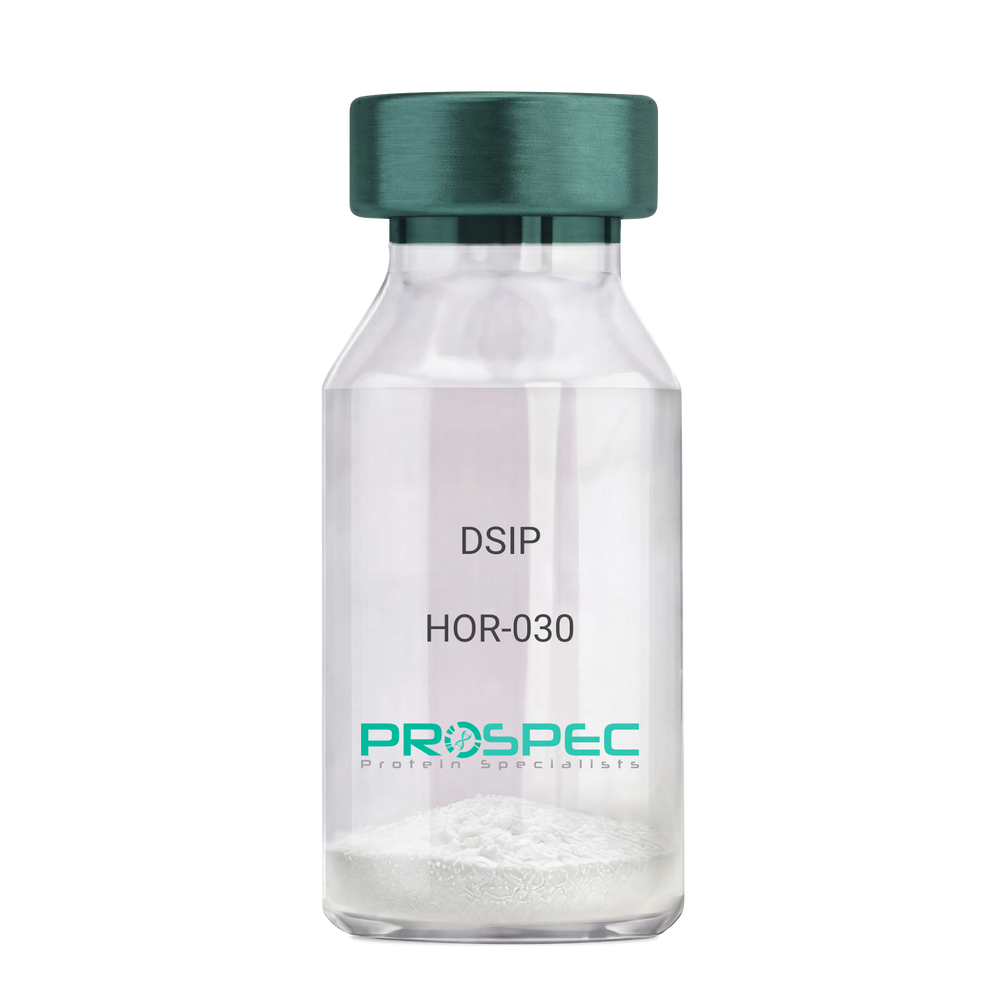
    DSIP

    Description:

    Delta Sleep Inducing Peptide

    Product # :

    HOR-030

    Price :

    Quantity :

    Shipping Method :

    Room Temp Icon

    Shipped at Room temp

    Add To Cart

    More Info

    • description
    • formulation
    • purity
    • More Info
    • Citations

    Description

    DSIP Synthetic is a single, non-glycosylated polypeptide chain containing 15 amino acids, having a molecular mass of 1419.55 Dalton and a Molecular formula of C62H98N16O22.

    Formulation

    The protein was lyophilized with no additives.

    Purity

    Greater than 97.0% as determined by analysis by RP-HPLC.

    Citations

    More Info

    • Physical Appearance

      Sterile Filtered White lyophilized (freeze-dried) powder.

    • Stability

      Lyophilized DSIP although stable at room temperature for 3 weeks, should be stored desiccated below -18°C. Upon reconstitution DSIP should be stored at 4°C between 2-7 days and for future use below -18°C. For long term storage it is recommended to add a carrier protein (0.1% HSA or BSA). Please prevent freeze-thaw cycles.

    • Solubility

      It is recommended to reconstitute the lyophilized DSIP in sterile 18MΩ-cm H2O not less than 100 µg/ml, which can then be further diluted to other aqueous solutions.

    • Amino Acid Sequence

      H-Gly-Glu-Pro-Pro-Pro-Gly-Lys-Pro-Ala-Asp-Asp-Ala-Gly-Leu-Val-OH

    • Background

      Delta Sleep-Inducing Peptide (DSIP), also known as Sleep-Promoting Peptide, is a neuropeptide that has been the subject of extensive research due to its potential role in sleep regulation, stress response, and neuroprotection. This nonapeptide, first isolated from the cerebral venous blood of rabbits during sleep, has been shown to induce slow-wave sleep, modulate pain perception, and exhibit potential antioxidant and immunomodulatory properties.

      DSIP's primary function is its interaction with the sleep regulatory system. By modulating the release of certain neurotransmitters, DSIP can influence sleep patterns, particularly promoting slow-wave sleep, the most restorative stage of sleep. Studies by Kovalzon et al. (2011) have demonstrated that DSIP can enhance sleep quality in rats, suggesting potential applications in sleep disorders and the promotion of healthy sleep patterns.

      In addition to its sleep-inducing effects, DSIP has been shown to possess neuroprotective properties. Research by Zolotarev et al. (2014) found that DSIP could protect neurons from oxidative stress, suggesting potential applications in the treatment of neurodegenerative diseases such as Alzheimer's and Parkinson's disease.

      Given its sleep-inducing and neuroprotective effects, DSIP has been proposed as a potential therapeutic agent for a variety of conditions, including sleep disorders, chronic pain, and neurodegenerative diseases. For instance, a study by Spong et al. (2016) found that DSIP could improve sleep quality in patients with chronic insomnia, indicating its potential as a therapeutic agent in the treatment of sleep disorders.

      While research on DSIP is promising, it is important to note that most studies have been conducted in animals or in vitro. More research is needed to fully understand the potential effects and applications of DSIP in humans. However, the existing body of research suggests that DSIP could be a promising tool in the treatment of sleep disorders, chronic pain, and neurodegenerative diseases.

    ProSpec's products are furnished for LABORATORY RESEARCH USE ONLY. The product may not be used as drugs, agricultural or pesticidal products, food additives or household chemicals.

    Dsip
  • View Data Sheet

    Name :

    TADA3 Human

    Description:

    Transcriptional Adaptor 3 Human Recombinant

    Transcriptional adapter 3, ADA3 homolog, hADA3, STAF54, Transcriptional adapter 3-like, ADA3-like protein, TADA3, ADA3, TADA3L, Transcriptional adapter 3 isoform a, NGG1.

    Product # :

    PRO-1689

    Price :

    Quantity :

    Shipping Method :

    Ice Icon

    Shipped with Ice Packs

    Add To Cart

    More Info

    • description
    • source
    • formulation
    • purity
    • More Info
    • Citations

    Description

    TADA3 Human Recombinant produced in E.coli is a single, non-glycosylated polypeptide chain containing 455 amino acids (1-432) and having a molecular mass of 51.3 kDa.TADA3 is fused to a 23 amino acid His-tag at N-terminus & purified by proprietary chromatographic techniques.

    Source

    Escherichia Coli.

    Formulation

    The TADA3 solution (0.5mg/ml) contains 20mM Tris-HCl buffer (pH 8.0), 0.2M NaCl, 50% glycerol and 2mM DTT.

    Purity

    Greater than 80.0% as determined by SDS-PAGE.

    Citations

    More Info

    • Introduction

      Transcriptional adapter 3 (TATD3) is a subunit of 2 histone acetyltransferase complexes, which functions as a component of the PCAF complex. TATD3 is a transcriptional activator adaptor that is also associates with the tumor suppressor protein p53 and is essential for full activity of p53 and p53-mediated apoptosis.

    • Synonyms

      Transcriptional adapter 3, ADA3 homolog, hADA3, STAF54, Transcriptional adapter 3-like, ADA3-like protein, TADA3, ADA3, TADA3L, Transcriptional adapter 3 isoform a, NGG1.

    • Physical Appearance

      Sterile Filtered colorless solution.

    • Stability

      Store at 4°C if entire vial will be used within 2-4 weeks. Store, frozen at -20°C for longer periods of time. For long term storage it is recommended to add a carrier protein (0.1% HSA or BSA).Avoid multiple freeze-thaw cycles.

    • Amino Acid Sequence

      MGSSHHHHHH SSGLVPRGSH MGSMSELKDC PLQFHDFKSV DHLKVCPRYT AVLARSEDDG IGIEELDTLQ LELETLLSSA SRRLRVLEAE TQILTDWQDK KGDRRFLKLG RDHELGAPPK HGKPKKQKLE GKAGHGPGPG PGRPKSKNLQ PKIQEYEFTD DPIDVPRIPK NDAPNRFWAS VEPYCADITS EEVRTLEELL KPPEDEAEHY KIPPLGKHYS QRWAQEDLLE EQKDGARAAA VADKKKGLMG PLTELDTKDV DALLKKSEAQ HEQPEDGCPF GALTQRLLQA LVEENIISPM EDSPIPDMSG KESGADGAST SPRNQNKPFS VPHTKSLESR IKEELIAQGL LESEDRPAED SEDEVLAELR KRQAELKALS AHNRTKKHDL LRLAKEEVSR QELRQRVRMA DNEVMDAFRK IMAARQKKRT PTKKEKDQAW KTLKERESIL KLLDG.

    ProSpec's products are furnished for LABORATORY RESEARCH USE ONLY. The product may not be used as drugs, agricultural or pesticidal products, food additives or household chemicals.

    Tada3 Human
  • View Data Sheet

    Name :

    GPT Human, His Active

    Description:

    Glutamic-Pyruvate Transaminase, His Tag Active Human Recombinant

    Glutamic-pyruvate transaminase (alanine aminotransferase), GPT1, ALT1, AAT1, Glutamic-alanine transaminase 1, EC 2.6.1.2.

    Product # :

    ENZ-1000

    Price :

    Quantity :

    Shipping Method :

    Ice Icon

    Shipped with Ice Packs

    Add To Cart

    More Info

    • description
    • source
    • formulation
    • purity
    • biological activity
    • More Info
    • Citations

    Description

    GPT Human Recombinant produced in E.coli is a single, non-glycosylated polypeptide chain containing 516 amino acids (1-496) and having a molecular mass of 56.8 kDa.GPT is fused to a 20 amino acid His-tag at N-terminus & purified by proprietary chromatographic techniques.

    Source

    E.coli.

    Formulation

    The GPT solution (0.5mg/ml) contains 20mM Tris-HCl buffer (pH 8.0), 2mM DTT and 20% glycerol.

    Purity

    Greater than 90% as determined by SDS-PAGE.

    Biological Activity

    Specific activity is > 100units/mg, and is defined as the amount of enzyme that cleaves 1umole of L-Alanine to L-Glutamate per minute at pH 7.5 at 37C.

    Citations

    More Info

    • Introduction

      GPT catalyzes the reversible transamination between alanine and 2-oxoglutarate to create pyruvate and glutamate. GPT has a crucial part in the intermediary metabolism of glucose and amino acids. GPT is broadly used as an indicator of liver reliability or hepatocellular destruction in clinical tests.

    • Synonyms

      Glutamic-pyruvate transaminase (alanine aminotransferase), GPT1, ALT1, AAT1, Glutamic-alanine transaminase 1, EC 2.6.1.2.

    • Physical Appearance

      Sterile Filtered colorless solution.

    • Stability

      Store at 4°C if entire vial will be used within 2-4 weeks. Store, frozen at -20°C for longer periods of time. For long term storage it is recommended to add a carrier protein (0.1% HSA or BSA).Avoid multiple freeze-thaw cycles.

    • Amino Acid Sequence

      MGSSHHHHHH SSGLVPRGSH MASSTGDRSQ AVRHGLRAKV LTLDGMNPRV RRVEYAVRGP IVQRALELEQ ELRQGVKKPF TEVIRANIGD AQAMGQRPIT FLRQVLALCV NPDLLSSPNF PDDAKKRAER ILQACGGHSL GAYSVSSGIQ LIREDVARYI ERRDGGIPAD PNNVFLSTGA SDAIVTVLKL LVAGEGHTRT GVLIPIPQYP LYSATLAELG AVQVDYYLDE ERAWALDVAE LHRALGQARD HCRPRALCVI NPGNPTGQVQ TRECIEAVIR FAFEERLFLL ADEVYQDNVY AAGSQFHSFK KVLMEMGPPY AGQQELASFH STSKGYMGEC GFRGGYVEVV NMDAAVQQQM LKLMSVRLCP PVPGQALLDL VVSPPAPTDP SFAQFQAEKQ AVLAELAAKA KLTEQVFNEA PGISCNPVQG AMYSFPRVQL PPRAVERAQE LGLAPDMFFC LRLLEETGIC VVPGSGFGQR EGTYHFRMTI LPPLEKLRLL LEKLSRFHAK FTLEYS

    ProSpec's products are furnished for LABORATORY RESEARCH USE ONLY. The product may not be used as drugs, agricultural or pesticidal products, food additives or household chemicals.

    Gpt Human His Active
  • View Data Sheet

    Name :

    Elcatonin

    Description:

    Elcatonin

    Product # :

    HOR-302

    Price :

    Quantity :

    Shipping Method :

    Room Temp Icon

    Shipped at Room temp

    Add To Cart

    More Info

    • description
    • formulation
    • purity
    • biological activity
    • More Info
    • Citations

    Description

    Elcatonin Synthetic is a single, non-glycosylated polypeptide chain containing 31 amino acids, having a molecular mass of 3363.2 Dalton and a Molecular formula of C148H244N42O47.

    Formulation

    The protein was lyophilized with no additives.

    Purity

    Greater than 93.3% as determined by:
    (a) Analysis by RP-HPLC.
    (b) Analysis by SDS-PAGE.

    Biological Activity

    Biological Activity (based on net peptide) was found to be 6695.2 IU/mg.

    Citations

    More Info

    • Introduction

      Elcatonin is a Calcitonin derivative which is transformed from eel´s calcitonin by changing the S-S bond into the stable C-N bond. It inhibits the absorption and autolysis of bones, thus leads to blood calcium descending. In addition, it inhibits the bone salts dissolving and transferring and promotes the excretion of calcium and phosphorus in urine. Meanwhile, it inhibits renal tubules reabsorbing calcium, phosphorus and sodium and keeps blood calcium at normal level. It is mainly used for remitting or eliminating the pain caused by Osteoporosis.

    • Physical Appearance

      Sterile Filtered White lyophilized (freeze-dried) powder.

    • Stability

      Lyophilized Elcatonin although stable at room temperature for 3 weeks, should be stored desiccated below -18°C. Upon reconstitution Elcatonin should be stored at 4°C between 2-7 days and for future use below -18°C. For long term storage it is recommended to add a carrier protein (0.1% HSA or BSA).Please prevent freeze-thaw cycles.

    • Solubility

      It is recommended to reconstitute the lyophilized Elcatonin in sterile 18MΩ-cm H2O not less than 100 µg/ml, which can then be further diluted to other aqueous solutions.

    • Amino Acid Sequence

      Ser-Asn-Leu-Ser-Thr-Asu-Val-Leu-Gly-Lys-Leu-Ser-Gln-Glu-Leu-His-Lys-Leu-Gln-Thr-Tyr-Pro-Arg-Thr-Asn-Val-Gly-Ala-Gly-Thr-Pro-NH2.

    • Background

      What is the molecular weight/Mw of ELCATONIN Protein?
      ELCATONIN Protein has a total Mw of 3.36kDa.

      What is the Purity of ELCATONIN Protein?
      ELCATONIN Protein is > 93.3% pure as determined by SDS-PAGE.

      What is the Biological Activity of ELCATONIN Protein?
      Biological Activity (based on net peptide) was found to be 6695.2 IU/mg.

      What is the amino acid sequence of ELCATONIN Protein?
      Ser-Asn-Leu-Ser-Thr-Asu-Val-Leu-Gly-Lys-Leu-Ser-Gln-Glu-Leu-His-Lys-Leu-Gln-Thr-Tyr-Pro-Arg-Thr-Asn-Val-Gly-Ala-Gly-Thr-Pro-NH2.

      What applications can ELCATONIN Protein be used in?
      ELCATONIN Protein can probably be used in western blot, ELISA and Lateral Flow.

      What is the endotoxin level for ELCATONIN Protein?
      The endotoxin level is minimal, ELCATONIN Protein was purified using conventional chromatography techniques.

      Who supplies ELCATONIN that is in stock and available to order?
      ProSpec has the protein in stock and available for immediate delivery.

      Where can I order bulk mg quantities of ELCATONIN?
      ProSpec supplies bulk mg quantities at affordable prices that meets research and academic budgets.

    ProSpec's products are furnished for LABORATORY RESEARCH USE ONLY. The product may not be used as drugs, agricultural or pesticidal products, food additives or household chemicals.

    Elcatonin
  • 1
  • …
  • 19
  • 20
  • 21
  • 22
  • 23
  • …
  • 42
Your browser does not support the video tag.

Products

  • Cytokines
  • Growth Factors
  • Chemokines
  • CD Antigens
  • Neurotrophins
  • Hormones
  • Enzymes
  • Viral Antigens
  • Recombinant Proteins
  • Natural Proteins
  • Monoclonal Antibodies
  • Polyclonal Antibodies
  • Thermal Packaging

About

  • Company
  • Founder
  • Contribution
  • Contact Us
  • My Account

Ordering

  • Ordering Method
  • Ordering - Credit Card
  • Ordering PO
  • Shipping Fees
  • FAQ's

Legal

  • Terms & Conditions
  • Privacy
  • Site Map
  • info@prospecbio.com
  • Facebook
  • Instagram
  • Linkedin Profile

© 2026 ProSpec-Tany TechnoGene Ltd. All Rights Reserved.

  • Choosing a selection results in a full page refresh.
  • Opens in a new window.