Search results
1000 results found for “Bromodomain Containing”
Name
Description
Product #
Price
Quantity
Shipping Method
- View Data Sheet
Name :
AOC1 HumanDescription:
Amine Oxidase Copper Containing 1 Human Recombinant
Amiloride-sensitive amine oxidase (copper-containing), DAO, Diamine oxidase, Amiloride-binding protein 1, Amine oxidase copper domain-containing protein 1, Histaminase, Kidney amine oxidase, KAO, ABP, ABP1, DAO1
Product # :
PRO-2657Price :
Quantity :
Shipping Method :
Shipped with Ice Packs
More Info
- description
- source
- formulation
- purity
- More Info
Description
AOC1 Human Recombinant produced in HEK cells is a single, glycosylated, polypeptide chain (20-751 a.a) containing a total of 738 amino acids, having a molecular mass of 84.2kDa. AOC1 is fused to a 6 amino acid His-tag at C-terminus,and is purified by proprietary chromatographic techniques.
Source
HEK293 Cells.
Formulation
The AOC1 solution (0.25mg/ml) contains 10% Glycerol and Phosphate-Buffered Saline (pH 7.4).
Purity
Greater than 90.0% as determined by SDS-PAGE.
More Info
-
Introduction
Amine Oxidase Copper Containing 1 or AOC1 is n enzyme, part of the copper-containing amine oxidase group of proteins. AOC1 is responsible for oxidation of many different biogenic amines, such as neurotransmitters, xenobiotic amines & histamine. Dietary histamine intolerance and histaminosis can be caused from AOC1 deficiencies. This enzyme can also cause Tumor Progression by AKT & EMT transduction promotion in stomach cancer.
-
Synonyms
Amiloride-sensitive amine oxidase (copper-containing), DAO, Diamine oxidase, Amiloride-binding protein 1, Amine oxidase copper domain-containing protein 1, Histaminase, Kidney amine oxidase, KAO, ABP, ABP1, DAO1
-
Physical Appearance
Sterile Filtered colorless solution.
-
Stability
Store at 4°C if entire vial will be used within 2-4 weeks. Store, frozen at -20°C for longer periods of time. For long term storage it is recommended to add a carrier protein (0.1% HSA or BSA).Avoid multiple freeze-thaw cycles.
-
Amino Acid Sequence
EPSPGTLPRK AGVFSDLSNQ ELKAVHSFLW SKKELRLQPS STTTMAKNTV FLIEMLLPKK YHVLRFLDKG ERHPVREARA VIFFGDQEHP NVTEFAVGPL PGPCYMRALS PRPGYQSSWA SRPISTAEYA LLYHTLQEAT KPLHQFFLNT TGFSFQDCHD RCLAFTDVAP RGVASGQRRS WLIIQRYVEG YFLHPTGLEL LVDHGSTDAG HWAVEQVWYN GKFYGSPEEL ARKYADGEVD VVVLEDPLPG GKGHDSTEEP PLFSSHKPRG DFPSPIHVSG PRLVQPHGPR FRLEGNAVLY GGWSFAFRLR SSSGLQVLNV HFGGERIAYE VSVQEAVALY GGHTPAGMQT KYLDVGWGLG SVTHELAPGI DCPETATFLD TFHYYDADDP VHYPRALCLF EMPTGVPLRR HFNSNFKGGF NFYAGLKGQV LVLRTTSTVY NYDYIWDFIF YPNGVMEAKM HATGYVHATF YTPEGLRHGT RLHTHLIGNI HTHLVHYRVD LDVAGTKNSF QTLQMKLENI TNPWSPRHRV VQPTLEQTQY SWERQAAFRF KRKLPKYLLF TSPQENPWGH KRTYRLQIHS MADQVLPPGW QEEQAITWAR YPLAVTKYRE SELCSSSIYH QNDPWHPPVV FEQFLHNNEN IENEDLVAWV TVGFLHIPHS EDIPNTATPG NSVGFLLRPF NFFPEDPSLA SRDTVIVWPR DNGPNYVQRW IPEDRDCSMP PPFSYNGTYR PVHHHHHH
ProSpec's products are furnished for LABORATORY RESEARCH USE ONLY. The product may not be used as drugs, agricultural or pesticidal products, food additives or household chemicals.
- View Data Sheet
Name :
IMPAD1 MouseDescription:
Inositol Monophosphatase Domain Containing 1 Mouse Recombinant
Inositol monophosphatase 3, IMP 3, IMPase 3, Golgi 3-prime phosphoadenosine 5-prime phosphate 3-prime phosphatase, Golgi-resident PAP phosphatase, gPAPP, Inositol monophosphatase domain-containing protein 1, Inositol-1(or 4)-monophosphatase 3 Myo-inositol monophosphatase A3, Impad1, Impa3.
Product # :
PRO-2314Price :
Quantity :
Shipping Method :
Shipped with Ice Packs
More Info
- description
- source
- formulation
- purity
- More Info
Description
IMPAD1 produced in Sf9 Insect cells is a single, glycosylated polypeptide chain containing 332 amino acids (34-356aa) and having a molecular mass of 36.2kDa (Molecular size on SDS-PAGE will appear at approximately 28-40kDa).IMPAD1 is expressed with a 6 amino acid His tag at C-Terminus and purified by proprietary chromatographic techniques.
Source
Sf9 Insect cells.
Formulation
IMPAD1 protein solution (0.5mg/ml) contains Phosphate Buffered Saline (pH 7.4) and 10% glycerol.
Purity
Greater than 95.0% as determined by SDS-PAGE.
More Info
-
Introduction
Inositol monophosphatase 3 (IMPAD1) belongs to the inositol monophosphatase family. IMPAD1 is restricted to the Golgi apparatus and catalyzes the hydrolysis of phosphoadenosine phosphate (PAP) to adenosine monophosphate (AMP). IMPAD1 gene mutations cause the GRAPP type chondrodysplasia with joint dislocations, and a pseudogene of the IMPAD1 gene is located on the long arm of chromosome 1.
-
Synonyms
Inositol monophosphatase 3, IMP 3, IMPase 3, Golgi 3-prime phosphoadenosine 5-prime phosphate 3-prime phosphatase, Golgi-resident PAP phosphatase, gPAPP, Inositol monophosphatase domain-containing protein 1, Inositol-1(or 4)-monophosphatase 3 Myo-inositol monophosphatase A3, Impad1, Impa3.
-
Physical Appearance
Sterile Filtered colorless solution.
-
Stability
Store at 4°C if entire vial will be used within 2-4 weeks. Store, frozen at -20°C for longer periods of time. For long term storage it is recommended to add a carrier protein (0.1% HSA or BSA).Avoid multiple freeze-thaw cycles.
-
Amino Acid Sequence
ADPGRFSLFG LGSEPAAGEA EVASDGGTVD LREMLAVAVL AAERGGDEVR RVRESNVLHE KSKGKTREGA DDKMTSGDVL SNRKMFYLLK TAFPNVQINT EEHVDASDKE VIVWNRKIPE DILKEIAAPK EVPAESVTVW IDPLDATQEY TEDLRKYVTT MVCVAVNGKP VLGVIHKPFS EYTAWAMVDG GSNVKARSSY NEKTPKIIVS RSHAGMVKQV ALQTFGNQTS IIPAGGAGYK VLALLDVPDM TQEKADLYIH VTYIKKWDIC AGNAILKALG GHMTTLNGEE ISYTGSDGIE GGLLASIRMN HQALVRKLPD LEKSGHHHHH HH.
ProSpec's products are furnished for LABORATORY RESEARCH USE ONLY. The product may not be used as drugs, agricultural or pesticidal products, food additives or household chemicals.
- View Data Sheet
Description:
B-Cell Leukemia/Lymphoma 2 Human Recombinant (–NWGR)
Apoptosis regulator Bcl-2, BCL2, B-cell CLL/lymphoma 2, Bcl-2.
Product # :
PRO-634Price :
Quantity :
Shipping Method :
Shipped at Room temp
More Info
- description
- source
- formulation
- purity
- More Info
Description
Bcl-2 Des NWGR domain (143-146 residues) Human Recombinant produced in E.Coli is a single, non-glycosylated polypeptide chain containing 214 amino acids 1-142 and 147-218.The Bcl-2 is expressed as His-Tag fusion protein and purified by proprietary chromatographic techniques.
Source
Escherichia Coli.
Formulation
The protein contains 10mM Tris-HCL pH-8, 1mM EDTA and 250mM NaCl.
Purity
Greater than 95.0% as determined by(a) Analysis by RP-HPLC.
(b) Analysis by SDS-PAGE.More Info
-
Introduction
BCL2 gene encodes an integral outer mitochondrial membrane protein that blocks the apoptotic death of some cells such as lymphocytes. Constitutive expression of BCL2, such as in the case of translocation of BCL2 to Ig heavy chain locus, is thought to be the cause of follicular lymphoma. Two transcript variants, produced by alternate splicing, differ in their C-terminal ends.
-
Synonyms
Apoptosis regulator Bcl-2, BCL2, B-cell CLL/lymphoma 2, Bcl-2.
-
Physical Appearance
Sterile Filtered White lyophilized (freeze-dried) powder.
-
Stability
Lyophilized Bcl-2 although stable at room temperature for 3 weeks, should be stored desiccated below -18°C. Upon reconstitution Bcl-2 should be stored at 4°C between 2-7 days and for future use below -18°C.For long term storage it is recommended to add a carrier protein (0.1% HSA or BSA).Please prevent freeze-thaw cycles.
-
Solubility
Suspend Bcl-2 in 100?l of 0.5M Acetic acid, over night at 4°C.
Dilute 10 fold into selected buffer system.
BCL-2 has tendency to form intramolecular disulfide bond, 5mM DTT is recommended in assay buffer. When running SDS-PAGE gel, 10mM DTT is recommended. -
Applications
Input marker or positive control (Western Blotting).
Function study.
ProSpec's products are furnished for LABORATORY RESEARCH USE ONLY. The product may not be used as drugs, agricultural or pesticidal products, food additives or household chemicals.
- View Data Sheet
Name :
COPS8 HumanDescription:
COP9 Constitutive Photomorphogenic 8 Human Recombinant
COP9 signalosome complex subunit 8, SGN8, Signalosome subunit 8, COP9 homolog, hCOP9, JAB1-containing signalosome subunit 8, COPS8, CSN8, COP9.
Product # :
PRO-983Price :
Quantity :
Shipping Method :
Shipped with Ice Packs
More Info
- description
- source
- formulation
- purity
- More Info
Description
COPS8 Human Recombinant produced in E.coli is a single, non-glycosylated polypeptide chain containing 229 amino acids (1-209) and having a molecular mass of 25.3kDa.COPS8 is fused to a 20 amino acid His-tag at N-terminus & purified by proprietary chromatographic techniques.
Source
Escherichia Coli.
Formulation
The COPS8 solution (1mg/ml) contains 20mM Tris-HCl buffer (pH 8.0), 0.4M Urea and 10% glycerol.
Purity
Greater than 90.0% as determined by SDS-PAGE.
More Info
-
Introduction
COP9 signalosome complex subunit 8 isoform 1 (COPS8) is one of the 8 subunits of COP9 signalosome, which is a much conserved protein complex that functions as an imperative regulator in multiple signaling pathways. The structure and function of COP9 signalosome is analogous to that of the 19S regulatory particle of 26S proteasome. COP9 signalosome interacts with SCF-type E3 ubiquitin ligases and acts as a positive regulator of E3 ubiquitin ligases.
-
Synonyms
COP9 signalosome complex subunit 8, SGN8, Signalosome subunit 8, COP9 homolog, hCOP9, JAB1-containing signalosome subunit 8, COPS8, CSN8, COP9.
-
Physical Appearance
Sterile Filtered colorless solution.
-
Stability
Store at 4°C if entire vial will be used within 2-4 weeks. Store, frozen at -20°C for longer periods of time. For long term storage it is recommended to add a carrier protein (0.1% HSA or BSA).Avoid multiple freeze-thaw cycles.
-
Amino Acid Sequence
MGSSHHHHHH SSGLVPRGSH MPVAVMAESA FSFKKLLDQC ENQELEAPGG IATPPVYGQL LALYLLHNDM NNARYLWKRI PPAIKSANSE LGGIWSVGQR IWQRDFPGIY TTINAHQWSE TVQPIMEALR DATRRRAFAL VSQAYTSIIA DDFAAFVGLP VEEAVKGILE QGWQADSTTR
MVLPRKPVAG ALDVSFNKFI PLSEPAPVPP IPNEQQLARL TDYVAFLEN.
ProSpec's products are furnished for LABORATORY RESEARCH USE ONLY. The product may not be used as drugs, agricultural or pesticidal products, food additives or household chemicals.
- View Data Sheet
Name :
AES HumanDescription:
Amino-Terminal Enhancer of Split Human Recombinant
Amino-terminal enhancer of split, Amino enhancer of split, Gp130-associated protein, GAM, Protein ESP1, Protein GRG, AES, GRG, ESP1, GRG5, TLE5, AES-1, AES-2.
Product # :
PRO-169Price :
Quantity :
Shipping Method :
Shipped with Ice Packs
More Info
- description
- source
- formulation
- purity
- More Info
Description
AES Human Recombinant fused with a 20 amino acid His tag at N-terminus produced in E.Coli is a single, non-glycosylated, polypeptide chain containing 217 amino acids (1-197 a.a.) and having a molecular mass of 24.1kDa. The AES is purified by proprietary chromatographic techniques.
Source
Escherichia Coli.
Formulation
The AES solution (1 mg/ml) contains 20mM Tris-HCl buffer (pH 8.0), 1mM DTT and 20% glycerol.
Purity
Greater than 95.0% as determined by SDS-PAGE.
More Info
-
Introduction
Amino-terminal enhancer of split (AES) is a member of the groucho/TLE family of proteins. AES can function as a homooligomer or as a heteroologimer with other family members in order to forcefully repress the expression of other family member genes. Furthermore, AES can repress NFkB-regulated gene expression and is believed to have a significant role in initiating and maintaining cell differentiation events. AES is similar in sequence to the amino terminus of Drosophila enhancer of split groucho, a protein which is involved in neurogenesis during embryonic development. The AES protein is expressed predominately in the fetal brain, liver, lung, heart and kidney and also in the adult muscle.
-
Synonyms
Amino-terminal enhancer of split, Amino enhancer of split, Gp130-associated protein, GAM, Protein ESP1, Protein GRG, AES, GRG, ESP1, GRG5, TLE5, AES-1, AES-2.
-
Physical Appearance
Sterile Filtered colorless solution.
-
Stability
Store at 4°C if entire vial will be used within 2-4 weeks. Store, frozen at -20°C for longer periods of time. For long term storage it is recommended to add a carrier protein (0.1% HSA or BSA).Avoid multiple freeze-thaw cycles.
-
Amino Acid Sequence
MGSSHHHHHH SSGLVPRGSH MMFPQSRHSG SSHLPQQLKF TTSDSCDRIK DEFQLLQAQY HSLKLECDKL ASEKSEMQRH YVMYYEMSYG LNIEMHKQAE IVKRLNGICA QVLPYLSQEH QQQVLGAIER AKQVTAPELN SIIRQQLQAH QLSQLQALAL PLTPLPVGLQ PPSLPAVSAG TGLLSLSALG SQAHLSKEDK NGHDGDTHQE DDGEKSD.
ProSpec's products are furnished for LABORATORY RESEARCH USE ONLY. The product may not be used as drugs, agricultural or pesticidal products, food additives or household chemicals.
- View Data Sheet
Name :
SMCP HumanDescription:
Sperm Mitochondria-Associated Cysteine-Rich Protein Human Recombinant
Sperm Mitochondria-Associated Cysteine-Rich Protein, MCSP, MCS, Mitochondrial Capsule Selenoprotein, HSMCSGEN1, Sperm Mitochondrial-Associated Cysteine-Rich Protein.
Product # :
PRO-1719Price :
Quantity :
Shipping Method :
Shipped with Ice Packs
More Info
- description
- source
- formulation
- purity
- More Info
Description
SMCP Human Recombinant produced in E.Coli is a single, non-glycosylated polypeptide chain containing 139 amino acids (1-116 a.a) and having a molecular mass of 15.2kDa (Molecular size on SDS-PAGE will appear higher). SMCP is fused to a 23 amino acid His-tag at N-terminus & purified by proprietary chromatographic techniques.
Source
Escherichia Coli.
Formulation
SMCP protein solution (0.5mg/ml) containing 20mM Tris-HCl buffer (pH 8.0), 0.15M NaCl, 20% glycerol, 1mM EDTA and 0.1mM PMSF.
Purity
Greater than 85.0% as determined by SDS-PAGE.
More Info
-
Introduction
SMCP is a protein-coding gene. SMCP localizes to the capsule linked with the mitochondrial outer membranes and assumed to function in the organization and stabilization of the helical structure of the sperm's mitochondrial sheath. Sperm mitochondria vary in morphology and subcellular localization from those of somatic cells. They are elongated, flattened, and arranged circumferentially construct a helical coiled sheath in the midpiece of the sperm flagellum. Diseases associated with SMCP include middle ear disease, and hard palate cancer.
-
Synonyms
Sperm Mitochondria-Associated Cysteine-Rich Protein, MCSP, MCS, Mitochondrial Capsule Selenoprotein, HSMCSGEN1, Sperm Mitochondrial-Associated Cysteine-Rich Protein.
-
Physical Appearance
Sterile Filtered clear solution.
-
Stability
Store at 4°C if entire vial will be used within 2-4 weeks. Store, frozen at -20°C for longer periods of time. For long term storage it is recommended to add a carrier protein (0.1% HSA or BSA).Avoid multiple freeze-thaw cycles.
-
Amino Acid Sequence
MGSSHHHHHH SSGLVPRGSH MGSMCDQTKH SKCCPAKGNQ CCPPQQNQCC QSKGNQCCPP KQNQCCQPKG SQCCPPKHNH CCQPKPPCCI QARCCGLETK PEVSPLNMES EPNSPQTQDK GCQTQQQPHS PQNESRPSK.
ProSpec's products are furnished for LABORATORY RESEARCH USE ONLY. The product may not be used as drugs, agricultural or pesticidal products, food additives or household chemicals.
- View Data Sheet
Name :
ECSIT HumanDescription:
ECSIT homolog Human Recombinant
ECSIT Homolog (Drosophila), Evolutionarily Conserved Signaling Intermediate In Toll Pathway Mitochondrial, Likely Ortholog Of Mouse Signaling Intermediate In Toll Pathway Evolutionarily Conserved, Protein SITPEC.
Product # :
PRO-1241Price :
Quantity :
Shipping Method :
Shipped with Ice Packs
More Info
- description
- source
- formulation
- purity
- More Info
Description
ECSIT Human Recombinant produced in E. coli is a single polypeptide chain containing 222 amino acids (19-217) and having a molecular mass of 24.6 kDa.ECSIT is fused to a 23 amino acid His-tag at N-terminus & purified by proprietary chromatographic techniques.
Source
E.coli.
Formulation
The ECSIT solution contains 20mM Tris-HCl buffer (pH 8.0), 0.1M NaCl, 1mM DTT and 10% glycerol.
Purity
Greater than 90% as determined by SDS-PAGE.
More Info
-
Introduction
ECSIT homolog (ECSIT) is a ubiquitously expressed protein which has a vital role as an adaptor protein in the cytosolic signal transduction cascade events triggered by Toll receptor activation. ECSIT promotes proteolytic activation of MAP3K1. ECSIT is also involved in the BMP signaling pathway. ECSIT is essential for normal embryonic development. ECSIT was originally classified as a cytoplasmic protein interacting specifically with TNF receptor associated factor (TRAF)-6 in the TLR pathway. ECSIT gene knockdown results in gravely impaired complex I assembly and disrupted mitochondrial function.
-
Synonyms
ECSIT Homolog (Drosophila), Evolutionarily Conserved Signaling Intermediate In Toll Pathway Mitochondrial, Likely Ortholog Of Mouse Signaling Intermediate In Toll Pathway Evolutionarily Conserved, Protein SITPEC.
-
Physical Appearance
Sterile Filtered colorless solution.
-
Stability
Store at 4°C if entire vial will be used within 2-4 weeks. Store, frozen at -20°C for longer periods of time. For long term storage it is recommended to add a carrier protein (0.1% HSA or BSA).Avoid multiple freeze-thaw cycles.
-
Amino Acid Sequence
MGSSHHHHHH SSGLVPRGSH MGSGTCGAAL TGTSISQVPL PKDSTGAADP PQPHIVGIQS PDQQAALARH NPARPVFVEG PFSLWLRNKC VYYHILRADL LPPEEREVEE TPEEWNLYYP MQLDLEYVRS GWDNYEFDIN EVEEGPVFAM CMAGAHDQAT MAKWIQGLQE TNPTLAQIPV VFRLAGSTRE LQTSSAGLEE PPLPEDHQEE DDNLQRQQQG QS
ProSpec's products are furnished for LABORATORY RESEARCH USE ONLY. The product may not be used as drugs, agricultural or pesticidal products, food additives or household chemicals.
- View Data Sheet
Name :
AURKA HumanDescription:
Aurora Kinase A Human Recombinant
Serine/threonine-protein kinase 6, Aurora kinase A, Serine/threonine kinase 15, Aurora/IPL1-related kinase 1, Breast tumor-amplified kinase, Aurora-A, Aurora-related kinase 1, hARK1, AURKA, AIK, ARK1, AURA, BTAK, STK15, STK6, STK7, STK15, AURORA2, MGC34538.
Product # :
PKA-350Price :
Quantity :
Shipping Method :
Shipped with Ice Packs
More Info
- description
- source
- formulation
- purity
- More Info
Description
AURKA Human Recombinant produced in E.Coli is a single, non-glycosylated, polypeptide chain containing 423 amino acids (1-403) and having a molecular mass of 47.9kDa. AURKA is fused to 20 a.a. His-Tag at N-terminus and purified by proprietary chromatographic techniques.
Source
Escherichia Coli.
Formulation
The AURKA solution containing 20mM Tris-HCl buffer (pH 8.0), 0.5mM DTT, 100mM NaCl, 0.1mM EDTA, 0.1mM EGTA, 0.1mM PMSF and 20% glycerol.
Purity
Greater than 95.0% as determined by SDS-PAGE.
More Info
-
Introduction
AURKA (Aurora Kinase A) belongs to the mitotic serine/threonine kinases family. AURKA is a cell cycle-regulated kinase which may be involved in microtubule formation and/or stabilization at the spindle pole during chromosome segregation. AURKA is found at the centrosome in interphase cells and at the spindle poles in mitosis. Since the AURKA expression is cell-cycle regulated, it is low in G1/S, it accumulates during G2/M, and it decreases rapidly after. AURKA is involved in important processes during mitosis and meiosis whose proper function is essential for healthy cell proliferation. In addition, AURKA plays an essential role in tumourigenesis and is overexpressed in various types of cancers. AURKA is strongly expressed in the testis, colon, ovarian, prostate, neuroblastoma, breast and cervical cancer cell lines and weakly in skeletal muscle, thymus and spleen. AURKA interacts with its substrates BORA and ARHGEF2, as well as with TACC1 and CPEB1.
Defects in the AURKA gene cause numerical centrosome aberrations including aneuploidy. AURKA overexpression has been linked to chromosomal instability in colorectal cancer. AURKA expression may have a prognostic significance in ovarian carcinoma. -
Synonyms
Serine/threonine-protein kinase 6, Aurora kinase A, Serine/threonine kinase 15, Aurora/IPL1-related kinase 1, Breast tumor-amplified kinase, Aurora-A, Aurora-related kinase 1, hARK1, AURKA, AIK, ARK1, AURA, BTAK, STK15, STK6, STK7, STK15, AURORA2, MGC34538.
-
Physical Appearance
Sterile filtered colorless solution.
-
Stability
AURKA although stable at 4°C for 1 week, should be stored below -18°C. For long term storage it is recommended to add a carrier protein (0.1% HSA or BSA).Please prevent freeze thaw cycles.
-
Amino Acid Sequence
MGSSHHHHHH SSGLVPRGSH MDRSKENCIS GPVKATAPVG GPKRVLVTQQ FPCQNPLPVN SGQAQRVLCP SNSSQRIPLQ AQKLVSSHKP VQNQKQKQLQ ATSVPHPVSR PLNNTQKSKQ PLPSAPENNP EEELASKQKN EESKKRQWAL EDFEIGRPLG KGKFGNVYLA REKQSKFILALKVLFKAQLE KAGVEHQLRR EVEIQSHLRH PNILRLYGYF HDATRVYLIL EYAPLGTVYR ELQKLSKFDE QRTATYITEL ANALSYCHSK RVIHRDIKPE NLLLGSAGEL KIADFGWSVH APSSRRTTLC GTLDYLPPEM IEGRMHDEKV DLWSLGVLCY EFLVGKPPFE ANTYQETYKRISRVEFTFPD FVTEGARDLI SRLLKHNPSQ RPMLREVLEH PWITANSSKP SNCQNKESAS KQS.
ProSpec's products are furnished for LABORATORY RESEARCH USE ONLY. The product may not be used as drugs, agricultural or pesticidal products, food additives or household chemicals.
- View Data Sheet
Name :
PSMG2 HumanDescription:
Proteasome Assembly Chaperone 2 Human Recombinant
Proteasome assembly chaperone 2, PAC-2, Hepatocellular carcinoma-susceptibility protein 3, Tumor necrosis factor superfamily member 5-induced protein 1, PSMG2, HCCA3, PAC2, TNFSF5IP1, CLAST3, MDS003, HsT1707, MGC15092.
Product # :
PRO-930Price :
Quantity :
Shipping Method :
Shipped with Ice Packs
More Info
- description
- source
- formulation
- purity
- More Info
Description
PSMG2 Human Recombinant produced in E.Coli is a single, non-glycosylated polypeptide chain containing 287 amino acids (1-264 a.a.) and having a molecular mass of 31.8kDa.PSMG2 is fused to a 23 amino acid His-tag at N-terminus & purified by proprietary chromatographic techniques.
Source
Escherichia Coli.
Formulation
PSMG2 protein solution (0.25mg/ml) containing 20mM Tris-HCl buffer (pH8.0), 40% glycerol and 0.1M NaCl.
Purity
Greater than 90.0% as determined by SDS-PAGE.
More Info
-
Introduction
Proteasome assembly chaperone 2 (PSMG2) stimulates assembly of the 20S proteasome as part of a heterodimer with PSMG1. The PSMG1-PSMG2 heterodimer binds to the PSMA5 and PSMA7 proteasome subunits and promotes compilation of the proteasome alpha subunits into the heteroheptameric alpha ring and prevents alpha ring dimerization. PSMG2 is widely expressed with highest levels in the lung, brain and colon. It is moderately expressed in the muscle, stomach, spleen and heart, and weakly expressed in the small intestine, pancreas and liver. It is also highly expressed in hepatocellular carcinomas with low levels in surrounding liver tissue.
-
Synonyms
Proteasome assembly chaperone 2, PAC-2, Hepatocellular carcinoma-susceptibility protein 3, Tumor necrosis factor superfamily member 5-induced protein 1, PSMG2, HCCA3, PAC2, TNFSF5IP1, CLAST3, MDS003, HsT1707, MGC15092.
-
Physical Appearance
Sterile Filtered colorless solution.
-
Stability
Store at 4°C if entire vial will be used within 2-4 weeks. Store, frozen at -20°C for longer periods of time. For long term storage it is recommended to add a carrier protein (0.1% HSA or BSA).Avoid multiple freeze-thaw cycles.
-
Amino Acid Sequence
MGSSHHHHHH SSGLVPRGSH MGSMFVPCGE SAPDLAGFTL LMPAVSVGNV GQLAMDLIIS TLNMSKIGYF YTDCLVPMVG NNPYATTEGN STELSINAEV YSLPSRKLVA LQLRSIFIKY KSKPFCEKLL SWVKSSGCAR VIVLSSSHSY QRNDLQLRST PFRYLLTPSM QKSVQNKIKS LNWEEMEKSR CIPEIDDSEF CIRIPGGGIT KTLYDESCSK EIQMAVLLKF VSEGDNIPDA LGLVEYLNEW LQILKPLSDD PTVSASRWKI PSSWRLLFGS GLPPALF.
ProSpec's products are furnished for LABORATORY RESEARCH USE ONLY. The product may not be used as drugs, agricultural or pesticidal products, food additives or household chemicals.
- View Data Sheet
Name :
RAB1A HumanDescription:
RAB1A, Member RAS Oncogene Family Recombinant Human
RAB1A member RAS oncogene family, YPT1-related protein, DKFZp564B163, GTP binding protein Rab1a, Rab GTPase YPT1 homolog.
Product # :
PRO-097Price :
Quantity :
Shipping Method :
Shipped with Ice Packs
More Info
- description
- source
- formulation
- purity
- More Info
Description
RAB1A produced in E.Coli is a single, non-glycosylated polypeptide chain containing 225 amino acids (1-205.a.a) and having a molecular mass of 24.8kDa. RAB1A is fused to a 20 amino acid His-tag at N-terminus & purified by proprietary chromatographic techniques.
Source
Escherichia Coli.
Formulation
The RAB1A protein solution (0.5mg/1ml) is formulated in 20 mM Tris-HCl buffer (pH8.0), 0.1M NaCl, 1mM DTT and 20% glycerol.
Purity
Greater than 95% as determined by SDS-PAGE.
More Info
-
Introduction
RAB1A belongs to the ras-related superfamily. Rab proteins have a central part in either in endocytosis or in biosynthetic protein transport. Rab1a protein controls vesicle traffic from the endoplasmic reticulum to the Golgi apparatus.
-
Synonyms
RAB1A member RAS oncogene family, YPT1-related protein, DKFZp564B163, GTP binding protein Rab1a, Rab GTPase YPT1 homolog.
-
Physical Appearance
Sterile Filtered clear solution.
-
Stability
Store at 4°C if entire vial will be used within 2-4 weeks. Store, frozen at -20°C for longer periods of time.Please avoid freeze thaw cycles.
-
Amino Acid Sequence
MGSSHHHHHH SSGLVPRGSH MSSMNPEYDY LFKLLLIGDS GVGKSCLLLR FADDTYTESY ISTIGVDFKI RTIELDGKTI KLQIWDTAGQ ERFRTITSSY YRGAHGIIVV YDVTDQESFN NVKQWLQEID RYASENVNKL LVGNKCDLTT KKVVDYTTAK EFADSLGIPF LETSAKNATN VEQSFMTMAA EIKKRMGPGA TAGGAEKSNV KIQSTPVKQS GGGCC
ProSpec's products are furnished for LABORATORY RESEARCH USE ONLY. The product may not be used as drugs, agricultural or pesticidal products, food additives or household chemicals.
- View Data Sheet
Name :
REG1B HumanDescription:
Regenerating Islet-Derived 1 Beta Human Recombinant
Lithostathine-1-beta, Regenerating protein I beta, REG1B, REGL.
Product # :
PRO-391Price :
Quantity :
Shipping Method :
Shipped at Room temp
More Info
- description
- source
- formulation
- purity
- More Info
Description
The Recombinant Human REG 1 beta manufactured with N-terminal fusion of His Tag. The Human REG 1 beta His-Tagged Fusion Protein, produced in E. coli, is 17.8 kDa protein containing 144 amino acid residues of the Human REG 1 beta and 12 additional amino acid residues – His Tag (underlined).
Source
Escherichia Coli.
Formulation
Filtered (0.4µm) and lyophilized from 0.5 mg/ml in 20mM Tris, pH 8.0.
Purity
Greater than 95% as determined by SDS-PAGE.
More Info
-
Introduction
Reg protein was shown to be stimulated during the regeneration of pancreatic islets. Since then, many Reg-related proteins have been identified in humans and other animals. In human, the four REG family genes, i.e., REG 1 alpha, REG 1 beta, REG-related sequence (RS) and HIP/PAP, have so far been isolated. These Reg-related proteins are classified into four subfamilies according to their amino-acid sequences, but they share a similar structure and physiological function. Reg protein is a growth factor for pancreatic beta cells and also suggests that the administration of Reg protein could be used as another therapeutic approach for diabetes mellitus. Human REG cDNA which encodes a 166-amino acid protein with a 22-amino acid signal peptide. The amino acid sequence of human REG protein has 68% homology to that of rat Reg protein.
Reg I was found to be expressed mainly in pancreatic beta and acinoductular cells as well as gastric fundic enterochromaffin-like (ECL) cells. Reg I production in ECL cells is stimulated by gastrin, as well as by the proinflammatory cytokine, cytokine-induced neutrophil chemoattractant (CINC)-2Beta. In patients with chronic hypergastrinemia, Reg production is stimulated, with the increased proliferation of gastric mucosal cells. Patients with Helicobacter pylori infection also showed increased Reg production in the gastric mucosa, partly via increased plasma gastrin concentration and partly via increased proinflammatory cytokine production. The serum concentration of the reg-protein was significantly higher in patients with various pancreatic diseases than in normal controls, and was also significantly higher in patients with acute pancreatitis or chronic relapsing pancreatitis than in patients with chronic pancreatitis. Furthermore, the serum PSP/reg-protein concentration was also significantly increased in liver cirrhosis, choledocholithiasis, and various cancers of the digestive system. -
Synonyms
Lithostathine-1-beta, Regenerating protein I beta, REG1B, REGL.
-
Physical Appearance
Filtered White lyophilized (freeze-dried) powder.
-
Stability
Store lyophilized protein at -20°C. Aliquot the product after reconstitution to avoid repeated freezing/thawing cycles. Reconstituted protein can be stored at 4°C for a limited period of time; it does not show any change after two weeks at 4°C.
-
Solubility
It is recommended to add deionized water to a working concentration approximately 0.5 mg/ml and let the lyophilized pellet dissolve completely. Product is not sterile! Please filter the product by appropriate sterile filter before using it in the cell culture.
-
Amino Acid Sequence
MKHHHHHHAS HMQESQTELP NPRISCPEGT NAYRSYCYYF NEDPETWVDA DLYCQNMNSG NLVSVLTQAE GAFVASLIKE SSTDDSNVWI GLHDPKKNRR WHWSSGSLVS YKSWDTGSPS SANAGYCASL TSCSGFKKWK DESCEKKFSF VCKFKN.
ProSpec's products are furnished for LABORATORY RESEARCH USE ONLY. The product may not be used as drugs, agricultural or pesticidal products, food additives or household chemicals.
- View Data Sheet
Name :
EPCAM Human, sf9Description:
Epithelial Cell Adhesion Molecule Human Recombinant, Sf9
Epithelial Cell Adhesion Molecule , Tumor-Associated Calcium Signal Transducer 1, Major Gastrointestinal Tumor-Associated Protein GA733-2, Adenocarcinoma-Associated Antigen, Cell Surface Glycoprotein Trop-1, Epithelial Glycoprotein 314, TACSTD1, EGP314, MIC18, TROP1, M4S1, KSA, Membrane Component, Chromosome 4, Surface Marker (35kD Glycoprotein), Antigen Identified By Monoclonal Antibody AUA1, Human Epithelial Glycoprotein-2, Epithelial Cell Surface Antigen, Epithelial Glycoprotein, KS 1/4 Antigen, CD326 Antigen, GA733-2, HEGP314, HNPCC8, Ep-CAM, DIAR5, EGP-2, EGP40, KS1/4, MK-1, M1S2, ESA, EGP, EPCAM.
Product # :
PRO-2238Price :
Quantity :
Shipping Method :
Shipped with Ice Packs
More Info
- description
- source
- formulation
- purity
- More Info
Description
EPCAM produced in Sf9 Baculovirus cells is a single, glycosylated polypeptide chain (24-265 a.a.) and fused to a 6 aa His Tag at C-terminus containing a total of 248 amino acids and having a molecular mass of 28.2kDa.EPCAM shows multiple bands between 28-40kDa on SDS-PAGE, reducing conditions and purified by proprietary chromatographic techniques.
Source
Sf9, Baculovirus cells.
Formulation
EPCAM protein solution (1mg/ml) contains Phosphate buffered saline (pH7.4) and 10% glycerol.
Purity
Greater than 95.0% as determined by SDS-PAGE.
More Info
-
Introduction
EPCAM is a carcinoma-associated antigen and belongs to a family which includes at least 2 type I membrane proteins. The EPCAM protein has a role in embryonic stem cells proliferation and differentiation. EPCAM is used as a target for immunotherapy treatment of human carcinomas. EPCAM is expressed on most normal epithelial cells and gastrointestinal carcinomas and acts as a homotypic calcium-independent cell adhesion molecule. Epithelial cell adhesion molecules (EPCAM) can act as a physical homophilic interaction molecule between intestinal epithelial cells (IECs) and intraepithelial lymphocytes (IELs) at the mucosal epithelium for supplying immunological barrier as a first line of defense against mucosal infection. EPCAM gene mutations result in congenital tufting enteropathy.
-
Synonyms
Epithelial Cell Adhesion Molecule , Tumor-Associated Calcium Signal Transducer 1, Major Gastrointestinal Tumor-Associated Protein GA733-2, Adenocarcinoma-Associated Antigen, Cell Surface Glycoprotein Trop-1, Epithelial Glycoprotein 314, TACSTD1, EGP314, MIC18, TROP1, M4S1, KSA, Membrane Component, Chromosome 4, Surface Marker (35kD Glycoprotein), Antigen Identified By Monoclonal Antibody AUA1, Human Epithelial Glycoprotein-2, Epithelial Cell Surface Antigen, Epithelial Glycoprotein, KS 1/4 Antigen, CD326 Antigen, GA733-2, HEGP314, HNPCC8, Ep-CAM, DIAR5, EGP-2, EGP40, KS1/4, MK-1, M1S2, ESA, EGP, EPCAM.
-
Physical Appearance
Sterile filtered colorless solution.
-
Stability
Store at 4°C if entire vial will be used within 2-4 weeks. Store, frozen at -20°C for longer periods of time. For long term storage it is recommended to add a carrier protein (0.1% HSA or BSA).Avoid multiple freeze-thaw cycles.
-
Amino Acid Sequence
QEECVCENYK LAVNCFVNNN RQCQCTSVGA QNTVICSKLA AKCLVMKAEM NGSKLGRRAK PEGALQNNDG LYDPDCDESG LFKAKQCNGT STCWCVNTAG VRRTDKDTEI TCSERVRTYW IIIELKHKAR EKPYDSKSLR TALQKEITTR YQLDPKFITS ILYENNVITI DLVQNSSQKT QNDVDIADVA YYFEKDVKGE SLFHSKKMDL TVNGEQLDLD PGQTLIYYVD EKAPEFSMQG LKHHHHHH
ProSpec's products are furnished for LABORATORY RESEARCH USE ONLY. The product may not be used as drugs, agricultural or pesticidal products, food additives or household chemicals.
- View Data Sheet
Name :
LECT2 HumanDescription:
Leukocyte Cell-Derived Chemotaxin 2 Human Recombinant
Leukocyte Cell-Derived Chemotaxin 2, Leukocyte Cell-Derived Chemotaxin-2, Chondromodulin-II, Chm-II, LECT-2, HLECT2, Chm2, LECT2.
Product # :
PRO-2037Price :
Quantity :
Shipping Method :
Shipped at Room temp
More Info
- description
- source
- formulation
- purity
- More Info
Description
LECT2 Human Recombinant produced in E.Coli is a single, non-glycosylated, polypeptide chain (Gly19-Leu151) containing 143 amino acids including a 10 aa His tag at N-terminus. The total calculated molecular mass is 16kDa.
Source
Escherichia Coli.
Formulation
LECT2 was filtered (0.4 µm) and lyophilized in 20mM Tris buffer, 50mM NaCl & pH 7.5.
Purity
Greater than 95.0% as determined by SDS-PAGE.
More Info
-
Introduction
Leukocyte Cell-Derived Chemotaxin 2 (LECT2) functions as a chemotactic factor to neutrophils. LECT2 stimulates the proliferation of chondrocytes and osteoblasts. LECT2 is strongly expressed in the liver and weakly in the testis. LECT2 is a secreted, 16kDa protein which serves as a chemotactic factor to neutrophils and stimulates the growth of chondrocytes and osteoblasts. LECT2 protein has a high sequence similarity to the chondromodulin repeat regions of the chicken myb-induced myeloid 1 protein. A polymorphism in the LECT2 gene is linked with rheumatoid arthritis.
-
Synonyms
Leukocyte Cell-Derived Chemotaxin 2, Leukocyte Cell-Derived Chemotaxin-2, Chondromodulin-II, Chm-II, LECT-2, HLECT2, Chm2, LECT2.
-
Physical Appearance
Filtered White lyophilized (freeze-dried) powder.
-
Stability
Store lyophilized protein at -20°C. Aliquot the product after reconstitution to avoid repeated freezing/thawing cycles. Reconstituted protein can be stored at 4°C for a limited period of time; it does not show any change after two weeks at 4°C.
-
Solubility
It is recommended to add deionized water to prepare a working stock solution of approximately 0.5mg/ml and let the lyophilized pellet dissolve completely. LECT2 is not sterile! Please filter the product by an appropriate sterile filter before using it in the cell culture.
-
Amino Acid Sequence
MKHHHHHHASGPWANICAGK SSNEIRTCDR HGCGQYSAQR SQRPHQGVDI LCSAGSTVYA PFTGMIVGQE KPYQNKNAIN NGVRISGRGF CVKMFYIKPI KYKGPIKKGE KLGTLLPLQK VYPGIQSHVH IENCDSSDPT AYL.
ProSpec's products are furnished for LABORATORY RESEARCH USE ONLY. The product may not be used as drugs, agricultural or pesticidal products, food additives or household chemicals.
- View Data Sheet
Name :
TMIGD2 HumanDescription:
Transmembrane And Immunoglobulin Domain Containing 2 Human Recombinant
IGPR-1, IGPR1,TMIGD2, Transmembrane and immunoglobulin domain-containing protein 2 isoform1, CD28 homolog, CD28H, Immunoglobulin and proline-rich receptor 1.
Product # :
PRO-2808Price :
Quantity :
Shipping Method :
Shipped with Ice Packs
More Info
- description
- source
- formulation
- purity
- biological activity
- More Info
Description
TMIGD2 Human Recombinant is a single, glycosylated, polypeptide chain (23-150 a.a) containing a total of 361 amino acids and having a molecular mass of 40.1 kDa. TMIGD2 is fused to a 233 a.a hIgG -Tag at C-terminus and is purified by proprietary chromatographic techniques.
Source
HEK293 Cells.
Formulation
The TMIGD2 solution (1mg/ml) contains 10% Glycerol and Phosphate-Buffered Saline (pH 7.4).
Purity
Greater than 95.0% as determined by SDS-PAGE.
Biological Activity
The ED50 range is ≤ 200 ng/ml and is measured by its binding ability in a functional ELISA with Human HHLA2.
More Info
-
Synonyms
IGPR-1, IGPR1,TMIGD2, Transmembrane and immunoglobulin domain-containing protein 2 isoform1, CD28 homolog, CD28H, Immunoglobulin and proline-rich receptor 1.
-
Physical Appearance
Sterile Filtered colorless solution.
-
Stability
Store at 4°C if entire vial will be used within 2-4 weeks. Store, frozen at -20°C for longer periods of time. For long term storage it is recommended to add a carrier protein (0.1% HSA or BSA).Avoid multiple freeze-thaw cycles.
-
Amino Acid Sequence
LSVQQGPNLL QVRQGSQATL VCQVDQATAW ERLRVKWTKD GAILCQPYIT NGSLSLGVCG PQGRLSWQAP SHLTLQLDPV SLNHSGAYVC WAAVEIPELE EAEGNITRLF VDPDDPTQNR NRIASFPGLE PKSCDKTHTC PPCPAPELLG GPSVFLFPPK PKDTLMISRT PEVTCVVVDV SHEDPEVKFN WYVDGVEVHN AKTKPREEQY NSTYRVVSVL TVLHQDWLNG KEYKCKVSNK ALPAPIEKTI SKAKGQPREP QVYTLPPSRD ELTKNQVSLT CLVKGFYPSD IAVEWESNGQ PENNYKTTPP VLDSDGSFFL YSKLTVDKSR WQQGNVFSCS VMHEALHNHY TQKSLSLSPGK.
-
Background
TMIGD2 in Autoimmune Disorders:
Conversely, dysregulation of TMIGD2 may contribute to autoimmune disorders, where the immune system mistakenly targets the body's own tissues. Investigations into TMIGD2 Human Recombinant may shed light on its role in immune tolerance and the prevention of excessive immune reactions. Deciphering the nuances of TMIGD2's functions provides potential insights for therapeutic interventions in autoimmune conditions.
Challenges and Future Directions:
While the potential of TMIGD2 Human Recombinant in immune modulation is promising, challenges persist. Fine-tuning its applications, understanding its interactions with various immune cell types, and deciphering the context-dependent nature of its functions are critical considerations for translational success. Additionally, exploring the potential dual role of TMIGD2 in cancer immunity and autoimmune disorders poses a challenge in the pursuit of targeted therapeutic strategies.
TMIGD2 Human Recombinant emerges as a promising protagonist in the narrative of immune modulation, offering a controlled platform for scientific exploration. Its structural insights, cellular functions, and implications in immune regulation position it as a key player in the evolving landscape of immunotherapy and immune-related disorders. As researchers continue to unravel the molecular intricacies of TMIGD2, they not only deepen our understanding of immune responses but also pave the way for transformative advancements in cancer immunotherapy and autoimmune disease therapeutics, shaping the future of precision medicine and immunomodulatory interventions.
ProSpec's products are furnished for LABORATORY RESEARCH USE ONLY. The product may not be used as drugs, agricultural or pesticidal products, food additives or household chemicals.
- View Data Sheet
Name :
RPS4X HumanDescription:
Ribosomal Protein 4X Human Recombinant
Ribosomal protein S4, X-linked, CCG2; DXS306, RPS4, S4, SCAR, SCR10, 40S ribosomal protein S4, X isoform, Single copy abundant mRNA protein, RPS4X.
Product # :
PRO-1799Price :
Quantity :
Shipping Method :
Shipped with Ice Packs
More Info
- description
- source
- formulation
- purity
- More Info
Description
RPS4X Human Recombinant produced in E. coli is a single polypeptide chain containing 286 amino acids (1-263) and having a molecular mass of 32kDa. RPS4X is fused to a 23 amino acid His-tag at N-terminus & purified by proprietary chromatographic techniques.
Source
Escherichia Coli.
Formulation
The RPS4X solution (0.5mg/ml) contains 20mM Tris-HCl(pH8.0), 40% glycerol, 0.15M NaCl and 1mM DTT.
Purity
Greater than 95% as determined by SDS-PAGE.
More Info
-
Introduction
Ribosomal Protein 4X (RPS4X) is ribosomal protein S4, a component of the 40S subunit which is a part from the S4E family of ribosomal proteins. Ribosomal protein S4 is the only ribosomal protein known to be encoded by more than one gene, that is RPS4X and ribosomal protein S4, Y-linked (RPS4Y). Both isoforms encoded by these genes are not the same, but are functionally alike.
-
Synonyms
Ribosomal protein S4, X-linked, CCG2; DXS306, RPS4, S4, SCAR, SCR10, 40S ribosomal protein S4, X isoform, Single copy abundant mRNA protein, RPS4X.
-
Physical Appearance
Sterile Filtered clear solution.
-
Stability
Store at 4°C if entire vial will be used within 2-4 weeks. Store frozen at -20°C for longer periods of time. For long term storage it is recommended to add a carrier protein (0.1% HSA or BSA).Avoid multiple freeze-thaw cycles.
-
Amino Acid Sequence
MGSSHHHHHH SSGLVPRGSH MGSMARGPKK HLKRVAAPKH WMLDKLTGVF APRPSTGPHK LRECLPLIIF LRNRLKYALT GDEVKKICMQ RFIKIDGKVR TDITYPAGFM DVISIDKTGE NFRLIYDTKG RFAVHRITPE EAKYKLCKVR KIFVGTKGIP HLVTHDARTI RYPDPLIKVN DTIQIDLETG KITDFIKFDT GNLCMVTGGA NLGRIGVITN RERHPGSFDV VHVKDANGNS FATRLSNIFV IGKGNKPWIS LPRGKGIRLT IAEERDKRLA AKQSSG.
ProSpec's products are furnished for LABORATORY RESEARCH USE ONLY. The product may not be used as drugs, agricultural or pesticidal products, food additives or household chemicals.
- View Data Sheet
Name :
CUTA HumanDescription:
CutA Divalent Cation Tolerance Homolog Human Recombinant
ACHAP, C6orf82, MGC111154, cutA divalent cation tolerance homolog, CUTA.
Product # :
PRO-812Price :
Quantity :
Shipping Method :
Shipped with Ice Packs
More Info
- description
- source
- formulation
- purity
- More Info
Description
CUTA Human Recombinant produced in E.Coli is a single, non-glycosylated, polypeptide chain containing 156 amino acids (33-179 a.a.) and having a molecular mass of 17.1 kDa. CUTA protein is fused to an 8 amino acid His-Tag at C-terminus and purified by standard chromatography.
Source
Escherichia Coli.
Formulation
CUTA Human solution containing 20mM Tris-HCl pH-8, 1mM DTT, and 10% glycerol.
Purity
Greater than 95% as determined by SDS-PAGE.
More Info
-
Introduction
CUTA is the 179 amino acid mammalian homolog of the cutA E. coli protein and is ubiquitously expressed, particularly in brain tissue. CUTA participates in cellular tolerance to a broad range of divalent cations other than copper. The CUTA protein is a cytoplasmic protein, encoded by the single-gene operon and has been related to divalent cation tolerance.
-
Synonyms
ACHAP, C6orf82, MGC111154, cutA divalent cation tolerance homolog, CUTA.
-
Physical Appearance
Sterile filtered colorless solution.
-
Stability
Store at 4°C if entire vial will be used within 2-4 weeks. Store, frozen at -20°C for longer periods of time. For long term storage it is recommended to add a carrier protein (0.1% HSA or BSA). Please prevent freeze thaw cycles.
-
Amino Acid Sequence
MRLLLLPRVL LTMASGSPPT QPSPASDSGS GYVPGSVSAA FVTCPNEKVA KEIARAVVEK RLAACVNLIP QITSIYEWKG KIEEDSEVLM MIKTQSSLVP ALTDFVRSVH PYEVAEVIAL PVEQGNFPYL QWVRQVTESV SDSITVLPLE HHHHHH.
ProSpec's products are furnished for LABORATORY RESEARCH USE ONLY. The product may not be used as drugs, agricultural or pesticidal products, food additives or household chemicals.
- View Data Sheet
Name :
NCALD HumanDescription:
Neurocalcin Delta Recombinant Human
Rocalcin Delta, MGC33870, MGC74858, Neurocalcin-Delta.
Product # :
PRO-093Price :
Quantity :
Shipping Method :
Shipped with Ice Packs
More Info
- description
- source
- formulation
- purity
- More Info
Description
NCALD produced in E.Coli is a single, non-glycosylated polypeptide chain containing 213 amino acids (1-193.a.a) and having a molecular mass of 24.4kDa. NCALD is fused to a 20 amino acid His-tag at N-terminus & purified by proprietary chromatographic techniques.
Source
Escherichia Coli.
Formulation
The NCALD protein solution (0.5mg/1ml) is formulated in 20 mM Tris-HCl buffer (pH8.0), 100mM NaCl, 1mM DTT and 40% glycerol.
Purity
Greater than 90% as determined by SDS-PAGE.
More Info
-
Introduction
NCALD belongs to the neuronal calcium sensor (NCS) family. NCALD is cytosolic at inactive calcium levels; but, high intracellular calcium levels induce a conformational transformation which exposes the myristoyl group, causing protein association with membranes and partial co-localization with the perinuclear trans-golgi network. NCALD protein is a regulator of signal transduction by G protein-coupled receptor.
-
Synonyms
Rocalcin Delta, MGC33870, MGC74858, Neurocalcin-Delta.
-
Physical Appearance
Sterile Filtered clear solution.
-
Stability
Store at 4°C if entire vial will be used within 2-4 weeks. Store, frozen at -20°C for longer periods of time.For long term storage it is recommended to add a carrier protein (0.1% HSA or BSA).Please avoid freeze thaw cycles.
-
Amino Acid Sequence
MGSSHHHHHH SSGLVPRGSH MGKQNSKLRP EVMQDLLEST DFTEHEIQEW YKGFLRDCPS GHLSMEEFKK IYGNFFPYGD ASKFAEHVFR TFDANGDGTI DFREFIIALS VTSRGKLEQK LKWAFSMYDL DGNGYISKAE MLEIVQAIYK MVSSVMKMPE DESTPEKRTE KIFRQMDTNR DGKLSLEEFI RGAKSDPSIV RLLQCDPSSA GQF.
ProSpec's products are furnished for LABORATORY RESEARCH USE ONLY. The product may not be used as drugs, agricultural or pesticidal products, food additives or household chemicals.
- View Data Sheet
Name :
SH3BGRL2 HumanDescription:
SH3 Domain Binding Glutamic Acid-Rich Protein Like 2 Human Recombinant
SH3 Domain Binding Glutamic Acid-Rich Protein Like 2, Fovea-Associated SH3 Domain-Binding Protein, FASH3.
Product # :
PRO-1215Price :
Quantity :
Shipping Method :
Shipped with Ice Packs
More Info
- description
- source
- formulation
- purity
- More Info
Description
SH3BGRL2 Human Recombinant produced in E. coli is a single polypeptide chain containing 130 amino acids (1-107) and having a molecular mass of 14.7 kDa.SH3BGRL2 is fused to a 23 amino acid His-tag at N-terminus & purified by proprietary chromatographic techniques.
Source
E.coli.
Formulation
The SH3BGRL2 solution (0.5mg/1ml) contains 20mM Tris-HCl buffer (pH 8.0), 0.15M NaCl, 1mM DTT and 10% glycerol.
Purity
Greater than 90% as determined by SDS-PAGE.
More Info
-
Introduction
SH3 domain-binding glutamic acid-rich-like protein 2 (SH3BGRL2) belongs to the human SH3BGR family. SH3BGRL2 is a protein of 107 amino acids, which, like SH3BGRL and SH3BGRL3 proteins, is highly homologous to the N-terminal region of the SH3BGR protein and seems to be related to Glutaredoxins and to PKC-interacting cousin of thioredoxin homology domain. SH3BGRL2 is highly expressed in the brain, placenta, liver and kidney and it is also expressed in the retina. The SH3BGRL2 gene is located to chromosome 6q13-15 and its messenger RNA has a large 3' untranslated region containing several AUUUA repeats.
-
Synonyms
SH3 Domain Binding Glutamic Acid-Rich Protein Like 2, Fovea-Associated SH3 Domain-Binding Protein, FASH3.
-
Physical Appearance
Sterile Filtered colorless solution.
-
Stability
Store at 4°C if entire vial will be used within 2-4 weeks. Store, frozen at -20°C for longer periods of time. For long term storage it is recommended to add a carrier protein (0.1% HSA or BSA).Avoid multiple freeze-thaw cycles.
-
Amino Acid Sequence
MGSSHHHHHH SSGLVPRGSH MGSMVIRVFI ASSSGFVAIK KKQQDVVRFL EANKIEFEEV DITMSEEQRQ WMYKNVPPEK KPTQGNPLPP QIFNGDRYCG DYDSFFESKE SNTVFSFLGL KPRLASKAEP
ProSpec's products are furnished for LABORATORY RESEARCH USE ONLY. The product may not be used as drugs, agricultural or pesticidal products, food additives or household chemicals.
- View Data Sheet
Name :
SLAMF6 HumanDescription:
SLAMF6 Human Recombinant
CD352, KALI, KALIb, Ly108, NTB-A, NTBA, Activating NK receptor, SLAM family member 6.
Product # :
PRO-1286Price :
Quantity :
Shipping Method :
Shipped with Ice Packs
More Info
- description
- source
- formulation
- purity
- More Info
Description
SLAMF6 Human Recombinant produced in E.Coli is a single, non-glycosylated polypeptide chain containing 228 amino acids (22-226 a.a.) and having a molecular mass of 25.5kDa. SLAMF6 is fused to a 23 amino acid His-tag at N-terminus & purified by proprietary chromatographic techniques.
Source
Escherichia Coli.
Formulation
SLAMF6 protein solution (1mg/ml) contains 20mM Tris-HCl buffer, (pH 8.0), 0.4M Urea and 10% glycerol.
Purity
Greater than 85.0% as determined by SDS-PAGE.
More Info
-
Introduction
SLAM family member 6 (SLAMF6) is a member of the SLAM family of immune cell receptors. SLAMF6 is a unique receptor on T cells which, when triggered potentiates T cell expansion in a CD28-independent manner. SLAMF6 has a high expression on NK-, T-, and B cells. SLAMF6 exhibits homotypic interactions and can connect with adaptor molecules such as SAP to alter immune cell function.
-
Synonyms
CD352, KALI, KALIb, Ly108, NTB-A, NTBA, Activating NK receptor, SLAM family member 6.
-
Physical Appearance
Sterile Filtered clear solution.
-
Stability
Store at 4°C if entire vial will be used within 2-4 weeks. Store, frozen at -20°C for longer periods of time. For long term storage it is recommended to add a carrier protein (0.1% HSA or BSA).Avoid multiple freeze-thaw cycles.
-
Amino Acid Sequence
MGSSHHHHHH SSGLVPRGSH MGSQSSLTPL MVNGILGESV TLPLEFPAGE KVNFITWLFN ETSLAFIVPH ETKSPEIHVT NPKQGKRLNF TQSYSLQLSN LKMEDTGSYR AQISTKTSAK LSSYTLRILR QLRNIQVTNH SQLFQNMTCE LHLTCSVEDA DDNVSFRWEA LGNTLSSQPN LTVSWDPRIS SEQDYTCIAE NAVSNLSFSV SAQKLCEDVK IQYTDTKM.
ProSpec's products are furnished for LABORATORY RESEARCH USE ONLY. The product may not be used as drugs, agricultural or pesticidal products, food additives or household chemicals.
- View Data Sheet
Name :
SNUPN HumanDescription:
Snurportin 1 Human Recombinant
KPNBL, RNUT1, Snurportin1, SPN1, RNA U transporter 1.
Product # :
PRO-866Price :
Quantity :
Shipping Method :
Shipped with Ice Packs
More Info
- description
- source
- formulation
- purity
- More Info
Description
SNUPN Recombinant Human produced in E.Coli is a single, non-glycosylated polypeptide chain containing 380 amino acids (1-360 a.a.) and having a molecular mass of 43.3 kDa. The SNUPN is fused to 20 amino acid His-Tag at N-terminus and purified by proprietary chromatographic techniques.
Source
Escherichia Coli.
Formulation
SNUPN Human solution containing 20mM Tris pH-8, 2mM DTT, 0.1M NaCl, & 10% glycerol.
Purity
Greater than 90.0% as determined by SDS-PAGE.
More Info
-
Introduction
SNUPN is a nuclear import adaptor protein which is part of the Snurportin family.
SNUPN is Localized to the cytoplasm and nucleus and contains an N-terminal IBB domain and a trimethylguanosine (m3G)-cap binding domain. SNUPN binds specifically the terminal 2,2,7-m3G-cap at the 5'' end of U snRNPs and is involved in transport of U snRNPs into the nucleus through an association with Importin β. -
Synonyms
KPNBL, RNUT1, Snurportin1, SPN1, RNA U transporter 1.
-
Physical Appearance
Sterile filtered colorless solution.
-
Stability
Store at 4°C if entire vial will be used within 2-4 weeks. Store, frozen at -20°C for longer periods of time. For long term storage it is recommended to add a carrier protein (0.1% HSA or BSA). Avoid multiple freeze-thaw cycles.
-
Amino Acid Sequence
MGSSHHHHHH SSGLVPRGSH MEELSQALAS SFSVSQDLNS TAAPHPRLSQ YKSKYSSLEQ SERRRRLLEL QKSKRLDYVN HARRLAEDDW TGMESEEENK KDDEEMDIDT VKKLPKHYAN QLMLSEWLID VPSDLGQEWI VVVCPVGKRA LIVASRGSTS AYTKSGYCVN RFSSLLPGGN RRNSTAKDYT ILDCIYNEVN QTYYVLDVMC WRGHPFYDCQ TDFRFYWMHS KLPEEEGLGE KTKLNPFKFV GLKNFPCTPE SLCDVLSMDF PFEVDGLLFY HKQTHYSPGS TPLVGWLRPY MVSDVLGVAV PAGPLTTKPD YAGHQLQQIM EHKKSQKEGM KEKLTHKASE NGHYELEHLS
TPKLKGSSHS PDHPGCLMEN.
ProSpec's products are furnished for LABORATORY RESEARCH USE ONLY. The product may not be used as drugs, agricultural or pesticidal products, food additives or household chemicals.
- View Data Sheet
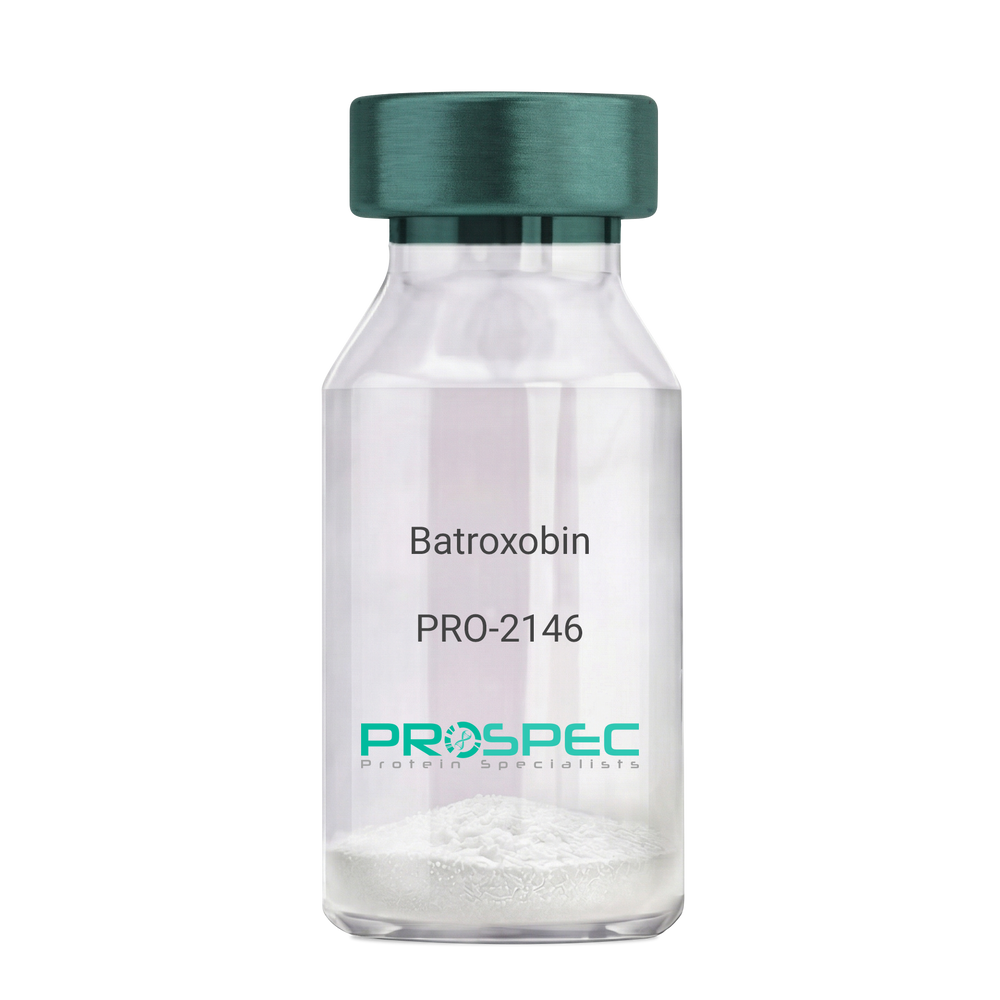
Name :
BatroxobinDescription:
Batroxobin
Thrombin-like enzyme batroxobin, EC 3.4.21.74, BX, Bothrops atrox serine proteinase, Venombin-A, Batroxobin.
Product # :
PRO-2146Price :
Quantity :
Shipping Method :
Shipped at Room temp
More Info
- description
- formulation
- More Info
Description
Batroxobin, isolated from Bothrops atrox snake venom, has an Mw of approximately 43kDa.
Formulation
The Batroxobin protein was lyophilized from a concentrated (1mg/ml) solution with no additives.
More Info
-
Introduction
Batroxobin is a serin protease that reduces fibronogen levels and is originally extracted from snake venom of Bothrops Atrox. Batroxobin is used in defibrinogenation and thrombolysis and also has an effect on c-fos gene and growth factor.
Batroxobin can efficiently restrain proliferation of VSMCs, by blocking the release and uptake of Ca2+, thus influencing [Ca2+]i.
Batroxobin converts fibrinogen to fibrin through the restricted release of fibrinopeptide-A from fibrinogen to promote blood to clot. Unlike thrombin, it is not affected by heparin and hirudin. -
Synonyms
Thrombin-like enzyme batroxobin, EC 3.4.21.74, BX, Bothrops atrox serine proteinase, Venombin-A, Batroxobin.
-
Physical Appearance
Sterile Filtered white lyophilized powder.
-
Stability
Store the lyophilized Batroxobin between 2-8°C. Do not freeze!
-
Solubility
It is recommended to reconstitute the lyophilized Batroxobin in sterile 18MΩ-cm H2O not less than 100µg/ml or more than 10mg/ml solutions.
-
Unit Definition
100BU [Batroxobin Units]=1mg.
ProSpec's products are furnished for LABORATORY RESEARCH USE ONLY. The product may not be used as drugs, agricultural or pesticidal products, food additives or household chemicals.
- View Data Sheet
Name :
NUDT21 HumanDescription:
Nudix Type Motif 21 Human Recombinant
Cleavage and polyadenylation specificity factor subunit 5, Cleavage and polyadenylation specificity factor 25 kDa subunit, CFIm25, CPSF 25 kDa subunit, Nucleoside diphosphate-linked moiety X motif 21, Nudix motif 21, Pre-mRNA cleavage factor Im 25 kDa subunit, NUDT21, CFIM25, CPSF25, CPSF5, DKFZp686H1588.
Product # :
ENZ-080Price :
Quantity :
Shipping Method :
Shipped with Ice Packs
More Info
- description
- source
- formulation
- purity
- More Info
Description
NUDT21 Human Recombinant fused with a 20 amino acid His tag at N-terminus produced in E.Coli is a single, non-glycosylated, polypeptide chain containing 247 amino acids (1-227 a.a.) and having a molecular mass of 28.3kDa. The NUDT21 is purified by proprietary chromatographic techniques.
Source
Escherichia Coli.
Formulation
The NUDT21 solution (1 mg/ml) contains 20mM Tris-HCl buffer (pH8.0), 0.2M NaCl, 2mM DTT and 20% glycerol.
Purity
Greater than 90.0% as determined by SDS-PAGE.
More Info
-
Introduction
NUDT21 belongs to the Nudix hydrolase family of pyrophosphatases. NUDT21 localizes to the paraspeckles and forms a heterodimer with CPSF6 or CPSF7 to comprise the CFIm (mammalian cleavage factor I) complex. NUDT21 being the smaller subunit of the complex, is present in all heterodimer combinations. NUDT21 has a vital role in pre-mRNA 3' cleavage and polyadenylation processing.
-
Synonyms
Cleavage and polyadenylation specificity factor subunit 5, Cleavage and polyadenylation specificity factor 25 kDa subunit, CFIm25, CPSF 25 kDa subunit, Nucleoside diphosphate-linked moiety X motif 21, Nudix motif 21, Pre-mRNA cleavage factor Im 25 kDa subunit, NUDT21, CFIM25, CPSF25, CPSF5, DKFZp686H1588.
-
Physical Appearance
Sterile Filtered colorless solution.
-
Stability
Store at 4°C if entire vial will be used within 2-4 weeks. Store, frozen at -20°C for longer periods of time. For long term storage it is recommended to add a carrier protein (0.1% HSA or BSA).Avoid multiple freeze-thaw cycles.
-
Amino Acid Sequence
MGSSHHHHHH SSGLVPRGSH MSVVPPNRSQ TGWPRGVTQF GNKYIQQTKP LTLERTINLY PLTNYTFGTK EPLYEKDSSV AARFQRMREE FDKIGMRRTV EGVLIVHEHR LPHVLLLQLG TTFFKLPGGE LNPGEDEVEG LKRLMTEILG RQDGVLQDWV IDDCIGNWWR PNFEPPQYPY IPAHITKPKE HKKLFLVQLQ EKALFAVPKN YKLVAAPLFE LYDNAPGYGP IISSLPQLLS RFNFIYN.
ProSpec's products are furnished for LABORATORY RESEARCH USE ONLY. The product may not be used as drugs, agricultural or pesticidal products, food additives or household chemicals.
- View Data Sheet
Name :
PALM HumanDescription:
Paralemmin Human Recombinant
Paralemmin-1, Paralemmin, PALM, KIAA0270, Paralemmin-1 isoform 1.
Product # :
PRO-2053Price :
Quantity :
Shipping Method :
Shipped with Ice Packs
More Info
- description
- source
- formulation
- purity
- More Info
Description
PALM Human Recombinant produced in E.coli is a single, non-glycosylated polypeptide chain containing 410 amino acids (1-387) and having a molecular mass of 44.5kDa.PALM is fused to a 23 amino acid His-tag at N-terminus & purified by proprietary chromatographic techniques.
Source
E.coli.
Formulation
The PALM solution (0.5mg/ml) contains 20mM Tris-HCl buffer (pH 8.0), 0.15M NaCl, 10% glycerol and 1mM DTT.
Purity
Greater than 85% as determined by SDS-PAGE.
More Info
-
Introduction
Paralemmin (PALM) belongs to the paralemmin protein family which takes part in plasma membrane dynamics and cell process formation. The product of PALM is related with the cytoplasmic face of plasma membranes and is implicated in plasma membrane dynamics in neurons and other cell types.
-
Synonyms
Paralemmin-1, Paralemmin, PALM, KIAA0270, Paralemmin-1 isoform 1.
-
Physical Appearance
Sterile Filtered colorless solution.
-
Stability
Store at 4°C if entire vial will be used within 2-4 weeks. Store, frozen at -20°C for longer periods of time. For long term storage it is recommended to add a carrier protein (0.1% HSA or BSA).Avoid multiple freeze-thaw cycles.
-
Amino Acid Sequence
MGSSHHHHHH SSGLVPRGSH MGSMEVLAAE TTSQQERLQA IAEKRKRQAE IENKRRQLED ERRQLQHLKS KALRERWLLE GTPSSASEGD EDLRRQMQDD EQKTRLLEDS VSRLEKEIEV LERGDSAPAT AKENAAAPSP VRAPAPSPAK EERKTEVVMN SQQTPVGTPK DKRVSNTPLR TVDGSPMMKA AMYSVEITVE KDKVTGETRV LSSTTLLPRQ PLPLGIKVYE DETKVVHAVD GTAENGIHPL SSSEVDELIH KADEVTLSEA GSTAGAAETR GAVEGAARTT PSRREITGVQ AQPGEATSGP PGIQPGQEPP VTMIFMGYQN VEDEAETKKV LGLQDTITAE LVVIEDAAEP KEPAPPNGSA AEPPTEAASR EENQAGPEAT TSDPQDLDMK KHRCKCCSIM.
ProSpec's products are furnished for LABORATORY RESEARCH USE ONLY. The product may not be used as drugs, agricultural or pesticidal products, food additives or household chemicals.
- View Data Sheet
Name :
PEBP1 HumanDescription:
Phosphatidylethanolamine Binding Protein 1 Human Recombinant
Phosphatidylethanolamine-binding protein 1, Prostatic-binding protein, HCNPpp, Neuropolypeptide h3, Raf kinase inhibitor protein, PEBP-1, RKIP, PEBP1, PBP, PEBP, HCNP.
Product # :
PRO-722Price :
Quantity :
Shipping Method :
Shipped with Ice Packs
More Info
- description
- source
- formulation
- purity
- More Info
Description
PEBP1 Human Recombinant produced in E.Coli is a single, non-glycosylated, polypeptide chain containing 187 amino acids (1-187 a.a.) and having a molecular mass of 21kDa.The PEBP1 is purified by proprietary chromatographic techniques.
Source
Escherichia Coli.
Formulation
The PEBP1 protein solution contains 20mM Tris-HCl buffer (pH8.0), 1mM DTT and 10% glycerol.
Purity
Greater than 95.0% as determined by SDS-PAGE.
More Info
-
Introduction
PEBP1 (Phosphatidylethanolamine binding protein 1) belongs to the phosphatidylethanolamine-binding protein family and a serine protease inhibitor that inhibits thrombin, neuropsin. PEBP1 plays a key modulatory part in several protein kinase signaling cascades. PKC phosphorylates PEBP1, resulting in the release of Raf-1 and activation of MEK and ERK. PEBP1 is expressed in many tissues and implicated in the regulation of such physiological processes as membrane biosynthesis, spermatogenesis, neural development, and metastasis suppression.
PEBP1 binds ATP, opioids and phosphatidylethanolamine, however it has lower affinity for phosphatidylinositol and phosphatidylcholine. PEBP1 may also be involved in the function of the presynaptic cholinergic neurons of the CNS. PEBP1 increases the production of choline acetyltransferase although not acetylcholinesterase. Furtheremore, PEBP1 functions in potentially sequestering toxic compounds, including locostatin which may have harmful effects on cells.
Loss of PEBP1 expression may have a significant role as prognostic marker in Gastrointestinal stromal tumors. In addition, PEBP1 is found differentially expressed in the Wernicke's Area from schizophrenia patients. PEBP1 is also, an invasion suppressor protein in nasopharyngeal carcinoma. -
Synonyms
Phosphatidylethanolamine-binding protein 1, Prostatic-binding protein, HCNPpp, Neuropolypeptide h3, Raf kinase inhibitor protein, PEBP-1, RKIP, PEBP1, PBP, PEBP, HCNP.
-
Physical Appearance
Sterile Filtered colorless solution.
-
Stability
Store at 4°C if entire vial will be used within 2-4 weeks. Store, frozen at -20°C for longer periods of time. For long term storage it is recommended to add a carrier protein (0.1% HSA or BSA).Avoid multiple freeze-thaw cycles.
-
Amino Acid Sequence
MPVDLSKWSG PLSLQEVDEQ PQHPLHVTYA GAAVDELGKV LTPTQVKNRP TSISWDGLDS GKLYTLVLTD PDAPSRKDPK YREWHHFLVV NMKGNDISSG TVLSDYVGSG PPKGTGLHRY VWLVYEQDRP LKCDEPILSN RSGDHRGKFK VASFRKKYEL RAPVAGTCYQ AEWDDYVPKL YEQLSGK.
ProSpec's products are furnished for LABORATORY RESEARCH USE ONLY. The product may not be used as drugs, agricultural or pesticidal products, food additives or household chemicals.