Skip to content

High-quality research proteins.

  • 1-800-805-6531

  • Mon - Sat 8.00-18.00, Sun - Closed

  • info@prospecbio.com

  • PO Box 6591 East Brunswick NJ 08816

  • Products
    • Cytokines
    • Growth factors
    • Chemokines
    • Cd antigens
    • Neurotrophins
    • Hormones
    • Enzymes
    • Viral antigens
    • Recombinant proteins
    • Natural proteins
    • Monoclonal antibodies
    • Polyclonal antibodies
    • Thermal Packaging
  • About
    • Company
    • Founder
    • Contribution
  • Customers
    • Eastern Asia
    • Eastern Europe
    • North America
    • South America
    • South East Asia
    • Southern Asia
    • Western Europe
  • Ordering
    • Ordering Method
    • Ordering - Credit Card
    • Ordering - PO
    • Shipping Fees
    • FAQs
  • Services
    • DNA Cloning
    • Protein Expression
    • Monoclonal Antibody
    • Fermentation
    • Technology License
  • Contact us
Log in

Country/region

  • USD $ | Albania
  • USD $ | Andorra
  • USD $ | Argentina
  • USD $ | Armenia
  • USD $ | Australia
  • USD $ | Austria
  • USD $ | Azerbaijan
  • USD $ | Belarus
  • USD $ | Belgium
  • USD $ | Bolivia
  • USD $ | Brazil
  • USD $ | Bulgaria
  • USD $ | Cambodia
  • USD $ | Canada
  • USD $ | Chile
  • USD $ | China
  • USD $ | Colombia
  • USD $ | Costa Rica
  • USD $ | Croatia
  • USD $ | Cyprus
  • USD $ | Czechia
  • USD $ | Denmark
  • USD $ | Estonia
  • USD $ | Finland
  • USD $ | France
  • USD $ | Georgia
  • USD $ | Germany
  • USD $ | Greece
  • USD $ | Hong Kong SAR
  • USD $ | Hungary
  • USD $ | Iceland
  • USD $ | India
  • USD $ | Ireland
  • USD $ | Israel
  • USD $ | Italy
  • USD $ | Japan
  • USD $ | Kazakhstan
  • USD $ | Latvia
  • USD $ | Liechtenstein
  • USD $ | Lithuania
  • USD $ | Madagascar
  • USD $ | Malta
  • USD $ | Mexico
  • USD $ | Moldova
  • USD $ | Monaco
  • USD $ | Netherlands
  • USD $ | New Zealand
  • USD $ | North Macedonia
  • USD $ | Norway
  • USD $ | Panama
  • USD $ | Paraguay
  • USD $ | Peru
  • USD $ | Philippines
  • USD $ | Poland
  • USD $ | Portugal
  • USD $ | Romania
  • USD $ | Singapore
  • USD $ | Slovakia
  • USD $ | Slovenia
  • USD $ | South Africa
  • USD $ | South Korea
  • USD $ | Spain
  • USD $ | Sri Lanka
  • USD $ | Sweden
  • USD $ | Switzerland
  • USD $ | Taiwan
  • USD $ | Thailand
  • USD $ | Türkiye
  • USD $ | Ukraine
  • USD $ | United Kingdom
  • USD $ | United States
  • USD $ | Uruguay
  • USD $ | Vatican City
  • USD $ | Venezuela
  • USD $ | Vietnam
  • Facebook
  • Instagram
logoProSpec - Recombinant Protein Manufacturer for academic and R&D industry
Become a distributor
Account Log in
Wishlist
Cart Cart(0)
  • Products
    +
    • Cytokines
    • Growth factors
    • Chemokines
    • Cd antigens
    • Neurotrophins
    • Hormones
    • Enzymes
    • Viral antigens
    • Recombinant proteins
    • Natural proteins
    • Monoclonal antibodies
    • Polyclonal antibodies
    • Thermal Packaging
  • About
    +
    • Company
    • Founder
    • Contribution
  • Customers
    +
    • Eastern Asia
    • Eastern Europe
    • North America
    • South America
    • South East Asia
    • Southern Asia
    • Western Europe
  • Ordering
    +
    • Ordering Method
    • Ordering - Credit Card
    • Ordering - PO
    • Shipping Fees
    • FAQs
  • Services
    +
    • DNA Cloning
    • Protein Expression
    • Monoclonal Antibody
    • Fermentation
    • Technology License
  • Contact us

Item added to your cart

View cart
View All
  • Cytokines
  • Growth factors
  • Chemokines
  • Cd antigens
  • Neurotrophins
  • Hormones
  • Enzymes
  • Viral antigens
  • Recombinant proteins
  • Natural proteins
  • Monoclonal antibodies
  • Polyclonal antibodies
  • Thermal Packaging
  • Tumor Necrosis Factor

    Tumor Necrosis Factor

    View All
  • 4-1BB

    4-1BB

    View All
  • Adiponectin

    Adiponectin

    View All
  • AIF1

    AIF1

    View All
  • Other Cytokines

    Other Cytokines

    View All
  • AITRL

    AITRL

    View All
  • Angiopoietin

    Angiopoietin

    View All
  • Apolipoprotein

    Apolipoprotein

    View All
  • B-Cell Activating Factor

    B-Cell Activating Factor

    View All
  • Beta Defensin

    Beta Defensin

    View All
  • Bone Morphogenetic Protein

    Bone Morphogenetic Protein

    View All
  • B type Natriuretic Peptide

    B type Natriuretic Peptide

    View All
  • BST

    BST

    View All
  • Betacellulin

    Betacellulin

    View All
  • Cardiotrophin

    Cardiotrophin

    View All
  • Activin

    Activin

    View All
  • Fibroblast Growth Factor

    Fibroblast Growth Factor

    View All
  • Other Growth Factors

    Other Growth Factors

    View All
  • CSF

    CSF

    View All
  • CTGF

    CTGF

    View All
  • IGFBP

    IGFBP

    View All
  • VEGF Protein

    VEGF Protein

    View All
  • EGF

    EGF

    View All
  • Epigen

    Epigen

    View All
  • Erythropoietin

    Erythropoietin

    View All
  • Insulin-Like Growth Factor

    Insulin-Like Growth Factor

    View All
  • Growth Hormone

    Growth Hormone

    View All
  • HDGF

    HDGF

    View All
  • Hepatocyte Growth Factor

    Hepatocyte Growth Factor

    View All
  • Insulin

    Insulin

    View All
  • BCA-1/ BLC (CXCL13)

    BCA-1/ BLC (CXCL13)

    View All
  • BRAK (CXCL14)

    BRAK (CXCL14)

    View All
  • C-10 (CCL6)

    C-10 (CCL6)

    View All
  • Other Chemokines

    Other Chemokines

    View All
  • MEC (CCL28)

    MEC (CCL28)

    View All
  • LD78-beta (CCL3L1)

    LD78-beta (CCL3L1)

    View All
  • CTACK (CCL27)

    CTACK (CCL27)

    View All
  • CXCL16

    CXCL16

    View All
  • CXCL17

    CXCL17

    View All
  • Platelet Factor-4 (CXCL4)

    Platelet Factor-4 (CXCL4)

    View All
  • ENA-78 (CXCL5)

    ENA-78 (CXCL5)

    View All
  • Eotaxin (CCL11,24,26)

    Eotaxin (CCL11,24,26)

    View All
  • Exodus-2 (CCL21)

    Exodus-2 (CCL21)

    View All
  • Fractalkine (CX3CL1)

    Fractalkine (CX3CL1)

    View All
  • CXCL6

    CXCL6

    View All
  • Other CD Antigens

    Other CD Antigens

    View All
  • CD14

    CD14

    View All
  • CD164

    CD164

    View All
  • CD1

    CD1

    View All
  • CD2

    CD2

    View All
  • CD200

    CD200

    View All
  • CD207

    CD207

    View All
  • CD226

    CD226

    View All
  • CD23

    CD23

    View All
  • CD244

    CD244

    View All
  • CD247

    CD247

    View All
  • CD27

    CD27

    View All
  • CD274

    CD274

    View All
  • CD300

    CD300

    View All
  • CD33

    CD33

    View All
  • Other Neurotrophins

    Other Neurotrophins

    View All
  • Beta-NGF

    Beta-NGF

    View All
  • BDNF

    BDNF

    View All
  • CDNF

    CDNF

    View All
  • CNTF

    CNTF

    View All
  • GDNF

    GDNF

    View All
  • Glia Maturation Factor

    Glia Maturation Factor

    View All
  • MANF

    MANF

    View All
  • Midkine

    Midkine

    View All
  • Neuroglobin

    Neuroglobin

    View All
  • Neurotrophic factors

    Neurotrophic factors

    View All
  • Neuregulin

    Neuregulin

    View All
  • Neuropilin

    Neuropilin

    View All
  • Pigment Epithelium-Derived Factor

    Pigment Epithelium-Derived Factor

    View All
  • Pleiotrophin

    Pleiotrophin

    View All
  • Peptide Hormones

    Peptide Hormones

    View All
  • Other Hormones

    Other Hormones

    View All
  • HCG

    HCG

    View All
  • Endothelin

    Endothelin

    View All
  • Exendin

    Exendin

    View All
  • FSH

    FSH

    View All
  • Glucagon

    Glucagon

    View All
  • GHRP

    GHRP

    View All
  • GLP

    GLP

    View All
  • Thyrostimulin

    Thyrostimulin

    View All
  • Inhibin A

    Inhibin A

    View All
  • LHRH

    LHRH

    View All
  • Melanotan

    Melanotan

    View All
  • Procalcitonin

    Procalcitonin

    View All
  • PTH

    PTH

    View All
  • Peroxiredoxin

    Peroxiredoxin

    View All
  • Peptidase

    Peptidase

    View All
  • Synthetase

    Synthetase

    View All
  • Transferase

    Transferase

    View All
  • Hydrolase

    Hydrolase

    View All
  • Dehydrogenase

    Dehydrogenase

    View All
  • ACE2

    ACE2

    View All
  • Esterase

    Esterase

    View All
  • Protein Kinases

    Protein Kinases

    View All
  • Other Enzymes

    Other Enzymes

    View All
  • Phosphatase

    Phosphatase

    View All
  • Deaminase

    Deaminase

    View All
  • Oxygenase

    Oxygenase

    View All
  • Adenylate Kinase

    Adenylate Kinase

    View All
  • Lyase

    Lyase

    View All
  • Chagas

    Chagas

    View All
  • SARS

    SARS

    View All
  • Influenza

    Influenza

    View All
  • ASFV

    ASFV

    View All
  • Astrovirus

    Astrovirus

    View All
  • Borrelia

    Borrelia

    View All
  • Helicobacter Pylori

    Helicobacter Pylori

    View All
  • Chikungunya

    Chikungunya

    View All
  • Chlamydia

    Chlamydia

    View All
  • Cytomegalo

    Cytomegalo

    View All
  • Dengue

    Dengue

    View All
  • EBV

    EBV

    View All
  • Ebola

    Ebola

    View All
  • Feline Leukemia Virus

    Feline Leukemia Virus

    View All
  • Hepatitis A

    Hepatitis A

    View All
  • Other

    Other

    View All
  • Actin

    Actin

    View All
  • ADAM

    ADAM

    View All
  • Complement Component

    Complement Component

    View All
  • Ag85

    Ag85

    View All
  • Eukaryotic Translation Initiation Factor

    Eukaryotic Translation Initiation Factor

    View All
  • Anterior Gradient Protein

    Anterior Gradient Protein

    View All
  • Heat Shock Protein

    Heat Shock Protein

    View All
  • Alpha-2-HS-Glycoprotein

    Alpha-2-HS-Glycoprotein

    View All
  • Hemoglobin

    Hemoglobin

    View All
  • Allergy

    Allergy

    View All
  • Anaplasma

    Anaplasma

    View All
  • Angiogenin

    Angiogenin

    View All
  • Ankyrin Repeat Domain

    Ankyrin Repeat Domain

    View All
  • Annexin

    Annexin

    View All
  • Other Natural Proteins

    Other Natural Proteins

    View All
  • Aprotinin

    Aprotinin

    View All
  • Transferrin

    Transferrin

    View All
  • Avidin

    Avidin

    View All
  • Anti Coagulation Factors

    Anti Coagulation Factors

    View All
  • Natural Albumin

    Natural Albumin

    View All
  • Natural Coagulation Factors

    Natural Coagulation Factors

    View All
  • Fibronectin

    Fibronectin

    View All
  • Thrombin

    Thrombin

    View All
  • Anti Human Enzyme

    Anti Human Enzyme

    View All
  • Other Monoclonal Antibodies

    Other Monoclonal Antibodies

    View All
  • Anti Human Cytokine

    Anti Human Cytokine

    View All
  • Anti Human Heat Shock Protein

    Anti Human Heat Shock Protein

    View All
  • Anti Mouse Lymphocyte

    Anti Mouse Lymphocyte

    View All
  • Anti Human Chemokine

    Anti Human Chemokine

    View All
  • Anti Human Lymphocyte

    Anti Human Lymphocyte

    View All
  • Anti Viral Monoclonal

    Anti Viral Monoclonal

    View All
  • Anti Mouse Cytokine

    Anti Mouse Cytokine

    View All
  • Anti-GST Monoclonal

    Anti-GST Monoclonal

    View All
  • Other Polyclonal Antibodies

    Other Polyclonal Antibodies

    View All
  • Anti Viral

    Anti Viral

    View All
  • Anti-GST Monoclonal

    Anti-GST Monoclonal

    View All
Back

Search results

1000 results found for “cebp”

Name

Description

Product #

Price

Quantity

Shipping Method

  • View Data Sheet

    Name :

    ACPP Human

    Description:

    Acid Phosphatase Prostate Human Recombinant

    PAP, ACP3, ACP-3, Acid phosphatase, prostate, 5'-nucleotidase, 5'-NT, Ecto-5'-nucleotidase, Thiamine monophosphatase, TMPase.

    Product # :

    ENZ-847

    Price :

    Quantity :

    Shipping Method :

    Ice Icon

    Shipped with Ice Packs

    Add To Cart

    More Info

    • description
    • source
    • formulation
    • purity
    • More Info

    Description

    ACPP Human Recombinant produced in E.Coli is a single, non-glycosylated polypeptide chain containing 375 amino acids (33-386 a.a) and having a molecular mass of 43.2kDa.ACPP is fused to a 20 amino acid His-tag at N-terminus & purified by proprietary chromatographic techniques.

    Source

    Escherichia Coli.

    Formulation

    ACPP protein solution (0.5mg/ml) containing 20mM Tris-HCl buffer (pH 8.0) and 10% glycerol.

    Purity

    Greater than 85.0% as determined by SDS-PAGE.

    More Info

    • Introduction

      Acid phosphatase, prostate (ACPP) is a non-specific tyrosine phosphatase, which dephosphorylates a varied number of substrates under acidic conditions (pH 4-6) including alkyl, aryl, and acyl orthophosphate monoesters and phosphorylated proteins. ACPP has lipid phosphatase activity and inactivates lysophosphatidic acid in seminal plasma.

    • Synonyms

      PAP, ACP3, ACP-3, Acid phosphatase, prostate, 5'-nucleotidase, 5'-NT, Ecto-5'-nucleotidase, Thiamine monophosphatase, TMPase.

    • Physical Appearance

      Sterile Filtered colorless solution.

    • Stability

      Store at 4°C if entire vial will be used within 2-4 weeks. Store, frozen at -20°C for longer periods of time. For long term storage it is recommended to add a carrier protein (0.1% HSA or BSA).Avoid multiple freeze-thaw cycles.

    • Amino Acid Sequence

      MGSSHHHHHH SSGLVPRGSH MKELKFVTLV FRHGDRSPID TFPTDPIKES SWPQGFGQLT QLGMEQHYEL GEYIRKRYRK FLNESYKHEQ VYIRSTDVDR TLMSAMTNLA ALVPPEGVSI WNPILLWQPI PVHTVPLSED QLLYLPFRNC PRFQELESET LKSEEFQKRL HPYKDFIATL GKLSGLHGQD LFGIWSKVYD PLYCESVHNF TLPSRATEDT MTKLRELSEL SLLSLYGIHK QKEKSRLQGG VLVNEILNHM KRATQIPSYK KLIMYSAHDT TVSGLQMALD VYNGLLPPYA SCHLTELYFE KGEYFVEMYY RNETQHEPYP LMLPGCSPSC PLERFAELVG PVIPQDWSTE CMTTNSHQGT EDSTD.

    ProSpec's products are furnished for LABORATORY RESEARCH USE ONLY. The product may not be used as drugs, agricultural or pesticidal products, food additives or household chemicals.

    Acpp Human
  • View Data Sheet

    Name :

    TARDBP (1-414) Human

    Description:

    TAR DNA Binding Protein (1-414 a.a.) Human Recombinant

    ALS10, TDP43, TAR DNA-binding protein 43, TDP-43, TARDBP.

    Product # :

    PRO-2383

    Price :

    Quantity :

    Shipping Method :

    Ice Icon

    Shipped with Ice Packs

    Add To Cart

    More Info

    • description
    • source
    • formulation
    • purity
    • More Info

    Description

    TARDBP Human Recombinant produced in E.Coli is a single, non-glycosylated polypeptide chain containing 414 amino acids (1-414 a.a) and having a molecular mass of 44.7kDa.TARDBP is purified by proprietary chromatographic techniques.

    Source

    E.coli.

    Formulation

    TARDBP protein solution (0.25mg/ml) containing 20mM Tris-HCl (pH8.0), 1mM DTT, 0.1M NaCl, 10% glycerol and 1mM EDTA.

    Purity

    Greater than 85% as determined by SDS-PAGE.

    More Info

    • Introduction

      TAR DNA Binding Protein (TARDBP) was initially recognized as a transcriptional repressor which binds to chromosomally integrated TAR DNA and represses HIV-1 transcription. In addition, TARDBP has been detected in individuals diagnosed with chronic traumatic encephalopathy as well, which is a condition that often imitates ALS andhas been related with athletes who have experienced multiple concussions and other types of head injury.TARDBP has been shown to bind both DNA and RNA, it has multiple functions in transcriptional repression, pre-mRNAsplicing and translational regulation.

    • Synonyms

      ALS10, TDP43, TAR DNA-binding protein 43, TDP-43, TARDBP.

    • Physical Appearance

      Sterile Filtered colorless solution.

    • Stability

      Store at 4°C if entire vial will be used within 2-4 weeks. Store, frozen at -20°C for longer periods of time. For long term storage it is recommended to add a carrier protein (0.1% HSA or BSA).Avoid multiple freeze-thaw cycles.

    • Amino Acid Sequence

      MSEYIRVTED ENDEPIEIPS EDDGTVLLST VTAQFPGACG LRYRNPVSQC MRGVRLVEGI LHAPDAGWGN LVYVVNYPKD NKRKMDETDA SSAVKVKRAV QKTSDLIVLG LPWKTTEQDL KEYFSTFGEV LMVQVKKDLK TGHSKGFGFV RFTEYETQVK VMSQRHMIDG RWCDCKLPNS KQSQDEPLRS RKVFVGRCTE DMTEDELREF FSQYGDVMDV FIPKPFRAFA FVTFADDQIA QSLCGEDLII KGISVHISNA EPKHNSNRQL ERSGRFGGNP GGFGNQGGFG NSRGGGAGLG NNQGSNMGGG MNFGAFSINP AMMAAAQAAL QSSWGMMGML ASQQNQSGPS GNNQNQGNMQ REPNQAFGSG NNSYSGSNSG AAIGWGSASN AGSGSGFNGG FGSSMDSKSS GWGM.

    ProSpec's products are furnished for LABORATORY RESEARCH USE ONLY. The product may not be used as drugs, agricultural or pesticidal products, food additives or household chemicals.

    Human Tardbp 1 414
  • View Data Sheet

    Name :

    BMP 7 Human, HEK

    Description:

    Bone Morphogenetic protein-7 Human Recombinant, HEK

    Osteogenic Protein 1, BMP-7.

    Product # :

    CYT-082

    Price :

    Quantity :

    Shipping Method :

    Room Temp Icon

    Shipped at Room temp

    Add To Cart

    More Info

    • description
    • source
    • formulation
    • purity
    • biological activity
    • More Info

    Description

    BMP-7 Human Recombinant produced in HEK cells is a glycosylated disulfide-linked homodimer, having a molecular weight range of 30-38kDa due to glycosylation.The BMP7 corresponds to amino acid residues 315 to 431 of the full-length BMP-7 precursor and is purified by proprietary chromatographic techniques.

    Source

    HEK.

    Formulation

    The BMP7 was lyophilized from 1mg/ml in 1xPBS.

    Purity

    Greater than 95% as obsereved by SDS-PAGE.

    Biological Activity

    The specific activity was determined by the dose dependent induction of alkaline phosphatase production in the ATDC-5 cell line (Mouse chondrogenic cell line) and is typically 50-250ng/ml.

    More Info

    • Introduction

      The bone morphogenetic proteins (BMPs) are a family of secreted signaling molecules that can induce ectopic bone growth. Many BMPs are part of the transforming growth factor-beta (TGFB) superfamily. BMPs were originally identified by an ability of demineralized bone extract to induce endochondral osteogenesis in vivo in an extraskeletal site. Based on its expression early in embryogenesis, the BMP encoded by this gene has a proposed role in early development. In addition, the fact that this BMP is closely related to BMP5 and BMP7 has lead to speculation of possible bone inductive activity.

    • Synonyms

      Osteogenic Protein 1, BMP-7.

    • Physical Appearance

      Sterile Filtered White lyophilized (freeze-dried) powder.

    • Stability

      Lyophilized BMP7 although stable at room temperature for 3 weeks, should be stored desiccated below -18°C. Upon reconstitution BMP-7 should be stored at 4°C between 2-7 days and for future use below -18°C.For long term storage it is recommended to add a carrier protein (0.1% HSA or BSA).Please prevent freeze-thaw cycles.

    • Solubility

      It is recommended to reconstitute the lyophilized BMP-7 in sterile water not less than 100µg/ml, which can then be further diluted to other aqueous solutions.

    • Amino Acid Sequence

      DFSLDNEVHSSFIHRRLRSQERREMQREILSILGLPHRPRPHLQGKHNSAPMFMLDLYNAM AVEEGGGPGGQGFSYPYKAVFSTQGPPLASLQDSHFLTDADMVMSFVNLVEHDKEFFHPR YHHREFRFDLSKIPEGEAVTAAEFRIYKDYIRERFDNETFRISVYQVLQEHLGRESDLFLDSRTLWASE EGWLVFDITATSNHWVVNPRHNLGLQLSVETLDGQSINPKLAGLIGRHGPQNKQPFMVAFFKAT.

    • Background

      BMP-7 Bone Morphogenetic Protein-7 Human Recombinant: A Key Regulator of Osteogenesis and Beyond

      Abstract:

      BMP-7 (Bone Morphogenetic Protein-7), also known as Osteogenic Protein 1 or BMP-7, is a potent growth factor that plays a crucial role in various biological processes, particularly in osteogenesis and tissue regeneration.

      This research paper aims to comprehensively explore the molecular characteristics, signaling pathways, and diverse physiological functions of BMP-7.

      Additionally, it investigates the therapeutic implications of BMP-7 in different disorders. Synonyms such as Osteogenic Protein 1 and BMP-7 associated with the protein are discussed throughout the paper to highlight their relevance in scientific literature.

      Introduction:

      BMP-7, also known as Osteogenic Protein 1 or BMP-7, is a growth factor with multifaceted roles in osteogenesis, tissue regeneration, and disease. This section introduces BMP-7 and its synonyms, highlighting their significance and relevance in scientific research.

      Molecular Characteristics of BMP-7:

      This section explores the molecular characteristics of BMP-7, including its primary amino acid sequence, protein structure, post-translational modifications, and binding partners. The importance of these factors in determining BMP-7's biological activity and receptor specificity is discussed.

      Signaling Pathways Activated by BMP-7 :

      BMP-7 activates specific signaling pathways upon binding to its receptors, leading to diverse cellular responses. This section focuses on the canonical BMP signaling pathway, highlighting the activation of Smad-dependent and Smad-independent pathways. The downstream effectors and transcriptional regulators involved in mediating BMP-7's cellular responses are also discussed.

      Physiological Functions of BMP-7 :

      BMP-7 plays critical roles in various physiological processes, particularly in osteogenesis and tissue regeneration. This section provides an in-depth analysis of BMP-7's contributions to these processes, emphasizing its role in promoting bone formation, cartilage development, renal function, and wound healing.

      Therapeutic Implications of BMP-7 :

      The unique properties of BMP-7 make it a promising therapeutic candidate for various disorders. This section discusses the potential applications of BMP-7 in bone regeneration, cartilage repair, kidney disease, and tissue engineering. The challenges and future directions in utilizing BMP-7 as a therapeutic agent are also explored.

      BMP-7 in Disease Progression:

      BMP-7 is implicated in the progression of certain diseases, including fibrosis, cancer, and cardiovascular disorders. This section examines the role of BMP-7 in tissue fibrosis, tumor progression, angiogenesis, and cardiac remodeling. The therapeutic implications and targeting of BMP-7 in disease management are also discussed.

      Conclusion:

      BMP-7, also known as Osteogenic Protein 1 or BMP-7, is a critical growth factor involved in osteogenesis, tissue regeneration, and disease progression. Understanding the molecular characteristics, signaling pathways, and physiological functions of BMP-7 contributes to the exploration of its therapeutic potential in various disorders.

      What is the molecular weight/Mw of BMP7 Protein?
      BMP7 Protein has a total Mw of 38kDa.

      What is the source or expression system of BMP7 Protein?
      HEK.

      What is the Purity of BMP7 Protein?
      BMP7 Protein is >95% pure as determined by SDS-PAGE.

      What is the Biological Activity of BMP7 Protein?
      The specific activity was determined by the dose dependent induction of alkaline phosphatase production in the ATDC-5 cell line (Mouse chondrogenic cell line) and is typically 50-250ng/ml.

      What is the amino acid sequence of BMP7 Protein?
      DFSLDNEVHSSFIHRRLRSQERREMQREILSILGLPHRPRPHLQGKHNSAPMFMLDLYNAM AVEEGGGPGGQGFSYPYKAVFSTQGPPLASLQDSHFLTDADMVMSFVNLVEHDKEFFHPR YHHREFRFDLSKIPEGEAVTAAEFRIYKDYIRERFDNETFRISVYQVLQEHLGRESDLFLDSRTLWASE EGWLVFDITATSNHWVVNPRHNLGLQLSVETLDGQSINPKLAGLIGRHGPQNKQPFMVAFFKAT.


      What applications can BMP7 Protein be used in?
      BMP7 Protein can probably be used in western blot, ELISA and Lateral Flow.

      What is the endotoxin level for BMP7 Protein?
      The endotoxin level is minimal, BMP7 Protein was purified using conventional chromatography techniques.

    ProSpec's products are furnished for LABORATORY RESEARCH USE ONLY. The product may not be used as drugs, agricultural or pesticidal products, food additives or household chemicals.

    Bmp 7 Human Hek
  • View Data Sheet

    Name :

    CLEC7A Human

    Description:

    C-Type Lectin Domain Family 7, Member A Human Recombinant

    BGR, Dendritic Cell-Associated C-Type Lectin-1, Dendritic Cell-Associated C-Type Lectin 1, C-Type Lectin Domain Family 7, Member A, Lectin-Like Receptor 1, CD369 Antigen, CANDF4, SCARE2, CD369, C-Type Lectin Domain Containing 7A, C-Type Lectin Domain Family 7 Member A, C-Type (Calcium Dependent, Carbohydrate-Recognition Domain) Lectin, Superfamily Member 12, C-Type Lectin Superfamily Member 12, DC-Associated C-Type Lectin 1, Beta-Glucan Receptor, Dectin-1, CLECSF12, DECTIN1.

    Product # :

    PRO-2634

    Price :

    Quantity :

    Shipping Method :

    Ice Icon

    Shipped with Ice Packs

    Add To Cart

    More Info

    • description
    • source
    • formulation
    • purity
    • More Info

    Description

    CLEC7A Human Recombinant produced in Sf9 Baculovirus cells is a single, glycosylated polypeptide chain containing 183 amino acids (71-244 a.a) and having a molecular mass of 21kDa. CLEC7A is fused to a 9 amino acid His-tag at C-terminus & purified by proprietary chromatographic techniques.

    Source

    Sf9, Baculovirus cells.

    Formulation

    The CLEC7A solution (0.5mg/1ml) contains phosphate buffered saline (pH7.4) and 10% glycerol.

    Purity

    Greater than 95.0% as determined by SDS-PAGE.

    More Info

    • Introduction

      C-type lectin domain family 7 member A 1 or CLEC7A is a protein, that in the innate immune system, acts against fungal pathogens. CLEC7A can be found in the immune system response cells such as monocytes, macrophages & neutrophils, or in dendritic and T cells. The protein is enhanced by macrophages by using GM-CSF, IL-4, or IL-13, or diminishes by dexamethasone, IL-10 and LPS.

    • Synonyms

      BGR, Dendritic Cell-Associated C-Type Lectin-1, Dendritic Cell-Associated C-Type Lectin 1, C-Type Lectin Domain Family 7, Member A, Lectin-Like Receptor 1, CD369 Antigen, CANDF4, SCARE2, CD369, C-Type Lectin Domain Containing 7A, C-Type Lectin Domain Family 7 Member A, C-Type (Calcium Dependent, Carbohydrate-Recognition Domain) Lectin, Superfamily Member 12, C-Type Lectin Superfamily Member 12, DC-Associated C-Type Lectin 1, Beta-Glucan Receptor, Dectin-1, CLECSF12, DECTIN1.

    • Physical Appearance

      Sterile Filtered clear solution.

    • Stability

      Store at 4°C if entire vial will be used within 2-4 weeks. Store, frozen at -20°C for longer periods of time. For long term storage it is recommended to add a carrier protein (0.1% HSA or BSA).Avoid multiple freeze-thaw cycles.

    • Amino Acid Sequence

      ADPRHNSGRN PEEKDNFLSR NKENHKPTES SLDEKVAPSK ASQTTGGFSQ SCLPNWIMHG KSCYLFSFSG NSWYGSKRHC SQLGAHLLKI DNSKEFEFIE SQTSSHRINA FWIGLSRNQS EGPWFWEDGS AFFPNSFQVR NTVPQESLLH NCVWIHGSEV YNQICNTSSY SICEKELHHH HHH.

    ProSpec's products are furnished for LABORATORY RESEARCH USE ONLY. The product may not be used as drugs, agricultural or pesticidal products, food additives or household chemicals.

    Clec7A Human
  • View Data Sheet

    Name :

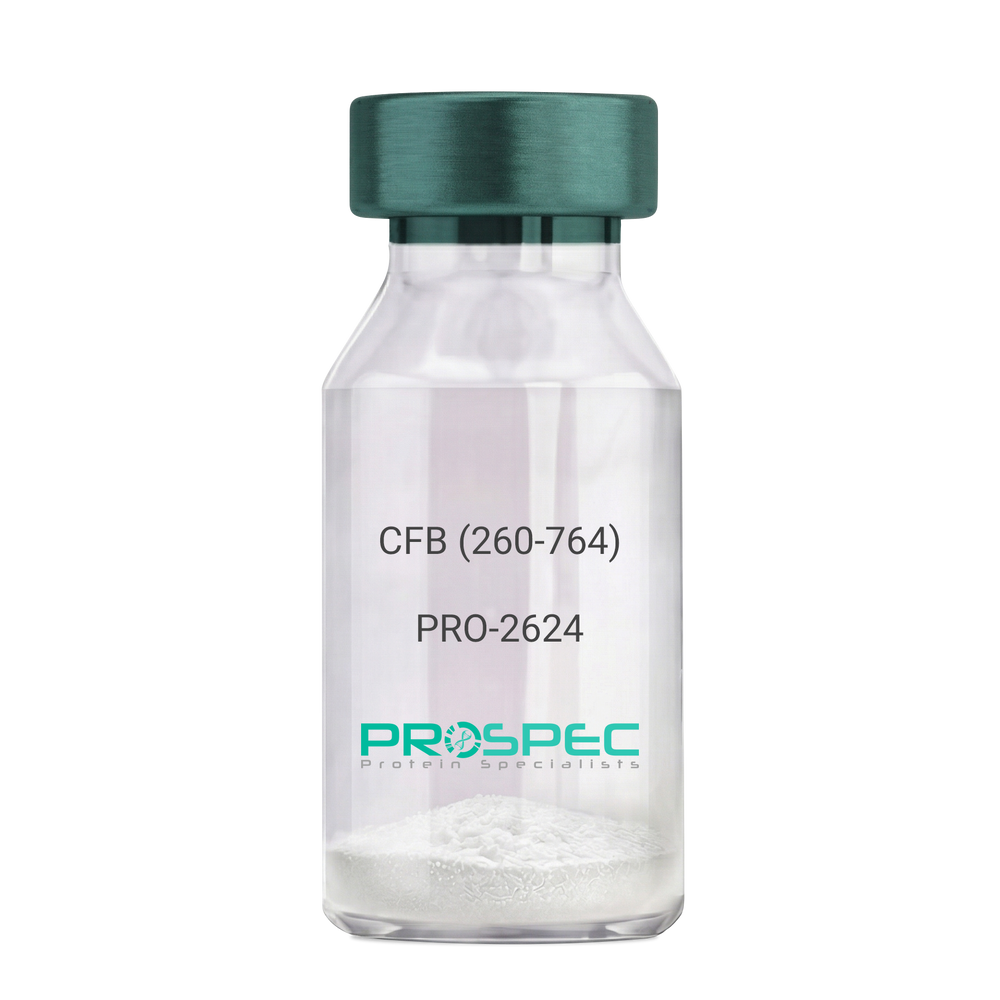
    CFB (260-764) Human, Sf9

    Description:

    Complement Factor B (260-764 a.a.) Human Recombinant, Sf9

    CFB, C3/C5 convertase, Glycine-rich beta glycoprotein, GBG, PBF2, Properdin factor B, BF, BFD, AHUS4, ARMD14, CFAB, CFBD, FB, FBI12, GBG, H2-Bf.

    Product # :

    PRO-2624

    Price :

    Quantity :

    Shipping Method :

    Ice Icon

    Shipped with Ice Packs

    Add To Cart

    More Info

    • description
    • source
    • formulation
    • purity
    • More Info

    Description

    CFB Human Recombinant produced in Sf9 Baculovirus cells is a single, glycosylated polypeptide chain containing 514 amino acids (260-764 a.a) and having a molecular mass of 58.1kDa.CFB is fused to an 9 amino acid His-tag at C-terminus & purified by proprietary chromatographic techniques.

    Source

    Sf9, Baculovirus cells.

    Formulation

    CFB protein solution (0.5mg/ml) containing Phosphate Buffered Saline (pH 7.4) and 20% glycerol.

    Purity

    Greater than 90.0% as determined by SDS-PAGE.

    More Info

    • Introduction

      Factor B is a protein, build from a single chain that circulates in the blood. Complement factor D cleaves and activates factor B, thus creating a catalytic subunit Bb and noncatalytic chain Ba. Subunit Bb is a serine protease that can bind to C3b and forms alternative pathway C3 convertase. Subunit Ba acts as an inhibitor for proliferation of lymphocytes, when Bb is part of the lymphocytes’ proliferation. The gene that codes for this protein is located on chromosome six.

    • Synonyms

      CFB, C3/C5 convertase, Glycine-rich beta glycoprotein, GBG, PBF2, Properdin factor B, BF, BFD, AHUS4, ARMD14, CFAB, CFBD, FB, FBI12, GBG, H2-Bf.

    • Physical Appearance

      Sterile Filtered colorless solution.

    • Stability

      Store at 4°C if entire vial will be used within 2-4 weeks. Store, frozen at -20°C for longer periods of time. For long term storage it is recommended to add a carrier protein (0.1% HSA or BSA).Avoid multiple freeze-thaw cycles.

    • Amino Acid Sequence

      ADPKIVLDPS GSMNIYLVLD GSDSIGASNF TGAKKCLVNL IEKVASYGVK PRYGLVTYAT
      YPKIWVKVSE ADSSNADWVT KQLNEINYED HKLKSGTNTK KALQAVYSMM SWPDDVPPEG
      WNRTRHVIIL MTDGLHNMGG DPITVIDEIR DLLYIGKDRK NPREDYLDVY VFGVGPLVNQ
      VNINALASKK DNEQHVFKVK DMENLEDVFY QMIDESQSLS LCGMVWEHRK GTDYHKQPWQ
      AKISVIRPSK GHESCMGAVV SEYFVLTAAH CFTVDDKEHS IKVSVGGEKR DLEIEVVLFH
      PNYNINGKKE AGIPEFYDYD VALIKLKNKL KYGQTIRPIC LPCTEGTTRA LRLPPTTTCQ
      QQKEELLPAQ DIKALFVSEE EKKLTRKEVY IKNGDKKGSC ERDAQYAPGY DKVKDISEVV
      TPRFLCTGGV SPYADPNTCR GDSGGPLIVH KRSRFIQVGV ISWGVVDVCK NQKRQKQVPA HARDFHINLF QVLPWLKEKL QDEDLGFLHH HHHH

    ProSpec's products are furnished for LABORATORY RESEARCH USE ONLY. The product may not be used as drugs, agricultural or pesticidal products, food additives or household chemicals.

    Complement Factor B
  • View Data Sheet

    Name :

    CIB1 Antibody

    Description:

    Calcium and Integrin Binding 1, Mouse Anti Human

    Calcium and integrin-binding protein 1, Calmyrin, DNA-PKcs-interacting protein, Kinase-interacting protein, SNK-interacting protein 2-28, SIP2-28, CIB1, CIB, KIP, PRKDCIP.

    Product # :

    ANT-377

    Price :

    Quantity :

    Shipping Method :

    Ice Icon

    Shipped with Ice Packs

    Add To Cart

    More Info

    • formulation
    • More Info

    Formulation

    1mg/ml containing PBS, pH-7.4, & 0.1% Sodium Azide.

    More Info

    • Introduction

      CIB1 (Calcium and integrin binding 1) is regulatory protein with 50% homology to calmodulin and calcineurin B, that encodes a member of the calcium-binding protein family. CIB1 interacts with DNA-dependent protein kinase and may play a role in kinase-phosphatase regulation of DNA end joining. Also CIB1 is widely expressed and binds to a number of effectors, such as integrin αIIb, PAK1, and polo-like kinases, in different tissues.

    • Synonyms

      Calcium and integrin-binding protein 1, Calmyrin, DNA-PKcs-interacting protein, Kinase-interacting protein, SNK-interacting protein 2-28, SIP2-28, CIB1, CIB, KIP, PRKDCIP.

    • Immunogen

      Anti-human CIB1 mAb is derived from hybridization of mouse F0 myeloma cells with spleen cells from BALB/c mice immunized with recombinant human CIB1 amino acids 1-191 purified from E. coli.

    • Ig Subclass

      Mouse IgG2b heavy chain and κ light chain.

    • Clone

      P1D1AT.

    • Applications

      CIB1 antibody has been tested by ELISA and Western blot analysis to assure specificity and reactivity. Since application varies, however, each investigation should be titrated by the reagent to obtain optimal results. Recommended dilution range for Western blot analysis is 1:1,000 ~ 2,000. Recommended starting dilution is 1:1,000.

    • Type

      Mouse Anti Human Monoclonal.

    • Storage Procedures

      For periods up to 1 month store at 4°C, for longer periods of time, store at -20°C. Prevent freeze thaw cycles.

    • Purification Method

      CIB1 antibody was purified from mouse ascitic fluids by protein-G affinity chromatography.

    ProSpec's products are furnished for LABORATORY RESEARCH USE ONLY. The product may not be used as drugs, agricultural or pesticidal products, food additives or household chemicals.

    Cib1 Antibody
  • View Data Sheet

    Name :

    CTSZ Mouse, Active

    Description:

    Cathepsin-Z, Active Mouse Recombinant

    Cathepsin Z, Cathepsin X, Cysteine-Type Carboxypeptidase, Lysosomal Carboxypeptidase B, Carboxypeptidase LB, Cathepsin B2, Cathepsin IV, Cathepsin Z1, Cathepsin P, Cathepsin Y, EC 3.4.18.1, Preprocathepsin P, CTSX.

    Product # :

    ENZ-1108

    Price :

    Quantity :

    Shipping Method :

    Ice Icon

    Shipped with Ice Packs

    Add To Cart

    More Info

    • description
    • source
    • formulation
    • purity
    • biological activity
    • More Info

    Description

    CTSZ Mouse Recombinant produced in Baculovirus is a single, glycosylated, polypeptide chain containing 292 amino acids (23-306 aa) and having a molecular mass of 32.8kDa.CTSZ is fused to a 8 amino acid His tag at C-terminus and purified by proprietary chromatographic techniques.

    Source

    Sf9, Baculovirus cells.

    Formulation

    The CTSZ solution (0.5 mg/ml) contains Phosphate Buffered Saline (pH 7.4) and 10% glycerol.

    Purity

    Greater than 95.0% as determined by SDS-PAGE.

    Biological Activity

    Specific activity is > 3,000 pmol/min/ug. One unit will convert 1 pmole of Mca-PLGL-Dpa-AR-NH2 to MCA- Pro-Leu-OH per minute at pH 3.5 at 25°C.

    More Info

    • Introduction

      Cathepsin-Z (CTSZ) is a lysosomal cysteine proteinase and a member of the peptidase C1 family. CTSZ, which is known also as cathepsin X and cathepsin P, exhibits carboxy-monopeptidase and carboxy-dipeptidase activities. CTSZ is expressed ubiquitously in cancer cell lines and primary tumors and as other members of this family, takes part in tumorigenesis.

    • Synonyms

      Cathepsin Z, Cathepsin X, Cysteine-Type Carboxypeptidase, Lysosomal Carboxypeptidase B, Carboxypeptidase LB, Cathepsin B2, Cathepsin IV, Cathepsin Z1, Cathepsin P, Cathepsin Y, EC 3.4.18.1, Preprocathepsin P, CTSX.

    • Physical Appearance

      Sterile Filtered colorless solution.

    • Stability

      Store at 4°C if entire vial will be used within 2-4 weeks. Store, frozen at -20°C for longer periods of time. For long term storage it is recommended to add a carrier protein (0.1% HSA or BSA).Avoid multiple freeze-thaw cycles.

    • Amino Acid Sequence

      ARARLYFRSG QTCYHPIRGD QLALLGRRTY PRPHEYLSPA DLPKNWDWRN VNGVNYASVT
      RNQHIPQYCG SCWAHGSTSA MADRINIKRK GAWPSILLSV QNVIDCGNAG SCEGGNDLPV
      WEYAHKHGIP DETCNNYQAK DQDCDKFNQC GTCTEFKECH TIQNYTLWRV GDYGSLSGRE
      KMMAEIYANG PISCGIMATE MMSNYTGGIY AEHQDQAVIN HIISVAGWGV SNDGIEYWIV
      RNSWGEPWGE KGWMRIVTST YKGGTGDSYN LAIESACTFG DPIVLEHHHH HH

    ProSpec's products are furnished for LABORATORY RESEARCH USE ONLY. The product may not be used as drugs, agricultural or pesticidal products, food additives or household chemicals.

    Cathepsin Z Mouse
  • View Data Sheet

    Name :

    LBP Mouse

    Description:

    Lipopolysaccaride Mouse Recombinant

    Lipopolysaccharide-binding protein, LBP, Ly88.

    Product # :

    PRO-539

    Price :

    Quantity :

    Shipping Method :

    Room Temp Icon

    Shipped at Room temp

    Add To Cart

    More Info

    • description
    • source
    • formulation
    • biological activity
    • More Info

    Description

    LBP is produced from mouse LBP transfected CHO-cells in serum free medium. For transfection we have cloned complete mouse LBP cDNA into expression vector pPOL-DHFR. Before transfection the complete mouse LBP cDNA was amplified by PCR and cloned into expression vector p-POL-DHFR. RmLBP was produced by his-tag by means of metal affinity purification with Talon and controlled by SDS page. Showing a 58kDa band on SDS-PAGE. Attention: His-tag at the c-terminal end of the LBP has no protease site and is not to split off.

    Source

    Chinese Hamster Ovarian Cells (CHO).

    Formulation

    Recombinant Mouse LBP was lyophilized from a protein solution (1 mg/ml) containing phosphate-buffered saline, pH 7.2.

    Biological Activity

    Up to 2µg/ml LBP mediates binding of FITC-LPS (0.5µg/ml) to CD14+CHO transfectants (2 x 10⁶/ml).

    More Info

    • Introduction

      Lipopolysaccharides (LPS) are a type of glycolipids on the outer cell wall of Gram-negative bacteria. Lipopolysaccharide binding protein (aka LBP) is a plasma protein which facilitates the diffusion of bacterial LPS (endotoxin). LBP is involved in the acute-phase immunologic response to gram-negative bacterial infections. In cooperation with bactericidal permeability-increasing protein (BPI), LBP binds LPS and interacts with the CD14 receptor, most likely playing a role in regulating LPS-dependent monocyte responses. LBP belongs to a family of structurally and functionally related proteins, including BPI, plasma cholesteryl ester transfer protein (CETP), and phospholipid transfer protein (PLTP). The LBP gene is found on chromosome 20, directly downstream of the BPI gene. LBP catalyzes the transfer of LPS monomers from LPS aggregates to HDL particles, to phospholipid bilayers, and to a binding site on soluble CD14 (sCD14). sCD14 is capable of speeding up the transfer by receiving an LPS monomer from an LPS aggregate, and then yielding it to an HDL particle, therefore acting as a soluble "shuttle" for an insoluble lipid.

    • Synonyms

      Lipopolysaccharide-binding protein, LBP, Ly88.

    • Physical Appearance

      Sterile Filtered White lyophilized (freeze-dried) powder.

    • Stability

      Lyophilized LBP Mouse Recombinant although stable at room temperature for 3 weeks, should be stored desiccated below -18°C. Upon reconstitution LBP should be stored at 4°C between 2-7 days and for future use below -18°C.Please prevent freeze-thaw cycles.

    • Solubility

      It is recommended to reconstitute the lyophilized LBP in sterile 18MΩ-cm H2O not less than 100µg/ml, which can then be further diluted to other aqueous solutions.

    ProSpec's products are furnished for LABORATORY RESEARCH USE ONLY. The product may not be used as drugs, agricultural or pesticidal products, food additives or household chemicals.

    Lbp Mouse
  • View Data Sheet

    Name :

    CLEC1B Human, Sf9

    Description:

    C-type Lectin Domain Family 1, Member B, Human Recombinant, Sf9

    C-Type Lectin Domain Family 1 Member B, C-Type Lectin-Like Receptor 2, CLEC-2, CLEC2, C-Type Lectin Domain Family 1, Member B, 1810061I13Rik, PRO1384, QDED721, CLEC2B, C-type lectin domain family 1 member B, C-type lectin-like receptor 2.

    Product # :

    PRO-2351

    Price :

    Quantity :

    Shipping Method :

    Ice Icon

    Shipped with Ice Packs

    Add To Cart

    More Info

    • description
    • source
    • formulation
    • purity
    • More Info

    Description

    CLEC1B Human Recombinant produced in Sf9 Baculovirus cells is a single, non-glycosylated polypeptide chain containing 184 amino acids (55-229a.a) and having a molecular mass of 21.8kD (Molecular size on SDS-PAGE will appear at approximately 28-57kDa). CLEC1B is fused to a 6 amino acid His-tag at C-terminus & purified by proprietary chromatographic techniques.

    Source

    Sf9, Baculovirus cells.

    Formulation

    CLEC1B protein solution (0.5mg/ml) containing Phosphate Buffered Saline (pH 7.4) and 10% glycerol.

    Purity

    Greater than 90.0% as determined by SDS-PAGE.

    More Info

    • Introduction

      C-type Lectin Domain Family 1 Member B, also known as CLEC1B. NK-Natural killer cells express multiple calcium-dependent (C-type) lectin-like receptors, for instance CD94 (KLRD1; MIM 602894) and NKG2D (KLRC4; MIM 602893), which interact with major histocompatibility complex class I molecules and either inhibit or else activate cytotoxicity and cytokine secretion. CLEC1B is a C-type lectin-like receptor which is expressed in myeloid cells as well as in NK cells.

    • Synonyms

      C-Type Lectin Domain Family 1 Member B, C-Type Lectin-Like Receptor 2, CLEC-2, CLEC2, C-Type Lectin Domain Family 1, Member B, 1810061I13Rik, PRO1384, QDED721, CLEC2B, C-type lectin domain family 1 member B, C-type lectin-like receptor 2.

    • Physical Appearance

      Sterile Filtered colorless solution.

    • Stability

      Store at 4°C if entire vial will be used within 2-4 weeks.Store, frozen at -20°C for longer periods of time. For long term storage it is recommended to add a carrier protein (0.1% HSA or BSA).Avoid multiple freeze-thaw cycles.

    • Amino Acid Sequence

      ADPSVMQRNY LQGENENRTG TLQQLAKRFC QYVVKQSELK GTFKGHKCSP CDTNWRYYGD SCYGFFRHNL TWEESKQYCT DMNATLLKID NRNIVEYIKA RTHLIRWVGL SRQKSNEVWK WEDGSVISEN MFEFLEDGKG NMNCAYFHNG KMHPTFCENK HYLMCERKAG MTKVDQLPHH HHHH.

    ProSpec's products are furnished for LABORATORY RESEARCH USE ONLY. The product may not be used as drugs, agricultural or pesticidal products, food additives or household chemicals.

    Clec1B Human Sf9
  • View Data Sheet

    Name :

    MMP14 Human

    Description:

    Matrix Metalloproteinase-14 Recombinant Human

    Matrix Metallopeptidase 14, Matrix Metallopeptidase 14 (Membrane-Inserted), Membrane-Type-1 Matrix Metalloproteinase, Membrane Type 1 Metalloprotease, EC 3.4.24.80, MT-MMP 1, MT1-MMP, MMP-14, MMP-X1, MT1MMP, MTMMP1, Matrix Metalloproteinase 14 (Membrane-Inserted), Membrane-Type Matrix Metalloproteinase 1, Matrix Metalloproteinase-14, EC 3.4.24, MT-MMP, WNCHRS, Matrix metalloproteinase-14, Membrane-type matrix metalloproteinase 1.

    Product # :

    ENZ-1101

    Price :

    Quantity :

    Shipping Method :

    Ice Icon

    Shipped with Ice Packs

    Add To Cart

    More Info

    • description
    • source
    • formulation
    • purity
    • More Info

    Description

    Matrix Metalloproteinase-14 Human Recombinant produced in E.Coli is a single, non- glycosylated polypeptide chain containing 264 amino acids and having a molecular mass of 29.6kDa. MMP14 is purified by proprietary chromatographic techniques.

    Source

    Escherichia Coli.

    Formulation

    MMP14 is supplied as a 0.2 μm filtered solution conteining 20mM Tris-HCl, pH 7.4, 30 % glycerol, 300mM NaCl, 3mM CaCl2 and 10μM ZnCl2.

    Purity

    Greater than 95.0% as determined by:
    (a) Analysis by RP-HPLC.
    (b) Analysis by SDS-PAGE.

    More Info

    • Introduction

      Matrix metalloproteinase-14 (MMP14), is a membrane-anchored zinc-binding endopeptidase which is expressed at the leading edge of different invasive carcinomas and also promotes tumor cell invasion through degradation of the extracellular matrix. MMP14 takes a vital part in extracellular matrix, ECM, remodeling by having the capability to degrade type I collagen, activate pro-MMP-2 and process cell adhesion molecules for instance CD44 and integrin alpha V. MMP14 is a key enzyme in many physiological as well as pathological processes for example angiogenesis & tumor invasion.

    • Synonyms

      Matrix Metallopeptidase 14, Matrix Metallopeptidase 14 (Membrane-Inserted), Membrane-Type-1 Matrix Metalloproteinase, Membrane Type 1 Metalloprotease, EC 3.4.24.80, MT-MMP 1, MT1-MMP, MMP-14, MMP-X1, MT1MMP, MTMMP1, Matrix Metalloproteinase 14 (Membrane-Inserted), Membrane-Type Matrix Metalloproteinase 1, Matrix Metalloproteinase-14, EC 3.4.24, MT-MMP, WNCHRS, Matrix metalloproteinase-14, Membrane-type matrix metalloproteinase 1.

    • Physical Appearance

      Sterile filtered colorless solution.

    • Stability

      Store at 4°C if entire vial will be used within 2-4 weeks.Store, frozen at -20°C for longer periods of time.For long term storage it is recommended to add a carrier protein (0.1% HSA or BSA).Avoid multiple freeze-thaw cycles.

    • Amino Acid Sequence

      ALASLGSAQS SSFSPEAWLQ QYGYLPPGDL RTHTQRSPQS LSAAIAAMQK FYGLQVTGKA DADTMKAMRR PRCGVPDKFG AEIKANVRRK RYAIQGLKWQ HNEITFCIQN YTPKVGEYAT YEAIRKAFRV WESATPLRFR EVPYAYIREG HEKQADIMIF FAEGFHGDST PFDGEGGFLA HAYFPGPNIG GDTHFDSAEP WTVRNEDLNG NDIFLVAVHE LGHALGLEHS SDPSAIMAPF YQWMDTENFV LPDDDRRGIQ QLYG.

    ProSpec's products are furnished for LABORATORY RESEARCH USE ONLY. The product may not be used as drugs, agricultural or pesticidal products, food additives or household chemicals.

    Mmp14 Protein
  • View Data Sheet

    Name :

    CNTF Human

    Description:

    Ciliary-Neurotrophic Factor Human Recombinant

    HCNTF, CNTF, Ciliary Neurotrophic Factor.

    Product # :

    CYT-272

    Price :

    Quantity :

    Shipping Method :

    Room Temp Icon

    Shipped at Room temp

    Add To Cart

    More Info

    • description
    • source
    • formulation
    • purity
    • biological activity
    • More Info

    Description

    Ciliary Neurotrophic Factor Recombinant Human produced in E.Coli is a single, non-glycosylated polypeptide chain containing 199 amino acids and having a molecular mass of 22706 Dalton. The CNTF is purified by proprietary chromatographic techniques.

    Source

    Escherichia Coli.

    Formulation

    Lyophilized from a concentrated (1mg/ml) solution in water containing 5mM sodium Phosphate buffer pH=7.5 and 5mM sodium chloride.

    Purity

    Greater than 98.0% as determined by(a) Analysis by RP-HPLC.
    (b) Analysis by SDS-PAGE.

    Biological Activity

    The ED50 as determined by the dose-dependant stimulation of TF-1 cells is < 2 ng/ml, corresponding to a Specific Activity of 500,000IU/mg.

    More Info

    • Introduction

      CNTF is a polypeptide hormone whose actions appear to be restricted to the nervous system where it promotes neurotransmitter synthesis and neurite outgrowth in certain neuronal populations. The protein is a potent survival factor for neurons and oligodendrocytes and may be relevant in reducing tissue destruction during inflammatory attacks. A mutation in this gene, which results in aberrant splicing, leads to ciliary neurotrophic factor deficiency, but this phenotype is not causally related to neurologic disease. In addition to the predominant monocistronic transcript originating from this locus, the gene is also co-transcribed with the upstream ZFP91 gene. Co-transcription from the two loci results in a transcript that contains a complete coding region for the zinc finger protein but lacks a complete coding region for ciliary neurotrophic factor.
      CNTF is a survival factor for various neuronal cell types. Seems to prevent the degeneration of motor axons after axotomy.

    • Synonyms

      HCNTF, CNTF, Ciliary Neurotrophic Factor.

    • Physical Appearance

      Sterile Filtered White lyophilized (freeze-dried) powder.

    • Stability

      Lyophilized Ciliary Neurotrophic Factor although stable at room temperature for 3 weeks, should be stored desiccated below -18°C. Upon reconstitution CNTF should be stored at 4°C between 2-7 days and for future use below -18°C.Please prevent freeze-thaw cycles.

    • Solubility

      It is recommended to reconstitute the lyophilized HCNTF in sterile 18MΩ-cm H2O not less than 100µg/ml, which can then be further diluted to other aqueous solutions.

    • Amino Acid Sequence

      The sequence of the first five N-terminal amino acids was determined and was found to be Met-Ala-Phe-Thr-Glu.

    • Background

      Exploring the Potential of Human Recombinant Ciliary-Neurotrophic Factor: Implications and Applications

      Abstract:

      Ciliary-Neurotrophic Factor (CNTF) holds remarkable promise in neurobiology and therapeutic development due to its neuroprotective and regenerative properties. This paper delves into the significance of Human Recombinant CNTF, its production methodologies, and its potential applications in treating neurodegenerative disorders. The review sheds light on the therapeutic potential of CNTF and its role in advancing neuroregeneration research.

      Introduction:

      CNTF, a neurotrophic cytokine, is known for its pivotal role in neuronal survival and growth. The availability of Human Recombinant CNTF allows researchers to investigate its therapeutic potential and explore avenues for developing novel treatments for neurodegenerative diseases. CNTF's ability to support neuronal health and promote regeneration makes it a promising candidate for medical interventions.

      Mechanisms of Action:

      CNTF interacts with specific receptor complexes, activating various downstream signaling pathways, including Janus kinase (JAK) and Signal Transducer and Activator of Transcription (STAT) pathways. These pathways contribute to cell survival, differentiation, and axonal growth, forming the foundation for CNTF's neuroprotective effects.

      Production Methods:

      Human Recombinant CNTF is produced by introducing the CNTF gene into suitable expression systems, often employing bacterial or mammalian cells. Ensuring proper post-translational modifications is essential for maintaining the protein's biological activity and therapeutic potential.

      Therapeutic Applications:

      CNTF's neuroprotective and regenerative effects offer potential therapeutic applications in neurodegenerative disorders, such as amyotrophic lateral sclerosis (ALS), retinal degeneration, and Parkinson's disease. It holds promise for preserving and restoring neuronal function, thereby improving the quality of life for affected individuals.

      Challenges and Future Directions:

      While Human Recombinant CNTF shows great potential, challenges include precise dosing, delivery methods, and potential side effects. Further research is needed to optimize CNTF-based therapies and assess their long-term safety and efficacy in clinical settings.

      Conclusion:

      Human Recombinant Ciliary-Neurotrophic Factor emerges as a critical tool in advancing our understanding of neuroprotection and neuroregeneration. Its potential in treating neurodegenerative disorders highlights the ongoing quest for innovative therapeutic approaches that harness the body's inherent ability to heal and regenerate.

      What is the molecular weight/Mw of CNTF Protein?
      CNTF Protein has a total Mw of 22kDa.

      What is the source or expression system of CNTF Protein?
      Escherichia Coli.

      What is the Purity of CNTF Protein?
      CNTF Protein is >98% pure as determined by SDS-PAGE.

      What is the Biological Activity of CNTF Protein?
      The ED50 as determined by the dose-dependant stimulation of TF-1 cells is < 2 ng/ml, corresponding to a Specific Activity of 500,000IU/mg.

      What is the amino acid sequence of CNTF Protein?
      CNTF Protein is composed from 199 amino acids.

      What applications can CNTF Protein be used in?
      CNTF Protein can probably be used in western blot, ELISA and Lateral Flow.

      What is the endotoxin level for CNTF Protein?
      The endotoxin level is minimal, CNTF Protein was purified using conventional chromatography techniques.

    • Protein content

      CNTF quantitation was carried out by two independent methods1. UV spectroscopy at 280 nm using the absorbency value of 1.28 as the extinction coefficient for a 0.1% (1mg/ml) solution. This value is calculated by the PC GENE computer analysis program of protein sequences (IntelliGenetics). 2. Analysis by RP-HPLC, using a standard solution of CNTF Recombinant as a Reference Standard.

    ProSpec's products are furnished for LABORATORY RESEARCH USE ONLY. The product may not be used as drugs, agricultural or pesticidal products, food additives or household chemicals.

    Cntf Human
  • View Data Sheet

    Name :

    CCN1 (275-381)

    Description:

    Cysteine-Rich Angiogenic Inducer 61 (275-381 a.a.) Human Recombinant

    CYR61, Protein CYR61, Cysteine-rich angiogenic inducer 61, IGF-binding protein 10, IGFBP-10, IBP-10, Protein GIG1, CCN family member 1, CCN1, GIG1, IGFBP10.

    Product # :

    CYT-1235

    Price :

    Quantity :

    Shipping Method :

    Room Temp Icon

    Shipped at Room temp

    Add To Cart

    More Info

    • description
    • source
    • formulation
    • purity
    • More Info

    Description

    The CYR61Human is created as a recombinant protein with a 4kda N-terminal fusion of His Tag. The CYR61His-Tagged Fusion Protein, produced in E. coli, is a 17kDa protein containing 107 amino acid residues of the CYR61Human, 275-381 amino acids.

    Source

    Escherichia Coli.

    Formulation

    Each mg was lyophilized with 1xPBS, 0.4% SDS and 4mM DTT.

    Purity

    Greater than 90% as determined by SDS-PAGE.

    More Info

    • Synonyms

      CYR61, Protein CYR61, Cysteine-rich angiogenic inducer 61, IGF-binding protein 10, IGFBP-10, IBP-10, Protein GIG1, CCN family member 1, CCN1, GIG1, IGFBP10.

    • Physical Appearance

      Filtered White lyophilized (freeze-dried) powder.

    • Stability

      Store lyophilized CYR61at -20°C. Aliquot the product after reconstitution to avoid repeated freezing/thawing cycles. Reconstituted protein can be stored at 4°C for a limited period of time; it does not show any change after two weeks at 4°C.

    • Solubility

      It is recommended to add deionized water to prepare a working stock solution of approximately 0.5mg/ml and let the lyophilized pellet dissolve completely. Product is not sterile! Please filter the product by an appropriate sterile filter before using it on cell culture.

    • Background

      Cysteine-Rich Angiogenic Inducer 61 also known as CYR61 is a growth factor-inducible, immediate-early gene which has many activities in various cancers. CYR61 is a part of to the CCN family a group of secreted extracellular matrix-associated proteins which regulate diverse biological processes including cell adhesion, proliferation, migration, survival and angiogenesis. CYR61 plays a significant role in development, tissue repair, wound healing, and various pathological conditions such as cancer and fibrosis. CYR61 is encoded by a growth factor-inducible immediate-early gene. CYR61 promotes the adhesion of endothelial cells by interaction with integrin and enhances growth factor-induced DNA synthesis in the same cell type.

      What is the molecular weight/Mw of CCN1 Protein?
      CCN1 Protein has a total Mw of 17kDa.

      What is the source or expression system of CCN1 Protein?
      Escherichia Coli.

      What is the Purity of CCN1 Protein?
      CCN1 Protein is >90% pure as determined by SDS-PAGE.

      What is the Biological Activity of CCN1 Protein?
      The biological functionality of CCN1 Protein will be determined in the future.

      What is the amino acid sequence of CCN1 Protein?
      CCN1 Protein is composed from 107 amino acids.

      What applications can CCN1 Protein be used in?
      CCN1 Protein can probably be used in western blot, ELISA and Lateral Flow.

      What is the endotoxin level for CCN1 Protein?
      The endotoxin level is minimal, CCN1 Protein was purified using conventional chromatography techniques.

    ProSpec's products are furnished for LABORATORY RESEARCH USE ONLY. The product may not be used as drugs, agricultural or pesticidal products, food additives or household chemicals.

    Cyr61 Protein
  • View Data Sheet

    Name :

    RBP4 Mouse

    Description:

    Retinol Binding Protein-4 Mouse Recombinant, BioActive

    Retinol Binding Protein 4, RBP-4, RBP4, Plasma retinol-binding protein, PRBP, RBP.

    Product # :

    CYT-1158

    Price :

    Quantity :

    Shipping Method :

    Ice Icon

    Shipped with Ice Packs

    Add To Cart

    More Info

    • description
    • source
    • formulation
    • purity
    • More Info

    Description

    RBP4 Mouse produced in Sf9 Baculovirus cells is a single, glycosylated polypeptide chain containing 191 amino acids (19-201 a.a) and having a molecular mass of 22.4kDa. RBP4 is fused to an 8 amino acid His tag at C-terminus and purified by proprietary chromatographic techniques.

    Source

    Sf9, Baculovirus cells.

    Formulation

    The RBP4 solution (0.5mg/ml) contains 10% Glycerol and Phosphate-Buffered Saline (pH 7.4).

    Purity

    Greater than 95% as determined by SDS-PAGE.

    More Info

    • Introduction

      Retinol Binding Protein-4 or RBP4, is the retinol currier protein in the plasma. RBP4 takes part on the conversion of retinol to the stable and soluble retinol complex in the plasma. RBP4 carries retinol from the liver tissue where its store to peripheral tissues. RBP-retinol complex has interactions with transthyretin in the plasma, thus prevents its loss by filtration in the kidney.

    • Synonyms

      Retinol Binding Protein 4, RBP-4, RBP4, Plasma retinol-binding protein, PRBP, RBP.

    • Physical Appearance

      Sterile Filtered colorless solution.

    • Stability

      Store at 4°C if entire vial will be used within 2-4 weeks. Store, frozen at -20°C for longer periods of time. For long term storage it is recommended to add a carrier protein (0.1% HSA or BSA).Avoid multiple freeze-thaw cycles.

    • Amino Acid Sequence

      ERDCRVSSFR VKENFDKARF SGLWYAIAKK DPEGLFLQDN IIAEFSVDEK GHMSATAKGR VRLLSNWEVC ADMVGTFTDT EDPAKFKMKY WGVASFLQRG NDDHWIIDTD YDTFALQYSC RLQNLDGTCA DSYSFVFSRD PNGLSPETRR LVRQRQEELC LERQYRWIEH NGYCQSRPSR NSLLEHHHHH H.

    ProSpec's products are furnished for LABORATORY RESEARCH USE ONLY. The product may not be used as drugs, agricultural or pesticidal products, food additives or household chemicals.

    Rbp4 Mouse
  • View Data Sheet

    Name :

    EGFP Antibody

    Description:

    Enhanced Green Fluorescent Protein, Mouse Anti

    Green fluorescent protein, GFP.

    Product # :

    ANT-752

    Price :

    Quantity :

    Shipping Method :

    Ice Icon

    Shipped with Ice Packs

    Add To Cart

    More Info

    • formulation
    • More Info

    Formulation

    PBS, pH-7.4, 10% Glycerol and 0.02% Sodium Azide.

    More Info

    • Introduction

      GFP or Green Fluorescent Protein, is a protein derivedfroma jellyfish (Aequorea Victoria) that produces bioluminescence in the green area of the seen spectrum. GFP is a helpful and very commontool for manufacturing chimeric proteins, where it acts as a fluorescent protein tag. Green Fluorescent Protein is expressed in most known cell types and is used as a noninvasive fluorescent indicator in living cells and tissues.

    • Synonyms

      Green fluorescent protein, GFP.

    • Physical Appearance

      Sterile filtered colorless solution.

    • Immunogen

      Anti EGFP mAb 1-239 amino acid is purified from E. coli.

    • Ig Subclass

      Mouse IgG2a heavy chain and κ light chain.

    • Clone

      PAT1D9AT.

    • Applications

      EGFP antibody has been tested by ELISA, Western blot analysis to assure specificity and reactivity. Since application varies, however, each investigation should be titrated by the reagent to obtain optimal results.

    • Type

      Mouse Anti Monoclonal.

    • Storage Procedures

      For periods up to 1 month store at 4°C, for longer periods of time, store at -20°C. Prevent freeze thaw cycles.

    • Purification Method

      EGFP antibody was purified from mouse ascitic fluids by protein-G affinity chromatography.

    ProSpec's products are furnished for LABORATORY RESEARCH USE ONLY. The product may not be used as drugs, agricultural or pesticidal products, food additives or household chemicals.

    Egfp Antibody
  • View Data Sheet

    Name :

    CCL19 Human, T7

    Description:

    Macrophage Inflammatory protein-3 (CCL19) Human Recombinant, T7 Tag

    Small inducible cytokine A19, CCL19, Macrophage inflammatory protein 3 beta, MIP-3- beta, EBI1-ligand chemokine, ELC, Beta chemokine exodus-3, CK beta-11, chemokine (C-C motif) ligand 19, CKb11, MIP3B, MIP-3b, SCYA19, MGC34433, Epstein-Barr virus-induced molecule 1 ligand chemokine, EBI1-ligand chemokine.

    Product # :

    CHM-374

    Price :

    Quantity :

    Shipping Method :

    Ice Icon

    Shipped with Ice Packs

    Add To Cart

    More Info

    • description
    • source
    • formulation
    • purity
    • More Info

    Description

    MIP3b Human Recombinant produced in E.Coli is a single, non-glycosylated polypeptide chain containing 93 amino acids (22-98 a.a.) and having a molecular mass of 10.4kDa.MIP3b is fused to a 16 amino acid T7-tag at N-terminus & purified by proprietary chromatographic techniques.

    Source

    Escherichia Coli.

    Formulation

    MIP3b protein solution (0.5mg/ml) containing Phosphate Buffered Saline pH7.4 and 10% glycerol.

    Purity

    Greater than 95.0% as determined by SDS-PAGE.

    More Info

    • Introduction

      Chemokine (C-C motif) ligand 19 (CCL19) is a small cytokine belonging to the CC chemokine family that is also known as EBI1 ligand chemokine (ELC) and macrophage inflammatory protein-3-beta (MIP-3-beta). CCL19 is expressed abundantly in thymus and lymph nodes, with moderate levels in trachea and colon and low levels in stomach, small intestine, lung, kidney and spleen. The gene for CCL19 is located on human chromosome 9. This chemokine elicits its effects on its target cells by binding to the chemokine receptor chemokine receptor CCR7. It attracts certain cells of the immune system, including dendritic cells and antigen-engaged B cells.

    • Synonyms

      Small inducible cytokine A19, CCL19, Macrophage inflammatory protein 3 beta, MIP-3- beta, EBI1-ligand chemokine, ELC, Beta chemokine exodus-3, CK beta-11, chemokine (C-C motif) ligand 19, CKb11, MIP3B, MIP-3b, SCYA19, MGC34433, Epstein-Barr virus-induced molecule 1 ligand chemokine, EBI1-ligand chemokine.

    • Physical Appearance

      Sterile Filtered clear solution.

    • Stability

      Store at 4°C if entire vial will be used within 2-4 weeks. Store, frozen at -20°C for longer periods of time. For long term storage it is recommended to add a carrier protein (0.1% HSA or BSA).Avoid multiple freeze-thaw cycles.

    • Amino Acid Sequence

      MASMTGGQQM GRGSHMGTND AEDCCLSVTQ KPIPGYIVRN FHYLLIKDGC RVPAVVFTTL RGRQLCAPPD QPWVERIIQR LQRTSAKMKR RSS.

    • Background

      What is the molecular weight/Mw of CCL19 HUMAN, T7 Protein?
      CCL19 HUMAN, T7 Protein has a total Mw of 10.4kDa.

      What is the source or expression system of CCL19 HUMAN, T7 Protein?
      Escherichia Coli.

      What is the Purity of CCL19 HUMAN, T7 Protein?
      CCL19 HUMAN, T7 Protein is > 95% pure as determined by SDS-PAGE.

      What is the Biological Activity of CCL19 HUMAN, T7 Protein?
      The biological functionality of CCL19 HUMAN, T7 Protein will be determined in the future.

      What is the amino acid sequence of CCL19 HUMAN, T7 Protein?
      MASMTGGQQM GRGSHMGTND AEDCCLSVTQ KPIPGYIVRN FHYLLIKDGC RVPAVVFTTL RGRQLCAPPD QPWVERIIQR LQRTSAKMKR RSS.

      What applications can CCL19 HUMAN, T7 Protein be used in?
      CCL19 HUMAN, T7 Protein can probably be used in western blot, ELISA and Lateral Flow.

      What is the endotoxin level for CCL19 HUMAN, T7 Protein?
      The endotoxin level is minimal, CCL19 HUMAN, T7 Protein was purified using conventional chromatography techniques.


    ProSpec's products are furnished for LABORATORY RESEARCH USE ONLY. The product may not be used as drugs, agricultural or pesticidal products, food additives or household chemicals.

    Mip3B Human T7
  • View Data Sheet

    Name :

    IBSP Human, HEK

    Description:

    Integrin Binding Sialoprotein Human Recombinant, HEK

    Integrin Binding Sialoprotein, Integrin-Binding Sialoprotein, Bone Sialoprotein II, Cell-Binding Sialoprotein, BSP II , BNSP, Bone Sialoprotein, BSP-II, SP-II, BSP.

    Product # :

    PRO-2793

    Price :

    Quantity :

    Shipping Method :

    Ice Icon

    Shipped with Ice Packs

    Add To Cart

    More Info

    • description
    • source
    • formulation
    • purity
    • biological activity
    • More Info

    Description

    IBSP Human Recombinant produced in HEK293 Cells is a single, glycosylated polypeptide chain (17-317 a.a) containing a total of 307 amino acids and having a molecular mass of 34.3 kDa. IBSP is fused to a 6 amino acid His-tag at C-terminus and is purified by proprietary chromatographic techniques.

    Source

    HEK293 Cells.

    Formulation

    The IBSP solution (0.5mg/ml) contains 10% Glycerol and Phosphate-Buffered Saline (pH 7.4).

    Purity

    Greater than 90.0% as determined by SDS-PAGE.

    Biological Activity

    >40%, measured by the ability of the immobilized protein to support the adhesion of MCF7 human breast cancer cells. When cells are added to Human IBSP coated plates 3 ug/ml.

    More Info

    • Synonyms

      Integrin Binding Sialoprotein, Integrin-Binding Sialoprotein, Bone Sialoprotein II, Cell-Binding Sialoprotein, BSP II , BNSP, Bone Sialoprotein, BSP-II, SP-II, BSP.

    • Physical Appearance

      Sterile Filtered colorless solution.

    • Stability

      Store at 4°C if entire vial will be used within 2-4 weeks. Store, frozen at -20°C for longer periods of time. For long term storage it is recommended to add a carrier protein (0.1% HSA or BSA).Avoid multiple freeze-thaw cycles.

    • Amino Acid Sequence

      FSMKNLHRRV KIEDSEENGV FKYRPRYYLY KHAYFYPHLK RFPVQGSSDS SEENGDDSSE EEEEEEETSN EGENNEESNE DEDSEAENTT LSATTLGYGE DATPGTGYTG LAAIQLPKKA GDITNKATKE KESDEEEEEE EEGNENEESE AEVDENEQGI NGTSTNSTEA ENGNGSSGGD NGEEGEEESV TGANAEDTTE TGRQGKGTSK TTTSPNGGFE PTTPPQVYRT TSPPFGKTTT
      VEYEGEYEYT GANEYDNGYE IYESENGEPR GDNYRAYEDE YSYFKGQGYD GYDGQNYYHH QHHHHHH.

    • Background

      1. Structural Diversity: Research on IBSP often delves into its structural characteristics. IBSP is known for its rich sialic acid content and multiple functional domains, including an RGD cell-binding domain and polyglutamic acid stretches. These structural features enable IBSP to interact with various cells, affecting adhesion and migration.

      2. Mineralization Regulator: A significant focus of research is IBSP's role in mineralization. It acts as a nucleator for calcium phosphate crystals, providing a scaffold for bone formation. Understanding how IBSP influences mineralization is crucial for insights into bone health and diseases like osteoporosis.

      3. Cell Signaling: Research papers explore IBSP's involvement in cell signaling pathways. IBSP has been linked to angiogenesis, inflammation, and cellular differentiation. Investigating these signaling pathways sheds light on its broader physiological roles.

      4. Biomedical Implications: Studies often discuss the biomedical implications of IBSP. Researchers investigate its potential roles in bone disorders such as osteoporosis and periodontal disease. Additionally, IBSP's involvement in tumor metastasis and dental tissue regeneration is a subject of interest.

      5. Recombinant IBSP: The use of recombinant IBSP in research is a significant topic. Researchers utilize recombinant IBSP to explore its functions, interactions, and potential therapeutic applications. This allows for controlled experiments and insights into IBSP's behavior.

      6. Diagnostics and Therapeutics: Research papers may discuss the diagnostic and therapeutic potential of IBSP. Understanding its roles in health and disease can lead to the development of diagnostic markers and therapeutic interventions, particularly in the context of bone and dental health.

      7. Clinical Relevance: Some research may focus on the clinical relevance of IBSP. This could include studies on patient populations with IBSP mutations or alterations, aiming to understand how variations in IBSP may contribute to specific medical conditions.

    ProSpec's products are furnished for LABORATORY RESEARCH USE ONLY. The product may not be used as drugs, agricultural or pesticidal products, food additives or household chemicals.

    Ibsp Protein
  • View Data Sheet

    Name :

    PF4V1 Human

    Description:

    Platelet Factor 4 Variant 1 Human Recombinant

    PF4V1, Platelet Factor 4 Variant 1, CXCL4L1, CXCL4V1, PF4alt, PF4var1, SCYB4V1, PF4-ALT, PF4A, C-X-C Motif Chemokine 4, Platelet Factor 4 Variant, Platelet Factor 4, Variant 1 (PF4-Like) , C-X-C Motif Chemokine 4 Variant.

    Product # :

    CHM-027

    Price :

    Quantity :

    Shipping Method :

    Ice Icon

    Shipped with Ice Packs

    Add To Cart

    More Info

    • description
    • source
    • formulation
    • purity
    • More Info

    Description

    PF4V1 Human Recombinant produced in E.Coli is a single, non-glycosylated polypeptide chain containing 97 amino acids (31-104 a.a.) and having a molecular mass of 10.6kDa.PF4V1 is fused to a 23 amino acid His-tag at N-terminus & purified by proprietary chromatographic techniques.

    Source

    Escherichia Coli.

    Formulation

    PF4V1 protein solution (0.25mg/ml) contains 20mM Tris-HCl buffer (pH 8.0), 0.2M NaCl, 50% glycerol and 1mM DTT.

    Purity

    Greater than 85.0% as determined by SDS-PAGE.

    More Info

    • Introduction

      Platelet Factor 4 Variant 1 (PF4V1) is a member of the intercrine alpha (chemokine CxC) family. PF4V1 is an inhibitor of angiogenesis and inhibitor of endothelial cell chemotaxis (in vitro).

    • Synonyms

      PF4V1, Platelet Factor 4 Variant 1, CXCL4L1, CXCL4V1, PF4alt, PF4var1, SCYB4V1, PF4-ALT, PF4A, C-X-C Motif Chemokine 4, Platelet Factor 4 Variant, Platelet Factor 4, Variant 1 (PF4-Like) , C-X-C Motif Chemokine 4 Variant.

    • Physical Appearance

      Sterile Filtered colorless clear solution.

    • Stability

      Store at 4°C if entire vial will be used within 2-4 weeks. Store, frozen at -20°C for longer periods of time. For long term storage it is recommended to add a carrier protein (0.1% HSA or BSA).Please avoid freeze thaw cycles.

    • Amino Acid Sequence

      MGSSHHHHHH SSGLVPRGSH MGSFARAEAE EDGDLQCLCV KTTSQVRPRH ITSLEVIKAG PHCPTAQLIA TLKNGRKICL DLQALLYKKI IKEHLES.

    ProSpec's products are furnished for LABORATORY RESEARCH USE ONLY. The product may not be used as drugs, agricultural or pesticidal products, food additives or household chemicals.

    Pf4V1 Human
  • View Data Sheet

    Name :

    CLMP Human, SF9

    Description:

    CXADR-Like Membrane Protein, Sf9 Human Recombinant

    CXADR like membrane protein, ACAM, ASAM, CSBM, CSBS, Adipocyte adhesion molecule, Coxsackie- and adenovirus receptor-like membrane protein, CAR-like membrane protein.

    Product # :

    PRO-2519

    Price :

    Quantity :

    Shipping Method :

    Ice Icon

    Shipped with Ice Packs

    Add To Cart

    More Info

    • description
    • source
    • formulation
    • purity
    • More Info

    Description

    CLMP produced in Sf9 Baculovirus cells is a single, glycosylated polypeptide chain containing 226 amino acids (19-235a.a.) and having a molecular mass of 25.6kDa. (Molecular size on SDS-PAGE will appear at approximately 28-40kDa).CLMP is expressed with a 9 amino acid His tag at C-Terminus and purified by proprietary chromatographic techniques.

    Source

    Sf9, Baculovirus cells.

    Formulation

    CLMP protein solution (0.5mg/ml) contains phosphate buffered saline (pH7.4), 1mM DTT and 20%glycerol

    Purity

    Greater than 95.0% as determined by SDS-PAGE.

    More Info

    • Introduction

      CXADR Like Membrane Protein or CLMP, part of the CTX family within the immunoglobulin superfamily, is a type 1 transmembrane peptide. CLMP is expressed in the placenta and small intensine, skeletal muscle, colon, lungs and heart. CLMP is located in junction complexes across endothelial and epithelial cells and can take part in cell adhesion. The protein has influence on development of obesity via adipocyte differentiation.

    • Synonyms

      CXADR like membrane protein, ACAM, ASAM, CSBM, CSBS, Adipocyte adhesion molecule, Coxsackie- and adenovirus receptor-like membrane protein, CAR-like membrane protein.

    • Physical Appearance

      Sterile Filtered clear solution.

    • Stability

      Store at 4°C if entire vial will be used within 2-4 weeks. Store, frozen at -20°C for longer periods of time. For long term storage it is recommended to add a carrier protein (0.1% HSA or BSA).Avoid multiple freeze-thaw cycles.

    • Amino Acid Sequence

      ADPTHTEIKR VAEEKVTLPC HHQLGLPEKD TLDIEWLLTD NEGNQKVVIT YSSRHVYNNL TEEQKGRVAF ASNFLAGDAS LQIEPLKPSD EGRYTCKVKN SGRYVWSHVI LKVLVRPSKP KCELEGELTE GSDLTLQCES SSGTEPIVYY WQRIREKEGE DERLPPKSRI DYNHPGRVLL
      QNLTMSYSGL YQCTAGNEAG KESCVVRVTV QYVQSIGMVA HHHHHH.

    ProSpec's products are furnished for LABORATORY RESEARCH USE ONLY. The product may not be used as drugs, agricultural or pesticidal products, food additives or household chemicals.

    Clmp Protein
  • View Data Sheet

    Name :

    CRHBP Human

    Description:

    Corticotropin Releasing Hormone Binding Protein Human Recombinant

    Corticotropin releasing hormone binding protein, CRF-BP, CRH-BP, CRF-binding protein.

    Product # :

    HOR-267

    Price :

    Quantity :

    Shipping Method :

    Room Temp Icon

    Shipped at Room temp

    Add To Cart

    More Info

    • description
    • source
    • formulation
    • More Info

    Description

    CRHBP Human Recombinant is a 34.58 kDa protein containing 308 aa and fused to a 10 aa N-Terminal His-tag. CRHBP is purified by proprietary chromatographic techniques.

    Source

    Escherichia Coli.

    Formulation

    CRHBP Human was filtered (0.4µm) and lyophilized from 0.5mg/ml supplied in 20mM TRIS and 20mM NaCl, pH 7.5.

    More Info

    • Introduction

      CRH is a powerful stimulator of synthesis and secretion of preopiomelanocortin-derived peptides. CRH concentration in the human peripheral circulation is usually low. The concentration rises during pregnancy and fall back quickly after parturition. Maternal plasma CRH most likely originates from the placenta. Human plasma has a CRH-binding protein that inactivates CRH and can inhibit inappropriate pituitary-adrenal stimulation in pregnancy.

    • Synonyms

      Corticotropin releasing hormone binding protein, CRF-BP, CRH-BP, CRF-binding protein.

    • Physical Appearance

      Filtered white lyophilized powder.

    • Stability

      Store lyophilized protein at -20°C. Aliquot reconstituted protein to avoid repeated freezing/thawing cycles and store at -80°C for long term storage. Reconstituted protein can be stored at 4°C for a limited period of time; it does not show any change after one week at 4°C.

    • Solubility

      Add deionized water to prepare a working stock solution of approximately 0.5mg/ml and let the lyophilized pellet dissolve completely. Product is not sterile! Please filter the product by an appropriate sterile filter before using it in the cell culture.

    • Amino Acid Sequence

      MKHHHHHHAS YLELREAADY DPFLLFSANL KRELAGEQPY RRALRCLDML SLQGQFTFTA DRPQLHCAAF FISEPEEFIT IHYDQVSIDC QGGDFLKVFD GWILKGEKFP SSQDHPLPSA ERYIDFCESG LSRRSIRSSQ NVAMIFFRVH EPGNGFTLTI KTDPNLFPCN VISQTPNGKF TLVVPHQHRN CSFSIIYPVV IKISDLTLGH VNGLQLKKSS AGCEGIGDFV ELLGGTGLDP SKMTPLADLC YPFHGPAQMK VGCDNTVVRM VSSGKHVNRV TFEYRQLEPY ELENPNGNSI GEFCLSGL YLELREAADY DPFLLFSANL KRELAGEQPY RRALRCLDML SLQGQFTFTA DRPQLHCAAF FISEPEEFIT IHYDQVSIDC QGGDFLKVFD GWILKGEKFP SSQDHPLPSA ERYIDFCESG LSRRSIRSSQ NVAMIFFRVH EPGNGFTLTI KTDPNLFPCN VISQTPNGKF TLVVPHQHRN CSFSIIYPVV IKISDLTLGH VNGLQLKKSS AGCEGIGDFV ELLGGTGLDP SKMTPLADLC YPFHGPAQMK VGCDNTVVRM VSSGKHVNRV TFEYRQLEPY ELENPNGNSI GEFCLSGL

    • Applications

      ELISA, Western blotting

    ProSpec's products are furnished for LABORATORY RESEARCH USE ONLY. The product may not be used as drugs, agricultural or pesticidal products, food additives or household chemicals.

    Crhbp Human
  • View Data Sheet

    Name :

    MIP 1b Rat

    Description:

    Macrophage Inflammatory Protein-1 beta Rat Recombinant (CCL4)

    C-C motif chemokine 4, Macrophage inflammatory protein 1-beta, MIP-1-beta, Small-inducible cytokine A4, Ccl4, Mip1b, Scya4.

    Product # :

    CHM-003

    Price :

    Quantity :

    Shipping Method :

    Room Temp Icon

    Shipped at Room temp

    Add To Cart

    More Info

    • description
    • source
    • formulation
    • purity
    • biological activity
    • More Info

    Description

    MIP-1b Rat Recombinant produced in E.Coli is a single, non-glycosylated polypeptide chain containing 69 amino acids and having a molecular mass of 7.8 kDa. The MIP-1b is purified by proprietary chromatographic techniques.

    Source

    Escherichia Coli.

    Formulation

    Filtered (0.2µm) and lyophilized from a concentrated (1mg/ml) solution in 30% Acetonitrile and 0.1% TFA.

    Purity

    Greater than 97.0% as determined by:
    (a) Analysis by RP-HPLC.
    (b) Analysis by SDS-PAGE.

    Biological Activity

    Determined by its ability to chemoattract human monocytes using a concentration range of 0.01-1.0 µg/ml.

    More Info

    • Introduction

      Macrophage Inflammatory Proteins (MIP) belong to the family of chemotactic cytokines known as chemokines. In humans, there are two major forms, MIP-1? and MIP-1? that are now officially named CCL3 and CCL4 respectively. Both are major factors produced by macrophages after they are stimulated with bacterial endotoxins. They activate human granulocytes (neutrophils, eosinophils and basophils) which can lead to acute neutrophilic inflammation. They also induce the synthesis and release of other pro-inflammatory cytokines such as interleukin 1 (IL-1), IL-6 and TNF-? from fibroblasts and macrophages. The genes for CCL3 and CCL4 are both located on human chromosome 17.

    • Synonyms

      C-C motif chemokine 4, Macrophage inflammatory protein 1-beta, MIP-1-beta, Small-inducible cytokine A4, Ccl4, Mip1b, Scya4.

    • Physical Appearance

      Sterile Filtered White lyophilized (freeze-dried) powder.

    • Stability

      Lyophilized Mouse MIP-1b although stable at room temperature for 3 weeks, should be stored desiccated below -18°C. Upon reconstitution Mouse CCL4 should be stored at 4°C between 2-7 days and for future use below -18°C.For long term storage it is recommended to add a carrier protein (0.1% HSA or BSA).Please prevent freeze-thaw cycles.

    • Solubility

      It is recommended to reconstitute the lyophilized Mouse MIP-1b in sterile 18MΩ-cm H2O not less than 100µg/ml, which can then be further diluted to other aqueous solutions.

    • Amino Acid Sequence

      APIGSDPPTS CCFSYTSRKI HRNFVMDYYE TSSLCSQPAV VFLTKKGRQI CADPSEPWVN EYVNDLELN.

    • Background

      What is the molecular weight/Mw of MIP 1B RAT Protein?
      MIP 1B RAT Protein has a total Mw of 7.8kDa.

      What is the source or expression system of MIP 1B RAT Protein?
      Escherichia Coli.

      What is the Purity of MIP 1B RAT Protein?
      MIP 1B RAT Protein is > 97% pure as determined by SDS-PAGE.

      What is the Biological Activity of MIP 1B RAT Protein?
      Determined by its ability to chemoattract human monocytes using a concentration range of 0.01-1.0 µg/ml.

      What is the amino acid sequence of MIP 1B RAT Protein?
      APIGSDPPTS CCFSYTSRKI HRNFVMDYYE TSSLCSQPAV VFLTKKGRQI CADPSEPWVN EYVNDLELN.

      What applications can MIP 1B RAT Protein be used in?
      MIP 1B RAT Protein can probably be used in western blot, ELISA and Lateral Flow.

      What is the endotoxin level for MIP 1B RAT Protein?
      The endotoxin level is minimal, MIP 1B RAT Protein was purified using conventional chromatography techniques.


    ProSpec's products are furnished for LABORATORY RESEARCH USE ONLY. The product may not be used as drugs, agricultural or pesticidal products, food additives or household chemicals.

    Mip 1B Rat
  • View Data Sheet

    Name :

    CCL24 Rat

    Description:

    Eotaxin-2 Rat Recombinant (CCL24)

    C-C motif chemokine 24, Small-inducible cytokine A24, Myeloid progenitor inhibitory factor 2, CK-beta-6, Eosinophil chemotactic protein 2, Eotaxin-2, CCL24, Ckb-6, MPIF2, MPIF-2, SCYA24, Eotaxin2, CCL-24.

    Product # :

    CHM-282

    Price :

    Quantity :

    Shipping Method :

    Room Temp Icon

    Shipped at Room temp

    Add To Cart

    More Info

    • description
    • source
    • formulation
    • purity
    • biological activity
    • More Info

    Description

    CCL24 Rat Recombinant produced in E.Coli is a single, non-glycosylated polypeptide chain containing 93 amino acids and having a molecular mass of 10.2kDa. The CCL24 is purified by proprietary chromatographic techniques.

    Source

    Escherichia Coli.

    Formulation

    Lyophilized from a 0.2µm filtered concentrated solution in 1×PBS, pH 7.4.

    Purity

    Greater than 97.0% as determined by:
    (a) Analysis by RP-HPLC.
    (b) Analysis by SDS-PAGE.

    Biological Activity

    Determined by its ability to chemoattract murine lymphocytes using a concentration range of 10-100ng/ml corresponding to a Specific Activity of 10,000-100,000IU/mg.

    More Info

    • Introduction

      Eotaxin-2, also called MPIF2 & Ckb6, is a novel CC chemokine produced by activated monocytes and T lymphocytes. Eotaxin-2 selectively chemoattracts cells expressing CCR3 including eosinophils, basophils, Th2 T cells, mast cells, and certain subsets of dendritic cells. Furthermore, Eotaxin-2 inhibits the proliferation of multipotential hematopoietic progenitor cells. The mature protein, which includes C-terminal truncation, contains 78 amino acids (92 amino acids for the mouse homolog, without C-terminal truncation).
      CCL24 functions as a chemotactic chemokine for resting t-lymphocytes, and eosinophils. CCL24 has lower chemotactic activity for neutrophils but none for monocytes and activated lymphocytes. CCL24 is a strong suppressor of colony formation by a multipotential hematopoietic progenitor cell line and binds to CCR3.

    • Synonyms

      C-C motif chemokine 24, Small-inducible cytokine A24, Myeloid progenitor inhibitory factor 2, CK-beta-6, Eosinophil chemotactic protein 2, Eotaxin-2, CCL24, Ckb-6, MPIF2, MPIF-2, SCYA24, Eotaxin2, CCL-24.

    • Physical Appearance

      Sterile Filtered White lyophilized (freeze-dried) powder.

    • Stability

      Lyophilized Eotaxin-2 although stable at room temperature for 3 weeks, should be stored desiccated below -18°C. Upon reconstitution CCL24 should be stored at 4°C between 2-7 days and for future use below -18°C. For long term storage it is recommended to add a carrier protein (0.1% HSA or BSA).Please prevent freeze-thaw cycles.

    • Solubility

      It is recommended to reconstitute the lyophilized CCL24 Rat Recombinant in sterile 18M-cm H2O not less than 100µg/ml, which can then be further diluted to other aqueous solutions.

    • Amino Acid Sequence

      VTIPSSCCVT FISKKIPVNR VISYQLANGS ICPKAGVIFI TKKGHKICTD PKLPWVQKHI KNLDAKRNQP SEGAKALGPK FVIQKLRGNS TKV.

    • Background

      What is the molecular weight/Mw of CCL24 RAT Protein?
      CCL24 RAT Protein has a total Mw of 10.2kDa.

      What is the source or expression system of CCL24 RAT Protein?
      Escherichia Coli.

      What is the Purity of CCL24 RAT Protein?
      CCL24 RAT Protein is >97% pure as determined by SDS-PAGE.

      What is the Biological Activity of CCL24 RAT Protein?
      Determined by its ability to chemoattract murine lymphocytes using a concentration range of 10-100ng/ml corresponding to a Specific Activity of 10,000-100,000IU/mg.

      What is the amino acid sequence of CCL24 RAT Protein?
      VTIPSSCCVT FISKKIPVNR VISYQLANGS ICPKAGVIFI TKKGHKICTD PKLPWVQKHI KNLDAKRNQP SEGAKALGPK FVIQKLRGNS TKV.

      What applications can CCL24 RAT Protein be used in?
      CCL24 RAT Protein can probably be used in western blot, ELISA and Lateral Flow.

      What is the endotoxin level for CCL24 RAT Protein?
      The endotoxin level is minimal, CCL24 RAT Protein was purified using conventional chromatography techniques.


    ProSpec's products are furnished for LABORATORY RESEARCH USE ONLY. The product may not be used as drugs, agricultural or pesticidal products, food additives or household chemicals.

    Eotaxin 2 Rat
  • View Data Sheet

    Name :

    FABP2 Human, His

    Description:

    Fatty Acid Binding Protein 2 Human Recombinant, His Tag

    Fatty acid-binding protein 2, IFABP, I-FABP, FABPI, FABP-2, Fatty acid-binding protein intestinal, FABP2, MGC133132.

    Product # :

    PRO-669

    Price :

    Quantity :

    Shipping Method :

    Ice Icon

    Shipped with Ice Packs

    Add To Cart

    More Info

    • description
    • source
    • formulation
    • purity
    • More Info

    Description

    FABP2 Human Recombinant produced in E.Coli is a single, non-glycosylated polypeptide chain containing 132 amino acids and having a molecular mass of 17.3kDa. FABP2 is fused to a 20 aa His tag at N-terminus and purified by standard chromatography techniques.

    Source

    Escherichia Coli.

    Formulation

    FABP2 His-Tag is supplied in 20mM Tris-HCl pH 8 and 10% glycerol.

    Purity

    Greater than 95% as determined by SDS-PAGE.

    More Info

    • Introduction

      FABP multigene family has almost 20 known members. FABPs are divided into 3 different types: hepatic, intestinal and cardiac which form 14-15 kDa proteins that take part in the uptake, intracellular metabolism and/or transport of long-chain fatty acids. FABPs are involved in the modulation of cell growth and proliferation. Intestinal FABP (FABP2) gene has a polymorphism at codon 54 that identified an alanine-encoding allele and a threonine-encoding allele. Thr-54 protein is associated with increased fat oxidation and insulin resistance. High serum levels of FABP2 is ulcerative colitis indicates ileitis. FABP2 is has part in triglyceride-rich lipoprotein synthesis. FABP2 binds saturated long-chain fatty acids with a high affinity, but binds with a lower affinity to unsaturated long- chain fatty acids. FABP2 helps maintain energy homeostasis by functioning as a lipid sensor.

    • Synonyms

      Fatty acid-binding protein 2, IFABP, I-FABP, FABPI, FABP-2, Fatty acid-binding protein intestinal, FABP2, MGC133132.

    • Physical Appearance

      Sterile Filtered colorless liquid formulation.

    • Stability

      Store at 4°C if entire vial will be used within 2-4 weeks. Store, frozen at -20°C for longer periods of time.Please avoid freeze thaw cycles.

    • Amino Acid Sequence

      MGSSHHHHHH SSGLVPRGSH MAFDSTWKVD RSENYDKFME KMGVNIVKRK LAAHDNLKLT ITQEGNKFTV KESSAFRNIE VVFELGVTFN YNLADGTELR GTWSLEGNKL IGKFKRTDNG NELNTVREII GDELVQTYVY EGVEAKRIFK KD

    ProSpec's products are furnished for LABORATORY RESEARCH USE ONLY. The product may not be used as drugs, agricultural or pesticidal products, food additives or household chemicals.

    Fabp2 Human
  • View Data Sheet

    Name :

    IP 10 Rat

    Description:

    IP-10 Rat Recombinant (CXCL10)

    C-X-C motif chemokine 10, Gamma-IP10, IP-10, Protein Mob-1, Small-inducible cytokine B10, Cxcl10, Inp10, Mob1, Scyb10.

    Product # :

    CHM-264

    Price :

    Quantity :

    Shipping Method :

    Room Temp Icon

    Shipped at Room temp

    Add To Cart

    More Info

    • description
    • source
    • formulation
    • purity
    • biological activity
    • More Info

    Description

    IP-10 Rat Recombinant produced in E.Coli is a single, non-glycosylated, polypeptide chain containing 77 amino acids and having a molecular mass of 8.6kDa.The IP-10 is purified by proprietary chromatographic techniques.

    Source

    Escherichia Coli.

    Formulation

    Lyophilized from a 0.2µm filtered concentrated solution in 1×PBS, pH 7.4.

    Purity

    Greater than 97.0% as determined by:
    (a) Analysis by RP-HPLC.
    (b) Analysis by SDS-PAGE.

    Biological Activity

    Determined by its ability to chemoattract hCXCR3/HEK293 cells using a concentration range of 10.0-50.0 ng/ml.

    More Info

    • Introduction

      Chemokine (C-X-C motif) ligand 10 (CXCL10) is a small cytokine belonging to the CXC chemokine family. CXCL10 is secreted by several cell types in response to IFN-?. These cell types include monocytes, endothelial cells and fibroblasts. CXCL10 has been attributed to several roles, such as chemoattraction for monocytes and T cells, promotion of T cell adhesion to endothelial cells, antitumor activity, and inhibition of bone marrow colony formation and angiogenesis. The gene for CXCL10 is located on human chromosome 4 in a cluster among several other CXC chemokines. This chemokine elicits its effects by binding to the cell surface chemokine receptor CXCR3. The three-dimensional crystal structure of this chemokine has been determined under 3 different conditions to a resolution of up to 1.92A.

    • Synonyms

      C-X-C motif chemokine 10, Gamma-IP10, IP-10, Protein Mob-1, Small-inducible cytokine B10, Cxcl10, Inp10, Mob1, Scyb10.

    • Physical Appearance

      Sterile Filtered White lyophilized (freeze-dried) powder.

    • Stability

      Lyophilized IP-10 although stable at room temperature for 3 weeks, should be stored desiccated below -18°C. Upon reconstitution CXCL10 should be stored at 4°C between 2-7 days and for future use below -18°C. For long term storage it is recommended to add a carrier protein (0.1% HSA or BSA).Please prevent freeze-thaw cycles.

    • Solubility

      It is recommended to reconstitute the lyophilized IP-10 in sterile 18MΩ-cm H2O not less than 100µg/ml, which can then be further diluted to other aqueous solutions.

    • Amino Acid Sequence

      IPLARTVRCT CIDFHEQPLR PRAIGKLEII PASLSCPHVE IIATMKKNNE KRCLNPESEA IKSLLKAVSQ RRSKRAP.

    ProSpec's products are furnished for LABORATORY RESEARCH USE ONLY. The product may not be used as drugs, agricultural or pesticidal products, food additives or household chemicals.

    Ip 10 Rat
  • View Data Sheet

    Name :

    KCNIP3 Human

    Description:

    Kv Channel Interacting Protein 3 Human Recombinant

    Calsenilin, A-type potassium channel modulatory protein 3, DRE-antagonist modulator, Kv channel-interacting protein 3, KCNIP3, CSEN, DREAM, KCHIP3, MGC18289.

    Product # :

    PRO-009

    Price :

    Quantity :

    Shipping Method :

    Ice Icon

    Shipped with Ice Packs

    Add To Cart

    More Info

    • description
    • source
    • formulation
    • purity
    • More Info

    Description

    KCNIP3 Human Recombinant fused with a 20 amino acid His tag at N-terminus produced in E.Coli is a single, non-glycosylated, polypeptide chain containing 276 amino acids (1-256 a.a.) and having a molecular mass of 31.4kDa. The KCNIP3 is purified by proprietary chromatographic techniques.

    Source

    Escherichia Coli.

    Formulation

    The KCNIP3 solution (1 mg/ml) contains 20mM Tris-HCl buffer(pH 8.0), 10% glycerol, 2mM DTT and 0.1M NaCl.

    Purity

    Greater than 90.0% as determined by SDS-PAGE.

    More Info

    • Introduction

      KCNIP3 belongs to a family of voltage-gated potassium (Kv) channel-interacting proteins, which belong to the recoverin branch of the EF-hand superfamily. KCNIP family members are small calcium binding proteins containing EF-hand-like domains. KCNIP3 also functions as a calcium-regulated transcriptional repressor, and interacts with presenilins. Mutations in the presenilin genes are implicated in Alzheimer's disease.

    • Synonyms

      Calsenilin, A-type potassium channel modulatory protein 3, DRE-antagonist modulator, Kv channel-interacting protein 3, KCNIP3, CSEN, DREAM, KCHIP3, MGC18289.

    • Physical Appearance

      Sterile Filtered colorless solution.

    • Stability

      Store at 4°C if entire vial will be used within 2-4 weeks. Store, frozen at -20°C for longer periods of time. For long term storage it is recommended to add a carrier protein (0.1% HSA or BSA).Avoid multiple freeze-thaw cycles.

    • Amino Acid Sequence

      MGSSHHHHHH SSGLVPRGSH MQPAKEVTKA SDGSLLGDLG HTPLSKKEGI KWQRPRLSRQ ALMRCCLVKW ILSSTAPQGS DSSDSELELS TVRHQPEGLD QLQAQTKFTK KELQSLYRGF KNECPTGLVD EDTFKLIYAQ FFPQGDATTY AHFLFNAFDA DGNGAIHFED FVVGLSILLR GTVHEKLKWA FNLYDINKDG YITKEEMLAI MKSIYDMMGR HTYPILREDA PAEHVERFFE KMDRNQDGVV TIEEFLEACQ KDENIMSSMQ LFENVI.

    ProSpec's products are furnished for LABORATORY RESEARCH USE ONLY. The product may not be used as drugs, agricultural or pesticidal products, food additives or household chemicals.

    Kcnip3 Human
  • 1
  • …
  • 18
  • 19
  • 20
  • 21
  • 22
  • …
  • 42
Your browser does not support the video tag.

Products

  • Cytokines
  • Growth Factors
  • Chemokines
  • CD Antigens
  • Neurotrophins
  • Hormones
  • Enzymes
  • Viral Antigens
  • Recombinant Proteins
  • Natural Proteins
  • Monoclonal Antibodies
  • Polyclonal Antibodies
  • Thermal Packaging

About

  • Company
  • Founder
  • Contribution
  • Contact Us
  • My Account

Ordering

  • Ordering Method
  • Ordering - Credit Card
  • Ordering PO
  • Shipping Fees
  • FAQ's

Legal

  • Terms & Conditions
  • Privacy
  • Site Map
  • info@prospecbio.com
  • Facebook
  • Instagram
  • Linkedin Profile

© 2026 ProSpec-Tany TechnoGene Ltd. All Rights Reserved.

  • Choosing a selection results in a full page refresh.
  • Opens in a new window.