Skip to content

High-quality research proteins.

  • 1-800-805-6531

  • Mon - Sat 8.00-18.00, Sun - Closed

  • info@prospecbio.com

  • PO Box 6591 East Brunswick NJ 08816

  • Products
    • Cytokines
    • Growth factors
    • Chemokines
    • Cd antigens
    • Neurotrophins
    • Hormones
    • Enzymes
    • Viral antigens
    • Recombinant proteins
    • Natural proteins
    • Monoclonal antibodies
    • Polyclonal antibodies
    • Thermal Packaging
  • About
    • Company
    • Founder
    • Contribution
  • Customers
    • Eastern Asia
    • Eastern Europe
    • North America
    • South America
    • South East Asia
    • Southern Asia
    • Western Europe
  • Ordering
    • Ordering Method
    • Ordering - Credit Card
    • Ordering - PO
    • Shipping Fees
    • FAQs
  • Services
    • DNA Cloning
    • Protein Expression
    • Monoclonal Antibody
    • Fermentation
    • Technology License
  • Contact us
Log in

Country/region

  • USD $ | Albania
  • USD $ | Andorra
  • USD $ | Argentina
  • USD $ | Armenia
  • USD $ | Australia
  • USD $ | Austria
  • USD $ | Azerbaijan
  • USD $ | Belarus
  • USD $ | Belgium
  • USD $ | Bolivia
  • USD $ | Brazil
  • USD $ | Bulgaria
  • USD $ | Cambodia
  • USD $ | Canada
  • USD $ | Chile
  • USD $ | China
  • USD $ | Colombia
  • USD $ | Costa Rica
  • USD $ | Croatia
  • USD $ | Cyprus
  • USD $ | Czechia
  • USD $ | Denmark
  • USD $ | Estonia
  • USD $ | Finland
  • USD $ | France
  • USD $ | Georgia
  • USD $ | Germany
  • USD $ | Greece
  • USD $ | Hong Kong SAR
  • USD $ | Hungary
  • USD $ | Iceland
  • USD $ | India
  • USD $ | Ireland
  • USD $ | Israel
  • USD $ | Italy
  • USD $ | Japan
  • USD $ | Kazakhstan
  • USD $ | Latvia
  • USD $ | Liechtenstein
  • USD $ | Lithuania
  • USD $ | Madagascar
  • USD $ | Malta
  • USD $ | Mexico
  • USD $ | Moldova
  • USD $ | Monaco
  • USD $ | Netherlands
  • USD $ | New Zealand
  • USD $ | North Macedonia
  • USD $ | Norway
  • USD $ | Panama
  • USD $ | Paraguay
  • USD $ | Peru
  • USD $ | Philippines
  • USD $ | Poland
  • USD $ | Portugal
  • USD $ | Romania
  • USD $ | Singapore
  • USD $ | Slovakia
  • USD $ | Slovenia
  • USD $ | South Africa
  • USD $ | South Korea
  • USD $ | Spain
  • USD $ | Sri Lanka
  • USD $ | Sweden
  • USD $ | Switzerland
  • USD $ | Taiwan
  • USD $ | Thailand
  • USD $ | Türkiye
  • USD $ | Ukraine
  • USD $ | United Kingdom
  • USD $ | United States
  • USD $ | Uruguay
  • USD $ | Vatican City
  • USD $ | Venezuela
  • USD $ | Vietnam
  • Facebook
  • Instagram
logoProSpec - Recombinant Protein Manufacturer for academic and R&D industry
Become a distributor
Account Log in
Wishlist
Cart Cart(0)
  • Products
    +
    • Cytokines
    • Growth factors
    • Chemokines
    • Cd antigens
    • Neurotrophins
    • Hormones
    • Enzymes
    • Viral antigens
    • Recombinant proteins
    • Natural proteins
    • Monoclonal antibodies
    • Polyclonal antibodies
    • Thermal Packaging
  • About
    +
    • Company
    • Founder
    • Contribution
  • Customers
    +
    • Eastern Asia
    • Eastern Europe
    • North America
    • South America
    • South East Asia
    • Southern Asia
    • Western Europe
  • Ordering
    +
    • Ordering Method
    • Ordering - Credit Card
    • Ordering - PO
    • Shipping Fees
    • FAQs
  • Services
    +
    • DNA Cloning
    • Protein Expression
    • Monoclonal Antibody
    • Fermentation
    • Technology License
  • Contact us

Item added to your cart

View cart
View All
  • Cytokines
  • Growth factors
  • Chemokines
  • Cd antigens
  • Neurotrophins
  • Hormones
  • Enzymes
  • Viral antigens
  • Recombinant proteins
  • Natural proteins
  • Monoclonal antibodies
  • Polyclonal antibodies
  • Thermal Packaging
  • Tumor Necrosis Factor

    Tumor Necrosis Factor

    View All
  • 4-1BB

    4-1BB

    View All
  • Adiponectin

    Adiponectin

    View All
  • AIF1

    AIF1

    View All
  • Other Cytokines

    Other Cytokines

    View All
  • AITRL

    AITRL

    View All
  • Angiopoietin

    Angiopoietin

    View All
  • Apolipoprotein

    Apolipoprotein

    View All
  • B-Cell Activating Factor

    B-Cell Activating Factor

    View All
  • Beta Defensin

    Beta Defensin

    View All
  • Bone Morphogenetic Protein

    Bone Morphogenetic Protein

    View All
  • B type Natriuretic Peptide

    B type Natriuretic Peptide

    View All
  • BST

    BST

    View All
  • Betacellulin

    Betacellulin

    View All
  • Cardiotrophin

    Cardiotrophin

    View All
  • Activin

    Activin

    View All
  • Fibroblast Growth Factor

    Fibroblast Growth Factor

    View All
  • Other Growth Factors

    Other Growth Factors

    View All
  • CSF

    CSF

    View All
  • CTGF

    CTGF

    View All
  • IGFBP

    IGFBP

    View All
  • VEGF Protein

    VEGF Protein

    View All
  • EGF

    EGF

    View All
  • Epigen

    Epigen

    View All
  • Erythropoietin

    Erythropoietin

    View All
  • Insulin-Like Growth Factor

    Insulin-Like Growth Factor

    View All
  • Growth Hormone

    Growth Hormone

    View All
  • HDGF

    HDGF

    View All
  • Hepatocyte Growth Factor

    Hepatocyte Growth Factor

    View All
  • Insulin

    Insulin

    View All
  • BCA-1/ BLC (CXCL13)

    BCA-1/ BLC (CXCL13)

    View All
  • BRAK (CXCL14)

    BRAK (CXCL14)

    View All
  • C-10 (CCL6)

    C-10 (CCL6)

    View All
  • Other Chemokines

    Other Chemokines

    View All
  • MEC (CCL28)

    MEC (CCL28)

    View All
  • LD78-beta (CCL3L1)

    LD78-beta (CCL3L1)

    View All
  • CTACK (CCL27)

    CTACK (CCL27)

    View All
  • CXCL16

    CXCL16

    View All
  • CXCL17

    CXCL17

    View All
  • Platelet Factor-4 (CXCL4)

    Platelet Factor-4 (CXCL4)

    View All
  • ENA-78 (CXCL5)

    ENA-78 (CXCL5)

    View All
  • Eotaxin (CCL11,24,26)

    Eotaxin (CCL11,24,26)

    View All
  • Exodus-2 (CCL21)

    Exodus-2 (CCL21)

    View All
  • Fractalkine (CX3CL1)

    Fractalkine (CX3CL1)

    View All
  • CXCL6

    CXCL6

    View All
  • Other CD Antigens

    Other CD Antigens

    View All
  • CD14

    CD14

    View All
  • CD164

    CD164

    View All
  • CD1

    CD1

    View All
  • CD2

    CD2

    View All
  • CD200

    CD200

    View All
  • CD207

    CD207

    View All
  • CD226

    CD226

    View All
  • CD23

    CD23

    View All
  • CD244

    CD244

    View All
  • CD247

    CD247

    View All
  • CD27

    CD27

    View All
  • CD274

    CD274

    View All
  • CD300

    CD300

    View All
  • CD33

    CD33

    View All
  • Other Neurotrophins

    Other Neurotrophins

    View All
  • Beta-NGF

    Beta-NGF

    View All
  • BDNF

    BDNF

    View All
  • CDNF

    CDNF

    View All
  • CNTF

    CNTF

    View All
  • GDNF

    GDNF

    View All
  • Glia Maturation Factor

    Glia Maturation Factor

    View All
  • MANF

    MANF

    View All
  • Midkine

    Midkine

    View All
  • Neuroglobin

    Neuroglobin

    View All
  • Neurotrophic factors

    Neurotrophic factors

    View All
  • Neuregulin

    Neuregulin

    View All
  • Neuropilin

    Neuropilin

    View All
  • Pigment Epithelium-Derived Factor

    Pigment Epithelium-Derived Factor

    View All
  • Pleiotrophin

    Pleiotrophin

    View All
  • Peptide Hormones

    Peptide Hormones

    View All
  • Other Hormones

    Other Hormones

    View All
  • HCG

    HCG

    View All
  • Endothelin

    Endothelin

    View All
  • Exendin

    Exendin

    View All
  • FSH

    FSH

    View All
  • Glucagon

    Glucagon

    View All
  • GHRP

    GHRP

    View All
  • GLP

    GLP

    View All
  • Thyrostimulin

    Thyrostimulin

    View All
  • Inhibin A

    Inhibin A

    View All
  • LHRH

    LHRH

    View All
  • Melanotan

    Melanotan

    View All
  • Procalcitonin

    Procalcitonin

    View All
  • PTH

    PTH

    View All
  • Peroxiredoxin

    Peroxiredoxin

    View All
  • Peptidase

    Peptidase

    View All
  • Synthetase

    Synthetase

    View All
  • Transferase

    Transferase

    View All
  • Hydrolase

    Hydrolase

    View All
  • Dehydrogenase

    Dehydrogenase

    View All
  • ACE2

    ACE2

    View All
  • Esterase

    Esterase

    View All
  • Protein Kinases

    Protein Kinases

    View All
  • Other Enzymes

    Other Enzymes

    View All
  • Phosphatase

    Phosphatase

    View All
  • Deaminase

    Deaminase

    View All
  • Oxygenase

    Oxygenase

    View All
  • Adenylate Kinase

    Adenylate Kinase

    View All
  • Lyase

    Lyase

    View All
  • Chagas

    Chagas

    View All
  • SARS

    SARS

    View All
  • Influenza

    Influenza

    View All
  • ASFV

    ASFV

    View All
  • Astrovirus

    Astrovirus

    View All
  • Borrelia

    Borrelia

    View All
  • Helicobacter Pylori

    Helicobacter Pylori

    View All
  • Chikungunya

    Chikungunya

    View All
  • Chlamydia

    Chlamydia

    View All
  • Cytomegalo

    Cytomegalo

    View All
  • Dengue

    Dengue

    View All
  • EBV

    EBV

    View All
  • Ebola

    Ebola

    View All
  • Feline Leukemia Virus

    Feline Leukemia Virus

    View All
  • Hepatitis A

    Hepatitis A

    View All
  • Other

    Other

    View All
  • Actin

    Actin

    View All
  • ADAM

    ADAM

    View All
  • Complement Component

    Complement Component

    View All
  • Ag85

    Ag85

    View All
  • Eukaryotic Translation Initiation Factor

    Eukaryotic Translation Initiation Factor

    View All
  • Anterior Gradient Protein

    Anterior Gradient Protein

    View All
  • Heat Shock Protein

    Heat Shock Protein

    View All
  • Alpha-2-HS-Glycoprotein

    Alpha-2-HS-Glycoprotein

    View All
  • Hemoglobin

    Hemoglobin

    View All
  • Allergy

    Allergy

    View All
  • Anaplasma

    Anaplasma

    View All
  • Angiogenin

    Angiogenin

    View All
  • Ankyrin Repeat Domain

    Ankyrin Repeat Domain

    View All
  • Annexin

    Annexin

    View All
  • Other Natural Proteins

    Other Natural Proteins

    View All
  • Aprotinin

    Aprotinin

    View All
  • Transferrin

    Transferrin

    View All
  • Avidin

    Avidin

    View All
  • Anti Coagulation Factors

    Anti Coagulation Factors

    View All
  • Natural Albumin

    Natural Albumin

    View All
  • Natural Coagulation Factors

    Natural Coagulation Factors

    View All
  • Fibronectin

    Fibronectin

    View All
  • Thrombin

    Thrombin

    View All
  • Anti Human Enzyme

    Anti Human Enzyme

    View All
  • Other Monoclonal Antibodies

    Other Monoclonal Antibodies

    View All
  • Anti Human Cytokine

    Anti Human Cytokine

    View All
  • Anti Human Heat Shock Protein

    Anti Human Heat Shock Protein

    View All
  • Anti Mouse Lymphocyte

    Anti Mouse Lymphocyte

    View All
  • Anti Human Chemokine

    Anti Human Chemokine

    View All
  • Anti Human Lymphocyte

    Anti Human Lymphocyte

    View All
  • Anti Viral Monoclonal

    Anti Viral Monoclonal

    View All
  • Anti Mouse Cytokine

    Anti Mouse Cytokine

    View All
  • Anti-GST Monoclonal

    Anti-GST Monoclonal

    View All
  • Other Polyclonal Antibodies

    Other Polyclonal Antibodies

    View All
  • Anti Viral

    Anti Viral

    View All
  • Anti-GST Monoclonal

    Anti-GST Monoclonal

    View All
Back

Search results

1000 results found for “fsh”

Name

Description

Product #

Price

Quantity

Shipping Method

  • View Data Sheet

    Name :

    FABP1 Antibody

    Description:

    Fatty Acid Binding Protein-1, Mouse Anti Human

    Fatty acid-binding protein 1 liver, L-FABP, FABPL, FABP-1, FABP1, Z-protein.

    Product # :

    ANT-346

    Price :

    Quantity :

    Shipping Method :

    Ice Icon

    Shipped with Ice Packs

    Add To Cart

    More Info

    • formulation
    • More Info
    • Citations

    Formulation

    1mg/ml containing PBS, pH-7.4, 10% Glycerol and 0.02% Sodium Azide.

    Citations

    More Info

    • Introduction

      FABP1 (Fatty acid binding protein1) encodes the fatty acid binding protein found in liver. FABP1 is composed of ten antiparallel β strands that form a barrel with a bigger binding pocket than the other FABPs allowing it to accommodate two fatty acids. This protein binds free fatty acids and their coenzyme A derivatives, bilirubin, and some other small molecules in the cytoplasm; it may be involved in intracellular lipid transport and metabolism.

    • Synonyms

      Fatty acid-binding protein 1 liver, L-FABP, FABPL, FABP-1, FABP1, Z-protein.

    • Immunogen

      Anti-human FABP1 mAb is derived from hybridization of mouse F0 myeloma cells with spleen cells from BALB/c mice immunized with recombinant human FABP1 amino acids 1-127 purified from E. coli.

    • Ig Subclass

      Mouse IgG1 heavy chain and k light chain.

    • Clone

      P2G4AT.

    • Applications

      FABP1 antibody has been tested by ELISA, Western blot and immunohistochemistry analysis to assure specificity and reactivity. Since application varies, however, each investigation should be titrated by the reagent to obtain optimal results. Recommended dilution range for Western blot is 1:1,000 ~ 1:2,000 and immunohistochemistry analysis is 1:100~300. Recommended starting dilution for Western blot is 1:1,000 and Immunohistochemistry is 1:100.

    • Type

      Mouse Anti Human Monoclonal.

    • Storage Procedures

      For periods up to 1 month store at 4°C, for longer periods of time, store at -20°C. Prevent freeze thaw cycles.

    • Purification Method

      FABP1 antibody was purified from mouse ascitic fluids by protein-G affinity chromatography.

    ProSpec's products are furnished for LABORATORY RESEARCH USE ONLY. The product may not be used as drugs, agricultural or pesticidal products, food additives or household chemicals.

    Fabp1 Antibody
  • View Data Sheet

    Name :

    DHRS9 Human

    Description:

    Dehydrogenase/Reductase Member 9 Human Recombinant

    Dehydrogenase/reductase SDR family member 9, 3-alpha hydroxysteroid dehydrogenase, 3-alpha-HSD, NADP-dependent retinol dehydrogenase/reductase, RDH-E2, RDHL, Short-chain dehydrogenase/reductase retSDR8, DHRS9, RDH15, RDHTBE, SDR9C4, RETSDR8, 3ALPHA-HSD.

    Product # :

    ENZ-216

    Price :

    Quantity :

    Shipping Method :

    Ice Icon

    Shipped with Ice Packs

    Add To Cart

    More Info

    • description
    • source
    • formulation
    • purity
    • More Info
    • Citations

    Description

    DHRS9 Human Recombinant produced in E.coli is a single, non-glycosylated polypeptide chain containing 327 amino acids (18-319) and having a molecular mass of 35.9kDa.DHRS9 is fused to a 21 amino acid His-tag at N-terminus & purified by proprietary chromatographic techniques.

    Source

    Escherichia Coli.

    Formulation

    The DHRS9 solution (0.5mg/ml) contains 20mM Tris-HCl buffer (pH8.0), 20% glycerol, 0.1M NaCl, 1mM DTT and 0.1mM PMSF.

    Purity

    Greater than 90.0% as determined by SDS-PAGE.

    Citations

    More Info

    • Introduction

      Dehydrogenase/reductase SDR family member 9 (DHRS9) functions as a homotetramer, which converts both 3-alpha-tetrahydroprogesterone (allopregnanolone) and 3-alpha-androstanediol to dihydroxyprogesterone and is believed to have a part in retinoic acid biosynthesis.

    • Synonyms

      Dehydrogenase/reductase SDR family member 9, 3-alpha hydroxysteroid dehydrogenase, 3-alpha-HSD, NADP-dependent retinol dehydrogenase/reductase, RDH-E2, RDHL, Short-chain dehydrogenase/reductase retSDR8, DHRS9, RDH15, RDHTBE, SDR9C4, RETSDR8, 3ALPHA-HSD.

    • Physical Appearance

      Sterile Filtered colorless solution.

    • Stability

      Store at 4°C if entire vial will be used within 2-4 weeks. Store, frozen at -20°C for longer periods of time. For long term storage it is recommended to add a carrier protein (0.1% HSA or BSA).Avoid multiple freeze-thaw cycles.

    • Amino Acid Sequence

      MGSSHHHHHH SSGLVPRGSH MGSHMRKGKL KIEDITDKYI FITGCDSGFG NLAARTFDKK GFHVIAACLT ESGSTALKAE TSERLRTVLL DVTDPENVKR TAQWVKNQVG EKGLWGLINN AGVPGVLAPT DWLTLEDYRE PIEVNLFGLI SVTLNMLPLV KKAQGRVINV SSVGGRLAIV GGGYTPSKYA VEGFNDSLRR DMKAFGVHVS CIEPGLFKTN LADPVKVIEK KLAIWEQLSP DIKQQYGEGY IEKSLDKLKG NKSYVNMDLS PVVECMDHAL TSLFPKTHYA AGKDAKIFWI PLSHMPAALQ DFLLLKQKAE LANPKAV.

    ProSpec's products are furnished for LABORATORY RESEARCH USE ONLY. The product may not be used as drugs, agricultural or pesticidal products, food additives or household chemicals.

    Dhrs9 Human
  • View Data Sheet

    Name :

    GAPDH Antibody

    Description:

    Glyceraldehyde-3-Phosphate Dehydrogenase, Mouse Anti Human

    G3PD, GAPD, MGC88685, GAPDH, Glyceraldehyde-3-Phosphate Dehydrogenase.

    Product # :

    ANT-005

    Price :

    Quantity :

    Shipping Method :

    Ice Icon

    Shipped with Ice Packs

    Add To Cart

    More Info

    • formulation
    • More Info
    • Citations

    Formulation

    1mg/ml containing PBS, pH-7.4, & 0.1% Sodium Azide.

    Citations

    More Info

    • Introduction

      GAPDH is a catalytic enzyme normally known to play a role in glycolysis. GAPDH exists as a tetramer composed of 36-kDa subunits and has a range of intracellular functions. GAPDH catalyzes the reversible reduction of 1,3-bisphosphoglycerate to glyceraldehyde 3-phosphophate in the presence of NADPH. Besides functioning as a glycolytic enzyme in cytoplasm, GAPDH has function in intracellular processes such as membrane fusion, microtubule bundling, phosphotransferase activity, nuclear RNA export, DNA replication and DNA repair. GAPDH catalyzes a vital energy-yielding step in carbohydrate metabolism, the reversible oxidative phosphorylation of glyceraldehyde-3-phosphate in the presence of inorganic phosphate and nicotinamide adenine dinucleotide (NAD). The enzyme exists as a tetramer of identical chains.

    • Synonyms

      G3PD, GAPD, MGC88685, GAPDH, Glyceraldehyde-3-Phosphate Dehydrogenase.

    • Physical Appearance

      Sterile Filtered clear solution.

    • Immunogen

      Anti-human GAPDH mAb, is derived from hybridization of mouse F0 myeloma cells with spleen cells from BALB/c mice immunized with recombinant human GAPDH amino acids 1-335 purified from E. coli.

    • Ig Subclass

      Mouse IgG2b heavy chain and κ light chain.

    • Clone

      PAT8G4AT.

    • Applications

      GAPDH antibody has been tested by ELISA, Western blot and Immunofluorescence analysis to assure specificity and reactivity. Since application varies, however, each investigation should be titrated by the reagent to obtain optimal results. Recommended dilution range for Western blot analysis and Immunofluorescence is 1:500 ~ 10,000.
      Recommended starting dilution is 1:1,000.

    • Type

      Mouse Anti Human Monoclonal.

    • Storage Procedures

      For periods up to 1 month store at 4°C, for longer periods of time, store at -20°C. Prevent freeze thaw cycles.

    • Purification Method

      GAPDH antibody was purified from mouse ascitic fluids by protein-G affinity chromatography.

    ProSpec's products are furnished for LABORATORY RESEARCH USE ONLY. The product may not be used as drugs, agricultural or pesticidal products, food additives or household chemicals.

    Gapdh Antibody
  • View Data Sheet

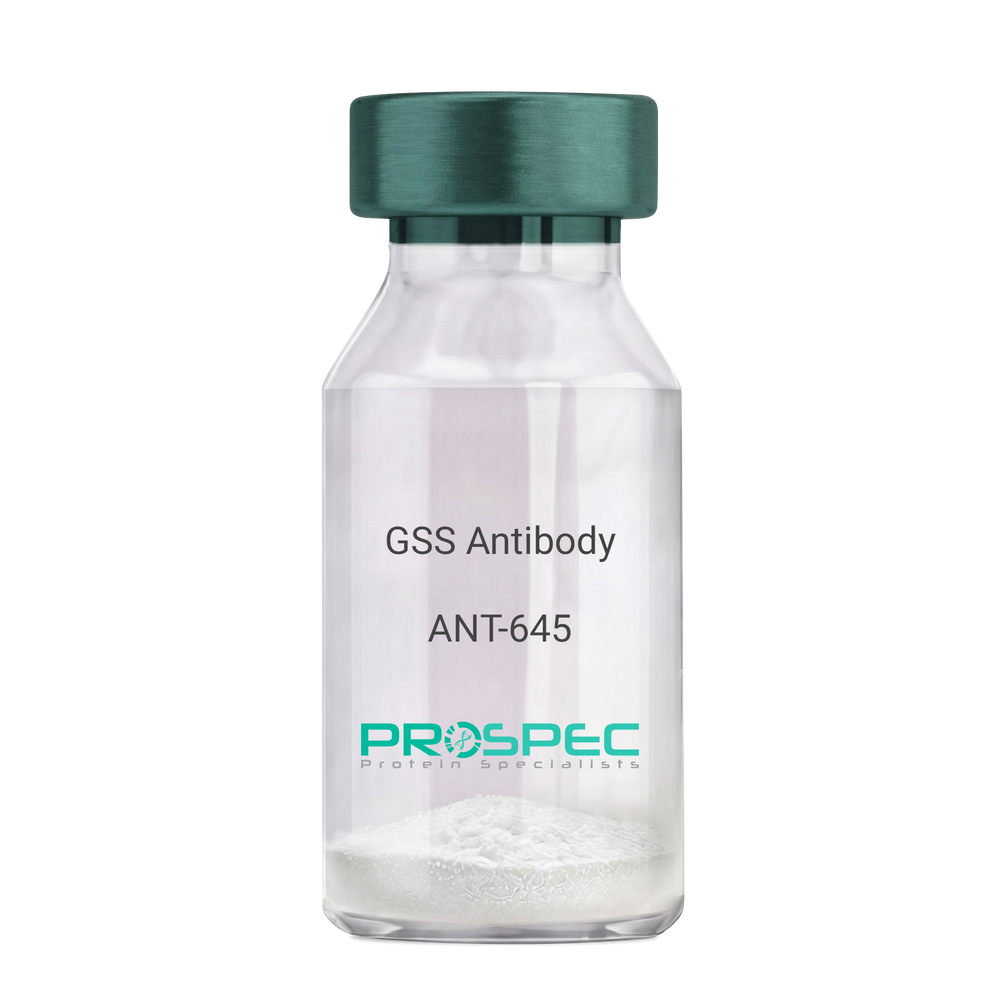
    Name :

    GSS Antibody

    Description:

    Glutathione Synthetase, Mouse Anti Human

    Glutathione synthetase, GSH synthetase, GSH-S, Glutathione synthase, GSHS, MGC14098, GSS.

    Product # :

    ANT-645

    Price :

    Quantity :

    Shipping Method :

    Ice Icon

    Shipped with Ice Packs

    Add To Cart

    More Info

    • formulation
    • More Info
    • Citations

    Formulation

    1mg/ml containing PBS, pH-7.4, 10% Glycerol and 0.02% Sodium Azide.

    Citations

    More Info

    • Introduction

      Glutathione synthetase (GSS) is the second enzyme in the glutathione biosynthesis pathway. GSS catalyses the condensation of gamma-glutamylcysteine and glycine to form glutathione. Defects in the GSS are the cause of glutathione synthetase deficiency aka GSS deficiency or 5-oxoprolinuria or pyroglutamic aciduria, which is a severe form characterized by an increased rate of hemolysis and defective function of the central nervous system.

    • Synonyms

      Glutathione synthetase, GSH synthetase, GSH-S, Glutathione synthase, GSHS, MGC14098, GSS.

    • Physical Appearance

      Sterile filtered colorless solution.

    • Immunogen

      Anti-human GSS mAb, is derived from hybridization of mouse F0 myeloma cells with spleen cells from BALB/c mice immunized with recombinant human GSS amino acids 1-474 purified from E. coli.

    • Ig Subclass

      Mouse IgG1 heavy chain and k light chain.

    • Clone

      PAT12F2AT.

    • Applications

      GSS antibody has been tested by ELISA, Western blot analysis and ICC/IF to assure specificity and reactivity. Since application varies, however, each investigation should be titrated by the reagent to obtain optimal results.

    • Type

      Mouse Anti Human Monoclonal.

    • Storage Procedures

      For periods up to 1 month store at 4°C, for longer periods of time, store at -20°C. Prevent freeze thaw cycles.

    • Purification Method

      GSS antibody was purified from mouse ascitic fluids by protein-A affinity chromatography.

    ProSpec's products are furnished for LABORATORY RESEARCH USE ONLY. The product may not be used as drugs, agricultural or pesticidal products, food additives or household chemicals.

    Gss Antibody
  • View Data Sheet

    Name :

    NXPH1 Human

    Description:

    Neurexophilin 1 Human Recombinant

    Nbla00697, NPH1, Neurexophilin-1, NXPH1.

    Product # :

    PRO-1859

    Price :

    Quantity :

    Shipping Method :

    Ice Icon

    Shipped with Ice Packs

    Add To Cart

    More Info

    • description
    • source
    • formulation
    • purity
    • More Info
    • Citations

    Description

    NXPH1 Human Recombinant produced in E. coli is. a single polypeptide chain containing 273 amino acids (22-271) and having a molecular mass of 31kDa. NXPH1 is fused to a 23 amino acid His-tag at N-terminus & purified by proprietary chromatographic techniques.

    Source

    Escherichia Coli.

    Formulation

    The NXPH1 solution (0.5mg/ml) contains 20mM Tris-HCl buffer (pH 8.0), 0.4M UREA and 10% glycerol.

    Purity

    Greater than 90% as determined by SDS-PAGE.

    Citations

    More Info

    • Introduction

      Neurexophilin 1 (NXPH1) is a part of the neurexophilin family which encodes a secreted protein with a variable N terminal domain, an extremely conserved, N-glycosylated central domain, a short linker region, and a cysteine-rich Cterminal domain. NXPH1 shapes a very tight complex with alpha neurexins, a group of proteins which promote adhesion among dendrites and axons.

    • Synonyms

      Nbla00697, NPH1, Neurexophilin-1, NXPH1.

    • Physical Appearance

      Sterile Filtered clear solution.

    • Stability

      Store at 4°C if entire vial will be used within 2-4 weeks. Store frozen at -20°C for longer periods of time. For long term storage it is recommended to add a carrier protein (0.1% HSA or BSA).Avoid multiple freeze-thaw cycles.

    • Amino Acid Sequence

      MGSSHHHHHH SSGLVPRGSH MGSANLTNGG KSELLKSGSS KSTLKHIWTE SSKDLSISRL LSQTFRGKEN DTDLDLRYDT PEPYSEQDLW DWLRNSTDLQ EPRPRAKRRP IVKTGKFKKM FGWGDFHSNI KTVKLNLLIT GKIVDHGNGT FSVYFRHNST GQGNVSVSLV PPTKIVEFDL AQQTVIDAKD SKSFNCRIEY EKVDKATKNT LCNYDPSKTC YQEQTQSHVS WLCSKPFKVI CIYISFYSTD YKLVQKVCPD YNYHSDTPYF PSG.

    ProSpec's products are furnished for LABORATORY RESEARCH USE ONLY. The product may not be used as drugs, agricultural or pesticidal products, food additives or household chemicals.

    Nxph1 Human
  • View Data Sheet

    Name :

    TFF2 Human, His

    Description:

    Trefoil Factor-2 Human Recombinant, His Tag

    TFF-2, Spasmolytic polypeptide, Spasmolysin, SML1, Trefoil factor 2, SP, TFF2.

    Product # :

    CYT-611

    Price :

    Quantity :

    Shipping Method :

    Room Temp Icon

    Shipped at Room temp

    Add To Cart

    More Info

    • description
    • source
    • formulation
    • purity
    • More Info
    • Citations

    Description

    TFF-2 Human Recombinant produced in E.Coli is a single, non-glycosylated, polypeptide chain containing 116 amino acids (24-129) which includes a 10 amino acid His Tag fused at N-terminus and having a total molecular mass of 13.2 kDa. TFF2 Human Recombinant is purified by proprietary chromatographic techniques.

    Source

    Escherichia Coli.

    Formulation

    The TFF2 protein was lyophilized from 0.4μm filtered solution at a concentration of 0.5mg/ml containing 20mM Tris pH-7.5, and 20mM NaCl.

    Purity

    Greater than 95.0% as determined by SDS-PAGE.

    Citations

    More Info

    • Introduction

      Proteins of the TFF family are characterized by obtaining a minimum of 1 copy of the trefoil motif, a 40-amino acid domain that contains 3 conserved disulfides. Trefoil Factors are stable secretory proteins expressed in gastrointestinal mucosa which protect the mucosa from insults, stabilize the mucus layer and affect healing of the epithelium.TFF2 inhibits gastric acid motility & secretion. TFF2 stabilizes glycoproteins in the mucus gel through interactions with carbohydrate side chains.

    • Synonyms

      TFF-2, Spasmolytic polypeptide, Spasmolysin, SML1, Trefoil factor 2, SP, TFF2.

    • Physical Appearance

      Filtered White lyophilized (freeze-dried) powder.

    • Stability

      Lyophilized TFF2 although stable at room temperature for 3 weeks, should be stored desiccated below -18°C. Upon reconstitution TFF2 should be stored at 4°C between 2-7 days and for future use below -18°C.For long term storage it is recommended to add a carrier protein (0.1% HSA or BSA).Please prevent freeze-thaw cycles.

    • Solubility

      It is recommended to add deionized water to prepare a working stock solution of approximately 0.5mg/ml and let the lyophilized pellet dissolve completely. Product is not sterile! Please filter the product by an appropriate sterile filter before using it in the cell culture.

    • Amino Acid Sequence

      MKHHHHHHAS EKPSPCQCSR LSPHNRTNCG FPGITSDQCF DNGCCFDSSV TGVPWCFHPL PKQESDQCVM EVSDRRNCGY PGISPEECAS RKCCFSNFIF EVPWCFFPKSVEDCHY.

    ProSpec's products are furnished for LABORATORY RESEARCH USE ONLY. The product may not be used as drugs, agricultural or pesticidal products, food additives or household chemicals.

    Tff2 Human His
  • View Data Sheet

    Name :

    GSS Human

    Description:

    Glutathione Synthetase Human Recombinant

    Glutathione synthetase, GSH synthetase, GSH-S, Glutathione synthase, GSHS, MGC14098, GSS.

    Product # :

    ENZ-021

    Price :

    Quantity :

    Shipping Method :

    Ice Icon

    Shipped with Ice Packs

    Add To Cart

    More Info

    • description
    • source
    • formulation
    • purity
    • More Info
    • Citations

    Description

    GSS Human Recombinant fused with a 20 amino acid His tag at N-terminus produced in E.Coli is a single, non-glycosylated, polypeptide chain containing 494 amino acids (1-474 a.a.) and having a molecular mass of 54.5kDa. The GSS is purified by proprietary chromatographic techniques.

    Source

    Escherichia Coli.

    Formulation

    The GSS solution (1mg/ml) contains 20mM Tris-HCl buffer (pH 8.0), 1mM DTT and 10% glycerol.

    Purity

    Greater than 95.0% as determined by SDS-PAGE.

    Citations

    More Info

    • Introduction

      Glutathione synthetase (GSS) is the second enzyme in the glutathione biosynthesis pathway. GSS catalyses the condensation of gamma-glutamylcysteine and glycine to form glutathione. Defects in the GSS are the cause of glutathione synthetase deficiency aka GSS deficiency or 5-oxoprolinuria or pyroglutamic aciduria, which is a severe form characterized by an increased rate of hemolysis and defective function of the central nervous system.

    • Synonyms

      Glutathione synthetase, GSH synthetase, GSH-S, Glutathione synthase, GSHS, MGC14098, GSS.

    • Physical Appearance

      Sterile Filtered colorless solution.

    • Stability

      Store at 4°C if entire vial will be used within 2-4 weeks. Store, frozen at -20°C for longer periods of time. For long term storage it is recommended to add a carrier protein (0.1% HSA or BSA).Avoid multiple freeze-thaw cycles.

    • Amino Acid Sequence

      MGSSHHHHQH SSGLVPRGSH MATNWGSLLQ DKQQLEELAR QAVDRALAEG VLLRTSQEPT SSEVVSYAPF TLFPSLVPSA LLEQAYAVQM DFNLLVDAVS QNAAFLEQTL SSTIKQDDFT ARLFDIHKQV LKEGIAQTVF LGLNRSDYMF QRSADGSPAL KQIEINTISA SFGGLASRTP AVHRHVLSVL SKTKEAGKIL SNNPSKGLAL GIAKAWELYG SPNALVLLIA QEKERNIFDQRAIENELLAR NIHVIRRTFE DISEKGSLDQ DRRLFVDGQE IAVVYFRDGY MPRQYSLQNW EARLLLERSH AAKCPDIATQ LAGTKKVQQE LSRPGMLEML LPGQPEAVAR LRATFAGLYS LDVGEEGDQA IAEALAAPSR FVLKPQREGG GNNLYGEEMV QALKQLKDSE ERASYILMEK IEPEPFENCL LRPGSPARVV QCISELGIFG VYVRQEKTLV MNKHVGHLLR TKAIEHADGG VAAGVAVLDN PYPV.

    ProSpec's products are furnished for LABORATORY RESEARCH USE ONLY. The product may not be used as drugs, agricultural or pesticidal products, food additives or household chemicals.

    Gss Human
  • View Data Sheet

    Name :

    FGFR3 Human

    Description:

    Fibroblast Growth Factor Receptor 3 Fc Chimera Human Recombinant

    Achondroplasia, Thanatophoric Dwarfism, CD333, ACH, CEK2, JTK4, HSFGFR3EX, FGFR3.

    Product # :

    PKA-232

    Price :

    Quantity :

    Shipping Method :

    Room Temp Icon

    Shipped at Room temp

    Add To Cart

    More Info

    • description
    • source
    • formulation
    • purity
    • More Info
    • Citations

    Description

    Soluble FGFR3 Human recombinant fused using a Xa cleavage site with the Fc part of human IgG1 produced in Fc Chimera is a heterodimeric, glycosylated, Polypeptide chain containing 593aa and having a molecular mass of 170kDa.

    Source

    Insect Cells.

    Formulation

    FGFR3 was lyophilized from a concentrated (1 mg/ml) sterile solution containing PBS.

    Purity

    Greater than 90.0% as determined by:(a) Analysis by silver stain.(b) Analysis by SDS-PAGE.

    Citations

    More Info

    • Introduction

      Fibroblast Growth Factors (FGFs) comprise a family of at least eighteen structurally realted proteins that are involved in a multitude of physiological and pathological cellular processes, including cell growth, differentation, angiogenesis, wound healing and tumorgenesis. The biological activities of the FGFs are mediated by a family if type I transmembrane tyrosine kinases which undergo dimerization and autophosphorylation after ligand binding. Four distinct genes encoding closely related FGF receptors, FGFR-1to -4 are known. Multiple forms of FGFR-1 to -3 are generated by alternative splicing of the mRNAs. A frequent splicing event involving FGFR-1 and -2 results in receptors containing all three Ig domains, referred to as the alpha isoform, or only IgII and IgIII, referred to as the ? isoform. Only the alpha isoform has been identified for FGFR-3 and FGFR-4. Additional splicing events for FGFR-1 to -3, involving the C-terminal half of the IgIII domain encoded by two mutually exclusive alternative exons, generate FGF receptors with alternative IgIII domains (IIIb and IIIc). A IIIa isoform which is a secreted FGF binding protein containing only the N-terminal half of the IgIII domain plus some intron sequences has also been reported for FGFR-1. Mutations in FGFR-1 to -3 have been found in patients with birth defects involving craniosynostosis.

    • Synonyms

      Achondroplasia, Thanatophoric Dwarfism, CD333, ACH, CEK2, JTK4, HSFGFR3EX, FGFR3.

    • Physical Appearance

      Sterile Filtered White lyophilized (freeze-dried) powder.

    • Stability

      Lyophilized FGFR3 although stable at room temperature for 3 weeks, should be stored desiccated below -18oC. Upon reconstitution FGFR3 should be stored at 4oC between 2-7 days and for future use below -18oC.For long term storage it is recommended to add a carrier protein (0.1% HSA or BSA).Please prevent freeze-thaw cycles.

    • Solubility

      It is recommended to reconstitute the lyophilized FGFR-3 in sterile PBS not less than 50µg/ml, which can then be further diluted to other aqueous solutions.

    • Amino Acid Sequence

      ESLGTEQRVV GRAAEVPGPE PGQQEQLVFG SGDAVELSCP PPGGGPMGPT VWVKDGTGLV PSERVLVGPQ RLQVLNASHE DSGAYSCRQR LTQRVLCHFS VRVTDAPSSG DDEDGEDEAE DTGVDTGAPY WTRPERMDKK LLAVPAANTV RFRCPAAGNP TPSISWLKNG REFRGEHRIG GIKLRHQQWS LVMESVVPSD RGNYTCVVEN KFGSIRQTYT LDVLERSPHR PILQAGLPAN QTAVLGSDVE FHCKVYSDAQ PHIQWLKHVE VNGSKVGPDG TPYVTVLKTA GANTTDKELE VLSLHNVTFE DAGEYTCLAG NSIGFSHHSA WLVVLPAEEE LVEADEAGDP RRASIEGRGD PEEPKSCDKT HTCPPCPAPE LLGGPSVFLF PPKPKDTLMI SRTPEVTCVV VDVSHEDPEV KFNWYVDGVE VHNAKTKPRE EQYNSTYRVV SVTVLHQDWL NGKEYKCKVS NKALPAPIEK TISKAKGQPR EPQVYTLPPS RDELTKNQVS LTCLVKGFYP SDIAVEWESN GQPENNYKTT PPVLDSDGSF FLYSKLTVDK SRWQQGNVFS CSVMHEALHN HYTQKSLSLS PGK.

    ProSpec's products are furnished for LABORATORY RESEARCH USE ONLY. The product may not be used as drugs, agricultural or pesticidal products, food additives or household chemicals.

    Fgfr3 Human
  • View Data Sheet

    Name :

    GHRP2

    Description:

    Growth Hormone Releasing Peptide-2

    GHRP-2, GHRP.

    Product # :

    HOR-271

    Price :

    Quantity :

    Shipping Method :

    Room Temp Icon

    Shipped at Room temp

    Add To Cart

    More Info

    • description
    • formulation
    • purity
    • More Info
    • Citations

    Description

    Growth Hormone Releasing Peptide-2 Synthetic is a single, non-glycosylated polypeptide chain containing 6 amino acids, having a molecular mass of 817.9 Dalton and a Molecular formula of C45H55N9O6.

    Formulation

    The GHRP-2 hormone was lyophilized with no additives.

    Purity

    Greater than 99.0% as determined by analysis by RP-HPLC.

    Citations

    More Info

    • Introduction

      GH-releasing peptides (GHRPs) are synthetic peptides that like GHRH act directly on pituitary somatotrophs to stimulate GH release. GHRP-2, an investigational drug, is one of the most potent members of the GHRP family. It has been shown to be effective in adults via the oral and intranasal as well as the iv route of administration.

    • Synonyms

      GHRP-2, GHRP.

    • Physical Appearance

      Sterile Filtered White lyophilized (freeze-dried) powder.

    • Stability

      Lyophilized Growth Hormone Releasing Peptide-2 although stable at room temperature for 3 weeks, should be stored desiccated below -18°C. Upon reconstitution GHRP-2 should be stored at 4°C between 2-7 days and for future use below -18°C.For long term storage it is recommended to add a carrier protein (0.1% HSA or BSA).Please prevent freeze-thaw cycles.

    • Solubility

      It is recommended to reconstitute the lyophilized GHRP-2 in sterile 18MΩ-cm H2O not less than 100 µg/ml, which can then be further diluted to other aqueous solutions.

    • Amino Acid Sequence

      H-D-Ala-D-2-Nal-Ala-Trp-D-Phe-Lys-NH2.

    • Background

      What is the molecular weight/Mw of GHRP2 Protein?
      GHRP2 Protein has a total Mw of 0.817kDa.

      What is the Purity of GHRP2 Protein?
      GHRP2 Protein is >99% pure as determined by SDS-PAGE.

      What is the Biological Activity of GHRP2 Protein?
      The biological functionality of GHRP2 Protein will be determined in the future.

      What is the amino acid sequence of GHRP2 Protein?
      H-D-Ala-D-2-Nal-Ala-Trp-D-Phe-Lys-NH2.

      What applications can GHRP2 Protein be used in?
      GHRP2 Protein can probably be used in western blot, ELISA and Lateral Flow.

      What is the endotoxin level for GHRP2 Protein?
      The endotoxin level is minimal, GHRP2 Protein was purified using conventional chromatography techniques.

      Who supplies GHRP2 that is in stock and available to order?
      ProSpec has the protein in stock and available for immediate delivery.

      Where can I order bulk mg quantities of GHRP2?
      ProSpec supplies bulk mg quantities at affordable prices that meets research and academic budgets.

    ProSpec's products are furnished for LABORATORY RESEARCH USE ONLY. The product may not be used as drugs, agricultural or pesticidal products, food additives or household chemicals.

    Ghrp 2 Human
  • View Data Sheet

    Name :

    ARSA Human, SF9

    Description:

    Arylsulfatase A Human Recombinant, Sf9

    Arylsulfatase A, Cerebroside-Sulfatase, ASA, Metachromatic Leucodystrophy, MLD, EC 3.1.6.8.

    Product # :

    ENZ-1087

    Price :

    Quantity :

    Shipping Method :

    Ice Icon

    Shipped with Ice Packs

    Add To Cart

    More Info

    • description
    • source
    • formulation
    • purity
    • biological activity
    • More Info
    • Citations

    Description

    ARSA produced in Sf9 Baculovirus cells is a single, glycosylated polypeptide chain containing 498 amino acids (21-509a.a.) and having a molecular mass of 53.0kDa. (Molecular size on SDS-PAGE will appear at approximately 50-70kDa). ARSA is expressed with a 9 amino acid His tag at C-Terminus and purified by proprietary chromatographic techniques.

    Source

    Sf9, Baculovirus cells.

    Formulation

    ARSA protein solution (0.25mg/ml) contains Phosphate Buffered Saline (pH 7.4) and 10% glycerol.

    Purity

    Greater than 95.0% as determined by SDS-PAGE.

    Biological Activity

    Specific activity is > 2,500 pmol/min/ug, and defined as the amount of enzyme that hydrolyze 4-Nitrocatechol at pH 5.0 at 37C.

    Citations

    More Info

    • Introduction

      The enzyme Arylsulfatase A, also known as cerebroside-sulfatase, is responsible to break down sulfatides. The main molecule that Arylsulfatase A breaks down is cerebroside 3-sulfate into cerebroside and sulfate. The enzyme is encoded by the ARSA gene in humans. Phosphate can form a covalent bond with the Arylsulfatase A’s active site 3-oxoalanine, thus, inhibits the protein.

    • Synonyms

      Arylsulfatase A, Cerebroside-Sulfatase, ASA, Metachromatic Leucodystrophy, MLD, EC 3.1.6.8.

    • Physical Appearance

      Sterile Filtered clear solution.

    • Stability

      Store at 4°C if entire vial will be used within 2-4 weeks. Store, frozen at -20°C for longer periods of time. For long term storage it is recommended to add a carrier protein (0.1% HSA or BSA).Avoid multiple freeze-thaw cycles.

    • Amino Acid Sequence

      ADPRPPNIVL IFADDLGYGD LGCYGHPSST TPNLDQLAAG GLRFTDFYVP VSLCTPSRAA LLTGRLPVRM GMYPGVLVPS SRGGLPLEEVTVAEVLAARG YLTGMAGKWH LGVGPEGAFL PPHQGFHRFL GIPYSHDQGP CQNLTCFPPA TPCDGGCDQG LVPIPLLANL SVEAQPPWLP GLEARYMAFA HDLMADAQRQ DRPFFLYYAS HHTHYPQFSG QSFAERSGRG PFGDSLMELD AAVGTLMTAI GDLGLLEETL VIFTADNGPETMRMSRGGCS GLLRCGKGTT YEGGVREPAL AFWPGHIAPG VTHELASSLD LLPTLAALAG APLPNVTLDG FDLSPLLLGT GKSPRQSLFF YPSYPDEVRG VFAVRTGKYK AHFFTQGSAH SDTTADPACH ASSSLTAHEP PLLYDLSKDP GENYNLLGGV AGATPEVLQA LKQLQLLKAQLDAAVTFGPS QVARGEDPAL QICCHPGCTP RPACCHCPDP HAHHHHHH.

    ProSpec's products are furnished for LABORATORY RESEARCH USE ONLY. The product may not be used as drugs, agricultural or pesticidal products, food additives or household chemicals.

    Arylsulfatase A
  • View Data Sheet

    Name :

    Flagellin FliA (H)

    Description:

    Flagellin FliA (H) Recombinant

    Product # :

    PRO-2718

    Price :

    Quantity :

    Shipping Method :

    Room Temp Icon

    Shipped at Room temp

    Add To Cart

    More Info

    • description
    • source
    • formulation
    • purity
    • More Info
    • Citations

    Description

    Flagellin FliA (H) Recombinant produced in E.Coli is a single, non-glycosylated, polypeptide chain containing 302 amino acids and having a molecular mass of approximately 33.1kDa.The Flagellin FliA (H) is purified by proprietary chromatographic techniques.

    Source

    Escherichia Coli.

    Formulation

    Lyophilized from a 0.2um filtered concentrated solution in PBS, pH 7.4.

    Purity

    Greater than 97.0% as determined by SDS-PAGE and HPLC analyses.

    Citations

    More Info

    • Introduction

      Flagellin FliA (H), also known as RNA polymerase sigma factor for flagellar operon, Sigma F and Sigma-28, is a part of the FliA subfamily or sigma-70 factor family. This sigma factor controls the expression of flagella-related genes. Flagellin FliA (H) regulates the expression of genes involved in virulence. Flagellin FliA (H) is an initiation factors which endorses the attachment of RNA polymerase to specific initiation sites and are then released.

    • Physical Appearance

      Sterile Filtered White lyophilized (freeze-dried) powder.

    • Stability

      Lyophilized Flagellin FliA (H) although stable at room temperature for 3 weeks, should be stored desiccated below -18°C. Upon reconstitution Flagellin should be stored at 4°C between 2-7 days and for future use below -18°C.Please prevent freeze-thaw cycles.

    • Solubility

      It is recommended to reconstitute the lyophilized Flagellin FliA (H) in sterile 18MΩ-cm H2O not less than 100µg/ml, which can then be further diluted to other aqueous solutions.

    • Amino Acid Sequence

      MKGLKTGWIE KSVENIKTAY GIEPTGANKL KVTISDDGAY GVLASVTPKT GEFELHIDSS DFEKGDGESG NNIHGKLYDD RIIQHEMTHA VMNDALGIDK MNDLHDKNKL WFIEGTAEAM AGADERVKDI IGNDTQTGID NTKLSKLATR ADALLNGVSW NSSDEDYAAG YLMVKYIASK GIDLKAVMKE IKNTGASGLD NKIDLTNLKI DFKNNLENYI KDISKVHLDW DDDEKDVGSI LGSDHGHGDI KAEDVVKGTT PEKEQPLDKF KIIWPDDNSD NTTGKIQLQV GANEGQSITI LE

    ProSpec's products are furnished for LABORATORY RESEARCH USE ONLY. The product may not be used as drugs, agricultural or pesticidal products, food additives or household chemicals.

    Flagellin Flia H
  • View Data Sheet

    Name :

    TFPI Human, Sf9

    Description:

    Tissue Factor Pathway Inhibitor Human Recombinant, Sf9

    Tissue Factor Pathway Inhibitor (Lipoprotein-Associated Coagulation Inhibitor), Extrinsic Pathway Inhibitor, Tissue Factor Pathway Inhibitor, anti-convertin, TFPI1, EPI, LACI, TFI.

    Product # :

    PRO-2441

    Price :

    Quantity :

    Shipping Method :

    Ice Icon

    Shipped with Ice Packs

    Add To Cart

    More Info

    • description
    • source
    • formulation
    • purity
    • More Info
    • Citations

    Description

    TFPI Human Recombinant produced in Sf9 Baculovirus cells is a single, glycosylated polypeptide chain containing 285 amino acids (29-304a.a.) and having a molecular mass of 33kDa (Molecular size on SDS-PAGE will appear at approximately 40-57kDa). TFPI is expressed with a 9 amino acids His tag at C-Terminus and purified by proprietary chromatographic techniques.

    Source

    Sf9, Baculovirus cells.

    Formulation

    TFPI protein solution (0.25mg/ml) contains Phosphate Buffered Saline (pH 7.4) and 10% glycerol.

    Purity

    Greater than 90.0% as determined by SDS-PAGE.

    Citations

    More Info

    • Introduction

      TFPI is a protease inhibitor which controls the tissue factor (TF)-dependent pathway of blood coagulation. The coagulation process starts with the creation of a factor VIIa-TF complex, that proteolytically triggers additional proteases (factors IX and X) and eventually results in a fibrin clot. TFPI inhibits the activated factor X and VIIa-TF proteases in an autoregulatory loop. TFPI is glycosylated and predominantly located in the vascular endothelium and plasma in both free forms and complexed with plasma lipoproteins. A number of alternatively spliced transcript variants of this gene have are known, however the full-length nature of several of these variants were not yet established.

    • Synonyms

      Tissue Factor Pathway Inhibitor (Lipoprotein-Associated Coagulation Inhibitor), Extrinsic Pathway Inhibitor, Tissue Factor Pathway Inhibitor, anti-convertin, TFPI1, EPI, LACI, TFI.

    • Physical Appearance

      Sterile Filtered colorless solution.

    • Stability

      Store at 4°C if entire vial will be used within 2-4 weeks. Store, frozen at -20°C for longer periods of time. For long term storage it is recommended to add a carrier protein (0.1% HSA or BSA).Avoid multiple freeze-thaw cycles.

    • Amino Acid Sequence

      ADPDSEEDEE HTIITDTELP PLKLMHSFCA FKADDGPCKA IMKRFFFNIF TRQCEEFIYG GCEGNQNRFE SLEECKKMCT RDNANRIIKT TLQQEKPDFC FLEEDPGICR GYITRYFYNN QTKQCERFKY GGCLGNMNNF ETLEECKNIC EDGPNGFQVD NYGTQLNAVN NSLTPQSTKV PSLFEFHGPS WCLTPADRGL CRANENRFYY NSVIGKCRPF KYSGCGGNEN NFTSKQECLR ACKKGFIQRI SKGGLIKTKR KRKKQRVKIA YEEIFVKNMH HHHHH.

    ProSpec's products are furnished for LABORATORY RESEARCH USE ONLY. The product may not be used as drugs, agricultural or pesticidal products, food additives or household chemicals.

    Tfpi Protein
  • View Data Sheet

    Name :

    TH Mouse

    Description:

    Tyrosine Hydroxylase Mouse Recombinant

    Tyrosine 3-monooxygenase, Tyrosine 3-hydroxylase, TH.

    Product # :

    ENZ-988

    Price :

    Quantity :

    Shipping Method :

    Ice Icon

    Shipped with Ice Packs

    Add To Cart

    More Info

    • description
    • source
    • formulation
    • purity
    • More Info
    • Citations

    Description

    TH Mouse Recombinant produced in Sf9 Baculovirus cells is a single, glycosylated polypeptide chain containing 507 amino acids (1-498a.a.) and having a molecular mass of 57.0kDa (Molecular size on SDS-PAGE will appear at approximately 50-70kDa). TH is expressed with a 6 amino acid His tag at C-Terminus and purified by proprietary chromatographic techniques.

    Source

    Sf9, Baculovirus cells.

    Formulation

    TH protein solution (0.25mg/ml) containing Phosphate Buffered Saline (pH 7.4) and 10% glycerol.

    Purity

    Greater than 90.0% as determined by SDS-PAGE.

    Citations

    More Info

    • Introduction

      Tyrosine 3-monooxygenase (Th), is a rate-limiting enzyme in catecholamine synthesis. Th utilizes tetrahydrobiopterin as well as molecular oxygen to convert tyrosine to DOPA. Th regulates dopamine (DA) neurotransmission at the biosynthesis and reuptake steps. Th takes a vital part in the physiology of adrenergic neurons. Furthermore, Th effects overexpression in lymphocytes on the differentiation as well as function of T helper cells.

    • Synonyms

      Tyrosine 3-monooxygenase, Tyrosine 3-hydroxylase, TH.

    • Physical Appearance

      Sterile Filtered colorless solution.

    • Stability

      Store at 4°C if entire vial will be used within 2-4 weeks. Store, frozen at -20°C for longer periods of time. For long term storage it is recommended to add a carrier protein (0.1% HSA or BSA).Avoid multiple freeze-thaw cycles.

    • Amino Acid Sequence

      ADPMPTPSAS SPQPKGFRRA VSEQDTKQAE AVTSPRFIGR RQSLIEDARK EREAAAAAAA AAVASAEPGN PLEAVVFEER DGNAVLNLLF SLRGTKPSSL SRALKVFETF EAKIHHLETR PAQRPLAGSP HLEYFVRFEV PSGDLAALLS SVRRVSDDVR SAREDKVPWF PRKVSELDKC HHLVTKFDPD LDLDHPGFSD QAYRQRRKLI AEIAFQYKQG EPIPHVEYTK EEIATWKEVY ATLKGLYATH ACREHLEAFQ LLERYCGYRE DSIPQLEDVS HFLKERTGFQ LRPVAGLLSA RDFLASLAFR VFQCTQYIRH ASSPMHSPEP DCCHELLGHV PMLADRTFAQ FSQDIGLASL GASDEEIEKL STVYWFTVEF GLCKQNGELK AYGAGLLSSY GELLHSLSEE PEVRAFDPDT AAVQPYQDQT YQPVYFVSES FSDAKDKLRN YASRIQRPFS VKFDPYTLAI DVLDSPHTIR RSLEGVQDEL HTLTQALSAI SHHHHHH.

    ProSpec's products are furnished for LABORATORY RESEARCH USE ONLY. The product may not be used as drugs, agricultural or pesticidal products, food additives or household chemicals.

    Th Mouse
  • View Data Sheet

    Name :

    HSV-1 gD

    Description:

    Herpes Simplex Virus-1 gD Recombinant

    Product # :

    HSV-221

    Price :

    Quantity :

    Shipping Method :

    Ice Icon

    Shipped with Ice Packs

    Add To Cart

    More Info

    • description
    • formulation
    • purity
    • More Info
    • Citations

    Description

    The E.Coli derived recombinant protein contains the HSV-1 gD immunodominant regions, 266-394 amino acids and fused to a GST-Tag at C-terminus.

    Formulation

    25mM Tris-HCl pH 8, 1mM EDTA, and 50% glycerol.

    Purity

    HSV-1 gD protein is >95% pure as determined by 10% PAGE (coomassie staining).

    Citations

    More Info

    • Introduction

      Entry of HSV into the host cell involves interactions of several viral glycoproteins with cell surface receptors. The virus particle is covered by an envelope which, when bound to specific receptors on the cell surface, will fuse with the cell membrane and create an opening, or pore, through which the virus enters the host cell. The sequential stages of HSV entry are analagous to those of other viruses. At first, complementary receptors on the virus and cell surface bring the two membranes into proximity. In an intermediate state, the two membranes begin to merge, forming a hemifusion state. Finally, a stable entry pore is formed through which the viral envelope contents are introduced to the host cell.

    • Physical Appearance

      Sterile Filtered clear solution.

    • Stability

      HSV-1 gD protein although stable at 4°C for 1 week, should be stored below -18°C. Please prevent freeze thaw cycles.

    • Specificity

      Immunoreactive with sera of HSV-infected individuals.

    • Purification Method

      HSV-1 gD was purified by proprietary chromatographic technique.

    ProSpec's products are furnished for LABORATORY RESEARCH USE ONLY. The product may not be used as drugs, agricultural or pesticidal products, food additives or household chemicals.

    Hsv 1 Gd
  • View Data Sheet

    Name :

    Sincalide

    Description:

    Sincalide

    Product # :

    HOR-274

    Price :

    Quantity :

    Shipping Method :

    Room Temp Icon

    Shipped at Room temp

    Add To Cart

    More Info

    • description
    • formulation
    • purity
    • More Info
    • Citations

    Description

    Sincalide also called CCK-8 has a molecular formula of C49H62N10O16S3 , H-Asp-Tyr(SO3H)-Met-Gly-Trp-Met-Asp-Phe-NH2 having an Mw of 1143.29 Dalton.

    Formulation

    The Sincalide was lyophilized from a concentrated (1mg/ml) solution with no additives.

    Purity

    Greater than 99.0% as determined by RP-HPLC.

    Citations

    More Info

    • Introduction

      Sincalide corresponds to the C-terminal octapeptide of cholecystokinin (CCK) which acts on receptors within the gallbladder wall causing it to contract.
      Cholecystokinin (CCK) is a hormone originally isolated from porcine intestinal mucosa and described as a linear 33-amino acid peptide containing a sulfated tyrosine, which is essential for its biological activity. It has been found in mammals in both the digestive tract and the central nervous system. Among its multiple biological functions, this hormone stimulates pancreatic exocrine secretion, gallbladder contraction, and intestine motility and may also act as a neurotransmitter/neuromodulator in the central nervous system.

    • Physical Appearance

      Sterile Filtered White lyophilized (freeze-dried) powder.

    • Stability

      Lyophilized Sincalide although stable at room temperature for 3 weeks, should be stored desiccated below -18°C. Upon reconstitution CCK-8 should be stored at 4°C between 2-7 days and for future use below -18°C.For long term storage it is recommended to add a carrier protein (0.1% HSA or BSA).Please prevent freeze-thaw cycles.

    • Solubility

      It is recommended to reconstitute the lyophilized Sincalide in sterile 18MΩ-cm H2O at a concentration of 0.5mg/ml, which can then be further diluted to other aqueous solutions.

    ProSpec's products are furnished for LABORATORY RESEARCH USE ONLY. The product may not be used as drugs, agricultural or pesticidal products, food additives or household chemicals.

    Sincalide
  • View Data Sheet

    Name :

    CST3 Mouse, sf9

    Description:

    Cystatin-C Mouse Recombinant, sf9

    Cystatin-C, Cystatin-3, Cst3.

    Product # :

    PRO-2249

    Price :

    Quantity :

    Shipping Method :

    Ice Icon

    Shipped with Ice Packs

    Add To Cart

    More Info

    • description
    • source
    • formulation
    • purity
    • More Info
    • Citations

    Description

    CST3 produced in Sf9 Insect cells is a single, glycosylated polypeptide chain containing 126 amino acids (21-140a.a.) and having a molecular mass of 14.2kDa. (Molecular size on SDS-PAGE will appear at approximately 13.5-18kDa).CST3 is expressed with a 6 amino acid His tag at C-Terminus and purified by proprietary chromatographic techniques.

    Source

    Sf9, Insect cells.

    Formulation

    CST3 protein solution (1mg/ml) contains Phosphate Buffered Saline (pH 7.4) and 10% glycerol.

    Purity

    Greater than 95.0% as determined by SDS-PAGE.

    Citations

    More Info

    • Introduction

      Cystatins are a superfamily of cysteine proteinase inhibitors found in both plants and animals. They comprise a group of proteinase inhibitors, widely distributed in tissues and body fluids, and form tight complexes with cysteine proteases such as cathepsin B, H, L and S. Cystatin C, a secreted molecule of this family, is of interest from biochemical, medicine and evolutionary points of view. Cystatin C, with molecular weight of 13260 Da, is composed of 120 amino acids, lacks carbohydrate and has two disulfide bridges located near the carboxyl terminus. Cystatin C is increased in patients with malignant diseases, and is related to the insufficiency of renal function and appears to be a better marker than creatinine. On the other hand, low levels of cystatin C involve cause the breakdown of the elastic laminae and, subsequently, the atherosclerosis and abdominal aortic aneurysm.

    • Synonyms

      Cystatin-C, Cystatin-3, Cst3.

    • Physical Appearance

      Sterile filtered colorless solution.

    • Stability

      Store at 4°C if entire vial will be used within 2-4 weeks.Store, frozen at -20°C for longer periods of time. For long term storage it is recommended to add a carrier protein (0.1% HSA or BSA).Avoid multiple freeze-thaw cycles.

    • Amino Acid Sequence

      ATPKQGPRML GAPEEADANE EGVRRALDFA VSEYNKGSND AYHSRAIQVV RARKQLVAGV NYFLDVEMGR TTCTKSQTNL TDCPFHDQPH LMRKALCSFQ IYSVPWKGTH SLTKFSCKNA HHHHHH.

    ProSpec's products are furnished for LABORATORY RESEARCH USE ONLY. The product may not be used as drugs, agricultural or pesticidal products, food additives or household chemicals.

    Cst3 Mouse Sf9
  • View Data Sheet

    Name :

    CSTA Human, His

    Description:

    Cystatin A Human Recombinant, His tag

    Cystatin-A, Cystatin-AS, Stefin-A, CSTA, STF1, STFA.

    Product # :

    PRO-504

    Price :

    Quantity :

    Shipping Method :

    Ice Icon

    Shipped with Ice Packs

    Add To Cart

    More Info

    • description
    • source
    • formulation
    • More Info
    • Citations

    Description

    CSTA produced in E.Coli is a single, non-glycosylated polypeptide chain containing 118 amino acids (1-98 a.a.) and having a molecular mass of 13.1kDa.CSTA is fused to a 20 amino acid His-tag at N-terminus & purified by proprietary chromatographic techniques.

    Source

    Escherichia Coli.

    Formulation

    Cystatin-A (1mg/ml) in 20mM Tris-HCl buffer (pH8.0), 1mM DTT and 10% glycerol.

    Citations

    More Info

    • Introduction

      Cystatin-A is the intracellular inhibitor of cysteine proteinase cathepsin B (CatB) and belongs to family 1 of the cystatin superfamily of inhibitor proteins. CSTA is a stefin that functions as a cysteine protease inhibitor, forming tight complexes with papain and the cathepsins B, H, and L. It has been proposed that extracellular CatB together with other classes of proteinases are all subjected to a cascade-like manner of activation. CatB and its inhibitor Cystatin-A are involved in degradation of extracellular matrix proteins during tissue remodeling. CSTA is one of the precursor proteins of cornified cell envelope in keratinocytes and plays a role in epidermal development and maintenance. Cystatin-A has been reported to be found in high concentrations in epithelial cells, polymorphonuclear leukocytes and lymphoid tissue. Stefins may be used as prognostic and diagnostic tools for cancer.

    • Synonyms

      Cystatin-A, Cystatin-AS, Stefin-A, CSTA, STF1, STFA.

    • Physical Appearance

      Sterile Filtered clear solution.

    • Stability

      Store at 4°C if entire vial will be used within 2-4 weeks. Store, frozen at -20°C for longer periods of time. For long term storage it is recommended to add a carrier protein (0.1% HSA or BSA).Avoid multiple freeze-thaw cycles.

    • Amino Acid Sequence

      MGSSHHHHHH SSGLVPRGSH MIPGGLSEAK PATPEIQEIV DKVKPQLEEK TNETYGKLEA VQYKTQVVAG TNYYIKVRAG DNKYMHLKVF KSLPGQNEDL VLTGYQVDKN KDDELTGF.

    ProSpec's products are furnished for LABORATORY RESEARCH USE ONLY. The product may not be used as drugs, agricultural or pesticidal products, food additives or household chemicals.

    Csta Human His
  • View Data Sheet

    Name :

    EFNA1 Human

    Description:

    Ephrin A1 Human Recombinant

    Ephrin-A1, EPLG1, TNFAIP4, LERK1, EFL1, ECKLG, EPH-related receptor tyrosine kinase ligand 1, Immediate early response protein B61, Tumor necrosis factor alpha-induced protein 4, TNF alpha-induced protein 4, ligand of eph-related kinase 1, tumor necrosis factor, alpha-induced protein 4.

    Product # :

    PRO-971

    Price :

    Quantity :

    Shipping Method :

    Ice Icon

    Shipped with Ice Packs

    Add To Cart

    More Info

    • description
    • source
    • formulation
    • purity
    • More Info
    • Citations

    Description

    EFNA1 Human Recombinant produced in E.coli is a single, non-glycosylated polypeptide chain containing 185 amino acids (19-182) and having a molecular mass of 21.6 kDa.EFNA1 is fused to a 21 amino acid His-tag at N-terminus & purified by proprietary chromatographic techniques.

    Source

    E.coli.

    Formulation

    The EFNA1 solution (1mg/ml) contains 20mM Tris-HCl buffer (pH 8.0), 0.4M Urea and 10% glycerol.

    Purity

    Greater than 90% as determined by SDS-PAGE.

    Citations

    More Info

    • Introduction

      EFNA1 belongs to the ephrin (EPH) family. The EPH subfamily is the biggest group of receptor protein kinases and they take part in vital nervous system function and development.

    • Synonyms

      Ephrin-A1, EPLG1, TNFAIP4, LERK1, EFL1, ECKLG, EPH-related receptor tyrosine kinase ligand 1, Immediate early response protein B61, Tumor necrosis factor alpha-induced protein 4, TNF alpha-induced protein 4, ligand of eph-related kinase 1, tumor necrosis factor, alpha-induced protein 4.

    • Physical Appearance

      Sterile Filtered colorless solution.

    • Stability

      Store at 4°C if entire vial will be used within 2-4 weeks. Store, frozen at -20°C for longer periods of time. For long term storage it is recommended to add a carrier protein (0.1% HSA or BSA).Avoid multiple freeze-thaw cycles.

    • Amino Acid Sequence

      MGSSHHHHHH SSGLVPRGSH MDRHTVFWNS SNPKFRNEDY TIHVQLNDYV DIICPHYEDH SVADAAMEQY ILYLVEHEEY QLCQPQSKDQ VRWQCNRPSA KHGPEKLSEK FQRFTPFTLG KEFKEGHSYY YISKPIHQHE DRCLRLKVTV SGKITHSPQA HVNPQEKRLA ADDPEVRVLH SIGHS

    ProSpec's products are furnished for LABORATORY RESEARCH USE ONLY. The product may not be used as drugs, agricultural or pesticidal products, food additives or household chemicals.

    Efna1 Human
  • View Data Sheet

    Name :

    IHH Mouse

    Description:

    Indian Hedgehog Mouse Recombinant

    Indian hedgehog protein, IHH, HHG-2, BDA1.

    Product # :

    CYT-398

    Price :

    Quantity :

    Shipping Method :

    Room Temp Icon

    Shipped at Room temp

    Add To Cart

    More Info

    • description
    • source
    • formulation
    • purity
    • biological activity
    • More Info
    • Citations

    Description

    IHH Mouse Recombinant produced in E.Coli is a single, non-glycosylated polypeptide chain containing 176 amino acids and having a molecular mass of 19.8kDa. The IHH is purified by proprietary chromatographic techniques.

    Source

    Escherichia Coli.

    Formulation

    Lyophilized from a 0.2µm filtered concentrated solution in 1×PBS, pH 7.4.

    Purity

    Greater than 95.0% as determined by:
    (a) Analysis by RP-HPLC.
    (b) Analysis by SDS-PAGE.

    Biological Activity

    Determined by its ability to induce alkaline phosphatase production by C3H/10T1/2 (CCL-226) cells. The expected ED50 for this effect is 3.0-10.0μg/ml corresponding to a specific activity of 100-334units/mg.

    Citations

    More Info

    • Introduction

      IHH belongs to the hedgehog family of secreted signaling molecules. Hedgehog proteins are vital regulators of various developmental processes including growth, patterning and morphogenesis. The vertebrate homologues of Hh comprise several proteins including sonic hedgehog (Shh), Indian hedgehog (Ihh), and Desert hedgehog (Dhh). IHH has a specific role in bone growth and differentiation. In addition, IHH is involved in yolk sac vasculogenesis, having a central role in differentiation of epiblast cells into endothelial and red blood cells. IHH mRNA expression is detected in fetal lung, gut, stomach, liver, kidney, pancreas and strongly in cartilage in growth regions of the developing bone. IHH gene mutations cause the brachydactyly type A1 which is characterized by shortening or malformation of the phalanges and also the acrocapitofemoral dysplasia.

    • Synonyms

      Indian hedgehog protein, IHH, HHG-2, BDA1.

    • Physical Appearance

      Sterile Filtered White lyophilized (freeze-dried) powder.

    • Stability

      Lyophilized IHH although stable at room temperature for 3 weeks, should be stored desiccated below -18°C. Upon reconstitution IHH should be stored at 4°C between 2-7 days and for future use below -18°C. For long term storage it is recommended to add a carrier protein (0.1% HSA or BSA).Please prevent freeze-thaw cycles.

    • Solubility

      It is recommended to reconstitute the lyophilized IHH in sterile 18MΩ-cm H2O not less than 100µg/ml, which can then be further diluted to other aqueous solutions.

    • Amino Acid Sequence

      IIGPGRVVGS RRRPPRKLVP LAYKQFSPNV PEKTLGASGR YEGKIARSSE RFKELTPNYN PDIIFKDEEN TGADRLMTQR CKDRLNSLAI SVMNQWPGVK LRVTEGWDED GHHSEESLHY EGRAVDITTS DRDRNKYGLL ARLAVEAGFD WVYYESKAHV HCSVKSEHSA AAKTGG.

    • Background

      What is the molecular weight/Mw of IHH MOUSE Protein?
      IHH MOUSE Protein has a total Mw of 19.8kDa.

      What is the source or expression system of IHH MOUSE Protein?
      Escherichia Coli.

      What is the Purity of IHH MOUSE Protein?
      IHH MOUSE Protein is >95% pure as determined by SDS-PAGE.

      What is the Biological Activity of IHH MOUSE Protein?
      Determined by its ability to induce alkaline phosphatase production by C3H/10T1/2 (CCL-226) cells. The expected ED50 for this effect is 3.0-10.0μg/ml corresponding to a specific activity of 100-334units/mg.

      What is the amino acid sequence of IHH MOUSE Protein?
      IIGPGRVVGS RRRPPRKLVP LAYKQFSPNV PEKTLGASGR YEGKIARSSE RFKELTPNYN PDIIFKDEEN TGADRLMTQR CKDRLNSLAI SVMNQWPGVK LRVTEGWDED GHHSEESLHY EGRAVDITTS DRDRNKYGLL ARLAVEAGFD WVYYESKAHV HCSVKSEHSA AAKTGG.

      What applications can IHH MOUSE Protein be used in?
      IHH MOUSE Protein can probably be used in western blot, ELISA and Lateral Flow.

      What is the endotoxin level for IHH MOUSE Protein?
      The endotoxin level is minimal, IHH MOUSE Protein was purified using conventional chromatography techniques.

    ProSpec's products are furnished for LABORATORY RESEARCH USE ONLY. The product may not be used as drugs, agricultural or pesticidal products, food additives or household chemicals.

    Ihh Mouse
  • View Data Sheet

    Name :

    TFF1 Human

    Description:

    Trefoil Factor-1 Human Recombinant

    TFF-1, TFF1, pS2, BCEI, HPS, HP1.A, pNR-2, D21S21, pS2 protein, Trefoil factor 1, Breast cancer estrogen-inducible protein.

    Product # :

    CYT-586

    Price :

    Quantity :

    Shipping Method :

    Room Temp Icon

    Shipped at Room temp

    Add To Cart

    More Info

    • description
    • source
    • formulation
    • purity
    • biological activity
    • More Info
    • Citations

    Description

    TFF-1 Human Recombinant produced in E.Coli is a homodimer, non-glycosylated, polypeptide chain containing 2 x 60 amino acids which includes a 40 amino acid trefoil motif containing 3 conserved intramolecular disulfide bonds and having a total molecular mass of 13.2 kDa. TFF-1 Human Recombinant is purified by proprietary chromatographic techniques.

    Source

    Escherichia Coli.

    Formulation

    The Human TFF1 protein was lyophilized from a 0.2µm filtered concentrated solution in 20mM PB, pH 7.4 and 150mM NaCl.

    Purity

    Greater than 97.0% as determined by:
    (a) Analysis by RP-HPLC.
    (b) Analysis by SDS-PAGE.

    Biological Activity

    The ED50 as determined by a chemotaxis bioassay using human MCF-7 cells is less than 10µg/ml, corresponding to a specific activity of >100 IU/mg.

    Citations

    More Info

    • Introduction

      The Trefoil Factor peptides (TFF1, TFF2 and TFF3) are stable secretory proteins expressed in the gastrointestinal tract (gastric mucosa), and are involved in intestinal mucosal defense and repair. TFF1 is an essential protein for normal differentiation of the antral and pyloric gastric mucosa and functions as a gastric-specific tumor suppressor gene. TFF1 is a stabilizer of the mucous gel overlying the gastrointestinal mucosa that provides a physical barrier against various noxious agents. TFF1 protects the mucosa from isults, stabilizes the mucus layer, & affects healing of the epithelium. TFF1 is commonly expressed in tumors. TFF1 is related with the cell membrane of MCF-7 cells. High levels of TFF1 and TFF2 are found in serum from inflammatory bowel disease.

    • Synonyms

      TFF-1, TFF1, pS2, BCEI, HPS, HP1.A, pNR-2, D21S21, pS2 protein, Trefoil factor 1, Breast cancer estrogen-inducible protein.

    • Physical Appearance

      Sterile Filtered White lyophilized (freeze-dried) powder.

    • Stability

      Lyophilized TFF1 although stable at room temperature for 3 weeks, should be stored desiccated below -18°C. Upon reconstitution TFF1 should be stored at 4°C between 2-7 days and for future use below -18°C.For long term storage it is recommended to add a carrier protein (0.1% HSA or BSA).Please prevent freeze-thaw cycles.

    • Solubility

      It is recommended to reconstitute the lyophilized TFF1 in sterile 18MΩ-cm H2O not less than 100µg/ml, which can then be further diluted to other aqueous solutions.

    • Amino Acid Sequence

      EAQTETCTVAPRERQNCGFPGVTPSQCANKGCCFDDTVRGVPWCFY
      PNTIDVPPEEECEF.

    ProSpec's products are furnished for LABORATORY RESEARCH USE ONLY. The product may not be used as drugs, agricultural or pesticidal products, food additives or household chemicals.

    Tff1 Human
  • View Data Sheet

    Name :

    VHL Human

    Description:

    Von Hippel-Lindau Protein Human Recombinant

    Von Hippel-Lindau disease tumor suppressor, pVHL, Protein G7, VHL, RCA1, VHL1, HRCA1.

    Product # :

    PRO-440

    Price :

    Quantity :

    Shipping Method :

    Ice Icon

    Shipped with Ice Packs

    Add To Cart

    More Info

    • description
    • source
    • formulation
    • purity
    • More Info
    • Citations

    Description

    Recombinant Human Von Hippel-Lindau Protein b-domain produced in E.Coli is a single, non-glycosylated polypeptide chain containing 174 amino acids (1-154) & having a molecular mass of 19.2 kDa. The Von Hippel-Lindau antigen is fused to 20 amino acid His-Tag at N-terminus and purified by proprietary chromatography techniques.

    Source

    Escherichia Coli.

    Formulation

    The Von Hippel-Lindau Protein contains 1x PBS pH-7.4, 2mM EDTA, and 1mM DTT.

    Purity

    Greater than 95.0% as determined by SDS-PAGE.

    Citations

    More Info

    • Introduction

      Von Hippel-Lindau disease is a dominant inherited syndrome characterized by the predisposition to develop various kinds of benign and malignant tumors, including clear cell renal carcinomas, pheochromocytomas and hemangioblastomas of the central nervous system and retina. VHL syndrome is caused by germline mutation in the VHL tumor suppressor, and VHL tumors are associated with loss or mutation of the remaining wild-type allele. VHL has two domains: a roughly 100-residue NH2-terminal domain rich in b sheet (b-domain) and a smaller a-helical domain (a-domain), held together by two linkers and a polar interface. VHL protein is also involved in the degradation of hypoxia-inducible factor (HIF).

    • Synonyms

      Von Hippel-Lindau disease tumor suppressor, pVHL, Protein G7, VHL, RCA1, VHL1, HRCA1.

    • Physical Appearance

      Sterile filtered colorless solution.

    • Stability

      Store at 4°C if entire vial will be used within 2-4 weeks. Store, frozen at -20°C for longer periods of time. For long term storage it is recommended to add a carrier protein (0.1% HSA or BSA). Avoid multiple freeze-thaw cycles.

    • Amino Acid Sequence

      MGSSHHHHHH SSGLVPRGSH MPRRAENWDE AEVGAEEAGV EEYGPEEDGG EESGAEESGPEESGPEELGA EEEMEAGRPR PVLRSVNSRE PSQVIFCNRS PRVVLPVWLN FDGEPQPYPT LPPGTGRRIH SYRGHLWLFR DAGTHDGLLV NQTELFVPSL NVDGQPIFAN ITLP.

    ProSpec's products are furnished for LABORATORY RESEARCH USE ONLY. The product may not be used as drugs, agricultural or pesticidal products, food additives or household chemicals.

    Vhl Human
  • View Data Sheet

    Name :

    GDNF Human

    Description:

    Glial-Derived Neurotrophic Factor Human Recombinant

    ATF1, ATF2, HFB1-GDNF, GDNF.

    Product # :

    CYT-305

    Price :

    Quantity :

    Shipping Method :

    Room Temp Icon

    Shipped at Room temp

    Add To Cart

    More Info

    • description
    • source
    • formulation
    • purity
    • biological activity
    • More Info
    • sds-page
    • Citations

    Description

    Glial derived Neurotrophic Factor Human Recombinant produced in E.Coli is a non-glycosylated disulfide-linked homodimer containing 2 x 135 amino acids and having a total molecular mass of approximately 30kDa. GDNF is purified by proprietary chromatographic techniques.

    Source

    Escherichia Coli.

    Formulation

    GDNF was lyophilized from a 0.2µm filtered concentrated solution in 1×PBS, pH 7.4 and 5% Trehalose.

    Purity

    Greater than 95.0% as determined by analysis by SDS-PAGE.

    Biological Activity

    The ED50 was determined by the proliferation of rat C6 cells is < 0.1 ng/ml, corresponding to a specific activity of > 1.0x10⁷ units/mg.

    sds-page

    GDNF sds-page - Product image 1

    Citations

    More Info

    • Introduction

      GDNF promotes the survival and differentiation of minergic neurons in culture, and is able to prevent apoptosis of motor neurons induced by axotomy. The encoded protein is processed to a mature secreted form that exists as a homodimer. The mature form of the protein is a ligand for the product of the RET (rearranged during transfection) protooncogene. In addition to the transcript encoding GDNF, two additional alternative transcripts encoding distinct proteins, referred to as astrocyte-derived trophic factors, have also been described. Mutations in this gene may be associated with Hirschsprung disease.
      GDNF enhances survival and morphological differentiation of minergic neurons and increases their high-affinity uptake.

    • Synonyms

      ATF1, ATF2, HFB1-GDNF, GDNF.

    • Physical Appearance

      Sterile Filtered White lyophilized (freeze-dried) powder.

    • Stability

      Lyophilized Glial-derived Neurotrophic Factor although stable at room temperature for 3 weeks, should be stored desiccated below -18°C. Upon reconstitution GDNF should be stored at 4°C between 2-7 days and for future use below -18°C.For long term storage it is recommended to add a carrier protein (0.1% HSA or BSA).Please prevent freeze-thaw cycles.

    • Solubility

      It is recommended to reconstitute the lyophilized Glial Derived Neurotrophic Factor in sterile 18MΩ-cm H2O not less than 100µg/ml, which can then be further diluted to other aqueous solutions.

    • Amino Acid Sequence

      SPDKQMAVLP RRERNRQAAA ANPENSRGKG RRGQRGKNRG CVLTAIHLNV TDLGLGYETK EELIFRYCSG SCDAAETTYD KILKNLSRNR RLVSDKVGQA CCRPIAFDDD LSFLDDNLVY HILRKHSAKR CGCI.

    • Background

      What is the molecular weight/Mw of GDNF HUMAN Protein?
      GDNF HUMAN Protein has a total Mw of 30kDa.

      What is the source or expression system of GDNF HUMAN Protein?
      Escherichia Coli.

      What is the Purity of GDNF HUMAN Protein?
      GDNF HUMAN Protein is >95% pure as determined by SDS-PAGE.

      What is the Biological Activity of GDNF HUMAN Protein?
      The ED50 was determined by the proliferation of rat C6 cells is < 0.1 ng/ml, corresponding to a specific activity of > 1.0x10⁷ units/mg.

      What is the amino acid sequence of GDNF HUMAN Protein?
      SPDKQMAVLP RRERNRQAAA ANPENSRGKG RRGQRGKNRG CVLTAIHLNV TDLGLGYETK EELIFRYCSG SCDAAETTYD KILKNLSRNR RLVSDKVGQA CCRPIAFDDD LSFLDDNLVY HILRKHSAKR CGCI.
      What applications can GDNF HUMAN Protein be used in?
      GDNF HUMAN Protein can probably be used in western blot, ELISA and Lateral Flow.

      What is the endotoxin level for GDNF HUMAN Protein?
      The endotoxin level is minimal, GDNF HUMAN Protein was purified using conventional chromatography techniques.


    ProSpec's products are furnished for LABORATORY RESEARCH USE ONLY. The product may not be used as drugs, agricultural or pesticidal products, food additives or household chemicals.

    Gdnf Human
  • View Data Sheet

    Name :

    NDUFS2 Human

    Description:

    Histidine NADH Dehydrogenase Fe-S Protein 2 Human Recombinant

    CI-49 , NADH dehydrogenase [ubiquinone] iron-sulfur protein 2, mitochondrial, Complex I-49kD, CI-49kD, NADH-ubiquinone oxidoreductase 49 kDa subunit, NDUFS2.

    Product # :

    ENZ-737

    Price :

    Quantity :

    Shipping Method :

    Ice Icon

    Shipped with Ice Packs

    Add To Cart

    More Info

    • description
    • source
    • formulation
    • purity
    • More Info
    • Citations

    Description

    NDUFS2 Human Recombinant produced in E.coli is a single, non-glycosylated polypeptide chain containing 410 amino acids (77-463a.a) and having a molecular mass of 46.5kDa. NDUFS2 is fused to a 23 amino acid His-tag at N-terminus & purified by proprietary chromatographic techniques.

    Source

    Escherichia Coli.

    Formulation

    The NDUFS2 solution (0.25mg/ml) contains 20mM Tris-HCl buffer (pH 8.0), 0.4M Urea and 10% glycerol.

    Purity

    Greater than 80% as determined by SDS-PAGE.

    Citations

    More Info

    • Introduction

      NDUFS2 is a core subunit of the mitochondrial membrane respiratory chain NADH dehydrogenase (Complex I) which is a part of the minimal assembly required for catalysis. Complex I takes part in the transfer of electrons from NADH to the respiratory chain. Histidine NADH Dehydrogenase Fe-S Protein 2 (NDUFS2) is required for catalytic activity. Imperfections in NDUFS2 are the source of complex I mitochondrial respiratory chain deficiency, which is characterized by many symptoms including liver failure, cardiomyopathy and neurodegeneration.

    • Synonyms

      CI-49 , NADH dehydrogenase [ubiquinone] iron-sulfur protein 2, mitochondrial, Complex I-49kD, CI-49kD, NADH-ubiquinone oxidoreductase 49 kDa subunit, NDUFS2.

    • Physical Appearance

      Sterile Filtered clear solution.

    • Stability

      Store at 4°C if entire vial will be used within 2-4 weeks. Store, frozen at -20°C for longer periods of time. For long term storage it is recommended to add a carrier protein (0.1% HSA or BSA).Avoid multiple freeze-thaw cycles.

    • Amino Acid Sequence

      MGSSHHHHHH SSGLVPRGSH MGSVKNITLN FGPQHPAAHG VLRLVMELSG EMVRKCDPHI GLLHRGTEKL IEYKTYLQAL PYFDRLDYVS MMCNEQAYSL AVEKLLNIRP PPRAQWIRVL FGEITRLLNH IMAVTTHALD LGAMTPFFWL FEEREKMFEF YERVSGARMH AAYIRPGGVH QDLPLGLMDD IYQFSKNFSL RLDELEELLT NNRIWRNRTI DIGVVTAEEA LNYGFSGVML RGSGIQWDLR KTQPYDVYDQ VEFDVPVGSR GDCYDRYLCR VEEMRQSLRI IAQCLNKMPP GEIKVDDAKV SPPKRAEMKT SMESLIHHFK LYTEGYQVPP GATYTAIEAP KGEFGVYLVS DGSSRPYRCK IKAPGFAHLA GLDKMSKGHM LADVVAIIGT QDIVFGEVDR.

    ProSpec's products are furnished for LABORATORY RESEARCH USE ONLY. The product may not be used as drugs, agricultural or pesticidal products, food additives or household chemicals.

    Ndufs2 Human
  • View Data Sheet

    Name :

    TPST1 Human, sf9

    Description:

    Tyrosylprotein Sulfotransferase 1, sf9 Human Recombinant

    Tyrosylprotein Sulfotransferase 1, EC 2.8.2.20, TPST-1, Transport And Golgi Organization 13 Homolog A (Drosophila), Transport And Golgi Organization 13 Homolog A, Tyrosylprotein Sulfotransferase-1, TANGO13A.

    Product # :

    ENZ-948

    Price :

    Quantity :

    Shipping Method :

    Ice Icon

    Shipped with Ice Packs

    Add To Cart

    More Info

    • description
    • source
    • formulation
    • purity
    • More Info
    • Citations

    Description

    TPST1 produced in Sf9 Baculovirus cells is a single, glycosylated polypeptide chain containing 354 amino acids (26-370 a.a.) and having a molecular mass of 40.6kDa (Migrates at 40-57kDa on SDS-PAGE under reducing conditions). TPST1 is expressed with a 6 amino acid His tag at C-Terminus and purified by proprietary chromatographic techniques.

    Source

    Sf9, Baculovirus cells.

    Formulation

    TPST1 protein solution (0.25mg/ml) contains Phosphate Buffered Saline (pH 7.4) and 10% glycerol.

    Purity

    Greater than 90.0% as determined by SDS-PAGE.

    Citations

    More Info

    • Introduction

      Tyrosylprotein Sulfotransferase 1, also known as TPST1 is the enzyme which catalyzes the sulfation reaction of protein tyrosines, a post-translational modification of proteins. TPST1 belongs to the protein sulfotransferase family. In addition, TPST1 utilizes 3'-Phosphoadenosine-5'-phosphosulfate (PAPS) as the sulfonate donor and also binds proteins with target tyrosine residues to eventually form the tyrosine O-sulfate ester group in addition to the desulfonated 3’-phosphoadenosine-5’-phosphate.

    • Synonyms

      Tyrosylprotein Sulfotransferase 1, EC 2.8.2.20, TPST-1, Transport And Golgi Organization 13 Homolog A (Drosophila), Transport And Golgi Organization 13 Homolog A, Tyrosylprotein Sulfotransferase-1, TANGO13A.

    • Physical Appearance

      Sterile Filtered colorless solution.

    • Stability

      Store at 4°C if entire vial will be used within 2-4 weeks. Store, frozen at -20°C for longer periods of time. For long term storage it is recommended to add a carrier protein (0.1% HSA or BSA). Avoid multiple freeze-thaw cycles.

    • Amino Acid Sequence

      ADPQHAMECH HRIEERSQPV KLESTRTTVR TGLDLKANKT FAYHKDMPLI FIGGVPRSGT TLMRAMLDAH PDIRCGEETR VIPRILALKQ MWSRSSKEKI RLDEAGVTDE VLDSAMQAFL LEIIVKHGEP APYLCNKDPF ALKSLTYLSR LFPNAKFLLM VRDGRASVHS MISRKVTIAG FDLNSYRDCL TKWNRAIETM YNQCMEVGYK KCMLVHYEQL VLHPERWMRT LLKFLQIPWN HSVLHHEEMI GKAGGVSLSK VERSTDQVIK PVNVGALSKW VGKIPPDVLQ DMAVIAPMLA KLGYDPYANP PNYGKPDPKI IENTRRVYKG EFQLPDFLKE KPQTEQVEHH HHHH.

    ProSpec's products are furnished for LABORATORY RESEARCH USE ONLY. The product may not be used as drugs, agricultural or pesticidal products, food additives or household chemicals.

    Tpst1 Human Sf9
  • 1
  • …
  • 17
  • 18
  • 19
  • 20
  • 21
  • …
  • 42
Your browser does not support the video tag.

Products

  • Cytokines
  • Growth Factors
  • Chemokines
  • CD Antigens
  • Neurotrophins
  • Hormones
  • Enzymes
  • Viral Antigens
  • Recombinant Proteins
  • Natural Proteins
  • Monoclonal Antibodies
  • Polyclonal Antibodies
  • Thermal Packaging

About

  • Company
  • Founder
  • Contribution
  • Contact Us
  • My Account

Ordering

  • Ordering Method
  • Ordering - Credit Card
  • Ordering PO
  • Shipping Fees
  • FAQ's

Legal

  • Terms & Conditions
  • Privacy
  • Site Map
  • info@prospecbio.com
  • Facebook
  • Instagram
  • Linkedin Profile

© 2026 ProSpec-Tany TechnoGene Ltd. All Rights Reserved.

  • Choosing a selection results in a full page refresh.
  • Opens in a new window.