Skip to content

High-quality research proteins.

  • 1-800-805-6531

  • Mon - Sat 8.00-18.00, Sun - Closed

  • info@prospecbio.com

  • PO Box 6591 East Brunswick NJ 08816

  • Products
    • Cytokines
    • Growth factors
    • Chemokines
    • Cd antigens
    • Neurotrophins
    • Hormones
    • Enzymes
    • Viral antigens
    • Recombinant proteins
    • Natural proteins
    • Monoclonal antibodies
    • Polyclonal antibodies
    • Thermal Packaging
  • About
    • Company
    • Founder
    • Contribution
  • Customers
    • Eastern Asia
    • Eastern Europe
    • North America
    • South America
    • South East Asia
    • Southern Asia
    • Western Europe
  • Ordering
    • Ordering Method
    • Ordering - Credit Card
    • Ordering - PO
    • Shipping Fees
    • FAQs
  • Services
    • DNA Cloning
    • Protein Expression
    • Monoclonal Antibody
    • Fermentation
    • Technology License
  • Contact us
Log in

Country/region

  • USD $ | Albania
  • USD $ | Andorra
  • USD $ | Argentina
  • USD $ | Armenia
  • USD $ | Australia
  • USD $ | Austria
  • USD $ | Azerbaijan
  • USD $ | Belarus
  • USD $ | Belgium
  • USD $ | Bolivia
  • USD $ | Brazil
  • USD $ | Bulgaria
  • USD $ | Cambodia
  • USD $ | Canada
  • USD $ | Chile
  • USD $ | China
  • USD $ | Colombia
  • USD $ | Costa Rica
  • USD $ | Croatia
  • USD $ | Cyprus
  • USD $ | Czechia
  • USD $ | Denmark
  • USD $ | Estonia
  • USD $ | Finland
  • USD $ | France
  • USD $ | Georgia
  • USD $ | Germany
  • USD $ | Greece
  • USD $ | Hong Kong SAR
  • USD $ | Hungary
  • USD $ | Iceland
  • USD $ | India
  • USD $ | Ireland
  • USD $ | Israel
  • USD $ | Italy
  • USD $ | Japan
  • USD $ | Kazakhstan
  • USD $ | Latvia
  • USD $ | Liechtenstein
  • USD $ | Lithuania
  • USD $ | Madagascar
  • USD $ | Malta
  • USD $ | Mexico
  • USD $ | Moldova
  • USD $ | Monaco
  • USD $ | Netherlands
  • USD $ | New Zealand
  • USD $ | North Macedonia
  • USD $ | Norway
  • USD $ | Panama
  • USD $ | Paraguay
  • USD $ | Peru
  • USD $ | Philippines
  • USD $ | Poland
  • USD $ | Portugal
  • USD $ | Romania
  • USD $ | Singapore
  • USD $ | Slovakia
  • USD $ | Slovenia
  • USD $ | South Africa
  • USD $ | South Korea
  • USD $ | Spain
  • USD $ | Sri Lanka
  • USD $ | Sweden
  • USD $ | Switzerland
  • USD $ | Taiwan
  • USD $ | Thailand
  • USD $ | Türkiye
  • USD $ | Ukraine
  • USD $ | United Kingdom
  • USD $ | United States
  • USD $ | Uruguay
  • USD $ | Vatican City
  • USD $ | Venezuela
  • USD $ | Vietnam
  • Facebook
  • Instagram
logoProSpec - Recombinant Protein Manufacturer for academic and R&D industry
Become a distributor
Account Log in
Wishlist
Cart Cart(0)
  • Products
    +
    • Cytokines
    • Growth factors
    • Chemokines
    • Cd antigens
    • Neurotrophins
    • Hormones
    • Enzymes
    • Viral antigens
    • Recombinant proteins
    • Natural proteins
    • Monoclonal antibodies
    • Polyclonal antibodies
    • Thermal Packaging
  • About
    +
    • Company
    • Founder
    • Contribution
  • Customers
    +
    • Eastern Asia
    • Eastern Europe
    • North America
    • South America
    • South East Asia
    • Southern Asia
    • Western Europe
  • Ordering
    +
    • Ordering Method
    • Ordering - Credit Card
    • Ordering - PO
    • Shipping Fees
    • FAQs
  • Services
    +
    • DNA Cloning
    • Protein Expression
    • Monoclonal Antibody
    • Fermentation
    • Technology License
  • Contact us

Item added to your cart

View cart
View All
  • Cytokines
  • Growth factors
  • Chemokines
  • Cd antigens
  • Neurotrophins
  • Hormones
  • Enzymes
  • Viral antigens
  • Recombinant proteins
  • Natural proteins
  • Monoclonal antibodies
  • Polyclonal antibodies
  • Thermal Packaging
  • Tumor Necrosis Factor

    Tumor Necrosis Factor

    View All
  • 4-1BB

    4-1BB

    View All
  • Adiponectin

    Adiponectin

    View All
  • AIF1

    AIF1

    View All
  • Other Cytokines

    Other Cytokines

    View All
  • AITRL

    AITRL

    View All
  • Angiopoietin

    Angiopoietin

    View All
  • Apolipoprotein

    Apolipoprotein

    View All
  • B-Cell Activating Factor

    B-Cell Activating Factor

    View All
  • Beta Defensin

    Beta Defensin

    View All
  • Bone Morphogenetic Protein

    Bone Morphogenetic Protein

    View All
  • B type Natriuretic Peptide

    B type Natriuretic Peptide

    View All
  • BST

    BST

    View All
  • Betacellulin

    Betacellulin

    View All
  • Cardiotrophin

    Cardiotrophin

    View All
  • Activin

    Activin

    View All
  • Fibroblast Growth Factor

    Fibroblast Growth Factor

    View All
  • Other Growth Factors

    Other Growth Factors

    View All
  • CSF

    CSF

    View All
  • CTGF

    CTGF

    View All
  • IGFBP

    IGFBP

    View All
  • VEGF Protein

    VEGF Protein

    View All
  • EGF

    EGF

    View All
  • Epigen

    Epigen

    View All
  • Erythropoietin

    Erythropoietin

    View All
  • Insulin-Like Growth Factor

    Insulin-Like Growth Factor

    View All
  • Growth Hormone

    Growth Hormone

    View All
  • HDGF

    HDGF

    View All
  • Hepatocyte Growth Factor

    Hepatocyte Growth Factor

    View All
  • Insulin

    Insulin

    View All
  • BCA-1/ BLC (CXCL13)

    BCA-1/ BLC (CXCL13)

    View All
  • BRAK (CXCL14)

    BRAK (CXCL14)

    View All
  • C-10 (CCL6)

    C-10 (CCL6)

    View All
  • Other Chemokines

    Other Chemokines

    View All
  • MEC (CCL28)

    MEC (CCL28)

    View All
  • LD78-beta (CCL3L1)

    LD78-beta (CCL3L1)

    View All
  • CTACK (CCL27)

    CTACK (CCL27)

    View All
  • CXCL16

    CXCL16

    View All
  • CXCL17

    CXCL17

    View All
  • Platelet Factor-4 (CXCL4)

    Platelet Factor-4 (CXCL4)

    View All
  • ENA-78 (CXCL5)

    ENA-78 (CXCL5)

    View All
  • Eotaxin (CCL11,24,26)

    Eotaxin (CCL11,24,26)

    View All
  • Exodus-2 (CCL21)

    Exodus-2 (CCL21)

    View All
  • Fractalkine (CX3CL1)

    Fractalkine (CX3CL1)

    View All
  • CXCL6

    CXCL6

    View All
  • Other CD Antigens

    Other CD Antigens

    View All
  • CD14

    CD14

    View All
  • CD164

    CD164

    View All
  • CD1

    CD1

    View All
  • CD2

    CD2

    View All
  • CD200

    CD200

    View All
  • CD207

    CD207

    View All
  • CD226

    CD226

    View All
  • CD23

    CD23

    View All
  • CD244

    CD244

    View All
  • CD247

    CD247

    View All
  • CD27

    CD27

    View All
  • CD274

    CD274

    View All
  • CD300

    CD300

    View All
  • CD33

    CD33

    View All
  • Other Neurotrophins

    Other Neurotrophins

    View All
  • Beta-NGF

    Beta-NGF

    View All
  • BDNF

    BDNF

    View All
  • CDNF

    CDNF

    View All
  • CNTF

    CNTF

    View All
  • GDNF

    GDNF

    View All
  • Glia Maturation Factor

    Glia Maturation Factor

    View All
  • MANF

    MANF

    View All
  • Midkine

    Midkine

    View All
  • Neuroglobin

    Neuroglobin

    View All
  • Neurotrophic factors

    Neurotrophic factors

    View All
  • Neuregulin

    Neuregulin

    View All
  • Neuropilin

    Neuropilin

    View All
  • Pigment Epithelium-Derived Factor

    Pigment Epithelium-Derived Factor

    View All
  • Pleiotrophin

    Pleiotrophin

    View All
  • Peptide Hormones

    Peptide Hormones

    View All
  • Other Hormones

    Other Hormones

    View All
  • HCG

    HCG

    View All
  • Endothelin

    Endothelin

    View All
  • Exendin

    Exendin

    View All
  • FSH

    FSH

    View All
  • Glucagon

    Glucagon

    View All
  • GHRP

    GHRP

    View All
  • GLP

    GLP

    View All
  • Thyrostimulin

    Thyrostimulin

    View All
  • Inhibin A

    Inhibin A

    View All
  • LHRH

    LHRH

    View All
  • Melanotan

    Melanotan

    View All
  • Procalcitonin

    Procalcitonin

    View All
  • PTH

    PTH

    View All
  • Peroxiredoxin

    Peroxiredoxin

    View All
  • Peptidase

    Peptidase

    View All
  • Synthetase

    Synthetase

    View All
  • Transferase

    Transferase

    View All
  • Hydrolase

    Hydrolase

    View All
  • Dehydrogenase

    Dehydrogenase

    View All
  • ACE2

    ACE2

    View All
  • Esterase

    Esterase

    View All
  • Protein Kinases

    Protein Kinases

    View All
  • Other Enzymes

    Other Enzymes

    View All
  • Phosphatase

    Phosphatase

    View All
  • Deaminase

    Deaminase

    View All
  • Oxygenase

    Oxygenase

    View All
  • Adenylate Kinase

    Adenylate Kinase

    View All
  • Lyase

    Lyase

    View All
  • Chagas

    Chagas

    View All
  • SARS

    SARS

    View All
  • Influenza

    Influenza

    View All
  • ASFV

    ASFV

    View All
  • Astrovirus

    Astrovirus

    View All
  • Borrelia

    Borrelia

    View All
  • Helicobacter Pylori

    Helicobacter Pylori

    View All
  • Chikungunya

    Chikungunya

    View All
  • Chlamydia

    Chlamydia

    View All
  • Cytomegalo

    Cytomegalo

    View All
  • Dengue

    Dengue

    View All
  • EBV

    EBV

    View All
  • Ebola

    Ebola

    View All
  • Feline Leukemia Virus

    Feline Leukemia Virus

    View All
  • Hepatitis A

    Hepatitis A

    View All
  • Other

    Other

    View All
  • Actin

    Actin

    View All
  • ADAM

    ADAM

    View All
  • Complement Component

    Complement Component

    View All
  • Ag85

    Ag85

    View All
  • Eukaryotic Translation Initiation Factor

    Eukaryotic Translation Initiation Factor

    View All
  • Anterior Gradient Protein

    Anterior Gradient Protein

    View All
  • Heat Shock Protein

    Heat Shock Protein

    View All
  • Alpha-2-HS-Glycoprotein

    Alpha-2-HS-Glycoprotein

    View All
  • Hemoglobin

    Hemoglobin

    View All
  • Allergy

    Allergy

    View All
  • Anaplasma

    Anaplasma

    View All
  • Angiogenin

    Angiogenin

    View All
  • Ankyrin Repeat Domain

    Ankyrin Repeat Domain

    View All
  • Annexin

    Annexin

    View All
  • Other Natural Proteins

    Other Natural Proteins

    View All
  • Aprotinin

    Aprotinin

    View All
  • Transferrin

    Transferrin

    View All
  • Avidin

    Avidin

    View All
  • Anti Coagulation Factors

    Anti Coagulation Factors

    View All
  • Natural Albumin

    Natural Albumin

    View All
  • Natural Coagulation Factors

    Natural Coagulation Factors

    View All
  • Fibronectin

    Fibronectin

    View All
  • Thrombin

    Thrombin

    View All
  • Anti Human Enzyme

    Anti Human Enzyme

    View All
  • Other Monoclonal Antibodies

    Other Monoclonal Antibodies

    View All
  • Anti Human Cytokine

    Anti Human Cytokine

    View All
  • Anti Human Heat Shock Protein

    Anti Human Heat Shock Protein

    View All
  • Anti Mouse Lymphocyte

    Anti Mouse Lymphocyte

    View All
  • Anti Human Chemokine

    Anti Human Chemokine

    View All
  • Anti Human Lymphocyte

    Anti Human Lymphocyte

    View All
  • Anti Viral Monoclonal

    Anti Viral Monoclonal

    View All
  • Anti Mouse Cytokine

    Anti Mouse Cytokine

    View All
  • Anti-GST Monoclonal

    Anti-GST Monoclonal

    View All
  • Other Polyclonal Antibodies

    Other Polyclonal Antibodies

    View All
  • Anti Viral

    Anti Viral

    View All
  • Anti-GST Monoclonal

    Anti-GST Monoclonal

    View All
Back

Search results

1000 results found for “erythropoietin”

Name

Description

Product #

Price

Quantity

Shipping Method

  • View Data Sheet

    Name :

    TMEFF1 Human

    Description:

    TMEFF1 Human Recombinant

    C9orf2, CT120.1, H7365, TR-1, Tomoregulin-1, Transmembrane protein with EGF-like and one follistatin-like domain, TMEFF1.

    Product # :

    PRO-1429

    Price :

    Quantity :

    Shipping Method :

    Ice Icon

    Shipped with Ice Packs

    Add To Cart

    More Info

    • description
    • source
    • formulation
    • purity
    • More Info

    Description

    TMEFF1 Human Recombinant produced in E. coli is a single polypeptide chain containing 314 amino acids (40-330) and having a molecular mass of 33.9kDa. TMEFF1 is fused to a 23 amino acid His-tag at N-terminus & purified by proprietary chromatographic techniques.

    Source

    E.coli.

    Formulation

    The TMEFF1 solution (0.25mg/ml) contains 20mM Tris-HCl buffer (pH 8.0), 0.1M NaCl and 10% glycerol.

    Purity

    Greater than 90% as determined by SDS-PAGE.

    More Info

    • Introduction

      TMEFF1 is a type I transmembrane glycoprotein which includes 2 follistatin modules and an EGF domain in its extracellular domain, a transmembrane domain and a short cytoplasmic tail. The extracellular domain of TMEFF1 can be released as a soluble protein. TMEFF1 is primarily expressed in brain, but is downregulated in brain neoplasms. TMEFF1 selectively regulates nodal but not activin signaling through direct binding to the nodal co-receptor, Cripto. TMEFF inhibits NODAL and BMP signaling through neural patterning and also a possible tumor suppressor in brain cancers.

    • Synonyms

      C9orf2, CT120.1, H7365, TR-1, Tomoregulin-1, Transmembrane protein with EGF-like and one follistatin-like domain, TMEFF1.

    • Physical Appearance

      Sterile Filtered colorless solution.

    • Stability

      Store at 4°C if entire vial will be used within 2-4 weeks. Store, frozen at -20°C for longer periods of time. For long term storage it is recommended to add a carrier protein (0.1% HSA or BSA).Avoid multiple freeze-thaw cycles.

    • Amino Acid Sequence

      MGSSHHHHHH SSGLVPRGSH MGSSNQPPGG GGGSGGDCPG GKGKSINCSE LNVRESDVRV CDESSCKYGG VCKEDGDGLK CACQFQCHTN YIPVCGSNGD TYQNECFLRR AACKHQKEIT VIARGPCYSD NGSGSGEGEE EGSGAEVHRK HSKCGPCKYK AECDEDAENV GCVCNIDCSG YSFNPVCASD GSSYNNPCFV REASCIKQEQ IDIRHLGHCT DTDDTSLLGK KDDGLQYRPD VKDASDQRED VYIGNHMPCP ENLNGYCIHG KCEFIYSTQK ASCRCESGYT GQHCEKTDFS ILYVVPSRQK LTHV.

    ProSpec's products are furnished for LABORATORY RESEARCH USE ONLY. The product may not be used as drugs, agricultural or pesticidal products, food additives or household chemicals.

    Tmeff1 Human
  • View Data Sheet

    Name :

    POFUT1 Human

    Description:

    Protein O-Fucosyltransferase 1 Human Recombinant

    FUT12, O-Fuc-T, O-FucT-1, O-FUT, GDP-fucose protein O-fucosyltransferase 1, Peptide-O-fucosyltraferase 1,KIAA0180.

    Product # :

    ENZ-679

    Price :

    Quantity :

    Shipping Method :

    Ice Icon

    Shipped with Ice Packs

    Add To Cart

    More Info

    • description
    • source
    • formulation
    • purity
    • More Info

    Description

    POFUT1 Human Recombinant produced in E. coli is a single polypeptide chain containing 385 amino acids (27-388) and having a molecular mass of 43.7 kDa. POFUT1 is fused to a 23 amino acid His-tag at N-terminus & purified by proprietary chromatographic techniques.

    Source

    Escherichia Coli.

    Formulation

    The POFUT1 solution (1mg/1ml) contains 20mM Tris-HCl buffer (pH 8.0), 2M Urea and 10% glycerol.

    Purity

    Greater than 85.0% as determined by SDS-PAGE.

    More Info

    • Introduction

      GDP-fucose protein O-fucosyltransferase 1 (POUFUT1), belongs to the glycosyltransferase O-Fuc family. POUFUT1 encodes a member of the glycosyltransferase O-Fuc family and Expressed mainly in pancreas, kidney, lung, heart, brain, liver, placenta and skeletal muscle.POUFUT1 adds O-fucose through an O-glycosidic linkage to Preserve serine or threonine residues in the epidermal growth factor-like repeats of a number of cell surface and emitted proteins. POUFUT1 is involved in ligand-induced receptor signaling. Alternative splicing of this gene results in 2 transcript variants encoding different isoforms.POFUT1 participates in Notch signaling, as Notch ligands can use as POFUT1 substrates.

    • Synonyms

      FUT12, O-Fuc-T, O-FucT-1, O-FUT, GDP-fucose protein O-fucosyltransferase 1, Peptide-O-fucosyltraferase 1,KIAA0180.

    • Physical Appearance

      Sterile Filtered colorless solution.

    • Stability

      Store at 4°C if entire vial will be used within 2-4 weeks. Store, frozen at -20°C for longer periods of time. For long term storage it is recommended to add a carrier protein (0.1% HSA or BSA).Avoid multiple freeze-thaw cycles.

    • Amino Acid Sequence

      MGSSHHHHHH SSGLVPRGSH MGSGSWDPAG YLLYCPCMGR FGNQADHFLG SLAFAKLLNR TLAVPPWIEY QHHKPPFTNL HVSYQKYFKL EPLQAYHRVI SLEDFMEKLA PTHWPPEKRV AYCFEVAAQR SPDKKTCPMK EGNPFGPFWD QFHVSFNKSE LFTGISFSAS YREQWSQRFS PKEHPVLALP GAPAQFPVLE EHRPLQKYMV WSDEMVKTGE AQIHAHLVRP YVGIHLRIGS DWKNACAMLK DGTAGSHFMA SPQCVGYSRS TAAPLTMTMC LPDLKEIQRA VKLWVRSLDA QSVYVATDSE SYVPELQQLF KGKVKVVSLK PEVAQVDLYI LGQADHFIGN CVSSFTAFVK RERDLQGRPS SFFGMDRPPK LRDEF.

    ProSpec's products are furnished for LABORATORY RESEARCH USE ONLY. The product may not be used as drugs, agricultural or pesticidal products, food additives or household chemicals.

    Pofut1 Human
  • View Data Sheet

    Name :

    GCHFR Human

    Description:

    GTP Cyclohydrolase I Feedback Regulator Human Recombinant

    GFRP, HsT16933, P35,GTP cyclohydrolase 1 feedback regulatory protein, GTP cyclohydrolase I feedback regulatory protein, p35, GCHFR

    Product # :

    PRO-2006

    Price :

    Quantity :

    Shipping Method :

    Ice Icon

    Shipped with Ice Packs

    Add To Cart

    More Info

    • description
    • source
    • formulation
    • purity
    • More Info

    Description

    GCHFR Human Recombinant produced in E.Coli is a single, non-glycosylated polypeptide chain containing 107 amino acids (1-84a.a) and having a molecular mass of 12.1kDa. GCHFR is fused to a 23 amino acid His-tag at N-terminus & purified by proprietary chromatographic techniques.

    Source

    Escherichia Coli.

    Formulation

    GCHFR protein solution (1mg/ml) containing 20mM Tris-HCl buffer (pH 8.0), 0.15M NaCl, 40% glycerol and 1mM DTT.

    Purity

    Greater than 95.0% as determined by SDS-PAGE.

    More Info

    • Introduction

      GTP Cyclohydrolase I Feedback Regulator, also known as GCHFR, is a Protein coding gene which includes a homodimer. GCHFR binds and mediates tetrahydrobiopterin inhibition of GTP cyclohydrolase I. GCHFR also regulates phenylalanine metabolism in the liver and in the production of biogenic amine neurotransmitters and nitric oxide.

    • Synonyms

      GFRP, HsT16933, P35,GTP cyclohydrolase 1 feedback regulatory protein, GTP cyclohydrolase I feedback regulatory protein, p35, GCHFR

    • Physical Appearance

      Sterile Filtered colorless solution.

    • Stability

      Store at 4°C if entire vial will be used within 2-4 weeks. Store, frozen at -20°C for longer periods of time. For long term storage it is recommended to add a carrier protein (0.1% HSA or BSA).Avoid multiple freeze-thaw cycles.

    • Amino Acid Sequence

      MGSSHHHHHH SSGLVPRGSH MGSMPYLLIS TQIRMEVGPT MVGDEQSDPE LMQHLGASKR RALGNNFYEY YVDDPPRIVL DKLERRGFRV LSMTGVGQTL VWCLHKE.

    ProSpec's products are furnished for LABORATORY RESEARCH USE ONLY. The product may not be used as drugs, agricultural or pesticidal products, food additives or household chemicals.

    Gchfr Human
  • View Data Sheet

    Name :

    CIAO1 Human

    Description:

    Cytosolic Iron-Sulfur Protein Assembly 1 Human Recombinant

    CIA1, WDR39, Probable cytosolic iron-sulfur protein assembly protein CIAO1, WD repeat-containing protein 39, CIAO1.

    Product # :

    PRO-1396

    Price :

    Quantity :

    Shipping Method :

    Ice Icon

    Shipped with Ice Packs

    Add To Cart

    More Info

    • description
    • source
    • formulation
    • purity
    • More Info

    Description

    CIAO1 Human Recombinant produced in E.Coli is a single, non-glycosylated polypeptide chain containing 362 amino acids (1-339a.a) and having a molecular mass of 40kDa. CIAO1 is fused to a 23 amino acid His-tag at N-terminus & purified by proprietary chromatographic techniques.

    Source

    E.coli.

    Formulation

    CIAO1 protein solution (1mg/ml) containing 20mM Tris-HCl buffer (pH 8.0), 0.15M NaCl, 20% glycerol and 1mM DTT.

    Purity

    Greater than 95% as determined by SDS-PAGE.

    More Info

    • Introduction

      CIAO1 is a vital component of the cytosolic iron-sulfur (Fe/S) protein assembly machinery. CIAO1 protein is required for the maturation of extra mitochondrial Fe/S proteins and seems to specifically modulate the trans-activation activity of WT1. CIAO1 participates in chromosome segregation as a part of the mitotic spindle-associated MMXD complex.

    • Synonyms

      CIA1, WDR39, Probable cytosolic iron-sulfur protein assembly protein CIAO1, WD repeat-containing protein 39, CIAO1.

    • Physical Appearance

      Sterile Filtered colorless solution.

    • Stability

      Store at 4°C if entire vial will be used within 2-4 weeks. Store, frozen at -20°C for longer periods of time. For long term storage it is recommended to add a carrier protein (0.1% HSA or BSA).Avoid multiple freeze-thaw cycles.

    • Amino Acid Sequence

      MGSSHHHHHH SSGLVPRGSH MGSMKDSLVL LGRVPAHPDS RCWFLAWNPA GTLLASCGGD RRIRIWGTEG DSWICKSVLS EGHQRTVRKV AWSPCGNYLA SASFDATTCI WKKNQDDFEC VTTLEGHENE VKSVAWAPSG NLLATCSRDK SVWVWEVDEE DEYECVSVLN SHTQDVKHVV WHPSQELLAS ASYDDTVKLY REEEDDWVCC ATLEGHESTV WSLAFDPSGQ RLASCSDDRT VRIWRQYLPG NEQGVACSGS DPSWKCICTL SGFHSRTIYD IAWCQLTGAL ATACGDDAIR VFQEDPNSDP QQPTFSLTAH LHQAHSQDVN CVAWNPKEPG LLASCSDDGE VAFWKYQRPE GL.

    ProSpec's products are furnished for LABORATORY RESEARCH USE ONLY. The product may not be used as drugs, agricultural or pesticidal products, food additives or household chemicals.

    Ciao1 Human
  • View Data Sheet

    Name :

    REG3A Human

    Description:

    Regenerating Islet-Derived 3 Alpha Human Recombinant

    Regenerating islet-derived protein 3 alpha, Reg III-alpha, Pancreatitis-associated protein 1, REG3A, HIP, PAP, PAP1, REG3, INGAP, PAP-H, PBCGF, REG-III.

    Product # :

    PRO-421

    Price :

    Quantity :

    Shipping Method :

    Room Temp Icon

    Shipped at Room temp

    Add To Cart

    More Info

    • description
    • source
    • formulation
    • purity
    • More Info

    Description

    The Recombinant Human REG3A protein is produced with N-terminal fusion of His Tag. The REG3A His -Tagged Fusion Protein is an 18.4 kDa protein containing 149 amino acid residues of the Human REG3A and 16 additional amino acid residues- His Tag (underlined).

    Source

    Escherichia Coli.

    Formulation

    Filtered (0.4µm) and lyophilized from 0.5 mg/ml in 0.05M Acetate buffer pH-4.

    Purity

    Greater than 95.0% as determined by SDS-PAGE.

    More Info

    • Introduction

      Pancreatitis-associated protein (PAP) is a secretory protein not normally expressed in healthy pancreas but highly induced during acute pancreatitis. While PAP has been shown to be anti-bacterial and antiapoptotic in vitro, its definitive biological function in vivo is not clear. Using antisepse oligonucleotides, inhibition of PAP expression significantly worsened pancreatitis in a rat model. During pancreatitis, PAP released by the pancreas could mediate lung inflammation through induction of hepatic TNF- alpha expression and subsequent increase in circulating TNF-alpha.
      PAP is activated in primary liver cancers. In normal liver, the protein is undetectable in normal mature hepatocytes and found only in some ductular cells, representing potential hepatic progenitor cells. PAP can be considered hepatic cytokine that combines mitogenic and anti-apoptotic functions regarding hepatocytes, and consequently acts as a growth factor in vivo to enhance liver regeneration. In pancreatic cancor, PAP was overexpressed in 79% (30 of 38) of pancreatic ductal adenocarcinoma, 19% (7 of 36) of chronic pancreatitis, and 29% (2 of 7) of mucinous cystadenoma. PAP was found in malignant ductular structures in pancreatic carcinomas as well as in benign proliferating ductules and acinar cells in chronic pancreatitis. Elevation of PAP in patients with pancreatic cancer is not merely explainable by concomitant pancreatitis, but seems to be due to increased PAP production by the cancer cells and is also correlated to tumour load as expressed by the UICC stages.
      Epithelial expression of PAP was induced under intestinal mucosal inflammation initiated by exposure to commensal bacteria or DSS as well as inflamed IBD colon. Increased serum level of PAP diagnosed ileal location in active Crohn disease with a sensitivity of 60%, a specificity of 94%, a positive predictive value of 84% and a negative predictive value of 81%. Elevated serum PAP (> 50 ng/mL) is significantly associated with disease activity and ileal location of Crohn disease.

    • Synonyms

      Regenerating islet-derived protein 3 alpha, Reg III-alpha, Pancreatitis-associated protein 1, REG3A, HIP, PAP, PAP1, REG3, INGAP, PAP-H, PBCGF, REG-III.

    • Physical Appearance

      Filtered White lyophilized (freeze-dried) powder.

    • Stability

      Store lyophilized protein at -20°C. Aliquot the product after reconstitution to avoid repeated freezing/thawing cycles. Reconstituted protein can be stored at 4°C for a limited period of time; it does not show any change after two weeks at 4°C.

    • Solubility

      It is recommended to add 0.1M Acetate buffer pH-4 to prepare a working stock solution of approximately 0.5mg/ml and let the lyophilized pellet dissolve completely. For conversion into higher pH value, we recommend intensive dilution by relevant buffer to a concentration of 10μg/ml. In higher concentrations the solubility of this antigen is limited. Product is not sterile! Please filter the product by an appropriate sterile filter before using it in the cell culture.

    • Amino Acid Sequence

      MRGSHHHHHH GMASHMEEPQ RELPSARIRC PKGSKAYGSH CYALFLSPKS WTDADLACQK RPSGNLVSVL SGAEGSFVSS LVKSIGNSYS YVWIGLHDPT QGTEPNGEGW EWSSSDVMNY FAWERNPSTI SSPGHCASLS RSTAFLRWKD YNCNVRLPYV CKFTD.

    • Applications

      Western blotting, ELISA.

    ProSpec's products are furnished for LABORATORY RESEARCH USE ONLY. The product may not be used as drugs, agricultural or pesticidal products, food additives or household chemicals.

    Reg3A Human
  • View Data Sheet

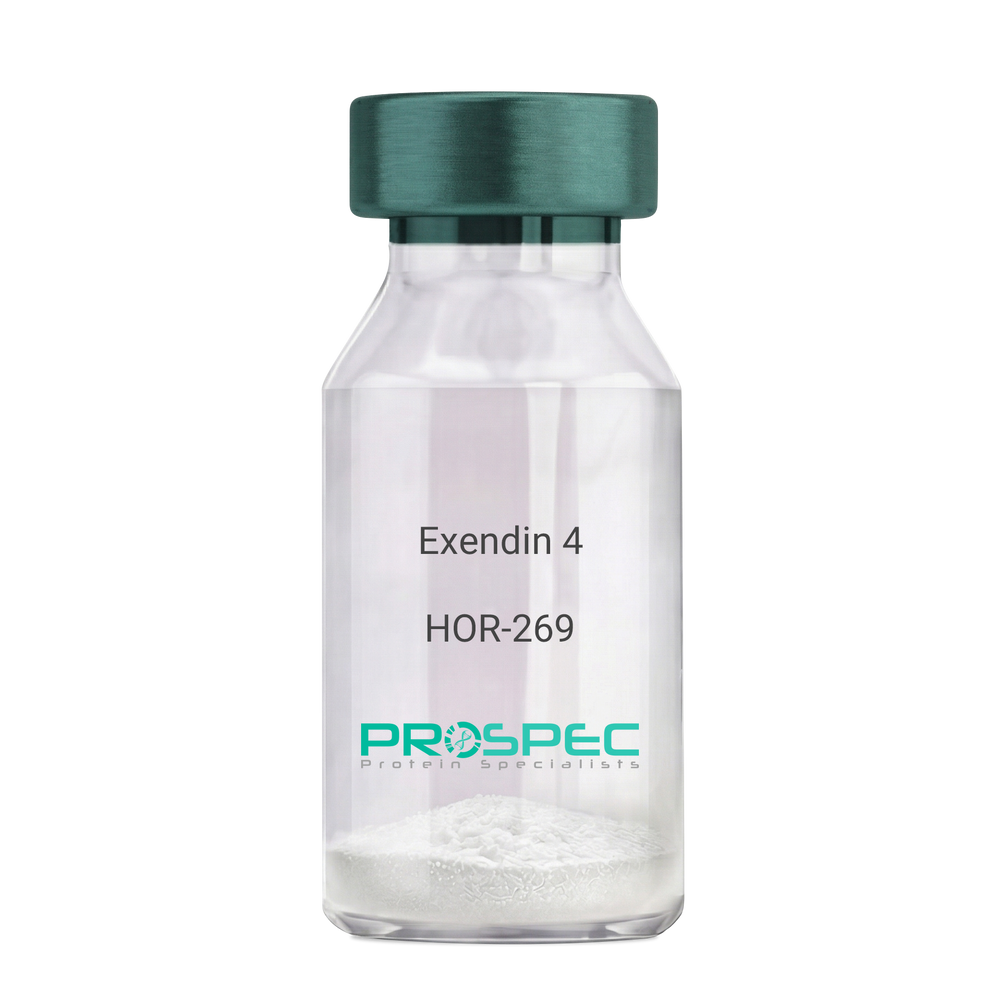
    Name :

    Exendin 4

    Description:

    Exendin-4 Recombinant

    Product # :

    HOR-269

    Price :

    Quantity :

    Shipping Method :

    Room Temp Icon

    Shipped at Room temp

    Add To Cart

    More Info

    • description
    • source
    • formulation
    • purity
    • biological activity
    • More Info

    Description

    Exendin-4 Recombinant produced in E.Coli is a non-glycosylated polypeptide chain containing 39 amino acids and having a molecular mass of approximately 4.2kDa. Exendin-4 is purified by proprietary chromatographic techniques.

    Source

    Escherichia Coli.

    Formulation

    Lyophilized from a 0.2μm filtered concentrated solution in PBS, pH 7.4.

    Purity

    Greater than 96.0% as determined by:
    (a) Analysis by RP-HPLC.
    (b) Analysis by SDS-PAGE.

    Biological Activity

    1. Regulates Glucose levels rapidly
    2. Reduces Insulin resistance 
    3. Reduces Glucagon

    4. Stimulates beta cell growth production.

    More Info

    • Introduction

      Exedin-4 Recombinant is a like peptide-1 receptor agonist. The native hormone is produced in the gut of Gila monster Heloderma suspectrum (a type of reptile found in the desert) that stimulates production without causing threateningly low blood sugar, which can occur after using some anti-diabetes products. Recently, researchers used extracted saliva from gila monsters to create an unprecedented breakthrough in Diabetes Type 2 treatment. Unlike other products taken for type 2 diabetes, Exedin-4 has not been linked with weight gain and actually resulted in weight loss, according to the researchers. Exedin-4 enhances glucose-dependant secretion, suppresses inappropriately elevated secretion and slows gastric emptying in vivo. It also promotes B-cell proliferation and neogenesis in vitro and in animal models. Exedin-4 stimulates an increase in acinar cAMP, without stimulating the release of amylase.

    • Physical Appearance

      Sterile Filtered White lyophilized (freeze-dried) powder.

    • Stability

      Lyophilized Exendin Recombinant although stable at room temperature for 3 weeks, should be stored desiccated below -18°C. Upon reconstitution Exendin-4 should be stored at 4°C between 2-7 days and for future use below -18°C. For long term storage it is recommended to add a carrier protein (0.1% HSA or BSA).Please prevent freeze-thaw cycles.

    • Solubility

      It is recommended to reconstitute the lyophilized Exendin Recombinant in sterile 18MΩ-cm H2O not less than 100 µg/ml, which can then be further diluted to other aqueous solutions.

    • Amino Acid Sequence

      HGEGTFTSDL SKQMEEEAVR LFIEWLKNGG PSSGAPPPS.

    ProSpec's products are furnished for LABORATORY RESEARCH USE ONLY. The product may not be used as drugs, agricultural or pesticidal products, food additives or household chemicals.

    Exendin 4
  • View Data Sheet

    Name :

    EDAR Antibody

    Description:

    Ectodysplasin A Receptor, Mouse Anti Human

    Ectodysplasin A Receptor, DL, Ectodysplasin 1, Anhidrotic Receptor, Anhidrotic Ectodysplasin Receptor 1, Ectodermal Dysplasia Receptor, Ectodysplasin-A Receptor, Downless Homolog, EDA-A1 Receptor, ECTD10A, ECTD10B, EDA3, HRM1, ED3, Tumor Necrosis Factor Receptor Superfamily Member EDAR, Downless, Mouse, Homolog Of, EDA-A1R, EDA1R, ED1R, ED5, Tumor necrosis factor receptor superfamily member EDAR.

    Product # :

    ANT-560

    Price :

    Quantity :

    Shipping Method :

    Ice Icon

    Shipped with Ice Packs

    Add To Cart

    More Info

    • formulation
    • More Info

    Formulation

    1mg/ml containing PBS, pH-7.4, 10% Glycerol and 0.02% Sodium Azide.

    More Info

    • Introduction

      Ectodysplasin A Receptor, also known as EDAR belongs to the tumor necrosis factor receptor family. EDAR is a receptor for the soluble ligand ectodysplasin A, and is capable of activating the nuclear factor-kappaB, JNK, as well as caspase-independent cell death pathways. EDAR is necessary for the development of hair, teeth, and other ectodermal derivatives. Furthermore, mutations in EDAR resulted in autosomal dominant and recessive forms of hypohidrotic ectodermal dysplasia.

    • Synonyms

      Ectodysplasin A Receptor, DL, Ectodysplasin 1, Anhidrotic Receptor, Anhidrotic Ectodysplasin Receptor 1, Ectodermal Dysplasia Receptor, Ectodysplasin-A Receptor, Downless Homolog, EDA-A1 Receptor, ECTD10A, ECTD10B, EDA3, HRM1, ED3, Tumor Necrosis Factor Receptor Superfamily Member EDAR, Downless, Mouse, Homolog Of, EDA-A1R, EDA1R, ED1R, ED5, Tumor necrosis factor receptor superfamily member EDAR.

    • Physical Appearance

      Sterile filtered colorless solution.

    • Immunogen

      Anti-human EDAR mAb, is derived from hybridization of mouse F0 myeloma cells with spleen cells from BALB/c mice immunized with a recombinant human EDAR protein 27-448 amino acids purified from E. coli.

    • Ig Subclass

      Mouse IgG2a heavy chain and k light chain.

    • Clone

      PAT19E8AT.

    • Applications

      EDAR antibody has been tested by ELISA, Western blot analysis to assure specificity and reactivity. Since application varies, however, each investigation should be titrated by the reagent to obtain optimal results. Recommended starting dilution is 1:1000.

    • Type

      Mouse Anti Human Monoclonal.

    • Storage Procedures

      For periods up to 1 month store at 4°C, for longer periods of time, store at -20°C. Prevent freeze thaw cycles.

    • Purification Method

      EDAR antibody was purified from mouse ascitic fluids by protein-A affinity chromatography.

    ProSpec's products are furnished for LABORATORY RESEARCH USE ONLY. The product may not be used as drugs, agricultural or pesticidal products, food additives or household chemicals.

    Edar Antibody
  • View Data Sheet

    Name :

    EIF5A Antibody

    Description:

    Eukaryotic Translation Initiation Factor 5A, Mouse Anti Human

    EIF-5A, EIF5A1, eIF5AI, MGC99547, MGC104255, EIF5A, Eukaryotic translation initiation factor 5A-1, eIF-5A-1, eIF-5A1, Eukaryotic initiation factor 5A isoform 1, eIF-4D, Rev-binding factor.

    Product # :

    ANT-010

    Price :

    Quantity :

    Shipping Method :

    Ice Icon

    Shipped with Ice Packs

    Add To Cart

    More Info

    • formulation
    • More Info

    Formulation

    1mg/ml containing PBS, pH-7.4, & 0.1% Sodium Azide.

    More Info

    • Introduction

      EIF5A is the single protein identified to contain remarkable amino acid formed by the action of deoxyhypusine synthase and deoxyhypusine hydroxylase using spermidine as the substrate. EIF5A takes part in the first step of peptide bond formation in translation, nevertheless further experiments implicates it as a universally conserved translation elongation factor. Modulation of EIF5A is connected to proliferation and cancer. Expression of EIF-5A is upregulated in the PBMCs of HIV-1 patients. EIF5A coordinates significant cellular processes like cell viability and senescence during its effects on the stability of certain mRNAs. Heat stress-induced loss of EIF-5A in a human pancreatic cancer cell line. EIF5A stability takes part in determining the fate of the particular cell type after severe heat stress.

    • Synonyms

      EIF-5A, EIF5A1, eIF5AI, MGC99547, MGC104255, EIF5A, Eukaryotic translation initiation factor 5A-1, eIF-5A-1, eIF-5A1, Eukaryotic initiation factor 5A isoform 1, eIF-4D, Rev-binding factor.

    • Immunogen

      Anti-human EIF5A mAb, is derived from hybridization of mouse F0 myeloma cells with spleen cells from BALB/c mice immunized with recombinant human EIF5A amino acids 1-154 purified from E. coli.

    • Ig Subclass

      Mouse IgG1 heavy chain and κ light chain.

    • Clone

      PAT2E9AT.

    • Applications

      EIF5A antibody has been tested by ELISA, Western blot and Immunofluorescence analysis to assure specificity and reactivity. Since application varies, however, each investigation should be titrated by the reagent to obtain optimal results. Recommended dilution range for Western blot analysis and Immunofluorescence is 1:250 ~ 500.
      Recommended starting dilution is 1:250.

    • Type

      Mouse Anti Human Monoclonal.

    • Storage Procedures

      For periods up to 1 month store at 4°C, for longer periods of time, store at -20°C. Prevent freeze thaw cycles.

    • Purification Method

      EIF5A antibody was purified from mouse ascitic fluids by protein-G affinity chromatography.

    ProSpec's products are furnished for LABORATORY RESEARCH USE ONLY. The product may not be used as drugs, agricultural or pesticidal products, food additives or household chemicals.

    Eif5A Antibody
  • View Data Sheet

    Name :

    RNH1 Antibody

    Description:

    Ribonuclease inhibitor, Mouse Anti Human

    Ribonuclease inhibitor, Ribonuclease/angiogenin inhibitor 1, Placental ribonuclease inhibitor, Placental RNase inhibitor, RAI, RNH, MGC4569, MGC18200, MGC54054, RNH1, PRI.

    Product # :

    ANT-445

    Price :

    Quantity :

    Shipping Method :

    Ice Icon

    Shipped with Ice Packs

    Add To Cart

    More Info

    • formulation
    • More Info

    Formulation

    1mg/ml containing PBS, pH-7.4, 0.02% Sodium Azide & 10% glycerol.

    More Info

    • Introduction

      RNH1 belongs to the proteinaceous cytoplasmic RNase inhibitors family which occur in many tissues and binds to both intracellular and extracellular RNases. In addition to control of intracellular RNases, the inhibitor may have a part in the regulation of angiogenin. The 50kDa RNH1 binds to ribonucleases and holds them in a latent form. Since neutral and alkaline ribonucleases possibly play a critical role in the turnover of RNA in eukaryotic cells, RNH1 may be vital for control of mRNA turnover; the interaction of eukaryotic cells with ribonuclease may be reversible in vivo.

    • Synonyms

      Ribonuclease inhibitor, Ribonuclease/angiogenin inhibitor 1, Placental ribonuclease inhibitor, Placental RNase inhibitor, RAI, RNH, MGC4569, MGC18200, MGC54054, RNH1, PRI.

    • Immunogen

      Anti-human RNH1 mAb, is derived from hybridization of mouse F0 myeloma cells with spleen cells from BALB/c mice immunized with recombinant human RNH1 amino acids 7-461 purified from E. coli.

    • Ig Subclass

      Mouse IgG2a heavy chain and κ light chain.

    • Clone

      PAT1H23AT.

    • Applications

      RNH1 antibody has been tested by ELISA and Western blot analysis to assure specificity and reactivity. Since application varies, however, each investigation should be titrated by the reagent to obtain optimal results.

    • Type

      Mouse Anti Human Monoclonal.

    • Storage Procedures

      For periods up to 1 month store at 4°C, for longer periods of time, store at -20°C. Prevent freeze thaw cycles.

    • Purification Method

      RNH1 antibody was purified from mouse ascitic fluids by protein-G affinity chromatography.

    ProSpec's products are furnished for LABORATORY RESEARCH USE ONLY. The product may not be used as drugs, agricultural or pesticidal products, food additives or household chemicals.

    Rnh1 Antibody
  • View Data Sheet

    Name :

    G CSF Antibody

    Description:

    Granulocyte Colony Stimulating Factor, Mouse Anti-Human

    CSF-3, MGI-1G, GM-CSF beta, Pluripoietin, Filgrastim, Lenograstim, G-CSF, MGC45931, GCSF.

    Product # :

    ANT-184

    Price :

    Quantity :

    Shipping Method :

    Room Temp Icon

    Shipped at Room temp

    Add To Cart

    More Info

    • formulation
    • More Info

    Formulation

    1mg/ml in PBS (after reconstitution).

    More Info

    • Introduction

      GCSF is a cytokine that controls the production, differentiation, and function of granulocytes. The active protein is found extracellularly. Three transcript variants encoding three different isoforms have been found for this gene.
      Granulocyte/macrophage colony-stimulating factors are cytokines that act in hematopoiesis by controlling the production, differentiation, and function of 2 related white cell populations of the blood, the granulocytes and the monocytes-macrophages. This csf induces granulocytes.

    • Synonyms

      CSF-3, MGI-1G, GM-CSF beta, Pluripoietin, Filgrastim, Lenograstim, G-CSF, MGC45931, GCSF.

    • Solubility

      Reconstitute with sterile H20. Mix gently, wash the sides of the vial and wait 30-60 seconds before use.

    • Immunogen

      r.Human G-CSF.

    • Ig Subclass

      Mouse IgG.

    • Clone

      NYRhGCSF.

    • Applications

      Direct ELISA, Western Blot, Immuneprecipitation.

    • Titer

      By direct ELISA, 1:10,000 dilution will yield 0.4 O.D using alkaline phosphatase conjugated rabbit anti-mouse Ig (Jackson Laboratories).

    • Shipping Conditions

      Antibody is shipped lyophilized at ambient temperature.

    • Type

      Mouse Anti Human Monoclonal.

    • Storage Procedures

      In lyophilized form, for long periods, store at 4oC in a dry environment. After reconstitution, if not intended for use within a month, aliquot and store at -20oC.

    • Purification Method

      Protein A.

    ProSpec's products are furnished for LABORATORY RESEARCH USE ONLY. The product may not be used as drugs, agricultural or pesticidal products, food additives or household chemicals.

    G Csf Antibody
  • View Data Sheet

    Name :

    CDC25A Human

    Description:

    Cell Division Cycle 25A Human Recombinant

    M-phase inducer phosphatase 1, Dual specificity phosphatase Cdc25A, CDC25A, CDC25A2.

    Product # :

    ENZ-091

    Price :

    Quantity :

    Shipping Method :

    Ice Icon

    Shipped with Ice Packs

    Add To Cart

    More Info

    • description
    • source
    • formulation
    • purity
    • More Info

    Description

    CDC25A Human Recombinant fused with a 36 amino acid His tag at N-terminus produced in E.Coli is a single, non-glycosylated, polypeptide chain containing 560 amino acids (1-524 a.a.) and having a molecular mass of 63.2kDa. The CDC25A is purified by proprietary chromatographic techniques.

    Source

    Escherichia Coli.

    Formulation

    The CDC25A solution (0.25 mg/ml) contains 20mM Tris-HCl buffer (pH 8.0), 5mM DTT, 20% glycerol, 0.2M NaCl and 1mM EDTA.

    Purity

    Greater than 80.0% as determined by SDS-PAGE.

    More Info

    • Introduction

      M-phase inducer phosphatase 1 (CDC25A) belongs to the CDC25 family of phosphatases. CDC25A is essential for progression from G1 to the S phase of the cell cycle. CDC25A activates the cyclin-dependent kinase CDC2 by eliminating 2 phosphate groups. CDC25A is specifically degraded in reaction to DNA damage, which inhibits cells with chromosomal abnormalities from progressing in the course of cell division. CDC25A is an oncogene, though its exact function in oncogenesis has not been determined.

    • Synonyms

      M-phase inducer phosphatase 1, Dual specificity phosphatase Cdc25A, CDC25A, CDC25A2.

    • Physical Appearance

      Sterile Filtered colorless solution.

    • Stability

      Store at 4°C if entire vial will be used within 2-4 weeks. Store, frozen at -20°C for longer periods of time. For long term storage it is recommended to add a carrier protein (0.1% HSA or BSA).Avoid multiple freeze-thaw cycles.

    • Amino Acid Sequence

      MRGSHHHHHH GMASMTGGQQ MGRDLYDDDD KDRWGSMELG PEPPHRRRLL FACSPPPASQ PVVKALFGAS AAGGLSPVTN LTVTMDQLQG LGSDYEQPLE VKNNSNLQRM GSSESTDSGF CLDSPGPLDS KENLENPMRR IHSLPQKLLG CSPALKRSHS DSLDHDIFQL IDPDENKENE AFEFKKPVRP VSRGCLHSHG LQEGKDLFTQ RQNSAPARML SSNERDSSEP GNFIPLFTPQ SPVTATLSDE DDGFVDLLDG ENLKNEEETP SCMASLWTAP LVMRTTNLDN RCKLFDSPSL CSSSTRSVLK RPERSQEESP PGSTKRRKSM SGASPKESTN PEKAHETLHQ SLSLASSPKG TIENILDNDP RDLIGDFSKG YLFHTVAGKH QDLKYISPEI MASVLNGKFA NLIKEFVIID CRYPYEYEGG HIKGAVNLHM EEEVEDFLLK KPIVPTDGKR VIVVFHCEFS SERGPRMCRY VRERDRLGNE YPKLHYPELY VLKGGYKEFF MKCQSYCEPP SYRPMHHEDF KEDLKKFRTK SRTWAGEKSK REMYSRLKKL.

    ProSpec's products are furnished for LABORATORY RESEARCH USE ONLY. The product may not be used as drugs, agricultural or pesticidal products, food additives or household chemicals.

    Cdc25A Human
  • View Data Sheet

    Name :

    PEDF Human, HEK

    Description:

    Pigment Epithelium-Derived Factor Human Recombinant, HEK

    Pigment epithelium-derived factor, PEDF, Serpin-F1, SerpinF1, EPC-1, EPC1, PIG35.

    Product # :

    CYT-553

    Price :

    Quantity :

    Shipping Method :

    Room Temp Icon

    Shipped at Room temp

    Add To Cart

    More Info

    • description
    • source
    • formulation
    • purity
    • More Info

    Description

    PEDF Human Recombinant produced in HEK cells is a single, glycosylated, polypeptide chain containing a total of 410 amino acids, having a molecular mass of 45.6 kDa and fused to an 11 aa FLAG tag at C-Terminus.The Human PEDF is purified by proprietary chromatographic techniques.

    Source

    HEK 293.

    Formulation

    The filtered (0.4µm) concentrated (0.5mg/ml) protein solution was lyophilized with 20mM Tris & 20mM NaCl pH-7.5.

    Purity

    Greater than 95% as determined by SDS-PAGE.

    More Info

    • Introduction

      PEDF is a neurotrophic protein that induces extensive neuronal differentiation in retinoblastoma cells. SerpinF1 is a potent inhibitor of angiogenesis. EPC1 doesn’t undergo the stressed to relaxed conformation transition characteristic as of the active serpins since it exhibits no serine protease inhibitory activity.
      Aqueous humour level of asymmetric dimethylarginine is correlated with PEDF in humans. ADMA and PEDF levels are increased in response to inflammation in uveitis.
      Lack of PEDF expression is a potent factor for the enhancement of tumor growth and angiogenesis in breast cancer.
      PEDF & VEGF genes contribute to the development of diabetic retinopathy.
      PEDF and VEGF structural changes in blood vessel wall play an important role in the pathophysiology of PD patients.
      PEDF-overexpressing tumors exhibited reduced intratumoral angiogenesis.
      SerpinF1 is a new promising approach for the treatment of osteosarcoma.
      Levels of the natural ocular anti-angiogenic factor SentrinF1 (PEDF) is associated with proliferative retinopathy.
      VEGF secreted by retinal pigment epithelial cells upregulates PEDF expression via VEGFR-1 in an autocrine manner.
      Sentrin-F1 concentration in the aqueous humor of diabetic patients predicts who will develop progression of retinopathy.
      PEDF blocks angiogenic effects of leptin through its anti-oxidative properties.

    • Synonyms

      Pigment epithelium-derived factor, PEDF, Serpin-F1, SerpinF1, EPC-1, EPC1, PIG35.

    • Physical Appearance

      Filtered White lyophilized (freeze-dried) powder.

    • Stability

      Store lyophilized protein at -20°C. Aliquot the product after reconstitution to avoid repeated freezing/thawing cycles. Reconstituted protein can be stored at 4°C for a limited period of time.

    • Solubility

      It is recomnded to add deionized water to a working concentration of 0.5mg/ml and let the lyophilized pellet dissolve completely. Product is not sterile! Please filter the product by an appropriate sterile filter before using it in the cell culture.

    • Amino Acid Sequence

      QNPASPPEEG SPDPDSTGAL VEEEDPFFKV PVNKLAAAVS NFGYDLYRVR SSTSPTTNVL LSPLSVATAL SALSLGAEQR TESIIHRALY YDLISSPDIH GTYKELLDTV TAPQKNLKSA SRIVFEKKLR IKSSFVAPLE KSYGTRPRVL TGNPRLDLQE INNWVQAQMK GKLARSTKEI PDEISILLLG VAHFKGQWVT KFDSRKTSLE DFYLDEERTV RVPMMSDPKA VLRYGLDSDL SCKIAQLPLT GSMSIIFFLP LKVTQNLTLI EESLTSEFIH DIDRELKTVQ AVLTVPKLKL SYEGEVTKSL QEMKLQSLFD SPDFSKITGK PIKLTQVEHR AGFEWNEDGA GTTPSPGLQP AHLTFPLDYH LNQPFIFVLR DTDTGALLFI GKILDPRGPAAADYKDDDDK.

    ProSpec's products are furnished for LABORATORY RESEARCH USE ONLY. The product may not be used as drugs, agricultural or pesticidal products, food additives or household chemicals.

    Serpinf1 Human Hek
  • View Data Sheet

    Name :

    OT Human

    Description:

    Oxytocin Human

    OT, OXT, OT-NPI, Neurophysin 1, MGC126890, MGC126892.

    Product # :

    HOR-254

    Price :

    Quantity :

    Shipping Method :

    Room Temp Icon

    Shipped at Room temp

    Add To Cart

    More Info

    • description
    • formulation
    • purity
    • More Info

    Description

    Oxytocin Human Synthetic is a single, non-glycosylated, polypeptide chain containing 9 amino acids and having a molecular mass of 1007.2 Dalton. Oxytocin has a molecular formula of C43H66N12O12S2. The OT is purified by proprietary chromatographic techniques.

    Formulation

    The Oxytocin was lyophilized from a concentrated (1mg/ml) solution with no additives.

    Purity

    Greater than 98.0% as determined by RP-HPLC.

    More Info

    • Introduction

      Human Oxytocin stimulates uterine smooth muscle contractions indirectly and stimulates the mammary glands to increase lactation without increasing the production of milk.

    • Synonyms

      OT, OXT, OT-NPI, Neurophysin 1, MGC126890, MGC126892.

    • Physical Appearance

      Sterile Filtered White lyophilized (freeze-dried) powder.

    • Stability

      Lyophilized Oxytocin although stable at room temperature for 3 weeks, should be stored desiccated below -18°C. Upon reconstitution Neurophysin 1 should be stored at 4°C between 2-7 days and for future use below -18°C.For long term storage it is recommended to add a carrier protein (0.1% HSA or BSA).Please prevent freeze-thaw cycles.

    • Solubility

      It is recommended to reconstitute the lyophilized Oxytocin in sterile 18MΩ-cm H2O not less than 100 µg/ml, which can then be further diluted to other aqueous solutions.

    • Amino Acid Sequence

      H-Cys-Tyr-Ile-Gln-Asn-Cys-Pro-Leu-Gly-NH2.

    ProSpec's products are furnished for LABORATORY RESEARCH USE ONLY. The product may not be used as drugs, agricultural or pesticidal products, food additives or household chemicals.

    Oxytocin Human
  • View Data Sheet

    Name :

    VEGF Mouse

    Description:

    Vascular Endothelial Growth Factor Mouse Recombinant

    Vascular endothelial growth factor A, VEGF-A, Vascular permeability factor, VPF, VEGF, MGC70609.

    Product # :

    CYT-336

    Price :

    Quantity :

    Shipping Method :

    Room Temp Icon

    Shipped at Room temp

    Add To Cart

    More Info

    • description
    • source
    • formulation
    • purity
    • biological activity
    • More Info

    Description

    Vascular Endothelial Growth Factor Mouse Recombinant produced in E.Coli is a disulfide-linked homodimeric, double polypeptide chains containing 165 amino acids and having a molecular mass of 38.8kDa.

    Source

    Escherichia Coli.

    Formulation

    The protein was lyophilized from a 0.2µm filtered solution with PBS, pH 7.4.

    Purity

    Greater than 95.0% as determined by:
    (a) Analysis by RP-HPLC.
    (b) Analysis by SDS-PAGE.

    Biological Activity

    The biological activity is determined by the dose-dependent stimulation of the proliferation of human umbilical vein endothelial cells (HUVEC) using a concentration range of 5.0 ng/ml corresponding to a specific activity of 200,000IU/mg.

    More Info

    • Introduction

      Vascular endothelial growth factor is an important signaling protein involved in both vasculogenesis and angiogenesis. As its name implies, VEGF activity has been mostly studied on cells of the vascular endothelium, although it does have effects on a number of other cell types (e.g. stimulation monocyte/ macrophagemigration, neurons, cancer cells, kidney epithelial cells ). VEGF mediates increased vascular permeability, induces angiogenesis, vasculogenesis and endothelial cell growth, promotes cell migration, and inhibits apoptosis. In vitro, VEGF has been shown to stimulate endothelial cell mitogenesisand cell migration. VEGF is also a vasodilator and increases microvascular permeability and was originally referred to as vascular permeability factor.
      Elevated levels of this protein are linked to POEMS syndrome, also known as Crow-Fukase syndrome. Mutations in this gene have been associated with proliferative and nonproliferative diabetic retinopathy.

    • Synonyms

      Vascular endothelial growth factor A, VEGF-A, Vascular permeability factor, VPF, VEGF, MGC70609.

    • Physical Appearance

      Sterile Filtered White lyophilized (freeze-dried) powder.

    • Stability

      Lyophilized Vascular Endothelial Growth Factor although stable at room temperature for 3 weeks, should be stored desiccated below -18°C. Upon reconstitution VEGF should be stored at 4°C between 2-7 days and for future use below -18°C.For long term storage it is recommended to add a carrier protein (0.1% HSA or BSA).Please prevent freeze-thaw cycles.

    • Solubility

      It is recommended to reconstitute the lyophilized Vascular Endothelial Growth Factor in sterile 18MΩ-cm H2O not less than 100µg/ml, which can then be further diluted to other aqueous solutions.

    • Amino Acid Sequence

      MAPTTEGEQK SHEVIKFMDV YQRSYCRPIE TLVDIFQEYP DEIEYIFKPS CVPLMRCAGC CNDEALECVP TSESNITMQI MRIKPHQSQH IGEMSFLQHS RCECRPKKDR TKPEKHCEPC SERRKHLFVQ DPQTCKCSCK NTDSRCKARQ LELNERTCRC DKPRR.

    ProSpec's products are furnished for LABORATORY RESEARCH USE ONLY. The product may not be used as drugs, agricultural or pesticidal products, food additives or household chemicals.

    Vegf Mouse
  • View Data Sheet

    Name :

    LHRH Protein

    Description:

    Luteinizing Hormone Releasing Hormone Human Recombinant

    LHRH, GRH, GNRH, LNRH.

    Product # :

    HOR-268

    Price :

    Quantity :

    Shipping Method :

    Ice Icon

    Shipped with Ice Packs

    Add To Cart

    More Info

    • description
    • source
    • formulation
    • purity
    • More Info

    Description

    LHRH Human Recombinant produced in E.Coli is a single, non-glycosylated polypeptide chain containing 92 amino acids (24-92 a.a.) and having a molecular mass of 10.3kDa.LHRH is fused to a 23 amino acid His-tag at N-terminus & purified by proprietary chromatographic techniques.

    Source

    Escherichia Coli.

    Formulation

    LHRH protein solution (0.5mg/ml) containing 20mM Tris-HCl buffer (pH 8.0), 0.15M NaCl, 20% glycerol and 1mM DTT.

    Purity

    Greater than 90.0% as determined by SDS-PAGE.

    More Info

    • Introduction

      GNRH1 also known as Luteinising-hormone releasing hormone (LHRH), is a peptide hormone responsible for the release of FSH and LH from the anterior pituitary. GNRH1 is synthesized and released by the hypothalamus.
      At the pituitary, GNRH1 stimulates the synthesis and secretion of the follicle-stimulating hormone (FSH) and luteinizing hormone (LH). These processes are controlled by the size and frequency of GNRH1 pulses, as well as by feedback from androgens and estrogens. Low requency GNRH1 pulses lead to FSH release, whereas high frequency GNRH1 pulses stimulate LH release.
      There are differences in GNRH1 secretion between males and females. In males, GNRH1 is secreted in pulses at a constant frequency, but in females the frequency of the pulses varies during the menstrual cycle and there is a large surge of GNRH1 just before ovulation.
      GNRH1 secretion is pulsatile in all vertebrates, and is necessary for correct reproductive function. Thus, a single hormone, GNRH1, controls a complex process of follicular growth, ovulation, and corpus luteum maintenance in the female, and spermatogenesis in the male.

    • Synonyms

      LHRH, GRH, GNRH, LNRH.

    • Physical Appearance

      Sterile filtered colorless solution.

    • Stability

      Store at 4°C if entire vial will be used within 2-4 weeks. Store, frozen at -20°C for longer periods of time. For long term storage it is recommended to add a carrier protein (0.1% HSA or BSA).Avoid multiple freeze-thaw cycles.

    • Amino Acid Sequence

      MGSSHHHHHH SSGLVPRGSH MGSQHWSYGL RPGGKRDAEN LIDSFQEIVK EVGQLAETQR FECTTHQPRS PLRDLKGALE SLIEEETGQK KI.

    ProSpec's products are furnished for LABORATORY RESEARCH USE ONLY. The product may not be used as drugs, agricultural or pesticidal products, food additives or household chemicals.

    Lhrh Human Recombinant
  • View Data Sheet

    Name :

    IL 5 Mouse

    Description:

    Interleukin-5 Mouse Recombinant

    EDF, BCDFII, TRF, T-cell replacing factor, Eosinophil differentiation factor, B cell differentiation factor II, IL-5, BCGF-II, Cytotoxic T-lymphocyte inducer, Il5.

    Product # :

    CYT-689

    Price :

    Quantity :

    Shipping Method :

    Room Temp Icon

    Shipped at Room temp

    Add To Cart

    More Info

    • description
    • source
    • formulation
    • purity
    • biological activity
    • More Info

    Description

    Interleukin-5 Mouse Recombinant produced in E.Coli is a dimeric, non-glycosylated polypeptide chain containing 2 x 113 amino acids forming a disulfide linked homodimer and having a molecular mass of 26.2 kDa.The Mouse IL-5 is purified by proprietary chromatographic techniques.

    Source

    Escherichia Coli.

    Formulation

    Lyophilized from a concentrated (1mg/ml) solution containing 20mM Sodium Phosphate and 50mM NaCl pH-7.5.

    Purity

    Greater than 97.0% as determined by:
    (a) Analysis by RP-HPLC.
    (b) Analysis by SDS-PAGE.

    Biological Activity

    The ED50 as determined by the dose-dependant stimulation of the proliferation of TF-1 cells was found to be 1.7ng/ml, corresponding to a specific activity of 588,235.3IU/mg.

    More Info

    • Introduction

      The protein encoded by this gene is a cytokine that acts as a growth and differentiation factor for both B cells and eosinophils. This cytokine is a main regulator of eosinopoiesis, eosinophil maturation and activation. The elevated production of this cytokine is reported to be related to asthma or hypereosinophilic syndromes. The receptor of this cytokine is a heterodimer, whose beta subunit is shared with the receptors for interleukine 3 (IL3) and colony stimulating factor 2 (CSF2/GM-CSF). This gene, together with those for interleukin 4 (IL4), interleukin 13 (IL13), and CSF2, form a cytokine gene cluster on chromosome 5. This cytokine, IL4, and IL13 are found to be regulated coordinately by long-range regulatory elements spread over 120 kilobases on chromosome 5q31.

    • Synonyms

      EDF, BCDFII, TRF, T-cell replacing factor, Eosinophil differentiation factor, B cell differentiation factor II, IL-5, BCGF-II, Cytotoxic T-lymphocyte inducer, Il5.

    • Physical Appearance

      Sterile Filtered White lyophilized (freeze-dried) powder.

    • Stability

      Lyophilized Mouse Interleukin-5 although stable at room temperature for 3 weeks, should be stored desiccated below -18°C. Upon reconstitution Mouse IL5 should be stored at 4°C between 2-7 days and for future use below -18°C.Please avoid freeze thaw cycles.

    • Solubility

      It is recommended to reconstitute the lyophilized Mouse Interleikin-5 in sterile 18MΩ-cm H2O at a concentration of 100µg/ml, which can then be further diluted to other aqueous solutions.

    • Amino Acid Sequence

      MEIPMSTVVK ETLTQLSAHR ALLTSNETMR LPVPTHKNHQ LCIGEIFQGL DILKNQTVRG GTVEMLFQNL SLIKKYIDRQ KEKCGEERRR TRQFLDYLQE FLGVMSTEWA MEG.

    ProSpec's products are furnished for LABORATORY RESEARCH USE ONLY. The product may not be used as drugs, agricultural or pesticidal products, food additives or household chemicals.

    Interleukin 5 Mouse
  • View Data Sheet

    Name :

    Tissue Factor Human, Active

    Description:

    Coagulation Factor III Active Human Recombinant

    Tissue factor, TF, Coagulation factor III, CD142.

    Product # :

    PRO-2845

    Price :

    Quantity :

    Shipping Method :

    Room Temp Icon

    Shipped at Room temp

    Add To Cart

    More Info

    • description
    • source
    • formulation
    • purity
    • biological activity
    • More Info

    Description

    Recombinant Human Tissue Factor Active is a glycosylated, polypeptide chain containing 225 amino acids and having a total molecular mass of 45.0kDa. Coagulation Factor III is fused at C-terminus & is purified by proprietary chromatographic techniques.

    Source

    CHO cells.

    Formulation

    Lyophilized from a 0.2μm filtered solution in 20mM Tris and 150mM NaCl, pH 8.0.

    Purity

    Greater than 98.0% as determined by Analysis by SDS-PAGE.

    Biological Activity

    The ED50 was determined by its ability to activate fluorogenic peptide substrate Boc-VPR-AMC cleavage, when bound in 1:1 complex with Coagulation Factor VII.

    More Info

    • Synonyms

      Tissue factor, TF, Coagulation factor III, CD142.

    • Physical Appearance

      Sterile Filtered White lyophilized (freeze-dried) powder.

    • Stability

      Lyophilized Coagulation Factor III although stable at room temperature for 3 weeks, should be stored desiccated below -18°C. Upon reconstitution Tissue Factor should be stored at 4°C between 2-7 days and for future use below -18°C.
      Please prevent freeze-thaw cycles.

    • Solubility

      It is recommended to reconstitute the lyophilized Coagulation Factor III in sterile 18MΩ-cm H2O not less than 100µg/ml, which can then be further diluted to other aqueous solutions.

    • Amino Acid Sequence

      SGTTNTVAAY NLTWKSTNFK TILEWEPKPV NQVYTVQIST KSGDWKSKCF YTTDTECDLT DEIVKDVKQT YLARVFSYPA GNVESTGSAG EPLYENSPEF TPYLETNLGQ PTIQSFEQVG TKVNVTVEDE RTLVRRNNTF LSLRDVFGKD LIYTLYYWKS SSSGKKTAKT NTNEFLIDVD KGENYCFSVQ AVIPSRTVNR KSTDSPVECM GQEKGEFREH HHHHH.

    • Background

      Tissue Factor is the main initiator of the extrinsic blood coagulation pathway. after vascular injury, Tissue Factor binds circulating Factor VII/VIIa, forming the TF–FVIIa complex, which activates Factors IX and X, leading to thrombin generation and fibrin clot formation. Tissue Factor also participates in cell signalling influencing inflammation, angiogenesis, wound healing, and tumor progression.

      What is the molecular weight / Mw of Tissue Factor Protein?
      Tissue Factor Protein has a total Mw of 45kDa.

      What is the source or expression system of Tissue Factor Protein?
      CHO Cells

      What is the Purity of Tissue Factor Protein?
      Tissue Factor Protein is >98% pure as determined by SDS-PAGE.

      What is the Biological Activity of Tissue Factor Protein?
      The enzymatic activity was determined by its ability to activate fluorogenic peptide substrate Boc-VPR-AMC cleavage, when bound in 1:1 complex with Coagulation Factor VII.

      What is the amino acid sequence of Tissue Factor Protein?
      SGTTNTVAAY NLTWKSTNFK TILEWEPKPV NQVYTVQIST KSGDWKSKCF YTTDTECDLT DEIVKDVKQT YLARVFSYPA GNVESTGSAG EPLYENSPEF TPYLETNLGQ PTIQSFEQVG TKVNVTVEDE RTLVRRNNTF LSLRDVFGKD LIYTLYYWKS SSSGKKTAKT NTNEFLIDVD KGENYCFSVQ AVIPSRTVNR KSTDSPVECM GQEKGEFREH HHHHH

      What applications can Tissue Factor Protein be used in?
      Tissue Factor Protein can probably be used in western blot, ELISA and Lateral Flow.

      What is the endotoxin level for Tissue Factor Protein?
      The endotoxin level is minimal, Tissue Factor Protein was purified using conventional chromatography techniques.

    ProSpec's products are furnished for LABORATORY RESEARCH USE ONLY. The product may not be used as drugs, agricultural or pesticidal products, food additives or household chemicals.

    Tissue Factor Human, Active
  • View Data Sheet

    Name :

    TRH Human

    Description:

    Thyrotropin Releasing Hormone Human

    Thyroliberin, TRH, MGC125964, MGC125965, Protirelin, TRF.

    Product # :

    HOR-264

    Price :

    Quantity :

    Shipping Method :

    Room Temp Icon

    Shipped at Room temp

    Add To Cart

    More Info

    • description
    • formulation
    • purity
    • More Info

    Description

    Thyrotropin Releasing Hormone Human C16H22N6O4 has a molecular mass of 362.4 Dalton.The TRH is purified by proprietary chromatographic techniques.

    Formulation

    The TRH was lyophilized with no additives.

    Purity

    Greater than 98.2% as determined by analysis by RP-HPLC.

    More Info

    • Introduction

      Thyrotropin-releasing hormone (TRH), also called thyrotropin-releasing factor (TRF), thyroliberin or protirelin, is a tripeptide hormonethat stimulates the release of thyroid-stimulating hormoneand prolactinby the anterior pituitary.
      TRH is produced by the hypothalamus, near the paraventricular nucleus.
      It travels across the median eminenceto the pituitary via the hypophyseal portal system. It is released from cells called thyrotropes.
      In addition to the brain, TRH can also be detected in other areas of the body including the gastrointestinal systemand pancreatic islets.
      Protirelin stimulates the secretion of pituitary thyroid stimulating hormone from the anterior pituitary and has been shown that protirelin increases secretion of prolactin. Protirelin is identified as 5-oxo-L-prolyl-L-histidyl-L-proline amide. It is a synthetic tripeptide that is believed to be structurally identical to the naturally-occurring thyrotropin-releasing hormone produced by the hypothalamus.

    • Synonyms

      Thyroliberin, TRH, MGC125964, MGC125965, Protirelin, TRF.

    • Physical Appearance

      Sterile Filtered White lyophilized (freeze-dried) powder.

    • Stability

      Lyophilized Protirelin although stable at room temperature for 3 weeks, should be stored desiccated below -18°C. Upon reconstitution TRH should be stored at 4°C between 2-7 days and for future use below -18°C.For long term storage it is recommended to add a carrier protein (0.1% HSA or BSA).Please prevent freeze-thaw cycles.

    • Solubility

      It is recommended to reconstitute the lyophilized Thyroliberin in sterile 18MΩ-cm H2O not less than 100 µg/ml, which can then be further diluted to other aqueous solutions.

    • Amino Acid Sequence

      Pyr-His-Pro-NH2.

    • Background

      What is the molecular weight/Mw of TRH HUMAN Protein?
      TRH HUMAN Protein has a total Mw of 0.36kDa.

      What is the Purity of TRH HUMAN Protein?
      TRH HUMAN Protein is >98.2% pure as determined by SDS-PAGE.

      What is the Biological Activity of TRH HUMAN Protein?
      The biological functionality of TRH HUMAN Protein will be determined in the future.

      What is the amino acid sequence of TRH HUMAN Protein?
      Pyr-His-Pro-NH2.

      What applications can TRH HUMAN Protein be used in?
      TRH HUMAN Protein can probably be used in western blot, ELISA and Lateral Flow.

      What is the endotoxin level for TRH HUMAN Protein?
      The endotoxin level is minimal, TRH HUMAN Protein was purified using conventional chromatography techniques.


    ProSpec's products are furnished for LABORATORY RESEARCH USE ONLY. The product may not be used as drugs, agricultural or pesticidal products, food additives or household chemicals.

    Trh Human
  • View Data Sheet

    Name :

    GHRP5

    Description:

    Growth Hormone Releasing Peptide-5

    GHRP-5, GHRP5.

    Product # :

    HOR-023

    Price :

    Quantity :

    Shipping Method :

    Room Temp Icon

    Shipped at Room temp

    Add To Cart

    More Info

    • description
    • formulation
    • purity
    • More Info

    Description

    Growth Hormone Releasing Peptide-5 Synthetic is a single, non-glycosylated polypeptide chain containing 5 amino acids, having a molecular mass of 770.91 Dalton and a Molecular formula of C43H46N8O6.

    Formulation

    The protein was lyophilized with no additives.

    Purity

    Greater than 97.0% as determined by analysis by RP-HPLC.

    More Info

    • Introduction

      GH-releasing peptides (GHRPs) are synthetic peptides that like GHRH effect on pituitary somatotrophs to stimulate GH release. The GHRP5 is one of several synthetic met-enkephalin analogs that owns unnatural D-amino acids. They were developed for their growth hormone (GH) releasing activity and called GH secretatogues. They lack opioid activity but are potent stimulators of GH release. These secretatogues are distinct from the growth hormone releasing hormone (GHRH or GHRF) as they share no sequence relation and derive their function through action at a completely different receptor, the ghrelin receptor.

    • Synonyms

      GHRP-5, GHRP5.

    • Physical Appearance

      Sterile Filtered White lyophilized (freeze-dried) powder.

    • Stability

      Lyophilized Growth Hormone Releasing Peptide-5 although stable at room temperature for 3 weeks, should be stored desiccated below -18°C. Upon reconstitution GHRP5 should be stored at 4°C between 2-7 days and for future use below -18°C. For long term storage it is recommended to add a carrier protein (0.1% HSA or BSA). Please prevent freeze-thaw cycles.

    • Solubility

      It is recommended to reconstitute the lyophilized GHRP5 in sterile 18MΩ-cm H2O not less than 100 µg/ml, which can then be further diluted to other aqueous solutions.

    • Amino Acid Sequence

      Tyr-(D-Trp)-Ala-Trp-(D-Phe)-NH2.

    ProSpec's products are furnished for LABORATORY RESEARCH USE ONLY. The product may not be used as drugs, agricultural or pesticidal products, food additives or household chemicals.

    Ghrp5
  • View Data Sheet

    Name :

    GDF3 Human

    Description:

    Growth Differentiation Factor-3 Human Recombinant

    Growth Differentiation Factor 3, Growth/Differentiation Factor 3 , MCOPCB6, MCOP7, GDF-3, KFS3.

    Product # :

    CYT-694

    Price :

    Quantity :

    Shipping Method :

    Room Temp Icon

    Shipped at Room temp

    Add To Cart

    More Info

    • description
    • source
    • formulation
    • purity
    • More Info

    Description

    GDF3 Human Recombinant produced in E.Coli is a single, non-glycosylated, polypeptide chain containing 124 amino acids and having a total molecular mass of 14.15 kDa.GDF3 is fused to a 10 amino acid His Tag at N-terminus and purified by proprietary chromatographic techniques.

    Source

    Escherichia Coli.

    Formulation

    The protein was lyophilized from a concentrated solution (0.5mg/ml) containing 30mM Acetate buffer pH-4.

    Purity

    Greater than 90.0% as determined by SDS-PAGE.

    More Info

    • Introduction

      GDF3 is a member of the TGF-beta superfamily though it does not show similarity pattern of conserved cysteine residues. GDF3 is linked to Vg-1 and human BMP-4. GDF3 transcripts are identified mainly in adult bone marrow, spleen, thymus, and adipose tissue. GDF3 expression is upregulated strongly in high-fat-fed C57Bl/6J FABP4/aP2 null mice, which develop obesity but not the related hyperglycemia or hyperinsulinemia characteristic of type II diabetes. GDF3 expression therefore bonds fatty acid metabolism in adipocytes and the expression of a differentiation regulator belonging to the bone morphogenetic proteins.

    • Synonyms

      Growth Differentiation Factor 3, Growth/Differentiation Factor 3 , MCOPCB6, MCOP7, GDF-3, KFS3.

    • Physical Appearance

      Filtered White lyophilized (freeze-dried) powder.

    • Stability

      Lyophilized GDF3 although stable at room temperature for 3 weeks, should be stored desiccated below -18°C. Upon reconstitution GDF3 should be stored at 4°C between 2-7 days and for future use below -18°C.For long term storage it is recommended to add a carrier protein (0.1% HSA or BSA).Please prevent freeze-thaw cycles.

    • Solubility

      It is recommended to reconstitute the lyophilized GDF3 in sterile 100mM Acetate buffer pH-4 at a concentration of 0.5mg/ml. For the dilution into higher pH values, it is recommended to dilute the protein to a concentration of 10μg/ml. Please note that in higher concentrations the solubility of GDF3 is limited. The protein is not sterile! Please sterile filter before using it in the cell culture.

    • Amino Acid Sequence

      MKHHHHHHAS AAIPVPKLSC KNLCHRHQLF INFRDLGWHK WIIAPKGFMA NYCHGECPFS LTISLNSSNY AFMQALMHAV DPEIPQAVCI PTKLSPISML YQDNNDNVIL RHYEDMVVDECGCG.

    • Background

      What is the molecular weight/Mw of GDF3 HUMAN Protein?
      GDF3 HUMAN Protein has a total Mw of 14.15XkDa.

      What is the source or expression system of GDF3 HUMAN Protein?
      Escherichia Coli.

      What is the Purity of GDF3 HUMAN Protein?
      GDF3 HUMAN Protein is >90% pure as determined by SDS-PAGE.

      What is the Biological Activity of GDF3 HUMAN Protein?
      The biological functionality of GDF3 HUMAN Protein will be determined in the future.

      What is the amino acid sequence of GDF3 HUMAN Protein?
      MKHHHHHHAS AAIPVPKLSC KNLCHRHQLF INFRDLGWHK WIIAPKGFMA NYCHGECPFS LTISLNSSNY AFMQALMHAV DPEIPQAVCI PTKLSPISML YQDNNDNVIL RHYEDMVVDECGCG.

      What applications can GDF3 HUMAN Protein be used in?
      GDF3 HUMAN Protein can probably be used in western blot, ELISA and Lateral Flow.

      What is the endotoxin level for GDF3 HUMAN Protein?
      The endotoxin level is minimal, GDF3 HUMAN Protein was purified using conventional chromatography techniques.

    ProSpec's products are furnished for LABORATORY RESEARCH USE ONLY. The product may not be used as drugs, agricultural or pesticidal products, food additives or household chemicals.

    Gdf3 Human
  • View Data Sheet

    Name :

    Prealbumin Human

    Description:

    Transthyretin Human

    TTHY, TTR, ATTR, TBPA, Transthyretin, Prealbumin, PALB, HsT2651TTHY, TTR, ATTR, TBPA, Transthyretin, Prealbumin, PALB, HsT2651.

    Product # :

    PRO-2740

    Price :

    Quantity :

    Shipping Method :

    Room Temp Icon

    Shipped at Room temp

    Add To Cart

    More Info

    • description
    • source
    • formulation
    • purity
    • More Info

    Description

    Human Transthyretin dimer protein produced in Human plasma having a molecular mass of 30kD. Under certain conditions it may be shown as a monomer (15kD) or a tetramer (60kD).

    Source

    Human serum.

    Formulation

    The protein was lyophilized (0.2 µm filtered) from 20mM NH4HCO3.

    Purity

    Greater than 96.0%.

    More Info

    • Introduction

      Prealbumin is a thyroid hormone-binding protein that transports thyroxine from the bloodstream to the brain. Prealbumin is a carrier protein which transports thyroid hormones in the plasma and cerebrospinal fluid, and also transports retinol (vitamin A) in the plasma. Transthyretin consists of a tetramer of identical subunits and is dominantly produced in the liver. Mutations in Prealbumin are related to amyloid deposition, affecting predominantly peripheral nerve and/or the heart. The diseases caused by mutations include amyloidotic polyneuropathy, euthyroid hyperthyroxinaemia, amyloidotic vitreous opacities, cardiomyopathy, oculoleptomeningeal amyloidosis, meningocerebrovascular amyloidosis, and carpal tunnel syndrome. Prealbumin is an indicator of protein-energy malnutrition since it has a circulating half life of 2 days and reacts swiftly to changes in nutritional status.

    • Synonyms

      TTHY, TTR, ATTR, TBPA, Transthyretin, Prealbumin, PALB, HsT2651TTHY, TTR, ATTR, TBPA, Transthyretin, Prealbumin, PALB, HsT2651.

    • Physical Appearance

      Sterile Filtered White lyophilized (freeze-dried) powder.

    • Stability

      Prealbumin Human although stable at room temperature for 3 weeks, should be stored between 2-8°C.

    • Solubility

      It is recommended to reconstitute the lyophilized Prealbumin Human in phosphate buffer pH > 7 containing 0.15M NaCl.

    • Human Virus Test

      Starting material donor has been tested and certified negative for antibodies to HIV-1, HIV-2, HCV, HBSAG, Parvovirus B19, Syphilis and HIV/HBV/HCV (PCR).

    ProSpec's products are furnished for LABORATORY RESEARCH USE ONLY. The product may not be used as drugs, agricultural or pesticidal products, food additives or household chemicals.

    Prealbumin Protein
  • View Data Sheet

    Name :

    CCL13 Human

    Description:

    Monocyte Chemotactic Protein-4 Human Recombinant (CCL13)

    Small inducible cytokine A13, CCL13, Monocyte chemotactic protein 4, MCP-4, Monocyte chemoattractant protein 4, CK-beta-10, NCC-1, chemokine (C-C motif) ligand 13, NCC1, CKb10, SCYL1, SCYA13, MGC17134.

    Product # :

    CHM-319

    Price :

    Quantity :

    Shipping Method :

    Room Temp Icon

    Shipped at Room temp

    Add To Cart

    More Info

    • description
    • source
    • formulation
    • purity
    • biological activity
    • More Info

    Description

    Monocyte Chemotactic Protein-4 Human Recombinant produced in E.Coli is a non-glycosylated, Polypeptide chain containing 75 amino acids and having a molecular mass of 8.6 kDa. The MCP-4 is purified by proprietary chromatographic techniques.

    Source

    Escherichia Coli.

    Formulation

    The protein was lyophilized from a concentrated (1mg/ml) sterile solution in 20mM PB, pH 7.4, 130mM NaCl.

    Purity

    Greater than 96.0% as determined by:
    (a) Analysis by RP-HPLC.
    (b) Analysis by SDS-PAGE.

    Biological Activity

    The specific activity as determined by the ability of MCP-4 to chemoattaract human monocytes at 10-100ng/ml, corresponding to a Specific Activity of 10,000-100,000 units/mg.

    More Info

    • Introduction

      Chemokine (C-C motif) ligand 13 (CCL13 / MCP-4) is a small cytokine belonging to the CC chemokine family. The MCP-4 gene is located on human chromosome 17 within a large cluster of other CC chemokines. MCP-4 induces chemotaxis in monocytes, eosinophils, T lymphocytes, and basophils by binding cell surface G-protein linked chemokine receptors such as CCR2, CCR3 and CCR5. Activity of the MCP-4 chemokine has been implicated in allergic reactions such as asthma. MCP-4 can be induced by the inflammatory cytokines interleukin-1 and TNF-a.

    • Synonyms

      Small inducible cytokine A13, CCL13, Monocyte chemotactic protein 4, MCP-4, Monocyte chemoattractant protein 4, CK-beta-10, NCC-1, chemokine (C-C motif) ligand 13, NCC1, CKb10, SCYL1, SCYA13, MGC17134.

    • Physical Appearance

      Sterile Filtered White lyophilized (freeze-dried) powder.

    • Stability

      Lyophilized MCP-4 although stable at room temperature for 3 weeks, should be stored desiccated below -18°C. Upon reconstitution MCP-4 should be stored at 4°C between 2-7 days and for future use below -18°C. For long term storage it is recommended to add a carrier protein (0.1% HSA or BSA).Please prevent freeze-thaw cycles.

    • Solubility

      It is recommended to reconstitute the lyophilized MCP-4 in sterile 18M-cm H2O not less than 100µg/ml, which can then be further diluted to other aqueous solutions.

    • Amino Acid Sequence

      QPDALNVPSTCCFTFSSKKISLQRLKSYVITTSRCPQKAV
      IFRTKLGKEICADPKEKWVQNYMKHLGRKAHTLKT.

    • Background

      What is the molecular weight/Mw of CCL13 HUMAN Protein?
      CCL13 HUMAN Protein has a total Mw of 8.6kDa.

      What is the source or expression system of CCL13 HUMAN Protein?
      Escherichia Coli.

      What is the Purity of CCL13 HUMAN Protein?
      CCL13 HUMAN Protein is >96% pure as determined by SDS-PAGE.

      What is the Biological Activity of CCL13 HUMAN Protein?
      The specific activity as determined by the ability of MCP-4 to chemoattaract human monocytes at 10-100ng/ml, corresponding to a Specific Activity of 10,000-100,000 units/mg.

      What is the amino acid sequence of CCL13 HUMAN Protein?
      QPDALNVPSTCCFTFSSKKISLQRLKSYVITTSRCPQKAV
      IFRTKLGKEICADPKEKWVQNYMKHLGRKAHTLKT.

      What applications can CCL13 HUMAN Protein be used in?
      CCL13 HUMAN Protein can probably be used in western blot, ELISA and Lateral Flow.

      What is the endotoxin level for CCL13 HUMAN Protein?
      The endotoxin level is minimal, CCL13 HUMAN Protein was purified using conventional chromatography techniques.

    ProSpec's products are furnished for LABORATORY RESEARCH USE ONLY. The product may not be used as drugs, agricultural or pesticidal products, food additives or household chemicals.

    Mcp 4 Human
  • View Data Sheet

    Name :

    Procalcitonin Mouse

    Description:

    Procalcitonin Mouse Recombinant

    Calcitonin, Calca, Calc.

    Product # :

    HOR-014

    Price :

    Quantity :

    Shipping Method :

    Room Temp Icon

    Shipped at Room temp

    Add To Cart

    More Info

    • description
    • source
    • formulation
    • purity
    • More Info

    Description

    Procalcitonin Mouse Recombinant produced in E.Coli is a single, non-glycosylated, polypeptide chain (Val26-Ser136) containing 121 amino acids including a 10 aa His tag at N-terminus. The total calculated molecular mass is 13.6kDa.

    Source

    Escherichia Coli.

    Formulation

    Procalcitonin was filtered (0.4 µm) and lyophilized in 20mM Tris buffer and 50mM NaCl, pH 7.5.

    Purity

    Greater than 94.0% as determined by SDS-PAGE.

    More Info

    • Introduction

      Procalcitonin is a peptide hormone mainly produced by the C cells of the thyroid and certain endocrine cells of the lung. Under normal expression conditions, procalcitonin is immediately cleaved into three specific fragments, an N terminal residue, calcitonin and katacalcin. Levels of unprocessed procalcitonin rise significantly after bacterial infection, trauma or shock.

    • Synonyms

      Calcitonin, Calca, Calc.

    • Physical Appearance

      Filtered White lyophilized (freeze-dried) powder.

    • Stability

      Store lyophilized protein at -20°C. Aliquot the product after reconstitution to avoid repeated freezing/thawing cycles. Reconstituted protein can be stored at 4°C for a limited period of time; it does not show any change after two weeks at 4°C.

    • Solubility

      It is recommended to add deionized water to prepare a working stock solution of approximately 0.5 mg/ml and let the lyophilized pellet dissolve completely. Procalcitonin is not sterile! Please filter the product by an appropriate sterile filter before using it in the cell culture.

    • Amino Acid Sequence

      MKHHHHHHASVPLRSILESS PGMATLSEEE VRLLAALVQD YMQMKARELE QEEEQEAEGS SLDSPRSKRC GNLSTCMLGT YTQDLNKFHT FPQTSIGVEA PGKKRDVAKD LETNHQSHFG N.

    ProSpec's products are furnished for LABORATORY RESEARCH USE ONLY. The product may not be used as drugs, agricultural or pesticidal products, food additives or household chemicals.

    Procalcitonin Mouse
  • View Data Sheet

    Name :

    RSU1 Human

    Description:

    Ras Suppressor Protein 1 Human Recombinant

    Ras Suppressor Protein 1, Rsu-1, RSP-1, Ras Suppressor Protein 1 Variant 1, Ras Suppressor Protein 1 Variant 2, Ras Suppressor Protein 1 Variant 3, RSP1, RSU1.

    Product # :

    PRO-1953

    Price :

    Quantity :

    Shipping Method :

    Ice Icon

    Shipped with Ice Packs

    Add To Cart

    More Info

    • description
    • source
    • formulation
    • purity
    • More Info

    Description

    RSU1 Human Recombinant produced in E.coli is a single, non-glycosylated polypeptide chain containing 300 amino acids (1-277) and having a molecular mass of 33.9 kDa.RSU1 is fused to a 23 amino acid His-tag at N-terminus & purified by proprietary chromatographic techniques.

    Source

    Escherichia Coli.

    Formulation

    The RSU1 solution (1mg/ml) contains 20mM Tris-HCl buffer (pH 8.0), 0.4M Urea and 10% glycerol.

    Purity

    Greater than 90.0% as determined by SDS-PAGE.

    More Info

    • Introduction

      RSU1 is a protein which is involved in the ras signal transduction pathway, growth inhibition, and nerve-growth factor induced differentiation processes, as has been established in mouse and human cell line studies. In mouse, RSU1 was originally isolated based on its ability to inhibit v-Ras transformation. RSU1 oossibly has a role in the Ras signal transduction pathway. RSU1 is also capable of suppressing v-Ras transformation in vitro.

    • Synonyms

      Ras Suppressor Protein 1, Rsu-1, RSP-1, Ras Suppressor Protein 1 Variant 1, Ras Suppressor Protein 1 Variant 2, Ras Suppressor Protein 1 Variant 3, RSP1, RSU1.

    • Physical Appearance

      Sterile Filtered colorless solution.

    • Stability

      Store at 4°C if entire vial will be used within 2-4 weeks. Store, frozen at -20°C for longer periods of time. For long term storage it is recommended to add a carrier protein (0.1% HSA or BSA).Avoid multiple freeze-thaw cycles.

    • Amino Acid Sequence

      MGSSHHHHHH SSGLVPRGSH MGSMSKSLKK LVEESREKNQ PEVDMSDRGI SNMLDVNGLF TLSHITQLVL SHNKLTMVPP NIAELKNLEV LNFFNNQIEE LPTQISSLQK LKHLNLGMNR LNTLPRGFGS LPALEVLDLT YNNLSENSLP GNFFYLTTLR ALYLSDNDFE ILPPDIGKLT KLQILSLRDN DLISLPKEIG ELTQLKELHI QGNRLTVLPP ELGNLDLTGQ KQVFKAENNP WVTPIADQFQ LGVSHVFEYI RSETYKYLYG RHMQANPEPP KKNNDKSKKI SRKPLAAKNR.

    ProSpec's products are furnished for LABORATORY RESEARCH USE ONLY. The product may not be used as drugs, agricultural or pesticidal products, food additives or household chemicals.

    Rsu1 Human
  • 1
  • …
  • 17
  • 18
  • 19
  • 20
  • 21
  • …
  • 42
Your browser does not support the video tag.

Products

  • Cytokines
  • Growth Factors
  • Chemokines
  • CD Antigens
  • Neurotrophins
  • Hormones
  • Enzymes
  • Viral Antigens
  • Recombinant Proteins
  • Natural Proteins
  • Monoclonal Antibodies
  • Polyclonal Antibodies
  • Thermal Packaging

About

  • Company
  • Founder
  • Contribution
  • Contact Us
  • My Account

Ordering

  • Ordering Method
  • Ordering - Credit Card
  • Ordering PO
  • Shipping Fees
  • FAQ's

Legal

  • Terms & Conditions
  • Privacy
  • Site Map
  • info@prospecbio.com
  • Facebook
  • Instagram
  • Linkedin Profile

© 2026 ProSpec-Tany TechnoGene Ltd. All Rights Reserved.

  • Choosing a selection results in a full page refresh.
  • Opens in a new window.