Search results
594 results found for “fractalkine (cx3cl1)”
Name
Description
Product #
Price
Quantity
Shipping Method
- View Data Sheet
Name :
CPLX1 HumanDescription:
Complexin-1 Human Recombinant
CPLX-1, CPXI, CPX-I, CPX1, CPX-1, Synaphin2, Synaphin-2, Complexin-1, Complexin I, CPX I, CPLX1.
Product # :
PRO-645Price :
Quantity :
Shipping Method :
Shipped with Ice Packs
More Info
- description
- source
- formulation
- purity
- More Info
Description
CPLX1 Human Recombinant fused with a 20 amino acid His tag at N-terminus produced in E.Coli is a single, non-glycosylated, polypeptide chain containing 154 amino acids (1-134 a.a) and having a molecular mass of 17.1kDa (molecular weight on SDS-PAGE will appear higher).The CPLX1 is purified by proprietary chromatographic techniques.
Source
Escherichia Coli.
Formulation
The CPLX1protein solution contains 20mM Tris-HCl pH-8 and 10% glycerol.
Purity
Greater than 90% by SDS-PAGE.
More Info
-
Introduction
CPLX1 is part of the SNARE family complex binding proteins that are catalysts or inhibitors of vesicle exocytosis. CPLX1 shows reduced Ca2+-triggered fast neurotransmitter release at hippocampal glutamatergic synapses, indicating that CPLX1 is a positive regulator of transmitter release. In contrast, CPLX1 inhibits SNARE-mediated liposome and cell fusions in vitro, that result in hypothesis thus acts as a fusion clamp of synaptic exocytosis. CPLX1 regulates a late step in synaptic vesicle exocytosis.
-
Synonyms
CPLX-1, CPXI, CPX-I, CPX1, CPX-1, Synaphin2, Synaphin-2, Complexin-1, Complexin I, CPX I, CPLX1.
-
Physical Appearance
Sterile Filtered colorless solution.
-
Stability
Store at 4°C if entire vial will be used within 2-4 weeks. Store, frozen at -20°C for longer periods of time. For long term storage it is recommended to add a carrier protein (0.1% HSA or BSA).Avoid multiple freeze-thaw cycles.
-
Amino Acid Sequence
MGSSHHHHHH SSGLVPRGSH MEFVMKQALG GATKDMGKML GGDEEKDPDA AKKEEERQEA LRQAEEERKA KYAKMEAERE AVRQGIRDKYGIKKKEEREA EAQAAMEANS EGSLTRPKKA IPPGCGDEVE EEDESILDTV IKYLPGPLQD MLKK.
ProSpec's products are furnished for LABORATORY RESEARCH USE ONLY. The product may not be used as drugs, agricultural or pesticidal products, food additives or household chemicals.
- View Data Sheet
Name :
CST3 RatDescription:
Cystatin C Rat Recombinant
Cystatin-C, Cystatin-3, CYSC, MGC105556.
Product # :
PRO-438Price :
Quantity :
Shipping Method :
Shipped at Room temp
More Info
- description
- source
- formulation
- purity
- More Info
Description
Total 134 AA, Mw: 14.93 kDa (calculated). N-terminal His-tag (14AA).
Source
Escherichia Coli.
Formulation
Filtered (0.4 micron) and lyophilized from 0.5 mg/ml in 0.03M Acetate buffer, pH 4.
Purity
Greater than 96% as determined by SDS-PAGE.
More Info
-
Introduction
Cystatins are a superfamily of cysteine proteinase inhibitors found in both plants and animals. They comprise a group of proteinase inhibitors, widely distributed in tissues and body fluids, and form tight complexes with cysteine proteases such as cathepsin B, H, L and S. Cystatin C, a secreted molecule of this family, is of interest from biochemical, medicine and evolutionary points of view. Cystatin C, with molecular weight of 13260 Da, is composed of 120 amino acids, lacks carbohydrate and has two disulfide bridges located near the carboxyl terminus. Cystatin C is increased in patients with malignant diseases, and is related to the insufficiency of renal function and appears to be a better marker than creatinine. On the other hand, low levels of cystatin C involve cause the breakdown of the elastic laminae and, subsequently, the atherosclerosis and abdominal aortic aneurysm.
-
Synonyms
Cystatin-C, Cystatin-3, CYSC, MGC105556.
-
Physical Appearance
Sterile Filtered White lyophilized (freeze-dried) powder.
-
Stability
Store lyophilized protein at -20°C. Aliquot the product after reconstitution to avoid repeated freezing/ thawing cycles. Reconstituted protein can be stored at 4°C for a limited period of time; it does not show any change after two weeks at 4°C.
-
Solubility
Add 0.2 ml of 0.1M Acetate buffer pH4 and let the lyophilized pellet dissolve completely. For conversion into higher pH value, we recommend intensive dilution by relevant buffer to a concentration of 0.1mg/ml. In higher concentrations the solubility of this antigen is limited.
-
Amino Acid Sequence
MRGSHHHHHH GMASGTSRPP PRLLGAPQEA DASEEGVQRA LDFAVSEYNK GSNDAYHSRA IQVVRARKQLVAGINYYLDV EMGRTTCTKS QTNLTNCPFH DQPHLMRKAL CSFQIYSVPW KGTHTLTKSS.
ProSpec's products are furnished for LABORATORY RESEARCH USE ONLY. The product may not be used as drugs, agricultural or pesticidal products, food additives or household chemicals.
- View Data Sheet
Name :
SDF 1b Human, HisDescription:
Stromal Cell-Derived Factor-1 beta Human Recombinant (CXCL12), His Tag
SDF-1, CXCL12, Pre-B cell growth-stimulating factor, PBSF, hIRH, chemokine (C-X-C motif) ligand 12, SDF1, SDF1B, TPAR1, SCYB12, SDF-1b, TLSF-b, 12-O-tetradecanoylphorbol 13-acetate repressed protein 1, Thymic lymphoma cell-stimulating factor, TLSF.
Product # :
CHM-249Price :
Quantity :
Shipping Method :
Shipped with Ice Packs
More Info
- description
- source
- formulation
- purity
- More Info
Description
SDF-1 beta Human Recombinant produced in E.Coli is a non-glycosylated, Polypeptide chain containing 93 amino acids (22-93 a.a.) and having a molecular mass of 10.8 KDa. The SDF-1b is fused to 20 amino acid His-Tag at N-terminus and purified by proprietary chromatographic techniques.
Source
Escherichia Coli.
Formulation
The SDF-1 beta His Tag protein contains 20mM Tris-HCl buffer pH-8 and 10% glycerol.
Purity
Greater than 90% as determined by Analysis by SDS-PAGE.
More Info
-
Introduction
SDF-1 (stromal cell-derived factor-1) is small cytokine belonging to the chemokine family that is officially designated Chemokine (C-X-C motif) ligand 12 (CXCL12). It is produced in two forms, SDF-1?/CXCL12a and SDF-1?/CXCL12b, by alternate splicing of the same gene. Chemokines are characterized by the presence of four conserved cysteines, which form two disulfide bonds. The CXCL12 proteins belong to the group of CXC chemokines, whose initial pair of cysteines are separated by one intervening amino acid. CXCL12 is strongly chemotactic for lymphocytes and has been implicated as an important cell co-ordinator during development. During embryogenesis it directs the migration of hematopoietic cells from foetal liver to bone marrow. Mice which were knocked-out for CXCL12 gene were lethal before the birth or within just 1 hour of life. As another role, CXCL12a alters also the electrophysiology of neurons. CXCL12 was shown to be expressend in many tissues in mice (including brain, thymus, heart, lung, liver, kidney, spleen and bone marrow).
The receptor for this chemokine is CXCR4, which was previously called fusin. This CXCL12-CXCR4 interaction used to be considered exclusive (unlike for other chemokines and their receptors), but recently it was suggested that CXCL12 is also bound by CXCR7 receptor. The gene for CXCL12 is located on human chromosome 10. In human and mouse both CXCL12 and CXCR4 show high identity of sequence: 99% and 90%, respectively. -
Synonyms
SDF-1, CXCL12, Pre-B cell growth-stimulating factor, PBSF, hIRH, chemokine (C-X-C motif) ligand 12, SDF1, SDF1B, TPAR1, SCYB12, SDF-1b, TLSF-b, 12-O-tetradecanoylphorbol 13-acetate repressed protein 1, Thymic lymphoma cell-stimulating factor, TLSF.
-
Physical Appearance
Sterile filtered colorless solution.
-
Stability
Store at 4°C if entire vial will be used within 2-4 weeks. Store, frozen at -20°C for longer periods of time. For long term storage it is recommended to add a carrier protein (0.1% HSA or BSA). Avoid multiple freeze-thaw cycles.
-
Amino Acid Sequence
MGSSHHHHHH SSGLVPRGSH MKPVSLSYRC PCRFFESHVA RANVKHLKIL NTPNCALQIV ARLKNNNRQV CIDPKLKWIQ EYLEKALNKR FKM.
ProSpec's products are furnished for LABORATORY RESEARCH USE ONLY. The product may not be used as drugs, agricultural or pesticidal products, food additives or household chemicals.
- View Data Sheet
Name :
EFNA3 Human, Sf9Description:
Ephrin A3 Human Recombinant, Sf9
Ephrin-A3, EFL2, Ehk1-L, EPLG3, LERK3, EPH-related receptor tyrosine kinase ligand 3.
Product # :
PRO-2614Price :
Quantity :
Shipping Method :
Shipped with Ice Packs
More Info
- description
- source
- formulation
- purity
- More Info
Description
EFNA3 Human Recombinant produced in Sf9 Baculovirus cells is a single, glycosylated polypeptide chain containing 434 amino acids (23-214aa) and having a molecular mass of 48.7kDaEFNA3 is fused to a 242 amino acid hIgG-His-Tag at C-terminus and purified by proprietary chromatographic techniques.
Source
Sf9, Baculovirus cells.
Formulation
The Fractalkine solution (0.5 mg/ml) contains 10% Glycerol and Phosphate Buffered Saline (pH 7.4).
Purity
Greater than 90.0% as determined by SDS-PAGE.
More Info
-
Introduction
EFNA3 belongs to the ephrin (EPH) family. The ephrins and EPH-related receptors include thelargest subfamily of receptor protein-tyrosine kinases which have been implicated in mediating developmental events, especially in the nervous system and in erythropoiesis. Ephrins are divided into the ephrin-A (EFNA) class and the ephrin-B (EFNB) class, based on their structures and sequence relationships. The Ephrins from the EFNA class are anchored to the membrane by aglycosylphosphatidylinositol linkage, while the others from the EFNB class are transmembrane proteins.
-
Synonyms
Ephrin-A3, EFL2, Ehk1-L, EPLG3, LERK3, EPH-related receptor tyrosine kinase ligand 3.
-
Physical Appearance
Sterile Filtered colorless solution.
-
Stability
Store at 4°C if entire vial will be used within 2-4 weeks. Store, frozen at -20°C for longer periods of time. For long term storage it is recommended to add a carrier protein (0.1% HSA or BSA).Avoid multiple freeze-thaw cycles.
-
Amino Acid Sequence
ADPQGPGGAL GNRHAVYWNS SNQHLRREGY TVQVNVNDYL DIYCPHYNSS GVGPGAGPGP
GGGAEQYVLY MVSRNGYRTC NASQGFKRWE CNRPHAPHSP IKFSEKFQRY SAFSLGYEFH
AGHEYYYIST PTHNLHWKCL RMKVFVCCAS TSHSGEKPVP TLPQFTMGPN VKINVLEDFE
GENPQVPKLE KSISGLEPKS CDKTHTCPPC PAPELLGGPS VFLFPPKPKD TLMISRTPEV
TCVVVDVSHE DPEVKFNWYV DGVEVHNAKT KPREEQYNST YRVVSVLTVL HQDWLNGKEY
KCKVSNKALP APIEKTISKA KGQPREPQVY TLPPSRDELT KNQVSLTCLV KGFYPSDIAV
EWESNGQPEN NYKTTPPVLD SDGSFFLYSK LTVDKSRWQQ GNVFSCSVMH EALHNHYTQK SLSLSPGKHH
HHHH
ProSpec's products are furnished for LABORATORY RESEARCH USE ONLY. The product may not be used as drugs, agricultural or pesticidal products, food additives or household chemicals.
- View Data Sheet
Name :
EFNB3 Human, Sf9Description:
Ephrin- B3 Human Recombinant, Sf9
Ephrin B3, EPH-Related Receptor Transmembrane Ligand ELK-L3, Ephrin-B3, EPLG8, LERK8, Eph-Related Receptor Tyrosine Kinase Ligand 8, EPH-Related Receptor Tyrosine Kinase Ligand 8, LERK-8, EFL6, Ephrin-B3, EPH-related receptor transmembrane ligand ELK-L3, EPH-related receptor tyrosine kinase ligand 8, LERK-8.
Product # :
PRO-2381Price :
Quantity :
Shipping Method :
Shipped with Ice Packs
More Info
- description
- source
- formulation
- purity
- More Info
Description
EFNB3 produced in Sf9 Baculovirus cells is a single, glycosylated polypeptide chain containing 208 amino acids (28-226a.a.) and having a molecular mass of 23.0kDa. (Molecular size on SDS-PAGE will appear at approximately 28-40kDa). EFNB3 is expressed with a 6 amino acid His tag at C-Terminus and purified by proprietary chromatographic techniques.
Source
Sf9, Baculovirus cells.
Formulation
EFNB3 protein solution (0.5mg/ml) contains Phosphate Buffered Saline (pH 7.4) and 10% glycerol.
Purity
Greater than 95% as determined by SDS-PAGE.
More Info
-
Introduction
Ephrin-B3 (EFNB3) which belongs to the ephrin gene family is essential in brain development as well as in its maintenance. EFNB3 binds to, and induces the collapse of, commissural axons/growth cones in vitro. EFNB3 loosely binds Eph receptors located on bordering cells, leading to contact-dependent bidirectional signaling into neighboring cells. The EPH and EPH-related receptors comprise the largest subfamily of receptor protein-tyrosine kinases and are implicated in mediating developmental events, mostly in the nervous system.
-
Synonyms
Ephrin B3, EPH-Related Receptor Transmembrane Ligand ELK-L3, Ephrin-B3, EPLG8, LERK8, Eph-Related Receptor Tyrosine Kinase Ligand 8, EPH-Related Receptor Tyrosine Kinase Ligand 8, LERK-8, EFL6, Ephrin-B3, EPH-related receptor transmembrane ligand ELK-L3, EPH-related receptor tyrosine kinase ligand 8, LERK-8.
-
Physical Appearance
Sterile Filtered colorless solution.
-
Stability
Store at 4°C if entire vial will be used within 2-4 weeks.Store, frozen at -20°C for longer periods of time. For long term storage it is recommended to add a carrier protein (0.1% HSA or BSA).Avoid multiple freeze-thaw cycles.
-
Amino Acid Sequence
ADPLSLEPVY WNSANKRFQA EGGYVLYPQI GDRLDLLCPR ARPPGPHSSP NYEFYKLYLV GGAQGRRCEA PPAPNLLLTC DRPDLDLRFT IKFQEYSPNL WGHEFRSHHD YYIIATSDGT REGLESLQGG VCLTRGMKVL LRVGQSPRGG AVPRKPVSEM PMERDRGAAH SLEPGKENLP GDPTSNATSR GAEGPLPPPS MPHHHHHH.
ProSpec's products are furnished for LABORATORY RESEARCH USE ONLY. The product may not be used as drugs, agricultural or pesticidal products, food additives or household chemicals.
- View Data Sheet
Name :
SOCS3 HumanDescription:
Suppressor Of Cytokine Signaling 3 Human Recombinant
Suppressor Of Cytokine Signaling 3, CIS3, SSI3, Cytokine-Inducible SH2 Protein 3, STAT-Induced STAT Inhibitor 3, ATOD4, Cish3, MGC71791, CIS-3.
Product # :
PRO-1891Price :
Quantity :
Shipping Method :
Shipped with Ice Packs
More Info
- description
- source
- formulation
- purity
- More Info
Description
SOCS3 Human Recombinant produced in E.Coli is a single, non-glycosylated polypeptide chain containing 262 amino acids (1-225 a.a) and having a molecular mass of 29kDa.SOCS3 is fused to a 37 amino acid His-tag at N-terminus & purified by proprietary chromatographic techniques.
Source
Escherichia Coli.
Formulation
SOCS3 protein solution (0.5mg/ml) containing 20mM Tris-HCl buffer (pH 8.0), 0.4M Urea and 10% glycerol.
Purity
Greater than 90% as determined by SDS-PAGE.
More Info
-
Introduction
Suppressor of Cytokine Signaling 3, also known as SOCS3 belongs to the SOCS family; in addition SOCS3 is a member of the STAT-induced STAT inhibitor (SSI). The SSI family members are cytokine-inducible negative regulators of cytokine signaling. The expression of SOCS3 is induced by different cytokines, including IL6 and IL10. SOCS3 can bind to JAK2 kinase, and inhibit the activity of JAK2 kinase. Studies of the mouse counterpart of SOCS3 have shown the roles of SOCS3 in the negative regulation of fetal liver hematopoiesis, and placental development.
-
Synonyms
Suppressor Of Cytokine Signaling 3, CIS3, SSI3, Cytokine-Inducible SH2 Protein 3, STAT-Induced STAT Inhibitor 3, ATOD4, Cish3, MGC71791, CIS-3.
-
Physical Appearance
Sterile Filtered clear solution.
-
Stability
Store at 4°C if entire vial will be used within 2-4 weeks. Store, frozen at -20°C for longer periods of time.For long term storage it is recommended to add a carrier protein (0.1% HSA or BSA).Please avoid freeze thaw cycles.
-
Amino Acid Sequence
MRGSHHHHHH GMASMTGGQQ MGRDLYDDDD KDRWGSHMVT HSKFPAAGMS RPLDTSLRLK TFSSKSEYQL VVNAVRKLQE SGFYWSAVTG GEANLLLSAE PAGTFLIRDS SDQRHFFTLS VKTQSGTKNL RIQCEGGSFS LQSDPRSTQP VPRFDCVLKL VHHYMPPPGA PSFPSPPTEP SSEVPEQPSA QPLPGSPPRR AYYIYSGGEK IPLVLSRPLS SNVATLQHLC RKTVNGHLDS YEKVTQLPGP IREFLDQYDA PL
ProSpec's products are furnished for LABORATORY RESEARCH USE ONLY. The product may not be used as drugs, agricultural or pesticidal products, food additives or household chemicals.
- View Data Sheet
Name :
NT5E (CD73) HumanDescription:
5'-Nucleotidase Ecto (CD73) Human Recombinant
NT, eN, NT5, NTE, eNT, CD73, E5NT, 5'-nucleotidase, 5'-NT, Ecto-5'-nucleotidase, NT5E.
Product # :
PRO-1853Price :
Quantity :
Shipping Method :
Shipped with Ice Packs
More Info
- description
- source
- formulation
- purity
- More Info
Description
NT5E (CD73) Human Recombinant produced in E.Coli is a single, non-glycosylated polypeptide chain containing 247amino acids (27-252 a.a) and having a molecular mass of 27kDa. NT5E (CD73) is fused to a 21 amino acid His-tag at N-terminus & purified by proprietary chromatographic techniques.
Source
E.coli.
Formulation
NT5E (CD73) protein solution (0.25mg/ml) containing 20mM Tris-HCl buffer (pH 8.0), 0.15M NaCl, 10% glycerol and 1mM DTT.
Purity
Greater than 90% as determined by SDS-PAGE.
More Info
-
Introduction
NT5E, also known as CD73, is a plasma membrane protein which catalyzes the conversion of extracellular nucleotides into membrane-permeable nucleosides. NT5E is functions as a determinant of lymphocyte differentiation. Defects in NT5E can cause the calcification of joints and arteries.
-
Synonyms
NT, eN, NT5, NTE, eNT, CD73, E5NT, 5'-nucleotidase, 5'-NT, Ecto-5'-nucleotidase, NT5E.
-
Physical Appearance
Sterile Filtered colorless solution.
-
Stability
Store at 4°C if entire vial will be used within 2-4 weeks. Store, frozen at -20°C for longer periods of time. For long term storage it is recommended to add a carrier protein (0.1% HSA or BSA).Avoid multiple freeze-thaw cycles.
-
Amino Acid Sequence
MGSSHHHHHH SSGLVPRGSH MWELTILHTN DVHSRLEQTS EDSSKCVNAS RCMGGVARLF TKVQQIRRAE PNVLLLDAGD QYQGTIWFTV YKGAEVAHFM NALRYDAMAL GNHEFDNGVE GLIEPLLKEA KFPILSANIK AKGPLASQIS GLYLPYKVLP VGDEVVGIVG YTSKETPFLS NPGTNLVFED EITALQPEVD KLKTLNVNKI IALGHSGFEM DKLIAQKVRG VDVVVGGHSN TFLYTGN.
ProSpec's products are furnished for LABORATORY RESEARCH USE ONLY. The product may not be used as drugs, agricultural or pesticidal products, food additives or household chemicals.
- View Data Sheet
Name :
BCDIN3D HumanDescription:
BCDIN3D Human Recombinant
Pre-miRNA 5'-monophosphate methyltransferase, BCDIN3 domain-containing protein, BCDIN3D.
Product # :
PRO-1262Price :
Quantity :
Shipping Method :
Shipped with Ice Packs
More Info
- description
- source
- formulation
- purity
- More Info
Description
BCDIN3D Human Recombinant produced in E.Coli is a single, non-glycosylated polypeptide chain containing 315 amino acids (1-292 a.a) and having a molecular mass of 35kDa.BCDIN3D is fused to a 23 amino acid His-tag at N-terminus & purified by proprietary chromatographic techniques.
Source
Escherichia Coli.
Formulation
BCDIN3D protein solution (0.25mg/ml) containing 20mM Tris-HCl buffer (pH 8.0), 0.2M NaCl, 40% glycerol, 1mM DTT and 2mM EDTA.
Purity
Greater than 85.0% as determined by SDS-PAGE.
More Info
-
Introduction
BCDIN3D is a member of the methyltransferase superfamily and contains 1 Bin3-type SAM domain. BCDIN3D acts in the catalysis of the transfer of a methyl group to an acceptor molecule. BCDIN3D is an O-methyltransferase which specifically dimethylates the 5' monophosphate of pre-miRNAs, serving as a negative regulator of miRNA processing. BCDIN3D mediates the methylation of pre-miR-145, as well as other pre-miRNAs.
-
Synonyms
Pre-miRNA 5'-monophosphate methyltransferase, BCDIN3 domain-containing protein, BCDIN3D.
-
Physical Appearance
Sterile Filtered colorless solution.
-
Stability
Store at 4°C if entire vial will be used within 2-4 weeks. Store, frozen at -20°C for longer periods of time. For long term storage it is recommended to add a carrier protein (0.1% HSA or BSA).Avoid multiple freeze-thaw cycles.
-
Amino Acid Sequence
MGSSHHHHHH SSGLVPRGSH MGSMAVPTEL DGGSVKETAA EEESRVLAPG AAPFGNFPHY SRFHPPEQRL RLLPPELLRQ LFPESPENGP ILGLDVGCNS GDLSVALYKH FLSLPDGETC SDASREFRLL CCDIDPVLVK RAEKECPFPD ALTFITLDFM NQRTRKVLLS SFLSQFGRSV FDIGFCMSIT MWIHLNHGDH GLWEFLAHLS SLCHYLLVEP QPWKCYRAAA RRLRKLGLHD FDHFHSLAIR GDMPNQIVQI LTQDHGMELI CCFGNTSWDR SLLLFRAKQT IETHPIPESL IEKGKEKNRL SFQKQ.
ProSpec's products are furnished for LABORATORY RESEARCH USE ONLY. The product may not be used as drugs, agricultural or pesticidal products, food additives or household chemicals.
- View Data Sheet
Name :
ESM1 Human, HEKDescription:
Endothelial Cell-Specific Molecule 1 Human Recombinant, HEK
Endothelial cell-specific molecule 1, ESM-1, ESM1, endocan.
Product # :
PRO-2476Price :
Quantity :
Shipping Method :
Shipped at Room temp
More Info
- description
- source
- formulation
- purity
- More Info
Description
ESM1 Human Recombinant produced in HEK293 cells is a single, glycosylated polypeptide chain (a.a 20-184) containing 175 amino acids including a 10 a.a C-terminal His tag. The total molecular mass is 19.5kDa (calculated).
Source
HEK293 cells.
Formulation
ESM1 filtered (0.4 µm) and lyophilized from 0.5mg/ml in phosphate buffered saline.
Purity
Greater than 95.0% as determined by SDS-PAGE.
More Info
-
Introduction
Endothelial cell-specific molecule 1 (ESM1) is a proteoglycan secreted by endothelial cells (mostly in the human lung and kidney tissues) and its mRNA expression is regulated by inflammatory cytokines. ESM1 has potent implications in lung endothelial cell-leukocyte interactions. In addition, ESM1 expression is detected in various epithelia and in adipocytes. ESM1 is involved in angiogenesis and it also promotes angiogenic sprouting. ESM1 expression is upregulated by TNF alpha, IL1 beta, or lipopolysaccharide and downregulated by IFN gamma. Genetically engineered cells overexpressing ESM1 induce tumor formation, implying that ESM1 might be involved in the pathophysiology of tumor growth in vivo.
-
Synonyms
Endothelial cell-specific molecule 1, ESM-1, ESM1, endocan.
-
Physical Appearance
Filtered White lyophilized (freeze-dried) powder.
-
Stability
Store lyophilized protein at -20°C. Aliquot the product after reconstitution to avoid repeated freezing/thawing cycles. Reconstituted protein can be stored at 4°C for a limited period of time; it does not show any change after two weeks at 4°C.
-
Solubility
It is recommended to add deionized water to prepare a working stock solution of approximately 0.5mg/ml and let the lyophilized pellet dissolve completely. ESM1 is not sterile! Please filter the product by an appropriate sterile filter before using it in the cell culture.
-
Amino Acid Sequence
WSNNYAVDCP QHCDSSECKS SPRCKRTVLD DCGCCRVCAA GRGETCYRTV SGMDGMKCGP GLRCQPSNGE DPFGEEFGIC KDCPYGTFGM DCRETCNCQS GICDRGTGKC LKFPFFQYSV TKSSNRFVSL TEHDMASGDG NIVREEVVKE NAAGSPVMRK WLNPR HHHHH HHHHH.
ProSpec's products are furnished for LABORATORY RESEARCH USE ONLY. The product may not be used as drugs, agricultural or pesticidal products, food additives or household chemicals.
- View Data Sheet
Name :
BST1 HumanDescription:
Bone Marrow Stromal Cell Antigen 1 Human Recombinant
Bone Marrow Stromal Cell Antigen 1, ADP-Ribosyl Cyclase 2, Bone Marrow Stromal Antigen 1, Cyclic ADP-Ribose Hydrolase 2, NAD(+) Nucleosidase, CADPr Hydrolase 2, ADP-Ribosyl Cyclase/Cyclic ADP-Ribose Hydrolase 2, CD157 Antigen, EC 3.2.2.6, CD157, BST-1, ADP-ribosyl cyclase/cyclic ADP-ribose hydrolase 2, ADP-ribosyl cyclase 2, Bone marrow stromal antigen 1, Cyclic ADP-ribose hydrolase 2, cADPr hydrolase 2.
Product # :
CYT-1071Price :
Quantity :
Shipping Method :
Shipped with Ice Packs
More Info
- description
- source
- formulation
- purity
- More Info
Description
BST1 produced in Sf9 Baculovirus cells is a single, glycosylated polypeptide chain containing 267 amino acids (33-293a.a.) and having a molecular mass of 30.5kDa. (Molecular size on SDS-PAGE will appear at approximately 40-57kDa).BST1 is expressed with a 6 amino acid His tag at C-Terminus and purified by proprietary chromatographic techniques.
Source
Sf9, Baculovirus cells.
Formulation
BST1 protein solution (0.5mg/ml) contains 10% glycerol & Phosphate Buffered Saline (pH 7.4).
Purity
Greater than 95.0% as determined by SDS-PAGE.
More Info
-
Introduction
BST1 (Bone Marrow Stromal Cell Antigen 1), is a GPI (glycosylphosphatidylinositol) anchored membrane protein which is part of the CD38 family. BST1 was initially recognized as a bone marrow stromal cell molecule. BST1 is an ectoenzyme sharing more than a few features with ADP-ribosyl cyclase CD38. BST1 together with CD38, exhibit both DP-ribosyl cyclase and cyclinc ADP ribose hydrolase activities. BST1 participates in rheumatoid arthritis due to its enhanced expression in RA-derived bone marrow stromal cell lines. Moreover, BST1 is expressed by cells of the myeloid lineage and could perform as a receptor with a signal transduction capability.
-
Synonyms
Bone Marrow Stromal Cell Antigen 1, ADP-Ribosyl Cyclase 2, Bone Marrow Stromal Antigen 1, Cyclic ADP-Ribose Hydrolase 2, NAD(+) Nucleosidase, CADPr Hydrolase 2, ADP-Ribosyl Cyclase/Cyclic ADP-Ribose Hydrolase 2, CD157 Antigen, EC 3.2.2.6, CD157, BST-1, ADP-ribosyl cyclase/cyclic ADP-ribose hydrolase 2, ADP-ribosyl cyclase 2, Bone marrow stromal antigen 1, Cyclic ADP-ribose hydrolase 2, cADPr hydrolase 2.
-
Physical Appearance
Sterile filtered colorless solution.
-
Stability
Store at 4°C if entire vial will be used within 2-4 weeks. Store, frozen at -20°C for longer periods of time. For long term storage it is recommended to add a carrier protein (0.1% HSA or BSA).Avoid multiple freeze-thaw cycles.
-
Amino Acid Sequence
RWRGEGTSAH LRDIFLGRCA EYRALLSPEQ RNKNCTAIWE AFKVALDKDP CSVLPSDYDL FINLSRHSIP RDKSLFWENS HLLVNSFADN TRRFMPLSDV LYGRVADFLS WCRQKNDSGL DYQSCPTSED CENNPVDSFW KRASIQYSKD SSGVIHVMLN GSEPTGAYPI KGFFADYEIP NLQKEKITRI EIWVMHEIGG PNVESCGEGS MKVLEKRLKD MGFQYSCIND YRPVKLLQCV DHSTHPDCAL KSAAAATQRK AHHHHHH.
-
Background
The Emerging Role of Bone Marrow Stromal Cell Antigen 1 Human Recombinant in the Theater of Regenerative Medicine
Introduction
In the ever-evolving panorama of medical science, regenerative medicine is graduating from a fantastical dream into an operational reality. Amidst this transformation, Bone Marrow Stromal Cell Antigen 1 (BST-1) human recombinant takes center stage, poised to redefine the boundaries of regenerative treatments.
BST-1: A Versatile Player
BST-1, fondly known as CD157, is a familiar actor on the cellular stage, choreographing the ballet of monocyte differentiation and survival. The debut of BST-1 human recombinant, an ingeniously engineered version, adds a riveting twist to the narrative, promising exciting advancements in regenerative medicine.
Engineering a Cellular Conductor
With E. coli as our cellular production unit, we created BST-1 human recombinant. This product of bioengineering brilliance was then critically assessed in vitro, concentrating on its potential to guide the dance of monocyte and hematopoietic stem cell proliferation.
Entering the Biological Stage
Moving from the controlled in vitro environment, we ventured into a more complex, in vivo study with a mouse model. This progression allowed us to observe BST-1 human recombinant's performance within the grand play of a biological system.
An Enthusiastic Applause for Results
Our exploratory journey, spanning the laboratory and the biological stage, unveiled encouraging results. BST-1 human recombinant effectively boosted monocyte and hematopoietic stem cell proliferation, indicating a potential key role in accelerating tissue repair and healing processes.
Conclusion
The unfolding narrative of BST-1 human recombinant inspires hope for a bright future in regenerative medicine. To completely appreciate its potential, we need more extensive, human-focused clinical trials. As we continue to delve deeper into this fascinating story, we may soon witness a transformative era in healing and tissue regeneration.
What is the molecular weight/Mw of BST1 Protein?
BST1 Protein has a total Mw of 30.5kDa.
What is the source or expression system of BST1 Protein?
Sf9, Baculovirus cells.
What is the Purity of BST1 Protein?
BST1 Protein is >95% pure as determined by SDS-PAGE.
What is the Biological Activity of BST1 Protein?
The biological functionality of BST1 Protein will be determined in the future.
What is the amino acid sequence of BST1 Protein?
RWRGEGTSAH LRDIFLGRCA EYRALLSPEQ RNKNCTAIWE AFKVALDKDP CSVLPSDYDL FINLSRHSIP RDKSLFWENS HLLVNSFADN TRRFMPLSDV LYGRVADFLS WCRQKNDSGL DYQSCPTSED CENNPVDSFW KRASIQYSKD SSGVIHVMLN GSEPTGAYPI KGFFADYEIP NLQKEKITRI EIWVMHEIGG PNVESCGEGS MKVLEKRLKD MGFQYSCIND YRPVKLLQCV DHSTHPDCAL KSAAAATQRK AHHHHHH.
What applications can BST1 Protein be used in?
BST1 Protein can probably be used in western blot, ELISA and Lateral Flow.
What is the endotoxin level for BST1 Protein?
The endotoxin level is minimal, BST1 Protein was purified using conventional chromatography techniques.
ProSpec's products are furnished for LABORATORY RESEARCH USE ONLY. The product may not be used as drugs, agricultural or pesticidal products, food additives or household chemicals.
- View Data Sheet
Name :
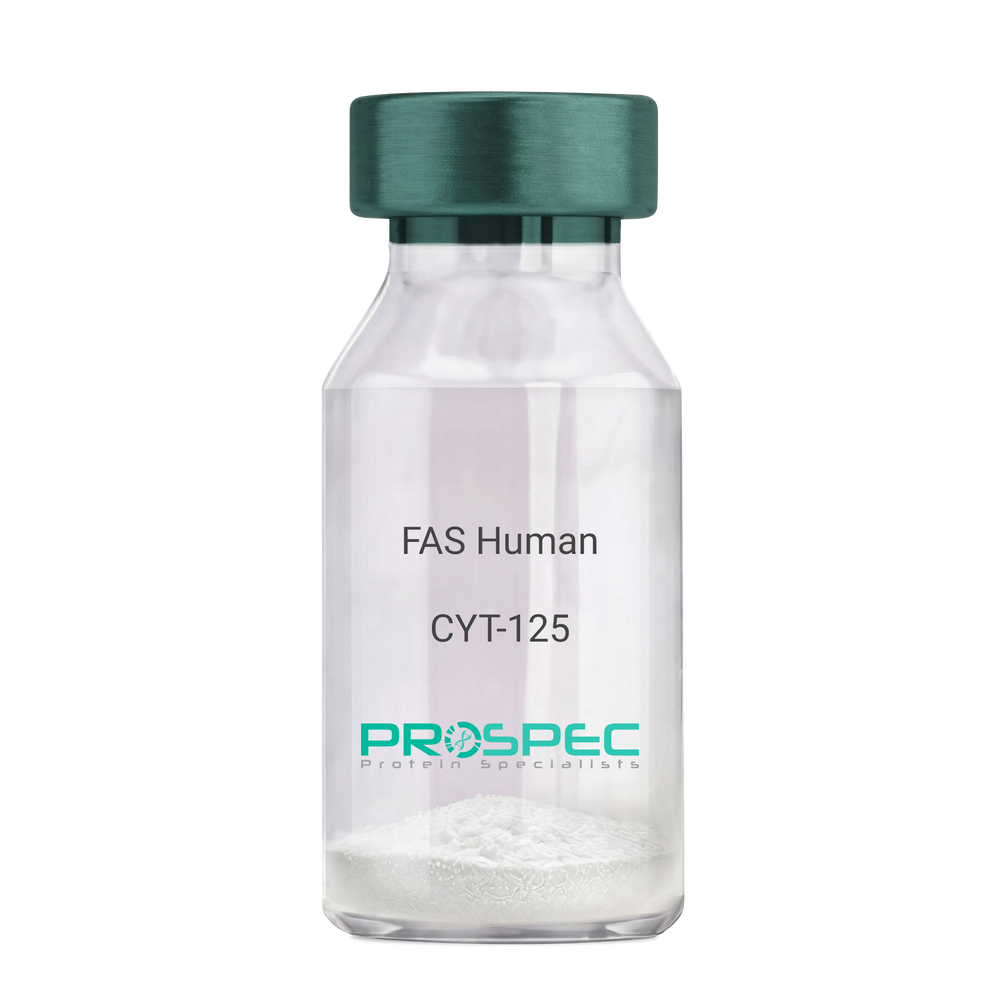
FAS HumanDescription:
sFas Receptor Human Recombinant
Tumor necrosis factor receptor superfamily member 6, Apo-1 antigen, Apoptosis-mediating surface antigen FAS, FASLG receptor, CD95, FAS, APT1, FAS1, APO-1, FASTM, ALPS1A, TNFRSF6.
Product # :
CYT-125Price :
Quantity :
Shipping Method :
Shipped at Room temp
More Info
- description
- source
- formulation
- purity
- biological activity
- More Info
Description
sFas Receptor Human Recombinant produced in E.coli is a single, non-glycosylated polypeptide chain containing 157 amino acids and having a molecular mass of 17.6kDa.The FAS is purified by proprietary chromatographic techniques.
Source
Escherichia Coli.
Formulation
FAS protein was lyophilized from a 0.2µm filtered concentrated solution in 1×PBS, pH 7.4.
Purity
Greater than 95.0% as determined by:
(a) Analysis by RP-HPLC.
(b) Analysis by SDS-PAGE.Biological Activity
The ED50 was determined by its ability to inhibit the cytotoxicity of Jurkat cells is between 10-15 µg/ml in the presence of 2ng/ml of hFasL.More Info
-
Introduction
Fas and Fas Ligand (FasL) are members of the TNF superfamily and are type I and type II transmembrane proteins, respectively. Binding of FasL to Fas initiates apoptosis in Fas-bearing cells. The apoptosis mechanism involves the recruitment of pro-caspase 8 through an adaptor molecule named FADD followed by processing of the pro-enzyme to active forms. These active caspases subsequently cleave a variety of cellular substrates leading to the eventual cell death. sFasR is able to inhibit FasL-induced apoptosis by acting as a decoy receptor whicht serves as a sink for FasL. The full length Fas Receptor is a 319 a.a type I transmembrane protein, which contains a 157 a.a extracellular domain, a 17 a.a transmembrane domain, and 145 a.a cytoplasmic domain. The mature human Fas ECD shares 55%, 58%, a.a sequence identity with the mouse, rat, Fas, respectively.
-
Synonyms
Tumor necrosis factor receptor superfamily member 6, Apo-1 antigen, Apoptosis-mediating surface antigen FAS, FASLG receptor, CD95, FAS, APT1, FAS1, APO-1, FASTM, ALPS1A, TNFRSF6.
-
Physical Appearance
Sterile Filtered White lyophilized (freeze-dried) powder.
-
Stability
Lyophilized FAS although stable at room temperature for 3 weeks, should be stored desiccated below -18°C. Upon reconstitution FAS should be stored at 4°C between 2-7 days and for future use below -18°C. For long term storage it is recommended to add a carrier protein (0.1% HSA or BSA). Please prevent freeze-thaw cycles.
-
Solubility
It is recommended to reconstitute the lyophilized FAS in sterile 18M-cm H2O not less than 100µg/ml, which can then be further diluted to other aqueous solutions.
-
Amino Acid Sequence
MRLSSKSVNA QVTDINSKGL ELRKTVTTVE TQNLEGLHHD GQFCHKPCPP GERKARDCTV NGDEPDCVPC QEGKEYTDKA HFSSKCRRCR LCDEGHGLEV EINCTRTQNT KCRCKPNFFC NSTVCEHCDP CTKCEHGIIK ECTLTSNTKC KEEGSRS.
-
Background
What is the molecular weight/Mw of FAS Protein?
FAS Protein has a total Mw of 17.6kDa.
What is the source or expression system of FAS Protein?
Escherichia Coli.
What is the Purity of FAS Protein?
FAS Protein is >95% pure as determined by SDS-PAGE.
What is the Biological Activity of FAS Protein?
The ED50 was determined by its ability to inhibit the cytotoxicity of Jurkat cells is between 10-15 µg/ml in the presence of 2ng/ml of hFasL.
What is the amino acid sequence of FAS Protein?
MRLSSKSVNA QVTDINSKGL ELRKTVTTVE TQNLEGLHHD GQFCHKPCPP GERKARDCTV NGDEPDCVPC QEGKEYTDKA HFSSKCRRCR LCDEGHGLEV EINCTRTQNT KCRCKPNFFC NSTVCEHCDP CTKCEHGIIK ECTLTSNTKC KEEGSRS.
What applications can FAS Protein be used in?
FAS Protein can probably be used in western blot, ELISA and Lateral Flow.
What is the endotoxin level for FAS Protein?
The endotoxin level is minimal, FAS Protein was purified using conventional chromatography techniques..
ProSpec's products are furnished for LABORATORY RESEARCH USE ONLY. The product may not be used as drugs, agricultural or pesticidal products, food additives or household chemicals.
- View Data Sheet
Name :
C1QTNF8 HumanDescription:
Complement C1q Tumor Necrosis Factor-Related Protein 8 Human Recombinant
CTRP8, UNQ5829, C1q/TNF-related protein 8, Complement C1q tumor necrosis factor-related protein 8.
Product # :
PRO-134Price :
Quantity :
Shipping Method :
Shipped with Ice Packs
More Info
- description
- source
- formulation
- purity
- More Info
Description
C1QTNF8 Human Recombinant produced in E.Coli is a single, non-glycosylated, polypeptide chain containing 255 amino acids including a 10 a.a N-terminal His tag. The total molecular mass is 28.4kDa (calculated).
Source
Escherichia Coli.
Formulation
C1QTNF8 filtered (0.4 µm) solution in 0.03M Acetate buffer pH-4.0.
Purity
Greater than 95.0% as determined by SDS-PAGE.
More Info
-
Synonyms
CTRP8, UNQ5829, C1q/TNF-related protein 8, Complement C1q tumor necrosis factor-related protein 8.
-
Physical Appearance
Filtered colorless solution.
-
Stability
Store at 4°C if entire vial will be used within 2-4 weeks. Store, frozen at -20°C for longer periods of time. For long term storage it is recommended to add a carrier protein (0.1% HSA or BSA).Avoid multiple freeze-thaw cycles.
-
Amino Acid Sequence
MKHHHHHHAS WPGLPRRPCV HCCRPAWPPG PYARVSDRDL WRGDLWRGLP RVRPTIDIEI LKGEKGEAGV RGRAGRSGKE GPPGARGLQG RRGQKGQVGP PGAACRRAYA AFSVGRRAYA AFSVGRREGL HSSDHFQAVP FDTELVNLDG AFDLAAGRFL CTVPGVYFLS LNVHTWNYKE TYLHIMLNRR PAAVLYAQPS ERSVMQAQSL MLLLAAGDAV WVRMFQRDRD NAIYGEHGDL YITFSGHLVK PAAEL.
ProSpec's products are furnished for LABORATORY RESEARCH USE ONLY. The product may not be used as drugs, agricultural or pesticidal products, food additives or household chemicals.
- View Data Sheet
Name :
FGF19 Human, HEKDescription:
Fibroblast Growth Factor-19 Human Recombinant, HEK
fibroblast growth factor 19, FGF19.
Product # :
CYT-1180Price :
Quantity :
Shipping Method :
Shipped with Ice Packs
More Info
- description
- source
- formulation
- purity
- More Info
Description
FGF19 Mouse Recombinant produced in HEK293 cells is a single, glycosylated polypeptide chain (a.a 23-216) containing 205 amino acids and having a molecular mass of 23.0 kDa.FGF19 is fused to a 6 amino acid His-tag at C-terminus & purified by proprietary chromatographic techniques.
Source
HEK293 cells.
Formulation
FGF19 protein (0.5mg/ml) contains 20mM Tris-HCl(pH8.0), 20% glycerol and 0.1M NaCl.
Purity
Greater than 95.0% as determined by SDS-PAGE.
More Info
-
Introduction
Fibroblast Growth Factor-19 (FGF-19) is a member of the FGF family. FGF-19 interacts with FGFR1, FGFR2, FGFR3 and FGFR4. T FGF-19 takes part in the suppression of bile acid biosynthesis through downregulation of CYP7A1 expression, following positive regulation of the JNK and EPK1/2 cascades. FGF-19 stimulates glucose uptake in adiposytes and is a high affinity, heparin dependent ligand for FGFR4.
-
Synonyms
fibroblast growth factor 19, FGF19.
-
Physical Appearance
Sterile Filtered colorless solution.
-
Stability
Store at 4°C if entire vial will be used within 2-4 weeks. Store, frozen at -20°C for longer periods of time. For long term storage it is recommended to add a carrier protein (0.1% HSA or BSA).Avoid multiple freeze-thaw cycles.
-
Amino Acid Sequence
DGSHMRPLAF SDAGPHVHYG WGDPIRLRHL YTSGPHGLSS CFLRIRADGV VDCARGQSAH SLLEIKAVAL RTVAIKGVHS VRYLCMGADG KMQGLLQYSE EDCAFEEEIR PDGYNVYRSE KHRLPVSLSS AKQRQLYKNR GFLPLSHFLP MLPMVPEEPE DLRGHLESDM FSSPLETDSM DPFGLVTGLE AVRSPSFEKH HHHHH
-
Background
What is the molecular weight/Mw of FGF19 HUMAN,HEK Protein?
FGF19 HUMAN,HEK Protein has a total Mw of 23kDa.
What is the source or expression system of FGF19 HUMAN,HEK Protein?
HEK293 cells.
What is the Purity of FGF19 HUMAN,HEK Protein?
FGF19 HUMAN,HEK Protein is >95% pure as determined by SDS-PAGE.
What is the Biological Activity of FGF19 HUMAN,HEK Protein?
The biological functionality of FGF19 HUMAN,HEK Protein will be determined in the future.
What is the amino acid sequence of FGF19 HUMAN,HEK Protein?
DGSHMRPLAF SDAGPHVHYG WGDPIRLRHL YTSGPHGLSS CFLRIRADGV VDCARGQSAH SLLEIKAVAL RTVAIKGVHS VRYLCMGADG KMQGLLQYSE EDCAFEEEIR PDGYNVYRSE KHRLPVSLSS AKQRQLYKNR GFLPLSHFLP MLPMVPEEPE DLRGHLESDM FSSPLETDSM DPFGLVTGLE AVRSPSFEKH HHHHH
What applications can FGF19 HUMAN,HEK Protein be used in?
FGF19 HUMAN,HEK Protein can probably be used in western blot, ELISA and Lateral Flow.
What is the endotoxin level for FGF19 HUMAN,HEK Protein?
The endotoxin level is minimal, FGF19 HUMAN,HEK Protein was purified using conventional chromatography techniques.
ProSpec's products are furnished for LABORATORY RESEARCH USE ONLY. The product may not be used as drugs, agricultural or pesticidal products, food additives or household chemicals.
- View Data Sheet
Name :
CD27 Human, HEKDescription:
CD27 Human Recombinant, HEK
Tumor Necrosis Factor Receptor Superfamily Member 7, T-Cell Activation Antigen CD27, CD27 Molecule, CD27 Antigen, T Cell Activation Antigen S152, CD27L Receptor, TNFRSF7, S152, Tp55, T14.
Product # :
PRO-2751Price :
Quantity :
Shipping Method :
Shipped with Ice Packs
More Info
- description
- source
- formulation
- purity
- biological activity
- More Info
Description
CD27 Human Recombinant produced in HEK cells is a single, glycosylated, polypeptide chain (20-191 a.a) containing a total of 411 amino acids, having a molecular mass of 46.2kDa. CD27 is fused to a 239 amino acid hIgG-His-Tag at C-terminus,and is purified by proprietary chromatographic techniques.
Source
HEK293 Cells.
Formulation
The CD27 solution (0.5mg/ml) contains 10% Glycerol and Phosphate-Buffered Saline (pH 7.4).
Purity
Greater than 95.0% as determined by SDS-PAGE.
Biological Activity
ED50 range is ≤ 0.8 ug/ml. Defined by its binding ability in a functional ELISA with Human CD27 Ligand/TNFSF7 (CAT# cyt-953).
More Info
-
Introduction
CD27 belongs to the TNF-receptor superfamily. CD27 is necessary for initiation and long-term maintenance of T cell immunity. CD27 binds to ligand CD70, and has a crucial role in regulating B-cell activation and immunoglobulin synthesis. The CD27 receptor transduces signals which result in the activation of NF-kappaB and MAPK8/JNK. Adaptor proteins TRAF2 and TRAF5 mediate the signaling process of CD27. CD27-binding protein (SIVA), which is a proapoptotic protein, can bind to the CD27 receptor and is believed to have a significant role in the apoptosis induced by CD27.
-
Synonyms
Tumor Necrosis Factor Receptor Superfamily Member 7, T-Cell Activation Antigen CD27, CD27 Molecule, CD27 Antigen, T Cell Activation Antigen S152, CD27L Receptor, TNFRSF7, S152, Tp55, T14.
-
Physical Appearance
Sterile Filtered colorless solution.
-
Stability
Store at 4°C if entire vial will be used within 2-4 weeks. Store, frozen at -20°C for longer periods of time. For long term storage it is recommended to add a carrier protein (0.1% HSA or BSA). Avoid multiple freeze-thaw cycles.
-
Amino Acid Sequence
ATPAPKSCPE RHYWAQGKLC CQMCEPGTFL VKDCDQHRKA AQCDPCIPGV SFSPDHHTRP HCESCRHCNS GLLVRNCTIT ANAECACRNG WQCRDKECTE CDPLPNPSLT ARSSQALSPH PQPTHLPYVS EMLEARTAGH MQTLADFRQL PARTLSTHWP PQRSLCSSDF IRLEPKSCDK THTCPPCPAP ELLGGPSVFL FPPKPKDTLM ISRTPEVTCV VVDVSHEDPE VKFNWYVDGV EVHNAKTKPR EEQYNSTYRV VSVLTVLHQD WLNGKEYKCK VSNKALPAPI EKTISKAKGQ PREPQVYTLP PSRDELTKNQ VSLTCLVKGF YPSDIAVEWE SNGQPENNYK TTPPVLDSDG SFFLYSKLTV DKSRWQQGNV FSCSVMHEAL HNHYTQKSLS LSPGKHHHHH H
ProSpec's products are furnished for LABORATORY RESEARCH USE ONLY. The product may not be used as drugs, agricultural or pesticidal products, food additives or household chemicals.
- View Data Sheet
Name :
CD68 Human, sf9Description:
CD68 Human Recombinant, sf9
Macrosialin, CD68, Gp110, Macrosialin isoform A, GP110, LAMP4, SCARD1.
Product # :
PRO-2375Price :
Quantity :
Shipping Method :
Shipped with Ice Packs
More Info
- description
- source
- formulation
- purity
- More Info
Description
CD68 Human Recombinant produced in Sf9 Baculovirus cells is a single, glycosylated polypeptide chain containing 307 amino acids (22-319) and having a molecular mass of 32.6kDa (Molecular size on SDS-PAGE will appear at approximately 57-70kDa).CD68 is fused to 6 amino acid His-Tag at C-terminus and purified by proprietary chromatographic techniques.
Source
Sf9, Baculovirus cells.
Formulation
CD68 protein solution (1mg/ml) containing Phosphate Buffered Saline (pH 7.4) and 10% glycerol.
Purity
Greater than 95.0% as determined by analysis by SDS-PAGE.
More Info
-
Introduction
CD68 encodes a 110-kD transmembrane glycoprotein that is highly expressed by human monocytes and tissue macrophages. It is a member of the lysosomal/endosomal-associated membrane glycoprotein (LAMP) family. The protein primarily localizes to lysosomes and endosomes with a smaller fraction circulating to the cell surface. It is a type I integral membrane protein with a heavily glycosylated extracellular domain and binds to tissue- and organ-specific lectins or selectins. The protein is also a member of the scavenger receptor family. Scavenger receptors typically function to clear cellular debris, promote phagocytosis, and mediate the recruitment and activation of macrophages. Alternative splicing results in multiple transcripts encoding different isoforms.
-
Synonyms
Macrosialin, CD68, Gp110, Macrosialin isoform A, GP110, LAMP4, SCARD1.
-
Physical Appearance
Sterile Filtered clear solution.
-
Stability
Store at 4°C if entire vial will be used within 2-4 weeks. Store, frozen at -20°C for longer periods of time. For long term storage it is recommended to add a carrier protein (0.1% HSA or BSA).Avoid multiple freeze-thaw cycles.
-
Amino Acid Sequence
ADPNDCPHKK SATLLPSFTV TPTVTESTGT TSHRTTKSHK TTTHRTTTTG TTSHGPTTAT HNPTTTSHGN VTVHPTSNST ATSQGPSTAT HSPATTSHGN ATVHPTSNST ATSPGFTSSA HPEPPPPSPS PSPTSKETIG DYTWTNGSQP CVHLQAQIQI RVMYTTQGGG EAWGISVLNP NKTKVQGSCE GAHPHLLLSF PYGHLSFGFM QDLQQKVVYL SYMAVEYNVS FPHAAQWTFS AQNASLRDLQ APLGQSFSCS NSSIILSPAV HLDLLSLRLQ AAQLPHTGVF GQSFSCPSDR SHHHHHH.
ProSpec's products are furnished for LABORATORY RESEARCH USE ONLY. The product may not be used as drugs, agricultural or pesticidal products, food additives or household chemicals.
- View Data Sheet
Name :
CETN3 HumanDescription:
Centrin-3 Human Recombinant
CEN3, CEN-3, CETN-3.
Product # :
PRO-533Price :
Quantity :
Shipping Method :
Shipped with Ice Packs
More Info
- description
- source
- formulation
- purity
- More Info
Description
CETN3 Human Recombinant produced in E.Coli is a single, non-glycosylated, polypeptide chain containing 187 amino acids (1-167 a.a.) and having a molecular mass of 21.7 kDa. CETN3 protein is fused to a 20 amino acid His-Tag at N-terminus and purified by standard chromatography.
Source
Escherichia Coli.
Formulation
CETN3 Human 0.5mg/ml solution contains 20mM Trsi HCl pH-8, 0.1M NaCl and 10% glycerol.
Purity
Greater than 95% as determined by SDS-PAGE.
More Info
-
Introduction
CETN3 comprises of 4 EF-hand calcium binding domains, and is a part of the centrin protein family. CETN3 protein is widely expressed cytoskeletal components that demonstrate increased expression during cell differentiation. CETN3 takes part in centrosome reproduction.
-
Synonyms
CEN3, CEN-3, CETN-3.
-
Physical Appearance
Sterile filtered colorless solution.
-
Stability
Store at 4°C if entire vial will be used within 2-4 weeks. Store, frozen at -20°C for longer periods of time. For long term storage it is recommended to add a carrier protein (0.1% HSA or BSA).Avoid multiple freeze-thaw cycles.
-
Amino Acid Sequence
MGSSHHHHHH SSGLVPRGSH MSLALRSELV VDKTKRKKRR ELSEEQKQEI KDAFELFDTD KDEAIDYHEL KVAMRALGFD VKKADVLKIL
KDYDREATGK ITFEDFNEVV TDWILERDPH EEILKAFKLF DDDDSGKISL RNLRRVAREL GENMSDEELR AMIEEFDKDG DGEINQEEFI
AIMTGDI.
ProSpec's products are furnished for LABORATORY RESEARCH USE ONLY. The product may not be used as drugs, agricultural or pesticidal products, food additives or household chemicals.
- View Data Sheet
Name :
CHGA Human, HEKDescription:
Chromogranin A Human Recombinant, HEK
CHGA, CGA, Chromogranin-A, Vasostatin I, SP-I, Pituitary secretory protein I.
Product # :
PRO-2664Price :
Quantity :
Shipping Method :
Shipped at Room temp
More Info
- description
- source
- formulation
- purity
- More Info
Description
CHGA Human Recombinant is a single, glycosylated polypeptide chain containing 445 amino acids (19-457a.a) and having a molecular mass of 49.7kDa (calculated). CHGA is fused to a 6 a.a His tag at C-terminal.
Source
HEK293 cells.
Formulation
CHGA filtered (0.4 µm) and lyophilized from 0.5mg/ml in PBS, pH 7.0.
Purity
Greater than 95.0% as determined by SDS-PAGE.
More Info
-
Introduction
Chromogranin A is a 439 amino acid protein which is encoded on chromosome 14 and is present in neuroendocrine cells throughout the body, including the neuroendocrine cells of the large and small intestine, adrenal medulla and pancreatic islets. It is an excellent marker for carcinoid tumors, phenochromocytomas, paragangliomas, and other neuroendocrine tumors.
Coexpression of chromogranin A and neuron specific enolase (NSE) is common in neuroendocrine neoplasms. -
Synonyms
CHGA, CGA, Chromogranin-A, Vasostatin I, SP-I, Pituitary secretory protein I.
-
Physical Appearance
Filtered White lyophilized (freeze-dried) powder.
-
Stability
Store lyophilized protein at -20°C. Aliquot the product after reconstitution to avoid repeated freezing/thawing cycles. Reconstituted protein can be stored at 4°C for a limited period of time; it does not show any change after two weeks at 4°C.
-
Solubility
It is recommended to add deionized water to prepare a working stock solution of approximately 0.5mg/ml and let the lyophilized pellet dissolve completely.
-
Amino Acid Sequence
LPVNSPMNKG DTEVMKCIVE VISDTLSKPS PMPVSQECFE TLRGDERILS ILRHQNLLKE LQDLALQGAK ERAHQQKKHS GFEDELSEVL ENQSSQAELK EAVEEPSSKD VMEKREDSKE AEKSGEATDG ARPQALPEPM QESKAEGNNQ APGEEEEEEE EATNTHPPAS LPSQKYPGPQ AEGDSEGLSQ GLVDREKGLS AEPGWQAKRE EEEEEEEEAE AGEEAVPEEE GPTVVLNPHP SLGYKEIRKG ESRSEALAVD GAGKPGAEEA QDPEGKGEQE HSQQKEEEEE MAVVPQGLFR GGKSGELEQE EERLSKEWED SKRWSKMDQL AKELTAEKRL EGQEEEEDNR DSSMKLSFRA RAYGFRGPGP QLRRGWRPSS REDSLEAGLP LQVRGYPEEK KEEEGSANRR PEDQELESLS AIEAELEKVA HQLQALRRGH HHHHH
ProSpec's products are furnished for LABORATORY RESEARCH USE ONLY. The product may not be used as drugs, agricultural or pesticidal products, food additives or household chemicals.
- View Data Sheet
Name :
CHI3L2 HumanDescription:
Chitinase 3-Like 2 Recombinant
Chitinase 3-Like 2, Chondrocyte Protein 39, YKL-39, YKL39, Chitinase-3-Like Protein 2, CHIL2, CHI3L2.
Product # :
ENZ-811Price :
Quantity :
Shipping Method :
Shipped at Room temp
More Info
- description
- source
- formulation
- purity
- More Info
Description
CHI3L2 Human Recombinant produced in E.Coli is a single, non-glycosylated, polypeptide chain (Tyr27-Leu390) containing 374 amino acids including a 10 aa His tag at N-terminus. The total calculated molecular mass is 42.1kDa.
Source
Escherichia Coli.
Formulation
CHI3L2 was filtered (0.4 µm) and lyophilized from 0.5mg/ml solution in 30mM acetate buffer, pH 4.
Purity
Greater than 95.0% as determined by SDS-PAGE.
More Info
-
Introduction
Chitinase 3-Like 2 (CHI3L2) is similar to bacterial chitinases but lacks chitinase activity. CHI3L2 protein is secreted and is involved in cartilage biogenesis. CHI3L2 is a lectin, which binds chitooligosaccharides and other glycans with high affinity.
-
Synonyms
Chitinase 3-Like 2, Chondrocyte Protein 39, YKL-39, YKL39, Chitinase-3-Like Protein 2, CHIL2, CHI3L2.
-
Physical Appearance
Filtered White lyophilized (freeze-dried) powder.
-
Stability
Store lyophilized protein at -20°C. Aliquot the product after reconstitution to avoid repeated freezing/thawing cycles. Reconstituted protein can be stored at 4°C for a limited period of time; it does not show any change after two weeks at 4°C.
-
Solubility
It is recommended to add 0.1M acetate buffer pH 4.0 to prepare a working stock solution of approximately 0.5mg/ml and let the lyophilized pellet dissolve completely. For conversion into higher pH value, we recommend intensive dilution by relevant buffer to a concentration of 10µg/ml. In higher concentrations the solubility of this antigen is limited.CHI3L2 is not sterile! Please filter the product by an appropriate sterile filter before using it in the cell culture.
-
Amino Acid Sequence
MKHHHHHHASYKLVCYFTNW SQDRQEPGKF TPENIDPFLC SHLIYSFASI ENNKVIIKDK SEVMLYQTIN SLKTKNPKLK ILLSIGGYLF GSKGFHPMVD SSTSRLEFIN SIILFLRNHN FDGLDVSWIY PDQKENTHFT VLIHELAEAF QKDFTKSTKE RLLLTAGVSA GRQMIDNSYQ VEKLAKDLDF INLLSFDFHG SWEKPLITGH NSPLSKGWQD RGPSSYYNVE YAVGYWIHKG MPSEKVVMGI PTYGHSFTLA SAETTVGAPA SGPGAAGPIT ESSGFLAYYE ICQFLKGAKI TRLQDQQVPY AVKGNQWVGY DDVKSMETKV QFLKNLNLGG AMIWSIDMDD FTGKSCNQGP YPLVQAVKRS LGSL.
ProSpec's products are furnished for LABORATORY RESEARCH USE ONLY. The product may not be used as drugs, agricultural or pesticidal products, food additives or household chemicals.
- View Data Sheet
Name :
VAMP3 HumanDescription:
Synaptobrevin-3 Human Recombinant
VAMP3, VAMP-3, Cellubrevin, Vesicle-Associated Membrane Protein 3, Synaptobrevin-3, CEB, SYB3.
Product # :
PRO-652Price :
Quantity :
Shipping Method :
Shipped with Ice Packs
More Info
- description
- source
- formulation
- purity
- More Info
Description
VAMP3 Human Recombinant produced in E.Coli is a single, non-glycosylated polypeptide chain containing 77 amino acids and having a molecular mass of 8.7 kDa.
Source
Escherichia Coli.
Formulation
The VAMP3 protein solution contains 20mM Tris pH-7.5 and 10% glycerol.
Purity
Greater than 95.0% as determined by:
(a) Analysis by RP-HPLC.
(b) Analysis by SDS-PAGE.More Info
-
Introduction
VAMP3 is present in recycling endosomes and endosome-derived vesicles. VAMP3 has been implicated in recycling of transferrin receptors to the plasma membrane, secretion of alpha-granules in platelets, recycling of T-cell receptors to the immunological synapses, and membrane trafficking during cell migration. VAMP-3 is present in human platelets and necessary for granule secretion. Synaptobrevins are the main components of a protein complex involved in the docking and/or fusion of synaptic vesicles with the presynaptic membrane. VAMP3 high homology to other VAMPs in its broad tissue distribution and subcellular localization is shown to be the human equivalent of the rodent cellubrevin. In platelets the protein resides on a compartment that is not mobilized to the plasma membrane on calcium or thrombin stimulation.
-
Synonyms
VAMP3, VAMP-3, Cellubrevin, Vesicle-Associated Membrane Protein 3, Synaptobrevin-3, CEB, SYB3.
-
Physical Appearance
Sterile Filtered colorless solution.
-
Stability
Store at 4°C if entire vial will be used within 2-4 weeks. Store, frozen at -20°C for longer periods of time. For long term storage it is recommended to add a carrier protein (0.1% HSA or BSA).Avoid multiple freeze-thaw cycles.
-
Amino Acid Sequence
MSTGPTAATG SNRRLQQTQN QVDEVVDIMR VNVDKVLERD QKLSELDDRA DALQAGASQF ETSAAKLKRK YWWKNCK.
ProSpec's products are furnished for LABORATORY RESEARCH USE ONLY. The product may not be used as drugs, agricultural or pesticidal products, food additives or household chemicals.
- View Data Sheet
Name :
CNPY1 HumanDescription:
Canopy FGF Signaling Regulator 1 Human Recombinant
Protein canopy homolog 1, CNPY1.
Product # :
PRO-1872Price :
Quantity :
Shipping Method :
Shipped with Ice Packs
More Info
- description
- source
- formulation
- purity
- More Info
Description
CNPY1 Human Recombinant produced in E.Coli is a single, non-glycosylated polypeptide chain containing 115 amino acids (1-92 a.a) and having a molecular mass of 13.3kDa. CNPY1 is fused to a 23 amino acid His-tag at N-terminus & purified by proprietary chromatographic techniques.
Source
Escherichia Coli.
Formulation
CNPY1 protein solution (0.5mg/ml) containing 20mM Tris-HCl buffer (pH 8.0), 0.15M NaCl, 10% glycerol and 1mM DTT.
Purity
Greater than 90.0% as determined by SDS-PAGE.
More Info
-
Introduction
Canopy FGF Signaling Regulator 1, also known as CNPY1, is expressed in the midbrain-hindbrain (MHB) boundary in zebrafish. CNPY1, which binds FGFR1, also takes part in FGF signaling.
-
Synonyms
Protein canopy homolog 1, CNPY1.
-
Physical Appearance
Sterile Filtered colorless solution.
-
Stability
Store at 4°C if entire vial will be used within 2-4 weeks. Store, frozen at -20°C for longer periods of time. For long term storage it is recommended to add a carrier protein (0.1% HSA or BSA).Avoid multiple freeze-thaw cycles.
-
Amino Acid Sequence
MGSSHHHHHH SSGLVPRGSH MGSMNDYKLE EDPVTKERTF KRFAPRKGDK IYQEFKKLYF YSDAYRPLKF ACETIIEEYE DEISSLIAQE THYLADKLCS EKSDLCETSA NHTEL.
ProSpec's products are furnished for LABORATORY RESEARCH USE ONLY. The product may not be used as drugs, agricultural or pesticidal products, food additives or household chemicals.
- View Data Sheet
Name :
REG3A HumanDescription:
Regenerating Islet-Derived 3 Alpha Human Recombinant
Regenerating islet-derived protein 3 alpha, Reg III-alpha, Pancreatitis-associated protein 1, REG3A, HIP, PAP, PAP1, REG3, INGAP, PAP-H, PBCGF, REG-III.
Product # :
PRO-421Price :
Quantity :
Shipping Method :
Shipped at Room temp
More Info
- description
- source
- formulation
- purity
- More Info
Description
The Recombinant Human REG3A protein is produced with N-terminal fusion of His Tag. The REG3A His -Tagged Fusion Protein is an 18.4 kDa protein containing 149 amino acid residues of the Human REG3A and 16 additional amino acid residues- His Tag (underlined).
Source
Escherichia Coli.
Formulation
Filtered (0.4µm) and lyophilized from 0.5 mg/ml in 0.05M Acetate buffer pH-4.
Purity
Greater than 95.0% as determined by SDS-PAGE.
More Info
-
Introduction
Pancreatitis-associated protein (PAP) is a secretory protein not normally expressed in healthy pancreas but highly induced during acute pancreatitis. While PAP has been shown to be anti-bacterial and antiapoptotic in vitro, its definitive biological function in vivo is not clear. Using antisepse oligonucleotides, inhibition of PAP expression significantly worsened pancreatitis in a rat model. During pancreatitis, PAP released by the pancreas could mediate lung inflammation through induction of hepatic TNF- alpha expression and subsequent increase in circulating TNF-alpha.
PAP is activated in primary liver cancers. In normal liver, the protein is undetectable in normal mature hepatocytes and found only in some ductular cells, representing potential hepatic progenitor cells. PAP can be considered hepatic cytokine that combines mitogenic and anti-apoptotic functions regarding hepatocytes, and consequently acts as a growth factor in vivo to enhance liver regeneration. In pancreatic cancor, PAP was overexpressed in 79% (30 of 38) of pancreatic ductal adenocarcinoma, 19% (7 of 36) of chronic pancreatitis, and 29% (2 of 7) of mucinous cystadenoma. PAP was found in malignant ductular structures in pancreatic carcinomas as well as in benign proliferating ductules and acinar cells in chronic pancreatitis. Elevation of PAP in patients with pancreatic cancer is not merely explainable by concomitant pancreatitis, but seems to be due to increased PAP production by the cancer cells and is also correlated to tumour load as expressed by the UICC stages.
Epithelial expression of PAP was induced under intestinal mucosal inflammation initiated by exposure to commensal bacteria or DSS as well as inflamed IBD colon. Increased serum level of PAP diagnosed ileal location in active Crohn disease with a sensitivity of 60%, a specificity of 94%, a positive predictive value of 84% and a negative predictive value of 81%. Elevated serum PAP (> 50 ng/mL) is significantly associated with disease activity and ileal location of Crohn disease. -
Synonyms
Regenerating islet-derived protein 3 alpha, Reg III-alpha, Pancreatitis-associated protein 1, REG3A, HIP, PAP, PAP1, REG3, INGAP, PAP-H, PBCGF, REG-III.
-
Physical Appearance
Filtered White lyophilized (freeze-dried) powder.
-
Stability
Store lyophilized protein at -20°C. Aliquot the product after reconstitution to avoid repeated freezing/thawing cycles. Reconstituted protein can be stored at 4°C for a limited period of time; it does not show any change after two weeks at 4°C.
-
Solubility
It is recommended to add 0.1M Acetate buffer pH-4 to prepare a working stock solution of approximately 0.5mg/ml and let the lyophilized pellet dissolve completely. For conversion into higher pH value, we recommend intensive dilution by relevant buffer to a concentration of 10μg/ml. In higher concentrations the solubility of this antigen is limited. Product is not sterile! Please filter the product by an appropriate sterile filter before using it in the cell culture.
-
Amino Acid Sequence
MRGSHHHHHH GMASHMEEPQ RELPSARIRC PKGSKAYGSH CYALFLSPKS WTDADLACQK RPSGNLVSVL SGAEGSFVSS LVKSIGNSYS YVWIGLHDPT QGTEPNGEGW EWSSSDVMNY FAWERNPSTI SSPGHCASLS RSTAFLRWKD YNCNVRLPYV CKFTD.
-
Applications
Western blotting, ELISA.
ProSpec's products are furnished for LABORATORY RESEARCH USE ONLY. The product may not be used as drugs, agricultural or pesticidal products, food additives or household chemicals.
- View Data Sheet
Name :
CD40 Human, HEKDescription:
CD40 Human Recombinant, HEK
CD40 Molecule, TNF Receptor Superfamily Member 5, TNFRSF5, Tumor Necrosis Factor Receptor Superfamily, Member 5, Bp50, B-Cell Surface Antigen CD40, CD40L Receptor, CDW40, B Cell Surface Antigen CD40, B Cell-Associated Molecule, CD40 Antigen (TNF Receptor Superfamily Member 5), CD40 Type II Isoform, Nerve Growth Factor Receptor-Related B-Lymphocyte Activation Molecule, p50, Tumor Necrosis Factor Receptor Superfamily Member 5, CDw40, CD40 Antigen
Product # :
PRO-2719Price :
Quantity :
Shipping Method :
Shipped with Ice Packs
More Info
- description
- source
- formulation
- purity
- More Info
Description
CD40 Human Recombinant produced in HEK cells is a single, glycosylated, polypeptide chain containing 412 amino acids (21-193 a.a.) and having a molecular mass of 46.1kDa.CD40 is expressed with a 239 amino acid hIgG-His-Tag at C-Terminus and purified by proprietary chromatographic techniques.
Source
HEK 293.
Formulation
CD40 protein solution (1mg/ml) contains 10% glycerol and Phosphate-Buffered Saline (pH 7.4).
Purity
Greater than 95.0% as determined by SDS-PAGE.
More Info
-
Introduction
CD40 belongs to the TNF-receptor super family. CD40 has been found to be vital in mediating a wide range of immune and inflammatory responses including T cell-dependent immunoglobulin class switching, memory B cell development, and germinal center formation. AT-hook transcription factor AKNA is accounted to coordinately regulate the expression of CD40 and its ligand, which is significant for homotypic cell interactions. Adaptor protein TNFR2 interacts with CD40 and functions as a mediator of the signal transduction. The interaction of CD40 and its ligand is found to be essential for amyloid-beta-induced microglial activation, and therefore is considered to be an early event in Alzheimer disease pathogenesis.
-
Synonyms
CD40 Molecule, TNF Receptor Superfamily Member 5, TNFRSF5, Tumor Necrosis Factor Receptor Superfamily, Member 5, Bp50, B-Cell Surface Antigen CD40, CD40L Receptor, CDW40, B Cell Surface Antigen CD40, B Cell-Associated Molecule, CD40 Antigen (TNF Receptor Superfamily Member 5), CD40 Type II Isoform, Nerve Growth Factor Receptor-Related B-Lymphocyte Activation Molecule, p50, Tumor Necrosis Factor Receptor Superfamily Member 5, CDw40, CD40 Antigen
-
Physical Appearance
Sterile filtered colorless solution.
-
Stability
Store at 4°C if entire vial will be used within 2-4 weeks.Store, frozen at -20°C for longer periods of time.For long term storage it is recommended to add a carrier protein (0.1% HSA or BSA).Avoid multiple freeze-thaw cycles.
-
Amino Acid Sequence
EPPTACREKQ YLINSQCCSL CQPGQKLVSD CTEFTETECL PCGESEFLDT WNRETHCHQH KYCDPNLGLR VQQKGTSETD TICTCEEGWH CTSEACESCV LHRSCSPGFG VKQIATGVSD TICEPCPVGF FSNVSSAFEK CHPWTSCETK DLVVQQAGTN KTDVVCGPQD RLRLEPKSCD KTHTCPPCPA PELLGGPSVF LFPPKPKDTL MISRTPEVTC VVVDVSHEDP EVKFNWYVDG VEVHNAKTKP REEQYNSTYR VVSVLTVLHQ DWLNGKEYKC KVSNKALPAP IEKTISKAKG QPREPQVYTL PPSRDELTKN QVSLTCLVKG FYPSDIAVEW ESNGQPENNY KTTPPVLDSD GSFFLYSKLT VDKSRWQQGN VFSCSVMHEA LHNHYTQKSL SLSPGKHHHH HH
ProSpec's products are furnished for LABORATORY RESEARCH USE ONLY. The product may not be used as drugs, agricultural or pesticidal products, food additives or household chemicals.
- View Data Sheet
Name :
SPOCK3 MouseDescription:
Sparc/Osteonectin 3 Mouse Recombinant
Testican-3, SPARC/osteonectin, CWCV, Kazal-like domains proteoglycan 3, Spock3.
Product # :
PRO-2328Price :
Quantity :
Shipping Method :
Shipped with Ice Packs
More Info
- description
- source
- formulation
- purity
- More Info
Description
SPOCK3 Mouse Recombinant produced in Sf9 Baculovirus cells is a single, glycosylated polypeptide chain containing 423 amino acids (22-436 a.a.) and having a molecular mass of 47.9kDa (Migrates at 40-57kDa on SDS-PAGE under reducing conditions).SPOCK3 is expressed with an 8 amino acid His tag at C-Terminus and purified by proprietary chromatographic techniques.
Source
Sf9, Baculovirus cells.
Formulation
SPOCK3 protein solution (0.25mg/ml) containing Phosphate Buffered Saline (pH 7.4) and 10% glycerol.
Purity
Greater than 90% as determined by SDS-PAGE.
More Info
-
Introduction
Testican-3 (Spock3) is a nervous system-expressed heparan sulfate proteoglycan belonging to a subgroup of the BM-40/SPARC/osteonectin family, whose role of in brain development is unclear. Spock3 inhibits the processing of pro-matrix metalloproteinase 2(MMP-2) by MT1-MMP and MT3-MMP. Spock3 is mostly confined to the developmental stage of the brain.
-
Synonyms
Testican-3, SPARC/osteonectin, CWCV, Kazal-like domains proteoglycan 3, Spock3.
-
Physical Appearance
Sterile Filtered colorless solution.
-
Stability
Store at 4°C if entire vial will be used within 2-4 weeks. Store, frozen at -20°C for longer periods of time. For long term storage it is recommended to add a carrier protein (0.1% HSA or BSA).Avoid multiple freeze-thaw cycles.
-
Amino Acid Sequence
AAAAVAVAGG RSDGGNFLDE KQWLTTISQY DKEVGQWNKF RDEVEDDYFR TWNPGKPFDQ ALDPAKDPCL KTKCSRHKVC ITQDAQTALC ISHRRLTHSM KEVGGSHKQW RGLPSSTCKP CPIAYASPVC GSDGHSYSSQ CKLEYQACVL GKQISIKCEG RCPCPSDKSM NIGRNVKRAC
SDLEFREVAN RLRDWFKALH ESGSQNKKTK ALLRPERSRF DTSILPICKD SLGWMFNRLD TNYDLLLDQS ELGSIYLDKN EQCTKAFFNS CDTYKDSLIS NNEWCYCFQR QQDPPCHTEL SNIQKRQGIK KLLGQYIPLC DEDGYYKPTQ CHGSVGQCWC VDRYGNEVVG SRINGVADCA
IDFEISGDFA SGDFREWTDD EGEEDDIMND KDDIEDDDED EGDDDDDGDV HDGYILEHHH HHH
ProSpec's products are furnished for LABORATORY RESEARCH USE ONLY. The product may not be used as drugs, agricultural or pesticidal products, food additives or household chemicals.
- View Data Sheet
Name :
FBLIM1 HumanDescription:
Filamin Binding LIM Protein 1 Human Recombinant
Filamin binding LIM protein 1, CAL, FBLP-1, FBLP1, RP11-169K16.5, Migfilin, Mitogen-inducible 2-interacting protein, MIG2-interacting protein.
Product # :
PRO-1473Price :
Quantity :
Shipping Method :
Shipped with Ice Packs
More Info
- description
- source
- formulation
- purity
- More Info
Description
FBLIM1 Human Recombinant produced in E.coli is a single, non-glycosylated polypeptide chain containing 396 amino acids (1-373) and having a molecular mass of 43.1 kDa. FBLIM1 is fused to a 23 amino acid His-tag at N-terminus & purified by proprietary chromatographic techniques.
Source
Escherichia Coli.
Formulation
The FBLIM1 solution (0.25mg/ml) contains 20mM Tris-HCl buffer (pH 8.0), 0.15M NaCl, 10% glycerol and 1mM DTT.
Purity
Greater than 85.0% as determined by SDS-PAGE.
More Info
-
Introduction
Filamin binding LIM protein 1 (FBLIM1) plays a role as an anchoring site for cell-ECM adhesion proteins and filamin-containing actin filaments. FBLIM1 is involved in cell shape spreading and motility. FBLIM1 participates in the regulation of filamin-mediated cross-linking and stabilization of actin filaments. FBLIM1 promotes stimulation of integrins and regulates integrin-mediated cell-cell adhesion.
-
Synonyms
Filamin binding LIM protein 1, CAL, FBLP-1, FBLP1, RP11-169K16.5, Migfilin, Mitogen-inducible 2-interacting protein, MIG2-interacting protein.
-
Physical Appearance
Sterile Filtered colorless solution.
-
Stability
Store at 4°C if entire vial will be used within 2-4 weeks. Store, frozen at -20°C for longer periods of time. For long term storage it is recommended to add a carrier protein (0.1% HSA or BSA).Avoid multiple freeze-thaw cycles.
-
Amino Acid Sequence
MGSSHHHHHH SSGLVPRGSH MGSMASKPEK RVASSVFITL APPRRDVAVA EEVRQAVCEA RRGRPWEAPA PMKTPEAGLA GRPSPWTTPG RAAATVPAAP MQLFNGGCPP PPPVLDGEDV LPDLDLLPPP PPPPPVLLPS EEEAPAPMGA SLIADLEQLH LSPPPPPPQA PAEGPSVQPG PLRPMEEELP PPPAEPVEKG ASTDICAFCH KTVSPRELAV EAMKRQYHAQ CFTCRTCRRQ LAGQSFYQKD GRPLCEPCYQ DTLERCGKCG EVVRDHIIRA LGQAFHPSCF TCVTCARCIG DESFALGSQN EVYCLDDFYR KFAPVCSICE NPIIPRDGKD AFKIECMGRN FHENCYRCED CRILLSVEPT DQGCYPLNNH LFCKPCHVKR SAAGCC.
ProSpec's products are furnished for LABORATORY RESEARCH USE ONLY. The product may not be used as drugs, agricultural or pesticidal products, food additives or household chemicals.