Search results
594 results found for “fractalkine (cx3cl1)”
Name
Description
Product #
Price
Quantity
Shipping Method
- View Data Sheet
Name :
Procalcitonin HumanDescription:
Procalcitonin Human Recombinant
Procalcitonin, PCT.
Product # :
HOR-304Price :
Quantity :
Shipping Method :
Shipped at Room temp
More Info
- description
- source
- formulation
- purity
- More Info
Description
Procalcitonin Human Recombinant produced in E.Coli is a single, non-glycosylated, polypeptide chain containing 116 amino acids and having a molecular mass of 12.8 kDa.The Procalcitonin is purified by standard chromatographic techniques.
Source
Escherichia Coli.
Formulation
Lyophilized from 10mM sodium phosphate pH-7.5.
Purity
Greater than 95.0% as determined by SDS-PAGE.
More Info
-
Introduction
Procalcitonin is a peptide hormone mainly produced by the C cells of the thyroid and certain endocrine cells of the lung. Under normal expression conditions, procalcitonin is immediately cleaved into three specific fragments, an N terminal residue, calcitonin and katacalcin. Levels of unprocessed procalcitonin rise significantly after bacterial infection, trauma or shock.
-
Synonyms
Procalcitonin, PCT.
-
Physical Appearance
Sterile Filtered White lyophilized (freeze-dried) powder.
-
Stability
Lyophilized procalcitonin although stable at room temperature for 3 weeks, should be stored desiccated below -18°C. Upon reconstitution procalcitonin should be stored at 4°C between 2-7 days and for future use below -18°C.For long term storage it is recommended to add a carrier protein (0.1% HSA or BSA).Please prevent freeze-thaw cycles.
-
Solubility
It is recommended to reconstitute the lyophilized procalcitonin sterile 18MΩ-cm H2O at 100 µg/ml, which can then be further diluted to other aqueous solutions.
-
Amino Acid Sequence
APFRSALESS PADPATLSED EARLLLAALV QDYVQMKASE LEQEQEREGS SLDSPRSKRC GNLSTCMLGT YTQDFNKFHT FPQTAIGVGA PGKKRDMSSD LERDHRPHVS MPQNAN.
ProSpec's products are furnished for LABORATORY RESEARCH USE ONLY. The product may not be used as drugs, agricultural or pesticidal products, food additives or household chemicals.
- View Data Sheet
Name :
CHST3 HumanDescription:
Carbohydrate Sulfotransferase 3 Human Recombinant
Carbohydrate sulfotransferase 3, Chondroitin 6-O-sulfotransferase 1, C6ST-1, Chondroitin 6-sulfotransferase, GST-0, CHST3, CHST-3,C6ST1HSD.
Product # :
ENZ-1166Price :
Quantity :
Shipping Method :
Shipped with Ice Packs
More Info
- description
- source
- formulation
- purity
- biological activity
- More Info
Description
CHST3 produced in Sf9 Baculovirus cells is a single, glycosylated polypeptide chain containing 450 amino acids (39-479.a.a) and having a molecular mass of 51.3kDa. CHST3 is expressed with a 6 amino acid His tag at C-Terminus and purified by proprietary chromatographic techniques.
Source
Sf9, Baculovirus cells.
Formulation
CHST3 protein solution (0.25mg/ml) contains Phosphate buffered saline (pH7.4) and 10% glycerol.
Purity
Greater than 90.0% as determined by SDS-PAGE.
Biological Activity
Specific activity is greater than 1,000 pmol/min/ug, and is defined as the amount of enzyme that sulfate from PAPS to Chondroitin Sulfate per minute at pH 7.5, at 25C.
More Info
-
Introduction
Carbohydrate Sulfotransferase 3 (CHST3) belong to sulfotransferase 1 family which iincludes 14 enzymes that all members are Golgi-localized type II membrane proteins. These enzymes utilizes 3'-phospho-5'-adenylyl sulfate (PAPS) as sulfonate donor to catalyze the transfer of sulfate to position 6 of the N-acetylgalactosamine (GalNAc) residue of chondroitin. CHST3 can also sulfate Gal residues of keratan sulfate and Gal residues in sialyl N-acetyllactosamine (sialyl LacNAc) oligosaccharides. CHST3 is expressed in heart, placenta, skeletal muscle and pancreas. CHST3 takes part in maintenance of naive T-lymphocytes in the spleen.
-
Synonyms
Carbohydrate sulfotransferase 3, Chondroitin 6-O-sulfotransferase 1, C6ST-1, Chondroitin 6-sulfotransferase, GST-0, CHST3, CHST-3,C6ST1HSD.
-
Physical Appearance
Sterile filtered colorless solution.
-
Stability
Store at 4°C if entire vial will be used within 2-4 weeks.Store, frozen at -20°C for longer periods of time.For long term storage it is recommended to add a carrier protein (0.1% HSA or BSA).Avoid multiple freeze-thaw cycles.
-
Amino Acid Sequence
ADLEKENKII SRVSDKLKQI PQALADANST DPALILAENA SLLSLSELDS AFSQLQSRLR NLSLQLGVEP AMEAAGEEEE EQRKEEEPPR PAVAGPRRHV LLMATTRTGS SFVGEFFNQQ GNIFYLFEPL WHIERTVSFE PGGANAAGSA LVYRDVLKQL FLCDLYVLEH FITPLPEDHL TQFMFRRGSS RSLCEDPVCT PFVKKVFEKY HCKNRRCGPL NVTLAAEACR RKEHMALKAV RIRQLEFLQP LAEDPRLDLR VIQLVRDPRA VLASRMVAFA GKYKTWKKWL DDEGQDGLRE EEVQRLRGNC ESIRLSAELG LRQPAWLRGR YMLVRYEDVA RGPLQKAREM YRFAGIPLTP QVEDWIQKNT QAAHDGSGIY STQKNSSEQF EKWRFSMPFK LAQVVQAACG PAMRLFGYKL ARDAAALTNR SVSLLEERGT FWVTHHHHHH.
ProSpec's products are furnished for LABORATORY RESEARCH USE ONLY. The product may not be used as drugs, agricultural or pesticidal products, food additives or household chemicals.
- View Data Sheet
Name :
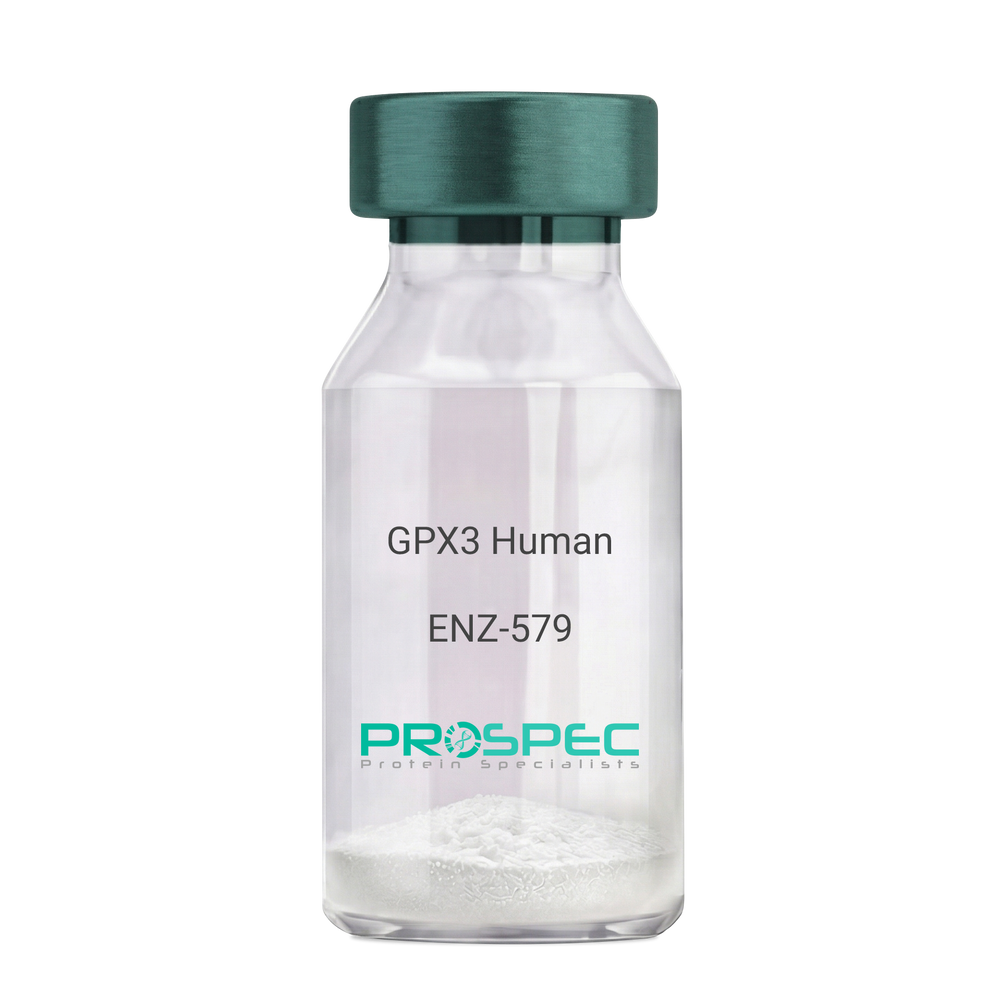
GPX3 HumanDescription:
Glutathione Peroxidase 3 Human Recombinant
Glutathione peroxidase 3, GPx-3, GSHPx-3, Extracellular glutathione peroxidase, Plasma glutathione peroxidase, GPx-P, GSHPx-P, GPX3, GPXP.
Product # :
ENZ-579Price :
Quantity :
Shipping Method :
Shipped with Ice Packs
More Info
- description
- source
- formulation
- purity
- More Info
Description
GPX3 Human Recombinant produced in E.coli is a single, non-glycosylated polypeptide chain containing 227 amino acids (21-226) and having a molecular mass of 25.7kDa.GPX3 is fused to a 21 amino acid His-tag at N-terminus & purified by proprietary chromatographic techniques.
Source
Escherichia Coli.
Formulation
The GPX3 solution contains 20mM Tris-HCl buffer (pH7.5), 40% glycerol, 0.15M NaCl and 1mM DTT.
Purity
Greater than 85% as determined by SDS-PAGE.
More Info
-
Introduction
Glutathione peroxidase 3 (GPX3) is a member of the glutathione peroxidase family, which acts in the detoxification of hydrogen peroxide. GPX3 shields cells and enzymes from oxidative damage, by catalyzing the reduction of hydrogen peroxide, lipid peroxides and organic hydroperoxide, by glutathione. The GPX3 protein is one of only a few proteins known in higher vertebrates to contain selenocysteine, which occurs at the active site of glutathione peroxidase and is coded by the nonsense (stop) codon TGA.
-
Synonyms
Glutathione peroxidase 3, GPx-3, GSHPx-3, Extracellular glutathione peroxidase, Plasma glutathione peroxidase, GPx-P, GSHPx-P, GPX3, GPXP.
-
Physical Appearance
Sterile filtered colorless solution.
-
Stability
Store at 4°C if entire vial will be used within 2-4 weeks. Store, frozen at -20°C for longer periods of time. For long term storage it is recommended to add a carrier protein (0.1% HSA or BSA).Avoid multiple freeze-thaw cycles.
-
Amino Acid Sequence
MGSSHHHHHH SSGLVPRGSH MQSRGQEKSK MDCHGGISGT IYEYGALTID GEEYIPFKQY AGKYVLFVNV ASYCGLTGQY IELNALQEEL APFGLVILGF PCNQFGKQEP GENSEILPTL KYVRPGGGFV PNFQLFEKGD VNGEKEQKFY TFLKNSCPPT SELLGTSDRL FWEPMKVHDI RWNFEKFLVG PDGIPIMRWH HRTTVSNVKM DILSYMRRQA ALGVKRK.
ProSpec's products are furnished for LABORATORY RESEARCH USE ONLY. The product may not be used as drugs, agricultural or pesticidal products, food additives or household chemicals.
- View Data Sheet
Name :
MAGEA3 HumanDescription:
Melanoma Antigen Family A, 3 Human Recombinant
CT1.3, MAGE3, HYPD, Melanoma Antigen family A, 3, MAGE-3 antigen, MAGEA6, Antigen MZ2-D, Melanoma-Associated antigen 3.
Product # :
PRO-502Price :
Quantity :
Shipping Method :
Shipped with Ice Packs
More Info
- description
- source
- formulation
- purity
- More Info
Description
MAGEA3 produced in E.Coli is a single, non-glycosylated polypeptide chain containing 337 amino acids (1-314 a.a.) and having a molecular mass of 37.1kDa.MAGEA3 is fused to a 23 amino acid His-tag at N-terminus & purified by proprietary chromatographic techniques.
Source
Escherichia Coli.
Formulation
The MAGEA3 protein solution (1mg/1ml) is formulated in 20mM Tris-HCl buffer (pH 8.0) 1mM DTT, 100mM NaCl and 10% glycerol.
Purity
Greater than 90% as determined by SDS-PAGE.
More Info
-
Introduction
MAGE belongs to the MAGE gene family, that comprises 12 known genes, of which 6 are expressed in tumors. The Melanoma-associated antigen 3 genes were originally isolated from different kinds of tumors, and based on their virtually limited tumor-specific expression in adult tissues, they were used as targets for cancer immunotherapy. MAGEA3 is a tumor-specific antigen extensively expressed in solid and hematologic malignancies, but not in normal tissues, with the exclusion of testis and placenta. Consequently, MAGEA3 is an outstanding candidate tumor antigen.
-
Synonyms
CT1.3, MAGE3, HYPD, Melanoma Antigen family A, 3, MAGE-3 antigen, MAGEA6, Antigen MZ2-D, Melanoma-Associated antigen 3.
-
Physical Appearance
Sterile Filtered clear solution.
-
Stability
Store at 4°C if entire vial will be used within 2-4 weeks.Store, frozen at -20°C for longer periods of time. For long term storage it is recommended to add a carrier protein (0.1% HSA or BSA).Avoid multiple freeze-thaw cycles.
-
Amino Acid Sequence
MGSSHHHHHH SSGLVPRGSH MGSMPLEQRS QHCKPEEGLE ARGEALGLVG AQAPATEEQE AASSSSTLVE VTLGEVPAAE SPDPPQSPQG ASSLPTTMNY PLWSQSYEDS SNQEEEGPST FPDLESEFQA ALSRKVAELV HFLLLKYRAR EPVTKAEMLG SVVGNWQYFF PVIFSKASSS LQLVFGIELM EVDPIGHLYI FATCLGLSYD GLLGDNQIMP KAGLLIIVLA IIAREGDCAP EEKIWEELSV LEVFEGREDS ILGDPKKLLT QHFVQENYLE YRQVPGSDPA CYEFLWGPRA LVETSYVKVL HHMVKISGGP HISYPPLHEW VLREGEE
ProSpec's products are furnished for LABORATORY RESEARCH USE ONLY. The product may not be used as drugs, agricultural or pesticidal products, food additives or household chemicals.
- View Data Sheet
Name :
MAP1LC3A HumanDescription:
Microtubule-Associated Protein 1 Light Chain 3 Alpha Human Recombinant
ATG8E, LC3, LC3A, MAP1ALC3, MAP1BLC3, MLP3A.
Product # :
PRO-495Price :
Quantity :
Shipping Method :
Shipped with Ice Packs
More Info
- description
- source
- formulation
- purity
- More Info
Description
MAP1LC3A Recombinant Human produced in E.Coli is a single, non-glycosylated polypeptide chain containing 128 amino acids (1-120 a.a.) and having a molecular mass of 15.1 kDa. The MAP1LC3A is fused to 8 amino acid His-Tag at C-terminus and purified by proprietary chromatographic techniques.
Source
Escherichia Coli.
Formulation
The MAP1LC3A solution (1mg/ml) contains 20mM Tris-HCl pH-8.0, 1mM DTT, 0.1M NaCl & 20% glycerol.
Purity
Greater than 95.0% as determined by SDS-PAGE.
More Info
-
Introduction
MAP1LC3A takes part in formation of autophagosomal vacuoles and is one of the light chain subunits that functions together with both MAP1A and/or MAP1B. MAP1LC3A has an important part in neuronal development and in maintaining the balance between neuronal plasticity and rigidity. MAP1LC3A is expressed as two alternatively spliced isoforms that are expressed in testis, brain, heart, liver and skeletal muscle, but are absent in thymus and peripheral blood leukocytes.
-
Synonyms
ATG8E, LC3, LC3A, MAP1ALC3, MAP1BLC3, MLP3A.
-
Physical Appearance
Sterile filtered colorless solution.
-
Stability
Store at 4°C if entire vial will be used within 2-4 weeks. Store, frozen at -20°C for longer periods of time. For long term storage it is recommended to add a carrier protein (0.1% HSA or BSA).Avoid multiple freeze-thaw cycles.
-
Amino Acid Sequence
MPSDRPFKQR RSFADRCKEV QQIRDQHPSK IPVIIERYKG EKQLPVLDKT KFLVPDHVNM SELVKIIRRR LQLNPTQAFF LLVNQHSMVS VSTPIADIYE QEKDEDGFLY MVYASQETFG LEHHHHHH.
ProSpec's products are furnished for LABORATORY RESEARCH USE ONLY. The product may not be used as drugs, agricultural or pesticidal products, food additives or household chemicals.
- View Data Sheet
Name :
DNMT3L HumanDescription:
DNA Cytosine-5--Methyltransferase 3-Like Human Recombinant
DNMT3L, DNA (Cytosine-5-)-Methyltransferase 3-Like, Human Cytosine-5-Methyltransferase 3-Like Protein 11, Cytosine-5-Methyltransferase 3-Like Protein, DNA (Cytosine-5)-Methyltransferase 3-Like.
Product # :
ENZ-787Price :
Quantity :
Shipping Method :
Shipped with Ice Packs
More Info
- description
- source
- formulation
- purity
- More Info
Description
DNMT3L Human Recombinant produced in E.coli is a single, non-glycosylated polypeptide chain containing 411 amino acids (1-386) and having a molecular mass of 46.2kDa.DNMT3L is fused to a 25 amino acid His-tag at N-terminus & purified by proprietary chromatographic techniques.
Source
Escherichia Coli.
Formulation
The DNMT3L solution (0.25mg/ml) contains 20mM Tris-HCl buffer (pH 8.0), 0.15M NaCl, 10% glycerol and 1mM DTT.
Purity
Greater than 90.0% as determined by SDS-PAGE.
More Info
-
Introduction
DNA Cytosine-5--Methyltransferase 3-Like (DNMT3L) is a nuclear protein with similarity to DNA methyltransferases, but is not believed to act as a DNA methyltransferase since it doesn’t contain the amino acid residues needed for methyltransferase activity. Nevertheless, DNMT3L stimulates de novo methylation by DNA cytosine methyltransferase 3 alpha and is assumed to be required for the formation of maternal genomic imprints. DNMT3L also mediates transcriptional repression as a result of interaction with histone deacetylase 1. DNMT3L is a catalytically inactive regulatory factor of DNA methyltransferases, which is vital for the function of DNMT3A and DNMT3B. DNMT3L activates DNMT3A and DNMT3B by binding to their catalytic domain. Furthermore, DNMT3L accelerates the binding of DNA and AdoMet to the methyltransferases and dissociates from the complex after DNA binding to the methyltransferases.
-
Synonyms
DNMT3L, DNA (Cytosine-5-)-Methyltransferase 3-Like, Human Cytosine-5-Methyltransferase 3-Like Protein 11, Cytosine-5-Methyltransferase 3-Like Protein, DNA (Cytosine-5)-Methyltransferase 3-Like.
-
Physical Appearance
Sterile Filtered clear solution.
-
Stability
Store at 4°C if entire vial will be used within 2-4 weeks. Store, frozen at -20°C for longer periods of time. For long term storage it is recommended to add a carrier protein (0.1% HSA or BSA).Avoid multiple freeze-thaw cycles.
-
Amino Acid Sequence
MGSSHHHHHH SSGLVPRGSH MGSEFMAAIP ALDPEAEPSM DVILVGSSEL SSSVSPGTGR DLIAYEVKAN QRNIEDICIC CGSLQVHTQH PLFEGGICAP CKDKFLDALF LYDDDGYQSY CSICCSGETL LICGNPDCTR CYCFECVDSL VGPGTSGKVH AMSNWVCYLC LPSSRSGLLQ RRRKWRSQLK AFYDRESENP LEMFETVPVW RRQPVRVLSL FEDIKKELTS LGFLESGSDP GQLKHVVDVT DTVRKDVEEW GPFDLVYGAT PPLGHTCDRP PSWYLFQFHR LLQYARPKPG SPRPFFWMFV DNLVLNKEDL DVASRFLEME PVTIPDVHGG SLQNAVRVWS NIPAIRSRHW ALVSEEELSL LAQNKQSSKL AAKWPTKLVK NCFLPLREYF KYFSTELTSS L.
ProSpec's products are furnished for LABORATORY RESEARCH USE ONLY. The product may not be used as drugs, agricultural or pesticidal products, food additives or household chemicals.
- View Data Sheet
Name :
IFNW1 HumanDescription:
IFN-Omega 1 Human Recombinant
IFN omega-1, IFN alpha-II-1, IFNW1.
Product # :
CYT-040Price :
Quantity :
Shipping Method :
Shipped at Room temp
More Info
- description
- source
- formulation
- purity
- biological activity
- More Info
Description
IFN-Omega 1 Human Recombinant produced in E.Coli is a single, non-glycosylated, polypeptide chain containing 172 amino acids and having a molecular mass of 19.9kDa.The IFN-Omega 1 is purified by proprietary chromatographic techniques.
Source
Escherichia Coli.
Formulation
Lyophilized from a 0.2µm filtered concentrated solution in PBS, pH 7.4.
Purity
Greater than 95.0% as determined by:
(a) Analysis by RP-HPLC.
(b) Analysis by SDS-PAGE.Biological Activity
The ED50 was determined by a cytotoxicity assay using Human TF-1 cells is < 0.01 ng/ml, corresponding to a specific activity of > 100,000,000 units/mg.More Info
-
Introduction
IFN-Omega 1 is a type I IFN, that can be induced by virus-infected leukocytes. Type I IFN family members, which include IFN-alpha, IFN-beta, and IFN-omega, signal through IFNAR-1/IFNAR-2 receptor complex, and wield antiviral and antiproliferative activities. IFNW1 exhibits about 75% sequence homology with IFN-a, and contains 2 conserved disulfide bonds, which are essential for full biological activity.
-
Synonyms
IFN omega-1, IFN alpha-II-1, IFNW1.
-
Physical Appearance
Sterile Filtered White lyophilized (freeze-dried) powder.
-
Stability
Lyophilized IFNW1 although stable at room temperature for 3 weeks, should be stored desiccated below -18°C. Upon reconstitution IFNW1 should be stored at 4°C between 2-7 days and for future use below -18°C.For long term storage it is recommended to add a carrier protein (0.1% HSA or BSA).Please prevent freeze-thaw cycles.
-
Solubility
It is recommended to reconstitute the lyophilized IFNW1 in sterile 18M-cm H2O not less than 100µg/ml, which can then be further diluted to other aqueous solutions.
-
Amino Acid Sequence
MCDLPQNHGL LSRNTLVLLH QMRRISPFLC LKDRRDFRFP QEMVKGSQLQ KAHVMSVLHE MLQQIFSLFH TERSSAAWNM TLLDQLHTGL HQQLQHLETC LLQVVGEGES AGAISSPALT LRRYFQGIRV YLKEKKYSDC AWEVVRMEIM KSLFLSTNMQ ERLRSKDRDL GSS.
ProSpec's products are furnished for LABORATORY RESEARCH USE ONLY. The product may not be used as drugs, agricultural or pesticidal products, food additives or household chemicals.
- View Data Sheet
Name :
EGLN3 HumanDescription:
Egl Nine Homolog 3 Human Recombinant
Egl nine homolog 3 (C. elegans), Hypoxia-inducible factor prolyl hydroxylase 3, Prolyl hydroxylase domain-containing protein 3, HIF-PH3, PHD3, egl nine-like protein 3 isoform, HIF prolyl hydroxylase 3, EC 1.14.11.29, HPH-1, HPH-3.
Product # :
PRO-1143Price :
Quantity :
Shipping Method :
Shipped with Ice Packs
More Info
- description
- source
- formulation
- purity
- More Info
Description
EGLN3 Human Recombinant produced in E. coli is a single polypeptide chain containing 263 amino acids (1-239) and having a molecular mass of 29.8 kDa.EGLN3 is fused to a 24 amino acid His-tag at N-terminus & purified by proprietary chromatographic techniques.
Source
E.coli.
Formulation
The EGLN3 solution (0.25mg/1ml) contains 20mM Tris-HCl buffer (pH 8.0), 300mM NaCl, 5mM DTT, 2mM EDTA and 50% glycerol.
Purity
Greater than 90% as determined by SDS-PAGE.
More Info
-
Introduction
Egl Nine Homolog 3 (EGLN3) belongs to the EGLN family of prolyl hydroxylases. EGLN3 catalyzes hydroxylation of the ? subunit of hypoxia-inducible factor-?, which targets hypoxia-inducible factor-? for ubiquitination by a ubiquitin ligase complex containing the von Hippel-Lindau (VHL) tumor suppressor. EGLN3 is the most significant isozyme in limiting physiological activation of HIFs (especially HIF2A) in hypoxia. EGLN3 is activated in cardiovascular cells and Hela cells after exposure to hypoxia. In addition, EGLN3 hydroxylates PKM2 in hypoxia, thus limiting glycolysis. Under normoxia, EGLN3 hydroxylates and regulates the stability of ADRB2. EGLN3 is inhibited by polynitrogen compounds possibly by chelation to Fe2+ ions.
-
Synonyms
Egl nine homolog 3 (C. elegans), Hypoxia-inducible factor prolyl hydroxylase 3, Prolyl hydroxylase domain-containing protein 3, HIF-PH3, PHD3, egl nine-like protein 3 isoform, HIF prolyl hydroxylase 3, EC 1.14.11.29, HPH-1, HPH-3.
-
Physical Appearance
Sterile Filtered colorless solution.
-
Stability
Store at 4°C if entire vial will be used within 2-4 weeks. Store, frozen at -20°C for longer periods of time. For long term storage it is recommended to add a carrier protein (0.1% HSA or BSA).Avoid multiple freeze-thaw cycles.
-
Amino Acid Sequence
MGSSHHHHHH SSGLVPRGSH MGSHMPLGHI MRLDLEKIAL EYIVPCLHEV GFCYLDNFLG EVVGDCVLER VKQLHCTGAL RDGQLAGPRA GVSKRHLRGD QITWIGGNEE GCEAISFLLS LIDRLVLYCG SRLGKYYVKE RSKAMVACYP GNGTGYVRHV DNPNGDGRCI TCIYYLNKNW DAKLHGGILR IFPEGKSFIA DVEPIFDRLL FFWSDRRNPH EVQPSYATRY AMTVWYFDAE ERAEAKKKFR NLTRKTESAL TED
ProSpec's products are furnished for LABORATORY RESEARCH USE ONLY. The product may not be used as drugs, agricultural or pesticidal products, food additives or household chemicals.
- View Data Sheet
Name :
IL1A Mouse, Sf9Description:
Interleukin-1 alpha Mouse Recombinant, Sf9
Il1a, Il-1a, Hematopoietin-1, Lymphocyte-activating factor (LAF), Endogenous Pyrogen (EP), Leukocyte Endogenous Mediator (LEM), Mononuclear Cell Factor (MCF), IL-1 alpha,IL1, IL-1A, IL1F1.
Product # :
CYT-1062Price :
Quantity :
Shipping Method :
Shipped with Ice Packs
More Info
- description
- source
- formulation
- purity
- biological activity
- More Info
Description
IL1AMouse Recombinant produced in Sf9 Baculovirus cells is a single, glycosylated polypeptide chain containing 165 amino acids (115-270a.a.) and having a molecular mass of 19.0kDa (Molecular size on SDS-PAGE will appear at approximately 18-28kDa). IL1A is expressed with a 9 amino acid His tag at C-Terminus and purified by proprietary chromatographic techniques.
Source
Sf9, Baculovirus cells.
Formulation
IL1A protein solution (0.5mg/ml) contains Phosphate Buffered Saline (pH 7.4) and 10% glycerol.
Purity
Greater than 90% as determined by SDS-PAGE.
Biological Activity
The ED50 as determined in a cell proliferation assay using D10.G4.1 mouse helper T cells is < 0.15 ng/ml.
More Info
-
Introduction
The cytokine IL-1 alpha or hematopoietin 1 is a member to the interleukin 1 family, encoded by the IL1A gene in humans. Essentially Il-1 is in charge of inflammation and the rising of fever and sepsis. In order to disturb the mentioned processes and treatment for diseases, inhibitors for Interleukin 1 alpha are being developed. Neutrophils and macrophages are the main activators of IL-1 alpha, as well as endothelial and epithelial cells. By binding to the il1 receptor it is a major part in the immune response regulation. In the activation process of tumor necrosis factor-alpha the IL1A has a part as well, and has physiological, metabolic and hematopoietic activities.
-
Synonyms
Il1a, Il-1a, Hematopoietin-1, Lymphocyte-activating factor (LAF), Endogenous Pyrogen (EP), Leukocyte Endogenous Mediator (LEM), Mononuclear Cell Factor (MCF), IL-1 alpha,IL1, IL-1A, IL1F1.
-
Physical Appearance
Sterile Filtered colorless solution.
-
Stability
Store at 4°C if entire vial will be used within 2-4 weeks. Store, frozen at -20°C for longer periods of time. For long term storage it is recommended to add a carrier protein (0.1% HSA or BSA).Avoid multiple freeze-thaw cycles.
-
Amino Acid Sequence
ADPSAPYTYQ SDLRYKLMKL VRQKFVMNDS LNQTIYQDVD KHYLSTTWLN DLQQEVKFDM YAYSSGGDDS KYPVTLKISD SQLFVSAQGE DQPVLLKELP ETPKLITGSE TDLIFFWKSI NSKNYFTSAA YPELFIATKE QSRVHLARGL PSMTDFQISH HHHHH.
ProSpec's products are furnished for LABORATORY RESEARCH USE ONLY. The product may not be used as drugs, agricultural or pesticidal products, food additives or household chemicals.
- View Data Sheet
Name :
LFA 3 HumanDescription:
Lymphocyte Function Associated Antigen-3 Human Recombinant , Fusion Protein
CD58, LFA-3, Ag3, Surface glycoprotein LFA-3.
Product # :
CYT-423Price :
Quantity :
Shipping Method :
Shipped at Room temp
More Info
- description
- source
- formulation
- purity
- More Info
Description
Lymphocyte Function-Associated Antigen-3 Fusion Protein Recombinant Human is produced by recombinant DNA technology in a Chinese Hamster Ovary (CHO) mammalian cell expression system. The molecular weight is 91.4 kDa. Recombinant LFA3 is purified by proprietary chromatographic techniques.
Source
Chinese Hamster Ovary.
Formulation
Each mg of CD58 contains 0.8mg sucrose, 0.3mg glycine, 0.25mg sodium citrate dihydrate, and 4µg citric acid monohydrate.
Purity
Greater than 98.0% as determined by(a) Analysis by RP-HPLC.
(b) Analysis by SDS-PAGE.More Info
-
Introduction
LFA-3 is ligand of the t-lymphocyte cd2 glycoprotein. This interaction is important in mediating thymocyte interactions with thymic epithelial cells, antigen-independent and dependent interactions of t-lymphocytes with target cells and antigen- presenting cells and the t-lymphocyte rosetting with erythrocytes. In addition, the lfa-3/cd2 interaction may prime response by both the cd2+ and lfa-3+ cells.
-
Synonyms
CD58, LFA-3, Ag3, Surface glycoprotein LFA-3.
-
Physical Appearance
Sterile Filtered White lyophilized (freeze-dried) powder.
-
Stability
Lyophilized LFA3 Human although stable at room temperature for 3 weeks, should be stored desiccated below -18°C. Upon reconstitution Human LFA-3 should be stored at 4°C between 2-7 days and for future use below -18°C. For long term storage it is recommended to add a carrier protein (0.1% HSA or BSA).Please prevent freeze-thaw cycles.
-
Solubility
It is recommended to reconstitute the lyophilized LFA-3 Human in sterile 18MΩ-cm H2O not less than 100µg/ml, which can then be further diluted to other aqueous solutions.
ProSpec's products are furnished for LABORATORY RESEARCH USE ONLY. The product may not be used as drugs, agricultural or pesticidal products, food additives or household chemicals.
- View Data Sheet
Name :
Parainfluenza Type-3Description:
Parainfluenza Virus Type-3
Product # :
IHA-030Price :
Quantity :
Shipping Method :
Shipped with Ice Packs
More Info
- description
- formulation
- purity
- More Info
Description
MA 104 cells inoculated with Parainfluenza-3 virus, strain III v2932.
Formulation
The Parainfluenza type-3 solution contains STE, 0.09% sodium azide (NaN3) and 0.005% thimerosal. Do not centrifuge! Mix thoroughly before use!
Purity
Greater than 90.0% as determined byAnalysis by SDS-PAGE.
More Info
-
Introduction
Parainfluenza virus, PIV, contains a group of four distinct serotypes of single-stranded RNA viruses belonging to the paramyxovirus family and two subtypes (4a and 4b). Parainfluenza viruse is a negative-sense, single-stranded RNA viruse that possess fusion and hemagglutinin-neuraminidase glycoprotein "spikes" on their surface. The virion varies in size (average diameter between 150 and 300 nm) and shape.
-
Physical Appearance
Opaque (non-clear) solution. Do not centrifuge! Mix thoroughly before use!
-
Stability
Parainfluenza type-3 although stable 4°C for 4 weeks, Should be stored below -18°C. Please prevent freeze-thaw cycles.
-
Inactivation
Thimerosal and beta propiolactone treatmentThis product has been treated in a manner consistent with methods of inactivation. Generally accepted good laboratory practices appropriate to microbiological/viral safe handling practices and techniques are required at work.
-
Immunological Activity
ELISA, HIT.
ProSpec's products are furnished for LABORATORY RESEARCH USE ONLY. The product may not be used as drugs, agricultural or pesticidal products, food additives or household chemicals.
- View Data Sheet
Name :
ABRACL HumanDescription:
ABRA C-Terminal Like Human Recombinant
C6orf115, Costars, HSPC280, PRO2013, RP11-501K14.2, Costars family protein ABRACL, ABRA C-terminal-like protein.
Product # :
PRO-1466Price :
Quantity :
Shipping Method :
Shipped with Ice Packs
More Info
- description
- source
- formulation
- purity
- More Info
Description
ABRACL Human Recombinant produced in E.Coli is a single, non-glycosylated polypeptide chain containing 104 amino acids (1-81 a.a) and having a molecular mass of 11.4kDa.ABRACL is fused to a 23 amino acid His-tag at N-terminus & purified by proprietary chromatographic techniques.
Source
Escherichia Coli.
Formulation
ABRACL protein solution (1mg/ml) containing 20mM Tris-HCl buffer (pH 8.0), 0.15M NaCl and 20% glycerol.
Purity
Greater than 95.0% as determined by SDS-PAGE.
More Info
-
Introduction
ABRACL is a member of the costars family, ABRACL belongs to a new family of low molecularweight proteins, which is presented only in eukaryotes, and is absent in fungi.ABRA C-terminal like is a protein-coding gene.
-
Synonyms
C6orf115, Costars, HSPC280, PRO2013, RP11-501K14.2, Costars family protein ABRACL, ABRA C-terminal-like protein.
-
Physical Appearance
Sterile Filtered clear solution.
-
Stability
Store at 4°C if entire vial will be used within 2-4 weeks. Store, frozen at -20°C for longer periods of time. For long term storage it is recommended to add a carrier protein (0.1% HSA or BSA).Avoid multiple freeze-thaw cycles.
-
Amino Acid Sequence
MGSSHHHHHH SSGLVPRGSH MGSMNVDHEV NLLVEEIHRL GSKNADGKLS VKFGVLFRDD KCANLFEALV GTLKAAKRRK IVTYPGELLL QGVHDDVDII LLQD.
ProSpec's products are furnished for LABORATORY RESEARCH USE ONLY. The product may not be used as drugs, agricultural or pesticidal products, food additives or household chemicals.
- View Data Sheet
Name :
CRYGS HumanDescription:
Crystallin, Gamma S Human Recombinant
Crystallin gamma S, Gamma-crystallin S, CRYG8, crystallin, gamma 8, Beta-crystallin S.
Product # :
PRO-963Price :
Quantity :
Shipping Method :
Shipped with Ice Packs
More Info
- description
- source
- formulation
- purity
- More Info
Description
CRYGS Human Recombinant produced in E.coli is a single, non-glycosylated polypeptide chain containing 202 amino acids (1-178) and having a molecular mass of 23.6 kDa.The CRYGS is fused to a 24 amino acid His-Tag at N-terminus and purified by proprietary chromatographic techniques.
Source
E.coli.
Formulation
The CRYGS solution (1mg/ml) contains 20mM Tris-HCl buffer (pH 8.0), 1mM DTT, 0.1M NaCl and 10% glycerol.
Purity
Greater than 95% as determined by SDS-PAGE.
More Info
-
Introduction
Mammalian crystallins which are water soluble structural proteins located in the vertebrate eye are classified in three forms, labeled alpha, beta and gamma. Crystallins, the primary components of the lens, raise the refractive index of the eye all through the accommodation by creating high-molecular weight aggregates that maintain transparency. CRYGS is a monomer that does not aggregate. CRYGS encodes the most substantial gamma-crystallin in adult eye lens tissue. Gamma-crystallins has a part in cataract formation due to aging or mutations in specific genes,
-
Synonyms
Crystallin gamma S, Gamma-crystallin S, CRYG8, crystallin, gamma 8, Beta-crystallin S.
-
Physical Appearance
Sterile Filtered colorless solution.
-
Stability
Store at 4°C if entire vial will be used within 2-4 weeks. Store, frozen at -20°C for longer periods of time. For long term storage it is recommended to add a carrier protein (0.1% HSA or BSA).Avoid multiple freeze-thaw cycles.
-
Amino Acid Sequence
MGSSHHHHHH SSGLVPRGSH MGSHMSKTGT KITFYEDKNF QGRRYDCDCD CADFHTYLSR CNSIKVEGGT WAVYERPNFA GYMYILPQGE YPEYQRWMGL NDRLSSCRAV HLPSGGQYKI QIFEKGDFSG QMYETTEDCP SIMEQFHMRE IHSCKVLEGV WIFYELPNYR GRQYLLDKKE YRKPIDWGAA SPAVQSFRRI VE
ProSpec's products are furnished for LABORATORY RESEARCH USE ONLY. The product may not be used as drugs, agricultural or pesticidal products, food additives or household chemicals.
- View Data Sheet
Name :
MIP 1a HumanDescription:
Macrophage Inflammatory Protein-1 Alpha Human Recombinant (CCL3)
Small inducible cytokine A3, CCL3, Macrophage inflammatory protein 1-alpha, MIP-1-alpha, Tonsillar lymphocyte LD78 alpha protein, G0/G1 switch regulatory protein 19-1, G0S19-1 protein, SIS-beta, PAT 464.1, chemokine (C-C motif) ligand 3, MIP1A, SCYA3, G0S19-1, LD78ALPHA.
Product # :
CHM-233Price :
Quantity :
Shipping Method :
Shipped at Room temp
More Info
- description
- source
- formulation
- purity
- biological activity
- More Info
Description
Macrophage Inflammatory Protein-1 alpha Human Recombinant produced in E.Coli is a single, non-glycosylated, polypeptide chain containing 70 amino acids and having a molecular mass of 7820 Dalton. The MIP-1a is purified by proprietary chromatographic techniques.
Source
Escherichia Coli.
Formulation
The protein was lyophilized from 0.55 mg/ml solution containing no additives.
Purity
Greater than 98.0% as determined by:
(a) Analysis by RP-HPLC.
(b) Analysis by SDS-PAGE.Biological Activity
The Activity is calculated by the ability of chemo-attraction of Human monocytes using 1-10ng/ml corresponding to a Specific Activity of 100,000-1,000,000IU/mg.More Info
-
Introduction
Macrophage Inflammatory Proteins (MIP) belong to the family of chemotactic cytokines known as chemokines. In humans, there are two major forms, MIP-1a and MIP-1b that are now officially named CCL3 and CCL4 respectively. Both are major factors produced by macrophages after they are stimulated with bacterial endotoxins. They activate human granulocytes (neutrophils, eosinophilsand basophils) which can lead to acute neutrophilic inflammation. They also induce the synthesis and release of other pro-inflammatory cytokines such as interleukin 1 (IL-1), IL-6 and TNF-a from fibroblasts and macrophages. The genes for CCL3 and CCL4 are both located on human chromosome 17.
-
Synonyms
Small inducible cytokine A3, CCL3, Macrophage inflammatory protein 1-alpha, MIP-1-alpha, Tonsillar lymphocyte LD78 alpha protein, G0/G1 switch regulatory protein 19-1, G0S19-1 protein, SIS-beta, PAT 464.1, chemokine (C-C motif) ligand 3, MIP1A, SCYA3, G0S19-1, LD78ALPHA.
-
Physical Appearance
Sterile Filtered White lyophilized (freeze-dried) powder.
-
Stability
Lyophilized MIP-1a although stable at room temperature for 3 weeks, should be stored desiccated below -18°C. Upon reconstitution CCL3 should be stored at 4°C between 2-7 days and for future use below -18°C. For long term storage it is recommended to add a carrier protein (0.1% HSA or BSA).Please prevent freeze-thaw cycles.
-
Solubility
It is recommended to reconstitute the lyophilized Macrophage Inflammatory Protein-1a in sterile 18MΩ-cm H2O not less than 100µg/ml, which can then be further diluted to other aqueous solutions.
-
Amino Acid Sequence
The sequence of the first five N-terminal amino acids was determined and was found to be, Ala-Ser-Leu-Ala-Ala.
ProSpec's products are furnished for LABORATORY RESEARCH USE ONLY. The product may not be used as drugs, agricultural or pesticidal products, food additives or household chemicals.
- View Data Sheet
Name :
CTLA 4 HumanDescription:
Cytotoxic T-Lymphocyte Associated Antigen-4 Human Recombinant
GSE, CD152, IDDM12, CELIAC3, CTLA-4.
Product # :
CYT-366Price :
Quantity :
Shipping Method :
Shipped with Ice Packs
More Info
- description
- source
- formulation
- purity
- More Info
- sds-page
Description
CTLA 4 Human Recombinant produced in E. coli is a single polypeptide chain containing 149 amino acids (36-161) and having a molecular mass of 15.9 kDa.CTLA 4 is fused to a 23 amino acid His-tag at N-terminus & purified by proprietary chromatographic techniques.
Source
Escherichia Coli.
Formulation
The CTLA 4 solution (1mg/1ml) contains 20mM Tris-HCl buffer (pH 8.0), 0.4M urea and 10% glycerol.
Purity
Greater than 90% as determined by SDS-PAGE.
sds-page
More Info
-
Introduction
CTLA-4 is a member of the immunoglobulin superfamily and encodes a protein which transmits an inhibitory signal to T cells. The protein contains a V domain, a transmembrane domain, and a cytoplasmic tail. Alternate transcriptional splice variants, encoding different isoforms, have been characterized. The membrane-bound isoform functions as a homodimer interconnected by a disulfide bond, while the soluble isoform functions as a monomer. Mutations in this gene have been associated with insulin-dependent diabetes mellitus, Graves disease, Hashimoto thyroiditis, celiac disease, systemic lupus erythematosus, thyroid-associated orbitopathy, and other autoimmune diseases.
-
Synonyms
GSE, CD152, IDDM12, CELIAC3, CTLA-4.
-
Physical Appearance
Sterile filtered colorless solution.
-
Stability
Store at 4°C if entire vial will be used within 2-4 weeks. Store, frozen at -20°C for longer periods of time. For long term storage it is recommended to add a carrier protein (0.1% HSA or BSA).Avoid multiple freeze-thaw cycles.
-
Amino Acid Sequence
MGSSHHHHHH SSGLVPRGSH MGSKAMHVAQ PAVVLASSRG IASFVCEYAS PGKATEVRVT VLRQADSQVT EVCAATYMMG NELTFLDDSI CTGTSSGNQV NLTIQGLRAM DTGLYICKVE LMYPPPYYLG IGNGTQIYVI DPEPCPDSD.
-
Background
Title: Cytotoxic T-Lymphocyte Associated Antigen-4 Human Recombinant: A Potential Immunotherapeutic Target
Abstract:
Cytotoxic T-lymphocyte associated antigen-4 (CTLA-4) is a key immune checkpoint receptor that plays a crucial role in regulating T-cell responses. This research paper provides an in-depth analysis of human recombinant CTLA-4, focusing on its production, characterization, and potential applications in immunotherapy. The paper discusses the significance of CTLA-4 in immune regulation, tumor immunity, and autoimmune diseases. Furthermore, it explores ongoing research and clinical trials investigating the therapeutic potential of recombinant CTLA-4 in various pathological conditions. The information presented in this paper aims to enhance our understanding of human recombinant CTLA-4 and its utility as a research tool and a potential immunotherapeutic agent.Introduction:
Cytotoxic T-lymphocyte associated antigen-4 (CTLA-4) is a cell surface receptor primarily expressed on T-cells. It functions as a negative regulator of T-cell activation, dampening immune responses to prevent excessive inflammation. Human recombinant CTLA-4, produced through genetic engineering techniques, provides researchers with a valuable tool to study its biological functions and explore its therapeutic potential.Production and Characterization:
Recombinant CTLA-4 is typically generated using expression systems such as mammalian cells or bacteria. The protein is then purified and characterized to ensure its structural integrity and functional activity. Quality control measures are implemented to confirm the specificity and bioactivity of the recombinant CTLA-4.Role in Immune Regulation:
CTLA-4 plays a critical role in immune regulation by downregulating T-cell activation and suppressing immune responses. It competes with the co-stimulatory receptor CD28 for binding to its ligands, CD80 and CD86, on antigen-presenting cells. This interaction inhibits T-cell activation and promotes immune tolerance. Recombinant CTLA-4 serves as a valuable tool for studying immune checkpoint mechanisms and their impact on immune responses.Therapeutic Implications:
The blockade of CTLA-4 has emerged as a promising immunotherapeutic strategy in cancer treatment. Monoclonal antibodies targeting CTLA-4, such as ipilimumab, have shown significant clinical efficacy in enhancing anti-tumor immune responses. Recombinant CTLA-4-based therapies, including fusion proteins and engineered T-cell receptors, are being explored as potential immunotherapeutic interventions. Additionally, CTLA-4 plays a role in autoimmune diseases, making it a potential target for the development of novel treatments.Conclusion:
Human recombinant CTLA-4 is a valuable research tool and a potential immunotherapeutic target. Its production, characterization, and applications in immune regulation contribute to our understanding of T-cell biology and the development of novel immunotherapies. Continued research and clinical trials investigating the therapeutic potential of recombinant CTLA-4 offer promising prospects for improving outcomes in cancer and autoimmune diseases.What is the molecular weight/Mw of CTLA4 Protein?
CTLA4 Protein has a total Mw of 15.9kDa.
What is the source or expression system of CTLA4 Protein?
Escherichia Coli.
What is the Purity of CTLA4 Protein?
CTLA4 Protein is >90% pure as determined by SDS-PAGE.
What is the Biological Activity of CTLA4 Protein?
The biological functionality of CTLA4 Protein will be determined in the future.
What is the amino acid sequence of CTLA4 Protein?
MGSSHHHHHH SSGLVPRGSH MGSKAMHVAQ PAVVLASSRG IASFVCEYAS PGKATEVRVT VLRQADSQVT EVCAATYMMG NELTFLDDSI CTGTSSGNQV NLTIQGLRAM DTGLYICKVE LMYPPPYYLG IGNGTQIYVI DPEPCPDSD.
What applications can CTLA4 Protein be used in?
CTLA4 Protein can probably be used in western blot, ELISA and Lateral Flow.
What is the endotoxin level for CTLA4 Protein?
The endotoxin level is minimal, CTLA4 Protein was purified using conventional chromatography techniques.
ProSpec's products are furnished for LABORATORY RESEARCH USE ONLY. The product may not be used as drugs, agricultural or pesticidal products, food additives or household chemicals.
- View Data Sheet
Name :
SH3GL3 HumanDescription:
SH3-Domain GRB2-Like 3 Human Recombinant
SH3-Domain GRB2-Like 3, SH3 Domain-Containing GRB2-Like Protein 3, SH3 Domain Protein 2C, Endophilin-3, EEN-B2, SH3D2C, CNSA3, Endophilin-A3, HsT19371, SH3P13, EEN-2B-L3.
Product # :
PRO-2159Price :
Quantity :
Shipping Method :
Shipped with Ice Packs
More Info
- description
- source
- formulation
- purity
- More Info
Description
SH3GL3 Human Recombinant produced in E.Coli is a single, non-glycosylated polypeptide chain containing 370 amino acids (1-347 a.a) and having a molecular mass of 41.7kDa. SH3GL3 is fused to a 23 amino acid His-tag at N-terminus & purified by proprietary chromatographic techniques.
Source
Escherichia Coli.
Formulation
SH3GL3 protein solution (1mg/ml) containing PBS (pH 7.4), 10% glycerol and 1mM DTT.
Purity
Greater than 90.0% as determined by SDS-PAGE.
More Info
-
Introduction
SH3-Domain GRB2-Like 3, also known as SH3GL3, is a part of the endophilin family. SH3GL3 contains 1 BAR domain and 1 SH3 domain and takes part in endocytosis. SH3GL3 is a protein coding gene which drafts proteins with high curvature to membranes.
-
Synonyms
SH3-Domain GRB2-Like 3, SH3 Domain-Containing GRB2-Like Protein 3, SH3 Domain Protein 2C, Endophilin-3, EEN-B2, SH3D2C, CNSA3, Endophilin-A3, HsT19371, SH3P13, EEN-2B-L3.
-
Physical Appearance
Sterile Filtered clear solution.
-
Stability
Store at 4°C if entire vial will be used within 2-4 weeks. Store, frozen at -20°C for longer periods of time. For long term storage it is recommended to add a carrier protein (0.1% HSA or BSA).Avoid multiple freeze-thaw cycles.
-
Amino Acid Sequence
MGSSHHHHHH SSGLVPRGSH MGSMSVAGLK KQFHKASQLF SEKISGAEGT KLDDEFLDME RKIDVTNKVV AEILSKTTEY LQPNPAYRAK LGMLNTVSKI RGQVKTTGYP QTEGLLGDCM LKYGKELGED STFGNALIEV GESMKLMAEV KDSLDINVKQ TFIDPLQLLQ DKDLKEIGHH LKKLEGRRLD YDYKKKRVGK IPDEEVRQAV EKFEESKELA ERSMFNFLEN DVEQVSQLAV FIEAALDYHR QSTEILQELQ SKLQMRISAA SSVPRREYKP RPVKRSSSEL NGVSTTSVVK TTGSNIPMDQ PCCRGLYDFE PENQGELGFK EGDIITLTNQ IDENWYEGMI HGESGFFPIN YVEVIVPLPQ.
ProSpec's products are furnished for LABORATORY RESEARCH USE ONLY. The product may not be used as drugs, agricultural or pesticidal products, food additives or household chemicals.
- View Data Sheet
Name :
DPH3P1 HumanDescription:
Diphthamide Biosynthesis 3 Pseudogene 1 Human Recombinant
Diphthamide Biosynthesis 3 Pseudogene 1, C20orf143, DPH3B, ZCSL1, CSL-Type Zinc Finger-Containing Protein 1, Chromosome 20 Open Reading Frame 143, DPH3, KTI11 Homolog (S. Cerevisiae) Pseudogene, DPH3B, KTI11 Homolog B (S. Cerevisiae), Zinc Finger, CSL-Type Containing 1, DPH3 Homolog B (KTI11, S. Cerevisiae), Putative DPH3 Homolog B, Zinc Finger, CSL Domain Containing 1.
Product # :
PRO-1914Price :
Quantity :
Shipping Method :
Shipped with Ice Packs
More Info
- description
- source
- formulation
- purity
- More Info
Description
DPH3P1 Human Recombinant produced in E.Coli is a single, non-glycosylated polypeptide chain containing 101 amino acids (1-78 a.a) and having a molecular mass of 11.1kDa.DPH3P1 is fused to a 23 amino acid His-tag at N-terminus & purified by proprietary chromatographic techniques.
Source
Escherichia Coli.
Formulation
DPH3P1 protein solution (0.5mg/ml) containing 20mM Tris-HCl buffer (pH8.0) and 10% glycerol.
Purity
Greater than 90.0% as determined by SDS-PAGE.
More Info
-
Introduction
Diphthamide Biosynthesis 3 Pseudogene 1 also known as DPH3P1 may stand for a processed pseudogene of DPH3 since it lacks the exon/intron structurefound in the functional gene. Yet, DPH3P1 does contain an intact open reading frame, though its translation has not been established.
-
Synonyms
Diphthamide Biosynthesis 3 Pseudogene 1, C20orf143, DPH3B, ZCSL1, CSL-Type Zinc Finger-Containing Protein 1, Chromosome 20 Open Reading Frame 143, DPH3, KTI11 Homolog (S. Cerevisiae) Pseudogene, DPH3B, KTI11 Homolog B (S. Cerevisiae), Zinc Finger, CSL-Type Containing 1, DPH3 Homolog B (KTI11, S. Cerevisiae), Putative DPH3 Homolog B, Zinc Finger, CSL Domain Containing 1.
-
Physical Appearance
Sterile Filtered clear solution.
-
Stability
Store at 4°C if entire vial will be used within 2-4 weeks. Store, frozen at -20°C for longer periods of time.For long term storage it is recommended to add a carrier protein (0.1% HSA or BSA).Please avoid freeze thaw cycles.
-
Amino Acid Sequence
MGSSHHHHHH SSGLVPRGSH MGSMAVFHDE VEIEDFQYDE DSETYFCPCP CGDNFSITKE ELENGEGVAM CPGCSLIIKV IYDKDQFACG ETVPVPSVNK E
ProSpec's products are furnished for LABORATORY RESEARCH USE ONLY. The product may not be used as drugs, agricultural or pesticidal products, food additives or household chemicals.
- View Data Sheet
Name :
CCS HumanDescription:
Copper Chaperone for Superoxide Dismutase Human Recombinant
Superoxide dismutase copper chaperone, Copper chaperone for superoxide dismutase.
Product # :
PRO-251Price :
Quantity :
Shipping Method :
Shipped with Ice Packs
More Info
- description
- source
- formulation
- purity
- More Info
Description
CCS Human Recombinant produced in E.Coli is a single, non-glycosylated polypeptide chain containing 294amino acids (1-274a.a.) and having a molecular wieght of 31.2kDa. The CCS is fused to a 20a.a. His-Tag at N-terminus and purified by proprietary chromatographic techniques.
Source
Escherichia Coli.
Formulation
The CCS protein solution (1mg/1ml) contains 20 mM Tris-HCl buffer (pH8.0), 1mM DTT, 0.2M NaCl and 10% glycerol.
Purity
Greater than 90.0% as determined by SDS-PAGE.
More Info
-
Introduction
CCS is vital for the integration of copper into SOD-1, and as a result is needed for its enzymatic activity. CCS inhibits copper ions from binding to intracellular copper scavengers and provides the SOD-1 enzyme with the required copper cofactor. CCS escorts copper just to SOD-1 and is unable to deliver copper to proteins in the mitochondria, nucleus or secretory pathway. Although many tissues express CCS, the chaperone is most abundant in the kidney, liver and Purkinje cells in the neuropil of the central nervous system.
-
Synonyms
Superoxide dismutase copper chaperone, Copper chaperone for superoxide dismutase.
-
Physical Appearance
Sterile filtered colorless solution.
-
Stability
Store at 4°C if entire vial will be used within 2-4 weeks. Store, frozen at -20°C for longer periods of time. For long term storage it is recommended to add a carrier protein (0.1% HSA or BSA). Avoid multiple freeze-thaw cycles.
-
Amino Acid Sequence
MGSSHHHHHH SSGLVPRGSH MASDSGNQGT LCTLEFAVQM TCQSCVDAVR KSLQGVAGVQ DVEVHLEDQM VLVHTTLPSQ EVQALLEGTG RQAVLKGMGS GQLQNLGAAV AILGGPGTVQ GVVRFLQLTP ERCLIEGTID GLEPGLHGLH VHQYGDLTNN CNSCGNHFNP DGASHGGPQD SDRHRGDLGN VRADADGRAI FRMEDEQLKV WDVIGRSLII DEGEDDLGRG GHPLSKITGN SGERLACGII ARSAGLFQNP KQICSCDGLT IWEERGRPIA GKGRKESAQP PAHL.
ProSpec's products are furnished for LABORATORY RESEARCH USE ONLY. The product may not be used as drugs, agricultural or pesticidal products, food additives or household chemicals.
- View Data Sheet
Name :
CHRNA3 HumanDescription:
Cholinergic Receptor Nicotinic Alpha 3 Human Recombinant
Cholinergic Receptor, Nicotinic, Alpha 3 (Neuronal), Cholinergic Receptor, Nicotinic, Alpha Polypeptide 3, NACHRA3, LNCR2, PAOD2, Neuronal Nicotinic Acetylcholine Receptor, Alpha3 Subunit, Neuronal Acetylcholine Receptor Subunit Alpha-3, Acetylcholine Receptor, Alpha 3 (Neuronal), Nicotinic, Neuronal acetylcholine receptor subunit alpha-3.
Product # :
PRO-2216Price :
Quantity :
Shipping Method :
Shipped with Ice Packs
More Info
- description
- source
- formulation
- purity
- More Info
Description
CHRNA3 Human Recombinant produced in E.Coli is a single, non-glycosylated polypeptide chain containing 232 amino acids (32-240 a.a) and having a molecular mass of 27kDa. CHRNA3 is fused to a 23 amino acid His-tag at N-terminus & purified by proprietary chromatographic techniques.
Source
Escherichia Coli.
Formulation
CHRNA3 protein solution (1mg/ml) containing 20mM Tris-HCl buffer (pH8.0) and 10% glycerol.
Purity
Greater than 80.0% as determined by SDS-PAGE.
More Info
-
Introduction
Cholinergic Receptor Nicotinic Alpha 3, also known as CHRNA3 is part of the nicotinic acetylcholine receptor family. Proteins of this family form pentameric complexes comprised of both alpha & beta subunits. Furthermore, CHRNA3 is ligand-gated ions channel which prticipates in neurotransmission. CHRNA3 has been associated with an increased risk of smoking initiation as well as an increased susceptibility to lung cancer.
-
Synonyms
Cholinergic Receptor, Nicotinic, Alpha 3 (Neuronal), Cholinergic Receptor, Nicotinic, Alpha Polypeptide 3, NACHRA3, LNCR2, PAOD2, Neuronal Nicotinic Acetylcholine Receptor, Alpha3 Subunit, Neuronal Acetylcholine Receptor Subunit Alpha-3, Acetylcholine Receptor, Alpha 3 (Neuronal), Nicotinic, Neuronal acetylcholine receptor subunit alpha-3.
-
Physical Appearance
Sterile Filtered clear solution.
-
Stability
Store at 4°C if entire vial will be used within 2-4 weeks. Store, frozen at -20°C for longer periods of time. For long term storage it is recommended to add a carrier protein (0.1% HSA or BSA).Avoid multiple freeze-thaw cycles.
-
Amino Acid Sequence
MGSSHHHHHH SSGLVPRGSH MGSSEAEHRL FERLFEDYNE IIRPVANVSD PVIIHFEVSM SQLVKVDEVN QIMETNLWLK QIWNDYKLKW NPSDYGGAEF MRVPAQKIWK PDIVLYNNAV GDFQVDDKTK ALLKYTGEVT WIPPAIFKSS CKIDVTYFPF DYQNCTMKFG SWSYDKAKID LVLIGSSMNL KDYWESGEWA IIKAPGYKHD IKYNCCEEIY PDITYSLYIR RL.
ProSpec's products are furnished for LABORATORY RESEARCH USE ONLY. The product may not be used as drugs, agricultural or pesticidal products, food additives or household chemicals.
- View Data Sheet
Name :
GRO b HumanDescription:
GRO-Beta Human Recombinant (CXCL2)
Macrophage inflammatory protein 2-alpha, MIP2-alpha, CXCL2, Growth- regulated protein beta, Gro-beta, chemokine (C-X-C motif) ligand 2, GRO2, GROb, MIP2, MIP2A, SCYB2, MGSA-b, MIP-2a, CINC-2a, MGSA beta.
Product # :
CHM-309Price :
Quantity :
Shipping Method :
Shipped at Room temp
More Info
- description
- source
- formulation
- purity
- biological activity
- More Info
Description
GRO-Beta Human Recombinant produced in E.Coli is a single,non-glycosylated, polypeptide chain containing 73 amino acids and having a molecular mass of 7908 Dalton. The CXCL2 is purified by proprietary chromatographic techniques.
Source
Escherichia Coli.
Formulation
The protein was lyophilized with no additives.
Purity
Greater than 98.0% as determined by:
(a) Analysis by RP-HPLC.
(b) Analysis by SDS-PAGE.Biological Activity
The Biological activity is calculated by its ability to chemoattract CXCR2 transfected 293 cells using 10-100ng/ml corresponding to a Specific Activity of 10,000-100,000IU/mg.More Info
-
Introduction
Chemokine (C-X-C motif) ligand 2 (CXCL2) is a small cytokine belonging to the CXC chemokine family that is also called macrophage inflammatory protein 2-alpha (MIP2-alpha), Growth-regulated protein beta (Gro-beta) and Gro oncogene-2 (Gro-2). CXCL2 is 90% identical in amino acid sequence as a related chemokine, CXCL1. This chemokine is secreted by monocytes and macrophages and is chemotactic for polymorphonuclear leukocytes and hematopoietic stem cells. The gene for CXCL2 is located on human chromosome 4 in a cluster of other CXC chemokines. CXCL2 mobilizes cells by interacting with a cell surface chemokine receptor called CXCR2.
-
Synonyms
Macrophage inflammatory protein 2-alpha, MIP2-alpha, CXCL2, Growth- regulated protein beta, Gro-beta, chemokine (C-X-C motif) ligand 2, GRO2, GROb, MIP2, MIP2A, SCYB2, MGSA-b, MIP-2a, CINC-2a, MGSA beta.
-
Physical Appearance
Sterile Filtered White lyophilized (freeze-dried) powder.
-
Stability
Lyophilized CXCL2 although stable at room temperature for 3 weeks, should be stored desiccated below -18°C. Upon reconstitution CXCL2 should be stored at 4°C between 2-7 days and for future use below -18°C. For long term storage it is recommended to add a carrier protein (0.1% HSA or BSA).Please prevent freeze-thaw cycles.
-
Solubility
It is recommended to reconstitute the lyophilized GRO-beta Human in sterile 18MΩ-cm H2O not less than 100µg/ml, which can then be further diluted to other aqueous solutions.
-
Amino Acid Sequence
The sequence of the first five N-terminal amino acids was determined and was found to be Ala-Pro-Leu-Ala-Thr.
ProSpec's products are furnished for LABORATORY RESEARCH USE ONLY. The product may not be used as drugs, agricultural or pesticidal products, food additives or household chemicals.
- View Data Sheet
Name :
CLCF1 Human, HisDescription:
Neurotrophin-1 Human Recombinant, His Tag
Cardiotrophin-like cytokine factor 1, B-cell-stimulating factor 3, BSF-3, Novel neurotrophin-1, NNT-1, CLCF1, BSF3, CLC, NNT1, NR6, CISS2.
Product # :
CYT-071Price :
Quantity :
Shipping Method :
Shipped with Ice Packs
More Info
- description
- source
- formulation
- purity
- More Info
- sds-page
Description
CLCF1 Human Recombinant produced in E.Coli is a single, non-glycosylated polypeptide chain containing 219 amino acids (28-225 a.a) and having a molecular mass of 24.6kDa.CLCF1 is fused to a 21 amino acid His-tag at N-terminus & purified by proprietary chromatographic techniques.
Source
Escherichia Coli.
Formulation
CLCF1 protein solution (1mg/ml) containing 20mM sodium citrate (pH 3.5), 0.4M Urea and 10% glycerol.
Purity
Greater than 90% as determined by SDS-PAGE.
sds-page
More Info
-
Introduction
Cardiotrophin-like cytokine factor 1 (CLCF1) is a member of the interleukin 6 family of cytokines, which are involved in cell signaling via phosphorylation of gp130. CLCF1 has a sequence of 225 amino acids with a 27 aa signal peptide, having a molecular mass of 22kDa in the mature form, and the maximum homology to cardiotrophin-1 and ciliary neurotrophic factor. CLCF1 is actively secreted from cells by forming a complex with soluble type I CRLF1 or soluble CNTFR. Defects in the CLCF1 gene cause cold-induced sweating syndrome 2 (CISS2). The CISS2 syndrome is typified by profuse sweating after exposure to cold as well as congenital physical abnormalities of the head and spine.
-
Synonyms
Cardiotrophin-like cytokine factor 1, B-cell-stimulating factor 3, BSF-3, Novel neurotrophin-1, NNT-1, CLCF1, BSF3, CLC, NNT1, NR6, CISS2.
-
Physical Appearance
Sterile Filtered clear solution.
-
Stability
Store at 4°C if entire vial will be used within 2-4 weeks. Store, frozen at -20°C for longer periods of time. For long term storage it is recommended to add a carrier protein (0.1% HSA or BSA).Avoid multiple freeze-thaw cycles.
-
Amino Acid Sequence
MGSSHHHHHH SSGLVPRGSH MLNRTGDPGP GPSIQKTYDL TRYLEHQLRS LAGTYLNYLG PPFNEPDFNP PRLGAETLPR ATVDLEVWRS LNDKLRLTQN YEAYSHLLCY LRGLNRQAAT AELRRSLAHF CTSLQGLLGS IAGVMAALGY PLPQPLPGTE PTWTPGPAHS DFLQKMDDFW LLKELQTWLW RSAKDFNRLK KKMQPPAAAV TLHLGAHGF.
-
Background
Cardiotrophin-Like Cytokine Factor 1 Human Recombinant: A Significant Player in Neuronal Development and Immune Regulation
Cardiotrophin-like cytokine factor 1 (CLCF1) has emerged as a crucial player in neuronal development and immune regulation. As a heterodimeric neurotropic cytokine, CLCF1 in complex with cytokine-like factor-1 (CLF-1) has demonstrated vital roles in neuronal development. Studies show that mice lacking this heterodimer exhibit reduced motor neurons and die shortly after birth due to suckling defects. In humans, mutations in the genes encoding for CLCF1 and CLF-1 manifest as Sohar-Crisponi or cold-induced sweating syndrome, with individuals at high risk of early death1.
CLCF1 also exhibits a significant role in the regulation of hematopoiesis, particularly skewing towards myeloid cell differentiation. It has been demonstrated that in mice, CLCF1 promotes B-cell expansion, enhances humoral responses, and triggers autoimmunity. Further, CLCF1 administration resulted in an increase in circulating myeloid cells, along with augmented hematopoietic progenitor cells in the bone marrow. These findings underscore CLCF1's crucial role in modulating the immune system, particularly in the context of bonemarrow transplants and recovery following sub-lethal irradiation2.
Interestingly, CLCF1 is a member of the IL-6 family of cytokines, known for their significant roles in immune regulation and stem cell biology. Like other family members, CLCF1 is secreted as a composite cytokine with CRLF1 and signals through the heterodimerization of the signaling chains LIFRβ and gp130. This suggests overlapping functions with leukemia inhibitor factor (LIF), another IL-6 family member. Expression of CLCF1 is documented in lymph nodes, spleen, and circulating lymphocytes, further establishing its role in immune modulation. However, the comprehensive implications of CLCF1 in immune regulation and hematopoiesis remain an active area of investigation3.
In summary, Cardiotrophin-like cytokine factor 1 human recombinant represents a promising area of research with potential therapeutic implications in neurodevelopmental disorders and immune regulation.
What is the molecular weight/Mw of CLCF Protein?
CLCF Protein has a total Mw of 24.6kDa.
What is the source or expression system of CLCF Protein?
Escherichia Coli.
What is the Purity of CLCF Protein?
CLCF Protein is >90% pure as determined by SDS-PAGE.
What is the Biological Activity of CLCF Protein?
The biological functionality of CLCF Protein will be determined in the future.
What is the amino acid sequence of CLCF Protein?
MGSSHHHHHH SSGLVPRGSH MLNRTGDPGP GPSIQKTYDL TRYLEHQLRS LAGTYLNYLG PPFNEPDFNP PRLGAETLPR ATVDLEVWRS LNDKLRLTQN YEAYSHLLCY LRGLNRQAAT AELRRSLAHF CTSLQGLLGS IAGVMAALGY PLPQPLPGTE PTWTPGPAHS DFLQKMDDFW LLKELQTWLW RSAKDFNRLK KKMQPPAAAV TLHLGAHGF.
What applications can CLCF Protein be used in?
CLCF Protein can probably be used in western blot, ELISA and Lateral Flow.
What is the endotoxin level for CLCF Protein?
The endotoxin level is minimal, CLCF Protein was purified using conventional chromatography techniqu
ProSpec's products are furnished for LABORATORY RESEARCH USE ONLY. The product may not be used as drugs, agricultural or pesticidal products, food additives or household chemicals.
- View Data Sheet
Name :
CLEC1B HumanDescription:
C-type Lectin Domain Family 1, Member B Human Recombinant
C-Type Lectin Domain Family 1, Member B, CLEC2, C-Type Lectin-Like Receptor 2, CLEC2B, CLEC-2, C-Type Lectin Domain Family 1 Member B, C-Type Lectin-Like Receptor-2, 1810061I13Rik, PRO1384, QDED721, C-type lectin domain family 1 member B, C-type lectin-like receptor 2.
Product # :
PRO-2185Price :
Quantity :
Shipping Method :
Shipped with Ice Packs
More Info
- description
- source
- formulation
- purity
- More Info
Description
CLEC1B Human Recombinant produced in E.Coli is a single, non-glycosylated polypeptide chain containing 198 amino acids (55-229 a.a) and having a molecular mass of 23.1kDa. CLEC1B is fused to a 23 amino acid His-tag at N-terminus & purified by proprietary chromatographic techniques.
Source
Escherichia Coli.
Formulation
CLEC1B protein solution (1mg/ml) containing 20mM Tris, PH 8.0 and 10% glycerol.
Purity
Greater than 90.0% as determined by SDS-PAGE.
More Info
-
Introduction
C-type Lectin Domain Family 1 Member B, also known as CLEC1B. NK-Natural killer cells express multiple calcium-dependent (C-type) lectin-like receptors, for instance CD94 (KLRD1; MIM 602894) and NKG2D (KLRC4; MIM 602893), which interact with major histocompatibility complex class I molecules and either inhibit or else activate cytotoxicity and cytokine secretion. CLEC1B is a C-type lectin-like receptor which is expressed in myeloid cells as well as in NK cells.
-
Synonyms
C-Type Lectin Domain Family 1, Member B, CLEC2, C-Type Lectin-Like Receptor 2, CLEC2B, CLEC-2, C-Type Lectin Domain Family 1 Member B, C-Type Lectin-Like Receptor-2, 1810061I13Rik, PRO1384, QDED721, C-type lectin domain family 1 member B, C-type lectin-like receptor 2.
-
Physical Appearance
Sterile Filtered colorless solution.
-
Stability
Store at 4°C if entire vial will be used within 2-4 weeks. Store, frozen at -20°C for longer periods of time. For long term storage it is recommended to add a carrier protein (0.1% HSA or BSA).Avoid multiple freeze-thaw cycles.
-
Amino Acid Sequence
MGSSHHHHHH SSGLVPRGSH MGSSVMQRNY LQGENENRTG TLQQLAKRFC QYVVKQSELK GTFKGHKCSP CDTNWRYYGD SCYGFFRHNL TWEESKQYCT DMNATLLKID NRNIVEYIKA RTHLIRWVGL SRQKSNEVWK WEDGSVISEN MFEFLEDGKG NMNCAYFHNG KMHPTFCENK HYLMCERKAG MTKVDQLP.
ProSpec's products are furnished for LABORATORY RESEARCH USE ONLY. The product may not be used as drugs, agricultural or pesticidal products, food additives or household chemicals.
- View Data Sheet
Name :
RAC3 HumanDescription:
Ras-Related C3 Botulinum Toxin Substrate 3 Human Recombinant
Ras-related C3 substrate 3, p21-Rac3, RAC3.
Product # :
PRO-073Price :
Quantity :
Shipping Method :
Shipped with Ice Packs
More Info
- description
- source
- formulation
- purity
- More Info
Description
RAC3 Human Recombinant produced in E.Coli is a single, non-glycosylated, polypeptide chain containing 189 amino acids (1-189 a.a.) and having a total molecular mass of 21kDa.RAC3 is purified by proprietary chromatographic techniques.
Source
Escherichia Coli.
Formulation
The RAC3 solution (0.5mg/ml) contains 20mM Tris-HCl buffer (pH8.0), 10% glycerol, 2mM DTT, 200mM NaCl, 0.1mM PMSF and 1mM EDTA.
Purity
Greater than 95.0% as determined by SDS-PAGE.
More Info
-
Introduction
RAC3 belongs to the Rac subfamily of the Rho small G proteins. RAC3 is a small (approximately 21kDa) monomeric GTP-binding protein, which is an important component of intracellular signaling pathway, including the control of cell growth, cytoskeletal reorganization, and the activation of protein kinases.
-
Synonyms
Ras-related C3 substrate 3, p21-Rac3, RAC3.
-
Physical Appearance
Sterile Filtered colorless solution.
-
Stability
Store at 4°C if entire vial will be used within 2-4 weeks. Store, frozen at -20°C for longer periods of time. For long term storage it is recommended to add a carrier protein (0.1% HSA or BSA). Avoid multiple freeze-thaw cycles.
-
Amino Acid Sequence
MQAIKCVVVG DGAVGKTCLL ISYTTNAFPG EYIPTVFDNY SANVMVDGKP VNLGLWDTAG QEDYDRLRPL SYPQTDVFLI CFSLVSPASF ENVRAKWYPE VRHHCPHTPI LLVGTKLDLR DDKDTIERLR DKKLAPITYP QGLAMAREIG SVKYLECSAL TQRGLKTVFD EAIRAVLCPP PVKKPGKKC.
ProSpec's products are furnished for LABORATORY RESEARCH USE ONLY. The product may not be used as drugs, agricultural or pesticidal products, food additives or household chemicals.
- View Data Sheet
Name :
MCP 1 RatDescription:
Monocyte Chemotactic Protein-1 Rat Recombinant (CCL2)
Small inducible cytokine A2, CCL2, Monocyte chemotactic protein 1, MCP-1, Monocyte chemoattractant protein 1, Monocyte chemotactic and activating factor, MCAF, Monocyte secretory protein JE, HC11, chemokine (C-C motif) ligand 2, MCP1, SCYA2, GDCF-2, SMC-CF, HSMCR30, MGC9434, GDCF-2 HC11, Immediate-early serum-responsive JE protein.
Product # :
CHM-315Price :
Quantity :
Shipping Method :
Shipped at Room temp
More Info
- description
- source
- formulation
- purity
- biological activity
- More Info
Description
Monocyte Chemotactic Protein-1 Rat Recombinant produced in E.Coli is a non-glycosylated, Polypeptide chain containing 125 amino acids and having a molecular mass of 14.1 kDa. The MCP-1 is purified by proprietary chromatographic techniques.
Source
Escherichia Coli.
Formulation
The protein was lyophilized from a concentrated (1mg/ml) sterile solution containing no additives.
Purity
Greater than 98.0% as determined by SDS-PAGE.
Biological Activity
ED50 =1-10ng/ml corresponding to a Specific Activity of 100,000-1,000,000IU/mg. The biological activity was determined by measuring the dose dependent chemotaxis with human THP-1 cells. The optimal concentration should be determined for each specific application by an initial dose-response assay.More Info
-
Introduction
Chemokine (C-C motif) ligand 2 (CCL2) is a small cytokine belonging to the CC chemokine family that is also known as monocyte chemotactic protein-1 (MCP-1). It is found at the site of tooth eruption and bone degradation. In the bone, CCL2 is expressed by mature osteoclasts and osteoblasts and is under the control of nuclear factor ?B (NF?B). CCL2 recruits immune cells, such as monocytes, to sites of tissue injury and infection. This chemokine is produced as a protein precursor containing signal peptide of 23 amino acids and a mature peptide of 76 amino acids. It is a monomeric polypeptide, with a molecular weightof approximately 13kDa. As with many other CC chemokines, CCL2 is located on chromosome 17 in humans. The cell surface receptors that bind CCL2 are CCR2 and CCR5.
-
Synonyms
Small inducible cytokine A2, CCL2, Monocyte chemotactic protein 1, MCP-1, Monocyte chemoattractant protein 1, Monocyte chemotactic and activating factor, MCAF, Monocyte secretory protein JE, HC11, chemokine (C-C motif) ligand 2, MCP1, SCYA2, GDCF-2, SMC-CF, HSMCR30, MGC9434, GDCF-2 HC11, Immediate-early serum-responsive JE protein.
-
Physical Appearance
Sterile Filtered White lyophilized (freeze-dried) powder.
-
Stability
Lyophilized MCP-1 although stable at room temperature for 3 weeks, should be stored desiccated below -18°C. Upon reconstitution CCL2 should be stored at 4°C between 2-7 days and for future use below -18°C.For long term storage it is recommended to add a carrier protein (0.1% HSA or BSA).Please prevent freeze-thaw cycles.
-
Solubility
It is recommended to reconstitute the lyophilized Monocyte Chemotactic Protein-1 in sterile 18MΩ-cm H2O not less than 100µg/ml, which can then be further diluted to other aqueous solutions.
-
Amino Acid Sequence
QPDAVNAPLT CCYSFTGKMI PMSRLENYKR ITSSRCPKEA VVFVTKLKRE ICADPNKEWV QKYIRKLDQN QVRSETTVFY KIASTLRTSA PLNVNLTHKS EANASTLFST TTSSTSVEVT SMTEN.
ProSpec's products are furnished for LABORATORY RESEARCH USE ONLY. The product may not be used as drugs, agricultural or pesticidal products, food additives or household chemicals.