Search results
1000 results found for “bromodomain containing”
Name
Description
Product #
Price
Quantity
Shipping Method
- View Data Sheet
Name :
ORM1 HumanDescription:
Orosomucoid 1 Human
Orosomucoid 1, ORM, AGP1, OMD 1, AGP-A, alpha-1-acid glycoprotein 1, ORM1.
Product # :
PRO-1570Price :
Quantity :
Shipping Method :
Shipped at Room temp
More Info
- description
- source
- formulation
- purity
- More Info
Description
The Human Orosomucoid 1 produced from Human pooled serum has a molecular mass of 21.56kDa (calculated without glycosylation) containing 183 amino acid residues.
Source
Human pooled serum.
Formulation
ORM1 protein filtered (0.4µm) and lyophilized in 0.5 mg/ml in 20mM TRIS and 50mM NaCl, pH 7.5.
Purity
Greater than 95.0% as determined by SDS-PAGE.
More Info
-
Introduction
The acute phase plasma protein ORM1 synthesized by the liver mediates the interaction between blood cells and endothelial cells. In addition, together with haptoglobin and C reactive protein, ORM1 regulates the extravasation of the cells through infection and inflammation. Expression of ORM1 is induced by acute-phase stimulatory mediators such as bacterial lipopolysaccharides.
-
Synonyms
Orosomucoid 1, ORM, AGP1, OMD 1, AGP-A, alpha-1-acid glycoprotein 1, ORM1.
-
Physical Appearance
Filtered White lyophilized (freeze-dried) powder.
-
Stability
Store lyophilized protein at -20°C. Aliquot the product after reconstitution to avoid repeated freezing/thawing cycles. Reconstituted protein can be stored at 4°C for a limited period of time; it does not show any change after two weeks at 4°C.
-
Solubility
It is recommended to add deionized water to prepare a working stock solution of approximately 0.5 mg/ml and let the lyophilized pellet dissolve completely. Product is not sterile! Please filter the product by an appropriate sterile filter before using it in the cell culture.
-
Amino Acid Sequence
QIPLCANLVP VPITNATLDQ ITGKWFYIAS AFRNEEYNKS VQEIQATFFY FTPNKTEDTI FLREYQTRQD QCIYNTTYLN VQRENGTISR YVGGQEHFAH LLILRDTKTY MLAFDVNDEK NWGLSVYADK PETTKEQLGE FYEALDCLRI PKSDVVYTDW KKDKCEPLEK QHEKERKQEE GES.
-
Human Virus Test
Blood samples from each donor have been tested and found negative for HBsAg, anti-HCV, HIV Ag/Ab, and syphilis.
ProSpec's products are furnished for LABORATORY RESEARCH USE ONLY. The product may not be used as drugs, agricultural or pesticidal products, food additives or household chemicals.
- View Data Sheet
Name :
RAMP3 HumanDescription:
Receptor Activity-Modifying Protein 3 Human Recombinant
Receptor (calcitonin) activity modifying protein 3, Calcitonin-receptor-like receptor activity-modifying protein 3, CRLR activity-modifying protein 3, RAMP3.
Product # :
PRO-1367Price :
Quantity :
Shipping Method :
Shipped with Ice Packs
More Info
- description
- source
- formulation
- purity
- More Info
Description
RAMP3 Human Recombinant produced in E.Coli is a single, non-glycosylated polypeptide chain containing 116 amino acids (24-118 a.a) and having a molecular mass of 13kDa. RAMP3 is fused to a 21 amino acid His-tag at N-terminus & purified by proprietary chromatographic techniques.
Source
E.coli.
Formulation
RAMP3 protein solution (0.5mg/ml) containing 20mM Tris-HCl buffer (pH8.0), 10% glycerol and 0.1M NaCl.
Purity
Greater than 90% as determined by SDS-PAGE.
More Info
-
Introduction
Receptor activity modifying protein 3 (RAMP3) belongs to the RAMP family of single-transmembrane-domain proteins, named receptor (calcitonin) activity modifying proteins (RAMPs). RAMP3 is needed to transport calcitonin-receptor-like receptor (CRLR) to the plasma membrane. CRLR acts as either a calcitonin gene-related peptide (CGRP) receptor or an adrenomedullin receptor, depending on which members of the RAMP family are expressed. The existence of RAMP3 effects CRLR to function as an adrenomedullin receptor.
-
Synonyms
Receptor (calcitonin) activity modifying protein 3, Calcitonin-receptor-like receptor activity-modifying protein 3, CRLR activity-modifying protein 3, RAMP3.
-
Physical Appearance
Sterile Filtered colorless solution.
-
Stability
Store at 4°C if entire vial will be used within 2-4 weeks. Store, frozen at -20°C for longer periods of time. For long term storage it is recommended to add a carrier protein (0.1% HSA or BSA).Avoid multiple freeze-thaw cycles.
-
Amino Acid Sequence
MGSSHHHHHH SSGLVPRGSH MRAGGCNETG MLERLPLCGK AFADMMGKVD VWKWCNLSEF IVYYESFTNC TEMEANVVGC YWPNPLAQGF ITGIHRQFFS NCTVDRVHLE DPPDEV.
ProSpec's products are furnished for LABORATORY RESEARCH USE ONLY. The product may not be used as drugs, agricultural or pesticidal products, food additives or household chemicals.
- View Data Sheet
Name :
PSMA5 HumanDescription:
Proteasome Subunit Alpha Type 5 Human Recombinant
Proteasome subunit alpha type-5, Macropain zeta chain, Multicatalytic endopeptidase complex zeta chain, Proteasome zeta chain, PSMA5, PSC5, ZETA.
Product # :
ENZ-213Price :
Quantity :
Shipping Method :
Shipped with Ice Packs
More Info
- description
- source
- formulation
- purity
- More Info
Description
PSMA5 Human Recombinant produced in E.coli is a single, non-glycosylated polypeptide chain containing 277 amino acids (1-241) and having a molecular mass of 30.5kDa.PSMA5 is fused to a 36 amino acid His-tag at N-terminus & purified by proprietary chromatographic techniques.
Source
E.coli.
Formulation
The PSMA5 solution (0.5mg/ml) contains 20mM Tris-HCl buffer (pH 8.0), 2mM DTT, 10% glycerol and 100mM NaCl.
Purity
Greater than 90% as determined by SDS-PAGE.
More Info
-
Introduction
Proteasome subunit alpha type-5 (PSMA5) is a member of the peptidase T1A family. The proteasome is a multicatalytic proteinase complex which is distinguished by its ability to cleave peptides with Arg, Phe, Tyr, Leu, and Glu adjacent to the leaving group at neutral or slightly basic pH. Proteasomes are spread throughout eukaryotic cells at a high concentration and cleave peptides in an ATP/ubiquitin-dependent process in a non-lysosomal pathway. PSMA5 interacts with PLK1. The PSMA5 peptidase has a very wide-ranging specificity for cleavage of peptide bonds.
-
Synonyms
Proteasome subunit alpha type-5, Macropain zeta chain, Multicatalytic endopeptidase complex zeta chain, Proteasome zeta chain, PSMA5, PSC5, ZETA.
-
Physical Appearance
Sterile Filtered colorless solution.
-
Stability
Store at 4°C if entire vial will be used within 2-4 weeks. Store, frozen at -20°C for longer periods of time. For long term storage it is recommended to add a carrier protein (0.1% HSA or BSA).Avoid multiple freeze-thaw cycles.
-
Amino Acid Sequence
MRGSHHHHHH GMASMTGGQQ MGRDLYDDDD KDRWGSMFLT RSEYDRGVNT FSPEGRLFQV EYAIEAIKLG STAIGIQTSE GVCLAVEKRI TSPLMEPSSI EKIVEIDAHI GCAMSGLIAD AKTLIDKARV ETQNHWFTYN ETMTVESVTQ AVSNLALQFG EEDADPGAMS RPFGVALLFG GVDEKGPQLF HMDPSGTFVQ CDARAIGSAS EGAQSSLQEV YHKSMTLKEA IKSSLIILKQ VMEEKLNATN IELATVQPGQ NFHMFTKEEL EEVIKDI.
ProSpec's products are furnished for LABORATORY RESEARCH USE ONLY. The product may not be used as drugs, agricultural or pesticidal products, food additives or household chemicals.
- View Data Sheet
Name :
DBNDD1 HumanDescription:
Dysbindin (Dystrobrevin Binding Protein 1) Domain Containing 1 Human Recombinant
Dysbindin domain-containing protein 1, DBNDD1.
Product # :
PRO-1162Price :
Quantity :
Shipping Method :
Shipped with Ice Packs
More Info
- description
- source
- formulation
- purity
- More Info
Description
DBNDD1 Human Recombinant produced in E.Coli is a single, non-glycosylated polypeptide chain containing 182 amino acids (1-158 a.a) and having a molecular mass of 19.6kDa (Molecular weight on SDS-PAGE will appear higher).DBNDD1 is fused to a 24 amino acid His-tag at N-terminus & purified by proprietary chromatographic techniques.
Source
Escherichia Coli.
Formulation
DBNDD1 protein solution (0.5mg/ml) containing 20mM Tris-HCl buffer (pH8.0), 10% glycerol, 0.1M NaCl and 1mM DTT.
Purity
Greater than 90% as determined by SDS-PAGE.
More Info
-
Introduction
Dysbindin domain-containing protein 1 (DBNDD1) is a member of the dysbindin family.
-
Synonyms
Dysbindin domain-containing protein 1, DBNDD1.
-
Physical Appearance
Sterile filtered colorless solution.
-
Stability
Store at 4°C if entire vial will be used within 2-4 weeks. Store, frozen at -20°C for longer periods of time. For long term storage it is recommended to add a carrier protein (0.1% HSA or BSA).Avoid multiple freeze-thaw cycles.
-
Amino Acid Sequence
MGSSHHHHHH SSGLVPRGSH MGSHMEPPEG AGTGEIVKEA EVPQAALGVP AQGTGDNGHT PVEEEVGGIP VPAPGLLQVT ERRQPLSSVS SLEVHFDLLD LTELTDMSDQ ELAEVFADSD DENLNTESPA GLHPLPRAGY LRSPSWTRTR AEQSHEKQPL GDPERQATVL DTFLTVERPQ ED.
ProSpec's products are furnished for LABORATORY RESEARCH USE ONLY. The product may not be used as drugs, agricultural or pesticidal products, food additives or household chemicals.
- View Data Sheet
Name :
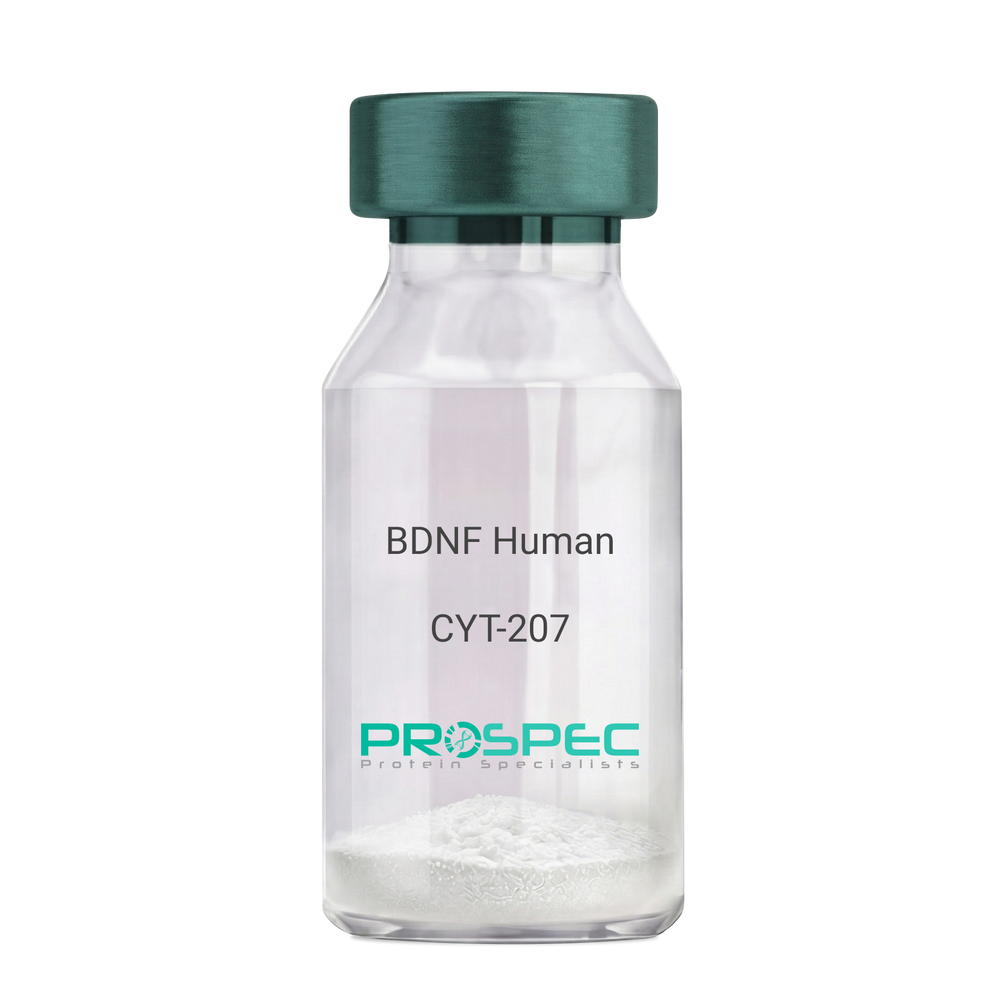
BDNF HumanDescription:
Brain-Derived Neurotrophic Factor Human Recombinant
Brain-Derived Neurotrophic Factor, BDNF, MGC34632.
Product # :
CYT-207Price :
Quantity :
Shipping Method :
Shipped at Room temp
More Info
- description
- source
- formulation
- purity
- biological activity
- More Info
- Activity
Description
BDNF Human Recombinant produced in E.Coli is a homodimer, non-glycosylated, polypeptide chain containing 2 x 119 amino acids (and an N-terminal Met) and having a total molecular mass of 28kDa. BDNF Human Recombinant is purified by proprietary chromatographic techniques.
Source
Escherichia Coli.
Formulation
The protein was lyophilized with 20mM PB and 400mM NaCl, pH 7.2.
Purity
BDNF is greater than 950% as determined SDS-PAGE.
Biological Activity
The activity was determined using Immobilized Human TrkB-His tag protein 2ug/ml (100 μl/well) for its binding to NHS-Biotin BDNF. The ED50 of was found to be ≤20ng/mLActivity
More Info
-
Introduction
BDNF promotes the survival of neuronal populations that are all located either in the central nervous system or directly connected to it. BDNF is a major regulator of synaptic transmission and plasticity at adult synapses in many regions of the cns. The versatility of BDNF is emphasized by its contribution to a range of adaptive neuronal responses including long-term potentiation (ltp), long-term depression (ltd), certain forms of short-term synaptic plasticity, as well as homeostatic regulation of intrinsic neuronal excitability.
-
Synonyms
Brain-Derived Neurotrophic Factor, BDNF, MGC34632.
-
Physical Appearance
Sterile Filtered White lyophilized (freeze-dried) powder.
-
Stability
Lyophilized BDNF although stable at room temperature for 3 weeks, should be stored desiccated below -18°C. Upon reconstitution BDNF should be stored at 4°C between 2-7 days and for future use below -18°C.For long term storage it is recommended to add a carrier protein (0.1% HSA or BSA).Please prevent freeze-thaw cycles.
-
Solubility
It is recommended to reconstitute the lyophilized BDNF in sterile 18M-cm H2O not less than 100µg/ml, which can then be further diluted to other aqueous solutions.
-
Amino Acid Sequence
HSDPARRGE LSVCDSISEW VTAADKKTAV DMSGGTVTVL EKVPVSKGQL KQYFYETKCN PMGYTKEGCR GIDKRHWNSQ CRTTQSYVRA LTMDSKKRIG WRFIRIDTSC VCTLTIKRGR.
-
Background
Final Thoughts
Although more research is needed on the safety and effectiveness of BDNF human recombinant, trials suggest that this laboratory-produced protein may be effective in managing and treating several neurological and psychiatric disorders. It's important for experts to stay up to date on the latest developments and research to learn more about potential risks and benefits.
What is the molecular weight/Mw of BDNF Protein?
BDNF Protein has a total Mw of 27kDa.
What is the source or expression system of BDNF Protein?
Escherichia Coli.
What is the Purity of BDNF Protein?
BDNF Protein is >97% pure as determined by SDS-PAGE.
What is the Biological Activity of BDNF Protein?
The ED50, as determined by the dose-dependent induction of C6 cells proliferation, is 1.3-2µg/ml.
What is the amino acid sequence of BDNF Protein?
MHSDPARRGE LSVCDSISEW VTAADKKTAV DMSGGTVTVL EKVPVSKGQL KQYFYETKCN PMGYTKEGCR GIDKRHWNSQ CRTTQSYVRA LTMDSKKRIG WRFIRIDTSC VCTLTIKRGR.
What applications can BDNF Protein be used in?
BDNF Protein can probably be used in western blot, ELISA and Lateral Flow.
What is the endotoxin level for BDNF Protein?
The endotoxin level is minimal, BDNF Protein was purified using conventional chromatography techniques.
-
Protein content
BDNF quantitation was carried out by two independent methods:1. UV spectroscopy at 280 nm using the absorbency value of 1.6 as the extinction coefficient for a 0.1% (1mg/ml) solution. This value is calculated by the PC GENE computer analysis program of protein sequences (IntelliGenetics). 2. Analysis by RP-HPLC, using a standard solution of Brain-derived Neurotrophic Factor as a Reference Standard.
ProSpec's products are furnished for LABORATORY RESEARCH USE ONLY. The product may not be used as drugs, agricultural or pesticidal products, food additives or household chemicals.
- View Data Sheet
Name :
OSM Human, 209 a.aDescription:
Oncostatin M Human Recombinant (209 a.a.)
OSM, MGC20461, Oncostatin M.
Product # :
CYT-639Price :
Quantity :
Shipping Method :
Shipped at Room temp
More Info
- description
- source
- formulation
- purity
- biological activity
- More Info
Description
Oncostatin-M (209 a.a.) Human Recombinant produced in E.Coli is a single, non-glycosylated polypeptide chain containing 209 amino acids and having a molecular mass of 23.9kDa. The Oncostatin-M (209 a.a.) is purified by proprietary chromatographic techniques.
Source
Escherichia Coli.
Formulation
Oncostatin-M (209 a.a.) was lyophilized from a concentrated (1mg/ml) solution containing 1x PBS pH-7.4.
Purity
Greater than 97.0% as determined by(a) Analysis by RP-HPLC.
(b) Analysis by SDS-PAGE.Biological Activity
The ED50 as determined by the dose-dependant stimulation of Human TF-1 cells is < 2 ng/ml, corresponding to a Specific Activity of 500,000 IU/mg.More Info
-
Introduction
Oncostatin M is a member of a cytokine family that includes leukemia-inhibitory factor, granulocyte colony-stimulating factor, and interleukin 6. This gene encodes a growth regulator which inhibits the proliferation of a number of tumor cell lines. It regulates cytokine production, including IL-6, G-CSF and GM-CSF from endothelial cells.
-
Synonyms
OSM, MGC20461, Oncostatin M.
-
Physical Appearance
Sterile Filtered White lyophilized (freeze-dried) powder.
-
Stability
Lyophilized Oncostatin-M (209 a.a.) although stable at room temperature for 3 weeks, should be stored desiccated below -18°C. Upon reconstitution Oncostatin-M (209 a.a.) should be stored at 4°C between 2-7 days and for future use below -18°C.For long term storage it is recommended to add a carrier protein (0.1% HSA or BSA).Please prevent freeze-thaw cycles.
-
Solubility
It is recommended to reconstitute the lyophilized Oncostatin-M (209 a.a.) in sterile 18MΩ-cm H2O not less than 100µg/ml, which can then be further diluted to other aqueous solutions.
-
Amino Acid Sequence
AAIGSCSKEYRVLLGQLQKQTDLMQDTSRLLDPYIRIQGLDVPKLREHCRERPG
AFPSEETLRGLGRRGFLQTLNATLGCVLHRLADLEQRLPKAQDLERSGLNIEDL
EKLQMARPNILGLRNNIYCMAQLLDNSDTAEPTKAGRGASQPPTPTPASDAFQ
RKLEGCRFLHGYHRFMHSVGRVFKWGESPNRSRRHSPHQALRKGVRR.
ProSpec's products are furnished for LABORATORY RESEARCH USE ONLY. The product may not be used as drugs, agricultural or pesticidal products, food additives or household chemicals.
- View Data Sheet
Name :
CD320 HumanDescription:
CD320 Human Recombinant
CD320 antigen isoform 1, CD320, 8D6, 8D6A, TCBLR, FDC-SM-8D6, FDC-signaling molecule 8D6.
Product # :
PRO-2428Price :
Quantity :
Shipping Method :
Shipped with Ice Packs
More Info
- description
- source
- formulation
- purity
- More Info
Description
CD320 produced in Sf9 Baculovirus cells is a single, glycosylated polypeptide chain containing 438 amino acids (31-229a.a.) and having a molecular mass of 47.4kDa. (Molecular size on SDS-PAGE will appear at approximately 57-70kDa). CD320 is expressed with a 239 amino acid hIgG-His tag at C-Terminus and purified by proprietary chromatographic techniques.
Source
Sf9, Baculovirus cells.
Formulation
CD320 protein solution (0.5mg/ml) containing Phosphate Buffered Saline (pH 7.4), and 10% glycerol.
Purity
Greater than 90% as determined by SDS-PAGE.
More Info
-
Introduction
CD320 is a part of the low-density lipoprotein receptor family, having 2 low-density lipoprotein receptor type A domains divided by a complement-like cysteine-rich region. CD320 participates in cobalamin uptake and internalizes the complex by endocytosis. CD320 is also plays a role as costimulator to promote B cell and follicular dendritic cells responses. CD320 is also known to augment the proliferation of PC precursors generated by IL-10.
-
Synonyms
CD320 antigen isoform 1, CD320, 8D6, 8D6A, TCBLR, FDC-SM-8D6, FDC-signaling molecule 8D6.
-
Physical Appearance
Sterile Filtered colorless solution.
-
Stability
Store at 4°C if entire vial will be used within 2-4 weeks. Store, frozen at -20°C for longer periods of time. For long term storage it is recommended to add a carrier protein (0.1% HSA or BSA).Avoid multiple freeze-thaw cycles.
-
Amino Acid Sequence
LEAAASPLST PTSAQAAGPS SGSCPPTKFQ CRTSGLCVPL TWRCDRDLDC SDGSDEEECR IEPCTQKGQC PPPPGLPCPC TGVSDCSGGT DKKLRNCSRL ACLAGELRCT LSDDCIPLTW RCDGHPDCPD SSDELGCGTN EILPEGDATT MGPPVTLESV TSLRNATTMG PPVTLESVPS VGNATSSSAG DQSGSPTAYL EPKSCDKTHT CPPCPAPELL GGPSVFLFPP KPKDTLMISR TPEVTCVVVD VSHEDPEVKF NWYVDGVEVH NAKTKPREEQ YNSTYRVVSV LTVLHQDWLN GKEYKCKVSN KALPAPIEKT ISKAKGQPRE PQVYTLPPSR DELTKNQVSL TCLVKGFYPS DIAVEWESNG QPENNYKTTP PVLDSDGSFF LYSKLTVDKS RWQQGNVFSC SVMHEALHNH YTQKSLSLSP GKHHHHHH.
ProSpec's products are furnished for LABORATORY RESEARCH USE ONLY. The product may not be used as drugs, agricultural or pesticidal products, food additives or household chemicals.
- View Data Sheet
Name :
TATDN3 HumanDescription:
TatD DNase Domain Containing 3 Human Recombinant
TatD DNase domain containing 3, putative deoxyribonuclease TATDN3, EC 3.1.21.
Product # :
ENZ-611Price :
Quantity :
Shipping Method :
Shipped with Ice Packs
More Info
- description
- source
- formulation
- purity
- More Info
Description
SULT1B1 Human Recombinant produced in E. coli is a single polypeptide chain containing 320 amino acids (1-296) and having a molecular mass of 37.4kDa.SULT1B1 is fused to a 24 amino acid His-tag at N-terminus & purified by proprietary chromatographic techniques.
Source
E.coli.
Formulation
The TATDN3 solution (0.5mg/1ml) contains 20mM Tris-HCl buffer (pH 8.0), 1mM DTT, 200mM NaCl and 20% glycerol.
Purity
Greater than 90% as determined by SDS-PAGE.
More Info
-
Introduction
TATDN3 is a member of the great superfamily of metalloenzymes. TATDN3 binds 2 divalent metal cations per subunit.
-
Synonyms
TatD DNase domain containing 3, putative deoxyribonuclease TATDN3, EC 3.1.21.
-
Physical Appearance
Sterile Filtered colorless solution.
-
Stability
Store at 4°C if entire vial will be used within 2-4 weeks. Store, frozen at -20°C for longer periods of time. For long term storage it is recommended to add a carrier protein (0.1% HSA or BSA).Avoid multiple freeze-thaw cycles.
-
Amino Acid Sequence
MGSSHHHHHH SSGLVPRGSH MGSHMRAAGV GLVDCHCHLS APDFDRDLDD VLEKAKKANV VALVAVAEHS GEFEKIMQLS ERYNGFVLPC LGVHPVQGLP PEDQRSVTLK DLDVALPIIE NYKDRLLAIG EVGLDFSPRF AGTGEQKEEQ RQVLIRQIQL AKRLNLPVNV HSRSAGRPTI NLLQEQGAEK VLLHAFDGRP SVAMEGVRAG YFFSIPPSII RSGQKQKLVK QLPLTSICLE TDSPALGPEK QVRNEPWNIS ISAEYIAQVK GISVEEVIEV TTQNALKLFP KLRHLLQK
ProSpec's products are furnished for LABORATORY RESEARCH USE ONLY. The product may not be used as drugs, agricultural or pesticidal products, food additives or household chemicals.
- View Data Sheet
Name :
GDNF HumanDescription:
Glial-Derived Neurotrophic Factor Human Recombinant
ATF1, ATF2, HFB1-GDNF, GDNF.
Product # :
CYT-305Price :
Quantity :
Shipping Method :
Shipped at Room temp
More Info
- description
- source
- formulation
- purity
- biological activity
- More Info
- sds-page
Description
Glial derived Neurotrophic Factor Human Recombinant produced in E.Coli is a non-glycosylated disulfide-linked homodimer containing 2 x 135 amino acids and having a total molecular mass of approximately 30kDa. GDNF is purified by proprietary chromatographic techniques.
Source
Escherichia Coli.
Formulation
GDNF was lyophilized from a 0.2µm filtered concentrated solution in 1×PBS, pH 7.4 and 5% Trehalose.
Purity
Greater than 95.0% as determined by analysis by SDS-PAGE.
Biological Activity
The ED50 was determined by the proliferation of rat C6 cells is < 0.1 ng/ml, corresponding to a specific activity of > 1.0x10⁷ units/mg.
sds-page
More Info
-
Introduction
GDNF promotes the survival and differentiation of minergic neurons in culture, and is able to prevent apoptosis of motor neurons induced by axotomy. The encoded protein is processed to a mature secreted form that exists as a homodimer. The mature form of the protein is a ligand for the product of the RET (rearranged during transfection) protooncogene. In addition to the transcript encoding GDNF, two additional alternative transcripts encoding distinct proteins, referred to as astrocyte-derived trophic factors, have also been described. Mutations in this gene may be associated with Hirschsprung disease.
GDNF enhances survival and morphological differentiation of minergic neurons and increases their high-affinity uptake. -
Synonyms
ATF1, ATF2, HFB1-GDNF, GDNF.
-
Physical Appearance
Sterile Filtered White lyophilized (freeze-dried) powder.
-
Stability
Lyophilized Glial-derived Neurotrophic Factor although stable at room temperature for 3 weeks, should be stored desiccated below -18°C. Upon reconstitution GDNF should be stored at 4°C between 2-7 days and for future use below -18°C.For long term storage it is recommended to add a carrier protein (0.1% HSA or BSA).Please prevent freeze-thaw cycles.
-
Solubility
It is recommended to reconstitute the lyophilized Glial Derived Neurotrophic Factor in sterile 18MΩ-cm H2O not less than 100µg/ml, which can then be further diluted to other aqueous solutions.
-
Amino Acid Sequence
SPDKQMAVLP RRERNRQAAA ANPENSRGKG RRGQRGKNRG CVLTAIHLNV TDLGLGYETK EELIFRYCSG SCDAAETTYD KILKNLSRNR RLVSDKVGQA CCRPIAFDDD LSFLDDNLVY HILRKHSAKR CGCI.
-
Background
What is the molecular weight/Mw of GDNF HUMAN Protein?
GDNF HUMAN Protein has a total Mw of 30kDa.
What is the source or expression system of GDNF HUMAN Protein?
Escherichia Coli.
What is the Purity of GDNF HUMAN Protein?
GDNF HUMAN Protein is >95% pure as determined by SDS-PAGE.
What is the Biological Activity of GDNF HUMAN Protein?
The ED50 was determined by the proliferation of rat C6 cells is < 0.1 ng/ml, corresponding to a specific activity of > 1.0x10⁷ units/mg.
What is the amino acid sequence of GDNF HUMAN Protein?
SPDKQMAVLP RRERNRQAAA ANPENSRGKG RRGQRGKNRG CVLTAIHLNV TDLGLGYETK EELIFRYCSG SCDAAETTYD KILKNLSRNR RLVSDKVGQA CCRPIAFDDD LSFLDDNLVY HILRKHSAKR CGCI.
What applications can GDNF HUMAN Protein be used in?
GDNF HUMAN Protein can probably be used in western blot, ELISA and Lateral Flow.
What is the endotoxin level for GDNF HUMAN Protein?
The endotoxin level is minimal, GDNF HUMAN Protein was purified using conventional chromatography techniques.
ProSpec's products are furnished for LABORATORY RESEARCH USE ONLY. The product may not be used as drugs, agricultural or pesticidal products, food additives or household chemicals.
- View Data Sheet
Name :
ANXA1 HumanDescription:
Annexin A1 Human Recombinant
ANX1, LPC1, ANXA1, Lipocortin I, Calpactin II, Chrombindin-9, p35, Annexin-1, Phospholipase A2 inhibitory protein, Annexin I, Annexin A1.
Product # :
PRO-679Price :
Quantity :
Shipping Method :
Shipped with Ice Packs
More Info
- description
- source
- formulation
- purity
- More Info
Description
ANXA1 produced in E.Coli is a single, non-glycosylated polypeptide chain containing 346 amino acids (1-346 a.a.) and having a molecular mass of 38.7 kDa.ANXA1 is purified by proprietary chromatographic techniques.
Source
Escherichia Coli.
Formulation
The ANXA1 protein solution contains 20mM Tris-HCl, pH-8, 100mM NaCl, 1mM DTT and 10% glycerol.
Purity
Greater than 90.0% as determined by SDS-PAGE.
More Info
-
Introduction
ANXA1 is part of the family of Ca(2+)-dependent phospholipid binding proteins which have a Mw between 35kDa-40kDa and are situated on the cytosolic face of the plasma membrane. ANXA1 protein has a Mw of 40kDa, with phospholipase A2 inhibitory activity to bind from two to four calcium ions with high affinity. Since phospholipase A2 is necessary for the biosynthesis of the potent mediators of inflammation, prostaglandins and leukotrienes, ANXA1 might have potential anti-inflammatory activity. ANXA1 promotes membrane fusion and iplays a role in exocytosis. The recognition of ANXA1 protein by immunocytochemical leads a simple, highly sensitive and specific assay for diagnosis of hairy cell leukemia.
-
Synonyms
ANX1, LPC1, ANXA1, Lipocortin I, Calpactin II, Chrombindin-9, p35, Annexin-1, Phospholipase A2 inhibitory protein, Annexin I, Annexin A1.
-
Physical Appearance
Sterile filtered colorless solution.
-
Stability
Store at 4°C if entire vial will be used within 2-4 weeks. Store, frozen at -20°C for longer periods of time. For long term storage it is recommended to add a carrier protein (0.1% HSA or BSA).Avoid multiple freeze-thaw cycles.
-
Amino Acid Sequence
MAMVSEFLKQ AWFIENEEQE YVQTVKSSKG GPGSAVSPYP TFNPSSDVAA LHKAIMVKGV DEATIIDILT KRNNAQRQQI KAAYLQETGK
PLDETLKKAL TGHLEEVVLA LLKTPAQFDA DELRAAMKGL GTDEDTLIEI LASRTNKEIR DINRVYREEL KRDLAKDITS DTSGDFRNAL
LSLAKGDRSE DFGVNEDLAD SDARALYEAG ERRKGTDVNV FNTILTTRSY PQLRRVFQKY TKYSKHDMNK VLDLELKGDI EKCLTAIVKCATSKPAFFAE KLHQAMKGVG TRHKALIRIM VSRSEIDMND IKAFYQKMYG ISLCQAILDE TKGDYEKILV ALCGGN.
ProSpec's products are furnished for LABORATORY RESEARCH USE ONLY. The product may not be used as drugs, agricultural or pesticidal products, food additives or household chemicals.
- View Data Sheet
Name :
UBTD2 HumanDescription:
Ubiquitin Domain Containing 2 Human Recombinant
Ubiquitin domain containing protein 2, Dendritic cell-derived ubiquitin-like protein, Ubiquitin-like protein SB72, DCUBP, MGC30022.
Product # :
PRO-1203Price :
Quantity :
Shipping Method :
Shipped with Ice Packs
More Info
- description
- source
- formulation
- purity
- More Info
Description
UBTD2 Human Recombinant produced in E. coli is a single polypeptide chain containing 257 amino acids (1-234) and having a molecular mass of 28.6 kDa.UBTD2 is fused to a 23 amino acid His-tag at N-terminus & purified by proprietary chromatographic techniques.
Source
E.coli.
Formulation
The UBTD2 solution (0.5mg/1ml) contains 20mM Tris-HCl buffer (pH 8.0), 0.1M NaCl, 1mM DTT and 20% glycerol.
Purity
Greater than 95% as determined by SDS-PAGE.
More Info
-
Introduction
UBTD2 is an ubiquitin (Ub) domain-containing protein, originally recognized in dendritic cells, that takes part in ubiquitination pathway. Ubiquitin is the best understood post-translation modifier; however, there is a growing family of ubiquitin-like proteins (UBLs) who change cellular targets in a pathway. UbL proteins take part in a variation of cellular courses, like DNA repair, protein sorting, protein degradation, cell division, apoptosis and autophagy.
-
Synonyms
Ubiquitin domain containing protein 2, Dendritic cell-derived ubiquitin-like protein, Ubiquitin-like protein SB72, DCUBP, MGC30022.
-
Physical Appearance
Sterile Filtered colorless solution.
-
Stability
Store at 4°C if entire vial will be used within 2-4 weeks. Store, frozen at -20°C for longer periods of time. For long term storage it is recommended to add a carrier protein (0.1% HSA or BSA).Avoid multiple freeze-thaw cycles.
-
Amino Acid Sequence
MGSSHHHHHH SSGLVPRGSH MGSMGGCVGA QHDSSGSLNE NSEGTGVALG RNQPLKKEKP KWKSDYPMTD GQLRSKRDEF WDTAPAFEGR KEIWDALKAA AHAFESNDHE LAQAIIDGAN ITLPHGALTE CYDELGNRYQ LPVYCLAPPI NMIEEKSDIE TLDIPEPPPN SGYECQLRLR LSTGKDLKLV VRSTDTVFHM KRRLHAAEGV EPGSQRWFFS GRPLTDKMKF EELKIPKDYV VQVIVSQPVQ NPTPVEN
ProSpec's products are furnished for LABORATORY RESEARCH USE ONLY. The product may not be used as drugs, agricultural or pesticidal products, food additives or household chemicals.
- View Data Sheet
Name :
CXCL13 MacaqueDescription:
BCA-1/ BLC (CXCL13) Rhesus Macaque Recombinant
C-X-C motif chemokine 13, Small-inducible cytokine B13, B lymphocyte chemoattractant, CXC chemokine BLC, CXCL13, BCA1, BCA-1, CXCL-13, B cell Attracting Chemokine-1, BLC, ANGIE, BLR1L, SCYB13, ANGIE2.
Product # :
CHM-035Price :
Quantity :
Shipping Method :
Shipped at Room temp
More Info
- description
- source
- formulation
- purity
- More Info
Description
BCA-1/ BLC (CXCL13) Rhesus Macaque Recombinant produced in E.Coli is a non-glycosylated polypeptide chain containing 87 amino acid and having a molecular mass of approximately 10.3kDa.BCA1 is purified by proprietary chromatographic techniques.
Source
Escherichia Coli.
Formulation
Lyophilized from a 0.2μm filtered concentrated solution in 20mM Tris-HCl, pH 8.0 and 300mM NaCl.
Purity
Greater than 95.0% as determined by:
(a) Analysis by RP-HPLC.
(b) Analysis by SDS-PAGE.More Info
-
Introduction
BCA-1 is a CXC chemokine that is highly expressed in thesecondary lymphoid organs, such as follicles of the spleen, lymph nodes, and Peyer's patches. CXCL13 promotes the migration of B lymphocytes (compared to T cells and macrophages), by stimulating calcium influx into, and chemotaxis of, cells expressing Burkitt's lymphoma receptor 1 (BLR1). BCA1 therefore function in the homing of B lymphocytes to follicles. Human BCA-1 shares a 64% amino acid sequence similarity with the mouse protein and 23 - 34% amino acid sequence identity with other known CXC chemokines. Recombinant or chemically synthesized BCA1 is a potent chemoattractant for B lymphocytes but not T lymphocytes, monocytes or neutrophils. BLR1, a G protein-coupled receptor originally isolated from Burkitt’s lymphoma cells, has now been shown to be the specific receptor for BCA1. Among cells of the hematopoietic lineages, the expression of BLR-1, now designated CXCR-5, is restricted to B lymphocytes and a subpopulation of T helper memory cells.
-
Synonyms
C-X-C motif chemokine 13, Small-inducible cytokine B13, B lymphocyte chemoattractant, CXC chemokine BLC, CXCL13, BCA1, BCA-1, CXCL-13, B cell Attracting Chemokine-1, BLC, ANGIE, BLR1L, SCYB13, ANGIE2.
-
Physical Appearance
Sterile Filtered White lyophilized (freeze-dried) powder.
-
Stability
Lyophilized BCA1 although stable at room temperature for 3 weeks, should be stored desiccated below -18°C. Upon reconstitution BCA-1/ BLC (CXCL13) Rhesus Macaque should be stored at 4°C between 2-7 days and for future use below -18°C. Please prevent freeze-thaw cycles.
-
Solubility
It is recommended to reconstitute the lyophilized BCA-1/ BLC (CXCL13) Rhesus Macaque in sterile 18MΩ-cm H2O not less than 100µg/ml, which can then be further diluted to other aqueous solutions.
-
Amino Acid Sequence
VLEVYYTHLR CRCVQESSVF IPRRFIDRIQ ISPRGNGCPR KEIIVWKKNK SVVCVDPQAE WIQRIMEMLR KKSSSTPPVP VFKRKIP.
-
Background
What is the molecular weight/Mw of CXCL13 MACAQUE Protein?
CXCL13 MACAQUE Protein has a total Mw of 10.3kDa.
What is the source or expression system of CXCL13 MACAQUE Protein?
Escherichia Coli.
What is the Purity of CXCL13 MACAQUE Protein?
CXCL13 MACAQUE Protein is >95% pure as determined by SDS-PAGE.
What is the Biological Activity of CXCL13 MACAQUE Protein?
The biological functionality of CXCL13 MACAQUE Protein will be determined in the future.
What is the amino acid sequence of CXCL13 MACAQUE Protein?
VLEVYYTHLR CRCVQESSVF IPRRFIDRIQ ISPRGNGCPR KEIIVWKKNK SVVCVDPQAE WIQRIMEMLR KKSSSTPPVP VFKRKIP.
What applications can CXCL13 MACAQUE Protein be used in?
CXCL13 MACAQUE Protein can probably be used in western blot, ELISA and Lateral Flow.
What is the endotoxin level for CXCL13 MACAQUE Protein?
The endotoxin level is minimal, CXCL13 MACAQUE Protein was purified using conventional chromatography techniques.
ProSpec's products are furnished for LABORATORY RESEARCH USE ONLY. The product may not be used as drugs, agricultural or pesticidal products, food additives or household chemicals.
- View Data Sheet
Name :
UCHL1 (1-126) HumanDescription:
Ubiquitin Carboxyl-Terminal Hydrolase L1 (1-126) Human Recombinant
PGP 9.5, UCHL1, PGP9.5, PARK5.
Product # :
PRO-2823Price :
Quantity :
Shipping Method :
Shipped at Room temp
More Info
- description
- source
- formulation
- purity
- More Info
Description
The UCHL1 Human is created as a recombinant protein with a 4kda N-terminal fusion of His Tag. The UCHL1 His-Tagged Fusion Protein, produced in E. coli, is a 19kDa protein containing 126 amino acid residues of the UCHL1 Human, 1-126 amino acids.
Source
Escherichia Coli.
Formulation
Each mg was lyophilized with 1xPBS, 0.4% SDS and 4mM DTT.
Purity
Greater than 90% as determined by SDS-PAGE.
More Info
-
Synonyms
PGP 9.5, UCHL1, PGP9.5, PARK5.
-
Physical Appearance
Filtered White lyophilized (freeze-dried) powder.
-
Stability
Store lyophilized UCHL1 at -20°C. Aliquot the product after reconstitution to avoid repeated freezing/thawing cycles. Reconstituted protein can be stored at 4°C for a limited period of time; it does not show any change after two weeks at 4°C.
-
Solubility
It is recommended to add deionized water to prepare a working stock solution of approximately 0.5mg/ml and let the lyophilized pellet dissolve completely. Product is not sterile! Please filter the product by an appropriate sterile filter before using it on cell culture.
-
Background
Human Ubiquitin Carboxyl-Terminal Hydrolase L1 (UCH-L1) is an important enzyme involved in the ubiquitin-proteasome system, which regulates protein degradation and turnover in cells.
UCHL1 Function:
UCHL1 mainly removes ubiquitin molecules from proteins, thereby recycling ubiquitin and regulating protein stability. This action is important for controlling various cellular processes and maintaining cellular homeostasis and.
UCHL1 Structure
UCHL1 is characterized by a catalytic domain which facilitates its hydrolase activity, allowing it to cleave ubiquitin from substrates.
UCHL1 Role in Neurodegeneration
UCHL1 has been implicated in neurodegenerative diseases, such as Parkinson’s and Alzheimer's disease. Its expression levels and activity can affect neuronal survival and function.
UCH-L1 is also studied in the context of cancer. Altered levels of UCHL1 may affect on tumour progression and response to therapy.
UCHL1 Biomarker Potential
UCHL1 is being investigated as a potential biomarker for diseases, especially neurodegenerative disorders due to its involvement in various pathologies.
UCHL1 Research
Ongoing studies focus on understanding its role in various cellular contexts, its regulation, and its potential as a therapeutic target.
In conclusion, UCHL1 is a very important component of cellular regulation, with implications in health and disease.
ProSpec's products are furnished for LABORATORY RESEARCH USE ONLY. The product may not be used as drugs, agricultural or pesticidal products, food additives or household chemicals.
- View Data Sheet
Name :
T.pallidum p41 MosaicDescription:
Treponema pallidum p41 Mosaic Recombinant
Product # :
TRP-244Price :
Quantity :
Shipping Method :
Shipped with Ice Packs
More Info
- description
- source
- formulation
- purity
- More Info
Description
The E.coli derived recombinant protein contains the outer membrane T.Pallidum p41 immunodominant regions. The protein is fused with a GST tag.
Source
Escherichia Coli.
Formulation
25mM Tris-HCl pH-8, 60mM NaCl & 50% glycerol.
Purity
Treponema Pallidum protein is >90% pure as determined by 10% PAGE (coomassie staining).
More Info
-
Introduction
Treponema pallidum is a gram-negative spirochaete bacterium and is considered to be metabolically crippled. There are at least four known subspecies: T. pallidum pallidum, T. pallidum pertenue, T. pallidum carateum and T. pallidum endemicum. The helical structure of T. pallidum pallidum allows it to move in a corkscrew motion through viscous mediums such as mucus. Treponema pallidum sub sp. pallidum has one of the smallest bacterial genomes at 1.14 million base pairs (Mb) and has limited metabolic capabilities, reflecting its adaptation through genome reduction to the rich environment of mammalian tissue.
-
Stability
Treponema Pallidum protein although stable at 4°C for 1 week, should be stored below -18°C. Please prevent freeze thaw cycles.
-
Applications
Treponema Pallidum protein is suitable for ELISA and Western blots, excellent antigen for detection of T. Pallidum with minimal specificity problems.
-
Specificity
Immunoreactive with sera of T.Pallidum infected individuals.
-
Purification Method
Treponema Pallidum protein was purified by proprietary chromatographic technique.
ProSpec's products are furnished for LABORATORY RESEARCH USE ONLY. The product may not be used as drugs, agricultural or pesticidal products, food additives or household chemicals.
- View Data Sheet
Name :
SAMSN1 HumanDescription:
SAM Domain SH3 Domain and Nuclear Localization Signal 1 Human Recombinant
HACS1, NASH1, SASH2, SH3D6B, SLy2, SAM domain-containing protein SAMSN-1, Hematopoietic adaptor containing SH3 and SAM domains 1, Nash1, SAM domain, SH3 domain and nuclear localization signals protein 1, SH3-SAM adaptor protein, SAMSN1.
Product # :
PRO-1995Price :
Quantity :
Shipping Method :
Shipped with Ice Packs
More Info
- description
- source
- formulation
- purity
- More Info
Description
SAMSN1 Human Recombinant produced in E.Coli is a single, non-glycosylated polypeptide chain containing 396 amino acids (1-373a.a) and having a molecular mass of 44.1kDa. SAMSN1 is fused to a 23 amino acid His-tag at N-terminus & purified by proprietary chromatographic techniques.
Source
Escherichia Coli.
Formulation
SAMSN1 protein solution (0.25mg/ml) containing 20mM Tris-HCl buffer (pH8.0), 30% glycerol 0.1M NaCl and 1mM DTT.
Purity
Greater than 80.0% as determined by SDS-PAGE.
More Info
-
Introduction
SAM Domain SH3 Domain and Nuclear Localization Signal 1 (SAMSN1) is a member of a known adaptors and scaffold proteins containing SH3 and SAM (sterile alpha motif) domains. SAMSN1 is a negative regulator of B-cell activation and is down-regulates cell proliferation. SAMSN1 is up-regulated by IL-4 in activated B cells and expressed mainly in dendritic cells. SAMSN1 owns a function which is similar to other adaptor proteins that link signaling molecules in signal transduction cascades.
-
Synonyms
HACS1, NASH1, SASH2, SH3D6B, SLy2, SAM domain-containing protein SAMSN-1, Hematopoietic adaptor containing SH3 and SAM domains 1, Nash1, SAM domain, SH3 domain and nuclear localization signals protein 1, SH3-SAM adaptor protein, SAMSN1.
-
Physical Appearance
Sterile Filtered colorless solution.
-
Stability
Store at 4°C if entire vial will be used within 2-4 weeks. Store, frozen at -20°C for longer periods of time. For long term storage it is recommended to add a carrier protein (0.1% HSA or BSA).Avoid multiple freeze-thaw cycles.
-
Amino Acid Sequence
MGSSHHHHHH SSGLVPRGSH MGSMLKRKPS NVSEKEKHQK PKRSSSFGNF DRFRNNSLSK PDDSTEAHEG DPTNGSGEQS KTSNNGGGLG KKMRAISWTM KKKVGKKYIK ALSEEKDEED GENAHPYRNS DPVIGTHTEK VSLKASDSMD SLYSGQSSSS GITSCSDGTS NRDSFRLDDD GPYSGPFCGR ARVHTDFTPS PYDTDSLKIK KGDIIDIICK TPMGMWTGML NNKVGNFKFI YVDVISEEEA APKKIKANRR SNSKKSKTLQ EFLERIHLQE YTSTLLLNGY ETLEDLKDIK ESHLIELNIE NPDDRRRLLS AAENFLEEEI IQEQENEPEP LSLSSDISLN KSQLDDCPRD SGCYISSGNS DNGKEDLESE NLSDMVHKII ITEPSD.
ProSpec's products are furnished for LABORATORY RESEARCH USE ONLY. The product may not be used as drugs, agricultural or pesticidal products, food additives or household chemicals.
- View Data Sheet
Name :
SIAH1 HumanDescription:
Siah E3 Ubiquitin Protein Ligase 1 Human Recombinant
Siah E3 ubiquitin protein ligase 1, Seven in absentia homolog 1, seven in absentia homolog 1 (Drosophila), E3 ubiquitin-protein ligase SIAH1, HUMSIAH, hSIAH1, Siah-1a, SIAH1A, EC 6.3.2.
Product # :
ENZ-640Price :
Quantity :
Shipping Method :
Shipped with Ice Packs
More Info
- description
- source
- formulation
- purity
- More Info
Description
SIAH1 Human Recombinant produced in E. coli is a single polypeptide chain containing 216 amino acids (90-282) and having a molecular mass of 24.1 kDa.SIAH1 is fused to a 23 amino acid His-tag at N-terminus & purified by proprietary chromatographic techniques.
Source
E.coli.
Formulation
The SIAH1 solution (0.25mg/1ml) contains 20mM Tris-HCl buffer (pH 8.0), 100mM NaCl, 1mM DTT and 40% glycerol.
Purity
Greater than 95% as determined by SDS-PAGE.
More Info
-
Introduction
E3 ubiquitin-protein ligase SIAH1 (SIAH1) belongs to the SIAH (seven in absentia homolog) family. SIAH1 is a tumor suppressor protein, which is expressed in intestinal epithelium and activated during apoptosis. SIAH1 is involved in ubiquitination and proteasome-mediated degradation of specific proteins. SIAH1 is comprised of an N-terminal RING-finger domain (required for proteolysis) and a cystein-rich C-terminal domain (which regulates oligomerization and SIAH binding to target proteins). SIAH1 causes indirect degradation of beta-catenin by way of creation of a complex with Siah-interacting protein (SIP), Skp1 and Ebi.
-
Synonyms
Siah E3 ubiquitin protein ligase 1, Seven in absentia homolog 1, seven in absentia homolog 1 (Drosophila), E3 ubiquitin-protein ligase SIAH1, HUMSIAH, hSIAH1, Siah-1a, SIAH1A, EC 6.3.2.
-
Physical Appearance
Sterile Filtered colorless solution.
-
Stability
Store at 4°C if entire vial will be used within 2-4 weeks. Store, frozen at -20°C for longer periods of time. For long term storage it is recommended to add a carrier protein (0.1% HSA or BSA).Avoid multiple freeze-thaw cycles.
-
Amino Acid Sequence
MGSSHHHHHH SSGLVPRGSH MGSVANSVLF PCKYASSGCE ITLPHTEKAD HEELCEFRPY SCPCPGASCK WQGSLDAVMP HLMHQHKSIT TLQGEDIVFL ATDINLPGAV DWVMMQSCFG FHFMLVLEKQ EKYDGHQQFF AIVQLIGTRK QAENFAYRLE LNGHRRRLTW EATPRSIHEG IATAIMNSDC LVFDTSIAQL FAENGNLGIN VTISMC.
ProSpec's products are furnished for LABORATORY RESEARCH USE ONLY. The product may not be used as drugs, agricultural or pesticidal products, food additives or household chemicals.
- View Data Sheet
Name :
SMCP HumanDescription:
Sperm Mitochondria-Associated Cysteine-Rich Protein Human Recombinant
Sperm Mitochondria-Associated Cysteine-Rich Protein, MCSP, MCS, Mitochondrial Capsule Selenoprotein, HSMCSGEN1, Sperm Mitochondrial-Associated Cysteine-Rich Protein.
Product # :
PRO-1719Price :
Quantity :
Shipping Method :
Shipped with Ice Packs
More Info
- description
- source
- formulation
- purity
- More Info
Description
SMCP Human Recombinant produced in E.Coli is a single, non-glycosylated polypeptide chain containing 139 amino acids (1-116 a.a) and having a molecular mass of 15.2kDa (Molecular size on SDS-PAGE will appear higher). SMCP is fused to a 23 amino acid His-tag at N-terminus & purified by proprietary chromatographic techniques.
Source
Escherichia Coli.
Formulation
SMCP protein solution (0.5mg/ml) containing 20mM Tris-HCl buffer (pH 8.0), 0.15M NaCl, 20% glycerol, 1mM EDTA and 0.1mM PMSF.
Purity
Greater than 85.0% as determined by SDS-PAGE.
More Info
-
Introduction
SMCP is a protein-coding gene. SMCP localizes to the capsule linked with the mitochondrial outer membranes and assumed to function in the organization and stabilization of the helical structure of the sperm's mitochondrial sheath. Sperm mitochondria vary in morphology and subcellular localization from those of somatic cells. They are elongated, flattened, and arranged circumferentially construct a helical coiled sheath in the midpiece of the sperm flagellum. Diseases associated with SMCP include middle ear disease, and hard palate cancer.
-
Synonyms
Sperm Mitochondria-Associated Cysteine-Rich Protein, MCSP, MCS, Mitochondrial Capsule Selenoprotein, HSMCSGEN1, Sperm Mitochondrial-Associated Cysteine-Rich Protein.
-
Physical Appearance
Sterile Filtered clear solution.
-
Stability
Store at 4°C if entire vial will be used within 2-4 weeks. Store, frozen at -20°C for longer periods of time. For long term storage it is recommended to add a carrier protein (0.1% HSA or BSA).Avoid multiple freeze-thaw cycles.
-
Amino Acid Sequence
MGSSHHHHHH SSGLVPRGSH MGSMCDQTKH SKCCPAKGNQ CCPPQQNQCC QSKGNQCCPP KQNQCCQPKG SQCCPPKHNH CCQPKPPCCI QARCCGLETK PEVSPLNMES EPNSPQTQDK GCQTQQQPHS PQNESRPSK.
ProSpec's products are furnished for LABORATORY RESEARCH USE ONLY. The product may not be used as drugs, agricultural or pesticidal products, food additives or household chemicals.
- View Data Sheet
Name :
STAT1 HumanDescription:
Signal Transducer and Activator of Transcription 1 Human Recombinant
Signal transducer and activator of transcription 1-alpha/beta, Transcription factor ISGF-3 components p91/p84, STAT1, ISGF-3, STAT91, DKFZp686B04100.
Product # :
PKA-315Price :
Quantity :
Shipping Method :
Shipped with Ice Packs
More Info
- description
- source
- formulation
- purity
- More Info
Description
STAT1 Recombinant Human produced in E.Coli is a single, non-glycosylated polypeptide chain containing 732 amino acids (1-712 a.a.) and having a molecular mass of 85.2 kDa. The STAT1 is fused to a 20 amino acid His-Tag at N-terminus and purified by proprietary chromatographic techniques.
Source
Escherichia Coli.
Formulation
STAT1 0.5mg/ml protein solution contains 20mM Tris-HCl buffer pH-8, 0.1M NaCl, 1mM DTT and 10% glycerol.
Purity
Greater than 90% as determined by SDS-PAGE.
More Info
-
Introduction
STAT1 is a member of the Signal Transducers and Activators of Transcriptionfamily of transcription factors. STAT1 is involved in upregulating genes due to a signal by either type Ior type IIinterferons. In response to IFN-?stimulation, STAT1 forms homodimers or heterodimers with STAT3that bind to the GAS (Interferon-Gamma Activated Sequence) promoter element; in response to either IFN-? or IFN-?stimulation, STAT1 forms a heterodimer with STAT2that can bind the ISRE (Interferon Stimulated Response Element) promoter element. In either case, binding of the promoter element leads to an increased expression of ISG (Interferon Stimulated Genes).
-
Synonyms
Signal transducer and activator of transcription 1-alpha/beta, Transcription factor ISGF-3 components p91/p84, STAT1, ISGF-3, STAT91, DKFZp686B04100.
-
Physical Appearance
Sterile Filtered clear solution.
-
Stability
Store at 4°C if entire vial will be used within 2-4 weeks. Store, frozen at -20°C for longer periods of time. Avoid multiple freeze-thaw cycles.
-
Amino Acid Sequence
MGSSHHHHHH SSGLVPRGSH MSQWYELQQL DSKFLEQVHQ LYDDSFPMEI RQYLAQWLEK QDWEHAANDV SFATIRFHDL LSQLDDQYSR FSLENNFLLQ HNIRKSKRNL QDNFQEDPIQ MSMIIYSCLK EERKILENAQ RFNQAQSGNI QSTVMLDKQK ELDSKVRNVK DKVMCIEHEI KSLEDLQDEY DFKCKTLQNR EHETNGVAKS DQKQEQLLLK KMYLMLDNKR KEVVHKIIEL LNVTELTQNA LINDELVEWK RRQQSACIGG PPNACLDQLQ NWFTIVAESL QQVRQQLKKL EELEQKYTYE HDPITKNKQV LWDRTFSLFQ QLIQSSFVVE RQPCMPTHPQ RPLVLKTGVQ FTVKLRLLVK LQELNYNLKV KVLFDKDVNE RNTVKGFRKF NILGTHTKVM NMEESTNGSL AAEFRHLQLK EQKNAGTRTN EGPLIVTEEL HSLSFETQLC QPGLVIDLET TSLPVVVISN VSQLPSGWAS ILWYNMLVAE PRNLSFFLTP PCARWAQLSE VLSWQFSSVT KRGLNVDQLN MLGEKLLGPN ASPDGLIPWT RFCKENINDK NFPFWLWIES ILELIKKHLL PLWNDGCIMG FISKERERAL LKDQQPGTFL LRFSESSREG AITFTWVERS QNGGEPDFHA VEPYTKKELS AVTFPDIIRN YKVMAAENIP ENPLKYLYPN IDKDHAFGKY YSRPKEAPEP MELDGPKGTG YIKTELISVS EV.
ProSpec's products are furnished for LABORATORY RESEARCH USE ONLY. The product may not be used as drugs, agricultural or pesticidal products, food additives or household chemicals.
- View Data Sheet
Name :
EXOSC10 HumanDescription:
Exosome Component 10 Human Recombinant
Exosome component 10, Polymyositis/scleroderma autoantigen 2, Autoantigen PM/Scl 2, Polymyositis/scleroderma autoantigen 100 kDa, PM/Scl-100, P100 polymyositis-scleroderma overlap syndrome-associated autoantigen, EXOSC10, PMSCL, PMSCL2, p2, p3, p4, RRP6, Rrp6p, PM-Scl.
Product # :
PRO-444Price :
Quantity :
Shipping Method :
Shipped with Ice Packs
More Info
- description
- source
- formulation
- purity
- More Info
Description
EXOSC10 Human Recombinant produced in SF9 is a glycosylated, polypeptide chain having a molecular mass of 102 kDa. EXOSC10 is expressed with a -6xHis tag and purified by proprietary chromatographic techniques.
Source
Sf9 insect cells.
Formulation
EXOSC10 is supplied in 20mM HEPES, pH-7.5, 100mM NaCl, 0.01mM EDTA, 0.02% SDS.
Purity
Greater than 93% as determined by SDS-PAGE.
More Info
-
Introduction
EXOSC10 is a nucleolar protein and represents one crucial component of the so-called "PM/Scl complex" or "nuclear exosome", which is an RNA-processing complex consisting of a number of exoribonucleases (not to be confused with certain multivesicular bodies which are shed by cultured cells into the culture fluid and are also called exosomes).
Autoantibodies against EXOSC10 occur in patients suffering from polymyositis, scleroderma or polymyositis/scleroderma overlap syndromes. While antibodies to other components of the exosome complex (PM/Scl 75, several Rrp proteins) can be found in some sera, practically all patients with autoantibodies against the PM/Scl complex are positive for EXOSC10 antibodies, making this specificity an important marker. The presence of EXOSC10 autoantibodies is a comparatively "good" prognostic sign in polymyositis/scleroderma overlap syndrome unlike the poor prognosis seen when other myositis and systemic sclerosis specific autoantibodies are present. -
Synonyms
Exosome component 10, Polymyositis/scleroderma autoantigen 2, Autoantigen PM/Scl 2, Polymyositis/scleroderma autoantigen 100 kDa, PM/Scl-100, P100 polymyositis-scleroderma overlap syndrome-associated autoantigen, EXOSC10, PMSCL, PMSCL2, p2, p3, p4, RRP6, Rrp6p, PM-Scl.
-
Physical Appearance
Sterile Filtered clear solution.
-
Stability
Store at 4°C if entire vial will be used within 2-4 weeks. Store, frozen at -20°C for longer periods of time.Avoid multiple freeze-thaw cycles.
-
Immunological Functions
1. Binds IgG-type human auto-antibodies.2. Standard ELISA test (checker-board analysis of positive/negative sera panels).
-
coating concentration
0.4-0.8 µg/ml (depending on the type of ELISA plate and coating buffer).Suitable for biotinylation and iodination.
-
Applications
Western-Blot with monoclonal anti-hexa-His-tag antibody & polymyositis patient sera.
ProSpec's products are furnished for LABORATORY RESEARCH USE ONLY. The product may not be used as drugs, agricultural or pesticidal products, food additives or household chemicals.
- View Data Sheet
Name :
tBID MouseDescription:
Truncated BH3 Interacting Domain Death Agonist Mouse Recombinant
Truncated BH3-interacting domain death agonist, p22 BID, BID, FP497, MGC15319, MGC42355, tBID.
Product # :
PRO-644Price :
Quantity :
Shipping Method :
Shipped with Ice Packs
More Info
- description
- source
- formulation
- purity
- More Info
Description
Truncated BID Mouse Recombinant also called BH3-interacting domain death agonist p15 produced in E.Coli is a single, non-glycosylated polypeptide chain containing 61-195 amino acids (135 a.a.) and having a molecular mass of 15.4 kDa.
Source
Escherichia Coli.
Formulation
The Mouse Truncated BID protein solution contains 10mM Tris-HCl pH-8, 1mM EDTA and 250mM NaCl.
Purity
Greater than 95.0% as determined by:
(a) Analysis by RP-HPLC.
(b) Analysis by SDS-PAGE.More Info
-
Introduction
Truncated BH3 interacting domain death agonist is a truncated form of the pro-apoptotic full-length BID. Truncated BH3 interacting domain death agonist is generated by Caspase-8 cleavage of BID. The truncated form of the protein translocates from the cytosol to mitochondria and transduces apoptotic signals.
BID is a pro-apoptotic Bcl-2 protein having only the BH3 domain. In reaction to apoptotic signaling, BID interacts with another Bcl-2 family of cell death regulators, called Bax, they form a heterodimer resulting to the insertion of Bax into the outer mitochondrial membrane. Bax induces the opening of the mitochondrial voltage-dependent anion channel which lead to the release of cytochrome c and other pro-apoptotic factors from the mitochondria resulting in activation of caspases. BID is a mediator of mitochondrial damage induced by caspase-8 (CASP8). CASP8 cleaves BID, and the COOH-terminal part translocates to mitochondria where it triggers cytochrome c release. The major proteolytic product p15 BID releasea cytochrome c. Isoform 1, Isoform 2 and Isoform 4 induce ice-like proteases and apoptosis while Isoform 3 does not induce apoptosis. -
Synonyms
Truncated BH3-interacting domain death agonist, p22 BID, BID, FP497, MGC15319, MGC42355, tBID.
-
Physical Appearance
Sterile Filtered colorless liquid formulation.
-
Stability
Store at 4°C if entire vial will be used within 2-4 weeks. Store, frozen at -20°C for longer periods of time. For long term storage it is recommended to add a carrier protein (0.1% HSA or BSA).Avoid multiple freeze-thaw cycles.
ProSpec's products are furnished for LABORATORY RESEARCH USE ONLY. The product may not be used as drugs, agricultural or pesticidal products, food additives or household chemicals.
- View Data Sheet
Name :
TCEAL3 HumanDescription:
Transcription Elongation Factor A (SII)-Like 3 Human Recombinant
Transcription elongation factor A (SII)-like 3, TCEA-like protein 3, MGC15737.
Product # :
PRO-1128Price :
Quantity :
Shipping Method :
Shipped with Ice Packs
More Info
- description
- source
- formulation
- purity
- More Info
Description
TCEAL3 Human Recombinant produced in E. coli is a single polypeptide chain containing 224 amino acids (1-200) and having a molecular mass of 25.0 kDa.TCEAL3 is fused to a 24 amino acid His-tag at N-terminus & purified by proprietary chromatographic techniques.
Source
E.coli.
Formulation
The TCEAL3 solution (0.5mg/ml) contains 20mM Tris-HCl buffer (pH 8.0) and 10% glycerol.
Purity
Greater than 85% as determined by SDS-PAGE.
More Info
-
Introduction
TCEAL3 belongs to the transcription elongation factor A (SII)-like (TCEAL) gene family. TCEAL family members hold TFA domains and operate as nuclear phosphoproteins which control transcription in a promoter context-dependent fashion. Various family members are situated in the X chromosome.
-
Synonyms
Transcription elongation factor A (SII)-like 3, TCEA-like protein 3, MGC15737.
-
Physical Appearance
Sterile Filtered colorless solution.
-
Stability
Store at 4°C if entire vial will be used within 2-4 weeks. Store, frozen at -20°C for longer periods of time. For long term storage it is recommended to add a carrier protein (0.1% HSA or BSA).Avoid multiple freeze-thaw cycles.
-
Amino Acid Sequence
MGSSHHHHHH SSGLVPRGSH MGSHMEKPYN KNEGNLENEG KPEDEVEPDD EGKSDEEEKP DVEGKTECEG KREDEGEPGD EGQLEDEGSQ EKQGRSEGEG KPQGEGKPAS QAKPESQPRA AEKRPAEDYV PRKAKRKTDR GTDDSPKDSQ EDLQERHLSS EEMMRECGDV SRAQEELRKK QKMGGFHWMQ RDVQDPFAPR GQRGVRGVRG GGRGQRGLHD IPYL
ProSpec's products are furnished for LABORATORY RESEARCH USE ONLY. The product may not be used as drugs, agricultural or pesticidal products, food additives or household chemicals.
- View Data Sheet
Name :
CHGB HumanDescription:
Chromogranin B Human Recombinant
SCG1, Secretogranin 1, secretogranin B, CHGB, Sgl, CgB.
Product # :
PRO-824Price :
Quantity :
Shipping Method :
Shipped with Ice Packs
More Info
- description
- source
- formulation
- purity
- More Info
Description
CHGB Human Recombinant produced in E.Coli is a single, non-glycosylated, polypeptide chain containing 677 amino acids (21-677 a.a.) and having a molecular mass of 78.4kDa. CHGB protein is fused to a 20 amino acid His-Tag at N-terminus and purified by standard chromatography.
Source
Escherichia Coli.
Formulation
The CHGB protein 0.25mg/ml solution containing 20mM Tris-HCl pH-8, 0.15M NaCl & 10% glycerol.
Purity
Greater than 80% as determined by SDS-PAGE.
More Info
-
Introduction
CHGB is a neuroendocrine secretory granule protein, that is the precursor for other biologically active peptides. CHGB is part of the chromogranin/secretogranin protein family and is expressed in the adrenal medulla, and in pheochromocytoma.
-
Synonyms
SCG1, Secretogranin 1, secretogranin B, CHGB, Sgl, CgB.
-
Physical Appearance
Sterile filtered colorless solution.
-
Stability
Store at 4°C if entire vial will be used within 2-4 weeks. Store, frozen at -20°C for longer periods of time. For long term storage it is recommended to add a carrier protein (0.1% HSA or BSA).Avoid multiple freeze-thaw cycles.
-
Amino Acid Sequence
MGSSHHHHHH SSGLVPRGSH MPVDNRNHNE GMVTRCIIEV LSNALSKSSA PPITPECRQV LKTSRKDVKD KETTENENTK FEVRLLRDPA DASEAHESSS RGEAGAPGEE DIQGPTKADT EKWAEGGGHS RERADEPQWS LYPSDSQVSE EVKTRHSEKS QREDEEEEEG ENYQKGERGE DSSEEKHLEE PGETQNAFLN ERKQASAIKK EELVARSETH AAGHSQEKTH SREKSSQESG EEAGSQENHP QESKGQPRSQ EESEEGEEDA TSEVDKRRTR PRHHHGRSRP DRSSQGGSLP SEEKGHPQEE SEESNVSMAS LGEKRDHHST HYRASEEEPE YGEEIKGYPG VQAPEDLEWE RYRGRGSEEY RAPRPQSEES WDEEDKRNYP SLELDKMAHG YGEESEEERG LEPGKGRHHR GRGGEPRAYF MSDTREEKRF LGEGHHRVQE NQMDKARRHP QGAWKELDRN YLNYGEEGAP GKWQQQGDLQ DTKENREEAR FQDKQYSSHH TAEKRKRLGE LFNPYYDPLQ WKSSHFERRD NMNDNFLEGE EENELTLNEK NFFPEYNYDW WEKKPFSEDV NWGYEKRNLA RVPKLDLKRQ YDRVAQLDQL LHYRKKSAEF PDFYDSEEPV STHQEAENEK DRADQTVLTE DEKKELENLA AMDLELQKIA EKFSQRG.
ProSpec's products are furnished for LABORATORY RESEARCH USE ONLY. The product may not be used as drugs, agricultural or pesticidal products, food additives or household chemicals.
- View Data Sheet
Name :
RHOB HumanDescription:
Ras Homolog Gene Family Member B Human Recombinant
Rho-related GTP-binding protein RhoB, Rho cDNA clone 6, h6, RHOB, ARH6, ARHB, RHOH6, MST081, MSTP081.
Product # :
PRO-224Price :
Quantity :
Shipping Method :
Shipped with Ice Packs
More Info
- description
- source
- formulation
- purity
- More Info
Description
RHOB produced in E.Coli is a single, non-glycosylated polypeptide chain containing 213 amino acids (1-193 a.a.) and having a molecular mass of 23.9kDa (Molecular weight on SDS-PAGE will appear higher).RHOB is fused to a 20 amino acid His-tag at N-terminus & purified by proprietary chromatographic techniques.
Source
Escherichia Coli.
Formulation
RHOB protein solution (0.25mg/ml) containing 20mM Tris-HCl buffer (pH 8.0), 2mM DTT, 20% glycerol and 0.2mM NaCl.
Purity
Greater than 90.0% as determined by SDS-PAGE.
More Info
-
Introduction
Rho-related GTP-binding protein RhoB (RhoB) belongs to the Rho GTP-binding protein family. RhoB facilitates apoptosis in neoplastically transformed cells after DNA damage. RhoB has a negative role in tumorigenesis since deletion causes tumor formation.
-
Synonyms
Rho-related GTP-binding protein RhoB, Rho cDNA clone 6, h6, RHOB, ARH6, ARHB, RHOH6, MST081, MSTP081.
-
Physical Appearance
Sterile Filtered colorless solution.
-
Stability
Store at 4°C if entire vial will be used within 2-4 weeks. Store, frozen at -20°C for longer periods of time. For long term storage it is recommended to add a carrier protein (0.1% HSA or BSA).Avoid multiple freeze-thaw cycles.
-
Amino Acid Sequence
MGSSHHHHHH SSGLVPRGSH MAAIRKKLVV VGDGACGKTC LLIVFSKDEF PEVYVPTVFE NYVADIEVDG KQVELALWDT AGQEDYDRLR PLSYPDTDVI LMCFSVDSPD SLENIPEKWV PEVKHFCPNV PIILVANKKD LRSDEHVRTE LARMKQEPVR TDDGRAMAVR IQAYDYLECS AKTKEGVREV FETATRAALQ KRYGSQNGCI NCC.
ProSpec's products are furnished for LABORATORY RESEARCH USE ONLY. The product may not be used as drugs, agricultural or pesticidal products, food additives or household chemicals.
- View Data Sheet
Description:
B-Cell Leukemia/Lymphoma 2 Human Recombinant (–BH2)
Apoptosis regulator Bcl-2, BCL2, B-cell CLL/lymphoma 2, Bcl-2.
Product # :
PRO-632Price :
Quantity :
Shipping Method :
Shipped at Room temp
More Info
- description
- source
- formulation
- purity
- More Info
Description
Bcl-2 Des BH2 domain (187-202 residues) Human Recombinant produced in E.Coli is a single, non-glycosylated polypeptide chain containing 202 amino acids 1-186 and 203-218.The Bcl-2 is expressed as His-Tag fusion protein and purified by proprietary chromatographic techniques.
Source
Escherichia Coli.
Formulation
The protein contains 10mM Tris-HCL pH-8, 1mM EDTA and 250mM NaCl.
Purity
Greater than 95.0% as determined by(a) Analysis by RP-HPLC.
(b) Analysis by SDS-PAGE.More Info
-
Introduction
BCL2 gene encodes an integral outer mitochondrial membrane protein that blocks the apoptotic death of some cells such as lymphocytes. Constitutive expression of BCL2, such as in the case of translocation of BCL2 to Ig heavy chain locus, is thought to be the cause of follicular lymphoma. Two transcript variants, produced by alternate splicing, differ in their C-terminal ends.
-
Synonyms
Apoptosis regulator Bcl-2, BCL2, B-cell CLL/lymphoma 2, Bcl-2.
-
Physical Appearance
Sterile Filtered White lyophilized (freeze-dried) powder.
-
Stability
Lyophilized Bcl-2 although stable at room temperature for 3 weeks, should be stored desiccated below -18°C. Upon reconstitution Bcl-2 should be stored at 4°C between 2-7 days and for future use below -18°C.For long term storage it is recommended to add a carrier protein (0.1% HSA or BSA).Please prevent freeze-thaw cycles.
-
Solubility
Suspend Bcl-2 in 100?l of 0.5M Acetic acid, over night at 4°C.
Dilute 10 fold into selected buffer system.
BCL-2 has tendency to form intramolecular disulfide bond, 5mM DTT is recommended in assay buffer. When running SDS-PAGE gel, 10mM DTT is recommended. -
Applications
Input marker or positive control (Western Blotting).
Function study.
ProSpec's products are furnished for LABORATORY RESEARCH USE ONLY. The product may not be used as drugs, agricultural or pesticidal products, food additives or household chemicals.