Search results
1000 results found for “thyrostimulin”
Name
Description
Product #
Price
Quantity
Shipping Method
- View Data Sheet
Name :
TPST1 HumanDescription:
Tyrosylprotein Sulfotransferase 1 Human Recombinant
Tyrosylprotein Sulfotransferase 1, EC 2.8.2.20, TPST-1, Transport And Golgi Organization 13 Homolog A (Drosophila), Transport And Golgi Organization 13 Homolog A, Protein-Tyrosine Sulfotransferase 1, Tyrosylprotein Sulfotransferase-1, TANGO13A, TPST1.
Product # :
ENZ-892Price :
Quantity :
Shipping Method :
Shipped with Ice Packs
More Info
- description
- source
- formulation
- purity
- More Info
- Citations
Description
TPST1 Human Recombinant produced in E.Coli is a single, non-glycosylated polypeptide chain containing 369 amino acids (26-370 a.a) and having a molecular mass of 42kDa.TPST1 is fused to a 24 amino acid His-tag at N-terminus & purified by proprietary chromatographic techniques.
Source
Escherichia Coli.
Formulation
TPST1 protein solution (1mg/ml) containing 20mM Tris-HCl (pH 8.0) and 10% glycerol.
Purity
Greater than 90.0% as determined by SDS-PAGE.
Citations
More Info
-
Introduction
Tyrosylprotein Sulfotransferase 1, also known as TPST1 is the enzyme which catalyzes the sulfation reaction of protein tyrosines, a post-translational modification of proteins. TPST1 belongs to the protein sulfotransferase family. In addition, TPST1 utilizes 3'-Phosphoadenosine-5'-phosphosulfate (PAPS) as the sulfonate donor and also binds proteins with target tyrosineresidues to eventually form the tyrosine O-sulfate ester group in addition to the desulfonated 3’-phosphoadenosine-5’-phosphate.
-
Synonyms
Tyrosylprotein Sulfotransferase 1, EC 2.8.2.20, TPST-1, Transport And Golgi Organization 13 Homolog A (Drosophila), Transport And Golgi Organization 13 Homolog A, Protein-Tyrosine Sulfotransferase 1, Tyrosylprotein Sulfotransferase-1, TANGO13A, TPST1.
-
Physical Appearance
Sterile Filtered colorless solution.
-
Stability
Store at 4°C if entire vial will be used within 2-4 weeks. Store, frozen at -20°C for longer periods of time. For long term storage it is recommended to add a carrier protein (0.1% HSA or BSA).Avoid multiple freeze-thaw cycles.
-
Amino Acid Sequence
MGSSHHHHHH SSGLVPRGSH TGSMQHAMEC HHRIEERSQP VKLESTRTTV RTGLDLKANK TFAYHKDMPL IFIGGVPRSG TTLMRAMLDA HPDIRCGEET RVIPRILALK QMWSRSSKEK IRLDEAGVTD EVLDSAMQAF LLEIIVKHGE PAPYLCNKDP FALKSLTYLS RLFPNAKFLL MVRDGRASVH SMISRKVTIA GFDLNSYRDC LTKWNRAIET MYNQCMEVGY KKCMLVHYEQ LVLHPERWMR TLLKFLQIPW NHSVLHHEEM IGKAGGVSLS KVERSTDQVI KPVNVGALSK WVGKIPPDVL QDMAVIAPML AKLGYDPYAN PPNYGKPDPK IIENTRRVYK GEFQLPDFLK EKPQTEQVE.
ProSpec's products are furnished for LABORATORY RESEARCH USE ONLY. The product may not be used as drugs, agricultural or pesticidal products, food additives or household chemicals.
- View Data Sheet
Name :
PRL R HumanDescription:
Prolactin Soluble Receptor Human Recombinant
PRL-R, hPRLrI.
Product # :
CYT-595Price :
Quantity :
Shipping Method :
Shipped at Room temp
More Info
- description
- source
- formulation
- purity
- biological activity
- More Info
- Citations
Description
Extra Cellular Domain Prolactin Receptor Human Recombinant produced in E.Coli is a non-glycosylated, Polypeptide chain containsing 210 amino acids and having a molecular mass of 23.97 kDa. The Prolactin Receptor is purified by proprietary chromatographic techniques according to Bignon et al. (1994) JBC 269; 3318-24 and tested according to Gertler et al. (1996) JBC 271; 24482-91.
Source
Escherichia Coli.
Formulation
The Prolactin Receptor was lyophilized from a concentrated (0.4mg/ml) solution with 0.0045mM NaHCO3.
Purity
Greater than 97.0% as determined by:
(a) Analysis by SEC-HPLC.
(b) Analysis by SDS-PAGE.
(c) Gel filtration at pH 8 under non denaturative conditions.Biological Activity
Activity is determined by the dose-dependant inhibition of Prolactin stimuled proliferation of Nb2 cells and by high affinity binding of ovine Prolactin and other lactogenic hormones in 1:1 molar ratio.Citations
More Info
-
Introduction
Prolactin is a pituitary hormone that plays a role in the stimulation of milk production, salt and water regulation, growth, development and reproduction. The primary step in its action is the binding to a specific membrane receptor (prolactin receptor) which belongs to the superfamily of class 1 cytokine receptors. Prolactin is a hormone involved in a range of significant functions including ion transport and osmoregulation, stimulation of milk, protein synthesis as well as the regulation of numerous reproductive functions. Prolactin exerts its influence on different cell types through a signal transduction pathway which begins with the binding of the hormone to a transmembrane Prolactin receptor. PRLR varies in size (short and long forms) with tissue source and species, from ~40 kDa to 100 kDa. The PRL-R consists of at least 3 separate domains: an extracellular region with 5 cysteines which contains the prolactin binding site, a single transmembrane domain and a cytoplasmic region, the length of which appears to influence ligand binding and regulate cellular function.
-
Synonyms
PRL-R, hPRLrI.
-
Physical Appearance
Sterile filtered white lyophilized powder.
-
Stability
Lyophilized PRL-R although stable at room temperature for 1-2 weeks, should be stored desiccated below -18°C or preferably even at -80°C to prevent dimer formation. Upon reconstitution PRL-R should be stored sterile at 4°C between 2-7 days and for future use below -18°C. For long term storage at 4°C it is recommended to add a carrier protein (0.1% HSA or BSA). Please prevent freeze-thaw cycles as they cause oligomerization of the protein.
-
Solubility
It is recommended to reconstitute the lyophilized PRLR in sterile 18M-cm H2O not less than 100µg/ml and not more than 1 mg/ml, which can then be further diluted to other aqueous solutions.
-
Amino Acid Sequence
AGKPEIFKCRSPNKETFTCWWRPGTDGGLPTNYSLTYHREGETLMHECPDYITGGPNSCH
FGKQYTSMWRTYIMMVNATNQMGSSFSDELYVDVTYIVQPDPPLELAVEVKQPEDRKPYL
WIKWSPPTLIDLKTGWFTLLYEIRLKPEKAAEWEIHFAGQQTEFKILSLHPGQKYLVQVR
CKPDHGYWSAWSPATFIQIPSDFTMNDTTVW. -
Protein content
UV spectroscopy at 280 nm using the absorbency value of 2.63 as the extinction coefficient for a 0.1% (1mg/ml) solution. This value is calculated by the PC GENE computer analysis program of protein sequences (IntelliGenetics).
ProSpec's products are furnished for LABORATORY RESEARCH USE ONLY. The product may not be used as drugs, agricultural or pesticidal products, food additives or household chemicals.
- View Data Sheet
Name :
RELM g MouseDescription:
RELM-Gamma Mouse Recombinant
Resistin-like gamma, RELMgamma,RELM-γ, RELM-g.
Product # :
CYT-1035Price :
Quantity :
Shipping Method :
Shipped at Room temp
More Info
- description
- source
- formulation
- purity
- More Info
- Citations
Description
RELM g Mouse Recombinant produced in E.Coli is a non glycosylated, homodimeric polypeptide chain containing 2 x 89 amino acids and having a total molecular mass of 18.9kDa. The RELM is purified by proprietary chromatographic techniques.
Source
Escherichia Coli.
Formulation
Lyophilized from a sterile filtered solution containing 0.1 % trifluoroacetic acid (TFA).
Purity
Greater than 95.0% as determined by SDS-PAGE.
Citations
More Info
-
Introduction
RELM-gamma is a novel member of the resistin-like molecule/found in inflammatory zone (RELM/FIZZ) family in mice and rats. Microarray and real-time RT-PCR experiments revealed a repression of RELMgamma mRNA in nasal respiratory epithelium of cigarette smoke-exposed versus untreated rats. The analysis of the physiological tissue-specific expression revealed highest expression in hematopoietic tissues, suggesting a cytokine-like role for RELM-gamma. RELM-gamma-mRNA is detectable in bone marrow, spleen, and lung as well as in peripheral blood granulocytes. Promyelocytic HL60 cells transfected with a RELM-gamma expression plasmid have an increased proliferation rate compared to mock-transfected cells and display an altered response to retinoic acid-induced granulocytic differentiation. Taken together, these data provide the first experimental evidence that RELM-gamma is a secreted molecule with a restricted expression pattern that may play a role in promyelocytic differentiation.
-
Synonyms
Resistin-like gamma, RELMgamma,RELM-γ, RELM-g.
-
Physical Appearance
Sterile Filtered White lyophilized (freeze-dried) powder.
-
Stability
Lyophilized RELM g although stable at room temperature for 3 weeks, should be stored desiccated below -18°C. Upon reconstitution RELM g Mouse should be stored at 4°C between 2-7 days and for future use below -18°C. For long term storage it is recommended to add a carrier protein (0.1% HSA or BSA). Please prevent freeze-thaw cycles.
-
Solubility
It is recommended to reconstitute the lyophilized RELM g in sterile 18MΩ-cm H2O at a concentration of 100µg/ml, which can then be further diluted to other aqueous solutions.
-
Amino Acid Sequence
MEGTLESIVE KKVKELLANR DDCPSTVTKT FSCTSITASG RLASCPSGMT VTGCACGYGC GSWDIRDGNT CHCQCSTMDW ATARCCQLA.
ProSpec's products are furnished for LABORATORY RESEARCH USE ONLY. The product may not be used as drugs, agricultural or pesticidal products, food additives or household chemicals.
- View Data Sheet
Name :
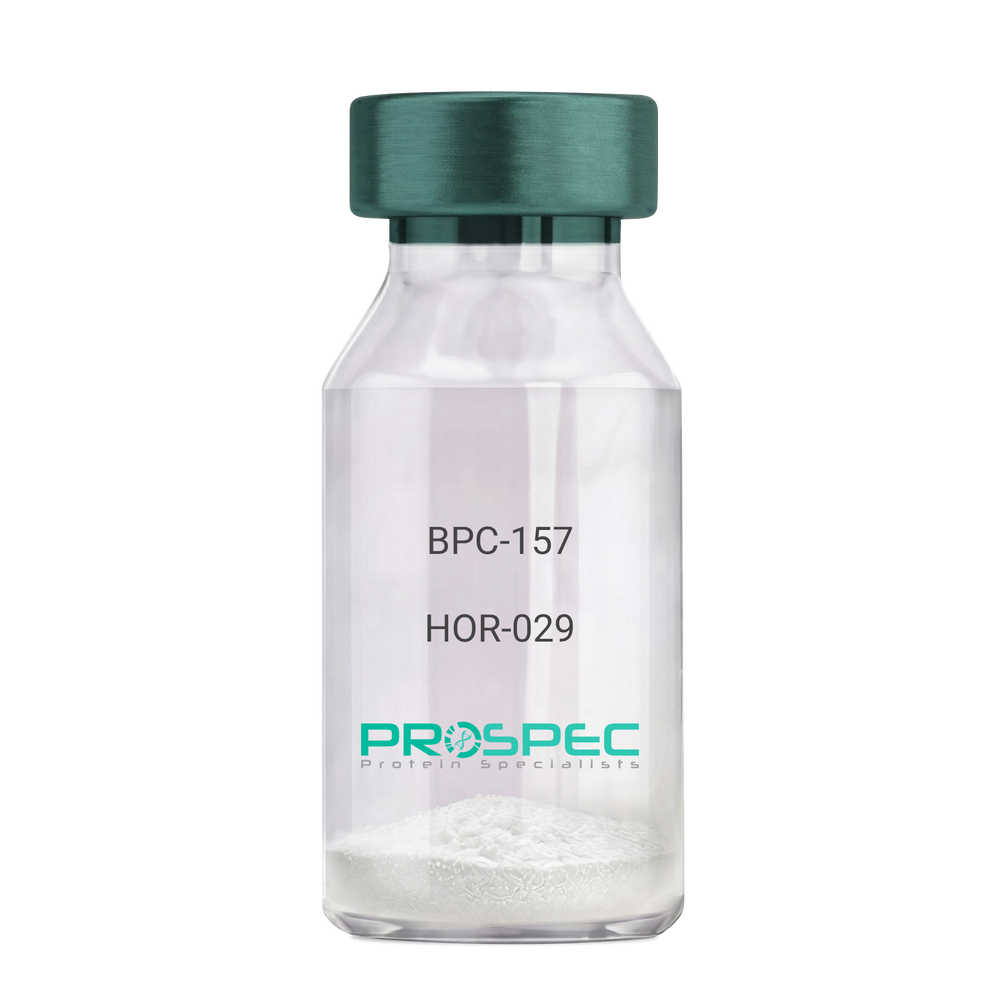
BPC-157Description:
BPC-157 Pentadecapeptide
Product # :
HOR-029Price :
Quantity :
Shipping Method :
Shipped at Room temp
More Info
- description
- formulation
- purity
- More Info
- Citations
Description
BPC-157 Synthetic is a single, non-glycosylated polypeptide chain containing 15 amino acids, having a molecular mass of 1419.55 Dalton and a Molecular formula of C62H98N16O22.
Formulation
The protein was lyophilized with no additives.
Purity
Greater than 97.0% as determined by analysis by RP-HPLC.
Citations
More Info
-
Physical Appearance
Sterile Filtered White lyophilized (freeze-dried) powder.
-
Stability
Lyophilized BPC-157 although stable at room temperature for 3 weeks, should be stored desiccated below -18°C. Upon reconstitution bpc-157 should be stored at 4°C between 2-7 days and for future use below -18°C. For long term storage it is recommended to add a carrier protein (0.1% HSA or BSA). Please prevent freeze-thaw cycles.
-
Solubility
It is recommended to reconstitute the lyophilized BPC-157 in sterile 18MΩ-cm H2O not less than 100 µg/ml, which can then be further diluted to other aqueous solutions.
-
Amino Acid Sequence
H-Gly-Glu-Pro-Pro-Pro-Gly-Lys-Pro-Ala-Asp-Asp-Ala-Gly-Leu-Val-OH
-
Background
BPC-157, short for Body Protection Compound-157, is a synthetic peptide that has garnered significant attention in the field of regenerative medicine and sports science. This peptide, derived from a portion of the human gastric juice protein known as BPC, exhibits remarkable healing and tissue regeneration properties. BPC-157 has shown promise in various preclinical and clinical studies, demonstrating its potential for the treatment of a wide range of injuries and disorders.
The research on BPC-157 encompasses investigations into its mechanisms of action, efficacy, safety, and potential therapeutic applications. Studies have elucidated the peptide's ability to enhance angiogenesis, promote collagen synthesis, modulate inflammatory responses, and protect against oxidative stress. These properties make BPC-157 an intriguing candidate for accelerating tissue healing, reducing inflammation, and improving overall recovery outcomes.
Preclinical studies have revealed the beneficial effects of BPC-157 in several injury models. For instance, BPC-157 has demonstrated its potential in accelerating tendon and ligament healing, mitigating muscle damage, and promoting bone regeneration. These findings suggest that BPC-157 could be a valuable therapeutic tool in orthopedic medicine and sports-related injuries.
Furthermore, BPC-157 has exhibited promising effects on gastrointestinal health. Studies have highlighted its ability to protect and heal the gut lining, reduce ulcer formation, and alleviate symptoms associated with inflammatory bowel disease. These observations open up avenues for BPC-157 as a potential treatment for gastrointestinal disorders.
In addition to its regenerative properties, BPC-157 has shown potential in neurological and psychiatric conditions. Research has indicated its neuroprotective effects, with implications for the treatment of traumatic brain injury, stroke, and neurodegenerative disorders. Preliminary studies also suggest BPC-157's potential as an antidepressant and anxiolytic agent.
Despite the promising findings, further research is needed to fully understand the mechanisms underlying BPC-157's actions and to assess its long-term safety and efficacy. Clinical trials are underway to explore its potential therapeutic applications in humans, including its use in tendon and ligament repair, inflammatory bowel disease, and neurodegenerative disorders.
This comprehensive review aims to summarize the current state of research on BPC-157, providing an overview of its mechanisms of action and therapeutic potential. By examining relevant studies and findings, we aim to shed light on the diverse applications of BPC-157 and its implications for regenerative medicine, sports science, and various disease
ProSpec's products are furnished for LABORATORY RESEARCH USE ONLY. The product may not be used as drugs, agricultural or pesticidal products, food additives or household chemicals.
- View Data Sheet
Name :
IL 27 MouseDescription:
Interleukin-27 Mouse Recombinant
Interleukin-30, IL-30, IL-27/p28, p28, Interleukin-27, Interleukin-27/p28, IL-27, Interleukin-27 subunit alpha, IL-27 subunit alpha, IL27-A, Il27, Il27a, IL-27p28.
Product # :
CYT-570Price :
Quantity :
Shipping Method :
Shipped at Room temp
More Info
- description
- source
- formulation
- purity
- biological activity
- More Info
- Citations
Description
Interleukin-27 Mouse Recombinant produced in E.Coli is a single, non-glycosylated polypeptide chain containing 207 amino acids and having a molecular mass of 23.7 kDa. The Murine IL-27 is purified by proprietary chromatographic techniques.
Source
Escherichia Coli.
Formulation
Lyophilized from 10mM NaHCO₃ buffer pH-8.5.
Purity
Greater than 95.0% as determined by SDS-PAGE.
Biological Activity
Mouse p28 biological activity was measured via dose-dependent inhibition of TGF-beta and IL-6-induced IL-17A expression in mouse CD4 splenocytes. 50ng/ml of mouse p28 is capable of inhibiting >25% of IL-17A expression in this assay.
Citations
More Info
-
Introduction
Interleukin-27 protein is related to IL-12A & is one of the subunits of a heterodimeric cytokine complex. IL-27 interacts with EBV induced gene 3 also called EBI3, and forms a complex that drives rapid expansion of CD4 (+) T cells.
IL-27 complex is synergizes with IL-12 in order to trigger the cytokine production of IFN-Gamma of CD4 (+) T cells. The biological effect of IL-27 is mediated by class-I cytokine receptor (WSX1/TCRR).
The pro-inflammatory activity of IL-27 is mediated through the growing expression of key molecules involved in the MHC class-I & MHC class-II pathways. Both MHC class-I and MHC-class-II expression are increased in endothelial cells after Interleukin-27 stimulation which suggests that it may play an important role in conferring the immune function on vascular endothelium IL-27p28 subunit can be induced by IFN-beta and during LPS-induced maturation of dendritic cells in type-I IFN-dependent manner through IFN regulatory factor-1 activation. Interleukin-27 regulates Interleukin-12 responsiveness of CD4+ T cells through Stat1-dependent and -independent mechanisms. IL-17 & IL-23 play an important IL-17 role in inflammation. Interleukin-27 possesses potent anti-angiogenic activity that plays an important role in its antitumor and antimetastatic activities.
EBV induced gene 3 plays a role, independently from IL-27, in regulating anti-viral or anti-tumoral immune responses. Interleukin-27 is a potent inhibitor of HIV-1 replication in macrophages, CD4+ T cells, peripheral blood mononuclear cells.
Interleukin-27 triggers STAT activation and gene transcription. -
Synonyms
Interleukin-30, IL-30, IL-27/p28, p28, Interleukin-27, Interleukin-27/p28, IL-27, Interleukin-27 subunit alpha, IL-27 subunit alpha, IL27-A, Il27, Il27a, IL-27p28.
-
Physical Appearance
Sterile Filtered White lyophilized (freeze-dried) powder.
-
Stability
Lyophilized IL-27 although stable at room temperature for 3 weeks, should be stored desiccated below -18°C. Upon reconstitution IL27 should be stored at 4°C between 2-7 days and for future use below -18°C.Please prevent freeze-thaw cycles.
-
Solubility
It is recommended to reconstitute the lyophilized IL-27 in sterile 18MΩ-cm H2O not less than 100µg/ml, which can then be further diluted to other aqueous solutions.
-
Amino Acid Sequence
MFPTDPLSLQ ELRREFTVSL YLARKLLSEV QGYVHSFAES RLPGVNLDLL PLGYHLPNVS LTFQAWHHLS DSERLCFLAT TLRPFPAMLG GLGTQGTWTS SEREQLWAMR LDLRDLHRHL RFQVLAAGFK CSKEEEDKEE EEEEEEEEKK LPLGALGGPN QVSSQVSWPQ LLYTYQLLHS LELVLSRAVR DLLLLSLPRR PGSAWDS.
ProSpec's products are furnished for LABORATORY RESEARCH USE ONLY. The product may not be used as drugs, agricultural or pesticidal products, food additives or household chemicals.
- View Data Sheet
Name :
TFAM HumanDescription:
Transcription Factor-A Recombinant Human
Transcription factor A, mitochondrial, TCF6, TCF6L2, Mitochondrial transcription factor 1, Transcription factor 6-like 2, MtTF1, mtTFA, TCF6L1, TCF6L3.
Product # :
PRO-095Price :
Quantity :
Shipping Method :
Shipped with Ice Packs
More Info
- description
- source
- formulation
- purity
- More Info
- Citations
Description
TFAM produced in E.Coli is a single, non-glycosylated polypeptide chain containing 225 amino acids (43-246.a.a) and having a molecular mass of 26.6kDa. TFAM is fused to a 21 amino acid His-tag at N-terminus & purified by proprietary chromatographic techniques.
Source
Escherichia Coli.
Formulation
The TFAM protein solution (0.25mg/1ml) is formulated in 20 mM Tris-HCl buffer (pH8.0), 0.2M NaCl, 5mM DTT and 20% glycerol.
Purity
Greater than 90% as determined by SDS-PAGE.
Citations
More Info
-
Introduction
TFAM is a mitochondrial transcription factor which is a main activator of mitochondrial transcription and is also a participant in mitochondrial genome replication. TFAM is situated primarily in the nuclei of elongated spermatids and takes part in the regulation of gene expression of the haploid male genome. TFAM is linked to mitochondrial disorder in humans characterized by ocular myopathy, exercise intolerance and muscle wasting.
-
Synonyms
Transcription factor A, mitochondrial, TCF6, TCF6L2, Mitochondrial transcription factor 1, Transcription factor 6-like 2, MtTF1, mtTFA, TCF6L1, TCF6L3.
-
Physical Appearance
Sterile Filtered clear solution.
-
Stability
Store at 4°C if entire vial will be used within 2-4 weeks. Store, frozen at -20°C for longer periods of time.Please avoid freeze thaw cycles.
-
Amino Acid Sequence
MGSSHHHHHH SSGLVPRGSH MSSVLASCPK KPVSSYLRFS KEQLPIFKAQ NPDAKTTELI RRIAQRWREL PDSKKKIYQD AYRAEWQVYK EEISRFKEQL TPSQIMSLEK EIMDKHLKRK AMTKKKELTL LGKPKRPRSA YNVYVAERFQ EAKGDSPQEK LKTVKENWKN LSDSEKELYI QHAKEDETRY HNEMKSWEEQ MIEVGRKDLL RRTIKKQRKY GAEEC
ProSpec's products are furnished for LABORATORY RESEARCH USE ONLY. The product may not be used as drugs, agricultural or pesticidal products, food additives or household chemicals.
- View Data Sheet
Name :
SQSTM1 HumanDescription:
Sequestosome 1 Human Recombinant
A170, OSIL, p60, p62, p62B, PDB3, ZIP3, EBIAP, ORCA, OSIL, SQSTM1.
Product # :
PRO-806Price :
Quantity :
Shipping Method :
Shipped with Ice Packs
More Info
- description
- source
- formulation
- purity
- More Info
- Citations
Description
SQSTM1 Human Recombinant produced in E.Coli is a single, non-glycosylated, polypeptide chain containing 364 amino acids (1-356 a.a.) and having a molecular mass of 39.7 kDa. SQSTM1 protein is fused to an 8 amino acid His-Tag at C-terminus and purified by standard chromatography.
Source
Escherichia Coli.
Formulation
SQSTM1 Human 0.5mg/ml solution containing 20mM Tris-HCl pH-8, 1mM DTT and 10% glycerol.
Purity
Greater than 85% as determined by SDS-PAGE.
Citations
More Info
-
Introduction
SQSTM1 is an adapter protein which binds ubiquitin and mediates the activation of NFKB1 by TNF-a, NGF and IL-1. SQSTM1 is involved in titin/TTN downstream signaling in muscle cells. SQSTM1 controls signaling cascades through ubiquitination. SQSTM1 participates in cell differentiation, apoptosis, immune response and regulation of K(+) channels. Mutations in UBA domain of the SQSTM1 protein cause Paget’s disease because the UBA is essential for aggregate sequestration and cell survival.
-
Synonyms
A170, OSIL, p60, p62, p62B, PDB3, ZIP3, EBIAP, ORCA, OSIL, SQSTM1.
-
Physical Appearance
Sterile filtered colorless solution.
-
Stability
Store at 4°C if entire vial will be used within 2-4 weeks. Store, frozen at -20°C for longer periods of time. For long term storage it is recommended to add a carrier protein (0.1% HSA or BSA).Avoid multiple freeze-thaw cycles.
-
Amino Acid Sequence
MAMSYVKDDI FRIYIKEKKE CRRDHRPPCA QEAPRNMVHP NVICDGCNGP VVGTRYKCSV CPDYDLCSVC EGKGLHRGHT KLAFPSPFGH LSEGFSHSRW LRKVKHGHFG WPGWEMGPPG NWSPRPPRAG EARPGPTAES ASGPSEDPSV NFLKNVGESV AAALSPLGIE VDIDVEHGGK RSRLTPVSPE SSSTEEKSSS QPSSCCSDPS KPGGNVEGAT QSLAEQMRKI ALESEGRPEE QMESDNCSGG DDDWTHLSSK EVDPSTGELQ SLQMPESEGP SSLDPSQEGP TGLKEAALYP HLPPEADPRL IESLSQMLSM GFSDEGGWLT RLLQTKNYDI GAALDTIQYS KHPPPLLEHH HHHH.
ProSpec's products are furnished for LABORATORY RESEARCH USE ONLY. The product may not be used as drugs, agricultural or pesticidal products, food additives or household chemicals.
- View Data Sheet
Name :
IL3RA MouseDescription:
Interleukin-3 Receptor Subunit Alpha Mouse Recombinant
Interleukin 3 Receptor Subunit Alpha, Interleukin 3 Receptor, Alpha (Low Affinity), IL-3 Receptor Subunit Alpha, IL-3R Subunit Alpha, CD123 Antigen, IL-3R-Alpha, IL-3RA, IL3R, Interleukin-3 Receptor Subunit Alpha, IL-3 Receptor Alpha SP2 Isoform, HIL-3Ra, IL3RAY, CD123, IL3RX, IL3RY, IL3RA.
Product # :
CYT-1210Price :
Quantity :
Shipping Method :
Shipped with Ice Packs
More Info
- description
- source
- formulation
- purity
- More Info
- Citations
Description
IL3RA Mouse Recombinant produced in Sf9 Baculovirus cells is a single, glycosylated polypeptide chain (17-331 a.a.) and fused to a 231 a.a. Human IgG His Tag at C-terminus containing a total of 554 amino acids and having a molecular mass of 61.5 kDa.
Source
Sf9, Baculovirus cells.
Formulation
IL3RA protein solution (0.25mg/ml) contains 20mM Tris-HCL, 30% glycerol & 0.1M NaCl (pH-8).
Purity
Greater than 90.0% as determined by SDS-PAGE.
Citations
More Info
-
Introduction
IL3RA, also known as Interleukin 3 Receptor Subunit Alpha, is a single-pass type 1 membrane protein which is a member of the type 1 cytokine receptor family as well as type 5 subfamily. IL3RA is a pleiotropic cytokine which is produced mainly by activated T cells or mast cells. Moreover, the specific alpha subunit of the interleukin 3 receptor is strongly expressed in a variety of leukemic blasts as well as leukemic stem cells and appears to be a great target for the therapy of leukemias.
-
Synonyms
Interleukin 3 Receptor Subunit Alpha, Interleukin 3 Receptor, Alpha (Low Affinity), IL-3 Receptor Subunit Alpha, IL-3R Subunit Alpha, CD123 Antigen, IL-3R-Alpha, IL-3RA, IL3R, Interleukin-3 Receptor Subunit Alpha, IL-3 Receptor Alpha SP2 Isoform, HIL-3Ra, IL3RAY, CD123, IL3RX, IL3RY, IL3RA.
-
Physical Appearance
Sterile filtered colorless solution.
-
Stability
Store at 4°C if entire vial will be used within 2-4 weeks. Store, frozen at -20°C for longer periods of time. For long term storage it is recommended to add a carrier protein (0.1% HSA or BSA).Avoid multiple freeze-thaw cycles.
-
Amino Acid Sequence
SDLAAVREAP PTAVTTPIQN LHIDPAHYTL SWDPAPGADI TTGAFCRKGR DIFVWADPGL ARCSFQSLSL CHVTNFTVFL GKDRAVAGSI QFPPDDDGDH EAAAQDLRCW VHEGQLSCQW ERGPKATGDV HYRMFWRDVR LGPAHNRECP HYHSLDVNTA GPAPHGGHEG CTLDLDTVLG STPNSPDLVP QVTITVNGSG RAGPVPCMDN TVDLQRAEVL APPTLTVECN GSEAHARWVA RNRFHHGLLG YTLQVNQSSR SEPQEYNVSI PHFWVPNAGA ISFRVKSRSE VYPRKLSSWS EAWGLVCPPE VMPVK LEPKS CDKTHTCPPC PAPELLGGPS VFLFPPKPKD TLMISRTPEV TCVVVDVSHE DPEVKFNWYV DGVEVHNAKT KPREEQYNST YRVVSVLTVL HQDWLNGKEY KCKVSNKALP APIEKTISKA KGQPREPQVY TLPPSRDELT KNQVSLTCLV KGFYPSDIAV EWESNGQPEN NYKTTPPVLD SDGSFFLYSK LTVDKSRWQQ GNVFSCSVMH EALHNHYTQK SLSLSPGKHH HHHH
-
Background
What is the molecular weight/Mw of IL 3 RA MOUSE Protein?
IL 3 RA MOUSE Protein has a total Mw of 61.5kDa.
What is the source or expression system of IL 3 RA MOUSE Protein?
Sf9, Baculovirus cells.
What is the Purity of IL 3 RA MOUSE Protein?
IL 3 RA MOUSE Protein is >90% pure as determined by SDS-PAGE.
What is the Biological Activity of IL 3 RA MOUSE Protein?
The biological functionality of IL 3 RA MOUSE Protein will be determined in the future.
What is the amino acid sequence of IL 3 RA MOUSE Protein?
SDLAAVREAP PTAVTTPIQN LHIDPAHYTL SWDPAPGADI TTGAFCRKGR DIFVWADPGL ARCSFQSLSL CHVTNFTVFL GKDRAVAGSI QFPPDDDGDH EAAAQDLRCW VHEGQLSCQW ERGPKATGDV HYRMFWRDVR LGPAHNRECP HYHSLDVNTA GPAPHGGHEG CTLDLDTVLG STPNSPDLVP QVTITVNGSG RAGPVPCMDN TVDLQRAEVL APPTLTVECN GSEAHARWVA RNRFHHGLLG YTLQVNQSSR SEPQEYNVSI PHFWVPNAGA ISFRVKSRSE VYPRKLSSWS EAWGLVCPPE VMPVK LEPKS CDKTHTCPPC PAPELLGGPS VFLFPPKPKD TLMISRTPEV TCVVVDVSHE DPEVKFNWYV DGVEVHNAKT KPREEQYNST YRVVSVLTVL HQDWLNGKEY KCKVSNKALP APIEKTISKA KGQPREPQVY TLPPSRDELT KNQVSLTCLV KGFYPSDIAV EWESNGQPEN NYKTTPPVLD SDGSFFLYSK LTVDKSRWQQ GNVFSCSVMH EALHNHYTQK SLSLSPGKHH HHHH.
What applications can IL 3 RA MOUSE Protein be used in?
IL 3 RA MOUSE Protein can probably be used in western blot, ELISA and Lateral Flow.
What is the endotoxin level for IL 3 RA MOUSE Protein?
The endotoxin level is minimal, IL 3 RA MOUSE Protein was purified using conventional chromatography techniques.
Who supplies recombinant IL 3 RA MOUSE that is in stock and available to order?
ProSpec has the protein in stock and available for immediate delivery.
Where can I order bulk mg quantities of IL 3 RA MOUSE?
ProSpec supplies bulk mg quantities at affordable prices that meets research and academic budgets.
ProSpec's products are furnished for LABORATORY RESEARCH USE ONLY. The product may not be used as drugs, agricultural or pesticidal products, food additives or household chemicals.
- View Data Sheet
Name :
TNF a Rat, HisDescription:
Tumor Necrosis Factor-alpha Rat Recombinant, His Tag
Tumor Necrosis Factor-alpha, TNF a His, Cachectin, TNF-alpha, Tumor necrosis factor ligand superfamily member 2, TNF-a, N-terminal fragment, NTF, Intracellular domain 1, Intracellular domain 2, ICD2, C-domain 1, C-domain 2, Tumor necrosis factor, soluble form, Tnfa, Tnfsf2, RATTNF, Tnfa.
Product # :
CYT-900Price :
Quantity :
Shipping Method :
Shipped with Ice Packs
More Info
- description
- source
- formulation
- purity
- More Info
- Citations
Description
TNF a Rat Recombinant produced in E.Coli is a single, non-glycosylated polypeptide chain containing 181 amino acids (80-235a.a.) and having a molecular mass of 19.9kDa.TNF a is fused to a 25 amino acid His-tag at N-terminus & purified by proprietary chromatographic techniques.
Source
Escherichia Coli.
Formulation
TNF a protein solution (1mg/ml) containing Phosphate Buffer Saline (pH7.4), 10% glycerol and 1mM DTT.
Purity
Greater than 90.0% as determined by analysis by SDS-PAGE.
Citations
More Info
-
Introduction
Tumor necrosis factor is a cytokine involved in systemic inflammation and is a member of a group of cytokines that all stimulate the acute phase reaction. TNF is mainly secreted by macrophages.
TNF causes apoptotic cell death, cellular proliferation, differentiation, inflammation, tumorigenesis and viral replication, TNF is also involved in lipid metabolism, and coagulation. TNF's primary role is in the regulation of immune cells.
Dysregulation and, in particular, overproduction of TNF have been implicated in a variety of human diseases- autoimmune diseases, insulin resistance, and cancer. -
Synonyms
Tumor Necrosis Factor-alpha, TNF a His, Cachectin, TNF-alpha, Tumor necrosis factor ligand superfamily member 2, TNF-a, N-terminal fragment, NTF, Intracellular domain 1, Intracellular domain 2, ICD2, C-domain 1, C-domain 2, Tumor necrosis factor, soluble form, Tnfa, Tnfsf2, RATTNF, Tnfa.
-
Physical Appearance
Sterile Filtered clear solution.
-
Stability
Store at 4°C if entire vial will be used within 2-4 weeks. Store, frozen at -20°C for longer periods of time. For long term storage it is recommended to add a carrier protein (0.1% HSA or BSA).Avoid multiple freeze-thaw cycles.
-
Amino Acid Sequence
MGSSHHHHHH SSGLVPRGSH MGSHMLRSSS QNSSDKPVAH VVANHQAEEQ LEWLSQRANA LLANGMDLKD NQLVVPADGL YLIYSQVLFK GQGCPDYVLL THTVSRFAIS YQEKVSLLSA IKSPCPKDTP EGAELKPWYE PMYLGGVFQL EKGDLLSAEV NLPKYLDITE SGQVYFGVIA L.
ProSpec's products are furnished for LABORATORY RESEARCH USE ONLY. The product may not be used as drugs, agricultural or pesticidal products, food additives or household chemicals.
- View Data Sheet
Name :
Resistin HumanDescription:
Resistin Human Recombinant
Cysteine-rich secreted protein FIZZ3, Adipose tissue-specific secretory factor, ADSF, C/EBP-epsilon-regulated myeloid-specific secreted cysteine-rich protein, Cysteine-rich secreted protein A12-alpha-like 2, RSTN, XCP1, RETN1, MGC126603, MGC126609.
Product # :
CYT-456Price :
Quantity :
Shipping Method :
Shipped at Room temp
More Info
- description
- source
- formulation
- purity
- More Info
- Citations
Description
Resistin Human Recombinant produced in e.coli is a homodimeric, non-glycosylated, polypeptide chain containing 2 x 93 amino acids and having a total molecular weight of 19.7kDa.The Resistin Human Recombinant protein is purified by standard chromatographic techniques.
Source
Escherichia Coli.
Formulation
Sterile filtered and lyophilized from 0.1% Trifluoroacetic Acis (TFA).
Purity
Greater than 95% as determined by SDS-PAGE.
Citations
More Info
-
Introduction
Resistin, a product of the RSTN gene, is a peptide hormone belonging to the class of cysteine-rich secreted proteins which is termed the RELM family, and is also described as ADSF (Adipose Tissue- Specific Secretory Factor) and FIZZ3 (Found in Inflammatory Zone). Human resistin contains 108 amino acids as a prepeptide, and its hydrofobic signal peptide is cleaved before its secretion. Resistin circulates in human blood as a dimeric protein consisting of two 92 amino acid polypeptides, which are disulfide-linked via Cys26.
Mouse resistin, specifically produced and secreted by adipocyte, acts on skeletal muscle myocytes, hepatocytes and adipocytes themselves so that it reduces their sensitivity. Steppan et al. have suggested that resistin suppresses the ability to stimulate glucose uptake. They have also suggested that resistin is present at elevated levels in blood of obese mice, and is down regulated by fasting and antidiabetic drugs. Way et al., on the other hand, have found that resistin expression is severly suppressed in obesity and is stimulated by several antidiabetic drugs.
Other studies have shown that mouse resistin increases during the differentiation of adipocytes, but it also seems to inhibit adipogenesis. In contrast, the human adipogenic differentiation is likely to be associated with a down regulation of resistin gene expression. -
Synonyms
Cysteine-rich secreted protein FIZZ3, Adipose tissue-specific secretory factor, ADSF, C/EBP-epsilon-regulated myeloid-specific secreted cysteine-rich protein, Cysteine-rich secreted protein A12-alpha-like 2, RSTN, XCP1, RETN1, MGC126603, MGC126609.
-
Physical Appearance
Filtered White lyophilized (freeze-dried) powder.
-
Stability
Store lyophilized protein at -20°C. Aliquot the product after reconstitution to avoid repeated freezing/thawing cycles. Reconstituted protein can be stored at 4°C for a limited period of time; it does not show any change after two weeks at 4°C.
-
Solubility
It is recommended to reconstitute the lyophilized Resistin in sterile 18MΩ-cm H2O at a concentration of 100µg/ml, which can then be further diluted to other aqueous solutions.
-
Amino Acid Sequence
MSSKTLCSME EAINERIQEV AGSLIFRAIS SIGLECQSVT SRGDLATCPR GFAVTGCTCG SACGSWDVRA ETTCHCQCAG MDWTGARCCR VQP
ProSpec's products are furnished for LABORATORY RESEARCH USE ONLY. The product may not be used as drugs, agricultural or pesticidal products, food additives or household chemicals.
- View Data Sheet
Name :
MOTS-CDescription:
MOTS-C
Product # :
HOR-032Price :
Quantity :
Shipping Method :
Shipped at Room temp
More Info
- description
- formulation
- purity
- More Info
- Citations
Description
MOTS-C Synthetic is a single, non-glycosylated polypeptide chain containing 16 amino acids, having a molecular mass of 2174.59 Dalton and a Molecular formula of C10H152N280O22 S2.
Formulation
The protein was lyophilized with no additives.
Purity
Greater than 97.0% as determined by analysis by RP-HPLC.
Citations
More Info
-
Physical Appearance
Sterile Filtered White lyophilized (freeze-dried) powder.
-
Stability
Lyophilized MOTS-C although stable at room temperature for 3 weeks, should be stored desiccated below -18°C. Upon reconstitution MOTS-C should be stored at 4°C between 2-7 days and for future use below -18°C. For long term storage it is recommended to add a carrier protein (0.1% HSA or BSA). Please prevent freeze-thaw cycles.
-
Solubility
It is recommended to reconstitute the lyophilized MOTS-C in sterile 18MΩ-cm H2O not less than 100 µg/ml, which can then be further diluted to other aqueous solutions.
-
Amino Acid Sequence
H-Met-Arg-Trp-Gln-Glu-Met-Gly-Tyr-Ile-Phe-Tyr-Pro-Arg-Lys-Leu-Arg-OH.
-
Background
Mitochondrial-derived peptide (MOTS-c) is a novel bioactive peptide that has recently emerged as a significant player in the field of metabolic regulation and longevity research. Also known as Humanin-like 13 (HN13), this peptide is encoded within the mitochondrial genome and has been associated with a variety of metabolic processes, including glucose metabolism, insulin sensitivity, and physical endurance.
MOTS-c is unique in that it is one of the few known peptides encoded by the mitochondrial genome. This peptide has been shown to target the skeletal muscle and enhance insulin sensitivity, thereby playing a crucial role in glucose metabolism. Research by Lee et al. (2015) demonstrated that MOTS-c administration in mice led to improved metabolic profiles, including reduced weight gain and enhanced insulin sensitivity.
The role of MOTS-c extends beyond metabolic regulation. Recent studies have suggested a potential role in aging and longevity. Kim et al. (2018) found that MOTS-c levels decrease with age in humans, suggesting that this peptide may play a role in the aging process. Furthermore, the same study found that MOTS-c supplementation could extend the lifespan of mice, indicating its potential as a longevity-promoting agent.
Given its role in metabolic regulation and potential effects on lifespan, MOTS-c has been proposed as a potential therapeutic target for a variety of conditions, including metabolic disorders, age-related diseases, and even cancer. For instance, a study by Lu et al. (2020) suggested that MOTS-c could suppress the growth of colorectal cancer cells, indicating its potential as a therapeutic agent in cancer treatment.:
While the research on MOTS-c is still in its early stages, the findings so far are promising. This mitochondrial-derived peptide could revolutionize our understanding of metabolic regulation and aging. However, more research is needed to fully elucidate the mechanisms of action of MOTS-c and to translate these findings into therapeutic applications.
ProSpec's products are furnished for LABORATORY RESEARCH USE ONLY. The product may not be used as drugs, agricultural or pesticidal products, food additives or household chemicals.
- View Data Sheet
Name :
TPMT AntibodyDescription:
Thiopurine S-methyltransferase, Mouse Anti Human
TPMT, Thiopurine S-methyltransferase, EC 2.1.1.67, Thiopurine methyltransferase.
Product # :
ANT-055Price :
Quantity :
Shipping Method :
Shipped with Ice Packs
More Info
- formulation
- More Info
- Citations
Formulation
1mg/ml containing PBS, pH-7.4, & 0.1% Sodium Azide.
Citations
More Info
-
Introduction
TPMT, thiopurine S-methyltransferase, is a cytosolic enzyme that metabolizes thiopurine drugs via S-adenosyl-L-methionine as the S-methyl donor and S-adenosyl-L-homocysteine as a byproduct. TPMT activity exhibits autosomal codominant genetic polymorphism, and patients inheriting TPMT-deficiency are at high risk of potentially fatal hematopoietic toxicity.
-
Synonyms
TPMT, Thiopurine S-methyltransferase, EC 2.1.1.67, Thiopurine methyltransferase.
-
Immunogen
Anti-human TPMT mAb, is derived from hybridization of mouse FO myeloma cells with spleen cells from BALB/c mice immunized with recombinant human TPMT amino acids 1-245 purified from E. coli.
-
Ig Subclass
Mouse IgG1 heavy chain and k light chain.
-
Clone
PAT2E7AT.
-
Applications
TPMT antibody has been tested by ELISA, Western blot analysis to assure specificity and reactivity. Since application varies, however, each investigation should be titrated by the reagent to obtain optimal results. Recommended dilution range for Western blot analysis is 1:1,000.
-
Type
Mouse Anti Human Monoclonal.
-
Storage Procedures
For periods up to 1 month store at 4°C, for longer periods of time, store at -20°C. Prevent freeze thaw cycles.
-
Purification Method
TPMT antibody was purified from mouse ascitic fluids by protein-G affinity chromatography.
ProSpec's products are furnished for LABORATORY RESEARCH USE ONLY. The product may not be used as drugs, agricultural or pesticidal products, food additives or household chemicals.
- View Data Sheet
Name :
SCF Human, HEKDescription:
Stem Cell Factor Human Recombinant, HEK
Kit ligand Precursor, C-kit ligand, SCF, Mast cell growth factor, MGF, SF, KL-1, Kitl, DKFZp686F2250.
Product # :
CYT-111Price :
Quantity :
Shipping Method :
Shipped at Room temp
More Info
- description
- source
- formulation
- purity
- biological activity
- More Info
- Citations
Description
SCF Human Recombinant produced in HEK cells is a glycosylated monomer, having a molecular weight range of 35-45kDa due to glycosylation.The SCF is purified by proprietary chromatographic techniques.
Source
HEK.
Formulation
SCF was lyophilized from a 0.2µm filtered solution (1mg/ml) containing 1xPBS.
Purity
Greater than 95% as obsereved by SDS-PAGE.
Biological Activity
The specific activity was determined by the dose-dependent stimulation of the proliferation of human TF-1 cells (human erythroleukemic indicator cell line).
The EC50 is 15.25ng/ml.Citations
More Info
-
Introduction
Stem cell factor / KIT ligand (SCF) is a cytokine which binds CD117(c-Kit). SCF is also known as "steel factor" or "c-kit ligand". SCF exists in two forms, cell surface bound SCF and soluble (or free) SCF. Soluble SCF is produced by the cleavage of surface bound SCF by metalloproteases. SCF is a growth factor important for the survival, proliferation, and differentiation of hematopoietic stem cells and other hematopoietic progenitor cells. One of its roles is to change the BFU-E (burst-forming unit-erythroid) cells, which are the earliest erythrocyte precursors in the erythrocytic series, into the CFU-E (colony-forming unit-erythroid).
-
Synonyms
Kit ligand Precursor, C-kit ligand, SCF, Mast cell growth factor, MGF, SF, KL-1, Kitl, DKFZp686F2250.
-
Physical Appearance
Sterile Filtered White lyophilized (freeze-dried) powder.
-
Stability
Lyophilized SCF although stable at room temperature for 3 weeks, should be stored desiccated below -18°C. Upon reconstitution SCF should be stored at 4°C between 2-7 days and for future use below -18°C.For long term storage it is recommended to add a carrier protein (0.1% HSA or BSA).Please prevent freeze-thaw cycles.
-
Solubility
It is recommended to reconstitute the lyophilized SCF in sterile PBS containing 0.1% endotoxin-free recombinant HSA.
ProSpec's products are furnished for LABORATORY RESEARCH USE ONLY. The product may not be used as drugs, agricultural or pesticidal products, food additives or household chemicals.
- View Data Sheet
Name :
Follistatin Human, Sf9Description:
Follistatin Human Recombinant, Sf9
Follistatin, FS, Activin-Binding Protein, Follistatin Isoform FST317, FST.
Product # :
CYT-865Price :
Quantity :
Shipping Method :
Shipped with Ice Packs
More Info
- description
- source
- formulation
- purity
- More Info
- sds-page
- Citations
Description
FST produced in Sf9 Baculovirus cells is a single, glycosylated polypeptide chain containing 295 amino acids (30-317a.a.) and having a molecular mass of 32.5kDa.FST is expressed with a 7 amino acid His tag at C-Terminus and purified by proprietary chromatographic techniques.
Source
Sf9, Baculovirus cells.
Formulation
FST protein solution (0.25mg/ml) contains Phosphate buffered saline (pH7.4) and 10% glycerol.
Purity
Greater than 90.0% as determined by SDS-PAGE.
sds-page
Citations
More Info
-
Introduction
Follistatin is a single-chain gonadal protein that specifically inhibits follicle-stimulating hormone release. The single FST gene encodes two isoforms, FST317 and FST344 containing 317 and 344 amino acids respectively, resulting from alternative splicing of the precursor mRNA. In a study in which 37 candidate genes were tested for linkage and association with polycystic ovary syndrome (PCOS) or hyperandrogenemia in 150 families, evidence was found for linkage between PCOS and follistatin. Follistatin binds directly to activin and functions as an activin antagonist. specific inhibitor of the biosynthesis and secretion of pituitary follicle stimulating hormone (fsh).
-
Synonyms
Follistatin, FS, Activin-Binding Protein, Follistatin Isoform FST317, FST.
-
Physical Appearance
Sterile filtered colorless solution.
-
Stability
Store at 4°C if entire vial will be used within 2-4 weeks. Store, frozen at -20°C for longer periods of time. For long term storage it is recommended to add a carrier protein (0.1% HSA or BSA).Avoid multiple freeze-thaw cycles.
-
Amino Acid Sequence
MGNCWLRQAK NGRCQVLYKT ELSKEECCST GRLSTSWTEE DVNDNTLFKW MIFNGGAPNC IPCKETCENV DCGPGKKCRM NKKNKPRCVC APDCSNITWK GPVCGLDGKT YRNECALLKA RCKEQPELEV QYQGRCKKTC RDVFCPGSST CVVDQTNNAY CVTCNRICPE PASSEQYLCG NDGVTYSSAC HLRKATCLLG RSIGLAYEGK CIKAKSCEDI QCTGGKKCLW DFKVGRGRCS LCDELCPDSK SDEPVCASDN ATYASECAMK EAACSSGVLL EVKHSGSCNH HHHHH
-
Background
What is the molecular weight/Mw of FOLLISTATIN HUMAN, SF9 Protein?
FOLLISTATIN HUMAN, SF9 Protein has a total Mw of 32.5kDa.
What is the source or expression system of FOLLISTATIN HUMAN, SF9 Protein?
Sf9, Baculovirus cells.
What is the Purity of FOLLISTATIN HUMAN, SF9 Protein?
FOLLISTATIN HUMAN, SF9 Protein is >90% pure as determined by SDS-PAGE.
What is the Biological Activity of FOLLISTATIN HUMAN, SF9 Protein?
The biological functionality of FOLLISTATIN HUMAN, SF9 Protein will be determined in the future.
What is the amino acid sequence of FOLLISTATIN HUMAN, SF9 Protein?
MGNCWLRQAK NGRCQVLYKT ELSKEECCST GRLSTSWTEE DVNDNTLFKW MIFNGGAPNC IPCKETCENV DCGPGKKCRM NKKNKPRCVC APDCSNITWK GPVCGLDGKT YRNECALLKA RCKEQPELEV QYQGRCKKTC RDVFCPGSST CVVDQTNNAY CVTCNRICPE PASSEQYLCG NDGVTYSSAC HLRKATCLLG RSIGLAYEGK CIKAKSCEDI QCTGGKKCLW DFKVGRGRCS LCDELCPDSK SDEPVCASDN ATYASECAMK EAACSSGVLL EVKHSGSCNH HHHHH.
What applications can FOLLISTATIN HUMAN, SF9 Protein be used in?
FOLLISTATIN HUMAN, SF9 Protein can probably be used in western blot, ELISA and Lateral Flow.
What is the endotoxin level for FOLLISTATIN HUMAN, SF9 Protein?
The endotoxin level is minimal, FOLLISTATIN HUMAN, SF9 Protein was purified using conventional chromatography techniques.
ProSpec's products are furnished for LABORATORY RESEARCH USE ONLY. The product may not be used as drugs, agricultural or pesticidal products, food additives or household chemicals.
- View Data Sheet
Name :
TOMM20 HumanDescription:
Translocase Of Outer Mitochondrial Membrane 20 Human Recombinant
Mmitochondrial import receptor subunit TOM20 homolog, TOMM20, MAS20, MOM19, KIAA0016, Outer mitochondrial membrane receptor Tom20, Mitochondrial 20 kDa outer membrane protein.
Product # :
PRO-1471Price :
Quantity :
Shipping Method :
Shipped with Ice Packs
More Info
- description
- source
- formulation
- purity
- More Info
- Citations
Description
TOMM20 Human Recombinant produced in E.coli is a single, non-glycosylated polypeptide chain containing 144 amino acids (25-145) and having a molecular mass of 16.2 kDa. TOMM20 is fused to a 23 amino acid His-tag at N-terminus & purified by proprietary chromatographic techniques.
Source
Escherichia Coli.
Formulation
The TOMM20 solution (0.5mg/ml) contains 20mM Tris-HCl buffer (pH 8.0), 0.1M NaCl, 20% glycerol and 2mM DTT.
Purity
Greater than 90.0% as determined by SDS-PAGE.
Citations
More Info
-
Introduction
Mmitochondrial import receptor subunit TOMM20 homolog (TOMM20) is a member of the Tom20 family. The Tom machinery consists of import receptors for the initial binding of cytosolically synthesized preproteins and a general import pore (GIP) for the membrane translocation of various preproteins into the mitochondria. TOMM20 acts as the transit peptide receptor at the surface of the mitochondrion outer membrane and facilitates the movement of preproteins into the TOM40 translocation pore.
-
Synonyms
Mmitochondrial import receptor subunit TOM20 homolog, TOMM20, MAS20, MOM19, KIAA0016, Outer mitochondrial membrane receptor Tom20, Mitochondrial 20 kDa outer membrane protein.
-
Physical Appearance
Sterile Filtered colorless solution.
-
Stability
Store at 4°C if entire vial will be used within 2-4 weeks. Store, frozen at -20°C for longer periods of time. For long term storage it is recommended to add a carrier protein (0.1% HSA or BSA).Avoid multiple freeze-thaw cycles.
-
Amino Acid Sequence
MGSSHHHHHH SSGLVPRGSH MGSDRKRRSD PNFKNRLRER RKKQKLAKER AGLSKLPDLK DAEAVQKFFL EEIQLGEELL AQGEYEKGVD HLTNAIAVCG QPQQLLQVLQ QTLPPPVFQM LLTKLPTISQ RIVSAQSLAE DDVE.
ProSpec's products are furnished for LABORATORY RESEARCH USE ONLY. The product may not be used as drugs, agricultural or pesticidal products, food additives or household chemicals.
- View Data Sheet
Name :
Procalcitonin RatDescription:
Procalcitonin Rat Recombinant
Calcitonin, Calca, Calc.
Product # :
HOR-019Price :
Quantity :
Shipping Method :
Shipped at Room temp
More Info
- description
- source
- formulation
- purity
- More Info
- Citations
Description
Procalcitonin Rat Recombinant produced in E.Coli is a single, non-glycosylated, polypeptide chain (Val26-Asn136) containing 121 amino acids including a 10 aa His tag at N-terminus. The total calculated molecular mass is 13.6kDa.
Source
Escherichia Coli.
Formulation
Procalcitonin was filtered (0.4µm) and lyophilized in 20mM TRIS and 50mM NaCl, pH 8.0.
Purity
Greater than 95.0% as determined by SDS-PAGE.
Citations
More Info
-
Introduction
Procalcitonin is a peptide hormone mainly produced by the C cells of the thyroid and certain endocrine cells of the lung. Under normal expression conditions, procalcitonin is immediately cleaved into three specific fragments, an N terminal residue, calcitonin and katacalcin. Levels of unprocessed procalcitonin rise significantly after bacterial infection, trauma or shock.
-
Synonyms
Calcitonin, Calca, Calc.
-
Physical Appearance
Filtered White lyophilized (freeze-dried) powder.
-
Stability
Store lyophilized protein at -20°C. Aliquot the product after reconstitution to avoid repeated freezing/thawing cycles. Reconstituted protein can be stored at 4°C for a limited period of time; it does not show any change after two weeks at 4°C.
-
Solubility
It is recommended to add deionized water to prepare a working stock solution of approximately 0.5 mg/ml and let the lyophilized pellet dissolve completely. Procalcitonin is not sterile! Please filter the product by an appropriate sterile filter before using it in the cell culture.
-
Amino Acid Sequence
MKHHHHHHASVPLRSTLESS PGMATLSEEE ARLLAALVQN YMQMKVRELE QEEEQEAEGS SLDSPRSKRC GNLSTCMLGT YTQDLNKFHT FPQTSIGVGA PGKKRDMAKD LETNHHPYFG N.
ProSpec's products are furnished for LABORATORY RESEARCH USE ONLY. The product may not be used as drugs, agricultural or pesticidal products, food additives or household chemicals.
- View Data Sheet
Name :
MTCP1 HumanDescription:
Mature T-Cell Proliferation 1 Human Recombinant
Mature T-Cell Proliferation 1, Mature T-Cell Proliferation-1 Type B1, MTCP-1 Type B1, P13MTCP1, Mature T-Cell Proliferation 1 Isoform P13, p8MTCP1, Protein P13 MTCP-1, C6.1B, p13MTCP1.
Product # :
PRO-1748Price :
Quantity :
Shipping Method :
Shipped with Ice Packs
More Info
- description
- source
- formulation
- purity
- More Info
- Citations
Description
MTCP1 Human Recombinant produced in E.Coli is a single, non-glycosylated polypeptide chain containing 130 amino acids (1-107a.a) and having a molecular mass of 15.0kDa.MTCP1 is fused to a 23 amino acid His-tag at N-terminus & purified by proprietary chromatographic techniques.
Source
Escherichia Coli.
Formulation
MTCP1 protein solution (1mg/ml) containing 20mM Tris-HCl buffer (pH 8.0), 0.15M NaCl ,10% glycerol and 1mM DTT.
Purity
Greater than 95% as determined by SDS-PAGE.
Citations
More Info
-
Introduction
Mature T-Cell Proliferation 1, also known as MTCP1 was recognized by involvement in some t(X;14) translocations linked with mature T-cellproliferations. This region has a complex gene structure, with a common promoter and 5' exon spliced to two dissimilar sets of 3' exons which encode two different proteins. It represents the upstream 13 kDa protein which belongs to the TCL1 family. In addition, MTCP1 enhances the phosphorylation and activation of AKT1 and AKT2. MTCP1 is involved in leukemogenesis.Among the diseases associated with MTCP1 are queensland tick typhus, and african tick-bite fever.
-
Synonyms
Mature T-Cell Proliferation 1, Mature T-Cell Proliferation-1 Type B1, MTCP-1 Type B1, P13MTCP1, Mature T-Cell Proliferation 1 Isoform P13, p8MTCP1, Protein P13 MTCP-1, C6.1B, p13MTCP1.
-
Physical Appearance
Sterile Filtered clear solution.
-
Stability
Store at 4°C if entire vial will be used within 2-4 weeks. Store, frozen at -20°C for longer periods of time.For long term storage it is recommended to add a carrier protein (0.1% HSA or BSA).Please avoid freeze thaw cycles.
-
Amino Acid Sequence
MGSSHHHHHH SSGLVPRGSH MGSMAGEDVG APPDHLWVHQ EGIYRDEYQR TWVAVVEEET SFLRARVQQI QVPLGDAARP SHLLTSQLPL MWQLYPEERY MDNNSRLWQI QHHLMVRGVQ ELLLKLLPDD
ProSpec's products are furnished for LABORATORY RESEARCH USE ONLY. The product may not be used as drugs, agricultural or pesticidal products, food additives or household chemicals.
- View Data Sheet
Name :
CXCL12 Mouse alphaDescription:
Stromal Cell-Derived Factor-1 Alpha Mouse Recombinant (CXCL12)
SDF-1, CXCL12, Pre-B cell growth-stimulating factor, PBSF, hIRH, chemokine (C-X-C motif) ligand 12, SDF1, SDF1A, TPAR1, SCYB12, SDF-1a, TLSF-a, 12-O-tetradecanoylphorbol 13-acetate repressed protein 1, Thymic lymphoma cell-stimulating factor, TLSF.
Product # :
CHM-324Price :
Quantity :
Shipping Method :
Shipped at Room temp
More Info
- description
- source
- formulation
- purity
- biological activity
- More Info
- Citations
Description
Stromal Cell-Derived Factor-1 alpha Mouse Recombinant produced in E.Coli is a non-glycosylated, Polypeptide chain containing 68 amino acids and having a molecular mass of 8 kDa. The SDF-1a is purified by proprietary chromatographic techniques.
Source
Escherichia Coli.
Formulation
The protein was Lyophilized from a sterile filtered aqueous solution containing 0.1% Trifluoroacetic Acid (TFA).
Purity
Greater than 95% as determined by SDS-PAGE.
Biological Activity
The specific activity as determined by its ability to chemoattract human peripheral blood monocytes at 50-100 ng/ml corresponding to a Specific Activity of 10,000-20,000IU/mg.
Citations
More Info
-
Introduction
SDF-1 (stromal cell-derived factor-1) is small cytokine belonging to the chemokine family that is officially designated Chemokine (C-X-C motif) ligand 12 (CXCL12). It is produced in two forms, SDF-1?/CXCL12a and SDF-1?/CXCL12b, by alternate splicing of the same gene. Chemokines are characterized by the presence of four conserved cysteines, which form two disulfide bonds. The CXCL12 proteins belong to the group of CXC chemokines, whose initial pair of cysteines are separated by one intervening amino acid. CXCL12 is strongly chemotactic for lymphocytes and has been implicated as an important cell co-ordinator during development. During embryogenesis it directs the migration of hematopoietic cells from foetal liver to bone marrow. Mice which were knocked-out for CXCL12 gene were lethal before the birth or within just 1 hour of life. As another role, CXCL12a alters also the electrophysiology of neurons. CXCL12 was shown to be expressend in many tissues in mice (including brain, thymus, heart, lung, liver, kidney, spleen and bone marrow).
The receptor for this chemokine is CXCR4, which was previously called fusin. This CXCL12-CXCR4 interaction used to be considered exclusive (unlike for other chemokines and their receptors), but recently it was suggested that CXCL12 is also bound by CXCR7 receptor.
The gene for CXCL12 is located on human chromosome 10. In human and mouse both CXCL12 and CXCR4 show high identity of sequence: 99% and 90%, respectively. -
Synonyms
SDF-1, CXCL12, Pre-B cell growth-stimulating factor, PBSF, hIRH, chemokine (C-X-C motif) ligand 12, SDF1, SDF1A, TPAR1, SCYB12, SDF-1a, TLSF-a, 12-O-tetradecanoylphorbol 13-acetate repressed protein 1, Thymic lymphoma cell-stimulating factor, TLSF.
-
Physical Appearance
Sterile Filtered White lyophilized (freeze-dried) powder.
-
Stability
Lyophilized SDF-1a although stable at room temperature for 3 weeks, should be stored desiccated below -18°C. Upon reconstitution CXCL12 should be stored at 4°C between 2-7 days and for future use below -18°C. For long term storage it is recommended to add a carrier protein (0.1% HSA or BSA).Please prevent freeze-thaw cycles.
-
Solubility
It is recommended to reconstitute the lyophilized Stromal Cell-Derived Factor-1a in sterile 18MΩ-cm H2O not less than 100µg/ml, which can then be further diluted to other aqueous solutions.
-
Amino Acid Sequence
KPVSLSYRCP CRFFESHIAR ANVKHLKILN TPNCALQIVA RLKNNNRQVC IDPKLKWIQE
YLEKALNK.
-
Background
What is the molecular weight/Mw of CXCL12 MOUSE ALPHA Protein?
CXCL12 MOUSE ALPHA Protein has a total Mw of 8kDa.
What is the source or expression system of CXCL12 MOUSE ALPHA Protein?
Escherichia Coli.
What is the Purity of CXCL12 MOUSE ALPHA Protein?
CXCL12 MOUSE ALPHA Protein is > 95% pure as determined by SDS-PAGE.
What is the Biological Activity of CXCL12 MOUSE ALPHA Protein?
The specific activity as determined by its ability to chemoattract human peripheral blood monocytes at 50-100 ng/ml corresponding to a Specific Activity of 10,000-20,000IU/mg.
What is the amino acid sequence of CXCL12 MOUSE ALPHA Protein?
KPVSLSYRCP CRFFESHIAR ANVKHLKILN TPNCALQIVA RLKNNNRQVC IDPKLKWIQE
YLEKALNK.
What applications can CXCL12 MOUSE ALPHA Protein be used in?
CXCL12 MOUSE ALPHA Protein can probably be used in western blot, ELISA and Lateral Flow.
What is the endotoxin level for CXCL12 MOUSE ALPHA Protein?
The endotoxin level is minimal, CXCL12 MOUSE ALPHA Protein was purified using conventional chromatography techniques.
Who supplies recombinant CXCL12 MOUSE ALPHA that is in stock and available to order?
ProSpec has the protein in stock and available for immediate delivery.
Where can I order bulk mg quantities of CXCL12 MOUSE ALPHA?
ProSpec supplies bulk mg quantities at affordable prices that meets research and academic budgets.
ProSpec's products are furnished for LABORATORY RESEARCH USE ONLY. The product may not be used as drugs, agricultural or pesticidal products, food additives or household chemicals.
- View Data Sheet
Name :
TGM2 MouseDescription:
Tissue Transglutaminase Mouse Recombinant
Protein-glutamine gamma-glutamyltransferase 2, G[a]h, TG2, TGase2, tTG, tTGas, Protein-glutamine gamma-glutamyltransferase 2, Tissue transglutaminase, Transglutaminase C.
Product # :
ENZ-897Price :
Quantity :
Shipping Method :
Shipped with Ice Packs
More Info
- description
- source
- formulation
- purity
- More Info
- Citations
Description
TGM2 Mouse Recombinant produced in E.Coli is a single, non-glycosylated polypeptide chain containing 709 amino acids (1-686 a.a) and having a molecular mass of 79.4kDa.TGM2 is fused to a 23 amino acid His-tag at N-terminus & purified by proprietary chromatographic techniques.
Source
E.coli.
Formulation
TGM2 protein solution (0.5mg/ml) in Phosphate buffered saline (pH7.4), 10% glycerol and 1mM DTT.
Purity
Greater than 85% as determined by SDS-PAGE.
Citations
More Info
-
Introduction
Celiac disease is an enteropathy that is characterized by intestinal lesions of variable severity. Tissue-type transglutaminase (tTG) is believed to be the predominant autoantigen for celiac disease and the corresponding autoantibodies show higher sensitivity and specificity than anti-gliadin antibodies. Highly pure recombinant human tTG is now available to replace the traditionally used tTG fraction from guinea pig.
Tissue-type transglutaminase antigens have been specifically modified for improved handling: exchange of an active site amino acid eliminates the protein cross-linking activity of the enzyme, while maintaining the native three-dimensional structure and the enzyme's secondary GTPase activity. This engineering assures reproducible properties of the antigen preparations through the absence of variable and ill-defined covalent aggregates of tTG antigen and host cell proteins. -
Synonyms
Protein-glutamine gamma-glutamyltransferase 2, G[a]h, TG2, TGase2, tTG, tTGas, Protein-glutamine gamma-glutamyltransferase 2, Tissue transglutaminase, Transglutaminase C.
-
Physical Appearance
Sterile Filtered colorless solution.
-
Stability
Store at 4°C if entire vial will be used within 2-4 weeks.Store, frozen at -20°C for longer periods of time. For long term storage it is recommended to add a carrier protein (0.1% HSA or BSA).Avoid multiple freeze-thaw cycles.
-
Amino Acid Sequence
MGSSHHHHHH SSGLVPRGSH MGSMAEELLL ERCDLEIQAN GRDHHTADLC QEKLVLRRGQ RFRLTLYFEG RGYEASVDSL TFGAVTGPDPSEEAGTKARF SLSDNVEEGS WSASVLDQQD NVLSLQLCTP ANAPIGLYRL SLEASTGYQG SSFVLGHFIL LYNAWCPADD VYLDSEEERR EYVLTQQGFI YQGSVKFIKS VPWNFGQFED GILDTCLMLL DMNPKFLKNR SRDCSRRSSP IYVGRVVSAM VNCNDDQGVL LGRWDNNYGD GISPMAWIGS VDILRRWKEH GCQQVKYGQC WVFAAVACTV LRCLGIPTRV VTNYNSAHDQ NSNLLIEYFR NEFGELESNK SEMIWNFHCW VESWMTRPDL QPGYEGWQAI DPTPQEKSEG TYCCGPVSVR AIKEGDLSTK YDAPFVFAEV NADVVDWIRQ EDGSVLKSIN RSLVVGQKIS TKSVGRDDRE DITHTYKYPE GSPEEREVFT KANHLNKLAE KEETGVAMRI RVGDSMSMGN DFDVFAHIGN DTSETRECRL LLCARTVSYN GVLGPECGTE DINLTLDPYS ENSIPLRILY EKYSGCLTES NLIKVRGLLI EPAANSYLLA ERDLYLENPE IKIRVLGEPK QNRKLVAEVS LKNPLSDPLY DCIFTVEGAG LTKEQKSVEV SDPVPAGDLV KARVDLFPTD IGLHKLVVNF QCDKLKSVKG YRNVIIGPA.
ProSpec's products are furnished for LABORATORY RESEARCH USE ONLY. The product may not be used as drugs, agricultural or pesticidal products, food additives or household chemicals.
- View Data Sheet
Name :
PTPMT1 HumanDescription:
Protein Tyrosine Phosphatase, Mitochondrial 1 Human Recombinant
Protein-tyrosine phosphatase mitochondrial 1, PTEN-like phosphatase, Phosphoinositide lipid phosphatase, PTPMT1, MOSP, PLIP, DUSP23, PNAS-129.
Product # :
ENZ-225Price :
Quantity :
Shipping Method :
Shipped with Ice Packs
More Info
- description
- source
- formulation
- purity
- More Info
- Citations
Description
PTPMT1 Human Recombinant produced in E.coli is a single, non-glycosylated polypeptide chain containing 199 amino acids (28-201) and having a molecular mass of 22.6kDa.PTPMT1 is fused to a 25 amino acid His-tag at N-terminus & purified by proprietary chromatographic techniques.
Source
Escherichia Coli.
Formulation
The PTPMT1 solution (1mg/ml) contains 20mM Tris-HCl buffer (pH 8.0), 10% glycerol, 1mM DTT and 0.15M NaCl.
Purity
Greater than 95.0% as determined by SDS-PAGE.
Citations
More Info
-
Introduction
Protein tyrosine phosphatase mitochondrial 1 (PTPMT1) is a broadly expressed PTP membrane protein with high expression levels in pancreatic beta cells. The PTPMT1 protein is completely restricted to the matrix face of the inner membrane of the mitochondrion. PTPMT1 is responsible for dephosphorylating mitochondrial proteins and thus has a major role in the production of ATP. PTPMT1 exhibits a specific preference for the lipid signaling molecule phosphatidylinositol 5-phosphate as substrate.
-
Synonyms
Protein-tyrosine phosphatase mitochondrial 1, PTEN-like phosphatase, Phosphoinositide lipid phosphatase, PTPMT1, MOSP, PLIP, DUSP23, PNAS-129.
-
Physical Appearance
Sterile Filtered colorless solution.
-
Stability
Store at 4°C if entire vial will be used within 2-4 weeks. Store, frozen at -20°C for longer periods of time. For long term storage it is recommended to add a carrier protein (0.1% HSA or BSA).Avoid multiple freeze-thaw cycles.
-
Amino Acid Sequence
MGSSHHHHHH SSGLVPRGSH MGSHMKVPGR AHRDWYHRID PTVLLGALPL RSLTRQLVQD ENVRGVITMN EEYETRFLCN SSQEWKRLGV EQLRLSTVDM TGIPTLDNLQ KGVQFALKYQ SLGQCVYVHC KAGRSRSATM VAAYLIQVHK WSPEEAVRAI AKIRSYIHIR PGQLDVLKEF HKQITARATK DGTFVISKT.
ProSpec's products are furnished for LABORATORY RESEARCH USE ONLY. The product may not be used as drugs, agricultural or pesticidal products, food additives or household chemicals.
- View Data Sheet
Name :
Visfatin MouseDescription:
Visfatin Mouse Recombinant
PBEF, Pre-B cell colony-enhancing factor, Nicotinamide phosphoribosyltransferase NAmPRTase, Nampt, MGC117256, DKFZP666B131, 1110035O14Rik.
Product # :
CYT-447Price :
Quantity :
Shipping Method :
Shipped with Ice Packs
More Info
- description
- source
- formulation
- purity
- More Info
- Citations
Description
Visfatin Mouse Recombinant produced in E.Coli is a single, non-glycosylated, polypeptide chain (aa 1-491) containing a 20 aa His tag and having 511 amino acids. The total molecular mass is 57kDa. The Visfatin is purified by proprietary chromatographic techniques.
Source
Escherichia Coli.
Formulation
The protein solution contains 1x PBS pH-7.4.
Purity
Greater than 90.0% as determined by SDS-PAGE.
Citations
More Info
-
Introduction
Excess adiposity is the most important risk in the development of insulin resistance and type 2 diabetes mellitus (T2DM). Adipose tissue produces several proteins (adipocytokines) such as leptin, adiponectin, resistin, tumor necrosis factor-?, and IL-6, that modulate insulin sensitivity and appear to play an important role in the pathogenesis of insulin resistance, diabetes, dyslipidemia, inflammation, and atherosclerosis. However, the mechanisms by which fat tissue induces insulin resistance and the role of adipocytokines in the pathogenesis of T2DM have not been well established. Visfatin, also known as pre-B cell colony-enhancing factor (PBEF), is a cytokine that is highly expressed in visceral fat and was originally isolated as a secreted factor that synergizes with IL-7 and stem cell factors to promote the growth of B cell precursors. Visfatin homologs have been identified in carp, invertebrate mollusks, and bacteria, as well as in vertebrates, including humans and the mouse. It has been postulated to play a role in innate immunity.
Visfatin exerts insulin-mimetic effects that are dose-dependent and quantitatively similar to those of insulin in stimulating muscle and adipocyte glucose transport, and in inhibiting hepatocyte glucose production. Intravenous injection of recombinant visfatin in mice decreased plasma glucose in a dose-dependent fashion. In keeping with its insulin-mimetic effects, visfatin was as effective as insulin in reducing hyperglycemia in insulin-deficient diabetic mice. Visfatin was also found to be bound to and activate insulin receptor, causing receptor phosphorylation and the activation of downstream signaling molecules. However, visfatin and insulin did not compete for binding to the insulin receptor, indicating that the two proteins were recognized by different regions of the receptor. Thus, visfatin might play a role in glucose homeostasis and dysregulation in biosynthesis or signal transduction, and might contribute to the pathogenesis of diabetes. -
Synonyms
PBEF, Pre-B cell colony-enhancing factor, Nicotinamide phosphoribosyltransferase NAmPRTase, Nampt, MGC117256, DKFZP666B131, 1110035O14Rik.
-
Physical Appearance
Sterile Filtered colorless 1mg/ml solution.
-
Stability
Store at 4°C if entire vial will be used within 2-4 weeks. Store, frozen at -20°C for longer periods of time.For long term storage it is recommended to add a carrier protein (0.1% HSA or BSA).Please avoid freeze thaw cycles.
-
Amino Acid Sequence
MGSSHHHHHH SSGLVPRGSH MNAAAEAEFN ILLATDSYKV THYKQYPPNT SKVYSYFECREKKTENSKVR KVKYEETVFY GLQYILNKYL KGKVVTKEKI QEAKEVYREH FQDDVFNERGWNYILEKYDG HLPIEVKAVP EGSVIPRGNV LFTVENTDPE CYWLTNWIET ILVQSWYPITVATNSREQKK ILAKYLLETS GNLDGLEYKL HDFGYRGVSS QETAGIGASA HLVNFKGTDT VAGIALIKKY YGTKDPVPGY SVPAAEHSTI TAWGKDHEKD AFEHIVTQFS SVPVSVVSDS YDIYNACEKI WGEDLRHLIV SRSTEAPLII RPDSGNPLDT VLKVLDILGK KFPVTENSKG YKLLPPYLRV IQGDGVDINT LQEIVEGMKQ KKWSIENVSF GSGGALLQKL TRDLLNCSFK CSYVVTNGLG VNVFKDPVAD PNKRSKKGRL SLHRTPAGNF VTLEEGKGDL EEYGHDLLHTVFKNGKVTKS YSFDEVRKNA QLNIEQDVAP H.
ProSpec's products are furnished for LABORATORY RESEARCH USE ONLY. The product may not be used as drugs, agricultural or pesticidal products, food additives or household chemicals.
- View Data Sheet
Name :
SOST Human, HEKDescription:
Sclerostin Human Recombinant, HEK
Sclerostin, SOST, CDD, VBCH.
Product # :
PRO-2481Price :
Quantity :
Shipping Method :
Shipped at Room temp
More Info
- description
- source
- formulation
- purity
- More Info
- Citations
Description
SOST Human Recombinant produced in HEK293 cells is a single, glycosylated polypeptide chain (a.a 24-213) containing 196 amino acids including a 6 a.a C-terminal His tag. The total molecular mass is 22.4kDa (calculated).
Source
HEK293 Cells.
Formulation
SOST filtered (0.4 µm) and lyophilized from 0.5mg/ml in PBS and 5 % (w/v) trehalose, pH 7.4.
Purity
Greater than 95.0% as determined by SDS-PAGE.
Citations
More Info
-
Introduction
Sclerostin (SOST) is a secreted glycoprotein with a C-terminal cysteine knot-like (CTCK) domain and sequence similarity to the DAN (differential screening-selected gene aberrative in neuroblastoma) family of bone morphogenetic protein (BMP) antagonists. Sclerostin functions as a negative regulator of bone growth, by inhibiting bone formation. SOST is widely expressed at low levels, with highest levels in the bone, cartilage, kidney, liver, bone marrow and primary osteoblasts differentiated for 21 days. SOST gene defects cause sclerosteosis and bone dysplasia.
-
Synonyms
Sclerostin, SOST, CDD, VBCH.
-
Physical Appearance
Filtered White lyophilized (freeze-dried) powder.
-
Stability
Store lyophilized protein at -20°C. Aliquot the product after reconstitution to avoid repeated freezing/thawing cycles. Reconstituted protein can be stored at 4°C for a limited period of time; it does not show any change after one week at 4°C.
-
Solubility
It is recommended to add deionized water to prepare a working stock solution of approximately 0.5mg/ml and let the lyophilized pellet dissolve completely. SOST is not sterile! Please filter the product by an appropriate sterile filter before using it in the cell culture.
-
Amino Acid Sequence
QGWQAFKNDA TEIIPELGEY PEPPPELENN KTMNRAENGG RPPHHPFETK DVSEYSCREL HFTRYVTDGP CRSAKPVTEL VCSGQCGPAR LLPNAIGRGK WWRPSGPDFR CIPDRYRAQR VQLLCPGGEA PRARKVRLVA SCKCKRLTRF HNQSELKDFG TEAARPQKGR KPRPRARSAK ANQAELENAY HHHHHH.
ProSpec's products are furnished for LABORATORY RESEARCH USE ONLY. The product may not be used as drugs, agricultural or pesticidal products, food additives or household chemicals.
- View Data Sheet
Name :
ProInsulin HumanDescription:
ProInsulin C-Peptide Analogue Human Recombinant
Insulin, Insulin-Dependent Diabetes Mellitus 2, Preproinsulin, Proinsulin, MODY10, IDDM1, IDDM2, IDDM, ILPR, IRDN.
Product # :
CYT-1120Price :
Quantity :
Shipping Method :
Shipped at Room temp
More Info
- description
- source
- formulation
- purity
- More Info
- Citations
Description
ProInsulin C-Peptide Analogue Human Recombinant produced in E.Coli is a non-glycosylated polypeptide chain containing 35 amino acid and having a molecular mass of approximately 3.6kDa.ProInsulin is purified by proprietary chromatographic techniques.
Source
Escherichia Coli.
Formulation
Lyophilized from a 0.2μm filtered concentrated solution in PBS, pH 7.4.
Purity
Greater than 95.0% as determined by:
(a) Analysis by RP-HPLC.
(b) Analysis by SDS-PAGE.Citations
More Info
-
Introduction
Insulin decreases blood glucose concentration. Insulin increases cell permeability to monosaccharides, amino acids and fatty acids. Insulin accelerates glycolysis, the pentose phosphate cycle, and glycogen synthesis in liver.
-
Synonyms
Insulin, Insulin-Dependent Diabetes Mellitus 2, Preproinsulin, Proinsulin, MODY10, IDDM1, IDDM2, IDDM, ILPR, IRDN.
-
Physical Appearance
Sterile Filtered White lyophilized (freeze-dried) powder.
-
Stability
Lyophilized ProInsulin although stable at room temperature for 3 weeks, should be stored desiccated below -18°C. Upon reconstitution ProInsulin C-Peptide Analogue should be stored at 4°C between 2-7 days and for future use below -18°C.Please prevent freeze-thaw cycles.
-
Solubility
It is recommended to reconstitute the lyophilized ProInsulin C-Peptide Analogue in sterile 18MΩ-cm H2O not less than 100µg/ml, which can then be further diluted to other aqueous solutions.
-
Amino Acid Sequence
RREAEDLQVG QVELGGGPGA GSLQPLALEG SLQKR.
ProSpec's products are furnished for LABORATORY RESEARCH USE ONLY. The product may not be used as drugs, agricultural or pesticidal products, food additives or household chemicals.
- View Data Sheet
Name :
CXCL12 Mouse alpha, HisDescription:
Stromal Cell-Derived Factor-1 alpha (CXCL12), Mouse Recombinant, His Tag
SDF-1, CXCL12, Pre-B cell growth-stimulating factor, PBSF, hIRH, chemokine (C-X-C motif) ligand 12, SDF1, SDF1A, TPAR1, SCYB12, SDF-1a, TLSF-a, 12-O tetradecanoylphorbol 13-acetate repressed protein 1, Thymic lymphoma cell stimulating factor, TLSF.
Product # :
CHM-323Price :
Quantity :
Shipping Method :
Shipped with Ice Packs
More Info
- description
- source
- formulation
- purity
- More Info
- Citations
Description
SDF 1a Mouse Recombinant produced in E.Coli is a single, non-glycosylated polypeptide chain containing 91 amino acids (22-89 a.a) and having a molecular mass of 10.4kDa. SDF 1a is fused to a 23 amino acid His-tag at N-terminus & purified by proprietary chromatographic techniques.
Source
Escherichia Coli.
Formulation
SDF 1a protein solution (0.25mg/ml) containing Phosphate Buffered Saline (pH7.4) and 10% glycerol.
Purity
Greater than 95.0% as determined by SDS-PAGE.
Citations
More Info
-
Introduction
SDF-1 (stromal cell-derived factor-1) is small cytokine belonging to the chemokine family that is officially designated Chemokine (C-X-C motif) ligand 12 (CXCL12). It is produced in two forms, SDF-1?/CXCL12a and SDF-1?/CXCL12b, by alternate splicing of the same gene. Chemokines are characterized by the presence of four conserved cysteines, which form two disulfide bonds. The CXCL12 proteins belong to the group of CXC chemokines, whose initial pair of cysteines are separated by one intervening amino acid. CXCL12 is strongly chemotactic for lymphocytes and has been implicated as an important cell co-ordinator during development. During embryogenesis it directs the migration of hematopoietic cells from foetal liver to bone marrow. Mice which were knocked-out for CXCL12 gene were lethal before the birth or within just 1 hour of life. As another role, CXCL12a alters also the electrophysiology of neurons. CXCL12 was shown to be expressend in many tissues in mice (including brain, thymus, heart, lung, liver, kidney, spleen and bone marrow).
The receptor for this chemokine is CXCR4, which was previously called fusin. This CXCL12-CXCR4 interaction used to be considered exclusive (unlike for other chemokines and their receptors), but recently it was suggested that CXCL12 is also bound by CXCR7 receptor.
The gene for CXCL12 is located on human chromosome 10. In human and mouse both CXCL12 and CXCR4 show high identity of sequence: 99% and 90%, respectively. -
Synonyms
SDF-1, CXCL12, Pre-B cell growth-stimulating factor, PBSF, hIRH, chemokine (C-X-C motif) ligand 12, SDF1, SDF1A, TPAR1, SCYB12, SDF-1a, TLSF-a, 12-O tetradecanoylphorbol 13-acetate repressed protein 1, Thymic lymphoma cell stimulating factor, TLSF.
-
Physical Appearance
Sterile Filtered colorless solution.
-
Stability
Store at 4°C if entire vial will be used within 2-4 weeks. Store, frozen at -20°C for longer periods of time. For long term storage it is recommended to add a carrier protein (0.1% HSA or BSA).Avoid multiple freeze-thaw cycles.
-
Amino Acid Sequence
MGSSHHHHHH SSGLVPRGSH MGSKPVSLSY RCPCRFFESH IARANVKHLK ILNTPNCALQ IVARLKNNNR QVCIDPKLKW IQEYLEKALN K.
-
Background
What is the molecular weight/Mw of CXCL12 MOUSE ALPHA, HIS Protein?
CXCL12 MOUSE ALPHA, HIS Protein has a total Mw of 10.4kDa.
What is the source or expression system of CXCL12 MOUSE ALPHA, HIS Protein?
Escherichia Coli.
What is the Purity of CXCL12 MOUSE ALPHA, HIS Protein?
CXCL12 MOUSE ALPHA, HIS Protein is > 95% pure as determined by SDS-PAGE.
What is the Biological Activity of CXCL12 MOUSE ALPHA, HIS Protein?
The biological functionality of CXCL12 MOUSE ALPHA, HIS Protein will be determined in the future.
What is the amino acid sequence of CXCL12 MOUSE ALPHA, HIS Protein?
MGSSHHHHHH SSGLVPRGSH MGSKPVSLSY RCPCRFFESH IARANVKHLK ILNTPNCALQ IVARLKNNNR QVCIDPKLKW IQEYLEKALN K.
What applications can CXCL12 MOUSE ALPHA, HIS Protein be used in?
CXCL12 MOUSE ALPHA, HIS Protein can probably be used in western blot, ELISA and Lateral Flow.
What is the endotoxin level for CXCL12 MOUSE ALPHA, HIS Protein?
The endotoxin level is minimal, CXCL12 MOUSE ALPHA, HIS Protein was purified using conventional chromatography techniques.
Who supplies recombinant CXCL12 MOUSE ALPHA, HIS that is in stock and available to order?
ProSpec has the protein in stock and available for immediate delivery.
Where can I order bulk mg quantities of CXCL12 MOUSE ALPHA, HIS?
ProSpec supplies bulk mg quantities at affordable prices that meets research and academic budgets.
ProSpec's products are furnished for LABORATORY RESEARCH USE ONLY. The product may not be used as drugs, agricultural or pesticidal products, food additives or household chemicals.