Search results
1000 results found for “Thrombin”
Name
Description
Product #
Price
Quantity
Shipping Method
- View Data Sheet
Name :
TLR2 HumanDescription:
Toll Like Receptor 2 Human Recombinant
Toll Like Receptor 2, Toll/Interleukin-1 Receptor-Like Protein 4, Toll-Like Receptor 2, TIL4, CD282 Antigen, CD282, TLR2.
Product # :
PRO-2337Price :
Quantity :
Shipping Method :
Shipped with Ice Packs
More Info
- description
- source
- formulation
- purity
- More Info
Description
TLR2 Human Recombinant produced in Sf9 Baculovirus cells is a single, glycosylated polypeptide chain containing 578 amino acids (21-588 aa) and having a molecular mass of 65.2kDa. TLR2 is expressed with an 8 amino acid His tag at C-Terminus and purified by proprietary chromatographic techniques.
Source
Sf9, Baculovirus cells.
Formulation
TLR2 protein solution (0.25mg/ml) containing Phosphate Buffered Saline (pH 7.4) and 10% glycerol.
Purity
Greater than 90.0% as determined by SDS-PAGE.
More Info
-
Introduction
TLR2 belongs to the Toll-like receptor (TLR) family that plays a fundamental role in pathogen recognition and activation of innate immunity. TLRs are highly conserved from Drosophila to humans and share structural and functional similarities. They recognize pathogen-associated molecular patterns (PAMPs) which are expressed on infectious agents, and mediate the production of cytokines necessary for the development of effective immunity. The various TLRs exhibit different patterns of expression. TLR2 is expressed most abundantly in peripheral blood leukocytes, and mediates host response to Gram-positive bacteria and yeast via stimulation of NF-kappaB.
-
Synonyms
Toll Like Receptor 2, Toll/Interleukin-1 Receptor-Like Protein 4, Toll-Like Receptor 2, TIL4, CD282 Antigen, CD282, TLR2.
-
Physical Appearance
Sterile filtered colorless solution.
-
Stability
Store at 4°C if entire vial will be used within 2-4 weeks. Store, frozen at -20°C for longer periods of time. For long term storage it is recommended to add a carrier protein (0.1% HSA or BSA).Avoid multiple freeze-thaw cycles.
-
Amino Acid Sequence
KEESSNQASL SCDRNGICKG SSGSLNSIPS GLTEAVKSLD LSNNRITYIS NSDLQRCVNL QALVLTSNGI NTIEEDSFSS LGSLEHLDLS YNYLSNLSSS WFKPLSSLTF LNLLGNPYKT LGETSLFSHL TKLQILRVGN MDTFTKIQRK DFAGLTFLEE LEIDASDLQS YEPKSLKSIQ NVSHLILHMK QHILLLEIFV DVTSSVECLE LRDTDLDTFH FSELSTGETN SLIKKFTFRN VKITDESLFQ VMKLLNQISG LLELEFDDCT LNGVGNFRAS DNDRVIDPGK VETLTIRRLH IPRFYLFYDL STLYSLTERV KRITVENSKV FLVPCLLSQH LKSLEYLDLS ENLMVEEYLK NSACEDAWPS LQTLILRQNH LASLEKTGET LLTLKNLTNI DISKNSFHSM PETCQWPEKM KYLNLSSTRI HSVTGCIPKT LEILDVSNNN LNLFSLNLPQ LKELYISRNK LMTLPDASLL PMLLVLKISR NAITTFSKEQ LDSFHTLKTL EAGGNNFICS CEFLSFTQEQ QALAKVLIDW PANYLCDSPS HVRGQQVQDV RLSVSECHRT LEHHHHHH
ProSpec's products are furnished for LABORATORY RESEARCH USE ONLY. The product may not be used as drugs, agricultural or pesticidal products, food additives or household chemicals.
- View Data Sheet
Name :
PTPN7 HumanDescription:
Protein Tyrosine Phosphatase Non Receptor Type-7 Human Recombinant
Protein tyrosine phosphatase non-receptor type 7, HEPTP, LC-PTP, Hematopoietic protein-tyrosine phosphatase, Protein-tyrosine phosphatase LC-PTP, PTPNI, LPTP, BPTP-4, dual specificity phosphatase 1, protein-tyrosine phosphatase non-receptor-type, stress induced, EC 3.1.3.48.
Product # :
PKA-025Price :
Quantity :
Shipping Method :
Shipped with Ice Packs
More Info
- description
- source
- formulation
- purity
- More Info
Description
PTPN7 Human Recombinant produced in E. coli is a single polypeptide chain containing 384 amino acids (1-360) and having a molecular mass of 43.1kDa.PTPN7 is fused to a 24 amino acid His-tag at N-terminus & purified by proprietary chromatographic techniques.
Source
E.coli.
Formulation
The PTPN7 solution (0.5mg/ml) contains 20mM Tris-HCl buffer (pH 8.0), 100mM NaCl, 1mM DTT and 20% glycerol.
Purity
Greater than 90% as determined by SDS-PAGE.
More Info
-
Introduction
PTPN7 performs specifically on tyrosine-phosphorylated MAPK1. PTPN7 takes part in the regulation of signal transduction and T and B-lymphocyte development.
-
Synonyms
Protein tyrosine phosphatase non-receptor type 7, HEPTP, LC-PTP, Hematopoietic protein-tyrosine phosphatase, Protein-tyrosine phosphatase LC-PTP, PTPNI, LPTP, BPTP-4, dual specificity phosphatase 1, protein-tyrosine phosphatase non-receptor-type, stress induced, EC 3.1.3.48.
-
Physical Appearance
Sterile Filtered colorless solution.
-
Stability
Store at 4°C if entire vial will be used within 2-4 weeks. Store, frozen at -20°C for longer periods of time. For long term storage it is recommended to add a carrier protein (0.1% HSA or BSA).Avoid multiple freeze-thaw cycles.
-
Amino Acid Sequence
MGSSHHHHHH SSGLVPRGSH MGSHMVQAHG GRSRAQPLTL SLGAAMTQPP PEKTPAKKHV RLQERRGSNV ALMLDVRSLG AVEPICSVNT PREVTLHFLR TAGHPLTRWA LQRQPPSPKQ LEEEFLKIPS NFVSPEDLDI PGHASKDRYK TILPNPQSRV CLGRAQSQED GDYINANYIR GYDGKEKVYI ATQGPMPNTV SDFWEMVWQE EVSLIVMLTQ LREGKEKCVH YWPTEEETYG PFQIRIQDMK ECPEYTVRQL TIQYQEERRS VKHILFSAWP DHQTPESAGP LLRLVAEVEE SPETAAHPGP IVVHCSAGIG RTGCFIATRI GCQQLKARGE VDILGIVCQL RLDRGGMIQT AEQYQFLHHT LALYAGQLPE EPSP
ProSpec's products are furnished for LABORATORY RESEARCH USE ONLY. The product may not be used as drugs, agricultural or pesticidal products, food additives or household chemicals.
- View Data Sheet
Name :
PhI p 6Description:
Pollen allergen Phl p 6 Recombinant
Pollen allergen Phl p 6, Allergen Phl p VI, Phl p 6, PHLPVI.
Product # :
PRO-2308Price :
Quantity :
Shipping Method :
Shipped with Ice Packs
More Info
- description
- source
- formulation
- purity
- More Info
Description
Recombinant Pollen allergen Phl p 6 produced in SF9 is a glycosylated, polypeptide chain having a calculated molecular mass of 13,162 Dalton. PhI p 6 is expressed with a 10xHis tag at N-terminus and purified by proprietary chromatographic techniques.
Source
Sf9 insect cells.
Formulation
PhI p 6 is supplied in 20mM HEPES buffer pH-7.9 and 6M Urea.
Purity
Greater than 80.0% as determined by SDS-PAGE.
More Info
-
Introduction
Pollen allergen Phl p 6 (PhI p 6) causes an allergic reaction in humans.
-
Synonyms
Pollen allergen Phl p 6, Allergen Phl p VI, Phl p 6, PHLPVI.
-
Physical Appearance
Sterile Filtered clear solution.
-
Stability
Store at 4°C if entire vial will be used within 2-4 weeks. Store, frozen at -20°C for longer periods of time. Avoid multiple freeze-thaw cycles.
-
Immunological Functions
1. Binds IgE type human antibodies. 2. Immunodot test with positive/negative sera panels.
-
Molar extinction coefficient
5960; A280(1mg/ml)=0.453
ProSpec's products are furnished for LABORATORY RESEARCH USE ONLY. The product may not be used as drugs, agricultural or pesticidal products, food additives or household chemicals.
- View Data Sheet
Name :
TGFA HumanDescription:
Transforming Growth Factor-Alpha Human Recombinant
Transforming Growth Factor Alpha, Protransforming Growth Factor Alpha, TGF-Alpha, TGFA.
Product # :
CYT-871Price :
Quantity :
Shipping Method :
Shipped at Room temp
More Info
- description
- source
- formulation
- purity
- biological activity
- More Info
Description
TGFA Human Recombinant (40-89) produced in E.Coli is a single, non-glycosylated, polypeptide chain containing 50 amino acids and having a molecular mass of 5.6kDa. The TGFA is purified by proprietary chromatographic techniques.
Source
Escherichia Coli.
Formulation
Lyophilized from a 0.2µm filtered solution in 0.1% TFA.
Purity
Greater than 95.0% as determined by SDS-PAGE.
Biological Activity
The ED50, as measured in a proliferation assay using mouse BALB/c 3T3 cells, is 0.395ng/ml.
More Info
-
Introduction
Transforming Growth Factor-Alpha (TGF-alpha) belongs to the EGF family of cytokines. TGFA soluble form is discharged from the membrane by proteolytic cleavage. Membrane-bound proTGF-alpha is biologically active and has a role in cell-cell adhesion or in the stimulation of adjacent cells. TGFA expression is common in transformed cells. Additionally, TGFA is expressed in normal tissues during embryogenesis and in adult cells/tissues, including the pituitary, keratinocytes, and macrophages.
-
Synonyms
Transforming Growth Factor Alpha, Protransforming Growth Factor Alpha, TGF-Alpha, TGFA.
-
Physical Appearance
Sterile Filtered White lyophilized (freeze-dried) powder.
-
Stability
Lyophilized TGFA although stable at room temperature for 3 weeks, should be stored desiccated below -18°C. Upon reconstitution TGFA should be stored at 4°C between 2-7 days and for future use below -18°C.For long term storage it is recommended to add a carrier protein (0.1% HSA or BSA).Please prevent freeze-thaw cycles.
-
Solubility
It is recommended to reconstitute the lyophilized TGFA in sterile 18M-cm H2O not less than 100µg/ml, which can then be further diluted to other aqueous solutions.
-
Amino Acid Sequence
VVSHFNDCPD SHTQFCFHGT CRFLVQEDKP ACVCHSGYVG ARCEHADLLA.
-
Background
Title: Transforming Growth Factor-Alpha Human Recombinant, Yeast: A Versatile Biopharmaceutical for Therapeutic Applications
Abstract:
Transforming Growth Factor-Alpha (TGF-α) is a potent growth factor involved in numerous physiological processes, including cell proliferation, differentiation, and tissue repair. The development of TGF-α human recombinant using yeast expression systems has provided a valuable biopharmaceutical tool for therapeutic applications. This research paper explores the production process, characteristics, and potential therapeutic applications of TGF-α human recombinant derived from yeast, highlighting its versatility and clinical significance.Introduction:
TGF-α is a crucial growth factor that regulates cellular functions and plays a vital role in tissue development and repair. Harnessing the therapeutic potential of TGF-α has been limited by challenges in its production and stability. However, the development of TGF-α human recombinant using yeast expression systems has overcome these limitations, making it an attractive biopharmaceutical for therapeutic interventions.Production Process and Characteristics:
TGF-α human recombinant derived from yeast is produced through recombinant DNA technology, utilizing yeast cells as expression hosts. Yeast expression systems offer several advantages, including high expression yields, cost-effectiveness, and the ability to produce correctly folded and biologically active TGF-α. The resulting TGF-α human recombinant closely resembles native TGF-α in terms of structure and function, allowing for effective therapeutic intervention.Therapeutic Applications:
TGF-α human recombinant derived from yeast has shown promise in various therapeutic applications. It has been investigated for its wound-healing properties, where it promotes tissue regeneration and accelerates the healing process. Additionally, TGF-α has been explored in tissue engineering and regenerative medicine, playing a crucial role in stimulating cell proliferation and tissue development. Furthermore, TGF-α has been studied in the context of cancer research, as it is involved in tumor growth and angiogenesis, making it a potential target for anticancer therapies.Advantages and Challenges:
The use of yeast expression systems for producing TGF-α human recombinant offers several advantages, including scalability, cost-effectiveness, and the ability to produce bioactive protein. However, challenges remain, such as optimizing production processes, purification methods, and ensuring product consistency and stability. Further research is needed to address these challenges and maximize the clinical potential of TGF-α human recombinant derived from yeast.Conclusion:
TGF-α human recombinant derived from yeast represents a versatile biopharmaceutical tool with significant therapeutic potential. Its production using yeast expression systems offers advantages in terms of scalability, cost-effectiveness, and bioactivity. The therapeutic applications of TGF-α human recombinant extend to wound healing, tissue engineering, and cancer research. Continued research and development efforts are crucial to optimizing production processes, overcoming challenges, and fully exploiting the clinical benefits of TGF-α human recombinant as a therapeutic agent.
ProSpec's products are furnished for LABORATORY RESEARCH USE ONLY. The product may not be used as drugs, agricultural or pesticidal products, food additives or household chemicals.
- View Data Sheet
Name :
EGFPDescription:
Enhanced Green Fluorescent Protein Recombinant
Green fluorescent protein, GFP.
Product # :
PRO-1606Price :
Quantity :
Shipping Method :
Shipped at Room temp
More Info
- description
- source
- formulation
- purity
- More Info
Description
Recombinant EGFP produced in E.coli cells is a single non-glycosylated protein containing 239 amino acid chain and having a molecular mass of 26.9kDa. EGFP is purified by proprietary chromatographic techniques.
Source
Escherichia Coli.
Formulation
The EGFP was lyophilized from a 0.2µm filtered concentrated solution in PBS pH 7.4.
Purity
Greater than 95.0% as determined by:
(a) Analysis by RP-HPLC.
(b) Analysis by SDS-PAGE.More Info
-
Introduction
GFP, also known as Green Fluorescent Protein, is a protein produced by the jellyfish (Aequorea Victoria) that produces bioluminescence in the green zone of the noticeable spectrum. Green Fluorescent Protein is a useful and ubiquitous instrument for producing chimeric proteins, where it functions as a fluorescent protein tag. GFP is expressed in most known cell types and is used as a noninvasive fluorescent marker in living cells and organisms. Green Fluorescent Protein permits a broad range of applications where it has functioned as a cell lineage tracer, reporter of gene expression, or as a measure of protein-protein interactions. Enhanced GFP (eGFP) has F64L and S65T mutations, which make GFP show increased fluorescence and fold more efficiently under 370.
-
Synonyms
Green fluorescent protein, GFP.
-
Physical Appearance
Sterile Filtered White lyophilized (freeze-dried) powder.
-
Stability
Lyophilized EGFP although stable at room temperature for 3 weeks, should be stored desiccated below -180C. Upon reconstitution EGFP should be stored at 40C between 2-7 days and for future use below -180C.For long term storage it is recommended to add a carrier protein (0.1% HSA or BSA).Please prevent freeze-thaw cycles.
-
Solubility
It is recommended to reconstitute the lyophilized EGFP in sterile distilled H2O not less than 100µg/ml, which can then be further diluted to other aqueous solutions.
-
Amino Acid Sequence
MVSKGEELFT GVVPILVELD GDVNGHKFSV SGEGEGDATY GKLTLKFICT TGKLPVPWPT LVTTLTYGVQ CFSRYPDHMK QHDFFKSAMP EGYVQERTIF FKDDGNYKTR AEVKFEGDTL VNRIELKGID FKEDGNILGH KLEYNYNSHN VYIMADKQKN GIKVNFKIRH NIEDGSVQLA DHYQQNTPIG DGPVLLPDNH YLSTQSALSK DPNEKRDHMV LLEFVTAAGI TLGMDELYK
ProSpec's products are furnished for LABORATORY RESEARCH USE ONLY. The product may not be used as drugs, agricultural or pesticidal products, food additives or household chemicals.
- View Data Sheet
Name :
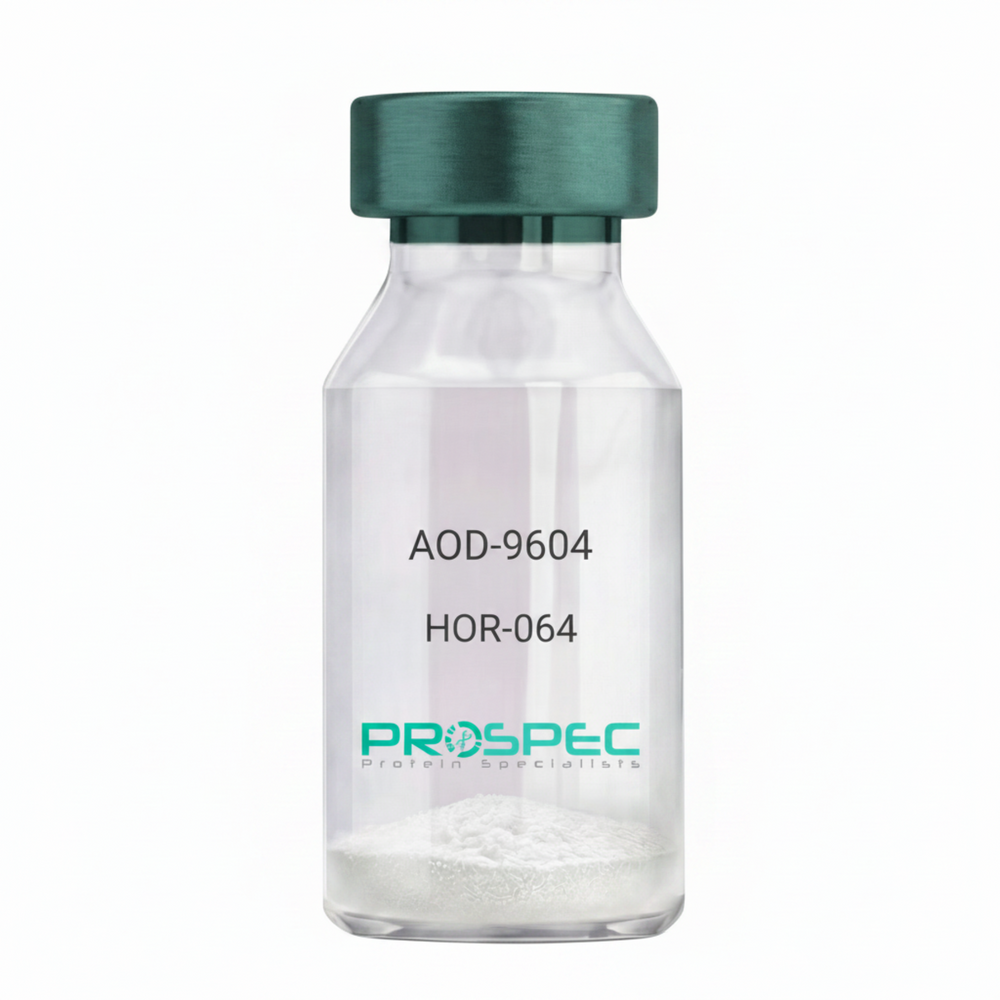
AOD-9604Description:
AOD-9604
Product # :
HOR-064Price :
Quantity :
Shipping Method :
Shipped at Room temp
More Info
- description
- formulation
- purity
- More Info
Description
AOD-9604 is a synthetic single, non-glycosylated polypeptide chain containing 16 amino acids, having a molecular mass of 1815 Dalton and a Molecular formula of C78H123N23O23 S2.
Formulation
The protein was lyophilized with no additives.
Purity
Greater than 97.0% as determined by analysis by RP-HPLC.
More Info
-
Physical Appearance
Sterile Filtered White lyophilized (freeze-dried) powder.
-
Stability
Lyophilized AOD-9604 although stable at room temperature for 3 weeks, should be stored desiccated below -18°C. Upon reconstitution AOD-9604 should be stored at 4°C between 2-7 days and for future use below -18°C.
For long term storage it is recommended to add a carrier protein (0.1% HSA or BSA).
Please prevent freeze-thaw cycles.
-
Solubility
It is recommended to reconstitute the lyophilized AOD-9604 in sterile 18MΩ-cm H2O not less than 100 µg/ml, which can then be further diluted to other aqueous solutions.
-
Amino Acid Sequence
H-Tyr-Leu-Arg-Ile-Val-Gln-Cys-Arg-SerVal-Glu-Gly-Ser-Cys-Gly-Phe-OH (Disulfide bond).
-
Background
AOD-9604 is a synthetic analog of the C-terminal fragment (177–191) AOD-9604 stimulates lipolysis (fat breakdown) without the unwanted growth-promoting or insulin-antagonizing effects of full-length hGH. AOD-9604 is a potent lipolytic tool in animal models and researchers focus on its regenerative properties in joint health and its ability to modulate beta3 adrenergic receptors without the systemic risks of growth hormone.
ProSpec's products are furnished for LABORATORY RESEARCH USE ONLY. The product may not be used as drugs, agricultural or pesticidal products, food additives or household chemicals.
- View Data Sheet
Name :
PDGFRA HumanDescription:
Platelet-Derived Growth Factor Receptor, Alpha Human Recombinant
Platelet-derived growth factor receptor alpha polypeptide, PDGFR2, PDGF-R-alpha, CD140 antigen-like family member A, CD140a antigen, alpha-type platelet-derived growth factor receptor, RHEPDGFRA, rearranged-in-hypereosinophilia-platelet derived growth factor receptor alpha, PDGFRA/BCR fusion protein, MGC74795, EC 2.7.10.1.
Product # :
CYT-065Price :
Quantity :
Shipping Method :
Shipped with Ice Packs
More Info
- description
- source
- formulation
- purity
- More Info
Description
PDGFRA Human Recombinant produced in E.coli is a single, non-glycosylated polypeptide chain containing 522 amino acids (24-524) and having a molecular mass of 58.4 kDa.The PDGFRA is fused to a 20 amino acid His-Tag at N-terminus and purified by proprietary chromatographic techniques.
Source
E.coli.
Formulation
The PDGFRA solution (0.5mg/ml) contains 20mM Tris-HCl buffer (pH 8.0), 1mM DTT, 0.1M NaCl and 20% glycerol.
Purity
Greater than 85% as determined by SDS-PAGE.
More Info
-
Introduction
PDGFRa is a cell surface tyrosine kinase receptor for PDGF family members. PDGFRa binds to both A and B subunits of PDGF. It is known that PDGFRa is vital for kidney development since mice heterozygous for the receptor display defective kidney phenotypes.
-
Synonyms
Platelet-derived growth factor receptor alpha polypeptide, PDGFR2, PDGF-R-alpha, CD140 antigen-like family member A, CD140a antigen, alpha-type platelet-derived growth factor receptor, RHEPDGFRA, rearranged-in-hypereosinophilia-platelet derived growth factor receptor alpha, PDGFRA/BCR fusion protein, MGC74795, EC 2.7.10.1.
-
Physical Appearance
Sterile Filtered colorless solution.
-
Stability
Store at 4°C if entire vial will be used within 2-4 weeks. Store, frozen at -20°C for longer periods of time. For long term storage it is recommended to add a carrier protein (0.1% HSA or BSA).Avoid multiple freeze-thaw cycles.
-
Amino Acid Sequence
MGSSHHHHHH SSGLVPRGSH MQLSLPSILP NENEKVVQLN SSFSLRCFGE SEVSWQYPMS EEESSDVEIR NEENNSGLFV TVLEVSSASA AHTGLYTCYY NHTQTEENEL EGRHIYIYVP DPDVAFVPLG MTDYLVIVED DDSAIIPCRT TDPETPVTLH NSEGVVPASY DSRQGFNGTF TVGPYICEAT VKGKKFQTIP FNVYALKATS ELDLEMEALK TVYKSGETIV VTCAVFNNEV VDLQWTYPGE VKGKGITMLE EIKVPSIKLV YTLTVPEATV KDSGDYECAA RQATREVKEM KKVTISVHEK GFIEIKPTFS QLEAVNLHEV KHFVVEVRAY PPPRISWLKN NLTLIENLTE ITTDVEKIQE IRYRSKLKLI RAKEEDSGHY TIVAQNEDAV KSYTFELLTQ VPSSILDLVD DHHGSTGGQT VRCTAEGTPL PDIEWMICKD IKKCNNETSW TILANNVSNI ITEIHSRDRS TVEGRVTFAK VEETIAVRCL AKNLLGAENR ELKLVAPTLR SE.
ProSpec's products are furnished for LABORATORY RESEARCH USE ONLY. The product may not be used as drugs, agricultural or pesticidal products, food additives or household chemicals.
- View Data Sheet
Name :
PTH HumanDescription:
Parathyroid Hormone (1-34) Human Recombinant
Parathyrin, PTH, Parathormone.
Product # :
HOR-247Price :
Quantity :
Shipping Method :
Shipped at Room temp
More Info
- description
- source
- formulation
- purity
- biological activity
- More Info
Description
Parathyroid Hormone Human Recombinant (C181H290N55O51S2) produced in E.Coli is a single, non-glycosylated, polypeptide chain containing 34 amino acids and having a molecular mass of 4117.8 Dalton. The PTH is purified by proprietary chromatographic techniques.
Source
Escherichia Coli.
Formulation
The protein (1 mg/ml) was lyophilized after extensive dialyses against 1.15 mg sodium citrate, sodium chloride 7.31 mg, 0.21 mg citric acid, 0.1117 EDTA-Na2, 0.2 mg Tween 80 and 50 mg Mannitol.
Purity
Greater than 98.0% as determined by:
(a) Analysis by RP-HPLC.
(b) Analysis by SDS-PAGE.Biological Activity
The activity calculated by UMR106 cell/cAMP method corresponding to a specific activity of 10,000 Units/mg.More Info
-
Introduction
Parathyroid hormone (PTH), or parathormone, is secreted by the parathyroid glands as a polypeptide containing 84 amino acids. It acts to increase the concentration of calciumin the blood, whereas calcitonin (a hormone produced by the parafollicular cells of the thyroid gland) acts to decrease calcium concentration. PTH acts to increase the concentration of calcium in the blood by acting upon parathyroid hormone receptorin three parts of the body: In the bones- It enhances the release of calcium from the large reservoir contained in the bones. Bone resorption is the normal destruction of bone by osteoclasts, which are indirectly stimulated by PTH. Stimulation is indirect since osteoclasts do not have a receptor for PTH; rather, PTH binds to osteoblasts, the cells responsible for creating bone. Binding stimulates osteoblasts to increase their expression of RANKL, which can bind to osteoclast precursors containing RANK, a receptor for RANKL. The binding of RANKL to RANK stimulates these precursors to fuse, forming new osteoclasts which ultimately enhances the resorption of bone.
In the kidney- It enhances active reabsorption of calcium from distal tubules and the thick ascending limb.
In the intestine- It enhances the absorption of calcium in the intestine by increasing the production of vitamin D and upregulating the enzyme responsible for 1-alpha hydroxylationof 25-hydroxy vitamin D, converting vitamin D to its active form (1,25-dihydroxy vitamin D) which effects the actual absorption of calcium (as Ca2+ ions) by the intestine via calbindin.
Recombinant Human full length PTH 1-84 has potential as an anti-osteoporotic agent, due to its properties as a bone formation stimulant, it increases bone turnover, stimulating osteoblasts and reducing both vertebral and non vertebral fractures. -
Synonyms
Parathyrin, PTH, Parathormone.
-
Physical Appearance
Sterile Filtered White lyophilized (freeze-dried) powder.
-
Stability
Lyophilized Parathyrin although stable at room temperature for 3 weeks, should be stored desiccated below -18°C. Upon reconstitution PTH should be stored at 4°C between 2-7 days and for future use below -18°C.For long term storage it is recommended to add a carrier protein (0.1% HSA or BSA).Please prevent freeze-thaw cycles.
-
Solubility
It is recommended to reconstitute the lyophilized Parathormone in sterile 18MΩ-cm H2O not less than 100 µg/ml, which can then be further diluted to other aqueous solutions.
-
Amino Acid Sequence
Ser-Val-Ser-Glu-Ile-Gln-Leu-Met-His-Asn-Leu-Gly-Lys-His-Leu-Asn-Ser-Met-Glu-Arg-Val-Glu-Trp-Leu-Arg-Lys-Lys-Leu-Gln-Asp-Val-His-Asn-Phe.
ProSpec's products are furnished for LABORATORY RESEARCH USE ONLY. The product may not be used as drugs, agricultural or pesticidal products, food additives or household chemicals.
- View Data Sheet
Name :
TnT HumanDescription:
Cardiac Troponin T Human
Troponin T cardiac muscle, TnTc, Cardiac muscle troponin T, cTnT, TNNT2, CMH2, CMPD2, MGC3889.
Product # :
PRO-342Price :
Quantity :
Shipping Method :
Shipped at Room temp
More Info
- description
- source
- formulation
- purity
- More Info
Description
Human Cardiac Troponin T produced from Human Cardiac Tissue, having a molecular weight of approximately 35 kDa.
The Cardiac troponin-T is Immunogen for troponin biochemical, antibody production and immunochemical studies.
Source
Human skeletal muscle.
Formulation
Human Cardiac Troponin was lyophilized in 0.01 M HCl.
Purity
Greater than 95.0% as determined by SDS-PAGE.
More Info
-
Introduction
Troponin-T is one of three subunits that form the troponin complex of the thin filaments of striated muscle, it regulates muscle contraction in response to alterations in intracellular calcium ion concentration. TnTc is expressed only in the heart and has proved to be a specific biomarker for heart disease.
Mutations in TNNT2 are associated with familial hypertrophic cardiomyopathy as well as with dilated cardiomyopathy.
Alternative splicing results in many tissue-specific isoforms. -
Synonyms
Troponin T cardiac muscle, TnTc, Cardiac muscle troponin T, cTnT, TNNT2, CMH2, CMPD2, MGC3889.
-
Physical Appearance
Sterile Filtered White lyophilized (freeze-dried) powder.
-
Stability
Lyophilized TnT although stable at room temperature for 3 weeks, should be stored desiccated below -18°C. Upon reconstitution Cardiac Troponin T should be stored at 4°C between 2-7 days and for future use below -18°C.
For long term storage it is recommended to add a carrier protein (0.1% HSA or BSA).
Please prevent freeze-thaw cycles.
-
Solubility
It is recommended to reconstitute the lyophilized TnT with urea /Tris buffer (20mM Tris, pH 7.5, 5 mM EDTA, 7 M urea and 15 mM 2-mercaptoethanol) not less than 100µg/ml, which can then be further diluted to other aqueous solutions.
-
Human Virus Test
Blood sample from the tissue donor was tested and found negative for HBsAg, HIV-1 and HIV-2 antibodies, HCV, and syphilis.
ProSpec's products are furnished for LABORATORY RESEARCH USE ONLY. The product may not be used as drugs, agricultural or pesticidal products, food additives or household chemicals.
- View Data Sheet
Name :
ATF BovineDescription:
Apo Transferrin Bovine
Serotransferrin, Transferrin, Siderophilin, Beta-1-metal-binding globulin, TF, PRO1557, PRO2086, DKFZp781D0156, Apo Transferrin, ATF.
Product # :
PRO-511Price :
Quantity :
Shipping Method :
Shipped at Room temp
More Info
- description
- source
- formulation
- purity
- More Info
Description
Bovine Apo Transferrin is a glycoprotein of approximately 77kDa.
Source
Bovine Serum.
Formulation
The protein (1mg/ml) was lyophilized with no additives.
Purity
Greater than 95.0% as determined by SDS-PAGE.
More Info
-
Introduction
Transferrin is the iron-transport protein of vertebrate serum and donates iron to cells through interaction with a specific membrane receptor, CD71. Transferrin appears to be indispensable for most cells growing in tissue culture.
It is referred to frequently as a growth factor because, in analogy to other growth factor-receptor interactions, proliferating cells express high numbers of transferrin receptors, and the binding of transferrin to their receptors is needed for cells to initiate and maintain their DNA synthesis. Apart from its role as an iron transport protein transferrin acts as a cytokine and has functions that may not be related to its iron-carrying capacity.
Bovine Transferrin is a crucial component for the cultivation of mammalian cells in- vitro. Bovine Transferrin is Critical for long-term cells growth in-vitro. Bovine Transferrin is used as detoxificant in media by binding contaminating metal ions. Bovine Transferrin is often used as a nutrient in fermentation media for recombinant protein and biopharmaceutical production. Additional common uses of Bovine Transferrin are Molecular weight, Affinity purification of anti-human transferrin antibodies and also as receptor mediated transfection of molecules such as DNA, into cells. -
Synonyms
Serotransferrin, Transferrin, Siderophilin, Beta-1-metal-binding globulin, TF, PRO1557, PRO2086, DKFZp781D0156, Apo Transferrin, ATF.
-
Physical Appearance
Sterile Filtered off-white lyophilized (freeze-dried) powder.
-
Stability
Store the lyophilized Apo Transferrin between 2-8°C, do not freeze.
-
Solubility
It is recommended to reconstitute the lyophilized Apo Transferrin in sterile 18MΩ-cm H2O not less than 1gr/30ml in 20min. at 20-25C.
-
Iron Content
The Iron content was estimated by ICP-OES and was found to be less than 40 ppm.
ProSpec's products are furnished for LABORATORY RESEARCH USE ONLY. The product may not be used as drugs, agricultural or pesticidal products, food additives or household chemicals.
- View Data Sheet
Name :
Anaplasma OmpADescription:
Anaplasma Phagocytophilum OmpA Recombinant
Product # :
PRO-2676Price :
Quantity :
Shipping Method :
Shipped with Ice Packs
More Info
- description
- source
- formulation
- purity
- More Info
Description
Anaplasma OmpA produced in E.Coli is a single, non-glycosylated polypeptide chain having a molecular mass of 24kDa. Anaplasma OmpA is expressed with a 10xHis tag and purified by proprietary chromatographic techniques.
Source
Escherichia Coli.
Formulation
Anaplasma OmpA is supplied in 20mM HEPES buffer pH-8.0, 200mM NaCl and 20% glycerol.
Purity
Greater than 95.0% as determined by SDS-PAGE.
More Info
-
Introduction
Anaplasma phagocytophilum is a tick-transmitted obligate intracellular bacterium leading to human granulocytic anaplasmosis. Its outer membrane protein A is a peptidoglycan-associated lipoprotein which plays a significant role in the pathogenesis of the disease. OmpA is a part of the porin superfamily sharing a beta-barrel structure.
-
Physical Appearance
Sterile Filtered clear solution.
-
Stability
Store at 4°C if entire vial will be used within 2-4 weeks. Store, frozen at -20°C for longer periods of time. Avoid multiple freeze-thaw cycles.
-
Immunological Functions
1. Binds IgG-and IgM-type human antibodies.2. immunodot analysis with positive/negative samples.
-
Applications
Tested by LAL (Limulus Amoebocyte Lysate) chromogenic endotoxin assay.
ProSpec's products are furnished for LABORATORY RESEARCH USE ONLY. The product may not be used as drugs, agricultural or pesticidal products, food additives or household chemicals.
- View Data Sheet
Name :
SERPINA5 HumanDescription:
Serpin Peptidase Inhibitor Clade A Member 5 Human Recombinant
PAI3, PCI, PROCI, PLANH3, Protein-C Inhibitor, Serpin A5, Plasminogen activator inhibitor 3, PAI-3, SERPINA5.
Product # :
PRO-749Price :
Quantity :
Shipping Method :
Shipped with Ice Packs
More Info
- description
- source
- formulation
- purity
- More Info
Description
SERPINA5 Human Recombinant fused with a 20 amino acid His tag at N-terminus produced in E.Coli is a single, non-glycosylated, polypeptide chain containing 408 amino acids (20-406 a.a.) and having a molecular mass of 45.9 kDa.The SERPINA5 is purified by proprietary chromatographic techniques.
Source
Escherichia Coli.
Formulation
The SERPINA5 solution (0.5mg/ml) contains 20mM Tris-HCl buffer pH-8, 1mM DTT and 10% glycerol.
Purity
Greater than 90.0% as determined by SDS-PAGE.
More Info
-
Introduction
SERPINA5 up regulates TAFI activation by inhibiting the protein C activation. SERPINA5 is a significant regulator in the equilibrium between coagulation and fibrinolysis by differentially inhibiting the activation of TAFI and of Protein-C. SERPINA5 belongs to the serpin serine proteinase inhibitor family. SERPINA5 protein inhibits plasminogen activators as well as activated protein C.
SERPINA5 is secreted in plasma & liver. SERPINA5 is involved in cell inflammation, proliferation, apoptosis, tumour cell migration, invasion, and metastasis. Moreover, SERPINA5 controls the invasive potential of renal cell carcinoma by inhibiting urinary plasminogen activator secreted by the cells. SERPINA5 participtes in regulating key serine proteases which are involved in metastatic prostate disease. -
Synonyms
PAI3, PCI, PROCI, PLANH3, Protein-C Inhibitor, Serpin A5, Plasminogen activator inhibitor 3, PAI-3, SERPINA5.
-
Physical Appearance
Sterile Filtered colorless solution.
-
Stability
Store at 4°C if entire vial will be used within 2-4 weeks.Store, frozen at -20°C for longer periods of time. For long term storage it is recommended to add a carrier protein (0.1% HSA or BSA).Avoid multiple freeze-thaw cycles.
-
Amino Acid Sequence
MGSSHHHHHH SSGLVPRGSH MHRHHPREMK KRVEDLHVGA TVAPSSRRDF TFDLYRALAS AAPSQNIFFS PVSISMSLAM LSLGAGSSTK MQILEGLGLN LQKSSEKELH RGFQQLLQEL NQPRDGFQLS LGNALFTDLV VDLQDTFVSA MKTLYLADTF PTNFRDSAGA MKQINDYVAK QTKGKIVDLL KNLDSNAVVI MVNYIFFKAK WETSFNHKGT QEQDFYVTSE TVVRVPMMSR EDQYHYLLDR NLSCRVVGVP YQGNATALFI LPSEGKMQQV ENGLSEKTLR KWLKMFKKRQ LELYLPKFSI EGSYQLEKVL PSLGISNVFT SHADLSGISN HSNIQVSEMV HKAVVEVDES GTRAAAATGT IFTFRSARLN SQRLVFNRPF LMFIVDNNIL FLGKVNRP.
ProSpec's products are furnished for LABORATORY RESEARCH USE ONLY. The product may not be used as drugs, agricultural or pesticidal products, food additives or household chemicals.
- View Data Sheet
Name :
SERPINB2 HumanDescription:
Serpin Peptidase Inhibitor, Clade B Member 2 Human Recombinant
Serpin Peptidase Inhibitor Clade B (Ovalbumin) Member 2, Serine (Or Cysteine) Proteinase Inhibitor Clade B (Ovalbumin) Member 2, Placental Plasminogen Activator Inhibitor, Plasminogen Activator Inhibitor Type II (Arginine-Serpin), PAI2, PLANH2, Monocyte Arg-Serpin, Serpin B2, HsT1201, PAI.
Product # :
PRO-1788Price :
Quantity :
Shipping Method :
Shipped at Room temp
More Info
- description
- source
- formulation
- purity
- biological activity
- More Info
Description
SERPINB2 Human Recombinant produced in E.Coli is a single, non-glycosylated, polypeptide chain containing 415 amino acids and having a molecular mass of 46.6kDa.The SERPINB2 is purified by proprietary chromatographic techniques.
Source
Escherichia Coli.
Formulation
Lyophilized from a 0.2µm filtered concentrated solution in 20mM Tris-HCl, pH8.0, 150mM NaCl, 1mM Cysteine, with 5% Trehalose.
Purity
Greater than 97.0% as determined by:
(a) Analysis by RP-HPLC.
(b) Analysis by SDS-PAGE.Biological Activity
The biologically active was determined by its inhibitory effect against single chain tPA induced cleavage of a chromogenic substrate in Imidazole Buffer at 37°C. Half maximal inhibition against 1.0 µg/ml of single chain tPA was at a concentration of 1.0µg/ml.More Info
-
Introduction
SERPINB2 is an inhibitory serpin produced primarily in keratinocytes, stimulated monocytes, and placental trophoblasts. SERPINB2 is found primarily as a 47 kDa non-glycosylated intracellular protein that is induced to be secreted as 60 kDa glycoprotein. The glycosylated and unglycosylated SERPINB2 are similarly effective as inhibitors of uPA, the only proven physiological target of SERPINB2.
-
Synonyms
Serpin Peptidase Inhibitor Clade B (Ovalbumin) Member 2, Serine (Or Cysteine) Proteinase Inhibitor Clade B (Ovalbumin) Member 2, Placental Plasminogen Activator Inhibitor, Plasminogen Activator Inhibitor Type II (Arginine-Serpin), PAI2, PLANH2, Monocyte Arg-Serpin, Serpin B2, HsT1201, PAI.
-
Physical Appearance
Sterile Filtered White lyophilized (freeze-dried) powder.
-
Stability
Lyophilized SERPINB2 although stable at room temperature for 3 weeks, should be stored desiccated below -18°C. Upon reconstitution SERPINB2 should be stored at 4°C between 2-7 days and for future use below -18°C. For long term storage it is recommended to add a carrier protein (0.1% HSA or BSA). Please prevent freeze-thaw cycles.
-
Solubility
It is recommended to reconstitute the lyophilized SERPINB2 in sterile 18MΩ-cm H2O not less than 100µg/ml, which can then be further diluted to other aqueous solutions.
-
Amino Acid Sequence
MEDLCVANTL FALNLFKHLA KASPTQNLFL SPWSISSTMA MVYMGSRGST EDQMAKVLQF NEVGANAVTP MTPENFTSCG FMQQIQKGSY PDAILQAQAA DKIHSSFRSL SSAINASTGN YLLESVNKLF GEKSASFREE YIRLCQKYYS SEPQAVDFLE CAEEARKKIN SWVKTQTKGK IPNLLPEGSV DGDTRMVLVN AVYFKGKWKT PFEKKLNGLY PFRVNSAQRT PVQMMYLREK LNIGYIEDLK AQILELPYAG DVSMFLLLPD EIADVSTGLE LLESEITYDK LNKWTSKDKM AEDEVEVYIP QFKLEEHYEL RSILRSMGME DAFNKGRANF SGMSERNDLF LSEVFHQAMV DVNEEGTEAA AGTGGVMTGR TGHGGPQFVA DHPFLFLIMH KITNCILFFG RFSSP
ProSpec's products are furnished for LABORATORY RESEARCH USE ONLY. The product may not be used as drugs, agricultural or pesticidal products, food additives or household chemicals.
- View Data Sheet
Name :
TCEAL8 HumanDescription:
Transcription Elongation Factor A (SII)-Like 8 Human Recombinant
Transcription elongation factor A protein-like 8, TCEA-like protein 8, Transcription elongation factor S-II protein-like 8, TCEAL8.
Product # :
PRO-1188Price :
Quantity :
Shipping Method :
Shipped with Ice Packs
More Info
- description
- source
- formulation
- purity
- More Info
Description
TCEAL8 Human Recombinant produced in E.Coli is a single, non-glycosylated polypeptide chain containing 125 amino acids (1-117 a.a) and having a molecular mass of 14.7kDa (Molecular weight on SDS-PAGE will appear higher).TCEAL8 is fused to an 8 amino acid His-tag at C-terminus & purified by proprietary chromatographic techniques.
Source
E.coli.
Formulation
TCEAL8 protein solution (0.5mg/ml) containing 20mM Tris-HCl buffer, pH8.0, 20% glycerol, 1mM DTT and 200mM NaCl.
Purity
Greater than 90% as determined by SDS-PAGE.
More Info
-
Introduction
Transcription elongation factor A protein-like 8 (TCEAL8) is a member of the TFS-II family and TFA subfamily. TCEAL8 is involved in transcriptional regulation and localized in nucleus. TFS-II family members contain TFA domains and act as nuclear phosphoproteins which control transcription in a promoter context-dependent mode. Numerous family members are found on the X chromosome.
-
Synonyms
Transcription elongation factor A protein-like 8, TCEA-like protein 8, Transcription elongation factor S-II protein-like 8, TCEAL8.
-
Physical Appearance
Sterile Filtered colorless solution.
-
Stability
Store at 4°C if entire vial will be used within 2-4 weeks. Store, frozen at -20°C for longer periods of time. For long term storage it is recommended to add a carrier protein (0.1% HSA or BSA).Avoid multiple freeze-thaw cycles.
-
Amino Acid Sequence
MQKSCEENEG KPQNMPKAEE DRPLEDVPQE AEGNPQPSEE GVSQEAEGNP RGGPNQPGQG FKEDTPVRHL DPEEMIRGVD ELERLREEIR RVRNKFVMMH WKQRHSRSRP YPVCFRPLEH HHHHH.
ProSpec's products are furnished for LABORATORY RESEARCH USE ONLY. The product may not be used as drugs, agricultural or pesticidal products, food additives or household chemicals.
- View Data Sheet
Name :
CDH11 HumanDescription:
Cadherin 11 Human Recombinant
CAD11, CDHOB, OB, OSF-4, Cadherin 11, Osteoblast cadherin, OB-cadherin.
Product # :
PRO-1368Price :
Quantity :
Shipping Method :
Shipped with Ice Packs
More Info
- description
- source
- formulation
- purity
- More Info
Description
CDH11 Human Recombinant produced in E.Coli is a single, non-glycosylated polypeptide chain containing 601 amino acids (54-617 a.a) and having a molecular mass of 66.2kDa. CDH11 is fused to a 37 amino acid His-tag at N-terminus & purified by proprietary chromatographic techniques.
Source
E.coli.
Formulation
CDH11 protein solution (1mg/ml) containing 20mM Tris-HCl buffer (pH8.0), 10% glycerol and 0.1M NaCl.
Purity
Greater than 85% as determined by SDS-PAGE.
More Info
-
Introduction
Cadherin 11 (CDH11) belongs to the cadherin superfamily (integral membrane proteins) which mediate calcium-dependent cell-cell adhesion. CDH11 is defined based on lacking a HAV cell adhesion recognition sequence specific to type I cadherins. CDH11 protein’s expression in osteoblastic cell lines, and its upregulation during differentiation, suggests a specific function in bone development and maintenance. CDH11 contributes to the sorting of heterogeneous cell types.
-
Synonyms
CAD11, CDHOB, OB, OSF-4, Cadherin 11, Osteoblast cadherin, OB-cadherin.
-
Physical Appearance
Sterile Filtered colorless solution.
-
Stability
Store at 4°C if entire vial will be used within 2-4 weeks. Store, frozen at -20°C for longer periods of time. For long term storage it is recommended to add a carrier protein (0.1% HSA or BSA).Avoid multiple freeze-thaw cycles.
-
Amino Acid Sequence
MRGSHHHHHH GMASMTGGQQ MGRDLYDDDD KDRWGSMGWV WNQFFVIEEY TGPDPVLVGR LHSDIDSGDG NIKYILSGEG AGTIFVIDDK SGNIHATKTL DREERAQYTL MAQAVDRDTN RPLEPPSEFI VKVQDINDNP PEFLHETYHA NVPERSNVGT SVIQVTASDA DDPTYGNSAK LVYSILEGQP YFSVEAQTGI IRTALPNMDR EAKEEYHVVI QAKDMGGHMG GLSGTTKVMI TLTDVNDNPP KFPQSVYQMS VSEAAVPGEE VGRVKAKDPD IGENGLVTYN IVDGDGMESF EITTDYETQE GVIKLKKPVD FETKRAYSLK VEAANVHIDP KFISNGPFKD TVTVKIAVED ADEPPMFLAP SYIHEVQENA AAGTVVGRVH AKDPDAANSP IRYSIDRHTD LDRFFTINPE DGFIKTTKPL DREETAWLNI TVFAAEIHNR HQEAKVPVAI RVLDVNDNAP KFAAPYEGFI CESDQTKPLS NQPIVTISAD DKDDTANGPR FIFSLPPEII HNPNFTVRDN RDNTAGVYAR RGGFSRQKQD LYLLPIVISD GGIPPMSSTN TLTIKVCGCD VNGALLSCNA EAYILNAGLS T.
ProSpec's products are furnished for LABORATORY RESEARCH USE ONLY. The product may not be used as drugs, agricultural or pesticidal products, food additives or household chemicals.
- View Data Sheet
Name :
TXNL4A HumanDescription:
Thioredoxin-Like 4A Human Recombinant
Thioredoxin-like 4A, Spliceosomal U5 snRNP-specific 15 kDa protein, DIM1 protein homolog, HsT161, TXNL4, DIB1, U5-15kD.
Product # :
PRO-1100Price :
Quantity :
Shipping Method :
Shipped with Ice Packs
More Info
- description
- source
- formulation
- purity
- More Info
Description
TXNL4A Human Recombinant produced in E. coli is a single polypeptide chain containing 166 amino acids (1-142) and having a molecular mass of 19.3kDa.TXNL4A is fused to a 24 amino acid His-tag at N-terminus & purified by proprietary chromatographic techniques.
Source
E.coli.
Formulation
The TXNL4A solution (0.5mg/1ml) contains 20mM Tris-HCl buffer (pH 8.0), 1mM DTT, 200mM NaCl and 20% glycerol.
Purity
Greater than 95% as determined by SDS-PAGE.
More Info
-
Introduction
TXNL4A is a member of the Dim protein family and has a vital part in pre-mRNA splicing. As a result of a failure to express early zygotic transcripts, deletion of the gene encoding TXNL4A in Schizosaccharomyces pombe results in embryonal lethality during gastrulation. Restricted to the nucleus, TXNL4A cooperates with hnRNP F, hnRNP H2, Cas-L and PQBP-1 to influence gene expression.
-
Synonyms
Thioredoxin-like 4A, Spliceosomal U5 snRNP-specific 15 kDa protein, DIM1 protein homolog, HsT161, TXNL4, DIB1, U5-15kD.
-
Physical Appearance
Sterile Filtered colorless solution.
-
Stability
Store at 4°C if entire vial will be used within 2-4 weeks. Store, frozen at -20°C for longer periods of time. For long term storage it is recommended to add a carrier protein (0.1% HSA or BSA).Avoid multiple freeze-thaw cycles.
-
Amino Acid Sequence
MGSSHHHHHH SSGLVPRGSH MGSHMSYMLP HLHNGWQVDQ AILSEEDRVV VIRFGHDWDP TCMKMDEVLY SIAEKVKNFA VIYLVDITEV PDFNKMYELY DPCTVMFFFR NKHIMIDLGT GNNNKINWAM EDKQEMVDII ETVYRGARKG RGLVVSPKDY STKYRY
ProSpec's products are furnished for LABORATORY RESEARCH USE ONLY. The product may not be used as drugs, agricultural or pesticidal products, food additives or household chemicals.
- View Data Sheet
Name :
KLK11 Human, Sf9Description:
Kallikrein-11, 4 Human Recombinant, Sf9
Kallikrein-11 isoform 1, KLK11, PRSS20, TLSP.
Product # :
ENZ-1089Price :
Quantity :
Shipping Method :
Shipped with Ice Packs
More Info
- description
- source
- formulation
- purity
- More Info
Description
KLK11 produced in Sf9 Insect cells is a single, glycosylated polypeptide chain containing 241 amino acids (19-250a.a.) and having a molecular mass of 26.7 kDa (Molecular size on SDS-PAGE will appear at approximately 28-40kDa).KLK11 is expressed with a 9 amino acid His tag at C-Terminus and purified by proprietary chromatographic techniques.
Source
Sf9, Insect cells.
Formulation
KLK11 protein solution ( 0.5mg/m ) contains 50mM Tris-HCl (pH 7.5), 0.1M NaCl, 2mM CaCl2 and 10% glycerol.
Purity
Greater than 90.0% as determined by SDS-PAGE.
More Info
-
Introduction
Kallikreins are a subgroup of serine proteases having various physiological functions. Numerous kallikreins are involved in carcinogenesis. Kallikrein-11 (KLK11) which is a multifunctional protease is 1 of the 15 kallikrein subfamily members found in a cluster on chromosome 19. KLK11 cleaves synthetic peptides after arginine but not lysine residues.
-
Synonyms
Kallikrein-11 isoform 1, KLK11, PRSS20, TLSP.
-
Physical Appearance
Sterile Filtered colorless solution.
-
Stability
Store at 4°C if entire vial will be used within 2-4 weeks. Store, frozen at -20°C for longer periods of time. For long term storage it is recommended to add a carrier protein (0.1% HSA or BSA). Avoid multiple freeze-thaw cycles.
-
Amino Acid Sequence
ADLETRIIKG FECKPHSQPW QAALFEKTRL LCGATLIAPR WLLTAAHCLK PRYIVHLGQH NLQKEEGCEQ TRTATESFPH PGFNNSLPNK DHRNDIMLVK MASPVSITWA VRPLTLSSRC VTAGTSCLIS GWGSTSSPQL RLPHTLRCAN ITIIEHQKCE NAYPGNITDT MVCASVQEGG KDSCQGDSGG PLVCNQSLQG IISWGQDPCA ITRKPGVYTK VCKYVDWIQE TMKNNHHHHH H.
ProSpec's products are furnished for LABORATORY RESEARCH USE ONLY. The product may not be used as drugs, agricultural or pesticidal products, food additives or household chemicals.
- View Data Sheet
Name :
AAGAB HumanDescription:
Alpha & Gamma-Adaptin Binding Protein Human Recombinant
P34, Alpha- and gamma-adaptin-binding protein p34.
Product # :
PRO-1479Price :
Quantity :
Shipping Method :
Shipped with Ice Packs
More Info
- description
- source
- formulation
- purity
- More Info
Description
AAGAB Human Recombinant produced in E.Coli is a single, non-glycosylated polypeptide chain containing 335 amino acids (1-315 a.a.) and having a molecular mass of 36.7kDa.AAGAB is fused to a 20 amino acid His-tag at N-terminus & purified by proprietary chromatographic techniques.
Source
Escherichia Coli.
Formulation
AAGAB protein solution (0.5mg/ml) contains 20mM Tris-HCl buffer, (pH 8.0), 0.15M NaCl, 10% glycerol and 1mM DTT.
Purity
Greater than 90.0% as determined by SDS-PAGE.
More Info
-
Introduction
Alpha & Gamma-Adaptin Binding Protein (AAGAB), which is also known as P34, takes part in membrane traffic and interacts with AP1G1 and AP2A1.AAGAB is highly expressed in skin and keratinocytes, with the highest levels in adrenal gland, rectum and thymus.
-
Synonyms
P34, Alpha- and gamma-adaptin-binding protein p34.
-
Physical Appearance
Sterile Filtered clear solution.
-
Stability
Store at 4°C if entire vial will be used within 2-4 weeks. Store, frozen at -20°C for longer periods of time. For long term storage it is recommended to add a carrier protein (0.1% HSA or BSA).Avoid multiple freeze-thaw cycles.
-
Amino Acid Sequence
MGSSHHHHHH SSGLVPRGSH MAAGVPCALV TSCSSVFSGD QLVQHILGTE DLIVEVTSND AVRFYPWTID NKYYSADINL CVVPNKFLVT AEIAESVQAF VVYFDSTQKS GLDSVSSWLP LAKAWLPEVM ILVCDRVSED GINRQKAQEW CIKHGFELVE LSPEELPEED DDFPESTGVK RIVQALNANV WSNVVMKNDR NQGFSLLNSL TGTNHSIGSA DPCHPEQPHL PAADSTESLS DHRGGASNTT DAQVDSIVDP MLDLDIQELA SLTTGGGDVE NFERLFSKLK EMKDKAATLP HEQRKVHAEK VAKAFWMAIG GDRDEIEGLS SDEEH.
ProSpec's products are furnished for LABORATORY RESEARCH USE ONLY. The product may not be used as drugs, agricultural or pesticidal products, food additives or household chemicals.
- View Data Sheet
Name :
CTSL HumanDescription:
Cathepsin-L Human Recombinant
Cathepsin L, CTSL1, Cathepsin L1, Major Excreted Protein, MEP, EC 3.4.22.15, CATL, EC 3.4.22.
Product # :
ENZ-377Price :
Quantity :
Shipping Method :
Shipped with Ice Packs
More Info
- description
- source
- formulation
- purity
- More Info
Description
CTSL Human Recombinant produced in E.Coli is a single, non-glycosylated polypeptide chain containing 339 amino acids (18-333 a.a) and having a molecular mass of 38.3kDa.CTSL is fused to a 23 amino acid His-tag at N-terminus & purified by proprietary chromatographic techniques.
Source
Escherichia Coli.
Formulation
CTSL protein solution (1mg/ml) containing 20mM Tris-HCl (pH 8.0) and 10% glycerol.
Purity
Greater than 90% as determined by SDS-PAGE.
More Info
-
Introduction
Cathepsin-L also known as CTSL is a member of the peptidase C1 family. CTSL, is a dimer composed of disulfide-linked heavy and light chains, both formed from a single protein precursor. Furthermore, CTSL is a lysosomal cysteine proteinase which takes a main part in intracellular protein catabolism. CTSL substrates include collagen and elastin, as well as alpha-1 protease inhibitor, which is the most important controlling element of neutrophil elastase activity. CTSL has been implicated in a number of pathologic processes, including myofibril necrosis in myopathies and in myocardial ischemia, and in the renal tubular response to proteinuria. Multiple alternatively spliced transcript variants have been found for CTSL.
-
Synonyms
Cathepsin L, CTSL1, Cathepsin L1, Major Excreted Protein, MEP, EC 3.4.22.15, CATL, EC 3.4.22.
-
Physical Appearance
Sterile Filtered clear solution.
-
Stability
Store at 4°C if entire vial will be used within 2-4 weeks. Store, frozen at -20°C for longer periods of time.For long term storage it is recommended to add a carrier protein (0.1% HSA or BSA).Please avoid freeze thaw cycles.
-
Amino Acid Sequence
MGSSHHHHHH SSGLVPRGSH MGSTLTFDHS LEAQWTKWKA MHNRLYGMNE EGWRRAVWEK NMKMIELHNQ EYREGKHSFT MAMNAFGDMT SEEFRQVMNG FQNRKPRKGK VFQEPLFYEA PRSVDWREKG YVTPVKNQGQ CGSCWAFSAT GALEGQMFRK TGRLISLSEQ NLVDCSGPQG NEGCNGGLMD YAFQYVQDNG GLDSEESYPY EATEESCKYN PKYSVANDTG FVDIPKQEKA LMKAVATVGP ISVAIDAGHE SFLFYKEGIY FEPDCSSEDM DHGVLVVGYG FESTESDNNK YWLVKNSWGE EWGMGGYVKM AKDRRNHCGI ASAASYPTV.
ProSpec's products are furnished for LABORATORY RESEARCH USE ONLY. The product may not be used as drugs, agricultural or pesticidal products, food additives or household chemicals.
- View Data Sheet
Name :
HEXA HumanDescription:
Hexosaminidase A Human Recombinant
TSD, hexosaminidase A, Beta-hexosaminidase subunit alpha, Beta-N-acetylhexosaminidase subunit alpha, Hexosaminidase subunit A, N-acetyl-beta-glucosaminidase subunit alpha.
Product # :
ENZ-683Price :
Quantity :
Shipping Method :
Shipped with Ice Packs
More Info
- description
- source
- formulation
- purity
- More Info
Description
HEXA Human Recombinant produced in E.Coli is a single, non-glycosylated polypeptide chain containing 464 amino acids (89-529 a.a) and having a molecular mass of 52.9 kDa.HEXA is fused to a 23 amino acid His-tag at N-terminus.
Source
Escherichia Coli.
Formulation
HEXA protein solution (1mg/ml) contains 20mM Tris-HCl buffer (pH 8.0), 0.4M UREA and 10% glycerol.
Purity
Greater than 85.0% as determined by SDS-PAGE.
More Info
-
Introduction
HEXA is the alpha subunit of the lysosomal enzyme beta-hexosaminidase which, combined with the cofactor GM2 activator protein, catalyzes the degradation of the ganglioside GM2, and other molecules having N-acetyl hexosamines terminus. The two subunits composing Beta-hexosaminidase, alpha and beta, belong to the glycosyl hydrolases family and are encoded by distinct genes. Alpha subunit gene mutations can cause Tay-Sachs disease (GM2-gangliosidosis type I).
-
Synonyms
TSD, hexosaminidase A, Beta-hexosaminidase subunit alpha, Beta-N-acetylhexosaminidase subunit alpha, Hexosaminidase subunit A, N-acetyl-beta-glucosaminidase subunit alpha.
-
Physical Appearance
Sterile Filtered clear solution.
-
Stability
Store at 4°C if entire vial will be used within 2-4 weeks. Store, frozen at -20°C for longer periods of time. For long term storage it is recommended to add a carrier protein (0.1% HSA or BSA).Avoid multiple freeze-thaw cycles.
-
Amino Acid Sequence
MGSSHHHHHH SSGLVPRGSH MGSTLEKNVL VVSVVTPGCN QLPTLESVEN YTLTINDDQC LLLSETVWGA LRGLETFSQL VWKSAEGTFF INKTEIEDFP RFPHRGLLLD TSRHYLPLSS ILDTLDVMAY NKLNVFHWHL VDDPSFPYES FTFPELMRKG SYNPVTHIYT AQDVKEVIEY ARLRGIRVLA EFDTPGHTLS WGPGIPGLLT PCYSGSEPSG TFGPVNPSLN NTYEFMSTFF LEVSSVFPDF YLHLGGDEVD FTCWKSNPEI QDFMRKKGFG EDFKQLESFY IQTLLDIVSS YGKGYVVWQE VFDNKVKIQP DTIIQVWRED IPVNYMKELE LVTKAGFRAL LSAPWYLNRI SYGPDWKDFY VVEPLAFEGT PEQKALVIGG EACMWGEYVD NTNLVPRLWP RAGAVAERLW SNKLTSDLTF AYERLSHFRC ELLRRGVQAQ PLNVGFCEQE FEQT.
ProSpec's products are furnished for LABORATORY RESEARCH USE ONLY. The product may not be used as drugs, agricultural or pesticidal products, food additives or household chemicals.
- View Data Sheet
Name :
SERPINA1 HumanDescription:
Alpha 1 Antitrypsin Human Recombinant
Alpha-1-antitrypsin, Alpha-1 protease inhibitor, Alpha-1-antiproteinase, SERPINA1, A1AT, PI, A1A, AAT, PI1, MGC9222, PRO2275, MGC23330.
Product # :
PRO-529Price :
Quantity :
Shipping Method :
Shipped with Ice Packs
More Info
- description
- source
- formulation
- purity
- More Info
Description
SERPINA1 Human Recombinant produced in E.Coli is a single, non-glycosylated polypeptide chain containing 395 amino acids (25-418) and having a molecular mass of 44.4 kDa. The SERPINA1 protein is purified by proprietary chromatographic techniques.
Source
Escherichia Coli.
Formulation
The protein solution contains 20mM Tris-HCl pH-7.5, 1mM DTT, 10% glycerol, and 2mM EDTA.
Purity
Greater than 90% as determined by SDS-PAGE.
More Info
-
Introduction
SERPINA1 is secreted and is a serine protease inhibitor which its targets include elastase, plasmin, collagenase, thrombin, leucocytic proteases, trypsin, chymotrypsin, and plasminogen activator. Defects in SERPINA1 gene can cause emphysema or liver disease. Antral SERPINA1 expression is particularly induced by H. pylori infection. lung and prostate cancers have shown a significant increase in SERPINA1 serum levels compared with healthy controls though breast cancers did not show a significant change. SERPINA1 is an endogenous inhibitor of serine proteases and inhibits the catalytic domain of human recombinant matriptase in vitro. Rise in SERPINA1 occurs as an acute phase response to tissue necrosis and inflammation. mutations in SERPINA1 and SLC11A1 genes change the balance between elastase produced by leukocytes during phagocytosis.
-
Synonyms
Alpha-1-antitrypsin, Alpha-1 protease inhibitor, Alpha-1-antiproteinase, SERPINA1, A1AT, PI, A1A, AAT, PI1, MGC9222, PRO2275, MGC23330.
-
Physical Appearance
Sterile Filtered colorless solution.
-
Stability
Store at 4°C if entire vial will be used within 2-4 weeks. Store, frozen at -20°C for longer periods of time. For long term storage it is recommended to add a carrier protein (0.1% HSA or BSA).Avoid multiple freeze-thaw cycles.
-
Amino Acid Sequence
MEDPQGDAAQ KTDTSHHDQD HPTFNKITPN LAEFAFSLYR QLAHQSNSTN IFFSPVSIAT AFAMLSLGTK ADTHDEILEG LNFNLTEIPE AQIHEGFQEL LRTLNQPDSQ LQLTTGNGLF LSEGLKLVDK FLEDVKKLYH SEAFTVNFGD TEEAKKQIND YVEKGTQGKI VDLVKELDRD TVFALVNYIF FKGKWERPFE VKDTEEEDFH VDQVTTVKVP MMKRLGMFNI QHCKKLSSWV LLMKYLGNAT AIFFLPDEGK LQHLENELTH DIITKFLENE DRRSASLHLP KLSITGTYDL KSVLGQLGIT KVFSNGADLS GVTEEAPLKL SKAVHKAVLT IDEKGTEAAG AMFLEAIPMS IPPEVKFNKP FVFLMIDQNT KSPLFMGKVV NPTQK.
ProSpec's products are furnished for LABORATORY RESEARCH USE ONLY. The product may not be used as drugs, agricultural or pesticidal products, food additives or household chemicals.
- View Data Sheet
Name :
ASGR2 HumanDescription:
Asialoglycoprotein Receptor 2 Human Recombinant
Asialoglycoprotein receptor 2, ASGP-R 2, ASGPR 2, C-type lectin domain family 4 member H2, Hepatic lectin H2, HL-2, ASGR2, CLEC4H2, HBXBP.
Product # :
PRO-1261Price :
Quantity :
Shipping Method :
Shipped with Ice Packs
More Info
- description
- source
- formulation
- purity
- More Info
Description
ASGR2 Human Recombinant produced in E.Coli is a single, non-glycosylated polypeptide chain containing 255 amino acids (80-311 a.a) and having a molecular mass of 28.9kDa.ASGR2 is fused to a 23 amino acid His-tag at N-terminus & purified by proprietary chromatographic techniques.
Source
Escherichia Coli.
Formulation
ASGR2 protein solution (0.5mg/ml) containing 20mM Tris-HCl buffer (pH 8.0), 0.2M NaCl, 30% glycerol and 1mM DTT.
Purity
Greater than 90.0% as determined by SDS-PAGE.
More Info
-
Introduction
Asialoglycoprotein Receptor 2 (ASGR2) is a hetero-oligomeric protein comprised of major and minor subunits, encoded by different genes. ASGR2 is a subunit of the asialoglycoprotein receptor; it is the less abundant minor subunit. The ASGR2 receptor is a transmembrane protein, which has a crucial role in serum glycoprotein homeostasis by mediating the endocytosis and lysosomal degradation of glycoproteins with exposed terminal galactose or N-acetylgalactosamine residues.
-
Synonyms
Asialoglycoprotein receptor 2, ASGP-R 2, ASGPR 2, C-type lectin domain family 4 member H2, Hepatic lectin H2, HL-2, ASGR2, CLEC4H2, HBXBP.
-
Physical Appearance
Sterile Filtered colorless solution.
-
Stability
Store at 4°C if entire vial will be used within 2-4 weeks. Store, frozen at -20°C for longer periods of time. For long term storage it is recommended to add a carrier protein (0.1% HSA or BSA).Avoid multiple freeze-thaw cycles.
-
Amino Acid Sequence
MGSSHHHHHH SSGLVPRGSH MGSQSEGHRG AQLQAELRSL KEAFSNFSSS TLTEVQAIST HGGSVGDKIT SLGAKLEKQQ QDLKADHDAL LFHLKHFPVD LRFVACQMEL LHSNGSQRTC CPVNWVEHQG SCYWFSHSGK AWAEAEKYCQ LENAHLVVIN SWEEQKFIVQ HTNPFNTWIG LTDSDGSWKW VDGTDYRHNY KNWAVTQPDN WHGHELGGSE DCVEVQPDGR WNDDFCLQVY RWVCEKRRNA TGEVA.
ProSpec's products are furnished for LABORATORY RESEARCH USE ONLY. The product may not be used as drugs, agricultural or pesticidal products, food additives or household chemicals.
- View Data Sheet
Name :
EXOSC4 HumanDescription:
Exosome Component 4 Human Recombinant
Exosome Component 4, Ribosomal RNA-Processing Protein 41, Exosome Complex Exonuclease RRP41, Exosome Complex Component RRP41, RRP41A, Ski6p, SKI6, p12A.
Product # :
PRO-1792Price :
Quantity :
Shipping Method :
Shipped with Ice Packs
More Info
- description
- source
- formulation
- purity
- More Info
Description
EXOSC4 Human Recombinant produced in E.Coli is a single, non-glycosylated polypeptide chain containing 268 amino acids (1-245aa) and having a molecular mass of 28.8kDa.EXOSC4 is fused to a 23 amino acid His-tag at N-terminus & purified by proprietary chromatographic techniques.
Source
Escherichia Coli.
Formulation
EXOSC4 protein solution (0.5mg/ml) containing 20mM Tris-HCl buffer (pH 8.0), 0.4M Urea and 10% glycerol.
Purity
Greater than 85.0% as determined by SDS-PAGE.
More Info
-
Introduction
EXOSC4 is a Non-catalytic component of the RNA exosome complex that has 3'->5' exoribonuclease activity and takes part in several cellular RNA processing and degradation procedures. In the nucleus, the RNA exosome complex contributes to accurate maturation of stable RNA species such as rRNA, snRNA and snoRNA, in the removal of RNA processing by-products and non-coding 'pervasive' transcripts, like antisense RNA species and promoter-upstream transcripts (PROMPTs), and of mRNAs with processing deficiencies, thus controlling or excluding their export to the cytoplasm. Diseases related with EXOSC4 include hepatitis a, and mouth disease.
-
Synonyms
Exosome Component 4, Ribosomal RNA-Processing Protein 41, Exosome Complex Exonuclease RRP41, Exosome Complex Component RRP41, RRP41A, Ski6p, SKI6, p12A.
-
Physical Appearance
Sterile Filtered clear solution.
-
Stability
Store at 4°C if entire vial will be used within 2-4 weeks. Store, frozen at -20°C for longer periods of time. For long term storage it is recommended to add a carrier protein (0.1% HSA or BSA).Avoid multiple freeze-thaw cycles.
-
Amino Acid Sequence
MGSSHHHHHH SSGLVPRGSH MGSMAGLELL SDQGYRVDGR RAGELRKIQA RMGVFAQADG SAYIEQGNTK ALAVVYGPHE IRGSRARALP DRALVNCQYS SATFSTGERK RRPHGDRKSC EMGLQLRQTF EAAILTQLHP RSQIDIYVQV LQADGGTYAA CVNAATLAVL DAGIPMRDFV CACSAGFVDG TALADLSHVE EAAGGPQLAL ALLPASGQIA LLEMDARLHE DHLERVLEAA AQAARDVHTL LDRVVRQHVR EASILLGD
ProSpec's products are furnished for LABORATORY RESEARCH USE ONLY. The product may not be used as drugs, agricultural or pesticidal products, food additives or household chemicals.
- View Data Sheet
Name :
TEK Human FcDescription:
TEK Tyrosine Kinase Endothelial Fc Chimera Human Recombinant
Angiopoietin-1 receptor precursor, Tyrosine-protein kinase receptor TIE-2, hTIE2, Tyrosine-protein kinase receptor TEK, p140 TEK, Tunica interna endothelial cell kinase, CD202b, VMCM, VMCM1, TIE2.
Product # :
PKA-248Price :
Quantity :
Shipping Method :
Shipped at Room temp
More Info
- description
- source
- formulation
- purity
- More Info
Description
Soluble TEK Human Recombinant fused with the Fc part of human IgG1 produced in baculovirus is a monomeric, glycosylated, polypeptide containing 730 amino acids and having a total molecular mass of 250 kDa. Human TIE-2/Fc monomer has a calculated molecular mass of approximately 125 kDa. As a result of glycosylation, the recombinant protein migrates as an approximately 140 kDa protein in SDS-PAGE under reducing conditions.The TEK Fc Chimera is purified by proprietary chromatographic techniques.
Source
Insect Cells.
Formulation
TEK Fc Chimera was lyophilized from a concentrated (1mg/ml) sterile solution containing 1xPBS.
Purity
Greater than 90.0% as determined by:
(a) Analysis by RP-HPLC.
(b) Analysis by SDS-PAGE.More Info
-
Introduction
TIE-1 (tyrosine kinase with Ig and EGF homology domains 1) and TIE-2/Tek comprise a receptor tyrosine kinase (RTK) subfamily with unique structural characteristics: two immunoglobulin-like domains flanking three epidermal growth factor (EGF)-like domains and followed by three fibronectin type III-like repeats in the extracellular region and a split tyrosine kinase domain in the cytoplasmic region. These receptors are expressed primarily on endothelial and hematopoietic progenitor cells and play critical roles in angiogenesis, vasculogenesis and hematopoiesis. Human TIE-1 cDNA encodes a 1122 amino acid (aa) residue precursor protein with an 18 residue putative signal peptide, a 726 residue extracellular domain and a 353 residue cytoplasmic domain. Two ligands, angiopoietin-1 (Ang1) and angiopoietin-2 (Ang2), which bind TIE-2 with high-affinity have been identified. Ang2 has been reported to act as an antagonist for Ang1. Mice engineered to overexpress Ang2 or to lack Ang1 or Tie-1 display similar angiogenic defects.
-
Synonyms
Angiopoietin-1 receptor precursor, Tyrosine-protein kinase receptor TIE-2, hTIE2, Tyrosine-protein kinase receptor TEK, p140 TEK, Tunica interna endothelial cell kinase, CD202b, VMCM, VMCM1, TIE2.
-
Physical Appearance
Sterile Filtered White lyophilized (freeze-dried) powder.
-
Stability
Lyophilized sTIE-2 although stable at room temperature for 3 weeks, should be stored desiccated below -18°C. Upon reconstitution TEK should be stored at 4°C between 2-7 days and for future use below -18°C.For long term storage it is recommended to add a carrier protein (0.1% HSA or BSA).Please prevent freeze-thaw cycles.
-
Solubility
It is recommended to reconstitute the lyophilized TIE-2 Fc Chimera in sterile water not less than 100µg/ml, which can then be further diluted to other aqueous solutions.
ProSpec's products are furnished for LABORATORY RESEARCH USE ONLY. The product may not be used as drugs, agricultural or pesticidal products, food additives or household chemicals.