Skip to content

High-quality research proteins.

  • 1-800-805-6531

  • Mon - Sat 8.00-18.00, Sun - Closed

  • info@prospecbio.com

  • PO Box 6591 East Brunswick NJ 08816

  • Products
    • Cytokines
    • Growth factors
    • Chemokines
    • Cd antigens
    • Neurotrophins
    • Hormones
    • Enzymes
    • Viral antigens
    • Recombinant proteins
    • Natural proteins
    • Monoclonal antibodies
    • Polyclonal antibodies
    • Thermal Packaging
  • About
    • Company
    • Founder
    • Contribution
  • Customers
    • Eastern Asia
    • Eastern Europe
    • North America
    • South America
    • South East Asia
    • Southern Asia
    • Western Europe
  • Ordering
    • Ordering Method
    • Ordering - Credit Card
    • Ordering - PO
    • Shipping Fees
    • FAQs
  • Services
    • DNA Cloning
    • Protein Expression
    • Monoclonal Antibody
    • Fermentation
    • Technology License
  • Contact us
Log in

Country/region

  • USD $ | Albania
  • USD $ | Andorra
  • USD $ | Argentina
  • USD $ | Armenia
  • USD $ | Australia
  • USD $ | Austria
  • USD $ | Azerbaijan
  • USD $ | Belarus
  • USD $ | Belgium
  • USD $ | Bolivia
  • USD $ | Brazil
  • USD $ | Bulgaria
  • USD $ | Cambodia
  • USD $ | Canada
  • USD $ | Chile
  • USD $ | China
  • USD $ | Colombia
  • USD $ | Costa Rica
  • USD $ | Croatia
  • USD $ | Cyprus
  • USD $ | Czechia
  • USD $ | Denmark
  • USD $ | Estonia
  • USD $ | Finland
  • USD $ | France
  • USD $ | Georgia
  • USD $ | Germany
  • USD $ | Greece
  • USD $ | Hong Kong SAR
  • USD $ | Hungary
  • USD $ | Iceland
  • USD $ | India
  • USD $ | Ireland
  • USD $ | Israel
  • USD $ | Italy
  • USD $ | Japan
  • USD $ | Kazakhstan
  • USD $ | Latvia
  • USD $ | Liechtenstein
  • USD $ | Lithuania
  • USD $ | Madagascar
  • USD $ | Malta
  • USD $ | Mexico
  • USD $ | Moldova
  • USD $ | Monaco
  • USD $ | Netherlands
  • USD $ | New Zealand
  • USD $ | North Macedonia
  • USD $ | Norway
  • USD $ | Panama
  • USD $ | Paraguay
  • USD $ | Peru
  • USD $ | Philippines
  • USD $ | Poland
  • USD $ | Portugal
  • USD $ | Romania
  • USD $ | Singapore
  • USD $ | Slovakia
  • USD $ | Slovenia
  • USD $ | South Africa
  • USD $ | South Korea
  • USD $ | Spain
  • USD $ | Sri Lanka
  • USD $ | Sweden
  • USD $ | Switzerland
  • USD $ | Taiwan
  • USD $ | Thailand
  • USD $ | Türkiye
  • USD $ | Ukraine
  • USD $ | United Kingdom
  • USD $ | United States
  • USD $ | Uruguay
  • USD $ | Vatican City
  • USD $ | Venezuela
  • USD $ | Vietnam
  • Facebook
  • Instagram
logoProSpec - Recombinant Protein Manufacturer for academic and R&D industry
Become a distributor
Account Log in
Wishlist
Cart Cart(0)
  • Products
    +
    • Cytokines
    • Growth factors
    • Chemokines
    • Cd antigens
    • Neurotrophins
    • Hormones
    • Enzymes
    • Viral antigens
    • Recombinant proteins
    • Natural proteins
    • Monoclonal antibodies
    • Polyclonal antibodies
    • Thermal Packaging
  • About
    +
    • Company
    • Founder
    • Contribution
  • Customers
    +
    • Eastern Asia
    • Eastern Europe
    • North America
    • South America
    • South East Asia
    • Southern Asia
    • Western Europe
  • Ordering
    +
    • Ordering Method
    • Ordering - Credit Card
    • Ordering - PO
    • Shipping Fees
    • FAQs
  • Services
    +
    • DNA Cloning
    • Protein Expression
    • Monoclonal Antibody
    • Fermentation
    • Technology License
  • Contact us

Item added to your cart

View cart
View All
  • Cytokines
  • Growth factors
  • Chemokines
  • Cd antigens
  • Neurotrophins
  • Hormones
  • Enzymes
  • Viral antigens
  • Recombinant proteins
  • Natural proteins
  • Monoclonal antibodies
  • Polyclonal antibodies
  • Thermal Packaging
  • Tumor Necrosis Factor

    Tumor Necrosis Factor

    View All
  • 4-1BB

    4-1BB

    View All
  • Adiponectin

    Adiponectin

    View All
  • AIF1

    AIF1

    View All
  • Other Cytokines

    Other Cytokines

    View All
  • AITRL

    AITRL

    View All
  • Angiopoietin

    Angiopoietin

    View All
  • Apolipoprotein

    Apolipoprotein

    View All
  • B-Cell Activating Factor

    B-Cell Activating Factor

    View All
  • Beta Defensin

    Beta Defensin

    View All
  • Bone Morphogenetic Protein

    Bone Morphogenetic Protein

    View All
  • B type Natriuretic Peptide

    B type Natriuretic Peptide

    View All
  • BST

    BST

    View All
  • Betacellulin

    Betacellulin

    View All
  • Cardiotrophin

    Cardiotrophin

    View All
  • Activin

    Activin

    View All
  • Fibroblast Growth Factor

    Fibroblast Growth Factor

    View All
  • Other Growth Factors

    Other Growth Factors

    View All
  • CSF

    CSF

    View All
  • CTGF

    CTGF

    View All
  • IGFBP

    IGFBP

    View All
  • VEGF Protein

    VEGF Protein

    View All
  • EGF

    EGF

    View All
  • Epigen

    Epigen

    View All
  • Erythropoietin

    Erythropoietin

    View All
  • Insulin-Like Growth Factor

    Insulin-Like Growth Factor

    View All
  • Growth Hormone

    Growth Hormone

    View All
  • HDGF

    HDGF

    View All
  • Hepatocyte Growth Factor

    Hepatocyte Growth Factor

    View All
  • Insulin

    Insulin

    View All
  • BCA-1/ BLC (CXCL13)

    BCA-1/ BLC (CXCL13)

    View All
  • BRAK (CXCL14)

    BRAK (CXCL14)

    View All
  • C-10 (CCL6)

    C-10 (CCL6)

    View All
  • Other Chemokines

    Other Chemokines

    View All
  • MEC (CCL28)

    MEC (CCL28)

    View All
  • LD78-beta (CCL3L1)

    LD78-beta (CCL3L1)

    View All
  • CTACK (CCL27)

    CTACK (CCL27)

    View All
  • CXCL16

    CXCL16

    View All
  • CXCL17

    CXCL17

    View All
  • Platelet Factor-4 (CXCL4)

    Platelet Factor-4 (CXCL4)

    View All
  • ENA-78 (CXCL5)

    ENA-78 (CXCL5)

    View All
  • Eotaxin (CCL11,24,26)

    Eotaxin (CCL11,24,26)

    View All
  • Exodus-2 (CCL21)

    Exodus-2 (CCL21)

    View All
  • Fractalkine (CX3CL1)

    Fractalkine (CX3CL1)

    View All
  • CXCL6

    CXCL6

    View All
  • Other CD Antigens

    Other CD Antigens

    View All
  • CD14

    CD14

    View All
  • CD164

    CD164

    View All
  • CD1

    CD1

    View All
  • CD2

    CD2

    View All
  • CD200

    CD200

    View All
  • CD207

    CD207

    View All
  • CD226

    CD226

    View All
  • CD23

    CD23

    View All
  • CD244

    CD244

    View All
  • CD247

    CD247

    View All
  • CD27

    CD27

    View All
  • CD274

    CD274

    View All
  • CD300

    CD300

    View All
  • CD33

    CD33

    View All
  • Other Neurotrophins

    Other Neurotrophins

    View All
  • Beta-NGF

    Beta-NGF

    View All
  • BDNF

    BDNF

    View All
  • CDNF

    CDNF

    View All
  • CNTF

    CNTF

    View All
  • GDNF

    GDNF

    View All
  • Glia Maturation Factor

    Glia Maturation Factor

    View All
  • MANF

    MANF

    View All
  • Midkine

    Midkine

    View All
  • Neuroglobin

    Neuroglobin

    View All
  • Neurotrophic factors

    Neurotrophic factors

    View All
  • Neuregulin

    Neuregulin

    View All
  • Neuropilin

    Neuropilin

    View All
  • Pigment Epithelium-Derived Factor

    Pigment Epithelium-Derived Factor

    View All
  • Pleiotrophin

    Pleiotrophin

    View All
  • Peptide Hormones

    Peptide Hormones

    View All
  • Other Hormones

    Other Hormones

    View All
  • HCG

    HCG

    View All
  • Endothelin

    Endothelin

    View All
  • Exendin

    Exendin

    View All
  • FSH

    FSH

    View All
  • Glucagon

    Glucagon

    View All
  • GHRP

    GHRP

    View All
  • GLP

    GLP

    View All
  • Thyrostimulin

    Thyrostimulin

    View All
  • Inhibin A

    Inhibin A

    View All
  • LHRH

    LHRH

    View All
  • Melanotan

    Melanotan

    View All
  • Procalcitonin

    Procalcitonin

    View All
  • PTH

    PTH

    View All
  • Peroxiredoxin

    Peroxiredoxin

    View All
  • Peptidase

    Peptidase

    View All
  • Synthetase

    Synthetase

    View All
  • Transferase

    Transferase

    View All
  • Hydrolase

    Hydrolase

    View All
  • Dehydrogenase

    Dehydrogenase

    View All
  • ACE2

    ACE2

    View All
  • Esterase

    Esterase

    View All
  • Protein Kinases

    Protein Kinases

    View All
  • Other Enzymes

    Other Enzymes

    View All
  • Phosphatase

    Phosphatase

    View All
  • Deaminase

    Deaminase

    View All
  • Oxygenase

    Oxygenase

    View All
  • Adenylate Kinase

    Adenylate Kinase

    View All
  • Lyase

    Lyase

    View All
  • Chagas

    Chagas

    View All
  • SARS

    SARS

    View All
  • Influenza

    Influenza

    View All
  • ASFV

    ASFV

    View All
  • Astrovirus

    Astrovirus

    View All
  • Borrelia

    Borrelia

    View All
  • Helicobacter Pylori

    Helicobacter Pylori

    View All
  • Chikungunya

    Chikungunya

    View All
  • Chlamydia

    Chlamydia

    View All
  • Cytomegalo

    Cytomegalo

    View All
  • Dengue

    Dengue

    View All
  • EBV

    EBV

    View All
  • Ebola

    Ebola

    View All
  • Feline Leukemia Virus

    Feline Leukemia Virus

    View All
  • Hepatitis A

    Hepatitis A

    View All
  • Other

    Other

    View All
  • Actin

    Actin

    View All
  • ADAM

    ADAM

    View All
  • Complement Component

    Complement Component

    View All
  • Ag85

    Ag85

    View All
  • Eukaryotic Translation Initiation Factor

    Eukaryotic Translation Initiation Factor

    View All
  • Anterior Gradient Protein

    Anterior Gradient Protein

    View All
  • Heat Shock Protein

    Heat Shock Protein

    View All
  • Alpha-2-HS-Glycoprotein

    Alpha-2-HS-Glycoprotein

    View All
  • Hemoglobin

    Hemoglobin

    View All
  • Allergy

    Allergy

    View All
  • Anaplasma

    Anaplasma

    View All
  • Angiogenin

    Angiogenin

    View All
  • Ankyrin Repeat Domain

    Ankyrin Repeat Domain

    View All
  • Annexin

    Annexin

    View All
  • Other Natural Proteins

    Other Natural Proteins

    View All
  • Aprotinin

    Aprotinin

    View All
  • Transferrin

    Transferrin

    View All
  • Avidin

    Avidin

    View All
  • Anti Coagulation Factors

    Anti Coagulation Factors

    View All
  • Natural Albumin

    Natural Albumin

    View All
  • Natural Coagulation Factors

    Natural Coagulation Factors

    View All
  • Fibronectin

    Fibronectin

    View All
  • Thrombin

    Thrombin

    View All
  • Anti Human Enzyme

    Anti Human Enzyme

    View All
  • Other Monoclonal Antibodies

    Other Monoclonal Antibodies

    View All
  • Anti Human Cytokine

    Anti Human Cytokine

    View All
  • Anti Human Heat Shock Protein

    Anti Human Heat Shock Protein

    View All
  • Anti Mouse Lymphocyte

    Anti Mouse Lymphocyte

    View All
  • Anti Human Chemokine

    Anti Human Chemokine

    View All
  • Anti Human Lymphocyte

    Anti Human Lymphocyte

    View All
  • Anti Viral Monoclonal

    Anti Viral Monoclonal

    View All
  • Anti Mouse Cytokine

    Anti Mouse Cytokine

    View All
  • Anti-GST Monoclonal

    Anti-GST Monoclonal

    View All
  • Other Polyclonal Antibodies

    Other Polyclonal Antibodies

    View All
  • Anti Viral

    Anti Viral

    View All
  • Anti-GST Monoclonal

    Anti-GST Monoclonal

    View All
Back

Search results

1000 results found for “other neurotrophins”

Name

Description

Product #

Price

Quantity

Shipping Method

  • View Data Sheet

    Name :

    TFF1 Human

    Description:

    Trefoil Factor-1 Human Recombinant

    TFF-1, TFF1, pS2, BCEI, HPS, HP1.A, pNR-2, D21S21, pS2 protein, Trefoil factor 1, Breast cancer estrogen-inducible protein.

    Product # :

    CYT-586

    Price :

    Quantity :

    Shipping Method :

    Room Temp Icon

    Shipped at Room temp

    Add To Cart

    More Info

    • description
    • source
    • formulation
    • purity
    • biological activity
    • More Info

    Description

    TFF-1 Human Recombinant produced in E.Coli is a homodimer, non-glycosylated, polypeptide chain containing 2 x 60 amino acids which includes a 40 amino acid trefoil motif containing 3 conserved intramolecular disulfide bonds and having a total molecular mass of 13.2 kDa. TFF-1 Human Recombinant is purified by proprietary chromatographic techniques.

    Source

    Escherichia Coli.

    Formulation

    The Human TFF1 protein was lyophilized from a 0.2µm filtered concentrated solution in 20mM PB, pH 7.4 and 150mM NaCl.

    Purity

    Greater than 97.0% as determined by:
    (a) Analysis by RP-HPLC.
    (b) Analysis by SDS-PAGE.

    Biological Activity

    The ED50 as determined by a chemotaxis bioassay using human MCF-7 cells is less than 10µg/ml, corresponding to a specific activity of >100 IU/mg.

    More Info

    • Introduction

      The Trefoil Factor peptides (TFF1, TFF2 and TFF3) are stable secretory proteins expressed in the gastrointestinal tract (gastric mucosa), and are involved in intestinal mucosal defense and repair. TFF1 is an essential protein for normal differentiation of the antral and pyloric gastric mucosa and functions as a gastric-specific tumor suppressor gene. TFF1 is a stabilizer of the mucous gel overlying the gastrointestinal mucosa that provides a physical barrier against various noxious agents. TFF1 protects the mucosa from isults, stabilizes the mucus layer, & affects healing of the epithelium. TFF1 is commonly expressed in tumors. TFF1 is related with the cell membrane of MCF-7 cells. High levels of TFF1 and TFF2 are found in serum from inflammatory bowel disease.

    • Synonyms

      TFF-1, TFF1, pS2, BCEI, HPS, HP1.A, pNR-2, D21S21, pS2 protein, Trefoil factor 1, Breast cancer estrogen-inducible protein.

    • Physical Appearance

      Sterile Filtered White lyophilized (freeze-dried) powder.

    • Stability

      Lyophilized TFF1 although stable at room temperature for 3 weeks, should be stored desiccated below -18°C. Upon reconstitution TFF1 should be stored at 4°C between 2-7 days and for future use below -18°C.For long term storage it is recommended to add a carrier protein (0.1% HSA or BSA).Please prevent freeze-thaw cycles.

    • Solubility

      It is recommended to reconstitute the lyophilized TFF1 in sterile 18MΩ-cm H2O not less than 100µg/ml, which can then be further diluted to other aqueous solutions.

    • Amino Acid Sequence

      EAQTETCTVAPRERQNCGFPGVTPSQCANKGCCFDDTVRGVPWCFY
      PNTIDVPPEEECEF.

    ProSpec's products are furnished for LABORATORY RESEARCH USE ONLY. The product may not be used as drugs, agricultural or pesticidal products, food additives or household chemicals.

    Tff1 Human
  • View Data Sheet

    Name :

    FLT1 D3 Human, His

    Description:

    Vascular Endothelial Growth Factor Receptor-1 D3 Human Recombinant, His Tag

    FLT-1, FLT1, Tyrosine-protein kinase receptor FLT, Flt-1, Tyrosine-protein kinase FRT, Fms-like tyrosine kinase 1, VEGFR-1.

    Product # :

    PKA-338

    Price :

    Quantity :

    Shipping Method :

    Ice Icon

    Shipped with Ice Packs

    Add To Cart

    More Info

    • description
    • source
    • formulation
    • purity
    • More Info

    Description

    FLT1 D1-3 Human Recombinant produced in baculovirus is monomeric, glycosylated, polypeptide containing 298 amino acids fragment (31-328) and having a molecular mass of 38.16kDa. The receptor protein contains only the first 3 extracellular domains, which contain all the information necessary for binding of VEGF.The FLT1 is purified by proprietary chromatographic techniques.

    Source

    Insect Cells.

    Formulation

    FLT1 His (0.96mg/ml) is supplied in 25mM Na-Acetate pH 4.8 and 50% glycerol.

    Purity

    Greater than 95.0% as determined by:
    (a) Analysis by RP-HPLC.
    (b) Analysis by SDS-PAGE.

    More Info

    • Introduction

      Endothelial cells express three different vascular endothelial growth factor (VEGF) receptors, belonging to the family of receptor tyrosine kinases (RTKs). They are named VEGFR-1 (Flt-1), VEGFR-2 (KDR/Flk-1), VEGFR-3 (Flt-4). Their expression is almost exclusively restricted to endothelial cells, but VEGFR-1 can also be found on monocytes, dendritic cells and on trophoblast cells. The flt-1 gene was first described in 1990. The receptor contains seven immunoglobulin-like extracellular domains, a single transmembrane region and an intracellular splited tyrosine kinase domain. Compared to VEGFR-2 the Flt-1 receptor has a higher affinity for VEGF but a weaker signaling activity. VEGFR-1 thus leads not to proliferation of endothelial cells, but mediates signals for differentiation. Interestingly a naturally occuring soluble variant of VEGFR-1 (sVEGFR-1) was found in HUVE supernatants in 1996, which is generated by alternative splicing of the flt-1 mRNA. The biological functions of sVEGFR-1 still are not clear, but it seems to be an endogenous regulator of angiogenesis, binding VEGF with the same affinity as the full-length receptor.

    • Synonyms

      FLT-1, FLT1, Tyrosine-protein kinase receptor FLT, Flt-1, Tyrosine-protein kinase FRT, Fms-like tyrosine kinase 1, VEGFR-1.

    • Physical Appearance

      Sterile Filtered clear solution.

    • Stability

      Store at 4°C if entire vial will be used within 2-4 weeks. Store, frozen at -20°C for longer periods of time. Please avoid freeze thaw cycles.

    ProSpec's products are furnished for LABORATORY RESEARCH USE ONLY. The product may not be used as drugs, agricultural or pesticidal products, food additives or household chemicals.

    Flt1 D3 Human His
  • View Data Sheet

    Name :

    ZNHIT3 Human

    Description:

    Zinc Finger HIT-Type Containing 3 Human Recombinant

    Zinc finger HIT domain-containing protein 3, HNF-4a coactivator, Thyroid hormone receptor interactor 3, Thyroid receptor-interacting protein 3, TR-interacting protein 3, TRIP-3, ZNHIT3, TRIP3, Zinc finger, HIT-type containing 3.

    Product # :

    PRO-1699

    Price :

    Quantity :

    Shipping Method :

    Ice Icon

    Shipped with Ice Packs

    Add To Cart

    More Info

    • description
    • source
    • formulation
    • purity
    • More Info

    Description

    ZNHIT3 Human Recombinant produced in E.coli is a single, non-glycosylated polypeptide chain containing 178 amino acids (1-155) and having a molecular mass of 20 kDa.ZNHIT3 is fused to a 23 amino acid His-tag at N-terminus & purified by proprietary chromatographic techniques.

    Source

    Escherichia Coli.

    Formulation

    The ZNHIT3 solution (1mg/ml) contains 20mM Tris-HCl buffer (pH 8.0), 10% glycerol and 0.4M Urea.

    Purity

    Greater than 85.0% as determined by SDS-PAGE.

    More Info

    • Introduction

      Zinc Finger HIT-Type Containing 3 (ZNHIT3) which contains one HIT-type zinc finger, requires the presence of thyroid hormone for its interaction. Thyroid receptor interacting proteins particularly interact with the ligand binding domain of the thyroid receptor (TR).

    • Synonyms

      Zinc finger HIT domain-containing protein 3, HNF-4a coactivator, Thyroid hormone receptor interactor 3, Thyroid receptor-interacting protein 3, TR-interacting protein 3, TRIP-3, ZNHIT3, TRIP3, Zinc finger, HIT-type containing 3.

    • Physical Appearance

      Sterile Filtered colorless solution.

    • Stability

      Store at 4°C if entire vial will be used within 2-4 weeks. Store, frozen at -20°C for longer periods of time. For long term storage it is recommended to add a carrier protein (0.1% HSA or BSA).Avoid multiple freeze-thaw cycles.

    • Amino Acid Sequence

      MGSSHHHHHH SSGLVPRGSH MGSMASLKCS TVVCVICLEK PKYRCPACRV PYCSVVCFRK HKEQCNPETR PVEKKIRSAL PTKTVKPVEN KDDDDSIADF LNSDEEEDRV SLQNLKNLGE SATLRSLLLN PHLRQLMVNL DQGEDKAKLM RAYMQEPLFV EFADCCLGIV EPSQNEES.

    ProSpec's products are furnished for LABORATORY RESEARCH USE ONLY. The product may not be used as drugs, agricultural or pesticidal products, food additives or household chemicals.

    Tesamorelin
  • View Data Sheet

    Name :

    NPPC Human

    Description:

    Natriuretic Peptide C Human Recombinant

    Natriuretic Peptide Precursor C, C-Type Natriuretic Peptide, CNP2, CNP.

    Product # :

    CYT-760

    Price :

    Quantity :

    Shipping Method :

    Ice Icon

    Shipped with Ice Packs

    Add To Cart

    More Info

    • description
    • source
    • formulation
    • purity
    • More Info

    Description

    NPPC Human Recombinant produced in E.coli is a single, non-glycosylated polypeptide chain containing 126 amino acids (24-126) and having a molecular mass of 13.2kDa.NPPC is fused to a 23 amino acid His-tag at N-terminus & purified by proprietary chromatographic techniques.

    Source

    Escherichia Coli.

    Formulation

    The NPPC solution (0.25mg/ml) contains 20mM Tris-HCl buffer (pH 8.0), 0.15M NaCl and 10% glycerol.

    Purity

    Greater than 85% as determined by SDS-PAGE.

    More Info

    • Introduction

      NPPC is proteolytically managed to create a secreted hormone of the natriuretic peptide family. NPPC is vasoactive and natriuretic and controls the evolution and differentiation of cartilaginous growth plate chondrocytes.

    • Synonyms

      Natriuretic Peptide Precursor C, C-Type Natriuretic Peptide, CNP2, CNP.

    • Physical Appearance

      Sterile Filtered clear solution.

    • Stability

      Store at 4°C if entire vial will be used within 2-4 weeks. Store, frozen at -20°C for longer periods of time. For long term storage it is recommended to add a carrier protein (0.1% HSA or BSA).Avoid multiple freeze-thaw cycles.

    • Amino Acid Sequence

      MGSSHHHHHH SSGLVPRGSH MGSKPGAPPK VPRTPPAEEL AEPQAAGGGQ KKGDKAPGGG GANLKGDRSR LLRDLRVDTK SRAAWARLLQ EHPNARKYKG ANKKGLSKGC FGLKLDRIGS MSGLGC

    ProSpec's products are furnished for LABORATORY RESEARCH USE ONLY. The product may not be used as drugs, agricultural or pesticidal products, food additives or household chemicals.

    Nppc Human
  • View Data Sheet

    Name :

    IL-12 Human

    Description:

    Interleukin-12 Human Recombinant

    NKSF, CTL maturation factor (TCMF), Cytotoxic lymphocyte maturation factor (CLMF), TSF, Edodekin-alpha, IL-12.

    Product # :

    CYT-101

    Price :

    Quantity :

    Shipping Method :

    Room Temp Icon

    Shipped at Room temp

    Add To Cart

    More Info

    • description
    • source
    • formulation
    • purity
    • biological activity
    • More Info

    Description

    Interleukin-12 Human Recombinant produced in HEK cells is a glycosylated heterodimer, having a total molecular weight of 57kDa.The IL12 is purified by proprietary chromatographic techniques.

    Source

    HEK.

    Formulation

    IL12 was lyophilized from a 0.2µm filtered solution containing 1xPBS.

    Purity

    Greater than 95% as obsereved by SDS-PAGE.

    Biological Activity

    The specific activity was determined by the dose-dependent release of IFN-gamma from the human NK92 cell line in presence of 20ng/mL rIL-2.
    The EC50 is 0.5ng/ml.

    More Info

    • Introduction

      IL-12 is a heterodimeric cytokine that stimulates the production of IFNgamma from T-cells and natural killer cells, and also induces differentiation of Th1 helper cells. IL-12 is an initiator of cell-mediated immunity.

    • Synonyms

      NKSF, CTL maturation factor (TCMF), Cytotoxic lymphocyte maturation factor (CLMF), TSF, Edodekin-alpha, IL-12.

    • Physical Appearance

      Sterile Filtered White lyophilized (freeze-dried) powder.

    • Stability

      Lyophilized IL-12 although stable at room temperature for 3 weeks, should be stored desiccated below -18°C. Upon reconstitution IL12 should be stored at 4°C between 2-7 days and for future use below -18°C.For long term storage it is recommended to add a carrier protein (0.1% HSA or BSA).Please prevent freeze-thaw cycles.

    • Solubility

      It is recommended to reconstitute the lyophilized IL12 in sterile PBS containing 0.1% endotoxin-free recombinant HSA.

    • Amino Acid Sequence

      IL-12 is a heterodimer of IL-12A and IL-12B linked through a disulfide-bond between cysteines in red in sequences below.
      >IL-12 A
      RNLPVATPDPGMFPCLHHSQNLLRAVSNMLQKARQTLEFYPCTSEEIDHEDITKDKTSTVEACLP
      LELTKNESCLNSRETSFITNGSCLASRKTSFMMALCLSSIYEDLKMYQVEFKTMNAKLLMDPKRQ
      IFLDQNMLAVIDELMQALNFNSETVPQKSSLEEPDFYKTKIKLCILLHAFRIRAVTIDRVMSYLNAS.
      >IL-12B
      IWELKKDVYVVELDWYPDAPGEMVVLTCDTPEEDGITWTLDQSSEVLGSGKTLTIQVKEFGDAG
      QYTCHKGGEVLSHSLLLLHKKEDGIWSTDILKDQKEPKNKTFLRCEAKNYSGRFTCWWLTTISTD
      LTFSVKSSRGSSDPQGVTCGAATLSAERVRGDNKEYEYSVECQEDSACPAAEESLPIEVMVDAV
      HKLKYENYTSSFFIRDIIKPDPPKNLQLKPLKNSRQVEVSWEYPDTWSTPHSYFSLTFCVQVQGK
      SKREKKDRVFTDKTSATVICRKNASISVRAQDRYYSSSWSEWASVPCS.

    ProSpec's products are furnished for LABORATORY RESEARCH USE ONLY. The product may not be used as drugs, agricultural or pesticidal products, food additives or household chemicals.

    Il 12 Human Hek
  • View Data Sheet

    Name :

    TGFB2 Human

    Description:

    Transforming Growth Factor Beta 2 Human Recombinant

    Transforming growth factor, beta 2, cetermin, Glioblastoma-derived T-cell suppressor factor, polyergin, G-TSF, TGF-beta2, TGF-beta-2, transforming growth factor beta-2, BSC-1 cell growth inhibitor, TGFB-2.

    Product # :

    CYT-441

    Price :

    Quantity :

    Shipping Method :

    Room Temp Icon

    Shipped at Room temp

    Add To Cart

    More Info

    • description
    • source
    • formulation
    • purity
    • biological activity
    • More Info

    Description

    TGFB2 Human Recombinant produced in plants is a homodimeric polypeptide chain containing 2 x 118 amino acids and having a total molecular mass of 27.08kDa. The TGFB2 is fused to 6xHis Tag at N-terminus and purified by proprietary chromatographic techniques.

    Source

    Nicotiana benthamiana.

    Formulation

    Lyophilized from a concentrated (1mg/ml) solution containing 50mM Tris-HCl pH-7.4.

    Purity

    Greater than 97.0% as determined by SDS-PAGE.

    Biological Activity

    The biological activity of TGFB2 is measured in culture by its ability to inhibit the mink lung epithelial (Mv1Lu) cells proliferation. ED50 < 40ng/ml, corresponding to a specific activity of 25,000 units/mg.

    More Info

    • Introduction

      TGFB2 is a 27.08 kDa protein having two identical 118 amino acid peptide chains linked by a single disulfide bond. TGFB2 is part of a family of five related cytokines that have an extensive variation of normal and neoplastic cells, indicating the importance of these homo-dimmer proteins as multi-functional regulators of cellular activity. The three mammalian isoforms of TGF-β (TGFb1, TGFb2 and TGFb3) signal through the same receptor and stimulate similar biological responses. They are involved in physiological processes as embryogenesis, tissue remodelling and wound healing.

    • Synonyms

      Transforming growth factor, beta 2, cetermin, Glioblastoma-derived T-cell suppressor factor, polyergin, G-TSF, TGF-beta2, TGF-beta-2, transforming growth factor beta-2, BSC-1 cell growth inhibitor, TGFB-2.

    • Physical Appearance

      Sterile Filtered White lyophilized (freeze-dried) powder.

    • Stability

      Lyophilized TGFB2 although stable at room temperature for 3 weeks, should be stored desiccated below -18°C. Upon reconstitution TGFB2 Human should be stored at 4°C between 2-7 days and for future use below -18°C. For long term storage it is recommended to add a carrier protein (0.1% HSA or BSA). Please prevent freeze-thaw cycles.

    • Solubility

      It is recommended to reconstitute the lyophilized TGFB2 in sterile 18M-cm H2O not less than 1µg/40µl, which can then be further diluted to other aqueous solutions.

    • Amino Acid Sequence

      HHHHHHALDAAYCFRNVQDNCCLRPLYIDFKRDLGWKWIH
      EPKGYNANFCAGACPYLWSSDTQHSRVLSLYNTINPEASAS
      PCCVSQDLEPLTI LYYIGKTPKIEQLSNMIVKSCKCS.

    ProSpec's products are furnished for LABORATORY RESEARCH USE ONLY. The product may not be used as drugs, agricultural or pesticidal products, food additives or household chemicals.

    Tgfb2 Human
  • View Data Sheet

    Name :

    SRI Human

    Description:

    Sorcin Human Recombinant

    Sorcin, 22 kDa protein, CP-22, CP22, V19, SRI, SCN, FLJ26259.

    Product # :

    PRO-166

    Price :

    Quantity :

    Shipping Method :

    Ice Icon

    Shipped with Ice Packs

    Add To Cart

    More Info

    • description
    • source
    • formulation
    • purity
    • More Info

    Description

    SRI Human Recombinant fused with a 23 amino acid His tag at N-terminus produced in E.Coli is a single, non-glycosylated, polypeptide chain containing 221 amino acids (1-198 a.a.) and having a molecular mass of 24.1kDa. The SRI is purified by proprietary chromatographic techniques.

    Source

    Escherichia Coli.

    Formulation

    The SRI solution (0.5 mg/ml) contains 20mM Tris-HCl buffer (pH8.0), 40% glycerol, 0.2M NaCl, 1mM DTT and 0.1mM PMSF.

    Purity

    Greater than 90.0% as determined by SDS-PAGE.

    More Info

    • Introduction

      Sorcin (SRI) which is a 22kDa calcium-binding protein was originally identified in multidrug-resistant cells. Sorcin, which modulates excitation-contraction coupling in the heart, contributes to calcium homeostasis in the heart sarcoplasmic reticulum.

    • Synonyms

      Sorcin, 22 kDa protein, CP-22, CP22, V19, SRI, SCN, FLJ26259.

    • Physical Appearance

      Sterile Filtered colorless solution.

    • Stability

      Store at 4°C if entire vial will be used within 2-4 weeks. Store, frozen at -20°C for longer periods of time. For long term storage it is recommended to add a carrier protein (0.1% HSA or BSA). Avoid multiple freeze-thaw cycles.

    • Amino Acid Sequence

      MGSSHHHHHH SSGLVPRGSH MGSMAYPGHP GAGGGYYPGG YGGAPGGPAF PGQTQDPLYG YFAAVAGQDG QIDADELQRC LTQSGIAGGY KPFNLETCRL MVSMLDRDMS GTMGFNEFKE LWAVLNGWRQ HFISFDTDRS GTVDPQELQK ALTTMGFRLS PQAVNSIAKR YSTNGKITFD DYIACCVKLR ALTDSFRRRD TAQQGVVNFP YDDFIQCVMS V.

    ProSpec's products are furnished for LABORATORY RESEARCH USE ONLY. The product may not be used as drugs, agricultural or pesticidal products, food additives or household chemicals.

    Sri Human
  • View Data Sheet

    Name :

    sRANKL Human, GST

    Description:

    Soluble RANK Ligand Human Recombinant, GST tag

    Soluble Receptor Activator of NFkB Ligand, TNFSF11, TRANCE, TNF-related activation-induced cytokine, OPGL, ODF, Osteoclast differentiation factor, Tumor necrosis factor ligand superfamily member 11, Receptor activator of nuclear factor kappa B ligand, RANKL, Osteoprotegerin ligand, CD254 antigen, sRANKL, sOdf, hRANKL2.

    Product # :

    CYT-631

    Price :

    Quantity :

    Shipping Method :

    Ice Icon

    Shipped with Ice Packs

    Add To Cart

    More Info

    • description
    • source
    • formulation
    • purity
    • More Info

    Description

    RANKL Human Recombinant fused to GST tag produced in E.Coli is a single, non-glycosylated polypeptide having a molecular mass of 47 kDa. RANKL is purified by proprietary chromatographic techniques.

    Source

    Escherichia Coli.

    Formulation

    The soluble RANKL protein solution contains 1mM EDTA and PBS pH-7.4.

    Purity

    Greater than 95.0% as determined by SDS-PAGE.

    More Info

    • Introduction

      RANKL binds to tnfrsf11b/opg and to tnfrsf11a/rank. Osteoclast differentiation and activation factor. Augments the ability of dendritic cells to stimulate naive t-cell proliferation. May be an important regulator of interactions between t-cells and dendritic cells and may play a role in the regulation of the t-cell-dependent immune response. sRANKL may also play an important role in enhanced bone-resorption in humoral hypercalcemia of malignancy. By injecting soluble RANKL, novel osteopenia model mice were established in only 50 hours. Degree of bone loss can be controlled by changing doses of sRANKL. RANKL can be used in establishing osteopenia model for in vivo screening of drugs for osteoporosis, determination of effect and mechanism, evaluation of bone anabolic drugs.

    • Synonyms

      Soluble Receptor Activator of NFkB Ligand, TNFSF11, TRANCE, TNF-related activation-induced cytokine, OPGL, ODF, Osteoclast differentiation factor, Tumor necrosis factor ligand superfamily member 11, Receptor activator of nuclear factor kappa B ligand, RANKL, Osteoprotegerin ligand, CD254 antigen, sRANKL, sOdf, hRANKL2.

    • Physical Appearance

      Sterile Filtered colorelss clear solution.

    • Stability

      Store at 4°C if entire vial will be used within 2-4 weeks. Store, frozen at -20°C for longer periods of time. Please avoid freeze thaw cycles.

    ProSpec's products are furnished for LABORATORY RESEARCH USE ONLY. The product may not be used as drugs, agricultural or pesticidal products, food additives or household chemicals.

    Rankl Human Gst
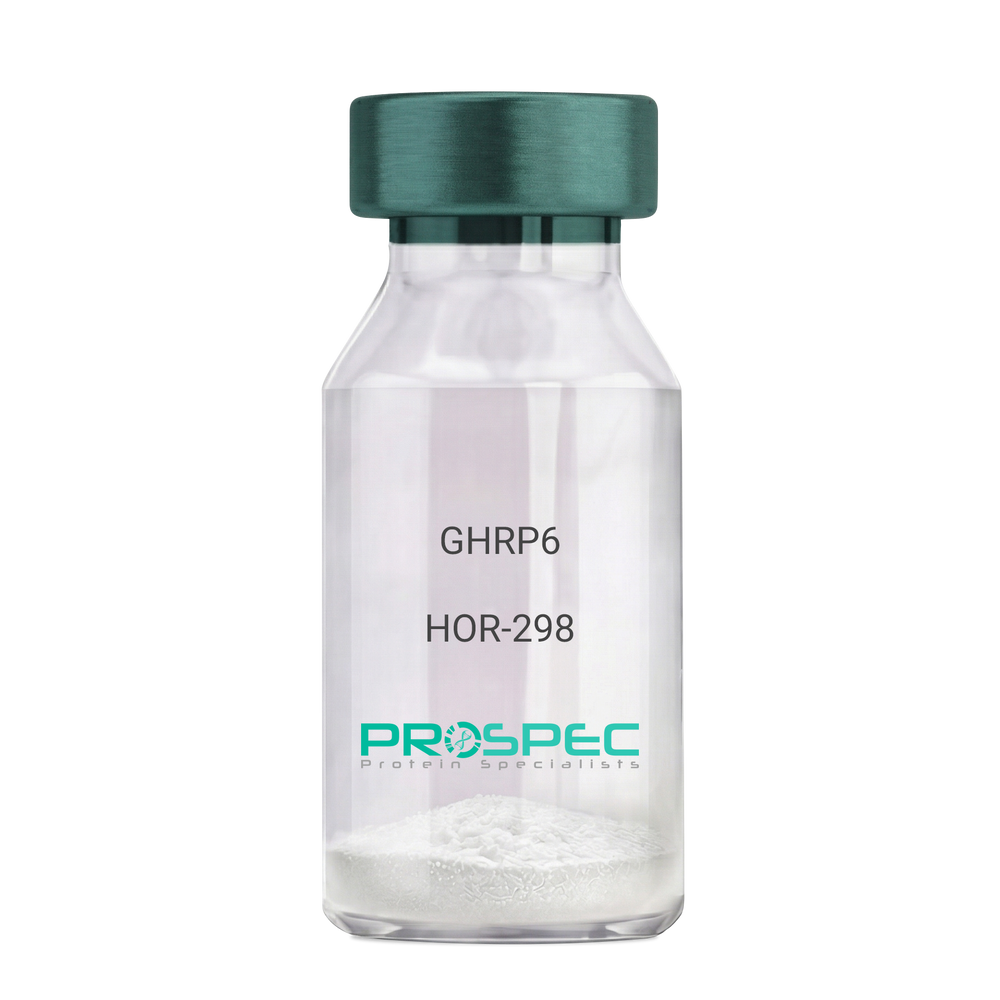
  • View Data Sheet

    Name :

    GHRP6

    Description:

    Growth Hormone Releasing Peptide-6

    GHRP-6, GHRP6

    Product # :

    HOR-298

    Price :

    Quantity :

    Shipping Method :

    Room Temp Icon

    Shipped at Room temp

    Add To Cart

    More Info

    • description
    • formulation
    • purity
    • More Info

    Description

    Growth Hormone Releasing Peptide-6 Synthetic is a single, non-glycosylated polypeptide chain containing 6 amino acids, having a molecular mass of 873 Dalton and a Molecular formula of C46H56N12O6.

    Formulation

    The GHRP-6 peptide was lyophilized with no additives.

    Purity

    Greater than 98.0% as determined by analysis by RP-HPLC.

    More Info

    • Introduction

      GH-releasing peptides (GHRPs) are synthetic peptides that like GHRH act directly on pituitary somatotrophs to stimulate GH release. Growth hormone (GH) release is stimulated by a variety of synthetic secretagogues, of which growth hormone-releasing hexapeptide (GHRP-6) has been most thoroughly studied; it is thought to have actions at both pituitary and hypothalamic site.

    • Synonyms

      GHRP-6, GHRP6

    • Physical Appearance

      Sterile Filtered White lyophilized (freeze-dried) powder.

    • Stability

      Lyophilized Growth Hormone Releasing Peptide-6 although stable at room temperature for 3 weeks, should be stored desiccated below -18°C. Upon reconstitution GHRP-6 should be stored at 4°C between 2-7 days and for future use below -18°C. For long term storage it is recommended to add a carrier protein (0.1% HSA or BSA).Please prevent freeze-thaw cycles.

    • Solubility

      It is recommended to reconstitute the lyophilized GHRP-6 in sterile 18MΩ-cm H2O not less than 100 µg/ml, which can then be further diluted to other aqueous solutions.

    • Amino Acid Sequence

      His-D-Trp-Ala-Trp-D-Phe-Lys-NH2.

    ProSpec's products are furnished for LABORATORY RESEARCH USE ONLY. The product may not be used as drugs, agricultural or pesticidal products, food additives or household chemicals.

    Ghrp 6
  • View Data Sheet

    Name :

    TPM4 Human

    Description:

    Tropomyosin-4 Human Recombinant

    Tropomyosin alpha-4 chain, TM30p1, Tropomyosin-4, TPM4.

    Product # :

    PRO-187

    Price :

    Quantity :

    Shipping Method :

    Ice Icon

    Shipped with Ice Packs

    Add To Cart

    More Info

    • description
    • source
    • formulation
    • purity
    • More Info

    Description

    TPM4 produced in E.Coli is a single, non-glycosylated polypeptide chain containing 268 amino acids (1-248 a.a.) and having a molecular mass of 30.7kDa.TPM4 is fused to a 20 amino acid His-tag at N-terminus & purified by proprietary chromatographic techniques.

    Source

    Escherichia Coli.

    Formulation

    The TPM4 solution (1 mg/ml) contains 20mM Tris-HCl buffer (pH 8.0), 10% glycerol, 2mM DTT and 0.1M NaCl.

    Purity

    Greater than 85.0% as determined by SDS-PAGE.

    More Info

    • Introduction

      TPM4 is a member of the tropomyosin family. Tropomyosins exist in practically all eukaryotic cells (both muscle and nonmuscle), where they bind actin filaments and function to modulate actin-myosin interaction and stabilize actin filament structure. TPM4 binds to actin filaments in muscle and nonmuscle cells and plays a central role, in connection with the troponin complex, in the calcium dependent regulation of vertebrate striated muscle contraction.

    • Synonyms

      Tropomyosin alpha-4 chain, TM30p1, Tropomyosin-4, TPM4.

    • Physical Appearance

      Sterile Filtered colorless solution.

    • Stability

      Store at 4°C if entire vial will be used within 2-4 weeks. Store, frozen at -20°C for longer periods of time. For long term storage it is recommended to add a carrier protein (0.1% HSA or BSA).Avoid multiple freeze-thaw cycles.

    • Amino Acid Sequence

      MGSSHHHHHH SSGLVPRGSH MAGLNSLEAV KRKIQALQQQ ADEAEDRAQG LQRELDGERE RREKAEGDVA ALNRRIQLVE EELDRAQERL ATALQKLEEA EKAADESERG MKVIENRAMK DEEKMEIQEM QLKEAKHIAE EADRKYEEVA RKLVILEGEL ERAEERAEVS ELKCGDLEEE LKNVTNNLKS LEAASEKYSE KEDKYEEEIK LLSDKLKEAE TRAEFAERTV AKLEKTIDDL EEKLAQAKEE NVGLHQTLDQ TLNELNCI.

    ProSpec's products are furnished for LABORATORY RESEARCH USE ONLY. The product may not be used as drugs, agricultural or pesticidal products, food additives or household chemicals.

    Tpm4 Human
  • View Data Sheet

    Name :

    TNFR Human

    Description:

    Tumor Necrosis Factor Receptor Human Recombinant

    Tumor necrosis factor receptor superfamily member 1A, Tumor necrosis factor receptor 1, Tumor necrosis factor receptor type I, TNF-R1, TNF-RI, TNFR-I, p60, p55, CD120a, TNFRSF1A, TNFAR, TNFR1, FPF, TBP1, TNF-R, p55-R, TNFR55, TNFR60, TNF-R-I, TNF-R55, MGC19588.

    Product # :

    CYT-707

    Price :

    Quantity :

    Shipping Method :

    Room Temp Icon

    Shipped at Room temp

    Add To Cart

    More Info

    • description
    • source
    • formulation
    • purity
    • More Info

    Description

    TNFR Human Recombinant produced in E.Coli is a single, non-glycosylated, polypeptide chain containing 162 amino acids and having a total molecular mass of 18.2 kDa. TNFR Human Recombinant is purified by proprietary chromatographic techniques.

    Source

    Escherichia Coli.

    Formulation

    The TNFR protein was lyophilized from 10mM sodium phosphate buffer pH-7.5.

    Purity

    Greater than 97.0% as determined by:
    (a) Analysis by RP-HPLC.
    (b) Analysis by SDS-PAGE.

    More Info

    • Introduction

      TNFR1 belongs to the TNF-receptor superfamily. TNFR1 is a receptor for TNFSF2/TNF-alpha and homotrimeric TNFSF1/lymphotoxin-alpha.
      There are 2 types of soluble TNF receptors: sTNFR-I and sTNFR-II, which act to neutralize the biological activities of TNF alpha and TNF beta. The levels of these soluble receptors seem to increase as a result of shedding of the extracellular domains of the membrane bound receptors. TNF-a, TNFR1 and TNFR2 have roles in cellular differentiation. TNFR1 and TNFR2 function in cell type-specific renal injury.
      TNFR1 is capable of signaling both cell survival and apoptosis. TNFR1-induced apoptosis requires 2 sequential signaling complexes. TNFR1 is capable of activating NF-kappaB, mediate apoptosis, and function as a regulator of inflammation. Oxidative stress promotes TNFR1 and TNFR2 self-interaction, ligand-independent and enhanced ligand-dependent TNF signaling. TNFR1 contributes to the induction of non-cytocidal TNF effects including anti-viral state and activation of the acid sphingomyelinase. Human TNFR1 has a major region which controls cell surface expression. High levels of soluble TNF receptors are found in the amniotic fluid of pregnant women.
      Germline mutations of the extracellular domains of TNFR1 are linked to the autosomal dominant periodic fever syndrome. The impaired receptor clearance is believed to be a mechanism of the disease. Familial hibernian fever (FHF) is caused by defects in TNFRSF1A gene.

    • Synonyms

      Tumor necrosis factor receptor superfamily member 1A, Tumor necrosis factor receptor 1, Tumor necrosis factor receptor type I, TNF-R1, TNF-RI, TNFR-I, p60, p55, CD120a, TNFRSF1A, TNFAR, TNFR1, FPF, TBP1, TNF-R, p55-R, TNFR55, TNFR60, TNF-R-I, TNF-R55, MGC19588.

    • Physical Appearance

      Sterile Filtered White lyophilized (freeze-dried) powder.

    • Stability

      Lyophilized TNFR although stable at room temperature for 3 weeks, should be stored desiccated below -18C. Upon reconstitution TNFR should be stored at 4C between 2-7 days and for future use below -18C. For long term storage it is recommended to add a carrier protein (0.1% HSA or BSA). Please prevent freeze-thaw cycles.

    • Solubility

      It is recommended to reconstitute the lyophilized TNFR in sterile 18M-cm H2O not less than 100µg/ml, which can then be further diluted to other aqueous solutions.

    • Amino Acid Sequence

      MDSVCPQGKY IHPQNNSICC TKCHKGTYLY NDCPGPGQDT DCRECESSGSF TASENHLRHC LSCSKCRKEM GQVEKSSCTV DRDTVCGCRK NQYRHYWSEN LFQCFNCSLC LNGTVHLSCQ EKQNTVCTCH AGFFLRENEC VSCSNCKKSL ECTKLCLPQI EN.

    ProSpec's products are furnished for LABORATORY RESEARCH USE ONLY. The product may not be used as drugs, agricultural or pesticidal products, food additives or household chemicals.

    Tnfr Human
  • View Data Sheet

    Name :

    COMT Human

    Description:

    Catechol-O-Methyltransferase Human Recombinant

    COMT, EC 2.1.1.6, Catechol O-methyltransferase.

    Product # :

    ENZ-400

    Price :

    Quantity :

    Shipping Method :

    Ice Icon

    Shipped with Ice Packs

    Add To Cart

    More Info

    • description
    • source
    • formulation
    • purity
    • More Info

    Description

    COMT Human Recombinant produced in E.Coli is a single, non-glycosylated polypeptide chain containing 221 amino acids (51-271 a.a.) & having a molecular mass of 24.4 kDa. The COMT is purified by proprietary chromatographic techniques.

    Source

    Escherichia Coli.

    Formulation

    COMT protein in 20mM Tris-HCl buffer, pH-8, 1mM MgCl2 and 10% Glycerol.

    Purity

    Greater than 95.0% as determined by SDS-PAGE.

    More Info

    • Introduction

      COMT catalyzes the transfer of a methyl group from S-adenosylmethionine (SAM) to catechol substrates such as the neurotransmitters. This O-methylation results in one of the main degradative pathways of the catecholamine transmitters. COMT COMT is located in the postsynaptic neuron and is involved in the metabolism of catechol estrogen drugs used in the treatment of hypertension, asthma, Parkinson disease and the inactivation of catecholamine neurotransmitters though enzymatic degradation. COMT appears in tissues in 2 forms, a soluble form and a membrane-bound form which differ in their N-termini. COMT inhibitors increase its availability and are used in the treatment of patients with Parkinson's disease.

    • Synonyms

      COMT, EC 2.1.1.6, Catechol O-methyltransferase.

    • Physical Appearance

      Sterile Filtered clear solution.

    • Stability

      Store at 4°C if entire vial will be used within 2-4 weeks. Store, frozen at -20°C for longer periods of time. For long term storage it is recommended to add a carrier protein (0.1% HSA or BSA).Avoid multiple freeze-thaw cycles.

    • Amino Acid Sequence

      MGDTKEQRIL NHVLQHAEPG NAQSVLEAID TYCEQKEWAM NVGDKKGKIV DAVIQEHQPS VLLELGAYCG YSAVRMARLL SPGARLITIE INPDCAAITQ RMVDFAGVKD KVTLVVGASQ DIIPQLKKKY DVDTLDMVFL DHWKDRYLPD TLLLEECGLL RKGTVLLADN VICPGAPDFL AHVRGSSCFE CTHYQSFLEY REVVDGLEKA IYKGPGSEAG P.

    ProSpec's products are furnished for LABORATORY RESEARCH USE ONLY. The product may not be used as drugs, agricultural or pesticidal products, food additives or household chemicals.

    Comt Human
  • View Data Sheet

    Name :

    PFN1 Rat

    Description:

    Profilin-1 Rat Recombinant

    Profilin-1, Profilin I.

    Product # :

    PRO-2231

    Price :

    Quantity :

    Shipping Method :

    Ice Icon

    Shipped with Ice Packs

    Add To Cart

    More Info

    • description
    • source
    • formulation
    • purity
    • More Info

    Description

    PFN1 Rat Recombinant produced in E.Coli is a single, non-glycosylated polypeptide chain containing 164 amino acids (1-140 a.a) and having a molecular mass of 17.5kDa. PFN1 is fused to a 24 amino acid His-tag at N-terminus & purified by proprietary chromatographic techniques.

    Source

    Escherichia Coli.

    Formulation

    PFN1 protein solution (1mg/ml) containing Phosphate Buffered Saline (pH 7.4) and 10% glycerol 1mM DTT.

    Purity

    Greater than 95.0% as determined by SDS-PAGE.

    More Info

    • Introduction

      Profilin-1 also known as Pfn1 is a ubiquitous actin monomer-binding protein which is a member of the profilin family. Pfn1 significantly enhances skin wound healing in-vitro as well as in-vivo which is mediated by purinergic receptors. Furthermore, Pfn1 is also active in endothelial cell migration and vessel sprouting. Pfn1 is considered to regulate actin polymerization in response to extracellular signals.

    • Synonyms

      Profilin-1, Profilin I.

    • Physical Appearance

      Sterile Filtered colorless solution.

    • Stability

      Store at 4°C if entire vial will be used within 2-4 weeks. Store, frozen at -20°C for longer periods of time. For long term storage it is recommended to add a carrier protein (0.1% HSA or BSA).Avoid multiple freeze-thaw cycles.

    • Amino Acid Sequence

      MGSSHHHHHH SSGLVPRGSH MGSHMAGWNA YIDSLMADGT CQDAAIVGYK DSPSVWAAVP GKTFVSITPA EVGVLVGKDR SSFFVNGLTL GGQKCSVIRD SLLQDGEFTM DLRTKSTGGA PTFNVTVTMT AKTLVLLMGK EGVHGGLINK KCYEMASHLR RSQY.

    ProSpec's products are furnished for LABORATORY RESEARCH USE ONLY. The product may not be used as drugs, agricultural or pesticidal products, food additives or household chemicals.

    Pfn1 Rat
  • View Data Sheet

    Name :

    NFKBIB Human

    Description:

    NF-kappa-B Inhibitor Beta Human Recombinant

    NF-kappa-B inhibitor beta, NF-kappa-BIB, I-kappa-B-beta, IkB-B, IkB-beta, IkappaBbeta, Thyroid receptor-interacting protein 9, TR-interacting protein 9, TRIP-9, NFKBIB, IKBB, TRIP9.

    Product # :

    PRO-1046

    Price :

    Quantity :

    Shipping Method :

    Ice Icon

    Shipped with Ice Packs

    Add To Cart

    More Info

    • description
    • source
    • formulation
    • purity
    • More Info

    Description

    NFKBIB Human Recombinant produced in E.Coli is a single, non-glycosylated polypeptide chain containing 380 amino acids (1-356 a.a) and having a molecular mass of 40.3kDa (Molecular weight on SDS-PAGE will appear higher).NFKBIB is fused to a 24 amino acid His-tag at N-terminus & purified by proprietary chromatographic techniques.

    Source

    Escherichia Coli.

    Formulation

    NFKBIB protein solution (1mg/ml) containing 20mM Tris-HCl buffer (pH8.0), 20% glycerol and 1mM DTT.

    Purity

    Greater than 90.0% as determined by SDS-PAGE.

    More Info

    • Introduction

      NF-kappa-B inhibitor beta (NFKBIB) is a member of the NF-kappa-B inhibitor family, which inhibit NF-kappa-B by complexing with, and trapping it in the cytoplasm. Phosphorylation of serine residues on these proteins by kinases marks them for destruction via the ubiquitination pathway, thus allowing activation of the NF-kappa-B, which translocates to the nucleus to act as a transcription factor.

    • Synonyms

      NF-kappa-B inhibitor beta, NF-kappa-BIB, I-kappa-B-beta, IkB-B, IkB-beta, IkappaBbeta, Thyroid receptor-interacting protein 9, TR-interacting protein 9, TRIP-9, NFKBIB, IKBB, TRIP9.

    • Physical Appearance

      Sterile Filtered clear solution.

    • Stability

      Store at 4°C if entire vial will be used within 2-4 weeks. Store, frozen at -20°C for longer periods of time. For long term storage it is recommended to add a carrier protein (0.1% HSA or BSA).Avoid multiple freeze-thaw cycles.

    • Amino Acid Sequence

      MGSSHHHHHH SSGLVPRGSH MGSHMAGVAC LGKAADADEW CDSGLGSLGP DAAAPGGPGL GAELGPGLSW APLVFGYVTE DGDTALHLAV IHQHEPFLDF LLGFSAGTEY MDLQNDLGQT ALHLAAILGE TSTVEKLYAA GAGLCVAERR GHTALHLACR VGAHACARAL LQPRPRRPRE
      APDTYLAQGP DRTPDTNHTP VALYPDSDLE KEEEESEEDW KLQLEAENYE GHTPLHVAVI HKDVEMVRLL RDAGADLDKP EPTCGRSPLH LAVEAQAADV LELLLRAGAN PAARMYGGRT PLGSAMLRPN PILARLLRAH GAPEPEGEDE KSGPCSSSSD SDSGDEGDEY DDIVVHSSRS QTRLPPTPAS KPLPDDPRPV.

    ProSpec's products are furnished for LABORATORY RESEARCH USE ONLY. The product may not be used as drugs, agricultural or pesticidal products, food additives or household chemicals.

    Nfkbib Human
  • View Data Sheet

    Name :

    NKp46 Human

    Description:

    Natural Cytotoxicity Receptor NKp46 Human Recombinant

    Natural cytotoxicity triggering receptor 1, Natural killer cell p46-related protein, hNKp46, NK-p46, NKp46, NK cell-activating receptor, Lymphocyte antigen 94 homolog, CD335 antigen, NCR1, LY94, NCRNKp46, CD335.

    Product # :

    PRO-432

    Price :

    Quantity :

    Shipping Method :

    Ice Icon

    Shipped with Ice Packs

    Add To Cart

    More Info

    • description
    • source
    • formulation
    • purity
    • More Info

    Description

    NKp46 Human Recombinant produced in E.Coli is a single, non-glycosylated polypeptide chain containing 235 amino acids (22-255) and having a molecular mass of 26.6kDa. NKp46 is purified by proprietary chromatographic techniques.

    Source

    Escherichia Coli.

    Formulation

    NKp46 (1mg/ml) contains phosphate buffered saline (pH7.4) & 1mM EDTA.

    Purity

    Greater than 95.0% as determined by SDS-PAGE.

    More Info

    • Introduction

      A natural cytotoxicity receptor (NCR) NKp46 has been shown to represent a novel NK cell-specific molecule involved in human NK cell activation. The natural cytotoxicity receptors (NCRs) are a recently characterized family of Ig-like activation receptors that appear to be major triggering receptors in tumor cell recognition. The three known NCRs include NKp46 and NKp30, which are expressed on circulating NKcells, and NKp44, which is expressed only on activating NK cells. NKp46 has been implicated in NK cell-mediated lysis of several autologous tumor cells, pathogen-infected cell lines and mononuclear phagocytes infected with an intracellular bacterium. The Lysis of tumor cells by NK-cells involves recognition by NKp46 of heparan sulfate moieties of membrane heparan sulfate proteoglycans. Furthermore, NKp46 is a surface receptor involved in NK-cell cell death by apoptosis. NKp46 has two extracellular Ig-like domains followed by a ~40 residue stalk region, a type I transmembrane domain, and a short cytoplasmic tail. The extracellular Ig-like domain of NKp46 (22-255aa) is purified by FPLC gel-filtration chromatography, after refolding of the isolated inclusion bodies in a redox buffer. In addition, engagement of the antigen with the monoclonal antibody stimulates intracellular calcium levels and the synthesis of cytokines. CD59 is an NKp46 coreceptor (by physical association) together they activate cytotoxicity of human NK-cells, their engagement results in tyrosine phosphorylation of CD3-zeta chains associated with NKp46. Reduced cell surface expression of NKp46 and other NK-cell receptors is linked to the impaired NK-cell cytolytic function in viremic HIV-1 infection.

    • Synonyms

      Natural cytotoxicity triggering receptor 1, Natural killer cell p46-related protein, hNKp46, NK-p46, NKp46, NK cell-activating receptor, Lymphocyte antigen 94 homolog, CD335 antigen, NCR1, LY94, NCRNKp46, CD335.

    • Physical Appearance

      Sterile filtered colorless solution.

    • Stability

      Store at 4°C if entire vial will be used within 2-4 weeks. Store, frozen at -20°C for longer periods of time. For long term storage it is recommended to add a carrier protein (0.1% HSA or BSA). Avoid multiple freeze-thaw cycles.

    • Amino Acid Sequence

      MQQQTLPKPF IWAEPHFMVP KEKQVTICCQ GNYGAVEYQL HFEGSLFAVD RPKPPERINKVKFYIPDMNS RMAGQYSCIY RVGELWSEPS NLLDLVVTEM YDTPTLSVHP GPEVISGEEV TFYCRLDTAT SMFLLLKEGR SSHVQRGYGK VQAEFPLGPV TTAHRGTYRX FGSYNNHAWSFPSEPVKLLV TGDIENTSLA PEDPTFSADT WGTYLLTTET GLQKDHALWD HTAQN.

    ProSpec's products are furnished for LABORATORY RESEARCH USE ONLY. The product may not be used as drugs, agricultural or pesticidal products, food additives or household chemicals.

    Nkp46 Human
  • View Data Sheet

    Name :

    NUTF2 Human

    Description:

    Nuclear Transport Factor 2 Human Recombinant

    Nuclear transport factor 2, NTF-2, Placental protein 15, PP15, NUTF2, NTF2.

    Product # :

    PRO-844

    Price :

    Quantity :

    Shipping Method :

    Ice Icon

    Shipped with Ice Packs

    Add To Cart

    More Info

    • description
    • source
    • formulation
    • purity
    • More Info

    Description

    NUTF2 Recombinant E.coli produced in E.Coli is a single, non-glycosylated polypeptide chain containing 147 amino acids (1-127 a.a.) and having a molecular mass of 16.6 kDa. The NUTF2 is fused to 20 amino acid His-Tag at N-terminus and purified by proprietary chromatographic techniques.

    Source

    Escherichia Coli.

    Formulation

    NUTF2 Human solution containing 20mM Tris HCL pH-8, & 10% glycerol.

    Purity

    Greater than 95.0% as determined by SDS-PAGE.

    More Info

    • Introduction

      NUTF2 assists in protein transport into the nucleus and interacts with the nucleoporin p62 and with Ran. NUTF2 plays a role at a relatively late stage of nuclear protein import, subsequent to the initial docking of nuclear import ligand at the nuclear envelope. NUTF2 is part of a multicomponent system of cytosolic factors that come together at the pore complex during nuclear import.

    • Synonyms

      Nuclear transport factor 2, NTF-2, Placental protein 15, PP15, NUTF2, NTF2.

    • Physical Appearance

      Sterile filtered colorless solution.

    • Stability

      Store at 4°C if entire vial will be used within 2-4 weeks. Store, frozen at -20°C for longer periods of time. For long term storage it is recommended to add a carrier protein (0.1% HSA or BSA).Avoid multiple freeze-thaw cycles.

    • Amino Acid Sequence

      MGSSHHHHHH SSGLVPRGSH MGDKPIWEQI GSSFIQHYYQ LFDNDRTQLG AIYIDASCLT WEGQQFQGKA AIVEKLSSLP FQKIQHSITA QDHQPTPDSC IISMVVGQLK ADEDPIMGFH QMFLLKNIND AWVCTNDMFR LALHNFG.

    ProSpec's products are furnished for LABORATORY RESEARCH USE ONLY. The product may not be used as drugs, agricultural or pesticidal products, food additives or household chemicals.

    Nutf2 Human
  • View Data Sheet

    Name :

    SCF Human, HEK

    Description:

    Stem Cell Factor Human Recombinant, HEK

    Kit ligand Precursor, C-kit ligand, SCF, Mast cell growth factor, MGF, SF, KL-1, Kitl, DKFZp686F2250.

    Product # :

    CYT-111

    Price :

    Quantity :

    Shipping Method :

    Room Temp Icon

    Shipped at Room temp

    Add To Cart

    More Info

    • description
    • source
    • formulation
    • purity
    • biological activity
    • More Info

    Description

    SCF Human Recombinant produced in HEK cells is a glycosylated monomer, having a molecular weight range of 35-45kDa due to glycosylation.The SCF is purified by proprietary chromatographic techniques.

    Source

    HEK.

    Formulation

    SCF was lyophilized from a 0.2µm filtered solution (1mg/ml) containing 1xPBS.

    Purity

    Greater than 95% as obsereved by SDS-PAGE.

    Biological Activity

    The specific activity was determined by the dose-dependent stimulation of the proliferation of human TF-1 cells (human erythroleukemic indicator cell line).
    The EC50 is 15.25ng/ml.

    More Info

    • Introduction

      Stem cell factor / KIT ligand (SCF) is a cytokine which binds CD117(c-Kit). SCF is also known as "steel factor" or "c-kit ligand". SCF exists in two forms, cell surface bound SCF and soluble (or free) SCF. Soluble SCF is produced by the cleavage of surface bound SCF by metalloproteases. SCF is a growth factor important for the survival, proliferation, and differentiation of hematopoietic stem cells and other hematopoietic progenitor cells. One of its roles is to change the BFU-E (burst-forming unit-erythroid) cells, which are the earliest erythrocyte precursors in the erythrocytic series, into the CFU-E (colony-forming unit-erythroid).

    • Synonyms

      Kit ligand Precursor, C-kit ligand, SCF, Mast cell growth factor, MGF, SF, KL-1, Kitl, DKFZp686F2250.

    • Physical Appearance

      Sterile Filtered White lyophilized (freeze-dried) powder.

    • Stability

      Lyophilized SCF although stable at room temperature for 3 weeks, should be stored desiccated below -18°C. Upon reconstitution SCF should be stored at 4°C between 2-7 days and for future use below -18°C.For long term storage it is recommended to add a carrier protein (0.1% HSA or BSA).Please prevent freeze-thaw cycles.

    • Solubility

      It is recommended to reconstitute the lyophilized SCF in sterile PBS containing 0.1% endotoxin-free recombinant HSA.

    ProSpec's products are furnished for LABORATORY RESEARCH USE ONLY. The product may not be used as drugs, agricultural or pesticidal products, food additives or household chemicals.

    Scf Human Hek
  • View Data Sheet

    Name :

    FGFR3 Human, His

    Description:

    Fibroblast Growth Factor Receptor-3 Human Recombinant, His Tag

    CD333 Antigen, HSFGFR3EX, EC 2.7.10, CD333, CEK2, ACH, Fibroblast Growth Factor Receptor 3, EC 2.7.10.1, FGFR-3, JTK4, Fibroblast Growth Factor Receptor 3 Variant 4, Achondroplasia, Thanatophoric Dwarfism, Hydroxyaryl-Protein Kinase, Tyrosine Kinase JTK4.

    Product # :

    PKA-101

    Price :

    Quantity :

    Shipping Method :

    Ice Icon

    Shipped with Ice Packs

    Add To Cart

    More Info

    • description
    • source
    • formulation
    • purity
    • More Info

    Description

    FGFR3 Human Recombinant produced in Sf9 Baculovirus cells is a single, glycosylated polypeptide chain containing 592 amino acids (23-375a.a.) and having a molecular mass of 65.1kDa (Molecular size on SDS-PAGE will appear at approximately 70-100kDa). FGFR3 is expressed with a 239 amino acid hIgG-His tag at C-Terminus and purified by proprietary chromatographic techniques.

    Source

    Sf9, Baculovirus cells.

    Formulation

    FGFR3 protein solution (1mg/ml) contains Phosphate Buffered Saline (pH 7.4) and 10% glycerol.

    Purity

    Greater than 95.0% as determined by SDS-PAGE.

    More Info

    • Introduction

      Fibroblast Growth Factors (FGFs) comprise a family of at least eighteen structurally realted proteins that are involved in a multitude of physiological and pathological cellular processes, including cell growth, differentation, angiogenesis, wound healing and tumorgenesis. The biological activities of the FGFs are mediated by a family if type I transmembrane tyrosine kinases which undergo dimerization and autophosphorylation after ligand binding. Four distinct genes encoding closely related FGF receptors, FGFR-1to -4 are known. Multiple forms of FGFR-1 to -3 are generated by alternative splicing of the mRNAs. A frequent splicing event involving FGFR-1 and -2 results in receptors containing all three Ig domains, referred to as the alpha isoform, or only IgII and IgIII, referred to as the ? isoform. Only the alpha isoform has been identified for FGFR-3 and FGFR-4. Additional splicing events for FGFR-1 to -3, involving the C-terminal half of the IgIII domain encoded by two mutually exclusive alternative exons, generate FGF receptors with alternative IgIII domains (IIIb and IIIc). A IIIa isoform which is a secreted FGF binding protein containing only the N-terminal half of the IgIII domain plus some intron sequences has also been reported for FGFR-1. Mutations in FGFR-1 to -3 have been found in patients with birth defects involving craniosynostosis.

    • Synonyms

      CD333 Antigen, HSFGFR3EX, EC 2.7.10, CD333, CEK2, ACH, Fibroblast Growth Factor Receptor 3, EC 2.7.10.1, FGFR-3, JTK4, Fibroblast Growth Factor Receptor 3 Variant 4, Achondroplasia, Thanatophoric Dwarfism, Hydroxyaryl-Protein Kinase, Tyrosine Kinase JTK4.

    • Physical Appearance

      Sterile Filtered colorless solution.

    • Stability

      Store at 4°C if entire vial will be used within 2-4 weeks. Store, frozen at -20°C for longer periods of time. For long term storage it is recommended to add a carrier protein (0.1% HSA or BSA). Avoid multiple freeze-thaw cycles.

    • Amino Acid Sequence

      ESLGTEQRVV GRAAEVPGPE PGQQEQLVFG SGDAVELSCP PPGGGPMGPT VWVKDGTGLV PSERVLVGPQ RLQVLNASHE DSGAYSCRQR LTQRVLCHFS VRVTDAPSSG DDEDGEDEAE DTGVDTGAPY WTRPERMDKK LLAVPAANTV RFRCPAAGNP TPSISWLKNG REFRGEHRIG GIKLRHQQWS LVMESVVPSD RGNYTCVVEN KFGSIRQTYT LDVLERSPHR PILQAGLPAN QTAVLGSDVE FHCKVYSDAQ PHIQWLKHVE VNGSKVGPDG TPYVTVLKTA GANTTDKELE VLSLHNVTFE DAGEYTCLAG NSIGFSHHSA WLVVLPAEEE LVEADEAGSV YAGLEPKSCD KTHTCPPCPA PELLGGPSVF LFPPKPKDTL MISRTPEVTC VVVDVSHEDP EVKFNWYVDG VEVHNAKTKP REEQYNSTYR VVSVLTVLHQ DWLNGKEYKC KVSNKALPAP IEKTISKAKG QPREPQVYTL PPSRDELTKN QVSLTCLVKG FYPSDIAVEW ESNGQPENNY KTTPPVLDSD GSFFLYSKLT VDKSRWQQGN VFSCSVMHEA LHNHYTQKSL SLSPGKHHHH HH.

    ProSpec's products are furnished for LABORATORY RESEARCH USE ONLY. The product may not be used as drugs, agricultural or pesticidal products, food additives or household chemicals.

    Fgfr3 Protein
  • View Data Sheet

    Name :

    SNCA A30P Human

    Description:

    Alpha Synuclein A30P Human Recombinant

    Alpha-synuclein, Non-A beta component of AD amyloid, Non-A4 component of amyloid precursor, NACP, PD1, PARK1, PARK4, MGC110988, a-Synuclein, SNCA.

    Product # :

    PRO-158

    Price :

    Quantity :

    Shipping Method :

    Ice Icon

    Shipped with Ice Packs

    Add To Cart

    More Info

    • description
    • source
    • formulation
    • purity
    • More Info

    Description

    A-Synuclein A30P Human Recombinant which is a Parkinson’s disease-related point mutant, produced in E.Coli is a single, non-glycosylated polypeptide chain of 140 amino acids having a molecular mass of 14.4kDa (molecular size on SDS-PAGE will appear higher). The Recombinant Human a-Synuclein A30P is purified by proprietary chromatographic techniques.

    Source

    Escherichia Coli.

    Formulation

    The SNCA A30P protein solution (1mg/ml) contains 20mM Tris-HCl buffer pH 7.5 and 100mM NaCl.

    Purity

    Greater than 95.0% as determined by SDS-PAGE.

    More Info

    • Introduction

      a-Synuclein (amino acids 1-140), an acidic neuronal protein of 140 amino acids, is extremely heat-resistant and is natively unfolded with an extended structure primarily composed of random coils. a-synuclein has been suggested to be implicated in the pathogenesis of Parkinson’s disease and related neurodegenerative disorders, and more recently, to be an important regulatory component of vesicular transport in neuronal cells. Moreover, recent studies have shown that a-synuclein has chaperone activity and that this activity is lost upon removing its C-terminal acidic tail (amino acids 96-140).

    • Synonyms

      Alpha-synuclein, Non-A beta component of AD amyloid, Non-A4 component of amyloid precursor, NACP, PD1, PARK1, PARK4, MGC110988, a-Synuclein, SNCA.

    • Physical Appearance

      Sterile filtered colorless solution.

    • Stability

      Store at 4°C if entire vial will be used within 2-4 weeks. Store, frozen at -20°C for longer periods of time. For long term storage it is recommended to add a carrier protein (0.1% HSA or BSA). Avoid multiple freeze-thaw cycles.

    • Amino Acid Sequence

      MDVFMKGLSK AKEGVVAAAE KTKQGVAEAP GKTKEGVLYV GSKTKEGVVH GVATVAEKTK EQVTNVGGAV VTGVTAVAQK TVEGAGSIAA ATGFVKKDQL GKNEEGAPQE GILEDMPVDP DNEAYEMPSE EGYQDYEPEA.

    ProSpec's products are furnished for LABORATORY RESEARCH USE ONLY. The product may not be used as drugs, agricultural or pesticidal products, food additives or household chemicals.

    Snca A30P Human
  • View Data Sheet

    Name :

    NOV Mouse

    Description:

    Nephroblastoma Overexpressed Mouse Recombinant

    Protein NOV homolog, NovH, CCN family member 3, Nephroblastoma-overexpressed gene protein homolog, Nov, Ccn3, C130088N23Rik.

    Product # :

    CYT-171

    Price :

    Quantity :

    Shipping Method :

    Room Temp Icon

    Shipped at Room temp

    Add To Cart

    More Info

    • description
    • source
    • formulation
    • purity
    • biological activity
    • More Info

    Description

    NOV Mouse Recombinant produced in E.coli is a single, non-glycosylated polypeptide chain containing 333 amino acids and having a molecular mass of 36.4kDa.The NOV is purified by proprietary chromatographic techniques.

    Source

    Escherichia Coli.

    Formulation

    NOV protein was lyophilized from a 0.2µm filtered concentrated solution in 20mM Tris-HCl, pH 8.5 and 150mM NaCl.

    Purity

    Greater than 95.0% as determined by:
    (a) Analysis by RP-HPLC.
    (b) Analysis by SDS-PAGE.

    Biological Activity

    The ED50 as determined by a cell proliferation assay using murine Balb/c 3T3 cells is less than 1.0 μg/ml, corresponding to a specific activity of > 1000 IU/mg.

    More Info

    • Introduction

      Nephroblastoma Overexpressed (NOV) is a member of the CCN family of secreted cysteine rich regulatory proteins. The full length NOV protein is comprised of 4 structural domains, which present distinct, and sometimes opposing, biological activities. An elevated expression of NOV is linked with certain tumors, including Wilm’s tumor and most nephroblastomas. On the other hand, in other tumor types and certain cancer cell lines, increased tumorgenicity and proliferation is associated with decreased NOV expression.

    • Synonyms

      Protein NOV homolog, NovH, CCN family member 3, Nephroblastoma-overexpressed gene protein homolog, Nov, Ccn3, C130088N23Rik.

    • Physical Appearance

      Sterile Filtered White lyophilized (freeze-dried) powder.

    • Stability

      Lyophilized NOV although stable at room temperature for 3 weeks, should be stored desiccated below -18°C. Upon reconstitution NOV should be stored at 4°C between 2-7 days and for future use below -18°C. For long term storage it is recommended to add a carrier protein (0.1% HSA or BSA). Please prevent freeze-thaw cycles.

    • Solubility

      It is recommended to reconstitute the lyophilized NOV in sterile 18M-cm H2O not less than 100µg/ml, which can then be further diluted to other aqueous solutions.

    • Amino Acid Sequence

      QVSASLRCPS RCPPKCPSIS PTCAPGVRSV LDGCSCCPVC ARQRGESCSE MRPCDQSSGL YCDRSADPNN QTGICMVPEG DNCVFDGVIY RNGEKFEPNC QYFCTCRDGQ IGCLPRCQLD VLLPGPDCPA PRKVAVPGEC CEKWTCGSDE QGTQGTLGGL ALPAYRPEAT VGVEVSDSSI NCIEQTTEWS ACSKSCGMGV STRVTNRNRQ CEMVKQTRLC IVRPCEQEPE EVTDKKGKKC LRTKKSLKAI HLQFENCTSL YTYKPRFCGV CSDGRCCTPH NTKTIQVEFQ CLPGEIIKKP VMVIGTCTCY SNCPQNNEAF LQDLELKTSR GEI.

    ProSpec's products are furnished for LABORATORY RESEARCH USE ONLY. The product may not be used as drugs, agricultural or pesticidal products, food additives or household chemicals.

    Nov Mouse
  • View Data Sheet

    Name :

    FGF16 Mouse

    Description:

    Fibroblast Growth Factor 16 Mouse Recombinant

    Fibroblast Growth Factor 16, FGF-16, FGF16.

    Product # :

    CYT-947

    Price :

    Quantity :

    Shipping Method :

    Ice Icon

    Shipped with Ice Packs

    Add To Cart

    More Info

    • description
    • source
    • formulation
    • purity
    • More Info

    Description

    FGF16 Mouse Recombinant produced in E.Coli is a single, non-glycosylated, polypeptide chain containing 207 amino acids and having a molecular mass of 23.8kDa.The FGF-16 is purified by proprietary chromatographic techniques.

    Source

    Escherichia Coli.

    Formulation

    FGF-16 0.2µm filtered solution containing 20mM Tris-HCl, pH 9.0, 1M NaCl, 0.02% Tween-20 and 10% Glycerol.

    Purity

    Greater than 98.0% as determined by:
    (a) Analysis by RP-HPLC.
    (b) Analysis by SDS-PAGE.

    More Info

    • Introduction

      Fibroblast growth factor 16 (FGF16) is a member of the large FGF family, whose members are heparin-binding growth factors with a core 120 amino acid (a.a.) FGF domain which allows for a common tertiary structure. Human FGF16 cDNA is a 207 aa precursor protein with one N-linked glycosylation site. FGF16 though lacking a typical signal peptide, is efficiently produced by mechanisms other than the classical protein secretion pathway. FGF16 is expressed in cardiac cells and is required for proper heart development. FGF16 gene mutation was also observed in individuals with metacarpal 4-5 fusion. FGF16 has an imperative role in the regulation of embryonic development, cell proliferation and cell differentiation, and is required for normal cardiomyocyte proliferation and heart development.

    • Synonyms

      Fibroblast Growth Factor 16, FGF-16, FGF16.

    • Physical Appearance

      Sterile Filtered colorless clear solution.

    • Stability

      Store at 4°C if entire vial will be used within 2-4 weeks. Store, frozen at -20°C for longer periods of time. For long term storage it is recommended to add a carrier protein (0.1% HSA or BSA).Please avoid freeze thaw cycles.

    • Amino Acid Sequence

      MAEVGGVFAS LDWDLHGFSS SLGNVPLADS PGFLNERLGQ IEGKLQRGSP TDFAHLKGIL RRRQLYCRTG FHLEIFPNGT VHGTRHDHSR FGILEFISLA VGLISIRGVD SGLYLGMNER GELYGSKKLT RECVFREQFE ENWYNTYAST LYKHSDSERQ YYVALNKDGS PREGYRTKRH QKFTHFLPRP VDPSKLPSMS RDLFRYR.

    • Background

      What is the molecular weight/Mw of FGF16 MOUSE Protein?
      FGF16 MOUSE Protein has a total Mw of 23.8kDa.

      What is the source or expression system of FGF16 MOUSE Protein?
      Escherichia Coli.

      What is the Purity of FGF16 MOUSE Protein?
      FGF16 MOUSE Protein is >98% pure as determined by SDS-PAGE.

      What is the Biological Activity of FGF16 MOUSE Protein?
      The biological functionality of FGF16 MOUSE Protein will be determined in the future.

      What is the amino acid sequence of FGF16 MOUSE Protein?
      MAEVGGVFAS LDWDLHGFSS SLGNVPLADS PGFLNERLGQ IEGKLQRGSP TDFAHLKGIL RRRQLYCRTG FHLEIFPNGT VHGTRHDHSR FGILEFISLA VGLISIRGVD SGLYLGMNER GELYGSKKLT RECVFREQFE ENWYNTYAST LYKHSDSERQ YYVALNKDGS PREGYRTKRH QKFTHFLPRP VDPSKLPSMS RDLFRYR.

      What applications can FGF16 MOUSE Protein be used in?
      FGF16 MOUSE Protein can probably be used in western blot, ELISA and Lateral Flow.

      What is the endotoxin level for FGF16 MOUSE Protein?
      The endotoxin level is minimal, FGF16 MOUSE Protein was purified using conventional chromatography techniques.

    ProSpec's products are furnished for LABORATORY RESEARCH USE ONLY. The product may not be used as drugs, agricultural or pesticidal products, food additives or household chemicals.

    Fgf16 Mouse
  • View Data Sheet

    Name :

    FLT1 D7 Mouse

    Description:

    Vascular Endothelial Growth Factor Receptor-1 D1-7 Mouse Recombinant

    FLT-1, FLT1, Tyrosine-protein kinase receptor FLT, Flt-1, Tyrosine-protein kinase FRT, Fms-like tyrosine kinase 1, VEGFR-1.

    Product # :

    PKA-312

    Price :

    Quantity :

    Shipping Method :

    Room Temp Icon

    Shipped at Room temp

    Add To Cart

    More Info

    • description
    • source
    • formulation
    • purity
    • biological activity
    • More Info

    Description

    Soluble FLT1 Mouse Recombinant fused with the Fc part of human IgG1 produced in baculovirus is disulfide-linked homodimeric , polypeptide containing 965 amino acids. The monomers have a molecular mass of 130 kDa. The soluble receptor protein contains all 7 extracellular domains (Tyr23-Asn757), which contain all the information necessary for high affinity ligand binding.

    Source

    Insect Cells.

    Formulation

    FLT1 D1-7 was lyophilized from a concentrated (1 mg/ml) sterile solution containing PBS Buffer.

    Purity

    Greater than 95.0% as determined by SDS-PAGE.

    Biological Activity

    The activity of sVEGFR-1/Fc was determined by its ability to inhibit the VEGF-dependent proliferation of human umbilical vein endothelial cells.

    More Info

    • Introduction

      Endothelial cells express three different vascular endothelial growth factor (VEGF) receptors, belonging to the family of receptor tyrosine kinases (RTKs). They are named VEGFR-1 (Flt-1), VEGFR-2 (KDR/Flk-1), and VEGFR-3 (Flt-4). Their expression is almost exclusively restricted to endothelial cells, but VEGFR-1 can also be found on monocytes. All VEGF-receptors have seven immunoglobulin-like extracellular domains, a single transmembrane region and an intracellular split tyrosine kinase domain. VEGFR-2 has a lower affinity for VEGF than the Flt-1 receptor, but a higher signalling activity. Mitogenic activity in endothelial cells is mainly mediated by VEGFR-2 leading to their proliferation. Differential splicing of the flt-1 gene leads to the formation of a secreted, soluble variant of VEGFR-1 (sVEGFR-1). No naturally occurring, secreted forms of VEGFR-2 have so far been reported. The binding of VEGF165 to VEGFR-2 is dependent on heparin.

    • Synonyms

      FLT-1, FLT1, Tyrosine-protein kinase receptor FLT, Flt-1, Tyrosine-protein kinase FRT, Fms-like tyrosine kinase 1, VEGFR-1.

    • Physical Appearance

      Sterile Filtered White lyophilized (freeze-dried) powder.

    • Stability

      Lyophilized FLT-1 although stable at room temperature for 3 weeks, should be stored desiccated below -18C. Upon reconstitution FLT1 should be stored at 4C between 2-7 days and for future use below -18C. For long term storage it is recommended to add a carrier protein (0.1% HSA or BSA). Please prevent freeze-thaw cycles.

    • Solubility

      It is recommended to reconstitute the lyophilized FLT1 Fc/Chimera in PBS not less than 50µg/ml, which can then be further diluted to other aqueous solutions.

    • Amino Acid Sequence

      YGSGSKLKVP ELSLKGTQHV MQAGQTLFLK CRGEAAHSWS LPTTVSQEDK RLSITPPSAC GRDNRQFCST LTLDTAQANH TGLYTCRYLP TSTSKKKKAE SSIYIFVSDA GSPFIEMHTD IPKLVHMTEG RQLIIPCRVT SPNVTVTLKK FPFDTLTPDG QRITWDSRRG FIIANATYKE IGLLNCEATV NGHLYQTNYL THRQTNTILD VQIRPPSPVR LLHGQTLVLN CTATTELNTR VQMSWNYPGK ATKRASIRQR IDRSHSHNNV FHSVLKINNV ESRDKGLYTC RVKSGSSFQS FNTSVHVYEK GFISVKHRKQ PVQETTAGRR SYRLSMKVKA FPSPEIVWLK DGSPATLKSA RYLVHGYSLI IKDVTTEDAG DYTILLGIKQ SRLFKNLTAT LIVNVKPQIY EKSVSSLPSP PLYPLGSRQV LTCTVYGIPR PTITWLWHPC HHNHSKERYD FCTENEESFI LDPSSNLGNR IESISQRMTV IEGTNKTVST LVVADSQTPG IYSCRAFNKI GTVERNIKFY VTDVPNGFHV SLEKMPAEGE DLKLSCVVNK FLYRDITWIL LRTVNNRTMH HSISKQKMAT TQDYSITLNL VIKNVSLEDS GTYACRARNI YTGEDILRKT EVLVRDSEAP HLLQNLSDYE VSISGSTTLD CQARGVPAPQ ITWFKNNHKI QQEPGIILGP GNSTLFIERV TEEDEGVYRC RATNQKGAVE SAAYLTVQGT SDKSNAASDK THTCPPCPAP ELLGGPSVFL FPPKPKDTLM ISRTPEVTCV VVDVSHEDPE VKFNWYVDGV EVHNAKTKPR EEQYNSTYRV VSVLTVLHQD WLNGKEYKCK VSNKALPAPI EKTISKAKGQ PREPQVYTLP PSREEMTKNQ VSLTCLVKGF YPSDIAVEWE SNGQPENNYK TTPPMLDSDG SFFLYSKLTV DKSRWQQGNV FSCSVMHEAL HNHYTQKSLS LSPGK

    ProSpec's products are furnished for LABORATORY RESEARCH USE ONLY. The product may not be used as drugs, agricultural or pesticidal products, food additives or household chemicals.

    Flt1 D7 Mouse
  • View Data Sheet

    Name :

    Myostatin Human, His

    Description:

    Myostatin Human Recombinant, His Tag

    GDF-8, MSTN, Growth/Differentiation Factor 8,MSTN Muscle Hypertrophy.

    Product # :

    CYT-445

    Price :

    Quantity :

    Shipping Method :

    Room Temp Icon

    Shipped at Room temp

    Add To Cart

    More Info

    • description
    • source
    • formulation
    • purity
    • More Info

    Description

    Total 152AA. M.W. 16.7kDa (calculated). N-terminal His-tag and spacer (43AA – highlighted). The AA sequence of the human myostatin part of the fusion protein is corresponding to the UniProtKB/Swiss-Prot entry O14793.

    Source

    Escherichia Coli.

    Formulation

    Filtered (0.4µm) and lyophilized from 0.5mg/ml in 0.05M acetate buffer, pH 4.5.

    Purity

    Greater than 95% as determined by SDS-PAGE.

    More Info

    • Introduction

      Myostatin (GDF-8) is expressed uniquely in human skeletal muscle as a 12 kDa mature glycoprotein consisting of 113 amino acid residues and secreted into plasma. Myostatin is a member of the transforming growth factor ? superfamily of secreted growth and differentiation factors that is essential for proper regulation of skeletal muscle mass. Studies have shown that myostatin could play an important role in cardiac development and physiology.

    • Synonyms

      GDF-8, MSTN, Growth/Differentiation Factor 8,MSTN Muscle Hypertrophy.

    • Physical Appearance

      Filtered white lyophilized (freeze-dried) powder.

    • Stability

      Store lyophilized protein at -20°C. Aliquot the product after reconstitution to avoid repeated freezing/thawing cycles. Reconstituted protein can be stored at 4°C for a limited period of time; it does not show any change after two weeks at 4°C.

    • Solubility

      Add 0.1M Acetate buffer pH-4 to prepare a working stock solution of approximately 0.5 mg/mL and let the lyophilized pellet dissolve completely. For conversion into higher pH value, we recommend intensive dilution by relevant buffer to a concentration of 10μg/ml. In higher concentrations the solubility of this antigen is limited.

    • Amino Acid Sequence

      MRGSHHHHHH GMASMTGGQQ MGRDLYDDDD KDPSSRSAVR SRRDFGLDCD EHSTESRCCR YPLTVDFEAFGWDWIIAPKR YKANYCSGEC EFVFLQKYPH THLVHQANPR GSAGPCCTPT KMSPINMLYF NGKEQIIYGKIPAMVVDRCG CS.

    ProSpec's products are furnished for LABORATORY RESEARCH USE ONLY. The product may not be used as drugs, agricultural or pesticidal products, food additives or household chemicals.

    Myostatin Human Fc
  • View Data Sheet

    Name :

    M CSF Human, His

    Description:

    Macrophage Colony Stimulating Factor Human Recombinant, His Tag

    CSF-1, Lanimostim, MCSF, MGC31930, M-CSF.

    Product # :

    CYT-695

    Price :

    Quantity :

    Shipping Method :

    Ice Icon

    Shipped with Ice Packs

    Add To Cart

    More Info

    • description
    • source
    • formulation
    • purity
    • More Info

    Description

    Macrophage Colony Stimulating Factor Human Recombinant produced in E.coli is a single, non-glycosylated, polypeptide chain containing 179 amino acids (33-190 a.a.) and having a total molecular mass of 20.7 kDa.MCSF is fused to a 20 amino acid His Tag at N-terminus and purified by proprietary chromatographic techniques.

    Source

    Escherichia Coli.

    Formulation

    The MCSF protein solution contains 20mM Tris-HCl, pH-8, 2mM DTT & 10% Glycerol.

    Purity

    Greater than 90.0% as determined by SDS-PAGE.

    More Info

    • Introduction

      Granulocyte/Macrophage Colony-Stimulating Factors are cytokines that act in hematopoiesis by controlling the production, differentiation, and function of 2 related white cell populations of the blood, the granulocytes and the monocytes-macrophages. CSF-1 induces cells of the monocyte/macrophage lineage. It plays a role in immunological defenses, bone metabolism, lipoproteins clearance, fertility and pregnancy.

    • Synonyms

      CSF-1, Lanimostim, MCSF, MGC31930, M-CSF.

    • Physical Appearance

      Sterile filtered colorless solution.

    • Stability

      Store at 4°C if entire vial will be used within 2-4 weeks. Store, frozen at -20°C for longer periods of time. For long term storage it is recommended to add a carrier protein (0.1% HSA or BSA).Avoid multiple freeze-thaw cycles.

    • Amino Acid Sequence

      MGSSHHHHHH SSGLVPRGSH MEEVSEYCSH MIGSGHLQSL QRLIDSQMET SCQITFEFVD QEQLKDPVCY LKKAFLLVQD IMEDTMRFRD NTPNAIAIVQ LQELSLRLKS CFTKDYEEHD KACVRTFYET PLQLLEKVKN VFNETKNLLD KDWNIFSKNC NNSFAECSSQ DVVTKPDCN.

    ProSpec's products are furnished for LABORATORY RESEARCH USE ONLY. The product may not be used as drugs, agricultural or pesticidal products, food additives or household chemicals.

    M Csf Human His
  • 1
  • …
  • 14
  • 15
  • 16
  • 17
  • 18
  • …
  • 42
Your browser does not support the video tag.

Products

  • Cytokines
  • Growth Factors
  • Chemokines
  • CD Antigens
  • Neurotrophins
  • Hormones
  • Enzymes
  • Viral Antigens
  • Recombinant Proteins
  • Natural Proteins
  • Monoclonal Antibodies
  • Polyclonal Antibodies
  • Thermal Packaging

About

  • Company
  • Founder
  • Contribution
  • Contact Us
  • My Account

Ordering

  • Ordering Method
  • Ordering - Credit Card
  • Ordering PO
  • Shipping Fees
  • FAQ's

Legal

  • Terms & Conditions
  • Privacy
  • Site Map
  • info@prospecbio.com
  • Facebook
  • Instagram
  • Linkedin Profile

© 2026 ProSpec-Tany TechnoGene Ltd. All Rights Reserved.

  • Choosing a selection results in a full page refresh.
  • Opens in a new window.