Skip to content

High-quality research proteins.

  • 1-800-805-6531

  • Mon - Sat 8.00-18.00, Sun - Closed

  • info@prospecbio.com

  • PO Box 6591 East Brunswick NJ 08816

  • Products
    • Cytokines
    • Growth factors
    • Chemokines
    • Cd antigens
    • Neurotrophins
    • Hormones
    • Enzymes
    • Viral antigens
    • Recombinant proteins
    • Natural proteins
    • Monoclonal antibodies
    • Polyclonal antibodies
    • Thermal Packaging
  • About
    • Company
    • Founder
    • Contribution
  • Customers
    • Eastern Asia
    • Eastern Europe
    • North America
    • South America
    • South East Asia
    • Southern Asia
    • Western Europe
  • Ordering
    • Ordering Method
    • Ordering - Credit Card
    • Ordering - PO
    • Shipping Fees
    • FAQs
  • Services
    • DNA Cloning
    • Protein Expression
    • Monoclonal Antibody
    • Fermentation
    • Technology License
  • Contact us
Log in

Country/region

  • USD $ | Albania
  • USD $ | Andorra
  • USD $ | Argentina
  • USD $ | Armenia
  • USD $ | Australia
  • USD $ | Austria
  • USD $ | Azerbaijan
  • USD $ | Belarus
  • USD $ | Belgium
  • USD $ | Bolivia
  • USD $ | Brazil
  • USD $ | Bulgaria
  • USD $ | Cambodia
  • USD $ | Canada
  • USD $ | Chile
  • USD $ | China
  • USD $ | Colombia
  • USD $ | Costa Rica
  • USD $ | Croatia
  • USD $ | Cyprus
  • USD $ | Czechia
  • USD $ | Denmark
  • USD $ | Estonia
  • USD $ | Finland
  • USD $ | France
  • USD $ | Georgia
  • USD $ | Germany
  • USD $ | Greece
  • USD $ | Hong Kong SAR
  • USD $ | Hungary
  • USD $ | Iceland
  • USD $ | India
  • USD $ | Ireland
  • USD $ | Israel
  • USD $ | Italy
  • USD $ | Japan
  • USD $ | Kazakhstan
  • USD $ | Latvia
  • USD $ | Liechtenstein
  • USD $ | Lithuania
  • USD $ | Madagascar
  • USD $ | Malta
  • USD $ | Mexico
  • USD $ | Moldova
  • USD $ | Monaco
  • USD $ | Netherlands
  • USD $ | New Zealand
  • USD $ | North Macedonia
  • USD $ | Norway
  • USD $ | Panama
  • USD $ | Paraguay
  • USD $ | Peru
  • USD $ | Philippines
  • USD $ | Poland
  • USD $ | Portugal
  • USD $ | Romania
  • USD $ | Singapore
  • USD $ | Slovakia
  • USD $ | Slovenia
  • USD $ | South Africa
  • USD $ | South Korea
  • USD $ | Spain
  • USD $ | Sri Lanka
  • USD $ | Sweden
  • USD $ | Switzerland
  • USD $ | Taiwan
  • USD $ | Thailand
  • USD $ | Türkiye
  • USD $ | Ukraine
  • USD $ | United Kingdom
  • USD $ | United States
  • USD $ | Uruguay
  • USD $ | Vatican City
  • USD $ | Venezuela
  • USD $ | Vietnam
  • Facebook
  • Instagram
logoProSpec - Recombinant Protein Manufacturer for academic and R&D industry
Become a distributor
Account Log in
Wishlist
Cart Cart(0)
  • Products
    +
    • Cytokines
    • Growth factors
    • Chemokines
    • Cd antigens
    • Neurotrophins
    • Hormones
    • Enzymes
    • Viral antigens
    • Recombinant proteins
    • Natural proteins
    • Monoclonal antibodies
    • Polyclonal antibodies
    • Thermal Packaging
  • About
    +
    • Company
    • Founder
    • Contribution
  • Customers
    +
    • Eastern Asia
    • Eastern Europe
    • North America
    • South America
    • South East Asia
    • Southern Asia
    • Western Europe
  • Ordering
    +
    • Ordering Method
    • Ordering - Credit Card
    • Ordering - PO
    • Shipping Fees
    • FAQs
  • Services
    +
    • DNA Cloning
    • Protein Expression
    • Monoclonal Antibody
    • Fermentation
    • Technology License
  • Contact us

Item added to your cart

View cart
View All
  • Cytokines
  • Growth factors
  • Chemokines
  • Cd antigens
  • Neurotrophins
  • Hormones
  • Enzymes
  • Viral antigens
  • Recombinant proteins
  • Natural proteins
  • Monoclonal antibodies
  • Polyclonal antibodies
  • Thermal Packaging
  • Tumor Necrosis Factor

    Tumor Necrosis Factor

    View All
  • 4-1BB

    4-1BB

    View All
  • Adiponectin

    Adiponectin

    View All
  • AIF1

    AIF1

    View All
  • Other Cytokines

    Other Cytokines

    View All
  • AITRL

    AITRL

    View All
  • Angiopoietin

    Angiopoietin

    View All
  • Apolipoprotein

    Apolipoprotein

    View All
  • B-Cell Activating Factor

    B-Cell Activating Factor

    View All
  • Beta Defensin

    Beta Defensin

    View All
  • Bone Morphogenetic Protein

    Bone Morphogenetic Protein

    View All
  • B type Natriuretic Peptide

    B type Natriuretic Peptide

    View All
  • BST

    BST

    View All
  • Betacellulin

    Betacellulin

    View All
  • Cardiotrophin

    Cardiotrophin

    View All
  • Activin

    Activin

    View All
  • Fibroblast Growth Factor

    Fibroblast Growth Factor

    View All
  • Other Growth Factors

    Other Growth Factors

    View All
  • CSF

    CSF

    View All
  • CTGF

    CTGF

    View All
  • IGFBP

    IGFBP

    View All
  • VEGF Protein

    VEGF Protein

    View All
  • EGF

    EGF

    View All
  • Epigen

    Epigen

    View All
  • Erythropoietin

    Erythropoietin

    View All
  • Insulin-Like Growth Factor

    Insulin-Like Growth Factor

    View All
  • Growth Hormone

    Growth Hormone

    View All
  • HDGF

    HDGF

    View All
  • Hepatocyte Growth Factor

    Hepatocyte Growth Factor

    View All
  • Insulin

    Insulin

    View All
  • BCA-1/ BLC (CXCL13)

    BCA-1/ BLC (CXCL13)

    View All
  • BRAK (CXCL14)

    BRAK (CXCL14)

    View All
  • C-10 (CCL6)

    C-10 (CCL6)

    View All
  • Other Chemokines

    Other Chemokines

    View All
  • MEC (CCL28)

    MEC (CCL28)

    View All
  • LD78-beta (CCL3L1)

    LD78-beta (CCL3L1)

    View All
  • CTACK (CCL27)

    CTACK (CCL27)

    View All
  • CXCL16

    CXCL16

    View All
  • CXCL17

    CXCL17

    View All
  • Platelet Factor-4 (CXCL4)

    Platelet Factor-4 (CXCL4)

    View All
  • ENA-78 (CXCL5)

    ENA-78 (CXCL5)

    View All
  • Eotaxin (CCL11,24,26)

    Eotaxin (CCL11,24,26)

    View All
  • Exodus-2 (CCL21)

    Exodus-2 (CCL21)

    View All
  • Fractalkine (CX3CL1)

    Fractalkine (CX3CL1)

    View All
  • CXCL6

    CXCL6

    View All
  • Other CD Antigens

    Other CD Antigens

    View All
  • CD14

    CD14

    View All
  • CD164

    CD164

    View All
  • CD1

    CD1

    View All
  • CD2

    CD2

    View All
  • CD200

    CD200

    View All
  • CD207

    CD207

    View All
  • CD226

    CD226

    View All
  • CD23

    CD23

    View All
  • CD244

    CD244

    View All
  • CD247

    CD247

    View All
  • CD27

    CD27

    View All
  • CD274

    CD274

    View All
  • CD300

    CD300

    View All
  • CD33

    CD33

    View All
  • Other Neurotrophins

    Other Neurotrophins

    View All
  • Beta-NGF

    Beta-NGF

    View All
  • BDNF

    BDNF

    View All
  • CDNF

    CDNF

    View All
  • CNTF

    CNTF

    View All
  • GDNF

    GDNF

    View All
  • Glia Maturation Factor

    Glia Maturation Factor

    View All
  • MANF

    MANF

    View All
  • Midkine

    Midkine

    View All
  • Neuroglobin

    Neuroglobin

    View All
  • Neurotrophic factors

    Neurotrophic factors

    View All
  • Neuregulin

    Neuregulin

    View All
  • Neuropilin

    Neuropilin

    View All
  • Pigment Epithelium-Derived Factor

    Pigment Epithelium-Derived Factor

    View All
  • Pleiotrophin

    Pleiotrophin

    View All
  • Peptide Hormones

    Peptide Hormones

    View All
  • Other Hormones

    Other Hormones

    View All
  • HCG

    HCG

    View All
  • Endothelin

    Endothelin

    View All
  • Exendin

    Exendin

    View All
  • FSH

    FSH

    View All
  • Glucagon

    Glucagon

    View All
  • GHRP

    GHRP

    View All
  • GLP

    GLP

    View All
  • Thyrostimulin

    Thyrostimulin

    View All
  • Inhibin A

    Inhibin A

    View All
  • LHRH

    LHRH

    View All
  • Melanotan

    Melanotan

    View All
  • Procalcitonin

    Procalcitonin

    View All
  • PTH

    PTH

    View All
  • Peroxiredoxin

    Peroxiredoxin

    View All
  • Peptidase

    Peptidase

    View All
  • Synthetase

    Synthetase

    View All
  • Transferase

    Transferase

    View All
  • Hydrolase

    Hydrolase

    View All
  • Dehydrogenase

    Dehydrogenase

    View All
  • ACE2

    ACE2

    View All
  • Esterase

    Esterase

    View All
  • Protein Kinases

    Protein Kinases

    View All
  • Other Enzymes

    Other Enzymes

    View All
  • Phosphatase

    Phosphatase

    View All
  • Deaminase

    Deaminase

    View All
  • Oxygenase

    Oxygenase

    View All
  • Adenylate Kinase

    Adenylate Kinase

    View All
  • Lyase

    Lyase

    View All
  • Chagas

    Chagas

    View All
  • SARS

    SARS

    View All
  • Influenza

    Influenza

    View All
  • ASFV

    ASFV

    View All
  • Astrovirus

    Astrovirus

    View All
  • Borrelia

    Borrelia

    View All
  • Helicobacter Pylori

    Helicobacter Pylori

    View All
  • Chikungunya

    Chikungunya

    View All
  • Chlamydia

    Chlamydia

    View All
  • Cytomegalo

    Cytomegalo

    View All
  • Dengue

    Dengue

    View All
  • EBV

    EBV

    View All
  • Ebola

    Ebola

    View All
  • Feline Leukemia Virus

    Feline Leukemia Virus

    View All
  • Hepatitis A

    Hepatitis A

    View All
  • Other

    Other

    View All
  • Actin

    Actin

    View All
  • ADAM

    ADAM

    View All
  • Complement Component

    Complement Component

    View All
  • Ag85

    Ag85

    View All
  • Eukaryotic Translation Initiation Factor

    Eukaryotic Translation Initiation Factor

    View All
  • Anterior Gradient Protein

    Anterior Gradient Protein

    View All
  • Heat Shock Protein

    Heat Shock Protein

    View All
  • Alpha-2-HS-Glycoprotein

    Alpha-2-HS-Glycoprotein

    View All
  • Hemoglobin

    Hemoglobin

    View All
  • Allergy

    Allergy

    View All
  • Anaplasma

    Anaplasma

    View All
  • Angiogenin

    Angiogenin

    View All
  • Ankyrin Repeat Domain

    Ankyrin Repeat Domain

    View All
  • Annexin

    Annexin

    View All
  • Other Natural Proteins

    Other Natural Proteins

    View All
  • Aprotinin

    Aprotinin

    View All
  • Transferrin

    Transferrin

    View All
  • Avidin

    Avidin

    View All
  • Anti Coagulation Factors

    Anti Coagulation Factors

    View All
  • Natural Albumin

    Natural Albumin

    View All
  • Natural Coagulation Factors

    Natural Coagulation Factors

    View All
  • Fibronectin

    Fibronectin

    View All
  • Thrombin

    Thrombin

    View All
  • Anti Human Enzyme

    Anti Human Enzyme

    View All
  • Other Monoclonal Antibodies

    Other Monoclonal Antibodies

    View All
  • Anti Human Cytokine

    Anti Human Cytokine

    View All
  • Anti Human Heat Shock Protein

    Anti Human Heat Shock Protein

    View All
  • Anti Mouse Lymphocyte

    Anti Mouse Lymphocyte

    View All
  • Anti Human Chemokine

    Anti Human Chemokine

    View All
  • Anti Human Lymphocyte

    Anti Human Lymphocyte

    View All
  • Anti Viral Monoclonal

    Anti Viral Monoclonal

    View All
  • Anti Mouse Cytokine

    Anti Mouse Cytokine

    View All
  • Anti-GST Monoclonal

    Anti-GST Monoclonal

    View All
  • Other Polyclonal Antibodies

    Other Polyclonal Antibodies

    View All
  • Anti Viral

    Anti Viral

    View All
  • Anti-GST Monoclonal

    Anti-GST Monoclonal

    View All
Back

Search results

1000 results found for “hbsag”

Name

Description

Product #

Price

Quantity

Shipping Method

  • View Data Sheet

    Name :

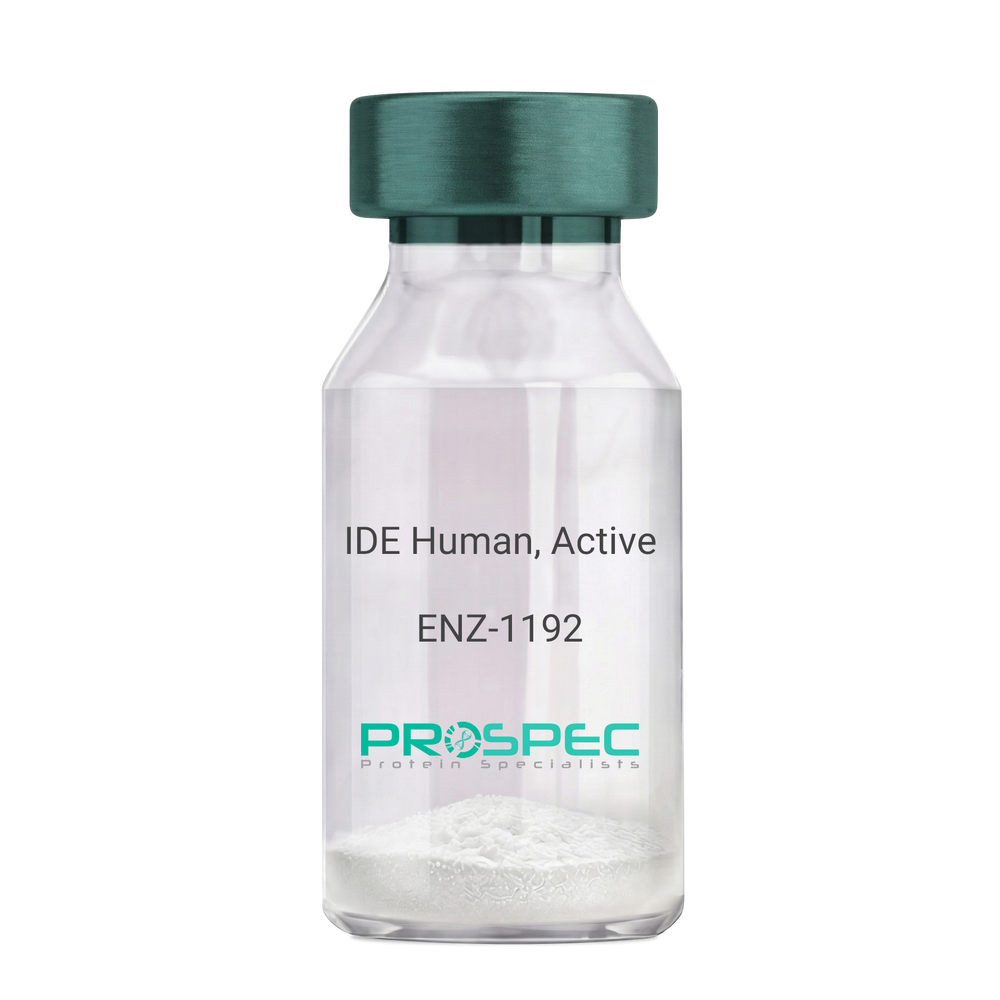
    IDE Human, Active

    Description:

    Insulin-Degrading Enzyme Human Recombinant

    Insulin-Degrading Enzyme, Abeta-Degrading Protease, Insulysin, EC 3.4.24.56, Insulinase, Insulin Protease, INSULYSIN, EC 3.4.24, IDE, insulin-degrading enzyme isoform 1. 

    Product # :

    ENZ-1192

    Price :

    Quantity :

    Shipping Method :

    Ice Icon

    Shipped with Ice Packs

    Add To Cart

    More Info

    • description
    • source
    • formulation
    • purity
    • biological activity
    • More Info
    • Citations

    Description

    IDE Human, Active Human Recombinant produced in E.Coli is a single, non-glycosylated, polypeptide chain (42-1019 a.a) containing a total of 984 amino acids, having a molecular mass of 114 kDa. IDE is fused to a 6 amino acid His-tag at C-terminus and is purified by proprietary chromatographic techniques.

    Source

    Escherichia Coli.

    Formulation

    The IDE solution (0.5mg/ml) contains 10% Glycerol, 100mM NaCl, 0.05% Brij35 and 20mM Tris-HCl buffer (pH 7.5).

    Purity

    Greater than 90.0% as determined by SDS-PAGE.

    Biological Activity

    Specific activity is greater than 3,000 pmol/min/ug in which 1 unit will convert 1.0 pmole of Mca-RPPGFSAFK(Dnp)-OH to MCA-Pro-Leu-OH per minute at pH 7.5 at 25°C.

    Citations

    More Info

    • Synonyms

      Insulin-Degrading Enzyme, Abeta-Degrading Protease, Insulysin, EC 3.4.24.56, Insulinase, Insulin Protease, INSULYSIN, EC 3.4.24, IDE, insulin-degrading enzyme isoform 1.

    • Physical Appearance

      Filtered colorless solution.

    • Stability

      Store at 4°C if entire vial will be used within 2-4 weeks. Store, frozen at -20°C for longer periods of time. For long term storage it is recommended to add a carrier protein (0.1% HSA or BSA). Avoid multiple freeze-thaw cycles.

    • Amino Acid Sequence

      MNNPAIKRIG NHITKSPEDK REYRGLELAN GIKVLLISDP TTDKSSAALD VHIGSLSDPP NIAGLSHFCE HMLFLGTKKY PKENEYSQFL SEHAGSSNAF TSGEHTNYYF DVSHEHLEGA LDRFAQFFLC PLFDESCKDR EVNAVDSEHE KNVMNDAWRL FQLEKATGNP KHPFSKFGTG NKYTLETRPN QEGIDVRQEL LKFHSAYYSS NLMAVCVLGR ESLDDLTNLV VKLFSEVENK NVPLPEFPEH PFQEEHLKQL YKIVPIKDIR NLYVTFPIPD LQKYYKSNPG HYLGHLIGHE GPGSLLSELK SKGWVNTLVG GQKEGARGFM FFIINVDLTE EGLLHVEDII LHMFQYIQKL RAEGPQEWVF QECKDLNAVA FRFKDKERPR GYTSKIAGIL HYYPLEEVLT AEYLLEEFRP DLIEMVLDKL RPENVRVAIV SKSFEGKTDR TEEWYGTQYK QEAIPDEVIK KWQNADLNGK FKLPTKNEFI PTNFEILPLE KEATPYPALI KDTAMSKLWF KQDDKFFLPK ACLNFEFFSP FAYVDPLHCN MAYLYLELLK DSLNEYAYAA ELAGLSYDLQ NTIYGMYLSV KGYNDKQPIL LKKIIEKMAT FEIDEKRFEI IKEAYMRSLN NFRAEQPHQH AMYYLRLLMT EVAWTKDELK EALDDVTLPR LKAFIPQLLS RLHIEALLHG NITKQAALGI MQMVEDTLIE HAHTKPLLPS
      QLVRYREVQL PDRGWFVYQQ RNEVHNNCGI EIYYQTDMQS TSENMFLELF CQIISEPCFN TLRTKEQLGY IVFSGPRRAN GIQGLRFIIQ SEKPPHYLES RVEAFLITME KSIEDMTEEA FQKHIQALAI RRLDKPKKLS AECAKYWGEI ISQQYNFDRD NTEVAYLKTL TKEDIIKFYK EMLAVDAPRR HKVSVHVLAR EMDSCPVVGE FPCQNDINLS QAPALPQPEV IQNMTEFKRG LPLFPLVKPH INFMAAKLHH HHHH.

    • Background

      Insulin-degrading enzyme (IDE) is a crucial protease that plays a significant role in maintaining glucose homeostasis by degrading insulin and other bioactive peptides. Dysregulation of IDE has been implicated in various metabolic disorders, particularly type 2 diabetes mellitus. IDE is also associated with the clearance of amyloid-beta peptides in the brain, making it relevant to Alzheimer's disease pathology. Studying the recombinant form of IDE is fundamental to understanding its functional mechanisms and exploring potential avenues for therapeutic interventions.

      The primary goal of this research is to express and purify recombinant IDE using diverse expression systems. Recombinant DNA techniques will be employed to construct expression vectors containing the IDE gene, followed by expression in bacterial, yeast, or mammalian cell-based systems. The recombinant IDE will be purified using affinity chromatography or other appropriate methods, facilitating subsequent biochemical and biophysical characterization.

      The second objective is to investigate the substrate specificity and catalytic activity of the purified IDE. In vitro enzymatic assays will be conducted to analyse the ability of the recombinant IDE to degrade insulin and other potential substrates. The effects of various factors, such as pH, temperature, and potential modulators, on IDE activity will be evaluated. Additionally, the interactions between IDE and its substrates will be explored using binding assays.

      The third objective is to elucidate the three-dimensional structure of the IDE recombinant using techniques like X-ray crystallography or nuclear magnetic resonance (NMR) spectroscopy. Structural insights into the active site and binding pockets of IDE will provide valuable information for understanding its substrate recognition and catalytic mechanisms. This knowledge could be instrumental in designing targeted therapeutic compounds.

      By characterizing the IDE recombinant, this research aims to contribute to our understanding of its role in insulin metabolism, glucose regulation, and potential therapeutic applications. The findings from this study may have implications for the development of novel treatments for diabetes and other related disorders.

    ProSpec's products are furnished for LABORATORY RESEARCH USE ONLY. The product may not be used as drugs, agricultural or pesticidal products, food additives or household chemicals.

    Ide Human Active
  • View Data Sheet

    Name :

    TBEV gE middle

    Description:

    Tick-Borne Encephalitis Virus gE Middle Recombinant

    Product # :

    TBE-283

    Price :

    Quantity :

    Shipping Method :

    Room Temp Icon

    Shipped at Room temp

    Add To Cart

    More Info

    • description
    • source
    • formulation
    • purity
    • More Info
    • Citations

    Description

    The E.coli derived recombinant protein contains the Tick-borne Encephalitis Virus glycoprotein E middle regions, 50-250 amino acids.

    Source

    Escherichia Coli.

    Formulation

    20mM MES pH 6.5, 8M urea, 200mM NaCl and 0.05% Tween-20.

    Purity

    Encephalitis protein is >95% pure as determined by 10% PAGE (coomassie staining).

    Citations

    More Info

    • Introduction

      TBE is caused by tick-borne encephalitis virus (TBEV), a member of the family Flaviviridae.
      A closely related virus in Far Eastern Eurasia, Russian spring-summer encephalitis virus (RSSEV).
      The family Flaviviridae includes other tick-borne viruses are closely related to TBEV and RSSEV, such as Omsk hemorrhagic fever virus & Kyasanur Forest virus.
      Louping ill virus is also a member of this family.

    • Physical Appearance

      Sterile Filtered clear solution.

    • Stability

      Encephalitis protein although stable at 4°C for 1 week, should be stored below -18°C. Please prevent freeze thaw cycles.

    • Applications

      Encephalitis antigen is suitable for ELISA and Western blots, excellent antigen for detection of Tick-borne encephalitis virus with minimal specificity problems.

    • Specificity

      Immunoreactive with sera of encephalitis virus infected individuals.

    • Purification Method

      Encephalitis protein was purified by proprietary chromatographic technique.

    ProSpec's products are furnished for LABORATORY RESEARCH USE ONLY. The product may not be used as drugs, agricultural or pesticidal products, food additives or household chemicals.

    Tbev Ge Middle
  • View Data Sheet

    Name :

    ABHD10 Human

    Description:

    Abhydrolase Domain Containing 10 Human Recombinant

    Abhydrolase domain containing 10 mitochondrial2, FLJ11342, EC 3.4.-.-.

    Product # :

    ENZ-612

    Price :

    Quantity :

    Shipping Method :

    Ice Icon

    Shipped with Ice Packs

    Add To Cart

    More Info

    • description
    • source
    • formulation
    • purity
    • More Info
    • Citations

    Description

    ABHD10 Human Recombinant produced in E. coli is a single polypeptide chain containing 279 amino acids (53-306) and having a molecular mass of 30.9kDa.ABHD10 is fused to a 25 amino acid His-tag at N-terminus & purified by proprietary chromatographic techniques.

    Source

    E.coli.

    Formulation

    The ABHD10 solution (1mg/1ml) contains 20mM Tris-HCl buffer (pH 8.0), 1mM DTT, 100mM NaCl and 20% glycerol.

    Purity

    Greater than 85% as determined by SDS-PAGE.

    Citations

    More Info

    • Introduction

      Abhydrolase domain-containing protein 10 (ABHD10) is a member of the AB hydrolase superfamily.

    • Synonyms

      Abhydrolase domain containing 10 mitochondrial2, FLJ11342, EC 3.4.-.-.

    • Physical Appearance

      Sterile Filtered colorless solution.

    • Stability

      Store at 4°C if entire vial will be used within 2-4 weeks. Store, frozen at -20°C for longer periods of time. For long term storage it is recommended to add a carrier protein (0.1% HSA or BSA).Avoid multiple freeze-thaw cycles.

    • Amino Acid Sequence

      MGSSHHHHHH SSGLVPRGSH MGSHMTSLSF LNRPDLPNLA YKKLKGKSPG IIFIPGYLSY MNGTKALAIE EFCKSLGHAC IRFDYSGVGS SDGNSEESTL GKWRKDVLSI IDDLADGPQI LVGSSLGGWL MLHAAIARPE KVVALIGVAT AADTLVTKFN QLPVELKKEV EMKGVWSMPS KYSEEGVYNV QYSFIKEAEH HCLLHSPIPV NCPIRLLHGM KDDIVPWHTS MQVADRVLST DVDVILRKHS DHRMREKADI QLLVYTIDDL IDKLSTIVN

    ProSpec's products are furnished for LABORATORY RESEARCH USE ONLY. The product may not be used as drugs, agricultural or pesticidal products, food additives or household chemicals.

    Abhd10 Human
  • View Data Sheet

    Name :

    SCGB1A1 Mouse

    Description:

    Uteroglobin Mouse Recombinant

    Uteroglobin, Clara cell 17 kDa protein, Clara cell phospholipid-binding protein, CCPBP, Clara cells 10 kDa secretory protein, CC10, PCB-binding protein, Secretoglobin family 1A member 1, Scgb1a1, Ugb, Utg, UG, CC16, CCSP, PCB-BP.

    Product # :

    CYT-746

    Price :

    Quantity :

    Shipping Method :

    Room Temp Icon

    Shipped at Room temp

    Add To Cart

    More Info

    • description
    • source
    • formulation
    • purity
    • biological activity
    • More Info
    • Citations

    Description

    Uteroglobin Mouse Recombinant produced in E.coli is a non-glycosylated disulfide-linked homodimeric protein containing 2x75 amino acids chains and having a molecular mass of 16.7kDa.The SCGB1A1 is purified by proprietary chromatographic techniques.

    Source

    Escherichia Coli.

    Formulation

    The Uteroglobin protein was lyophilized from a 0.2µm filtered concentrated solution in PBS, pH 7.4.

    Purity

    Greater than 98.0% as determined by:
    (a) Analysis by RP-HPLC.
    (b) Analysis by SDS-PAGE.

    Biological Activity

    The ED50 as determined by the ability of the immobilized protein to support the adhesion of the A549 human lung carcinoma cells is less than 5.0µg/ml, corresponding to a specific activity of > 200 IU/mg.

    Citations

    More Info

    • Introduction

      Uteroglobin (SCGB1A1) which belongs to the Secretoglobin (SCGBs) superfamily, is a multifunctional protein that exerts anti-inflammatory and anti-tumorigenic effects by binding small hydrophobic molecules such as phospholipids and prostaglandins. Uteroglobin is involved in numerous functions including anti-inflammation, inhibition of phospholipase A2 and the sequestering of hydrophobic ligands. SCGB1A1 is expressed by Clara cells, the non-ciliated, non-mucous secretory cells predominant in lung bronchioles, and by other epithelia which communicate with the external environment. On top of sequestering pro-inflammatory mediators and carcinogens, Uteroglobin is implicated in the inhibition of cell migration and invasion, platelet aggregation, and T cell differentiation. SCGB1A1 gene defects are associated with a susceptibility to asthma.

    • Synonyms

      Uteroglobin, Clara cell 17 kDa protein, Clara cell phospholipid-binding protein, CCPBP, Clara cells 10 kDa secretory protein, CC10, PCB-binding protein, Secretoglobin family 1A member 1, Scgb1a1, Ugb, Utg, UG, CC16, CCSP, PCB-BP.

    • Physical Appearance

      Sterile Filtered White lyophilized (freeze-dried) powder.

    • Stability

      Lyophilized Uteroglobin although stable at room temperature for 3 weeks, should be stored desiccated below -18°C. Upon reconstitution SCGB1A1 should be stored at 4°C between 2-7 days and for future use below -18°C. For long term storage it is recommended to add a carrier protein (0.1% HSA or BSA). Please prevent freeze-thaw cycles.

    • Solubility

      It is recommended to reconstitute the lyophilized SCGB1A1 in sterile 18M-cm H2O not less than 100µg/ml, which can then be further diluted to other aqueous solutions.

    • Amino Acid Sequence

      DICPGFLQVL EALLMESESG YVASLKPFNP GSDLQNAGTQ LKRLVDTLPQ ETRINIMKLT EKILTSPLCK QDLRF.

    ProSpec's products are furnished for LABORATORY RESEARCH USE ONLY. The product may not be used as drugs, agricultural or pesticidal products, food additives or household chemicals.

    Scgb1A1 Mouse
  • View Data Sheet

    Name :

    UBE2R2 Human

    Description:

    Ubiquitin Conjugating Enzyme E2R 2 Human Recombinant

    CDC34B, E2-CDC34B, UBC3B, Ubiquitin carrier protein R2, Ubiquitin-conjugating enzyme E2-CDC34B, Ubiquitin-protein ligase R2, Ubiquitin-conjugating enzyme E2 R2, EC 6.3.2.19.

    Product # :

    ENZ-511

    Price :

    Quantity :

    Shipping Method :

    Ice Icon

    Shipped with Ice Packs

    Add To Cart

    More Info

    • description
    • source
    • formulation
    • purity
    • More Info
    • Citations

    Description

    UBE2R2 Human Recombinant produced in E.Coli is a single, non-glycosylated polypeptide chain containing 261 amino acids (1-238 a.a) and having a molecular mass of 29.6kDa (Molecular size on SDS-PAGE will appear higher).UBE2R2 is fused to a 23 amino acid His-tag at N-terminus & purified by proprietary chromatographic techniques.

    Source

    Escherichia Coli.

    Formulation

    UBE2R2 protein solution (0.25mg/ml) containing 20mM Tris-HCl buffer (pH 8.0), 0.15M NaCl, 20% glycerol and 1mM DTT.

    Purity

    Greater than 85.0% as determined by SDS-PAGE.

    Citations

    More Info

    • Introduction

      Ubiquitin-conjugating enzyme E2 R2 (UBE2R2) is a member of the ubiquitin-conjugating enzyme family. Protein kinase CK2 is a ubiquitous and pleiotropic Ser/Thr protein kinase implicated in cell growth andtransformation. This protein is a protein similar to the E2 ubiquitin conjugating enzyme UBC3/CDC34. Studies propose that CK2-dependent phosphorylation of this ubiquitin-conjugating enzyme functions by regulating beta-TrCP substrate recognition and induces its interaction with beta-TrCP, enhancing beta-catenin degradation. UBE2R2 receives ubiquitin from the E1 complex and catalyzes its covalent attachment to other proteins. In vitro catalyzes monoubiquitination and 'Lys-48'-linked polyubiquitination. UBE2R2 may be implicated in degradation of katenin. Among the diseases associated with UBE2R2 are cblc, and herpes simplex.

    • Synonyms

      CDC34B, E2-CDC34B, UBC3B, Ubiquitin carrier protein R2, Ubiquitin-conjugating enzyme E2-CDC34B, Ubiquitin-protein ligase R2, Ubiquitin-conjugating enzyme E2 R2, EC 6.3.2.19.

    • Physical Appearance

      Sterile Filtered clear solution.

    • Stability

      Store at 4°C if entire vial will be used within 2-4 weeks. Store, frozen at -20°C for longer periods of time. For long term storage it is recommended to add a carrier protein (0.1% HSA or BSA).Avoid multiple freeze-thaw cycles.

    • Amino Acid Sequence

      MGSSHHHHHH SSGLVPRGSH MGSMAQQQMT SSQKALMLEL KSLQEEPVEG FRITLVDESD LYNWEVAIFG PPNTLYEGGY FKAHIKFPID YPYSPPTFRF LTKMWHPNIY ENGDVCISIL HPPVDDPQSG ELPSERWNPT QNVRTILLSV ISLLNEPNTF SPANVDASVM FRKWRDSKGK DKEYAEIIRK QVSATKAEAE KDGVKVPTTL AEYCIKTKVP SNDNSSDLLY DDLYDDDIDD EDEEEEDADC YDDDDSGNEE S

    ProSpec's products are furnished for LABORATORY RESEARCH USE ONLY. The product may not be used as drugs, agricultural or pesticidal products, food additives or household chemicals.

    Ube2R2 Human
  • View Data Sheet

    Name :

    ADH1C Human, sf9

    Description:

    Alcohol Dehydrogenase 1C, Human Recombinant, sf9

    ADH1, ADH1C, ADH3, Alcohol dehydrogenase 1C, Alcohol dehydrogenase subunit gamma.

    Product # :

    ENZ-1010

    Price :

    Quantity :

    Shipping Method :

    Ice Icon

    Shipped with Ice Packs

    Add To Cart

    More Info

    • description
    • source
    • formulation
    • purity
    • More Info
    • Citations

    Description

    ADH1C Human Recombinant produced in Sf9 Baculovirus cells is a single, glycosylated polypeptide chain containing 381 amino acids (1-375) and having a molecular mass of 40.6kDa. ADH1C is fused to a 6 amino acid IgG His-Tag at C-terminus and purified by proprietary chromatographic techniques.

    Source

    Sf9, Baculovirus cells.

    Formulation

    ADH1C protein solution (1mg/ml) containing Phosphate Buffered Saline (pH 7.4) and 10% glycerol.

    Purity

    Greater than 95.0% as determined by analysis by SDS-PAGE.

    Citations

    More Info

    • Introduction

      ADH1C is a member of the zinc-containing alcohol dehydrogenase family which metabolizes a large assortment of substrates, such as ethanol, retinol, other aliphatic alcohols, hydroxysteroids, and lipid peroxidation products. ADH1 is a monomorphic and a key factor in fetal and infant livers, becoming less active in gestation and only weakly active during adulthood.

    • Synonyms

      ADH1, ADH1C, ADH3, Alcohol dehydrogenase 1C, Alcohol dehydrogenase subunit gamma.

    • Physical Appearance

      Sterile Filtered clear solution.

    • Stability

      Store at 4°C if entire vial will be used within 2-4 weeks. Store, frozen at -20°C for longer periods of time. For long term storage it is recommended to add a carrier protein (0.1% HSA or BSA).Avoid multiple freeze-thaw cycles.

    • Amino Acid Sequence

      MSTAGKVIKC KAAVLWELKK PFSIEEVEVA PPKAHEVRIK MVAAGICRSD EHVVSGNLVT PLPVILGHEA AGIVESVGEG VTTVKPGDKV IPLFTPQCGK CRICKNPESN YCLKNDLGNP RGTLQDGTRR FTCSGKPIHH FVGVSTFSQY TVVDENAVAK IDAASPLEKV CLIGCGFSTG YGSAVKVAKV TPGSTCAVFG LGGVGLSVVM GCKAAGAARI IAVDINKDKF AKAKELGATE CINPQDYKKP IQEVLKEMTD GGVDFSFEVI GRLDTMMASL LCCHEACGTS VIVGVPPDSQ NLSINPMLLL TGRTWKGAIF GGFKSKESVP KLVADFMAKK FSLDALITNI LPFEKINEGF DLLRSGKSIR
      TVLTFHHHHH H.

    ProSpec's products are furnished for LABORATORY RESEARCH USE ONLY. The product may not be used as drugs, agricultural or pesticidal products, food additives or household chemicals.

    Adh1C Human Sf9
  • View Data Sheet

    Name :

    HEPACAM2 Human

    Description:

    HEPACAM2 Human Recombinant

    HEPACAM family member 2 isoform 1, MIKI, HEPACAM family member 2, Mitotic kinetics regulator, HEPACAM2, UNQ305/PRO346.

    Product # :

    PRO-1672

    Price :

    Quantity :

    Shipping Method :

    Ice Icon

    Shipped with Ice Packs

    Add To Cart

    More Info

    • description
    • source
    • formulation
    • purity
    • More Info
    • Citations

    Description

    HEPACAM2 Human Recombinant produced in E.coli is a single, non-glycosylated polypeptide chain containing 343 amino acids (32-351) and having a molecular mass of 37.9 kDa.HEPACAM2 is fused to a 23 amino acid His-tag at N-terminus & purified by proprietary chromatographic techniques.

    Source

    Escherichia Coli.

    Formulation

    The HEPACAM2 solution (1mg/ml) contains 20mM Tris-HCl buffer (pH 8.0), 0.4M Urea and 10% glycerol.

    Purity

    Greater than 85.0% as determined by SDS-PAGE.

    Citations

    More Info

    • Introduction

      HEPACAM2 is necessary during prometaphase for centrosome maturation. Following poly-ADP-ribosylation (PARsylation) by TNKS, HEPACAM2 translocates from the Golgi apparatus to mitotic centrosomes and takes a significant part in the formation of robust microtubules for quick movement of chromosomes.

    • Synonyms

      HEPACAM family member 2 isoform 1, MIKI, HEPACAM family member 2, Mitotic kinetics regulator, HEPACAM2, UNQ305/PRO346.

    • Physical Appearance

      Sterile Filtered colorless solution.

    • Stability

      Store at 4°C if entire vial will be used within 2-4 weeks. Store, frozen at -20°C for longer periods of time. For long term storage it is recommended to add a carrier protein (0.1% HSA or BSA).Avoid multiple freeze-thaw cycles.

    • Amino Acid Sequence

      MGSSHHHHHH SSGLVPRGSH MGSLKVTVPS HTVHGVRGQA LYLPVHYGFH TPASDIQIIW LFERPHTMPK YLLGSVNKSV VPDLEYQHKF TMMPPNASLL INPLQFPDEG NYIVKVNIQG NGTLSASQKI QVTVDDPVTK PVVQIHPPSG AVEYVGNMTL TCHVEGGTRL AYQWLKNGRP VHTSSTYSFS PQNNTLHIAP VTKEDIGNYS CLVRNPVSEM ESDIIMPIIY YGPYGLQVNS DKGLKVGEVF TVDLGEAILF DCSADSHPPN TYSWIRRTDN TTYIIKHGPR LEVASEKVAQ KTMDYVCCAY NNITGRQDET HFTVIITSVG LEKLAQKGKS LSP.

    ProSpec's products are furnished for LABORATORY RESEARCH USE ONLY. The product may not be used as drugs, agricultural or pesticidal products, food additives or household chemicals.

    Hepacam2 Human
  • View Data Sheet

    Name :

    HP-NAP

    Description:

    Neutrophil-activating protein A Helicobacter Pylori Recombinant

    DNA protection during starvation protein, Bacterioferritin, HP-NAP, Neutrophil-activating protein A, NAP A, dps, napA.

    Product # :

    PRO-2035

    Price :

    Quantity :

    Shipping Method :

    Room Temp Icon

    Shipped at Room temp

    Add To Cart

    More Info

    • description
    • source
    • formulation
    • purity
    • More Info
    • Citations

    Description

    HP-NAP Recombinant produced in E.Coli is a single, non-glycosylated, polypeptide chain (Met1-Ala144) containing 154 amino acids including a 10 aa His tag at N-terminus. The total calculated molecular mass is 18.2kDa.

    Source

    Escherichia Coli.

    Formulation

    HP-NAP was filtered (0.4 µm) and lyophilized in 20mM Tris buffer and 50mM NaCl, pH 7.5.

    Purity

    Greater than 90.0% as determined by SDS-PAGE.

    Citations

    More Info

    • Introduction

      HP-NAP protects DNA from oxidative damage by sequestering intracellular Fe2+ ion and storing it in the form of Fe3+ oxyhydroxide mineral. One hydrogen peroxide oxidizes two Fe2+ ions, thus preventing hydroxyl radical production by the Fenton reaction. HP-NAP is necessary for the survival in the presence of oxidative stress. Dps is also a virulence factor which activates neutrophils, mast cells and monocytes. HP-NAP binds to neutrophil-glycosphingolipids and to sulfated carbohydrates on mucin. HP-NAP might play a part in the accumulation of neutrophils and monocytes at the site of infection. HP-NAP induces superoxide anion generation, adhesion and chemotaxis of neutrophils, via a pertussis toxin-sensitive pathway involving MAP kinases.

    • Synonyms

      DNA protection during starvation protein, Bacterioferritin, HP-NAP, Neutrophil-activating protein A, NAP A, dps, napA.

    • Physical Appearance

      Filtered White lyophilized (freeze-dried) powder.

    • Stability

      Store lyophilized protein at -20°C. Aliquot the product after reconstitution to avoid repeated freezing/thawing cycles. Reconstituted protein can be stored at 4°C for a limited period of time; it does not show any change after two weeks at 4°C.

    • Solubility

      It is recommended to add deionized water to prepare a working stock solution of approximately 0.5mg/ml and let the lyophilized pellet dissolve completely. HP-NAP is not sterile! Please filter the product by an appropriate sterile filter before using it in the cell culture.

    • Amino Acid Sequence

      MKHHHHHHASMKTFEILKHL QADAIVLFMK VHNFHWNVKG TDFFNVHKAT EEIYEEFADM FDDLAERIVQ LGHHPLVTLS EAIKLTRVKE ETKTSFHSKD IFKEILEDYK YLEKEFKELS NTAEKEGDKV TVTYADDQLA KLQKSIWMLQ AHLA.

    ProSpec's products are furnished for LABORATORY RESEARCH USE ONLY. The product may not be used as drugs, agricultural or pesticidal products, food additives or household chemicals.

    Hp Nap
  • View Data Sheet

    Name :

    IBSP Human, HEK

    Description:

    Integrin Binding Sialoprotein Human Recombinant, HEK

    Integrin Binding Sialoprotein, Integrin-Binding Sialoprotein, Bone Sialoprotein II, Cell-Binding Sialoprotein, BSP II , BNSP, Bone Sialoprotein, BSP-II, SP-II, BSP.

    Product # :

    PRO-2793

    Price :

    Quantity :

    Shipping Method :

    Ice Icon

    Shipped with Ice Packs

    Add To Cart

    More Info

    • description
    • source
    • formulation
    • purity
    • biological activity
    • More Info
    • Citations

    Description

    IBSP Human Recombinant produced in HEK293 Cells is a single, glycosylated polypeptide chain (17-317 a.a) containing a total of 307 amino acids and having a molecular mass of 34.3 kDa. IBSP is fused to a 6 amino acid His-tag at C-terminus and is purified by proprietary chromatographic techniques.

    Source

    HEK293 Cells.

    Formulation

    The IBSP solution (0.5mg/ml) contains 10% Glycerol and Phosphate-Buffered Saline (pH 7.4).

    Purity

    Greater than 90.0% as determined by SDS-PAGE.

    Biological Activity

    >40%, measured by the ability of the immobilized protein to support the adhesion of MCF7 human breast cancer cells. When cells are added to Human IBSP coated plates 3 ug/ml.

    Citations

    More Info

    • Synonyms

      Integrin Binding Sialoprotein, Integrin-Binding Sialoprotein, Bone Sialoprotein II, Cell-Binding Sialoprotein, BSP II , BNSP, Bone Sialoprotein, BSP-II, SP-II, BSP.

    • Physical Appearance

      Sterile Filtered colorless solution.

    • Stability

      Store at 4°C if entire vial will be used within 2-4 weeks. Store, frozen at -20°C for longer periods of time. For long term storage it is recommended to add a carrier protein (0.1% HSA or BSA).Avoid multiple freeze-thaw cycles.

    • Amino Acid Sequence

      FSMKNLHRRV KIEDSEENGV FKYRPRYYLY KHAYFYPHLK RFPVQGSSDS SEENGDDSSE EEEEEEETSN EGENNEESNE DEDSEAENTT LSATTLGYGE DATPGTGYTG LAAIQLPKKA GDITNKATKE KESDEEEEEE EEGNENEESE AEVDENEQGI NGTSTNSTEA ENGNGSSGGD NGEEGEEESV TGANAEDTTE TGRQGKGTSK TTTSPNGGFE PTTPPQVYRT TSPPFGKTTT
      VEYEGEYEYT GANEYDNGYE IYESENGEPR GDNYRAYEDE YSYFKGQGYD GYDGQNYYHH QHHHHHH.

    • Background

      1. Structural Diversity: Research on IBSP often delves into its structural characteristics. IBSP is known for its rich sialic acid content and multiple functional domains, including an RGD cell-binding domain and polyglutamic acid stretches. These structural features enable IBSP to interact with various cells, affecting adhesion and migration.

      2. Mineralization Regulator: A significant focus of research is IBSP's role in mineralization. It acts as a nucleator for calcium phosphate crystals, providing a scaffold for bone formation. Understanding how IBSP influences mineralization is crucial for insights into bone health and diseases like osteoporosis.

      3. Cell Signaling: Research papers explore IBSP's involvement in cell signaling pathways. IBSP has been linked to angiogenesis, inflammation, and cellular differentiation. Investigating these signaling pathways sheds light on its broader physiological roles.

      4. Biomedical Implications: Studies often discuss the biomedical implications of IBSP. Researchers investigate its potential roles in bone disorders such as osteoporosis and periodontal disease. Additionally, IBSP's involvement in tumor metastasis and dental tissue regeneration is a subject of interest.

      5. Recombinant IBSP: The use of recombinant IBSP in research is a significant topic. Researchers utilize recombinant IBSP to explore its functions, interactions, and potential therapeutic applications. This allows for controlled experiments and insights into IBSP's behavior.

      6. Diagnostics and Therapeutics: Research papers may discuss the diagnostic and therapeutic potential of IBSP. Understanding its roles in health and disease can lead to the development of diagnostic markers and therapeutic interventions, particularly in the context of bone and dental health.

      7. Clinical Relevance: Some research may focus on the clinical relevance of IBSP. This could include studies on patient populations with IBSP mutations or alterations, aiming to understand how variations in IBSP may contribute to specific medical conditions.

    ProSpec's products are furnished for LABORATORY RESEARCH USE ONLY. The product may not be used as drugs, agricultural or pesticidal products, food additives or household chemicals.

    Ibsp Protein
  • View Data Sheet

    Name :

    BCAT2 Human

    Description:

    Branched Chain Amino-Acid Transaminase 2 Human Recombinant

    Branched-chain-amino-acid aminotransferase mitochondrial, BCAT(m), Placental protein 18, PP18, BCAT2, BCATM, BCT2, ECA40, BCAM.

    Product # :

    ENZ-606

    Price :

    Quantity :

    Shipping Method :

    Ice Icon

    Shipped with Ice Packs

    Add To Cart

    More Info

    • description
    • source
    • formulation
    • purity
    • More Info
    • Citations

    Description

    BCAT2 Human Recombinant produced in E.coli is a single, non-glycosylated polypeptide chain containing 390 amino acids (28-392) and having a molecular mass of 43.9kDa.BCAT2 is fused to a 25 amino acid His-tag at N-terminus & purified by proprietary chromatographic techniques.

    Source

    Escherichia Coli.

    Formulation

    The BCAT2 solution (0.5mg/ml) contains 20mM Tris-HCl buffer (pH 7.5), 10% glycerol, 0.2M NaCl and 1mM DTT.

    Purity

    Greater than 90.0% as determined by SDS-PAGE.

    Citations

    More Info

    • Introduction

      Branched Chain Amino-Acid Transaminase 2 (BCAT2) is a member of the class-IV pyridoxal-phosphate-dependent aminotransferase family. BCAT2 is a branched chain aminotransferase found in mitochondria. BCAT2 forms a dimer which catalyzes the first step in the production of the branched chain amino acids leucine, isoleucine, and valine. In addition, BCAT2 may actn as a transporter of branched chain alpha-keto acids.

    • Synonyms

      Branched-chain-amino-acid aminotransferase mitochondrial, BCAT(m), Placental protein 18, PP18, BCAT2, BCATM, BCT2, ECA40, BCAM.

    • Physical Appearance

      Sterile Filtered colorless solution.

    • Stability

      Store at 4°C if entire vial will be used within 2-4 weeks. Store, frozen at -20°C for longer periods of time. For long term storage it is recommended to add a carrier protein (0.1% HSA or BSA).Avoid multiple freeze-thaw cycles.

    • Amino Acid Sequence

      MGSSHHHHHH SSGLVPRGSH MGSHMASSSF KAADLQLEMT QKPHKKPGPG EPLVFGKTFT DHMLMVEWND KGWGQPRIQP FQNLTLHPAS SSLHYSLQLF EGMKAFKGKD QQVRLFRPWL NMDRMLRSAM RLCLPSFDKL ELLECIRRLI EVDKDWVPDA AGTSLYVRPV LIGNEPSLGV SQPTRALLFV ILCPVGAYFP GGSVTPVSLL ADPAFIRAWV GGVGNYKLGG NYGPTVLVQQ EALKRGCEQV LWLYGPDHQL TEVGTMNIFV YWTHEDGVLE LVTPPLNGVI LPGVVRQSLL DMAQTWGEFR VVERTITMKQ LLRALEEGRV REVFGSGTAC QVCPVHRILY KDRNLHIPTM ENGPELILRF QKELKEIQYG IRAHEWMFPV.

    ProSpec's products are furnished for LABORATORY RESEARCH USE ONLY. The product may not be used as drugs, agricultural or pesticidal products, food additives or household chemicals.

    Bcat2 Human
  • View Data Sheet

    Name :

    BTC Human, HEK

    Description:

    Betacellulin Human Recombinant, HEK

    Betacellulin isoform 1, Probetacellulin, Betacellulin, BTC

    Product # :

    CYT-1188

    Price :

    Quantity :

    Shipping Method :

    Ice Icon

    Shipped with Ice Packs

    Add To Cart

    More Info

    • description
    • source
    • formulation
    • purity
    • biological activity
    • More Info
    • Citations

    Description

    BTC Human Recombinant produced in HEK293 cells is a single, glycosylated polypeptide chain (32-111 a.a) containing 86 amino acids and having a molecular mass of 9.8kDa.BTC is fused to a 6 amino acid His-tag at C-terminus & purified by proprietary chromatographic techniques.

    Source

    HEK293 cells.

    Formulation

    BTC protein (0.25mg/ml) contains 10% glycerol and Phosphate-Buffered Saline (pH 7.4).

    Purity

    Greater than 95.0% as determined by SDS-PAGE.

    Biological Activity

    ED50 range is ≤ 0.5ng/ml. It is measured by cell proliferation assay using Balb/3T3 mouse embryonic fibroblast cells.

    Citations

    More Info

    • Introduction

      BTC is a potent mitogen for retinal pigment epithelial cells and vascular smooth muscle cells. The effects of betacellulin are mediated by the EGF receptor and other related receptors.

    • Synonyms

      Betacellulin isoform 1, Probetacellulin, Betacellulin, BTC

    • Physical Appearance

      Sterile filtered colorless solution.

    • Stability

      Store at 4°C if entire vial will be used within 2-4 weeks.Store, frozen at -20°C for longer periods of time.For long term storage it is recommended to add a carrier protein (0.1% HSA or BSA).Avoid multiple freeze-thaw cycles.

    • Amino Acid Sequence

      DGNSTRSPET NGLLCGDPEE NCAATTTQSK RKGHFSRCPK QYKHYCIKGR CRFVVAEQTP SCVCDEGYIG ARCERVDLFY HHHHHH

    • Background

      What is the molecular weight/Mw of BETACELLULIN Protein?
      BETACELLULIN Protein has a total Mw of 9.8kDa.

      What is the source or expression system of BETACELLULIN Protein?
      HEK293 cells.

      What is the Purity of BETACELLULIN Protein?
      BETACELLULIN Protein is >95% pure as determined by SDS-PAGE.

      What is the Biological Activity of BETACELLULIN Protein?
      ED50 range is ≤ 0.5ng/ml. It is measured by cell proliferation assay using Balb/3T3 mouse embryonic fibroblast cells.

      What is the amino acid sequence of BETACELLULIN Protein?
      DGNSTRSPET NGLLCGDPEE NCAATTTQSK RKGHFSRCPK QYKHYCIKGR CRFVVAEQTP SCVCDEGYIG ARCERVDLFY HHHHHH

      What applications can BETACELLULIN Protein be used in?
      BETACELLULIN Protein can probably be used in western blot, ELISA and Lateral Flow.

      What is the endotoxin level for BETACELLULIN Protein?
      The endotoxin level is minimal, BETACELLULIN Protein was purified using conventional chromatography techniques.

    ProSpec's products are furnished for LABORATORY RESEARCH USE ONLY. The product may not be used as drugs, agricultural or pesticidal products, food additives or household chemicals.

    Betacellulin Protein
  • View Data Sheet

    Name :

    CHGA Human, His

    Description:

    Chromogranin-A Human Recombinant, His Tag

    CGA, CHGA, Vasostatin-2, Pituitary secretory protein I, SP-I.

    Product # :

    PRO-699

    Price :

    Quantity :

    Shipping Method :

    Ice Icon

    Shipped with Ice Packs

    Add To Cart

    More Info

    • description
    • source
    • formulation
    • purity
    • More Info
    • Citations

    Description

    Recombinant Human CHGA produced in E.Coli is a single, non-glycosylated polypeptide chain containing 460 amino acids (19-457 a.a) and having a molecular mass of 51.2kDa (Molecular weight on SDS-PAGE will appear higher). Chromgranin-A is fused to 21 amino acid His Tag at N-terminus and purified by proprietary chromatographic techniques.

    Source

    Escherichia Coli.

    Formulation

    The CHGA protein (0.5mg/ml) contains 20mM Tris-HCl buffer pH-7.5, 2mM EDTA, 0.1mM PMSF and 10% glycerol.

    Purity

    Greater than 80.0% as determined by Analysis by SDS-PAGE.

    Citations

    More Info

    • Introduction

      Chromgranin-A is part of the neuroendocrine secretory protein family. CHGA is located in secretory vesicles of neurons and endocrine cells. Chromgranin-A is a precursor to three biologically active peptides; vasostatin, pancreastatin, and parastatin. These peptides act as autocrine or paracrine negative modulators of the neuroendocrine system. Other peptides, including chromostatin, beta-granin, WE-14 and GE-25, are also derived from the full-length protein. Chromgranin-A has numerous biological activities on some tissues and organs and exerts a large spectrum of homeostatic actions, including antifungal and antimicrobial effect, modulation of cell adhesion, and inhibition of parathyroid hormone secretion.

    • Synonyms

      CGA, CHGA, Vasostatin-2, Pituitary secretory protein I, SP-I.

    • Physical Appearance

      Sterile filtered colorless solution.

    • Stability

      Store at 4°C if entire vial will be used within 2-4 weeks. Store, frozen at -20°C for longer periods of time. For long term storage it is recommended to add a carrier protein (0.1% HSA or BSA). Avoid multiple freeze-thaw cycles.

    • Amino Acid Sequence

      MGSSHHHHHH SSGLVPRGSH MLPVNSPMNK GDTEVMKCIV EVISDTLSKP SPMPVSQECF ETLRGDERIL SILRHQNLLK ELQDLALQGA KERAHQQKKH SGFEDELSEV LENQSSQAEL KEAVEEPSSK DVMEKREDSK EAEKSGEATD GARPQALPEP MQESKAEGNN QAPGEEEEEE EEATNTHPPA SLPSQKYPGP QAEGDSEGLS QGLVDREKGL SAEPGWQAKR EEEEEEEEEA EAGEEAVPEE EGPTVVLNPH PSLGYKEIRK GESRSEALAV DGAGKPGAEE AQDPEGKGEQ EHSQQKEEEE EMAVVPQGLF RGGKSGELEQ EEERLSKEWE DSKRWSKMDQ LAKELTAEKR LEGQEEEEDN RDSSMKLSFR ARAYGFRGPG PQLRRGWRPS SREDSLEAGL PLQVRGYPEE KKEEEGSANR RPEDQELESL SAIEAELEKV AHQLQALRRG.

    ProSpec's products are furnished for LABORATORY RESEARCH USE ONLY. The product may not be used as drugs, agricultural or pesticidal products, food additives or household chemicals.

    Chromogranin A Human His
  • View Data Sheet

    Name :

    PRSS3 Human, HEK

    Description:

    Protease Serine 3 Human Recombinant, HEK

    Protease, Serine, 3, Protease, Serine, 4 (Trypsin 4, Brain), Brain Trypsinogen, Mesotrypsinogen, Mesotrypsin, Trypsin III, EC 3.4.21.4 4, Trypsin IV, PRSS4, TRY3, TRY4 Protease, Serine, 3 (Mesotrypsin), Pancreatic Trypsinogen III, Serine Protease 3, Serine Protease 4, Trypsinogen IV, Trypsinogen 4, Trypsinogen 5, EC 3.4.21, MTG, T9.

    Product # :

    ENZ-1194

    Price :

    Quantity :

    Shipping Method :

    Ice Icon

    Shipped with Ice Packs

    Add To Cart

    More Info

    • description
    • source
    • formulation
    • purity
    • biological activity
    • More Info
    • Citations

    Description

    PRSS3 Human Recombinant produced in HEK293 Cells is a single, glycosylated polypeptide chain containing 238 amino acids (16-247 a.a.) and having a molecular mass of 26kDa. PRSS3 is fused to a 6 amino acid His-tag at C-terminus and is purified by proprietary chromatographic techniques.

    Source

    HEK293 Cells.

    Formulation

    PRSS3 protein solution (1mg/ml) containing 10% Glycerol and Phosphate-Buffered Saline (pH 7.4).

    Purity

    Greater than 95.0% as determined by SDS-PAGE.

    Biological Activity

    Specific activity is > 10,000pmol/min/ug, and is defined as the amount of enzyme that cleaves 1pmol of McaRPKPVE-Nval-WRK(Dnp)-NH2 per minute at pH 8.0 at 37℃.

    Citations

    More Info

    • Synonyms

      Protease, Serine, 3, Protease, Serine, 4 (Trypsin 4, Brain), Brain Trypsinogen, Mesotrypsinogen, Mesotrypsin, Trypsin III, EC 3.4.21.4 4, Trypsin IV, PRSS4, TRY3, TRY4 Protease, Serine, 3 (Mesotrypsin), Pancreatic Trypsinogen III, Serine Protease 3, Serine Protease 4, Trypsinogen IV, Trypsinogen 4, Trypsinogen 5, EC 3.4.21, MTG, T9.

    • Physical Appearance

      Sterile filtered colorless solution.

    • Stability

      Store at 4°C if entire vial will be used within 2-4 weeks. Store, frozen at -20°C for longer periods of time. For long term storage it is recommended to add a carrier protein (0.1% HSA or BSA). Avoid multiple freeze-thaw cycles.

    • Amino Acid Sequence

      VPFDDDDKIV GGYTCEENSL PYQVSLNSGS HFCGGSLISE QWVVSAAHCY KTRIQVRLGE HNIKVLEGNE QFINAAKIIR HPKYNRDTLD NDIMLIKLSS PAVINARVST ISLPTAPPAA GTECLISGWG NTLSFGADYP DELKCLDAPV LTQAECKASY PGKITNSMFC VGFLEGGKDS CQRDSGGPVV CNGQLQGVVS WGHGCAWKNR PGVYTKVYNY VDWIKDTIAA NSHHHHHH.

    • Background

      PRSS3 is a member of the serine protease family, characterized by its specific enzymatic activity mediated by the serine residue in the catalytic triad. PRSS3's structure consists of a catalytic domain, a substrate-binding site, and disulfide bridges that help maintain its stability. Understanding the molecular characteristics of PRSS3 is crucial for elucidating its functions.

      Physiological Functions: PRSS3 is primarily expressed in the pancreas, where it plays a vital role in the digestion of dietary proteins. It contributes to the breakdown of proteins into smaller peptides, facilitating their absorption in the small intestine. PRSS3 is part of a complex enzymatic network that ensures proper digestion and nutrient absorption.

      Pathological Implications: Research has shown that abnormal PRSS3 activity or expression can be associated with various diseases. For example, alterations in PRSS3 have been linked to pancreatic diseases, including pancreatitis and pancreatic cancer. Investigating PRSS3's role in disease pathogenesis can provide valuable insights into the development and progression of these conditions.

      Biomedical Research: PRSS3 human recombinant proteins are valuable tools in biomedical research. Researchers use these recombinant proteins to study PRSS3's enzymatic properties, interactions with other molecules, and potential therapeutic applications. They can perform controlled experiments to gain a deeper understanding of PRSS3's functions.

      Therapeutic Potential: PRSS3's involvement in diseases like pancreatitis and pancreatic cancer has raised interest in its therapeutic potential. Researchers explore the development of inhibitors or modulators targeting PRSS3 as potential treatments for these diseases. Additionally, PRSS3's role in protein digestion has implications for digestive disorders and enzyme replacement therapies.

      Diagnostic Markers: PRSS3 levels or activity may serve as diagnostic markers for certain diseases. Changes in PRSS3 expression in pancreatic tissue or serum may be indicative of pancreatic disorders. Research in this area aims to establish PRSS3 as a diagnostic tool for early disease detection.

      Future Directions: Continued research on PRSS3 human recombinant and its roles in health and disease is essential. This includes investigating its regulation, substrate specificity, and potential interactions with other proteins. Such studies may uncover novel therapeutic targets and diagnostic strategies.

    ProSpec's products are furnished for LABORATORY RESEARCH USE ONLY. The product may not be used as drugs, agricultural or pesticidal products, food additives or household chemicals.

    Prss3 Enzyme
  • View Data Sheet

    Name :

    PSG1 Human, Sf9

    Description:

    Pregnancy Specific Beta-1-Glycoprotein 1 Human Recombinant, Sf9

    Pregnancy Specific Beta-1-Glycoprotein 1, PSBG1, B1G1, Fetal Liver Non-Specific Cross-Reactive Antigen 1/2, Pregnancy-Specific Beta-1 Glycoprotein C/D, CD66 Antigen-Like Family Member F, PS-Beta-C/D, PS-Beta-G-1, FL-NCA-1/2, PSBG-1, PSGGA, PSG95, SP1, Pregnancy-Specific Beta-1-Glycoprotein 1, Pregnancy-Specific B-1 Glycoprotein, Pregnancy-Specific Glycoprotein 1, CD66f Antigen, DHFRP2, PSGIIA, CD66f, PBG1, PSG1.

    Product # :

    PRO-2452

    Price :

    Quantity :

    Shipping Method :

    Ice Icon

    Shipped with Ice Packs

    Add To Cart

    More Info

    • description
    • source
    • formulation
    • purity
    • More Info
    • Citations

    Description

    PSG1 Human Recombinant produced in Sf9 Baculovirus cells is a single, glycosylated polypeptide chain containing 394 amino acids (35-419a.a.) and having a molecular mass of 44.6kDa (Molecular size on SDS-PAGE will appear at approximately 40-57kDa). PSG1 is expressed with a 6 amino acids His tag at C-Terminus and purified by proprietary chromatographic techniques.

    Source

    Sf9, Baculovirus cells.

    Formulation

    PSG1 protein solution (0.25mg/ml) contains Phosphate Buffered Saline (pH 7.4) and 20% glycerol.

    Purity

    Greater than 90% as determined by SDS-PAGE.

    Citations

    More Info

    • Introduction

      Pregnancy Specific Beta-1-Glycoprotein 1 (PSG1) is a member of a subgroup of transcription factors which are phosphorylated upon binding to promoter sequences. PSGs belong to the carcinoembryonic antigen (CEA) family and function as early biochemical markers of syncytiotrophoblast formation. Furthermore, PSG1 is assumed to mediate placental vascular morphogenesis by enhancing VEGF-A production and endothelial tube formation. PSG1 is a major product of the syncytiotrophoblast, reaching concentrations of 100- 290 mg/l at term in the serum of pregnant women.

    • Synonyms

      Pregnancy Specific Beta-1-Glycoprotein 1, PSBG1, B1G1, Fetal Liver Non-Specific Cross-Reactive Antigen 1/2, Pregnancy-Specific Beta-1 Glycoprotein C/D, CD66 Antigen-Like Family Member F, PS-Beta-C/D, PS-Beta-G-1, FL-NCA-1/2, PSBG-1, PSGGA, PSG95, SP1, Pregnancy-Specific Beta-1-Glycoprotein 1, Pregnancy-Specific B-1 Glycoprotein, Pregnancy-Specific Glycoprotein 1, CD66f Antigen, DHFRP2, PSGIIA, CD66f, PBG1, PSG1.

    • Physical Appearance

      Sterile Filtered colorless solution.

    • Stability

      Store at 4°C if entire vial will be used within 2-4 weeks. Store, frozen at -20°C for longer periods of time. For long term storage it is recommended to add a carrier protein (0.1% HSA or BSA).Avoid multiple freeze-thaw cycles.

    • Amino Acid Sequence

      ADLQVTIEAE PTKVSEGKDV LLLVHNLPQN LTGYIWYKGQ MRDLYHYITS YVVDGEIIIY GPAYSGRETA YSNASLLIQN VTREDAGSYT LHIIKGDDGT RGVTGRFTFT LHLETPKPSI SSSNLNPRET MEAVSLTCDP ETPDASYLWW MNGQSLPMTH SLKLSETNRT LFLLGVTKYT AGPYECEIRN PVSASRSDPV TLNLLPKLPK PYITINNLNP RENKDVLNFT CEPKSENYTY IWWLNGQSLP VSPRVKRPIE NRILILPSVT RNETGPYQCE IRDRYGGIRS DPVTLNVLYG PDLPRIYPSF TYYRSGEVLY LSCSADSNPP AQYSWTINEK FQLPGQKLFI RHITTKHSGL YVCSVRNSAT GKESSKSMTV EVSGKWIPHH HHHH.

    ProSpec's products are furnished for LABORATORY RESEARCH USE ONLY. The product may not be used as drugs, agricultural or pesticidal products, food additives or household chemicals.

    Psg1 Protein
  • View Data Sheet

    Name :

    GPT2 Human

    Description:

    Glutamic-Pyruvate Transaminase 2 Human Recombinant

    ALT2, AAT2, Alanine aminotransferase 2, Glutamate pyruvate transaminase 2, Glutamic--alanine transaminase 2, Glutamic--pyruvic transaminase 2.

    Product # :

    ENZ-680

    Price :

    Quantity :

    Shipping Method :

    Ice Icon

    Shipped with Ice Packs

    Add To Cart

    More Info

    • description
    • source
    • formulation
    • purity
    • More Info
    • Citations

    Description

    GPT2 Human Recombinant produced in E. coli is a single polypeptide chain containing 546 amino acids (1-523) and having a molecular mass of 60.3 kDa. GPT2 is fused to a 23 amino acid His-tag at N-terminus & purified by proprietary chromatographic techniques.

    Source

    E.coli.

    Formulation

    The GPT2 solution (0.5mg/1ml) contains 20mM Tris-HCl buffer (pH 7.5), 30% glycerol, 0.2M NaCl and 2mM DTT.

    Purity

    Greater than 90% as determined by SDS-PAGE.

    Citations

    More Info

    • Introduction

      Alanine aminotransferase 2 (GPT2), catalyzes the reversible transamination among alanine and 2-oxoglutarate to create pyruvate and glutamate. GPT2 expressed mainly in muscle, fat and kidney and participates in the intermediary metabolism of glucose and amino acids. Multiple transcript variants encoding various isoforms have been found for GPT2.

    • Synonyms

      ALT2, AAT2, Alanine aminotransferase 2, Glutamate pyruvate transaminase 2, Glutamic--alanine transaminase 2, Glutamic--pyruvic transaminase 2.

    • Physical Appearance

      Sterile Filtered colorless solution.

    • Stability

      Store at 4°C if entire vial will be used within 2-4 weeks. Store, frozen at -20°C for longer periods of time. For long term storage it is recommended to add a carrier protein (0.1% HSA or BSA).Avoid multiple freeze-thaw cycles.

    • Amino Acid Sequence

      MGSSHHHHHH SSGLVPRGSH MGSMQRAAAL VRRGCGPRTP SSWGRSQSSA AAEASAVLKV RPERSRRERI LTLESMNPQV KAVEYAVRGP IVLKAGEIEL ELQRGIKKPF TEVIRANIGD AQAMGQQPIT FLRQVMALCT YPNLLDSPSF PEDAKKRARR ILQACGGNSL GSYSASQGVN CIREDVAAYI TRRDGGVPAD PDNIYLTTGA SDGISTILKI LVSGGGKSRT GVMIPIPQYP LYSAVISELD AIQVNYYLDE ENCWALNVNE LRRAVQEAKD HCDPKVLCII NPGNPTGQVQ SRKCIEDVIH FAWEEKLFLL ADEVYQDNVY SPDCRFHSFK KVLYEMGPEY SSNVELASFH STSKGYMGEC GYRGGYMEVI NLHPEIKGQL VKLLSVRLCP PVSGQAAMDI VVNPPVAGEE SFEQFSREKE SVLGNLAKKA KLTEDLFNQV PGIHCNPLQG AMYAFPRIFI PAKAVEAAQA HQMAPDMFYC MKLLEETGIC VVPGSGFGQR EGTYHFRMTI LPPVEKLKTV LQKVKDFHIN FLEKYA.

    ProSpec's products are furnished for LABORATORY RESEARCH USE ONLY. The product may not be used as drugs, agricultural or pesticidal products, food additives or household chemicals.

    Gpt2 Human
  • View Data Sheet

    Name :

    RAGE Human, Sf9

    Description:

    Advanced Glycosylation End Product-Specific Receptor Human Recombinant, Sf9

    Advanced Glycosylation End-Product Specific Receptor, Advanced Glycosylation End Product-Specific Receptor, RAGE, Receptor for Advanced Glycation End-Products Variant 20, Receptor for Advanced Glycosylation End Products, Receptor for Advanced Glycation End-Products, RAGE Isoform NtRAGE-Delta, RAGE Isoform SRAGE-Delta, SCARJ1.

    Product # :

    PRO-2645

    Price :

    Quantity :

    Shipping Method :

    Ice Icon

    Shipped with Ice Packs

    Add To Cart

    More Info

    • description
    • source
    • formulation
    • purity
    • biological activity
    • More Info
    • Citations

    Description

    RAGE Human Recombinant produced in Sf9 Baculovirus cells is a single, glycosylated polypeptide chain containing 561 amino acids (24-342 a.a) and having a molecular mass of 61.2kDa. RAGE is fused to a 242 amino acid hIgG-His-tag at C-terminus & purified by proprietary chromatographic techniques.

    Source

    Sf9, Baculovirus cells.

    Formulation

    The RAGE solution (0.25mg/1ml) contains Phosphate-Buffered Saline (pH 7.4) and 10% glycerol.

    Purity

    Greater than 90.0% as determined by SDS-PAGE.

    Biological Activity

    Measured by the ability of the binding activity in a functional ELISA. The ED50 range ≤15ug/ml.

    Citations

    More Info

    • Introduction

      Advanced Glycosylation End Product-Specific Receptor or RAGE is an immunoglobulin, part of the immunoglobulin transmembrane proteins family. RAGE moderates interactions between advanced glycosylation end products, also known as AGE. These signaling has a crucial part in the regulation of TNFalpha,oxidative stress, endothelial dysfunction in type 2 diabetesproduction and expression. RAGE helps the translocation of ABPP (amyloid-beta peptide) through the membrane of cells to the intracellular area in the cortical neurons.

    • Synonyms

      Advanced Glycosylation End-Product Specific Receptor, Advanced Glycosylation End Product-Specific Receptor, RAGE, Receptor for Advanced Glycation End-Products Variant 20, Receptor for Advanced Glycosylation End Products, Receptor for Advanced Glycation End-Products, RAGE Isoform NtRAGE-Delta, RAGE Isoform SRAGE-Delta, SCARJ1.

    • Physical Appearance

      Sterile Filtered colorless solution.

    • Stability

      Store at 4°C if entire vial will be used within 2-4 weeks. Store, frozen at -20°C for longer periods of time. For long term storage it is recommended to add a carrier protein (0.1% HSA or BSA).Avoid multiple freeze-thaw cycles.

    • Amino Acid Sequence

      ADLQNITARI GEPLVLKCKG APKKPPQRLE WKLNTGRTEA WKVLSPQGGG PWDSVARVLP NGSLFLPAVG IQDEGIFRCQ AMNRNGKETK SNYRVRVYQI PGKPEIVDSA SELTAGVPNK VGTCVSEGSY PAGTLSWHLD GKPLVPNEKG VSVKEQTRRH PETGLFTLQS ELMVTPARGG DPRPTFSCSF SPGLPRHRAL RTAPIQPRVW EPVPLEEVQL VVEPEGGAVA PGGTVTLTCE VPAQPSPQIH WMKDGVPLPL PPSPVLILPE IGPQDQGTYS CVATHSSHGP QESRAVSISI IEPGEEGPTA GSVGGSGLGT LALEPKSCDK THTCPPCPAP ELLGGPSVFL FPPKPKDTLM ISRTPEVTCV VVDVSHEDPE VKFNWYVDGV EVHNAKTKPR EEQYNSTYRV VSVLTVLHQD WLNGKEYKCK VSNKALPAPI EKTISKAKGQ PREPQVYTLP PSRDELTKNQ VSLTCLVKGF YPSDIAVEWE SNGQPENNYK TTPPVLDSDG SFFLYSKLTV DKSRWQQGNV FSCSVMHEA HNHYTQKSLS LSPGKHHHHH H.

    ProSpec's products are furnished for LABORATORY RESEARCH USE ONLY. The product may not be used as drugs, agricultural or pesticidal products, food additives or household chemicals.

    Rage Protein
  • View Data Sheet

    Name :

    WHSC2 Human

    Description:

    Wolf-Hirschhorn Syndrome Candidate 2 Human Recombinant

    Negative elongation factor A, NELF-A, Wolf-Hirschhorn syndrome candidate 2 protein, WHSC2, NELFA, FLJ10442, FLJ25112, P/OKcl.15.

    Product # :

    PRO-062

    Price :

    Quantity :

    Shipping Method :

    Ice Icon

    Shipped with Ice Packs

    Add To Cart

    More Info

    • description
    • source
    • formulation
    • purity
    • More Info
    • Citations

    Description

    WHSC2 Human Recombinant fused with a 20 amino acid His tag at N-terminus produced in E.Coli is a single, non-glycosylated, polypeptide chain containing 559 amino acids (1-539 a.a.) and having a molecular mass of 60.6kDa. The WHSC2 is purified by proprietary chromatographic techniques.

    Source

    Escherichia Coli.

    Formulation

    The WHSC2 solution (0.25 mg/ml) 20mM Tris-HCl buffer (pH8.0), 0.2M NaCl, 5mM DTT, 1mM EDTA and 20% glycerol.

    Purity

    Greater than 85.0% as determined by SDS-PAGE.

    Citations

    More Info

    • Introduction

      WHSC2 (NELF-A) is a protein factor required for DRB-sensitive transcription. WHSC2 is one of the 5 components of the multisubunit NELF complex which cooperates with DSIF to repress RNA polymerase II elongation. The Wolf-Hirschhorn syndrome is a multiple malformation syndrome characterized by mental and developmental defects resulting from a hemizygous deletion of the distal short arm of chromosome 4 (4p16.3).

    • Synonyms

      Negative elongation factor A, NELF-A, Wolf-Hirschhorn syndrome candidate 2 protein, WHSC2, NELFA, FLJ10442, FLJ25112, P/OKcl.15.

    • Physical Appearance

      Sterile Filtered colorless solution.

    • Stability

      Store at 4°C if entire vial will be used within 2-4 weeks. Store, frozen at -20°C for longer periods of time. For long term storage it is recommended to add a carrier protein (0.1% HSA or BSA).Avoid multiple freeze-thaw cycles.

    • Amino Acid Sequence

      MGSSHHHHHH SSGLVPRGSH MPGQRRALSP KMASMRESDT GLWLHNKLGA TDELWAPPSI ASLLTAAVID NIRLCFHGLS SAVKLKLLLG TLHLPRRTVD EMKGALMEII QLASLDSDPW VLMVADILKS FPDTGSLNLE LEEQNPNVQD ILGELREKVG ECEASAMLPL ECQYLNKNAL TTLAGPLTPP VKHFQLKRKP KSATLRAELL QKSTETAQQL KRSAGVPFHA KGRGLLRKMD TTTPLKGIPK QAPFRSPTAP SVFSPTGNRT PIPPSRTLLR KERGVKLLDI SELDMVGAGR EAKRRRKTLD AEVVEKPAKE ETVVENATPD YAAGLVSTQK LGSLNNEPAL PSTSYLPSTP SVVPASSYIP SSETPPAPSS REASRPPEEP SAPSPTLPAQ FKQRAPMYNS GLSPATPTPA APTSPLTPTT PPAVAPTTQT PPVAMVAPQT QAPAQQQPKK NLSLTREQMF AAQEMFKTAN KVTRPEKALI LGFMAGSREN PCQEQGDVIQ IKLSEHTEDL PKADGQGSTT MLVDTVFEMN YATGQWTRFK KYKPMTNVS.

    ProSpec's products are furnished for LABORATORY RESEARCH USE ONLY. The product may not be used as drugs, agricultural or pesticidal products, food additives or household chemicals.

    Whsc2 Human
  • View Data Sheet

    Name :

    EBI3 Human, His

    Description:

    Epstein Barr Virus Induced 3 Human Recombinant, His Tag

    Interleukin-27 subunit beta, IL-27 subunit beta, IL-27B, Epstein-Barr virus-induced gene 3 protein, EBV-induced gene 3 protein, EBI3, IL27B.

    Product # :

    CYT-668

    Price :

    Quantity :

    Shipping Method :

    Ice Icon

    Shipped with Ice Packs

    Add To Cart

    More Info

    • description
    • source
    • formulation
    • purity
    • More Info
    • Citations

    Description

    EBI3 Human Recombinant produced in E.Coli is a single, non-glycosylated, Polypeptide chain containing 209 amino acids fragment (21-229) having a molecular weight of 34kDa and fused with a 4.5kDa amino-terminal hexahistidine tag. The EBI3 is purified by proprietary chromatographic techniques.

    Source

    Escherichia Coli.

    Formulation

    EBI3 protein is supplied in 1xPBS, 50% glycerol.

    Purity

    Greater than 95.0% as determined by SDS-PAGE.

    Citations

    More Info

    • Introduction

      EBI3 has an induced expression in B lymphocytes in reaction to Epstein-Barr virus infection. EBI3 encodes a secreted glycoprotein belonging to the hematopoietin receptor family, and heterodimerizes with a 28 kDa protein to form iIL-27. EBI3 drives rapid clonal expansion of naive cd4(+) t-cells. EBI3 strongly synergizes with IL-12 to activate IFN-gamma production of naive cd4(+) t-cells. EBI3 mediates its biologic effects through the cytokine receptor wsx-1/tccr.

    • Synonyms

      Interleukin-27 subunit beta, IL-27 subunit beta, IL-27B, Epstein-Barr virus-induced gene 3 protein, EBV-induced gene 3 protein, EBI3, IL27B.

    • Physical Appearance

      Sterile Filtered clear solution.

    • Stability

      Store at 4°C if entire vial will be used within 2-4 weeks. Store, frozen at -20°C for longer periods of time. Please avoid freeze thaw cycles.

    • Background

      What is the molecular weight/Mw of EBI3 Protein?
      EBI3 Protein has a total Mw of 34kDa.

      What is the source or expression system of EBI3 Protein?
      Escherichia Coli.

      What is the Purity of EBI3 Protein?
      EBI3 Protein is >95% pure as determined by SDS-PAGE.

      What is the Biological Activity of EBI3 Protein?
      The biological functionality of EBI3 Protein will be determined in the future.

      What is the amino acid sequence of EBI3 Protein?
      EBI3 Protein is composed from 209 amino acids.

      What applications can EBI3 Protein be used in?
      EBI3 Protein can probably be used in western blot, ELISA and Lateral Flow.

      What is the endotoxin level for EBI3 Protein?
      The endotoxin level is minimal, EBI3 Protein was purified using conventional chromatography techniques.

    ProSpec's products are furnished for LABORATORY RESEARCH USE ONLY. The product may not be used as drugs, agricultural or pesticidal products, food additives or household chemicals.

    Ebi3 Human His
  • View Data Sheet

    Name :

    UBE2G Human

    Description:

    Ubiquitin-Conjugating Enzyme E2G Human Recombinant

    E217K, UBC7, UBE2G, Ubiquitin-conjugating enzyme E2 G1, E2 ubiquitin-conjugating enzyme G1, E217K, UBC7, Ubiquitin carrier protein G1, Ubiquitin-protein ligase G1.

    Product # :

    ENZ-838

    Price :

    Quantity :

    Shipping Method :

    Ice Icon

    Shipped with Ice Packs

    Add To Cart

    More Info

    • description
    • source
    • formulation
    • purity
    • More Info
    • Citations

    Description

    UBE2G Human Recombinant produced in E.Coli is a single, non-glycosylated polypeptide chain containing 193 amino acids (1-170 a.a) and having a molecular mass of 21.9kDa.UBE2G is fused to a 23 amino acid His-tag at N-terminus & purified by proprietary chromatographic techniques.

    Source

    Escherichia Coli.

    Formulation

    UBE2G protein solution (0.5mg/ml) containing Phosphate buffered saline, (pH7.4) 30% glycerol and 1mM DTT.

    Purity

    Greater than 95.0% as determined by SDS-PAGE.

    Citations

    More Info

    • Introduction

      Protein modification with ubiquitin is an essential cellular mechanism for targeting abnormal or short-lived proteins for degradation. Ubiquitination involves at least 3 classes of enzymes: ubiquitin-activating enzymes (E1s) ubiquitin-conjugating enzymes (E2s) and ubiquitin-protein ligases (E3s). Ubiquitin-Conjugating Enzyme E2G (UBE2G1) belongs to the E2 ubiquitin-conjugating enzyme family and catalyzes the covalent attachment of ubiquitin to other proteins. UE2G1 protein is involved in degradation of muscle-specific proteins.

    • Synonyms

      E217K, UBC7, UBE2G, Ubiquitin-conjugating enzyme E2 G1, E2 ubiquitin-conjugating enzyme G1, E217K, UBC7, Ubiquitin carrier protein G1, Ubiquitin-protein ligase G1.

    • Physical Appearance

      Sterile Filtered colorless solution.

    • Stability

      Store at 4°C if entire vial will be used within 2-4 weeks. Store, frozen at -20°C for longer periods of time. For long term storage it is recommended to add a carrier protein (0.1% HSA or BSA).Avoid multiple freeze-thaw cycles.

    • Amino Acid Sequence

      MGSSHHHHHH SSGLVPRGSH MGSMTELQSA LLLRRQLAEL NKNPVEGFSA GLIDDNDLYR WEVLIIGPPD TLYEGGVFKA HLTFPKDYPL RPPKMKFITE IWHPNVDKNG DVCISILHEP GEDKYGYEKP EERWLPIHTV ETIMISVISM LADPNGDSPA NVDAAKEWRE DRNGEFKRKV ARCVRKSQET AFE.

    ProSpec's products are furnished for LABORATORY RESEARCH USE ONLY. The product may not be used as drugs, agricultural or pesticidal products, food additives or household chemicals.

    Ube2G Human
  • View Data Sheet

    Name :

    AKR1B1 Human

    Description:

    Aldose Reductase Human Recombinant

    Aldehyde Reductase, EC 1.1.1.21, ALR2, ALDR1, MGC1804, Aldo-keto reductase family1 member B1, Aldose Reductase, AKR1B1, AR, ADR.

    Product # :

    ENZ-390

    Price :

    Quantity :

    Shipping Method :

    Ice Icon

    Shipped with Ice Packs

    Add To Cart

    More Info

    • description
    • source
    • formulation
    • purity
    • biological activity
    • More Info
    • Citations

    Description

    AKR1B1 Human Recombinant amino produced in E.Coli is a single, non-glycosylated polypeptide chain containing 316 amino acids having a molecular mass of 35.8 kDa.The AKR1B1 is purified by proprietary chromatographic techniques.

    Source

    Escherichia Coli.

    Formulation

    The 1mg/ml protein solution contains 20mM Tris-HCl buffer pH 8, 10% glycerol, and 1mM DTT.

    Purity

    Greater than 95.0% as determined by SDS-PAGE.

    Biological Activity

    Specific activity is > 800pmol/min/ug, and is defined as the amount of enzyme that catalyze the reduction of 1.0 pmole DL-glyceraldehyde in the presence of NADPH per minute at pH7.0 at 37°C.

    Citations

    More Info

    • Introduction

      AKR1B1 is part of the aldo/keto reductase superfamily, which consists of more than 40 known enzymes and proteins. AKR1B1 catalyzes the reduction several aldehydes, including the aldehyde form of glucose, and thus involved in the development of diabetic complications by catalyzing the reduction of glucose to sorbitol. AKR1B1 catalyzes the NADPH-dependent reduction of a wide variety of carbonyl-containing compounds to their corresponding alcohols. Transgenic mice over expressing human aldose reductase show that AKR1B1 is a key player in ischemic injury and impairment of functional and metabolic recovery after ischemia. Aldose Reductase is an obligatory mediator of TNF-alpha signaling leading to an increase in the expression of adhesion molecules and increased binding of monocytes to the endothelium. AKR1B1 is a critical regulator of TNF-alpha-induced apoptotic signaling in endothelial cells.

    • Synonyms

      Aldehyde Reductase, EC 1.1.1.21, ALR2, ALDR1, MGC1804, Aldo-keto reductase family1 member B1, Aldose Reductase, AKR1B1, AR, ADR.

    • Physical Appearance

      Sterile filtered colorless solution.

    • Stability

      Store at 4°C if entire vial will be used within 2-4 weeks. Store, frozen at -20°C for longer periods of time. For long term storage it is recommended to add a carrier protein (0.1% HSA or BSA).Avoid multiple freeze-thaw cycles.

    • Amino Acid Sequence

      MASRLLLNNG AKMPILGLGT WKSPPGQVTE AVKVAIDVGY RHIDCAHVYQ NENEVGVAIQ EKLREQVVKR EELFIVSKLW CTYHEKGLVK GACQKTLSDL KLDYLDLYLI HWPTGFKPGK EFFPLDESGN VVPSDTNILD TWAAMEELVD EGLVKAIGIS NFNHLQVEMI LNKPGLKYKP AVNQIECHPY LTQEKLIQYC QSKGIVVTAY SPLGSPDRPW AKPEDPSLLE DPRIKAIAAK HNKTTAQVLI RFPMQRNLVV IPKSVTPERI AENFKVFDFE LSSQDMTTLL SYNRNWRVCA LLSCTSHKDY PFHEEF.

    ProSpec's products are furnished for LABORATORY RESEARCH USE ONLY. The product may not be used as drugs, agricultural or pesticidal products, food additives or household chemicals.

    Akr1B1 Human
  • View Data Sheet

    Name :

    AKR1D1 Human, His

    Description:

    Aldo-Keto Reductase Family 1 Member D1 Human Recombinant, His Tag

    3-oxo-5-beta-steroid 4-dehydrogenase, Aldo-keto reductase family 1 member D1, Delta(4)-3-ketosteroid 5-beta-reductase, Delta(4)-3-oxosteroid 5-beta-reductase, KR1D1, SRD5B1, CBAS2, 3o5bred.

    Product # :

    ENZ-098

    Price :

    Quantity :

    Shipping Method :

    Ice Icon

    Shipped with Ice Packs

    Add To Cart

    More Info

    • description
    • source
    • formulation
    • purity
    • More Info
    • Citations

    Description

    AKR1D1 Human Recombinant fused with a 20 amino acid His tag at N-terminus produced in E.Coli is a single, non-glycosylated, polypeptide chain containing 346 amino acids (1-326 a.a.) and having a molecular mass of 39.5kDa. The AKR1D1 is purified by proprietary chromatographic techniques.

    Source

    Escherichia Coli.

    Formulation

    The AKR1D1 solution (0.5 mg/ml) contains 20mM Tris-HCl buffer (pH 8.0), 1mM DTT, 20% glycerol and 100mM NaCl.

    Purity

    Greater than 90.0% as determined by SDS-PAGE.

    Citations

    More Info

    • Introduction

      Aldo-keto reductase family 1 member D1 (AKR1D1) belongs to the AKR superfamily. The AKR family proteins are soluble NADPH oxidoreductases, which have vital roles in the metabolism of drugs, carcinogens and reactive aldehydes. AKR1D1 is also responsible for the catalysis of the 5-beta-reduction of bile acid intermediates and steroid hormones that carry a delta (4)-3-1 structure. AKR1D1 is highly expressed in the liver, colon and testis. Deficiency of the AKR1D1 enzyme may contribute to hepatic dysfunction.

    • Synonyms

      3-oxo-5-beta-steroid 4-dehydrogenase, Aldo-keto reductase family 1 member D1, Delta(4)-3-ketosteroid 5-beta-reductase, Delta(4)-3-oxosteroid 5-beta-reductase, KR1D1, SRD5B1, CBAS2, 3o5bred.

    • Physical Appearance

      Sterile Filtered colorless solution.

    • Stability

      Store at 4°C if entire vial will be used within 2-4 weeks. Store, frozen at -20°C for longer periods of time. For long term storage it is recommended to add a carrier protein (0.1% HSA or BSA).Avoid multiple freeze-thaw cycles.

    • Amino Acid Sequence

      MGSSHHHHHH SSGLVPRGSH MDLSAASHRI PLSDGNSIPI IGLGTYSEPK STPKGACATS VKVAIDTGYR HIDGAYIYQN EHEVGEAIRE KIAEGKVRRE DIFYCGKLWA TNHVPEMVRP TLERTLRVLQ LDYVDLYIIE VPMAFKPGDE IYPRDENGKW LYHKSNLCAT WEAMEACKDA GLVKSLGVSN FNRRQLELIL NKPGLKHKPV SNQVECHPYF TQPKLLKFCQ QHDIVITAYS PLGTSRNPIW VNVSSPPLLK DALLNSLGKR YNKTAAQIVL RFNIQRGVVV IPKSFNLERI KENFQIFDFS LTEEEMKDIE ALNKNVRFVE LLMWRDHPEY PFHDEY.

    ProSpec's products are furnished for LABORATORY RESEARCH USE ONLY. The product may not be used as drugs, agricultural or pesticidal products, food additives or household chemicals.

    Akr1D1 Human
  • View Data Sheet

    Name :

    ALKBH3 Human

    Description:

    ALKB Alkylation Repair Homolog 3 Human Recombinant

    Alpha-ketoglutarate-dependent dioxygenase alkB homolog 3, Alkylated DNA repair protein alkB homolog 3, DEPC-1, Prostate cancer antigen 1, ALKBH3, ABH3, DEPC1, PCA1, FLJ43614, MGC118790, MGC118792, MGC118793.

    Product # :

    ENZ-101

    Price :

    Quantity :

    Shipping Method :

    Ice Icon

    Shipped with Ice Packs

    Add To Cart

    More Info

    • description
    • source
    • formulation
    • purity
    • More Info
    • Citations

    Description

    ALKBH3 Human Recombinant fused to 39 amino acid His Tag at N-terminal produced in E.Coli is a single, non-glycosylated, polypeptide chain containing 325 amino acids (1-286 a.a.) and having a molecular mass of 37.9kDa. The ALKBH3 is purified by proprietary chromatographic techniques.

    Source

    Escherichia Coli.

    Formulation

    The ALKBH3 solution 1mg/ml contains 20mM Tris-HCl buffer (pH 8.0), 10% glycerol, 2mM DTT and 0.1M NaCl.

    Purity

    Greater than 95.0% as determined by SDS-PAGE.

    Citations

    More Info

    • Introduction

      ALKBH3 belongs to the ALKB family of proteins and acts as a dioxygenase with a preference for RNA and single stranded DNA substrates. ALKBH3 protein repairs 1-methyladenine and 3-methylcytosine lesions in alkylated DNA and RNA and its activity is stimulated by ascorbate. ALKBH3 is expressed in a broad array of tissues and localizes to the cytoplasm and the nucleus.

    • Synonyms

      Alpha-ketoglutarate-dependent dioxygenase alkB homolog 3, Alkylated DNA repair protein alkB homolog 3, DEPC-1, Prostate cancer antigen 1, ALKBH3, ABH3, DEPC1, PCA1, FLJ43614, MGC118790, MGC118792, MGC118793.

    • Physical Appearance

      Sterile Filtered colorless solution.

    • Stability

      Store at 4°C if entire vial will be used within 2-4 weeks. Store, frozen at -20°C for longer periods of time. For long term storage it is recommended to add a carrier protein (0.1% HSA or BSA).Avoid multiple freeze-thaw cycles.

    • Amino Acid Sequence

      MRGSHHHHHH GMASMTGGQQ MGRDLYDDDD KDRWGSELDM EEKRRRARVQ GAWAAPVKSQ AIAQPATTAK SHLHQKPGQT WKNKEHHLSD REFVFKEPQQ VVRRAPEPRV IDREGVYEIS LSPTGVSRVC LYPGFVDVKE ADWILEQLCQ DVPWKQRTGI REDITYQQPR LTAWYGELPY TYSRITMEPN PHWHPVLRTL KNRIEENTGH TFNSLLCNLY RNEKDSVDWH SDDEPSLGRC PIIASLSFGA TRTFEMRKKP PPEENGDYTY VERVKIPLDH GTLLIMEGAT QADWQHRVPK EYHSREPRVN LTFRTVYPDP RGAPW.

    ProSpec's products are furnished for LABORATORY RESEARCH USE ONLY. The product may not be used as drugs, agricultural or pesticidal products, food additives or household chemicals.

    Alkbh3 Human
  • View Data Sheet

    Name :

    ARSG Human

    Description:

    Arylsulfatase G Human Recombinant

    Arylsulfatase G, ASG, ARSG, KIAA1001, UNQ839/PRO1777.

    Product # :

    ENZ-677

    Price :

    Quantity :

    Shipping Method :

    Ice Icon

    Shipped with Ice Packs

    Add To Cart

    More Info

    • description
    • source
    • formulation
    • purity
    • More Info
    • Citations

    Description

    ARSG Human Recombinant produced in E.coli is a single, non-glycosylated polypeptide chain containing 532 amino acids (17-525) and having a molecular mass of 57kDa.ARSG is fused to a 23 amino acid His-tag at N-terminus & purified by proprietary chromatographic techniques.

    Source

    Escherichia Coli.

    Formulation

    The ARSG solution (1mg/ml) contains 20mM Tris-HCl buffer (pH 8.0), 0.4M Urea and 10% glycerol.

    Purity

    Greater than 85% as determined by SDS-PAGE.

    Citations

    More Info

    • Introduction

      Arylsulfatase G (ARSG) is a member of the sulfatase enzyme family. Sulfatases are enzymes which hydrolyze sulfate esters from sulfated steroids, carbohydrates, proteoglycans, and glycolipids. Sulfatases are involved in hormone biosynthesis, modulation of cell signaling, and degradation of macromolecules. The ARSG protein exhibits arylsulfatase activity at acidic pH, as is characteristic of lysosomal sulfatases. The Arylsulfatase G enzyme localizes in the lysosomes. ARSG is inhibited by phosphate, which forms a covalent bond with the active site 3-oxoalanine. Arylsulfatase G is widely expressed, having very low expression in the brain, lung, heart and skeletal muscle.

    • Synonyms

      Arylsulfatase G, ASG, ARSG, KIAA1001, UNQ839/PRO1777.

    • Physical Appearance

      Sterile Filtered clear solution.

    • Stability

      Store at 4°C if entire vial will be used within 2-4 weeks. Store, frozen at -20°C for longer periods of time. For long term storage it is recommended to add a carrier protein (0.1% HSA or BSA).Avoid multiple freeze-thaw cycles.

    • Amino Acid Sequence

      MGSSHHHHHH SSGLVPRGSH MGSGFLYPLV DFCISGKTRG QKPNFVIILA DDMGWGDLGA NWAETKDTAN LDKMASEGMR FVDFHAAAST CSPSRASLLT GRLGLRNGVT RNFAVTSVGG LPLNETTLAE VLQQAGYVTG IIGKWHLGHH GSYHPNFRGF DYYFGIPYSH DMGCTDTPGY NHPPCPACPQ GDGPSRNLQR DCYTDVALPL YENLNIVEQP VNLSSLAQKY AEKATQFIQR ASTSGRPFLL YVALAHMHVP LPVTQLPAAP RGRSLYGAGL WEMDSLVGQI KDKVDHTVKE NTFLWFTGDN GPWAQKCELA GSVGPFTGFW QTRQGGSPAK QTTWEGGHRV PALAYWPGRV PVNVTSTALL SVLDIFPTVV ALAQASLPQG RRFDGVDVSE VLFGRSQPGH RVLFHPNSGA AGEFGALQTV RLERYKAFYI TGGARACDGS TGPELQHKFP LIFNLEDDTA EAVPLERGGA EYQAVLPEVR KVLADVLQDI ANDNISSADY TQDPSVTPCC NPYQIACRCQ AA.

    ProSpec's products are furnished for LABORATORY RESEARCH USE ONLY. The product may not be used as drugs, agricultural or pesticidal products, food additives or household chemicals.

    Arsg Human
  • View Data Sheet

    Name :

    BACE1 Human

    Description:

    Beta-Secretase 1 Human Recombinant

    Beta-Secretase, Membrane-Associated Aspartic Protease, Beta-Site APP Cleaving Enzyme, Beta-Site APP-Cleaving Enzyme, Aspartyl Protease, EC 3.4.23.46, Memapsin-2, Asp, BACE,  ASP2, Beta-Site Amyloid Beta A4 Precursor Protein-Cleaving Enzyme, Beta-Site Amyloid Precursor Protein Cleaving Enzyme, Transmembrane Aspartic Proteinase Asp2, Beta-Secretase 1 Precursor Variant, Beta-Site APP-Cleaving Enzyme, APP Beta-Secretase, EC 3.4.23, KIAA1149, HSPC104.

    Product # :

    ENZ-1119

    Price :

    Quantity :

    Shipping Method :

    Ice Icon

    Shipped with Ice Packs

    Add To Cart

    More Info

    • description
    • source
    • formulation
    • purity
    • biological activity
    • More Info
    • Citations

    Description

    BACE1 Human produced in Sf9 Baculovirus cells is a single, glycosylated polypeptide chain containing 442 amino acids (22-457 a.a.) and having a molecular mass of 49.2kDa. BACE1 is expressed with a 6 amino acid His tag at C-Terminus and purified by proprietary chromatographic techniques.

    Source

    Sf9, Baculovirus cells.

    Formulation

    BACE1 protein solution containing Phosphate-Buffered Saline (pH 7.4) containing 10% glycerol.

    Purity

    Greater than 90.0% as determined by SDS-PAGE.

    Biological Activity

    Specific activity is > 5 pmol/min/ug in which one unit will convert 1.0 pmole of Mca-SEVNLDAEFRK(Dnp)RR-NH2 to MCA- Pro-Leu-OH per minute at pH 3.5 at 25C.

    Citations

    More Info

    • Introduction

      Beta-secretase 1 or BACE1 or beta-site amyloid precursor protein cleaving enzyme 1, is a protein that is encoded by the BACE1 gene in humans. Expression of BACE1 is seen primarily in neurons as it is crucial for the creation of myelin sheats in the peripheric nervous system. Beta-secretase 1 is a proteas that is located in the cell membrane (transmembrane). The enzyme consists of 2 active sites (aspartate residues) in the extracellular domain that can act as a dimer.

    • Synonyms

      Beta-Secretase, Membrane-Associated Aspartic Protease, Beta-Site APP Cleaving Enzyme, Beta-Site APP-Cleaving Enzyme, Aspartyl Protease, EC 3.4.23.46, Memapsin-2, Asp, BACE, ASP2, Beta-Site Amyloid Beta A4 Precursor Protein-Cleaving Enzyme, Beta-Site Amyloid Precursor Protein Cleaving Enzyme, Transmembrane Aspartic Proteinase Asp2, Beta-Secretase 1 Precursor Variant, Beta-Site APP-Cleaving Enzyme, APP Beta-Secretase, EC 3.4.23, KIAA1149, HSPC104.

    • Physical Appearance

      Sterile Filtered colorless solution.

    • Stability

      Store at 4°C if entire vial will be used within 2-4 weeks. Store, frozen at -20°C for longer periods of time. For long term storage it is recommended to add a carrier protein (0.1% HSA or BSA).Avoid multiple freeze-thaw cycles.

    • Amino Acid Sequence

      TQHGIRLPLR SGLGGAPLGL RLPRETDEEP EEPGRRGSFV EMVDNLRGKS GQGYYVEMTV GSPPQTLNIL VDTGSSNFAV GAAPHPFLHR YYQRQLSSTY RDLRKGVYVP YTQGKWEGEL GTDLVSIPHG PNVTVRANIA AITESDKFFI NGSNWEGILG LAYAEIARPD DSLEPFFDSL VKQTHVPNLF SLQLCGAGFP LNQSEVLASV GGSMIIGGID HSLYTGSLWY TPIRREWYYE VIIVRVEING QDLKMDCKEY NYDKSIVDSG TTNLRLPKKV FEAAVKSIKA ASSTEKFPDG FWLGEQLVCW QAGTTPWNIF PVISLYLMGE VTNQSFRITI LPQQYLRPVE DVATSQDDCY KFAISQSSTG TVMGAVIMEG FYVVFDRARK RIGFAVSACH VHDEFRTAAV EGPFVTLDME DCGYNIPQTD ESTLMTHHHH HH.

    ProSpec's products are furnished for LABORATORY RESEARCH USE ONLY. The product may not be used as drugs, agricultural or pesticidal products, food additives or household chemicals.

    Bace1 Human
  • 1
  • …
  • 14
  • 15
  • 16
  • 17
  • 18
  • …
  • 42
Your browser does not support the video tag.

Products

  • Cytokines
  • Growth Factors
  • Chemokines
  • CD Antigens
  • Neurotrophins
  • Hormones
  • Enzymes
  • Viral Antigens
  • Recombinant Proteins
  • Natural Proteins
  • Monoclonal Antibodies
  • Polyclonal Antibodies
  • Thermal Packaging

About

  • Company
  • Founder
  • Contribution
  • Contact Us
  • My Account

Ordering

  • Ordering Method
  • Ordering - Credit Card
  • Ordering PO
  • Shipping Fees
  • FAQ's

Legal

  • Terms & Conditions
  • Privacy
  • Site Map
  • info@prospecbio.com
  • Facebook
  • Instagram
  • Linkedin Profile

© 2026 ProSpec-Tany TechnoGene Ltd. All Rights Reserved.

  • Choosing a selection results in a full page refresh.
  • Opens in a new window.