Search results
1000 results found for “TSLP”
Name
Description
Product #
Price
Quantity
Shipping Method
- View Data Sheet
Name :
SPP1 Human, HEKDescription:
Osteopontin Human Recombinant, HEK
Secreted Phosphoprotein-1, OPN, BNSP, BSPI, ETA-1, MGC110940, SPP-1, Osteopontin, Bone sialoprotein 1, Urinary stone protein, Nephropontin, Uropontin, SPP1.
Product # :
CYT-047Price :
Quantity :
Shipping Method :
Shipped at Room temp
More Info
- description
- source
- formulation
- purity
- More Info
- Citations
Description
Osteopontin Human Recombinant is a single, glycosylated, polypeptide chain produced in HEK293 cells, is a full length protein (amino acids 17-314) fused with a polyhistidine tag at the C-terminus, having a total calculated molecular mass of 34.5kDa (The actual molecular mass may be approximately 60-65kDa in SDS-PAGE under reducing conditions due to glycosylation).Osteopontin is purified by proprietary chromatographic techniques.
Source
HEK293 cells.
Formulation
Osteopontin was lyophilized from a 0.2µM filtered solution of 20mM PBS and 150mM NaCl, pH 7.2.
Purity
Greater than 95.0% as determined by SDS-PAGE.
Citations
More Info
-
Introduction
Osteopontin is a glycoprotein that was first identified in osteoblasts and is involved in bone remodeling, immune functions in fibroblasts, macrophages, and lymphocytes during inflammation and wound healing. SPP1 binds tightly to hydroxyapatite. SPP1 forms an integral part of the mineralized matrix. SPP1 is vital to cell-matrix interaction.
Secreted Phosphoprotein-1 protects against cardiac ischemia-reperfusion injury via late preconditioning. Expression of both Ostepontin and CD44 in hepatocellular carcinoma is linked with advanced tumor stage and contributes to prognosis information. SPP1 is the most over-expressed gene in intrahepatic cholangiocarcinoma. Secreted Phosphoprotein-1 overexpression is related with interstitial lung diseases. -
Synonyms
Secreted Phosphoprotein-1, OPN, BNSP, BSPI, ETA-1, MGC110940, SPP-1, Osteopontin, Bone sialoprotein 1, Urinary stone protein, Nephropontin, Uropontin, SPP1.
-
Physical Appearance
Sterile Filtered White lyophilized (freeze-dried) powder.
-
Stability
Store at 4°C if entire vial will be used within 2-4 weeks. Store, frozen at -20°C for longer periods of time.Please avoid freeze thaw cycles.
-
Solubility
It is recommended to reconstitute the lyophilized SPP1 in 1xPBS to a concentration no less than 100 µg/ml, which can then be further diluted to other aqueous solutions.
-
Amino Acid Sequence
IPVKQADSGSSEEKQLYNKYPDAVATWLNPDPSQKQNLLAPQNAVSSEETNDFKQETL
PSKSNESHDHMDDMDDEDDDDHVDSQDSIDSNDSDDVDDTDDSHQSDESHHSDESDEL
VTDFPTDLPATEVFTPVVPTVDTYDGRGDSVVYGLRSKSKKFRRPDIQYPDATDEDIT
SHMESEELNGAYKAIPVAQDLNAPSDWDSRGKDSYETSQLDDQSAETHSHKQSRLYKRK
ANDESNEHSDVIDSQELSKVSREFHSHEFHSHEDMLVVDPKSKEEDKHLKFRISHELDS
ASSEVNVDHHHHHH.
ProSpec's products are furnished for LABORATORY RESEARCH USE ONLY. The product may not be used as drugs, agricultural or pesticidal products, food additives or household chemicals.
- View Data Sheet
Name :
RRAGC HumanDescription:
Ras-Related GTP Binding C Human Recombinant
Ras-related GTP-binding protein C, Rag C, RagC, GTPase-interacting protein 2, TIB929, RRAGC, GTR2.
Product # :
PRO-1050Price :
Quantity :
Shipping Method :
Shipped with Ice Packs
More Info
- description
- source
- formulation
- purity
- More Info
- Citations
Description
RRAGC Human Recombinant produced in E.Coli is a single, non-glycosylated polypeptide chain containing 423 amino acids (1-399 a.a) and having a molecular mass of 46.7kDa.RRAGC is fused to a 24 amino acid His-tag at N-terminus & purified by proprietary chromatographic techniques.
Source
Escherichia Coli.
Formulation
RRAGC protein solution (0.5mg/ml) containing 20mM Tris-HCl buffer (pH 8.0), 1mM DTT, 10% glycerol and 0.1M NaCl.
Purity
Greater than 85.0% as determined by SDS-PAGE.
Citations
More Info
-
Introduction
Ras-related GTP binding C (RRAGC) is a monomeric guanine nucleotide-binding protein, or G protein. As a result of binding GTP or GDP, small G proteins act as molecular regulators in various cell processes and signaling pathways. RRAGC regulates the organization of the actin cytoskeleton and has an intrinsic GTPase activity. RRAGC is possibly necessary for the amino acid-induced relocalization of mTORC1 to the lysosomes and its succeeding activation by the GTPase RHEB, which is key step in the activation of the TOR signaling cascade by amino acids.
-
Synonyms
Ras-related GTP-binding protein C, Rag C, RagC, GTPase-interacting protein 2, TIB929, RRAGC, GTR2.
-
Physical Appearance
Sterile Filtered clear solution.
-
Stability
Store at 4°C if entire vial will be used within 2-4 weeks. Store, frozen at -20°C for longer periods of time. For long term storage it is recommended to add a carrier protein (0.1% HSA or BSA).Avoid multiple freeze-thaw cycles.
-
Amino Acid Sequence
MGSSHHHHHH SSGLVPRGSH MGSHMSLQYG AEETPLAGSY GAADSFPKDF GYGVEEEEEE AAAAGGGVGA GAGGGCGPGG ADSSKPRILL MGLRRSGKSS IQKVVFHKMS PNETLFLEST NKIYKDDISN SSFVNFQIWD FPGQMDFFDP TFDYEMIFRG TGALIYVIDA QDDYMEALTR
LHITVSKAYK VNPDMNFEVF IHKVDGLSDD HKIETQRDIH QRANDDLADA GLEKLHLSFY LTSIYDHSIF EAFSKVVQKL IPQLPTLENL LNIFISNSGI EKAFLFDVVS KIYIATDSSP VDMQSYELCC DMIDVVIDVS CIYGLKEDGS GSAYDKESMA IIKLNNTTVL YLKEVTKFLA
LVCILREESF ERKGLIDYNF HCFRKAIHEV FEVGVTSHRS CGHQTSASSL KALTHNGTPR NAI.
ProSpec's products are furnished for LABORATORY RESEARCH USE ONLY. The product may not be used as drugs, agricultural or pesticidal products, food additives or household chemicals.
- View Data Sheet
Name :
CTLA 4 HumanDescription:
Cytotoxic T-Lymphocyte Associated Antigen-4 Human Recombinant
GSE, CD152, IDDM12, CELIAC3, CTLA-4.
Product # :
CYT-366Price :
Quantity :
Shipping Method :
Shipped with Ice Packs
More Info
- description
- source
- formulation
- purity
- More Info
- sds-page
- Citations
Description
CTLA 4 Human Recombinant produced in E. coli is a single polypeptide chain containing 149 amino acids (36-161) and having a molecular mass of 15.9 kDa.CTLA 4 is fused to a 23 amino acid His-tag at N-terminus & purified by proprietary chromatographic techniques.
Source
Escherichia Coli.
Formulation
The CTLA 4 solution (1mg/1ml) contains 20mM Tris-HCl buffer (pH 8.0), 0.4M urea and 10% glycerol.
Purity
Greater than 90% as determined by SDS-PAGE.
sds-page
Citations
More Info
-
Introduction
CTLA-4 is a member of the immunoglobulin superfamily and encodes a protein which transmits an inhibitory signal to T cells. The protein contains a V domain, a transmembrane domain, and a cytoplasmic tail. Alternate transcriptional splice variants, encoding different isoforms, have been characterized. The membrane-bound isoform functions as a homodimer interconnected by a disulfide bond, while the soluble isoform functions as a monomer. Mutations in this gene have been associated with insulin-dependent diabetes mellitus, Graves disease, Hashimoto thyroiditis, celiac disease, systemic lupus erythematosus, thyroid-associated orbitopathy, and other autoimmune diseases.
-
Synonyms
GSE, CD152, IDDM12, CELIAC3, CTLA-4.
-
Physical Appearance
Sterile filtered colorless solution.
-
Stability
Store at 4°C if entire vial will be used within 2-4 weeks. Store, frozen at -20°C for longer periods of time. For long term storage it is recommended to add a carrier protein (0.1% HSA or BSA).Avoid multiple freeze-thaw cycles.
-
Amino Acid Sequence
MGSSHHHHHH SSGLVPRGSH MGSKAMHVAQ PAVVLASSRG IASFVCEYAS PGKATEVRVT VLRQADSQVT EVCAATYMMG NELTFLDDSI CTGTSSGNQV NLTIQGLRAM DTGLYICKVE LMYPPPYYLG IGNGTQIYVI DPEPCPDSD.
-
Background
Title: Cytotoxic T-Lymphocyte Associated Antigen-4 Human Recombinant: A Potential Immunotherapeutic Target
Abstract:
Cytotoxic T-lymphocyte associated antigen-4 (CTLA-4) is a key immune checkpoint receptor that plays a crucial role in regulating T-cell responses. This research paper provides an in-depth analysis of human recombinant CTLA-4, focusing on its production, characterization, and potential applications in immunotherapy. The paper discusses the significance of CTLA-4 in immune regulation, tumor immunity, and autoimmune diseases. Furthermore, it explores ongoing research and clinical trials investigating the therapeutic potential of recombinant CTLA-4 in various pathological conditions. The information presented in this paper aims to enhance our understanding of human recombinant CTLA-4 and its utility as a research tool and a potential immunotherapeutic agent.Introduction:
Cytotoxic T-lymphocyte associated antigen-4 (CTLA-4) is a cell surface receptor primarily expressed on T-cells. It functions as a negative regulator of T-cell activation, dampening immune responses to prevent excessive inflammation. Human recombinant CTLA-4, produced through genetic engineering techniques, provides researchers with a valuable tool to study its biological functions and explore its therapeutic potential.Production and Characterization:
Recombinant CTLA-4 is typically generated using expression systems such as mammalian cells or bacteria. The protein is then purified and characterized to ensure its structural integrity and functional activity. Quality control measures are implemented to confirm the specificity and bioactivity of the recombinant CTLA-4.Role in Immune Regulation:
CTLA-4 plays a critical role in immune regulation by downregulating T-cell activation and suppressing immune responses. It competes with the co-stimulatory receptor CD28 for binding to its ligands, CD80 and CD86, on antigen-presenting cells. This interaction inhibits T-cell activation and promotes immune tolerance. Recombinant CTLA-4 serves as a valuable tool for studying immune checkpoint mechanisms and their impact on immune responses.Therapeutic Implications:
The blockade of CTLA-4 has emerged as a promising immunotherapeutic strategy in cancer treatment. Monoclonal antibodies targeting CTLA-4, such as ipilimumab, have shown significant clinical efficacy in enhancing anti-tumor immune responses. Recombinant CTLA-4-based therapies, including fusion proteins and engineered T-cell receptors, are being explored as potential immunotherapeutic interventions. Additionally, CTLA-4 plays a role in autoimmune diseases, making it a potential target for the development of novel treatments.Conclusion:
Human recombinant CTLA-4 is a valuable research tool and a potential immunotherapeutic target. Its production, characterization, and applications in immune regulation contribute to our understanding of T-cell biology and the development of novel immunotherapies. Continued research and clinical trials investigating the therapeutic potential of recombinant CTLA-4 offer promising prospects for improving outcomes in cancer and autoimmune diseases.What is the molecular weight/Mw of CTLA4 Protein?
CTLA4 Protein has a total Mw of 15.9kDa.
What is the source or expression system of CTLA4 Protein?
Escherichia Coli.
What is the Purity of CTLA4 Protein?
CTLA4 Protein is >90% pure as determined by SDS-PAGE.
What is the Biological Activity of CTLA4 Protein?
The biological functionality of CTLA4 Protein will be determined in the future.
What is the amino acid sequence of CTLA4 Protein?
MGSSHHHHHH SSGLVPRGSH MGSKAMHVAQ PAVVLASSRG IASFVCEYAS PGKATEVRVT VLRQADSQVT EVCAATYMMG NELTFLDDSI CTGTSSGNQV NLTIQGLRAM DTGLYICKVE LMYPPPYYLG IGNGTQIYVI DPEPCPDSD.
What applications can CTLA4 Protein be used in?
CTLA4 Protein can probably be used in western blot, ELISA and Lateral Flow.
What is the endotoxin level for CTLA4 Protein?
The endotoxin level is minimal, CTLA4 Protein was purified using conventional chromatography techniques.
ProSpec's products are furnished for LABORATORY RESEARCH USE ONLY. The product may not be used as drugs, agricultural or pesticidal products, food additives or household chemicals.
- View Data Sheet
Name :
SIRPG Human, Sf9Description:
Signal-Regulatory Protein Gamma Human Recombinant, Sf9
Signal Regulatory Protein Gamma, CD172 Antigen-Like Family Member B, Signal-Regulatory Protein Beta-2, Signal-Regulatory Protein Gamma, CD172g Antigen, SIRP-Gamma, SIRP-B2, SIRPB2, Signal-Regulatory Protein Beta 2, SIRP-Beta-2, SIRP Beta 2, SIRPgamma, BA77C3.1, CD172g.
Product # :
PRO-2435Price :
Quantity :
Shipping Method :
Shipped with Ice Packs
More Info
- description
- source
- formulation
- purity
- biological activity
- More Info
- Citations
Description
SIRPG Human Recombinant produced in Sf9 Baculovirus cells is a single, glycosylated polypeptide chain containing 574 amino acids (29-360a.a.) and having a molecular mass of 64.0kDa. SIRPG is expressed with a 239 amino acids hIgG-His tag at C-Terminus and purified by proprietary chromatographic techniques.
Source
Sf9, Baculovirus cells.
Formulation
SIRPG protein solution (0.5mg/ml) contains Phosphate Buffered Saline (pH 7.4) and 20% glycerol.
Purity
Greater than 90.0% as determined by SDS-PAGE.
Biological Activity
The ED50 range ≤ 1 ug/ml and is measured by its binding ability in a functional ELISA with Human CD47.
Citations
More Info
-
Introduction
Signal-Regulatory Protein Gamma (SIRPG) belongs to the signal-regulatory protein (SIRP) family whose members are receptor-type transmembrane glycoproteins which negatively regulate the receptor tyrosine kinase-coupled signaling processes. SIRPG is also a part of the immunoglobulin superfamily.
-
Synonyms
Signal Regulatory Protein Gamma, CD172 Antigen-Like Family Member B, Signal-Regulatory Protein Beta-2, Signal-Regulatory Protein Gamma, CD172g Antigen, SIRP-Gamma, SIRP-B2, SIRPB2, Signal-Regulatory Protein Beta 2, SIRP-Beta-2, SIRP Beta 2, SIRPgamma, BA77C3.1, CD172g.
-
Physical Appearance
Sterile Filtered colorless solution.
-
Stability
Store at 4°C if entire vial will be used within 2-4 weeks. Store, frozen at -20°C for longer periods of time. For long term storage it is recommended to add a carrier protein (0.1% HSA or BSA).Avoid multiple freeze-thaw cycles.
-
Amino Acid Sequence
ADPEEELQMI QPEKLLLVTV GKTATLHCTV TSLLPVGPVL WFRGVGPGRE LIYNQKEGHF PRVTTVSDLT KRNNMDFSIR ISSITPADVG TYYCVKFRKG SPENVEFKSG PGTEMALGAK PSAPVVLGPA ARTTPEHTVS FTCESHGFSP RDITLKWFKN GNELSDFQTN VDPTGQSVAY SIRSTARVVL DPWDVRSQVI CEVAHVTLQG DPLRGTANLS EAIRVPPTLE VTQQPMRVGN QVNVTCQVRK FYPQSLQLTW SENGNVCQRE TASTLTENKD GTYNWTSWFL VNISDQRDDV VLTCQVKHDG QLAVSKRLAL EVTVHQKDQS SDATPLEPKS CDKTHTCPPC PAPELLGGPS VFLFPPKPKD TLMISRTPEV TCVVVDVSHE DPEVKFNWYV DGVEVHNAKT KPREEQYNST YRVVSVLTVL HQDWLNGKEY KCKVSNKALP APIEKTISKA KGQPREPQVY TLPPSRDELT KNQVSLTCLV KGFYPSDIAV EWESNGQPEN NYKTTPPVLD SDGSFFLYSK LTVDKSRWQQ GNVFSCSVMH EALHNHYTQK SLSLSPGKHH HHHH.
ProSpec's products are furnished for LABORATORY RESEARCH USE ONLY. The product may not be used as drugs, agricultural or pesticidal products, food additives or household chemicals.
- View Data Sheet
Name :
STK16 HumanDescription:
Serine/Threonine Kinase 16 Human Recombinant
Serine/threonine-protein kinase 16, Myristoylated and palmitoylated serine/threonine-protein kinase, MPSK, Protein kinase PKL12, TGF-beta-stimulated factor 1, TSF-1, Tyrosine-protein kinase STK16, hPSK, STK16, MPSK1, PKL12, TSF1, KRCT.
Product # :
PKA-032Price :
Quantity :
Shipping Method :
Shipped with Ice Packs
More Info
- description
- source
- formulation
- purity
- More Info
- Citations
Description
STK16 Human Recombinant produced in E.Coli is a single, non-glycosylated polypeptide chain containing 329 amino acids (1-305 a.a) and having a molecular mass of 37.2kDa.STK16 is fused to a 24 amino acid His-tag at N-terminus & purified by proprietary chromatographic techniques.
Source
Escherichia Coli.
Formulation
STK16 protein solution (1mg/ml) containing 20mM Tris-HCl buffer (pH8.0), 20% glycerol, 0.1M NaCl and 1mM DTT.
Purity
Greater than 90.0% as determined by SDS-PAGE.
Citations
More Info
-
Introduction
Serine/threonine-protein kinase 16 (STK16) is a membrane-associated protein kinase which phosphorylates on serine and threonine residues. STK16 is involved in secretory vesicle trafficking or intracellular signaling. Furthermore, the STK16 protein may have a role in regulating stromal-epithelial interactions which occur during ductal morphogenesis in the mammary gland. STK16 can autophosphorylate on Tyr residue; it is however unclear whether STK16 has tyrosine-protein kinase toward other proteins. STK16 may also be involved in TGF-beta signaling.
-
Synonyms
Serine/threonine-protein kinase 16, Myristoylated and palmitoylated serine/threonine-protein kinase, MPSK, Protein kinase PKL12, TGF-beta-stimulated factor 1, TSF-1, Tyrosine-protein kinase STK16, hPSK, STK16, MPSK1, PKL12, TSF1, KRCT.
-
Physical Appearance
Sterile Filtered colorless solution.
-
Stability
Store at 4°C if entire vial will be used within 2-4 weeks. Store, frozen at -20°C for longer periods of time. For long term storage it is recommended to add a carrier protein (0.1% HSA or BSA).Avoid multiple freeze-thaw cycles.
-
Amino Acid Sequence
MGSSHHHHHH SSGLVPRGSH MGSHMGHALC VCSRGTVIID NKRYLFIQKL GEGGFSYVDL VEGLHDGHFY ALKRILCHEQ QDREEAQREA DMHRLFNHPN ILRLVAYCLR ERGAKHEAWL LLPFFKRGTL WNEIERLKDK GNFLTEDQIL WLLLGICRGL EAIHAKGYAH RDLKPTNILL GDEGQPVLMD LGSMNQACIH VEGSRQALTL QDWAAQRCTI SYRAPELFSV QSHCVIDERT DVWSLGCVLY AMMFGEGPYD MVFQKGDSVA LAVQNQLSIP QSPRHSSALR QLLNSMMTVD PHQRPHIPLL LSQLEALQPP APGQHTTQI.
ProSpec's products are furnished for LABORATORY RESEARCH USE ONLY. The product may not be used as drugs, agricultural or pesticidal products, food additives or household chemicals.
- View Data Sheet
Name :
TAC3 HumanDescription:
Tachykinin-3 Human Recombinant
Tachykinin-3, ZNEUROK1, Neurokinin-B, NKB, Neuromedin-K, TAC3, NKNB, PRO1155.
Product # :
PRO-716Price :
Quantity :
Shipping Method :
Shipped with Ice Packs
More Info
- description
- source
- formulation
- purity
- More Info
- Citations
Description
TAC3 Human Recombinant fused with 20 amino acid His tag at N-terminus produced in E.Coli is a single, non-glycosylated, polypeptide chain containing 125 amino acids (17-121 a.a.) and having a molecular mass of 13.8kDa.The TAC3 is purified by proprietary chromatographic techniques.
Source
Escherichia Coli.
Formulation
The TAC3 solution contains 20mM Tris-HCl buffer (pH 8.0) and 20% glycerol.
Purity
Greater than 95.0% as determined by SDS-PAGE.
Citations
More Info
-
Introduction
Tachykinin-3 belongs to the substance P-related tachykinin family. Tachykinins are active peptides that stimulate neurons, induce behavioral responses, are effective vasodilators and secretagogues, and contract (directly or indirectly) many smooth muscles. TAC3 and its receptor are essential switches of regulator of human puberty, regulated by the brain through the release of the GnRH which starts a chain of processes which eventually lead to the production of sex hormones.
During pregnancy, the expression of TAC3 is restricted to the outer syncytiotrophoblast of the placenta, significant concentrations of TAC3 can be identified in plasma as early as week 9, and plasma concentrations of TAC3 are grossly elevated in pregnancy-induced hypertension and pre-eclampsia. Higher Tachykinin-3 concentrations in normotensive pregnant women may be caused by the advanced gestational age and/or the result of a negative interaction of other vasoactive substances. TAC3 has a role in the continuance of high placental blood flow in normal pregnancy. -
Synonyms
Tachykinin-3, ZNEUROK1, Neurokinin-B, NKB, Neuromedin-K, TAC3, NKNB, PRO1155.
-
Physical Appearance
Sterile Filtered colorless solution.
-
Stability
Store at 4°C if entire vial will be used within 2-4 weeks. Store, frozen at -20°C for longer periods of time. For long term storage it is recommended to add a carrier protein (0.1% HSA or BSA).Avoid multiple freeze-thaw cycles.
-
Amino Acid Sequence
MGSSHHHHHH SSGLVPRGSH QSFGAVCKEP QEEVVPGGGR SKRDPDLYQL LQRLFKSHSS LEGLLKALSQ ASTDPKESTS PEKRDMHDFF VGLMGKRSVQ PDSPTDVNQE NVPSFGILKY PPRAE.
ProSpec's products are furnished for LABORATORY RESEARCH USE ONLY. The product may not be used as drugs, agricultural or pesticidal products, food additives or household chemicals.
- View Data Sheet
Name :
TXNDC17 HumanDescription:
Thioredoxin Domain Containing 17 Human Recombinant
Thioredoxin domain containing 17, Thioredoxin-like protein 5, Protein 42-9-9, thioredoxin (Trx)-related protein 14 kDa, TRP14, TXNL5, MGC14353.
Product # :
PRO-1055Price :
Quantity :
Shipping Method :
Shipped with Ice Packs
More Info
- description
- source
- formulation
- purity
- More Info
- Citations
Description
TXNDC17 Human Recombinant produced in E. coli is a single polypeptide chain containing 147 amino acids (1-123) and having a molecular mass of 16.5kDa.TXNDC17 is fused to a 24 amino acid His-tag at N-terminus & purified by proprietary chromatographic techniques.
Source
E.coli.
Formulation
The TXNDC17 solution (1mg/ml) contains 20mM Tris-HCl buffer (pH 8.0), 50mM Nacl and 10% glycerol.
Purity
Greater than 95% as determined by SDS-PAGE.
Citations
More Info
-
Introduction
TXNDC17 is a disulfide reductase that takes part in several redox reactions using the reversible oxidation of its active center dithiol to a disulfide and catalyzes dithiol-disulfide exchange reactions. TXNDC17 has peroxidase activity and assists to eliminate cellular hydrogen peroxide.
-
Synonyms
Thioredoxin domain containing 17, Thioredoxin-like protein 5, Protein 42-9-9, thioredoxin (Trx)-related protein 14 kDa, TRP14, TXNL5, MGC14353.
-
Physical Appearance
Sterile Filtered colorless solution.
-
Stability
Store at 4°C if entire vial will be used within 2-4 weeks. Store, frozen at -20°C for longer periods of time. For long term storage it is recommended to add a carrier protein (0.1% HSA or BSA).Avoid multiple freeze-thaw cycles.
-
Amino Acid Sequence
MGSSHHHHHH SSGLVPRGSH MGSHMARYEE VSVSGFEEFH RAVEQHNGKT IFAYFTGSKD AGGKSWCPDC VQAEPVVREG LKHISEGCVF IYCQVGEKPY WKDPNNDFRK NLKVTAVPTL LKYGTPQKLV ESECLQANLV EMLFSED
ProSpec's products are furnished for LABORATORY RESEARCH USE ONLY. The product may not be used as drugs, agricultural or pesticidal products, food additives or household chemicals.
- View Data Sheet
Name :
PTP4A3 HumanDescription:
Protein Tyrosine Phosphatase Type IVA Member 3 Human Recombinant
Protein tyrosine phosphatase type IVA 3, Protein-tyrosine phosphatase 4a3, Protein-tyrosine phosphatase of regenerating liver 3, PRL-3, PRL-R, PTP4A3, PRL3.
Product # :
ENZ-450Price :
Quantity :
Shipping Method :
Shipped with Ice Packs
More Info
- description
- source
- formulation
- purity
- More Info
- Citations
Description
PTP4A3 Human Recombinant fused with a 20 amino acids His tag at N-terminus produced in E.Coli is a single, non-glycosylated, polypeptide chain containing 193 amino acids (1-173 a.a.) and having a molecular mass of 21.6kDa.The PTP4A3 is purified by proprietary chromatographic techniques.
Source
Escherichia Coli.
Formulation
The PTP4A3 solution contains 20mM Tris-HCl buffer (pH8.0), 2mM EDTA, 1mM DTT and 10% glycerol.
Purity
Greater than 95.0% as determined by SDS-PAGE.
Citations
More Info
-
Introduction
Protein Tyrosine Phosphatase Type IVA Member 3 (PTP4A3) is a member of a small class of prenylated protein tyrosine phosphatases (PTPs) which remove phosphate modifications from tyrosine residues on proteins. PTP4A3 enhances cell proliferation, cell motility and invasive activity. PTP4A3 functions as a protein tyrosine phosphatase which stimulates progression from G1 into S phase during mitosis. PTP4A3 is mostly expressed in cardiomyocytes and skeletal muscle; it is also found in the pancreas.
PTP4A3 is always overexpressed in colon cancer metastasis. PTP4A3 is notably overexpressed in liver metastasis of colorectal cancer. High levels of PTP4A3 expression are linked to tumorigenesis and metastasis; therefore it is overexpressed in metastatic colorectal, ovarian, liver and skin cancers. PTP4A3 may be involved in the progression of cardiac hypertrophy by inhibiting intracellular calcium mobilization in response to angiotensin II. PTP4A3 is inhibited by sodium orthovanadate and peroxovanadium compounds. -
Synonyms
Protein tyrosine phosphatase type IVA 3, Protein-tyrosine phosphatase 4a3, Protein-tyrosine phosphatase of regenerating liver 3, PRL-3, PRL-R, PTP4A3, PRL3.
-
Physical Appearance
Sterile Filtered colorless solution.
-
Stability
Store at 4°C if entire vial will be used within 2-4 weeks. Store, frozen at -20°C for longer periods of time. For long term storage it is recommended to add a carrier protein (0.1% HSA or BSA).Avoid multiple freeze-thaw cycles.
-
Amino Acid Sequence
MGSSHHHHHH SSGLVPRGSH MARMNRPAPV EVSYKHMRFL ITHNPTNATL STFIEDLKKY GATTVVRVCE VTYDKTPLEK DGITVVDWPF DDGAPPPGKV VEDWLSLVKA KFCEAPGSCV AVHCVAGLGR APVLVALALI ESGMKYEDAI QFIRQKRRGA INSKQLTYLE KYRPKQRLRFKDPHTHKTRC CVM.
ProSpec's products are furnished for LABORATORY RESEARCH USE ONLY. The product may not be used as drugs, agricultural or pesticidal products, food additives or household chemicals.
- View Data Sheet
Name :
GSTP2 MouseDescription:
Glutathione S-Transferase pi 2 Mouse Recombinant
Glutathione S-transferase P 2, Gst P2, GST YF-YF, GST class-pi, GST-piA.
Product # :
ENZ-943Price :
Quantity :
Shipping Method :
Shipped with Ice Packs
More Info
- description
- source
- formulation
- purity
- More Info
- Citations
Description
GSTP2 Mouse Recombinant produced in E.Coli is a single, non-glycosylated, polypeptide chain containing 210 amino acids (1-210 a.a.) and having a molecular mass of 23.5kDa. The GSTP2 is purified by proprietary chromatographic techniques.
Source
Escherichia Coli.
Formulation
The GSTP2 protein solution (0.5mg/ml) contains Phosphate Buffered Saline (pH 7.4) and 20% glycerol.
Purity
Greater than 95.0% as determined by SDS-PAGE.
Citations
More Info
-
Introduction
Gltathione S-transferase PI 2, also known as GSTP2 is multifunctional enzyme which is involved in the protection of cellular components against anti-cancer drugs or peroxidative stress. Furthermore, down regulation of GSTP2 induces an increase of oxidative damage in the pyramidal cells of the CA1&CA3 regions as well as in the granular layer of the dentate gyrus, which at the end leads to structural and functional damage.
-
Synonyms
Glutathione S-transferase P 2, Gst P2, GST YF-YF, GST class-pi, GST-piA.
-
Physical Appearance
Sterile Filtered clear solution.
-
Stability
Store at 4°C if entire vial will be used within 2-4 weeks. Store, frozen at -20°C for longer periods of time. For long term storage it is recommended to add a carrier protein (0.1% HSA or BSA). Avoid multiple freeze-thaw cycles.
-
Amino Acid Sequence
MPPYTIVYFP SPGRCEAMRM LLADQGQSWK EEVVTIDTWM QGLLKPTCLY GQLPKFEDGD LTLYQSNAIL RHLGRSLGLY GKNQREAAQV DMVNDGVEDL RGKYGTMIYR NYENGKNDYV KALPGHLKPF ETLLSQNQGG KAFIVGDQIS FADYNLLDLL LIHQVLAPGC LDNFPLLSAY VARLSARPKI KAFLSSPEHV NRPINGNGKQ.
ProSpec's products are furnished for LABORATORY RESEARCH USE ONLY. The product may not be used as drugs, agricultural or pesticidal products, food additives or household chemicals.
- View Data Sheet
Name :
DsbG E.ColiDescription:
Thiol Disulfide Interchange Protein E.Coli Recombinant DsbG
Thiol:disulfide interchange protein dsbG, dsbG, ybdP, b0604, JW0597.
Product # :
HSP-024Price :
Quantity :
Shipping Method :
Shipped with Ice Packs
More Info
- description
- source
- formulation
- purity
- More Info
- Citations
Description
Recombinant DsbG produced in E.Coli is a single, non-glycosylated polypeptide chain containing 232 amino acids and having a molecular mass of 25.8 kDa. DsbG is purified by conventional chromatography techniques.
Source
Escherichia Coli.
Formulation
The DsbG protein solution contains 20mM Tris-HCl, pH-8, 2mM EDTA and 10% Glycerol.
Purity
Greater than 95.0% as determined by SDS-PAGE.
Citations
More Info
-
Introduction
Dsb proteins are in charge for the formation and rearrangement of disulfide bonds during the folding of secreted and membrane proteins in bacteria. DsbG has disulfide bond isomerase and chaperone activity. DsbG interacts with refolding intermediates of chemically denatured citrate synthase and prevents their aggregation in vitro. DsbG shares sequnce homology with DsbC. DsbG forms a stable periplasmic dimer and displays an equilibrium constant with glutathione comparable with DsbA and DsbC. DsbG is expressed at roughly 25% level of DsbC.
-
Synonyms
Thiol:disulfide interchange protein dsbG, dsbG, ybdP, b0604, JW0597.
-
Physical Appearance
Sterile filtered colorless solution.
-
Stability
Store at 4°C if entire vial will be used within 2-4 weeks. Store, frozen at -20°C for longer periods of time. For long term storage it is recommended to add a carrier protein (0.1% HSA or BSA).Avoid multiple freeze-thaw cycles.
-
Amino Acid Sequence
MEELPAPVKA IEKQGITIIK TFDAPGGMKG YLGKYQDMGV TIYLTPDGKH AISGYMYNEK GENLSNTLIE KEIYAPAGRE MWQRMEQSHW LLDGKKDAPV IVYVFADPFC PYCKQFWQQA RPWVDSGKVQ LRTLLVGVIK PESPATAAAI LASKDPAKTW QQYEASGGKL KLNVPANVST EQMKVLSDNE KLMDDLGANV TPAIYYMSKE NTLQQAVGLP DQKTLNIIMG NK.
ProSpec's products are furnished for LABORATORY RESEARCH USE ONLY. The product may not be used as drugs, agricultural or pesticidal products, food additives or household chemicals.
- View Data Sheet
Name :
NSDHL HumanDescription:
NAD (P) Dependent Steroid Dehydrogenase-Like Human Recombinant
H105E3, SDR31E1, XAP104, Sterol-4-alpha-carboxylate 3-dehydrogenase, decarboxylating, Protein H105e3, NSDHL.
Product # :
PRO-1800Price :
Quantity :
Shipping Method :
Shipped with Ice Packs
More Info
- description
- source
- formulation
- purity
- More Info
- Citations
Description
NSDHL Human Recombinant produced in E. coli is a single polypeptide chain containing 320 amino acids (1-297) and having a molecular mass of 35.5kDa. NSDHL is fused to a 23 amino acid His-tag at N-terminus & purified by proprietary chromatographic techniques.
Source
Escherichia Coli.
Formulation
The NSDHL solution (0.25mg/ml) contains 20mM Tris-HCl buffer (pH8.0), 10% glycerol and 0.1M NaCl.
Purity
Greater than 80% as determined by SDS-PAGE.
Citations
More Info
-
Introduction
NAD (P) Dependent Steroid Dehydrogenase-Like (NSDHL) takes part in synthesis of cholesterol. NSDHL is involved in one of a few steps which convert lanosterol to cholesterol by removing a carbon atom and three hydrogen atoms (a methyl group). NSDHL is also a vital element of cell membranes and myelin, the fatty covering that insulates nerve cells.
-
Synonyms
H105E3, SDR31E1, XAP104, Sterol-4-alpha-carboxylate 3-dehydrogenase, decarboxylating, Protein H105e3, NSDHL.
-
Physical Appearance
Sterile Filtered clear solution.
-
Stability
Store at 4°C if entire vial will be used within 2-4 weeks. Store frozen at -20°C for longer periods of time. For long term storage it is recommended to add a carrier protein (0.1% HSA or BSA).Avoid multiple freeze-thaw cycles.
-
Amino Acid Sequence
MGSSHHHHHH SSGLVPRGSH MGSMEPAVSE PMRDQVARTH LTEDTPKVNA DIEKVNQNQA KRCTVIGGSG FLGQHMVEQL LARGYAVNVF DIQQGFDNPQ VRFFLGDLCS RQDLYPALKG VNTVFHCASP PPSSNNKELF YRVNYIGTKN VIETCKEAGV QKLILTSSAS VIFEGVDIKN GTEDLPYAMK PIDYYTETKI LQERAVLGAN DPEKNFLTTA IRPHGIFGPR DPQLVPILIE AARNGKMKFV IGNGKNLVDF TFVENVVHGH ILAAEQLSRD STLGGKAFHI TNDEPIPFWT FLSRILTGLN YEAPKYHIPY.
ProSpec's products are furnished for LABORATORY RESEARCH USE ONLY. The product may not be used as drugs, agricultural or pesticidal products, food additives or household chemicals.
- View Data Sheet
Name :
SHH HumanDescription:
Sonic HedgeHog Human Recombinant
SHH, HHG-1, HHG1, Sonic hedgehog protein, TPT, HLP3, HPE3, SMMCI, TPTPS, MCOPCB5.
Product # :
CYT-676Price :
Quantity :
Shipping Method :
Shipped at Room temp
More Info
- description
- source
- formulation
- purity
- biological activity
- More Info
- Citations
Description
Sonic HedgeHog Recombinant Human produced in E.Coli is a single, non-glycosylated polypeptide chain containing 179 amino acids and having a molecular mass of 20.2kDa. The Cys at position 2 has been substituted with 2 Ile’s.
Source
Escherichia Coli.
Formulation
SHH is lyophilized from 10mM Na3PO4, pH 7.5.
Purity
Greater than 95.0% as determined by SDS-PAGE.
Biological Activity
The ED50 is measured by the dose-dependent induction of alkaline phosphatase production by CCL-226 fibroblasts and is 1.47μg/ml corresponding to a specific activity of 680U/mg.
Citations
More Info
-
Introduction
Recombinant Human Sonic Hedgehog is part of a small group of secreted proteins that are vital for development in both vertebrates and invertebrates. 3 mammalian hedgehog genes (sonic, desert, Indian) share about 60% homology. The Human Sonic Hedgehog is 99% homologous to the mouse gene. Sonic HedgeHog is a protein that is vital in guding the early embryo. It has been associated as the major inductive signal in patterning of the ventral neural tube, the anterior-posterior limb axis, and the ventral somites. Sonic HedgeHog binds to the patched receptor, which functions in association with smoothened, to activate the transcription of target genes. In the absence of sonic HedgeHog, patched receptor represses the constitutive signaling activity of smoothened. Sonic HedgeHog also regulates another factor, the gli oncogene. Sonic HedgeHog intercellular signal is essential for a various patterning events during development: signal produced by the notochord that induces ventral cell fate in the neural tube and somites, and the polarizing signal for patterning of the anterior-posterior axis of the developing limb bud. Sonic HedgeHog exhibits both floor plate- and motor neuron-inducing activity. Mutations in a long-range Sonic HedgeHog enhancer located in an intron of the limb region 1 gene result in preaxial polydactyly.
-
Synonyms
SHH, HHG-1, HHG1, Sonic hedgehog protein, TPT, HLP3, HPE3, SMMCI, TPTPS, MCOPCB5.
-
Physical Appearance
Sterile Filtered White lyophilized (freeze-dried) powder.
-
Stability
Lyophilized Human Sonic HedgeHog although stable at room temperature for 3 weeks, should be stored desiccated below -18°C. Upon reconstitution Sonic HedgeHog should be stored at 4°C between 2-7 days and for future use below -18°C.Please prevent freeze-thaw cycles.
-
Solubility
It is recommended to reconstitute the lyophilized SHH in sterile water not less than 100µg/ml, which can then be further diluted to other aqueous solutions.
-
Amino Acid Sequence
MIIGPGRGFG KRRHPKKLTP LAYKQFIPNV AEKTLGASGR YEGKISRNSE RFKELTPNYN PDIIFKDEEN TGADRLMTQR CKDKLNALAI SVMNQWPGVK LRVTEGWDED GHHSEESLHY EGRALDITTS DRDRSKYGML ARLAVEAGFD WVYYESKAHI HCSVKAENSV AAKSGGCFP
ProSpec's products are furnished for LABORATORY RESEARCH USE ONLY. The product may not be used as drugs, agricultural or pesticidal products, food additives or household chemicals.
- View Data Sheet
Name :
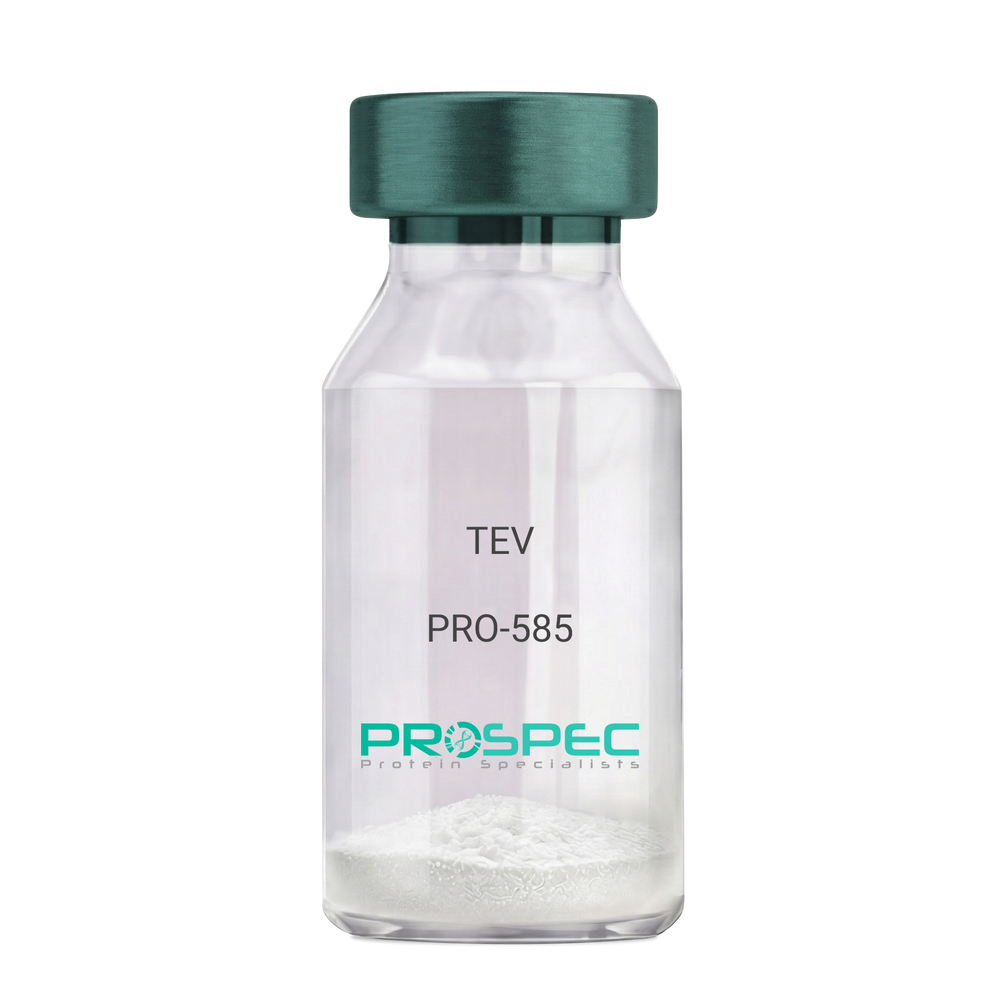
TEVDescription:
Tobacco Etch Virus Protease Recombinant
rTEV, TEV, P1 protease.
Product # :
PRO-585Price :
Quantity :
Shipping Method :
Shipped with Ice Packs
More Info
- description
- source
- formulation
- purity
- More Info
- Citations
Description
Recombinant TEV Protease (rTEV) is a site-specific protease purified from E. coli. The protease can be used for the removal of affinity tags from fusion proteins. The seven-amino-acid recognition site for rTEV is Glu-Asn-Leu-Tyr-Phe-Gln-Gly with cleavage occurring between Gln and Gly. The optimal temperature for cleavage is 30°C; however, the enzyme can be used at temperatures as low as 4°C. The rTEV contains His tag.The rTEV is purified by proprietary chromatographic techniques.
Source
Escherichia Coli.
Formulation
The rTEV contains 25mM Tris, Ph 8.0, 75mM NaCl, 5mM EDTA, 10mM GSH, 50% Glycerol.
Purity
Greater than 90.0% as determined by analysis by SDS-PAGE.
Citations
More Info
-
Introduction
TEV protease is the common name for the 27 kDa catalytic domain of the Nuclear Inclusion a (NIa) protein encoded by the tobacco etch virus (TEV). Because its sequence specificity is far more stringent than that of factor Xa, thrombin, or enterokinase, TEV protease is a very useful reagent for cleaving fusion proteins. TEV protease recognizes a linear epitope of the general form E-Xaa-Xaa-Y -Xaa-Q-(G/S), with cleavage occurring between Q and G or Q and S. The most commonly used sequence is ENLYFQG.
-
Synonyms
rTEV, TEV, P1 protease.
-
Physical Appearance
Sterile liquid formulation.
-
Stability
rTEV although stable at 4°C for 1 week, should be stored below -18°C. Please prevent freeze thaw cycles.
-
Cleavage Conditions
A number of variables can be changed to optimize the cleavage of any specific protein. The amount of rTEV, the temperature of the incubation, and the time needed for cleavage may be examined. If the protein of interest is heat-labile, then 4°C incubations are recommended. Reactions at 4°C will require longer incubation times and/or more rTEV.
-
Unit Definition
One unit is defined as the amount of enzyme needed to cleave 3 ug of fusion protein in 1 hour to 85 % completion at 30°C in a buffer containing 50 mM Tris-HCl, pH 8.0, 0.5 mM EDTA, and 1 mM DTT.
ProSpec's products are furnished for LABORATORY RESEARCH USE ONLY. The product may not be used as drugs, agricultural or pesticidal products, food additives or household chemicals.
- View Data Sheet
Name :
TirzepatideDescription:
Tirzepatide
Product # :
HOR-057Price :
Quantity :
Shipping Method :
Shipped at Room temp
More Info
- description
- formulation
- purity
- More Info
- Citations
Description
Tirzepatide is a synthetic single, non-glycosylated polypeptide chain containing 39 amino acids, having a molecular mass of 4813 Dalton and a Molecular formula of C187H291N45O59.
Formulation
The protein was lyophilized with no additives.
Purity
Greater than 97.0% as determined by analysis by RP-HPLC.
Citations
More Info
-
Physical Appearance
Sterile Filtered White lyophilized (freeze-dried) powder.
-
Stability
Lyophilized Tirzepatide although stable at room temperature for 3 weeks, should be stored desiccated below -18°C. Upon reconstitution Tirzepatide should be stored at 4°C between 2-7 days and for future use below -18°C.
For long term storage it is recommended to add a carrier protein (0.1% HSA or BSA).
Please prevent freeze-thaw cycles. -
Solubility
It is recommended to reconstitute the lyophilized Tirzepatide in sterile 18MΩ-cm H2O not less than 100 µg/ml, which can then be further diluted to other aqueous solutions.
-
Amino Acid Sequence
His-Ala-Glu-Gly-Thr-Phe-Thr-Ser-Asp-Tyr-Ser-Ile-Aib-Leu-Asp-Lys-Ile-Ala-Gln-Lys (Eicosanedioyl-isoGlu-PEG2-PEG2)-Ala-Phe-Val-Gln-Trp-Leu-Ile-Ala-Gly-Gly-Pro-Ser-Ser-Gly-Ala-Pro-Pro-Pro-Ser-NH2.
-
Background
Tirzepatide is a first-in-class dual glucose-dependent insulinotropic polypeptide and glucagon-like peptide-1 receptor agonist. Recent development suggests Tirzepatide as organ protection and systemic metabolic health while at first, it was only approved for Type 2 Diabetes and Chronic Weight Management. Preclinical data also indicates a promising future in neuroprotection and most likely to expand its clinical utility into neurodegenerative pathologies.
What is the molecular weight/Mw of TIRZEPATIDE Protein?
TIRZEPATIDE Protein has a total Mw of 4.8kDa.
What is the Purity of TIRZEPATIDE Protein?
TIRZEPATIDE Protein is >97% pure as determined by SDS-PAGE.
What is the Biological Activity of TIRZEPATIDE Protein?
The biological functionality of TIRZEPATIDE Protein will be determined in the future.
What is the amino acid sequence of TIRZEPATIDE Protein?
His-Ala-Glu-Gly-Thr-Phe-Thr-Ser-Asp-Tyr-Ser-Ile-Aib-Leu-Asp-Lys-Ile-Ala-Gln-Lys (Eicosanedioyl-isoGlu-PEG2-PEG2)-Ala-Phe-Val-Gln-Trp-Leu-Ile-Ala-Gly-Gly-Pro-Ser-Ser-Gly-Ala-Pro-Pro-Pro-Ser-NH2.
What applications can TIRZEPATIDE Protein be used in?
TIRZEPATIDE Protein can probably be used in western blot, ELISA and Lateral Flow.
What is the endotoxin level for TIRZEPATIDE Protein?
The endotoxin level is minimal, TIRZEPATIDE Protein was purified using conventional chromatography techniques.
Who supplies TIRZEPATIDE that is in stock and available to order?
ProSpec has the protein in stock and available for immediate delivery.
Where can I order bulk mg quantities of TIRZEPATIDE?
ProSpec supplies bulk mg quantities at affordable prices that meets research and academic budgets.
ProSpec's products are furnished for LABORATORY RESEARCH USE ONLY. The product may not be used as drugs, agricultural or pesticidal products, food additives or household chemicals.
- View Data Sheet
Name :
TNF a Human, Sf9Description:
Tumor Necrosis Factor-alpha Human Recombinant, Sf9
Tumor Necrosis Factor, TNFA, Tumor Necrosis Factor Ligand Superfamily Member 2, Cachectin, TNF-Alpha, TNFSF2, TNF-A, Tumor Necrosis Factor (TNF Superfamily, Member 2), Tumor Necrosis Factor-Alpha, TNF, Macrophage-Derived, TNF, Monocyte-Derived, TNF Superfamily, APC1 Protein, Member 2, DIF, Tumor necrosis factor.
Product # :
CYT-903Price :
Quantity :
Shipping Method :
Shipped with Ice Packs
More Info
- description
- source
- formulation
- purity
- biological activity
- More Info
- Citations
Description
TNF a produced in Sf9 Baculovirus cells is a single, glycosylated polypeptide chain containing 163 amino acids (77-233a.a.) and having a molecular mass of 18.1kDa. (Molecular size on SDS-PAGE will appear at approximately 18-28kDa). TNF a is expressed with a 6 amino acid His tag at C-Terminus and purified by proprietary chromatographic techniques.
Source
Sf9, Baculovirus cells.
Formulation
TNF a protein solution (1mg/ml) contains Phosphate Buffered Saline (pH 7.4) and 10% glycerol.
Purity
Greater than 90.0% as determined bySDS-PAGE.
Biological Activity
Measured in a cytotoxicity assay using L929 mouse fibrosarcoma cells in the presence of the metabolic inhibitor actinomycin D.The ED50 for this effect is ≤ 0.2 ng/ml.Citations
More Info
-
Introduction
Tumor necrosis factor is a cytokine involved in systemic inflammation and is a member of a group of cytokines that all stimulate the acute phase reaction. TNF is mainly secreted by macrophages.
TNF causes apoptotic cell death, cellular proliferation, differentiation, inflammation, tumorigenesis and viral replication, TNF is also involved in lipid metabolism, and coagulation. TNF's primary role is in the regulation of immune cells.
Dysregulation and, in particular, overproduction of TNF have been implicated in a variety of human diseases- autoimmune diseases, insulin resistance, and cancer. -
Synonyms
Tumor Necrosis Factor, TNFA, Tumor Necrosis Factor Ligand Superfamily Member 2, Cachectin, TNF-Alpha, TNFSF2, TNF-A, Tumor Necrosis Factor (TNF Superfamily, Member 2), Tumor Necrosis Factor-Alpha, TNF, Macrophage-Derived, TNF, Monocyte-Derived, TNF Superfamily, APC1 Protein, Member 2, DIF, Tumor necrosis factor.
-
Physical Appearance
Sterile Filtered clear solution.
-
Stability
Store at 4°C if entire vial will be used within 2-4 weeks. Store, frozen at -20°C for longer periods of time. For long term storage it is recommended to add a carrier protein (0.1% HSA or BSA).Please avoid freeze thaw cycles.
-
Amino Acid Sequence
VRSSSRTPSD KPVAHVVANP QAEGQLQWLN RRANALLANG VELRDNQLVV PSEGLYLIYS QVLFKGQGCP STHVLLTHTI SRIAVSYQTK VNLLSAIKSP CQRETPEGAE AKPWYEPIYL GGVFQLEKGD RLSAEINRPD YLDFAESGQV YFGIIALHHH HHH.
ProSpec's products are furnished for LABORATORY RESEARCH USE ONLY. The product may not be used as drugs, agricultural or pesticidal products, food additives or household chemicals.
- View Data Sheet
Name :
TNFAIP8 HumanDescription:
Tumor Necrosis Factor, Alpha-Induced Protein 8 Human Recombinant
GG2-1; MDC-3.13, SCC-S2, SCCS2, Tumor necrosis factor alpha-induced protein 8, TNF alpha-induced protein 8, Head and neck tumor and metastasis-related protein, NF-kappa-B-inducible DED-containing protein, NDED, TNF-induced protein GG2-1, TNFAIP8.
Product # :
CYT-759Price :
Quantity :
Shipping Method :
Shipped with Ice Packs
More Info
- description
- source
- formulation
- purity
- More Info
- Citations
Description
TNFAIP8 Human Recombinant produced in E.Coli is a single, non-glycosylated polypeptide chain containing 221 amino acids (1-198a.a.) and having a molecular mass of 25kDa. TNFAIP8 is fused to a 23 amino acid His-tag at N-terminus & purified by proprietary chromatographic techniques.
Source
Escherichia Coli.
Formulation
TNFAIP8 protein solution (0.25mg/ml) contains 20mM Tris-HCl buffer (pH 8.0), 0.15M NaCl, 10% glycerol and 1mM DTT.
Purity
Greater than 90% as determined by SDS-PAGE.
Citations
More Info
-
Introduction
TNFAIP8 which is a part of the TNFAIP8 family acts as a negative mediator of apoptosis and takes part in tumor progression. TNFAIP8 suppresses the TNF-mediated apoptosis by inhibiting caspase-8 activity but not the processing of procaspase-8, resulting in inhibition of BID cleavage and activation of caspase-3.
-
Synonyms
GG2-1; MDC-3.13, SCC-S2, SCCS2, Tumor necrosis factor alpha-induced protein 8, TNF alpha-induced protein 8, Head and neck tumor and metastasis-related protein, NF-kappa-B-inducible DED-containing protein, NDED, TNF-induced protein GG2-1, TNFAIP8.
-
Physical Appearance
Sterile filtered colorless solution.
-
Stability
Store at 4°C if entire vial will be used within 2-4 weeks. Store, frozen at -20°C for longer periods of time. For long term storage it is recommended to add a carrier protein (0.1% HSA or BSA).Avoid multiple freeze-thaw cycles.
-
Amino Acid Sequence
MGSSHHHHHH SSGLVPRGSH MGSMHSEAEE SKEVATDVFN SKNLAVQAQK KILGKMVSKS IATTLIDDTS SEVLDELYRV TREYTQNKKE AEKIIKNLIK TVIKLAILYR NNQFNQDELA LMEKFKKKVH QLAMTVVSFH QVDYTFDRNV LSRLLNECRE MLHQIIQRHL TAKSHGRVNN VFDHFSDCEF LAALYNPFGN FKPHLQKLCD GINKMLDEEN I.
ProSpec's products are furnished for LABORATORY RESEARCH USE ONLY. The product may not be used as drugs, agricultural or pesticidal products, food additives or household chemicals.
- View Data Sheet
Name :
tPA HumanDescription:
Tissue Plasminogen Activator Human Recombinant
Tissue-type plasminogen activator, EC 3.4.21.68, tPA, t-PA, t-plasminogen activator, TPA, T-PA, DKFZp686I03148.
Product # :
ENZ-263Price :
Quantity :
Shipping Method :
Shipped at Room temp
More Info
- description
- source
- formulation
- purity
- More Info
- Citations
Description
Tissue Plasminogen Activator Human Recombinant produced in CHO cells is a single, glycosylated polypeptide chain containing 527 amino acids and having a molecular mass of 59008.71 Dalton. tPA is a serine protease enzyme that converts plasminogen to plasmin. The tPA is purified by proprietary chromatographic techniques.
Source
Chinese Hamster Ovary Cells (CHO)
Formulation
Each mg of t-PA contains 1.7 gr L-arginine, 0.5 gr phosphoric acid and 4 mg tween 80.
Purity
Greater than 98.0% as determined by:
(a) Analysis by RP-HPLC.
(b) Analysis by SDS-PAGE.Citations
More Info
-
Introduction
Tissue plasminogen activator (abbreviated PLAT or tPA) is a secreted serine proteasewhich converts the proenzymeplasminogento plasmin, a fibrinolyticenzyme. Plasminogen is synthesized as a single chain which is cleaved by PLAT into the two chain disulfide linked plasmin.
This enzyme plays a role in cell migrationand tissue remodeling. Increased enzymatic activity causes hyperfibrinolysis, which manifests as excessive bleeding; decreased activity leads to hypofibrinolysiswhich can result in thrombosisor embolism. -
Synonyms
Tissue-type plasminogen activator, EC 3.4.21.68, tPA, t-PA, t-plasminogen activator, TPA, T-PA, DKFZp686I03148.
-
Physical Appearance
Sterile Filtered White lyophilized (freeze-dried) powder.
-
Stability
Lyophilized t-PA although stable at room temperature for 3 weeks, should be stored desiccated below -18°C. Upon reconstitution tPA should be stored at 4°C between 2-7 days and for future use below -18°C.For long term storage it is recommended to add a carrier protein (0.1% HSA or BSA).Please prevent freeze-thaw cycles.
-
Solubility
It is recommended to reconstitute the lyophilized t-PA in sterile 18MΩ-cm H2O not less than 100 µg/ml, which can then be further diluted to other aqueous solutions.
-
Enzymatic Activity
580,000 IU/mg.
ProSpec's products are furnished for LABORATORY RESEARCH USE ONLY. The product may not be used as drugs, agricultural or pesticidal products, food additives or household chemicals.
- View Data Sheet
Name :
TNF a Rat, HisDescription:
Tumor Necrosis Factor-alpha Rat Recombinant, His Tag
Tumor Necrosis Factor-alpha, TNF a His, Cachectin, TNF-alpha, Tumor necrosis factor ligand superfamily member 2, TNF-a, N-terminal fragment, NTF, Intracellular domain 1, Intracellular domain 2, ICD2, C-domain 1, C-domain 2, Tumor necrosis factor, soluble form, Tnfa, Tnfsf2, RATTNF, Tnfa.
Product # :
CYT-900Price :
Quantity :
Shipping Method :
Shipped with Ice Packs
More Info
- description
- source
- formulation
- purity
- More Info
- Citations
Description
TNF a Rat Recombinant produced in E.Coli is a single, non-glycosylated polypeptide chain containing 181 amino acids (80-235a.a.) and having a molecular mass of 19.9kDa.TNF a is fused to a 25 amino acid His-tag at N-terminus & purified by proprietary chromatographic techniques.
Source
Escherichia Coli.
Formulation
TNF a protein solution (1mg/ml) containing Phosphate Buffer Saline (pH7.4), 10% glycerol and 1mM DTT.
Purity
Greater than 90.0% as determined by analysis by SDS-PAGE.
Citations
More Info
-
Introduction
Tumor necrosis factor is a cytokine involved in systemic inflammation and is a member of a group of cytokines that all stimulate the acute phase reaction. TNF is mainly secreted by macrophages.
TNF causes apoptotic cell death, cellular proliferation, differentiation, inflammation, tumorigenesis and viral replication, TNF is also involved in lipid metabolism, and coagulation. TNF's primary role is in the regulation of immune cells.
Dysregulation and, in particular, overproduction of TNF have been implicated in a variety of human diseases- autoimmune diseases, insulin resistance, and cancer. -
Synonyms
Tumor Necrosis Factor-alpha, TNF a His, Cachectin, TNF-alpha, Tumor necrosis factor ligand superfamily member 2, TNF-a, N-terminal fragment, NTF, Intracellular domain 1, Intracellular domain 2, ICD2, C-domain 1, C-domain 2, Tumor necrosis factor, soluble form, Tnfa, Tnfsf2, RATTNF, Tnfa.
-
Physical Appearance
Sterile Filtered clear solution.
-
Stability
Store at 4°C if entire vial will be used within 2-4 weeks. Store, frozen at -20°C for longer periods of time. For long term storage it is recommended to add a carrier protein (0.1% HSA or BSA).Avoid multiple freeze-thaw cycles.
-
Amino Acid Sequence
MGSSHHHHHH SSGLVPRGSH MGSHMLRSSS QNSSDKPVAH VVANHQAEEQ LEWLSQRANA LLANGMDLKD NQLVVPADGL YLIYSQVLFK GQGCPDYVLL THTVSRFAIS YQEKVSLLSA IKSPCPKDTP EGAELKPWYE PMYLGGVFQL EKGDLLSAEV NLPKYLDITE SGQVYFGVIA L.
ProSpec's products are furnished for LABORATORY RESEARCH USE ONLY. The product may not be used as drugs, agricultural or pesticidal products, food additives or household chemicals.
- View Data Sheet
Name :
TNFSF14 HumanDescription:
LIGHT Human Recombinant
Tumor necrosis factor ligand superfamily member 14, CD258, Tnfsf14, Light
Product # :
CYT-1202Price :
Quantity :
Shipping Method :
Shipped with Ice Packs
More Info
- description
- source
- formulation
- purity
- More Info
- Citations
Description
Recombinant Human LIGHT (74-240 aa) having a Mw of 23kDa was purified from E. coli.The Recombinant Human LIGHT is purified by proprietary chromatographic technique.
Source
Escherichia Coli.
Formulation
TNFSF14 solution contains PBS & 25mM K2CO3.
Purity
Protein is >95% pure as determined by 10% PAGE (coomassie staining).
Citations
More Info
-
Introduction
TNFRSF14, a member of the TNF receptor superfamily, is a type I transmembrane protein. TNFRSF14 is expressed in peripheral blood T cells, B cells, monocytes and in various tissues enriched in lymphoid cells. TNFRSF14 operates as a co-stimulatory factor for the activation of lymphoid cells and as a deterrent to infection by herpesvirus. Additionally, TNFRSF14 encourages the proliferation of T cells, and triggers apoptosis of various tumor cells.
-
Synonyms
Tumor necrosis factor ligand superfamily member 14, CD258, Tnfsf14, Light
-
Physical Appearance
Sterile Filtered clear solution.
-
Stability
Store at 4°C if entire vial will be used within 2-4 weeks.Store, frozen at -20°C for longer periods of time.For long term storage it is recommended to add a carrier protein (0.1% HSA or BSA).Avoid multiple freeze-thaw cycles.
-
Amino Acid Sequence
DGPAGSWEQL IQERRSHEVN PAAHLTGANS SLTGSGGPLL WETQLGLAFL RGLSYHDGAL VVTKAGYYYI YSKVQLGGVG CPLGLASTIT HGLYKRTPRY PEELELLVSQ QSPCGRATSS SRVWWDSSFL GGVVHLEAGE KVVVRVLDER LVRLRDGTRS YFGAFMV
ProSpec's products are furnished for LABORATORY RESEARCH USE ONLY. The product may not be used as drugs, agricultural or pesticidal products, food additives or household chemicals.
- View Data Sheet
Name :
Aprotinin ProteinDescription:
Aprotinin
Pancreatic trypsin inhibitor, Basic protease inhibitor, BPI, BPTI, Aprotinin, AP.
Product # :
PRO-285Price :
Quantity :
Shipping Method :
Shipped at Room temp
More Info
- description
- source
- formulation
- More Info
- Citations
Description
Aprotinin is a natural proteinase inhibitor polypeptide consisting of fifty-eight amino acids {C284H432N84O79S7} arranged in a single polypeptide chain, cross-linked by three disulfide bridges and having a molecular mass of 6512.
Source
Bovine Lung.
Formulation
The protein (1mg/ml) was lyophilized with no additives.
Citations
More Info
-
Introduction
Aprotinin inhibits the activity of several proteolytic enzymes such as chymotrypsin, kallikrein, plasmin and trypsin. Aprotinin is present in blood and in most tissues, with a high concentration in lung. Aprotinin inhibits pro-inflammatory cytokine release and maintains glycoprotein homeostasis. In platelets, aprotinin reduces glycoprotein loss (e.g., GpIb, GpIIb/IIIa), while in granulocytes it prevents the expression of pro-inflammatory adhesive glycoproteins (e.g., CD11b).
-
Synonyms
Pancreatic trypsin inhibitor, Basic protease inhibitor, BPI, BPTI, Aprotinin, AP.
-
Physical Appearance
Sterile Filtered White lyophilized (freeze-dried) powder.
-
Stability
Lyophilized Aprotinin although stable at room temperature for 3 weeks, should be stored desiccated below -18°C. Upon reconstitution Aprotinin should be stored at 4°C between 2-7 days and for future use below -18°C.For long term storage it is recommended to add a carrier protein (0.1% HSA or BSA).Please prevent freeze-thaw cycles.
-
Solubility
It is recommended to reconstitute the lyophilized Aprotinin in sterile 18MΩ-cm H2O not less than 100µg/ml, which can then be further diluted to other aqueous solutions.
-
Specific Activity
5,940 KIU (Kallikrein Inactivator Units) per mg, 3.3 pH.Eur.U/mg.
ProSpec's products are furnished for LABORATORY RESEARCH USE ONLY. The product may not be used as drugs, agricultural or pesticidal products, food additives or household chemicals.
- View Data Sheet
Name :
TNNT3 HumanDescription:
Fast Skeletal Troponin T Human Recombinant
Troponin T, fast skeletal muscle, TnTf, Beta-TnTF, Fast skeletal muscle troponin T (fTnT).
Product # :
PRO-2792Price :
Quantity :
Shipping Method :
Shipped at Room temp
More Info
- description
- source
- formulation
- purity
- More Info
- Citations
Description
TNNT3 Human produced in E.Coli is a single, non-glycosylated polypeptide chain containing 261 a.a and having a molecular mass of 30964 Dalton.
Source
Escherichia Coli.
Formulation
TNNT3 was lyophilized in 0.01M HCl, pH 2.0.
Purity
Greater than 95.0% as determined by SDS-PAGE.
Citations
More Info
-
Synonyms
Troponin T, fast skeletal muscle, TnTf, Beta-TnTF, Fast skeletal muscle troponin T (fTnT).
-
Physical Appearance
Sterile Filtered White lyophilized (freeze-dried) powder.
-
Stability
Lyophilized Fast Skeletal Troponin T although stable at room temperature for 3 weeks, should be stored desiccated below -18°C. Upon reconstitution TNNT3 should be stored at 4°C between 2-7 days and for future use below -18°C. For long term storage it is recommended to add a carrier protein (0.1% HSA or BSA). Please prevent freeze-thaw cycles.
-
Solubility
It is recommended to reconstitute the lyophilized TNNT3 in buffer containing 0.01M HCl, pH 2.0 not less than 100µg/ml, which can then be further diluted to other aqueous solutions.
-
Background
Troponin T3 Fast Skeletal Type (TNNT3) is a pivotal protein in the regulation of muscle contraction, specifically in fast-twitch skeletal muscles. The TNNT3 human recombinant, a product of cutting-edge biotechnology, offers a powerful tool to delve into the intricate molecular characteristics and multifaceted roles of this essential protein. This research aims to shed light on the molecular intricacies of TNNT3 and explore its significance beyond muscle contraction.
At its core, TNNT3 plays a central role in the troponin complex, which orchestrates muscle contraction by modulating the interaction between actin and myosin filaments. This molecular complex regulates muscle contraction in response to calcium ions (Ca²⁺), a fundamental process underpinning skeletal muscle function. TNNT3, as a specific isoform of troponin T, contributes to the fine-tuning of muscle contractility.
The importance of TNNT3 extends beyond its role in muscle physiology. It is primarily expressed in fast-twitch skeletal muscles responsible for rapid, forceful movements, such as sprinting and jumping. Consequently, TNNT3 is critical for the precise control of fast muscle contractions, ensuring optimal performance during activities requiring speed and power.
Furthermore, TNNT3 has gained recognition for its potential relevance in various neuromuscular disorders. Mutations in the TNNT3 gene have been associated with congenital myopathies, highlighting its clinical significance. Investigating the structural and functional properties of TNNT3 can provide valuable insights into the molecular basis of these disorders and potentially pave the way for therapeutic interventions.
The TNNT3 human recombinant serves as a gateway to comprehending the intricacies of this protein's molecular functions and its potential applications beyond muscle contraction. Researchers can leverage this recombinant protein to unravel TNNT3's structural properties, interactions with other muscle proteins, and its implications in neuromuscular diseases.
This research endeavor aims to offer a comprehensive analysis of the TNNT3 human recombinant, emphasizing its molecular characteristics, functional roles in muscle contraction, and its relevance in the context of neuromuscular disorders. By exploring the multifaceted nature of TNNT3, we aspire to contribute to a deeper understanding of muscle biology and the potential development of novel therapeutic strategies.
ProSpec's products are furnished for LABORATORY RESEARCH USE ONLY. The product may not be used as drugs, agricultural or pesticidal products, food additives or household chemicals.
- View Data Sheet
Name :
STIP1 Human, HisDescription:
Stress-Induced-Phosphoprotein 1 Human Recombinant, His Tag
HOP, P60, STI1, STI1L, IEF-SSP-3521, STIP1, Stress-induced-phosphoprotein 1, Hsc70/Hsp90-organizing protein, Transformation-sensitive protein IEF SSP 3521, Renal carcinoma antigen NY-REN-11.
Product # :
PRO-753Price :
Quantity :
Shipping Method :
Shipped with Ice Packs
More Info
- description
- source
- formulation
- purity
- More Info
- Citations
Description
Recombinant Human STIP1 produced in E.Coli is a single, non-glycosylated polypeptide chain containing 563 amino acids (1-543 a.a) and having a molecular mass of 64.8kDa. STIP1 is fused to a 20 amino acid His-Tag at N-terminus and purified by conventional chromatography techniques.
Source
Escherichia Coli.
Formulation
The STIP1 protein solution (1mg/ml) contains 20mM Tris-HCl, pH-8, 1mM DTT, 1mM EDTA, 0.2mM PMSF and 20% Glycerol.
Purity
Greater than 90.0% as determined by SDS-PAGE.
Citations
More Info
-
Introduction
STIP1 is an adaptor protein that mediates the functions of HSP70 & HSP90 in protein folding. STIP1 supports the transfer of proteins from HSP70 to HSP90 by binding together HSP90 and substrate-bound HSP70. STIP1 stimulates the ATPase activity of HSP70 and inhibits the ATPase activity of HSP90, suggesting that it regulates both the conformations and ATPase cycles of these chaperones. STIP1 genetic variations are involved in regulating corticosteroid response in asthmatic subjects with reduced lung function.
-
Synonyms
HOP, P60, STI1, STI1L, IEF-SSP-3521, STIP1, Stress-induced-phosphoprotein 1, Hsc70/Hsp90-organizing protein, Transformation-sensitive protein IEF SSP 3521, Renal carcinoma antigen NY-REN-11.
-
Physical Appearance
Sterile filtered colorless solution.
-
Stability
Store at 4°C if entire vial will be used within 2-4 weeks. Store, frozen at -20°C for longer periods of time. For long term storage it is recommended to add a carrier protein (0.1% HSA or BSA). Avoid multiple freeze-thaw cycles.
-
Amino Acid Sequence
MGSSHHHHHH SSGLVPRGSH MEQVNELKEK GNKALSVGNI DDALQCYSEA IKLDPHNHVL YSNRSAAYAK KGDYQKAYED GCKTVDLKPDWGKGYSRKAA ALEFLNRFEE AKRTYEEGLK HEANNPQLKE GLQNMEARLA ERKFMNPFNM PNLYQKLESD PRTRTLLSDP TYRELIEQLRNKPSDLGTKL QDPRIMTTLS VLLGVDLGSM DEEEEIATPP PPPPPKKETK PEPMEEDLPE NKKQALKEKE LGNDAYKKKD FDTALKHYDKAKELDPTNMT YITNQAAVYF EKGDYNKCRE LCEKAIEVGR ENREDYRQIA KAYARIGNSY FKEEKYKDAI HFYNKSLAEH TPDVLKKCQQAEKILKEQE RLAYINPDLA LEEKNKGNEC FQKGDYPQAM KHYTEAIKRN PKDAKLYSNR AACYTKLLEF QLALKDCEEC QLEPTFIKGYTRKAAALEA MKDYTKAMDV YQKALDLDSS CKEAADGYQR CMMAQYNRHD SPEDVKRRAM ADPEVQQIMS DPAMRLILEQ MQKDPQALSE HLKNPVIAQK IQKLMDVGLI AIR.
ProSpec's products are furnished for LABORATORY RESEARCH USE ONLY. The product may not be used as drugs, agricultural or pesticidal products, food additives or household chemicals.
- View Data Sheet
Name :
TIMP1 RatDescription:
Tissue Inhibitor of Metalloprotease 1 Rat Recombinant
Metalloproteinase inhibitor 1, Tissue inhibitor of metalloproteinases 1, TIMP-1, TIMP1.
Product # :
ENZ-922Price :
Quantity :
Shipping Method :
Shipped with Ice Packs
More Info
- description
- source
- formulation
- purity
- More Info
- Citations
Description
TIMP1 produced in Sf9 Baculovirus cells is a single, glycosylated polypeptide chain (24-217 a.a.) and fused to a 6 aa His Tag at C-terminus containing a total of 200 amino acids and having a molecular mass of 22.3kDa.TIMP1 Ligand shows multiple bands between 18-28kDa on SDS-PAGE, reducing conditions and purified by proprietary chromatographic techniques.
Source
Sf9, Baculovirus cells.
Formulation
TIMP1 Ligand protein solution (0.5mg/ml) contains Phosphate buffered saline (pH7.4) and 10% glycerol.
Purity
Greater than 90.0% as determined by SDS-PAGE.
Citations
More Info
-
Introduction
TIMP1 is a member of the TIMP family. TIMP1 is an inducible glycoprotein produced by various cell types. The TIMP1 glycoprotein is a natural inhibitor of the matrix metalloproteinases, which a group of peptidases involved in degradation of the extracellular matrix. TIMP1 binds in a reversible mode to MMPs, with regions in the N-terminal domain binding to the MMP substrate-binding site. On top of its inhibitory function against most of the known MMPs, TIMP1 is able to promote cell proliferation in a broad range of cell types, and may also have an anti-apoptotic role. Furthermore, TIMP1 has erthyroid-potentiating activity via translocation to the nucleus and also inhibits apoptosis in B-cells.
The TIMP1 gene is situated within intron 6 of the synapsin I gene and is transcribed in the opposite direction. TIMP1 activity is dependent on the existence of disulfide bonds.
TIMP1 transcription is extremely inducible in reaction to many cytokines and hormones.
Increased TIMP1 levels are connected with squamous cell laryngeal carcinoma. TIMP1 overexpression is linked to gastric cancer. -
Synonyms
Metalloproteinase inhibitor 1, Tissue inhibitor of metalloproteinases 1, TIMP-1, TIMP1.
-
Physical Appearance
Sterile filtered colorless solution.
-
Stability
Store at 4°C if entire vial will be used within 2-4 weeks. Store, frozen at -20°C for longer periods of time. For long term storage it is recommended to add a carrier protein (0.1% HSA or BSA).Avoid multiple freeze-thaw cycles.
-
Amino Acid Sequence
CSCAPTHPQT AFCNSDLVIR AKFMGSPEII ETTLYQRYEI KMTKMLKGFD AVGNATGFRF AYTPAMESLC GYVHKSQNRS EEFLIAGRLR NGNLHITACS FLVPWHNLSP AQQKAFVKTY SAGCGVCTVF PCSAIPCKLE SDSHCLWTDQ ILMGSEKGYQ SDHFACLPRN PDLCTWQYLG VSMTRSLPLA KAEAHHHHHH
ProSpec's products are furnished for LABORATORY RESEARCH USE ONLY. The product may not be used as drugs, agricultural or pesticidal products, food additives or household chemicals.
- View Data Sheet
Name :
TXNRD1 Human 161-649 a.a.Description:
Thioredoxin Reductase 1 161-649 a.a. Human Recombinant
Thioredoxin reductase 1 cytoplasmic, TR, Gene associated with retinoic and interferon-induced mortality 12 protein, GRIM-12, Gene associated with retinoic and IFN-induced mortality 12 protein, KM-102-derived reductase-like factor, Thioredoxin reductase TR1, TXNRD1, GRIM12, KDRF, TR1, TXNR, TRXR1, MGC9145.
Product # :
ENZ-042Price :
Quantity :
Shipping Method :
Shipped with Ice Packs
More Info
- description
- source
- formulation
- purity
- More Info
- Citations
Description
TXNRD1 Human Recombinant fused with a 21 amino acid His tag at N-terminus produced in E.Coli is a single, non-glycosylated, polypeptide chain containing 510 amino acids (161-649 a.a.) and having a molecular mass of 55.9kDa. The TXNRD1 is purified by proprietary chromatographic techniques.
Source
Escherichia Coli.
Formulation
The TXNRD1 solution (1 mg/ml) contains 20mM Tris-HCl buffer (pH8.0) and 10% Glycerol.
Purity
Greater than 90.0% as determined by SDS-PAGE.
Citations
More Info
-
Introduction
TXNRD1 belongs to the selenium-containing pyridine nucleotide-disulphide oxidoreductase family, which has a conserved catalytic site of Cys-Val-Asn-Val-Gly-Cys. TXNRD1 decreases thioredoxins as well as other substrates, and participates in selenium metabolism and protection against oxidative stress. Inhibition of TXNRD1 activity serves as a potential treatment for cancer, AIDS and other autoimmune diseases as well as bacterial infections and parasitic diseases.
-
Synonyms
Thioredoxin reductase 1 cytoplasmic, TR, Gene associated with retinoic and interferon-induced mortality 12 protein, GRIM-12, Gene associated with retinoic and IFN-induced mortality 12 protein, KM-102-derived reductase-like factor, Thioredoxin reductase TR1, TXNRD1, GRIM12, KDRF, TR1, TXNR, TRXR1, MGC9145.
-
Physical Appearance
Sterile Filtered colorless solution.
-
Stability
Store at 4°C if entire vial will be used within 2-4 weeks. Store, frozen at -20°C for longer periods of time. For long term storage it is recommended to add a carrier protein (0.1% HSA or BSA).Avoid multiple freeze-thaw cycles.
-
Amino Acid Sequence
MGSSHHHHHH SSGLVPRGSH MYDYDLIIIG GGSGGLAAAK EAAQYGKKVM VLDFVTPTPL GTRWGLGGTC VNVGCIPKKL MHQAALLGQA LQDSRNYGWK VEETVKHDWD RMIEAVQNHI GSLNWGYRVA LREKKVVYEN AYGQFIGPHR IKATNNKGKE KIYSAERFLI ATGERPRYLG IPGDKEYCIS SDDLFSLPYC PGKTLVVGAS YVALECAGFL AGIGLDVTVM VRSILLRGFD QDMANKIGEH MEEHGIKFIR QFVPIKVEQI EAGTPGRLRV VAQSTNSEEI IEGEYNTVML AIGRDACTRK IGLETVGVKI NEKTGKIPVT DEEQTNVPYI YAIGDILEDK VELTPVAIQA GRLLAQRLYA GSTVKCDYEN VPTTVFTPLE YGACGLSEEK AVEKFGEENI EVYHSYFWPL EWTIPSRDNN KCYAKIICNT KDNERVVGFH VLGPNAGEVT QGFAAALKCG LTKKQLDSTI GIHPVCAEVF TTLSVTKRSG ASILQAGCCG.
ProSpec's products are furnished for LABORATORY RESEARCH USE ONLY. The product may not be used as drugs, agricultural or pesticidal products, food additives or household chemicals.