Skip to content

High-quality research proteins.

  • 1-800-805-6531

  • Mon - Sat 8.00-18.00, Sun - Closed

  • info@prospecbio.com

  • PO Box 6591 East Brunswick NJ 08816

  • Products
    • Cytokines
    • Growth factors
    • Chemokines
    • Cd antigens
    • Neurotrophins
    • Hormones
    • Enzymes
    • Viral antigens
    • Recombinant proteins
    • Natural proteins
    • Monoclonal antibodies
    • Polyclonal antibodies
    • Thermal Packaging
  • About
    • Company
    • Founder
    • Contribution
  • Customers
    • Eastern Asia
    • Eastern Europe
    • North America
    • South America
    • South East Asia
    • Southern Asia
    • Western Europe
  • Ordering
    • Ordering Method
    • Ordering - Credit Card
    • Ordering - PO
    • Shipping Fees
    • FAQs
  • Services
    • DNA Cloning
    • Protein Expression
    • Monoclonal Antibody
    • Fermentation
    • Technology License
  • Contact us
Log in

Country/region

  • USD $ | Albania
  • USD $ | Andorra
  • USD $ | Argentina
  • USD $ | Armenia
  • USD $ | Australia
  • USD $ | Austria
  • USD $ | Azerbaijan
  • USD $ | Belarus
  • USD $ | Belgium
  • USD $ | Bolivia
  • USD $ | Brazil
  • USD $ | Bulgaria
  • USD $ | Cambodia
  • USD $ | Canada
  • USD $ | Chile
  • USD $ | China
  • USD $ | Colombia
  • USD $ | Costa Rica
  • USD $ | Croatia
  • USD $ | Cyprus
  • USD $ | Czechia
  • USD $ | Denmark
  • USD $ | Estonia
  • USD $ | Finland
  • USD $ | France
  • USD $ | Georgia
  • USD $ | Germany
  • USD $ | Greece
  • USD $ | Hong Kong SAR
  • USD $ | Hungary
  • USD $ | Iceland
  • USD $ | India
  • USD $ | Ireland
  • USD $ | Israel
  • USD $ | Italy
  • USD $ | Japan
  • USD $ | Kazakhstan
  • USD $ | Latvia
  • USD $ | Liechtenstein
  • USD $ | Lithuania
  • USD $ | Madagascar
  • USD $ | Malta
  • USD $ | Mexico
  • USD $ | Moldova
  • USD $ | Monaco
  • USD $ | Netherlands
  • USD $ | New Zealand
  • USD $ | North Macedonia
  • USD $ | Norway
  • USD $ | Panama
  • USD $ | Paraguay
  • USD $ | Peru
  • USD $ | Philippines
  • USD $ | Poland
  • USD $ | Portugal
  • USD $ | Romania
  • USD $ | Singapore
  • USD $ | Slovakia
  • USD $ | Slovenia
  • USD $ | South Africa
  • USD $ | South Korea
  • USD $ | Spain
  • USD $ | Sri Lanka
  • USD $ | Sweden
  • USD $ | Switzerland
  • USD $ | Taiwan
  • USD $ | Thailand
  • USD $ | Türkiye
  • USD $ | Ukraine
  • USD $ | United Kingdom
  • USD $ | United States
  • USD $ | Uruguay
  • USD $ | Vatican City
  • USD $ | Venezuela
  • USD $ | Vietnam
  • Facebook
  • Instagram
logoProSpec - Recombinant Protein Manufacturer for academic and R&D industry
Become a distributor
Account Log in
Wishlist
Cart Cart(0)
  • Products
    +
    • Cytokines
    • Growth factors
    • Chemokines
    • Cd antigens
    • Neurotrophins
    • Hormones
    • Enzymes
    • Viral antigens
    • Recombinant proteins
    • Natural proteins
    • Monoclonal antibodies
    • Polyclonal antibodies
    • Thermal Packaging
  • About
    +
    • Company
    • Founder
    • Contribution
  • Customers
    +
    • Eastern Asia
    • Eastern Europe
    • North America
    • South America
    • South East Asia
    • Southern Asia
    • Western Europe
  • Ordering
    +
    • Ordering Method
    • Ordering - Credit Card
    • Ordering - PO
    • Shipping Fees
    • FAQs
  • Services
    +
    • DNA Cloning
    • Protein Expression
    • Monoclonal Antibody
    • Fermentation
    • Technology License
  • Contact us

Item added to your cart

View cart
View All
  • Cytokines
  • Growth factors
  • Chemokines
  • Cd antigens
  • Neurotrophins
  • Hormones
  • Enzymes
  • Viral antigens
  • Recombinant proteins
  • Natural proteins
  • Monoclonal antibodies
  • Polyclonal antibodies
  • Thermal Packaging
  • Tumor Necrosis Factor

    Tumor Necrosis Factor

    View All
  • 4-1BB

    4-1BB

    View All
  • Adiponectin

    Adiponectin

    View All
  • AIF1

    AIF1

    View All
  • Other Cytokines

    Other Cytokines

    View All
  • AITRL

    AITRL

    View All
  • Angiopoietin

    Angiopoietin

    View All
  • Apolipoprotein

    Apolipoprotein

    View All
  • B-Cell Activating Factor

    B-Cell Activating Factor

    View All
  • Beta Defensin

    Beta Defensin

    View All
  • Bone Morphogenetic Protein

    Bone Morphogenetic Protein

    View All
  • B type Natriuretic Peptide

    B type Natriuretic Peptide

    View All
  • BST

    BST

    View All
  • Betacellulin

    Betacellulin

    View All
  • Cardiotrophin

    Cardiotrophin

    View All
  • Activin

    Activin

    View All
  • Fibroblast Growth Factor

    Fibroblast Growth Factor

    View All
  • Other Growth Factors

    Other Growth Factors

    View All
  • CSF

    CSF

    View All
  • CTGF

    CTGF

    View All
  • IGFBP

    IGFBP

    View All
  • VEGF Protein

    VEGF Protein

    View All
  • EGF

    EGF

    View All
  • Epigen

    Epigen

    View All
  • Erythropoietin

    Erythropoietin

    View All
  • Insulin-Like Growth Factor

    Insulin-Like Growth Factor

    View All
  • Growth Hormone

    Growth Hormone

    View All
  • HDGF

    HDGF

    View All
  • Hepatocyte Growth Factor

    Hepatocyte Growth Factor

    View All
  • Insulin

    Insulin

    View All
  • BCA-1/ BLC (CXCL13)

    BCA-1/ BLC (CXCL13)

    View All
  • BRAK (CXCL14)

    BRAK (CXCL14)

    View All
  • C-10 (CCL6)

    C-10 (CCL6)

    View All
  • Other Chemokines

    Other Chemokines

    View All
  • MEC (CCL28)

    MEC (CCL28)

    View All
  • LD78-beta (CCL3L1)

    LD78-beta (CCL3L1)

    View All
  • CTACK (CCL27)

    CTACK (CCL27)

    View All
  • CXCL16

    CXCL16

    View All
  • CXCL17

    CXCL17

    View All
  • Platelet Factor-4 (CXCL4)

    Platelet Factor-4 (CXCL4)

    View All
  • ENA-78 (CXCL5)

    ENA-78 (CXCL5)

    View All
  • Eotaxin (CCL11,24,26)

    Eotaxin (CCL11,24,26)

    View All
  • Exodus-2 (CCL21)

    Exodus-2 (CCL21)

    View All
  • Fractalkine (CX3CL1)

    Fractalkine (CX3CL1)

    View All
  • CXCL6

    CXCL6

    View All
  • Other CD Antigens

    Other CD Antigens

    View All
  • CD14

    CD14

    View All
  • CD164

    CD164

    View All
  • CD1

    CD1

    View All
  • CD2

    CD2

    View All
  • CD200

    CD200

    View All
  • CD207

    CD207

    View All
  • CD226

    CD226

    View All
  • CD23

    CD23

    View All
  • CD244

    CD244

    View All
  • CD247

    CD247

    View All
  • CD27

    CD27

    View All
  • CD274

    CD274

    View All
  • CD300

    CD300

    View All
  • CD33

    CD33

    View All
  • Other Neurotrophins

    Other Neurotrophins

    View All
  • Beta-NGF

    Beta-NGF

    View All
  • BDNF

    BDNF

    View All
  • CDNF

    CDNF

    View All
  • CNTF

    CNTF

    View All
  • GDNF

    GDNF

    View All
  • Glia Maturation Factor

    Glia Maturation Factor

    View All
  • MANF

    MANF

    View All
  • Midkine

    Midkine

    View All
  • Neuroglobin

    Neuroglobin

    View All
  • Neurotrophic factors

    Neurotrophic factors

    View All
  • Neuregulin

    Neuregulin

    View All
  • Neuropilin

    Neuropilin

    View All
  • Pigment Epithelium-Derived Factor

    Pigment Epithelium-Derived Factor

    View All
  • Pleiotrophin

    Pleiotrophin

    View All
  • Peptide Hormones

    Peptide Hormones

    View All
  • Other Hormones

    Other Hormones

    View All
  • HCG

    HCG

    View All
  • Endothelin

    Endothelin

    View All
  • Exendin

    Exendin

    View All
  • FSH

    FSH

    View All
  • Glucagon

    Glucagon

    View All
  • GHRP

    GHRP

    View All
  • GLP

    GLP

    View All
  • Thyrostimulin

    Thyrostimulin

    View All
  • Inhibin A

    Inhibin A

    View All
  • LHRH

    LHRH

    View All
  • Melanotan

    Melanotan

    View All
  • Procalcitonin

    Procalcitonin

    View All
  • PTH

    PTH

    View All
  • Peroxiredoxin

    Peroxiredoxin

    View All
  • Peptidase

    Peptidase

    View All
  • Synthetase

    Synthetase

    View All
  • Transferase

    Transferase

    View All
  • Hydrolase

    Hydrolase

    View All
  • Dehydrogenase

    Dehydrogenase

    View All
  • ACE2

    ACE2

    View All
  • Esterase

    Esterase

    View All
  • Protein Kinases

    Protein Kinases

    View All
  • Other Enzymes

    Other Enzymes

    View All
  • Phosphatase

    Phosphatase

    View All
  • Deaminase

    Deaminase

    View All
  • Oxygenase

    Oxygenase

    View All
  • Adenylate Kinase

    Adenylate Kinase

    View All
  • Lyase

    Lyase

    View All
  • Chagas

    Chagas

    View All
  • SARS

    SARS

    View All
  • Influenza

    Influenza

    View All
  • ASFV

    ASFV

    View All
  • Astrovirus

    Astrovirus

    View All
  • Borrelia

    Borrelia

    View All
  • Helicobacter Pylori

    Helicobacter Pylori

    View All
  • Chikungunya

    Chikungunya

    View All
  • Chlamydia

    Chlamydia

    View All
  • Cytomegalo

    Cytomegalo

    View All
  • Dengue

    Dengue

    View All
  • EBV

    EBV

    View All
  • Ebola

    Ebola

    View All
  • Feline Leukemia Virus

    Feline Leukemia Virus

    View All
  • Hepatitis A

    Hepatitis A

    View All
  • Other

    Other

    View All
  • Actin

    Actin

    View All
  • ADAM

    ADAM

    View All
  • Complement Component

    Complement Component

    View All
  • Ag85

    Ag85

    View All
  • Eukaryotic Translation Initiation Factor

    Eukaryotic Translation Initiation Factor

    View All
  • Anterior Gradient Protein

    Anterior Gradient Protein

    View All
  • Heat Shock Protein

    Heat Shock Protein

    View All
  • Alpha-2-HS-Glycoprotein

    Alpha-2-HS-Glycoprotein

    View All
  • Hemoglobin

    Hemoglobin

    View All
  • Allergy

    Allergy

    View All
  • Anaplasma

    Anaplasma

    View All
  • Angiogenin

    Angiogenin

    View All
  • Ankyrin Repeat Domain

    Ankyrin Repeat Domain

    View All
  • Annexin

    Annexin

    View All
  • Other Natural Proteins

    Other Natural Proteins

    View All
  • Aprotinin

    Aprotinin

    View All
  • Transferrin

    Transferrin

    View All
  • Avidin

    Avidin

    View All
  • Anti Coagulation Factors

    Anti Coagulation Factors

    View All
  • Natural Albumin

    Natural Albumin

    View All
  • Natural Coagulation Factors

    Natural Coagulation Factors

    View All
  • Fibronectin

    Fibronectin

    View All
  • Thrombin

    Thrombin

    View All
  • Anti Human Enzyme

    Anti Human Enzyme

    View All
  • Other Monoclonal Antibodies

    Other Monoclonal Antibodies

    View All
  • Anti Human Cytokine

    Anti Human Cytokine

    View All
  • Anti Human Heat Shock Protein

    Anti Human Heat Shock Protein

    View All
  • Anti Mouse Lymphocyte

    Anti Mouse Lymphocyte

    View All
  • Anti Human Chemokine

    Anti Human Chemokine

    View All
  • Anti Human Lymphocyte

    Anti Human Lymphocyte

    View All
  • Anti Viral Monoclonal

    Anti Viral Monoclonal

    View All
  • Anti Mouse Cytokine

    Anti Mouse Cytokine

    View All
  • Anti-GST Monoclonal

    Anti-GST Monoclonal

    View All
  • Other Polyclonal Antibodies

    Other Polyclonal Antibodies

    View All
  • Anti Viral

    Anti Viral

    View All
  • Anti-GST Monoclonal

    Anti-GST Monoclonal

    View All
Back

Search results

1000 results found for “Phosphatase”

Name

Description

Product #

Price

Quantity

Shipping Method

  • View Data Sheet

    Name :

    PARP1 Human

    Description:

    Poly (ADP-Ribose) Polymerase 1 Human Recombinant

    ADPRT, ADPRT1, pADPRT, pADPRT-1, PARP, PARP-1, PPOL, Poly [ADP-ribose] polymerase 1, NAD(+) ADP-ribosyltransferase 1, Poly[ADP-ribose] synthase 1, PARP1.

    Product # :

    ENZ-477

    Price :

    Quantity :

    Shipping Method :

    Ice Icon

    Shipped with Ice Packs

    Add To Cart

    More Info

    • description
    • source
    • formulation
    • purity
    • More Info
    • Citations

    Description

    PARP1 Human Recombinant produced in E.Coli is a single, non-glycosylated, polypeptide chain containing 354 amino acids (662-1014a.a.) and having a molecular mass of 39.6 kDa. PARP1 is purified by proprietary chromatographic techniques.

    Source

    Escherichia Coli.

    Formulation

    PARP1 solution containing 20mM Tris pH-8, 1mM DTT and 10% glycerol.

    Purity

    Greater than 95% as determined by SDS-PAGE.

    Citations

    More Info

    • Introduction

      PARP1 takes part in the base excision repair pathway, by catalyzing the poly ADP-ribosyl of a restricted number of acceptor proteins involved in chromatin architecture and in DNA metabolism.. PARP1 mediates the poly ADP-ribosy of APLF and CHFR. PARP1 positively regulates the transcription of MTUS1 and negatively regulates the transcription of MTUS2/TIP150. PARP1 is a chromatin-associated enzyme, poly (ADP-ribosyl) transferase, which modifies various nuclear proteins by poly ADP-ribosyl. PARP1 takes part in the regulation of various significant cellular processes such as differentiation, proliferation, and tumor transformation and also in the regulation of the molecular events involved in the recovery of cell from DNA damage. PARP1 is a site of mutation in Fanconi anemia, and is involved in the pathophysiology of type I diabetes.

    • Synonyms

      ADPRT, ADPRT1, pADPRT, pADPRT-1, PARP, PARP-1, PPOL, Poly [ADP-ribose] polymerase 1, NAD(+) ADP-ribosyltransferase 1, Poly[ADP-ribose] synthase 1, PARP1.

    • Physical Appearance

      Sterile filtered colorless solution.

    • Stability

      Store at 4°C if entire vial will be used within 2-4 weeks. Store, frozen at -20°C for longer periods of time. For long term storage it is recommended to add a carrier protein (0.1% HSA or BSA).Avoid multiple freeze-thaw cycles.

    • Amino Acid Sequence

      MKSKLPKPVQ DLIKMIFDVE SMKKAMVEYE IDLQKMPLGK LSKRQIQAAY SILSEVQQAV SQGSSDSQIL DLSNRFYTLI PHDFGMKKPP LLNNADSVQA KAEMLDNLLD IEVAYSLLRG GSDDSSKDPI DVNYEKLKTD IKVVDRDSEE AEIIRKYVKN THATTHNAYD LEVIDIFKIE REGECQRYKP FKQLHNRRLL WHGSRTTNFA GILSQGLRIA PPEAPVTGYM FGKGIYFADM VSKSANYCHT SQGDPIGLIL LGEVALGNMY ELKHASHISK LPKGKHSVKG LGKTTPDPSA NISLDGVDVP LGTGISSGVN DTSLLYNEYI VYDIAQVNLK YLLKLKFNFK TSLW.

    ProSpec's products are furnished for LABORATORY RESEARCH USE ONLY. The product may not be used as drugs, agricultural or pesticidal products, food additives or household chemicals.

    Parp1 Human
  • View Data Sheet

    Name :

    PGPEP1 Human

    Description:

    Pyroglutamyl-Peptidase I Human Recombinant

    Pyroglutamyl-peptidase 1, EC 3.4.19.3, 5-oxoprolyl-peptidase, Pyroglutamyl aminopeptidase I, PAP-I, Pyroglutamyl-peptidase I, PGP-I, Pyrrolidone-carboxylate peptidase, PGPEP1, PGPI, PGP, Pcp.

    Product # :

    ENZ-672

    Price :

    Quantity :

    Shipping Method :

    Ice Icon

    Shipped with Ice Packs

    Add To Cart

    More Info

    • description
    • source
    • formulation
    • purity
    • More Info
    • Citations

    Description

    PGPEP1 Human Recombinant produced in E.coli is a single, non-glycosylated polypeptide chain containing 232 amino acids (1-209) and having a molecular mass of 25.5kDa.PGPEP1 is fused to a 23 amino acid His-tag at N-terminus & purified by proprietary chromatographic techniques.

    Source

    Escherichia Coli.

    Formulation

    The PGPEP1 solution (1mg/ml) contains 20mM Tris-HCl buffer (pH 8.0), 0.15M NaCl, 20% glycerol and 1mM DTT.

    Purity

    Greater than 95.0% as determined by SDS-PAGE.

    Citations

    More Info

    • Introduction

      Pyroglutamyl-Peptidase I (PGPEP1) is an omega peptidase which detaches pyroglutamyl residues from the amino termini of peptides and proteins. PGPEP1 is a cytosolic cysteine peptidase which is expressed in most cell types. PGPEP1 enzyme has need of s a thiol-reducing agent for activity. PGPEP1 is possibly involved in the inactivation of biologically active peptides which have an amino terminal pyroglutamyl group, for instance peptides as neurotensin, luteinizing hormone releasing hormone, and thyrotropinreleasing hormone.

    • Synonyms

      Pyroglutamyl-peptidase 1, EC 3.4.19.3, 5-oxoprolyl-peptidase, Pyroglutamyl aminopeptidase I, PAP-I, Pyroglutamyl-peptidase I, PGP-I, Pyrrolidone-carboxylate peptidase, PGPEP1, PGPI, PGP, Pcp.

    • Physical Appearance

      Sterile filtered colorless solution.

    • Stability

      Store at 4°C if entire vial will be used within 2-4 weeks. Store, frozen at -20°C for longer periods of time. For long term storage it is recommended to add a carrier protein (0.1% HSA or BSA).Avoid multiple freeze-thaw cycles.

    • Amino Acid Sequence

      MGSSHHHHHH SSGLVPRGSH MGSMEQPRKA VVVTGFGPFG EHTVNASWIA VQELEKLGLG DSVDLHVYEI PVEYQTVQRL IPALWEKHSP QLVVHVGVSG MATTVTLEKC GHNKGYKGLD NCRFCPGSQC CVEDGPESID SIIDMDAVCK RVTTLGLDVS VTISQDAGRY LCDFTYYTSL YQSHGRSAFV HVPPLGKPYN ADQLGRALRA IIEEMLDLLE QSEGKINYCH KH.

    ProSpec's products are furnished for LABORATORY RESEARCH USE ONLY. The product may not be used as drugs, agricultural or pesticidal products, food additives or household chemicals.

    Pgpep1 Human
  • View Data Sheet

    Name :

    GUK1 Human

    Description:

    Guanylate Kinase 1 Human Recombinant

    GMK, GMP kinase.

    Product # :

    PKA-266

    Price :

    Quantity :

    Shipping Method :

    Ice Icon

    Shipped with Ice Packs

    Add To Cart

    More Info

    • description
    • source
    • formulation
    • purity
    • More Info
    • Citations

    Description

    GUK1 Human Recombinant produced in E.Coli is a single, non-glycosylated, polypeptide chain containing 217 amino acids (1-197 a.a.)and having a total molecular mass of 23.9 kDa. GUK1 is fused to a 20 amino acid His Tag at N-terminus and is purified by proprietary chromatographic techniques.

    Source

    Escherichia Coli.

    Formulation

    The GUK1 1mg/ml protein solution contains 20mM Tris-HCl pH-8, 1mM DTT, 0.1M NaCl and 10% Glycerol.

    Purity

    Greater than 90.0% as determined by SDS-PAGE.

    Citations

    More Info

    • Introduction

      GUK1 is part of the guanylate kinase family. GUK1 occurs as a monomer that catalyzes the ATP-dependent conversion of GMP to GDP, thus takes an important part in the recycling of GMP. Through its catalytic activity, GUK1 functions in regulation of the supply of guanine nucleotides to signal transduction pathways. GUK1 overexpression is related with pituitary adenocarcinomas, implicating that GUK1 is has a role in tumorigenesis.

    • Synonyms

      GMK, GMP kinase.

    • Physical Appearance

      Sterile Filtered colorless clear solution.

    • Stability

      Store at 4°C if entire vial will be used within 2-4 weeks. Store, frozen at -20°C for longer periods of time. For long term storage it is recommended to add a carrier protein (0.1% HSA or BSA).Please avoid freeze thaw cycles.

    • Amino Acid Sequence

      MGSSHHHHHH SSGLVPRGSH MSGPRPVVLS GPSGAGKSTL LKRLLQEHSG IFGFSVSHTT RNPRPGEENG KDYYFVTREV MQRDIAAGDF IEHAEFSGNL YGTSKVAVQA VQAMNRICVL DVDLQGVRNI KATDLRPIYI SVQPPSLHVL EQRLRQRNTE TEESLVKRLA AAQADMESSK EPGLFDVVII NDSLDQAYAE LKEALSEEIK KAQRTGA.

    ProSpec's products are furnished for LABORATORY RESEARCH USE ONLY. The product may not be used as drugs, agricultural or pesticidal products, food additives or household chemicals.

    Guk1 Human
  • View Data Sheet

    Name :

    MMP14 Human

    Description:

    Matrix Metalloproteinase-14 Recombinant Human

    Matrix Metallopeptidase 14, Matrix Metallopeptidase 14 (Membrane-Inserted), Membrane-Type-1 Matrix Metalloproteinase, Membrane Type 1 Metalloprotease, EC 3.4.24.80, MT-MMP 1, MT1-MMP, MMP-14, MMP-X1, MT1MMP, MTMMP1, Matrix Metalloproteinase 14 (Membrane-Inserted), Membrane-Type Matrix Metalloproteinase 1, Matrix Metalloproteinase-14, EC 3.4.24, MT-MMP, WNCHRS, Matrix metalloproteinase-14, Membrane-type matrix metalloproteinase 1.

    Product # :

    ENZ-1101

    Price :

    Quantity :

    Shipping Method :

    Ice Icon

    Shipped with Ice Packs

    Add To Cart

    More Info

    • description
    • source
    • formulation
    • purity
    • More Info
    • Citations

    Description

    Matrix Metalloproteinase-14 Human Recombinant produced in E.Coli is a single, non- glycosylated polypeptide chain containing 264 amino acids and having a molecular mass of 29.6kDa. MMP14 is purified by proprietary chromatographic techniques.

    Source

    Escherichia Coli.

    Formulation

    MMP14 is supplied as a 0.2 μm filtered solution conteining 20mM Tris-HCl, pH 7.4, 30 % glycerol, 300mM NaCl, 3mM CaCl2 and 10μM ZnCl2.

    Purity

    Greater than 95.0% as determined by:
    (a) Analysis by RP-HPLC.
    (b) Analysis by SDS-PAGE.

    Citations

    More Info

    • Introduction

      Matrix metalloproteinase-14 (MMP14), is a membrane-anchored zinc-binding endopeptidase which is expressed at the leading edge of different invasive carcinomas and also promotes tumor cell invasion through degradation of the extracellular matrix. MMP14 takes a vital part in extracellular matrix, ECM, remodeling by having the capability to degrade type I collagen, activate pro-MMP-2 and process cell adhesion molecules for instance CD44 and integrin alpha V. MMP14 is a key enzyme in many physiological as well as pathological processes for example angiogenesis & tumor invasion.

    • Synonyms

      Matrix Metallopeptidase 14, Matrix Metallopeptidase 14 (Membrane-Inserted), Membrane-Type-1 Matrix Metalloproteinase, Membrane Type 1 Metalloprotease, EC 3.4.24.80, MT-MMP 1, MT1-MMP, MMP-14, MMP-X1, MT1MMP, MTMMP1, Matrix Metalloproteinase 14 (Membrane-Inserted), Membrane-Type Matrix Metalloproteinase 1, Matrix Metalloproteinase-14, EC 3.4.24, MT-MMP, WNCHRS, Matrix metalloproteinase-14, Membrane-type matrix metalloproteinase 1.

    • Physical Appearance

      Sterile filtered colorless solution.

    • Stability

      Store at 4°C if entire vial will be used within 2-4 weeks.Store, frozen at -20°C for longer periods of time.For long term storage it is recommended to add a carrier protein (0.1% HSA or BSA).Avoid multiple freeze-thaw cycles.

    • Amino Acid Sequence

      ALASLGSAQS SSFSPEAWLQ QYGYLPPGDL RTHTQRSPQS LSAAIAAMQK FYGLQVTGKA DADTMKAMRR PRCGVPDKFG AEIKANVRRK RYAIQGLKWQ HNEITFCIQN YTPKVGEYAT YEAIRKAFRV WESATPLRFR EVPYAYIREG HEKQADIMIF FAEGFHGDST PFDGEGGFLA HAYFPGPNIG GDTHFDSAEP WTVRNEDLNG NDIFLVAVHE LGHALGLEHS SDPSAIMAPF YQWMDTENFV LPDDDRRGIQ QLYG.

    ProSpec's products are furnished for LABORATORY RESEARCH USE ONLY. The product may not be used as drugs, agricultural or pesticidal products, food additives or household chemicals.

    Mmp14 Protein
  • View Data Sheet

    Name :

    UGDH Mouse

    Description:

    UDP-Glucose Dehydrogenase Mouse Recombinant

    GDH, UDP-GlcDH, UDPGDH, UGD, EC=1.1.1.22, UDP-Glc dehydrogenase, UDP-glucose 6-dehydrogenase, UGDH.

    Product # :

    ENZ-1070

    Price :

    Quantity :

    Shipping Method :

    Ice Icon

    Shipped with Ice Packs

    Add To Cart

    More Info

    • description
    • source
    • formulation
    • purity
    • biological activity
    • More Info
    • Citations

    Description

    UGDH Mouse Recombinant produced in E.Coli is a single, non-glycosylated polypeptide chain containing 516 amino acids (1-493a.a.) and having a molecular mass of 57.2kDa. UGDH is fused to a 23 amino acid His-tag at N-terminus & purified by proprietary chromatographic techniques.

    Source

    Escherichia Coli.

    Formulation

    UGDH protein solution (0.5mg/ml) containing 20mM MES buffer (pH5.0), 20% glycerol 150mM NaCl and 1mM EDTA.

    Purity

    Greater than 90.0% as determined by SDS-PAGE.

    Biological Activity

    Specific activity is > 2,500 pmol/min/ug, and is defined as the amount of enzyme that converts 1.0 pmole of UDP-glucose to UDP-glucuronate per minute at pH 8.7 at 37°C.

    Citations

    More Info

    • Introduction

      UGDH is part of the UDP-glucose/GDP-mannose dehydrogenase family and is a widely expressed enzyme localized in the liver. UGDH transfers UDP-glucose to UDP-glucuronate and thus takes part in the biosynthesis of glycosaminoglycans such as hyaluronan, chondroitin sulfate, and heparan sulfate. These glycosylated products are ordinary molecules of the extracellular matrix and participate in signal transduction, cell migration, and cancer growth and metastasis.

    • Synonyms

      GDH, UDP-GlcDH, UDPGDH, UGD, EC=1.1.1.22, UDP-Glc dehydrogenase, UDP-glucose 6-dehydrogenase, UGDH.

    • Physical Appearance

      Sterile Filtered colorless solution.

    • Stability

      Store at 4°C if entire vial will be used within 2-4 weeks. Store, frozen at -20°C for longer periods of time. For long term storage it is recommended to add a carrier protein (0.1% HSA or BSA). Please prevent freeze-thaw cycles.

    • Amino Acid Sequence

      MGSSHHHHHH SSGLVPRGSH MGSMVEIKKI CCIGAGYVGG PTCSVIAHMC PEIRVTVVDV NEARINAWNS PTLPIYEPGL KEVVESCRGK NLFFSTNIDD AIREADLVFI SVNTPTKTYG MGKGRAADLK YIEACARRIV QNSNGYKIVT EKSTVPVRAA ESIRRIFDAN TKPNLNLQVL SNPEFLAEGT AIKDLKNPDR VLIGGDETPE GQKAVRALCA VYEHWVPKEK ILTTNTWSSE LSKLAANAFL AQRISSINSI SALCEATGAD VEEVATAIGM DQRIGNKFLK ASVGFGGSCF QKDVLNLVYL CEALNLPEVA RYWQQVIDMN DYQRRRFASR IIDSLFNTVT DKKIAILGFA FKKDTGDTRE SSSIYISKYL MDEGAHLHIY DPKVPREQIV VDLSHPGVSA DDQVSRLVTI SKDPYEACDG AHALVICTEW DMFKELDYER IHKKMLKPAF IFDGRRVLDG LHSELQTIGF QIETIGKKVS SKRIPYTPGE IPKFSLQDPP NKKPKV.

    ProSpec's products are furnished for LABORATORY RESEARCH USE ONLY. The product may not be used as drugs, agricultural or pesticidal products, food additives or household chemicals.

    Ugdh Mouse
  • View Data Sheet

    Name :

    GDA Human, Active

    Description:

    Guanine Deaminase Human Recombinant, Active

    Guanine Deaminase, Guanine Aminohydrolase, Guanine Aminase, P51-Nedasin, EC 3.5.4.3, GUANASE, GAH, Cytoplasmic PSD95 Interactor, KIAA1258, NEDASIN, CYPIN.

    Product # :

    ENZ-982

    Price :

    Quantity :

    Shipping Method :

    Ice Icon

    Shipped with Ice Packs

    Add To Cart

    More Info

    • description
    • source
    • formulation
    • purity
    • biological activity
    • More Info
    • Citations

    Description

    GDA Human Recombinant produced in E. coli is a single polypeptide chain containing 477 amino acids (1-454) and having a molecular mass of 53kDa.GDA is fused to a 23 amino acid His-tag at N-terminus & purified by proprietary chromatographic techniques.

    Source

    Escherichia Coli.

    Formulation

    GDA protein solution (1mg/ml) containing 20mM Tris-HCl buffer (pH8.0), 0.15M NaCl, 10% glycerol, 1mM DTT.

    Purity

    Greater than 90.0% as determined by SDS-PAGE.

    Biological Activity

    Specific activity is > 2,000 pmol/min/ug, and is defined as the amount of enzyme that convert guanine to xanthine per minute at pH 8.0 at 37C.

    Citations

    More Info

    • Introduction

      GDA is a member of the ATZ/TRZ family and is in charge for the hydrolytic deamination of guanine. GDA takes part in microtubule assembly. Multiple transcript variants encoding different isoforms have been found for GDA.

    • Synonyms

      Guanine Deaminase, Guanine Aminohydrolase, Guanine Aminase, P51-Nedasin, EC 3.5.4.3, GUANASE, GAH, Cytoplasmic PSD95 Interactor, KIAA1258, NEDASIN, CYPIN.

    • Physical Appearance

      Sterile Filtered colorless solution.

    • Stability

      Store at 4°C if entire vial will be used within 2-4 weeks. Store, frozen at -20°C for longer periods of time. For long term storage it is recommended to add a carrier protein (0.1% HSA or BSA). Avoid multiple freeze-thaw cycles.

    • Amino Acid Sequence

      MGSSHHHHHH SSGLVPRGSH MGSMCAAQMP PLAHIFRGTF VHSTWTCPME VLRDHLLGVS DSGKIVFLEE ASQQEKLAKE WCFKPCEIRE LSHHEFFMPG LVDTHIHASQ YSFAGSSIDL PLLEWLTKYT FPAEHRFQNI DFAEEVYTRV VRRTLKNGTT TACYFATIHT DSSLLLADIT DKFGQRAFVG KVCMDLNDTF PEYKETTEES IKETERFVSE MLQKNYSRVK PIVTPRFSLS CSETLMGELG NIAKTRDLHI QSHISENRDE VEAVKNLYPS YKNYTSVYDK NNLLTNKTVM AHGCYLSAEE LNVFHERGAS IAHCPNSNLS LSSGFLNVLE VLKHEVKIGL GTDVAGGYSY SMLDAIRRAV MVSNILLINK VNEKSLTLKE VFRLATLGGS QALGLDGEIG NFEVGKEFDA ILINPKASDS PIDLFYGDFF GDISEAVIQK FLYLGDDRNI EEVYVGGKQV VPFSSSV.

    ProSpec's products are furnished for LABORATORY RESEARCH USE ONLY. The product may not be used as drugs, agricultural or pesticidal products, food additives or household chemicals.

    Gda Human Active
  • View Data Sheet

    Name :

    DNase Human

    Description:

    Deoxyribonuclease I Human Recombinant

    EC 3.1.21.1, Deoxyribonuclease I, DNase I, DNL1, DRNI, FLJ38093, DNASE1.

    Product # :

    ENZ-319

    Price :

    Quantity :

    Shipping Method :

    Ice Icon

    Shipped with Ice Packs

    Add To Cart

    More Info

    • description
    • source
    • formulation
    • More Info
    • Citations

    Description

    Deoxyribonuclease I Human Recombinant produced in CHO is a glycosylated, polypeptide chain containing 260 amino acids and having a total molecular mass of 37,000 Dalton with a molecular formula of C1321H1999N339O396S9. DNase is purified by proprietary chromatographic techniques.

    Source

    Chinese Hamster Ovary Cells.

    Formulation

    Each mg contains 150 µg calcium chloride dehydrate and 8.77 mg NaCl.

    Citations

    More Info

    • Introduction

      Deoxyribonuclease I Human Recombinant (rhDNase), an enzyme which selectively cleaves DNA. Recombinant Human Dnase is an endonuclease enzyme which splits phosphodiester linkages within polynucleotides, acting primarely on single stranded DNA (ssDNA), double stranded DNA (ddDNA) and chromatin. Dnase is activated by bivalent metals such as Mg+2 and Ca+2 .
      Dnase enzymes are common reagents used in biochemical methods requiring diestion of DNA and recovery of RNA, or where DNA is to be removed without affecting structural proteins or enzymes. Dnase enzymes are also used in tissue culture to digest DNA from damaged cells, resulting in reduced viscosity, and for removal of membrane-bound DNA fragments.

    • Synonyms

      EC 3.1.21.1, Deoxyribonuclease I, DNase I, DNL1, DRNI, FLJ38093, DNASE1.

    • Physical Appearance

      Sterile liquid colorless solution at a concentration of 1mg/ml.

    • Stability

      2 years when stored at 4°C, three weeks at 15°C, pH-6.3.

    • Unit Definition

      Dnase is generally assayed according to the photometric method developed by Kunitz. One Dnase unit results in an increase in absorbance at 260nm of 0.001/minute at 25°C when acting upon highly polymerized solution of DNA at pH-5. Also 0.005 Kunitz unit digests 1µgof lambda phage DNA in 10 minutes at 37°C in50mM Tris, 1mMMg++, pH 7.8 in a 50ul reaction.

    • Specific Activity

      1000IU/1mg.

    ProSpec's products are furnished for LABORATORY RESEARCH USE ONLY. The product may not be used as drugs, agricultural or pesticidal products, food additives or household chemicals.

    Dnase I Human
  • View Data Sheet

    Name :

    PDI Human

    Description:

    Protein Disulfide Isomerase Human Recombinant

    Protein Disulfide Isomerase, PDI, EC 5.3.4.1, Prolyl 4-hydroxylase subunit beta, Cellular thyroid hormone-binding protein, p55, P4HB, ERBA2L, PDIA1, PO4DB, DSI, GIT, PHDB, PO4HB, PROHB, P4Hbeta.

    Product # :

    ENZ-262

    Price :

    Quantity :

    Shipping Method :

    Room Temp Icon

    Shipped at Room temp

    Add To Cart

    More Info

    • description
    • source
    • formulation
    • purity
    • More Info
    • Citations

    Description

    PDI Human Recombinant produced in E.Coli is a single, non-glycosylated, polypeptide chain containing a total of 502 amino acids and having a molecular mass of 56.6kDa. The PDI is fused to a 12 amino acid His tag at N-terminal and purified by proprietary chromatographic techniques.

    Source

    Escherichia Coli.

    Formulation

    The PDI protein (1mg/ml)solution was lyophilized from PBS pH-7.

    Purity

    Greater than 95.0% as determined by:
    a) Analysis by RP-HPLC.
    b) Analysis by SDS-PAGE.

    Citations

    More Info
    • Introduction

      Protein disulfide isomerases (PDIs) constitute a family of structurally related enzymes which catalyze disulfide bonds formation, reduction, or isomerization of newly synthesized proteins in the lumen of the endoplasmic reticulum (ER). They act also as chaperones, and are, therefore, part of a quality-control system for the correct folding of the proteins in the same subcellular compartment. PDI has been found to have moderate effects (25-fold) on the rate of oxidative folding of proteins in vitro.
      Recombinant Human Protein Disulfide Isomerase is involved in disulphide-bond formation and isomerization, as well as the reduction of disulphide bonds in proteins. Recombinant PDI has been found to have moderate effects (25-fold) on the rate of oxidative folding of proteins in vitro.

    • Synonyms

      Protein Disulfide Isomerase, PDI, EC 5.3.4.1, Prolyl 4-hydroxylase subunit beta, Cellular thyroid hormone-binding protein, p55, P4HB, ERBA2L, PDIA1, PO4DB, DSI, GIT, PHDB, PO4HB, PROHB, P4Hbeta.

    • Physical Appearance

      Sterile Filtered White lyophilized (freeze-dried) powder.

    • Stability

      Lyophilized Protein Disulfide Isomerase although stable at room temperature for 3 weeks, should be stored desiccated below -18°C. Upon reconstitution Human PDI should be stored at 4°C between 2-7 days and for future use below -18°C. For long term storage it is recommended to add a carrier protein (0.1% HSA or BSA).Please avoid freeze-thaw cycles.

    • Solubility

      It is recommended to reconstitute the lyophilized PDI in sterile 18MΩ-cm H2O not less than 100µg/ml, which can then be further diluted to other aqueous solutions.

    • Amino Acid Sequence

      MRGSGSHHHHHHAPEEEDHVLVLRKSNFAEALAAHKYLLVEFYAPWCGHCKALAPEYAKA

      AGKLKAEGSEIRLAKVDATEESDLAQQYGVRGYPTIKFFRNGDTASPKEYTAGREADDIVN

      WLKKRTGPAATTLPDGAAAESLVESSEVAVIGFFKDVESDSAKQFLQAAEAIDDIPFGITSNS

      DVFSKYQLDKDGVVLFKKFDEGRNNFEGEVTKENLLDFIKHNQLPLVIEFTEQTAPKIFGGEIK

      THILLFLPKSVSDYDGKLSNFKTAAESFKGKILFIFIDSDHTDNQRILEFFGLKKEECPAVRLITL

      EEEMTKYKPESEELTAERITEFCHRFLEGKIKPHLMSQELPEDWDKQPVKVLVGKNFEDVAFDEK

      KNVFVEFYAPWCGHCKQLAPIWDKLGETYKDHENIVIAKMDSTANEVEAVKVHSFPTLKFFP

      ASADRTVIDYNGERTLDGFKKFLESGGQDGAGDDDDLEDLEEAEEPDMEEDDDQKAVKDEL

    • Reductase Activity

      0.001 650nm/ min-2. By measuring the turbidity increase at 650 nm due to insulin reduction (Holmgren, A. (1979) J. Biol. Chem. 254, 9627–9632). The activity is expressed as the ratio of the slope of a linear part of the turbidity curve to the lag time (Mart

    • Isomerase Activity

      0.5 µmol active RNase A min-1 µmol PDI-1. According to the re-activation of reduced and denatured RNase A (Lyles, M. M. and Gilbert, H. F. (1991) Biochemistry 30, 613-619).

    ProSpec's products are furnished for LABORATORY RESEARCH USE ONLY. The product may not be used as drugs, agricultural or pesticidal products, food additives or household chemicals.

    Protein Disulfide Isomerase Human
  • View Data Sheet

    Name :

    Fumarase Human

    Description:

    Fumarate Hydratase Human Recombinant

    MCL, LRCC, HLRCC, MCUL1, FH, Fumarate hydratase, Fumarase.

    Product # :

    ENZ-395

    Price :

    Quantity :

    Shipping Method :

    Ice Icon

    Shipped with Ice Packs

    Add To Cart

    More Info

    • description
    • source
    • formulation
    • purity
    • biological activity
    • More Info
    • Citations

    Description

    Fumarase Human Recombinant produced in E.Coli is a single, non-glycosylated polypeptide chain containing 467 amino acids (44-510) and having a molecular mass of 50.2 kDa. Fumarate Hydratase is purified by proprietary chromatographic techniques.

    Source

    Escherichia Coli.

    Formulation

    The Fumarase protein solution (1mg/ml) contains 20mM Tris-HCl, pH-8.

    Purity

    Greater than 95.0% as determined by SDS-PAGE.

    Biological Activity

    Specific activity is > 25 unit/mg, and is defined as the amount of enzyme that cleaves 1umole of L-Malate to Fumarate per minute at pH 7.5 at 37°C.

    Citations

    More Info

    • Introduction

      Fumarase is an enzymatic factor of Krebs cycle, which catalyzes the formation of L-malate from fumarate. Fumarase exists in both a cytosolic form and an N-terminal extended form, differing only in the translation start site used. The N-terminal extended form is aimed to the mitochondrion, where the removal of the extension results in the same form as in the cytoplasm. Fumarase is similar to a number of thermostable Class-2 fumarases and functions as a homotetramer. Mutations in the Fumarase gene causes fumarase deficiency and leads to progressive encephalopathy, cerebral atrophy and developmental delay. Fumarase enzyme is also thought to act as a tumor suppressor. Leydig cell tumors are caused by Fumarase mutations and represents one of the first reports of germline mutations in any type of adult testicular tumor.

    • Synonyms

      MCL, LRCC, HLRCC, MCUL1, FH, Fumarate hydratase, Fumarase.

    • Physical Appearance

      Sterile filtered colorless solution.

    • Stability

      Store at 4°C if entire vial will be used within 2-4 weeks. Store, frozen at -20°C for longer periods of time. For long term storage it is recommended to add a carrier protein (0.1% HSA or BSA). Avoid multiple freeze-thaw cycles.

    • Amino Acid Sequence

      MASQNSFRIE YDTFGELKVP NDKYYGAQTV RSTMNFKIGG VTERMPTPVI KAFGILKRAA AEVNQDYGLD PKIANAIMKA ADEVAEGKLN DHFPLVVWQT GSGTQTNMNV NEVISNRAIE MLGGELGSKI PVHPNDHVNK SQSSNDTFPT AMHIAAAIEV HEVLLPGLQK LHDALDAKSK EFAQIIKIGR THTQDAVPLT LGQEFSGYVQ QVKYAMTRIK AAMPRIYELA AGGTAVGTGL NTRIGFAEKV AAKVAALTGL PFVTAPNKFE ALAAHDALVE LSGAMNTTAC SLMKIANDIR FLGSGPRSGL GELILPENEP GSSIMPGKVN PTQCEAMTMV AAQVMGNHVA VTVGGSNGHF ELNVFKPMMI KNVLHSARLL GDASVSFTEN CVVGIQANTE RINKLMNESL MLVTALNPHI GYDKAAKIAK TAHKNGSTLK ETAIELGYLT AEQFDEWVKP KDMLGPK.

    ProSpec's products are furnished for LABORATORY RESEARCH USE ONLY. The product may not be used as drugs, agricultural or pesticidal products, food additives or household chemicals.

    Fumarase Human
  • View Data Sheet

    Name :

    ACADS Human

    Description:

    Acyl-Coenzyme A Dehydrogenase C-2 to C-3 Human Recombinant

    ACAD3, SCAD, EC 1.3.99.2, Short-chain specific acyl-CoA dehydrogenase, mitochondrial, Butyryl-CoA dehydrogenase, ACADS.

    Product # :

    ENZ-467

    Price :

    Quantity :

    Shipping Method :

    Ice Icon

    Shipped with Ice Packs

    Add To Cart

    More Info

    • description
    • source
    • formulation
    • purity
    • More Info
    • Citations

    Description

    ACADS Human Recombinant produced in E.Coli is a single, non-glycosylated polypeptide chain containing 409 amino acids (25-412 a.a.) and having a molecular mass of 44 kDa. The ACADS protein is fused to a 20 amino acid His Tag at N-terminus and purified by standard chromatogrpahy techniques.

    Source

    Escherichia Coli.

    Formulation

    The protein contains 20mM Tris buffer pH-8, 1mM DTT, 20% glycerol and 100mM NaCl.

    Purity

    Greater than 95.0% as determined by SDS-PAGE.

    Citations

    More Info

    • Introduction

      ACADS is a tetrameric mitochondrial flavoprotein, which is part of the acyl-CoA dehydrogenase family. ACADS catalyzes the first step of the mitochondrial fatty acid beta-oxidation pathway. Mutations in ACADS have been associated with Short Chain Acyl-CoA Dehydrogenase Deficiency.

    • Synonyms

      ACAD3, SCAD, EC 1.3.99.2, Short-chain specific acyl-CoA dehydrogenase, mitochondrial, Butyryl-CoA dehydrogenase, ACADS.

    • Physical Appearance

      Sterile filtered colorless solution.

    • Stability

      Store at 4°C if entire vial will be used within 2-4 weeks. Store, frozen at -20°C for longer periods of time. For long term storage it is recommended to add a carrier protein (0.1% HSA or BSA). Avoid multiple freeze-thaw cycles.

    • Amino Acid Sequence

      MGSSHHHHHH SSGLVPRGSH MLHTIYQSVE LPETHQMLLQ TCRDFAEKEL FPIAAQVDKE HLFPAAQVKK MGGLGLLAMD VPEELGGAGL DYLAYAIAME EISRGCASTG VIMSVNNSLY LGPILKFGSK EQKQAWVTPF TSGDKIGCFA LSEPGNGSDA GAASTTARAE GDSWVLNGTK AWITNAWEAS AAVVFASTDR ALQNKSISAF LVPMPTPGLT LGKKEDKLGI RGSSTANLIF EDCRIPKDSI LGEPGMGFKI AMQTLDMGRI GIASQALGIA QTALDCAVNY AENRMAFGAP LTKLQVIQFK LADMALALES ARLLTWRAAM LKDNKKPFIK EAAMAKLAAS EAATAISHQA IQILGGMGYV TEMPAERHYR DARITEIYEG TSEIQRLVIA GHLLRSYRS.

    ProSpec's products are furnished for LABORATORY RESEARCH USE ONLY. The product may not be used as drugs, agricultural or pesticidal products, food additives or household chemicals.

    Acads Human
  • View Data Sheet

    Name :

    MPG Human

    Description:

    N-Methylpurine-DNA Glycosylase Human Recombinant

    DNA-3-methyladenine glycosylase, 3-alkyladenine DNA glycosylase, 3-methyladenine DNA glycosidase, ADPG, N-methylpurine-DNA glycosylase, MPG, AAG, ANPG, MID1, MDG, PIG11, PIG16, CRA36.1.

    Product # :

    ENZ-151

    Price :

    Quantity :

    Shipping Method :

    Ice Icon

    Shipped with Ice Packs

    Add To Cart

    More Info

    • description
    • source
    • formulation
    • purity
    • More Info
    • Citations

    Description

    MPG Human Recombinant produced in E.Coli is a single, non-glycosylated polypeptide chain containing 306 amino acids (1-298 a.a.) and having a molecular mass of 33.9kDa (Molecular weight on SDS-PAGE will appear higher).MPG is fused to an 8 amino acid His-tag at N-terminus & purified by proprietary chromatographic techniques.

    Source

    Escherichia Coli.

    Formulation

    MPG protein solution (0.25mg/ml) containing 20mM Tris-HCl buffer (pH 8.0), 1mM DTT, 30% glycerol, 200mM NaCl and 1mM EDTA.

    Purity

    Greater than 90.0% as determined by SDS-PAGE.

    Citations

    More Info

    • Introduction

      DNA-3-methyladenine glycosylase (MPG) is a member of the DNA glycosylase MPG family. MPG initiates base excision repair in DNA by removing a wide variety of alkylated, deaminated, and lipid peroxidation-induced purine adducts.

    • Synonyms

      DNA-3-methyladenine glycosylase, 3-alkyladenine DNA glycosylase, 3-methyladenine DNA glycosidase, ADPG, N-methylpurine-DNA glycosylase, MPG, AAG, ANPG, MID1, MDG, PIG11, PIG16, CRA36.1.

    • Physical Appearance

      Sterile filtered colorless solution.

    • Stability

      Store at 4°C if entire vial will be used within 2-4 weeks. Store, frozen at -20°C for longer periods of time. For long term storage it is recommended to add a carrier protein (0.1% HSA or BSA).Avoid multiple freeze-thaw cycles.

    • Amino Acid Sequence

      MVTPALQMKK PKQFCRRMGQ KKQRPARAGQ PHSSSDAAQA PAEQPHSSSD AAQAPCPRER CLGPPTTPGP YRSIYFSSPK GHLTRLGLEF FDQPAVPLAR AFLGQVLVRR LPNGTELRGR IVETEAYLGP EDEAAHSRGG RQTPRNRGMF MKPGTLYVYI IYGMYFCMNI SSQGDGACVL LRALEPLEGL ETMRQLRSTL RKGTASRVLK DRELCSGPSK LCQALAINKS FDQRDLAQDE AVWLERGPLE PSEPAVVAAA RVGVGHAGEW ARKPLRFYVR GSPWVSVVDR VAEQDTQALE HHHHHH.

    ProSpec's products are furnished for LABORATORY RESEARCH USE ONLY. The product may not be used as drugs, agricultural or pesticidal products, food additives or household chemicals.

    Mpg Human
  • View Data Sheet

    Name :

    GNPNAT1 Human

    Description:

    Glucosamine-Phosphate N-Acetyltransferase 1 Human Recombinant

    Gpnat1, GNPNAT, GNA1, EC 2.3.1.4, FLJ10607, Glucosamine-Phosphate N-Acetyltransferase 1, Phosphoglucosamine acetylase, Phosphoglucosamine transacetylase, Glucosamine 6-Phosphate N-Acetyltransferase.

    Product # :

    ENZ-037

    Price :

    Quantity :

    Shipping Method :

    Ice Icon

    Shipped with Ice Packs

    Add To Cart

    More Info

    • description
    • source
    • formulation
    • purity
    • More Info
    • Citations

    Description

    GNPNAT1 produced in E.Coli is a single, non-glycosylated polypeptide chain containing 207 amino acids (1-184a.a.) and having a molecular mass of 23.1KDa.GNPNAT1 is fused to a 23 amino acid His-tag at N-terminus & purified by proprietary chromatographic techniques.

    Source

    Escherichia Coli.

    Formulation

    The GNPNAT1 protein solution (0.5mg/1ml) is formulated in 20mM Tris-HCl buffer (pH 8.0), 1mM DTT, 0.1M NaCl and 30% glycerol.

    Purity

    Greater than 90% as determined by SDS-PAGE.

    Citations

    More Info

    • Introduction

      GNPNAT1 is a member of the GNA1 subfamily of the larger acetyltransferase family of proteins. GNPNAT1 is limited to the Golgi apparatus and the endosome. GNPNAT1 is vital for UDPGlcNAc biosynthesis pathway. GNPNAT1 catalyzes the synthesis of GlcNAc6P from AcCoA and GlcN6P, a step in the UDP-GlcNAc6P formation pathway.

    • Synonyms

      Gpnat1, GNPNAT, GNA1, EC 2.3.1.4, FLJ10607, Glucosamine-Phosphate N-Acetyltransferase 1, Phosphoglucosamine acetylase, Phosphoglucosamine transacetylase, Glucosamine 6-Phosphate N-Acetyltransferase.

    • Physical Appearance

      Sterile Filtered clear solution.

    • Stability

      Store at 4°C if entire vial will be used within 2-4 weeks. Store, frozen at -20°C for longer periods of time.Please avoid freeze thaw cycles.

    • Amino Acid Sequence

      MGSSHHHHHH SSGLVPRGSH MGSMKPDETP MFDPSLLKEV DWSQNTATFS PAISPTHPGE GLVLRPLCTA DLNRGFFKVL GQLTETGVVS PEQFMKSFEH MKKSGDYYVT VVEDVTLGQI VATATLIIEH KFIHSCAKRG RVEDVVVSDE CRGKQLGKLL LSTLTLLSKK LNCYKITLEC
      LPQNVGFYKK FGYTVSEENY MCRRFLK

    ProSpec's products are furnished for LABORATORY RESEARCH USE ONLY. The product may not be used as drugs, agricultural or pesticidal products, food additives or household chemicals.

    Gnpnat1 Human
  • View Data Sheet

    Name :

    PRSS22 Mouse

    Description:

    Protease Serine 22 Mouse Recombinant

    Brain-specific serine protease 4, Prss22, 4733401N09Rik, BSSP-4, SP001LA, Serine protease 22, Serine protease 26, Tryptase epsilon, Bssp4, Prss26.

    Product # :

    ENZ-964

    Price :

    Quantity :

    Shipping Method :

    Ice Icon

    Shipped with Ice Packs

    Add To Cart

    More Info

    • description
    • source
    • formulation
    • purity
    • More Info
    • Citations

    Description

    PRSS22 Mouse Recombinant produced in Sf9 Baculovirus cells is a single, glycosylated polypeptide chain containing 283 amino acids (33-307) and having a molecular mass of 31.1kDa.PRSS22 is fused to 8 amino acid His-Tag at C-terminus and purified by proprietary chromatographic techniques.

    Source

    Sf9, Baculovirus cells.

    Formulation

    PRSS22 protein solution (0.5mg/ml) containing Phosphate buffered saline (pH7.4) and 10% glycerol.

    Purity

    Greater than 95.0% as determined by SDS-PAGE.

    Citations

    More Info

    • Introduction

      Protease Serine 22 also known as Prss22 is identified brain-specific expression gene which is expressed mainly in epitheliumrich tissues such as the lung and eye. Prss22 encodes to a serine protease which called BSSP-4 or BSP-2.

    • Synonyms

      Brain-specific serine protease 4, Prss22, 4733401N09Rik, BSSP-4, SP001LA, Serine protease 22, Serine protease 26, Tryptase epsilon, Bssp4, Prss26.

    • Physical Appearance

      Sterile Filtered clear solution.

    • Stability

      Store at 4°C if entire vial will be used within 2-4 weeks. Store, frozen at -20°C for longer periods of time. For long term storage it is recommended to add a carrier protein (0.1% HSA or BSA).Avoid multiple freeze-thaw cycles.

    • Amino Acid Sequence

      ATIRVSPDCG KPQQLNRIVG GEDSMDAQWP WIVSILKNGS HHCAGSLLTN RWVVTAAHCF KSNMDKPSLF SVLLGAWKLG SPGPRSQKVG IAWVLPHPRY SWKEGTHADI ALVRLEHSIQ FSERILPICL PDSSVRLPPK TDCWIAGWGS IQDGVPLPHP QTLQKLKVPI IDSELCKSLY WRGAGQEAIT EGMLCAGYLE GERDACLGDS GGPLMCQVDD HWLLTGIISW GEGCAERNRP GVYTSLLAHR SWVQRIVQGV QLRGYLADSG DTGSSLEHHH HHH.

    ProSpec's products are furnished for LABORATORY RESEARCH USE ONLY. The product may not be used as drugs, agricultural or pesticidal products, food additives or household chemicals.

    Prss22 Mouse
  • View Data Sheet

    Name :

    ADPRHL2 Human

    Description:

    ADP-Ribosylhydrolase Like 2 Human Recombinant

    Poly(ADP-ribose) glycohydrolase ARH3, ADP-ribosylhydrolase 3, [Protein ADP-ribosylarginine] hydrolase-like protein 2, ADPRHL2, ARH3.

    Product # :

    ENZ-638

    Price :

    Quantity :

    Shipping Method :

    Ice Icon

    Shipped with Ice Packs

    Add To Cart

    More Info

    • description
    • source
    • formulation
    • purity
    • More Info
    • Citations

    Description

    ADPRHL2 Human Recombinant produced in E. coli is a single polypeptide chain containing 387 amino acids (1-363) and having a molecular mass of 41.5kDa.ADPRHL2 is fused to a 24 amino acid His-tag at N-terminus & purified by proprietary chromatographic techniques.

    Source

    E.coli.

    Formulation

    The ADPRHL2 solution (0.5mg/ml) contains 20mM Tris-HCl buffer (pH 8.0), 0.1M NaCl, 30% glycerol and 1mM DTT.

    Purity

    Greater than 90% as determined by SDS-PAGE.

    Citations

    More Info

    • Introduction

      ADP-ribosylhydrolase like 2 (ADPRHL2) belongs to the ADP-ribosylglycohydrolase family. ADPRHL2 catalyzes the removal of ADP-ribose from ADP-ribosylated proteins. ADPRHL2, which is ubiquitously expressed, uses magnesium as a cofactor to catalyze the hydrolysis of poly (ADP-ribose) that is synthesized after DNA damage. Furthermore, ADPRHL2 has an essential role in the maintenance of normal neuronal cell function. The ADPRHL2 enzyme localizes to the mitochondria, in addition to the nucleus and cytoplasm.

    • Synonyms

      Poly(ADP-ribose) glycohydrolase ARH3, ADP-ribosylhydrolase 3, [Protein ADP-ribosylarginine] hydrolase-like protein 2, ADPRHL2, ARH3.

    • Physical Appearance

      Sterile Filtered colorless solution.

    • Stability

      Store at 4°C if entire vial will be used within 2-4 weeks. Store, frozen at -20°C for longer periods of time. For long term storage it is recommended to add a carrier protein (0.1% HSA or BSA).Avoid multiple freeze-thaw cycles.

    • Amino Acid Sequence

      MGSSHHHHHH SSGLVPRGSH MGSHMAAAAM AAAAGGGAGA ARSLSRFRGC LAGALLGDCV GSFYEAHDTV DLTSVLRHVQ SLEPDPGTPG SERTEALYYT DDTAMARALV QSLLAKEAFD EVDMAHRFAQ EYKKDPDRGY GAGVVTVFKK LLNPKCRDVF EPARAQFNGK GSYGNGGAMR VAGISLAYSS VQDVQKFARL SAQLTHASSL GYNGAILQAL AVHLALQGES SSEHFLKQLL GHMEDLEGDA QSVLDARELG MEERPYSSRL KKIGELLDQA SVTREEVVSE LGNGIAAFES VPTAIYCFLR CMEPDPEIPS AFNSLQRTLI YSISLGGDTD TIATMAGAIA GAYYGMDQVP ESWQQSCEGY EETDILAQSL HRVFQKS.

    ProSpec's products are furnished for LABORATORY RESEARCH USE ONLY. The product may not be used as drugs, agricultural or pesticidal products, food additives or household chemicals.

    Adprhl2 Human
  • View Data Sheet

    Name :

    NDUFB4 Human

    Description:

    NADH Dehydrogenase 1 Beta Subcomplex 4 Human Recombinant

    B15, CI-B15, Complex I-B15, NADH dehydrogenase [ubiquinone] 1 beta subcomplex subunit 4, NADH-ubiquinone oxidoreductase B15 subunit.

    Product # :

    ENZ-699

    Price :

    Quantity :

    Shipping Method :

    Ice Icon

    Shipped with Ice Packs

    Add To Cart

    More Info

    • description
    • source
    • formulation
    • purity
    • More Info
    • Citations

    Description

    NDUFB4 Human Recombinant produced in E.coli is a single, non-glycosylated polypeptide chain containing 110 amino acids (1-87) and having a molecular mass of 12.6kDa.NDUFB4 is fused to a 23 amino acid His-tag at N-terminus & purified by proprietary chromatographic techniques.

    Source

    E.Coli

    Formulation

    The NDUFB4 solution (1mg/ml) contains 20mM Tris-HCl buffer, (pH 8.0), 0.4M Urea And 10% glycerol.

    Purity

    Greater than 90% as determined by SDS-PAGE.

    Citations

    More Info

    • Introduction

      NADH Dehydrogenase 1 Beta Subcomplex 4 (NDUFB4) is a member of the complex I NDUFB4 subunit family. NDUFB4 is a non-catalytic subunit of the multisubunit NADH:ubiquinone oxidoreductase, which is the first enzyme complex in the mitochondrial electron transport chain (complex I). Mammalian complex I is comprised of 45 different subunits and transfers electrons from NADH to ubiquinone.

    • Synonyms

      B15, CI-B15, Complex I-B15, NADH dehydrogenase [ubiquinone] 1 beta subcomplex subunit 4, NADH-ubiquinone oxidoreductase B15 subunit.

    • Physical Appearance

      Sterile Filtered colorless solution.

    • Stability

      Store at 4°C if entire vial will be used within 2-4 weeks. Store, frozen at -20°C for longer periods of time. For long term storage it is recommended to add a carrier protein (0.1% HSA or BSA).Avoid multiple freeze-thaw cycles.

    • Amino Acid Sequence

      MGSSHHHHHH SSGLVPRGSH MGSMSFPKYK PSSLRTLPET LDPAEYNISP ETRRAQAERL AIRAQLKREY LLQYNDPNRR GLIENPALLR WAYARTINVY PNFRPTPKNS.

    ProSpec's products are furnished for LABORATORY RESEARCH USE ONLY. The product may not be used as drugs, agricultural or pesticidal products, food additives or household chemicals.

    Ndufb4 Human
  • View Data Sheet

    Name :

    NDUFV2 Human

    Description:

    NADH Dehydrogenase Flavoprotein 2 Human Recombinant

    CI-24k, NADH dehydrogenase [ubiquinone] flavoprotein 2, mitochondrial, NADH-ubiquinone oxidoreductase 24 kDa subunit, NDUFV2.

    Product # :

    ENZ-743

    Price :

    Quantity :

    Shipping Method :

    Ice Icon

    Shipped with Ice Packs

    Add To Cart

    More Info

    • description
    • source
    • formulation
    • purity
    • More Info
    • Citations

    Description

    NDUFV2 Human Recombinant produced in E.Coli is a single, non-glycosylated polypeptide chain containing 240 amino acids (33-249 a.a) and having a molecular mass of 26.1kDa.NDUFV2 is fused to a 23 amino acid His-tag at N-terminus & purified by proprietary chromatographic techniques.

    Source

    Escherichia Coli.

    Formulation

    NDUFV2 protein solution (1mg/ml) containing 20mM Tris-HCl buffer (pH 8.0), 0.15M NaCl, 10% glycerol and 1mM DTT.

    Purity

    Greater than 90.0% as determined by SDS-PAGE.

    Citations

    More Info

    • Introduction

      NADH Dehydrogenase Flavoprotein 2 (NDUFV2) is a 24 kDa Core subunit of the mitochondrial membrane respiratory chain NADH dehydrogenase (Complex I) which is a part of the minimal assembly required for catalysisthe. NDUFV2 is aslo involved in electron transfer. Mutations in NDUFV2 are implicated in Parkinson's disease, bipolar disorder, schizophrenia, and have been discovered in one case of early onset hypertrophic cardiomyopathy and encephalopathy.

    • Synonyms

      CI-24k, NADH dehydrogenase [ubiquinone] flavoprotein 2, mitochondrial, NADH-ubiquinone oxidoreductase 24 kDa subunit, NDUFV2.

    • Physical Appearance

      Sterile Filtered colorless solution.

    • Stability

      Store at 4°C if entire vial will be used within 2-4 weeks. Store, frozen at -20°C for longer periods of time. For long term storage it is recommended to add a carrier protein (0.1% HSA or BSA).Avoid multiple freeze-thaw cycles.

    • Amino Acid Sequence

      MGSSHHHHHH SSGLVPRGSH MGSGAGGALF VHRDTPENNP DTPFDFTPEN YKRIEAIVKN YPEGHKAAAV LPVLDLAQRQ NGWLPISAMN KVAEVLQVPP MRVYEVATFY TMYNRKPVGK YHIQVCTTTP CMLRNSDSIL EAIQKKLGIK VGETTPDKLF TLIEVECLGA CVNAPMVQIN DNYYEDLTAK DIEEIIDELK AGKIPKPGPR SGRFSCEPAG GLTSLTEPPK GPGFGVQAGL.

    ProSpec's products are furnished for LABORATORY RESEARCH USE ONLY. The product may not be used as drugs, agricultural or pesticidal products, food additives or household chemicals.

    Ndufv2 Human
  • View Data Sheet

    Name :

    ARG1 Human

    Description:

    Arginase-1 Human Recombinant

    EC 3.5.3.1, Arginase 1, Type I Arginase, Liver-Type Arginase.

    Product # :

    ENZ-517

    Price :

    Quantity :

    Shipping Method :

    Ice Icon

    Shipped with Ice Packs

    Add To Cart

    More Info

    • description
    • source
    • formulation
    • purity
    • More Info
    • Citations

    Description

    ARG1 Human Recombinant produced in E.Coli is a single, non-glycosylated, polypeptide chain containing 330 amino acids (1-322a.a.) and having a molecular mass of 35.8kDa. ARG1 protein is fused to an 8 amino acid His tag at C-terminus and is purified by standard chromatography.

    Source

    Escherichia Coli.

    Formulation

    ARG1 Human protein solution (0.5mg/ml) containing 20mM Tris-HCl pH-8, 2mM DTT, 0.1M NaCl & 20% glycerol.

    Purity

    Greater than 85% as determined by SDS-PAGE.

    Citations

    More Info

    • Introduction

      ARG1 catalyzes the hydrolysis of arginine to ornithine and urea. 2 isoforms of mammalian arginase exist which vary in their tissue distribution, subcellular localization, immunologic crossreactivity and physiologic role. ARG1 is a cytosolic enzyme and expressed widely in the liver as part of the urea cycle. Inherited deficiency of this ARG1 causes argininemia, which is an autosomal recessive disorder characterized by hyperammonemia.

    • Synonyms

      EC 3.5.3.1, Arginase 1, Type I Arginase, Liver-Type Arginase.

    • Physical Appearance

      Sterile filtered colorless solution.

    • Stability

      Store at 4°C if entire vial will be used within 2-4 weeks. Store, frozen at -20°C for longer periods of time. For long term storage it is recommended to add a carrier protein (0.1% HSA or BSA).Avoid multiple freeze-thaw cycles.

    • Amino Acid Sequence

      MSAKSRTIGI IGAPFSKGQP RGGVEEGPTV LRKAGLLEKL KEQECDVKDY GDLPFADIPN DSPFQIVKNP RSVGKASEQL AGKVAEVKKN GRISLVLGGD HSLAIGSISG HARVHPDLGV IWVDAHTDIN TPLTTTSGNL HGQPVSFLLK ELKGKIPDVP GFSWVTPCIS AKDIVYIGLR DVDPGEHYIL KTLGIKYFSM TEVDRLGIGK VMEETLSYLL GRKKRPIHLS FDVDGLDPSF TPATGTPVVG GLTYREGLYI TEEIYKTGLL SGLDIMEVNP SLGKTPEEVT RTVNTAVAIT LACFGLAREG NHKPIDYLNP PKLEHHHHHH.

    ProSpec's products are furnished for LABORATORY RESEARCH USE ONLY. The product may not be used as drugs, agricultural or pesticidal products, food additives or household chemicals.

    Arg1 Human
  • View Data Sheet

    Name :

    ARPP19 Human

    Description:

    CAMP-Regulated Phosphoprotein, 19kDa Human Recombinant

    CAMP-Regulated Phosphoprotein 19kDa, ARPP-19, ARPP16, Endosulfine Alpha-Like, ARPP-16, ENSAL, CAMP-Regulated Phosphoprotein 19, Cyclic AMP Phosphoprotein 19 KD, ARPP19.

    Product # :

    PRO-1785

    Price :

    Quantity :

    Shipping Method :

    Ice Icon

    Shipped with Ice Packs

    Add To Cart

    More Info

    • description
    • source
    • formulation
    • purity
    • More Info
    • Citations

    Description

    ARPP19 Human Recombinant produced in E.Coli is a single, non-glycosylated polypeptide chain containing 135 amino acids (1-112 a.a) and having a molecular mass of 14.7kDa.ARPP19 is fused to a 23 amino acid His-tag at N-terminus & purified by proprietary chromatographic techniques.

    Source

    Escherichia Coli.

    Formulation

    ARPP19 protein solution (0.5mg/ml) containing 20mM Tris-HCl buffer (pH 8.0), 0.15M NaCl and 10% glycerol.

    Purity

    Greater than 90.0% as determined by SDS-PAGE.

    Citations

    More Info

    • Introduction

      cAMP-regulated phosphoprotein 19 (ARPP19) is protein phosphatase inhibitor which specifically inhibits protein phosphatase 2A (PP2A) during mitosis. When phosphorylated at Ser-62 during mitosis, ARPP19 specifically interacts with PPP2R2D (PR55-delta) and inhibits its activity, leading to inactivation of PP2A, a vital condition to maintain cyclin-B1-CDK1 activity high during M phase. ARPP19 protein may indirectly boost GAP-43 expression. The 19 kDa cAMP-regulated phosphoprotein has a role in regulating mitosis by obstructing protein phosphatase-2A.

    • Synonyms

      CAMP-Regulated Phosphoprotein 19kDa, ARPP-19, ARPP16, Endosulfine Alpha-Like, ARPP-16, ENSAL, CAMP-Regulated Phosphoprotein 19, Cyclic AMP Phosphoprotein 19 KD, ARPP19.

    • Physical Appearance

      Sterile Filtered colorless solution.

    • Stability

      Store at 4°C if entire vial will be used within 2-4 weeks. Store, frozen at -20°C for longer periods of time. For long term storage it is recommended to add a carrier protein (0.1% HSA or BSA).Avoid multiple freeze-thaw cycles.

    • Amino Acid Sequence

      MGSSHHHHHH SSGLVPRGSH MGSMSAEVPE AASAEEQKEM EDKVTSPEKA EEAKLKARYP HLGQKPGGSD FLRKRLQKGQ KYFDSGDYNM AKAKMKNKQL PTAAPDKTEV TGDHIPTPQD LPQRKPSLVA SKLAG.

    ProSpec's products are furnished for LABORATORY RESEARCH USE ONLY. The product may not be used as drugs, agricultural or pesticidal products, food additives or household chemicals.

    Arpp19 Human
  • View Data Sheet

    Name :

    IDNK E.Coli

    Description:

    Thermosensitive Gluconokinase E.Coli Recombinant

    Thermosensitive gluconokinase, Gluconate kinase 1, idnK.

    Product # :

    PKA-060

    Price :

    Quantity :

    Shipping Method :

    Ice Icon

    Shipped with Ice Packs

    Add To Cart

    More Info

    • description
    • source
    • formulation
    • purity
    • More Info
    • Citations

    Description

    IDNK E.Coli Recombinant produced in E.Coli is a single, non-glycosylated polypeptide chain containing 210 amino acids (1-187 a.a) and having a molecular mass of 23.4kDa. IDNK is fused to a 23 amino acid His-tag at N-terminus & purified by proprietary chromatographic techniques.

    Source

    E.coli.

    Formulation

    IDNK protein solution (1mg/ml) containing 20mM Tris-HCl buffer (pH 8.0), 0.15M NaCl, 10% glycerol and 1mM DTT.

    Purity

    Greater than 95% as determined by SDS-PAGE.

    Citations

    More Info

    • Introduction

      Thermosensitive Gluconokinase, also known as IDNK is a 187 a.a protein which is a member of the gluconokinase gntK/gntV family. IDNK catalyzes theconversion of ATP and D-gluconate to ADP and 6-phospho-D-gluconate. In addition, IDNK is considered to take part in gender determination, deletion of the distal portion of 9p is able to lead to a development of male to female sex reversal, the phenotype of a female with a male X, Y genotype.

    • Synonyms

      Thermosensitive gluconokinase, Gluconate kinase 1, idnK.

    • Physical Appearance

      Sterile Filtered colorless solution.

    • Stability

      Store at 4°C if entire vial will be used within 2-4 weeks. Store, frozen at -20°C for longer periods of time. For long term storage it is recommended to add a carrier protein (0.1% HSA or BSA).Avoid multiple freeze-thaw cycles.

    • Amino Acid Sequence

      MGSSHHHHHH SSGLVPRGSH MGSMAGESFI LMGVSGSGKT LIGSKVAALL SAKFIDGDDL HPAKNIDKMS QGIPLSDEDR LPWLERLNDA SYSLYKKNET GFIVCSSLKK QYRDILRKGS PHVHFLWLDG DYETILARMQ RRAGHFMPVA LLKSQFEALE RPQADEQDIV RIDINHDIAN VTEQCRQAVL AIRQNRICAK EGSASDQRCE.

    ProSpec's products are furnished for LABORATORY RESEARCH USE ONLY. The product may not be used as drugs, agricultural or pesticidal products, food additives or household chemicals.

    Idnk Ecoli
  • View Data Sheet

    Name :

    BLMH Human

    Description:

    BLM Hydrolase Human Recombinant

    BMH, BH, BLM hydrolase.

    Product # :

    ENZ-018

    Price :

    Quantity :

    Shipping Method :

    Ice Icon

    Shipped with Ice Packs

    Add To Cart

    More Info

    • description
    • source
    • formulation
    • purity
    • biological activity
    • More Info
    • Citations

    Description

    BLMH produced in E.Coli is a single, non-glycosylated polypeptide chain containing 475 amino acids (1-455a.a.) and having a molecular mass of 54.7kDa.BLMH is fused to a 20 amino acid His-tag at N-terminus & purified by proprietary chromatographic techniques.

    Source

    Escherichia Coli.

    Formulation

    The BLMH protein solution (1mg/1ml) is formulated in 20mM Tris-HCl Buffer (pH 8.0) and 10% Glycerol.

    Purity

    Greater than 90% as determined by SDS-PAGE.

    Biological Activity

    Specific activity: > 1,000 pmole/min/ug. Measured by the hydrolysis of Met-AMC at pH 7.5, at 37C.

    Citations

    More Info

    • Introduction

      BLMH is affiliate to the papain superfamily of the cysteine protease and the peptidase C1 family. BLMH is a cytoplasmic cysteinepeptidase usually found as a homohexamer. The standard physiological role of BLMH has not been determined, but it shields normal and malignant cells from the glycopeptide antitumor drug BLM. BLMH catalyzes the inactivation of the antitumor drug BLM (a glycopeptide) by hydrolyzing the carboxyamide bond of its B-aminoalaninamide moiety and in addition demonstrates general aminopeptidase activity.

    • Synonyms

      BMH, BH, BLM hydrolase.

    • Physical Appearance

      Sterile Filtered clear solution.

    • Stability

      Store at 4°C if entire vial will be used within 2-4 weeks. Store, frozen at -20°C for longer periods of time.Please avoid freeze thaw cycles.

    • Amino Acid Sequence

      MGSSHHHHHH SSGLVPRGSH MSSSGLNSEK VAALIQKLNS DPQFVLAQNV GTTHDLLDIC LKRATVQRAQ HVFQHAVPQE GKPITNQKSS GRCWIFSCLN VMRLPFMKKL NIEEFEFSQS YLFFWDKVER CYFFLSAFVD TAQRKEPEDG RLVQFLLMNP ANDGGQWDML VNIVEKYGVI PKKCFPESYT TEATRRMNDI LNHKMREFCI RLRNLVHSGA TKGEISATQD VMMEEIFRVV CICLGNPPET FTWEYRDKDK NYQKIGPITP LEFYREHVKP LFNMEDKICL VNDPRPQHKY NKLYTVEYLS NMVGGRKTLY NNQPIDFLKK MVAASIKDGE AVWFGCDVGK HFNSKLGLSD MNLYDHELVF GVSLKNMNKA ERLTFGESLM THAMTFTAVS EKDDQDGAFT KWRVENSWGE DHGHKGYLCM TDEWFSEYVY EVVVDRKHVP EEVLAVLEQE PIILPAWDPM GALAE

    ProSpec's products are furnished for LABORATORY RESEARCH USE ONLY. The product may not be used as drugs, agricultural or pesticidal products, food additives or household chemicals.

    Blmh Human
  • View Data Sheet

    Name :

    KDSR Human

    Description:

    3-Ketodihydrosphingosine Reductase Human Recombinant

    3-ketodihydrosphingosine reductase, KDS reductase, 3-dehydrosphinganine reductase, Follicular variant translocation protein 1, FVT-1, KDSR, FVT1, DHSR, SDR35C1, FLJ36555, FLJ92680.

    Product # :

    ENZ-092

    Price :

    Quantity :

    Shipping Method :

    Ice Icon

    Shipped with Ice Packs

    Add To Cart

    More Info

    • description
    • source
    • formulation
    • purity
    • More Info
    • Citations

    Description

    KDSR Human Recombinant fused with a 21 amino acid His tag at N-terminus produced in E.Coli is a single, non-glycosylated, polypeptide chain containing 266 amino acids (26-270 a.a.) and having a molecular mass of 29kDa. The KDSR is purified by proprietary chromatographic techniques.

    Source

    Escherichia Coli.

    Formulation

    The KDSR solution (0.5 mg/ml) contains 20mM Tris-HCl buffer (pH 8.0), 1mM DTT, 10% glycerol, 0.1M NaCl and 0.1mM PMSF.

    Purity

    KDSR purity was found to be greater than 90.0% as determined by SDS-PAGE.

    Citations

    More Info

    • Introduction

      3-ketodihydrosphingosine reductase (KDSR) is a 332 amino acid multi-pass membrane protein which localizes to the ER and is a member of the short-chain dehydrogenases/reductases (SDR) family. KDSR is a secreted protein that is weakly expressed in hematopoietic tissue. Furthermore, KDSR catalyzes the reduction of 3-ketodihydrosphingosine (KDS) to dihydrosphingosine (DHS). The putative active site residues of KDSR are found on the cytosolic side of the endoplasmic reticulum membrane. Chromosomal rearrangement in the KDSR gene is a cause of follicular lymphoma, aka type II chronic lymphatic leukemia.

    • Synonyms

      3-ketodihydrosphingosine reductase, KDS reductase, 3-dehydrosphinganine reductase, Follicular variant translocation protein 1, FVT-1, KDSR, FVT1, DHSR, SDR35C1, FLJ36555, FLJ92680.

    • Physical Appearance

      The KDSR is supplied as a sterile filtered colorless solution.

    • Stability

      Store at 4°C if entire vial will be used within 2-4 weeks. Store, frozen at -20°C for longer periods of time. For long term storage it is recommended to add a carrier protein (0.1% HSA or BSA).Avoid multiple freeze-thaw cycles.

    • Amino Acid Sequence

      MGSSHHHHHH SSGLVPRGSH MKPLALPGAH VVVTGGSSGI GKCIAIECYK QGAFITLVAR NEDKLLQAKK EIEMHSINDK QVVLCISVDV SQDYNQVENV IKQAQEKLGP VDMLVNCAGM AVSGKFEDLE VSTFERLMSI NYLGSVYPSR AVITTMKERR VGRIVFVSSQ AGQLGLFGFT AYSASKFAIR GLAEALQMEV KPYNVYITVA YPPDTDTPGF AEENRTKPLE TRLISETTSV CKPEQVAKQI VKDAIQGNFN SSLGSD.

    ProSpec's products are furnished for LABORATORY RESEARCH USE ONLY. The product may not be used as drugs, agricultural or pesticidal products, food additives or household chemicals.

    Kdsr Human
  • View Data Sheet

    Name :

    POLB Human

    Description:

    Polymerase (DNA directed), Beta Human Recombinant

    DNA polymerase beta, DNA directed DNA polymerase beta, DNA pol beta, DNA polymerase beta, DNA polymerase beta subunit, MGC125976, Pol B, Pol beta, PolB, Polymerase (DNA directed) beta.

    Product # :

    ENZ-168

    Price :

    Quantity :

    Shipping Method :

    Ice Icon

    Shipped with Ice Packs

    Add To Cart

    More Info

    • description
    • source
    • formulation
    • purity
    • More Info
    • Citations

    Description

    POLB Human Recombinant produced in E.Coli is a single, non-glycosylated polypeptide chain containing 355 amino acids (1-335 a.a) and having a molecular mass of 40.3kDa.POLB is fused to a 20 amino acid His-tag at N-terminus & purified by proprietary chromatographic techniques.

    Source

    Escherichia Coli.

    Formulation

    POLB protein solution (0.5mg/ml) containing 20mM Tris-HCl buffer (pH 8.0), 1mM DTT, 30% glycerol and 0.1M NaCl.

    Purity

    Greater than 95.0% as determined by SDS-PAGE.

    Citations

    More Info

    • Introduction

      DNA polymerase beta (POLB) is a member of the DNA polymerase type-X family. In eukaryotic cells, POLB performs base excision repair necessary for DNA maintenance, replication, recombination, and drug resistance. POLB has 2 separate domains; the larger is the polymerase domain itself, whereas a small basic N-terminal domain contains an AP lyase activity which excises the abasic sugar-phosphate residue at the strand break. POLB fills single nucleotide gaps in DNA produced by the base excision repair pathway of mammalian cells. POLB overexpression, as seen in some human tumors, could convene an increase in spontaneous mutagenesis.

    • Synonyms

      DNA polymerase beta, DNA directed DNA polymerase beta, DNA pol beta, DNA polymerase beta, DNA polymerase beta subunit, MGC125976, Pol B, Pol beta, PolB, Polymerase (DNA directed) beta.

    • Physical Appearance

      Sterile filtered colorless solution.

    • Stability

      Store at 4°C if entire vial will be used within 2-4 weeks. Store, frozen at -20°C for longer periods of time. For long term storage it is recommended to add a carrier protein (0.1% HSA or BSA).Avoid multiple freeze-thaw cycles.

    • Amino Acid Sequence

      MGSSHHHHHH SSGLVPRGSH MSKRKAPQET LNGGITDMLT ELANFEKNVS QAIHKYNAYR KAASVIAKYP HKIKSGAEAK KLPGVGTKIA EKIDEFLATG KLRKLEKIRQ DDTSSSINFL TRVSGIGPSA ARKFVDEGIK TLEDLRKNED KLNHHQRIGL KYFGDFEKRI PREEMLQMQD
      IVLNEVKKVD SEYIATVCGS FRRGAESSGD MDVLLTHPSF TSESTKQPKL LHQVVEQLQK VHFITDTLSK GETKFMGVCQ LPSKNDEKEY PHRRIDIRLI PKDQYYCGVL YFTGSDIFNK NMRAHALEKG FTINEYTIRP LGVTGVAGEP LPVDSEKDIF DYIQWKYREP KDRSE.

    ProSpec's products are furnished for LABORATORY RESEARCH USE ONLY. The product may not be used as drugs, agricultural or pesticidal products, food additives or household chemicals.

    Polb Human
  • View Data Sheet

    Name :

    GLB1 E.Coli

    Description:

    Galactosidase-Beta 1 E.coli Recombinant

    lacZ, beta-gal, β-gal.

    Product # :

    ENZ-041

    Price :

    Quantity :

    Shipping Method :

    Ice Icon

    Shipped with Ice Packs

    Add To Cart

    More Info

    • description
    • source
    • formulation
    • purity
    • More Info
    • Citations

    Description

    The E.Coli derived recombinant protein Beta-galactosidase (114 kDa) is enzymatically inactive and Non-reactive with human serum.

    Source

    Escherichia Coli.

    Formulation

    Beta-Galactosidase (1mg/1ml) is formulated in 8M urea, 20mM Tris-HCl pH 8.0, and 10mM beta-mercaptoethanol

    Purity

    Protein is >95% pure as determined by SDS-PAGE, by measuring optical density at 280 nm and by method of Bradford et al.

    Citations

    More Info

    • Introduction

      Beta-galactosidase is a hydrolase enzyme that catalyzes the hydrolysis of Beta-galactosides into monosaccharides. Substrates of different Beta-galactosidases include ganglioside GM1, lactosylceramides, lactose, and various glycoproteins. Beta-galactosidase is produced In E. coli by activation of the lac operon as the lacZ gene.

    • Synonyms

      lacZ, beta-gal, β-gal.

    • Physical Appearance

      Sterile filtered colorless solution.

    • Stability

      Protein should be stored for Short Term at 4°C and for long term at -20°C.

    • Purification Method

      Purified by proprietary chromatographic technique.

    ProSpec's products are furnished for LABORATORY RESEARCH USE ONLY. The product may not be used as drugs, agricultural or pesticidal products, food additives or household chemicals.

    Glb1 Ecoli Recombinant
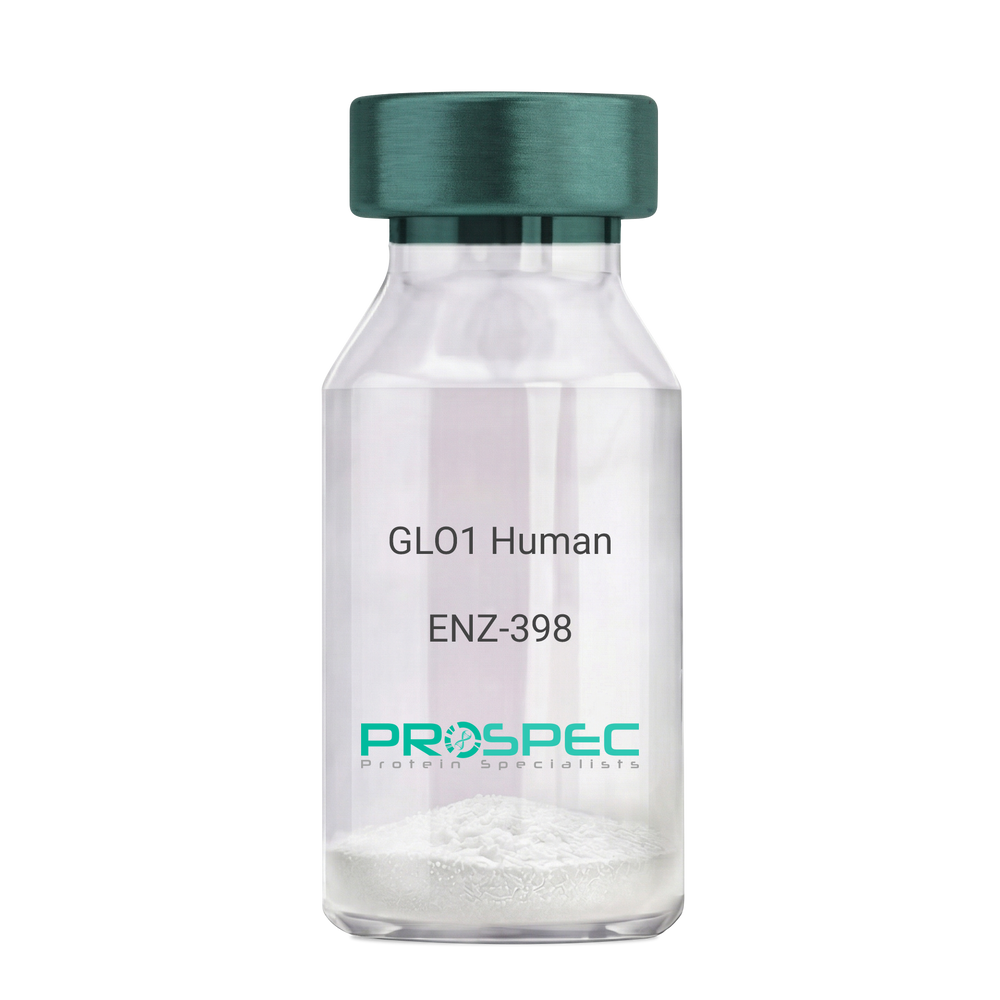
  • View Data Sheet

    Name :

    GLO1 Human

    Description:

    Glyoxalase-I Human Recombinant

    GLYI, GLOD1, GLO1, Glyoxalase-1, Lactoylglutathione lyase, Methylglyoxalase, Aldoketomutase, Ketone-aldehyde mutase, Glyoxalase I, S-D-lactoylglutathione methylglyoxal lyase, Glx I.

    Product # :

    ENZ-398

    Price :

    Quantity :

    Shipping Method :

    Ice Icon

    Shipped with Ice Packs

    Add To Cart

    More Info

    • description
    • source
    • formulation
    • purity
    • More Info
    • Citations

    Description

    Glyoxalase-I Human Recombinant produced in E.Coli is a single, non-glycosylated, polypeptide chain containing 184 amino acids and having a molecular mass of 20.7 kDa. Glyoxalase-1 is purified by proprietary chromatographic techniques.

    Source

    Escherichia Coli.

    Formulation

    Glyoxalase-1 solution containing 20mM Tris-HCl pH-8, 1mM DTT and 10% glycerol.

    Purity

    Greater than 90.0% as determined by SDS-PAGE.

    Citations

    More Info

    • Introduction

      GLO1 is involved in the catalysis and formation of S-lactoyl-glutathione from methylglyoxal condensation and reduced glutatione. GLO1 is linked to HLA and is localized to 6p21.3-p21.1, between HLA and the centromere. GLO1 enzyme is ubundantly expressed and present in numerous tumor cell lines, in which its concentration is often upregulated ubiquitisly. GLO1 is a major susceptible gene for autism in an ethnic Chinese population from Taiwan. GLO1 might be involved in the pathophysiology of mood disorders. GLO1 plays a role in the pathophysiology of mood disorders. Overexpression of GLO1 is associated with kidney tumor.

    • Synonyms

      GLYI, GLOD1, GLO1, Glyoxalase-1, Lactoylglutathione lyase, Methylglyoxalase, Aldoketomutase, Ketone-aldehyde mutase, Glyoxalase I, S-D-lactoylglutathione methylglyoxal lyase, Glx I.

    • Physical Appearance

      Sterile filtered colorless solution.

    • Stability

      Store at 4°C if entire vial will be used within 2-4 weeks. Store, frozen at -20°C for longer periods of time. For long term storage it is recommended to add a carrier protein (0.1% HSA or BSA).Avoid multiple freeze-thaw cycles.

    • Amino Acid Sequence

      MAEPQPPSGG LTDEAALSCC SDADPSTKDF LLQQTMLRVK DPKKSLDFYT RVLGMTLIQK CDFPIMKFSL YFLAYEDKND IPKEKDEKIAWALSRKATLE LTHNWGTEDD ETQSYHNGNS DPRGFGHIGI AVPDVYSACK RFEELGVKFV KKPDDGKMKG LAFIQDPDGY WIEILNPNKM ATLM.

    ProSpec's products are furnished for LABORATORY RESEARCH USE ONLY. The product may not be used as drugs, agricultural or pesticidal products, food additives or household chemicals.

    Glo1 Human
  • 1
  • …
  • 14
  • 15
  • 16
  • 17
  • 18
  • …
  • 42
Your browser does not support the video tag.

Products

  • Cytokines
  • Growth Factors
  • Chemokines
  • CD Antigens
  • Neurotrophins
  • Hormones
  • Enzymes
  • Viral Antigens
  • Recombinant Proteins
  • Natural Proteins
  • Monoclonal Antibodies
  • Polyclonal Antibodies
  • Thermal Packaging

About

  • Company
  • Founder
  • Contribution
  • Contact Us
  • My Account

Ordering

  • Ordering Method
  • Ordering - Credit Card
  • Ordering PO
  • Shipping Fees
  • FAQ's

Legal

  • Terms & Conditions
  • Privacy
  • Site Map
  • info@prospecbio.com
  • Facebook
  • Instagram
  • Linkedin Profile

© 2026 ProSpec-Tany TechnoGene Ltd. All Rights Reserved.

  • Choosing a selection results in a full page refresh.
  • Opens in a new window.