Search results
1000 results found for “other natural proteins”
Name
Description
Product #
Price
Quantity
Shipping Method
- View Data Sheet
Name :
CXCL2 RatDescription:
GRO-beta/MIP-2 Rat Recombinant (CXCL2)
Macrophage inflammatory protein 2-alpha, MIP2-alpha, CXCL2, Growth- regulated protein beta, Gro-beta, chemokine (C-X-C motif) ligand 2, GRO2, GROb, MIP2, MIP2A, SCYB2, MGSA-b, MIP-2a, CINC-2a, MGSA beta, CINC-3.
Product # :
CHM-372Price :
Quantity :
Shipping Method :
Shipped at Room temp
More Info
- description
- source
- formulation
- purity
- biological activity
- More Info
Description
GRO-Beta Rat Recombinant also called Rat MIP-2 produced in E.Coli is a single, non-glycosylated, polypeptide chain containing 73 amino acids and having a molecular mass of 7923 Dalton. The GRO-b is purified by proprietary chromatographic techniques.
Source
Escherichia Coli.
Formulation
Lyophilized from a 0.2µm filtered concentrated solution in PBS, pH 7.4.
Purity
Greater than 99.0% as determined by SDS-PAGE.
Biological Activity
The biological activity was determined by its ability to chemoattract total human neutrophils using a concentration range of 1.0-10.0 ng/ml, corresponding to a specific activity of 100,000-1,000,000 units/mg.More Info
-
Introduction
Chemokine (C-X-C motif) ligand 2 (CXCL2) is a small cytokine belonging to the CXC chemokine family that is also called macrophage inflammatory protein 2-alpha (MIP2-alpha), Growth-regulated protein beta (Gro-beta) and Gro oncogene-2 (Gro-2). CXCL2 is 90% identical in amino acid sequence as a related chemokine, CXCL1. This chemokine is secreted by monocytes and macrophages and is chemotactic for polymorphonuclear leukocytes and hematopoietic stem cells. The gene for CXCL2 is located on human chromosome 4 in a cluster of other CXC chemokines. CXCL2 mobilizes cells by interacting with a cell surface chemokine receptor called CXCR2.
-
Synonyms
Macrophage inflammatory protein 2-alpha, MIP2-alpha, CXCL2, Growth- regulated protein beta, Gro-beta, chemokine (C-X-C motif) ligand 2, GRO2, GROb, MIP2, MIP2A, SCYB2, MGSA-b, MIP-2a, CINC-2a, MGSA beta, CINC-3.
-
Physical Appearance
Sterile Filtered White lyophilized (freeze-dried) powder.
-
Stability
Lyophilized GRO-b although stable at room temperature for 3 weeks, should be stored desiccated below -18°C. Upon reconstitution CXCL2 should be stored at 4°C between 2-7 days and for future use below -18°C. For long term storage it is recommended to add a carrier protein (0.1% HSA or BSA). Please prevent freeze-thaw cycles.
-
Solubility
It is recommended to reconstitute the lyophilized GRO-beta Rat in sterile 18MΩ-cm H2O not less than 100µg/ml, which can then be further diluted to other aqueous solutions.
-
Amino Acid Sequence
VVVASELRCQ CLTTLPRVDF KNIQSLTVTP PGPHCAQTEV IATLKDGHEV CLNPEAPLVQ RIVQKILNKG KAN.
-
Background
What is the molecular weight/Mw of CXCL2 RAT Protein?
CXCL2 RAT Protein has a total Mw of 7.92kDa.
What is the source or expression system of CXCL2 RAT Protein?
Escherichia Coli.
What is the Purity of CXCL2 RAT Protein?
CXCL2 RAT Protein is >99% pure as determined by SDS-PAGE.
What is the Biological Activity of CXCL2 RAT Protein?
The biological activity was determined by its ability to chemoattract total human neutrophils using a concentration range of 1.0-10.0 ng/ml, corresponding to a specific activity of 100,000-1,000,000 units/mg.
What is the amino acid sequence of CXCL2 RAT Protein?
VVVASELRCQ CLTTLPRVDF KNIQSLTVTP PGPHCAQTEV IATLKDGHEV CLNPEAPLVQ RIVQKILNKG KAN.
What applications can CXCL2 RAT Protein be used in?
CXCL2 RAT Protein can probably be used in western blot, ELISA and Lateral Flow.
What is the endotoxin level for CXCL2 RAT Protein?
The endotoxin level is minimal, CXCL2 RAT Protein was purified using conventional chromatography techniques.
ProSpec's products are furnished for LABORATORY RESEARCH USE ONLY. The product may not be used as drugs, agricultural or pesticidal products, food additives or household chemicals.
- View Data Sheet
Name :
ZWILCH HumanDescription:
Zwilch Kinetochore Protein Human Recombinant
hZwilch, KNTC1AP, Protein zwilch homolog, ZWILCH.
Product # :
PRO-1984Price :
Quantity :
Shipping Method :
Shipped with Ice Packs
More Info
- description
- source
- formulation
- purity
- More Info
Description
ZWILCH Human Recombinant produced in E.Coli is a single, non-glycosylated polypeptide chain containing 614 amino acids (1-591 a.a) and having a molecular mass of 69.6kDa. ZWILCH is fused to a 23 amino acid His-tag at N-terminus & purified by proprietary chromatographic techniques.
Source
Escherichia Coli.
Formulation
ZWILCH protein solution (0.25mg/ml) containing 20mM Tris-HCl buffer (pH 8.0), 0.1M NaCl, 20% glycerol and 1mM DTT.
Purity
Greater than 85.0% as determined by SDS-PAGE.
More Info
-
Introduction
Zwilch Kinetochore Protein which is also known as ZWILCH is a part of the ZWILCH family. ZWILCH is a vital part of the mitotic checkpoint. ZWILCH prevents the cells from exiting mitosis prematurely. ZWILCH is also necessary for the assembly of the dyneindynactin and MAD1-MAD2 complexes onto kinetochores.
-
Synonyms
hZwilch, KNTC1AP, Protein zwilch homolog, ZWILCH.
-
Physical Appearance
Sterile Filtered colorless solution.
-
Stability
Store at 4°C if entire vial will be used within 2-4 weeks. Store, frozen at -20°C for longer periods of time. For long term storage it is recommended to add a carrier protein (0.1% HSA or BSA).Avoid multiple freeze-thaw cycles.
-
Amino Acid Sequence
MGSSHHHHHH SSGLVPRGSH MGSMWERLNC AAEDFYSRLL QKFNEEKKGI RKDPFLYEAD VQVQLISKGQ PNPLKNILNE NDIVFIVEKV PLEKEETSHI EELQSEETAI SDFSTGENVG PLALPVGKAR QLIGLYTMAH NPNMTHLKIN LPVTALPPLW VRCDSSDPEG TCWLGAELIT TNNSITGIVL YVVSCKADKN YSVNLENLKN LHKKRHHLST VTSKGFAQYE LFKSSALDDT ITASQTAIAL DISWSPVDEI LQIPPLSSTA TLNIKVESGE PRGPLNHLYR ELKFLLVLAD GLRTGVTEWL EPLEAKSAVE LVQEFLNDLN KLDGFGDSTK KDTEVETLKH DTAAVDRSVK RLFKVRSDLD FAEQLWCKMS SSVISYQDLV KCFTLIIQSL QRGDIQPWLH SGSNSLLSKL IHQSYHGTMD TVSLSGTIPV QMLLEIGLDK LKKDYISFFI GQELASLNHL EYFIAPSVDI QEQVYRVQKL HHILEILVSC MPFIKSQHEL LFSLTQICIK YYKQNPLDEQ HIFQLPVRPT AVKNLYQSEK PQKWRVEIYS GQKKIKTVWQ LSDSSPIDHL NFHKPDFSEL TLNGSLEERI FFTNMVTCSQ VHFK.
ProSpec's products are furnished for LABORATORY RESEARCH USE ONLY. The product may not be used as drugs, agricultural or pesticidal products, food additives or household chemicals.
- View Data Sheet
Name :
NME4 HumanDescription:
Non-Metastatic Cells 4 Human Recombinant
Non-metastatic cells 4, nm23-H4, NM23H4, Nucleoside diphosphate kinase D, NDK, NDPKD, NDP kinase mitochondrial, EC 2.7.4.6, NDPK-D.
Product # :
PRO-219Price :
Quantity :
Shipping Method :
Shipped with Ice Packs
More Info
- description
- source
- formulation
- purity
- More Info
Description
NME4 Human Recombinant fused with a 21 amino acid His tag at N-terminus produced in E.Coli is a single, non-glycosylated, polypeptide chain containing 176 amino acids (33-187a.a.) and having a molecular mass of 19.6kDa. The NME4 is purified by proprietary chromatographic techniques.
Source
Escherichia Coli.
Formulation
The NME4 solution (0.5mg/ml) contains 20mM Tris-HCl buffer (pH 8.0), 40% glycerol and 0.2M NaCl.
Purity
Greater than 90.0% as determined by SDS-PAGE.
More Info
-
Introduction
NME4 is a member of the NDK family. NME4 are ubiquitous enzymes which catalyze transfer of gamma-phosphates, using a phosphohistidine intermediate, between nucleoside and dioxynucleoside tri- and diphosphates. The enzymes are products of the nm23 gene family that include NME4. NME4 has a key part in the synthesis of nucleoside triphosphates other than ATP.
-
Synonyms
Non-metastatic cells 4, nm23-H4, NM23H4, Nucleoside diphosphate kinase D, NDK, NDPKD, NDP kinase mitochondrial, EC 2.7.4.6, NDPK-D.
-
Physical Appearance
Sterile Filtered colorless solution.
-
Stability
Store at 4°C if entire vial will be used within 2-4 weeks. Store, frozen at -20°C for longer periods of time. For long term storage it is recommended to add a carrier protein (0.1% HSA or BSA).Avoid multiple freeze-thaw cycles.
-
Amino Acid Sequence
MGSSHHHHHH SSGLVPRGSH MPSWTRERTL VAVKPDGVQR RLVGDVIQRF ERRGFTLVGM KMLQAPESVL AEHYQDLRRK PFYPALIRYM SSGPVVAMVW EGYNVVRASR AMIGHTDSAE AAPGTIRGDF SVHISRNVIH ASDSVEGAQR EIQLWFQSSE LVSWADGGQH SSIHPA.
ProSpec's products are furnished for LABORATORY RESEARCH USE ONLY. The product may not be used as drugs, agricultural or pesticidal products, food additives or household chemicals.
- View Data Sheet
Name :
FLRT3 HumanDescription:
Fibronectin Leucine Rich Transmembrane Protein 3 Human Recombinant
Fibronectin Leucine Rich Transmembrane Protein 3, Fibronectin-Like Domain, Containing Leucine-Rich Transmembrane Protein 3, HH21, Leucine-Rich Repeat, Transmembrane Protein FLRT3, KIAA1469.
Product # :
PRO-2181Price :
Quantity :
Shipping Method :
Shipped with Ice Packs
More Info
- description
- source
- formulation
- purity
- More Info
Description
FLRT3 produced in Sf9 insect cells is a single, glycosylated polypeptide chain containing 508 amino acids (29-528a.a.) and having a molecular mass of 57.6kDa. (Molecular size on SDS-PAGE will appear at approximately 70-100kDa).FLRT3 is expressed with an 8 amino acid His tag at C-Terminus and purified by proprietary chromatographic techniques.
Source
Sf9, Insect cells.
Formulation
FLRT3 protein solution (1mg/ml) contains Phosphate Buffered Saline (pH 7.4) and 10% glycerol.
Purity
Greater than 90.0% as determined by SDS-PAGE.
More Info
-
Introduction
Fibronectin Leucine Rich Transmembrane Protein 3, also known as FLRT3 is a member of the fibronectin leucine rich transmembrane protein (FLRT) family. FLRT3 contains one fibronectin type-III domain as well as 10 LRR (leucine-rich) repeats and is expressed in the kidney, brain, pancreas, skeletal muscle, lung, liver, placenta, and heart. In addition, the members of the FLRT family play a role in cell adhesion as well as receptor signaling. FLRT3 has been implicated in neurite outgrowth after nerve damage, as a positive regulator of FGF signalling and in homotypic cell adhesion. Furthermore, FLRT3 has an essential function in regulating cellular adhesion among the epithelial apical ridge and the underlying mesenchyme and also in the establishment of the dorso-ventral position of the ridge.
-
Synonyms
Fibronectin Leucine Rich Transmembrane Protein 3, Fibronectin-Like Domain, Containing Leucine-Rich Transmembrane Protein 3, HH21, Leucine-Rich Repeat, Transmembrane Protein FLRT3, KIAA1469.
-
Physical Appearance
Sterile filtered colorless solution.
-
Stability
Store at 4°C if entire vial will be used within 2-4 weeks.Store, frozen at -20°C for longer periods of time. For long term storage it is recommended to add a carrier protein (0.1% HSA or BSA).Avoid multiple freeze-thaw cycles.
-
Amino Acid Sequence
KSCPSVCRCD AGFIYCNDRF LTSIPTGIPE DATTLYLQNN QINNAGIPSD LKNLLKVERI YLYHNSLDEF PTNLPKYVKE LHLQENNIRT ITYDSLSKIP YLEELHLDDN SVSAVSIEEG AFRDSNYLRL LFLSRNHLST IPWGLPRTIE ELRLDDNRIS TISSPSLQGL TSLKRLVLDG NLLNNHGLGD KVFFNLVNLT ELSLVRNSLT AAPVNLPGTN LRKLYLQDNH INRVPPNAFS YLRQLYRLDM SNNNLSNLPQ GIFDDLDNIT QLILRNNPWY CGCKMKWVRD WLQSLPVKVN VRGLMCQAPE KVRGMAIKDL NAELFDCKDS GIVSTIQITT AIPNTVYPAQ GQWPAPVTKQ PDIKNPKLTK DHQTTGSPSR KTITITVKSV TSDTIHISWK LALPMTALRL SWLKLGHSPA FGSITETIVT GERSEYLVTA LEPDSPYKVC MVPMETSNLY LFDETPVCIE TETAPLRMYN PTTTLNREQE KEPYKNPNLP LEHHHHHH.
ProSpec's products are furnished for LABORATORY RESEARCH USE ONLY. The product may not be used as drugs, agricultural or pesticidal products, food additives or household chemicals.
- View Data Sheet
Name :
TIGIT HumanDescription:
T-Cell Immunoreceptor With Ig And ITIM Domains Human Recombinant
VSIG9, VSTM3, WUCAM, V-set and immunoglobulin domain-containing protein 9, V-set and transmembrane domain-containing protein 3.
Product # :
PRO-2498Price :
Quantity :
Shipping Method :
Shipped with Ice Packs
More Info
- description
- source
- formulation
- purity
- More Info
Description
TIGIT produced in Sf9 Baculovirus cells is a single, glycosylated polypeptide chain containing 359 amino acids (22-141a.a.) and having a molecular mass of 40.0kDa. (Molecular size on SDS-PAGE will appear at approximately 40-57kDa).TIGIT is expressed with a 239 amino acid hlgG-His tag at C-Terminus and purified by proprietary chromatographic techniques.
Source
Sf9, Baculovirus cells.
Formulation
TIGIT protein solution (0.5mg/ml) contains phosphate buffered saline (pH7.4) and 10% glycerol.
Purity
Greater than 90.0% as determined by SDS-PAGE.
More Info
-
Introduction
T cell immunoreceptor with Ig and ITIM domains or TIGIT, is an immune receptor located on part of T cells and Natural Killer Cells(NK). TIGIT is also known as Vstm3 and WUCAM. The receptor can bind with high affinity to dendritic cells(DCs), CD155(PVR) on macrophages, etc., and it can bind with lower affinity to CD112(PVRL2). TIGIT can inhibit the cytotoxicity of Natural Killer Cells through its ITIM domain via antibodies against the interaction with PVR and the activity is directed. It has been show on research that TIGIT-Fc fusion molecule can have interaction with PVR on dendritic cells and elevate its IL-10 secretion level or lower the secretion on IL-12 under the stimulation of LPS, moreover, it can inhibit the activation of T cell in vivo.
-
Synonyms
VSIG9, VSTM3, WUCAM, V-set and immunoglobulin domain-containing protein 9, V-set and transmembrane domain-containing protein 3.
-
Physical Appearance
Sterile Filtered colorless solution.
-
Stability
Store at 4°C if entire vial will be used within 2-4 weeks. Store, frozen at -20°C for longer periods of time. For long term storage it is recommended to add a carrier protein (0.1% HSA or BSA).Avoid multiple freeze-thaw cycles.
-
Amino Acid Sequence
MMTGTIETTG NISAEKGGSI ILQCHLSSTT AQVTQVNWEQ QDQLLAICNA DLGWHISPSF KDRVAPGPGL GLTLQSLTVN DTGEYFCIYH TYPDGTYTGR IFLEVLESSV AEHGARFQIP LEPKSCDKTH TCPPCPAPEL LGGPSVFLFP PKPKDTLMIS RTPEVTCVVV DVSHEDPEVK FNWYVDGVEV HNAKTKPREE QYNSTYRVVS VLTVLHQDWL NGKEYKCKVS NKALPAPIEK TISKAKGQPR EPQVYTLPPS RDELTKNQVS LTCLVKGFYP SDIAVEWESN GQPENNYKTT PPVLDSDGSF FLYSKLTVDK SRWQQGNVFS CSVMHEALHN HYTQKSLSLS PGKHHHHHH.
ProSpec's products are furnished for LABORATORY RESEARCH USE ONLY. The product may not be used as drugs, agricultural or pesticidal products, food additives or household chemicals.
- View Data Sheet
Name :
WWC1 HumanDescription:
WW And C2 Domain Containing 1 Human Recombinant
WW and C2 domain containing 1, HBEBP3, HBEBP36, KIBRA, Protein KIBRA, HBeAg-binding protein 3, Kidney and brain protein, WW domain-containing protein 1, WWC1, KIAA0869.
Product # :
PRO-1863Price :
Quantity :
Shipping Method :
Shipped with Ice Packs
More Info
- description
- source
- formulation
- purity
- More Info
Description
WWC1 Human Recombinant produced in E. coli is. a single polypeptide chain containing 152 amino acids (655-783) and having a molecular mass of 17kDa. WWC1 is fused to a 23 amino acid His-tag at N-terminus & purified by proprietary chromatographic techniques.
Source
Escherichia Coli.
Formulation
The WWC1 solution (0.25mg/ml) contains 20mM Tris-HCl buffer (pH 8.0), 0.15M NaCl, 20% glycerol and 1mM DTT.
Purity
Greater than 90% as determined by SDS-PAGE.
More Info
-
Introduction
WW and C2 Domain Containing 1 (WWC1) is a cytoplasmic phosphoprotein which interacts with PRKC-zeta and dynein light chain-1. WWC1 takes part in cognition and memory performance. In some individuals, alleles of WWC1 have enhanced memory.
-
Synonyms
WW and C2 domain containing 1, HBEBP3, HBEBP36, KIBRA, Protein KIBRA, HBeAg-binding protein 3, Kidney and brain protein, WW domain-containing protein 1, WWC1, KIAA0869.
-
Physical Appearance
Sterile Filtered clear solution.
-
Stability
Store at 4°C if entire vial will be used within 2-4 weeks. Store frozen at -20°C for longer periods of time. For long term storage it is recommended to add a carrier protein (0.1% HSA or BSA).Avoid multiple freeze-thaw cycles.
-
Amino Acid Sequence
MGSSHHHHHH SSGLVPRGSH MGSEAVGATR IQIALKYDEK NKQFAILIIQ LSNLSALLQQ QDQKVNIRVA VLPCSESTTC LFRTRPLDAS DTLVFNEVFW VSMSYPALHQ KTLRVDVCTT DRSHLEECLG GAQISLAEVC RSGERSTRWY NL.
ProSpec's products are furnished for LABORATORY RESEARCH USE ONLY. The product may not be used as drugs, agricultural or pesticidal products, food additives or household chemicals.
- View Data Sheet
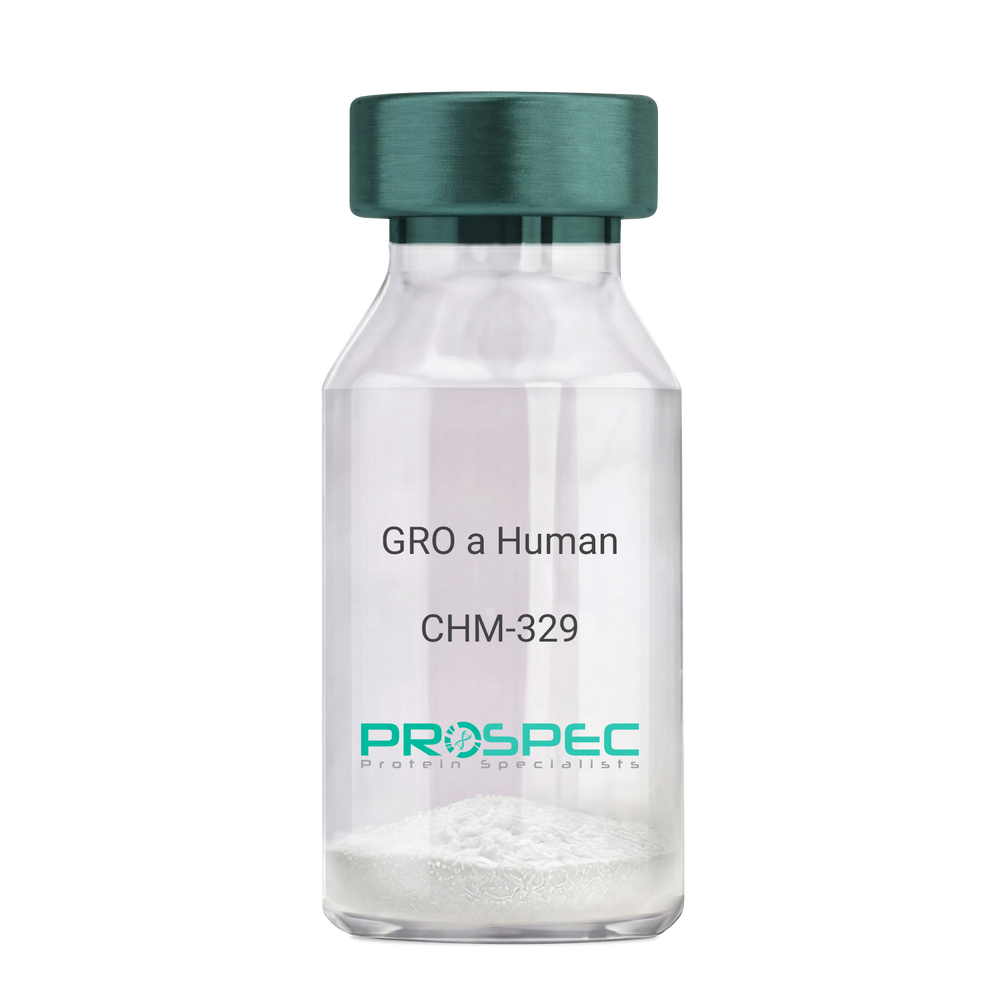
Name :
CXCL1 HumanDescription:
GRO-Alpha Human Recombinant (CXCL1)
Growth-regulated protein alpha, CXCL1, Melanoma growth stimulatory activity, MGSA, Neutrophil-activating protein 3, NAP-3, GRO-alpha (1-73), chemokine (C-X-C motif) ligand 1, GRO1, GROa, SCYB1, MGSA-a, MGSA alpha.
Product # :
CHM-329Price :
Quantity :
Shipping Method :
Shipped at Room temp
More Info
- description
- source
- formulation
- purity
- biological activity
- More Info
Description
GRO Alpha Human Recombinant produced in E.Coli is a single,non-glycosylated, polypeptide chain containing 73 amino acids and having a molecular mass of 7811 Dalton. The GRO-alpha is purified by proprietary chromatographic techniques.
Source
Escherichia Coli.
Formulation
Lyophilized from a 0.2µm filtered concentrated (1mg/ml) solution in 20mM PB, pH 7.4, 50mM NaCl.
Purity
Greater than 97.0% as determined by:
(a) Analysis by RP-HPLC.
(b) Analysis by SDS-PAGE.Biological Activity
Determined by its ability to chemoattract human peripheral blood neutrophils using a concentration range of 10.0-100.0 ng/ml.
More Info
-
Introduction
Chemokine (C-X-C motif) ligand 1 (CXCL1) is a small cytokine belonging to the CXC chemokine family that was previously called GRO1 oncogene, Neutrophil-activating protein 3 (NAP-3) and melanoma growth stimulating activity, alpha (MSGA-a). It is secreted by human melanoma cells, has mitogenic properties and is implicated in melanoma pathogenesis. CXCL1 is expressed by macrophages, neutrophilsand epithelial cells, and has neutrophil chemoattractant activity. CXCL1 plays a role in spinal cord development by inhibiting the migration of oligodendrocyte precursors and is involved in the processes of angiogenesis, inflammation, wound healing, and tumorigenesis. This chemokine elicits its effects by signaling through the chemokine receptor CXCR2. The gene for CXCL1 is located on human chromosome 4 amongst genes for other CXC chemokines.
-
Synonyms
Growth-regulated protein alpha, CXCL1, Melanoma growth stimulatory activity, MGSA, Neutrophil-activating protein 3, NAP-3, GRO-alpha (1-73), chemokine (C-X-C motif) ligand 1, GRO1, GROa, SCYB1, MGSA-a, MGSA alpha.
-
Physical Appearance
Sterile Filtered White lyophilized (freeze-dried) powder.
-
Stability
Lyophilized GRO-alpha although stable at room temperature for 3 weeks, should be stored desiccated below -18°C. Upon reconstitution CXCL1 should be stored at 4°C between 2-7 days and for future use below -18°C. For long term storage it is recommended to add a carrier protein (0.1% HSA or BSA).Please prevent freeze-thaw cycles.
-
Solubility
It is recommended to reconstitute the lyophilized CXCL1 in sterile 18MΩ-cm H2O not less than 100µg/ml, which can then be further diluted to other aqueous solutions.
-
Amino Acid Sequence
The sequence of the first five N-terminal amino acids was determined and was found to be Ala-Ser-Val-Ala-Thr.
-
Background
What is the molecular weight/Mw of CXCL1 HUMAN Protein?
CXCL1 HUMAN Protein has a total Mw of 7.81kDa.
What is the source or expression system of CXCL1 HUMAN Protein?
Escherichia Coli.
What is the Purity of CXCL1 HUMAN Protein?
CXCL1 HUMAN Protein is >97% pure as determined by SDS-PAGE.
What is the Biological Activity of CXCL1 HUMAN Protein?
Determined by its ability to chemoattract human peripheral blood neutrophils using a concentration range of 10.0-100.0 ng/ml.
What is the amino acid sequence of CXCL1 HUMAN Protein?
The sequence of the first five N-terminal amino acids was determined and was found to be Ala-Ser-Val-Ala-Thr.
What applications can CXCL1 HUMAN Protein be used in?
CXCL1 HUMAN Protein can probably be used in western blot, ELISA and Lateral Flow.
What is the endotoxin level for CXCL1 HUMAN Protein?
The endotoxin level is minimal, CXCL1 HUMAN Protein was purified using conventional chromatography techniques.
ProSpec's products are furnished for LABORATORY RESEARCH USE ONLY. The product may not be used as drugs, agricultural or pesticidal products, food additives or household chemicals.
- View Data Sheet
Name :
TGFBR1 Human, ActiveDescription:
Transforming Growth Factor Beta Receptor 1 Human Recombinant, Active
TGFBR1, AAT5, ACVRLK4, ALK-5, ALK5, ESS1, LDS1, LDS1A, LDS2A, MSSE, SKR4, tbetaR-I, TGFR-1.
Product # :
PKA-135Price :
Quantity :
Shipping Method :
Shipped with Ice Packs
More Info
- description
- source
- formulation
- purity
- biological activity
- More Info
Description
TGFBR1 produced in Sf9 insect cells is a single, glycosylated polypeptide chain containing 342 amino acids (27-126a.a.) and having a molecular mass of 38kDa. TGFBR1 is expressed with 242 amino acid hIgG-His-Tag at C-Terminus and purified by proprietary chromatographic techniques.
Source
Sf9, Baculovirus cells.
Formulation
TGFBR1 protein solution (0.5mg/ml) Phosphate Buffered Saline (pH 7.4) containing 10% glycerol.
Purity
Greater than 90.0% as determined by SDS-PAGE.
Biological Activity
≤ 2 ug/ml, measured by its binding ability in a functional ELISA with Mouse CD105.
More Info
-
Synonyms
TGFBR1, AAT5, ACVRLK4, ALK-5, ALK5, ESS1, LDS1, LDS1A, LDS2A, MSSE, SKR4, tbetaR-I, TGFR-1.
-
Physical Appearance
Sterile filtered colorless solution.
-
Stability
Store at 4°C if entire vial will be used within 2-4 weeks. Store, frozen at -20°C for longer periods of time. For long term storage it is recommended to add a carrier protein (0.1% HSA or BSA).Avoid multiple freeze-thaw cycles.
-
Amino Acid Sequence
ADLLLPGATA LQCFCHLCTK DNFTCVTDGL CFVSVTETTD KVIHNSMCIA EIDLIPRDRP FVCAPSSKTG SVTTTYCCNQ DHCNKIELPT TVKSSPGLGP VELVEPKSCD KTHTCPPCPA PELLGGPSVF LFPPKPKDTL MISRTPEVTC VVVDVSHEDP EVKFNWYVDG VEVHNAKTKP REEQYNSTYR VVSVLTVLHQ DWLNGKEYKC KVSNKALPAP IEKTISKAKG QPREPQVYTL
PPSRDELTKN QVSLTCLVKG FYPSDIAVEW ESNGQPENNY KTTPPVLDSD GSFFLYSKLT VDKSRWQQGN VFSCSVMHEA LHNHYTQKSL SLSPGKHHHH HH. -
Background
Transforming Growth Factor Beta Receptor 1 (TGFBR1), a transmembrane protein crucial in the TGF-β signaling pathway, holds a paramount position in regulating diverse cellular processes. Its intricate involvement in development, immune responses, tissue homeostasis, and disease has elevated TGFBR1 to a central role in biology and medicine. This research embarks on a comprehensive exploration of the TGFBR1 protein, unraveling its structural complexities, signaling mechanisms, and its far-reaching implications in various physiological and pathological contexts. By dissecting the intricacies of TGFBR1, scientists aim to decode the fundamental cellular processes it governs and explore potential therapeutic avenues in the domains of cancer, fibrosis, and immunology.
Structural Complexity of TGFBR1:
TGFBR1 is a serine/threonine kinase receptor with an extracellular ligand-binding domain, a transmembrane domain, and an intracellular kinase domain. Its structure allows it to interact with TGF-β ligands and initiate downstream signaling cascades. Understanding the three-dimensional architecture of TGFBR1 is pivotal for deciphering its interactions with ligands, co-receptors, and intracellular signaling partners, shedding light on the molecular intricacies of its function.
Signaling Pathways and Physiological Functions:
Upon ligand binding, TGFBR1 phosphorylates downstream effectors, regulating processes like cell proliferation, differentiation, apoptosis, and immune responses. TGF-β signaling mediated by TGFBR1 is vital in embryogenesis, tissue repair, and immune tolerance. Dysregulation of this pathway is implicated in numerous diseases, including cancer, fibrosis, and autoimmune disorders, underscoring the significance of TGFBR1 in maintaining cellular and tissue homeostasis.
TGFBR1 in Cancer Biology:
TGFBR1's dual role as a tumor suppressor and a promoter of cancer progression reflects its complexity in cancer biology. In early stages, TGFBR1 signaling suppresses cell growth and promotes apoptosis, acting as a defense against tumorigenesis. However, in advanced stages, cancer cells exploit TGFBR1 signaling to facilitate invasion, metastasis, and immune evasion. Understanding the context-dependent nature of TGFBR1's functions in cancer is pivotal for developing targeted therapies.
Targeting TGFBR1 in Therapeutics:
Given its critical roles in various diseases, TGFBR1 has emerged as an attractive target for therapeutic interventions. In cancer, efforts are underway to develop small molecule inhibitors and monoclonal antibodies that modulate TGFBR1 signaling, aiming to curb tumor progression. Additionally, in fibrotic disorders, targeting TGFBR1 offers hope for halting the pathological tissue remodeling characteristic of these diseases, providing potential treatments for conditions such as pulmonary fibrosis and liver cirrhosis.
TGFBR1 Protein, with its intricate signaling mechanisms and diverse physiological roles, stands at the crossroads of fundamental cellular processes and disease pathogenesis. Its involvement in development, immune regulation, cancer, and tissue homeostasis underscores its significance in biology and medicine. As researchers delve deeper into the complexities of TGFBR1, they pave the way for innovative therapies and a deeper understanding of diseases, ultimately shaping the future of healthcare and scientific exploration. This research not only illuminates the pivotal role of TGFBR1 but also holds the promise of transformative advancements in medicine and our understanding of cellular signaling pathways.
ProSpec's products are furnished for LABORATORY RESEARCH USE ONLY. The product may not be used as drugs, agricultural or pesticidal products, food additives or household chemicals.
- View Data Sheet
Name :
C3 RabbitDescription:
Complement C3 Rabbit
Complement C3, C3 and PZP-like alpha-2-macroglobulin domain-containing protein 1, C3, CPAMD1.
Product # :
PRO-2733Price :
Quantity :
Shipping Method :
Shipped with Ice Packs
More Info
- description
- source
- formulation
- purity
- More Info
Description
Rabbit Complement C3 produced in Rabbit plasma having a molecular mass of 185 kDa.
Source
Rabbit Plasma.
Formulation
C3 solution contains PBS, pH 7.2.
Purity
Greater than 93% as determined by SDS-PAGE.
More Info
-
Introduction
C3 is central to the activation of all 3 pathways of complement activation. Initiation of each pathway generates proteolytic enzyme complexes which binds the target surface. These enzymes cleave a peptide bond in C3 releasing the anaphylatoxin C3a and activating C3b. Most of the C3 activated during complement activation never attaches to the surface due to its thioester reaction with water forming fluid phase C3b which is rapidly inactivated by factors H and I forming iC3b. Surface-bound C3b is necessary in all 3 pathways for efficient activation of C5 and formation of C5b-9 complexes that lyse the target cell membrane.
-
Synonyms
Complement C3, C3 and PZP-like alpha-2-macroglobulin domain-containing protein 1, C3, CPAMD1.
-
Physical Appearance
Sterile filtered solution.
-
Stability
C3 Rabbit is stable at 4°C if entire vial will be used within 2-4 weeks.Store, frozen below -20°C for longer periods of time.For long term storage it is recommended to add a carrier protein (0.1% HSA or BSA).Avoid multiple freeze-thaw cycles.
ProSpec's products are furnished for LABORATORY RESEARCH USE ONLY. The product may not be used as drugs, agricultural or pesticidal products, food additives or household chemicals.
- View Data Sheet
Name :
SNTA1 HumanDescription:
Syntrophin, Alpha 1 Human Recombinant
Alpha-1-syntrophin, 59 kDa dystrophin-associated protein A1 acidic component 1, Pro-TGF-alpha cytoplasmic domain-interacting protein 1, TACIP1, Syntrophin-1, SNTA1, SNT1, LQT12, dJ1187J4.5.
Product # :
PRO-1016Price :
Quantity :
Shipping Method :
Shipped with Ice Packs
More Info
- description
- source
- formulation
- purity
- More Info
Description
SNTA1 Human Recombinant produced in E.Coli is a single, non-glycosylated polypeptide chain containing 528 amino acids (1-505 a.a.) and having a molecular mass of 56.3kDa. SNTA1 is fused to a 23 amino acid His-tag at N-terminus & purified by proprietary chromatographic techniques.
Source
E.coli.
Formulation
SNTA1 protein solution (1mg/ml) containing 20mM Tris-HCl buffer (pH 8.0), 10% glycerol, 1mM DTT and 0.15M NaCl.
Purity
Greater than 80% as determined by SDS-PAGE.
More Info
-
Introduction
SNTA1 is a member of the syntrophin gene family. SNTA1 is a peripheral membrane protein found linked with dystrophin and dystrophin-related proteins. Dystrophin is a large, rod-like cytoskeletal protein located at the inner surface of muscle fibers. Dystrophin is absent in Duchenne Muscular Dystrophy patients, however it is present in reduced amounts in Becker Muscular Dystrophy patients. Syntrophins are cytoplasmic peripheral membrane scaffold proteins and components of the dystrophin-associated protein complex. The N-terminal PDZ domain of SNTA1 interacts with the C-terminus of the pore-forming alpha subunit (SCN5A) of the cardiac sodium channel Nav1.5. In addition, SNTA1 associates cardiac sodium channels with the nitric oxide synthase-PMCA4b (plasma membrane Ca-ATPase subtype 4b) complex in cardiomyocytes. The SNTA1 gene is a predisposition locus for Long-QT syndrome (LQT) - an inherited disorder associated with sudden cardiac death from arrhythmia - and sudden infant death syndrome (SIDS). SNTA1 also associates with dystrophin and dystrophin-related proteins at the neuromuscular junction and modifies intracellular calcium ion levels in muscle tissue.
-
Synonyms
Alpha-1-syntrophin, 59 kDa dystrophin-associated protein A1 acidic component 1, Pro-TGF-alpha cytoplasmic domain-interacting protein 1, TACIP1, Syntrophin-1, SNTA1, SNT1, LQT12, dJ1187J4.5.
-
Physical Appearance
Sterile Filtered colorless solution.
-
Stability
Store at 4°C if entire vial will be used within 2-4 weeks. Store, frozen at -20°C for longer periods of time. For long term storage it is recommended to add a carrier protein (0.1% HSA or BSA).Avoid multiple freeze-thaw cycles.
-
Amino Acid Sequence
MGSSHHHHHH SSGLVPRGSH MGSMASGRRA PRTGLLELRA GAGSGAGGER WQRVLLSLAE DVLTVSPADG DPGPEPGAPR EQEPAQLNGA AEPGAGPPQL PEALLLQRRR VTVRKADAGG LGISIKGGRE NKMPILISKI FKGLAADQTE ALFVGDAILS VNGEDLSSAT HDEAVQVLKK TGKEVVLEVK YMKDVSPYFK NSTGGTSVGW DSPPASPLQR QPSSPGPTPR NFSEAKHMSL KMAYVSKRCT PNDPEPRYLE ICSADGQDTL FLRAKDEASA RSWATAIQAQ VNTLTPRVKD ELQALLAATS TAGSQDIKQI GWLTEQLPSG GTAPTLALLT EKELLLYLSL PETREALSRP ARTAPLIATR LVHSGPSKGS VPYDAELSFA LRTGTRHGVD THLFSVESPQ ELAAWTRQLV DGCHRAAEGV QEVSTACTWN GRPCSLSVHI DKGFTLWAAE PGAARAVLLR QPFEKLQMSS DDGASLLFLD FGGAEGEIQL DLHSCPKTIV FIIHSFLSAK VTRLGLLA.
ProSpec's products are furnished for LABORATORY RESEARCH USE ONLY. The product may not be used as drugs, agricultural or pesticidal products, food additives or household chemicals.
- View Data Sheet
Name :
THRSP HumanDescription:
Thyroid Hormone Responsive Human Recombinant
Lpgp, LPGP1, S14, SPOT14, THRP, Spot 14 protein.
Product # :
PRO-1485Price :
Quantity :
Shipping Method :
Shipped with Ice Packs
More Info
- description
- source
- formulation
- purity
- More Info
Description
THRSP Human Recombinant produced in E.Coli is a single, non-glycosylated polypeptide chain containing 169 amino acids (1-146 a.a.) and having a molecular mass of 18.9kDa.THRSP is fused to a 23 amino acid His-tag at N-terminus & purified by proprietary chromatographic techniques.
Source
Escherichia Coli.
Formulation
THRSP protein solution (1mg/ml) contains 20mM Tris-HCl buffer, (pH 8.0), 0.15M NaCl and 10% glycerol.
Purity
Greater than 90.0% as determined by SDS-PAGE.
More Info
-
Introduction
Thyroid Hormone Responsive (THRSP) is a member of the SPOT14 family. THRSP is similar to the gene product of S14, a rat gene whose expression is limited to liver and adipose tissue and is controlled by nutritional and hormonal factors. THRSP is expressed in liver and adipocytes, specifically in lipomatous modules. In addition It is expressed in lipogenic breast cancers, which suggests a role in controlling tumor lipid metabolism.
-
Synonyms
Lpgp, LPGP1, S14, SPOT14, THRP, Spot 14 protein.
-
Physical Appearance
Sterile Filtered clear solution.
-
Stability
Store at 4°C if entire vial will be used within 2-4 weeks. Store, frozen at -20°C for longer periods of time. For long term storage it is recommended to add a carrier protein (0.1% HSA or BSA).Avoid multiple freeze-thaw cycles.
-
Amino Acid Sequence
MGSSHHHHHH SSGLVPRGSH MGSMQVLTKR YPKNCLLTVM DRYAAEVHNM EQVVMIPSLL RDVQLSGPGG QAQAEAPDLY TYFTMLKAIC VDVDHGLLPR EEWQAKVAGS EENGTAETEE VEDESASGEL DLEAQFHLHF SSLHHILMHL TEKAQEVTRK YQEMTGQVW.
ProSpec's products are furnished for LABORATORY RESEARCH USE ONLY. The product may not be used as drugs, agricultural or pesticidal products, food additives or household chemicals.
- View Data Sheet
Name :
RQCD1 HumanDescription:
RCD1 Required for Cell Differentiation1 Human Recombinant
Cell differentiation protein RCD1 homolog, Rcd-1, RQCD1, RCD1, CNOT9, CT129, RCD1+.
Product # :
PRO-008Price :
Quantity :
Shipping Method :
Shipped with Ice Packs
More Info
- description
- source
- formulation
- purity
- More Info
Description
RQCD1 Human Recombinant fused with a 20 amino acid His tag at N-terminus produced in E.Coli is a single, non-glycosylated, polypeptide chain containing 319 amino acids (1-299 a.a.) and having a molecular mass of 35.7kDa. The RQCD1 is purified by proprietary chromatographic techniques.
Source
Escherichia Coli.
Formulation
The RQCD1 solution (1 mg/ml) contains 20mM Tris-HCl buffer (pH8.0), 0.1M NaCl, 1mM DTT and 10% glycerol.
Purity
Greater than 95.0% as determined by SDS-PAGE.
More Info
-
Introduction
RQCD1 is a novel transcriptional cofactor which mediates retinoic acid-induced cell differentiation. RQCD1 down-regulates MYB- and JUN-dependent transcription and may have a role in cell differentiation. RQCD1 also has a role in retinoic acid-controlled lung development.
-
Synonyms
Cell differentiation protein RCD1 homolog, Rcd-1, RQCD1, RCD1, CNOT9, CT129, RCD1+.
-
Physical Appearance
Sterile Filtered colorless solution.
-
Stability
Store at 4°C if entire vial will be used within 2-4 weeks. Store, frozen at -20°C for longer periods of time. For long term storage it is recommended to add a carrier protein (0.1% HSA or BSA). Avoid multiple freeze-thaw cycles.
-
Amino Acid Sequence
MGSSHHHHHH SSGLVPRGSH MHSLATAAPV PTTLAQVDRE KIYQWINELS SPETRENALL ELSKKRESVP DLAPMLWHSF GTIAALLQEI VNIYPSINPP TLTAHQSNRV CNALALLQCV ASHPETRSAF LAAHIPLFLY PFLHTVSKTR PFEYLRLTSL GVIGALVKTD EQEVINFLLT TEIIPLCLRI MESGSELSKT VATFILQKIL LDDTGLAYIC QTYERFSHVA MILGKMVLQL SKEPSARLLK HVVRCYLRLS DNPRAREALR QCLPDQLKDT TFAQVLKDDT TTKRWLAQLV KNLQEGQVTD PRGIPLPPQ.
ProSpec's products are furnished for LABORATORY RESEARCH USE ONLY. The product may not be used as drugs, agricultural or pesticidal products, food additives or household chemicals.
- View Data Sheet
Name :
UNC119B HumanDescription:
UNC-119 Homolog B Human Recombinant
Unc-119 homolog B (C. elegans), POC7B, POC7 centriolar protein homolog B, MGC5139.
Product # :
PRO-1034Price :
Quantity :
Shipping Method :
Shipped with Ice Packs
More Info
- description
- source
- formulation
- purity
- More Info
Description
UNC119B Human Recombinant produced in E.coli is a single, non-glycosylated polypeptide chain containing 271 amino acids (1-251) and having a molecular mass of 30.3kDa.UNC119B is fused to a 20 amino acid His-tag at N-terminus & purified by proprietary chromatographic techniques.
Source
E.coli.
Formulation
The UNC119B solution (0.5mg/ml) contains 20mM Tris-HCl buffer (pH 8.0), 100mM NaCl, 1mM DTT and 10% glycerol.
Purity
Greater than 90% as determined by SDS-PAGE.
More Info
-
Introduction
UCN119B is a member of the PDE6D/unc-119 family. UCN119B has a large number of photoreceptors of the retina. Additionaly, UCN119B has a strong homology with the C. elegans unc119 and is able to functionally complement the C. elegans unc119 mutation gene.
-
Synonyms
Unc-119 homolog B (C. elegans), POC7B, POC7 centriolar protein homolog B, MGC5139.
-
Physical Appearance
Sterile Filtered colorless solution.
-
Stability
Store at 4°C if entire vial will be used within 2-4 weeks. Store, frozen at -20°C for longer periods of time. For long term storage it is recommended to add a carrier protein (0.1% HSA or BSA).Avoid multiple freeze-thaw cycles.
-
Amino Acid Sequence
MGSSHHHHHH SSGLVPRGSH MSGSNPKAAA AASAAGPGGL VAGKEEKKKA GGGVLNRLKA RRQAPHHAAD DGVGAAVTEQ ELLALDTIRP EHVLRLSRVT ENYLCKPEDN IYSIDFTRFK IRDLETGTVL FEIAKPCVSD QEEDEEEGGG DVDISAGRFV RYQFTPAFLR LRTVGATVEF TVGDKPVSNF RMIERHYFRE HLLKNFDFDF GFCIPSSRNT CEHIYEFPQL SEDVIRLMIE NPYETRSDSF YFVDNKLIMH NKADYAYNGG Q
ProSpec's products are furnished for LABORATORY RESEARCH USE ONLY. The product may not be used as drugs, agricultural or pesticidal products, food additives or household chemicals.
- View Data Sheet
Name :
SecBDescription:
Protein Export Protein SecB Recombinant
Protein-export protein secB, secB, b3609, JW3584.
Product # :
PRO-697Price :
Quantity :
Shipping Method :
Shipped with Ice Packs
More Info
- description
- source
- formulation
- purity
- More Info
Description
Recombinant E.Coli SecB produced in E.Coli is a single, non-glycosylated polypeptide chain containing 155 amino acids and having a molecular mass of 17.2 kDa. SecB was over-expressed in E. coli and purified by conventional chromatography.
Source
Escherichia Coli.
Formulation
The SecB protein solution (1mg/ml) contains 20mM Tris-HCl pH-8 and 10% glycerol.
Purity
Greater than 95.0% as determined by SDS-PAGE.
More Info
-
Introduction
SecB, a significant chaperone that takes part in protein export, binds various ligands rapidly with high affinity and low specificity. SecB plays an important role during protein export through the general secretory pathway by modulating the partitioning of precursors between folding or aggregation and delivery to the membrane-bound translocation apparatus. SecB has the potential to take part in functions outside of export acting as a universal nonspecific chaperone to provide buffering capacity of the nonnative state of proteins in the cytosolic pool.
-
Synonyms
Protein-export protein secB, secB, b3609, JW3584.
-
Physical Appearance
Sterile Filtered colorless solution.
-
Stability
Store at 4°C if entire vial will be used within 2-4 weeks. Store, frozen at -20°C for longer periods of time.For long term storage it is recommended to add a carrier protein (0.1% HSA or BSA).Avoid multiple freeze-thaw cycles.
-
Amino Acid Sequence
MSEQNNTEMT FQIQRIYTKD ISFEAPNAPH VFQKDWQPEV KLDLDTASSQ LADDVYEVVL RVTVTASLGE ETAFLCEVQQ GGIFSIAGIE GTQMAHCLGA YCPNILFPYA RECITSMVSR GTFPQLNLAP VNFDALFMNY LQQQAGEGTE EHQDA.
ProSpec's products are furnished for LABORATORY RESEARCH USE ONLY. The product may not be used as drugs, agricultural or pesticidal products, food additives or household chemicals.
- View Data Sheet
Name :
HBG2 HumanDescription:
Hemoglobin Gamma G Human Recombinant
TNCY, Hemoglobin subunit gamma-2, Gamma-2-globin, Hb F Gamma, Hemoglobin gamma-2 chain, Hemoglobin gamma-G chain.
Product # :
PRO-021Price :
Quantity :
Shipping Method :
Shipped with Ice Packs
More Info
- description
- source
- formulation
- purity
- More Info
Description
HBG2 Human Recombinant produced in E.Coli is a single, non-glycosylated polypeptide chain containing 170 amino acids (1-147 a.a.) and having a molecular mass of 18.5kDa.HBG2 is fused to a 23 amino acid His-tag at N-terminus & purified by proprietary chromatographic techniques.
Source
Escherichia Coli.
Formulation
HBG2 protein solution (0.5mg/ml) contains 20mM Tris-HCl buffer (pH 8.0), 0.1M NaCl,20% glycerol and 1mM DTT.
Purity
Greater than 90.0% as determined by SDS-PAGE.
More Info
-
Introduction
Hemoglobin subunit gamma-2 (HBG2), is a member of the globin family. HBG2 belongs to the fetal hemoglobin subunit, which comprised of two alpha chains organized with 2 gamma chains. HBG2 Amplified fetal hemoglobin production in adults and improve the clinical severity of sickle cell disease and beta-thalassemia major.
-
Synonyms
TNCY, Hemoglobin subunit gamma-2, Gamma-2-globin, Hb F Gamma, Hemoglobin gamma-2 chain, Hemoglobin gamma-G chain.
-
Physical Appearance
Sterile filtered reddish solution.
-
Stability
Store at 4°C if entire vial will be used within 2-4 weeks. Store, frozen at -20°C for longer periods of time. For long term storage it is recommended to add a carrier protein (0.1% HSA or BSA).Avoid multiple freeze-thaw cycles.
-
Amino Acid Sequence
MGSSHHHHHH SSGLVPRGSH MGSMGHFTEE DKATITSLWG KVNVEDAGGE TLGRLLVVYP WTQRFFDSFG NLSSASAIMG NPKVKAHGKK VLTSLGDAIK HLDDLKGTFA QLSELHCDKL HVDPENFKLL GNVLVTVLAI HFGKEFTPEV QASWQKMVTG VASALSSRYH.
ProSpec's products are furnished for LABORATORY RESEARCH USE ONLY. The product may not be used as drugs, agricultural or pesticidal products, food additives or household chemicals.
- View Data Sheet
Name :
UCP3 HumanDescription:
Uncoupling protein 3 Human Recombinant
Product # :
PRO-2821Price :
Quantity :
Shipping Method :
Shipped at Room temp
More Info
- description
- source
- formulation
- purity
- More Info
Description
The UCP3 Human is created as a recombinant protein with a 4kda N-terminal fusion of His Tag. The UCP3 His-Tagged Fusion Protein, produced in E. coli, is a 10kDa protein containing 34 amino acid residues of the Resistin Human, 181-214 amino acids.
Source
Escherichia Coli.
Formulation
Each mg was lyophilized with 1xPBS, 0.4% SDS and 4mM DTT.
Purity
Greater than 90% as determined by SDS-PAGE.
More Info
-
Physical Appearance
Sterile Filtered White lyophilized (freeze-dried) powder.
-
Stability
Store lyophilized UCP3 at -20°C. Aliquot the product after reconstitution to avoid repeated freezing/thawing cycles. Reconstituted protein can be stored at 4°C for a limited period of time; it does not show any change after two weeks at 4°C.
-
Solubility
It is recommended to add deionized water to prepare a working stock solution of approximately 0.5mg/ml and let the lyophilized pellet dissolve completely. Product is not sterile! Please filter the product by an appropriate sterile filter before using it on cell culture.
-
Background
Uncoupling protein 3 (UCP3) is a mitochondrial protein which takes part in energy metabolism and thermoregulation.
UCP3 Function
Proton Uncoupling - UCP3 helps dissipate the proton gradient across the inner mitochondrial membrane. This uncoupling leads to the production of heat instead of ATP, a necessary process for thermogenesis.
Energy Regulation - UCP3 takes part in the regulation of energy expenditure and can influence metabolic efficiency.
UCP3 Location
UCP3 is predominantly expressed in skeletal muscle and brown adipose tissue, where its activity is critical for energy metabolism.
UCP3 Role in Metabolism
according to some studies, UCP3 may improve insulin sensitivity and help manage body weight. In addition, UCP3 participates in the metabolism of fatty acids and may help reduce the accumulation of reactive oxygen species (ROS) by decreasing oxidative stress.
UCP3 Regulation
UCP3 expression can raise in response to physical activity, emphasising its role in adapting to varius energy demands during exercise.
Changes in UCP3 levels have been associated with diabetes, obesity and other metabolic disorders.
Clinical Relevance
UCP3 is being investigated as a potential target for obesity and metabolic disease treatments because of its role in energy balance
UCP3 is a central player in energy metabolism and thermogenesis, with implications for metabolic health and the body's response to exercise and diet.
ProSpec's products are furnished for LABORATORY RESEARCH USE ONLY. The product may not be used as drugs, agricultural or pesticidal products, food additives or household chemicals.
- View Data Sheet
Name :
YEATS4 HumanDescription:
YEATS Domain Containing 4 Human Recombinant
YEATS domain-containing protein 4, Glioma-amplified sequence 41, Gas41, NuMA-binding protein 1, NuBI-1, NuBI1, YEATS4, GAS41, YAF9, 4930573H17Rik, B230215M10Rik.
Product # :
PRO-1019Price :
Quantity :
Shipping Method :
Shipped with Ice Packs
More Info
- description
- source
- formulation
- purity
- More Info
Description
YEATS4 Human Recombinant produced in E.Coli is a single, non-glycosylated polypeptide chain containing 250 amino acids (1-227 a.a.) and having a molecular mass of 28.9kDa. YEATS4 is fused to a 23 amino acid His-tag at N-terminus & purified by proprietary chromatographic techniques.
Source
E.coli.
Formulation
YEATS4 protein solution (0.5mg/ml) containing 20mM Tris-HCl buffer (pH8.0), 30% glycerol, 2mM DTT,0.2M NaCl and 0.1mM PMSF.
Purity
Greater than 90% as determined by SDS-PAGE.
More Info
-
Introduction
YEATS Domain Containing 4 (YEATS4) has a high sequence homology to the human MLLT1, and yeast and human MLLT3 proteins. MLLT1 and MLLT3 proteins, both belong to a group of transcription factors, which indicates that YEATS might also represent a transcription factor. YEATS is believed to be necessary for RNA transcription. The YEATS gene has been shown to be amplified in tumors.
-
Synonyms
YEATS domain-containing protein 4, Glioma-amplified sequence 41, Gas41, NuMA-binding protein 1, NuBI-1, NuBI1, YEATS4, GAS41, YAF9, 4930573H17Rik, B230215M10Rik.
-
Physical Appearance
Sterile Filtered colorless solution.
-
Stability
Store at 4°C if entire vial will be used within 2-4 weeks. Store, frozen at -20°C for longer periods of time. For long term storage it is recommended to add a carrier protein (0.1% HSA or BSA).Avoid multiple freeze-thaw cycles.
-
Amino Acid Sequence
MGSSHHHHHH SSGLVPRGSH MGSMFKRMAE FGPDSGGRVK GVTIVKPIVY GNVARYFGKK REEDGHTHQW TVYVKPYRNE DMSAYVKKIQ FKLHESYGNP LRVVTKPPYE ITETGWGEFE IIIKIFFIDP NERPVTLYHL LKLFQSDTNA MLGKKTVVSE FYDEMIFQDP TAMMQQLLTT SRQLTLGAYK HETEFAELEV KTREKLEAAK KKTSFEIAEL KERLKASRET INCLKNEIRK LEEDDQAKDI.
ProSpec's products are furnished for LABORATORY RESEARCH USE ONLY. The product may not be used as drugs, agricultural or pesticidal products, food additives or household chemicals.
- View Data Sheet
Name :
SEC61B HumanDescription:
SEC61B Human Recombinant
Protein transport protein Sec61 subunit beta, SEC61B, Sec61 Beta Subunit, Protein Translocation Complex Beta, Protein Transport Protein SEC61 Beta Subunit, Sec61 Complex Beta Subunit.
Product # :
PRO-1795Price :
Quantity :
Shipping Method :
Shipped with Ice Packs
More Info
- description
- source
- formulation
- purity
- More Info
Description
SEC61B Human Recombinant produced in E.Coli is a single, non-glycosylated polypeptide chain containing 93 amino acids (1-70 a.a) and having a molecular mass of 9.4kDa.SEC61B is fused to a 23 amino acid His-tag at N-terminus & purified by proprietary chromatographic techniques.
Source
Escherichia Coli.
Formulation
SEC61B protein solution (0.25mg/ml) containing 20mM Tris-HCl buffer (pH 8.0), 0.2M NaCl, 50% glycerol and 2mM DTT.
Purity
Greater than 85.0% as determined by SDS-PAGE.
More Info
-
Introduction
The Sec61 complex is the key component of the protein translocation apparatus of the ER (endoplasmic reticulum) membrane. Oligomers of the Sec61 complex construct a transmembrane channel where proteins are translocated across and incorporated into the ER membrane. This complex consists of 3 membrane proteins- alpha, beta, and gamma. The SEC61B gene encodes the beta-subunit protein. The Sec61 subunits are also detected in the post-ER compartment, suggesting that these proteins can get out of the ER and recycle back.
-
Synonyms
Protein transport protein Sec61 subunit beta, SEC61B, Sec61 Beta Subunit, Protein Translocation Complex Beta, Protein Transport Protein SEC61 Beta Subunit, Sec61 Complex Beta Subunit.
-
Physical Appearance
Sterile Filtered colorless solution.
-
Stability
Store at 4°C if entire vial will be used within 2-4 weeks. Store, frozen at -20°C for longer periods of time. For long term storage it is recommended to add a carrier protein (0.1% HSA or BSA).Avoid multiple freeze-thaw cycles.
-
Amino Acid Sequence
MGSSHHHHHH SSGLVPRGSH MGSMPGPTPS GTNVGSSGRS PSKAVAARAA GSTVRQRKNA SCGTRSAGRT TSAGTGGMWR FYTEDSPGLK VGP.
ProSpec's products are furnished for LABORATORY RESEARCH USE ONLY. The product may not be used as drugs, agricultural or pesticidal products, food additives or household chemicals.
- View Data Sheet
Name :
MAK16 HumanDescription:
MAK16 Human Recombinant
Protein MAK16 homolog, NNP78, Protein RBM13, RBM13, MAK16L, RBM13.
Product # :
PRO-2086Price :
Quantity :
Shipping Method :
Shipped with Ice Packs
More Info
- description
- source
- formulation
- purity
- More Info
Description
MAK16 Human Recombinant produced in E.Coli is a single, non-glycosylated polypeptide chain containing 323 amino acids (1-300 a.a) and having a molecular mass of 37.8kDa (Molecular size on SDS-PAGE will appear higher).MAK16 is fused to a 23 amino acid His-tag at N-terminus & purified by proprietary chromatographic techniques.
Source
Escherichia Coli.
Formulation
MAK16 protein solution (0.25mg/ml) contains Phosphate buffered saline (pH7.4), 30% glycerol and 1mM DTT.
Purity
Greater than 90.0% as determined by SDS-PAGE.
More Info
-
Introduction
MAK16 is a member of the MAK16 family.
-
Synonyms
Protein MAK16 homolog, NNP78, Protein RBM13, RBM13, MAK16L, RBM13.
-
Physical Appearance
Sterile Filtered clear solution.
-
Stability
Store at 4°C if entire vial will be used within 2-4 weeks. Store, frozen at -20°C for longer periods of time. For long term storage it is recommended to add a carrier protein (0.1% HSA or BSA).Avoid multiple freeze-thaw cycles.
-
Amino Acid Sequence
MGSSHHHHHH SSGLVPRGSH MGSMQSDDVI WDTLGNKQFC SFKIRTKTQS FCRNEYSLTG LCNRSSCPLA NSQYATIKEE KGQCYLYMKV IERAAFPRRL WERVRLSKNY EKALEQIDEN LIYWPRFIRH KCKQRFTKIT QYLIRIRKLT LKRQRKLVPL SKKVERREKR REEKALIAAQ LDNAIEKELL ERLKQDTYGD IYNFPIHAFD KALEQQEAES DSSDTEEKDD DDDDEEDVGK REFVEDGEVD ESDISDFEDM DKLDASSDED QDGKSSSEEE EEKALSAKHK GKMPLRGPLQ RKRAYVEIEY EQETEPVAKA KTT.
ProSpec's products are furnished for LABORATORY RESEARCH USE ONLY. The product may not be used as drugs, agricultural or pesticidal products, food additives or household chemicals.
- View Data Sheet
Name :
SCO1 HumanDescription:
SCO Cytochrome Oxidase Deficient Homolog 1 Human Recombinant
SCO1 Cytochrome C Oxidase Assembly Protein, SCOD1, SCO (Cytochrome Oxidase Deficient, Yeast) Homolog 1, SCO Cytochrome Oxidase Deficient Homolog 1 (Yeast), SCO Cytochrome Oxidase Deficient Homolog 1, Protein SCO1 Homolog, Mitochondrial, SCOD1, Protein SCO1 homolog, mitochondrial.
Product # :
PRO-2156Price :
Quantity :
Shipping Method :
Shipped with Ice Packs
More Info
- description
- source
- formulation
- purity
- More Info
Description
SCO1 Human Recombinant produced in E.Coli is a single, non-glycosylated polypeptide chain containing 179 amino acids (132-301 a.a) and having a molecular mass of 20.5kDa. SCO1 is fused to a 9 amino acid His-tag at C-terminus & purified by proprietary chromatographic techniques.
Source
Escherichia Coli.
Formulation
SCO1 protein solution (1mg/ml) containing Phosphate buffered saline (pH7.4), 10% glycerol and 1mM DTT.
Purity
Greater than 95% as determined by SDS-PAGE.
More Info
-
Introduction
SCO Cytochrome Oxidase Deficient Homolog 1, also known as SCO1 is a member of the SCO1/2 family. Mammalian cytochrome c oxidase (COX) catalyzes the transfer of reducing equivalents from cytochrome c to molecular oxygen and pumps protons across the inner mitochondrial membrane. Furthermore, in yeast, two related COX assembly genes, SCO1 & SCO2 which are synthesis of cytochrome c oxidase, enable subunits 1 as well as 2 to be incorporated into the holoprotein. This gene is the human homolog to the yeast SCO1 gene. Among the diseases associated with SCO1 are hepatic failure, early-onset, neurologic disorder due to cytochrome c oxidase deficiency and fatal infantile cytochrome c oxidase deficiency.
-
Synonyms
SCO1 Cytochrome C Oxidase Assembly Protein, SCOD1, SCO (Cytochrome Oxidase Deficient, Yeast) Homolog 1, SCO Cytochrome Oxidase Deficient Homolog 1 (Yeast), SCO Cytochrome Oxidase Deficient Homolog 1, Protein SCO1 Homolog, Mitochondrial, SCOD1, Protein SCO1 homolog, mitochondrial.
-
Physical Appearance
Sterile filtered colorless solution.
-
Stability
Store at 4°C if entire vial will be used within 2-4 weeks. Store, frozen at -20°C for longer periods of time. For long term storage it is recommended to add a carrier protein (0.1% HSA or BSA).Avoid multiple freeze-thaw cycles.
-
Amino Acid Sequence
MGKPLLGGPF SLTTHTGERK TDKDYLGQWL LIYFGFTHCP DVCPEELEKM IQVVDEIDSI TTLPDLTPLF ISIDPERDTK EAIANYVKEF SPKLVGLTGT REEVDQVARA YRVYYSPGPK DEDEDYIVDH TIIMYLIGPD GEFLDYFGQN KRKGEIAASI ATHMRPYRKK SLEHHHHHH.
ProSpec's products are furnished for LABORATORY RESEARCH USE ONLY. The product may not be used as drugs, agricultural or pesticidal products, food additives or household chemicals.
- View Data Sheet
Name :
WHSC2 HumanDescription:
Wolf-Hirschhorn Syndrome Candidate 2 Human Recombinant
Negative elongation factor A, NELF-A, Wolf-Hirschhorn syndrome candidate 2 protein, WHSC2, NELFA, FLJ10442, FLJ25112, P/OKcl.15.
Product # :
PRO-062Price :
Quantity :
Shipping Method :
Shipped with Ice Packs
More Info
- description
- source
- formulation
- purity
- More Info
Description
WHSC2 Human Recombinant fused with a 20 amino acid His tag at N-terminus produced in E.Coli is a single, non-glycosylated, polypeptide chain containing 559 amino acids (1-539 a.a.) and having a molecular mass of 60.6kDa. The WHSC2 is purified by proprietary chromatographic techniques.
Source
Escherichia Coli.
Formulation
The WHSC2 solution (0.25 mg/ml) 20mM Tris-HCl buffer (pH8.0), 0.2M NaCl, 5mM DTT, 1mM EDTA and 20% glycerol.
Purity
Greater than 85.0% as determined by SDS-PAGE.
More Info
-
Introduction
WHSC2 (NELF-A) is a protein factor required for DRB-sensitive transcription. WHSC2 is one of the 5 components of the multisubunit NELF complex which cooperates with DSIF to repress RNA polymerase II elongation. The Wolf-Hirschhorn syndrome is a multiple malformation syndrome characterized by mental and developmental defects resulting from a hemizygous deletion of the distal short arm of chromosome 4 (4p16.3).
-
Synonyms
Negative elongation factor A, NELF-A, Wolf-Hirschhorn syndrome candidate 2 protein, WHSC2, NELFA, FLJ10442, FLJ25112, P/OKcl.15.
-
Physical Appearance
Sterile Filtered colorless solution.
-
Stability
Store at 4°C if entire vial will be used within 2-4 weeks. Store, frozen at -20°C for longer periods of time. For long term storage it is recommended to add a carrier protein (0.1% HSA or BSA).Avoid multiple freeze-thaw cycles.
-
Amino Acid Sequence
MGSSHHHHHH SSGLVPRGSH MPGQRRALSP KMASMRESDT GLWLHNKLGA TDELWAPPSI ASLLTAAVID NIRLCFHGLS SAVKLKLLLG TLHLPRRTVD EMKGALMEII QLASLDSDPW VLMVADILKS FPDTGSLNLE LEEQNPNVQD ILGELREKVG ECEASAMLPL ECQYLNKNAL TTLAGPLTPP VKHFQLKRKP KSATLRAELL QKSTETAQQL KRSAGVPFHA KGRGLLRKMD TTTPLKGIPK QAPFRSPTAP SVFSPTGNRT PIPPSRTLLR KERGVKLLDI SELDMVGAGR EAKRRRKTLD AEVVEKPAKE ETVVENATPD YAAGLVSTQK LGSLNNEPAL PSTSYLPSTP SVVPASSYIP SSETPPAPSS REASRPPEEP SAPSPTLPAQ FKQRAPMYNS GLSPATPTPA APTSPLTPTT PPAVAPTTQT PPVAMVAPQT QAPAQQQPKK NLSLTREQMF AAQEMFKTAN KVTRPEKALI LGFMAGSREN PCQEQGDVIQ IKLSEHTEDL PKADGQGSTT MLVDTVFEMN YATGQWTRFK KYKPMTNVS.
ProSpec's products are furnished for LABORATORY RESEARCH USE ONLY. The product may not be used as drugs, agricultural or pesticidal products, food additives or household chemicals.
- View Data Sheet
Name :
RASL12 HumanDescription:
RAS-Like Family 12 Human Recombinant
RAS-Like, Family 12, Ras Family Member Ris, Ras-Like Protein Ris, RIS, Ras-Like Protein Family Member 12, RASL12.
Product # :
PRO-2119Price :
Quantity :
Shipping Method :
Shipped with Ice Packs
More Info
- description
- source
- formulation
- purity
- More Info
Description
RASL12 Human Recombinant produced in E.Coli is a single, non-glycosylated polypeptide chain containing 289 amino acids (1-266 a.a) and having a molecular mass of 32.1kDa.RASL12 is fused to a 23 amino acid His-tag at N-terminus & purified by proprietary chromatographic techniques.
Source
Escherichia Coli.
Formulation
RASL12 protein solution (0.5mg/ml) containing 20mM Tirs-HCl (pH8.0) and 10% glycerol.
Purity
Greater than 85.0% as determined by SDS-PAGE.
More Info
-
Introduction
RAS-Like Family 12, also known as RASL12 belongs to the small GTPase superfamily, and to the Ras family.
-
Synonyms
RAS-Like, Family 12, Ras Family Member Ris, Ras-Like Protein Ris, RIS, Ras-Like Protein Family Member 12, RASL12.
-
Physical Appearance
Sterile Filtered clear solution.
-
Stability
Store at 4°C if entire vial will be used within 2-4 weeks. Store, frozen at -20°C for longer periods of time. For long term storage it is recommended to add a carrier protein (0.1% HSA or BSA).Avoid multiple freeze-thaw cycles.
-
Amino Acid Sequence
MGSSHHHHHH SSGLVPRGSH MGSMSSVFGK PRAGSGPQSA PLEVNLAILG RRGAGKSALT VKFLTKRFIS EYDPNLEDTY SSEETVDHQP VHLRVMDTAD LDTPRNCERY LNWAHAFLVV YSVDSRQSFD SSSSYLELLA LHAKETQRSI PALLLGNKLD MAQYRQVTKA EGVALAGRFG CLFFEVSACL DFEHVQHVFH EAVREARREL EKSPLTRPLF ISEERALPHQ APLTARHGLA SCTFNTLSTI NLKEMPTVAQ AKLVTVKSSR AQSKRKAPTL TLLKGFKIF.
ProSpec's products are furnished for LABORATORY RESEARCH USE ONLY. The product may not be used as drugs, agricultural or pesticidal products, food additives or household chemicals.
- View Data Sheet
Name :
Leptin qA Human, PEGDescription:
Leptin Quadruple Antagonist Pegylated Human Recombinant
Product # :
CYT-1251Price :
Quantity :
Shipping Method :
Shipped at Room temp
More Info
- description
- source
- formulation
- purity
- biological activity
- More Info
Description
Leptin Pegylated Quadruple Antagonist Human Recombinant is a single non-glycosilated polypeptide chain containing 146 amino and an additional Ala at N-terminus acids. The Human Leptin antagonist is bound to 20 kDa mono-PEG at N-terminus, resulting in 35.6 kDa. The Human Leptin Pegylated Quadruple Antagonist was mutated, resulting in D23L/L39A/D40A/F41A that was purified by proprietary chromatographic techniques.
Source
Escherichia coli.
Formulation
The Human Leptin Pegylated Quadruple Antagonist was lyophilized from a concentrated (0.65mg/ml) solution with 0.003mM NaHCO3.
Purity
Greater than 98.0% as determined by:
(a) Gel filtration analysis.
(b) Analysis by SDS-PAGE.
Biological Activity
Human Leptin Pegylated Quadruple Antagonist inhibits leptin-induced proliferation of BAF/3 cells stably transfected with the long form of human leptin receptor. Its in vitro activity is 6-8 fold lower than the non-pegylated human leptin antagonist but in vivo it has profound weight gain effect (as compared to the non-pegylated human leptin antagonist), resulting mainly from increased food intake. The in vivo activity of human pegylated super leptin antagonist was compared to that of human pegylated leptin antagonist is 9-27 fold higher.
More Info
-
Physical Appearance
White lyophilized (freeze-dried) powder.
-
Stability
Lyophilized Human Leptin Pegylated Quadruple Antagonist although stable at room temperature for several weeks, should be stored desiccated below -18°C. Upon reconstitution at > 0.1 and up to 2mM of Human pegylated leptin antagonist and filter sterilization Human pegylated leptin antagonist can be stored at 4°C or even room temperature for several weeks making it suitable for long term infusion studies using osmotic pumps. At lower concentration addition of a carrier protein (0.1% HSA or BSA) is suggested. Please prevent freeze-thaw cycles.
-
Solubility
It is recommended to reconstitute the lyophilized Human Leptin Pegylated Quadruple Antagonist in sterile water or sterile 0.4% NaHCO3 adjusted to pH 8-9, not less than 100µg/ml, which can then be further diluted with other aqueous solutions.
-
Background
Leptin is a~16 kDa protein which is encoded by the obese gene. Leptin is a hormone which participates in regulating body weight, reproductive function and metabolism. leptin is expressed predominantly by adipocytes, which supports the idea that body weight is sensed as the total mass of fat in the body. Smaller amounts of leptin are also secreted by cellsin the epithelium of the stomach and in the placenta. Leptin receptors are highly expressed in areas of the hypothalamus which regulates body weight, as well as in T lymphocytes and vascular endothelial cells.
-
Protein content
Protein quantization was carried out by UV spectroscopy at 280 nm using the absorbency value of 0.88 as the extinction coefficient for a 0.1% (1mg/ml) solution at pH 8.0. This value is calculated by the PC GENE computer analysis program of protein sequences (IntelliGenetics).
ProSpec's products are furnished for LABORATORY RESEARCH USE ONLY. The product may not be used as drugs, agricultural or pesticidal products, food additives or household chemicals.
- View Data Sheet
Name :
PET117 HumanDescription:
PET117 Human Recombinant
Protein PET117 homolog, mitochondrial, PET117, UNQ607/PRO1194.
Product # :
PRO-1686Price :
Quantity :
Shipping Method :
Shipped with Ice Packs
More Info
- description
- source
- formulation
- purity
- More Info
Description
PET117 Human Recombinant produced in E.coli is a single, non-glycosylated polypeptide chain containing 82 amino acids (23-81) and having a molecular mass of 9.5kDa.PET117 is fused to a 23 amino acid His-tag at N-terminus & purified by proprietary chromatographic techniques.
Source
Escherichia Coli.
Formulation
The PET117 solution (0.25mg/ml) contains 20mM Tris-HCl buffer (pH 8.0), 0.2M NaCl, 50% glycerol and 2mM DTT.
Purity
Greater than 90.0% as determined by SDS-PAGE.
More Info
-
Introduction
PET117 is nuclear gene essential for the assembly of active cytochrome c oxidase in S. cerevisiae. Nevertheless the gene products are not subunits of the final assembled cytochrome c oxidase complex. PET117 is found in chromosome V proximate the HIS1 gene.
-
Synonyms
Protein PET117 homolog, mitochondrial, PET117, UNQ607/PRO1194.
-
Physical Appearance
Sterile Filtered colorless solution.
-
Stability
Store at 4°C if entire vial will be used within 2-4 weeks. Store, frozen at -20°C for longer periods of time. For long term storage it is recommended to add a carrier protein (0.1% HSA or BSA).Avoid multiple freeze-thaw cycles.
-
Amino Acid Sequence
MGSSHHHHHH SSGLVPRGSH MGSVHVKQQW DQQRLRDGVI RDIERQIRKK ENIRLLGEQI ILTEQLEAER EKMLLAKGSQ KS.
ProSpec's products are furnished for LABORATORY RESEARCH USE ONLY. The product may not be used as drugs, agricultural or pesticidal products, food additives or household chemicals.