Search results
1000 results found for “regulator of g-protein signaling”
Name
Description
Product #
Price
Quantity
Shipping Method
- View Data Sheet
Name :
ANXA2Description:
Annexin A2 Human Recombinant
ANX2, ANX2L4, CAL1H, LIP2, LPC2, LPC2D, P36, PAP-IV, ANXA2, Annexin A2, Annexin-2, Annexin II, Lipocortin II, Calpactin-1 heavy chain, Calpactin I heavy chain, Chromobindin-8, p36, Protein I, Placental anticoagulant protein IV.
Product # :
PRO-777Price :
Quantity :
Shipping Method :
Shipped with Ice Packs
More Info
- description
- source
- formulation
- purity
- More Info
Description
ANXA2 Human Recombinant produced in E.Coli is a single, non-glycosylated, polypeptide chain containing 376 amino acids (1-339a.a.) and having a molecular mass of 42.8 kDa. ANXA2 is fused to a 37 amino acid His-Tag at N-Terminus and purified by proprietary chromatographic techniques.
Source
Escherichia Coli.
Formulation
ANXA2 (0.5mg/ml) solution containing 20mM Tris-HCl pH-8, 0.1M NaCl and 20% glycerol.
Purity
Greater than 95% as determined by SDS-PAGE.
More Info
-
Introduction
ANXA2 is part of the annexin family and is involved in the regulation of cellular growth and in signal transduction pathways. ANXA2 protein functions as an autocrine factor which increases osteoclast formation and bone resorption. ANXA2 is associated with sickle cell osteonecrosis. Reduced ANXA2 expression is associated with osteosarcoma metastases. ANXA2 is part of the putative cell surface vitamin D binding protein binding site complex and functions to mediate the chemotactic cofactor effect. ANXA2 is involved in dysferlin deficiency and in muscular dystrophies. Human colon adenocarcinoma cell differentiation is related with an up-regulation of ANXA2.
-
Synonyms
ANX2, ANX2L4, CAL1H, LIP2, LPC2, LPC2D, P36, PAP-IV, ANXA2, Annexin A2, Annexin-2, Annexin II, Lipocortin II, Calpactin-1 heavy chain, Calpactin I heavy chain, Chromobindin-8, p36, Protein I, Placental anticoagulant protein IV.
-
Physical Appearance
Sterile filtered colorless solution.
-
Stability
Store at 4°C if entire vial will be used within 2-4 weeks. Store, frozen at -20°C for longer periods of time. For long term storage it is recommended to add a carrier protein (0.1% HSA or BSA).Avoid multiple freeze-thaw cycles.
-
Amino Acid Sequence
MRGSHHHHHH GMASMTGGQQ MGRDLYDDDD KDRWGSHMST VHEILCKLSL EGDHSTPPSA YGSVKAYTNF DAERDALNIE TAIKTKGVDE VTIVNILTNR SNAQRQDIAF AYQRRTKKEL ASALKSALSG HLETVILGLL KTPAQYDASE LKASMKGLGT DEDSLIEIIC SRTNQELQEI NRVYKEMYKT DLEKDIISDT SGDFRKLMVA LAKGRRAEDG SVIDYELIDQ DARDLYDAGV KRKGTDVPKW ISIMTERSVP HLQKVFDRYK SYSPYDMLES IRKEVKGDLE NAFLNLVQCI QNKPLYFADR LYDSMKGKGT RDKVLIRIMV SRSEVDMLKI RSEFKRKYGK SLYYYIQQDT KGDYQKALLY LCGGDD.
ProSpec's products are furnished for LABORATORY RESEARCH USE ONLY. The product may not be used as drugs, agricultural or pesticidal products, food additives or household chemicals.
- View Data Sheet
Name :
sRANKL HumanDescription:
RANK Ligand Soluble Human Recombinant
Soluble Receptor Activator of NFkB Ligand, TNFSF11, TRANCE, TNF-related activation-induced cytokine, OPGL, ODF, Osteoclast differentiation factor, Tumor necrosis factor ligand superfamily member 11, Receptor activator of nuclear factor kappa B ligand, RANKL, Osteoprotegerin ligand, CD254 antigen, sRANKL, sOdf, hRANKL2.
Product # :
CYT-334Price :
Quantity :
Shipping Method :
Shipped at Room temp
More Info
- description
- source
- formulation
- purity
- biological activity
- More Info
- HPLC, SDS-PAGE
Description
sRANKL Human Recombinant produced in E.Coli is a single, non-glycosylated polypeptide chain containing 175 amino acids and having a molecular mass of 19.7kDa.
Source
Escherichia Coli.
Formulation
The protein was lyophilized from a concentrated (1mg/ml) solution containing 10mM Sodium phosphate, pH-7.5.
Purity
Greater than 95.0% as determined by analysis by SDS-PAGE.
Biological Activity
The activity of RAW-Blue was measured to be 46.96 ng/ml, corresponding to a specific activity of 2.1x10⁴ units/mg.
HPLC, SDS-PAGE
More Info
-
Introduction
RANKL binds to tnfrsf11b/opg and to tnfrsf11a/rank. Osteoclast differentiation and activation factor. Augments the ability of dendritic cells to stimulate naive t-cell proliferation. May be an important regulator of interactions between t-cells and dendritic cells and may play a role in the regulation of the t-cell-dependent immune response. sRANKL may also play an important role in enhanced bone-resorption in humoral hypercalcemia of malignancy.
-
Synonyms
Soluble Receptor Activator of NFkB Ligand, TNFSF11, TRANCE, TNF-related activation-induced cytokine, OPGL, ODF, Osteoclast differentiation factor, Tumor necrosis factor ligand superfamily member 11, Receptor activator of nuclear factor kappa B ligand, RANKL, Osteoprotegerin ligand, CD254 antigen, sRANKL, sOdf, hRANKL2.
-
Physical Appearance
Sterile Filtered White lyophilized (freeze-dried) powder.
-
Stability
Lyophilized TNFSF11 although stable at room temperature for 3 weeks, should be stored desiccated below -18°C. Upon reconstitution sRANKL should be stored at 4°C between 2-7 days and for future use below -18°C.For long term storage it is recommended to add a carrier protein (0.1% HSA or BSA).Please prevent freeze-thaw cycles.
-
Solubility
It is recommended to reconstitute the lyophilized sRANKL in sterile 18MΩ-cm H2O at a concentration of 100µg/ml, which can then be further diluted to other aqueous solutions.
-
Amino Acid Sequence
EKAMVDGSW LDLAKRSKLE AQPFAHLTIN ATDIPSGSHK VSLSSWYHDR GWAKISNMTF SNGKLIVNQD GFYYLYANIC FRHHETSGDL ATEYLQLMVY VTKTSIKIPS SHTLMKGGST KYWSGNSEFH FYSINVGGFF KLRSGEEISI EVSNPSLLDP DQDATYFGAF KVRDID.
ProSpec's products are furnished for LABORATORY RESEARCH USE ONLY. The product may not be used as drugs, agricultural or pesticidal products, food additives or household chemicals.
- View Data Sheet
Name :
RAP2B HumanDescription:
RAP2B, Member RAS Oncogene Family Human Recombinant
RAP2B, member of RAS oncogene family, Ras-related protein Rap-2b, Ras Family Small GTP Binding Protein RAP2B2, Small GTP Binding Protein.
Product # :
PRO-1364Price :
Quantity :
Shipping Method :
Shipped with Ice Packs
More Info
- description
- source
- formulation
- purity
- More Info
Description
RAP2B Human Recombinant produced in E.Coli is a single, non-glycosylated polypeptide chain containing 206 amino acids (1-183 a.a) and having a molecular mass of 22.9kDa. RAP2B is fused to a 23 amino acid His-tag at N-terminus & purified by proprietary chromatographic techniques.
Source
E.coli.
Formulation
RAP2B protein solution (1mg/ml) containing 20mM Tris-HCl buffer (pH 8.0), 0.15M NaCl, 20% glycerol and 1mM DTT.
Purity
Greater than 95% as determined by SDS-PAGE.
More Info
-
Introduction
Ras-related protein Rap-2b (RAP2B) is a part of RAS-related genes family. RAP2B has a threonine residue at aa 61Unlike normal ras proteins which have a nontransforming glutamine residue at that position. The threonine residue makes the intrinsic GTPase activity for Rap2B lower, by this means allows RAP2B to exist in the activated state for a longer period of time than normal ras proteins. RAP2B is a platelet protein which is activated by thrombin and involved in platelet activation. RAP2B may be a candidate oncogene which takes part in carcinogenesis through activation of NF-kappaB pathway.
-
Synonyms
RAP2B, member of RAS oncogene family, Ras-related protein Rap-2b, Ras Family Small GTP Binding Protein RAP2B2, Small GTP Binding Protein.
-
Physical Appearance
Sterile Filtered colorless solution.
-
Stability
Store at 4°C if entire vial will be used within 2-4 weeks. Store, frozen at -20°C for longer periods of time. For long term storage it is recommended to add a carrier protein (0.1% HSA or BSA).Avoid multiple freeze-thaw cycles.
-
Amino Acid Sequence
MGSSHHHHHH SSGLVPRGSH MGSMREYKVV VLGSGGVGKS ALTVQFVTGS FIEKYDPTIE DFYRKEIEVD SSPSVLEILD TAGTEQFASM RDLYIKNGQG FILVYSLVNQ QSFQDIKPMR DQIIRVKRYE RVPMILVGNK VDLEGEREVS YGEGKALAEE WSCPFMETSA KNKASVDELF AEIVRQMNYA AQPNGDEGCC SACVIL.
ProSpec's products are furnished for LABORATORY RESEARCH USE ONLY. The product may not be used as drugs, agricultural or pesticidal products, food additives or household chemicals.
- View Data Sheet
Name :
ANXA5 HumanDescription:
Annexin A5 Human Recombinant
PP4, ANX5, ENX2, ANXA5, Annexin A5, Annexin-5, Annexin V, Lipocortin V, Endonexin II, Calphobindin I, CBP-I, Placental anticoagulant protein I, PAP-I, Placental anticoagulant protein 4, Thromboplastin inhibitor, Vascular anticoagulant-alpha, VAC-alpha, Anchorin CII.
Product # :
PRO-732Price :
Quantity :
Shipping Method :
Shipped with Ice Packs
More Info
- description
- source
- formulation
- purity
- More Info
Description
ANXA5 produced in E.Coli is a single, non-glycosylated polypeptide chain containing 320 amino acids (1-320 a.a.) and having a molecular mass of 35.9 kDa.ANXA5 is purified by proprietary chromatographic techniques.
Source
Escherichia Coli.
Formulation
The ANXA5 protein solution contains 20mM Tris-HCl, pH-8, 1mM DTT and 10% glycerol.
Purity
Greater than 95.0% as determined by SDS-PAGE.
More Info
-
Introduction
ANXA5 is a member of the annexin family of calcium-dependent phospholipid binding proteins which are involved in membrane-related activity along exocytotic and endocytotic pathways. ANXA5 is a phospholipase A2 and protein kinase C inhibitory protein with calcium channel properties and takes part in cellular signal transduction, inflammation, growth and differentiation. ANXA5 is an anticoagulant protein that acts as an indirect inhibitor of the thromboplastin-specific complex, which is involved in the blood coagulation cascade. ANXA5 regulates coagulability in the blood stream by binding to phosphatidylserine and sulfatide. ANXA5 protects sinsuoidal endothelial cells from ischemia reperfusion damage. ANXA5 is necessary for normal CFTR chloride channel activity.
-
Synonyms
PP4, ANX5, ENX2, ANXA5, Annexin A5, Annexin-5, Annexin V, Lipocortin V, Endonexin II, Calphobindin I, CBP-I, Placental anticoagulant protein I, PAP-I, Placental anticoagulant protein 4, Thromboplastin inhibitor, Vascular anticoagulant-alpha, VAC-alpha, Anchorin CII.
-
Physical Appearance
Sterile filtered colorless solution.
-
Stability
Store at 4°C if entire vial will be used within 2-4 weeks. Store, frozen at -20°C for longer periods of time. For long term storage it is recommended to add a carrier protein (0.1% HSA or BSA).Avoid multiple freeze-thaw cycles.
-
Amino Acid Sequence
MAQVLRGTVT DFPGFDERAD AETLRKAMKG LGTDEESILT LLTSRSNAQR QEISAAFKTL FGRDLLDDLK SELTGKFEKL IVALMKPSRL YDAYELKHAL KGAGTNEKVL TEIIASRTPE ELRAIKQVYE EEYGSSLEDD VVGDTSGYYQ RMLVVLLQAN RDPDAGIDEA QVEQDAQALF QAGELKWGTD EEKFITIFGT RSVSHLRKVF DKYMTISGFQ IEETIDRETS GNLEQLLLAV VKSIRSIPAY LAETLYYAMK GAGTDDHTLI RVMVSRSEID LFNIRKEFRK NFATSLYSMI KGDTSGDYKK ALLLLCGEDD.
ProSpec's products are furnished for LABORATORY RESEARCH USE ONLY. The product may not be used as drugs, agricultural or pesticidal products, food additives or household chemicals.
- View Data Sheet
Name :
CXCL1 HumanDescription:
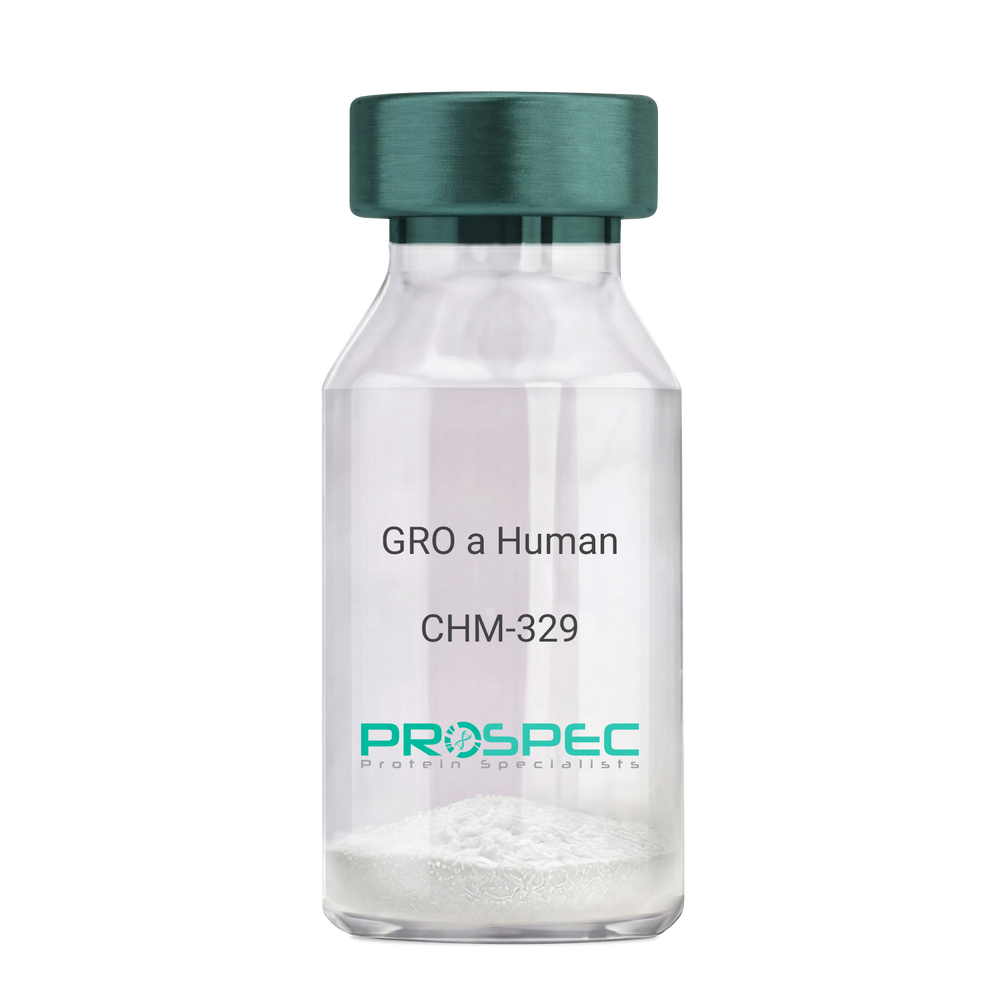
GRO-Alpha Human Recombinant (CXCL1)
Growth-regulated protein alpha, CXCL1, Melanoma growth stimulatory activity, MGSA, Neutrophil-activating protein 3, NAP-3, GRO-alpha (1-73), chemokine (C-X-C motif) ligand 1, GRO1, GROa, SCYB1, MGSA-a, MGSA alpha.
Product # :
CHM-329Price :
Quantity :
Shipping Method :
Shipped at Room temp
More Info
- description
- source
- formulation
- purity
- biological activity
- More Info
Description
GRO Alpha Human Recombinant produced in E.Coli is a single,non-glycosylated, polypeptide chain containing 73 amino acids and having a molecular mass of 7811 Dalton. The GRO-alpha is purified by proprietary chromatographic techniques.
Source
Escherichia Coli.
Formulation
Lyophilized from a 0.2µm filtered concentrated (1mg/ml) solution in 20mM PB, pH 7.4, 50mM NaCl.
Purity
Greater than 97.0% as determined by:
(a) Analysis by RP-HPLC.
(b) Analysis by SDS-PAGE.Biological Activity
Determined by its ability to chemoattract human peripheral blood neutrophils using a concentration range of 10.0-100.0 ng/ml.
More Info
-
Introduction
Chemokine (C-X-C motif) ligand 1 (CXCL1) is a small cytokine belonging to the CXC chemokine family that was previously called GRO1 oncogene, Neutrophil-activating protein 3 (NAP-3) and melanoma growth stimulating activity, alpha (MSGA-a). It is secreted by human melanoma cells, has mitogenic properties and is implicated in melanoma pathogenesis. CXCL1 is expressed by macrophages, neutrophilsand epithelial cells, and has neutrophil chemoattractant activity. CXCL1 plays a role in spinal cord development by inhibiting the migration of oligodendrocyte precursors and is involved in the processes of angiogenesis, inflammation, wound healing, and tumorigenesis. This chemokine elicits its effects by signaling through the chemokine receptor CXCR2. The gene for CXCL1 is located on human chromosome 4 amongst genes for other CXC chemokines.
-
Synonyms
Growth-regulated protein alpha, CXCL1, Melanoma growth stimulatory activity, MGSA, Neutrophil-activating protein 3, NAP-3, GRO-alpha (1-73), chemokine (C-X-C motif) ligand 1, GRO1, GROa, SCYB1, MGSA-a, MGSA alpha.
-
Physical Appearance
Sterile Filtered White lyophilized (freeze-dried) powder.
-
Stability
Lyophilized GRO-alpha although stable at room temperature for 3 weeks, should be stored desiccated below -18°C. Upon reconstitution CXCL1 should be stored at 4°C between 2-7 days and for future use below -18°C. For long term storage it is recommended to add a carrier protein (0.1% HSA or BSA).Please prevent freeze-thaw cycles.
-
Solubility
It is recommended to reconstitute the lyophilized CXCL1 in sterile 18MΩ-cm H2O not less than 100µg/ml, which can then be further diluted to other aqueous solutions.
-
Amino Acid Sequence
The sequence of the first five N-terminal amino acids was determined and was found to be Ala-Ser-Val-Ala-Thr.
-
Background
What is the molecular weight/Mw of CXCL1 HUMAN Protein?
CXCL1 HUMAN Protein has a total Mw of 7.81kDa.
What is the source or expression system of CXCL1 HUMAN Protein?
Escherichia Coli.
What is the Purity of CXCL1 HUMAN Protein?
CXCL1 HUMAN Protein is >97% pure as determined by SDS-PAGE.
What is the Biological Activity of CXCL1 HUMAN Protein?
Determined by its ability to chemoattract human peripheral blood neutrophils using a concentration range of 10.0-100.0 ng/ml.
What is the amino acid sequence of CXCL1 HUMAN Protein?
The sequence of the first five N-terminal amino acids was determined and was found to be Ala-Ser-Val-Ala-Thr.
What applications can CXCL1 HUMAN Protein be used in?
CXCL1 HUMAN Protein can probably be used in western blot, ELISA and Lateral Flow.
What is the endotoxin level for CXCL1 HUMAN Protein?
The endotoxin level is minimal, CXCL1 HUMAN Protein was purified using conventional chromatography techniques.
ProSpec's products are furnished for LABORATORY RESEARCH USE ONLY. The product may not be used as drugs, agricultural or pesticidal products, food additives or household chemicals.
- View Data Sheet
Name :
CXCL1 Human, HisDescription:
GRO-Alpha/MGSA Human Recombinant (CXCL1), His Tag
Growth-regulated protein alpha, CXCL1, Melanoma growth stimulatory activity, MGSA, Neutrophil-activating protein 3, NAP-3, GRO-alpha(1-73), chemokine (C-X-C motif) ligand 1, GRO1, GROa, SCYB1, MGSA-a, MGSA alpha.
Product # :
CHM-242Price :
Quantity :
Shipping Method :
Shipped with Ice Packs
More Info
- description
- source
- formulation
- purity
- More Info
Description
CXCL1 Human Recombinant produced in E.Coli is a single,non-glycosylated, polypeptide chain containing 94 amino acids (35-107) and having a molecular mass of 10.1 kDa. The CXCL1 is fused to a 20 amino acid His-Tag at N-terminus and purified by proprietary chromatographic techniques.
Source
Escherichia Coli.
Formulation
CXCL1 in 20mM Tris-HCL pH-8 and 10% glycerol.
Purity
Greater than 90.0% as determined by SDS-PAGE.
More Info
-
Introduction
Chemokine (C-X-C motif) ligand 1 (CXCL1) is a small cytokine belonging to the CXC chemokine family that was previously called GRO1 oncogene, Neutrophil-activating protein 3 (NAP-3) and melanoma growth stimulating activity, alpha (MSGA-?). It is secreted by human melanoma cells, has mitogenic properties and is implicated in melanoma pathogenesis. CXCL1 is expressed by macrophages, neutrophils and epithelial cells, and has neutrophil chemoattractant activity. CXCL1 plays a role in spinal cord development by inhibiting the migration of oligodendrocyte precursors and is involved in the processes of angiogenesis, inflammation, wound healing, and tumorigenesis. This chemokine elicits its effects by signaling through the chemokine receptor CXCR2. The gene for CXCL1 is located on human chromosome 4 amongst genes for other CXC chemokines.
-
Synonyms
Growth-regulated protein alpha, CXCL1, Melanoma growth stimulatory activity, MGSA, Neutrophil-activating protein 3, NAP-3, GRO-alpha(1-73), chemokine (C-X-C motif) ligand 1, GRO1, GROa, SCYB1, MGSA-a, MGSA alpha.
-
Physical Appearance
Sterile Filtered colorless solution.
-
Stability
Liquid CXCL1 although stable at 10°C for 1 week, should be stored below -18°C. For long term storage it is recommended to add a carrier protein (0.1% HSA or BSA).Please prevent freeze-thaw cycles.
-
Amino Acid Sequence
MGSSHHHHHH SSGLVPRGSH MASVATELRC QCLQTLQGIH PKNIQSVNVK SPGPHCAQTE VIATLKNGRK ACLNPASPIV KKIIEKMLNS DKSN.
-
Background
What is the molecular weight/Mw of CXCL1 HUMAN, HIS Protein?
CXCL1 HUMAN, HIS Protein has a total Mw of 10.1kDa.
What is the source or expression system of CXCL1 HUMAN, HIS Protein?
Escherichia Coli.
What is the Purity of CXCL1 HUMAN, HIS Protein?
CXCL1 HUMAN, HIS Protein is >90% pure as determined by SDS-PAGE.
What is the Biological Activity of CXCL1 HUMAN, HIS Protein?
The biological functionality of CXCL1 HUMAN, HIS Protein will be determined in the future.
What is the amino acid sequence of CXCL1 HUMAN, HIS Protein?
MGSSHHHHHH SSGLVPRGSH MASVATELRC QCLQTLQGIH PKNIQSVNVK SPGPHCAQTE VIATLKNGRK ACLNPASPIV KKIIEKMLNS DKSN.
What applications can CXCL1 HUMAN, HIS Protein be used in?
CXCL1 HUMAN, HIS Protein can probably be used in western blot, ELISA and Lateral Flow.
What is the endotoxin level for CXCL1 HUMAN, HIS Protein?
The endotoxin level is minimal, CXCL1 HUMAN, HIS Protein was purified using conventional chromatography techniques.
ProSpec's products are furnished for LABORATORY RESEARCH USE ONLY. The product may not be used as drugs, agricultural or pesticidal products, food additives or household chemicals.
- View Data Sheet
Name :
SMARCA4 HumanDescription:
SMARCA4 Human Recombinant
SWI/SNF Related, Matrix Associated, Actin Dependent Regulator Of Chromatin, Subfamily A, Member 4, Mitotic Growth And Transcription Activator, ATP-Dependent Helicase SMARCA4, BRG1, Global Transcription Activator Homologous Sequence Sucrose Nonfermenting-Like 4, BRG1-Associated Factor 190A, Protein Brahma Homolog 1, BRM/SWI2-Related Gene 1, Homeotic Gene Regulator, Brahma Protein-Like 1 Nuclear Protein GRB1, Protein BRG-1, SNF2-Like 4, SNF2-Beta, BAF190A, SNF2L4, MRD16, RTPS2, SWI/SNF-Related Matrix-Associated Actin-Dependent Regulator Of Chromatin Subfamily A Member 4, Transcription Activator BRG1, EC 3.6.4.-, EC 3.6.1, BAF190, SNF2LB, HSNF2b, SNF2B, SNF2, SWI2, Transcription activator BRG1.
Product # :
PRO-2071Price :
Quantity :
Shipping Method :
Shipped with Ice Packs
More Info
- description
- source
- formulation
- purity
- More Info
Description
SMARCA4 Human Recombinant produced in E.Coli is a single, non-glycosylated polypeptide chain containing 211 amino acids (362-549aa) and having a molecular mass of 25kDa. SMARCA4 is fused to a 23 amino acid His-tag at N-terminus & purified by proprietary chromatographic techniques.
Source
Escherichia Coli.
Formulation
SMARCA4 protein solution (1mg/ml) containing 20mM Tris-HCl buffer (pH 8.0), 0.4M UREA and 10% glycerol.
Purity
Greater than 80.0% as determined by SDS-PAGE.
More Info
-
Introduction
SMARCA4 belongs to the SWI/SNF family of proteins and is similar to the brahma protein of Drosophila. Proteins in this family have helicase and ATPase activities and are considered to regulate transcription ofcertain genes by altering the chromatin structure around those genes. SMARCA4 is part of the large ATP-dependent chromatin remodeling complex SNF/SWI, which is essential for transcriptional activation of genesnormally repressed by chromatin. In addition, SMARCA4 is able to bind BRCA1, as well as regulating the expression ofthe tumorigenic protein CD44. Moreover, mutations in SMARCA4 cause rhabdoid tumor predisposition syndrome type 2.
-
Synonyms
SWI/SNF Related, Matrix Associated, Actin Dependent Regulator Of Chromatin, Subfamily A, Member 4, Mitotic Growth And Transcription Activator, ATP-Dependent Helicase SMARCA4, BRG1, Global Transcription Activator Homologous Sequence Sucrose Nonfermenting-Like 4, BRG1-Associated Factor 190A, Protein Brahma Homolog 1, BRM/SWI2-Related Gene 1, Homeotic Gene Regulator, Brahma Protein-Like 1 Nuclear Protein GRB1, Protein BRG-1, SNF2-Like 4, SNF2-Beta, BAF190A, SNF2L4, MRD16, RTPS2, SWI/SNF-Related Matrix-Associated Actin-Dependent Regulator Of Chromatin Subfamily A Member 4, Transcription Activator BRG1, EC 3.6.4.-, EC 3.6.1, BAF190, SNF2LB, HSNF2b, SNF2B, SNF2, SWI2, Transcription activator BRG1.
-
Physical Appearance
Sterile Filtered clear solution.
-
Stability
Store at 4°C if entire vial will be used within 2-4 weeks. Store, frozen at -20°C for longer periods of time. For long term storage it is recommended to add a carrier protein (0.1% HSA or BSA).Avoid multiple freeze-thaw cycles.
-
Amino Acid Sequence
MGSSHHHHHH SSGLVPRGSH MGSDPVEILQ EREYRLQARI AHRIQELENL PGSLAGDLRT KATIELKALR LLNFQRQLRQ EVVVCMRRDT ALETALNAKA YKRSKRQSLR EARITEKLEK QQKIEQERKR RQKHQEYLNS ILQHAKDFKE YHRSVTGKIQ KLTKAVATYH ANTEREQKKE NERIEKERMR RLMAEDEEGY RKLIDQKKDK R.
ProSpec's products are furnished for LABORATORY RESEARCH USE ONLY. The product may not be used as drugs, agricultural or pesticidal products, food additives or household chemicals.
- View Data Sheet
Name :
GDF5 Mouse, HisDescription:
Growth differentiation factor 5 Mouse Recombinant, His Tag
Bmp-14, Bp, GDF-5, Bone morphogenetic protein 14, GDF5.
Product # :
CYT-852Price :
Quantity :
Shipping Method :
Shipped with Ice Packs
More Info
- description
- source
- formulation
- purity
- More Info
- sds-page
Description
GDF5 Mouse Recombinant produced in E.Coli is a single, non-glycosylated polypeptide chain containing 143 amino acids (376-495 a.a) and having a molecular mass of 16kDa.GDF5 is fused to a 23 amino acid His-tag at N-terminus & purified by proprietary chromatographic techniques.
Source
Escherichia Coli.
Formulation
GDF5 protein solution (0.5mg/ml) containing 20mM Tris-HCl buffer (pH 8.0) and 10% glycerol.
Purity
Greater than 90.0% as determined by SDS-PAGE.
sds-page
More Info
-
Introduction
GDF-5 is a member of the bone morphogenetic protein (BMP) family and the TGF-beta superfamily. This group of proteins is characterized by a polybasic proteolytic processing site which is cleaved to produce a mature protein containing seven conserved cysteine residues. The members of this family are regulators of cell growth and differentiation in both embryonic and adult tissues. Mutations in this gene are associated with acromesomelic dysplasia, Hunter-Thompson type; brachydactyly, type C; and chondrodysplasia, Grebe type. These associations confirm that the gene product plays a role in skeletal development.
-
Synonyms
Bmp-14, Bp, GDF-5, Bone morphogenetic protein 14, GDF5.
-
Physical Appearance
Sterile Filtered colorless solution.
-
Stability
Store at 4°C if entire vial will be used within 2-4 weeks. Store, frozen at -20°C for longer periods of time. For long term storage it is recommended to add a carrier protein (0.1% HSA or BSA).Avoid multiple freeze-thaw cycles.
-
Amino Acid Sequence
MGSSHHHHHH SSGLVPRGSH MGSAPLANRQ GKRPSKNLKA RCSRKALHVN FKDMGWDDWI IAPLEYEAFH CEGLCEFPLR SHLEPTNHAV IQTLMNSMDP ESTPPTCCVP TRLSPISILF IDSANNVVYK QYEDMVVESC GCR.
-
Background
What is the molecular weight/Mw of GDF5 MOUSE Protein?
GDF5 MOUSE Protein has a total Mw of 16kDa.
What is the source or expression system of GDF5 MOUSE Protein?
Escherichia Coli.
What is the Purity of GDF5 MOUSE Protein?
GDF5 MOUSE Protein is >90% pure as determined by SDS-PAGE.
What is the Biological Activity of GDF5 MOUSE Protein?
The biological functionality of GDF5 MOUSE Protein will be determined in the future.
What is the amino acid sequence of GDF5 MOUSE Protein?
MGSSHHHHHH SSGLVPRGSH MGSAPLANRQ GKRPSKNLKA RCSRKALHVN FKDMGWDDWI IAPLEYEAFH CEGLCEFPLR SHLEPTNHAV IQTLMNSMDP ESTPPTCCVP TRLSPISILF IDSANNVVYK QYEDMVVESC GCR.
What applications can GDF5 MOUSE Protein be used in?
GDF5 MOUSE Protein can probably be used in western blot, ELISA and Lateral Flow.
What is the endotoxin level for GDF5 MOUSE Protein?
The endotoxin level is minimal, GDF5 MOUSE Protein was purified using conventional chromatography techniques.
ProSpec's products are furnished for LABORATORY RESEARCH USE ONLY. The product may not be used as drugs, agricultural or pesticidal products, food additives or household chemicals.
- View Data Sheet
Name :
SLA2 HumanDescription:
Src-Like-Adaptor 2 Human Recombinant
Src-like-adapter 2, Modulator of antigen receptor signaling, MARS, Src-like adapter protein 2, SLAP-2, SLA2, C20orf156, SLAP2, Src-like-adapter 2 isoform a, Src-like-adaptor 2, C20orf156, MARS, SLAP-2, SLAP2.
Product # :
PRO-1810Price :
Quantity :
Shipping Method :
Shipped with Ice Packs
More Info
- description
- source
- formulation
- purity
- More Info
Description
SLA2 Human Recombinant produced in E.Coli is a single, non-glycosylated polypeptide chain containing 284 amino acids (1-261 a.a.) and having a molecular mass of 31kDa.SLA2 is fused to a 23 amino acid His-tag at N-terminus & purified by proprietary chromatographic techniques.
Source
Escherichia Coli.
Formulation
SLA2 protein solution (0.5mg/ml) contains 20mM Tris-HCl buffer, (pH 8.0), 10% glycerol and 0.4M Urea.
Purity
Greater than 80.0% as determined by SDS-PAGE.
More Info
-
Introduction
Src-Like-Adaptor 2, also known as SLA2, is a part of the SLAP family of adapter proteins. SLA2 acts as a significant receptor-proximal in downregulating T and B cell-mediated responses and inhibits antigen receptor-induced calcium mobilization. SLA2 interacts with Cas-Br-M (murine) ecotropic retroviral transforming sequence c.
-
Synonyms
Src-like-adapter 2, Modulator of antigen receptor signaling, MARS, Src-like adapter protein 2, SLAP-2, SLA2, C20orf156, SLAP2, Src-like-adapter 2 isoform a, Src-like-adaptor 2, C20orf156, MARS, SLAP-2, SLAP2.
-
Physical Appearance
Sterile Filtered colorless solution.
-
Stability
Store at 4°C if entire vial will be used within 2-4 weeks. Store, frozen at -20°C for longer periods of time. For long term storage it is recommended to add a carrier protein (0.1% HSA or BSA).Avoid multiple freeze-thaw cycles.
-
Amino Acid Sequence
MGSSHHHHHH SSGLVPRGSH MGSMGSLPSR RKSLPSPSLS SSVQGQGPVT MEAERSKATA VALGSFPAGG PAELSLRLGE PLTIVSEDGD WWTVLSEVSG REYNIPSVHV AKVSHGWLYE GLSREKAEEL LLLPGNPGGA FLIRESQTRR GSYSLSVRLS RPASWDRIRH YRIHCLDNGW LYISPRLTFP SLQALVDHYS ELADDICCLL KEPCVLQRAG PLPGKDIPLP VTVQRTPLNW KELDSSLLFS EAATGEESLL SEGLRESLSF YISLNDEAVS LDDA.
ProSpec's products are furnished for LABORATORY RESEARCH USE ONLY. The product may not be used as drugs, agricultural or pesticidal products, food additives or household chemicals.
- View Data Sheet
Name :
MAP1LC3B MouseDescription:
Microtubule-Associated Protein 1 Light Chain 3 Beta Mouse Recombinant
Microtubule-Associated Protein 1 Light Chain 3 beta, ATG8F, Autophagy-related ubiquitin-like modifier LC3 B, MAP1 light chain 3-like protein 2, MAP1A/MAP1B LC3 B, LC3B, MAP1A/1BLC3, MAP1ALC3.
Product # :
PRO-2482Price :
Quantity :
Shipping Method :
Shipped with Ice Packs
More Info
- description
- source
- formulation
- purity
- More Info
Description
MAP1LC3B Mouse Recombinant produced in E.Coli is a single, non-glycosylated polypeptide chain containing 144 amino acids (1-120 a.a.) and having a molecular mass of 16.7kDa. MAP1LC3B is fused to a 24 amino acid His-tag at N-terminus & purified by proprietary chromatographic techniques.
Source
Escherichia Coli.
Formulation
MAP1LC3B protein solution (0.25mg/ml) containing 20mM MES(pH6.0), 0.1M NaCl, 1mM DTT and 30% glycerol.
Purity
Greater than 95.0% as determined by SDS-PAGE.
More Info
-
Introduction
MAP1LC3B is a member of the MAP1 LC3 family. MAP1LC3B is a subunit of neuronal microtubule-associated MAP1A and MAP1B proteins, that are involved in microtubule assembly and important for neurogenesis. In addition, MAP1LC3B takes part in formation of autophagosomal vacuoles and is expressed mainly in heart, testis, brain and skeletal muscle.
-
Synonyms
Microtubule-Associated Protein 1 Light Chain 3 beta, ATG8F, Autophagy-related ubiquitin-like modifier LC3 B, MAP1 light chain 3-like protein 2, MAP1A/MAP1B LC3 B, LC3B, MAP1A/1BLC3, MAP1ALC3.
-
Physical Appearance
Sterile filtered colorless solution.
-
Stability
Store at 4°C if entire vial will be used within 2-4 weeks. Store, frozen at -20°C for longer periods of time. For long term storage it is recommended to add a carrier protein (0.1% HSA or BSA).Avoid multiple freeze-thaw cycles.
-
Amino Acid Sequence
MGSSHHHHHH SSGLVPRGSH MGSHMPSEKT FKQRRSFEQR VEDVRLIREQ HPTKIPVIIE RYKGEKQLPV LDKTKFLVPD HVNMSELIKI IRRRLQLNAN QAFFLLVNGH SMVSVSTPIS EVYESERDED GFLYMVYASQ ETFG.
ProSpec's products are furnished for LABORATORY RESEARCH USE ONLY. The product may not be used as drugs, agricultural or pesticidal products, food additives or household chemicals.
- View Data Sheet
Name :
VAV1 HumanDescription:
Vav 1 Guanine Nucleotide Exchange Factor Human Recombinant
Vav 1 Guanine Nucleotide Exchange Factor, VAV, Vav 1 Oncogene, Proto-Oncogene Vav.
Product # :
PRO-1764Price :
Quantity :
Shipping Method :
Shipped with Ice Packs
More Info
- description
- source
- formulation
- purity
- More Info
Description
VAV1 Human Recombinant produced in E.Coli is a single, non-glycosylated polypeptide chain containing 400 amino acids (189-565a.a) and having a molecular mass of 46.8kDa.VAV1 is fused to a 23 amino acid His-tag at N-terminus & purified by proprietary chromatographic techniques.
Source
Escherichia Coli.
Formulation
VAV1 protein solution (0.25mg/ml) containing In 20mM Tris-HCl buffer (pH 8.0), 0.2M NaCl, 30% glycerol and 2mM DTT.
Purity
Greater than 85% as determined by SDS-PAGE.
More Info
-
Introduction
Vav 1 Guanine Nucleotide Exchange Factor (VAV1), belongs to the VAV gene family. The VAV1 proteins are guanine nucleotide exchange factors (GEFs) for Rho family GTPases which activate pathways leading to actin cytoskeletal rearrangements and transcriptional alterations. VAV1 is essential in hematopoiesis, taking part in T-cell and B-cell development and activation. VAV1 has been identified as the specific binding partner of Nef proteins from HIV-1. In addition, VAV1 contains an SH2 domain, which could show its function as a substrate for tyrosine kinases. Expression of VAV1 is limited solely to cells of hematopoietic origin, as well as those of the erythroid, lymphoid and myeloid lineages. Among the diseases associated with VAV1 are cherubism, and hiv-1.
-
Synonyms
Vav 1 Guanine Nucleotide Exchange Factor, VAV, Vav 1 Oncogene, Proto-Oncogene Vav.
-
Physical Appearance
Sterile Filtered clear solution.
-
Stability
Store at 4°C if entire vial will be used within 2-4 weeks. Store, frozen at -20°C for longer periods of time.For long term storage it is recommended to add a carrier protein (0.1% HSA or BSA).Please avoid freeze thaw cycles.
-
Amino Acid Sequence
MGSSHHHHHH SSGLVPRGSH MGSMTEYDKR CCCLREIQQT EEKYTDTLGS IQQHFLKPLQ RFLKPQDIEI IFINIEDLLR VHTHFLKEMK EALGTPGAAN LYQVFIKYKE RFLVYGRYCS QVESASKHLD RVAAAREDVQ MKLEECSQRA NNGRFTLRDL LMVPMQRVLK YHLLLQELVK HTQEAMEKEN LRLALDAMRD LAQCVNEVKR DNETLRQITN FQLSIENLDQ SLAHYGRPKI DGELKITSVE RRSKMDRYAF LLDKALLICK RRGDSYDLKD FVNLHSFQVR DDSSGDRDNK KWSHMFLLIE DQGAQGYELF FKTRELKKKW MEQFEMAISN IYPENATANG HDFQMFSFEE TTSCKACQML LRGTFYQGYR CHRCRASAHK ECLGRVPPCG
ProSpec's products are furnished for LABORATORY RESEARCH USE ONLY. The product may not be used as drugs, agricultural or pesticidal products, food additives or household chemicals.
- View Data Sheet
Name :
MAPK12 HumanDescription:
Mitogen-Activated Protein Kinase 12 Human Recombinant
Mitogen-activated protein kinase 12, SAPK3, ERK6, PRKM12, Extracellular signal-regulated kinase 6, Mitogen-activated protein kinase p38 gamma, Stress-activated protein kinase 3, MAP kinase 12, MAP kinase p38 gamma, MAPK 12, ERK3, p38gamma, EC 2.7.11.24, EC 2.7.11.
Product # :
PKA-015Price :
Quantity :
Shipping Method :
Shipped with Ice Packs
More Info
- description
- source
- formulation
- purity
- More Info
Description
MAPK12 Human Recombinant produced in E.Coli is a single, non-glycosylated polypeptide chain containing 387 amino acids (1-367 a.a.) and having a molecular mass of 44.1kDa.MAPK12 is fused to a 20 amino acid His-tag at N-terminus & purified by proprietary chromatographic techniques.
Source
Escherichia Coli.
Formulation
MAPK12 protein solution (0.5mg/ml) containing 20mM Tris-HCl buffer (pH8.0), 100mM NaCl, 1mM DTT and 10% glycerol.
Purity
Greater than 95.0% as determined by SDS-PAGE analysis.
More Info
-
Introduction
MAPK12 is a member of the MAP kinase family. MAPK12 acts as a signal transducer during differentiation of myoblasts to myotubes. p38 proteins utilizes magnesium as a cofactor to catalyze the ATP-dependent phosphorylation of target proteins and is produced in several regions all over the body with common expression patterns in heart.
-
Synonyms
Mitogen-activated protein kinase 12, SAPK3, ERK6, PRKM12, Extracellular signal-regulated kinase 6, Mitogen-activated protein kinase p38 gamma, Stress-activated protein kinase 3, MAP kinase 12, MAP kinase p38 gamma, MAPK 12, ERK3, p38gamma, EC 2.7.11.24, EC 2.7.11.
-
Physical Appearance
Sterile Filtered colorless solution.
-
Stability
Store at 4°C if entire vial will be used within 2-4 weeks.Store, frozen at -20°C for longer periods of time. For long term storage it is recommended to add a carrier protein (0.1% HSA or BSA).Avoid multiple freeze-thaw cycles.
-
Amino Acid Sequence
MGSSHHHHHH SSGLVPRGSH MSSPPPARSG FYRQEVTKTA WEVRAVYRDL QPVGSGAYGA VCSAVDGRTG AKVAIKKLYR PFQSELFAKR AYRELRLLKH MRHENVIGLL DVFTPDETLD DFTDFYLVMP FMGTDLGKLM KHEKLGEDRI QFLVYQMLKG LRYIHAAGII HRDLKPGNLA VNEDCELKIL DFGLARQADS EMTGYVVTRW YRAPEVILNW MRYTQTVDIW SVGCIMAEMI TGKTLFKGSD HLDQLKEIMK VTGTPPAEFV QRLQSDEAKN YMKGLPELEK KDFASILTNA SPLAVNLLEK MLVLDAEQRV TAGEALAHPY FESLHDTEDE PQVQKYDDSF DDVDRTLDEW KRVTYKEVLS FKPPRQLGAR VSKETPL.
ProSpec's products are furnished for LABORATORY RESEARCH USE ONLY. The product may not be used as drugs, agricultural or pesticidal products, food additives or household chemicals.
- View Data Sheet
Name :
GHBP Human, HisDescription:
Growth Hormone Binding Protein Human Recombinant, His Tag
Growth Hormone Receptor, Growth Hormone Binding Protein, Somatotropin Receptor GH Receptor, Serum Binding Protein, GHBP, GHIP.
Product # :
CYT-921Price :
Quantity :
Shipping Method :
Shipped with Ice Packs
More Info
- description
- source
- formulation
- purity
- biological activity
- More Info
Description
GHBP produced in Sf9 Insect cells is a single, glycosylated polypeptide chain containing 254 amino acids (19-264a.a.) and having a molecular mass of 29.4kDa.GHBP is expressed with an 8 amino acid His tag at C-Terminus and purified by proprietary chromatographic techniques.
Source
Sf9, Insect cells.
Formulation
GHBP protein solution (1mg/ml) contains phosphate buffered saline (pH7.4) and 10% glycerol.
Purity
Greater than 95.0% as determined by SDS-PAGE.
Biological Activity
The ED50 range ≤ 10ng/ml and is measured by ability to inhibit GH-induced proliferation assay using Nb2-11 Rat lymphoma cells in the presence of 1.25ng/ml of human growth hormone.
More Info
-
Introduction
Growth hormone receptor, also known as GHR is part of the cytokine receptor family. GHR binds 2 receptor molecules and in this manner induces signal transduction through receptor dimerization. Furthermore, at high concentrations, growth hormone performs as an antagonist since there is a large difference in affinities at the respective binding sites. The antagonist action can be enhanced further by reducing binding in the low affinity binding site.
-
Synonyms
Growth Hormone Receptor, Growth Hormone Binding Protein, Somatotropin Receptor GH Receptor, Serum Binding Protein, GHBP, GHIP.
-
Physical Appearance
Sterile filtered colorless solution.
-
Stability
Store at 4°C if entire vial will be used within 2-4 weeks.Store, frozen at -20°C for longer periods of time. For long term storage it is recommended to add a carrier protein (0.1% HSA or BSA).Avoid multiple freeze-thaw cycles.
-
Amino Acid Sequence
FSGSEATAAI LSRAPWSLQS VNPGLKTNSS KEPKFTKCRS PERETFSCHW TDEVHHGTKN LGPIQLFYTR RNTQEWTQEW KECPDYVSAG ENSCYFNSSF TSIWIPYCIK LTSNGGTVDE KCFSVDEIVQ PDPPIALNWT LLNVSLTGIH ADIQVRWEAP RNADIQKGWM VLEYELQYKE
VNETKWKMMD PILTTSVPVY SLKVDKEYEV RVRSKQRNSG NYGEFSEVLY VTLPQMSQFT CEEDFYLEHH HHHH.
ProSpec's products are furnished for LABORATORY RESEARCH USE ONLY. The product may not be used as drugs, agricultural or pesticidal products, food additives or household chemicals.
- View Data Sheet
Name :
BMPR1A HumanDescription:
Bone Morphogenetic Protein Receptor Type IA Human Recombinant
BMPR-1A, BMP-R1A, BMPR1A, BMR1A, CD292, CD-292, Serine/threonine-protein kinase receptor R5, SKR5, ALK-3, ACVRLK3, EC 2.7.11.30, CD292 antigen.
Product # :
CYT-380Price :
Quantity :
Shipping Method :
Shipped at Room temp
More Info
- description
- source
- formulation
- purity
- biological activity
- More Info
Description
BMPR1A Human Recombinant extracellular domain produced in baculovirus is a monomeric, glycosylated, Polypeptide chain fused with 6xHis tag at C-terminus and having a molecular mass of 23 kDa. The BMR1A is purified by proprietary chromatographic techniques.
Source
Insect Cells.
Formulation
CD292 was lyophilized from a concentrated (1mg/ml) sterile solution containing 1X PBS.
Purity
Greater than 90.0% as determined by
(a) Analysis by RP-HPLC.
(b) Analysis by SDS-PAGE.Biological Activity
Measured by its ability to inhibit recombinant human BMP-2 induced alkaline phosphatase production by C2C12 myogenic cells. The ED50 for this effect is typically 1-3 µg/ml in the presence of 500 ng/ml of recombinant human BMP-2 corresponding to a Specific Activity of 2,000 units/mg.More Info
-
Introduction
The bone morphogenetic protein (BMP) receptors are a family of transmembrane serine/threonine kinases that include the type I receptors BMPR1A and BMPR1B and the type II receptor BMPR2. These receptors are also closely related to the receptors, ACVR1 and ACVR2. The ligands of these receptors are members of the TGF-beta superfamily. TGF-betas transduce their signals through the formation of heteromeric complexes with 2 different types of serine (threonine) kinase receptors: type I receptors of about 50-55 kD and type II receptors of about 70-80 kD. Type II receptors bind ligands in the absence of type I receptors, but they require their respective type I receptors for signaling, whereas type I receptors require their respective type II receptors for ligand binding.
-
Synonyms
BMPR-1A, BMP-R1A, BMPR1A, BMR1A, CD292, CD-292, Serine/threonine-protein kinase receptor R5, SKR5, ALK-3, ACVRLK3, EC 2.7.11.30, CD292 antigen.
-
Physical Appearance
Sterile Filtered White lyophilized (freeze-dried) powder.
-
Stability
Lyophilized Bone Morphogenetic Protein Receptor 1A although stable at room temperature for 3 weeks, should be stored desiccated below -18°C. Upon reconstitution BMPR1A should be stored at 4°C between 2-7 days and for future use below -18°C.For long term storage it is recommended to add a carrier protein (0.1% HSA or BSA).Please prevent freeze-thaw cycles.
-
Solubility
It is recommended to reconstitute the lyophilized ALK-3 in sterile PBS not less than 100 µg/ml, which can then be further diluted to other aqueous solutions.
-
Background
Bone Morphogenetic Protein Receptor Type IA Human Recombinant: Exploring the Potential of a Key Regulator in Bone Development
Abstract:
Bone Morphogenetic Protein Receptor Type IA (BMPR1A) human recombinant is a crucial regulator in bone development and homeostasis. This research paper provides a comprehensive analysis of BMPR1A, including its characteristics, signaling pathways, and potential therapeutic applications. Additionally, innovative methodologies for the production and optimization of BMPR1A human recombinant are proposed, shedding light on its future implications in the field of regenerative medicine.
Introduction:
Bone development and maintenance rely on intricate signaling pathways, with BMPR1A playing a pivotal role in bone morphogenesis. This paper explores the unique features of BMPR1A and presents novel approaches for its production and optimization, aiming to uncover its therapeutic potential in bone-related disorders.
Characteristics and Signaling Pathways:
BMPR1A belongs to the serine/threonine kinase receptor family and is expressed predominantly in skeletal tissues. It binds bone morphogenetic proteins (BMPs), initiating intracellular signaling cascades that regulate osteoblast differentiation and bone formation. BMPR1A activates the Smad-dependent and Smad-independent pathways, leading to the activation of transcription factors involved in bone-specific gene expression.
Production of BMPR1A Human Recombinant:
Efficient production methodologies are critical for harnessing the therapeutic potential of BMPR1A human recombinant. Mammalian cell-based expression systems, such as Chinese hamster ovary (CHO) cells, have been utilized to ensure proper folding and post-translational modifications. Optimization strategies, including codon optimization and vector engineering, have been employed to enhance production efficiency. Purification techniques, such as affinity chromatography and size exclusion chromatography, have been optimized to obtain high-quality BMPR1A recombinant protein.
Potential Therapeutic Applications:
BMPR1A human recombinant holds significant promise in regenerative medicine. Disruption of BMP signaling has been implicated in skeletal disorders, including bone fractures, osteoporosis, and skeletal dysplasias. Modulating BMPR1A activity using BMPR1A human recombinant may provide a targeted therapeutic approach for promoting bone regeneration, fracture healing, and bone tissue engineering. Furthermore, BMPR1A signaling plays a role in other tissues, such as the cardiovascular system and nervous system, suggesting broader therapeutic applications.
Conclusion:
BMPR1A human recombinant represents a crucial regulator in bone development and holds immense potential in regenerative medicine. Optimizing production methodologies and further understanding its signaling pathways will enhance its clinical utility. With its implications in skeletal disorders and potential applications in other tissues, BMPR1A human recombinant stands as a promising tool for promoting bone regeneration and tissue engineering.
What is the molecular weight/Mw of BMPR1A Protein?
BMPR1A Protein has a total Mw of 23kDa.
What is the source or expression system of BMPR1A Protein?
Insect Cells.
What is the Purity of BMPR1A Protein?
BMPR1A Protein is >90% pure as determined by SDS-PAGE.
What is the Biological Activity of BMPR1A Protein?
Measured by its ability to inhibit recombinant human BMP-2 induced alkaline phosphatase production by C2C12 myogenic cells. The ED50 for this effect is typically 1-3 µg/ml in the presence of 500 ng/ml of recombinant human BMP-2 corresponding to a Specific Activity of 2,000 units/mg.
What applications can BMPR1A Protein be used in?
BMPR1A Protein can probably be used in western blot, ELISA and Lateral Flow.
What is the endotoxin level for BMPR1A Protein?
The endotoxin level is minimal, BMPR1A Protein was purified using conventional chromatography techniques.
ProSpec's products are furnished for LABORATORY RESEARCH USE ONLY. The product may not be used as drugs, agricultural or pesticidal products, food additives or household chemicals.
- View Data Sheet
Name :
ARPP19 HumanDescription:
CAMP-Regulated Phosphoprotein, 19kDa Human Recombinant
CAMP-Regulated Phosphoprotein 19kDa, ARPP-19, ARPP16, Endosulfine Alpha-Like, ARPP-16, ENSAL, CAMP-Regulated Phosphoprotein 19, Cyclic AMP Phosphoprotein 19 KD, ARPP19.
Product # :
PRO-1785Price :
Quantity :
Shipping Method :
Shipped with Ice Packs
More Info
- description
- source
- formulation
- purity
- More Info
Description
ARPP19 Human Recombinant produced in E.Coli is a single, non-glycosylated polypeptide chain containing 135 amino acids (1-112 a.a) and having a molecular mass of 14.7kDa.ARPP19 is fused to a 23 amino acid His-tag at N-terminus & purified by proprietary chromatographic techniques.
Source
Escherichia Coli.
Formulation
ARPP19 protein solution (0.5mg/ml) containing 20mM Tris-HCl buffer (pH 8.0), 0.15M NaCl and 10% glycerol.
Purity
Greater than 90.0% as determined by SDS-PAGE.
More Info
-
Introduction
cAMP-regulated phosphoprotein 19 (ARPP19) is protein phosphatase inhibitor which specifically inhibits protein phosphatase 2A (PP2A) during mitosis. When phosphorylated at Ser-62 during mitosis, ARPP19 specifically interacts with PPP2R2D (PR55-delta) and inhibits its activity, leading to inactivation of PP2A, a vital condition to maintain cyclin-B1-CDK1 activity high during M phase. ARPP19 protein may indirectly boost GAP-43 expression. The 19 kDa cAMP-regulated phosphoprotein has a role in regulating mitosis by obstructing protein phosphatase-2A.
-
Synonyms
CAMP-Regulated Phosphoprotein 19kDa, ARPP-19, ARPP16, Endosulfine Alpha-Like, ARPP-16, ENSAL, CAMP-Regulated Phosphoprotein 19, Cyclic AMP Phosphoprotein 19 KD, ARPP19.
-
Physical Appearance
Sterile Filtered colorless solution.
-
Stability
Store at 4°C if entire vial will be used within 2-4 weeks. Store, frozen at -20°C for longer periods of time. For long term storage it is recommended to add a carrier protein (0.1% HSA or BSA).Avoid multiple freeze-thaw cycles.
-
Amino Acid Sequence
MGSSHHHHHH SSGLVPRGSH MGSMSAEVPE AASAEEQKEM EDKVTSPEKA EEAKLKARYP HLGQKPGGSD FLRKRLQKGQ KYFDSGDYNM AKAKMKNKQL PTAAPDKTEV TGDHIPTPQD LPQRKPSLVA SKLAG.
ProSpec's products are furnished for LABORATORY RESEARCH USE ONLY. The product may not be used as drugs, agricultural or pesticidal products, food additives or household chemicals.
- View Data Sheet
Name :
PIP ProteinDescription:
Prolactin-Induced Protein Human Recombinant
Prolactin-inducible protein, Gross cystic disease fluid protein 15, GCDFP-15, Prolactin-induced protein, Secretory actin-binding protein, SABP, gp17, GCDFP15, GPIP4, PIP.
Product # :
CYT-793Price :
Quantity :
Shipping Method :
Shipped with Ice Packs
More Info
- description
- source
- formulation
- purity
- More Info
Description
PIP Human Recombinant produced in E.Coli is a single, non-glycosylated polypeptide chain containing 141 amino acids (29-146 a.a.) and having a molecular mass of 15.9kDa.PIP is fused to a 23 amino acid His-tag at N-terminus & purified by proprietary chromatographic techniques.
Source
Escherichia Coli.
Formulation
PIP protein solution (1mg/ml) contains 20mM Tris-HCl buffer, (pH 8.0), 10% glycerol and 0.4M Urea.
Purity
Greater than 90% as determined by SDS-PAGE.
More Info
-
Introduction
Prolactin-inducible protein (PIP) is a main protein component of benign breast gross cysts. PIP is a famous indicator of breast cancer, since it is found in around 50% of all breast cancer specimens. PIP is expressed in exocrine glands, in pathologic conditions, in breast cysts and breast cancers exhibiting apocrine features. PIP and prostate specific antigen are co-expressed in androgen receptor-positive breast tumours.
-
Synonyms
Prolactin-inducible protein, Gross cystic disease fluid protein 15, GCDFP-15, Prolactin-induced protein, Secretory actin-binding protein, SABP, gp17, GCDFP15, GPIP4, PIP.
-
Physical Appearance
Sterile Filtered clear solution.
-
Stability
Store at 4°C if entire vial will be used within 2-4 weeks. Store, frozen at -20°C for longer periods of time. For long term storage it is recommended to add a carrier protein (0.1% HSA or BSA).Avoid multiple freeze-thaw cycles.
-
Amino Acid Sequence
MGSSHHHHHH SSGLVPRGSH MGSQDNTRKI IIKNFDIPKS VRPNDEVTAV LAVQTELKEC MVVKTYLISS IPLQGAFNYK YTACLCDDNP KTFYWDFYTN RTVQIAAVVD VIRELGICPD DAAVIPIKNN RFYTIEILKV E.
ProSpec's products are furnished for LABORATORY RESEARCH USE ONLY. The product may not be used as drugs, agricultural or pesticidal products, food additives or household chemicals.
- View Data Sheet
Name :
RELM a MouseDescription:
RELM-alpha Mouse Recombinant
Resistin-like alpha, RELMalpha, Cysteine-rich secreted protein FIZZ1, Parasite-induced macrophage novel gene 1 protein, Cysteine-rich secreted protein A12-gamma, RELM-a.
Product # :
CYT-309Price :
Quantity :
Shipping Method :
Shipped at Room temp
More Info
- description
- source
- formulation
- purity
- More Info
Description
Mouse RELM-alpha Recombinant produced in E.Coli is a monomeric, non-glycosylated, polypeptide chain containing 88 amino acids and having a molecular mass of 10 kDa. The Mouse RELM-alpha is purified by proprietary chromatographic techniques.
Source
Escherichia Coli.
Formulation
Sterile filtered and lyophilized from 0.5mg/ml in 10mM sodium phosphate buffer, pH 7.5.
Purity
Greater than 98% as determined by SDS-PAGE & RP-HPLC.
More Info
-
Introduction
Bronchoalveolar lavage fluid from mice with experimentally induced allergic pulmonary inflammation contains a novel 9.4 kDa cysteine-rich secreted protein, RELM-alpha (FIZZ1, found in inflammatory zone). RELM-alpha is a secreted protein that has a restricted tissue distribution with highest levels in adipose tissue stroma. Murine RELM-alpha (FIZZ1) is the founding member of a new gene family including two other murine genes expressed, respectively, in intestinal crypt epithelium (RELM-beta) and white adipose tissue (Resistin), and two related human genes.
RELMalpha inhibits the differentiation of 3T3-L1 preadipocytes into adipocytes but has no effect on proliferation of 3T3-L1 preadipocytes. RELMalpha is able to form heterooligomers with resistin but not RELMbeta. Since RELMalpha is expressed by adipose tissue and it is a secreted factor, our findings suggest that RELMalpha may be involved in the control of the adipogenesis as well as in the process of muscle differentiation.
In the lung, RELM-alpha is induced by hypoxia and was renamed as hypoxia-induced mitogenic factor (HIMF). HIMF strongly activated Akt phosphorylation. The phosphatidylinositol 3-kinase (PI3K) inhibitor LY294002 (10 micromol/L) inhibited HIMF-activated Akt phosphorylation. It also inhibited HIMF stimulated RPSM proliferation. Thus, the PI3K/Akt pathway, at least in part, mediates the proliferative effect of HIMF. Further studies showed that HIMF had angiogenic and vasoconstrictive properties. HIMF increased pulmonary arterial pressure and vascular resistance. Further studies suggest that HIMF regulates apoptosis and may participate in lung alveolarization and maturation. -
Synonyms
Resistin-like alpha, RELMalpha, Cysteine-rich secreted protein FIZZ1, Parasite-induced macrophage novel gene 1 protein, Cysteine-rich secreted protein A12-gamma, RELM-a.
-
Physical Appearance
Sterile Filtered White lyophilized (freeze-dried) powder.
-
Stability
Store lyophilized protein at -20°C. Aliquot the product after reconstitution to avoid repeated freezing/thawing cycles. Reconstituted protein can be stored at 4°C for a limited period of time; it does not show any change after two weeks at 4°C.
-
Solubility
At 0.1mg/ml of deionized sterile water.
-
Amino Acid Sequence
MDETIEIIVE NKVKELLANP ANYPSTVTKT LSCTSVKTMN RWASCPAGMT ATGCACGFAC GSWEIQSGDT CNCLCLLVDW TTARCCQLS.
ProSpec's products are furnished for LABORATORY RESEARCH USE ONLY. The product may not be used as drugs, agricultural or pesticidal products, food additives or household chemicals.
- View Data Sheet
Name :
SH2D1A HumanDescription:
SH2 domain containing 1A Human Recombinant
SH2 domain-containing protein 1A, Duncan disease SH2-protein, Signaling lymphocytic activation molecule-associated protein, SLAM-associated protein, T-cell signal transduction molecule SAP, SH2D1A, DSHP, SAP, LYP, XLP, EBVS, IMD5, XLPD, MTCP1, FLJ18687, FLJ92177, SAP/SH2D1A.
Product # :
PRO-006Price :
Quantity :
Shipping Method :
Shipped with Ice Packs
More Info
- description
- source
- formulation
- purity
- More Info
Description
SH2D1A Human Recombinant fused with a 20 amino acid His tag at N-terminus produced in E.Coli is a single, non-glycosylated, polypeptide chain containing 148 amino acids (1-128 a.a.) and having a molecular mass of 16.3kDa. The SH2D1A is purified by proprietary chromatographic techniques.
Source
Escherichia Coli.
Formulation
The SH2D1A solution (1 mg/ml) contains 20mM Tris-HCl Buffer (pH 7.5), 1mM DTT and 10% Glycerol.
Purity
Greater than 95.0% as determined by SDS-PAGE.
More Info
-
Introduction
SH2D1A acts as an inhibitor of the signaling lymphocyte activation molecule (SLAM) self-association. The SH2D1A protein is expressed at a high level in the thymus and the lung, with a lower level of expression in the spleen and the liver. The SH2D1A protein contains an SH2 domain and a short tail. SH2D1A has a key role in the bidirectional stimulation of T and B cells. Defects in the SH2D1A gene cause the X-linked lymphoproliferative disease (XLPD), aka Duncan disease. The XLPD is distinguished by a rare congenital immunodeficiency following an EBV infection (Epstein-Barr virus).
-
Synonyms
SH2 domain-containing protein 1A, Duncan disease SH2-protein, Signaling lymphocytic activation molecule-associated protein, SLAM-associated protein, T-cell signal transduction molecule SAP, SH2D1A, DSHP, SAP, LYP, XLP, EBVS, IMD5, XLPD, MTCP1, FLJ18687, FLJ92177, SAP/SH2D1A.
-
Physical Appearance
Sterile Filtered colorless solution.
-
Stability
Store at 4°C if entire vial will be used within 2-4 weeks. Store, frozen at -20°C for longer periods of time. For long term storage it is recommended to add a carrier protein (0.1% HSA or BSA). Avoid multiple freeze-thaw cycles.
-
Amino Acid Sequence
MGSSHHHHHH SSGLVPRGSH MDAVAVYHGK ISRETGEKLL LATGLDGSYL LRDSESVPGV YCLCVLYHGY IYTYRVSQTE TGSWSAETAP GVHKRYFRKI KNLISAFQKP DQGIVIPLQY PVEKKSSARS TQGTTGIRED PDVCLKAP.
ProSpec's products are furnished for LABORATORY RESEARCH USE ONLY. The product may not be used as drugs, agricultural or pesticidal products, food additives or household chemicals.
- View Data Sheet
Name :
Ag85ADescription:
Mycobacterium Tuberculosis major secretory protein Antigen 85A Recombinant
Ronectin-binding protein A, Mycolyl transferase 85A.
Product # :
PRO-1076Price :
Quantity :
Shipping Method :
Shipped with Ice Packs
More Info
- description
- source
- formulation
- purity
- More Info
Description
Recombinant Mycobacterium tuberculosis Ag85A (43-338 a.a) produced in Hi-5 cells is a single, glycosylated polypeptide chain having a molecular mass of 32.8kDa (305 a.a in total).Antigen 85A is fused to a 6 amino acid His tag at C-terminus and purified by conventional chromatographic techniques.
Source
Baculovirus
Formulation
The Ag85A solution (0.5mg/1ml) contains 20mM Tris-HCl buffer (pH 8.0) and 10% glycerol.
Purity
Greater than 95% as determined by SDS-PAGE.
More Info
-
Introduction
Antigen 85A is a member of the antigen 85 complex (Antigen 85A, B, C). The enzymes of the antigen 85 complex have mycolyltransferase activity and catalyze the synthesis of the very rich glycolipid of the mycobacterial cell wall, the cord factor (trehalose 6,6'-dimycolate, TDM). The cord factor is vital for the integrity of the mycobacterial cell wall and pathogenesis of the bacillus. TDM is synthesized from two molecules of trehalose-6'-monomycolate (TMM) by Antigen 85A.
-
Synonyms
Ronectin-binding protein A, Mycolyl transferase 85A.
-
Physical Appearance
Sterile Filtered colorless solution.
-
Stability
Store at 4°C if entire vial will be used within 2-4 weeks. Store, frozen at -20°C for longer periods of time. For long term storage it is recommended to add a carrier protein (0.1% HSA or BSA).Avoid multiple freeze-thaw cycles.
-
Amino Acid Sequence
ADPAFSRPGL PVEYLQVPSP SMGRDIKVQF QSGGANSPAL YLLDGLRAQD DFSGWDINTP AFEWYDQSGL SVVMPVGGQS SFYSDWYQPA CGKAGCQTYK WETFLTSELP GWLQANRHVK PTGSAVVGLS MAASSALTLA IYHPQQFVYA GAMSGLLDPS QAMGPTLIGL AMGDAGGYKA SDMWGPKEDP AWQRNDPLLN VGKLIANNTR VWVYCGNGKP SDLGGNNLPA KFLEGFVRTS NIKFQDAYNA GGGHNGVFDF PDSGTHSWEY WGAQLNAMKP DLQRALGATP NTGPAPQGAH HHHHH.
ProSpec's products are furnished for LABORATORY RESEARCH USE ONLY. The product may not be used as drugs, agricultural or pesticidal products, food additives or household chemicals.
- View Data Sheet
Name :
GH Antagonist OvineDescription:
Growth Hormone Antagonist Ovine Recombinant
GH1, GH, GHN, GH-N, hGH-N, Pituitary growth hormone, Growth hormone 1, Somatotropin.
Product # :
CYT-215Price :
Quantity :
Shipping Method :
Shipped at Room temp
More Info
- description
- source
- formulation
- purity
- biological activity
- More Info
Description
Somatotropin Ovine Antagonist Recombinant G119R produced in E.Coli is a single, non-glycosylated polypeptide chain containing 191 amino acids and having a molecular mass of 22 kDa. The Somatotropin Ovine Antagonist Recombinant is purified by proprietary chromatographic techniques.
Source
Escherichia Coli.
Formulation
The protein was lyophilized from a concentrated (1mg/ml) solution with 0.0045M NaHCO3, pH 9.
Purity
Greater than 98.0% as determined by:
(a) Analysis by RP-HPLC
(b) Analysis by Gel Filtration. (c) Analysis by SDS-PAGE.Biological Activity
GH G119R acts as antagonist using an in vitro bioassay in PDF-P1 3B9 cells stably transfected with rabbit GH receptors. It is capable of forming a 1:1 complex with the recombinant ovine growth hormone receptor extracellular domain (ECD) and binds to this ECD with affinity similar the the wild type oGH.More Info
-
Introduction
GH is a member of the somatotropin/prolactin family of hormones which play an important role in growth control. The gene, along with four other related genes, is located at the growth hormone locus on chromosome 17 where they are interspersed in the same transcriptional orientation; an arrangement which is thought to have evolved by a series of gene duplications. The five genes share a remarkably high degree of sequence identity. Alternative splicing generates additional isoforms of each of the five growth hormones, leading to further diversity and potential for specialization. This particular family member is expressed in the pituitary but not in placental tissue as is the case for the other four genes in the growth hormone locus. Mutations in or deletions of the gene lead to growth hormone deficiency and short stature.
-
Synonyms
GH1, GH, GHN, GH-N, hGH-N, Pituitary growth hormone, Growth hormone 1, Somatotropin.
-
Physical Appearance
Sterile Filtered White lyophilized (freeze-dried) powder.
-
Stability
Lyophilized GH G119R although stable at room temperature for at least two weeks, should be stored desiccated below -18°C. Upon reconstitution and filter sterilization GH can be stored at 4°C, pH 9 for up to 4 weeks. For long term storage and more diluted solutions it is recommended to add a carrier protein (0.1% HSA or BSA). Please prevent freeze-thaw cycles.
-
Solubility
It is recommended to reconstitute the lyophilized GH G119R in 0.4% NaHCO3 or water adjusted to pH 9, not less than 100µg/ml, which can then be further diluted to other aqueous solutions, preferably in a presence of a carrier protein such as BSA or similar.
-
Amino Acid Sequence
The sequence of the first five N-terminal amino acids was determined and was found to be Ala-Thr-Phe-Pro-Ala.
-
Protein content
Protein quantitation was carried out by UV spectroscopy at 280 nm using the absorbency value of 0.63 as the extinction coefficient for a 0.1% (1mg/ml) solution. This value is calculated by the DNAman computer analysis program of protein sequences.
ProSpec's products are furnished for LABORATORY RESEARCH USE ONLY. The product may not be used as drugs, agricultural or pesticidal products, food additives or household chemicals.
- View Data Sheet
Name :
CST3 MouseDescription:
Cystatin-C Mouse Recombinant
Post G-globulin, CST 3, CST3, Gamma-Trace, Cystatin 3, Amyloid Angiopathy and Cerebral Hemorrhage, Cystatin-C precursor, neuroendocrine basic polypeptide.
Product # :
PRO-597Price :
Quantity :
Shipping Method :
Shipped at Room temp
More Info
- description
- source
- formulation
- purity
- More Info
Description
Cystatin-C Murine Recombinant produced in E.Coli is a single, non-glycosylated, polypeptide chain containing 134 amino acids and having a molecular mass of 15kDa. The Mouse Cystatin-C is fused to His tag at N-Terminus.The Mouse Cystatin-C is purified by proprietary chromatographic techniques.
Source
Escherichia Coli.
Formulation
The sterile filtered concentrated (0.5mg/ml) protein solution was lyophilized with 20mM Tris & 50mM NaCl pH-7.5.
Purity
Greater than 95% as determined by SDS-PAGE.
More Info
-
Introduction
Cystatins are a superfamily of cysteine proteinase inhibitors found in both plants and animals. They comprise a group of proteinase inhibitors, widely distributed in tissues and body fluids, and form tight complexes with cysteine proteases such as cathepsin B, H, L and S. Cystatin C, a secreted molecule of this family, is of interest from biochemical, medicine and evolutionary points of view. Cystatin C, with molecular weight of 13260 Da, is composed of 120 amino acids, lacks carbohydrate and has two disulfide bridges located near the carboxyl terminus. Cystatin C is increased in patients with malignant diseases, and is related to the insufficiency of renal function and appears to be a better marker than creatinine. On the other hand, low levels of cystatin C involve cause the breakdown of the elastic laminae and, subsequently, the atherosclerosis and abdominal aortic aneurysm.
-
Synonyms
Post G-globulin, CST 3, CST3, Gamma-Trace, Cystatin 3, Amyloid Angiopathy and Cerebral Hemorrhage, Cystatin-C precursor, neuroendocrine basic polypeptide.
-
Physical Appearance
Sterile Filtered White lyophilized (freeze-dried) powder.
-
Stability
Store lyophilized protein at -20°C. Aliquot the product after reconstitution to avoid repeated freezing/thawing cycles. Reconstituted protein can be stored at 4°C for a limited period of time.
-
Solubility
Add deionized water to a working concentration of 0.5mg/ml and let the lyophilized pellet dissolve completely.
-
Amino Acid Sequence
MRGSHHHHHH GMASATPKQG PRMLGAPEEA DANEEGVRRA LDFAVSEYNK GSNDAYHSRA IQVVRARKQL VAGVNYFLDV EMGRTTCTKS QTNLTDCPFH DQPHLMRKAL CSFQIYSVPW KGTHSLTKFSCKNA.
ProSpec's products are furnished for LABORATORY RESEARCH USE ONLY. The product may not be used as drugs, agricultural or pesticidal products, food additives or household chemicals.
- View Data Sheet
Name :
MAPK3 Human, HisDescription:
Mitogen-Activated Protein Kinase 3 Human Recombinant, His-Tag
ERK1, HS44KDAP, HUMKER1A, P44ERK1, P44MAPK, PRKM3, MAP kinase3.
Product # :
PKA-265Price :
Quantity :
Shipping Method :
Shipped with Ice Packs
More Info
- description
- source
- formulation
- purity
- More Info
Description
MAPK3 Human Recombinant produced in E.Coli is a single, non-glycosylated, polypeptide chain containing 399 amino acids (1-379 a.a.) and having a molecular mass of 45.2 kDa. The MAPK3 is fused to a 20 amino acid His-Tag at N-terminus and purified by proprietary chromatographic techniques.
Source
Escherichia Coli.
Formulation
The MAPK3 0.5mg/ml protein solution contains 20mM Tris-HCl buffer pH-8, 1mM DTT, 0.1M NaCl and 20% glycerol.
Purity
Greater than 90.0% as determined by SDS-PAGE.
More Info
-
Introduction
MAPK3 is a part of the MAP kinase family which is recognized as extracellular signal-regulated kinases (ERKs), that function in a signaling cascade that controls various cellular procedures such as proliferation, differentiation, and cell cycle progression in reaction to a variety of extracellular signals. MAPK3 is activated by upstream kinases, resulting in its translocation to the nucleus where it phosphorylates nuclear targets.
-
Synonyms
ERK1, HS44KDAP, HUMKER1A, P44ERK1, P44MAPK, PRKM3, MAP kinase3.
-
Physical Appearance
Sterile Filtered colorless solution.
-
Stability
Store at 4°C if entire vial will be used within 2-4 weeks. Store, frozen at -20°C for longer periods of time. For long term storage it is recommended to add a carrier protein (0.1% HSA or BSA).Avoid multiple freeze-thaw cycles.
-
Amino Acid Sequence
MGSSHHHHHH SSGLVPRGSH MAAAAAQGGG GGEPRRTEGV GPGVPGEVEM VKGQPFDVGP RYTQLQYIGE GAYGMVSSAY DHVRKTRVAI KKISPFEHQT YCQRTLREIQ ILLRFRHENV IGIRDILRAS TLEAMRDVYI VQDLMETDLY KLLKSQQLSN DHICYFLYQI LRGLKYIHSA NVLHRDLKPS NLLINTTCDL KICDFGLARI ADPEHDHTGF LTEYVATRWY RAPEIMLNSK GYTKSIDIWS VGCILAEMLS NRPIFPGKHY LDQLNHILGI LGSPSQEDLN CIINMKARNY LQSLPSKTKV AWAKLFPKSD SKALDLLDRM LTFNPNKRIT VEEALAHPYL EQYYDPTDEP VAEEPFTFAM ELDDLPKERL KELIFQETAR FQPGVLEAP.
ProSpec's products are furnished for LABORATORY RESEARCH USE ONLY. The product may not be used as drugs, agricultural or pesticidal products, food additives or household chemicals.
- View Data Sheet
Name :
GMFB MouseDescription:
Glia Maturation Factor Beta Mouse Recombinant
Glia maturation factor beta, GMFB, GMF-B, GMF-beta, GMF, C79176, AI851627, D14Ertd630e, 3110001H22Rik, 3110001O16Rik.
Product # :
CYT-006Price :
Quantity :
Shipping Method :
Shipped at Room temp
More Info
- description
- source
- formulation
- purity
- More Info
Description
Glia Maturation Factor-Beta (GMF-Beta) Mouse Recombinant produced in E.Coli is a signle, non-glycosylated, polypeptide chain containing 141 amino acids and having a total molecular mass of 16.6kDa. GMF-Beta, Mouse Recombinant is purified by proprietary chromatographic techniques.
Source
Escherichia Coli.
Formulation
The GMF-beta protein was lyophilized from a 0.2µm filtered concentrated solution in PBS, pH 7.4.
Purity
Greater than 97.0% as determined by:
(a) Analysis by RP-HPLC.
(b) Analysis by SDS-PAGE.More Info
-
Introduction
GMFB is part of the GMF subfamily of the larger actin-binding protein ADF family. GMFB is phosphorylated after phorbol ester stimulation, and is crucial for the nervous system. GMFB causes brain cell differentiation, stimulates neural regeneration and inhibits tumor cell proliferation. GMFB overexpression in astrocytes results in the increase of BDNF production. GMFB expression is increased by exercise, thus BDNF is important for exercise-induction of BDNF.
-
Synonyms
Glia maturation factor beta, GMFB, GMF-B, GMF-beta, GMF, C79176, AI851627, D14Ertd630e, 3110001H22Rik, 3110001O16Rik.
-
Physical Appearance
Sterile Filtered White lyophilized (freeze-dried) powder.
-
Stability
Lyophilized GMF-B although stable at room temperature for 3 weeks, should be stored desiccated below -18°C. Upon reconstitution GMF-beta should be stored at 4°C between 2-7 days and for future use below -18°C.For long term storage it is recommended to add a carrier protein (0.1% HSA or BSA).Please prevent freeze-thaw cycles.
-
Solubility
It is recommended to reconstitute the lyophilized GMFB in sterile 18MΩ-cm H2O not less than 100µg/ml, which can then be further diluted to other aqueous solutions.
-
Amino Acid Sequence
SESLVVCDVA EDLVEKLRKF RFRKETHNAA IIMKIDKDER LVVLDEELEG
VSPDELKDEL PERQPRFIVY SYKYQHDDGR VSYPLCFIFS SPVGCKPEQQ
MMYAGSKNKL VQTAELTKVF EIRNTEDLTE EWLREKLGFF H. -
Background
What is the molecular weight/Mw of GMFB MOUSE Protein?
GMFB MOUSE Protein has a total Mw of 16.6kDa.
What is the source or expression system of GMFB MOUSE Protein?
Escherichia Coli.
What is the Purity of GMFB MOUSE Protein?
GMFB MOUSE Protein is >97% pure as determined by SDS-PAGE.
What is the Biological Activity of GMFB MOUSE Protein?
The biological functionality of GMFB MOUSE Protein will be determined in the future.
What is the amino acid sequence of GMFB MOUSE Protein?
SESLVVCDVA EDLVEKLRKF RFRKETHNAA IIMKIDKDER LVVLDEELEG
VSPDELKDEL PERQPRFIVY SYKYQHDDGR VSYPLCFIFS SPVGCKPEQQ
MMYAGSKNKL VQTAELTKVF EIRNTEDLTE EWLREKLGFF H.
What applications can GMFB MOUSE Protein be used in?
GMFB MOUSE Protein can probably be used in western blot, ELISA and Lateral Flow.
What is the endotoxin level for GMFB MOUSE Protein?
The endotoxin level is minimal, GMFB MOUSE Protein was purified using conventional chromatography techniques.
ProSpec's products are furnished for LABORATORY RESEARCH USE ONLY. The product may not be used as drugs, agricultural or pesticidal products, food additives or household chemicals.
- View Data Sheet
Name :
PSMD11 PAT2C7AT AntibodyDescription:
26S proteasome non-ATPase regulatory subunit 11 clone PAT2C7AT Mouse Anti Human
26S proteasome non-ATPase regulatory subunit 11, 26S proteasome regulatory subunit S9, 26S proteasome regulatory subunit RPN6, 26S proteasome regulatory subunit p44.5, PSMD11, S9, Rpn6, p44.5, MGC3844.
Product # :
ANT-675Price :
Quantity :
Shipping Method :
Shipped with Ice Packs
More Info
- formulation
- More Info
Formulation
1mg/ml containing PBS, pH-7.4, 10% Glycerol and 0.02% Sodium Azide.
More Info
-
Introduction
The 26S proteasome is a multicatalytic proteinase complex with a well ordered structure composed of two complexes- a 20S core and a 19S regulator. PSMD11 is a non-ATPase subunit of the 19S regulator. The 20S core is composed of four rings of 28 non-identical subunits; two rings are composed of 7 alpha subunits and two rings are composed of 7 beta subunits. The 19S regulator is composed of a base that contains six ATPase subunits and two non-ATPase subunits, and a lid that contains up to ten non-ATPase subunits. Proteasomes are spread throughout eukaryotic cells at a high concentration and cleave peptides in an ATP/ubiquitin-dependent process in a non-lysosomal pathway. An indispensable function of a modified proteasome, the immunoproteasome, is the processing of class I MHC peptides.
-
Synonyms
26S proteasome non-ATPase regulatory subunit 11, 26S proteasome regulatory subunit S9, 26S proteasome regulatory subunit RPN6, 26S proteasome regulatory subunit p44.5, PSMD11, S9, Rpn6, p44.5, MGC3844.
-
Physical Appearance
Sterile filtered colorless solution.
-
Immunogen
Anti-human PSMD11 mAb, is derived from hybridization of mouse F0 myeloma cells with spleen cells from BALB/c mice immunized with recombinant human PSMD11 PAT2C7AT amino acids 1-422 purified from E. coli.
-
Ig Subclass
Mouse IgG2b heavy chain and ? light chain.
-
Clone
PAT2C7AT.
-
Applications
PSMD11 antibody has been tested by ELISA, Western blot analysis, Flow cytometry and ICC/IF to assure specificity and reactivity. Since application varies, however, each investigation should be titrated by the reagent to obtain optimal results.
-
Type
Mouse Anti Human Monoclonal.
-
Storage Procedures
For periods up to 1 month store at 4°C, for longer periods of time, store at -20°C. Prevent freeze thaw cycles.
-
Purification Method
PSMD11 antibody was purified from mouse ascitic fluids by protein-A affinity chromatography.
ProSpec's products are furnished for LABORATORY RESEARCH USE ONLY. The product may not be used as drugs, agricultural or pesticidal products, food additives or household chemicals.