Search results
1000 results found for “regulator of g-protein signaling”
Name
Description
Product #
Price
Quantity
Shipping Method
- View Data Sheet
Name :
GABARAPL1 HumanDescription:
GABA(A) Receptor-Associated Protein Like 1 Human Recombinant
Gamma-aminobutyric acid receptor-associated protein-like 1, Early estrogen-regulated protein, GABA(A) receptor-associated protein-like 1, Glandular epithelial cell protein 1, GEC-1, GABARAPL1, GEC1, ATG8, APG8L, ATG8B, ATG8L, APG8-LIKE.
Product # :
PRO-048Price :
Quantity :
Shipping Method :
Shipped with Ice Packs
More Info
- description
- source
- formulation
- purity
- More Info
Description
GABARAPL1 Human Recombinant fused with a 20 amino acid His tag at N-terminus produced in E.Coli is a single, non-glycosylated, polypeptide chain containing 137 amino acids (1-117 a.a.) and having a molecular mass of 16.2kDa (Molecular size on SDS-PAGE will appear higher). The GABARAPL1 is purified by proprietary chromatographic techniques.
Source
Escherichia Coli.
Formulation
The GABARAPL1 solution (1 mg/ml) contains 20mM Tris buffer (pH 8.0), 10% glycerol, 1mM DTT and 0.1M NaCl.
Purity
Greater than 85.0% as determined by SDS-PAGE.
More Info
-
Introduction
GABARAPL1 [Gamma-aminobutyric acid (GABA) receptor-associated protein-like 1] is a member of the MAP1 LC3 family. GABARAPL1 increases cell surface expression of kappa type opioid receptor through facilitating anterograde intracellular trafficking of the receptor.
-
Synonyms
Gamma-aminobutyric acid receptor-associated protein-like 1, Early estrogen-regulated protein, GABA(A) receptor-associated protein-like 1, Glandular epithelial cell protein 1, GEC-1, GABARAPL1, GEC1, ATG8, APG8L, ATG8B, ATG8L, APG8-LIKE.
-
Physical Appearance
Sterile Filtered colorless solution.
-
Stability
Store at 4°C if entire vial will be used within 2-4 weeks. Store, frozen at -20°C for longer periods of time. For long term storage it is recommended to add a carrier protein (0.1% HSA or BSA).Avoid multiple freeze-thaw cycles.
-
Amino Acid Sequence
MGSSHHHHHH SSGLVPRGSH MKFQYKEDHP FEYRKKEGEK IRKKYPDRVP VIVEKAPKAR VPDLDKRKYL VPSDLTVGQF YFLIRKRIHL RPEDALFFFV NNTIPPTSAT MGQLYEDNHE EDYFLYVAYS DESVYGK.
ProSpec's products are furnished for LABORATORY RESEARCH USE ONLY. The product may not be used as drugs, agricultural or pesticidal products, food additives or household chemicals.
- View Data Sheet
Name :
ECSIT HumanDescription:
ECSIT homolog Human Recombinant
ECSIT Homolog (Drosophila), Evolutionarily Conserved Signaling Intermediate In Toll Pathway Mitochondrial, Likely Ortholog Of Mouse Signaling Intermediate In Toll Pathway Evolutionarily Conserved, Protein SITPEC.
Product # :
PRO-1241Price :
Quantity :
Shipping Method :
Shipped with Ice Packs
More Info
- description
- source
- formulation
- purity
- More Info
Description
ECSIT Human Recombinant produced in E. coli is a single polypeptide chain containing 222 amino acids (19-217) and having a molecular mass of 24.6 kDa.ECSIT is fused to a 23 amino acid His-tag at N-terminus & purified by proprietary chromatographic techniques.
Source
E.coli.
Formulation
The ECSIT solution contains 20mM Tris-HCl buffer (pH 8.0), 0.1M NaCl, 1mM DTT and 10% glycerol.
Purity
Greater than 90% as determined by SDS-PAGE.
More Info
-
Introduction
ECSIT homolog (ECSIT) is a ubiquitously expressed protein which has a vital role as an adaptor protein in the cytosolic signal transduction cascade events triggered by Toll receptor activation. ECSIT promotes proteolytic activation of MAP3K1. ECSIT is also involved in the BMP signaling pathway. ECSIT is essential for normal embryonic development. ECSIT was originally classified as a cytoplasmic protein interacting specifically with TNF receptor associated factor (TRAF)-6 in the TLR pathway. ECSIT gene knockdown results in gravely impaired complex I assembly and disrupted mitochondrial function.
-
Synonyms
ECSIT Homolog (Drosophila), Evolutionarily Conserved Signaling Intermediate In Toll Pathway Mitochondrial, Likely Ortholog Of Mouse Signaling Intermediate In Toll Pathway Evolutionarily Conserved, Protein SITPEC.
-
Physical Appearance
Sterile Filtered colorless solution.
-
Stability
Store at 4°C if entire vial will be used within 2-4 weeks. Store, frozen at -20°C for longer periods of time. For long term storage it is recommended to add a carrier protein (0.1% HSA or BSA).Avoid multiple freeze-thaw cycles.
-
Amino Acid Sequence
MGSSHHHHHH SSGLVPRGSH MGSGTCGAAL TGTSISQVPL PKDSTGAADP PQPHIVGIQS PDQQAALARH NPARPVFVEG PFSLWLRNKC VYYHILRADL LPPEEREVEE TPEEWNLYYP MQLDLEYVRS GWDNYEFDIN EVEEGPVFAM CMAGAHDQAT MAKWIQGLQE TNPTLAQIPV VFRLAGSTRE LQTSSAGLEE PPLPEDHQEE DDNLQRQQQG QS
ProSpec's products are furnished for LABORATORY RESEARCH USE ONLY. The product may not be used as drugs, agricultural or pesticidal products, food additives or household chemicals.
- View Data Sheet
Name :
STAR HumanDescription:
Steroidogenic Acute Regulatory Protein Human Recombinant
Steroidogenic acute regulatory protein, STARD1, StAR, START domain-containing protein 1, cholesterol trafficker, Mitochondrial steroid acute regulatory protein, StAR-related lipid transfer (START) domain containing 1.
Product # :
PRO-979Price :
Quantity :
Shipping Method :
Shipped with Ice Packs
More Info
- description
- source
- formulation
- purity
- More Info
Description
STAR Human Recombinant produced in E.coli is a single, non-glycosylated polypeptide chain containing 243 amino acids (64-285) and having a molecular mass of 27.1 kDa.STAR is fused to a 21 amino acid His-tag at N-terminus & purified by proprietary chromatographic techniques.
Source
E.coli.
Formulation
The STAR solution (1mg/1ml) contains 20mM Tris-HCl buffer (pH 8.0), 2mM DTT and 20% glycerol.
Purity
Greater than 90% as determined by SDS-PAGE.
More Info
-
Introduction
STAR facilitates the fast increase in pregnenolone synthesis stimulated by tropic hormones. STAR increases pregnenolone synthesis more than four-fold and a major STAR transcription of 1.6 kb is observed in ovary and testis. Throughout the growth and differentiation period of the ovary follicle, the immunoreactivity is likely to move from the granulosa cells of early antral follicles to the theca cell layers in the adult.
-
Synonyms
Steroidogenic acute regulatory protein, STARD1, StAR, START domain-containing protein 1, cholesterol trafficker, Mitochondrial steroid acute regulatory protein, StAR-related lipid transfer (START) domain containing 1.
-
Physical Appearance
Sterile Filtered colorless solution.
-
Stability
Store at 4°C if entire vial will be used within 2-4 weeks. Store, frozen at -20°C for longer periods of time. For long term storage it is recommended to add a carrier protein (0.1% HSA or BSA).Avoid multiple freeze-thaw cycles.
-
Amino Acid Sequence
MGSSHHHHHH SSGLVPRGSH MEETLYSDQE LAYLQQGEEA MQKALGILSN QEGWKKESQQ DNGDKVMSKV VPDVGKVFRL EVVVDQPMER LYEELVERME AMGEWNPNVK EIKVLQKIGK DTFITHELAA EAAGNLVGPR DFVSVRCAKR RGSTCVLAGM ATDFGNMPEQ KGVIRAEHGP TCMVLHPLAG SPSKTKLTWL LSIDLKGWLP KSIINQVLSQ TQVDFANHLR KRLESHPASE ARC
ProSpec's products are furnished for LABORATORY RESEARCH USE ONLY. The product may not be used as drugs, agricultural or pesticidal products, food additives or household chemicals.
- View Data Sheet
Name :
RAP1B HumanDescription:
RAP1B, Member RAS Oncogene Family Human Recombinant
RAP1B, member of RAS oncogene family, DKFZp586H0723, K-REV, RAL1B, GTP-binding protein smg p21B, Ras family small GTP binding protein RAP1B, RAS-related protein RAP1B, small GTP binding protein.
Product # :
PRO-083Price :
Quantity :
Shipping Method :
Shipped with Ice Packs
More Info
- description
- source
- formulation
- purity
- More Info
Description
RAP1B produced in E.Coli is a single, non-glycosylated polypeptide chain containing 201 amino acids (1-181.a.a) and having a molecular mass of 22.6kDa. RAP1B is fused to a 20 amino acid His-tag at N-terminus & purified by proprietary chromatographic techniques.
Source
Escherichia Coli.
Formulation
The RAP1B protein solution (0.25mg/1ml) is formulated in 20mM Tris-HCl buffer (pH8.0), 0.2M NaCl, 5mM DTT and 20% glycerol.
Purity
Greater than 90% as determined by SDS-PAGE.
More Info
-
Introduction
RAP1B is a member of a superfamily of RAS-like small GTP-binding proteins which takes part in cell signaling. RAP1B owns an intrinsic GTPase activity and is universally expressed in mammalian tissues. The alleged effector domain of Ras proteins, whose integrity is required for cell transformation as well as interaction with the putative effector protein GAP, is conserved in both Rap 1 proteins.
-
Synonyms
RAP1B, member of RAS oncogene family, DKFZp586H0723, K-REV, RAL1B, GTP-binding protein smg p21B, Ras family small GTP binding protein RAP1B, RAS-related protein RAP1B, small GTP binding protein.
-
Physical Appearance
Sterile Filtered clear solution.
-
Stability
Store at 4°C if entire vial will be used within 2-4 weeks. Store, frozen at -20°C for longer periods of time.For long term storage it is recommended to add a carrier protein (0.1% HSA or BSA).Please avoid freeze thaw cycles.
-
Amino Acid Sequence
MGSSHHHHHH SSGLVPRGSH MREYKLVVLG SGGVGKSALT VQFVQGIFVE KYDPTIEDSY RKQVEVDAQQ CMLEILDTAG TEQFTAMRDL YMKNGQGFAL VYSITAQSTF NDLQDLREQI LRVKDTDDVP MILVGNKCDL EDERVVGKEQ GQNLARQWNN CAFLESSAKS KINVNEIFYD
LVRQINRKTP VPGKARKKSS C.
ProSpec's products are furnished for LABORATORY RESEARCH USE ONLY. The product may not be used as drugs, agricultural or pesticidal products, food additives or household chemicals.
- View Data Sheet
Name :
FKBP3 HumanDescription:
FK506 Binding Protein 3 Human Recombinant
EC 5.2.1.8, FKBP-3, FKBP25, FKBP-25, Peptidyl-prolyl cis-trans isomerase FKBP3, PPIase FKBP3, FK506-binding protein 3, Rotamase, Immunophilin FKBP25, 25 kDa FK506-binding protein, 25 kDa FKBP, Rapamycin-selective 25 kDa immunophilin, FKBP3, PPIase.
Product # :
ENZ-495Price :
Quantity :
Shipping Method :
Shipped with Ice Packs
More Info
- description
- source
- formulation
- purity
- biological activity
- More Info
Description
FKBP3 produced in E.Coli is a single, non-glycosylated polypeptide chain containing 224 amino acids (1-224 a.a.) and having a molecular mass of 25.1 kDa. FKBP3 is purified by proprietary chromatographic techniques.
Source
Escherichia Coli.
Formulation
The FKBP3 protein solution contains 20mM Tris-HCl, pH-8, 1mM DTT and 10% glycerol.
Purity
Greater than 90.0% as determined by SDS-PAGE.
Biological Activity
Specific activity is >900 nmoles/min/mg, and is defined as the amount of enzyme that cleaves 1umole of suc-AAFP-pNA per minute at 37C in Tris-Hcl pH8.0 using chymotrypsin.
More Info
-
Introduction
FKBP3 is part of a family of immunosuppressant receptors which inhibit T-cell proliferation by arresting two distinct cytoplasmic signal transmission pathways. FKBP3 accelerates the folding of proteins. FKBP3 is part of the immunophilin protein family, which participates in immunoregulation and fundamental cellular processes concerning protein folding and trafficking. FKBP3 is a cis-trans prolyl isomerase enzyme that binds the immunosuppressants FK506 and rapamycin, as well as histone deacetylases, the transcription factor YY1, casein kinase II, and nucleolin. It has a greater affinity for rapamycin than for FK506 and therefore is a significant protein for immunosuppression by rapamycin.
-
Synonyms
EC 5.2.1.8, FKBP-3, FKBP25, FKBP-25, Peptidyl-prolyl cis-trans isomerase FKBP3, PPIase FKBP3, FK506-binding protein 3, Rotamase, Immunophilin FKBP25, 25 kDa FK506-binding protein, 25 kDa FKBP, Rapamycin-selective 25 kDa immunophilin, FKBP3, PPIase.
-
Physical Appearance
Sterile filtered colorless solution.
-
Stability
Store at 4°C if entire vial will be used within 2-4 weeks. Store, frozen at -20°C for longer periods of time. For long term storage it is recommended to add a carrier protein (0.1% HSA or BSA). Avoid multiple freeze-thaw cycles.
-
Amino Acid Sequence
MAAAVPQRAW TVEQLRSEQL PKKDIIKFLQ EHGSDSFLAE HKLLGNIKNV AKTANKDHLV TAYNHLFETK RFKGTESISK VSEQVKNVKL NEDKPKETKS EETLDEGPPK YTKSVLKKGD KTNFPKKGDV VHCWYTGTLQ DGTVFDTNIQ TSAKKKKNAK PLSFKVGVGK VIRGWDEALL TMSKGEKARL EIEPEWAYGK KGQPDAKIPP NAKLTFEVEL VDID.
ProSpec's products are furnished for LABORATORY RESEARCH USE ONLY. The product may not be used as drugs, agricultural or pesticidal products, food additives or household chemicals.
- View Data Sheet
Name :
IMPAD1 Human, ActiveDescription:
Inositol Monophosphatase Domain Containing 1 Human Recombinant, BioActive
Inositol monophosphatase 3, IMP 3, IMPase 3, EC 3.1.3.25, EC 3.1.3.7, Golgi 3-prime phosphoadenosine 5-prime phosphate 3-prime phosphatase, Golgi-resident PAP phosphatase, gPAPP, Inositol monophosphatase domain-containing protein 1, Inositol-1(or 4)-monophosphatase 3, Myo-inositol monophosphatase A3, IMPAD1, IMPA3, GPAPP, IMP-3
Product # :
PRO-2638Price :
Quantity :
Shipping Method :
Shipped with Ice Packs
More Info
- description
- source
- formulation
- purity
- biological activity
- More Info
Description
IMPAD1 Human Recombinant produced in E.Coli is a single, non-glycosylated polypeptide chain containing 349 amino acids (34-359 a.a.) and having a molecular mass of 37.6kDa.IMPAD1 is fused to a 23 amino acid His-tag at N-terminus & purified by proprietary chromatographic techniques.
Source
Escherichia Coli.
Formulation
The IMPAD1 solution (0.25mg/ml) contains Phosphate-Buffered Saline (pH 7.4).
Purity
Greater than 90.0% as determined by SDS-PAGE.
Biological Activity
Specific activity is > 3300pmol/min/ug, and is defined as its ability to dephosphorylate adenosine 3'5'-diphosphate sodium slat at pH7.5, 25˚C.
More Info
-
Introduction
Inositol Monophosphatase Domain Containing 1 or IMPAD1 is a protein, part of the inositol monophosphatase group of proteins. The protein is found in Golgi apparatus and enhances phosphoadenosine phosphate hydrolysis to adenosine monophosphate. When Mutation in the IMPAD1 gene occurs leads to GRAPP type chondrodysplasia and therefore joint dislocations. On long arm chromosome 1 a pseudogene can be found.
-
Synonyms
Inositol monophosphatase 3, IMP 3, IMPase 3, EC 3.1.3.25, EC 3.1.3.7, Golgi 3-prime phosphoadenosine 5-prime phosphate 3-prime phosphatase, Golgi-resident PAP phosphatase, gPAPP, Inositol monophosphatase domain-containing protein 1, Inositol-1(or 4)-monophosphatase 3, Myo-inositol monophosphatase A3, IMPAD1, IMPA3, GPAPP, IMP-3
-
Physical Appearance
Sterile Filtered colorless solution.
-
Stability
Store at 4°C if entire vial will be used within 2-4 weeks. Store, frozen at -20°C for longer periods of time. For long term storage it is recommended to add a carrier protein (0.1% HSA or BSA).Avoid multiple freeze-thaw cycles.
-
Amino Acid Sequence
MGSSHHHHHH SSGLVPRGSH MGSGRFSLFG LGGEPGGGAA GPAAAADGGT VDLREMLAVS VLAAVRGGDE VRRVRESNVL HEKSKGKTRE GAEDKMTSGD VLSNRKMFYL LKTAFPSVQI NTEEHVDAAD QEVILWDHKI PEDILKEVTT PKEVPAESVT VWIDPLDATQ EYTEDLRKYV TTMVCVAVNG KPMLGVIHKP FSEYTAWAMV DGGSNVKARS SYNEKTPRIV VSRSHSGMVK QVALQTFGNQ TTIIPAGGAG YKVLALLDVP DKSQEKADLY IHVTYIKKWD ICAGNAILKA LGGHMTTLSG EEISYTGSDG IEGGLLASIR MNHQALVRKL PDLEKTGHK
ProSpec's products are furnished for LABORATORY RESEARCH USE ONLY. The product may not be used as drugs, agricultural or pesticidal products, food additives or household chemicals.
- View Data Sheet
Name :
MAPK1 HumanDescription:
Mitogen-Activated Protein Kinase 1 Human Recombinant
Mitogen-activated protein kinase 1, EC 2.7.11.24, Extracellular signal-regulated kinase 2, ERK-2, Mitogen-activated protein kinase 2, MAP kinase 2, MAPK 2, p42-MAPK, ERT1, ERK, p38, p40, p41, ERK2, MAPK2, PRKM1, PRKM2, P42MAPK, p41mapk.
Product # :
PKA-215Price :
Quantity :
Shipping Method :
Shipped with Ice Packs
More Info
- description
- source
- formulation
- purity
- More Info
Description
MAPK1 Recombinant (extracellular signal-regulated kinase) a Mitogen-Activated Protein Kinase, is a highly active form produced by phosphorylation of the purified ERK2/MAPK1 in vitro with MEK1 is a non-glycosylated polypeptide having a molecular mass of 44.6 kDa. MAPK1 is purified by proprietary chromatographic techniques.
Source
Escherichia Coli.
Formulation
MAPK1 is supplied containing 50mM Tris-HCL, 150mM NaCl, 2mM DTT, pH 8.0, 100 Units*/mg.
Purity
Greater than 95.0% as determined by SDS-PAGE.
More Info
-
Introduction
Mitogen-activated protein kinase 1 (MAPK1) is also known as "extracellular signal-regulated kinase 2" (ERK2). Two similar (85% sequence identity) protein kinases were originally called ERK1 and ERK2. They were found during a search for protein kinases that are rapidly phosphorylated after activation of cell surface tyrosine kinasessuch as the epidermal growth factor receptor. Phosphorylation of ERKs leads to the activation of their kinase activity.
The molecular events linking cell surface receptors to activation of ERKs are complex. It was found that RasGTP-binding proteins are involved in the activation of ERKs. Another protein kinase, Raf-1, was shown to phosphorylate a "MAPK kinase", thus qualifying as a "MAPK kinase kinase". The MAPK kinase was named "MAPK/ERK kinase" (MEK).
Receptor-linked tyrosine kinases, Ras, Raf, MEK and MAPK could be fitted into a signaling cascade linking an extracellular signal to MAPK activation.
Transgenic gene knockoutmice lacking MAPK1 have major defects in early development. -
Synonyms
Mitogen-activated protein kinase 1, EC 2.7.11.24, Extracellular signal-regulated kinase 2, ERK-2, Mitogen-activated protein kinase 2, MAP kinase 2, MAPK 2, p42-MAPK, ERT1, ERK, p38, p40, p41, ERK2, MAPK2, PRKM1, PRKM2, P42MAPK, p41mapk.
-
Physical Appearance
Sterile Filtered clear solution.
-
Stability
MAPK1 should be stored at 4°C if entire vial will be used within 2-4 weeks. For long term storage it is recommended to store at -20°C. Avoid multiple freeze-thaw cycles.
-
Unit Definition
1 U = 1 pmol/min transferred to myelin basic protein at 30°C.
ProSpec's products are furnished for LABORATORY RESEARCH USE ONLY. The product may not be used as drugs, agricultural or pesticidal products, food additives or household chemicals.
- View Data Sheet
Name :
CST3 Mouse, ActiveDescription:
Cystatin-C Mouse Recombinant, Active
Cystatin-C, Cystatin-3, Cst3, CST3
Product # :
PRO-2433Price :
Quantity :
Shipping Method :
Shipped with Ice Packs
More Info
- description
- source
- formulation
- purity
- biological activity
- More Info
Description
CST3 Mouse produced in Sf9 Insect cells is a single, glycosylated polypeptide chain containing 126 amino acids (21-140 a.a.) and having a molecular mass of 14.2kDa (Molecular size on SDS-PAGE will appear at approximately 13.5-18kDa).CST3 is expressed with a 6 amino acid His tag at C-Terminus and purified by proprietary chromatographic techniques.
Source
Sf9, Baculovirus cells.
Formulation
CST3 protein solution (1mg/ml) contains Phosphate Buffered Saline (pH 7.4) and 10% glycerol.
Purity
Greater than 95% as determined by SDS-PAGE.
Biological Activity
The IC50 value is < 1.0nM. The inhibitory function of Cystatin 3 on protease activity of papain was measured by a fluorometric assay using Z-FR-AMC at pH 7.5 at 25°C.
More Info
-
Introduction
Cystatins are a superfamily of cysteine proteinase inhibitors found in both plants and animals. They comprise a group of proteinase inhibitors, widely distributed in tissues and body fluids, and form tight complexes with cysteine proteases such as cathepsin B, H, L and S. Cystatin C, a secreted molecule of this family, is of interest from biochemical, medicine and evolutionary points of view. Cystatin C, with molecular weight of 13260 Da, is composed of 120 amino acids, lacks carbohydrate and has two disulfide bridges located near the carboxyl terminus. Cystatin C is increased in patients with malignant diseases, and is related to the insufficiency of renal function and appears to be a better marker than creatinine. On the other hand, low levels of cystatin C involve cause the breakdown of the elastic laminae and, subsequently, the atherosclerosis and abdominal aortic aneurysm.
-
Synonyms
Cystatin-C, Cystatin-3, Cst3, CST3
-
Physical Appearance
Sterile Filtered colorless solution.
-
Stability
Store at 4°C if entire vial will be used within 2-4 weeks. Store, frozen at -20°C for longer periods of time. For long term storage it is recommended to add a carrier protein (0.1% HSA or BSA). Avoid multiple freeze-thaw cycles.
-
Amino Acid Sequence
ATPKQGPRML GAPEEADANE EGVRRALDFA VSEYNKGSND AYHSRAIQVV RARKQLVAGV NYFLDVEMGR TTCTKSQTNL TDCPFHDQPH LMRKALCSFQ IYSVPWKGTH SLTKFSCKNA HHHHHH
ProSpec's products are furnished for LABORATORY RESEARCH USE ONLY. The product may not be used as drugs, agricultural or pesticidal products, food additives or household chemicals.
- View Data Sheet
Name :
GCGR HumanDescription:
Glucagon Receptor Human Recombinant
GL-R, GLR, Glucagon Receptor.
Product # :
HOR-020Price :
Quantity :
Shipping Method :
Shipped at Room temp
More Info
- description
- source
- formulation
- purity
- More Info
Description
GCGR Human Recombinant produced in E. coli is a single, non-glycosylated polypeptide chain (a.a 29-142) containing 125 amino acids including an 8 a.a C-terminal His tag. The total molecular mass is 19.9kDa (calculated).
Source
E. coli
Formulation
GCGR filtered (0.4 µm) and lyophilized from solution in acetonitrile/0,1%TFA and 1% (w/v) trehalose.
Purity
Greater than 95.0% as determined by SDS-PAGE.
More Info
-
Introduction
Glucagon receptor is part of the glucagon receptor family which also contains GLP-1, GLP-2, GHRH and GIP receptors. GCGR regulates blood glucose levels and is mainly expressed in the pancreas, liver and kidneys. Mutations in GCGR are a cause of non-insulin-dependent diabetes mellitus.
-
Synonyms
GL-R, GLR, Glucagon Receptor.
-
Physical Appearance
Filtered White lyophilized (freeze-dried) powder.
-
Stability
Store lyophilized protein at -20°C. Aliquot the product after reconstitution to avoid repeated freezing/thawing cycles. Reconstituted protein can be stored at 4°C for a limited period of time; it does not show any change after one week at 4°C.
-
Solubility
It is recommended to add deionized water to prepare a working stock solution of approximately 0.5mg/ml and let the lyophilized pellet dissolve completely. GCGR is not sterile! Please filter the product by an appropriate sterile filter before using it in the cell culture.
-
Amino Acid Sequence
MQVMDFLFEK WKLYGDQCHH NLSLLPPPTE LVCNRTFDKY SCWPDTPANT TANISCPWYL PWHHKVQHRF VFKRCGPDGQ WVRGPRGQPW RDASQCQMDG EEIEVQKEVA KMYSSFQLEH HHHHH.
ProSpec's products are furnished for LABORATORY RESEARCH USE ONLY. The product may not be used as drugs, agricultural or pesticidal products, food additives or household chemicals.
- View Data Sheet
Name :
AES HumanDescription:
Amino-Terminal Enhancer of Split Human Recombinant
Amino-terminal enhancer of split, Amino enhancer of split, Gp130-associated protein, GAM, Protein ESP1, Protein GRG, AES, GRG, ESP1, GRG5, TLE5, AES-1, AES-2.
Product # :
PRO-169Price :
Quantity :
Shipping Method :
Shipped with Ice Packs
More Info
- description
- source
- formulation
- purity
- More Info
Description
AES Human Recombinant fused with a 20 amino acid His tag at N-terminus produced in E.Coli is a single, non-glycosylated, polypeptide chain containing 217 amino acids (1-197 a.a.) and having a molecular mass of 24.1kDa. The AES is purified by proprietary chromatographic techniques.
Source
Escherichia Coli.
Formulation
The AES solution (1 mg/ml) contains 20mM Tris-HCl buffer (pH 8.0), 1mM DTT and 20% glycerol.
Purity
Greater than 95.0% as determined by SDS-PAGE.
More Info
-
Introduction
Amino-terminal enhancer of split (AES) is a member of the groucho/TLE family of proteins. AES can function as a homooligomer or as a heteroologimer with other family members in order to forcefully repress the expression of other family member genes. Furthermore, AES can repress NFkB-regulated gene expression and is believed to have a significant role in initiating and maintaining cell differentiation events. AES is similar in sequence to the amino terminus of Drosophila enhancer of split groucho, a protein which is involved in neurogenesis during embryonic development. The AES protein is expressed predominately in the fetal brain, liver, lung, heart and kidney and also in the adult muscle.
-
Synonyms
Amino-terminal enhancer of split, Amino enhancer of split, Gp130-associated protein, GAM, Protein ESP1, Protein GRG, AES, GRG, ESP1, GRG5, TLE5, AES-1, AES-2.
-
Physical Appearance
Sterile Filtered colorless solution.
-
Stability
Store at 4°C if entire vial will be used within 2-4 weeks. Store, frozen at -20°C for longer periods of time. For long term storage it is recommended to add a carrier protein (0.1% HSA or BSA).Avoid multiple freeze-thaw cycles.
-
Amino Acid Sequence
MGSSHHHHHH SSGLVPRGSH MMFPQSRHSG SSHLPQQLKF TTSDSCDRIK DEFQLLQAQY HSLKLECDKL ASEKSEMQRH YVMYYEMSYG LNIEMHKQAE IVKRLNGICA QVLPYLSQEH QQQVLGAIER AKQVTAPELN SIIRQQLQAH QLSQLQALAL PLTPLPVGLQ PPSLPAVSAG TGLLSLSALG SQAHLSKEDK NGHDGDTHQE DDGEKSD.
ProSpec's products are furnished for LABORATORY RESEARCH USE ONLY. The product may not be used as drugs, agricultural or pesticidal products, food additives or household chemicals.
- View Data Sheet
Name :
OXSR1 HumanDescription:
Oxidative Stress Responsive 1 Human Recombinant
Serine/threonine-protein kinase OSR1, Oxidative stress-responsive 1 protein, KIAA1101, OSR1, OXSR1, Oxidative Stress Responsive 1.
Product # :
PRO-2104Price :
Quantity :
Shipping Method :
Shipped with Ice Packs
More Info
- description
- source
- formulation
- purity
- More Info
Description
OXSR1 Human Recombinant produced in E. coli is a single polypeptide chain containing 550 amino acids (1-527) and having a molecular mass of 60.4kDa.OXSR1 is fused to a 23 amino acid His-tag at N-terminus & purified by proprietary chromatographic techniques.
Source
Escherichia Coli.
Formulation
The OXSR1 solution (0.5mg/1ml) contains Phosphate Buffered Saline (pH7.4), 30% glycerol and 1mM DTT.
Purity
Greater than 85.0% as determined by SDS-PAGE.
More Info
-
Introduction
Oxidative Stress Responsive 1, also known as OXSR1 belongs to the neuronal calcium sensor gene family. OXSR1 encodes calcium-binding proteins which expressed mainly in neurons and regulates G protein-coupled receptor phosphorylation in a calcium-dependent way. OXSR1 regulates downstream kinases in response to environmental stress and functions in regulating the actin cytoskeleton.
-
Synonyms
Serine/threonine-protein kinase OSR1, Oxidative stress-responsive 1 protein, KIAA1101, OSR1, OXSR1, Oxidative Stress Responsive 1.
-
Physical Appearance
Sterile Filtered clear solution.
-
Stability
Store at 4°C if entire vial will be used within 2-4 weeks. Store, frozen at -20°C for longer periods of time. For long term storage it is recommended to add a carrier protein (0.1% HSA or BSA).Avoid multiple freeze-thaw cycles.
-
Amino Acid Sequence
MGSSHHHHHH SSGLVPRGSH MGSMSEDSSA LPWSINRDDY ELQEVIGSGA TAVVQAAYCA PKKEKVAIKR INLEKCQTSM DELLKEIQAM SQCHHPNIVS YYTSFVVKDE LWLVMKLLSG GSVLDIIKHI VAKGEHKSGV LDESTIATIL REVLEGLEYL HKNGQIHRDV KAGNILLGED GSVQIADFGV SAFLATGGDI TRNKVRKTFV GTPCWMAPEV MEQVRGYDFK ADIWSFGITA IELATGAAPY HKYPPMKVLM LTLQNDPPSL ETGVQDKEML KKYGKSFRKM ISLCLQKDPE KRPTAAELLR HKFFQKAKNK EFLQEKTLQR APTISERAKK VRRVPGSSGR LHKTEDGGWE WSDDEFDEES EEGKAAISQL RSPRVKESIS NSELFPTTDP VGTLLQVPEQ ISAHLPQPAG QIATQPTQVS LPPTAEPAKT AQALSSGSGS QETKIPISLV LRLRNSKKEL NDIRFEFTPG RDTAEGVSQE LISAGLVDGR DLVIVAANLQ KIVEEPQSNR SVTFKLASGV EGSDIPDDGK LIGFAQLSIS.
ProSpec's products are furnished for LABORATORY RESEARCH USE ONLY. The product may not be used as drugs, agricultural or pesticidal products, food additives or household chemicals.
- View Data Sheet
Name :
CHGA Human, HEKDescription:
Chromogranin A Human Recombinant, HEK
CHGA, CGA, Chromogranin-A, Vasostatin I, SP-I, Pituitary secretory protein I.
Product # :
PRO-2664Price :
Quantity :
Shipping Method :
Shipped at Room temp
More Info
- description
- source
- formulation
- purity
- More Info
Description
CHGA Human Recombinant is a single, glycosylated polypeptide chain containing 445 amino acids (19-457a.a) and having a molecular mass of 49.7kDa (calculated). CHGA is fused to a 6 a.a His tag at C-terminal.
Source
HEK293 cells.
Formulation
CHGA filtered (0.4 µm) and lyophilized from 0.5mg/ml in PBS, pH 7.0.
Purity
Greater than 95.0% as determined by SDS-PAGE.
More Info
-
Introduction
Chromogranin A is a 439 amino acid protein which is encoded on chromosome 14 and is present in neuroendocrine cells throughout the body, including the neuroendocrine cells of the large and small intestine, adrenal medulla and pancreatic islets. It is an excellent marker for carcinoid tumors, phenochromocytomas, paragangliomas, and other neuroendocrine tumors.
Coexpression of chromogranin A and neuron specific enolase (NSE) is common in neuroendocrine neoplasms. -
Synonyms
CHGA, CGA, Chromogranin-A, Vasostatin I, SP-I, Pituitary secretory protein I.
-
Physical Appearance
Filtered White lyophilized (freeze-dried) powder.
-
Stability
Store lyophilized protein at -20°C. Aliquot the product after reconstitution to avoid repeated freezing/thawing cycles. Reconstituted protein can be stored at 4°C for a limited period of time; it does not show any change after two weeks at 4°C.
-
Solubility
It is recommended to add deionized water to prepare a working stock solution of approximately 0.5mg/ml and let the lyophilized pellet dissolve completely.
-
Amino Acid Sequence
LPVNSPMNKG DTEVMKCIVE VISDTLSKPS PMPVSQECFE TLRGDERILS ILRHQNLLKE LQDLALQGAK ERAHQQKKHS GFEDELSEVL ENQSSQAELK EAVEEPSSKD VMEKREDSKE AEKSGEATDG ARPQALPEPM QESKAEGNNQ APGEEEEEEE EATNTHPPAS LPSQKYPGPQ AEGDSEGLSQ GLVDREKGLS AEPGWQAKRE EEEEEEEEAE AGEEAVPEEE GPTVVLNPHP SLGYKEIRKG ESRSEALAVD GAGKPGAEEA QDPEGKGEQE HSQQKEEEEE MAVVPQGLFR GGKSGELEQE EERLSKEWED SKRWSKMDQL AKELTAEKRL EGQEEEEDNR DSSMKLSFRA RAYGFRGPGP QLRRGWRPSS REDSLEAGLP LQVRGYPEEK KEEEGSANRR PEDQELESLS AIEAELEKVA HQLQALRRGH HHHHH
ProSpec's products are furnished for LABORATORY RESEARCH USE ONLY. The product may not be used as drugs, agricultural or pesticidal products, food additives or household chemicals.
- View Data Sheet
Name :
TCL1A HumanDescription:
T-cell Leukemia/Lymphoma 1A Human Recombinant
T-cell leukemia/lymphoma protein 1A, Protein p14 TCL1, Oncogene TCL-1, Oncogene TCL1, TCL1A, TCL1.
Product # :
PRO-726Price :
Quantity :
Shipping Method :
Shipped with Ice Packs
More Info
- description
- source
- formulation
- purity
- More Info
Description
TCL1A Human Recombinant produced in E.Coli is a single, non-glycosylated, polypeptide chain containing 114 amino acids (1-114 a.a.) and having a molecular mass of 13.4kDa.The TCL1A is purified by proprietary chromatographic techniques.
Source
Escherichia Coli.
Formulation
The TCL1A protein solution contains 50mM Tris-HCl buffer (pH7.5) and 10% glycerol.
Purity
Greater than 90.0% as determined by SDS-PAGE.
More Info
-
Introduction
TCL1A (T-cell leukemia/lymphoma 1A) is a protein with a possible role in intracellular regulation of T cell signaling. TCL1A enhances cell proliferation, stabilizes mitochondrial membrane potential and promotes cell survival. TCL1A is restricted in the T-cell lineage to immature thymocytes and activated peripheral lymphocytes. TCL1A is preferentially expressed early in T and B-lymphocyte differentiation. Chromosomal anomalies activating TCL1A are found in chronic T-cell leukemias (T-CLL).
TCL1A enhances the phosphorylation and activation of AKT1, AKT2 and AKT3. TCL1A promotes nuclear translocation of AKT1. TCL1A binds to the pleckstrin homology domain of Akt (protein kinase B) family proteins, which facilitates Akt dimerization and activity. By increasing Akt activity, TCL1A can enhance the serine/threonine phosphorylation of major Akt signaling substrates, for example Ikk complex, mTOR, BAD, p70S6 kinase, FOXO transcription factors and GSK3b. These substrates regulate cellular differentiation, growth, survival, and metabolism. -
Synonyms
T-cell leukemia/lymphoma protein 1A, Protein p14 TCL1, Oncogene TCL-1, Oncogene TCL1, TCL1A, TCL1.
-
Physical Appearance
Sterile Filtered colorless solution.
-
Stability
Store at 4°C if entire vial will be used within 2-4 weeks. Store, frozen at -20°C for longer periods of time. For long term storage it is recommended to add a carrier protein (0.1% HSA or BSA).Avoid multiple freeze-thaw cycles.
-
Amino Acid Sequence
MAECPTLGEA VTDHPDRLWA WEKFVYLDEK QHAWLPLTIE IKDRLQLRVL LRREDVVLGR PMTPTQIGPS LLPIMWQLYP DGRYRSSDSS FWRLVYHIKI DGVEDMLLEL LPDD.
ProSpec's products are furnished for LABORATORY RESEARCH USE ONLY. The product may not be used as drugs, agricultural or pesticidal products, food additives or household chemicals.
- View Data Sheet
Name :
Protein-LDescription:
Protein L Recombinant
SPL.
Product # :
PRO-1790Price :
Quantity :
Shipping Method :
Shipped at Room temp
More Info
- description
- source
- formulation
- purity
- More Info
Description
Protein-L Recombinant produced in E.coli is a single, non-glycosylated polypeptide chain containing 365 amino acids and having a molecular mass of 40.5 kDa but it migrates with an apparent molecular mass of 45 kDa in SDS-PAGE.The Protein-L is purified by proprietary chromatographic techniques.
Source
Escherichia Coli.
Formulation
Protein-L was lyophilized with no additives.
Purity
Greater than 97.0% as determined by:
(a) Analysis by SEC-HPLC.
(b) Analysis by SDS-PAGE.More Info
-
Introduction
The recombinant Protein L is genetically engineered protein and holds 5 IgG-binding regions of protein L and it has the exclusive capability to bind through kappa light chain interactions without interfering with the antibody’s antigen-binding site. Cell wall binding region, cell membrane binding region and albumin binding region were removed to ensure the highest specific IgG binding. The recombinant Protein L is perfect for purification of polyclonal or monoclonal IgG antibodies and it binds to human, mouse, rat and pig IgG.
-
Synonyms
SPL.
-
Physical Appearance
Sterile Filtered White lyophilized (freeze-dried) powder.
-
Stability
Lyophilized Protein-L although stable at room temperature for 3 weeks, should be stored desiccated below -18°C. Upon reconstitution Protein-L should be stored at 4°C between 2-7 days and for future use below -18°C. For long term storage it is recommended to add a carrier protein (0.1% HSA or BSA). Please prevent freeze-thaw cycles.
-
Solubility
It is recommended to reconstitute the lyophilized Protein-L in sterile water or saline not less than 100µg/ml, which can then be further diluted to other aqueous solutions.
-
Amino Acid Sequence
KEETPETPET DSEEEVTIKA NLIFANGSTQ TAEFKGTFEK ATSEAYAYAD TLKKDNGEYT VDVADKGYTL NIKFAGKEKT PEEPKEEVTI KANLIYADGK TQTAEFKGTF EEATAEAYRY ADALKKDNGE YTVDVADKGY TLNIKFAGKE KTPEEPKEEV TIKANLIYAD GKTQTAEFKG TFEEATAEAY RYADLLAKEN GKYTVDVADK GYTLNIKFAG KEKTPEEPKE EVTIKANLIY ADGKTQTAEF KGTFAEATAE AYRYADLLAK ENGKYTADLE DGGYTINIRF AGKKVDEKPEEKEQVTIKEN IYFEDGTVQT ATFKGTFAEA TAEAYRYADL LSKEHGKYTA DLEDGGYTIN IRFAG
ProSpec's products are furnished for LABORATORY RESEARCH USE ONLY. The product may not be used as drugs, agricultural or pesticidal products, food additives or household chemicals.
- View Data Sheet
Name :
DGCR6L HumanDescription:
DiGeorge Syndrome Critical Region Gene 6-Like Human Recombinant
Protein DGCR6L, DiGeorge syndrome critical region 6-like protein, DGCR6L.
Product # :
PRO-1454Price :
Quantity :
Shipping Method :
Shipped with Ice Packs
More Info
- description
- source
- formulation
- purity
- More Info
Description
DGCR6L Human Recombinant produced in E.Coli is a single, non-glycosylated polypeptide chain containing 243 amino acids (1-220 a.a) and having a molecular mass of 27.3kDa.DGCR6L is fused to a 23 amino acid His-tag at N-terminus & purified by proprietary chromatographic techniques.
Source
Escherichia Coli.
Formulation
DGCR6L protein solution (0.5mg/ml) containing 20mM Tris-HCl buffer (pH 8.0), 0.2M NaCl, 50% glycerol, 1mM DTT and 250mM Imidazole.
Purity
Greater than 85.0% as determined by SDS-PAGE.
More Info
-
Introduction
DiGeorge syndrome critical region 6-like protein (DGCR6L) shares homology with the Drosophila gonadal protein, it is expressed in gonadal tissues and germ cells, and with the human laminin gamma-1 chain which functions in cell attachment and migration. DGCR6L is located in a region of chromosome 22 involved in the DiGeorge syndrome, one aspect of a wider collection of anomalies referred to as the CATCH 22 syndrome. Moreover, it is one of two functional genes encoding nearly identical proteins which have analogous expression patterns.
-
Synonyms
Protein DGCR6L, DiGeorge syndrome critical region 6-like protein, DGCR6L.
-
Physical Appearance
Sterile Filtered colorless solution.
-
Stability
Store at 4°C if entire vial will be used within 2-4 weeks. Store, frozen at -20°C for longer periods of time. For long term storage it is recommended to add a carrier protein (0.1% HSA or BSA).Avoid multiple freeze-thaw cycles.
-
Amino Acid Sequence
MGSSHHHHHH SSGLVPRGSH MGSMERYAAA LEEVADGARQ QERHYQLLSA LQSLVKELPS SFQQRLSYTT LSDLALALLD GTVFEIVQGL LEIQHLTEKS LYNQRLRLQN EHRVLRQALR QKHQEAQQAC RPHNLPVVQA AQQRELEAVE HRIREEQRAM DQKIILELDR KVADQQSTLE KAGVAGFYVT TNPQELMLQM NLLELIRKLQ QRGCRAGNAA LGLGGPWQSP AAQCDQKGSP VPP.
ProSpec's products are furnished for LABORATORY RESEARCH USE ONLY. The product may not be used as drugs, agricultural or pesticidal products, food additives or household chemicals.
- View Data Sheet
Name :
SPSB1 HumanDescription:
SPRY Domain-Containing SOCS Cox Protein 1 Human Recombinant
SPRY domain-containing SOCS box protein 1, SSB-1, SPSB1, SSB1.
Product # :
PRO-223Price :
Quantity :
Shipping Method :
Shipped with Ice Packs
More Info
- description
- source
- formulation
- purity
- More Info
Description
SPSB1 produced in E.Coli is a single, non-glycosylated polypeptide chain containing 231 amino acids (24-223 a.a.) and having a molecular mass of 26.1kDa.SPSB1 is fused to a 21 amino acid His-tag at N-terminus & purified by proprietary chromatographic techniques.
Source
Escherichia Coli.
Formulation
SPSB1 protein solution (1mg/ml) containing 20mM Tris-HCl buffer (pH 8.0), 1mM DTT, 30% glycerol and 0.1M NaCl.
Purity
Greater than 90.0% as determined by SDS-PAGE.
More Info
-
Introduction
SPRY domain-containing SOCS box protein 1 (SPSB1) belongs to the SOCS box protein subfamily. SPSB1 includes a central SPRY domain and a C-terminal SOCS box. Even though, some of the SOCS protein subfamilies function as adaptors for a large family of ubiquitin-protein isopeptide ligases to regulate certain signaling pathways, the function of the SSB subfamily remains to be determined. SPSB1 may have an imperative role in enhancing the HGF-induced Erk-Elk-1-SRE pathway. SPSB1 overexpression exhibited no effect on the basal level or epidermal growth factor-induced SRE-luciferase activity.
-
Synonyms
SPRY domain-containing SOCS box protein 1, SSB-1, SPSB1, SSB1.
-
Physical Appearance
Sterile Filtered colorless solution.
-
Stability
Store at 4°C if entire vial will be used within 2-4 weeks.Store, frozen at -20°C for longer periods of time. For long term storage it is recommended to add a carrier protein (0.1% HSA or BSA).Avoid multiple freeze-thaw cycles.
-
Amino Acid Sequence
MGSSHHHHHH SSGLVPRGSH MQELQGLDYC KPTRLDLLLD MPPVSYDVQL LHSWNNNDRS LNVFVKEDDK LIFHRHPVAQ STDAIRGKVG YTRGLHVWQI TWAMRQRGTH AVVGVATADA PLHSVGYTTL VGNNHESWGW DLGRNRLYHD GKNQPSKTYP AFLEPDETFI VPDSFLVALD
MDDGTLSFIV DGQYMGVAFR GLKGKKLYPV VSAVWGHCEI RMRYLNGLDP E.
ProSpec's products are furnished for LABORATORY RESEARCH USE ONLY. The product may not be used as drugs, agricultural or pesticidal products, food additives or household chemicals.
- View Data Sheet
Name :
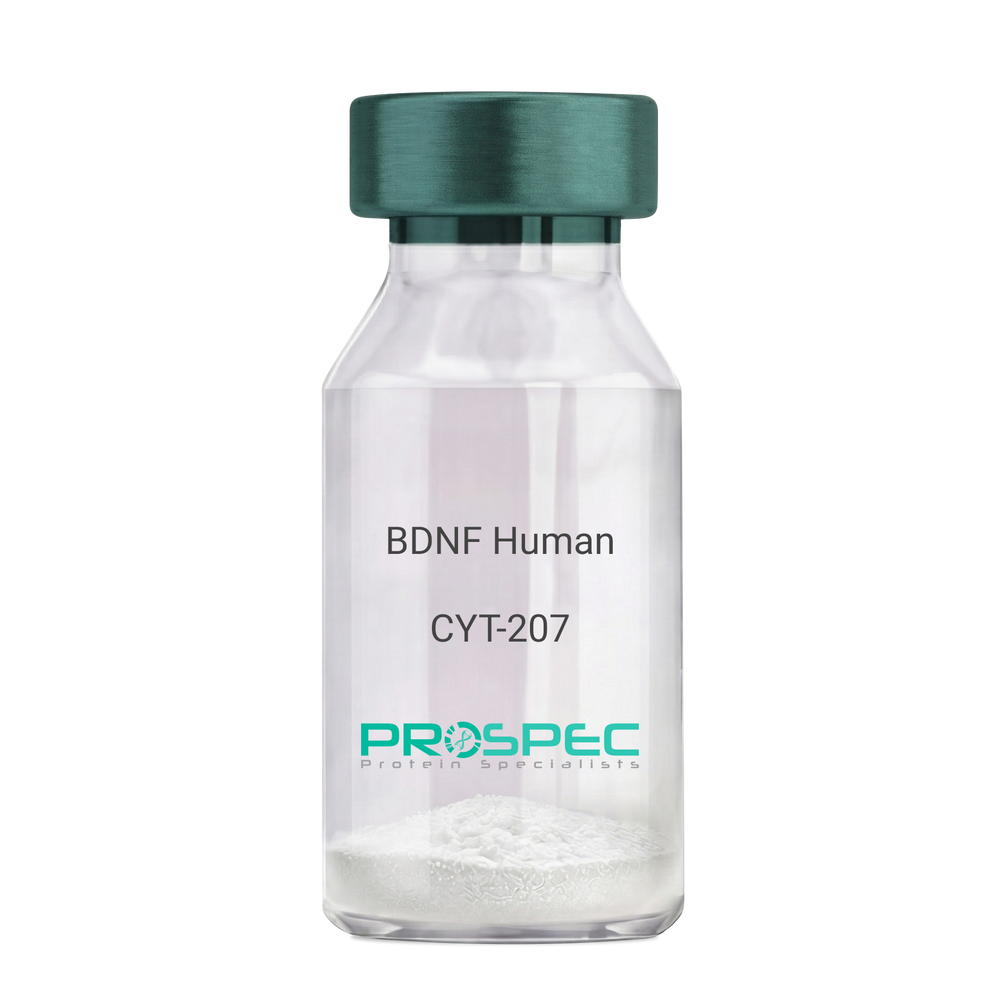
BDNF HumanDescription:
Brain-Derived Neurotrophic Factor Human Recombinant
Brain-Derived Neurotrophic Factor, BDNF, MGC34632.
Product # :
CYT-207Price :
Quantity :
Shipping Method :
Shipped at Room temp
More Info
- description
- source
- formulation
- purity
- biological activity
- More Info
- Activity
Description
BDNF Human Recombinant produced in E.Coli is a homodimer, non-glycosylated, polypeptide chain containing 2 x 119 amino acids (and an N-terminal Met) and having a total molecular mass of 28kDa. BDNF Human Recombinant is purified by proprietary chromatographic techniques.
Source
Escherichia Coli.
Formulation
The protein was lyophilized with 20mM PB and 400mM NaCl, pH 7.2.
Purity
BDNF is greater than 950% as determined SDS-PAGE.
Biological Activity
The activity was determined using Immobilized Human TrkB-His tag protein 2ug/ml (100 μl/well) for its binding to NHS-Biotin BDNF. The ED50 of was found to be ≤20ng/mLActivity
More Info
-
Introduction
BDNF promotes the survival of neuronal populations that are all located either in the central nervous system or directly connected to it. BDNF is a major regulator of synaptic transmission and plasticity at adult synapses in many regions of the cns. The versatility of BDNF is emphasized by its contribution to a range of adaptive neuronal responses including long-term potentiation (ltp), long-term depression (ltd), certain forms of short-term synaptic plasticity, as well as homeostatic regulation of intrinsic neuronal excitability.
-
Synonyms
Brain-Derived Neurotrophic Factor, BDNF, MGC34632.
-
Physical Appearance
Sterile Filtered White lyophilized (freeze-dried) powder.
-
Stability
Lyophilized BDNF although stable at room temperature for 3 weeks, should be stored desiccated below -18°C. Upon reconstitution BDNF should be stored at 4°C between 2-7 days and for future use below -18°C.For long term storage it is recommended to add a carrier protein (0.1% HSA or BSA).Please prevent freeze-thaw cycles.
-
Solubility
It is recommended to reconstitute the lyophilized BDNF in sterile 18M-cm H2O not less than 100µg/ml, which can then be further diluted to other aqueous solutions.
-
Amino Acid Sequence
HSDPARRGE LSVCDSISEW VTAADKKTAV DMSGGTVTVL EKVPVSKGQL KQYFYETKCN PMGYTKEGCR GIDKRHWNSQ CRTTQSYVRA LTMDSKKRIG WRFIRIDTSC VCTLTIKRGR.
-
Background
Final Thoughts
Although more research is needed on the safety and effectiveness of BDNF human recombinant, trials suggest that this laboratory-produced protein may be effective in managing and treating several neurological and psychiatric disorders. It's important for experts to stay up to date on the latest developments and research to learn more about potential risks and benefits.
What is the molecular weight/Mw of BDNF Protein?
BDNF Protein has a total Mw of 27kDa.
What is the source or expression system of BDNF Protein?
Escherichia Coli.
What is the Purity of BDNF Protein?
BDNF Protein is >97% pure as determined by SDS-PAGE.
What is the Biological Activity of BDNF Protein?
The ED50, as determined by the dose-dependent induction of C6 cells proliferation, is 1.3-2µg/ml.
What is the amino acid sequence of BDNF Protein?
MHSDPARRGE LSVCDSISEW VTAADKKTAV DMSGGTVTVL EKVPVSKGQL KQYFYETKCN PMGYTKEGCR GIDKRHWNSQ CRTTQSYVRA LTMDSKKRIG WRFIRIDTSC VCTLTIKRGR.
What applications can BDNF Protein be used in?
BDNF Protein can probably be used in western blot, ELISA and Lateral Flow.
What is the endotoxin level for BDNF Protein?
The endotoxin level is minimal, BDNF Protein was purified using conventional chromatography techniques.
-
Protein content
BDNF quantitation was carried out by two independent methods:1. UV spectroscopy at 280 nm using the absorbency value of 1.6 as the extinction coefficient for a 0.1% (1mg/ml) solution. This value is calculated by the PC GENE computer analysis program of protein sequences (IntelliGenetics). 2. Analysis by RP-HPLC, using a standard solution of Brain-derived Neurotrophic Factor as a Reference Standard.
ProSpec's products are furnished for LABORATORY RESEARCH USE ONLY. The product may not be used as drugs, agricultural or pesticidal products, food additives or household chemicals.
- View Data Sheet
Name :
PRL R RatDescription:
Prolactin Soluble Receptor Rat Recombinant
PRL-R, Prolactin receptor, Lactogen receptor, Prlr.
Product # :
CYT-533Price :
Quantity :
Shipping Method :
Shipped at Room temp
More Info
- description
- source
- formulation
- purity
- biological activity
- More Info
Description
Prolactin Receptor Rat Extra Celleular Domain Recombinant produced in E.Coli is a non-glycosylated, Polypeptide chain containing 206 amino acids and having a molecular mass of 24120 Dalton. The Prolactin Receptor is purified by proprietary chromatographic techniques.
Source
Escherichia Coli.
Formulation
The protein was lyophilized from a concentrated (1mg/ml) solution with 0.0045mM NaHCO3.
Purity
Greater than 97.0% as determined by:
(a) Analysis by SEC-HPLC.
(b) Analysis by SDS-PAGE.Biological Activity
Activity is determined by the dose-dependant inhibition of Prolactin-stimuled proliferation of Nb2 cells and by high affinity binding of oPLR and other lactogenic hormones.More Info
-
Introduction
Prolactin is a pituitary hormone involved in the stimulation of milk production, salt and water regulation, growth, development and reproduction. The initial step in its action is the binding to a specific membrane receptor (prolactin receptor) which belongs to the superfamily of class 1 cytokine receptors. The function of the prolactin receptor is mediated, at least in part, by two families of signaling molecules: Janus kinases and signal transducers and activators of transcription. Prolactin (PRL) is a hormone involved in a variety of important functions including ion transport and osmoregulation, stimulation of milk, protein synthesis as well as the regulation of numerous reproductive functions. PRL exerts its influence on different cell types through a signal transduction pathway which begins with the binding of the hormone to a transmembrane PRL receptor. Immunoreactive PRL receptor, a member of the cytokine receptor family, varies in size (short and long forms) with tissue source and species, from ~40 kDa to 100 kDa. The PRL receptor consists of at least three separate domains: an extracellular region with 5 cysteines which contains the prolactin binding site, a single transmembrane domain and a cytoplasmic region, the length of which appears to influence ligand binding and regulate cellular function.
-
Synonyms
PRL-R, Prolactin receptor, Lactogen receptor, Prlr.
-
Physical Appearance
Sterile Filtered White lyophilized (freeze-dried) powder.
-
Stability
Lyophilized PRL-R although stable at room temperature for 3 weeks, should be stored desiccated below -18°C. Upon reconstitution Prolactin Receptor should be stored at 4°C between 2-7 days and for future use below -18°C.For long term storage it is recommended to add a carrier protein (0.1% HSA or BSA).Please prevent freeze-thaw cycles.
-
Solubility
It is recommended to reconstitute the lyophilized PRL-R in sterile 18MΩ-cm H2O not less than 100µg/ml, which can then be further diluted to other aqueous solutions.
-
Amino Acid Sequence
The sequence of the first five N-terminal amino acids was determined and was found to be Gly-Lys-Pro-Glu-Ile.
-
Protein content
Protein quantitation was carried out by two independent methods 1. UV spectroscopy at 280 nm using the absorbency value of 2.48 as the extinction coefficient for a 0.1% (1mg/ml) solution. This value is calculated by the PC GENE computer analysis program of protein sequences (IntelliGenetics).2. Analysis by RP-HPLC, using a standard solution of PRLr-ECD as a Reference Standard.
ProSpec's products are furnished for LABORATORY RESEARCH USE ONLY. The product may not be used as drugs, agricultural or pesticidal products, food additives or household chemicals.
- View Data Sheet
Name :
TGM2 MouseDescription:
Tissue Transglutaminase Mouse Recombinant
Protein-glutamine gamma-glutamyltransferase 2, G[a]h, TG2, TGase2, tTG, tTGas, Protein-glutamine gamma-glutamyltransferase 2, Tissue transglutaminase, Transglutaminase C.
Product # :
ENZ-897Price :
Quantity :
Shipping Method :
Shipped with Ice Packs
More Info
- description
- source
- formulation
- purity
- More Info
Description
TGM2 Mouse Recombinant produced in E.Coli is a single, non-glycosylated polypeptide chain containing 709 amino acids (1-686 a.a) and having a molecular mass of 79.4kDa.TGM2 is fused to a 23 amino acid His-tag at N-terminus & purified by proprietary chromatographic techniques.
Source
E.coli.
Formulation
TGM2 protein solution (0.5mg/ml) in Phosphate buffered saline (pH7.4), 10% glycerol and 1mM DTT.
Purity
Greater than 85% as determined by SDS-PAGE.
More Info
-
Introduction
Celiac disease is an enteropathy that is characterized by intestinal lesions of variable severity. Tissue-type transglutaminase (tTG) is believed to be the predominant autoantigen for celiac disease and the corresponding autoantibodies show higher sensitivity and specificity than anti-gliadin antibodies. Highly pure recombinant human tTG is now available to replace the traditionally used tTG fraction from guinea pig.
Tissue-type transglutaminase antigens have been specifically modified for improved handling: exchange of an active site amino acid eliminates the protein cross-linking activity of the enzyme, while maintaining the native three-dimensional structure and the enzyme's secondary GTPase activity. This engineering assures reproducible properties of the antigen preparations through the absence of variable and ill-defined covalent aggregates of tTG antigen and host cell proteins. -
Synonyms
Protein-glutamine gamma-glutamyltransferase 2, G[a]h, TG2, TGase2, tTG, tTGas, Protein-glutamine gamma-glutamyltransferase 2, Tissue transglutaminase, Transglutaminase C.
-
Physical Appearance
Sterile Filtered colorless solution.
-
Stability
Store at 4°C if entire vial will be used within 2-4 weeks.Store, frozen at -20°C for longer periods of time. For long term storage it is recommended to add a carrier protein (0.1% HSA or BSA).Avoid multiple freeze-thaw cycles.
-
Amino Acid Sequence
MGSSHHHHHH SSGLVPRGSH MGSMAEELLL ERCDLEIQAN GRDHHTADLC QEKLVLRRGQ RFRLTLYFEG RGYEASVDSL TFGAVTGPDPSEEAGTKARF SLSDNVEEGS WSASVLDQQD NVLSLQLCTP ANAPIGLYRL SLEASTGYQG SSFVLGHFIL LYNAWCPADD VYLDSEEERR EYVLTQQGFI YQGSVKFIKS VPWNFGQFED GILDTCLMLL DMNPKFLKNR SRDCSRRSSP IYVGRVVSAM VNCNDDQGVL LGRWDNNYGD GISPMAWIGS VDILRRWKEH GCQQVKYGQC WVFAAVACTV LRCLGIPTRV VTNYNSAHDQ NSNLLIEYFR NEFGELESNK SEMIWNFHCW VESWMTRPDL QPGYEGWQAI DPTPQEKSEG TYCCGPVSVR AIKEGDLSTK YDAPFVFAEV NADVVDWIRQ EDGSVLKSIN RSLVVGQKIS TKSVGRDDRE DITHTYKYPE GSPEEREVFT KANHLNKLAE KEETGVAMRI RVGDSMSMGN DFDVFAHIGN DTSETRECRL LLCARTVSYN GVLGPECGTE DINLTLDPYS ENSIPLRILY EKYSGCLTES NLIKVRGLLI EPAANSYLLA ERDLYLENPE IKIRVLGEPK QNRKLVAEVS LKNPLSDPLY DCIFTVEGAG LTKEQKSVEV SDPVPAGDLV KARVDLFPTD IGLHKLVVNF QCDKLKSVKG YRNVIIGPA.
ProSpec's products are furnished for LABORATORY RESEARCH USE ONLY. The product may not be used as drugs, agricultural or pesticidal products, food additives or household chemicals.
- View Data Sheet
Name :
CXCL3 Human, HisDescription:
GRO-Gamma Human Recombinant (CXCL3), His Tag
Macrophage inflammatory protein 2-beta, MIP2-beta, CXCL3, Growth-regulated protein gamma, GRO-gamma, GRO-gamma(1-73), GRO3, GROg, MIP2B, SCYB3, MIP-2b, CINC-2b, MGSA gamma.
Product # :
CHM-244Price :
Quantity :
Shipping Method :
Shipped with Ice Packs
More Info
- description
- source
- formulation
- purity
- More Info
Description
GRO-Gamma Human Recombinant produced in E.Coli is a single,non-glycosylated, polypeptide chain containing 94 amino acids (35-107) and having a molecular mass of 7902 Dalton. The GRO-g is fused to 20 amino acid His-Tag at N-Terminus and purified by proprietary chromatographic techniques.
Source
Escherichia Coli.
Formulation
The CXCL3 protein is formulated in 20mM Tris-HCl buffer pH-8, 1mM DTT and 20% glycerol.
Purity
Greater than 95.0% as determined by SDS-PAGE.
More Info
-
Introduction
Chemokine (C-X-C motif) ligand 3 (CXCL3) is a small cytokine belonging to the CXC chemokine family that is also known as GRO3 oncogene (GRO3), GRO protein gamma (GROg) and macrophage inflammatory protein-2-beta (MIP2b). CXCL3 controls migration and adhesion of monocytes and mediates it effects on its target cell by interacting with a cell surface chemokine receptor called CXCR2. The gene for CXCL3 is located on chromosome 4 in a cluster of other CXC chemokines.
-
Synonyms
Macrophage inflammatory protein 2-beta, MIP2-beta, CXCL3, Growth-regulated protein gamma, GRO-gamma, GRO-gamma(1-73), GRO3, GROg, MIP2B, SCYB3, MIP-2b, CINC-2b, MGSA gamma.
-
Physical Appearance
Sterile Filtered colorless solution.
-
Stability
Liquid CXCL3 although stable at 10°C for 1 week, should be stored below -18°C. For long term storage it is recommended to add a carrier protein (0.1% HSA or BSA).Please prevent freeze-thaw cycles.
-
Amino Acid Sequence
MGSSHHHHHH SSGLVPRGSH MASVVTELRC QCLQTLQGIH LKNIQSVNVR SPGPHCAQTE VIATLKNGKK ACLNPASPMV QKIIEKILNKGSTN.
-
Background
What is the molecular weight/Mw of CXCL3 HUMAN, HIS Protein?
CXCL3 HUMAN, HIS Protein has a total Mw of 7.9kDa.
What is the source or expression system of CXCL3 HUMAN, HIS Protein?
Escherichia Coli.
What is the Purity of CXCL3 HUMAN, HIS Protein?
CXCL3 HUMAN, HIS Protein is >95% pure as determined by SDS-PAGE.
What is the Biological Activity of CXCL3 HUMAN, HIS Protein?
The biological functionality of CXCL3 HUMAN, HIS Protein will be determined in the future.
What is the amino acid sequence of CXCL3 HUMAN, HIS Protein?
MGSSHHHHHH SSGLVPRGSH MASVVTELRC QCLQTLQGIH LKNIQSVNVR SPGPHCAQTE VIATLKNGKK ACLNPASPMV QKIIEKILNKGSTN.
What applications can CXCL3 HUMAN, HIS Protein be used in?
CXCL3 HUMAN, HIS Protein can probably be used in western blot, ELISA and Lateral Flow.
What is the endotoxin level for CXCL3 HUMAN, HIS Protein?
The endotoxin level is minimal, CXCL3 HUMAN, HIS Protein was purified using conventional chromatography techniques.
ProSpec's products are furnished for LABORATORY RESEARCH USE ONLY. The product may not be used as drugs, agricultural or pesticidal products, food additives or household chemicals.
- View Data Sheet
Name :
DIRAS1 HumanDescription:
DIRAS family, GTP-binding RAS-like 1 Human Recombinant
GTP-binding protein Di-Ras1, Distinct subgroup of the Ras family member 1, Ras-related inhibitor of cell growth, Rig, Small GTP-binding tumor suppressor 1, DIRAS1, GBTS1, Di-Ras1, FLJ42681.
Product # :
PRO-256Price :
Quantity :
Shipping Method :
Shipped with Ice Packs
More Info
- description
- source
- formulation
- purity
- More Info
Description
DIRAS1 Human Recombinant produced in E.Coli is a single, non-glycosylated, polypeptide chain containing 215 amino acids (1-195a.a.) and having a molecular mass of 24.1 kDa. DIRAS1 protein is fused to a 20 amino acid His tag at N-terminus and is purified by standard chromatography.
Source
Escherichia Coli.
Formulation
DIRAS1 Human solution (1mg/ml) containing 20mM Tris-HCl buffer(pH 8.0) containing 20% glycerol, 1mM DTT, 0.1M NaCl and 1mM EDTA.
Purity
Greater than 95% as determined by SDS-PAGE.
More Info
-
Introduction
DIRAS1 is a member of a distinct branch of the functionally diverse Ras superfamily of monomeric GTPases. DIRAS1 demonstrates low GTPase activity and exists mainly in the GTP-bound form. Ras proteins operate as binary molecular switches that control intracellular signaling networks. Ras-regulated signal pathways regulate such processes as actin cytoskeletal integrity, proliferation, differentiation, cell adhesion, apoptosis, and cell migration. Ras and ras-related proteins are frequently deregulated in cancers, leading to increased invasion and metastasis, and decreased apoptosis.
-
Synonyms
GTP-binding protein Di-Ras1, Distinct subgroup of the Ras family member 1, Ras-related inhibitor of cell growth, Rig, Small GTP-binding tumor suppressor 1, DIRAS1, GBTS1, Di-Ras1, FLJ42681.
-
Physical Appearance
Sterile filtered colorless solution.
-
Stability
Store at 4°C if entire vial will be used within 2-4 weeks. Store, frozen at -20°C for longer periods of time. For long term storage it is recommended to add a carrier protein (0.1% HSA or BSA).Avoid multiple freeze-thaw cycles.
-
Amino Acid Sequence
MGSSHHHHHH SSGLVPRGSH MPEQSNDYRV VVFGAGGVGK SSLVLRFVKG TFRDTYIPTI EDTYRQVISC DKSVCTLQIT DTTGSHQFPA MQRLSISKGH AFILVFSVTS KQSLEELGPI YKLIVQIKGS VEDIPVMLVG KCDETQREV DTREAQAVAQ EWKCAFMETS AKMNYNVKEL FQELLTLETR RNMSLNIDGK RSGKQKRTDR KGKC.
ProSpec's products are furnished for LABORATORY RESEARCH USE ONLY. The product may not be used as drugs, agricultural or pesticidal products, food additives or household chemicals.
- View Data Sheet
Name :
POMC HumanDescription:
Proopiomelanocortin Human Recombinant
Pro-opiomelanocortin, POMC, LPH, MSH, NPP, POC, ACTH, CLIP.
Product # :
PRO-236Price :
Quantity :
Shipping Method :
Shipped with Ice Packs
More Info
- description
- source
- formulation
- purity
- More Info
Description
POMC produced in E.Coli is a single, non-glycosylated polypeptide chain containing 262 amino acids (27-267 a.a) and having a molecular mass of 28.9kDa (molecular weight on SDS-PAGE will appear higher).POMC is fused to a 21 amino acid His-tag at N-terminus & purified by proprietary chromatographic techniques.
Source
Escherichia Coli.
Formulation
POMC protein solution (0.25mg/ml) containing 20mM Tris-HCl buffer (pH 8.5), 1mM DTT, 50% glycerol, 0.1mM PMSF, 0.1M Imidazole and 0.2M NaCl.
Purity
Greater than 85.0% as determined by SDS-PAGE.
More Info
-
Introduction
Pro-opiomelanocortin preproprotein (POMC) is a polypeptide hormone precursor which experiences extensive, tissue-specific, post-translational processing via cleavage by subtilisin-like enzymes known as prohormone convertases. POMC regulates the corticosteroid production in the adrenal cortex. Furthermore, POMC is cleaved into ten hormone chains named NPP, g-MSH, ACTH, a-MSH, CLIP, Lipotropin b, Lipotropin g, b-MSH,b endorphin and Met-enkephalin. POMC gene defects are the cause of POMC deficiency, which is characterized by red hair and adrenal insufficiency.
-
Synonyms
Pro-opiomelanocortin, POMC, LPH, MSH, NPP, POC, ACTH, CLIP.
-
Physical Appearance
Sterile Filtered colorless solution.
-
Stability
Store at 4°C if entire vial will be used within 2-4 weeks. Store, frozen at -20°C for longer periods of time. For long term storage it is recommended to add a carrier protein (0.1% HSA or BSA).Avoid multiple freeze-thaw cycles.
-
Amino Acid Sequence
MGSSHHHHHH SSGLVPRGSH MWCLESSQCQ DLTTESNLLE CIRACKPDLS AETPMFPGNG DEQPLTENPR KYVMGHFRWD RFGRRNSSSS GSSGAGQKRE DVSAGEDCGP LPEGGPEPRS DGAKPGPREG KRSYSMEHFR WGKPVGKKRR PVKVYPNGAE DESAEAFPLE FKRELTGQRL
REGDGPDGPA DDGAGAQADL EHSLLVAAEK KDEGPYRMEH FRWGSPPKDK RYGGFMTSEK SQTPLVTLFK NAIIKNAYKK GE.
ProSpec's products are furnished for LABORATORY RESEARCH USE ONLY. The product may not be used as drugs, agricultural or pesticidal products, food additives or household chemicals.
- View Data Sheet
Name :
PRDX2 MouseDescription:
Eukaryotic Translation Initiation Factor 4E Mouse Recombinant
PRDX2, Peroxiredoxin-2 (EC:1.11.1.15), TSA, Thioredoxin peroxidase 1, Thioredoxin-dependent peroxide reductase 1, Thiol-specific antioxidant protein, Prdx2, Tdpx1, Tpx.
Product # :
ENZ-1061Price :
Quantity :
Shipping Method :
Shipped with Ice Packs
More Info
- description
- source
- formulation
- purity
- biological activity
- More Info
Description
PRDX2 Mouse Recombinant produced in E.Coli is a single, non-glycosylated polypeptide chain containing 222 amino acids (1-198 a.a) and having a molecular mass of 24.3kDa. PRDX2 is fused to a 24 amino acid His-tag at N-terminus & purified by proprietary chromatographic techniques.
Source
Escherichia Coli.
Formulation
PRDX2 protein solution (1mg/ml) containing 20mM Tris-HCl buffer (pH8.0) and 10% Glycerol 1mM DTT.
Purity
Greater than 90.0% as determined by SDS-PAGE.
Biological Activity
Specific activity is > 700 pmol/min/ug, Activity is defined as the amount of hydroperoxide that 1ug of enzyme can reduce at 25C for minute.
More Info
-
Introduction
PRDX2 is part of the peroxiredoxin family of antioxidant enzymes, which reduce hydrogen peroxide and alkyl hydroperoxides. PRDX2 takes part as an antioxidant protective role in cells, and contributes to the antiviral activity of CD8(+) T-cells. PRDX2 has proliferative effect in cancer development or progression.
If PRDX2 protection is insufficient against peroxidases, the DNA damage results in neurological disease such as Alzheimer's or DNA damage leading to cancer. -
Synonyms
PRDX2, Peroxiredoxin-2 (EC:1.11.1.15), TSA, Thioredoxin peroxidase 1, Thioredoxin-dependent peroxide reductase 1, Thiol-specific antioxidant protein, Prdx2, Tdpx1, Tpx.
-
Physical Appearance
Sterile Filtered clear solution.
-
Stability
Store at 4°C if entire vial will be used within 2-4 weeks. Store, frozen at -20°C for longer periods of time. For long term storage it is recommended to add a carrier protein (0.1% HSA or BSA).Avoid multiple freeze-thaw cycles.
-
Amino Acid Sequence
MGSSHHHHHH SSGLVPRGSH MGSHMASGNA QIGKSAPDFT ATAVVDGAFK EIKLSDYRGK YVVLFFYPLD FTFVCPTEII AFSDHAEDFR KLGCEVLGVS VDSQFTHLAW INTPRKEGGL GPLNIPLLAD VTKSLSQNYG VLKNDEGIAY RGLFIIDAKG VLRQITVNDL PVGRSVDEAL RLVQAFQYTD EHGEVCPAGW KPGSDTIKPN VDDSKEYFSK HN
ProSpec's products are furnished for LABORATORY RESEARCH USE ONLY. The product may not be used as drugs, agricultural or pesticidal products, food additives or household chemicals.
- View Data Sheet
Name :
CXCL2 RatDescription:
GRO-beta/MIP-2 Rat Recombinant (CXCL2)
Macrophage inflammatory protein 2-alpha, MIP2-alpha, CXCL2, Growth- regulated protein beta, Gro-beta, chemokine (C-X-C motif) ligand 2, GRO2, GROb, MIP2, MIP2A, SCYB2, MGSA-b, MIP-2a, CINC-2a, MGSA beta, CINC-3.
Product # :
CHM-372Price :
Quantity :
Shipping Method :
Shipped at Room temp
More Info
- description
- source
- formulation
- purity
- biological activity
- More Info
Description
GRO-Beta Rat Recombinant also called Rat MIP-2 produced in E.Coli is a single, non-glycosylated, polypeptide chain containing 73 amino acids and having a molecular mass of 7923 Dalton. The GRO-b is purified by proprietary chromatographic techniques.
Source
Escherichia Coli.
Formulation
Lyophilized from a 0.2µm filtered concentrated solution in PBS, pH 7.4.
Purity
Greater than 99.0% as determined by SDS-PAGE.
Biological Activity
The biological activity was determined by its ability to chemoattract total human neutrophils using a concentration range of 1.0-10.0 ng/ml, corresponding to a specific activity of 100,000-1,000,000 units/mg.More Info
-
Introduction
Chemokine (C-X-C motif) ligand 2 (CXCL2) is a small cytokine belonging to the CXC chemokine family that is also called macrophage inflammatory protein 2-alpha (MIP2-alpha), Growth-regulated protein beta (Gro-beta) and Gro oncogene-2 (Gro-2). CXCL2 is 90% identical in amino acid sequence as a related chemokine, CXCL1. This chemokine is secreted by monocytes and macrophages and is chemotactic for polymorphonuclear leukocytes and hematopoietic stem cells. The gene for CXCL2 is located on human chromosome 4 in a cluster of other CXC chemokines. CXCL2 mobilizes cells by interacting with a cell surface chemokine receptor called CXCR2.
-
Synonyms
Macrophage inflammatory protein 2-alpha, MIP2-alpha, CXCL2, Growth- regulated protein beta, Gro-beta, chemokine (C-X-C motif) ligand 2, GRO2, GROb, MIP2, MIP2A, SCYB2, MGSA-b, MIP-2a, CINC-2a, MGSA beta, CINC-3.
-
Physical Appearance
Sterile Filtered White lyophilized (freeze-dried) powder.
-
Stability
Lyophilized GRO-b although stable at room temperature for 3 weeks, should be stored desiccated below -18°C. Upon reconstitution CXCL2 should be stored at 4°C between 2-7 days and for future use below -18°C. For long term storage it is recommended to add a carrier protein (0.1% HSA or BSA). Please prevent freeze-thaw cycles.
-
Solubility
It is recommended to reconstitute the lyophilized GRO-beta Rat in sterile 18MΩ-cm H2O not less than 100µg/ml, which can then be further diluted to other aqueous solutions.
-
Amino Acid Sequence
VVVASELRCQ CLTTLPRVDF KNIQSLTVTP PGPHCAQTEV IATLKDGHEV CLNPEAPLVQ RIVQKILNKG KAN.
-
Background
What is the molecular weight/Mw of CXCL2 RAT Protein?
CXCL2 RAT Protein has a total Mw of 7.92kDa.
What is the source or expression system of CXCL2 RAT Protein?
Escherichia Coli.
What is the Purity of CXCL2 RAT Protein?
CXCL2 RAT Protein is >99% pure as determined by SDS-PAGE.
What is the Biological Activity of CXCL2 RAT Protein?
The biological activity was determined by its ability to chemoattract total human neutrophils using a concentration range of 1.0-10.0 ng/ml, corresponding to a specific activity of 100,000-1,000,000 units/mg.
What is the amino acid sequence of CXCL2 RAT Protein?
VVVASELRCQ CLTTLPRVDF KNIQSLTVTP PGPHCAQTEV IATLKDGHEV CLNPEAPLVQ RIVQKILNKG KAN.
What applications can CXCL2 RAT Protein be used in?
CXCL2 RAT Protein can probably be used in western blot, ELISA and Lateral Flow.
What is the endotoxin level for CXCL2 RAT Protein?
The endotoxin level is minimal, CXCL2 RAT Protein was purified using conventional chromatography techniques.
ProSpec's products are furnished for LABORATORY RESEARCH USE ONLY. The product may not be used as drugs, agricultural or pesticidal products, food additives or household chemicals.