Search results
1000 results found for “oxidase”
Name
Description
Product #
Price
Quantity
Shipping Method
- View Data Sheet
Name :
SPR MouseDescription:
Sepiapterin Reductase Mouse Recombinant
SDR38C1, SPR, Dystonia, Sepiapterin reductase, mCG_128676.
Product # :
ENZ-1055Price :
Quantity :
Shipping Method :
Shipped with Ice Packs
More Info
- description
- source
- formulation
- purity
- More Info
Description
SPR Mouse Recombinant produced in E.Coli is a single, non-glycosylated polypeptide chain containing 285 amino acids (1-262 a.a) and having a molecular mass of 30.3kDa.SPR is fused to a 23 amino acid His-tag at N-terminus & purified by proprietary chromatographic techniques.
Source
Escherichia Coli.
Formulation
SPR protein solution (1mg/ml) containing 20mM Tris-HCl buffer (pH8.5), 1mM DTT and 10% glycerol.
Purity
Greater than 95.0% as determined by SDS-PAGE.
More Info
-
Introduction
Sepiapterin Reductase is an aldo-keto reductase that catalyzes the NADPH-dependent reduction of pteridine derivatives and is essential in the biosynthesis of BH4. Mutations in Sepiapterin Reductase gene result in DOPA-responsive dystonia due to sepiaterin reductase deficiency defined by the presence of sustained involuntary muscle contractions, often leading to abnormal postures. Sepiapterin reductase is part of the short-chain dehydrogenase/reductase family which reduces exogenous carbonyl compounds as well as phenylpropanedione. Sepiapterin reductase is an important enzyme for the biosynthesis of tetrahydrobiopterin, an necessary cofactor for aromatic amino acid hydrolases together with tyrosine hydroxylase, the rate-limiting enzyme in dopamine synthesis.
-
Synonyms
SDR38C1, SPR, Dystonia, Sepiapterin reductase, mCG_128676.
-
Physical Appearance
Sterile filtered colourless solution.
-
Stability
Store at 4°C if entire vial will be used within 2-4 weeks.Store, frozen at -20°C for longer periods of time. For long term storage it is recommended to add a carrier protein (0.1% HSA or BSA).Avoid multiple freeze-thaw cycles.
-
Amino Acid Sequence
MGSSHHHHHH SSGLVPRGSH MGSMEAGGLG CAVCVLTGAS RGFGRALAPQ LARLLSPGSV MLVSARSESM LRQLKEELGA QQPDLKVVLA AADLGTEAGV QRLLSAVREL PRPEGLQRLL LINNAATLGD VSKGFLNVND LAEVNNYWAL NLTSMLCLTS GTLNAFQDSP GLSKTVVNIS SLCALQPYKG WGLYCAGKAA RDMLYQVLAA EEPSVRVLSY APGPLDNDMQ QLARETSKDP ELRSKLQKLK SDGALVDCGT SAQKLLGLLQ KDTFQSGAHV DFYDC.
ProSpec's products are furnished for LABORATORY RESEARCH USE ONLY. The product may not be used as drugs, agricultural or pesticidal products, food additives or household chemicals.
- View Data Sheet
Name :
CA8 HumanDescription:
Carbonic Anhydrase 8 Human Recombinant
Carbonic anhydrase VIII, CALS, CARP, CA-VIII, CAMRQ3, CA-related protein, carbonate dehydratase, carbonic anhydrase-like sequence, carbonic anhydrase-related protein.
Product # :
ENZ-235Price :
Quantity :
Shipping Method :
Shipped with Ice Packs
More Info
- description
- source
- formulation
- purity
- More Info
Description
CA8 Human Recombinant produced in E.coli is a single, non-glycosylated polypeptide chain containing 314 amino acids (1-290) and having a molecular mass of 35.5kDa.CA8 is fused to a 24 amino acid His-tag at N-terminus & purified by proprietary chromatographic techniques.
Source
E.coli.
Formulation
The CA8 solution (1mg/ml) contains 20mM Tris-HCl buffer (pH 8.0), 1mM DTT and 20% glycerol.
Purity
Greater than 90% as determined by SDS-PAGE.
More Info
-
Introduction
CA8 was first called CA-related protein since there is a sequence similarity to other identified carbonic anhydrase genes. Still, this protein has no carbonic anhydrase activity - the reversible hydration of carbon dioxide. CA8 still holds a carbonic anhydrase designation due to obvious sequence similarity to other members of the carbonic anhydrase gene family. Mutations in CA8 result in cerebellar ataxia mental retardation and dysequilibrium syndrome type 3 (CMARQ3).
-
Synonyms
Carbonic anhydrase VIII, CALS, CARP, CA-VIII, CAMRQ3, CA-related protein, carbonate dehydratase, carbonic anhydrase-like sequence, carbonic anhydrase-related protein.
-
Physical Appearance
Sterile Filtered colorless solution.
-
Stability
Store at 4°C if entire vial will be used within 2-4 weeks. Store, frozen at -20°C for longer periods of time. For long term storage it is recommended to add a carrier protein (0.1% HSA or BSA).Avoid multiple freeze-thaw cycles.
-
Amino Acid Sequence
MGSSHHHHHH SSGLVPRGSH MGSHMADLSF IEDTVAFPEK EEDEEEEEEG VEWGYEEGVE WGLVFPDANG EYQSPINLNS REARYDPSLL DVRLSPNYVV CRDCEVTNDG HTIQVILKSK SVLSGGPLPQ GHEFELYEVR FHWGRENQRG SEHTVNFKAF PMELHLIHWN STLFGSIDEA VGKPHGIAII ALFVQIGKEH VGLKAVTEIL QDIQYKGKSK TIPCFNPNTL LPDPLLRDYW VYEGSLTIPP CSEGVTWILF RYPLTISQLQ IEEFRRLRTH VKGAELVEGC DGILGDNFRP TQPLSDRVIR AAFQ
ProSpec's products are furnished for LABORATORY RESEARCH USE ONLY. The product may not be used as drugs, agricultural or pesticidal products, food additives or household chemicals.
- View Data Sheet
Name :
GCAT HumanDescription:
Glycine C-Acetyltransferase Human Recombinant
2-amino-3-ketobutyrate coenzyme A ligase mitochondrial, AKB ligase, EC 2.3.1.29, Aminoacetone synthase, Glycine acetyltransferase, GCAT, KBL.
Product # :
ENZ-705Price :
Quantity :
Shipping Method :
Shipped with Ice Packs
More Info
- description
- source
- formulation
- purity
- More Info
Description
GCAT Human Recombinant produced in E.Coli is a single, non-glycosylated polypeptide chain containing 419 amino acids (22-419 a.a) and having a molecular mass of 45kDa.GCAT is fused to a 21 amino acid His-tag at N-terminus & purified by proprietary chromatographic techniques.
Source
Escherichia Coli.
Formulation
GCAT protein solution (1mg/ml) containing 20mM Tris-HCl buffer (pH 8.0), 0.4M urea and 10% glycerol.
Purity
Greater than 85.0% as determined by SDS-PAGE.
More Info
-
Introduction
L-threonine to glycine degradation consists of a two-step biochemical pathway which involvs the enzymes L-threonine dehydrogenase and 2-amino-3-ketobutyrate coenzyme A ligase. L-Threonine is initially converted into 2-amino-3-ketobutyrate by L-threonine dehydrogenase. Glycine C-Acetyltransferase (GCAT) is the 2nd enzyme in this pathway, which subsequently catalyzes the reaction between 2-amino-3-ketobutyrate and coenzyme A to form glycine and acetyl-CoA. The GCAT enzyme is regard as a class II pyridoxal-phosphate-dependent aminotransferase. GCAT is strongly expressed in the heart, brain, liver and pancreas. GCAT is also found in lung.
-
Synonyms
2-amino-3-ketobutyrate coenzyme A ligase mitochondrial, AKB ligase, EC 2.3.1.29, Aminoacetone synthase, Glycine acetyltransferase, GCAT, KBL.
-
Physical Appearance
Sterile Filtered clear solution.
-
Stability
Store at 4°C if entire vial will be used within 2-4 weeks. Store, frozen at -20°C for longer periods of time. For long term storage it is recommended to add a carrier protein (0.1% HSA or BSA).Avoid multiple freeze-thaw cycles.
-
Amino Acid Sequence
MGSSHHHHHH SSGLVPRGSH MSALAQLRGI LEGELEGIRG AGTWKSERVI TSRQGPHIRV DGVSGGILNF CANNYLGLSS HPEVIQAGLQ ALEEFGAGLS SVRFICGTQS IHKNLEAKIA RFHQREDAIL YPSCYDANAG LFEALLTPED AVLSDELNHA SIIDGIRLCK AHKYRYRHLD MADLEAKLQE AQKHRLRLVA TDGAFSMDGD IAPLQEICCL ASRYGALVFM DECHATGFLG PTGRGTDELL GVMDQVTIIN STLGKALGGA SGGYTTGPGP LVSLLRQRAR PYLFSNSLPP AVVGCASKAL DLLMGSNTIV QSMAAKTQRF RSKMEAAGFT ISGASHPICP VMLGDARLAS RMADDMLKRG IFVIGFSYPV VPKGKARIRV QISAVHSEED IDRCVEAFVE VGRLHGALP.
ProSpec's products are furnished for LABORATORY RESEARCH USE ONLY. The product may not be used as drugs, agricultural or pesticidal products, food additives or household chemicals.
- View Data Sheet
Name :
CMBL HumanDescription:
Carboxymethylenebutenolidase Human Recombinant
Carboxymethylenebutenolidase homolog, CMBL, JS-1.
Product # :
ENZ-634Price :
Quantity :
Shipping Method :
Shipped with Ice Packs
More Info
- description
- source
- formulation
- purity
- More Info
Description
CMBL Human Recombinant produced in E. coli is a single polypeptide chain containing 269 amino acids (1-245) and having a molecular mass of 30.6kDa.CMBL is fused to a 24 amino acid His-tag at N-terminus & purified by proprietary chromatographic techniques.
Source
Escherichia Coli.
Formulation
The CMBL solution (0.5mg/ml) contains 20mM Tris-HCl buffer (pH 8.0), 0.1M NaCl, 10% glycerol and 1mM EDTA.
Purity
Greater than 95.0% as determined by SDS-PAGE.
More Info
-
Introduction
Carboxymethylenebutenolidase homolog (CMBL) is a cysteine hydrolase of the dienelactone hydrolase family which is highly expressed in the liver cytosol. CMBL is the human homolog of Pseudomonas dienelactone hydrolase, which is a protein that participates in the bacterial halocatechol degradation pathway. CMBL which preferentially cleaves cyclic esters activates medoxomil-ester prodrugs in which the medoxomil moiety is coupled with an oxygen atom. CMBL is inhibited by PCMB (p-chloromercuribenzoate) and is encoded by a gene which maps to human chromosome 5p15.2. CMBL can also activate beta-lactam antibiotics faropenem medoxomil and lenampicillin. CMBL is widely expressed, with the highest levels in the liver, followed by the kidney, small intestine and the colon.
-
Synonyms
Carboxymethylenebutenolidase homolog, CMBL, JS-1.
-
Physical Appearance
Sterile filtered colorless solution.
-
Stability
Store at 4°C if entire vial will be used within 2-4 weeks. Store, frozen at -20°C for longer periods of time. For long term storage it is recommended to add a carrier protein (0.1% HSA or BSA).Avoid multiple freeze-thaw cycles.
-
Amino Acid Sequence
MGSSHHHHHH SSGLVPRGSH MGSHMANEAY PCPCDIGHRL EYGGLGREVQ VEHIKAYVTK SPVDAGKAVI VIQDIFGWQL PNTRYIADMI SGNGYTTIVP DFFVGQEPWD PSGDWSIFPE WLKTRNAQKI DREISAILKY LKQQCHAQKI GIVGFCWGGT AVHHLMMKYS EFRAGVSVYG IVKDSEDIYN LKNPTLFIFA ENDVVIPLKD VSLLTQKLKE HCKVEYQIKT FSGQTHGFVH RKREDCSPAD KPYIDEARRN LIEWLNKYM.
ProSpec's products are furnished for LABORATORY RESEARCH USE ONLY. The product may not be used as drugs, agricultural or pesticidal products, food additives or household chemicals.
- View Data Sheet
Name :
ACKA E.ColiDescription:
Acetate Kinase E.Coli Recombinant
Acetate kinase, Acetokinase, ackA, ack, ACKA, Acetate kinase A and propionate kinase 2.
Product # :
PKA-063Price :
Quantity :
Shipping Method :
Shipped with Ice Packs
More Info
- description
- source
- formulation
- purity
- More Info
Description
Recombinant ACKA produced in E.coli is a single, non-glycosylated polypeptide chain containing 423 amino acids (1-400) and having a molecular mass of 45.7 kDa.The ACKA is fused to a 23 amino acid His-Tag at N-terminus and purified by proprietary chromatographic techniques.
Source
Escherichia Coli.
Formulation
ACKA protein (1mg/ml) contains 20mM Tris-HCl buffer (pH 8.0), 0.15M NaCl, 20% glycerol and 1mM DTT.
Purity
Greater than 95.0% as determined by SDS-PAGE.
More Info
-
Introduction
E.Coli Acetate Kinase, also knowns as ACKA, catalyzes the formation of acetyl phosphate from acetate and ATP and also catalyzes the reverse reaction. ACKA takes part in synthesis of various ATP formed catabolically during anaerobic growth of the organism.
-
Synonyms
Acetate kinase, Acetokinase, ackA, ack, ACKA, Acetate kinase A and propionate kinase 2.
-
Physical Appearance
Sterile Filtered clear solution.
-
Stability
Store at 4°C if entire vial will be used within 2-4 weeks. Store, frozen at -20°C for longer periods of time. For long term storage it is recommended to add a carrier protein (0.1% HSA or BSA).Avoid multiple freeze-thaw cycles.
-
Amino Acid Sequence
MGSSHHHHHH SSGLVPRGSH MGSMSSKLVL VLNCGSSSLK FAIIDAVNGE EYLSGLAECF HLPEARIKWK MDGNKQEAAL GAGAAHSEAL NFIVNTILAQ KPELSAQLTA IGHRIVHGGE KYTSSVVIDE SVIQGIKDAA SFAPLHNPAH LIGIEEALKS FPQLKDKNVA VFDTAFHQTM PEESYLYALP YNLYKEHGIR RYGAHGTSHF YVTQEAAKML NKPVEELNII TCHLGNGGSV SAIRNGKCVD TSMGLTPLEG LVMGTRSGDI DPAIIFHLHD TLGMSVDAIN KLLTKESGLL GLTEVTSDCR YVEDNYATKE DAKRAMDVYC HRLAKYIGAY TALMDGRLDA VVFTGGIGEN AAMVRELSLG KLGVLGFEVD HERNLAARFG KSGFINKEGT RPAVVIPTNE ELVIAQDASR LTA.
ProSpec's products are furnished for LABORATORY RESEARCH USE ONLY. The product may not be used as drugs, agricultural or pesticidal products, food additives or household chemicals.
- View Data Sheet
Name :
HMGCL HumanDescription:
3-Hydroxymethyl-3-Methylglutaryl-CoA Lyase Human Recombinant
Hydroxymethylglutaryl-CoA lyase mitochondrial, HL, HMG-CoA lyase, 3-hydroxy-3-methylglutarate-CoA lyase, HMGCL.
Product # :
ENZ-218Price :
Quantity :
Shipping Method :
Shipped with Ice Packs
More Info
- description
- source
- formulation
- purity
- More Info
Description
HMGCL Human Recombinant produced in E.coli is a single, non-glycosylated polypeptide chain containing 323 amino acids (28-325) and having a molecular mass of 34.2kDa.HMGCL is fused to a 25 amino acid His-tag at N-terminus & purified by proprietary chromatographic techniques.
Source
Escherichia Coli.
Formulation
The HMGCL solution (1mg/ml) contains 20mM Tris-HCl buffer (pH8.0), 10% glycerol and 0.4M Urea.
Purity
Greater than 85.0% as determined by SDS-PAGE.
More Info
-
Introduction
Hydroxymethylglutaryl-CoA lyase (HMGCL) is a mitochondrial matrix protein which is a member of the HMG-CoA lyase family. HMGCL is a homodimer and participates in leucine catabolism and ketogenesis, the hepatic synthesis of ketone bodies which, during fasting, provides a major source of energy for the heart, brain and kidney. More precisely, HMGCL catalyzes the final step of these processes, the cleavage of 3-hydroxy-3-methylglutaryl-CoA to acetoacetic acid and acetyl-CoA.
-
Synonyms
Hydroxymethylglutaryl-CoA lyase mitochondrial, HL, HMG-CoA lyase, 3-hydroxy-3-methylglutarate-CoA lyase, HMGCL.
-
Physical Appearance
Sterile Filtered colorless solution.
-
Stability
Store at 4°C if entire vial will be used within 2-4 weeks. Store, frozen at -20°C for longer periods of time. For long term storage it is recommended to add a carrier protein (0.1% HSA or BSA).Avoid multiple freeze-thaw cycles.
-
Amino Acid Sequence
MGSSHHHHHH SSGLVPRGSH MGSHMTLPKR VKIVEVGPRD GLQNEKNIVS TPVKIKLIDM LSEAGLSVIE TTSFVSPKWV PQMGDHTEVL KGIQKFPGIN YPVLTPNLKG FEAAVAAGAK EVVIFGAASE LFTKKNINCS IEESFQRFDA ILKAAQSANI SVRGYVSCAL GCPYEGKISP AKVAEVTKKF YSMGCYEISL GDTIGVGTPG IMKDMLSAVM QEVPLAALAV HCHDTYGQAL ANTLMALQMG VSVVDSSVAG LGGCPYAQGA SGNLATEDLV YMLEGLGIHT GVNLQKLLEA GNFICQALNR KTSSKVAQAT CKL.
ProSpec's products are furnished for LABORATORY RESEARCH USE ONLY. The product may not be used as drugs, agricultural or pesticidal products, food additives or household chemicals.
- View Data Sheet
Name :
YARS2 HumanDescription:
Tyrosyl-tRNA Synthetase 2 Human Recombinant
Tyrosine--tRNA ligase mitochondrial, Tyrosyl-tRNA synthetase, TyrRS, YARS2, CGI-04, TYRRS, MLASA2, MT-TYRRS.
Product # :
ENZ-614Price :
Quantity :
Shipping Method :
Shipped with Ice Packs
More Info
- description
- source
- formulation
- purity
- More Info
Description
YARS2 Human Recombinant produced in E.Coli is a single, non-glycosylated polypeptide chain containing 482 amino acids (17-477 a.a.) and having a molecular mass of 53.7kDa.YARS2 is fused to a 21 amino acid His-tag at N-terminus & purified by proprietary chromatographic techniques.
Source
Escherichia Coli.
Formulation
YARS2 protein solution (0.25mg/ml) containing 20mM Tris-HCl buffer (pH8.0), 20% glycerol, 0.1M NaCl, 1mM DTT.
Purity
Greater than 85.0% as determined by SDS-PAGE.
More Info
-
Introduction
Tyrosyl-tRNA synthetase (YARS2) is a mitochondrial protein which catalyzes the attachment of tyrosine to tRNA(Tyr) in a two-step reaction: tyrosine is first activated by ATP to form Tyr-AMP and afterward transferred to the acceptor end of tRNA(Tyr). YARS2 gene mutations are linked with myopathy with lactic acidosis and sideroblastic anemia type 2 (MLASA2).
-
Synonyms
Tyrosine--tRNA ligase mitochondrial, Tyrosyl-tRNA synthetase, TyrRS, YARS2, CGI-04, TYRRS, MLASA2, MT-TYRRS.
-
Physical Appearance
Sterile Filtered colorless solution.
-
Stability
Store at 4°C if entire vial will be used within 2-4 weeks. Store, frozen at -20°C for longer periods of time. For long term storage it is recommended to add a carrier protein (0.1% HSA or BSA).Avoid multiple freeze-thaw cycles.
-
Amino Acid Sequence
MGSSHHHHHH SSGLVPRGSH MTLNLSVLLP LGLRKAHSGA QGLLAAQKAR GLFKDFFPET GTKIELPELF DRGTASFPQT IYCGFDPTAD SLHVGHLLAL LGLFHLQRAG HNVIALVGGA TARLGDPSGR TKEREALETE RVRANARALR LGLEALAANH QQLFTDGRSW GSFTVLDNSA WYQKQHLVDF LAAVGGHFRM GTLLSRQSVQ LRLKSPEGMS LAEFFYQVLQ AYDFYYLFQR YGCRVQLGGS DQLGNIMSGY EFINKLTGED VFGITVPLIT STTGAKLGKS AGNAVWLNRD KTSPFELYQF FVRQPDDSVE RYLKLFTFLP LPEIDHIMQL HVKEPERRGP QKRLAAEVTK LVHGREGLDS AKRCTQALYH SSIDALEVMS DQELKELFKE APFSEFFLDP GTSVLDTCRK ANAIPDGPRG YRMITEGGVS INHQQVTNPE SVLIVGQHIL KNGLSLLKIG KRNFYIIKWL QL.
ProSpec's products are furnished for LABORATORY RESEARCH USE ONLY. The product may not be used as drugs, agricultural or pesticidal products, food additives or household chemicals.
- View Data Sheet
Name :
BTD HumanDescription:
Biotinidase Human Recombinant
Biotinidase, EC 3.5.1.12, Biotinase, EC 3.5.1.
Product # :
ENZ-1004Price :
Quantity :
Shipping Method :
Shipped with Ice Packs
More Info
- description
- source
- formulation
- purity
- More Info
Description
BTD Human Recombinant produced in Sf9 Baculovirus cells is a single, glycosylated polypeptide chain containing 510 amino acids (44-545a.a) and having a molecular mass of 57.8kDa. (Molecular size on SDS-PAGE will appear at approximately 50-70kDa). BTD is fused to an 8 amino acid His-tag at C-terminus & purified by proprietary chromatographic techniques.
Source
Sf9, Baculovirus cells.
Formulation
BTD protein solution (0.25mg/ml) containing Phosphate Buffered Saline (pH 7.4) and 10% glycerol.
Purity
Greater than 85% as determined by SDS-PAGE.
More Info
-
Introduction
Biotinidase also known BTD, belongs to the nitrilase superfamily, which contains 12 families of nitrilases, amidases, carbamylases, and N-acyltrasferases. BTD catalyzes the hydrolysis of biocytin, the product of biotin-dependent carboxylase degradation, to biotin and lysine. BTD has a vital regulatory part in chromatin/DNA function. Mutations in BTD protein lead to Biotinidase deficiency.
-
Synonyms
Biotinidase, EC 3.5.1.12, Biotinase, EC 3.5.1.
-
Physical Appearance
Sterile Filtered colorless solution.
-
Stability
Store at 4°C if entire vial will be used within 2-4 weeks. Store, frozen at -20°C for longer periods of time. For long term storage it is recommended to add a carrier protein (0.1% HSA or BSA).Avoid multiple freeze-thaw cycles.
-
Amino Acid Sequence
AHTGEESVAD HHEAEYYVAA VYEHPSILSL NPLALISRQE ALELMNQNLD IYEQQVMTAA QKDVQIIVFP EDGIHGFNFT RTSIYPFLDF MPSPQVVRWN PCLEPHRFND TEVLQRLSCM AIRGDMFLVA NLGTKEPCHS SDPRCPKDGR YQFNTNVVFS NNGTLVDRYR KHNLYFEAAF DVPLKVDLIT FDTPFAGRFG IFTCFDILFF DPAIRVLRDY KVKHVVYPTA WMNQLPLLAA IEIQKAFAVA FGINVLAANV HHPVLGMTGS GIHTPLESFW YHDMENPKSH LIIAQVAKNP VGLIGAENAT GETDPSHSKF LKILSGDPYC EKDAQEVHCD EATKWNVNAP PTFHSEMMYD NFTLVPVWGK EGYLHVCSNG LCCYLLYERP TLSKELYALG VFDGLHTVHG TYYIQVCALV RCGGLGFDTC GQEITEATGI FEFHLWGNFS TSYIFPLFLT SGMTLEVPDQ LGWENDHYFL RKSRLSSGLV TAALYGRLYE RDLEHHHHHH.
ProSpec's products are furnished for LABORATORY RESEARCH USE ONLY. The product may not be used as drugs, agricultural or pesticidal products, food additives or household chemicals.
- View Data Sheet
Name :
DBH HumanDescription:
DBH Human Recombinant
EC 1.14.17.1, DBM, DBH.
Product # :
ENZ-891Price :
Quantity :
Shipping Method :
Shipped with Ice Packs
More Info
- description
- source
- formulation
- purity
- More Info
Description
DBH Human Recombinant produced in E.Coli is a single, non-glycosylated polypeptide chain containing 599 amino acids (40-617 a.a) and having a molecular mass of 67.2kDa.DBH is fused to a 21 amino acid His-tag at N-terminus & purified by proprietary chromatographic techniques.
Source
Escherichia Coli.
Formulation
DBH protein solution (0.25mg/ml) containing Phosphate buffered saline (pH7.4), 10% glycerol and 1mM DTT.
Purity
Greater than 85.0% as determined by SDS-PAGE.
More Info
-
Introduction
DBH catalyzes the chemical reaction. DBH is an oxidoreductase which belongs to the copper type II, ascorbate-dependent monooxygenase family, in particular those performing on paired donors, with O2 as oxidant and incorporation or reduction of oxygen. The oxygen incorporated can not be derived from O2 with reduced ascorbate as one donor, as well as incorporation of one ato of oxygen into the other donor.
-
Synonyms
EC 1.14.17.1, DBM, DBH.
-
Physical Appearance
Sterile Filtered colorless solution.
-
Stability
Store at 4°C if entire vial will be used within 2-4 weeks. Store, frozen at -20°C for longer periods of time. For long term storage it is recommended to add a carrier protein (0.1% HSA or BSA).Avoid multiple freeze-thaw cycles.
-
Amino Acid Sequence
MGSSHHHHHH SSGLVPRGSH MSAPRESPLP YHIPLDPEGS LELSWNVSYT QEAIHFQLLV RRLKAGVLFG MSDRGELENA DLVVLWTDGD TAYFADAWSD QKGQIHLDPQ QDYQLLQVQR TPEGLTLLFK RPFGTCDPKD YLIEDGTVHL VYGILEEPFR SLEAINGSGL QMGLQRVQLL KPNIPEPELP SDACTMEVQA PNIQIPSQET TYWCYIKELP KGFSRHHIIK YEPIVTKGNE ALVHHMEVFQ CAPEMDSVPH FSGPCDSKMK PDRLNYCRHV LAAWALGAKA FYYPEEAGLA FGGPGSSRYL RLEVHYHNPL VIEGRNDSSG IRLYYTAKLR RFNAGIMELG LVYTPVMAIP PRETAFILTG YCTDKCTQLA LPPSGIHIFA SQLHTHLTGR KVVTVLVRDG REWEIVNQDN HYSPHFQEIR MLKKVVSVHP GDVLITSCTY NTEDRELATV GGFGILEEMC VNYVHYYPQT QLELCKSAVD AGFLQKYFHL INRFNNEDVC TCPQASVSQQ FTSVPWNSFN RDVLKALYSF APISMHCNKS SAVRFQGEWN LQPLPKVIST LEEPTPQCPT SQGRSPAGPT VVSIGGGKG
ProSpec's products are furnished for LABORATORY RESEARCH USE ONLY. The product may not be used as drugs, agricultural or pesticidal products, food additives or household chemicals.
- View Data Sheet
Name :
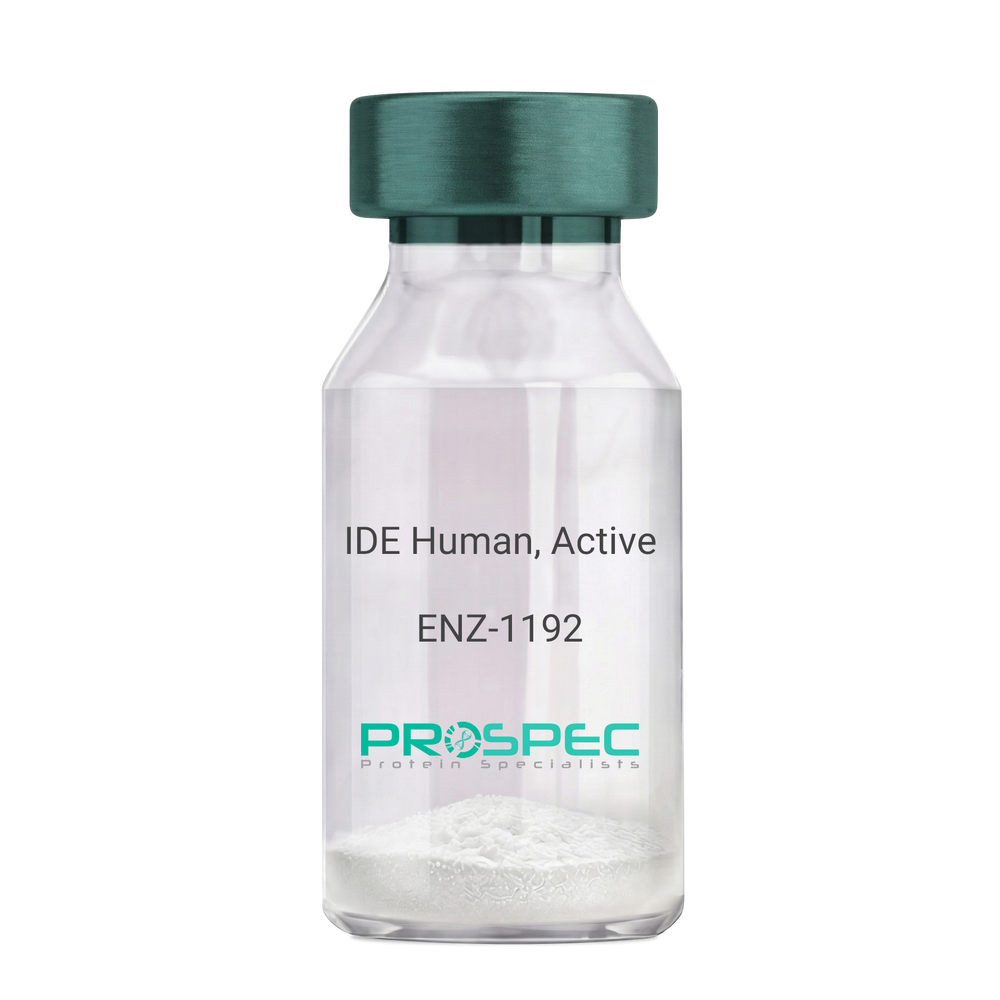
IDE Human, ActiveDescription:
Insulin-Degrading Enzyme Human Recombinant
Insulin-Degrading Enzyme, Abeta-Degrading Protease, Insulysin, EC 3.4.24.56, Insulinase, Insulin Protease, INSULYSIN, EC 3.4.24, IDE, insulin-degrading enzyme isoform 1.
Product # :
ENZ-1192Price :
Quantity :
Shipping Method :
Shipped with Ice Packs
More Info
- description
- source
- formulation
- purity
- biological activity
- More Info
Description
IDE Human, Active Human Recombinant produced in E.Coli is a single, non-glycosylated, polypeptide chain (42-1019 a.a) containing a total of 984 amino acids, having a molecular mass of 114 kDa. IDE is fused to a 6 amino acid His-tag at C-terminus and is purified by proprietary chromatographic techniques.
Source
Escherichia Coli.
Formulation
The IDE solution (0.5mg/ml) contains 10% Glycerol, 100mM NaCl, 0.05% Brij35 and 20mM Tris-HCl buffer (pH 7.5).
Purity
Greater than 90.0% as determined by SDS-PAGE.
Biological Activity
Specific activity is greater than 3,000 pmol/min/ug in which 1 unit will convert 1.0 pmole of Mca-RPPGFSAFK(Dnp)-OH to MCA-Pro-Leu-OH per minute at pH 7.5 at 25°C.
More Info
-
Synonyms
Insulin-Degrading Enzyme, Abeta-Degrading Protease, Insulysin, EC 3.4.24.56, Insulinase, Insulin Protease, INSULYSIN, EC 3.4.24, IDE, insulin-degrading enzyme isoform 1.
-
Physical Appearance
Filtered colorless solution.
-
Stability
Store at 4°C if entire vial will be used within 2-4 weeks. Store, frozen at -20°C for longer periods of time. For long term storage it is recommended to add a carrier protein (0.1% HSA or BSA). Avoid multiple freeze-thaw cycles.
-
Amino Acid Sequence
MNNPAIKRIG NHITKSPEDK REYRGLELAN GIKVLLISDP TTDKSSAALD VHIGSLSDPP NIAGLSHFCE HMLFLGTKKY PKENEYSQFL SEHAGSSNAF TSGEHTNYYF DVSHEHLEGA LDRFAQFFLC PLFDESCKDR EVNAVDSEHE KNVMNDAWRL FQLEKATGNP KHPFSKFGTG NKYTLETRPN QEGIDVRQEL LKFHSAYYSS NLMAVCVLGR ESLDDLTNLV VKLFSEVENK NVPLPEFPEH PFQEEHLKQL YKIVPIKDIR NLYVTFPIPD LQKYYKSNPG HYLGHLIGHE GPGSLLSELK SKGWVNTLVG GQKEGARGFM FFIINVDLTE EGLLHVEDII LHMFQYIQKL RAEGPQEWVF QECKDLNAVA FRFKDKERPR GYTSKIAGIL HYYPLEEVLT AEYLLEEFRP DLIEMVLDKL RPENVRVAIV SKSFEGKTDR TEEWYGTQYK QEAIPDEVIK KWQNADLNGK FKLPTKNEFI PTNFEILPLE KEATPYPALI KDTAMSKLWF KQDDKFFLPK ACLNFEFFSP FAYVDPLHCN MAYLYLELLK DSLNEYAYAA ELAGLSYDLQ NTIYGMYLSV KGYNDKQPIL LKKIIEKMAT FEIDEKRFEI IKEAYMRSLN NFRAEQPHQH AMYYLRLLMT EVAWTKDELK EALDDVTLPR LKAFIPQLLS RLHIEALLHG NITKQAALGI MQMVEDTLIE HAHTKPLLPS
QLVRYREVQL PDRGWFVYQQ RNEVHNNCGI EIYYQTDMQS TSENMFLELF CQIISEPCFN TLRTKEQLGY IVFSGPRRAN GIQGLRFIIQ SEKPPHYLES RVEAFLITME KSIEDMTEEA FQKHIQALAI RRLDKPKKLS AECAKYWGEI ISQQYNFDRD NTEVAYLKTL TKEDIIKFYK EMLAVDAPRR HKVSVHVLAR EMDSCPVVGE FPCQNDINLS QAPALPQPEV IQNMTEFKRG LPLFPLVKPH INFMAAKLHH HHHH. -
Background
Insulin-degrading enzyme (IDE) is a crucial protease that plays a significant role in maintaining glucose homeostasis by degrading insulin and other bioactive peptides. Dysregulation of IDE has been implicated in various metabolic disorders, particularly type 2 diabetes mellitus. IDE is also associated with the clearance of amyloid-beta peptides in the brain, making it relevant to Alzheimer's disease pathology. Studying the recombinant form of IDE is fundamental to understanding its functional mechanisms and exploring potential avenues for therapeutic interventions.
The primary goal of this research is to express and purify recombinant IDE using diverse expression systems. Recombinant DNA techniques will be employed to construct expression vectors containing the IDE gene, followed by expression in bacterial, yeast, or mammalian cell-based systems. The recombinant IDE will be purified using affinity chromatography or other appropriate methods, facilitating subsequent biochemical and biophysical characterization.
The second objective is to investigate the substrate specificity and catalytic activity of the purified IDE. In vitro enzymatic assays will be conducted to analyse the ability of the recombinant IDE to degrade insulin and other potential substrates. The effects of various factors, such as pH, temperature, and potential modulators, on IDE activity will be evaluated. Additionally, the interactions between IDE and its substrates will be explored using binding assays.
The third objective is to elucidate the three-dimensional structure of the IDE recombinant using techniques like X-ray crystallography or nuclear magnetic resonance (NMR) spectroscopy. Structural insights into the active site and binding pockets of IDE will provide valuable information for understanding its substrate recognition and catalytic mechanisms. This knowledge could be instrumental in designing targeted therapeutic compounds.
By characterizing the IDE recombinant, this research aims to contribute to our understanding of its role in insulin metabolism, glucose regulation, and potential therapeutic applications. The findings from this study may have implications for the development of novel treatments for diabetes and other related disorders.
ProSpec's products are furnished for LABORATORY RESEARCH USE ONLY. The product may not be used as drugs, agricultural or pesticidal products, food additives or household chemicals.
- View Data Sheet
Name :
Dopa Decarboxylase HumanDescription:
Dopa Decarboxylase Human Recombinant
DDC, AADC, Aromatic-L-amino-acid decarboxylase, DOPA decarboxylase.
Product # :
ENZ-413Price :
Quantity :
Shipping Method :
Shipped with Ice Packs
More Info
- description
- source
- formulation
- purity
- More Info
Description
Dopa decarboxylase human recombinant produced in E.Coli is a single, non-glycosylated, polypeptide chain containing 503 amino acids (1-480 a.a.) and having a molecular mass of 56.4 kDa. The Dopa decarboxylase is fused to a 23 amino acid His Tag at N-terminus and purified by conventional chromatpgraphy.
Source
Escherichia Coli.
Formulation
The Dopa decarboxylase protein solution (1mg/ml) contains 20mM Tris-HCl, pH-8, 2mM DTT and 10% glycerol.
Purity
Greater than 95.0% as determined by SDS-PAGE.
More Info
-
Introduction
Dopa decarboxylase is a homodimeric, pyridoxal phosphate dependent enzyme.
Dopa decarboxylase is involved in 2 metabolic pathways, synthesizing 2 significant neurotransmitters the take part in numerous clinical disorders, including Parkinson’s disease. Dopa decarboxylase is located in different areas of the brain and is mostly found in basal ganglia. Dopa decarboxylase catalyzes the decarboxylation of L-3,4-dihydroxyphenylalanine (DOPA) to dopa, L-5-hydroxytryptophan to serotonin and L-tryptophan to tryptamine. Defects in Dopa decarboxylase leads to aromatic L-amino-acid decarboxylase deficiency (AADCD). AADCD deficiency is an inborn error in neurotransmitter metabolism that causes combined serotonin and catecholamine deficiency. -
Synonyms
DDC, AADC, Aromatic-L-amino-acid decarboxylase, DOPA decarboxylase.
-
Physical Appearance
Sterile filtered colorless solution.
-
Stability
Store at 4°C if entire vial will be used within 2-4 weeks. Store, frozen at -20°C for longer periods of time. For long term storage it is recommended to add a carrier protein (0.1% HSA or BSA).Avoid multiple freeze-thaw cycles.
-
Amino Acid Sequence
MGSSHHHHHH SSGLVPRGSH TRSMNASEFR RRGKEMVDYV ANYMEGIEGR QVYPDVEPGY LRPLIPAAAP QEPDTFEDII NDVEKIIMPG VTHWHSPYFF AYFPTASSYP AMLADMLCGA IGCIGFSWAA SPACTELETV MMDWLGKMLE LPKAFLNEKA GEGGGVIQGS ASEATLVALL AARTKVIHRL QAASPELTQA AIMEKLVAYS SDQAHSSVER AGLIGGVKLK AIPSDGNFAM RASALQEALE RDKAAGLIPF FMVATLGTTT CCSFDNLLEV GPICNKEDIW LHVDAAYAGS AFICPEFRHL LNGVEFADSF NFNPHKWLLV NFDCSAMWVK KRTDLTGAFR LDPTYLKHSH QDSGLITDYR HWQIPLGRRF RSLKMWFVFR MYGVKGLQAY IRKHVQLSHE FESLVRQDPR FEICVEVILG LVCFRLKGSN KVNEALLQRI NSAKKIHLVP CHLRDKFVLR FAICSRTVES AHVQRAWEHI KELAADVLRA ERE.
ProSpec's products are furnished for LABORATORY RESEARCH USE ONLY. The product may not be used as drugs, agricultural or pesticidal products, food additives or household chemicals.
- View Data Sheet
Name :
ACOT11 HumanDescription:
Acyl-CoA Thioesterase 11 Human Recombinant
Acyl-CoA Thioesterase 11, StAR-Related Lipid Transfer (START) Domain Containing 14, Thioesterase, Adipose Associated, Acyl-CoA Thioester Hydrolase 11, Adipose-Associated Thioesterase, Brown Fat-Inducible Thioesterase, Thioesterase Superfamily Member 1, START Domain Containing 14, Acyl-Coenzyme A Thioesterase 11, STARD14, THEM1, THEA, BFIT, BFIT1, BFIT2, KIAA0707, EC 3.1.2.1.
Product # :
ENZ-756Price :
Quantity :
Shipping Method :
Shipped with Ice Packs
More Info
- description
- source
- formulation
- purity
- More Info
Description
ACOT11 Human Recombinant produced in E.Coli is a single, non-glycosylated polypeptide chain topological domain containing 268 amino acids (19-250 a.a) and having a molecular mass of 29.9kDa. ACOT11 is fused to a 36 amino acid His-tag at N-terminus.
Source
Escherichia Coli.
Formulation
ACOT11 protein solution (1mg/ml) containing 20mM Tris-HCl buffer (pH8.0), 0.4M Urea and 10% glycerol.
Purity
Greater than 90% as determined by SDS-PAGE.
More Info
-
Introduction
ACOT11 belongs to the acyl-CoA thioesterase family which catalyses the transformation of activated fatty acids to the equivalent non-esterified fatty acid and coenzyme A. Expression of a mouse homolog in brown adipose tissue is induced by low temperatures and inhibited by high temperatures. Obesity-resistant mice demonstrated High levels of expression compared with obesity-prone mice, indicating BFIT takes part in acyl-CoA thioesterase 11 in obesity. BFIT has acyl-CoA thioesterase activity towards medium (C12) and long-chain (C18) fatty acyl-CoA substrates.
-
Synonyms
Acyl-CoA Thioesterase 11, StAR-Related Lipid Transfer (START) Domain Containing 14, Thioesterase, Adipose Associated, Acyl-CoA Thioester Hydrolase 11, Adipose-Associated Thioesterase, Brown Fat-Inducible Thioesterase, Thioesterase Superfamily Member 1, START Domain Containing 14, Acyl-Coenzyme A Thioesterase 11, STARD14, THEM1, THEA, BFIT, BFIT1, BFIT2, KIAA0707, EC 3.1.2.1.
-
Physical Appearance
Sterile Filtered colorless solution.
-
Stability
Store at 4°C if entire vial will be used within 2-4 weeks. Store, frozen at -20°C for longer periods of time. For long term storage it is recommended to add a carrier protein (0.1% HSA or BSA).Avoid multiple freeze-thaw cycles.
-
Amino Acid Sequence
MRGSHHHHHH GMASMTGGQQ MGRDLYDDDD KDRWGSNRTS RKSALRAGND SAMADGEGYR NPTEVQMSQL VLPCHTNQRG ELSVGQLLKW IDTTACLSAE RHAGCPCVTA SMDDIYFEHT ISVGQVVNIK AKVNRAFNSS MEVGIQVASE DLCSEKQWNV CKALATFVAR REITKVKLKQ ITPRTEEEKM EHSVAAERRR MRLVYADTIK DLLANCAIQG DLESRDCSRM VPAEKTRVES VELVLPPHAN HQGNTFGGQI MAWMENVA
ProSpec's products are furnished for LABORATORY RESEARCH USE ONLY. The product may not be used as drugs, agricultural or pesticidal products, food additives or household chemicals.
- View Data Sheet
Name :
SPR HumanDescription:
Sepiapterin Reductase Human Recombinant
SDR38C1, SPR, Dystonia, Sepiapterin reductase.
Product # :
ENZ-411Price :
Quantity :
Shipping Method :
Shipped with Ice Packs
More Info
- description
- source
- formulation
- purity
- More Info
Description
Sepiapterin Reductase produced in E.Coli is a single,non-glycosylated polypeptide chain containing 281 amino acids (1-261 a.a.) and having a molecular mass of 30.2 kDa.Sepiapterin Reductase is expressed with a 20 amino acid His tag at N-Terminus and purified by proprietary chromatographic techniques.
Source
Escherichia Coli.
Formulation
The SPR solution (1mg/ml) contains 20mM Tris-HCl buffer (pH 8.0) and 10% glycerol.
Purity
Greater than 95.0% as determined by SDS-PAGE.
More Info
-
Introduction
Sepiapterin Reductase is an aldo-keto reductase that catalyzes the NADPH-dependent reduction of pteridine derivatives and is essential in the biosynthesis of BH4. Mutations in Sepiapterin Reductase gene result in DOPA-responsive dystonia due to sepiaterin reductase deficiency defined by the presence of sustained involuntary muscle contractions, often leading to abnormal postures. Sepiapterin reductase is part of the short-chain dehydrogenase/reductase family which reduces exogenous carbonyl compounds as well as phenylpropanedione. Sepiapterin reductase is an important enzyme for the biosynthesis of tetrahydrobiopterin, an necessary cofactor for aromatic amino acid hydrolases together with tyrosine hydroxylase, the rate-limiting enzyme in DOPA synthesis.
-
Synonyms
SDR38C1, SPR, Dystonia, Sepiapterin reductase.
-
Physical Appearance
Sterile filtered colorless solution.
-
Stability
Store at 4°C if entire vial will be used within 2-4 weeks. Store, frozen at -20°C for longer periods of time. For long term storage it is recommended to add a carrier protein (0.1% HSA or BSA).Avoid multiple freeze-thaw cycles.
-
Amino Acid Sequence
MGSSHHHHHH SSGLVPRGSH MEGGLGRAVC LLTGASRGFG RTLAPLLASL LSPGSVLVLS ARNDEALRQL EAELGAERSG LRVVRVPADL GAEAGLQQLL GALRELPRPK GLQRLLLINN AGSLGDVSKG FVDLSDSTQV NNYWALNLTS MLCLTSSVLK AFPDSPGLNR TVVNISSLCA LQPFKGWALY CAGKAARDML FQVLALEEPN VRVLNYAPGP LDTDMQQLAR ETSVDPDMRK GLQELKAKGK LVDCKVSAQK LLSLLEKDEF KSGAHVDFYD K.
ProSpec's products are furnished for LABORATORY RESEARCH USE ONLY. The product may not be used as drugs, agricultural or pesticidal products, food additives or household chemicals.
- View Data Sheet
Name :
HADH HumanDescription:
Hydroxyacyl-Coenzyme A Dehydrogenase Human Recombinant
EC 1.1.1.35, HAD, HADH1, HHF4, MSCHAD, SCHAD, Hydroxyacyl-coenzyme A dehydrogenase, HCDH, Short-chain 3-hydroxyacyl-CoA dehydrogenase, Medium and short-chain L-3-hydroxyacyl-coenzyme A dehydrogenase, HADH, HADHSC, MGC8392.
Product # :
ENZ-499Price :
Quantity :
Shipping Method :
Shipped with Ice Packs
More Info
- description
- source
- formulation
- purity
- More Info
Description
HADH Human Recombinant fused to a 21 amino acids His Tag at N-terminal produced in E.Coli is a single, non-glycosylated, polypeptide chain containing 323 amino acids (13-314 a.a.) and having a molecular mass of 35.1 kDa. The HADH is purified by proprietary chromatographic techniques.
Source
Escherichia Coli.
Formulation
The HADH solution contains 20mM Tris-HCl pH-8, 0.1M NaCl and 20% glycerol.
Purity
Greater than 95% as determined by SDS-PAGE.
More Info
-
Introduction
HADH is part of the 3-hydroxyacyl-CoA dehydrogenase enzyme family. HADH is involved in mitochondrial matrix to catalyze the oxidation of straight-chain 3-hydroxyacyl-CoAs as part of the beta-oxidation pathway. HADH enzymatic activity is at its peak with medium-chain-length fatty acids. Mutations in HADH cause familial hyperinsulinemic hypoglycemia. HADH participates in fatty acid oxidation, where some enzymes work in a step-wise fashion to break metabolize fats and convert them to energy.
-
Synonyms
EC 1.1.1.35, HAD, HADH1, HHF4, MSCHAD, SCHAD, Hydroxyacyl-coenzyme A dehydrogenase, HCDH, Short-chain 3-hydroxyacyl-CoA dehydrogenase, Medium and short-chain L-3-hydroxyacyl-coenzyme A dehydrogenase, HADH, HADHSC, MGC8392.
-
Physical Appearance
Sterile Filtered clear colorless solution.
-
Stability
Store at 4°C if entire vial will be used within 2-4 weeks. Store, frozen at -20°C for longer periods of time. For long term storage it is recommended to add a carrier protein (0.1% HSA or BSA).Avoid multiple freeze-thaw cycles.
-
Amino Acid Sequence
MGSSHHHHHH SSGLVPRGSH MSSSSTASAS AKKIIVKHVT VIGGGLMGAG IAQVAAATGH TVVLVDQTED ILAKSKKGIE ESLRKVAKKK FAENPKAGDE FVEKTLSTIA TSTDAASVVH STDLVVEAIV ENLKVKNELF KRLDKFAAEH TIFASNTSSL QITSIANATT RQDRFAGLHF FNPVPVMKLV EVIKTPMTSQ KTFESLVDFS KALGKHPVSC KDTPGFIVNR LLVPYLMEAI RLYERGDASK EDIDTAMKLG AGYPMGPFEL LDYVGLDTTK FIVDGWHEMD AENPLHQPSP SLNKLVAENK FGKKTGEGFY KYK.
ProSpec's products are furnished for LABORATORY RESEARCH USE ONLY. The product may not be used as drugs, agricultural or pesticidal products, food additives or household chemicals.
- View Data Sheet
Name :
ALDH3A1 HumanDescription:
Aldehyde Dehydrogenase 3 Family Member A1 Human Recombinant
Aldehyde dehydrogenase 3 family member A1, aldehyde dehydrogenase, dimeric NADP-preferring, ALDH-3, aldehyde dehydrogenase isozyme, ALDHIII, MGC104062, aldehyde dehydrogenase type III, Aldehyde dehydrogenase, stomach aldehyde dehydrogenase, EC 1.2.1.53, aldehyde dehydrogenase 3A, Aldehyde dehydrogenase.
Product # :
ENZ-479Price :
Quantity :
Shipping Method :
Shipped with Ice Packs
More Info
- description
- source
- formulation
- purity
- biological activity
- More Info
Description
ALDH3A1 Human Recombinant produced in E.Coli is a single, non-glycosylated, polypeptide chain containing 473 amino acids (1-453 a.a.) and having a molecular mass of 52.5 kDa. ALDH3A1 is fused to a 20 amino acid His Tag at N-terminus and purified by proprietary chromatographic techniques.
Source
Escherichia Coli.
Formulation
ALDH3A1 solution containing 20mM Tris-HCl pH-8, 0.1M NaCl and 10% glycerol.
Purity
Greater than 95% as determined by SDS-PAGE.
Biological Activity
Specific activity was found to be < 1 units/ml. Activity was obtained by measuring the increase of NADP in absorbance at 340 nm resulting from the reduction of NAD. 1 unit will oxidize 1umole of acetaldehyde to acetic acid per minute at pH 8 at 25°C in the presence of beta-NAD, potassium and thiols.More Info
-
Introduction
ALDH3A1 is involved in the detoxification of alcohol-derived acetaldehyde. ALDH3A1 participates in the metabolism of corticosteroids, biogenic amines, neurotransmitters, and lipid peroxidation. ALDH3A1 oxidizes aromatic aldehyde substrates and toxic aldehydes. ALDH3A1 forms a cytoplasmic homodimer that oxidizes aromatic and medium-chain saturated and unsaturated aldehyde substrates. ALDH3A1 promotes resistance to UV and 4-hydroxy-2-nonenal-induced oxidative damage in the cornea.
-
Synonyms
Aldehyde dehydrogenase 3 family member A1, aldehyde dehydrogenase, dimeric NADP-preferring, ALDH-3, aldehyde dehydrogenase isozyme, ALDHIII, MGC104062, aldehyde dehydrogenase type III, Aldehyde dehydrogenase, stomach aldehyde dehydrogenase, EC 1.2.1.53, aldehyde dehydrogenase 3A, Aldehyde dehydrogenase.
-
Physical Appearance
Sterile filtered colorless solution.
-
Stability
Store at 4°C if entire vial will be used within 2-4 weeks. Store, frozen at -20°C for longer periods of time. For long term storage it is recommended to add a carrier protein (0.1% HSA or BSA).Avoid multiple freeze-thaw cycles.
-
Amino Acid Sequence
MGSSHHHHHH SSGLVPRGSH MSKISEAVKR ARAAFSSGRT RPLQFRIQQL EALQRLIQEQ EQELVGALAA DLHKNEWNAY YEEVVYVLEE IEYMIQKLPE WAADEPVEKT PQTQQDELYI HSEPLGVVLV IGTWNYPFNL TIQPMVGAIA AGNAVVLKPS ELSENMASLL ATIIPQYLDK DLYPVINGGV PETTELLKER FDHILYTGST GVGKIIMTAA AKHLTPVTLE LGGKSPCYVD KNCDLDVACR RIAWGKFMNS GQTCVAPDYI LCDPSIQNQI VEKLKKSLKE FYGEDAKKSR DYGRIISARH FQRVMGLIEG QKVAYGGTGD AATRYIAPTI LTDVDPQSPV MQEEIFGPVLPIVCVRSLEE AIQFINQREK PLALYMFSSN DKVIKKMIAE TSSGGVAAND VIVHITLHSL PFGGVGNSGM GSYHGKKSFE TFSHRRSCLV RPLMNDEGLK VRYPPSPAKM TQH.
ProSpec's products are furnished for LABORATORY RESEARCH USE ONLY. The product may not be used as drugs, agricultural or pesticidal products, food additives or household chemicals.
- View Data Sheet
Name :
NEIL2 HumanDescription:
Nei Endonuclease VIII-Like 2 Human Recombinant
Endonuclease 8-like 2, DNA glycosylase/AP lyase Neil2, DNA-(apurinic or apyrimidinic site) lyase Neil2, Endonuclease VIII-like 2, Nei homolog 2, NEH2, Nei-like protein 2, NEIL2, NEH2.
Product # :
ENZ-607Price :
Quantity :
Shipping Method :
Shipped with Ice Packs
More Info
- description
- source
- formulation
- purity
- More Info
Description
NEIL2 Human Recombinant produced in E.coli is a single, non-glycosylated polypeptide chain containing 356 amino acids (1-332) and having a molecular mass of 39.4kDa.NEIL2 is fused to a 24 amino acid His-tag at N-terminus & purified by proprietary chromatographic techniques.
Source
Escherichia Coli.
Formulation
The NEIL2 solution (0.5mg/ml) contains 20mM Tris-HCl buffer (pH 8.0), 1mM DTT, 10% glycerol and 0.1M NaCl.
Purity
Greater than 85.0% as determined by SDS-PAGE.
More Info
-
Introduction
Endonuclease 8-like 2 (NEIL2) is a member of a class of DNA glycosylases homologous to the bacterial Fpg/Nei family. These glycosylases set off the first step in base excision repair by cleaving bases damaged by reactive oxygen species and introducing a DNA strand break through the associated lyase reaction. NEIL2 is involved in base excision repair of DNA damaged by oxidation or by mutagenic agents. NEIL2 has DNA glycosylase activity towards 5-hydroxyuracil and other oxidized derivatives of cytosine with a preference for mismatched double stranded DNA (DNA bubbles). NEIL2 has insignificant or undetectable activity with 8-oxoguanine, thymine glycol, 2-hydroxyadenine, hypoxanthine, and xanthine. NEIL2 also has AP (apurinic/apyrimidinic) lyase activity and creates incisions in the DNA strand. NEIL2 cleaves the DNA backbone by beta-delta exclusion to produce a single-strand break at the site of the removed base with both 3'- and 5'-phosphates. NEIL2 is found in the testis, skeletal muscle, heart, brain, placenta, lung, pancreas, kidney and liver.
-
Synonyms
Endonuclease 8-like 2, DNA glycosylase/AP lyase Neil2, DNA-(apurinic or apyrimidinic site) lyase Neil2, Endonuclease VIII-like 2, Nei homolog 2, NEH2, Nei-like protein 2, NEIL2, NEH2.
-
Physical Appearance
Sterile filtered colorless solution.
-
Stability
Store at 4°C if entire vial will be used within 2-4 weeks. Store, frozen at -20°C for longer periods of time. For long term storage it is recommended to add a carrier protein (0.1% HSA or BSA). Avoid multiple freeze-thaw cycles.
-
Amino Acid Sequence
MGSSHHHHHH SSGLVPRGSH MGSHMPEGPL VRKFHHLVSP FVGQQVVKTG GSSKKLQPAS LQSLWLQDTQ VHGKKLFLRF DLDEEMGPPG SSPTPEPPQK EVQKEGAADP KQVGEPSGQK TLDGSSRSAE LVPQGEDDSE YLERDAPAGD AGRWLRVSFG LFGSVWVNDF SRAKKANKRG
DWRDPSPRLV LHFGGGGFLA FYNCQLSWSS SPVVTPTCDI LSEKFHRGQA LEALGQAQPV CYTLLDQRYF SGLGNIIKNE ALYRAGIHPL SLGSVLSASR REVLVDHVVE FSTAWLQGKF QGRPQHTQVY QKEQCPAGHQ VMKEAFGPED GLQRLTWWCP QCQPQLSEEP EQCQFS.
ProSpec's products are furnished for LABORATORY RESEARCH USE ONLY. The product may not be used as drugs, agricultural or pesticidal products, food additives or household chemicals.
- View Data Sheet
Name :
EOGT MouseDescription:
EGF Domain-Specific O-Linked N-Acetylglucosamine Transferase Mouse Recombinant
EGF domain-specific O-linked N-acetylglucosamine transferase, Extracellular O-linked N-acetylglucosamine transferase.
Product # :
ENZ-946Price :
Quantity :
Shipping Method :
Shipped with Ice Packs
More Info
- description
- source
- formulation
- purity
- More Info
Description
EOGT produced in Sf9 Baculovirus cells is a single, glycosylated polypeptide chain containing 516 amino acids (20-527 a.a.) and having a molecular mass of 60.4kDa (Migrates at 50-70kDa on SDS-PAGE under reducing conditions). EOGT is expressed with an 8 amino acid His tag at C-Terminus and purified by proprietary chromatographic techniques.
Source
Sf9, Baculovirus cells.
Formulation
EOGT protein solution (0.5mg/ml) contains Phosphate Buffered Saline (pH 7.4) and 10% glycerol.
Purity
Greater than 85.0% as determined by SDS-PAGE.
More Info
-
Introduction
EGF Domain-Specific O-Linked N-Acetylglucosamine Transferase (EOGT) takes part in the regulation of Notch receptor. EOGT catalyzes the transfer of a single N-acetylglucosamine from UDP-GlcNAc to a serine/ threonine residue in extracellular proteins resulting in their modification with a beta-linked N-acetylglucosamine (O-GlcNAc). EOGT mainly glycosylates the Thr residue positioned between the fifth and sixth conserved cysteines of folded EGF-like domains.
-
Synonyms
EGF domain-specific O-linked N-acetylglucosamine transferase, Extracellular O-linked N-acetylglucosamine transferase.
-
Physical Appearance
Sterile Filtered colorless solution.
-
Stability
Store at 4°C if entire vial will be used within 2-4 weeks. Store, frozen at -20°C for longer periods of time. For long term storage it is recommended to add a carrier protein (0.1% HSA or BSA). Avoid multiple freeze-thaw cycles.
-
Amino Acid Sequence
DKAHSEADDA PGKALYDYSS LRLPAEHIPF FLHNNRHVAS VCREDSHCPY KKHLENLNYC WGYEKSCAPE FRFGSPVCSY VDLGWTDTLE SAQDMFWRQA DFGYARERLG EIRTICQPER ASDSSLVCSR YLQYCRATGL YLDLRNIKRN HDRFKEDFLQ GGEIGGYCKL DSHALVSEGQ RKSPLQSWFA ELQGYTQLNF RPIEDAKCDI VVEKPTYFMK LDAGINMYHH FCDFLNLYLT QHVNNSFSTD VYIVMWDTST YGYGDLFSDT WKAFTDYDVI HLKTYDSKKV CFKEAVFSLL PRMRYGLFYN TPLISGCQNT GLFRAFSQHV LHRLNITQEG PKDGKVRVTI LARSTEYRKI LNQDELVNAL KTVSTFEVRV VDYKYRELGF LDQLRITHNT DIFIGMHGAG LTHLLFLPDW AAVFELYNCE DERCYLDLAR LRGIHYITWR KPSKVFPQDK GHHPTLGEHP KFTNYSFDVE EFMYLVLQAA EHVLQHPQWP FKKKHDELLE HHHHHH.
ProSpec's products are furnished for LABORATORY RESEARCH USE ONLY. The product may not be used as drugs, agricultural or pesticidal products, food additives or household chemicals.
- View Data Sheet
Name :
CNDP1 HumanDescription:
CNDP Dipeptidase 1 Human Recombinant
Carnosine Dipeptidase 1 (Metallopeptidase M20 Family), Glutamate Carboxypeptidase-Like Protein 2, CNDP Dipeptidase 1, Serum Carnosinase, Carnosinase 1, CPGL2, CN1, Carnosine Dipeptidase 1, EC 3.4.13.20, HsT2308.
Product # :
ENZ-927Price :
Quantity :
Shipping Method :
Shipped with Ice Packs
More Info
- description
- source
- formulation
- purity
- More Info
Description
CNDP1 produced in Sf9 Insect cells is a single, glycosylated polypeptide chain containing 489 amino acids (27-507a.a.) and having a molecular mass of 54.9kDa. (Molecular size on SDS-PAGE will appear at approximately 50-70kDa).CNDP1 is expressed with an 8 amino acid His tag at C-Terminus and purified by proprietary chromatographic techniques.
Source
Sf9, Insect cells.
Formulation
CNDP1 protein solution (0.25mg/ml) contains Phosphate Buffered Saline (pH 7.4) and 10% glycerol.
Purity
Greater than 95.0% as determined by SDS-PAGE.
More Info
-
Introduction
CNDP Dipeptidase 1, also known as CNDP1 is a member of the peptidase M20A family. CNDP1 Mannheim which is the shortest allelic form has been more common in the absence of nephropathy in addition to being associated with lower serum carnosinase levels. Furthermore, Carnosine inhibited the increased production of fibronectin as well as collagen type VI in podocytes and the increased production of TGF-beta in mesangial cells. Diabetic patients with the CNDP1 Mannheim variant are less at risk for nephropathy. In addition, on renal cells carnosine protects against the adverse effects of high glucose levels.
-
Synonyms
Carnosine Dipeptidase 1 (Metallopeptidase M20 Family), Glutamate Carboxypeptidase-Like Protein 2, CNDP Dipeptidase 1, Serum Carnosinase, Carnosinase 1, CPGL2, CN1, Carnosine Dipeptidase 1, EC 3.4.13.20, HsT2308.
-
Physical Appearance
Sterile filtered colorless solution.
-
Stability
Store at 4°C if entire vial will be used within 2-4 weeks.Store, frozen at -20°C for longer periods of time. For long term storage it is recommended to add a carrier protein (0.1% HSA or BSA).Avoid multiple freeze-thaw cycles.
-
Amino Acid Sequence
SPSPPPALLE KVFQYIDLHQ DEFVQTLKEW VAIESDSVQP VPRFRQELFR MMAVAADTLQ RLGARVASVD MGPQQLPDGQ SLPIPPVILA ELGSDPTKGT VCFYGHLDVQ PADRGDGWLT DPYVLTEVDG KLYGRGATDN KGPVLAWINA VSAFRALEQD LPVNIKFIIE GMEEAGSVAL EELVEKEKDR FFSGVDYIVI SDNLWISQRK PAITYGTRGN SYFMVEVKCR DQDFHSGTFG GILHEPMADL VALLGSLVDS SGHILVPGIY DEVVPLTEEE INTYKAIHLD LEEYRNSSRV
EKFLFDTKEE ILMHLWRYPS LSIHGIEGAF DEPGTKTVIP GRVIGKFSIR LVPHMNVSAV EKQVTRHLED VFSKRNSSNK MVVSMTLGLH PWIANIDDTQ YLAAKRAIRT VFGTEPDMIR DGSTIPIAKM FQEIVHKSVV LIPLGAVDDG EHSQNEKINR WNYIEGTKLF AAFFLEMAQL HLEHHHHHH.
ProSpec's products are furnished for LABORATORY RESEARCH USE ONLY. The product may not be used as drugs, agricultural or pesticidal products, food additives or household chemicals.
- View Data Sheet
Name :
POR (43-677) HumanDescription:
P450 Oxidoreductase Human Recombinant
P450 (Cytochrome) Oxidoreductase, EC 1.6.2.4, CYPOR, P450R, CPR, NADPH-Dependent Cytochrome P450 Reductase, NADPH--Cytochrome P450 Reductase, NADPH--cytochrome P450 reductase.
Product # :
ENZ-1186Price :
Quantity :
Shipping Method :
Shipped with Ice Packs
More Info
- description
- source
- formulation
- purity
- biological activity
- More Info
Description
POR Human Recombinant produced in Sf9 Insect cells is a single, glycosylated, polypeptide chain (43-677 a.a) containing a total of 642 amino acids, having a molecular mass of 73.0 kDa. POR is fused to a 6 amino acid His-tag at C-terminus,and is purified by proprietary chromatographic techniques.
Source
Sf9, Baculovirus cells.
Formulation
POR protein solution (0.5mg/ml) contains 10% Glycerol and Phosphate-Buffered Saline (pH 7.4).
Purity
Greater than 95.0% as determined by SDS-PAGE.
Biological Activity
Specific activity is > 1,500 pmol/min/mg. Defined by the amount of enzyme that reduction of 1 pmole cytochrome-C by NADPH/min. at pH-8 25C.
More Info
-
Synonyms
P450 (Cytochrome) Oxidoreductase, EC 1.6.2.4, CYPOR, P450R, CPR, NADPH-Dependent Cytochrome P450 Reductase, NADPH--Cytochrome P450 Reductase, NADPH--cytochrome P450 reductase.
-
Physical Appearance
Sterile filtered colorless solution.
-
Stability
Store at 4°C if entire vial will be used within 2-4 weeks. Store, frozen at -20°C for longer periods of time. For long term storage it is recommended to add a carrier protein (0.1% HSA or BSA).Avoid multiple freeze-thaw cycles.
-
Amino Acid Sequence
MLFRKKKEEV PEFTKIQTLT SSVRESSFVE KMKKTGRNII VFYGSQTGTA EEFANRLSKD AHRYGMRGMS ADPEEYDLAD LSSLPEIDNA LVVFCMATYG EGDPTDNAQD FYDWLQETDV DLSGVKFAVF GLGNKTYEHF NAMGKYVDKR LEQLGAQRIF ELGLGDDDGN LEEDFITWRE QFWPAVCEHF GVEATGEESS IRQYELVVHT DIDAAKVYMG EMGRLKSYEN QKPPFDAKNP FLAAVTTNRK LNQGTERHLM HLELDISDSK IRYESGDHVA VYPANDSALV NQLGKILGAD LDVVMSLNNL DEESNKKHPF PCPTSYRTAL TYYLDITNPP RTNVLYELAQ YASEPSEQEL LRKMASSSGE GKELYLSWVV EARRHILAIL QDCPSLRPPI DHLCELLPRL QARYYSIASS SKVHPNSVHI CAVVVEYETK AGRINKGVAT NWLRAKEPAG ENGGRALVPM FVRKSQFRLP FKATTPVIMV GPGTGVAPFI GFIQERAWLR QQGKEVGETL LYYGCRRSDE DYLYREELAQ FHRDGALTQL NVAFSREQSH KVYVQHLLKQ DREHLWKLIE GGAHIYVCGD ARNMARDVQN TFYDIVAELG AMEHAQAVDY IKKLMTKGRY SLDVWSHHHH HH.
-
Background
P450 Oxidoreductase (POR) is a vital enzyme that plays a crucial role in the electron transfer system, specifically in the cytochrome P450 (CYP) enzyme family. POR acts as an electron donor for various CYP enzymes involved in drug metabolism, steroid biosynthesis, and detoxification processes. This research aims to explore the function, regulation, and significance of POR protein in human cells, shedding light on its role in maintaining cellular homeostasis and drug metabolism.
Function of POR Protein:
POR protein serves as an essential component in the redox reactions of the CYP enzymes. It transfers electrons from NADPH to the CYP enzymes, allowing them to catalyze a wide range of reactions involved in the metabolism of endogenous compounds, drugs, and toxins. Through its electron transfer function, POR enables the activation or inactivation of substrates, contributing to the regulation of cellular processes such as hormone synthesis, drug clearance, and xenobiotic detoxification.
Regulation of POR Protein:
The expression and activity of POR protein are tightly regulated to ensure proper functioning of the CYP enzymes. Several factors influence POR expression, including genetic variations, environmental stimuli, and hormonal signals. Transcriptional regulation of POR involves binding of specific transcription factors to its promoter region. Additionally, post-translational modifications, such as phosphorylation and protein-protein interactions, modulate POR activity, influencing its electron transfer efficiency and interaction with CYP enzymes.
Role of POR Protein in Drug Metabolism:
One of the prominent functions of POR protein is its involvement in drug metabolism. POR collaborates with CYP enzymes in the biotransformation of a wide array of drugs, converting them into more soluble and easily excretable forms. The interplay between POR and CYP enzymes determines the pharmacokinetics and therapeutic efficacy of numerous drugs. Understanding the role of POR in drug metabolism is crucial for predicting drug-drug interactions, optimizing drug dosing, and minimizing the risk of adverse reactions.
Significance of POR Protein in Disease States:
Emerging evidence suggests that POR protein dysregulation can contribute to various disease states. Mutations in the POR gene have been linked to disorders such as Antley-Bixler syndrome and disordered steroidogenesis, highlighting the critical role of POR in development and endocrine function. Moreover, altered POR expression and activity have been implicated in drug resistance and toxicity, as well as in the pathogenesis of certain cancers.
Conclusion:
The investigation of P450 Oxidoreductase (POR) protein in human cells provides valuable insights into its function, regulation, and significance in various physiological and pathological processes. Understanding the interplay between POR and CYP enzymes is essential for deciphering drug metabolism pathways, predicting drug interactions, and developing personalized therapeutic strategies. Further research is warranted to unravel the intricate mechanisms governing POR activity and its potential as a therapeutic target.
ProSpec's products are furnished for LABORATORY RESEARCH USE ONLY. The product may not be used as drugs, agricultural or pesticidal products, food additives or household chemicals.
- View Data Sheet
Name :
ALDH6A1 HumanDescription:
Aldehyde Dehydrogenase 6 A1 Human Recombinant
MMSADHA, MMSDH , Aldehyde Dehydrogenase 6 Family, Member A1, Methylmalonate-Semialdehyde Dehydrogenase [Acylating], Mitochondrial, Mitochondrial Acylating Methylmalonate-Semialdehyde Dehydrogenase, Malonate-Semialdehyde Dehydrogenase [Acylating], Aldehyde Dehydrogenase Family 6 Member A1, Malonate-Semialdehyde Dehydrogenase, EC 1.2.1.18, EC 1.2.1.27.
Product # :
ENZ-907Price :
Quantity :
Shipping Method :
Shipped with Ice Packs
More Info
- description
- source
- formulation
- purity
- More Info
Description
ALDH6A1 Human Recombinant produced in E.Coli is a single, non-glycosylated polypeptide chain containing 525 amino acids (34-535 a.a) and having a molecular mass of 56.8kDa. ALDH6A1 is fused to a 23 amino acid His-tag at N-terminus & purified by proprietary chromatographic techniques.
Source
Escherichia Coli.
Formulation
ALDH6A1 protein solution (0.25mg/ml) containing Phosphate buffered saline (pH7.4), 10% glycerol and 1mM DTT.
Purity
Greater than 85.0% as determined by SDS-PAGE.
More Info
-
Introduction
ALDH6A1 or Methylmalonate-semialdehyde dehydrogenase [acylating], mitochondrial is a mitochondrial methylmalonate semialdehyde dehydrogenase. ALDH6A1 participates in the valine and pyrimidine catabolic pathways. ALDH6A1 catalyzes the irreversible oxidative decarboxylation of malonate, propionyl-CoA and methylmalonate semialdehydes to acetyl. ALDH6A1 deficiency is distinguished by high levels of beta-alanine, 3-hydroxypropionic acid, and the two isomers of 3-amino and 3-hydroxyisobutyric acids in urine organic acids.
-
Synonyms
MMSADHA, MMSDH , Aldehyde Dehydrogenase 6 Family, Member A1, Methylmalonate-Semialdehyde Dehydrogenase [Acylating], Mitochondrial, Mitochondrial Acylating Methylmalonate-Semialdehyde Dehydrogenase, Malonate-Semialdehyde Dehydrogenase [Acylating], Aldehyde Dehydrogenase Family 6 Member A1, Malonate-Semialdehyde Dehydrogenase, EC 1.2.1.18, EC 1.2.1.27.
-
Physical Appearance
Sterile Filtered colorless solution.
-
Stability
Store at 4°C if entire vial will be used within 2-4 weeks. Store, frozen at -20°C for longer periods of time. For long term storage it is recommended to add a carrier protein (0.1% HSA or BSA).Avoid multiple freeze-thaw cycles.
-
Amino Acid Sequence
MGSSHHHHHH SSGLVPRGSH MGSSSSVPTV KLFIGGKFVE SKSDKWIDIH NPATNEVIGR VPQATKAEMD AAIASCKRAF PAWADTSVLS RQQVLLRYQQ LIKENLKEIA KLITLEQGKT LADAEGDVFR GLQVVEHACS VTSLMMGETM PSITKDMDLY SYRLPLGVCA GIAPFNFPAM IPLWMFPMAM VCGNTFLMKP SERVPGATML LAKLLQDSGA PDGTLNIIHG QHEAVNFICD HPDIKAISFV GSNKAGEYIF ERGSRHGKRV QANMGAKNHG VVMPDANKEN TLNQLVGAAF GAAGQRCMAL STAVLVGEAK KWLPELVEHA KNLRVNAGDQ PGADLGPLIT PQAKERVCNL IDSGTKEGAS ILLDGRKIKV KGYENGNFVG PTIISNVKPN MTCYKEEIFG PVLVVLETET LDEAIQIVNN NPYGNGTAIF TTNGATARKY AHLVDVGQVG VNVPIPVPLP MFSFTGSRSS FRGDTNFYGK QGIQFYTQLK TITSQWKEED ATLSSPAVVM PTMGR.
ProSpec's products are furnished for LABORATORY RESEARCH USE ONLY. The product may not be used as drugs, agricultural or pesticidal products, food additives or household chemicals.
- View Data Sheet
Name :
ECI1 HumanDescription:
Enoyl-CoA Delta Isomerase 1 Human Recombinant
Enoyl-CoA delta isomerase 1, mitochondrial, 3,2-trans-enoyl-CoA isomerase, Enoyl-CoA Delta Isomerase 1, Delta(3),Delta(2)-enoyl-CoA isomerase, D3,D2-enoyl-CoA isomerase, Dodecenoyl-CoA isomerase, ECI1, DCI.
Product # :
ENZ-758Price :
Quantity :
Shipping Method :
Shipped with Ice Packs
More Info
- description
- source
- formulation
- purity
- More Info
Description
ECI1 Human Recombinant produced in E.Coli is a single, non-glycosylated polypeptide chain containing 284 amino acids (42-302 a.a.) and having a molecular mass of 31.1kDa. ECI1 is fused to a 23 amino acid His-tag at N-terminus & purified by proprietary chromatographic techniques.
Source
Escherichia Coli.
Formulation
ECI1 protein solution (0.25mg/ml) contains 20mM Tris-HCl buffer (pH 8.0), 0.15M NaCl, 10% glycerol and 1mM DTT.
Purity
Greater than 90.0% as determined by SDS-PAGE.
More Info
-
Introduction
Enoyl-CoA Delta Isomerase 1 (ECI1) is a main mitochondrial enzyme which takes part in beta-oxidation of unsaturated fatty acids. ECI1 is a member of the hydratase/isomerase superfamily. ECI1 catalyzes the transformation of 3-cis and 3-trans-enoyl-CoA esters to the 2-trans-enoylCoA intermediates.
-
Synonyms
Enoyl-CoA delta isomerase 1, mitochondrial, 3,2-trans-enoyl-CoA isomerase, Enoyl-CoA Delta Isomerase 1, Delta(3),Delta(2)-enoyl-CoA isomerase, D3,D2-enoyl-CoA isomerase, Dodecenoyl-CoA isomerase, ECI1, DCI.
-
Physical Appearance
Sterile Filtered colorless solution.
-
Stability
Store at 4°C if entire vial will be used within 2-4 weeks. Store, frozen at -20°C for longer periods of time. For long term storage it is recommended to add a carrier protein (0.1% HSA or BSA).Avoid multiple freeze-thaw cycles.
-
Amino Acid Sequence
MGSSHHHHHH SSGLVPRGSH MGSFGSQRVL VEPDAGAGVA VMKFKNPPVN SLSLEFLTEL VISLEKLEND KSFRGVILTS DRPGVFSAGL DLTEMCGRSP AHYAGYWKAV QELWLRLYQS NLVLVSAING ACPAGGCLVA LTCDYRILAD NPRYCIGLNE TQLGIIAPFW LKDTLENTIG HRAAERALQL GLLFPPAEAL QVGIVDQVVP EEQVQSTALS AIAQWMAIPD HARQLTKAMM RKATASRLVT QRDADVQNFV SFISKDSIQK SLQMYLERLK EEKG.
ProSpec's products are furnished for LABORATORY RESEARCH USE ONLY. The product may not be used as drugs, agricultural or pesticidal products, food additives or household chemicals.
- View Data Sheet
Description:
Ornithine Aminotransferase Human Recombinant
DKFZp781A11155, HOGA, OATASE, Ornithine aminotransferase mitochondrial, Ornithine--oxo-acid aminotransferase, OAT, OKT, GACR.
Product # :
ENZ-472Price :
Quantity :
Shipping Method :
Shipped with Ice Packs
More Info
- description
- source
- formulation
- purity
- More Info
Description
Ornithine Aminotransferase Human Recombinant produced in E.Coli is a single, non-glycosylated polypeptide chain containing 408 amino acids (33-439 a.a.) and having a molecular wieght of 45.2kDa.The Ornithine Aminotransferase is purified by proprietary chromatographic techniques.
Source
Escherichia Coli.
Formulation
The Ornithine Aminotransferase protein solution contains 20mM Tris, pH-8, and 10% glycerol.
Purity
Greater than 90.0% as determined by SDS-PAGE.
More Info
-
Introduction
Ornithine Aminotransferase is a mitochondrial enzyme which is an important factor that converts arginine and ornithine into the major excitatory and inhibitory neurotransmitters glutamate and GABA. Ornithine Aminotransferase mutations result in a deficiency that cause the autosomal recessive eye disease Gyrate Atrophy.
-
Synonyms
DKFZp781A11155, HOGA, OATASE, Ornithine aminotransferase mitochondrial, Ornithine--oxo-acid aminotransferase, OAT, OKT, GACR.
-
Physical Appearance
Sterile filtered colorless solution.
-
Stability
Store at 4°C if entire vial will be used within 2-4 weeks. Store, frozen at -20°C for longer periods of time. For long term storage it is recommended to add a carrier protein (0.1% HSA or BSA). Avoid multiple freeze-thaw cycles.
-
Amino Acid Sequence
MTVQGPPTSD DIFEREYKYG AHNYHPLPVA LERGKGIYLW DVEGRKYFDF LSSYSAVNQG HCHPKIVNAL KSQVDKLTLT SRAFYNNVLG EYEEYITKLF NYHKVLPMNT GVEAGETACK LARKWGYTVK GIQKYKAKIV AAGNFWGRT LSAISSSTDP TSYDGFGPFM PGFDIIPYND LPALERALQD PNVAAFMVEP IQGEAGVVVP DPGYLMGVRE LCTRHQVLFI ADEIQTGLAR TGRWLAVDYE NVRPDIVLLG KALSGGLYPV SAVLCDDDIM LTIKPGEHGS TYGGNPLGCR VAIAALEVLE EENLAENADK LGIILRNELM KLPSDVVTAV RGKGLLNAIV IKETKDWDAW KVCLRLRDNG LLAKPTHGDI IRFAPPLVIK EDELRESIEI INKTILSF.
ProSpec's products are furnished for LABORATORY RESEARCH USE ONLY. The product may not be used as drugs, agricultural or pesticidal products, food additives or household chemicals.
- View Data Sheet
Name :
MTHFD2 HumanDescription:
MTHFD2 Human Recombinant
Bifunctional methylenetetrahydrofolate dehydrogenase/cyclohydrolase, mitochondrial, NAD-dependent methylenetetrahydrofolate dehydrogenase, Methenyltetrahydrofolate cyclohydrolase, NMDMC, MTHFD2.
Product # :
ENZ-853Price :
Quantity :
Shipping Method :
Shipped with Ice Packs
More Info
- description
- source
- formulation
- purity
- More Info
Description
MTHFD2 Human Recombinant produced in E.coli is a single, non-glycosylated polypeptide chain containing 344 amino acids (30-350) and having a molecular mass of 37.2kDa.MTHFD2 is fused to a 23 amino acid His-tag at N-terminus & purified by proprietary chromatographic techniques.
Source
Escherichia Coli.
Formulation
The MTHFD2 solution (1mg/ml) contains Phosphate buffered saline (pH7.4), 20% glycerol and 1mM DTT.
Purity
Greater than 95.0% as determined by SDS-PAGE.
More Info
-
Introduction
MTHFD2 plays a role as a homodimer which requires magnesium and inorganic phosphate. MTHFD2 has a pseudogene on chromosome 7 and owns 3 different enzymatic activities. Each of the activities catalyzes 1 of 3 sequential reactions in the interconversion of 1-carbon derivatives of tetrahydrofolate, which are substrates for methionine, thymidylate, and de novo purine syntheses.
-
Synonyms
Bifunctional methylenetetrahydrofolate dehydrogenase/cyclohydrolase, mitochondrial, NAD-dependent methylenetetrahydrofolate dehydrogenase, Methenyltetrahydrofolate cyclohydrolase, NMDMC, MTHFD2.
-
Physical Appearance
Sterile Filtered clear solution.
-
Stability
Store at 4°C if entire vial will be used within 2-4 weeks. Store, frozen at -20°C for longer periods of time. For long term storage it is recommended to add a carrier protein (0.1% HSA or BSA).Avoid multiple freeze-thaw cycles.
-
Amino Acid Sequence
MGSSHHHHHH SSGLVPRGSH MGSLAAVRNE AVVISGRKLA QQIKQEVRQE VEEWVASGNK RPHLSVILVG ENPASHSYVL NKTRAAAVVG INSETIMKPA SISEEELLNL INKLNNDDNV DGLLVQLPLP EHIDERRICN AVSPDKDVDG FHVINVGRMC LDQYSMLPAT PWGVWEIIKR TGIPTLGKNV VVAGRSKNVG MPIAMLLHTD GAHERPGGDA TVTISHRYTP KEQLKKHTIL ADIVISAAGI PNLITADMIK EGAAVIDVGI NRVHDPVTAK PKLVGDVDFE GVRQKAGYIT PVPGGVGPMT VAMLMKNTII AAKKVLRLEE REVLKSKELG VATN.
ProSpec's products are furnished for LABORATORY RESEARCH USE ONLY. The product may not be used as drugs, agricultural or pesticidal products, food additives or household chemicals.
- View Data Sheet
Name :
ST3GAL5 HumanDescription:
ST3 Beta-Galactoside Alpha-2,3-Sialyltransferase 5 Human Recombinant
ST3 Beta-Galactoside Alpha-2,3-Sialyltransferase 5, SIAT9, Sialyltransferase 9 (CMP-NeuAc:Lactosylceramide Alpha-2,3-Sialyltransferase; GM3 Synthase), Ganglioside GM3 Synthase, ST3GalV, CMP-NeuAc:Lactosylceramide Alpha-2,3-Sialyltransferase, ST3Gal V, EC 2.4.99.9, SATI, SIATGM3S, Alpha 2,3-Sialyltransferase V, Lactosylceramide Alpha-2,3-Sialyltransferase, Sialyltransferase 9, ST3GALV, GM3 Synthase.
Product # :
ENZ-755Price :
Quantity :
Shipping Method :
Shipped with Ice Packs
More Info
- description
- source
- formulation
- purity
- More Info
Description
ST3GAL5 Human Recombinant produced in E.Coli is a single, non-glycosylated polypeptide chain containing 359 amino acids (83-418a.a) and having a molecular mass of 41kDa. ST3GAL5 is fused to a 23 amino acid His-tag at N-terminus & purified by proprietary chromatographic techniques.
Source
Escherichia Coli.
Formulation
ST3GAL5 protein solution (1mg/ml) containing In 20mM Tris-HCl buffer (pH 8.0), 10% glycerol and 0.4M Urea.
Purity
Greater than 85.0% as determined by SDS-PAGE.
More Info
-
Introduction
ST3 Beta-Galactoside Alpha-2,3-Sialyltransferase 5, also know as ST3GAL5 belongs to the glycosyltransferase family 29 and localized to the Golgi apparatus. ST3GAL5 is known to play a part in the induction of cell differentiation, modulation of cell proliferation, maintenance of fibroblast morphology, signal transduction, and integrin-mediated cell adhesion. ST3GAL5 is a type II membrane protein which catalyzes the formation of GM3 with lactosylceramide as the substrate. Mutation in this ST3GAL5 has been connected with Amish infantile epilepsy syndrome. Transcript variants encoding various isoforms have been found for this gene.
-
Synonyms
ST3 Beta-Galactoside Alpha-2,3-Sialyltransferase 5, SIAT9, Sialyltransferase 9 (CMP-NeuAc:Lactosylceramide Alpha-2,3-Sialyltransferase; GM3 Synthase), Ganglioside GM3 Synthase, ST3GalV, CMP-NeuAc:Lactosylceramide Alpha-2,3-Sialyltransferase, ST3Gal V, EC 2.4.99.9, SATI, SIATGM3S, Alpha 2,3-Sialyltransferase V, Lactosylceramide Alpha-2,3-Sialyltransferase, Sialyltransferase 9, ST3GALV, GM3 Synthase.
-
Physical Appearance
Sterile Filtered clear solution.
-
Stability
Store at 4°C if entire vial will be used within 2-4 weeks. Store, frozen at -20°C for longer periods of time.For long term storage it is recommended to add a carrier protein (0.1% HSA or BSA).Please avoid freeze thaw cycles.
-
Amino Acid Sequence
MGSSHHHHHH SSGLVPRGSH MGSLKLNYTT EECDMKKMHY VDPDHVKRAQ KYAQQVLQKE CRPKFAKTSM ALLFEHRYSV DLLPFVQKAP KDSEAESKYD PPFGFRKFSS KVQTLLELLP EHDLPEHLKA KTCRRCVVIG SGGILHGLEL GHTLNQFDVV IRLNSAPVEG YSEHVGNKTT IRMTYPEGAP LSDLEYYSND LFVAVLFKSV DFNWLQAMVK KETLPFWVRL FFWKQVAEKI PLQPKHFRIL NPVIIKETAF DILQYSEPQS RFWGRDKNVP TIGVIAVVLA THLCDEVSLA GFGYDLNQPR TPLHYFDSQC MAAMNFQTMH NVTTETKFLL KLVKEGVVKD LSGGIDREF
ProSpec's products are furnished for LABORATORY RESEARCH USE ONLY. The product may not be used as drugs, agricultural or pesticidal products, food additives or household chemicals.