Skip to content

High-quality research proteins.

  • 1-800-805-6531

  • Mon - Sat 8.00-18.00, Sun - Closed

  • info@prospecbio.com

  • PO Box 6591 East Brunswick NJ 08816

  • Products
    • Cytokines
    • Growth factors
    • Chemokines
    • Cd antigens
    • Neurotrophins
    • Hormones
    • Enzymes
    • Viral antigens
    • Recombinant proteins
    • Natural proteins
    • Monoclonal antibodies
    • Polyclonal antibodies
    • Thermal Packaging
  • About
    • Company
    • Founder
    • Contribution
  • Customers
    • Eastern Asia
    • Eastern Europe
    • North America
    • South America
    • South East Asia
    • Southern Asia
    • Western Europe
  • Ordering
    • Ordering Method
    • Ordering - Credit Card
    • Ordering - PO
    • Shipping Fees
    • FAQs
  • Services
    • DNA Cloning
    • Protein Expression
    • Monoclonal Antibody
    • Fermentation
    • Technology License
  • Contact us
Log in

Country/region

  • USD $ | Albania
  • USD $ | Andorra
  • USD $ | Argentina
  • USD $ | Armenia
  • USD $ | Australia
  • USD $ | Austria
  • USD $ | Azerbaijan
  • USD $ | Belarus
  • USD $ | Belgium
  • USD $ | Bolivia
  • USD $ | Brazil
  • USD $ | Bulgaria
  • USD $ | Cambodia
  • USD $ | Canada
  • USD $ | Chile
  • USD $ | China
  • USD $ | Colombia
  • USD $ | Costa Rica
  • USD $ | Croatia
  • USD $ | Cyprus
  • USD $ | Czechia
  • USD $ | Denmark
  • USD $ | Estonia
  • USD $ | Finland
  • USD $ | France
  • USD $ | Georgia
  • USD $ | Germany
  • USD $ | Greece
  • USD $ | Hong Kong SAR
  • USD $ | Hungary
  • USD $ | Iceland
  • USD $ | India
  • USD $ | Ireland
  • USD $ | Israel
  • USD $ | Italy
  • USD $ | Japan
  • USD $ | Kazakhstan
  • USD $ | Latvia
  • USD $ | Liechtenstein
  • USD $ | Lithuania
  • USD $ | Madagascar
  • USD $ | Malta
  • USD $ | Mexico
  • USD $ | Moldova
  • USD $ | Monaco
  • USD $ | Netherlands
  • USD $ | New Zealand
  • USD $ | North Macedonia
  • USD $ | Norway
  • USD $ | Panama
  • USD $ | Paraguay
  • USD $ | Peru
  • USD $ | Philippines
  • USD $ | Poland
  • USD $ | Portugal
  • USD $ | Romania
  • USD $ | Singapore
  • USD $ | Slovakia
  • USD $ | Slovenia
  • USD $ | South Africa
  • USD $ | South Korea
  • USD $ | Spain
  • USD $ | Sri Lanka
  • USD $ | Sweden
  • USD $ | Switzerland
  • USD $ | Taiwan
  • USD $ | Thailand
  • USD $ | Türkiye
  • USD $ | Ukraine
  • USD $ | United Kingdom
  • USD $ | United States
  • USD $ | Uruguay
  • USD $ | Vatican City
  • USD $ | Venezuela
  • USD $ | Vietnam
  • Facebook
  • Instagram
logoProSpec - Recombinant Protein Manufacturer for academic and R&D industry
Become a distributor
Account Log in
Wishlist
Cart Cart(0)
  • Products
    +
    • Cytokines
    • Growth factors
    • Chemokines
    • Cd antigens
    • Neurotrophins
    • Hormones
    • Enzymes
    • Viral antigens
    • Recombinant proteins
    • Natural proteins
    • Monoclonal antibodies
    • Polyclonal antibodies
    • Thermal Packaging
  • About
    +
    • Company
    • Founder
    • Contribution
  • Customers
    +
    • Eastern Asia
    • Eastern Europe
    • North America
    • South America
    • South East Asia
    • Southern Asia
    • Western Europe
  • Ordering
    +
    • Ordering Method
    • Ordering - Credit Card
    • Ordering - PO
    • Shipping Fees
    • FAQs
  • Services
    +
    • DNA Cloning
    • Protein Expression
    • Monoclonal Antibody
    • Fermentation
    • Technology License
  • Contact us

Item added to your cart

View cart
View All
  • Cytokines
  • Growth factors
  • Chemokines
  • Cd antigens
  • Neurotrophins
  • Hormones
  • Enzymes
  • Viral antigens
  • Recombinant proteins
  • Natural proteins
  • Monoclonal antibodies
  • Polyclonal antibodies
  • Thermal Packaging
  • Tumor Necrosis Factor

    Tumor Necrosis Factor

    View All
  • 4-1BB

    4-1BB

    View All
  • Adiponectin

    Adiponectin

    View All
  • AIF1

    AIF1

    View All
  • Other Cytokines

    Other Cytokines

    View All
  • AITRL

    AITRL

    View All
  • Angiopoietin

    Angiopoietin

    View All
  • Apolipoprotein

    Apolipoprotein

    View All
  • B-Cell Activating Factor

    B-Cell Activating Factor

    View All
  • Beta Defensin

    Beta Defensin

    View All
  • Bone Morphogenetic Protein

    Bone Morphogenetic Protein

    View All
  • B type Natriuretic Peptide

    B type Natriuretic Peptide

    View All
  • BST

    BST

    View All
  • Betacellulin

    Betacellulin

    View All
  • Cardiotrophin

    Cardiotrophin

    View All
  • Activin

    Activin

    View All
  • Fibroblast Growth Factor

    Fibroblast Growth Factor

    View All
  • Other Growth Factors

    Other Growth Factors

    View All
  • CSF

    CSF

    View All
  • CTGF

    CTGF

    View All
  • IGFBP

    IGFBP

    View All
  • VEGF Protein

    VEGF Protein

    View All
  • EGF

    EGF

    View All
  • Epigen

    Epigen

    View All
  • Erythropoietin

    Erythropoietin

    View All
  • Insulin-Like Growth Factor

    Insulin-Like Growth Factor

    View All
  • Growth Hormone

    Growth Hormone

    View All
  • HDGF

    HDGF

    View All
  • Hepatocyte Growth Factor

    Hepatocyte Growth Factor

    View All
  • Insulin

    Insulin

    View All
  • BCA-1/ BLC (CXCL13)

    BCA-1/ BLC (CXCL13)

    View All
  • BRAK (CXCL14)

    BRAK (CXCL14)

    View All
  • C-10 (CCL6)

    C-10 (CCL6)

    View All
  • Other Chemokines

    Other Chemokines

    View All
  • MEC (CCL28)

    MEC (CCL28)

    View All
  • LD78-beta (CCL3L1)

    LD78-beta (CCL3L1)

    View All
  • CTACK (CCL27)

    CTACK (CCL27)

    View All
  • CXCL16

    CXCL16

    View All
  • CXCL17

    CXCL17

    View All
  • Platelet Factor-4 (CXCL4)

    Platelet Factor-4 (CXCL4)

    View All
  • ENA-78 (CXCL5)

    ENA-78 (CXCL5)

    View All
  • Eotaxin (CCL11,24,26)

    Eotaxin (CCL11,24,26)

    View All
  • Exodus-2 (CCL21)

    Exodus-2 (CCL21)

    View All
  • Fractalkine (CX3CL1)

    Fractalkine (CX3CL1)

    View All
  • CXCL6

    CXCL6

    View All
  • Other CD Antigens

    Other CD Antigens

    View All
  • CD14

    CD14

    View All
  • CD164

    CD164

    View All
  • CD1

    CD1

    View All
  • CD2

    CD2

    View All
  • CD200

    CD200

    View All
  • CD207

    CD207

    View All
  • CD226

    CD226

    View All
  • CD23

    CD23

    View All
  • CD244

    CD244

    View All
  • CD247

    CD247

    View All
  • CD27

    CD27

    View All
  • CD274

    CD274

    View All
  • CD300

    CD300

    View All
  • CD33

    CD33

    View All
  • Other Neurotrophins

    Other Neurotrophins

    View All
  • Beta-NGF

    Beta-NGF

    View All
  • BDNF

    BDNF

    View All
  • CDNF

    CDNF

    View All
  • CNTF

    CNTF

    View All
  • GDNF

    GDNF

    View All
  • Glia Maturation Factor

    Glia Maturation Factor

    View All
  • MANF

    MANF

    View All
  • Midkine

    Midkine

    View All
  • Neuroglobin

    Neuroglobin

    View All
  • Neurotrophic factors

    Neurotrophic factors

    View All
  • Neuregulin

    Neuregulin

    View All
  • Neuropilin

    Neuropilin

    View All
  • Pigment Epithelium-Derived Factor

    Pigment Epithelium-Derived Factor

    View All
  • Pleiotrophin

    Pleiotrophin

    View All
  • Peptide Hormones

    Peptide Hormones

    View All
  • Other Hormones

    Other Hormones

    View All
  • HCG

    HCG

    View All
  • Endothelin

    Endothelin

    View All
  • Exendin

    Exendin

    View All
  • FSH

    FSH

    View All
  • Glucagon

    Glucagon

    View All
  • GHRP

    GHRP

    View All
  • GLP

    GLP

    View All
  • Thyrostimulin

    Thyrostimulin

    View All
  • Inhibin A

    Inhibin A

    View All
  • LHRH

    LHRH

    View All
  • Melanotan

    Melanotan

    View All
  • Procalcitonin

    Procalcitonin

    View All
  • PTH

    PTH

    View All
  • Peroxiredoxin

    Peroxiredoxin

    View All
  • Peptidase

    Peptidase

    View All
  • Synthetase

    Synthetase

    View All
  • Transferase

    Transferase

    View All
  • Hydrolase

    Hydrolase

    View All
  • Dehydrogenase

    Dehydrogenase

    View All
  • ACE2

    ACE2

    View All
  • Esterase

    Esterase

    View All
  • Protein Kinases

    Protein Kinases

    View All
  • Other Enzymes

    Other Enzymes

    View All
  • Phosphatase

    Phosphatase

    View All
  • Deaminase

    Deaminase

    View All
  • Oxygenase

    Oxygenase

    View All
  • Adenylate Kinase

    Adenylate Kinase

    View All
  • Lyase

    Lyase

    View All
  • Chagas

    Chagas

    View All
  • SARS

    SARS

    View All
  • Influenza

    Influenza

    View All
  • ASFV

    ASFV

    View All
  • Astrovirus

    Astrovirus

    View All
  • Borrelia

    Borrelia

    View All
  • Helicobacter Pylori

    Helicobacter Pylori

    View All
  • Chikungunya

    Chikungunya

    View All
  • Chlamydia

    Chlamydia

    View All
  • Cytomegalo

    Cytomegalo

    View All
  • Dengue

    Dengue

    View All
  • EBV

    EBV

    View All
  • Ebola

    Ebola

    View All
  • Feline Leukemia Virus

    Feline Leukemia Virus

    View All
  • Hepatitis A

    Hepatitis A

    View All
  • Other

    Other

    View All
  • Actin

    Actin

    View All
  • ADAM

    ADAM

    View All
  • Complement Component

    Complement Component

    View All
  • Ag85

    Ag85

    View All
  • Eukaryotic Translation Initiation Factor

    Eukaryotic Translation Initiation Factor

    View All
  • Anterior Gradient Protein

    Anterior Gradient Protein

    View All
  • Heat Shock Protein

    Heat Shock Protein

    View All
  • Alpha-2-HS-Glycoprotein

    Alpha-2-HS-Glycoprotein

    View All
  • Hemoglobin

    Hemoglobin

    View All
  • Allergy

    Allergy

    View All
  • Anaplasma

    Anaplasma

    View All
  • Angiogenin

    Angiogenin

    View All
  • Ankyrin Repeat Domain

    Ankyrin Repeat Domain

    View All
  • Annexin

    Annexin

    View All
  • Other Natural Proteins

    Other Natural Proteins

    View All
  • Aprotinin

    Aprotinin

    View All
  • Transferrin

    Transferrin

    View All
  • Avidin

    Avidin

    View All
  • Anti Coagulation Factors

    Anti Coagulation Factors

    View All
  • Natural Albumin

    Natural Albumin

    View All
  • Natural Coagulation Factors

    Natural Coagulation Factors

    View All
  • Fibronectin

    Fibronectin

    View All
  • Thrombin

    Thrombin

    View All
  • Anti Human Enzyme

    Anti Human Enzyme

    View All
  • Other Monoclonal Antibodies

    Other Monoclonal Antibodies

    View All
  • Anti Human Cytokine

    Anti Human Cytokine

    View All
  • Anti Human Heat Shock Protein

    Anti Human Heat Shock Protein

    View All
  • Anti Mouse Lymphocyte

    Anti Mouse Lymphocyte

    View All
  • Anti Human Chemokine

    Anti Human Chemokine

    View All
  • Anti Human Lymphocyte

    Anti Human Lymphocyte

    View All
  • Anti Viral Monoclonal

    Anti Viral Monoclonal

    View All
  • Anti Mouse Cytokine

    Anti Mouse Cytokine

    View All
  • Anti-GST Monoclonal

    Anti-GST Monoclonal

    View All
  • Other Polyclonal Antibodies

    Other Polyclonal Antibodies

    View All
  • Anti Viral

    Anti Viral

    View All
  • Anti-GST Monoclonal

    Anti-GST Monoclonal

    View All
Back

Search results

1000 results found for “Exosome Component”

Name

Description

Product #

Price

Quantity

Shipping Method

  • View Data Sheet

    Name :

    TPM4 Human

    Description:

    Tropomyosin-4 Human Recombinant

    Tropomyosin alpha-4 chain, TM30p1, Tropomyosin-4, TPM4.

    Product # :

    PRO-187

    Price :

    Quantity :

    Shipping Method :

    Ice Icon

    Shipped with Ice Packs

    Add To Cart

    More Info

    • description
    • source
    • formulation
    • purity
    • More Info

    Description

    TPM4 produced in E.Coli is a single, non-glycosylated polypeptide chain containing 268 amino acids (1-248 a.a.) and having a molecular mass of 30.7kDa.TPM4 is fused to a 20 amino acid His-tag at N-terminus & purified by proprietary chromatographic techniques.

    Source

    Escherichia Coli.

    Formulation

    The TPM4 solution (1 mg/ml) contains 20mM Tris-HCl buffer (pH 8.0), 10% glycerol, 2mM DTT and 0.1M NaCl.

    Purity

    Greater than 85.0% as determined by SDS-PAGE.

    More Info

    • Introduction

      TPM4 is a member of the tropomyosin family. Tropomyosins exist in practically all eukaryotic cells (both muscle and nonmuscle), where they bind actin filaments and function to modulate actin-myosin interaction and stabilize actin filament structure. TPM4 binds to actin filaments in muscle and nonmuscle cells and plays a central role, in connection with the troponin complex, in the calcium dependent regulation of vertebrate striated muscle contraction.

    • Synonyms

      Tropomyosin alpha-4 chain, TM30p1, Tropomyosin-4, TPM4.

    • Physical Appearance

      Sterile Filtered colorless solution.

    • Stability

      Store at 4°C if entire vial will be used within 2-4 weeks. Store, frozen at -20°C for longer periods of time. For long term storage it is recommended to add a carrier protein (0.1% HSA or BSA).Avoid multiple freeze-thaw cycles.

    • Amino Acid Sequence

      MGSSHHHHHH SSGLVPRGSH MAGLNSLEAV KRKIQALQQQ ADEAEDRAQG LQRELDGERE RREKAEGDVA ALNRRIQLVE EELDRAQERL ATALQKLEEA EKAADESERG MKVIENRAMK DEEKMEIQEM QLKEAKHIAE EADRKYEEVA RKLVILEGEL ERAEERAEVS ELKCGDLEEE LKNVTNNLKS LEAASEKYSE KEDKYEEEIK LLSDKLKEAE TRAEFAERTV AKLEKTIDDL EEKLAQAKEE NVGLHQTLDQ TLNELNCI.

    ProSpec's products are furnished for LABORATORY RESEARCH USE ONLY. The product may not be used as drugs, agricultural or pesticidal products, food additives or household chemicals.

    Tpm4 Human
  • View Data Sheet

    Name :

    PSMG4 Human

    Description:

    Proteasome Assembly Chaperone 4 Human Recombinant

    Proteasome (prosome, macropain) assembly chaperone 4, C6orf86, hPAC4, chromosome 6 open reading frame 86, bA506K6.2.

    Product # :

    PRO-989

    Price :

    Quantity :

    Shipping Method :

    Ice Icon

    Shipped with Ice Packs

    Add To Cart

    More Info

    • description
    • source
    • formulation
    • purity
    • More Info

    Description

    PSMG4 Human Recombinant produced in E.Coli is a single, non-glycosylated polypeptide chain containing 143 amino acids (1-123 a.a.) and having a molecular mass of 15.9kDa.PSMG4 is fused to a 20 amino acid His-tag at N-terminus & purified by proprietary chromatographic techniques.

    Source

    E.coli.

    Formulation

    PSMG4 protein solution (0.5mg/ml) containing 20mM Tris-HCl buffer (pH8.0), 100mM NaCl, 1mM DTT and 10% glycerol.

    Purity

    Greater than 95% as determined by SDS-PAGE.

    More Info

    • Introduction

      PSMG4 is a chaperone protein that enhances assembly of the 20S proteasome. PSMG4 cooperates with alpha and beta subunits of the 20S proteasome and with PSMG3 but disconnects when the POMP is recruited before the formation of half-proteasomes.

    • Synonyms

      Proteasome (prosome, macropain) assembly chaperone 4, C6orf86, hPAC4, chromosome 6 open reading frame 86, bA506K6.2.

    • Physical Appearance

      Sterile Filtered colorless solution.

    • Stability

      Store at 4°C if entire vial will be used within 2-4 weeks. Store, frozen at -20°C for longer periods of time. For long term storage it is recommended to add a carrier protein (0.1% HSA or BSA).Avoid multiple freeze-thaw cycles.

    • Amino Acid Sequence

      MGSSHHHHHH SSGLVPRGSH MEGLVVAAGG DVSLHNFSAR LWEQLVHFHV MRLTDSLFLW VGATPHLRNL AVAMCSRYDS IPVSTSLLGD TSDTTSTGLA QRLARKTNKQ VFVSYNLQNT DSNFALLVEN RIKEEMEAFP EKF

    ProSpec's products are furnished for LABORATORY RESEARCH USE ONLY. The product may not be used as drugs, agricultural or pesticidal products, food additives or household chemicals.

    Psmg4 Human
  • View Data Sheet

    Name :

    UNC5B Rat

    Description:

    UNC-5 Netrin Receptor B Rat Recombinant

    unc-5 netrin receptor B, Unc5h2, unc-5 homolog 2, Protein unc-5 homolog B, netrin receptor UNC5B precursor, netrin receptor UNC5B, protein unc-5 homolog 2, unc5b.

    Product # :

    PRO-2659

    Price :

    Quantity :

    Shipping Method :

    Ice Icon

    Shipped with Ice Packs

    Add To Cart

    More Info

    • description
    • source
    • formulation
    • purity
    • More Info

    Description

    UNC5B Rat Recombinant produced in HEK293 is a single, non-glycosylated polypeptide chain containing 590 amino acids (27-373 a.a) and having a molecular mass of 66.0kDa. UNC5B is fused to a 243 amino acid hIgG-His-tag at C-terminus & purified by proprietary chromatographic techniques.

    Source

    HEK293.

    Formulation

    UNC5B protein solution (0.25mg/ml) containing Phosphate Buffered Saline (pH 7.4) and 10% glycerol.

    Purity

    Greater than 90.0% as determined by SDS-PAGE.

    More Info

    • Introduction

      UNC-5 Netrin Receptor B or UNC5B, is part of the UNC5 family that has 4 linked receptors and act as a axon guidance molecule Netrin-1 receptor. UNC5B promotes inhibitionleukocyte migration, capillary branching and osteoclast differentiation that are Netrin-1-mediated. UNC5B is responsible for the activation of DAPK1 that can cause apoptosis. The protein takes part in tumorgenesis, development of atherosclerosis and tubular epithelial cells survival when an acute injury in the kidney occurs.

    • Synonyms

      unc-5 netrin receptor B, Unc5h2, unc-5 homolog 2, Protein unc-5 homolog B, netrin receptor UNC5B precursor, netrin receptor UNC5B, protein unc-5 homolog 2, unc5b.

    • Physical Appearance

      Sterile filtered colorless solution.

    • Stability

      Store at 4°C if entire vial will be used within 2-4 weeks.Store, frozen at -20°C for longer periods of time. For long term storage it is recommended to add a carrier protein (0.1% HSA or BSA).Avoid multiple freeze-thaw cycles.

    • Amino Acid Sequence

      DGSMGIDSGG QALPDSFPSA PAEQLPHFLL EPEDAYIVKN KPVELHCRAF PATQIYFKCN GEWVSQKGHV TQESLDEATG LRIREVQIEV SRQQVEELFG LEDYWCQCVA WSSSGTTKSR RAYIRIAYLR KNFDQEPLAK EVPLDHEVLL QCRPPEGVPV AEVEWLKNED VIDPAQDTNF LLTIDHNLII RQARLSDTAN YTCVAKNIVA KRRSTTATVI VYVNGGWSSW AEWSPCSNRC GRGWQKRTRT CTNPAPLNGG AFCEGQACQK TACTTVCPVD GAWTEWSKWS ACSTECAHWR SRECMAPPPQ NGGRDCSGTL LDSKNCTDGL CVLNQRTLND PKSRPLEPSG DVEPKSCDKT HTCPPCPAPE LLGGPSVFLF PPKPKDTLMI SRTPEVTCVV VDVSHEDPEV KFNWYVDGVE VHNAKTKPRE EQYNSTYRVV SVLTVLHQDW LNGKEYKCKV SNKALPAPIE KTISKAKGQP REPQVYTLPP SRDELTKNQV SLTCLVKGFY PSDIAVEWES NGQPENNYKT TPPVLDSDGS FFLYSKLTVD KSRWQQGNVF SCSVMHEALH NHYTQKSLSL SPGKHHHHHH.

    ProSpec's products are furnished for LABORATORY RESEARCH USE ONLY. The product may not be used as drugs, agricultural or pesticidal products, food additives or household chemicals.

    Unc5B Rat
  • View Data Sheet

    Name :

    MAK16 Human

    Description:

    MAK16 Human Recombinant

    Protein MAK16 homolog, NNP78, Protein RBM13, RBM13, MAK16L, RBM13.

    Product # :

    PRO-2086

    Price :

    Quantity :

    Shipping Method :

    Ice Icon

    Shipped with Ice Packs

    Add To Cart

    More Info

    • description
    • source
    • formulation
    • purity
    • More Info

    Description

    MAK16 Human Recombinant produced in E.Coli is a single, non-glycosylated polypeptide chain containing 323 amino acids (1-300 a.a) and having a molecular mass of 37.8kDa (Molecular size on SDS-PAGE will appear higher).MAK16 is fused to a 23 amino acid His-tag at N-terminus & purified by proprietary chromatographic techniques.

    Source

    Escherichia Coli.

    Formulation

    MAK16 protein solution (0.25mg/ml) contains Phosphate buffered saline (pH7.4), 30% glycerol and 1mM DTT.

    Purity

    Greater than 90.0% as determined by SDS-PAGE.

    More Info

    • Introduction

      MAK16 is a member of the MAK16 family.

    • Synonyms

      Protein MAK16 homolog, NNP78, Protein RBM13, RBM13, MAK16L, RBM13.

    • Physical Appearance

      Sterile Filtered clear solution.

    • Stability

      Store at 4°C if entire vial will be used within 2-4 weeks. Store, frozen at -20°C for longer periods of time. For long term storage it is recommended to add a carrier protein (0.1% HSA or BSA).Avoid multiple freeze-thaw cycles.

    • Amino Acid Sequence

      MGSSHHHHHH SSGLVPRGSH MGSMQSDDVI WDTLGNKQFC SFKIRTKTQS FCRNEYSLTG LCNRSSCPLA NSQYATIKEE KGQCYLYMKV IERAAFPRRL WERVRLSKNY EKALEQIDEN LIYWPRFIRH KCKQRFTKIT QYLIRIRKLT LKRQRKLVPL SKKVERREKR REEKALIAAQ LDNAIEKELL ERLKQDTYGD IYNFPIHAFD KALEQQEAES DSSDTEEKDD DDDDEEDVGK REFVEDGEVD ESDISDFEDM DKLDASSDED QDGKSSSEEE EEKALSAKHK GKMPLRGPLQ RKRAYVEIEY EQETEPVAKA KTT.

    ProSpec's products are furnished for LABORATORY RESEARCH USE ONLY. The product may not be used as drugs, agricultural or pesticidal products, food additives or household chemicals.

    Mak16 Human
  • View Data Sheet

    Name :

    GNAI3 Human

    Description:

    Guanine Nucleotide Binding Protein Alpha Inhibiting Activity 3 Human Recombinant

    Guanine nucleotide binding protein (G protein) alpha inhibiting activity polypeptide 3, G(i) alpha-3, 87U6.

    Product # :

    PRO-1074

    Price :

    Quantity :

    Shipping Method :

    Ice Icon

    Shipped with Ice Packs

    Add To Cart

    More Info

    • description
    • source
    • formulation
    • purity
    • More Info

    Description

    GNAI3 Human Recombinant produced in E. coli is a single polypeptide chain containing 377 amino acids (1-354) and having a molecular mass of 43.0kDa.GNAI3 is fused to a 23 amino acid His-tag at N-terminus & purified by proprietary chromatographic techniques.

    Source

    E.coli.

    Formulation

    The GNAI3 solution (0.5mg/1ml) contains 20mM Tris-HCl buffer (pH 8.0), 0.1M NaCl, 2mM DTT and 20% glycerol.

    Purity

    Greater than 90% as determined by SDS-PAGE.

    More Info

    • Introduction

      GNAI3 is a member of the G-alpha family and G (i/o/t/z) subfamily which act as modulators or transducers in several transmembrane signaling systems. G(k) is the stimulatory G protein of receptor-regulated K+ channels. The active GTP-bound form inhibits the connotation of RGS14 with centrosomes and is essential for the translocation of RGS14 from the cytoplasm to the plasma membrane. GNAI3 takes part in cell division and is known to cooperate with RIC8A, S1PR1, RGS5, RGS10, RGS12, RGS14, RGS16, RGS18, and RGS19.

    • Synonyms

      Guanine nucleotide binding protein (G protein) alpha inhibiting activity polypeptide 3, G(i) alpha-3, 87U6.

    • Physical Appearance

      Sterile Filtered colorless solution.

    • Stability

      Store at 4°C if entire vial will be used within 2-4 weeks. Store, frozen at -20°C for longer periods of time. For long term storage it is recommended to add a carrier protein (0.1% HSA or BSA).Avoid multiple freeze-thaw cycles.

    • Amino Acid Sequence

      MGSSHHHHHH SSGLVPRGSH MGSMGCTLSA EDKAAVERSK MIDRNLREDG EKAAKEVKLL LLGAGESGKS TIVKQMKIIH EDGYSEDECK QYKVVVYSNT IQSIIAIIRA MGRLKIDFGE AARADDARQL FVLAGSAEEG VMTPELAGVI KRLWRDGGVQ ACFSRSREYQ LNDSASYYLN DLDRISQSNY IPTQQDVLRT RVKTTGIVET HFTFKDLYFK MFDVGGQRSE RKKWIHCFEG VTAIIFCVAL SDYDLVLAED EEMNRMHESM KLFDSICNNK WFTETSIILF LNKKDLFEEK IKRSPLTICY PEYTGSNTYE EAAAYIQCQF EDLNRRKDTK EIYTHFTCAT DTKNVQFVFD AVTDVIIKNN LKECGLY

    ProSpec's products are furnished for LABORATORY RESEARCH USE ONLY. The product may not be used as drugs, agricultural or pesticidal products, food additives or household chemicals.

    Gnai3 Human
  • View Data Sheet

    Name :

    Calumenin Human, His

    Description:

    Calumenin Human Recombinant, His Tag

    CALU, Crocalbin, IEF SSP 9302, FLJ90608, Calumenin.

    Product # :

    PRO-696

    Price :

    Quantity :

    Shipping Method :

    Ice Icon

    Shipped with Ice Packs

    Add To Cart

    More Info

    • description
    • source
    • formulation
    • purity
    • More Info

    Description

    Recombinant Human Calumenin produced in E.Coli is a single, non-glycosylated polypeptide chain containing 317 amino acids (20-315 a.a) and having a molecular mass of 37.2 kDa. Calumenin is fused to a 20 amino acid His Tag at N-terminus and purified by proprietary chromatographic techniques.

    Source

    Escherichia Coli.

    Formulation

    The Calumenin protein contains 20mM Tris-HCl buffer pH-8 and 10% glycerol.

    Purity

    Greater than 90% as determined by Analysis by SDS-PAGE.

    More Info

    • Introduction

      Calumenin is a calcium-binding protein located in the endoplasmic reticulum (ER) and sarcoplasmic reticulum (SR) of mammalian tissues which plays a role in ER functions as protein folding and sorting. Calumenin belongs to a family of multiple EF-hand proteins (CERC) that include reticulocalbin, ERC-55, and Cab45 and the product of this gene. Calumenin binds 7 calcium ions having low affinity and takes part in such ER functions as protein folding and sorting.

    • Synonyms

      CALU, Crocalbin, IEF SSP 9302, FLJ90608, Calumenin.

    • Physical Appearance

      Sterile filtered colorless solution.

    • Stability

      Store at 4°C if entire vial will be used within 2-4 weeks. Store, frozen at -20°C for longer periods of time. For long term storage it is recommended to add a carrier protein (0.1% HSA or BSA). Avoid multiple freeze-thaw cycles.

    • Amino Acid Sequence

      MGSSHHHHHH SSGLVPRGSH MKPTEKKDRV HHEPQLSDKV HNDAQSFDYD HDAFLGAEEA KTFDQLTPEE SKERLGKIVS KIDGDKDGFV TVDELKDWIK FAQKRWIYED VERQWKGHDL NEDGLVSWEE YKNATYGYVL DDPDPDDGFN YKQMMVRDER RFKMADKDGD LIATKEEFTA FLHPEEYDYM KDIVVQETME DIDKNADGFI DLEEYIGDMY SHDGNTDEPE WVKTEREQFV EFRDKNRDGK MDKEETKDWI LPSDYDHAEA EARHLVYESD QNKDGKLTKE EIVDKYDLFV GSQATDFGEA LVRHDEF.

    ProSpec's products are furnished for LABORATORY RESEARCH USE ONLY. The product may not be used as drugs, agricultural or pesticidal products, food additives or household chemicals.

    Calumenin Human
  • View Data Sheet

    Name :

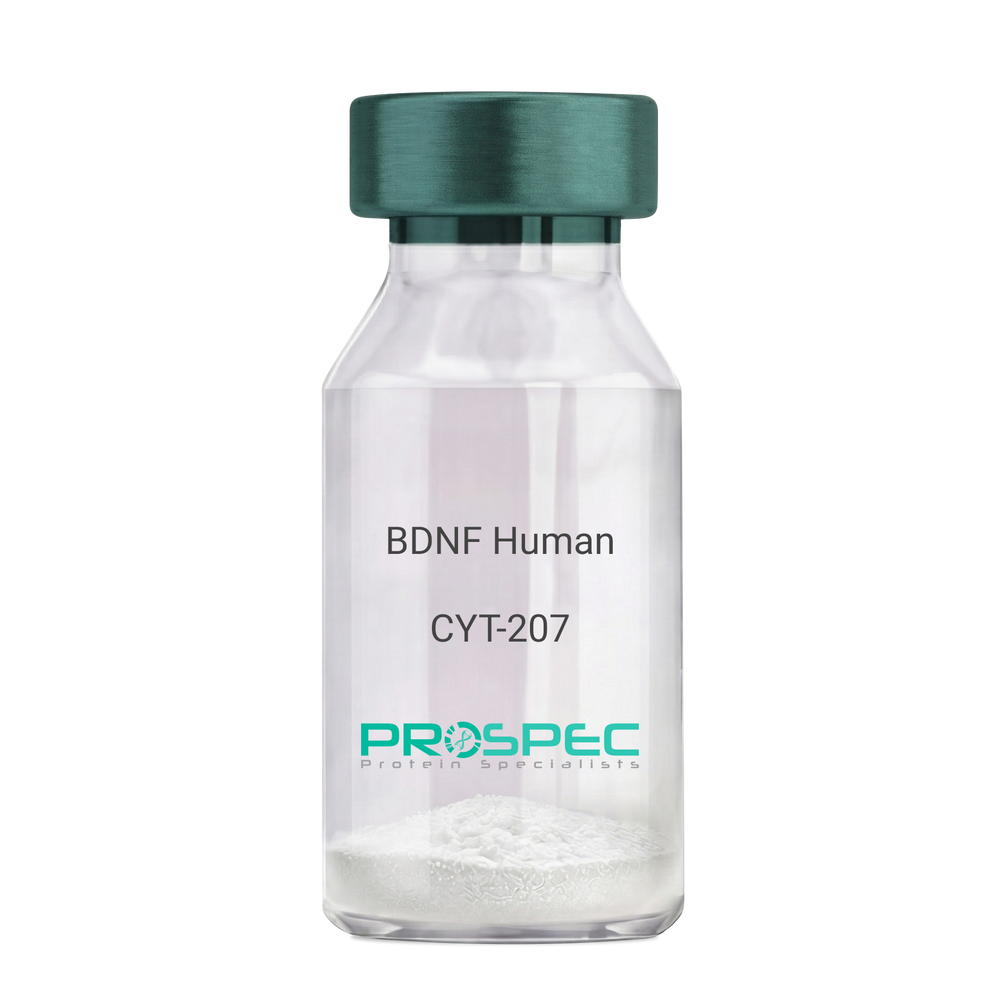
    BDNF Human

    Description:

    Brain-Derived Neurotrophic Factor Human Recombinant

    Brain-Derived Neurotrophic Factor, BDNF, MGC34632.

    Product # :

    CYT-207

    Price :

    Quantity :

    Shipping Method :

    Room Temp Icon

    Shipped at Room temp

    Add To Cart

    More Info

    • description
    • source
    • formulation
    • purity
    • biological activity
    • More Info
    • Activity

    Description

    BDNF Human Recombinant produced in E.Coli is a homodimer, non-glycosylated, polypeptide chain containing 2 x 119 amino acids (and an N-terminal Met) and having a total molecular mass of 28kDa. BDNF Human Recombinant is purified by proprietary chromatographic techniques.

    Source

    Escherichia Coli.

    Formulation

    The protein was lyophilized with 20mM PB and 400mM NaCl, pH 7.2.

    Purity

    BDNF is greater than 950% as determined SDS-PAGE.

    Biological Activity

    The activity was determined using Immobilized Human TrkB-His tag protein 2ug/ml (100 μl/well) for its binding to NHS-Biotin BDNF. The ED50 of was found to be ≤20ng/mL

    Activity

    bdnf activity - Product image 1

    More Info

    • Introduction

      BDNF promotes the survival of neuronal populations that are all located either in the central nervous system or directly connected to it. BDNF is a major regulator of synaptic transmission and plasticity at adult synapses in many regions of the cns. The versatility of BDNF is emphasized by its contribution to a range of adaptive neuronal responses including long-term potentiation (ltp), long-term depression (ltd), certain forms of short-term synaptic plasticity, as well as homeostatic regulation of intrinsic neuronal excitability.

    • Synonyms

      Brain-Derived Neurotrophic Factor, BDNF, MGC34632.

    • Physical Appearance

      Sterile Filtered White lyophilized (freeze-dried) powder.

    • Stability

      Lyophilized BDNF although stable at room temperature for 3 weeks, should be stored desiccated below -18°C. Upon reconstitution BDNF should be stored at 4°C between 2-7 days and for future use below -18°C.For long term storage it is recommended to add a carrier protein (0.1% HSA or BSA).Please prevent freeze-thaw cycles.

    • Solubility

      It is recommended to reconstitute the lyophilized BDNF in sterile 18M-cm H2O not less than 100µg/ml, which can then be further diluted to other aqueous solutions.

    • Amino Acid Sequence

      HSDPARRGE LSVCDSISEW VTAADKKTAV DMSGGTVTVL EKVPVSKGQL KQYFYETKCN PMGYTKEGCR GIDKRHWNSQ CRTTQSYVRA LTMDSKKRIG WRFIRIDTSC VCTLTIKRGR.

    • Background

      Final Thoughts

      Although more research is needed on the safety and effectiveness of BDNF human recombinant, trials suggest that this laboratory-produced protein may be effective in managing and treating several neurological and psychiatric disorders. It's important for experts to stay up to date on the latest developments and research to learn more about potential risks and benefits.

      What is the molecular weight/Mw of BDNF Protein?
      BDNF Protein has a total Mw of 27kDa.

      What is the source or expression system of BDNF Protein?
      Escherichia Coli.

      What is the Purity of BDNF Protein?
      BDNF Protein is >97% pure as determined by SDS-PAGE.

      What is the Biological Activity of BDNF Protein?
      The ED50, as determined by the dose-dependent induction of C6 cells proliferation, is 1.3-2µg/ml.

      What is the amino acid sequence of BDNF Protein?
      MHSDPARRGE LSVCDSISEW VTAADKKTAV DMSGGTVTVL EKVPVSKGQL KQYFYETKCN PMGYTKEGCR GIDKRHWNSQ CRTTQSYVRA LTMDSKKRIG WRFIRIDTSC VCTLTIKRGR.

      What applications can BDNF Protein be used in?
      BDNF Protein can probably be used in western blot, ELISA and Lateral Flow.

      What is the endotoxin level for BDNF Protein?
      The endotoxin level is minimal, BDNF Protein was purified using conventional chromatography techniques.

    • Protein content

      BDNF quantitation was carried out by two independent methods:1. UV spectroscopy at 280 nm using the absorbency value of 1.6 as the extinction coefficient for a 0.1% (1mg/ml) solution. This value is calculated by the PC GENE computer analysis program of protein sequences (IntelliGenetics). 2. Analysis by RP-HPLC, using a standard solution of Brain-derived Neurotrophic Factor as a Reference Standard.

    ProSpec's products are furnished for LABORATORY RESEARCH USE ONLY. The product may not be used as drugs, agricultural or pesticidal products, food additives or household chemicals.

    Bdnf Human
  • View Data Sheet

    Name :

    EEF2K Human

    Description:

    Eukaryotic Elongation Factor-2 Kinase Human Recombinant

    Eukaryotic Elongation Factor 2 Kinase, Calcium/Calmodulin-Dependent Eukaryotic Elongation Factor 2 Kinase, EEF-2 Kinase, EC 2.7.11.20, EEF-2K, Calcium/Calmodulin-Dependent Eukaryotic Elongation Factor-2 Kinase, Calmodulin-Dependent Protein Kinase III, Eukaroytic Elongation Factor 2 Kinase, Eukaryotic Elongation Factor-2 Kinase, Elongation Factor-2 Kinase, EC 2.7.11, HSU93850, Eukaryotic elongation factor 2 kinase.

    Product # :

    PKA-061

    Price :

    Quantity :

    Shipping Method :

    Ice Icon

    Shipped with Ice Packs

    Add To Cart

    More Info

    • description
    • source
    • formulation
    • purity
    • More Info

    Description

    EEF2K Human Recombinant produced in E.Coli is a single, non-glycosylated polypeptide chain containing 748 amino acids (1-725 a.a) and having a molecular mass of 84.6kDa. EEF2K is fused to a 23 amino acid His-tag at N-terminus & purified by proprietary chromatographic techniques.

    Source

    Escherichia Coli.

    Formulation

    EEF2K protein solution (0.25 mg/ml) containing Phosphate buffered saline (pH7.4) and 10% glycerol.

    Purity

    Greater than 85.0% as determined by SDS-PAGE.

    More Info

    • Introduction

      Eukaryotic elongation factor-2 kinase (EEF2K) is threonine kinase which regulates protein synthesis by means of controlling the rate of peptide chain elongation. Upon activation through a diversity of upstream kinases including AMPK or TRPM7, EEF2K phosphorylates the elongation factor EEF2 at a sole site, renders it unable to bind ribosomes and therefore inactive. In turn, the rate of protein synthesis is being reduced.

    • Synonyms

      Eukaryotic Elongation Factor 2 Kinase, Calcium/Calmodulin-Dependent Eukaryotic Elongation Factor 2 Kinase, EEF-2 Kinase, EC 2.7.11.20, EEF-2K, Calcium/Calmodulin-Dependent Eukaryotic Elongation Factor-2 Kinase, Calmodulin-Dependent Protein Kinase III, Eukaroytic Elongation Factor 2 Kinase, Eukaryotic Elongation Factor-2 Kinase, Elongation Factor-2 Kinase, EC 2.7.11, HSU93850, Eukaryotic elongation factor 2 kinase.

    • Physical Appearance

      Sterile Filtered colorless solution.

    • Stability

      Store at 4°C if entire vial will be used within 2-4 weeks. Store, frozen at -20°C for longer periods of time. For long term storage it is recommended to add a carrier protein (0.1% HSA or BSA).Avoid multiple freeze-thaw cycles.

    • Amino Acid Sequence

      MGSSHHHHHH SSGLVPRGSH MGSMADEDLI FRLEGVDGGQ SPRAGHDGDS DGDSDDEEGY FICPITDDPS SNQNVNSKVN KYYSNLTKSE RYSSSGSPAN SFHFKEAWKH AIQKAKHMPD PWAEFHLEDI ATERATRHRY NAVTGEWLDD EVLIKMASQP FGRGAMRECF RTKKLSNFLH AQQWKGASNY VAKRYIEPVD RDVYFEDVRL QMEAKLWGEE YNRHKPPKQV DIMQMCIIEL KDRPGKPLFH LEHYIEGKYI KYNSNSGFVR DDNIRLTPQA FSHFTFERSG HQLIVVDIQG VGDLYTDPQI HTETGTDFGD GNLGVRGMAL FFYSHACNRI CESMGLAPFD LSPRERDAVN QNTKLLQSAK TILRGTEEKC GSPRVRTLSG SRPPLLRPLS ENSGDENMSD VTFDSLPSSP SSATPHSQKL DHLHWPVFSD LDNMASRDHD HLDNHRESEN SGDSGYPSEK RGELDDPEPR EHGHSYSNRK YESDEDSLGS SGRVCVEKWN LLNSSRLHLP RASAVALEVQ RLNALDLEKK IGKSILGKVH LAMVRYHEGG RFCEKGEEWD QESAVFHLEH AANLGELEAI VGLGLMYSQL PHHILADVSL KETEENKTKG FDYLLKAAEA GDRQSMILVA RAFDSGQNLS PDRCQDWLEA LHWYNTALEM TDCDEGGEYD GMQDEPRYMM LAREAEMLFT GGYGLEKDPQ RSGDLYTQAA EAAMEAMKGR LANQYYQKAE EAWAQMEE.

    ProSpec's products are furnished for LABORATORY RESEARCH USE ONLY. The product may not be used as drugs, agricultural or pesticidal products, food additives or household chemicals.

    Eef2K Human
  • View Data Sheet

    Name :

    BASP1 Human

    Description:

    Brain Abundant Membrane Attached Signal Protein 1 Human Recombinant

    CAP-23, CAP23, NAP-22, NAP22, Brain acid soluble protein 1, BASP1, BASP1 Human, 22 kDa neuronal tissue-enriched acidic protein, Neuronal axonal membrane protein NAP-22.

    Product # :

    PRO-1355

    Price :

    Quantity :

    Shipping Method :

    Ice Icon

    Shipped with Ice Packs

    Add To Cart

    More Info

    • description
    • source
    • formulation
    • purity
    • More Info

    Description

    BASP1 Human Recombinant produced in E.coli is a single, non-glycosylated polypeptide chain containing 250 amino acids (1-227) and having a molecular mass of 25 kDa (Molecular size on SDS-PAGE will appear higher). BASP1 is fused to a 23 amino acid His-tag at N-terminus & purified by proprietary chromatographic techniques.

    Source

    Escherichia Coli.

    Formulation

    The BASP1 solution (0.25mg/ml) contains 20mM Tris-HCl buffer (pH 8.0), 0.2M NaCl and 20% glycerol.

    Purity

    Greater than 95.0% as determined by SDS-PAGE.

    More Info

    • Introduction

      Brain Abundant Membrane Attached Signal Protein 1 (BASP1) is a membrane bound protein with numerous transient phosphorylation positions and PEST motifs. Preservation of proteins with PEST sequences amongst diverse species supports their functional significance. PEST sequences take place in proteins with high turnover rates. Immunological attributes of this protein are species specific. BASP1 undergoes N-terminal myristoylation.

    • Synonyms

      CAP-23, CAP23, NAP-22, NAP22, Brain acid soluble protein 1, BASP1, BASP1 Human, 22 kDa neuronal tissue-enriched acidic protein, Neuronal axonal membrane protein NAP-22.

    • Physical Appearance

      Sterile Filtered colorless solution.

    • Stability

      Store at 4°C if entire vial will be used within 2-4 weeks. Store, frozen at -20°C for longer periods of time. For long term storage it is recommended to add a carrier protein (0.1% HSA or BSA).Avoid multiple freeze-thaw cycles.

    • Amino Acid Sequence

      MGSSHHHHHH SSGLVPRGSH MGSMGGKLSK KKKGYNVNDE KAKEKDKKAE GAATEEEGTP KESEPQAAAE PAEAKEGKEK PDQDAEGKAE EKEGEKDAAA AKEEAPKAEP EKTEGAAEAK AEPPKAPEQE QAAPGPAAGG EAPKAAEAAA APAESAAPAA GEEPSKEEGE PKKTEAPAAP AAQETKSDGA PASDSKPGSS EAAPSSKETP AATEAPSSTP KAQGPAASAE EPKPVEAPAA NSDQTVTVKE.

    ProSpec's products are furnished for LABORATORY RESEARCH USE ONLY. The product may not be used as drugs, agricultural or pesticidal products, food additives or household chemicals.

    Basp1 Human
  • View Data Sheet

    Name :

    EGFR Human, CHO

    Description:

    Epidermal Growth Factor Receptor, CHO Human Recombinant

    Epidermal Growth Factor Receptor, Receptor Tyrosine-Protein Kinase ErbB-1, Erb-B2 Receptor Tyrosine Kinase, Proto-Oncogene C-ErbB-1, EC 2.7.10.1, ERBB1, ERBB, HER1, Epidermal Growth Factor Receptor (Avian Erythroblastic Leukemia Viral (V-Erb-B) Oncogene Homolog), Erythroblastic Leukemia Viral (V-Erb-B) Oncogene Homolog (Avian), Avian Erythroblastic Leukemia Viral (V-Erb-B) Oncogene Homolog, Cell Proliferation-Inducing Protein 61, Cell Growth Inhibiting Protein 40, EC 2.7.10, NISBD2, PIG61, MENA.

    Product # :

    PKA-086

    Price :

    Quantity :

    Shipping Method :

    Ice Icon

    Shipped with Ice Packs

    Add To Cart

    More Info

    • description
    • source
    • formulation
    • purity
    • More Info

    Description

    EGFR produced in CHO cells is a single, glycosylated polypeptide chain containing 860 amino acids (25-645 a.a.) and having a molecular mass of 95.5 kDa (Migrates at 100-150 on SDS-PAGE under reducing conditions). EGFR is expressed with a 239 amino acid hIgG-His tag at C-Terminus and purified by proprietary chromatographic techniques.

    Source

    Chinese Hamster Ovary cells.

    Formulation

    EGFR protein solution (0.25mg/ml) contains Phosphate Buffered Saline (pH 7.4) and 10% glycerol.

    Purity

    Greater than 90.0% as determined by SDS-PAGE.

    More Info

    • Introduction

      The epidermal growth factor receptor (EGF R) subfamily of receptor tyrosine kinases comprises four members: EGF R (also known as HER1, ErbB1 or ErbB), ErbB2 (Neu, HER-2), ErbB3 (HER-3), and ErbB4 (HER-4). All family members are type I transmembrane glycoprotein that has an extracellular domain which contains two cysteine-rich domains separated by a spacer region that is involved in ligand-binding, and a cytoplasmic domain which has a membrane-proximal tyrosine kinase domain and a C-terminal tail with multiple tyrosine autophosphorylation sites. The human EGF R gene encodes a 1210 amino acid (aa) residue precursor with a 24 aa putative signal peptide, a 621 aa extracellular domain, a 23 aa transmembrane domain, and a 542 aa cytoplasmic domain. EGF R has been shown to bind a subset of the EGF family ligands, including EGF, amphiregulin, TGFa , betacellulin, epiregulin, heparin-binding EGF and neuregulin-2 in the absence of a co-receptor. Ligand binding induces EGF R homodimerization as well as heterdimerization with ErbB2, resulting in kinase activation, tyrosine phosphorylation and cell signaling. EGF R can also be recruited to form heterodimers with the ligand-activated ErbB3 or ErbB4. EGF R signaling has been shown to regulate multiple biological functions including cell proliferation, differentiation, motility and apoptosis. In addition, EGF R signaling has also been shown to play a role in carcinogenesis.

    • Synonyms

      Epidermal Growth Factor Receptor, Receptor Tyrosine-Protein Kinase ErbB-1, Erb-B2 Receptor Tyrosine Kinase, Proto-Oncogene C-ErbB-1, EC 2.7.10.1, ERBB1, ERBB, HER1, Epidermal Growth Factor Receptor (Avian Erythroblastic Leukemia Viral (V-Erb-B) Oncogene Homolog), Erythroblastic Leukemia Viral (V-Erb-B) Oncogene Homolog (Avian), Avian Erythroblastic Leukemia Viral (V-Erb-B) Oncogene Homolog, Cell Proliferation-Inducing Protein 61, Cell Growth Inhibiting Protein 40, EC 2.7.10, NISBD2, PIG61, MENA.

    • Physical Appearance

      Sterile Filtered colorless solution.

    • Stability

      Store at 4°C if entire vial will be used within 2-4 weeks. Store, frozen at -20°C for longer periods of time. For long term storage it is recommended to add a carrier protein (0.1% HSA or BSA). Avoid multiple freeze-thaw cycles.

    • Amino Acid Sequence

      LEEKKVCQGT SNKLTQLGTF EDHFLSLQRM FNNCEVVLGN LEITYVQRNY DLSFLKTIQE VAGYVLIALN TVERIPLENL QIIRGNMYYE NSYALAVLSN YDANKTGLKE LPMRNLQEIL HGAVRFSNNP ALCNVESIQW RDIVSSDFLS NMSMDFQNHL GSCQKCDPSC PNGSCWGAGE ENCQKLTKII CAQQCSGRCR GKSPSDCCHN QCAAGCTGPR ESDCLVCRKF RDEATCKDTC PPLMLYNPTT YQMDVNPEGK YSFGATCVKK CPRNYVVTDH GSCVRACGAD SYEMEEDGVR KCKKCEGPCR KVCNGIGIGE FKDSLSINAT NIKHFKNCTS ISGDLHILPV AFRGDSFTHT PPLDPQELDI LKTVKEITGF LLIQAWPENR TDLHAFENLE IIRGRTKQHG QFSLAVVSLN ITSLGLRSLK EISDGDVIIS GNKNLCYANT INWKKLFGTS GQKTKIISNR GENSCKATGQ VCHALCSPEG CWGPEPRDCV SCRNVSRGRE CVDKCNLLEG EPREFVENSE CIQCHPECLP QAMNITCTGR GPDNCIQCAH YIDGPHCVKT CPAGVMGENN TLVWKYADAG HVCHLCHPNC TYGCTGPGLE GCPTNGPKIP SRSPKSCDKT HTCPPCPAPE LLGGPSVFLF PPKPKDTLMI SRTPEVTCVV VDVSHEDPEV KFNWYVDGVE VHNAKTKPRE EQYNSTYRVV SVLTVLHQDW LNGKEYKCKV SNKALPAPIE KTISKAKGQP REPQVYTLPP SRDELTKNQV SLTCLVKGFY PSDIAVEWES NGQPENNYKT TPPVLDSDGS FFLYSKLTVD KSRWQQGNVF SCSVMHEALH NHYTQKSLSL SPGKHHHHHH.

    ProSpec's products are furnished for LABORATORY RESEARCH USE ONLY. The product may not be used as drugs, agricultural or pesticidal products, food additives or household chemicals.

    Egfr Human Cho
  • View Data Sheet

    Name :

    ZWILCH Human

    Description:

    Zwilch Kinetochore Protein Human Recombinant

    hZwilch, KNTC1AP, Protein zwilch homolog, ZWILCH.

    Product # :

    PRO-1984

    Price :

    Quantity :

    Shipping Method :

    Ice Icon

    Shipped with Ice Packs

    Add To Cart

    More Info

    • description
    • source
    • formulation
    • purity
    • More Info

    Description

    ZWILCH Human Recombinant produced in E.Coli is a single, non-glycosylated polypeptide chain containing 614 amino acids (1-591 a.a) and having a molecular mass of 69.6kDa. ZWILCH is fused to a 23 amino acid His-tag at N-terminus & purified by proprietary chromatographic techniques.

    Source

    Escherichia Coli.

    Formulation

    ZWILCH protein solution (0.25mg/ml) containing 20mM Tris-HCl buffer (pH 8.0), 0.1M NaCl, 20% glycerol and 1mM DTT.

    Purity

    Greater than 85.0% as determined by SDS-PAGE.

    More Info

    • Introduction

      Zwilch Kinetochore Protein which is also known as ZWILCH is a part of the ZWILCH family. ZWILCH is a vital part of the mitotic checkpoint. ZWILCH prevents the cells from exiting mitosis prematurely. ZWILCH is also necessary for the assembly of the dyneindynactin and MAD1-MAD2 complexes onto kinetochores.

    • Synonyms

      hZwilch, KNTC1AP, Protein zwilch homolog, ZWILCH.

    • Physical Appearance

      Sterile Filtered colorless solution.

    • Stability

      Store at 4°C if entire vial will be used within 2-4 weeks. Store, frozen at -20°C for longer periods of time. For long term storage it is recommended to add a carrier protein (0.1% HSA or BSA).Avoid multiple freeze-thaw cycles.

    • Amino Acid Sequence

      MGSSHHHHHH SSGLVPRGSH MGSMWERLNC AAEDFYSRLL QKFNEEKKGI RKDPFLYEAD VQVQLISKGQ PNPLKNILNE NDIVFIVEKV PLEKEETSHI EELQSEETAI SDFSTGENVG PLALPVGKAR QLIGLYTMAH NPNMTHLKIN LPVTALPPLW VRCDSSDPEG TCWLGAELIT TNNSITGIVL YVVSCKADKN YSVNLENLKN LHKKRHHLST VTSKGFAQYE LFKSSALDDT ITASQTAIAL DISWSPVDEI LQIPPLSSTA TLNIKVESGE PRGPLNHLYR ELKFLLVLAD GLRTGVTEWL EPLEAKSAVE LVQEFLNDLN KLDGFGDSTK KDTEVETLKH DTAAVDRSVK RLFKVRSDLD FAEQLWCKMS SSVISYQDLV KCFTLIIQSL QRGDIQPWLH SGSNSLLSKL IHQSYHGTMD TVSLSGTIPV QMLLEIGLDK LKKDYISFFI GQELASLNHL EYFIAPSVDI QEQVYRVQKL HHILEILVSC MPFIKSQHEL LFSLTQICIK YYKQNPLDEQ HIFQLPVRPT AVKNLYQSEK PQKWRVEIYS GQKKIKTVWQ LSDSSPIDHL NFHKPDFSEL TLNGSLEERI FFTNMVTCSQ VHFK.

    ProSpec's products are furnished for LABORATORY RESEARCH USE ONLY. The product may not be used as drugs, agricultural or pesticidal products, food additives or household chemicals.

    AOD-9604
  • View Data Sheet

    Name :

    OX40L Human

    Description:

    OX40 Ligand Human Recombinant

    Tumor necrosis factor ligand superfamily member 4, OX40 ligand, OX40L, OX-40L, CD252, Tnfsf4, Ox40l, Txgp1l, gp3, OX4, Ath-1, Ath1, CD134L, gp34, Tnlg2b, Txgp1l.

    Product # :

    CYT-1226

    Price :

    Quantity :

    Shipping Method :

    Ice Icon

    Shipped with Ice Packs

    Add To Cart

    More Info

    • description
    • source
    • formulation
    • purity
    • biological activity
    • More Info

    Description

    OX40L Human Recombinant is a single, glycosylated, polypeptide chain (51-183 a.a) containing a total of139 amino acids and having a molecular mass of 16.2 kDa. OX40L is fused to a 6 a.a his-Tag at C-terminus and is purified by proprietary chromatographic techniques.

    Source

    HEK293 Cells.

    Formulation

    The OX40L solution (1mg/ml) contains 10% Glycerol and Phosphate-Buffered Saline (pH 7.4).

    Purity

    Greater than 90.0% as determined by SDS-PAGE.

    Biological Activity

    Measured by its binding ability in a functional ELISA with Human OX40/TNFRSF4.

    More Info

    • Synonyms

      Tumor necrosis factor ligand superfamily member 4, OX40 ligand, OX40L, OX-40L, CD252, Tnfsf4, Ox40l, Txgp1l, gp3, OX4, Ath-1, Ath1, CD134L, gp34, Tnlg2b, Txgp1l.

    • Physical Appearance

      Sterile Filtered colorless solution.

    • Stability

      Store at 4°C if entire vial will be used within 2-4 weeks. Store, frozen at -20°C for longer periods of time. For long term storage it is recommended to add a carrier protein (0.1% HSA or BSA). Avoid multiple freeze-thaw cycles.

    • Amino Acid Sequence

      QVSHRYPRIQ SIKVQFTEYK KEKGFILTSQ KEDEIMKVQN NSVIINCDGF YLISLKGYFS QEVNISLHYQ KDEEPLFQLK KVRSVNSLMV ASLTYKDKVY LNVTTDNTSL DDFHVNGGEL ILIHQNPGEF CVLHHHHHH.

    • Background

      OX40 Ligand (OX40L), a member of the tumor necrosis factor (TNF) superfamily, plays a pivotal role in regulating immune responses and orchestrating the delicate balance between activation and tolerance. The human recombinant form of OX40L has emerged as a potent tool in immunology, offering insights into its molecular intricacies and potential applications in therapeutic interventions. This research embarks on a journey to unravel the multifaceted role of OX40L Human Recombinant, shedding light on its structural attributes, signaling pathways, and its promising avenues in immunotherapy. By delving into the properties of OX40L, scientists aim to expand our understanding of immune modulation and open new frontiers in the treatment of immune-related disorders.

      Structural Insights into OX40L Human Recombinant:

      OX40L, as a trimeric transmembrane protein, exhibits a unique structural configuration that governs its interactions with the OX40 receptor on T cells. The human recombinant form, engineered for controlled study, provides a window into the three-dimensional intricacies of the ligand. Understanding its structure is pivotal for deciphering how OX40L engages with its receptor and modulates immune responses.

      Immunomodulatory Signaling Pathways:

      OX40L binding to its cognate receptor OX40 on T cells triggers intricate signaling cascades that impact immune cell activation, proliferation, and cytokine production. The OX40-OX40L axis is a crucial regulator of T cell function, influencing both effector and regulatory T cell responses. Unraveling the specific pathways activated by OX40L Human Recombinant provides valuable insights into the modulation of immune responses in health and disease.

      Applications in Immunotherapy:

      The immunomodulatory properties of OX40L make it an attractive candidate for therapeutic interventions. OX40L Human Recombinant, in preclinical and clinical studies, is being explored for its potential in enhancing antitumor immune responses. By harnessing the ligand's ability to stimulate effector T cells and memory T cell formation, researchers aim to develop novel immunotherapies for cancer and other immune-related disorders.

      OX40L in Autoimmune Diseases:

      Conversely, OX40L's role in autoimmune diseases has spurred investigations into its inhibition as a therapeutic strategy. Blocking the OX40-OX40L interaction has shown promise in mitigating autoimmune responses, presenting a potential avenue for the development of treatments for conditions such as rheumatoid arthritis and inflammatory bowel disease.

      While the potential of OX40L Human Recombinant in immunotherapy is promising, challenges persist. Fine-tuning its applications, understanding potential side effects, and optimizing dosages are critical considerations for translational success. Additionally, comprehending the context-dependent nature of OX40L signaling is essential for tailoring therapeutic strategies to specific diseases and patient profiles.

      OX40L Human Recombinant stands at the forefront of immunomodulation research, offering a lens through which we can unravel the complexities of immune responses. Its structural insights, signaling pathways, and therapeutic applications position it as a key player in the evolving landscape of immunotherapy. As researchers continue to dissect the molecular nuances of OX40L, they not only expand our understanding of immune regulation but also pave the way for transformative advancements in the treatment of cancer and autoimmune diseases, shaping the future of precision medicine and immunotherapy.

    ProSpec's products are furnished for LABORATORY RESEARCH USE ONLY. The product may not be used as drugs, agricultural or pesticidal products, food additives or household chemicals.

    Ox40L Human
  • View Data Sheet

    Name :

    GNAI1 Human

    Description:

    Guanine Nucleotide Binding Protein Alpha Inhibiting Activity 1 Human Recombinant

    Guanine nucleotide-binding protein G(i) subunit alpha-1, Adenylate cyclase-inhibiting G alpha protein, GNAI1, Gi.

    Product # :

    PRO-940

    Price :

    Quantity :

    Shipping Method :

    Ice Icon

    Shipped with Ice Packs

    Add To Cart

    More Info

    • description
    • source
    • formulation
    • purity
    • More Info

    Description

    GNAI1 Human Recombinant produced in E.Coli is a single, non-glycosylated polypeptide chain containing 377 amino acids (1-354 a.a.) and having a molecular mass of 42.7kDa.GNAI1 is fused to a 23 amino acid His-tag at N-terminus & purified by proprietary chromatographic techniques.

    Source

    Escherichia Coli.

    Formulation

    GNAI1 protein solution (1mg/ml) containing 20mM Tris-HCl buffer (pH8.0) and 10% glycerol.

    Purity

    Greater than 90.0% as determined by SDS-PAGE.

    More Info

    • Introduction

      Guanine nucleotide binding proteins are heterotrimeric signal-transducing molecules comprising alpha, beta, and gamma subunits. GNAI1 represents the alpha subunit of an inhibitory complex. Guanine nucleotide-binding protein G(i) subunit alpha (GNAI1) functions to transmit information from cell surface receptors to intracellular effectors. GNAI1 binds guanine nucleotide, can hydrolyze GTP, and can interact with other proteins. GNAI1 is part of a complex that responds to beta-adrenergic signals by inhibiting adenylate cyclase. In addition, GNAI1 functions to open atrial potassium channels.

    • Synonyms

      Guanine nucleotide-binding protein G(i) subunit alpha-1, Adenylate cyclase-inhibiting G alpha protein, GNAI1, Gi.

    • Physical Appearance

      Sterile Filtered colorless solution.

    • Stability

      Store at 4°C if entire vial will be used within 2-4 weeks. Store, frozen at -20°C for longer periods of time. For long term storage it is recommended to add a carrier protein (0.1% HSA or BSA).Avoid multiple freeze-thaw cycles.

    • Amino Acid Sequence

      MGSSHHHHHH SSGLVPRGSH MGSMGCTLSA EDKAAVERSK MIDRNLREDG EKAAREVKLL LLGAGESGKS TIVKQMKIIH EAGYSEEECK QYKAVVYSNT IQSIIAIIRA MGRLKIDFGD SARADDARQL FVLAGAAEEG FMTAELAGVI KRLWKDSGVQ ACFNRSREYQ LNDSAAYYLN DLDRIAQPNY IPTQQDVLRT RVKTTGIVET HFTFKDLHFK MFDVGGQRSE RKKWIHCFEG VTAIIFCVAL SDYDLVLAED EEMNRMHESM KLFDSICNNK WFTDTSIILF LNKKDLFEEK IKKSPLTICY PEYAGSNTYE EAAAYIQCQF EDLNKRKDTK EIYTHFTCAT DTKNVQFVFD AVTDVIIKNN LKDCGLF.

    ProSpec's products are furnished for LABORATORY RESEARCH USE ONLY. The product may not be used as drugs, agricultural or pesticidal products, food additives or household chemicals.

    Gnai1 Human
  • View Data Sheet

    Name :

    REXO2 Antibody

    Description:

    RNA Exonuclease 2, Mouse Anti Human

    REX2, RNA exonuclease 2 homolog (S. cerevisiae), CGI-114, RFN, SFN, Oligoribonuclease, mitochondrial, RNA exonuclease 2 homolog, Small fragment nuclease,REXO2, SMFN.

    Product # :

    ANT-490

    Price :

    Quantity :

    Shipping Method :

    Ice Icon

    Shipped with Ice Packs

    Add To Cart

    More Info

    • formulation
    • More Info

    Formulation

    1mg/ml containing PBS, pH-7.4, 10% Glycerol and 0.02% Sodium Azide.

    More Info

    • Introduction

      EXO2 is a 3'-to-5' exonuclease specific for small (primarily 5 nucleotides or less in length) single-stranded RNA and DNA oligomers. RNA Exonuclease 2 (REXO2) takes part in DNA repair, replication, and recombination, and in RNA processing and degradation. EXO2 is involved in resistance of human cells to UV-C-induced cell death via its part in the DNA repair process.

    • Synonyms

      REX2, RNA exonuclease 2 homolog (S. cerevisiae), CGI-114, RFN, SFN, Oligoribonuclease, mitochondrial, RNA exonuclease 2 homolog, Small fragment nuclease,REXO2, SMFN.

    • Physical Appearance

      Sterile filtered colorless solution.

    • Immunogen

      Anti-human REXO2 mAb, clone PAT59D9A, is derived from hybridization of mouse F0 myeloma cells with spleen cells from BALB/c mice immunized with a recombinant human REXO2 protein 26-237 amino acids purified from E. coli.

    • Ig Subclass

      Mouse IgG2b heavy chain and Kappa light chain.

    • Clone

      PAT59D9AT.

    • Applications

      The antibody has been tested by ELISA, Western blot analysis to assure specificity and reactivity. Since application varies, however, each investigation should be titrated by the reagent to obtain optimal results. Recommended starting dilution is 1:500.

    • Type

      Mouse Anti Human Monoclonal.

    • Storage Procedures

      For periods up to 1 month store at 4°C, for longer periods of time, store at -20°C. Prevent freeze thaw cycles.

    • Purification Method

      REXO2 antibody was purified from mouse ascitic fluids by protein-A affinity chromatography.

    ProSpec's products are furnished for LABORATORY RESEARCH USE ONLY. The product may not be used as drugs, agricultural or pesticidal products, food additives or household chemicals.

    Rexo2 Antibody
  • View Data Sheet

    Name :

    ATF1 Human

    Description:

    Activating Transcription Factor-1 Human Recombinant

    Activating transcription factor 1, cyclic AMP-dependent transcription factor ATF-1, Protein TREB36, EWS-ATF1, FUS/ATF-1.

    Product # :

    PKA-019

    Price :

    Quantity :

    Shipping Method :

    Ice Icon

    Shipped with Ice Packs

    Add To Cart

    More Info

    • description
    • source
    • formulation
    • purity
    • More Info

    Description

    ATF1 Human Recombinant produced in E.coli is a single, non-glycosylated polypeptide chain containing 295 amino acids (1-271 and having a molecular mass of 31.8kDa.ATF1 is fused to a 24 amino acid His-tag at N-terminus & purified by proprietary chromatographic techniques.

    Source

    E.coli.

    Formulation

    The ATF1 solution (0.25mg/ml) contains 20mM Tris-HCl buffer (pH 8.0), 200mM NaCl, 5mM DTT, 2mM EDTA and 50% glycerol.

    Purity

    Greater than 85% as determined by SDS-PAGE.

    More Info

    • Introduction

      ATF1, a cyclic-AMP dependent transcription factor, is expressed in a large selection of cell types and can dimerize with CREB. MSK1 and MSK2 protein kinases are essential for the stress-induced phosphorylation of transcription factors CREB and ATF1 in primary embryonic fibroblasts. Epidermal growth factor induction of c-jun expression needs ATF1 and MEF2 sites in the c-jun promoter.

    • Synonyms

      Activating transcription factor 1, cyclic AMP-dependent transcription factor ATF-1, Protein TREB36, EWS-ATF1, FUS/ATF-1.

    • Physical Appearance

      Sterile Filtered colorless solution.

    • Stability

      Store at 4°C if entire vial will be used within 2-4 weeks. Store, frozen at -20°C for longer periods of time. For long term storage it is recommended to add a carrier protein (0.1% HSA or BSA).Avoid multiple freeze-thaw cycles.

    • Amino Acid Sequence

      MGSSHHHHHH SSGLVPRGSH MGSHMEDSHK STTSETAPQP GSAVQGAHIS HIAQQVSSLS ESEESQDSSD SIGSSQKAHG ILARRPSYRK ILKDLSSEDT RGRKGDGENS GVSAAVTSMS VPTPIYQTSS GQYIAIAPNG ALQLASPGTD GVQGLQTLTM TNSGSTQQGT TILQYAQTSD GQQILVPSNQ VVVQTASGDM QTYQIRTTPS ATSLPQTVVM TSPVTLTSQT TKTDDPQLKR EIRLMKNREA ARECRRKKKE YVKCLENRVA VLENQNKTLI EELKTLKDLY SNKSV

    ProSpec's products are furnished for LABORATORY RESEARCH USE ONLY. The product may not be used as drugs, agricultural or pesticidal products, food additives or household chemicals.

    Atf1 Human
  • View Data Sheet

    Name :

    C3 Rat

    Description:

    Complement C3 Rat

    Complement C3, C3 and PZP-like alpha-2-macroglobulin domain-containing protein 1, C3, CPAMD1.

    Product # :

    PRO-2706

    Price :

    Quantity :

    Shipping Method :

    Ice Icon

    Shipped with Ice Packs

    Add To Cart

    More Info

    • description
    • source
    • formulation
    • purity
    • More Info

    Description

    Rat Complement C3 produced in Rat plasma having a molecular weight of 187kDa.

    Source

    Rat Plasma.

    Formulation

    C3 solution contains phosphate buffer saline.

    Purity

    Greater than 95.0% as determined by SDS-PAGE.

    More Info

    • Introduction

      C3 is central to the activation of all 3 pathways of complement activation. Initiation of each pathway generates proteolytic enzyme complexes which binds the target surface. These enzymes cleave a peptide bond in C3 releasing the anaphylatoxin C3a and activating C3b. Most of the C3 activated during complement activation never attaches to the surface due to its thioester reaction with water forming fluid phase C3b which is rapidly inactivated by factors H and I forming iC3b. Surface-bound C3b is necessary in all 3 pathways for efficient activation of C5 and formation of C5b-9 complexes that lyse the target cell membrane.

    • Synonyms

      Complement C3, C3 and PZP-like alpha-2-macroglobulin domain-containing protein 1, C3, CPAMD1.

    • Physical Appearance

      Sterile filtered solution.

    • Stability

      C3 Mouse is stable at 4°C if entire vial will be used within 2-4 weeks.Store, frozen below -20°C for longer periods of time.For long term storage it is recommended to add a carrier protein (0.1% HSA or BSA).Avoid multiple freeze-thaw cycles.

    ProSpec's products are furnished for LABORATORY RESEARCH USE ONLY. The product may not be used as drugs, agricultural or pesticidal products, food additives or household chemicals.

    C3 Rat
  • View Data Sheet

    Name :

    C1S Human

    Description:

    Complement C1s Human

    Complement C1s subcomponent, C1 esterase, Complement component 1 subcomponent s, C1S.

    Product # :

    ENZ-1164

    Price :

    Quantity :

    Shipping Method :

    Ice Icon

    Shipped with Ice Packs

    Add To Cart

    More Info

    • description
    • source
    • formulation
    • purity
    • More Info

    Description

    Human Complement C1s produced in Human plasma having a molecular mass of 86 kDa.

    Source

    Human Plasma.

    Formulation

    The protein contains PBS.

    Purity

    Greater than 95.0% as determined by SDS-PAGE.

    More Info

    • Introduction

      C1s enzyme (a subunit of the C1 complex) is the activated form of C1s proenzyme which is the first complement component in the classical pathway of complement. C1s proenzyme is an inactive zymogen until C1 is activated. C1 is a non-covalent calcium-dependent complex containing1 C1q, 2 C1r and 2 C1s molecules.The binding of multiple arms to immune complexes causesthe production of 2 proteases that cleave and activate the 2 C1s protease zymogens in the complex by the C1r proteins. This activation of C1s proenzyme results in its cleavage into 2 C1s chains of 58,000 and 28,000 Dalton.

    • Synonyms

      Complement C1s subcomponent, C1 esterase, Complement component 1 subcomponent s, C1S.

    • Physical Appearance

      Sterile Filtered solution.

    • Stability

      Human C1s is stable at 4°C if entire vial will be used within 2-4 weeks.Store, frozen below -20°C for longer periods of time.For long term storage it is recommended to add a carrier protein (0.1% HSA or BSA).Avoid multiple freeze-thaw cycles.

    • Human Virus Test

      Plasma from each donor has been tested and found negative for antibody to HIV-1, HIV-2, HCV, HTLV-I &II, STS and HBSAG.

    ProSpec's products are furnished for LABORATORY RESEARCH USE ONLY. The product may not be used as drugs, agricultural or pesticidal products, food additives or household chemicals.

    C1S Human
  • View Data Sheet

    Name :

    CTHRC1 Human

    Description:

    Collagen Triple Helix Repeat Containing 1 Human Recombinant

    Collagen Triple Helix Repeat Containing 1, Protein NMTC1, CTHRC1.

    Product # :

    PRO-2027

    Price :

    Quantity :

    Shipping Method :

    Ice Icon

    Shipped with Ice Packs

    Add To Cart

    More Info

    • description
    • source
    • formulation
    • purity
    • More Info

    Description

    CTHRC1 Human Recombinant produced in E.Coli is a single, non-glycosylated polypeptide chain containing 234 amino acids (31-243 a.a) and having a molecular mass of 25.3kDa.CTHRC1 is fused to a 21 amino acid His-tag at N-terminus & purified by proprietary chromatographic techniques.

    Source

    Escherichia Coli.

    Formulation

    CTHRC1 protein solution (1mg/ml) containing 20mM Tris-HCl (pH 8.0) and 10% glycerol.

    Purity

    Greater than 90.0% as determined by SDS-PAGE.

    More Info

    • Introduction

      Collagen triple helix repeat-containing protein 1 (CTHRC1) functions as a negative regulator of collagen matrix deposition. CTHRC1 is a secreted 28kDa protein which is glycosylated and highly conserved from lower chordates to mammals. CTHRC1 is highly connected with calcified tissues and cartilaginous matrix, but not with endothelial cells. CTHRC1 is detected qualitatively in plasma of healthy human subjects. CTHRC1 plasma levels are also significantly elevated during pregnancy, in diabetes, in inflammatory and infectious conditions, in subjects with acute myeloid leukemia but not in subjects with solid cancers. The hormonal functions of CTHRC1 include regulation of lipid storage and cellular glycogen levels with potentially far-reaching implications for cell metabolism and physiology. CTHRC1 gene deletion leads to fatty liver (steatosis) formation in mice while others exhibited inactivation of the CTHRC1 gene also results in low bone mass.

    • Synonyms

      Collagen Triple Helix Repeat Containing 1, Protein NMTC1, CTHRC1.

    • Physical Appearance

      Sterile filtered colorless solution.

    • Stability

      Store at 4°C if entire vial will be used within 2-4 weeks. Store, frozen at -20°C for longer periods of time. For long term storage it is recommended to add a carrier protein (0.1% HSA or BSA).Avoid multiple freeze-thaw cycles.

    • Amino Acid Sequence

      MGSSHHHHHH SSGLVPRGSH MSEIPKGKQK AQLRQREVVD LYNGMCLQGP AGVPGRDGSP GANGIPGTPG IPGRDGFKGE KGECLRESFE ESWTPNYKQC SWSSLNYGID LGKIAECTFT KMRSNSALRV LFSGSLRLKC RNACCQRWYF TFNGAECSGP LPIEAIIYLD QGSPEMNSTI NIHRTSSVEG LCEGIGAGLV DVAIWVGTCS DYPKGDASTG WNSVSRIIIE ELPK.

    ProSpec's products are furnished for LABORATORY RESEARCH USE ONLY. The product may not be used as drugs, agricultural or pesticidal products, food additives or household chemicals.

    Cthrc1 Human
  • View Data Sheet

    Name :

    GNAQ Human

    Description:

    Guanine Nucleotide Binding Protein Human Recombinant

    Guanine Nucleotide Binding Protein (G Protein), Q Polypeptide, Guanine Nucleotide-Binding Protein Alpha-Q, CMC1, SWS, GAQ, Guanine Nucleotide-Binding Protein G(Q) Subunit Alpha, G-ALPHA-Q, Guanine nucleotide-binding protein G(q) subunit alpha.

    Product # :

    PRO-2070

    Price :

    Quantity :

    Shipping Method :

    Ice Icon

    Shipped with Ice Packs

    Add To Cart

    More Info

    • description
    • source
    • formulation
    • purity
    • More Info

    Description

    GNAQ Human Recombinant produced in E.Coli is a single, non-glycosylated polypeptide chain containing 382 amino acids (1-359 a.a) and having a molecular mass of 44.5kDa. GNAQ is fused to a 23 amino acid His-tag at N-terminus & purified by proprietary chromatographic techniques.

    Source

    Escherichia Coli.

    Formulation

    GNAQ protein solution (0.5mg/ml) containing 20mM Tris-HCl buffer (pH 8.0), 0.4M UREA and 10% glycerol.

    Purity

    Greater than 90.0% as determined by SDS-PAGE.

    More Info

    • Introduction

      GNAQ, also known as Guanine nucleotide-binding protein belong to the G-alpha family. Guanine nucleotide-binding proteins (G proteins) are involved as modulators or transducers in a variety of transmembrane signaling systems. GNAQ regulates B-cell selection and survival and is essential in order to prevent B-cell-dependent autoimmunity. GNAQ also regulates chemotaxis of BM-derived neutrophils and dendritic cells, in vitro. GNAQ is an alpha subunit in the Gq class, couples aseven-transmembrane domain receptor to activation of phospolipase C-beta. Mutations at this locus have beenconnected with problems in platelet activation and aggregation. A related pseudogene to GNAQ exists on chromosome 2.

    • Synonyms

      Guanine Nucleotide Binding Protein (G Protein), Q Polypeptide, Guanine Nucleotide-Binding Protein Alpha-Q, CMC1, SWS, GAQ, Guanine Nucleotide-Binding Protein G(Q) Subunit Alpha, G-ALPHA-Q, Guanine nucleotide-binding protein G(q) subunit alpha.

    • Physical Appearance

      Sterile Filtered clear solution.

    • Stability

      Store at 4°C if entire vial will be used within 2-4 weeks. Store, frozen at -20°C for longer periods of time. For long term storage it is recommended to add a carrier protein (0.1% HSA or BSA).Avoid multiple freeze-thaw cycles.

    • Amino Acid Sequence

      MGSSHHHHHH SSGLVPRGSH MGSMTLESIM ACCLSEEAKE ARRINDEIER QLRRDKRDAR RELKLLLLGT GESGKSTFIK QMRIIHGSGY SDEDKRGFTK LVYQNIFTAM QAMIRAMDTL KIPYKYEHNK AHAQLVREVD VEKVSAFENP YVDAIKSLWN DPGIQECYDR RREYQLSDST KYYLNDLDRV ADPAYLPTQQ DVLRVRVPTT GIIEYPFDLQ SVIFRMVDVG GQRSERRKWI HCFENVTSIM FLVALSEYDQ VLVESDNENR MEESKALFRT IITYPWFQNS SVILFLNKKD LLEEKIMYSH LVDYFPEYDG PQRDAQAARE FILKMFVDLN PDSDKIIYSH FTCATDTENI RFVFAAVKDT ILQLNLKEYN LV.

    ProSpec's products are furnished for LABORATORY RESEARCH USE ONLY. The product may not be used as drugs, agricultural or pesticidal products, food additives or household chemicals.

    Gnaq Human
  • View Data Sheet

    Name :

    PIGR Human

    Description:

    Polymeric Immunoglobulin Receptor Human Recombinant

    Polymeric immunoglobulin receptor, PIGR, PIgR, Poly-Ig receptor, Hepatocellular carcinoma-associated protein TB6, polymeric immunoglobulin receptor precursor.

    Product # :

    PRO-2671

    Price :

    Quantity :

    Shipping Method :

    Ice Icon

    Shipped with Ice Packs

    Add To Cart

    More Info

    • description
    • source
    • formulation
    • purity
    • biological activity
    • More Info

    Description

    PIGR Human produced in Sf9 Baculovirus cells is a single, glycosylated polypeptide chain containing 629 amino acids (19-638 aa) and having a molecular mass of 68.9 kDa.PIGR is fused to a 6 amino acid His tag at C-terminus and purified by proprietary chromatographic techniques.

    Source

    Sf9, Baculovirus cells.

    Formulation

    PIGR protein solution (1mg/ml) containing Phosphate-Buffered Saline (pH7.4) and 10% glycerol.

    Purity

    Greater than 95.0% as determined by SDS-PAGE.

    Biological Activity

    Measured by its binding ability in a functional ELISA with Human IgM. The ED50 range ≤10 ug/ml.

    More Info

    • Introduction

      Polymeric immunoglobulin receptor (PIGR) is responsible for transcytosis of soluble dimeric IgAs and immune. PIGR binds polymeric IgA and IgM at the basolateral surface of epithelial cells, then the complex is transported across the cell to be secreted at the apical surface.cytokines, hormones, and pathogenic stimuliregulate PIGR expression. The expression of PIGR is critically regulated by the pro-inflammatory cytokines, such as IL-1, IL-4, TNF-α, and IFN-γ.

    • Synonyms

      Polymeric immunoglobulin receptor, PIGR, PIgR, Poly-Ig receptor, Hepatocellular carcinoma-associated protein TB6, polymeric immunoglobulin receptor precursor.

    • Physical Appearance

      Sterile Filtered colorless solution.

    • Stability

      Store at 4°C if entire vial will be used within 2-4 weeks. Store, frozen at -20°C for longer periods of time. For long term storage it is recommended to add a carrier protein (0.1% HSA or BSA).Avoid multiple freeze-thaw cycles.

    • Amino Acid Sequence

      ADLKSPIFGP EEVNSVEGNS VSITCYYPPT SVNRHTRKYW CRQGARGGCI TLISSEGYVS SKYAGRANLT NFPENGTFVV NIAQLSQDDS GRYKCGLGIN SRGLSFDVSL EVSQGPGLLN DTKVYTVDLG RTVTINCPFK TENAQKRKSL YKQIGLYPVL VIDSSGYVNP NYTGRIRLDI QGTGQLLFSV VINQLRLSDA GQYLCQAGDD SNSNKKNADL QVLKPEPELV YEDLRGSVTF
      HCALGPEVAN VAKFLCRQSS GENCDVVVNT LGKRAPAFEG RILLNPQDKD GSFSVVITGL RKEDAGRYLC GAHSDGQLQE GSPIQAWQLF VNEESTIPRS PTVVKGVAGG SVAVLCPYNR KESKSIKYWC LWEGAQNGRC PLLVDSEGWV KAQYEGRLSL LEEPGNGTFT VILNQLTSRD AGFYWCLTNG DTLWRTTVEI KIIEGEPNLK VPGNVTAVLG ETLKVPCHFP CKFSSYEKYW
      CKWNNTGCQA LPSQDEGPSK AFVNCDENSR LVSLTLNLVT RADEGWYWCG VKQGHFYGET AAVYVAVEER KAAGSRDVSL AKADAAPDEK VLDSGFREIE NKAIQDPRLF AEEKAVADTR DQADGSRASV DSGSSEEQGG SSRHHHHHH

    ProSpec's products are furnished for LABORATORY RESEARCH USE ONLY. The product may not be used as drugs, agricultural or pesticidal products, food additives or household chemicals.

    Pigr Human
  • View Data Sheet

    Name :

    SERPINA5 Human

    Description:

    Serpin Peptidase Inhibitor Clade A Member 5 Human Recombinant

    PAI3, PCI, PROCI, PLANH3, Protein-C Inhibitor, Serpin A5, Plasminogen activator inhibitor 3, PAI-3, SERPINA5.

    Product # :

    PRO-749

    Price :

    Quantity :

    Shipping Method :

    Ice Icon

    Shipped with Ice Packs

    Add To Cart

    More Info

    • description
    • source
    • formulation
    • purity
    • More Info

    Description

    SERPINA5 Human Recombinant fused with a 20 amino acid His tag at N-terminus produced in E.Coli is a single, non-glycosylated, polypeptide chain containing 408 amino acids (20-406 a.a.) and having a molecular mass of 45.9 kDa.The SERPINA5 is purified by proprietary chromatographic techniques.

    Source

    Escherichia Coli.

    Formulation

    The SERPINA5 solution (0.5mg/ml) contains 20mM Tris-HCl buffer pH-8, 1mM DTT and 10% glycerol.

    Purity

    Greater than 90.0% as determined by SDS-PAGE.

    More Info

    • Introduction

      SERPINA5 up regulates TAFI activation by inhibiting the protein C activation. SERPINA5 is a significant regulator in the equilibrium between coagulation and fibrinolysis by differentially inhibiting the activation of TAFI and of Protein-C. SERPINA5 belongs to the serpin serine proteinase inhibitor family. SERPINA5 protein inhibits plasminogen activators as well as activated protein C.
      SERPINA5 is secreted in plasma & liver. SERPINA5 is involved in cell inflammation, proliferation, apoptosis, tumour cell migration, invasion, and metastasis. Moreover, SERPINA5 controls the invasive potential of renal cell carcinoma by inhibiting urinary plasminogen activator secreted by the cells. SERPINA5 participtes in regulating key serine proteases which are involved in metastatic prostate disease.

    • Synonyms

      PAI3, PCI, PROCI, PLANH3, Protein-C Inhibitor, Serpin A5, Plasminogen activator inhibitor 3, PAI-3, SERPINA5.

    • Physical Appearance

      Sterile Filtered colorless solution.

    • Stability

      Store at 4°C if entire vial will be used within 2-4 weeks.Store, frozen at -20°C for longer periods of time. For long term storage it is recommended to add a carrier protein (0.1% HSA or BSA).Avoid multiple freeze-thaw cycles.

    • Amino Acid Sequence

      MGSSHHHHHH SSGLVPRGSH MHRHHPREMK KRVEDLHVGA TVAPSSRRDF TFDLYRALAS AAPSQNIFFS PVSISMSLAM LSLGAGSSTK MQILEGLGLN LQKSSEKELH RGFQQLLQEL NQPRDGFQLS LGNALFTDLV VDLQDTFVSA MKTLYLADTF PTNFRDSAGA MKQINDYVAK QTKGKIVDLL KNLDSNAVVI MVNYIFFKAK WETSFNHKGT QEQDFYVTSE TVVRVPMMSR EDQYHYLLDR NLSCRVVGVP YQGNATALFI LPSEGKMQQV ENGLSEKTLR KWLKMFKKRQ LELYLPKFSI EGSYQLEKVL PSLGISNVFT SHADLSGISN HSNIQVSEMV HKAVVEVDES GTRAAAATGT IFTFRSARLN SQRLVFNRPF LMFIVDNNIL FLGKVNRP.

    ProSpec's products are furnished for LABORATORY RESEARCH USE ONLY. The product may not be used as drugs, agricultural or pesticidal products, food additives or household chemicals.

    Serpina5 Human
  • View Data Sheet

    Name :

    POU2AF1 Human

    Description:

    POU class 2 associating factor 1 Human Recombinant

    POU domain class 2 associating factor 1, BOB-1, OCA-B, B-cell-specific coactivator OBF-1, OCT-binding factor 1.

    Product # :

    PRO-880

    Price :

    Quantity :

    Shipping Method :

    Ice Icon

    Shipped with Ice Packs

    Add To Cart

    More Info

    • description
    • source
    • formulation
    • purity
    • More Info

    Description

    POU2AF1 Human Recombinant produced in E.coli is a single, non-glycosylated polypeptide chain containing 276 amino acids (1-256) and having a molecular mass of 29.6 kDa.The POU2AF1 is fused to a 20 amino acid His-Tag at N-terminus and purified by proprietary chromatographic techniques.

    Source

    Escherichia Coli.

    Formulation

    POU2AF1 protein (0.5mg/ml) is supplied in 20mM Tris-HCL, pH-8 and 20% Glycerol.

    Purity

    Greater than 85.0% as determined by SDS-PAGE.

    More Info

    • Introduction

      POU2AF1 is a lymphocyte specific transcription coactivator protein. POU2AF1 cooperates only with the Oct1/2 proteins using sub domains in the POU domain of the Oct1/2 proteins, increasing their transcriptional efficiency. Even though POU2AF1 have no basic ability to bind DNA, it links firmly with the octomer motif in the presence of Oct1 and Oct2. POU2AF1 is expressed at maximum levels in spleen and peripheral blood leukocytes.

    • Synonyms

      POU domain class 2 associating factor 1, BOB-1, OCA-B, B-cell-specific coactivator OBF-1, OCT-binding factor 1.

    • Physical Appearance

      POU2AF1 is supplied as a sterile filtered clear solution.

    • Stability

      Store at 4°C if entire vial will be used within 2-4 weeks. Store, frozen at -20°C for longer periods of time. For long term storage it is recommended to add a carrier protein (0.1% HSA or BSA).Avoid multiple freeze-thaw cycles.

    • Amino Acid Sequence

      MGSSHHHHHH SSGLVPRGSH MLWQKPTAPE QAPAPARPYQ GVRVKEPVKE LLRRKRGHAS SGAAPAPTAV VLPHQPLATY TTVGPSCLDM EGSVSAVTEE AALCAGWLSQ PTPATLQPLA PWTPYTEYVP HEAVSCPYSA DMYVQPVCPS YTVVGPSSVL TYASPPLITN VTTRSSATPA VGPPLEGPEH QAPLTYFPWP QPLSTLPTST LQYQPPAPAL PGPQFVQLPI SIPEPVLQDM EDPRRAASSL TIDKLLLEEE DSDAYALNHT LSVEGF

    ProSpec's products are furnished for LABORATORY RESEARCH USE ONLY. The product may not be used as drugs, agricultural or pesticidal products, food additives or household chemicals.

    Pou2Af1 Human
  • View Data Sheet

    Name :

    RTN4R Human

    Description:

    Reticulon 4 Receptor Human Recombinant

    Reticulon 4 Receptor, Nogo-66 Receptor, Nogo Receptor, NOGOR, NGR , Reticulon-4 Receptor, UNQ330/PRO526.

    Product # :

    PRO-2353

    Price :

    Quantity :

    Shipping Method :

    Ice Icon

    Shipped with Ice Packs

    Add To Cart

    More Info

    • description
    • source
    • formulation
    • purity
    • More Info

    Description

    RTN4R produced in Sf9 Baculovirus cells is a single, glycosylated polypeptide chain containing 429 amino acids (27-447 a.a.) and having a molecular mass of 46.3kDa (Molecular size on SDS-PAGE will appear at approximately 40-57 kDa). RTN4R is expressed with a 8 amino acid His tag at C-Terminus and purified by proprietary chromatographic techniques.

    Source

    Sf9, Baculovirus cells.

    Formulation

    RTN4R protein solution (0.5mg/ml) contains Phosphate Buffered Saline (pH 7.4) and 10% glycerol.

    Purity

    Greater than 90.0% as determined by SDS-PAGE.

    More Info

    • Introduction

      Reticulon 4 Receptor, also known as RTN4R, plays a role as a receptor for RTN4, OMG and MAG. RTN4R is a glycosylphosphoinositol (GPI)-anchored protein which is a part from the Nogo recptor family. RTN4R is expressed mainly in neurons and their axons and is regulates axonal regeneration and plasticity in the adult central nervous system. RTN4R is a potential drug target for treating various neurological cases such as spinal cord injury, CNS lesions, stroke and Alzheimer's disease.

    • Synonyms

      Reticulon 4 Receptor, Nogo-66 Receptor, Nogo Receptor, NOGOR, NGR , Reticulon-4 Receptor, UNQ330/PRO526.

    • Physical Appearance

      Sterile Filtered colorless solution.

    • Stability

      Store at 4°C if entire vial will be used within 2-4 weeks. Store, frozen at -20°C for longer periods of time. For long term storage it is recommended to add a carrier protein (0.1% HSA or BSA). Avoid multiple freeze-thaw cycles.

    • Amino Acid Sequence

      CPGACVCYNE PKVTTSCPQQ GLQAVPVGIP AASQRIFLHG NRISHVPAAS FRACRNLTIL WLHSNVLARI DAAAFTGLAL LEQLDLSDNA QLRSVDPATF HGLGRLHTLH LDRCGLQELG PGLFRGLAAL QYLYLQDNAL QALPDDTFRD LGNLTHLFLH GNRISSVPER AFRGLHSLDR LLLHQNRVAH VHPHAFRDLG RLMTLYLFAN NLSALPTEAL APLRALQYLR LNDNPWVCDC RARPLWAWLQ KFRGSSSEVP CSLPQRLAGR DLKRLAANDL QGCAVATGPY HPIWTGRATD EEPLGLPKCC QPDAADKASV LEPGRPASAG NALKGRVPPG DSPPGNGSGP RHINDSPFGT LPGSAEPPLT AVRPEGSEPP GFPTSGPRRR PGCSRKNRTR SHCRLGQAGS GGGGTGDSEG SLEHHHHHH.

    ProSpec's products are furnished for LABORATORY RESEARCH USE ONLY. The product may not be used as drugs, agricultural or pesticidal products, food additives or household chemicals.

    Rtn4R Human
  • View Data Sheet

    Name :

    CALML5 Human

    Description:

    Calmodulin Like 5 Human Recombinant

    CLSP, Calmodulin-like skin protein, CALML5, Calmodulin-like protein 5. 

    Product # :

    PRO-2475

    Price :

    Quantity :

    Shipping Method :

    Room Temp Icon

    Shipped at Room temp

    Add To Cart

    More Info

    • description
    • source
    • formulation
    • purity
    • More Info

    Description

    CALML5 Human Recombinant produced in E.Coli is a single, non-glycosylated, polypeptide chain (a.a 2-146) containing 155 amino acids including a 10 a.a N-terminal His tag. The total molecular mass is 17.0kDa (calculated).

    Source

    Escherichia Coli.

    Formulation

    CALML5 filtered (0.4 µm) and lyophilized from 0.5mg/ml in 20 mM Tris buffer, 50 mM NaCl and 5% w/v trehalosa, pH 7.5.

    Purity

    Greater than 95.0% as determined by SDS-PAGE.

    More Info

    • Introduction

      Calmodulin Like 5, also known as CALML5 is a part of the calmodulin family of calcium binding proteins. CALML5 undergoes a conformational change as a result of binding calcium. CALML5 is taking part in terminal differentiation of keratinocytes and encodes a calcium binding protein expressed in the epidermis.

    • Synonyms

      CLSP, Calmodulin-like skin protein, CALML5, Calmodulin-like protein 5.

    • Physical Appearance

      Filtered White lyophilized (freeze-dried) powder.

    • Stability

      Store lyophilized protein at -20°C. Aliquot the product after reconstitution to avoid repeated freezing/thawing cycles. Reconstituted protein can be stored at 4°C for a limited period of time; it does not show any change after two weeks at 4°C.

    • Solubility

      It is recommended to add deionized water to prepare a working stock solution of approximately 0.5mg/ml and let the lyophilized pellet dissolve completely. CALML5 is not sterile! Please filter the product by an appropriate sterile filter before using it in the cell culture.

    • Amino Acid Sequence

      MKHHHHHHAS AGELTPEEEA QYKKAFSAVD TDGNGTINAQ ELGAALKATG KNLSEAQLRK LISEVDSDGD GEISFQEFLT AAKKARAGLE DLQVAFRAFD QDGDGHITVD ELRRAMAGLG QPLPQEELDA MIREADVDQD GRVNYEEFAR MLAQE.

    ProSpec's products are furnished for LABORATORY RESEARCH USE ONLY. The product may not be used as drugs, agricultural or pesticidal products, food additives or household chemicals.

    Calml5 Human
  • 1
  • …
  • 11
  • 12
  • 13
  • 14
  • 15
  • …
  • 42
Your browser does not support the video tag.

Products

  • Cytokines
  • Growth Factors
  • Chemokines
  • CD Antigens
  • Neurotrophins
  • Hormones
  • Enzymes
  • Viral Antigens
  • Recombinant Proteins
  • Natural Proteins
  • Monoclonal Antibodies
  • Polyclonal Antibodies
  • Thermal Packaging

About

  • Company
  • Founder
  • Contribution
  • Contact Us
  • My Account

Ordering

  • Ordering Method
  • Ordering - Credit Card
  • Ordering PO
  • Shipping Fees
  • FAQ's

Legal

  • Terms & Conditions
  • Privacy
  • Site Map
  • info@prospecbio.com
  • Facebook
  • Instagram
  • Linkedin Profile

© 2026 ProSpec-Tany TechnoGene Ltd. All Rights Reserved.

  • Choosing a selection results in a full page refresh.
  • Opens in a new window.