Search results
1000 results found for “MMP”
Name
Description
Product #
Price
Quantity
Shipping Method
- View Data Sheet
Name :
MAPK8 HumanDescription:
Mitogen-Activated Protein Kinase 8 Human Recombinant
Mitogen-activated protein kinase 8, MAPK8, MAP kinase 8, MAPK 8, JNK-46, Stress-activated protein kinase 1c, SAPK1c, Stress-activated protein kinase JNK1, c-Jun N-terminal kinase 1, JNK1, PRKM8, SAPK1, SAPK1C, Mitogen-activated protein kinase 8 JNK beta 2, JNK, JNK1A2, JNK21B1/2.
Product # :
PKA-080Price :
Quantity :
Shipping Method :
Shipped with Ice Packs
More Info
- description
- source
- formulation
- purity
- More Info
Description
MAPK8 Human Recombinant produced in E.Coli is a single, non-glycosylated polypeptide chain containing 450 amino acids (1-427a.a) and having a molecular mass of 50.5kDa.MAPK8 is fused to a 23 amino acid His-tag at N-terminus & purified by proprietary chromatographic techniques.
Source
E.coli.
Formulation
MAPK8 solution (0.5mg/ml) contains Phosphate Buffer Saline (pH7.4), 20% glycerol and 1mM DTT.
Purity
Greater than 85% as determined by SDS-PAGE.
More Info
-
Introduction
Mitogen-Activated Protein Kinase 8, also known as MAPK8, is a part of the MAP kinase family. MAP kinases an integration point for multiple biochemical signals which take part in a various cellular processes. MAPK8 is a protein coding gene which is also involved in UV radiation induced apoptosis that is associated to cytochrom c-mediated cell death pathway.
-
Synonyms
Mitogen-activated protein kinase 8, MAPK8, MAP kinase 8, MAPK 8, JNK-46, Stress-activated protein kinase 1c, SAPK1c, Stress-activated protein kinase JNK1, c-Jun N-terminal kinase 1, JNK1, PRKM8, SAPK1, SAPK1C, Mitogen-activated protein kinase 8 JNK beta 2, JNK, JNK1A2, JNK21B1/2.
-
Physical Appearance
Sterile Filtered colorless solution.
-
Stability
Store at 4°C if entire vial will be used within 2-4 weeks. Store, frozen at -20°C for longer periods of time. For long term storage it is recommended to add a carrier protein (0.1% HSA or BSA).Avoid multiple freeze-thaw cycles.
-
Amino Acid Sequence
MGSSHHHHHH SSGLVPRGSH MGSMSRSKRD NNFYSVEIGD STFTVLKRYQ NLKPIGSGAQ GIVCAAYDAI LERNVAIKKL SRPFQNQTHA KRAYRELVLM KCVNHKNIIG LLNVFTPQKS LEEFQDVYIV MELMDANLCQ VIQMELDHER MSYLLYQMLC GIKHLHSAGI IHRDLKPSNI VVKSDCTLKI LDFGLARTAG TSFMMTPYVV TRYYRAPEVI LGMGYKENVD IWSVGCIMGE MIKGGVLFPG TDHIDQWNKV IEQLGTPCPE FMKKLQPTVR TYVENRPKYA GYSFEKLFPD VLFPADSEHN KLKASQARDL LSKMLVIDAS KRISVDEALQ HPYINVWYDP SEAEAPPPKI PDKQLDEREH TIEEWKELIY KEVMDLEERT KNGVIRGQPS PLGAAVINGS QHPSSSSSVN DVSSMSTDPT LASDTDSSLE AAAGPLGCCR.
ProSpec's products are furnished for LABORATORY RESEARCH USE ONLY. The product may not be used as drugs, agricultural or pesticidal products, food additives or household chemicals.
- View Data Sheet
Name :
MAP2K6 HumanDescription:
Mitogen-Activated Protein Kinase Kinase 6 Human Recombinant
Mitogen-Activated Protein Kinase Kinase 6, PRKMK6, MEK6, MKK6, Stress-Activated Protein Kinase Kinase 3,MAPK/ERK Kinase 6, SAPK Kinase 3, EC 2.7.12.2, MAPKK, SAPKK, SAPKK3, MEK 6, Protein Kinase, Mitogen-Activated, Kinase 6 (MAP Kinase Kinase 6), Dual Specificity Mitogen-Activated Protein Kinase Kinase 6, Kinase 6 (MAP Kinase Kinase 6), MAP Kinase Kinase 6,Mitogen-Activated, Protein Kinase, SKK3.
Product # :
PKA-073Price :
Quantity :
Shipping Method :
Shipped with Ice Packs
More Info
- description
- source
- formulation
- purity
- More Info
Description
MAP2K6 Human Recombinant produced in E.Coli is a single, non-glycosylated polypeptide chain containing 283 amino acids (53-314 a.a) and having a molecular mass of 32kDa.MAP2K6 is fused to a 21 amino acid His-tag at N-terminus & purified by proprietary chromatographic techniques.
Source
Escherichia Coli.
Formulation
MAP2K6 protein solution (0.25mg/ml) containing 20mM Tris-HCl (pH8.0) and 10% glycerol.
Purity
Greater than 85.0% as determined by SDS-PAGE.
More Info
-
Introduction
Mitogen-Activated Protein Kinase 6 (MAP2K6) is a part of the dual specificity protein kinase family. MAP2K6 phosphorylates and activates p38 MAP kinase in response to inflammatory cytokines or environmental stress. MAP2K6 is a vital component of the MAP kinase signal transduction pathway. MAP2K6 takes part in various cellular processes such as stress induced cell cycle arrest and apoptosis.
-
Synonyms
Mitogen-Activated Protein Kinase Kinase 6, PRKMK6, MEK6, MKK6, Stress-Activated Protein Kinase Kinase 3,MAPK/ERK Kinase 6, SAPK Kinase 3, EC 2.7.12.2, MAPKK, SAPKK, SAPKK3, MEK 6, Protein Kinase, Mitogen-Activated, Kinase 6 (MAP Kinase Kinase 6), Dual Specificity Mitogen-Activated Protein Kinase Kinase 6, Kinase 6 (MAP Kinase Kinase 6), MAP Kinase Kinase 6,Mitogen-Activated, Protein Kinase, SKK3.
-
Physical Appearance
Sterile Filtered clear solution.
-
Stability
Store at 4°C if entire vial will be used within 2-4 weeks. Store, frozen at -20°C for longer periods of time. For long term storage it is recommended to add a carrier protein (0.1% HSA or BSA).Avoid multiple freeze-thaw cycles.
-
Amino Acid Sequence
MGSSHHHHHH SSGLVPRGSH MLEPIMELGR GAYGVVEKMR HVPSGQIMAV KRIRATVNSQ EQKRLLMDLD ISMRTVDCPF TVTFYGALFR EGDVWICMEL MDTSLDKFYK QVIDKGQTIP EDILGKIAVS IVKALEHLHS KLSVIHRDVK PSNVLINALG QVKMCDFGIS GYLVDEVAKE IDAGCKPYMA PERINPELNQ KGYSVKSDIW SLGITMIELA ILRFPYDSWG TPFQQLKQVV EEPSPQLPAD KFSAEFVDFT SQCLKKNSKE RPTYPELMQH PFF.
ProSpec's products are furnished for LABORATORY RESEARCH USE ONLY. The product may not be used as drugs, agricultural or pesticidal products, food additives or household chemicals.
- View Data Sheet
Name :
MFGE8 MouseDescription:
Milk Fat Globule-EGF Factor 8 Protein Mouse Recombinant
Milk fat globule-EGF factor 8 protein, isoform CRA_a, Putative uncharacterized protein, Mfge8, mCG_6301.
Product # :
CYT-1000Price :
Quantity :
Shipping Method :
Shipped with Ice Packs
More Info
- description
- source
- formulation
- purity
- More Info
Description
MFGE8 Mouse Recombinant produced in Sf9 Baculovirus cells is a single, glycosylated polypeptide chain containing 413 amino acids (23-426a.a.) and having a molecular mass of 46kDa (Molecular size on SDS-PAGE will appear at approximately 40-57kDa).MFGE8 is expressed with a 6 amino acid His-tag at C-Terminus and purified by proprietary chromatographic techniques.
Source
Sf9, Baculovirus cells.
Formulation
MFGE8 protein solution (0.25mg/ml) contains Phosphate Buffered Saline (pH 7.4) and 10% glycerol.
Purity
Greater than 90.0% as determined by SDS-PAGE.
More Info
-
Introduction
Milk fat globule-EGF factor 8 protein (Mfge8) is pleiotropic secreted glycoprotein which promotes mammary gland morphogenesis, angiogenesis, and tumor progression. Mfge8 has also an imperative role in tissue homeostasis and the prevention of inflammation. Mfge8 functions as a bridge between phosphatidylserine on apoptotic cells and Integrin alpha V beta 3 on phagocytes, leading to the clearance of apoptotic debris.
-
Synonyms
Milk fat globule-EGF factor 8 protein, isoform CRA_a, Putative uncharacterized protein, Mfge8, mCG_6301.
-
Physical Appearance
Sterile filtered colorless solution.
-
Stability
Store at 4°C if entire vial will be used within 2-4 weeks. Store, frozen at -20°C for longer periods of time. For long term storage it is recommended to add a carrier protein (0.1% HSA or BSA).Avoid multiple freeze-thaw cycles.
-
Amino Acid Sequence
ADLASGDFCD SSLCLNGGTC LTGQDNDIYC LCPEGFTGLV CNETERGPCS PNPCYNDAKC LVTLDTQRGD IFTEYICQCP VGYSGIHCET GCSTQLGMEG GAIADSQISA SSVYMGFMGL QRWGPELARL YRTGIVNAWT ASNYDSKPWI QVNLLRKMRV SGVMTQGASR AGRAEYLKTF KVAYSLDGRK FEFIQDESGG DKEFLGNLDN NSLKVNMFNP TLEAQYIKLY PVSCHRGCTL RFELLGCELH GCSEPLGLKN NTIPDSQMSA SSSYKTWNLR AFGWYPHLGR LDNQGKINAW TAQSNSAKEW LQVDLGTQRQ VTGIITQGAR DFGHIQYVAS YKVAHSDDGV QWTVYEEQGS SKVFQGNLDN NSHKKNIFEK PFMARYVRVL PVSWHNRITL RLELLGCHHH HHH.
-
Background
An Insight into Milk Fat Globule-EGF Factor 8 Protein (Mouse Recombinant): Characteristics, Applications, and Future Directions
Abstract
The Milk Fat Globule-EGF Factor 8 (MFG-E8) protein, particularly in its mouse recombinant form, has emerged as a pivotal player in multiple physiological processes. This paper aims to elucidate its unique characteristics, delve into current methodologies employed in its study, and chart the trajectory for future research directions.
Introduction
Milk Fat Globule-EGF Factor 8 (MFG-E8) is a glycoprotein known for its vital role in several cellular processes, including cell signaling, apoptosis, and phagocytosis. The recombinant form of MFG-E8 derived from mouse models offers a valuable tool for researchers in deciphering its biological relevance.
Characteristics of MFG-E8 (Mouse Recombinant)
1. Structural Profile: The MFG-E8 protein harbors EGF-like domains, which enable its participation in numerous cellular signaling events.
2. Expression Spectrum: While originally identified in mammary epithelial cells, its expression spectrum extends to macrophages, dendritic cells, and other tissues.
3. Biochemical Activity: It plays a key role in facilitating the phagocytic clearance of apoptotic cells by bridging these cells to phagocytes.
Methodologies Employed in MFG-E8 Research
1. Production of Recombinant MFG-E8: Using bacterial expression systems, such as E. coli, mouse MFG-E8 DNA is introduced, followed by protein purification techniques like gel filtration chromatography.
2. Assays: The phagocytosis assays employing fluorescently tagged apoptotic cells and phagocytes enable researchers to quantify MFG-E8's effectiveness in apoptotic cell clearance.
3. Immunoblotting: Through SDS-PAGE and Western blotting, the expression and purification of MFG-E8 can be monitored and validated.
4. Knockout Models: MFG-E8 knockout mice models help decipher its in vivo significance, especially concerning its immune-regulatory roles.
Original Ideas & Implications
The potential for MFG-E8, particularly in its mouse recombinant form, to serve as a therapeutic agent in autoimmune disorders remains a tantalizing prospect. Considering its role in apoptotic cell clearance, dysregulation in MFG-E8 might be implicated in the etiology of autoimmune disorders. Thus, targeting this protein therapeutically may pave the way for innovative treatments.
Conclusions & Future Directions
While the recombinant MFG-E8 protein has elucidated much about the biological implications of this protein, the horizon is rife with potential. Future research might focus on its therapeutic potential, particularly in autoimmunity and inflammation.
ProSpec's products are furnished for LABORATORY RESEARCH USE ONLY. The product may not be used as drugs, agricultural or pesticidal products, food additives or household chemicals.
- View Data Sheet
Name :
ACP5 HumanDescription:
Acid Phosphatase-5 Human Recombinant
Acid Phosphatase 5, Tartrate Resistant, Tartrate-Resistant Acid ATPase, Human Purple Acid Phosphatase, EC 3.1.3.2, TrATPase, Tartrate-Resistant Acid Phosphatase Type 5, Tartrate-Resistant Acid Phosphatase 5a, Tartrate-Resistant Acid Phosphatase 5b, Tartrate-Resistant Acid Phosphatase, Type 5 Acid Phosphatase, TRACP5a, TRACP5b, TR-AP, HPAP, TRAP, ACP5.
Product # :
ENZ-1025Price :
Quantity :
Shipping Method :
Shipped with Ice Packs
More Info
- description
- source
- formulation
- purity
- biological activity
- More Info
Description
ACP5 Human Recombinant produced in Sf9 Baculovirus cells is a single, glycosylated polypeptide chain containing 304 amino acids (22-325 a.a.) and having a molecular mass of 34.3kDa (Migrates at 28-40kDa on SDS-PAGE under reducing conditions).ACP5 is purified by proprietary chromatographic techniques.
Source
Sf9, Baculovirus cells.
Formulation
ACP5 protein solution (0.5mg/ml) contains Phosphate Buffered Saline (pH 7.4) and 10% glycerol.
Purity
Greater than 90.0% as determined by SDS-PAGE.
Biological Activity
Specific activity is >10,000 units/mg, and is defined as the amount of enzyme that hydrolyze 1.0 nmoles of p-nitrophenyl phosphate (pNPP) per minute at pH 5.0 at 37°C.
More Info
-
Introduction
Tartrate-resistant acid phosphatase type 5 (ACP5) is involved in osteopontin and bone sialoprotein dephosphorylation. ACP5 is an iron containing glycoprotein which catalyzes the conversion of orthophosphoric monoester to alcohol and orthophosphate. ACP5 expression seems to increase in some pathological states such as Gaucher and Hodgkin diseases, the hairy cell, the B-cell, and the T-cell leukemias. ACP5 is the most basic of the acid phosphatases and is the only form not inhibited by L(+)-tartrate.
-
Synonyms
Acid Phosphatase 5, Tartrate Resistant, Tartrate-Resistant Acid ATPase, Human Purple Acid Phosphatase, EC 3.1.3.2, TrATPase, Tartrate-Resistant Acid Phosphatase Type 5, Tartrate-Resistant Acid Phosphatase 5a, Tartrate-Resistant Acid Phosphatase 5b, Tartrate-Resistant Acid Phosphatase, Type 5 Acid Phosphatase, TRACP5a, TRACP5b, TR-AP, HPAP, TRAP, ACP5.
-
Physical Appearance
Sterile Filtered colorless solution.
-
Stability
Store at 4°C if entire vial will be used within 2-4 weeks. Store, frozen at -20°C for longer periods of time. For long term storage it is recommended to add a carrier protein (0.1% HSA or BSA). Avoid multiple freeze-thaw cycles.
-
Amino Acid Sequence
ATPALRFVAV GDWGGVPNAP FHTAREMANA KEIARTVQIL GADFILSLGD NFYFTGVQDI NDKRFQETFE DVFSDRSLRK VPWYVLAGNH DHLGNVSAQI AYSKISKRWN FPSPFYRLHF KIPQTNVSVA IFMLDTVTLC GNSDDFLSQQ PERPRDVKLA RTQLSWLKKQ LAAAREDYVL VAGHYPVWSI AEHGPTHCLV KQLRPLLATY GVTAYLCGHD HNLQYLQDEN GVGYVLSGAG NFMDPSKRHQ RKVPNGYLRF HYGTEDSLGG FAYVEISSKE MTVTYIEASG KSLFKTRLPR RARP.
ProSpec's products are furnished for LABORATORY RESEARCH USE ONLY. The product may not be used as drugs, agricultural or pesticidal products, food additives or household chemicals.
- View Data Sheet
Name :
MX1 BovineDescription:
Myxovirus Resistance 1 Bovine Recombinant
Interferon-induced GTP-binding protein Mx1, Myxoma resistance protein 1, Myxovirus resistance protein 1, MX1, Interferon-Induced Protein P78, IFI-78K, IFI78, MxA.
Product # :
PRO-1662Price :
Quantity :
Shipping Method :
Shipped at Room temp
More Info
- description
- source
- formulation
- purity
- More Info
Description
MX1 Bovine Recombinant fused with a 20 amino acid His tag at N-terminus produced in E.Coli is a single, non-glycosylated, polypeptide chain (1-648 a.a) containing a total of 668 amino acids and having a molecular mass of 77kDa. The MX1 is purified by proprietary chromatographic techniques.
Source
Escherichia Coli.
Formulation
The MX1 protein was lyophilized from a (1mg/ml) 0.2µm filtered solution containing 20mM Tris-HCl, pH7.9, 500mM NaCl, 0.5mM Imidazole, 0.1mM DTT and 6M urea.
Purity
Greater than 90.0% as determined by:
(a) Analysis by RP-HPLC.
(b) Analysis by SDS-PAGE.More Info
-
Introduction
Myxoma Resistance Protein 1 (MX1) is a member of the dynamin family and contains 1 GED domain. MX1 is an Interferon-induced dynamin-like GTPase with antiviral activity against rabies virus (RABV), vesicular stomatitis virus (VSV) and murine pneumonia virus (MPV). MX1 is ubiquitously expressed. MX1 is induced by type I and type III interferons.
-
Synonyms
Interferon-induced GTP-binding protein Mx1, Myxoma resistance protein 1, Myxovirus resistance protein 1, MX1, Interferon-Induced Protein P78, IFI-78K, IFI78, MxA.
-
Physical Appearance
Sterile Filtered White lyophilized (freeze-dried) powder.
-
Stability
Lyophilized MX1 although stable at room temperature for 3 weeks, should be stored desiccated below -18°C. Upon reconstitution MX1 should be stored at 4°C between 2-7 days and for future use below -18°C.For long term storage it is recommended to add a carrier protein (0.1% HSA or BSA).Please prevent freeze-thaw cycles.
-
Solubility
It is recommended to reconstitute the lyophilized MX1 in sterile 18M-cm H2O not less than 100µg/ml, which can then be further diluted to other aqueous solutions.
-
Amino Acid Sequence
MGSSHHHHHHSSGLVPRGSHMVHSDLGIEELDSPESSLNGSEDMESKSNLYSQYEEKVRPCID
LIDSLRSLGVEQDLALPAIAVIGDQSSGKSSVLEALSGVALPRGSGIVTRCPLVLRLKKLGNE
DEWKGKVSFLDKEIEIPDASQVEKEISEAQIAIAGEGTGISHELISLEVSSPHVPDLTLIDLP
GITRVAVGNQPPDIEYQIKSLIRKYILRQETINLVVVPANVDIATTEALRMAQEVDPQGDRTI
GILTKPDLVDKGTEDKVVDVVRNLVFHLKKGYMIVKCRGQQDIKHRMSLDKALQRERIFFEDH
AHFRDLLEEGKATIPCLAERLTSELIMHICKTLPLLENQIKETHQRITEELQKYGKDIPEEES
EKMFCLIEKIDTFNKEIISTIEGEEFVEQYDSRLFTKVRAEFSKWSAVVEKNFEKGYEAIRKE
IKQFENRYRGRELPGFVNYKTFETIIKKQVRVLEEPAVDMLHTVTDIIRNTFTDVSGKHFNEF
FNLHRTAKSKIEDIRLEQENEAEKSIRLHFQMEQLVYCQDQVYRRALQQVREKEAEEEKNKKS
NHYFQSQVSEPSTDEIFQHLTAYQQEVSTRISGHIPLIIQFFVLRTYGEQLKKSMLQLLQDKD
QYDWLLKERTDTRDKRKFLKERLERLTRARQRLAKFPG.
ProSpec's products are furnished for LABORATORY RESEARCH USE ONLY. The product may not be used as drugs, agricultural or pesticidal products, food additives or household chemicals.
- View Data Sheet
Name :
MCP 2 MouseDescription:
Monocyte Chemotactic Protein-2 Mouse Recombinant (CCL8)
Small inducible cytokine A8, CCL8, Monocyte chemotactic protein 2, MCP-2, Monocyte chemoattractant protein 2, HC14, chemokine (C-C motif) ligand 8, MCP2, SCYA8, SCYA10, AB023418, 1810063B20Rik.
Product # :
CHM-355Price :
Quantity :
Shipping Method :
Shipped at Room temp
More Info
- description
- source
- formulation
- purity
- biological activity
- More Info
Description
Monocyte Chemotactic Protein-2 Mouse Recombinant produced in E.Coli is a non-glycosylated, Polypeptide chain containing 74 amino acids and having a molecular mass of 8507 Dalton. The MCP-2 is purified by proprietary chromatographic techniques.
Source
Escherichia Coli.
Formulation
Lyophilized from a 0.2µm filtered concentrated (1.0mg/ml) solution in 20mM PB, pH 7.4, 150mM NaCl.
Purity
Greater than 97.0% as determined by:
(a) Analysis by RP-HPLC.
(b) Analysis by SDS-PAGE.Biological Activity
Determined by its ability to chemoattract human peripheral blood monocytes using a concentration range of 10-100ng/ml corresponding to a Specific Activity of 10,000-100,000IU/mg.More Info
-
Introduction
Chemokine (C-C motif) ligand 8 (CCL8) is a small cytokine belonging to the CC chemokine family that was once called monocyte chemotactic protein-2 (MCP-2). The CCL8 protein is produced as a precursor containing 109 amino acids, which is cleaved to produce mature CCL8 containing 75 amino acids. The gene for CCL8 is encoded by 3 exons and is located within a large cluster of CC chemokines on chromosome 17q11.2 in humans. MCP-2 is chemotactic for and activates a many different immune cells, including mast cells, eosinophils and basophils, (that are implicated in allergic responses), and monocytes, T cells, and NK cells that are involved in the inflammatory response. CCL8 elicits its effects by binding to several different cell surface receptors called chemokine receptors. These receptors include CCR1, CCR2B and CCR5.
-
Synonyms
Small inducible cytokine A8, CCL8, Monocyte chemotactic protein 2, MCP-2, Monocyte chemoattractant protein 2, HC14, chemokine (C-C motif) ligand 8, MCP2, SCYA8, SCYA10, AB023418, 1810063B20Rik.
-
Physical Appearance
Sterile Filtered White lyophilized (freeze-dried) powder.
-
Stability
Lyophilized MCP-2 although stable at room temperature for 3 weeks, should be stored desiccated below -18°C. Upon reconstitution CCL8 should be stored at 4°C between 2-7 days and for future use below -18°C.For long term storage it is recommended to add a carrier protein (0.1% HSA or BSA).Please prevent freeze-thaw cycles.
-
Solubility
It is recommended to reconstitute the lyophilized CCL8in sterile 18MΩ-cm H2O not less than 100µg/ml, which can then be further diluted to other aqueous solutions.
-
Amino Acid Sequence
GPDKAPVTCC FHVLKLKIPL RVLKSYERIN NIQCPMEAVV FQTKQGMSLC VDPTQKWVSE YMEILDQKSQ ILQP.
ProSpec's products are furnished for LABORATORY RESEARCH USE ONLY. The product may not be used as drugs, agricultural or pesticidal products, food additives or household chemicals.
- View Data Sheet
Name :
OmpADescription:
Outer Membrane Protein-A Bacterial Recombinant
Outer Membrane Protein-A, OmpA.
Product # :
PRO-571Price :
Quantity :
Shipping Method :
Shipped at Room temp
More Info
- description
- source
- formulation
- purity
- biological activity
- More Info
Description
The recombinant form was found to be undistinguishable from the wild type when examined by SDS-PAGE and gel filtration chromatography yielding a 50.5 kDa monomeric protein. The immunological similarity of the protein samples was demonstrated by employing polyclonal and monoclonal antibodies in ELISA and Western Blot techniques. All forms of A-protein were found to activate the secretion of tumour necrosis factor alpha from murine macrophage. For ref see Maurice et al. (1999) Protein Expression and Purification 16, 396-404.The OmpA is purified by proprietary chromatographic techniques.
Source
Escherichia Coli.
Formulation
The OmpA protein was lyophilized from a concentrated (1mg/ml) solution with 0.02% NaHCO3.
Purity
Greater than 98.0% as determined by:
(a) Analysis by Gel filtration.
(b) Analysis by SDS-PAGE.Biological Activity
The interaction of bacterial and recombinant A-layer protein with murine macrophages was directed at determining the effect of A-protein on intracellular events that occur in primed macrophages. This was accomplished by measuring the cytotoxic product produced by peritoneal macrophages when exposed to A-protein coated latex beads. Thioglycolate elicited macrophages exhibited a low level of activation (18% cytotoxicity) that was significantly increased (48% cytotoxicity) in the presence of latex beads. Coating of the latex beads with each of the three A-protein products resulted in an increase of cytoxicity (mean +/- SEM) from 48% to 91%.More Info
-
Introduction
The OmpA protein is one of the main outer-membrane proteins of a large array of Gram-negative bacteria such as A.salmonicida, Shigella dysenteriae and E.coli.OmpA’s major physiological functions include maintenance of the structural integrity and morphology of the cells and porin activity, as well as a role in conjugation and bacteriophage binding.Achromogenic atypical Aeromonas salmonicida is the causative agent of goldfish ulcer disease.Virulence of this bacterium is associated with the production of a paracrystalline outer membrane A-layer protein.The species specific structural gene for the monomeric form of A-protein was cloned into a pET-3d plasmid in order to express and produce a recombinant form of the protein in E.coli BL21(DE3). The induced protein was isolated from inclusion bodies by a simple solubilization-renaturation procedure and purified by ion exchange chromatography on Q-Sepharose to over 95% pure monomeric protein.Recombinant A-protein was compared by biochemical, immunological and molecular methods with the A-protein isolated from atypical A.salmonicida bacterial cells by the glycine and the membrane extraction methods.
-
Synonyms
Outer Membrane Protein-A, OmpA.
-
Physical Appearance
Sterile Filtered White lyophilized (freeze-dried) powder.
-
Stability
Lyophilized Bacterial Outer Membrane Protein-A although stable at room temperature for 3 weeks, should be stored desiccated below -18°C. Upon C between 2-7 days and for future use reconstituted OmpA should be stored at 4 below -18°C. For long term storage it is recommended to add a carrier protein (0.1% HSA or BSA). Please avoid freeze-thaw cycles.
-
Solubility
It is recommended to reconstitute the lyophilized OmpA in sterile 0.4% NaHCO3, not less than 100µg/ml, which can then be further diluted to other aqueous solutions.
-
Amino Acid Sequence
mdvvispndn tfvttslasv tkqpvldfst aqqnltlnfs evgdlknngf ivleiqgegq fndaeirqwl sngfwrrpft gllvnpndhg nfansgevnd vrkffkiisd gtqltivhti dsngkrlrla lasdveetin fadaevelkl nlanqafklt sgsqgtvalt agalwnasyt adpvatkplf klgklfqlsl tnagkatalv segflklnig danisatdfa itnvttnqti qrdkvnltlt gdvsafkkda ngnlvnkaga sigwkaaadg qsatavlgag nmaggvqnal aafgtlyvaa dntvpvpavn fnvkaeiqgd sqatynyfkd eladlfiltr dgmkfdtitt gttsanlihi rdvsnilpte ggkifvtite yadhaangrg egtvlvtrka lsvtlpsgga vtlkpadvaa dvgasitagr qarlvfevet nqgevavkks naegvdiqng trgtaplvdf tl.
ProSpec's products are furnished for LABORATORY RESEARCH USE ONLY. The product may not be used as drugs, agricultural or pesticidal products, food additives or household chemicals.
- View Data Sheet
Name :
CMV Pp52Description:
Cytomegalo Virus Pp52 (UL44) Recombinant
Product # :
CMV-214Price :
Quantity :
Shipping Method :
Shipped with Ice Packs
More Info
- description
- source
- formulation
- purity
- More Info
Description
The E.coli derived 51 kDa recombinant protein contains the CMV Pp52 (UL44) immunodominant regions, 202-434 amino acids. Recombinant CMV-Pp52 is fused to a 26 kDa GST tag.
Source
Escherichia Coli.
Formulation
50mM Tris pH 7.2, 1mM EDTA and 50% glycerol.
Purity
CMV Pp52 protein is >95% pure as determined by 10% PAGE (coomassie staining).
More Info
-
Introduction
CMV belongs to the Betaherpesvirinae subfamily of Herpesviridae which includes herpes simplex virustypes 1 and 2, varicella-zoster virus, and Epstein-Barrvirus. The herpesviruses share a characteristic ability to remain latentover long periods. CMV is a double-stranded linear DNA virus with 162 hexagonal protein capsomeres surrounded by a lipid membrane. CMV has the largest genome of the herpes viruses, ranging from 230-240 kilobase pairs. Human CMV is composed of unique and inverted repeats that include the existence of 4 genome isomers caused by inversion of L-S genome components (class E). Replication may be divided into immediate early, delayed early, and late gene expression based on time of synthesis after infection. The DNA is replicated by rolling circles. In vitro, CMV replicates in human fibroblasts.
-
Stability
CMV Pp52 protein although stable at 4°C for 1 week, should be stored below -18°C. Please prevent freeze thaw cycles.
-
Applications
CMV Pp52 antigen is suitable for ELISA and Western blots, excellent antigen for detection of CMV with minimal specificity problems.
-
Specificity
Immunoreactive with sera of CMV-infected individuals.
-
Purification Method
CMV Pp52 protein was purified by proprietary chromatographic technique.
ProSpec's products are furnished for LABORATORY RESEARCH USE ONLY. The product may not be used as drugs, agricultural or pesticidal products, food additives or household chemicals.
- View Data Sheet
Name :
MYL6 HumanDescription:
Myosin Light Chain 6 Human Recombinant
Myosin light polypeptide 6, 17 kDa myosin light chain, LC17, Myosin light chain 3, MLC-3, Myosin light chain alkali 3, Myosin light chain A3, Smooth muscle and nonmuscle myosin light chain alkali 6, MYL6, ESMLC, LC17A, LC17B, MLC1SM, MLC3NM, MLC3SM, LC17-GI, LC17-NM.
Product # :
PRO-171Price :
Quantity :
Shipping Method :
Shipped with Ice Packs
More Info
- description
- source
- formulation
- purity
- More Info
Description
MYL6 Human Recombinant fused with a 20 amino acid His tag at N-terminus produced in E.Coli is a single, non-glycosylated, polypeptide chain containing 171 amino acids (1-151 a.a.) and having a molecular mass of 19.1kDa. The MYL6 is purified by proprietary chromatographic techniques.
Source
Escherichia Coli.
Formulation
The MYL6 solution (0.5 mg/ml) contains 20mM Tris-HCl buffer (pH 8.0), 1mM DTT and 10% glycerol.
Purity
Greater than 90.0% as determined by SDS-PAGE.
More Info
-
Introduction
Myosin light polypeptide 6 (MYL6) is a hexameric ATPase cellular motor protein. MYL6 is composed of 2 heavy chains, 2 nonphosphorylatable alkali light chains, and 2o phosphorylatable regulatory light chains. MYL6 is a myosin alkali light chain which is expressed in smooth muscle and non-muscle tissues. MYL6 partakes in generating the force for cellular movements, thus having an imperative role in overall cellular function.
-
Synonyms
Myosin light polypeptide 6, 17 kDa myosin light chain, LC17, Myosin light chain 3, MLC-3, Myosin light chain alkali 3, Myosin light chain A3, Smooth muscle and nonmuscle myosin light chain alkali 6, MYL6, ESMLC, LC17A, LC17B, MLC1SM, MLC3NM, MLC3SM, LC17-GI, LC17-NM.
-
Physical Appearance
Sterile Filtered colorless solution.
-
Stability
Store at 4°C if entire vial will be used within 2-4 weeks. Store, frozen at -20°C for longer periods of time. For long term storage it is recommended to add a carrier protein (0.1% HSA or BSA).Avoid multiple freeze-thaw cycles.
-
Amino Acid Sequence
MGSSHHHHHH SSGLVPRGSH MCDFTEDQTA EFKEAFQLFD RTGDGKILYS QCGDVMRALG QNPTNAEVLK VLGNPKSDEM NVKVLDFEHF LPMLQTVAKN KDQGTYEDYV EGLRVFDKEG NGTVMGAEIR HVLVTLGEKM TEEEVEMLVA GHEDSNGCIN YEELVRMVLN G.
ProSpec's products are furnished for LABORATORY RESEARCH USE ONLY. The product may not be used as drugs, agricultural or pesticidal products, food additives or household chemicals.
- View Data Sheet
Name :
PSMA6 HumanDescription:
Proteasome Subunit Alpha Type 6 Human Recombinant
Proteasome (prosome, macropain) subunit alpha type 6, PROS27, p27K, IOTA, Macropain iota chain, Multicatalytic endopeptidase complex iota chain, Proteasome iota chain, 27 kDa prosomal protein.
Product # :
ENZ-198Price :
Quantity :
Shipping Method :
Shipped with Ice Packs
More Info
- description
- source
- formulation
- purity
- More Info
Description
PSMA6 Human Recombinant produced in E.Coli is a single, non-glycosylated polypeptide chain containing 270 amino acids (1-246 a.a.) and having a molecular mass of 29.9kDa.PSMA6 is fused to a 24 amino acid His-tag at N-terminus & purified by proprietary chromatographic techniques.
Source
Escherichia Coli.
Formulation
PSMA6 protein solution (0.25mg/ml) containing 20mM Tris-HCl buffer (pH8.0), 100mM NaCl, 1mM DTT and 40% glycerol.
Purity
Greater than 90.0% as determined by SDS-PAGE.
More Info
-
Introduction
PSMA6 belongs to the peptidase T1A family, which is a 20S core alpha subunit. The proteasome is a multicatalytic proteinase complex with an extremely organized ring-shaped 20S core structure. The core structure consists of 4 rings of 28 non-identical subunits; 2 rings consist of 7 alpha subunits and 2 rings consist of 7 beta subunits. PSMA6 is spread all over eukaryotic cells in large quantities and cleave peptides in an ATP/ubiquitin-dependent procedure in a non-lysosomal pathway.
-
Synonyms
Proteasome (prosome, macropain) subunit alpha type 6, PROS27, p27K, IOTA, Macropain iota chain, Multicatalytic endopeptidase complex iota chain, Proteasome iota chain, 27 kDa prosomal protein.
-
Physical Appearance
Sterile Filtered colorless solution.
-
Stability
Store at 4°C if entire vial will be used within 2-4 weeks. Store, frozen at -20°C for longer periods of time. For long term storage it is recommended to add a carrier protein (0.1% HSA or BSA).Avoid multiple freeze-thaw cycles.
-
Amino Acid Sequence
MGSSHHHHHH SSGLVPRGSH MGSHMSRGSS AGFDRHITIF SPEGRLYQVE YAFKAINQGG LTSVAVRGKD CAVIVTQKKV PDKLLDSSTVTHLFKITENI GCVMTGMTAD SRSQVQRARY EAANWKYKYG YEIPVDMLCK RIADISQVYT QNAEMRPLGC CMILIGIDEE QGPQVYKCDP AGYYCGFKAT AAGVKQTEST SFLEKKVKKK FDWTFEQTVE TAITCLSTVL SIDFKPSEIE VGVVTVENPK FRILTEAEID AHLVALAERD
ProSpec's products are furnished for LABORATORY RESEARCH USE ONLY. The product may not be used as drugs, agricultural or pesticidal products, food additives or household chemicals.
- View Data Sheet
Name :
MIP 3 HumanDescription:
Macrophage Inflammatory Protein-3 Human Recombinant (CCL23)
C-C motif chemokine 23, Small-inducible cytokine A23, Macrophage inflammatory protein 3, Myeloid progenitor inhibitory factor 1, CK-beta-8, MIP-3, MPIF-1, CKB-8, CCL23, MIP3, MPIF1, SCYA23, CKb8, Ckb-8-1.
Product # :
CHM-358Price :
Quantity :
Shipping Method :
Shipped at Room temp
More Info
- description
- source
- formulation
- purity
- biological activity
- More Info
Description
MIP-3 Human Recombinant produced in E.Coli is a single, non-glycosylated, polypeptide chain containing 99 amino acids and having a molecular mass of 11.3kDa. The MIP-3 is purified by proprietary chromatographic techniques.
Source
Escherichia Coli.
Formulation
Filtered (0.2µm) and lyophilized from a concentrated (1mg/ml) solution in 20mM PB, pH 7.4, 150mM NaCl.
Purity
Greater than 97.0% as determined by:
(a) Analysis by RP-HPLC.
(b) Analysis by SDS-PAGE.Biological Activity
Determined by its ability to chemoattract human T cell population using a concentration range of 10-50ng/ml corresponding to a Specific Activity of 20,000-100,000IU/mg.More Info
-
Introduction
CCL23 (MIP-3) is a ligand for the CCR1chemokine receptor. CCL23 is one of several cytokine genes clustered on the q-arm of chromosome 17, in a locus containing several other CC chemokines. MIP-3 chemoattracts monocytes, resting T-lymphocytes and neutrophils, but not activated lymphocytes. Furthermore, it was shown that MIP-3 inhibits colony formation of bone marrow myeloid immature progenitors. MIP-3 is mainly expressed in lung and liver tissue, but can be also found in bone marrow and placenta, as well as in some cell lines of myeloid origin.
Alternative splicing of the CCL23 gene produces 2 mRNAs which encode a short (CK?8) and a long (CK?81) isoform of the MIP-3. CK?8 cDNA encodes a 120 amino acid residue precursor protein with a putative 21 a.a. residue signal peptide which is cleaved to generate a 99 a.a. residue mature CK?8 (a.a. 22-120). Further N-terminal processing of the 99 a.a. residue variant can produce a 75 a.a. residue CK?8 (a.a. 46-120) which is considerably more active than the 99 a.a. residue variant.
MIP-3 may be involved in the malignant progression of certain human cancer cells which overexpress ErbB2 through the transactivation of ErbB2 tyrosine kinase. MIP-3 may also be involved in angiogenesis via upregulation of matrix metalloproteinase MMP-2 expression. -
Synonyms
C-C motif chemokine 23, Small-inducible cytokine A23, Macrophage inflammatory protein 3, Myeloid progenitor inhibitory factor 1, CK-beta-8, MIP-3, MPIF-1, CKB-8, CCL23, MIP3, MPIF1, SCYA23, CKb8, Ckb-8-1.
-
Physical Appearance
Sterile Filtered White lyophilized (freeze-dried) powder.
-
Stability
Lyophilized MIP-3 although stable at room temperature for 3 weeks, should be stored desiccated below -18°C. Upon reconstitution CCL23 should be stored at 4°C between 2-7 days and for future use below -18°C.For long term storage it is recommended to add a carrier protein (0.1% HSA or BSA).Please prevent freeze-thaw cycles.
-
Solubility
It is recommended to reconstitute the lyophilized MIP-3 in sterile 18MΩ-cm H2O not less than 100µg/ml, which can then be further diluted to other aqueous solutions.
-
Amino Acid Sequence
RVTKDAETEF MMSKLPLENP VLLDRFHATS ADCCISYTPR SIPCSLLESYFETNSECSKP GVIFLTKKGR RFCANPSDKQ VQVCMRMLKL DTRIKTRKN.
-
Background
What is the molecular weight/Mw of MIP 3 HUMAN Protein?
MIP 3 HUMAN Protein has a total Mw of 11.3kDa.
What is the source or expression system of MIP 3 HUMAN Protein?
Escherichia Coli.
What is the Purity of MIP 3 HUMAN Protein?
MIP 3 HUMAN Protein is >97% pure as determined by SDS-PAGE.
What is the Biological Activity of MIP 3 HUMAN Protein?
Determined by its ability to chemoattract human T cell population using a concentration range of 10-50ng/ml corresponding to a Specific Activity of 20,000-100,000IU/mg.
What is the amino acid sequence of MIP 3 HUMAN Protein?
RVTKDAETEF MMSKLPLENP VLLDRFHATS ADCCISYTPR SIPCSLLESYFETNSECSKP GVIFLTKKGR RFCANPSDKQ VQVCMRMLKL DTRIKTRKN.
What applications can MIP 3 HUMAN Protein be used in?
MIP 3 HUMAN Protein can probably be used in western blot, ELISA and Lateral Flow.
What is the endotoxin level for MIP 3 HUMAN Protein?
The endotoxin level is minimal, MIP 3 HUMAN Protein was purified using conventional chromatography techniques.
ProSpec's products are furnished for LABORATORY RESEARCH USE ONLY. The product may not be used as drugs, agricultural or pesticidal products, food additives or household chemicals.
- View Data Sheet
Name :
PPA1 HumanDescription:
Pyrophosphatase-1 Human Recombinant
Pyrophosphatase (inorganic) 1, PP, PP1, IOPPP, SID6-8061, Pyrophosphate phospho-hydrolase, PPase, cytosolic inorganic pyrophosphatase, diphosphate phosphohydrolase, inorganic diphosphatase, EC 3.6.1.1.
Product # :
ENZ-241Price :
Quantity :
Shipping Method :
Shipped with Ice Packs
More Info
- description
- source
- formulation
- purity
- More Info
Description
PPA1 Human Recombinant produced in E.coli is a single, non-glycosylated polypeptide chain containing 313 amino acids (1-289) and having a molecular mass of 35.2kDa.PPA1 is fused to a 24 amino acid His-tag at N-terminus & purified by proprietary chromatographic techniques.
Source
E.coli.
Formulation
The PPA1 solution (0.5mg/ml) contains 20mM Tris-HCl buffer (pH 8.0), 200mM NaCl, 2mM DTT and 20% glycerol.
Purity
Greater than 95% as determined by SDS-PAGE.
More Info
-
Introduction
PPA1 is a member of the PPase family. PPA1 catalyzes the conversion of one molecule of pyrophosphate to two phosphate ions. Many biochemical pathways use the hydrolysis of PPi to two phosphate ions to make the reactions permanently irreversible. A prominent illustration of this phenomenon is the inorganic pyrophosphatase catalyzation in the hydrolysis reaction at the beginning of lipid degradation. Inorganic pyrophosphatase provides the motivation for the activation of fatty acids destined for oxidation by stimulating the rapid hydrolysis of pyrophosphate.
-
Synonyms
Pyrophosphatase (inorganic) 1, PP, PP1, IOPPP, SID6-8061, Pyrophosphate phospho-hydrolase, PPase, cytosolic inorganic pyrophosphatase, diphosphate phosphohydrolase, inorganic diphosphatase, EC 3.6.1.1.
-
Physical Appearance
Sterile Filtered colorless solution.
-
Stability
Store at 4°C if entire vial will be used within 2-4 weeks. Store, frozen at -20°C for longer periods of time. For long term storage it is recommended to add a carrier protein (0.1% HSA or BSA).Avoid multiple freeze-thaw cycles.
-
Amino Acid Sequence
MGSSHHHHHH SSGLVPRGSH MGSHMSGFST EERAAPFSLE YRVFLKNEKG QYISPFHDIP IYADKDVFHM VVEVPRWSNA KMEIATKDPL NPIKQDVKKG KLRYVANLFP YKGYIWNYGA IPQTWEDPGH NDKHTGCCGD NDPIDVCEIG SKVCARGEII GVKVLGILAM IDEGETDWKV IAINVDDPDA ANYNDINDVK RLKPGYLEAT VDWFRRYKVP DGKPENEFAF NAEFKDKDFA IDIIKSTHDH WKALVTKKTN GKGISCMNTT LSESPFKCDP DAARAIVDAL PPPCESACTV PTDVDKWFHH QKN.
ProSpec's products are furnished for LABORATORY RESEARCH USE ONLY. The product may not be used as drugs, agricultural or pesticidal products, food additives or household chemicals.
- View Data Sheet
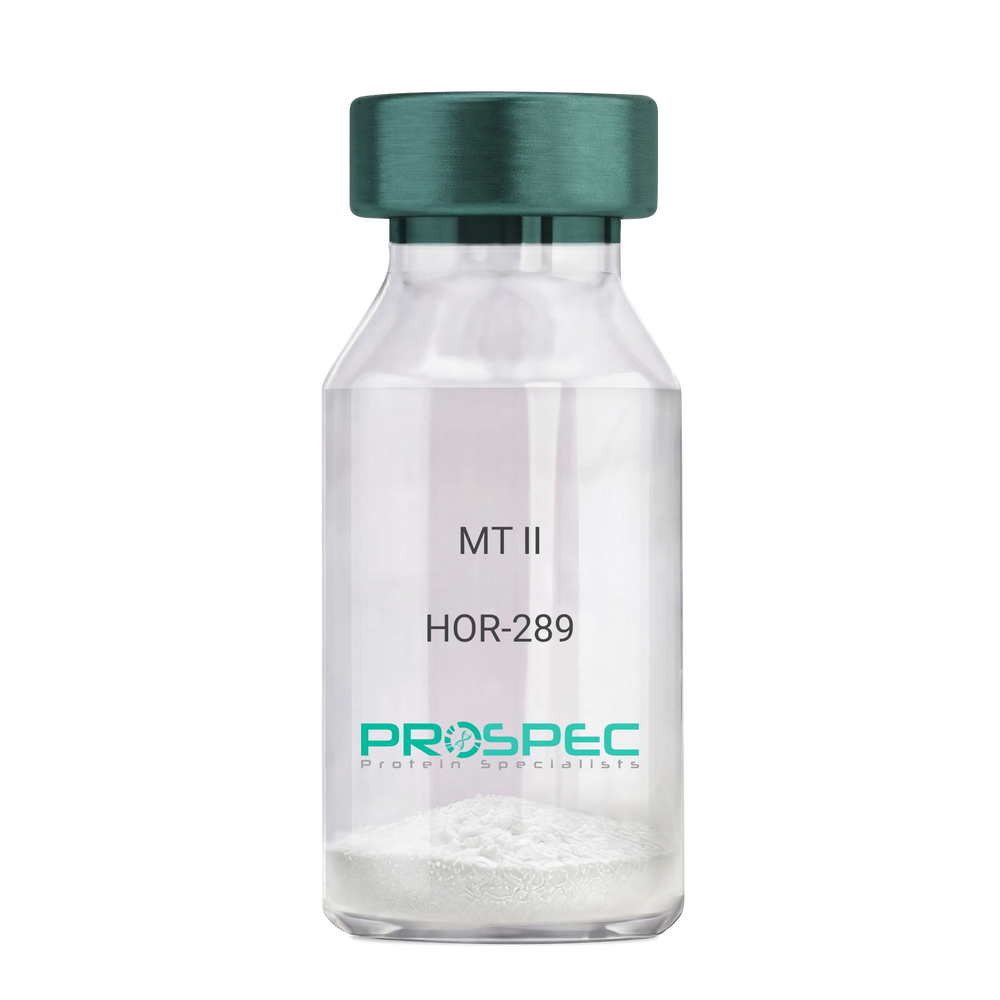
Name :
MT IIDescription:
Melanotan-II
Melanotan-II, MT-II, Melanotan.
Product # :
HOR-289Price :
Quantity :
Shipping Method :
Shipped at Room temp
More Info
- description
- formulation
- purity
- More Info
Description
The molecular formula of Melanotan-II is C50H69N15O9. It has the amino acid sequence of Ac-Nle-cyclo [Asp-His-D-Phe-Arg-Trp-Lys]-NH2 and a molecular weight of 1024.2 Dalton. The CAS Number is 121062-08-6.
Formulation
The protein (1mg/ml) was lyophilized with no additives.
Purity
Greater than 99% as determined by by RP-HPLC.
More Info
-
Introduction
Melanotan and Melanotan-II are both analogs of the peptide hormone alpha melanocyte stimulating hormone (a-MSH) that tend to induce skin tanning. Unlike Melanotan, Melanotan-II has the additional effect of increasing libido. Melanotan II has aphrodisiac properties.
-
Synonyms
Melanotan-II, MT-II, Melanotan.
-
Physical Appearance
Sterile Filtered White lyophilized (freeze-dried) powder.
-
Stability
Lyophilized Melanotan-II although stable at room temperature for 3 weeks, should be stored desiccated below -18°C. Upon reconstitution MT-II should be stored at 4°C between 2-7 days and for future use below -18°C.For long term storage it is recommended to add a carrier protein (0.1% HSA or BSA).Please prevent freeze-thaw cycles.
-
Solubility
It is recommended to reconstitute the lyophilized Melanotan-II in sterile 18MΩ-cm H2O not less than 100 µg/ml, which can then be further diluted to other aqueous solutions.
ProSpec's products are furnished for LABORATORY RESEARCH USE ONLY. The product may not be used as drugs, agricultural or pesticidal products, food additives or household chemicals.
- View Data Sheet
Name :
PPP1CC Human, ActiveDescription:
Protein Phosphatase 1, Catalytic Subunit Gamma Human Recombinant, Active
Protein phosphatase 1 catalytic subunit gamma isozyme/isoform, Protein phosphatase 1C catalytic subunit, serine/threonine phosphatase 1 gamma, serine/threonine-protein phosphatase PP1-gamma catalytic subunit, PP1gamma, PPP1G, EC 3.1.3.16.
Product # :
ENZ-1042Price :
Quantity :
Shipping Method :
Shipped with Ice Packs
More Info
- description
- source
- formulation
- purity
- biological activity
- More Info
Description
PPP1CC produced in E.Coli is a single, non-glycosylated polypeptide chain containing 343 amino acids (1-323a.a.) and having a molecular mass of 39.1kDa.PPP1CC is fused to a 20 amino acid His-tag at N-terminus & purified by proprietary chromatographic techniques.
Source
Escherichia Coli.
Formulation
The PPP1CC protein solution (0.25mg/ml) containing 20mM Tris-HCl buffer (pH8.0), 0.2M NaCl, 2mM DTT and 50% glycerol.
Purity
Greater than 85.0% as determined by SDS-PAGE.
Biological Activity
Specific activity is > 700 units/mg, and is defined as the amount of enzyme that hydrolyzes 1.0 nmole of p-nitrophenyl phosphate (pNPP) per minute at pH 7.5 at 37°C.
More Info
-
Introduction
PPP1CC is vital for cell division and takes part in the regulation of protein synthesis, muscle contractility and glycogen metabolism. Additionally, PPP1CC has a role in long-term synaptic plasticity and regulation of ionic conductance, and has a significant role in dephosphorylating substrates such as the postsynaptic density-associated Ca2+/calmodulin dependent protein kinase II.
-
Synonyms
Protein phosphatase 1 catalytic subunit gamma isozyme/isoform, Protein phosphatase 1C catalytic subunit, serine/threonine phosphatase 1 gamma, serine/threonine-protein phosphatase PP1-gamma catalytic subunit, PP1gamma, PPP1G, EC 3.1.3.16.
-
Physical Appearance
Sterile Filtered clear solution.
-
Stability
Store at 4°C if entire vial will be used within 2-4 weeks. Store, frozen at -20°C for longer periods of time. For long term storage it is recommended to add a carrier protein (0.1% HSA or BSA).Avoid multiple freeze-thaw cycles.
-
Amino Acid Sequence
MGSSHHHHHH SSGLVPRGSH MADLDKLNID SIIQRLLEVR GSKPGKNVQL QENEIRGLCL KSREIFLSQP ILLELEAPLK ICGDIHGQYY DLLRLFEYGG FPPESNYLFL GDYVDRGKQS LETICLLLAY KIKYPENFFL LRGNHECASI NRIYGFYDEC KRRYNIKLWK TFTDCFNCLP IAAIVDEKIF CCHGGLSPDL QSMEQIRRIM RPTDVPDQGL LCDLLWSDPD KDVLGWGEND RGVSFTFGAE VVAKFLHKHD LDLICRAHQV VEDGYEFFAK RQLVTLFSAP NYCGEFDNAG AMMSVDETLM CSFQILKPAE KKKPNATRPV TPPRGMITKQ AKK.
ProSpec's products are furnished for LABORATORY RESEARCH USE ONLY. The product may not be used as drugs, agricultural or pesticidal products, food additives or household chemicals.
- View Data Sheet
Name :
PTPN11 Human, ActiveDescription:
Protein Tyrosine Phosphatase Non Receptor Type-11 Human Recombinant, Active
PTPN11, Tyrosine-protein phosphatase non-receptor type 11, Protein-tyrosine phosphatase 1D, PTP-1D, Proteintyrosine phosphatase 2C, PTP-2C, SH-PTP2, SH-PTP3, BPTP3, CFC, JMML, METCDS, NS1, SHP-2, shp-2, PTP2C, SHPTP2.
Product # :
PKA-126Price :
Quantity :
Shipping Method :
Shipped with Ice Packs
More Info
- description
- source
- formulation
- purity
- biological activity
- More Info
Description
PTPN11 Human produced in Sf9 Insect cells is a single, glycosylated polypeptide chain containing 602 amino acids ( 1-593 a.a.) and having a molecular mass of 69.1 kDa.PTPN11 is expressed with a 9 amino acid His tag at C-Terminus and purified by proprietary chromatographic techniques.
Source
Sf9, Insect cells.
Formulation
PTPN11 protein solution (1mg/ml) contains Phosphate Buffered Saline (pH 7.4) and 10% glycerol.
Purity
Greater than 90.0% as determined by SDS-PAGE.
Biological Activity
Specific activity is grather than 400 unit/mg and is defined as the amount of enzyme that hydrolyze 1.0 nmole of pnitrophenyl phosphate (pNPP) per minute at pH 7.5 at 37C.
More Info
-
Introduction
Protein Tyrosine Phosphatase Non Receptor Type-11 or PTPN11 has 2 Src homology 2 domains and part of the tyrosine phosphatase group of proteins. PTPN11 is responsible for the catalyzation of tyrosine residues dephosphorylation in proteins and takes part in the stimulation and activation of Erk/MAP kinase transduction via signals from tyrosine kinase. Noonan syndrome and acute myeloid leukemia can be caused from mutations in PTPN11.
-
Synonyms
PTPN11, Tyrosine-protein phosphatase non-receptor type 11, Protein-tyrosine phosphatase 1D, PTP-1D, Proteintyrosine phosphatase 2C, PTP-2C, SH-PTP2, SH-PTP3, BPTP3, CFC, JMML, METCDS, NS1, SHP-2, shp-2, PTP2C, SHPTP2.
-
Physical Appearance
Sterile Filtered clear solution.
-
Stability
Store at 4°C if entire vial will be used within 2-4 weeks. Store, frozen at -20°C for longer periods of time. For long term storage it is recommended to add a carrier protein (0.1% HSA or BSA).Avoid multiple freeze-thaw cycles.
-
Amino Acid Sequence
ADPMTSRRWF HPNITGVEAE NLLLTRGVDG SFLARPSKSN PGDFTLSVRR NGAVTHIKIQ NTGDYYDLYG GEKFATLAEL VQYYMEHHGQ LKEKNGDVIE LKYPLNCADP TSERWFHGHL SGKEAEKLLT EKGKHGSFLV RESQSHPGDF VLSVRTGDDK GESNDGKSKV THVMIRCQEL KYDVGGGERF DSLTDLVEHY KKNPMVETLG TVLQLKQPLN TTRINAAEIE SRVRELSKLA ETTDKVKQGF WEEFETLQQQ ECKLLYSRKE GQRQENKNKN RYKNILPFDH TRVVLHDGDP NEPVSDYINA NIIMPEFETK CNNSKPKKSY IATQGCLQNT VNDFWRMVFQ ENSRVIVMTT KEVERGKSKC VKYWPDEYAL KEYGVMRVRN VKESAAHDYT LRELKLSKVG QGNTERTVWQ YHFRTWPDHG VPSDPGGVLD FLEEVHHKQE SIMDAGPVVV HCSAGIGRTG TFIVIDILID
IIREKGVDCD IDVPKTIQMV RSQRSGMVQT EAQYRFIYMA VQHYIETLQR RIEEEQKSKR KGHEYTNIKY SLADQTSGDQ SPLPPCTPTP PCAEMREDSA RVYENVGLMQ QQKSFRHHHH HH
ProSpec's products are furnished for LABORATORY RESEARCH USE ONLY. The product may not be used as drugs, agricultural or pesticidal products, food additives or household chemicals.
- View Data Sheet
Name :
IMP3 HumanDescription:
IMP3 Human Recombinant
BRMS2, C15orf12, MRPS4, U3 snoRNP protein IMP3.
Product # :
PRO-015Price :
Quantity :
Shipping Method :
Shipped with Ice Packs
More Info
- description
- source
- formulation
- purity
- More Info
Description
IMP3 Human Recombinant produced in E.Coli is a single, non-glycosylated polypeptide chain containing 207 amino acids (1-184 a.a) and having a molecular mass of 24kDa. IMP3 is fused to a 23 amino acid His-tag at N-terminus & purified by proprietary chromatographic techniques.
Source
E.coli.
Formulation
IMP3 protein solution (1mg/ml) containing 20mM Tris-HCl buffer (pH 8.0), 0.4M Urea and 10% glycerol.
Purity
Greater than 90% as determined by SDS-PAGE.
More Info
-
Introduction
IMP3 is the human homolog of the yeast Imp3 protein and Essential for the early cleavages during pre-18S ribosomal RNA processing. IMP3 is a Part of the 60-80S U3 small nucleolar ribonucleoprotein (U3 snoRNP). IMP3 is a member of to the ribosomal protein S4P family and localizes to the nucleoli and interacts with the U3 snoRNP complex. IMP3 contains an S4 domain. U3 small nucleolar ribonucleoprotein protein IMP3 is a protein which in humans is encoded by the IMP3 gene.
-
Synonyms
BRMS2, C15orf12, MRPS4, U3 snoRNP protein IMP3.
-
Physical Appearance
Sterile Filtered colorless solution.
-
Stability
Store at 4°C if entire vial will be used within 2-4 weeks. Store, frozen at -20°C for longer periods of time. For long term storage it is recommended to add a carrier protein (0.1% HSA or BSA).Avoid multiple freeze-thaw cycles.
-
Amino Acid Sequence
MGSSHHHHHH SSGLVPRGSH MGSMVRKLKF HEQKLLKQVD FLNWEVTDHN LHELRVLRRY RLQRREDYTR YNQLSRAVRE LARRLRDLPE RDQFRVRASA ALLDKLYALG LVPTRGSLEL CDFVTASSFC RRRLPTVLLK LRMAQHLQAA VAFVEQGHVR VGPDVVTDPA FLVTRSMEDF VTWVDSSKIK RHVLEYNEER DDFDLEA.
ProSpec's products are furnished for LABORATORY RESEARCH USE ONLY. The product may not be used as drugs, agricultural or pesticidal products, food additives or household chemicals.
- View Data Sheet
Name :
PIP ProteinDescription:
Prolactin-Induced Protein Human Recombinant
Prolactin-inducible protein, Gross cystic disease fluid protein 15, GCDFP-15, Prolactin-induced protein, Secretory actin-binding protein, SABP, gp17, GCDFP15, GPIP4, PIP.
Product # :
CYT-793Price :
Quantity :
Shipping Method :
Shipped with Ice Packs
More Info
- description
- source
- formulation
- purity
- More Info
Description
PIP Human Recombinant produced in E.Coli is a single, non-glycosylated polypeptide chain containing 141 amino acids (29-146 a.a.) and having a molecular mass of 15.9kDa.PIP is fused to a 23 amino acid His-tag at N-terminus & purified by proprietary chromatographic techniques.
Source
Escherichia Coli.
Formulation
PIP protein solution (1mg/ml) contains 20mM Tris-HCl buffer, (pH 8.0), 10% glycerol and 0.4M Urea.
Purity
Greater than 90% as determined by SDS-PAGE.
More Info
-
Introduction
Prolactin-inducible protein (PIP) is a main protein component of benign breast gross cysts. PIP is a famous indicator of breast cancer, since it is found in around 50% of all breast cancer specimens. PIP is expressed in exocrine glands, in pathologic conditions, in breast cysts and breast cancers exhibiting apocrine features. PIP and prostate specific antigen are co-expressed in androgen receptor-positive breast tumours.
-
Synonyms
Prolactin-inducible protein, Gross cystic disease fluid protein 15, GCDFP-15, Prolactin-induced protein, Secretory actin-binding protein, SABP, gp17, GCDFP15, GPIP4, PIP.
-
Physical Appearance
Sterile Filtered clear solution.
-
Stability
Store at 4°C if entire vial will be used within 2-4 weeks. Store, frozen at -20°C for longer periods of time. For long term storage it is recommended to add a carrier protein (0.1% HSA or BSA).Avoid multiple freeze-thaw cycles.
-
Amino Acid Sequence
MGSSHHHHHH SSGLVPRGSH MGSQDNTRKI IIKNFDIPKS VRPNDEVTAV LAVQTELKEC MVVKTYLISS IPLQGAFNYK YTACLCDDNP KTFYWDFYTN RTVQIAAVVD VIRELGICPD DAAVIPIKNN RFYTIEILKV E.
ProSpec's products are furnished for LABORATORY RESEARCH USE ONLY. The product may not be used as drugs, agricultural or pesticidal products, food additives or household chemicals.
- View Data Sheet
Name :
MANF MouseDescription:
Mesencephalic Astrocyte-Derived Neurotrophic Factor Mouse Recombinant
Mesencephalic astrocyte-derived neurotrophic factor, Arginine-rich protein, Protein ARMET, Manf, Armet.
Product # :
CYT-827Price :
Quantity :
Shipping Method :
Shipped at Room temp
More Info
- description
- source
- formulation
- purity
- biological activity
- More Info
Description
MANF Mouse Recombinant produced in E.Coli is a single, non-glycosylated, polypeptide chain containing 158 amino acids and having a molecular mass of 18.2kDa.
Source
Escherichia Coli.
Formulation
Lyophilized from a 0.2µm filtered concentrated solution in PBS, pH 7.4.
Purity
Greater than 98.0% as determined by:
(a) Analysis by RP-HPLC.
(b) Analysis by SDS-PAGE.Biological Activity
The ED50 as determined by a cell proliferation assay using rat C6 cells is less than 10µg/ml, corresponding to a specific activity of >100 IU/mg.More Info
-
Introduction
MANF is a 20kDa protein which belongs to the ARMET family. MANF was originally known as an arginine-rich region protein which was extremely mutated in a large number of tumors. MANF Expression is induced during ER stress, signifying that MANF takes part in protein quality control during ER stress.
-
Synonyms
Mesencephalic astrocyte-derived neurotrophic factor, Arginine-rich protein, Protein ARMET, Manf, Armet.
-
Physical Appearance
Sterile Filtered White lyophilized (freeze-dried) powder.
-
Stability
Lyophilized MANF although stable at room temperature for 3 weeks, should be stored desiccated below -18°C. Upon reconstitution MANF should be stored at 4°C between 2-7 days and for future use below -18°C.For long term storage it is recommended to add a carrier protein (0.1% HSA or BSA).Please prevent freeze-thaw cycles.
-
Solubility
It is recommended to reconstitute the lyophilized MANF in sterile 18M-cm H2O not less than 100µg/ml, which can then be further diluted to other aqueous solutions.
-
Amino Acid Sequence
LRPGDCEVCI SYLGRFYQDL KDRDVTFSPA TIEEELIKFC REARGKENRL CYYIGATDDA ATKIINEVSK PLAHHIPVEK ICEKLKKKDS QICELKYDNQ IDLSTVDLKK LRVKELKKIL DDWGEMCKGC AEKSDYIRKI NELMPKYAPK AASARTDL.
ProSpec's products are furnished for LABORATORY RESEARCH USE ONLY. The product may not be used as drugs, agricultural or pesticidal products, food additives or household chemicals.
- View Data Sheet
Name :
MAP E.coliDescription:
Methionine Aminopeptidase E.Coli Recombinant
Methionine aminopeptidase, MAP, Peptidase M, map, b0168, JW0163.
Product # :
ENZ-123Price :
Quantity :
Shipping Method :
Shipped with Ice Packs
More Info
- description
- source
- formulation
- purity
- More Info
Description
MAP produced in E.Coli is a single, non-glycosylated polypeptide chain containing 284 amino acids (1-264 a.a.) and having a molecular mass of 31.5kDa.MAP is fused to a 20 amino acid His-tag at N-terminus & purified by proprietary chromatographic techniques.
Source
Escherichia Coli.
Formulation
MAP protein solution (1mg/ml) 20mM Tris-HCl buffer (pH 8.0), 10% glycerol and 2mM DTT.
Purity
Greater than 90% as determined by SDS-PAGE.
More Info
-
Introduction
Methionine aminopeptidases and designated peptidase M proteins belong to the M24 family of proteins. MAP protein removes the amino-terminal methionine residue from nascent polypeptides. The active site of MAP contains 2 adjacent divalent metal ions connected by a water molecule or hydroxide ion.
-
Synonyms
Methionine aminopeptidase, MAP, Peptidase M, map, b0168, JW0163.
-
Physical Appearance
Sterile Filtered clear solution.
-
Stability
Store at 4°C if entire vial will be used within 2-4 weeks. Store, frozen at -20°C for longer periods of time. For long term storage it is recommended to add a carrier protein (0.1% HSA or BSA).Avoid multiple freeze-thaw cycles.
-
Amino Acid Sequence
MGSSHHHHHH SSGLVPRGSH MAISIKTPED IEKMRVAGRL AAEVLEMIEP YVKPGVSTGE LDRICNDYIV NEQHAVSACL GYHGYPKSVC ISINEVVCHG IPDDAKLLKD GDIVNIDVTV IKDGFHGDTS KMFIVGKPTI MGERLCRITQ ESLYLALRMV KPGINLREIG AAIQKFVEAE GFSVVREYCG HGIGRGFHEE PQVLHYDSRE TNVVLKPGMT FTIEPMVNAG KKEIRTMKDG WTVKTKDRSL SAQYEHTIVV TDNGCEILTL RKDDTIPAII SHDE.
ProSpec's products are furnished for LABORATORY RESEARCH USE ONLY. The product may not be used as drugs, agricultural or pesticidal products, food additives or household chemicals.
- View Data Sheet
Name :
MED20 HumanDescription:
Mediator Complex Subunit 20 Human Recombinant
Mediator of RNA polymerase II transcription subunit 20, Mediator complex subunit 20, TRF-proximal protein homolog, hTRFP, MED20, TRFP, PRO0213.
Product # :
PRO-1204Price :
Quantity :
Shipping Method :
Shipped with Ice Packs
More Info
- description
- source
- formulation
- purity
- More Info
Description
MED20 Human Recombinant produced in E.Coli is a single, non-glycosylated polypeptide chain containing 235 amino acids (1-212 a.a.) and having a molecular mass of 25.6kDa.MED20 is fused to a 23 amino acid His-tag at N-terminus & purified by proprietary chromatographic techniques.
Source
E.coli.
Formulation
MED20 protein solution (0.25mg/ml) containing 20mM Tris-HCl buffer (pH 8.5), 0.2M NaCl, 50% glycerol and 1mM DTT.
Purity
Greater than 90% as determined by SDS-PAGE.
More Info
-
Introduction
Mediator Complex Subunit 20 (MED20) is a subunit of the Mediator complex, which is a multiprotein coactivator of RNA transcription that interacts with DNA-bound transcriptional activators, RNA polymerase II, and general initiation factors. The Mediator functions as a link to transmit information from gene-specific regulatory proteins to the basal RNA polymerase II transcription apparatus. Mediator is recruited to promoters by direct interactions with regulatory proteins and functions as a scaffold for the compilation of a functional preinitiation complex with RNA polymerase II and the general transcription factors.
-
Synonyms
Mediator of RNA polymerase II transcription subunit 20, Mediator complex subunit 20, TRF-proximal protein homolog, hTRFP, MED20, TRFP, PRO0213.
-
Physical Appearance
Sterile Filtered colorless solution.
-
Stability
Store at 4°C if entire vial will be used within 2-4 weeks. Store, frozen at -20°C for longer periods of time. For long term storage it is recommended to add a carrier protein (0.1% HSA or BSA).Avoid multiple freeze-thaw cycles.
-
Amino Acid Sequence
MGSSHHHHHH SSGLVPRGSH MGSMGVTCVS QMPVAEGKSV QQTVELLTRK LEMLGAEKQG TFCVDCETYH TAASTLGSQG QTGKLMYVMH NSEYPLSCFA LFENGPCLIA DTNFDVLMVK LKGFFQSAKA SKIETRGTRY QYCDFLVKVG TVTMGPSARG ISVEVEYGPC VVASDCWSLL LEFLQSFLGS HTPGAPAVFG NRHDAVYGPA DTMVQYMELF NKIRKQQQVP VAGIR.
ProSpec's products are furnished for LABORATORY RESEARCH USE ONLY. The product may not be used as drugs, agricultural or pesticidal products, food additives or household chemicals.
- View Data Sheet
Name :
PNP HumanDescription:
Purine Nucleoside Phosphorylase Human Recombinant
Purine nucleoside phosphorylase, Inosine phosphorylase, NP, PUNP, PRO1837, FLJ94043, FLJ97288, FLJ97312, MGC117396, MGC125915, MGC125916, PNP.
Product # :
ENZ-025Price :
Quantity :
Shipping Method :
Shipped with Ice Packs
More Info
- description
- source
- formulation
- purity
- More Info
Description
PNP Human Recombinant fused with a 20 amino acid His tag at N-terminus produced in E.Coli is a single, non-glycosylated, polypeptide chain containing 309 amino acids (1-289 a.a.) and having a molecular mass of 34.2kDa. The PNP is purified by proprietary chromatographic techniques.
Source
Escherichia Coli.
Formulation
The PNP solution (1mg/ml) contains 20mM Tris-HCl buffer (pH8.0), 0.1M NaCl, 2mM DTT and 10% glycerol.
Purity
Greater than 90.0% as determined by SDS-PAGE.
More Info
-
Introduction
PNP is a member of the PNP/MTAP phosphorylase family of proteins. PNP catalyzes the reversible phosphorolysis of ribonucleosides and 2’-deoxyribonucleosides with specificity for guanine, hypoxanthine and their analogs. PNP deficiency is a rare autosomal recessive genetic disease linked to a severe defect in T-lymphocyte function and neurologic disorder in children, comprising four percent of combined immunodeficiency cases.
-
Synonyms
Purine nucleoside phosphorylase, Inosine phosphorylase, NP, PUNP, PRO1837, FLJ94043, FLJ97288, FLJ97312, MGC117396, MGC125915, MGC125916, PNP.
-
Physical Appearance
Sterile Filtered colorless solution.
-
Stability
Store at 4°C if entire vial will be used within 2-4 weeks. Store, frozen at -20°C for longer periods of time. For long term storage it is recommended to add a carrier protein (0.1% HSA or BSA).Avoid multiple freeze-thaw cycles.
-
Amino Acid Sequence
MGSSHHHHHH SSGLVPRGSH MENGYTYEDY KNTAEWLLSH TKHRPQVAII CGSGLGGLTD KLTQAQIFDY GEIPNFPRST VPGHAGRLVF GFLNGRACVM MQGRFHMYEG YPLWKVTFPV RVFHLLGVDT LVVTNAAGGL NPKFEVGDIM LIRDHINLPG FSGQNPLRGP NDERFGDRFP AMSDAYDRTM RQRALSTWKQ MGEQRELQEG TYVMVAGPSF ETVAECRVLQ KLGADAVGMS TVPEVIVARH CGLRVFGFSL ITNKVIMDYE SLEKANHEEV LAAGKQAAQK LEQFVSILMA SIPLPDKAS.
ProSpec's products are furnished for LABORATORY RESEARCH USE ONLY. The product may not be used as drugs, agricultural or pesticidal products, food additives or household chemicals.
- View Data Sheet
Name :
MYBPC3 HumanDescription:
Myosin Binding Protein C, Cardiac Human Recombinant
Myosin Binding Protein C Cardiac, C-Protein Cardiac Muscle Isoform, Myosin-Binding Protein C Cardiac, Cardiac MyBP-C, CMD1MM, LVNC10, MYBP-C, CMH4, FHC, MYBPC3.
Product # :
PRO-2292Price :
Quantity :
Shipping Method :
Shipped at Room temp
More Info
- description
- source
- formulation
- purity
- More Info
Description
MYBPC3 Human Recombinant produced in E.Coli is a single, non-glycosylated, polypeptide chain (Met1-Phe271) containing 281 amino acids including a 10 aa His tag at N-terminus. The total calculated molecular mass is 29.6kDa.
Source
Escherichia Coli.
Formulation
MYBPC3 was filtered (0.4µm) and lyophilized in 20mM Tris buffer and 50mM NaCl, pH 7.5.
Purity
Greater than 95.0% as determined by SDS-PAGE.
More Info
-
Introduction
Myosin Binding Protein C, Cardiac (MYBPC3) is the cardiac isoform of myosin-binding protein C expressed exclusively in heart muscle. Myosin-binding protein C is a myosin-associated protein found in the cross-bridge-bearing zone (C region) of A bands in striated muscle. Regulatory phosphorylation of the cardiac isoform in vivo by cAMP-dependent protein kinase upon adrenergic stimulation may be associated with modulation of cardiac contraction. MYBPC3 gene mutations are one of the causes of familial hypertrophic cardiomyopathy. In vitro MYBPC3 binds MHC, F-actin and native thin filaments, and modifies the activity of actin-activated myosin ATPase. MYBPC3 may modulate muscle contraction or it may have a more structural role.
-
Synonyms
Myosin Binding Protein C Cardiac, C-Protein Cardiac Muscle Isoform, Myosin-Binding Protein C Cardiac, Cardiac MyBP-C, CMD1MM, LVNC10, MYBP-C, CMH4, FHC, MYBPC3.
-
Physical Appearance
Filtered White lyophilized (freeze-dried) powder.
-
Stability
Store lyophilized protein at -20°C. Aliquot the product after reconstitution to avoid repeated freezing/thawing cycles. Reconstituted protein can be stored at 4°C for a limited period of time; it does not show any change after two weeks at 4°C.
-
Solubility
It is recommended to add deionized water to prepare a working stock solution of approximately 0.5mg/ml and let the lyophilized pellet dissolve completely. MYBPC3 is not sterile! Please filter the product by an appropriate sterile filter before using it in the cell culture.
-
Amino Acid Sequence
MKHHHHHHASMPEPGKKPVS AFSKKPRSVE VAAGSPAVFE AETERAGVKV RWQRGGSDIS ASNKYGLATE GTRHTLTVRE VGPADQGSYA VIAGSSKVKF DLKVIEAEKA EPMLAPAPAP AEATGAPGEA PAPAAELGES APSPKGSSSA ALNGPTPGAP DDPIGLFVMR PQDGEVTVGG SITFSARVAG ASLLKPPVVK WFKGKWVDLS SKVGQHLQLH DSYDRASKVY LFELHITDAQ PAFTGSYRCE VSTKDKFDCS NFNLTVHEAM GTGDLDLLSA F.
ProSpec's products are furnished for LABORATORY RESEARCH USE ONLY. The product may not be used as drugs, agricultural or pesticidal products, food additives or household chemicals.
- View Data Sheet
Description:
Myostatin Propeptide Human Recombinant, HEK
GDF-8, MSTN, Growth Differentiation Factor 8, MSTN Muscle Hypertrophy.
Product # :
CYT-936Price :
Quantity :
Shipping Method :
Shipped with Ice Packs
More Info
- description
- source
- formulation
- purity
- More Info
Description
Myostatin Propetide Human Recombinant produced in HEK cells is a single, glycosylated, polypeptide chain (Asn24-Arg266) containing a total of 253 amino acids, having a calculated molecular mass of 29.1kDa. Myostatin Propetide is fused to a 10 aa C-terminal His tag.
Source
HEK 293.
Formulation
Myostatin Propetide solution at a concentration of 0.25mg/ml in phosphate buffered saline (PBS) pH 8.0 and 20% (w/v) glycerol.
Purity
Greater than 80.0% as determined by SDS-PAGE.
More Info
-
Introduction
GDF8 is a member of the bone morphogenetic protein (BMP) family and the TGF-beta superfamily. This group of proteins is characterized by a polybasic proteolytic processing site which is cleaved to produce a mature protein containing seven conserved cysteine residues. The members of this family are regulators of cell growth and differentiation in both embryonic and adult tissues. This gene is thought to encode a secreted protein which negatively regulates skeletal muscle growth.
-
Synonyms
GDF-8, MSTN, Growth Differentiation Factor 8, MSTN Muscle Hypertrophy.
-
Physical Appearance
Filtered colorless solution.
-
Stability
Store at 4°C if entire vial will be used within 2-4 weeks. Store, frozen at -20°C for longer periods of time. For long term storage it is recommended to add a carrier protein (0.1% HSA or BSA).Avoid multiple freeze-thaw cycles.
-
Amino Acid Sequence
NENSEQKENV EKEGLCNACT WRQNTKSSRI EAIKIQILSK LRLETAPNIS KDVIRQLLPK APPLRELIDQ YDVQRDDSSD GSLEDDDYHA TTETIITMPT ESDFLMQVDG KPKCCFFKFS SKIQYNKVVK AQLWIYLRPV ETPTTVFVQI LRLIKPMKDG TRYTGIRSLK LDMNPGTGIW QSIDVKTVLQ NWLKQPESNL GIEIKALDEN GHDLAVTFPG PGEDGLNPFL EVKVTDTPKR SRR HHHHHHH HHH.
ProSpec's products are furnished for LABORATORY RESEARCH USE ONLY. The product may not be used as drugs, agricultural or pesticidal products, food additives or household chemicals.
- View Data Sheet
Name :
DUSP18 Human, ActiveDescription:
Dual Specificity Phosphatase 18 Human Recombinant, Active
Dual specificity protein phosphatase 18, Low molecular weight dual specificity phosphatase 20, LMW-DSP20, DUSP18, LMWDSP20, VHP, DUSP26.
Product # :
ENZ-1040Price :
Quantity :
Shipping Method :
Shipped with Ice Packs
More Info
- description
- source
- formulation
- purity
- biological activity
- More Info
Description
DUSP18 produced in E.Coli is a single, non-glycosylated polypeptide chain containing 212 amino acids (1-188a.a.) and having a molecular mass of 23.6kDa.DUSP18 is fused to a 24 amino acid His-tag at N-terminus & purified by proprietary chromatographic techniques.
Source
Escherichia Coli.
Formulation
The DUSP18 protein solution (0.5mg/ml) is formulated in 20mM Tris-HCl buffer (pH8.0), 0.1mM PMSF, 1mM DTT, 40% glycerol and 1mM EDTA.
Purity
Greater than 95.0% as determined by SDS-PAGE.
Biological Activity
Specific activity is > 300 units/mg, and is defined as the amount of enzyme that hydrolyze 1.0 nmole of p-nitrophenyl phosphate (pNPP) per minute at pH 7.5 at 37°C.
More Info
-
Introduction
Dual specificity phosphatase 18 (DUSP18) belongs to the dual-specificity phosphatase (DSP) family, which catalyzes dephosphorylation of phosphotyrosine and phosphothreonine residues. DUSP18 has a preferential enzymatic activity for phosphorylated tyrosine residues over threonine residues, in addition DUSP18 dephosphorylates p-nitrophenyl phosphate (pNPP) in vitro. Furthermore, DUSP18 is inhibited by iodoarectic acid and is activated by manganese ions. DUSP18 is extensively expressed with the highest levels in the liver, brain, ovary and testis.
-
Synonyms
Dual specificity protein phosphatase 18, Low molecular weight dual specificity phosphatase 20, LMW-DSP20, DUSP18, LMWDSP20, VHP, DUSP26.
-
Physical Appearance
Sterile Filtered clear solution.
-
Stability
Store at 4°C if entire vial will be used within 2-4 weeks. Store, frozen at -20°C for longer periods of time. For long term storage it is recommended to add a carrier protein (0.1% HSA or BSA).Avoid multiple freeze-thaw cycles.
-
Amino Acid Sequence
MGSSHHHHHH SSGLVPRGSH MGSHMTAPSC AFPVQFRQPS VSGLSQITKS LYISNGVAAN NKLMLSSNQI TMVINVSVEV VNTLYEDIQY MQVPVADSPN SRLCDFFDPI ADHIHSVEMK QGRTLLHCAA GVSRSAALCL AYLMKYHAMS LLDAHTWTKS CRPIIRPNSG FWEQLIHYEF QLFGKNTVHM VSSPVGMIPD IYEKEVRLMI PL
ProSpec's products are furnished for LABORATORY RESEARCH USE ONLY. The product may not be used as drugs, agricultural or pesticidal products, food additives or household chemicals.