Search results
1000 results found for “Neuregulin”
Name
Description
Product #
Price
Quantity
Shipping Method
- View Data Sheet
Name :
SCGB1A1 HumanDescription:
Uteroglobin Human Recombinant
Uteroglobin, Clara cell phospholipid-binding protein, CCPBP, Clara cells 10 kDa secretory protein, CC10, Secretoglobin family 1A member 1, Urinary protein 1, UP-1, UP1, Urine protein 1, SCGB1A1, CCSP, UGB, CC16.
Product # :
CYT-743Price :
Quantity :
Shipping Method :
Shipped at Room temp
More Info
- description
- source
- formulation
- purity
- biological activity
- More Info
Description
Uteroglobin Human Recombinant produced in E.coli is a single, non-glycosylated polypeptide chain containing 70 amino acids and having a molecular mass of 15.8kDa.The SCGB1A1 is purified by proprietary chromatographic techniques.
Source
Escherichia Coli.
Formulation
The Uteroglobin protein was lyophilized from a 0.2µm filtered concentrated solution in PBS, pH 7.4.
Purity
Greater than 98.0% as determined by:
(a) Analysis by RP-HPLC.
(b) Analysis by SDS-PAGE.Biological Activity
The ED50 as determined by the ability of the immobilized protein to support the adhesion of the A549 human lung carcinoma cells is less than 5.0µg/ml, corresponding to a specific activity of > 200 IU/mg.More Info
-
Introduction
Uteroglobin (SCGB1A1) which belongs to the Secretoglobin (SCGBs) superfamily, is a multifunctional protein that exerts anti-inflammatory and anti-tumorigenic effects by binding small hydrophobic molecules such as phospholipids and prostaglandins. Uteroglobin is involved in numerous functions including anti-inflammation, inhibition of phospholipase A2 and the sequestering of hydrophobic ligands. SCGB1A1 is expressed by Clara cells, the non-ciliated, non-mucous secretory cells predominant in lung bronchioles, and by other epithelia which communicate with the external environment. On top of sequestering pro-inflammatory mediators and carcinogens, Uteroglobin is implicated in the inhibition of cell migration and invasion, platelet aggregation, and T cell differentiation. SCGB1A1 gene defects are associated with a susceptibility to asthma.
-
Synonyms
Uteroglobin, Clara cell phospholipid-binding protein, CCPBP, Clara cells 10 kDa secretory protein, CC10, Secretoglobin family 1A member 1, Urinary protein 1, UP-1, UP1, Urine protein 1, SCGB1A1, CCSP, UGB, CC16.
-
Physical Appearance
Sterile Filtered White lyophilized (freeze-dried) powder.
-
Stability
Lyophilized Uteroglobin although stable at room temperature for 3 weeks, should be stored desiccated below -18°C. Upon reconstitution SCGB1A1 should be stored at 4°C between 2-7 days and for future use below -18°C. For long term storage it is recommended to add a carrier protein (0.1% HSA or BSA). Please prevent freeze-thaw cycles.
-
Solubility
It is recommended to reconstitute the lyophilized SCGB1A1 in sterile 18M-cm H2O not less than 100µg/ml, which can then be further diluted to other aqueous solutions.
-
Amino Acid Sequence
EICPSFQRVI ETLLMDTPSS YEAAMELFSP DQDMREAGAQ LKKLVDTLPQ KPRESIIKLM EKIAQSSLCN.
ProSpec's products are furnished for LABORATORY RESEARCH USE ONLY. The product may not be used as drugs, agricultural or pesticidal products, food additives or household chemicals.
- View Data Sheet
Name :
Stratifin HumanDescription:
Tyr-3/Trp- 5 Monooxygenase Activation Protein Sigma Human Recombinant
14-3-3 protein sigma, Epithelial cell marker protein 1, HME1, Stratifin, YWHAS, SFN, Stratifin.
Product # :
PKA-357Price :
Quantity :
Shipping Method :
Shipped with Ice Packs
More Info
- description
- source
- formulation
- purity
- More Info
Description
Stratifin Human Recombinant produced in E.Coli is a single, non-glycosylated, polypeptide chain containing 248 amino acids (1-248) and having a molecular mass of 27.7 kDa. Stratifin is purified by proprietary chromatographic techniques.
Source
Escherichia Coli.
Formulation
Stratifin solution containing 20mM Tris-HCl pH-8, 50mM NaCl and 10% Glycerol.
Purity
Greater than 95.0% as determined by SDS-PAGE.
More Info
-
Introduction
Stratifin is part of the 14-3-3 family. The 14-3-3 family of proteins plays an important regulatory function in signal transduction, checkpoint control, apoptotic and nutrient-sensing pathways. 14-3-3 proteins are highly conserved and ubiquitously expressed. There are 7 isoforms, beta, gamma, epsilon, sigma, zeta, tau and eta that have been identified in mammals. Stratifin is an epithelial cell marker that functions as a tumor suppressor whose expression can be down regulated via methylation. Failure of Stratifin expression results in a defective G2/M phase checkpoint and results in epithelial and non-epithelial tumorigenesis.
-
Synonyms
14-3-3 protein sigma, Epithelial cell marker protein 1, HME1, Stratifin, YWHAS, SFN, Stratifin.
-
Physical Appearance
Sterile filtered colorless solution.
-
Stability
Store at 4°C if entire vial will be used within 2-4 weeks. Store, frozen at -20°C for longer periods of time. For long term storage it is recommended to add a carrier protein (0.1% HSA or BSA).Avoid multiple freeze-thaw cycles.
-
Amino Acid Sequence
MERASLIQKA KLAEQAERYE DMAAFMKGAV EKGEELSCEE RNLLSVAYKN VVGGQRAAWR VLSSIEQKSN EEGSEEKGPE VREYREKVET ELQGVCDTVL GLLDSHLIKE AGDAESRVFY LKMKGDYYRY LAEVATGDDK KRIIDSARSA YQEAMDISKK EMPPTNPIRL GLALNFSVFH YEIANSPEEA ISLAKTTFDE AMADLHTLSE DSYKDSTLIM QLLRDNLTLW TADNAGEEGG EAPQEPQS.
ProSpec's products are furnished for LABORATORY RESEARCH USE ONLY. The product may not be used as drugs, agricultural or pesticidal products, food additives or household chemicals.
- View Data Sheet
Name :
E Selectin HumanDescription:
E-selectin Human Recombinant
E-selectin, Endothelial leukocyte adhesion molecule 1, ELAM-1, Leukocyte-endothelial cell adhesion molecule 2, LECAM2, CD62E antigen, SELE, ELAM1, ELAM, ESEL, CD62E.
Product # :
PRO-380Price :
Quantity :
Shipping Method :
Shipped with Ice Packs
More Info
- description
- source
- formulation
- purity
- More Info
Description
E-Selectin Human Recombinant is expressed in E. coli containing amino acids 179-557 fused to an amino terminal hexahistidine tag, having a total molecular weight of 45.22 kDa.
Source
Escherichia Coli.
Formulation
E-Selectin is supplied in 1x PBS and 50% Glycerol.
Purity
Greater than 95% as determined by SDS-PAGE.
Single band on Western Blot.More Info
-
Introduction
E-selectin which is also called Endothelial leukocyte adhesion molecule 1, ELAM1, ELAM belongs to a family of divalent cation-dependent carbohydrate-binding glycoproteins or adhesion molecules. Eselectin is expressed on the surface of endothelial cells and mediates the interaction of leukocytes and platelets with endothelial cells during an inflammatory response. E-selectin is present in single copy in the human genome and contains 14 exons spanning about 13 kb of DNA.
-
Synonyms
E-selectin, Endothelial leukocyte adhesion molecule 1, ELAM-1, Leukocyte-endothelial cell adhesion molecule 2, LECAM2, CD62E antigen, SELE, ELAM1, ELAM, ESEL, CD62E.
-
Physical Appearance
Sterile Filtered liquid formulation.
-
Stability
Store at 4°C if entire vial will be used within 1-2 weeks. Store, frozen at -20°C for longer periods of time. Avoid multiple freeze-thaw cycles.
ProSpec's products are furnished for LABORATORY RESEARCH USE ONLY. The product may not be used as drugs, agricultural or pesticidal products, food additives or household chemicals.
- View Data Sheet
Name :
ULBP2 HumanDescription:
UL16 Binding Protein 2 Human Recombinant
UL16 binding protein 2, retinoic acid early transcript 1 H, NKG2D ligand 2, Retinoic acid early transcript 1H, ALCAN-alpha, N2DL-2, RAET1H.
Product # :
PRO-1134Price :
Quantity :
Shipping Method :
Shipped with Ice Packs
More Info
- description
- source
- formulation
- purity
- More Info
Description
ULBP2 Human Recombinant produced in E. coli is a single polypeptide chain containing 216 amino acids (26-216) and having a molecular mass of 24.3 kDa.ULBP2 is fused to a 25 amino acid His-tag at N-terminus & purified by proprietary chromatographic techniques.
Source
E.coli.
Formulation
The ULBP2 solution (1mg/ml) contains 20mM Tris-HCl buffer (pH 8.0), 2M urea, 0.2M NaCl, 2mM DTT and 30% glycerol.
Purity
Greater than 85% as determined by SDS-PAGE.
More Info
-
Introduction
ULBP2 is a member of the MHC class I family. ULBP2 is ligand for the NKG2D receptor, composed with at least ULBP1 and ULBP3. ULBPs promote multiple signaling pathways in primary NK cells, triggering the production of cytokines and chemokines. Binding of ULBPs ligands to NKG2D encourages calcium mobilization and activation of the JAK2, STAT5, ERK and PI3K kinase/Akt signal transduction pathway. In CMV infected cells, ULBP2 cooperates with soluble CMV glycoprotein UL16. This cooperation is blocked with the NKG2D receptor, providing a mechanism in which CMV infected cells can escape the immune system. Additionally, UL16 causes ULBP2 to be held in the ER and cis-Golgi apparatus so that it does not reach the cell surface.
-
Synonyms
UL16 binding protein 2, retinoic acid early transcript 1 H, NKG2D ligand 2, Retinoic acid early transcript 1H, ALCAN-alpha, N2DL-2, RAET1H.
-
Physical Appearance
Sterile Filtered colorless solution.
-
Stability
Store at 4°C if entire vial will be used within 2-4 weeks. Store, frozen at -20°C for longer periods of time. For long term storage it is recommended to add a carrier protein (0.1% HSA or BSA).Avoid multiple freeze-thaw cycles.
-
Amino Acid Sequence
MGSSHHHHHH SSGLVPRGSH MGSHMGRADP HSLCYDITVI PKFRPGPRWC AVQGQVDEKT FLHYDCGNKT VTPVSPLGKK LNVTTAWKAQ NPVLREVVDI LTEQLRDIQL ENYTPKEPLT LQARMSCEQK AEGHSSGSWQ FSFDGQIFLL FDSEKRMWTT VHPGARKMKE KWENDKVVAM SFHYFSMGDC IGWLEDFLMG MDSTLEPSAG APLAMS
ProSpec's products are furnished for LABORATORY RESEARCH USE ONLY. The product may not be used as drugs, agricultural or pesticidal products, food additives or household chemicals.
- View Data Sheet
Name :
YWHAG HumanDescription:
Tyr-3/Trp-5 Monooxygenase Activation Protein Gamma Human Recombinant
14-3-3 protein gamma, Protein kinase C inhibitor protein 1, KCIP-1, YWHAG, Tyrosine 3-monooxygenase/tryptophan 5-monooxygenase activation protein, gamma polypeptide.
Product # :
PKA-238Price :
Quantity :
Shipping Method :
Shipped with Ice Packs
More Info
- description
- source
- formulation
- purity
- More Info
Description
YWHAG Human Recombinant produced in E.Coli is a single, non-glycosylated, polypeptide chain containing 247 amino acids (1-247) and having a molecular mass of 28 kDa. YWHAG is purified by proprietary chromatographic techniques.
Source
Escherichia Coli.
Formulation
YWHAG solution containing 20mM Tris 7.5.
Purity
Greater than 95.0% as determined by SDS-PAGE.
More Info
-
Introduction
The 14-3-3 family of proteins plays a key regulatory role in signal transduction, checkpoint control, apoptotic and nutrient-sensing pathways. 14-3-3 proteins are highly conserved and ubiquitously expressed. There are at least seven isoforms that have been identified in mammals. The 14-3-3gamma, a subtype of the 14-3-3 family of proteins, was thought to be brain and neuron-specific. It has been shown to interact with RAF1 and protein kinase C, proteins involved in various signal transduction pathways.
-
Synonyms
14-3-3 protein gamma, Protein kinase C inhibitor protein 1, KCIP-1, YWHAG, Tyrosine 3-monooxygenase/tryptophan 5-monooxygenase activation protein, gamma polypeptide.
-
Physical Appearance
Sterile filtered colorless solution.
-
Stability
Store at 4°C if entire vial will be used within 2-4 weeks. Store, frozen at -20°C for longer periods of time. For long term storage it is recommended to add a carrier protein (0.1% HSA or BSA).Avoid multiple freeze-thaw cycles.
-
Amino Acid Sequence
MVDREQLVQK ARLAEQAERY DDMAAAMKNV TELNEPLSNE ERNLLSVAYK NVVGARRSSW RVISSIEQKT SADGNEKKIE MVRAYREKIE KELEAVCQDV LSLLDNYLIK NCSETQYESK VFYLKMKGDY YRYLAEVATG EKRATVVESS EKAYSEAHEI SKEHMQPTHP IRLGLALNYS VFYYEIQNAP EQACHLAKTA FDDAIAELDT LNEDSYKDST LIMQLLRDNL TLWTSDQQDD DGGEGNN.
ProSpec's products are furnished for LABORATORY RESEARCH USE ONLY. The product may not be used as drugs, agricultural or pesticidal products, food additives or household chemicals.
- View Data Sheet
Name :
ANKRA2 HumanDescription:
Ankyrin Repeat Family A2 Human Recombinant
Ankyrin Repeat, Family A (RFXANK-Like), 2, ANKRA, RFXANK-Like Protein 2, Ankyrin Repeat Family A Protein 2, ANKRA2.
Product # :
PRO-2062Price :
Quantity :
Shipping Method :
Shipped with Ice Packs
More Info
- description
- source
- formulation
- purity
- More Info
Description
ANKRA2 Human Recombinant produced in E.Coli is a single, non-glycosylated polypeptide chain containing 336 amino acids (1-313a.a) and having a molecular mass of 36.7kDa. ANKRA2 is fused to a 23 amino acid His-tag at N-terminus & purified by proprietary chromatographic techniques.
Source
Escherichia Coli.
Formulation
ANKRA2 protein solution (0.25 mg/ml) containing 20mM Tris-HCl buffer (pH 8.0), 0.1M NaCl, 10% glycerol and 1mM DTT.
Purity
Greater than 85.0% as determined by SDS-PAGE.
More Info
-
Introduction
Ankyrin Repeat Family A2, also known as ANKRA2 contains 5 ANK repeats. ANKRA2 assist endocytosis by linking megalin to components of the cytoskeleton or endocytic machinery.
-
Synonyms
Ankyrin Repeat, Family A (RFXANK-Like), 2, ANKRA, RFXANK-Like Protein 2, Ankyrin Repeat Family A Protein 2, ANKRA2.
-
Physical Appearance
Sterile Filtered clear solution.
-
Stability
Store at 4°C if entire vial will be used within 2-4 weeks. Store, frozen at -20°C for longer periods of time. For long term storage it is recommended to add a carrier protein (0.1% HSA or BSA).Avoid multiple freeze-thaw cycles.
-
Amino Acid Sequence
MGSSHHHHHH SSGLVPRGSH MGSMDTSTNL DIGAQLIVEE CPSTYSLTGM PDIKIEHPLD PNSEEGSAQG VAMGMKFILP NRFDMNVCSR FVKSLNEEDS KNIQDQVNSD LEVASVLFKA ECNIHTSPSP GIQVRHVYTP STTKHFSPIK QSTTLTNKHR GNEVSTTPLL ANSLSVHQLA AQGEMLYLAT RIEQENVINH TDEEGFTPLM WAAAHGQIAV VEFLLQNGAD PQLLGKGRES ALSLACSKGY TDIVKMLLDC GVDVNEYDWN GGTPLLYAVH GNHVKCVKML LESGADPTIE TDSGYNSMDL AVALGYRSVQ QVIESHLLKL LQNIKE.
ProSpec's products are furnished for LABORATORY RESEARCH USE ONLY. The product may not be used as drugs, agricultural or pesticidal products, food additives or household chemicals.
- View Data Sheet
Name :
EGFR AntibodyDescription:
Epidermal Growth Factor Receptor, Mouse Anti Human
Epidermal growth factor receptor, EC 2.7.10.1, Receptor tyrosine-protein kinase ErbB-1, ERBB, mENA, ERBB1, EGFR.
Product # :
ANT-042Price :
Quantity :
Shipping Method :
Shipped with Ice Packs
More Info
- formulation
- More Info
Formulation
1mg/ml containing PBS, pH-7.4, & 0.1% Sodium Azide.
More Info
-
Introduction
The epidermal growth factor receptor (EGF R) subfamily of receptor tyrosine kinases comprises four members: EGF R (also known as HER1, ErbB1 or ErbB), ErbB2 (Neu, HER-2), ErbB3 (HER-3), and ErbB4 (HER-4). All family members are type I transmembrane glycoprotein that has an extracellular domain which contains two cysteine-rich domains separated by a spacer region that is involved in ligand-binding, and a cytoplasmic domain which has a membrane-proximal tyrosine kinase domain and a C-terminal tail with multiple tyrosine autophosphorylation sites. The human EGF R gene encodes a 1210 amino acid (aa) residue precursor with a 24 aa putative signal peptide, a 621 aa extracellular domain, a 23 aa transmembrane domain, and a 542 aa cytoplasmic domain. EGF R has been shown to bind a subset of the EGF family ligands, including EGF, amphiregulin, TGF-a , betacellulin, epiregulin, heparin-binding EGF and neuregulin-2 in the absence of a co-receptor. Ligand binding induces EGF R homodimerization as well as heterdimerization with ErbB2, resulting in kinase activation, tyrosine phosphorylation and cell signaling. EGF R can also be recruited to form heterodimers with the ligand-activated ErbB3 or ErbB4. EGF R signaling has been shown to regulate multiple biological functions including cell proliferation, differentiation, motility and apoptosis. In addition, EGF R signaling has also been shown to play a role in carcinogenesis.
-
Synonyms
Epidermal growth factor receptor, EC 2.7.10.1, Receptor tyrosine-protein kinase ErbB-1, ERBB, mENA, ERBB1, EGFR.
-
Physical Appearance
Sterile filtered colorless solution.
-
Immunogen
Anti-human EGFR mAb, is derived from hybridization of mouse FO myeloma cells with spleen cells from BALB/c mice immunized with recombinant human EGFR amino acids 424-605 purified from E. coli.
-
Ig Subclass
Mouse IgG2b heavy chain and k light chain.
-
Clone
PAT6E3AT.
-
Applications
EGFR antibody has been tested by ELISA, Western blot analysis to assure specificity and reactivity. Since application varies, however, each investigation should be titrated by the reagent to obtain optimal results. Recommended dilution range for Western blot analysis is 1:500 ~ 1000.
Recommended starting dilution is 1:500. -
Type
Mouse Anti Human Monoclonal.
-
Storage Procedures
For periods up to 1 month store at 4°C, for longer periods of time, store at -20°C. Prevent freeze thaw cycles.
-
Purification Method
EGFR antibody was purified from mouse ascitic fluids by protein-G affinity chromatography.
ProSpec's products are furnished for LABORATORY RESEARCH USE ONLY. The product may not be used as drugs, agricultural or pesticidal products, food additives or household chemicals.
- View Data Sheet
Name :
VEGFR2 Human, HisDescription:
Vascular Endothelial Growth Factor receptor-2 Human Recombinant, His Tag
KDR D1-7, sKDR D1-7, Kinase insert domain receptor, Protein-tyrosine kinase receptor Flk-1, CD309, type III receptor tyrosine kinase, FLK1, VEGFR-2.
Product # :
PKA-099Price :
Quantity :
Shipping Method :
Shipped with Ice Packs
More Info
- description
- source
- formulation
- purity
- More Info
Description
VEGFR2 Human Recombinant produced in Sf9 Baculovirus cells is a single, glycosylated polypeptide chain containing 987 amino acids (20-764a.a) and having a molecular mass of 110.5kDa (Molecular size on SDS-PAGE will appear at approximately 100-150kDa). VEGFR2 is fused to a 239 amino acids hIgG-His-tag at C-terminus & purified by proprietary chromatographic techniques.
Source
Sf9, Baculovirus cells.
Formulation
VEGFR2 solution (0.5mg/ml) contains Phosphate Buffered Saline (pH 7.4) and 10% glycerol.
Purity
Greater than 90% as determined by SDS-PAGE.
More Info
-
Introduction
Endothelial cells express three different vascular endothelial growth factor (VEGF) receptors, belonging to the family of receptor tyrosine kinases (RTKs). They are named VEGFR-1 (Flt-1), VEGFR-2 (KDR/Flk-1), VEGFR-3 (Flt-4). Their expression is almost exclusively restricted to endothelial cells, but VEGFR-1 can also be found on monocytes. All VEGF-receptors have seven immunoglobulin-like extracellular domains, a single transmembrane region and an intracellular split tyrosine kinase domain. VEGFR-2 has a lower affinity for VEGF than the Flt-1 receptor, but a higher signaling activity. Mitogenic activity in endothelial cells is mainly mediated by VEGFR-2 leading to their proliferation.
Differential splicing of the flt-1 gene leads to the formation of a secreted, soluble variant of VEGFR-1 (sVEGFR-1). No naturally occuring, secreted forms of VEGFR-2 have so far been reported. The binding of VEGF165 to VEGFR-2 is dependent on heparin. -
Synonyms
KDR D1-7, sKDR D1-7, Kinase insert domain receptor, Protein-tyrosine kinase receptor Flk-1, CD309, type III receptor tyrosine kinase, FLK1, VEGFR-2.
-
Physical Appearance
Sterile Filtered colorless solution.
-
Stability
Store at 4°C if entire vial will be used within 2-4 weeks. Store, frozen at -20°C for longer periods of time. For long term storage it is recommended to add a carrier protein (0.1% HSA or BSA).Avoid multiple freeze-thaw cycles.
-
Amino Acid Sequence
ADPASVGLPS VSLDLPRLSI QKDILTIKAN TTLQITCRGQ RDLDWLWPNN QSGSEQRVEV TECSDGLFCK TLTIPKVIGN DTGAYKCFYR ETDLASVIYV YVQDYRSPFI ASVSDQHGVV YITENKNKTV VIPCLGSISN LNVSLCARYP EKRFVPDGNR ISWDSKKGFT IPSYMISYAG MVFCEAKIND ESYQSIMYIV VVVGYRIYDV VLSPSHGIEL SVGEKLVLNC TARTELNVGI DFNWEYPSSK HQHKKLVNRD LKTQSGSEMK KFLSTLTIDG VTRSDQGLYT CAASSGLMTK KNSTFVRVHE KPFVAFGSGM ESLVEATVGE RVRIPAKYLG YPPPEIKWYK NGIPLESNHT IKAGHVLTIM EVSERDTGNY TVILTNPISK EKQSHVVSLV VYVPPQIGEK SLISPVDSYQ YGTTQTLTCT VYAIPPPHHI HWYWQLEEEC ANEPSQAVSV TNPYPCEEWR SVEDFQGGNK IEVNKNQFAL IEGKNKTVST LVIQAANVSA LYKCEAVNKV GRGERVISFH VTRGPEITLQ PDMQPTEQES VSLWCTADRS TFENLTWYKL GPQPLPIHVG ELPTPVCKNL DTLWKLNATM FSNSTNDILI MELKNASLQD QGDYVCLAQD RKTKKRHCVV RQLTVLERVA PTITGNLENQ TTSIGESIEV SCTASGNPPP QIMWFKDNET LVEDSGIVLK DGNRNLTIRR VRKEDEGLYT CQACSVLGCA KVEAFFIIEG AQEKTNLELE PKSCDKTHTC PPCPAPELLG GPSVFLFPPK PKDTLMISRT PEVTCVVVDV SHEDPEVKFN WYVDGVEVHN AKTKPREEQY NSTYRVVSVL TVLHQDWLNG KEYKCKVSNK ALPAPIEKTI SKAKGQPREP QVYTLPPSRD ELTKNQVSLT CLVKGFYPSD IAVEWESNGQ PENNYKTTPP VLDSDGSFFL YSKLTVDKSR WQQGNVFSCS VMHEALHNHY TQKSLSLSPG KHHHHHH.
ProSpec's products are furnished for LABORATORY RESEARCH USE ONLY. The product may not be used as drugs, agricultural or pesticidal products, food additives or household chemicals.
- View Data Sheet
Name :
sRANKL HumanDescription:
RANK Ligand Soluble Human Recombinant
Soluble Receptor Activator of NFkB Ligand, TNFSF11, TRANCE, TNF-related activation-induced cytokine, OPGL, ODF, Osteoclast differentiation factor, Tumor necrosis factor ligand superfamily member 11, Receptor activator of nuclear factor kappa B ligand, RANKL, Osteoprotegerin ligand, CD254 antigen, sRANKL, sOdf, hRANKL2.
Product # :
CYT-334Price :
Quantity :
Shipping Method :
Shipped at Room temp
More Info
- description
- source
- formulation
- purity
- biological activity
- More Info
- HPLC, SDS-PAGE
Description
sRANKL Human Recombinant produced in E.Coli is a single, non-glycosylated polypeptide chain containing 175 amino acids and having a molecular mass of 19.7kDa.
Source
Escherichia Coli.
Formulation
The protein was lyophilized from a concentrated (1mg/ml) solution containing 10mM Sodium phosphate, pH-7.5.
Purity
Greater than 95.0% as determined by analysis by SDS-PAGE.
Biological Activity
The activity of RAW-Blue was measured to be 46.96 ng/ml, corresponding to a specific activity of 2.1x10⁴ units/mg.
HPLC, SDS-PAGE
More Info
-
Introduction
RANKL binds to tnfrsf11b/opg and to tnfrsf11a/rank. Osteoclast differentiation and activation factor. Augments the ability of dendritic cells to stimulate naive t-cell proliferation. May be an important regulator of interactions between t-cells and dendritic cells and may play a role in the regulation of the t-cell-dependent immune response. sRANKL may also play an important role in enhanced bone-resorption in humoral hypercalcemia of malignancy.
-
Synonyms
Soluble Receptor Activator of NFkB Ligand, TNFSF11, TRANCE, TNF-related activation-induced cytokine, OPGL, ODF, Osteoclast differentiation factor, Tumor necrosis factor ligand superfamily member 11, Receptor activator of nuclear factor kappa B ligand, RANKL, Osteoprotegerin ligand, CD254 antigen, sRANKL, sOdf, hRANKL2.
-
Physical Appearance
Sterile Filtered White lyophilized (freeze-dried) powder.
-
Stability
Lyophilized TNFSF11 although stable at room temperature for 3 weeks, should be stored desiccated below -18°C. Upon reconstitution sRANKL should be stored at 4°C between 2-7 days and for future use below -18°C.For long term storage it is recommended to add a carrier protein (0.1% HSA or BSA).Please prevent freeze-thaw cycles.
-
Solubility
It is recommended to reconstitute the lyophilized sRANKL in sterile 18MΩ-cm H2O at a concentration of 100µg/ml, which can then be further diluted to other aqueous solutions.
-
Amino Acid Sequence
EKAMVDGSW LDLAKRSKLE AQPFAHLTIN ATDIPSGSHK VSLSSWYHDR GWAKISNMTF SNGKLIVNQD GFYYLYANIC FRHHETSGDL ATEYLQLMVY VTKTSIKIPS SHTLMKGGST KYWSGNSEFH FYSINVGGFF KLRSGEEISI EVSNPSLLDP DQDATYFGAF KVRDID.
ProSpec's products are furnished for LABORATORY RESEARCH USE ONLY. The product may not be used as drugs, agricultural or pesticidal products, food additives or household chemicals.
- View Data Sheet
Name :
MIF Human His NDescription:
Macrophage Migration Inhibitory Factor Human, Recombinant His Tag N-Terminus
Phenylpyruvate tautomerase, Glycosylation-inhibiting factor, GIF, MMIF, MIF.
Product # :
CYT-431Price :
Quantity :
Shipping Method :
Shipped with Ice Packs
More Info
- description
- source
- formulation
- purity
- More Info
Description
MIF human Recombinant, fused to 40 a.a. His-tag at N-terminus, was cloned into an E. coli expression vector and was purified to apparent homogeneity by using conventional column chromatography techniques. Macrophage Inducing Factor Human Recombinant ( 1-115 a.a. ) is a single, non-glycosylated, polypeptide chain having a total amino acids of 155 and molecular mass of 17kDa.
Source
Escherichia Coli.
Formulation
1mg/ml solution containing PBS pH-7.4.
Purity
Greater than 95.0% as determined by:
(a) Analysis by RP-HPLC.
(b) Analysis by SDS-PAGE.More Info
-
Introduction
The cytokine Macrophage migration inhibitory factor (MIF) has been identified to be secreted by the pituitary gland and the monocyte/macrophage and to play an important role in endotoxic shock. MIF has the unique property of being released from macrophages and T cells in response to physiological concentrations of glucocorticoids. The secretion of MIF is tightly regulated and decreases at high, anti-inflammatory steroid concentration.
-
Synonyms
Phenylpyruvate tautomerase, Glycosylation-inhibiting factor, GIF, MMIF, MIF.
-
Physical Appearance
Sterile filtered colorless solution.
-
Stability
Liquid MIF although stable 4°C for 1 week, should be stored below -18°C. Please prevent freeze-thaw cycles.
-
Amino Acid Sequence
MRGSHHHHHHGMASMTGGQQMGRDLYDDDDKDRWGSMPMFIVNTNV PRASVPDGFL SELTQQLAQA TGKPPQYIAV HVVPDQLMAF GGSSEPCALC LHSIGKIGGA QNRSYSKLLC GLLAERLRIS PDRVYINYYD MNAANVGWNN STFA.
ProSpec's products are furnished for LABORATORY RESEARCH USE ONLY. The product may not be used as drugs, agricultural or pesticidal products, food additives or household chemicals.
- View Data Sheet
Name :
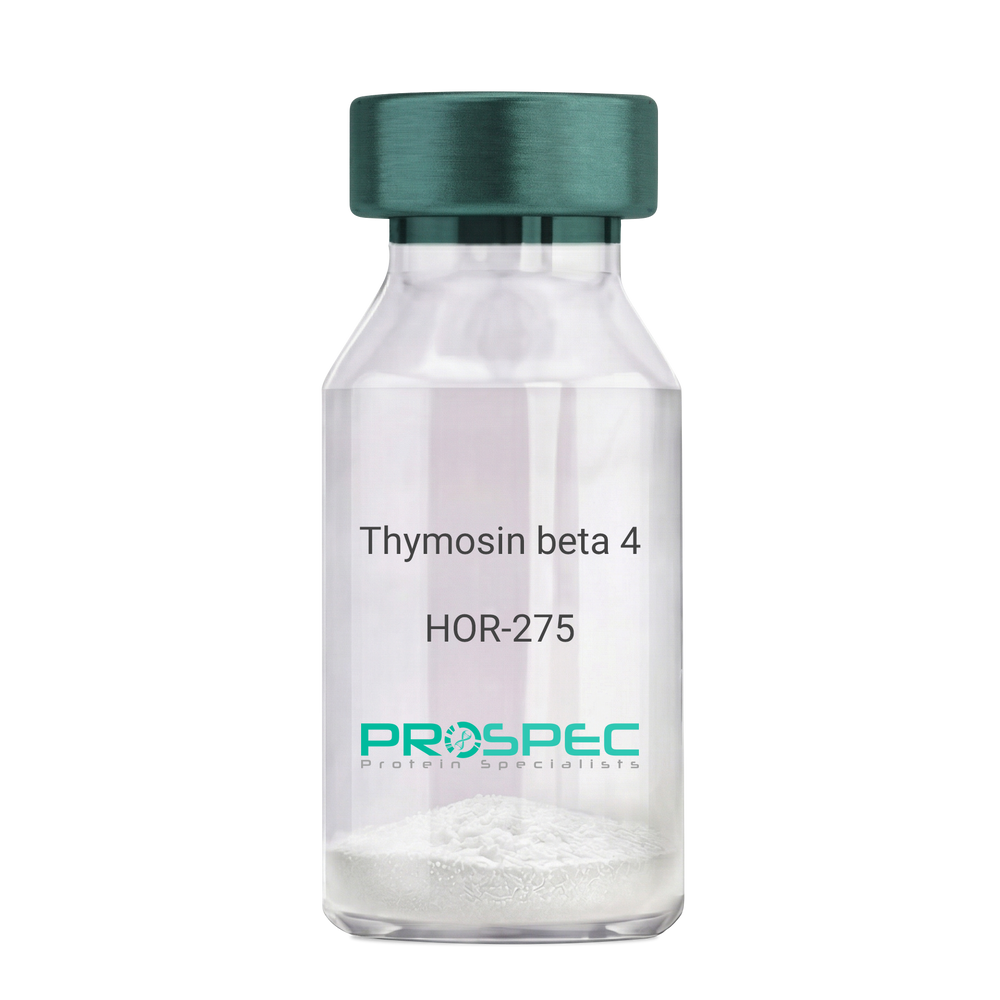
Thymosin beta 4Description:
Thymosin β4
Thymosin beta-4. TB500, TB-500
Product # :
HOR-275Price :
Quantity :
Shipping Method :
Shipped at Room temp
More Info
- description
- formulation
- purity
- More Info
Description
Thymosin b4 is a 43 amino acid peptide which is regarded as the main intracellular G-actin sequestering peptide. It has a molecular weight of 4963.55 Da, and its molecular formula is: C212H350N56O78S1. Extracellular Thymosin b4 may contribute to physiological processes such as angiogenesis, wound healing, and regulation of inflammation.
Formulation
The protein (1mg/ml) was lyophilized with no additives.
Purity
Greater than 98.0% as determined by RP-HPLC.
More Info
-
Introduction
Thymosin is a hormone secreted from the thymus. Its primary function is to stimulate the production of T cells, which are an important part of the immune system. Thymosin also assists in the development of B cells to plasma cells to produce antibodies. The predominant form of thymosin, thymosin b4, is a member of a highly conserved family of actin monomer-sequestering proteins. b-thymosins are the primary regulators of unpolymerized actin, and are essential for maintaining the small cytoplasmic pool of free G-actin monomers required for rapid filament elongation and allowing for the flux of monomers between the thymosin-bound pool and F-actin.
-
Synonyms
Thymosin beta-4. TB500, TB-500
-
Physical Appearance
Sterile Filtered White lyophilized (freeze-dried) powder.
-
Stability
Lyophilized Thymosin b4 although stable at room temperature for 3 weeks, should be stored desiccated below -18°C. Upon reconstitution T beta 4 should be stored at 4°C between 2-7 days and for future use below -18°C.For long term storage it is recommended to add a carrier protein (0.1% HSA or BSA).Please prevent freeze-thaw cycles.
-
Solubility
It is recommended to reconstitute the lyophilized Thymosin beta-4 in sterile 18MΩ-cm H2O not less than 100 µg/ml, which can then be further diluted to other aqueous solutions.
-
Amino Acid Sequence
Thymosin b4 has an a.a. sequence of Ac-Ser-Asp-Lys-Pro-Asp-Met-Ala-Glu-Ile-Glu-Lys-Phe-Asp-Lys-Ser-Lys-Leu-Lys-Lys-Thr-Glu-Thr-Gln-Glu-Lys-Asn-Pro-Leu-Pro-Ser-Lys-Glu-Thr-Ile-Glu-Gln-Glu-Lys-Gln-Ala-Gly-Glu-Ser-OH.
ProSpec's products are furnished for LABORATORY RESEARCH USE ONLY. The product may not be used as drugs, agricultural or pesticidal products, food additives or household chemicals.
- View Data Sheet
Name :
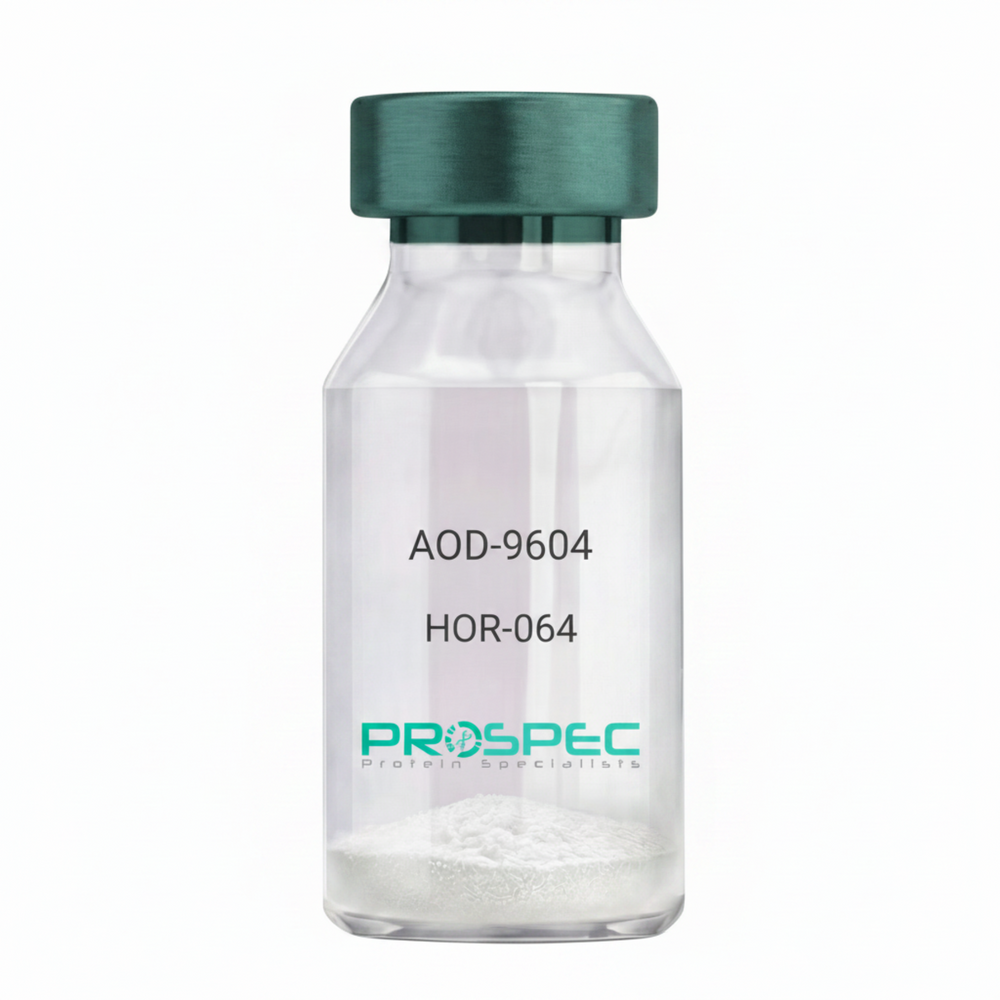
AOD-9604Description:
AOD-9604
Product # :
HOR-064Price :
Quantity :
Shipping Method :
Shipped at Room temp
More Info
- description
- formulation
- purity
- More Info
Description
AOD-9604 is a synthetic single, non-glycosylated polypeptide chain containing 16 amino acids, having a molecular mass of 1815 Dalton and a Molecular formula of C78H123N23O23 S2.
Formulation
The protein was lyophilized with no additives.
Purity
Greater than 97.0% as determined by analysis by RP-HPLC.
More Info
-
Physical Appearance
Sterile Filtered White lyophilized (freeze-dried) powder.
-
Stability
Lyophilized AOD-9604 although stable at room temperature for 3 weeks, should be stored desiccated below -18°C. Upon reconstitution AOD-9604 should be stored at 4°C between 2-7 days and for future use below -18°C.
For long term storage it is recommended to add a carrier protein (0.1% HSA or BSA).
Please prevent freeze-thaw cycles.
-
Solubility
It is recommended to reconstitute the lyophilized AOD-9604 in sterile 18MΩ-cm H2O not less than 100 µg/ml, which can then be further diluted to other aqueous solutions.
-
Amino Acid Sequence
H-Tyr-Leu-Arg-Ile-Val-Gln-Cys-Arg-SerVal-Glu-Gly-Ser-Cys-Gly-Phe-OH (Disulfide bond).
-
Background
AOD-9604 is a synthetic analog of the C-terminal fragment (177–191) AOD-9604 stimulates lipolysis (fat breakdown) without the unwanted growth-promoting or insulin-antagonizing effects of full-length hGH. AOD-9604 is a potent lipolytic tool in animal models and researchers focus on its regenerative properties in joint health and its ability to modulate beta3 adrenergic receptors without the systemic risks of growth hormone.
ProSpec's products are furnished for LABORATORY RESEARCH USE ONLY. The product may not be used as drugs, agricultural or pesticidal products, food additives or household chemicals.
- View Data Sheet
Name :
PSMD10 AntibodyDescription:
Gankyrin, Mouse Anti Human
26S proteasome non-ATPase regulatory subunit 10, 26S proteasome regulatory subunit p28, Gankyrin, PSMD10, p28, dJ889N15.2.
Product # :
ANT-609Price :
Quantity :
Shipping Method :
Shipped with Ice Packs
More Info
- formulation
- More Info
Formulation
1mg/ml containing PBS, pH-7.4, 10% Glycerol and 0.02% Sodium Azide.
More Info
-
Introduction
Gankyrin (proteasome 26S subunit) is a multicatalytic proteinase oncoprotein commonly overexpressed in most hepatocellular carcinomas. Proteasomes are found throughout eukaryotic cells at a high concentrations and cleave peptides in an ATP/ubiquitin-dependent process in a non-lysosomal pathway. Gankyrin interacts with S6 ATPase of the 19S regulatory particle of the 26S proteasome. Gankyrin is involved in theregulation of the phosphorylation of the retinoblastoma protein by CDK4, and to enhance the ubiquitinylation of p53 by MDM2. Gankyrin consists of 7 ankyrin repeats and is structurally similar to I kappa Bs. Gankyrin acts as a regulatory subunit of the 26s proteasome which is involved in the atp-dependent degradation of ubiquitinated proteins. Gankyrin is involved in progression of esophageal squamous cell carcinoma. gankyrin plays an oncogenic role especially in early stages of human epatocarcinogenesis. Gankyrin binds to NF-kappaB and suppresses its activity at the transcription level by modulating acetylation through SIRT1. Structural comparison between Gankyrin & p16(INK4A) identified numerous residues of gankyrin that are potentially important for CDK4 binding.
-
Synonyms
26S proteasome non-ATPase regulatory subunit 10, 26S proteasome regulatory subunit p28, Gankyrin, PSMD10, p28, dJ889N15.2.
-
Physical Appearance
Sterile filtered colorless solution.
-
Immunogen
Anti-human PSMD10 mAb, is derived from hybridization of mouse F0 myeloma cells with spleen cells from BALB/c mice immunized with a recombinant human PSMD10 protein 1-226 amino acids purified from E.coli.
-
Ig Subclass
Mouse IgG1 heavy chain and k light chain.
-
Clone
PAT1F4AT.
-
Applications
PSMD10 antibody has been tested by ELISA, Western blot analysis, Flow cytometry and ICC/IF to assure specificity and reactivity. Since application varies, however, each investigation should be titrated by the reagent to obtain optimal results.
-
Type
Mouse Anti Human Monoclonal.
-
Storage Procedures
For periods up to 1 month store at 4°C, for longer periods of time, store at -20°C. Prevent freeze thaw cycles.
-
Purification Method
PSMD10 antibody was purified from mouse ascitic fluids by protein-A affinity chromatography.
ProSpec's products are furnished for LABORATORY RESEARCH USE ONLY. The product may not be used as drugs, agricultural or pesticidal products, food additives or household chemicals.
- View Data Sheet
Name :
FCGR2A HumanDescription:
CD32a Human Recombinant
CD32, CD32A, CDw32, FcGR, IGFR2, MGC23887, MGC30032, Low affinity immunoglobulin gamma Fc region receptor II-a, IgG Fc receptor II-a, Fc-gamma-RIIa, FcRII-a, FCG2, FCGR2A1.
Product # :
PRO-029Price :
Quantity :
Shipping Method :
Shipped with Ice Packs
More Info
- description
- source
- formulation
- purity
- More Info
Description
FCGR2A Human Recombinant produced in E.Coli is a single, non-glycosylated polypeptide chain containing 208 amino acids (34-216 a.a) and having a molecular mass of 23.0kDa. FCGR2A is fused to a 25 amino acid His-tag at N-terminus & purified by proprietary chromatographic techniques.
Source
E.coli.
Formulation
FCGR2A protein solution (0.25mg/ml) containing 20mM Tris-HCl buffer (pH 8.0), 0.1M NaCl, 50% glycerol and 1mM DTT.
Purity
Greater than 90% as determined by SDS-PAGE.
More Info
-
Introduction
CD32a, also known as FCGR2A, belongs to a family of immunoglobulin Fc receptor genes located on the surface of various immune response cells. FCGR2A which is a cell surface receptor found on phagocytic cells like macrophages and neutrophils, takes part in the process of phagocytosis and clearing of immune complexes. FCGR2A initiates cellular responses against pathogens and soluble antigens by binding to IgG. FCGR2A, which is a low affinity receptor, binds to the Fc region of immunoglobulins gamma.
-
Synonyms
CD32, CD32A, CDw32, FcGR, IGFR2, MGC23887, MGC30032, Low affinity immunoglobulin gamma Fc region receptor II-a, IgG Fc receptor II-a, Fc-gamma-RIIa, FcRII-a, FCG2, FCGR2A1.
-
Physical Appearance
Sterile Filtered colorless solution.
-
Stability
Store at 4°C if entire vial will be used within 2-4 weeks. Store, frozen at -20°C for longer periods of time. For long term storage it is recommended to add a carrier protein (0.1% HSA or BSA).Avoid multiple freeze-thaw cycles.
-
Amino Acid Sequence
MGSSHHHHHH SSGLVPRGSH MGSHMQAAPP KAVLKLEPPW INVLQEDSVT LTCQGARSPE SDSIQWFHNG NLIPTHTQPS YRFKANNNDS GEYTCQTGQT SLSDPVHLTV LSEWLVLQTP HLEFQEGETI MLRCHSWKDK PLVKVTFFQN GKSQKFSRLD PTFSIPQANH SHSGDYHCTG NIGYTLFSSK PVTITVQVPS MGSSSPMG.
ProSpec's products are furnished for LABORATORY RESEARCH USE ONLY. The product may not be used as drugs, agricultural or pesticidal products, food additives or household chemicals.
- View Data Sheet
Name :
NAP 2 HumanDescription:
Neutrophil Activating Protein-2 Human Recombinant (CXCL7)
Platelet basic protein, PBP, Small inducible cytokine B7, CXCL7, Leukocyte-derived growth factor, LDGF, Macrophage-derived growth factor, MDGF, pro-platelet basic protein (chemokine (C-X-C motif) ligand 7), TC1, TC2, TGB, TGB1, B-TG1, CTAP3, NAP-2, SCYB7, THBGB, LA-PF4, THBGB1, Beta-TG, CTAPIII, CTAP-III.
Product # :
CHM-274Price :
Quantity :
Shipping Method :
Shipped at Room temp
More Info
- description
- source
- formulation
- purity
- biological activity
- More Info
Description
Neutrophil Activating Protein-2 Human Recombinant produced in E.Coli is a non-glycosylated, Polypeptide chain containing 70 amino acids and having a molecular mass of 7609 Dalton. The NAP-2 is purified by proprietary chromatographic techniques.
Source
Escherichia Coli.
Formulation
The CXCL7 protein was lyophilized from a concentrated (1mg/ml) sterile solution containing no additives.
Purity
Greater than 97% as determined by:
(a) Analysis by RP-HPLC.
(b) Analysis by SDS-PAGE.Biological Activity
The specific activity as determined by the ability of NAP2 to chemoattract human neurotrophils using a concentration of 1-10ng/ml corresponding to a Specific Activity of 100,000-1,000,000IU/mg.More Info
-
Introduction
Chemokine (C-X-C motif) ligand (CXCL7) is a small cytokine belonging to the CXC chemokine family. It is a protein that is released in large amounts from platelets following their activation. It stimulates various processes including mitogenesis, synthesis of extracellular matrix, glucose metabolism and synthesis of plasminogen activator.
-
Synonyms
Platelet basic protein, PBP, Small inducible cytokine B7, CXCL7, Leukocyte-derived growth factor, LDGF, Macrophage-derived growth factor, MDGF, pro-platelet basic protein (chemokine (C-X-C motif) ligand 7), TC1, TC2, TGB, TGB1, B-TG1, CTAP3, NAP-2, SCYB7, THBGB, LA-PF4, THBGB1, Beta-TG, CTAPIII, CTAP-III.
-
Physical Appearance
Sterile Filtered White lyophilized (freeze-dried) powder.
-
Stability
Lyophilized NAP-2 although stable at room temperature for 3 weeks, should be stored desiccated below -18°C. Upon reconstitution CXCL7should be stored at 4°C between 2-7 days and for future use below -18°C. For long term storage it is recommended to add a carrier protein (0.1% HSA or BSA).Please prevent freeze-thaw cycles.
-
Solubility
It is recommended to reconstitute the lyophilized Neutrophil Activating Protein-2in sterile 18MΩ-cm H2O not less than 100µg/ml, which can then be further diluted to other aqueous solutions.
-
Amino Acid Sequence
The sequence of the first five N-terminal amino acids was determined and was found to be Ala-Glu-Leu-Arg-Cys.
ProSpec's products are furnished for LABORATORY RESEARCH USE ONLY. The product may not be used as drugs, agricultural or pesticidal products, food additives or household chemicals.
- View Data Sheet
Description:
Vasoactive Intestinal Peptide
Product # :
HOR-043Price :
Quantity :
Shipping Method :
Shipped at Room temp
More Info
- description
- formulation
- purity
- More Info
Description
Vasoactive Intestinal Peptide Synthetic is a single, non-glycosylated polypeptide chain containing 28 amino acids, having a molecular mass of 3325 Dalton and a Molecular formula of C147H238N44O42S .
Formulation
The protein was lyophilized with no additives.
Purity
Greater than 97.0% as determined by analysis by RP-HPLC.
More Info
-
Physical Appearance
Sterile Filtered White lyophilized (freeze-dried) powder.
-
Stability
Lyophilized Vasoactive Intestinal Peptide although stable at room temperature for 3 weeks, should be stored desiccated below -18°C. Upon reconstitution Vasoactive Intestinal Peptide should be stored at 4°C between 2-7 days and for future use below -18°C. For long term storage it is recommended to add a carrier protein (0.1% HSA or BSA). Please prevent freeze-thaw cycles.
-
Solubility
It is recommended to reconstitute the lyophilized Vasoactive Intestinal Peptide in sterile 18MΩ-cm H2O not less than 100 µg/ml, which can then be further diluted to other aqueous solutions.
-
Amino Acid Sequence
H-His-Ser-Asp-Ala-Val-Phe-Thr-Asp-Asn-Tyr-Thr-Arg-Leu-Arg-Lys-Gln-Met-Ala-Val-Lys-Lys-Tyr-Leu-Asn-Ser-Ile-Leu-Asn-NH2.
-
Background
Vasoactive Intestinal Peptide (VIP), a prominent member of the glucagon-secretin peptide superfamily, plays a multifaceted role as a neuropeptide and neurotransmitter. This research paper aims to provide an extensive analysis of VIP, exploring its biochemical properties, diverse physiological functions, and potential therapeutic applications in various disease conditions.
Vasoactive Intestinal Peptide (VIP), originally identified for its potent vasodilatory properties in the gastrointestinal system, has since been recognized for its wide-ranging physiological effects throughout the body. As a neuropeptide and neurotransmitter.
VIP, a 28-amino acid peptide, exhibits a diverse range of biological activities due to its interactions with multiple G protein-coupled receptors (GPCRs) from the VIP/PACAP receptor family (Harmar et al., 2012). These receptors are expressed in various tissues and cells, enabling VIP to exert its pleiotropic effects.
VIP is involved in the regulation of numerous physiological processes. It functions as a potent vasodilator, modulates smooth muscle activity in the gastrointestinal tract, and participates in neurotransmission in the central and peripheral nervous systems (Lelievre et al., 2008). Additionally, VIP has immunomodulatory properties, influencing immune cell functions and inflammatory responses (Delgado et al., 2004).
VIP serves as a neurotransmitter in the central nervous system, where it contributes to various neuronal functions, including learning, memory, and sensory perception (Deng et al., 2015). Moreover, VIP has demonstrated neuroprotective effects in neurodegenerative disorders, making it a potential therapeutic target for neuroprotection and neuroregeneration (Delgado et al., 2002).
VIP's diverse physiological functions offer potential therapeutic applications in various disease contexts. Research has explored its potential in the treatment of inflammatory diseases, neurodegenerative disorders, and gastrointestinal disorders (Delgado et al., 2013). Furthermore, VIP-based therapies are being investigated for their neuroprotective potential in brain injuries and stroke.
As the research on VIP continues to progress, further investigation is warranted to uncover the precise mechanisms of action and potential clinical applications in medicine. VIP stands as a remarkable example of a neuropeptide with extensive physiological roles and therapeutic potential in various disease conditions.
What is the molecular weight/Mw of VASOACTIVE INTESTINAL PEPTIDE Protein?
VASOACTIVE INTESTINAL PEPTIDE Protein has a total Mw of 3.32kDa.
What is the Purity of VASOACTIVE INTESTINAL PEPTIDE Protein?
VASOACTIVE INTESTINAL PEPTIDE Protein is >97% pure as determined by SDS-PAGE.
What is the Biological Activity of VASOACTIVE INTESTINAL PEPTIDE Protein?
The biological functionality of VASOACTIVE INTESTINAL PEPTIDE Protein will be determined in the future.
What is the amino acid sequence of VASOACTIVE INTESTINAL PEPTIDE Protein?
H-His-Ser-Asp-Ala-Val-Phe-Thr-Asp-Asn-Tyr-Thr-Arg-Leu-Arg-Lys-Gln-Met-Ala-Val-Lys-Lys-Tyr-Leu-Asn-Ser-Ile-Leu-Asn-NH2.
What applications can VASOACTIVE INTESTINAL PEPTIDE Protein be used in?
VASOACTIVE INTESTINAL PEPTIDE Protein can probably be used in western blot, ELISA and Lateral Flow.
What is the endotoxin level for VASOACTIVE INTESTINAL PEPTIDE Protein?
The endotoxin level is minimal, VASOACTIVE INTESTINAL PEPTIDE Protein was purified using conventional chromatography techniques.
ProSpec's products are furnished for LABORATORY RESEARCH USE ONLY. The product may not be used as drugs, agricultural or pesticidal products, food additives or household chemicals.
- View Data Sheet
Name :
CagrilintideDescription:
Cagrilintide
Product # :
HOR-059Price :
Quantity :
Shipping Method :
Shipped at Room temp
More Info
- description
- formulation
- purity
- More Info
Description
Cagrilintide is a synthetic single, non-glycosylated polypeptide chain containing 37 amino acids, having a molecular mass of 4409 Dalton and a Molecular formula of C194H312N54O59.
Formulation
The protein was lyophilized with no additives.
Purity
Greater than 97.0% as determined by analysis by RP-HPLC.
More Info
-
Physical Appearance
Sterile Filtered White lyophilized (freeze-dried) powder.
-
Stability
Lyophilized Cagrilintide although stable at room temperature for 3 weeks, should be stored desiccated below -18°C. Upon reconstitution Cagrilintide should be stored at 4°C between 2-7 days and for future use below -18°C.
For long term storage it is recommended to add a carrier protein (0.1% HSA or BSA).
Please prevent freeze-thaw cycles.
-
Solubility
It is recommended to reconstitute the lyophilized Cagrilintide in sterile 18MΩ-cm H2O not less than 100 µg/ml, which can then be further diluted to other aqueous solutions.
-
Amino Acid Sequence
(Eicosanedioic acid-γ-Glu)-Lys-CysAsn-Thr-Ala-Thr-Cys-Ala-Thr-Gln-Arg-Leu-Ala-Glu-Phe-Leu-Arg-HisSer-Ser-Asn-Asn-Phe-Gly-Pro-Ile-Leu-Pro-Pro-Thr-Asn-Val-Gly-SerAsn-Thr-Pro-NH2 (Disulfide bridge:Cys3-Cys8).
-
Background
Cagrilintide plays a role as a pioneering long-acting amylin analogue and integrates into the fixed-dose combination CagriSema (Cagrilintide + Semaglutide). Unlike GLP-1 agonists, Cagrilintide mimics amylin, a hormone co-secreted with insulin takes part in regulating satiety and slows gastric emptying through brainstem pathways.
ProSpec's products are furnished for LABORATORY RESEARCH USE ONLY. The product may not be used as drugs, agricultural or pesticidal products, food additives or household chemicals.
- View Data Sheet
Name :
VAMP3 HumanDescription:
Synaptobrevin-3 Human Recombinant
VAMP3, VAMP-3, Cellubrevin, Vesicle-Associated Membrane Protein 3, Synaptobrevin-3, CEB, SYB3.
Product # :
PRO-652Price :
Quantity :
Shipping Method :
Shipped with Ice Packs
More Info
- description
- source
- formulation
- purity
- More Info
Description
VAMP3 Human Recombinant produced in E.Coli is a single, non-glycosylated polypeptide chain containing 77 amino acids and having a molecular mass of 8.7 kDa.
Source
Escherichia Coli.
Formulation
The VAMP3 protein solution contains 20mM Tris pH-7.5 and 10% glycerol.
Purity
Greater than 95.0% as determined by:
(a) Analysis by RP-HPLC.
(b) Analysis by SDS-PAGE.More Info
-
Introduction
VAMP3 is present in recycling endosomes and endosome-derived vesicles. VAMP3 has been implicated in recycling of transferrin receptors to the plasma membrane, secretion of alpha-granules in platelets, recycling of T-cell receptors to the immunological synapses, and membrane trafficking during cell migration. VAMP-3 is present in human platelets and necessary for granule secretion. Synaptobrevins are the main components of a protein complex involved in the docking and/or fusion of synaptic vesicles with the presynaptic membrane. VAMP3 high homology to other VAMPs in its broad tissue distribution and subcellular localization is shown to be the human equivalent of the rodent cellubrevin. In platelets the protein resides on a compartment that is not mobilized to the plasma membrane on calcium or thrombin stimulation.
-
Synonyms
VAMP3, VAMP-3, Cellubrevin, Vesicle-Associated Membrane Protein 3, Synaptobrevin-3, CEB, SYB3.
-
Physical Appearance
Sterile Filtered colorless solution.
-
Stability
Store at 4°C if entire vial will be used within 2-4 weeks. Store, frozen at -20°C for longer periods of time. For long term storage it is recommended to add a carrier protein (0.1% HSA or BSA).Avoid multiple freeze-thaw cycles.
-
Amino Acid Sequence
MSTGPTAATG SNRRLQQTQN QVDEVVDIMR VNVDKVLERD QKLSELDDRA DALQAGASQF ETSAAKLKRK YWWKNCK.
ProSpec's products are furnished for LABORATORY RESEARCH USE ONLY. The product may not be used as drugs, agricultural or pesticidal products, food additives or household chemicals.
- View Data Sheet
Name :
PDGFRA HumanDescription:
Platelet-Derived Growth Factor Receptor, Alpha Human Recombinant
Platelet-derived growth factor receptor alpha polypeptide, PDGFR2, PDGF-R-alpha, CD140 antigen-like family member A, CD140a antigen, alpha-type platelet-derived growth factor receptor, RHEPDGFRA, rearranged-in-hypereosinophilia-platelet derived growth factor receptor alpha, PDGFRA/BCR fusion protein, MGC74795, EC 2.7.10.1.
Product # :
CYT-065Price :
Quantity :
Shipping Method :
Shipped with Ice Packs
More Info
- description
- source
- formulation
- purity
- More Info
Description
PDGFRA Human Recombinant produced in E.coli is a single, non-glycosylated polypeptide chain containing 522 amino acids (24-524) and having a molecular mass of 58.4 kDa.The PDGFRA is fused to a 20 amino acid His-Tag at N-terminus and purified by proprietary chromatographic techniques.
Source
E.coli.
Formulation
The PDGFRA solution (0.5mg/ml) contains 20mM Tris-HCl buffer (pH 8.0), 1mM DTT, 0.1M NaCl and 20% glycerol.
Purity
Greater than 85% as determined by SDS-PAGE.
More Info
-
Introduction
PDGFRa is a cell surface tyrosine kinase receptor for PDGF family members. PDGFRa binds to both A and B subunits of PDGF. It is known that PDGFRa is vital for kidney development since mice heterozygous for the receptor display defective kidney phenotypes.
-
Synonyms
Platelet-derived growth factor receptor alpha polypeptide, PDGFR2, PDGF-R-alpha, CD140 antigen-like family member A, CD140a antigen, alpha-type platelet-derived growth factor receptor, RHEPDGFRA, rearranged-in-hypereosinophilia-platelet derived growth factor receptor alpha, PDGFRA/BCR fusion protein, MGC74795, EC 2.7.10.1.
-
Physical Appearance
Sterile Filtered colorless solution.
-
Stability
Store at 4°C if entire vial will be used within 2-4 weeks. Store, frozen at -20°C for longer periods of time. For long term storage it is recommended to add a carrier protein (0.1% HSA or BSA).Avoid multiple freeze-thaw cycles.
-
Amino Acid Sequence
MGSSHHHHHH SSGLVPRGSH MQLSLPSILP NENEKVVQLN SSFSLRCFGE SEVSWQYPMS EEESSDVEIR NEENNSGLFV TVLEVSSASA AHTGLYTCYY NHTQTEENEL EGRHIYIYVP DPDVAFVPLG MTDYLVIVED DDSAIIPCRT TDPETPVTLH NSEGVVPASY DSRQGFNGTF TVGPYICEAT VKGKKFQTIP FNVYALKATS ELDLEMEALK TVYKSGETIV VTCAVFNNEV VDLQWTYPGE VKGKGITMLE EIKVPSIKLV YTLTVPEATV KDSGDYECAA RQATREVKEM KKVTISVHEK GFIEIKPTFS QLEAVNLHEV KHFVVEVRAY PPPRISWLKN NLTLIENLTE ITTDVEKIQE IRYRSKLKLI RAKEEDSGHY TIVAQNEDAV KSYTFELLTQ VPSSILDLVD DHHGSTGGQT VRCTAEGTPL PDIEWMICKD IKKCNNETSW TILANNVSNI ITEIHSRDRS TVEGRVTFAK VEETIAVRCL AKNLLGAENR ELKLVAPTLR SE.
ProSpec's products are furnished for LABORATORY RESEARCH USE ONLY. The product may not be used as drugs, agricultural or pesticidal products, food additives or household chemicals.
- View Data Sheet
Name :
HIV-1 NEF BiotinDescription:
HIV-1 nef Recombinant Biotin Labeled
Product # :
HIV-009Price :
Quantity :
Shipping Method :
Shipped with Ice Packs
More Info
- description
- source
- formulation
- purity
- More Info
Description
Recombinant HIV-1 nef Biotin Labeled is a full length protein produced in E.coli and having a molecular mass of 27kDa. HIV-1 nef Biotin is purified by proprietary chromatographic technique.
Source
Escherichia Coli.
Formulation
HIV-1 nef Biotin protein solution containing PBS & 0.05%(v/v) glycerol.
Purity
Greater than 90.0% as determined by SDS-PAGE.
More Info
-
Introduction
HIV-1 Nef is anessential factor for efficient viral replication and pathogenesis and therefore is produced shortly after virus infection. HIV-1 Nef is also facilitates virus replication and enhances virions infectivity. Nef exerts pleiotropic effects: decreases cell surface CD4 antigen by interacting with the Src family kinase LCK, down-modulates surface MHC-I molecules and protects the infected cell from apoptosis in order to keep it alive until the next virus generation is mature. Nef protein bypasses host T-cell signaling byinducing a trascriptional program almost identical to that of anti-CD3 cell activation.
-
Physical Appearance
Sterile Filtered clear solution.
-
Stability
HIV-1 nef Biotin although stable at 4°C for 1 week, should be stored below -18°C.Please prevent freeze thaw cycles
-
Applications
Western Blotting, SDS Page
ProSpec's products are furnished for LABORATORY RESEARCH USE ONLY. The product may not be used as drugs, agricultural or pesticidal products, food additives or household chemicals.
- View Data Sheet
Name :
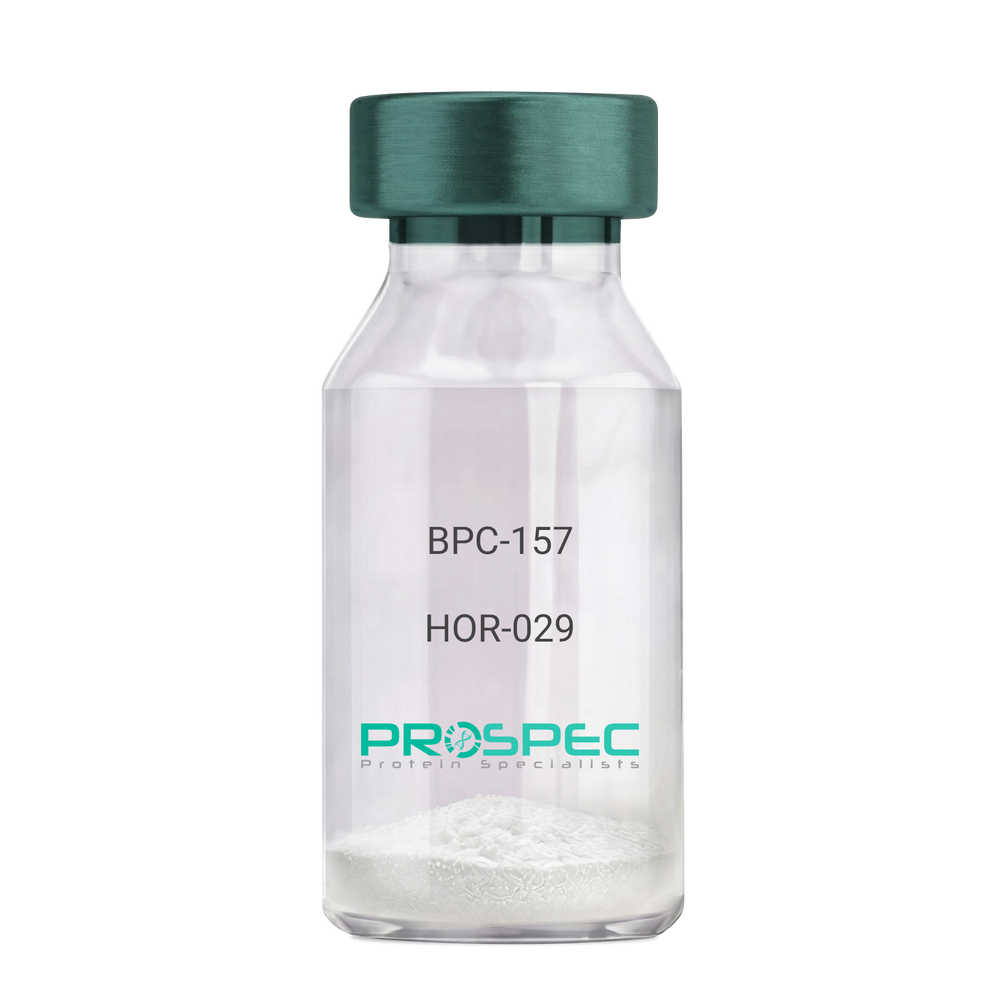
BPC-157Description:
BPC-157 Pentadecapeptide
Product # :
HOR-029Price :
Quantity :
Shipping Method :
Shipped at Room temp
More Info
- description
- formulation
- purity
- More Info
Description
BPC-157 Synthetic is a single, non-glycosylated polypeptide chain containing 15 amino acids, having a molecular mass of 1419.55 Dalton and a Molecular formula of C62H98N16O22.
Formulation
The protein was lyophilized with no additives.
Purity
Greater than 97.0% as determined by analysis by RP-HPLC.
More Info
-
Physical Appearance
Sterile Filtered White lyophilized (freeze-dried) powder.
-
Stability
Lyophilized BPC-157 although stable at room temperature for 3 weeks, should be stored desiccated below -18°C. Upon reconstitution bpc-157 should be stored at 4°C between 2-7 days and for future use below -18°C. For long term storage it is recommended to add a carrier protein (0.1% HSA or BSA). Please prevent freeze-thaw cycles.
-
Solubility
It is recommended to reconstitute the lyophilized BPC-157 in sterile 18MΩ-cm H2O not less than 100 µg/ml, which can then be further diluted to other aqueous solutions.
-
Amino Acid Sequence
H-Gly-Glu-Pro-Pro-Pro-Gly-Lys-Pro-Ala-Asp-Asp-Ala-Gly-Leu-Val-OH
-
Background
BPC-157, short for Body Protection Compound-157, is a synthetic peptide that has garnered significant attention in the field of regenerative medicine and sports science. This peptide, derived from a portion of the human gastric juice protein known as BPC, exhibits remarkable healing and tissue regeneration properties. BPC-157 has shown promise in various preclinical and clinical studies, demonstrating its potential for the treatment of a wide range of injuries and disorders.
The research on BPC-157 encompasses investigations into its mechanisms of action, efficacy, safety, and potential therapeutic applications. Studies have elucidated the peptide's ability to enhance angiogenesis, promote collagen synthesis, modulate inflammatory responses, and protect against oxidative stress. These properties make BPC-157 an intriguing candidate for accelerating tissue healing, reducing inflammation, and improving overall recovery outcomes.
Preclinical studies have revealed the beneficial effects of BPC-157 in several injury models. For instance, BPC-157 has demonstrated its potential in accelerating tendon and ligament healing, mitigating muscle damage, and promoting bone regeneration. These findings suggest that BPC-157 could be a valuable therapeutic tool in orthopedic medicine and sports-related injuries.
Furthermore, BPC-157 has exhibited promising effects on gastrointestinal health. Studies have highlighted its ability to protect and heal the gut lining, reduce ulcer formation, and alleviate symptoms associated with inflammatory bowel disease. These observations open up avenues for BPC-157 as a potential treatment for gastrointestinal disorders.
In addition to its regenerative properties, BPC-157 has shown potential in neurological and psychiatric conditions. Research has indicated its neuroprotective effects, with implications for the treatment of traumatic brain injury, stroke, and neurodegenerative disorders. Preliminary studies also suggest BPC-157's potential as an antidepressant and anxiolytic agent.
Despite the promising findings, further research is needed to fully understand the mechanisms underlying BPC-157's actions and to assess its long-term safety and efficacy. Clinical trials are underway to explore its potential therapeutic applications in humans, including its use in tendon and ligament repair, inflammatory bowel disease, and neurodegenerative disorders.
This comprehensive review aims to summarize the current state of research on BPC-157, providing an overview of its mechanisms of action and therapeutic potential. By examining relevant studies and findings, we aim to shed light on the diverse applications of BPC-157 and its implications for regenerative medicine, sports science, and various disease
ProSpec's products are furnished for LABORATORY RESEARCH USE ONLY. The product may not be used as drugs, agricultural or pesticidal products, food additives or household chemicals.
- View Data Sheet
Name :
VEGF (121 a.a.) HumanDescription:
Vascular Endothelial Growth Factor (121 a.a.) Human Recombinant
Vascular endothelial growth factor A, VEGF-A, Vascular permeability factor, VPF, VEGF, MGC70609.
Product # :
CYT-343Price :
Quantity :
Shipping Method :
Shipped at Room temp
More Info
- description
- source
- formulation
- purity
- biological activity
- More Info
Description
Vascular Endothelial Growth Factor-121 Human Recombinant produced in E.Coli is a non-glycosylated, polypeptide double chain containing 2x121 amino acids and having a molecular mass of 28.4kDa. VEGF121 circulates more freely than other VEGF forms, which bind more tightly with vascular heparin sulfates.
Source
Escherichia Coli.
Formulation
The protein was lyophilized from a concentrated (1mg/ml) solution with no additives.
Purity
Greater than 98.0% as determined by:
(a) Analysis by RP-HPLC.
(b) Analysis by SDS-PAGE.Biological Activity
VEGF-121 has full biological activity when compared to standards. The activity is determined by the dose-dependent proliferation of HUVECs and is typically 1-6ng/ml corresponding to a specific activity of 166,667-1,000,000U/mg.
More Info
-
Introduction
Vascular endothelial growth factor is an important signaling protein involved in both vasculogenesis and angiogenesis. As its name implies, VEGF activity has been mostly studied on cells of the vascular endothelium, although it does have effects on a number of other cell types (e.g. stimulation monocyte/ macrophagemigration, neurons, cancer cells, kidney epithelial cells ).VEGF mediates increased vascular permeability, induces angiogenesis, vasculogenesis and endothelial cell growth, promotes cell migration, and inhibits apoptosis. In vitro, VEGF has been shown to stimulate endothelial cell mitogenesisand cell migration. VEGF is also a vasodilator and increases microvascular permeability and was originally referred to as vascular permeability factor.
Elevated levels of this protein are linked to POEMS syndrome, also known as Crow-Fukase syndrome. Mutations in this gene have been associated with proliferative and nonproliferative diabetic retinopathy. -
Synonyms
Vascular endothelial growth factor A, VEGF-A, Vascular permeability factor, VPF, VEGF, MGC70609.
-
Physical Appearance
Sterile Filtered White lyophilized (freeze-dried) powder.
-
Stability
Lyophilized Vascular Endothelial Growth Factor 121 although stable at room temperature for 3 weeks, should be stored desiccated below -18°C. Upon reconstitution VEGF-121 should be stored at 4°C between 2-7 days and for future use below -18°C.For long term storage it is recommended to add a carrier protein (0.1% HSA or BSA).Please prevent freeze-thaw cycles.
-
Solubility
It is recommended to reconstitute the lyophilized Vascular Endothelial Growth Factor -121 in sterile 18MΩ-cm H2O not less than 100µg/ml, which can then be further diluted to other aqueous solutions.
-
Amino Acid Sequence
APMAEGGGQN HHEVVKFMDV YQRSYCHPIE TLVDIFQEYP DEIEYIFKPS CVPLMRCGGC CNDEGLECVP TEESNITMQI MRIKPHQGQH IGEMSFLQHN KCECRPKKDR ARQENCDKPR R
ProSpec's products are furnished for LABORATORY RESEARCH USE ONLY. The product may not be used as drugs, agricultural or pesticidal products, food additives or household chemicals.
- View Data Sheet
Name :
AGR3 HumanDescription:
Anterior Gradient Protein 3 Homolog Human Recombinant
Anterior gradient protein 3 homolog, AG-3, AG3, hAG-3, Breast cancer membrane protein 11, AGR3, BCMP11, UNQ642/PRO1272, HAG3, PDIA18.
Product # :
PRO-242Price :
Quantity :
Shipping Method :
Shipped with Ice Packs
More Info
- description
- source
- formulation
- purity
- More Info
Description
AGR3 produced in E.Coli is a single, non-glycosylated polypeptide chain containing 169 amino acids (22-166 a.a) and having a molecular mass of 19.5kDa.AGR3 is fused to a 20 amino acid His-tag at N-terminus & purified by proprietary chromatographic techniques.
Source
Escherichia Coli.
Formulation
AGR3 protein solution (1mg/ml) containing 20mM Tris-HCl buffer (pH8.0), 20% glycerol, 0.1M NaCl and 1mM DTT.
Purity
Greater than 90.0% as determined by SDS-PAGE.
More Info
-
Introduction
Anterior gradient protein 3 homolog precursor (AGR3) is a secreted cytoplasmic protein that is involved in metastasis induction and p53 tumor suppressor inhibition. AGR3 may function as molecular marker and potential therapeutic target for hormone-responsive breast tumors.
-
Synonyms
Anterior gradient protein 3 homolog, AG-3, AG3, hAG-3, Breast cancer membrane protein 11, AGR3, BCMP11, UNQ642/PRO1272, HAG3, PDIA18.
-
Physical Appearance
Sterile Filtered colorless solution.
-
Stability
Store at 4°C if entire vial will be used within 2-4 weeks. Store, frozen at -20°C for longer periods of time. For long term storage it is recommended to add a carrier protein (0.1% HSA or BSA). Avoid multiple freeze-thaw cycles.
-
Amino Acid Sequence
MGSSHHHHHH SSGLVPRGSH MGSMIAIKKE KRPPQTLSRG WGDDITWVQT YEEGLFYAQK SKKPLMVIHH LEDCQYSQAL KKVFAQNEEI QEMAQNKFIM LNLMHETTDK NLSPDGQYVP RIMFVDPSLT VRADIAGRYS NRLYTYEPRD LPLLIENMKK ALRLIQSEL.
ProSpec's products are furnished for LABORATORY RESEARCH USE ONLY. The product may not be used as drugs, agricultural or pesticidal products, food additives or household chemicals.
- View Data Sheet
Name :
SNCG HumanDescription:
Gamma-Synuclein Human Recombinant
Gamma-synuclein, Persyn, Breast cancer-specific gene 1 protein, Synoretin, SR, SNCG, BCSG1, PERSYN, PRSN, g-Synuclein.
Product # :
PRO-395Price :
Quantity :
Shipping Method :
Shipped with Ice Packs
More Info
- description
- source
- formulation
- purity
- More Info
Description
g-Synuclein Human Recombinant produced in E.Coli is a single,non-glycosylated polypeptide chain containing 127 amino acids and having a molecular mass of 13,300 Dalton. The protein coding region of g-synuclein was amplified by RT-PCR and cloned into an E.coli expression vector. g-synuclein was overexpressed in E. coli and purified to apparent homogeneity by taking advantage of the thermosolubility of the protein and by using conventional column chromatography techniques.
Source
Escherichia Coli.
Formulation
The protein (1mg/ml) contains 20mM Tris-HCl buffer (pH 7.5) and 0.1M NaCl.
Purity
Greater than 90.0% as determined by SDS-PAGE.
More Info
-
Introduction
g-synuclein(Originally known as a breast cancer specific gene product, BCSG1) is an acidic neuronal protein of 127 amino acids. Gamma-Synuclein is a member of the Synuclein protein family, which is believed to be involved in the pathogenesis of neurodegenerative diseases. High levels of Gamma-Synuclein have been found in advanced breast carcinomas suggesting a correlation between overexpression of SNCG and breast tumor development. Synuclein-Gamma is found mostly in the peripheral nervous system (in primary sensory neurons, sympathetic neurons, and motor neurons) and retina. SNCG is also identified in the brain, ovarian tumors, and in the olfactory epithelium. SNCG expression in breast tumors is a marker for tumor progression. A modification in the expression of gamma-synuclein has been detected in the retina of Alzheimer's patients.
-
Synonyms
Gamma-synuclein, Persyn, Breast cancer-specific gene 1 protein, Synoretin, SR, SNCG, BCSG1, PERSYN, PRSN, g-Synuclein.
-
Physical Appearance
Sterile filtered colorless solution.
-
Stability
Store at 4°C if entire vial will be used within 2-4 weeks. Store, frozen at -20°C for longer periods of time. For long term storage it is recommended to add a carrier protein (0.1% HSA or BSA). Avoid multiple freeze-thaw cycles.
-
Amino Acid Sequence
MDVFKKGFSI AKEGVVGAVE KTKQGVTEAA EKTKEGVMYV GAKTKENVVQSVTSVAEKTK EQANAVSEAV VSSVNTVATK TVEEAENIAV TSGVVRKEDL RPSAPQQEGV ASKEKEEVAE EAQSGGD.
ProSpec's products are furnished for LABORATORY RESEARCH USE ONLY. The product may not be used as drugs, agricultural or pesticidal products, food additives or household chemicals.