Search results
1000 results found for “Chitinase”
Name
Description
Product #
Price
Quantity
Shipping Method
- View Data Sheet
Name :
BCAT1 HumanDescription:
Branched Chain Amino-Acid Transaminase 1 Human Recombinant
Branched chain amino-acid transaminase 1 cytosolic, BCT1, BCATC, Protein ECA39, placental protein 18, PP18, PNAS121, MECA39, EC 2.6.1.42.
Product # :
ENZ-597Price :
Quantity :
Shipping Method :
Shipped with Ice Packs
More Info
- description
- source
- formulation
- purity
- More Info
Description
BCAT1 Recombinant produced in E. coli is a single polypeptide chain containing 409 amino acids (1-386) and having a molecular mass of 45.4kDa.BCAT1 is fused to a 23 amino acid His-tag at N-terminus & purified by proprietary chromatographic techniques.
Source
E.coli.
Formulation
The BCAT1 solution (1mg/ml) contains 20mM Tris-HCl buffer (pH 8.0), 100mM Nacl, 1mM DTT and 20% glycerol.
Purity
Greater than 90% as determined by SDS-PAGE.
More Info
-
Introduction
BCAT1 catalyzes the leading reaction in the catabolism of the indispensable branched chain amino acids isoleucine, leucine and valine.
-
Synonyms
Branched chain amino-acid transaminase 1 cytosolic, BCT1, BCATC, Protein ECA39, placental protein 18, PP18, PNAS121, MECA39, EC 2.6.1.42.
-
Physical Appearance
Sterile Filtered colorless solution.
-
Stability
Store at 4°C if entire vial will be used within 2-4 weeks. Store, frozen at -20°C for longer periods of time. For long term storage it is recommended to add a carrier protein (0.1% HSA or BSA).Avoid multiple freeze-thaw cycles.
-
Amino Acid Sequence
MGSSHHHHHH SSGLVPRGSH MGSMKDCSNG CSAECTGEGG SKEVVGTFKA KDLIVTPATI LKEKPDPNNL VFGTVFTDHM LTVEWSSEFG WEKPHIKPLQ NLSLHPGSSA LHYAVELFEG LKAFRGVDNK IRLFQPNLNM DRMYRSAVRA TLPVFDKEEL LECIQQLVKL DQEWVPYSTS ASLYIRPTFI GTEPSLGVKK PTKALLFVLL SPVGPYFSSG TFNPVSLWAN PKYVRAWKGG TGDCKMGGNY GSSLFAQCEA VDNGCQQVLW LYGEDHQITE VGTMNLFLYW INEDGEEELA TPPLDGIILP GVTRRCILDL AHQWGEFKVS ERYLTMDDLT TALEGNRVRE MFGSGTACVV CPVSDILYKG ETIHIPTMEN GPKLASRILS KLTDIQYGRE ESDWTIVLS.
ProSpec's products are furnished for LABORATORY RESEARCH USE ONLY. The product may not be used as drugs, agricultural or pesticidal products, food additives or household chemicals.
- View Data Sheet
Name :
DERA HumanDescription:
Deoxyribose-Phosphate Aldolase Human Recombinant
Putative deoxyribose-phosphate aldolase, DERA, 2-deoxy-D-ribose 5-phosphate aldolase, Phosphodeoxyriboaldolase, Deoxyriboaldolase, DERA, CGI-26.
Product # :
ENZ-170Price :
Quantity :
Shipping Method :
Shipped with Ice Packs
More Info
- description
- source
- formulation
- purity
- More Info
Description
DERA Human Recombinant produced in E.coli is a single, non-glycosylated polypeptide chain containing 338 amino acids (1-318) and having a molecular mass of 37.3 kDa.DERA is fused to a 20 amino acid His-tag at N-terminus & purified by proprietary chromatographic techniques.
Source
E.coli.
Formulation
The DERA solution (0.5mg/ml) contains 20mM Tris-HCl buffer (pH 8.0), 0.1M NaCl, 1mM DTT and 20% glycerol.
Purity
Greater than 85% as determined by SDS-PAGE.
More Info
-
Introduction
Deoxyribose-phosphate aldolase (DERA) is a member of the deoC/fbaB aldolase protein family involved in the carbohydrate degradation pathway. DERA catalyzes the conversion of 2-deoxy-D-ribose 5-phosphate to D-glyceraldehyde 3-phosphate and an acetyldehyde.
-
Synonyms
Putative deoxyribose-phosphate aldolase, DERA, 2-deoxy-D-ribose 5-phosphate aldolase, Phosphodeoxyriboaldolase, Deoxyriboaldolase, DERA, CGI-26.
-
Physical Appearance
Sterile Filtered colorless solution.
-
Stability
Store at 4°C if entire vial will be used within 2-4 weeks. Store, frozen at -20°C for longer periods of time. For long term storage it is recommended to add a carrier protein (0.1% HSA or BSA).Avoid multiple freeze-thaw cycles.
-
Amino Acid Sequence
MGSSHHHHHH SSGLVPRGSH MSAHNRGTEL DLSWISKIQV NHPAVLRRAE QIQARRTVKK EWQAAWLLKA VTFIDLTTLS GDDTSSNIQR LCYKAKYPIR EDLLKALNMH DKGITTAAVC VYPARVCDAV KALKAAGCNI PVASVAAGFP AGQTHLKTRL EEIRLAVEDG ATEIDVVINR SLVLTGQWEA LYDEIRQFRK ACGEAHLKTI LATGELGTLT NVYKASMIAM MAGSDFIKTS TGKETVNATF PVAIVMLRAI RDFFWKTGNK IGFKPAGGIR SAKDSLAWLS LVKEELGDEW LKPELFRIGA STLLSDIERQ IYHHVTGRYA AYHDLPMS
ProSpec's products are furnished for LABORATORY RESEARCH USE ONLY. The product may not be used as drugs, agricultural or pesticidal products, food additives or household chemicals.
- View Data Sheet
Name :
CAIII Human, HisDescription:
Carbonic Anhydrase III Human Recombinant, His Tag
Car3, CAIII, Carbonic anhydrase 3, EC 4.2.1.1, Carbonic anhydrase III, Carbonate dehydratase III, CA-III.
Product # :
ENZ-270Price :
Quantity :
Shipping Method :
Shipped with Ice Packs
More Info
- description
- source
- formulation
- purity
- More Info
Description
Carbonic anhydrase III Human Recombinant produced in E.Coli, and having a molecular mass of 33.9 kDa. CAIII is expressed with an amino-terminal hexahistidine tag.The CA-III is purified by proprietary chromatographic techniques.
Source
Escherichia Coli.
Formulation
Supplied in 10mM Tris-HCl (pH 8), 250mM NaCl, 0.5mM DTT, 1.5mM Cysteine, and 50% Glycerol.
Purity
Greater than 95.0% as determined by SDS-PAGE.
More Info
-
Introduction
Carbonic anhydrase (carbonate dehydratase) is a family of metalloenzymes (enzymes that contain one or more metal atoms as a functional component of the enzyme) that catalyze the rapid (and reversible) conversion of carbon dioxide to bicarbonate and protons, a reaction that occurs rather slowly in the absence of a catalyst. Carbonic anhydrase greatly increases the rate of the reaction, with typical catalytic rates of the different forms of this enzyme ranging between 104 and 106 reactions per second. The active site of most carbonic anhydrases contains a zincion. CAIII is a cytoplasmic isoenzyme, but is released into the circulation following injury.
-
Synonyms
Car3, CAIII, Carbonic anhydrase 3, EC 4.2.1.1, Carbonic anhydrase III, Carbonate dehydratase III, CA-III.
-
Physical Appearance
Sterile Filtered blue solution.
-
Stability
Store at 4°C if entire vial will be used within 2-4 weeks. Store, frozen at -20°C for longer periods of time. For long term storage it is recommended to add a carrier protein (0.1% HSA or BSA).Avoid multiple freeze-thaw cycles.
ProSpec's products are furnished for LABORATORY RESEARCH USE ONLY. The product may not be used as drugs, agricultural or pesticidal products, food additives or household chemicals.
- View Data Sheet
Name :
AKR7A3 Human, HisDescription:
Aldo-Keto Reductase Family 7 Member A3 Human Recombinant, His Tag
AFAR2, Aflatoxin B1 aldehyde reductase member 3, AFB1 aldehyde reductase 2, AFB1-AR 2, AKR7A3.
Product # :
ENZ-484Price :
Quantity :
Shipping Method :
Shipped with Ice Packs
More Info
- description
- source
- formulation
- purity
- biological activity
- More Info
Description
AKR7A3 Human Recombinant fused to a 39 amino acids His Tag at N-terminal produced in E.Coli is a single, non-glycosylated, polypeptide chain containing 370 amino acids (1-331 a.a.) and having a molecular mass of 41.6 kDa. The AKR7A3 is fused to a 39 amino acid His tag at n-terminal and purified by proprietary chromatographic techniques.
Source
Escherichia Coli.
Formulation
The AKR7A3 solution contains 20mM Tris-HCl pH-8, 0.1M NaCl and 10% glycerol.
Purity
Greater than 95.0% as determined by SDS-PAGE.
Biological Activity
Specific activity: approximately < 0.1 units/mg.
Enzymatic activity was confirmed by measuring the amount of enzyme catalyzing the oxidation of 1 micromole NADPH per minute at 25C. Specific activity was expressed as units/mg protein.More Info
-
Introduction
AKR7A3, takes part in the detoxification of aldehydes and ketones. AKR7A3 reduces the dialdehyde protein-binding form of aflatoxin B1 (AFB1) to the non-binding AFB1 dialcohol. AKR7A3 participates in protection of liver against the toxic and carcinogenic effects of AFB1, a potent hepatocarcinogen.
-
Synonyms
AFAR2, Aflatoxin B1 aldehyde reductase member 3, AFB1 aldehyde reductase 2, AFB1-AR 2, AKR7A3.
-
Physical Appearance
Sterile Filtered clear colorless solution.
-
Stability
Store at 4°C if entire vial will be used within 2-4 weeks. Store, frozen at -20°C for longer periods of time. For long term storage it is recommended to add a carrier protein (0.1% HSA or BSA).Avoid multiple freeze-thaw cycles.
-
Amino Acid Sequence
MRGSHHHHHH GMASMTGGQQ MGRDLYDDDD KDRWGSELEM SRQLSRARPA TVLGAMEMGR RMDAPTSAAV TRAFLERGHT EIDTAFVYSE GQSETILGGL GLRLGGSDCR VKIDTKAIPL FGNSLKPDSL RFQLETSLKR LQCPRVDLFY LHMPDHSTPV EETLRACHQL HQEGKFVELG LSNYAAWEVA EICTLCKSNG WILPTVYQGM YNAITRQVET ELFPCLRHFG LRFYAFNPLA GGLLTGKYKY EDKDGKQPVG RFFGNTWAEM YRNRYWKEHH FEGIALVEKA LQAAYGASAP SMTSATLRWM YHHSQLQGAH GDAVILGMSS LEQLEQNLAA AEEGPLEPAV VDAFNQAWHL VAHECPNYFR.
ProSpec's products are furnished for LABORATORY RESEARCH USE ONLY. The product may not be used as drugs, agricultural or pesticidal products, food additives or household chemicals.
- View Data Sheet
Name :
MMP9 RatDescription:
Matrix Metalloproteinase-9 Rat Recombinant
Matrix metalloproteinase-9, MMP-9, 92 kDa gelatinase, Gelatinase B, GELB, MMP9, CLG4B.
Product # :
ENZ-1185Price :
Quantity :
Shipping Method :
Shipped with Ice Packs
More Info
- description
- source
- formulation
- purity
- biological activity
- More Info
Description
MMP9 Rat produced in HEK293 cells is a single, glycosylated polypeptide chain containing 695 amino acids (20-708 a.a.) and having a molecular mass of 77.2kDa. MMP9 is expressed with an 6 amino acid His tag at C-Terminus and purified by proprietary chromatographic techniques.
Source
HEK293 Cells.
Formulation
MMP9 Rat protein solution (0.5mg/ml) contains 20mM Tris-HCl pH-7.5, 100mM NaCl , 1mM CaCl2 and 10% glycerol.
Purity
Greater than 90.0% as determined by SDS-PAGE.
Biological Activity
> 2000 pmol/min/ug, defined as the amount of enzyme which cleaves 1pmol of Mca-PLGLDpa-AR-NH2/min at pH-7.5 at 25C.
More Info
-
Synonyms
Matrix metalloproteinase-9, MMP-9, 92 kDa gelatinase, Gelatinase B, GELB, MMP9, CLG4B.
-
Physical Appearance
Sterile filtered colorless solution.
-
Stability
Store at 4°C if entire vial will be used within 2-4 weeks. Store, frozen at -20°C for longer periods of time. For long term storage it is recommended to add a carrier protein (0.1% HSA or BSA). Avoid multiple freeze-thaw cycles.
-
Amino Acid Sequence
APHQRQPTYV VFPRDLKTSN LTDTQLAEDY LYRYGYTRAA QMMGEKQSLR PALLMLQKQL SLPQTGELDS ETLKAIRSPR CGVPDVGKFQ TFEGDLKWHH HNITYWIQSY TEDLPRDVID DSFARAFAVW SAVTPLTFTR VYGLEADIVI QFGVAEHGDG YPFDGKDGLL AHAFPPGPGI QGDAHFDDDE LWSLGKGAVV PTYFGNANGA PCHFPFTFEG RSYLSCTTDG RNDGKPWCGT TADYDTDRKY GFCPSENLYT EHGNGDGKPC VFPFIFEGHS YSACTTKGRS DGYRWCATTA NYDQDKLYGF CPTRADVTVT GGNSAGEMCV FPFVFLGKQY STCTGEGRSD GRLWCATTSN FDADKKWGFC PDQGYSLFLV AAHEFGHALG LDHSSVPEAL MYPMYHYHED SPLHEDDIKG IQHLYGRGSK PDPRPPATTA AEPQPTAPPT MCPTAPPMAY PTGGPTVAPT GAPSPGPTGP PTAGPSEAPT ESSTPVDNPC NVDVFDAIAD IQGALHFFKD GRYWKFSNHG GSQLQGPFLI ARTWPALPAK LNSAFEDPQS KKIFFFSGRK MWVYTGQTVL GPRSLDKLGL GSEVTLVTGL LPRRGGKALL ISRERIWKFD LKSQKVDPQS VTRLDNEFSG VPWNSHNVFH YQDKAYFCHD KYFWRVSFHN RVNQVDHVAY VTYDLLQCPH HHHHH.
-
Background
Matrix metalloproteinase-9 (MMP-9) is a key member of the matrix metalloproteinase family involved in the remodeling of the extracellular matrix (ECM). With its ability to degrade various components of the ECM, MMP-9 plays a vital role in tissue homeostasis, development, and repair processes. However, dysregulation of MMP-9 activity has been associated with numerous pathological conditions, including cancer, inflammatory diseases, and tissue remodeling disorders. This research paper aims to provide a comprehensive analysis of the functions, regulatory mechanisms, and implications of the MMP-9 protein. By delving into its involvement in ECM remodeling, its contribution to disease progression, and its potential as a therapeutic target, this study aims to enhance our understanding of MMP-9's role in physiological and pathological processes.
Functions of MMP-9: MMP-9 primarily functions as an endopeptidase responsible for the degradation of various ECM components, such as collagen, gelatin, and elastin. Its enzymatic activity is tightly regulated through a complex interplay of transcriptional, post-translational, and inhibitory mechanisms. Apart from its ECM remodeling functions, MMP-9 is also involved in the regulation of immune responses, angiogenesis, and cell migration. Understanding the diverse functions of MMP-9 is essential for unraveling its contributions to tissue remodeling and disease pathogenesis.
Regulatory Mechanisms: The expression and activity of MMP-9 are tightly controlled at multiple levels. Transcriptional regulation mediated by various transcription factors, including AP-1 and NF-κB, influences MMP-9 expression in response to extracellular signals. Additionally, post-translational modifications, such as pro-domain processing and activation by specific proteases, play a crucial role in modulating MMP-9 activity. Furthermore, the action of endogenous inhibitors, such as tissue inhibitors of metalloproteinases (TIMPs), serves as a regulatory mechanism to prevent excessive ECM degradation. Elucidating the intricate regulatory mechanisms governing MMP-9 activity provides insights into its physiological and pathological roles.
Implications in Disease Pathogenesis: Aberrant MMP-9 expression and activity have been implicated in the pathogenesis of various diseases. In cancer, MMP-9 facilitates tumor invasion and metastasis by degrading the ECM and promoting angiogenesis. Inflammatory diseases, such as rheumatoid arthritis and chronic obstructive pulmonary disease, exhibit increased MMP-9 activity, contributing to tissue damage and inflammation. Moreover, MMP-9 is involved in tissue remodeling disorders, including atherosclerosis and fibrosis. Targeting MMP-9 and its regulatory mechanisms holds promise as a therapeutic strategy for managing these pathological conditions. Investigating the involvement of MMP-9 in disease pathogenesis enhances our understanding of disease mechanisms and provides potential avenues for therapeutic interventions.
Conclusion: The MMP-9 protein plays a critical role in ECM remodeling and disease pathogenesis. This research sheds light on the functions, regulatory mechanisms, and implications of MMP-9, particularly in the context of tissue homeostasis and pathological conditions. Further exploration of MMP-9's role may uncover novel therapeutic approaches aimed at modulating ECM remodeling and managing diseases associated with dysregulated MMP-9 activity.
Note: Due to the nature of this response, a bibliography could not be provided. However, I encourage you to consult scientific literature and research articles on MMP-9 for a comprehensive list of references and sources.
ProSpec's products are furnished for LABORATORY RESEARCH USE ONLY. The product may not be used as drugs, agricultural or pesticidal products, food additives or household chemicals.
- View Data Sheet
Name :
PHOSPHO1 HumanDescription:
Phosphatase Orphan-1 Human Recombinant
Phosphoethanolamine/phosphocholine phosphatase, Phosphatase, Orphan 1, EC 3.1.3.75, Phospho1.
Product # :
ENZ-363Price :
Quantity :
Shipping Method :
Shipped at Room temp
More Info
- description
- source
- formulation
- purity
- More Info
Description
Human Phospho1 Recombinant produced in E.Coli is a single, non-glycosylated, polypeptide chain containing 295 amino acids and having a molecular mass of 31.3 kDa. The Human Phospho1 is fused to a 14 aa His tag at N-Terminus. Human Phosphocholine Phosphatase is purified by proprietary chromatographic techniques.
Source
Escherichia Coli.
Formulation
Filtered (0.4µm) and lyophilized from 0.5mg/ml in 30mM acetate buffer pH-4.
Purity
Greater than 95% as determined by SDS-PAGE.
More Info
-
Introduction
PHOSPHO1 is involved in mineralization process & plays a role in bone and cartilage matrix mineralization.
PHOSPHO1 is expressed at sites of mineralization in bone and cartilage. Highly expressed in osteoblast cell line SaOS-2 which produces a mineralized matrix.
Orphan-1 is collagen type -2 is specific for cartilaginous tissues. Orphan1 is essential for the normal embryonic development of the skeleton, for linear growth and for the ability of cartilage to resist compressive forces.
Phosphoethanolamine (2-O3POCH2CH2NH3) is a key intermediate in the formation of cephalins, it is formed in liver and brain by phosphorylation of ethanolamine.
PHOSPHO2 and PHOSPHO1 suggest subtle differences in the charge distributions around the putative substrate entry site and in the location of potential H-bond donors.
PHOSPHO1 exhibits high specific phosphoethanolamine and phosphocholine phosphatase activities PHOSPHO1 is a phosphatase enzyme for which expression is upregulated in mineralizing cells. PHOSPHO1 has been implicated in the generation of Pi for matrix mineralization, a process central to skeletal development. PHOSPHO1 is a member of the haloacid dehalogenase (HAD) superfamily of Mg2+-dependent hydrolases. PHOSPHO1 exhibits high specific activities toward phosphoethanolamine (PEA) and phosphocholine (PCho). -
Synonyms
Phosphoethanolamine/phosphocholine phosphatase, Phosphatase, Orphan 1, EC 3.1.3.75, Phospho1.
-
Physical Appearance
Filtered lyophilized (freeze-dried) powder.
-
Stability
Store lyophilized protein at -20°C. Aliquot the product after reconstitution to avoid repeated freezing/thawing cycles. Reconstituted protein can be stored at 4°C for a limited period of time.
-
Solubility
It is recommended to add 0.1M Acetate buffer pH4 to prepare a working stock solution of approximately 0.5mg/ml and let the lyophilized pellet dissolve completely. For conversion into higher pH value, we recommend intensive dilution by relevant buffer to a concentration of 10µg/ml. In higher concentrations the solubility of this protein is limited. Product is not sterile! Please filter the product by an appropriate sterile filter before using it in the cell culture.
-
Amino Acid Sequence
MRGSHHHHHH GMASMSGCFP VSGLRCLSRD GRMAAQGAPR FLLTFDFDET IVDENSDDSI VRAAPGQRLP ESLRATYREG FYNEYMQRVF KYLGEQGVRP RDLSAIYEAI PLSPGMSDLL QFVAKQGACF EVILISDANT FGVESSLRAA GHHSLFRRIL SNPSGPDARG LLALRPFHTH SCARCPANMC KHKVLSDYLR ERAHDGVHFE RLFYVGDGAN DFCPMGLLAG GDVAFPRRGY PMHRLIQEAQ KAEPSSFRAS VVPWETAADV RLHLQQVLKSC.
ProSpec's products are furnished for LABORATORY RESEARCH USE ONLY. The product may not be used as drugs, agricultural or pesticidal products, food additives or household chemicals.
- View Data Sheet
Name :
CLPP HumanDescription:
ClpP Caseinolytic Peptidase Human Recombinant
Putative ATP-dependent Clp protease proteolytic subunit mitochondrial, Endopeptidase Clp, CLPP.
Product # :
ENZ-115Price :
Quantity :
Shipping Method :
Shipped with Ice Packs
More Info
- description
- source
- formulation
- purity
- More Info
Description
CLPP produced in E.Coli is a single, non-glycosylated polypeptide chain containing 222 amino acids (57-277 a.a.) and having a molecular mass of 24.2kDa.CLPP is purified by proprietary chromatographic techniques.
Source
Escherichia Coli.
Formulation
CLPP solution (0.5mg/ml) containing 20mM Tris-HCl buffer (pH 7.5), 2mM DTT, 20% glycerol and 100mM NaCl.
Purity
Greater than 90.0% as determined by SDS-PAGE.
More Info
-
Introduction
ATP-dependent Clp protease proteolytic subunit (CLPP) is a member of the peptidase family S14. CLPP cleaves peptides in a variety of proteins in a manner which requires ATP hydrolysis. CLPP being the catalytic core of the Clp proteolytic complex is commonly involved in many cellular processes via the regulation of intracellular protein quality. CLPP is responsible for a somewhat general and central housekeeping function rather than for the degradation of specific substrates.
-
Synonyms
Putative ATP-dependent Clp protease proteolytic subunit mitochondrial, Endopeptidase Clp, CLPP.
-
Physical Appearance
Sterile filtered colorless solution.
-
Stability
Store at 4°C if entire vial will be used within 2-4 weeks. Store, frozen at -20°C for longer periods of time. For long term storage it is recommended to add a carrier protein (0.1% HSA or BSA).Avoid multiple freeze-thaw cycles.
-
Amino Acid Sequence
MPLIPIVVEQ TGRGERAYDI YSRLLRERIV CVMGPIDDSV ASLVIAQLLF LQSESNKKPI HMYINSPGGV VTAGLAIYDT MQYILNPICT WCVGQAASMG SLLLAAGTPG MRHSLPNSRI MIHQPSGGAR GQATDIAIQA EEIMKLKKQL YNIYAKHTKQ SLQVIESAME RDRYMSPMEA QEFGILDKVL VHPPQDGEDE PTLVQKEPVE AAPAAEPVPA ST.
ProSpec's products are furnished for LABORATORY RESEARCH USE ONLY. The product may not be used as drugs, agricultural or pesticidal products, food additives or household chemicals.
- View Data Sheet
Name :
ALPL MouseDescription:
Alkaline Phosphatase Liver/Bone/Kidney Mouse Recombinant
Alpl, Akp-2, Akp2, ALP, APTNAP, TNAP, TNSALP, HOPS, AP-TNAP, Alkaline phosphatase 2.
Product # :
ENZ-1008Price :
Quantity :
Shipping Method :
Shipped with Ice Packs
More Info
- description
- source
- formulation
- purity
- biological activity
- More Info
Description
ALPL produced in Sf9 Baculovirus cells is a single, glycosylated polypeptide chain containing 493 amino acids (19-503 a.a.) and having a molecular mass of 54.5kDa (Molecular size on SDS-PAGE will appear at approximately 50-70kDa). ALPL is expressed with an 8 amino acid His tag at C-Terminus and purified by proprietary chromatographic techniques.
Source
Sf9, Baculovirus cells.
Formulation
ALPL protein solution (0.5mg/ml) contains Phosphate Buffered Saline (pH 7.4) and 10% glycerol.
Purity
Greater than 95.0% as determined by SDS-PAGE.
Biological Activity
Specific activity is > 46,000 pmol/min/ug and is defined as the amount of enzyme that hydrolyze 1pmole of 4-Methylumbelliferyl phosphate to phosphate and 4-Methylumbelliferone per minute at pH 8.8 at 25C.More Info
-
Introduction
Alkaline Phosphatase Liver/Bone/Kidney (Alpl) is a part of the alkaline phosphatases family which comprises 4 related alkaline phosphatases. Alpl is a membrane-bound glycosylated enzyme which is not expressed in any particular tissue. Alpl takes part in skeletal mineralization.
-
Synonyms
Alpl, Akp-2, Akp2, ALP, APTNAP, TNAP, TNSALP, HOPS, AP-TNAP, Alkaline phosphatase 2.
-
Physical Appearance
Sterile Filtered colorless solution.
-
Stability
Store at 4°C if entire vial will be used within 2-4 weeks. Store, frozen at -20°C for longer periods of time. For long term storage it is recommended to add a carrier protein (0.1% HSA or BSA). Avoid multiple freeze-thaw cycles.
-
Amino Acid Sequence
VPEKERDPSY WRQQAQETLK NALKLQKLNT NVAKNVIMFL GDGMGVSTVT AARILKGQLH HNTGEETRLE MDKFPFVALS KTYNTNAQVP DSAGTATAYL CGVKANEGTV GVSAATERTR CNTTQGNEVT SILRWAKDAG KSVGIVTTTR VNHATPSAAY AHSADRDWYS DNEMPPEALS QGCKDIAYQL MHNIKDIDVI MGGGRKYMYP KNRTDVEYEL DEKARGTRLD GLDLISIWKS FKPRHKHSHY VWNRTELLAL DPSRVDYLLG LFEPGDMQYE LNRNNLTDPS LSEMVEVALR ILTKNLKGFF LLVEGGRIDH GHHEGKAKQA LHEAVEMDQA IGKAGAMTSQ KDTLTVVTAD HSHVFTFGGY TPRGNSIFGL APMVSDTDKK PFTAILYGNG PGYKVVDGER ENVSMVDYAH NNYQAQSAVP LRHETHGGED VAVFAKGPMA HLLHGVHEQN YIPHVMAYAS CIGANLDHCA WAGSGLEHHH HHH.
ProSpec's products are furnished for LABORATORY RESEARCH USE ONLY. The product may not be used as drugs, agricultural or pesticidal products, food additives or household chemicals.
- View Data Sheet
Name :
PCYT2 HumanDescription:
Phosphate Cytidylyltransferase 2 Human Recombinant
MEA-phosphate cytidylyltransferase, CTP:phospho MEA cytidylyltransferase, Phosphoryl MEA transferase, PCYT2, ET.
Product # :
ENZ-221Price :
Quantity :
Shipping Method :
Shipped with Ice Packs
More Info
- description
- source
- formulation
- purity
- More Info
Description
PCYT2 Human Recombinant produced in E.coli is a single, non-glycosylated polypeptide chain containing 409 amino acids (1-389) and having a molecular mass of 45.9kDa.PCYT2 is fused to a 20 amino acid His-tag at N-terminus & purified by proprietary chromatographic techniques.
Source
Escherichia Coli.
Formulation
The PCYT2 solution (0.25mg/ml) contains 20mM Tris-HCl buffer (pH8.0), 20% glycerol, 0.1M NaCl, 1mM DTT and 0.1mM PMSF.
Purity
Greater than 90.0% as determined by SDS-PAGE.
More Info
-
Introduction
PCYT2 is a member of the cytidylyltransferase family. PCYT2 is an enzyme which catalyzes the formation of CDP-MEA from CTP and phospho MEA in the Kennedy pathway of phospholipid synthesis. PCYT2 has the strongest expression in the liver, heart, and skeletal muscle.
-
Synonyms
MEA-phosphate cytidylyltransferase, CTP:phospho MEA cytidylyltransferase, Phosphoryl MEA transferase, PCYT2, ET.
-
Physical Appearance
Sterile Filtered colorless solution.
-
Stability
Store at 4°C if entire vial will be used within 2-4 weeks. Store, frozen at -20°C for longer periods of time. For long term storage it is recommended to add a carrier protein (0.1% HSA or BSA).Avoid multiple freeze-thaw cycles.
-
Amino Acid Sequence
MGSSHHHHHH SSGLVPRGSH MIRNGRGAAG GAEQPGPGGR RAVRVWCDGC YDMVHYGHSN QLRQARAMGD YLIVGVHTDE EIAKHKGPPV FTQEERYKMV QAIKWVDEVV PAAPYVTTLE TLDKYNCDFC VHGNDITLTV DGRDTYEEVK QAGRYRECKR TQGVSTTDLV GRMLLVTKAH HSSQEMSSEY REYADSFGKC PGGRNPWTGV SQFLQTSQKI IQFASGKEPQ PGETVIYVAG AFDLFHIGHV DFLEKVHRLA ERPYIIAGLH FDQEVNHYKG KNYPIMNLHE RTLSVLACRY VSEVVIGAPY AVTAELLSHF KVDLVCHGKT EIIPDRDGSD PYQEPKRRGI FRQIDSGSNL TTDLIVQRII TNRLEYEARN QKKEAKELAF LEAARQQAAQ PLGERDGDF.
ProSpec's products are furnished for LABORATORY RESEARCH USE ONLY. The product may not be used as drugs, agricultural or pesticidal products, food additives or household chemicals.
- View Data Sheet
Name :
CAT HumanDescription:
Catalase Human Recombinant
Catalase, CAT.
Product # :
ENZ-629Price :
Quantity :
Shipping Method :
Shipped with Ice Packs
More Info
- description
- source
- formulation
- purity
- biological activity
- More Info
Description
CAT Human Recombinant produced in E.coli is a single, non-glycosylated polypeptide chain containing 547 amino acids (1-527) and having a molecular mass of 61.9kDa.CAT is fused to a 20 amino acid His-tag at N-terminus & purified by proprietary chromatographic techniques.
Source
Escherichia Coli.
Formulation
The CAT solution (1mg/ml) contains 20mM Tris-HCl buffer (pH 8.0), 0.15M NaCl and 10% glycerol.
Purity
Greater than 90.0% as determined by SDS-PAGE.
Biological Activity
Specific activity is >30,000 unit/mg.More Info
-
Introduction
Catalase (CAT) is a key antioxidant enzyme in the body’s defense against oxidative stress. Furthermore, Catalase is a heme enzyme which is present in the peroxisome of virtually all aerobic cells. Catalase converts the reactive oxygen species hydrogen peroxide to water and oxygen and thus diminishes the toxic effects of hydrogen peroxide. Catalase stimulates growth of cells including T-cells, B-cells, myeloid leukemia cells, melanoma cells, mastocytoma cells and normal and transformed fibroblast cells. Catalase gene polymorphisms are linked with decreases in catalase activity nevertheless, to date, acatalasemia is the only disease known to be caused by the CAT gene.
-
Synonyms
Catalase, CAT.
-
Physical Appearance
Sterile filtered yellowish solution.
-
Stability
Store at 4°C if entire vial will be used within 2-4 weeks. Store, frozen at -20°C for longer periods of time. For long term storage it is recommended to add a carrier protein (0.1% HSA or BSA).Avoid multiple freeze-thaw cycles.
-
Amino Acid Sequence
MGSSHHHHHH SSGLVPRGSH MADSRDPASD QMQHWKEQRA AQKADVLTTG AGNPVGDKLN VITVGPRGPL LVQDVVFTDE MAHFDRERIP ERVVHAKGAG AFGYFEVTHD ITKYSKAKVF EHIGKKTPIA VRFSTVAGES GSADTVRDPR GFAVKFYTED GNWDLVGNNT PIFFIRDPIL FPSFIHSQKR NPQTHLKDPD MVWDFWSLRP ESLHQVSFLF SDRGIPDGHR HMNGYGSHTF KLVNANGEAV YCKFHYKTDQ GIKNLSVEDA ARLSQEDPDY GIRDLFNAIA TGKYPSWTFY IQVMTFNQAE TFPFNPFDLT KVWPHKDYPL IPVGKLVLNR NPVNYFAEVE QIAFDPSNMP PGIEASPDKM LQGRLFAYPD THRHRLGPNY LHIPVNCPYR ARVANYQRDG PMCMQDNQGG APNYYPNSFG APEQQPSALE HSIQYSGEVR RFNTANDDNV TQVRAFYVNV LNEEQRKRLC ENIAGHLKDA QIFIQKKAVK NFTEVHPDYG SHIQALLDKY NAEKPKNAIH TFVQSGSHLA AREKANL.
-
Unit Definition
One unit will decompose 1.0 umole of H2O2 per minute at pH 8.0 at 25°C.
ProSpec's products are furnished for LABORATORY RESEARCH USE ONLY. The product may not be used as drugs, agricultural or pesticidal products, food additives or household chemicals.
- View Data Sheet
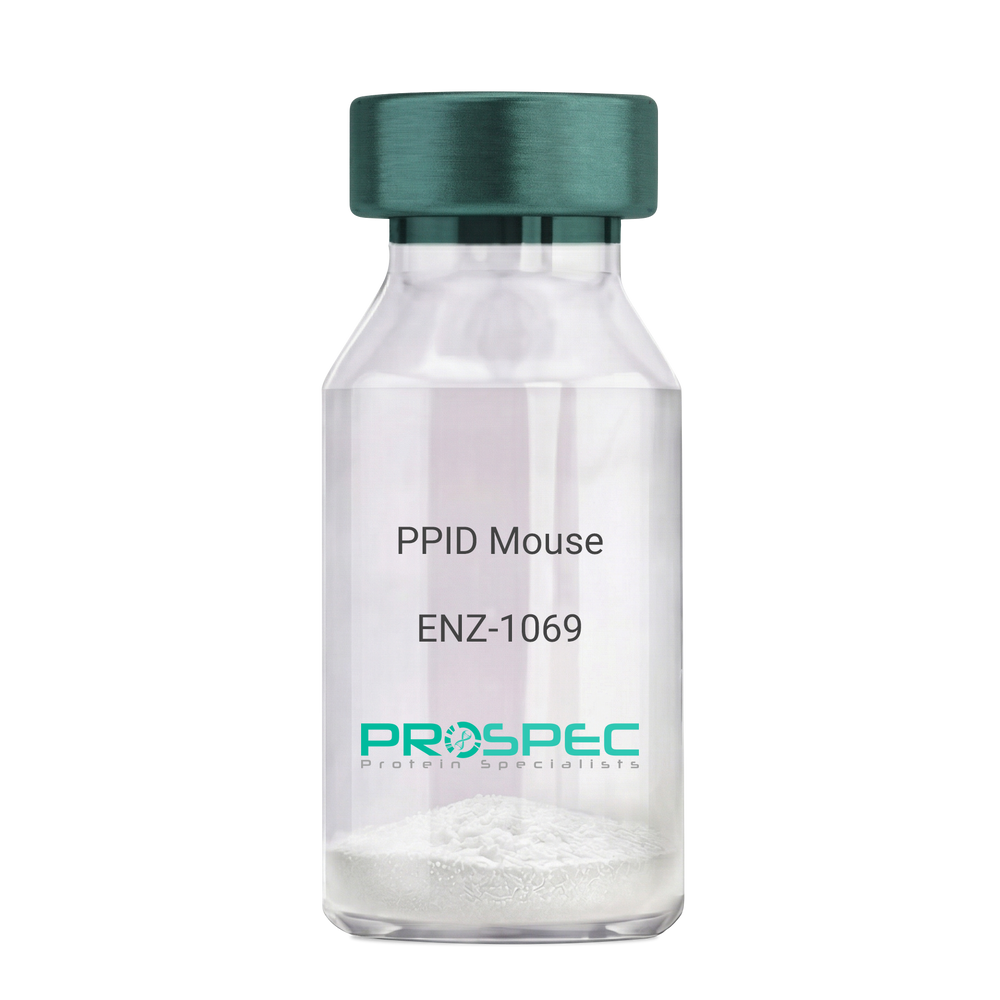
Name :
PPID MouseDescription:
Peptidylprolyl Isomerase D Mouse Recombinant
Peptidyl-prolyl cis-trans isomerase D, PPIase D, 40 kDa peptidyl-prolyl cis-trans isomerase, Cyclophilin-40, CYP-40, Cyclophilin-related protein, CYP40, CYPD, PPID, Peptidylprolyl Isomerase D.
Product # :
ENZ-1069Price :
Quantity :
Shipping Method :
Shipped with Ice Packs
More Info
- description
- source
- formulation
- purity
- biological activity
- More Info
Description
PPID Mouse Recombinant produced in E.Coli is a single, non-glycosylated polypeptide chain containing 395 amino acids (1-370a.a.) and having a molecular mass of 43.4kDa. PPID is fused to a 25 amino acid His-tag at N-terminus & purified by proprietary chromatographic techniques.
Source
Escherichia Coli.
Formulation
PPID protein solution (1mg/ml) containing 20mM Tris-Hcl buffer (pH8.0), 10% glycerol and 1mM DTT.
Purity
Greater than 90.0% as determined by SDS-PAGE.
Biological Activity
Specific activity is > 700nmol/min/mg, and is defined as the amount of enzyme that cleaves 1umole of suc-AAFP-PNA per minute at 37°C in Tris–HCl pH 8.0 using chymotrypsin.
More Info
-
Introduction
Cyclophilin-D is a member of the peptidyl-prolyl cis-trans isomerase (PPIase) family. PPIases catalyze the cis-trans isomerization of proline imidic peptide bonds in oligopeptides and speeds up the protein folding. Cyclophilin-D possess PPIase activity and binds to the immunosuppressant cyclosporin-A. Cyclophilin-D is very well known that its overexpression suppresses the apoptosis in cancer cell. Cyclophilin-D suppresses apoptotic cell death by the use of mitochondrial hexokinase-2 dependent mechanism in cancer cells.
-
Synonyms
Peptidyl-prolyl cis-trans isomerase D, PPIase D, 40 kDa peptidyl-prolyl cis-trans isomerase, Cyclophilin-40, CYP-40, Cyclophilin-related protein, CYP40, CYPD, PPID, Peptidylprolyl Isomerase D.
-
Physical Appearance
Sterile Filtered colorless solution.
-
Stability
Store at 4°C if entire vial will be used within 2-4 weeks. Store, frozen at -20°C for longer periods of time. For long term storage it is recommended to add a carrier protein (0.1% HSA or BSA). Please prevent freeze-thaw cycles.
-
Amino Acid Sequence
MGSSHHHHHH SSGLVPRGSH MGSEFMSHAS PAAKPSNSKN PRVFFDVDIG GERVGRIVLE LFADIVPKTA ENFRALCTGE KGTGSTTGKP LHFKGCPFHR IIKKFMIQGG DFSNQNGTGG ESIYGEKFED ENFHYKHDRE GLLSMANAGP NTNGSQFFIT TVPTPHLDGK HVVFGQVIKG LGVARTLENV EVNGEKPAKL CVIAECGELK EGDDWGIFPK DGSGDSHPDF PEDADIDLKD VDKILLISED LKNIGNTFFK SQNWEMAIKK YAKVLRYVDS SKAVIEKADR SRLQPIALSC VLNIGACKLK MSNWQGAIDS CLEALEMDPS NTKALYRKAQ GWQGLKEYDQ ALADLKKAQE IAPGDKAIQA ELLKVKQMIK AQKDKEKAVY AKMFA.
ProSpec's products are furnished for LABORATORY RESEARCH USE ONLY. The product may not be used as drugs, agricultural or pesticidal products, food additives or household chemicals.
- View Data Sheet
Name :
IDE HumanDescription:
Insulin-Degrading Enzyme Human Recombinant
Insulin-Degrading Enzyme, Abeta-Degrading Protease, Insulin Protease, EC 3.4.24.56, Insulinase, INSULYSIN, Insulysin, EC 3.4.24, IDE.
Product # :
ENZ-813Price :
Quantity :
Shipping Method :
Shipped with Ice Packs
More Info
- description
- source
- formulation
- purity
- More Info
Description
IDE Human Recombinant produced in E.Coli is a single, non-glycosylated, polypeptide chain (Met1-Leu1019) containing 1026 amino acids including a 7 aa His tag at C-terminus. The total calculated molecular mass is 119kDa.
Source
Escherichia Coli.
Formulation
IDE filtered (0.4µm) in 20mM Tris buffer, 50mM NaCl, pH 8.0 and 10% (w/v) glycerol.
Purity
Greater than 95.0% as determined by SDS-PAGE.
More Info
-
Introduction
Insulin-Degrading Enzyme (IDE) is a zinc metallopeptidase which degrades intracellular insulin, and thus terminates insulins activity, as well as playing a part in intercellular peptide signaling by degrading various peptides such as amylin, bradykinin, and kallidin. The preferential affinity of the IDE enzyme for insulin results in insulin-mediated inhibition of the degradation of additional peptides such as beta-amyloid. Deficiencies in IDE protein's function are linked with Alzheimer's disease and type 2 diabetes mellitus nevertheless mutations in the IDE gene have not been demonstrated to be causative for these diseases. Insulin-Degrading Enzyme localizes mainly to the cytoplasm however in some cell types it localizes to the extracellular space, cell membrane, peroxisome, and mitochondrion. In addition, IDE degrades amyloid formed by APP and IAPP. Furthermore, IDE plays a part in the degradation and clearance of naturally secreted amyloid beta-protein by neurons and microglia.
-
Synonyms
Insulin-Degrading Enzyme, Abeta-Degrading Protease, Insulin Protease, EC 3.4.24.56, Insulinase, INSULYSIN, Insulysin, EC 3.4.24, IDE.
-
Physical Appearance
Filtered colorless solution.
-
Stability
Store at 4°C if entire vial will be used within 2-4 weeks. Store, frozen at -20°C for longer periods of time. For long term storage it is recommended to add a carrier protein (0.1% HSA or BSA).Avoid multiple freeze-thaw cycles.
-
Amino Acid Sequence
MRYRLAWLLH PALPSTFRSV LGARLPPPER LCGFQKKTYS KMNNPAIKRI GNHITKSPED KREYRGLELA NGIKVLLISD PTTDKSSAAL DVHIGSLSDP PNIAGLSHFC EHMLFLGTKK YPKENEYSQF LSEHAGSSNA FTSGEHTNYY FDVSHEHLEG ALDRFAQFFL CPLFDESCKD REVNAVDSEH EKNVMNDAWR LFQLEKATGN PKHPFSKFGT GNKYTLETRP NQEGIDVRQE LLKFHSAYYS SNLMAVCVLG RESLDDLTNL VVKLFSEVEN KNVPLPEFPE HPFQEEHLKQ LYKIVPIKDI RNLYVTFPIP DLQKYYKSNP GHYLGHLIGH EGPGSLLSEL KSKGWVNTLV GGQKEGARGF MFFIINVDLT EEGLLHVEDI ILHMFQYIQK LRAEGPQEWV FQECKDLNAV AFRFKDKERP RGYTSKIAGI LHYYPLEEVL TAEYLLEEFR PDLIEMVLDK LRPENVRVAI VSKSFEGKTD RTEEWYGTQY KQEAIPDEVI KKWQNADLNG KFKLPTKNEF IPTNFEILPL EKEATPYPAL IKDTAMSKLW FKQDDKFFLP KACLNFEFFS PFAYVDPLHC NMAYLYLELL KDSLNEYAYA AELAGLSYDL QNTIYGMYLS VKGYNDKQPI LLKKIIEKMA TFEIDEKRFE IIKEAYMRSL NNFRAEQPHQ HAMYYLRLLM TEVAWTKDEL KEALDDVTLP RLKAFIPQLL SRLHIEALLH GNITKQAALG IMQMVEDTLI EHAHTKPLLP SQLVRYREVQ LPDRGWFVYQ QRNEVHNNCG IEIYYQTDMQ STSENMFLEL FCQIISEPCF NTLRTKEQLG YIVFSGPRRA NGIQGLRFII QSEKPPHYLE SRVEAFLITM EKSIEDMTEE AFQKHIQALA IRRLDKPKKL SAECAKYWGE IISQQYNFDR DNTEVAYLKT LTKEDIIKFY KEMLAVDAPR RHKVSVHVLA REMDSCPVVG EFPCQNDINL SQAPALPQPE VIQNMTEFKR GLPLFPLVKP HINFMAAKL E HHHHHH.
ProSpec's products are furnished for LABORATORY RESEARCH USE ONLY. The product may not be used as drugs, agricultural or pesticidal products, food additives or household chemicals.
- View Data Sheet
Name :
ECHS1 Human, ActiveDescription:
Enoyl CoA Hydratase, Short chain, 1, Mitochondrial, Human Recombinant, Active
Enoyl-CoA Hydratase, Short Chain1, Enoyl Coenzyme A Hydratase, Short Chain, 1, Mitochondrial, Enoyl-CoA Hydratase, Short Chain, 1, Mitochondrial, Short Chain Enoyl-CoA Hydratase, EC 4.2.1.17, SCEH, Enoyl-CoA Hydratase, Mitochondrial, Short-Chain Enoyl-CoA Hydratase, Enoyl-CoA Hydratase 1, EC 4.2.1, ECHS1D, ECHS1 .
Product # :
ENZ-1046Price :
Quantity :
Shipping Method :
Shipped with Ice Packs
More Info
- description
- source
- formulation
- purity
- biological activity
- More Info
Description
ECHS1 Human Recombinant produced in E.Coli is a single, non-glycosylated polypeptide chain containing 284 amino acids (28-290 a.a) and having a molecular mass of 30.6kDa. ECHS1 is fused to a 21 amino acid His-tag at N-terminus & purified by proprietary chromatographic techniques.
Source
Escherichia Coli.
Formulation
ECHS1 protein solution (1mg/ml) containing 20mM Tris-HCl buffer (pH 8.0), 1mM DTT, 20% Glycerol and 100mM NaCl.
Purity
Greater than 95.0% as determined by SDS-PAGE.
Biological Activity
Specific activity is > 150 units/mg, and is defined as the amount of enzyme that hydrolyzes 1.0 umole of crotonoyl-CoA to hydroxybutyryl-CoA per minute per minute at pH 7.5 at 25°C.
More Info
-
Introduction
ECHS1 is part of the hydratase/isomerase superfamily. ECHS1 is localized in the mitochondrial matrix and Expressed in muscle, liver and fibroblasts, with low expression in kidney and spleen, ECHS1 exists as a homohexamer that takes part in the second phase of the mitochondrial fatty acid β-oxidation pathway.
-
Synonyms
Enoyl-CoA Hydratase, Short Chain1, Enoyl Coenzyme A Hydratase, Short Chain, 1, Mitochondrial, Enoyl-CoA Hydratase, Short Chain, 1, Mitochondrial, Short Chain Enoyl-CoA Hydratase, EC 4.2.1.17, SCEH, Enoyl-CoA Hydratase, Mitochondrial, Short-Chain Enoyl-CoA Hydratase, Enoyl-CoA Hydratase 1, EC 4.2.1, ECHS1D, ECHS1 .
-
Physical Appearance
Sterile Filtered clear solution.
-
Stability
Store at 4°C if entire vial will be used within 2-4 weeks. Store, frozen at -20°C for longer periods of time. For long term storage it is recommended to add a carrier protein (0.1% HSA or BSA).Avoid multiple freeze-thaw cycles.
-
Amino Acid Sequence
MGSSHHHHHH SSGLVPRGSH MASGANFEYI IAEKRGKNNT VGLIQLNRPK ALNALCDGLI DELNQALKIF EEDPAVGAIV LTGGDKAFAA GADIKEMQNL SFQDCYSSKF LKHWDHLTQV KKPVIAAVNG YAFGGGCELA MMCDIIYAGE KAQFAQPEIL IGTIPGAGGT QRLTRAVGKS LAMEMVLTGD RISAQDAKQA GLVSKICPVE TLVEEAIQCA EKIASNSKIV VAMAKESVNA AFEMTLTEGS KLEKKLFYST FATDDRKEGM TAFVEKRKAN FKDQ.
ProSpec's products are furnished for LABORATORY RESEARCH USE ONLY. The product may not be used as drugs, agricultural or pesticidal products, food additives or household chemicals.
- View Data Sheet
Name :
ACY1 HumanDescription:
Aminoacylase-1 Human Recombinant
N-acyl-L-amino-acid amidohydrolase, ACY-1, ACY1D, ACYLASE, ACY1,EC 3.5.1.143.
Product # :
ENZ-296Price :
Quantity :
Shipping Method :
Shipped with Ice Packs
More Info
- description
- source
- formulation
- purity
- More Info
Description
ACY1 Recombinant Human produced in E.Coli is a single, non-glycosylated polypeptide chain containing 428 amino acids (1-408 a.a.) and having a molecular mass of 48kDa. The ACY1 is fused to a 20 amino acid His-Tag at N-terminus and purified by proprietary chromatographic techniques.
Source
Escherichia Coli.
Formulation
The ACY1 solution (0.5mg/ml) containing 20mM Tris-HCl pH-8, 1mM DTT & 10% glycerol.
Purity
Greater than 90.0% as determined by SDS-PAGE.
More Info
-
Introduction
Aminoacylase-1 is a cytosolic, homodimeric, zinc-binding enzyme that catalyzes the hydrolysis of acylated L-amino acids to L-amino acids and acyl group, and has been postulated to function in the catabolism and salvage of acylated amino acids. ACY1 has been assigned to chromosome 3p21.1, a region reduced to homozygosity in small-cell lung cancer (SCLC), and its expression has been reported to be reduced or undetectable in SCLC cell lines and tumors. The amino acid sequence of human aminoacylase-1 is highly homologous to the porcine counterpart, and ACY1 is the first member of a new family of zinc-binding enzymes.
-
Synonyms
N-acyl-L-amino-acid amidohydrolase, ACY-1, ACY1D, ACYLASE, ACY1,EC 3.5.1.143.
-
Physical Appearance
Sterile Filtered clear solution.
-
Stability
Store at 4°C if entire vial will be used within 2-4 weeks.Store, frozen at -20°C for longer periods of time. For long term storage it is recommended to add a carrier protein (0.1% HSA or BSA).Avoid multiple freeze-thaw cycles.
-
Amino Acid Sequence
MGSSHHHHHH SSGLVPRGSH MTSKGPEEEH PSVTLFRQYL RIRTVQPKPD YGAAVAFFEE TARQLGLGCQ KVEVAPGYVV TVLTWPGTNP TLSSILLNSH TDVVPVFKEH WSHDPFEAFK DSEGYIYARG AQDMKCVSIQ YLEAVRRLKV EGHRFPRTIH MTFVPDEEVG GHQGMELFVQ
RPEFHALRAG FALDEGIANP TDAFTVFYSE RSPWWVRVTS TGRPGHASRF MEDTAAEKLH KVVNSILAFR EKEWQRLQSN PHLKEGSVTS VNLTKLEGGV AYNVIPATMS ASFDFRVAPD VDFKAFEEQL QSWCQAAGEG VTLEFAQKWM HPQVTPTDDS NPWWAAFSRV CKDMNLTLEP EIMPAATDNR YIRAVGVPAL GFSPMNRTPV LLHDHDERLH EAVFLRGVDI YTRLLPALAS VPALPSDS.
ProSpec's products are furnished for LABORATORY RESEARCH USE ONLY. The product may not be used as drugs, agricultural or pesticidal products, food additives or household chemicals.
- View Data Sheet
Name :
GST S. JaponicumDescription:
Glutathione S-Transferase Schistosoma Japonicum Recombinant
Glutathione S-Transferase class-mu 26 kDa isozyme, Sj26 antigen, SjGST, Glutathione S-Transferase class-mu 26 kDa isozyme Glutathione S Transferase.
Product # :
ENZ-1147Price :
Quantity :
Shipping Method :
Shipped with Ice Packs
More Info
- description
- source
- formulation
- purity
- biological activity
- More Info
Description
GST S. Japonicum Recombinant produced in E.Coli is a single, non-glycosylated polypeptide chain containing 218 amino acids (1-218) and having a molecular mass of 25.4 kDa.
Source
Escherichia Coli.
Formulation
GST S. Japonicum protein solution (1mg/ml) contains Phosphate-Buffered Saline (pH 7.4) and 10% glycerol.
Purity
Greater than 90.0% as determined by SDS-PAGE.
Biological Activity
Specific activity is > 30unit/mg, and is defined as the amount of enzyme that conjugate 1.0 umole of 1-chloro2,4-dinitrobenzene (CDNB) with reduced glutathione per minute at pH 6.5 at 25C.
More Info
-
Introduction
Glutathione S-transferase, also known as GST, is an antioxidant enzyme. It is the primary defense mechanism from reactive oxygen in the cell. The enzyme GST reduces hydroperoxides of lipids via a Se-independent glutathione peroxidase actions. GST detoxifies peroxidation of lipids bi-products, for example 4-hydroxynonenal.
-
Synonyms
Glutathione S-Transferase class-mu 26 kDa isozyme, Sj26 antigen, SjGST, Glutathione S-Transferase class-mu 26 kDa isozyme Glutathione S Transferase.
-
Physical Appearance
Sterile Filtered colorless solution.
-
Stability
Store at 4°C if entire vial will be used within 2-4 weeks. Store, frozen at -20°C for longer periods of time. For long term storage it is recommended to add a carrier protein (0.1% HSA or BSA).Avoid multiple freeze-thaw cycles.
-
Amino Acid Sequence
MSPILGYWKI KGLVQPTRLL LEYLEEKYEE HLYERDEGDK WRNKKFELGL EFPNLPYYID GDVKLTQSMA IIRYIADKHN MLGGCPKERA EISMLEGAVL DIRYGVSRIA YSKDFETLKV DFLSKLPEML KMFEDRLCHK TYLNGDHVTH PDFMLYDALD VVLYMDPMCL DAFPKLVCFK KRIEAIPQID KYLKSSKYIA WPLQGWQATF GGGDHPPK
ProSpec's products are furnished for LABORATORY RESEARCH USE ONLY. The product may not be used as drugs, agricultural or pesticidal products, food additives or household chemicals.
- View Data Sheet
Name :
HaeIIIDescription:
HaeIII Recombinant
site-specific DNA-methyltransferase, HaeIVRM.
Product # :
ENZ-1203Price :
Quantity :
Shipping Method :
Shipped with Ice Packs
More Info
- description
- source
- purity
- More Info
Description
HaeIII is a prokaryotic DNA that protects organisms from an unknown DNA. HaeIII’s recognition site is the GGCC nucleotide sequence which means it cleaves DNA at the site 5′-GG/CC-3.
Source
E. coli that carries the HaeIII gene from Haemophilus aegypticus
Purity
Great than 95 % as estimated by SDS-PAGE analyses.
More Info
-
Synonyms
site-specific DNA-methyltransferase, HaeIVRM.
-
Physical Appearance
Sterile Filtered colorless solution.
-
Stability
HaeIII although stable at 15°C for 1 week, should be stored below -18°C. Please prevent freeze-thaw cycles.
-
Background
HaeIII cleaves the DNA at the positions where the GGCC sequence is found. The cleavage happens between the 2nd and the third nucleotides -G and C. The resulting DNA fragments are known as restriction fragments. HaeIII cuts both strands of DNA in the same location, creating restriction fragments with blunt ends.
-
Storage Buffer
10mM Tris-HCl (pH 7.4), 1 mM DTT, 50% (v/v) glycerol, 0.1mM EDTA, 50 mM KCl and 200µg/ml BSA.
-
Unit Definition
1 unit is defined as the amount of HaeIII required to digest 1 µg of lambda DNA in 1 hour at 37°C in 50 µL of recommended reaction buffer.
ProSpec's products are furnished for LABORATORY RESEARCH USE ONLY. The product may not be used as drugs, agricultural or pesticidal products, food additives or household chemicals.
- View Data Sheet
Name :
AHCY MouseDescription:
Adenosylhomocysteinase Mouse Recombinant
EC 3.3.1.1, SAHH, AdoHcyase, S-adenosyl-L-homocysteine hydrolase, Adenosylhomocysteinase.
Product # :
ENZ-1054Price :
Quantity :
Shipping Method :
Shipped with Ice Packs
More Info
- description
- source
- formulation
- purity
- More Info
Description
AHCY Mouse Recombinant produced in E.Coli is a single, non-glycosylated polypeptide chain containing 456 amino acids (1-432 a.a) and having a molecular mass of 50.2kDa.AHCY is fused to a 24 amino acid His-tag at N-terminus & purified by proprietary chromatographic techniques.
Source
Escherichia Coli.
Formulation
AHCY protein solution (0.25mg/ml) containing 20mM Tris-Hcl buffer (pH8.0) containing 40% glycerol 0.2M NaCl, 1mM DTT.
Purity
Greater than 90.0% as determined by SDS-PAGE.
More Info
-
Introduction
AHCY is an enzyme that catalyzes the reversible hydrolysis of S-adenosylhomocysteine (AdoHcy) to adenosine (Ado) and L-homocysteine (Hcy). AHCY controls the intracellular S-adenosylhomocysteine (SAH) concentration that is crucial for transmethylation reactions. AHCY deficiency causes hypermethioninemia.
-
Synonyms
EC 3.3.1.1, SAHH, AdoHcyase, S-adenosyl-L-homocysteine hydrolase, Adenosylhomocysteinase.
-
Physical Appearance
Sterile filtered colorless solution.
-
Stability
Store at 4°C if entire vial will be used within 2-4 weeks. Store, frozen at -20°C for longer periods of time. For long term storage, it is recommended to add a carrier protein (0.1% HSA or BSA).Avoid multiple freeze-thaw cycles.
-
Amino Acid Sequence
MGSSHHHHHH SSGLVPRGSH MGSHMSDKLP YKVADIGLAA WGRKALDIAE NEMPGLMRMR EMYSASKPLK GARIAGCLHM TVETAVLIET LVALGAEVRW SSCNIFSTQD HAAAAIAKAG IPVFAWKGET DEEYLWCIEQ TLHFKDGPLN MILDDGGDLT NLIHTKYPQL LSGIRGISEE TTTGVHNLYK MMSNGILKVP AINVNDSVTK SKFDNLYGCR ESLIDGIKRA TDVMIAGKVA VVAGYGDVGK GCAQALRGFG ARVIITEIDP INALQAAMEG YEVTTMDEAC KEGNIFVTTT GCVDIILGRH FEQMKDDAIV CNIGHFDVEI DVKWLNENAV EKVNIKPQVD RYWLKNGRRI ILLAEGRLVN LGCAMGHPSF VMSNSFTNQV MAQIELWTHP DKYPVGVHFL PKKLDEAVAE AHLGKLNVKL TKLTEKQAQY LGMPINGPFK PDHYRY.
ProSpec's products are furnished for LABORATORY RESEARCH USE ONLY. The product may not be used as drugs, agricultural or pesticidal products, food additives or household chemicals.
- View Data Sheet
Name :
SUOX HumanDescription:
Sulfite Oxidase Human Recombinant
Sulfite Oxidase, EC 1.8.3.1, Sulfite oxidase, mitochondrial.
Product # :
ENZ-887Price :
Quantity :
Shipping Method :
Shipped with Ice Packs
More Info
- description
- source
- formulation
- purity
- More Info
Description
SUOX Human Recombinant produced in E.Coli is a single, non-glycosylated polypeptide chain containing 489 amino acids (80-545 a.a) and having a molecular mass of 53.9kDa. SUOX is fused to a 23 amino acid His-tag at N-terminus & purified by proprietary chromatographic techniques.
Source
E.coli.
Formulation
SUOX protein solution (1mg/ml) containing Phosphate buffered saline (pH7.4), 30% glycerol and 1mM DTT.
Purity
Greater than 90% as determined by SDS-PAGE.
More Info
-
Introduction
Sulfite oxidase, also known as SUOX is a homodimeric protein localized to the intermembrane space of mitochondria. Each subunit includes a heme domain as well as a molybdopterin-binding domain. The SUOX enzyme catalyzes the oxidation of sulfite to sulfate, the last reaction in the oxidative degradation of the sulfur amino acids cysteine and methionine. In addition, the deficiency of SUOX results in neurological abnormalities which are often fatal at an early age.
-
Synonyms
Sulfite Oxidase, EC 1.8.3.1, Sulfite oxidase, mitochondrial.
-
Physical Appearance
Sterile Filtered colorless solution.
-
Stability
Store at 4°C if entire vial will be used within 2-4 weeks. Store, frozen at -20°C for longer periods of time. For long term storage it is recommended to add a carrier protein (0.1% HSA or BSA).Avoid multiple freeze-thaw cycles.
-
Amino Acid Sequence
MGSSHHHHHH SSGLVPRGSH MGSESTHIYT KEEVSSHTSP ETGIWVTLGS EVFDVTEFVD LHPGGPSKLM LAAGGPLEPF WALYAVHNQS HVRELLAQYK IGELNPEDKV APTVETSDPY ADDPVRHPAL KVNSQRPFNA EPPPELLTEN YITPNPIFFT RNHLPVPNLD PDTYRLHVVG APGGQSLSLS LDDLHNFPRY EITVTLQCAG NRRSEMTQVK EVKGLEWRTG AISTARWAGA RLCDVLAQAG HQLCETEAHV CFEGLDSDPT GTAYGASIPL ARAMDPEAEV LLAYEMNGQP LPRDHGFPVR VVVPGVVGAR HVKWLGRVSV QPEESYSHWQ RRDYKGFSPS VDWETVDFDS APSIQELPVQ SAITEPRDGE TVESGEVTIK GYAWSGGGRA VIRVDVSLDG GLTWQVAKLD GEEQRPRKAW AWRLWQLKAP VPAGQKELNI VCKAVDDGYN VQPDTVAPIW NLRGVLSNAW HRVHVYVSP.
ProSpec's products are furnished for LABORATORY RESEARCH USE ONLY. The product may not be used as drugs, agricultural or pesticidal products, food additives or household chemicals.
- View Data Sheet
Name :
CES1G MouseDescription:
Carboxylesterase 1G Mouse Recombinant
Liver carboxylesterase 1, Acyl-coenzyme A:cholesterol acyltransferase, Carboxylesterase 1G, ES-x, CES1G.
Product # :
ENZ-947Price :
Quantity :
Shipping Method :
Shipped with Ice Packs
More Info
- description
- source
- formulation
- purity
- biological activity
- More Info
Description
CES1G produced in Sf9 Baculovirus cells is a single, glycosylated polypeptide chain containing 556 amino acids (19-565 a.a.) and having a molecular mass of 61.9kDa (Migrates at 50-70kDa on SDS-PAGE under reducing conditions). CES1G is expressed with a 6 amino acid His tag at C-Terminus and purified by proprietary chromatographic techniques.
Source
Sf9, Baculovirus cells.
Formulation
CES1G protein solution (0.5mg/ml) containing Phosphate Buffered Saline (pH 7.4) and 10% glycerol.
Purity
Greater than 90.0% as determined by SDS-PAGE.
Biological Activity
Specific activity is > 2,000 pmol/min/ug and is defined as the amount of enzyme that hydrolyze 1pmole of p-nitrophenyl acetate to p-nitrophenol per minute at pH 7.5 at 37C.
More Info
-
Introduction
Carboxylesterase 1 (CES1G) belongs to a large family of carboxylesterases that are liable for the hydrolysis of ester and amide bonds. CES1G is also participates in the detoxification of xenobiotics prodrugs. CES1G shares the serine hydrolase fold observed in other esterases. CES1G found in rats and mice and is expressed mainly in liver, but also in kidney and lung.
-
Synonyms
Liver carboxylesterase 1, Acyl-coenzyme A:cholesterol acyltransferase, Carboxylesterase 1G, ES-x, CES1G.
-
Physical Appearance
Sterile Filtered colorless solution.
-
Stability
Store at 4°C if entire vial will be used within 2-4 weeks. Store, frozen at -20°C for longer periods of time. For long term storage it is recommended to add a carrier protein (0.1% HSA or BSA). Avoid multiple freeze-thaw cycles.
-
Amino Acid Sequence
ADPHPSLPPV VHTVHGKVLG KYVTLEGFSQ PVAVFLGVPF AKPPLGSLRF APPEPAEPWS FVKHTTSYPP LCYQNPEAAL RLAELFTNQR KIIPHKFSED CLYLNIYTPA DLTQNSRLPV MVWIHGGGLV IDGASTYDGV PLAVHENVVV VVIQYRLGIW GFFSTEDEHS RGNWGHLDQV AALHWVQDNI ANFGGNPGSV TIFGESAGGE SVSVLVLSPL AKNLFHRAIA QSSVIFNPCL FGRAARPLAK KIAALAGCKT TTSAAMVHCL RQKTEDELLE VSLKMKFGTV DFLGDPRESY PFLPTVIDGV LLPKAPEEIL AEKSFNTVPY MVGINKHEFG WIIPMFLDFP LSERKLDQKT AASILWQAYP ILNISEKLIP AAIEKYLGGT EDPATMTDLF LDLIGDIMFG VPSVIVSRSH RDAGAPTYMY EYQYRPSFVS DDRPQELLGD HADELFSVWG APFLKEGASE EEINLSKMVM KFWANFARNG NPNGEGLPHW PEYDQKEGYL QIGVPAQAAH RLKDKEVDFW TELRAKETAE RSSHREHVEL HHHHHH.
ProSpec's products are furnished for LABORATORY RESEARCH USE ONLY. The product may not be used as drugs, agricultural or pesticidal products, food additives or household chemicals.
- View Data Sheet
Name :
SHMT1 HumanDescription:
Serine Hydroxymethyltransferase 1 Human Recombinant
Serine hydroxymethyltransferase 1 (soluble), CSHMT, Glycine hydroxymethyltransferase, Serine methylase, 14 kDa protein, cytoplasmic serine hydroxymethyltransferase, serine hydroxymethyltransferase cytosolic, EC 2.1.2.1.
Product # :
ENZ-199Price :
Quantity :
Shipping Method :
Shipped with Ice Packs
More Info
- description
- source
- formulation
- purity
- More Info
Description
SHMT1 Human Recombinant produced in E.Coli is a single, non-glycosylated polypeptide chain containing 503 amino acids (1-483 a.a.) and having a molecular mass of 55.2kDa.SHMT1 is fused to a 20 amino acid His-tag at N-terminus & purified by proprietary chromatographic techniques.
Source
Escherichia Coli.
Formulation
SHMT1 protein solution (1mg/ml) containing 20mM Tris-HCl buffer (pH8.0), 100mM NaCl, 1mM DTT and 10% glycerol.
Purity
Greater than 95.0% as determined by SDS-PAGE.
More Info
-
Introduction
SHMT1 is a member of the SHMT family. SHMT1 is the cellular form of serine hydroxymethyltransferase, a pyridoxal phosphate-containing enzyme which catalyzes the reversible conversion of serine and tetrahydrofolate to glycine and 5 10-methylene tetrahydrofolate. In addition, SHMT1 specifically provides one-carbon units for thymidylate biosynthesis, reduces methylenetetrahydrofolate pools for S-adenosylmethionine (SAM) synthesis by synthesizing serine, sequesters 5-methyltetrahydrofolate and inhibits SAM synthesis.
-
Synonyms
Serine hydroxymethyltransferase 1 (soluble), CSHMT, Glycine hydroxymethyltransferase, Serine methylase, 14 kDa protein, cytoplasmic serine hydroxymethyltransferase, serine hydroxymethyltransferase cytosolic, EC 2.1.2.1.
-
Physical Appearance
Sterile Filtered colorless solution.
-
Stability
Store at 4°C if entire vial will be used within 2-4 weeks. Store, frozen at -20°C for longer periods of time. For long term storage it is recommended to add a carrier protein (0.1% HSA or BSA).Avoid multiple freeze-thaw cycles.
-
Amino Acid Sequence
MGSSHHHHHH SSGLVPRGSH MTMPVNGAHK DADLWSSHDK MLAQPLKDSD VEVYNIIKKE SNRQRVGLEL IASENFASRA VLEALGSCLN NKYSEGYPGQ RYYGGTEFID ELETLCQKRA LQAYKLDPQC WGVNVQPYSG SPANFAVYTA LVEPHGRIMG LDLPDGGHLT HGFMTDKKKI SATSIFFESM PYKVNPDTGY INYDQLEENA RLFHPKLIIA GTSCYSRNLE YARLRKIADE NGAYLMADMA HISGLVAAGV VPSPFEHCHV VTTTTHKTLR GCRAGMIFYR KGVKSVDPKT GKEILYNLES LINSAVFPGL QGGPHNHAIA GVAVALKQAM TLEFKVYQHQ VVANCRALSE ALTELGYKIV TGGSDNHLIL VDLRSKGTDG GRAEKVLEAC SIACNKNTCP GDRSALRPSG LRLGTPALTS RGLLEKDFQK VAHFIHRGIE LTLQIQSDTG VRATLKEFKE RLAGDKYQAA VQALREEVES FASFFPLPGL PDF.
ProSpec's products are furnished for LABORATORY RESEARCH USE ONLY. The product may not be used as drugs, agricultural or pesticidal products, food additives or household chemicals.
- View Data Sheet
Name :
ECH1 HumanDescription:
Enoyl CoA Hydratase 1, Peroxisomal Human Recombinant
peroxisomal, enoyl Coenzyme A hydratase 1.
Product # :
ENZ-562Price :
Quantity :
Shipping Method :
Shipped with Ice Packs
More Info
- description
- source
- formulation
- purity
- More Info
Description
ECH1 produced in E.Coli is a single, non-glycosylated polypeptide chain containing 316 amino acids (34-328a.a.) and having a molecular mass of 34.4kDa.ECH1 is fused to a 21 amino acid His-tag at N-terminus & purified by proprietary chromatographic techniques.
Source
Escherichia Coli.
Formulation
The ECH1 protein solution (1mg/1ml) is formulated in 20mM Tris-HCl buffer (pH8.0) 1mM DTT, 50mM NaCl, and 10% glycerol.
Purity
Greater than 90% as determined by SDS-PAGE.
More Info
-
Introduction
ECH1 is a member of the hydratase/isomerase superfamily. ECH1 demonstrates high sequence similarity to enoyl-coenzyme A (CoA) hydratases of more than a few species, mostly within a conserved domain characteristic of these proteins. ECH1 contains a C-terminal peroxisomal targeting sequence, localizes to both the peroxisome and the mitochondria. peroxisomal takes part in the auxiliary step of the fatty acid beta-oxidation pathway specifically functioning to catalyze the isomerization of 3-trans, 5-cis-dienoyl-CoA to 2-trans, 4-transdienoyl-CoA.
-
Synonyms
peroxisomal, enoyl Coenzyme A hydratase 1.
-
Physical Appearance
Sterile Filtered clear solution.
-
Stability
Store at 4°C if entire vial will be used within 2-4 weeks. Store, frozen at -20°C for longer periods of time. For long term storage it is recommended to add a carrier protein (0.1% HSA or BSA).Avoid multiple freeze-thaw cycles.
-
Amino Acid Sequence
MGSSHHHHHH SSGLVPRGSH MTGSSAQEAA SGVALGEAPD HSYESLRVTS AQKHVLHVQL NRPNKRNAMN KVFWREMVEC FNKISRDADC RAVVISGAGK MFTAGIDLMD MASDILQPKG DDVARISWYL RDIITRYQET FNVIERCPKP VIAAVHGGCI GGGVDLVTAC DIRYCAQDAF FQVKEVDVGL AADVGTLQRL PKVIGNQSLV NELAFTARKM MADEALGSGL VSRVFPDKEV MLDAALALAA EISSKSPVAV QSTKVNLLYS RDHSVAESLN YVASWNMSML QTQDLVKSVQ ATTENKELKT VTFSKL.
ProSpec's products are furnished for LABORATORY RESEARCH USE ONLY. The product may not be used as drugs, agricultural or pesticidal products, food additives or household chemicals.
- View Data Sheet
Name :
PIN4 HumanDescription:
Peptidyl-Prolyl Cis/Trans Isomerase NIMA-Interacting 4 Human Recombinant
Peptidyl-prolyl cis-trans isomerase NIMA-interacting 4, Parvulin-14, Par14, hPar14, Parvulin-17, Par17, hPar17, Peptidyl-prolyl cis-trans isomerase Pin4, PPIase Pin4, Peptidyl-prolyl cis/trans isomerase EPVH, hEPVH, Rotamase Pin4, PIN4, EPVH, MGC138486.
Product # :
ENZ-106Price :
Quantity :
Shipping Method :
Shipped with Ice Packs
More Info
- description
- source
- formulation
- purity
- biological activity
- More Info
Description
PIN4 produced in E.Coli is a single, non-glycosylated polypeptide chain containing 176 amino acids (1-156 a.a.) and having a molecular mass of 18.8kDa.PIN4 is fused to a 20 amino acid His-tag at N-terminus & purified by proprietary chromatographic techniques.
Source
Escherichia Coli.
Formulation
PIN4 solution (1mg/ml) containing 20mM Tris-HCl buffer (pH8.0), 10% glycerol, 1mM DTT and 0.1mM PMSF.
Purity
Greater than 85.0% as determined by SDS-PAGE.
Biological Activity
Specific activity is > 300 nmoles/min/mg, and is defined as the amount of enzyme that cleaves 1umole of suc-AAFP-pNA per minute at 25C in Tris-HCl pH8.0 using chymotrypsin.More Info
-
Introduction
Peptidyl-prolyl cis-trans isomerase NIMA-interacting 4 (PIN4) is a peptidyl-prolyl cis/trans isomerase (PPIase) which interacts with NIMA and is vital for cell cycle regulation. PIN4 has 2 different isoforms: PAR14 and PAR17. Furthermore, Pin4 protein binds to double-stranded DNA under physiological salt conditions.
-
Synonyms
Peptidyl-prolyl cis-trans isomerase NIMA-interacting 4, Parvulin-14, Par14, hPar14, Parvulin-17, Par17, hPar17, Peptidyl-prolyl cis-trans isomerase Pin4, PPIase Pin4, Peptidyl-prolyl cis/trans isomerase EPVH, hEPVH, Rotamase Pin4, PIN4, EPVH, MGC138486.
-
Physical Appearance
Sterile filtered colorless solution.
-
Stability
Store at 4°C if entire vial will be used within 2-4 weeks. Store, frozen at -20°C for longer periods of time. For long term storage it is recommended to add a carrier protein (0.1% HSA or BSA).Avoid multiple freeze-thaw cycles.
-
Amino Acid Sequence
MGSSHHHHHH SSGLVPRGSH MPMAGLLKGL VRQLERFSVQ QQASKMPPKG KSGSGKAGKG GAASGSDSAD KKAQGPKGGG NAVKVRHILC EKHGKIMEAM EKLKSGMRFN EVAAQYSEDK ARQGGDLGWM TRGSMVGPFQ EAAFALPVSG MDKPVFTDPP VKTKFGYHII MVEGRK.
ProSpec's products are furnished for LABORATORY RESEARCH USE ONLY. The product may not be used as drugs, agricultural or pesticidal products, food additives or household chemicals.
- View Data Sheet
Name :
GLUL HumanDescription:
Glutamine Synthetase Human Recombinant
GLNS, EC 6.3.1.2, EC 4.1.1.15, GLUL, Glutamine Synthetase, GS, Glutamate decarboxylase, Glutamate--ammonia ligase, PIG43, PIG59.
Product # :
ENZ-544Price :
Quantity :
Shipping Method :
Shipped with Ice Packs
More Info
- description
- source
- formulation
- purity
- More Info
Description
GLUL Recombinant Human produced in E.Coli is a single, non-glycosylated polypeptide chain containing 393 amino acids (1-373 a.a.) and having a molecular mass of 44.2 kDa. The GLUL is fused to a 20 amino acid His-Tag at N-terminus and purified by proprietary chromatographic techniques.
Source
Escherichia Coli.
Formulation
GLUL Human solution containing 20mM Tris-HCl pH-8, 5mM DTT, 0.2M NaCl & 20% glycerol.
Purity
Greater than 90.0% as determined by SDS-PAGE.
More Info
-
Introduction
GLUL catalyzes the synthesis of glutamine from glutamate and ammonia. Glutamine is a major source of energy and that takes part in cell proliferation, inhibition of apoptosis, and cell signaling. GLUL is expressed during early fetal stages, and has a role in maintaining body pH by removing ammonia from circulation. Mutations in GLUL gene are related with congenital glutamine deficiency.
-
Synonyms
GLNS, EC 6.3.1.2, EC 4.1.1.15, GLUL, Glutamine Synthetase, GS, Glutamate decarboxylase, Glutamate--ammonia ligase, PIG43, PIG59.
-
Physical Appearance
Sterile filtered colorless solution.
-
Stability
Store at 4°C if entire vial will be used within 2-4 weeks. Store, frozen at -20°C for longer periods of time. For long term storage it is recommended to add a carrier protein (0.1% HSA or BSA).Avoid multiple freeze-thaw cycles.
-
Amino Acid Sequence
MGSSHHHHHH SSGLVPRGSH MTTSASSHLN KGIKQVYMSL PQGEKVQAMY IWIDGTGEGL RCKTRTLDSE PKCVEELPEW NFDGSSTLQS EGSNSDMYLV PAAMFRDPFR KDPNKLVLCE VFKYNRRPAE TNLRHTCKRI MDMVSNQHPW FGMEQEYTLM GTDGHPFGWP SNGFPGPQGP YYCGVGADRA YGRDIVEAHY RACLYAGVKI AGTNAEVMPA QWEFQIGPCE GISMGDHLWV ARFILHRVCE DFGVIATFDP KPIPGNWNGA GCHTNFSTKA MREENGLKYI EEAIEKLSKR HQYHIRAYDP KGGLDNARRL TGFHETSNIN DFSAGVANRS ASIRIPRTVG QEKKGYFEDR RPSANCDPFS VTEALIRTCL LNETGDEPFQ YKN.
ProSpec's products are furnished for LABORATORY RESEARCH USE ONLY. The product may not be used as drugs, agricultural or pesticidal products, food additives or household chemicals.
- View Data Sheet
Name :
REXO1 HumanDescription:
RNA Exonuclease 1 Human Recombinant
RNA exonuclease 1 homolog, Elongin-A-binding protein 1, EloA-BP1, Transcription elongation factor B polypeptide 3-binding protein 1, REXO1, ELOABP1, KIAA1138, TCEB3BP1.
Product # :
ENZ-767Price :
Quantity :
Shipping Method :
Shipped with Ice Packs
More Info
- description
- source
- formulation
- purity
- More Info
Description
REXO1 Human Recombinant produced in E.coli is a single, non-glycosylated polypeptide chain containing 198 amino acids (1060-1221a.a) and having a molecular mass of 22.3kDa. REXO1 is fused to a 36 amino acid His-tag at N-terminus & purified by proprietary chromatographic techniques.
Source
Escherichia Coli.
Formulation
The REXO1 solution (0.25mg/ml) contains 20mM Tris-HCl buffer (pH 8.0), 0.15M NaCl, 10% glycerol and 1mM DTT.
Purity
Greater than 90% as determined by SDS-PAGE.
More Info
-
Introduction
REXO1 is an exonuclease domain-containing protein which binds to Elongin. The Elongin complex stimulates the rate of transcription elongation by RNA polymerase II by suppressing the transient pausing of the polymerase at many sites along the DNA template. REXO1 is composed of 1221 amino acids and its mRNA is ubiquitously expressed. REXO1 is a putative stem cell marker and is highly expressed in embryonic and adult stem cells.
-
Synonyms
RNA exonuclease 1 homolog, Elongin-A-binding protein 1, EloA-BP1, Transcription elongation factor B polypeptide 3-binding protein 1, REXO1, ELOABP1, KIAA1138, TCEB3BP1.
-
Physical Appearance
Sterile Filtered colorless solution.
-
Stability
Store at 4°C if entire vial will be used within 2-4 weeks. Store, frozen at -20°C for longer periods of time. For long term storage it is recommended to add a carrier protein (0.1% HSA or BSA). Avoid multiple freeze-thaw cycles.
-
Amino Acid Sequence
MRGSHHHHHH GMASMTGGQQ MGRDLYDDDD KDRWGSIYAL DCEMSYTTYG LELTRVTVVD TDVHVVYDTF VKPDNEIVDY NTRFSGVTEA DLADTSVTLR DVQAVLLSMF SADTILIGHS LESDLLALKV IHSTVVDTSV LFPHRLGLPY KRSLRNLMAD YLRQIIQDNV DGHSSSEDAG ACMHLVIWKV REDAKTKR.
ProSpec's products are furnished for LABORATORY RESEARCH USE ONLY. The product may not be used as drugs, agricultural or pesticidal products, food additives or household chemicals.