Search results
1000 results found for “Chitinase”
Name
Description
Product #
Price
Quantity
Shipping Method
- View Data Sheet
Name :
CX3CL1 Human, HisDescription:
Fractalkine Human Recombinant (CX3CL1), His Tag
Fractalkine, CX3CL1, Neurotactin, CX3C membrane-anchored chemokine, Small inducible cytokine D1, NTN, NTT, CXC3, CXC3C, SCYD1, ABCD-3, C3Xkine.
Product # :
CHM-360Price :
Quantity :
Shipping Method :
Shipped with Ice Packs
More Info
- description
- source
- formulation
- purity
- More Info
- SDS-PAGE
Description
Fractalkine Human Recombinant fused with a 20 amino acid His tag at N-terminus produced in E.Coli is a single, non-glycosylated, polypeptide chain containing 97 amino acids (25-100 a.a.) and having a molecular mass of 10.9kDa. The Fractalkine is purified by proprietary chromatographic techniques.
Source
Escherichia Coli.
Formulation
The Fractalkine solution (0.5 mg/ml) contains Phosphate Buffered Saline pH7.4 and 10% glycerol.
Purity
Greater than 90.0% as determined by SDS-PAGE.
SDS-PAGE
More Info
-
Introduction
Fractalkine soluble form is chemotactic for t-cells and monocytes, but not for neutrophils. Fractalkine membrane-bound form promotes adhesion of those leukocytes to endothelial cells. Fractalkine regulates leukocyte adhesion and migration processes at the endothelium and binds to CX3CR1. Natural Human Fractalkine is produced as a long protein (373-amino acid) with an extended mucin-like stalk and a chemokine domain on top. The mucin-like stalk permits it to bind to the cell surface. Fractalkine gene is located on human chromosome 16 along with some CC chemokines known as CCL17 and CCL22.
-
Synonyms
Fractalkine, CX3CL1, Neurotactin, CX3C membrane-anchored chemokine, Small inducible cytokine D1, NTN, NTT, CXC3, CXC3C, SCYD1, ABCD-3, C3Xkine.
-
Physical Appearance
Sterile Filtered clear solution.
-
Stability
Store at 4°C if entire vial will be used within 2-4 weeks.Store, frozen at -20°C for longer periods of time.For long term storage it is recommended to add a carrier protein (0.1% HSA or BSA).Avoid multiple freeze-thaw cycles.
-
Amino Acid Sequence
MGSSHHHHHH SSGLVPRGSH MQHHGVTKCN ITCSKMTSKI PVALLIHYQQ NQASCGKRAI ILETRQHRLF CADPKEQWVK DAMQHLDRQA AALTRNG.
-
Background
What is the molecular weight/Mw of CX3CL1 HUMAN, HIS Protein?
CX3CL1 HUMAN, HIS Protein has a total Mw of 10.9kDa.
What is the source or expression system of CX3CL1 HUMAN, HIS Protein?
Escherichia Coli.
What is the Purity of CX3CL1 HUMAN, HIS Protein?
CX3CL1 HUMAN, HIS Protein is >90% pure as determined by SDS-PAGE.
What is the Biological Activity of CX3CL1 HUMAN, HIS Protein?
The biological functionality of CX3CL1 HUMAN, HIS Protein will be determined in the future.
What is the amino acid sequence of CX3CL1 HUMAN, HIS Protein?
MGSSHHHHHH SSGLVPRGSH MQHHGVTKCN ITCSKMTSKI PVALLIHYQQ NQASCGKRAI ILETRQHRLF CADPKEQWVK DAMQHLDRQA AALTRNG.
What applications can CX3CL1 HUMAN, HIS Protein be used in?
CX3CL1 HUMAN, HIS Protein can probably be used in western blot, ELISA and Lateral Flow.
What is the endotoxin level for CX3CL1 HUMAN, HIS Protein?
The endotoxin level is minimal, CX3CL1 HUMAN, HIS Protein was purified using conventional chromatography techniques.
ProSpec's products are furnished for LABORATORY RESEARCH USE ONLY. The product may not be used as drugs, agricultural or pesticidal products, food additives or household chemicals.
- View Data Sheet
Name :
CX3CL1 MouseDescription:
Fractalkine Mouse Recombinant (CX3CL1)
Fractalkine, C-X3-C motif chemokine 1, CX3C membrane-anchored chemokine, Neurotactin, Small-inducible cytokine D1, Cx3cl1, Cx3c, Fkn, Scyd1, CX3C, ABCD-3, AB030188, AI848747, D8Bwg0439e.
Product # :
CHM-017Price :
Quantity :
Shipping Method :
Shipped at Room temp
More Info
- description
- source
- formulation
- purity
- biological activity
- More Info
Description
Fractalkine Mouse Recombinant produced in E.Coli is a single, non-glycosylated, polypeptide chain containing 76 amino acids and having a molecular mass of 8.7kDa. The CX3CL1 is purified by proprietary chromatographic techniques.
Source
Escherichia Coli.
Formulation
Lyophilized from a 0.2µm filtered concentrated solution in PBS, pH 7.4.
Purity
Greater than 97.0% as determined by:
(a) Analysis by RP-HPLC.
(b) Analysis by SDS-PAGE.Biological Activity
The ED50as determined by a cell proliferation assay using human peripheral blood lymphocytes (PBL) is less than 0.5 µg/ml, corresponding to a specific activity of > 2000IU/mg.More Info
-
Introduction
Fractalkine soluble form is chemotactic for t-cells and monocytes, but not for neutrophils. Fractalkine membrane-bound form promotes adhesion of those leukocytes to endothelial cells. Fractalkine regulates leukocyte adhesion and migration processes at the endothelium and binds to CX3CR1. Natural Human Fractalkine is produced as a long protein (373-amino acid) with an extended mucin-like stalk and a chemokine domain on top. The mucin-like stalk permits it to bind to the cell surface. Fractalkine gene is located on human chromosome 16 along with some CC chemokines known as CCL17 and CCL22.
-
Synonyms
Fractalkine, C-X3-C motif chemokine 1, CX3C membrane-anchored chemokine, Neurotactin, Small-inducible cytokine D1, Cx3cl1, Cx3c, Fkn, Scyd1, CX3C, ABCD-3, AB030188, AI848747, D8Bwg0439e.
-
Physical Appearance
Sterile Filtered White lyophilized (freeze-dried) powder.
-
Stability
Lyophilized CX3CL1 although stable at room temperature for 3 weeks, should be stored desiccated below -18°C. Upon reconstitution CX3CL1 should be stored at 4°C between 2-7 days and for future use below -18°C.For long term storage it is recommended to add a carrier protein (0.1% HSA or BSA).Please prevent freeze-thaw cycles.
-
Solubility
It is recommended to reconstitute the lyophilized CX3CL1 in sterile 18MΩ-cm H2O not less than 100µg/ml, which can then be further diluted to other aqueous solutions.
-
Amino Acid Sequence
QHLGMTKCEI MCGKMTSRIP VALLIRYQLN QESCGKRAIV LETTQHRRFC ADPKEKWVQD AMKHLDHQAA ALTKNG.
-
Background
What is the molecular weight/Mw of CX3CL1 MOUSE Protein?
CX3CL1 MOUSE Protein has a total Mw of 8.7kDa.
What is the source or expression system of CX3CL1 MOUSE Protein?
Escherichia Coli.
What is the Purity of CX3CL1 MOUSE Protein?
CX3CL1 MOUSE Protein is >97% pure as determined by SDS-PAGE.
What is the Biological Activity of CX3CL1 MOUSE Protein?
The ED50as determined by a cell proliferation assay using human peripheral blood lymphocytes (PBL) is less than 0.5 µg/ml, corresponding to a specific activity of > 2000IU/mg.
What is the amino acid sequence of CX3CL1 MOUSE Protein?
QHLGMTKCEI MCGKMTSRIP VALLIRYQLN QESCGKRAIV LETTQHRRFC ADPKEKWVQD AMKHLDHQAA ALTKNG.
What applications can CX3CL1 MOUSE Protein be used in?
CX3CL1 MOUSE Protein can probably be used in western blot, ELISA and Lateral Flow.
What is the endotoxin level for CX3CL1 MOUSE Protein?
The endotoxin level is minimal, CX3CL1 MOUSE Protein was purified using conventional chromatography techniques.
ProSpec's products are furnished for LABORATORY RESEARCH USE ONLY. The product may not be used as drugs, agricultural or pesticidal products, food additives or household chemicals.
- View Data Sheet
Name :
KRT19 Human, HisDescription:
Cytokeratin 19 Human Recombinant , His Tag
Keratin type I cytoskeletal 19, Cytokeratin-19, CK-19, Keratin-19, K19, KRT19, CK19, K1CS, MGC15366.
Product # :
PRO-1347Price :
Quantity :
Shipping Method :
Shipped with Ice Packs
More Info
- description
- source
- formulation
- purity
- More Info
Description
KRT19 Human Recombinant produced in E.coli is a single, non-glycosylated polypeptide chain containing 423 amino acids (1-400) and having a molecular mass of 46.5kDa.KRT19 is fused to a 23 amino acid His-Tag at N-terminus and purified by proprietary chromatographic techniques.
Source
Escherichia Coli.
Formulation
The KRT19 solution (0.5mg/ml) contains 20mM Tris-HCl buffer (pH 8.0), 0.4M Urea and 10% glycerol.
Purity
Greater than 90.0% as determined by SDS-PAGE.
More Info
-
Introduction
CTK-19 is a member of the keratin family. The keratins are intermediate filament proteins responsible for the structural integrity of epithelial cells and are subdivided into cytokeratins and hair keratins. The type I cytokeratins consist of acidic proteins which are arranged in pairs of heterotypic keratin chains. Unlike its related family members, this smallest known acidic cytokeratin is not paired with a basic cytokeratin in epithelial cells. It is specifically expressed in the periderm, the transiently superficial layer that envelopes the developing epidermis. The type I cytokeratins are clustered in a region of chromosome 17q12-q21.
-
Synonyms
Keratin type I cytoskeletal 19, Cytokeratin-19, CK-19, Keratin-19, K19, KRT19, CK19, K1CS, MGC15366.
-
Physical Appearance
Sterile Filtered colorless solution.
-
Stability
Store at 4°C if entire vial will be used within 2-4 weeks. Store, frozen at -20°C for longer periods of time. For long term storage it is recommended to add a carrier protein (0.1% HSA or BSA).Please avoid freeze thaw cycles.
-
Amino Acid Sequence
MGSSHHHHHH SSGLVPRGSH MGSMTSYSYR QSSATSSFGG LGGGSVRFGP GVAFRAPSIH GGSGGRGVSV SSARFVSSSS SGAYGGGYGG VLTASDGLLA GNEKLTMQNL NDRLASYLDK VRALEAANGE LEVKIRDWYQ KQGPGPSRDY SHYYTTIQDL RDKILGATIE NSRIVLQIDN ARLAADDFRT KFETEQALRM SVEADINGLR RVLDELTLAR TDLEMQIEGL KEELAYLKKN HEEEISTLRG QVGGQVSVEV DSAPGTDLAK ILSDMRSQYE VMAEQNRKDA EAWFTSRTEE LNREVAGHTE QLQMSRSEVT DLRRTLQGLE IELQSQLSMK AALEDTLAET EARFGAQLAH IQALISGIEA QLGDVRADSE RQNQEYQRLM DIKSRLEQEI ATYRSLLEGQ EDHYNNLSAS KVL.
ProSpec's products are furnished for LABORATORY RESEARCH USE ONLY. The product may not be used as drugs, agricultural or pesticidal products, food additives or household chemicals.
- View Data Sheet
Name :
PSMA3 HumanDescription:
Proteasome Subunit Alpha Type 3 Human Recombinant
proteasome (prosome, macropain) subunit alpha type-3, HC8, Macropain subunit C8, Multicatalytic endopeptidase complex subunit C8, Proteasome component C8, PSC3, PSC8, EC 3.4.25.1.
Product # :
ENZ-196Price :
Quantity :
Shipping Method :
Shipped with Ice Packs
More Info
- description
- source
- formulation
- purity
- More Info
Description
PSMA3 Human Recombinant produced in E.coli is a single, non-glycosylated polypeptide chain containing 275 amino acids (1-255) and having a molecular mass of 30.6 kDa.PSMA3 is fused to a 20 amino acid His-tag at N-terminus & purified by proprietary chromatographic techniques.
Source
E.coli.
Formulation
The PSMA3 solution (1mg/ml) contains 20mM Tris-HCl buffer (pH 8.0), 0.15M NaCl, 1mM DTT and 10% glycerol.
Purity
Greater than 95% as determined by SDS-PAGE.
More Info
-
Introduction
The proteasome is a multicatalytic proteinase complex which holds an extremely organized 20S core structure shaped like a ring. The central structure is assembled from 4 rings of 28 non-identical subunits; 2 rings are composed of 7 alpha subunits and 2 rings are composed of 7 beta subunits. There is a high concentration of proteasomes all over the eukaryotic cells and their job is to cleave peptides in an ATP/ubiquitin-dependent procedure in a non-lysosomal pathway. PSMA3 encodes several of the peptidase T1A family which is a 20S core alpha subunit. Two alternative transcripts encoding diverse isoforms were recognized.
-
Synonyms
proteasome (prosome, macropain) subunit alpha type-3, HC8, Macropain subunit C8, Multicatalytic endopeptidase complex subunit C8, Proteasome component C8, PSC3, PSC8, EC 3.4.25.1.
-
Physical Appearance
Sterile Filtered colorless solution.
-
Stability
Store at 4°C if entire vial will be used within 2-4 weeks. Store, frozen at -20°C for longer periods of time. For long term storage it is recommended to add a carrier protein (0.1% HSA or BSA).Avoid multiple freeze-thaw cycles.
-
Amino Acid Sequence
MGSSHHHHHH SSGLVPRGSH MSSIGTGYDL SASTFSPDGR VFQVEYAMKA VENSSTAIGI RCKDGVVFGV EKLVLSKLYE EGSNKRLFNV DRHVGMAVAG LLADARSLAD IAREEASNFR SNFGYNIPLK HLADRVAMYV HAYTLYSAVR PFGCSFMLGS YSVNDGAQLY MIDPSGVSYG YWGCAIGKAR QAAKTEIEKL QMKEMTCRDI VKEVAKIIYI VHDEVKDKAF ELELSWVGEL TNGRHEIVPK DIREEAEKYA KESLKEEDES DDDNM
ProSpec's products are furnished for LABORATORY RESEARCH USE ONLY. The product may not be used as drugs, agricultural or pesticidal products, food additives or household chemicals.
- View Data Sheet
Name :
PTGR1 HumanDescription:
Prostaglandin Reductase 1 Human Recombinant
Prostaglandin reductase 1, PRG-1, 15-oxoprostaglandin 13-reductase, NADP-dependent leukotriene B4 12-hydroxydehydrogenase, PTGR1, LTB4DH, PGR1, ZADH3.
Product # :
ENZ-633Price :
Quantity :
Shipping Method :
Shipped with Ice Packs
More Info
- description
- source
- formulation
- purity
- More Info
Description
PTGR1 Human Recombinant produced in E. coli is a single polypeptide chain containing 354 amino acids (1-329) and having a molecular mass of 38.6kDa.PTGR1 is fused to a 25 amino acid His-tag at N-terminus & purified by proprietary chromatographic techniques.
Source
Escherichia Coli.
Formulation
The PTGR1 solution (0.5mg/ml) contains 20mM Tris-HCl buffer, pH7.5, 10% glycerol, 1mM DTT and 200mM NaCl.
Purity
Greater than 90.0% as determined by SDS-PAGE.
More Info
-
Introduction
Prostaglandin Reductase 1 (PTGR1) is a member of the NADP-dependent oxidoreductase L4BD family. PTGR1 catalyzes the conversion of leukotriene B4 into its biologically less active metabolite, 12-oxo-leukotriene B4, thus being a primary step of metabolic inactivation of leukotriene B4. PTGR1 is highly expressed in the kidney, liver, and intestine but not in leukocytes.
-
Synonyms
Prostaglandin reductase 1, PRG-1, 15-oxoprostaglandin 13-reductase, NADP-dependent leukotriene B4 12-hydroxydehydrogenase, PTGR1, LTB4DH, PGR1, ZADH3.
-
Physical Appearance
Sterile filtered colorless solution.
-
Stability
Store at 4°C if entire vial will be used within 2-4 weeks. Store, frozen at -20°C for longer periods of time. For long term storage it is recommended to add a carrier protein (0.1% HSA or BSA).Avoid multiple freeze-thaw cycles.
-
Amino Acid Sequence
MGSSHHHHHH SSGLVPRGSH MGSEFMVRTK TWTLKKHFVG YPTNSDFELK TAELPPLKNG EVLLEALFLT VDPYMRVAAK RLKEGDTMMG QQVAKVVESK NVALPKGTIV LASPGWTTHS ISDGKDLEKL LTEWPDTIPL SLALGTVGMP GLTAYFGLLE ICGVKGGETV MVNAAAGAVG SVVGQIAKLK GCKVVGAVGS DEKVAYLQKL GFDVVFNYKT VESLEETLKK ASPDGYDCYF DNVGGEFSNT VIGQMKKFGR IAICGAISTY NRTGPLPPGP PPEIVIYQEL RMEAFVVYRW QGDARQKALK DLLKWVLEGK IQYKEYIIEG FENMPAAFMG MLKGDNLGKT IVKA.
ProSpec's products are furnished for LABORATORY RESEARCH USE ONLY. The product may not be used as drugs, agricultural or pesticidal products, food additives or household chemicals.
- View Data Sheet
Name :
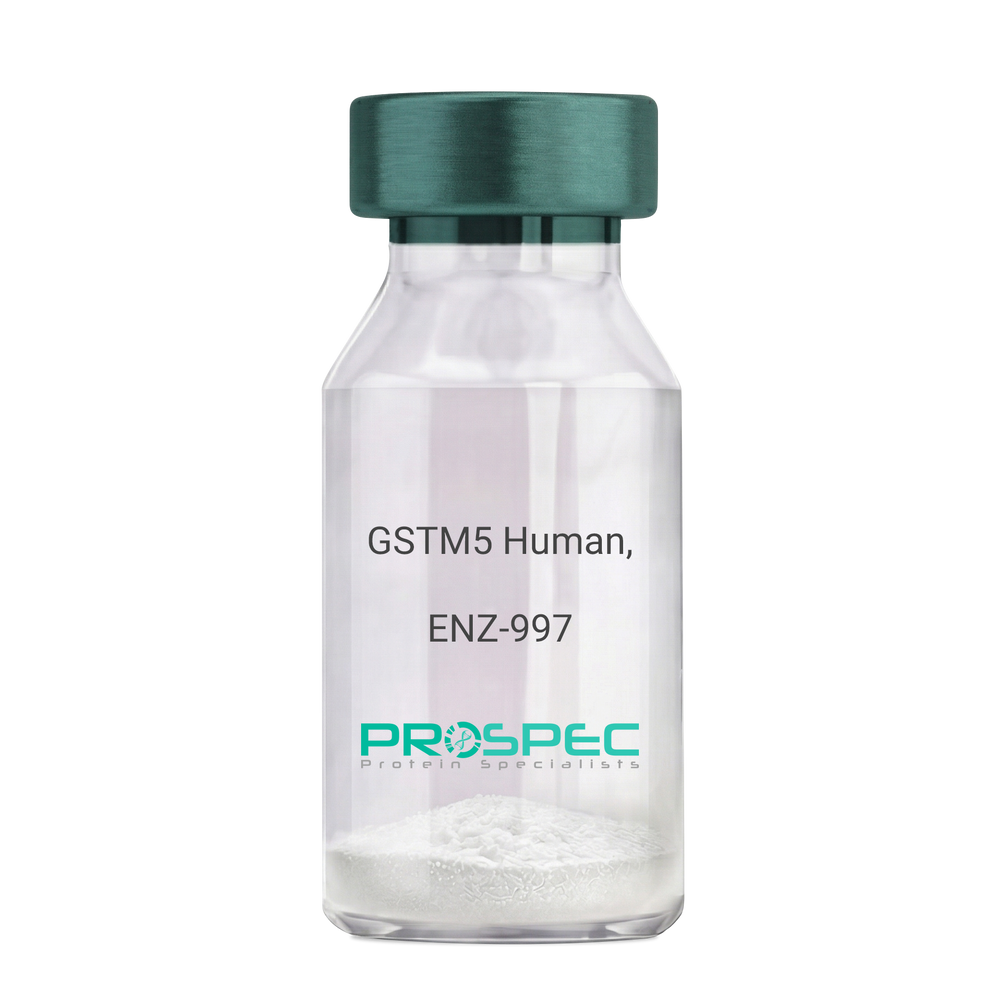
GSTM5 Human, ActiveDescription:
Glutathione S-Transferase MU 5 Human Recombinant, Active
Glutathione S-transferase mu 5, GSTM5-5, GST class-mu 5, GTM5, glutathione S-alkyltransferase M5, S-(hydroxyalkyl) glutathione lyase M5, EC 2.5.1.18.
Product # :
ENZ-997Price :
Quantity :
Shipping Method :
Shipped with Ice Packs
More Info
- description
- source
- formulation
- purity
- biological activity
- More Info
Description
GSTM5 Human Recombinant produced in E. coli is a single polypeptide chain containing 242 amino acids (1-218) and having a molecular mass of 28.2 kDa.GSTM5 is fused to a 24 amino acid His-tag at N-terminus & purified by proprietary chromatographic techniques.
Source
E.coli.
Formulation
The GSTM5 solution (1mg/ml) contains 20mM Tris-HCl buffer (pH 8.0), 0.1M NaCl, 1mM DTT and 10% glycerol.
Purity
Greater than 95% as determined by SDS-PAGE.
Biological Activity
Specific activity is > 90,000 pmol/min/ug, and is defined as the amount of enzyme that conjugate 1.0 u mole of 1-chloro-2,4- dinitrobenzene (CDNB) with reduced glutathione per minute at pH 6.5 at 25C.More Info
-
Introduction
Glutathione S-transferase mu 5 (GSTM5) belongs to the glutathione s-transferase (GST) family of proteins. There are 8 families of GST proteins, specifically alpha, kappa, mu, omega, pi, sigma, theta and zeta, each of which is comprised of proteins which have various functions throughout the cell. GSTM5 belongs to the mu class of enzymes which function in the detoxification of electrophilic compounds, including carcinogens, therapeutic drugs, environmental toxins and products of oxidative stress, by conjugation with glutathione. GSTM5 has an imperative role in detoxification. GSTM5 conjugates reduced glutathione to a large number of exogenous and endogenous hydrophobic electrophiles.
-
Synonyms
Glutathione S-transferase mu 5, GSTM5-5, GST class-mu 5, GTM5, glutathione S-alkyltransferase M5, S-(hydroxyalkyl) glutathione lyase M5, EC 2.5.1.18.
-
Physical Appearance
Sterile Filtered colorless solution.
-
Stability
Store at 4°C if entire vial will be used within 2-4 weeks. Store, frozen at -20°C for longer periods of time. For long term storage it is recommended to add a carrier protein (0.1% HSA or BSA).Avoid multiple freeze-thaw cycles.
-
Amino Acid Sequence
MGSSHHHHHH SSGLVPRGSH MGSHMPMTLG YWDIRGLAHA IRLLLEYTDS SYVEKKYTLG DAPDYDRSQW LNEKFKLGLD FPNLPYLIDG AHKITQSNAI LRYIARKHNL CGETEEEKIR VDILENQVMD NHMELVRLCY DPDFEKLKPK YLEELPEKLK LYSEFLGKRP WFAGDKITFV DFLAYDVLDM KRIFEPKCLD AFLNLKDFIS RFEGLKKISA YMKSSQFLRG LLFGKSATWN SK.
ProSpec's products are furnished for LABORATORY RESEARCH USE ONLY. The product may not be used as drugs, agricultural or pesticidal products, food additives or household chemicals.
- View Data Sheet
Name :
ALKBH2 HumanDescription:
ALKB Alkylation Repair Homolog 2 Human Recombinant
Alpha-ketoglutarate-dependent dioxygenase alkB homolog 2, Alkylated DNA repair protein alkB homolog 2, Oxy DC1, ALKBH2, ABH2, FLJ99103, MGC90512.
Product # :
ENZ-112Price :
Quantity :
Shipping Method :
Shipped with Ice Packs
More Info
- description
- source
- formulation
- purity
- More Info
Description
ALKBH2 produced in E.Coli is a single, non-glycosylated polypeptide chain containing 281 amino acids (1-261 a.a.) and having a molecular mass of 31.4kDa.ALKBH2 is fused to a 20 amino acid His-tag at N-terminus & purified by proprietary chromatographic techniques.
Source
Escherichia Coli.
Formulation
ALKBH2 solution (0.5mg/ml) containing 20mM Tris-HCl buffer (pH 8.0), 1mM DTT and 30% glycerol.
Purity
Greater than 90.0% as determined by SDS-PAGE.
More Info
-
Introduction
ALKBH2 is a member of the ALKB family.ALKBH2 is expressed in the heart, colon, liver, testis, ovary, prostate and the small intestine. ALKBH2 uses iron as a cofactor and acts as a dioxygenase which catalyzes the repair of alkylated DNA and RNA containing 1-methyladenine and 3-meth-ylcytosine. ALKBH2 is functionally activated by ascorbate and requires oxygen and ?-ketoglutarate for enzymatic activity.
-
Synonyms
Alpha-ketoglutarate-dependent dioxygenase alkB homolog 2, Alkylated DNA repair protein alkB homolog 2, Oxy DC1, ALKBH2, ABH2, FLJ99103, MGC90512.
-
Physical Appearance
Sterile filtered colorless solution.
-
Stability
Store at 4°C if entire vial will be used within 2-4 weeks. Store, frozen at -20°C for longer periods of time. For long term storage it is recommended to add a carrier protein (0.1% HSA or BSA).Avoid multiple freeze-thaw cycles.
-
Amino Acid Sequence
MGSSHHHHHH SSGLVPRGSH MDRFLVKGAQ GGLLRKQEEQ EPTGEEPAVL GGDKESTRKR PRREAPGNGG HSAGPSWRHI RAEGLDCSYT VLFGKAEADE IFQELEKEVE YFTGALARVQ VFGKWHSVPR KQATYGDAGL TYTFSGLTLS PKPWIPVLER IRDHVSGVTG QTFNFVLINR YKDGCDHIGE HRDDERELAP GSPIASVSFG ACRDFVFRHK DSRGKSPSRR VAVVRLPLAH GSLLMMNHPT NTHWYHSLPV RKKVLAPRVN LTFRKILLTK K.
ProSpec's products are furnished for LABORATORY RESEARCH USE ONLY. The product may not be used as drugs, agricultural or pesticidal products, food additives or household chemicals.
- View Data Sheet
Name :
PPME1 HumanDescription:
Protein Phosphatase Methylesterase 1 Human Recombinant
Protein phosphatase methylesterase 1, PME-1, FLJ22226, EC 3.1.1.
Product # :
ENZ-155Price :
Quantity :
Shipping Method :
Shipped with Ice Packs
More Info
- description
- source
- formulation
- purity
- More Info
Description
PPME1 Human Recombinant produced in E.coli is a single, non-glycosylated polypeptide chain containing 406 amino acids (1-386) and having a molecular mass of 44.4 kDa.The PPME1 is fused to a 20 amino acid His-Tag at N-terminus and purified by proprietary chromatographic techniques.
Source
E.coli.
Formulation
The PPME1 solution (0.5mg/ml) contains 20mM Tris-HCl buffer (pH 8.0), 1mM DTT, 0.1M NaCl and 20% glycerol.
Purity
Greater than 95% as determined by SDS-PAGE.
More Info
-
Introduction
PPME1 catalyzes the demethylation and inactivation of protein phosphatase (PP2A), a multimeric phosphoserine/ threonine protein phosphatase related to growth inhibition and cell cycle arrest. PPME1 can demethylate PP2A catalytic subunit in vitro and okadaic acid treatment can inhibit this reaction. It is conserved from yeast to human and holds a motif found in lipases having a catalytic triad activated serine as their active site nucleophile.
-
Synonyms
Protein phosphatase methylesterase 1, PME-1, FLJ22226, EC 3.1.1.
-
Physical Appearance
Sterile Filtered colorless solution.
-
Stability
Store at 4°C if entire vial will be used within 2-4 weeks. Store, frozen at -20°C for longer periods of time. For long term storage it is recommended to add a carrier protein (0.1% HSA or BSA).Avoid multiple freeze-thaw cycles.
-
Amino Acid Sequence
MGSSHHHHHH SSGLVPRGSH MSALEKSMHL GRLPSRPPLP GSGGSQSGAK MRMGPGRKRD FSPVPWSQYF ESMEDVEVEN ETGKDTFRVY KSGSEGPVLL LLHGGGHSAL SWAVFTAAII SRVQCRIVAL DLRSHGETKV KNPEDLSAET MAKDVGNVVE AMYGDLPPPI MLIGHSMGGA IAVHTASSNL VPSLLGLCMI DVVEGTAMDA LNSMQNFLRG RPKTFKSLEN AIEWSVKSGQ IRNLESARVS MVGQVKQCEG ITSPEGSKSI VEGIIEEEEE DEEGSESISK RKKEDDMETK KDHPYTWRIE LAKTEKYWDG WFRGLSNLFL SCPIPKLLLL AGVDRLDKDL TIGQMQGKFQ MQVLPQCGHA VHEDAPDKVA EAVATFLIRH RFAEPIGGFQ CVFPGC
ProSpec's products are furnished for LABORATORY RESEARCH USE ONLY. The product may not be used as drugs, agricultural or pesticidal products, food additives or household chemicals.
- View Data Sheet
Name :
GSTO2 HumanDescription:
Glutathione S-Transferase Omega 2 Human Recombinant
Glutathione S-transferase omega-2, GSTO-2, Glutathione S-transferase omega 2-2, GSTO 2-2, Glutathione-dependent dehydroascorbate reductase, Monomethylarsonic acid reductase, MMA(V) reductase, GSTO2, bA127L20.1.
Product # :
ENZ-605Price :
Quantity :
Shipping Method :
Shipped with Ice Packs
More Info
- description
- source
- formulation
- purity
- More Info
Description
GSTO2 Human Recombinant produced in E.coli is a single, non-glycosylated polypeptide chain containing 266 amino acids (1-243) and having a molecular mass of 30.6kDa.GSTO2 is fused to a 23 amino acid His-tag at N-terminus & purified by proprietary chromatographic techniques.
Source
Escherichia Coli.
Formulation
The GSTO2 solution (0.25mg/ml) contains 20mM Tris-HCl buffer (pH 8.0), 0.1M NaCl and 40% glycerol.
Purity
Greater than 85.0% as determined by SDS-PAGE.
More Info
-
Introduction
Glutathione S-transferase omega 2 (GSTO2) is a member of the GST superfamily. GSTO2 is involved in catalyzing the reaction of glutathione with a broad range of organic compounds to form thioethers, a process which is vital for the metabolism and detoxification of a variety of xenobiotics and carcinogens. GSTO2 displays glutathione-dependent thiol transferase activity. GSTO2 has a high dehydroascorbate reductase activity and may be a factor in the recycling of ascorbic acid. GSTO2 also participates in the biotransformation of inorganic arsenic and reduces monomethylarsonic acid (MMA). GSTO2 is expressed in an array of tissues, including the liver, kidney, skeletal muscle and prostate, while the strongest expression is seen in the testis.
-
Synonyms
Glutathione S-transferase omega-2, GSTO-2, Glutathione S-transferase omega 2-2, GSTO 2-2, Glutathione-dependent dehydroascorbate reductase, Monomethylarsonic acid reductase, MMA(V) reductase, GSTO2, bA127L20.1.
-
Physical Appearance
Sterile Filtered clear solution.
-
Stability
Store at 4°C if entire vial will be used within 2-4 weeks. Store, frozen at -20°C for longer periods of time. For long term storage it is recommended to add a carrier protein (0.1% HSA or BSA).Avoid multiple freeze-thaw cycles.
-
Amino Acid Sequence
MGSSHHHHHH SSGLVPRGSH MGSMSGDATR TLGKGSQPPG PVPEGLIRIY SMRFCPYSHR TRLVLKAKDI RHEVVNINLR NKPEWYYTKH PFGHIPVLET SQCQLIYESV IACEYLDDAY PGRKLFPYDP YERARQKMLL ELFCKVPHLT KECLVALRCG RECTNLKAAL RQEFSNLEEI
LEYQNTTFFG GTCISMIDYL LWPWFERLDV YGILDCVSHT PALRLWISAM KWDPTVCALL MDKSIFQGFL NLYFQNNPNA FDFGLC.
ProSpec's products are furnished for LABORATORY RESEARCH USE ONLY. The product may not be used as drugs, agricultural or pesticidal products, food additives or household chemicals.
- View Data Sheet
Name :
PARP1 HumanDescription:
Poly (ADP-Ribose) Polymerase 1 Human Recombinant
ADPRT, ADPRT1, pADPRT, pADPRT-1, PARP, PARP-1, PPOL, Poly [ADP-ribose] polymerase 1, NAD(+) ADP-ribosyltransferase 1, Poly[ADP-ribose] synthase 1, PARP1.
Product # :
ENZ-477Price :
Quantity :
Shipping Method :
Shipped with Ice Packs
More Info
- description
- source
- formulation
- purity
- More Info
Description
PARP1 Human Recombinant produced in E.Coli is a single, non-glycosylated, polypeptide chain containing 354 amino acids (662-1014a.a.) and having a molecular mass of 39.6 kDa. PARP1 is purified by proprietary chromatographic techniques.
Source
Escherichia Coli.
Formulation
PARP1 solution containing 20mM Tris pH-8, 1mM DTT and 10% glycerol.
Purity
Greater than 95% as determined by SDS-PAGE.
More Info
-
Introduction
PARP1 takes part in the base excision repair pathway, by catalyzing the poly ADP-ribosyl of a restricted number of acceptor proteins involved in chromatin architecture and in DNA metabolism.. PARP1 mediates the poly ADP-ribosy of APLF and CHFR. PARP1 positively regulates the transcription of MTUS1 and negatively regulates the transcription of MTUS2/TIP150. PARP1 is a chromatin-associated enzyme, poly (ADP-ribosyl) transferase, which modifies various nuclear proteins by poly ADP-ribosyl. PARP1 takes part in the regulation of various significant cellular processes such as differentiation, proliferation, and tumor transformation and also in the regulation of the molecular events involved in the recovery of cell from DNA damage. PARP1 is a site of mutation in Fanconi anemia, and is involved in the pathophysiology of type I diabetes.
-
Synonyms
ADPRT, ADPRT1, pADPRT, pADPRT-1, PARP, PARP-1, PPOL, Poly [ADP-ribose] polymerase 1, NAD(+) ADP-ribosyltransferase 1, Poly[ADP-ribose] synthase 1, PARP1.
-
Physical Appearance
Sterile filtered colorless solution.
-
Stability
Store at 4°C if entire vial will be used within 2-4 weeks. Store, frozen at -20°C for longer periods of time. For long term storage it is recommended to add a carrier protein (0.1% HSA or BSA).Avoid multiple freeze-thaw cycles.
-
Amino Acid Sequence
MKSKLPKPVQ DLIKMIFDVE SMKKAMVEYE IDLQKMPLGK LSKRQIQAAY SILSEVQQAV SQGSSDSQIL DLSNRFYTLI PHDFGMKKPP LLNNADSVQA KAEMLDNLLD IEVAYSLLRG GSDDSSKDPI DVNYEKLKTD IKVVDRDSEE AEIIRKYVKN THATTHNAYD LEVIDIFKIE REGECQRYKP FKQLHNRRLL WHGSRTTNFA GILSQGLRIA PPEAPVTGYM FGKGIYFADM VSKSANYCHT SQGDPIGLIL LGEVALGNMY ELKHASHISK LPKGKHSVKG LGKTTPDPSA NISLDGVDVP LGTGISSGVN DTSLLYNEYI VYDIAQVNLK YLLKLKFNFK TSLW.
ProSpec's products are furnished for LABORATORY RESEARCH USE ONLY. The product may not be used as drugs, agricultural or pesticidal products, food additives or household chemicals.
- View Data Sheet
Name :
NAGK HumanDescription:
N-Acetylglucosamine Kinase Human Recombinant
N-acetylglucosamine kinase, GNK, GlcNAc kinase, N-acetyl-D-glucosamine kinase, HSA242910, EC 2.7.1.59.
Product # :
PKA-027Price :
Quantity :
Shipping Method :
Shipped with Ice Packs
More Info
- description
- source
- formulation
- purity
- More Info
Description
NAGK Human Recombinant produced in E. coli is a single polypeptide chain containing 367 amino acids (1-344) and having a molecular mass of 39.8kDa.NAGK is fused to a 23 amino acid His-tag at N-terminus & purified by proprietary chromatographic techniques.
Source
E.coli.
Formulation
The NAGK solution (1mg/ml) contains 20mM Tris-HCl buffer (pH 8.0), 200mM NaCl, 2mM DTT and 20% glycerol.
Purity
Greater than 95% as determined by SDS-PAGE.
More Info
-
Introduction
NAGK is a member of the eukaryotic-type N-acetylglucosamine kinase family. NAGK converts endogenous N-acetylglucosamine (GlcNAc), a key component of complex carbohydrates, from lysosomal degradation or alimentary sources into GlcNAc 6-phosphate. NAGK is a prominent salvage enzyme of amino sugar metabolism in mammals. NAGK cooperates with STK16 and LNX1 and has ManNAc kinase activity.
-
Synonyms
N-acetylglucosamine kinase, GNK, GlcNAc kinase, N-acetyl-D-glucosamine kinase, HSA242910, EC 2.7.1.59.
-
Physical Appearance
Sterile Filtered colorless solution.
-
Stability
Store at 4°C if entire vial will be used within 2-4 weeks. Store, frozen at -20°C for longer periods of time. For long term storage it is recommended to add a carrier protein (0.1% HSA or BSA).Avoid multiple freeze-thaw cycles.
-
Amino Acid Sequence
MGSSHHHHHH SSGLVPRGSH MGSMAAIYGG VEGGGTRSEV LLVSEDGKIL AEADGLSTNH WLIGTDKCVE RINEMVNRAK RKAGVDPLVP LRSLGLSLSG GDQEDAGRIL IEELRDRFPY LSESYLITTD AAGSIATATP DGGVVLISGT GSNCRLINPD GSESGCGGWG HMMGDEGSAY WIAHQAVKIV FDSIDNLEAA PHDIGYVKQA MFHYFQVPDR LGILTHLYRD FDKCRFAGFC RKIAEGAQQG DPLSRYIFRK AGEMLGRHIV AVLPEIDPVL FQGKIGLPIL CVGSVWKSWE LLKEGFLLAL TQGREIQAQN FFSSFTLMKL RHSSALGGAS LGARHIGHLL PMDYSANAIA FYSYTFS
ProSpec's products are furnished for LABORATORY RESEARCH USE ONLY. The product may not be used as drugs, agricultural or pesticidal products, food additives or household chemicals.
- View Data Sheet
Name :
PTRHD1 HumanDescription:
Peptidyl-TRNA Hydrolase Domain Containing 1 Human Recombinant
C2orf79, Putative peptidyl-tRNA hydrolase PTRHD1, Peptidyl-tRNA hydrolase domain-containing protein 1, PTRHD1.
Product # :
ENZ-826Price :
Quantity :
Shipping Method :
Shipped with Ice Packs
More Info
- description
- source
- formulation
- purity
- More Info
Description
PTRHD1 Human Recombinant produced in E.Coli is a single, non-glycosylated polypeptide chain containing 163 amino acids (1-140 a.a) and having a molecular mass of 18.2kDa.PTRHD1 is fused to a 23 amino acid His-tag at N-terminus & purified by proprietary chromatographic techniques.
Source
Escherichia Coli.
Formulation
PTRHD1 protein solution (1mg/ml) containing Phosphate buffer saline (pH 7.4), 30% glycerol and 1mM DTT.
Purity
Greater than 85.0% as determined by SDS-PAGE.
More Info
-
Introduction
Putative peptidyl-tRNA hydrolase PTRHD1 (PTRHD1) is a 140 amino acid protein, which is encoded by a gene located on human chromosome 2p23.3. Chromosome 2 is the second largest human chromosome; it consists of 237 million bases, encodes over 1,400 genes and makes up approximately 8% of the human genome. Several genetic diseases are linked to genes on chromosome 2.
-
Synonyms
C2orf79, Putative peptidyl-tRNA hydrolase PTRHD1, Peptidyl-tRNA hydrolase domain-containing protein 1, PTRHD1.
-
Physical Appearance
Sterile Filtered colorless solution.
-
Stability
Store at 4°C if entire vial will be used within 2-4 weeks. Store, frozen at -20°C for longer periods of time. For long term storage it is recommended to add a carrier protein (0.1% HSA or BSA).Avoid multiple freeze-thaw cycles.
-
Amino Acid Sequence
MGSSHHHHHH SSGLVPRGSH MGSMHRGVGP AFRVVRKMAA SGAEPQVLVQ YLVLRKDLSQ APFSWPAGAL VAQACHAATA ALHTHRDHPH TAAYLQELGR MRKVVLEAPD ETTLKELAET LQQKNIDHML WLEQPENIAT CIALRPYPKE EVGQYLKKFR LFK.
ProSpec's products are furnished for LABORATORY RESEARCH USE ONLY. The product may not be used as drugs, agricultural or pesticidal products, food additives or household chemicals.
- View Data Sheet
Name :
SULT1B1 HumanDescription:
Sulfotransferase Family, Cytosolic, 1B, Member 1 Human Recombinant
Sulfotransferase family cytosolic 1B member 1, Thyroid hormone sulfotransferase, Sulfotransferase 1B1, Sulfotransferase 1B2, ST1B1, EC 2.8.2.-, SULT1B2.
Product # :
ENZ-610Price :
Quantity :
Shipping Method :
Shipped with Ice Packs
More Info
- description
- source
- formulation
- purity
- More Info
Description
SULT1B1 Human Recombinant produced in E. coli is a single polypeptide chain containing 320 amino acids (1-296) and having a molecular mass of 37.4kDa.SULT1B1 is fused to a 24 amino acid His-tag at N-terminus & purified by proprietary chromatographic techniques.
Source
E.coli.
Formulation
The SULT1B1 solution (1mg/1ml) contains 20mM Tris-HCl buffer (pH 8.0), 100mM NaCl and 10% glycerol.
Purity
Greater than 95% as determined by SDS-PAGE.
More Info
-
Introduction
SULT1B1 enzyme in humans is encoded by the SULT1B1 gene. SULT1B1 holds a binding site for 3-prime-phosphoadenosine 5-prime-phosphosulfate, a sulfate donor, in addition to a cysteine residue conserved in the ST1 gene family of sulfotransferases. Sulfotransferases like SULT1B1 catalyze the biotransformation of a great amount of endogenous amalgams such as bile acids, neurotransmitters, steroids, and thyroid hormones, in addition to drugs and xenobiotics.
-
Synonyms
Sulfotransferase family cytosolic 1B member 1, Thyroid hormone sulfotransferase, Sulfotransferase 1B1, Sulfotransferase 1B2, ST1B1, EC 2.8.2.-, SULT1B2.
-
Physical Appearance
Sterile Filtered colorless solution.
-
Stability
Store at 4°C if entire vial will be used within 2-4 weeks. Store, frozen at -20°C for longer periods of time. For long term storage it is recommended to add a carrier protein (0.1% HSA or BSA).Avoid multiple freeze-thaw cycles.
-
Amino Acid Sequence
MGSSHHHHHH SSGLVPRGSH MGSHMLSPKD ILRKDLKLVH GYPMTCAFAS NWEKIEQFHS RPDDIVIATY PKSGTTWVSE IIDMILNDGD IEKCKRGFIT EKVPMLEMTL PGLRTSGIEQ LEKNPSPRIV KTHLPTDLLP KSFWENNCKM IYLARNAKDV SVSYYHFDLM NNLQPFPGTW EEYLEKFLTG KVAYGSWFTH VKNWWKKKEE HPILFLYYED MKENPKEEIK KIIRFLEKNL NDEILDRIIH HTSFEVMKDN PLVNYTHLPT TVMDHSKSPF MRKGTAGDWK NYFTVAQNEK FDAIYETEMS KTALQFRTEI
ProSpec's products are furnished for LABORATORY RESEARCH USE ONLY. The product may not be used as drugs, agricultural or pesticidal products, food additives or household chemicals.
- View Data Sheet
Name :
SERPINE2 MouseDescription:
Plasminogen Activator Inhibitor-2 Mouse Recombinant
Serpnie2, B230326M24Rik, PAI-1, PI-7, PI7, PN-1, Spi4, Glia-derived nexin, GDN,Peptidase inhibitor 7, Protease nexin 1, Protease nexin I, Serine protease-inhibitor 4, Serpin E2.
Product # :
ENZ-972Price :
Quantity :
Shipping Method :
Shipped with Ice Packs
More Info
- description
- source
- formulation
- purity
- More Info
Description
SERPINE2 produced in Sf9 Baculovirus cells is a single, glycosylated polypeptide chain containing 386 amino acids (20-397a.a.) and having a molecular mass of 42.9kDa. SERPINE2 is expressed with a 8 amino acid His tag at C-Terminus and purified by proprietary chromatographic techniques.
Source
Sf9, Baculovirus cells.
Formulation
SERPINE2 protein solution (0.5mg/ml) contains Phosphate Buffered Saline (pH 7.4) and 10% glycerol.
Purity
Greater than 95.0% as determined by SDS-PAGE.
More Info
-
Introduction
Plasminogen Activator Inhibitor-2 (Serpine2) which inhibits thrombin, plasmin and plasminogen activators is a part of the Serpin superfamily of the serine protease inhibitors. Serpine2 is able to transform human embryonic kidney cells into neuron-like cells. Furthermore, Serpine2's over expression in mice leads to progressive neuronal and motor dysfunction.
-
Synonyms
Serpnie2, B230326M24Rik, PAI-1, PI-7, PI7, PN-1, Spi4, Glia-derived nexin, GDN,Peptidase inhibitor 7, Protease nexin 1, Protease nexin I, Serine protease-inhibitor 4, Serpin E2.
-
Physical Appearance
Sterile Filtered colorless solution.
-
Stability
Store at 4°C if entire vial will be used within 2-4 weeks. Store, frozen at -20°C for longer periods of time. For long term storage it is recommended to add a carrier protein (0.1% HSA or BSA). Avoid multiple freeze-thaw cycles.
-
Amino Acid Sequence
SQFNSLSLEE LGSNTGIQVF NQIIKSRPHE NVVVSPHGIA SILGMLQLGA DGKTKKQLST VMRYNVNGVG KVLKKINKAI VSKKNKDIVT VANAVFLRNG FKMEVPFAVR NKDVFQCEVQ NVNFQDPASA SESINFWVKN ETRGMIDNLL SPNLIDGALT RLVLVNAVYF KGLWKSRFQP ESTKKRTFVA GDGKSYQVPM LAQLSVFRSG STRTPNGLWY NFIELPYHGE SISMLIALPT ESSTPLSAII PHITTKTIDS WMNTMVPKRM QLVLPKFTAV AQTDLKEPLK ALGITEMFEP SKANFTKITR SESLHVSHIL QKAKIEVSED GTKASAATTA ILIARSSPPW FIVDRPFLFS IRHNPTGAIL FLGQVNKPLE HHHHHH.
ProSpec's products are furnished for LABORATORY RESEARCH USE ONLY. The product may not be used as drugs, agricultural or pesticidal products, food additives or household chemicals.
- View Data Sheet
Name :
GAD2 HumanDescription:
Glutamate Decarboxylase 2 Human Recombinant
Glutamate Decarboxylase 2 (Pancreatic Islets And Brain, 65kDa), Glutamate Decarboxylase 65 KDa Isoform, 65 KDa Glutamic Acid Decarboxylase, EC 4.1.1.15, GAD-65, GAD65, Glutamate Decarboxylase 2 (Pancreatic Islets And Brain, 65kD), Glutamate Decarboxylase-2 (Pancreas), EC 4.1.1, GAD2.
Product # :
ENZ-937Price :
Quantity :
Shipping Method :
Shipped with Ice Packs
More Info
- description
- source
- formulation
- purity
- More Info
Description
Recombinant Human GAD2 produced in SF9 is a glycosylated, polypeptide chain having a calculated molecular mass of 61 kDa. GAD2 is expressed with a 6xHis tag at N-terminus and purified by proprietary chromatographic techniques.
Source
Sf9 insect cells.
Formulation
GAD2 protein solution is supplied in 20mM Sodium phosphate pH-7.4, 150mM NaCl, 0.016mM Pyridoxal-5’-Phosphate, 0.05% Tergitol 15-S-9 and 20% glycerol.
Purity
Greater than 95.0% as determined by SDS-PAGE.
More Info
-
Introduction
Glutamate Decarboxylase 2 (GAD2) is one of several forms of glutamic acid decarboxylase, identified as a main autoantigen in type II diabetes. The GAD2 enzyme is responsible for catalyzing the production of gamma-aminobutyric acid from L-glutamic acid. A pathogenic role for the GAD2 enzyme has been characterized in the human pancreas since it has been identified as an autoantibody and an autoreactive T cell target in type II diabetes. GAD2 gene may also have a role in the stiff man syndrome. In addition, GAD2 catalyzes the production of GABA.
-
Synonyms
Glutamate Decarboxylase 2 (Pancreatic Islets And Brain, 65kDa), Glutamate Decarboxylase 65 KDa Isoform, 65 KDa Glutamic Acid Decarboxylase, EC 4.1.1.15, GAD-65, GAD65, Glutamate Decarboxylase 2 (Pancreatic Islets And Brain, 65kD), Glutamate Decarboxylase-2 (Pancreas), EC 4.1.1, GAD2.
-
Physical Appearance
Sterile Filtered clear solution.
-
Stability
Store at 4°C if entire vial will be used within 2-4 weeks. Store, frozen at -20°C for longer periods of time. Avoid multiple freeze-thaw cycles.
ProSpec's products are furnished for LABORATORY RESEARCH USE ONLY. The product may not be used as drugs, agricultural or pesticidal products, food additives or household chemicals.
- View Data Sheet
Name :
NUDT3 HumanDescription:
Nudix Type Motif 3 Human Recombinant
Diphosphoinositol polyphosphate phosphohydrolase 1, DIPP-1, Diadenosine 5',5'''-P1,P6-hexaphosphate hydrolase 1, Nucleoside diphosphate-linked moiety X motif 3, Nudix motif 3, NUDT3, DIPP, DIPP1.
Product # :
ENZ-071Price :
Quantity :
Shipping Method :
Shipped with Ice Packs
More Info
- description
- source
- formulation
- purity
- More Info
Description
NUDT3 Human Recombinant fused with a 20 amino acid His tag at N-terminus produced in E.Coli is a single, non-glycosylated, polypeptide chain containing 192 amino acids (1-172 a.a.) and having a molecular mass of 21.6kDa. The NUDT3 is purified by proprietary chromatographic techniques.
Source
Escherichia Coli.
Formulation
The NUDT3 solution (0.5 mg/ml) contains 20mM Tris-HCl buffer (pH8.0), 0.2M NaCl, 5mM DTT and 20% glycerol.
Purity
Greater than 95.0% as determined by SDS-PAGE.
More Info
-
Introduction
NUDT3 is a 172 amino acid cytoplasmic protein which is a member of the nudix hydrolase family and DIPP subfamily. NUDT3 functions as a negative regulator of the ERK 1/2 pathway and hydrolyzes 5-phosphoribose 1-diphosphate. NUDT3 is a monomer which binds magnesium as a cofactor. In addition, NUDT3 is widely expressed but can be found at highest levels in the liver, pancreas, brain and heart.
-
Synonyms
Diphosphoinositol polyphosphate phosphohydrolase 1, DIPP-1, Diadenosine 5',5'''-P1,P6-hexaphosphate hydrolase 1, Nucleoside diphosphate-linked moiety X motif 3, Nudix motif 3, NUDT3, DIPP, DIPP1.
-
Physical Appearance
Sterile Filtered colorless solution.
-
Stability
Store at 4°C if entire vial will be used within 2-4 weeks. Store, frozen at -20°C for longer periods of time. For long term storage it is recommended to add a carrier protein (0.1% HSA or BSA).Avoid multiple freeze-thaw cycles.
-
Amino Acid Sequence
MGSSHHHHHH SSGLVPRGSH MMKLKSNQTR TYDGDGYKKR AACLCFRSES EEEVLLVSSS RHPDRWIVPG GGMEPEEEPS VAAVREVCEE AGVKGTLGRL VGIFENQERK HRTYVYVLIV TEVLEDWEDS VNIGRKREWF KIEDAIKVLQ YHKPVQASYF ETLRQGYSAN NGTPVVATTY SVSAQSSMSG IR.
ProSpec's products are furnished for LABORATORY RESEARCH USE ONLY. The product may not be used as drugs, agricultural or pesticidal products, food additives or household chemicals.
- View Data Sheet
Name :
M2 HumanDescription:
DLAT/DLST/BCOADC Recombinant Human
Product # :
ENZ-072Price :
Quantity :
Shipping Method :
Shipped with Ice Packs
More Info
- description
- source
- formulation
- purity
- More Info
Description
Recombinant antigen for solid (ELISA) and fluid phase diagnostic assays. Mixture of E2/dihydrolipamide acyltransferase-subunits from 3 mitochondrial protein complexes: pyruvate dehydrogenase complex (PDC-E2) having a molecular mass of 60,630 Dalton (pI 5.8); 2-oxo-glutarate dehydrogenase complex (OGDC-E2) having a molecular mass of 42,301 Dalton (pI 6.3); branched chain 2-oxo-acid dehydrogenase complex (BCOADCE2) having a molecular mass of 47,321 Dalton (pI 6.5). Mixture contains equal mass of each protein component. cDNAs coding for the mature forms of the human PDC-E2, OGDC-E2 and BCOADC-E2 proteins individually fused to a hexa-histidine purification tag.
Source
Sf9 insect cells.
Formulation
M2 is supplied in 16mM HEPES buffer pH-8.0, 400mM NaCl, and 20% glycerol.
Purity
Greater than 75% as determined by SDS-PAGE.
More Info
-
Introduction
M2 autoantigen is a key mark of antimitochondrial autoantibodies (AMA), a typical serological feature in patients suffering from primary biliary cirrhosis (PBC) which is a serious autoimmune liver disease accompanied by damage to intrahepatic bile ducts. Molecular definition of the M2 antigen has displayed it as no less than 3 separate target proteins. The M2 role is like the so-called E2 subunits (or dihydrolipoamide transferases) of different mitochondrial dehydrogenase complexes:
*pyruvate dehydrogenase complex.
*branched chain 2-oxo-acid dehydrogenase complex.
*2-oxoglutarate dehydrogenase complex.
Biochemically, these complexes catalyze the oxidative decarboxylation of various alpha-keto-acid substrates and systematically engage with a prosthetic lipoamide group; they are situated in the mitochondrial matrix in association with the inner membrane. The most well-known reactivity of AMA positive PBC sera is against PDC-E2. Some patients have AMA which reacts with PDC-E2 alone (95%), but most patients also show reactivity against OGDC-E2 (39-88%) and/or BCOADC-E2 (53-55%). Actually, patients can be found with reactivity only against OGDC-E2 and/or BCOADC-E2 and no PDC-E2 autoantibodies. These patients will be overlooked in assays based on natural source-derived, predominantly PDC-E2-containing M2 antigen preparations. -
Stability
Store at 4°C if entire vial will be used within 2-4 weeks. Store, frozen at -20°C for longer periods of time. Avoid multiple freeze-thaw cycles.
-
Immunological Functions
1. Binds IgG-type human auto-antibodies. 2. Standard ELISA test (checkerboard analysis of positive/negative sera panels); immunodot test with positive/negative sera panels.
-
coating concentration
0.4-0.8 µg/ml (depending on the type of ELISA plate and coating buffer). Suitable for biotinylation and iodination.
-
Applications
Western blot with anti-M2-Antigen autoantibody-positive patient sera or monoclonal
anti-hexa-His-tag antibody.
ProSpec's products are furnished for LABORATORY RESEARCH USE ONLY. The product may not be used as drugs, agricultural or pesticidal products, food additives or household chemicals.
- View Data Sheet
Name :
UGT1A1 HumanDescription:
UDP Glucuronosyltransferase 1 Family Polypeptide A1 Human Recombinant
UDP Glucuronosyltransferase 1 Family, Polypeptide A1, UGT1, GNT1, UDP Glycosyltransferase 1 Family, Polypeptide A1, Bilirubin-Specific UDPGT Isozyme 1, UDP-Glucuronosyltransferase 1-A, UDP-Glucuronosyltransferase 1A1, EC 2.4.1.17, UDPGT 1-1, BILIQTL1, HUG-BR1, UGT1-01, UGT-1A, UGT1*1, UGT1.1, UGT1A, Bilirubin UDP-Glucuronosyltransferase Isozyme 1, Bilirubin UDP-Glucuronosyltransferase 1-1, UDP-Glucuronosyltransferase 1-1, UDPGT, UDP-glucuronosyltransferase 1-1.
Product # :
ENZ-864Price :
Quantity :
Shipping Method :
Shipped with Ice Packs
More Info
- description
- source
- formulation
- purity
- More Info
Description
UGT1A1 Human Recombinant produced in E.Coli is a single, non-glycosylated polypeptide chain containing 488 amino acids (26-490 a.a) and having a molecular mass of 54.7kDa. UGT1A1 is fused to a 23 amino acid His-tag at N-terminus & purified by proprietary chromatographic techniques.
Source
Escherichia Coli.
Formulation
UGT1A1 protein solution (1mg/ml) containing 20mM Tris-HCl (pH8.0) and 10% glycerol.
Purity
Greater than 90.0% as determined by SDS-PAGE.
More Info
-
Introduction
UDP Glucuronosyltransferase 1 Family Polypeptide A1, also known as UGT1A1 has a main importance in the conjugation as well as subsequent elimination of potentially toxic xenobiotics and endogenous compounds. UGT1A1 is also capable of catalyzing glucuronidation of 17beta, 17alpha, 1-hydroxypyrene, 4-methylumbelliferone, 1-naphthol, paranitrophenol, scopoletin, and umbelliferone.
-
Synonyms
UDP Glucuronosyltransferase 1 Family, Polypeptide A1, UGT1, GNT1, UDP Glycosyltransferase 1 Family, Polypeptide A1, Bilirubin-Specific UDPGT Isozyme 1, UDP-Glucuronosyltransferase 1-A, UDP-Glucuronosyltransferase 1A1, EC 2.4.1.17, UDPGT 1-1, BILIQTL1, HUG-BR1, UGT1-01, UGT-1A, UGT1*1, UGT1.1, UGT1A, Bilirubin UDP-Glucuronosyltransferase Isozyme 1, Bilirubin UDP-Glucuronosyltransferase 1-1, UDP-Glucuronosyltransferase 1-1, UDPGT, UDP-glucuronosyltransferase 1-1.
-
Physical Appearance
Sterile Filtered clear solution.
-
Stability
Store at 4°C if entire vial will be used within 2-4 weeks. Store, frozen at -20°C for longer periods of time. For long term storage it is recommended to add a carrier protein (0.1% HSA or BSA). Avoid multiple freeze-thaw cycles.
-
Amino Acid Sequence
MGSSHHHHHH SSGLVPRGSH MGSHAGKILL IPVDGSHWLS MLGAIQQLQQ RGHEIVVLAP DASLYIRDGA FYTLKTYPVP FQREDVKESF VSLGHNVFEN DSFLQRVIKT YKKIKKDSAM LLSGCSHLLH NKELMASLAE SSFDVMLTDP FLPCSPIVAQ YLSLPTVFFL HALPCSLEFE ATQCPNPFSY VPRPLSSHSD HMTFLQRVKN MLIAFSQNFL CDVVYSPYAT LASEFLQREV TVQDLLSSAS VWLFRSDFVK DYPRPIMPNM VFVGGINCLH QNPLSQEFEA YINASGEHGI VVFSLGSMVS EIPEKKAMAI ADALGKIPQT VLWRYTGTRP SNLANNTILV KWLPQNDLLG HPMTRAFITH AGSHGVYESI CNGVPMVMMP LFGDQMDNAK RMETKGAGVT LNVLEMTSED LENALKAVIN DKSYKENIMR LSSLHKDRPV EPLDLAVFWV EFVMRHKGAP HLRPAAHDLT WYQYHSLD.
ProSpec's products are furnished for LABORATORY RESEARCH USE ONLY. The product may not be used as drugs, agricultural or pesticidal products, food additives or household chemicals.
- View Data Sheet
Name :
IDO1 Human, ActiveDescription:
Indoleamine 2,3-Dioxygenase 1 Human Recombinant, Active
IDO, IDO-1, INDO, Indoleamine 2,3-dioxygenase 1, Indoleamine-pyrrole 2,3-dioxygenase.
Product # :
ENZ-1012Price :
Quantity :
Shipping Method :
Shipped with Ice Packs
More Info
- description
- source
- formulation
- purity
- biological activity
- More Info
Description
IDO1 Human Recombinant produced in E.coli is a single, non-glycosylated polypeptide chain containing 426 amino acids (1-403a.a) and having a molecular mass of 47.7kDa. IDO1 is fused to a 23 amino acid His-tag at N-terminus & purified by proprietary chromatographic techniques.
Source
Escherichia Coli.
Formulation
The IDO1 solution (0.5mg/ml) contains 20mM Tris-HCl buffer (pH 8.0), 0.15M NaCl, 20% glycerol and 1mM DTT.
Purity
Greater than 90% as determined by SDS-PAGE.
Biological Activity
Specific activity is > 300 pmol/min/ug, and is defined as the amount of enzyme that hydrolyze 1.0 pmole of L-Tryptophan to N-formyl-Lkynurenine per minute at pH 6.5 at 25C.More Info
-
Introduction
Indoleamine 2,3-Dioxygenase 1 (IDO1) catalyzes the primary and rate-limiting stage in tryptophan catabolism to N-formyl-kynurenine. IDO1 affects on various tryptophan substrates including D-tryptophan, and serotonin and is expressed in dendritic cells, monocytes, and macrophages. IDO1 takes part in a range of pathophysiological processes like neuropathology, antimicrobial and antitumor defense, immunoregulation, and antioxidant activity. IDO1 regulates T-cell behavior by its pericellular catabolization of the necessary amino acid tryptophan.
-
Synonyms
IDO, IDO-1, INDO, Indoleamine 2,3-dioxygenase 1, Indoleamine-pyrrole 2,3-dioxygenase.
-
Physical Appearance
Sterile Filtered colorless solution.
-
Stability
Store at 4°C if entire vial will be used within 2-4 weeks. Store, frozen at -20°C for longer periods of time. For long term storage it is recommended to add a carrier protein (0.1% HSA or BSA). Avoid multiple freeze-thaw cycles.
-
Amino Acid Sequence
MGSSHHHHHH SSGLVPRGSH MGSMAHAMEN SWTISKEYHI DEEVGFALPN PQENLPDFYN DWMFIAKHLP DLIESGQLRE RVEKLNMLSI DHLTDHKSQR LARLVLGCIT MAYVWGKGHG DVRKVLPRNI AVPYCQLSKK LELPPILVYA DCVLANWKKK DPNKPLTYEN MDVLFSFRDG DCSKGFFLVS LLVEIAAASA IKVIPTVFKA MQMQERDTLL KALLEIASCL EKALQVFHQI HDHVNPKAFF SVLRIYLSGW KGNPQLSDGL VYEGFWEDPK EFAGGSAGQS SVFQCFDVLL GIQQTAGGGH AAQFLQDMRR YMPPAHRNFL CSLESNPSVR EFVLSKGDAG LREAYDACVK ALVSLRSYHL QIVTKYILIP ASQQPKENKT SEDPSKLEAK GTGGTDLMNF LKTVRSTTEK SLLKEG.
ProSpec's products are furnished for LABORATORY RESEARCH USE ONLY. The product may not be used as drugs, agricultural or pesticidal products, food additives or household chemicals.
- View Data Sheet
Name :
SULT2A1 HumanDescription:
Sulfotransferase Family, Cytosolic, 2A, Member 1 Human Recombinant
Sulfotransferase family cytosolic 2A dehydroepiandrosterone (DHEA)-preferring member 1, DHEA-ST, STD, HST, ST2, ST2A1, ST2A3, Alcohol/hydroxysteroid sulfotransferase, bile-salt sulfotranasferase 2A1, EC 2.8.2.14.
Product # :
ENZ-141Price :
Quantity :
Shipping Method :
Shipped with Ice Packs
More Info
- description
- source
- formulation
- purity
- More Info
Description
SULT2A1 Human Recombinant produced in E.Coli is a single, non-glycosylated polypeptide chain containing 305 amino acids (1-285a.a) and having a molecular mass of 35.9kDa.SULT2A1 is fused to a 20 amino acid His-tag at N-terminus & purified by proprietary chromatographic techniques.
Source
Escherichia Coli.
Formulation
SULT2A1 protein solution (1mg/1ml) containing 20mM Tris-HCl buffer (pH8.0), 20% glycerol, 0.1M NaCl and 1mM DTT.
Purity
Greater than 95.0% as determined by SDS-PAGE.
More Info
-
Introduction
SULT2A1 is a member fo the sulfotransferase family. SULT2A1 is primarily expressed in liver and adrenal tissues, and to a lesser extent in kidney. SULT2A1 catalyzes the 3'-phosphoadenosine 5'-phosphosulfate-dependent sulfation of an extensive selection of steroids in human liver and adrenal tissues, and in addition is responsible for a larg number of the sulfation of bile acids in human liver.
-
Synonyms
Sulfotransferase family cytosolic 2A dehydroepiandrosterone (DHEA)-preferring member 1, DHEA-ST, STD, HST, ST2, ST2A1, ST2A3, Alcohol/hydroxysteroid sulfotransferase, bile-salt sulfotranasferase 2A1, EC 2.8.2.14.
-
Physical Appearance
Sterile Filtered clear solution.
-
Stability
Store at 4°C if entire vial will be used within 2-4 weeks. Store, frozen at -20°C for longer periods of time. For long term storage it is recommended to add a carrier protein (0.1% HSA or BSA).Avoid multiple freeze-thaw cycles.
-
Amino Acid Sequence
MGSSHHHHHH SSGLVPRGSH MSDDFLWFEG IAFPTMGFRS ETLRKVRDEF VIRDEDVIIL TYPKSGTNWL AEILCLMHSK GDAKWIQSVP IWERSPWVES EIGYTALSET ESPRLFSSHL PIQLFPKSFF SSKAKVIYLM RNPRDVLVSG YFFWKNMKFI KKPKSWEEYF EWFCQGTVLY GSWFDHIHGW MPMREEKNFL LLSYEELKQD TGRTIEKICQ FLGKTLEPEE LNLILKNSSF QSMKENKMSN YSLLSVDYVV DKAQLLRKGV SGDWKNHFTV AQAEDFDKLF QEKMADLPRE LFPWE
ProSpec's products are furnished for LABORATORY RESEARCH USE ONLY. The product may not be used as drugs, agricultural or pesticidal products, food additives or household chemicals.
- View Data Sheet
Name :
Chikungunya E1Description:
Chikungunya Wild Type E1 Recombinant
Product # :
CHI-001Price :
Quantity :
Shipping Method :
Shipped with Ice Packs
More Info
- description
- source
- formulation
- purity
- More Info
Description
Recombinant Chikungunya Wild Type E1 produced in Insect Cells is a polypeptide chain containing amino acids 1-415 and having a molecular weight of approximately 50kDa.CHIKV E1 is purified by proprietary chromatographic technique.
Source
Insect cells.
Formulation
CHIKV E1 protein solution in 1xD-PBS, pH7.4, 0.1% Thimerosal, 5mM EDTA, 1µg/ml of Leupeptin, and Pepstatin A.
Purity
Protein is 95% pure as determined by 12.5% SDS-PAGE.
More Info
-
Introduction
Chikungunya is an infection caused by the chikungunya virus which is passed to humans by two species of mosquito of the genus Aedes: A. albopictus and A. aegypti. Animal reservoirs of the virus include monkeys, birds, cattle, and rodents. The features of the disease are a sudden onset of fever 2-4 days after exposure. The fever typically lasts 2-7 days, while the associated joint pains usually last weeks or months but sometimes years. The mortality rate is a little less than 1 in 1,000. The disease has occurred in outbreaks in Asia, Europe and the Americas since 2004. CHIKV is a single-stranded positive-sense RNA genome, 11,800 nts long which encodes 2 open reading frames. The nucleocapsid is tightly enveloped by a host-derived lipid bilayer (envelope) supporting the virus-encoded envelope proteins. 80 glycoprotein spikes are C- terminally anchored within the viral envelope. The structural polyprotein is translated from a viral sub genomic mRNA, while as the 5 structural proteins (capsid, E3, E2, 6K, E1) are translated as a single polyprotein, from which capsid (C) is cleaved off to encapsidate. The envelope polyprotein precursor E3-E2-6K-E1 is translocated to the endoplasmatic reticulum. Polyprotein is processed by host signalases, resulting in E3, E2 & E1 forming viral hetero-trimeric spikes. The viral spikes majorly contains E2 and E1 facilitate cell receptor recognition, cell entry thru pH-dependent endocytosis and support viral budding.
-
Physical Appearance
Sterile filtered colorless solution.
-
Stability
Store at 4°C if entire vial will be used within 2-4 weeks. Store, frozen at -20°C for longer periods of time. For long term storage it is recommended to add a carrier protein (0.1% HSA or BSA).Avoid multiple freeze-thaw cycles.
ProSpec's products are furnished for LABORATORY RESEARCH USE ONLY. The product may not be used as drugs, agricultural or pesticidal products, food additives or household chemicals.
- View Data Sheet
Name :
ENPP1 MouseDescription:
Ectonucleotide Pyrophosphatase Mouse Recombinant
Ectonucleotide pyrophosphatase/phosphodiesterase family member 1, E-NPP 1, Membrane component chromosome 6 surface marker 1, Phosphodiesterase I/nucleotide pyrophosphatase 1, Plasma-cell membrane glycoprotein PC-1, ENPP1, M6S1, NPPS, PC1, PDNP1, NPP1, PC-1, PCA1, ARHR2, COLED.
Product # :
ENZ-1193Price :
Quantity :
Shipping Method :
Shipped at Room temp
More Info
- description
- source
- formulation
- purity
- More Info
Description
ENPP1 Mouse Recombinant produced in HEK cells is a single, glycosylated, polypeptide chain containing 828 amino acids (Lys85-Glu906) and having a molecular mass of 95.2kDa. ENPP1 Mouse is fused to a 6 a.a his tag at C-Terminus and is purified by proprietary chromatographic techniques.
Source
HEK 293.
Formulation
The filtered (0.4µm) concentrated protein solution was lyophilized with PBS, PH 7.5.
Purity
Greater than 95.0% as determined by SDS-PAGE.
More Info
-
Synonyms
Ectonucleotide pyrophosphatase/phosphodiesterase family member 1, E-NPP 1, Membrane component chromosome 6 surface marker 1, Phosphodiesterase I/nucleotide pyrophosphatase 1, Plasma-cell membrane glycoprotein PC-1, ENPP1, M6S1, NPPS, PC1, PDNP1, NPP1, PC-1, PCA1, ARHR2, COLED.
-
Physical Appearance
Filtered White lyophilized (freeze-dried) powder.
-
Stability
Store lyophilized protein at -20°C. Aliquot the product after reconstitution to avoid repeated freezing/thawing cycles. Reconstituted protein can be stored at 4°C for a limited period of time.
-
Solubility
It is recommended to add deionized water to a working concentration of 0.5mg/ml and let the lyophilized pellet dissolve completely.
-
Amino Acid Sequence
KEVKSCKGRC FERTFSNCRC DAACVSLGNC CLDFQETCVE PTHIWTCNKF RCGEKRLSRF VCSCADDCKT HNDCCINYSS VCQDKKSWVE ETCESIDTPE CPAEFESPPT LLFSLDGFRA EYLHTWGGLL PVISKLKNCG TYTKNMRPMY PTKTFPNHYS IVTGLYPESH GIIDNKMYDP KMNASFSLKS KEKFNPLWYK GQPIWVTANH QEVKSGTYFW PGSDVEIDGI LPDIYKVYNG SVPFEERILA VLEWLQLPSH ERPHFYTLYL EEPDSSGHSH GPVSSEVIKA LQKVDRLVGM LMDGLKDLGL DKCLNLILIS DHGMEQGSCK KYVYLNKYLG DVNNVKVVYG PAARLRPTDV PETYYSFNYE ALAKNLSCRE PNQHFRPYLK PFLPKRLHFA KSDRIEPLTF YLDPQWQLAL NPSERKYCGS GFHGSDNLFS NMQALFIGYG PAFKHGAEVD SFENIEVYNL MCDLLGLIPA PNNGSHGSLN HLLKKPIYNP SHPKEEGFLS QCPIKSTSND LGCTCDPWIV PIKDFEKQLN LTTEDVDDIY HMTVPYGRPR ILLKQHHVCL LQQQQFLTGY SLDLLMPLWA SYTFLRNDQF SRDDFSNCLY QDLRIPLSPV HKCSYYKSNS KLSYGFLTPP RLNRVSNHIY SEALLTSNIV PMYQSFQVIW HYLHDTLLQR YAHERNGINV VSGPVFDFDY DGRYDSLEIL KQNSRVIRSQ EILIPTHFFI VLTSCKQLSE TPLECSALES SAYILPHRPD NIESCTHGKR ESSWVEELLT LHRARVTDVE LITGLSFYQD RQESVSELLR LKTHLPIFSQ EDHHHHHH.
-
Background
Ectonucleotide pyrophosphatase/phosphodiesterase 1 (ENPP1) is an enzyme with multifaceted roles in cellular metabolism, bone mineralization, and insulin signaling. Research utilizing mouse models has been pivotal in elucidating the complex biology of ENPP1 and its implications for various physiological processes and disease states. This study aims to provide a comprehensive exploration of ENPP1 in mouse physiology, shedding light on its diverse functions and potential applications in understanding metabolic health and disease mechanisms.
The primary objective of this research is to elucidate the impact of ENPP1 in mouse models on metabolic health. In vivo experiments using genetically modified mice with altered ENPP1 expression or activity will be conducted to investigate how ENPP1 influences glucose homeostasis, insulin sensitivity, and lipid metabolism. Understanding these mechanisms is fundamental for deciphering the role of ENPP1 in metabolic diseases such as diabetes and obesity.
The second objective is to assess the clinical relevance of ENPP1 in mouse models of bone health. Mouse models of skeletal disorders will be employed to explore how ENPP1 affects bone mineralization, density, and remodeling. These investigations may provide valuable insights into potential therapeutic strategies targeting ENPP1 in bone-related diseases.
The third objective is to explore the broader implications of ENPP1 in mouse physiology, including its effects on vascular health, inflammation, and tissue repair. Research will investigate its roles in vascular calcification, inflammation resolution, and tissue regeneration. Understanding the multifaceted properties of ENPP1 in mouse models may open new avenues for therapeutic interventions in various metabolic and chronic disease contexts.
By delving into the diverse functions of ENPP1 in mouse physiology, this research aims to expand our knowledge of its physiological roles and clinical applications. The findings may contribute to the development of targeted interventions for metabolic diseases, bone disorders, and other conditions influenced by ENPP1.
ProSpec's products are furnished for LABORATORY RESEARCH USE ONLY. The product may not be used as drugs, agricultural or pesticidal products, food additives or household chemicals.
- View Data Sheet
Name :
DsbA E.ColiDescription:
Disulfide Oxidoreductase E.Coli Recombinant
Disulfide oxidoreductase A, dsbA, rpbB, Disulfide oxidoreductase (DsbA) E Coli, DsDNA-binding protein A, Doublestranded DNA-binding protein, Disulfide oxidoreductase A periplasmic protein disulfide isomerase I, Thiol disulfide interchange protein dsbA.
Product # :
ENZ-1143Price :
Quantity :
Shipping Method :
Shipped with Ice Packs
More Info
- description
- source
- formulation
- purity
- More Info
Description
DsbA E.Coli Recombinant produced in E.Coli is a single, non-glycosylated polypeptide chain containing 190 amino acids (20-208) and having a molecular mass of 21.2 kDa. DsbA E.Coli is purified by proprietary chromatographic techniques.
Source
Escherichia Coli.
Formulation
DsbA E.Coli protein (1mg/ml) is formulated in 20mM Tris-HCl buffer (pH 7.5) and 2mM EDTA.
Purity
Greater than 95.0% as determined by SDS-PAGE.
More Info
-
Introduction
Disulfide Oxidoreductase or DsbA is a protein, found in the plasma. It is part of the thioredoxin protein family. The protein creates disulfide bonds in the target proteins by contributing disulfide bond from its Cys30-Pro31-His32-Cys33 active site to a couple of cysteine residues.
-
Synonyms
Disulfide oxidoreductase A, dsbA, rpbB, Disulfide oxidoreductase (DsbA) E Coli, DsDNA-binding protein A, Doublestranded DNA-binding protein, Disulfide oxidoreductase A periplasmic protein disulfide isomerase I, Thiol disulfide interchange protein dsbA.
-
Physical Appearance
Sterile Filtered clear solution.
-
Stability
Store at 4°C if entire vial will be used within 2-4 weeks. Store, frozen at -20°C for longer periods of time. For long term storage it is recommended to add a carrier protein (0.1% HSA or BSA).Avoid multiple freeze-thaw cycles.
-
Amino Acid Sequence
MAQYEDGKQY TTLEKPVAGA PQVLEFFSFF CPHCYQFEEV LHISDNVKKK LPEGVKMTKY HVNFMGGDLG KDLTQAWAVA MALGVEDKVT VPLFEGVQKT QTIRSASDIR DVFINAGIKG EEYDAAWNSF VVKSLVAQQE KAAADVQLRG VPAMFVNGKY QLNPQGMDTS NMDVFVQQYA DTVKYLSEKK.
ProSpec's products are furnished for LABORATORY RESEARCH USE ONLY. The product may not be used as drugs, agricultural or pesticidal products, food additives or household chemicals.
- View Data Sheet
Name :
PLA2G5 HumanDescription:
Secreted Phospholipase A2-V Human Recombinant
Calcium-dependent phospholipase A2, EC 3.1.1.4, Phosphatidylcholine 2-acylhydrolase, PLA2-10, Group V phospholipase A2, GV-PLA2, MGC46205, hVPLA(2), DKFZp686C2294, sPLA2-V, PLA2G5.
Product # :
ENZ-328Price :
Quantity :
Shipping Method :
Shipped at Room temp
More Info
- description
- source
- formulation
- purity
- More Info
Description
Secreted Phospholipase A2-V Human Recombinant was produced with N-terminal His-Tag. PLA2G5 His-Tagged Fusion protein is 15.5 kDa containing 118 amino acid residues of the human secreted phospholipase A2-V and 16 additional amino acid residues – His-Tag (underlined).
Source
Escherichia Coli.
Formulation
Filtered (0.4um) and lyophilized in 0.5 mg/mL in 0.05M Acetate buffer pH4.
Purity
Greater than 95% as determined by SDS PAGE.
More Info
-
Introduction
Phospholipase A2 (PLA2) catalyzes the hydrolysis of the sn-2 position of membrane glycerophospholipids to liberate arachidonic acid (AA), a precursor of eicosanoids including prostaglandins and leukotrienes. The same reaction also produces lysophosholipids, which represent another class of lipid mediators.
The secretory PLA2 (sPLA2) family, in which 10 isozymes have been identified, consists of low molecular weight, Ca2+-requiring secretory enzymes that have been implicated in a number of biological processes, such as modification of eicosanoid generation, inflammation, and host defense.
This enzyme has been proposed to hydrolyze phosphatidylcholine (PC) in lipoproteins to liberate lyso-PC and free fatty acids in the arterial wall, thereby facilitating the accumulation of bioactive lipids and modified lipoproteins in atherosclerotic foci.
In mice, sPLA2 expression significantly influences HDL particle size and composition and demonstrate that an induction of sPLA2 is required for the decrease in plasma HDL cholesterol in response to inflammatory stimuli. Instillation of bacteria into the bronchi was associated with surfactant degradation and a decrease in large:small ratio of surfactant aggregates in rats. -
Synonyms
Calcium-dependent phospholipase A2, EC 3.1.1.4, Phosphatidylcholine 2-acylhydrolase, PLA2-10, Group V phospholipase A2, GV-PLA2, MGC46205, hVPLA(2), DKFZp686C2294, sPLA2-V, PLA2G5.
-
Physical Appearance
Lyophilized (freeze-dried) powder.
-
Stability
Store lyophilized protein at -20°C. Aliquot the product after reconstitution to avoid repeated freezing/thawing cycles. Reconstituted protein can be stored at 4°C for a limited period of time; it does not show any change after two weeks at 4°C.
-
Solubility
Add 0.1M Acetate buffer pH4 to prepare a working stock solution of approximately 0.5 mg/mL and let the lyophilized pellet dissolve completely. For conversion into higher pH value, we recommend intensive dilution by relevant buffer to a concentration of 10µg/ml. In higher concentrations the solubility of this antigen is limited. Product is not sterile! Please filter the product by an appropriate sterile filter before using it in the cell culture.
-
Amino Acid Sequence
MRGSHHHHHH GMASHMGLLD LKSMIEKVTG KNALTNYGFY GCYCGWGGRG TPKDGTDWCC WAHDHCYGRLEEKGCNIRTQ SYKYRFAWGV VTCEPGPFCH VNLCACDRKL VYCLKRNLRS YNPQYQYFPN ILCS.
ProSpec's products are furnished for LABORATORY RESEARCH USE ONLY. The product may not be used as drugs, agricultural or pesticidal products, food additives or household chemicals.