Skip to content

High-quality research proteins.

  • 1-800-805-6531

  • Mon - Sat 8.00-18.00, Sun - Closed

  • info@prospecbio.com

  • PO Box 6591 East Brunswick NJ 08816

  • Products
    • Cytokines
    • Growth factors
    • Chemokines
    • Cd antigens
    • Neurotrophins
    • Hormones
    • Enzymes
    • Viral antigens
    • Recombinant proteins
    • Natural proteins
    • Monoclonal antibodies
    • Polyclonal antibodies
    • Thermal Packaging
  • About
    • Company
    • Founder
    • Contribution
  • Customers
    • Eastern Asia
    • Eastern Europe
    • North America
    • South America
    • South East Asia
    • Southern Asia
    • Western Europe
  • Ordering
    • Ordering Method
    • Ordering - Credit Card
    • Ordering - PO
    • Shipping Fees
    • FAQs
  • Services
    • DNA Cloning
    • Protein Expression
    • Monoclonal Antibody
    • Fermentation
    • Technology License
  • Contact us
Log in

Country/region

  • USD $ | Albania
  • USD $ | Andorra
  • USD $ | Argentina
  • USD $ | Armenia
  • USD $ | Australia
  • USD $ | Austria
  • USD $ | Azerbaijan
  • USD $ | Belarus
  • USD $ | Belgium
  • USD $ | Bolivia
  • USD $ | Brazil
  • USD $ | Bulgaria
  • USD $ | Cambodia
  • USD $ | Canada
  • USD $ | Chile
  • USD $ | China
  • USD $ | Colombia
  • USD $ | Costa Rica
  • USD $ | Croatia
  • USD $ | Cyprus
  • USD $ | Czechia
  • USD $ | Denmark
  • USD $ | Estonia
  • USD $ | Finland
  • USD $ | France
  • USD $ | Georgia
  • USD $ | Germany
  • USD $ | Greece
  • USD $ | Hong Kong SAR
  • USD $ | Hungary
  • USD $ | Iceland
  • USD $ | India
  • USD $ | Ireland
  • USD $ | Israel
  • USD $ | Italy
  • USD $ | Japan
  • USD $ | Kazakhstan
  • USD $ | Latvia
  • USD $ | Liechtenstein
  • USD $ | Lithuania
  • USD $ | Madagascar
  • USD $ | Malta
  • USD $ | Mexico
  • USD $ | Moldova
  • USD $ | Monaco
  • USD $ | Netherlands
  • USD $ | New Zealand
  • USD $ | North Macedonia
  • USD $ | Norway
  • USD $ | Panama
  • USD $ | Paraguay
  • USD $ | Peru
  • USD $ | Philippines
  • USD $ | Poland
  • USD $ | Portugal
  • USD $ | Romania
  • USD $ | Singapore
  • USD $ | Slovakia
  • USD $ | Slovenia
  • USD $ | South Africa
  • USD $ | South Korea
  • USD $ | Spain
  • USD $ | Sri Lanka
  • USD $ | Sweden
  • USD $ | Switzerland
  • USD $ | Taiwan
  • USD $ | Thailand
  • USD $ | Türkiye
  • USD $ | Ukraine
  • USD $ | United Kingdom
  • USD $ | United States
  • USD $ | Uruguay
  • USD $ | Vatican City
  • USD $ | Venezuela
  • USD $ | Vietnam
  • Facebook
  • Instagram
logoProSpec - Recombinant Protein Manufacturer for academic and R&D industry
Become a distributor
Account Log in
Wishlist
Cart Cart(0)
  • Products
    +
    • Cytokines
    • Growth factors
    • Chemokines
    • Cd antigens
    • Neurotrophins
    • Hormones
    • Enzymes
    • Viral antigens
    • Recombinant proteins
    • Natural proteins
    • Monoclonal antibodies
    • Polyclonal antibodies
    • Thermal Packaging
  • About
    +
    • Company
    • Founder
    • Contribution
  • Customers
    +
    • Eastern Asia
    • Eastern Europe
    • North America
    • South America
    • South East Asia
    • Southern Asia
    • Western Europe
  • Ordering
    +
    • Ordering Method
    • Ordering - Credit Card
    • Ordering - PO
    • Shipping Fees
    • FAQs
  • Services
    +
    • DNA Cloning
    • Protein Expression
    • Monoclonal Antibody
    • Fermentation
    • Technology License
  • Contact us

Item added to your cart

View cart
View All
  • Cytokines
  • Growth factors
  • Chemokines
  • Cd antigens
  • Neurotrophins
  • Hormones
  • Enzymes
  • Viral antigens
  • Recombinant proteins
  • Natural proteins
  • Monoclonal antibodies
  • Polyclonal antibodies
  • Thermal Packaging
  • Tumor Necrosis Factor

    Tumor Necrosis Factor

    View All
  • 4-1BB

    4-1BB

    View All
  • Adiponectin

    Adiponectin

    View All
  • AIF1

    AIF1

    View All
  • Other Cytokines

    Other Cytokines

    View All
  • AITRL

    AITRL

    View All
  • Angiopoietin

    Angiopoietin

    View All
  • Apolipoprotein

    Apolipoprotein

    View All
  • B-Cell Activating Factor

    B-Cell Activating Factor

    View All
  • Beta Defensin

    Beta Defensin

    View All
  • Bone Morphogenetic Protein

    Bone Morphogenetic Protein

    View All
  • B type Natriuretic Peptide

    B type Natriuretic Peptide

    View All
  • BST

    BST

    View All
  • Betacellulin

    Betacellulin

    View All
  • Cardiotrophin

    Cardiotrophin

    View All
  • Activin

    Activin

    View All
  • Fibroblast Growth Factor

    Fibroblast Growth Factor

    View All
  • Other Growth Factors

    Other Growth Factors

    View All
  • CSF

    CSF

    View All
  • CTGF

    CTGF

    View All
  • IGFBP

    IGFBP

    View All
  • VEGF Protein

    VEGF Protein

    View All
  • EGF

    EGF

    View All
  • Epigen

    Epigen

    View All
  • Erythropoietin

    Erythropoietin

    View All
  • Insulin-Like Growth Factor

    Insulin-Like Growth Factor

    View All
  • Growth Hormone

    Growth Hormone

    View All
  • HDGF

    HDGF

    View All
  • Hepatocyte Growth Factor

    Hepatocyte Growth Factor

    View All
  • Insulin

    Insulin

    View All
  • BCA-1/ BLC (CXCL13)

    BCA-1/ BLC (CXCL13)

    View All
  • BRAK (CXCL14)

    BRAK (CXCL14)

    View All
  • C-10 (CCL6)

    C-10 (CCL6)

    View All
  • Other Chemokines

    Other Chemokines

    View All
  • MEC (CCL28)

    MEC (CCL28)

    View All
  • LD78-beta (CCL3L1)

    LD78-beta (CCL3L1)

    View All
  • CTACK (CCL27)

    CTACK (CCL27)

    View All
  • CXCL16

    CXCL16

    View All
  • CXCL17

    CXCL17

    View All
  • Platelet Factor-4 (CXCL4)

    Platelet Factor-4 (CXCL4)

    View All
  • ENA-78 (CXCL5)

    ENA-78 (CXCL5)

    View All
  • Eotaxin (CCL11,24,26)

    Eotaxin (CCL11,24,26)

    View All
  • Exodus-2 (CCL21)

    Exodus-2 (CCL21)

    View All
  • Fractalkine (CX3CL1)

    Fractalkine (CX3CL1)

    View All
  • CXCL6

    CXCL6

    View All
  • Other CD Antigens

    Other CD Antigens

    View All
  • CD14

    CD14

    View All
  • CD164

    CD164

    View All
  • CD1

    CD1

    View All
  • CD2

    CD2

    View All
  • CD200

    CD200

    View All
  • CD207

    CD207

    View All
  • CD226

    CD226

    View All
  • CD23

    CD23

    View All
  • CD244

    CD244

    View All
  • CD247

    CD247

    View All
  • CD27

    CD27

    View All
  • CD274

    CD274

    View All
  • CD300

    CD300

    View All
  • CD33

    CD33

    View All
  • Other Neurotrophins

    Other Neurotrophins

    View All
  • Beta-NGF

    Beta-NGF

    View All
  • BDNF

    BDNF

    View All
  • CDNF

    CDNF

    View All
  • CNTF

    CNTF

    View All
  • GDNF

    GDNF

    View All
  • Glia Maturation Factor

    Glia Maturation Factor

    View All
  • MANF

    MANF

    View All
  • Midkine

    Midkine

    View All
  • Neuroglobin

    Neuroglobin

    View All
  • Neurotrophic factors

    Neurotrophic factors

    View All
  • Neuregulin

    Neuregulin

    View All
  • Neuropilin

    Neuropilin

    View All
  • Pigment Epithelium-Derived Factor

    Pigment Epithelium-Derived Factor

    View All
  • Pleiotrophin

    Pleiotrophin

    View All
  • Peptide Hormones

    Peptide Hormones

    View All
  • Other Hormones

    Other Hormones

    View All
  • HCG

    HCG

    View All
  • Endothelin

    Endothelin

    View All
  • Exendin

    Exendin

    View All
  • FSH

    FSH

    View All
  • Glucagon

    Glucagon

    View All
  • GHRP

    GHRP

    View All
  • GLP

    GLP

    View All
  • Thyrostimulin

    Thyrostimulin

    View All
  • Inhibin A

    Inhibin A

    View All
  • LHRH

    LHRH

    View All
  • Melanotan

    Melanotan

    View All
  • Procalcitonin

    Procalcitonin

    View All
  • PTH

    PTH

    View All
  • Peroxiredoxin

    Peroxiredoxin

    View All
  • Peptidase

    Peptidase

    View All
  • Synthetase

    Synthetase

    View All
  • Transferase

    Transferase

    View All
  • Hydrolase

    Hydrolase

    View All
  • Dehydrogenase

    Dehydrogenase

    View All
  • ACE2

    ACE2

    View All
  • Esterase

    Esterase

    View All
  • Protein Kinases

    Protein Kinases

    View All
  • Other Enzymes

    Other Enzymes

    View All
  • Phosphatase

    Phosphatase

    View All
  • Deaminase

    Deaminase

    View All
  • Oxygenase

    Oxygenase

    View All
  • Adenylate Kinase

    Adenylate Kinase

    View All
  • Lyase

    Lyase

    View All
  • Chagas

    Chagas

    View All
  • SARS

    SARS

    View All
  • Influenza

    Influenza

    View All
  • ASFV

    ASFV

    View All
  • Astrovirus

    Astrovirus

    View All
  • Borrelia

    Borrelia

    View All
  • Helicobacter Pylori

    Helicobacter Pylori

    View All
  • Chikungunya

    Chikungunya

    View All
  • Chlamydia

    Chlamydia

    View All
  • Cytomegalo

    Cytomegalo

    View All
  • Dengue

    Dengue

    View All
  • EBV

    EBV

    View All
  • Ebola

    Ebola

    View All
  • Feline Leukemia Virus

    Feline Leukemia Virus

    View All
  • Hepatitis A

    Hepatitis A

    View All
  • Other

    Other

    View All
  • Actin

    Actin

    View All
  • ADAM

    ADAM

    View All
  • Complement Component

    Complement Component

    View All
  • Ag85

    Ag85

    View All
  • Eukaryotic Translation Initiation Factor

    Eukaryotic Translation Initiation Factor

    View All
  • Anterior Gradient Protein

    Anterior Gradient Protein

    View All
  • Heat Shock Protein

    Heat Shock Protein

    View All
  • Alpha-2-HS-Glycoprotein

    Alpha-2-HS-Glycoprotein

    View All
  • Hemoglobin

    Hemoglobin

    View All
  • Allergy

    Allergy

    View All
  • Anaplasma

    Anaplasma

    View All
  • Angiogenin

    Angiogenin

    View All
  • Ankyrin Repeat Domain

    Ankyrin Repeat Domain

    View All
  • Annexin

    Annexin

    View All
  • Other Natural Proteins

    Other Natural Proteins

    View All
  • Aprotinin

    Aprotinin

    View All
  • Transferrin

    Transferrin

    View All
  • Avidin

    Avidin

    View All
  • Anti Coagulation Factors

    Anti Coagulation Factors

    View All
  • Natural Albumin

    Natural Albumin

    View All
  • Natural Coagulation Factors

    Natural Coagulation Factors

    View All
  • Fibronectin

    Fibronectin

    View All
  • Thrombin

    Thrombin

    View All
  • Anti Human Enzyme

    Anti Human Enzyme

    View All
  • Other Monoclonal Antibodies

    Other Monoclonal Antibodies

    View All
  • Anti Human Cytokine

    Anti Human Cytokine

    View All
  • Anti Human Heat Shock Protein

    Anti Human Heat Shock Protein

    View All
  • Anti Mouse Lymphocyte

    Anti Mouse Lymphocyte

    View All
  • Anti Human Chemokine

    Anti Human Chemokine

    View All
  • Anti Human Lymphocyte

    Anti Human Lymphocyte

    View All
  • Anti Viral Monoclonal

    Anti Viral Monoclonal

    View All
  • Anti Mouse Cytokine

    Anti Mouse Cytokine

    View All
  • Anti-GST Monoclonal

    Anti-GST Monoclonal

    View All
  • Other Polyclonal Antibodies

    Other Polyclonal Antibodies

    View All
  • Anti Viral

    Anti Viral

    View All
  • Anti-GST Monoclonal

    Anti-GST Monoclonal

    View All
Back

Search results

1000 results found for “glycosylase”

Name

Description

Product #

Price

Quantity

Shipping Method

  • View Data Sheet

    Name :

    MutY E.Coli

    Description:

    Adenine DNA Glycosylase E.Coli Recombinant

    ECK2956, JW2928, mica, mutB, mutY.

    Product # :

    ENZ-702

    Price :

    Quantity :

    Shipping Method :

    Ice Icon

    Shipped with Ice Packs

    Add To Cart

    More Info

    • description
    • source
    • formulation
    • purity
    • More Info

    Description

    MutY Recombinant produced in E.coli is a single, non-glycosylated polypeptide chain containing 373 amino acids (1-350) and having a molecular mass of 41.5kDa. MutY is fused to a 23 amino acid His-tag at N-terminus & purified by proprietary chromatographic techniques.

    Source

    E.coli.

    Formulation

    The MutY solution (0.25mg/ml) contains 20mM Tris-HCl buffer (pH 8.0), 0.1M NaCl and 20% glycerol.

    Purity

    Greater than 90% as determined by SDS-PAGE.

    More Info

    • Introduction

      Adenine DNA glycosylase (mutY) is an adenine DNA glycosylase active on DNA substrates including A/G, A/8-oxoG, or A/C mismatches and also has a weak guanine glycosylase activity on G/8- oxoG-containing DNA. mutY is essential for the prevention of mutations resulting from oxidative DNA impairment. Rising levels of mutY in A549 cells exposed to oxygen and infrared radiation leads to improvements in cell survival. mutY is common in neurons where mitochondrial genomes exposed to reactive oxygen species that damage DNA must uphold integrity over the whole mammalian life span.

    • Synonyms

      ECK2956, JW2928, mica, mutB, mutY.

    • Physical Appearance

      Sterile Filtered colorless solution.

    • Stability

      Store at 4°C if entire vial will be used within 2-4 weeks. Store, frozen at -20°C for longer periods of time. For long term storage it is recommended to add a carrier protein (0.1% HSA or BSA).Avoid multiple freeze-thaw cycles.

    • Amino Acid Sequence

      MGSSHHHHHH SSGLVPRGSH MGSMQASQFS AQVLDWYDKY GRKTLPWQID KTPYKVWLSE VMLQQTQVAT VIPYFERFMA RFPTVTDLAN APLDEVLHLW TGLGYYARAR NLHKAAQQVA TLHGGKFPET FEEVAALPGV GRSTAGAILS LSLGKHFPIL DGNVKRVLAR CYAVSGWPGK KEVENKLWSL SEQVTPAVGV ERFNQAMMDL GAMICTRSKP KCSLCPLQNG CIAAANNSWA LYPGKKPKQT LPERTGYFLL LQHEDEVLLA QRPPSGLWGG LYCFPQFADE ESLRQWLAQR QIAADNLTQL TAFRHTFSHF HLDIVPMWLP VSSFTGCMDE GNALWYNLAQ PPSVGLAAPV ERLLQQLRTG APV.

    ProSpec's products are furnished for LABORATORY RESEARCH USE ONLY. The product may not be used as drugs, agricultural or pesticidal products, food additives or household chemicals.

    Muty Ecoli
  • View Data Sheet

    Name :

    MUTM E.Coli

    Description:

    Formamidopyrimidine-DNA Glycosylase E.Coli Recombinant

    Formamidopyrimidine-DNA glycosylase, FPG.

    Product # :

    ENZ-589

    Price :

    Quantity :

    Shipping Method :

    Ice Icon

    Shipped with Ice Packs

    Add To Cart

    More Info

    • description
    • source
    • formulation
    • purity
    • More Info

    Description

    MUTM Recombinant produced in E. coli is a single polypeptide chain containing 289 amino acids (1-269) and having a molecular mass of 32.4kDa.MUTM is fused to a 20 amino acid His-tag at N-terminus & purified by proprietary chromatographic techniques.

    Source

    E.coli.

    Formulation

    The MUTM solution (0.5mg/ml) contains 20mM Tris-HCl buffer (pH 8.0), 100mM Nacl, 1mM DTT and 20% glycerol.

    Purity

    Greater than 90% as determined by SDS-PAGE.

    More Info

    • Introduction

      MUTM is a base excision repair enzyme that identifies and eliminates a large variety of oxidized purines from correspondingly impaired DNA. MUTM is nondismissable and essential to remove quickly its substrate lesions on the chromosome. MUTM, additionally, mends a large number of the lesions recognized by Endo III, signifying that MUTM takes a prominent part in the overall repair of both purine damage and pyrimidine damage in vivo.

    • Synonyms

      Formamidopyrimidine-DNA glycosylase, FPG.

    • Physical Appearance

      Sterile Filtered colorless solution.

    • Stability

      Store at 4°C if entire vial will be used within 2-4 weeks. Store, frozen at -20°C for longer periods of time. For long term storage it is recommended to add a carrier protein (0.1% HSA or BSA).Avoid multiple freeze-thaw cycles.

    • Amino Acid Sequence

      MGSSHHHHHH SSGLVPRGSH MPELPEVETS RRGIEPHLVG ATILHAVVRN GRLRWPVSEE IYRLSDQPVL SVQRRAKYLL LELPEGWIII HLGMSGSLRI LPEELPPEKH DHVDLVMSNG KVLRYTDPRR FGAWLWTKEL EGHNVLTHLG PEPLSDDFNG EYLHQKCAKK KTAIKPWLMD NKLVVGVGNI YASESLFAAG IHPDRLASSL SLAECELLAR VIKAVLLRSI EQGGTTLKDF LQSDGKPGYF AQELQVYGRK GEPCRVCGTP IVATKHAQRA TFYCRQCQK

    ProSpec's products are furnished for LABORATORY RESEARCH USE ONLY. The product may not be used as drugs, agricultural or pesticidal products, food additives or household chemicals.

    Mutm
  • View Data Sheet

    Name :

    OGG1 Human

    Description:

    8-Oxoguanine DNA Glycosylase Human Recombinant

    HMMH, HOGG1, MUTM, OGH1, AP lyase.

    Product # :

    ENZ-253

    Price :

    Quantity :

    Shipping Method :

    Ice Icon

    Shipped with Ice Packs

    Add To Cart

    More Info

    • description
    • source
    • formulation
    • purity
    • More Info

    Description

    OGG1 Recombinant Human produced in E.Coli is a single, non-glycosylated polypeptide chain containing 368 amino acids (1-345 a.a.) and having a molecular mass of 41.2 kDa. The OGG1 is fused to 23 amino acid His-Tag at N-terminus and purified by proprietary chromatographic techniques.

    Source

    Escherichia Coli.

    Formulation

    0.5mg/ml solution containing PBS (pH-7.4) and 40% Glycerol.

    Purity

    Greater than 90.0% as determined by SDS-PAGE.

    More Info

    • Introduction

      OGG1 is a DNA glycosylase enzyme which takes part in base excision repair. OGG1 protein is the main enzyme accountable for the excision of 7,8-dihydro-8-oxoguanine (8-oxoG), a mutagenic base byproduct which arises as a result of exposure to reactive oxygen species (ROS). OGG1 shows beta lyase activity that nicks DNA 3'' to the lesion.

    • Synonyms

      HMMH, HOGG1, MUTM, OGH1, AP lyase.

    • Physical Appearance

      Sterile filtered colourless solution.

    • Stability

      Store at 4°C if entire vial will be used within 2-4 weeks.Store, frozen at -20°C for longer periods of time. For long term storage it is recommended to add a carrier protein (0.1% HSA or BSA).Avoid multiple freeze-thaw cycles.

    • Amino Acid Sequence

      MGSSHHHHHH SSGLVPRGSH TGSMPARALL PRRMGHRTLA STPALWASIP CPRSELRLDL VLPSGQSFRW REQSPAHWSG VLADQVWTLT QTEEQLHCTV YRGDKSQASR PTPDELEAVR KYFQLDVTLA QLYHHWGSVD SHFQEVAQKF QGVRLLRQDP IECLFSFICS SNNNIARITG MVERLCQAFG PRLIQLDDVT YHGFPSLQAL AGPEVEAHLR KLGLGYRARY VSASARAILE EQGGLAWLQQ LRESSYEEAH KALCILPGVG TKVADCICLM ALDKPQAVPV DVHMWHIAQRDYSWHPTTSQ AKGPSPQTNK ELGNFFRSLW GPYAGWAQAV LFSADLRQCR HAQEPPAKRRKGSKGPEG.

    ProSpec's products are furnished for LABORATORY RESEARCH USE ONLY. The product may not be used as drugs, agricultural or pesticidal products, food additives or household chemicals.

    Ogg1 Human
  • View Data Sheet

    Name :

    MUG E.Coli

    Description:

    G/U Mismatch-Specific DNA Glycosylase E.Coli Recombinant

    xanthine DNA glycosylase, dug, ECK3058, JW3040, ygjF, G/U mismatch-specific DNA glycosylase, Double-strand-specific uracil glycosylase, Mismatch-specific uracil DNA-glycosylase, mug.

    Product # :

    ENZ-703

    Price :

    Quantity :

    Shipping Method :

    Ice Icon

    Shipped with Ice Packs

    Add To Cart

    More Info

    • description
    • source
    • formulation
    • purity
    • More Info

    Description

    MUG Recombinant produced in E.coli is a single, non-glycosylated polypeptide chain containing 191 amino acids (1-168) and having a molecular mass of 21.1kDa. MUG is fused to a 23 amino acid His-tag at N-terminus & purified by proprietary chromatographic techniques.

    Source

    E.coli.

    Formulation

    The MUG solution (0.5mg/ml) contains 20mM Tris-HCl buffer (pH 8.0), 0.1M NaCl and 20% glycerol.

    Purity

    Greater than 90% as determined by SDS-PAGE.

    More Info

    • Introduction

      G/U mismatch-specific DNA glycosylase (mug) is a part of the TDG/mug DNA glycosylase family. Mug is necessary for DNA damage lesion repair in stationary-phase cells. Mug protein removes three N4-ethenocytosine and takes away s the uracil base from mismatches in the order of U:G>U:A. The enzyme Uracil-N-Glycosylase removes uracil from the DNA leaving an AP position. Mug is also able to hydrolyzing the carbon-nitrogen bond among the sugar-phosphate backbone of the DNA and the mispaired base. The complementary strand guanine plays a role in substrate recognition.

    • Synonyms

      xanthine DNA glycosylase, dug, ECK3058, JW3040, ygjF, G/U mismatch-specific DNA glycosylase, Double-strand-specific uracil glycosylase, Mismatch-specific uracil DNA-glycosylase, mug.

    • Physical Appearance

      Sterile Filtered colorless solution.

    • Stability

      Store at 4°C if entire vial will be used within 2-4 weeks. Store, frozen at -20°C for longer periods of time. For long term storage it is recommended to add a carrier protein (0.1% HSA or BSA).Avoid multiple freeze-thaw cycles.

    • Amino Acid Sequence

      MGSSHHHHHH SSGLVPRGSH MGSMVEDILA PGLRVVFCGI NPGLSSAGTG FPFAHPANRF WKVIYQAGFT DRQLKPQEAQ HLLDYRCGVT KLVDRPTVQA NEVSKQELHA GGRKLIEKIE DYQPQALAIL GKQAYEQGFS QRGAQWGKQT LTIGSTQIWV LPNPSGLSRV SLEKLVEAYR ELDQALVVRG R.

    ProSpec's products are furnished for LABORATORY RESEARCH USE ONLY. The product may not be used as drugs, agricultural or pesticidal products, food additives or household chemicals.

    Mug Ecoli
  • View Data Sheet

    Name :

    UNG E.Coli Active

    Description:

    Recombinant E.Coli Uracil DNA Glycosylase, Active

    UDG, b2580, JW2564, EC 3.2.2.27, DGU, UNG15, HIGM5, Uracil-DNA Glycosylase 1, EC 3.2.2, HIGM4, UNG2.

    Product # :

    ENZ-1182

    Price :

    Quantity :

    Shipping Method :

    Ice Icon

    Shipped with Ice Packs

    Add To Cart

    More Info

    • description
    • source
    • formulation
    • purity
    • More Info

    Description

    UNG E.Coli Recombinant produced in E.Coli is a single, non-glycosylated polypeptide UNG is purified by proprietary chromatographic techniques.

    Source

    Escherichia Coli.

    Formulation

    UNG protein solution (5U/ul) containing 10mM Tris-HCl (25℃, pH 7.4), 50mM KCl, 0.1 mM EDTA, 1mM DTT, 0.1mg/ml BSA & 50% glycerol.

    Purity

    Greater than 97.0% as determined by SDS-PAGE.

    More Info

    • Introduction

      Uracil DNA glycosylase (UDG), or uracil-DNA glycosylase 1, is a crucial enzyme found in all life forms, involved in repairing damaged DNA by specifically removing uracil bases that are misincorporated into DNA during replication or deaminated cytosine. In various organisms, UDG goes by different names, such as b2580, JW2564, EC 3.2.2.27, DGU, UNG15, HIGM5, EC 3.2.2, HIGM4, and UNG2. Here, we delve into the E. coli UDG, examining its structure, function, and applications in molecular biology.

      Structure: The crystal structure of E. coli UDG has been extensively studied, revealing that it belongs to the uracil DNA glycosylase (UDG) superfamily. The E. coli UDG monomer has 229 amino acids with a molecular weight of 25 kDa. The protein has a beta-sheet-rich structure with an alpha-helix on one side and a groove on the other side that binds to DNA. The active site of E. coli UDG contains a conserved glutamic acid residue that acts as a catalytic base to facilitate the hydrolysis of the N-glycosidic bond between uracil and the sugar phosphate backbone.

      Function: E. coli UDG plays a critical role in maintaining the integrity of the genome by preventing the accumulation of mutations that can arise from the incorporation of uracil into DNA. Uracil in DNA can occur spontaneously from the deamination of cytosine or can be incorporated during DNA synthesis when dUTP is used instead of dTTP. Unrepaired uracil bases can lead to DNA damage and genomic instability, possibly resulting in cell death or disease. E. coli UDG specifically recognizes and removes uracil bases from DNA, creating an abasic site that is further processed by other repair enzymes.

    • Synonyms

      UDG, b2580, JW2564, EC 3.2.2.27, DGU, UNG15, HIGM5, Uracil-DNA Glycosylase 1, EC 3.2.2, HIGM4, UNG2.

    • Physical Appearance

      Sterile Filtered clear solution.

    • Stability

      Store at 4°C if entire vial will be used within 2-4 weeks. Store, frozen at -20°C for longer periods of time. For long term storage it is recommended to add a carrier protein (0.1% HSA or BSA).Avoid multiple freeze-thaw cycles.

    • Applications

      Treatment of 0.1μg of uracil containing DNA with 1U UDG for 10 min. at 37℃ renders the DNA incapable of being copied by DNA polymerase. The enzyme can be 95% heat killed by incubation at 95℃ for 10 minutes. Since UDG remains partially active following heat treatment at 95℃, it is recommended that uracil glycosylase inhibitor be added to prevent degradation of product DNA. Alternatively, reaction products can be immediately extracted with phenol/chloroform

    • Unit Definition

      1 unit is defined as the amount of enzyme that catalyzes the release of 60pmol of uracil/minute from double-stranded, uracil-containing DNA. Activity is measured by release of [3H]-uracil in a 50µl reaction containing 0.2µg DNA (104-105 cpm/µg) in 30 min. at 37°C.

    ProSpec's products are furnished for LABORATORY RESEARCH USE ONLY. The product may not be used as drugs, agricultural or pesticidal products, food additives or household chemicals.

    Uracil Dna Glycosylase
  • View Data Sheet

    Name :

    OGG1 Mouse

    Description:

    8-Oxoguanine DNA Glycosylase Mouse Recombinant

    HMMH, HOGG1, MUTM, OGH1, AP lyase, OGG1, 8-Oxoguanine DNA Glycosylase, OGG1.

    Product # :

    ENZ-1048

    Price :

    Quantity :

    Shipping Method :

    Ice Icon

    Shipped with Ice Packs

    Add To Cart

    More Info

    • description
    • source
    • formulation
    • purity
    • More Info

    Description

    OGG1 Mouse Recombinant produced in E.Coli is a single, non-glycosylated polypeptide chain containing 368 amino acids (1-345 a.a) and having a molecular mass of 41.3kDa. OGG1 is fused to a 23 amino acid His-tag at N-terminus & purified by proprietary chromatographic techniques.

    Source

    Escherichia Coli.

    Formulation

    OGG1 protein solution (0.25mg/ml) containing Phosphate Buffered Saline (pH7.4) and 30% glycerol.

    Purity

    Greater than 90.0% as determined by SDS-PAGE.

    More Info

    • Introduction

      OGG1 is a DNA glycosylase enzyme which takes part in base excision repair. OGG1 protein is the main enzyme accountable for the excision of 7,8-dihydro-8-oxoguanine (8-oxoG), a mutagenic base byproduct which arises as a result of exposure to reactive oxygen species (ROS). OGG1 shows beta lyase activity that nicks DNA 3 to the lesion.

    • Synonyms

      HMMH, HOGG1, MUTM, OGH1, AP lyase, OGG1, 8-Oxoguanine DNA Glycosylase, OGG1.

    • Physical Appearance

      Sterile filtered colourless solution.

    • Stability

      Store at 4°C if entire vial will be used within 2-4 weeks.Store, frozen at -20°C for longer periods of time. For long term storage it is recommended to add a carrier protein (0.1% HSA or BSA).Avoid multiple freeze-thaw cycles.

    • Amino Acid Sequence

      MGSSHHHHHH SSGLVPRGSH MGSMLFRSWL PSSMRHRTLS SSPALWASIP CPRSELRLDL VLASGQSFRW KEQSPAHWSG VLADQVWTLT QTEDQLYCTV YRGDDSQVSR PTLEELETLH KYFQLDVSLA QLYSHWASVD SHFQRVAQKF QGVRLLRQDP TECLFSFICS SNNNIARITG MVERLCQAFG PRLIQLDDVT YHGFPNLHAL AGPEAETHLR KLGLGYRARY VRASAKAILE EQGGPAWLQQ LRVAPYEEAH KALCTLPGVG AKVADCICLM ALDKPQAVPV DVHVWQIAHR DYGWHPKTSQ AKGPSPLANK ELGNFFRNLW GPYAGWAQAV LFSADLRQPS LSREPPAKRK KGSKRPEG.

    ProSpec's products are furnished for LABORATORY RESEARCH USE ONLY. The product may not be used as drugs, agricultural or pesticidal products, food additives or household chemicals.

    Ogg1 Mouse
  • View Data Sheet

    Name :

    UNG E.Coli

    Description:

    Uracil DNA Glycosylase E.Coli Recombinant

    UDG, b2580, JW2564, EC 3.2.2.27, DGU, UNG15, HIGM5, Uracil-DNA Glycosylase 1, EC 3.2.2, HIGM4, UNG2.

    Product # :

    ENZ-752

    Price :

    Quantity :

    Shipping Method :

    Ice Icon

    Shipped with Ice Packs

    Add To Cart

    More Info

    • description
    • source
    • formulation
    • purity
    • More Info

    Description

    UNG E.Coli Recombinant produced in E.Coli is a single, non-glycosylated polypeptide chain containing 252 amino acids (1-229 a.a) and having a molecular mass of 28.1kDa.UNG is fused to a 23 amino acid His-tag at N-terminus & purified by proprietary chromatographic techniques.

    Source

    Escherichia Coli.

    Formulation

    UNG protein solution (0.5mg/ml) containing 20mM Tris-HCl buffer (pH8.0) and 10% glycerol.

    Purity

    Greater than 90.0% as determined by SDS-PAGE.

    More Info

    • Introduction

      UNG is a member of the Uracil-DNA glycosylase family. One of his functions is to prevent mutagenesis by eliminating uracil from DNAmolecules by cleaving the N-glycosylic bond and initiating the base-excision repair (BER) pathway. Uracil basesare formed as a result of cytosine deamination or misincorporation of dUMP residues. After a mutation is formed, the mutagenicthreat of uracil propagates through any subsequent DNA replication steps. Among the diseases associated with UNG are: congenital rubella, and immunodeficiency with hyper igm type 4.

    • Synonyms

      UDG, b2580, JW2564, EC 3.2.2.27, DGU, UNG15, HIGM5, Uracil-DNA Glycosylase 1, EC 3.2.2, HIGM4, UNG2.

    • Physical Appearance

      Sterile Filtered clear solution.

    • Stability

      Store at 4°C if entire vial will be used within 2-4 weeks. Store, frozen at -20°C for longer periods of time. For long term storage it is recommended to add a carrier protein (0.1% HSA or BSA).Avoid multiple freeze-thaw cycles.

    • Amino Acid Sequence

      MGSSHHHHHH SSGLVPRGSH MGSMANELTW HDVLAEEKQQ PYFLNTLQTV ASERQSGVTI YPPQKDVFNA FRFTELGDVK VVILGQDPYH GPGQAHGLAF SVRPGIAIPP SLLNMYKELE NTIPGFTRPN HGYLESWARQ GVLLLNTVLT VRAGQAHSHA SLGWETFTDK VISLINQHRE GVVFLLWGSH AQKKGAIIDK QRHHVLKAPH PSPLSAHRGF FGCNHFVLAN QWLEQRGETP IDWMPVLPAE SE

    ProSpec's products are furnished for LABORATORY RESEARCH USE ONLY. The product may not be used as drugs, agricultural or pesticidal products, food additives or household chemicals.

    Ung Ecoli
  • View Data Sheet

    Name :

    TDG Human

    Description:

    Thymine-DNA Glycosylase Human Recombinant

    Thymine-DNA Glycosylase, G/T Mismatch-Specific Thymine DNA Glycosylase, EC 3.2.2.29.

    Product # :

    ENZ-649

    Price :

    Quantity :

    Shipping Method :

    Ice Icon

    Shipped with Ice Packs

    Add To Cart

    More Info

    • description
    • source
    • formulation
    • purity
    • More Info

    Description

    TDG Human Recombinant produced in E. coli is a single polypeptide chain containing 433 amino acids (1-410) and having a molecular mass of 48.4 kDa.TDG is fused to a 23 amino acid His-tag at N-terminus & purified by proprietary chromatographic techniques.

    Source

    E.coli.

    Formulation

    The TDG solution (0.5mg/1ml) contains 20mM Tris-HCl buffer (pH 8.0), 0.1M NaCl, 0.4M Urea and 10% glycerol.

    Purity

    Greater than 85% as determined by SDS-PAGE.

    More Info

    • Introduction

      Thymine-DNA glycosylase (TDG) is a member of the TDG/mug DNA glycosylase family.
      TDG is a nuclear protein that fixes G/T mismatches to G/C pairs by hydrolyzing the carbon-nitrogen bond between the sugar-phosphate backbone of the DNA and the mispaired thymin. In addition, TDG removes uracil and 5-bromouracil from mispairings with guanine. The TDG enzyme has an essential role in cellular defense against genetic mutation triggered by the spontaneous deamination of 5-methylcytosine and cytosine.

    • Synonyms

      Thymine-DNA Glycosylase, G/T Mismatch-Specific Thymine DNA Glycosylase, EC 3.2.2.29.

    • Physical Appearance

      Sterile Filtered colorless solution.

    • Stability

      Store at 4°C if entire vial will be used within 2-4 weeks. Store, frozen at -20°C for longer periods of time. For long term storage it is recommended to add a carrier protein (0.1% HSA or BSA).Avoid multiple freeze-thaw cycles.

    • Amino Acid Sequence

      MGSSHHHHHH SSGLVPRGSH MGSMEAENAG SYSLQQAQAF YTFPFQQLMA EAPNMAVVNE QQMPEEVPAP APAQEPVQEA PKGRKRKPRT TEPKQPVEPK KPVESKKSGK SAKSKEKQEK ITDTFKVKRK VDRFNGVSEA ELLTKTLPDI LTFNLDIVII GINPGLMAAY KGHHYPGPGN HFWKCLFMSG LSEVQLNHMD DHTLPGKYGI GFTNMVERTT PGSKDLSSKE FREGGRILVQ KLQKYQPRIA VFNGKCIYEI FSKEVFGVKV KNLEFGLQPH KIPDTETLCY GMPSSSARCA QFPRAQDKVH YYIKLKDLRD QLKGIERNMD VQEVQYTFDL QLAQEDAKKM AVKEEKYDPG YEAAYGGAYG ENPCSSEPCG FSSNGLIESV ELRGESAFSG IPNGQWMTQS FTDQIPSFSN HCGTQEQEEE SHA.

    ProSpec's products are furnished for LABORATORY RESEARCH USE ONLY. The product may not be used as drugs, agricultural or pesticidal products, food additives or household chemicals.

    Tdg Human
  • View Data Sheet

    Name :

    SMUG1 Human

    Description:

    Single-Strand-Selective Monofunctional Uracil-DNA Glycosylase 1 Human Recombinant

    Single-strand selective monofunctional uracil DNA glycosylase, SMUG1, FDG, UNG3, HMUDG.

    Product # :

    ENZ-674

    Price :

    Quantity :

    Shipping Method :

    Ice Icon

    Shipped with Ice Packs

    Add To Cart

    More Info

    • description
    • source
    • formulation
    • purity
    • More Info

    Description

    SMUG1 Human Recombinant produced in E.coli is a single, non-glycosylated polypeptide chain containing 293 amino acids (1-270) and having a molecular mass of 32.3kDa.SMUG1 is fused to a 23 amino acid His-tag at N-terminus & purified by proprietary chromatographic techniques.

    Source

    E.coli.

    Formulation

    The SMUG1 solution (0.5mg/ml) contains 20mM Tris-HCl buffer (pH 8.0), 0.2M NaCl, 30% glycerol and 1mM DTT.

    Purity

    Greater than 95% as determined by SDS-PAGE.

    More Info

    • Introduction

      Single-strand-selective monofunctional uracil-DNA glycosylase (SMUG1) is an enzyme responsible for recognizing base lesions in the genome and initiating base excision DNA repair. SMUG1 participates in base excision repair by removing uracil from single- and double-stranded DNA. SMUG1 serves as a monofunctional DNA glycosylase specific for uracil (U) residues in DNA and has inclination for single-stranded DNA substrates. SMUG1 activity is greater against mismatches (U/G) than against matches (U/A).

    • Synonyms

      Single-strand selective monofunctional uracil DNA glycosylase, SMUG1, FDG, UNG3, HMUDG.

    • Physical Appearance

      Sterile Filtered colorless solution.

    • Stability

      Store at 4°C if entire vial will be used within 2-4 weeks. Store, frozen at -20°C for longer periods of time. For long term storage it is recommended to add a carrier protein (0.1% HSA or BSA).Avoid multiple freeze-thaw cycles.

    • Amino Acid Sequence

      MGSSHHHHHH SSGLVPRGSH MGSMPQAFLL GSIHEPAGAL MEPQPCPGSL AESFLEEELR LNAELSQLQF SEPVGIIYNP VEYAWEPHRN YVTRYCQGPK EVLFLGMNPG PFGMAQTGVP FGEVSMVRDW LGIVGPVLTP PQEHPKRPVL GLECPQSEVS GARFWGFFRN LCGQPEVFFH HCFVHNLCPL LFLAPSGRNL TPAELPAKQR EQLLGICDAA LCRQVQLLGV RLVVGVGRLA EQRARRALAG LMPEVQVEGL LHPSPRNPQA NKGWEAVAKE RLNELGLLPL LLK.

    ProSpec's products are furnished for LABORATORY RESEARCH USE ONLY. The product may not be used as drugs, agricultural or pesticidal products, food additives or household chemicals.

    Smug1 Human
  • View Data Sheet

    Name :

    MPG Human

    Description:

    N-Methylpurine-DNA Glycosylase Human Recombinant

    DNA-3-methyladenine glycosylase, 3-alkyladenine DNA glycosylase, 3-methyladenine DNA glycosidase, ADPG, N-methylpurine-DNA glycosylase, MPG, AAG, ANPG, MID1, MDG, PIG11, PIG16, CRA36.1.

    Product # :

    ENZ-151

    Price :

    Quantity :

    Shipping Method :

    Ice Icon

    Shipped with Ice Packs

    Add To Cart

    More Info

    • description
    • source
    • formulation
    • purity
    • More Info

    Description

    MPG Human Recombinant produced in E.Coli is a single, non-glycosylated polypeptide chain containing 306 amino acids (1-298 a.a.) and having a molecular mass of 33.9kDa (Molecular weight on SDS-PAGE will appear higher).MPG is fused to an 8 amino acid His-tag at N-terminus & purified by proprietary chromatographic techniques.

    Source

    Escherichia Coli.

    Formulation

    MPG protein solution (0.25mg/ml) containing 20mM Tris-HCl buffer (pH 8.0), 1mM DTT, 30% glycerol, 200mM NaCl and 1mM EDTA.

    Purity

    Greater than 90.0% as determined by SDS-PAGE.

    More Info

    • Introduction

      DNA-3-methyladenine glycosylase (MPG) is a member of the DNA glycosylase MPG family. MPG initiates base excision repair in DNA by removing a wide variety of alkylated, deaminated, and lipid peroxidation-induced purine adducts.

    • Synonyms

      DNA-3-methyladenine glycosylase, 3-alkyladenine DNA glycosylase, 3-methyladenine DNA glycosidase, ADPG, N-methylpurine-DNA glycosylase, MPG, AAG, ANPG, MID1, MDG, PIG11, PIG16, CRA36.1.

    • Physical Appearance

      Sterile filtered colorless solution.

    • Stability

      Store at 4°C if entire vial will be used within 2-4 weeks. Store, frozen at -20°C for longer periods of time. For long term storage it is recommended to add a carrier protein (0.1% HSA or BSA).Avoid multiple freeze-thaw cycles.

    • Amino Acid Sequence

      MVTPALQMKK PKQFCRRMGQ KKQRPARAGQ PHSSSDAAQA PAEQPHSSSD AAQAPCPRER CLGPPTTPGP YRSIYFSSPK GHLTRLGLEF FDQPAVPLAR AFLGQVLVRR LPNGTELRGR IVETEAYLGP EDEAAHSRGG RQTPRNRGMF MKPGTLYVYI IYGMYFCMNI SSQGDGACVL LRALEPLEGL ETMRQLRSTL RKGTASRVLK DRELCSGPSK LCQALAINKS FDQRDLAQDE AVWLERGPLE PSEPAVVAAA RVGVGHAGEW ARKPLRFYVR GSPWVSVVDR VAEQDTQALE HHHHHH.

    ProSpec's products are furnished for LABORATORY RESEARCH USE ONLY. The product may not be used as drugs, agricultural or pesticidal products, food additives or household chemicals.

    Mpg Human
  • View Data Sheet

    Name :

    UNG Heat Labile

    Description:

    Recombinant Psychrophilic Marine Bacterium Uracil DNA Glycosylase, Heat Labile

    UDG, b2580, JW2564, EC 3.2.2.27, DGU, UNG15, HIGM5, Uracil-DNA Glycosylase 1, EC 3.2.2, HIGM4, UNG2.

    Product # :

    ENZ-1183

    Price :

    Quantity :

    Shipping Method :

    Ice Icon

    Shipped with Ice Packs

    Add To Cart

    More Info

    • description
    • source
    • formulation
    • purity
    • More Info

    Description

    UNG psychrophilic marine bacterium Recombinant produced in E.Coli is a single, non-glycosylated polypeptide. UNG is purified by proprietary chromatographic techniques.

    Source

    Escherichia Coli.

    Formulation

    UNG protein solution (1U/ul) 20mM Tris-HCl (25℃, pH 8.0), 100mM KCl, 0.1mM EDTA, 1mM DTT, 0.5% NP-40, 0.5% Tween-20 and 50% glycerol.

    Purity

    Greater than 97.0% as determined by SDS-PAGE.

    More Info

    • Introduction

      E. coli UDG is a valuable tool in molecular biology research for its ability to remove uracil from DNA templates. This enzyme is widely used in various applications, including site-directed mutagenesis, PCR amplification, and sequencing. UDG can remove uracil from the template strand of a DNA duplex, enabling the introduction of specific mutations or the creation of nicked DNA for downstream applications. Additionally, UDG is used in PCR amplification to prevent the amplification of any residual uracil-containing templates, which can lead to false-positive results. UDG has also been used in sequencing applications to remove uracil from DNA templates before sequencing, improving the accuracy and reliability of the results.

      Conclusion: E. coli UDG is a highly conserved enzyme that plays a crucial role in maintaining genomic integrity by removing uracil from DNA. The crystal structure of E. coli UDG has been extensively studied, revealing the conserved catalytic mechanism and the interaction of the protein with DNA. E. coli UDG is a valuable enzyme with numerous applications in molecular biology research and potential applications in the medical field, such as cancer treatment. More research is needed to fully understand the therapeutic potential of targeting UDG. Overall, E. coli UDG is a valuable enzyme with numerous applications in molecular biology research and potential applications in the medical field.

    • Synonyms

      UDG, b2580, JW2564, EC 3.2.2.27, DGU, UNG15, HIGM5, Uracil-DNA Glycosylase 1, EC 3.2.2, HIGM4, UNG2.

    • Physical Appearance

      Sterile Filtered clear solution.

    • Stability

      Store at 4°C if entire vial will be used within 2-4 weeks. Store, frozen at -20°C for longer periods of time. For long term storage it is recommended to add a carrier protein (0.1% HSA or BSA).Avoid multiple freeze-thaw cycles.

    • Applications

      Treatment of 0.1μg of uracil containing DNA with 1U UDG for 10 min. at 37℃ renders the DNA incapable of being copied by DNA polymerase. The enzyme can be 95% heat killed by incubation at 95℃ for 10 minutes. Since UDG remains partially active following heat treatment at 95℃, it is recommended that uracil glycosylase inhibitor be added to prevent degradation of product DNA. Alternatively, reaction products can be immediately extracted with phenol/chloroform

    • Unit Definition

      1 unit is defined as the amount of enzyme that releases 1 nmol of uracils from the DNA strand (containing dU) within 1 hour at 37°C in the reaction system containing 70mM TrisHCl, pH-7.5, 10mM NaCl, 1mM EDTA and 0.1mg/ml BSA reaction liquid.

    • Specific Activity

      ≥200,000 U/mg.

    ProSpec's products are furnished for LABORATORY RESEARCH USE ONLY. The product may not be used as drugs, agricultural or pesticidal products, food additives or household chemicals.

    Ung Heat Labile
  • View Data Sheet

    Name :

    UNG

    Description:

    Uracil DNA Glycosilase

    Uracil DNA Glycosilase, Uracil DNA Glycosylase, UNG.

    Product # :

    ENZ-352

    Price :

    Quantity :

    Shipping Method :

    Ice Icon

    Shipped with Ice Packs

    Add To Cart

    More Info

    • description
    • source
    • formulation
    • More Info

    Description

    E.Coli Uracil DNA Glycosilase (UNG) catalyses the release of free Uracil from Uracil-containing DNA. UNG efficiently hydrolyzes uracil from signle-stranded or double-stranded DNA, but not from oligomers (6 fewer bases).

    Source

    Escherichia Coli strain that carries the UNG gene from E.coli.

    Formulation

    UNG solution in 10mM Tris-HCl (pH-7.4 at 25°C), 50mM KCl, 1mM DTT, 0.1mM EDTA, 0.1 mg/ml BSA and 50% glycerol.

    More Info

    • Synonyms

      Uracil DNA Glycosilase, Uracil DNA Glycosylase, UNG.

    • Physical Appearance

      Sterile Filtered colorless solution.

    • Stability

      Uracil DNA Glycosilase although stable at 15°C for 1 week, should be stored below -18°C. Please prevent freeze-thaw cycles.

    • Reaction Conditions

      1X UNG Reaction Buffer, incubate at 37°C.UNG is active over a broad pH rabge with an optimum at pH-8.0, doesn't require divalent cation, and is inhibited by high ionic strength (>200mM). The abasic sites formed in DNA by UNG may be cleaved by heat, alkali-treatment or endonucleases that cleave specifically at abasic sites.

    • Inactivation

      Inactivated by heating at 95°C for 10min. Enzyme activity is partially restored at temperatures lower than 55°C.

    • Unit Definition

      1 Unit of the enzyme catalyzes the release of 1 nanomole of uracil-containing DNA template in 60 min at 37°C.

    • Specific Activity

      The Specific Activity was found to be 5U/µl.

    ProSpec's products are furnished for LABORATORY RESEARCH USE ONLY. The product may not be used as drugs, agricultural or pesticidal products, food additives or household chemicals.

    Uracil Dna Glycosylase Enzyme
  • View Data Sheet

    Name :

    HaeIII

    Description:

    HaeIII Recombinant

    site-specific DNA-methyltransferase, HaeIVRM.

    Product # :

    ENZ-1203

    Price :

    Quantity :

    Shipping Method :

    Ice Icon

    Shipped with Ice Packs

    Add To Cart

    More Info

    • description
    • source
    • purity
    • More Info

    Description

    HaeIII is a prokaryotic DNA that protects organisms from an unknown DNA. HaeIII’s recognition site is the GGCC nucleotide sequence which means it cleaves DNA at the site 5′-GG/CC-3.

    Source

    E. coli that carries the HaeIII gene from Haemophilus aegypticus

    Purity

    Great than 95 % as estimated by SDS-PAGE analyses.

    More Info

    • Synonyms

      site-specific DNA-methyltransferase, HaeIVRM.

    • Physical Appearance

      Sterile Filtered colorless solution.

    • Stability

      HaeIII although stable at 15°C for 1 week, should be stored below -18°C. Please prevent freeze-thaw cycles.

    • Background

      HaeIII cleaves the DNA at the positions where the GGCC sequence is found. The cleavage happens between the 2nd and the third nucleotides -G and C. The resulting DNA fragments are known as restriction fragments. HaeIII cuts both strands of DNA in the same location, creating restriction fragments with blunt ends.

    • Storage Buffer

      10mM Tris-HCl (pH 7.4), 1 mM DTT, 50% (v/v) glycerol, 0.1mM EDTA, 50 mM KCl and 200µg/ml BSA.

    • Unit Definition

      1 unit is defined as the amount of HaeIII required to digest 1 µg of lambda DNA in 1 hour at 37°C in 50 µL of recommended reaction buffer.

    ProSpec's products are furnished for LABORATORY RESEARCH USE ONLY. The product may not be used as drugs, agricultural or pesticidal products, food additives or household chemicals.

    Haeiii Enzyme
  • View Data Sheet

    Name :

    TDG Antibody

    Description:

    Thymine-DNA Glycosylase, Mouse Anti Human

    Thymine-DNA Glycosylase, G/T Mismatch-Specific Thymine DNA Glycosylase, EC 3.2.2.29.

    Product # :

    ANT-469

    Price :

    Quantity :

    Shipping Method :

    Ice Icon

    Shipped with Ice Packs

    Add To Cart

    More Info

    • formulation
    • More Info

    Formulation

    1mg/ml containing PBS, pH-7.4, 10% Glycerol and 0.02% Sodium Azide.

    More Info

    • Introduction

      Thymine-DNA glycosylase (TDG) is a member of the TDG/mug DNA glycosylase family.
      TDG is a nuclear protein that fixes G/T mismatches to G/C pairs by hydrolyzing the carbon-nitrogen bond between the sugar-phosphate backbone of the DNA and the mispaired thymin. In addition, TDG removes uracil and 5-bromouracil from mispairings with guanine. The TDG enzyme has an essential role in cellular defense against genetic mutation triggered by the spontaneous deamination of 5-methylcytosine and cytosine.

    • Synonyms

      Thymine-DNA Glycosylase, G/T Mismatch-Specific Thymine DNA Glycosylase, EC 3.2.2.29.

    • Physical Appearance

      Sterile filtered colorless solution.

    • Immunogen

      Anti-human TDG mAb, clone PAT2F7A, is derived from hybridization of mouse F0 myeloma cells with spleen cells from BALB/c mice immunized with a recombinant human TDG protein 1-410 amino acids purified from E. coli.

    • Ig Subclass

      Mouse IgG1 heavy chain and Kappa light chain.

    • Clone

      PAT2F7A.

    • Applications

      The antibody has been tested by ELISA, Western blot analysis to assure specificity and reactivity. Since application varies, however, each investigation should be titrated by the reagent to obtain optimal results. Recommended starting dilution is 1:250.

    • Type

      Mouse Anti Human Monoclonal.

    • Storage Procedures

      For periods up to 1 month store at 4°C, for longer periods of time, store at -20°C. Prevent freeze thaw cycles.

    ProSpec's products are furnished for LABORATORY RESEARCH USE ONLY. The product may not be used as drugs, agricultural or pesticidal products, food additives or household chemicals.

    Tdg Antibody
  • View Data Sheet

    Name :

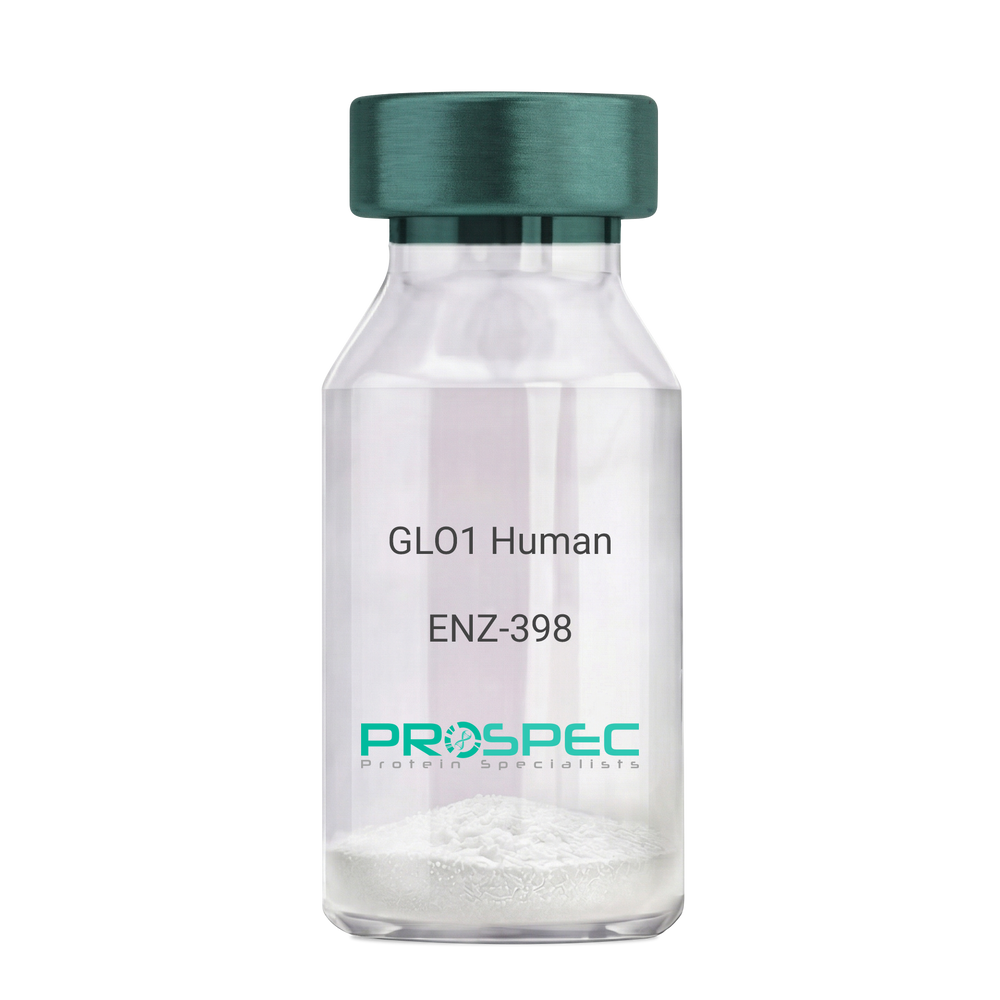
    GLO1 Human

    Description:

    Glyoxalase-I Human Recombinant

    GLYI, GLOD1, GLO1, Glyoxalase-1, Lactoylglutathione lyase, Methylglyoxalase, Aldoketomutase, Ketone-aldehyde mutase, Glyoxalase I, S-D-lactoylglutathione methylglyoxal lyase, Glx I.

    Product # :

    ENZ-398

    Price :

    Quantity :

    Shipping Method :

    Ice Icon

    Shipped with Ice Packs

    Add To Cart

    More Info

    • description
    • source
    • formulation
    • purity
    • More Info

    Description

    Glyoxalase-I Human Recombinant produced in E.Coli is a single, non-glycosylated, polypeptide chain containing 184 amino acids and having a molecular mass of 20.7 kDa. Glyoxalase-1 is purified by proprietary chromatographic techniques.

    Source

    Escherichia Coli.

    Formulation

    Glyoxalase-1 solution containing 20mM Tris-HCl pH-8, 1mM DTT and 10% glycerol.

    Purity

    Greater than 90.0% as determined by SDS-PAGE.

    More Info

    • Introduction

      GLO1 is involved in the catalysis and formation of S-lactoyl-glutathione from methylglyoxal condensation and reduced glutatione. GLO1 is linked to HLA and is localized to 6p21.3-p21.1, between HLA and the centromere. GLO1 enzyme is ubundantly expressed and present in numerous tumor cell lines, in which its concentration is often upregulated ubiquitisly. GLO1 is a major susceptible gene for autism in an ethnic Chinese population from Taiwan. GLO1 might be involved in the pathophysiology of mood disorders. GLO1 plays a role in the pathophysiology of mood disorders. Overexpression of GLO1 is associated with kidney tumor.

    • Synonyms

      GLYI, GLOD1, GLO1, Glyoxalase-1, Lactoylglutathione lyase, Methylglyoxalase, Aldoketomutase, Ketone-aldehyde mutase, Glyoxalase I, S-D-lactoylglutathione methylglyoxal lyase, Glx I.

    • Physical Appearance

      Sterile filtered colorless solution.

    • Stability

      Store at 4°C if entire vial will be used within 2-4 weeks. Store, frozen at -20°C for longer periods of time. For long term storage it is recommended to add a carrier protein (0.1% HSA or BSA).Avoid multiple freeze-thaw cycles.

    • Amino Acid Sequence

      MAEPQPPSGG LTDEAALSCC SDADPSTKDF LLQQTMLRVK DPKKSLDFYT RVLGMTLIQK CDFPIMKFSL YFLAYEDKND IPKEKDEKIAWALSRKATLE LTHNWGTEDD ETQSYHNGNS DPRGFGHIGI AVPDVYSACK RFEELGVKFV KKPDDGKMKG LAFIQDPDGY WIEILNPNKM ATLM.

    ProSpec's products are furnished for LABORATORY RESEARCH USE ONLY. The product may not be used as drugs, agricultural or pesticidal products, food additives or household chemicals.

    Glo1 Human
  • View Data Sheet

    Name :

    C1GALT1 Human

    Description:

    Core 1 Beta3-Gal-T1 Human Recombinant

    Core 1 Synthase, Glycoprotein-N-Acetylgalactosamine 3-Beta-Galactosyltransferase 1, Core 1 Beta3-Gal-T1, Core 1 O-Glycan T-Synthase, Core 1 UDP-Galactose:N-Acetylgalactosamine-Alpha-R Beta 1,3 Galactosyltransferase 1, B3Gal-T8, EC 2.4.1.122, Core 1 Beta3-Gal-T, C1GALT, T-synthase, Glycoprotein-N-Acetylgalactosamine 3-Beta-Galactosyltransferase 1, Beta-1,3-galactosyltransferase, C1GalT1, Core 1 Beta1,3-Galactosyltransferase 1.

    Product # :

    ENZ-721

    Price :

    Quantity :

    Shipping Method :

    Ice Icon

    Shipped with Ice Packs

    Add To Cart

    More Info

    • description
    • source
    • formulation
    • purity
    • More Info

    Description

    C1GALT1 Human Recombinant produced in E.Coli is a single, non-glycosylated polypeptide chain containing 357 amino acids (30-363 a.a) and having a molecular mass of 41.4kDa.C1GALT1 is fused to a 23 amino acid His-tag at N-terminus & purified by proprietary chromatographic techniques.

    Source

    Escherichia Coli.

    Formulation

    C1GALT1 protein solution (0.5mg/ml) containing 20mM Tris-HCl buffer (pH 8.0), 0.15M NaCl, 20% glycerol and 1mM DTT.

    Purity

    Greater than 80.0% as determined by SDS-PAGE.

    More Info

    • Introduction

      Core 1 Beta3-Gal-T1 also known as,C1GALT1 creates the common core 1 O-glycan structure, Gal-beta-1-3GalNAc-R, by the transfer of Gal from UDP-Gal to GalNAc-alpha-1-R. Core 1 is a precursor for lots of extended mucin-type O-glycans on cell surface and secreted glycoproteins. Studies in mice have shown that this gene takes a main role in angiogenesis, thrombopoiesis and kidney homeostasis.

    • Synonyms

      Core 1 Synthase, Glycoprotein-N-Acetylgalactosamine 3-Beta-Galactosyltransferase 1, Core 1 Beta3-Gal-T1, Core 1 O-Glycan T-Synthase, Core 1 UDP-Galactose:N-Acetylgalactosamine-Alpha-R Beta 1,3 Galactosyltransferase 1, B3Gal-T8, EC 2.4.1.122, Core 1 Beta3-Gal-T, C1GALT, T-synthase, Glycoprotein-N-Acetylgalactosamine 3-Beta-Galactosyltransferase 1, Beta-1,3-galactosyltransferase, C1GalT1, Core 1 Beta1,3-Galactosyltransferase 1.

    • Physical Appearance

      Sterile Filtered clear solution.

    • Stability

      Store at 4°C if entire vial will be used within 2-4 weeks. Store, frozen at -20°C for longer periods of time. For long term storage it is recommended to add a carrier protein (0.1% HSA or BSA).Avoid multiple freeze-thaw cycles.

    • Amino Acid Sequence

      MGSSHHHHHH SSGLVPRGSH MGSLLGEKVD TQPNVLHNDP HARHSDDNGQ NHLEGQMNFN ADSSQHKDEN TDIAENLYQK VRILCWVMTG PQNLEKKAKH VKATWAQRCN KVLFMSSEEN KDFPAVGLKT KEGRDQLYWK TIKAFQYVHE HYLEDADWFL KADDDTYVIL DNLRWLLSKY DPEEPIYFGR RFKPYVKQGY MSGGAGYVLS KEALKRFVDA FKTDKCTHSS SIEDLALGRC MEIMNVEAGD SRDTIGKETF HPFVPEHHLI KGYLPRTFWY WNYNYYPPVE GPGCCSDLAV SFHYVDSTTM YELEYLVYHL RPYGYLYRYQ PTLPERILKE ISQANKNEDT KVKLGNP.

    ProSpec's products are furnished for LABORATORY RESEARCH USE ONLY. The product may not be used as drugs, agricultural or pesticidal products, food additives or household chemicals.

    C1Galt1 Human
  • View Data Sheet

    Name :

    UNG Antibody

    Description:

    Uracil DNA Glycosilase, Mouse Anti Human

    Uracil DNA Glycosilase, Uracil DNA Glycosylase, UNG.

    Product # :

    ANT-374

    Price :

    Quantity :

    Shipping Method :

    Ice Icon

    Shipped with Ice Packs

    Add To Cart

    More Info

    • formulation
    • More Info

    Formulation

    1mg/ml containing PBS, pH-7.4, & 0.1% Sodium Azide.

    More Info

    • Introduction

      E.Coli Uracil DNA Glycosilase (UNG) catalyses the release of free Uracil from Uracil-containing DNA. UNG efficiently hydrolyzes uracil from signle-stranded or double-stranded DNA, but not from oligomers (6 fewer bases).

    • Synonyms

      Uracil DNA Glycosilase, Uracil DNA Glycosylase, UNG.

    • Physical Appearance

      Sterile Filtered clear solution.

    • Immunogen

      Anti-human UNG mAb is derived from hybridization of mouse SP2/O myeloma cells with spleen cells from BALB/c mice immunized with recombinant human UNG amino acids 1-313 purified from E. coli.

    • Ig Subclass

      Mouse IgG2b heavy chain and κ light chain.

    • Clone

      Pk1C12AT.

    • Applications

      UNG antibody has been tested by ELISA and Western blot analysis to assure specificity and reactivity. Since application varies, however, each investigation should be titrated by the reagent to obtain optimal results. Recommended dilution range for Western blot analysis is 1:1,000 ~ 2,000. Recommended starting dilution is 1:1,000.

    • Type

      Mouse Anti Human Monoclonal.

    • Storage Procedures

      For periods up to 1 month store at 4°C, for longer periods of time, store at -20°C. Prevent freeze thaw cycles.

    • Purification Method

      UNG antibody was purified from mouse ascitic fluids by protein-G affinity chromatography.

    ProSpec's products are furnished for LABORATORY RESEARCH USE ONLY. The product may not be used as drugs, agricultural or pesticidal products, food additives or household chemicals.

    Ung Antibody
  • View Data Sheet

    Name :

    GPBB Human

    Description:

    Glycogen Phosphorylase Human Recombinant

    Glycogen phosphorylase brain form, EC 2.4.1.1, GPBB, MGC9213, PYGB.

    Product # :

    ENZ-282

    Price :

    Quantity :

    Shipping Method :

    Ice Icon

    Shipped with Ice Packs

    Add To Cart

    More Info

    • description
    • source
    • formulation
    • purity
    • More Info

    Description

    Glycogen Phosphorylase Human Recombinant produced in E.Coli is a single, non-glycosylated, polypeptide chain. The Human GPBB mature chain: 2 - 843 aa; that is a total of 842 aa having a molecular mass of 96695.96 Dalton. The theoretical pI is 6.40.The GPBB is purified by proprietary chromatographic techniques.

    Source

    Escherichia Coli.

    Formulation

    Each mg of protein contains 50% glycerol.

    Purity

    Greater than 85.0% as determined by:
    (a) Analysis by RP-HPLC.
    (b) Analysis by SDS-PAGE.

    More Info

    • Introduction

      Glycogen phosphorylase is one of the phosphorylaseenzymes(EC2.4.1.1). It breaks up glycogeninto glucosesubunits. Glycogenis left with one less glucosemolecule, and the free glucosemolecule is in the form of glucose-1-phosphate. In order to be used for metabolism, it must be converted to glucose-6-phosphateby the enzyme phosphoglucomutase.
      Glycogen phosphorylase can only act on linearchainsof glycogen(a 1-4 glycosidic linkage). Its work will immediately come to a halt four residues away from a 1-6 branch(which are exceedingly common in glycogen). In these situations, a debranching enzymeis necessary, which will straighten out the chain in that area. Additionally, an alpha 1-6 glucosidaseenzymeis required to break the remaining 1-6 residue that remains in the new linear chain. After all this is done, glycogen phosphorylase can continue.
      An insulinstimulated enzyme known as phosphoprotein phosphatase(PP-1) inactivates glycogen phosphorylase to prevent glycogen break up.
      GPBB - a sensitive marker for the AMI diagnosis within 4 hours after the onset of chest pain. It has also been shown that GPBB is increased in a considerable proportion of AMI patients within 2-3 hours from chest pain onset. GPBB is increased early in patients with unstable angina. GPBB can also be a sensitive marker for the detection of peri-operative myocardial ischaemia and infarction in patients undergoing coronary artery bypass grafting.

    • Synonyms

      Glycogen phosphorylase brain form, EC 2.4.1.1, GPBB, MGC9213, PYGB.

    • Physical Appearance

      Sterile Filtered colourless liquid formualtion.

    • Stability

      GPBB although stable at 10°C for 7 days, should be stored below -18°C. Please prevent freeze-thaw cycles.

    • Applications

      Immunoassays and western blot.

    ProSpec's products are furnished for LABORATORY RESEARCH USE ONLY. The product may not be used as drugs, agricultural or pesticidal products, food additives or household chemicals.

    Glycogen Phosphorylase Human
  • View Data Sheet

    Name :

    NEIL1 Human

    Description:

    Nei Endonuclease VIII-Like 1 Human Recombinant

    Endonuclease 8-like 1, DNA glycosylase/AP lyase Neil1, DNA-(apurinic or apyrimidinic site) lyase Neil1, Endonuclease VIII-like 1, FPG1, Nei homolog 1, NEH1, Nei-like protein 1, NEIL1, NEI1, hFPG1.

    Product # :

    ENZ-220

    Price :

    Quantity :

    Shipping Method :

    Ice Icon

    Shipped with Ice Packs

    Add To Cart

    More Info

    • description
    • source
    • formulation
    • purity
    • More Info

    Description

    NEIL1 Human Recombinant produced in E.coli is a single, non-glycosylated polypeptide chain containing 410 amino acids (1-390) and having a molecular mass of 45.8kDa.NEIL1 is fused to a 20 amino acid His-tag at N-terminus & purified by proprietary chromatographic techniques.

    Source

    Escherichia Coli.

    Formulation

    The NEIL1 solution (0.5mg/ml) contains 20mM Tris-HCl buffer (pH8.0), 20% glycerol, 0.1M NaCl, 1mM DTT and 0.1mM PMSF.

    Purity

    Greater than 90.0% as determined by SDS-PAGE.

    More Info

    • Introduction

      NEIL1 is a member of a class of DNA glycosylases homologous to the bacterial Fpg/Nei family. These glycosylases initiate the first step in base excision repair by cleaving bases damaged by reactive oxygen species and introducing a DNA strand break via the associated lyase reaction. NEIL1 participates in the DNA repair pathway by initiating base excision repair by removing damaged bases, primarily oxidized pyrimidines.

    • Synonyms

      Endonuclease 8-like 1, DNA glycosylase/AP lyase Neil1, DNA-(apurinic or apyrimidinic site) lyase Neil1, Endonuclease VIII-like 1, FPG1, Nei homolog 1, NEH1, Nei-like protein 1, NEIL1, NEI1, hFPG1.

    • Physical Appearance

      Sterile filtered colorless solution.

    • Stability

      Store at 4°C if entire vial will be used within 2-4 weeks. Store, frozen at -20°C for longer periods of time. For long term storage it is recommended to add a carrier protein (0.1% HSA or BSA). Avoid multiple freeze-thaw cycles.

    • Amino Acid Sequence

      MGSSHHHHHH SSGLVPRGSH MPEGPELHLA SQFVNEACRA LVFGGCVEKS SVSRNPEVPF ESSAYRISAS ARGKELRLIL SPLPGAQPQQ EPLALVFRFG MSGSFQLVPR EELPRHAHLR FYTAPPGPRL ALCFVDIRRF GRWDLGGKWQ PGRGPCVLQE YQQFRENVLR NLADKAFDRP ICEALLDQRF FNGIGNYLRA EILYRLKIPP FEKARSVLEA LQQHRPSPEL TLSQKIRTKL QNPDLLELCH SVPKEVVQLG GKGYGSESGE EDFAAFRAWL RCYGMPGMSS LQDRHGRTIW FQGDPGPLAP KGRKSRKKKS KATQLSPEDR VEDALPPSKA PSRTRRAKRD LPKRTATQRP EGTSLQQDPE APTVPKKGRR KGRQAASGHC RPRKVKADIP SLEPEGTSAS.

    ProSpec's products are furnished for LABORATORY RESEARCH USE ONLY. The product may not be used as drugs, agricultural or pesticidal products, food additives or household chemicals.

    Neil1 Human
  • View Data Sheet

    Name :

    AGA Human

    Description:

    Aspartylglucosaminidase Human Recombinant

    Aspartylglucosaminidase, AGU, ASRG, GA.

    Product # :

    ENZ-854

    Price :

    Quantity :

    Shipping Method :

    Ice Icon

    Shipped with Ice Packs

    Add To Cart

    More Info

    • description
    • source
    • formulation
    • purity
    • More Info

    Description

    AGA Human Recombinant produced in E.Coli is a single, non-glycosylated polypeptide chain containing 346 amino acids (24-346 a.a.) and having a molecular mass of 37kDa.AGA is fused to a 23 amino acid His-tag at N-terminus & purified by proprietary chromatographic techniques.

    Source

    E.coli.

    Formulation

    AGA protein solution (0.5mg/ml) containing 20mM Tris-HCl buffer (pH 8.0) and 10% glycerol.

    Purity

    Greater than 90% as determined by SDS-PAGE.

    More Info

    • Introduction

      Aspartylglucosaminidase, also known as AGA, takes part in the catabolism of Nlinked oligosaccharides of glycoproteins. AGA is a protein coding gene which cleaves asparagine from N-acetylglucosamines in the lysosomal breakdown of glycoproteins.

    • Synonyms

      Aspartylglucosaminidase, AGU, ASRG, GA.

    • Physical Appearance

      Sterile Filtered colorless solution.

    • Stability

      Store at 4°C if entire vial will be used within 2-4 weeks. Store, frozen at -20°C for longer periods of time. For long term storage it is recommended to add a carrier protein (0.1% HSA or BSA).Avoid multiple freeze-thaw cycles.

    • Amino Acid Sequence

      MGSSHHHHHH SSGLVPRGSH MGSSSPLPLV VNTWPFKNAT EAAWRALASG GSALDAVESG CAMCEREQCD GSVGFGGSPD ELGETTLDAM IMDGTTMDVG AVGDLRRIKN AIGVARKVLE HTTHTLLVGE SATTFAQSMG FINEDLSTTA SQALHSDWLA RNCQPNYWRN VIPDPSKYCG PYKPPGILKQ DIPIHKETED DRGHDTIGMV VIHKTGHIAA GTSTNGIKFK IHGRVGDSPI PGAGAYADDT AGAAAATGNG DILMRFLPSY QAVEYMRRGE DPTIACQKVI SRIQKHFPEF FGAVICANVT GSYGAACNKL STFTQFSFMV YNSEKNQPTE EKVDCI.

    ProSpec's products are furnished for LABORATORY RESEARCH USE ONLY. The product may not be used as drugs, agricultural or pesticidal products, food additives or household chemicals.

    Aga Human
  • View Data Sheet

    Name :

    GLO1 Human, Active

    Description:

    Glyoxalase-I Human Recombinant, Active

    GLYI, GLOD1, GLO1, Glyoxalase-1, Lactoylglutathione lyase, Methylglyoxalase, Aldoketomutase, Ketone-aldehyde mutase, Glyoxalase I, S-D-lactoylglutathione methylglyoxal lyase, Glx I.

    Product # :

    ENZ-999

    Price :

    Quantity :

    Shipping Method :

    Ice Icon

    Shipped with Ice Packs

    Add To Cart

    More Info

    • description
    • source
    • formulation
    • purity
    • biological activity
    • More Info

    Description

    Glyoxalase-I Human Recombinant produced in E.Coli is a single, non-glycosylated, polypeptide chain containing 184 amino acids and having a molecular mass of 20.7 kDa. Glyoxalase-1 is purified by proprietary chromatographic techniques.

    Source

    Escherichia Coli.

    Formulation

    Glyoxalase-1 solution containing 20mM Tris-HCl pH-8, 1mM DTT and 10% glycerol.

    Purity

    Greater than 90.0% as determined by SDS-PAGE.

    Biological Activity

    Specific activity: > 400 units/mg. One unit will form 1.0umol of S-lactoylgutathione from methylglyoxal and reduced glutathione per minute at pH6.5 at 25C

    More Info

    • Introduction

      GLO1 is involved in the catalysis and formation of S-lactoyl-glutathione from methylglyoxal condensation and reduced glutatione. GLO1 is linked to HLA and is localized to 6p21.3-p21.1, between HLA and the centromere. GLO1 enzyme is ubundantly expressed and present in numerous tumor cell lines, in which its concentration is often upregulated ubiquitisly. GLO1 is a major susceptible gene for autism in an ethnic Chinese population from Taiwan. GLO1 might be involved in the pathophysiology of mood disorders. GLO1 plays a role in the pathophysiology of mood disorders. Overexpression of GLO1 is associated with kidney tumor.

    • Synonyms

      GLYI, GLOD1, GLO1, Glyoxalase-1, Lactoylglutathione lyase, Methylglyoxalase, Aldoketomutase, Ketone-aldehyde mutase, Glyoxalase I, S-D-lactoylglutathione methylglyoxal lyase, Glx I.

    • Physical Appearance

      Sterile filtered colorless solution.

    • Stability

      Store at 4°C if entire vial will be used within 2-4 weeks. Store, frozen at -20°C for longer periods of time. For long term storage it is recommended to add a carrier protein (0.1% HSA or BSA).Avoid multiple freeze-thaw cycles.

    • Amino Acid Sequence

      MAEPQPPSGG LTDEAALSCC SDADPSTKDF LLQQTMLRVK DPKKSLDFYT RVLGMTLIQK CDFPIMKFSL YFLAYEDKND IPKEKDEKIAWALSRKATLE LTHNWGTEDD ETQSYHNGNS DPRGFGHIGI AVPDVYSACK RFEELGVKFV KKPDDGKMKG LAFIQDPDGY WIEILNPNKM ATLM.

    ProSpec's products are furnished for LABORATORY RESEARCH USE ONLY. The product may not be used as drugs, agricultural or pesticidal products, food additives or household chemicals.

    Glo1 Human Active
  • View Data Sheet

    Name :

    AGA Human, sf9

    Description:

    Aspartylglucosaminidase Human Recombinant, sf9

    Aspartylglucosaminidase, Glycosylasparaginase, N4-(N-Acetyl-Beta-Glucosaminyl)-L-Asparagine Amidase, N(4)-(Beta-N-Acetylglucosaminyl)-L-Asparaginase , EC 3.5.1.26, Aspartylglucosylamine Deaspartylase, EC 3.5.1, ASRG, AGU, GA.

    Product # :

    ENZ-990

    Price :

    Quantity :

    Shipping Method :

    Ice Icon

    Shipped with Ice Packs

    Add To Cart

    More Info

    • description
    • source
    • formulation
    • purity
    • More Info

    Description

    AGA produced in Sf9 Baculovirus cells is a single, glycosylated polypeptide chain containing 332 amino acids (24-346 a.a.) and having a molecular mass of 35.7kDa (Molecular size on SDS-PAGE will appear at approximately 18-57kDa). AGA is expressed with a 6 amino acid His tag at C-Terminus and purified by proprietary chromatographic techniques.

    Source

    Sf9, Baculovirus cells.

    Formulation

    AGA protein solution (0.25mg/ml) contains Phosphate Buffered Saline (pH 7.4) and 10% glycerol.

    Purity

    Greater than 90.0% as determined by SDS-PAGE.

    More Info

    • Introduction

      Aspartylglucosaminidase, also known as AGA, takes part in the catabolism of Nlinked oligosaccharides of glycoproteins. AGA is a protein coding gene which cleaves asparagine from N-acetylglucosamines in the lysosomal breakdown of glycoproteins.

    • Synonyms

      Aspartylglucosaminidase, Glycosylasparaginase, N4-(N-Acetyl-Beta-Glucosaminyl)-L-Asparagine Amidase, N(4)-(Beta-N-Acetylglucosaminyl)-L-Asparaginase , EC 3.5.1.26, Aspartylglucosylamine Deaspartylase, EC 3.5.1, ASRG, AGU, GA.

    • Physical Appearance

      Sterile Filtered colorless solution.

    • Stability

      Store at 4°C if entire vial will be used within 2-4 weeks. Store, frozen at -20°C for longer periods of time. For long term storage it is recommended to add a carrier protein (0.1% HSA or BSA). Avoid multiple freeze-thaw cycles.

    • Amino Acid Sequence

      ADPSSPLPLV VNTWPFKNAT EAAWRALASG GSALDAVESG CAMCEREQCD GSVGFGGSPD ELGETTLDAM IMDGTTMDVG AVGDLRRIKN AIGVARKVLE HTTHTLLVGE SATTFAQSMG FINEDLSTTA SQALHSDWLA RNCQPNYWRN VIPDPSKYCG PYKPPGILKQ DIPIHKETED DRGHDTIGMV VIHKTGHIAA GTSTNGIKFK IHGRVGDSPI PGAGAYADDT AGAAAATGNG DILMRFLPSY QAVEYMRRGE DPTIACQKVI SRIQKHFPEF FGAVICANVT GSYGAACNKL STFTQFSFMV YNSEKNQPTE EKVDCIHHHH HH.

    ProSpec's products are furnished for LABORATORY RESEARCH USE ONLY. The product may not be used as drugs, agricultural or pesticidal products, food additives or household chemicals.

    Aga Human Sf9
  • View Data Sheet

    Name :

    NEIL2 Human

    Description:

    Nei Endonuclease VIII-Like 2 Human Recombinant

    Endonuclease 8-like 2, DNA glycosylase/AP lyase Neil2, DNA-(apurinic or apyrimidinic site) lyase Neil2, Endonuclease VIII-like 2, Nei homolog 2, NEH2, Nei-like protein 2, NEIL2, NEH2.

    Product # :

    ENZ-607

    Price :

    Quantity :

    Shipping Method :

    Ice Icon

    Shipped with Ice Packs

    Add To Cart

    More Info

    • description
    • source
    • formulation
    • purity
    • More Info

    Description

    NEIL2 Human Recombinant produced in E.coli is a single, non-glycosylated polypeptide chain containing 356 amino acids (1-332) and having a molecular mass of 39.4kDa.NEIL2 is fused to a 24 amino acid His-tag at N-terminus & purified by proprietary chromatographic techniques.

    Source

    Escherichia Coli.

    Formulation

    The NEIL2 solution (0.5mg/ml) contains 20mM Tris-HCl buffer (pH 8.0), 1mM DTT, 10% glycerol and 0.1M NaCl.

    Purity

    Greater than 85.0% as determined by SDS-PAGE.

    More Info

    • Introduction

      Endonuclease 8-like 2 (NEIL2) is a member of a class of DNA glycosylases homologous to the bacterial Fpg/Nei family. These glycosylases set off the first step in base excision repair by cleaving bases damaged by reactive oxygen species and introducing a DNA strand break through the associated lyase reaction. NEIL2 is involved in base excision repair of DNA damaged by oxidation or by mutagenic agents. NEIL2 has DNA glycosylase activity towards 5-hydroxyuracil and other oxidized derivatives of cytosine with a preference for mismatched double stranded DNA (DNA bubbles). NEIL2 has insignificant or undetectable activity with 8-oxoguanine, thymine glycol, 2-hydroxyadenine, hypoxanthine, and xanthine. NEIL2 also has AP (apurinic/apyrimidinic) lyase activity and creates incisions in the DNA strand. NEIL2 cleaves the DNA backbone by beta-delta exclusion to produce a single-strand break at the site of the removed base with both 3'- and 5'-phosphates. NEIL2 is found in the testis, skeletal muscle, heart, brain, placenta, lung, pancreas, kidney and liver.

    • Synonyms

      Endonuclease 8-like 2, DNA glycosylase/AP lyase Neil2, DNA-(apurinic or apyrimidinic site) lyase Neil2, Endonuclease VIII-like 2, Nei homolog 2, NEH2, Nei-like protein 2, NEIL2, NEH2.

    • Physical Appearance

      Sterile filtered colorless solution.

    • Stability

      Store at 4°C if entire vial will be used within 2-4 weeks. Store, frozen at -20°C for longer periods of time. For long term storage it is recommended to add a carrier protein (0.1% HSA or BSA). Avoid multiple freeze-thaw cycles.

    • Amino Acid Sequence

      MGSSHHHHHH SSGLVPRGSH MGSHMPEGPL VRKFHHLVSP FVGQQVVKTG GSSKKLQPAS LQSLWLQDTQ VHGKKLFLRF DLDEEMGPPG SSPTPEPPQK EVQKEGAADP KQVGEPSGQK TLDGSSRSAE LVPQGEDDSE YLERDAPAGD AGRWLRVSFG LFGSVWVNDF SRAKKANKRG
      DWRDPSPRLV LHFGGGGFLA FYNCQLSWSS SPVVTPTCDI LSEKFHRGQA LEALGQAQPV CYTLLDQRYF SGLGNIIKNE ALYRAGIHPL SLGSVLSASR REVLVDHVVE FSTAWLQGKF QGRPQHTQVY QKEQCPAGHQ VMKEAFGPED GLQRLTWWCP QCQPQLSEEP EQCQFS.

    ProSpec's products are furnished for LABORATORY RESEARCH USE ONLY. The product may not be used as drugs, agricultural or pesticidal products, food additives or household chemicals.

    Neil2 Human
  • View Data Sheet

    Name :

    GYG1 Human

    Description:

    Glycogenin-1 Human Recombinant

    Glycogenin-1, GYG1, GYG.

    Product # :

    ENZ-431

    Price :

    Quantity :

    Shipping Method :

    Ice Icon

    Shipped with Ice Packs

    Add To Cart

    More Info

    • description
    • source
    • formulation
    • purity
    • More Info

    Description

    GYG1 Human Recombinant fused with a 32 amino acid His-T7 tag at N-terminus produced in E.Coli is a single, non-glycosylated, polypeptide chain containing 365 amino acids (1-333 a.a.) and having a molecular mass of 41.2kDa.The GYG1 is purified by proprietary chromatographic techniques.

    Source

    Escherichia Coli.

    Formulation

    The GYG1 solution contains 20mM Tris-HCl buffer (pH 8.0), 1mM DTT and 10% glycerol.

    Purity

    Greater than 90.0% as determined by SDS-PAGE.

    More Info

    • Introduction

      Glycogenin-1 (GYG1) is an enzyme involved in glycogen biosynthesis. GYG1 is the chief enzyme involved in glycogen polymerisation. Glycogenin-1 is vital for the function of self-glucosylates, using an inter-subunit mechanism, to form an oligosaccharide primer which acts as substrate for glycogen synthase. In addition, GYG1 has a role in regulating glycogen metabolism and the achievement of maximal glycogen levels in skeletal muscle. GYG1 mRNA and protein content and activity increase in the muscle during recovery from prolonged and exhaustive exercise. GYG1 is inactivated with glycogen catabolism which concurs with an increase in glycogenin gene expression as exercise and glycogenolysis advance. Glycogenin will remain covalently attached to the reducing end of the glycogen molecule.

    • Synonyms

      Glycogenin-1, GYG1, GYG.

    • Physical Appearance

      Sterile Filtered colorless solution.

    • Stability

      Store at 4°C if entire vial will be used within 2-4 weeks. Store, frozen at -20°C for longer periods of time. For long term storage it is recommended to add a carrier protein (0.1% HSA or BSA).Avoid multiple freeze-thaw cycles.

    • Amino Acid Sequence

      MHHHHHHMAS MTGGQQMGRD LYDDDDKDRW GSMTDQAFVT LTTNDAYAKG ALVLGSSLKQ HRTTRRLVVL ATPQVSDSMR KVLETVFDEV IMVDVLDSGD SAHLTLMKRP ELGVTLTKLH CWSLTQYSKC VFMDADTLVL ANIDDLFDRE ELSAAPDPGW PDCFNSGVFV YQPSVETYNQ LLHLASEQGS FDGGDQGILN TFFSSWATTD IRKHLPFIYN LSSISIYSYL PAFKVFGASA KVVHFLGRVK PWNYTYDPKT KSVKSEAHDP NMTHPEFLIL WWNIFTTNVL PLLQQFGLVK DTCSYVNVED VSGAISHLSL GEIPAMAQPF VSSEERKERW EQGQADYMGA DSFDNIKRKL DTYLQ.

    ProSpec's products are furnished for LABORATORY RESEARCH USE ONLY. The product may not be used as drugs, agricultural or pesticidal products, food additives or household chemicals.

    Gyg1 Human
  • 1
  • 2
  • 3
  • …
  • 42
Your browser does not support the video tag.

Products

  • Cytokines
  • Growth Factors
  • Chemokines
  • CD Antigens
  • Neurotrophins
  • Hormones
  • Enzymes
  • Viral Antigens
  • Recombinant Proteins
  • Natural Proteins
  • Monoclonal Antibodies
  • Polyclonal Antibodies
  • Thermal Packaging

About

  • Company
  • Founder
  • Contribution
  • Contact Us
  • My Account

Ordering

  • Ordering Method
  • Ordering - Credit Card
  • Ordering PO
  • Shipping Fees
  • FAQ's

Legal

  • Terms & Conditions
  • Privacy
  • Site Map
  • info@prospecbio.com
  • Facebook
  • Instagram
  • Linkedin Profile

© 2026 ProSpec-Tany TechnoGene Ltd. All Rights Reserved.

  • Choosing a selection results in a full page refresh.
  • Opens in a new window.