Skip to content

High-quality research proteins.

  • 1-800-805-6531

  • Mon - Sat 8.00-18.00, Sun - Closed

  • info@prospecbio.com

  • PO Box 6591 East Brunswick NJ 08816

  • Products
    • Cytokines
    • Growth factors
    • Chemokines
    • Cd antigens
    • Neurotrophins
    • Hormones
    • Enzymes
    • Viral antigens
    • Recombinant proteins
    • Natural proteins
    • Monoclonal antibodies
    • Polyclonal antibodies
    • Thermal Packaging
  • About
    • Company
    • Founder
    • Contribution
  • Customers
    • Eastern Asia
    • Eastern Europe
    • North America
    • South America
    • South East Asia
    • Southern Asia
    • Western Europe
  • Ordering
    • Ordering Method
    • Ordering - Credit Card
    • Ordering - PO
    • Shipping Fees
    • FAQs
  • Services
    • DNA Cloning
    • Protein Expression
    • Monoclonal Antibody
    • Fermentation
    • Technology License
  • Contact us
Log in

Country/region

  • USD $ | Albania
  • USD $ | Andorra
  • USD $ | Argentina
  • USD $ | Armenia
  • USD $ | Australia
  • USD $ | Austria
  • USD $ | Azerbaijan
  • USD $ | Belarus
  • USD $ | Belgium
  • USD $ | Bolivia
  • USD $ | Brazil
  • USD $ | Bulgaria
  • USD $ | Cambodia
  • USD $ | Canada
  • USD $ | Chile
  • USD $ | China
  • USD $ | Colombia
  • USD $ | Costa Rica
  • USD $ | Croatia
  • USD $ | Cyprus
  • USD $ | Czechia
  • USD $ | Denmark
  • USD $ | Estonia
  • USD $ | Finland
  • USD $ | France
  • USD $ | Georgia
  • USD $ | Germany
  • USD $ | Greece
  • USD $ | Hong Kong SAR
  • USD $ | Hungary
  • USD $ | Iceland
  • USD $ | India
  • USD $ | Ireland
  • USD $ | Israel
  • USD $ | Italy
  • USD $ | Japan
  • USD $ | Kazakhstan
  • USD $ | Latvia
  • USD $ | Liechtenstein
  • USD $ | Lithuania
  • USD $ | Madagascar
  • USD $ | Malta
  • USD $ | Mexico
  • USD $ | Moldova
  • USD $ | Monaco
  • USD $ | Netherlands
  • USD $ | New Zealand
  • USD $ | North Macedonia
  • USD $ | Norway
  • USD $ | Panama
  • USD $ | Paraguay
  • USD $ | Peru
  • USD $ | Philippines
  • USD $ | Poland
  • USD $ | Portugal
  • USD $ | Romania
  • USD $ | Singapore
  • USD $ | Slovakia
  • USD $ | Slovenia
  • USD $ | South Africa
  • USD $ | South Korea
  • USD $ | Spain
  • USD $ | Sri Lanka
  • USD $ | Sweden
  • USD $ | Switzerland
  • USD $ | Taiwan
  • USD $ | Thailand
  • USD $ | Türkiye
  • USD $ | Ukraine
  • USD $ | United Kingdom
  • USD $ | United States
  • USD $ | Uruguay
  • USD $ | Vatican City
  • USD $ | Venezuela
  • USD $ | Vietnam
  • Facebook
  • Instagram
logoProSpec - Recombinant Protein Manufacturer for academic and R&D industry
Become a distributor
Account Log in
Wishlist
Cart Cart(0)
  • Products
    +
    • Cytokines
    • Growth factors
    • Chemokines
    • Cd antigens
    • Neurotrophins
    • Hormones
    • Enzymes
    • Viral antigens
    • Recombinant proteins
    • Natural proteins
    • Monoclonal antibodies
    • Polyclonal antibodies
    • Thermal Packaging
  • About
    +
    • Company
    • Founder
    • Contribution
  • Customers
    +
    • Eastern Asia
    • Eastern Europe
    • North America
    • South America
    • South East Asia
    • Southern Asia
    • Western Europe
  • Ordering
    +
    • Ordering Method
    • Ordering - Credit Card
    • Ordering - PO
    • Shipping Fees
    • FAQs
  • Services
    +
    • DNA Cloning
    • Protein Expression
    • Monoclonal Antibody
    • Fermentation
    • Technology License
  • Contact us

Item added to your cart

View cart
View All
  • Cytokines
  • Growth factors
  • Chemokines
  • Cd antigens
  • Neurotrophins
  • Hormones
  • Enzymes
  • Viral antigens
  • Recombinant proteins
  • Natural proteins
  • Monoclonal antibodies
  • Polyclonal antibodies
  • Thermal Packaging
  • Tumor Necrosis Factor

    Tumor Necrosis Factor

    View All
  • 4-1BB

    4-1BB

    View All
  • Adiponectin

    Adiponectin

    View All
  • AIF1

    AIF1

    View All
  • Other Cytokines

    Other Cytokines

    View All
  • AITRL

    AITRL

    View All
  • Angiopoietin

    Angiopoietin

    View All
  • Apolipoprotein

    Apolipoprotein

    View All
  • B-Cell Activating Factor

    B-Cell Activating Factor

    View All
  • Beta Defensin

    Beta Defensin

    View All
  • Bone Morphogenetic Protein

    Bone Morphogenetic Protein

    View All
  • B type Natriuretic Peptide

    B type Natriuretic Peptide

    View All
  • BST

    BST

    View All
  • Betacellulin

    Betacellulin

    View All
  • Cardiotrophin

    Cardiotrophin

    View All
  • Activin

    Activin

    View All
  • Fibroblast Growth Factor

    Fibroblast Growth Factor

    View All
  • Other Growth Factors

    Other Growth Factors

    View All
  • CSF

    CSF

    View All
  • CTGF

    CTGF

    View All
  • IGFBP

    IGFBP

    View All
  • VEGF Protein

    VEGF Protein

    View All
  • EGF

    EGF

    View All
  • Epigen

    Epigen

    View All
  • Erythropoietin

    Erythropoietin

    View All
  • Insulin-Like Growth Factor

    Insulin-Like Growth Factor

    View All
  • Growth Hormone

    Growth Hormone

    View All
  • HDGF

    HDGF

    View All
  • Hepatocyte Growth Factor

    Hepatocyte Growth Factor

    View All
  • Insulin

    Insulin

    View All
  • BCA-1/ BLC (CXCL13)

    BCA-1/ BLC (CXCL13)

    View All
  • BRAK (CXCL14)

    BRAK (CXCL14)

    View All
  • C-10 (CCL6)

    C-10 (CCL6)

    View All
  • Other Chemokines

    Other Chemokines

    View All
  • MEC (CCL28)

    MEC (CCL28)

    View All
  • LD78-beta (CCL3L1)

    LD78-beta (CCL3L1)

    View All
  • CTACK (CCL27)

    CTACK (CCL27)

    View All
  • CXCL16

    CXCL16

    View All
  • CXCL17

    CXCL17

    View All
  • Platelet Factor-4 (CXCL4)

    Platelet Factor-4 (CXCL4)

    View All
  • ENA-78 (CXCL5)

    ENA-78 (CXCL5)

    View All
  • Eotaxin (CCL11,24,26)

    Eotaxin (CCL11,24,26)

    View All
  • Exodus-2 (CCL21)

    Exodus-2 (CCL21)

    View All
  • Fractalkine (CX3CL1)

    Fractalkine (CX3CL1)

    View All
  • CXCL6

    CXCL6

    View All
  • Other CD Antigens

    Other CD Antigens

    View All
  • CD14

    CD14

    View All
  • CD164

    CD164

    View All
  • CD1

    CD1

    View All
  • CD2

    CD2

    View All
  • CD200

    CD200

    View All
  • CD207

    CD207

    View All
  • CD226

    CD226

    View All
  • CD23

    CD23

    View All
  • CD244

    CD244

    View All
  • CD247

    CD247

    View All
  • CD27

    CD27

    View All
  • CD274

    CD274

    View All
  • CD300

    CD300

    View All
  • CD33

    CD33

    View All
  • Other Neurotrophins

    Other Neurotrophins

    View All
  • Beta-NGF

    Beta-NGF

    View All
  • BDNF

    BDNF

    View All
  • CDNF

    CDNF

    View All
  • CNTF

    CNTF

    View All
  • GDNF

    GDNF

    View All
  • Glia Maturation Factor

    Glia Maturation Factor

    View All
  • MANF

    MANF

    View All
  • Midkine

    Midkine

    View All
  • Neuroglobin

    Neuroglobin

    View All
  • Neurotrophic factors

    Neurotrophic factors

    View All
  • Neuregulin

    Neuregulin

    View All
  • Neuropilin

    Neuropilin

    View All
  • Pigment Epithelium-Derived Factor

    Pigment Epithelium-Derived Factor

    View All
  • Pleiotrophin

    Pleiotrophin

    View All
  • Peptide Hormones

    Peptide Hormones

    View All
  • Other Hormones

    Other Hormones

    View All
  • HCG

    HCG

    View All
  • Endothelin

    Endothelin

    View All
  • Exendin

    Exendin

    View All
  • FSH

    FSH

    View All
  • Glucagon

    Glucagon

    View All
  • GHRP

    GHRP

    View All
  • GLP

    GLP

    View All
  • Thyrostimulin

    Thyrostimulin

    View All
  • Inhibin A

    Inhibin A

    View All
  • LHRH

    LHRH

    View All
  • Melanotan

    Melanotan

    View All
  • Procalcitonin

    Procalcitonin

    View All
  • PTH

    PTH

    View All
  • Peroxiredoxin

    Peroxiredoxin

    View All
  • Peptidase

    Peptidase

    View All
  • Synthetase

    Synthetase

    View All
  • Transferase

    Transferase

    View All
  • Hydrolase

    Hydrolase

    View All
  • Dehydrogenase

    Dehydrogenase

    View All
  • ACE2

    ACE2

    View All
  • Esterase

    Esterase

    View All
  • Protein Kinases

    Protein Kinases

    View All
  • Other Enzymes

    Other Enzymes

    View All
  • Phosphatase

    Phosphatase

    View All
  • Deaminase

    Deaminase

    View All
  • Oxygenase

    Oxygenase

    View All
  • Adenylate Kinase

    Adenylate Kinase

    View All
  • Lyase

    Lyase

    View All
  • Chagas

    Chagas

    View All
  • SARS

    SARS

    View All
  • Influenza

    Influenza

    View All
  • ASFV

    ASFV

    View All
  • Astrovirus

    Astrovirus

    View All
  • Borrelia

    Borrelia

    View All
  • Helicobacter Pylori

    Helicobacter Pylori

    View All
  • Chikungunya

    Chikungunya

    View All
  • Chlamydia

    Chlamydia

    View All
  • Cytomegalo

    Cytomegalo

    View All
  • Dengue

    Dengue

    View All
  • EBV

    EBV

    View All
  • Ebola

    Ebola

    View All
  • Feline Leukemia Virus

    Feline Leukemia Virus

    View All
  • Hepatitis A

    Hepatitis A

    View All
  • Other

    Other

    View All
  • Actin

    Actin

    View All
  • ADAM

    ADAM

    View All
  • Complement Component

    Complement Component

    View All
  • Ag85

    Ag85

    View All
  • Eukaryotic Translation Initiation Factor

    Eukaryotic Translation Initiation Factor

    View All
  • Anterior Gradient Protein

    Anterior Gradient Protein

    View All
  • Heat Shock Protein

    Heat Shock Protein

    View All
  • Alpha-2-HS-Glycoprotein

    Alpha-2-HS-Glycoprotein

    View All
  • Hemoglobin

    Hemoglobin

    View All
  • Allergy

    Allergy

    View All
  • Anaplasma

    Anaplasma

    View All
  • Angiogenin

    Angiogenin

    View All
  • Ankyrin Repeat Domain

    Ankyrin Repeat Domain

    View All
  • Annexin

    Annexin

    View All
  • Other Natural Proteins

    Other Natural Proteins

    View All
  • Aprotinin

    Aprotinin

    View All
  • Transferrin

    Transferrin

    View All
  • Avidin

    Avidin

    View All
  • Anti Coagulation Factors

    Anti Coagulation Factors

    View All
  • Natural Albumin

    Natural Albumin

    View All
  • Natural Coagulation Factors

    Natural Coagulation Factors

    View All
  • Fibronectin

    Fibronectin

    View All
  • Thrombin

    Thrombin

    View All
  • Anti Human Enzyme

    Anti Human Enzyme

    View All
  • Other Monoclonal Antibodies

    Other Monoclonal Antibodies

    View All
  • Anti Human Cytokine

    Anti Human Cytokine

    View All
  • Anti Human Heat Shock Protein

    Anti Human Heat Shock Protein

    View All
  • Anti Mouse Lymphocyte

    Anti Mouse Lymphocyte

    View All
  • Anti Human Chemokine

    Anti Human Chemokine

    View All
  • Anti Human Lymphocyte

    Anti Human Lymphocyte

    View All
  • Anti Viral Monoclonal

    Anti Viral Monoclonal

    View All
  • Anti Mouse Cytokine

    Anti Mouse Cytokine

    View All
  • Anti-GST Monoclonal

    Anti-GST Monoclonal

    View All
  • Other Polyclonal Antibodies

    Other Polyclonal Antibodies

    View All
  • Anti Viral

    Anti Viral

    View All
  • Anti-GST Monoclonal

    Anti-GST Monoclonal

    View All
Back

Search results

1000 results found for “gdnf”

Name

Description

Product #

Price

Quantity

Shipping Method

  • View Data Sheet

    Name :

    GDNF Human

    Description:

    Glial-Derived Neurotrophic Factor Human Recombinant

    ATF1, ATF2, HFB1-GDNF, GDNF.

    Product # :

    CYT-305

    Price :

    Quantity :

    Shipping Method :

    Room Temp Icon

    Shipped at Room temp

    Add To Cart

    More Info

    • description
    • source
    • formulation
    • purity
    • biological activity
    • More Info
    • sds-page

    Description

    Glial derived Neurotrophic Factor Human Recombinant produced in E.Coli is a non-glycosylated disulfide-linked homodimer containing 2 x 135 amino acids and having a total molecular mass of approximately 30kDa. GDNF is purified by proprietary chromatographic techniques.

    Source

    Escherichia Coli.

    Formulation

    GDNF was lyophilized from a 0.2µm filtered concentrated solution in 1×PBS, pH 7.4 and 5% Trehalose.

    Purity

    Greater than 95.0% as determined by analysis by SDS-PAGE.

    Biological Activity

    The ED50 was determined by the proliferation of rat C6 cells is < 0.1 ng/ml, corresponding to a specific activity of > 1.0x10⁷ units/mg.

    sds-page

    GDNF sds-page - Product image 1

    More Info

    • Introduction

      GDNF promotes the survival and differentiation of minergic neurons in culture, and is able to prevent apoptosis of motor neurons induced by axotomy. The encoded protein is processed to a mature secreted form that exists as a homodimer. The mature form of the protein is a ligand for the product of the RET (rearranged during transfection) protooncogene. In addition to the transcript encoding GDNF, two additional alternative transcripts encoding distinct proteins, referred to as astrocyte-derived trophic factors, have also been described. Mutations in this gene may be associated with Hirschsprung disease.
      GDNF enhances survival and morphological differentiation of minergic neurons and increases their high-affinity uptake.

    • Synonyms

      ATF1, ATF2, HFB1-GDNF, GDNF.

    • Physical Appearance

      Sterile Filtered White lyophilized (freeze-dried) powder.

    • Stability

      Lyophilized Glial-derived Neurotrophic Factor although stable at room temperature for 3 weeks, should be stored desiccated below -18°C. Upon reconstitution GDNF should be stored at 4°C between 2-7 days and for future use below -18°C.For long term storage it is recommended to add a carrier protein (0.1% HSA or BSA).Please prevent freeze-thaw cycles.

    • Solubility

      It is recommended to reconstitute the lyophilized Glial Derived Neurotrophic Factor in sterile 18MΩ-cm H2O not less than 100µg/ml, which can then be further diluted to other aqueous solutions.

    • Amino Acid Sequence

      SPDKQMAVLP RRERNRQAAA ANPENSRGKG RRGQRGKNRG CVLTAIHLNV TDLGLGYETK EELIFRYCSG SCDAAETTYD KILKNLSRNR RLVSDKVGQA CCRPIAFDDD LSFLDDNLVY HILRKHSAKR CGCI.

    • Background

      What is the molecular weight/Mw of GDNF HUMAN Protein?
      GDNF HUMAN Protein has a total Mw of 30kDa.

      What is the source or expression system of GDNF HUMAN Protein?
      Escherichia Coli.

      What is the Purity of GDNF HUMAN Protein?
      GDNF HUMAN Protein is >95% pure as determined by SDS-PAGE.

      What is the Biological Activity of GDNF HUMAN Protein?
      The ED50 was determined by the proliferation of rat C6 cells is < 0.1 ng/ml, corresponding to a specific activity of > 1.0x10⁷ units/mg.

      What is the amino acid sequence of GDNF HUMAN Protein?
      SPDKQMAVLP RRERNRQAAA ANPENSRGKG RRGQRGKNRG CVLTAIHLNV TDLGLGYETK EELIFRYCSG SCDAAETTYD KILKNLSRNR RLVSDKVGQA CCRPIAFDDD LSFLDDNLVY HILRKHSAKR CGCI.
      What applications can GDNF HUMAN Protein be used in?
      GDNF HUMAN Protein can probably be used in western blot, ELISA and Lateral Flow.

      What is the endotoxin level for GDNF HUMAN Protein?
      The endotoxin level is minimal, GDNF HUMAN Protein was purified using conventional chromatography techniques.


    ProSpec's products are furnished for LABORATORY RESEARCH USE ONLY. The product may not be used as drugs, agricultural or pesticidal products, food additives or household chemicals.

    Gdnf Human
  • View Data Sheet

    Name :

    GDNF Rat

    Description:

    Glial-Derived Neurotrophic Factor Rat Recombinant

    ATF1, ATF2, HFB1-GDNF, GDNF.

    Product # :

    CYT-403

    Price :

    Quantity :

    Shipping Method :

    Room Temp Icon

    Shipped at Room temp

    Add To Cart

    More Info

    • description
    • source
    • formulation
    • purity
    • biological activity
    • More Info

    Description

    Glial derived Neurotrophic Factor Rat Recombinant produced in E.Coli is a homodimer, non-glycosylated, polypeptide chain containing 2 x 134 amino acids and having a total molecular mass of 29.8 kDa.

    Source

    Escherichia Coli.

    Formulation

    GDNF was lyophilized from a sterile solution containing 1xPBS, pH 7.4.

    Purity

    Greater than 98.0% as determined by HPLC analysis and by SDS-PAGE.

    Biological Activity

    Recombinant rat GDNF has full biological activity when compared to standards. The ED50, determined by a cell proliferation assay using rat C6 cells, is less than 0.2ng/ml corresponding to a specific activity of more than 5,000,000IU/mg.

    More Info

    • Introduction

      GDNF promotes the survival and differentiation of neurons in culture, and is able to prevent apoptosis of motor neurons induced by axotomy. The encoded protein is processed to a mature secreted form that exists as a homodimer. The mature form of the protein is a ligand for the product of the RET (rearranged during transfection) protooncogene. In addition to the transcript encoding GDNF, two additional alternative transcripts encoding distinct proteins, referred to as astrocyte-derived trophic factors, have also been described. Mutations in this gene may be associated with Hirschsprung disease.
      GDNF enhances survival and morphological differentiation of neurons and increases their high-affinity uptake.

    • Synonyms

      ATF1, ATF2, HFB1-GDNF, GDNF.

    • Physical Appearance

      Sterile Filtered White lyophilized (freeze-dried) powder.

    • Stability

      Lyophilized Glial-derived Neurotrophic Factor although stable at room temperature for 3 weeks, should be stored desiccated below -18°C. Upon reconstitution GDNF should be stored at 4°C between 2-7 days and for future use below -18°C.For long term storage it is recommended to add a carrier protein (0.1% HSA or BSA).Please prevent freeze-thaw cycles.

    • Solubility

      It is recommended to reconstitute the lyophilized Glial Derived Neurotrophic Factor in sterile 18MΩ-cm H2O not less than 100µg/ml, which can then be further diluted to other aqueous solutions.

    • Amino Acid Sequence

      SPDKQAALP RRENRNRQAAA ASPENSRGKG RRGQRGKNRG CVLTAIHLNV TDLGLGYETK EELIFRYCSG SCESAETMYD KILKNLSRSR RLTSDKVGQA CCRPVAFDDD LSFLDDNLVY HILRKHSAKR CGCI

    • Background

      What is the molecular weight/Mw of GDNF RAT Protein?
      GDNF RAT Protein has a total Mw of 29.8kDa.

      What is the source or expression system of GDNF RAT Protein?
      Escherichia Coli.

      What is the Purity of GDNF RAT Protein?
      GDNF RAT Protein is >98% pure as determined by SDS-PAGE.

      What is the Biological Activity of GDNF RAT Protein?
      Recombinant rat GDNF has full biological activity when compared to standards. The ED50, determined by a cell proliferation assay using rat C6 cells, is less than 0.2ng/ml corresponding to a specific activity of more than 5,000,000IU/mg.

      What is the amino acid sequence of GDNF RAT Protein?
      SPDKQAALP RRENRNRQAAA ASPENSRGKG RRGQRGKNRG CVLTAIHLNV TDLGLGYETK EELIFRYCSG SCESAETMYD KILKNLSRSR RLTSDKVGQA CCRPVAFDDD LSFLDDNLVY HILRKHSAKR CGCI

      What applications can GDNF RAT Protein be used in?
      GDNF RAT Protein can probably be used in western blot, ELISA and Lateral Flow.

      What is the endotoxin level for GDNF RAT Protein?
      The endotoxin level is minimal, GDNF RAT Protein was purified using conventional chromatography techniques.


    ProSpec's products are furnished for LABORATORY RESEARCH USE ONLY. The product may not be used as drugs, agricultural or pesticidal products, food additives or household chemicals.

    Gdnf Rat
  • View Data Sheet

    Name :

    GDNF Mouse

    Description:

    Glial-Derived Neurotrophic Factor Mouse Recombinant

    ATF1, ATF2, HFB1-GDNF, GDNF.

    Product # :

    CYT-243

    Price :

    Quantity :

    Shipping Method :

    Room Temp Icon

    Shipped at Room temp

    Add To Cart

    More Info

    • description
    • source
    • formulation
    • purity
    • biological activity
    • More Info

    Description

    Glial derived Neurotrophic Factor Mouse Recombinant produced in E.Coli is a non-glycosylated homodimer containing 2 x 135 amino acids and having a total molecular mass of 30.2kDa. GDNF is purified by proprietary chromatographic techniques.

    Source

    Escherichia Coli.

    Formulation

    GDNF was lyophilized with no additives.

    Purity

    Greater than 98.0% as determined by analysis by SDS-PAGE.

    Biological Activity

    The ED50 as determined by the dose-dependent proliferation of C6 cells, is 0.8-0.12µg/ml.

    More Info

    • Introduction

      GDNF promotes the survival and differentiation of neurons in culture, and is able to prevent apoptosis of motor neurons induced by axotomy. The encoded protein is processed to a mature secreted form that exists as a homodimer. The mature form of the protein is a ligand for the product of the RET (rearranged during transfection) protooncogene. In addition to the transcript encoding GDNF, two additional alternative transcripts encoding distinct proteins, referred to as astrocyte-derived trophic factors, have also been described. Mutations in this gene may be associated with Hirschsprung disease.
      GDNF enhances survival and morphological differentiation of neurons and increases their high-affinity uptake.

    • Synonyms

      ATF1, ATF2, HFB1-GDNF, GDNF.

    • Physical Appearance

      Sterile Filtered White lyophilized (freeze-dried) powder.

    • Stability

      Lyophilized Glial-derived Neurotrophic Factor although stable at room temperature for 3 weeks, should be stored desiccated below -18°C. Upon reconstitution GDNF should be stored at 4°C between 2-7 days and for future use below -18°C.For long term storage it is recommended to add a carrier protein (0.1% HSA or BSA).Please prevent freeze-thaw cycles.

    • Solubility

      It is recommended to reconstitute the lyophilized Glial Derived Neurotrophic Factor in sterile 18MΩ-cm H2O not less than 100µg/ml, which can then be further diluted to other aqueous solutions.

    • Amino Acid Sequence

      MSPDKQAAL PRRENRNRQAA AASPENSRGK GRRGQRGKNR GCVLTAIHLN VTDLGLGYET KEELIFRYCS GSCESAETMY DKILKNLSRS RRLTSDKVGQ ACCRPVAFDD DLSFLDDNLV YHILRKHSAK RCGCI.

    • Background

      What is the molecular weight/Mw of GDNF MOUSE Protein?
      GDNF MOUSE Protein has a total Mw of 30.2kDa.

      What is the source or expression system of GDNF MOUSE Protein?
      Escherichia Coli.

      What is the Purity of GDNF MOUSE Protein?
      GDNF MOUSE Protein is >98% pure as determined by SDS-PAGE.

      What is the Biological Activity of GDNF MOUSE Protein?
      The ED50 as determined by the dose-dependent proliferation of C6 cells, is 0.8-0.12µg/ml.

      What is the amino acid sequence of GDNF MOUSE Protein?
      MSPDKQAAL PRRENRNRQAA AASPENSRGK GRRGQRGKNR GCVLTAIHLN VTDLGLGYET KEELIFRYCS GSCESAETMY DKILKNLSRS RRLTSDKVGQ ACCRPVAFDD DLSFLDDNLV YHILRKHSAK RCGCI.
      What applications can GDNF MOUSE Protein be used in?
      GDNF MOUSE Protein can probably be used in western blot, ELISA and Lateral Flow.

      What is the endotoxin level for GDNF MOUSE Protein?
      The endotoxin level is minimal, GDNF MOUSE Protein was purified using conventional chromatography techniques.

    ProSpec's products are furnished for LABORATORY RESEARCH USE ONLY. The product may not be used as drugs, agricultural or pesticidal products, food additives or household chemicals.

    Gdnf Mouse
  • View Data Sheet

    Name :

    GDNF Human, Sf9

    Description:

    Glial-Derived Neurotrophic Factor Human Recombinant, Sf9

    Glial cell line-derived neurotrophic factor, hGDNF, Astrocyte-derived trophic factor, ATF, ATF1, ATF2, HFB1-GDNF, HSCR3.

    Product # :

    CYT-1162

    Price :

    Quantity :

    Shipping Method :

    Ice Icon

    Shipped with Ice Packs

    Add To Cart

    More Info

    • description
    • source
    • formulation
    • purity
    • More Info

    Description

    GDNF Human Recombinant produced in Baculovirus is a single glycosylated polypeptide chain containing 113amino acids (109-211 aa) and having a molecular mass of 12.8kDa.GDNF is fused to an 10 amino acid His tag at C-terminus and purified by proprietary chromatographic techniques.

    Source

    Sf9, Baculovirus cells.

    Formulation

    GDNF protein (0.25mg/ml) contains 10% glycerol and Phosphate-Buffered Saline (pH 7.4).

    Purity

    Greater than 90.0% as determined by SDS-PAGE.

    More Info

    • Introduction

      Glial cell-derived neurotrophic factor or GDNF is part of the GDNF group of ligands proteins. GDNF has a crucial part in numerous cell mechanisms such as neurite outgrowth, cell differentiation, cell survival and migration of cells. GDNF enhances neurons survival via GFRa receptors (mainly GFRa1). The mentioned neurons can die as a result from Parkinson's disease or ALS (amyotrophic lateral sclerosis). This protein takes part in the development of the spermatogenesis & kidney, also, it has a role in alcohol metabolism as ameliorating.

    • Synonyms

      Glial cell line-derived neurotrophic factor, hGDNF, Astrocyte-derived trophic factor, ATF, ATF1, ATF2, HFB1-GDNF, HSCR3.

    • Physical Appearance

      Sterile Filtered colorless solution.

    • Stability

      Store at 4°C if entire vial will be used within 2-4 weeks. Store, frozen at -20°C for longer periods of time. For long term storage it is recommended to add a carrier protein (0.1% HSA or BSA).Avoid multiple freeze-thaw cycles.

    • Amino Acid Sequence

      ADPMRGQRGK NRGCVLTAIH LNVTDLGLGY ETKEELIFRY CSGSCDAAET TYDKILKNLS RNRRLVSDKV GQACCRPIAF DDDLSFLDDN LVYHILRKHS AKRCGCIHHH HHH

    • Background

      What is the molecular weight/Mw of GDNF HUMAN, SF9 Protein?
      GDNF HUMAN, SF9 Protein has a total Mw of 12.8kDa.

      What is the source or expression system of GDNF HUMAN, SF9 Protein?
      Sf9, Baculovirus cells.

      What is the Purity of GDNF HUMAN, SF9 Protein?
      GDNF HUMAN, SF9 Protein is >90% pure as determined by SDS-PAGE.

      What is the Biological Activity of GDNF HUMAN, SF9 Protein?
      The biological functionality of GDNF HUMAN, SF9 Protein will be determined in the future.

      What is the amino acid sequence of GDNF HUMAN, SF9 Protein?
      ADPMRGQRGK NRGCVLTAIH LNVTDLGLGY ETKEELIFRY CSGSCDAAET TYDKILKNLS RNRRLVSDKV GQACCRPIAF DDDLSFLDDN LVYHILRKHS AKRCGCIHHH HHH

      What applications can GDNF HUMAN, SF9 Protein be used in?
      GDNF HUMAN, SF9 Protein can probably be used in western blot, ELISA and Lateral Flow.

      What is the endotoxin level for GDNF HUMAN, SF9 Protein?
      The endotoxin level is minimal, GDNF HUMAN, SF9 Protein was purified using conventional chromatography techniques.

    ProSpec's products are furnished for LABORATORY RESEARCH USE ONLY. The product may not be used as drugs, agricultural or pesticidal products, food additives or household chemicals.

    Gdnf Protein
  • View Data Sheet

    Name :

    GFRA1 Human

    Description:

    GDNF Family Receptor Alpha 1 Human Recombinant

    GDNF receptor alpha-1, GDNFR-alpha-1, GFRalpha-1, RET ligand 1, TGF-beta-related neurotrophic factor receptor 1, GDNFRA1, RET1L2, RETL1, Glial Cell LineDerived Neurotrophic Factor Receptor Alpha, TRNR1, GPILinked Anchor Protein, PI-Linked Cell-Surface.

    Product # :

    CYT-1026

    Price :

    Quantity :

    Shipping Method :

    Room Temp Icon

    Shipped at Room temp

    Add To Cart

    More Info

    • description
    • source
    • formulation
    • purity
    • More Info

    Description

    GFRA1 Human Recombinant produced in HEK293 cells is a single, glycosylated polypeptide chain (a.a 25-423) containing 409 amino acids including a 10 a.a C-terminal His tag. The total molecular mass is 46.0kDa (calculated).

    Source

    HEK293 cells.

    Formulation

    GFRA1 filtered (0.4 µm) and lyophilized from 0.5mg/ml in phosphate buffered saline pH 7.5 containing 5 % (w/v) trehalose.

    Purity

    Greater than 95.0% as determined by SDS-PAGE.

    More Info

    • Introduction

      GDNF family receptor alpha-1 (GFRA1) belongs to the GDNF receptor family. GFRA1 is a glycosyl-phosphatidylinositol(GPI)-linked cell surface receptor for both Glial cell line-derived growth factor (GDNF), neurturin (NTN), and mediates activation of the RET tyrosine kinase receptor. The GFRA1 protein is a potent survival factor for central and peripheral neurons, and is vital for the development of kidneys and the enteric nervous system.

    • Synonyms

      GDNF receptor alpha-1, GDNFR-alpha-1, GFRalpha-1, RET ligand 1, TGF-beta-related neurotrophic factor receptor 1, GDNFRA1, RET1L2, RETL1, Glial Cell LineDerived Neurotrophic Factor Receptor Alpha, TRNR1, GPILinked Anchor Protein, PI-Linked Cell-Surface.

    • Physical Appearance

      Filtered White lyophilized (freeze-dried) powder.

    • Stability

      Store lyophilized protein at -20°C. Aliquot the product after reconstitution to avoid repeated freezing/thawing cycles. Reconstituted protein can be stored at 4°C for a limited period of time; it does not show any change after two weeks at 4°C.

    • Solubility

      It is recommended to add deionized water to prepare a working stock solution of approximately 0.5mg/ml and let the lyophilized pellet dissolve completely. GFRA1 is not sterile! Please filter the product by an appropriate sterile filter before using it in the cell culture.

    • Amino Acid Sequence

      DRLDCVKASD QCLKEQSCST KYRTLRQCVA GKETNFSLAS GLEAKDECRS AMEALKQKSL YNCRCKRGMK KEKNCLRIYW SMYQSLQGND LLEDSPYEPV NSRLSDIFRV VPFISVEHIP KGNNCLDAAK ACNLDDICKK YRSAYITPCT TSVSNDVCNR RKCHKALRQF FDKVPAKHSY GMLFCSCRDI ACTERRRQTI VPVCSYEERE KPNCLNLQDS CKTNYICRSR LADFFTNCQP ESRSVSSCLK ENYADCLLAY SGLIGTVMTP NYIDSSSLSV APWCDCSNSG NDLEECLKFL NFFKDNTCLK NAIQAFGNGS DVTVWQPAFP VQTTTATTTT ALRVKNKPLG PAGSENEIPT HVLPPCANLQ AQKLKSNVSG NTHLCISNGN YEKEGLGAS H HHHHHHHHH.

    • Background

      What is the molecular weight/Mw of GFRA1 Protein?
      GFRA1 Protein has a total Mw of 46kDa.

      What is the source or expression system of GFRA1 Protein?
      HEK293 cells.
      What is the Purity of GFRA1 Protein?
      GFRA1 Protein is >95% pure as determined by SDS-PAGE.

      What is the Biological Activity of GFRA1 Protein?
      The biological functionality of GFRA1 Protein will be determined in the future.

      What is the amino acid sequence of GFRA1 Protein?
      DRLDCVKASD QCLKEQSCST KYRTLRQCVA GKETNFSLAS GLEAKDECRS AMEALKQKSL YNCRCKRGMK KEKNCLRIYW SMYQSLQGND LLEDSPYEPV NSRLSDIFRV VPFISVEHIP KGNNCLDAAK ACNLDDICKK YRSAYITPCT TSVSNDVCNR RKCHKALRQF FDKVPAKHSY GMLFCSCRDI ACTERRRQTI VPVCSYEERE KPNCLNLQDS CKTNYICRSR LADFFTNCQP ESRSVSSCLK ENYADCLLAY SGLIGTVMTP NYIDSSSLSV APWCDCSNSG NDLEECLKFL NFFKDNTCLK NAIQAFGNGS DVTVWQPAFP VQTTTATTTT ALRVKNKPLG PAGSENEIPT HVLPPCANLQ AQKLKSNVSG NTHLCISNGN YEKEGLGAS H HHHHHHHHH.

      What applications can GFRA1 Protein be used in?
      GFRA1 Protein can probably be used in western blot, ELISA and Lateral Flow.

      What is the endotoxin level for GFRA1 Protein?
      The endotoxin level is minimal, GFRA1 Protein was purified using conventional chromatography techniques.


    ProSpec's products are furnished for LABORATORY RESEARCH USE ONLY. The product may not be used as drugs, agricultural or pesticidal products, food additives or household chemicals.

    Gfra1 Human
  • View Data Sheet

    Name :

    GFRA3 Human, Sf9

    Description:

    GDNF Family Receptor Alpha 3 Human Recombinant, Sf9

    GDNF Family Receptor Alpha3, GDNFR-alpha-3, GFR-alpha-3, GDNF Receptor Alpha-3, GDNFR3, GDNF Family Receptor Alpha-3, Glial Cell Line-Derived Neurotrophic Factor Receptor Alpha-3, GPI-Linked Receptor, GFRA3.

    Product # :

    CYT-1013

    Price :

    Quantity :

    Shipping Method :

    Ice Icon

    Shipped with Ice Packs

    Add To Cart

    More Info

    • description
    • source
    • formulation
    • purity
    • More Info

    Description

    GFRA3 Human Recombinant produced in Sf9 Baculovirus cells is a single, glycosylated polypeptide chain containing 585 amino acids (32-374) and having a molecular mass of 65.5kDa (Molecular size on SDS-PAGE will appear at approximately 70-100kDa). GFRA3 is fused to a 239 amino acid hIgG-His-Tag at C-terminus and purified by proprietary chromatographic techniques.

    Source

    Sf9, Baculovirus cells.

    Formulation

    GFRA3 protein solution (0.25mg/ml) containing Phosphate Buffered Saline (pH 7.4) and 10% glycerol.

    Purity

    Greater than 85.0% as determined by SDS-PAGE.

    More Info

    • Introduction

      GDNF Family Receptor Alpha 3 (GFRA3) belongs to the GDNF receptor family. GFRA3 creates a signaling receptor complex with RET tyrosine kinase receptor and binds the ligand, artemin (ARTN).

    • Synonyms

      GDNF Family Receptor Alpha3, GDNFR-alpha-3, GFR-alpha-3, GDNF Receptor Alpha-3, GDNFR3, GDNF Family Receptor Alpha-3, Glial Cell Line-Derived Neurotrophic Factor Receptor Alpha-3, GPI-Linked Receptor, GFRA3.

    • Physical Appearance

      Sterile Filtered clear solution.

    • Stability

      Store at 4°C if entire vial will be used within 2-4 weeks. Store, frozen at -20°C for longer periods of time. For long term storage it is recommended to add a carrier protein (0.1% HSA or BSA).Avoid multiple freeze-thaw cycles.

    • Amino Acid Sequence

      ADPDPLPTES RLMNSCLQAR RKCQADPTCS AAYHHLDSCT SSISTPLPSE EPSVPADCLE AAQQLRNSSL IGCMCHRRMK NQVACLDIYW TVHRARSLGN YELDVSPYED TVTSKPWKMN LSKLNMLKPD SDLCLKFAML CTLNDKCDRL RKAYGEACSG PHCQRHVCLR QLLTFFEKAA EPHAQGLLLC PCAPNDRGCG ERRRNTIAPN CALPPVAPNC LELRRLCFSD PLCRSRLVDF QTHCHPMDIL GTCATEQSRC LRAYLGLIGT AMTPNFVSNV NTSVALSCTC RGSGNLQEEC EMLEGFFSHN PCLTEAIAAK MRFHSQLFSQ DWPHPTFAVM AHQNENLEPK SCDKTHTCPP CPAPELLGGP SVFLFPPKPK DTLMISRTPE VTCVVVDVSH EDPEVKFNWY VDGVEVHNAK TKPREEQYNS TYRVVSVLTV LHQDWLNGKE YKCKVSNKAL PAPIEKTISK AKGQPREPQV YTLPPSRDEL TKNQVSLTCL VKGFYPSDIA VEWESNGQPE NNYKTTPPVL DSDGSFFLYS KLTVDKSRWQ QGNVFSCSVM HEALHNHYTQ KSLSLSPGKH HHHHH.

    • Background

      What is the molecular weight/Mw of GFRA3 HUMAN, SF9 Protein?
      GFRA3 HUMAN, SF9 Protein has a total Mw of 65.5kDa.

      What is the source or expression system of GFRA3 HUMAN, SF9 Protein?
      Sf9, Baculovirus cells.
      What is the Purity of GFRA3 HUMAN, SF9 Protein?
      GFRA3 HUMAN, SF9 Protein is >85% pure as determined by SDS-PAGE.

      What is the Biological Activity of GFRA3 HUMAN, SF9 Protein?
      The biological functionality of GFRA3 HUMAN, SF9 Protein will be determined in the future.

      What is the amino acid sequence of GFRA3 HUMAN, SF9 Protein?
      ADPDPLPTES RLMNSCLQAR RKCQADPTCS AAYHHLDSCT SSISTPLPSE EPSVPADCLE AAQQLRNSSL IGCMCHRRMK NQVACLDIYW TVHRARSLGN YELDVSPYED TVTSKPWKMN LSKLNMLKPD SDLCLKFAML CTLNDKCDRL RKAYGEACSG PHCQRHVCLR QLLTFFEKAA EPHAQGLLLC PCAPNDRGCG ERRRNTIAPN CALPPVAPNC LELRRLCFSD PLCRSRLVDF QTHCHPMDIL GTCATEQSRC LRAYLGLIGT AMTPNFVSNV NTSVALSCTC RGSGNLQEEC EMLEGFFSHN PCLTEAIAAK MRFHSQLFSQ DWPHPTFAVM AHQNENLEPK SCDKTHTCPP CPAPELLGGP SVFLFPPKPK DTLMISRTPE VTCVVVDVSH EDPEVKFNWY VDGVEVHNAK TKPREEQYNS TYRVVSVLTV LHQDWLNGKE YKCKVSNKAL PAPIEKTISK AKGQPREPQV YTLPPSRDEL TKNQVSLTCL VKGFYPSDIA VEWESNGQPE NNYKTTPPVL DSDGSFFLYS KLTVDKSRWQ QGNVFSCSVM HEALHNHYTQ KSLSLSPGKH HHHHH.

      What applications can GFRA3 HUMAN, SF9 Protein be used in?
      GFRA3 HUMAN, SF9 Protein can probably be used in western blot, ELISA and Lateral Flow.

      What is the endotoxin level for GFRA3 HUMAN, SF9 Protein?
      The endotoxin level is minimal, GFRA3 HUMAN, SF9 Protein was purified using conventional chromatography techniques.


    ProSpec's products are furnished for LABORATORY RESEARCH USE ONLY. The product may not be used as drugs, agricultural or pesticidal products, food additives or household chemicals.

    Gfra3 Human Sf9
  • View Data Sheet

    Name :

    GFRA3 Human

    Description:

    GDNF Family Receptor Alpha 3 Human Recombinant

    GDNF Family Receptor Alpha3, GDNFR-alpha-3, GFR-alpha-3, GDNF Receptor Alpha-3, GDNFR3, GDNF Family Receptor Alpha-3, Glial Cell Line-Derived Neurotrophic Factor Receptor Alpha-3, GPI-Linked Receptor.

    Product # :

    CYT-399

    Price :

    Quantity :

    Shipping Method :

    Ice Icon

    Shipped with Ice Packs

    Add To Cart

    More Info

    • description
    • source
    • formulation
    • purity
    • More Info
    • sds-page

    Description

    GFRA3 Human Recombinant produced in E.Coli is a single, non-glycosylated polypeptide chain containing 366 amino acids (32-374a.a) and having a molecular mass of 40.7kDa.GFRA3 is fused to a 23 amino acid His-tag at N-terminus & purified by proprietary chromatographic techniques.

    Source

    Escherichia Coli.

    Formulation

    GFRA3 protein solution (1mg/ml) containing 20mM Tris-HCl buffer (pH 8.0) 0.4M urea and 10% glycerol.

    Purity

    Greater than 85% as determined by SDS-PAGE.

    sds-page

    GFRA3 Human - Product image 1

    More Info

    • Introduction

      GDNF Family Receptor Alpha 3 (GFRA3) belongs to the GDNF receptor family. GFRA3 creates a signaling receptor complex with RET tyrosine kinase receptor and binds the ligand, artemin (ARTN).

    • Synonyms

      GDNF Family Receptor Alpha3, GDNFR-alpha-3, GFR-alpha-3, GDNF Receptor Alpha-3, GDNFR3, GDNF Family Receptor Alpha-3, Glial Cell Line-Derived Neurotrophic Factor Receptor Alpha-3, GPI-Linked Receptor.

    • Physical Appearance

      Sterile Filtered clear solution.

    • Stability

      Store at 4°C if entire vial will be used within 2-4 weeks. Store, frozen at -20°C for longer periods of time.For long term storage it is recommended to add a carrier protein (0.1% HSA or BSA).Please avoid freeze thaw cycles.

    • Amino Acid Sequence

      MGSSHHHHHH SSGLVPRGSH MGSDPLPTES RLMNSCLQAR RKCQADPTCS AAYHHLDSCT SSISTPLPSE EPSVPADCLE AAQQLRNSSL IGCMCHRRMK NQVACLDIYW TVHRARSLGN YELDVSPYED TVTSKPWKMN LSKLNMLKPD SDLCLKFAML CTLNDKCDRL RKAYGEACSGPHCQRHVCLR QLLTFFEKAA EPHAQGLLLC PCAPNDRGCG ERRRNTIAPN CALPPVAPNC LELRRLCFSD PLCRSRLVDF QTHCHPMDIL GTCATEQSRC LRAYLGLIGT AMTPNFVSNV NTSVALSCTC RGSGNLQEEC EMLEGFFSHN PCLTEAIAAK MRFHSQLFSQ DWPHPTFAVMAHQNEN

    • Background

      What is the molecular weight/Mw of GFRA3 HUMAN Protein?
      GFRA3 HUMAN Protein has a total Mw of 40.7kDa.

      What is the source or expression system of GFRA3 HUMAN Protein?
      Escherichia Coli.

      What is the Purity of GFRA3 HUMAN Protein?
      GFRA3 HUMAN Protein is >85% pure as determined by SDS-PAGE.

      What is the Biological Activity of GFRA3 HUMAN Protein?
      The biological functionality of GFRA3 HUMAN Protein will be determined in the future.

      What is the amino acid sequence of GFRA3 HUMAN Protein?
      MGSSHHHHHH SSGLVPRGSH MGSDPLPTES RLMNSCLQAR RKCQADPTCS AAYHHLDSCT SSISTPLPSE EPSVPADCLE AAQQLRNSSL IGCMCHRRMK NQVACLDIYW TVHRARSLGN YELDVSPYED TVTSKPWKMN LSKLNMLKPD SDLCLKFAML CTLNDKCDRL RKAYGEACSGPHCQRHVCLR QLLTFFEKAA EPHAQGLLLC PCAPNDRGCG ERRRNTIAPN CALPPVAPNC LELRRLCFSD PLCRSRLVDF QTHCHPMDIL GTCATEQSRC LRAYLGLIGT AMTPNFVSNV NTSVALSCTC RGSGNLQEEC EMLEGFFSHN PCLTEAIAAK MRFHSQLFSQ DWPHPTFAVMAHQNEN

      What applications can GFRA3 HUMAN Protein be used in?
      GFRA3 HUMAN Protein can probably be used in western blot, ELISA and Lateral Flow.

      What is the endotoxin level for GFRA3 HUMAN Protein?
      The endotoxin level is minimal, GFRA3 HUMAN Protein was purified using conventional chromatography techniques.


    ProSpec's products are furnished for LABORATORY RESEARCH USE ONLY. The product may not be used as drugs, agricultural or pesticidal products, food additives or household chemicals.

    Gfra3 Human
  • View Data Sheet

    Name :

    GFRA1 Rat

    Description:

    GDNF Family Receptor Alpha 1 Rat Recombinant

    GDNF family receptor alpha-1, GDNF receptor alpha-1, GDNFR-alpha-1, GFR-alpha-1, RET ligand 1, TGF-beta-related neurotrophic factor receptor 1, Gfra1, Gdnfra, Retl1, Trnr1.

    Product # :

    CYT-1012

    Price :

    Quantity :

    Shipping Method :

    Ice Icon

    Shipped with Ice Packs

    Add To Cart

    More Info

    • description
    • source
    • formulation
    • purity
    • More Info

    Description

    GFRA1 Rat Recombinant produced in Sf9 Baculovirus cells is a single, glycosylated polypeptide chain containing 645 amino acids (25-430a.a.) and having a molecular mass of 72.3kDa (Molecular size on SDS-PAGE will appear at approximately 70-100kDa). GFRA1 is expressed with a 239 amino acid hIgG-His tag at C-Terminus and purified by proprietary chromatographic techniques.

    Source

    Sf9, Baculovirus cells.

    Formulation

    GFRA1 protein solution (0.25mg/ml) contains Phosphate Buffered Saline (pH 7.4) and 10% glycerol.

    Purity

    Greater than 85% as determined by SDS-PAGE.

    More Info

    • Introduction

      GDNF family receptor alpha-1 (GFRA1) belongs to the GDNF receptor family. GFRA1 is a glycosyl-phosphatidylinositol(GPI)-linked cell surface receptor for both Glial cell line-derived growth factor (GDNF), neurturin (NTN), and mediates activation of the RET tyrosine kinase receptor. The GFRA1 protein is a potent survival factor for central and peripheral neurons, and is vital for the development of kidneys and the enteric nervous system.

    • Synonyms

      GDNF family receptor alpha-1, GDNF receptor alpha-1, GDNFR-alpha-1, GFR-alpha-1, RET ligand 1, TGF-beta-related neurotrophic factor receptor 1, Gfra1, Gdnfra, Retl1, Trnr1.

    • Physical Appearance

      Sterile Filtered colorless solution.

    • Stability

      Store at 4°C if entire vial will be used within 2-4 weeks. Store, frozen at -20°C for longer periods of time. For long term storage it is recommended to add a carrier protein (0.1% HSA or BSA).Avoid multiple freeze-thaw cycles.

    • Amino Acid Sequence

      DRLDCVKASD QCLKEQSCST KYRTLRQCVA GKETNFSLTS GLEAKDECRS AMEALKQKSL YNCRCKRGMK KEKNCLRIYW SMYQSLQGND LLEDSPYEPV NSRLSDIFRA VPFISDVFQQ VEHISKGNNC LDAAKACNLD DTCKKYRSAY ITPCTTSMSN EVCNRRKCHK ALRQFFDKVP AKHSYGMLFC SCRDIACTER RRQTIVPVCS YEERERPNCL SLQDSCKTNY ICRSRLADFF TNCQPESRSV SNCLKENYAD CLLAYSGLIG TVMTPNYVDS SSLSVAPWCD CSNSGNDLED CLKFLNFFKD NTCLKNAIQA FGNGSDVTMW QPAPPVQTTT ATTTTAFRVK NKPLGPAGSE NEIPTHVLPP CANLQAQKLK SNVSGSTHLC LSDSDFGKDG LAGASSLEPK SCDKTHTCPP CPAPELLGGP SVFLFPPKPK DTLMISRTPE VTCVVVDVSH EDPEVKFNWY VDGVEVHNAK TKPREEQYNS TYRVVSVLTV LHQDWLNGKE YKCKVSNKAL PAPIEKTISK AKGQPREPQV YTLPPSRDEL TKNQVSLTCL VKGFYPSDIA VEWESNGQPE NNYKTTPPVL DSDGSFFLYS KLTVDKSRWQ QGNVFSCSVM HEALHNHYTQ KSLSLSPGKH HHHHH.

    • Background

      What is the molecular weight/Mw of GFRA1 RAT Protein?
      GFRA1 RAT Protein has a total Mw of 72.3kDa.

      What is the source or expression system of GFRA1 RAT Protein?
      Sf9, Baculovirus cells.

      What is the Purity of GFRA1 RAT Protein?
      GFRA1 RAT Protein is >85% pure as determined by SDS-PAGE.

      What is the Biological Activity of GFRA1 RAT Protein?
      The biological functionality of GFRA1 RAT Protein will be determined in the future.

      What is the amino acid sequence of GFRA1 RAT Protein?
      DRLDCVKASD QCLKEQSCST KYRTLRQCVA GKETNFSLTS GLEAKDECRS AMEALKQKSL YNCRCKRGMK KEKNCLRIYW SMYQSLQGND LLEDSPYEPV NSRLSDIFRA VPFISDVFQQ VEHISKGNNC LDAAKACNLD DTCKKYRSAY ITPCTTSMSN EVCNRRKCHK ALRQFFDKVP AKHSYGMLFC SCRDIACTER RRQTIVPVCS YEERERPNCL SLQDSCKTNY ICRSRLADFF TNCQPESRSV SNCLKENYAD CLLAYSGLIG TVMTPNYVDS SSLSVAPWCD CSNSGNDLED CLKFLNFFKD NTCLKNAIQA FGNGSDVTMW QPAPPVQTTT ATTTTAFRVK NKPLGPAGSE NEIPTHVLPP CANLQAQKLK SNVSGSTHLC LSDSDFGKDG LAGASSLEPK SCDKTHTCPP CPAPELLGGP SVFLFPPKPK DTLMISRTPE VTCVVVDVSH EDPEVKFNWY VDGVEVHNAK TKPREEQYNS TYRVVSVLTV LHQDWLNGKE YKCKVSNKAL PAPIEKTISK AKGQPREPQV YTLPPSRDEL TKNQVSLTCL VKGFYPSDIA VEWESNGQPE NNYKTTPPVL DSDGSFFLYS KLTVDKSRWQ QGNVFSCSVM HEALHNHYTQ KSLSLSPGKH HHHHH.

      What applications can GFRA1 RAT Protein be used in?
      GFRA1 RAT Protein can probably be used in western blot, ELISA and Lateral Flow.

      What is the endotoxin level for GFRA1 RAT Protein?
      The endotoxin level is minimal, GFRA1 RAT Protein was purified using conventional chromatography techniques.


    ProSpec's products are furnished for LABORATORY RESEARCH USE ONLY. The product may not be used as drugs, agricultural or pesticidal products, food additives or household chemicals.

    Gfra1 Rat
  • View Data Sheet

    Name :

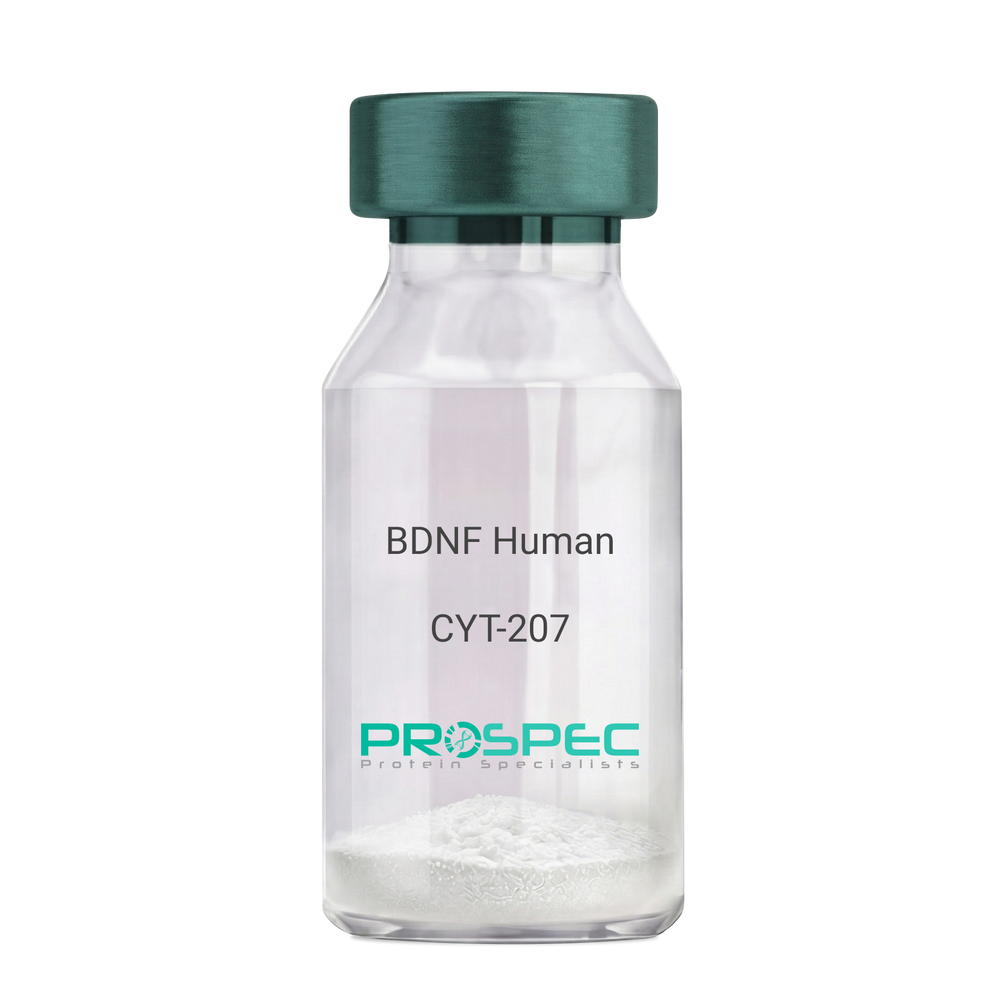
    BDNF Human

    Description:

    Brain-Derived Neurotrophic Factor Human Recombinant

    Brain-Derived Neurotrophic Factor, BDNF, MGC34632.

    Product # :

    CYT-207

    Price :

    Quantity :

    Shipping Method :

    Room Temp Icon

    Shipped at Room temp

    Add To Cart

    More Info

    • description
    • source
    • formulation
    • purity
    • biological activity
    • More Info
    • Activity

    Description

    BDNF Human Recombinant produced in E.Coli is a homodimer, non-glycosylated, polypeptide chain containing 2 x 119 amino acids (and an N-terminal Met) and having a total molecular mass of 28kDa. BDNF Human Recombinant is purified by proprietary chromatographic techniques.

    Source

    Escherichia Coli.

    Formulation

    The protein was lyophilized with 20mM PB and 400mM NaCl, pH 7.2.

    Purity

    BDNF is greater than 950% as determined SDS-PAGE.

    Biological Activity

    The activity was determined using Immobilized Human TrkB-His tag protein 2ug/ml (100 μl/well) for its binding to NHS-Biotin BDNF. The ED50 of was found to be ≤20ng/mL

    Activity

    bdnf activity - Product image 1

    More Info

    • Introduction

      BDNF promotes the survival of neuronal populations that are all located either in the central nervous system or directly connected to it. BDNF is a major regulator of synaptic transmission and plasticity at adult synapses in many regions of the cns. The versatility of BDNF is emphasized by its contribution to a range of adaptive neuronal responses including long-term potentiation (ltp), long-term depression (ltd), certain forms of short-term synaptic plasticity, as well as homeostatic regulation of intrinsic neuronal excitability.

    • Synonyms

      Brain-Derived Neurotrophic Factor, BDNF, MGC34632.

    • Physical Appearance

      Sterile Filtered White lyophilized (freeze-dried) powder.

    • Stability

      Lyophilized BDNF although stable at room temperature for 3 weeks, should be stored desiccated below -18°C. Upon reconstitution BDNF should be stored at 4°C between 2-7 days and for future use below -18°C.For long term storage it is recommended to add a carrier protein (0.1% HSA or BSA).Please prevent freeze-thaw cycles.

    • Solubility

      It is recommended to reconstitute the lyophilized BDNF in sterile 18M-cm H2O not less than 100µg/ml, which can then be further diluted to other aqueous solutions.

    • Amino Acid Sequence

      HSDPARRGE LSVCDSISEW VTAADKKTAV DMSGGTVTVL EKVPVSKGQL KQYFYETKCN PMGYTKEGCR GIDKRHWNSQ CRTTQSYVRA LTMDSKKRIG WRFIRIDTSC VCTLTIKRGR.

    • Background

      Final Thoughts

      Although more research is needed on the safety and effectiveness of BDNF human recombinant, trials suggest that this laboratory-produced protein may be effective in managing and treating several neurological and psychiatric disorders. It's important for experts to stay up to date on the latest developments and research to learn more about potential risks and benefits.

      What is the molecular weight/Mw of BDNF Protein?
      BDNF Protein has a total Mw of 27kDa.

      What is the source or expression system of BDNF Protein?
      Escherichia Coli.

      What is the Purity of BDNF Protein?
      BDNF Protein is >97% pure as determined by SDS-PAGE.

      What is the Biological Activity of BDNF Protein?
      The ED50, as determined by the dose-dependent induction of C6 cells proliferation, is 1.3-2µg/ml.

      What is the amino acid sequence of BDNF Protein?
      MHSDPARRGE LSVCDSISEW VTAADKKTAV DMSGGTVTVL EKVPVSKGQL KQYFYETKCN PMGYTKEGCR GIDKRHWNSQ CRTTQSYVRA LTMDSKKRIG WRFIRIDTSC VCTLTIKRGR.

      What applications can BDNF Protein be used in?
      BDNF Protein can probably be used in western blot, ELISA and Lateral Flow.

      What is the endotoxin level for BDNF Protein?
      The endotoxin level is minimal, BDNF Protein was purified using conventional chromatography techniques.

    • Protein content

      BDNF quantitation was carried out by two independent methods:1. UV spectroscopy at 280 nm using the absorbency value of 1.6 as the extinction coefficient for a 0.1% (1mg/ml) solution. This value is calculated by the PC GENE computer analysis program of protein sequences (IntelliGenetics). 2. Analysis by RP-HPLC, using a standard solution of Brain-derived Neurotrophic Factor as a Reference Standard.

    ProSpec's products are furnished for LABORATORY RESEARCH USE ONLY. The product may not be used as drugs, agricultural or pesticidal products, food additives or household chemicals.

    Bdnf Human
  • View Data Sheet

    Name :

    CDNF Mouse

    Description:

    Cerebral Dopamine Neurotrophic Factor Mouse Recombinant

    Cerebral dopamine neurotrophic factor, ARMET-like protein 1, Conserved dopamine neurotrophic factor, Cdnf, Armetl1, 9330140G23.

    Product # :

    CYT-729

    Price :

    Quantity :

    Shipping Method :

    Room Temp Icon

    Shipped at Room temp

    Add To Cart

    More Info

    • description
    • source
    • formulation
    • purity
    • biological activity
    • More Info

    Description

    CDNF Mouse Recombinant produced in E.coli is a single, non-glycosylated polypeptide chain containing 163 amino acids and having a molecular mass of 18.5kDa.The CDNF is purified by proprietary chromatographic techniques.

    Source

    Escherichia Coli.

    Formulation

    CDNF protein was lyophilized from a 0.2µm filtered concentrated solution in 1xPBS, pH 7.4.

    Purity

    Greater than 97.0% as determined by:
    (a) Analysis by RP-HPLC.
    (b) Analysis by SDS-PAGE.

    Biological Activity

    CDNF Mouse is able to enhance neurite outgrowth of E16-E18 rat embryonic cortical neurons when immobilized at 5-30 µg/mL on a nitrocellulose-coated microplate.

    More Info

    • Introduction

      CDNF is a member of the ARMET family and acts as a trophic factor for dopamine neurons. CDNF inhibits the 6-hydroxydopamine (6-OHDA)-induced degeneration of dopaminergic neurons. When CDNF controlled after 6-OHDA-lesioning, it reestablishes the dopaminergic function and inhibits the degeneration of dopaminergic neurons in substantia nigra. CDNF is universally expressed in neuronal and non-neuronal tissues. The highest levels in the brain are found in the optic nerve and corpus callosum.

    • Synonyms

      Cerebral dopamine neurotrophic factor, ARMET-like protein 1, Conserved dopamine neurotrophic factor, Cdnf, Armetl1, 9330140G23.

    • Physical Appearance

      Sterile Filtered White lyophilized (freeze-dried) powder.

    • Stability

      Lyophilized CDNF although stable at room temperature for 3 weeks, should be stored desiccated below -18°C. Upon reconstitution CDNF should be stored at 4°C between 2-7 days and for future use below -18°C. For long term storage it is recommended to add a carrier protein (0.1% HSA or BSA). Please prevent freeze-thaw cycles.

    • Solubility

      It is recommended to reconstitute the lyophilized CDNF in sterile 18M-cm H2O not less than 100µg/ml, which can then be further diluted to other aqueous solutions.

    • Amino Acid Sequence

      QGLEAGVGPR ADCEVCKEFL DRFYNSLLSR GIDFSADTIE KELLNFCSDA KGKENRLCYY LGATTDAATK ILGEVTRPMS VHIPAVKICE KLKKMDSQIC ELKYGKKLDL ASVDLWKMRV AELKQILQRW GEECRACAEK SDYVNLIREL APKYVEIYPQ TEL.

    • Background

      What is the molecular weight/Mw of CDNF Protein?
      CDNF Protein has a total Mw of 18.5kDa.

      What is the source or expression system of CDNF Protein?
      Escherichia Coli.

      What is the Purity of CDNF Protein?
      CDNF Protein is >97% pure as determined by SDS-PAGE.

      What is the Biological Activity of CDNF Protein?
      CDNF Mouse is able to enhance neurite outgrowth of E16-E18 rat embryonic cortical neurons when immobilized at 5-30 µg/mL on a nitrocellulose-coated microplate.

      What is the amino acid sequence of CDNF Protein?
      QGLEAGVGPR ADCEVCKEFL DRFYNSLLSR GIDFSADTIE KELLNFCSDA KGKENRLCYY LGATTDAATK ILGEVTRPMS VHIPAVKICE KLKKMDSQIC ELKYGKKLDL ASVDLWKMRV AELKQILQRW GEECRACAEK SDYVNLIREL APKYVEIYPQ TEL.

      What applications can CDNF Protein be used in?
      CDNF Protein can probably be used in western blot, ELISA and Lateral Flow.

      What is the endotoxin level for CDNF Protein?
      The endotoxin level is minimal, CDNF Protein was purified using conventional chromatography techniques.

    ProSpec's products are furnished for LABORATORY RESEARCH USE ONLY. The product may not be used as drugs, agricultural or pesticidal products, food additives or household chemicals.

    Cdnf Mouse
  • View Data Sheet

    Name :

    GDF5 Mouse, His

    Description:

    Growth differentiation factor 5 Mouse Recombinant, His Tag

    Bmp-14, Bp, GDF-5, Bone morphogenetic protein 14, GDF5.

    Product # :

    CYT-852

    Price :

    Quantity :

    Shipping Method :

    Ice Icon

    Shipped with Ice Packs

    Add To Cart

    More Info

    • description
    • source
    • formulation
    • purity
    • More Info
    • sds-page

    Description

    GDF5 Mouse Recombinant produced in E.Coli is a single, non-glycosylated polypeptide chain containing 143 amino acids (376-495 a.a) and having a molecular mass of 16kDa.GDF5 is fused to a 23 amino acid His-tag at N-terminus & purified by proprietary chromatographic techniques.

    Source

    Escherichia Coli.

    Formulation

    GDF5 protein solution (0.5mg/ml) containing 20mM Tris-HCl buffer (pH 8.0) and 10% glycerol.

    Purity

    Greater than 90.0% as determined by SDS-PAGE.

    sds-page

    GDF5-sds-page - Product image 1

    More Info

    • Introduction

      GDF-5 is a member of the bone morphogenetic protein (BMP) family and the TGF-beta superfamily. This group of proteins is characterized by a polybasic proteolytic processing site which is cleaved to produce a mature protein containing seven conserved cysteine residues. The members of this family are regulators of cell growth and differentiation in both embryonic and adult tissues. Mutations in this gene are associated with acromesomelic dysplasia, Hunter-Thompson type; brachydactyly, type C; and chondrodysplasia, Grebe type. These associations confirm that the gene product plays a role in skeletal development.

    • Synonyms

      Bmp-14, Bp, GDF-5, Bone morphogenetic protein 14, GDF5.

    • Physical Appearance

      Sterile Filtered colorless solution.

    • Stability

      Store at 4°C if entire vial will be used within 2-4 weeks. Store, frozen at -20°C for longer periods of time. For long term storage it is recommended to add a carrier protein (0.1% HSA or BSA).Avoid multiple freeze-thaw cycles.

    • Amino Acid Sequence

      MGSSHHHHHH SSGLVPRGSH MGSAPLANRQ GKRPSKNLKA RCSRKALHVN FKDMGWDDWI IAPLEYEAFH CEGLCEFPLR SHLEPTNHAV IQTLMNSMDP ESTPPTCCVP TRLSPISILF IDSANNVVYK QYEDMVVESC GCR.

    • Background

      What is the molecular weight/Mw of GDF5 MOUSE Protein?
      GDF5 MOUSE Protein has a total Mw of 16kDa.

      What is the source or expression system of GDF5 MOUSE Protein?
      Escherichia Coli.

      What is the Purity of GDF5 MOUSE Protein?
      GDF5 MOUSE Protein is >90% pure as determined by SDS-PAGE.

      What is the Biological Activity of GDF5 MOUSE Protein?
      The biological functionality of GDF5 MOUSE Protein will be determined in the future.

      What is the amino acid sequence of GDF5 MOUSE Protein?
      MGSSHHHHHH SSGLVPRGSH MGSAPLANRQ GKRPSKNLKA RCSRKALHVN FKDMGWDDWI IAPLEYEAFH CEGLCEFPLR SHLEPTNHAV IQTLMNSMDP ESTPPTCCVP TRLSPISILF IDSANNVVYK QYEDMVVESC GCR.

      What applications can GDF5 MOUSE Protein be used in?
      GDF5 MOUSE Protein can probably be used in western blot, ELISA and Lateral Flow.

      What is the endotoxin level for GDF5 MOUSE Protein?
      The endotoxin level is minimal, GDF5 MOUSE Protein was purified using conventional chromatography techniques.

    ProSpec's products are furnished for LABORATORY RESEARCH USE ONLY. The product may not be used as drugs, agricultural or pesticidal products, food additives or household chemicals.

    Gdf5 Mouse
  • View Data Sheet

    Name :

    BDNF Human, CHO

    Description:

    Brain-Derived Neurotrophic Factor Human Recombinant, CHO

    Brain-Derived Neurotrophic Factor, BDNF, MGC34632.

    Product # :

    CYT-1262

    Price :

    Quantity :

    Shipping Method :

    Room Temp Icon

    Shipped at Room temp

    Add To Cart

    More Info

    • description
    • source
    • formulation
    • purity
    • biological activity
    • More Info
    • sds-page

    Description

    Brain-derived Neurotrophic Factor Human Recombinant produced in CHO is a homodimer, polypeptide chain containing 2 x 119 amino acids and having a total molecular mass of 27kDa. BDNF Human Recombinant is purified by proprietary chromatographic techniques.

    Source

    CHO Cells

    Formulation

    The protein was lyophilized with 5% trehalose and 1x PBS

    Purity

    Greater than 97.0% as determined by SDS-PAGE and SEC-HPLC analyses.

    Biological Activity

    BDNF CHO activity is determined by its ability to bind recombinant human TrkB Fc Chimera in a functional ELISA assay.

    sds-page

    bdnf human cho sds-page - Product image 1

    More Info

    • Introduction

      BDNF is crucial for the signal survival eukaryotes. BDNF is responsible for the development, repair, adaptation and proper functionality of the nervous system.
      BDNF major roles include Neuron survival and development, synaptic flexibility, stress adaptation, Repair and recovery post injury/disease and Pain signaling.

    • Synonyms

      Brain-Derived Neurotrophic Factor, BDNF, MGC34632.

    • Physical Appearance

      Sterile Filtered White lyophilized (freeze-dried) powder.

    • Stability

      Lyophilized BDNF although stable at room temperature for 3 weeks, should be stored desiccated below -18°C. Upon reconstitution BDNF should be stored at 4°C between 2-7 days and for future use below -18°C.For long term storage it is recommended to add a carrier protein (0.1% HSA or BSA).Please prevent freeze-thaw cycles.

    • Solubility

      It is recommended to reconstitute the lyophilized BDNF in sterile 18M-cm H2O not less than 100µg/ml, which can then be further diluted to other aqueous solutions.

    • Amino Acid Sequence

      HSDPARRGE LSVCDSISEW VTAADKKTAV DMSGGTVTVL EKVPVSKGQL KQYFYETKCN PMGYTKEGCR GIDKRHWNSQ CRTTQSYVRA LTMDSKKRIG WRFIRIDTSC VCTLTIKRGR.

    • Background

      Final Thoughts

      Although more research is needed on the safety and effectiveness of BDNF human recombinant, trials suggest that this laboratory-produced protein may be effective in managing and treating several neurological and psychiatric disorders. It's important for experts to stay up to date on the latest developments and research to learn more about potential risks and benefits.

      What is the molecular weight/Mw of BDNF Protein?
      BDNF Protein has a total Mw of 27kDa.

      What is the source or expression system of BDNF Protein?
      CHO Cells

      What is the Purity of BDNF Protein?
      BDNF Protein is >97% pure as determined by SDS-PAGE.

      What is the Biological Activity of BDNF Protein?
      BDNF CHO activity is determined by its ability to bind recombinant human TrkB Fc Chimera in a functional ELISA assay.

      What is the amino acid sequence of BDNF Protein?
      HSDPARRGE LSVCDSISEW VTAADKKTAV DMSGGTVTVL EKVPVSKGQL KQYFYETKCN PMGYTKEGCR GIDKRHWNSQ CRTTQSYVRA LTMDSKKRIG WRFIRIDTSC VCTLTIKRGR.

      What applications can BDNF Protein be used in?
      BDNF Protein can probably be used in western blot, ELISA and Lateral Flow.

      What is the endotoxin level for BDNF Protein?
      The endotoxin level is minimal, BDNF Protein was purified using conventional chromatography techniques.

    • References

      Title:Generation of Neurons with Improved Cell Survival and Phenotype Maintenance Using a Degradation-Resistant Nurr1 Mutant†‡
      Publication:Article first published online: 11 JUN 2009 DOI: 10.1002/stem.146 Copyright © 2009 AlphaMed Press.
      Link:BDNF prospec publication

    ProSpec's products are furnished for LABORATORY RESEARCH USE ONLY. The product may not be used as drugs, agricultural or pesticidal products, food additives or household chemicals.

    Bdnf Human Cho
  • View Data Sheet

    Name :

    GDF5 Human, His

    Description:

    Growth differentiation factor 5 Human Recombinant, His Tag

    Cartilage-derived morphogenetic protein-1, CDMP-1, LAP4, SYNS2, GDF-5, Radotermin, CDMP1, GDF5, Growth differentiation factor 5, BMP-14.

    Product # :

    CYT-653

    Price :

    Quantity :

    Shipping Method :

    Ice Icon

    Shipped with Ice Packs

    Add To Cart

    More Info

    • description
    • source
    • formulation
    • purity
    • More Info

    Description

    GDF5 Human Recombinant produced in E.Coli is a single, non-glycosylated, polypeptide chain containing 141 amino acids (382-501 a.a.) and having a total molecular mass of 15.8 kDa. GDF5 is fused to a 20 amino acid His Tag at N-terminus and purified by proprietary chromatographic techniques.

    Source

    Escherichia Coli.

    Formulation

    The GDF5 solution contains 10mM sodium citrate pH-3.5 and 10% glycerol.

    Purity

    Greater than 95.0% as determined by SDS-PAGE.

    More Info

    • Introduction

      GDF-5 is a member of the bone morphogenetic protein (BMP) family and the TGF-beta superfamily. This group of proteins is characterized by a polybasic proteolytic processing site which is cleaved to produce a mature protein containing seven conserved cysteine residues. The members of this family are regulators of cell growth and differentiation in both embryonic and adult tissues. Mutations in this gene are associated with acromesomelic dysplasia, Hunter-Thompson type; brachydactyly, type C; and chondrodysplasia, Grebe type. These associations confirm that the gene product plays a role in skeletal development.

    • Synonyms

      Cartilage-derived morphogenetic protein-1, CDMP-1, LAP4, SYNS2, GDF-5, Radotermin, CDMP1, GDF5, Growth differentiation factor 5, BMP-14.

    • Physical Appearance

      Sterile Filtered colorless solution.

    • Stability

      Store at 4°C if entire vial will be used within 2-4 weeks. Store, frozen at -20°C for longer periods of time. For long term storage it is recommended to add a carrier protein (0.1% HSA or BSA).Avoid multiple freeze-thaw cycles.

    • Amino Acid Sequence

      MGSSHHHHHH SSGLVPRGSH MAPLATRQGK RPSKNLKARC SRKALHVNFK DMGWDDWIIA PLEYEAFHCE GLCEFPLRSH LEPTNHAVIQ TLMNSMDPES TPPTCCVPTR LSPISILFID SANNVVYKQY EDMVVESCGC R.

    • Background

      What is the molecular weight/Mw of GDF5 HUMAN, HIS Protein?
      GDF5 HUMAN, HIS Protein has a total Mw of 15.8kDa.

      What is the source or expression system of GDF5 HUMAN, HIS Protein?
      Escherichia Coli.

      What is the Purity of GDF5 HUMAN, HIS Protein?
      GDF5 HUMAN, HIS Protein is >95% pure as determined by SDS-PAGE.

      What is the Biological Activity of GDF5 HUMAN, HIS Protein?
      The biological functionality of GDF5 HUMAN, HIS Protein will be determined in the future.

      What is the amino acid sequence of GDF5 HUMAN, HIS Protein?
      MGSSHHHHHH SSGLVPRGSH MAPLATRQGK RPSKNLKARC SRKALHVNFK DMGWDDWIIA PLEYEAFHCE GLCEFPLRSH LEPTNHAVIQ TLMNSMDPES TPPTCCVPTR LSPISILFID SANNVVYKQY EDMVVESCGC R.

      What applications can GDF5 HUMAN, HIS Protein be used in?
      GDF5 HUMAN, HIS Protein can probably be used in western blot, ELISA and Lateral Flow.

      What is the endotoxin level for GDF5 HUMAN, HIS Protein?
      The endotoxin level is minimal, GDF5 HUMAN, HIS Protein was purified using conventional chromatography techniques.

    ProSpec's products are furnished for LABORATORY RESEARCH USE ONLY. The product may not be used as drugs, agricultural or pesticidal products, food additives or household chemicals.

    Gdf5 Human His
  • View Data Sheet

    Name :

    GDF6 Human

    Description:

    Bone Morphogenetic protein-13 Human Recombinant

    Growth Differentiation Factor 6, Growth/Differentiation Factor 16, Bone Morphogenetic Protein 13, BMP-13, BMP13, GDF-6, Klippel-Feil Malformation, Segmentation Syndrome 1, Klip-Feil Malformation, Klippel-Feil Syndrome, MCOPCB6, SCDO4, CDMP2, LCA17, MCOP4, GDF16, KFS1, KFSL, SGM1, KFM, KFS, GDF6.

    Product # :

    CYT-938

    Price :

    Quantity :

    Shipping Method :

    Room Temp Icon

    Shipped at Room temp

    Add To Cart

    More Info

    • description
    • source
    • formulation
    • purity
    • biological activity
    • More Info

    Description

    BMP13 Human Recombinant produced in E.coli is a non-glycosylated disulfide linked homodimer containing 2 chains of 120 amino acids and having a molecular mass of 27.1kDa.The BMP-13 is purified by proprietary chromatographic techniques.

    Source

    Escherichia Coli.

    Formulation

    BMP-13 protein was lyophilized from a 0.2µm filtered concentrated solution in 30% Acetonitrile and 0.1% TFA.

    Purity

    Greater than 95.0% as determined by: (a) Analysis by HPLC. (b) Analysis by SDS-PAGE.

    Biological Activity

    The ED50 as determined by inducing alkaline phosphatase production of murine ATDC5 cells is less than 2.0µg/ml, corresponding to a specific activity of > 500IU/mg.

    More Info

    • Introduction

      Growth/differentiation factors (GDF1-GDF15) belong to the BMP family of TGF-beta superfamily proteins. These factors are produced as inactive preproproteins which are subsequently cleaved and assembled into active secreted homodimers. BMP13 is a growth factor which controls proliferation and cellular differentiation in the retina and bone formation. BMP13 has a central role in regulating apoptosis during retinal development. GDF proteins are vital during embryonic development, particularly in the skeletal, nervous, and muscular systems. BMP13 gene mutations result in colobomata, which are congenital abnormalities in ocular development, and in Klippel-Feil syndrome (KFS), which is a congenital disorder of spinal segmentation.

    • Synonyms

      Growth Differentiation Factor 6, Growth/Differentiation Factor 16, Bone Morphogenetic Protein 13, BMP-13, BMP13, GDF-6, Klippel-Feil Malformation, Segmentation Syndrome 1, Klip-Feil Malformation, Klippel-Feil Syndrome, MCOPCB6, SCDO4, CDMP2, LCA17, MCOP4, GDF16, KFS1, KFSL, SGM1, KFM, KFS, GDF6.

    • Physical Appearance

      Sterile Filtered White lyophilized (freeze-dried) powder.

    • Stability

      Lyophilized BMP13 although stable at room temperature for 3 weeks, should be stored desiccated below -18°C. Upon reconstitution BMP-13 should be stored at 4°C between 2-7 days and for future use below -18°C. For long term storage it is recommended to add a carrier protein (0.1% HSA or BSA). Please prevent freeze-thaw cycles.

    • Solubility

      It is recommended to reconstitute the lyophilized BMP13 in sterile 18M-cm H2O not less than 100µg/ml, which can then be further diluted to other aqueous solutions.

    • Amino Acid Sequence

      TAFASRHGKR HGKKSRLRCS KKPLHVNFKE LGWDDWIIAP LEYEAYHCEG VCDFPLRSHL EPTNHAIIQT LMNSMDPGST PPSCCVPTKL TPISILYIDA GNNVVYKQYE DMVVESCGCR.

    • Background

      Bone Morphogenetic Protein-13 Human Recombinant: Unraveling its Potential in Tissue Engineering and Regenerative Medicine

      Abstract:

      Bone Morphogenetic Protein-13 (BMP-13) human recombinant is a pivotal member of the bone morphogenetic protein family, known for its crucial role in tissue development, regeneration, and repair. This research paper aims to provide a comprehensive analysis of BMP-13, including its characteristics, signaling pathways, and potential therapeutic applications. Furthermore, innovative methodologies for the production and optimization of BMP-13 human recombinant are proposed, shedding light on its future implications in the field of tissue engineering and regenerative medicine.

      Introduction:

      Tissue engineering and regenerative medicine hold great promise in addressing tissue repair and regeneration challenges. BMP-13, a prominent member of the BMP family, plays a vital role in orchestrating cellular responses during tissue development and healing. This paper explores the distinctive features of BMP-13 and presents novel approaches for the production and optimization of BMP-13 human recombinant, aiming to unlock its therapeutic potential in various regenerative contexts.

      Characteristics and Signaling Pathways:

      BMP-13 is a secreted growth factor belonging to the transforming growth factor-beta (TGF-β) superfamily. It exerts its biological effects by binding to specific cell surface receptors, initiating intricate intracellular signaling cascades. BMP-13 signaling pathways, including Smad-dependent and Smad-independent pathways, regulate critical processes such as cell differentiation, proliferation, and extracellular matrix synthesis, influencing tissue development and repair.

      Production of BMP-13 Human Recombinant:

      Efficient production methodologies are crucial for harnessing the therapeutic potential of BMP-13 human recombinant. Various recombinant protein expression systems, such as mammalian cells or baculovirus-insect cell systems, have been utilized for the production of functional BMP-13. Optimization strategies, including codon optimization, signal peptide engineering, and protein folding enhancement, have been employed to improve the yield and bioactivity of BMP-13 recombinant protein.

      Potential Therapeutic Applications:

      BMP-13 human recombinant holds immense promise in the field of tissue engineering and regenerative medicine. Its involvement in cartilage formation, osteogenesis, and tissue repair makes it a potential candidate for the treatment of musculoskeletal disorders, joint injuries, and cartilage defects. Furthermore, the ability of BMP-13 to modulate cell behavior and tissue remodeling indicates its wider therapeutic applications in diverse regenerative processes.

      Conclusion:

      BMP-13 human recombinant emerges as a crucial regulator in tissue engineering and regenerative medicine, offering significant potential for tissue repair and regeneration. Optimizing production methodologies and further unraveling its signaling mechanisms will undoubtedly enhance its therapeutic applications. Given its involvement in cartilage and bone formation, as well as tissue repair, BMP-13 human recombinant represents a valuable tool for promoting tissue regeneration and addressing the unmet clinical needs in regenerative medicine.

      What is the molecular weight/Mw of GDF6 Protein?
      GDF6 Protein has a total Mw of 27.1kDa.

      What is the source or expression system of GDF6 Protein?
      Escherichia Coli.

      What is the Purity of GDF6 Protein?
      GDF6 Protein is >95% pure as determined by SDS-PAGE.

      What is the Biological Activity of GDF6 Protein?
      The ED50 as determined by inducing alkaline phosphatase production of murine ATDC5 cells is less than 2.0µg/ml, corresponding to a specific activity of > 500IU/mg.

      What is the amino acid sequence of GDF6 Protein?
      TAFASRHGKR HGKKSRLRCS KKPLHVNFKE LGWDDWIIAP LEYEAYHCEG VCDFPLRSHL EPTNHAIIQT LMNSMDPGST PPSCCVPTKL TPISILYIDA GNNVVYKQYE DMVVESCGCR.

      What applications can GDF6 Protein be used in?
      GDF6 Protein can probably be used in western blot, ELISA and Lateral Flow.

      What is the endotoxin level for GDF6 Protein?

      The endotoxin level is minimal, GDF6 Protein was purified using conventional chromatography techniques.

    ProSpec's products are furnished for LABORATORY RESEARCH USE ONLY. The product may not be used as drugs, agricultural or pesticidal products, food additives or household chemicals.

    Bmp13 Human
  • View Data Sheet

    Name :

    GDF5 Mouse

    Description:

    Growth and Differentiation factor 5 Mouse Recombinant

    Bmp-14, Bp, GDF-5, Bone morphogenetic protein 14, GDF5, Growth/differentiation factor 5.

    Product # :

    CYT-941

    Price :

    Quantity :

    Shipping Method :

    Room Temp Icon

    Shipped at Room temp

    Add To Cart

    More Info

    • description
    • source
    • formulation
    • purity
    • biological activity
    • More Info

    Description

    GDF5 Mouse Recombinant produced in E.coli is a non-glycosylated disulfide linked homodimer containing 2 chains of 120 amino acids and having a molecular mass of 27.2kDa.The GDF-5 is purified by proprietary chromatographic techniques.

    Source

    Escherichia Coli.

    Formulation

    GDF-5 protein was lyophilized from a 0.2µm filtered concentrated solution in 30% Acetonitrile and 0.1% TFA.

    Purity

    Greater than 96.0% as determined by:
    (a) Analysis by RP-HPLC.
    (b) Analysis by SDS-PAGE.

    Biological Activity

    The ED50 as determined by inducing alkaline phosphatase production of murine ATDC5 cells is less than 1.0µg/ml, corresponding to a specific activity of > 1000IU/mg.

    More Info

    • Introduction

      GDF-5 is a member of the bone morphogenetic protein (BMP) family and the TGF-beta superfamily. This group of proteins is characterized by a polybasic proteolytic processing site which is cleaved to produce a mature protein containing seven conserved cysteine residues. The members of this family are regulators of cell growth and differentiation in both embryonic and adult tissues. Mutations in this gene are associated with acromesomelic dysplasia, Hunter-Thompson type; brachydactyly, type C; and chondrodysplasia, Grebe type. These associations confirm that the gene product plays a role in skeletal development.

    • Synonyms

      Bmp-14, Bp, GDF-5, Bone morphogenetic protein 14, GDF5, Growth/differentiation factor 5.

    • Physical Appearance

      Sterile Filtered White lyophilized (freeze-dried) powder.

    • Stability

      Lyophilized GDF5 although stable at room temperature for 3 weeks, should be stored desiccated below -18°C. Upon reconstitution GDF-5 should be stored at 4°C between 2-7 days and for future use below -18°C. For long term storage it is recommended to add a carrier protein (0.1% HSA or BSA). Please prevent freeze-thaw cycles.

    • Solubility

      It is recommended to reconstitute the lyophilized GDF5 in sterile 4mM HCl not less than 100µg/ml, which can then be further diluted to other aqueous solutions.

    • Amino Acid Sequence

      APLANRQGKR PSKNLKARCS RKALHVNFKD MGWDDWIIAP LEYEAFHCEG LCEFPLRSHL EPTNHAVIQT LMNSMDPEST PPTCCVPTRL SPISILFIDS ANNVVYKQYE DMVVESCGCR.

    • Background

      What is the molecular weight/Mw of GDF5 MOUSE Protein?
      GDF5 MOUSE Protein has a total Mw of 27.2kDa.

      What is the source or expression system of GDF5 MOUSE Protein?
      Escherichia Coli.

      What is the Purity of GDF5 MOUSE Protein?
      GDF5 MOUSE Protein is >96% pure as determined by SDS-PAGE.

      What is the Biological Activity of GDF5 MOUSE Protein?
      The ED50 as determined by inducing alkaline phosphatase production of murine ATDC5 cells is less than 1.0µg/ml, corresponding to a specific activity of > 1000IU/mg.

      What is the amino acid sequence of GDF5 MOUSE Protein?
      APLANRQGKR PSKNLKARCS RKALHVNFKD MGWDDWIIAP LEYEAFHCEG LCEFPLRSHL EPTNHAVIQT LMNSMDPEST PPTCCVPTRL SPISILFIDS ANNVVYKQYE DMVVESCGCR.

      What applications can GDF5 MOUSE Protein be used in?
      GDF5 MOUSE Protein can probably be used in western blot, ELISA and Lateral Flow.

      What is the endotoxin level for GDF5 MOUSE Protein?
      The endotoxin level is minimal, GDF5 MOUSE Protein was purified using conventional chromatography techniques.


    ProSpec's products are furnished for LABORATORY RESEARCH USE ONLY. The product may not be used as drugs, agricultural or pesticidal products, food additives or household chemicals.

    Mouse Gdf5
  • View Data Sheet

    Name :

    GDF5 Human

    Description:

    Growth Differentiation Factor-5 Human Recombinant

    Cartilage-derived morphogenetic protein-1, CDMP-1, LAP4, SYNS2, GDF-5, Radotermin, CDMP1, GDF5, Growth differentiation factor 5, BMP-14.

    Product # :

    CYT-442

    Price :

    Quantity :

    Shipping Method :

    Room Temp Icon

    Shipped at Room temp

    Add To Cart

    More Info

    • description
    • source
    • formulation
    • purity
    • biological activity
    • More Info

    Description

    Growth Differentiation Factor 5 Human Recombinant produced in E.Coli is a homodimer, non-glycosylated polypeptide chain containing 2 x 120 amino acids and having a total molecular mass of 27.4kDa. To enable bacterial expression the N-terminal sequence of Ala-Pro-Leu-Thr was replaced with a Lys.GDF5 is purified by proprietary chromatographic techniques.

    Source

    Escherichia Coli.

    Formulation

    The protein was lyophilized without any additives.

    Purity

    Greater than 98.0% as determined by:
    (a) Analysis by RP-HPLC.
    (b) Analysis by SDS-PAGE.

    Biological Activity

    GDF-5 activity as determined by the induction of alkaline phosphatase activity in ATDC5 cells is typically 10-20ng/ml.

    More Info

    • Introduction

      GDF-5 is a member of the bone morphogenetic protein (BMP) family and the TGF-beta superfamily. This group of proteins is characterized by a polybasic proteolytic processing site which is cleaved to produce a mature protein containing seven conserved cysteine residues. The members of this family are regulators of cell growth and differentiation in both embryonic and adult tissues. Mutations in this gene are associated with acromesomelic dysplasia, Hunter-Thompson type; brachydactyly, type C; and chondrodysplasia, Grebe type. These associations confirm that the gene product plays a role in skeletal development.

    • Synonyms

      Cartilage-derived morphogenetic protein-1, CDMP-1, LAP4, SYNS2, GDF-5, Radotermin, CDMP1, GDF5, Growth differentiation factor 5, BMP-14.

    • Physical Appearance

      Sterile Filtered White lyophilized (freeze-dried) powder.

    • Stability

      Lyophilized Growth Differentiation Factor 5 although stable at room temperature for 3 weeks, should be stored desiccated below -18°C. Upon reconstitution Growth Differentiation Factor-5 should be stored at 4°C between 2-7 days and for future use below -18°C.For long term storage it is recommended to add a carrier protein (0.1% HSA or BSA).Please prevent freeze-thaw cycles.

    • Solubility

      It is recommended to reconstitute the lyophilized Growth Differentiation Factor-5 in sterile 18MΩ-cm H2O not less than 100µg/ml, which can then be further diluted to other aqueous solutions.

    • Amino Acid Sequence

      APSATRQGKR PSKNLKARCS RKALHVNFKD MGWDDWIIAP LEYEAFHCEG LCEFPLRSHL EPTNHAVIQT LMNSMDPEST PPTCCVPTRL SPISILFIDS ANNVVYKQYE DMVVESCGCR.

    • Background

      What is the molecular weight/Mw of GDF5 HUMAN Protein?
      GDF5 HUMAN Protein has a total Mw of 27.4kDa.

      What is the source or expression system of GDF5 HUMAN Protein?
      Escherichia Coli.

      What is the Purity of GDF5 HUMAN Protein?
      GDF5 HUMAN Protein is >98% pure as determined by SDS-PAGE.

      What is the Biological Activity of GDF5 HUMAN Protein?
      GDF-5 activity as determined by the induction of alkaline phosphatase activity in ATDC5 cells is typically 10-20ng/ml.

      What is the amino acid sequence of GDF5 HUMAN Protein?
      APSATRQGKR PSKNLKARCS RKALHVNFKD MGWDDWIIAP LEYEAFHCEG LCEFPLRSHL EPTNHAVIQT LMNSMDPEST PPTCCVPTRL SPISILFIDS ANNVVYKQYE DMVVESCGCR.

      What applications can GDF5 HUMAN Protein be used in?
      GDF5 HUMAN Protein can probably be used in western blot, ELISA and Lateral Flow.

      What is the endotoxin level for GDF5 HUMAN Protein?
      The endotoxin level is minimal, GDF5 HUMAN Protein was purified using conventional chromatography techniques.


    • Protein content

      Protein quantitation was carried out by two independent methods:1. UV spectroscopy at 280 nm using the absorbency value of 1.15 as the extinction coefficient for a 0.1% (1mg/ml) solution. This value is calculated by the PC GENE computer analysis program of protein sequences (IntelliGenetics). 2. Analysis by RP-HPLC, using a standard solution of GDF5 as a Reference Standard.

    ProSpec's products are furnished for LABORATORY RESEARCH USE ONLY. The product may not be used as drugs, agricultural or pesticidal products, food additives or household chemicals.

    Gdf5 Human
  • View Data Sheet

    Name :

    proBDNF Human

    Description:

    Precursor Brain-Derived Neurotrophic Factor Human Recombinant

    proBDNF, Precursor Form Brain-derived Neurotrophic Factor.

    Product # :

    CYT-014

    Price :

    Quantity :

    Shipping Method :

    Room Temp Icon

    Shipped at Room temp

    Add To Cart

    More Info

    • description
    • source
    • formulation
    • purity
    • More Info

    Description

    proBDNF Human Recombinant produced in E.Coli is a single, non-glycosylated, non-covalently linked homodimer with each polypeptide chain containing 229 amino acids and having a molecular mass of 52kDa. The proBDNF is purified by proprietary chromatographic techniques.

    Source

    Escherichia Coli.

    Formulation

    proBDNF was lyophilized from a concentrated (0.5mg/ml) solution in 20mM PB, pH 8.0 and 500mM NaCl.

    Purity

    Greater than 95.0% as determined by:
    (a) Analysis by RP-HPLC.
    (b) Analysis by SDS-PAGE.

    More Info

    • Introduction

      proBDNF (the precursor form of Brain-derived neurotrophic factor) interacts preferentially with p75NTR (the pan-neurotrophin receptor p75) and vps10p domain-containing receptor sortilin and induces neuronal apoptosis, while the mature BDNF selectively binds with great affinity to the TrkB kinase receptor and promotes the survival, growth and differentiation of neurons. Since proneurotrophins and mature neurotrophins bring forth opposite biological effects, proBDNF cleavage in the neuronal system is regulated in a specific and cell-context dependent manner. proBDNF has an important role in negative regulation of neurotrophic actions in the brain.

    • Synonyms

      proBDNF, Precursor Form Brain-derived Neurotrophic Factor.

    • Physical Appearance

      Sterile Filtered White lyophilized (freeze-dried) powder.

    • Stability

      Lyophilized proBDNF although stable at room temperature for 3 weeks, should be stored desiccated below -18°C. Upon reconstitution proBDNF should be stored at 4°C between 2-7 days and for future use below -18°C.Please prevent freeze-thaw cycles.

    • Solubility

      It is recommended to reconstitute the lyophilized proBDNF in sterile 18M-cm H2O not less than 100µg/ml, which can then be further diluted to other aqueous solutions.

    • Amino Acid Sequence

      The sequence of the first five N-terminal amino acids was determined and was found to be Met-Ala-Pro-Met-Lys.

    • Background

      Precursor Brain-Derived Neurotrophic Factor Human Recombinant: Unveiling the Potential of a Key Neurotrophic Factor

      Abstract:

      Precursor Brain-Derived Neurotrophic Factor (proBDNF) human recombinant is a pivotal neurotrophic factor that plays a critical role in neuronal development, survival, and synaptic plasticity. This research paper provides a comprehensive overview of proBDNF, including its characteristics, processing mechanisms, and potential therapeutic applications. Furthermore, innovative methodologies for the production and optimization of proBDNF human recombinant are proposed, highlighting its future implications in the field of neuroregenerative medicine.

      Introduction:

      Understanding the intricate processes underlying neuronal development and function is crucial for advancing neuroregenerative strategies. Neurotrophic factors, such as proBDNF, have garnered significant attention due to their pivotal roles in supporting neuronal growth and survival. This paper delves into the unique features of proBDNF and presents novel approaches for its production and optimization.

      Characteristics and Processing Mechanisms:

      proBDNF is a precursor protein consisting of 247 amino acids and is processed into mature brain-derived neurotrophic factor (mBDNF) through proteolytic cleavage. The ratio between proBDNF and mBDNF is tightly regulated and determines the balance between neuronal survival and apoptosis. Additionally, proBDNF exerts distinct biological functions through its receptor interactions, modulating synaptic plasticity and neuronal activity.

      Production of proBDNF Human Recombinant:

      Efficient production methodologies are essential to harness the therapeutic potential of proBDNF human recombinant. Various expression systems, including bacterial, yeast, and mammalian cell-based platforms, have been explored. Each system presents unique advantages and challenges, necessitating careful selection to achieve high yields and protein quality. Optimization strategies, such as codon optimization, fusion protein tags, and growth conditions, have been employed to enhance production efficiency. Purification techniques, such as affinity chromatography and size exclusion chromatography, have been optimized to isolate high-quality proBDNF recombinant.

      Potential Therapeutic Applications:

      proBDNF human recombinant holds immense promise for neuroregenerative medicine. Its role in promoting neuronal survival, axonal growth, and synaptic plasticity positions it as a valuable therapeutic agent for neurodegenerative disorders, spinal cord injuries, and stroke. Additionally, the balance between proBDNF and mBDNF presents a potential therapeutic target for fine-tuning neuronal processes and restoring proper brain function.

      Conclusion:

      proBDNF human recombinant represents a crucial neurotrophic factor with diverse therapeutic applications in neuroregenerative medicine. Optimizing production methodologies and further understanding its processing mechanisms will enhance its clinical utility. With its potential implications in neurodegenerative disorders and neuronal repair, proBDNF human recombinant holds immense promise as a transformative tool for promoting neural health and regeneration.

      What is the molecular weight/Mw of BDNF Protein?
      BDNF Protein has a total Mw of 52kDa.

      What is the source or expression system of BDNF Protein?
      Escherichia Coli.

      What is the Purity of BDNF Protein?
      BDNF Protein is >95% pure as determined by SDS-PAGE.

      What is the Biological Activity of BDNF Protein?
      The biological functionality of BDNF Protein will be determined in the future.

      What is the amino acid sequence of BDNF Protein?
      The sequence of the first five N-terminal amino acids was determined and was found to be Met-Ala-Pro-Met-Lys.

      What applications can BDNF Protein be used in?
      BDNF Protein can probably be used in western blot, ELISA and Lateral Flow.

      What is the endotoxin level for BDNF Protein?
      The endotoxin level is minimal, BDNF Protein was purified using conventional chromatography techniques.

    ProSpec's products are furnished for LABORATORY RESEARCH USE ONLY. The product may not be used as drugs, agricultural or pesticidal products, food additives or household chemicals.

    Probdnf Human
  • View Data Sheet

    Name :

    BDNF Antibody

    Description:

    Brain-Derived Neurotrophic Factor, Mouse Anti-Human

    BDNF, MGC34632.

    Product # :

    ANT-128

    Price :

    Quantity :

    Shipping Method :

    Room Temp Icon

    Shipped at Room temp

    Add To Cart

    More Info

    • formulation
    • More Info

    Formulation

    1mg/ml in PBS (after reconstitution).

    More Info

    • Introduction

      BDNF promotes the survival of neuronal populations that are all located either in the central nervous system or directly connected to it. Major regulator of synaptic transmission and plasticity at adult synapses in many regions of the cns. the versatility of bdnf is emphasized by its contribution to a range of adaptive neuronal responses including long-term potentiation (ltp), long-term depression (ltd), certain forms of short-term synaptic plasticity, as well as homeostatic regulation of intrinsic neuronal excitability.

    • Synonyms

      BDNF, MGC34632.

    • Solubility

      Reconstitute with sterile H20. Mix gently, wash the sides of the vial and wait 30-60 seconds before use.

    • Immunogen

      r.Human BDNF.

    • Ig Subclass

      Mouse IgG Purification MethodIon exchange.

    • Clone

      NYRhBDNF.

    • Titer

      By direct ELISA, 1:10,000 dilution will yield 0.4 O.D using alkaline phosphatase conjugated rabbit anti-mouse Ig (Jackson Laboratories).

    • Shipping Conditions

      Antibody is shipped lyophilized at ambient temperature.

    • Type

      Mouse Anti Human Monoclonal.

    • Storage Procedures

      In lyophilized form, for long periods, store at 4oC in a dry environment. After reconstitution, if not intended for use within a month, aliquot and store at -20oC.

    ProSpec's products are furnished for LABORATORY RESEARCH USE ONLY. The product may not be used as drugs, agricultural or pesticidal products, food additives or household chemicals.

    Bdnf Antibody
  • View Data Sheet

    Name :

    CDNF Rat

    Description:

    CDNF Rat Recombinant

    Cerebral neurotrophic factor, ARMET-like protein 1, Arginine-rich protein mutated in early stage tumors-like 1, Conserved neurotrophic factor, Cdnf, Armetl1.

    Product # :

    CYT-730

    Price :

    Quantity :

    Shipping Method :

    Room Temp Icon

    Shipped at Room temp

    Add To Cart

    More Info

    • description
    • source
    • formulation
    • purity
    • biological activity
    • More Info

    Description

    CDNF Rat Recombinant produced in E.coli is a single, non-glycosylated polypeptide chain containing 163 amino acids and having a molecular mass of 18.8kDa.The CDNF is purified by proprietary chromatographic techniques.

    Source

    Escherichia Coli.

    Formulation

    CDNF protein was lyophilized from a 0.2µm filtered concentrated solution in 1xPBS, pH 7.4.

    Purity

    Greater than 97.0% as determined by:
    (a) Analysis by RP-HPLC.
    (b) Analysis by SDS-PAGE.

    Biological Activity

    CDNF Rat is able to enhance neurite outgrowth of E16-E18 rat embryonic cortical neurons when immobilized at 5-25 µg/mL on a nitrocellulose-coated microplate.

    More Info

    • Introduction

      CDNF is a member of the ARMET family and acts as a trophic factor for neurons. CDNF inhibits the 6-hydroxy (6-OHDA)-induced degeneration of neurons. When CDNF controlled after 6-OHDA-lesioning, it reestablishes the function and inhibits the degeneration of neurons in substantia nigra. CDNF is universally expressed in neuronal and non-neuronal tissues. The highest levels in the brain are found in the optic nerve and corpus callosum.

    • Synonyms

      Cerebral neurotrophic factor, ARMET-like protein 1, Arginine-rich protein mutated in early stage tumors-like 1, Conserved neurotrophic factor, Cdnf, Armetl1.

    • Physical Appearance

      Sterile Filtered White lyophilized (freeze-dried) powder.

    • Stability

      Lyophilized CDNF although stable at room temperature for 3 weeks, should be stored desiccated below -18°C. Upon reconstitution CDNF should be stored at 4°C between 2-7 days and for future use below -18°C. For long term storage it is recommended to add a carrier protein (0.1% HSA or BSA). Please prevent freeze-thaw cycles.

    • Solubility

      It is recommended to reconstitute the lyophilized CDNF in sterile 18M-cm H2O not less than 100µg/ml, which can then be further diluted to other aqueous solutions.

    • Amino Acid Sequence

      QGLEAGVRSR ADCEVCKEFL NRFYNSLLTR GIDFSVDTIE EELISFCADT KGKENRLCYY LGATKDSATK ILGEVTRPMS VHMPTVKICE KLKKMDSQIC ELKYEKKLDL ESVDLWKMRV AELKQILHSW GEECRACAEK HDYVNLIKEL APKYVETRPQ TEL.

    • Background

      What is the molecular weight/Mw of CDNF Protein?
      CDNF Protein has a total Mw of 18.8kDa.

      What is the source or expression system of CDNF Protein?
      Escherichia Coli.

      What is the Purity of CDNF Protein?
      CDNF Protein is >97% pure as determined by SDS-PAGE.

      What is the Biological Activity of CDNF Protein?
      CDNF Rat is able to enhance neurite outgrowth of E16-E18 rat embryonic cortical neurons when immobilized at 5-25 µg/mL on a nitrocellulose-coated microplate.

      What is the amino acid sequence of CDNF Protein?
      QGLEAGVRSR ADCEVCKEFL NRFYNSLLTR GIDFSVDTIE EELISFCADT KGKENRLCYY LGATKDSATK ILGEVTRPMS VHMPTVKICE KLKKMDSQIC ELKYEKKLDL ESVDLWKMRV AELKQILHSW GEECRACAEK HDYVNLIKEL APKYVETRPQ TEL.

      What applications can CDNF Protein be used in?
      CDNF Protein can probably be used in western blot, ELISA and Lateral Flow.

      What is the endotoxin level for CDNF Protein?
      The endotoxin level is minimal, CDNF Protein was purified using conventional chromatography techniques.

    ProSpec's products are furnished for LABORATORY RESEARCH USE ONLY. The product may not be used as drugs, agricultural or pesticidal products, food additives or household chemicals.

    Cdnf Rat
  • View Data Sheet

    Name :

    CDNF Human

    Description:

    Cerebral Neurotrophic Factor Human Recombinant

    Cerebral neurotrophic factor, arginine-rich, mutated in early stage tumors-like 1, Conserved neurotrophic factor, ARMET-like protein 1, ARMETL1.

    Product # :

    CYT-167

    Price :

    Quantity :

    Shipping Method :

    Room Temp Icon

    Shipped at Room temp

    Add To Cart

    More Info

    • description
    • source
    • formulation
    • purity
    • biological activity
    • More Info

    Description

    CDNF Human Recombinant produced in E.coli is a single, non-glycosylated polypeptide chain containing 161 amino acids and having a molecular mass of 18.5kDa.The CDNF is purified by proprietary chromatographic techniques.

    Source

    Escherichia Coli.

    Formulation

    CDNF protein was lyophilized from a 0.2µm filtered concentrated solution in 1xPBS, pH 7.4.

    Purity

    Greater than 96.0% as determined by:
    (a) Analysis by RP-HPLC.
    (b) Analysis by SDS-PAGE.

    Biological Activity

    The ED50 as determined by its ability to stimulate the proliferation of rat C6 cells is 15-25µg/ml, corresponding to a specific activity of 40-67units/mg.

    More Info

    • Introduction

      CDNF is a member of the ARMET family and acts as a trophic factor for neurons. CDNF inhibits the (6-OHDA)-induced degeneration of neurons. When CDNF controlled after 6-OHDA-lesioning, it reestablishes the function and inhibits the degeneration of neurons in substantia nigra. CDNF is universally expressed in neuronal and non-neuronal tissues. The highest levels in the brain are found in the optic nerve and corpus callosum.

    • Synonyms

      Cerebral neurotrophic factor, arginine-rich, mutated in early stage tumors-like 1, Conserved neurotrophic factor, ARMET-like protein 1, ARMETL1.

    • Physical Appearance

      Sterile Filtered White lyophilized (freeze-dried) powder.

    • Stability

      Lyophilized CDNF although stable at room temperature for 3 weeks, should be stored desiccated below -18°C. Upon reconstitution CDNF should be stored at 4°C between 2-7 days and for future use below -18°C. For long term storage it is recommended to add a carrier protein (0.1% HSA or BSA). Please prevent freeze-thaw cycles.

    • Solubility

      It is recommended to reconstitute the lyophilized CDNF in sterile 18M-cm H2O not less than 100µg/ml, which can then be further diluted to other aqueous solutions.

    • Amino Acid Sequence

      QEAGGRPGAD CEVCKEFLNR FYKSLIDRGV NFSLDTIEKE LISFCLDTKG KENRLCYYLG ATKDAATKIL SEVTRPMSVH MPAMKICEKL KKLDSQICEL KYEKTLDLAS VDLRKMRVAE LKQILHSWGE ECRACAEKTD YVNLIQELAP KYAATHPKTE L

    • Background

      Cerebral Neurotrophic Factor Human Recombinant: A Leap Forward in Neurobiology

      The field of neurobiology is replete with wonder, particularly due to the influential role of neurotrophic factors. These essential proteins, responsible for the survival and growth of neurons, have become a focal point in modern research. Among these, the Cerebral Neurotrophic Factor (CNF) stands out, offering novel insights and potential breakthroughs in our understanding of neurological health.

      Enter the world of bioengineering, a scientific arena where we have successfully replicated CNF, leading to the birth of Cerebral Neurotrophic Factor Human Recombinant (CNF-HR). This is a massive step towards conquering neurodegenerative disorders such as Alzheimer's and Parkinson's diseases, conditions that have perplexed scientists and clinicians for decades.

      The extraordinary capacity of CNF-HR lies in its dual functionality - it acts as a defender and a promoter. It defends neurons from harmful degenerative processes while promoting their growth and development. Picture a devoted gardener who tirelessly protects his garden from pests and nurtures the growth of each plant. In this context, the brain is the vibrant garden, and the neurons, the delicate plants we must care for.

      Although this scientific breakthrough sparks enthusiasm, it's crucial to remember the challenges that lie ahead. The path to determining the most effective method of delivering CNF-HR to the brain, identifying the optimal dosage, and monitoring potential side effects is a winding one. Nevertheless, with continuous research and relentless scientific curiosity, we are optimistic about overcoming these challenges.

      In conclusion, the development of CNF-HR is a significant milestone in the fascinating journey of neurobiology. Its potential to change the trajectory of treating neurodegenerative diseases and enhancing our understanding of neuronal function is tremendous. While the journey is strewn with complexities, the potential rewards we stand to reap promise a future where neurodegenerative diseases could be effectively managed or even cured.

      What is the molecular weight/Mw of CDNF Protein?
      CDNF Protein has a total Mw of 18.5kDa.

      What is the source or expression system of CDNF Protein?
      Escherichia Coli.

      What is the Purity of CDNF Protein?
      CDNF Protein is >96% pure as determined by SDS-PAGE.

      What is the Biological Activity of CDNF Protein?
      The ED50 as determined by its ability to stimulate the proliferation of rat C6 cells is 15-25µg/ml, corresponding to a specific activity of 40-67units/mg.

      What is the amino acid sequence of CDNF Protein?
      QEAGGRPGAD CEVCKEFLNR FYKSLIDRGV NFSLDTIEKE LISFCLDTKG KENRLCYYLG ATKDAATKIL SEVTRPMSVH MPAMKICEKL KKLDSQICEL KYEKTLDLAS VDLRKMRVAE LKQILHSWGE ECRACAEKTD YVNLIQELAP KYAATHPKTE L

      What applications can CDNF Protein be used in?
      CDNF Protein can probably be used in western blot, ELISA and Lateral Flow.

      What is the endotoxin level for CDNF Protein?
      The endotoxin level is minimal, CDNF Protein was purified using conventional chromatography techniques

    ProSpec's products are furnished for LABORATORY RESEARCH USE ONLY. The product may not be used as drugs, agricultural or pesticidal products, food additives or household chemicals.

    Cdnf Human
  • View Data Sheet

    Name :

    GDF15 Mouse

    Description:

    Growth and Differentiation factor 15 Mouse Recombinant

    Growth/differentiation factor 15, GDF-15.

    Product # :

    CYT-857

    Price :

    Quantity :

    Shipping Method :

    Ice Icon

    Shipped with Ice Packs

    Add To Cart

    More Info

    • description
    • source
    • formulation
    • purity
    • More Info
    • sds-page

    Description

    GDF15 Mouse Recombinant produced in E.Coli is a single, non-glycosylated polypeptide chain containing 138 amino acids (189-303 a.a) and having a molecular mass of 14.9kDa. GDF15 is fused to a 23 amino acid His-tag at N-terminus & purified by proprietary chromatographic techniques.

    Source

    Escherichia Coli.

    Formulation

    GDF15 protein solution (1.0mg/ml) containing 20mM Phosphate buffer (pH 8.0) and 10% glycerol.

    Purity

    Greater than 90.0% as determined by SDS-PAGE.

    sds-page

    GDF15 Mouse - Product image 1

    More Info

    • Introduction

      GDF15 is part of the TGF-Beta superfamily which is involved in regulating inflammatory and apoptotic pathways in injured tissues and throughout disease processes. GDF15 is most abundant in the liver. Its expression in liver can be considerably up-regulated in during injury of organs such as liver, kidney, heart and lung. GDF-15 promotes proliferation or growth arrest and differentiation due to differences in cellular differentiation. GDF15 prevents apoptosis in cerebellar granule neurons by activating Akt and inhibiting endogenously active ERK. GDF15 is a novel autocrine/endocrine factor that antagonizes the hypertrophic response and loss of ventricular performance.

    • Synonyms

      Growth/differentiation factor 15, GDF-15.

    • Physical Appearance

      Sterile Filtered colorless solution.

    • Stability

      Store at 4°C if entire vial will be used within 2-4 weeks. Store, frozen at -20°C for longer periods of time. For long term storage it is recommended to add a carrier protein (0.1% HSA or BSA).Avoid multiple freeze-thaw cycles.

    • Amino Acid Sequence

      MGSSHHHHHH SSGLVPRGSH MGSSAHAHPR DSCPLGPGRC CHLETVQATL EDLGWSDWVL SPRQLQLSMC VGECPHLYRS ANTHAQIKAR LHGLQPDKVP APCCVPSSYT PVVLMHRTDS GVSLQTYDDL VARGCHCA.

    • Background

      What is the molecular weight/Mw of GDF15 MOUSE Protein?
      GDF15 MOUSE Protein has a total Mw of 14.9kDa.

      What is the source or expression system of GDF15 MOUSE Protein?
      Escherichia Coli.

      What is the Purity of GDF15 MOUSE Protein?
      GDF15 MOUSE Protein is >90% pure as determined by SDS-PAGE.

      What is the Biological Activity of GDF15 MOUSE Protein?
      The biological functionality of GDF15 MOUSE Protein will be determined in the future.

      What is the amino acid sequence of GDF15 MOUSE Protein?
      MGSSHHHHHH SSGLVPRGSH MGSSAHAHPR DSCPLGPGRC CHLETVQATL EDLGWSDWVL SPRQLQLSMC VGECPHLYRS ANTHAQIKAR LHGLQPDKVP APCCVPSSYT PVVLMHRTDS GVSLQTYDDL VARGCHCA.

      What applications can GDF15 MOUSE Protein be used in?
      GDF15 MOUSE Protein can probably be used in western blot, ELISA and Lateral Flow.

      What is the endotoxin level for GDF15 MOUSE Protein?
      The endotoxin level is minimal, GDF15 MOUSE Protein was purified using conventional chromatography techniques.

    ProSpec's products are furnished for LABORATORY RESEARCH USE ONLY. The product may not be used as drugs, agricultural or pesticidal products, food additives or household chemicals.

    Gdf15 Mouse
  • View Data Sheet

    Name :

    GDF15 Human

    Description:

    Growth and Differentiation Factor 15 Human Recombinant

    GDF-15, MIC1, MIC-1, NAG-1, PDF, PLAB, PTGFB, Growth/differentiation factor 15, Placental bone morphogenetic protein, Placental TGF-beta, Macrophage inhibitory cytokine 1, Prostate differentiation factor, NSAID-activated gene 1 protein, NSAID-regulated gene 1 protein, NRG-1, GDF15.

    Product # :

    CYT-335

    Price :

    Quantity :

    Shipping Method :

    Room Temp Icon

    Shipped at Room temp

    Add To Cart

    More Info

    • description
    • source
    • formulation
    • purity
    • More Info

    Description

    GDF15 Human Recombinant produced in E.Coli is a homodimeric, non-glycosylated, Polypeptide chain containing 2x113 amino acids and having a molecular mass of 24.8 kDa. The GDF15 is purified by proprietary chromatographic techniques.

    Source

    Escherichia Coli.

    Formulation

    GDF15 is lyophilized from a sterile filtered solution containing 0.1% Trifluoroacetic Acid (TFA).

    Purity

    Greater than 95.0% as determined by SDS-PAGE.

    More Info

    • Introduction

      GDF15 is part of the TGF-Beta superfamily that is involved in regulating inflammatory and apoptotic pathways in injured tissues and throughout disease processes. GDF15 is most abundant in the liver. Its expression in liver can be considerably up-regulated in during injury of organs such as liver, kidney, heart and lung. GDF-15 promotes proliferation or growth arrest and differentiation due to differences in cellular differentiation. GDF15 prevents apoptosis in cerebellar granule neurons by activating Akt and inhibiting endogenously active ERK. GDF15 is a novel autocrine/endocrine factor that antagonizes the hypertrophic response and loss of ventricular performance.

    • Synonyms

      GDF-15, MIC1, MIC-1, NAG-1, PDF, PLAB, PTGFB, Growth/differentiation factor 15, Placental bone morphogenetic protein, Placental TGF-beta, Macrophage inhibitory cytokine 1, Prostate differentiation factor, NSAID-activated gene 1 protein, NSAID-regulated gene 1 protein, NRG-1, GDF15.

    • Physical Appearance

      Sterile Filtered White lyophilized (freeze-dried) powder.

    • Stability

      Lyophilized GDF15 although stable at room temperature for 3 weeks, should be stored desiccated below -18°C. Upon reconstitution GDF15 should be stored at 4°C between 2-7 days and for future use below -18°C.For long term storage it is recommended to add a carrier protein (0.1% HSA or BSA).Please prevent freeze-thaw cycles.

    • Solubility

      It is recommended to reconstitute the lyophilized GDF15 in sterile 18M-cm H2O at a concentration of 100µg/ml, which can then be further diluted to other aqueous solutions.

    • Amino Acid Sequence

      MARNGDHCPL GPGRCCRLHT VRASLEDLGW ADWVLSPREV QVTMCIGACP SQFRAANMHA QIKTSLHRLK PDTVPAPCCV PASYNPMVLI QKTDTGVSLQ TYDDLLAKDC HCI.

    • Background

      What is the molecular weight/Mw of GDF15 HUMAN Protein?
      GDF15 HUMAN Protein has a total Mw of 24.8kDa.

      What is the source or expression system of GDF15 HUMAN Protein?
      Escherichia Coli.

      What is the Purity of GDF15 HUMAN Protein?
      GDF15 HUMAN Protein is >95% pure as determined by SDS-PAGE.

      What is the Biological Activity of GDF15 HUMAN Protein?
      The biological functionality of GDF15 HUMAN Protein will be determined in the future.

      What is the amino acid sequence of GDF15 HUMAN Protein?
      MARNGDHCPL GPGRCCRLHT VRASLEDLGW ADWVLSPREV QVTMCIGACP SQFRAANMHA QIKTSLHRLK PDTVPAPCCV PASYNPMVLI QKTDTGVSLQ TYDDLLAKDC HCI.

      What applications can GDF15 HUMAN Protein be used in?
      GDF15 HUMAN Protein can probably be used in western blot, ELISA and Lateral Flow.

      What is the endotoxin level for GDF15 HUMAN Protein?
      The endotoxin level is minimal, GDF15 HUMAN Protein was purified using conventional chromatography techniques.


    ProSpec's products are furnished for LABORATORY RESEARCH USE ONLY. The product may not be used as drugs, agricultural or pesticidal products, food additives or household chemicals.

    Gdf15 H Human
  • View Data Sheet

    Name :

    GM-CSF Mouse

    Description:

    Granulocyte Macrophage-Colony Stimulating Factor Mouse Recombinant

    CSF-2, MGI-1GM, GM-CSF, Pluripoietin-alpha, CSF2, GMCSF

    Product # :

    CYT-222

    Price :

    Quantity :

    Shipping Method :

    Room Temp Icon

    Shipped at Room temp

    Add To Cart

    More Info

    • description
    • source
    • formulation
    • purity
    • biological activity
    • More Info

    Description

    Granulocyte Macrophage Colony Stimulating Factor Mouse Recombinant produced in E.Coli is a single, non-glycosylated, polypeptide chain containing 125 amino acids and having a molecular mass of 14285.35 Dalton.GM-CSF Mouse is purified by proprietary chromatographic techniques.

    Source

    Escherichia Coli.

    Formulation

    GM-CSF Mouse was lyophilized with no additives.

    Purity

    Greater than 98.0% as determined by(a) Analysis by RP-HPLC.
    (b) Analysis by SDS-PAGE.

    Biological Activity

    The ED50 as determined by the dose-dependant stimulation of the proliferation of murine FDC-P1 cell line is < 0.2 ng/ml, corresponding to a Specific Activity of 5,000,000 IU/mg.

    More Info

    • Introduction

      GMCSF is a cytokine that controls the production, differentiation, and function of granulocytes and macrophages. The active form of the protein is found extracellularly as a homodimer. This gene has been localized to a cluster of related genes at chromosome region 5q31, which is known to be associated with interstitial deletions in the 5q- syndrome and acute myelogenous leukemia. Other genes in the cluster include those encoding interleukins 4, 5, and 13.
      GM-CSF stimulates the growth and differentiation of hematopoietic precursor cells from various lineages, including granulocytes, macrophages, eosinophils and erythrocytes.

    • Synonyms

      CSF-2, MGI-1GM, GM-CSF, Pluripoietin-alpha, CSF2, GMCSF

    • Physical Appearance

      Sterile Filtered White lyophilized (freeze-dried) powder.

    • Stability

      Lyophilized Granulocyte Macrophage Colony Stimulating Factor although stable at room temperature for 3 weeks, should be stored desiccated below -18°C. Upon reconstitution GM-CSF should be stored at 4°C between 2-7 days and for future use below -18°C.For long term storage it is recommended to add a carrier protein (0.1% HSA or BSA).Please prevent freeze-thaw cycles.

    • Solubility

      It is recommended to reconstitute the lyophilized Granulocyte Macrophage Colony Stimulating Factor in sterile 20mM AcOH (acetic Acid) not less than 100µg/ml, which can then be further diluted to other aqueous solutions.

    • Amino Acid Sequence

      The sequence of the first five N-terminal amino acids was determined and was found to be Met-Ala-Pro-Thr-Arg.

    • Background

      What is the molecular weight/Mw of GM-CSF MOUSE Protein?
      GM-CSF MOUSE Protein has a total Mw of 14.28kDa.

      What is the source or expression system of GM-CSF MOUSE Protein?
      Escherichia Coli.

      What is the Purity of GM-CSF MOUSE Protein?
      GM-CSF MOUSE Protein is >98% pure as determined by SDS-PAGE.

      What is the Biological Activity of GM-CSF MOUSE Protein?
      The ED50 as determined by the dose-dependant stimulation of the proliferation of murine FDC-P1 cell line is < 0.2 ng/ml, corresponding to a Specific Activity of 5,000,000 IU/mg.

      What is the amino acid sequence of GM-CSF MOUSE Protein?
      The sequence of the first five N-terminal amino acids was determined and was found to be Met-Ala-Pro-Thr-Arg.

      What applications can GM-CSF MOUSE Protein be used in?
      GM-CSF MOUSE Protein can probably be used in western blot, ELISA and Lateral Flow.

      What is the endotoxin level for GM-CSF MOUSE Protein?
      The endotoxin level is minimal, GM-CSF MOUSE Protein was purified using conventional chromatography techniques.


    • Protein content

      GM-CSF quantitation was carried out by two independent methods1. UV spectroscopy at 280 nm using the absorbency value of 0.765 as the extinction coefficient for a 0.1% (1mg/ml) solution. This value is calculated by the PC GENE computer analysis program of protein sequences (IntelliGenetics). 2. Analysis by RP-HPLC, using a calibrated solution of GM-CSF as a Reference Standard.

    ProSpec's products are furnished for LABORATORY RESEARCH USE ONLY. The product may not be used as drugs, agricultural or pesticidal products, food additives or household chemicals.

    Gm Csf Mouse
  • View Data Sheet

    Name :

    GMFB His Human

    Description:

    Glia Maturation Factor Beta Human His Tag Recombinant

    GMF, GMF beta.

    Product # :

    CYT-726

    Price :

    Quantity :

    Shipping Method :

    Ice Icon

    Shipped with Ice Packs

    Add To Cart

    More Info

    • description
    • source
    • formulation
    • purity
    • More Info

    Description

    GMFB Human Recombinant produced in E.Coli is a signle, non-glycosylated, polypeptide chain containing 162 amino acids (1-142 a.a.)and having a total molecular mass of 18.8 kDa. GMGB is fused to a 20 amino acid His Tag at N-terminus and is purified by proprietary chromatographic techniques.

    Source

    Escherichia Coli.

    Formulation

    The GMFB 1mg/ml protein solution contains 20mM Tris-HCL pH-8, 1mM DTT, 0.1M NaCl and 10% Glycerol.

    Purity

    Greater than 95.0% as determined by SDS-PAGE.

    More Info

    • Introduction

      GMFB is part of the GMF subfamily of the larger actin-binding protein ADF family. GMFB is phosphorylated after phorbol ester stimulation, and is crucial for the nervous system. GMFB causes brain cell differentiation, stimulates neural regeneration and inhibits tumor cell proliferation. GMFB overexpression in astrocytes results in the increase of BDNF production. GMFB expression is increased by exercise, thus BDNF is important for exercise-induction of BDNF.

    • Synonyms

      GMF, GMF beta.

    • Physical Appearance

      Sterile Filtered colorless clear solution.

    • Stability

      Store at 4°C if entire vial will be used within 2-4 weeks. Store, frozen at -20°C for longer periods of time. Please avoid freeze thaw cycles.

    • Amino Acid Sequence

      MGSSHHHHHH SSGLVPRGSH MSESLVVCDV AEDLVEKLRK FRFRKETNNA AIIMKIDKDK RLVVLDEELE GISPDELKDE LPERQPRFIV
      YSYKYQHDDG RVSYPLCFIF SSPVGCKPEQ QMMYAGSKNK LVQTAELTKV FEIRNTEDLT EEWLREKLGF FH.

    • Background

      What is the molecular weight/Mw of GMFB HIS HUMAN Protein?
      GMFB HIS HUMAN Protein has a total Mw of 18.8kDa.

      What is the source or expression system of GMFB HIS HUMAN Protein?
      Escherichia Coli.

      What is the Purity of GMFB HIS HUMAN Protein?
      GMFB HIS HUMAN Protein is >95% pure as determined by SDS-PAGE.

      What is the Biological Activity of GMFB HIS HUMAN Protein?
      The biological functionality of GMFB HIS HUMAN Protein will be determined in the future.

      What is the amino acid sequence of GMFB HIS HUMAN Protein?
      MGSSHHHHHH SSGLVPRGSH MSESLVVCDV AEDLVEKLRK FRFRKETNNA AIIMKIDKDK RLVVLDEELE GISPDELKDE LPERQPRFIV
      YSYKYQHDDG RVSYPLCFIF SSPVGCKPEQ QMMYAGSKNK LVQTAELTKV FEIRNTEDLT EEWLREKLGF FH.

      What applications can GMFB HIS HUMAN Protein be used in?
      GMFB HIS HUMAN Protein can probably be used in western blot, ELISA and Lateral Flow.

      What is the endotoxin level for GMFB HIS HUMAN Protein?
      The endotoxin level is minimal, GMFB HIS HUMAN Protein was purified using conventional chromatography techniques.


    ProSpec's products are furnished for LABORATORY RESEARCH USE ONLY. The product may not be used as drugs, agricultural or pesticidal products, food additives or household chemicals.

    Gmfb His Human
  • 1
  • 2
  • 3
  • …
  • 42
Your browser does not support the video tag.

Products

  • Cytokines
  • Growth Factors
  • Chemokines
  • CD Antigens
  • Neurotrophins
  • Hormones
  • Enzymes
  • Viral Antigens
  • Recombinant Proteins
  • Natural Proteins
  • Monoclonal Antibodies
  • Polyclonal Antibodies
  • Thermal Packaging

About

  • Company
  • Founder
  • Contribution
  • Contact Us
  • My Account

Ordering

  • Ordering Method
  • Ordering - Credit Card
  • Ordering PO
  • Shipping Fees
  • FAQ's

Legal

  • Terms & Conditions
  • Privacy
  • Site Map
  • info@prospecbio.com
  • Facebook
  • Instagram
  • Linkedin Profile

© 2026 ProSpec-Tany TechnoGene Ltd. All Rights Reserved.

  • Choosing a selection results in a full page refresh.
  • Opens in a new window.